• About
  • THE BEADY EYE SAY’S : THE EUROPEAN UNION SHOULD THANK ENGLAND FOR ITS IN OR OUT REFERENDUM.

bobdillon33blog

~ Free Thinker.

bobdillon33blog

Tag Archives: The Future of Mankind

THE BEADY EYE SAY’S; WE CANNOT TRUST TECHNOLOGY TO COME TO THE RESCUE.

10 Tuesday Dec 2019

Posted by bobdillon33@gmail.com in Climate Change.

≈ Comments Off on THE BEADY EYE SAY’S; WE CANNOT TRUST TECHNOLOGY TO COME TO THE RESCUE.

Tags

Capitalism vs. the Climate., Climate change, Earth, Environment, Extinction, Technology, The Future of Mankind, World aid commission


( A Crucial twenty-minute read)

Climate change is accelerating and we know that it is the world’s greatest collective action problem.

The global climate is probably the most complex of all complex systems to which humans belong.

It’s more than a quarter of a century since the leaders of the world, gathered in Rio de Janeiro in 1992, committed their countries to avoiding “dangerous anthropogenic interference in the climate system” by signing the UN convention on climate change.

Climate protesters prior to the COP23 talks in Bonn, Germany

We know we have to tackle climate change –as do the politicians.

We know that it’s rational for an individual country not to drastically reduce greenhouse gases, given most economies are heavily based on energy resources that emit them.

Yet, if all nations act that way — indeed, that’s what’s happening — most countries will eventually be worse off due to the cumulative impacts of all our emissions.

Put another way, what’s better for each individual country in isolation is actually worse for the planet as a whole. Conversely, what is worse for each individual country, overtime would be better for the planet.

Unlike other policies, climate change is cumulative.

We know that climate summits highlight the science, but achieve little or nothing-

The First World Climate Conference was held on 12–23 February 1979 in Geneva as was the second the third.

Here is the list

Contents

1995:  Berlin, Germany

1996:  Geneva, Switzerland

1997: Kyoto, Japan

1998: Buenos Aires, Argentina

1999: Bonn, Germany

2000: The Hague, Netherlands

2001: Bonn, Germany

2001: Marrakech, Morocco

2002: New Delhi, India

2003: Milan, Italy

2004: Buenos Aires, Argentina

2005: Montreal, Canada

2006: Nairobi, Kenya

2007: Bali, Indonesia

2008: Poznań, Poland

2009: Copenhagen, Denmark

2010: Cancún, Mexico

2011: Durban, South Africa

2012: Doha, Qatar

2013: Warsaw, Poland

2014: Lima, Peru

2015: Paris, France

2016: Marrakech, Morocco

2017:  Bonn, Germany

2018: Katowice, Poland

2019: Bonn, Germany

2019: Madrid, Spain

A lot of talking while the ice melts, our lands burn, and our oceans rise and our Co2 emissions are traded on an Ecosystem Marketplace’s – Carbon offsetting- Cardon Cap and trade systems.

The longer we wait to address it, the bigger the problem it becomes and the harder it gets to solve, fueling a feedback loop that makes solutions ever more difficult.

Imagine getting taxed before you put that money into your fund and then not living long enough to reap the payoffs of your fund.

That’s happening with climate change, on a global scale.

However, we must realize that climate is a much broader, systemic problem that can not be tackled solely by making how important our everyday choices are.

We know that behind the energy and climate change hypocrisy is in all of us.

You’re a hypocrite for advocating on climate change while using fossil fuels.

Such arguments are shallow because virtually everyone depends on these fuels somehow.

Trying to make people feel guilty for their carbon-intensive activities doesn’t actually get them to change their behaviour.

Nobody wants to change unless they really, really have to.

We know that transforming endemic corporate behaviours that are devastating the planet requires whole industries to move together, and fast.

We need bold, industry-wide coalitions for change.

We need to bring industry leaders together to agree on reforms to the parts of the business that are irrelevant to customers but of grave importance for our environment.

However business cannot tackle climate change on its own and we don’t have time to wait for individual companies to each go on their own sustainability journeys.

We know that enacting policies today to cut greenhouse gas emissions won’t have a discernible impact on global warming for decades, if not centuries.

We know that investors are in effect expecting returns on assets in companies that eventually must be written off for the planet to be safe.

The private sector can either destroy the planet or replenish it.

We know what needs to be done.

This means that sustainable savings are the number one solution to climate change and the effects are larger than rooftop solar, solar farms, afforestation and electric vehicles combined.
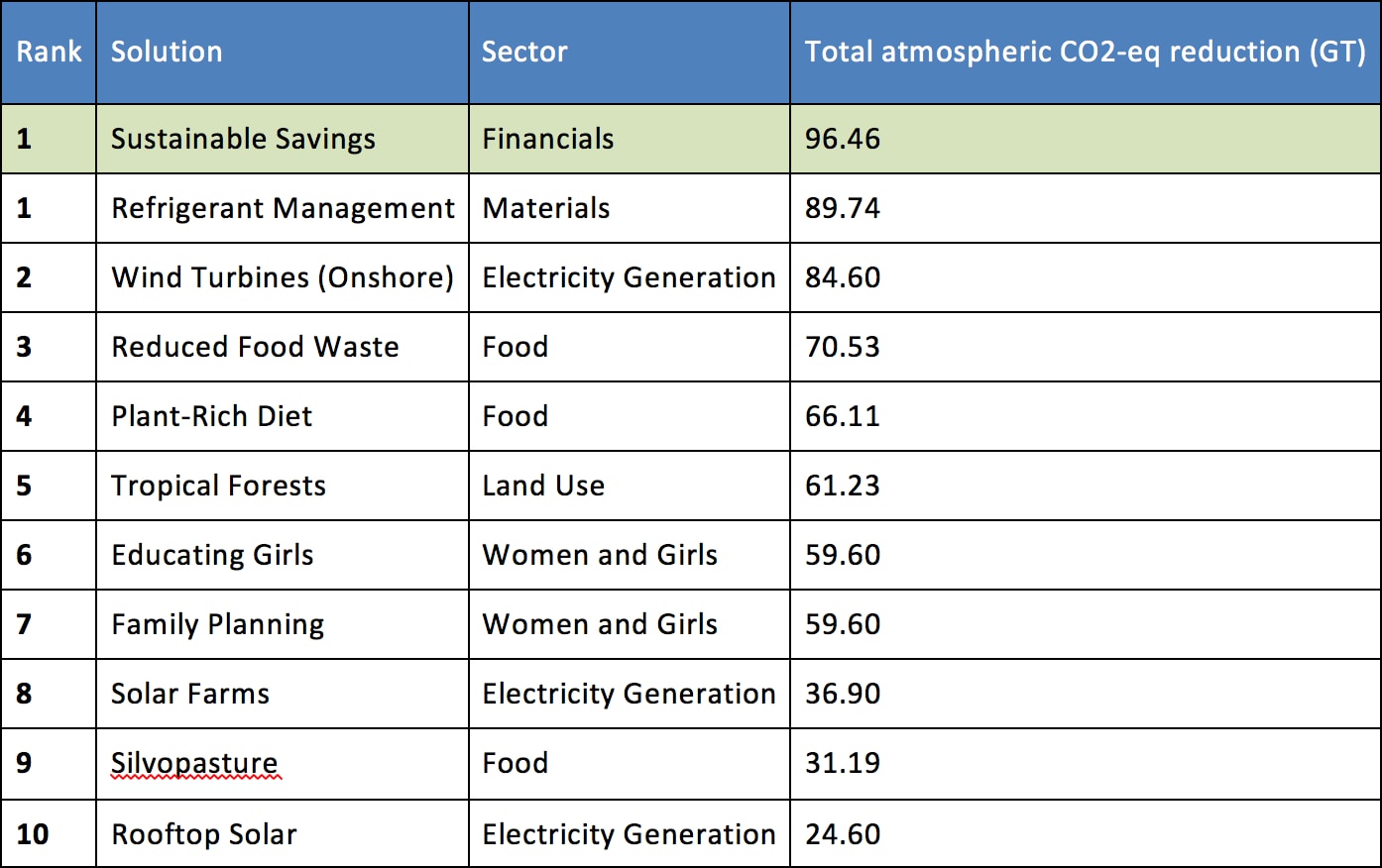
To do this is laying down a clear challenge.

But unfortunately, not all carbon footprints are created equally.

This makes it a tough sell and begs the question to what degree people are willingly taking concrete steps to lower their lifestyle’s impact on climate change, or why people are not.

The why not, is because for most people it’s still intangible and not well understood even considered a Hoax because of Fake news’ or ‘inconvenient truth that there is no problem and hope that it disappears by itself.

The willingness is rhetoric like flight shaming which is near the top of the list of hypocrisy charges.

No press release can obscure the fact that time is not on our side.

We need to cap our carbon emissions now not in ten years.

Increasingly missing from this picture above is the support of governments that operate on 2- to 6-year election cycles.

Technology is bringing down the price of switching to green alternatives, not least renewable energy. So what is stopping governments from making these technologies available with affordable Green Grants to one and all Now?

With most countries more engrossed by their internal domestic political squabbles the reasons are political or financial, not scientific.

The science isn’t that difficult to explain but instead of explanations we are presented with statements of facts with an only simple explanation and no real substance, CO2 is like a blanket.

A Chinese man wears a mask to guard against air pollution in Beijing. Much of Eastern and Central China is regularly blanketed by a thick smog caused by coal power plants and industrial production, both of which fuel global warming and climate change, direct results of consumer culture.

Yet there is a troubling gap between the serious reality depicted by climate change science and the level of concern among all of us.

Worry and action are two different things.

Climate change is a direct consequence of the widespread, now globalized, mass production and consumption of goods, and of the material construction of our habitat that has accompanied it. Yet, despite this reality, production and construction continue unabated.

If we believed that a systemic response to climate change was an equally shared responsibility, was our responsibility, we would be responding to it.

Until we do that, we’re all climate change deniers.

( See Post – suggestion a World Aid commission of 0.05% )

All human comments appreciated. All like clicks and abuse chucked in the bin.

← Back

Thank you for your response. ✨


There are no right or wrong answers, just your insights.


Share this:

  • Share on WhatsApp (Opens in new window) WhatsApp
  • More
  • Share on Mastodon (Opens in new window) Mastodon

THE BEADY EYE ASK’S: IS IT TIME TO REGULATE SOCIAL MEDIA PLATFORMS WITH LAWS.

25 Monday Nov 2019

Posted by bobdillon33@gmail.com in 2019: The Year of Disconnection., Algorithms., Democracy, Digital Friendship., Elections/ Voting, Facebook., Fourth Industrial Revolution., Google, Humanity., Modern Day Democracy., Modern day life., Our Common Values., Politics., Reality., Social Media, The common good., The essence of our humanity., The Obvious., The pursuit of profit., The state of the World., The world to day., Twitter, Unanswered Questions., What Needs to change in the World, World Politics

≈ Comments Off on THE BEADY EYE ASK’S: IS IT TIME TO REGULATE SOCIAL MEDIA PLATFORMS WITH LAWS.

Tags

Algorithms., Capitalism and Greed, Facebook and Society., Google/Amazon/Facebook/Twitter, Platforms regulation/laws., Social Media, Social media platforms., The Future of Mankind


(Ten-minute read) 

The beady eye is far from the first voice to ask this question and it certainly will not be the last.

We might even come to “question whether we still have free will.

There is no doubting that the social web has created amazing opportunities to learn, discover, connect, but its downside as it penetrates our daily lives is becoming more and more prevalent in the creation of our future lives and the societies we live in.

If the public discussion is shifting increasingly to online fora, and those fora are having more and more influence over democracy it becomes increasingly important to apply principles to them. 

Honest political debate is essential for the health of a democracy.  

If discussions of import move into space where they can be readily censored, then we will simply no longer live in a society with a free exchange of ideas, because the playing field will always be tilted.

One only has to look at how social media platforms are amplifying what is wrong with the world.  

While we all reveal a huge amount of personal information online we are losing the ability to determine honest facts that democracy depends.

Basically, companies that run social media platforms are monopolies or near-monopolies in their areas of operation, and the only way we can achieve the desired outcomes is through clear, effective legal regulations. 

We can’t always control how others use their platforms but we can apply the same regulations that govern all other forms of Media.

The public cannot rely on these company’s self-regulation, because self-regulation raises more questions than it answers.

The fact is that the formation of a platform takes place in a vacuum, whereas the formation of any competitors do not, so they cannot be considered parallels in any way. 

If we take companies like Facebook and Google they both derive most of their revenue from advertising. They essentially constitute a duopoly because they have access to the best data about individuals. Every memory, picture, emoji, song, video, link, gripe, fear, hope, want, dream and bad political opinion posted is mined and monetized as data.

As a result of their algorithms, they are creating and reinforcing divided and insular online communities that do not interact with people or information with which they disagreed.

At the end of the day, how Facebook and Google conduct their businesses undermines privacy and raises questions about ethical behaviour in the uses of our information and their role in society.

The Internet is a “utility” like water or electricity. It is essential to modern life, not an optional subscription service.

Determining how to regulate Facebook or any other platform may first require some kind of definition of what it is.

Facebook brags about connecting us to our family and friends — but it also about directly influencing the outcomes of elections across the globe.

It sits on top of industries including journalism, where it, together with Google, essentially controls the distribution channels for online news and, in effect, the way people discover information about politics, government and society.

They ( Google, Facebook, Twitter,etc) have figured out how to take advantage of this dynamic to distribute false information about political candidates and hot-button political issues in order to drive up traffic and advertising revenue.

Protecting our community is more important than maximizing their profits.

They are given protections that no one can sue them for any reason — that is Google and Facebook nither are responsible for the fake news that appears on their sites.

They are completely shielded from any responsibility for the content that appears on their service.

Changes to legal protection (which has been interpreted by judges to provide a safe harbour for online platforms even when they pay to distribute others’ content and decline the option to impose editorial oversight) would likely be devastating to online platforms like Google and Facebook and would transform the way people interact across the entire internet.

However, with legal protection, sites like these could be held responsible for libellous comments posted by readers, Google could lose lawsuits over potentially false or defamatory information surfacing in search results, and Facebook could be sued for any potentially libellous comment made by anyone on its platform against any other person.

The legal bills to defend against libel and defamation claims would be enormous.

We all need protection and the ability to request platforms to provide us with control over online information by making it accessible and removable at an individual’s request.

The government, on the other hand, has a regulatory intent to protect citizens from content that is obscene or violent.

Should Facebook and their like be regulated?

A question that is never going to end. 

However, until we recognize that there is no fool-proof safeguard to keep horrific content away from the eyes of children we rely on huge fines to the detriment of us all. 

Till then with all internet platforms deflecting criticism, social media will be more psychologically damaging than anyone expected. 

We need a radical shift in the balance of power between the platforms and the people.

It is beyond comprehension that we tolerate the present position.

Or is it? When you see the below.   

Would you ever be prepared to use a nuclear weapon?

This question is increasingly put to politicians as some kind of virility test.

The subtext is that to be a credible political leader, you must be willing to use an indiscriminate weapon of mass destruction.

We should be baulking at the casual way in which political discourse on this topic has developed which is politically unacceptable and morally despicable. 

If a mainstream politician unblinkingly said that they would use chemical weapons against civilians there would be uproar. If a self-proclaimed candidate for prime minister boasted that they would commit war crimes, it would be a national scandal. Nuclear weapons should be seen no differently. 

It’s time that nuclear advocates spelt out the reality of what their position means.

The human race is so good at speaking, it’s lost the art of listening.

It might be easy to brush away the febrile atmosphere online as a nasty byproduct of free expression: I don’t want Facebook having everyone’s verified identities. I do want their platform and other platforms to be held responsible legally for content that is false, racest, hateful, rightwing fascist propaganda.  

I do know that if the big platforms, as they already do in part, forced some verifiable information to back up use, we could tame this wild west with legal requirements

I’ll give up on the consensus-building when I can open a platform knowing who to hold legally responsible.  


All human comments appreciated. All like clicks and abuse chucked in the bin. 

← Back

Thank you for your response. ✨


Share this:

  • Share on WhatsApp (Opens in new window) WhatsApp
  • More
  • Share on Mastodon (Opens in new window) Mastodon

THE BEADY EYE ASK’S: WILL ARTIFICIAL INTELLIGENCE SEE THE END OF DETERMINING MEANING.

23 Saturday Nov 2019

Posted by bobdillon33@gmail.com in Algorithms.

≈ Comments Off on THE BEADY EYE ASK’S: WILL ARTIFICIAL INTELLIGENCE SEE THE END OF DETERMINING MEANING.

Tags

Algorithms trade., Algorithms., Artificial Intelligence., Technology, The Future of Mankind, Visions of the future.


(Five-minute read)

We all know that new data-driven technology is transforming our society.

Our digital society is creating new and profound challenges and carry significant ethical risks to us all.

To be human means that you are persuadable in every single moment.

If you need any evidence of this you don’t have to look any further than the current impeachment hearing in the USA and England with its general election.

The troubling influence algorithms have on how we make decisions are now treating the foundations of our Societies.

Algorithms are now usually a component in a broader decision- making process involving human decision-makers. Far from being neutral and all-knowing decision tools, complex algorithms are shaped by humans, who are, for all intents and purposes, imperfect.

Determining the meaning of sensory input is one of the most constantly ongoing, and important, functions of any brain. By refining our awareness, we transform existence into beauty, thinking into philosophy.How Artificial Intelligence Will Revolutionize Our Lives

Our increasing reliance on artificial intelligence is destroying the meaning of life.

Few of us understand them or the implications they are having or will have. .

They are taking the creativity away from the decision-making process for instance.

They could turn us humans into mush-minded creatures who can’t be bothered to make our own choices.

What if the new algorithm rated my friend and another woman as a 90% match, would that mean he would simply trust the algorithm and go straight for a proposal of marriage?

Important parts of our lives are being run by AI without sufficient scrutiny.

Self-learning systems are not autonomous systems however they could lead to a Master Algorithm that could match Einstein’s theory of relativity in its world-transformative power.

Algorithms are changing our relationship with each other, with doctors, police, politics, work, health care.

They are at work where ever you look. When you do a web search, machine learning chooses the results you get. Interactive processing allowing the software to learn automatically from patterns. Algorithms are not only being used just to make a profit but life-changing decisions, from your Credit rating, how your will and who you will vote for.

With machine learning, you are programming a computer to learn by itself.

Amazon uses them to recommend products; Netflix uses them to recommend movies; Facebook and Twitter use them to choose which posts to show you.

Pretty much everything that happens online involves machine learning.

So are we putting to much trust in smart systems that learn from data?

The systems are only as good as the data it learns from.

Their goal is to provide software that can reason on input and explain on output by becoming classifiers and predictors.

Alexa – Google is an example. Like most machine-learning algorithms, Google not only analyses our behaviour: it shapes it. This goes round and round until one viewpoint dominates people’s thinking. It will control the information its algorithm pays attention to and the secretive nature of algorithms means people cannot scrutinise the decisions they make.

Since much of the data that is feed into AI’s is imperfect and bias the decision processes built on top of the Ai’s need to be made open to scrutiny.

Why?

Because Algorithms learn differently than us. They look at things differently.

It might enhance the speed, precision and effectiveness of human efforts but in the long run, it will replace our decision making.

They are also moving into areas where the benefits to those applying them may not be matched by the benefits to those subject to their ‘decisions’— We have to demand to know what kind of influence these algorithms have over us.

Google is an algorithm that we are all familiar with, but it is far from being the only algorithmic decision-making tool to influencing our daily lives.

What can be done to combat their growing influence?

Governments should play their part in the algorithms revolution in two ways

Governments should produce, publish, and maintain a list of where algorithms with significant impacts are being used.

The index to the internet should be a public instrument, owned and controlled by the public. It should be a public utility. It should be an index, pure and simple – not a tracking device or a mechanism of manipulation, put the control of algorithms back into the hands of the people that are affected by them.

Government oversight of such algorithms, where they are used by the
public sector, and to co-ordinate departments’ approaches to the development and
deployment of algorithms and partnerships with the private sector.

Governments should offer significant rewards for societies that can find the right combination of market-driven innovation and regulation to maximise the benefits of data-driven technology and minimise the harms.

We must subsequently make decisions that require value judgements and trade-offs between competing values.

New functions and actors, such as third party auditors, may also be required to independently verify claims made by organisations about how their algorithms operate.

Many of the most consequential algorithms currently being used in the public and private domains are complex and opaque, making it hard to attribute accountability to their actions.

Humans are often trusted to make these trade-offs without having to explicitly state how much weight they have put on different considerations. Algorithms are different. They are programmed to make trade-offs according to unambiguous rules.

The ethical questions in relation to bias in algorithmic decision-making vary depending on the context.

For example, High-frequency trading is an algorithm-fueled method of buying and selling stocks – among other things.

The fact that while the problematic implications of many algorithms have been exposed, we may have only just begun to skim the surface.

Improving transparency, however, is no easy task.

Companies with algorithmic products would lose their competitive edge if they were forced to make their algorithms public.

Transparency is not enough. In fact, because algorithms are quite complicated.

This is a simple matter.

What is required is a means of certification as to whether an algorithm is safe or fair to use.

Who knows, an algorithmic slider could, one day, form part of our daily lexicon. But, in the meantime, algorithms need to be managed; ensuring those with the power to shape our lives do so with some code of conduct.

In the end, all technology revolutions are propelled not just by discovery, but also by business and societal need. We pursue these new possibilities not because we can, but because we must.

As I have already said  “To be human means that you are pursuable in every single moment”

This morning without any action on my part through the post I am in receipt of an Amazon prime video card.

All human comments appreciated. All like clicks and abuse chucked in the bin.

← Back

Thank you for your response. ✨

Share this:

  • Share on WhatsApp (Opens in new window) WhatsApp
  • More
  • Share on Mastodon (Opens in new window) Mastodon

THE BEADY EYE ASK’S. WHY IS TIME SO CONTROVERSIAL?

17 Sunday Nov 2019

Posted by bobdillon33@gmail.com in 2019: The Year of Disconnection., WHY IS TIME SO CONTROVERSIAL?

≈ Comments Off on THE BEADY EYE ASK’S. WHY IS TIME SO CONTROVERSIAL?

Tags

Different Aspects of Time, Quantum reality, The Future of Mankind, WHY IS TIME SO CONTROVERSIAL?


( In your own time read)

Hickory Dickory dock,
The mouse ran up the clock.
The clock struck one,
The mouse ran down,
Hickory Dickory dock.

The concept of “time” is a weird one and it is getting weirder. 

Isn’t it possible that kazillions of years ago, there wasn’t anything at all, not even time?

Of course, this is the question that defies an answer, as it requires the answer to what time is.

There is no other concept that captures the imagination more than the idea of time travel – the ability to travel to any point in the past or future.

But the future is constantly being transformed into the past with the present only lasting for a fleeting moment. Everything that you are doing right now is quickly moving into the past, which means we continue to move through time.

Time has direction, always advances. Time has an order, one thing after another. Time has duration, a quantifiable period between events. Time has a privileged present, only now is real. Time seems to be the universal background through which all events proceed, such that order can be sequenced and durations measured.

You cannot literally see or touch time, but you can see its effects.

Up to now, this appears to be true.

Then along came Quantum Mathematics.

Quantum Mathematics says our choice in the present moment affected what had already happened in the past…. Quantum effects mimic not only instantaneous action-at-a-distance but also, influences future actions on past events, even after these events have been irrevocably recorded.

Reality does not exist unless we are looking at it.

So matter is a derivative from consciousness.

Another words the present can only be defined by the process of becoming correlated with our surroundings.

It suggests that we are living in a holographic-type of universe with no time.

Time is now a prime conflict between relativity and quantum mechanics.

In quantum language, they say energy disperses and objects equilibrate, because of the way elementary particles become intertwined when they interact — a strange effect called “quantum entanglement.”

Therefore the backdrop for the steady growth of entanglement throughout the universe is, of course, time itself.

So is time irreducible, fundamental, an ultimate descriptor of bedrock reality?

Apparently not.

Or is it our subjective sense of flowing time, generated by our brains that evolved for other purposes, an illusion?

Why am I relevant or an Illusion?  Time may not be what time seems, so are giving false importance to the present moment?

Is time really a second picture, then change really. Its an illusion, because there’s nothing that’s changing; it’s all just there — past, present, future.

Quantum physicists are unmasking a more fundamental source for the arrow of time and many assert that time is an illusion.

We all have the illusions, at any given moment, that the past already happened and the future doesn’t yet exist, and that things are changing.

But all I’m ever aware of is my brain state right now.

I’m looking at you; you’re nodding your head. Without that change, we wouldn’t have any notion of time.” Change is real, but time is not.

Confused yet? 

At the deepest foundations of nature, time is not a primitive, irreducible element or concept required to construct reality but what reality depends on what time is.

Time is like space, in that every event has its own coordinates, or address, in space-time.

Time is tenseless, all points equally “real,” so that future and past are no less real than the present.

When you try to discuss time in the context of the universe, you need the simple idea that you isolate part of the universe and call it your clock, and time evolution is only about the relationship between some parts of the universe and that thing you called your clock.”

If the new line of quantum research is correct, then the story of time’s arrow begins with the quantum mechanical idea that, deep down, nature is inherently uncertain.

But how can a single piece of matter exist and express itself in multiple states, without any physical properties other than time?

There is no “true” state of the particle; the probabilities are the only reality that can be ascribed to it. (A particle is a minute fragment or quantity of matter.)

Quantum uncertainty then gives rise to entanglement, the putative source of the arrow of time this could replace human uncertainty in the old classical proofs as the true source of the arrow of time. The system as a whole is in a pure state, but the state of each individual particle is “mixed” with that of its acquaintance. The two could travel light-years apart, and the spin of each would remain correlated with that of the other.

Entanglement.

The essence of relativity is that there is no absolute time, no absolute space everything is relative. Absolutely nothing existed but we are all bound by time and space.

To be anywhere, everywhere or nowhere at all.

Because no observer has knowledge of a distant event, or the simultaneity of different events until they are unambiguously in that observer’s past something else exists.

Something that exists outside of time and space. Invisible but needs an environment to exist in, but what?

Some kind of untranscendence is essential.

Is this possible?

No observer has ever witnessed nothing if it had, there would still be absolutely nothing now.

Time by itself doesn’t do anything. Why would anything just “show up”

Therefore absolutely nothing existed. Why? Because, if absolutely nothing ever existed, there would still be absolutely nothing!

What did exist?

No gravity, no dark matter, no atoms, not a particle of anything. No air at all. No dust at all. No light at all.No elements, No molecules.

A “wave” of potentials, that does not take up a part of space, expressing itself in the form of multiple possibilities collapsing into one single path.

A void.

Because the beginning must have been able to exist without depending on anything else.

Something has no beginning. The eternal something is eternal. It has always existed independent of another. More importantly, It alone has always existed. If this something has any needs it can fulfil those needs for itself.

But how does it choose which path, out of multiple possibilities, it will take?

Eternal something must choose to change things.

What does that mean?

It means that no event can take place without the say-so of the Eternal something.

There is nothing in existence that can arbitrarily, by chance, influence it to produce something else.

Chance does not even exist. Chance itself cannot be produced by chance.

Chance is a force that must be produced by the Eternal something, or it does not exist.

It would have to be produced by the will of the Eternal something and to produce Something Else — out of nothing — requires an incredible amount of power.

So there was always a time when there was something in existence.

Time cannot exist without space, and likewise, space cannot exist without time so the universe as a whole is in a pure state.

Time emerges out of something more fundamental — something nontemporal, something altogether different.

But time is not transparent with no material substance that can be measured or observed.  It has no end or beginning, it’s eternal and therefore does not exist.

We cannot and will not ever establish the reality of the awaiting future as time’s arrow is not steered by human ignorance.

According to the quantum mathetics, a“wave” is a wave until it is “measured” or “observed.” as with a spin or for that matter anything else.

If we look at the most recent pictures from Hubble which has helped to refine estimates of the universe’s age down to roughly 13.75 billion years, we are looking at light emitted some 13 billion years in the past.

This is calculated by the constant speed of light to convert time to distance.

Time = distance / speed.  = 299,792,458 metres per second.

Is this true?

As we never observed the velocity of light in vacuum propagating at a different velocity it is deemed to be right and the mainstream scientific community carried on believing in the fallacy that the speed of light is always constant.

But according to Quantum light from any observer’s perspective cannot always be measured to be constant.

Therefore the time interval between two events is not equal for all observers.

Since we cannot travel at relativistic speeds at or close to the speed of light, we have no points of reference to compare the nature of light to.

Because the faster you travel through space, the slower you travel through time (to an outside observer this is flawed.) it is causing time dilation.

This conversion factor is not constant,

The best we can say is that the invariance of the speed of light is dependant on the nature of space-time. Its planet-bound behaviour must be different than light emitted in other parts of the known universe.

It is simply a conversion factor between space and time.

Our concept of motion only comes from gravity and friction and acceleration, not time.

If we were made up of nothing but photons of light, how would that being see the universe?

The being would see everything at a standstill, nothing would be moving not even light itself nor time.

Where do the property of ‘mass’ come from?

If we manage to discover the above we will discover where time comes from because the source light is travelling at our speed, no matter how fast you go.

Back to the beginning.

The beginning must have the ability to produce something other than itself.

The arrow of time does not seem to follow from the underlying laws of physics, which work the same going forward in time as in reverse. This is one aspect of time’s arrow that remains unsolved. The nature of time itself or why it seems different (both perceptually and in the equations of quantum mechanics) is outside the three dimensions of space.

Sometimes you have to have the idea at the right time.

Even what we perceive as solid objects all are manifestations of wave energy forms entanglement, with information becoming increasingly diffuse, but it never disappears completely. Like all energy consciousness is never gained or lost, it simply changes form.

The arrow of time is an arrow of increasing correlations between the void and consciousness energy.

It is known that outer extremities of the universe are expanding technically faster than the speed of light.

Technology may end up creating a new race…cloning, other forms of biotechnology, artificial intelligence, etc but avoid is avoid.

This is bound to be of massive interest to any future societies for nothing matters … only humans make it so.

We don’t live in the universe, we are part of it.

Every molecule we move, everyone we touch, every penny we spend impacts others.

From an everyday point of view, our minds perceive that an object should behave like a wave or a particle, quite independently of how it is measured.

It has nothing to do with the question of “Why are we here?”, as one person has suggested, it’s more a case of “Where are we going?”

Unfortunately one would have to outlive the universe to witness it.

Particles arrived at a state of equilibrium, and their states stopped changing.

If we could change the past, it would create an infinite number of paradoxes.

The only reason I feel like I have a past is that my brain contains memories lost in time.

It is only when one unifies the concepts of science and spirituality that one begins to see the real nature of the universe. It is this consciousness and through the interference pattern of energy waves that gives rise to us, all that we perceive and that which we do not.

Has anyone travelled in the future?

Astronauts can travel a few nanoseconds into the future.

Think about that for a moment, the observer caused the wave function, which generates an interference pattern.

If we are, to be honest with ourselves, we had better think twice before dismissing the possibility that the void had a visitor called time.

Imagine going back in time 3000 years and encountering people convinced that the world is really a flat disc. When you hear this you tell them that they are mistaken, that the world is really round. But you become quite embarrassed when they ask you to prove it to them and you find that you can not.

After all, their experience conforms to the idea that the earth is really flat.

Its time to stop.

All human comments appreciated. All like clicks and abuse chucked in the bin.

← Back

Thank you for your response. ✨


.


Share this:

  • Share on WhatsApp (Opens in new window) WhatsApp
  • More
  • Share on Mastodon (Opens in new window) Mastodon

THE BEADY EYE ASK’S. IS THIS THE WORLD YOU WANT TO LIVE IN NEVER MIND LIVE ON.

14 Thursday Nov 2019

Posted by bobdillon33@gmail.com in 2019., Artificial Intelligence., Humanity., Modern day life., Our Common Values., Reality., Sustaniability, Technology, The common good., The essence of our humanity., The Future, The Obvious., The state of the World., The world to day., Unanswered Questions., WHAT IS TRUTH, What Needs to change in the World

≈ Comments Off on THE BEADY EYE ASK’S. IS THIS THE WORLD YOU WANT TO LIVE IN NEVER MIND LIVE ON.

Tags

Capitalism and Greed, Climate change, Distribution of wealth, Inequility, Technology, The Future of Mankind, Visions of the future., World aid commission


(Twenty-minute read) 

Never mind standing on the moon here are some depressing reality about your planet Earth.

We live in a world of trillions of living organisms and billions of humans and few millions of other species.

There are over 35 major conflicts going on in the world today.

There are nearly 210 million orphans in the world.

More than 500 million small arms and light weapons are in circulation around the world.

There are approximately 30,000 nuclear warheads in the world today.

Current global military spending is approximately $800 billion per year; more than the total annual income of the poorest 45% of the global population.

Genocide and other mass murders killed more people in the 20th century than all wars combined.

AND THAT JUST FOR OPENERS. 

35% of the world’s people live in countries in which basic political rights and civil liberties are denied (such as freedom of speech, religion, press, fair trials, democratic political processes, etc).

Over 100 million people live in slums.

1 billion people – 1/3rd of the world’s labour force, are unemployed or underemployed.

Cows earns more than 1.2 billion of the world’s poorest people.

An estimated 27 million people are enslaved around the world, including an estimated 20 million people held in bonded labour (forced to work in order to pay off a debt, also known as ‘debt bondage’). 

At least 700,000 people annually, and up to 2 million, mostly women and children, are victims of human trafficking worldwide (a modern form of slavery — bought, sold, transported and held against their will in slave-like conditions)..

About 246 million, or 1 out of 6, children ages 5 to 17 worldwide are involved in child labor

3 billion of the world’s people (one-half) live in ‘poverty’ (living on less than $2 per day). 1.3 billion people live in ‘absolute’ or ‘extreme poverty’ (living on less than $1 per day). Both in rich countries and poor, a staggering 30-50% of all food produced rots away uneaten.homeless

By 2025, at least 3.5 billion people or nearly 2/3rd’s of the world’s population will face water scarcity. More than 2.2 million people, mostly children, die each year from water related diseases.

The richest 1% of the world’s people earned as much income as the bottom 57% (2.7 billion people) The top 5% of the world’s people earn more income than the bottom 80%. One fourth of humanity lives without electricity.

The wealth of the world’s 7.1 million millionaires ($27 trillion) equals the total combined annual income of the entire planet.

The combined wealth of the world’s richest 300 individuals is equal to the total annual income of 45% of the world’s population. 

The world’s 3 wealthiest families have a combined wealth equal to the annual income of 600 million of the world’s people.  The wealthiest one-fifth of the world’s population receive an average income that is 75 times greater than the poorest one-fifth.

Half of the forests that originally covered 46% of the Earth’s land surface are gone.

Between 10 and 20 percent of all species will be driven to extinction in the next 20 to 50 years.

Almost a quarter of the world’s mammal species will face extinction within 30 years. Up to 47% of the world’s plant species are at risk of extinction.

60% of the world’s coral reefs, which contain up to one-fourth of all marine species, could be lost in the next 20-40 years.

Land degradation threaten nearly one-quarter of the land surface of the globe.

An estimated 40-80 million people have been forcibly evicted and displaced from their lands to make way for the construction of large dams,

Global warming is expected to increase the Earth’s temperature by 3C (5.4F) in the next 100 years.

While we witness the horrific events that are occurring within our society and world today now with a blink of an eye, our world is constantly changing, for the good, but also for the worst.

With technology, we are losing sight of what is important.

We have begun to categorize people based on how they act, what they wear, their political party, their skin color, where they live and so many other factors. 

We are always forgetting ourselves until someone wakes up to remind us of who we really are.  Humans?

The world was always beautiful. It’s only becoming lesser and lesser.

There is only this world, only this single reality, and its shared by everybody, everyday… Not created.

 Were economically and morally bankrupt.

THIS IS THE WORLD WE LIVE IN.

The world has no one society. Surely its time we started to vote with our eyes not our ears. 

All human comments appreciated

← Back

Thank you for your response. ✨

. All like clicks and abuse chucked in the bin. 


Share this:

  • Share on WhatsApp (Opens in new window) WhatsApp
  • More
  • Share on Mastodon (Opens in new window) Mastodon

THE BEADY EYE SAY’S: WE NEED A NEW WAY TO REFLECT DEMOCRACY, WHICH IS GREATLY LAGGING BEHIND DEMOGRAPHIC, CULTURAL AND ECONOMIC SHIFTS.

10 Sunday Nov 2019

Posted by bobdillon33@gmail.com in Democracy.

≈ Comments Off on THE BEADY EYE SAY’S: WE NEED A NEW WAY TO REFLECT DEMOCRACY, WHICH IS GREATLY LAGGING BEHIND DEMOGRAPHIC, CULTURAL AND ECONOMIC SHIFTS.

Tags

Brexit v EU - Negotiations., Democracy, Inequility, Technology, The Future of Mankind, Visions of the future.


( A Fifteen-minute read)


If we are to discuss the best model for democracy we should first look at the British system as it is the longest established.

Questions arise however when you consider its relevance to the modern world.

The Houses of Parliament have long been known as ‘the mother of parliaments’ and historically form the basis for democratic government across the world. Much of the British system, however, is seen as outdated.

The UK is said to have a democracy with power resting with the people but granted to their elected representatives but this only applies to the House of Commons. The other parts of the Constitution – the Crown and the House of Lords – are hereditary and appointed.

It’s not surprising that a system so outdated, and so stilted by generations of gerrymandering and ever-increasing campaign spending, results in public policies that do little to address the fundamental interests of most citizens.

Anyone can see when looking at the referendum (that voted by a small majority to leave the European Union) that direct democracy was stimulated by stagnant wages, rising inequality and unaccountable elites benefiting from repeated government bailouts all functions of a larger and more systemic problem.

However, the current crop of populist leaders and parties may be the forerunner to even more worrying politics — but they could also be the spark for a much-needed overhaul of the basic architecture of democratic government.

So let’s ask the question why and should we be worried about democracy?

Do we need a reset button not just in the Uk but throughout the whole of the democratic world?

The turn to populism, the call for nonsensical direct democracy and the recourse to binary choices – whether in the form of referenda or general elections  – all come from the failure of party politics, which is nurtured everywhere by unrepresentative parliamentary democracy.

Representation democracy requires a filtering process and preselection of candidates by parties performed this role in today’s Elections which are geographically based for obvious practical reasons.

But people are no longer bound to – and are less inclined to – identify geographically within the borders of a nation-state.

Our institutions of democracy and government are simply not designed to deal with unfettered financial capital flows across national borders and the tolerance, if not active encouragement, of the free mass movement and migration of people.

With technology such as electronic voting the individual you want to see elected might be based in the next county or the other end of the country, and then you cannot (now) vote for them. Or your vote goes wasted because of the make-up of the constituency you are resident in.

It is now perfectly feasible, in principle, for everyone to vote for an individual they believe in, rather than for the least bad candidate, and for no vote ever to go wasted.

This is possible without recourse not just to political parties, but though citizens group-think tanks that could retain a subsidiary role to analyze what is being presented and remove social media that is clogging up the political processes with falshoods.

Let there be separate assemblies for the several grand areas of political concern. For example, a citizens assembly to address ethical concerns.  A pressure group uniting people of religion and of no-religion in dialogue.

It could handle the beginning and the end of life; the wisdom or otherwise of tolerating drug abuse; the way we treat animals; which limits we may want to place on religious freedoms and parental rights, climate change

Using secure electronic voting one selects one’s choice candidate from the many thousands standing via a search function at the polling station.

Forget party lists.

Forget proportional representation (which serves party hacks rather than strong-minded individuals).

Forget alternative votes and second rounds.

For the election, a candidate needs a predetermined number of votes.

Those falling far short of the threshold hold a political power of attorney from their supporters to transfer their contingent to a like-minded candidate closer to the threshold.

What is surprising is that the people whose interests have been so clearly neglected for so long feel they have no choice but to back candidates who are so clearly flawed or conflicted.

What is needed in our democracies is a call to manage financial and people flows in ways that do not exceed our social political and economic systems capability to evolve on an even keel.

A call to not incentivise the separation of finance from real economies, or the short term hot trade, or governments and criminal gangs who profit from people trafficking.

A call to do away with just a lip service democracy.

A call to admit from the start our fallibility as human beings, which leads us to accept that a discussion can not reach a consensus, and we should use the vote as a force.

A call to use technology not just to enrich the rich but to enhance all our lives. We cant have both.

A call to get rid of the hypocrisy of the imbalance at the centre of our political systems which those who are empowered by the current system will not change.

The only thing that can change our political system is pressure from the outside.

We are all now living in a technological digital driven world

Nowadays, democracy is unfortunately seen as inevitable; in other words, it is the political system no one dares to question and even less making it publicly.

Democracy. (noun)

1. Rule by the people, especially as a form of government; either directly or through elected representatives (representative democracy).

2. A government under the direct or representative rule of the people of its jurisdiction.

3. Belief in political freedom and equality; the “spirit of democracy”.

The term democracy comes from the Greek language and means “rule by the (simple) people”.

The essential elements of democracy: separation of powers, basic civil rights / human rights, religious liberty and separation of church and state.

Brexiters tell us that the EU is run by faceless bureaucrats.

But the truth is that all EU laws can only be passed by the democratically elected European Parliament, in concert with the Council of Ministers, that comprise the ministers of democratically elected governments of EU member states.

In the age of the internet and biometrics that we could and should be able to vote directly on policies which shape are lives.

The representative system is antiquated.

The internet can be used to inform the all citizens of the issues, and collect all the votes.

Rebuilding the political system cannot be left to politicians – the public need to have a role .In a political environment where we’re told our only role is to vote every few years, directly engaging the public in redesigning our democracy is a radical step that must be taken before democracy disappears into an algorithm. 

Twitter is alive with political chat.

We can’t afford to take a chance on an undemocratic system that has failed us so greatly and so often.

https://youtu.be/OHxRj9JWQMs

All human comments appreciated. All like clicks and abuse chucked in the bin.

← Back

Thank you for your response. ✨

Share this:

  • Share on WhatsApp (Opens in new window) WhatsApp
  • More
  • Share on Mastodon (Opens in new window) Mastodon

THE BEADY EYE ASK’S: HAS FRIENDSHIP CHANGE. WHAT IS FRIENDSHIP THESE DAYS?

08 Friday Nov 2019

Posted by bobdillon33@gmail.com in 2019: The Year of Disconnection., Artificial Intelligence., Communication., Digital Friendship., Education, Emotions., Facebook, Happiness., Humanity., Life., Modern day life., Reality., Social Media, Technology, The Obvious., The world to day., Unanswered Questions., WHAT IS TRUTH, What Needs to change in the World

≈ Comments Off on THE BEADY EYE ASK’S: HAS FRIENDSHIP CHANGE. WHAT IS FRIENDSHIP THESE DAYS?

Tags

Artificial Intelligence., Digital friendships, Social Media, The Future of Mankind, Visions of the future.


(Twenty-minute read)

The dawning of the digital age has not just changed communication, facilitating individual and group interaction in previously unimaginable ways it has fundamentally changed human relationships, or more specifically, the establishment of fraternity amongst people?

The internet has made it so you don’t need to physically see people feel close to them.

I miss those days of pre-digital friendship.

Thirty years ago we asked what we would use computers for.

children-1149671_640

Facebook. Twitter. SecondLife. “Smart” phones. Robotic pets. Robotic lovers.

Now the question is what don’t we use them for.

Technology promises to let us do anything from anywhere with anyone and the introduction of social media platforms has changed the “friendship playing field”.

The way friendships are played out in the digital world is changing how young people express themselves, how they define ‘good’ friendships and interact with each other.

Now, through technology, we create, navigate, and perform our emotional lives.

In a surprising twist, relentless connection leads to a new solitude.

We turn to new technology to fill the void, but as technology ramps up, our emotional lives ramp down. At the threshold of “the robotic moment,” our devices prompt us to recall that we have human purposes and, perhaps, to rediscover what they are.

The huge role that technology plays in supporting young people’s friendships, with over half (55%) saying they interact online with their closest friends several times an hour and 63% saying they are closer to their friends because of the internet.

The basic components of friendship USE TO BE interdependence and voluntary participation but technology is now embedded throughout our relationships.

So the question is.  Has friendship changed because technology changed it? Or both?

The popular platforms 8-17-year-olds are using to chat to their friends on a daily basis are YouTube (41%), WhatsApp (32%), Snapchat (29%), Instagram (27%) and Facebook or Facebook Messenger (26%)

Technology provides an important way for them to support their peers who are going through difficult times with Social media providing a vehicle of self-promotion, a means of fixing an idea of yourself in the social sphere, without people actually knowing you at all.

Has it made friendship less personal, less connective, less real?

The distinction in the online world is that the effort it takes to present ourselves in a certain way is much less.

Not to mention the fact that technology has allowed us to maintain friendships that might have otherwise waned when time, distance, and the constant demands of parenting take hold.

The lines between real friendships and fleeting acquaintances have become

blurred in the virtual world, not just but also because of many Social media

users showcase more than 1000 friends on their profiles, while the realistic

maximum number of people we are able to maintain relationships with lies at

150 people.

Our brains are just not wired to cope with.

——————

True friendships are hallmarked by each member’s desire to engage with the other – it’s about a mutual interest in one another’s experiences and thoughts, as well as a sense of ‘belongingness’ and connection, there’s no telling when and where a friendship will develop.

The cornerstone of friendship isn’t the public nature of the relationship, but the private connection of it and that private uniqueness hasn’t been eliminated; it just looks different now.

The Internet is undoubtedly an invaluable link between people separated by distance. But this link must be built on a stronger foundation of intimacy and familiarity and a balance of online and offline interactions will pave the way to better relationships in the world.

We “met” through a mutual friend on Twitter.

(Posts Tagged With friendship in the digital age,

 “I wish I had stayed in touch with my friends.” is number five.)

Sexual online meetings themselves may be a replacement for deeper longings in couples. It may be an extension of particular needs not being met within the relationship.

They find that the relationship to their primary partner is more undervalued than in the past and that traditional definitions of intimacy are vaguer. They explain that couples who once experienced a secure relationship now struggle with the new –often ambiguous– rubrics surrounding agreed-upon Internet conduct.

Young people also need to be empowered to take control of their digital wellbeing, by recognising their emotions and the way that their use of digital technology can impact on their self-esteem and mood so that they are able to implement strategies to achieve a healthy relationship with technology.

Social exclusion can have just as much of a damaging impact on young
people but may not be easy to detect and manage in digital spaces.

Facebook has completely redefined the definition of a friend.

It wont be long before we could be seeing the following.

“We’d like to say a big ‘thank you’ every time you recommend a friend to us by rewarding you with a retail shopping voucher £250 will be paid for a friend.

Two in five adults (40%) first look at their phone within five minutes of waking up, climbing to 65% of those aged under 35. Similarly, 37% of adults check their phones five minutes before lights out, again rising to 60% of under-35s.

The average amount of time spent online on a smartphone is 2 hours 28 minutes a day. This rises to 3 hours 14 minutes among 18-24s.

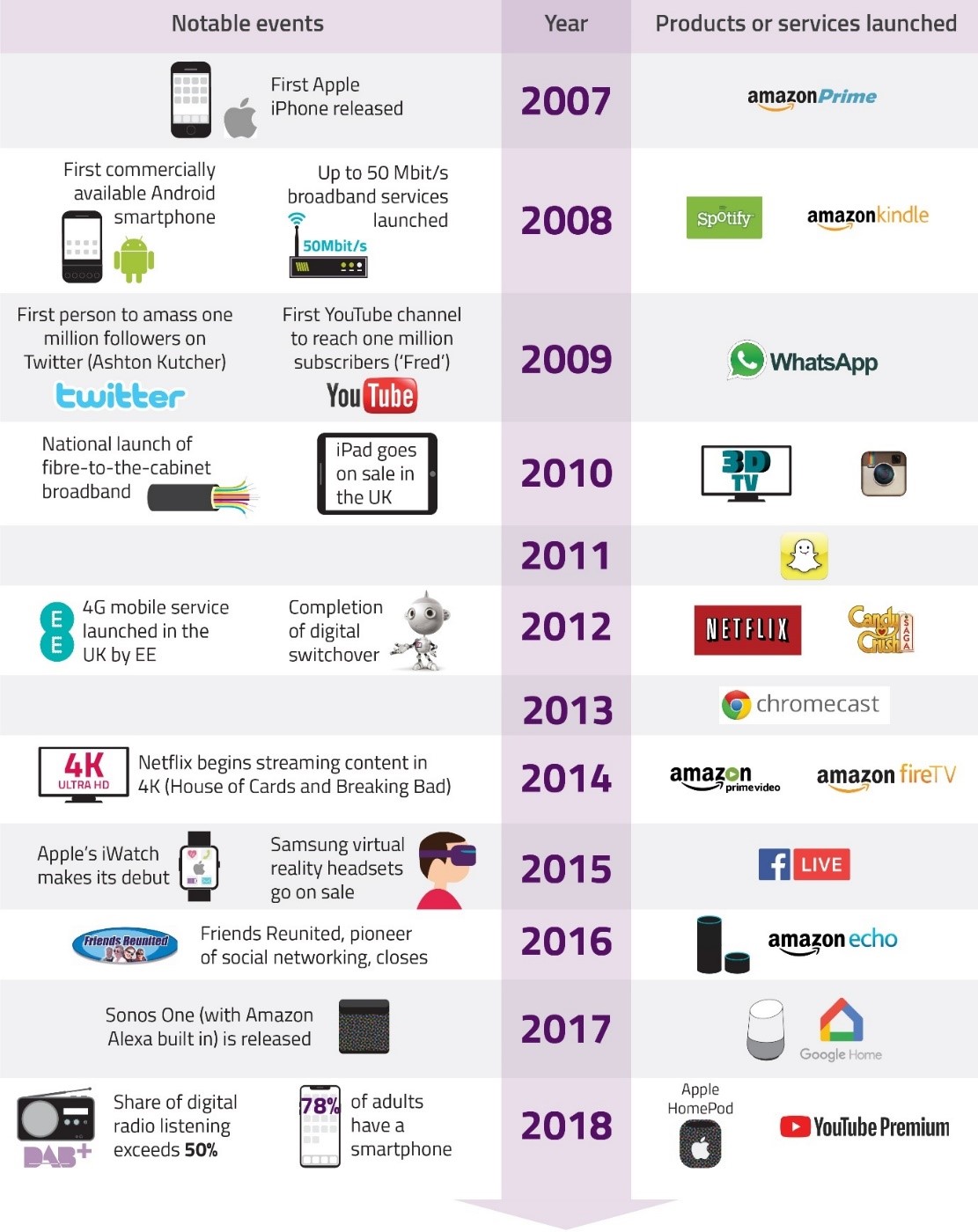
A decade of change in digital communications.

Infographic timeline showing notable events and products or services launched between 2007 and 2018. 2007: first iPhone released; Amazon Prime launched. 2008: first Android smartphone; up to 50 Mbit/s broadband launched; Spotify and Amazon Kindle launched. 2009: Ashton Kutcher becomes first person to amass one million followers; YouTubers Fred becomes first to reach one million subscribers; WhatsApp launched. 2010: National launch of fibre-to-the-cabinet broadband; iPad goes on sale in the UK; 3DTV and Instagram launched. 2011: Snapchat launched. 2012: 4G mobile service launched in UK by EE; completion of digital switchover; Netflix and Candy Crush launched. 2013: Chromecast launched. 2014: Netflix begins streaming content in 4K; Amazon Prime Video and FireTV launched. 2015: Apple iWatch makes debut; Samsung VR headsets on sale; Facebook Live launched. 2016: Friends Reunited, pioner of social networking, closes; Amazon Echo launched. 2017: Sonos (with Amazon Alexa built in) released; Google Home launched. 2018: Share of digital radio listening exceeds 50%; 78% of adults have a smartphone; Apple HomePod and YouTube Premium launched.

It is said that in the course of a normal life one is lucky to have a handfull of friends.

Now its social mobile, analytics, and cloud all want to be your friend.

When we think about social, the key is to consider why social is happening, rather than think of it as just a set of tools.

For example, Facebook, Twitter, and so on are tools, but why people use them is much more important. The same was true with the internet when we first started using that — that was a tool, but what it did to the lives of normal people in terms of access to information, increased freedom, etc., was much more important.

Mobile is a similar shape to social in that it’s the why as to why people use mobile devices as opposed to anything structural about the devices themselves.

The idea behind big data is that you can derive understanding about behaviour through statistical analysis of clumps of data. You can then take that understanding and implement some form of control to either get more of what you want, or get less of what you don’t want.

Finally, we come to the cloud.  This is really about how companies buy. There are all sorts of reasons to like outsourcing IT functions to the cloud, whether it’s just outsourcing compute power into a load of servers that you run as if they were your own, or buying functionality on an SaaS basis ( Software as a service)

Is cloud necessary for digital?

To an extent, it likely does not. However, as a fashion/trend, it’s clearly important, and a lot of the tools and services involved in digital are unlocked as part of a cloud-based approach, hence it’s likely important.

It’s a sociological change, rather than a technical one.

You can see that by the fact that this is generally all about the “why” this is happening — why are customers using social, why are they using mobile, why big data is showing the trends that it is, why are companies able to buy and use consumer products, and why is running systems in the cloud easier.

Because they all your Friend without you knowing and couldn’t care less who or how they share that friendship with or what they do with it.  Google it.

All human comments appreciated. All like clicks and abuse chucked in the bin.

← Back

Thank you for your response. ✨


Share this:

  • Share on WhatsApp (Opens in new window) WhatsApp
  • More
  • Share on Mastodon (Opens in new window) Mastodon

THE BEADY EYE OBSERVES WHAT TECHNOLOGY IS DOING TO THE PURSUIT OF PROFIT.

05 Tuesday Nov 2019

Posted by bobdillon33@gmail.com in 2019: The Year of Disconnection., Algorithms., Artificial Intelligence., Capitalism, Climate Change., Fourth Industrial Revolution., Inequality, Modern day life., Our Common Values., Politics., Reality., Sovereign wealth fund, Technology, The common good., The pursuit of profit., The state of the World., The world to day., Unanswered Questions., Wealth., WHAT IS TRUTH, What Needs to change in the World, Where's the Global Outrage., WORLD POVERTY WHERE'S THE GLOBAL OUTRAGE

≈ Comments Off on THE BEADY EYE OBSERVES WHAT TECHNOLOGY IS DOING TO THE PURSUIT OF PROFIT.

Tags

Algorithms trade., Algorithms., Artificial Intelligence., Business and Economy, Capitalism, Capitalism and Greed, Distribution of wealth, Globalization, Inequility, Sovereign wealth fund, Technology, The Future of Mankind, Visions of the future., World aid commission


( A twenty-minute read)

The Internet is an incredibly spectacular thing, and only now — after so many years — we are understanding its power.

In spite (and many times because of) all the social media and internet news, we tend to have a skewed view of the world around us.

But there is one thing that is certain.

It has given rise to highly profitable digital platform monopolies, ‘superstar firms’ which are able to use aggregation and analysis of data to make supernormal profits which are disappearing into the cloud.

But what’s really happening in the global economy?

These multi-conglomerations dominate not just the current digital markets but future ones in artificial intelligence and machine learning, with workforces which are relatively small proportional to value-added, putting downward pressure on labour’s share of income.

It is becoming easier and cheaper to replace human work by increasingly
capable robots and artificial intelligence, this automation will accentuate existing trends in the capital and labour shares.

Whatever the future path of the global economy, with growing automation in

the economies of the world substituting capital for labour more and more

of the wealthiest fortunes are held almost exclusively in financial assets.

                                                     —-

We’re not just entering into a period of severe distress with climate change

we are also entering a period of a new uneven distribution of capital

ownership that is now the driver of inequality.

It’s a “new, harsh reality”, ( from weapons of mass destruction, water crises, large-scale involuntary migration and severe energy price shock, extreme weather events, failure of climate change mitigation and adaptation, interstate conflict with regional consequences and major natural catastrophes) that the spending power of governments is dimensioning.

Most of us haven’t quite realized there is something extraordinary happening.

Isn’t it absurd that we, 7 billion of us living on the same planet, have grown further apart from each other? Everything is going through change and that most of us are unaware of that.

What sense does it make to turn your back on the thousands, maybe millions, of people living around you in the same city on the same planet in poverty?

You might be lead to believe that the Internet is taking down mass control and the small are no longer speechless. This might well be true when it comes to the rising failure of climate change mitigation and adaptation or if you look at the Arab Spring, Brexit, and the people’s climate revolution/ pollution.

But its not true when one looks at how and by whom the economy of the world that is driven by growth at all costs.

Why?

Because the natural resources industry is owned by sovereignty wealth funds with financial instability around the world as the net result.

But don’t panic.

With Climate change and Ai, and with all of us exchanging half-truths civilisation is in for a rough ride.

However, technological crises have yet to impact economies or securities in a systemic way.

Which panic button to press?

The only category not to feature in the above harsh realities is algorithm profit from profit technological that is spreading inequalities between individuals and families, between countries, generations and genders, as well as between people from different ethnicities and class backgrounds.

Fleckenstein – David Rosenberg’s Proposal To Print Trillions Of Dollars Is Not Helicopter Money, It’s Cold Fusion

Normally revenue, as you know, is generated by profit/taxes but most revenue sources are already accounted for in government budgeting except the supernormal profits made by in no particular order – Apple, Google, Microsoft, Facebook, Cisco Systems, Intel, to mention just a few.

It’s sometimes hard to fathom the sheer scope of profits made by the world’s most profitable companies.

1. Saudi Aramco: $304.04 M daily – Earns $1 M in 4.7 minutes
2. Apple: $163.1 M daily – Earns $1 M in  8.8 minutes
3. Industrial & Commercial Bank of China: $123.29  M daily – Earns $1M in 11.7 minutes
4. Samsung Electronics: $109.3 M daily – Earns $1 M in 13.2 minutes
5. China Construction Bank: $105.48 M daily – Earns $1 M in 13.7 minutes
6. JPMorgan Chase & Co.: $88.97 M daily – Earns $1 M in 16.2 minutes
7. Alphabet: $84.21 M daily – Earns $1 M in 17.1 minutes
8. Agricultural Bank of China: $83.99 M daily – Earns $1 M in 17.1 minutes
9. Bank of America Corp.: $77.12 M daily – Earns $1 M in 18.7 minutes
10. Bank of China: $74.59 M daily – Earns $1 M in 19.3 minutes

and these are not Sovereign Wealth Funds.

They exist somewhere between the murky grey of return-maximizing, mega-cap asset managers, and clandestine government agencies quietly used to further sovereign agendas.

It is estimated that SWFs combined to hold more than $7.4 trillion in AUM, (Assets under management) representing approximately 6% of global assets under institutional management.

And you wonder with government print trillions to stimulate sagging economies why the world is and still is in a state of meltdown not just climate-wise but capitalistic wise.

We now have both the EU and the UK floating the idea of establishing Citizens wealth funds.

The trouble is that existing wealth funds have already bought up most of the world. Latecomers like THE UK/EU will have nothing to invest in other than technologies that produce profits.

The character of a sovereign wealth fund depends on its purpose and is shaped by how it is capitalised and governed, how it invests its funds and how returns are spent.

A Sovereign Wealth Fund is a state-owned investment vehicle established to channel balance of payments surpluses, official foreign currency operations, proceeds of privatizations, government transfer payments, fiscal surpluses, and/or receipts from resource exports, into global investments on behalf of sovereigns and in the advance of goals that are not transparent.

Economic theory wise, it is important to understand that SWFs form part of their respective country’s total national capital base, where total national capital is defined as the total combination of net financial assets, total physical capital stock (e.g., real estate, machines, infrastructure), unexploited environment, human capital, and unexploited natural resources.

Commodity SWFs are financed from the proceeds of non-renewable commodity exports (oil, gas, precious metals), which grow the AUM base in times of high prices but destabilize their source economies and budgets in times of low. Non-commodity funds, on the other hand, are typically financed from currency reserves or current account surpluses, driven by corporate or household saving rates.

They were once the mainstays of the global investment landscape.

Despite is name the era of neoliberalism was far from liberal.

We are now experiencing the political consequences of this great deception with the rise of popularism.

This blog has been suggesting for some time the setting up of a perpetual funded World Aid fund by applying a 0.05% commission on all profit for profit sake seeking financial activities. ( See previous posts)

All human comments appreciated. All like clicks and abuse chucked in the bin.

← Back

Thank you for your response. ✨


Share this:

  • Share on WhatsApp (Opens in new window) WhatsApp
  • More
  • Share on Mastodon (Opens in new window) Mastodon

THE BEADY EYE ASK’S: IS IT TIME TO REVISIT DARWIN ASSERTION OF SURVIVAL OF THE FITTEST?

25 Friday Oct 2019

Posted by bobdillon33@gmail.com in #whatif.com, Artificial Intelligence., Dehumanization., Evolution., Humanity., Our Common Values., Reality., Technology., The essence of our humanity., The Future, The world to day., Unanswered Questions.

≈ Comments Off on THE BEADY EYE ASK’S: IS IT TIME TO REVISIT DARWIN ASSERTION OF SURVIVAL OF THE FITTEST?

Tags

Artificial Intelligence., Darwin, Dehumanization., The essence of our humanity., The Future of Mankind, Unanswered Questions., Visions of the future.


(Five-minute read)

With technology and new technique in artificial intelligence redefining how life can be created opening a research window into the early moments of a human life perhaps the above question is not so farcical, despite some thorny ethical constraints like artificial embryos.

In a breakthrough that redefines how life can be created, embryologists working at the University of Cambridge in the UK have grown realistic-looking mouse embryos using only stem cells. No egg. No sperm. Just cells plucked from another embryo.

What if they turn out to be indistinguishable from real embryos?

Then there are advances in genomic biotechnology presenting the possibility of bringing back long-extinct species.

To get from the genome work in the lab to herds of Woolly Mammoths would definitely bring the survival of the fittest into question.

Generative adversarial network, or GAN, takes two neural networks—the simplified mathematical models of the human brain that underpin most modern machine learning—and pits them against each other in a digital cat-and-mouse game. It is endeavouring to give machines imagination. 

DNA has linked 206 variants to intelligence. One day, babies will get DNA report cards at birth. BBVA-openmind

Herbert Spencer coined the term “Survival of the Fittest” in 1864.

Darwin intended “fittest” to mean the members of the species best suited for the immediate environment, the basis of the idea of natural selection.

Darwin’s distinctive idea was to emphasize natural selection as the main mechanism of evolution: if certain heritable traits increase or decrease the chances of survival and reproduction in the struggle for life, then those traits that favour survival and reproduction will increase in frequency over generations, and thus organisms will become more adapted to their environments, and over a long period of time the differences between varieties of a species can become so great that the varieties become new species.

On the one hand, he tells the reader to disregard his metaphorical personification of Nature as implying “conscious choice” or “intelligent power,” because nature should be understood as “only the aggregate action and product of many natural laws.”

On the other hand, he refuses to give up his personification of Nature, apparently because he senses that this engages the mind of the reader through the poetic imagery of Nature as a person.

The survival of the fittest that determines everything is stuck in our lexicon. With the phrase today commonly used in contexts that are incompatible with the original meaning as intended.

When it comes to technology “Survival of the fittest” is inaccurate for two important reasons.

First, survival is merely a normal prerequisite to reproduction.

Second, fitness has specialized meaning in biology different from how the word is used in popular culture. In population genetics, fitness refers to differential reproduction. “Fitness” does not refer to whether an individual is “physically fit” – bigger, faster or stronger – or “better” in any subjective sense.

It refers to a difference in reproductive rate from one generation to the next.

But in evolutionary terms, survival is only half the picture; you must also reproduce to be “fit” in the Darwinian sense.

The influence of the environment on life expectancy in the future will be far greater political, not a biological issue. It will be the survival of those best able to adapt to change.

Resources, especially those necessary for survival, will become more valued.

Artificial intelligence may gain, along with a sense of imagination, a more independent ability to make sense of what it sees in the world but is the technology ready?

If the AI revolution is going to spread Darwin natural selection it will have to be updated, then the real AI revolution can begin. Darwin always brought in information and made a whole new picture out of it. evolution

Is Darwin still relevant today?   Yes. You’d be hard-pressed to find a biology class that isn’t based on evolutionary biology. Yet the explanatory power of the evolutionary theory is not bound to biology.

Why? Because the theory of evolution is still evolving.

As the late Russian Orthodox Christian Theodosius Dobzhansky wrote, “Nothing in biology makes sense except in the light of evolution.”

Darwin not only made us aware of how nature works, but also of our place within nature. ( Unfortunately for him the discovery of DNA and that Quantum Mathematics  governs all biology had not been discovered)

Evolution now needs to be critically evaluated in the classroom, rather than dogmatically indoctrinated.

Artificial intelligence is and will take both to a whole new level and transform them into something relevant to our time and our discoveries.

Thus, we say that all the individuals of a species comprise a gene pool from which selection (either artificial or natural) can select. The important point is that we cannot select for genes that are not in the gene pool of the species. Only clones have the same genes and are essentially identical—including the same sex.

In the future, the evolutionist must look to mutations, their most ludicrous mechanism of all.

A new DARPA research program is developing brain-computer interfaces that could control “swarms of drones, operating at the speed of thought.” What if it succeeds?

All human comments appreciated. All like clicks and abuse chucked in the bin.

← Back

Thank you for your response. ✨

Share this:

  • Share on WhatsApp (Opens in new window) WhatsApp
  • More
  • Share on Mastodon (Opens in new window) Mastodon

THE BEADY EYE SAY’S: WITH ARTIFICIAL INTELLIGENCE WE ARE WELL ON THE WAY TO TOTALITARIANISM

23 Wednesday Oct 2019

Posted by bobdillon33@gmail.com in 2019: The Year of Disconnection., Algorithms., Artificial Intelligence., Dehumanization., Democracy, DIGITAL DICTATORSHIP., Enegery, Evolution, Fourth Industrial Revolution., HUMAN INTELLIGENCE, Humanity., Modern Day Democracy., Modern day life., Our Common Values.

≈ Comments Off on THE BEADY EYE SAY’S: WITH ARTIFICIAL INTELLIGENCE WE ARE WELL ON THE WAY TO TOTALITARIANISM

Tags

Algorithms., Artificial Intelligence., Community cohesion, SMART PHONE WORLD, Technology, The Future of Mankind, Visions of the future.


(Twenty-minute read.)

If we are not vigilant we might by accident and neglect combined with the erosion of civil liberties and with the increasing disenchantment of politicians easily sleepwalk into a form of a totalitarian society.

You could say at present that the world has more pressing problems but I consider this as a very dangerous trend and, sadly, unlike climate change perhaps unstoppable.

Why?

Because corporations belong to no land, no country, no people and have no loyalty to anything apart from profit – their profits and the profits today are on an unimaginable scale. 

Because individual liberty which our ancestors fought for generations to establish are now been blowing away in the wind with Artifical Intelligence turning our politics into a form of Digital Dictatorship.

Control of society above personality.

The modern sense of entertainment, for example, has led to the shallowness

of life that permeates all aspects of life, separates us from the seriousness of

existence, and fills this existence with false content.

What we are seeing is a widening of inequality, a rise in racism and ant semitic traits all of which are essential to a totalitarian society. Individualism itself is diminishing and in the end, people will embrace the totalitarian state’s ideology.

This fourth industrial revolution as it is called is presently without any AI laws other than the EU guidelines on the trustworthiness of AI – what data to use or not use to train other Algorithms.

The last industrial revolution taught us a lot about basic human rights and social values to wake us up, to help us prepare for the future however what we are seeing with smartphones is a form of doublethinking that leads to banality or to implicit acceptance of the standard of psychological normality, the lost of limits.

You are going to work with a digital colleague that has no set rules, no personal judgment. 

The threat of climate change with the rise of stateless refugees is forcing millions around the world to realistically confront a future in which their lives, at a minimum, look radically worse than they are today.

At the same time, emerging algorithms are giving a small technocratic elite the power to radically alter our species to a point when it will no longer resemble itself.

They both will call into question the basic ideas of who are and how we think about ourselves.

There are technologies now already emerging that are asking this question with the very fundamental assumptions about what it means to be human.

Why is this?

Because by limiting the choices and activities that have given us our basic sense of identity we can’t express our own opinions because they fear individual power.

There is nothing we can really do to change the course of our civilization except to patiently and persistently saying the truth about false worldviews, both on climate change and materialistic algorithms for profit both of which are and will have dramatic consequences. 

Take Climate change and  Fossil fuel:

It seems that fossil fuel owners and technology only goals are to protect their business models at all cost.

Climate change will shrink the size of the world that is livable on. while allowing unregulated technologies to rule it.

Algorithms Data Apps are tools by means of which, once installed, they start making decisions on your behalf. They will enable governments to assert their ideological and intellectual authority over party members and employees of party-run institutions, including schools and media.

Their messages becoming inescapable.

The beauty of digital media technology — disquieting for those who care about privacy and freedom from intrusion — is that our smart apps know a great deal about our actual behaviour.

Technology now interacts with you and takes the measure of you. It can determine just how “smart” you are when it comes to your devotion and your grasp of the ideological essentials.

This is where we seem to be headed for compelling materialist reasons, not ethical reasons. 

Habitual smartphone user was spending a great deal of time glued to the screen, as a result, the potential of the smartphone to be used as a tool through which authoritarian regimes can shape and reinforce dominance over the population is no longer a fantasy – China.  

It is reinventing the process of ideological dominance for the digital era.

In China, censorship, is now largely automated, reaching “unprecedented levels of accuracy, aided by machine learning and voice and image recognition.  It has an estimated 200 million surveillance cameras, with plans for 626 million surveillance cameras by 2020.

China is building a digital dictatorship to exert control over its 1.4 billion citizens. For some, “social credit” will bring privileges — for others, punishment.

If successful, it will be the world’s first digital dictatorship.

The flawless totalitarian state, powered by digital technology, where the individual has nowhere to flee from the all-seeing eye of the Communist state. who has done what (and for how long)

They can leverage digital media products to reshape the whole process of ideological control in ways that are far more personal, and far more effective, than anything we have witnessed in the reform era.

We, on the other hand, need to find out once again how to make decisions not just as individuals but as a society.  We need new economics theories of not top-down but bottom-up. Its isn’t capital that creates economic growth its people. It isn’t competition that creates prosperity its cooperation. The economics that is not inclusive will not allow modern society to thrive. 

Its painfully obvious that the fundamental assumptions of neoliberal economics are wrong.

The market now with profit-seeking algorithms can never distribute wealth because there is no equilibrium.

So is there any way of combating the technological growing algorithm market.

Inclusion will be the only brake.

We must allow people to get involved while improving all stakeholders in the market. The laws of economics are a choice.

So give people the choice to invest in the future by the creation of Nation backed non-trading Green deal bonds. ( See previous posts) This is about creating a platform for real and measurable engagement.

Algorithms all ready control 99.9% of stock exchanges. 

Taking self-responsibility and living life the fullest will not only enrich our own lives but as well the lives of others.    

Then the question arises:

No government in what used to be called “the free world” seems prepared to take the steps that can stop this inexorable decline.

Totalitarianism is a political concept of a mode of government that prohibits opposition parties, restricts individual opposition to the state and its claims, and exercises an extremely high degree of control over public and private life.

Big data:  The length of time that it took them to use unfettered free speech to subvert and undermine all of our core institutions. Thus we arrive at the present situation where the brief a historical version of freedom of speech has reverted back towards what the state deems controversial today might be very different to what it deems controversial tomorrow.

Take Brexit for example. Nostalgia is that it’s become a political weapon. Politicians are creating nostalgia for an England that never existed and selling it, really, as something we could return to.

Do we want to be told what to think and do? Or are we ready to come up with our own solutions for the consequences we’ve caused?

The idea of the totalitarian state can never be a true and effective form of government rule. Increasing state interference, a crumbing electoral system, the loss of a free press and loss of freedom of speech are grave threats to our democratic system. 

The potential consequences that come from using AI, such as giving up privacy are only the ice cubes in the bucket. 

All human comments appreciated. All like clicks and abuse chucked in the bin. 

← Back

Thank you for your response. ✨


Share this:

  • Share on WhatsApp (Opens in new window) WhatsApp
  • More
  • Share on Mastodon (Opens in new window) Mastodon
← Older posts
Newer posts →

All comments and contributions much appreciated

  • THE BEADY EYE SAYS. THANK’S TO ALGORITHMS WE ARE NOW LIVING LIVES SO COMPLICATED AND EXPENSIVE THEY COULD BE DESCRIBED AS EXISTENCE RATHER THAN LIVING. March 27, 2026
  • THE BEADY EYE ASKS. HOW LONG MORE IS THE WORLD GOING TO PUT UP WITH DONALD DUMP? March 26, 2026
  • THE BEADY EYE ASKS. WHY IS DONAL TRUMP NOT REMOVED FROM OFFICE. March 25, 2026
  • THE BEADY EYE ASKS. HOW CAN WE CHANGE THE CAPITALIST SYSTEM FOR THE BENEFIT OF ALL? March 24, 2026
  • THE BEADY EYE ASKS. HAVE YOU EVER WONDERED OR ASKED YOUR SELF. WHERE OR WHY IS THE WORLD IN SUCH A MESS. March 23, 2026

Archives

  • March 2026
  • February 2026
  • January 2026
  • December 2025
  • November 2025
  • October 2025
  • September 2025
  • August 2025
  • July 2025
  • June 2025
  • May 2025
  • February 2025
  • January 2025
  • December 2024
  • November 2024
  • October 2024
  • September 2024
  • August 2024
  • July 2024
  • June 2024
  • May 2024
  • April 2024
  • March 2024
  • February 2024
  • January 2024
  • December 2023
  • October 2023
  • September 2023
  • August 2023
  • July 2023
  • June 2023
  • May 2023
  • April 2023
  • March 2023
  • February 2023
  • January 2023
  • December 2022
  • November 2022
  • October 2022
  • September 2022
  • August 2022
  • July 2022
  • June 2022
  • May 2022
  • April 2022
  • March 2022
  • February 2022
  • January 2022
  • December 2021
  • November 2021
  • October 2021
  • September 2021
  • August 2021
  • July 2021
  • June 2021
  • May 2021
  • April 2021
  • March 2021
  • February 2021
  • January 2021
  • December 2020
  • November 2020
  • October 2020
  • September 2020
  • August 2020
  • July 2020
  • June 2020
  • May 2020
  • April 2020
  • March 2020
  • February 2020
  • January 2020
  • December 2019
  • November 2019
  • October 2019
  • September 2019
  • August 2019
  • July 2019
  • June 2019
  • May 2019
  • April 2019
  • March 2019
  • February 2019
  • January 2019
  • December 2018
  • November 2018
  • October 2018
  • September 2018
  • August 2018
  • July 2018
  • June 2018
  • May 2018
  • April 2018
  • March 2018
  • February 2018
  • January 2018
  • December 2017
  • November 2017
  • October 2017
  • September 2017
  • August 2017
  • July 2017
  • June 2017
  • May 2017
  • April 2017
  • March 2017
  • February 2017
  • January 2017
  • December 2016
  • November 2016
  • October 2016
  • September 2016
  • August 2016
  • July 2016
  • June 2016
  • May 2016
  • April 2016
  • March 2016
  • February 2016
  • January 2016
  • December 2015
  • November 2015
  • October 2015
  • September 2015
  • August 2015
  • July 2015
  • June 2015
  • May 2015
  • April 2015
  • March 2015
  • February 2015
  • January 2015
  • December 2014
  • November 2014
  • October 2014
  • September 2014
  • August 2014
  • July 2014
  • June 2014
  • May 2014
  • April 2014
  • March 2014
  • February 2014
  • January 2014
  • December 2013
  • November 2013
  • October 2013

Talk to me.

Jason Lawrence's avatarJason Lawrence on THE BEADY EYE ASK’S: WIT…
benmadigan's avatarbenmadigan on THE BEADY EYE ASK’S: WHA…
bobdillon33@gmail.com's avatarbobdillon33@gmail.co… on THE BEADY EYE SAYS: WELCOME TO…
Ernest Harben's avatarOG on THE BEADY EYE SAYS: WELCOME TO…
benmadigan's avatarbenmadigan on THE BEADY EYE SAY’S. ONC…

7/7

Moulin de Labarde 46300
Gourdon Lot France
0565416842
Before 6pm.

My Blog; THE BEADY EYE.

My Blog; THE BEADY EYE.
bobdillon33@gmail.com

bobdillon33@gmail.com

Free Thinker.

View Full Profile →

Follow bobdillon33blog on WordPress.com

Blog Stats

  • 97,988 hits

Blogs I Follow

  • unnecessary news from earth
  • The Invictus Soul
  • WordPress.com News
  • WestDeltaGirl's Blog
  • The PPJ Gazette
Follow bobdillon33blog on WordPress.com

The Beady Eye.

The Beady Eye.
Follow bobdillon33blog on WordPress.com

Blog at WordPress.com.

unnecessary news from earth

WITH MIGO

The Invictus Soul

The only thing worse than being 'blind' is having a Sight but no Vision

WordPress.com News

The latest news on WordPress.com and the WordPress community.

WestDeltaGirl's Blog

Sharing vegetarian and vegan recipes and food ideas

The PPJ Gazette

PPJ Gazette copyright ©

Privacy & Cookies: This site uses cookies. By continuing to use this website, you agree to their use.
To find out more, including how to control cookies, see here: Cookie Policy
  • Subscribe Subscribed
    • bobdillon33blog
    • Join 222 other subscribers
    • Already have a WordPress.com account? Log in now.
    • bobdillon33blog
    • Subscribe Subscribed
    • Sign up
    • Log in
    • Report this content
    • View site in Reader
    • Manage subscriptions
    • Collapse this bar