• About
  • THE BEADY EYE SAY’S : THE EUROPEAN UNION SHOULD THANK ENGLAND FOR ITS IN OR OUT REFERENDUM.

bobdillon33blog

~ Free Thinker.

bobdillon33blog

Tag Archives: Distribution of wealth

THE BEADY EYE ASK’S; IS THE NEW GREEN DEAL PRIMARILY A PETTY-BOURGEOIS ATTEMPT TO RESCUE CAPITALISM BY THE METHODS OF SOCIAL REFORMISTS UNDER THE CLOAK OF CLIMATE CHANGE?

09 Wednesday Oct 2019

Posted by bobdillon33@gmail.com in 2019: The Year of Disconnection., Climate Change., Democracy, DIGITAL DICTATORSHIP., Environment, European Union., Fake News., Fourth Industrial Revolution., Inequality, Modern Day Democracy., Modern day life., Our Common Values., Politics., Populism., Post - truth politics., Purchasing Power., Social Media, Sustaniability, Technology, The common good., The essence of our humanity., The Internet., The Obvious., The world to day., Twitter, Unanswered Questions., Wealth., WHAT IS TRUTH, What needs to change in European Union., World Politics

≈ Comments Off on THE BEADY EYE ASK’S; IS THE NEW GREEN DEAL PRIMARILY A PETTY-BOURGEOIS ATTEMPT TO RESCUE CAPITALISM BY THE METHODS OF SOCIAL REFORMISTS UNDER THE CLOAK OF CLIMATE CHANGE?

Tags

Capitalism and Greed, Climate change, Democracy, Distribution of wealth, Environment, European Union, Greed, Inequility, SMART PHONE WORLD, Social Media, Technology


(Twenty-minute read) 

In politics, nothing happens by accident.

These days in the higher ethylene of the political world it seems you must be an accomplished liar and not a far-seeing planner to be successful.

With the advent of social media people’s day-to-day exposure to political discussion and disagreement has increased dramatically.

However what is worrying is that technology in the form of social media, the smartphone is continuing to create a contemporary problem that large sections of the public want ‘democracy’ but without the ‘politics.

As a result, were are seeing fake news driving populist politics that has no longterm objectives. 

There is nothing new about fake news it has been prevalent down the ages but the days when a lot of us believe that many of the major world events that are shaping our destinies occur because somebody or somebodies have planned them that way are all but disappeared.

However, with the media making very little effort to explain political decisions, rather than just jumping on any perceived gaffe or conflict ‘democracy’ remains an incredibly positive notion. 

With the public no longer thinking about the world within the silos of government departments governments need to engage people in solutions rather than top-down ‘vote for us and we’ll provide the answers.

Younger people don’t just copy their parents’ tribal loyalties. Voting is more like shopping, with preferences changing on a quim of twitter on social media.  

Unfortunately, our present-day political system has not yet caught up, it offers limited choice. What happens in between elections is for all attentive purposes driven by the smartphone that are monitored by unregulated algorithms owned by you know who.

What is been ignored is that this digital space in all its diversity represents a huge opportunity with the power to engage people in new ways. Online participation in local decision-making is one possibility. This would involve citizens outside election time-.

So we need to understand all the ways people behave and respond in the digital space and set clear and realistic goals for what they hope to accomplish.

However, people are now becoming slow and slower to engage with the internet due to the lack of security/ privacy/and a source of truth.

Why?

Because Capitalism is spending billion on digital marketing each year, and for good reason. Digital media has enormous power to reach and influence people. Over 2 billion people—about one-third of the global population—now access the Internet.

We all know if we are to avoid extinction due to climate change which poses real risks to our collective future we need a green energy transformation.

The problem is that behind a veneer of objectivity, Capitalism as always sees an opportunity to make a profit – Carbon Credits for instance, with more and more consumerism products being promoted as good for the environment 

With all the political goodwill the transfer to low carbon emission can only be achieved by offering citizens a means to get involved other than protesting.

How can this be done?

We must allow people to exercise democratic control over their money, finance, working conditions and environment ie De-politicising decision-making by limiting capitalism’s worst failing- profit for profit sake.

To have authentic democracy!

Citizens must be afforded the opportunity to get involved not just politically, but financially by creating Green Energy European Bonds that cannot be traded.  

These bonds will allow citizens to regain control over unaccountable ‘technocrats’, complicit politicians and shadowy institutions.

They can be sold like lotto tickets. Forging a common agenda.

Emancipating citizens from all levels of government from bureaucratic and corporate power. Allowing direct investment into shared, green prosperity.

Politics has never been popular and never will be:

The more disengaged, the less likely that political parties will deliver. 

We’re able to measure things in a way that we’ve never been able to measure them before. So why not measure the wealth of a nation by the financial investment support it gets from its citizen’s. Rather than encompassing every possible thing that can go under the rubric of “green.

I suppose my goal here is to propose something vague enough that no one will object to it.

Have you wondered how you got to where you are today?

Greed.

Is technology taking control of our lives or our destiny?

Yes.  We’ve ditched reality.

The very data on which we measure the economy is disconnected from

the reality, with political leaders using high soaring” words “which often

imbibe emptiness.

Communication and leadership are key elements in elections these days

but you can’t sell a bad product, can you? 

All human comments appreciated. All like clicks and abuse chucked in the bin. 

← Back

Thank you for your response. ✨


Share this:

  • Share on WhatsApp (Opens in new window) WhatsApp
  • More
  • Share on Mastodon (Opens in new window) Mastodon

THE BEADY EYE ASK’S : IS 5 G GOING TO CHANGE THE WORLD WE LIVE IN?

17 Tuesday Sep 2019

Posted by bobdillon33@gmail.com in 2019: The Year of Disconnection., Algorithms., Artificial Intelligence., Capitalism, Dehumanization., DIGITAL DICTATORSHIP., Evolution, Fourth Industrial Revolution., Humanity., Inequality, Medical, Modern day life., Reality., Robot citizenship., Sustaniability, Technology, The cloud., The common good., The essence of our humanity., The Future, The Internet., The state of the World., The world to day., Unanswered Questions., War, WHAT IS TRUTH, What Needs to change in the World, Where's the Global Outrage.

≈ Comments Off on THE BEADY EYE ASK’S : IS 5 G GOING TO CHANGE THE WORLD WE LIVE IN?

Tags

Algorithms., Artificial Intelligence., Capitalism and Greed, Distribution of wealth, Environment, Inequility, SMART PHONE WORLD, Technology, The Future of Mankind, Visions of the future.


(Ten-minute read)


Right now nobody knows for sure but it is going to radically upend many aspects of our lives, as it is a technological paradigm shift.

3G or 4G was just a trailer, and the movie is about to begin.This picture, posted on Twitter by Inga Sarda-Sorensen, shows dark storm clouds over the New York skyline

Why?

Because it is going to marry data collection and computation with billions of devices.

But there is a debate on the necessity for it, considering human physical and mental limitations.

It will become the underlying fabric of an entire ecosystem of fully connected intelligent sensors and devices, capable of overhauling economic and business policies, and further blurring geographical and cultural borders.

It will create a world populated by digital citizens in continual interaction with their surroundings, their peers and public services.

It will enable communications & computing power to come together creating a hyperconnected ‘Internet of everything’ world.

It will release the spectrum for mobile devices, bring about dramatic transformations in our daily lives.

It is going to change everything about everything else.

It will rock the world economy over the next decade as we haven’t yet

conceived that will be tied into the 5G network.

For example:

Your car will know your every move faster than your mind. Cars will be able to use 5G to talk to other cars and sensors built around cities, from street lamps to gas stations.

Think about your relationship between the smart city and an autonomous car.

Think about predictive care. It will enable advanced data transfer from wearables and sensors, facilitating remote clinical decisions and robotic surgery

Think about bring virtual reality into the classroom, allowing students to face real-life situations without real-life consequences.

Think about living in a world of always-on, always-sharing, cloud applications and services.

Think about it leading to seamless and ubiquitous information control.

It will potential to unlock trillions of revenue across a broad range of industries creating a different hidden economy with wireless consumption.

This revenue will be equivalent to total U.S. consumer spending in 2016, and more than the combined spending of China, Japan, France, Germany, and the U.K. This revenue also represents about 4.6 per cent of all global real output in 2035.

Another words countries without 5G will become less competitive globally, spreading inequality on a scale not seen before. This inequality leads to more than just differences in consumption and wealth distribution. It affects access to healthcare, education, nutrition, employment, financial and technological platforms; it exacerbates poverty, exclusion and violence.

By 2020, analysts estimate that there will be more than 20 billion installed IoT devices around the world, supporting 22 million jobs generating massive amounts of data.

With access to this kind of information, industries of all kinds will be able to reach new levels of efficiency as they add products, services, and capabilities.

It will mean that a surgeon may not need to be in the same room as a patient in the future. A surgeon could use a VR headset and special glove to control a robot arm that would perform an actual operation in another location.

With haptic feedback, you’ll be able to transmit the tactile sensation of experience, enhancing the sights and sounds of a video experience.

It will make drone warfare affordable and drone defence essential.

It will make consumption and production distant and broad concepts that are somehow unattached from us.

So what can we, as consumers, do, instead of feeling powerless and distraught?

We must ensure that 5G respect nature, and the interconnectedness of everything that matters for humanity.

An unofficial trade war is already afoot in the tech industry due to the imminent rise of 5G technology.

But it will not happen overnight. Think in terms of a decade or more for it to fully unfold.

All human comments appreciated. All like clicks and abuse chucked in the bin.

← Back

Thank you for your response. ✨


Share this:

  • Share on WhatsApp (Opens in new window) WhatsApp
  • More
  • Share on Mastodon (Opens in new window) Mastodon

THE BEADY EYE SAY’S: ALGORITHMS ARE RUNNING OUR LIVES.

06 Friday Sep 2019

Posted by bobdillon33@gmail.com in Algorithms.

≈ 1 Comment

Tags

Algorithms trade., Algorithms., Artificial Intelligence., Big Data, Capitalism and Greed, Distribution of wealth, Inequility, Technology, The Future of Mankind, Visions of the future.


(Twenty-minute read)

So should we be more wary of their power?

Their lack of accountability and complete opacity is frightening.

Some time ago I advocated that there should be a legal requirement that all software programmes/ algorithms be subject to regulation to create an oversight that would assess the impact of algorithms before it becomes alive.

Other words a virtual total transparent deposit world bank where the original programmes are held and vetted to comply with the core principals of humanity.

That, by itself, is now a tall order that requires impartial experts backtracking through the technology development process to find the models and formulae that originated the algorithms.

Who is prepared to do this? Who has the time, the budget and resources to investigate and recommend useful courses of action?

This is a 21st-century job description – and market niche – in search of real people and companies outside political manipulation. In order to make algorithms more transparent, products and product information circulars might include an outline of algorithmic assumptions, akin to the nutritional sidebar now found on many packaged food products, that would inform users of how algorithms drive intelligence in a given product and a reasonable outline of the implications inherent in those assumptions.

At the moment they perform seemingly miraculous tasks humans cannot and they will continue to greatly augment human intelligence and assist in accomplishing great things.  Also, our accelerating code-dependency will continue to drive the spread of algorithms; however, as with all great technological revolutions, this trend has a dark side.

There is no argument that the efficiencies of algorithms will lead to more creativity and self-expression.

However, to days algorithms are primarily written to optimize efficiency and profitability without much thought about the possible societal impacts of the data modelling and analysis.

Humans are considered to be an “input” to the process and they are not seen as real, thinking, feeling, changing beings.

This is creating a flawed, logic-driven society and that as the process evolves – that is, as algorithms begin to write the algorithms – humans may get left out of the loop, letting “the robots decide.

Algorithms will capitalize on convenience and profit, thereby discriminating [against] certain populations, but also eroding the experience of everyone else. The goal of to days algorithms is to fit some of our preferences, but not necessarily all of them: They essentially present a caricature of our tastes and preferences.

The fear is that, unless we tune our algorithms for self-actualization, it will be simply too convenient for people to follow the advice of an algorithm (or, too difficult to go beyond such advice), turning these algorithms into self-fulfilling prophecies, and users into zombies who exclusively consume easy-to-consume items.

It is not possible to capture every data element that represents the vastness of a person and that person’s needs, wants, hopes, desires. When you remove the humanity from a system where people are included, they become victims.

Dehumanization by algorithms has now spread to our police forces, to our legal systems, to our health care and social services, our politics – Brexit, Donal Trump.

So let’s ask a few questions.

Who is collecting what data points?

Do human beings the data points reflect even know or did they just agree to the terms of service because they had no real choice?

Who is making money from the data?

How is anyone to know how his/her data is being massaged and for what purposes to justify what ends?

Companies platforms like Google Facebook, Twitter,  seek to maximize profit, not maximize societal good. Worse, they repackage profit-seeking as a societal good.

There is no transparency, and oversight is a farce.

We see already today is that, in practice, stuff like ‘differential pricing’ does not help the consumer; it helps the company that is selling things, etc.

With it, all hidden from view individual human beings will be herded around like cattle, with predictably destructive results on rule of law, social justice and economics.

There is at the moment only an incentive to further obfuscate the presence and operations of algorithmic shaping of communications processes. The fact the internet can, through algorithms, be used to almost read our minds means [that] those who have access to the algorithms and their databases have a vast opportunity to manipulate large population groups.

Our Economies are increasingly dominated by a tiny, very privileged and insulated portion of the population, largely reproduce inequality for their benefit. Criticism will be belittled and dismissed because of the veneer of digital ‘logic’ over the process.

I will always remain convinced the data will be used to enrich and/or protect others and not the individual. It’s the basic nature of the economic system in which we live.

Algorithms have the capability to shape individuals’ decisions without them even knowing it, giving those who have control of the algorithms an unfair position of power.

The overall impact of ubiquitous algorithms is presently incalculable because the presence of algorithms in everyday processes and transactions is now so great, and is mostly hidden from public view. Our algorithms are now redefining what we think, how we think and what we know.

We need to ask them to think about their thinking – to look out for pitfalls and inherent biases before those are baked in and harder to remove.

Should we be allowing ourselves to become so reliant on them – and who, if anyone, is policing their use?

Will the net overall effect of algorithms be positive for individuals and society or negative for individuals and society?

If every algorithm suddenly stopped working, it would be the end of the world as we know it.

We have already turned our world over to machine learning and algorithms.

The question now is, how to better understand and manage what we have done?

What are the implications of allowing commercial interests and governments to use algorithms to analyse our habits:

The main negative changes come down to a simple but now quite difficult question:

How can we see, and fully understand the implications of, the algorithms programmed into everyday actions and decisions?

The rub is this: Whose intelligence is it, anyway?

Algorithms are aimed at optimizing everything. Our lives will be increasingly affected by their inherent conclusions and the narratives they spawn.

By expanding collection and analysis of data and the resulting application of this information, a layer of intelligence or thinking manipulation is added to processes and objects that previously did not have that layer.

The internet runs on algorithms and all online searching is accomplished through them.

Email knows where to go thanks to algorithms. Smartphone apps are nothing but algorithms. Computer and video games are algorithmic storytelling. Online dating and book-recommendation and travel websites would not function without algorithms. GPS mapping systems get people from point A to point B via algorithms.

Artificial intelligence (AI) is nought but algorithms.

The material people see on social media is brought to them by algorithms.

In fact, everything people see and do on the web is a product of algorithms.

Every time someone sorts a column in a spreadsheet, algorithms are at play, and most financial transactions today are accomplished by algorithms. Algorithms help gadgets respond to voice commands, recognize faces, sort photos and build and drive cars. Hacking, cyberattacks and cryptographic code-breaking exploit algorithms.

In the future algorithms will write many if not most algorithms.

The rise of increasingly complex algorithms calls for critical thought about how to best prevent, deter and compensate for the harms that they cause …. Algorithmic regulation will require world government uniformity, expert judgment, political independence and pre-market review to prevent – without stifling innovation – the introduction of unacceptably dangerous algorithms into the market.

The usage of algorithms and analytics in society is exploding:

From machine learning recommender systems in commerce, to credit scoring methods outside of standard regulatory practice and self-driving cars.

We now spend so much of our time online that we are creating huge data-mining opportunities with algorithms programmed to look for “indirect, non-obvious” correlations in data and over time, if not already will create or exacerbate societal divides.

Algorithms are increasingly determining our collective futures. “Bank approvals, store cards, job matches and more. Google’s search algorithm is now a more closely guarded commercial secret than the recipe for Coca-Cola),

The problem is how the rules are set: it’s impossible to do this perfectly.

The questions being raised about algorithms at the moment are not about algorithms per se, but about the way, society is structured with regard to data use and data privacy.

Humans are seeing as causation when an algorithm identifies a correlation in vast swaths of data.

This transformation presents an entirely new menace: penalties based on propensities.

The possibility of using big-data predictions about people to judge and punish them even before they’ve acted. Doing this negates ideas of fairness, justice and free will.

Parole boards in more than half of all US states use predictions founded on data analysis as a factor in deciding whether to release somebody from prison or to keep him incarcerated.

We risk falling victim to a dictatorship of data, whereby we fetishise the information, the output of our analyses, and end up misusing it.

They can and will become an instrument of the powerful, who may turn it into a source of repression, either by simply frustrating customers and employees or, worse, by harming citizens.

The idea that the world’s financial markets – and, hence, the wellbeing of our pensions, shareholdings, savings etc – are now largely determined by algorithmic vagaries is unsettling enough for some. In currency trading, an algorithm lasts for about two weeks before it is stopped because it is surpassed by a new one.

We’re already halfway towards a world where algorithms run nearly everything.

As their power intensifies, wealth will concentrate on them.

Advances in quantum computing and the rapid evolution of AI and AI agents embedded in systems and devices in the Internet of Things will lead to hyper-stalking, influencing and shaping of voters, and hyper-personalized ads, and will create new ways to misrepresent reality and perpetuate falsehoods.

Climate change is becoming visible while the profits of the capitalist world are going underground thanks to Algorithms.

All human comments appreciated. All like clicks and abuse chucked in the bin.

← Back

Thank you for your response. ✨


Share this:

  • Share on WhatsApp (Opens in new window) WhatsApp
  • More
  • Share on Mastodon (Opens in new window) Mastodon

THE BEADY EYE ASK’S: WILL POPULISM BE THE ULTIMATE STRESS TEST OF REPRESENTATIVE POLITICS.

19 Sunday May 2019

Posted by bobdillon33@gmail.com in 2019., Democracy, European Elections 2019, European Union., Humanity., Inequality, Modern Day Democracy., Politics., Populism., Post - truth politics., Reality., Social Media, The common good., The far-right., The new year 2109, The Obvious., Unanswered Questions., WHAT IS TRUTH, What needs to change in European Union., World Leaders, World Organisations., World Politics

≈ Comments Off on THE BEADY EYE ASK’S: WILL POPULISM BE THE ULTIMATE STRESS TEST OF REPRESENTATIVE POLITICS.

Tags

Democracy, DiEM25, Distribution of wealth, European Union, Inequility, Visions of the future.


(Twenty-minute read)

Is democracy unravelled in the face of nationalism, racism, violence and populism? It seems even with the publicly supported compromise between countries and political parties are unable to cooperate to deliver anything.

If one takes a look at the world today 9/11 and the “war on terror” helped bring the idea of a “clash of civilisations” between Islam and the west to the forefront of political debate leaving all the rest in the dustbin of democracy.

As a result in the last few years, a new kind of far-right activism has emerged.Résultat de recherche d'images pour "pictures of far right"

This new activism, comprised largely of online anger and offline protest, crosses borders, yet is heavily nationalist and growing.

In Britain, its icons tend to be entrepreneurial social media personalities, celebrities of a sort, who use their following to exert pressure on mainstream politics.

Nobody in England embodies the dynamics of this new movement more than Mr Fraieg with his tutor in the USA Mr Dump who both gave support to Yaxley-Lennon better known as Tommy Robinson. ( The founder of the founder and former leader of the English Defence League (EDL) now the voice of UKIP which was founded by Nigel Farage, has today more than 950,000 followers.)

We all know that Data-driven algorithms exert great influence on the political world by analyzing our voting potential.  By logging what we do, where we do it, how we do it, with whom we do it, – Facebook- Twitter – Social Media, TV, U Tube, Google.

The marketplace of ideas, with the best arguments, no longer win out.

Even more worrying is the extent to which it is “normalising” extreme right-wing ideas and ideologies helping to form governments rooted in racism and fear of others – with anti-establishment crusader, online propagandists attracting large amounts of the wrong type of money and attention.

Throwing its opponents into a fierce disagreement about how to respond with the potential to have quite dangerous and dire consequences.

Indeed, one of the goals of right-wing extremists has always been to appear “normal”.

But all of this is not inevitable, and it can be stopped if we recognise that keeping the far right out of power is only one part of the problem.

We need a better understanding of what “free speech” is and is not.

There is still no public control or oversight of what we should regard as our platforms.

The logical consequence of free speech at any cost is that someone will soon be successful in rallying together enough impressionable voters to form an electable far-right party.

It has happened before and it will happen again.

The accusation of betrayal by the elites is central to the way that far-right movements operate with single-issue campaigns mostly conducted via social media without any commitment to wider political action.

For many years, far-right views were outside the acceptable bounds of debate and should be denied a platform.

But the breaking down of these boundaries presents a dilemma: what does the anti-fascist principle of “no platform” mean when a far-right activist has their own independent platform anyway?

The majority of their supporters, have no formal political affiliation and answered to no party hierarchy.

The ideas of extreme right-wing movements are dangerous, as they are not institutional actors.

While only a few years ago such groups would have been widely reviled, in today’s more populist atmosphere, such views are now more mainstream, sideling voters from the political movements that were originally created for their benefit.

For me Far Right is a slippery term and one that people should rarely if ever, apply to their own politics. In everyday use, it describes a range of extreme nationalist activity.

For instance: Stephen Bannon, a white nationalist who has said the west is at the start of a civilisational war with Islam.

Luckily different currents within the far right do not always get on and may also see one another as enemies.

So far it is not a cohesive movement. Their various aims are profoundly undemocratic: A majoritarianism defined by race, ethnicity or religion, and the violent exclusion of internal and external enemies.

The best defence is a political movement that has anti-racism at its core and seeks to give people greater democratic control over the way their society is organised and run.

However in recent years, pushed by the election of Donald Trump in the US, and political changes in Europe, we have seen the breaking down of the taboo that kept far-right political ideas largely outside mainstream culture.

This can be rectified. It is mostly the result of technological change, which can be fixed by regulating social media companies.

In order to win political power, for any group, it should first be necessary to push for wider cultural acceptance of the ideas that underpinned their movements.

This is not to say that the claims being made by activists and the views of people who might support the far right should be ignored – either in political debate or in everyday life.

But the question is how these issues are presented, and how they are challenged: who is speaking, and why, matters as much as whether or not an issue is in the news.

Big media organisations must be aware that legitimisation of the far right is not acceptable. They cannot normalise nor be seen to give permission to what are, in truth, hateful ideas and ideologies.

They are most effective when unaffiliated and unaccountable, disavowed by politicians and commentators who echo his views but wish to look respectable.

But the greater danger is in the cumulative effect of the various types of far-right activism – political parties, websites, social media personalities, funding and coordination from wealthy US thinktanks and entrepreneurs – on the political mainstream.

The problem is that ordinary joe soap is becoming more and more detached from the political area paying more and more taxes in order to live a decent life while feeling shut out of the system.

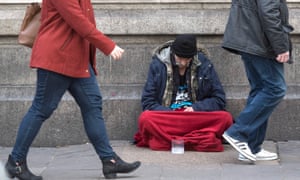
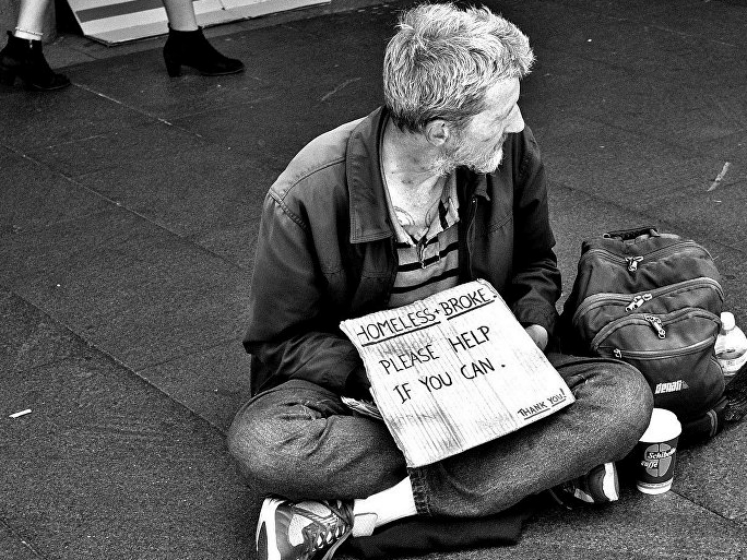
With the views of the far right how taking advantage of wider political failures all fueled by food banks, benefits cuts, homeless, job insecurity, pension erosion shifting the mainstream debate in its favour. Its public messages are focusing on popular fears about identity and economic security.

IE: Europe is overrun by Muslim immigrants; liberal elites have allowed all this to happen.

So far no alternative vision has won out.

Simply pointing out their factual mistakes is insufficient they must be challenged, locally and internationally, before it starts to do serious damage.

Why?

Because we are mechanistically sleepwalking towards an inability to effectively confront problems such as Brexit, Inequality and Climate Change.

There is only one way to get the voters to engage with the modern world and that is not by voting every five years as an expression of free will. 

It is offering the citizens of a country to own some of its prosperity by:

ISSUING CITIZENS GUARANTEED (NON-TRANSFERABLE BONDS.)

Résultat de recherche d'images pour "picture of bonds certificate"

These bonds could be bought for as little as a Dollar to as much as?

They could mature in as little as a year or?

They could be inherited but not sold.

They could be for every environmental, health, or whatever project that is not for profit for profit sake.

They will engage people in the direction of a country countermanding

negativity, allowing all citizens no matter what their political views,

creed, or colour to take pride in their nation.

They will countermand inequality and stop the rise of the far right.

THEY WOULD IF ADOPTED BY DIEM 25 FORFILL MOST IF NOT ALL OF ITS POLITICAL ASPERATION FOR EUROPE.

All human comments appreciated. All like clicks chucked and abuse chucked in the bin.

← Back

Thank you for your response. ✨


.


Share this:

  • Share on WhatsApp (Opens in new window) WhatsApp
  • More
  • Share on Mastodon (Opens in new window) Mastodon

THE BEADY EYE SAY’S; THIS TIME NEXT YEAR WE WONT BE TALKING ABOUT CLIMATE CHANGE.

22 Monday Apr 2019

Posted by bobdillon33@gmail.com in Climate Change.

≈ Comments Off on THE BEADY EYE SAY’S; THIS TIME NEXT YEAR WE WONT BE TALKING ABOUT CLIMATE CHANGE.

Tags

Capitalism vs. the Climate., Climate change, Distribution of wealth, Earth, Environment, Extinction, Global warming, The Future of Mankind, THE UNITED NATIONS, World aid commission

(Ten-minute read)

WE WILL BE TALKING ABOUT WHY WE CAN’T FIX THE PLANET.Résultat de recherche d'images pour "pictures of the planet earth"

At the moment we are basically being sold three misapprehensions concerning the scale of the threat of climate change.

The deadlines aren’t the problem. It’s our failure to heed them.

Remember, we are being told that carbon pollution needs to be cut in half in just 11 years. And to zero by mid-century.

The speed of change. The matter of sea level rise. The matter of air pollution.

There is little about what it would mean for public health. The lack of fresh water or food.

We’ll just invent our way out of the problem.

In reality, what’s stopping us is political inertia, which means the solution is political action.

The relationship between climate change and economic growth, climate change and conflict are not appreciated or understood or explained.

Only when you and others experience this future threat in the present (rather than something that is still a generation away) will it have enough motivational force to get you to engage in actions that take more effort today.

2% is an abstract concept and simply does not motivate people to act as forcefully as a specific one does.

On the path that we’re on now, climate threats are not taken as seriously because so much of it feels abstract or distant.

WE MIGHT NOT GET THERE AS SOON AS 2030.

BUT THE PATH THAT WE ARE NOW ON WILL DEFINITELY GET US THERE BY 2050.

THERE IS A LOT TO LOOK FORWARD TO BEFORE THEN AND IT WILL BE IMPOSSIBLE TO IGNORE IN A HOSTILE WORLD.

It is now becoming quite obvious that we’re not going to get below 2 degrees, and we’re on track for something like 4 by the end of the century. I don’t think that any climate scientists would argue with any of that.

We’re marching into a completely unprecedented environment. And we simply don’t know what it will look like or how it will impact us.

It’s not a matter of whether climate change is here or not, or whether we’ve crossed a threshold or not. Every upward tick of temperature will make things worse, and so we can avoid suffering by reducing it as much as possible.

Collective human action will determine the climate of the future.

Acting on climate change represents a trade-off between short-term and long-term benefits. It will transform the way that we relate to one another, our politics, etc.

WHAT IS NEEDED IS meaningful global action than was generated in Paris in 2015 and 2016.

The corporate world must now be made by law and economic incentives to align with climate action whether it like it or not.

Why?

Because Capitalist productivity the most powerful source of economic and social advancement is now with Artificial Intelligence becoming financialised.

( Financialization is profit margin growth without labour productivity growth.)

Of course, this will not happen as it will turn Climate change into profit for profit sake. We are beginning to see this already with the treatment Television is giving to the subject.

Résultat de recherche d'images pour "pictures of the planet earth"

Therefore as I have advocated in previous posts Profit for profit sake can be made to contribute to resolving and paying the cost of reducing world emissions.

A world aid commission of 0.005% on all profit-seeking algorithms, on all high-frequency stock trading, on all sovereignty wealth fund accusations, on all foreign exchange transactions over $50.000, on all lotto winnings worldwide, on all sports winnings.

This will create a perpetual world aid fund that can be granted with no strings attached, other than total transparency to support all projects to reduce our carbon footprint worldwide.

It can be achieved with the click of a button.

All human comments and suggestions much appreciated. All like clicks and abuse chucked in the bin.
← Back

Thank you for your response. ✨


the problem would be solved. carbon tax


Share this:

  • Share on WhatsApp (Opens in new window) WhatsApp
  • More
  • Share on Mastodon (Opens in new window) Mastodon

THE BEADY EYE LOOKS AT DIGITAL DICTATORSHIP.

04 Thursday Apr 2019

Posted by bobdillon33@gmail.com in #whatif.com, Algorithms., Artificial Intelligence., Capitalism, Climate Change., Democracy, DIGITAL DICTATORSHIP., Education, Environment, Evolution, Fourth Industrial Revolution., Google it., Google Knowledge., HUMAN INTELLIGENCE, Humanity., Inequality, Innovation., Life., Modern day life., Our Common Values., Politics., Post - truth politics., Purchasing Power., Reality., Sustaniability, Technology, The common good., The essence of our humanity., The Obvious., The world to day., Unanswered Questions., Universal Basic Income ., Wealth., WHAT IS TRUTH, What Needs to change in the World, Where's the Global Outrage.

≈ Comments Off on THE BEADY EYE LOOKS AT DIGITAL DICTATORSHIP.

Tags

Algorithms trade., Algorithms., Artificial Intelligence., Capitalism, Capitalism and Greed, DIGITAL DICTATORSHIP., Distribution of wealth, Inequility, Technology, The Future of Mankind


(Fifteen-minute read)

“As algorithms push humans out of the job market, wealth and power might become concentrated in the hands of the tiny elite that owns the all-powerful algorithms, creating unprecedented social and political inequality.”  Yuval Noah Harari.

Is he right?

Thanks to digital data, the state is able to have visibility on its population but is unable to govern concretely. Indeed, how can effective public policies be put in place if we can not quantify the objectives to be achieved according to the realities already observed?Résultat de recherche d'images pour "social credit system"

The crucial problem isn’t creating new jobs. The crucial problem is creating new jobs that humans perform better than algorithms.

Consequently, by 2050 a new class of people might emerge – the useless class. People who are not just unemployed, but unemployable.

Technology is never the main driver of social progress. Technology is only an amplifier of human conditions.

Why then, do we keep hoping that technology will solve our greatest social ills?

Technology has done nothing to turn the tide of rising poverty and inequality.

Yuval Noah Harari sees the problem clearly, “The most important question in 21st-century economics may well be: What should we do with all the superfluous people, once we have highly intelligent non-conscious algorithms that can do almost everything better than humans?”

Software is eating the world.  More and more major businesses and industries are being run on software and delivered as online services.

Most of what people learn in school or in college will probably be irrelevant by the time they are 40 or 50.

We need to change what we value. If we don’t our political and economic systems will simply stop attaching much value to humans. Even in an age of amazing technology, social progress depends on human changes that gadgets just can’t deliver.

What should we do?

We can’t move from the world we have to the world you want without a total paradigm shift

But what is the truth? What about reality?

Do we really want to live in a world in which billions of people are immersed in fantasies, pursuing make-believe goals and obeying imaginary laws?

Well, like it or not, that’s the world we have been living in for thousands of years already.

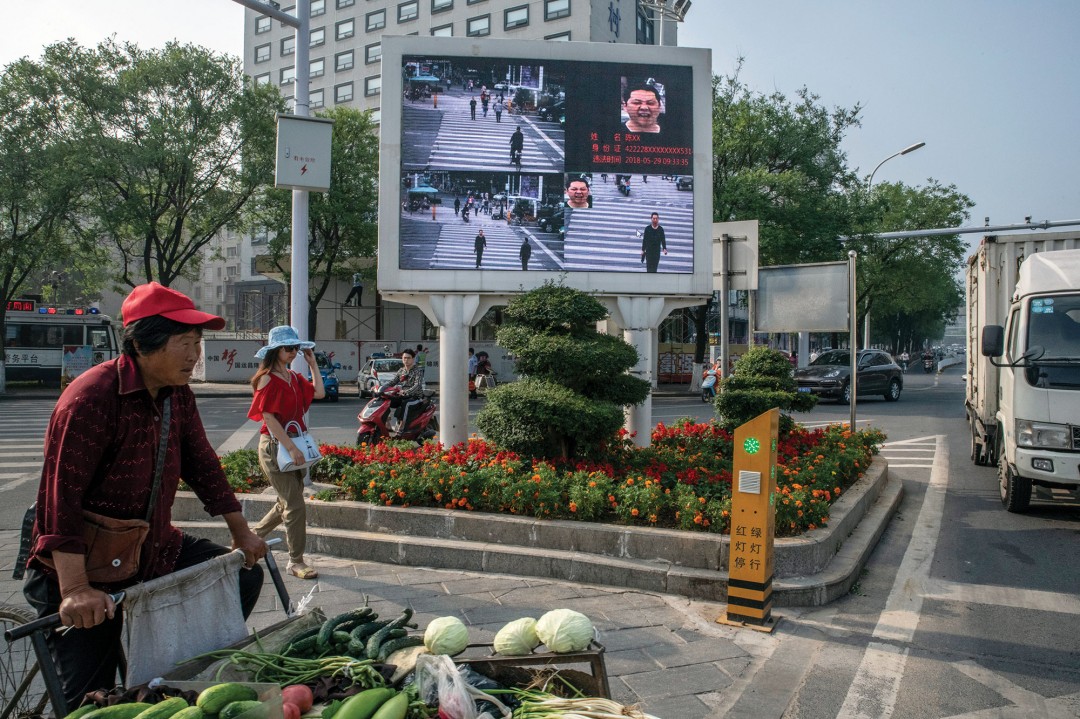
In order to move forward, we need to embrace technology both as a means of production and a method for producing new roles while not allowing code itself to push us into oblivion.Photo of a large monitor in a busy intersection showing images of a suspect.

The world may well be becoming more equal with more technology however rather than transferring wealth from the middle-class to the tech elite it does not distribute wealth universally.

This can only be achieved by moving to Universal assets ownership.

A Universal basic salary will only fuel consumption. 

I think most people really do want to believe that they’re contributing to the world in some way, but consumption without a purpose will indeed lead to creating a whole class of flunkies that essentially exist to improve the lives of actual rich people.

Of course, I can hear that Universal Asset ownership is a Socialist idea. But in a world that is now driven by the technology of detachment, we must find a way of engaging in sharing responsibility and rewards.

Sure there are plenty of ways to contribute to society, other than ownership, but, if we are to act as one people, we must be free to decide how and want to contribute.

Returning to the Question of DIGITAL DICTATORSHIP.

I think most people do not want Google to answer their questions. They want Google to tell them what they will have to do next.

If the hegemony of Google is to be demonstrated, we must also understand that the company is filling digital governance that states are struggling to reclaim.

We’ve been taught for the last 30 to 40 years that imagination has no place in politics or economics, but that, too, is bullshit.

So here is a solution.

The trove of data generated by every digital citizen should not be held by governments or companies but by citizens themselves.

If not the digital companion whispering to our ears the next stage will be delimiting the good of the bad.

We already have social-style scores, anyone who has shopped online with eBay has a rating on shipping times and communication. There is a lot of data being collected with little protection, and no algorithmic transparency about how it’s analysed to spit out a score or ranking.

I am not advocating here China’s social credit system which is a vast plan to monitor citizens, judging citizens’ behaviour and trustworthiness. The potential for abuse is enormous. The Social Credit System is in large part a direct response to a collapse in public confidence in government officials and others in positions of authority. Résultat de recherche d'images pour "social credit system"

I am advocating a system of social credits to reward projects that reduce climate change, social inequality and that promotes free education. 

Why not use human wisdom, not machines, to move our world forward.

Democracy as we know it will not survive the Forth Technological Revolution unless we all have a stake in it other than the vote.

Looking at the state of the world the idea of a ‘useless class’ might feel abstract to most of us at the moment and will remain so until we use our buying power as our voting power to effect change.

Right now we’ve got upside down democracy where every decision has been made globally, behind closed doors by corporations. If the people see no point in a democracy, because it seems to have no relevance to their everyday lives and the situation in which they live them, they will not do anything to defend it or take part in its processes.

With Universal Asset ownership business can become part of the solution,
not part of the problem.

That’s a project we can all get behind.

All human comments appreciated. All like clicks and abuse chucked in the bin.

← Back

Thank you for your response. ✨


Who actually is the useless class?


Share this:

  • Share on WhatsApp (Opens in new window) WhatsApp
  • More
  • Share on Mastodon (Opens in new window) Mastodon

THE BEADY EYE ASK’S: WHAT IS THE VALUE OF A HUMAN TO DAY ?

01 Monday Apr 2019

Posted by bobdillon33@gmail.com in #whatif.com, 2019., Artificial Intelligence., Capitalism, Climate Change., Democracy, Education, Environment, Fourth Industrial Revolution., GDP., Happiness., HUMAN INTELLIGENCE, Humanity., Inequality, Life., Modern day life., Our Common Values., Politics., Populism., Post - truth politics., Reality., Sustaniability, Technology, The common good., The essence of our humanity., The Obvious., The world to day., Trade Agreements., Unanswered Questions., WHAT IS TRUTH, What Needs to change in the World, Where's the Global Outrage.

≈ Comments Off on THE BEADY EYE ASK’S: WHAT IS THE VALUE OF A HUMAN TO DAY ?

Tags

Algorithms., Artificial Intelligence., Capitalism, Capitalism and Greed, Climate change, Distribution of wealth, Earth, Environment, Inequility, The Future of Mankind, Visions of the future.


( Seven minuter read)

At the best of times, money is a touchy subject but when it comes to putting a value on a human there is a vast array of circumstances that all boil down to pain and pleasure.

Whatever rest assured with the Forth Industrial Revolution and Climate change we are going to learn the real value of human life. Résultat de recherche d'images pour "can we put a monetary value on ourselves" Should the value of life be variable depending on age?  UTILITARIANISM.

Have you been thinking about putting yourself up for sale lately?

Ever wonder how much money you could get on the open human market?

Money is merely an arbitrary store of value, wars and natural disasters bear witness to this fact.

In a system where capitalism is a prime determinant of value, how can we preserve what we truly value as humans, what matters to us beyond money?

No matter where we stand on the socioeconomic ladder, the future of the “normal life” doesn’t look good.

CAN WE DO ANYTHING?

Humanity is more important than money — it’s time for capitalism to get an

upgrade.

So how can we change capitalism so that it focuses on what humans really

want and need?

There have been many different forms of capitalist economies ever since money was invented around 5,000 years ago. The current form of institutional capitalism and corporatism is just the latest of many different versions with the current revolution in technology promoting another form of materialism, by and large, is a psychological trap.

Profit-seeking algorithms recognise that money is inherently neutral that it is merely a vessel for the exchange of experience between two people. Its value only becomes realized when it’s put into motion.

Technology will not be the key which frees us from this precipitous world.

Most people these days aren’t even conscious of what they’re using to determine their self-worth.

No matter how much you own, how much you buy, how much you earn, the disease of more never goes away- just look at the current state of the world.

Old-style protection of nature for its own sake has badly failed to stop the destruction of habitats and the dwindling of species. It has failed largely because philosophical and scientific arguments rarely trump profits and the promise of jobs.

In one of my recent post, I addressed the power of your back pocket – buying power as a means of effecting change. It needs to be supported by Social Credits. (See below)

Instead of having our humanity subverted to serve the marketplace, capitalism has to be made to serve human ends and goals.

Of course some time ago it dawned on someone that, by making it possible for people to buy and sell natures services, we could save the world and turn a profit at the same time. The industrial revolution of the nineteenth century. Nature by capital.

(Sorry, did I say nature? We don’t call it that any more. It is now called natural capital. Ecological processes are called ecosystem services because, of course, they exist only to serve us. Hills, forests, rivers: these are terribly out-dated terms. They are now called green infrastructure. Biodiversity and habitats? Not at all à la mode my dear. We now call them asset classes in an ecosystems market. I am not making any of this up. These are the names we now give to the natural world.)

WHAT IS NEEDED NOW IS FOR SOMEONE TO REALISE THAT:

1. Humanity is more important than money.
2. The unit of an economy is each person, not each dollar.
3. Markets exist to serve our common goals and values.

True wealth occurs when the way we spend our money is not simply compensating for how we earn it. The welfare of a nation or the world can… scarcely be inferred from a measurement of GDP.

The real value of money begins when we look beyond it and see ourselves as better, as more valuable, than it is.

Rarely will the money to be made by protecting nature match the money to be made by destroying it.

I’m talking about the development of what could be called the Natural Capital Agenda: the pricing, valuation, monetisation, financialisation of nature in the name of saving it by Social Credits.

They could put a stop to the risk of a progressive “privatisation” and “commodification” of nature.

We’re staring at trillion-dollar problems in the world with climate change, that is about to speed up and we need commensurate solutions.

One of the main problems is engaging the population of a country or countries to part take in the need to effect change.

We can harness the country’s ingenuity and energy to improve millions of lives if we could just create a way to monetize and measure goals by Social Credits.

People could buy them or win them.

For Example:

What if governments and world corporations were to introduced 100 million SCs to reduce obesity levels.

What if governments were to reward green energy projects with SCs.

What if governments were to use SCs to replace pensions/ treasury bonds.

What if countries used SCs to reflect fair trade.

What if education and reduction of inequality were promoted by SCs.

To protect the world from the despoilation and degradation which have done it so much harm. After all, it is not most environmentalists who have misunderstood the realities that come with ‘growth’ a finite Earth, but most economists.

Forget what society tells you about what it means to have succeeded, and endeavour to create your own definition of success based on those human qualities and virtues that you value most.

We are fundamentally empathetic creatures in an evolutionary process that started with blood ties, then tribes, religion, and currently nations but could extend to humans as one, then to creatures, plants and finally our planet.

The adage that money makes the world go round is the saddest reality of life.

“We can’t solve problems by using the same kind of thinking we used when we created them.”

Is the first generation of digital natives and sharing is their norm, could it be that collaborative consumption rather than consumer capitalism will be their norm?

If so, what will the next generation bring?

Time is the one resource all of us use to have, but it’s also painfully finite in nature. You can’t bank it — all you can do is invest it wisely.

Money is fluid.  Therefore, money is a reflection of the owner’s values and intentions.

We all have some sort of measuring stick that we use to determine our value as a human being.

Put another way, if we have access to all we need, would we need money?

all human comments appreciated. All like clicks and abuse chucked in the bin.

← Back

Thank you for your response. ✨


Share this:

  • Share on WhatsApp (Opens in new window) WhatsApp
  • More
  • Share on Mastodon (Opens in new window) Mastodon

THE BEADY EYE SAY’S: ITS TIME FOR THE SOCIAL SECTOR TO MOVE BEYOND THE US-VERSUS THEM.

28 Thursday Mar 2019

Posted by bobdillon33@gmail.com in #whatif.com, Capitalism, Climate Change., Environment, Humanity., Inequality, Life., Modern Day Democracy., Our Common Values., Politics., Populism., Purchasing Power., Reality., Sustaniability, Technology, The common good., The essence of our humanity., The Future, The Obvious., The world to day., Trade Agreements., Unanswered Questions., WHAT IS TRUTH, What needs to change in European Union., What Needs to change in the World, Where's the Global Outrage., World Leaders, World Organisations., World Politics, World Trade Organisation

≈ Comments Off on THE BEADY EYE SAY’S: ITS TIME FOR THE SOCIAL SECTOR TO MOVE BEYOND THE US-VERSUS THEM.

Tags

Capitalism and Greed, Climate change, Distribution of wealth, Environment, Global warming, Inequility, Purchasing Power., The Future of Mankind, Visions of the future.


(Twelve-minute read)

There is no point at shaking our fists at corporations whose drive is to maximize profits at the expense of communities.

The world is changing faster than ever before with levels of social inequality spiralling out of control, with most of the world’s problems resulting from this, in one way or another.

The story we have been telling ourselves about our origins is wrong and perpetuates the idea of inevitable social inequality.

There is a fundamental problem with this narrative.

It isn’t true.

Civilization meant many bad things (wars, taxes, bureaucracy, patriarchy, slavery…) but also made possible written literature, science, philosophy, and most other great human achievements.

Civilization’ does not come as a package.

Unfortunately most see civilization from their smartphones and TV sets hence inequality, as a tragic necessity.

Once we learn to throw off our conceptual shackles and perceive what’s really there one can imagine overthrowing capitalism or breaking the power of the state, but it’s very difficult to imagine eliminating ‘inequality’.

In fact, it’s not obvious that doing so would even mean since people are not all the same and nobody would particularly want them to be.

Against a background of limited resources GDP growth is still seen as the ultimate political ambition.

‘Inequality’ is a way of framing social problems appropriate to technocratic reformers, the kind of people who assume from the outset that any real vision of social transformation has long since been taken off the political table.

With billions of people hyper-connected to each other in an unprecedented global network, it allows for an almost instantaneous and frictionless spread of new ideas and innovations. Combine this connectedness with rapidly changing demographics, shifting values and attitudes, growing political uncertainty, and exponential advances in technology, and it’s clear the next decade is setting up to be one of historic transformation.

The tech invasion has already taken over retail and advertising – and now invading forces have their eyes set on healthcare, finance, manufacturing, and education, banking.

It is time we turn the page on an approach to “the economy” under which communities are passive recipients, relegated to react to its ups and downs.

If we really want to understand how it first became acceptable for some to turn wealth into power, and for others to end up being told their needs and lives don’t count, it is here that we should look.

For instance, almost everyone nowadays insists that participatory democracy, or social equality, can work in a small community or activist group, but cannot possibly ‘scale up’ to anything like a city, a region, or a nation-state.

But the evidence before our eyes, if we choose to look at it, suggests the opposite.

Popolourism or people power can take many forms depending on what kind of change you’re looking to achieve and who has the power to make that change happen — whether it’s a government, company, community or individual.

There are many ways to influence governments and politicians, all of which can shift laws, policies and regulations.

Governmental and political structures are complex and vary widely across the globe and local laws can restrict the ability of organisations to engage in politics but there is one universal power that we have not yet tapped into.Résultat de recherche d'images pour "purchasing power pictures"

That is the power of Purchase Power.

The social sector has focused for years on government as its mechanism for change, but it’s business that has the biggest potential impacts on the social and environmental crises of our time.

Some of the deepest challenges facing our democracy have to do with the interaction between money and politics.

Yet civically minded citizens have limited options: call your MP, join a one-off protest action, donate to our advocacy organization. Too often, the options posed don’t translate into tangible benefits for one’s own community.

By making every purchase a civic opportunity, we can put communities back behind the wheel of their own economic destiny.

If we really want to see change when we open up our wallets to purchase the necessities and extra goodies in our lives, we should be more conscious of what or who we are supporting.

Purchasing power is social impact power.

With purchasing power, we can help business leaders to deliver social benefits while also meeting their bottom line, creating local markets that reward those who do.

People, given a path that does not set them back economically, will make choices as consumers that do good for their world. And, just as important, business leaders will as well.

By pooling our purchasing power, people and communities can do more than gain access to services they want at lower cost; they can unlock the ability of business–and I believe, whole market sectors–to be drivers of social good.

I believe people and communities have a more powerful tool in where what, and when they use their purchasing power.  For creating social benefits they care about, one that requires no sacrifice but instead aligns with their own economic interest as consumers:

Collective purchasing power.

Just imagine if the money we routinely spend on food, clothes, gifts, and even indulgences were turned into an untapped superpower to force change.

We’re at a moment of crisis in Communities–especially low-income neighbourhoods–are no longer being meaningfully engaged by the global economy, income inequality has never been higher, and our expulsion of finite fossil fuels into the atmosphere has us all on a crash course for disaster.

Although no generation behaves the same as the last.

How can we jumpstart a new, clean economy that truly lifts up those who need it most?

As new technologies are created at a faster and faster pace – and as they are adopted at record speeds by markets – it’s fair to say that the future is coming at a breakneck speed.

The definition of wealth itself is taking on a new meaning, with millennials leading a charge towards sustainable investing rather than being entirely focused on monetary return.

Global warming is here.

Humanity has dallied so long that avoiding the worst impacts will now require extremely sharp emissions cuts and the hotter it gets, the harder it gets to adapt.

THE TECH TO PULL CARBON OUT OF THE ATMOSPHERE IS STILL UNPROVEN.

The world has now amassed $247 trillion in debt, including $63 trillion borrowed by central governments: How we view money – and how that perception evolves over time – is an underlying factor that influences our future.

The population tidal wave in the coming decades will completely reshape the global economy. Rapid urbanization will translate into the growth of megacities, holding upwards of 50 million people.

While Amazon and Apple are worth over $1 trillion, Jeff Bezos has a $100+ billion fortune, and the current bull market is the longest in modern history at 10 years.

WITH MORE AND MORE PROFIT SEEKING ALGORITHMS THE FORCES BEHIND CHANGE ARE NOT ALWAYS EVIDENT TO THE NAKED EYE.

We now seem to be trapped in a trade paradox in which politicians give lip service to free trade, but often take action in the opposite direction.

Underrepresented populations have enormous influence as consumers.

Here are a few suggestions for conscious consumerisms.

Why not follow Bogota the Capital of a poor country and ban cars from our city centre on Sundays.

With the speed at which technology now moves, expect our energy infrastructure and delivery systems to evolve at an even more blistering pace than we’ve experienced before.

Why not allow and assist communities to set up there own solar farms.

Why not lobby Apple with there RECENTLY ANNOUNCED new credit card to allocate the cash back to charities.

Why not designate one day of the year as a world day of no online purchases.

Why not promote public asset ownership.

Why not apply a 0.05% world aid commission on all High-Frequency trading, on all Sovergen wealth fund accusations, on all foreign exchange transactions over 50,000 $, on all Lotto wins to create a perpetual World Aid fund.

Why not ask people outside Super Markets not to buy products that are housed in non-recyclable plastic.

There are many facets of change that will impact our shared future.

For community-driven economic transformation, someone has to pay for all of this change, and it is still going to be us in the form of targeted advertising.

So let advertising in all its forms Pay.

The wealth landscape is not all just about billionaires and massive companies – it is changing in other interesting ways as well.

The full impact of Millennials purchasing power and brand preferences will come into full effect in 2020 when their purchasing power is projected to reach $1.4 trillion.

Eventually, our descendants will be unrecognizable.

In our consumer culture what will have an immediate beneficial effect is a bottom-up approach through purchasing power which hurts the bottom line.

Finally. I am not the first or will I be the last to recognise the above.

Portable Purchasing Power

Today’s mobile advertising industry is growing exponentially. More devices

mean more sales, more opportunities to force change with what, where, and

how you buy.

Image associée

The world we want is in our hands. Buy the changes you want to see. 

All human comments appreciated. All like clicks and abuse chucked in the bin.

← Back

Thank you for your response. ✨


,


Share this:

  • Share on WhatsApp (Opens in new window) WhatsApp
  • More
  • Share on Mastodon (Opens in new window) Mastodon

THE BEADY EYE SAY’S: WE ALL KNOW WHY THE WORLD IS IN SUCH A MESS.

29 Tuesday Jan 2019

Posted by bobdillon33@gmail.com in Capitalism, European Union., Fourth Industrial Revolution., HUMAN INTELLIGENCE, Humanity., Inequality., Life., Modern Day Democracy., Our Common Values., Politics., Populism., Post - truth politics., Reality., Social Media., The common good., The Obvious., The world to day., Unanswered Questions., Wealth., WHAT IS TRUTH, What Needs to change in the World, Where's the Global Outrage., WORLD POVERTY WHERE'S THE GLOBAL OUTRAGE

≈ Comments Off on THE BEADY EYE SAY’S: WE ALL KNOW WHY THE WORLD IS IN SUCH A MESS.

Tags

Capitalism and Greed, Distribution of wealth, Globalization, Inequility


(Ten-minute read)

Looking at the world right in front of our eyes it would be fair to say that it is currently falling asunder while we all turn inwards in the fourth technological revolution that is not just undermining world institutions but creating social inequality that is linked to racial inequality, gender inequality, and wealth inequality, not to mention world conflicts.

This is a ringing indictment of our global economic system and there is no justifying it.

So the question is as it has been for the last couple of decades is there enough being done to bring about a more equitable distribution of income on a global scale.Résultat de recherche d'images pour "pictures of inequality and poverty"

The answer is a resounding No. To the extent that it is now hard to imagine any kind of economic miracle that could shrink the worldwide income gap.

Where is global inequality going?

By 2030 the richest 1% will own two-thirds of global wealth.

World lottos, created new billionaire every two days.

The world’s 10 richest billionaires, according to Forbes, own $745 billion in combined wealth, a sum greater than the total goods and services most nations produce on an annual basis.

Between 2009 and 2017, the number of billionaires it took to equal the wealth of the world’s poorest 50 per cent fell from 380 to 42.

But more than 65 per cent of the world’s millionaires continue to reside in Europe or North America. 

WHAT IF ANYTHING CAN BE DONE ABOUT THE DISTRIBUTION OF WEALTH – OR RATHER THE LACK OF IT.

It’s true that wealth inequality has always existed, no matter what the design of the society. Whether capitalist or communist, democratic, autocratic, or plutocratic, it will exist.

Yet many of the extremes we see today are avoidable.

Income disparities have become so pronounced poor health and poverty go hand-in-hand.

It is tempting to see the rising concentration of incomes as some sort of unstoppable force of nature, an economic inevitability driven by globalization and technology.

There is nothing inevitable about untrammelled inequality.

It is the result of an unlevel playing field, the direct consequence of certain government policies.

There is no longer any simple solution.

Nowhere has the distribution of the pie become more equitable.

Increasing the incomes of low-wage workers produces stronger beneficial economic ripple effects than boosting bonuses for the rich.

Excluding Quantitative easing, 97% of money has been created through lending. When somebody borrows money – even just by spending on a credit card – new money is created. No wonder our economy is so geared around finance.

Yet we penalise labour and subsidise both debt and the ownership of assets.

The question is, how fast can developing countries grow in the future? The answer, unfortunately, is not fast enough.

The richest 1 per cent of humanity reaped 27 per cent of the world’s income between 1980 and 2016. The bottom 50 per cent, by contrast, got only 12 per cent.

If you ever wanted to understand where climate change came from, why there are so many wars and the unrest we are witnessing the above figures say it all.

This will only get worse in the near future with the most powerful force driving the distribution of income on a worldwide scale will be raw economic growth:

Will poor countries make sufficient progress relative to their rich peers to bring more balance to the distribution of global income?

Or will rising inequality within countries dominate?

It depends on three forces: countries’ economic and population growth, as well as the evolution of inequality within them.

This is no longer true. The forth Industrial technological revolution is going to require more aggressive redistribution through taxes and transfers.

Why because social inequality is now very different from economic inequality, though the two are linked.

Areas of social inequality include access to voting rights, freedom of speech and assembly, the extent of property rights and access to education, health care, quality housing, travelling, transportation, vacationing and other social goods and services. In the quality of family and neighbourhood life, occupation, job satisfaction, and access to credit.

All of these areas are now been data mined for profit by you know who with us supplying the data scot free.

We all know that more inequality means less wealth for everyone. .. but are we seeing countries deciding to push vigorously back against inequality. No

Ballooning wealth inequality is a threat to society.

globalization has also upended the agricultural and manufacturing sectors in many countries.

“In every country, just about, the disproportionate economic clout of those at the top has provided these individuals with wildly disproportionate influence on their countries’ political life and on its media; on what policies are pursued and whose interests end up being ignored,” Obama said.

He is right!

Wealthy must contribute or be forced to the larger benefits of society.

Inequality is not inevitable – it is a political choice.

It represents social and political issues that no party or government can afford to neglect.

Foot Note: To us Europeans.

Europe, unfortunately, has not been at the forefront of this battle, at least not EU institutions.

On the contrary, it has for long remained complacent, as EU treaties require unanimity on tax matters and as the bloc includes countries such as Luxembourg that have benefitted massively from corporate and individual tax avoidance.

For decades, the EU was dominated by an unholy alliance among three types of governments: those that rejected the very principle of international tax coordination as an infringement on sovereignty; those that benefitted from tax competition; and those that used it as a way to overcome domestic reluctance to the reduction of redistribution.

For an institution that is supposed to be based on values and that hails the European social model, this is humbling, and the EU is now paying a political price for its long inertia.

Social inequality can also be established through discriminatory legislation.

Things have started to change.

Thanks to Yellow Jacks and Brexit we may witness only if we truly want it some improvements.

In the battle for fairer globalisation, with more and more Foodbanks and homeless people, it is far too early to claim victory.Résultat de recherche d'images pour "pictures of inequality and poverty"

All human comments appreciated. All like clicks and abuse chucked in the bin.

← Back

Thank you for your response. ✨


Share this:

  • Share on WhatsApp (Opens in new window) WhatsApp
  • More
  • Share on Mastodon (Opens in new window) Mastodon

THE BEADY EYE SAY’S: WE NEED MORE DREAMS THAN MEMORIES .

18 Friday Jan 2019

Posted by bobdillon33@gmail.com in #whatif.com, Artificial Intelligence., Capitalism, Education, Environment, Evolution, Fourth Industrial Revolution., Google, Google Knowledge., HUMAN INTELLIGENCE, Humanity., Innovation., Life., Natural World Disasters, Our Common Values., Reality., Sustaniability, Technology, The common good., The essence of our humanity., The Future, The Obvious., The world to day., Unanswered Questions., WHAT IS TRUTH, What Needs to change in the World, Where's the Global Outrage., World Politics

≈ Comments Off on THE BEADY EYE SAY’S: WE NEED MORE DREAMS THAN MEMORIES .

Tags

Capitalism and Greed, Distribution of wealth, Environment, Inequility, The Future of Mankind, Visions of the future.

(Six-minute read)

Why?

As we journey toward the undiscovered country called the future we are witnessing a world of terror, violence, greed, exploitation, pollution, and algorithm annihilation wreaking havoc in our world.

It’s no wonder in the face of such horror. that most of us feel minuscule and completely powerless.

But the world is glittering with possibility which can’t afford to wait for a generational change.

We’re clearly at a moment of great global transition and transformation as we attempt to help solve massive emerging issues we need more dreams than memories.

Help the world and the world will help you back.

In addition to globalization, technology, social changes and government policies that have all been instrumental in determining who benefits and who loses out from global economic integration in past decades we now have giants that deal in data, the oil of the digital era.

These titans—Alphabet (Google’s parent company), Amazon, Apple, Facebook and Microsoft—look unstoppable.

We can dream of a world rich enough to pay everyone a living wage as a birthright, of thriving human creativity, and of thrilling new ways for humans to build on and collaborate with machine intelligence but are we fooling ourselves.

There are no quick answers.

It may take a revolution in education; we may even need to rethink capitalism itself.

Certainly, we’ll need ideas to address the growing inequality that is driving so much of the anger we see in the world.

It seems clear now that millions of people around the world are rejecting a global order that they feel was foisted on them and has given them nothing.

We need to give a platform to dreamers and reformers who are thinking outside the box as the current system is in danger of breaking.

One in every nine people goes to bed hungry each night.

Up to one-third of the food produced around the world is never consumed.

Every 10 seconds, a child dies from hunger.

We are witnessing a massive shift of humanity unlike any seen before.

Today more than 68 million people around the world are displaced from their homes.

If you compare your size to the size of the universe, you almost don’t exist.Image associée

As Martin Luther King, Jr said, “We must learn to live together as brothers, or perish together as fools.”

What happens to society when the focus of culture is on the self and its icon, the “selfie”?

And what happens to morality when the mantra is no longer “We’re all in this together”, but rather “I’m free to be myself”?

What happens when Google filters and Facebook friends divide us into non-communicating sects of the like-minded?

What could possibly be gained from ignoring the global view, that, the accumulation of CO2 in the atmosphere is the sole reason that humankind’s ecological footprint is larger than Earth itself?

I would like people not to be satisfied with the current ecological footprint and try to come up with measures that really track the water, soil and all the ways we degrade ecosystems in a way that would become management metrics.

The dream of one world is not threatening, but beautiful.

Once one person does the “impossible”, thousands of people follow only because their mind starts believing it’s possible.

It means you must take the time to:

a) Define your values and guiding principles.

b) Understand your nature and individuality.

Define the experiences you want to have in life. Then, do everything you can to realize those experiences.

Try and leave this world a little better than you found it.

We must start extending our sense of shared identity to all of humanity.

We’re battling here for the survival of an idea on which the world’s future depends, the idea of humanity as one connected family.

But how do we get there?

First and foremost we must start breaking the cycle of poverty.Résultat de recherche d'images pour "what does the world need more than anything"

So let’s seek out those with compelling ideas to offer here other than like clicks and abuse.

The key may be to stop framing this dream as a top-down system driven by faceless global elites who tell us all what to do, but instead as a flourishing of human possibility that’s happening right here on the ground.

Ideas can’t be contained by borders.

Most countries are in ecological deficit.

We have technologies that can inflict global harm, our very survival now depends on it.

The potential and pitfalls for digital identity must be addressed. Holding the earth

All comments appreciated.

← Back

Thank you for your response. ✨


Share this:

  • Share on WhatsApp (Opens in new window) WhatsApp
  • More
  • Share on Mastodon (Opens in new window) Mastodon
← Older posts
Newer posts →

All comments and contributions much appreciated

  • THE BEADY EYE SAYS. EQUALITY, FAIRNESS, JUSTICE ARE INDIVISIBLE CONCEPTS IF ARE ANYTHING. March 18, 2026
  • THE BEADY EYE SAYS. IT DOES MATTER WHAT YOU THINK ABOUT WAR WHETHER ITS JUSTIFIED OR NOT. March 17, 2026
  • THE BEADY EYE ASKS HOW ARE WE TO MAINTAIN HUMAN DIGNITY IN A WORLD DOMINATED BY TECHNOLOGY. March 15, 2026
  • THE BEADY EYE SAYS THANKS TO CURRENT TECHNOLOGIES WE ARE UNABLE TO BELIEVE ANYTHING WE SEE OR HEAR? March 15, 2026
  • THE BEADY EYE SAYS LET’S PUT THE IRAN/ ISRAEL/ USA WAR IN CONTEX. March 12, 2026

Archives

  • March 2026
  • February 2026
  • January 2026
  • December 2025
  • November 2025
  • October 2025
  • September 2025
  • August 2025
  • July 2025
  • June 2025
  • May 2025
  • February 2025
  • January 2025
  • December 2024
  • November 2024
  • October 2024
  • September 2024
  • August 2024
  • July 2024
  • June 2024
  • May 2024
  • April 2024
  • March 2024
  • February 2024
  • January 2024
  • December 2023
  • October 2023
  • September 2023
  • August 2023
  • July 2023
  • June 2023
  • May 2023
  • April 2023
  • March 2023
  • February 2023
  • January 2023
  • December 2022
  • November 2022
  • October 2022
  • September 2022
  • August 2022
  • July 2022
  • June 2022
  • May 2022
  • April 2022
  • March 2022
  • February 2022
  • January 2022
  • December 2021
  • November 2021
  • October 2021
  • September 2021
  • August 2021
  • July 2021
  • June 2021
  • May 2021
  • April 2021
  • March 2021
  • February 2021
  • January 2021
  • December 2020
  • November 2020
  • October 2020
  • September 2020
  • August 2020
  • July 2020
  • June 2020
  • May 2020
  • April 2020
  • March 2020
  • February 2020
  • January 2020
  • December 2019
  • November 2019
  • October 2019
  • September 2019
  • August 2019
  • July 2019
  • June 2019
  • May 2019
  • April 2019
  • March 2019
  • February 2019
  • January 2019
  • December 2018
  • November 2018
  • October 2018
  • September 2018
  • August 2018
  • July 2018
  • June 2018
  • May 2018
  • April 2018
  • March 2018
  • February 2018
  • January 2018
  • December 2017
  • November 2017
  • October 2017
  • September 2017
  • August 2017
  • July 2017
  • June 2017
  • May 2017
  • April 2017
  • March 2017
  • February 2017
  • January 2017
  • December 2016
  • November 2016
  • October 2016
  • September 2016
  • August 2016
  • July 2016
  • June 2016
  • May 2016
  • April 2016
  • March 2016
  • February 2016
  • January 2016
  • December 2015
  • November 2015
  • October 2015
  • September 2015
  • August 2015
  • July 2015
  • June 2015
  • May 2015
  • April 2015
  • March 2015
  • February 2015
  • January 2015
  • December 2014
  • November 2014
  • October 2014
  • September 2014
  • August 2014
  • July 2014
  • June 2014
  • May 2014
  • April 2014
  • March 2014
  • February 2014
  • January 2014
  • December 2013
  • November 2013
  • October 2013

Talk to me.

Jason Lawrence's avatarJason Lawrence on THE BEADY EYE ASK’S: WIT…
benmadigan's avatarbenmadigan on THE BEADY EYE ASK’S: WHA…
bobdillon33@gmail.com's avatarbobdillon33@gmail.co… on THE BEADY EYE SAYS: WELCOME TO…
Ernest Harben's avatarOG on THE BEADY EYE SAYS: WELCOME TO…
benmadigan's avatarbenmadigan on THE BEADY EYE SAY’S. ONC…

7/7

Moulin de Labarde 46300
Gourdon Lot France
0565416842
Before 6pm.

My Blog; THE BEADY EYE.

My Blog; THE BEADY EYE.
bobdillon33@gmail.com

bobdillon33@gmail.com

Free Thinker.

View Full Profile →

Follow bobdillon33blog on WordPress.com

Blog Stats

  • 97,810 hits

Blogs I Follow

  • unnecessary news from earth
  • The Invictus Soul
  • WordPress.com News
  • WestDeltaGirl's Blog
  • The PPJ Gazette
Follow bobdillon33blog on WordPress.com

The Beady Eye.

The Beady Eye.
Follow bobdillon33blog on WordPress.com

Create a free website or blog at WordPress.com.

unnecessary news from earth

WITH MIGO

The Invictus Soul

The only thing worse than being 'blind' is having a Sight but no Vision

WordPress.com News

The latest news on WordPress.com and the WordPress community.

WestDeltaGirl's Blog

Sharing vegetarian and vegan recipes and food ideas

The PPJ Gazette

PPJ Gazette copyright ©

Privacy & Cookies: This site uses cookies. By continuing to use this website, you agree to their use.
To find out more, including how to control cookies, see here: Cookie Policy
  • Subscribe Subscribed
    • bobdillon33blog
    • Join 222 other subscribers
    • Already have a WordPress.com account? Log in now.
    • bobdillon33blog
    • Subscribe Subscribed
    • Sign up
    • Log in
    • Report this content
    • View site in Reader
    • Manage subscriptions
    • Collapse this bar