Since time immemorial we have had poverty, inequality.
Even with all the technology advances, political initiatives, international aid, etc we humans are unable to set values because capitalism has turned everything facet of life into a product.
Being born to being departed along with everything in between is an opportunity to make money now or in the future.
However we’re now at a crossroads.
Algorithms are mining our desires, sending personalised ads to stimulate unsustainable growth.
It’s no surprising that we have ended up in this situation.
We can say whatever, the international rules based of trade no longer applies. It and its organisations have been blown up by Donald Trump.
I am all right jack is back with the inequality gap getting wider by the minute.
The only rules that now matter are the rules of finance. All of the rest don’t apply.
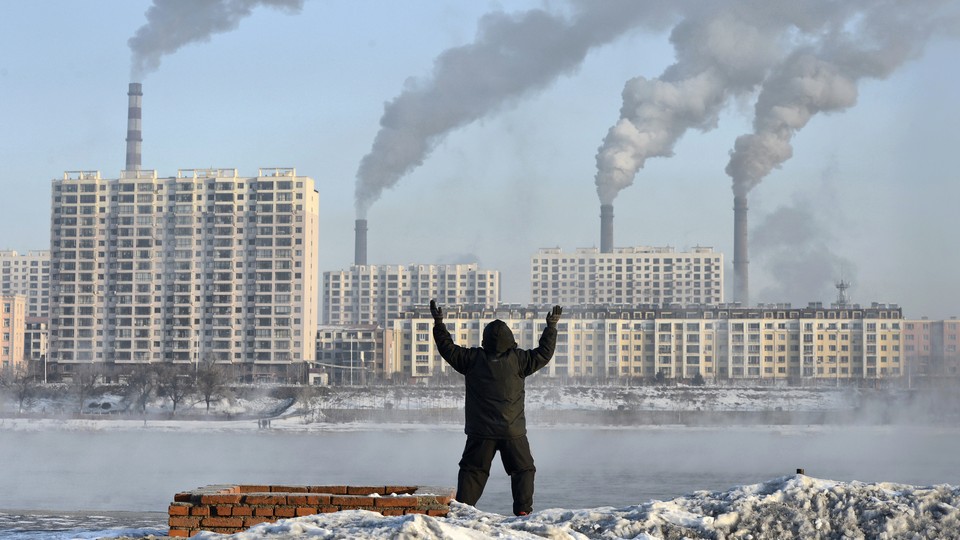
If we don’t step back from the brink of climate catastrophe, due to growth at all costs, there will be little point for our continued growth/ existence, other than to become slaves to AI.
All human comments appreciated, All like clicks and abuse chucked in the bin.
The truth is we have only after centuries of killing each other it’s not difficult to imagine the next step to how pathetic we will become.
YUVAL NOAH HARARI see the algorithm as “ arguably “ the single most important concept in our world.
His latest book Nexus describes some kind of automaton that especially through smartphones use we have succumbed to the cold inhumanity of compassionless algorithms.
Somewhat a remarkable claim, given such concepts as time, identity, information, morality, and so on.
Determinism is central to his world view.
Honestly every thing in the quantum world of entanglement and chaos points to non deterministic outcomes.
He argues that 20th century scientists found neither self nor free will.
We can at least assume they knew what both looked like before commencing their search.
He therefore stated that we’d never expect to hold a fully determined robot legally responsible for its actions, but we do hold fully determined human beings legally responsible for their actions.
The ethnical implications are glossed over, but a jurisdiction governed by this principle would have no selves to prosecute, casting doubt on the legitimacy of prisons and the legal system.
———————-
How did the planet earth get into such a dire state on terms of climate crisis and degraded environment?
Donald Trump has pushed us to the point that we can’t even agree on the weather.
What a stupid time to be alive.
Nothing would exist without temperature and the words adaptation and mitigation are ridiculously inadequate to describe what is coming.
Has anyone thought about unplugging American then plugging it back in again.
Hush, now before we look after the planet close to my heart are some home truths.
Democracy and the rule of law just aren’t doing the business. Why?
Because we all now connect with a computer in our pockets call a mobile phone. Also with social media we are all publishers.
This alone is an enormous destabilising factor that we have not figure out as yet.
So what will ?
Perhaps another pandemic, a nuclear explosion , an asteroid, a natural disaster, or Hubble discovery of another life form might do the trick.
It won’t be the second coming of any prophet, or AI, or American or Chinese domination.
All human comments appreciated. All like clicks and abuse chucked in the bin.
We have the new prophet Yuval Harari telling us where we came from and where we are going, making millions, while we are becoming less and less involved in decisions making.
Then along came the internet, social media and now algorithms.
The results combine with climate change is more and more disasters, proxies war, with ever widening inequality.
It’s time to ask yourself what do you believe.
Some decades ago the concept of globalisation became related to commercial and industrial development and control throughout the world.
American corporate imperialism is now endangering, with an invisible hand the democracy and freedom of nations.
In this Artificial intelligent world which country poses the greatest risk/ danger to world peace?
North Korea- Iraq – Israel- Ukraine- Russia- China- or USA a colossus astride the world, imposing its will & keeping the peace through military & Economic Power.
Pax Americana no longer exists.
America its self is now a democracy that is bereft of a few of the essential elements to call itself a democratic country.
No one has ever said as far as I am aware that democracy should be a platform where the richest people that earn a thousand times more than the poorest should share presidential platforms.
Now is the time to visit the vanishing wonders of the world before decisions making is the sole prerogative of AI.
You don’t have to be a genius to see that Artificial intelligence is already high jack by capitalism.
No one had a solution to legislate this coming world of AI
There is nothing to deal with something like this even if Yuval Harari tries to explain us Sapiens till the cows come home rest assured there won’t be for some considerable time.
Essentially AI is arming and has armed every person on the planet with their own voice.
Therefore it stands to reason that what ever comes into existence will protect itself from Homo Sapiens.
Million and millions of people are going to have access to technologies that can essentially develop sophisticated methods that are always evolving into something thing better at what it does.
The more data it acquired on people the more powerful it becomes.
Before you can kill the monster you have to say its name.
ARTIFICIAL INTELLIGENCE.
Contrary to popular belief, fantasy is not about making things up.
It’s about taking what is normal and everyday and usual and unregarded, and turn it around and show it from a different direction, so we see it once more with new eyes.
What we are seeing to day is AI in its infancy, as is the frugality of human life with climate change.
All human comments appreciate. All like clicks and abuse chuck in the bin.
The airways of communication are full of NEXTUS when it comes to what AI is going to do to the world.
There is no need to look very far when it comes to technology.
The mobile phone did more to correct the inequalities of pricing in the marketplace than all the aid granted to countries over the last twenty years. They also reduced corruption, allowing assistance to be called whenever, and vastly increased our knowledge of each other.
However the risk of allowing self learning machines to coexist with humans vastly outweighs any benefit and is no longer the stuff of science fiction.
With our fibulas mines unable to conceive of a future withoutAI. We should be asking what the world is going to do with AI.
The problem is that we don’t quite know what intelligence is.
There is not yet a single definition of intelligence.
What are the ingredients for true independence intelligence?
You tell me.
We born without any form of intelligence to survive and must learn how to acquire knowledge in order to survive in the first place. If not acquired the -result is death.
Not so in the case of a non biological machines.
If we put a purpose into a machine we had better be clear( beyond any doubt ) what that purpose is and how it can be achieved.
As we don’t have the least inclination as to how any super intelligent machine will function.
Of course the big question is will they wipe humans off the face of the earth.
The answer is YES.
The conversation should be around how we going to control their usage, not how they are going to control us, the climate, influence us, or wipe us out.
If we can implant explosives is pagers surely it possible to implant a self destructed code in all non biological creatures.
We not talking here about a technology that can be regulated with laws, or UN resolutions as it has no human boundaries.
The recent example in the Lebanon should not just terrify the Lebanon but the whole world.
Power is no longer the ability to destroy by military power but the abilities to conquer by Artificial Intelligence technologies.
All human comments appreciated. All like clicks and abuse chucked in the bin.
In a world where we are supposed to able to communicate, we are so saturated with information and bombarded with advertising we are no longer able to distinguish what is false and what is true.
Truth is usually the opposite to a false statement. Another words in accord with reality or facts.
We have a thing called Social Media which is destroying the very thing it claims to be – Social.
Far from bringing people together it’s is driving them apart with artificial predictive data gathering turning us into products.
Consider the risks.
While world leaders sit around a table passing worthless resolutions.
Exploding pagers /mobile phones with fake news becoming a major propaganda tool to launch cyber attacks.
To contaminate the air or water with drones.
It’s now or never we hold the owners of Algorithms to total transparency and legal responsibility.
It’s now or never we stop all wars and concentrate our collective actions to stop climate change.
It’s now or never we start to legislate for a transfer into living alongside non biological life forms.
It’s now or never that we learn that time it’s self is not just a forwarding of now but encompassed the past and the future all together in space time.
It’s now or never we ensure that all AI recognise our collective human values.
It’s now or never we put genuine value on all life.
It’s now or never Democracy cleanse its self up with long term solutions to world hunger/ poverty/ insecurity/ inequality/ racism/ living wage/ sustainable.
It’s now or never.
All human comments appreciated. All like clicks and abuse chucked in the bin.
You would think by now we would have figured it out that we have created fantastic amounts of waste and pollution to produce things that we don’t ( and often can’t) use again.
Ecosystem survive and are sustainable because they circulate and re-use energy and materials.
However modern industry which is now using technologies requiring vast amounts of energy continues to rely mostly on the one-way street of resource extraction and depletion.
This combination obviously can’t continue indefinitely. In the face of the staggering amount of power we are allowing massive data storage for algorithms, businesses and governments must learn from ecosystems the concept of up- cycling.
Take the humble honey bee for example.
Time had forgotten the power of the honey Bee.
The honey bee most definitely had what archaeologists call magico – religious significance for many ancient civilisations.
Honey is referred to in most religions books. Indeed it was prescribed as a medicine back in the days of Egyptian, Alexander the Great, Sparta, King Heron, Neto’s wife. Aristotle, the Roman Empire, the Chinese civilisation. India , the Americas , the Aztecs, the Dark Ages, in fact without the honey bee we would not exist.
Honey now seems with the arrival of antibiotics to be relegated to something we put on toast. When it was an antibiotic away back in 1892 it was not taken for granted.
To day New Zealand has a particular variety of honey that kills bacteria the sort bacteria that causes so much woe. But for some reason the country does not promote its production.
The Pohutukawa tree or Christmas Tree quintessential Kiwi produces a honey
The Manuka a bushy tree produces a honey called tea – tree honey .
On the other hand if we allow technology to develop exclusively with in the capitalist world we will have a world more divided with inequalities at its heart and than ever before,
If we are lucky we will have a digital global order.
There is no pause button on these technologies it’s now or never that we harness them to sustainably human values.
There is no simple way back, if there is indeed any way at all .
The Beady eye has for some considerable time been warning if we don’t have totally transparent and accountability we will just become products.
It is beyond comprehension that we have become so docile in giving up information for these self learning algorithms to plunder the the world for short term profit it seems we don’t give a fuck about the future of the planet.
To put this in perspective just take a moment to look at the planet that you’re most likely to live the rest of your life on.
Just under 5 billion years old. Hanging in space, surrounded by satellites spinning at 1600 km, travelling at 107,000km around the sun, it has and is presently supported billions of us, on smartphones, plus all known species that ever existed.
In return we its guard have plundered its finite resources, polluted its atmosphere, seas and rivers and lakes, destroyed its natural forests, covered it in billions of tons of concrete, tarmac, all for short term profit.
In response we are just beginning to reap the rewards of Climate Change, that no tech is going to stop.
Resulting in mass migration, inevitable wars, social upheavals etc you would think that we by now understand what is at stake.
For example: This year thousands have braved crossing the Darien gap in Panama to get to the USA, not to mention the Mediterranean , or the English Channel.
Look at Bangladesh under water. The question becomes why do we do nothing? This is a war on every sense of the word and we must win it.
All human comments appreciated. All like clicks chuck in the bin.
It’s hard to feel for future people. We are bad enough at feeling for our future selves.
Even if we last just 1 million years, as long as the average mammal – and even if the global population fell to 1 billion people – then there would be 9.1 trillion people in the future.
Concern for future generations is common sense across diverse intellectual traditions. When we dispose of radioactive waste, we don’t say, “Who cares if this poisons people centuries from now?
Similarly, few of us who care about climate change or pollution do so solely for the sake of people alive today.
Is any of this true?
Current global rates of consumption require the resources of about 1.6 earths. At this rate, we risk exhausting our planet’s life support systems that provide us with fresh water, nutritious food and clean air.
What 2050 could look like if we don’t do anything about climate change? This doesn’t need an answer.
That is a future unwritten. It’s also worth noting that, in fact, it is entirely up to us whether these hypothetical future beings ever actually come into existence.
So what do we owe the generations to come?
You might answer that since we don’t even owe to them to bring them into existence in the first place, we can’t possibly owe them anything all. Then wouldn’t the people of the future be within their rights to look back at us and ask, ‘Given that you despoiled our planet, why did you even bother bringing us into existence?
Maybe we might actually have an obligation not to bring future people into existence, at least if we’re going to mess things up enough to make their hypothetical lives unbearable.
That would imply that future people count more than us. And who thinks that? Certainly not me. I’m not even sure they count the same as us. That leaves us with only one option. I hate to say it, but future people surely count less than we do—at least a little less.
“What, I am trying to get you to see, is that we have an absolute duty to future generations not to ruin their future planet.”
Think of today’s teeming masses, displaced by violence and climate change, wandering the world in search for a safe harbour.
In comparison to all that present day concrete suffering, the hypothetical suffering of hypothetical future people seems sort of distant and abstract.
I should say that I am actually all for combating climate change. And I am all for weighing both the interests of present people and the interests of future people in the calculus of what is to be done about it. I just don’t think it’s obvious how much weight we should give to the wellbeing of hypothetical future people as opposed to our own.
——————–
Now more than ever, the world needs young people to step up to address the many other challenges ahead of us.
It is crucial to engage young people in decision-making – but in parallel – it’s also important for young people to think differently about how they want to engage.
They cannot vote or lobby or run for public office, so politicians have scant incentive to think about them. They can’t bargain or trade with us, so they have little representation in the market, And they can’t make their views heard directly: they can’t tweet, or write articles in newspapers, or march in the streets. They are utterly disenfranchised.
We make laws that govern them, build infrastructure for them and take out loans for them to pay back.
So what happens when we consider future generations while we make decisions today?
Is it really as bad as all that?
Our situation can be summed up as follows:
While facing an extinction event, instead of working toward reversing the march toward climate disaster, in the name of security we are investing in killing each other.
What will it take to unleash the energy and passion of youth leaders and activists to dismantle inequitable systems and work together to build an more inclusive future?
Social media will likely play a role in that revolution—if it doesn’t sink our kids with anxiety and depression first.
Asked young people what changes they want for the future.
HERE ARE SOME OF THE RED LINES.
Incentivize sustainable consumption and penalize production that’s not.
All stakeholders to take urgent action to safeguard nature and future food production.
Sanctions against institutions that resort to internet blackouts to supress citizen freedoms.
Tech companies to be transparent about misinformation and its spread on their platforms.
Governments to implement policies to protect individual citizens against harmful content.
Capacity-building programmes and education to help citizens better identify fake news.
Strengthened laws against media monopolies to protect democratic freedoms.
A Global Convention for Cybersecurity to uphold the integrity of political systems.
A global wealth tax on assets worth more than US$ 50 million to fight growing inequality.
Universities to end the exorbitant tuition fees that stifle social mobility.
Governments to guarantee universal access to mental health services.
Governments to invest in communities most at risk from climate change.
Financial institutions to stop bankrolling companies initiating fossil fuel exploration.
Companies to significantly reduce the GHG emissions of their operations and supply chains to help keep global heating within 1.5°C.
Governments to implement fit-for-purpose policies and regulations on big tech.
Companies to integrate technology ethics into the design of their products and services.
Governments to prioritize the immediate needs of healthcare workers and their families.
Companies to drive digitalization in healthcare services to improve patient care.
Governments to end qualified immunity in law enforcement for police officers.
Increased action against gun violence.
Two critical questions guided these dialogues:
What are the barriers that have hindered progress?
And, what key values, principles and practices will enable us to foster long-lasting systemic impact for the next decade?
As many around the world push for the creation of a more just, equitable and sustainable future we must remember that technology is one of the greatest tools for achieving these goals, but without ethical considerations at the fore… this will likely only perpetuate the very inequalities that we hope to address.
Every generation of teens is shaped by the social, political, and economic events of the day and how fast teens grow up depends on their perceptions of their environment.
For example their ubiquitous use of the iPhone, their valuing of individualism, their economic context of income inequality, their inclusiveness, and more.
Social media is creating an “epidemic of anguish.
We can’t market technologies that capture dopamine, hijack attention, and tether people to a screen, and then wonder why they are lonely and hurting. It makes humanity look like an “imprudent teenager”, with many years ahead, but more power than wisdom.
Fortunately, there are concrete things humanity to day can do.
The field of sustainability is evolving.
For example, if there is any moral weight on future people, then many common societal goals (like faster economic growth) are vastly less important than reducing risks of extinction (like nuclear non-proliferation).
The entire value chain needs to be sustainable, from raw material sourcing to the manufacturing and usage of the products.
Transparency, accountability, trust and a focus on stakeholder capitalism will be key to meeting this generation’s ambitions and expectations. Doing so would help save the lives of people alive today, reduce the risk of technological stagnation and protect humanity’s future.
Our biases toward present, local problems are strong, so connecting emotionally with the ideas can be hard. It’s humbling and inspiring to see the role we can play in protecting the future. We can enjoy life now and safeguard the future for our great grandchildren.
If we name each generation based on the technological conditions it experienced, generations may soon encompass only a few years apiece. Slicing the population into ever-narrower generations, each defined by its very specific relationship to technology, is fundamental to how we think about the relationship between age, culture, and technology.
They include the digital natives, the net generation, the Google generation or the millennials.
All of these terms are being used to highlight the significance and importance of new technologies within the lives of young people. But generation gaps did not begin with the invention of the microchip. What’s new is the fine-slicing of generational divides, the centrality of technology to defining each successive generation.
If the role of technology in shaping an emergent generational consciousness it seems obvious, to imagine a return to the days when sociological generations spanned multiple decades is over. If you believe that technological conditions profoundly shape the life experience and perspectives of each successive generation, then those generations will only get narrower. If we name each generation based on the specific technological conditions it experienced during childhood or adolescence, we may soon be dealing with generations that encompass only a few years apiece.
At that point, the very idea of “generations” will cease to have much utility for social scientists, since it will be very hard to analyse attitudinal or behavioural differences between generations that are just a few years part.
The problem is that all will come at a price. That price is and will be.
The loss of intentional and thoughtful communication techniques to preserve meaningful connections in a society that is becoming more and more reliant on technology.
Be it the metaverse, smart glasses or large language models, the world as we know it may never be quite as we first imagined it, merging into physical and digital spaces.
While the internet offers unparalleled convenience and connectivity, it is essential to recognize its limitations in reproducing the depth of personal interaction found in face-to-face encounters.
—————
Technology will be a vital tool for creating a cleaner, safer and more inclusive world, but what changes can we expect to see?
5G will create a lot of new use cases including drone management, robotic surgery and autonomous vehicles. Large language models will become a given because they lower the cost of artificial intelligence (AI)
Quantum computing merges with classical computing.
Our grandchildren will live in a very different world thanks to the democratization of products and services that are currently only available to the elite or wealthy,
Holographic image in front of you, seen through smart glasses will be your algorithmic world.
No matter what future we leave behind life my advice is life is beautiful-celebrate -celebrate – never give up.
If all of this is hurting your head, let’s just get back to the basics: if there is a secret to life, it might all be down to what we do, not what we are.
All human comments appreciated. All like clicks and abuse chucked in the bin.
Fear is an ancient and conserved response that served humans well enough before the advent of civilisation, but it has become distorted in modern societies where primordial fears can readily transform into phobias.
Fear is part instinct, part learned, part taught. Some fears are instinctive: Pain, for example, causes fear because of its implications for survival. Other fears are learned and also partly imagined. Imagined threats cause paralysis. Real threats, on the other hand, cause frenzy.
For instance social media is now fanning, the flames of fear and disseminating misinformation quickly and widely with fake news.
It’s hard to fully understand the way fear shapes our world without addressing its relationship to anger.
And anger is important for those who profit from fear because anger generates action.
People are more vulnerable when they’re in an angered state. When we’re angry, we don’t pay attention to the details of complex messages, the more one person expresses anger, the more others express anger, and then it becomes a kind of spiral where the anger is ratcheted up and up.
Many bemoan online when social media platforms seemingly descend into ranting and abuse but a great deal of the anger we find when perusing our devices isn’t organic, it’s engineered – for profit.
Provoking anger is rapidly becoming the standard for many online operations.
Why?
Because fidelity of the source is taken by social media sites and search engines as key factors for their Automated Decision Making (ADM) systems to classify content.
In their defence, social media platforms are between a rock and a hard place because of their need to balance free speech against repression of damaging or hateful material.
It works because in our algorithmically driven culture the popularity of any given content is no longer driven by the number of eyeballs that see it, but by the level of engagement it generates.
—————–
Fear sharpens the mind, which is why fear is used in campaigns, whether it’s public health, whether it’s to change people’s attitude to things like climate change.
Fear can steel resolve to do something.
After the second World War and the horrors that the world experienced, democratic countries became defensive. In other words, they saw fear as an important tool for making sure that these kinds of perversions never happened again, but in the process of doing that, fear actually became too important as a component. It started to eclipse the very values that it was supposed to be protecting- “enculturated” in fear – NATO.
But that’s not the whole story.
We can now register a fear with new characteristics in the fear taxonomy, and we could call it global fear.
.For example during COVID too much fear created apathy leading to disinterest and distrust.
What’s needed is a better public understanding of the role these emotions play in our lives, and a clearer appreciation thatwhen emotions are manipulated, even good intentions can have disastrous consequences.
——————–
Fear and anger are dominating our world right now, but are we being manipulated for profit?
Fear and anger abound – in our politics, in our social discourse, and in our expectations for the future.
When fear is pervasive in a system — and it’s pervasive in all of our systems — what that means is that we lose dynamism, we lose innovation. Fears put a stranglehold on our life force. Fear paralyzes us. Fear diminishes us. And the more we conquer our fears, the more meaningful our life becomes.
Fear and anger have been monetised, the result of deliberate manipulation by commercial and political interests.
The antidote for our current malaise isn’t simply to suppress our emotional extremes. In fact, both fear and anger can help positive social change by fostering a thirst for justice and even revolution.
The difficulty for people today is empathising or imaginatively trying to situate themselves in the future … It’s very, very difficult.
The growing fear-based discourse around climate change, for example, and the use of fear-laden expressions and words often backfires on those who deploy them. When someone like [UN Secretary-General] António Guterres uses the term ‘global boiling’ the problem is a lot of people in their daily lives are not experiencing a climate crisis, they don’t experience excessive heat, they don’t have wildfires on their doorstep. They just switch off.
While we tend to equate fear-based leadership with totalitarianism or populism, there are many instances in democratic countries where politics is coloured by the use of fear as a blunt tool of coercion.
More people realise that we’re living in a vicious cycle, where manufactured fear fuels anger and anger in turn blinds us to the recognition that our fear is misplaced. Take the discourse around “illegal” immigration.
As George Orwell’s warnings 1984 to the world which are now coming true as we move into an age of totalitarian Ai dictatorial -an age in which freedom of thought will be a deadly sin and later on a meaningless abstraction. The autonomous individual is going to be stamped out of existence.
Totalitarianism relies on mass support so we need more people to realize what is at stake and start seeing all around us by taking the smart phone out of our ears.
With AI moving into the Physical world, algorithms are running more and more of life as we know it.
Combined they are evolving towards the same system, a form of oligarchical collectivism with manufactured fear. The strategy of fear is one of their most valuable tactics.
Don’t let it happen. Face recognition becoming a thought or face crime.
————————-
You see the state of the world.
It is not important who is at war or with who, it’s the removal of freedoms and constant surveillance which is now conducted through the smartphones we carry around in our pockets, with every sound you make, every movement scrutinised.
The permanent lie becomes the only safe form of existence. Everything fades into mist. The past is erased, the erasure is forgotten and the lie comes truth.
No one can stand aside, dont let it happen it depends on you
It’s understandable that we may worry about world events but fear is hardwired in your brain, and for good reason.
—————–
War is peace freedom is slavery.
Israel is as we watch becoming a Totalitarian State.
How does one witness the cruelty of indiscriminate bombing? We cannot physically or mentally feel another’s pain, but we can empathize with it. We tend to still think of war as great power competition or as the Second World War.
The USA vetoed Palestine becoming a full member of the United nations then approved more than $61bn worth of military assistance to help Ukraine in its desperate defence against Russia, as well as billions for other allies including Israel and Taiwan.
The $95bn in total funding includes roughly $61bn for Ukraine (with much of the funding going towards replenishing American munitions); $26bn for Israel; $8bn for US allies in the Indo-Pacific region, including Taiwan; and $9bn in humanitarian assistance for civilians in war zones, such as Haiti, Sudan and Gaza, though the package also includes a ban on direct US funding for the United Nations Relief and Works Agency for Palestine Refugees (Unrwa), an agency providing key assistance to Gaza, until March 2025. The US has so far sent Ukraine roughly $111bn in weapons, equipment, humanitarian assistance and other aid since the start of the war more than two years ago.
The Israel bill includes about $4.4bn to replenish depleted US supplies given to Israel; $4bn for missile defence, including the much-vaunted Iron Dome, and $1.2bn for the Iron Beam; and $3.5bn to help Israel buy weapons. There are also provisions to make it easier to supply Israel with US munitions held in other countries.
What is what.
If you can have all the information that’s out there, crunch it into some kind of algorithm, that you can then target discriminately, proportionately.
The idea that machines are going to replace humans in wars is fundamentally untrue.
We are seeing this to a certain extent right now, in Palestinian/Israel war with Ai deciding who and how to kill. Both wars are is very much a battle of machines and soldiers, a high technology-driven conflict.
Where you can attack, use some surgically precise weapons, take care of the problem, eliminate your opponent and then extract yourself from a situation, has actually turned into a quagmire with new super weapons, whether it be cyber information warfare or artificial intelligence everyone wants to be ahead of the curve, right?
However, this approach also overshadows political considerations, including the causes of conflicts, obscures the costs of conflict, and creates illusions of quick and easy victories—all of which has led to two decades of war in the twenty-first century.
One of the problems here is this idea that you can simply solve problems by targeting them with cruise missiles, is simply not the case.
The belief that technology can help prevent war by creating a deterrent, is an illusion.
Wars will never be able to solve the difficult and complex political and cultural problems on the ground. Weapons can help produce ceasefires, but they cannot themselves create long-lasting, established peace.
Essentially, the idea that science can produce technologically advanced weapons so horrible that no one will ever want to fight is farcical. If we are ever going to get rid of war military culture it must be understood that it does not exist in isolation.
Through the use of technology WE GOING TO CREATE WARS.
The rush to apply cutting edge technologies like artificial intelligence to military systems is well under way. A new breed of techno-evangelists, many of whom stand to make billions if we go down the high tech path they are so aggressively promoting.
The application of science to unpick the supposedly immutable principles of warfare, making conflicts shorter and more humane, or eliminating the need for large-scale campaigns, found a home in the United States by the middle of the nineteenth century.
Such views reached their zenith with the advent of nuclear weapons and the logic of deterrence.
Importantly, technology-based approach emerges as a counter to the deterrence-based approach. Although nuclear weapons had made war unlikely, given the risks of mass casualties and devastation.
There is a need for much greater restraint in making assumptions as to what ends can be achieved militarily. Replacing people with machines on the battlefield, will not result in ‘clean’ conflicts.
Where there may be feelings of anger and betrayal, or even a sense of exhaustion, not uncovering the truth may lead to conspiracy or a turn to an engineering-infused idealism—that smarter systems will produce better results next time.
High-tech wars transfers the risk from soldiers to civilians.
It envisions the military drawing on US advanced technologies, such as AI, cyber resources, unmanned systems and machine learning to offset or create an overmatch of adversarial capabilities. Reducing the time that it takes from identifying a target to destroying it (known as the “kill chain”) and diminishing or eliminating human input could be a recipe for unprecedented disaster.
The Ukraine war is been used as a proof of concept for their systems, and a marketing tool to boot – after all, what’s more attractive than buying “battle proven” technology?
Revelations that Israel has used AI not to spare civilians but to step up the rate and scope of its devastation of Gaza is just the latest example of why we need to think twice before acquiescing in the rush towards a world dominated by automated warfare.
Between 2019 and 2022, U.S. military and intelligence agencies awarded major tech firms contracts with ceilings worth at least $53 billion combined. Resulting in large military contracts to big tech firms like Microsoft, Amazon and Google.
The idea that America alone has the ability (and the duty) to protect the world’s democratic societies; and a steadfast belief that the best way to preserve U.S. dominance is through a largely unregulated free market that prioritizes corporate needs is a farce. It is on the verge of losing an epic struggle for global geopolitical and economic supremacy—unless it can outpace China in the ‘AI arms race.
U.S. government for Israel’s war on Gaza, which the International Court of Justice has suggested can plausibly be considered a case of genocide.
Russia’s or Israeli nuclear status means that NATO countries are unlikely to become involved in direct fighting given the risk of escalation.
The time to act is now, because nobody has any idea if we have cyborg fighting wars.
There is another response in play when there is a perceived threat to survival. Physical harm, threats to property used for protection, threats to self value that erode a desire to survive come from the Caveman part of our brain that dictate the innate need to run, hide, fight. As to what is coming next is anyone’s guess.
My guess is that it will be self-help.
Physical aggression and violence dictate fear. the use of run, hide, fight.
All human comments appreciated. All like clicks and abuse chucked in the bin.
≈ Comments Off on THE BEADY EYE SAY’S: WHEN WE REFLECT UPON OUR ORIGINS IT IS DIFFICULT TO AVOID THE MOST ESSENTIAL QUESTION OF THEM ALL – WHAT MAKES US HUMANS DIFFERENT FROM OTHER ANIMALS?
Our brain have difficulties in accepting that we actually are animals and thus highly dependent on nature where nothing exists alone.
—————
Science has organized human evolution into six levels.
We share the first five with other creatures, while the sixth level makes us unique – language.
Our use of language and given rise to the sciences and philosophical thoughts that now are transforming the entire biosphere, while abusing it to such a degree that we are currently on the verge of destroying it completely.
It is difficult to understanding that extinctions are not features of this civilization, but virtually all past civilizations have faced this fate. We might be more advanced technologically now, but this gives little comfort as we are not immune to the threats that undid our ancestors.
MAYBE THIS IS THE MAIN REASON THAT WE ARE UNABLE TO ADDRESS THE CLIMATE CRISIS, WHICH IS NOW AN INDUSTRY RATHER THAN A THREATH TO OUR VERY EXISTENCE,to the biodiversity, to food security, access to fresh water, the lack of which will result in wars.
Unfortunately we are still animals living in a world that is changing the atmosphere’s chemistry, which is becoming a reality, not tomorrow, but right now and that’s with the number of people we already have.
Indeed the very technology we now rely on bring new unprecedented challenges.
From the emergence of Homo sapiens, it took roughly 300,000 years before one billion of us populated the Earth, with people evolving into their current form some 200,000 years ago.
(Huts, 2 million years ago. Boats, 900,000 years ago. Cooking, 500,000 years ago. Javelins, 400,000 years ago, Glue, 200,000 years ago. Clothing possibly 170,000 years ago.)
“Behavioural modernity,” evolved 50,000-65,000 years ago. It took 15,000 to 10,000 years to start growing stable foods.
The planet most likely will surpass eight billion people sometime around mid-November. (The world population is to exceed 10 billion this century.)
Climate change – the world population – technologies inequality – you name it, will determine how many of us will be living on Earth as we approach 2100.
There can be no mistaking the import of this, as it belies the dangers of the next several decades which will see migration on a massive scale, due wars because of runaway climate change.
Unprecedented droughts or city-destroying floods would prompt mass migrations, destabilizing the rich world or giving rise to far-right nationalism. Or a global famine could send food prices surging, triggering old-fashioned resource wars.
Survival and success do not depend on brutal force. There is an empirical connection between violence and climate change that’s persists across 12,000 years of human history.
The long chain of evolutionary development has taught us with technology and political trends conflict will continue and even intensify.
“Whether we like it or not changes will be happening, and the situation will notimprove by itself.
The future well-being and actual life on earth depends on us all and our ability to express compassion and work together as the eusocial creatures we de facto are.
“No one is doing this in the right way at the moment,”
World hunger, ecological and environmental disaster, global warming, massive shifts in weather systems, the re-emergence of diseases long thought controlled, with political turmoil, in a world where a barrel of water is more expensive than a barrel of oil.
Empathy, compassion and cooperation are now so saturated by Tec that we are becoming a species totally unscrew and desentized to reality, others, and their needs, becoming algorithms predictions.
Efforts so far to incorporate climate change into future population projections have been inadequate.
————-
Where is it leading us?
To answer that, we have to think about how we got here in the first place – Greed
Currently it is estimated for that 50 million people are living on less than the $3.65 a day, with half of the global population lives on less than US$6.85.
You could add another few billons who are not poor enough to feature.
The world is divided into the very rich, and the very poor. And since everybody knows there aren’t a whole lot of very rich people, they assume the majority of the world’s population is living in extreme poverty. But that’s completely wrong; the overwhelming majority of people live somewhere in the middle.
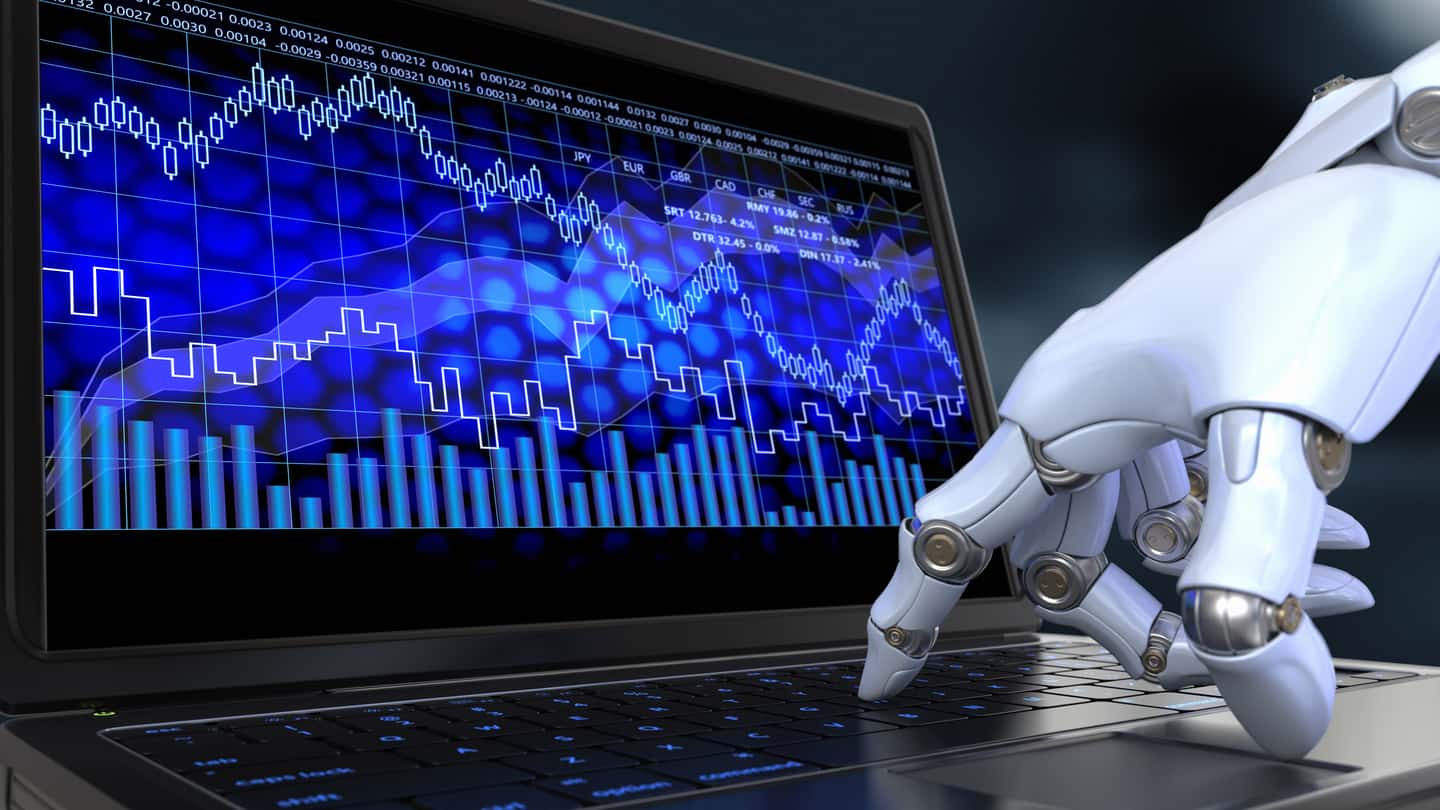
Our problem is inequality, attached to Greed, which is now plundering the world in the form of profit seeking algorithms that are generating profits for the few, using the latest technology Algorithmic trading designed to capitalize on market inefficiencies, trades can be completed at speeds and frequencies impossible for mere mortals.
Algorithm’s are creating a new social contract between a sovereign and citizens, in which the people collectively who were sovereign are becoming digitalised citizens.
Power now resides with those best able to organize knowledge.
The knowledge revolutionshouldbring a shift to direct democracy, but those who benefit from the current structure are fighting this transition. This is the source of much angst around the world, including the current wave of popular protests.
Neither, physical military strength, nor access to capital are now sufficient for economic success.
If we are to have any chance, we have to change to direct democracy which is easier to achieve than big, sprawling governments.
I’m not sure we can, but I know it will happen because capitalism or any other systems will no longer generate sufficient income to sustain social welfair states.
———————
The problem is how do we reconcile that with democracy in countries composed of millions of citizens?
Talk of artificial intelligence destroying humanity plays into the tech companies’ agenda, and hinders effective regulation of the societal harms AI is causing right now.
Barely a week seems to go by without a tech industry insider trumpeting the existential risks of artificial intelligence (AI). Fearmongering narratives about existential risks are not constructive.
Serious discussion about actual risks, and action to contain them, are.
The sooner humanity establishes its rules of engagement with AI, the sooner we can learn to live in harmony with the technology.
Algos require an uninterrupted power supply and reliable internet access. Even a brief failure in these conditions can prove cataclysmic.
———————–
What is needed are direct opportunities for all to invest in the future.
One of our fundamental challenges in the years ahead will be to mobilize the substantial sums needed for investment in everything from green infrastructure to the cutting-edge technologies that we will need to achieve net zero emissions by 2050 and slow the course of climate change.
At the moment we have Green bonds/Climate change bonds are issued exclusively to finance projects that positively impact the environment. Today, more than 50 countries have issued green bonds. However, the appeal of this market and the fact that there is no binding regulatory framework for green bonds may lead to suspicions of ‘greenwashing’ (false green claims).
There’s nothing new or specifically European about green bonds.
They’ve been around since the beginning of the 21st century. Although they weren’t yet called green bonds, the first of them are thought to have been issued in 2001 by the City of San Francisco to finance a solar power project.
Any organization – such as governments, corporations, and financial institutions – can issue a green bond.
The green bond market is a portion of the larger debt market. Historically, over US$2 trillion of green bonds have been issued globally to date, with the potential to grow to US$5 trillion by 2025.
Industry bodies and investor action groups such as Climate Action 100+, as well as large
market investors such as sovereign wealth funds and pension funds, are in a strong position to drive development of this market. However there is no universally accepted legal and commercial definition of a green bond.
Green bonds are proven to be an effective means to secure the resources required to meet the national climate change goals, so why not issue green bonds that any joe soap could invest in.
Lotteries exist in 46.67% of countries worldwide. In many countries, with the adoption of digitalization the Lottery is a lifestyle and a massive contribution to their revenues. The Lottery industry continues to grow worldwide, with an expected increase of 4.1% CAGR by 2031. The spread of online lotteries associated with the increase in smartphone and internet usage is one of many factors that can drive growth in the global market. The Lottery market is projected to grow to $405.20 billion by 2028.
US POWERBALL 59 tickets were sold every second of the year.
MEGA MILLIONS 2,817 tickets every minute or about 47 tickets every second—of the whole year!
EUROMILLIONS 342 EuroMillions tickets were sold every single second of 2019—or 20,566 tickets a minute!
UK LOTTO 122 lottery tickets for every one of the 31,536,000 seconds in 2019
They allows us all the chance to change our lives.
A staggering amount of money that goes into lotteries on a daily basis. In fact, just about every second of every day.
By making 1% OF ANY LOTTO TICKETS purchase eligible to acquire a climate Bond (with a gurantee interest return in twenty years from now..) RATHER THAN BIN THE TICKET ON LOOSING ONE COLLECTS THEM IN ORDER TO FUND SUSTAINABLE DEVELOPMENT.
It would be everyone’s collective interest to identify with the physical manifestations of climate change.
Climate change is a defining issue of our time.
All human comments appriciated. All like clicks and abuse chucked in the bin.
≈ Comments Off on THE BEADY EYE SAYS: No matter what era we are in — or what new technology comes along — our fundamental beliefs will always be with us. Not True. Algorithms are exploiting the very foundations of everything.
You can write volumes on the state of the world, but one has only to look at the state of the world to see what algorithms are doing.
Algorithms form an increasingly important part of our daily lives, even if we are often unaware of it.
Most of us have no idea what they are — or how we’re being influenced by them.
They have become instrumental in our everyday lives.
Algorithms are making hugely consequential decisions in our society on everything from medicine to transportation to welfare benefits to criminal justice and beyond. Subtly shifting the way our society is operating.
We can see them at work in the world. We know they’re shaping outcomes all around us.
Are we making a mistake by handing over so much decision-making authority to these programs?
This paradox—that the internet is both saviour and executioner of democracy is part of a massive unfolding social experiment.
The proliferation of algorithms is eroding our ability to think and decide for ourselves. They are turning people into products, and they don’t even realize it.
Billions of people around the world are interacting with these technologies, which is why the tiniest changes can have such a gigantic impact on all of humanity.
We will blindly follow them wherever they lead us. There is no one assessing whether or not they are providing a net benefit or cost to society.
WE DON’T HAVE TO CREATE A WORLD IN WHICH MACHINES ARE TELLING US WHAT TO DO OR HOW TO THINK, ALTHOUGH WE MAY VERY WELL END UP IN A WORLD LIKE THAT WHERE ALGORITHMS DECIDE WHO LIVES OR WHO DIES.
How you see the world matters.
————————
Beliefs are the things we holdtrue, regardless of whether we have any proof of their objective truth.
You see, in time, beliefs become labels.
We plaster them on our foreheads and use them to justify our action or inaction. That belief will then drive how you behave as you interpret it as being damning or empowering.
We all would be a lot happier if everyone else around us had the same beliefs as we do, or at least, that they would not challenge us on them. Of course, that is impossible, and this is precisely what fuels most of the world’s conflicts.
And here comes the kicker:
You can decide the direction you take. Your beliefs do not control you, so long as you become self-aware and take charge of your life. Or maybe if you assume everything will fall apart, you never get disappointed.
So, herein lies the persistent conflict of our society:
All of us are driven by our life experiences and by merely being human, but the creeping influence of algorithms in our lives are fucking up the world. We’re increasingly moving towards government by algorithm.
Automated systems are being rolled out with little transparency or public debate, and risk exacerbating existing inequalities.
The algorithm takes the biases and prejudices of the real world and ‘bakes them in’, and gives them a veneer that makes it seem like a policy choice is actually neutral and technical. But it isn’t,”
The problem is, both beliefs and values have strong momentum and seem glued to our character.
How do these beliefs played out in real life?
Are we just becoming throwaway survival machines, following our genetic and neurological programming in an indifferent world?
I believe that human life and the world mean much more than that.
There’s beauty everywhere—we have only to open our eyes to see it.
——————–
When it comes to climate change, the science is settled.
When it comes to technology its all together the opposite.
The sobering truth is that both the climate and technology are out of control.
Given the difficulty of getting the human brain or our political system to tackle anything beyond immediate crises, our attempts to rectify what’s wrong are usual puny compared to what’s really needed.
If you listen to our politicians, there is a strong consensus on climate change.
It consists of four parts.
First, carbon emissions are causing significant changes to our climate. Second, we need to take urgent action to reduce those emissions, including reaching net zero by 2050. Third, we have already made good progress in reducing emissions. And fourth, the steps we need to take to reduce emissions further will also bring many positive benefits for society.
We have a pretty clear understanding of the threat climate change poses to us, our children and our grandchildren. We are already being forced to cope with more droughts, more floods, more extreme storms. At the same time, we have in our arsenal effective policies that are difficult for rational people to demagogue as crippling to the economy or as a subversion of our cherished way of life.
So why does climate misinformation continue to spread online and in our media?
Dire warnings of the looming climate disaster may just make people throw up their hands in despair, sink into denial, or dig their heels in deeper against government action.
Instead, we seem to firmly believe that climate solutions inevitably mean more government, higher taxes and less freedom — and thus are threats to all our core values and identity.
———————-
Technology’s benefits are numerous in all fields, however in the system’s that effect our daily lives it is becoming a threat to our core values, through the use of algorithms. Pushing us like a digital slave army to mindlessly, unwittingly and unwillingly livestream our digital existences into the commercial coffers of companies that see us as nothing more than walking dollar signs.
Examples:
Every time you pick up your smartphone, you’re summoning algorithms. At this point, they are responsible for making decisions about pretty much every aspect of our lives.
The right to an explanation of an algorithm-generated decision does little to fix “systemic injustices” Getting an explanation but no democratic say in how systems work is like getting a privacy policy without a ‘do not consent’ button.
Deciding who gets access to welfare. Using automated interviews with a virtual border guard, based on “deception detection algorithm. Using algorithms to model when and where crime will happen — an area known as predictive policing — is on the rise. Using algorithms to come up with a personality assessment. Having your credit rating scored decided by an algorithm based on questionable data.
Grading algorithm does not not relied solely on automated means. Substituting a mathematical approach for human judgment does not automatically make it fair.
Profit seeking algorithms. Market making algorithms. Execution algorithms Scheduled algorithms. Participation algorithms. VWAP and TWAP algorithms are time-slicing algorithms. Liquidity-seeking algorithms (a.k.a. opportunistic algorithms) Arrival price algorithms seek to trade close to market prices.
Recent developments in algorithmic trading include clustering and high-frequency market forecasting are playing a central role in finance.
The worst-case scenario is that we fail to disrupt the status quo, in which very powerful companies develop and deploy AI in invisible and obscure ways.
We have no right to see all of the data these companies collect about us, no right to get a percentage when they resell our data without our knowledge or informed consent, no right to ask them to stop. We are for all purposes indentured servants, offered free digital room and board in return for paying with our digital souls and our real-world time.
Social media companies have managed only to create a toxic brew of horrific hate speech that they cannot seem to get rid of.
Algorithms really are so powerful that a few lines of code can push us into any behaviour.
The right message targeted at the right time could mass convert the entire population of a country into mindless zombies who would readily convert even their most deeply held beliefs in an instant.
When it is obvious to all is that the world is changing, responding faster than expected to Technology’s
Why are we being such idiots?
What gives? It’s not that we are stupid or blind our core values are under attack.
If everything is a core value, then nothing is really a priority.
In this age where technology is dominant, core values may seem like something from the past. So core values may not seem like they have a place.
All of this data is used first and foremost to make money from us.
There is a really frustrating lag between what AI is capable of and what it’s legislated for.
Core values are the foundational beliefs held by an individual or an organisation.
Anyone can go to Google and search the meaning of core values,. There are another thing on your to-do list that you don’t have time for, but what about the bigger picture?
When you hear about core values, what comes to mind?
Core values make the biggest difference between successful and failure.
There are more than just words on a wall — it’s how you behave. It’s who you are at your core.
Everyone knows their role, what is expected of them, and they are empowered to act in accordance with their core values.
Once upon a time voting or making decisions in alignment with your core values were the foundation of who we are as individuals. Not any longer with Algorithms running social media.
——————–
To look at it simply, culture is just a collection of people. It is the environment created by the cumulative behaviour of the people.
We all have things that we value deeply, whether we realize it or not.
You remember values, don’t you? You know, those moral thoughts and behaviours we used to hold dear, like decency, civility, honesty and respect, as well ascaring, optimism, empathy, and tolerance?
They were once a beacon of idealism. Rewarding behaviour based on them, and align all of our decisions with them.
Core values represent the lens which we view the world. They must be embedded in everything we do.
These “alt” credos and codes of behaviour are the trademarks of the incivility we witness on a daily basis, often expressed with rancour and rage. They have become commonplace on television, in social media and in everyday life. Of even more concern is that these new “moral standards” serve as models of behaviour for our impressionable children and youth.
Hold one another accountable for staying aligned with the values—it’s better not to profess any values at all.
———————
Education and knowledge were cornerstones of our achievement.
We are now living in society that at large looks to social media /television and film personalities for political advice.
You must ensure they are accurate, meaningful, relatable and fully operationalized.
If we continue our descent into callousness, selfishness and hostility, we negatively impact and harm the quality of our lives. We could lose sight of our basic human values and diminish the essence of what MAKES THE WORLD BEAUTIFUL.
Achieving a more transparent and less manipulative media may well be the defining political battle of the 21st century.
Just as we are using our formidable intellect and creativity to reduce our carbon footprint, we can similarly mobilize our resources to improve our emotional footprint, or how we treat and affect each other.
Values are the criteria by which individuals judge ideas, objects, people, situations, and actions as good, worthwhile, desirable, wrong, worthless, or undesirable
.Values are individuals’ embedded abstract motivations. They guide individuals to understand, justify, and explain norms, attitudes, and actions. One of the limitations of examining values is that values cannot be generalized because they vary between a person and another, culture and another, society and another, even a country and another, thus scrutinizing values will be different in the future.
Core values can be only be fostered in Education, not in schools but with compulsory NATIONAL SERVICE.
ALL HUMAN COMMENTS APPRICIATED. ALL LIKE CLICKS AND ABUSE CHUCKED IN THE BIN.



 bobdillon33blog