• About
  • THE BEADY EYE SAY’S : THE EUROPEAN UNION SHOULD THANK ENGLAND FOR ITS IN OR OUT REFERENDUM.

bobdillon33blog

~ Free Thinker.

bobdillon33blog

Tag Archives: Climate change

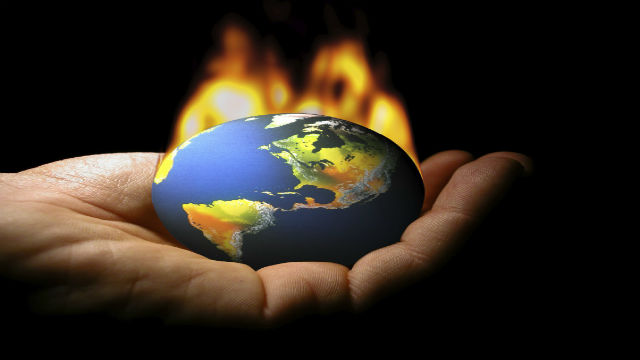
THE BEADY EYE SAYS. WE HAD TWELVE TO SAVE THE PLANET.

03 Wednesday Aug 2022

Posted by bobdillon33@gmail.com in #whatif.com, 2022: The year we need to change., Climate Change.

≈ Comments Off on THE BEADY EYE SAYS. WE HAD TWELVE TO SAVE THE PLANET.

Tags

Capitalism vs. the Climate., clim, Climate change, Climate change and Intelligence, Climate Change Solution's., Reality of Climate Change

(Four minute read) 

Now it seems, there’s a growing consensus that the next 18 months will be critical in dealing with the global heating crisis, among other environmental challenges.

Right now, we are losing the fight against climate change AND THERE IS A GOOD CHANCE SOCIETY COULD COLLAPSE AS SOON AS 2050 IF SERIOUS MITIGATION ACTIONS ARENT TAKEN IN THE NEXT DECADE.

Right now we will have to alter our trajectory very quickly if we wish to have a good chance of limiting the global average temperature rise to less than 1.5C above pre-industrial levels.

Right now there’s nothing like enough understanding of, or commitment to REDUCING CARBON EMMISSIONS.

Right now the risks the world runs if this limit is ignored is life will survive, but not life as we know it.

Right now we have barely started to think about how to apply sufficient pressure on our governments 

Right now emissions reductions by efficiency improvement — vital though that is, are and will be inadequate.

Right now, we are heading towards 3C of heating by 2100 not 1.5.

Right now current plans are nowhere near strong enough to keep temperatures below the so-called safe limit.

We need to shift the world on to a different investment and green growth path right now.

                         ———————————-

The natural tendencies are either to do nothing, while insisting there is no problem, or to agree there is a problem, while merely pretending to act.

It is not clear which form of obfuscation is worse.

Above all, climate change involves huge distributional issues — between rich countries and poor ones, between countries that caused the problem and those that did not, between countries that matter for the solution and those that do not and, not least, between people today, who make the decisions, and people tomorrow, who suffer the results.

Without question, 2020 is a hard deadline for that leadership to finally manifest itself.

But if there’s ongoing political turmoil around climate change then the government may not have the bandwidth to unpick the multiple global challenges that climate change presents.

The sense that the end of next year is the last chance saloon for climate change is becoming clearer all the time. Decisions taken on climate change in the next year or so will be critical, up to one million species could be lost in coming decades.

Political steps to enable the cuts in carbon to take place will have to happen before the end of next year.

The profound urgency for ambitious climate action is still patchy even though we are now witness to a collective convergence of public mobilisation, worsening climatic impacts and dire scientific warnings that compel decisive climate leadership.

If we don’t see that don’t hold your breath!

Consider what the future could be, picking up the mantle against climate change may not seem so bad after all.

 Its up to us to start using our buy power to force change. ( See previous post) 

All human suggestions and comments appreciated. All like clicks and abuse chucked in the bin.

← Back

Thank you for your response. ✨


Share this:

  • Share on WhatsApp (Opens in new window) WhatsApp
  • More
  • Share on Mastodon (Opens in new window) Mastodon

THE BEADY EYE SAYS: GOVERNMENTS MUST GO BEYOND GROWTH (GDP) AND FOCUS INSTEAD ON A NEW SOCIAL CONTRACT.

02 Tuesday Aug 2022

Posted by bobdillon33@gmail.com in 2022: The year we need to change., Climate Change., Fourth Industrial Revolution., GDP., How to do it., Human Collective Stupidity., Human values., Humanity., Imagination., Life., Our Common Values., Purchasing Power., Purpose of life., State of the world, Survival., Sustaniability, Technology v Humanity, The common good., The Obvious., The pursuit of profit., The state of the World., The world to day., THE WORLD YOU LIVE IN., THIS IS THE STATE OF THE WORLD.  , We can leave a legacy worthwhile., What Needs to change in the World, Where's the Global Outrage.

≈ Comments Off on THE BEADY EYE SAYS: GOVERNMENTS MUST GO BEYOND GROWTH (GDP) AND FOCUS INSTEAD ON A NEW SOCIAL CONTRACT.

Tags

Capitalism and Greed, Capitalism vs. the Climate., Climate change, Post-Covid-19, The Future of Mankind


(Twelve minute read) 

This is an easy thing to say but to implement is another kettle of fish because it requires a paradigm shift in the way developed countries approach economic policy.

Changing the world seems like one of these huge, impossible things that no man can possibly achieve.

It requires a rethink how we define and measure economic success.

In order to find new ways to transform the world we live in goals will have to be built into the structures of the economy from the outset, rather than hoped for as a by-product, or added after the event.

Everything that goes around, comes around.

People always wish for change because it’s the constant thing in this world, and they always have this deep, inner desire to improve things even if there’s nothing to improve.

Every people I know wants change, but for what purpose exactly?

Why do we crave change?   And how exactly to change? 

How exactly can you change without making mistakes?

How to actually know you’re making a change if you don’t know your objective?

What if there’s nothing to be changed?

Where do we start?

Change comes in learning from the mistakes of our past.

Realising that it’s a mistake.

When things stay the same and your life is getting worse and worse, then it’s time for a change.

                                   ————————-

Broadly speaking an economy is an interrelated system  of human labour, exchange, and consumption. 

Economic policy should prioritise environmental sustainability, economic resilience, reducing inequality and improving wellbeing economic growth in OECD countries have generated ‘significant harms’ over recent decades – including rising inequality and catastrophic environmental degradation.

Instead of focusing on gross domestic product (GDP), now is the time to  prioritise environmental sustainability, improving wellbeing, reducing inequality and strengthening economic resilience. 

A return to the status quo would be disastrous so governments that are spending unprecedented sums to rebuild their economies after the Covid pandemic, must look beyond growth alone to prioritise the needs of people and planet.

It argues that this will require a new role for the state, with governments becoming more entrepreneurial, seeking to shape markets and steer the process of economic change, not simply correcting market failures.

                                    ———————-

So where are we?

Various layers of inequality have being exposed and exacerbated by the COVID-19 pandemic.

It has laid bare risks we have ignored for decades: inadequate health systems; gaps in social protection; structural inequalities; the digital divide, environmental degradation. the energy sources we count on are limited, just like water.

In fact, most wars and political conflicts in the world start because of lack and/or need for energy resources. In America alone, the consumption of energy rises every year, and it doubles every 20 years. 

The climate crises is showing that computers and software will not be able to replicate human creativity.

This “new kind of social contract” is required to transform the relationship between the state, business, civil society and citizens.Industryweek 34572 Understanding 5g 5g 623431736

5G as on par with the printing press, electricity and the steam engine –

Self-driving cars, remote robotic surgery, autonomous weapons — all that and much more is set to be delivered via the 5G wireless network, which promises to transform our lives and add trillions of dollars to the global economy every year.

This leap forward in connectivity will be key to the spread of artificial intelligence and machine learning, enabling massive amounts of data to be collected from remote and mobile sensors and analysed in real time.

Drive everything from home appliances that order groceries to autonomous vehicles to smart cities.

Given the power of 5G technology, it is no surprise that it has also become a proxy for the broader power struggles. 

However Technology alone will not change the core problems in the world. 

Why?

  • The Fourth Industrial Revolution can’t be a panacea for the problems caused by our obsession with unchecked economic growth. Over the past couple of decades, the world has become enamoured with the transformative power of technology.
  •  In spite of all the hype, digital technology could not prevent nor control the spread of the coronavirus.
  • Technology won’t solve the climate crisis, prevent the recurring wildfires.

                     ———————————————-

The last thing the world needs is another ‘revolution’ that ignores the external cost to society of our unchecked obsession with economic growth at all cost.

We all think time and money is so important, but are our health, peace and happiness not more important?

We’re in this together and it can only be solve together. 

We can protest, till we are blue in the face, demand change till the cows come home, hold world conferences till we run out of air.  There is however one weapon if we all of us were to use it collectively that would bring change – that is  Buying power.

Doing the right thing for the environment, pro-actively using it to effect change.

In this uphill battle, the good news is that solutions are out there.  

Business would  be held accountable for addressing local and
global societal needs.

Industry players that suffer would not helplessly standing by as their revenues and profits dwindled, they would act intensified competition.

But is this inevitable? Can companies learn to adapt and react to ensure their continued success and prosperity? The answer is yes.

Since buyer power is dynamic, just visualize this scenario.

What would happen if we all refused to pay our energy bills till the Government put in place non repayable grants to install solar panels or insulation. 

There is no right answer here but it would be impossible to either jail or fine everybody.

It is therefore important to understand what choices we have available to us to determine what type of buyer we will be, and therefore where our strengths lie.

That strength would be a campaign conducted on our mobile phones. 

Once a month campaign targeting profit for profit sake, demanding change.

Your choices would impact their bottom line.

Resilience – not technology – is the answer to our biggest

challenges.

It’s either an entirely environmentally-friendly existence. 

Or are we just going to except a burning world with wars and mass migration till there is nothing left to live for. 


All human comments appreciated. All like clicks and abuse chucked in the bin.

← Back

Thank you for your response. ✨


Share this:

  • Share on WhatsApp (Opens in new window) WhatsApp
  • More
  • Share on Mastodon (Opens in new window) Mastodon

THE BEADY EYE SAYS: THE SCIENCE ON CLIMATE CHANGE IS NOW PROVING TO BE UNEQUIVOCAL.

29 Friday Jul 2022

Posted by bobdillon33@gmail.com in Climate Change.

≈ Comments Off on THE BEADY EYE SAYS: THE SCIENCE ON CLIMATE CHANGE IS NOW PROVING TO BE UNEQUIVOCAL.

Tags

Capitalism vs. the Climate., Climate change, Global warming


( Five minute read) 

The COVID-19 emergency to a great extent shattered our sense of normalcy and forced us to grapple with the kind of world we want – and need.

Climate Change will not ask us it IS HAPPING WHETER WE LIKE IT OR NOT WITH THE threshold for dangerous global warming will likely be crossed between 2027 and 2042.

While 2022 is set to be a year of unprecedented climate chaos across the planet leading climate scientists issue new warnings about climate change and the soaring cost of fuel highlights the world’s ongoing dependence on fossil fuels.

How did we get here?

For decades, fossil fuel companies have stymied efforts to make this necessary energy transition by sowing public doubt about climate science and pushing a misleading narrative of consumer responsibility for the climate crisis. 

In fact, only 100 investor and state-owned fossil fuel companies are responsible for around 70 percent of the world’s historical GHG emissions. They have led the charge on climate change denial, fossil fuel companies have driven widespread false perceptions. They have stymied critical efforts to fight the climate crisis.

This sustained climate denialism by the fossil fuel industry is exposed in the below BBC documentary: Big Oil v the World. Exxon along with Koch Industries and the Republican Donal Trump committing the larges crime of all crimes supressing the science behind Climate Change for years in the name of the God profit.  

The fossil fuel industry must be held accountable for its damaging behaviour.

We should be placing financial penalties against these companies  because of the deception perpetuated to there shareholders and the public about company prospects in the face of potential climate regulation. These companies forced communities affected by climate change to pay for future damage caused by the crisis. 

However holding the fossil fuel industry accountable becomes more complex when one considers that most of the companies are diversified into various products, which are not all equally harmful to the environment.

Ultimately, removing subsidies for fossil fuels and implementing a carbon tax with a consumer rebate are strong first steps towards fighting climate change. This move would effectively hold the fossil fuel industry accountable for its emissions track record and efforts to divert climate action.

 So more than ever, we need storytelling, arts, and the humanities to generate new ways of responding to the ecological crisis we all face, and which disproportionately impacts marginalized peoples the most while bearing the least responsibility for climate change.

We believe that together, we can create a world where we rapidly transition away from fossil fuels to end the climate crisis.

Is this true? 

We all know how but very few of us have the courage to take actions that will make a difference.

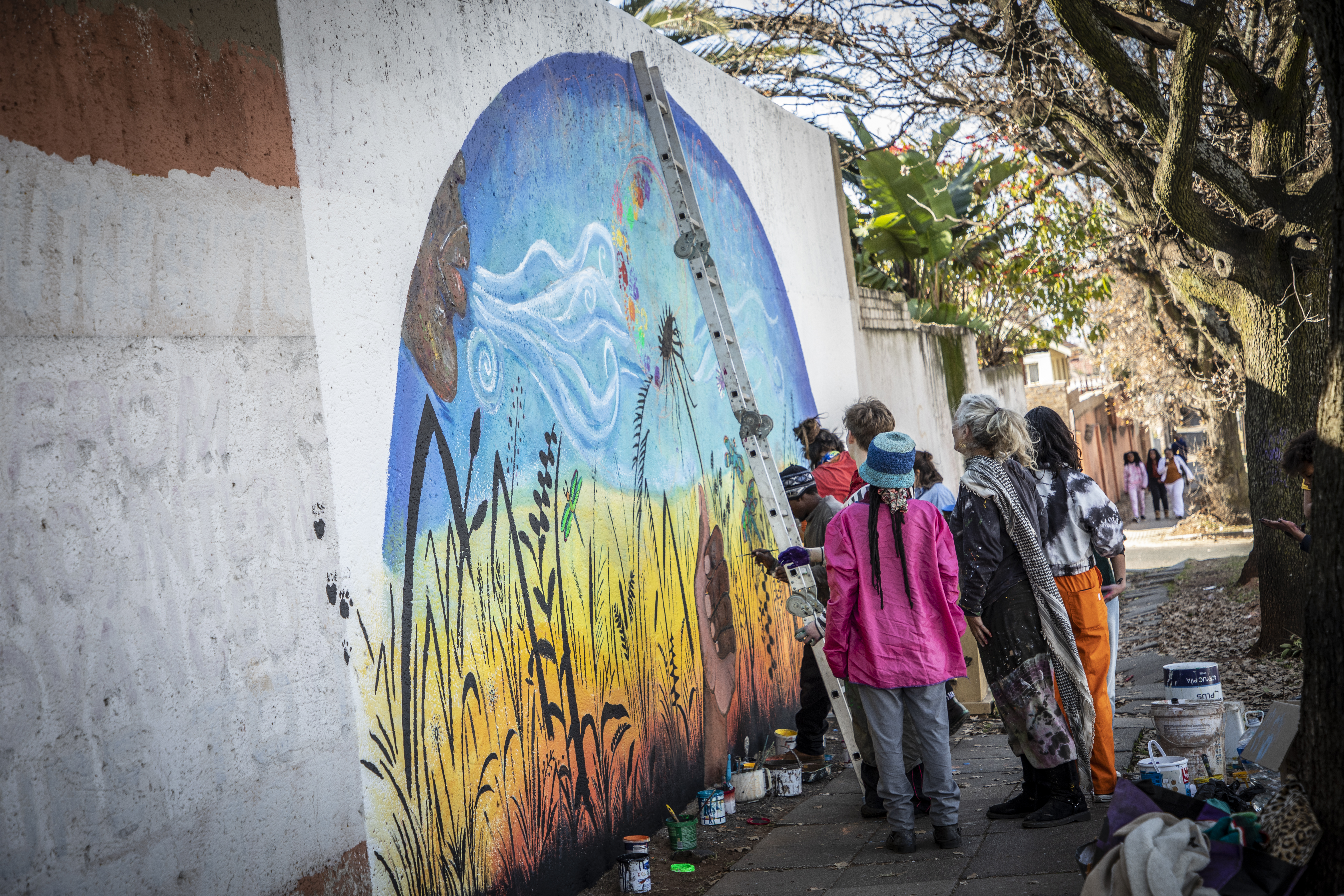
Just as World War II called an earlier generation to greatness, so the climate crisis is calling today’s rising youth to action: to create a better future.People painting a mural on a building

We want the developing world to skip the fossil fuel/carbon dioxide/ methane-producing step and go right to renewable energy, so they won’t have to go back and clean up the environment they will have destroyed or degraded because of fossil fuels.                                            —————– 

The science is unequivocal.

The effects of human-caused global warming are happening now, are irreversible on the timescale of people alive today, and will worsen in the decades to come. 

Even thought the coming climate change will not only shatter our very existence and every other living thing, with souring TEMPERTURES, drought, wild fires, rising sea levels, oceans less oxygenated, release of methane, wars, and mass migration, with ecosystems and food supply under treat.

BUT STILL WE DON’T YET GET THE NEED TO CHANGE.

Global climate change is not a future problem. Right now, we are losing the fight against climate change.

Until now, wide ranges in overall temperature projections have made it difficult to pinpoint outcomes in different mitigation scenarios but we must avoid situations where leaders can claim that even the weakest policies can avert dangerous consequences.

Amplify the need for world leaders to address the vicious cycle of loss and damage experienced by climate-vulnerable countries across the globe yet we do not have access to decision-making spaces.

Once the world is talking about it in a constructive way, things will get done. 

If you don’t like regulations now, just wait till climate change gets serious!


All human comments appreciated. All like clicks and abuse chucked in the bin.

← Back

Thank you for your response. ✨


Share this:

  • Share on WhatsApp (Opens in new window) WhatsApp
  • More
  • Share on Mastodon (Opens in new window) Mastodon

THE BEADY EYE ASKS. WHY IS THE WORLD IN THE STATE IT IS?

24 Sunday Jul 2022

Posted by bobdillon33@gmail.com in 2022: The year we need to change., Biotechnology., Climate Change., Digital age., DIGITAL DICTATORSHIP., Environment, Fourth Industrial Revolution., Genetic engineering, Human Collective Stupidity., Imagination., Modern day life., Our Common Values., Reality., State of the world, Sustaniability, Technology v Humanity, The Future, The Obvious., The state of the World., THE WORLD YOU LIVE IN., THIS IS THE STATE OF THE WORLD.  , Unanswered Questions., Wars, What is shaping our world., WHAT IS TRUTH, What Needs to change in the World, World View.

≈ Comments Off on THE BEADY EYE ASKS. WHY IS THE WORLD IN THE STATE IT IS?

Tags

Climate change, Technology, The Future of Mankind, THIS IS THE STATE OF THE WORLD.  

( Twenty minute read) 

Following on from the posts under the heading of what shaped the world lets look at the state of the world as it is to day.

The world is becoming increasingly interconnected and interdependent, with ever more political, social, cultural, financial and commercial relations transgressing nation state borders but the convergence of issues facing the earth are now so interrelated that most of them cannot be fully understood out of context.

The recent pandemic served to prove our fragility and our interconnectedness.

When we start thinking about constructing a model of the world it’s better to say that while you are living in the world, it’s fairly difficult to judge it objectively or even understand all of its moving parts.

In addressing that issue I will note that many of today’s issues have legacies 100 years old and will not be addressed in this post.

If anything has brought us together over the last year and a half, it is our feeling of vulnerability about the present and uncertainty about the future.

Now urgent action, taken together, is needed to change course and reimagine our futures and this action must encompass an ethic of care, reciprocity, and solidarity.

But to translating and contextualizing these actions in a collective effort it requires a synopsis of the current state of the world.

It is only when the mess it is presented as a whole not news flashes that we have any concept of the state of the planet. 

The whole structure of today’s world, much of it inherited from an earlier era, is up for serious discussion.

Thinking of the present state of the world its remarkable what can be achieved when leaders are prepared to lead.

To achieve the maximum benefits from the extraordinary possibilities that artificial intelligence (AI) and Robots will usher in tomorrow. 

                            _______________________________

There are many factors behind what I call ‘the disillusioned society’ but greed and fear, two of the ancient enemies of human kind are the big drivers of Earth’s ecological and human systems which are now in severe crisis.

Climate change is a trend that affects all trends- economic trends, security trends. Everything will be impacted. And it becomes more dramatic with each passing year.

Our throwaway society, which in part drives markets and GDP, is continuing to damage the environment. 

A key decision to changing our thinking and attitudes to polluting activities and endless growth is to dump Gross Domestic Product (GDP) as the universal measure of progress. It is a totally inadequate measure of societal progress.Who is more powerful – states or corporations?
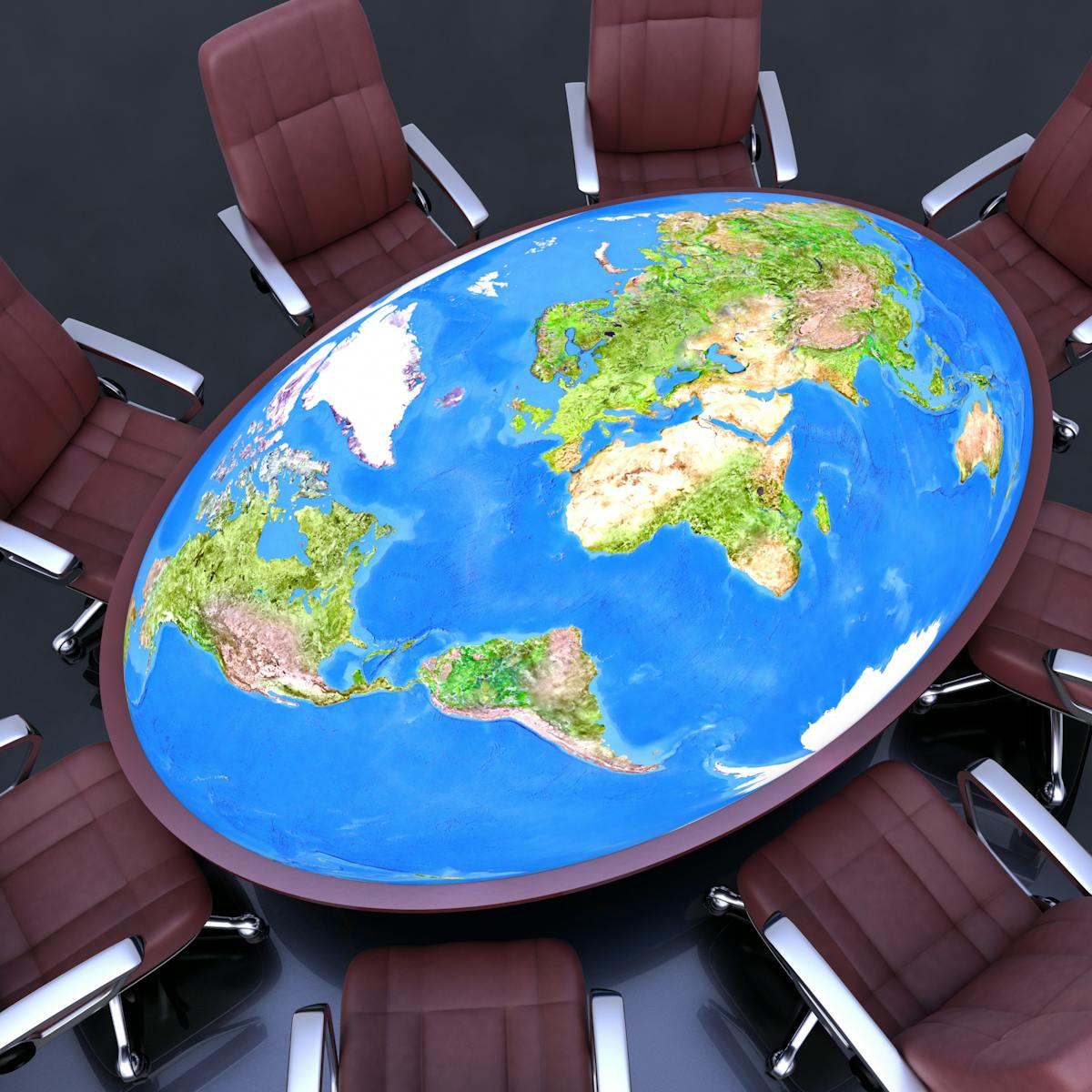
That said here is an overview of the current state of the world. 

Only 2.5% of the world’s water is fresh—the water on which the world’s terrestrial life depends. Around 70% of this fresh water is frozen in ice or permafrost. An estimated 4 billion people, nearly two-thirds of the world population, experience severe water scarcity during at least one month of the year.

Agriculture accounts for 70% of all freshwater withdrawals globally, a ratio that’s only going to increase – to an estimated 85% – as the population grows and agricultural production rises to meet it (by an estimated 50% before 2050).

About 43% of over 7,000 of the world’s languages are endangered. Just 23 languages are spoken by more than half of the world’s people, inhabiting upwards of 85% of the land surface of the globe.

In 2015, an estimated 2.1 billion people lacked access to safely managed drinking water services and 4.5 billion lacked access to safely managed sanitation services. Over 80% of all wastewater returns to the environment without being treated.

Population, pollution, greenhouse gases and deforestation are creating never before seen changes in Earth’s living systems—including a cultural and species extinction rate that is the highest in the planet’s history.

Higher concentrations of carbon dioxide, methane and other greenhouse gases, mainly as the result of human use of fossil fuels, have been determined to be the predominant cause of earth’s changing climate.

Sea levels are already rising by 2mm a year—faster than during the past 5,000 years.

Evidence is growing that the thermohaline circulation, driven by temperature and salinity, could be slowed or stopped by cold fresh water inputs to the Arctic and North Atlantic oceans.

Our oceans are full of plastics. Sea ice and glaciers are melting throughout the globe. More than 93% of the enhanced atmospheric heating since the 1970s has been absorbed by the ocean.  

Over 90% of plastics produced are derived from virgin fossil feedstocks—about 6% of global oil consumption. This is equivalent to the total oil consumption of the global aviation sector.

Over 70,000 new chemicals have been brought into commercial production and released to the environment in the last 100 years.

An estimated 75% of the Earth’s land surface has been degraded through human activities, negatively impacting the well-being of at least 3.2 billion people, pushing the planet towards a sixth mass species extinction, and costing more than 10% of the annual global gross product in loss of biodiversity and ecosystem services.

The failure to reduce world hunger is closely associated with the increase in conflict and violence in several parts of the world. In addition, gains made in ending hunger and malnutrition are being eroded by climate variability and exposure to more complex, frequent and intense climate extremes. Approximately one third of the food produced in the world for human consumption—nearly 1.3 billion tonnes—gets lost or wasted every year.

In 2020, nearly 144 million children under 5 suffer from stunting (under height), 47.0 million children under 5 were wasted (underweight) , and of those, 14.3 million were considered severely wasted.

Industrialized civilization is still dependent upon cheap and reliable fossil fuel energy. There is a limited amount of fossil fuel. It is not “renewable” and there is no known way to make more.

The current humanitarian crisis in Ukraine may be in the spotlight right now however there are currently 27 ongoing conflicts.

A quarter of the entire global population lives in conflict-affected areas. 84 million people were forcibly displaced because of conflict, violence, and human rights violations. This year, it is estimated that at least 274 million people will need humanitarian assistance.

The cost of war is almost unfathomable.

Just imagine what the world could do with that money if conflicts were to end worldwide. 

Conflict drives 80% of humanitarian needs and in 2016, the cost of conflict globally stood at an astonishing $14 trillion. That’s enough to end world hunger 42 times over.

Nearly 11 years after it started, the Syrian refugee crisis remains the largest displacement crisis worldwide (13.2 million, including 6.6 million refugees and more than 6 million internally displaced people). At least 2 million people are living in tented camps with limited access to basic services.

Lasting more than 60 years, the conflict in Myanmar (previously called Burma) remains the longest ongoing civil war in the world.

The recent takeover of Afghanistan by the Taliban after 20 years of US-led conflict more than half of the country’s estimated 40 million population face “extreme levels of hunger, and nearly 9 million of them are at risk of famine.

Wars are constantly in the news. 

While we tend to hear more about refugees there are actually twice as many internally displaced persons around the world. In 2013, for instance, there were 16.7 million refugees and 33.3 million internally displaced persons. it’s easy to dismiss them and forget that we’re talking about individual people whose lives have been completely disrupted.

The World Bank and the IMF can pursue their loans in perpetuity, regardless of the loans having been given to dictators or incompetent borrowers, and regardless of whether the money actually benefited the poor.

The current depletion of biological diversity and, in particular, the prospect of severe depletion, if not virtual elimination of tropical forests, wetlands, estuaries and coral reefs that have been the “engines of biodiversity” for hundreds of millions of years, may have profound effects on the evolutionary processes that have previously fostered re-diversification.

Before 1961, the entire Earth satellite population was just over 50 objects. Since 1957, about 9,600 satellites have been launched and about 5500 are still in space—and 2300 of these are still functioning. The total mass of all space objects in Earth’s is more than 8800 tonnes. Earth’s orbit is now cluttered and dangerous with: ~34,000 objects bigger than 10 cm; ~ 900,000 objects from 1cm to 10 cm; and 128,000,000 objects from greater than 1 mm — 1 cm.

By the time you finish reading this paragraph, four acres of rainforests in Brazil (i.e. about three football fields) will be replaced with farmland, largely to grow cattle and animal feed.

The commercial exploitation, militarization and weaponization of space around the earth is ongoing.

Space Tourism is just getting started but the impact of bioengineering is what is going to have profound impacts on society in the near future.

The development of bioengineering issues in tandem with overlapping

technological areas such as artificial intelligence are what is going to shape

the world for the next generations, if climate change does bot wipe us of the

globe.

(Biotechnological discoveries are increasingly facilitated by automated and roboticides, private ‘cloud labs)

These issues will shape the future of bioengineering and must shape modern discussions about its political, societal and economic impact.

Technology is in the infancy of creating a world state. 

                                   ————————————-
The Bioengineering Technologies to Look Out for in the Next Decade – The  Wire Science

Bioengineering is a discipline that applies engineering design and principles

to biological systems. Some examples of this fusion are artificial organs or

limbs, the genetic synthesis of new organisms, gene editing, the

computerized simulation of surgery, medical imaging technology and

tissue/organ regeneration.

Bioengineering brings with it both huge potential for good, and risks to

regulate. Like any other technology, bioengineering has damaging potential,

whether it be through misuse, weaponization or accidents. This risk can

create significant threats with large potential consequences to public health,

privacy or to environmental safety.

We need critical thinking to understand what they are, what their impact is and how they are related, with ethical and regulatory frameworks, climate change, inequalities, technological convergence and the misuse of technology, in order to drive informed policy decisions.

Below is by no means a comprehensive list. 

<5Years 5–10 Years >10 Years
Artificial photosynthesis and carbon capture for producing biofuels Regenerative medicine: 3D printing body parts and tissue engineering New makers disrupt pharmaceutical makers
Enhanced photosynthesis for agricultural productivity Microbiome-based therapies Platform technologies to address emerging disease pandemics
New approaches to synthetic gene drives Producing vaccines and human therapeutics in plants Challenges to Taxonomy-Based description and management of biological risk
Human genome editing Manufacturing illegal drugs using engineered organisms Shifting ownership models in biotechnology
Accelerating defense agency research in biological engineering Reassigning codons as genetic firewalls Securing the critical infrastructure needed to deliver the bioeconomic
  Rise of automated tools for biological design, test and optimisation  
Biology as information science: impacts on global governance
Intersection of information security and bio-automation
Effects of the Nagoya Protocol on biological engineering
Corporate espionage and bio crime

Additions.  

  • Using Bioengineering Instead of Animals
  • Using Bioengineering Instead of Plants
  • Using Bioengineering to Create Eco-friendly Materials
  • Using Bioengineering for Greenhouse Gas Sequestration and Removal DNA technology, makes insulin much more accessible to people with diabetes by producing human insulin using bacteria instead of animals.
  • Veggie burgers using bioengineered yeast.
  • Altered yeast to produce collagen, the animal protein that is the main component of leather. 
  • To produce anti-malarial compounds. (Every year, 200 million people are affected by malaria.)
  • Bioengineered yeast to make beer and palm oil.
  • Genetically engineered bacteria that reduce the need for nitrogen fertilizers.
  • Biodegradable product that eliminates both the unsustainable practices
  • Manufacturing biosynthetic indigo could reduce the use of petroleum and the release of toxic chemicals by a factor of five
  • Genetically engineer microbes to actually pull greenhouse gases – such as CO2 and methane – from the air. 
  • Use bacterial fermentation to turn that methane into a biodegradable polymer called poly hydroxy alkanoate (PHA).
  • To  provide nutritious and non-toxic feedstock for farmed fish that doesn’t require overfishing AND removes CO2 from the atmosphere. 

                          ———————————————-

What happens if a world state is reached?

It is natural at this point to ask whether a world state would be desirable— But quite clearly many areas of social life still remain outside state control.

First, all states are sovereign, which means that both domestically and internationally they recognise no jurisdiction superior to their own.

Secondly, all states are equal and should therefore be accorded equality of treatment before the law. 

A world state would not be a utopia in which there was nothing left to struggle over.

But once a world state has emerged those struggles will be domesticated by enforceable law, and so for purposes of state formation will be no longer important. Rather than a complete end of history, therefore, it might be better to say that a world state would be the end of just one kind of history. Even if one telos is over, another would be just beginning.

At the micro-level world state formation is driven by the struggle of individuals and groups for recognition of their subjectivity.

At the macro-level this struggle is channelled toward a world state by the logic of anarchy, which generates a tendency for military technology and war to become increasingly destructive.

The process moves through five stages, each responding to the instabilities of the one before — a system of states, a society of states, world society, collective security, and the world state. Human agency matters all along the way, but is increasingly constrained and enabled by the requirements of universal recognition.

The struggle for recognition is about the constitution of individual and
group identities and thus ultimately about ideas,

Hobbes (1968) justified the state on the grounds that only through
obedience to a common power could individuals escape a ‘nasty, brutish, and short’ life in the state of nature. A common power is necessary because of the physical equality and vulnerability of human beings — since even the weak can kill the strong, it is in everyone’s interest to accept the security provided by a state.

With the transfer of state sovereignty to the global level individual recognition will no longer be mediated by state boundaries, even though as recognized subjects themselves states would retain some individuality (particularism within universalism).

The question remains, however, whether a world state would be a stable
end-state, or be itself subject to instabilities that ultimately undo it.

Since even a world state would remain an at least partially open system, such
shocks could cause it to fall apart.

Equilibria are always vulnerable to exogenous shocks.

Going forward You have to be able to hold two ideas in your head at once: the world is getting better and it’s not good enough”. (Dr. Hans Rosling.)

But we must keep trying. The past is not coming back. The most difficult thing is the decision to act, the rest is merely tenacity.

All human comments appreciated. All like clicks and abuse chucked in the bin.

← Back

Thank you for your response. ✨


Share this:

  • Share on WhatsApp (Opens in new window) WhatsApp
  • More
  • Share on Mastodon (Opens in new window) Mastodon

THE BEADY EYE LOOKS AT HOW CLIMATE CHANGE WILL SHAPE THE WORLD.

21 Thursday Jul 2022

Posted by bobdillon33@gmail.com in Climate Change.

≈ Comments Off on THE BEADY EYE LOOKS AT HOW CLIMATE CHANGE WILL SHAPE THE WORLD.

Tags

Capitalism vs. the Climate., Climate change, Global warming, The Future of Mankind, Visions of the future.


( Fifteen minute read)

If warm words prevented global warming, I wouldn’t be writing this article. 

One would think that after years we would get the message of not dealing with Climate change.

It is happing right in front of our eyes never mind decades or even centuries ahead.

On reflection perhaps the questions on climate should to taken away from Accountants, Politicians,  Governments, GDP,  Science, Technology, or the printing of money, and the verbal diarrhoea of climate summits conferences and made relatable to all us.

If it all goes wrong nobody is asking what sort of world we will have to live in. 

Why?

Because day by day it is becoming less clear how sensible management of the planet should be.

Because we must stop its discounting by Countries Governments and corporations for profit.

Because the fact is climate change is now beyond serious dispute but has yet to become part of mainstream discussion.

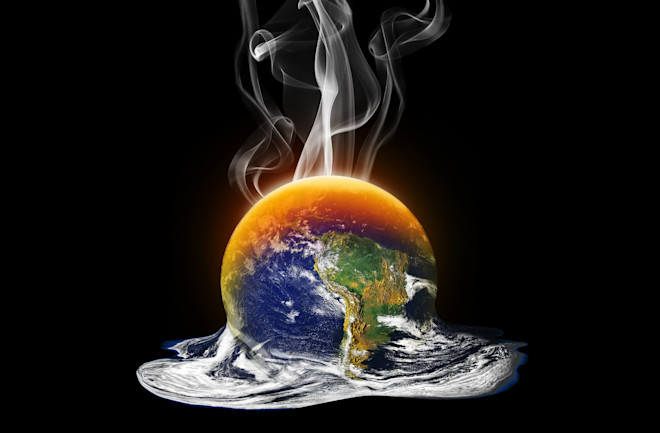
Because we can not literally stand by and verbal about it till the cows come home. global warming melting the earth - shutterstock

INTRODUCTION.

Obliviously in shaping the planet the climate has two elements. 

The Visible and not so Visible. 

The climate debate is now fuelled, not only by controversial policies, and science, but the debate is moving away from the basic science, to the economic and political ramifications.  Both of which are becoming  old, and tired, and increasingly irrelevant, as the impacts of climate change becomes clearer.

Earth’s climate has changed many times but it’s hard to imagine what Earth might look like in 2500 never mind in the next twenty years.

Climate “scepticism” is always underpinned by politics rather than science so many people still assume the costs of climate change are in the future, despite us increasingly seeing the impacts economics and politics are now the principal battlegrounds in the climate debate.

This puts us in an invidious position.

Science should inform and underpin arguments but just what can we learn from science?

One of the real problems with the climate debate is the way in which climate science is not explained but is ‘refereed’ in the public domain. I still think that 85 percent of us never mind our governments have little understanding or concept of how climate change is going to change the planet and every living organism on it.  

Taking into account limitations to predictability.

Millions of variables—known, unknown, and approximate—as well as billions of calculations, are involved in every forecast, producing informative and fascinating modern computer simulations of the Earth system. 

This is all very well but the point is that the component parts of the Earth system can interact in incredibly fast in complicated ways, and this makes explicit mathematical analysis of the entire problem of climate change impossible.

Science never explicitly proves anything but finds the current best-fitting theory that explains real-world data, and that has led to the current assertion of the validity of the anthropogenic climate-change scientific theory.

Our predictions of what Mother Nature will do next are only possible with real-time imagery from satellites of the surface of the earth, not the unseen knock on effects. 

                             ———————————-

OF ALL THE THINGS SHAPING THE WORLD CLIMATE CHANGE IS AND WILL BE THE MOST DEVASTATING.

There are now twice as many days over 50C. Accompanying this rise in temperatures has been a five-fold increase in weather-related disasters over the past 50 years.   

The climate does not need money or the microchip or any of the other things on the list shaping the world. ( See previous postings) 

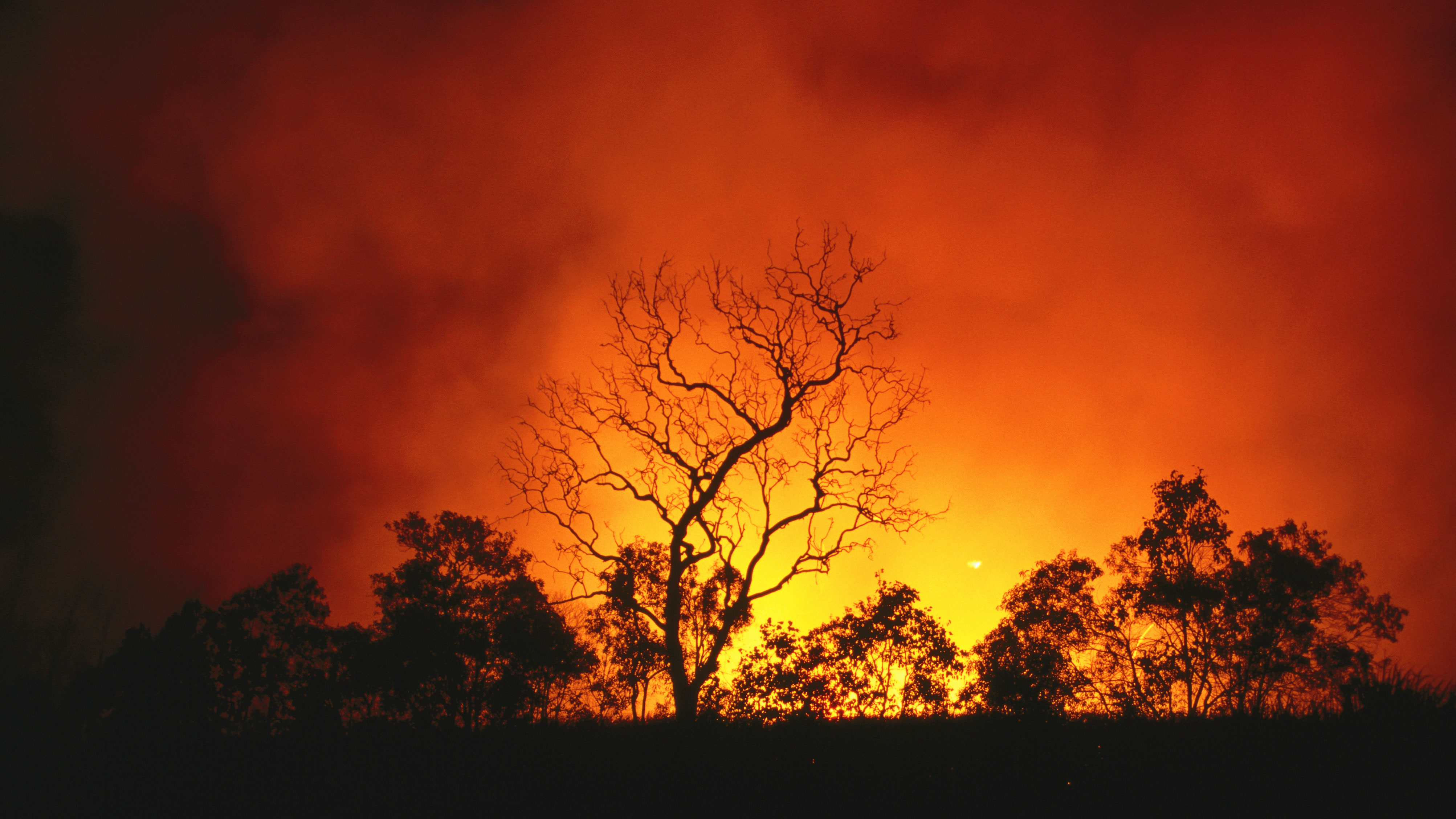
Bushfire in Queensland, Australia

The situation is bleak.

The Visible. 

Fifty years have passed since the first climate projections, set that distant target at 2100, however we continue to fool ourselves that technology will solve the problems.

The visible effects are on our news TV bulletins daily. There is little need here to highlight them. 

The Invisible.   

The ability to earn a meaningful livelihood is permanently impacted by unseasonal rains, harsher winters, drier summers, and other impacts attributed to the changing climate.

Studies by the World Bank predict that as many as 216 million people in six regions of the world may be forced to move by 2050. This includes communities in some of the most impoverished regions of the world such as Yemen and the Horn of Africa.

All will become climate refugees.

But there is another category of people who suffer from climate change and have no recourse. They’re stateless individuals who live in countries that do not grant them citizenship or permanent residency, They number in the millions. They include the Muslim Rohingya community in Myanmar, North Koreans in China, the Roma in Serbia, and many other groups.

They need to be included in any conversation about permanent, inclusive, sustainable, and ethical solutions. Otherwise, our approaches would only widen the gap between the privileged and the persecuted.

                                  —————————–

In a 2021 global survey of 10,000 people aged 16 to 25, three quarters said the future of the world was frightening, while more than half said they thought humanity is doomed.   

Climate models predict that Earth’s global average temperature will rise an additional 4°.6 C (7.2° F) during the 21st Century if greenhouse gas levels continue to rise. 

That results in a “major restructuring of the world’s biomes,” Changes in temperature, precipitation, and seasonal timing will alter the geographic ranges of many types of plants and animals. Many species will face extinction if the geographic range where they can survive shrinks.

We are looking at a future with much more rain and snow, and a higher risk of flooding in some regions.

By 2100, precipitation will increase by at least 1% with a possible increase of up to 12%. However, changes in precipitation will not be evenly distributed. Some locations will get more. Warmer global temperatures produce faster overall evaporation rates, resulting in more water vapor in the atmosphere…and more clouds. 

Warmer temperatures will cause (and are causing) changes to other aspects of climate – such as rain, snow, and clouds. They are also causing changes to the ocean, life, ice, and all other parts of the Earth system. Melting ice may lead to changes in ocean circulation, too. By the year 2100, models predict the sea level will rise between 30 and 100 cm (12 to 39 inches). Large-scale ocean currents called thermohaline circulation, driven by differences in salinity and temperature may also be disrupted as the climate warms. 

It will not just transform now-familiar terrain into alien landscapes over the next few centuries the U.S. Midwest will be transformed into subtropical agroforestry regions and by 2500 or the Ice capped poles will disappear.

                                  ———————————

To address the indirect, vicarious impacts of climate change.

Climate change is not only damaging the planet, but it’s also endangering our mental health, too. The “chronic fear of environmental doom.

Global change is as much a psychological and social phenomenon as a matter of biodiversity and geophysics and poses threats to psychological health and well-being on multiple, simultaneous levels.

We are now facing “tipping points.” A tipping point is a large, abrupt change that cannot readily be stopped at the last minute, even by employing drastic measures.

Runaway situations. The consequences of any of them are so severe, and the fact that we cannot retreat from them once they’ve been set in motion is so problematic, that we must keep them in mind when evaluating the overall risks associated with climate change.

Methane releases would generate a feedback loop of increased greenhouse warming by methane, driving further methane emissions.

At some point, seawater will become saturated with CO2 and unable to absorb any more.

It’s in our power to protect what’s left and make a meaningful difference.

Make climate change a factor in the decisions you make around what you eat, how you travel, and what you buy, demand that politicians and companies make it easier and cheaper to do the right thing for the climate.

There is now an urgent need to find new ways to narrate and envision a fairer clean future in which we all can actively participate to help to reduce global disparities in climate impacts.

Warming surface temperatures are also predicted to increase the frequency of heat waves and droughts, which can affect crop production, increase the risk of wildfires, and even impact human health.

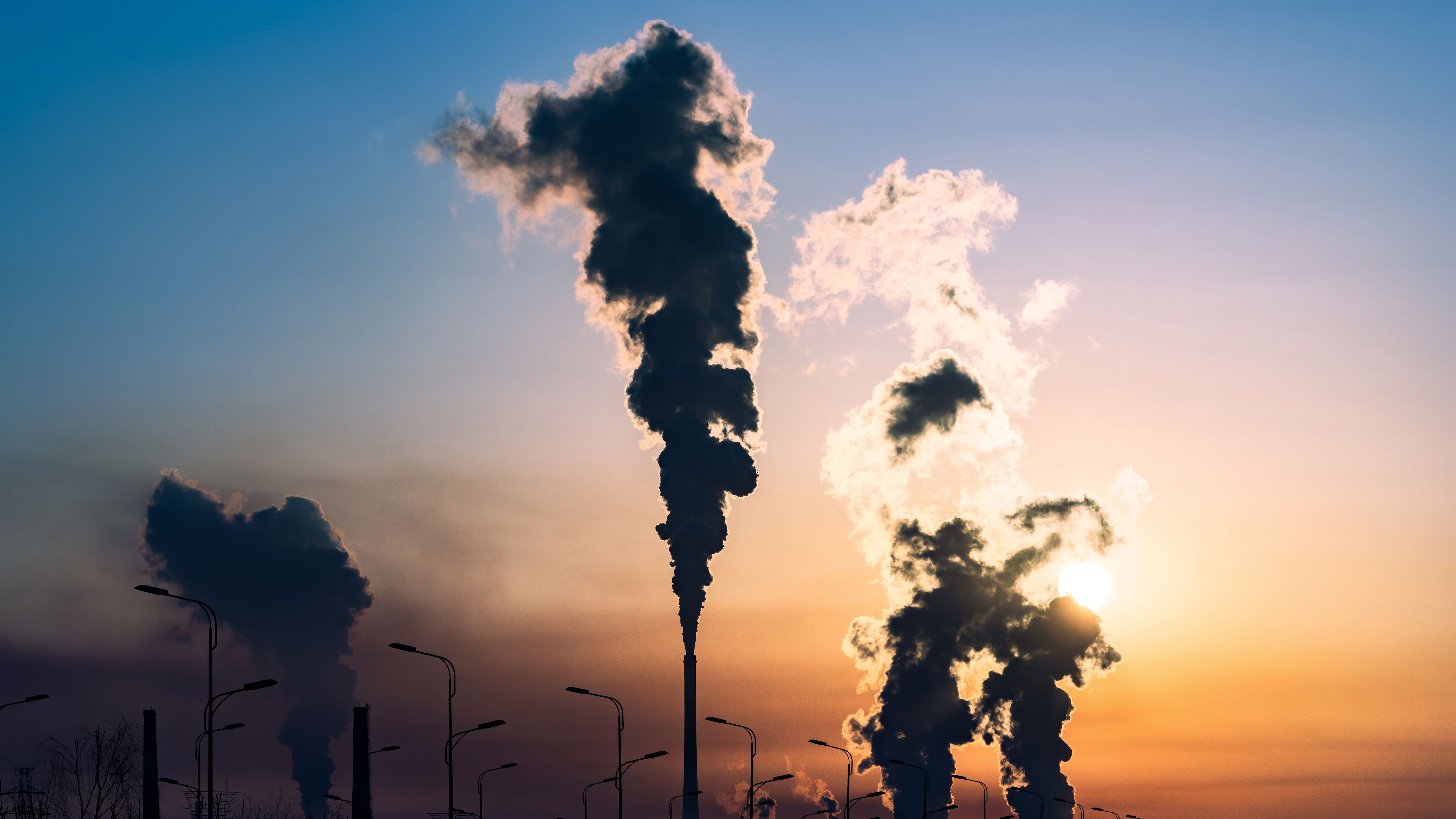
Silhouette of a high industrial pipe with sun behind it The arguments that get bandied about in blogs and debates invariably focus solely on the predicted impacts of climate change, without any discussion of the caveats and assumptions that lie behind the models.

Take  “The prefix ‘bio’ doesn’t necessarily mean environmentally friendly.”

Growing and processing crops for energy purposes or feedstocks can have the heaviest environmental impact. 

It is more helpful to proceed as though climate change is real, partly man-made, and potentially quite threatening to building a sustainable world populated by a large hungry consumer-driven citizenry.

We had world summits, and the world promises to expose Sharp divisions between the major global emitters.

Trying to lead 197 countries forward on the critical global issue of climate change is not a job for the faint-hearted as democracy evolved because everyone wants other people to share the blame. 

What we hear is that by 2050 or 2060 we will become carbon neutral, 2060 is far away and if the people emit at the rate they are emitting the world won’t survive, so what are you going to do in the next five years that’s what the world wants to know.

We can’t just willy-nilly ignore the next 10 years because the scientists tell us that if we don’t do enough in the next 10 years we cannot keep the Earth’s temperature at 1.5C, we cannot even get on a roadmap to net zero by 2050.

If this means we can move on from a sterile debate about the global response to much more interesting questions about regional impacts, the rights of different generations, and, most interesting of all, what to do about it.

This blog has in previous posts made suggestions as to how to get us involved and how to fairly spread the cost and finance the changes required.

So my plea is to avoid the ‘happy talk’ and recognize that this challenge is global and never has there been a challenge that requires the unity of countries all across the planet than now.

But despite how terrible it’s important to remember that the appropriate response is to leap into action, not to be paralyzed by despair.

To supply some optimism and show that humanity isn’t totally screwed, here are 3 climate change projects that would change the game.

Inaction could result in scenarios that look downright apocalyptic.

One. It is time that our governments made non-repayable grants available to us all to install solar panels, and insulation.

Two.  Clean up the advertising industry for sustainability, not consumption.

Three.  The introduction in a green economy of a universal basic income.  

In this world, we might add another folksy adage to our climate repertoire. Just as it is the humidity, not the heat, it is the rate of change, not the magnitude, that truly matters.

All human comments are appreciated. All like clicks and abuse chucked in the bin.

← Back

Thank you for your response. ✨

Share this:

  • Share on WhatsApp (Opens in new window) WhatsApp
  • More
  • Share on Mastodon (Opens in new window) Mastodon

THE BEADY EYE ASKS. IF YOU WERE ASKED TO NAME WHAT HAS SHAPED THE WORLD YOU LIVE ON WHAT WOULD YOU SAY?

14 Thursday Jul 2022

Posted by bobdillon33@gmail.com in 2022: The year we need to change., Colonialism., What is shaping our world.

≈ Comments Off on THE BEADY EYE ASKS. IF YOU WERE ASKED TO NAME WHAT HAS SHAPED THE WORLD YOU LIVE ON WHAT WOULD YOU SAY?

Tags

Climate change, The Future of Mankind, Visions of the future.


Share this:

  • Share on WhatsApp (Opens in new window) WhatsApp
  • More
  • Share on Mastodon (Opens in new window) Mastodon

THE BEADY EYE ASKS. WHERE DO YOU THINK THE WORLD IS GOING

20 Monday Jun 2022

Posted by bobdillon33@gmail.com in 2022: The year we need to change., Climate Change., Consciousness., Cry for help., Environment, Evolution, Fourth Industrial Revolution., How to do it., Human Collective Stupidity., HUMAN INTELLIGENCE, Human values., Humanity., Life., Modern Day Democracy., Natural World Disasters, Our Common Values., Populism., President of the USA., Purpose of life., Reality., State of the world, Sustaniability, Technology v Humanity, Telling the truth., The common good., The Future, The Obvious., The state of the World., The world to day., THE WORLD YOU LIVE IN., THIS IS THE STATE OF THE WORLD.  , Truth, Unanswered Questions., We can leave a legacy worthwhile., WHAT IS TRUTH, What Needs to change in the World, Where's the Global Outrage., World View.

≈ Comments Off on THE BEADY EYE ASKS. WHERE DO YOU THINK THE WORLD IS GOING

Tags

Capitalism vs. the Climate., Climate change, Extinction, SMART PHONE WORLD, The Future of Mankind, Visions of the future.


Twenty-minute read.

Does our perception of the world reflect reality?

We hardly see the world as it is.

Technology is often touted as the savior that will rescue us from our misbegotten ways, redeem us, and put us on the track to utopia. Then there are the dystopian views, where the future is dominated by technology that either rule over us or saps us so completely of our humanity that we might as well be a bunch of gadgets ourselves.

There are countless challenges today both environmental and not.

Mostly, we see the world through a set of layers. These layers are made up of our emotions, past experiences, and beliefs, and whichever perception is held by most, is popularly deemed as the reality.

Among contemporary scientists and philosophers, the most popular solution to the mind-body problem is probably materialism.

According to neuroscience, the contents of your head are comprised of 86

billion neurons, each one linked to 10,000 others, yielding trillions of

connections.

Materialists aspire to explain feelings and experiences in terms of the chemistry of the brain. It is broadly agreed that nobody has the slightest clue as yet how to do it, but many are confident that we one day will.

For human beings to survive, they need to produce and reproduce the material requirements of life.

But, the real reality is different and it’s above any perception.

 
                                     =============
 
THERE ARE NO UNIQUE VOICES ANYMORE. 
 

Here we are once again with another verbal diarrhea conference at the Summit of America’s with the president of the USA delivering a version of his domestic economic pitch promising leaders from Latin America that the United States is committed to helping the region combat crime, corruption, and its economic struggles.

“We will introduce a new approach to managing migration and sharing responsibility across the hemisphere.”  A load of verbal bollix but it raises the question are we now heading into globalization vs regionalization?

If so why?

Because of the pandemic and the ongoing wars, today’s great powers have little choice but to spend their way to political stability, which is unsustainable, and or try to control knowledge that is unattainable due to technology. 

Because the internet is currently eliminating the middleman the Politicians who are in a representative democracy hence the shift to direct democracy – Popularism – with power now resides with those best able to organize knowledge.


                                          ———————-

While the Earth, the planet, will continue to go its way regardless of what happens on the surface we are unable to act collectively and never will be able to do so.

We live toward incredible times where the only constant changes and the rate of change are increasing so fast that there seems to be no meaning to life.

Not until we eradicate poverty, establish free education, set aside ideological differences, change our primary focus to the long-term care of nature and people, remove profit for profit sake Algothrims, and create a World Aid Fund that we all can invest in. (See previous posts)

Not until when we are able to separate our own perception from reality we can take the necessary measures to be happy.

Not until we all realize that we are with Climate Change currently headed to a sixth mass extinction event and that this possibility alone needs to bond our collective conscious into acting like one.  

Unfortunately, I believe, that if we aren’t now past the point of recovery, if we don’t act soon, civilization and human habitation here will be untenable.

                                      ————————

There’s no going back we are now stuck in a sad chamber of denial as those who are in power hopelessly try to ward off the apocalypse by promoting unsustainable economic growth. Our TV screens are inundated with appeals for help, while the cost of everything from health care, housing education, energy, etc is rising more than one can earn.

We must unplug our brains from smartphones and start working together in large numbers, as part of a coordinated effort to achieve change. 

Like Evolution Migration goes both ways – out and in. 

Rests assured if we continue to ignore the climate the earth will force us to go only one way, with the world passing through a nuclear war if we continue to ignore the warning signs.

If this happens humans will finally have little to no reason to fight.

What’s the point? 

                                           ————————
China faces further economic slowdown, according to future predictions.

As the Fourth Industrial Revolution forces us to think about where today’s innovations are taking us, when it comes to what our world will look like, in the medium-term – how we will organize our cities, where we will get our power from, what we will eat, what it will mean to be a refugee – it gets even trickier. 

I predict the internet will go spectacularly supernova and fifty years from now catastrophically collapse.

With the world’s superpowers thrown into chaos as they come to grip with new powers, financial slowdowns, and emerging economies it will be the start of Apple’s path to world domination. 

National leaders will find themselves under increasing pressure from their people, putting a strain on inter-country relationships.

The main political tendency will be away from multinational solutions to a greater nationalism driven by divergent and diverging economic, social and cultural forces with technology and political alining against Mega Power. With countries looking at solving their own problems before looking outward the Climate will continue to heat up.

Nations will increasingly adopt protectionist policies as well as look at ways of further securing borders, something which has already begun to take place as Europe grapples with the biggest refugee crisis since World War II.

Rising military costs, declining oil prices, and internal issues will all weaken Russia further with its inability to control the federation creating a vacuum. It is unlikely that the Russian Federation will survive in its current form.

While it remains a major economic, political and military power, the United States will “be less engaged than in the past”, with the powerhouse learning some vital lessons from history.

China will continue to be a major economic force but will not be the dynamic engine of global growth it once was,

The EU will remain hostage to the economic wellbeing and competitive environment in which it operates.

Nation-states created by the west will collapse. 

                                          ———————–

We all want to know the future unfortunately in a supposedly thriving economy we are now facing inflation as the real cost of living.

Trickle-down economics does not work. 

Social media is not simply a more sophisticated platform. Google, Facebook, Twitter, Youtube, Instagram, and Snapchat WhatsApp have turned into a gallery of Frankenstein’s monsters.

They are a new kind of assault on who we are, not just what we think.

“Like” button for Facebook

To have great predictions, these corporations have had to amass vast quantities of data on each of us – what is sometimes called “surveillance capitalism”, trading in human futures, herding us into our echo chambers of self-reinforcing information.

In doing so we lose more and more sense of the real world and of each other. With it, our ability to empathize and compromise is eroded.

We live in different information universes, chosen for us by algorithms whose only criterion is how to maximize our attention to advertisers’ products to generate greater profits for the internet giants.

Apps allowing us to hail a taxi or navigate our way to a destination are undoubtedly useful tools. But being able to find out what our leaders are really doing – whether they are committing crimes against others or against us – is an even more useful tool. In fact, it is vital if we want to stop the kind of self-destructive behaviors.

Advertisers have been playing with our brains in sophisticated ways for at least a century. And social atomization – individualism, selfishness, and consumerism – have been a feature of western life for at least as long. These aren’t new phenomena. It’s just that these long-term, negative aspects of western society are growing exponentially, at a seemingly unstoppable rate.

We live in a world in which a tree is worth more, financially, dead than alive.

For so long as our economy works in that way, and corporations go unregulated, they’re going to continue to destroy trees, kill whales, mine the earth, and to continue to pull oil out of the ground, even though we know it is destroying the planet and we know it is going to leave a worse world for future generations.

We are more profitable to a corporation if we’re spending time staring at a screen, staring at an ad, than if we’re spending our time living our life in a rich way.

Is the human race capable of pro-actively defining, harnessing, and expressing a collective consciousness, without the need for tragic experiences?

Much of the problem is around our inability to define collective consciousness. Who are we? Who do we want to be in the future? 

I think it is time to act.

Our paths have never been so clear. More than ever, science can tell us what different socioeconomic-emissions paths will mean in terms of future temperature.

Which will humanity choose?

The world is getting smaller every day. There is only one world, and it’s made of consciousness. Matter is what consciousness does. 

NO MANDATES. A long-standing issue is that the accords generally have no clear mechanisms for mandating that countries carry out their promises. World pressure and ethical considerations have to drive most of the agreements.

So, lots of promises, but no guarantee that countries will honor them.

“Once we have ruled out the impossible, what remains, no matter how improbable, must be the truth.”

Is the nature of global collective consciousness, yet another thing, such as climate change, that the population of this planet is going to happily sleepwalk towards, as it shrugs its collective shoulders and says, “Well, you know, sniff, what can you do?”

Drones hold potential for many environmental benefits but nature’s technologies and designs are more often than not far superior to our own. 

 Computers in our pockets offer huge conservation potential. 


All human comments are appreciated. All like clicks chucked in the bin.

← Back

Thank you for your response. ✨


Share this:

  • Share on WhatsApp (Opens in new window) WhatsApp
  • More
  • Share on Mastodon (Opens in new window) Mastodon

THE BEADY EYE SAYS. IT ALL GONE QUIET ON CLIMATE CHANGE.

21 Saturday May 2022

Posted by bobdillon33@gmail.com in Climate Change.

≈ Comments Off on THE BEADY EYE SAYS. IT ALL GONE QUIET ON CLIMATE CHANGE.

Tags

Capitalism vs. the Climate., Climate change


TWENTY MINUTE READ 

YOU WOULD WONDER WHY. AS IT IS OUR OWN SURVIVAL THAT IS NOW AT STAKE.

However, don’t take my word for it. 

With most of our planet run by boffins, the truth is far more worrying.

While the earth itself is preparing to release billions of tons of trapped methane we are still busy pumping billions of tons of carbon into the atmosphere, to help it do so.  

Nobody is asking the question of what price should we attract to a century-long drought, the disappearance of the monsoon, the shut down of our ocean currents, the acidification of our oceans, the collapse of our polar regions, the submerging of our coastal cities, food shortages, mass migration, and pending wars.

Of course not.

You would think that any one of the above might cause concern.

People don’t care all that much they are more concerned with the cost of short-term living.

Here is a post by Lertzman, Renee Aron. Myth of apathy: psychoanalytic explorations of environmental degradation. Cardiff University (United Kingdom), 2010.

“Public apathy”

This term is wrongly applied to groups of people who are — on the contrary — experiencing complex and wide-ranging emotions about what is happening to them, the outcome of which is inaction.

Dr. Renée Lertzman, a psychologist and social scientist who studies the connection between psychology and ecological degradation, heads Project Inside-Out devoted to developing a new way of doing public outreach. Her Ph.D. thesis and book chapter on the Myth of Apathy were based on interviews with residents about local pollution and the resulting ecological devastation in Green Bay, Wisconsin but have wide-ranging applications to climate change apathy.

The key result of her research is that so-called apathy is largely a defense mechanism against underlying anxieties and a sense of powerlessness against the inevitable.

It turns out that when faced with environmental catastrophes, whether local or global, people tend to cope with their anxieties by pretending not to care.

People have a lot on their plate. Consider that we have to deal with pandemics, educational issues, crime, politics, and any number of other things clamoring for our attention on the national or global stage. That is all in addition to our own stuff.

We embrace things that make our lives easier or more comfortable then are made to feel guilty about it.

We often hear conflicting messages about how effective any of our actions are. Determining the cases where our actions matter almost requires an advanced degree. From recycling to wearing masks to buying organic to installing solar panels, it seems as though one size does not fit all.

Engaging people in global warming, however, is existential for us as a species — at least at our level of industrialization. We cannot give up.

If apathy and denial, however, are symptoms of deeper unconscious processes, then straightforward public awareness campaigns no longer work, especially in western democracies where decisions made from the top-down often backfire with political polarization. (If you think this is just an American or Anglo-American problem, you aren’t paying enough attention to global politics.) You can say that reducing carbon footprint does a global body good — to paraphrase the ’80s milk industry PSA — but that doesn’t mean everyone is going to drink it. In order for the painful process of overhauling the global economy to succeed, all hands need to be on deck.

Anxiety, mourning, loss, grief, and despair can all lead to not only apathy but active denial. Those people who you think are just ignorant or greedy and act it on the surface may not be. They might just feel hopeless or disconnected. This doesn’t only happen with ecological disasters. It can happen with local recessions such as the losses that turned much of the rust-belt (cities in states like Michigan, Ohio, Wisconsin, etc.) into an economically depressed and abandoned region (Flint water crisis anyone?), with workers replaced by robots or their jobs shipped overseas. Faced with uncaring leadership and monied residents decamping for sunnier and wealthier states, this hopelessness led to the election of Donald Trump in 2016, a populist who offered false hope and did nothing to slow or stop the decline.

Public campaigns intended to ignite widespread change frequently fail because they don’t address the psychological “barriers to action”. In other words, if you want people to change their behavior to become more environmentally friendly or push for political change to that effect, you have to understand why they don’t respond as you would like. While we can talk about why people don’t act as they should, those reasons often obscure the real barriers which can be far more complex than the surface reasons.

Psychology has found that when threatened people often respond irrationally, especially when those threatening situations are modern. We simply didn’t evolve to manage long-term, regional or global problems. People are fully capable of worrying about the climate and outwardly denying or saying that there is nothing they can do about it even when both of those are false.

It is no accident that George Orwell’s 1984 (written in 1948) and the concept “doublethink” were published at the same time that Sigmund Freud was publishing on ego-splitting. Despite falling out of favor in many arenas, Freud’s ideas are relevant to understanding the psychological impact of global warming and climate change. The sense of impending doom or, in the aftermath, the trauma of lived environmental catastrophe creates a need to process it all while still functioning in a society that continues to contribute to that catastrophe.

While some of us are online expressing our fears and anxieties about a world in peril, a great number of others cannot process the loss — loss of weather or climate of the past, clean air and plentiful, clean water, and of pristine forests, rivers, and lakes. These create psychological defense mechanisms that any successful public campaign needs to diffuse. Shaming campaigns are hardly effective.

We have seen the standard of living rise through the industrial age. Knowing that the fruits and comforts of this age come at such a terrible cost can lead to intense psychic conflict. Unnameable terror becomes unthinkable and feelings become fractured. People cope by denial or projecting onto others. We say it’s not happening or it’s somebody else’s fault. Shifting agency from ourselves to others (politicians, billionaires, executives, and other nations) makes us feel better in the short term but only makes us sink deeper into our sense of helplessness and apathy.

The way out is to radically rethink our approach to public awareness.

First of all, we have to recognize the internal psychic conflict people are experiencing. Loss, mourning, grief, and anxiety all play a role in dealing with both what once was (say a pristine and flourishing environment containing ecological abundance), the desire for it to be that way again (often with a denial that anything going on is out of the ordinary), and the fear that there is nothing that can be done (and therefore nothing need to be done).

We need to rethink apathy. We don’t need to get people to care more. We don’t even need to inform them more. They already care. They already know a lot about what’s going on, and more information can just drive the psychic conflict deeper. That’s how you get conspiracy theories and organized denial campaigns. That is public awareness doing more harm than good.

Moralizing climate change and shaming people for not acting better because they are “apathetic” does not necessarily lead to positive action. Rather it can strengthen defenses and have exactly the opposite effect.

Lertzmann suggests that people need to find a “home” for their concerns and desire to help. Public awareness campaigns often seek to instruct people as to what they ought and ought not to be doing but don’t really “think outside the box” in terms of finding that home. Environmental protection isn’t a black and white activity with a list of things that help and a list of things that don’t.

People who do engage in this black and white thinking often feed their own apathy. They assume that if they aren’t or don’t feel they can be doing certain specific things that the “experts” want them to do then they should do nothing. They project onto experts their own feeling of helplessness and defend against it.

People have a psychological need to explain why they aren’t doing more in order to offset their feelings. People are full of excuses. They say all recycling just ends up in the trash, so don’t recycle. Renewable power is an eyesore or impractical, so use fossil fuel. Electric cars take too long to charge (depends on the battery and charging station) or just use fossil fuels from powerplants (not if those powerplants use renewables) or don’t last (neither do ordinary cars) or only the rich can afford them (not if manufacturers get on board), so buy gas ones. Environmental organizations are only interested in money or full of “tree huggers”, so don’t support them. All of these reasons are defenses coming from a much deeper awareness of the problem than a truly apathetic person would have.

People enjoy sharing stories like the one you are reading on social media. It feels like doing something. And you know what? It is. And more importantly, it is finding a home for that concern so it doesn’t slide down into projection and defense mechanisms. But those of us who are creating these public campaigns have to be careful about what we share.

Lertzmann argues that the central feature of engaging people with the environment such as climate change is creativity. That is, if people can participate creatively, they can avoid their psychological barriers because they are no longer subject to the guilt and conflict of not being able to do the “right things” that they believe are expected of them. When people do find ways to contribute and feel that they are contributing (have agency), their sense of loss and anxiety melts into pride and joy.

Look for example at the proposal for a water pipeline from the rain-drenched gulf coast to the drought-stricken American West. Perhaps if they can do it for oil, they can do it for water. That requires money, government support, and time, but the point is that creative ideas like this alone gain us agency over the problem.

Environmental outreach can learn from these ideas to avoid reinforcing feelings of being unwanted except as warm bodies to get on the right train to salvation or overwhelming people with the magnitude of the problem. With something like climate change, it is easy to feel like everything is hopeless, but that is untrue. It is easy to feel like there is nothing one person can do. But that is manifestly untrue. It is easy to feel like the solutions are too difficult for the ordinary person. That is likewise untrue because the solutions are manifold and some are not as obvious as others. It is easy to feel like the government or billionaires are the only ones with the power to fix things. That is absolutely untrue. They may have unique powers to help or hinder, but those powers do not eliminate the agency of any person to contribute in a meaningful way.

Outreach that simply focuses on consumer compliance — do this, buy that, don’t buy this — will almost certainly fail. That said a little guilt can be good. It can help people do the right thing. A lot of guilt will lead to withdrawal and denial.

Outreach that is sensitive to the overwhelming problems we face and focuses on having good ideas and making contributions rather than compliance will have a much better chance of succeeding.

It also helps to encourage people to stay engaged with the natural world. Research shows that, when people feel disconnected from nature, they can lose the need to protect it. When they spend time outdoors, they feel a need to preserve it.

Anger can also be a good motivator. It is healthy and constructive to say “no!” to destructive practices. Feelings of moral responsibility, concern, sadness and depression over our own actions can be good as well, provided it leads us not to withdraw and deny but to think creatively. For it is in creating, not complying, that we will solve global warming and climate change.

                             —————————-                          

Climate change simply does not have the psychological and emotional characteristics that make it feel scary.

Sweeping statements like. ( We are at risk of pushing our climate system toward abrupt, unpredictable, and potentially irreversible changes with highly damaging impacts)

Just knowing about something has little to do with how scary or not it FEELS, and those feelings matter more than facts. 

Do we really need to care how much people care? How much does public concern really matter? A blasé public seems to be a problem, but just how big a problem is it, really?

The effects of climate change will ultimately get destructive as a war  (the damage has already begun but it will take hindsight before we fully realize it) but by then it will be far too late.

This is the reason that everyone engaged in combating climate change needs to help raise pressure on governments and businesses.

But the scope and complexity and urgency of what needs to be done are so much greater than anything that public support will ever truly push for. It requires nothing less than a radical restructuring of how the world makes and uses energy.

The evidence of the cost of extreme weather is now everywhere and we don’t know the extent of the climatic catastrophes that are to come will cost.  It is however estimated that by 2060 insurance claims will exceed the global gross domestic product.  

Instead, our world leaders are as usual creating false realities.

It is therefore no wonder that the rhetoric we are hearing from our world leaders is about enslaving the poor and bankrupting our economies to do climate policy. This is totally fallacious, but the problem remains as is how we will pay, who will pay, and how we can spread the cost fairly. 

Frankly barring some global economic meltdown we had better start spending to create a sustainable world.

Nature is fragile and it does not do a gradual change.  

There is no known natural effect that can explain the rise in global temperatures.

                           ………………………………..

The urgency of the climate change crisis really can’t be overstated.

Unless action is taken across all levels of society over the next decade, we’re looking at a near-future of droughts, flooding, and poverty for hundreds of millions of people.

So here again are two suggestions to tackle the above on a fair and transparent base. 

With all-climate summits, the question of how to finance the change required (which is going to be in the trillions) is never answered.  

Here are two ways of doing this.

The first is to enable all of us to contribute to reversing the problem.

The second is to harness all profit for profit’s sake by introducing a world aid commission on all economic activities that are making a profit for profit’s sake.

Both create a perpetual fund  SO THAT THE UNITED NATIONS does not have to beg. 

There is around 160 Lottery in the world offering billions in prizes. They offer a one-off chance with a lottery ticket to win with the ticket becoming a worthless sheet of toilet paper after the draw, raising billions in revenue.

So what is there to stop the United Nations from creating and underwriting its own World Green Bonds, with guaranteed interest and lotto-style cash prizes drawn every month.

A new Green asset class in global capital markets could emerge.

(A government bond is a type of debt-based investment, where you loan money to a government in return for an agreed rate of interest. This makes bonds a fixed-income asset. Once the bond expires, you’ll get back to your original investment.)

To compete with the Lotto.

The UN Green Bonds could be issued with 8 years of tenure and 5 years of lock-in. (Premature redemption requests will not be allowed)

The bond can be bought by acquiring coupons that add up to a bond.

These coupons can be purchased both online and offline at the same price as a lotto ticket.

On reaching one hundred coupons an investor gets an acknowledged receipt of the purchase and a bond.  Then he receives the soft copy of the certificate to his/ her registered email address, and a few days later a certificate bond gets issued.

This Certified Bond is then eligible to enter the yearly draw to win 20 million.

The coupon is dated and numbered entering a Cash prize monthly or weekly draw like the lotto.   

Like the Lotto, if the prize is not won it rolls over to the next draw with an additional 20 million. 

The owner submits the certified bond online with his chosen lotto numbers.

If the investor does not win the additional value from holding the green asset bond derives from enhanced transparency and association with a green project financed by the bond.

The role of the UN would be to the underwriter.

Surety for bonds issues could be not just governments. Digital monopolies like Facebook, Net Flick, Apple, Microsoft, Drug Companies, etc. could be the financial Surety anchors. 

To evaluate financial risks, rates, and rules for a loan or investment for a project that meets certain pre-established environmental criteria.

As world economies feel the negative effects of the pandemic the threat of inflation is gathering pace the Green conversion is also gathering pace.

Europe has fostered an engaged and active green bond market so why not for the whole world.

This idea would let all of us invest digital, or not in the future while earning a fixed interest from that investment and if lucky win a cash prize.

The second suggestion is a world aid commission of 0.05% on all Sovergnity Fund acquisitions, on all currency transactions over 50,000$, on all algorithms that produce profit for profit’s sake, and on all lottos. 

The demands of life can often cause us to focus on things that don’t really matter. Take profit-seeking algorithms for example.

Hopefully, we can get more people to wake up while there is still time because the clock is ticking for humanity and for our planet as a whole and it will be rightly scary for the next generation who will be in the midst of it. 

All human comments are appreciated. All like clicks and abuse chucked in the bin.

← Back

Thank you for your response. ✨


Share this:

  • Share on WhatsApp (Opens in new window) WhatsApp
  • More
  • Share on Mastodon (Opens in new window) Mastodon

THE BEADY EYE SAY’S . WE NOW HAVE TO MANY GOALS TO ACHIVE IN THE WORLD.

24 Sunday Apr 2022

Posted by bobdillon33@gmail.com in #whatif.com, 2022: The year we need to change., Civilization., Climate Change., Earth, Environment, Green Bonds., How to do it., Human Collective Stupidity., Imagination., Money in Politics., Natural World Disasters, Our Common Values., State of the world, Sustaniability, The Obvious., The state of the World., The world to day., THE WORLD YOU LIVE IN., THIS IS THE STATE OF THE WORLD.  , We can leave a legacy worthwhile., What Needs to change in the World, Where's the Global Outrage.

≈ Comments Off on THE BEADY EYE SAY’S . WE NOW HAVE TO MANY GOALS TO ACHIVE IN THE WORLD.

Tags

Capitalism vs. the Climate., Climate change, Distribution of wealth, The Future of Mankind, United Nations, Visions of the future.


(Eighteen-minute read) THE LOGOTYPE

The Global Goals are a set of universal Goals, which set out a plan to tackle the issues that affect us all, no matter where we are in the world, from climate change to health, from gender equality to peace and justice.  

The Millennium Development Goals (MDGs) set in 2000 are. 

Goal 1: End poverty in all its forms everywhere.

Goal 2: End hunger, achieve food security and improved nutrition and promote sustainable agriculture.

Goal 3: Ensure healthy lives and promote well-being for all at all ages.

Goal 4: Ensure inclusive and equitable quality education and promote lifelong learning opportunities for all.

Goal 5: Achieve gender equality and empower all women and girls.

Goal 6: Ensure availability and sustainable management of water and sanitation for all.

Goal 7: Ensure access to affordable, reliable, sustainable, and modern energy for all.

Goal 8: Promote sustained, inclusive, and sustainable economic growth, full and productive employment, and decent work for all.

Goal 9: Build resilient infrastructure, promote inclusive and sustainable industrialization, and foster innovation.

Goal 10: Reduce inequality within and among countries.

Goal 11: Make cities and human settlements inclusive, safe, resilient, and sustainable.

Goal 12: Ensure sustainable consumption and production patterns.

Goal 13: Take urgent action to combat climate change and its impacts*

Goal 14: Conserve and sustainably use the oceans, seas, and marine resources for sustainable development.

Goal 15: Protect, restore and promote sustainable use of terrestrial ecosystems, sustainably manage forests, combat desertification, and halt and reverse land degradation and halt biodiversity loss.

Goal 16: Promote peaceful and inclusive societies for sustainable development, provide access to justice for all, and build effective, accountable, and inclusive institutions at all levels.

Goal 17: Strengthen the means of implementation and revitalize the global partnership for sustainable development.

They are intended to be universal in the sense of embodying a universally shared common global vision of progress towards a safe, just, and sustainable space for all human beings to thrive on the planet.

The different goals and targets however represent different degrees of challenge and ambition for different countries depending on their present state of development and other national circumstances. The balance between the social, economic, and political efforts needed to deliver the different objectives is also likely to be different in different countries.

There are all verbal Goals with no legal binding, interconnected to each other and so far we have failed to provide the support to turn any of the desired goals into reality.

The U.N. can’t compel any country to do any of the things required.

The rationale for any goal must increase everyone’s stake in the goals so that when they come into effect, countries will swiftly incorporate them into national policy decisions — in other words, take them off the page and into practice.

There’s a real danger they will end up sitting on a bookshelf, gathering dust as there’s still no clear consensus on where exactly the money will come from to achieve any of them.

In the end, we are one people living in one world and all Goals require financing.

So the goals are a waste of time and money and won’t matter unless we as individual and national governments take them seriously. 

                                ———————

The only way to combat the changes we are now witnessing in our plant is if we all start financing the changes required. 

One of the first things you would hear in economics class is that there is no free lunch, meaning that nothing in life is free. Everything exists in a limited supply. That means that everything has value.

 We also know that governments and countries can’t tackle anything that requires a long-term commitment.    

The bead eye has been promoting the following solution to creating a worldwide value that would afford an opportunity for all of us to invest in a just future. 

A perpetual funded Fund of trillions, totally transparent, with rewards to all investors that would transfer the UN verbal into positive actions. 

Here is the idea again.

Can you improve or find fault with it? (Comments below) 

It would give all of us an opportunity to invest in the sustainability of the plant.

It would give the United Nations clout not just worthless resolutions. 

The Solution:  

The United Nations-backed by world governments issues Non-tradable Green PRIZE Bonds,

These Bonds would pay interest dividends that move in line with inflation rates, guaranteeing a percentage yearly return depending on the value of the bond.

The interest is guaranteed by all world governments. 

Bought online like lotto tickets each bond carries an identification number that is entered into a weekly prize draw, and a yearly prize draws equivalent to 0.005% of the funds raised. 

Draws are fully funded by the players, through revenue made from ticket sales. 

Most of the biggest and most popular lotteries on the Lotter have some form of prize guarantee.

Take EuroMillions, for example. The EuroMillions jackpot starts at €17 million, which means that there is a €17 million guaranteed jackpot.

The pan-European EuroJackpot is similar, with a guaranteed minimum jackpot of €10 million.

The UN green Prize bond would be a  progressive jackpot one in which if the jackpot is not won, it will carry over and grow for the next drawing.

The distribution of the funds raised by the Bonds must also be transparent and distributed as non-repayable grants.

This would be undertaken by an executive non-departmental public body not attached to the UN to avoid any vetoing.  

It would vet all applications for funds to verify that they meet the values set by the UN, peace, dignity, and equality on a healthy planet.

Once accepted all projects would enter a draw for funding which would ensure that no lobbying and corruption with money going to community groups and health, education, and environmental projects. 

There is considerable work to be done to create a realistic, coherent approach to improving our divorce from reality.

You only have to look at what has happened to the climate change goals.

Just as leaders around the world were starting to think seriously about tackling global warming it is now derailed for a decade by the Ukrainian/Russia conflict.  

We’ll have to wait and see if that will really happen.


What if every child was aware of the key global challenges of our time?

← Back

Thank you for your response. ✨


Share this:

  • Share on WhatsApp (Opens in new window) WhatsApp
  • More
  • Share on Mastodon (Opens in new window) Mastodon

THE BEADY EYE ASKS. WHERE HAVE ALL THE STATEMEN GONE?

17 Sunday Apr 2022

Posted by bobdillon33@gmail.com in 2022: The year we need to change., Climate Change., Fake News., Human Collective Stupidity., Human values., Humanity., Modern day life., Mr Putin., Our Common Values., Political lying., Political Trust, Politics., Russia / Ukraine ., RUSSIA/ UKRAINE/ US/ NATO/ EU, Technology v Humanity, The essence of our humanity., The Obvious., The state of the World., The Ukraine., The world to day., THE WORLD YOU LIVE IN., THIS IS THE STATE OF THE WORLD.  , We can leave a legacy worthwhile., WHAT IS TRUTH, What Needs to change in the World, Where's the Global Outrage.

≈ Comments Off on THE BEADY EYE ASKS. WHERE HAVE ALL THE STATEMEN GONE?

Tags

Capitalism vs. the Climate., Climate change, Global warming, Real statesmen., State of the world, The Future of Mankind, THIS IS THE STATE OF THE WORLD.  

(Twenty-minute read ) 

  • Faith in the future is justified when investments succeed in improving the future. 

Every country is a work in progress but there are gaping holes where the leadership should be.

Politicians are hanging on to power instead of working for the construction of a better world. We are getting “selfish politicians and cynicism” instead of the statesmen needed to challenge the current crisis all over the world.

We now have a US President who does not know what the word genocide means and a Uk Prime Minister that lies to his Parlement and a Putin that has lost the plot.

The idea that the Prime Minister or president “runs a country” is just nonsense.

The lack of thought invested in the future is a real and pressing problem.

Today’s politicians play on our inherent, false phobia of the word fear; they milk it for every vote it’s worth.

This creates a natural void between the average citizen and the ruling class. 

The only difference perhaps is that nowadays we put a camera on them 24/7, and we expect them to give an answer to a problem mere minutes after some event occurred.

In the past, politicians probably had more time to think, and far less time to speak (or at least, fewer things they said were being recorded). As a result, modern politicians seem to make more mistakes.

I fear it will take a terrifying depth of crisis before there comes a point when this isn’t enough anymore and they will have to face their people with the big picture – which is to ask how much do we want to survive?

                                  ————————– 

Statesmanship is fleeting, and we don’t really appreciate it until it’s gone.

We desperately need a statesman—but, sadly, all I can hear are politicians.

If the world ever needed a Stateman it is now. 

Real statesmen rise above the tawdry political arguments of the day to the much higher realm of political strategy, what is right for the nation, right for everyone, and betters the human condition.

The statesman shuns media campaigns, opting for the power of the written and spoken word. He is an accomplished public speaker that looks over the horizon for future requirements.

Statesmanship and ethics are inseparable. We need a lot of both. We’ve already got a lot of politicians. We need a lot more statesmen. Making no private promises, granted no special favors, and received no personal gifts which would compromise his official integrity.

                                   _________________

What are the differences between a Statesman and a Politician? Winston Churchill, Franklin D Roosevelt and Joseph Stalin at the Yalta Conference, February 1945.

Not all politicians are statesmen. 

Statesmen spend the money, borrowing what’s necessary, to grow the country, restore confidence in the government and the future, and prevent devastating wars—even if the benefits of their actions are not immediate and measurable, but spread instead over many generations. 

Politicians, by contrast, “save money now” to “enhance today’s surplus” or “decrease today’s deficit”—even if “saving money” means leaving embassies unprotected from terrorist bombs, and our intelligence establishment less capable and integrated than it could have been.  

Statesmen see far into the future and know that good investments pay for themselves over and over again, for generations.  

Politicians tend to be penny wise and pound foolish—or perhaps more accurately, present-wise and future-foolish. They are in a “bubble” shuffling portfolios amongst themselves. They have no real-world experience. They go straight from education into politics via internships. They have no choice but to find a way to get people’s attention, in preparation for the next election and fear is one of the best attention-getters of all.

                                           —————

In this age of media coverage, the problem we have is twofold what to believe and what not to believe. 

The Underworld of the huge overarching media presence means that politics is not in control because no system is in control or in a position to lead society.

Take the war in Ukraine for example.

Can The West Stop Russia by Strangling its Economy?   No 

They only reflect liberal frustration over the West’s limited power to

prevent Russia’s war in Ukraine. 

Why?

Because in 2001, the incident of 9/11 changed the whole scenario of the world. US started its War against Terror and announced that it will target anyone, anywhere, who threats the US security and its citizens. Under this US invaded Afghanistan, Iraq, and Libya and attacked Daesh in Syria without facing any opposition from other countries at United Nation Security Council (UNSC).

After 30 years, of peace now Russia led by President Putin has challenged the new world order in Eastern Europe, by accepting two eastern regions of Ukraine (Donetsk and Lugansk) as independent regions and allowing its forces to invade Ukraine on Feb 24, 2022.

It’s clear that Russia is not dependent on the west as the west is dependent on Russia. So there is something amiss with a  black-and-white view of the situation in Ukraine.

Since the end of the Cold War, the West has refused to make any concessions to Russia’s security concerns. Neither NATO nor the Western powers, in general, have been willing or able ‘to empathize with the Russian perspective on this crisis’.

Moscow is repeating that it will withdraw its troops from Ukraine only if Ukraine recognizes Crimea as a part of Russia and two eastern regions, Donetsk and Lugansk as independent states, moreover Ukraine makes the constitutional amendment that it will not join NATO.

The truth is that after fighting alone and not getting ground or air support from the West ( because of the fear of a nuclear war) Ukraine has only one option left to compromise and accept the Russian demands for the sake of their and our survival.

Ukraine must learn from Afghanistan’s lessons, and not allow big powers to play a proxy war in its country.  

Putin’s invasion of Ukraine will lead to a new world order with an era of grinding compromise. The “new world order” is going to be dominated by Russia and China. Mr. Putin and Mr. Xi are writing their own rules.

The real danger is that the global balance of power is not just being recast, but gradually unraveling. History shows that changes to the balance of power rarely occur without serious conflict.

We must do what we can to contain Vladimir Putin’s aggression in Ukraine. But we also need to be clear-eyed about it and face the costs.

Economics can’t be separated from politics, and neither can be separated from history.Illustration on a new world order where Russia and China dominate by Alexander Hunter/The Washington Times

One lasting story of this war could be the way that Europe uses it to launch its next stage of integration.

                                        ————-

 We cannot continue to fight each other in useless wars.

Take Climate Change.

The UN secretary-general, António Guterres, called the recent IPCC report on the climate crisis a “code red” for humanity. “We are on the verge of the abyss,” he said.

You might think those words would sound some kind of alarm in our society.

Since no one treats the crisis like a crisis, the existential warnings keep on drowning in a steady tide of greenwash and everyday media news flow.

The facts are crystal clear, but we just refuse to accept them. We refuse to acknowledge that we now have to choose between saving the living planet or saving our unsustainable way of life.

Because we want both. We demand both. But the undeniable truth is that we have left it too late for that.

And no matter how uncomfortable that reality may seem, this is exactly what our leaders have chosen for us with their decades of inaction. Their decades of blah, blah, blah. In short, we are totally failing to even reach targets that are completely insufficient in the first place.

Science doesn’t lie, nor does it tell us what to do.

But it does give us a picture of what needs to be done. We are of course free to ignore that picture and remain in denial. Or to go on hiding behind clever accounting, loopholes, and incomplete statistics. As if the atmosphere would care about our frameworks. As if we could argue with the laws of physics.

The climate and ecological emergency are, of course, only a symptom of a much larger sustainability crisis. A social crisis. A crisis of inequality that dates back to colonialism and beyond. A crisis is based on the idea that some people are worth more than others and, therefore have the right to exploit and steal other people’s land and resources.

It’s all interconnected.

It’s a sustainability crisis that everyone would benefit from tackling. But it’s naive to think that we could solve this crisis without confronting the roots of it.   Inequality. 

All it would really take is one – one world leader or one high-income nation or one major TV station or leading newspaper who decides, to be honest, to truly treat the climate crisis as the crisis that it is. One leader who counts all the numbers – and then takes brave action to reduce emissions at the pace and scale the science demands. Then everything could be set in motion towards action, hope, purpose, and meaning.

Who will that leader be?

Ask any hundred people to define a good leader and how many definitions do you think we’d hear?

The leaders of the free world just serve to reassure people that there is someone in charge, someone with a plan while high technology is creating the way we think and feel. 

We have to get used to living in a world without leaders.  

We must understand that global warming is a true threat.   

We have to become conscious of environmentally friendly measures of living.

                                       —————–

This is where we are at the moment.

I and you are going to see a lot of the long-term effects of what’s happening now with Climate change. 

Time will tell if great statemen will return to power and change the direction in which current politicians are leading the world.

Without leaders, there is little alignment and hardly any coordinated moving together towards common goals. Without leadership, there is hardly a chance for fair distribution of wealth nor for peace.

This doesn’t mean that leadership as such grants these values but without leadership, it’s probably impossible to enjoy them at all. 

Three-quarters of the world could not give a dame about the war in Ukraine, Syria, and Yemen, or any of the other wars. 

Only resistance from within Russia can shorten the conflict. 

Brussel is pretty much kowtowing to the gazillion of different demands of basically all European leaders and interest groups, resulting in policies that are confused, contradictory, and ultimately useless.

European leaders with the outbreak of war in Ukraine are reduced to the role of extras. 

Unfortunately, we lack business statesmanship in the advertising Industry promoting more and more consumption for short-term profits with the media whose role seems to be to stop the shaping of modern statesmen.

                                      ———————-

There is only one choice that is to declare war on Climate change. 


All human comments are appreciated. All lie clicks and abuse are chucked in the bin.

← Back

Thank you for your response. ✨


Share this:

  • Share on WhatsApp (Opens in new window) WhatsApp
  • More
  • Share on Mastodon (Opens in new window) Mastodon
← Older posts
Newer posts →

All comments and contributions much appreciated

  • THE BEADY EYE SAYS: AS A SPECIES WE HUMANS ARE SLOWLY LEARNING THAT CHANGE IS ESSENTIAL BEFORE ARTIFICIAL INTELLIGENCE MAKES US ALL DIGITAL SLAVES. September 17, 2026
  • THE BEADY EYE SAYS. EVERY THING AND I MEAN EVERY THING THATS PRODUCED BY ARTIFICIAL INTELLIGENCE MUST BE IDENTIFIED. September 7, 2026
  • THE BEADY EYE ASKS. ARE YOU A MEAT PROXIE? August 28, 2026
  • THE BEADY EYE SAYS BEFORE ITS TOO LATE WE MUST BUILD A GLOBAL FRIENDLY FUTURE. August 21, 2026
  • THE BEADY EYE SAYS. August 20, 2026

Archives

  • September 2026
  • August 2026
  • July 2026
  • June 2026
  • May 2026
  • April 2026
  • March 2026
  • February 2026
  • January 2026
  • December 2025
  • November 2025
  • October 2025
  • September 2025
  • August 2025
  • July 2025
  • June 2025
  • May 2025
  • February 2025
  • January 2025
  • December 2024
  • November 2024
  • October 2024
  • September 2024
  • August 2024
  • July 2024
  • June 2024
  • May 2024
  • April 2024
  • March 2024
  • February 2024
  • January 2024
  • December 2023
  • October 2023
  • September 2023
  • August 2023
  • July 2023
  • June 2023
  • May 2023
  • April 2023
  • March 2023
  • February 2023
  • January 2023
  • December 2022
  • November 2022
  • October 2022
  • September 2022
  • August 2022
  • July 2022
  • June 2022
  • May 2022
  • April 2022
  • March 2022
  • February 2022
  • January 2022
  • December 2021
  • November 2021
  • October 2021
  • September 2021
  • August 2021
  • July 2021
  • June 2021
  • May 2021
  • April 2021
  • March 2021
  • February 2021
  • January 2021
  • December 2020
  • November 2020
  • October 2020
  • September 2020
  • August 2020
  • July 2020
  • June 2020
  • May 2020
  • April 2020
  • March 2020
  • February 2020
  • January 2020
  • December 2019
  • November 2019
  • October 2019
  • September 2019
  • August 2019
  • July 2019
  • June 2019
  • May 2019
  • April 2019
  • March 2019
  • February 2019
  • January 2019
  • December 2018
  • November 2018
  • October 2018
  • September 2018
  • August 2018
  • July 2018
  • June 2018
  • May 2018
  • April 2018
  • March 2018
  • February 2018
  • January 2018
  • December 2017
  • November 2017
  • October 2017
  • September 2017
  • August 2017
  • July 2017
  • June 2017
  • May 2017
  • April 2017
  • March 2017
  • February 2017
  • January 2017
  • December 2016
  • November 2016
  • October 2016
  • September 2016
  • August 2016
  • July 2016
  • June 2016
  • May 2016
  • April 2016
  • March 2016
  • February 2016
  • January 2016
  • December 2015
  • November 2015
  • October 2015
  • September 2015
  • August 2015
  • July 2015
  • June 2015
  • May 2015
  • April 2015
  • March 2015
  • February 2015
  • January 2015
  • December 2014
  • November 2014
  • October 2014
  • September 2014
  • August 2014
  • July 2014
  • June 2014
  • May 2014
  • April 2014
  • March 2014
  • February 2014
  • January 2014
  • December 2013
  • November 2013
  • October 2013

Talk to me.

benmadigan's avatarbenmadigan on THE BEADY EYE LOOKS AT THE EXP…
Jason Lawrence's avatarJason Lawrence on THE BEADY EYE ASK’S: WIT…
benmadigan's avatarbenmadigan on THE BEADY EYE ASK’S: WHA…
bobdillon33@gmail.com's avatarbobdillon33@gmail.co… on THE BEADY EYE SAYS: WELCOME TO…
Ernie's avatarOG on THE BEADY EYE SAYS: WELCOME TO…

7/7

Moulin de Labarde 46300
Gourdon Lot France
0565416842
Before 6pm.

My Blog; THE BEADY EYE.

My Blog; THE BEADY EYE.
bobdillon33@gmail.com

bobdillon33@gmail.com

Free Thinker.

View Full Profile →

Follow bobdillon33blog on WordPress.com

Blog Stats

  • 104,489 hits

Blogs I Follow

  • unnecessary news from earth
  • The Invictus Soul
  • WestDeltaGirl's Blog
  • The PPJ Gazette
Follow bobdillon33blog on WordPress.com

The Beady Eye.

The Beady Eye.
Follow bobdillon33blog on WordPress.com

Create a free website or blog at WordPress.com.

unnecessary news from earth

WITH MIGO

The Invictus Soul

The only thing worse than being 'blind' is having a Sight but no Vision

WestDeltaGirl's Blog

Sharing vegetarian and vegan recipes and food ideas

The PPJ Gazette

PPJ Gazette copyright ©

Privacy & Cookies: This site uses cookies. By continuing to use this website, you agree to their use.
To find out more, including how to control cookies, see here: Cookie Policy
  • Subscribe Subscribed
    • bobdillon33blog
    • Join 222 other subscribers
    • Already have a WordPress.com account? Log in now.
    • bobdillon33blog
    • Subscribe Subscribed
    • Sign up
    • Log in
    • Report this content
    • View site in Reader
    • Manage subscriptions
    • Collapse this bar