( Fifteen minute read)
Looking at contemporary politics, it’s easy to feel a sense of despair.
All across the world, we see a resurgence of wars, racist demagogues, now rendered respectable by the embrace of the “mainstream” political right and much of the commentariat.
Your beliefs, ideas, and values make up your ideological framework. This framework is developed over a lifetime of socialization.
Dominant ideologies are powerful forces in society. They are how dominant groups preserve their power. They do this by promoting ideas to advance their interests and maintain social order. Such ideologies shape dominant discourses that legitimize the current organization of society. These ideas are embedded in the practices of social institutions. The majority of people accept these conditions even though it is not in their interest to do so. This is referred to as hegemony, or rule by consent.
Ideology touches every aspect of life and shows up in our words, actions, and practices…. Because ideology structures our thoughts and interpretations of reality, it typically operates often beneath our conscious awareness … it shapes what seems “natural,” and it makes what we think and do “right.”
Ideologies are ways of organizing large swaths of life and experience under a set of shared but unexamined assumptions. This quality makes an ideology particularly hard to see, at least while it’s exerting its hold on your culture.
You may have noticed that many of us support ideologies that do not best serve our interests. Why is that? A reigning ideology is a little like the weather: all pervasive and virtually inescapable.
The simple answer is that powerful groups have ways to encourage us to believe ideologies that protect their interests. This process of getting people to accept the interests and values of ruling groups without force is called hegemony. Hegemony can also be defined as rule by consent.
Dominant ideologies, however, are not more influential because they contain better ideas. Instead, they represent the extent to which powerful groups in any society are able to shape our ideas, values, and beliefs. Dominant ideologies are often linked together. Through hegemony, ruling groups try to ensure that we will accept their views and ideologies without question.
The transformative ideologies are the most difficult to pinpoint.
However, some people resist submitting to the desires of the ruling group.
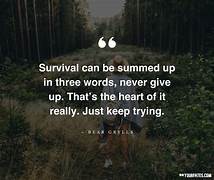
To address social problems, we must be able to recognize dominant and counter ideologies. We must be aware of how they impact the economic, social, political, and environmental ideas and values in our society.
We need to foster international cooperation and solidarity to address environmental challenges collectively, transcending borders and divisions to stop coming wars.
—————–
Physiological needs are the requirements of all biological creatures.
Unfortunately our system of Capitalism has turned all of these needs into products, resulting in government’s using what should be considered essentials into revenue generating sources, by applying service charges or taxies. Capitalism has fuelled the industrial, technological and green revolutions, reshaped the natural world and transformed the role of the state in relation to society.
In recent years, capitalism’s shortcomings have become ever-more apparent. Prioritising short-term profits for individuals has sometimes meant that the long-term well-being of society and the environment has lost out – especially as the world has faced the Covid-19 pandemic and Climate change.
It has lost its ability to be fair.
57% of people worldwide say that “capitalism as it exists today does more harm than good in the world”.
The reality is that in daily life, most of us are pursuing all of these basic human needs simultaneously to varying degrees.
Without air, water, and food, sleep homeostasis and sex all biological organisms perish.
So instead of focusing on which need you’re attempting to meet, government’s have allowed and are still condoning life to be exploited for profit resulting in – Inequality, Climate change and Coming wars.
————–
In order to live you need fresh air. That’s pretty self-explanatory.
In order to live you need fresh water. That’s pretty self-explanatory. (You can only survive without water for 3 days.)
In order to live you need food. That’s pretty self-explanatory. (Most of us, we need food, daily else we feel less than fulfilled.)
In order to live you need to build a good shelter. That’s pretty self-explanatory.
In order to live you need a living environment where security and safety are met. That’s pretty self-explanatory. (There is a primal innate fear of others and the need to seek security that is hardwired into the human brain. You don’t have to look around very long to notice how much of human behaviour is driven by the desire to feel secure.)
These unmet basic human needs fuel our unconscious behaviour.
We all share the same needs.
————-
Healthy identity is based on the fulfilment of these needs … These needs are felt and remembered cellularly throughout our lives, though we may not always be intellectually aware of them.
They were originally experienced in a survival context of dependency. We may still feel, as adults, that our very survival is based on finding someone to fulfil our basic needs.
In adulthood the needs can be fulfilled only flexibly or partially, since we are interdependent and our needs are no longer connected to survival.
Research suggests that over 95% of our behaviour is unconscious.
In today’s society, we also seek greater levels of financial security which goes hand in hand with the need for job security. (Tools like insurance have also been created in an attempt to offer more stable financial security in case of an unforeseen event.)
If you don’t have enough money to pay for rent (or your mortgage and taxes), clothes (for protection, not fashion), and transportation (to get food and make money), your safety needs aren’t being met.
The result is that individuals necessarily act selfishly when basic human needs drive them.
—————
In some parts of the world, many individuals can’t meet their physiological needs.
It’s estimated that over a billion people don’t have sufficient food to eat, basic nutrition, or clean water to drink. Shelter from the elements, clothes to cover our bodies, and some semblance of the familiar.
Belonging is also a psychological need.
(Belonging is a feeling of connection with and approval from others. It starts with our immediate family, then bridges out to friends, religious groups, and other social groups (like sports teams or clubs). This need to belong later extends into professional relationships and a significant other. This unmet need to belong drives us to identify with social groups, religious institutions, and other special-interest groups in adulthood. It also fuels a lot of people’s impulse to invest time in social media.)
Our image-driven culture pushes us to be more concerned with what other people think than with how we feel about ourselves. We seek approval from others instead of self-acceptance.
————
Physiological needs can also remain unmet even in individuals who aren’t in an environment of lack.
How do you know if you have unmet basic human needs?
To accomplish this, we must first cultivate self-awareness and self-leadership, become honest with ourselves, and learn to abide in our centre. These practices allow us to reflect on our lives and better understand ourselves. Self-actualization appears to be rare in our societies today and has become much more complex and even distorted at times.
For example, financial security is one domain that is constantly emphasized in today’s society and it seems that many spend their entire lives engaged in its pursuit, finding out, often too late, that they will never truly achieve any semblance of it.
If you don’t agree, take a closer look at the lives of some of the wealthiest people on the planet or those who are rich and famous. Their lives are filled with tragedy. Wealth doesn’t solve the problems we think.
Understanding the fundamental impermanence of things can be very freeing since it reflects a very real and dominant factor in life, one that we often struggle to accept. If you don’t agree, just ask impermanence’s primary representative, death. It will knock on everyone’s door one day or another, most often unannounced.
—————-
What would you do if you only had one month to live? One week. one day?
Don’t ask yourself what the world needs. Ask yourself what makes you come alive, and then go and do that. Consider the overall direction of your life.
Because what the world needs are people who have come alive to the rip off capitalism.
Why because it is failed and is still failing, even on its own terms. While experience varied between countries, generally this involved the ‘commanding heights’ of the economy being in public ownership – the national utilities of water, gas and electricity, along with the crucial productive infrastructure of transport and telecommunications, with the remainder of the economy being regulated to various degrees.
Government spending was used to maintain full employment, along with the implementation of industrial policies, regional policies, and active labour market policies. These interventionist measures generally went beyond just maintaining economic growth and full employment, to welfare state delivery.
Any governments pursuing these sorts of progressive agendas would be likely to wish to co-operate and collaborate internationally – on tackling the climate crisis, the industrial-scale global tax avoidance and evasion, and the root causes of international financial crises which lie in the deregulation of speculative finance and the financial sector generally.
—————
To get any sense of where to go, we need a much more thorough understanding of the forces that underlie this symbiosis of economic power and political power and the distortions of public discourse that it induces.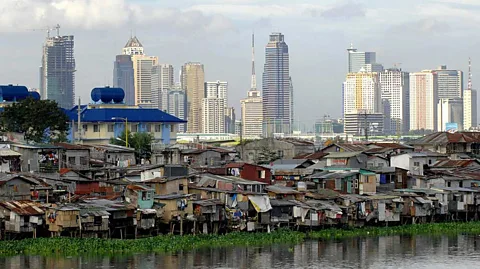
“The voters don’t choose the politicians, the politicians choose the voters”
Ultimately, it is worth remembering that citizens in a capitalist, liberal democracy are not powerless.
We live in an oligarchy, not in a democracy, A thing cannot be changed if the plan is for something that the situation is not. Oligarchy cannot be stopped by treating it as though it were a democracy.
As a society we continue to make slow progress in ameliorating this historical deficit.
Of critical importance also is the role of the individual in promoting his or her own equality. No amount of government intervention will confer equality if individuals fail to take advantage of the opportunities before them.
The system must be fixed for problems to be addressed.
So I say first things first, let’s ensure that we build a system where there is equal opportunity for all so that individuals can succeed or fail on their own merit. Will such a system guarantee full equality?
I have my doubts but I’m convinced it will promote greater equality in our imperfect society.
Young politicians enter the great building of power with sincere hearts, but leave with the stench of the corrupt swamp having their noble intentions suffocated and extinguished.
Every nation needs to wake up from their own illusions of their own importance in the world and start looking after its people.
———–
To make sure that the government gets the message that the people all of the people should be represented not just the few.
Get money out of politics ENTIRELY and then maybe there’s hope.
Now with the technology that exist, I think a ‘perpetual referendum’ democratic socialism, may be a solution:
We need to assert the importance of turning the social surplus toward ending hunger and illiteracy and toward addressing fundamental problems of social and economic life — such as the catastrophe of the climate and of endemic joblessness.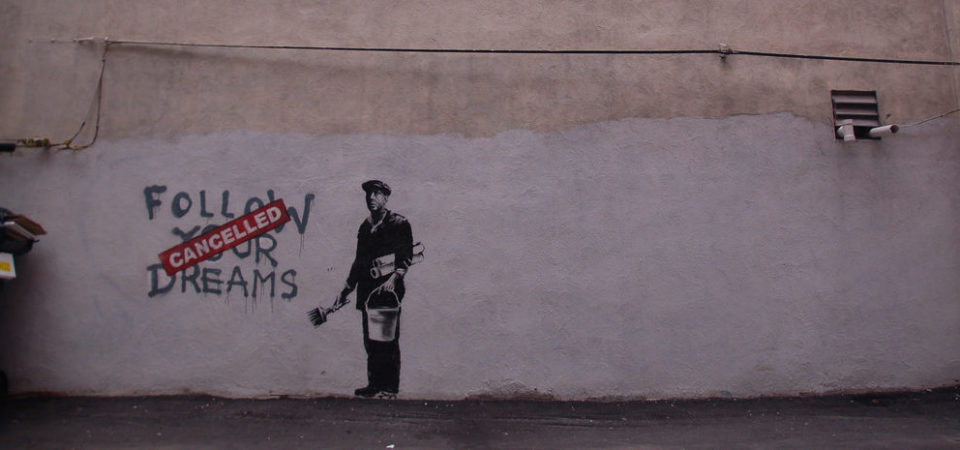
No point running a government if you don’t have an organized mass force to drive the social policy from the hall of government to the home of the poorest worker.
Government’s won’t put such perpetual referendum in place but we the people with technology can.
Your vote (on one thing or many things, doesn’t matter) is kept online at all times and can be polled by the computer at any time. And not only can be but must be. And you can change your vote (or votes) at any time.
The people must take back what people with money have stolen from them over the decades, i.e. our right for true democratic representation where elected politicians carry out the will of the people not the will of the wealthy few who have corrupted it.
The abolition of intellectual property and the renationalisation of monopoly infrastructure could reverse the tendency towards private monopoly that could contributed greatly to stopping the rising inequality of the early 21st century. The massive financial sector of the early 21st century, is a huge source of inequality.
We might be blind to what capitalism could look like in another two centuries. However, that does not mean we should not ask how it might evolve into something better in the nearer term.
The future of capitalism and our planet depend on it.
Until politicians work for every person these are the choices.
Capitalism thrives on the mantra of individualism and free enterprise. In this economic system, private entities, such as individuals or businesses, own the means of production. But, it’s essential to note that capitalism is not just about profit. It’s also about personal freedom, economic resilience, and societal prosperity. It champions the belief that everyone has the right to economic freedom. This belief is driven by the potential for profit.
Communism is a quintessential manifestation of egalitarian ideals. It seeks to pull down the socio-economic partitions between the affluent and the impoverished. Its driving force is the establishment of equality and fairness. The societal benefits are not skewed in favour of a privileged few. Instead, they are spread across all its members. Yet, the intricate dynamics of human nature and socio-political realities often pose significant challenges to implementing communism. It’s a philosophy that seeks to remould society’s foundation. It presents a different perspective on the socio-economic structures that govern our world. Its cardinal principle is collective ownership and equality.
Socialism amalgamates elements from both capitalism and communism. It is unlike the laissez-faire economics of capitalism. However, it is not as radical as communism in its distribution mechanism. It encourages fair wealth distribution. But, it does not eschew private property. socialism emerges with a balanced approach. Yet, it does not do so at the cost of personal freedoms, as in capitalism. The means of production are often state or worker-controlled. There is a conscious effort to check capitalist-style monopolies and wealth concentration.
Most nations operate in mixed economies. They cherry-pick elements from different ideologies.
They create a model that best serves their unique needs. The impact of these ideologies on today’s world is profound and multifaceted. It colours the lenses through which we view societal structures, economic models, and the state’s role in our lives.
As we go about our daily activities, we are engaged in a web of relationships that connect us to the larger world. We rely on ideas and values to form opinions, make assumptions, and arrive at conclusions. However, many of us aren’t aware of where these notions come from or how they influence our thinking. Most of us assume that our points of view are accurate and truthful. We think that they are just common sense. This may lead us to dismiss, discredit, or misinterpret perspectives that differ from our own.
This means that we rarely evaluate our perspectives in relation to alternative points of view.
A future where our planet’s people can succeed emphasizes sustainability, collective action, and innovation. What if we demanded that profit be removed from the policy of government’s.
Many types of government expenditure constitute investment: purchases of transport and energy infrastructure, school and hospital buildings, IT systems, defence systems, and intangible assets. Government investment often includes purchases needed to implement long-term policies, such as investment in green energy infrastructure to support action on climate change.
Another words invest public funds, allowing a fair profit, keep sufficient funds for maintains, and then nationalize, so everyone benefits.
All human comments appreciated. All like clicks and abuse chucked in the bin.
Contact: bobdillon33@gmail.com
https://youtu.be/PJy8vTu66tE?si=NtoSKDmZ2u3f0_HJ




 bobdillon33blog