THE BEADY EYE ASK’S. WILL COVID-19 TURN INTO A WORLDWIDE DISASTER.

Tags

, , , , , ,


( FIVE MINUTE READ)

All of the worst disasters in recorded history have been natural disasters — earthquakes, tsunamis, cyclones, and floods.

A natural disaster depends on the size and location of the event and is generally only catastrophic if they take place in an area where they affect human populations.

There is often a relationship between past events and future events, but the fact remains that we cannot predict or control natural events., but they are thanks to our help surging exponentially affecting around 217 million people a year.

80% of this growth is the direct result of Climate Change.

Most of these disasters killed around 250,000 people.

The world death toll from the Coronavirus/ COVID-19 is unknown but the figure we are all watching is likely to be an under-report.

a person wearing a costume: Watch: New NZ cases were announced on Saturday.

The truth is we don’t know how many deaths have or are taking place.

If we assume that 2% of the world population ( 7 Billion) get the virus that is 140,000,000 million and if only 0.05% died as a result that is 35,000,000.

Scary.

With a vaccine some months away it’s more than scary.

As of 20 April 2020, approximately 165,000 deaths had been attributed to COVID-19.

To put some perspective on the above the 1918 influenza pandemic killed as many as 50 million. If a similar contagion happened today it could kill up to 80 million and wipe out more than 5% of the global economy.

Correct me if I am wrong both started with the infection of one person.

When one looks at COVID-19 it will be catastrophic when it hits countries that do not have the capabilities to stop its spread.

This is why we need NATO to step up to the plate.

The WHO has neither the means nor the organization to administer a vaccine on a global scale and rest assured if we are to get to grips with COVID-19 on a global scale ( which is an ongoing world pandemic with over 2 million cases) we will need a military-style response.

Here is my suggestion.

NATO needs to reinvent itself and now is the time to do so.

It is going to take an army of trained people to administrate a vaccine when it arrives.

If you support this idea please copy the below letter to NATO and email it to the following email address.

mailbox.tribunal@hq.nato.int

20/04/2020.

Dear Sirs,

As you know the world is in the grip of a war with an invisible enemy call COVID-19.

Never in your history or the world’s history is an alliance so needed to defeat this enemy.

To do so your military clout is needed urgently to coordinate and administrate worldwide a vaccine WHEN IT COMES.

What’s wrong with this picture?

As much as one can admire your new headquarters that cost somewhere around 1.6 billion, here is an opportunity to justify its cost and show the world that you can indeed protect and defeat an enemy.  

WE ARE ASKING YOU TO PREPARE YOUR MEMBERS BY TRAINING ALL THEIR PERSONEL TO BE ABLE TO ADMINISTER THE VACCINE ON A WORLD SCALE.

TO COORDINATE AND TRACK ITS SUPPLY AND DISTRIBUTION.

Yours,

Robert de May Dillon.

Moulin de Labarde,

L’Abbaye Nouvelle

46300 Gourdon Lot France.


THE BEADY EYE ASK’S: SHOULD WE ALLOW GPS TRACKING FOR THE COMMON GOOD TO DEFEAT COVID-19

Tags

, , , , , ,


(Ten-minute read)

Emergency powers have a tendency to kindle emergencies.

Granted most of these powers adopted by countries to stop the spread of the coronavirus are needed.

At the moment we are not concerned and willing to give up liberties that were won by the sacrifice of millions of lives before us for the common good.

We also know that in order that contact tracing could be more effective if it wasn’t voluntary. But it is vital, that our governments, that these powers (granted to governments during times of crisis) do not continue once COVID-19 is over.

The COVID-19 pandemic is barely four months old and there is no doubt that when it is over that “big data” will present new challenges as well as opportunities.

The threat of a disease as a “pretense” to justify authoritarian impulses to amass power and that technology can be used as a tool in that process could create a Big Data surveillance machine.

One present-day example comes from South Korea, which introduced an electronic system that sends out an automatic alert to people living nearby a known COVID-19 case.

Or Chinese authorities that are using software to sort citizens into color-coded categories — red, yellow, green — corresponding to their level of risk for having the virus.

Or for instance what if Google introduces a smartphone App that monitors social distancing. It will know your whereabouts down to 2 meters -7/7.

Or Governments introduce GPS to track the movements of citizens without their consent to prohibit gatherings of other 250 people. But what if the governor used that measure to stop a rival’s political rally?

But more importantly, if consumers don’t trust a smartphone-based tracking system, they can simply leave their phones at home. That would render the technology useless.

Even if voluntary it might provide people with a false sense of security if they don’t get an alert. Those who have opted out of tracking might be walking around with COVID-19 and infecting others without ever being picked up with the system.

Just think about it.

The potential in using new technology for public health surveillance to get ahead of an infectious disease outbreak must be tempting, so-called contact tracing,

There is a real danger that we could end up creating a society of untouchables. (The former name for any member of a wide range of low-caste Hindu groups and any person outside the caste system.)

Moreover, unless public health officials are involved, there’s potential to “game” the system by falsely claiming a person has the virus when they haven’t tested positive for it. That could lead to other harms, like a business intentionally undermining a rival or a political party suppressing participation.

A terror attack and a pandemic are vastly different, but both present opportunities for governments and the private sector to take on new powers in the name of keeping citizens safe.

The September 11th terror attacks led to the Patriot Act, in the USA, which gave the federal government vast new investigative powers that it claimed were necessary for the fight against terrorism.

During the HIV crises in many cases, public health officials would notify an HIV patient’s past sexual partners that they may have been in contact with somebody who had the disease, but never identified or named them.

One of the big issues at the time was the idea of doctors reporting the names of HIV patients to the states. Some states refused to accept name-based reporting so for years because they feared that it would discourage people from getting tested.

Public health and privacy rights do not need to be in opposition.

Good public health must respect civil liberties, and anything that advances human rights and civil liberties would advance public health.

So we are going to be faced with the rights of Individual freedoms against collectivism. 

The behaviors that define individualism may also enhance the likelihood of pathogen transmission, and thus may be functionally maladaptive under conditions in which pathogens are highly prevalent.

By contrast, the behaviors that define collectivism may function in the service of anti-pathogen defense, and thus be especially adaptive under conditions of high pathogen prevalence.

The question is which one will we choose or will we have a choice when all this is over.

An open-air prison-like the Gaza Strip or Equality among all. 

All human comments appreciated. All like clicks and abuse chucked in the bin.

← Back

Thank you for your response. ✨


.


.


THE BEADY EYE SAY’S. WE CANNOT AVOID IT. CHANGE IS THE LAW OF LIFE.

Tags

, , , , ,


(Ten-minute red)

John F Kennedy said ” Those who look only to the past, or the present are certain to miss the future”

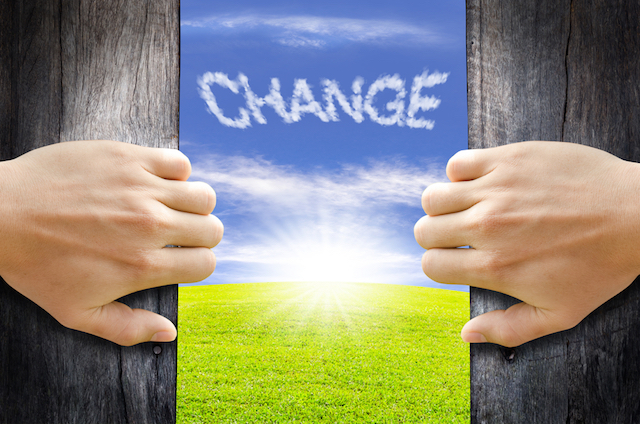
We are surrounded by change and it is the one thing that has the most dramatic impact on our lives.

There is no avoiding change it will find you, challenge you and force you to reconsider how to live your life.

Our lives now with the coronavirus are reactionary rather than an activator of change.

It has forced us to step out of our comfort zones and see the realities that need to change. There is no escaping the fact that change is a disruptor but it is the power of our choice that enables us to activate positive changes in our lives.

“Progress is impossible without change and those who cannot change their minds cannot change anything.” George Bernard Shaw.

We all know what we don’t want…

We have been talking about it for years and our consensus is that climate change is happening and the risks are real. There is overwhelming evidence that both current impacts with significant costs and extraordinary future risks to society and natural systems.

That the reality of climate change means that there are climate change impacts we can expect, but we also must consider what might happen, especially the small, but real, chance that we may face abrupt changes with massively disruptive impacts. Moreover, while the public is becoming aware that climate change is increasing the likelihood of certain local disasters, many people do not yet understand that there is a small, but real chance of abrupt, unpredictable and potentially irreversible changes with highly damaging impacts on people around the world.

97% of climate experts have concluded that human-caused climate change is happening.

The sooner we respond, the better off we will be.

We don’t need to debate if the climate is changing anymore. By making informed choices now, we can reduce risks for future generations and ourselves, and help communities adapt to climate change.

Climate change puts the well-being of people of all nations at risk.

The problem is that the world is now and for the foreseeable future will have its attention on the effects of COVID-19 for some time.

When the Pandemic is over, or under control what needs to change in the world.

Think about it for a minute.

There are so many changes that stick out like sore thumb it is impossible to believe that we have tolerated there existence.

So let’s fantasize.

There is such inequality, pain and suffering in the world we could start by ensuring that everyone on the planet should have access to electricity, fresh air, drinking water, green technologies, free education, and decent housing.

The world today is definitely not a paradise. Hunger, abuse, poverty, pollution, and violence are all too common.

Granted, the world never has been, and probably never will be perfect, but that means there’s lots of room for improvement!

If we are going to move forward we need to collaborate and push for policies that complement both sides of the political spectrum. We need to put yourself into another person’s headspace.

We don’t have to take on everything at once, in fact, it’s better if we don’t.

If there is one lesson we can and should learn from the present crises it is this:

When the experts tell us the sky is going to fall if we don’t take action we had better take action or the sky really may fall.

We may be able to prevent the emergence of some new pathogens, but for most, we can only prepare.

We can, however, prevent the looming climate disaster.

We can ensure that emerging Technologies serve us all and not just profit.

We can reform our world organizations.

We can reinvent Nato ( See previous posts)

We can fund the United Nations and the WHO.

We can establish World aid silos fully equipped to handle disasters.

We can with our buying power have a sustainable economy.

So the question is why have we not?

Because no one wants to pay for it.

In fact, no one country or the economy or individual has to.

It can be achieved by making a profit for profit sake pay.  By applying a 0.05% World aid commission on activities that are profit-seeking like Algorithms, High-Frequency Trading, Currency Transactions, Sovereign Wealth Fund accusations, Lottos, Gambling, etc. ( see previous posts)

We can become educated on the issues and what’s being done to address it. Especially now with social media, your message can go viral on the internet, spreading the word even faster. Bring your true, authentic self to every situation.

The crucial first step is getting the forces for change off the ground. Having a roadmap to success is crucial for establishing a sense of trust that the change is possible.

Maybe COVID-19 might save the world it has created a sense of urgency.

← Back

Thank you for your response. ✨


THE BEADY EYE ASKS: WHAT IS SLAVERY NOW? IT’S NOT LOCKDOWN DUE TO A PANDEMIC. IT’S NOT ISOLATION. IT IS STILL AN EUPHEMISMS FOR FORCED BONDAGE.

Tags

( FIVE MINUTE READ)

Every 30 seconds, someone is abducted into slavery. That means, by the time you are done reading this blog article, there will be 4-5 more slaves in the world. This equates to 5.4 victims of modern slavery for every 1,000 people in the world.

It exists today in over 130 countries with billions in profits linked to forced labor. Modern slavery is very cheap. The average cost of a slave today is $90. Compare that to 1809 when average the price was $40,000

So what’s the connection to you?

At the moment you hear the world will never be the same due to COVID-19.

I am sure the same was said after world war one, world war two, and all previous pandemics.

Slavery is not simply a thing of the past.

As you read this post, you are probably using a smartphone, tablet, or laptop. Each device requires minerals – including gold. Perhaps the gold in your electronic device was mined by slaves.

Slave-owners often use euphemisms instead of the term “slavery” to avoid getting caught. Such euphemisms include domestic servitude, debt bondage, bonded labor, attached labor, restavec (a French word that means “one who stays with”), forced labor and indentured servitude.

The other forms of forced labor and servitude in the world today may share some slave‐like properties, and are no doubt as pernicious in their victimization and exploitation, indeed may in some cases be even more brutal than some high-end forms of sexual slavery, but they are not slavery, which is quite distinctive in its perfidy and its social, economic, cultural and psychological attributes and consequences.

Inflating these already horrendously high figures by conflating slavery with all forms of human domination and forced labor, however well-meaning, and whatever the rhetorical payoffs, simply invite skepticism and the charge of waging moral crusades undermining the desperately needed effort to abolish, once and for all, these evils from the world.

Although slavery is illegal in every country in the modern world there are at any given time, an estimated 40.3 million people worldwide are in modern slavery. And it is still as brutal and inhuman today as it was in history.

Human Trafficking is ranked as the 3rd largest international crime industry – just behind Drugs and Arms Trafficking.

The complexity of the crimes makes it very difficult to quantify the scale of those living in modern-day slavery but it is estimated that 800,000 people are illegally trafficked across international borders every year.

Nowadays slavery doesn’t only come in the obvious form in which one person owns another person (which is traditionally called ‘chattel slavery’).

Migrant workers often become bonded labor to pay off those who smuggled them to the new country – they dare not break free for fear of being deported. Passports are confiscated from migrant workers to keep them in bondage.

In fact, 65% of the world’s slaves are in a forced labor situation.

I’m not sure what the average price of a slave is today, but it can’t be more than fifty or sixty dollars.

Almost half of the world’s slaves are found in India.

Every item we buy has a back story some good some bad.

Just think when we come out of this current Pandemic with a world economically on its knees what it is going to mean for those who have to earn a living to stay alive.

We might not be transporting slaves but if we don’t question where and who or what produced it, we will be contributing not to a global recovery but too enhanced slavery.

All human comments appreciated. All like clicks and abuse chucked in the bin.

← Back

Thank you for your response. ✨

THE BEADY EYE ASKS: IS IT NOT SOMEWHAT PATHETIC. THAT A MAN CALLED TOM AT ONE HUNDRED YEARS OF AGE HAS TO RAISE FUNDS FOR THE NHS.

Tags

, , , , , ,

  (Twelve-minute read)  As much as one has to admire the initiative and courage of Tom. The generosity of the public and the power of social media in raising millions for the NHS he high lights what is wrong with a Government, that put the economy before its people’s needs. One key question to ask ourselves about the current pandemic of COVID-19 is: Why are we so unprepared? After all, this is far from the first pandemic and three to four of them were in the last six decades. Anyone with even a modicum of historical knowledge is aware of the infamous Black Death. (Between 1346 and 1353.) Even though none of us were alive then in that pandemic, Eurasia suffered between 75 and 200 million deaths, at a time when the entire global population was less than 500 million. Just over 100 years ago, the so-called Spanish flu killed some 100 million people in the closing months of the First World War and into 1919. The pandemic killed about five times the number of people killed in that war. Why humans kept making the same mistakes over and over again over a period of many centuries. Essentially, it can be blamed on our arrogance — a psychological condition that affects most of us most of the time — drove people to believe that they had nothing to learn from the past.   Today, we are smarter. We have learned more. We are more aware of the traps that lead to disaster. But we really are not. We say that we learn the lessons of history, but we do not.  Did anyone really believe that no global pandemics were ever again going to wreak havoc on human life? We now spend hundreds of millions of dollars, if not billions, on detecting space objects that might crash into the Earth, potentially causing many deaths, and maybe even leading to extinction. In the last 10 years, we have started to take this prospect very seriously. And it is good that we do. But aside from small numbers of immunologists working in different countries on different vaccines, how much effort was put into deflecting a new pandemic? Or preparing governments or people for how to cope with one? Not much, overall. We now know that a vaccine was in the works years ago, but that work on it was halted because no money was available to fund the research. Will we learn from this? The major lesson is that we will not unless we take these lessons to heart. We will have more Troys, Vietnams, Afghanistan’s and COVID-19s, unless we really, truly, smarten up. It is only a matter of time before we face a deadlier and more contagious pathogen. We also face the specter of novel and mutated pathogens that could spread and kill faster than diseases we have seen before. With the advent of genome-editing technologies, bioterrorists could artificially engineer new plagues. We can start by learning four lessons from the gaps exposed by the Ebola and Zika pandemics and now this COVID 19.  The most effective way to stop pandemics is with vaccines. Therefore the world must come together to develop preemptively vaccines for diseases predicted to cause outbreaks in the near future. What’s needed are point-of-care diagnostics that, like pregnancy tests, can be used by frontline responders or patients themselves to detect infection right away, where they live. We need to help developing countries establish health systems that can provide routine care and, when needed, coordinate with international responders to contain new outbreaks. Local health systems could be established for half the price of battling future pandemics. They would be essential for knowing when an outbreak is taking root and establishing trust. International actors are essential but cannot parachute into countries and navigate local dynamics quickly enough to contain outbreaks. Investing in our ability to prevent and contain pandemics through revitalized national and international institutions should be our shared goal. We need stronger global coordination. The responsibility for controlling pandemics is fragmented, spread across too many players with no unifying authority.  So Mr. Tom you have inspired me to suggest this. If we are going to keep NATO that has reinvented itself and built a new headquarter at a cost of  €1billion let it be the global coordinator to fight future Pandemics.  What better enemy could it have. Pandemics are an existential threat on par with climate change and nuclear conflict. We are at a critical crossroads, where we must either take the steps needed to prepare for this threat or become even more vulnerable. It is only a matter of time before we are hit by a deadlier, more contagious pandemic. Will we be ready? WHO, which is taking a battering from prevailing political headwinds in the United States, should continue to anchor global action.  All human comments appreciated. All like clicks and abuse chucked in the bin

← Back

Thank you for your response. ✨


THE BEADY EYE ASK’S . WHAT ARE WE GOING TO KISS GOODBYE BECAUSE OF COVID- 19.

Tags

, , , , , , , ,


(Twenty-minute read)

Apart from the tragic loss of loved ones what if this epidemic is a turning point, and after it, the world is never the same?

Will the world come out of this crisis better than it was before?Ball, Earth, Glass, Globe, World

It all depends on what we do and how we behave right now.

Even in the height of the darkest of times, people are already imagining what the future world would look like.

It is, in Metzl’s words, “a convergence of the worlds of science and biology and the world of geopolitics.” And as the coronavirus crisis continues to play out, its geopolitical implications are going to become much greater.”

The old world is dying and the new world struggles to be born.

Post-WWII planners envisioned a world that shared sovereignty and curbed nationalism. But we’re now in a period of dramatic re-nationalization of the world, with the populist, extremist, or authoritarian leaders in power from Brazil to the US to China, and many countries in between.

The one thing that sticks out like a sore thumb is that we don’t have effective structures in place to address global crises—and not just coronavirus. Think of climate change, protecting the oceans, preparing for a future of automation and AI; no country can independently take on or solve these massive challenges.

Crucially, we’re more connected to each other than we’ve ever been. It used to take thousands of years for knowledge to transfer; now it can fly across the world over the internet in minutes.

The tools we’re bringing to this fight are greater than anything our ancestors could have possibly imagined.

Unforuntitly this is bottom-up energy and connectivity, as we witness the abysmal failure of our top-down institutions.

We don’t know the way out or how long it’s going to last. In the meantime, a lot of unexpected things will happen.

There will be an economic slowdown or recession, and there will be issues with our healthcare systems—and these are just the predictable things.

We may see fragile states collapsing and even the EU disintegrating.

We’re going to come out of this into a different world.

We don’t know exactly what that world will look like, but we can imagine some of it. Take the trends that were already in motion and hit the fast-forward button. Virtualization of events, activities, and interactions. Automation of processes and services. Political and economic decentralization.

In hindsight, it’s easy to picture a far better response and outcome to the COVID-19 outbreak. What if, three months ago, there’d been a global surveillance system in place, and at the first signs of the outbreak, an international emergency team led by the World Health Organization had immediately gone to Wuhan?“

We need to be articulating our long-term vision now so that we can evaluate everything against that standard.

There’s not a total lack of a positive long-term vision now: the UN sustainable development goals, for example, call for gender equality, no poverty, no hunger, decent work, climate action, and justice (among other goals) around the world.

The problem is that we don’t have institutions meaningful enough or strong enough to affect the realization of these principles; there’s a mismatch between the global nature of the problems we’re facing and the structure of national politics.

We couldn’t have done this in the industrial age or even the nuclear age. There’s never been this kind of motivation combined with this capacity around the world.

This time will be different; to succeed, the new global plan will need to have a meaningful drive from the bottom up. We need to recognize a new locus of power. And it’s us. Nobody is going to solve this for us. This is our moment to really come together.

We have to turn the United Nations from being a gossip, veto voting, begging shop to an Institution fully funded. ( See the previous post on a World Aid commission of 0.05%. So it can establish around the world Aid Silo fully equipped.)

What better way to help the damaged world economies and to prepare for the next pandemic and climate change.

There is no need for further Climate change deliberations.

If we don’t want to be haunted by COVID-19 saying one thing and doing another is over


All human comments appreciated. All like clicks and abuse chucked in the bin.

← Back

Thank you for your response. ✨


THE BEADY EYE’S OPEN LETTER BORIS JOHNSON.

Tags

,


14/04/2020.

Dear Primister Johnston,

Welcome back to the land of the living.

You are right to praise the treatment you received and to especially name, two NHS nurses who luckily were not born in England, who spoke English and did not look like letterboxes although you might have thought so.


At the moment all around the world leaders are discovering that leadership in the grip of the Coronavirus is a bit like trying to steer the Titanic; it will take some time and effort to radically change course.

Rarely can there have been a better exposition of personal experience informing a political view?

No longer are migrant workers nameless, but valued heroes on miserable wages.

Not too long ago, you were urged to make a full apology for “scapegoating migrants” after you claimed European citizens had been able to “treat the UK as if it’s part of their own country” for too long.

This happened in your lifetime, so you know about this.

While you are down in your country residence convalescing let me tell you as an intelligent man that Food Banks, People sleeping Rough, Charities begging for funds, people signing up for Universal Credit will ensure that there will be no speedy recovery in an isolation Brexit England.

Your county might have either invaded or colonized all but twenty-two countries in the world but days of invading other countries are over as are the days of undermining migrant workers.

Rule Britannia is over.

No matter what Churchill tones you adopt on your return to the house of common  England more than ever is going to need a collective view like the rest of the world to overcome the damage that Cov-19 has inflicted and to tackle climate change and the Next Pandemic.

Will, you now put the people before the economy.

Your inability to give a straight answer to a straight question is somewhat like -our pound-shop Donald Trump, a nasty piece of work.

Yes, your beating heart saved by two nurses, the point, however, is how you use this gift to inform your political views of a world that will not and can not return to isolation.

My own view is that I hope this reality will bite once you are back in NO10. 

So far we have had platitudes. More flimflam, and spin put on existing but re-branded arrangements, will not do. 

In the years to come your newborn will ask ” What did you do Daddy.

All the best for a fast recovery.

Yours:

A concerned European citizen.

← Back

Thank you for your response. ✨


THE BEADY EYE ASK’S: NOW THAT YOU ARE IN LOCK DOWN WHAT DO YOU THINK MAKE LIFE WORTH LIVING?

Tags

, , ,


(Five-minute read)

I know it’s a heavy question, but now perhaps it is one of the most important questions we all have to answer in the future. 

It can be tough to notice all the amazing things that life has to offer.

Can we be satisfied with the successful pursuit of love, work, and play?

A fulfilling life can be elusive, as there aren’t any concrete factors that truly determine whether or not a person has truly found happiness. Satisfaction often yields happiness, but even the pursuit is enough to give life meaning.

For me, it is sharing that gives life meaning. 

Active listening by taking your friend’s feelings into account when making a decision and phasing out people who introduce stress or negative feelings out of your life.

The successes of your friends are important and worthy of celebrating.

Get to know them.

Find value in what you do. I.E. finding a job that aligns with your personal passions. It’s important to find a line of work that offers the amount of freedom you feel is necessary and appropriate. Accomplishing something of value.

Obsessing over past failures can’t change what happened. The opinions of others carry only as much weight as you allow them to.

Giving back. Find a cause you are passionate about and donate to it, volunteer your time, or offer your support in some way.

Remember that your strengths are a big part of what makes you great.

Forgiving can be among the hardest things to master, as often it’s the things that hurt the most that are most in need of forgiveness.

Remember, life is always worth living and there are people out there that can help.

It’s about the relationships we create, develop, support and maintain with people, colleagues, friends, and members of our family. Every person we meet adds invaluable experience to our life. Even the most complicated relationships we find ourselves in teaching us something worthwhile.

The answer rests in the ability to create, to dream and to strive to turn those dreams into reality. It’s all about big and small achievements when we prove ourselves being able to push the limits away. It’s about discovering the depths of your unlimited potential. 

By accepting what is going on and what happened, we release ourselves from oppressive judgments and wishes for things to pan out differently.

Enjoy all the little things, and with the time you will discover their profound meaning and that they weren’t little after all.

One thing that makes life more fulfilling and worth living are really connecting with the world around us. Nature. 

Religious faith may be reassuring, but science cannot objectively tell someone whether they should adhere to Christianity, Islam, Hinduism, or some other religion. It cannot even tell an individual what version of Christianity (Catholic, Baptist, Morman, etc.) or Islam (Shia or Sunni) they ought to adopt. Hence, religion and vague spiritual ideas—such as “everything happens for a reason”—can not provide an evidence-supported basis for living.

But most people, fortunately, can find lots of reasons to value their lives. 

Time does not stand still for anybody so perhaps Boris Johnston Priminster after his Coronavirus experience now realizes that sharing is what makes life go around and not get Brexit done.

One thing that makes life more fulfilling and worth living are really connecting with the world around us. If you consider your most precious memories they are probably with other people when you were doing something beyond your personal satisfaction.

Living a full, meaningful and thriving life comes down to being engaged in the world around us, not in virtual reality.

All human comments appreciated. All lie clicks and abuse chucked in the bin.

← Back

Thank you for your response. ✨


THE BEADY EYE’S TIP TO KEEP YOUR WINES FROM GOING SOUR.


Boil a gallon of wine with some beaten oyster and crab’s claws burnt into powder, an ounce of each to every ten gallons of your wine.

Then strain out the liquor thro’a sieve and when cold put it into your wine of the same sort and it will give it a pleasant lively taste.

N.B. A lump of unslaked lime put into your casks will keep the wine from turning.

← Back

Thank you for your response. ✨

THE BEADY EYE ASK’S; HOW WILL HISTORY RECORD THE CORONA-VIRUS PANDEMIC.

Tags


(Two – minute read)

When nations emerge from the tragedy of the pandemic amid distressing human loss with there economy in ruins, they and history will seek to blame someone for the devastation. 

There are many factors other than the death toll that will determine this. 

They say that history is written by the victor but the lesson to be learned this time is humility.

Our glorious, multinational globalized, technological miracle- has been brought to its knees by a pathogen so tiny no one is able to see their complex structures until the last century.

History will show that we were mocked by a speck of nature that technically not alive.

 History will show that our addictive elixir, economic growth evaporation, and our only defense is social distancing.

History may well show that by suspending our entire way of life we saved lives but we will not have defeated COVID-19 as the virus exploits or togetherness mercilessly.

History will record a brutal fact that the virus ripped off our delusions of control of nature.

History will place the origins of the virus in Wuhan China.

It will show that integrating a communist dictatorship into a democratic world economy is a mug’s game.

It will show that Donald Trump is a pathological liar.  The virus is in a way a symbol of that reality.

When the masks are removed it will show that we were saved by a vaccine as there is no surrender.

All human comments appreciated. All like clicks and abuse chucked in the bin.

← Back

Thank you for your response. ✨