THE BEADY EYE SAY’S: AS IF YOU DID NOT KNOW NO ONE WANTS TO UTTER THE POSSIBLE TRUTH WHEN IT COMES TO THE COVID-19 VIRUS.

Tags

, , ,


(Five-minute read) 

The outbreak of Covid-19 has the potential to cause not just millions of deaths but a global depression that will resemble a global war.

Ultimately both will be determined not by the spread of the virus in wealthy countries but how it evolves (which is almost impossible to predict ) in what is called third world countries. 

Dare I say it if no vaccine is found with such a contagious virus unimaginable devastation is becoming a very real possibility.

Sure, if the current level of disruption is manageable our way of life will return drip by drip until the virus hits ill-equipped countries when it will return with a vengeance.

Then we won’t be worried then about the potential cascading economic effects.

It could end up for lack of better terminological words like Donal Dump’s might voice it, ” It’s going to be great. Really big and really really serious.”

What can be done?

The UN is too cumbersome.

The big powers of the financial world are exhausted from a decade of fighting anemic growth.

With global debt three times, the size of the global economy coordination of any global response is unlikely in an increasingly fractured world.

Multinational institutions have little or no teeth when it comes to day to day issues.

So we the people of the world (While vaccines are in development and initial treatments are showing some signs of success, the potential human impact of the disease is immense and a cause for global concern.) need to start thinking about it now and not just muddle through, hoping to put it all back together with sticking plaster over the next few years.

Broadly speaking, the economy will cease to function. Capitalism will be suspended.

At the outset, politicians will tend to prefer maintaining the current system – even though it will have been completely broken by Covid-19.

Globalization will go into reverse.

The speed of any reversal will depend on the type of government that emerges from the crisis. There is a higher likelihood of more nationalist, protectionist, and less cosmopolitan politicians emerging in countries traumatized by the virus.

The world is mired in the worst disaster of our times.

Unpalatable as it may sound, we must anticipate the even bigger problems of climate danger.

I fear they will be unimaginably catastrophic in countries with fragile infrastructures, economies, and medical services.

Of the 195 countries in the world, the World Health Organization (WHO) reports that virtually all have confirmed cases.

Despite compelling evidence of this danger, the climate crisis, too many, still feels futuristic.

The much-needed stimulus packages that governments are readying to revive their economies and lessen the suffering must ameliorate rather than aggravate the even more deadly climate crisis.  

Should COVID-19 cases skyrocket in regions of extreme poverty, conflict zones and refugee camps the effects will be deadly and will jeopardize decades of global health progress and efforts to eradicate poverty for generations to come.

It is in these very places that the coronavirus can infect not thousands, but millions of people.

According to the World Bank, 10% of the world’s population lives on less than $1.90 a day. That’s 700 million or 7 billion fingers that can buy a bar of soap.

How we respond to this pandemic will reshape humankind.

No one is safe until we’re all safe

There are few times in collective memory that call us to a united human

community as now.

Our duty calls us to stop the third wave. 

All human comments appreciated. All like clicks and abuse chucked in the bin.

← Back

Thank you for your response. ✨

THE BEADY EYE’S ACTION PLAN. FOR A GREEN ECONOMY.

Tags

, , , , , , , , ,


(Seven-minute read)

At the moment we are inundated with rhetoric that the world is going to change due to the coronavirus pandemic.

Now the big question yet to be answered is how in the midst of a coming a Global economic depression to restate countries’ economies.

But the truth remains that few politicians are prepared to take substantive leadership towards changes that could alienate powerful interest groups that benefit from the current paradigm.

It appears that we have a brain drain as existing legal frameworks and regulations do not encourage improved environmental and economic practices or innovations.

However, issues that created a sense of solidarity among civil society and academia in
earlier decades are now back on the table thanks to the Pandemic.

While the rationale for change is clear even with the evidence of climate change, and the possibilities of future pandemics there are a number of barriers or challenges to making this transition.

Key issues affecting the rate of transition to a green economy include entrenched interests supporting the status quo, lack of data and information, organizational obstacles, reaching competitive levels of risk and return for financing, and the need to scale up.

It’s about getting everyone – from governments through to the business community – to work together to do things differently, and this requires a common language.

Whether that is at the international level, the national level, or within the business community. All levels need to be striving towards the same goals, and the indicators provide a common way of talking about this – allowing a better-managed with system corporate social responsibility.

Green Economics principles should be developed to meet the needs and vision of each country and each sector. The goal is not to simply arrive at a list of principles but to engage in discussions with stakeholders about the priorities and approaches to moving toward a green economy.

Environmental well-being contributes to economic well-being when the environment is
able to properly carry out its functions. For longterm prosperity through equitable distribution of economic benefits and effective management of ecological resources; it must be economically viable and resilient, self-directed, self-reliant, and pro-poor. 

The need for a convergence – that all sectors need to work together to deliver these goals.

The first thing to say is that a green economy would not have to be any different than the regular economy.

Supply and demand. 

What role does public policy play in encouraging and facilitating the green economy?

1. The green economy is a means for achieving sustainable development.
2. The green economy should create decent work and green jobs.
3. The green economy is resource and energy-efficient.
4. The green economy respects planetary boundaries or ecological limits or
scarcity.
5. The green economy uses integrated decision making.
6. The green economy measures progress beyond GDP using appropriate
indicators/metrics.
7. The green economy is equitable, fair, and just – between and within countries
and between generations.
8. The green economy protects biodiversity and ecosystems.
9. The green economy delivers poverty reduction, well‐being, livelihoods, social
protection, and access to essential services.
10. The green economy improves governance and the rule of law. It is inclusive;
democratic; participatory; accountable; transparent; and stable.
11. The green economy internalizes externalities.

Thanks to COVID-19 we’re going to see a huge amount of capital flood into sustainability.  It is already happening if at a slow pace.

The government can spark a clean energy economy by setting the rules and letting the private sector scale up.

Of course, finance will not be the only factor in this transition, but rather the forthcoming Economic Depression.

What better way to stimulate growth by securing self-efficiency in green energy (Energy production results in the emission of 80 percent of global carbon dioxide.)   

What better way to promote Tourism that depends on the environmental quality of a destination – i.e. – clean air, water, and land. It depends on the natural environment for its wide array of ecosystems, for example, beaches and coastal areas, mountains, and forests. 

What better way to stop pollution that has an impact on global warming has a potential cost from flooding and hurricane damage, low agriculture yields, and population resettlement.

What better way to realize that GDP is increasing while emissions are going down.

What better way to leave a legacy for the next generation.

What better way to engage the whole population.

What better way to make wealthy countries finally realize that the greenest investments also look like the wisest. 

What better way for the European Union to live up to its name ( Union) by Investing in the sunshine of the south with energy grants to establish solar farms. The north could manufacture them creating millions of new jobs in their economies, in Italy, Spain, Greece.  

The benefits arising from the green economy are extended to all levels of population and all countries, as well as interconnected among the features of mutual influence and common development: the more countries and companies “go green”, the more the economy grows; the more the economy grows through “green plans”, the more research and development on the green economy will be conducted. The more green economy dominates markets, the sooner the world will be a clean place after more than two hundred years of increasing.

That there is a need for a new model of economic development but unfortunately, that is what it is Rhetoric.

All human comments appreciated. All like clicks and abuse chucked in the bin.

← Back

Thank you for your response. ✨


THE BEADY EYE’S: HOW TO SURVIVE THE COMING ECONOMIC DEPRESSION.

Tags

, , , , , ,


(Two-minute read)

Ok, This post is to encourage suggestions as to the best practices 

That last the Great Depression lasted for 10 years so you will have plenty of time to add your suggestions.

Since the start of the COVID-19 pandemic, countries have poured funds into saving their economies.

You don’t need a Bachelor’s in Economics, to know that where the demand goes out the window so does the supply. Just watch the Unsustanianle Advertising Industry desperately trying to create demand. It would not surprise me before long if they will be promoting Bio corona free recycled paper to wipe your troubles away.  

At the intersection of social science and mathematics is economics, the science of money.

COVID-19 is exposing the weakness of money and the lack of attention to what should have been valued in the first place to make social science with the result that the great lockdown is now on course to turn into the great slump. 

So here are 10 steps to personally take to prepare for a deflationary depression. 

  1. Don’t sign up for a tracking App unless it is 1000% transparent.
  2. Don’t trust the banking system. Don’t think bank runs can’t happen- they can. “Cash is king” as average joes like you and I will not be able to depend on credit to get the things we need.
  3. Gain some control over the necessities of your own existence if you can afford it.
  4. Be prepared to work with others as that will give you far greater scope for resilience and security. Form buying clubs. Growing Coops.Independent food security as much as possible.
  5. Be worth more to your employer than he is paying you.
  6. Look after your health!
  7.  Hold no debt (for most people this means renting)
  8. If possible Pay off your debt and do not take on a new debt no matter how low-interest rates may appear to be. 
  9. Instead of focusing on debt and credit, pay attention to your liquid assets.
  10. If times get tough, you’re gonna want like-minded people to work, trade, and barter with. Don’t rely too much on internet “prepper groups.” Instead, you’re going to turn to family members and friends you already know and trust. Invest in relationships with people who actually live near you and will be able to physically lend a helping hand when you need it.

(Deflationfor those of you who don’t know, is the phenomenon when prices for goods and services get lower and lower and lower during a given period of time.) Much worse than inflation because debts, in real terms, become far harder to pay off.

All contributions appreciated. All like clicks and abuse chucked in the bin.

← Back

Thank you for your response. ✨


THE BEADY EYE SAYS: AT THE MOMENT THERE IS A LOT OF HYPE THAT AFTER THE CORONA VIRUS PANDEMIC IS OVER THE WORLD WILL HAVE CHANGED.

Tags

, , , , , , , , , , , ,


(Fifteen-minute read) 

Obviously, where will we be in six months, a year, 10 years from now is unknown but what Covid-19 is throwing into sharp relief is just how false our beliefs about markets are. 

We all know what is needed and one could compose a list as long as your arm but all are connected to where and what we live on the Earth.
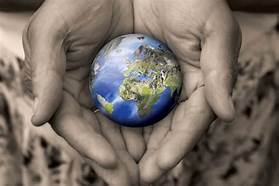
In the face of Covid-19, this has never been more obvious.

“We’re all in this together and nobody has a clear answer to a way out.”

However, when all of this is over together in lockdown will become more than an appropriate word in more ways than we might like.  

As with sheep, it is easier to control a flock when they are enclosed. 

There is a chance that the herd scenario will be the most dangerous scenario, with profound implications for all. 

Big untransparent data is a minefield to the civil liberties we enjoy at the moment.

We won’t be clapping when the freedom of choice disappears. 

So as responses to the virus evolve, how might our economic futures develop?

The main fact exposed in our societies by COVID-19 is that so many people work pointless jobs because, they make lots of money we have lots of consultants, huge advertising industry and a massive financial sector. Meanwhile, we have a crisis in health and social care, where people are often forced out of useful jobs they enjoy because these jobs don’t pay them enough to live.

In a society where exchange value is the guiding principle of the economy, the basic goods of life are mainly available through markets. This means you have to buy them, and to buy them you need an income, which comes from a job.

In other words, people are compelled to work in pointless jobs.

This is partly why so many countries were so ill-prepared to respond to Covid-19.

There are a number of possible futures, all dependent on how governments and society respond to coronavirus and its economic aftermath.

So, will, we take the opportunity of prioritization of one type of value over others.

(This dynamic has played a large part in driving global responses to Covid-19.)

First, it is quite hard to make money from many of the most essential societal services.

The best-paid jobs only exist to facilitate exchanges: to make money. They serve a no wider purpose to society.

We need a very different kind of economics if we are to build socially just and ecologically sound futures.Civil liberties under attack during COVID-19

From an economic perspective, there are four possible futures:

Descent into barbarism, robust state capitalism, radical state socialism, or a transformation into a big society built on mutual aid run by unregulated AI. 

If we want to be more resilient to pandemics in the future (and to avoid the worst of climate change) we need a system capable of scaling back production in a way that doesn’t mean loss of livelihood or our civil liberties. 

From the economic point of view, this has to be is a Green sustainable Economy because the challenge of producing less is also central to tackling climate change.

(Coronavirus, like climate change, is partly a problem of our economic structure. Although both appear to be “environmental” or “natural” problems, they are socially driven.)

From an individual point of view, the solutions are not so clear.

Should we give up our liberties for the common good?

When faced with a complete lack of evidence about a tracking policy’s long term effects crisis situations afford the state the opportunity to stretch its power into areas of life that were before beyond its reach.

Politics is plagued by a do-something bias and this question is unanswerable because we cannot know how much the forcible suppression of civil society will cost and we won’t know the benefits.

The actions of governments if not reversed when the pandemic is over or under control to date if not reversed are of magnitude more dangerous than this virus.

Thinking critically we are now confronted nonetheless with the question of who gets to make such a decision on tracking, the government on a compulsory law backed bases or the individual on a voluntary base.  

It’s a social theory question, not a medical one: how does a comparatively tiny group of people at the top of government acquire the right to make this call for all other people. How could anyone or any group attain to such a power?

This leads us to some troubling questions.

For example, What kinds of communicable diseases function to void one’s right to free movement? How deadly does the disease have to be? How contagious? 

It is not worth giving up for a problem that has existed even before our time.

After giving up this right, what other rights will follow?

Where will be the balance? Do we become mindless government slaves?

Where is the line between where our right to choose is more important than the government’s right to impose their standards on us? Even if it’s for our own good?

Governments don’t give us our rights. Our rights are ours.

If we let freedom and liberty slip away a little at a time, then we are a people who don’t deserve to be free.

Just as the government has a duty to serve us, we as a people have a duty to defend our freedom and to understand and appreciate the rewards of being a free and open society. If we as a people fail in our duty to protect our freedom, then we no longer deserve to be a free people.

Once you give up even just a little, it is unlikely you will ever get them back. The individual is all that matters when it is you.

Philosopher Bertrand Russell wrote, “Neither a man nor a crowd nor a nation can be trusted to act humanely or to think sanely under the influence of great fear.”

These times of crisis are when we must be vigilant, guarding our rights and liberties, watchful of overreach, as transparency of who, what, and how we are governed will disappear into big data run by algorithms that learn from each other owned by god only knows.   

Will the world change as we are told?  Will the draconian laws revert?  

Will this happen?

More than likely not to all three.  

Why?

Because we are in a capitalist system that cannot or is unable to manage greed, inequality, and profit for profit sake.

Because businesses, of course, want to be able to meet demand when the economy picks back up again. But, if things start to look really bad, then they won’t. So, more people lose their jobs or fear to lose their jobs. So they buy less. And the whole cycle starts again, and we spiral into an economic depression.

Because we are now facing a serious recession if not a global depression.

Our modern generations have lost so much of the sensibility, practicality, frugality, and “know-how.”  Very few of us alive today have experienced an economic depression.

The fan is spinning and something very brown is beginning to hit the economies of the world at some point they will be unable to sustain themself.…so be preemptive.

Preparing for that eventuality now is really the only way to be ready when we will actually need to be much more self-reliant for our food.

A full-on economic collapse isn’t simply a disaster threat we should look out for, if you can’t appreciate what you have, you’ll never be content even if you exceed every goal you set for yourself.

Initially, chaos will reign but people will start banding together and not spending money. Debt will become a dirty word. You can’t eat money or your smartphone so start digging your garden. Get your village to open communal gardens.

Before you throw something away as it could be re-purposed.

The prescription for solving this is simple – the government spends, and it spends until people start consuming and working again. 

However, it is my belief that this type of intervention won’t work here because we don’t want the economy to recover (at least, not immediately). 

Businesses exist to make a profit. If they can’t produce, they can’t sell things. This means they won’t make profits, which means they are less able to employ you. 

What is needed is an “anti-wartime” economy and a massive scaling back of production.

A key task for us all is demanding that emerging social forms come from an ethic that values care, life, and democracy. The central political task in this time of crisis is living and (virtually) organizing around those values.

Yes, climate change is caused by certain gases absorbing heat. But that’s a very shallow explanation. To really understand climate change, we need to understand the social reasons that keep us emitting greenhouse gases.

The dominant idea of the current system we live in is that “exchange value” is the same thing as “use value” and currently, the primary aim of the global economy is to facilitate exchanges of money. 

However, Governments are now providing people with an income in order to stop them from going to work reducing people’s dependence on a wage to be able to live.

This is viewed both by the market and governments as a temporary necessity to keep their economic where-with-all to deliver a good quality of life, so it must be protected. 

The market will always return to normal after short periods of crisis.

We do not have the right “mindset” in order to adopt the protection of life as the guiding principle of our economy. The use of profits as the primary way of organizing an economy can only continue if it is used to remove inequality on all fronts.

If it delivers a good quality of life, for all so it must be protected.

Barbarism is the future if we continue to rely on exchange value as our guiding principle and yet refuse to extend support to those who get locked out of markets by illness or unemployment.

It describes a situation that we have not yet seen.

Citizens no longer rely on employers as intermediaries between them and the basic materials of life.

We must be careful to avoid authoritarianism and massive austerity after the pandemic has peaked that will only consolidate wealth into tracking apps.

We can expect the lure of tracking citizens to infect politicians. The ideals of democracy will be surrendered to the relative security of authoritarianism. 

Likewise with Covid-19. Yes, the direct cause is the virus. But managing its effects requires us to understand human behavior and its wider economic context.

It is hard to believe but there was a time when computers didn’t control every aspect of the world, just like it is hard to believe that the world survived before electricity.

Nowadays it is hard for most to believe that people lived without cellphones.

I believe that sooner or later we will be facing a Greater Depression. While I certainly ‘hope’ not, logic is telling me that it is inevitable.

I do believe when things change, people will change also because it will become necessary. 

Which of the overwhelming number of urgent global issues should I focus my attention on first? 

Maybe you can’t save the world, but you can save your backyard.

Imagine what would happen if we all did the same?

Rather than waiting for the elected leaders to listen to your concerns, the quickest and most effective way of making a difference is to do it yourself.

All human comments appreciated. All like clicks and abuse chucked in the bin. 


← Back

Thank you for your response. ✨


THE BEADY EYE SAY’S. SURELY FOR THE WORLD, IT’S TIME WE ADDRESSED WHAT IS IMPORTANT TO ALL OF US.

Tags

, , , , ,

(Three-minute read) We spend more on ice cream than ensuring that the technologies we develop don’t destroy us. Now that we are all living through a global pandemic we need a much wider frame of reference for what is right and what is wrong. It shows to some extent that we can overcome the sense of “other,” and acknowledge that events in one part of the world can affect us all. The jury is out on whether COVID-19 will prompt the world to choose the route of national isolation or global solidarity, but a growing understanding that we are inherently connected to people in vastly different geographies and circumstances can help build momentum for strong climate action. Everyday problems are everyday problems while hypothetical future ones can be left for tomorrow. If we continue to ignore the threat represented by advancing technologies such as Artificial intelligence, Bioengineering, Overdependence on the internet, Algorithms the problems that affect everyone are consequently owned by no one in particular. We are now with a Pandemic witnessing our civil freedoms becoming rules by big data. We have realized for a long time that we can destroy not only ourselves in a flash with nuclear war (we still have over 4000 nuclear warheads ) while we are only beginning to realize that this is not the only threatening thing to the survival of our species. Now might well be the time to think about what can be done to avoid a future cataclysm, a critical moment in our history, or leave ourselves as a civilization in the balance. If we make the right decisions perhaps we will see a future and not end up like the dodo or the dinosaurs. On the one hand, this is a big ask as we have a little moral grasp of how our actions may affect the thousands of generations that could -or alternatively, might not -come after us. Sooner or later all questions of existential risk comes down to a global understanding and agreement that climate change similarly poses a major threat to human lives and urgently requires a comprehensive response. Unfortunately, we still have to learn that it is common bonds that are greater than our differences and we will not able to have this understanding while our economic systems are driven by profit and our political systems remain almost entirely national or federal. The belief that COVID-19 can solve our separation and act as one is magical thinking in its purest form. However individual countries can not afford to turn their backs on the world like the USA, at last not for long. The slogan that we are all in this together will ultimately require a kind of unity if we are to avoid greater afflictions in the future. Just because our survival isn’t on the line with COVID-19 Climate change is shaping up to be a global calamity of unprecedented scale.  As we are seeing with this pandemic global problems do not always have global solutions BUT REST ASSURED CLIMATE CHANGE WILL AND IS ALREADY DEMANDING A GLOBAL SOLUTION.  As the world recovers from COVID-19, we must not let short-term fixes prevent us from addressing longer-term risks like climate change.
  • The response to the pandemic illustrates five actions we can take to address the global climate change crisis.
  • These include making people the priority, listening to global perspectives, and trusting experts.
What happens over the coming months could go one of two ways. There is a risk that as the immediate crisis wanes and its economic consequences become clearer, we cast aside longer-term aspirations in pursuit of short-term easy fixes, many of which would have adverse environmental consequences. These include rolling back environmental standards, stimulating the economy by subsidizing fossil-fuel-heavy industries, and focusing on making more things, rather than using them better. With scientists warning, we have 10 years left to avoid the worst consequences of climate change, if the pandemic teaches us to acknowledge our vulnerability it could offer an opportunity to fix the climate crisis before it’s too late. We need to harness the present wave of compassion and proactivity to protect vulnerable people in all contexts, including those most exposed to climate impacts. Much remains uncertain about what the world will look like when we emerge from the COVID-19 pandemic, but the fundamental societal changes we are witnessing may well offer us a final chance to avoid a climate catastrophe. When we come out of this Pandemic switching to green energy with a green economy is one of the single biggest things you can do to cut your carbon emissions and to regenerate our common values with a future worth living as there is no future in carrying on without planet. All human comments appreciated. All like clicks and abuse chucked in the bin.

← Back

Thank you for your response. ✨


THE BEADY EYE’S: HOW TO AVOID DOWNLOADING MALICIOUS APPS.


(One minute read)

As with any software, there’s no foolproof way to know whether an app is malicious.


Pay attention to permissions, the number of times an app has been installed, the reviews, and the general reputation of the developer.

Be sure to keep an eye on permissions when installing apps. If an app you don’t trust much requires too many permissions, that’s a red flag that the app will potentially abuse those permissions.

It’s normal to come across apps that require too many permissions, but it’s often because that app actually is using your phone number, address book, and location to an advertising network’s servers so they can track you and serve ads to you.

For example, if an App requires permission to read your address book, access your location, and connect to the Internet, this is awfully suspicious.

Most malicious Android apps come from outside the Google Play Store. If you download a pirated app from a shady website, you shouldn’t be surprised if it brings malware onto your system.

THE BEADY EYE ASK’S. CAN SOMEONE TELL ME NOT HOW DID AMERICANS VOTE FOR SUCH AN IDIOT BUT WHY?

Tags

, ,

(Five-minute read)

Donald John Trump, (born June 14, 1946, New York, New York, U.S. ), 45th president of the United States (2017– ).

A real-estate developer and businessman who owned, managed, or licensed his name to several hotels, casinos, golf courses, resorts, and residential properties in the New York City area and around the world.

Married three times.

Also lent his name to scores of retail ventures—including branded lines of clothing, cologne, food, and furniture—and to Trump University.

In 1968, during the Vietnam War, he secured a diagnosis of bone spurs, which qualified him for a medical exemption from the military draft (he had earlier received four draft deferments for education).

In 1973 his daddy and him, along with their company, were sued by the U.S. Department of Justice for allegedly violating the Fair Housing Act (1968) in the operation of 39 apartment buildings in New York City. The Trumps initially countersued the JusticeDepartment for $100 million, alleging harm to their reputations. The suit was settled two years later under an agreement that did not require the Trumps to admit guilt.

Became only the third president in U.S. history to be impeached.

He has in his first term has been a relentless drive for unfettered fossil energy development revealing the striking disconnect between President Donald Trump and essentially every authoritative institution on the threat of global warming.

Occasionally he feigns concern about climate. 

So what happened that he got elected in the first place.

A Bloke named Steve Bannon the owner of Cambridge Analytica “microtargeted” the Facebook/ Twitter Group, relentlessly on social media (by harvesting and weaponizing personal Facebook data without asking permission), and the results speak for themselves:

Cambridge Analytica harvested 30 MILLION certified voters through Facebook and targeted them with fake news tailored to their individually profiled fears and trigger points.

The Trump campaign fed them exactly what it wanted them to hear, whether it was true or not.

People from across the political spectrum happily shared his memes in their own personal outrage-amplifying social media echo chambers. For Free.

He was elected by those that rarely look beyond the messaging they see on TV.

Incapable of coherent speech he uses Twitter as his bitch.

But in the early hours of the greatest threats to the world especially American political history, here are a few thoughts.

Trump was not elected by the people but by Social Media. He was never a legitimate political leader.

Though Trump has legal legitimacy, he totally lacks political legitimacy.

He did not win the popular vote.

It is this fear of being illegitimate is the reason why he tries to delegitimize America’s intelligence community.

What does that say about the state of democracy in America?

Articles and dissertations that try to answer the question will occupy us for years.

For now, we can only hope that HIS HANDLING OF COVID-19 will be his DOWNFALL.

And quickly, very quickly. As with anything said by Trump, it remains unclear if he was lying, under-informed, or uninterested in becoming so. (Or all three.)

And as in so many other instances, Trump’s lies and/or carelessness have had disastrous effects.Domestos - Wikipedia

The first time Trump tweeted about the virus came on 24 January. “It will all work out well,” he reassured Americans. He followed up again later with Domestos or is it Parazone kills all known Klingons so why not have a swig.

Trump’s intentions, and his administration’s deleterious impact on global climate progress, will be evident to voters in 2020 in a way that many failed to grasp four years earlier. The only question is whether those who care about the planet’s future can unite as a political force in a way that eluded them in 2016.

Almost every time he opens his mouth he tried to divert responsibility as the full horror of the Pandemic and the economic implications dawned on Trump the usual playbook of denying and distracting will prove futile against a nimble germ without an ego.

There’s a little more than six months left before the election.

LET’S HOPE!

NOW THAT HE HAS STOPPED FUNDING THE WORLD HEALTH ORGANISATION AND OPTED OUT OF GLOBAL CORPORATION TO DEVELOPE A VACCINE THAT SUCH A VACCINE IS NOT DISCOVERED IN THE USA BEFORE November 32020.

OTHERWISE, WE WILL HAVE ANOTHER TERM OF DONAL DUMP. 

All comments appreciated. All like clicks and abuse chucked in the bin

← Back

Thank you for your response. ✨


THE BEADY EYE ASKS. ARE WE LOOSING OUR WORKING MEMORY OR IS GOOGLE DESTROYING THEM.

Tags

, , , , , , , , , , ,


(Twenty-minute read) 

Post COVID-19 this will become a question that we will all have to ask yourselves. 

Coronavirus came after a series of wake-up calls.

Perhaps the COVID-19 outbreak is the wake-up call the world needs to get people accustomed to the fact that because of climate change, we all now need to change our lifestyles to protect our lives. 

The COVID-19 outbreak should be a wake-up call that the economic and social costs of climate change will likely be so catastrophic – potentially many times worse than what we’re currently witnessing – that as a nation and the community of nations, we can’t afford not to take massive measures to combat and mitigate the dangers.

Confronting climate change will take a global effort far beyond any that’s been on the table so far, and far beyond the voluntary commitments in the Paris Climate accord.

We don’t yet know how long the COVID-19 outbreak will last, how many people will get sick or die, or the ultimate cost to global wealth and to people’s jobs and homes.

However, it seems obvious to say that, if we can transform the economy for a virus, we can also do so to prevent climate change.

Acres of column inches have already been written about how the Coronavirus is going to change our economies, politics, and societies forever. 

We can choose to prioritize something – in this case, human life – above the maximization of profit and even our individual freedom.

Unchecked, climate change will wreak far greater damage on our ability to live safe, profitable, happy, and free lives than COVID-19.

Despite the brief dip in emissions due to COVID-19, there is a risk that the pandemic – which is likely to dominate politics for months or even years to come – will overshadow environmental concerns. 

Mortimer Adler Said ” To regard anyone except yourself as responsible for your judgment is to be a slave, not a free man. It is this fact that the liberal arts acquire their name.”

For most of human history, the only other reliable sources of information were other people.

We are becoming symbiotic with our computer tools, growing into interconnected systems that remember less by knowing information than by knowing where the information can be found. If we know that a fact is only a Google away, then we’re not going to waste precious synaptic space on it. Better to let a server remember.

Or is it?

Feel like you’re losing grip of your memory. Google it.

Every time we recall a memory we also remake it, subtly tweaking the neuronal details. (This is why the more we remember something, the less accurate the memory becomes.) Although we like to think of our memories as being immutable impressions, somehow separate from the act of remembering them, they aren’t.

A memory is only as real as the last time you remembered it.

The brain has no interest immaculate recall – it’s only interested in the past to the extent it helps us make sense of the future.

By having memories that constantly change, we ensure that the memories stored inside our mental file cabinets are most relevant.

Although our memories always feel true – as a literal recording of the past – they’re mostly not, since they’re always being edited and bent by what we think now. And now. And now. 

And this is where the internet comes in. One of the virtues of transactive memory is that it acts like a fact-check, helping ensure we don’t all descend into selfish solipsism. ( Solipsism: The theory that the self is the only thing that can be known and verified)

By sharing and comparing our memories, we can ensure that we still have some facts in common, that we all haven’t disappeared down the private rabbit hole of our own reconsolidations.

I don’t think it’s a sign that technology is rotting our cortex – I think it shows that we’re wise enough to outsource a skill we’re not very good at.

Because while the web enables all sorts of other biases – it lets us filter news, for instance, to confirm what we already believe – the use of the web as a vessel of transactive memory is mostly virtuous. We save hard drive space for what matters, while at the same time improving the accuracy of recall.

But if a fact stored externally were the same as a memory of that fact stored in our mind, then the loss of internal memory wouldn’t much matter.

External storage and biological memory are not the same things.

When we form, or “consolidate,” a personal memory, we also form associations between that memory and other memories that are unique to ourselves and also indispensable to the development of deep, conceptual knowledge.

The associations, moreover, continue to change with time, as we learn more and experience more.

The essence of personal memory is not the discrete facts or experiences we store in our mind but “the cohesion” which ties all those facts and experiences together.

What is the self but the unique pattern of that cohesion?

Our over-reliance on google and the smartphone search engines is destroying our memories‘digital amnesia’. 

Google in its very nature is making us stupid, making us more likely to recall where the facts are rather than the facts themselves.

We hold the answers to just about all of life’s questions in our palms today. But that means our brains are feeling free to take some R & R.

If you have no working memory, you can have no longterm memory and you understand very little.

The growing reliance on the world wide web for fact-checking is rotting our memories.

We off-load memories to the cloud just as readily as we would to a family member, friend, or lover.

Almost all information today is readily available through a quick internet search. It may be that the internet is taking the place not just of other people as external sources of memory but also of our own cognitive faculties becoming an extension of our own intelligence, rather than a separate tool.

At this point, you might be asking why is any of this important.

Indeed, As the specter of creeping authoritarianism – as emergency disaster measures become normalized, or even permanent – it should be at the forefront of our minds. 

Because the consequences of COVID-19 will reorder society in a dramatic way, and this combined with climate change we are witnessing a tipping point as to how the world is going to work.

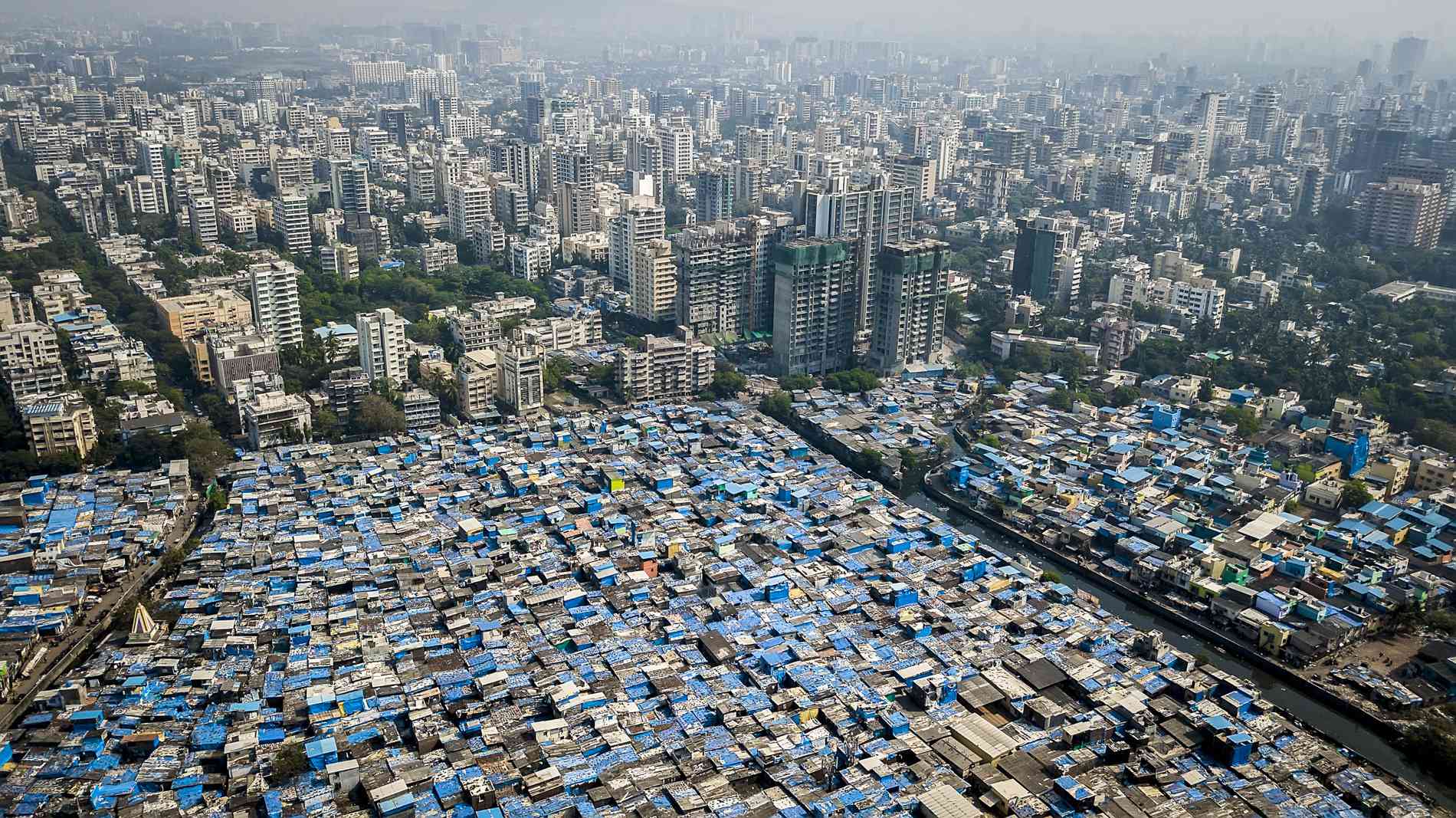
Unfortunately, we constructed a world that could not be more suited to a Pandemic – density everywhere- inward rural migration and now Data harvesting.

We can expect greater efforts to digitally capture and record our behavior in urban areas – and fiercer debates over the power such surveillance hands to corporations and states.

One consequence of coronavirus could be an entrenchment of exclusionary political narratives, calling for new borders to be placed around urban communities – overseen by leaders who have the legal and technological capacity, and the political will, to build them.

In other words an intensification of digital infrastructure in our cities to track the spread of COVID-19 using “big data” analysis to anticipate where transmission clusters will emerge next.

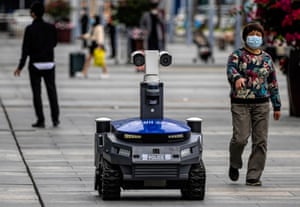
A police security robot drives on the high-speed railway station platform in Shenzhen, Guangdong province. The device, which patrols public places, warns people when they are not wearing masks, checks their body temperature and identity.

This much is certain:

Just as this disease has shattered lives, disrupted markets and exposed the competence (or lack thereof) of governments, it will lead to permanent shifts in political and economic power in ways that will become apparent only later.

It will be a time of contradictions.

Internationally, many issues that appeared pressing prior to the pandemic will likely recede in prominence once the world begins its recovery. All non-coronavirus issues will be pushed aside.

Not only because of a shared experience but also because of the mutual assistance that will be required at the same time, democracies must prevent the emergence of a big brother-style intrusion into the personal sphere by the security apparatus.

Such a thing can only occur in the absence of massive civilian oversight.

Many countries will set up committees of inquiry to find out why they and their healthcare systems were caught unprepared, humanity is destined to return to its old self after the adjustment period ends. And that, on balance, is a good thing.

Coronavirus will not end globalization, but it will change it by disrupting our lives and causing painful tragedy —it may introduce a new acceptance of unpredictability into our thinking.

This is certainly not the last time that we’re going to have these kinds of disease eruptions if we deny, delude, and delay on climate change.

We know what to do to halt climate change, we just have to do it.

Our current sense of risk — such as when it is safe to cross a road — is insufficient to deal with threats that are so dire they must be minimized; we need a complete rethink.

If we don’t we will have unregulated algorithms run the world.

How much of life can now be conducted digitally?

If we can accept canceled flights, closed schools, postponed sporting fixtures now, perhaps we can accept restraints in the future.

If we can rely on international co-operation now, perhaps we can summon the same spirit again.

At some point, a nudge will be required. If the shock of coronavirus disruption isn’t enough for us to recalibrate, what will be? 

Our Memories!

We have to recognize there will be other pandemics and be better prepared. We must also recognize that climate change is a deeper and bigger threat that doesn’t go away, and is just as urgent.

All human comments appreciated. All like clicks and abuse chucked in the bin.


← Back

Thank you for your response. ✨


get inscribed into our biological memory banks. 


THE BEADY EYE SAY’S: THREE CHEERS FOR COVID-19 IT HAS EXPOSED INEQUALITY.


( TWELVE MINUTE READ)

I have come across ‘world-changing’ technologies more times than I care to mention.

While all of this changed something, it really changed nothing.

Until now.

Social inequality is characterized by the existence of unequal opportunities and rewards for different social positions or statuses within a group or society.

It contains structured and recurrent patterns of unequal distributions of goods, wealth, opportunities, rewards, and punishments.

Inequality of opportunities refers to the unequal distribution of life chances across individuals. This is reflected in measures such as level of education, health status.

Functionalist theorists believe that inequality is inevitable and desirable and plays an important function in society. While conflict theorists, on the other hand, view inequality as resulting from groups with power dominating less powerful groups.

COVID-19 ignores both.

What will be the impact? The truth is nobody knows. Human nature, however, will not have changed even if there is a big change in the way we live.

The Coronavirus is a dress rehearsal for what awaits us if we continue to ignore inequality not to mention the laws of science- ie climate change.

Unfortunately, governments and policy authorities seem incapable of accepting or listing to the clear warnings or to plan strategically long term, and to plan for how to avoid and or manage a series of catastrophic risks that are mounting and threatening our lives and in the end our survival.

We continue to threaten significant harm to ourselves and to the planet by prioritizing economic growth while ignoring its social, political, and environmental consequences.

We are exhausting scarce resources, wasting food, polluting the seas and atmosphere, diminishing resilience to disease, disadvantaging poor countries with trade deals, fostering military and economic competition, collapsing our ecosystems, while allowing unregulated technologies to plunder the world for profit, eroding public trust, destroying transparency,, removing accountability, turning a blind eye to corruption in and out of governments, BECOMING GOVERNED BY APPS.  

Only one of these risks recognizes national boundaries-trade. 

So with that off my chest, it is up to all of us to become proactive than just reactive.

How do we become proactive?

BY follow COVID-19 example, spreading ourselves with reprussions. 

Today, social media plays a large role in social reform campaigns. It allows citizens to be the source of ideas, plans, and initiatives. 

We are now using it for every part of our lives – in our personal relationships, for entertainment, at work, and in our studies. It is not just changing the way we communicate – it’s changing the way we do business, the way we are governed, and the way we live in society.

However, no matter how much we howl on social media if we don’t back it up with our buying power nothing much will change. 

When the economy of the world reopen we will have Bio Corna free products been promoted by unsustainable advertising, supported by unregulated online profit-seeking algorithms. 

As we see with Oil when the demand disappears the price tumbles.

Before the dawn of social media, governments, along with the traditional media, were the gatekeepers of information. Nowhere is this now been challenged more acutely than in the world of international affairs and conflict, where the rise of digitally native international actors has challenged the state’s dominance.

It is now commonplace for people around the world to use social media during emergencies, and the volume of online information coupled with its rapid arrival is becoming increasingly overwhelming to humanitarian organizations.

Seeking a way to “do something,” more and more people are answering the call to action on social media after each emergency. There are numerous platforms to post petitions for support, but none that are really proactive.

The fact is that every day there is a local or global emergency happening somewhere.   

However, the surge for action is chaotic. Humanitarian organizations and the citizens they serve are overwhelmed by the speed of change and the onslaught of information.

People who create user-generated content are often considered outliers and have not yet gained the trust of leaders within official institutions.

Across the world, there are branded hubs, labs, fellowships, meetings, conferences, and research. Governments, international non-governmental organizations (INGOs), and non-governmental organizations (NGOs) are all working on various projects.

How can these voices and communities become part of the humanitarian apparatus?

In times of crisis, data becomes the lifeblood of managing humanitarian operations.

But as access to data increases, how will people safeguard the privacy and security of those who need help?

What role should the main social platforms play during disasters?

Can these social networks work together more closely to coordinate their responses?

The thing no one can predict is always a good indicator of a fundamental we have missed.  Coronavirus and Social media have provided it.

I can here, get a little banal, and explain how social media connects people and brands, it allows companies to become more responsive to their customers and it empowers consumers to interact with the companies they like.

All of this we know and much of it we had forecast.

It is not why social media is changing the world.

Social change of the type we are witnessing in our times does not happen unless there is an accumulation of detail at a personal level which can bring about a tipping point that can reach critical mass in a national pool.

A true break down of national borders and cultural barriers. It allows connection across billions of lives on a one-to-one basis.

Social media has been instrumental in creating cohesion amongst disparate rebel groups in Libya and it has been used to communicate and get organized by the demonstrators in Syria.

It has kept news and images coming out in real-time, appearing on Twitter and Google+ and has maintained the world’s attention and momentum in movements which might otherwise have fizzled or been squashed by their own governments.

For world leaders and governments, it represents a genie that has granted their wish for communicating with their people during election campaigns and the current Pandemic.

For the individual social media represents a challenge when it comes to filtering out ‘noise’ and finding out what’s real.

The true impact of social media in marketing, communications, and gradual social change is something which I think we will not see until we see it.

As the last scene of The Matrix:  “I know you’re out there. I can feel you now. I know that you’re afraid. You’re afraid of us. You’re afraid of change. I don’t know the future. I didn’t come here to tell you how this is going to end. I came here to tell you how it’s going to begin. I’m going to hang up this phone, and then I’m going to show these people what you don’t want them to see. I’m going to show them a world … without you. A world without rules and controls, without borders or boundaries; a world where anything is possible. Where we go from there is a choice I leave to you.

COVID-19 HAS CLAIMED AND IS CLAIMING MANY INNOCENT LIVES AND IS EXPOSING THE INEQUALITIES OF LIFE. BUT MORE IMPORTANTLY, IT IS ARMING SOCIAL MEDIA SO THAT THERE IS NO LONGER ANYWHERE TO HIDE.

Finally:  What I am looking for here is the creation of an App that we can all support to effect change. 

All serious suggestions considered provided they are nonprofit making.  

All human comments appreciated. All like clicks and abuse chucked in the bin.

← Back

Thank you for your response. ✨


THE BEADY EYE TIPS. ON HOW TO USE THE APP ZOOM WITHOUT GETTING HACKED.


HAVE A MEETING STRONG PASSWORD.

ALL PARTICIPANTS IN A ZOOM MEETING MUST ENTER AS WAITING ROOM BEFORE BEEN INVITED TO ENTER THE CONVERSATION OR MEETING.

USE A PERSONAL BACKGROUND OTHER THAN YOUR LOCATION.

Screenshot Image

← Back

Thank you for your response. ✨