Every day we are warmed and warned by Earth’s stormy heat source the sun.
As you all know these days there is little point in proclaiming the rights of ordinary citizens to establish governments to protect human Life, Liberty and pursuit of Happiness – which are all by-products of the sun energy stream!
To save humanity from the scourge of war and to reaffirm rights, dignity and worth of humans we must all contribute to making the world realize that climate change will if not tackled head destroy this plant.
The Paris Climate agreement has somehow or other created a false illusions of control, which in the long run will be either distorted or compromised by our own human weaknesses.
Last year, more than 32 million people around the world had to leave their homes because of climate-related disasters.
If no mitigating actions are taken, significant disruptions in the Earth’s physical and ecological systems, social systems, security and human health are more than likely to occur.
Our attitudes will only result in awareness.
The Sun correctly describe our relationship to the creative force of every atom, life and world in the Solar System.
With social media sites virtually becoming a cross-platform of exchanging ideas with many TV programs are now using Facebook and Twitter. Even the government has realised its potentiality and set up twitter and Facebook accounts, presenting in imitative like MyGov web portal which can help in citizen interaction.
Television has a very strong role to play when it comes to reach and address a large target group or audience. However it is sad to see often media is engaged in trivial matters that appeals to masses forgetting the real issues that haunts nation of the world.
When it comes to Climate Change Society is so distracted by technological, physical connections that our deeper, more fundamental spiritual connections to reality are mostly ignored – except when we are individually alone with Nature.
If we define the future as a time that looks different from the present, then most people aren’t expecting any future at all; they expect coming decades to bring more globalization, convergence, and sameness.
They may be right, but when it comes to Climate change it is already affecting the planet and society and will continue to do so for generations to come. The physical and chemical changes of human activities are being felt in natural ecosystems on land and at sea, on farms and ranches, and in cities and suburbs, but the changes are not happening uniformly.
Predicting the long-term consequences is complicated in part because choices we make as individuals and as a society will change those outcomes.
This is where you can make a positive difference:
By promoting Awareness.
To make informed choices about the climate, and prepare for the results of those choices.
You can do this by lobbing you TV station to include in their weather forecasting a section that addresses the problems related to climate change.
By asking your readers or friends to do the same.
Send the below open notice to you TV Station:
OPEN NOTICE TO ALL TELEVISION STATIONS.
Dear Sir or Madam 6/Nov/2012
As a viewer:
I wish to bring to your attention the need for your, Weather Forecast slot to address to following:
Surely it’s time that your MAIN WEATHER FORECAST SHOULD BE INCORPORATING SOME INTERACTIVE MAPS showing Global Sea Level Rise or Ice melting; Instead of posting Weather photographs from social media weather watchers.
You have a social responsibility to make your viewers aware that observations throughout the world are making it clear that climate change is occurring.
To build understanding: Media acts as watchdog to protect public interest against malpractice and create public awareness.
With your help society as a whole will be able to face challenges more successfully.
Human’s would no longer be human with the future of climate laid out before them.
I wish you well in this challenging, but necessary task:
As the world watches the finishing post arriving to the United States Presidential Election with the potential election of a bombastic, conspiratorial buffoon and a jailable female, both spending millions, you have to wonder is this the best that capitalist democracy can produce.
It begs the questions.
If elections are central to democracy, then how should a society organize the institutions that govern the processes by which government leaders are selected?
Should there be a parliament or a president and a legislature?
Should legislative seats be allocated in proportion to the popular vote, or should the winner in each district take all?
Should there be two, or three or a dozen political parties?
Should the parties be strong or weak, centralized or decentralized, ideologically unified or diverse?
What is the meaning of democracy?
Does democratic choice as expressed through popular elections work?
Such Questions or debates are heated because the political stakes could not be higher: institutional arrangements influence the distribution of power; shape the ways that politicians pursue their goals; and constrain the ability of citizens to control their government.
Only through comparative analysis can the relative performance of different democratic arrangements be established.
We have all witness with Barack Obama term how presidential and legislative terms can be politically crippling.
When presidents do not enjoy majority party support in the legislature the potential exists for deadlock and paralysis. Chronic impasse invites regime instability and breakdown which we are currently witnessing with Donald Trump and Hillary Clinton. ( Two unworthy candidates that are buying votes. Two popularly elected, independent institutions that create problems for coalition building and executive legislative cooperation.)
Parliamentary democracy, is more apt to succeed, or so its advocates claim, because it escapes the problems associated with temporal rigidity and majoritarianism, and because the vote of confidence can resolve interbranch conflicts.
The problem with either system is the both entail assumptions about voters: about the information that they possess, the beliefs they hold, and the considerations they bring to bear on the electoral choices they make.
Such assumptions, it is important to point out, are rarely tested.
Coalition governments (common in parliamentary regimes) obscure accountability and reduce the ability of the electorate to assign blame.
For example, proportional representation produces more parties and less disproportionately in the conversion of votes to seats than do plurality and majority systems.
Accountability is also undermined in the presidential systems because voters give too much weight to the personal attributes of presidential candidates and too little weight to issues.
Laws determine how citizens cast votes, how votes are aggregated, and how aggregated votes are converted into positions of governmental authority.
Electoral laws have profound political effects.
We do not possess, the knowledge of the ways in which electoral laws ultimately affect voters and their representation in government.
What are the impact of these laws on individual citizens: on the ways they make choices and on the relationship they establish with their representatives.
They are questions that as yet have no firm answers.
The international economy is undergoing profound changes. With the lowering of barriers to international trade and the globalization of the world economy has come the birth of new economic sectors and the death of others. Some citizens, in some countries, in some economic sectors are thriving; others are failing.
So: Has there been a shift in the expectations and demands that citizens place on government?
How have these economic changes affected the nature of political cleavages and party coalitions as manifested in opinion, vote choice, party allegiance, and alliances among social groups and economic sectors?
How do differing levels and duration of unemployment influence the relationship between economics and voting?
Does this relationship vary according to differences in economic structure?
Is there a relationship between the long-term strength of a nation’s economy and attitudes towards democracy?
We know little about how differences in political and economic systems impact on the nature of the relationship between economics and politics.
Population growth, industrialization, and the concentration of people into urban centers are placing steep demands on the world’s natural resources. Global environmental changes of profound proportions are taking place. Some scientists argue that these changes to the global environment threaten the very inhabitability of the earth. No nation will be able to escape coping with these environmental issues over the next decade.
Over the last three decades, however, electoral alignments have weakened, party strength has grown increasingly volatile, and party systems have become increasingly fragmented. As a consequence of these trends, social cleavages no longer explain vote choice the way they once did.
We need to measure vote choice in national elections as well as the nature and level of citizen participation in electoral politics.
We must keep in mind that understanding political participation requires an appreciation of the ways that political parties and other organizations mobilize citizens both directly and through social networks.
We need a better understanding of the nature of the relationship between citizens and political parties.
The way you cast your vote can depend on the type of election. Brexit for example.
The problem with actually implementing a new system, though, is two-fold.
First, the current beneficiaries will do just about anything to preserve their positions, whilst others only see the drawbacks with the system every four years and then forget about them until the next election season rolls around.
But more importantly, any fixes now with Artificial Intelligence programs all have their own downsides.
Electoral systems matter. As a series of rules or procedures for determining who gets to hold office—when, for how long, and under what conditions—an electoral system has an important effect on how politics is practiced and how a country functions.
Parties are adept at changing strategy in response to the rules of the game. There is no perfect electoral system. Electoral systems are consciously designed to reduce the number of parties in a parliament or to provide a boost in seats for the largest party in an election.
It’s too easy to hide code in large software packages. The machines initially displayed an ‘x’ next to his or her name but then, after a few seconds, the ‘x’ disappeared or there is no voter verifiability.
Perhaps the PR electoral system is the best: It encourage the main parties to propose policies with broad public appeal rather than to target small groups of voters.
Voting should be a non-partisan issue.
In the eyes of the whites, we are bobbejaans (baboons).
But one thing is clear: We could do a lot better. Open your eyes.
Is there nothing we can do? or is surveillance capitalism in the form of AI the only way to go.
In the Spring of 1949, only 67 years ago the North Atlantic Treaty was signed in Washington.
To day it has 28 member countries and is one of the longest surviving collective defence organizations of the world.
The Alliance has undergone a transformation, adapting to the new circumstances and should no longer be seen merely as a military Alliance with a defensive character, but as a political one as well, gathering the nations that share common democratic values and respect for human rights and the rule of law.
If you are like me I could not name the 28 countries that make up Nato membership.
However I would say that I am not far wrong in saying that it’s an US lead organisation that to day acts as a thorn in Putin’s side. Nor could I name it present Commander without Googling.
The supreme Allied Commander is an Army General named Curtis Michael ” Scap” Scaparrotti according to Google.
He ruffly has access to 3 million active duty troops, 24,000 military aircraft, 800 oceangoing warship, not forgetting a standing command structure of over 10,000 professionals in Europe. All useless against a cyber attack.
The point of the alliance was to deter Soviet aggression by guaranteeing that an attack on any NATO nation would be taken as an attack on all NATO nations.
These days it is seen as a good way to become connected to the US, Canada, and countries of the EU.
The world has seen many changes since the inception of NATO. It has served to symbolize the connection between North America and Western Europe.
The risks that the world must face today are connected primarily with proliferation of weapons of mass destruction and the possibility of a rogue state or even a non-state entity acquiring such weapons.
To the view of NATO “from the other side.”
NATO appears determined, for the first time in its history, to intervene beyond its borders, even militarily, in those cases where atrocities are being committed, as was the case in Yugoslavia, in order to promote peace and stability. The intervention in Kosovo demonstrated to the world that the Alliance was ready, without a specific mandate from the U.N. Security Council, to carry out a large-scale military confrontation.
In 1990, the then 14 European members of NATO spent around $314 billion on defense collectively.
In 2015, the alliance’s now 26 European members are expected to spend around $227 billion on defense. So while European membership in NATO has nearly doubled since 1990, defense spending by Europeans has gone down by 28 percent since then.
In a few months we face a conundrum with Trump’s recent statements on the U.S. contribution to NATO, the North Atlantic Treaty Organization.“we are getting ripped off by every country in NATO, where they pay virtually nothing”
The question is will Nato stay relevant to world peace.
NATO can remain a vital part of our international security apparatus only if we are careful about what we want it to be and do.
We should start by looking at our global security needs, asking what instruments best meet those needs, rather than looking at NATO and asking what role we might devise for it.
We also must engage our allies in meaningful conversation about where NATO fits into their national priorities.
Finally, we have to consider the outlook of NATO’s neighbors, friend and foe.
International terrorism represents a growing concern to the western world, while drug trafficking in Asia is rampant.
In addition, ethnic conflict in Europe, as is witnessed right now in the former Yugoslav Republic of Macedonia, is a destabilizing factor with possible spillover effects for other countries.
All these threats are new and NATO has had to take them into consideration when drafting its new strategic Concept in 1999.
Since then the United Nations has hitherto failed to carry out its primary function namely to maintain peace and security and to facilitate the peaceful settlement between nations.
The reasons for this failure is because the five principal powers who are permanent members of the Security Council have the right to veto their decisions.
The primary aim of the Atlantic Alliance on the other hand is based on the elementary principal underlying most societies, namely, the incontestable right of self-defence. .
This right in an International field can only be exercised by collective action guaranteed by a treaty of mutual assistance, and organised in advance.
NATO’s essential purpose is to safeguard the freedom and security of its members through political and military means.
So how does Nato act as a preventive to war.
It is the world’s largest power, establishing the hegemony of the allied west over the rest of the world.
Article 5 of the Treaty NATO’s founding treaty – states that an armed attack against one or more of them all be considered an attack against them all. Or under a UN mandate, alone or in cooperation with other countries and international organizations.
The end of the Cold War and, consequently, the absence of the Soviet threat, did not render NATO obsolete.
international reality has changed between 2001 and 2015
In light of NATO’s character as a political forum of democratic nations, expansion to incorporate those states that had authoritatively been excluded from it and pushed into the arms of the Soviet Union seems a logical consequence.
Russia however worries about that, as well as the new identity and tasks that NATO has awarded itself. Russia opposes expansion mainly because she fears that the West is trying to isolate her in the corner of Europe, deprive her of her privileged relationship with her former satellites and undermine her national interests.
This is why she is so fiercely opposing enlargement to include the Baltic States and Ukraine.
Permanent peace cannot be achieved only by confrontational methods and for sustainable peace reconciliation is important in conflict ridden countries.
For NATO, failure in Afghanistan will raise doubts on its ability to successfully complete a mission.
It’s certainly false to say that most of the other NATO members pay “virtually nothing.” The Us annual direct contribution is under $500 million a year.“The volume of the US defense expenditure effectively represents 73 per cent of the defense spending of the Alliance as a whole,”Trump has raised the specter of America puling out of the military alliance if the Europeans don’t pick up a bigger share.
On paper, members say they will put at least 2 percent of their GDP into their militaries. In practice, only five do: the United States, the United Kingdom, Greece, Estonia and Poland.
By NATO’s count, total defense spending of all NATO members stood at about $900 billion in 2015 in current dollars. The United States’ share was about $650 billion. Do the math, and the percentage comes to about 72 percent.
there is no easy way to separate America’s military spending in Europe from its global military strategy.
that NATO’s military resources defy easy description. There are two ways to quantify them and both are incomplete.
The statistics show the military spending of the NATO countries from 2009 to 2016. The military expenditure of Germany in 2010 totaled up to 40.66 billion U.S. dollars.The statistic shows the U.S. military spending in the years 2000 to 2015. In 2000, the U.S. military spending was about 301.7 billion U.S. dollars.
The statistics show the global military spending during the years 2001 and 2014. In 2014, the world’s military spending amounted to 1.71 trillion U.S. dollars, compared to 1.14 trillion U.S. dollars in 2001.
It is about addressing Europe’s growing security vacuum and defining who will be in charge of European security. The reduction of the U.S. security footprint in Europe and Europeans’ dramatic loss of military capability since the 1990s have created a security vacuum in Europe
The question of who will guarantee Europe’s security in light of global strategic shifts remains unanswered.
Europe will be forced to step up its defense capabilities in the future if it wants to deal with the myriad threats in its neighborhood. This includes more and smarter defense spending, more defense cooperation, more shared threat assessments, and more leadership by hitherto reluctant nations.
in effect, the dependence of European NATO allies on the United States has further increased since the end of the Cold War, not decreased. As a percentage of GDP, defense spending by European allies fell from an average of 2 percent in 1995–1999 to 1.5 percent in 2014, while that of the United States went up from 3.1
NATO, as a political organization, was conceived to administer this security guarantee and make the Europeans themselves stakeholders in it.
This fundamental principle of the political order of Europe has never been abandoned and remains in place today.
Overall, it is highly unrealistic that all 28 NATO allies will ever reach the 2 percent spending goal. On the surface this might sound like a potential credibility problem for NATO. If not even a pledge made at the highest political level of the alliance is likely to be fulfilled, then NATO’s standing as Europe’s bedrock of security could be seriously damaged.
THERE NOT A DAY THAT GOES BY WITHOUT HEARING THAT THE WORLD CLIMATE IS ON THE VERGE OF DISASTER – A TIPPING POINT.
As of 1 November 2016: 192 Parties signed the Agreement, 92 Parties ratified.
Done and dusted.
Not on your Nelly.
Let’s cut the crap about carbon tax.
(Carbon tax for a broad range of fossil fuel intensive industries, exemptions which have been principally motivated by concern about competitiveness. The primary environmental objective of a tax on carbon is to set a price that reflects the “real” costs such emissions impose—accounting for the damages that are expected to arise from global warming, including effects on agricultural productivity and human health, coastal inundation, and other changes.)
The only problem is: THAT IT DOES NOT – AND WILL NOT WORK.
Why?
BECAUSE: It would need to operate (i.e. centuries).
Another words all countries will have to act in unison to increase the optimal carbon price periodically and continue to maintain the carbon price at the optimal level for all of this century (and beyond).
It cannot succeed unless it is global but global carbon pricing is unlikely to get implemented, let alone sustained for the time required to deliver the projected benefits.
A further difficulty that I see is. In reaching an International Agreement on Carbon Tax – how do you reflect the cost from country to country. Is it to be a new tax or in place of an existing tax.
Can you see either happening?
The world is unlikely to agree to carbon pricing.
Donald Trump god forbid the next US President says he doesn’t believe in climate change.
With Carbon Tax : Nearly two hundred sovereign governments do not have to somehow coordinate their climate policies. The assumptions that underpin the economic analyses used to justify carbon pricing are appropriate for a theoretical modelling exercise but unrealistic, impracticable and highly unlikely to be achieved in the real world.
Future economic damages from carbon dioxide emissions can only be estimated in conjunction with forecasts of climate change.
IT WILL NEVER BE A FAIR TAX.
It’s a regressive tax that benefits big business and the wealthy at the expense of lower and middle-income earners.
There is no pledge to offset the carbon tax with reductions in other taxes.
Millionaires got a big tax break to buy a new $100,000 Tesla electric car,The
U.N.’s own report shows that aggressive emission cutbacks—even if achieved through an ‘efficient’ carbon tax—would probably cause more harm than good.
First, it is very hard to target subsidies and mandates toward the most cost-effective abatement, both because the government does not know which
technologies will be least costly and because it is hard to implement a program that is not prone to political favoritism.
Second, it is nearly impossible to preclude subsidizing abatement that would happen anyway or mandating activities that are more costly than the avoided damages to the environment. Clean energy subsidies can also have the perverse effect of increasing the overall supply of energy and making prices fall, partly offsetting the benefits of the TAX.
The amount of revenue raised depends on the level of the tax, how broadly it is applied, and other factors. Most experts suggest a tax of around $25 per ton of CO2, which would raise approximately $125 billion.
Exempting some sectors or categories of emissions sources may create perverse economic incentives.
There is a better way.
It is to deregulate so the cost of low-emissions energy can come down over time, especially in developing countries. With this approach there would be no need for carbon pricing, emissions monitoring, or enforcement mechanisms involving policing, disputation, conflicts and international courts.
According to the World Bank, about 12 percent of the world’s global emissions of greenhouse gases are subject to a carbon price — either a tax or, more commonly, a levy under a regime of cap-and-trade like that in California and Europe, in which permits to emit are auctioned among THE POLLUTING companies.
There is no way that a carbon tax is going to be yielded significant reductions in gasoline purchases. It will however increase energy prices—the amount of increase would depend on the size of the tax and the extent to which it is passed forward to consumers.
A carbon tax could lead to overall economic growth, if the tax revenues are used in a way that promotes economic growth, such as cutting other taxes or reducing the deficit, WHICH WILL NEVER HAPPEN.
The road the World must travel to reduce global warming is to spread the cost fairly by making Profit for Profit sake pay (See previous Posts)
IF YOU DON’T BELIEVE IN CLIMATE CHANGE AND ITS RELATED GLOBAL WARMING.
HAVE A LOOK AT : BEFORE THE FLOOD. https://youtu.be/90CkXVF-Q8M)
Before I wrap this post up.
Here is a message for Leonardo and Fisher just in the off-chance either of you get to read this post.
With your influence you could get the medium of World-Wide Television to include in their Weather Forecast a section showing the Global warming. They have a social responsibility to highlight the problem BY DOING SO THEY WOULD CREATE AWARENESS THAT COULD TRANSLATE INTO ACTION.
≈ Comments Off on THE BEADY EYE ASKS: IS ARTIFICIAL INTELLIGENCE GOING TO BECOME THE FINAL CAPITALIST STEP TO CONTROL CONSUMERISM.
( An AI Halloween thought – one minute read)
Hundred of thousands of jobs are going to be automated. We are already seeing examples, with little resistance politically or for that matter no one else.
Machine learning and automation is being introduced into decision-making process and in the very near future powerful AI Algorithms will be making decisions that we know nothing about.
Looking at the state of the world and the lack of intelligent leaders perhaps it will be a good thing.
The danger is that the programmers of the algorithms even if they know what the algorithm is designed to do by the time it has completed its deep learning network’s training they will have no idea, and because of the modified it has learned on the way there is no guarantee whether it will consistently yield good results.
Take for instance, if a deep learning AI used in Law enforcement started displaying racist behaviour, it will be impossible to figure out why.
We are becoming more and more relying on Ai to the point that we are not going to notice when its behaviour or priorities start developing sub- optimal results.
Most of us now have computers in the palms of our hands, and instead of using them to expand our minds, or even help make decisions in society most people use them for likes on social media.
There is no doubt that technology is a necessity for survival but if we don’t do something to ensure that it does not take over our lives by dehumanizing ourselves they will be used 90% for greed.
You might as well bar code our arms and get it over and done. If we don’t have the entitlement to know how an institution arrived at a conclusion – even if an AI did the concluding.
Human beings are creating a new breed of intelligence: it would be irresponsible not to try to understand it.
Will it be the case that we love and marry robots without knowing why.
It is time to pass laws making all people who create Al accountable for what they do. The trouble is we can’t rely on self-regulation and we can’t trust Capitalism institutions to pass and enforce AI laws.
We must create a new Institution that is totally transparent not run by any AI Algorithms but by the values that apply to us all.
The likelihood of this happening is Zero. It could be Tootwit Toohow for all of us.
She has so far defined herself more in words than deeds.
She has – at least in words, we will see about the reality – junked the austerity agenda.
Mrs May has had just over 100 unelected days in Number 10, during which she has done a deft job of obscuring her vulnerabilities by projecting herself as a fresh yet solid leader serenely stepping in to take charge.
Lunch with Theresa May? That will be £3,150. Value for money.
Let’s look at it using the background of Britain’s record national debt, which just surpassed £1.8 trillion, (The truth however is much worse, factoring in all liabilities including state and public sector pensions, the real national debt is closer to £4.8 trillion,) some £78,000 for every person in the UK.
If you lay £5 notes on top of each other they would make a pile 253,568 km, or 157,560 miles high!
Interest per Year £41,230,597,671
Interest per Second£1,307
Debt as % of GDP 83.49%
The budget deficit already stands at approximately 4% of GDP and, at that level; any fiscal expansion could cause a fall in international confidence.
Hinkley Point:
In 2013 the English Government guaranteeing the EDF it would be paid £92.50 per megawatt-hour for the electricity generated by Hinkley Point over a 35-year contract due to run between 2025 and 2060. This is more than double the current annualised rate for wholesale electricity prices. It means that Hinkley Point should generate between £100bn and £160bn of revenue in cash terms for EDF and CGN over 35 years. The £92.50 figure is based on 2012 prices but it rises each year in line with inflation.
EDF is funding two-thirds of the project, which will create more than 25,000 jobs, with China investing the remaining £6bn for 7% of Britain’s electricity needs.
The government will also take a special or “golden share” in all future new nuclear projects. This will ensure that significant stakes cannot be sold without the government’s knowledge or consent.
The plan to build the two EPR units for £18bn (€21bn, $24bn) at Hinkley Point was hit with an unexpected delay in July as the new UK government decided to hold another review only hours after EDF – the project’s state-owned French developer – had given it the go-ahead.
EDF executives told the British government that it would have to take a stake of up to £6bn in the Hinkley Point nuclear power station to avoid a “disaster” if the Chinese decide to withdraw from the project who warning that if the plug was pulled on Hinkley Point it would damage the relationship between England and China.
If the state-backed company manages to build the power station and get it running by the target date of 2025, EDF and its Chinese partner stand to generate a profit of tens of billions of pounds on the £18bn project when it start operations in 10 years time.
The UK government says it will have control over foreign investment in “critical infrastructure”. So far £2.5bn has being spent on site preparatory work.
Her first ( G20 summit) changed any doubts she had.
Bonkers.
Replacing Trident:
Will cost at least £205bn.
£205 billion of public money is a huge amount. Pouring it into a nuclear weapons system that experts say could be rendered obsolete by new technology is hardly a wise choice. Far better to spend it on industrial regeneration, building homes, tackling climate change or meeting our defence needs in usable ways.
The cost of disposing the existing Trident fleet would be at least £13bn in today’s prices.
Two new aircraft carriers.
HMS Queen Elizabeth was launched in July — are the most expensive items of military kit in the British armoury, at a cost of £3.1bn each, considerably more than originally budgeted for.
Their usefulness will also depend on a host of other additional spending commitments, such as the number of new F35 jets that will be flown off them or the number of other Royal Navy ships that can be deployed to protect them.
So far eight of the F-35B Lightning jets EACH plane costs £100 million have being ordered and if sterling weakens price will go up.
The overall order is for 48 of the jump jet F-35Bs by 2023 and will eventually go on to buy a fleet of 138.
The US-built F35s have spiralled in cost and have been beset by serious technical problems in development.
Bonkers.
Next:
HS2:
The zombie train that refuses to die, a project born of political vanity not rooted in commercial reality or value for tax payers money.
The UK currently has just 113 km of high-speed rail line.
It will mark the start of the most extravagant infrastructure project in Britain’s history: High Speed 2, a railway line running 335 miles from London to Birmingham, Manchester, Sheffield and Leeds. The line is budgeted at £55bn, although late last year its cost was widely reported to be closer to £70bn.
The whole concept of HS2 came out of intense political lobbying from the construction industry who want to build it. Those same firms have since been hired to produce the designs and budgets, and this has made sure HS2 has been gold-plated right from the start. HS2 is just one big gravy train for advocates with massive vested interests.
If it is built, HS2 would be the most expensive railway in the history of the world, surely sucking up the entire rail infrastructure budget for decades to come, and squeezing out more deserving, cheaper and cost-effective projects.
The UK’s cost per km is the highest among any of the major high-speed rail countries – with HS1 costing £51.3m per km and HS2 estimated to cost £78.5m per km.
High Speed Two (HS2) Limited is the company responsible for developing and promoting the UK’s new high-speed rail network. It is funded by grant-in-aid from the government.
HS2 ‘abysmal value for money’ at 10 times the cost of high-speed rail in Europe.
HS2 is the most expensive high-speed project in existence, according to new analysis undertaken by The Telegraph.
The current £42.6bn budget makes it more than ten times the cost per kilometre of some global counterparts.
Bonkers.
Next:
Third runway Heathrow:
£17.6bn
This is how much the airports commission said the new runway would cost, but Heathrow has been asked to reduce it. It is apparently working on revised plans. Gatwick estimates its new runway would cost £7.4bn, while the Airports Commission says it would cost £9.3bn.
A second runway at Gatwick will cost £9.3billion, much lower than the two proposals to expand Heathrow, which cost £13.5billion and £18.6billion respectively.
The Prime Minister’s local council, Windsor and Maidenhead, said it will spend a lot of money to challenge the Heathrow decision. That brings the total for the four councils in the area – Hillingdon, Richmond and Wandsworth – to a whopping £200,000.
It is estimated that ‘between 105 2025 and 2050, airlines would pay £40billion less in aeronautical charges than they would under the Heathrow options,’
£5.7 billion would have to be spent on works such as tunnelling the M25 motorway under the runway and widening the M4.
MPs will take a vote on the airport decision in a year or so.
Last but not least:
The Sunderland plant has been a point of pride for May’s Conservative Party since then-Prime Minister Margaret Thatcher lured Nissan to open it in 1986, beginning a recovery in British car making that had nearly collapsed in the 1970s.
Britain’s big carmakers are nearly all foreign-owned and ship more than half of their exports to the other 27 countries in the European Union, making the industry’s future one of the big question marks hanging over Britain’s plan to quit the bloc.
Japanese carmaker Nissan (7201.T) will build two new models in Britain despite the vote to quit the EU, giving Prime Minister Theresa May her most important corporate endorsement since the Brexit referendum in June.
Obviously Nisan was offered reassurances that conditions would remain competitive, but was not given explicit promises to compensate for any tariffs that might be imposed once the country leaves the bloc.
Such a step could potentially open the floodgates to ultimatums from other companies.
No country can develop by itself behind closed doors.
Politicians and civil servants find it hard to reverse poor decisions, even when their initial rationale has slipped into distant memory.She has ruled out an early election. But, where is the public outrage.
Brexit:
It Seems to me that England’s difficulty is the European Union opportunity.
In my last post I said that future societies will be driven by a culture of individuality.
I should have said individuality manipulated by an underbelly of Algorithms exploitation by Artificial Intelligence.
Why?
Because there is enormous opportunity for manipulation in big data.
Because the internet’s ‘cacophony of stimuli’ and ‘crazy quilt’ of information have given rise to ‘cursory reading, hurried and distracted thinking, and superficial learning’ – in contrast to the age of the book, when intelligent humans were encouraged to be contemplative and imaginative.
Up to now human beings have been organizing their own societies, their own governments and their own religions according to the way that seems right to them from past history. Not any longer. With the smartphones distracting us from our surroundings we are at the beginning of the technological end of written history.
Thinking use to be the inner activity which is absolutely independent of any other, and is a firm point … from which … one can seek for the explanation of the rest of the world’s phenomena. Thinking now is asking Google.
The world is becoming increasingly chaotic because the increases in our technologies have made the world highly interconnected. At the same time, values and ideas which were considered universal, such as cooperation, mutual aid, international social justice and peace as an encompassing paradigm are becoming irrelevant. In other words, our brains are being rewired by internet.
Nowadays humans are abandoned, left alone to decide what to do with themselves. Everybody must be integrated into the vast cultural homogeneity that is the Internet to the abandonment of Intuitive social sensitivity, which is also disappearing and becoming the fodder of Facebook – selfies and ego. We are raising a generation that is already being exposed to such collaboration.
It’s like a zombie plague:
Our connection with our new creations of Artificial intelligence is limited by our ability to co-evolve with silicon- based machines.
So are we on the brink of intelligence enhancement or will our biological evolution of our species essentially change for the worst?
The organic characteristics of a species is being lost to AI so that beneficial traits cannot be passed onto subsequent generations. What we are presently seeing everywhere in terms of social and individual decay may very well be consequence of an AI world.
Technology will not automatically lead us into a sustainable future and it is becoming impossible if not too late to influence dominant commercial technological trajectories thatare run by AI monopolies and are of course for profit.
You would think that algorithms cannot be developed or become widespread and dominant without socio-political, economic, and cultural mechanisms to steer innovation in the “right” or most desirable direction.
You would be wrong.
Unfortunately current science and technology do not deal with morality and ethics.
Corporate unregulated algorithms Software for profit is eating the world.
We need a deeper appreciation for what is lost when a new technology becomes part of our lives as well as what is gained. It requires more value placed on ethics and social responsibility. The degree of depletion of natural resources, including air, water and agricultural soil (what a paradox: our materialistic age is destroying matter), the increasing social and economic instability and misery everyone can observe makes it absolutely urgent that we change something.
Think for ourselves.
In thinking we posses self-determination. There is no machine, not even an abstract one, that has this self-determining feature. Machines inexorably follow their programs or mechanisms – otherwise they would not do what we expect from them.
You be wrong to think that five centuries of European colonialism and global culture-trashing, and the remaking of the world in the economic interests of competing empires, cannot be undone by a single institution and a cluster of lofty ideals.
Just recently five of the largest tech companies got together to create a coalition called The Partnership on Artificial Intelligence to benefit people and society.
No one is asking the cost or hurt that could be done to the world. AI for profit will have no ability to improve social equality.
The power of the smallest of intelligence advancements has the power to yield enormous gains for humans, individual and collective if we ensure that we don’t trade- off our human values to AI algorithms that are already actors holding our future in software programs.
Robots, Drones, High Frequency Trading, Cybercrime, Job Losses, Privacy Infringement. Irritating Personalized Ads, Gaming, Smartphones.
I could be wrong. There are still people here on God’s green earth who can conduct their social lives without being marketed to. But when you take a long view a global cyber imperialist is being created by AI where traditions are disappearing along with their social cohesive power.
The world’s mess is like a web, so intricate that each issue is intertwined with another. However, instead of unweaving it, the web becomes more complicated and interlaced by the day. So, how do we untangle ourselves from this giant mess?
Your guess is as good as mine.
It all calls for greater transparency of scientific and technological enterprises. Social helmsmanship of technological innovation in the direction of sustainability is a very challenging task.
It’s no wonder we’re all such a mess, is it?
Regardless of how artificial intelligence develops in the years ahead, almost all pundits agree that the world will forever change as a result of advances in AI. The tipping point is already past, digital threads are woven too deeply into human life.
We can’t go back, only forward.
At the moment there are a couple of decades to reset the mindset. It’s a race between technology and education.
We are not recognizing what a living being really is, what being human really means and what human development should mean. There’s something distasteful about the whole business:
I’ll give an example of this situation.
A global campaign by a bunch of Silicon Valley billionaires (The Partnership on Artificial Intelligence) to convert literally everybody into data consumers, to make sure no eyeballs anywhere go unexposed to their ads.
Take a look at the effects of Facebook.
But what about Facebook?
Is it really altering your mind? Absolutely. Significantly.
It is changing the physical structure of your brain’s neural network, which even changes how you feel about yourself and other people. And in ways that may surprise and enlighten you. What it is doing however much the company spins it as altruistic, is really an act of self–serving techno-colonialism. Impoverishing people’s relationships, stripping out essential elements of human contact.
“Whereas the short-term impact of AI depends on who controls it, the long-term impact depends on whether it can be controlled at all.”
It is time for our out of date world organisation- the United Nations to take a decisive, role to create eye openers for some unpleasant surprises ahead if we are not careful and vigilant about technological innovations. The problem is that the United Nations is incapable of doing so, because it’s a unity of entities defined by their hatred of one another and committed to the perpetuation of “the scourge of war.”
But the main problem is that the “mindset[s] of government and people have not adjusted to view the future, even though technology is exploding this decade into a world of the Internet of Things and the propulsion into blind artificial intelligence. It will be too late when we all come to realize the number of jobs that artificial intelligence systems are poised to take over.
The narratives we create for the future of Artificial intelligence and subsequent high intelligence will determine our decision-making, consciously and subconsciously..
If we carry our human brain power in a small portable device like Smartphones and IPads we will forget that humans – and plants and animals, for that matter – have not been designed and constructed by humans!
The degree of depletion of natural resources, including air, water and agricultural soil (what a paradox: our materialistic age is destroying matter), the increasing social and economic instability and misery everyone can observe makes it absolutely urgent that we change something.
It takes something more than intelligence to act intelligently. Artificial Intelligence is no match for natural stupidity.
Man is a hybrid. From a lower order we have been genetically manipulated by advanced intelligences into what we are. Now that in itself is dynamite for god’s sake.
Think about it.
Supersmart AIs will perhaps soon colonize the solar system, and within a few million years the entire galaxy. The universe wants to make its next step towards more and more unfathomable complexity.
When HI plus AI eventually merge we will have the most significant advancement in our capabilities with or without intelligence in History. The unacknowledged legislators of the world.
So Algorithms, the underlying process of decision in Artificial Intelligence systems are imperfect, prone to the bias of profit, and unpredictable decisions that will impact the Future.
The thought of the elimination of human emotions and the fact that the machines can’t distinguish a right from a wrong implies they have and will never have any morals, a vital part of human existence.
It will lead more humans into making unnatural and morally wrong decisions, because of only relying on predictability accuracy of the machine.
The real test of Ai or Super Intelligence is to be a stupid as a human not as smart.
Wisdom (which seems at the moment in the world to be in short supply) is the bucket of water needed if AI is to learn what we value and not the exclusion of intelligence to these algorithms.
There is no argument: To make sense of the universe, we sure could use the services of super-smart machines as long as we’re super-sure they know their place that the machine is docile enough to tell us how to keep it under control. Such technology could end up outsmarting financial markets, scientists and political leaders, and developing weapons we cannot even understand.
Most current AI research is being done by big IT corporations including Google, Facebook and Apple, and research groups funded by them.
When genetic codes were cracked the question was asked, will corporate profits trump the public good? The same question applies for AI.
A couple of final thoughts.
There’s a line of speculation that human intelligence will be amplified by the artificial kind, using virtual reality technology, so that it stays ahead of the smartest AI. And intelligence of the human kind is the product of living bodies in a living world. Could the infinite richness of this biological experience be the X-factor that keeps it on top?
There is only one way to make algorithms (that are not contributing to the good of mankind but to profit, to contribute, is to regulate them.
By passing a law that all profit-making AI software must contain a collection chip to contribution a commission of 0.05% to a World Aid Fund. (See previous post on World Aid Commission)
Just think what such a fund could achieve with a source of perpetual income. It would change the United Nations from a worthless begging gossip shop to an Organisation of value.
Anyone is welcome to challenge !
If you believe your life is mainly a matter of chance don’t bother commenting on this post.
The ideological core of our civilization is hollowing out due to technology.
We are living on the parentheses of a new era. Unfortunately most of us don’t know or don’t care, or perhaps its fortunate that it so.
However, I think – WE ARE AT A CHOICE POINT OF A PLANETARY SOCIETY THAT IS GOING TO BE BASED ON INDIVIDUAL CULTURE.
These are the times we were created for and we need to act at this juncture, for the sake of our children’s lives, we must confront hard data and scientific projections that are dire, harrowing to contemplate.
AS LEONARDO DE vINCI SAID ” Learn how to see. Realize that everything connects to everything else”
Who wants to live in a world governed by algorithms, owned by Google, Facebook, Twitter, Microsoft or Apple. A smart world run on dumbing down technology such as smart phones.
I don’t.
Our present Science will only be 5% OF SCIENCE IN 2024.
Human nature is shifting to racial empathy which is going to shake the foundations of everything.
History used to take hundreds of years to develop now it is our life time. The maps no longer fit the territory of interactive, the stage of radical history.
We are not quite at the beginning of the new age because we are still haunted by the spectrum of the past but the reset button of history has being hit.
The larger question is how we redirect the collective activity of our species on the planet — if this is even possible.
Collectively, our actions in the next decade may well determine the future of our world.
What does this future actually look like? How do we communicate? How does it function? How is it powered? What value system is it based on? What does it feel like to participate in? What are we eating?
When we consider the short timeframe in which humanity must reckon with the ecological crisis, not to mention the unintended consequences of AI that we have unleashed, we do not have time for chaos and incoherence — for a slow-motion breakdown, the rise of Right Wing despotism, or the political vacuum created by Brexit and the winner of forthcoming US Presidential election.
Pretty soon, people may reach a tipping point, a collective realisation that our social structures — our political and economic system — must be reinvented. As that realisation dawns, an alternative must be ready with a plan of action, and working prototypes.
To ensure our continuity, we must distribute wealth and resources more equitably across the human community, as a whole.
The last few hundred years, since the Industrial Revolution, were a telescoped process.
During this time, humanity overcame local boundaries and became a globally interconnected species — in a sense, a super-organism. We continuously transform our physical environment to satisfy our needs and desires. Imperialism, colonialism, neoliberalism, capitalism, industrialisation, and even communism are all transitional systems. They meshed humanity together, crudely and brutally, connecting the entire species through networks of communication and infrastructure.
As difficult as it is to imagine, we must overcome the blind spots in our ideologies and belief systems. We must find the path that leads to a harmonic, peaceful unification of humanity.
This requires defining a new form of political economy that supports the restoration or regeneration of the Earth’s ecosystems, while allowing every human being to live decently.
It also means defining a new relationship to technology and innovation.
This relationship requires a New Institution in order to ensure that we address Artificial Intelligence. It must question the capacity of an aggregate of self-interested nation-states, as well as self-interested multi-national corporations, and a tiny coterie of the super-wealthy (the 85 individuals who control more capital than half of the world’s 7 billion people), to make the necessary course correction.
We may well be approach the threshold of ecological catastrophe that will force us to reinvent human society for collective benefit — for the benefit of humanity as a whole, as well as the other species that share this living world. This may seem farfetched , but all current indicators are telling us to do so.
Technology has a crucial role to play in this transition, but its power must be harnessed and mastered for ecological restoration and social evolution not for profit.
To build a regenerative society will require that we supersede the current global financial system, based on debt and compound interest, and use our social technologies to devise an economic system that supports healthy lifestyles and patterns of behavior.
How do we transform our social system to create a resilient or regenerative global society? What kinds of changes will be necessary? These questions must be asked, even as they shake the very foundation of our society…precisely, because they do.
For example, we must ask whether we want to reformed capitalism by enforcing it to become a “conscious capitalism.” By placing a World Aid Commission on all High Frequency Trading, on all Sovereign Wealth Funds Acquisitions, on all Foreign Exchange Transactions over ( 20, 000 $), on all Arms sales. ( See previous posts)
Humanity has overlaid roads, train tracks, fiber optics, urban and suburban sprawl, across the surface of the planet. We have also constructed a global communication infrastructure, like a planetary nervous system, that allows humanity to communicate instantly, from anywhere across the globe.
If we can marshal our resources to confront the ecological mega-crisis, we can define a path beyond it that integrates cradle-to-cradle principles, biomimicry, and other principles that are symbiotic with nature, eventually producing abundance for all, while enhancing the health of the biosphere.
What sustainability seeks to sustain, above all, is some version of our current way of life, even though the evidence is totally overwhelming that it cannot continue.
Living processes, generally, don’t just endure or persevere. Life either flourishes and blooms, evolves and transforms, or it stagnates and dies. The rhetoric of sustainability tends to support the belief that our current form of post-industrial capitalism can be reformed — that it can persist, in something close to its present order.
If you take the time to look closer on today’s situation, through the veil of ignorance, it becomes apparent that most of our worldviews are still based on lies and that fear and lies are the prominent method of control today.
We are shortly going to witness the election of a new US president in a country where military expenditures dwarf the rest of the world but 1 in 5 U.S. children go hungry every night.
What do we see: A rich blowhard running for president. Tech-bro execs hoping to splinter off into their own anything-goes fiefdoms.
Technology has been the leading engine of change for the past 100 years and will continue to do so. The battle for the living room is currently in a full-out war between the leading tech companies – Microsoft, Apple, Google, Facebook, Netflix.
Facebook has surpassed the country of India, making it now the second largest country in the world.
This is creating a world where people think that they are engaged. A social and virtual world that is now just a marketing tool.
Sustainability.
In my view, the current language around climate change and its solutions is totally inadequate.
To motivate us to start the change we need to understand the root of today’s problems and see the ruling structures for what they are, and see how we all are a part of that structure.
Around the world, millions of children are trapped in an intergenerational cycle of disadvantage.
Is it time to abandon the concept altogether, or can we find an accurate way to measure sustainability? If so, how can we achieve it? And if not, how can we best prepare for the coming ecological decline?
The main difference of today’s way of manipulating the society is that the controlling powers choose to be hidden and are no longer showing their glory to the people. Instead they have made an illusion that the power is located in the hands of the democratically elected governments.
With so much labeled as sustainable, the term has become essentially sustainababble, at best indicating a practice or product slightly less damaging than the conventional alternative.
We are in dire need of a large dose of Empathy and honesty:
Empathy transcends all the properties of the esoteric power structures.
Empathy means to try to understand and listen to the feelings and needs of ourselves and others.
Sustainable development is development that meets the needs of the present without compromising the ability of future generations to meet their own needs.
When people think of artificial intelligence (AI) — the study of the design of intelligent systems and machines that make people’s lives easier — from software that can recognize objects and animals, to digital assistants that cater to, and even anticipate, their owners’ needs and desires. They are wrong.
Because.
Artificial intelligence is a broad and active area of research, but it’s no longer the sole province of academics; increasingly, companies are incorporating AI into their products. From Honda to Google, scientists at companies across the world are working diligently to make real-life robots an actual thing.
Since the field of AI was officially founded in the mid-1950s, people have been predicting the rise of conscious machines. It seems as though not a week passes without yet another AI system overcoming an unprecedented hurdle or outperforming humans.
Based on the exponential growth of technology according to Moore’s Law (which states that computing processing power doubles approximately every two years), Kurzweil has predicted the singularity will occur by 2045.
Humanity is not doing enough to prepare for the rise of artificial general intelligence, if and when it does occur.
It is humanity’s “biggest existential threat.”
It time that all machine-learning algorithms are vetted prior to use, by an independent transparent world body that has humanity , sustainability, and inequality along with monopoly as it brief.
Given how much personal data from users Google stores in the form of emails, search histories and cloud storage, the company’s deep investments in artificial intelligence may seem disconcerting.
For example, AI could make it easier for the company to deliver targeted advertising, which some users already find unpalatable. And AI-based image recognition software could make it harder for users to maintain anonymity online.
“Whereas the short-term impact of AI depends on who controls it, the long-term impact depends on whether it can be controlled at all.”
Who cares what happens to humanity?! If AI doesn’t kill us we will do it to ourselves anyways.
I say AI is our only real shot of leaving something meaningful behind.
The one consistency about predicting the future or warnings about future technology is how wrong people almost always are about the impact of that technology. The first man to split uranium didn’t do it to kill humanity wither, but here we are now.
Artificial intelligence can solve problems, but currently only real intelligence can think up new ones.
We will be inferior already. After all why fight a species that is already killing thousands of its own kind. We are our own damnation because of our “intelligence”
Unless the AI becomes aware, notwithstanding a superior intelligence, it will be no more a threat than the keyboard upon which I’m now typing this.
Once these contraptions got self-awareness it was good riddens. We are doomed to be at the mercy of these computers. The age of efficiency has begun. RoBoHon is a smart phone disguised as a robot. Heartless
I won’t be the last person to write on this subject.
The generation that is born into AI will I am sure develop relationships with robots.
They would do well to remember that the cortex of their brains records every conscious aspect of their personality, every sensation, thought, and memory of their lifetimes. Not Google
( A four-minute read: Dedicated to the Sacrificial youth of England.)
Neither the UK nor the continuing members of the EU can escape their geographical interdependencies. Both have a stake in economic and political stability in Europe. All of Europe, including Britain, will suffer from the loss of the common market and the loss of common values that the EU was designed to protect.
Whatever happens the process of Brexit is sure to be fraught with further uncertainty and political risk, because what is at stake was never only some real or imaginary advantage for Britain, but the very survival of the European project.
The lack of a written constitution in England could well be critical, because the very absence of a clear pathway means that much is possible.
A British exit – or Brexit – undoubtedly will change the future of the UK and the European Union.
It is impossible here to cover all the consequences that will rumble on and on for years and years to come.
No matter whether England now negotiates, a Soft or Hard Brexit it will continue to be a thorn. Ever since England joined the European Union it has been a thorn in its side. During its 43 years of European Adventure, London has often been seen as reluctant to any further deepening of the European Union and further integration. Voluntarily outside the euro area and Schenghen space, the country has regularly criticized the European institutions and undermined its contribution to the EU budget.
It’s hard to know what Britain wants and, more importantly, can plausibly expect from a new deal with its erstwhile EU partners.
Britain. I believe, had the best of all possible deals with the European Union, being a member of the common market without belonging to the euro and having secured a number of other opt-outs from EU rules. And yet that was not enough to stop the United Kingdom’s electorate from voting to leave.
Why?
Because the European migration crisis and the Brexit debate fed on each other.
Because the European authorities delayed important decisions on refugee policy in order to avoid a negative effect on the British referendum vote, thereby perpetuating scenes of chaos like the one in Calais and Greece.
Admittedly, the EU is a flawed construction but will Brexit be the catalyst for an unravelling of the European integration project, or, with the removal of a member that has long been the awkward partner, be an opportunity to move forwards.
I fear that the EU’s response to Brexit could well prove to be another pitfall.
European leaders, eager to deter other member states from following suit, may be in no mood to offer the UK terms – particularly concerning access to Europe’s single market.
After Brexit, all of us in the European Union who believe in the values and principles that the EU was designed to uphold must band together to save it by thoroughly reconstructing it.
The challenges can be framed in stark terms:
The European Union is headed for a disorderly disintegration, and can only be saved if it is reconstructed to satisfy citizens’ needs and aspirations.
In the increasingly unstable interim there is a third option.
A Clean EU Brexit or a rerun of the Referendum.
If England wants leave the European Union by March 2019. Leave means Leave.
So is it time to stop the “shadow boxing” and save billions.
Any other option will result in the collapse of the Union. Any cherry picking is bound to end up with Europe holding a pole.
At the moment paradoxes abound in the Brexit decision.
The UK economy has achieved something of a turnaround since joining in 1973, with the implication that membership has been good for the economy.
A further paradox is that areas which have benefitted from EU membership – including the parts of Wales and England in receipt of the highest flows from EU Cohesion Policy – have proved to be hostile.
Yet another paradox is the hostility to migrants.
Migrants crowd-out locals in accessing public services and are blamed for depressing wages at the bottom end of the wage distribution, yet public services will collapse without migrants, as for wages it was not the EU that introduces No hours contracts.
These phenomena are strong negatives for those who see themselves as losers from globalisation/economic integration. In an increasingly volatile world, neither the EU nor the UK have an interest in a divorce that diminishes their influence as the balance of economic power shifts away from the North-Atlantic world.
The unprecedentedly rapid anointment of Theresa May enforces only the uncertainty of the consequences of Brexit is certain.
Leaving the EU in its current form is unprecedented and EU law only outlines rough exit procedures. The conditions and results of the leaving agreement negotiations will depend on the judgements of the European Council as well as the European Parliament not the House of Commons.
There is no formula that can calculate the outcome of a Brexit on its security and most importantly, even if there was a formula, there would be too many unknown variables to resolve it.
The UK itself may not survive. Scotland, which voted overwhelmingly to remain in the EU, can be expected to make another attempt to gain its independence, and some officials in Northern Ireland, where voters also backed Remain, have already called for unification with the Republic of Ireland.
Having a major world economy disentangle itself from a powerful geopolitical trading bloc is unprecedented.
The UK will have to answer the question of whether it wants to continue to maintain close economic cooperation with the EU and whether it wants to maintain and potentially even strengthen its engagement in security and, conceivably, defence matters.
This is ultimately a political choice that must be spelled out unambiguously.
However, lower public revenues and higher demands on public spending, not just in Britain but also in the EU, suggesting a plausible lose-lose economic scenario, dominating the direct effects of EU budget changes.
In 2014, the UK exported a total of £515.2bn in goods and services. The share of the total UK exports sold to the listed trade partners or groups of trade partners are as follows: EU (44%); US (17%); China (including Hong Kong) (5%); Switzerland (4%); Japan (2%); Rest of the world (28%).
The UK now imports almost half its energy, more than at any time in history.
The UK is currently importing over 50% of its food and feed, whereas 70% and
64% of the associated cropland and greenhouse gas impacts, respectively, are
located abroad.
A quarter of their food from the EU, and that’s a problem.
In 2015, the UK£38.5 billion it spent to import food and drink.
Now, it will have to re-negotiate its trade and policy relationships with each EU member state. That’s going to be a critical process for the country, which sends 70% of its food and agricultural products to EU nations.
And that just the tip of the iceberg.
The London Stock Exchange is the entry point into Europe for American investors and many other countries. With Brexit, it may lose this status: the European Union may question the “financial passport” London and position the Paris Stock Exchange or the Frankfurt to be the new entry point for investors in Europe.
London is: 20% of country’s GDP.
There is no such thing as Sovereignty in a world that is operating more and more on Artificial Intelligence. The ‘federal Europe’ project was yesterday’s and it is more probable that the Union of the future will increasingly take the form of differentiated integration.
There are 3.6 million citizens of other countries in the EU currently living in the UK.
This may be the true legacy of Brexit.
Numerically, 17.4 million people have spoken for Brexit and 16.1 million to remain within the EU.
It is thought that more than 70% of young voters chose to remain in the EU.
The current price for a British passport on the black market at 2,800 pounds (3,100 euros) Europe’s trade in forged and stolen passports is so out of control it has doubled in five years. A whole travel package, including an EU passport, can cost up to €10,000.


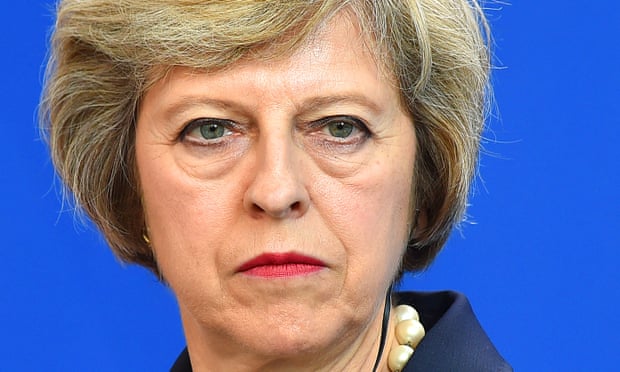
 She has ruled out an early election. But, where is the public outrage.









 bobdillon33blog