How can the world stand aside and watch the destruction of PALESTINE.
Have we all become so desensitised with the amount of violence we consume daily that we no longer care providing it’s not us on the receiving end we turn a blind eye.
How can we allow a people to be killed by another group of people just because they live in or on a strip of land called Palestine.
If we give up on humanity we give up on a future.
———————-
The human race has always carried both beauty and grief in the same breath.
However these days our young generation’s are not fodder to stop or start wars that can no longer be won by human sacrifice – world war 1 & world war 11.
Israel was and still existence because of terrorism. To have religion as the bases of who owns what in the twenty century is absurd.
Hamas is only twenty years old.
Weaponising religious beliefs seems to be a Jewish art .
Any form of fundamentalist should be is unacceptable in the twentieth century.
It leads to indoctrination of young minds to a state of brain washing.
However if we’re to have a world worth passing on to the next generation we must come together to redefine what it is that makes any of have a real value during our short time on earth.
This question is thundering down the tracks in the form of climate change.
What is important is that the next generation is educated before it becomes a void of moral values.
Israel will learn that life cannot be terminated without consequences and history will not just condemn those who commit the crimes but those who remain silent.
If you want to understand what’s happening in Israel listen to the below.
If humanity wants to hope to contain global warming below 1.5°C – Governments must close the gap between net zero rhetoric and reality.
There can be no more hiding, and no more denying deluding yourself with a lot of greenwashing.
Political leaders, blinded by capital and powerful private interests, have long decided Earth is a small price to pay for the yachts, mansions, private jets and record profits of the one percent.
In Glasgow at the COP26 climate conference we watched as world leaders came up with new excuses, symbolic targets and new ways to silence the progressive voices who opposed them.
Global heating is supercharging extreme weather at an astonishing speed, this life-altering issue which we are NOW all witnessing daily – Somalia, Nigeria, Pakistan, is not getting the urgency and attention it demands.
Exploitation and development of new oil and gas fields must stop this year.
If governments are serious about the climate crisis, there can be no new investments in oil, gas and coal, from now – from this year.
It’s Now or Never.
A huge part can be done with existing technologies.
These technologies can and will create billions of jobs to drive a sustainable world, but it remains a fight of David against Goliath, because of how we measure our well being.
How we evaluate what we are doing needs to change.
GDP is a totally numbers-driven index that does not produce the true picture.
There are growing calls to find GDP alternatives to measure countries’ wealth and welfare.
GDP can’t accurately represent the wealth of a country when it ignores how money is divvied up.
Considering GDP alone, a rich country where 10% of the population controls 75% of the wealth (looking at you, United States) may rank higher than a poorer country with a more even distribution of wealth.
One of GDP’s biggest flaws is that it counts tragedies as economic bonuses. If a hurricane or tornado hits and a country spends millions of dollars rebuilding, those expenses boost GDP, even though people lost their homes, jobs, and lives.
GDP ignores many crucial ways to measure the wealth of a country: clean air, health, life span, gender equality, opportunity, education, and more. This is understandable – GDP wasn’t developed to rank countries’ welfare, but simply to measure money as the world recovered from the Great Depression.
Of course GDP cant be replaced over night, but it can be complemented by a Thriving Places Index (TPI) and this index could easily be expanded to other parts of the world.
TPI’s primary focuses are sustainability, equality, and local conditions. Unlike GDP, this index measures equality by investigating how evenly distributed life expectancy and wellbeing are across a country.
Interestingly, the U.N. encourages nations to use it alongside their gross national income data. They say that it can help governments assess national policy by “asking how two countries with the same level of GNI per capita can end up with different human development outcomes.”
By factoring in the ecological footprint, inequality, wellbeing, and life expectancy of a country, it provides a simple but rounded glance at the wealth of a country.
This alone will not however solve the problems that are now on the horizon.
We must implement measurements by monetising environmental damage factors to help countries better understand exactly where they stand environmentally.
The Green GDP is a noble effort to factor in the cost of climate change in a way that people whose focus is money can appreciate. While subjective data can immediately turn some financially conservative parties off, putting a number on the impact of environmental negligence could potentially hit home.
Our Profit driven societies focused too much on an idea that futuristic technologies will save the world from climate chaos, rather than focusing on what can be done today. If cuts to carbon are left to the future and not made in this decade, it will be too late to stay within the 1.5C limit.
What are the crucial new technologies in development for combatting Climate Change?
Clean energy is perhaps the biggest issue to tackle.
Convert carbon dioxide into a usable energy source using sunlight.
There are numerous projects trying to achieve this, but most of the hydrogen used today is extracted from natural gas NG00, -3.93% in a process that emits carbon dioxide as well as the more-fleeting, but more-potent, methane.
Electrical transportand advanced batteries?
Particularly for use in electric vehicles; hydrogen; and carbon capture appears to be the miracle solution to reduce the heavy ecological impact of transport. This technology is not all green under the hood. Even before having driven a single kilometre, the electric vehicle has emissions almost twice as high as those of a thermal vehicle.
Big data has big implications in creating awareness about the consequences of climate change but it’s harvesting with the use of non transparent and unregulated algorithms.
Crowdsourcing for environmental solutions by gathering journalists, scientists, technologists, and people passionate about sustainability is creating a new wave of environmentalism.
Mobile apps such as Oroeco is an app that tracks your carbon footprint by placing a carbon value on everything you buy, eat, and do. However most Apps are profit seeking and like Big data they remain un -transparent and unregulated.
Interactive maps really drive home the point of climate change.
All of these technologies use microchips in order to operate and these are made from rare finite resources.
For the first time, a mining company is preparing to mine the seabed to collect rocks rich in metals for the batteries of electric cars. A practice that promises to destroy ecosystems that are still unexplored and that could constitute a ticking “climate bomb”. Poisoning of fresh water reserves, artificialization and loss of biodiversity, toxicity for humans, radioactive pollution, occupation of agricultural land… The extraction and transformation of raw materials are much more polluting than for the fossil car.
In the end here is where we are.
Some of the highlights included a prediction of violent conflicts and civil wars, extreme poverty and the loss of several points of gross domestic product in some developing nations, mass extinctions, and an intense, regular pattern of natural disasters.
The average decline of the species analysed was 68% in 2020, and 60% in 2018, revealing an accelerating collapse of biodiversity around the world. “We can tell ourselves that 1% is not much, but losing 1% in two years is absolutely colossal. The mere fact that this index is not improving is a disaster in itself
Taking into account a global population rise of about 2 billion people, as well as the need to supply electricity to 785 million people who do not have access to it, and clean cooking to the 2.6 billion people who currently lack it there is no more time for multinationals to obtain justice.
Governments must fine them.
Instead we see governments like the UK licensing new oil and gas fields in the North Sea and has also mooted a new coalmine for coking coal alongside introducing fracking.
Instead we see Energy being use a a weapon of war.
We all know what is necessary for life however in the age of instant gratification, we have little appreciation of where it all come from and we remain unwilling to pay for a future that only exists on the planet we all inhabit.
A large-scale nuclear war would, by all scientific projections, be a planetary disaster of the highest order.
A large -scale climate event would be far worse. Here to day gone to morrow against watch our demise over a few generations.
So every one of us must engage now. ( See previous posts as how this can be achieved)
The simplest thing you can do is educate others.
Tell people there are other ways to measure a country’s wealth.
All human comments appreciated. All like clicks and abuse chucked in the bin.
Apart from the tragic human consequences of the COVID-19 epidemic, it’s impossible to measure the price of A GLOBAL DEPRESSION OR THE COMING CLIMATE CHANGE, NOT TO MENTION THE SURGING INEQUALITY DRIVEN BY AI.
But rest assured that it will be the young generation that will be saddled with the bill and the consequences and few countries are likely to be left unscathed by the covid -19 outbreak’s financial ramifications.
We have conveniently forgotten if you remember before the pandemic we had a financial meltdown in 2008.
Ireland, Portugal, Spain, Italy, economies were all operating on borrowed money with all of them amassing debts away beyond their annual tax revenues to the point that their budgets were consumed entirely by interest payments.
Greece was on the verge of causing the Euro to collapse while England was in the grips of an austerity program that resulted in Brexit the cost of which has no definitive figure.
90% of this was big banks creating debts world-wise in the knowledge that they would have to be bailed out by the taxpayers. (Too big to fail is a phrase used to describe a company that’s so entwined in the global economy that its failure would be catastrophic.)
While Wall Street hedge funds, with credit default swaps and sovereignty wealth funds, we’re making hay while the sun-shined, world debts were doubling.
Take Iceland for example. German banks pumped $21 into its banks, Sweden $400 million, England around $30billion, the Netherlands $300 million, Oxford University a mere $50 million. Iceland’s banks went bankrupt. The government couldn’t bail them out because it didn’t have the money. Instead of being too big to fail, they were too big to save. Iceland never resorted to austere budget cuts that are so prevalent in Europe.
They imposed capital controls. They let the banks fail.
Iceland’s economy successfully survived a sovereign bankruptcy and government collapse.
However, Iceland’s government today is spending a back-breaking 17.3% of its tax revenue just to pay interest on the debt.
Without a doubt, Iceland was and is the canary in the coalmine for the sovereign debt crisis that is now unfolding across the world right now.
With investors around the world suddenly wake up to a sobering reality of a major default… bigger than Iceland in 2008. It won’t be long before we see countries defaulting because of the amount of government borrowing to fight Covid-19
So what happens when governments themselves ceased to be credible?
This might be something that had been considered preposterous only months ago but when one looks at what is only the start of a global depression it is now very much on the cards.
It’s important to remember that throughout history humanity has experienced no shortage of pandemics and deadly viruses but despite the similarities, of these pandemics some of the differences are now even more striking.
The economic fallout from these pandemics was barely noticeable. (The same can be said of the Spanish Flu of 1918.)
What is making the COVID-19 pandemic so unique is not the virus itself, but our collective responseto it. Governments in their zeal to control society, have destroyed the global economy on a scale the modern world has never seen. These losses are unprecedented in modern history. The loss of human life that can never be recovered is regrettable but there’s a degree of anxiety now that’s well beyond the health scares which are still very serious and concerning.
If we take a look for example at the USA.
Its economic loss is more than twice the total monetary outlay for all the wars the US has fought since September 11, 2001, including those in Afghanistan, Iraq, and Syria.
Closer to home.
Millions out of work, industries losing billions, and that’s just the beginning. Transportation companies losing billions in market value with tourism the restaurant and foodservice industry decimated with real estate defaults looming.
Further afield the so-called least Developed Countries, whose economies are driven by the sale of raw materials, will not be spared either. Latin American region as similarly vulnerable.
In addition to global poverty, the pandemic has adversely affected vaccination rates, HIV transmission, gender equality, education, and more. Unfortunately, these problems won’t be reversed overnight—or anytime soon.
When will things go back to normal?
Never.
Our society is fundamentally flawed, with a devastating financial storm more than likely on its way we cannot simply hit the reset button and go back to normal.
As we go about rebuilding our society for a new day, it is absolutely critical that we focus our efforts on healing the wounds of the people who suffered most.
We all know that the distribution of wealth is key to any recovery and we are going to witness in this pandemic and subsequent economic depression how inequality is the main cause s of why our world is in such a mess.
So if we want a world worth living in we must address the distribution of wealth along with education.
( The Solution.
Embedding equity and empathy into our cultures by reimagining schools and the introduction of a Universal Basis Living Wage.
Rather than preparation education (to enter a world of I am all right Jack ) we should be promoting core values education.
This education should be free to all paid for by the state. Not designed by wealthy white men paying the minimum wage, awarding themselves dividends, launching profit-seeking algorithms, running plundering sovereignty wealth funds, leaving the young generation with massive debt.
After two decades of progress around the world, nearly 37 million people have lost significant amounts of income and are now living on less than $1.90 per day.
There is little point in governments spending billions on projects that enrich the few while their citizens have to resort to food banks, social welfare, etc.
While Countries’ debts are ballooning exponentially, due in part to combating Covid-19, the fourth industrial revolution in the form of Technology is eroding the opportunities of earning a living or sharing in the profits of automation, machine learning, etc.
It is not possible to stop the erosion but it is possible to share the wealth in a fair and meaningful way with a guaranteed income that would cut government costs while stimulating economic recovery.
By scrapping the concept of the welfare state a form of structural inequality and replace it with a government-guaranteed payment to provide financial security
Cash is the best thing you can do to improve health outcomes, education outcomes and lift people out of poverty.
It would stop people from emigrating not just to other countries but to cities.
The social welfare state is what prevents the poor from building their wealth to better their lives.
How could it be financed?
Place a 0.05% aid commission on revenue made by profit-seeking algorithms and tax the top 1% and allocate 10 to 12% of GDP directly to the universal income payments.
The benefit would automatically rise with national prosperity and inflation.
The simplicity of the program means it would also cost governments less.
It is inevitable. If we don’t we will rebuild an exclusionary society.)
————–
Germany, Spain, the U.K., and the U.S. are all in the top 10 spenders, all conjure money out of thin air and funnels it to the government.
There will be inquiries. How long of a sentence does someone get for railroading his nation’s economy? Life? 30-years? 10-years?
Where should we begin to rebuild our lives?
There are a number of possible futures however if we don’t take this opportunity to build a future that is more humane we will slide into something far worse.
The responses so far to the pandemic are simply the amplification of the dynamic that drives other social and ecological crises.
The overriding priority remains to save lives.
However, understanding human behavior in its wider economic context is necessary if we are to solve climate change or if we are to tackle future pandemics problems all created by our economic structure.
Both are socially driven.
With every week that passes, we learn more about the virus and understand more about how to defeat it. But the more we learn, the more we realize how little the world yet understands about the true nature of the threat – except that it is a shared one that we must all work together to defeat.
Now is the time to teach the student of society a lesson of humility which should guard him against becoming an accomplice in men’s fatal striving to control society – a striving which makes him not only a tyrant over his fellows but which may well make him the destroyer of a civilization…
The world is “not at the mercy of the virus called covid, but the fuse is burning on the bomb – Climate Change.
It is at the mercy of Profit for profit’s sake that must be harnessed to affect change.
(See previous posts)
At the end of the day, the Icelandic people are responsible back in 2008 for their collapse. They were never bailed out. They were stuck with the bill.
It does not take a genius to describe the changes that are needed.
All human comments appreciated. All like clicks and abuse chucked in the bin.
Back in the 60th, I had a dream that every student after University could access a grant to travel worldwide for a year free before entering the world of earning a living.
There is nothing like travel to open your eyes to the world you live in.
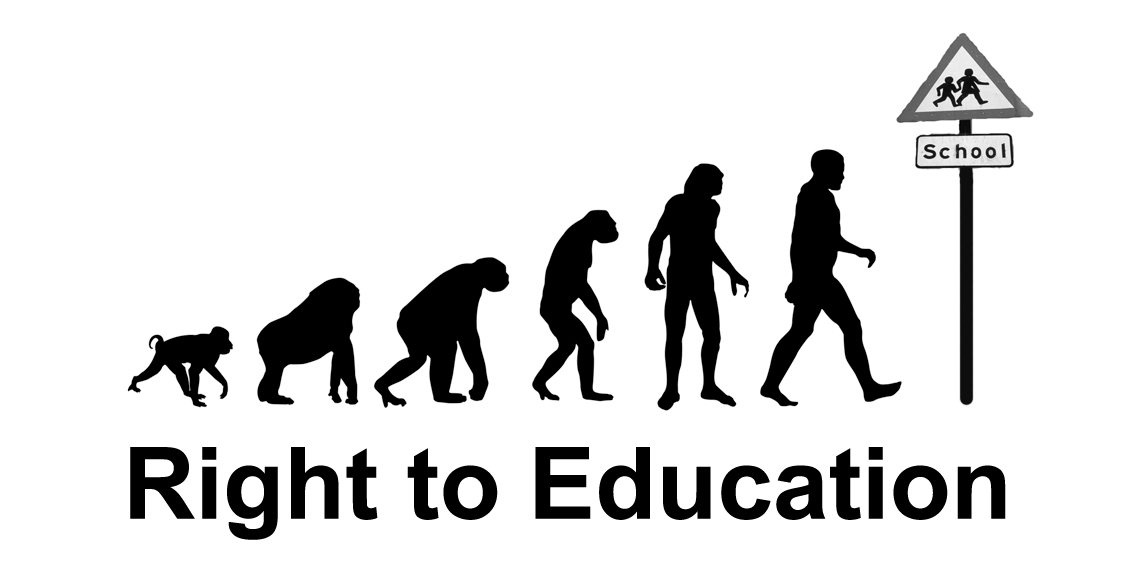
We’re all aware of the fact that education is a universal human right, anywhere in the world.
Equality is a term largely thrown around in political discourse. However, without education, it is an idea that is largely out of reach.
The ultimate goal of the education system was created during the industrial revolution.
Back then young lads like me that had not experienced either world wars were to be brainwashed into conformity. Our current day educational system is still stuck in this mode.
However, due to technology advancement, people are shunning away from education.
Who could blame them?
When the same old system does not guarantee the technical skills that are needed in the current world, they tend to find the information they need online.
With 21st century technology, we have more opportunity and ability to create change than ever before.
We have the power to shape how we think the world should operate, and so far we have not taken advantage of that opportunity.
Technology is actively transforming the world today and will continue to do so whether schools are ready for it or not.
The big difference today is it’s not just about acquiring knowledge. It is about learning in a different way.
If the world around us changes and we do not, how are our students going to be prepared for the jobs of the future — largely technology-based, non-traditional careers?
The current education system is teaching us outdated skills designed for the industrial era, and ignoring modern history; a modern history that will dictate the career paths of current students.
We are depriving the future society of the best foundation possible for a better world by allowing governments to charge for Education.
It is no wonder rather than treating higher education as an investment into the future of a country, at an average of £30/50000 debt young people shay away.
I am sure investors would not hesitate to do their part in planning ahead and securing the future of a nation if for ever pound invested they were rewarded by tax benefits.
Modern education is spreading more ignorance than knowledge.
The word “How” is missing in our world of Education which causes ignorance.
Our education system has developed into mere schooling now. It has become a process of spoon feeding. We are being fed with facts and knowledge without any need to understand how.
Education…has produced a vast population able to read but unable to distinguish what is worth reading. Our schooling does not leave us with time to get educated.
Education provides context to history, art, depth of understanding, and perspective that some people would not otherwise experience. This is part of the traditional role education fulfils in teaching about culture and the transmission of our society’s values.
We cannot assume that the six hours a day a student spends in school is sufficient to teach them to appreciate the riches of our society.
If education wants to capture the attention of children then it must compete with the increasingly effective seductions of commercial offerings.
We must stop teaching the curriculum and start teaching the individual if we are to truly understand the threat that is Artificial intelligence and automation.
Now students finish university spend years looking for anything more than menial labour; the next ten years are going to make this seem like a happy outcome. Within that time frame, we will face an employment crisis that will shake the foundations of our society, our political system, and our economy.
Combined with climate change and ever-increasing protectionism, and inequality the only answer is education, for adults as well as young people.
What is the value of memorizing facts if you can command them with a wave of a search engine?
It is understanding and context that are critically important.
We are headed into a world where creativity and innovative thinking will be more valuable than rote learning of any depth.
We will, instead, need to fall back on those things that are uniquely human, like art, teamwork, leadership, empathy, understanding, creativity, ingenuity, and all of the deeper aspects of human life and society. Computers, robots, and cheaper competition from abroad will take everything else.
Must we wait and see these problems racing towards us? Do we have the will do to something about them? Those are the questions that will determine why and how we need to change education.
Online education is booming.
Is this the solution to education ie distance learning?
Hundreds, if not thousands, of online colleges courses in dozens of fields, are now are open to distance learners making it possible for students to receive advanced training and earn college or university degrees without having to leave their native countries.
Online education is booming in poorer countries, which promises to raise the economic and social conditions in these countries.
There is also a potentially darker side to online education as well.
As demand increases and technology develops, companies will want to get a piece of the action by promoting their goods and services. This is part of the inevitable mix of money and education.
Not all “schooling” is “education,” and not all “education” is “schooling.
The new generation of student is born digital and the current system was designed in a different era and structured for a different society.
WE NEED TO RENEW OUR SENSE OF COMMON DESTINY WITH THE WORLD AROUND US.
In the current climate, the true meaning of education has been lost. There are few educators today and there are too many trainers.
Something with specific and determined ends is schooling, not education.
Education is something we should value for its own sake, not for another purpose – it is an end in itself, not a means.
If you actually educate children and young people properly they will learn to think for themselves rather than just being indoctrinated – which is what “education for social justice” actually means.
All human comments appreciated. All like clicks and abuse chucked in the bin.





 bobdillon33blog
You must be logged in to post a comment.