( TWO MINUTE READ)
That is that the world is unable to react quickly enough to a disaster and a plaster here or there will not work.
Disaster after Disaster, we see the same thing.
You would think by now we watch Governments scrambling to obtain supplies and the United Nations begging for Funds that we would have learned the lesson.
Preparation.
The solution is obvious – AVOID THE SUPPLY CHAIN.
What is needed are fully Supply Depots, properly quipped to effect distribute, positioned around the Globe.
The world population is 8 billion out of which 2/3rd according to the United Nations will be are living in cities by 2050.
To date, there are 33 urban centres with populations of more than 10 million people.
In North America, 82 per cent of people were found to live in cities, compared to 74 per cent in Europe. In Asia, around 50 per cent of people were based in metropolitan areas, while Africa was thought to be the least urban-populated continent with only 43 per cent of its population situated in cities.
So if you allowed one depot for every 250,000, these cities alone would require 40, and with a rough estimate, on the same premise, the rest of the world would require a further 25,000.
All under the jurisdiction of the United Nations should be given the same status as Embassy in order to deter abuse for any political agenda.
This would create for lack of a better word a network of self financing aid ground satellite..
How would they be paid for and supplied?
The cost could be spread fairly by applying a 0.05% aid commission on all world activities that are for-profit for profit sake.
For example: High-Frequency Trading, Sovereign Wealth funds acquisitions, Lotto’s, Gambling, all foreign exchange transactions over 50,000$.
This would create a perpetual fund of billions.
It is obvious that the world economies are going to need a massive stimulus when this Pandemic is over.
What a better way to it than Preparation for the next one.
ANYONE THAT HAS A BETTER IDEA FEEL FREE TO COMMENT.
All human comments appreciated. All like clicks and abuse chucked in the bin.
I know that humans are the only type of species that are suitable to manage the earth but it does not make them the right species!
Apparently not.
Did we ever think that we would be living in a world where it is life-threatening to go our side and I am not talking about terrorists or any other Hollywood science fiction movie scenario?
There’s a lot of bad news out there but this is not a death sentence.
It’s time to save the world. ” We can use it as we wish”
No one owns the earth. No one has the right to do whatever they want.
We’re not the only thing that lives here, nor are we more important in any way.
We cannot use the world as we please as our actions are endangering not just us but other species.
Our Earth was meant to be lived on in union with its Ecosystems and we cannot allow that to be broken.
The Coronavirus ( Covid 19 ) is illuminating what is wrong with our world.
So our most crucial life questions are:
What Kind of World Do We Want to Leave to Our Children?
Whatever your interest — whether it’s the environment, health care, poverty, or education — there are simple steps each of us can take to make life better not just for someone in our own community.
The Universal Declaration of Human Rights, that “all human beings are born free and equal in dignity and rights.” now needs an Earth Declaration.
Here are the top six of my non-legal binding the goals.
Use Global Warming to Solve Global Warming.
Take urgent action to combat climate change and its impacts to protect, restore, and promote sustainable use of terrestrial ecosystems, sustainably manage forests, combat desertification, halt and reverse land degradation, and halt biodiversity loss.
Conserve and sustainably use the oceans, seas, and marine resources for sustainable development.
Sustainable Development Goals which will take years for a critical mass of governments to actually rally behind.
The allocation of resources to fight climate change and other environmental issues over the next decade can be achieved by making a profit for profit sake pay. ( See the previous post on a 0.05% World Aid Commission. How it could be implemented so the costs are spread fairly)
End poverty in all its forms everywhere.
Global poverty. Reduce inequality within and among countries. Ensure inclusive and equitable quality education and promote lifelong learning opportunities for all.
Expand access to clean drinking water, green energy.
Artificial Intelligence and Automation.
The 2020s sounds like such a radical futuristic decade however to strengthen the means of implementation and revitalize the global partnership for sustainable development requires a coherent and plausible conception of social justice. Abasic income, a periodic cash payment unconditionally delivered to all on an individual basis, without means-test or work requirement.
Stop the sale of arms.
The estimate of the total value of the global arms trade in 2017 was at least $95 billion.* However, the true figure is likely to be higher. On any given day at any given moment in your life, there are at least 15 wars and armed conflicts actively going on all around the world — even if you’re only hearing about a few of them on the news.
There are an estimated 11-12 million refugees in the world today with between 12-24 million Internally Displaced Persons.
Electoral Reform with Citizens’ Assemblies.
These aren’t just focus groups or consultations though but for the members to engage in serious, informed reflection on important policy matters with people they may never normally meet.
As Hubert Reeves ( Canadian-French Astrophysicist) say’s, ” Man is the most insane species. He worships an invisible God and Destroys a Visible Nature. Unaware that this Nature he’s destroying is this God he’s worshipping “
Feel free to have idea sex between your ideas and mine so we can come up with even better ideas. It’s a way of saying: “We agree that these are the world’s top priorities right now.”
With all aspects of our life made into a form of viewing entertainment. We live in a world that has become desensitized.
The result is that most if not all of us pay little attention to the state of Earth.
The drawn-out nature of many crises now facing us all underscores the importance of coming together to urgently resolve the root causes of a humanitarian crisis.
It is unlikely the situation will improve.
Where do you even start? Which issues are the most urgent?
So this post is not intended to be an exhaustive list. Rather, it serves as an overview of some of the major issues all global citizens should be aware of.
Sometimes it can seem as though there are too many – from climate change to inequality around the world, too many people living without access to medical care its not worth knowing.
But just in case here is why we are in such a mess.
12.9% of the world is undernourished, about 30% of the adult population is overweight.
Conflict continues to drive displacement and food insecurity but communicable diseases are still responsible for 71% of deaths.
The international community, and in particular wealthy nations, are failing to meaningfully share the responsibility for protecting people who have fled their homes in search of safety.
25.9 million refugees globally — the highest level ever recorded
Half of the world’s refugees are children
A third of refugees — 6.7 million people — is hosted by the world’s poorest countries
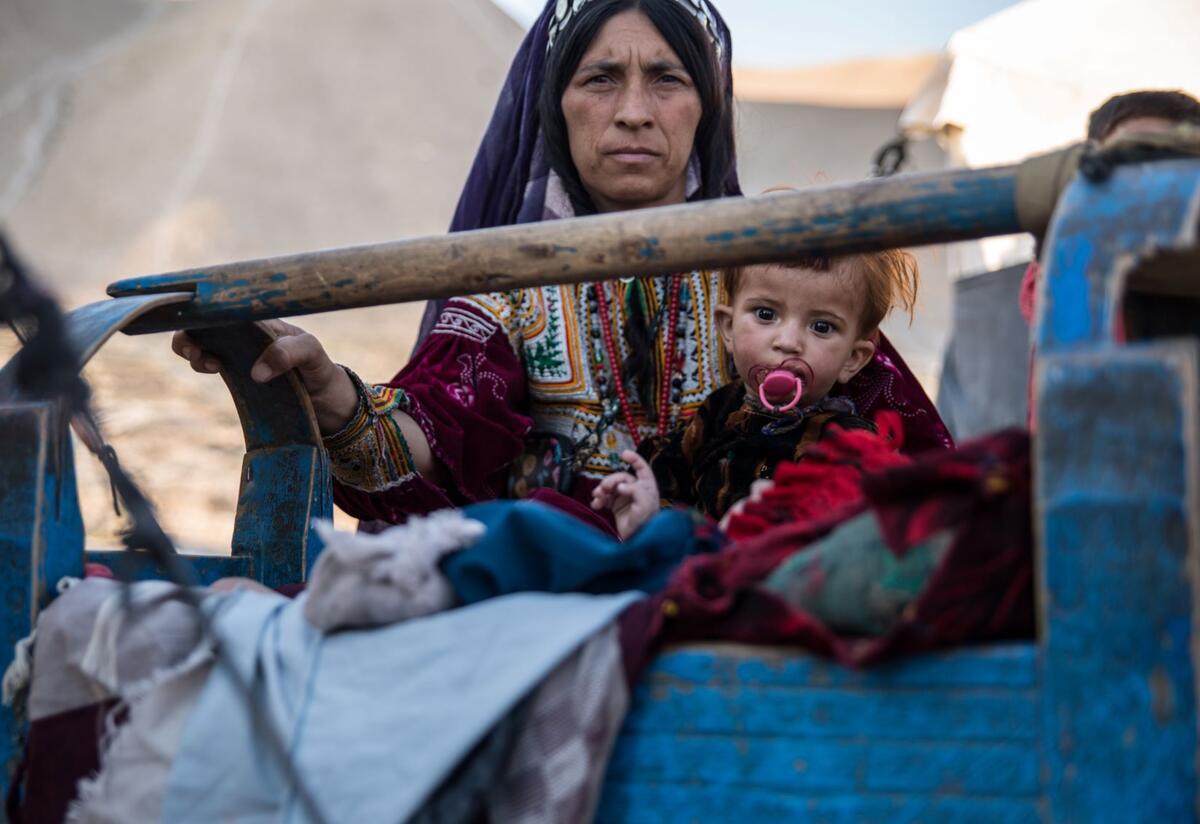
Driven by nearly two decades of conflict and political instability; 9.4 million Afghans (25 per cent of the population) need humanitarian assistance. There are almost 2.5 million registered Afghan refugees living outside the country.
4.6 million Venezuelans have fled the country as of November 2019.
There are over 2 million displaced Nigerians.
Eleven million Syrians (65 per cent of the population) are in need of humanitarian assistance.
The Democratic Republic of Congo 15.9 million people require humanitarian assistance.
Over 24 million Yemenis (80 per cent of the population) are in need of humanitarian assistance,
South Sudan 7.5 million people need humanitarian assistance.
600 million children are not mastering basic mathematics and literacy while at school.
Forests are key to producing the air we breathe, yet these are being depleted at a rate of 26 million hectares every year.
Extinctions are happening at what scientists estimate to be about 1,000 times the normal pace. Not only are we losing flora and fauna, but we are also damaging our ecosystems, and throwing them out of balance
Our oceans are under threat.
Sand and gravel are now the most-extracted materials in the world, exceeding fossil fuels and biomass.
Climate change is another issue.
There is actually not enough fresh water for each person currently living on the planet.
Population growth. The number of people on the planet is set to rise to 9.7 billion in 2050 with 2 billion aged over 60.
More than 61 million jobs have been lost since the start of the global economic crisis in 2008, leaving more than 200 million people unemployed globally.
With 43% of the world’s population connected to the internet, regulatory frameworks are unable to keep up.
In this complex moment in history, in which so many are suffering and the Earth itself is in peril
The cloud of nuclear destruction hangs over each of our days.
But the question remains what kind of society do we want to have?
The reasons behind current trends are many and complex.
The detail of the information that we are beginning to capture about our world is mind-blowing. The granularity of the data we are beginning to collect through advances in technology. While improving our lives through cleaner energy sources, personalized nanomedicine and nano-engineered materials.
In all of these areas, progress will undoubtedly lead to a reduction in conventional jobs and inequality on a global scale not seen before.
But technology alone can not break the self-reinforcing mechanism that causes poverty to persist.
As highly innovative products emerging will, however, promote inequality if only a few have access to this new technology and the knowledge to master it.
Education is probably the single most important tool for turning technology into an engine for opportunities for all.
Public policies, which are currently mainly focused on fostering economic growth, should focus on providing further opportunities, less inequality and a more sustainable economic, social and environmental future.
Technology is not the solution but it is, for sure, a powerful tool towards achieving this ambitious objective.
Whether it’s turning promises on climate change into action, rebuilding trust in the financial system, or connecting the world to the internet there is an overall lack of long-term investment, which has serious implications for global growth.
But the most astonishing canvas is right in front of us if only we would listen with our ear to the earth we might see the light we cannot see.
In short, the world urgently needs a new, global plan based on genuine international cooperation and a meaningful and fair sharing of responsibilities.
All human comments appreciated. All like clicks and abuse chucked in the bin.
I suppose it is fair to say that when it comes to biological factors that tear thought entire species, humans can’t take all the credit.
History has shown that a pandemic now and then can be a good thing, at least for the survivors.
THE CURRENT CORONAVIRUS OUTBREAK IN PROGRESS HAS THE POTENTIAL TO ALTER HOW SOCIETIES FUNCTION. TAXING INFRASTRUCTURES WELL BEYOND THEIR TOLERANCES.
A disease that kills 80/90% of all people on earth could and will tip us to an unrecoverable social and technological crash.
But real disasters aren’t lone events born of simple, soluble problems, and they don’t end when the credits roll. Nor are they necessarily a question of scale.
The line that divides an incident from a disaster is defined by a society’s preparedness and capacity to deal with the aftermath.
For good or ill, the technology and unprecedented control over life and death we have will likely allow future disasters to unfold along lines unique in world history.
Do we who are in the know care?
Other than verbal diarrhoea it seems not so.
So here a few disasters to look forward too.
Genetic Manipulation Gone Wrong.
Our genetic ambitions will outpace our safeguards.
Put simply, we can now wipe out entire species with a single mistake. Bioethical standards tend to lag behind technology, and who can say what a less ethical party might attempt?
Coronal Mass Ejection or bursts of plasma and magnetic field from the sun’s corona.
They follow a cycle, like pandemics albeit a far more regular one (the conditions are ripe every 11 years or so) [source: NASA]. They also cause variable but potentially ruinous damage, and their destructive scales depend, in part, upon humans’ connectedness.
We’ve been lucky so far.
Such an event could last a few weeks. But a quick about-face would prove impossible if, as some people fear, the CME’s ground current cooks all the transformers. In that case, the risks of social breakdown and mass starvation become quite real.
Peak Phosphorus.
There’s a theoretical limit to how many people the planet can support? It’s mainly limited by available solar radiation, but there are other limits we would reach well before that one.
Our bodies need phosphorus to move energy around and to build cells and DNA. But our demand will likely outstrip our known supply within 30 to 40 years. Currently, a large amount of phosphorus is lost in human and animal waste. Much of what remains end’s up in the trash or washes away as farm runoff.
The push for biofuel options will only deepen the crisis. Everything has its limit — even the bounty of the earth.
The Thermohaline Circulation Shuts Down.
The melting poles.
As the resultant freshwater spreads across the North Atlantic Ocean, it shuts down a looping global current vital to global climate called the thermohaline circulation (THC).
But push past that point, and forcing factors, or environmental processes that affect climate, take over. This could create feedbacks that will alter climates for decades or centuries to come.
Whether such a shutdown will occur because of climate change remains unclear, but the bulk of data says the THC will more likely experience a slowdown. In the unlikely worst case, however, the effects of a mini-ice age combined with other climate change stresses could be nothing short of seismic.
The Cascadia Superquake.
An earthquake of magnitude 8.0 or greater.
In 2011 the 9.0-magnitude Tohoku quake and resultant tsunami killed 18,000 people, triggered the Fukushima meltdown and caused more than $200 billion in damages. All this happened in a region prepared for quakes, just not ones of such scale.
A Killer Asteroid.
Take Apophis, an apartment-building-size asteroid due to kiss our atmosphere in 2029 and possibly smack right into us on its 2036 return trip. If it does it will pack the wallop of a 300-megaton atom bomb, to say nothing of the ensuing fires, disruption of solar energy and famine.
Global Economic Collapse.
Economists still struggle to unravel collapses that already occurred.
This one might already be happing as we watch the out brake of CORONAVIRUS in China spread it seems likely that problems will only worsen under global climate change scenarios or energy-asset depletion.
All we can really say, as we watch China prop up its ailing stock market and the European Union struggle to define a set of economic policies suited to the diverse needs of its member states, is that indicators look more than a little dodgy..
The Singularity.
This is my favourite the steely grip of self-improving superintelligence born of human hubris. Po-tay-to, po-tah-to.
On one hand, it’s hard to imagine we’d be so foolish as to create a Frankenstein’s monster without a fail-safe. But do you know what’s not hard to imagine? That some garage hackers or industrialists, driven by rivalry, revenue or (Asimov help us) fetish, will sit nose-to-breadboard until they’ve created artificial intelligence or some weird imitation of it
Even ignoring the risk that superintelligent machines will rise, self-improve and decide a femtosecond later to eliminate humans, we’ll still face one of the most transformative moments in social and psychological history. Because however, it shakes out, it’ll be something we’re not prepared for, and that alone will make it a disaster.
World War III.
The reasons are deeply enmeshed: Food and water insecurity, climate change, financial crises, infectious diseases and profound social instability.
Add rising nationalism, weaponising technology, Donal Dump, Iran, Syria, Yemen, Iraq, Afghanistan, Libya, South Sudan, the international order that has been thrown into turmoil. Multilateralism and its constraints are under siege, challenged by more transactional, zero-sum politics.
A paralysed United Nations who’s collective accountability, including the International Criminal Court, are ignored and disparaged.
Dubious territorial claims by major powers like China and Russia, Japanese militarization and a pinch of terrorist pseudo-states, and a fearsome picture begins to emerge.
President Donald Trump’s contempt for traditional allies and Europe’s struggles with Brexit and nativism, leaders across the world are probing and prodding to see how far they can go.
Socially or ecologically, there is growing concern among experts that change today occurs at a rate that far outstrips our ability to cope with it.
The international order as we know it is unravelling, with no clear sense of what will come in its wake. The danger may well lie less in the ultimate destination than in the process of getting there.
Moreover, in a world characterized by ever-growing connectedness, it’s unlikely that some types of disasters — economic, political, ecological and epidemiological — will remain geographically confined.
The same globalization and mass communication that transform the world may just as easily doom it if we’re not careful, and perhaps even if we are.
Anyone will ensure that nobody will remember the Internet.
All human comments appreciated. All like clicks and abuse chucked in the bin.

 You would think by now we watch Governments scrambling to obtain supplies and the United Nations begging for Funds that we would have learned the lesson.
Preparation.
The solution is obvious – AVOID THE SUPPLY CHAIN.
What is needed are fully Supply Depots, properly quipped to effect distribute, positioned around the Globe.
The world population is 8 billion out of which 2/3rd according to the United Nations will be are living in cities by 2050.
To date, there are 33 urban centres with populations of more than 10 million people.
In North America, 82 per cent of people were found to live in cities, compared to 74 per cent in Europe. In Asia, around 50 per cent of people were based in metropolitan areas, while Africa was thought to be the least urban-populated continent with only 43 per cent of its population situated in cities.
So if you allowed one depot for every 250,000, these cities alone would require 40, and with a rough estimate, on the same premise, the rest of the world would require a further 25,000.
All under the jurisdiction of the United Nations should be given the same status as Embassy in order to deter abuse for any political agenda.
This would create for lack of a better word a network of self financing aid ground satellite..
How would they be paid for and supplied?
The cost could be spread fairly by applying a 0.05% aid commission on all world activities that are for-profit for profit sake.
For example: High-Frequency Trading, Sovereign Wealth funds acquisitions, Lotto’s, Gambling, all foreign exchange transactions over 50,000$.
This would create a perpetual fund of billions.
It is obvious that the world economies are going to need a massive stimulus when this Pandemic is over.
What a better way to it than Preparation for the next one.
ANYONE THAT HAS A BETTER IDEA FEEL FREE TO COMMENT.
All human comments appreciated. All like clicks and abuse chucked in the bin.
You would think by now we watch Governments scrambling to obtain supplies and the United Nations begging for Funds that we would have learned the lesson.
Preparation.
The solution is obvious – AVOID THE SUPPLY CHAIN.
What is needed are fully Supply Depots, properly quipped to effect distribute, positioned around the Globe.
The world population is 8 billion out of which 2/3rd according to the United Nations will be are living in cities by 2050.
To date, there are 33 urban centres with populations of more than 10 million people.
In North America, 82 per cent of people were found to live in cities, compared to 74 per cent in Europe. In Asia, around 50 per cent of people were based in metropolitan areas, while Africa was thought to be the least urban-populated continent with only 43 per cent of its population situated in cities.
So if you allowed one depot for every 250,000, these cities alone would require 40, and with a rough estimate, on the same premise, the rest of the world would require a further 25,000.
All under the jurisdiction of the United Nations should be given the same status as Embassy in order to deter abuse for any political agenda.
This would create for lack of a better word a network of self financing aid ground satellite..
How would they be paid for and supplied?
The cost could be spread fairly by applying a 0.05% aid commission on all world activities that are for-profit for profit sake.
For example: High-Frequency Trading, Sovereign Wealth funds acquisitions, Lotto’s, Gambling, all foreign exchange transactions over 50,000$.
This would create a perpetual fund of billions.
It is obvious that the world economies are going to need a massive stimulus when this Pandemic is over.
What a better way to it than Preparation for the next one.
ANYONE THAT HAS A BETTER IDEA FEEL FREE TO COMMENT.
All human comments appreciated. All like clicks and abuse chucked in the bin.





 bobdillon33blog