• About
  • THE BEADY EYE SAY’S : THE EUROPEAN UNION SHOULD THANK ENGLAND FOR ITS IN OR OUT REFERENDUM.

bobdillon33blog

~ Free Thinker.

bobdillon33blog

Category Archives: Capitalism

Gallery

THE BEADY EYE ASK’S. WILL THE WORLD BE EVER A SAFE PLACE.

05 Sunday Apr 2020

Posted by bobdillon33@gmail.com in 2020: The year we need to change., Artificial Intelligence., Biotechnology., Capitalism, CORONA VIRUS., COVID-19, Dehumanization., Democracy, Digital age., Disasters., Disconnection., Environment, Evolution, Fake News., Fourth Industrial Revolution., HUMAN INTELLIGENCE, Human values., Humanity., Inequality., International solidarity., Life., Lock Down., Modern Day Democracy., Modern day life., Nanotechnology, Pandemic, Political Trust, Post - truth politics., Reality., Robot citizenship., Social Media, Survival., Sustaniability, Technologically Enabled Genetics., Technology v Humanity, Technology., The common good., The essence of our humanity., The Future, The Internet., The Obvious., The pursuit of profit., The state of the World., The world to day., Unanswered Questions., VALUES, WHAT IS TRUTH, What Needs to change in the World, Where's the Global Outrage., World Aid., World Economy., World Leaders, World Organisations., World Politics, World Trade Organisation

≈ Comments Off on THE BEADY EYE ASK’S. WILL THE WORLD BE EVER A SAFE PLACE.

    (Thirty-minute lockdown read )  My previous post asked the question of what skills will be needed to rebuild …

Continue reading →

THE BEADY EYE SAY’S : Where will we be in six months, a year, ten years from now?

31 Tuesday Mar 2020

Posted by bobdillon33@gmail.com in 2020: The year we need to change., Artificial Intelligence., Capitalism, Climate Change., CORONA VIRUS., COVID-19, Dehumanization., Democracy., Digital age., Disconnection., Environment, Evolution, Fourth Industrial Revolution., HUMAN INTELLIGENCE, Human values., Humanity., Inequality, Life., Lock Down., Modern day life., Our Common Values., Political Trust, Politics., Populism., Post - truth politics., Poverty, Reality., Survival., Sustaniability, Technology v Humanity, The common good., The Future, The Internet., The Obvious., The pursuit of profit., The state of the World., The world to day., Truth, Truthfulness., Unanswered Questions., VALUES, Wealth., WHAT IS TRUTH, What Needs to change in the World, Where's the Global Outrage., World Economy., World Organisations., World Politics

≈ Comments Off on THE BEADY EYE SAY’S : Where will we be in six months, a year, ten years from now?

Tags

Artificial Intelligence., Business and Economy, Capitalism, CORONA VIRUS., Coronavirus (COVID-19), Distribution of wealth, Extinction, Global warming, Globalization, Inequility, Technology, The Future of Mankind, Visions of the future.


( An essential twenty-minute read) 


It all depends on how governments and society respond to coronavirus and its economic aftermath.

As we know COVID-19 is highlighting serious deficiencies in our existing system. 

Hopefully, we will use this crisis to rebuild, produce something better and more humane. But we may slide into something worse.

My focuses on this post are on the fundamentals of the modern economy: global supply chains, wages, and productivity.

I argue that we will need a very different kind of economics if we are to build socially just and ecologically sound futures.

In the face of COVID-19, this has never been more obvious.

——————————————————————————————–

The COVID-19 pandemic is simply the amplification of the dynamic that drives other social and ecological crises: The prioritisation of one type of value over others. 

From an economic perspective, there are four possible futures:

Descent into barbarism, robust state capitalism, radical state socialism, and a transformation into a big society built on mutual aid.

Coronavirus, like climate change, is partly a problem of our economic structure. Although both appear to be “environmental” or “natural” problems, they are socially driven.

Yes, climate change is caused by certain gases absorbing heat. But that’s a very shallow explanation. To really understand climate change, we need to understand the social reasons that keep us emitting greenhouse gases.

Likewise with COVID-19. Yes, the direct cause is the virus. But managing its effects requires us to understand human behaviour and its wider economic context.

Tackling both COVID-19 and climate change is much easier if you reduce nonessential economic activity.

The epidemiology of COVID-19 is rapidly evolving. But the core logic is similarly simple. People mix together and spread infections.

We can see from Wuhan that social distancing and lockdown measures like this are effective.

Political economy is useful in helping us understand why they weren’t introduced earlier in European countries and the US.

We are now facing a serious recession and we are living with an economic system that will threaten collapse at the next sign of pandemic.

The economics of collapse is fairly straightforward.

Businesses exist to make a profit.

If they can’t produce, they can’t sell things. This means they won’t make profits, which means they are less able to employ you.

Businesses can and do (over short time periods) hold on to workers that they don’t need immediately: They want to be able to meet demand when the economy picks back up again. But, if things start to look really bad, then they won’t. So, more people lose their jobs or fear to lose their jobs. So they buy less. And the whole cycle starts again, and we spiral into an economic depression.

In a normal crisis, the prescription for solving this is simple.

The government spends, and it spends until people start consuming and working again.

This pressure has led some world leaders to call for an easing of lockdown measures.

But normal interventions won’t work here because we don’t want the economy to recover (at least, not immediately). The whole point of the lockdown is to stop people going to work, where they spread the disease.

If we want to be more resilient to pandemics in the future (and to avoid the worst of climate change) we need a system capable of scaling back production in a way that doesn’t mean loss of livelihood.

At its core, the economy is the way we take our resources and turn them into the things we need to live.

Looked at this way, we can start to see more opportunities for living differently that allow us to produce less stuff without increasing misery.

So how do you reduce the amount of stuff you make while keeping people in work?

You have to reduce people’s dependence on a wage to be able to live.

Currently, the primary aim of the global economy is to facilitate exchanges of money. The dominant idea of the current system we live in is that exchange value is the same thing as use-value.

This is why markets are seen as the best way to run society. They allow you to adapt, and are flexible enough to match up productive capacity with use-value.

What COVID-19 is throwing into sharp relief is just how false our beliefs about markets are. 

There are lots of contributing factors to this. But let’s take two.

First, it is quite hard to make money from many of the most essential societal services-key workers low-paid employee. This is in part because a major driver of profits is labour productivity growth: doing more with fewer people – automation.

Second, jobs in many critical services aren’t those that tend to be highest valued in society. Many of the best-paid jobs only exist to facilitate exchanges; to make money.

People are compelled to work pointless jobs (they serve no wider purpose to society: ie. consultants, huge advertising industry and a massive financial sector) because, in a society where exchange value is the guiding principle of the economy, the basic goods of life are mainly available through markets.

This means you have to buy them, and to buy them you need an income, which comes from a job.

Meanwhile, we have a crisis in health and social care, where people are often forced out of useful jobs they enjoy because these jobs don’t pay them enough to live.

While state-capitalist society continues to pursue exchange value as the guiding light of the economy. It also enacts a massive Keynesian stimulus by extending credit and making direct payments to businesses.

The expectation here is that this is will be for a short period.

Could this be a successful scenario?

Possibly, but only if COVID-19 proves controllable over a short period.

Limited state intervention will become increasingly hard to maintain if death tolls rise.

Increased illness and death will provoke unrest and deepen economic impacts, forcing the state to take more and more radical actions to try to maintain market functioning.

Barbarism is the future if we continue to rely on exchange value as our guiding principle and yet refuse to extend support to those who get locked out of markets by illness or unemployment. It describes a situation that we have not yet seen.

Could this happen?

The concern is that either it could happen by mistake during the pandemic, or by intention after the pandemic peaks.

Potentially just as consequential is the possibility of massive austerity after the pandemic has peaked and governments seek to return to “normal”.

This would be disastrous. The subsequent failure of the economy and society would trigger political and stable unrest, leading to a failed state and the collapse of both state and community welfare systems.

Then there is the possibility that we could see with a cultural shift that places a different kind of value at the heart of the economy.

The state steps in to protect the parts of the economy that are essential to life: so that the basic provisions of life are no longer at the whim of the market. The state nationalises hospitals and makes housing freely available. Finally, it provides all citizens with a means of accessing various goods – both basics and any consumer goods we are able to produce with a reduced workforce.

Citizens no longer rely on employers as intermediaries between them and the basic materials of life.

Payments are made to everyone directly and are not related to the exchange value they create.

Instead, payments are the same to all (on the basis that we deserve to be able to live, simply because we are alive), or they are based on the usefulness of the work.

A Basic Universal Income.

Supermarket workers, delivery drivers, warehouse stackers, nurses, teachers, and doctors are the new CEOs.

If deep recessions happen and there is a disruption in supply chains such that demand cannot be rescued by the kind of standard Keynesian policies we are seeing now (printing money, making loans easier to get and so on), the state may take overproduction.

There are risks to this approach – we must be careful to avoid authoritarianism. But done well, this may be our best hope against an extreme COVID-19 outbreak.

Mutual aid is the second future in which we adopt the protection of life as the guiding principle of our economy. But, in this scenario, the state does not take a defining role. Rather, individuals and small groups begin to organise support and care within their communities.

The most ambitious form of this future sees new democratic structures arise. Groupings of communities that are able to mobilise substantial resources with relative speed. People coming together to plan regional responses to stop disease spread and (if they have the skills) to treat patients.

This kind of scenario could emerge from any of the others.

What hopefully is clear is that all these scenarios leave some grounds for fear, but also some for hope.

The upside of this is the possibility that we build a more humane system that leaves us more resilient in the face of future pandemics and other impending crises like climate change. 

A key task for us all is demanding that emerging social forms come from an ethic that values care, life, and democracy.

The central political task in this time of crisis is living and (virtually) organising around those values.

Not low-paid workers or National Minimum Wage or National Living Wage because their work is so vital.

Successive governments had failed to reduce inequality between rich and poor despite two decades of interventions.

We must now with an uncertain future focus more on the journey, rather than the ultimate destination.

But be no doubt that we are at a crossroad where the low pay culture that has trapped people in poorly jobs is coming to an end. 

Capitalism Inequality can not be allowed to continue. 

All human comments appreciated. All like clicks chucked in the bin.

← Back

Thank you for your response. ✨


Share this:

  • Share on WhatsApp (Opens in new window) WhatsApp
  • More
  • Share on Pocket (Opens in new window) Pocket
  • Share on Mastodon (Opens in new window) Mastodon

THE BEADY EYE SAY’S. WE ALL KNOW WHAT TO DO BUT ARE WE WILLING.

23 Monday Mar 2020

Posted by bobdillon33@gmail.com in #whatif.com, 2020: The year we need to change., Capitalism, COCID-19, CORONA VIRUS., Disconnection., Human values., Humanity., Inequality, Life., Modern day life., Our Common Values., Poverty, Reality., Refugees., Survival., Sustaniability, Technology v Humanity, The common good., The essence of our humanity., The Obvious., The state of the World., The world to day., Unanswered Questions., United Nations, VALUES, Wealth., WHAT IS TRUTH, What Needs to change in the World, Where's the Global Outrage., World Economy.

≈ Comments Off on THE BEADY EYE SAY’S. WE ALL KNOW WHAT TO DO BUT ARE WE WILLING.

Tags

Capitalism and Greed, Capitalism vs. the Climate., Distribution of wealth, Earth, Environment, Inequility, The Future of Mankind, Visions of the future.


(Five-minute read) 


STOP DESTROYING OUR PLANET:
It’s no secret that our planet is in a pretty dire condition.

The problem is a massive one.

It’s so big that there are things that you do every day that are helping to bring about the end of the world, and chances are that you might not even know it.

Here are a few.

China produces a whopping 80 billion disposable chopsticks every year. The vast majority are used—and thrown away—That kind of production takes 20 million trees, and not just any trees.

Estrogen, one of the active ingredients in birth control pills and hormone therapy treatments, was introduced into a freshwater lake research facility in Ontario. 

The impact was almost immediate. Male fish first began producing egg proteins and then producing eggs.

Wastewater treatment and its impact on freshwater ecosystems.

Hormones that aren’t absorbed or used end up in the sewer system after they cycle through the human body. In areas where sewer water is dumped into lakes and rivers, the average fish population is about 85 per cent female. The cause has been traced back to the release of improperly treated wastewater that contains hormones from hormone therapy drugs and birth control pills. A stark contrast to the normal 55 per cent. Fish exposed to the hormones not only lose the ability to reproduce, but their accidental hormone treatment impacts eggs at the development stage as well.

Prozac. Might have something to do with the decline in the starling population over the last few decades—to the tune of about 50 million birds. 

Drinking straws. 

The United States alone uses about 500 million drinking straws made from a polypropylene plastic that doesn’t disintegrate or dissolve.

These millions of straws are around forever, making up a huge part of the estimated 12 to 24 tons of plastic that end up ingested by fish and other marine wildlife every year. And that includes about one million seabirds that die after eating plastics. One of the most common items found in autopsies? The drinking straws that come attached to juice boxes.

Eating frogs.

The fungus that’s being spread by the live food trade is different than one that’s being blamed for most of the recent die-offs.

The consequences of the fungus and its ability to hybridize create the potential to unleash an epidemic across the globe.

Antibacterial soaps, washing liquids/tablets use triclocarban and triclosan, chemicals while most of those chemicals are removed from wastewater when they’re run through a treatment plant, they have to go somewhere. When triclocarban degrades, it degrades into two chemicals—both carcinogens.

When triclosan is run through a treatment plant to make drinking water, it doesn’t exactly make safe drinking water. Instead, it makes other chemicals that can include chloroform. And those chemicals travel through the food chain in plants, animals, and ultimately humans.

Farm-raised fish.

Shrimp aquaculture has resulted in the large-scale degradation of coastal areas, the destruction of wetlands, and salinization of freshwater areas and drinking water. Salmon farming relies on the release of fish food and nutrients into the water, which always results in wasted feed and a huge amount of fish droppings in the water

Extra waste products end up sinking to the bottom where they react with the medicines and other nutrients used to keep the fish healthy along with antifoulant agents used to keep nets clean. That means fish farms are a breeding ground for sea lice, which are as disgusting as they sound. More chemicals are used to control the sea lice, which end up killing the other marine life that was supposed to be in the area in the first place.

Not the eco-friendly choice you’d think.

Soybeans 80 per cent of the world’s soy production goes into livestock feed.

1.2 million hectares of soy was planted in Brazil’s rain forest in 2005 alone. 

Global food waste. 

Every year, global food waste amounts to about 1.3 billion tons, and that’s such a big number that it’s impossible to imagine. Meanwhile, about 870 million people are starving.

Inequality: Lack of Healthcare, Nutrition and Education.

We all know that the world’s richest 1 per cent, those with more than $1 million, own 44 per cent of the world’s wealth. In many countries, a decent education or quality healthcare has become a luxury only the rich can afford.

Being poor all too often means more sickness and an earlier grave. 

The story of inequality in many developed countries, including the U.S. and U.K., is more sobering. However, when you are born in a poor place where every tenth child dies, as the well-to-do’s share of the national economic pie surges, a pandemic is a joke.

So what can be done to right this unsettling imbalance and restore a sense of opportunity for the billions of people who are being excluded from the gains of economic development?

The first and most important step may ultimately be recognizing the scope and scale of the problems caused by inequality in the first place and resolving to do something about them.  

Inequality is out of control with the human costs devastating.

Like many other environmental problems, there’s absolutely no easy answer but it is time we opened our eyes.

Ironically, with the coming economic collapse due to the coronavirus, we might finally be recognizing inequality’s great economic costs may be just the motivation that financial interests need to take the issue seriously.

Its not Amazon fortune and power that will grow exponentially.

The growing gap between rich and poor is undermining the fight against poverty, damaging our economies and tearing our societies apart.

If not with climate change added to next pandemic it won’t be the virus that kills you but the influx of refugees. 

All human comments appreciated. All like clicks and abuse chucked in the bin.

← Back

Thank you for your response. ✨


Share this:

  • Share on WhatsApp (Opens in new window) WhatsApp
  • More
  • Share on Pocket (Opens in new window) Pocket
  • Share on Mastodon (Opens in new window) Mastodon

THE BEADY EYE LOOKS AT THE CRISES FACING THE WORLD.

08 Sunday Mar 2020

Posted by bobdillon33@gmail.com in 2020: The year we need to change., Artificial Intelligence., Capitalism, Disasters., Environment, HUMAN INTELLIGENCE, Human values., Inequality, Life., Modern day life., Natural World Disasters, Our Common Values., Poverty, Survival., Sustaniability, Technology, Technology v Humanity, The common good., The essence of our humanity., The Obvious., The state of the World., The world to day., Unanswered Questions., VALUES, War, WHAT IS TRUTH, What Needs to change in the World, Where's the Global Outrage., World Leaders, World Organisations., World Politics

≈ Comments Off on THE BEADY EYE LOOKS AT THE CRISES FACING THE WORLD.

Tags

Capitalism and Greed, Capitalism vs. the Climate., Earth, Extinction, Inequility, Technology, The Future of Mankind, Visions of the future.


Five minute read.

With all aspects of our life made into a form of viewing entertainment. We live in a world that has become desensitized. 

The result is that most if not all of us pay little attention to the state of Earth.

The drawn-out nature of many crises now facing us all underscores the importance of coming together to urgently resolve the root causes of a humanitarian crisis.

It is unlikely the situation will improve. 

 Where do you even start? Which issues are the most urgent?


So this post is not intended to be an exhaustive list. Rather, it serves as an overview of some of the major issues all global citizens should be aware of.

Sometimes it can seem as though there are too many – from climate change to inequality around the world, too many people living without access to medical care its not worth knowing. 

But just in case here is why we are in such a mess. 

12.9% of the world is undernourished, about 30% of the adult population is overweight.

Conflict continues to drive displacement and food insecurity but communicable diseases are still responsible for 71% of deaths.

The international community, and in particular wealthy nations, are failing to meaningfully share the responsibility for protecting people who have fled their homes in search of safety. 

  • 25.9 million refugees globally — the highest level ever recorded
  • Half of the world’s refugees are children
  • A third of refugees — 6.7 million people — is hosted by the world’s poorest countries
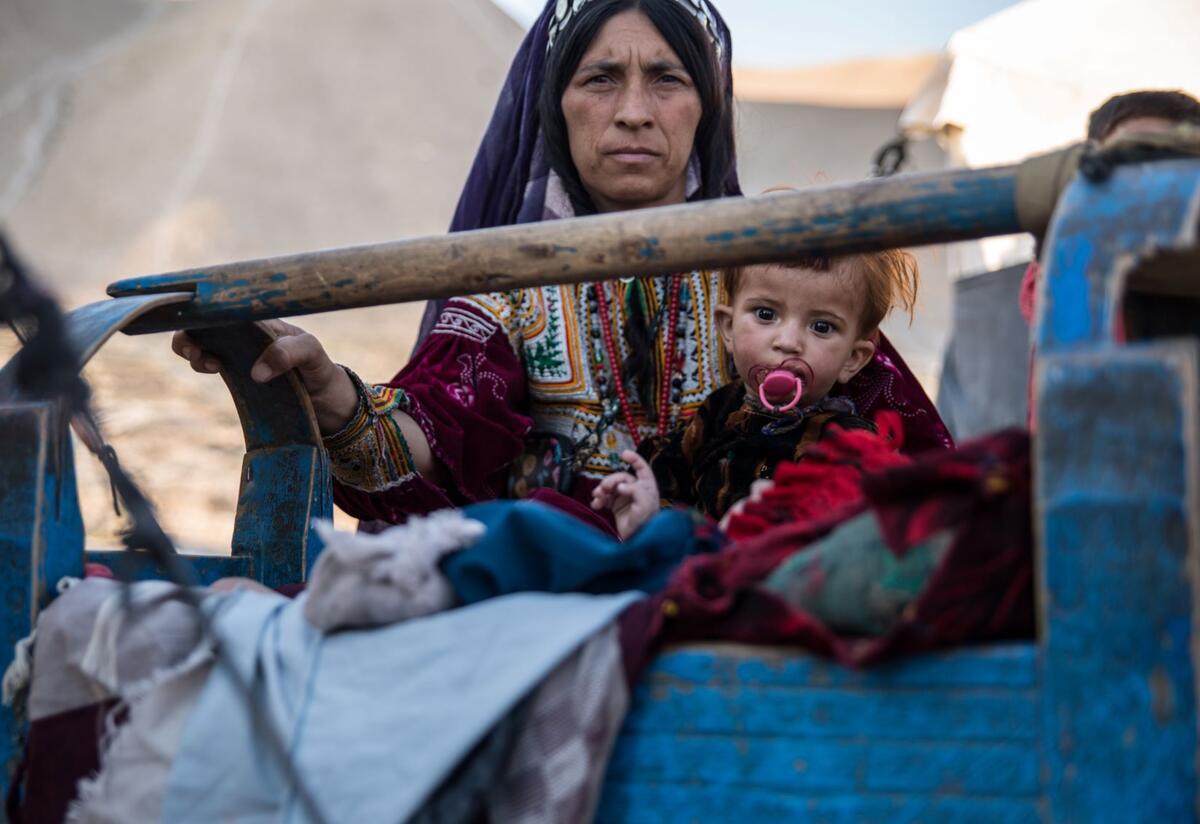
A mother rocks her sick child in a camp in Afghanistan's Badghis' Muqur district, where the IRC supports displaced families.

Driven by nearly two decades of conflict and political instability; 9.4 million Afghans (25 per cent of the population) need humanitarian assistance. There are almost 2.5 million registered Afghan refugees living outside the country.

4.6 million Venezuelans have fled the country as of November 2019. 

There are over 2 million displaced Nigerians.

Eleven million Syrians (65 per cent of the population) are in need of humanitarian assistance.

The Democratic Republic of Congo 15.9 million people require humanitarian assistance. 

Over 24 million Yemenis (80 per cent of the population) are in need of humanitarian assistance,

South Sudan 7.5 million people need humanitarian assistance. 

600 million children are not mastering basic mathematics and literacy while at school.

Forests are key to producing the air we breathe, yet these are being depleted at a rate of 26 million hectares every year.

Extinctions are happening at what scientists estimate to be about 1,000 times the normal pace. Not only are we losing flora and fauna, but we are also damaging our ecosystems, and throwing them out of balance

Our oceans are under threat.  

Sand and gravel are now the most-extracted materials in the world, exceeding fossil fuels and biomass.

Climate change is another issue.

There is actually not enough fresh water for each person currently living on the planet. 

Population growth. The number of people on the planet is set to rise to 9.7 billion in 2050 with 2 billion aged over 60.

More than 61 million jobs have been lost since the start of the global economic crisis in 2008, leaving more than 200 million people unemployed globally.

With 43% of the world’s population connected to the internet, regulatory frameworks are unable to keep up.

In this complex moment in history, in which so many are suffering and the Earth itself is in peril

The cloud of nuclear destruction hangs over each of our days.

But the question remains what kind of society do we want to have?

The reasons behind current trends are many and complex.

The detail of the information that we are beginning to capture about our world is mind-blowing. The granularity of the data we are beginning to collect through advances in technology. While improving our lives through cleaner energy sources, personalized nanomedicine and nano-engineered materials.

In all of these areas, progress will undoubtedly lead to a reduction in conventional jobs and inequality on a global scale not seen before.

But technology alone can not break the self-reinforcing mechanism that causes poverty to persist. 

As highly innovative products emerging will, however, promote inequality if only a few have access to this new technology and the knowledge to master it.

Education is probably the single most important tool for turning technology into an engine for opportunities for all.

Public policies, which are currently mainly focused on fostering economic growth, should focus on providing further opportunities, less inequality and a more sustainable economic, social and environmental future.

Technology is not the solution but it is, for sure, a powerful tool towards achieving this ambitious objective.

Whether it’s turning promises on climate change into action, rebuilding trust in the financial system, or connecting the world to the internet there is an overall lack of long-term investment, which has serious implications for global growth.

But the most astonishing canvas is right in front of us if only we would listen with our ear to the earth we might see the light we cannot see.

In short, the world urgently needs a new, global plan based on genuine international cooperation and a meaningful and fair sharing of responsibilities. 

All human comments appreciated. All like clicks and abuse chucked in the bin.

← Back

Thank you for your response. ✨


https://youtu.be/dnxRCHVLGRo

Share this:

  • Share on WhatsApp (Opens in new window) WhatsApp
  • More
  • Share on Pocket (Opens in new window) Pocket
  • Share on Mastodon (Opens in new window) Mastodon

THE BEADY EYE LOOK’S AT POPULISM. WHAT EXACTLY IS IT?

08 Saturday Feb 2020

Posted by bobdillon33@gmail.com in 2020: The year we need to change., Algorithms., Artificial Intelligence., Capitalism, Communication., Democracy, Digital age., Disconnection., Human values., Humanity., Inequality, Modern Day Democracy., Modern day life., Our Common Values., Political Trust, Politics., Populism., Post - truth politics., Reality., Robot citizenship., Social Media, Technology, The common good., The far-right., The Obvious., The state of the World., The world to day., Unanswered Questions., WHAT IS TRUTH, What needs to change in European Union., What Needs to change in the World, Where's the Global Outrage., World Politics

≈ Comments Off on THE BEADY EYE LOOK’S AT POPULISM. WHAT EXACTLY IS IT?

Tags

Liberal democracy., not the few.”, Populism., Populists., Post - truth politics., The “many


(Eighteen-minute read)

The word came from the “prairie populists”, a 1890s movement of US farmers who supported more robust regulation of capitalism.

“But no one is clear what it is.”

We can’t really talk about populism without talking about our conflicting conceptions of democracy – and the question of what it truly means for citizens to be sovereign.

So is it an ideologically portable way of looking at politics as a forum for opposition between “people” and “elites”?

Or is it simply part of what it means to do politics?

Or is it a lens for looking at our politics?

Or a mode of talking about politics, rather than a set of beliefs?

Or is it an emerging political movement driven by technology, spread by social media, the smartphone and ruled by algorithms.

There is one thing for certain populism is inherent to democracy.

So it would be in the first place a massive mistake, considering the hollow, undemocratic mess we are in, with algorithms making decisions about our collective fate – outside the reach of politics, to ignore its power.

If one looks at the state of liberal democracy today it is becoming more and more a sham.  A nice-sounding set of universal principles that, in practice, end up functioning as smokescreens to normalise the exploitations and inequities of our capitalist system.

Nothing can stay depoliticised forever. The questions of populism would have little urgency were it not for the widespread agreement about the shortcomings of the political status quo: About the abyss between the shining ideals of equality and responsive government implied by our talk about democracy and the tarnished reality of life on the ground.

Populism is supposed to explain: Brexit, Trump, Viktor Orbán’s takeover of Hungary, the rise of Jair Bolsonaro in Brazil, even Putin.

However, neither Trump nor Brexit should be regarded primarily as populist phenomena.

His election and Brexit shows that every status quo – however sturdy – is only temporary, and can always be challenged by a movement that seeks to replace it with something new.

Populists consider themselves as victims of economic exploitation, anti-austerity movements – such as Podemos in Spain, Syriza in Greece, and Occupy these movements are obviously animated by a sense of opposition.

From this perspective, populism is just another word for real politics.

On the other hand, what most people knew about these parties, at first, was that they were openly nativist and racist. They talked about “real” citizens of their countries, and fixated on the issue of national and ethnic “purity,” demonising immigrants and minorities.

But I say that there are no real populists in politics – just people, attitudes and movements that the political centre misunderstands and fears.

The question of populism, then, is always the question of what kind of democracy we want.

The only inherent connection between rightwing and leftwing populist movements is that both embrace the same fundamental truth about democracy: that it is an ever-shifting contest over how the default “we” of politics is defined and redefined, of which no one definition can be guaranteed to last.

When populism appears in the media, which it does more and more often now, it is typically presented without explanation, as if everyone can already define it.

It sounded less alarming than “extreme right” or “radical right”.

It will always live in the shadow of the muddled media and political discourse and there can no longer be any doubt that we are going through a populist moment, so which type of populist you want to be.

A liberal democracy populism that is forced by rightwing populism to make good on its promises of equality. That needs to reacquaint with the need to construct a democratic “we” – a people – around their demand to protect liberal institutions and procedures, in opposition to radical rightwing parties who are happy to see them discarded.

Liberal democracy, in this context, has almost nothing to do with contemporary distinctions between left and right. It refers, instead, to the idea that government should facilitate pluralistic coexistence by balancing the never fully attainable ideal of popular sovereignty with institutions that enshrine the rule of law and civil rights, which cannot easily be overturned by a political majority.

or

A populism that can never be disentangled from the concept’s pejorative baggage.  An ideology runs the risk of making effective and worthwhile political strategies seem irresponsible, even dangerously promoting nativisms and short term gains.

Obviously, there are leftwing and rightwing populisms both are motivated not by passion for populism’s core ideas, but by other ideological factors best described as a fuzzy blanket to camouflage nastier nativism.

We are now living through a time when familiar webs connecting citizens, ideologies and political parties are, if not falling apart, at least beginning to loosen and shift and old theories of populism that defined it specifically as rightwing, racist or anti-immigrant is insufficiently wide to describe these new developments in populist politics.

It seems to me that Populists deal in “simplicity,” in “glib, facile solutions” while liberal leaders have been “oblivious” to the sufferings of their people.

So why are the traditional parties of the left in the western world being defeated?

Because the other side doesn’t play fair any more with conflict an inescapable and defining feature of political life.

The juvenile incapacity of both to bring their preferences to the political arena and engage in the complex give-and-take of rational compromise is with Social Media now fraught with a political examination and association accusation and assassination.

With the impersonal forces, of “globalisation” and “technological change voters are deciding that mainstream political parties have done nothing for their static incomes or disappearing jobs or sense of national decline these past two decades.

The “many, not the few.”

Populism is a new, consensus-smashing thing that is now secondary to nativism. Ultimately, they are disputes about which types of politics make us suspicious, and why.

To conclude that the two camps are simply talking past each other would be to miss the extent to which they are in agreement –and what, taken together, they tell us about the current political moment.

We can never know exactly where democracy is going to take us – not this time, nor the next, nor the time after that, but political parties must come to terms that the elephant in the room is that we no longer vote once every five years we vote on Social media ever five minutes.

Unless politics is not achievable, or rewarding, it obviously is sowing the long-term seeds for discontent.

It’s great to see politicians with Twitter accounts but there’s only so much you can do with that. Online participation in local decision-making is possible.

Failing to practice what you preach has ethical and political costs. E-voting is the next step.

Here below is what they are voting on and its not Fifty Shades of Grey Popularism.


Capitalist greed has and is poisoning political life.

Unregulated Algorithms will ensure it continues to do so.  Combined with the new realities of the portability of populism’s ideological movements spread by social media it is no wonder that liberal democracy is crumbling around the world.

To keep up with algorithms and their lavishly detailed position papers, their leaders,  Google, Facebook, Twitter, Apple, Mircosoft, and their inc have little personal sympathy any longer with the travails of working people.

We can only hope that the fear of populism on the left will enable the victory of populism of the right.

All human comments appreciated. All like clicks and abuse chucked in the bin.

← Back

Thank you for your response. ✨

Share this:

  • Share on WhatsApp (Opens in new window) WhatsApp
  • More
  • Share on Pocket (Opens in new window) Pocket
  • Share on Mastodon (Opens in new window) Mastodon

THE BEADY EYE ASK; IS THIS THE FIRST SIGNS OF WHAT THE UK WILL DO WITH REGULATIONS ON LEAVING THE EU.

15 Wednesday Jan 2020

Posted by bobdillon33@gmail.com in #whatif.com, Brexit., Capitalism, Environment, Post - truth politics., Reality., The Obvious., Transition period or Implication period., Unanswered Questions., WHAT IS TRUTH

≈ Comments Off on THE BEADY EYE ASK; IS THIS THE FIRST SIGNS OF WHAT THE UK WILL DO WITH REGULATIONS ON LEAVING THE EU.

Tags

Conflicts over resources, Flip flops., Flybe.

(Two-minute read)

It stinks on more than one front.

Connectivity is only a smokescreen for state aid in breach of EU regulations.

The chancellor, Sajid Javid, said: “The reviews we are announcing will help level up our economy. They will ensure that regional connections not only continue but flourish in the years to come – so that every nation and region can fulfil its potential.

Unadulterate bullshit.

The aviation sector has got away for years with increasing its carbon footprint. The last thing we need is another incentive for them to pollute more.

A possible government deal to cut the cost of flights to save regional airline Flybe is “the exact opposite” of what is needed to tackle climate change.

Connect Airways, paid just £2.2million for Flybe’s assets but pledged to pump tens of millions of pounds into the loss-making airline to turn it around.

Of course, this never happened if it did it would not now be looking to defer a few million for three years.

Cyrus Capital Partners is based out of New York it is a large advisory firm with 33 clients and discretionary assets under management (AUM) of $4,897,199,827 they owned the largest share of a newly formed company called Connect Airways, with 40%, while the other partners owned 30% each.

The regional airline did come close to outright collapse a year ago amid an acrimonious takeover battle that left shareholders fuming that their equity had been left worthless.

The Uk government cannot claim to be a global leader on tackling the climate emergency one day, then making the most carbon-intensive kind of travel cheaper the next.

APD generates billions for the Treasury each year, with the fee expected to be worth £3.7bn in 2019/20. It was introduced in 1994 as a tax to pay for the environmental costs of air travel. However, if you’re just changing flights in the UK en route to somewhere else – as long as the time between flights is less than 24 hours you don’t pay APD.

Children aged two years old without a seat booking are exempt from APD.

The idea was that the tax makes passengers think twice before flying.

Unfortunately, taxpayers money pumped into this company will only line the pockets of the shareholders,  its bankers

Reality check.

The national debt attributable to every man, woman and child in the U is in the region of £24,900 each.

All human comments appreciated. All like clicks and abuse chucked in the bin.

← Back

Thank you for your response. ✨

Share this:

  • Share on WhatsApp (Opens in new window) WhatsApp
  • More
  • Share on Pocket (Opens in new window) Pocket
  • Share on Mastodon (Opens in new window) Mastodon

THE BEADY EYE OBSERVES WHAT TECHNOLOGY IS DOING TO THE PURSUIT OF PROFIT.

05 Tuesday Nov 2019

Posted by bobdillon33@gmail.com in 2019: The Year of Disconnection., Algorithms., Artificial Intelligence., Capitalism, Climate Change., Fourth Industrial Revolution., Inequality, Modern day life., Our Common Values., Politics., Reality., Sovereign wealth fund, Technology, The common good., The pursuit of profit., The state of the World., The world to day., Unanswered Questions., Wealth., WHAT IS TRUTH, What Needs to change in the World, Where's the Global Outrage., WORLD POVERTY WHERE'S THE GLOBAL OUTRAGE

≈ Comments Off on THE BEADY EYE OBSERVES WHAT TECHNOLOGY IS DOING TO THE PURSUIT OF PROFIT.

Tags

Algorithms trade., Algorithms., Artificial Intelligence., Business and Economy, Capitalism, Capitalism and Greed, Distribution of wealth, Globalization, Inequility, Sovereign wealth fund, Technology, The Future of Mankind, Visions of the future., World aid commission


( A twenty-minute read)

The Internet is an incredibly spectacular thing, and only now — after so many years — we are understanding its power.

In spite (and many times because of) all the social media and internet news, we tend to have a skewed view of the world around us.

But there is one thing that is certain.

It has given rise to highly profitable digital platform monopolies, ‘superstar firms’ which are able to use aggregation and analysis of data to make supernormal profits which are disappearing into the cloud.

But what’s really happening in the global economy?

These multi-conglomerations dominate not just the current digital markets but future ones in artificial intelligence and machine learning, with workforces which are relatively small proportional to value-added, putting downward pressure on labour’s share of income.

It is becoming easier and cheaper to replace human work by increasingly
capable robots and artificial intelligence, this automation will accentuate existing trends in the capital and labour shares.

Whatever the future path of the global economy, with growing automation in

the economies of the world substituting capital for labour more and more

of the wealthiest fortunes are held almost exclusively in financial assets.

                                                     —-

We’re not just entering into a period of severe distress with climate change

we are also entering a period of a new uneven distribution of capital

ownership that is now the driver of inequality.

It’s a “new, harsh reality”, ( from weapons of mass destruction, water crises, large-scale involuntary migration and severe energy price shock, extreme weather events, failure of climate change mitigation and adaptation, interstate conflict with regional consequences and major natural catastrophes) that the spending power of governments is dimensioning.

Most of us haven’t quite realized there is something extraordinary happening.

Isn’t it absurd that we, 7 billion of us living on the same planet, have grown further apart from each other? Everything is going through change and that most of us are unaware of that.

What sense does it make to turn your back on the thousands, maybe millions, of people living around you in the same city on the same planet in poverty?

You might be lead to believe that the Internet is taking down mass control and the small are no longer speechless. This might well be true when it comes to the rising failure of climate change mitigation and adaptation or if you look at the Arab Spring, Brexit, and the people’s climate revolution/ pollution.

But its not true when one looks at how and by whom the economy of the world that is driven by growth at all costs.

Why?

Because the natural resources industry is owned by sovereignty wealth funds with financial instability around the world as the net result.

But don’t panic.

With Climate change and Ai, and with all of us exchanging half-truths civilisation is in for a rough ride.

However, technological crises have yet to impact economies or securities in a systemic way.

Which panic button to press?

The only category not to feature in the above harsh realities is algorithm profit from profit technological that is spreading inequalities between individuals and families, between countries, generations and genders, as well as between people from different ethnicities and class backgrounds.

Fleckenstein – David Rosenberg’s Proposal To Print Trillions Of Dollars Is Not Helicopter Money, It’s Cold Fusion

Normally revenue, as you know, is generated by profit/taxes but most revenue sources are already accounted for in government budgeting except the supernormal profits made by in no particular order – Apple, Google, Microsoft, Facebook, Cisco Systems, Intel, to mention just a few.

It’s sometimes hard to fathom the sheer scope of profits made by the world’s most profitable companies.

1. Saudi Aramco: $304.04 M daily – Earns $1 M in 4.7 minutes
2. Apple: $163.1 M daily – Earns $1 M in  8.8 minutes
3. Industrial & Commercial Bank of China: $123.29  M daily – Earns $1M in 11.7 minutes
4. Samsung Electronics: $109.3 M daily – Earns $1 M in 13.2 minutes
5. China Construction Bank: $105.48 M daily – Earns $1 M in 13.7 minutes
6. JPMorgan Chase & Co.: $88.97 M daily – Earns $1 M in 16.2 minutes
7. Alphabet: $84.21 M daily – Earns $1 M in 17.1 minutes
8. Agricultural Bank of China: $83.99 M daily – Earns $1 M in 17.1 minutes
9. Bank of America Corp.: $77.12 M daily – Earns $1 M in 18.7 minutes
10. Bank of China: $74.59 M daily – Earns $1 M in 19.3 minutes

and these are not Sovereign Wealth Funds.

They exist somewhere between the murky grey of return-maximizing, mega-cap asset managers, and clandestine government agencies quietly used to further sovereign agendas.

It is estimated that SWFs combined to hold more than $7.4 trillion in AUM, (Assets under management) representing approximately 6% of global assets under institutional management.

And you wonder with government print trillions to stimulate sagging economies why the world is and still is in a state of meltdown not just climate-wise but capitalistic wise.

We now have both the EU and the UK floating the idea of establishing Citizens wealth funds.

The trouble is that existing wealth funds have already bought up most of the world. Latecomers like THE UK/EU will have nothing to invest in other than technologies that produce profits.

The character of a sovereign wealth fund depends on its purpose and is shaped by how it is capitalised and governed, how it invests its funds and how returns are spent.

A Sovereign Wealth Fund is a state-owned investment vehicle established to channel balance of payments surpluses, official foreign currency operations, proceeds of privatizations, government transfer payments, fiscal surpluses, and/or receipts from resource exports, into global investments on behalf of sovereigns and in the advance of goals that are not transparent.

Economic theory wise, it is important to understand that SWFs form part of their respective country’s total national capital base, where total national capital is defined as the total combination of net financial assets, total physical capital stock (e.g., real estate, machines, infrastructure), unexploited environment, human capital, and unexploited natural resources.

Commodity SWFs are financed from the proceeds of non-renewable commodity exports (oil, gas, precious metals), which grow the AUM base in times of high prices but destabilize their source economies and budgets in times of low. Non-commodity funds, on the other hand, are typically financed from currency reserves or current account surpluses, driven by corporate or household saving rates.

They were once the mainstays of the global investment landscape.

Despite is name the era of neoliberalism was far from liberal.

We are now experiencing the political consequences of this great deception with the rise of popularism.

This blog has been suggesting for some time the setting up of a perpetual funded World Aid fund by applying a 0.05% commission on all profit for profit sake seeking financial activities. ( See previous posts)

All human comments appreciated. All like clicks and abuse chucked in the bin.

← Back

Thank you for your response. ✨


Share this:

  • Share on WhatsApp (Opens in new window) WhatsApp
  • More
  • Share on Pocket (Opens in new window) Pocket
  • Share on Mastodon (Opens in new window) Mastodon

THE BEADY EYE ASK’S: ARE PROFIT SEEKING ALGORITHMS BUILDING A DIGITAL POORHOUSE, AUTOMATING INEQUALITY WHILE HURTING THE MOST VULNERABLE.

03 Sunday Nov 2019

Posted by bobdillon33@gmail.com in Algorithms., Artificial Intelligence., Capitalism, Fourth Industrial Revolution., Humanity., Inequality, Modern day life., Our Common Values., Poverty, Reality., Technology, The common good., The Future, The Obvious., The state of the World., The world to day., Unanswered Questions., WHAT IS TRUTH, What Needs to change in the World, Where's the Global Outrage.

≈ Comments Off on THE BEADY EYE ASK’S: ARE PROFIT SEEKING ALGORITHMS BUILDING A DIGITAL POORHOUSE, AUTOMATING INEQUALITY WHILE HURTING THE MOST VULNERABLE.

Tags

Algorithms., Artificial Intelligence., Big Data, Capitalism and Greed, Distribution of wealth, Greed, Inequility, Technology, Visions of the future.

(Twenty-minute read)

Should we worry about the rise of artificial intelligence or celebrate it?

Both is the answer.

We all inhabit this new regime of digital data but we don’t all inhabit it in the same way and the pursuit of rapid growth by way of technology won’t solve the huge challenges we face.

A more honest, humane approach is the answer.

If you believe the hype, technology is going to help us end global poverty, that’s easier said than done in a world where most product innovations are geared toward the rich.

The prospect of billions rising up from poverty with nothing more than gadgets is indeed a fanciful notion. This is because poverty is entirely a man-made creation. Capitalism is driven by greed, generating a power structure, which moves wealth disproportionately into the hands of the few.

But why are our societies becoming increasingly unequal, and what can we (or should we) do about it?A homeless man outside Victoria Station in London.

Forget where science ends and ideology begins it is the mechanisms behind the persistence of poverty that counts.

Technology cannot solve the problem of economic disparity.

We often believe that our digital decision-making tools, like algorithms or artificial intelligence or integrated databases, are more objective and more neutral than human beings.

Totally false.

We are building not just ill-conceived mathematical models now micromanage the economy, from advertising to prisons but also hiding the profit of multinational companies in the cloud.

We are building:  A DIGITAL POOR HOUSE.

Even though we live in a hyperconnected world we are watching inequality exploding as we walk past people on the street looking at our smartphones.

The spreading of these kinds of systems is now way beyond just the public service systems that they’re in now. For example, high-frequency trading algorithms that run 99.9% of the world stock exchanges are plundering not just finite resources they are jeopardising our peaceful existence.

Feel free to ignore the weight of the evidence that is now becoming crystal-clear, so stark, that the trade-off of the growth of the economy and the survival of the planet are now intertwined. So we have to go into a mode where we are first educating the people about what’s causing this inequality and acknowledging that technology is part of that cost, and then society has to decide how to proceed.

Deep cultural and political changes are needed in order to think through these technologies in order to get to better systems.

This should apply to all technology – nanotechnology, biotech.

I also really believe we need to stop using these systems to avoid some of the most pressing moral and political dilemmas of our time, which is not just poverty but racism.

Unfortunately, we have Profit-seeking Algorithms that have no moral or ethical bases.

Algorithms — a set of steps computers follow to accomplish a task — are used in our daily digital lives to do everything from making airline reservations to searching the web. They are also increasingly being used in public services, such as systems that decide which homeless person gets housing.

AI with faceless algorithms is worsening the effects and concentrating the power of the wealthy. They are likely to dramatically increase income disparity, perhaps more so than other technologies that have come about recently.

Digital innovation in the form of profit-seeking algorithms that it’s not just going to be benefitting a small fraction of the world’s population, or just a few large corporations. is reinforcing, rather than improving, inequality.

Institutions have embraced digital technologies they are outsourcing the decision to a machine to cut costs avoiding the human costs. They say, “We have this incredible overwhelming need. We don’t have enough resources, so we have to use these systems to make these incredibly difficult decisions.”

If all the resources are automated, then who actually controls the automation?

Is it every one or is it a few select people?

My great fear with these systems is we’re actually using them as a kind of empathy override, meaning that we are struggling with questions that are almost impossible for human beings to make.

We’re smuggling moral and political assumptions into them about who should share in prosperity.

There’s already an expectation that people will be forced to trade one of their human rights, like their information or their privacy, for another human right.

The economic prosperity created by AI should be shared broadly, to benefit all of humanity otherwise they will lead to an even greater disparity between the wealthy and the rest of the world.

If AI takes away people’s jobs and only leaves wealth in the hands of those people owning the robots, then that’s going to exacerbate some trends that are already happening.

People now with “predictive data” have real concerns about informed consent. About how their data is being shared, whether it’s legal and whether it’s morally right.

Why?

Because it is impossible to work out why the algorithms had gone against them, or to find a human caseworker to override the decision.

How can we change the societal mindset that currently discourages a greater sharing of wealth? Or is that even a change we should consider?

We’re using these technologies to avoid important political decisions. Exacerbating the divides between the developed and developing world, and the haves and have nots in our society.

The change will only occur when policymakers and voters understand the true scale of the problem. This is hard when we live in an era that likes to celebrate digitisation — and where the elites are usually shielded from the consequences of those algorithms.

Restoring human dignity to its central place has the potential to set off a profound rethinking of economic priorities and the ways in which societies care for their members, particularly when they are in need. If enough of us want to change the status quo for good, then with our collective creativity, with our hunger to solve really hard problems, we will find technology an incredibly powerful tool in our arsenal.

Technology can move commodities (food, jobs, wealth) from areas of surplus supply to regions with under-served markets.

Technology can only help us if we chose to make the best use of it.

Computing has long been perceived to be a culture-free zone — this needs to change.

Today more people have access to a cell phone than a toilet.

I use that metaphor specifically because I think that these systems, although we talk about them often as disruptors, are really more intensifiers and amplifiers of processes that have been with us for a long time, at least since the 1800s.

At a time of unprecedented global challenges platforms like Google Facebook, Twitter and there like must be made to use the power of their platforms to stop the DIGITAL POOR HOUSE instead of hoarding profits with profit-seeking algorithms.

If not because bias has been a historical norm, it because us the users of your platform will develop self-defence.

So, next time if you think AI is not affecting you, take out your smartphone.

If Twitter’s not your choice of poison, maybe it’s Facebook or Instagram, or Snapchat or any of the myriad of social media apps out there they are all affecting your decisions and our lifestyles every day.

They are all tailored according to what we are likely to respond to. specifically designed to attract the attention of its members – and so inevitably to confirm them in their opinions and prejudices,  with several extra bills to pay in order to remain a normal citizen. 

Its a ‘mean’ not the ultimate solution.

AI has become so successful in determining our interests and serving us ads that the global digital ad industry has crossed trillions.

artificial intelligence concept Stock Photo - 90948450

All human comments appreciated. All like clicks and abuse chucked in the bin.

← Back

Thank you for your response. ✨


Share this:

  • Share on WhatsApp (Opens in new window) WhatsApp
  • More
  • Share on Pocket (Opens in new window) Pocket
  • Share on Mastodon (Opens in new window) Mastodon

THE BEADY EYE SAY’S. WE MUST REIN IN THE TECH GIANTS BEFORE ITS TOO LATE.

20 Friday Sep 2019

Posted by bobdillon33@gmail.com in #whatif.com, 2019: The Year of Disconnection., Algorithms., Capitalism, Democracy, DIGITAL DICTATORSHIP., Fourth Industrial Revolution., Google, Modern day life., Our Common Values., Purchasing Power., Reality., Social Media., Technology, The common good., The essence of our humanity., The Obvious., The state of the World., The world to day., Wealth., WHAT IS TRUTH, What Needs to change in the World, Where's the Global Outrage.

≈ Comments Off on THE BEADY EYE SAY’S. WE MUST REIN IN THE TECH GIANTS BEFORE ITS TOO LATE.

Tags

Algorithms., Capitalism, Capitalism vs. the Climate., Globalization, Greed, Inequility, Technology, The Future of Mankind, Visions of the future.


( Fifteen-minute read) 

WHY?

These days we are allowing Google, Amazon, Apple, and Facebook do whatever the hell they want. The US sees them as winner-takes-all markets as the law of the capitalist jungle; the EU sees them as an intrinsic threat to consumers.

Because four companies dominate our daily lives unlike any other in human history: Amazon, Apple, Facebook, and Google. They have aggregated more economic value and influence than nearly any other commercial entity in history.

Because the concentration of wealth leads to concentration of power. Their massive size and unchecked power have and are throttling competitive markets and are keeping the economy from doing its job—namely, to promote a vibrant democracy.

Because all of them have managed to preserve their monopoly-like powers without heavy regulation. 

Because they have effectively ripped the heart out of the journalism, publishing, music, and entertainment industries but, even worse, they are demolishing the ranks of both corporate middle-management and entry-level service jobs and crushed commercial real estate and retail shopping malls, all for the enrichment of a very few.

Because they’re tracking your movements — or, even better, getting you to track yourselves for them, whether it’s “checking in” on Facebook or leaving your cell phone switched on while you travel (and who doesn’t?).

Because as we have seen the harvesting of the personal data use for political purposes.

Because the amount of money they generate, and the volume of content they accumulate, most of it provided voluntarily by you, for free, is stupefying.

Because with the coming of 5G technology they will have  too much power over our economy, our society, and our democracy.

Because using black-box algorithms to surface content to users they will have control over the way we use the Internet.

Because they are exploiting their monopoly power to stifle competition; they are spreading fake news; their fantastically rich owners portray themselves as right-on yet go to a great deal of trouble to minimise their corporate tax bills; they are ripping the heart out of communities through the closure of brick-and-mortar retailers.

Because social media is an increasingly key part of how we communicate. Yet legally, nothing stops Facebook from simply banning users from its platform, for any reason it wishes.

Because we’re heading for an Orwellian nightmare the shape of which is just now becoming apparent with climate change is being turned into a product. 

Because this isn’t just abstract concern about what could possibly happen in the future – market power of this magnitude isn’t unprecedented.

Because with a sprawling array of loosely related businesses under one roof they are becoming worldwide conglomerates.

Because no one or any company is now going to penetrate online shopping or the search market.

Google, Amazon, and Facebook are colossal companies. Together they make up almost 10% of the S&P 500. Together, they have a market capitalization of the GDP of France.

These are the 3rd-, 4th-, and 6th-largest companies on earth. Combined, they are worth over $2 trillion. And they’ve grown 470%, 175%, and 95% over the past five years.

Because they will take our choices away.

Because they’ve bulldozed competition, used our private information for profit, and tilted the playing field against everyone else.

Because country and companies that dominate technology will gain more power with time and 5G technology, gene editing, nanotechnology, creating what only can be called a profitable circle of global oligopolies.

Because they will soon be introducing their own cyber currencies.

Because our existing computers can’t even scratch the surface of what quantum computers will be able to do via the cloud quantum computers will. Those who own this technology will make supremacy an arbitrary goal.

Such computing power will change the way we do business and the security we have in place to safeguard data, how we fight disease and invent new materials, and solve health and climate problems.

Just like humans, artificial intelligence machines powered by the insights from quantum commercialising technology computers that will learn from experience and self-correct.

They’ll be able to use quantum simulations to design entirely new molecules for use in medicine making it possible for chemists to determine viable drug options quicker. Instead of troubleshooting issues bit by bit as we do now with classical computers, they will allow for a person’s genes to be sequenced and analyzed much more rapidly tackling the entire problem at once.

How do they do it?

By creating what we now perceive to be free platforms run by algorithms.  

( To Big Tech, you’re not the customer, you’re the product they’re selling to others:)

Google offers a vast bounty of free services in order to maximize its data collection and optimize its advertising capabilities. Similarly, Amazon is credibly accused of hurting suppliers, hurting competitors, and even hurting its own employees — but nobody can deny that it’s a cheap and convenient way to shop for a staggering array of things.

Amazon is keeping tabs on you, monitoring your purchases, pushing other products on you and, in the form of the hideous Alexa, listening in on you while you sleep. Throw in the electronic snooping of Facebook, Google and your iPhone.

We know the problems; they’re easy to diagnose, however shaping the solutions is going to be more difficult.

So what if anything can be achieved to restrain their coming power?

The difficulty lies in defining what the real harmful effect is of these companies and establishing a causal link between their creation, their products, behaviour, and trends such as populism, depression, and manipulation. The contribution to society of these companies’ products is not as black and white as some would like them to be. 

We’re heading down an entirely new field of physics, and by its very nature, there will be discoveries, innovations and solutions we have never dreamed of yet.

However we’re living in a capitalists world we should be empowering people to choose where to sell their information, personal data so it would no longer be monopolised by the tech giants.

Competition authorities need to move beyond a reliance on prices towards an analysis of the impact of takeovers and mergers on societal welfare.

As we grapple with how best to protect ourselves against the risks of new, disruptive technologies, policymakers need to understand the roles that ethics and law can and should play. 

If human rights are at risk, and existing law is found wanting, we may need new, legally enforceable rights and mechanisms to grapple with emerging technologies. Citizens should not need to rely on the “ethical conscience” of tech companies to know their fundamental rights are protected. Ethics are laudable—but sometimes they are not enough.

At their core, Google’s mission “to organize the world’s information and make it universally accessible and useful” and while Facebook’s goal was to “give people the power to build community and bring the world closer together” are both truly admirable and few people would disagree with them but ethical promises made by tech companies are not good enough.

Instead of adding value to our societies, Facebook,  Twitter, Amazon, Netflix, Google, Microsoft, Apple have sucked the data out of us.

They or at least their free platforms which have become essential to daily life should be regulated as public utilities.

Failing to do so risks a backlash which will be bad for everyone.

Why? 

Because there is one indisputable fact.

In front of every great fortune lies a great crime, Immense wealth translates automatically into environmental impacts regardless of the intentions of those who possess it. 

All human comments appreciated. All like clicks and abuse chucked in the bin.

← Back

Thank you for your response. ✨


Google does the same by using algorithms to decide what comes up on an internet search. They hardly pay any taxes and their business practices and technology will help crush industries and companies left and right.


 “platform utility.” A platform utility would be barred from owning any of the participants on the platform.


Share this:

  • Share on WhatsApp (Opens in new window) WhatsApp
  • More
  • Share on Pocket (Opens in new window) Pocket
  • Share on Mastodon (Opens in new window) Mastodon

THE BEADY EYE ASK’S : IS 5 G GOING TO CHANGE THE WORLD WE LIVE IN?

17 Tuesday Sep 2019

Posted by bobdillon33@gmail.com in 2019: The Year of Disconnection., Algorithms., Artificial Intelligence., Capitalism, Dehumanization., DIGITAL DICTATORSHIP., Evolution, Fourth Industrial Revolution., Humanity., Inequality, Medical, Modern day life., Reality., Robot citizenship., Sustaniability, Technology, The cloud., The common good., The essence of our humanity., The Future, The Internet., The state of the World., The world to day., Unanswered Questions., War, WHAT IS TRUTH, What Needs to change in the World, Where's the Global Outrage.

≈ Comments Off on THE BEADY EYE ASK’S : IS 5 G GOING TO CHANGE THE WORLD WE LIVE IN?

Tags

Algorithms., Artificial Intelligence., Capitalism and Greed, Distribution of wealth, Environment, Inequility, SMART PHONE WORLD, Technology, The Future of Mankind, Visions of the future.


(Ten-minute read)


Right now nobody knows for sure but it is going to radically upend many aspects of our lives, as it is a technological paradigm shift.

3G or 4G was just a trailer, and the movie is about to begin.This picture, posted on Twitter by Inga Sarda-Sorensen, shows dark storm clouds over the New York skyline

Why?

Because it is going to marry data collection and computation with billions of devices.

But there is a debate on the necessity for it, considering human physical and mental limitations.

It will become the underlying fabric of an entire ecosystem of fully connected intelligent sensors and devices, capable of overhauling economic and business policies, and further blurring geographical and cultural borders.

It will create a world populated by digital citizens in continual interaction with their surroundings, their peers and public services.

It will enable communications & computing power to come together creating a hyperconnected ‘Internet of everything’ world.

It will release the spectrum for mobile devices, bring about dramatic transformations in our daily lives.

It is going to change everything about everything else.

It will rock the world economy over the next decade as we haven’t yet

conceived that will be tied into the 5G network.

For example:

Your car will know your every move faster than your mind. Cars will be able to use 5G to talk to other cars and sensors built around cities, from street lamps to gas stations.

Think about your relationship between the smart city and an autonomous car.

Think about predictive care. It will enable advanced data transfer from wearables and sensors, facilitating remote clinical decisions and robotic surgery

Think about bring virtual reality into the classroom, allowing students to face real-life situations without real-life consequences.

Think about living in a world of always-on, always-sharing, cloud applications and services.

Think about it leading to seamless and ubiquitous information control.

It will potential to unlock trillions of revenue across a broad range of industries creating a different hidden economy with wireless consumption.

This revenue will be equivalent to total U.S. consumer spending in 2016, and more than the combined spending of China, Japan, France, Germany, and the U.K. This revenue also represents about 4.6 per cent of all global real output in 2035.

Another words countries without 5G will become less competitive globally, spreading inequality on a scale not seen before. This inequality leads to more than just differences in consumption and wealth distribution. It affects access to healthcare, education, nutrition, employment, financial and technological platforms; it exacerbates poverty, exclusion and violence.

By 2020, analysts estimate that there will be more than 20 billion installed IoT devices around the world, supporting 22 million jobs generating massive amounts of data.

With access to this kind of information, industries of all kinds will be able to reach new levels of efficiency as they add products, services, and capabilities.

It will mean that a surgeon may not need to be in the same room as a patient in the future. A surgeon could use a VR headset and special glove to control a robot arm that would perform an actual operation in another location.

With haptic feedback, you’ll be able to transmit the tactile sensation of experience, enhancing the sights and sounds of a video experience.

It will make drone warfare affordable and drone defence essential.

It will make consumption and production distant and broad concepts that are somehow unattached from us.

So what can we, as consumers, do, instead of feeling powerless and distraught?

We must ensure that 5G respect nature, and the interconnectedness of everything that matters for humanity.

An unofficial trade war is already afoot in the tech industry due to the imminent rise of 5G technology.

But it will not happen overnight. Think in terms of a decade or more for it to fully unfold.

All human comments appreciated. All like clicks and abuse chucked in the bin.

← Back

Thank you for your response. ✨


Share this:

  • Share on WhatsApp (Opens in new window) WhatsApp
  • More
  • Share on Pocket (Opens in new window) Pocket
  • Share on Mastodon (Opens in new window) Mastodon
← Older posts
Newer posts →

All comments and contributions much appreciated

  • THE BEADY EYE SAYS. ANY OTHER PERSON WOULD BE ARRESTED. February 1, 2026
  • THE BEADY EYE SAYS FROM THE RESURRECTION OF JESUS TO THE PRESENT DAY THE HISTORICAL RECORD OF OUR WORLD IS MORE THAN HORRIBLE. February 1, 2026
  • THE BEADY EYE SAYS: THE WORLD WE LIVE IN IS BECOMING MORE AND MORE UNKNOWN. January 31, 2026
  • THE BEADY ASK. IN THIS WORLD OF FRICTIONS IS THERE ANY DECENCY LEFT ? January 29, 2026
  • THE BEADY EYE ASKS ARE WE WITH ARTIFICIAL INTELLIGENCE LOOSING THE MEANING OF OUR LIVES? January 27, 2026

Archives

  • February 2026
  • January 2026
  • December 2025
  • November 2025
  • October 2025
  • September 2025
  • August 2025
  • July 2025
  • June 2025
  • May 2025
  • February 2025
  • January 2025
  • December 2024
  • November 2024
  • October 2024
  • September 2024
  • August 2024
  • July 2024
  • June 2024
  • May 2024
  • April 2024
  • March 2024
  • February 2024
  • January 2024
  • December 2023
  • October 2023
  • September 2023
  • August 2023
  • July 2023
  • June 2023
  • May 2023
  • April 2023
  • March 2023
  • February 2023
  • January 2023
  • December 2022
  • November 2022
  • October 2022
  • September 2022
  • August 2022
  • July 2022
  • June 2022
  • May 2022
  • April 2022
  • March 2022
  • February 2022
  • January 2022
  • December 2021
  • November 2021
  • October 2021
  • September 2021
  • August 2021
  • July 2021
  • June 2021
  • May 2021
  • April 2021
  • March 2021
  • February 2021
  • January 2021
  • December 2020
  • November 2020
  • October 2020
  • September 2020
  • August 2020
  • July 2020
  • June 2020
  • May 2020
  • April 2020
  • March 2020
  • February 2020
  • January 2020
  • December 2019
  • November 2019
  • October 2019
  • September 2019
  • August 2019
  • July 2019
  • June 2019
  • May 2019
  • April 2019
  • March 2019
  • February 2019
  • January 2019
  • December 2018
  • November 2018
  • October 2018
  • September 2018
  • August 2018
  • July 2018
  • June 2018
  • May 2018
  • April 2018
  • March 2018
  • February 2018
  • January 2018
  • December 2017
  • November 2017
  • October 2017
  • September 2017
  • August 2017
  • July 2017
  • June 2017
  • May 2017
  • April 2017
  • March 2017
  • February 2017
  • January 2017
  • December 2016
  • November 2016
  • October 2016
  • September 2016
  • August 2016
  • July 2016
  • June 2016
  • May 2016
  • April 2016
  • March 2016
  • February 2016
  • January 2016
  • December 2015
  • November 2015
  • October 2015
  • September 2015
  • August 2015
  • July 2015
  • June 2015
  • May 2015
  • April 2015
  • March 2015
  • February 2015
  • January 2015
  • December 2014
  • November 2014
  • October 2014
  • September 2014
  • August 2014
  • July 2014
  • June 2014
  • May 2014
  • April 2014
  • March 2014
  • February 2014
  • January 2014
  • December 2013
  • November 2013
  • October 2013

Talk to me.

Jason Lawrence's avatarJason Lawrence on THE BEADY EYE ASK’S: WIT…
benmadigan's avatarbenmadigan on THE BEADY EYE ASK’S: WHA…
bobdillon33@gmail.com's avatarbobdillon33@gmail.co… on THE BEADY EYE SAYS: WELCOME TO…
Ernest Harben's avatarOG on THE BEADY EYE SAYS: WELCOME TO…
benmadigan's avatarbenmadigan on THE BEADY EYE SAY’S. ONC…

7/7

Moulin de Labarde 46300
Gourdon Lot France
0565416842
Before 6pm.

My Blog; THE BEADY EYE.

My Blog; THE BEADY EYE.
bobdillon33@gmail.com

bobdillon33@gmail.com

Free Thinker.

View Full Profile →

Follow bobdillon33blog on WordPress.com

Blog Stats

  • 95,078 hits

Blogs I Follow

  • unnecessary news from earth
  • The Invictus Soul
  • WordPress.com News
  • WestDeltaGirl's Blog
  • The PPJ Gazette
Follow bobdillon33blog on WordPress.com

The Beady Eye.

The Beady Eye.
Follow bobdillon33blog on WordPress.com

Blog at WordPress.com.

unnecessary news from earth

WITH MIGO

The Invictus Soul

The only thing worse than being 'blind' is having a Sight but no Vision

WordPress.com News

The latest news on WordPress.com and the WordPress community.

WestDeltaGirl's Blog

Sharing vegetarian and vegan recipes and food ideas

The PPJ Gazette

PPJ Gazette copyright ©

Privacy & Cookies: This site uses cookies. By continuing to use this website, you agree to their use.
To find out more, including how to control cookies, see here: Cookie Policy
  • Subscribe Subscribed
    • bobdillon33blog
    • Join 222 other subscribers
    • Already have a WordPress.com account? Log in now.
    • bobdillon33blog
    • Subscribe Subscribed
    • Sign up
    • Log in
    • Report this content
    • View site in Reader
    • Manage subscriptions
    • Collapse this bar