THE BEADY EYE SAYS. WE HAD TWELVE TO SAVE THE PLANET.

Tags

, , , , ,

(Four minute read) 

Now it seems, there’s a growing consensus that the next 18 months will be critical in dealing with the global heating crisis, among other environmental challenges.

Right now, we are losing the fight against climate change AND THERE IS A GOOD CHANCE SOCIETY COULD COLLAPSE AS SOON AS 2050 IF SERIOUS MITIGATION ACTIONS ARENT TAKEN IN THE NEXT DECADE.

Right now we will have to alter our trajectory very quickly if we wish to have a good chance of limiting the global average temperature rise to less than 1.5C above pre-industrial levels.

Right now there’s nothing like enough understanding of, or commitment to REDUCING CARBON EMMISSIONS.

Right now the risks the world runs if this limit is ignored is life will survive, but not life as we know it.

Right now we have barely started to think about how to apply sufficient pressure on our governments 

Right now emissions reductions by efficiency improvement — vital though that is, are and will be inadequate.

Right now, we are heading towards 3C of heating by 2100 not 1.5.

Right now current plans are nowhere near strong enough to keep temperatures below the so-called safe limit.

We need to shift the world on to a different investment and green growth path right now.

                         ———————————-

The natural tendencies are either to do nothing, while insisting there is no problem, or to agree there is a problem, while merely pretending to act.

It is not clear which form of obfuscation is worse.

Above all, climate change involves huge distributional issues — between rich countries and poor ones, between countries that caused the problem and those that did not, between countries that matter for the solution and those that do not and, not least, between people today, who make the decisions, and people tomorrow, who suffer the results.

Without question, 2020 is a hard deadline for that leadership to finally manifest itself.

But if there’s ongoing political turmoil around climate change then the government may not have the bandwidth to unpick the multiple global challenges that climate change presents.

The sense that the end of next year is the last chance saloon for climate change is becoming clearer all the time. Decisions taken on climate change in the next year or so will be critical, up to one million species could be lost in coming decades.

Political steps to enable the cuts in carbon to take place will have to happen before the end of next year.

The profound urgency for ambitious climate action is still patchy even though we are now witness to a collective convergence of public mobilisation, worsening climatic impacts and dire scientific warnings that compel decisive climate leadership.

If we don’t see that don’t hold your breath!

Consider what the future could be, picking up the mantle against climate change may not seem so bad after all.

 Its up to us to start using our buy power to force change. ( See previous post) 

All human suggestions and comments appreciated. All like clicks and abuse chucked in the bin.

← Back

Thank you for your response. ✨


THE BEADY EYE ASKS. JUST WHAT IS PELOSI DOING AND WHY?

Tags

,


( Four minute read) 

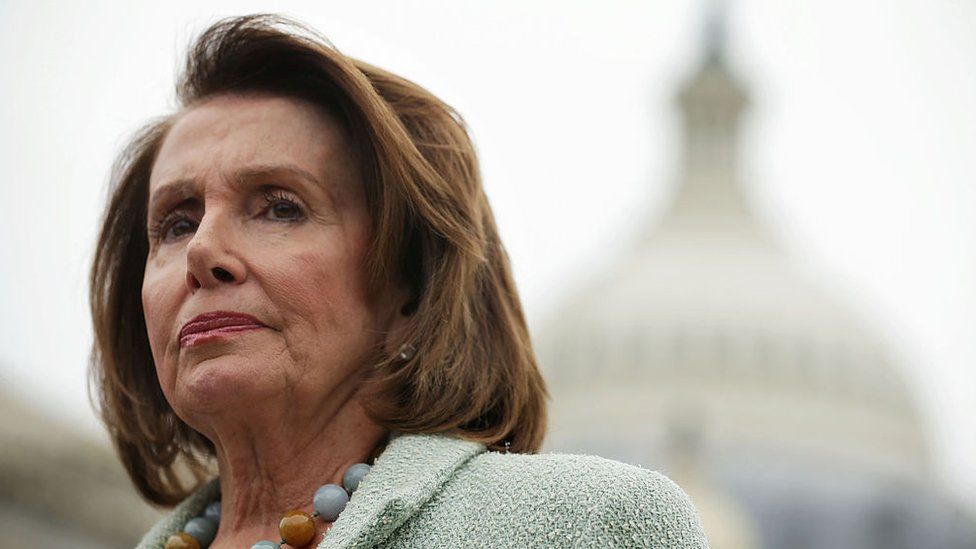
Nancy Pelosi, née Nancy Patricia D’Alesandro, (born March 26, 1940)Image shows Nancy Pelosi
Pelosi, a long-time critic of the Chinese government, heightened tensions between the U.S. and China, which considers the self-ruling island to be its territory and viewed the presence of a U.S. official of the speaker’s stature as provocatively enhancing the international standing of Taiwan’s government.

She has denounced its human rights record, met with pro-democracy dissidents, and also visited Tiananmen Square to commemorate victims of the 1989 massacre.

If you are a small island state with few allies, not recognised by the United Nations, and threatened with invasion by a much larger and more powerful neighbour, then getting a visit by the second most powerful politician in the United States should be something you welcome. Right?

Ms Pelosi is now 82 and expected to retire in the autumn.

Is she in Taiwan, with a clear intent to offer real support, or is it a political stunt? It’s all very unclear.

Taiwan, which considers itself a sovereign nation, has long been claimed by China. But Taiwan also counts the US as its biggest ally, and Washington has a law which requires it to help the island defend itself.

It’s like a giant game of pretend which is becoming harder to maintain.

China pretends that Taiwan is currently part of its territory, even though the island collects its own taxes, votes in its own government, issues its own passports and has its own military.

The US pretends it is not treating Taiwan as an independent country, even though it sells it high-tech weapons and, occasionally, a high-ranking politician visits on what looks very much like an official trip.

Due to Ms Pelosi visit it is apparent that it would take nothing for this flimsy show, designed to guarantee the status quo, to fall apart.

The idea of a war to reclaim it never felt any closer. Every day we move a step closer to that and a step further away from peace.

That would be disastrous. We can only hope that smart minds in the USA and China know it.

A disaster for the world and the required war on climate change.  

All human comments appreciated. All like clicks and abuse chucked in the bin.

← Back

Thank you for your response. ✨

THE BEADY EYE SAYS: GOVERNMENTS MUST GO BEYOND GROWTH (GDP) AND FOCUS INSTEAD ON A NEW SOCIAL CONTRACT.

Tags

, , , ,


(Twelve minute read) 

This is an easy thing to say but to implement is another kettle of fish because it requires a paradigm shift in the way developed countries approach economic policy.

Changing the world seems like one of these huge, impossible things that no man can possibly achieve.

It requires a rethink how we define and measure economic success.

In order to find new ways to transform the world we live in goals will have to be built into the structures of the economy from the outset, rather than hoped for as a by-product, or added after the event.

Everything that goes around, comes around.

People always wish for change because it’s the constant thing in this world, and they always have this deep, inner desire to improve things even if there’s nothing to improve.

Every people I know wants change, but for what purpose exactly?

Why do we crave change?   And how exactly to change? 

How exactly can you change without making mistakes?

How to actually know you’re making a change if you don’t know your objective?

What if there’s nothing to be changed?

Where do we start?

Change comes in learning from the mistakes of our past.

Realising that it’s a mistake.

When things stay the same and your life is getting worse and worse, then it’s time for a change.

                                   ————————-

Broadly speaking an economy is an interrelated system  of human labour, exchange, and consumption. 

Economic policy should prioritise environmental sustainability, economic resilience, reducing inequality and improving wellbeing economic growth in OECD countries have generated ‘significant harms’ over recent decades – including rising inequality and catastrophic environmental degradation.

Instead of focusing on gross domestic product (GDP), now is the time to  prioritise environmental sustainability, improving wellbeing, reducing inequality and strengthening economic resilience. 

A return to the status quo would be disastrous so governments that are spending unprecedented sums to rebuild their economies after the Covid pandemic, must look beyond growth alone to prioritise the needs of people and planet.

It argues that this will require a new role for the state, with governments becoming more entrepreneurial, seeking to shape markets and steer the process of economic change, not simply correcting market failures.

                                    ———————-

So where are we?

Various layers of inequality have being exposed and exacerbated by the COVID-19 pandemic.

It has laid bare risks we have ignored for decades: inadequate health systems; gaps in social protection; structural inequalities; the digital divide, environmental degradation. the energy sources we count on are limited, just like water.

In fact, most wars and political conflicts in the world start because of lack and/or need for energy resources. In America alone, the consumption of energy rises every year, and it doubles every 20 years. 

The climate crises is showing that computers and software will not be able to replicate human creativity.

This “new kind of social contract” is required to transform the relationship between the state, business, civil society and citizens.Industryweek 34572 Understanding 5g 5g 623431736

5G as on par with the printing press, electricity and the steam engine –

Self-driving cars, remote robotic surgery, autonomous weapons — all that and much more is set to be delivered via the 5G wireless network, which promises to transform our lives and add trillions of dollars to the global economy every year.

This leap forward in connectivity will be key to the spread of artificial intelligence and machine learning, enabling massive amounts of data to be collected from remote and mobile sensors and analysed in real time.

Drive everything from home appliances that order groceries to autonomous vehicles to smart cities.

Given the power of 5G technology, it is no surprise that it has also become a proxy for the broader power struggles. 

However Technology alone will not change the core problems in the world. 

Why?

  • The Fourth Industrial Revolution can’t be a panacea for the problems caused by our obsession with unchecked economic growth. Over the past couple of decades, the world has become enamoured with the transformative power of technology.
  •  In spite of all the hype, digital technology could not prevent nor control the spread of the coronavirus.
  • Technology won’t solve the climate crisis, prevent the recurring wildfires.

                     ———————————————-

The last thing the world needs is another ‘revolution’ that ignores the external cost to society of our unchecked obsession with economic growth at all cost.

We all think time and money is so important, but are our health, peace and happiness not more important?

We’re in this together and it can only be solve together. 

We can protest, till we are blue in the face, demand change till the cows come home, hold world conferences till we run out of air.  There is however one weapon if we all of us were to use it collectively that would bring change – that is  Buying power.

Doing the right thing for the environment, pro-actively using it to effect change.

In this uphill battle, the good news is that solutions are out there.  

Business would  be held accountable for addressing local and
global societal needs.

Industry players that suffer would not helplessly standing by as their revenues and profits dwindled, they would act intensified competition.

But is this inevitable? Can companies learn to adapt and react to ensure their continued success and prosperity? The answer is yes.

Since buyer power is dynamic, just visualize this scenario.

What would happen if we all refused to pay our energy bills till the Government put in place non repayable grants to install solar panels or insulation. 

There is no right answer here but it would be impossible to either jail or fine everybody.

It is therefore important to understand what choices we have available to us to determine what type of buyer we will be, and therefore where our strengths lie.

That strength would be a campaign conducted on our mobile phones. 

Once a month campaign targeting profit for profit sake, demanding change.

Your choices would impact their bottom line.

Resilience – not technology – is the answer to our biggest

challenges.

It’s either an entirely environmentally-friendly existence. 

Or are we just going to except a burning world with wars and mass migration till there is nothing left to live for. 


All human comments appreciated. All like clicks and abuse chucked in the bin.

← Back

Thank you for your response. ✨


THE BEADY EYE SAYS: THE SCIENCE ON CLIMATE CHANGE IS NOW PROVING TO BE UNEQUIVOCAL.

Tags

, ,


( Five minute read) 

The COVID-19 emergency to a great extent shattered our sense of normalcy and forced us to grapple with the kind of world we want – and need.

Climate Change will not ask us it IS HAPPING WHETER WE LIKE IT OR NOT WITH THE threshold for dangerous global warming will likely be crossed between 2027 and 2042.

While 2022 is set to be a year of unprecedented climate chaos across the planet leading climate scientists issue new warnings about climate change and the soaring cost of fuel highlights the world’s ongoing dependence on fossil fuels.

How did we get here?

For decades, fossil fuel companies have stymied efforts to make this necessary energy transition by sowing public doubt about climate science and pushing a misleading narrative of consumer responsibility for the climate crisis. 

In fact, only 100 investor and state-owned fossil fuel companies are responsible for around 70 percent of the world’s historical GHG emissions. They have led the charge on climate change denial, fossil fuel companies have driven widespread false perceptions. They have stymied critical efforts to fight the climate crisis.

This sustained climate denialism by the fossil fuel industry is exposed in the below BBC documentary: Big Oil v the World. Exxon along with Koch Industries and the Republican Donal Trump committing the larges crime of all crimes supressing the science behind Climate Change for years in the name of the God profit.  

The fossil fuel industry must be held accountable for its damaging behaviour.

We should be placing financial penalties against these companies  because of the deception perpetuated to there shareholders and the public about company prospects in the face of potential climate regulation. These companies forced communities affected by climate change to pay for future damage caused by the crisis. 

However holding the fossil fuel industry accountable becomes more complex when one considers that most of the companies are diversified into various products, which are not all equally harmful to the environment.

Ultimately, removing subsidies for fossil fuels and implementing a carbon tax with a consumer rebate are strong first steps towards fighting climate change. This move would effectively hold the fossil fuel industry accountable for its emissions track record and efforts to divert climate action.

 So more than ever, we need storytelling, arts, and the humanities to generate new ways of responding to the ecological crisis we all face, and which disproportionately impacts marginalized peoples the most while bearing the least responsibility for climate change.

We believe that together, we can create a world where we rapidly transition away from fossil fuels to end the climate crisis.

Is this true? 

We all know how but very few of us have the courage to take actions that will make a difference.

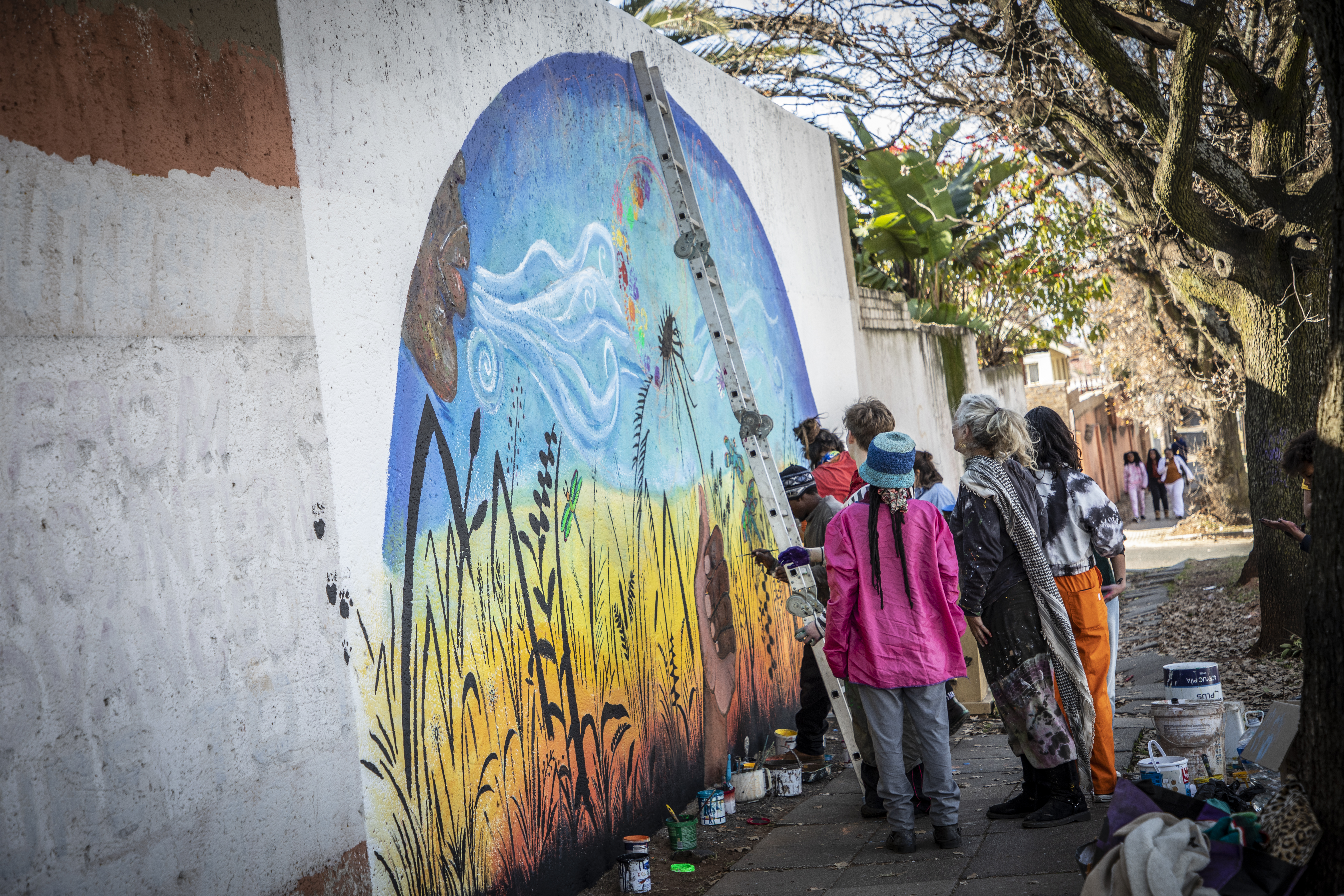
Just as World War II called an earlier generation to greatness, so the climate crisis is calling today’s rising youth to action: to create a better future.People painting a mural on a building

We want the developing world to skip the fossil fuel/carbon dioxide/ methane-producing step and go right to renewable energy, so they won’t have to go back and clean up the environment they will have destroyed or degraded because of fossil fuels.                                            —————– 

The science is unequivocal.

The effects of human-caused global warming are happening now, are irreversible on the timescale of people alive today, and will worsen in the decades to come. 

Even thought the coming climate change will not only shatter our very existence and every other living thing, with souring TEMPERTURES, drought, wild fires, rising sea levels, oceans less oxygenated, release of methane, wars, and mass migration, with ecosystems and food supply under treat.

BUT STILL WE DON’T YET GET THE NEED TO CHANGE.

Global climate change is not a future problem. Right now, we are losing the fight against climate change.

Until now, wide ranges in overall temperature projections have made it difficult to pinpoint outcomes in different mitigation scenarios but we must avoid situations where leaders can claim that even the weakest policies can avert dangerous consequences.

Amplify the need for world leaders to address the vicious cycle of loss and damage experienced by climate-vulnerable countries across the globe yet we do not have access to decision-making spaces.

Once the world is talking about it in a constructive way, things will get done. 

If you don’t like regulations now, just wait till climate change gets serious!


All human comments appreciated. All like clicks and abuse chucked in the bin.

← Back

Thank you for your response. ✨


THE BEADY EYE ASKS. WHAT IS BRITISH CULTURE ? IS IT THE REASON THAT THE COUNTRY IS NOW IN SUCH A MESS?

Tags

,

( Six minute read)

The great things about Britain, are the sheer amount of bright minds this country had during its history. There are myriad of inventors, writers, musicians, bands, rock stars, scientists…All British!

However the trouble is that the fabric of English society has so many strands, that the “inertia” of the British class system is less elastic than one might  think – even if one generation pulls away, the next is tugged backwards.

In a country that is now struggling to keep the wolf from the door, to correct the idiocies to which ideologically based government have taken England and return it towards reality, it must first look at its culture.

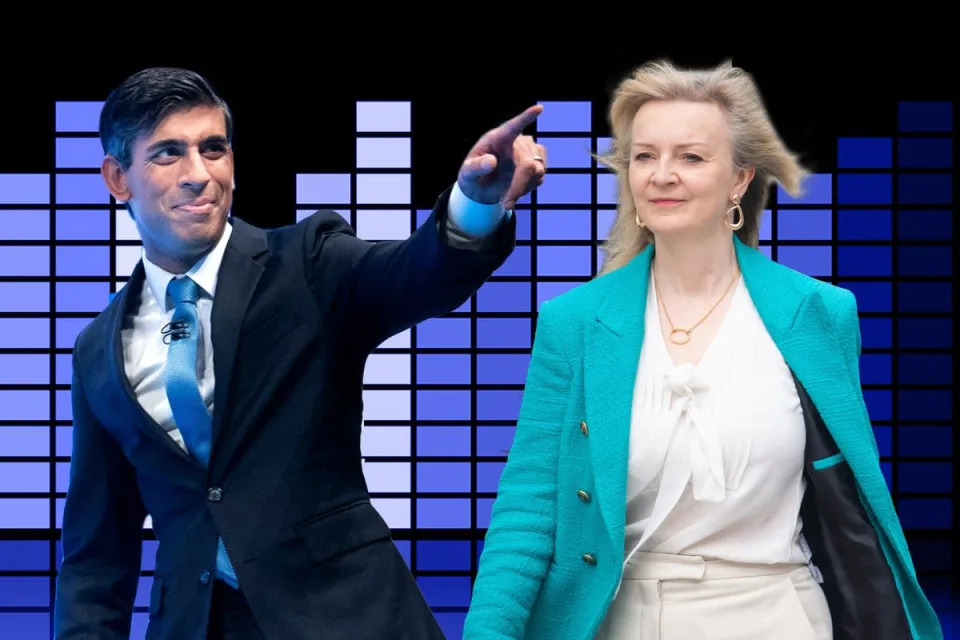
 (ES Composite)

Last night debate between the two remaining candidates for the leadership of the Conservative Party and thus the next Prime Minister of the country highlighted this class culture. 

Bling earrings against posh shoes.

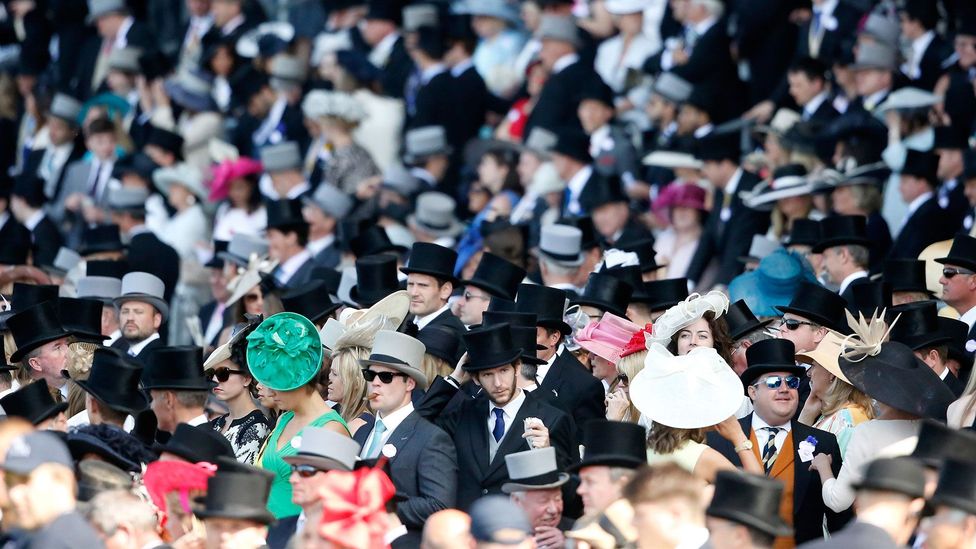
The British obsession with class isn’t so archaic, like it or loathe it, many see the class system as a quintessential element of British life. Class distinctions do not die; they merely learn new ways of expressing themselves.  

Whether you are a lord, a “toff” or just the Queen, everyone in the UK fits into the class system, this is what influenced their occupation, social status and political influence.

It's not just our parents - our whole social milieu, from our wider family to their friends and contacts, can influence our progress in life (Credit: Alan Crowhurst/Getty Images)

It takes around 10 generations for someone at the highest or lowest levels of society to reach the middle classes. 

This the vast and elaborate structure grew up almost in secret.

How much of England’s  position today depend on the people we’ve never met?

Perhaps a more pertinent question, then, is not whether class distinctions exist, but whether it is possible to move out of one pigeonhole and into another.

Lower class- Working class- Middle class- Upper Class. Royalists Aristocrats. Class might not have same status as it once did but the British class system has its protections at every level, a built-in inertia from its colonial days of ‘divide and rule.

We are all human so it no wonder the debate last night was influenced by short term populisms subjects on the economy, hungry consumerists and investors.

                                  —————————-

Thanks to Maggie Thatcher policies the culture in Britain moved from brilliant to consumerism – shop till you drop – ignoring the rise in racism and growing ignorance due to the lack of free education. 

At least it was before the Brexit idea, there are few things which surfaced with this whole Brexit situation.

We learned that the vast majority of people in this country is racist. Politicians are liars (promising more money for academia and the NHS…). Politicians are trying to get rid of the Human Rights (read about it if you don’t believe me) and without a flinch, the great British government passed “the most extreme surveillance law in the history of western democracy” (to quote Snowden).

To start cleaning up the mess. 

You don’t start about “taking back our sovereignty.” That is petty as hell, countries are not self sufficient. We rely on each other.  I would hold a public enquiry into the Brexit. 

You dont start solving the problems talking about levelling up or down, reducing taxes, the price of fuel, the NHS, Brexit opportunities, the Ukraine war.

Everyone understands the financial services is the big kahuna for the UK.   

“ The City “ the financial sector, still has this idea that it’s basically smart to game the system. If these are the people, and the culture, that is coming into public life then we’ve got a real problem.”

Outside brilliant minds are no longer welcome to contribute to the Great British societies and money is being invested in privatisation and corporations as opposed to a stable economy, educated, informed and healthy population.

It is shocking to still hear people moaning about immigrants coming to Britain for the sake of benefits, whereby it is the vast majority of immigrants who pay the most taxes. It is the immigrants who maintain Britain afloat, and it is because of the immigrants that we have good doctors, dedicated teachers and hard-working baristas in the local cafes.

Unfortunately, the relative proportions of people moving up or down a class now seems to be reversing. More men and women are experiencing downward mobility and fewer of them experience upward mobility.

It is shocking to watch day time Media full of begging for support for ever think from Food banks to save the children.   

Britain is indeed among the worst countries for certain measures of social mobility, with the parents’ wealth strongly influencing the child’s prospects of higher education and a good salary.

NO COUNTRY IS PERFECT.

Even though Brexit was a pissing contest, and either party hailing “the Brexit deal” a “victorious day” was stupendous by all accounts.  (accountable politicians should have been fired on the spot for even daring to see that as a victory) 

The country now needs long term actions.

No longer a Mantra Carter or privileged Royals rather a Written Constitution to level up and enter the age of technology.

Why?

To provide the courts, the police, the infrastructure, education and training on which business relies a set defined values and insure that when a leader is removed from office for what ever reason that all of its people get say on who is to take his or hers place with a general election not the members of any political party, that happens to be in power. 

Why?   

Because people are embedded in a circle of connections and that social milieu is very influential in terms of people’s outcomes.

Because immigrants are the people who are willing to give up their rights, liberties and cultures, in order to work for the sake of your government, your country, your society and your benefits.

Because for too long business, especially multi-national business have been parasitical on the nation state. It is time that they learned to be a sensible symbiote and to nurture not drain and destroy its host.

This is a beautiful country with a  country with a murder a day, (According to the Global Peace Index, the UK is the 47th safest country in the world (and the 26th in Europe), well below Romania, Hungary, Germany and Botswana. Portugal is the 4th safest country in Europe ) … with a scurrilous Press, with 430 people per square kilometre, ( England is nearly twice as crowded as Germany (227) people per sq./km) and more than three times as crowded as France (117 people per sq./km).

Its time to get out of the phone box and take an in-depth look at some genuine solutions. 

Britain is too heavily populated to manage centrally, so things need to be micro-managed.

Council tax. Should be  income-based.

Education in all its forms  should be free.

Public Transportation is insanely, painfully expensive.

People Assemblies less power for the elites and more power for the people. 

Tackle Racism Discrimination which has have been emboldened since Brexit.

Free Grants to drive green energy. Not a moratorium on Green levs’ Climate change is a global emergency. 

Proportional representation for general elections.  

Make it illegal for a newspaper to publish “information” that they knew to be false.

Ban advertising that prompts unsustainability.  

The British empire has been responsible for some of the worst atrocities in history, but the UK has mellowed out over the past few generations, though under no circumstances should anyone ever trust a British government leader that is not  elected by all of its people.  

All human comments are appreciated. All like clicks and abuse chucked in the bin.

← Back

Thank you for your response. ✨


THE BEADY EYE ASKS. WHY IS THE WORLD IN THE STATE IT IS?

Tags

, , ,

( Twenty minute read) 

Following on from the posts under the heading of what shaped the world lets look at the state of the world as it is to day.

The world is becoming increasingly interconnected and interdependent, with ever more political, social, cultural, financial and commercial relations transgressing nation state borders but the convergence of issues facing the earth are now so interrelated that most of them cannot be fully understood out of context.

The recent pandemic served to prove our fragility and our interconnectedness.

When we start thinking about constructing a model of the world it’s better to say that while you are living in the world, it’s fairly difficult to judge it objectively or even understand all of its moving parts.

In addressing that issue I will note that many of today’s issues have legacies 100 years old and will not be addressed in this post.

If anything has brought us together over the last year and a half, it is our feeling of vulnerability about the present and uncertainty about the future.

Now urgent action, taken together, is needed to change course and reimagine our futures and this action must encompass an ethic of care, reciprocity, and solidarity.

But to translating and contextualizing these actions in a collective effort it requires a synopsis of the current state of the world.

It is only when the mess it is presented as a whole not news flashes that we have any concept of the state of the planet. 

The whole structure of today’s world, much of it inherited from an earlier era, is up for serious discussion.

Thinking of the present state of the world its remarkable what can be achieved when leaders are prepared to lead.

To achieve the maximum benefits from the extraordinary possibilities that artificial intelligence (AI) and Robots will usher in tomorrow. 

                            _______________________________

There are many factors behind what I call ‘the disillusioned society’ but greed and fear, two of the ancient enemies of human kind are the big drivers of Earth’s ecological and human systems which are now in severe crisis.

Climate change is a trend that affects all trends- economic trends, security trends. Everything will be impacted. And it becomes more dramatic with each passing year.

Our throwaway society, which in part drives markets and GDP, is continuing to damage the environment. 

A key decision to changing our thinking and attitudes to polluting activities and endless growth is to dump Gross Domestic Product (GDP) as the universal measure of progress. It is a totally inadequate measure of societal progress.Who is more powerful – states or corporations?
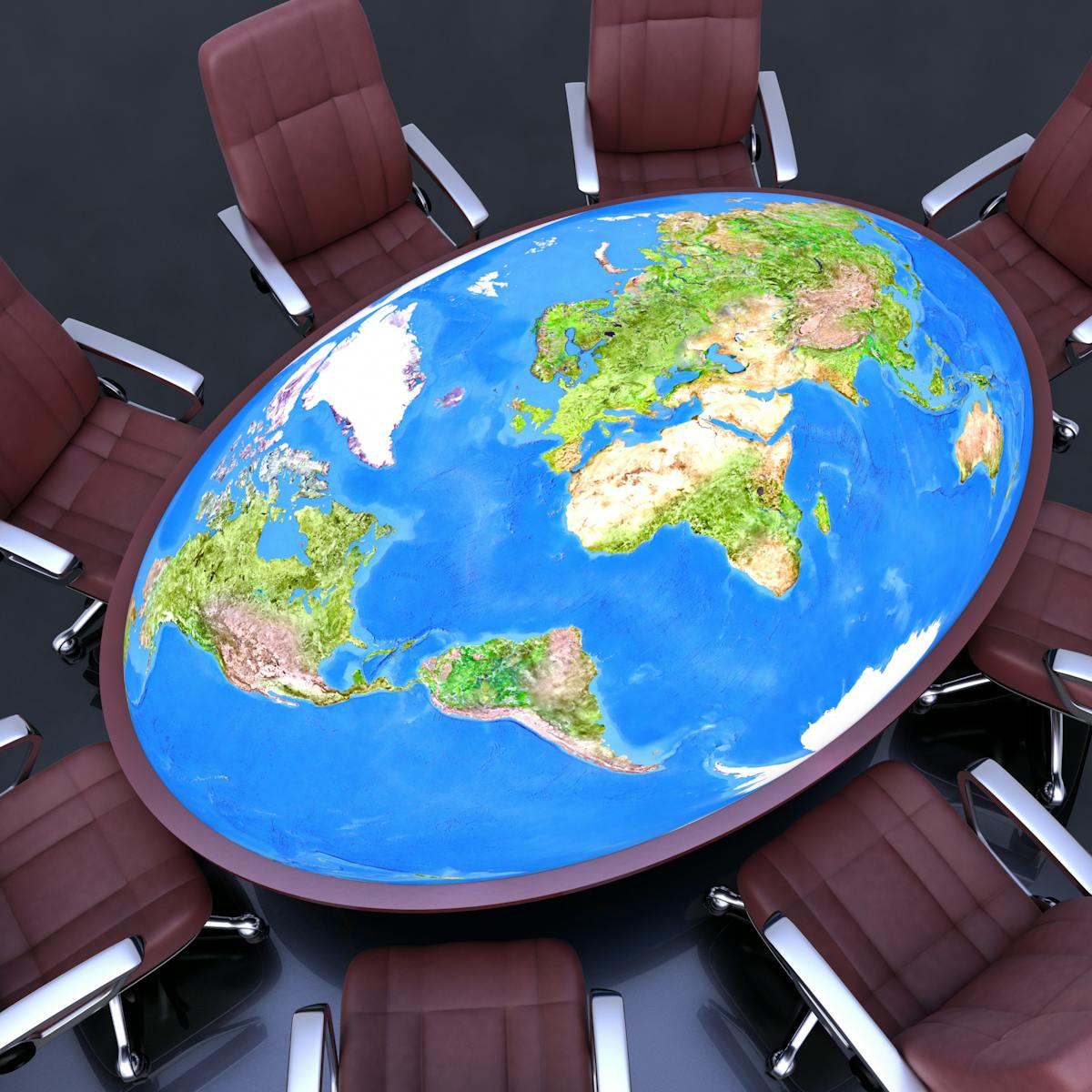
That said here is an overview of the current state of the world. 

Only 2.5% of the world’s water is fresh—the water on which the world’s terrestrial life depends. Around 70% of this fresh water is frozen in ice or permafrost. An estimated 4 billion people, nearly two-thirds of the world population, experience severe water scarcity during at least one month of the year.

Agriculture accounts for 70% of all freshwater withdrawals globally, a ratio that’s only going to increase – to an estimated 85% – as the population grows and agricultural production rises to meet it (by an estimated 50% before 2050).

About 43% of over 7,000 of the world’s languages are endangered. Just 23 languages are spoken by more than half of the world’s people, inhabiting upwards of 85% of the land surface of the globe.

In 2015, an estimated 2.1 billion people lacked access to safely managed drinking water services and 4.5 billion lacked access to safely managed sanitation services. Over 80% of all wastewater returns to the environment without being treated.

Population, pollution, greenhouse gases and deforestation are creating never before seen changes in Earth’s living systems—including a cultural and species extinction rate that is the highest in the planet’s history.

Higher concentrations of carbon dioxide, methane and other greenhouse gases, mainly as the result of human use of fossil fuels, have been determined to be the predominant cause of earth’s changing climate.

Sea levels are already rising by 2mm a year—faster than during the past 5,000 years.

Evidence is growing that the thermohaline circulation, driven by temperature and salinity, could be slowed or stopped by cold fresh water inputs to the Arctic and North Atlantic oceans.

Our oceans are full of plastics. Sea ice and glaciers are melting throughout the globe. More than 93% of the enhanced atmospheric heating since the 1970s has been absorbed by the ocean.  

Over 90% of plastics produced are derived from virgin fossil feedstocks—about 6% of global oil consumption. This is equivalent to the total oil consumption of the global aviation sector.

Over 70,000 new chemicals have been brought into commercial production and released to the environment in the last 100 years.

An estimated 75% of the Earth’s land surface has been degraded through human activities, negatively impacting the well-being of at least 3.2 billion people, pushing the planet towards a sixth mass species extinction, and costing more than 10% of the annual global gross product in loss of biodiversity and ecosystem services.

The failure to reduce world hunger is closely associated with the increase in conflict and violence in several parts of the world. In addition, gains made in ending hunger and malnutrition are being eroded by climate variability and exposure to more complex, frequent and intense climate extremes. Approximately one third of the food produced in the world for human consumption—nearly 1.3 billion tonnes—gets lost or wasted every year.

In 2020, nearly 144 million children under 5 suffer from stunting (under height), 47.0 million children under 5 were wasted (underweight) , and of those, 14.3 million were considered severely wasted.

Industrialized civilization is still dependent upon cheap and reliable fossil fuel energy. There is a limited amount of fossil fuel. It is not “renewable” and there is no known way to make more.

The current humanitarian crisis in Ukraine may be in the spotlight right now however there are currently 27 ongoing conflicts.

A quarter of the entire global population lives in conflict-affected areas. 84 million people were forcibly displaced because of conflict, violence, and human rights violations. This year, it is estimated that at least 274 million people will need humanitarian assistance.

The cost of war is almost unfathomable.

Just imagine what the world could do with that money if conflicts were to end worldwide. 

Conflict drives 80% of humanitarian needs and in 2016, the cost of conflict globally stood at an astonishing $14 trillion. That’s enough to end world hunger 42 times over.

Nearly 11 years after it started, the Syrian refugee crisis remains the largest displacement crisis worldwide (13.2 million, including 6.6 million refugees and more than 6 million internally displaced people). At least 2 million people are living in tented camps with limited access to basic services.

Lasting more than 60 years, the conflict in Myanmar (previously called Burma) remains the longest ongoing civil war in the world.

The recent takeover of Afghanistan by the Taliban after 20 years of US-led conflict more than half of the country’s estimated 40 million population face “extreme levels of hunger, and nearly 9 million of them are at risk of famine.

Wars are constantly in the news. 

While we tend to hear more about refugees there are actually twice as many internally displaced persons around the world. In 2013, for instance, there were 16.7 million refugees and 33.3 million internally displaced persons. it’s easy to dismiss them and forget that we’re talking about individual people whose lives have been completely disrupted.

The World Bank and the IMF can pursue their loans in perpetuity, regardless of the loans having been given to dictators or incompetent borrowers, and regardless of whether the money actually benefited the poor.

The current depletion of biological diversity and, in particular, the prospect of severe depletion, if not virtual elimination of tropical forests, wetlands, estuaries and coral reefs that have been the “engines of biodiversity” for hundreds of millions of years, may have profound effects on the evolutionary processes that have previously fostered re-diversification.

Before 1961, the entire Earth satellite population was just over 50 objects. Since 1957, about 9,600 satellites have been launched and about 5500 are still in space—and 2300 of these are still functioning. The total mass of all space objects in Earth’s is more than 8800 tonnes. Earth’s orbit is now cluttered and dangerous with: ~34,000 objects bigger than 10 cm; ~ 900,000 objects from 1cm to 10 cm; and 128,000,000 objects from greater than 1 mm — 1 cm.

By the time you finish reading this paragraph, four acres of rainforests in Brazil (i.e. about three football fields) will be replaced with farmland, largely to grow cattle and animal feed.

The commercial exploitation, militarization and weaponization of space around the earth is ongoing.

Space Tourism is just getting started but the impact of bioengineering is what is going to have profound impacts on society in the near future.

The development of bioengineering issues in tandem with overlapping

technological areas such as artificial intelligence are what is going to shape

the world for the next generations, if climate change does bot wipe us of the

globe.

(Biotechnological discoveries are increasingly facilitated by automated and roboticides, private ‘cloud labs)

These issues will shape the future of bioengineering and must shape modern discussions about its political, societal and economic impact.

Technology is in the infancy of creating a world state. 

                                   ————————————-
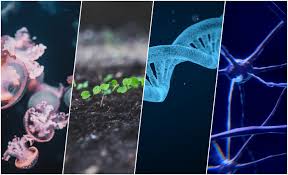
The Bioengineering Technologies to Look Out for in the Next Decade – The  Wire Science

Bioengineering is a discipline that applies engineering design and principles

to biological systems. Some examples of this fusion are artificial organs or

limbs, the genetic synthesis of new organisms, gene editing, the

computerized simulation of surgery, medical imaging technology and

tissue/organ regeneration.

Bioengineering brings with it both huge potential for good, and risks to

regulate. Like any other technology, bioengineering has damaging potential,

whether it be through misuse, weaponization or accidents. This risk can

create significant threats with large potential consequences to public health,

privacy or to environmental safety.

We need critical thinking to understand what they are, what their impact is and how they are related, with ethical and regulatory frameworks, climate change, inequalities, technological convergence and the misuse of technology, in order to drive informed policy decisions.

Below is by no means a comprehensive list. 

<5Years 5–10 Years >10 Years
Artificial photosynthesis and carbon capture for producing biofuels Regenerative medicine: 3D printing body parts and tissue engineering New makers disrupt pharmaceutical makers
Enhanced photosynthesis for agricultural productivity Microbiome-based therapies Platform technologies to address emerging disease pandemics
New approaches to synthetic gene drives Producing vaccines and human therapeutics in plants Challenges to Taxonomy-Based description and management of biological risk
Human genome editing Manufacturing illegal drugs using engineered organisms Shifting ownership models in biotechnology
Accelerating defense agency research in biological engineering Reassigning codons as genetic firewalls Securing the critical infrastructure needed to deliver the bioeconomic
  Rise of automated tools for biological design, test and optimisation  
Biology as information science: impacts on global governance
Intersection of information security and bio-automation
Effects of the Nagoya Protocol on biological engineering
Corporate espionage and bio crime

Additions.  

  • Using Bioengineering Instead of Animals
  • Using Bioengineering Instead of Plants
  • Using Bioengineering to Create Eco-friendly Materials
  • Using Bioengineering for Greenhouse Gas Sequestration and Removal DNA technology, makes insulin much more accessible to people with diabetes by producing human insulin using bacteria instead of animals.
  • Veggie burgers using bioengineered yeast.
  • Altered yeast to produce collagen, the animal protein that is the main component of leather. 
  • To produce anti-malarial compounds. (Every year, 200 million people are affected by malaria.)
  • Bioengineered yeast to make beer and palm oil.
  • Genetically engineered bacteria that reduce the need for nitrogen fertilizers.
  • Biodegradable product that eliminates both the unsustainable practices
  • Manufacturing biosynthetic indigo could reduce the use of petroleum and the release of toxic chemicals by a factor of five
  • Genetically engineer microbes to actually pull greenhouse gases – such as CO2 and methane – from the air. 
  • Use bacterial fermentation to turn that methane into a biodegradable polymer called poly hydroxy alkanoate (PHA).
  • To  provide nutritious and non-toxic feedstock for farmed fish that doesn’t require overfishing AND removes CO2 from the atmosphere. 

                          ———————————————-

What happens if a world state is reached?

It is natural at this point to ask whether a world state would be desirable— But quite clearly many areas of social life still remain outside state control.

First, all states are sovereign, which means that both domestically and internationally they recognise no jurisdiction superior to their own.

Secondly, all states are equal and should therefore be accorded equality of treatment before the law. 

A world state would not be a utopia in which there was nothing left to struggle over.

But once a world state has emerged those struggles will be domesticated by enforceable law, and so for purposes of state formation will be no longer important. Rather than a complete end of history, therefore, it might be better to say that a world state would be the end of just one kind of history. Even if one telos is over, another would be just beginning.

At the micro-level world state formation is driven by the struggle of individuals and groups for recognition of their subjectivity.

At the macro-level this struggle is channelled toward a world state by the logic of anarchy, which generates a tendency for military technology and war to become increasingly destructive.

The process moves through five stages, each responding to the instabilities of the one before — a system of states, a society of states, world society, collective security, and the world state. Human agency matters all along the way, but is increasingly constrained and enabled by the requirements of universal recognition.

The struggle for recognition is about the constitution of individual and
group identities and thus ultimately about ideas,

Hobbes (1968) justified the state on the grounds that only through
obedience to a common power could individuals escape a ‘nasty, brutish, and short’ life in the state of nature. A common power is necessary because of the physical equality and vulnerability of human beings — since even the weak can kill the strong, it is in everyone’s interest to accept the security provided by a state.

With the transfer of state sovereignty to the global level individual recognition will no longer be mediated by state boundaries, even though as recognized subjects themselves states would retain some individuality (particularism within universalism).

The question remains, however, whether a world state would be a stable
end-state, or be itself subject to instabilities that ultimately undo it.

Since even a world state would remain an at least partially open system, such
shocks could cause it to fall apart.

Equilibria are always vulnerable to exogenous shocks.

Going forward You have to be able to hold two ideas in your head at once: the world is getting better and it’s not good enough”. (Dr. Hans Rosling.)

But we must keep trying. The past is not coming back. The most difficult thing is the decision to act, the rest is merely tenacity.

All human comments appreciated. All like clicks and abuse chucked in the bin.

← Back

Thank you for your response. ✨


THE BEADY EYE LOOKS AT HOW CLIMATE CHANGE WILL SHAPE THE WORLD.

Tags

, , , ,


( Fifteen minute read)

If warm words prevented global warming, I wouldn’t be writing this article. 

One would think that after years we would get the message of not dealing with Climate change.

It is happing right in front of our eyes never mind decades or even centuries ahead.

On reflection perhaps the questions on climate should to taken away from Accountants, Politicians,  Governments, GDP,  Science, Technology, or the printing of money, and the verbal diarrhoea of climate summits conferences and made relatable to all us.

If it all goes wrong nobody is asking what sort of world we will have to live in. 

Why?

Because day by day it is becoming less clear how sensible management of the planet should be.

Because we must stop its discounting by Countries Governments and corporations for profit.

Because the fact is climate change is now beyond serious dispute but has yet to become part of mainstream discussion.

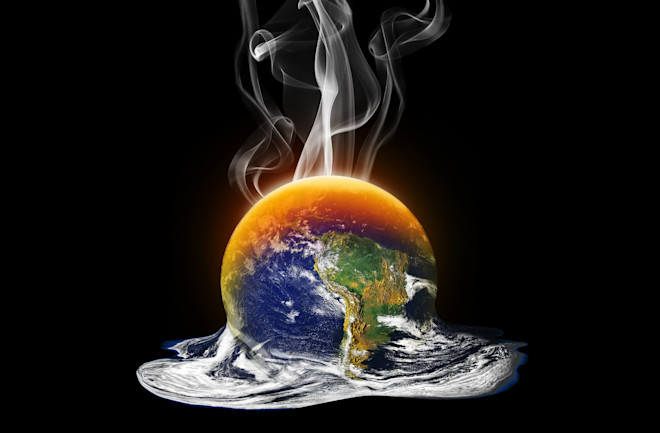
Because we can not literally stand by and verbal about it till the cows come home. global warming melting the earth - shutterstock

INTRODUCTION.

Obliviously in shaping the planet the climate has two elements. 

The Visible and not so Visible. 

The climate debate is now fuelled, not only by controversial policies, and science, but the debate is moving away from the basic science, to the economic and political ramifications.  Both of which are becoming  old, and tired, and increasingly irrelevant, as the impacts of climate change becomes clearer.

Earth’s climate has changed many times but it’s hard to imagine what Earth might look like in 2500 never mind in the next twenty years.

Climate “scepticism” is always underpinned by politics rather than science so many people still assume the costs of climate change are in the future, despite us increasingly seeing the impacts economics and politics are now the principal battlegrounds in the climate debate.

This puts us in an invidious position.

Science should inform and underpin arguments but just what can we learn from science?

One of the real problems with the climate debate is the way in which climate science is not explained but is ‘refereed’ in the public domain. I still think that 85 percent of us never mind our governments have little understanding or concept of how climate change is going to change the planet and every living organism on it.  

Taking into account limitations to predictability.

Millions of variables—known, unknown, and approximate—as well as billions of calculations, are involved in every forecast, producing informative and fascinating modern computer simulations of the Earth system. 

This is all very well but the point is that the component parts of the Earth system can interact in incredibly fast in complicated ways, and this makes explicit mathematical analysis of the entire problem of climate change impossible.

Science never explicitly proves anything but finds the current best-fitting theory that explains real-world data, and that has led to the current assertion of the validity of the anthropogenic climate-change scientific theory.

Our predictions of what Mother Nature will do next are only possible with real-time imagery from satellites of the surface of the earth, not the unseen knock on effects. 

                             ———————————-

OF ALL THE THINGS SHAPING THE WORLD CLIMATE CHANGE IS AND WILL BE THE MOST DEVASTATING.

There are now twice as many days over 50C. Accompanying this rise in temperatures has been a five-fold increase in weather-related disasters over the past 50 years.   

The climate does not need money or the microchip or any of the other things on the list shaping the world. ( See previous postings) 

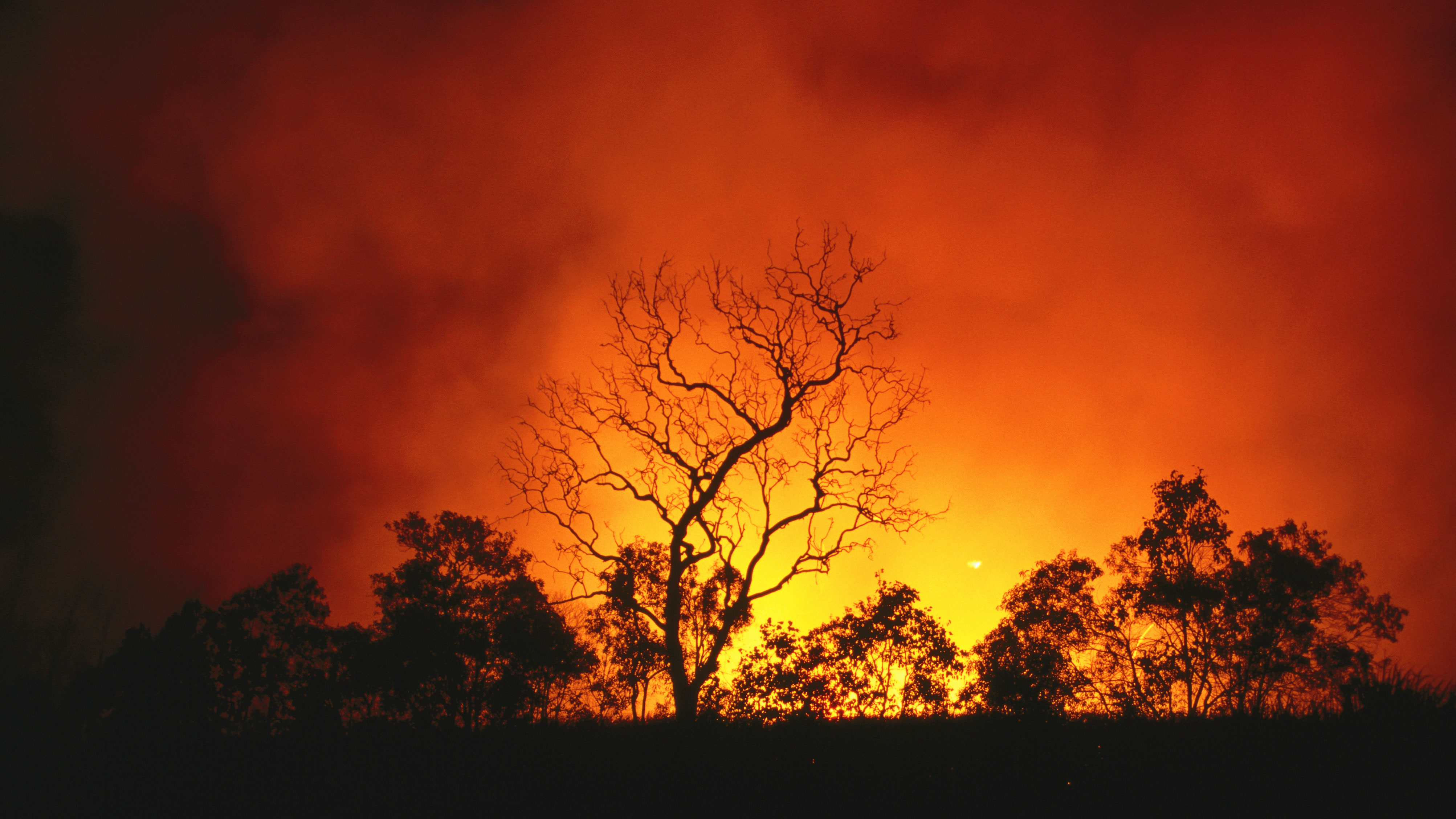
Bushfire in Queensland, Australia

The situation is bleak.

The Visible. 

Fifty years have passed since the first climate projections, set that distant target at 2100, however we continue to fool ourselves that technology will solve the problems.

The visible effects are on our news TV bulletins daily. There is little need here to highlight them. 

The Invisible.   

The ability to earn a meaningful livelihood is permanently impacted by unseasonal rains, harsher winters, drier summers, and other impacts attributed to the changing climate.

Studies by the World Bank predict that as many as 216 million people in six regions of the world may be forced to move by 2050. This includes communities in some of the most impoverished regions of the world such as Yemen and the Horn of Africa.

All will become climate refugees.

But there is another category of people who suffer from climate change and have no recourse. They’re stateless individuals who live in countries that do not grant them citizenship or permanent residency, They number in the millions. They include the Muslim Rohingya community in Myanmar, North Koreans in China, the Roma in Serbia, and many other groups.

They need to be included in any conversation about permanent, inclusive, sustainable, and ethical solutions. Otherwise, our approaches would only widen the gap between the privileged and the persecuted.

                                  —————————–

In a 2021 global survey of 10,000 people aged 16 to 25, three quarters said the future of the world was frightening, while more than half said they thought humanity is doomed.   

Climate models predict that Earth’s global average temperature will rise an additional 4°.6 C (7.2° F) during the 21st Century if greenhouse gas levels continue to rise. 

That results in a “major restructuring of the world’s biomes,” Changes in temperature, precipitation, and seasonal timing will alter the geographic ranges of many types of plants and animals. Many species will face extinction if the geographic range where they can survive shrinks.

We are looking at a future with much more rain and snow, and a higher risk of flooding in some regions.

By 2100, precipitation will increase by at least 1% with a possible increase of up to 12%. However, changes in precipitation will not be evenly distributed. Some locations will get more. Warmer global temperatures produce faster overall evaporation rates, resulting in more water vapor in the atmosphere…and more clouds. 

Warmer temperatures will cause (and are causing) changes to other aspects of climate – such as rain, snow, and clouds. They are also causing changes to the ocean, life, ice, and all other parts of the Earth system. Melting ice may lead to changes in ocean circulation, too. By the year 2100, models predict the sea level will rise between 30 and 100 cm (12 to 39 inches). Large-scale ocean currents called thermohaline circulation, driven by differences in salinity and temperature may also be disrupted as the climate warms. 

It will not just transform now-familiar terrain into alien landscapes over the next few centuries the U.S. Midwest will be transformed into subtropical agroforestry regions and by 2500 or the Ice capped poles will disappear.

                                  ———————————

To address the indirect, vicarious impacts of climate change.

Climate change is not only damaging the planet, but it’s also endangering our mental health, too. The “chronic fear of environmental doom.

Global change is as much a psychological and social phenomenon as a matter of biodiversity and geophysics and poses threats to psychological health and well-being on multiple, simultaneous levels.

We are now facing “tipping points.” A tipping point is a large, abrupt change that cannot readily be stopped at the last minute, even by employing drastic measures.

Runaway situations. The consequences of any of them are so severe, and the fact that we cannot retreat from them once they’ve been set in motion is so problematic, that we must keep them in mind when evaluating the overall risks associated with climate change.

Methane releases would generate a feedback loop of increased greenhouse warming by methane, driving further methane emissions.

At some point, seawater will become saturated with CO2 and unable to absorb any more.

It’s in our power to protect what’s left and make a meaningful difference.

Make climate change a factor in the decisions you make around what you eat, how you travel, and what you buy, demand that politicians and companies make it easier and cheaper to do the right thing for the climate.

There is now an urgent need to find new ways to narrate and envision a fairer clean future in which we all can actively participate to help to reduce global disparities in climate impacts.

Warming surface temperatures are also predicted to increase the frequency of heat waves and droughts, which can affect crop production, increase the risk of wildfires, and even impact human health.

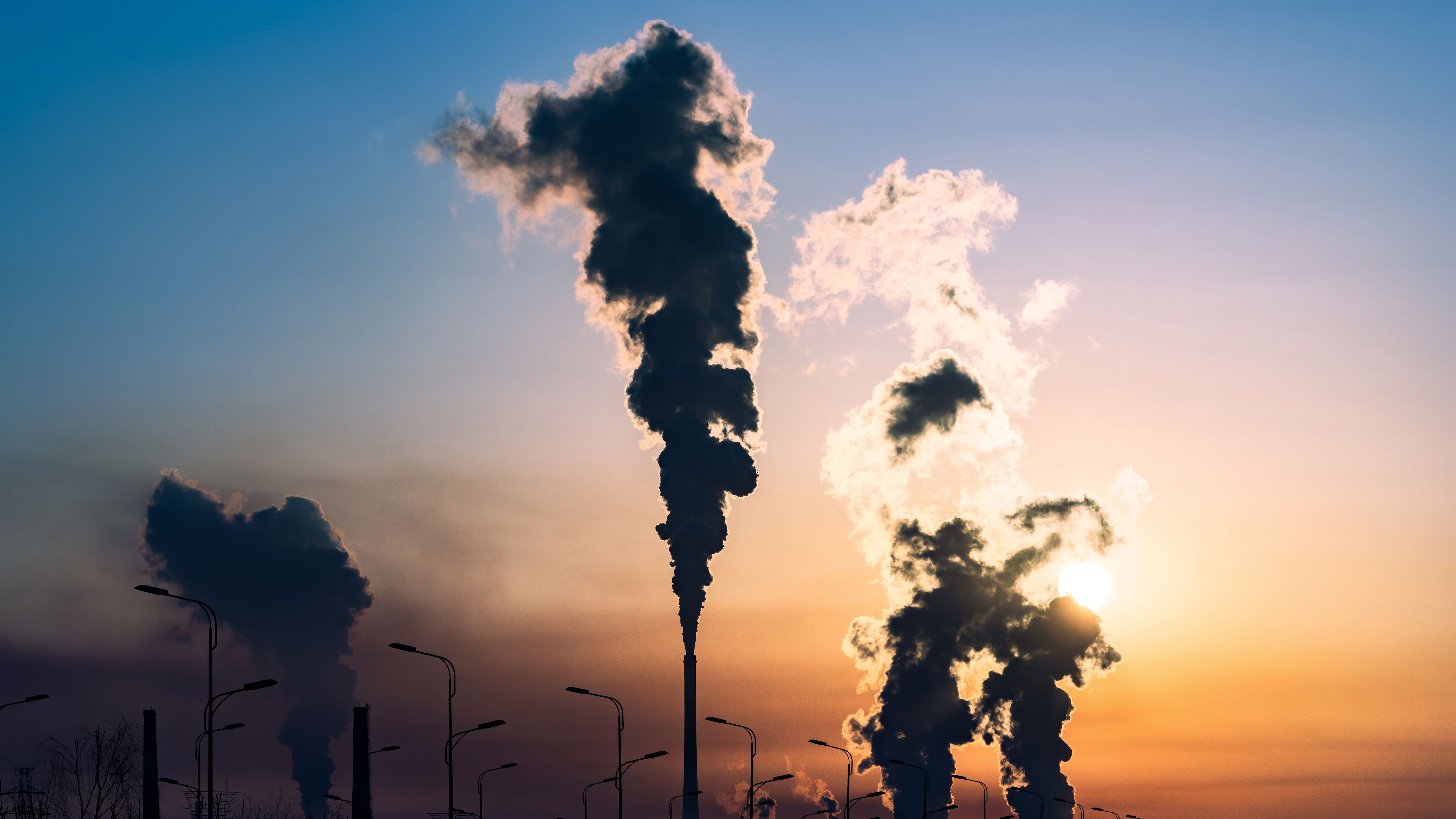
Silhouette of a high industrial pipe with sun behind it The arguments that get bandied about in blogs and debates invariably focus solely on the predicted impacts of climate change, without any discussion of the caveats and assumptions that lie behind the models.

Take  “The prefix ‘bio’ doesn’t necessarily mean environmentally friendly.”

Growing and processing crops for energy purposes or feedstocks can have the heaviest environmental impact. 

It is more helpful to proceed as though climate change is real, partly man-made, and potentially quite threatening to building a sustainable world populated by a large hungry consumer-driven citizenry.

We had world summits, and the world promises to expose Sharp divisions between the major global emitters.

Trying to lead 197 countries forward on the critical global issue of climate change is not a job for the faint-hearted as democracy evolved because everyone wants other people to share the blame. 

What we hear is that by 2050 or 2060 we will become carbon neutral, 2060 is far away and if the people emit at the rate they are emitting the world won’t survive, so what are you going to do in the next five years that’s what the world wants to know.

We can’t just willy-nilly ignore the next 10 years because the scientists tell us that if we don’t do enough in the next 10 years we cannot keep the Earth’s temperature at 1.5C, we cannot even get on a roadmap to net zero by 2050.

If this means we can move on from a sterile debate about the global response to much more interesting questions about regional impacts, the rights of different generations, and, most interesting of all, what to do about it.

This blog has in previous posts made suggestions as to how to get us involved and how to fairly spread the cost and finance the changes required.

So my plea is to avoid the ‘happy talk’ and recognize that this challenge is global and never has there been a challenge that requires the unity of countries all across the planet than now.

But despite how terrible it’s important to remember that the appropriate response is to leap into action, not to be paralyzed by despair.

To supply some optimism and show that humanity isn’t totally screwed, here are 3 climate change projects that would change the game.

Inaction could result in scenarios that look downright apocalyptic.

One. It is time that our governments made non-repayable grants available to us all to install solar panels, and insulation.

Two.  Clean up the advertising industry for sustainability, not consumption.

Three.  The introduction in a green economy of a universal basic income.  

In this world, we might add another folksy adage to our climate repertoire. Just as it is the humidity, not the heat, it is the rate of change, not the magnitude, that truly matters.

All human comments are appreciated. All like clicks and abuse chucked in the bin.

← Back

Thank you for your response. ✨

THE BEADY EYE LOOKS AT HOW MONEY SHAPES THE WORLD.

Tags

, , , ,

(Eighteen-minute read)

How does money shape the world?

A daunting question.  Where does one start?

Perhaps it is possible to understand the significance of a medium of exchange like money by considering its absence.

If we want to create and live in a more fair, just, democratic, and morally advanced society with the least amount of poverty, crime, pollution, disease, and so on, we must learn the importance and value of voting with our money.

Before Money, we had Barter the exchange of goods, exchanged directly for other goods.14 Myths About Money: Are You Being Fooled?


What is money?

There are many myths surrounding money like Money doesn’t matter or it’s the root of all evil. People tend to make money mean what they believe it to be, not what it actually is. Time is not money. Tasks are money.

Money has little value to its possessor unless it also has value to others.

Teeth currency used to be common in the South Pacific and among native Americans.

To qualify as “money,” something must be widely accepted as a medium of exchange that is not backed by anything physical.  It relies on trust, it serves as a unit of account, which is a consistent means of measuring the value of things. However, it does not holds value over time and it is not the only thing that stores value.

Money is not a risk-free store of value, however. In periods of rapid inflation, people may not want to rely on money as a store of value, and they may turn to commodities such as land or gold instead. Because money acts as a store of value, it can be used as a standard for future payments.

But something need not have intrinsic value to serve as money.

Gold and silver are the most widely used forms of commodity money. One disadvantage of commodity money is that its quantity can fluctuate erratically.

The currency —paper money and coins—used in the world today is fiat money; it has no value other than its use as money.

What makes something money is really found in its acceptability, not in whether or not it has intrinsic value or whether or not a government has declared it as such.

Credit cards are not money. Gold is not money because it is not used as a medium of exchange. In addition, it does not serve as a unit of account. A Van Gogh painting is not money. It serves as a store of value. It is highly illiquid but could eventually be converted to money. It is neither a medium of exchange nor a unit of account.

Money is the medium of exchange for goods and services. It doesn’t literally make the world go around, but the economies of countries rely on the exchange of money for products and services.

Money, ultimately, is defined by people and what they do.

                                        ——————————–

There are really only two types of money: money that has intrinsic value and money that does not have intrinsic value.

To days society rewards you by giving you fiat money the most highly addictive substance on the planet: What’s most frightening about it is that you can’t ever physically overdose. Make no mistake about this. Like all addiction stories, wealth addiction is tragic with no boundaries. Like any addict in the throes of their addiction, there’s no limit to how far this can go.

The addicts will hijack human spirituality, exploit hatred, brainwash the masses, derail democratic politics, and tinker with fascism in their desire to have more.

Well, as strange as this is going to sound, there might be a pill for all this.

Imagine a world where every consumer, you and I, and everyone we know only supported transparent and ethical companies, and only bought products that were made by companies that stood by the same ethical standards we believed in, a world where businesses made sure they were “doing the right thing in the eyes of the majority”

But, if enough people were to unionize and demand ethical jobs paired with enough customers organized and demanding ethical products and services it could ignite a domino effect as companies struggle to supply what’s being demanded.

Trying to make it in this dog-eat-dog world we live in now needs more than just money.

Without money how can one afford to live?

Which measure of money is most closely related to real GDP and the price level?

As that changes, so must the definition of money.

                                   —————————

It would take a huge sacrifice on everyone’s part. 

Capitalism is an economic system in which trade, industry, and the means of production are controlled by private owners with the primary goal of making profits.

Just because the ideology of capitalism is only concerned with profits this does not mean it does not shape the world we live in.

In a globalized and dynamic economic system, there is a powerful and controversial organization that has the economic firepower to bail out entire countries:

The International Monetary Fund and the World Bank.

During the 1980s, the IMF took on an expanded role of lending money to “bailout” countries during a financial crisis. This gave the IMF leverage to begin designing economic policies for over 60 countries. Countries have to follow these policies to get the IMF’s “seal of approval” to get loans, international assistance, and even debt relief.

Thus, the IMF has enormous influence not only in structuring the global economy but also on real-life issues such as poverty, environmental sustainability, and development.

The IMF has created a system of modern-day colonialism that SAPs the poor to fatten the rich. (SAPs were developed in the early 1980s as a means of gaining stronger influence over the economies of debt-strapped governments in the South. To ensure a continued inflow of funds, countries already devastated by debt obligations have little choice but to adhere to conditions mandated by the IMF and World Bank.)

(SAPs) ensure debt repayment by requiring countries to cut spending on education and health; eliminate basic foods and transportation subsidies; devalue national currencies to make exports cheaper; privatize national assets, and freeze wages.

Why because they represent a rich country’s dominance in decision-making.

Nearly 80% of all malnourished children in the developing world live in countries where farmers have been forced to shift from food production for local consumption to the production of crops for export to industrialized countries.

The IMF also requires countries to eliminate tariffs and provide incentives for multinational corporations – such as reduced labor and environmental protections. Small businesses and farmers can’t compete with large multinational corporations, resulting in sweatshop conditions where workers are paid starvation wages, live in inhumane conditions, and are unable to provide for their families. The cycle of poverty is perpetuated, not eliminated.

The IMF is funded with taxpayer money, yet it operates behind a veil of secrecy.

The IMF works with a select group of central bankers and finance ministry staff to decide policies without input from other government agencies such as health, education, and environment departments.

Furthermore, the IMF has resisted attempts to open up to public scrutiny and independent evaluation.

The IMF has made elites from the Global South more accountable to First World elites than their own people. Assets such as forestland and government utilities (phone, water, and electricity companies) are sold off to foreign investors at rock bottom prices.

IMF loans and bailout packages are paving the way for natural resource exploitation on a staggering scale.

The IMF, along with the WTO and the World Bank, is directing the global economy on a path of greater inequality and environmental destruction.

So this justifies that IMF is bad for the world. Whoever started these institutions had a vision of a Devil. It is no coincidence that the official ideology of the sponsors of the IMF and the World bank is called “Capitalism*

These two institutions can’t do anything without Washington’s ok, as the US is by far the largest contributor to their budgets.

The problem is, that a lack of IMF could be even more harmful. When a country calls the IMF, it means it can no longer pay its economic commitments. That is, it is about to go bankrupt, and fall into social chaos.

So, as bad as the IMF recipe is, it beats the alternative, of financial default.

The intention of capitalism and the free market is to reduce any normally operating, anarchic society full of diversity and opportunity to a power pyramid where everyone is able to find their place according to how much money they have and entrepreneurship is the only goal.

Banks create money by issuing loans to borrowers.  

           ————————————–

There are other factors to consider beyond just profits, individual wealth, and cheap products?

What about protecting the land, air, and water,

The steady growth of the cryptocurrency industry over the years has drawn more attention to its carbon footprint. Bitcoin mining is currently estimated to account for about 0.5% of global electricity consumption, using up more power than Sweden does in a year,.

Have you ever considered what went into creating the product you are purchasing?

Imagine how much is thrown away because it’s cheap and easily replaceable. But why is it so cheap, how often do we ask ourselves these questions?

Imagine not just jobs that provide a paycheck but jobs that are benefiting society in positive ways it will motivate us to realize how dependent we have become on unethical and unfair practices and businesses in the name of profit. I hope we will begin to educate ourselves and make more ethical decisions as they relate to all aspects of business and not wait for our government to do it for us.

We can talk about changing the system in many ways through government change and through legislation change, but until then what can we do as individuals?

Well, I have some bad news because things are about to go pear-shaped. 

Money is disappearing being replaced by Data and digital payment platforms.

because of this current economic models will come off the rails at some point. 

Before this point, I think that we have to see that the corporations of the world have abandoned people long ago. That we will have to build our own economies and democracy as a living democracy in a world driven by technology. Corporations belong to no land no country no people. They have no loyalty to anything apart from profit and if we don’t start regulating profit algorithms and make them transparent profits will become on an unimaginable scale, becoming illegitimate, criminal at the cost of life as climate change takes a whole.

Changing the world for the better is not just a one-time grand heroic act, maybe it’s best described as the small but consistent decisions we all make every single day.

As the old saying goes…

“We blame society, but we are society”

Becoming financially fit has a cost and there aren’t any shortcuts from becoming a slave to it a master of if. 

All human moments are appreciated. All like clicks and abuse chucked in the bin.

← Back

Thank you for your response. ✨

THE BEADY EYE LOOKS AT THE PENDING COLLAPSE OF ENGLAND

Tags

, , , , ,

(Fifteen-minute read )

I have just watched the debate for the leadership of the Conservative party and sadly next prime minister of England.

None of the candidates were asked to address the following essential overriding question England’s future.  

Now that England has left the EU –  England? – What is it?

Today this is the hard question because Great Britain has lost an Empire and has not yet found a role outside the EU. 

One of the many driving forces behind Brexit, it seems to me, was English/British exceptionalism, encapsulated in the winning slogan “Take back control”.

We are different, we are unique, and we are exceptional.

Unfortunately, it’s now too late to realize that it is a medium-sized relatively unimportant country that has destroyed its manufacturing base in a Faustian pact with financial interests to become the money laundering “world beater” and the conduit of choice for tax evasion.

It’s young, are now on the slippery slope to a new medieval world recreation of taxation to support its crumbling economy and public services. 

This time, there might be no way out.

Instead of catapulting it into a better age, modernity in the form of Tech will now be used to keep it in this state – imprison it in a world made by the mega-rich – by manipulating it to keep things exactly as they are.

An awakening is needed.

But I profess to be blind and deaf as to how the masses can be awakened, other than that the message is conveyed to it by the means of a very short, sharp, and deeply profound shock, which will be devastating for many and, no doubt, capitalized on by those who seek to divide it. 

In the documentary ‘Social Dilemma’, it is pointed out that most of the recent investment in the world has gone into improving the processing power of algorithms and computing – it has outstripped investment and development in the fight against cancer, and science and technology elsewhere – all designed to predict even better how we will respond and then have us hanging in front of our devices, slobbering like Pavlov’s dogs for the next ‘impulse’.

That is what has been happening in the world  – more people are being manipulated – not informed.

On leaving the EU England lost all sense of the common good and now the definition of the ‘common good’  sits outside the reference framework on how one might view the structures for the provision of the ‘common good.

The problem has always been having a democracy, or wealth concentrated in the hands of a few.

You can’t have both so we hear the slogan leveling up. 

This cannot be achieved while witnessing politicians like Boris and the X Health Minister Matt Hancock who defend brazen neoliberal exploitation of publicly funded, public health provision for private profit as if it was simply illustrative of a fair free market.

At the top of English society, it is an amoral world where money is the only common factor –  up to recently it does not matter if you are Russian or a criminal – it is the size of your wad that matters – money rules.

There is no free market here.

The simple fact of the matter is that politicians have failed to reign these forces in and weakened resistance for example by undermining unions and worker rights.

What we are seeing now is that last grab of what is left.

The collapse of the UK will come because without having a role as an exploiter – whether by old-fashioned land grab or by financial capture of other country’s economies by the City of London and its tax havens – those ruling from London have no idea what role England has.

The politicians who can imagine an England that has its own role in the world, as a separate nation-state, not dependent on the support of the other countries that have sustained it for centuries, are what are required to guide it now.

And I can’t see them, as yet.

The worrying bit for me is that there seems no longer to be any concern that these things happen so bare-facedly these days.

This seems to have happened in plain sight, but too many of our eyes are looking down at our devices being distracted by Apps and god knows what else (gambling, porn, Facebook, etc.,).

And the internet is there to be used as those with money see fit to maintain the status quo.

                           —————————————-

I have to live in hope, but now it is much more complex than England which has adapted to less.

A post-colonial, post-financialised, non-exploitative vision of England as a separate country that can survive on its own rather than by extracting value from others is what is required if it is to make it through the long existential crisis that it is now facing. 

That hope includes a belief that England can find a future in which exploitation plays no part. That hope has limited foundations. But when the alternative is offered by the far right it is something I have to believe possible.

Survival always requires a will to do so. I don’t think the UK, as a union of four nations, has that will anymore.

It’s why I see independence for Scotland soon, Irish reunification thereafter, and then Wales also thinking there might be a better alternative to rule from London.

Labour sat out Brexit, but can’t sit out this crisis.

It’s going to be too painful to do that. They must have plans they can promote to deal with the immediate issues.

Whatever was normal will have gone by the time this crisis is over. Whatever replaces it is not yet known. It could be fascism. And it could be something so much better. But the better route requires a willingness to imagine it. I only see that willingness in Scotland right now.

No doubt with the pending departure of Boris sanity is starting to prevail in the government in regard to the future of the UK economy not to mention the Union in relation to the effects of Brexit and Covid-19!

This is now a country that agreed to make a series of payments to the EU, as part of the deal when it left in January 2020, often called the divorce bill.

It’s now a country that cannot feed its people, provide medical care, freely educate its future generation, build affordable homes, and create a green generate economy. A country whose history shaped much of the world for both the good and the bad now needs a written constitution to guide it into the future.   

From January 2021, there was about £25bn left to pay by 2057.  

Trust in politicians has now sunk so low in Britain that it could very well have to adapt to even less than that.

To me, isolation it’s just such a bizarre hill to die on.

When successful, politics goes largely unnoticed, when it messes up, a furor ensues.

So I ask where are the voices of young England.

All human comments are appreciated. All like clicks and abuse chucked in the bin.
← Back

Thank you for your response. ✨


THE BEADY EYE LOOKS AT HOW THE MICROCHIP IS SHAPING THE WORLD.

Tags

, , , ,


(Seven-minute read)

How Has The Microchip Changed The World?

The impacts of the microchip have been enormous.

They are either the savior of the world or the annihilator. 

It would not be an exaggeration to say the world would not be able to continue without the Chip that drives technology. 

They are around us everywhere.  Our phones, of course, our laptops, our iPads – all of those things we’re now surrounded by this technology.

More than likely.

THEY WILL END UP BEING IMPLANTED IN OUR BODIES IF WE ARE TO STAY OR EVER LEAVE THIS PLANET.

THEY ARE NOT ONLY SHAPING THE PLANET BUT OUR EXPLORATION OF THE UNIVERSE (WITH THE JAMES WEBB TELESCOPE RECENTLY SENDING THE DEEPEST PENETRATION PICTURE OF SPACE.) 

                      ————————   

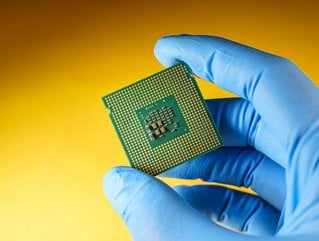
Despite being a piece of real estate no larger than a fingernail, the modern microchip is home to billions of transistors, miles of metallic interconnects, and layers of structures stacked on top of each other like skyscrapers.

Overall, a microchip is a structure that stands in abject defiance of the second law of thermodynamics: It creates a region of extreme order from a whole lot of chaos, and that does require a lot of energy.

One or more microchips run every one of the 40 billion connected devices currently in use—a figure that’s expected to jump to 350 billion by 2030.

Every time we make a Zoom call, between our personal devices, routers, data centers, satellites, and peripheral devices, at least a quintillion microchips were called to work.

Unfortunately, these chips consume an immense amount of resources and generate truckloads of waste.

The microchip is essentially made from sand—albeit sand that has been melted, purified, and refined until it is over 99.9999 percent pure silicon.

The arduous task of turning these disc-shaped, purple-colored wafers into microchips and memory devices falls on the fabs,(a fab or fabs is a term commonly used to describe a fabrication plant responsible for making semiconductor devices) which are high-tech facilities scattered across the world, with the majority in Southeast Asia.

A “fab” that processes 50,000 wafers—the silicon platform on which chips are built—per month consumes over 1 TWh of electricity a year.

That’s as much power as is required by a city of 100,000 residents.

Moreover, a rough estimate pegs the water consumption of a fab at over 19 million liters per day. That’s the amount of water consumed by a city of 60,000—for a whole year! In addition, these facilities utilize tons of chemicals, most of them expensive and toxic, and generate tons of waste, which include greenhouse gases like SF6, CF4, NF3, and C4F8.

There are over 1,000 semiconductor fabs operating globally today.

They make $450 billion worth of microchips a year and generate 50 million tons of carbon dioxide annually.

This complex semiconductor fabrication process is nestled at the heart of an elaborate web of international assembly lines. The company that makes the wafers and the fabs that create the microchips can be located in different parts of the globe. The assembly of the actual device likely takes place in a different company at a third location, and the end user could be anywhere in the world.

This means that the company whose name is on the final product might have very little control over the conditions and practices of the fabs.

Further, different parts of the semiconductor lifecycle are regulated by different environmental legislation, making not just the implementation of sustainability efforts, but also the tracking of their environmental footprints, complicated.

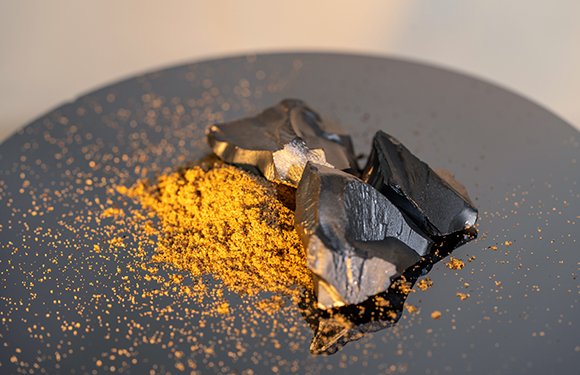
The elements of lithography, sand and silicon crystals, sit atop a silicon wafer

Given the size of the microchip, these numbers seem extraordinary.

However, this could very well be the price that we pay for the complexity of a chip, and the comfort it brings into our lives.

                       ———————————–

Advances in the technology sector have seen revolutionary gadgets surfacing because of this little mysterious device.

Microchip technology has modified existing patterns of human activities such in personal, social, political, and economic spheres.

Microchips are clearly being utilized for several other purposes.

In military applications, the microchips were used to build the Minuteman II missile in the 1960s. To add to that, a Z-40 semi-automatic pistol with a microchip embedded in its grip was released to avoid the use of the pistol by any unauthorized user.

In Industrial applications, scientists have employed the use of a microchip-based technology to detect the type and the progression of cancer in patients. Because of this technology, patients can now be informed of their prognosis within a few hours.

Chip improvements have led to increased computing power and incredible memory function.

Microchips have enabled applications like on-device artificial intelligence (AI) and virtual augmented reality to come to life.

Gains in data transfer such as 5G connectivity have been enhanced by the microchip technology.

Microchip technology has made huge advances in technology.

Objects and devices such as communication devices, vehicles, personal entertainment devices, GPS tracking devices, weapons, identification cards, micro-ovens, supercomputers, and many other applications use microchipMicrochips’ distinctive mode of collecting data and transmitting data to its exact destination has made information easier to handle.

The epic and revolutionary manufacturing techniques of microchips have created a storm of microchip-embedded devices that affect our daily lives, both positively and inevitably negatively  

Regardless of the industry, modern electronics use thousands, millions, or even billions of semiconductors on a single chip.

As a result, today as consumers demand more electronics, one of the most important components of any circuitry has become something of a scarcity. is that there is a massive shortage.

This has happened over the past year, largely due to a significant shortage of the most basic building block of technology:

Semiconductors.

                     ——————————

It is likely that microchip manufacturing will continue to be a major consumer of electricity, water, and chemicals.

So in shaping our world we could ensure that the energy is supplied by renewables, that the water is recycled, and the chemicals are processed without damage to the environment. In other words, we must be relentless in our efforts to make microchips more sustainable. And we should never forget that the comforts of modern life gifted by these wonder chips come at the expense of a vast amount of resources.

Microchips act as a key unit for programming the conversion of the car industry to electric cars, which is increasingly dependent on electronics, the lithography industry, the smartphone industry, and the internet to name just a few of the trillion applications over the past several decades.

The microchip industry filled by the need for big science is growing exponentially year on year. 

The problem is embedding them in objects is one thing, deciding in which devices to embed them and what systems to build around them is another matter altogether.

Laws governing their application are literally in human hands for now but not much longer.  

All human comments are appreciated. All like clicks and abuse chucked in the bin.
← Back

Thank you for your response. ✨