THE BEADY EYE SAYS: WELCOME TO THE NEW YEAR. ANOTHER 365 DAYS THAT WILL CHANGE THE WORLD FOR BETTER OR WORSE.

Tags

,

( TEN MINUTE READ)

The world relative to its human population is quite large. It is 123 billion acres in size of which 37 billion acres is land, about 4 acres for ever man woman and child.

However to day the world is dominated by corporations that follow the logic of finance capital – the logic of money.

The only thing one can be sure of is that in today’s societies, is that wealth is concentrated.

“It is obscene for so much wealth to be held in the hands of so few when one in 10 people survive on less than $2 a day…. Inequality is trapping hundreds of millions in poverty; it is fracturing our societies and undermining democracy.”

  1. Bill Gates
  2. Amancio Ortega (Spanish founder of Inditex)
  3. Warren Buffett
  4. Carlos Slim (Mexican businessman)
  5. Jeff Bezos
  6. Mark Zuckerberg
  7. Larry Ellison
  8. Michael Bloomberg

These 8 Men Control Half the Wealth on Earth.

They hold the equivalent of the wealth of 3.6 billion people.

Six of the eight individuals are American, and four of the eight (half the list) come from the American tech community — Gates, Bezos, Zuckerberg, and Ellison. It’s also interesting to consider that four of the arguably most powerful people on the planet weren’t elected, and some of them work actively to fight poverty and injustice. Again, there is that question of perspective.

The problem is that they are deeply interconnected but at the end of the day, this is about something larger than a few wealthy individuals.

With the state of the world we live on ( as we are becoming digitized citizens, driven by technology in the hands of the few.) one could not be blamed for feeling despair because of our inability to shake off the effects of the Industrial Revolution.

If people don’t have a real living wage, they can’t build wealth. If they spend their lives in debt because of a shortage of affordable health care, they can’t build wealth. If they struggle just to get a job in the first place due to discrimination, they can’t build wealth. Wealth for all can only happen when we engage our collective political and social will to distribute it fairly. Unless the growing gap between rich and poor is addressed, the world can and should expect more political unrest, rage, and the kind of backlash many say led to events like Brexit and Trump’s election.

By now must of us know that the world has passed through different ages to get to our digital world, the information economy, or cryptocurrencies.Industrial Revolution Effects Featuredindustrial revolution and the slave trade

It has been said that the Industrial Revolution was the most profound revolution in human history, because of its sweeping impact on people’s daily lives but hidden behind its benign name is a history soaked in the ingredients that have the world in the mess it is now in (Imperialism, Greed, Wars, Slavery, Capitalism, Profit, Mass production of goods, Workhouses of the poor, Consumerism, Inequality, the rise of cities, POLLUTION AND DESTRUCTION OF ENVIRONMENT, the rise in technology, the rise of socialism, key inventions and innovations that served to shape virtually every existing sector of human activity along industrial lines, with many new industries. The invention of the Internet in 1969.

Western post-war world order will not continue forever, because system theory states that when a system, or in our case the interconnected elements of life, becomes stressed or unstable it is susceptible to disruption and sometimes momentous change.

That’s where we are right now.

So what do you mean by world?

Most of the time, things are more complicated than they seem initially. All of our norms have been blown up, some have catapulted ahead a dozen years, and others have regressed.

Truth, reality, facts, science and many norms we take for granted are undergoing transformation ad and in theory, governments have the last say. But what if companies/organizations are more powerful than governments?

The toxic polarization we’ve endured is now further dividing into alternate realities where citizens consume different information, see different “facts” and passionately hold opposite opinions.  The truth doesn’t matter.

Fundamental values that define every person, family and community regardless of their belief system are under attack from data and profit seeking algorithms.

How are we responding? Go back to our over-consumptive ways?

From the wreckage of 2020 we are a changed society, aware of the waste of fast fashion, committed to supporting local businesses, and soothed by the beauty of the natural world.

Sacrifice defined earlier generations, but not our current generation.

The pandemic has been our era’s true test of character, while authenticity and compassion are in the main social media like clicks. As much as everyone likes to complain about technology, imagine what the pandemic would have been like without the internet, apps, Wi-Fi, streaming, laptops and mobile phones. With no other choice, tech adoption blasted off, as consumers embraced it at levels predicted for five or ten years in the future. Out of all that change, ecommerce has to be the biggest and fastest consumer shift ever, as most of the world logged on to get what they needed.

Amazon emerges from 2020 as an even larger entrepreneur-swallowing black hole that it was before.

We’ve become accustomed to the pace of tech innovation moving society along faster and faster, whether a fun distraction or a necessary evil, people have integrated new devices, applications, and activities into daily life raising the bar on every level.

Reckoning still awaits in realms of policing, environmental reform and justice, racial justice, wealth, income, workplace inequality, and democracy but nothing prepared us for use of  Nuclear weapons.

With more human made material than living biomass exists on the planet, we also have physical evidence of another tipping point the Climate.

Will we ever come together?

Can you conceive of something of which you’ve had no prior experience? I cannot imagine any human being capable of doing so. This is a key to how we understand one another, because it exemplifies our reliance upon a pre-existing stimulus for thought.

Abstract concepts such as ‘love’ seem to exist in the entities which harbour them, as they are in many ways incommunicable through experience of the physical world, and are transferable only through language. “

Every being cries out silently to be read differently.

Reconciling with change will take more time for some and less for others but change there has to be. Our problem is how to achieve it without destroying the gift of being alive.

If ever 2023 is the year if a friend asks for help give it.

So here is a proposition.

Why not wage a CPS WAR ( Copy Paste Send) on those who are in power to take Action.

We can become part of a solution, not add to a problem, by posting intentionally on social media, transforming it from an empty distraction to a simple living tool. Being intentional with your posting and your consumption goes a long way to ensuring that social media is a part of your life, not the whole of your life. Social media doesn’t have to be addictive brain-numbing fodder.

 As always with this simple living lark, it all boils down to intentionality.

So here is an example where an  CPS WAR campaign could make a difference.

TAKE THE COST OF LIVING:

Orange the French Telephone / Internet streaming / monopoly,  supplies Live boxes ( That could not cost more than 100 euros to make.)

They charge 29.99 euros rental (a month) for the use of the box, for life.

The current population of France is 65,632,612 as of Thursday, December 29, 2022.

If half the population have a live box ( 30,000,0000) X by 30 = 900,000,000 Euros a month.

I most be missing some thing here. 900,000, 000 a month to supply streaming / internet.

What ever about offering different services this is plain robbery TO BE PAYING 360 Euros a year for a box the cost around a 100 euros.

WHY NOT INSTIGATE AN CPS WAR ON ORANGE TO HAVE THIS CHARGE REMOVED.  I.E. SEND THEIR HEAD OFFICES THOUSAND OF EMAILS, SACHERATING ITS OPERATIONS, TILL THEY AGREE TO REMOVE THIS COST.

It won’t save the world, but if did worked it might be the first step to empower technology to be used to benefit the silent without a voice.

Long ago, in the cave known as silence
Man lived in harmony:
song-less, muted, free
Only a hand-print on a wall
Then a distant human call
Would shatter that primal unity.
By day he’d pray to earth and sky
Heed the wisdom of the ancient trees
At night he’d dance ‘round moon and fire
Take solace in the infinite seas.
Gesture would mimic conversation
Silent ritual his only Lord
Collaboration, sweet simplicity
Love in the dormant vocal cord.
But the end came in the name of word
Sending echoes through that cave
Until man’s world became as thus
And the soul met a shrieking grave.
Man lost something upon that hour
Lost intuitive understanding
The human tongue tore man from man
When wordless truth succumbed to speaking.
Confusion, division, language, war
Born upon that single rasping roar
Until misunderstanding between one and all
Beleaguered man forevermore.

Bianca Laleh, Totnes, Devon

All human comments appreciated. All like clicks and abuse chucked in the bin.

Contact: bobdillon33@gmail.com

THE BEADY EYE ASK’S. IS 2023 GOING TO BE THE YEAR THAT HUMANITY FINDS OUT THAT IT IS NOT THE DOMINANT FORCE OF CHANGE ON PLANET EARTH?

Featured

Tags

, , , , , , , ,

( Three minute read)

What can be achieved in this decade to put the world on a path to a more sustainable, more prosperous future for all of humanity?

Temptation is to say, that you may rest assured that it will be another year of unadulterated verbal dioramas diarrhoea.

With humanity waging war on nature the risks we are taking are astounding.

What did Earth look like from space in 2022?

It looked beautiful, it looked dangerous. It looked small and inconsequential, it looked incredible.iss066e109851

Nature always strikes back – and it is already doing so with growing force and fury.

About 96% of all mammals by weight are now humans and our livestock, like cattle, sheep and pigs. Just 4% are wild mammals like elephants, buffalo or dolphins. Seventy-five percent of Earth’s ice-free land is directly altered as a result of human activity, with nearly 90% of terrestrial net primary production and 80% of global tree cover under direct human influence.

We have grossly simplified the biosphere, a system of interactions between lifeforms and Earth that has evolved over 3.8 billion years. As the pressure of human activities accelerates on Earth, so, too, does the hope that technologies such as artificial intelligence will be able to help us deal with dangerous climate and environmental change. That will only happen, however, if we act forcefully in ways that redirects the direction of technological change towards planetary stewardship and responsible innovation.2022-05_geocolor_20220505180018_logos-1

Rising greenhouse gas emissions means that “within the coming 50 years, one to 3 billion people are projected to experience living conditions that are outside of the climate conditions that have served civilizations well over the past 6,000 years.

In this decade we must bend the curves of greenhouse gas emissions and shocking biodiversity loss. This means transforming what we eat and how we farm it, among many other transformations.

Nature has now become for us a kind of glossy cardboard, digitized and virtualized, increasingly distant from our lives.

The recent Covid-19 global pandemic is an Anthropocene phenomena. It has been caused by our intertwined relationship with nature and our hyper-connectivity. ( We order Pizza by sending messages into space.)

However our actions are making the biosphere more fragile, less resilient and more prone to shocks than before.

Humans use the majority of natural geo-resources, like minerals, rocks, soil and water.

Two of the biggest barriers are unsustainable levels of inequality and technology that undermines societal goals.

Inequality and environmental challenges are deeply linked. Reducing inequality will increase trust within societies.

It is time to flick the “green switch.   We have a chance to not simply reset the world economy but to transform it.

It is time to integrate the goal of carbon neutrality into all economic and fiscal policies and decisions. And to make climate-related financial risk disclosures mandatory.

It is time to transform humankind’s relationship with the natural world – and with each other. And we must do so together.

It’s is time to get off your smart phone and start to demand transparency of Algorithms that are plundering the world for profit. .

The state of the planet is much worse than most people understand and that humans face a grim.

Because as of yet there is no political or economic system, or leadership, is prepared to handle the predicted disasters, or even capable of such action

The problem is compounded by ignorance and short-term self-interest, with the pursuit of wealth and political interests stymying the action that is crucial for survival.

Most economies operate on the basis that counteraction now is too costly to be politically palatable. Combined with disinformation campaigns to protect short-term profits it is doubtful that the scale of changes we need will be made in time.

We need to be candid, accurate, and honest if humanity is to understand the enormity of the challenges we face in creating a sustainable future.

Without political will backed by tangible action that scales to the enormity of the problems facing us, the added stresses to human health, wealth, and well-being will perversely diminish our political capacity to mitigate the erosion of the Earth’s life-support system upon which we all depend.

Without fully appreciating and broadcasting the scale of the problems and the enormity of the solutions required, society will fail to achieve even modest sustainability goals, and catastrophe will surely follow.

So the Beady Eye wishes all a Happy New Year with the near certainty that the abovementioned problems will worsen over the coming decades, with negative impacts for centuries to come, if we dont now get our fingers out of where the sun does not shine.

No one has a right to pollute the air or the water, which are the common inheritance of all.

We have not inherited the Earth from our parents, we have borrowed it from our children.

The time has come to re-educate to nature and contact with it as a lever to ensure collective well-being, physical and mental; to restore beauty, kindness, ecosystem thinking, emotional intelligence and a formation of values, heritage inherited from the wisdom of the past but negligently neglected.

After all, this is what ecology is all about: looking at reality as it is, understanding its connections, accepting its complexity, and striving for harmony between all parts.

All human comments appreciated. All like clicks and abuse chucked in the bin.

Contact: bobdillon33@gmail.com

THE BEADY EYE ASK’S: IS DATA DESTORYING THE WORLD?

Tags

, , , , , ,

(Fifteen minute read)

The short answer: Yes, and it comes with a cost, we now have Apps you pay for to stop data collection

Technological advancements are difficult to forecast, but several models predict that data centre’s energy usage could engulf over 10% of the global electricity supply by 2030 if left unchecked.

There is no denying that the future of technology will continue to revolutionize our lives, but you’d be hard-pressed to find anyone who doesn’t care about their privacy. It’s human nature. You want control over what private information you share and who you share it with. Unfortunately, you can lose this control with a careless click.

Various entities handle your private data. The first among them is the government and its institutions. You can’t get public services (for example, electricity, a high school education, healthcare) without identifying yourself.

You can buy apples at a stand and remain a stranger to the fruit seller. But buy apples online, and you’ll give away private information about yourself. It may be a fact as simple as that you like apples. This information will be sold to an advertiser, and the next time you go online, an ad for apples will pop up on your screen.

Almost everything you do online leaves a data breadcrumb. You have little control over how these breadcrumbs are collected.

Usually, it works like this. Before you start using a new online service, you have to read a wall of fine print. You do not do so, because you don’t want to wade through paragraphs of jargon. You click that you agree, and that’s how you begin to give away your private data. You cannot change the agreement, and you cannot bargain — it’s take it or leave it and if you reject all, rest assured it is logged as data. 

There are countless technology advances in hospitals and medicine but as data penetrates deeper into biologically and culturally diverse corners of the world is technology a sustainability hero or villain?

Information privacy will become an even hotter topic once technologies create more invasive tools. You’ll be surrounded by facial-recognition cameras, smart speakers that listen to your conversations, e-textiles, wearable health monitors, and other data-gathering gadgets.

                                                                          ——————————–

All-together, this paints a challenging picture for the future of our environment. Many technology companies have yet come to grips with the environmental impact associated with their products and services.

Analysis by Veritas estimates that 5.8 million tonnes of CO2 will be pumped into the atmosphere this year as a result of storing unnecessary ‘dark data’ – this translates to more emissions than 80 individual countries.

Destroying our planet is no easy task. Sure, you could bomb us back to the stone age, introduce a plague to wipe out all complex life or whip up some sort of nanomachine to completely eliminate the entire biosphere. But in all those cases, the rock we stand on would still remain, lifelessly circling the sun for billions of years to come.

Getting a handle on wayward data is becoming as big a problem as Climate Change.

The list of significance of data analytics just goes on and on – you need data to pitch stocks, file financial reports and provide better service to your clients, arrive at projections, assess performance. Objects that use IoT today include driverless cars, fitness trackers like Fitbit, thermostats, and doorbells. Objects that use IoT are also commonly referred to as smart objects. smart thermostat online shopping.  voice assistants. integrate your voice assistant with any smart device. food delivery.

Who hasn’t heard of Facebook, Twitter, or Skype? They’ve become household names. Even if you don’t use these platforms, they’re a part of everyday life and not going away anytime soon.top reads of 2022

Communication tools offer one of the most significant examples of how quickly technology has evolved.

Technology has changed money

No more do you have to enter a bank to withdraw money or transfer it to someone. With your cell phone and a banking app, you can manage all of your necessary bill payments online.

The smartwatch is a relatively new technology that captures almost all the capabilities of smartphones in a convenient touch-screen watch. You can receive notifications, track your activity, set alarms, and even call and text directly through these wearable devices. Technology has changed how we watch television, what news we get.  More and more TVs these days are even designed for streaming. “Smart TVs” have Wi-Fi capability. Paper books aren’t going anywhere. We can access our music no matter where we are. For better or worse, technology has also made it possible for you to find other people’s personal information on the Internet through social media. You can gain access to the information you want to know about a particular person.

Medical Guardian Medical Alert System

So is Data screwing up the world?

Well, neither really but should we be steering technological innovation and deployment to drive social progress.

Technology encompasses a broad range of products and systems, some of which will help us live more sustainably and others that won’t.  The production and use of technology will always involve the consumption of energy and materials, but if that same technology helps us minimise our consumption in other ways or allows us to use more sustainable methods of production, then the net effect will be positive.

Over the years, technology has revolutionized our world and daily lives. The amount of active web users globally is now near 3.2 billion people. That is almost half of the world’s population adoption of new technologies, like smartphones and wearables, may have slowed down significantly in the last few years, but data usage is only continuing to grow—massively.

In 2012, there were only 500,000 data centres worldwide to handle global traffic, but today there are more than 8 million according to IDC.

As data becomes more siloed and fragmented, it gets increasingly harder to find and manage.

Take Bitcoin mining network which are now consumes more energy than the whole of Ireland. And it’s growing at about 30% a month.

Take Netflix binging. Storing and streaming all that digital content requires a lot of energy, and as consumers expect regular new content and ever better video quality, the energy demands spiral upwards.

It’s not just Netflix of course. In total, data centres consume roughly 3% of the world’s energy supply, and this amount is estimated to treble in the next decade.

Take that every year, millions of data centres worldwide are purging metric tons of hardware, draining country-sized amounts of electricity, and generating carbon emissions as much as the global airline industry. Data centres energy usage could engulf over 10% of the global electricity supply by 2030 if left unchecked. It is double every four years. Analysis by Veritas estimates that 5.8 million tonnes of CO2 will be pumped into the atmosphere this year as a result of storing unnecessary ‘dark data’ – this translates to more emissions than 80 individual countries.

All-together, this paints a challenging picture for the future of our environment because  it’s one of the largest and most unappreciated blind spots in the fight against climate change.

The most important next step right now is simply education – and getting companies to realize that the importance and benefits of more eco-friendly data centres, but the impact is also determined by how we, the consumers, use that technology.

Heading into 2023 the signals are mixed turning millions of us into remote-workers.

Perhaps the most concerning way that technology impacts our environment is through the mining of vast quantities of rare metals. Metals like lithium, cobalt and nickel are used to make critical hardware components – batteries in particular – for things like computers, smartphones and electric cars. Unfortunately, mining these metals is energy intensive and comes not just at an environmental cost, but often a terrible human cost too. Moreover, these rare metals are just that: rare. Without large investment in recycling facilities, using these limited natural resources is unsustainable. The planned obsolescence of consumer gadgets only exacerbates the problem.

We will not likely get through the coming year without some sort of catastrophic attack on a very strategic and important network or service provider like Gmail, WhatsApp, or Microsoft.

The revolutions that will surface in years to come will continue to make profound changes in our everyday lives.

In the end, the environmental impact will depend not only on choices that we make as consumers, but on the social and political choices that we make collectively as citizens.

Our data centres don’t have to harm the environment, if we take the proper actions today.

Only 12% of today’s data centres that are green. According to analyst firm IDC, in 2012, there were only 500,000 data centres worldwide that were handling global traffic, but today there are more than 8 million.

“The time for pure national interests has passed, internationalism has to be our approach and in doing so bring about a greater equality between what nations take from the world and what they give back. The wealthier nations have taken a lot and the time has now come to give.”

Why destroy the planet if we don’t have to.

Whole industries (think telemarketers, corporate law, private equity) whole lines of work (middle management, brand strategists, high-level hospital or school administrators, editors of in-house corporate magazines) exist primarily to convince us there is some reason for their existence.

It’s not our pleasures that are destroying the world. It’s our puritanism, our feeling that we have to suffer in order to deserve those pleasures. If we want to save the world, we’re going to have to stop working in bullshit jobs.

It is ironic that the technologies most responsible for the mood of today’s world are also best positioned to improve it.

AI must be programmed to enhance human life as opposed to imitating it.

From social media to the climate crisis, Big Data is helping to ruin everything. The total lack of legal data rights for individuals is a violation of autonomy, privacy, and even freedom of thought and speech.

Currently we have no rights at all to own our data, and it can be sold easily to the highest bidder to do with it as they please.

Everyone has the right to freedom of opinion and expression; this right includes freedom to hold opinions without interference and to seek, receive and impart information and ideas through any media and regardless of frontiers.

There are fantastic things that can be done with data, and it is absolutely essential to so much of modern scientific and engineering feats which we hope might save the world. Without data, none of our interventions in great problems like climate change would be able to do anything at all. In fact, without adequate data collection and analysis, we might never have noticed that climate change is happening at all.

Just remember these few things:

  • Data is not your ally — especially not when you are trying to convince somebody of something. Changing a whole mindset requires more than just statistics, and raw data is so abstract and such a broad category that there can easily be conflicting data sets that lead to impasses in conversation. Data is a crucial tool, but you need to build trusting mutual relationships, too.
  • Data is not your friend — it does not care whether you think you have a right to it or not. Data will be owned by and used by those who created the platform you are using, until the law changes. And the law will not change unless you start caring.
  • Data is not “things” — objects are totally separate from the data abstracted from them in a way that is metaphysically irreconcilable. There is no way to recreate an apple from mere data about an apple, nor to exhaust the nature of an apple by reducing it to data-form. This is an important principle that should be remembered whenever we deal with data: data is no more than what it is, and potentially much less.
  • Data is now just such a frontier — you are the product.

All human comments appreciated. all like clicks and abuse chucked in the bin.

Contact: bobdillon33@gmail.com
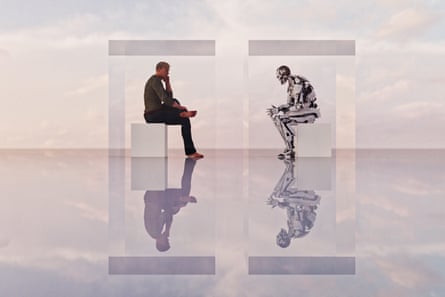
THE BEADY EYE: SAYS TECHNOLOGY WITHOUT COMMUNITY IS SUCKING THE LIFE OUT OF SOCIETY.

Tags

( Eight minute read)

Nature relies on cooperation and interconnection, not just competition, and in a very real sense, cooperation and interconnection are higher forces. They make the larger systems of nature go. Rivers and oceans and rain don’t compete — they just flow.

Sure, nature’s full of predators, but they’re nothing like the ones in our civilization.

There is no such thing in nature as an antisocial being. Not one. Every single being in creation exists in community. Even predators, yes, like sharks.

We are living in a profoundly, desperately, terribly unnatural way –  WITH TECHNOLOGY FOR THE FEW.

We don’t live in a way that allows hope for the billions and trillions and quadrillions of creatures that are at the hands of Extinction. We don’t live in a way that allows us relationships with them — or with each other. We don’t live in a way which allows us hope for much of anything. We’re just trapped in our little bubbles of hyper atomized individualism — and we confuse wanting survival for ourselves with “hope.”

Real hope comes from “believing” in something larger than the self.

The idea that we’re above everything else precludes the possibility of hope, because it leaves us isolated and alienated from everything else. You can hardly have hope when you’ve already presumed you’re the reason everything exists — all that’s left is to face the consequences of your hubris.

Our consciousness isn’t quite ready to think in that way yet.

Is this Extinction? Yes. Will human beings survive? Yes. Enough of them, certainly, to continue the project of civilization. But that project now has to change. Not just materially, but morally, ethically, spiritually, mentally. We’re not just a market.

We don’t even have enough, currently, to survive on, which, of course, is why living standards are now plummeting worldwide, and global progress is going into reverse.

Why?

Because AI Fairness will get worse before it will get better incredibly antisocial way.

Beyond the problem of material impoverishment — which itself is a consequence of a lack of trust — lies the rupture of social bonds.

Living in the shadow of the industrial age has conditioned us to have a mental model of life that’s basically a market. And so when our industrial economy begins to go haywire — prices rise, we can’t buy stuff, we can’t earn enough money to make ends meet — panic sets in.

Happiness comes from relationships. And relationships come from community.

There is nothing — and I mean this — more important or valuable than those things.

There’s a purpose — plenty of people are against dirty energy. But there’s not often public goods or spaces, or investment. Where are such people to gather? Well, usually, only at marches, once in a while. How are they to connect? How are they to speak to one another. Forge lasting relationships? There’s little investment of course because even when “good” billionaires think of “investing,” what they mean is in material systems, like clean energy, like windmills or what not, that will still profit them. Rarely if ever does anyone say, hey, we need to invest in community.

So can we live in a way that honours all the above a little better?

That’s the question. When we do, there will be hope. Until we do, there won’t.

SO HERE IS A HAIR BRAIN IDEA THAT MIGHT WORK TO REBUILD COMMUNITY.

REGISTER YOUR VILLAGE OR TOWN AS A LIMITED COMPANY. 

Every villager is a director with one share.

All entering the village become a share holder and director. All departing must sell their share back to the company.

To set up a private limited company in the UK, you will need to appoint a minimum of one company director. There is no statutory limit to the number of directors that can be appointed at any one time or throughout the life of a company unless certain restrictions are stated in the articles of association. The same person can be a director and shareholder of a company.

Your responsibility for  the company’s debt is capped at the number of shares you own in that company.

Working through your own limited company is the most tax-efficient option.

Anything that is solely classed as a business cost can be claimed back on expenses.

As the shareholder, you cannot be held personally liable for the debts of a limited company, meaning your personal assets are not at risk.

You keep complete control of your financial affairs, meaning you do not have to risk your money with any third party administrator or umbrella company.

Operating as a limited company often gives suppliers and customers confidence is more financially rewarding, with more opportunities for tax planning purchasing power.

As a limited company, the name is protected by law, and no one else is allowed to use it.

You have to file your accounts at Companies House each year, which will be on public record. You will also have to file accounts, company tax, and Corporation Tax calculations with HMRC every year.

As a limited company, you typically pay yourself a small salary, so you incur as little personal tax as possible.

The majority of your income will come in the form of dividends. These are taxed at a lower rate, which means you’re able to maximise your take-home pay. In addition to the tax benefits, paying the majority of your income through dividends means that you’re able to pay less National Insurance contributions (NICs) as these do not apply to dividend payments.

As a limited company, you could also be eligible for the following venture capital schemes:

  1. Enterprise Investment Scheme (EIS) – A scheme to help you raise funds for your business by granting investors tax relief on shares they buy in your company. To be eligible, you must receive investment within seven years of your first commercial sale. Eligible investments are capped at £5 million per year.
  2. Seed Enterprise Investment Scheme (SEIS) – A scheme to help you raise funds for your business by granting investors tax relief on shares they buy in your company. This scheme is for companies that have just started, or yet to start trading, and is capped at £150,000
  3. IT CAN BE  incorporate online in less than ten minutes.
  4. Every village has an accountant living in it.


————————————————

Community is the most vital investment we can make right about now, for the sake of democracy.

Why is democracy dying?

Well, the standard answer goes like this — oh wait, there isn’t one.

A good answer goes like this: democracy’s dying because of stagnation and inequality.

At the median incomes have been stagnant, even in the rich world, for decades leaving middle and working classes unable to pay the bills, falling into debt crises.

There’s an even truer answer.

What does inequality and impoverishment do?

It rips the heart out of community. How so? Well, life becomes like Squid Game. A brutal, desperate battle for survival.

You see it played out every single day — lose your job, lose you home, healthcare, credit, savings, bang, you’re homeless, and on the way to being dead.

People are rivals for scarce resources, adversaries for bread and money, and that’s the good part — the rest turn, quickly, into scapegoats, hated and feared sub humans, blamed for your woes. Welcome to Trumpism, to Brexit, to Putinism, to Modi’s India, to Xi’s China.

We are now living in the twilight of an economic age — the industrial age.

“The Information Age” if you really like — information was just used to coordinate industrialization, shifting jobs and manufacturing to China, offering credit and debt to Westerners, and so forth. In this twilight, inequality and impoverishment are ripping community to absolute shreds, because just finding a way to survive, to make ends meet, this bitter struggle for mere self-preservation, is becoming paramount.

At the root of it is our economy’s inability share the gains in anything even remotely resembling a fair, decent, humane, honest manner.

If we can’t distribute the gains of our economies in fair and honest and decent ways — its going to be lights out.

We are the ones who have the real work to do. We have to mature and grow the consciousness of humanity, and merge it with the great, beating heart of life. To build the material and physical systems which allow all beings to flourish. The social and political ones which enable democracy to survive. The mental systems which place peace and nonviolence as the truest and greatest of values. The spiritual project of love continues at our hands.

Given the economic environment we are heading into for 2023 we will see the collapse of many a business, with the merger of some of the biggest internet players platforms.

Why?

Because any platform that cannot handle what is called under structure data of machine learning is going to become prevalent as private date revert to private as disinformation becomes one of the biggest threats to freedom of expression with the Current wars and the erosion of democracy elections, leading to organisations making up their own definitions and censoring anything that falls within, leading to an alternative internet, with governance layers.

The full impact of AI acting thought discriminating algorithms ways is not known, but it is becoming obvious that harmful biases lurk in there targeting and use, from healthcare to insurances claims, whether one get six year for a crime or medal.

Generative Ai is a wild west show with no way of monitoring its effects.

  • Generative AI is a sub-field of machine learning that involves generating new data or content based on a given set of input data. This can include generating text, images, code, or any other type of data.

If you are a seller, you have to be on Amazon, otherwise no one will find your stuff and that means they won’t buy it. This is called a monopsony, the obscure inverse of monopoly, where a buyer has power over sellers.

Historically, we understood that businesses couldn’t be trusted to be on both sides of a transaction. The “structural separation” doctrine is one of the vital pieces of policy we’ve lost over 40 years of antitrust neglect. It says that important platforms can’t compete with their users.

Jean-Leon Gerome’s painting Pollice Verso, 1872, depicting gladiators in an arena with noble onlookers giving a thumbs-down gesture. The tapestry before the nobles has been replaced with a US $100 bill in which Ben Franklin’s mouth has been replaced by an Amazon smile logo.

Governments are becoming weak, unable to look after their people with to many pressures and conflicting interests driven by  short term social media demands. Humanity is being asked to change, for the first time in its history. To mature and grow, and bring forth something like the Age of Existence.

Transferring your village into a legal recognized Limited Company would obviously require new contracts with service companies, and professional personnel, like doctors, dentists, teachers, police etc.

A smart technology program could examine and could work out all the pit falls.

All human comments appreciated. All like clicks and abuse chucked in the bin

Contact: bobdillon33@gmail.com
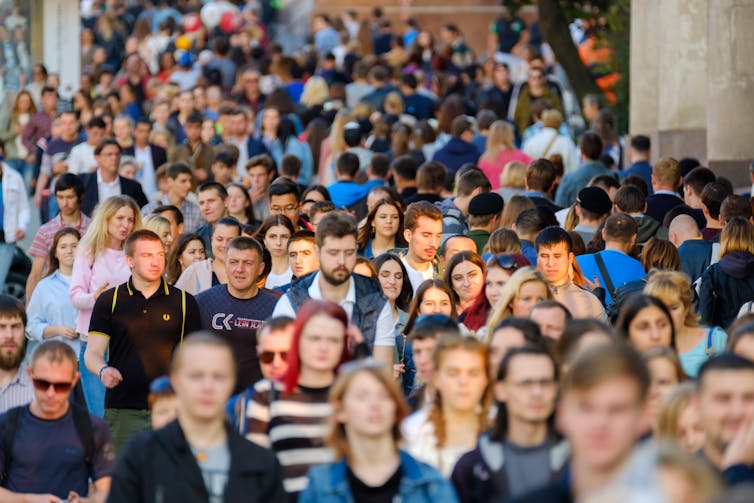
THE BEADY EYE ASK’S ARE WE ALL NOW LIVING IN THE WORMHOLDES OF TECHNOLOGY.

Tags

, , , ,


( Six minute read) 

Never before has our society been so advanced yet so vulnerable to our evolution with technology amongst the most magnificent yet terrifying creations our world has ever encountered.

As technology grows, so do we grow around it and adapt to its new forms and capabilities.

It allows us to understand complexities that seemed insurmountable and to perform tasks that range from mundane to monumental. Yet while this great power continues to thrive and expand in our environment, what we once were as a species seems to be crumbling beneath technology’s colossal-sized foot.

The question however is:                                      Is Technology saving the world … or killing it?

Technology from the 18th century and onward has harmed the planet primarily through two factors: depleting natural resources and polluting them.

Technology makes us better at analysing data, improving workflows, streamlining supply chains, identifying problems faster, improving production processes, and more.  According to Forbes, IoT technology will be incorporated into 95% of new product designs by 2050. It is expected that everything will be connected to the internet and the cloud by 2050.

Let’s be honest, but for most people, technology isn’t something we think twice about.

Depending on the individual, technology can mean the difference between depression and laughter, solitude and social interaction, or even between life and death.


It has penetrated all aspects of daily life and is now needed more than ever to preserve what is left of life, as it is reducing

our ability to engage in person, turning the world into a begging pawn shop, from save almost everything, to saving yourself.

All this idealistic representation of fake lives around us is causing a diminish in many people’s confidence and self worth.

This is a catastrophic aspect of social media, which people still refuse to accept its presence and impact because we’re still in the

transition phase of full technological development.

So we are shuffled, sending messages between the two worlds and entertain with thousands of photos and videos daily.

We’re placing ourselves in a virtual world made of supermodels, vacations and holidays, and shredded bodies that are on the verge

of an atmospheric collapse and yet, electric replacement haven’t framed a total positive future. 

It is undeniable that technology has made life easier but this is also the technology that goes beyond our ethical and legal values

and social standards worldwide.


Even though we use technology, we do not know about its disadvantages.

What does technology do to our lives?

It’s hard to be optimistic sometimes, we know. Politics is a mess, the environment’s in trouble and half the world appears to be

either melting or actually on fire. But there are reasons to be cheerful, because technology is working to defeat each and every

horseman of the apocalypse.

Here’s how technology will save the world…

Technology continues to find new ways to help us live longer, better lives. There is no person we can’t reach within a phone call.

Gene editing with molecular ‘scicssors’ has the potential to remove inherited diseases and battle cancers; artificial

pancreases (opens in new tab) may transform the lives of people with diabetes; and ‘big data’ analysis may help unlock the cures

for conditions that currently ruin or end many people’s lives. We’re starting to see wearable devices save people’s lives by

warning them of conditions they didn’t know they had.

It is used in hospitals and our judicial systems to identify people’s mistakes.

While technology can have positive effects, it never stops wars and we’ve got thousands of years of history demonstrating that.

A universe controlled by robots doesn’t seem so far off… in the meantime the weapon we have to create a world of sustainability is

the Smart phone.

If we want to, it is possible to target profit for profit sake, BY IN ACTING SMARTPHONES PRESSURE CAMPAIGNES.

You may be certain that a million messages, to any individual, businesses, organisation, that is blocking their ability to function

will not go unnoticed.

All human comments appriciated. All like clicks and abuse chucked in the bin.

Contact: bobdillon33@gmail.com.

THE BEADY ASK’S WHY IS THE EDUCATION OF FEMALE’S SUCH A PROBLEM FOR THE TALIBAN?

Tags

Islam Doesn’t Deny Women Education, So Why Does the Taliban?Taliban forces disperse women who were protesting over a suicide bomb attack

The Taliban had stated that women would be allowed to attend schools and universities, as long as classes were segregated.

But after its failure to allow girls to return to schools, many fear that the fundamentalist group will revert to its previous handling of women’s education – by effectively banning it altogether.

Between 1991 and 2006, under Taliban rule, Afghan women were not permitted to go to schools or universities. But in the years following the Taliban’s control of the country, the number of girls in primary school increased from nearly zero to 2.5 million, and the female literacy rate almost doubled to 30% between 2011 and 2018, according to a 2021 UNESCO report.

Although the Taliban claims its policies are guided by Islam, there is nothing Islamic about preventing women from going to school – in fact, it’s arguably un-Islamic.

While curbing women’s access to education has no basis in religion, it’s been firmly on the agenda of this extremist group for years – it was a faction of the Taliban, after all, that shot Malala Yousafzai in the head as punishment for her pro-female-education activism.

But the Quran commands all Muslims, regardless of gender, to read, think, contemplate, and pursue knowledge, and the Prophet Muhammad encouraged education as a religious duty for both males and females.

How then, can the Taliban, which declared Afghanistan an “Islamic” state, prevent women in the country from fulfilling what is otherwise seen as their religious duty?

The answer lies in cultural gender roles that patriarchal – not religious – regimes strive to uphold. Women’s purpose in these societies, according to the men that lead them, are to grow up chastely, marry (rarely for romance), and birth children, while maintaining the household with cooking, cleaning, and other domestic duties.

Their schooling, which could open the door to job opportunities and employment outside of the home, threatens this very traditional mindset.

These cultural attitudes are often masqueraded as religious ideals.

The Taliban’s leaders are well aware that the world’s eyes are on them, particularly watchful of their handling of women’s rights. T

Banning women from education and work is a crime against humanity.

Muslim women clearly have an Islamic right to education.“

Efforts to rebuild Afghanistan in the wake of economic collapse will be undermined completely;

The edict makes Afghanistan the only country on earth to bar half its population from getting a secondary education.

Just recently Afghanistan’s Taliban rulers have ordered an indefinite ban on university education for the country’s women.

This is a poor smokescreen for their real motivations,  a chilling step backwards for Afghanistan.Afghan female students take entrance exams at Kabul University in October

There are no two ways about it: women must be allowed to work and to move freely, and girls must be allowed to continue to go to school.

The international community has made the right to education for all women a sticking point in negotiations over aid and recognition of the Taliban regime.

They, that is the Taliban should be aware in the first place that none of them would exist without woman.

All human comments appreciated. All like clicks and abuse chucked in the bin.

Contact: bobdillo33@gmail.com

THE BEADY EYE’S. 2023 MESSAGE TO THE YOUNG GENERATION. IT WON’T BE EASY AND IT WON’T COST TRILLIONS TO CREATE A SUSTAINABLE FUTURE WORLD.

Tags

, , , , ,

( SIX MINUTE READ. )

Your time is now,  to step up to the plate and start taking responsibility for the biggest growth opportunity in human history.

Unfortunately its starts with facing global challenges that are causing and will continue to cause our globally societies to change  radically. 

You don’t have be told that we are on track to a catastrophic 2.7c of global warming.

You don’t have to be told that the population of the world  will be near 10 billion of us by 2050.

You don’t have to be told that as a result the demand for freshwater and food will increase.

You don’t have to be told that it is going to take a substantial portion of the worlds annual GDP to convert to a green sustainable economic system.

You don’t have to be told that the transition will not be orderly while we have I am all right Jack attuites, with profit seeking algorithms, while we have privileged positions and assets harvesting profits by using the current recession fever for overly aggressive job cuts, while we have education at a premium, while we have immigration and countries turn  inwards.

You don’t have to be told that the Ukraine Russian war is showing the urgency to develop new energy solutions.

You don’t have to be told that people world wide must rally to collaboratively research and share Covid -19 vaccines.

You don’t have to be told that companies must stop paying out excessive dividends and share paybacks.

You don’t have to be told that there is a boom of innovations in all technologies, that it must be turned into an interdisciplinary revolution.

You don’t have to be told that old industries and jobs will disappear.

You don’t have to be told that there will be more floods, wild fires, droughts, and conflict are on the horizons.

You don’t have to be told that 80% of world wide agricultural land is using 10% of available freshwater.

You don’t have to be told that we are looking at the disappearance of our polar caps , glaciers,  forests, rivers.

You don’t have to be told that by 2025 over half the world’s population will live in water- stressed areas with rising oceans.

You don’t have to be told that that we needs new materials to build with. Steel responsible for 11% of yours days carbon emissions, concerts 8% plastics 4%

You don’t have to be told that if we do nothing you will see the biggest human migration in world history.  As environmental, political and economic refugee grow to numbers never witnessed in the World.

You don’t have to be told that the Biodiversity of the world is under treat of extinction.

You don’t have to be told that you will most likely be living through these changes.

You don’t have to be told that solutions will not be found in impact start-up but by becoming leaders in business and government.

You don’t have to be told that sooner that later the world will rally to address all of the above.

YOU DO HAVE TO BE TOLD THAT THE NEXT THIRTY YEARS COULD BE TRAGIC AND TUMULTUOUS.

Your response to the megatrends will shape what is meant for human to survive.

Addressing the 60 billion metric tons of greenhouse gases we emit every year, through point – of source will be a multitrillion opportunity and more.

Don’t be distracted.

Every generation has the ability to effect changes, your generation must do so, because the age of technology combined by the current Capitalists Systems will and is  turning almost ever thing in to a product to trade.

There is no reality in the metaverse a “computer generated universe. ”

You have a weapon called the smartphone which ironically is both the cause and the solutions to effect change.

If you want a living world now is the time to use this power, to attack the unsustainable consumerism’s of profit for profit sake.

Bombard their operations with millions of messages to block their activities.

THIS IS ONE LOUD VOICE THAT CANNOT NOT BE ARESSTED.

All human comments appreciated. All like clicks and abuse chucked in the bim.

Contact: bobdillon33@gmail.com.

THE BEADY OVERVIEW OF WHAT THE COP15 BIODIVERSITY AGREEMENT COMPLEMENTS OF VERT.

Tags

,

( TEN MINUTES READ)

COP15: an ambitious agreement to halt the collapse of life
After two weeks of negotiations, almost all the countries of the world reached an agreement, Monday morning, at the end of the 15th world conference (COP15) on biodiversity. The challenge was daunting: to set an international framework for the current decade capable of halting, and even reversing, the collapse of life.

“It is a historic text which has just been adopted, well I hope it has been adopted. The words of the European Commissioner for the Environment, Virginijus Sinkevičius, shortly after the final hammer blow of the COP15 on biodiversity, reflect the general incomprehension. A few moments earlier, China – which was co-organizing the summit with Canada – decided to adopt the agreement with forceps, ignoring the frank disagreement of the Congo. In principle, the decision had to be taken by consensus between the 196 States Parties to the Convention on Biological Diversity present in Montreal.

Like others, the Central African country felt that several conditions were missing from the final document, the fruit of four years of work and two weeks of intense negotiations. Among these: the money needed to protect and restore biodiversity.

Chinese Environment Minister Huang Runqiu and members of the Secretariat of the Convention on Biological Diversity welcome the adoption of the new global biodiversity framework in Montreal, December 19, 2022 © UN biodiversity / Flickr
money for the living
The new “Kunming-Montreal Framework on Global Biodiversity” provides for funding dedicated to living organisms (public, private, national or international) to reach 200 billion dollars per year by 2030. However, certain high estimates of the amounts required fluctuate between 600 and 823 billion dollars per year, according to the Institute for Sustainable Development and International Relations (IDDRI).

Another subject of tension: many countries of the South demanded support from the countries of the North to the tune of 100 billion dollars per year by 2030 for the preservation and restoration of biodiversity; the framework finally foresees 20 billion dollars per year by 2025, and 30 billion at the latest in 2030.

Finally, while developing countries demanded the creation of a dedicated biodiversity fund, which the countries of the North opposed, the biodiversity money will finally be managed within the Global Environment Facility (GEF) , as proposed by Colombia. At least initially.

End clap to everyone’s surprise when the Democratic Republic of Congo had not given its agreement. But the legal advice of the expert of the Convention validates the procedure. © Earth negotiations bulletin
For a true sharing of benefits from genetic resources
The key issue of this COP, the sharing of benefits from the genetic resources of developing countries exploited by companies from Northern countries, for example in cosmetics or medicines ( our article ), was the subject of an agreement . This formalizes the creation of a mechanism whose workings will be determined during COP16 in Turkey.

In addition to additional funding, subsidies harmful to life must be reduced by at least 500 billion dollars per year by 2030. Subsidies granted to conventional agriculture are particularly targeted, as this constitutes the main threat on biodiversity, according to the Convention on Biological Diversity .

The text “does not break the house, but it saves the furniture” , in the words of Pierre Cannet, director of advocacy and campaigns for WWF France. “There was something for everyone,” greets a European diplomat. Everyone agrees that the new framework contains real advancements over its predecessors.

Protect 30% of land and seas by 2030
The European Union had made this its flagship proposal: the text endorses the objective of ensuring the protection of at least 30% of land, seas, coasts and inland waters by 2030. By the same deadline, 30 % of degraded areas will require “effective” restoration to promote ecosystem integrity, functions and services.

The agreement says nothing about the quality of these protections, which can range from putting the areas “under cover” to accommodating human activities – fishing, hunting, logging, etc. This point has provoked the ire of certain NGOs, including Bloom, who accuses the French government of having maneuvered so that there is no mention of an objective of 10% of areas under “strong” protection – which denies the executive.

This map shows the land areas (in green) and the marine areas (in blue) which have the status of protected areas in December 2022. Click to go directly to the site which lists them. © Protected Planet
Agriculture: no mention of meat or livestock
Alas, the final text contains no mention of animal husbandry or meat diets , while meat still requires more agricultural land. These are often borrowed from natural environments, aggravating the climate crisis and the collapse of life.

The agreement pleads weakly for a “sustainable management” of spaces dedicated to agriculture, aquaculture, fishing or forestry, through the use of practices that respect biodiversity. Among these: agroecology, “sustainable intensification” (producing more on the same land and using fewer inputs while increasing yields, according to the FAO) and “other innovative approaches” . Enough to allow everyone to see noon at their doorstep.

The planned reduction of pesticides
Notable fact and applauded by many European observers : by 2030, the new framework plans to reduce by at least 50% the “ pesticide risks » ; a more effective formulation than tackling the volumes spread alone. As Paul Leadly, a researcher specializing in population and community ecology at Paris-Saclay, tells us, while the use of pesticides has fallen by 40% in the United States, the risks have been multiplied by four due to a greater product toxicity. Some large emerging countries such as Brazil or Argentina have tried to influence to obtain a soft agreement with their agro-industrial sector and have scrapped in vain, in particular with the European Union, to remove the mention of pesticides.

Excessive discharges of nutrients into the environment – ​​such as nitrates from pig manure which destroy waterways and create green tides in Brittany – will also have to be halved in eight years. The parties also pledged to “work towards the elimination of plastic pollution” . In addition, the text encourages, without requiring, companies to report on their impact on biodiversity and the actions implemented to limit it.

Equity, rights of indigenous peoples and gender recognized
Indigenous peoples are the best stewards of biodiversity ( Green ) and their role in ecosystem conservation is recognized in this new global biodiversity framework. The text calls for balance and harmony with “Mother Earth”, as demanded by several Latin American countries.

A representative of indigenous people in the premises of the Palais des Congrès de Montréal, where COP15 biodiversity took place. © UN Biodiversity
Finally, the framework recognizes the need to take into account women, young people and people with disabilities in decision-making and to ensure the protection of environmental defenders, who are increasingly victims of abuse and even Assassination ( Green ).

And after ?
“What is not quantified and dated is not accomplished, we know it from Aichi” , remarks Pierre Cannet, of WWF France. The 20 objectives (known as from Aichi ”) of the previous global framework decided in 2010 all failed ( Green ), in particular because the text only provided for a few implementation indicators. An analysis of all national targets is planned at each of the COPs, which are held every two years. Then, the first assessment of the implementation of the national roadmaps will take place in four years.

The countries are now responsible for putting this new framework to music in their domestic policies. From 2023, France must write its new national biodiversity roadmap. It will also have to find a way to stop subsidizing harmful agricultural practices, seriously reduce the use of pesticides or the artificialization of soils, etc. “Everyone will have to live up to this Montreal agreement so that we can show that it is not a paper agreement” , explains the French Minister of Ecology, Christophe Béchu, who also applauds a “historical” text.

The text “does not break the house, but it saves the furniture” , in the words of Pierre Cannet, director of advocacy and campaigns for WWF France. “There was something for everyone,” greets a European diplomat. If the living isn’t out of the woods, everyone agrees that the new framework contains real advances over its predecessors.

ALL HUMAN COMMENTS APPRICIATED. ALL LIKE CLICKS AND ABUSE CHUCKED IN THE BIN.

CONTACT: BOBDILLON33@GMAIL.COM

THE BEADY EYES. CHRISTIMAS AND NEW YEAR GREETING TO YOU. FORTUNATELY THE JAMES WEBB TELESCOPE HAS NOT YET DISCOVERED ANY BLOKE WITH A WHITE BEARD.

Tags

(  Six minute greeting )

It would be fair to say that this century has eclipses a hundred previous centuries in terms of human accomplishments raised billions out of abject poverty and starvation.  At the same time with smart phone, profit seeking algorithms, expanding inequality, and more and more wars that one could count on one hand our world is in a mess.

2022 was a transformative year for technological innovation and digital transformation, but it seems that we are sad creatures looking into our phones, like snow whites wicked step-mother whispering to ourselves.

Mirror mirror on the wall who knows best in all the world.

So as social media compresses opinions, and everything becomes a sound bite, yet allows wild variations, and science advances, the speed of interaction increases magnifying the forces coming at you to the point you have not time to weigh your decisions, it is not surprising as time moves, that to reverse climate change, it is going to required an excellent moral compass and a world wide plan, yet to be achieved.

 We are divided on race, faith, income, gender, age, politics, and we can’t agree on anything except that we disagree with the other one…

Not to worry, we have Artificial Intelligence.

It was designed for automation activities like emulation, speech recognition, learning, planning, problem solving, but it is changing how we do business, how we plan, how we design.

It is now in marketing banking business accounting, public safety, retail, education, public transport. It can predict millions of protein structures. It can write its own code creating its own language. Its not yet quite sentient but its on track to be. It will extend the human brain capacity and memory,  with brain/computer interfacing,  with neuromorphic chips and brain mapping to read thoughts all connected to the cloud.

There is the question of how all this technology, Internet of things, 5G, Space, Genomics, Synthetic Biology, Automation, Augmented Reality, Robotics, Material Science, Computer technologies, will fuse together.

So lets look at a few of the above:

Computing.

Now has biological products instead of number using DNA, and will no doubt be able to store the DNA of living cells.

This is where the recent RNA vaccinations, to fight Covid came from.  RNA vaccines are a new class of vaccines that are composed of an mRNA sequence coding for a pathogen-specific protein (antigen). Once expressed in the body, the target antigen is recognized by the immune system, leading to the induction of desired immune responses. Rather than a passive observer they instructs the immune system.  There is now a race to develop this type of vacation to cure everything from a common cold to cancer.

We have Photonic & Optical Computing using optical pluses rather tan electrical transistors, which will be a million times faster than existing technologies.

Then there is Chemical Computing. not quite there yet. Using sub- atomic particles to process data inputs.

And of course Quantum Computing.  We are well on the path to a quantum era.

Robotics.

The face of emerging technology, automating manufacturing farming warehouses functions, hospitals security now aided by machine learning and machine vision to mend its self.

Advanced Materials and 3 d printing.

Enabled by AI we might see self healing and self assembling materials. Bioprinting human organs.

Could we evolve ourselves out of existence.

There’s one thing that they all have in common: In addition to shaping our lives over the past decade, they’re paving the way for how we live in the future.

ONE WAY OR THE OTHER  better and worse life expectancy is increasing, but the number of years where we are healthy has decreased.

Eroding democracy turned into an a puppet show and young people don’t even understand the value of true democracy and the price people had to pay to achieve it.

The powers that be, the 1%, are transitioning the rest of humanity into techno feudalism, endless bankers bailouts, virtue signalling and zero transparency. And more wars.

Finding or showing love is not swiping right on an app or a short-form video.

Increasing economic disparity, greater levels of state violence, and criminals heading the three most powerful countries in the world.

So my Christmas greeting is not what is promoted by Advertising. Eat more, Eat now. Buy this or that online or off line. Not a electronic Xmas Card, a Twitter or a  Double Big Mac that’s emits as much CO2 as a 14.95 mile journey.

I hope you celebrate with kindness.  Be a Xmas drone and drop a present of a donation to a deserving Charity. 

Just before the year ends we have advances in three major areas – Medical – Energy – RNA vaccinations.

However if we continue in ignoring climate change which will undo all that progress and bring severe devastation to the planet, starving billions. Remember that you come into this world with nothing and you will be leaving with nothing other than you good deeds.

All return good wishes appreciated. All like clicks and abuse chucked in the bin

Contact: bobdillon33@gmail.com
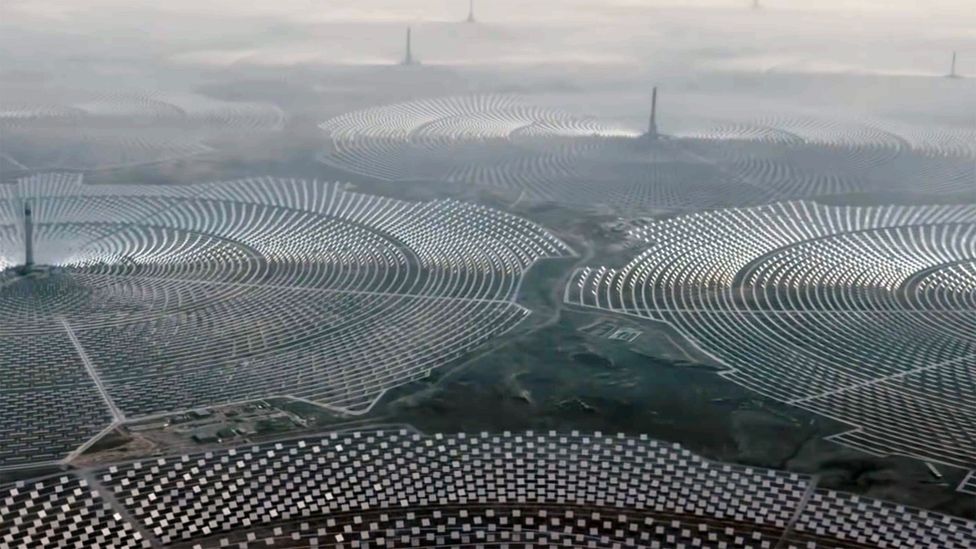
THE BEADY EYE ASKS: IS BRITIAN A SOCIETY STILL DEEPLY DIVIDED BY CLASS?

( TEN MINUTE READ)

In most of the world social class is clearly no longer neatly defined by occupation, however like it or loathe it, many countries still see the class system as a quintessential element of life.

In England the question of course is tainted by its past history.  The British Empire, the resulting Industrial Revolution, which was  disfigured by class, and the treatment of working class lives as expendable.

The pandemic has intensified and laid bare the class divisions and racism entrenched within capitalist Britain.

There are many issues that impact on and are barriers to success and social mobility for all those who come from disadvantaged and impoverished backgrounds. Gender, disabilities, ill health, geographical location, accessibility of childcare and a lack of a social network are factors that impact those impoverished which don’t discriminate on ethnicity, and would be considered to be class related issues.

Classism creates unfair advantages for the wealthy and unfair disadvantages for the poor and combined with racism it is systemic in the UK.

For the majority of people, the colour of their skin and ethnic background is not one of these barriers to upwards social mobility but for black and ethnic minority (BAME) brits this is a very real issue, and one that can also be the cause of downward social mobility. (Where do you come from?)

It is related to how a capitalist society works, and hierarchies are ingrained in the nature of human beings, disguising the root of the problem.

The phrase ‘Black lives matter’ does not mean that other lives don’t matter or don’t have issues; but this is the most pressing issue that society needs to focus on right now.

  •                                                                     ——————————–

To this day English citizens are still subjects, called serf, to a Royal Family that gives permission to form a government.

Without a written constitution that could provide opportunities for the public to influence the political process.

The UK constitution can be altered relatively easily by the government of the day, meaning it changes more frequently than many other constitutions. It is often said that the UK Parliament is ‘sovereign’. This parliamentary ‘sovereignty’ means that Parliament can make or unmake any law, without being limited by a constitutional text.

Without a written constitution it leaves the political system open to abuse. This lack of clarity can also be exploited by those in power to get away with things that would be more difficult if the rules were clearer. It also can make the business of governing harder, as there will be doubts surrounding the roles and responsibilities of different political institutions.

Constitutions place both limitations and obligations on governmental organisations in their relationship with the people. The UK’s constitution is different from many other countries in that its core aspects are not contained in a single legal source.

Proponents of a codified constitution argue that stating clearly all in one place how the political system operates would enable the government to better serve the public and the public to better engage with government. Instead England has 798 life peers ( some with life hereditary) in a second chamber,  of lords and baronesses with average age of 72 who scrutinise,  government actions / bills etc. To date, 1,517 life peers have been created under the Life Peerages Act 1958.

This vast and elaborate structure grew up almost in secret and is now after the Covid out brake showing alarming signs of dilapidation.

So class distinctions do not die; they merely learn new ways of expressing themselves.

Boris Johnson appointed 79 life peers since he became prime minister in July 2019.

Of Boris Johnson’s cabinet 64% are privately educated. And even worse, Johnson is the 20th UK Prime Minister out of 55 to be educated at Eton owing their place to their families’ wealth and greed.’’

Class is no longer simply a vertical ranking linked to capital and a system of production. What class, for example, is a university graduate working in a call centre, renting with friends but expecting some “help” with a mortgage from their parents in later middle age?

————————————–

CLASS still matters.

It defines much of Britain and Scotland. It shapes life chances, educational opportunities, work advancement and careers, health, life expectancy, culture, politics – and who makes and does not make the key decisions in society.

The current Government mantra of levelling up IS NOW A FORM OF social apartheid disfigurement.

For example the Grenfell Tower fire in June 2017 when 72 people died.

Why?

Quantitative easing by the Bank of England over-inflated assets and provided a state backed bonanza inflating the portfolios of the super-rich as a result the UK is on a trajectory to become the most unequal of the richest twenty-five nations of the world.

As the UK experienced a decade of stagnation for most people, the richest 1,000 families saw their wealth double.

Because the British class system has its protections at every level of its society, so levelling up will have little dent on the citadels of power and privilege.

Writers have been hailing the death of our class system for decades - yet the distinctions have never really faded (Credit: Christopher Furlong/Getty Images)

Great British Class Survey discovered seven distinct classes in total, with an elite (representing roughly 6% of the population) residing above a wide spectrum of working and middle classes

.Under capitalism most of us are obliged to work for a living, and without strong trade unions and workers’ co-operatives we’re at the mercy of employers’ whims and desire for profit. Social Mobility is lower in the UK than elsewhere in Europe.

You can today be born into a class and be more likely in future to die freezing on the streets as compared to your chances of going to the kind of university that will propel you forward.

While accent, dress and name can still reveal so much about who you are in Britain.

So often, someone’s address tells you a great deal about who they are: your postcode is the unhidden part of your wealth.

Like a lot of political issues, money is a big factor.‘

Private education legitimates inequality.

Private education accounts for 7% of the school age population but that tiny minority have huge disproportionate power; 42% of Oxford University undergraduates are privately educated, 37% of Cambridge and Durham, 35.6% of St. Andrews and 33.6% of Edinburgh.  This feeds into Britain’s elites: 74% of judges, 71% of barristers and 71% of senior military figures are privately educated, privilege, elite arrogance and the grotesque inequalities which disfigure the UK.

The British political class at Westminster have a disproportionate number of privately educated MPs

Addressing this and putting it into reverse is going to require political leadership, public pressure, and taking on vested interests is going to require a written constitution.

Being prepared to do so will decide not only the future of not only the UK society, but ultimately, of Scotland and Wales not to mention Northern Ireland which will in the not so distant future will have no option but to be repatriated to the rest of Ireland.

In the mean time the powerful vision of England – of the countryside, rural traditions, and a romantic version of the past – has become associated with the politics of reaction.

All human comments appreciated. All like clicks and abuse chucked in the bin

Contact: bobdillon33@gamil.com