• About
  • THE BEADY EYE SAY’S : THE EUROPEAN UNION SHOULD THANK ENGLAND FOR ITS IN OR OUT REFERENDUM.

bobdillon33blog

~ Free Thinker.

bobdillon33blog

Category Archives: Communication.

THE BEADY EYE ASK’S: ARE WE ALL BECOMING ALGORITHMICALLY BLIND.

02 Sunday Sep 2018

Posted by bobdillon33@gmail.com in Algorithms., Artificial Intelligence., Big Data., Communication., Evolution., Facebook, Fourth Industrial Revolution., Google, HUMAN INTELLIGENCE, Humanity., Innovation., Modern day life., Our Common Values., Reality., Robot citizenship., Sustaniability, Technology, The cloud., The common good., The essence of our humanity., The Future, The Obvious., The world to day., Twitter, Unanswered Questions., What Needs to change in the World, Where's the Global Outrage., World Politics

≈ Comments Off on THE BEADY EYE ASK’S: ARE WE ALL BECOMING ALGORITHMICALLY BLIND.

Tags

Algorithms trade., Algorithms., Artificial Intelligence., Capitalism and Greed, Technology, The Future of Mankind, Visions of the future.


( A four-minute read)

We now live in a world where bite-sized chunks of mathematical data have become central to how we live our daily lives.

When programs pass into code and code passes into algorithms and then algorithms start to create new algorithms, it gets farther and farther from human agency.

The resulting software is being released into a code universe which no one can fully understand.Résultat de recherche d'images pour "PICTURES OF ALGORITHMS AT WORK"

The results so far are becoming more and more apparent, with the legality of these algorithms in the long term no longer fit for purpose given the size, complexity, and interdependence of the algorithm systems we increasingly rely on.

It won’t be long before they are writing themselves.

The present-day digital economy is affecting not just how we live but when and where we live. The era of digital transformation is everywhere and the next phase is just around the corner Privacy and cyber warfare.

Despite the wide-reaching impacts of AI, there is no mechanism or body that is charged with accessing its increasing impacts on day to day life.

Here I am not talking about whether it is ethical for Google to know where you are or where you are going but rather the lack of transparency on how this information is being used by governments etc.

IF INFORMATION IS TO BE SHARED WORLDWIDE IT HAS TO BE MADE DO SO BY ETHICAL LEGAL FRAMEWORKS.

THIS IS HAPPENING BUT ON A FRAGMENTED BASES.

WHAT WE ARE GOING TO END UP WITH IS AI REGULATIONS OF ONE COUNTRY CONFLICTING WITH THE OTHERS.

THE END RESULT WILL BE: AI TECHNOLOGIES FAILING TO OPERATE IN A GLOBAL CONTEXT with the likely outcome that we will see AI technologies misappropriated, and misused.

THIS IS NOT A JOKE:

BECAUSE OF THE LACK OF EDUCATION AND AWARENESS ON THE ETHICAL AND SOCIAL IMPLICATIONS OF AI WE ARE WITNESSING THE CREATION OF VAST INEQUALITY IN A WORLD PLAGUED BY DISASSOCIATION AND PERSONALIZED NEWS BUBBLES.

Furthermore since AI is seen to have a global impact regardless of the specific geographical location it is employed – from Wall Street to the current global wars to whether you get medical help or a loan, if we are not careful it will allow individuals and the current Facebook’s, Twitter, Amazon, Google, of this world to use AI to suppress, oppress and control.

THE DEVELOPMENT OF EXPONENTIAL TECHNOLOGIES CAN NOT BE LEFT TO SELF DEVELOPMENT.

NON OF THESE TECHNOLOGIES HAS AT THEIR HEART A WORLD ASPIRATION FOR PEACE-BUILDING, HUMAN RIGHTS, OR SOCIAL AND ENVIRONMENTAL JUSTICE.Résultat de recherche d'images pour "pictures of algorithms at work"

THEY ARE DRIVEN BY PROFIT FOR PROFIT SAKE.

ALL OWNERS OF ANY SOFTWARE THAT DRIVES ANY PROGRAMS OR ALGORITHMS ASSOCIATED TO PROFIT SHOULD BE OBLIGED BY LAW TO DEPOSIT A COPY OF THE SAID PROGRAM IN A WORLD DEPOSITORY WHERE IT IS VETTED AGAINST OUR COMMON VALUES.

UNLESS WE DEVELOP AI POLICIES AND REGULATIONS IN A COLLABORATIVE ENVIRONMENT AI IS UNLIKELY TO FOSTER A SUSTAINABLE WORLD AND WILL INSTEAD REINFORCE NORMS OF COMPETITION.

All human comments appreciated. All like clicks chunked in the bin.

Go back

Your message has been sent

Warning
Warning
Warning
Warning

Warning.


Share this:

  • Click to share on WhatsApp (Opens in new window) WhatsApp
  • More
  • Click to share on Pocket (Opens in new window) Pocket
  • Click to share on Mastodon (Opens in new window) Mastodon

THE BEADY EYE SAY’S : Is it time for liquid democracy or what some like to call Direct Democracy.

30 Thursday Aug 2018

Posted by bobdillon33@gmail.com in 2018: The Year of Disconnection., Algorithms., Artificial Intelligence., Big Data., Communication., Democracy, Facebook, Fake News., Fourth Industrial Revolution., Freedom, Humanity., Life., Modern Day Communication., Modern Day Democracy., Our Common Values., Politics., Populism., Privatization, Reality., Social Media, Sustaniability, Technology, The common good., The essence of our humanity., The Internet., The Obvious., The world to day., Twitter, Unanswered Questions., What Needs to change in the World, Where's the Global Outrage., World Organisations., World Politics

≈ Comments Off on THE BEADY EYE SAY’S : Is it time for liquid democracy or what some like to call Direct Democracy.

Tags

Algorithms Democracy., Algorithms., Artificial Intelligence., Democracy, Direct Democracy, Inequility, NEW DEMOCRATIC EMPOWERMENT, Out of Date Democracy, SMART PHONE WORLD, Social Media, Technology, The Future of Mankind, The internet and Democracy, Visions of the future.

( A six-minute read)

I AM NOT TALKING HERE ABOUT DEMOCRACY THAT IS FOUND AT THE

BOTTOM OF A BOTTLE OF WHISKY BUT REPRESENTATIVE DEMOCRACY THAT

MAY HAVE RUN ITS COURSE.

Technology is fundamentally shifting how government works and how it relates to the citizens it ostensibly represents. In the wake of fake news, algorithms operated by business are shaping a world in which earthly government is becoming less and less functional.

Smartphones with their ease of use and constant accessibility are changing our social networks and reshaping our political world.Résultat de recherche d'images pour "pictures of direct democracy"

Because Social Media companies, not Governments are launching new policies. We need to take a more critical look at the role of social media in society.

The biggest challenge is technology that could potentially help end corruption and lobbying, allow people to delegate votes to trusted friends rather than politicians, and empower experts in a field to meaningfully impact policy cannot be achieved while the content of social media has no legal means of ensuring transparency or verification of authenticity prior to any posting.

WHILE THIS STATE REMAINS  Representative democracy may have run its course.

Social Media companies like Facebook, Twitter, U Tube and their like are now shaping a world in which earthly government is becoming inoperative. 

SO HOW MIGHT SOCIAL MEDIA – ALGORITHMS – AI – MACHINE LEARNING – ALTER THE CAPACITY OF CITIZENS TO GOVERN THEMSELVES?

As unprecedented numbers of people channel their political energy through this medium, it’s now being used in unforeseen ways with societal repercussions that were never anticipated.

We should all be very wary news feeds which are being personalized.

ONE OF THE GREATEST PROBLEMS for the future is the worldwide existing inequality in access to new communication technologies. It threatens to aggravate existing social inequalities.

How does social media influence a democratic society? 

By allowing us to create our very own feeds and essentially live in them.

By allowing algorithms to design communication packages just for individuals with each component full chosen in advance.

By allowing advertising without checking their source of purchase.

By allowing petitions to be voted on.

By allowing algorithms to create what’s called polarization, or an information cocoon.

By allowing another communication channel between voters and politicians.

If there’s one fundamental truth about social media’s impact on democracy it’s that it amplifies human intent — both good and bad. At its best, it allows us to express ourselves and take action. At its worst, it allows people to spread misinformation and corrode democracy.

One way or the other we are arriving rapidly to a crossroads whether we want true freedom of choice or short-term data-driven decisions to rule the roost.

If we can bank online, we can vote online.

We can now publish online, shout online, share music and ideas online, expose new knowledge online, regroup and connect online, bank online. The only thing we still can’t do online is voting on our own laws. No, instead we’re still living under a bizarre psycho-political industrial-era system that wants us to believe we’re represented by elected officials.

The structure of a direct democracy government is simple, and yet profound, giving rise to several questions that need a wide-reaching topic for debate.

SUCH AS.

The people have the final say in every decision that the government makes. That is because, in this government structure, the people are the government.

This can only work if everyone is involved in the voting process in some way. WHICH IS TOTALLY UNWORKABLE. 

WHO WANTS MOB RULE.

Voters cannot authentically decide a course of action to take if they are not presented with complete and accurate information. This structure of government requires that all citizens be given the same information and shared within an equal time frame.

It could also allow a majority of people to oppress certain groups in a harmful manner.

IT CAN ONLY WORK IN THE VILLAGE HALL.

Once we count on AI to decide what we do our concept of life will have to change.

Democratic elections and free markets might cease to make any sense, as with most art and religions.

Can parliaments and political parties overcome the challenges?

At the moment it does not seem so. Technological disruption is not even a leading item on the political agenda.

Google and Twitter are attention merchants. They capture our attention and resell it to advertisers. We are becoming their product.

Governments need to nationalize our data.

It is now or never that regulate the ownership of data if we don’t want to end up living in a digital dictatorship.


Résultat de recherche d'images pour "pictures of direct democracy"

All human comments appreciated. All like clicks chucked in the bin.

Go back

Your message has been sent

Warning
Warning
Warning
Warning

Warning.


Share this:

  • Click to share on WhatsApp (Opens in new window) WhatsApp
  • More
  • Click to share on Pocket (Opens in new window) Pocket
  • Click to share on Mastodon (Opens in new window) Mastodon

THE BEADY EYE ASK’S: WHERE IS ALL THE ONLINE INTERNET AND GENERAL SURVEILLANCE GOING TO END UP.

13 Monday Aug 2018

Posted by bobdillon33@gmail.com in Big Data., Communication., Evolution, Fourth Industrial Revolution., Humanity., Life., Modern Day Communication., Our Common Values., Privatization, Social Media, Technology, The common good., The essence of our humanity., The Internet., The Obvious., The world to day., Unanswered Questions., What Needs to change in the World, Where's the Global Outrage.

≈ Comments Off on THE BEADY EYE ASK’S: WHERE IS ALL THE ONLINE INTERNET AND GENERAL SURVEILLANCE GOING TO END UP.

Tags

Algorithms trade., Artificial Intelligence., Big Data, ongoing Privatization of the world, Privatization of the World., Social Media, The Future of Mankind, Visions of the future.


( A two-minute read)

Online privacy and surveillance are one of the defining issues of our age.

Résultat de recherche d'images pour "pictures of people on mobile phones"

Or is it?

When one looks at deforestation, glacier recession, ocean acidification, plastic suffocation, climate change, Putin, Trump, not to mention the current wars, Brexit, and whether China will rule the world perhaps it is only a drop in the ocean of problems we have.

In the proverbial fog of technology, most of us it seems could not care less.

Who cares if some agency is reading our emails, on the other hand, we would be pretty naive to think that intelligence agencies would not jump at the chance to read the world’s emails.

Countries have and will always spy on each other.

You would also be blinkered to think those big multinationals don’t do the same thing.

Given the choice of making money and doing the right thing, listed companies are bound to make money.

IT IS NOT POSSIBLE TO PROJECT OUR LIBERAL WISH LIST ON ANY OF THESE TITANS OF CAPITALISM.

WE ARE THE PRODUCT BEING SOLD.

The fact is that we can do virtually nothing about any of this, except live off -grid which will probably make your data more valuable.

WHERE DOES THIS LEAVE THE EU GENERAL DATA PROTECTION REGULATIONS?

IF YOU ASK ME THEY WILL NOT MADE A FIDDLERS DIFFERENCE TO ANY OF US.

DATA IS BEING COLLECTED WILLY NILLY INSIDE THE EU AND OUTSIDE.

How can anyone complain or sue about violations of the new rules when they are totally incomprehensible to the ordinary punter.

SINCE THEIR ARRIVAL WE NOW HAVE CORPORATIONS ON THE WEB ASKING US TO READ VOLUMES OF AMENDED PRIVACY POLICY.

BUT HAS IT CHANGED ANYTHING.

NO.  OUR BASIC DATA IS MORE VALUABLE THAN OUR PRIVATE LIVES.

Maybe we should stop blindly trusting algorithms that are exploiting us.

The conversations we’re now having will form the foundations of the future and the owners of this data will have the knowledge makes us all short on knowledge, and rest assured that knowledge is not the same as information.

All human comments appreciated. All like clicks chucked in the bin.

Go back

Your message has been sent

Warning
Warning
Warning
Warning

Warning.


Share this:

  • Click to share on WhatsApp (Opens in new window) WhatsApp
  • More
  • Click to share on Pocket (Opens in new window) Pocket
  • Click to share on Mastodon (Opens in new window) Mastodon

THE BEADY EYE SAY’S: THE WORLD IS SICK, SICK AND GETTING SICKER.

12 Thursday Apr 2018

Posted by bobdillon33@gmail.com in 2018: The Year of Disconnection., Algorithms., Big Data., Communication., Democracy, Fourth Industrial Revolution., Google it., Google Knowledge., Humanity., Modern Day Communication., Modern Day Democracy., Modern day life., Our Common Values., Post - truth politics., Social Media, Sustaniability, Technology, The common good., The essence of our humanity., The Future, The Obvious., The world to day., Unanswered Questions., What Needs to change in the World, Where's the Global Outrage.

≈ Comments Off on THE BEADY EYE SAY’S: THE WORLD IS SICK, SICK AND GETTING SICKER.

Tags

2018: The Year of Disconnection., Artificial Intelligence., Capitalism and Greed, Inequility, ongoing Privatization of the world, SMART PHONE WORLD, Technology, The future effect of the Internet, The Future of Mankind, The Internet., The Lethargy of our Political leaders, The World, Visions of the future.


( A two-minute read)

When we look at the world it is important to recognize that we are looking at the history of different civilizations, however, we all have a common story.

We are born and we die.Free art print of Unfortunate Future of The World

Today the story is the same but with more mobility in-between, however, we’ve not changed a dot and it is certain that we will go on making things that will change or existence.

With to days technology, we are on the threshold of not just a new Industrial revolution but changing how we exist and where we exist.

The outline of a mobile phone as we know has changed not just rural Africa and Asia – putting communities in touch, giving access to information and money it is now also creating Social media platforms which are in the process of disconnecting us from reality.

This week Facebook, Google, and Twitter appeared in front of Congress. After which it is obvious, that we are not asking the right questions yet, or we have not found any good answers just yet as to why our world is getting sicker and sicker and it’s not Einstine science as to why.

When it comes to the world we can not cure just one aspect of the sickness, we must address an array of inherited illness.

Our new technological world is removing the need to think, to read, to imagine, to function, to communicate, to earn respect, to know why is true or a false pleasure, to plan long-term.

In other words, the internet has been infected by the problems that we all suffer.

What is need is that we need to take our existence back, whether it be as consumers, as citizens, and say we actually want to have some say over how all of this technology works, because we’ve really given that over to the tech companies ( outside of China, for the rest of the world, there are five big tech companies who really run everything) that have little or no ethical interest in other than profit

Why?

Because before we become the product for internet service providers, no longer just customers. we need a social movement around this issues to stop us all being run by the same algorithms brains driven by different programs that are incapable of acting for the common good.

Greed, inequality, you name it, our political affiliation, based upon the top-level domain information of websites you visit, your sexual orientation, where you like to shop, your financial status, race, gender can now be figured out based on the information that they collect and use.

If we didn’t have the bullshit movies, TV shows and sports pumping fake feel-good emotions into our systems, we would all feel the great weight of our inaction in an era where we need to get off our fucking asses and take a stand.

All the world’s problems are not on the internet.

We’re not supposed to watch a screen that pumps fake feel-good emotions into us.

It is quite plausible in the not so distant future we will have nothing serious to contribute when the hype – intelligent software supersedes humanity with genomics, nanotechnology, and robotics. New computer chips specialized for AI will power how we engineer genes, proteins, materials. Quantum computing a million times quicker than present-day computers will change the fields of drug development, manufacturing, and material science.

It will all be very murky but the potential is truly staggering.

Its now or never that we harness all this technology for if a day comes that the final decision is left to a Robotic brain rest assured that, Hal 9000 VS Dave will come true. 

https://youtu.be/HwBmPiOmEGQRésultat de recherche d'images pour "pictures of sick earth"

All human comments appreciated. All like clicks chucked in the bin.

Go back

Your message has been sent

Warning
Warning
Warning
Warning

Warning.


Share this:

  • Click to share on WhatsApp (Opens in new window) WhatsApp
  • More
  • Click to share on Pocket (Opens in new window) Pocket
  • Click to share on Mastodon (Opens in new window) Mastodon

THE BEADY EYE ASK’S. WHERE IT THE TRUTH TO BE FOUND? CERTAINLY NOT ON SOCIAL MEDIA.

12 Friday Jan 2018

Posted by bobdillon33@gmail.com in Communication., Fake News., Google, Social Media, Technology, The world to day., Twitter, Unanswered Questions., What Needs to change in the World, Where's the Global Outrage., World Organisations.

≈ Comments Off on THE BEADY EYE ASK’S. WHERE IT THE TRUTH TO BE FOUND? CERTAINLY NOT ON SOCIAL MEDIA.

Tags

Democracy, Internet, Power of Social Media, SMART PHONE WORLD, Social Media, Social networking, Social world


( A Fifteen minute read)

The internet has loosened our collective grasp on the truth.

It is a fact of the internet that ( with a new social media user, every 15 seconds,) every click, every view and every sign-up is recorded somewhere.

So what exactly is Social Media:Résultat de recherche d'images pour "pictures of social media"

Is it a term relating to gatherings of people that prefer to exist in groups?

Or

Is it the dustbin of idle world gossip.

Not on your Nelly> With billions of people glued to Facebook, Whats App, We Chat, Instagram, Twitter, Weibo and other popular services, social media has become an increasingly powerful cultural and political force, to the point that its effects are now beginning to alter the course of global events.

This is what it is to-day:

Social networks earned an estimated $8.3 billion from advertising in 2015.

  • A 2011 study by AOL/Nielsen showed that 27 million pieces of content were shared every day, and today 3.2 billion images are shared each day.
  • On WordPress alone, 91.8 million blog posts are published every month.
  • It’s estimated that video will account for 74% of all online traffic in 2017.
  • Google processes 100 billion searches a month.
  • 91.47% of all internet searches are carried out by Google.
  • 60% of Google’s searches come from mobile devices.
  • To carry out all these searches, Google’s data centre uses 0.01% of worldwide electricity, although it hopes to cut its energy use by 15% using AI.
  • By 2014, Google had indexed over 130,000,000,000,000 (130 trillion) web pages.

    social sites

    Facebook statistics

    • Facebook adds 500,000 new users every day; 6 new profiles every second.
    • 79% of all online US adults use Facebook.
    • 76% of Facebook users check it every day.
    • The average (mean) number of friends is 155.
    • Half of internet users who do not use Facebook themselves live with someone who does.
    • Of those, 24% say that they look at posts or photos on that person’s account.
    • There are an estimated 270 million fake Facebook profiles.
    • The most popular page is Facebook’s main page with 204.7m likes. The most liked non-Facebook owned page is Christiano Ronaldo’s with 122.6m.
    • There are 60 million active business pages on Facebook.
    • Facebook has 5 million active advertisers on the platform.
    • Facebook accounts for 53.1% of social logins made by consumers to sign into the apps and websites of publishers and brands.

    Twitter statistics

    • 500 million people visit Twitter each month without logging in.
    • There is a total of 1.3 billion accounts, but only 328 million are active,
    • Of those, 44% made an account and left before ever sending a Tweet.
    • The average Twitter user has 707 followers.
    • But 391 million accounts have no followers at all.
    • There are 500 million Tweets sent each day. That’s 6,000 Tweets every second.
    • Twitter’s top 5 markets (countries) account for 50% of all Tweets.
    • It took 3 years, 2 months and 1 day to go from the first Tweet to the billionth.
    • 65.8% of US companies with 100+ employees use Twitter for marketing.
    • 77% of Twitter users feel more positive about a brand when their Tweet has been replied to.

    graph

    You tube statistics

    • 300 hours of video are uploaded to You tube every minute.
    • People now watch 1 billion hours of YouTube videos every day.
    • More than half of YouTube views come from mobile devices.
    • The average mobile viewing session lasts more than 40 minutes.
    • The user submitted video with the most views is the video for Luis Fonsi’s song ‘Despacito’ with 4.36 billion views.
    • YouTube sees around 1,148bn mobile video views per day.
    • In 2014, the most searched term was music. The second was Minecraft.
    • 9% of U.S small businesses use Youtube.
    • You can navigate YouTube in a total of 76 different languages (covering 95% of the Internet population).

    Instagram statistics

    • There are 800 million Monthly Active Users on Instagram.
    • Over 95 million photos are uploaded each day.
    • There are 4.2 billion Instagram Likes per day.
    • More than 40 billion photos have been shared so far.
    • 90 percent of Instagram users are younger than 35.
    • When Instagram introduced videos, more than 5 million were shared in 24 hours.
    • Pizza is the most popular Instagrammed food, behind sushi and steak.
    • 24% of US teens cite Instagram as their favourite social network.

    data chalkboard image

    Pinterest statistics

    • Pinterest has 200 million active users each month.
    • 31% of all online US citizens use the platform.
    • 67% of Pinterest users are under 40-years-old.
    • The best time to Pin is Saturday from 8pm-11pm.
    • In 2014, male audience grew 41% and their average time spent on Pinterest tripled to more than 75 minutes per visitor.

    LinkedIn statistics

    • LinkedIn has 500 million members.
    • 106 million of those access the site on a monthly basis.
    • More than 1 million members have published content on LinkedIn.
    • The average CEO has 930 LinkedIn connections.
    • Over 3 million companies have created LinkedIn accounts.
    • But only 17% of US small businesses use LinkedIn.

    Snapchat Statistics

    • Snapchat has 178m active daily users.
    • 60% of them are under 25.
    • In 2016, $90m was spent on Snapchat ads.
    • 47% of US teens think it’s better than Facebook, while 24% think it’s better than Instagram.

    That’s your fill of social media statistics for now, with just a tiny fraction of the weird and wonderful stats and facts available out there.

    It’s easy to get dragged into the drama and other negative aspects of social media.

    Social media is built for polarisation and extremes.

The basic engagement mechanisms of popular social media sites like Facebook drive people to think and communicate in ever more extreme ways.

Social media is a collective term for all the websites and online services that are erasing national borders and distances.

Social networks are helping to fundamentally rewire human society.

They are used to spread information about dramatic events or to warn others about risky routes. When refugees reach a new country, they can also use social media to contact their fellow countrymen who are already there and find out about things like permits, authorities they can turn to or what things cost.

They have subsumed and gutted mainstream media.

They have undone traditional political advantages like fund-raising and access to advertising.

They are destabilizing and replacing old-line institutions and established ways of doing things, including political parties, transnational organizations and longstanding, unspoken social prohibitions against blatant expressions of racism and xenophobia.

They are helping to create surprisingly influential social organizations among once-marginalized groups. For Example : Brexiters in Britain to ISIS in the Middle East to the hacker collectives of Eastern Europe and Russia.

Each network in its own way is now wielding previously unthinkable power, resulting in unpredictable, sometimes destabilizing geopolitical spasms.

Through this new technology, people are now empowered to express their grievances and to follow people they see as echoing their grievances.

THE QUESTION IS:

IS SOCIAL MEDIA NOW THE JUDGE AND JURY AND THOSE THAT RUN ITS ALGORITHMS ARE NOW THE REAL WORLD POWER BROKERS.

If it wasn’t for social media, I don’t see TRUMP AS PRESIDENT OF THE US.

This has to be the scariest ACHIEVEMENT about Facebook/ Twitter.

Not that Facebook may be full of lies (a problem that could potentially be fixed), but that its scope gives it real power to change history in bold, unpredictable ways.

But that’s where we are.

It’s time to start recognizing that social networks actually are becoming the world-shattering forces that their boosters long promised they would be — and to be unnerved, rather than exhilarated, by the huge social changes they could uncork.

This should come as no surprise.

Facebook and Twitter have become the new TV, where businesses can’t control their messaging as they once were able to do with TV ads.

In a way, we are now living through a kind of bizarro version of the utopia that some in tech once envisioned would be unleashed by social media.

Online campaigns directed at GOVERNMENTS OR FOR THAT MATTER AGAINST BRANDS can be a lot more effective than writing. Pay-to-play strategy by letting posts run and gain organic traction before boosting them.

Efforts to fight this dismaying trend are obviously worth pursuing, but is it time to give our due to the new political activism – Social Media. The king of communication.

As it becomes increasingly commercialised there is a risk that people – particularly young people – will see social media content as being politically and commercially independent.

What it means to get caught in a Twitter storm. Facts tell, but stories sell.

In actual fact, the very opposite is true.

When you sign up for Facebook, you also accept a business model that can use information about what you do and how you feel, for example in marketing.

One terrifying example is how the terrorist group ISIS uses social media to recruit new supporters. Potential ISIS fighters can be invited to join private Facebook groups where they are put into contact with individuals who are active in Syria.

However if used in a responsible manner it s also a new tool for democracy.

More people can express their views and form opinions. There are also examples of individuals who have quickly succeeded in raising large sums of money for those in need.

The Impotence of Social Media is in its nucleus accumbens. 

People tend to follow the behavior of the group.” If other people have liked a post, new viewers will be more likely to like it too. And that popularity can feed on itself, changing their behavior to try to get social approval, respond to headlines without any in-debt knowledge of what the headline refers to. 

A single ‘like’ can make a social-media post more popular.

Many social media sites share more of the higher-ranked — or more popular — posts. As a result, “people are more likely to see what others have positively rated,”  what’s in those photos is socially acceptable.

Skip pictures with few likes.

Likes can have a subtle but significant effect on how teens interact with friends online.

The important take-home message here, is that Social media shapes how we perceive the world around us.

When people express themselves through social media, they communicate collectively.

Members of social media communities direct raw emotions into particular interests. These audiences show their interest and approval by liking, sharing and commenting. And those mechanisms drive future social media behavior all driven by algorithms that drive participation and attention-getting in social media, the addictive “gamification” aspects such as likes and shares, invariably favoured the odd and unusual.

What are the results?

How polarised and divided nations are becoming.

The smartphones and web applications were increasing people’s

passions while also driving them to polarising extremes.

Political figures around the world are more polarised.

Language is more crude.

Sharing is becoming competitive, pushing participants to one-up each other.

Where Facebook or Twitter (viewed on mobile devices) has become for many people the sole source of news. Article will have a MUCH higher chance of converting to a sale!

You’ve engaged them, you’ve educated them, you’ve entertained them with social networks. (Communities of people (or animals) that are interrelated owing to the way they relate to each other.)

In humans, this can involve sharing details of their life and interests on Twitter or Facebook, or perhaps belonging to the same sports team, religious group or school.

I rest my case.

The functions of social media have transformed into something we have never anticipated.

Social media has transformed into political tools, increased global awareness, and offered a quicker way to spread information.

People have the power to abuse social platforms like Facebook and Twitter to promote radical ideas. So what.

Once you gag people’s right to speak freely, you place a mental shackle on the subconscious mind.

If you want to influence others to act upon what you have to say, treat social media communications with the same degree of importance as those that are face-to-face.

Social media to a great extent is a reflection of life. Without education for the sake acquiring knowledge the mind looks for it else where.

All human comments appreciated. All like clicks chucked in the bin.

Go back

Your message has been sent

Warning
Warning
Warning
Warning

Warning.


Share this:

  • Click to share on WhatsApp (Opens in new window) WhatsApp
  • More
  • Click to share on Pocket (Opens in new window) Pocket
  • Click to share on Mastodon (Opens in new window) Mastodon

THE BEADY ASKS: WHERE IS THE VOICE OF THE WORLD’S YOUTH ?

12 Thursday Jan 2017

Posted by bobdillon33@gmail.com in Artificial Intelligence., Big Data., Brexit., Capitalism, Climate Change., Communication., Education, European Union., Google Knowledge., HUMAN INTELLIGENCE, Humanity., Innovation., Modern Day Communication., Natural World Disasters, Nuclear power., Paris Climate Change Conference 2015, Politics., Privatization, Sustaniability, Technology, The Future, The New year 2017, The world to day., Unanswered Questions., USA Presidential Election, What Needs to change in the World, Where's the Global Outrage., World Organisations.

≈ Comments Off on THE BEADY ASKS: WHERE IS THE VOICE OF THE WORLD’S YOUTH ?

Tags

Artificial Intelligence., Big Data, Capitalism vs. the Climate., Extinction, Social Media, Technology, The Future of Mankind, United Nations


( Eight minute read.)

When you look at the state of the world you have to ask yourself have we all lost our marbles, and where is the protest voice of the Young.Afficher l'image d'origine

You could say that we are well along in the process of causing our own extinction and the planet has officially entered its sixth mass extinction event.

Such a view is now beginning to occasionally find its way into mainstream consciousness.

The situation is already so serious with so many self-reinforcing feedback loops already in play it seem we are on a rolling coaster, incapable of acting,or if we do, it will be after the event, if there is anything left to save.

We have a vast choice of the end-of-humanity scenarios to pick from, to derail life as we know it.

For example:

A self-induced catastrophe such as nuclear war or a bioengineered pandemic. Disruptive innovation and technological changes, Solar storms, Cosmic collisions, Super volcanoes, Rising sea levels, overcrowding, denuded resources to mention just a few.

We’re driving to extinction at least 150 species each day.

Nuclear power plants require grid-tied electricity, cooling water and people getting paychecks. Without all these, they melt down, thus immersing all life on earth in ionizing radiation.

As if the above is not enough we are now selling or most valuable resource – Intelligence. Afficher l'image d'origine

So what can be done?

First of all, internal and external issues are more linked than ever. Now, more than ever, we need principled leaders with an understanding of history.

Freedom and the rule of law are under threat.

Why?

Because while the world teeters on a precipice of being plundered by Capitalist Artificial intelligence. A new reality is taking shape: war is called peace, a bloody victory is a step towards reconciliation, and a terrorist regime is a legitimate power.

The further we removed ourselves from the world the worse will be our encounter with the world beyond.

Ignoring the unregulated introduction of Artificial Intelligence.

All causing disillusionment and confusion with the great visions of the future, all are demanding that we cope as one with the present reality with our ability to protest hijacked by Internet petitions sites that are ignored or focused on parochial problems.

An individuals future is shaped ultimately by environmental factors.

The year 2017 opens on a world laid to waste. Some areas are littered with mass graves and there doesn’t seem to be any big global rush to reduce emissions as a result of the Paris Climate Agreement.

In the end, no amount of research can do much to prevent permafrost melting realising, methane – a greenhouse gas 100 times more potent than carbon dioxide on a shorter timescale into the atmosphere, warming it further, which in turn causes more permafrost to melt, and so on.

Scientists estimate up to 13 percent of global carbon emissions come from deforestation – greater than emissions from every car, truck and plane on the planet combined.

Because Globalism is an ideology, and its struggle with nationalism it will shape the coming era.

Afficher l'image d'origineAfficher l'image d'origine

Donald J. Trump five months short of seventy-one will take office on January 20. His election tips us into the unknown threatened disengagement from the world.

Mother Teresa in the Uk wants disengagement from the EU.

Both are successful alpha personalities.  Both work in progress—“Everything is negotiable”—both displaying a single-minded determination to impose their vision on the world, an irrational belief in unreasonable goals, bordering at times on lunacy.

From Brexit to Trump to the rise of nationalist parties across Europe, the old division between left and right is giving way to a battle between self-styled patriots and confounded globalists.

For decades, trade, industrialization and demographics produced a virtuous circle of rising prosperity. By the 2000s, globalism was triumphant.

IT IS NOW OVERREACHED AND BLIND to the nationalist backlash, not to mention the new form of Globalisation – Artificial Intelligence.

Many globalists now assume that the discontent is largely driven by stagnant wages and inequality. If people are upset about immigration, they reason, it is largely because they fear competition with low-wage workers and not the technological Revolution that is replacing their need to work in the first place. Yet their faith in open borders remains unshaken.

That crisis has woken up globalists to the flaws of globalization but not it seems to me the pending exploration of Apps run on Algorithms that are designed to create profit for the Monopolies of the Internet.  Facebook, Twitter, Google, Microsoft, Amazon, to mention a few.

Many of the tech industry’s biggest companies, like Amazon, Google, IBM and Microsoft, are jockeying to become the go-to company for A.I. In the industry’s lingo, the companies are engaged in a “platform war.”

The company that controls A.I. will steer the tech industry for years to come.

In fact, much of the backlash against immigration (and globalism) is not economic but cultural: Many people still care about their own versions of national identity and mistrust global institutions such as the EU.

These voters are bothered less by competition from immigrants than by their perceived effect on the country’s linguistic, religious and cultural norms. About how changes to “the composition of the local population” would affect “their neighborhoods, schools and workplaces.”

They might have their priorities slightly wrong.

Is the new nationalism a cloak for ethnic and religious exclusion?

New nationalism often thrives on xenophobia.

Globalists should not equate concern for cultural norms and national borders with xenophobia.

There must be some sort of middle ground between a nationalist and globalist approach. In short, there is ample reason for skepticism about whether the new nationalists can prove themselves a genuinely secular, democratic alternative to globalism.

If globalists are to regain the public’s trust, they will need to re-examine their own policies. Political capital might be better invested in preserving existing trade pacts, not passing new ones. Many European globalists blame the euro’s crisis on too little integration, not too much. But pressing for a more federal Europe could further alienate voters who “do not share our Euro-enthusiasm,”

Borders use to mean something, but this version of civilization is the least sustainable of them all. We cannot sustain the unsustainable forever in a world more interconnected.

In fact, 2017 is looking pretty bad…Russia dominating the world order. But it too will pop. New cyber attacks.

In this context, the basic principles of democratic life in both Europe and the U.S. — truth, fact-based reality, justice and the rule of law — are being gradually eroded.

The most important thing is to understand what might steer us towards a more secure world order, where respect for the rule of law and for international bodies are granted their proper place.

European powers may choose to find strength in their union. Brought together by the need to combat those who threaten fundamental European values, Paris, Berlin, Rome and the Benelux countries could launch new initiatives to bring about real European cooperation.

Should these institutions find themselves unable to take a stand and act according to global interests and basic values, there is no reason why 2017 should not continue in the same vein as 2016, and the consequences may be irreversible.

It’s time to abandon our usual pessimism about the state of the planet and the course of history. We’ve got many challenges to overcome, but it might be a good idea to adopt a bit of youthful optimism when it comes to confronting them.

We need to create a hope insurgency. 

Despite half of the world’s youth living on less than two dollars a day.

A social media revolution is unfolding before our eyes, forever changing the way we connect. This generation, the most interconnected generation ever, continues to grow rapidly, but its voice is diluted by Social media making the challenges they face are ever more daunting.

We need to ask ourselves:

How can we can empower youth to drive social progress. From crowd-sourcing initiatives and mobile-projects to innovation jams and social media campaigns.

Whatever changes you would like to effect in our society has to begin with you.Afficher l'image d'origine

The best leaders the world has ever known are the reformers who were accountable and responsible for their own change.

The commitment for change has no days off, does not allow for excuses, does not allow for pardons. If you want to see change you must first start within.

It’s that simple and it’s that profound.

So where is the Global YOUTH Outrage?Afficher l'image d'origine

Before there were blogs and tweets – even Wikipedia – to turn to, the mainstream media held a monopoly over knowledge and news which was hard to challenge. Now all knowledge is being collected by Google to feed Artificial Intelligent Algorithms.

THE world must change to meet the wave of popular uprising which catapulted Donald Trump to power and brought about Brexit. The world can be changed as much by education as by being harangued. It’s time for international leaders to bury their liberal attitudes and address the concerns of the masses. It is time for government to act in the long-term interest of the people, even if they do not agree in the short-term.

The twin pillars of liberalism and globalisation which have dominated politics over the past generation must adapt to a “world transformed”.

Society is changing rapidly and I fear that many organisations are failing to notice and are being left behind. I suspect that the scale of such a change can only really be appreciated in hindsight.

In the rich world, particularly, the first generation that has rung up a huge national debt and established a huge unfunded pension scheme is about to retire. The interesting, to say the least, question is whether the next generation will be willing to carry this burden and peacefully pay the debt and peacefully pay the pensions. I think not.

WILL THE WORLD OF 2052 BE A BETTER WORLD?

It’s important to note that people 35 years from now will judge their circumstance more on how it has changed from their own recent past than from our vantage point of today.

Billion will have some level of Internet access, be much better informed, and be increasingly helped by local solar energy. They will have many fewer children. They will be largely urban (except for the minority still living off the land). They will grapple with overall effects of climate damage, but those in dense urban areas will likely have little firsthand experience with the damage caused by the erratic weather (though plenty of secondhand information via electronic media). They will live with the unpleasant knowledge that even more climate impacts lie ahead.

There will be huge differences between people and Artificial Intelligence.

There is be no such thing as the Free Market.

People power hopefully will have transformed the world. From a psychological perspective, probably no, because the future prospects in 2052 will be grim.

University is where such simplistic notions are supposed to be challenged, but they now educate for the market place and not for Intelligence.

The winners of tomorrow will be those organizations with strong leaders who demonstrate agility, authenticity, connectivity to their talent, and sustainability.

By 2018, at least 50 percent of developers will include A.I. features in what they create. The goal is to capture all human knowledge and turn it in saleable AI. It’s where the capitalist market is headed.

No worries, you might say: you could just program it to make

The superintelligent machine manufactures some as-yet-uninvented raw-computing material (call it “computronium”) and uses that to check each doubt. But each new doubt yields further digital doubts, and so on, until the entire earth is converted to computronium.

When a computer became capable of independently devising ways to achieve goals, it would very likely be capable of introspection—and thus able to modify its software and make itself more intelligent. In short order, such a computer would be able to design its own hardware.

If this sounds absurd to you, you’re not alone.

I am one protesting voice in the wilderness of the virtual reality, but I am sure there are billions.

The problem is unifying them into one collective protest to demand that the United nations pass a people’s resolution to give all artificial Intelligence and technological advances a stamp of human approval.

All comments, suggestions, welcome, all like clicks chucked in the bin.

Go back

Your message has been sent

Warning
Warning
Warning
Warning

Warning.


Share this:

  • Click to share on WhatsApp (Opens in new window) WhatsApp
  • More
  • Click to share on Pocket (Opens in new window) Pocket
  • Click to share on Mastodon (Opens in new window) Mastodon

THE BEADY EYE SAYS: IF MACHINES ARE TO INTERACT WITH HUMANS IN A INTELLIGENT WAY, THEY NEED TO HAVE COMMONSENSE KNOWLEDGE.

31 Saturday Dec 2016

Posted by bobdillon33@gmail.com in Artificial Intelligence., Big Data., Communication., Facebook, HUMAN INTELLIGENCE, Humanity., Innovation., Modern Day Communication., Social Media., Technology, The Future, The Internet., The world to day., Unanswered Questions., What Needs to change in the World, Where's the Global Outrage.

≈ Comments Off on THE BEADY EYE SAYS: IF MACHINES ARE TO INTERACT WITH HUMANS IN A INTELLIGENT WAY, THEY NEED TO HAVE COMMONSENSE KNOWLEDGE.

Tags

Artificial Intelligence., Big Data, Commonsense., Community cohesion, Globalization, SMART PHONE WORLD, Visions of the future.


( A Questioning read of six to five minutes)

Can machines achieve “common sense” in the near future?

We have no clue right now how to go about solving this problem.Afficher l'image d'origine

We are living in a world where common sense ironically is very uncommon.

When you look at the way Artificial Intelligence is destroying what is left it is hard to even define it.

We have to force our ideas to conform to the evidence of reality rather than the other way around.

Commercial Algorithms for profit and big data are creating a world of insecurity with false news destroying the very fabric of society by removing basic knowledge about how the world of human beings works.

Common sense is not rule-based. It is not entirely logical. It is a set of heuristics almost all human beings quickly acquire. Commonsense knowledge encompasses facts that people know and use in their daily lives. It is assumed to be known by average people, therefore it is not verbally communicated most of the time.

Much of the interaction in this digital world happens at a distance, which can diminish the rules of cause and effect, action and consequence. Additionally, much of digital life takes place under the cloak of anonymity, making it easier to participate in unethical and even illegal behaviors.

Common sense, by contrast, is regarded – or rather, it is often disregarded – as a low-level, practical, ‘everyday’ phenomenon, hardly noticed, except when its absence is suddenly revealed in the actions of an otherwise apparently intelligent, capable adult.Afficher l'image d'origine

It not necessary for us to understand how the software works for the software to be effective.

The universe doesn’t care about our common sense.

With enough data, enough computing power and trial and error, there is no telling what we can find.

A world where brains have been replaced with digital computers.

In some sense, this is what software is all about: extending our intelligence.

What is this “intelligence” we are talking about?

Is AI using nonstandard logics natural deduction, to predict the future of a sequence from observation of its past.

Is there commonsense reasoning in AI- what role of logic is there in AI?

Is there such a thing as AI Philosophy?

Will it be genetically engineered intelligence.?

Though I don’t know much about biology, I doubt that any brain runs at twice the speed of another brain.

Is it logic of obligation and permission;

What facts are observed by AI and how are these facts represented in the memory of a computer, smart phone, iPad?

What rules (if any) permit legitimate conclusions to be drawn from these facts?

Humans up to now are the source of commonsense rules with memory as a constraint.Afficher l'image d'origine

We may hope that machines will eventually compete with men in all purely intellectual fields. But which are the best ones to start with? Even this is a difficult decision.

We call our phones “smart”, don’t we?

Lots of people want to judge machine intelligence based on human intelligence.

Your intelligence is actually an aggregate of your brain with your environment and the tools and ideas around you. Tools extend our intelligence… with computers and robots being obvious examples. They can always extend your memory with external support (in this case, use a pen and paper, or just Google) and all it might do is slow you down. Except for storage capabilities (memory) and speed, all hardware is equivalent.

I am not sure understanding language and common sense are the same thing. For example, many human beings are illiterate and yet they can be said to have common sense.

Do machines really offer: a new kind of intelligence, a new form of common sense.  It is not necessary for the software to play at “human level”.

By definition, digital media is participatory. To adults it looks like a brave new world – but to kids, it’s “just life.”

Digital life describes the media world our kids inhabit 24/7 – online, on cell phones and mobile devices, and anywhere media is displayed.

The users create the content, and anything created in this digital life becomes instantly viral, scalable, replicable, and viewable by vast, invisible audiences.

This implies an educative process rooted in, and respectful of, people’s lived experience. Unfortunately this is not so. We now have instant gratification, irrelevant of where or how we get it.

As sensing technologies become increasingly distributed and democratized, this dynamic new world requires new comprehension and communication skills, as well as new codes of conduct, to ensure that these powerful media and technologies are used responsibly and ethically.

We all know about Artificial Intelligence.

But is Common sense and the Plane Truth being replaced by machines, simple facts, plain arguments, simplistic assumptions with reliable, independent data have all but disappeared.

The chaotic and contradictory nature of ‘common sense’,  makes it impossible for Machines to evaluate. They are programmed by humans and therefore will never be able to predict their future performance without prejudice and let their feelings decide for themselves.

To achieve any common sense we will need a database containing all the general knowledge that most people possess, represented in a way that it is available to artificial intelligence programs that use natural language or make inferences about the ordinary world. Such a database is a type of ontology of which the most general are called upper ontologies.

” Common sense is the best distributed commodity in the world, for every man is convinced that he is well supplied with it.” Rene Descartes (1596-1650) French philosopher and mathematician.

Le Discours de la method (1637) long-term goals of Artificial Intelligence research. Commonsense reasoning is relevant for many applications, including systems in which robots and humans interact.

To maintain a sophisticated civilization, we have to keep out-innovating our problems. You may have heard that our civilization is not sustainable. We burn too much fossil oil, we pollute too much, there are too many of us, and so on. This is all true. If we are going to keep on surviving, let alone get better, we need to keep on getting smarter even if our brains are standing still biologically at a rate that exceeds our growing problems.

I am generally favorable to any biological technology that can enhance intelligence.

I also think that any long-term intelligence improvement strategy has to take into account that we are become hybrids, part machine, part human beings…The line between digital life’s perils and possibilities is thin.

I am still waiting for a chip that will give me access to the web at the speed of the thought.

The question is whether Gramsci’s distinction between good sense and common sense will be predicated on an irredeemably hierarchical conception of knowledge. One data base against another – Google vers Facebook. Commonsense rule extraction requires minimal human interaction.

Endowing computers with common sense is one of the major problems facing the world.

The relationship between ethics, common sense, and rationality is not just simply feeds books and articles into the computer and has it understand them.

We are if you look at the present state of the Planet we are far from broad deep and robust commonsense reasoning.

Unfortunately, at some point in our lives we give into the fast paced world around us and disregard the faculties of our own mind.

While everyone is entitled to their own beliefs, don’t just turn your brain off and not think about it.  I’m not saying one person or another is right, or wrong.  I’m simply saying that you need to free your mind from the dogma that holds you down from seeking the principles and truths that govern these areas of life.

If we dont start to veting all technology that is not for the betterment of humankind we will have such a fucked up world with some people desperately unrehearsed that the rest of us can forget it.

( See previous posts: Re the need to give all technology a bill of health)

All comments welcome. All like clicks chucked in the bin.

Go back

Your message has been sent

Warning
Warning
Warning
Warning

Warning.


Share this:

  • Click to share on WhatsApp (Opens in new window) WhatsApp
  • More
  • Click to share on Pocket (Opens in new window) Pocket
  • Click to share on Mastodon (Opens in new window) Mastodon

THE BEADY EYE ASKS: WHERE DOES IT END? – GOOGLE.

04 Sunday Dec 2016

Posted by bobdillon33@gmail.com in Artificial Intelligence., Big Data., Communication., Facebook, Google it., Google Knowledge., HUMAN INTELLIGENCE, Modern Day Communication., Modern day life., Social Media., Technology, The Future, The Internet., The world to day., Unanswered Questions., What Needs to change in the World, WiFi communication.

≈ Comments Off on THE BEADY EYE ASKS: WHERE DOES IT END? – GOOGLE.

Tags

Artificial Intelligence., Big Data, Google, SMART PHONE WORLD, The Future of Mankind, The Internet.


( A seven minute read)

Our worldviews are formed by who is shouting louder and more persistently into our ears.

While our Technologic vision is to create more intuitive and human-like interactions between man and machines Google, Facebook, Twitter, the Internet of Everything.  The last thing these companies want is to encourage leisurely reading or slow, concentrated thought. It’s in their economic interest to drive us to distraction.Afficher l'image d'origineAmbiguity is not an opening for insight but a bug to be fixed. The human brain is just an outdated computer that needs a faster processor and a bigger hard drive.

There’s has been little consideration of how, exactly, the Internet and these Companies are reprogramming us.

Having said that, I think internet and new media actually can be effective to fight such brainwashing.

However most of the Internet and Social Media is now presenting just superficial information we won’t even remember tomorrow. It is the illusion of knowledge by information.

Just as we coming to rely on computers to mediate our understanding of the world, it is our own intelligence that is being flattened into artificial intelligence.

True reality might be forever beyond our reach, but surely our senses give us at least an inkling of what it’s really like. Quantum mechanics is telling us that we have to question the very notions of ‘physical things’ sitting in ‘space.

If you have got this far, you might be wondering where am I going with this post.

Just as there’s a tendency to glorify technological progress, there’s a counter tendency to expect the worst of every new tool or machine.

The idea that our minds should operate as high-speed data-processing machines is not only built into the workings of the Internet, it is the network’s reigning business model as well.

The faster we surf across the Web—the more links we click and pages we view—the more opportunities Google and other companies gain to collect information about us and to feed us advertisements.

Last year, Page told a convention of scientists that Google is “really trying to build artificial intelligence and to do it on a large-scale.

Certainly if you had all the world’s information directly attached to your brain, or an artificial brain that was smarter than your brain, you’d be better off.

Still, their easy assumption that we’d all “be better off” if our brains were supplemented, or even replaced, by an artificial intelligence is unsettling.

Is it real knowledge? or a HAL-like machine that might be connected directly to our brains. “The ultimate search engine is something as smart as people—or smarter,”

Thanks to the growing power that computer engineers and software coders wield over our intellectual lives,“algorithm,” are beginning to govern the realm of the mind.

The Internet is a machine designed for the efficient and automated collection, transmission, and manipulation of information, and its legions of programmers are intent on finding the “one best method”—the perfect algorithm—to carry out every mental movement of what we’ve come to describe as “knowledge work.”

Google, is “a company that’s founded around the science of measurement,” and it is striving to “systematize everything”

It carries out thousands of experiments a day, according to the Harvard Business Review, and it uses the results to refine the algorithms that increasingly control how people find information and extract meaning from it.

The company has declared that its mission is “to organize the world’s information and make it universally accessible and useful.” It seeks to develop “the perfect search engine,” which it defines as something that “understands exactly what you mean and gives you back exactly what you want.”

In Google’s view, information is a kind of commodity, a utilitarian resource that can be mined and processed with industrial efficiency. The more pieces of information we can “access” and the faster we can extract their gist, the more productive we become as thinkers.

It would bring about a restructuring not only of industry but of society, creating a utopia of perfect efficiency. “In the past the man has been first,” he declared; “in the future the system must be first.”

An “algorithm world.”

Never has a communications system played so many roles in our lives—or exerted such broad influence over our thoughts—as the Internet does today.

Thanks to our brain’s plasticity, the adaptation occurs also at a biological level.

In the midst of a sea change in the way we read and think, the Internet promises to have particularly far-reaching effects on cognition.

The Internet, an immeasurably powerful computing system, is subsuming most of our other intellectual technologies. It’s becoming our map and our clock, our printing press and our typewriter, our calculator and our telephone, and our radio and TV.

A new e-mail message, for instance, may announce its arrival as we’re glancing over the latest headlines at a newspaper’s site. The result is to scatter our attention and diffuse our concentration.

The Net’s influence doesn’t end at the edges of a computer screen, either.

As people’s minds become attuned to the crazy quilt of Internet media, traditional media have to adapt to the audience’s new expectations. Television programs add text crawls and pop-up ads, and magazines and newspapers shorten their articles, introduce capsule summaries, and crowd their pages with easy-to-browse info-snippets. “Shortcuts” give harried readers a quick “taste” of the day’s news, sparing them the “less efficient” method of actually turning the pages and reading the articles.

Intellectual technologies —the tools that extend our mental rather than our physical capacities—we inevitably begin to take on the qualities of those technologies.

They are disassociated time from human events and helped create the belief in an independent world of mathematically measurable sequences.

The conception of the world that emerged from the widespread use of timekeeping instruments “remains an impoverished version of the older one, for it rests on a rejection of those direct experiences that formed the basis for, and indeed constituted, the old reality.

Skimming activity, hopping from one source to another and rarely returning to any source they’d already visited.

We are becoming “power browsers”

Thanks to the ubiquity of text on the Internet, not to mention the popularity of text-messaging on cell phones, we may well be reading more today than we did in the 1970s or 1980s, when television was our medium of choice.

But it’s a different kind of reading, and behind it lies a different kind of thinking—perhaps even a new sense of the self, weakening our capacity for the kind of deep reading that emerged when an earlier technology, the printing press, made long and complex works of prose commonplace.

We are becoming “mere decoders of information.”

Our ability to interpret text, to make the rich mental connections that form when we read deeply and without distraction, remains largely disengaged.

Reading, explains Wolf, is not an instinctive skill for human beings.

It’s not etched into our genes the way speech is. We have to teach our minds how to translate the symbolic characters we see into the language we understand. And the media or other technologies we use in learning and practicing the craft of reading play an important part in shaping the neural circuits inside our brains.

The circuits woven by our use of the Net will be different from those woven by our reading of books and other printed works.

The human brain is almost infinitely malleable.

People used to think that our mental meshwork, the dense connections formed among the 100 billion or so neurons inside our skulls, was largely fixed by the time we reached adulthood. But brain researchers have discovered that that’s not the case. Nerve cells routinely break old connections and form new ones. “The brain,” according to Olds, “has the ability to reprogram itself on the fly, altering the way it functions.”

Over the past few years I’ve had an uncomfortable sense that someone, or something, has been tinkering with my brain, remapping the neural circuitry, reprogramming the memory.

I think I know what’s going on.

For more than a decade now, I’ve been spending a lot of time online, searching and surfing and sometimes adding to the great databases of the Internet. For me, as for others, the Net is becoming a universal medium, the conduit for most of the information that flows through my eyes and ears and into my mind. The advantages of having immediate access to such an incredibly rich store of information are many, and they’ve been widely described and duly applauded.

In the 1960s, media are not just passive channels of information. They supply the stuff of thought, but they also shape the process of thought. And what the Net seems to be doing is chipping away my capacity for concentration and contemplation. My mind now expects to take in information the way the Net distributes it: in a swiftly moving stream of particles.

Once I was a scuba diver in the sea of words. Now I zip along the surface like a guy on a Jet Ski.

I have to fight to stay focused on long pieces of writing. Even a blog post of more than three or four paragraphs is too much to absorb.

Having a computer for a brain has its perks, but it has its drawbacks as well. Language is a tough concept for robots, as words can convey the abstract as well as the concrete and robots have trouble knowing the difference (and grasping the abstract).

That makes human-machine interaction less than intuitive for humans and confusing to ‘bots. Thoughts and actions feel scripted, as if they’re following the steps of an algorithm.

As we are drained of our “inner repertory of dense cultural inheritance,” Foreman concluded, we risk turning into “‘pancake people’—spread wide and thin as we connect with that vast network of information accessed by the mere touch of a button.”

Every day of the week new APPS replace thinking, Jobs. Humanoid robots are now able to speak in different languages with voice recognition thanks to the cloud. Robots can also ask one another about where they just came from, and which directions it is from where they currently are.

If one finds itself in an unfamiliar place, it will make up a word to describe it from randomly generated syllables. It communicates that word to other robots it meets there, establishing the name of the locale within the community. From this, a spatial and verbal framework is established to name places on the map. Creating a shared language between them.

If we lose those quiet spaces, or fill them up with “content,” we will sacrifice something important not only in ourselves but in our culture.

I find myself centered between understanding the necessity for change into the world of technology and mourning the loss of social interpretation and deep thinking.

Don’t stopped reading books altogether.Evolution. Abstract science backrounds with female portrait Stock Photo - 14446448

Go back

Your message has been sent

Warning
Warning
Warning
Warning

Warning.


Share this:

  • Click to share on WhatsApp (Opens in new window) WhatsApp
  • More
  • Click to share on Pocket (Opens in new window) Pocket
  • Click to share on Mastodon (Opens in new window) Mastodon

THE BEADY EYE SAYS. THE SOURCES OF POLITICAL POWER IS CHANGING. SOCIAL MEDIA IS RUNNING POLITICS.

24 Thursday Nov 2016

Posted by bobdillon33@gmail.com in Artificial Intelligence., Big Data., Communication., Elections/ Voting, Facebook, HUMAN INTELLIGENCE, Modern Day Democracy., Politics., Social Media., Technology, The world to day., Twitter, Unanswered Questions., What Needs to change in the World, Where's the Global Outrage.

≈ Comments Off on THE BEADY EYE SAYS. THE SOURCES OF POLITICAL POWER IS CHANGING. SOCIAL MEDIA IS RUNNING POLITICS.

Tags

Artificial Intelligence., Fair Political System., Political power., Politics of the Future, Power of Social Media, Social networking, Technology


( A ten minute read)

Some posts back I wrote a piece asking if there was any Intelligence between Donald Trump’s ears and a subsequent post on what a vote is worth. ( see previous posts)

We live in turbulent times and the structure of the source of power is changing.

Gathering political information via social media brings an increased risk of digesting information from questionable sources.

Why?

Because Facebook now dominates the news being read by young people and its domination is not just national – it is global.

It may well be time to think about what societies need to do to counter this growing, global news monopoly. Facebook may not be in the business of news production but its impact on news is already profound and not always positive.

Because it is provided by organisations or politicians that are paying Facebook for their attention. Gone are the days of the blind following the blind it’s now the misinformed following the distracted reading their news on their Facebook/Twitter feeds.

Ever since the so-called Facebook Obama election of 2008, our political discourse is shrinking to fit our smartphone screens, where we find cover political campaigns more like a horse race, rather than focusing on the issues.

Donald Trump, he’s the first candidate optimized for the Google News algorithm.

Donald Trump got the equivalent of about $55 million in free advertising space from the eight major media outlets.

Trump a vast web audience—four million followers on Twitter alone.

The best way to dominate the online discussion is not to inform but to provoke which is the changing dynamics of political races. You’re only as relevant as your last tweet. What’s important now is not so much image as a personality that bursts into focus at regular intervals without ever demanding steady concentration.

The more visceral the message, the more quickly it circulates and the longer it holds the darting public eye.

Elections are pivotal in shaping that world – for better or worse.
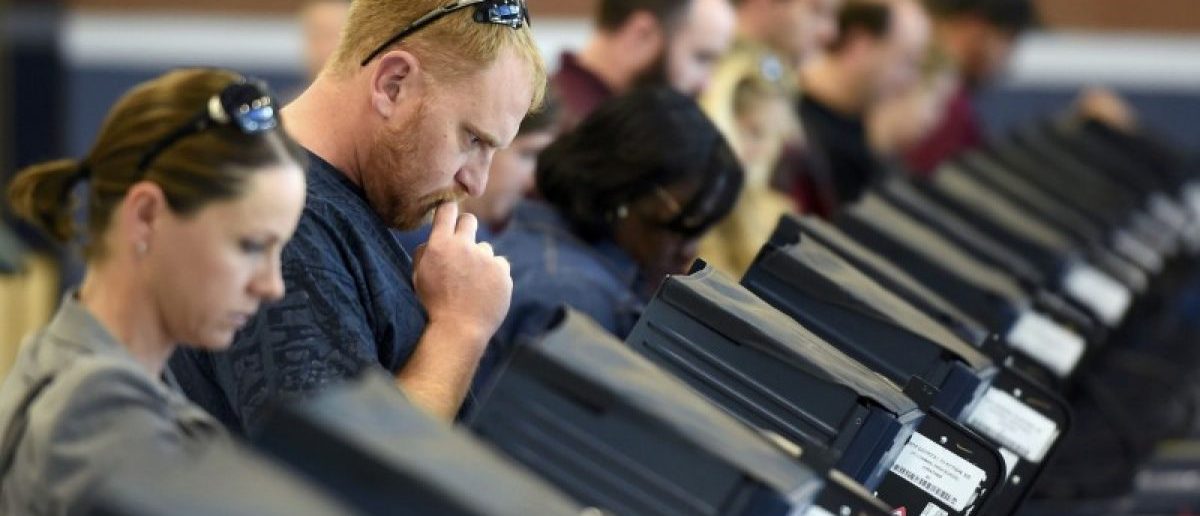
Up to recently elections were the voice of the people expressed by voting.

Hopefully this will remain so, however fears of a robot apocalypse mask the actual problems that we face by increasingly letting our lives be run by algorithms.

AIs will have and are having a knock-on effects that we have not prepared for.

When a computer spits out an answer we are typically unable to see how it got there.

There are algorithms all around us they may seem neutral and objective and unbiased but in a world of pervasive connectivity AI is the key to harnessing the power of electrical data prior to voting. It allows for millions of election related options that are posted online to be classified automatically and analysed to understand the pulse of an election.

Algorithms are now being used to make life-changing decisions such as when a prisoner should be given parole, or who gets elected. So it is time to forget everything you know about democracy.

Microsoft is building an A.I. empire and will appoint its leaders.

Twitter did exactly that : Producing a man who bankrupted his companies not once, not twice, but six times.

( The Trump Taj Mahal, 1991, Trump Castle, 1992,Trump Plaza and Casino, 1992, Plaza Hotel, 1992, Trump Hotels and Casinos Resorts, 2004, Trump Entertainment Resorts, 2009,) and Trump America in 2020, which currently has a National Debt bordering on 20 trillion. 

Since his election to be the next President of the US the media headlines are littered with the rhetoric of powerful people in the form of CRINGING WORLD POLITICAL LEADERS CHANGING THEIR SPOTS IN ORDER TO LICK UP TO A MAN THAT HAS MANY CHARACTERISTICS OF A FASCIST.Afficher l'image d'origine

Mr Trump’s views are some of the most extreme in American politics.

[He has:

  • advocated deporting nearly 11 million undocumented workers.
  • called for a border wall to be built between the US and Mexico.
  • said he would force Mexico to pay for the wall by threatening to ban Mexicans in the US from sending remittances home.
  • Mr Trump changed his position on abortion at least five times, alarming many social conservatives. This flexibility has convinced many social conservatives that Mr Trump cannot be trusted to appoint a Supreme Court justice who would oppose abortion rights.
  • Mr Trump has aggressively criticised international trade agreements.
  • He has repeatedly said the US should rethink its commitments to Nato, saying other member countries do not pay their fair share of the organisation’s budget. He has also floated an idea that South Korea and Japan could arm themselves with nuclear weapons – eliminating the need for US protection.]Afficher l'image d'origine

In the last few years the Internet has borne witness to and facilitated a great deal of social and societal change.

While undoubtedly carrying the potential to do great good, the Internet has been plagued with numerous impediments NONE WORSE THAN ITS ASSISTANCE IN THE ELECTION OF DONALD TRUMP.

I am aware that the Internet cannot be blamed in isolation.

The inequalities of the Capitalist system is a major contributor, but the dumbing down by the smart phone Apps are also influencing the reasons why we cast a vote.

If you not convinced the only thing that might be more perplexing than the psychology of Donald Trump is the psychology of his supporters. It isn’t just that they are misinformed; it’s that they are completely unaware that they are misinformed.

We now find ourselves looking a man and his team of advisors that has an ultimate goal to pursue national greatness in disrespect of the cost which will take the form of a state that will be anti-democratic and totalitarian. The state needed to fulfill this goal is a state that breeds ( As did all major fascist regimes that have ever existed) political parties that spend more time arguing than implementing policies.

At the same time, there is a paradoxical here with a resurgence of interest in universalism within the international legal context and the discourse of human rights, which at this point lack a firm philosophical foundation.

With a world facing problems that requires a vast resurgence of interest in universalism.

Power use to be what goes on in the head, and what goes on is a recognition of a reason – or better and more often: various reasons – to act differently than one would have without that reason…Power rests on perceived and recognized justifications – some good, some bad, some in between.  A threat can be seen as a justification, as can a good argument.

We are turning a blind eye to the day when we will have websites that are themselves artificially intelligent .

This type of power is not accountable and nobody can make it accountable. All AI decision-making is by definition, unknowable and will remain so till 2018 when a new European union comes into force giving citizens –  right to an explanation.

This however will not be of much use as AI processes data in ways we can’t. Ask its creator how it achieves a certain result and you get a shrug.

These  AIs brain responses are automatic, and not influenced by logic or reason.

What does it mean to act, and to act well?

We now have software writing software and soon we have unsupervised learning.

Even with all the technological advances we have seen over the last few years there still remains a large disconnect between technology and the general public.

How do we determine which actions are those which are moral, and which fall outside this sphere? And how do we negotiate the priority of all of these questions?

In fact, digital technology, particularly the internet, offers potential complications into human beings’ discussion and understanding of free will; even as the internet appears to open up options and capacities for individuals to exercise increased autonomy, it also has the potential to change the very ways in which human beings think, thereby impeding human capacities for meaningful self-reflection, a necessary if not sufficient criterion for rational autonomy.

The Internet, we’ve often been told, is a force for “democratization.

It’s worth asking, though, what kind of democracy is being promoted.

People skimmed headlines and posts, seeking information that reinforced their biases and rejecting contrary perspectives. The Internet inspired “participation,” but the participants ended up in “cloistered cocoons of cognitive consonance.”

The social networks operated by companies like Facebook, Twitter and Google don’t just regulate the messages we receive. They regulate our responses. They shape, through the design of their apps and their information-filtering regimes, the forms of our discourse.

All social networks impose these kinds of formal constraints, both on what we see and on how we respond. The restrictions have little to do with the public interest. They reflect the commercial interests of the companies operating the networks as well as the protocols of software programming.

With the instantaneous transmission of information, the internet has revolutionized the way we do business, obtain knowledge, vote, and communicate with others. Instead of a one-way relationship in which the human agent has total control as the sole actor and the tool is merely the object acted upon – a mere means to an end which the human agent has in mind, it would be more accurate today in the face of digital technology, specifically the internet, to recognize that tools also act on their users. When we create things to use for our own purposes, these tools can and do indeed act back on us, in some cases changing the very ways we think.

It is especially poignant to make this observation in the face of the development of the internet because of information technology’s potential to dramatically augment or infringe on human autonomy.

While the internet may indeed open up choices and opportunities to people that were never there before, it also has the potential to degrade individuals’ deep reading capacities, which is a dangerous threat to these individuals’ claims to free will since deep reading is necessary for meaningful introspection which is necessary to claims on rational autonomy.

On the other hand as we continue to enter the digital age, the neutrality of the internet becomes a resource that we must fight to protect, or we risk our further advancement.

Maintaining net neutrality is not simply a matter of protecting existing standards and preventing the extension of authoritative powers, but instead is a matter of establishing a new fundamental human right in the digital age. We can only hope that in unity we can break the barriers which stand between us, and in so doing, provide a living and evolving blueprint for our mutual future.

The Internet is changing the way we think about power and its interaction with economic and international relations.

A blind acceptance of a narrative provided by the Algorithmic world is not acceptable.

Therefore before the names of just and unjust can have place, there must be some coercive power to compel men equally to the performance of their covenants, by the terror of some punishment greater than the benefit they expect by the breach of their covenant, and to make good that propriety which by mutual contract men acquire in recompense of the universal right they abandon.

As a matter of urgency must establish a world governing body to overlook all technology. ( see previous posts)

When it comes to Algorithms the stakes for society are too high because AI may have arbitrarily negative consequences. Algorithms are a source of power and how they manifests themselves in the world cannot be let to the wimp of Capitalism.

If we are to read beyond the archaic dichotomous representation of international conflict, daring to create your own mind on the matter, doing so involves more than simply good intentions and determination.

It requires obtaining a new type of dignity as “selfs.”

Moreover, a willingness to engage in a dialogue concerning Being will allow for a creative and broad interpretation of man’s relationship to his world, and the responsibilities and interconnectedness that characterize it when it is not defined simply as an atomistic “standing reserve.”

This shallow consideration of the context plagues the headlines and propagates a facile belief in domineering great powers as the ‘be all and end all’ saviors of world conflict. The two leading competitors for the prize of… (peace?) in Syria leads one down a dangerous path that bolsters a bellicose Waltzian ‘balance of power’ attitude and neglects the voice of the people. This can be seen in the unacceptable bloodstains of millions around the world to this day.

The implications of Internet Freedom and its assistance or impediment has a knock on effect for International Relations as a whole.

The internet has become such an indispensable part of our everyday life that it is incredibly difficult to imagine life before it. Luckily the general public can align with interest groups via the web, thus making such groups much larger and more powerful than ever before. Unfortunately Ethicists are still confronted by the traditional questions that have plagued them since the ancients. They have been cut adrift from the context out of which they developed, searching for a foundation which is not forthcoming.

The disproportionate impact of the internet on the presidency and special interest groups only furthers the gap of influence between the public and the president.

As we move forward into an era of increasingly powerful digital technologies we have to ask the question WHY IT IS that the electrical system of one of the most powerful country can only produce two candidates that endeavored to buy with billions of $ the position of USA President.

WHEN YOU OBSERVE what are the power dynamics and systems of knowledge in our modern world, and what are their relationships to concepts of morality in general? All men having right to all things: power only exists when such an acceptance exists. Therefore where there is no commonwealth, there nothing is unjust.Two Jewish men lean against a barrier with the New York skyline behind them

The power to decide how things shall be done, the power to shape frameworks within which states relate to each other, relate to people, or relate to corporate enterprises, control over security, production, finance, and knowledge.

What is authenticity? In that respect, like all forms of honesty—intellectual and other— a principle of authenticity stems above all from a powerful sense of universal respect and love.


Charismatic’ domination derives from a population that perceives their leader to be virtuous and deserving of their dedication.

Furthermore, because people perceive their leader’s charisma as being the basis for the validity of the state’s legitimacy, one may infer that they also view their leader as a virtuous person who they understand has an inner calling to lead.

That the supporters and friends of a charismatic leader orient their interests to be in line with his/hers because they genuinely believe in the allure of their leader’s personal qualities.

Hence, because a charismatic leader is someone who many people favor, and due to them believing in his/her devotion to the state, it follows that the validity of a state’s authority under a charismatic leader is dependent on their charisma.

Efforts to engage the public are meant to sidestep the special interest groups that have dominated governmental discourse over the past several decades. The dominant theme according to the “We The People” rollout is to open a dialogue directly between the people and the administration, one that will meaningfully impact policy and legislation. Yet, the website has not led to any significant legislation at present and so far it has failed to promote meaningful interaction between the people and the presidency.Afficher l'image d'origine


Parliament is problematic because This weakens the state and, ultimately, the nation

This writing has merely touched the surface of the issues at hand.


http://www.bbc.com/news/world-us-canada-37999969

http://www.bbc.com/news/world-us-canada-37999969


.


Share this:

  • Click to share on WhatsApp (Opens in new window) WhatsApp
  • More
  • Click to share on Pocket (Opens in new window) Pocket
  • Click to share on Mastodon (Opens in new window) Mastodon

THE BEADY EYE ASKS: IS THE IDEOLOGICAL CORE OF OUR CIVILIZATION HOLLOWING OUT.

21 Friday Oct 2016

Posted by bobdillon33@gmail.com in Artificial Intelligence., Big Data., Communication., Facebook, Google Knowledge., HUMAN INTELLIGENCE, Humanity., Innovation., Life., Social Media., Sustaniability, Technology, The Future, The Internet., The world to day., Unanswered Questions., What Needs to change in the World

≈ Comments Off on THE BEADY EYE ASKS: IS THE IDEOLOGICAL CORE OF OUR CIVILIZATION HOLLOWING OUT.

Tags

Artificial Intelligence., Big Data, Globalization, Inequility, The Future of Mankind, Visions of the future.


The ideological core of our civilization is hollowing out due to technology.

We are living on the parentheses of a new era. Unfortunately most of us don’t know or don’t care, or perhaps its fortunate that it so.

However, I think – WE ARE AT A CHOICE POINT OF A PLANETARY SOCIETY THAT IS GOING TO BE BASED ON INDIVIDUAL CULTURE.

These are the times we were created for and we need to act at this juncture, for the sake of our children’s lives, we must confront hard data and scientific projections that are dire, harrowing to contemplate.

AS LEONARDO DE vINCI SAID ” Learn how to see. Realize that everything connects to everything else”

The Great Grief

Who wants to live in a world governed by algorithms, owned by Google, Facebook, Twitter, Microsoft or Apple.  A smart world run on dumbing down technology such as smart phones.

I don’t.

Our present Science will only be 5% OF SCIENCE IN 2024.

Human nature is shifting to racial empathy which is going to shake the foundations of everything.

History used to take hundreds of years to develop now it is our life time. The maps no longer fit the territory of interactive, the stage of radical history.

We are not quite at the beginning of the new age because we are still haunted by the spectrum of the past but the reset button of history has being hit.

The larger question is how we redirect the collective activity of our species on the planet — if this is even possible.

Collectively, our actions in the next decade may well determine the future of our world.

What does this future actually look like? How do we communicate? How does it function? How is it powered? What value system is it based on? What does it feel like to participate in? What are we eating?

When we consider the short timeframe in which humanity must reckon with the ecological crisis, not to mention the unintended consequences of AI that we have unleashed, we do not have time for chaos and incoherence — for a slow-motion breakdown, the rise of Right Wing despotism, or the political vacuum created by Brexit and the winner of forthcoming US Presidential election.

Pretty soon, people may reach a tipping point, a collective realisation that our social structures — our political and economic system — must be reinvented.  As that realisation dawns, an alternative must be ready with a plan of action, and working prototypes.

To ensure our continuity, we must distribute wealth and resources more equitably across the human community, as a whole.

The last few hundred years, since the Industrial Revolution, were a telescoped process.

During this time, humanity overcame local boundaries and became a globally interconnected species — in a sense, a super-organism. We continuously transform our physical environment to satisfy our needs and desires. Imperialism, colonialism, neoliberalism, capitalism, industrialisation, and even communism are all transitional systems. They meshed humanity together, crudely and brutally, connecting the entire species through networks of communication and infrastructure.

As difficult as it is to imagine, we must overcome the blind spots in our ideologies and belief systems. We must find the path that leads to a harmonic, peaceful unification of humanity.

This requires defining a new form of political economy that supports the restoration or regeneration of the Earth’s ecosystems, while allowing every human being to live decently.

It also means defining a new relationship to technology and innovation.

This relationship requires a New Institution in order to ensure that we address Artificial Intelligence. It must question the capacity of an aggregate of self-interested nation-states, as well as self-interested multi-national corporations, and a tiny coterie of the super-wealthy (the 85 individuals who control more capital than half of the world’s 7 billion people), to make the necessary course correction.

We may well be approach the threshold of ecological catastrophe that will force us to reinvent human society for collective benefit — for the benefit of humanity as a whole, as well as the other species that share this living world. This may seem farfetched , but all current indicators are telling us to do so.

Technology has a crucial role to play in this transition, but its power must be harnessed and mastered for ecological restoration and social evolution not for profit.

To build a regenerative society will require that we supersede the current global financial system, based on debt and compound interest, and use our social technologies to devise an economic system that supports healthy lifestyles and patterns of behavior.

How do we transform our social system to create a resilient or regenerative global society? What kinds of changes will be necessary? These questions must be asked, even as they shake the very foundation of our society…precisely, because they do.

For example, we must ask whether we want to reformed capitalism by enforcing it to become a “conscious capitalism.” By placing a World Aid Commission on all High Frequency Trading, on all Sovereign Wealth Funds Acquisitions, on all Foreign Exchange Transactions over ( 20, 000 $), on all Arms sales. ( See previous posts) Transitioning

Humanity has overlaid roads, train tracks, fiber optics, urban and suburban sprawl, across the surface of the planet. We have also constructed a global communication infrastructure, like a planetary nervous system, that allows humanity to communicate instantly, from anywhere across the globe.

If we can marshal our resources to confront the ecological mega-crisis, we can define a path beyond it that integrates cradle-to-cradle principles, biomimicry, and other principles that are symbiotic with nature, eventually producing abundance for all, while enhancing the health of the biosphere.

What sustainability seeks to sustain, above all, is some version of our current way of life, even though the evidence is totally overwhelming that it cannot continue.

Living processes, generally, don’t just endure or persevere. Life either flourishes and blooms, evolves and transforms, or it stagnates and dies. The rhetoric of sustainability tends to support the belief that our current form of post-industrial capitalism can be reformed — that it can persist, in something close to its present order.

If you take the time to look closer on today’s situation, through the veil of ignorance, it becomes apparent that most of our worldviews are still based on lies and that fear and lies are the prominent method of control today.

We are shortly going to witness the election of a new US president in a country where military expenditures dwarf the rest of the world but 1 in 5 U.S. children go hungry every night.

What do we see:  A rich blowhard running for president. Tech-bro execs hoping to splinter off into their own anything-goes fiefdoms.

Afficher l'image d'origine

Technology has been the leading engine of change for the past 100 years and will continue to do so.  The battle for the living room is currently in a full-out war between the leading tech companies – Microsoft, Apple, Google, Facebook, Netflix.

Facebook has surpassed the country of India, making it now the second largest country in the world.

This is creating a world where people think that they are engaged. A social and virtual world that is now just a marketing tool.

Sustainability.

In my view, the current language around climate change and its solutions is totally inadequate.

To motivate us to start the change we need to understand the root of today’s problems and see the ruling structures for what they are, and see how we all are a part of that structure.

Around the world, millions of children are trapped in an intergenerational cycle of disadvantage.

Is it time to abandon the concept altogether, or can we find an accurate way to measure sustainability? If so, how can we achieve it? And if not, how can we best prepare for the coming ecological decline?

The main difference of today’s way of manipulating the society is that the controlling powers choose to be hidden and are no longer showing their glory to the people. Instead they have made an illusion that the power is located in the hands of the democratically elected governments.

Afficher l'image d'origine

With so much labeled as sustainable, the term has become  essentially sustainababble, at best indicating a practice or product slightly less damaging than the conventional alternative.
Inequity

We are in dire need of a large dose of Empathy and honesty:

Empathy transcends all the properties of the esoteric power structures.

Empathy means to try to understand and listen to the feelings and needs of ourselves and others.

Sustainable development is development that meets the needs of the present without compromising the ability of future generations to meet their own needs.Regenerative

Go back

Your message has been sent

Warning
Warning
Warning
Warning

Warning.

Share this:

  • Click to share on WhatsApp (Opens in new window) WhatsApp
  • More
  • Click to share on Pocket (Opens in new window) Pocket
  • Click to share on Mastodon (Opens in new window) Mastodon
← Older posts
Newer posts →

All comments and contributions much appreciated

  • THE BEADY EYE SAYS TRUST IS DISAPPEARING THANKS TO OUR INABILITY TO RELATE TO EACH OTHER. December 19, 2025
  • THE BEADY EYE SAYS. THE WORLD NEEDS PEOPLE GOVERNMENT NOT MONEY GOVERNMENTS. December 18, 2025
  • THE BEADY EYE ASKS WHAT ARE WE THE SAME GOING TO DO TO STOP THE WORLD BEING FUCK UP FOR PROFIT BY RIPOFF MERCHANT. December 17, 2025
  • THE BEADY EYE CHRISTMAS GREETING. December 16, 2025
  • THE BEADY EYE SAYS. TO THE NEXT GENERATION TO LIVE A LIFE WORTH WHILE YOU MUST CREATE MEMORIES. December 16, 2025

Archives

  • December 2025
  • November 2025
  • October 2025
  • September 2025
  • August 2025
  • July 2025
  • June 2025
  • May 2025
  • February 2025
  • January 2025
  • December 2024
  • November 2024
  • October 2024
  • September 2024
  • August 2024
  • July 2024
  • June 2024
  • May 2024
  • April 2024
  • March 2024
  • February 2024
  • January 2024
  • December 2023
  • October 2023
  • September 2023
  • August 2023
  • July 2023
  • June 2023
  • May 2023
  • April 2023
  • March 2023
  • February 2023
  • January 2023
  • December 2022
  • November 2022
  • October 2022
  • September 2022
  • August 2022
  • July 2022
  • June 2022
  • May 2022
  • April 2022
  • March 2022
  • February 2022
  • January 2022
  • December 2021
  • November 2021
  • October 2021
  • September 2021
  • August 2021
  • July 2021
  • June 2021
  • May 2021
  • April 2021
  • March 2021
  • February 2021
  • January 2021
  • December 2020
  • November 2020
  • October 2020
  • September 2020
  • August 2020
  • July 2020
  • June 2020
  • May 2020
  • April 2020
  • March 2020
  • February 2020
  • January 2020
  • December 2019
  • November 2019
  • October 2019
  • September 2019
  • August 2019
  • July 2019
  • June 2019
  • May 2019
  • April 2019
  • March 2019
  • February 2019
  • January 2019
  • December 2018
  • November 2018
  • October 2018
  • September 2018
  • August 2018
  • July 2018
  • June 2018
  • May 2018
  • April 2018
  • March 2018
  • February 2018
  • January 2018
  • December 2017
  • November 2017
  • October 2017
  • September 2017
  • August 2017
  • July 2017
  • June 2017
  • May 2017
  • April 2017
  • March 2017
  • February 2017
  • January 2017
  • December 2016
  • November 2016
  • October 2016
  • September 2016
  • August 2016
  • July 2016
  • June 2016
  • May 2016
  • April 2016
  • March 2016
  • February 2016
  • January 2016
  • December 2015
  • November 2015
  • October 2015
  • September 2015
  • August 2015
  • July 2015
  • June 2015
  • May 2015
  • April 2015
  • March 2015
  • February 2015
  • January 2015
  • December 2014
  • November 2014
  • October 2014
  • September 2014
  • August 2014
  • July 2014
  • June 2014
  • May 2014
  • April 2014
  • March 2014
  • February 2014
  • January 2014
  • December 2013
  • November 2013
  • October 2013

Talk to me.

Jason Lawrence's avatarJason Lawrence on THE BEADY EYE ASK’S: WIT…
benmadigan's avatarbenmadigan on THE BEADY EYE ASK’S: WHA…
bobdillon33@gmail.com's avatarbobdillon33@gmail.co… on THE BEADY EYE SAYS: WELCOME TO…
Ernest Harben's avatarOG on THE BEADY EYE SAYS: WELCOME TO…
benmadigan's avatarbenmadigan on THE BEADY EYE SAY’S. ONC…

7/7

Moulin de Labarde 46300
Gourdon Lot France
0565416842
Before 6pm.

My Blog; THE BEADY EYE.

My Blog; THE BEADY EYE.
bobdillon33@gmail.com

bobdillon33@gmail.com

Free Thinker.

View Full Profile →

Follow bobdillon33blog on WordPress.com

Blog Stats

  • 94,154 hits

Blogs I Follow

  • unnecessary news from earth
  • The Invictus Soul
  • WordPress.com News
  • WestDeltaGirl's Blog
  • The PPJ Gazette
Follow bobdillon33blog on WordPress.com

The Beady Eye.

The Beady Eye.
Follow bobdillon33blog on WordPress.com

Create a free website or blog at WordPress.com.

unnecessary news from earth

WITH MIGO

The Invictus Soul

The only thing worse than being 'blind' is having a Sight but no Vision

WordPress.com News

The latest news on WordPress.com and the WordPress community.

WestDeltaGirl's Blog

Sharing vegetarian and vegan recipes and food ideas

The PPJ Gazette

PPJ Gazette copyright ©

Privacy & Cookies: This site uses cookies. By continuing to use this website, you agree to their use.
To find out more, including how to control cookies, see here: Cookie Policy
  • Subscribe Subscribed
    • bobdillon33blog
    • Join 223 other subscribers
    • Already have a WordPress.com account? Log in now.
    • bobdillon33blog
    • Subscribe Subscribed
    • Sign up
    • Log in
    • Report this content
    • View site in Reader
    • Manage subscriptions
    • Collapse this bar
 

Loading Comments...
 

You must be logged in to post a comment.