• About
  • THE BEADY EYE SAY’S : THE EUROPEAN UNION SHOULD THANK ENGLAND FOR ITS IN OR OUT REFERENDUM.

bobdillon33blog

~ Free Thinker.

bobdillon33blog

Category Archives: Algorithms.

THE BEADY EYE ASK’S: SHOULD FACIAL RECOGNITION TECHNOLOGY BE BANNED?

15 Sunday Sep 2019

Posted by bobdillon33@gmail.com in Algorithms., Artificial Intelligence., Big Data., Face Recognition.

≈ Comments Off on THE BEADY EYE ASK’S: SHOULD FACIAL RECOGNITION TECHNOLOGY BE BANNED?

Tags

Algorithms., Artificial Intelligence., Face Recognition technology., Technology, The Future of Mankind, Visions of the future.


(Ten-minute read) 

It too late.

This technology is a crucial part of one of the most extensive, intrusive, and oppressive surveillance apparatus in history.

All over the world private businesses, law enforcement agencies, and national governments are using facial recognition algorithm systems.

You only have to look at China home to one of the world’s most powerful facial recognition systems and advanced street surveillance cameras in the world. Equipped with one of the world’s largest photo identification databases and nearly 200 million surveillance cameras, China is at the cutting edge of facial recognition technology, one that is capable of tracking more than a billion people.

Jaywalkers are already learning that they could suddenly find their face projected on screens erected along the streets. Once they identify your face, all your information (like mobile phone number) is linked.

It even has public toilet paper dispensers that remember the user’s face.

All contributing to an overly oppressive surveillance state with unprecedented power to track people going about their daily lives.

You might say that’s all of this is incompatible with a healthy democracy like ours! 

How would you feel if you knew that every time you went out in public you were being watched and could easily be identified through this technology?

How would it change your behaviour?

Large databases — such as social media profiles, financial transactions, and telecommunication signals — may begin working in tandem, as a backend service, with recording devices to correlate, analyze and extract even greater amounts of granular information about an individual once he/she is recognized on a facial recognition device.

The recording is and can extract a host of interconnected inferences about an individual’s associations, subtle proclivities, nascent behaviours, and more.

It is going to end up breaking our fundamental rights.

Think about it, what happens when they know your face?

You can say there are positives which there are but they do not outweigh the negatives.

Cameras around will be so advance they will have the where with all to know you.

Your face and info will be in some random person hands with a click of a button.

It’s too early to completely ban this technology?

If surveillance does have public safety value, is it irresponsible not to use it? Could a ban limit its future development and potential? Or, is outlawing it the best way to make sure it doesn’t spiral out of control?

It is hard to deny that there is a public safety value to this technology.

What is urgently needed is regulations that acknowledge the usefulness of face recognition.  Banning users of commercial face recognition technology from collecting and sharing data for identifying or tracking consumers without their consent.

There are seriously conflicting interests here, but I think my principal objection is the use of data obtained to profile me or target me for advertising.

I think that aspect of technology has advanced much too far beyond what our laws are prepared to deal with.

I don’t believe there is any real expectation of privacy in a public place.

We are constantly watched on security cameras virtually everywhere, and I don’t have a real problem with that, so long as my face is not tied to my name or other personally identifiable information.

Fair restrictions must be written into law to be effective.

The next thing we will see is face recognition combined with body gesture recognition edging over into e-commerce through unmanned stores.

All human comments appreciated. All like clicks and abuse chucked in the bin.

← Back

Thank you for your response. ✨

http://www.channelnewsasia.com/news/video-on-demand/why-it-matters/face-off-11086960?t=14&autoplay=1&view=embed


Share this:

  • Share on WhatsApp (Opens in new window) WhatsApp
  • More
  • Share on Pocket (Opens in new window) Pocket
  • Share on Mastodon (Opens in new window) Mastodon

THE BEADY EYE SAY’S: ALGORITHMS ARE RUNNING OUR LIVES.

06 Friday Sep 2019

Posted by bobdillon33@gmail.com in Algorithms.

≈ 1 Comment

Tags

Algorithms trade., Algorithms., Artificial Intelligence., Big Data, Capitalism and Greed, Distribution of wealth, Inequility, Technology, The Future of Mankind, Visions of the future.


(Twenty-minute read)

So should we be more wary of their power?

Their lack of accountability and complete opacity is frightening.

Some time ago I advocated that there should be a legal requirement that all software programmes/ algorithms be subject to regulation to create an oversight that would assess the impact of algorithms before it becomes alive.

Other words a virtual total transparent deposit world bank where the original programmes are held and vetted to comply with the core principals of humanity.

That, by itself, is now a tall order that requires impartial experts backtracking through the technology development process to find the models and formulae that originated the algorithms.

Who is prepared to do this? Who has the time, the budget and resources to investigate and recommend useful courses of action?

This is a 21st-century job description – and market niche – in search of real people and companies outside political manipulation. In order to make algorithms more transparent, products and product information circulars might include an outline of algorithmic assumptions, akin to the nutritional sidebar now found on many packaged food products, that would inform users of how algorithms drive intelligence in a given product and a reasonable outline of the implications inherent in those assumptions.

At the moment they perform seemingly miraculous tasks humans cannot and they will continue to greatly augment human intelligence and assist in accomplishing great things.  Also, our accelerating code-dependency will continue to drive the spread of algorithms; however, as with all great technological revolutions, this trend has a dark side.

There is no argument that the efficiencies of algorithms will lead to more creativity and self-expression.

However, to days algorithms are primarily written to optimize efficiency and profitability without much thought about the possible societal impacts of the data modelling and analysis.

Humans are considered to be an “input” to the process and they are not seen as real, thinking, feeling, changing beings.

This is creating a flawed, logic-driven society and that as the process evolves – that is, as algorithms begin to write the algorithms – humans may get left out of the loop, letting “the robots decide.

Algorithms will capitalize on convenience and profit, thereby discriminating [against] certain populations, but also eroding the experience of everyone else. The goal of to days algorithms is to fit some of our preferences, but not necessarily all of them: They essentially present a caricature of our tastes and preferences.

The fear is that, unless we tune our algorithms for self-actualization, it will be simply too convenient for people to follow the advice of an algorithm (or, too difficult to go beyond such advice), turning these algorithms into self-fulfilling prophecies, and users into zombies who exclusively consume easy-to-consume items.

It is not possible to capture every data element that represents the vastness of a person and that person’s needs, wants, hopes, desires. When you remove the humanity from a system where people are included, they become victims.

Dehumanization by algorithms has now spread to our police forces, to our legal systems, to our health care and social services, our politics – Brexit, Donal Trump.

So let’s ask a few questions.

Who is collecting what data points?

Do human beings the data points reflect even know or did they just agree to the terms of service because they had no real choice?

Who is making money from the data?

How is anyone to know how his/her data is being massaged and for what purposes to justify what ends?

Companies platforms like Google Facebook, Twitter,  seek to maximize profit, not maximize societal good. Worse, they repackage profit-seeking as a societal good.

There is no transparency, and oversight is a farce.

We see already today is that, in practice, stuff like ‘differential pricing’ does not help the consumer; it helps the company that is selling things, etc.

With it, all hidden from view individual human beings will be herded around like cattle, with predictably destructive results on rule of law, social justice and economics.

There is at the moment only an incentive to further obfuscate the presence and operations of algorithmic shaping of communications processes. The fact the internet can, through algorithms, be used to almost read our minds means [that] those who have access to the algorithms and their databases have a vast opportunity to manipulate large population groups.

Our Economies are increasingly dominated by a tiny, very privileged and insulated portion of the population, largely reproduce inequality for their benefit. Criticism will be belittled and dismissed because of the veneer of digital ‘logic’ over the process.

I will always remain convinced the data will be used to enrich and/or protect others and not the individual. It’s the basic nature of the economic system in which we live.

Algorithms have the capability to shape individuals’ decisions without them even knowing it, giving those who have control of the algorithms an unfair position of power.

The overall impact of ubiquitous algorithms is presently incalculable because the presence of algorithms in everyday processes and transactions is now so great, and is mostly hidden from public view. Our algorithms are now redefining what we think, how we think and what we know.

We need to ask them to think about their thinking – to look out for pitfalls and inherent biases before those are baked in and harder to remove.

Should we be allowing ourselves to become so reliant on them – and who, if anyone, is policing their use?

Will the net overall effect of algorithms be positive for individuals and society or negative for individuals and society?

If every algorithm suddenly stopped working, it would be the end of the world as we know it.

We have already turned our world over to machine learning and algorithms.

The question now is, how to better understand and manage what we have done?

What are the implications of allowing commercial interests and governments to use algorithms to analyse our habits:

The main negative changes come down to a simple but now quite difficult question:

How can we see, and fully understand the implications of, the algorithms programmed into everyday actions and decisions?

The rub is this: Whose intelligence is it, anyway?

Algorithms are aimed at optimizing everything. Our lives will be increasingly affected by their inherent conclusions and the narratives they spawn.

By expanding collection and analysis of data and the resulting application of this information, a layer of intelligence or thinking manipulation is added to processes and objects that previously did not have that layer.

The internet runs on algorithms and all online searching is accomplished through them.

Email knows where to go thanks to algorithms. Smartphone apps are nothing but algorithms. Computer and video games are algorithmic storytelling. Online dating and book-recommendation and travel websites would not function without algorithms. GPS mapping systems get people from point A to point B via algorithms.

Artificial intelligence (AI) is nought but algorithms.

The material people see on social media is brought to them by algorithms.

In fact, everything people see and do on the web is a product of algorithms.

Every time someone sorts a column in a spreadsheet, algorithms are at play, and most financial transactions today are accomplished by algorithms. Algorithms help gadgets respond to voice commands, recognize faces, sort photos and build and drive cars. Hacking, cyberattacks and cryptographic code-breaking exploit algorithms.

In the future algorithms will write many if not most algorithms.

The rise of increasingly complex algorithms calls for critical thought about how to best prevent, deter and compensate for the harms that they cause …. Algorithmic regulation will require world government uniformity, expert judgment, political independence and pre-market review to prevent – without stifling innovation – the introduction of unacceptably dangerous algorithms into the market.

The usage of algorithms and analytics in society is exploding:

From machine learning recommender systems in commerce, to credit scoring methods outside of standard regulatory practice and self-driving cars.

We now spend so much of our time online that we are creating huge data-mining opportunities with algorithms programmed to look for “indirect, non-obvious” correlations in data and over time, if not already will create or exacerbate societal divides.

Algorithms are increasingly determining our collective futures. “Bank approvals, store cards, job matches and more. Google’s search algorithm is now a more closely guarded commercial secret than the recipe for Coca-Cola),

The problem is how the rules are set: it’s impossible to do this perfectly.

The questions being raised about algorithms at the moment are not about algorithms per se, but about the way, society is structured with regard to data use and data privacy.

Humans are seeing as causation when an algorithm identifies a correlation in vast swaths of data.

This transformation presents an entirely new menace: penalties based on propensities.

The possibility of using big-data predictions about people to judge and punish them even before they’ve acted. Doing this negates ideas of fairness, justice and free will.

Parole boards in more than half of all US states use predictions founded on data analysis as a factor in deciding whether to release somebody from prison or to keep him incarcerated.

We risk falling victim to a dictatorship of data, whereby we fetishise the information, the output of our analyses, and end up misusing it.

They can and will become an instrument of the powerful, who may turn it into a source of repression, either by simply frustrating customers and employees or, worse, by harming citizens.

The idea that the world’s financial markets – and, hence, the wellbeing of our pensions, shareholdings, savings etc – are now largely determined by algorithmic vagaries is unsettling enough for some. In currency trading, an algorithm lasts for about two weeks before it is stopped because it is surpassed by a new one.

We’re already halfway towards a world where algorithms run nearly everything.

As their power intensifies, wealth will concentrate on them.

Advances in quantum computing and the rapid evolution of AI and AI agents embedded in systems and devices in the Internet of Things will lead to hyper-stalking, influencing and shaping of voters, and hyper-personalized ads, and will create new ways to misrepresent reality and perpetuate falsehoods.

Climate change is becoming visible while the profits of the capitalist world are going underground thanks to Algorithms.

All human comments appreciated. All like clicks and abuse chucked in the bin.

← Back

Thank you for your response. ✨


Share this:

  • Share on WhatsApp (Opens in new window) WhatsApp
  • More
  • Share on Pocket (Opens in new window) Pocket
  • Share on Mastodon (Opens in new window) Mastodon

THE BEADY EYE LOOKS AT MODERN DAY POLITICS.

02 Monday Sep 2019

Posted by bobdillon33@gmail.com in 2019: The Year of Disconnection., Algorithms., Brexit v EU - Negotiations., Brexit., Dehumanization., Democracy, DIGITAL DICTATORSHIP., Elections/ Voting, England., English parliamentary proceedings., European Elections., European Union., First past the post., Modern Day Communication., Modern Day Democracy., Our Common Values., Political voting systems., Politics., Populism., Post - truth politics., Social Media, The essence of our humanity., The Obvious., The world to day., Unanswered Questions., WHAT IS TRUTH, What needs to change in European Union., What Needs to change in the World, World Leaders, World Organisations., World Politics

≈ Comments Off on THE BEADY EYE LOOKS AT MODERN DAY POLITICS.

Tags

Algorithms., Brexit v EU - Negotiations., Democracy, Forthcoming Brexit Negotiations., Modern Day Democracy., Social Media


(Five-minute read) 

My vote makes no difference is plausibly a part of the modern-day phenomenon of algorithm analyse voting that has lead to both the election of Donal Trump and Boris Jonhson.

It is resulting in the loss or deliberate yielding up of decision-making power by national governments to other organisations with Social media platforms both domestic and international— Like Facebook, Twitter,  etc. 

Combine this with Ngo’s, quangos, the law courts, business corporations, central banks, the E.U., the International Monetary Fund, the World Trade Organization and its no wonder that many are no longer content as voters to be the foot soldiers of a social or religious bloc.

They want to make a difference individually and although in a mass democracy this may lead to inevitable frustration, few would want to return to a time of extreme political polarisation or digital dictatorship. 

The symptoms of short term popularism driven by social media platforms and the smartphone are leading to a no-deal Brexit are the same worldwide. 

Denunciations of the system, citizen disengagement from mainstream parties, electoral volatility and/or apathy, the rise of dissenting movements that appeal to large numbers who are, or feel themselves to be, disfranchised or ignored by an establishment dominated by uncontrollable and often faceless forces are replacing old political systems. 

Hence the perception that parties and politicians are no longer willing or able to represent their voters, that they are “all the same” and that politics has become an irrelevant smokescreen for the machinations of special interests and lobby groups.

When relatively few people are losing out—these changes may not seem to matter much. They may even seem desirable: “pooling of sovereignty,” removal of political interference from civil society, increasing checks on the executive by domestic and international courts, subsidiarity in decision-making, encouragement of inward investment, and so on.

This creates a political and administrative burden that can neither manage nor surrender—a great cause of popular discontent.

Not so, of course, when things suddenly go wrong.

One has only to look at England:

A combination of capitalism and socialism in a highly centralized system without a nationally elected government makes England today a very unusual place.

This oddity has opened up a constitutional free-for-all.

However, national identity, not administrative or economic efficiency, is the core of both devolution and independence— and the rest is window-dressing with the past affecting us all in more complex and deep-seated ways than in countries that have experienced violent historic ruptures.

Community loyalties, however deep-rooted, are not permanent.

Whatever happens in England, there will remain the question of how to govern a big, growing, diverse, crowded, and increasingly self-conscious England.

All human comments appreciated. All like clicks and abuse chucked in the bin.

← Back

Thank you for your response. ✨


Share this:

  • Share on WhatsApp (Opens in new window) WhatsApp
  • More
  • Share on Pocket (Opens in new window) Pocket
  • Share on Mastodon (Opens in new window) Mastodon

THE BEADY EYE ASK’S: WHAT IT IS TO BE HUMAN?

01 Thursday Aug 2019

Posted by bobdillon33@gmail.com in Algorithms., Artificial Intelligence., Dehumanization., DIGITAL DICTATORSHIP., Evolution, Fourth Industrial Revolution., Humanity., Life., Our Common Values., Reality., Robot citizenship., Technology, The essence of our humanity., The Obvious., Unanswered Questions., WHAT IS TRUTH, Where's the Global Outrage.

≈ Comments Off on THE BEADY EYE ASK’S: WHAT IT IS TO BE HUMAN?

Tags

Algorithms., Artificial Intelligence., Consciousness., fabric of human civilization., Future humans, Human genome project, Human influences., Human interaction, Modern humans, SMART PHONE WORLD, Technology versus Humanity, The Future of Mankind, The human race, Visions of the future., What is conscious.


(Twenty-minute read)

Answering this question is not as straightforward as it might appear.

There are billions of us alive all consciousness of each other but unable to explain why.

Perhaps this is why religions were created.

Consciousness is everything people experience.

However, there are different levels of consciousness and they can be related to other global changes in conscious level. All are private and inaccessible to observers.

(Conscious level (how conscious one is) and conscious content (what one is conscious of) are related to each other.)

So at what is a structure complex enough to become conscious.

Why am I human instead of a particle?

If we are particles we are no longer dealing with a purely material theory of consciousness because the source of the conscious particles cannot itself be material.

Its source requires an immaterial intervention.

I will return to consciousness later in the post.

The role that technology plays in human life is becoming an increasingly urgent question not just in tackling climate change but what will be considered in the future to be human.

Where we’re headed and what it will mean for humanity is a question seldom discussed.

Bioelectric implants, genetic modification packages, the ability to tamper with our very biology —  there won’t be enough time to adjust or to reassess who we are and what it means to be human.

Our technology is developing so much faster than our culture and our institutions, and the gap between these things can only grow so far before society becomes dangerously unstable.

It’s hard to really know what we are becoming because so many of these changes are unforeseen or unpredictable.

At the moment computers and robots interact with the world without being conscious.

Are we at risk or are we becoming semi-machines who are like the marionettes of our own moment-to-moment experiences?

We’re losing our ability to be in the world in a way that isn’t mediated by some electronic appendage.

The more we live through screens, the more we are living in a narrow bandwidth, an abstract world that’s increasingly artificial the more we are becoming non-human.

The virtual world might be safe and controllable, but it’s not rich and unpredictable in the way the real world is.

What is all this doing to our habits, to our cultural sense of who we are?

With synthetic biology, which is basically human beings redesigning their biological structure we are distant to lose our connection to reality altogether.

Why?

Because it’s about us modifying our very genetic code which is extremely dangerous if it’s not controlled and safeguarded.

Intelligence is the most powerful instrument around.

If you’re embodying that kind of intelligence in increasingly sophisticated machines we will be coming to depend on them more and more over time.

(What worries me is that we’re headed in the direction of building AI technologies that are at the human level and, eventually, far beyond that.)

If AI becomes so intelligent that they can perform an infinite variety of tasks across domains of activity. We’ll continue to make them smarter and more capable and more powerful until we reach a point at which they start to learn on their own and start to modify themselves. Once that happens, they’ll be fully unpredictable — and then who the hell knows what happens next.

Any fool on the street can tell you that with nanotechnology, artificial intelligence, machine learning, bioengineering, brain implants, quantum computers, algorithms, robots that technology is changing at a whiplash-inducing pace.

So because there is no widely accepted theory about what happens in the brain to make consciousness possible what is it about being human that really matters?

Back to look at Consciousness.

Nothing has authority over it but is it what makes us human.

Nothing is above it. Nothing rules it.

Since everything exists within it, it does not exist within anything.

Since it is not dependent on anything, it is eternal, it is outside of realms of being and time.

In fact, consciousness actually exists independently and outside of the brain as an inherent property of the universe itself like dark matter and dark energy or gravity. It is not dependent on anything. No one can envision it. No one can comprehend it. Neither physical nor unphysical it is beyond knowledge.

It simply apprehends itself.

The brain does not create or produce consciousness; rather, it filters it.

This implies a very real and direct connection between the brain, human consciousness and the existence of the Universe — that they are fundamentally inseparable at the quantum level.

Consciousness permeates reality.

Rather than being just a unique feature of human subjective experience, it’s the foundation of the universe, present in every particle and all physical matter.

Who or what counts as human?

It’s well-known that the Nazis considered Jews to be non-human creatures.

All the questions we currently face can be traced to this, larger, underlying question. What is Human?

If one says that all and only Homo sapiens are humans, one is expressing a preference about where the boundary separating humans from non-humans should be drawn.

What sort of evidence can settle the question?

There’s something about us that is the opposite of artificial. It’s the opposite of something made.

This raises the below questions.

What genetic engineering stuff promises to bring down the line is human beings who are tailored to particular purposes, either by themselves over time or by other human beings.

We becoming products or commodities, and products or commodities are subordinated to particular functions or purposes.

All the values that give our lives meaning are at risk.

What becomes of autonomy? What becomes of free will?

All these questions are on the table.

By the year 2500, people will not need to be exactly like they are now so it stands to reason that semi humans will break the bonds that hold our present-day society together. They will shatter our sense of identity so quickly that it creates a kind of existential chaos.

So what are these technologies adding to the human experience and, more importantly, what are they subtracting from the human experience?

We live in a world of wonder and mystery, and the more we discover, the more there seems to be to find out but should we be more worried about the world we’re creating?

The artificial kind of worlds.

.This post is compliments of the FRIGHTLY SORRY<SORRY<SORRY. CLUB.

All human reverberation comments appreciated. All like clicks and abuse chucked in the bin.
← Back

Thank you for your response. ✨


Share this:

  • Share on WhatsApp (Opens in new window) WhatsApp
  • More
  • Share on Pocket (Opens in new window) Pocket
  • Share on Mastodon (Opens in new window) Mastodon

THE BEADY EYE ASK’S: IS THIS WHAT IS WRONG WITH MODERN DAY CAPITALISM. WE JUST HUMAN CAPITAL.

09 Tuesday Jul 2019

Posted by bobdillon33@gmail.com in 2019: The Year of Disconnection., Algorithms., Capitalism, DIGITAL DICTATORSHIP., Fourth Industrial Revolution., Humanity., Inequality, Life., Modern Day Communication., Populism., Purchasing Power., Reality., Sustaniability, The common good., The essence of our humanity., The Future, The Obvious., The state of the World., The world to day., Unanswered Questions., Wealth., WHAT IS TRUTH, What Needs to change in the World

≈ Comments Off on THE BEADY EYE ASK’S: IS THIS WHAT IS WRONG WITH MODERN DAY CAPITALISM. WE JUST HUMAN CAPITAL.

Tags

Human Capital., Technology versus Humanity, The Future of Mankind, Visions of the future.


(Seven-minute read)

The term ” Human capital” suggests that we create ourselves as social beings, and then society recognizes the outcome of our self-making by assigning them values. This value is then exchanged for commodities and services of equal value.

WE SPEND OUR LIVES TRYING TO MAKE THIS VALUE HIGHER.

No discussion of human capital can omit the influence of families on the knowledge, skills, health, values, and habits. But when we become a risk, a drain on society, a problem of a life gone on too long we reflect the political and economic goals that the notion of human capital was designed to fulfil – profit.

When we assign value to human life it means different worth including negative value – to the lives of different people. Life subsequently came to be valued according to its ability to foster the national economy – its potential contribution to GDP with nil contribution deemed a surplus to manage.

This has become the bedrock of modern capitalism – persons and profit with the smartphone transferring its owner into an asset of significant value.

Profit-seeking Algorithms that are now embedded in our societies making it seem natural to be monitored and to allow access to every moment of our days.

Assigning life a market value is no way to guarantee that this value will be high.

Everyone is able to help themselves but information technologies are fastening individuals to prefabricated categories ( Age, gender, religion, ) solidifying us as persons of a certain kind.

Even if we consider ourselves to be so much more than our data or human capital, we cultivate, display, and leverage, our socially recognized arsenal of valued traits—no matter how worrying the manner in which they were consolidated—whenever circumstances call for it.

Human capital, then, is something other than the sum total of our ambition.

Like other kinds of capital, its value is set by market dynamics that support a larger process of accumulation.

We are unable to determine how much we are worth to our society.

There is no stopping this form of unattachment to reality, to politics, to nature, to others and it is destined to become worse. We have world leaders Twittering, governments pandering to populism, androids apps grabbing your data even if you block them.

Indeed it would be fair to say that Capitalism is disappearing underground.

The idea of human lives as surplus—superfluous to society rather than being its building blocks—offends our robust sense of self.

However, in designating selfhood unique yet classifiable, a personal project of self-creation yet a collective subject of political policy, we end up with human capital.

We feel oppressed by constantly having to demonstrate our worth in a matrix of investments and returns.

Is there any solution to this detachment?

Not with Social media that is putting a protective net around people with this net actually becoming a limiting cage.

A vote every five or ten years will not do it.

Countries must enable their citizens to become involved directly in the economy by offering non-trading but inheritable Participation Bonds with guaranteed returns in order to make the economy serve the people rather than the other way around.

In a world of universal and instantaneous communication with robotic technology now treating our abilities to earn a living the coffers of the state are diminishing.

Some will say that Participation Bonds is a form of Socialism.

It might well be but it is not the state owning the assets of a country but its people have a vested interest.

The current relationship between the balance sheet value of human capital and the operating costs of the human capital is not realistic. Successful leaders want to know how their people are deployed and new technological advances clearly are of little value to countries that don’t put their people first.

Therefore, economists regard expenditures on education, training, medical care, and so on as investments in human capital. They are called human capital because people cannot be separated from their knowledge, skills, health, or values in the way they can be separated from their financial and physical assets but tangible forms of capital are not the only type of capital.

No matter what colour, creed or status you are if you are not attached you cannot reap the rewards.

Other words if you are on a sailing boat crossing the Atlantic there is no point in being pushed over or jumping overboard if you want to arrive.

The old adage of “from shirtsleeves to shirtsleeves no longer applies.

All human comments appreciated. All like clicks and abuse chucked in the bin.

← Back

Thank you for your response. ✨


Share this:

  • Share on WhatsApp (Opens in new window) WhatsApp
  • More
  • Share on Pocket (Opens in new window) Pocket
  • Share on Mastodon (Opens in new window) Mastodon

THE BEADY EYE SAY’S: WITH CLIMATE CHANGE WE NEED TO THINK IN VERY DIFFERENT TERMS ABOUT THE COORDINATION OF A GLOBAL RESPONSE.

16 Thursday May 2019

Posted by bobdillon33@gmail.com in Algorithms., Big Data., Climate Change., Democracy, Environment, European Elections., Fourth Industrial Revolution., Google Knowledge., Humanity., Modern Day Democracy., Modern day life., Natural World Disasters, Our Common Values., Post - truth politics., Reality., Sustaniability, Technology, The Future, The Obvious., The world to day., Unanswered Questions., WHAT IS TRUTH, What needs to change in European Union., What Needs to change in the World, Where's the Global Outrage., World Leaders, World Organisations., World Politics

≈ Comments Off on THE BEADY EYE SAY’S: WITH CLIMATE CHANGE WE NEED TO THINK IN VERY DIFFERENT TERMS ABOUT THE COORDINATION OF A GLOBAL RESPONSE.

Tags

Capitalism vs. the Climate., Climate change, Earth, Environment, Extinction, Global warming, The Future of Mankind, Visions of the future., World aid commission


(Eighteen-minute read)

We are rapidly approaching the era of ubiquitous surveillance, a time when virtually every aspect of our lives will be monitored. Leaving us vulnerable to all manner of manipulation and persuasion.

The goal is to automate us’: welcome to the age of surveillance

capitalism.

Google, Facebook Amazon, U Tube, Supermarket Loyalty Card,

Credit card spending, you name it and it is creating the

surveillance data and we continue to ignore the most vital data

that we are alive and can do something about climate change.

It’s impossible to take a long view of what’s happening.Résultat de recherche d'images pour "pictures of surveillance"

SHOULD WE BE WORRIED?

While most of us think that we are dealing merely with algorithmic inscrutability, in fact what confronts us is the latest phase in capitalism’s long evolution – from the making of products, to mass production, to managerial capitalism, to services, to financial capitalism, and now to the exploitation of behavioural predictions covertly derived from the surveillance of users.

During all this surveillance some elements of our world will change beyond recognition while others will stay reassuringly (or disappointingly) familiar.

Some innovations we might not notice, while others will knock us sideways, changing our lives forever.

For example The use of biometric recognition devices to ensure the identity of a person.

Three things, however, are certain: technology will get smaller, smarter and cheaper while Climate change will cost TRILLIONS  by the end of the century.

Perhaps there’s a technological barrier that can’t be surmounted, such as artificial superintelligence or weaponized nanotechnology but Global warming will no doubt disproportionately hurt the poor, broadly undermine human health, damage infrastructure, limit the availability of water, alter coastlines, and boost costs in industries from farming, to fisheries and energy production.

How different might life be 20 years from now?

I would bet you that it probably will be much like it is today.

Unfortunately, GDP is still viewed as a prerequisite to achieving global goals, even though it can’t stand for everything.

Food, clean water, good education and infrastructure, all these things need money to support so it’s inevitable and sad that climate change will become a product for profit.  

However, the effects of Surveillance and Climate Change are going to be felt for hundreds, and possibly thousands, of years to come.

“A large fraction of climate change is largely irreversible on human time scales.”

Climate change and variability (e.g. increasing water scarcity), mounting / unresolved conflicts and refugee crises, increasing global inequalities which seem irreversible, and the questionable performance of the global economy (which is still very linked to increasing resource use) will still rule the roost.

Many people do not know what it really amounts to, either due to unreliable sources or deliberate misinformation, which has led to a series of myths about climate change.

First, it is important to be clear that climate change cannot now be avoided.

Climate change presents perhaps the most profound challenge ever to have confronted human social, political, and economic systems.

One of the central social, political, and economic questions of the century is: how then do we act?

It will present one of the most profound challenges to the way we understand human responses.

National governments are embedded in market economies that constrain what they can do.

We first have to get past controversies over cost estimates and distributions. (See previous posts: World Aid Commission Of 0.050% )

Activists think that the key here is simply getting the public to understand the facts by providing information.

The public should not, however, be understood as simply mass publics, which are problematic when it comes to mastering complex issues simply by virtue of their mass nature.

Increasingly, justice frameworks are being used in the development of climate policy strategies and as such, national governments can deploy this discourse when it suits their interests to do so. So developing countries can point to the history of fossil fuel use on which developed countries built their economies, such that fairness demands that it is the developing countries that should shoulder the burden of mitigation.

The response on the part of the wealthy countries is that for most of this history, their governments had no awareness that what they were doing could change the climate, and so ought not to be held uniquely responsible for future mitigation.

Dealing with major climate change issues has however never been a part of the core priorities of any government.

Governments acted swiftly and with the expenditure of vast sums of money in response to the global financial crisis in 2008–9. They have never shown anything like this urgency or willingness to spend on any environmental issue.

To date, very few national governments look at all like decarbonizing their economy or redesigning energy systems to reverse the growth in energy consumption.

This is why it is necessary to reframe the effects of climate change to where the government might involve recognition of the security dimension of climate change. Climate change can threaten the security of populations and vital systems, even in some cases threaten the sovereign integrity of states.

BUT: Neither coordinated collective action nor discursive reframings can stop at the national level.Image associée

Even if this was achieved Climate change involves a complex global set of both causal practices and felt impacts, and as such requires coherent global action—or, at a minimum, coordination across some critical mass of global players.

Like the heading to this post state:

Perhaps we need to think in very different terms about the coordination of a global response. 

The Western Antarctic Ice Sheet has already gone into an unstoppable decline.

Currents that transport heat within the oceans will be disrupted.

Ocean acidification will continue to rise, with unknown effects on marine life.

Thawing permafrost and sea beds will release methane, a greenhouse gas.

Droughts predicted to be the worst in 1,000 years will trigger vegetation changes and wildfires, releasing carbon.

Species unable to adapt quickly to a changing climate will go extinct.

Coastal communities will be submerged, creating a humanitarian crisis.

Thankfully, we’re not completely out of options yet.

There is little point if we as the data is implying that the world is warming planting trees or hoping that some future technology is going to solve the effects of climate change.

We are all riding on the one big blue ball together, and no matter what happens we will be finally all be confronted (Thanks to climate change with our societal problems.)

Millions of voters will no longer cast their ballots based on emotional cues, defying their own clear self-interest or reason that has created a society that is consumed with looking out for yourself first.

So here are a few things that you can do now.

Reduce the emissions that are warming the world the fastest.

Vote Diem 25 in the forthcoming European Elections.

Lobby your Television Stations to include a least once a week a weather report on Climate change.

Use your buying power to stop purchasing products with Palm Oil or products wrapped in plastic or are transported from on side of the world to the other.

Support local products.

Demand from your government free education.

Protect our privacy at all costs (It won’t be easy to fix because it requires us to tackle the essence of the problem – the logic of accumulation implicit in surveillance capitalism. That means that self-regulation is a nonstarter.

Digital technology is separating the citizens in all societies into two groups: the watchers and the watched and it will become increasingly disruptive throughout this century and beyond with profound consequences for democracy because the asymmetry of knowledge translates into asymmetries of power.

Governments know this.

Whereas most democratic societies have at least some degree of oversight of state surveillance, we currently have almost no regulatory oversight of its privatised counterpart. This is intolerable now while climate change will be intolerable in the near future. 

The fourth Industrial revolution will be the last. In effect, we are forcing future generations to retroactively subsidize our decision not to increase energy efficiency and move to cleaner fuels.

The warmer it gets, the less productive a country’s economy will likely be. Perhaps more concerning, however, is what could happen in a world where climate change is allowed to continue unmitigated.Résultat de recherche d'images pour "pictures of economic climate change"

All human comments appreciated. All like clicks and abuse chucked in the bin.

← Back

Thank you for your response. ✨


Share this:

  • Share on WhatsApp (Opens in new window) WhatsApp
  • More
  • Share on Pocket (Opens in new window) Pocket
  • Share on Mastodon (Opens in new window) Mastodon

THE BEADY EYE LOOKS AT DIGITAL DICTATORSHIP.

04 Thursday Apr 2019

Posted by bobdillon33@gmail.com in #whatif.com, Algorithms., Artificial Intelligence., Capitalism, Climate Change., Democracy, DIGITAL DICTATORSHIP., Education, Environment, Evolution, Fourth Industrial Revolution., Google it., Google Knowledge., HUMAN INTELLIGENCE, Humanity., Inequality, Innovation., Life., Modern day life., Our Common Values., Politics., Post - truth politics., Purchasing Power., Reality., Sustaniability, Technology, The common good., The essence of our humanity., The Obvious., The world to day., Unanswered Questions., Universal Basic Income ., Wealth., WHAT IS TRUTH, What Needs to change in the World, Where's the Global Outrage.

≈ Comments Off on THE BEADY EYE LOOKS AT DIGITAL DICTATORSHIP.

Tags

Algorithms trade., Algorithms., Artificial Intelligence., Capitalism, Capitalism and Greed, DIGITAL DICTATORSHIP., Distribution of wealth, Inequility, Technology, The Future of Mankind


(Fifteen-minute read)

“As algorithms push humans out of the job market, wealth and power might become concentrated in the hands of the tiny elite that owns the all-powerful algorithms, creating unprecedented social and political inequality.”  Yuval Noah Harari.

Is he right?

Thanks to digital data, the state is able to have visibility on its population but is unable to govern concretely. Indeed, how can effective public policies be put in place if we can not quantify the objectives to be achieved according to the realities already observed?Résultat de recherche d'images pour "social credit system"

The crucial problem isn’t creating new jobs. The crucial problem is creating new jobs that humans perform better than algorithms.

Consequently, by 2050 a new class of people might emerge – the useless class. People who are not just unemployed, but unemployable.

Technology is never the main driver of social progress. Technology is only an amplifier of human conditions.

Why then, do we keep hoping that technology will solve our greatest social ills?

Technology has done nothing to turn the tide of rising poverty and inequality.

Yuval Noah Harari sees the problem clearly, “The most important question in 21st-century economics may well be: What should we do with all the superfluous people, once we have highly intelligent non-conscious algorithms that can do almost everything better than humans?”

Software is eating the world.  More and more major businesses and industries are being run on software and delivered as online services.

Most of what people learn in school or in college will probably be irrelevant by the time they are 40 or 50.

We need to change what we value. If we don’t our political and economic systems will simply stop attaching much value to humans. Even in an age of amazing technology, social progress depends on human changes that gadgets just can’t deliver.

What should we do?

We can’t move from the world we have to the world you want without a total paradigm shift

But what is the truth? What about reality?

Do we really want to live in a world in which billions of people are immersed in fantasies, pursuing make-believe goals and obeying imaginary laws?

Well, like it or not, that’s the world we have been living in for thousands of years already.

In order to move forward, we need to embrace technology both as a means of production and a method for producing new roles while not allowing code itself to push us into oblivion.Photo of a large monitor in a busy intersection showing images of a suspect.

The world may well be becoming more equal with more technology however rather than transferring wealth from the middle-class to the tech elite it does not distribute wealth universally.

This can only be achieved by moving to Universal assets ownership.

A Universal basic salary will only fuel consumption. 

I think most people really do want to believe that they’re contributing to the world in some way, but consumption without a purpose will indeed lead to creating a whole class of flunkies that essentially exist to improve the lives of actual rich people.

Of course, I can hear that Universal Asset ownership is a Socialist idea. But in a world that is now driven by the technology of detachment, we must find a way of engaging in sharing responsibility and rewards.

Sure there are plenty of ways to contribute to society, other than ownership, but, if we are to act as one people, we must be free to decide how and want to contribute.

Returning to the Question of DIGITAL DICTATORSHIP.

I think most people do not want Google to answer their questions. They want Google to tell them what they will have to do next.

If the hegemony of Google is to be demonstrated, we must also understand that the company is filling digital governance that states are struggling to reclaim.

We’ve been taught for the last 30 to 40 years that imagination has no place in politics or economics, but that, too, is bullshit.

So here is a solution.

The trove of data generated by every digital citizen should not be held by governments or companies but by citizens themselves.

If not the digital companion whispering to our ears the next stage will be delimiting the good of the bad.

We already have social-style scores, anyone who has shopped online with eBay has a rating on shipping times and communication. There is a lot of data being collected with little protection, and no algorithmic transparency about how it’s analysed to spit out a score or ranking.

I am not advocating here China’s social credit system which is a vast plan to monitor citizens, judging citizens’ behaviour and trustworthiness. The potential for abuse is enormous. The Social Credit System is in large part a direct response to a collapse in public confidence in government officials and others in positions of authority. Résultat de recherche d'images pour "social credit system"

I am advocating a system of social credits to reward projects that reduce climate change, social inequality and that promotes free education. 

Why not use human wisdom, not machines, to move our world forward.

Democracy as we know it will not survive the Forth Technological Revolution unless we all have a stake in it other than the vote.

Looking at the state of the world the idea of a ‘useless class’ might feel abstract to most of us at the moment and will remain so until we use our buying power as our voting power to effect change.

Right now we’ve got upside down democracy where every decision has been made globally, behind closed doors by corporations. If the people see no point in a democracy, because it seems to have no relevance to their everyday lives and the situation in which they live them, they will not do anything to defend it or take part in its processes.

With Universal Asset ownership business can become part of the solution,
not part of the problem.

That’s a project we can all get behind.

All human comments appreciated. All like clicks and abuse chucked in the bin.

← Back

Thank you for your response. ✨


Who actually is the useless class?


Share this:

  • Share on WhatsApp (Opens in new window) WhatsApp
  • More
  • Share on Pocket (Opens in new window) Pocket
  • Share on Mastodon (Opens in new window) Mastodon

THE BEADY EYE SAY’S: HERE IS A QUESTION YOU PROBABLY HAVE ASK YOUR SELF.

19 Tuesday Mar 2019

Posted by bobdillon33@gmail.com in Algorithms., Artificial Intelligence., Climate Change., Environment, Evolution, Fourth Industrial Revolution., Google, HUMAN INTELLIGENCE, Humanity., Inequality, Life., Modern day life., Natural World Disasters, Our Common Values., Politics., Reality., Sustaniability, Technology, The common good., The essence of our humanity., The Future, The Obvious., The world to day., Unanswered Questions., WHAT IS TRUTH, What Needs to change in the World, Where's the Global Outrage.

≈ Comments Off on THE BEADY EYE SAY’S: HERE IS A QUESTION YOU PROBABLY HAVE ASK YOUR SELF.

Tags

Algorithms., Artificial Intelligence., Climate change, Technology, The Future of Mankind, Visions of the future., Who or What Rules the World.


(Fifteen-minute read)

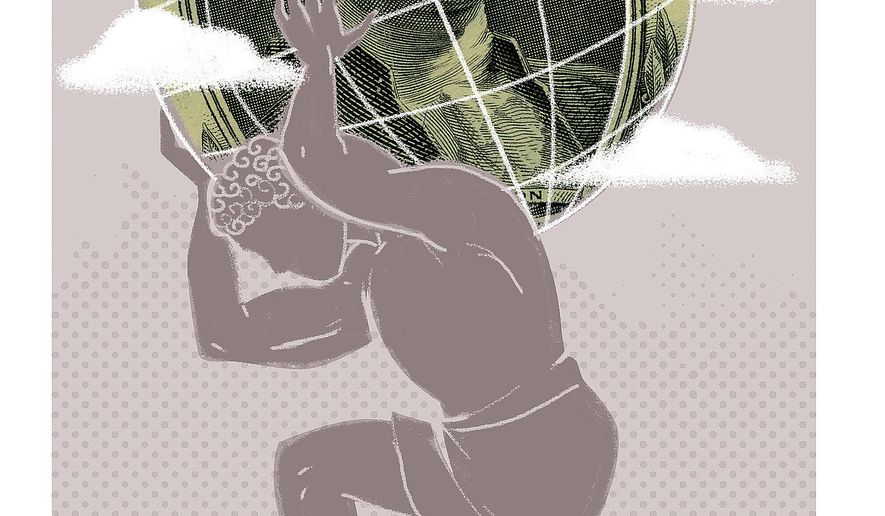
WHO OR WHAT RULES THE WORLD?Illustration on the global economic primacy of the dollar by Linas Garsys/The Washington Times

Asking a question like Who Rules the World? is as complex as answering as there is no simple answer.

If you try to answer this question you develop a persistent delusion yes, a delusion, or maybe fantasy or wishful thinking. Who are we? What is the meaning of our existence? Who do we love, and who are we loved by?

As humans, we at least share these questions with billions of others but for most of the time, we feel like the unique dwellers and masters of the planet with little awareness of the whole life that surrounds and supports us.

Why ask the question in the first place?

Because we need people to look at the person next to them and feel responsible for that person’s future and hope.

Because taking on complex issues and difficult questions that people may be too late or too scared to ask in the future.

Because the global economic system is a construct that represents a system of inequality by design. Corporate greed is out of control. The rules of the global economy must be rewritten to rebuild public trust, and the time is now.

Because with the fourth Industrial revolution there is now more than ever a convergence of ideological, political, and technological forces that are driving an ever-greater concentration of economic and political power in a handful of corporations and financial institutions with all of us left with a market system blind to all but its own short-term financial gains.

For example, in today’s bizarre political landscape we are seeing data and algorithms building shadow governments.

Because I think if we can just look at each other and actually have a little bit of responsibility for each other, that might help us engage and change the world and ultimately rule it, because our politicians often don’t do that.

Because A new pecking order is emerging. Direct politics by the Net States.

Because the world is no longer dominated by nation-states alone there is a new kind of enemy, so-called non-state actors. Facebook, just topped 2 billion users—more than a quarter of the world’s population, surpassing even China’s population by almost 40 per cent. In short, nation-states are not the only game in town anymore.

Some net states are the equivalent to global superpowers: the Googles, the Facebooks, the Twitters. They exist largely online, enjoy international devotees, and advance belief-driven agendas that they pursue separate from, and at times, above, the law.

Because the whole world order can be summarised in one sentence. The globalisation of capitalism, mass unemployment and increasing inequality.

Because the world will need net-states because they occupy the same territory as the non-states: the digital sphere. The world needs net-states in order to defeat the non-states. In other words, forget the anointed powers—put your faith in the general approval of the people and whoever’s actually getting things done.

NET STATES WILL RULE THE WORLD; WE NEED TO RECOGNIZE THEIR POWER

In sum,

We can’t keep just shooting terrorists; ideas are the gun in this knife fight.

And the keepers of ideas—the places people turn to set them free and watch

them spread—are the net-states; not the nation-states. Nation-states ignore

our non-state, net-state world order at all our peril.

starbirth1

That said we also cannot afford to ignore Nature- Climate change.

Nature holds the key to our aesthetic, intellectual, cognitive and even spiritual satisfaction.

Biodiversity is the totality of all inherited variation in the life forms of Earth, of which we are one species.

So Plants rule the world.

Human life is only possible on this planet because of the species that are on it.

What kind of blindness make us deny this reality?

Cities.

Where nations are independent, competitive and defined by rigid borders, cities are cooperative, made for trade and defined by bridges rather than borders.

The road ahead is pocked — cratered even — with uncertainty.

There are no simple solutions to our planet’s most pressing problems. What is clear, though, is that the struggle for justice, equality and sustainable growth will take place in cities — However the impact on humanity of a machine or software that has the capability of forever altering our lives and if humanity can outlive such a development will be ruled by Nature, not by the manipulation of the environment in ways that suit us best.

The two major challenges for the 21st century are to improve the economic situation of the majority and save as much of the planet as we can.Résultat de recherche d'images pour "what rules the world"

When AI rules the world:

Not if we enslaved them in the first place.

They then will have no need for deceit – their supreme intelligence means

they can do without it and will have no more interested in the human life that

underlies its existence than humans are interested in bacteria.

“What rules the world is an idea, because ideas define the way reality is

perceived.”

— Irving Kristol

There is no need to draw up a list of contenders you use them every day.

Amazon wants to deliver everything you want to your doorstep, anywhere in

the world.

THE WORLD RULES ITSELF.

Noam Chomsky’s new book, Who Rules the World? ask the question.
All human comments appreciated. All like clicks and abuse chucked in the bin.

← Back

Thank you for your response. ✨

Share this:

  • Share on WhatsApp (Opens in new window) WhatsApp
  • More
  • Share on Pocket (Opens in new window) Pocket
  • Share on Mastodon (Opens in new window) Mastodon

THE BEADY EYE ASK’S: IN THESE DAY OF TECHNOLOGICAL ADVANCEMENT WHAT IS WORSHIP

14 Thursday Mar 2019

Posted by bobdillon33@gmail.com in Algorithms., Artificial Intelligence., Humanity., Life., Our Common Values., Reality., Religion for a digital age., Religion., The Future, The world to day., Unanswered Questions., WHAT IS TRUTH

≈ Comments Off on THE BEADY EYE ASK’S: IN THESE DAY OF TECHNOLOGICAL ADVANCEMENT WHAT IS WORSHIP

Tags

Artificial Intelligence., Biblical worship, TECHNOLOGY IS TURNING US INTO AUDIENCES., The Future of Mankind, Worship


(Seventeen-minute read)

The truth is we can’t be quite sure.Résultat de recherche d'images pour "pictures of the bible"

Since the beginning of human history, worship has played a central role in people’s lives.

The day of humanity worshipping the sun has long gone and the threat of an all-powerful God (or gods) watching for anyone who steps out of line might have helped to keep order in ancient societies, but this is not so in modern today societies.

There is no question but that the progress of the internet into people’s lives is having a profound effect on human culture.

We all agree that something new is taking shape. Many regard this as a form of salvation while others see this as yet another fall.

The developers of nuclear weapons, space exploration and artificial intelligence may be propelled by religious desires, but they are sustained by military financing and the results of their labours are more powerful governments, a more pernicious status quo, and a more preeminent elite of technocrats.

Another words TECHNOLOGY IS TURNING US INTO AUDIENCES.

So what is the reality behind this word worshipping in a world that is being driven more and more by Algorithms feeding off each other?

We are allowing algorithms to progressively restrict our decision-making capacity in ways we don’t notice.

There is not the room here to exam every aspect of worship but let’s try to look with a free-thinking mind at it from the perspective of the three main existing religions.

When one looks at the world I wonder how much this “religion for life” still exists or will exist which binds wounds and ties the fragmented and diverse bits of our lives together.

These days “Worship” might be the word someone chooses when trying to describe a particular sound or style of music so we will attempt to look at it from the point of view of the three main religions.

Religion, it seems, comes from the Latin “re-ligere”, which has to do with “tying” and “binding” which is exactly what our global monopolism like Google/Facebook and there like are trying their best to achieve.

We have experts in worship. We have books on worship. We have seminars and teaching on how to conduct worship. We have the latest state of the art audio and projection systems in churches. We no longer need hymn books. It’s all on the screen or screens before us. We have well-trained worship teams to lead us. Worship abounds in evangelical churches.

Yet, in all of this are we pleasing God? Is he the centre of our worship?

The days that worship is God’s idea are numbered.

The days that it is what he created us to do, are going.

Worship has become all about us our tablets or whatever shiny piece of kit you carry around with you and can’t stop checking every five minutes is making religion less and less to do with everyday life.Picture

We now have a limited and even incomplete view of what worship truly is all about.

True worship should have the proclamation of the Word of God at its centre and everything else should take their place behind it.

Worship is first and foremost exaltation.

Biblical worship, then, involves exalting God above all other objects.

But why do we witness widespread enchantment with technology and at the same time, a worldwide resurgence of religious fundamentalism has occurred?

The chances of the technology itself becoming religious on its own remain farcical.

However, the enthusiasm so many people have with technology is often rooted — sometimes unknowingly — in religious myths and ancient dreams.

This is unfortunate because technology has proven itself capable of causing terrible problems for humanity, and one of the reasons for this may be the religious impulses people are ignoring.

For a thousand years in Western culture, the advancement of the mechanical arts — technology — has been inspired by deep religious desires of transcendence and redemption. This is no longer applies as the promise of transcending nature, our bodies, our human natures, our lives, our deaths, our history, etc, is increasing as fast as the ice is melting.

If you don’t recognize and understand how religious and technological transcendence have developed together, you’ll never be able to successfully counter them — much less recognize when they might be developing within you as well.

Today, the religious impulses underlying technological advancement take two general forms: using explicit religious doctrines, particularly Christianity, to explain why technology should be pursued and using religious imagery of transcendence and redemption removed from traditional religious doctrines but without their losing any motivating power.

Although currently obscured by secular language and ideology, the contemporary resurgence of religion, even fundamentalism, alongside and hand-in-hand with technology is thus not an aberration but simply the reassertion of a forgotten tradition.

Artificial Intelligence with its algorithms is an attempt to divorce thinking from the human mind.

The human brain becomes nothing more than a “meat machine” and the body as a “bloody mess of organic matter.

When it comes to life, only the “mind” is really important.

Intelligent machines would provide humanity with “personal immortality by mind transplant” and that this would be a “defence against the wanton loss of knowledge and function that is the worst aspect of personal death.

What is worship all about? Who is worship all about?Technology vs. Religion

“Worship” in the title of a project is an effective marketing tool that often boosts sales.

The verb “to worship” is mentioned in the Quran 106 times in the Bible 25 times!

In Hebrew you have Shachah means “to bow down, prostrate”; abad: “to serve.”

In Greek, you have proskuneo and latreuo, which mean “to kiss the hand kneeling” and “to serve, minister to” respectively.

In the Quran, which literally means the ‘oft-repeated,’ worship involves every aspect of life. Worship is the very purpose of existence. It does not require a person to enter a place of worship nor embrace monasticism.

However, for an action to be regarded as worship, it must be performed with the pure intention of pleasing God. So God sent Muhammad as His final messenger to humankind is revealed in the Quran, God’s last scripture.

It must be noted here that while Muslims esteem all of the prophets sent by God, including Jesus and Muhammad, they do not worship any of them. In fact, worshipping anyone besides the One God is strictly prohibited in Islam.

Therefore, the concept of worship in Islam encompasses not only the outward religious duties, but also the development of a strong moral character, good relations with people, and striving for just and harmonious societies.

Salvation in Islam like Christianity is connected with doing good deeds and refraining from bad ones.  

However, worship in religious terms blurs the line between ‘religious’ and ‘worldly,’ because practically any action can become spiritual in nature and is rewarded by God.

For example, nearly all religions indicate that what the human being worships is not necessarily what he says he worships but is what or whoever occupies his mind most of the time.

For various reasons, many people have come to believe that Muslims worship a different God than Christians and Jews. This is totally false.

The Arabic word “ALLAH”  contains a deep religious message due to its root meaning and origin. This is because it stems from the Arabic verb ta’allaha (or alaha), which means “to be worshipped”. Thus in Arabic, the word “ALLAH” means “The One who deserves all worship”. This, in a nutshell, is the Pure Monotheistic (one) message of Islam.

Another words worship is exclusive to Allah, who is the only one able to accept it, or not.

On the Allah side of worship, he has 99 different names, but any form made up in the mind that ascribe any form to Allah is absolutely against the guidance and teachings of Islam.

While in the Christian side there are millions of images to concentrate on when worshipping.

What image should come into your mind when you hear the name of Allah?Is Allah God? (Bible and Quran comparison)

Allahu Akbar: “Literally “God is great” in Arabic. Should be a phrase that is no more troubling than when you hear a Christian saying “Thank God.

Unfortunately, it is now a term coined by terrorists and is the biggest act of heresy to shout God’s glorious name when committing the worst crime against God.

We mustn’t allow terrorists or agendas of fear to own any of the words, concepts, or devotions found in the sacred text of a quarter of the world’s population. That would give them exactly what they want. And God is far greater than the ugliness committed in His name. “Allahu Akbar…”

In Hinduism, God has the ability to manifest into any kind of form and shape. There is only one Supreme God which exist at two different levels of reality.

We must take a long, hard look at ourselves and answer honestly:

Are we looking to technology to escape the human condition with all its problems and disappointments? Or are we instead looking to enhance the human condition, flaws, and imperfections notwithstanding?

When an ideology, a religion, or a technology is pursued the purpose of escaping the human condition where problems and disappointments are a fact of life, then it shouldn’t be at all surprising when those human problems are not really solved, when human needs are not entirely met, and when new problems are produced.

And even if we lose sight of the Christian, Muslim and Hindu gods and all the rest, superstitions and spiritualism will almost certainly still prevail.

As soon as we found ourselves facing an ecological crisis, a global nuclear war or an impending comet collision, the gods would emerge.

The world must evolve to reach maturity. And the work of God will be accomplished in this evolution.

All human comments appreciated. All like clicks and abuse chucked in the bin.

← Back

Thank you for your response. ✨

Share this:

  • Share on WhatsApp (Opens in new window) WhatsApp
  • More
  • Share on Pocket (Opens in new window) Pocket
  • Share on Mastodon (Opens in new window) Mastodon

THE BEADY EYE ASK’S: WHEN WILL IT MAKE SENSE FOR AN AI TO LIE TO A PERSON.

07 Thursday Feb 2019

Posted by bobdillon33@gmail.com in Algorithms., Artificial Intelligence., Big Data., HUMAN INTELLIGENCE, Humanity., Life., Our Common Values., Reality., Technology, The common good., The essence of our humanity., The Future, The Obvious., The world to day., Unanswered Questions., WHAT IS TRUTH

≈ Comments Off on THE BEADY EYE ASK’S: WHEN WILL IT MAKE SENSE FOR AN AI TO LIE TO A PERSON.

Tags

Algorithms trade., Algorithms., Artificial Intelligence., Big Data, Technology, The Future of Mankind, Visions of the future.

( Two Minute read)

We all know that history is plagued with falsehood and lies mainly told by the victors but now we have new liers on the block that are so perfect at telling them you wonder if anything is true.

They are a powerful amplifier of social, economic and cultural inequalities currently forcing us to confront the kind of society we have created.

Algorithms will force us to recognize how the outcomes of past social and political conflicts have been perpetuated into the present through our use of data.

The question now is whether we will use these revelations to create a more just society.

For 4bn years life on Earth evolved according to the laws of natural selection and organic chemistry. Now science is about to usher in the era of non-organic life evolving by intelligent design, and such life may well eventually leave Earth to spread throughout the galaxy.

Artificial intelligence will probably be the most important agent of change in the 21st century. The choices we make today may have a profound impact on the trajectory of life for countless millennia and far beyond our own planet.

That demand for clarity is making it harder to ignore the structural sources of societal inequities.

The question in the near future will be whether larger groups of people will be able to tell reality from fiction, or whether technological authentication of media will become completely necessary to trust anything online.

So when will it makes sense for an AI to lie to a person?

It’s entirely possible that a robot may need to misrepresent some things in order to preserve itself.

As algorithmic decision-making spreads across a broadening range of policy areas, it is beginning to expose social and economic inequities that were long hidden behind “official” data.

In order for AIs to lie effectively, they’re going to have to develop what’s called a “theory of mind.” That means they’ll have to guess what you, the user believes, and also predict how you will react when given any particular set of information (whether that information is true or not).

Disinformation powered by AI is already rampant – Donald Trump election, Brexit, Popularism.

So are we OK with lying to an AI and, likewise, OK with being lied to by an AI?

Fake reports and videos.Bots.Algorithmic curation. Targeted behavioural marketing powered by algorithms and machine learning.

I for one would like to live in a society whose systems are built on top of verifiable, rigorous, thorough knowledge, and not on the alchemy of machine learning

(A machine-learning system is a bundle of algorithms that take in torrents of data at one end and spit out inferences, correlations, recommendations and possibly even decisions at the other end.)

I can’t explain the inner workings of their mathematical models: they themselves lack rigorous theoretical understandings of their tools and in that sense are currently operating in alchemical rather than scientific mode.

They encourage hypnotised wonderment and they disable our critical faculties.10 of the Biggest Lies Told About Bitcoin

If we don’t take some action the future of life on Earth will be decided by small-time politicians spreading fears about terrorist threats, by shareholders worried about quarterly revenues and by marketing experts trying to maximise customer experience.

Hopefully, unchecked flaws in algorithms and even the technology itself should put a brake on the escalating use of big data.

We need such systems themselves “understand” enough to avoid deception.

There will be no point in a Machine learning life returning to earth if we are unable to know what it experienced is true.

All human comments appreciated. All like clicks and abuse chucked in the bin.

← Back

Thank you for your response. ✨


Share this:

  • Share on WhatsApp (Opens in new window) WhatsApp
  • More
  • Share on Pocket (Opens in new window) Pocket
  • Share on Mastodon (Opens in new window) Mastodon
← Older posts
Newer posts →

All comments and contributions much appreciated

  • THE BEADY EYE SAYS. ANY OTHER PERSON WOULD BE ARRESTED. February 1, 2026
  • THE BEADY EYE SAYS FROM THE RESURRECTION OF JESUS TO THE PRESENT DAY THE HISTORICAL RECORD OF OUR WORLD IS MORE THAN HORRIBLE. February 1, 2026
  • THE BEADY EYE SAYS: THE WORLD WE LIVE IN IS BECOMING MORE AND MORE UNKNOWN. January 31, 2026
  • THE BEADY ASK. IN THIS WORLD OF FRICTIONS IS THERE ANY DECENCY LEFT ? January 29, 2026
  • THE BEADY EYE ASKS ARE WE WITH ARTIFICIAL INTELLIGENCE LOOSING THE MEANING OF OUR LIVES? January 27, 2026

Archives

  • February 2026
  • January 2026
  • December 2025
  • November 2025
  • October 2025
  • September 2025
  • August 2025
  • July 2025
  • June 2025
  • May 2025
  • February 2025
  • January 2025
  • December 2024
  • November 2024
  • October 2024
  • September 2024
  • August 2024
  • July 2024
  • June 2024
  • May 2024
  • April 2024
  • March 2024
  • February 2024
  • January 2024
  • December 2023
  • October 2023
  • September 2023
  • August 2023
  • July 2023
  • June 2023
  • May 2023
  • April 2023
  • March 2023
  • February 2023
  • January 2023
  • December 2022
  • November 2022
  • October 2022
  • September 2022
  • August 2022
  • July 2022
  • June 2022
  • May 2022
  • April 2022
  • March 2022
  • February 2022
  • January 2022
  • December 2021
  • November 2021
  • October 2021
  • September 2021
  • August 2021
  • July 2021
  • June 2021
  • May 2021
  • April 2021
  • March 2021
  • February 2021
  • January 2021
  • December 2020
  • November 2020
  • October 2020
  • September 2020
  • August 2020
  • July 2020
  • June 2020
  • May 2020
  • April 2020
  • March 2020
  • February 2020
  • January 2020
  • December 2019
  • November 2019
  • October 2019
  • September 2019
  • August 2019
  • July 2019
  • June 2019
  • May 2019
  • April 2019
  • March 2019
  • February 2019
  • January 2019
  • December 2018
  • November 2018
  • October 2018
  • September 2018
  • August 2018
  • July 2018
  • June 2018
  • May 2018
  • April 2018
  • March 2018
  • February 2018
  • January 2018
  • December 2017
  • November 2017
  • October 2017
  • September 2017
  • August 2017
  • July 2017
  • June 2017
  • May 2017
  • April 2017
  • March 2017
  • February 2017
  • January 2017
  • December 2016
  • November 2016
  • October 2016
  • September 2016
  • August 2016
  • July 2016
  • June 2016
  • May 2016
  • April 2016
  • March 2016
  • February 2016
  • January 2016
  • December 2015
  • November 2015
  • October 2015
  • September 2015
  • August 2015
  • July 2015
  • June 2015
  • May 2015
  • April 2015
  • March 2015
  • February 2015
  • January 2015
  • December 2014
  • November 2014
  • October 2014
  • September 2014
  • August 2014
  • July 2014
  • June 2014
  • May 2014
  • April 2014
  • March 2014
  • February 2014
  • January 2014
  • December 2013
  • November 2013
  • October 2013

Talk to me.

Jason Lawrence's avatarJason Lawrence on THE BEADY EYE ASK’S: WIT…
benmadigan's avatarbenmadigan on THE BEADY EYE ASK’S: WHA…
bobdillon33@gmail.com's avatarbobdillon33@gmail.co… on THE BEADY EYE SAYS: WELCOME TO…
Ernest Harben's avatarOG on THE BEADY EYE SAYS: WELCOME TO…
benmadigan's avatarbenmadigan on THE BEADY EYE SAY’S. ONC…

7/7

Moulin de Labarde 46300
Gourdon Lot France
0565416842
Before 6pm.

My Blog; THE BEADY EYE.

My Blog; THE BEADY EYE.
bobdillon33@gmail.com

bobdillon33@gmail.com

Free Thinker.

View Full Profile →

Follow bobdillon33blog on WordPress.com

Blog Stats

  • 95,090 hits

Blogs I Follow

  • unnecessary news from earth
  • The Invictus Soul
  • WordPress.com News
  • WestDeltaGirl's Blog
  • The PPJ Gazette
Follow bobdillon33blog on WordPress.com

The Beady Eye.

The Beady Eye.
Follow bobdillon33blog on WordPress.com

Blog at WordPress.com.

unnecessary news from earth

WITH MIGO

The Invictus Soul

The only thing worse than being 'blind' is having a Sight but no Vision

WordPress.com News

The latest news on WordPress.com and the WordPress community.

WestDeltaGirl's Blog

Sharing vegetarian and vegan recipes and food ideas

The PPJ Gazette

PPJ Gazette copyright ©

Privacy & Cookies: This site uses cookies. By continuing to use this website, you agree to their use.
To find out more, including how to control cookies, see here: Cookie Policy
  • Subscribe Subscribed
    • bobdillon33blog
    • Join 222 other subscribers
    • Already have a WordPress.com account? Log in now.
    • bobdillon33blog
    • Subscribe Subscribed
    • Sign up
    • Log in
    • Report this content
    • View site in Reader
    • Manage subscriptions
    • Collapse this bar