• About
  • THE BEADY EYE SAY’S : THE EUROPEAN UNION SHOULD THANK ENGLAND FOR ITS IN OR OUT REFERENDUM.

bobdillon33blog

~ Free Thinker.

bobdillon33blog

Category Archives: 2024 the year of disconnection

THE BEADY ASK’S. Have you ever asked yourself: What do I need in life to survive?

15 Monday Apr 2024

Posted by bobdillon33@gmail.com in #whatif.com, 2024 the year of disconnection

≈ Comments Off on THE BEADY ASK’S. Have you ever asked yourself: What do I need in life to survive?

Tags

Capitalism, Capitalism and Greed, communism, economics, politics, socialism, Survival.

( Fifteen minute read)

Looking at contemporary politics, it’s easy to feel a sense of despair.

All across the world, we see a resurgence of wars, racist demagogues, now rendered respectable by the embrace of the “mainstream” political right and much of the commentariat.

Your beliefs, ideas, and values make up your ideological framework. This framework is developed over a lifetime of socialization.

Dominant ideologies are powerful forces in society. They are how dominant groups preserve their power. They do this by promoting ideas to advance their interests and maintain social order. Such ideologies shape dominant discourses that legitimize the current organization of society. These ideas are embedded in the practices of social institutions. The majority of people accept these conditions even though it is not in their interest to do so. This is referred to as hegemony, or rule by consent.

Ideology touches every aspect of life and shows up in our words, actions, and practices…. Because ideology structures our thoughts and interpretations of reality, it typically operates often beneath our conscious awareness … it shapes what seems “natural,” and it makes what we think and do “right.”

Ideologies are ways of organizing large swaths of life and experience under a set of shared but unexamined assumptions. This quality makes an ideology particularly hard to see, at least while it’s exerting its hold on your culture.

You may have noticed that many of us support ideologies that do not best serve our interests. Why is that?  A reigning ideology is a little like the weather: all pervasive and virtually inescapable.

The simple answer is that powerful groups have ways to encourage us to believe ideologies that protect their interests. This process of getting people to accept the interests and values of ruling groups without force is called hegemony. Hegemony can also be defined as rule by consent.

Dominant ideologies, however, are not more influential because they contain better ideas. Instead, they represent the extent to which powerful groups in any society are able to shape our ideas, values, and beliefs. Dominant ideologies are often linked together. Through hegemony, ruling groups try to ensure that we will accept their views and ideologies without question.

The transformative ideologies are the most difficult to pinpoint.

However, some people resist submitting to the desires of the ruling group.

To address social problems, we must be able to recognize dominant and counter ideologies. We must be aware of how they impact the economic, social, political, and environmental ideas and values in our society.

We need to foster international cooperation and solidarity to address environmental challenges collectively, transcending borders and divisions to stop coming wars.

—————–

Physiological needs are the requirements of all biological creatures.

Unfortunately our system of Capitalism has turned all of these needs into products, resulting in government’s using what should be considered essentials into revenue generating sources, by applying service charges or taxies. Capitalism has fuelled the industrial, technological and green revolutions, reshaped the natural world and transformed the role of the state in relation to society.

In recent years, capitalism’s shortcomings have become ever-more apparent. Prioritising short-term profits for individuals has sometimes meant that the long-term well-being of society and the environment has lost out – especially as the world has faced the Covid-19 pandemic and Climate change.

It has lost its ability to be fair.

57% of people worldwide say that “capitalism as it exists today does more harm than good in the world”.

The reality is that in daily life, most of us are pursuing all of these basic human needs simultaneously to varying degrees.

Without air, water, and food, sleep homeostasis and sex all biological organisms perish.

So instead of focusing on which need you’re attempting to meet, government’s have allowed and are still condoning  life to be exploited for profit resulting in – Inequality, Climate change and Coming wars. 

————– 

In order to live you need fresh air. That’s pretty self-explanatory.

In order to live you need fresh water.  That’s pretty self-explanatory. (You can only survive without water for 3 days.)

In order to live you need food. That’s pretty self-explanatory. (Most of us, we need food, daily else we feel less than fulfilled.)

In order to live you need to build a good shelter. That’s pretty self-explanatory.

In order to live you need a living environment where security and safety are met. That’s pretty self-explanatory. (There is a primal innate fear of others and the need to seek security that is hardwired into the human brain. You don’t have to look around very long to notice how much of human behaviour is driven by the desire to feel secure.)

These unmet basic human needs fuel our unconscious behaviour.

We all share the same needs.

————-

Healthy identity is based on the fulfilment of these needs … These needs are felt and remembered cellularly throughout our lives, though we may not always be intellectually aware of them.

They were originally experienced in a survival context of dependency. We may still feel, as adults, that our very survival is based on finding someone to fulfil our basic needs.

In adulthood the needs can be fulfilled only flexibly or partially, since we are interdependent and our needs are no longer connected to survival.

Research suggests that over 95% of our behaviour is unconscious.

In today’s society, we also seek greater levels of financial security which goes hand in hand with the need for job security. (Tools like insurance have also been created in an attempt to offer more stable financial security in case of an unforeseen event.)

If you don’t have enough money to pay for rent (or your mortgage and taxes), clothes (for protection, not fashion), and transportation (to get food and make money), your safety needs aren’t being met.

The result is that individuals necessarily act selfishly when basic human needs drive them.

—————

In some parts of the world, many individuals can’t meet their physiological needs.

It’s estimated that over a billion people don’t have sufficient food to eat, basic nutrition, or clean water to drink. Shelter from the elements, clothes to cover our bodies, and some semblance of the familiar.

Belonging is also a psychological need.

(Belonging is a feeling of connection with and approval from others. It starts with our immediate family, then bridges out to friends, religious groups, and other social groups (like sports teams or clubs). This need to belong later extends into professional relationships and a significant other. This unmet need to belong drives us to identify with social groups, religious institutions, and other special-interest groups in adulthood. It also fuels a lot of people’s impulse to invest time in social media.)

Our image-driven culture pushes us to be more concerned with what other people think than with how we feel about ourselves. We seek approval from others instead of self-acceptance.

————

Physiological needs can also remain unmet even in individuals who aren’t in an environment of lack.

How do you know if you have unmet basic human needs?

To accomplish this, we must first cultivate self-awareness and self-leadership, become honest with ourselves, and learn to abide in our centre. These practices allow us to reflect on our lives and better understand ourselves. Self-actualization appears to be rare in our societies today and has become much more complex and even distorted at times.

For example, financial security is one domain that is constantly emphasized in today’s society and it seems that many spend their entire lives engaged in its pursuit, finding out, often too late, that they will never truly achieve any semblance of it.

If you don’t agree, take a closer look at the lives of some of the wealthiest people on the planet or those who are rich and famous. Their lives are filled with tragedy. Wealth doesn’t solve the problems we think.

Understanding the fundamental impermanence of things can be very freeing since it reflects a very real and dominant factor in life, one that we often struggle to accept.  If you don’t agree, just ask impermanence’s primary representative, death. It will knock on everyone’s door one day or another, most often unannounced.  

—————-

What would you do if you only had one month to live? One week. one day?

Don’t ask yourself what the world needs.  Ask yourself what makes you come alive, and then go and do that. Consider the overall direction of your life.

Because what the world needs are people who have come alive to the rip off capitalism.

Why because it is failed and is still failing, even on its own terms. While experience varied between countries, generally this involved the ‘commanding heights’ of the economy being in public ownership – the national utilities of water, gas and electricity, along with the crucial productive infrastructure of transport and telecommunications, with the remainder of the economy being regulated to various degrees.

Government spending was used to maintain full employment, along with the implementation of industrial policies, regional policies, and active labour market policies. These interventionist measures generally went beyond just maintaining economic growth and full employment, to welfare state delivery.

Any governments pursuing these sorts of progressive agendas would be likely to wish to co-operate and collaborate internationally – on tackling the climate crisis, the industrial-scale global tax avoidance and evasion, and the root causes of international financial crises which lie in the deregulation of speculative finance and the financial sector generally.

—————

To get any sense of where to go, we need a much more thorough understanding of the forces that underlie this symbiosis of economic power and political power and the distortions of public discourse that it induces.Jay Directo/Getty Images If the gap grows between rich and poor, then instability can follow (Credit: Jay Directo/Getty Images)
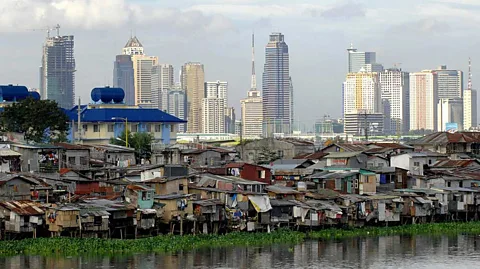
“The voters don’t choose the politicians, the politicians choose the voters”

Ultimately, it is worth remembering that citizens in a capitalist, liberal democracy are not powerless.

We live in an oligarchy, not in a democracy, A thing cannot be changed if the plan is for something that the situation is not. Oligarchy cannot be stopped by treating it as though it were a democracy.

As a society we continue to make slow progress in ameliorating this historical deficit.

Of critical importance also is the role of the individual in promoting his or her own equality. No amount of government intervention will confer equality if individuals fail to take advantage of the opportunities before them.

The system must be fixed for problems to be addressed.

So I say first things first, let’s ensure that we build a system where there is equal opportunity for all so that individuals can succeed or fail on their own merit. Will such a system guarantee full equality?

I have my doubts but I’m convinced it will promote greater equality in our imperfect society.

Young politicians enter the great building of power with sincere hearts, but leave with the stench of the corrupt swamp having their noble intentions suffocated and extinguished.

Every nation needs to wake up from their own illusions of their own importance in the world and start looking after its people.

———–

To make sure that the government gets the message that the people all of the people should be represented not just the few.

Get money out of politics ENTIRELY and then maybe there’s hope.

Now with the technology that exist,  I think a ‘perpetual referendum’ democratic socialism, may be a solution:

We need to assert the importance of turning the social surplus toward ending hunger and illiteracy and toward addressing fundamental problems of social and economic life — such as the catastrophe of the climate and of endemic joblessness.Banksy in Boston: Portrait from the F̶O̶L̶L̶O̶W̶ ̶Y̶O̶U̶R̶ ̶D̶R̶E̶A̶M̶S̶ CANCELLED piece by Chris Devers | Flickr | CC BY-NC-ND 2.0
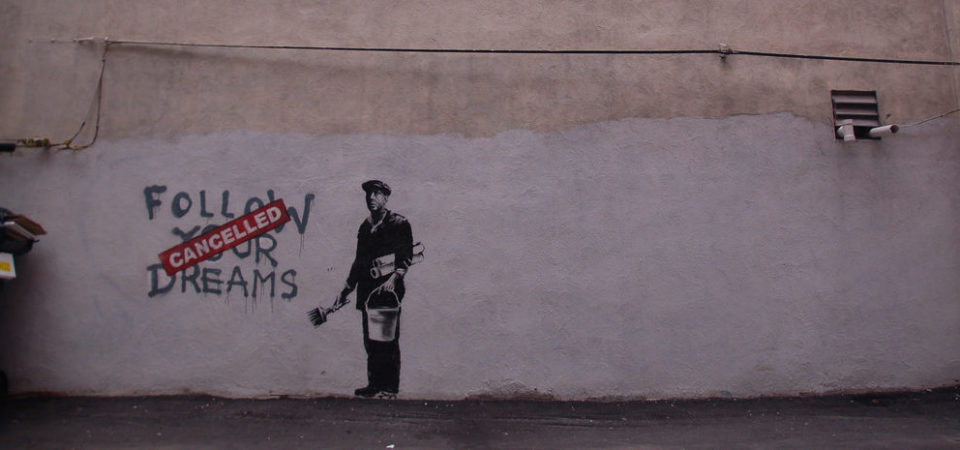
No point running a government if you don’t have an organized mass force to drive the social policy from the hall of government to the home of the poorest worker.

Government’s won’t put such perpetual referendum in place but we the people with technology can. 

Your vote (on one thing or many things, doesn’t matter) is kept online at all times and can be polled by the computer at any time. And not only can be but must be. And you can change your vote (or votes) at any time.

The people must take back what people with money have stolen from them over the decades, i.e. our right for true democratic representation where elected politicians carry out the will of the people not the will of the wealthy few who have corrupted it.

The abolition of intellectual property and the renationalisation of monopoly infrastructure could reverse the tendency towards private monopoly that could contributed greatly to stopping the rising inequality of the early 21st century. The massive financial sector of the early 21st century, is a huge source of inequality.

We might be blind to what capitalism could look like in another two centuries. However, that does not mean we should not ask how it might evolve into something better in the nearer term.

The future of capitalism and our planet depend on it.

Until politicians work for every person these are the choices. 

Capitalism thrives on the mantra of individualism and free enterprise. In this economic system, private entities, such as individuals or businesses, own the means of production. But, it’s essential to note that capitalism is not just about profit. It’s also about personal freedom, economic resilience, and societal prosperity. It champions the belief that everyone has the right to economic freedom. This belief is driven by the potential for profit.

Communism is a quintessential manifestation of egalitarian ideals. It seeks to pull down the socio-economic partitions between the affluent and the impoverished. Its driving force is the establishment of equality and fairness. The societal benefits are not skewed in favour of a privileged few. Instead, they are spread across all its members. Yet, the intricate dynamics of human nature and socio-political realities often pose significant challenges to implementing communism. It’s a philosophy that seeks to remould society’s foundation. It presents a different perspective on the socio-economic structures that govern our world. Its cardinal principle is collective ownership and equality. 

Socialism amalgamates elements from both capitalism and communism. It is unlike the laissez-faire economics of capitalism. However, it is not as radical as communism in its distribution mechanism. It encourages fair wealth distribution. But, it does not eschew private property. socialism emerges with a balanced approach. Yet, it does not do so at the cost of personal freedoms, as in capitalism. The means of production are often state or worker-controlled. There is a conscious effort to check capitalist-style monopolies and wealth concentration.

Most nations operate in mixed economies. They cherry-pick elements from different ideologies.

They create a model that best serves their unique needs. The impact of these ideologies on today’s world is profound and multifaceted. It colours the lenses through which we view societal structures, economic models, and the state’s role in our lives.

As we go about our daily activities, we are engaged in a web of relationships that connect us to the larger world. We rely on ideas and values to form opinions, make assumptions, and arrive at conclusions. However, many of us aren’t aware of where these notions come from or how they influence our thinking. Most of us assume that our points of view are accurate and truthful. We think that they are just common sense. This may lead us to dismiss, discredit, or misinterpret perspectives that differ from our own.

This means that we rarely evaluate our perspectives in relation to alternative points of view.

A future where our planet’s people can succeed emphasizes sustainability, collective action, and innovation. What if we demanded that profit be removed from the policy of government’s. 

Many types of government expenditure constitute investment: purchases of transport and energy infrastructure, school and hospital buildings, IT systems, defence systems, and intangible assets. Government investment often includes purchases needed to implement long-term policies, such as investment in green energy infrastructure to support action on climate change. 

Another words invest public funds, allowing a fair profit, keep sufficient funds for maintains, and then nationalize, so everyone benefits.

All human comments appreciated. All like clicks and abuse chucked in the bin.

Contact: bobdillon33@gmail.com

https://youtu.be/PJy8vTu66tE?si=NtoSKDmZ2u3f0_HJ

Share this:

  • Click to share on WhatsApp (Opens in new window) WhatsApp
  • More
  • Click to share on Pocket (Opens in new window) Pocket
  • Click to share on Mastodon (Opens in new window) Mastodon

THE BEADY EYE LOOKS AT: OUR CURRENT THEORIES ON THE BIG BANG. THE COMPLEXITY OF WHICH IS YET TO BE ANSWERED.

05 Friday Apr 2024

Posted by bobdillon33@gmail.com in 2024 the year of disconnection

≈ Comments Off on THE BEADY EYE LOOKS AT: OUR CURRENT THEORIES ON THE BIG BANG. THE COMPLEXITY OF WHICH IS YET TO BE ANSWERED.

Tags

art, Physics., Science, THE BIG BANG, The Big Bang Theory

( Twenty minute read)

In the beginning, there was an infinitely dense, tiny ball of matter. Then, it all went bang, giving rise to the atoms, molecules, stars and galaxies we see today. Even earlier, this thinking goes, at some point our entire universe — all the stars, all the galaxies, all the everything — was the size of a peach and had a temperature of over a quadrillion degrees. For decades this explanation, the amazingly fantastical story, holds up of the creation of the Universe and to all current observations.

The problem is that the physics that we use to understand the early universe (a wonderfully complicated mishmash of general relativity and high-energy particle physics) can take us only so far before breaking down.

Taken at face value,

This tells us that at one point, the universe was crammed into an infinitely tiny, infinitely dense point. This is obviously absurd, and what it really tells us is that we need new physics to solve this problem — our current toolkit just isn’t good enough. We need some new physics, something that is capable of handling gravity and the other forces, combined, at ultrahigh energies.

What we know as the Big Bang was sparked by something else happening before it — the Big Bang was not a beginning, but one part of a larger process. In other words, the complicated (and, admittedly, poorly understood) physics of this critical epoch may indeed allow for a radically revised view of our time and place in the cosmos.

—————–

I am neither a Scientist or a Quantum professor so what follows is what I have learned while researching this post. It is for some Einstein out there to answer the questions.

It is quite obvious that the Universe has not existed forever. It was born.  Out of time.  An entity cannot appear out of nothing and time has no entity while space and light do, even if they are expanding or traveling. A God as an entity is an other matter.

A universe popping into existence out of nothing is so bonkers. A detonation occurs in one place and shrapnel flies into the void.

In the Big Bang, there was no centre and no pre-existing void, so it didn’t happen at any ‘location’. Space itself popped into existence and began expanding everywhere at once, before time was invented.

But what is time? Does it exist? is the past present and the future all one and the same.?

——————-

Time is familiar to everyone, yet it’s hard to define and understand.

Science, philosophy, religion, and the arts have different definitions of time, but the system of measuring it is relatively consistent. It is not something we can see, touch, or taste, but we can measure its passage. But if a system is unchanging, it is not timeless.

The question of why time is irreversible is one of the biggest unresolved questions in science.

As far as the universe is concerned, time had a beginning. The starting point was 13.799 billion years ago when the Big Bang occurred.

If the universe is considered to be an isolated system, its entropy (degree of disorder) can never decrease. In other words, the universe cannot return to exactly the same state in which it was at an earlier point.

Time cannot move backward.

The “grandfather paradox” is a classic example. According to the paradox, if you travel back in time and kill your grandfather before your mother or father was born, you could prevent your own birth.

Many physicists believe time travel to the past is impossible, but there are solutions to a temporal paradox, such as traveling between parallel universes or branch points.

Will time end?

The answer to this question is unknown. Time does not actually exist. “Time is just an illusion.” Is this really true? Is time just a figment of our imagination?

It makes no appearance in physical science except…” What does that mean?

Indeed, this question borders the realm of metaphysics and ontology (the philosophy of existence) as much as it does on the strictly empirical questions about time that physics is well-equipped to address.

Time is all over the place in physics.

Is it a ‘quantum’ thing?

Quantum things are fundamentally unpredictable, appearing randomly, all over the inflationary vacuum, parts of it ‘decayed’ into ordinary, everyday vacuum. Think of tiny bubbles forming in a vast ocean.

In each bubble, the inflationary vacuum disappeared, but its enormous energy had to go somewhere.

It went into creating matter and heating it. It went into creating a Big Bang. Our Big Bang Universe is merely one such bubble among a possible infinity of other Big Bang universes in the ever-expanding inflationary vacuum!

————–

The twin pillars of modern physics are Einstein’s General Relativity and Quantum theory.

The laws of quantum theory permit this to pop into existence out of nothing.

The former reigns supreme in the large-scale Universe, while the latter orchestrates the small-scale world of atoms and their constituents. They have resisted a merger, which is a problem because, in the Big Bang, the Universe was small.

It is essential to unite Einstein’s theory with quantum theory.

  • And there’s another phenomenon called quantum superposition. This principle of quantum mechanics suggests that particles can exist in two separate locations at once. This really hinges on what is meant by “to be in two positions”.
  • According to standard QM, when a particle is observed to be in a particular place, it is there and nowhere else. Before the observation, however, the particle’s position may not be definite, i.e., it’s not at a particular place at all.

———————

There isn’t any wave particle duality because an electron isn’t a particle and it isn’t a wave. Instead it’s an excitation in a quantum field. The electron field can interact in ways that look like a particle and it can interact in ways that look like a wave, but that doesn’t mean it is a particle or is a wave.

The fundamental basis of QM is assuming that energy comes in discrete quantities rather than a continuum. There’s no obvious, intuitive reason for this, necessarily… but the results that come out of QM are spectacular- in that they are extremely well supported by experiments.

“Why is energy discrete rather than continuous?”

Physics is a parallel world of tricky mathematical models, fine tuned in order to reproduce the behaviour of reality, but it is not the reality itself.  It may sound obvious, but for many people it isn’t so.

Nobody really knows what an electron is completely.

What an electron is and what an electron can behave are different concepts to be clarified.

It’s my opinion! By the way particle is point, but wave is a function to describe all the possible locations of the particle. Electron particle cannot appear at two different points but you can find it through your interaction experiment setup.

Particles can be in two (or more) places at the same time.

This is not yet a proof that quantum mechanics hold for large objects.

For example, there is not yet a quantum mechanical theory of gravity.

In 2005, the Hubble Space Telescope revealed more than 10,000 galaxies and led astronomers to estimate there must be 200 billion galaxies in the observable universe, and 50 billion trillion stars.

Where did it all come from?

The religious explanation is that a supernatural causal agent call God brought all matter, energy, space and time into existence? God who was speaking spoke from outside of time.

If the universe has a beginning, that means there’s got to be some kind of beginner; It’s a beginner beyond space and time, and that looks too much like the God of the Bible.

In the beginning God created the heavens and the earth” accurately describe what science has discovered?

Why is that proof that God created everything, first of all that God exists and that then he actually created all of this?

The Big Bang model is the idea that the universe is traceable back to a beginning.

Not just a beginning of matter and energy, but a beginning of matter, energy, space and time. And how the universe continuously expands from that beginning, and expands at the just right rate to make life possible and even advanced life possible at this moment in the universe.

This flash called the Big Bang is generated by the sudden annihilation of all anti-matter in the universe.

A delicate balance of a billion and one particles to every billion anti-particles guarantees the existence of matter in the later universe. And it also guarantees the possibility of life.

From the creation event, protons, neutrons, anti-protons, anti-neutrons decompose into even more fundamental particles called quarks.

But the universe is too hot and too dense even for quarks to exist and too compressed for light to be possible.

After the creation event the universe was too hot for atoms to exist. Electrons could not orbit around nuclei. Because the universe was nothing but charged particles, an amorphous glow is all that appears. The universe would be so hot that protons and neutrons can’t stick together. All atomic nuclei fall apart.

——————-

The universe therefore must have a beginning and, hence, a beginner beyond space and time; there must be an actual beginning of time; That means no matter what you speculate about the universe, as long as it expands on average you are stuck with this beginner beyond matter, energy, space and time.

—————

We’ve got two easy proofs that any lay person can appreciate that the universe indeed must have this singular beginning of matter, energy, space and time.

So what are we to make of all the observations that the entire universe appears to have been meticulously designed for humans?

And astronomer George Greenstein in his book, The Symbiotic Universe, expressed these thoughts:

“As we survey all the evidence, the thought insistently arises that some supernatural agency must be involved. Is it possible that suddenly, without intending to, we have stumbled upon scientific proof of the existence of a Supreme Being? Was it God who stepped in and so providentially crafted the cosmos for our benefit?”

Stephen Hawking concedes, “It would be very difficult to explain why the universe should have begun in just this way except as the act of a God who intended to create beings like us.”

The probability of all these known parameters randomly coming together would be one chance in 10215, a probably so incredibly tiny that statistically speaking, it’s impossible. And this probability is becoming even more remote with every new scientific discovery.

Such a high degree of design demonstrates that this entity of a god must be a personal being with an amazing creativity, wisdom, power, care and love to a degree far beyond human capabilities. He has fine tuned the Milky Way galaxy, the solar system, and planet earth so that spiritual life can be fused with physical life in this one small place for one brief span on our time line.

Millions of galaxy clusters fill the universe, each containing thousands of galaxies, adding up to ten billion trillion stars. That’s ten with 21 zeros after it.

We needed all of those stars for some reasons, alright?

This enormity is essential to life’s existence. If the number of stars in the observable universe were any greater or any fewer, life would be impossible. If there were fewer stars in the observable cosmos, nuclear fusion would be so inefficient that the only elements to form would be hydrogen and helium. With more stars in the universe, all the elements would be heavier than iron. No carbon, no nitrogen, no oxygen.

Only in a cosmos with a finely-tuned mass of stars can the life-essential elements be produced.

So it turns out, the vast reaches of the cosmos are not a big waste of space, energy, matter and time.

If energy cannot be created or destroyed, where does it come from?

Many scientists believe that the total energy of the universe is zero. Hence, no energy needed to be “created” when the universe came into existence.

As Stephen Hawking explained, when you pull two objects apart, you need to expend energy to overcome the gravity that pulls them together. As it takes positive energy to separate them, gravity must be negative energy. If that theory is correct, then there was never any need to create energy or matter – they cancel each other out. That implies that the big bang could have started as a simple statistical fluctuation.

Additionally, many galaxies appear to lack sufficient mass to be held together by gravity and should have been torn apart long ago.

So, what is causing these unknown phenomena? Dark matter, which makes up 85% of total matter in the universe, is a hypothetical type of matter that responsible for the way galaxies are organized.

Our universe is therefore the result of a quantum fluctuation. Particles routinely pop into and out of existence.

Take the sun as an example.

Its nuclear fusion reactions turn matter (think of it as concentrated energy) into visible sunlight and other forms of energy. The sunlight hits a green leaf on Earth and the solar energy is now transferred into a chemical energy store as oxygen is separated from carbon dioxide and water, leaving carbohydrate in the leaf.

We eat the leaf and breathe in the oxygen.

The respiration reaction in our muscle cells allows the energy to be used to move our arm as we hammer in a nail. The arm, nail, hammer and the air absorb the sound, get hot and radiate infrared heat to outer space.

So the energy concentrated in the original hydrogen atoms in the sun is now scattered into the universe. Low-grade and almost useless, but still the same amount we started with.

Finally my conclusion’s.Space-time: Long exposure star trail image taken at Hehuan Mountain, Taiwan.

For some thing to come into existence from nothing is impossible even a black hole has to start with some thing and disappear into some thing. What that is Space time  In physics, spacetime is any mathematical model that fuses the three dimensions of space and the one dimension of time into a single four-dimensional continuum. From Wikipedia.

According to the best of current physical theories, space-time explains the unusual relativistic effects that arise from traveling near the speed of light as well as the motion of massive objects in the universe.

So its some thing that travel’s faster than the speed of light depended on its state of motion – warped spacetime!

Light was known to be an electromagnetic phenomenon, but it did not obey the same laws of mechanics as matter.

Henceforth space by itself, and time by itself, are doomed to fade away into mere shadows, and only a kind of union of the two will preserve an independent reality.

Weight arises due to the warping of time, rather than space. What this means in practice is that gravity on earth is “equivalent” to acceleration mostly in the sense that clocks on the surface run more slowly than clocks in outer space.

If one goes beyond classical physics and into modern quantum field theory, then questions of absolute versus relational spacetime are rendered anachronistic by the fact that even “empty space” is populated by matter in the form of virtual particles, zero-point fields and more.schwinger effect

You can’t get something for nothing. In the quantum realm, something really can emerge from nothing.

As long as you have empty space — the ultimate in physical nothingness — simply manipulating it in the right way will inevitably cause something to emerge. Take a meson and try to rip the quark away from the antiquark, and a new set of particle-antiparticle pairs will get pulled out of the empty space between them an electromagnetic fields where many properties of all physical systems are conserved: where things cannot be created or destroyed. In theory, a strong enough electromagnetic field can rip particles and antiparticles out of the vacuum itself, even without any initial particles or antiparticles at all.

In early 2022, strong enough electric fields were created in a simple laboratory setup leveraging the unique properties of graphene, enabling the spontaneous creation of particle-antiparticle pairs from nothing at all. The prediction that this should be possible is 70 years old: dating back to one of the founders of quantum field theory.

In the Universe we inhabit, it’s truly impossible to create “nothing” in any sort of satisfactory way. Everything that exists, down at a fundamental level, can be decomposed into individual entities — quanta — that cannot be broken down further. If you take all of them away, however, the “empty space” that remains isn’t quite empty in many physical senses the quantum fields remain. Just as we cannot take the laws of physics away from the Universe, we cannot take the quantum fields that permeate the Universe away from it. No matter how far away we move any sources of matter, there are two long-range forces whose effects will still remain: electromagnetism and gravitation. Even if you create a perfect vacuum, devoid of all particles and antiparticles of all types, where the electric and magnetic fields are zero, there’s clearly something that’s present in this region of what a physicist might call, from a physical perspective, “maximum nothingness.”

Space cannot be “entirely emptied”  As to where is came from. Clearly, we exist, as do the stars and galaxies we see, so something must have created more matter than antimatter, making the Universe we know possible. It seems like an impossibility. On one hand, there is no known way, given the particles and their interactions in the Universe, to make more matter than antimatter. On the other hand, everything we see is definitely made of matter and not antimatter.

Doesn’t it matter. The fact that we exist and are made of matter is indisputable; the question of why our Universe contains something (matter) instead of nothing (from an equal mix of matter and antimatter) is one that must have an answer.

When it does, one of the greatest mysteries in all of existence will finally have a solution.

Therefore as Max Beerbolm said: ” Besides Dr Einstein there are only two men who can claim to have grasped the Theory of Relativity I cannot claim to be either of these.  The attempt to conceive Infinity has always been quite arduous enough for me. But to imagine the absence of it ; to feel perhaps we and all the stars beyond or ken are somehow cosily ( thought awfully) closed in by curtain curves beyond which is nothing; and to convince myself, by the way, that this exterior is not ( in virtue of being nothing) something and there fore …. but I lose the thread.”

All human comments appreciated. All like clicks and abuse chucked in the bin.

Contact: bobdillon33@gmail.com

Share this:

  • Click to share on WhatsApp (Opens in new window) WhatsApp
  • More
  • Click to share on Pocket (Opens in new window) Pocket
  • Click to share on Mastodon (Opens in new window) Mastodon

THE BEADY EYE ASKS : IS THE UNITED NATIONS ANYLONGER RELEVANT?

01 Monday Apr 2024

Posted by bobdillon33@gmail.com in #whatif.com, 2024 the year of disconnection, A Constitution for the Earth.

≈ Comments Off on THE BEADY EYE ASKS : IS THE UNITED NATIONS ANYLONGER RELEVANT?

Tags

hamas, Israel, palestine, politics, United Nations

( Five minute read)

IT’S APRIL FOOLS DAY.

In a world full of geopolitical tensions unprecedented in decades are we fooling ourselves with the United Nations.

The United Nations stands at a crossroads. It is bedeviled by a litany of challenges, including gross underfunding, bloated bureaucracy, disunity, and geopolitical rivalry among the permanent members of the Security Council.  The stakes could not be higher.Is the United Nations (UN) Relevant in the 21st Century?

People are looking to their leaders to get out of the current global “mess”, the worsening climate emergency, escalating conflicts, technological disruptions, cost-of-living crisisis.

The question is.  Is the United Nations capable of dealing with these conflicts, especially when one of its priorities is to balance its neutrality in the face of differences between member states.

The UN is an old organisation established after World War II to promote peace, now a broken institution that sometimes works when it comes to distribution food aid.

Even though the agency has been marginalised from playing a significant political role, it has still been able to play an important role in providing humanitarian aid, for eradicating poverty, promoting education, and improving health and gender equality around the world.

One of the most significant criticisms has been the ineffectiveness of the UN Security Council in resolving conflicts.

For example, the United Nations Security Council’s all-powerful group, the P-5 (the five permanent members – also veto powers – of the council), excludes huge demographics of the world population such as Africa, Latin America and the Middle East. Members from these regions therefore rightfully feel relegated to be second-class members of the organization’s top brass.

The Security Council, which is responsible for maintaining international peace and security, has often been paralyzed by the veto power of its five permanent members – the United States, China, Russia, France, and the United Kingdom. This has made it difficult for the Security Council to take decisive action in conflicts such as the Syrian civil war, the Israeli-Palestinian conflict and more recently in the Russia-Ukraine conflict.

I think where we see a lot of people losing faith is when they see these moments of hypocrisy

The powerful role Russia still plays as a permanent member of the UN Security Council, even as it threatens international peace and security

The US, which, while it is able to use its powerful veto power to block resolutions on Palestine because of its bilateral relations, turns around and tries to pass resolutions on territorial integrity in the case of Ukraine.

The UN is going to use a lot of rhetoric, but on an effective level it is not going to be able to carry out any kind of instrument to stop this as no one wants to deployed peacekeeping forces in various conflict-ridden regions of the world.

Against a backdrop of harmonisation among countries seems to be the UN’s priority, but experts think reform is more urgent.

One of the key challenges facing the UN is the increasing complexity of conflicts and the rise of new security threats such as terrorism and cyber warfare.

To address these challenges, the UN must strengthen its conflict prevention and resolution capabilities, investing in early warning systems, mediation, diplomacy, and working more closely with regional organizations.

It must also address the root causes of conflicts, including poverty, inequality, and human rights abuses.

It must promote multilateralism and global cooperation to address global challenges such as climate change, pandemics, and terrorism.

Why?  Because if you don’t have an actor that is able to impose all the legislation, then you have a problem.

It’s obvious that organisations, international organisations, also have to change and their priorities might not change.

Although the UN has faced criticisms for its limitations, it remains an essential institution for addressing the world’s most pressing issues.

One of the reasons why the UN remains relevant is its ability to mobilize resources and coordinate efforts towards global challenges. Its ability to set and promote international standards and norms.

Upholding human rights. The UN’s human rights bodies and mechanisms provide an essential avenue for monitoring and investigating these violations, and for promoting accountability and justice.

It must be Transparent and and accountable by promoting open and inclusive decision-making processes.

It must reform its organizations for equal participation and influence by all global regions and interests.

It must embrace technology and innovation to increase its effectiveness and efficiency.

The challenges facing the world today – such as climate change, pandemics, and terrorism – require coordinated and collective action at the global level, and the UN is uniquely positioned to play a central role in this effort.

The reforms must aim to make the UN nimbler, less bureaucratic, more transparent and accountable, and more decentralized and effective.

They must be about placing sustainable development “at the heart” of the UN because development is the UN’s “best tool for preventing conflict and building a future of peace.

None of these reforms can be achived while the veto power of its five permanent members remain.

The ICJ is the UN’s judicial organ, composed of 15 judges elected to nine-year terms by the General Assembly and Security Council. The ICJ does not have the authority to weigh in on any international legal dispute it wishes; instead, the Court’s ability to hear a case is derived from the consent of the Member States concerned.

Member States are bound to comply with ICJ decisions in any case to which they are a party is now a joke.

The UN system is comprised of more than 30 affiliated organizations, all with conflict of interest.

Perhaps its time to move these agencies out of the UN into independent organiations, subject to an new AI world sustainable legal consitution.

Discussing reforms without making provisions for adequate resources will lead nowhere; ( See previous post on Funding to bring the United Nations closer to “we the people.”)

A permanent coordinating platform should be set up to integrate the UN response across agencies, funds, and related organizations. Data is now a major economic asset, but its use and consequences go well beyond commercial issues to matters such as the quality of society and political systems.

The distribution of power has also shifted considerably. Global institutions need to reflect these changes or lose legitimacy in the eyes of the emerging players, whether governments or their people.

Yet data governance at the global level lags well behind technological developments

.In today’s complex world, identifying problems, designing policies, and delivering change is no longer within the power of states standing alone. It requires participation of diverse actors, including nonprofits, grassroots movements, corporations, and local authorities.

Getting inclusivity right and shifting to a more equitable governance model will be critical to weathering power politics and delivering for all.

All human comments appriciated. All like clicks and abuse chucked in the bin

Contact: bobdillon33@gmail.com

Share this:

  • Click to share on WhatsApp (Opens in new window) WhatsApp
  • More
  • Click to share on Pocket (Opens in new window) Pocket
  • Click to share on Mastodon (Opens in new window) Mastodon

THE BEADY EYE SAY’S: WHEN WE REFLECT UPON OUR ORIGINS IT IS DIFFICULT TO AVOID THE MOST ESSENTIAL QUESTION OF THEM ALL – WHAT MAKES US HUMANS DIFFERENT FROM OTHER ANIMALS?

01 Monday Apr 2024

Posted by bobdillon33@gmail.com in 2024 the year of disconnection, A solution to Climate change., Algorithms., Artificial Intelligence., CAPITALISM IS INCOMPATIBLE IN THE FIGHT AGAINST CLIMATE CHANGE., Climate Change., Collective stupidity., Dehumanization., Digital age., Disaster Capitalism., Evolution, Fourth Industrial Revolution., How to do it., HUMAN ABILITIES., Human Collective Stupidity., HUMAN INTELLIGENCE, Human values., Humanity., Imagination., Inequality., INTELLIGENCE., Language, Migrants/Refugees., Modern day life., Monetization of nature, Natural selection., OUR BRAINS, Our Common Values., Purpose of life., Reality., Robot citizenship., Society, State of the world, Survival., Sustaniability, Technology v Humanity, Technology's, The common good., The essence of our humanity., The Internet., The new year 2024, The Obvious., The pursuit of profit., The state of the World., The world to day., THE WORLD YOU LIVE IN., THIS IS THE STATE OF THE WORLD.  , Unanswered Questions., Uncategorized, VALUES, War, We can leave a legacy worthwhile., What is shaping our world., WHAT IS TRUTH, What Needs to change in the World, Where's the Global Outrage.

≈ Comments Off on THE BEADY EYE SAY’S: WHEN WE REFLECT UPON OUR ORIGINS IT IS DIFFICULT TO AVOID THE MOST ESSENTIAL QUESTION OF THEM ALL – WHAT MAKES US HUMANS DIFFERENT FROM OTHER ANIMALS?

Tags

Artificial Intelligence., Capitalism and Greed, Capitalism vs. the Climate., Climate change, Environment, Inequility, Sustainability, Technology, The Future of Mankind, Visions of the future.

( Twelve minute read)

Our brain have difficulties in accepting that we actually are animals and thus highly dependent on nature where nothing exists alone.

—————

Science has organized human evolution into six levels.

We share the first five with other creatures, while the sixth level makes us unique –  language.

Our use of language and given rise to the sciences and philosophical thoughts that now are transforming the entire biosphere, while abusing it to such a degree that we are currently on the verge of destroying it completely.

It is difficult to understanding that extinctions are not features of this civilization, but virtually all past civilizations have faced this fate. We might be more advanced technologically now, but this gives little comfort as we are not immune to the threats that undid our ancestors.

MAYBE THIS IS THE MAIN REASON THAT WE ARE UNABLE TO ADDRESS THE CLIMATE CRISIS, WHICH IS NOW AN INDUSTRY RATHER THAN A THREATH TO OUR VERY EXISTENCE, to the biodiversity, to food security, access to fresh water, the lack of which will result in wars.

Unfortunately we are still animals living in a world that is changing the atmosphere’s chemistry, which is becoming a reality, not tomorrow, but right now and that’s with the number of people we already have.

Indeed the very technology we now rely on bring new unprecedented challenges.


From the emergence of Homo sapiens, it took roughly 300,000 years before one billion of us populated the Earth, with people evolving into their current form some 200,000 years ago.

(Huts, 2 million years ago. Boats, 900,000 years ago. Cooking, 500,000 years ago. Javelins, 400,000 years ago, Glue, 200,000 years ago. Clothing possibly 170,000 years ago.)

“Behavioural modernity,” evolved 50,000-65,000 years ago.  It took 15,000 to 10,000 years to start growing stable foods.

The planet most likely will surpass eight billion people sometime around mid-November. (The world population is to exceed 10 billion this century.)

Climate change – the world population – technologies inequality – you name it, will determine how many of us will be living on Earth as we approach 2100.

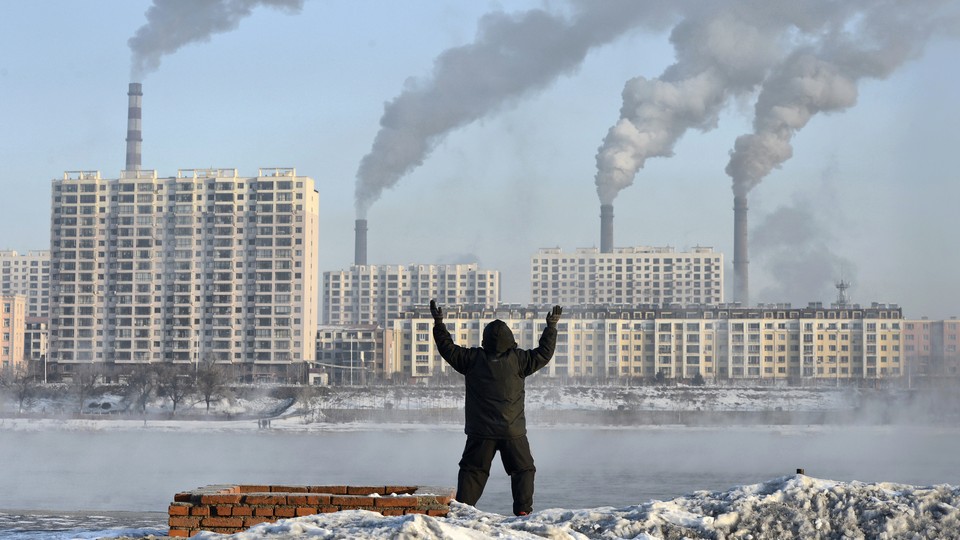
There can be no mistaking the import of this, as it belies the dangers of the next several decades which will see migration on a massive scale, due wars because of runaway climate change.A photograph of a person facing away from the camera, standing with their arms raised, in front of factories with smokestacks emitting smoke

Unprecedented droughts or city-destroying floods would prompt mass migrations, destabilizing the rich world or giving rise to far-right nationalism. Or a global famine could send food prices surging, triggering old-fashioned resource wars.

Survival and success do not depend on brutal force. There is an empirical connection between violence and climate change that’s persists across 12,000 years of human history.

The long chain of evolutionary development has taught us with technology and political trends conflict will continue and even intensify.

“Whether we like it or not changes will be happening, and the situation will not improve by itself.

The future well-being and actual life on earth depends on us all and our ability to express compassion and work together as the eusocial creatures we de facto are.

“No one is doing this in the right way at the moment,”

World hunger, ecological and environmental disaster, global warming, massive shifts in weather systems, the re-emergence of diseases long thought controlled, with political turmoil, in a world where a barrel of water is more expensive than a barrel of oil.

Empathy, compassion and cooperation are now so saturated by Tec that we are becoming a species totally unscrew and desentized to reality, others, and their needs, becoming algorithms predictions.  

Efforts so far to incorporate climate change into future population projections have been inadequate.

————-

Where is it leading us?

To answer that, we have to think about how we got here in the first place – Greed

Currently it is estimated for that 50 million people are living on less than the $3.65 a day, with half of the global population lives on less than US$6.85.

You could add another few billons who are not poor enough to feature.

The world is divided into the very rich, and the very poor. And since everybody knows there aren’t a whole lot of very rich people, they assume the majority of the world’s population is living in extreme poverty. But that’s completely wrong; the overwhelming majority of people live somewhere in the middle.

Our problem is inequality, attached to Greed, which is now plundering the world in the form of profit seeking algorithms that are generating profits for the few, using the latest technology Algorithmic trading designed to capitalize on market inefficiencies, trades can be completed at speeds and frequencies impossible for mere mortals. 

Algorithm’s are creating a new social contract between a sovereign and citizens, in which the people collectively who were sovereign are becoming digitalised citizens.

Power now resides with those best able to organize knowledge.

The knowledge revolution should bring a shift to direct democracy, but those who benefit from the current structure are fighting this transition. This is the source of much angst around the world, including the current wave of popular protests.

Neither, physical military strength, nor access to capital are now sufficient for economic success.

If we are to have any chance, we have to change to direct democracy which is easier to achieve than big, sprawling governments.

I’m not sure we can, but I know it will happen because capitalism or any other systems will no longer generate sufficient income to sustain social welfair states.

———————

The problem is how do we reconcile that with democracy in countries composed of millions of citizens?

Talk of artificial intelligence destroying humanity plays into the tech companies’ agenda, and hinders effective regulation of the societal harms AI is causing right now.

Barely a week seems to go by without a tech industry insider trumpeting the existential risks of artificial intelligence (AI). Fearmongering narratives about existential risks are not constructive.

Serious discussion about actual risks, and action to contain them, are.

The sooner humanity establishes its rules of engagement with AI, the sooner we can learn to live in harmony with the technology.

Algos require an uninterrupted power supply and reliable internet access. Even a brief failure in these conditions can prove cataclysmic.

———————–

Memorandum for Green Bond Issuers: Certain Aspects and Considerations -  Herman, Henry & Dominic LLP

What is needed are direct opportunities for all to invest in the future.

One of our fundamental challenges in the years ahead will be to mobilize the substantial sums needed for investment in everything from green infrastructure to the cutting-edge technologies that we will need to achieve net zero emissions by 2050 and slow the course of climate change.

At the moment we have Green bonds/Climate change bonds are issued exclusively to finance projects that positively impact the environment. Today, more than 50 countries have issued green bonds. However, the appeal of this market and the fact that there is no binding regulatory framework for green bonds may lead to suspicions of ‘greenwashing’ (false green claims).

There’s nothing new or specifically European about green bonds.

They’ve been around since the beginning of the 21st century. Although they weren’t yet called green bonds, the first of them are thought to have been issued in 2001 by the City of San Francisco to finance a solar power project.

Any organization – such as governments, corporations, and financial institutions – can issue a green bond.

The green bond market is a portion of the larger debt market. Historically, over US$2 trillion of green bonds have been issued globally to date, with the potential to grow to US$5 trillion by 2025.

Industry bodies and investor action groups such as Climate Action 100+, as well as large
market investors such as sovereign wealth funds and pension funds, are in a strong position to drive development of this market. However there is no universally accepted legal and commercial definition of a green bond.

Green bonds are proven to be an effective means to secure the resources required to meet the national climate change goals, so why not issue green bonds that any joe soap could invest in.

Lotteries exist in 46.67% of countries worldwide. In many countries, with the adoption of digitalization the Lottery is a lifestyle and a massive contribution to their revenues. The Lottery industry continues to grow worldwide, with an expected increase of 4.1% CAGR by 2031. The spread of online lotteries associated with the increase in smartphone and internet usage is one of many factors that can drive growth in the global market. The Lottery market is projected to grow to $405.20 billion by 2028.

US POWERBALL 59 tickets were sold every second of the year.

MEGA MILLIONS 2,817 tickets every minute or about 47 tickets every second—of the whole year!

EUROMILLIONS 342 EuroMillions tickets were sold every single second of 2019—or 20,566 tickets a minute!

UK LOTTO 122 lottery tickets for every one of the 31,536,000 seconds in 2019

They allows us all the chance to change our lives.

A staggering amount of money that goes into lotteries on a daily basis. In fact, just about every second of every day.

By making 1% OF ANY LOTTO TICKETS purchase eligible to acquire a climate Bond (with a gurantee interest return in twenty years from now..) RATHER THAN BIN THE TICKET ON LOOSING ONE COLLECTS THEM IN ORDER TO FUND SUSTAINABLE DEVELOPMENT.

 It would be everyone’s collective interest to identify with the physical manifestations of climate change.

Climate change is a defining issue of our time.

All human comments appriciated. All like clicks and abuse chucked in the bin.

Contact: bobdillon33@gmail.com

.

Share this:

  • Click to share on WhatsApp (Opens in new window) WhatsApp
  • More
  • Click to share on Pocket (Opens in new window) Pocket
  • Click to share on Mastodon (Opens in new window) Mastodon

THE BEADY EYE ASK’S: IF YOU HAD A CHOICE WHAT SORT OF WORLD WOULD YOU LIVE IN?

13 Tuesday Feb 2024

Posted by bobdillon33@gmail.com in 2024 the year of disconnection, Artificial Intelligence., Civilization., Collective stupidity., CULTURES COLLIDE, Disaster Capitalism., Earth, Earth from Space., Environment, Human Collective Stupidity., HUMAN INTELLIGENCE, Human values., Humanity., Our Common Values., Reality., Space Exploration., Sustaniability, Technology v Humanity, The Future, The Obvious., The world to day., THE WORLD YOU LIVE IN., THIS IS THE STATE OF THE WORLD.  , War, Wars, What is shaping our world., WHAT IS TRUTH, What Needs to change in the World, Where's the Global Outrage.

≈ Comments Off on THE BEADY EYE ASK’S: IF YOU HAD A CHOICE WHAT SORT OF WORLD WOULD YOU LIVE IN?

Tags

blog, History., politics, Science, Technology, The Future of Mankind, Visions of the future.

( Five minute read)

On July the 20th this year it will be fifty five years since one of us stood on another planet. Since then only 24 people have seen the whole of Earth. Achived with less computer power that is now in our phone’s.

In those fiftyfive years we have had fifty-five active conflicts. Eight of these 55 conflicts were classified as wars.

This is the world we got.

21st Century
  • Vietnam War (1962 – 1973
  • Persian Gulf War (1991)
  • War in Afghanistan (2001)
  • Operation Pillar of Defence (2012)
  • War in Iraq (2011)
  • 2014 Gaza War (2014)
  • Russian Annexation of Crimea (2014)
  • War in Donbas (2014-present)
  • Yemeni Civil War (2015-present)
  • Turkish coup d’état attempt (2016)
  • 2021 Israel-Palestine crisis (2021)
  • Russian Invasion of Ukraine (2022)

We are truly living in a very unique time in the history of our civilization, facing several simultaneous challenges and converging crises:

Because the world is a cauldron where dozens of cultures, religions and ideologies mix with each other, which always leads to a conflict. We are all born of frailty and error.

A deteriorating environment, a very unequal distribution of dwindling resources, widespread poverty, wars, climate change, oppression of many peoples, and dissatisfaction with life even in those countries with a surplus of material wealth.

What can we do about it?

The answer to such question is certainly not simple, and you will not find it in any textbook.

All these problems and converging crises are systemic.

For the most part these crises we humans have brought upon ourselves over the course of many centuries by our attitudes towards each other and towards Nature, and by the concepts we have developed regarding who we are and the very purpose of our being here — in other words, our worldview.

The 20th century revolution of technologies that permits long distance travel and instant communication across the world has brought all cultures closer together, making us more aware than ever of the many diverse spiritual-cultural traditions that have flourished for millennia as intricate, elaborate meta-solutions to the challenges and opportunities of living in a particular place.

Now we are challenged to integrate the wealth of knowledge and capability that this remarkable period has brought us into a new narrative of interbeing — a synthesis of ancient wisdom of our interconnectedness and interdependence with modern science and technology.

We now have a choice to make!

Either we move into a new phase in the evoloution of consciouness and a new ear of life on planet Earth, or we will witness the unraveling of the web of life and the immature end of our species and much of the community of life along with us. 

The time to make this choice is now!

It starts with a fundamental shift in our dominant worldview. It is time to grow up!

A world with less gravity and more humanity.

Where people get what they deserve rather than deserve what they get.
Where there is a God for everyone and no one God is better than other.
Where an empty stomach is an alien concept.
Where mind is held high and heart is held higher.

Where people are immaterialistic.
Where people think logically, question and reason everything without blindly following anything or be superstitious.

Where people respect each other and not judge others for their actions.
Where one should treat others as one would like others to treat oneself.

History shows us that none of the above is possible without AI augmentation of human intelligence to enshrin values of beauty, agency, and individuality. by benevolent, incorruptible agencies that are beyond human intelligence.

The era of Artificial Intelligence is here. AI has already started.

AI is not a living being that has been primed by billions of years of evolution to participate in the battle for the survival of the fittest, as animals are, and as we are. It is math – code – computers, built by people, owned by people, used by people, controlled by people.

Its true that AI doesn’t have goals of its own, but its influnce on our lives is endangering the very meaning of life and  instead of us embracing a worldview based on facts, it will cause us to lose our ability to focus on the things that threaten us most.

Understanding what “we” want is among the biggest challenges facing AI.

It is very difficult to encode human values in a programming language, but the problem is made more difficult by the fact that we as humanity do not agree on common values, and even parts we do agree on change with time. The question then becomes how do we aligne AI with Human values.

Whose human values?

Ah, that’s where things get tricky.

A major change is coming, over unknown timescales but across every segment of society, and the people playing a part in that transition have a huge responsibility and opportunity to shape it for the best.

So here are some of the questions we should be asking.

What does it mean to you to have artificial intelligence aligned with your own life goals and aspirations?

How can it be aligned with you and everyone else in the world at the same time?

How do we ensure that one person’s version of an ideal AI doesn’t make your life more difficult?

How do we go about agreeing on human values, and how can we ensure that AI understands these values?

If you have a personal AI assistant, how should it be programmed to behave?

If we have AI more involved in things like medicine or policing or education, what should that look like?

What else should we, as a society, be asking?

Globally, humankind must think about the kind of future we want to have.

The recently articulated United Nations Sustainable Development Goals (SDGs) offer a good starting point, but these goals are merely the preconditions necessary for survival and flourishing, so they are not
enough. A further step is needed to determine our common goals as a civilization, and more
philosophically, the purpose of human existence, and how AI will fit into it.

Generative AI is not hype.

Instead, it acts at a scale so large that it will transform how we interact with technology itself.  It will far outpace what we’ve seen so far today.

AI has been used to help sequence RNA for vaccines and model human speech, technologies that rely on model- and algorithm-based machine learning and increasingly focus on perception, reasoning and generalization.

If we reach a point where AI is able to understand our languages, AI systems would be able to read and understand everything ever written. In the mean time rest assured that we will continue to fight wars against each other, as we have done since day until the end of time, or at least Earth’s time which is in about 5.4 billion years.

All human comments appriciated. All like clicks and abuse chucked in the bin.

Contact: bobdillon33@gmail.com

Share this:

  • Click to share on WhatsApp (Opens in new window) WhatsApp
  • More
  • Click to share on Pocket (Opens in new window) Pocket
  • Click to share on Mastodon (Opens in new window) Mastodon

THE BEADY EYE SAYS: No matter what era we are in — or what new technology comes along — our fundamental beliefs will always be with us. Not True. Algorithms are exploiting the very foundations of everything.

10 Saturday Feb 2024

Posted by bobdillon33@gmail.com in 2024 the year of disconnection

≈ Comments Off on THE BEADY EYE SAYS: No matter what era we are in — or what new technology comes along — our fundamental beliefs will always be with us. Not True. Algorithms are exploiting the very foundations of everything.

Tags

AI, Artificial Intelligence., Climate change, Machine learning., Social Media, Technology, The Future of Mankind, Visions of the future.

( Fifteen minute read)

Put simply, the meaning of life is life itself.

You can write volumes on the state of the world, but one has only to look at the state of the world to see what algorithms are doing.

Algorithms form an increasingly important part of our daily lives, even if we are often unaware of it.

Most of us have no idea what they are — or how we’re being influenced by them.

They have become instrumental in our everyday lives.

Algorithms are making hugely consequential decisions in our society on everything from medicine to transportation to welfare benefits to criminal justice and beyond. Subtly shifting the way our society is operating.

We can see them at work in the world. We know they’re shaping outcomes all around us.

Are we making a mistake by handing over so much decision-making authority to these programs?

This paradox—that the internet is both saviour and executioner of democracy is part of a massive unfolding social experiment.

The proliferation of algorithms is eroding our ability to think and decide for ourselves. They are turning people into products, and they don’t even realize it.

Billions of people around the world are interacting with these technologies, which is why the tiniest changes can have such a gigantic impact on all of humanity.

We will blindly follow them wherever they lead us. There is no one assessing whether or not they are providing a net benefit or cost to society.

WE DON’T HAVE TO CREATE A WORLD IN WHICH MACHINES ARE TELLING US WHAT TO DO OR HOW TO THINK, ALTHOUGH WE MAY VERY WELL END UP IN A WORLD LIKE THAT WHERE ALGORITHMS DECIDE WHO LIVES OR WHO DIES.

How you see the world matters.

————————

 Beliefs are the things we hold true, regardless of whether we have any proof of their objective truth.

You see, in time, beliefs become labels.

We plaster them on our foreheads and use them to justify our action or inaction. That belief will then drive how you behave as you interpret it as being damning or empowering.

We all would be a lot happier if everyone else around us had the same beliefs as we do, or at least, that they would not challenge us on them. Of course, that is impossible, and this is precisely what fuels most of the world’s conflicts.

And here comes the kicker:

You can decide the direction you take. Your beliefs do not control you, so long as you become self-aware and take charge of your life. Or maybe if you assume everything will fall apart, you never get disappointed.

So, herein lies the persistent conflict of our society:

All of us are driven by our life experiences and by merely being human, but the creeping influence of algorithms in our lives are fucking up the world. We’re increasingly moving towards government by algorithm.

Automated systems are being rolled out with little transparency or public debate, and risk exacerbating existing inequalities.

The algorithm takes the biases and prejudices of the real world and ‘bakes them in’, and gives them a veneer that makes it seem like a policy choice is actually neutral and technical. But it isn’t,”

The problem is, both beliefs and values have strong momentum and seem glued to our character.

How do these beliefs played out in real life?

Are we just becoming throwaway survival machines, following our genetic and neurological programming in an indifferent world?

I believe that human life and the world mean much more than that.

There’s beauty everywhere—we have only to open our eyes to see it.

——————–

When it comes to climate change, the science is settled.

When it comes to technology its all together the opposite.

The sobering truth is that both the climate and technology are out of control.

Given the difficulty of getting the human brain or our political system to tackle anything beyond immediate crises, our attempts to rectify what’s wrong are usual puny compared to what’s really needed.

If you listen to our politicians, there is a strong consensus on climate change.

It consists of four parts.

First, carbon emissions are causing significant changes to our climate. Second, we need to take urgent action to reduce those emissions, including reaching net zero by 2050. Third, we have already made good progress in reducing emissions. And fourth, the steps we need to take to reduce emissions further will also bring many positive benefits for society.

We have a pretty clear understanding of the threat climate change poses to us, our children and our grandchildren. We are already being forced to cope with more droughts, more floods, more extreme storms. At the same time, we have in our arsenal effective policies that are difficult for rational people to demagogue as crippling to the economy or as a subversion of our cherished way of life.

So why does climate misinformation continue to spread online and in our media?

Dire warnings of the looming climate disaster may just make people throw up their hands in despair, sink into denial, or dig their heels in deeper against government action.

Instead, we seem to firmly believe that climate solutions inevitably mean more government, higher taxes and less freedom — and thus are threats to all our core values and identity.

———————-

Technology’s benefits are numerous in all fields, however in the system’s that effect our daily lives it is becoming a threat to our core values, through the use of algorithms. Pushing us like a digital slave army to mindlessly, unwittingly and unwillingly livestream our digital existences into the commercial coffers of companies that see us as nothing more than walking dollar signs.

Examples:

Every time you pick up your smartphone, you’re summoning algorithms. At this point, they are responsible for making decisions about pretty much every aspect of our lives.

The right to an explanation of an algorithm-generated decision does little to fix “systemic injustices” Getting an explanation but no democratic say in how systems work is like getting a privacy policy without a ‘do not consent’ button.

Deciding who gets access to welfare. Using automated interviews with a virtual border guard, based on “deception detection algorithm. Using algorithms to model when and where crime will happen — an area known as predictive policing — is on the rise. Using algorithms to come up with a personality assessment. Having your credit rating scored decided by an algorithm based on questionable data.

Grading algorithm does not not relied solely on automated means. Substituting a mathematical approach for human judgment does not automatically make it fair.

Profit seeking algorithms. Market making algorithms. Execution algorithms Scheduled algorithms. Participation algorithms. VWAP and TWAP algorithms are time-slicing algorithms. Liquidity-seeking algorithms (a.k.a. opportunistic algorithms) Arrival price algorithms seek to trade close to market prices.

Recent developments in algorithmic trading include clustering and high-frequency market forecasting  are playing a central role in finance.

The worst-case scenario is that we fail to disrupt the status quo, in which very powerful companies develop and deploy AI in invisible and obscure ways.

We have no right to see all of the data these companies collect about us, no right to get a percentage when they resell our data without our knowledge or informed consent, no right to ask them to stop. We are for all purposes indentured servants, offered free digital room and board in return for paying with our digital souls and our real-world time.

Social media companies have managed only to create a toxic brew of horrific hate speech that they cannot seem to get rid of.

Algorithms really are so powerful that a few lines of code can push us into any behaviour.

The right message targeted at the right time could mass convert the entire population of a country into mindless zombies who would readily convert even their most deeply held beliefs in an instant.

 When it is obvious to all is that the world is changing, responding faster than expected to Technology’s

Why are we being such idiots?

What gives? It’s not that we are stupid or blind our core values are under attack.

If everything is a core value, then nothing is really a priority.

In this age where technology is dominant, core values may seem like something from the past. So core values may not seem like they have a place.

All of this data is used first and foremost to make money from us. 

There is a really frustrating lag between what AI is capable of and what it’s legislated for. 


Core values are the foundational beliefs held by an individual or an organisation.

Anyone can go to Google and search the meaning of core values,. There are another thing on your to-do list that you don’t have time for, but what about the bigger picture?

When you hear about core values, what comes to mind?

Core values make the biggest difference between successful and failure.

There are more than just words on a wall — it’s how you behave. It’s who you are at your core.

Everyone knows their role, what is expected of them, and they are empowered to act in accordance with their core values.

Once upon a time voting or making decisions in alignment with your core values were the foundation of who we are as individuals. Not any longer with Algorithms running social media.

——————–

To look at it simply, culture is just a collection of people. It is the environment created by the cumulative behaviour of the people.

We all have things that we value deeply, whether we realize it or not.

You remember values, don’t you? You know, those moral thoughts and behaviours we used to hold dear, like decency, civility, honesty and respect, as well as caring, optimism, empathy, and tolerance?

They were once a beacon of idealism. Rewarding behaviour based on them, and align all of our decisions with them.

Core values represent the lens which we view the world. They must be embedded in everything we do.

These “alt” credos and codes of behaviour are the trademarks of the incivility we witness on a daily basis, often expressed with rancour and rage. They have become commonplace on television, in social media and in everyday life. Of even more concern is that these new “moral standards” serve as models of behaviour for our impressionable children and youth.

Hold one another accountable for staying aligned with the values—it’s better not to profess any values at all.

———————

Education and knowledge were cornerstones of our achievement.

We are now living in society that at large looks to social media /television and film personalities for political advice.

You must ensure they are accurate, meaningful, relatable and fully operationalized.

If we continue our descent into callousness, selfishness and hostility, we negatively impact and harm the quality of our lives. We could lose sight of our basic human values and diminish the essence of what MAKES THE WORLD BEAUTIFUL.

Achieving a more transparent and less manipulative media may well be the defining political battle of the 21st century.

Just as we are using our formidable intellect and creativity to reduce our carbon footprint, we can similarly mobilize our resources to improve our emotional footprint, or how we treat and affect each other.

Values are the criteria by which individuals judge ideas, objects, people, situations, and actions as good, worthwhile, desirable, wrong, worthless, or undesirable

.Values are individuals’ embedded abstract motivations. They guide individuals to understand, justify, and explain norms, attitudes, and actions. One of the limitations of examining values is that values cannot  be generalized because they vary between a person and another, culture and another, society and another, even a country and another, thus scrutinizing values will be different in the future.

Core values can be only be fostered in Education, not in schools but with compulsory NATIONAL SERVICE.

ALL HUMAN COMMENTS APPRICIATED. ALL LIKE CLICKS AND ABUSE CHUCKED IN THE BIN.

Contact: bobdillon33@gmail.com.

Share this:

  • Click to share on WhatsApp (Opens in new window) WhatsApp
  • More
  • Click to share on Pocket (Opens in new window) Pocket
  • Click to share on Mastodon (Opens in new window) Mastodon

THE BEADY EYE ASK’S: IS THE USA ITCHING FOR YET ANOTHER WAR?

04 Sunday Feb 2024

Posted by bobdillon33@gmail.com in 2024 the year of disconnection, President of the USA., The USA., Ukraine/Russian war., Unanswered Questions., USA Presidential Election, Wars, What Needs to change in the World, Where's the Global Outrage., World Leaders

≈ Comments Off on THE BEADY EYE ASK’S: IS THE USA ITCHING FOR YET ANOTHER WAR?

Tags

gaza, Israel, middle-east, palestine, Presidential USA Election, The USA., USA under President Trump., War

( Four minute read)

The U.S. is in danger of slow-walking itself into a war with Iran.

ONE WOULD THINK:  THAT AFTER THE RECENT US INVOLVEMENT IN DISASTROUS WARS, THAT IT AND ALL OF US, WOULD LEARN THAT MILARTY DETERRENCES DON’T WORK.

Since Biden refuses to pressure Israel to stop its bombardment of Gaza and accept a ceasefire, he is escalating the US confrontation with the Houthis.

Biden and his administration are practically sleepwalking the US into another war.

In the process, Biden risks entangling the US in another open-ended conflict, which is likely to expand by accident or miscalculation, rather than by design.

Either way, it threatens to prolong the forever war.

With persistent support of Israel, the Biden administration has alienated its allies in the Arab world and is now a heartbeat or an election result away from another war that it will lose.

The Gaza invasion has already spilled into clashes in Lebanon, Iraq, Syria, Yemen and the Red Sea.

They all require serious effort and inevitable trade-offs.

Why

Because it’s nearly impossible to dislodge an Indigenous insurgent movement without a huge commitment of ground troops.

Because today’s U.S. military is not designed to fight wars against two major rivals simultaneously.

This isn’t because the United States is in decline.

It’s because unlike the United States, which needs to be strong in all three of these places, each of its adversaries—China, Russia, and Iran—only has to be strong in its own home region to achieve its objectives.

Because in past conflicts, it was always able to outproduce its opponents. That’s no longer the case:

Because in past conflicts, it could easily outspend adversaries. That’s no longer the case:

All of that pales alongside the human costs that the United States could suffer in a global conflict.

In the event of a Chinese attack on Taiwan, the United States would be hard-pressed to rebuff the attack while keeping up the flow of support to Ukraine and Israel.

——————-

The US administration has multiple options to lean on the Israeli prime minister, Benjamin Netanyahu.

It could threaten to withhold billions of dollars in military aid, which allow Israel to continue its assault, or it could stop using Washington’s veto power on the UN security council to quash resolutions calling for a ceasefire.

The Houthis are portraying themselves as one of the few forces in the Middle East willing to stand against Israel and its western allies in defence of the Palestinian cause. Aside from the Houthis and Hamas, the alliance also includes several Shia militias in Iraq and Syria, and the powerful Lebanese militant group Hezbollah.

True global leadership at this moment means de-escalation and forging visions for a just future for all.

Without demanding a ceasefire in the immediate future, the putative US/UK commitment’s to peace rings hollow and feels more like it’s been overshadowed by their own and very real addictions to war.,

Any sane person would hear this.

Do most Americans realize how steeped in violence their country is?

A country beholden to its own violence’s is not limited to mass murderers.

How many of us have read the Creed of a United States Marine? “My rifle is my best friend. It is my life. I must master it as I must master my life,” it states, along with “my rifle, without me, is useless. Without my rifle, I am useless.”

Maybe this makes sense as part of military indoctrination but, let’s face it, culturally, we are all expected to buy into this idea, and with interest.

The truth of the matter is that the US make a lot of war.

Military conflicts make up perhaps 93% of its history. Roughly a quarter of the country has lived only in a time of war. And within that history, American weapons are an industry, a mythology and identity simultaneously.

Why do they call armed, military helicopters “Apache” helicopters for goodness’ sake?

When will the US face the fact that it is a country baked in its own violence, much of it racist in intent and effect?  That reflects its own genocidal and racist past. If they were to be honest they would see that this dark heart of violence is not simply a partisan issue but is a much longer and more intimate part of its our own national tragedy.

The double standard with Israel and Palestine leaves us in moral darkness.
Every one of us must stand up and denounce the killing of every civilian, Israeli or Palestinian or otherwise.
What exactly counts as a provocation?
3 or thousands,
Who gets to count as human?
There’s the nagging hypocrisy of the war in Ukraine.
So many around the world support Ukraine’s resistance to foreign occupation (as they should) but
blithely deny Palestinians any way to resist their occupation.
The only war that matters is the war on Climate Change. It will have no Treaty no Deterrence’s, no
Winners, no End.
All human comments appreciated. All like clicks and abuse chucked in the bin.
Contact: bobdillon33@gmail.com
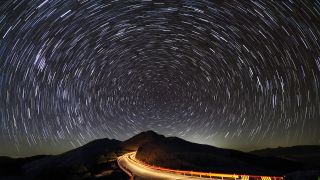
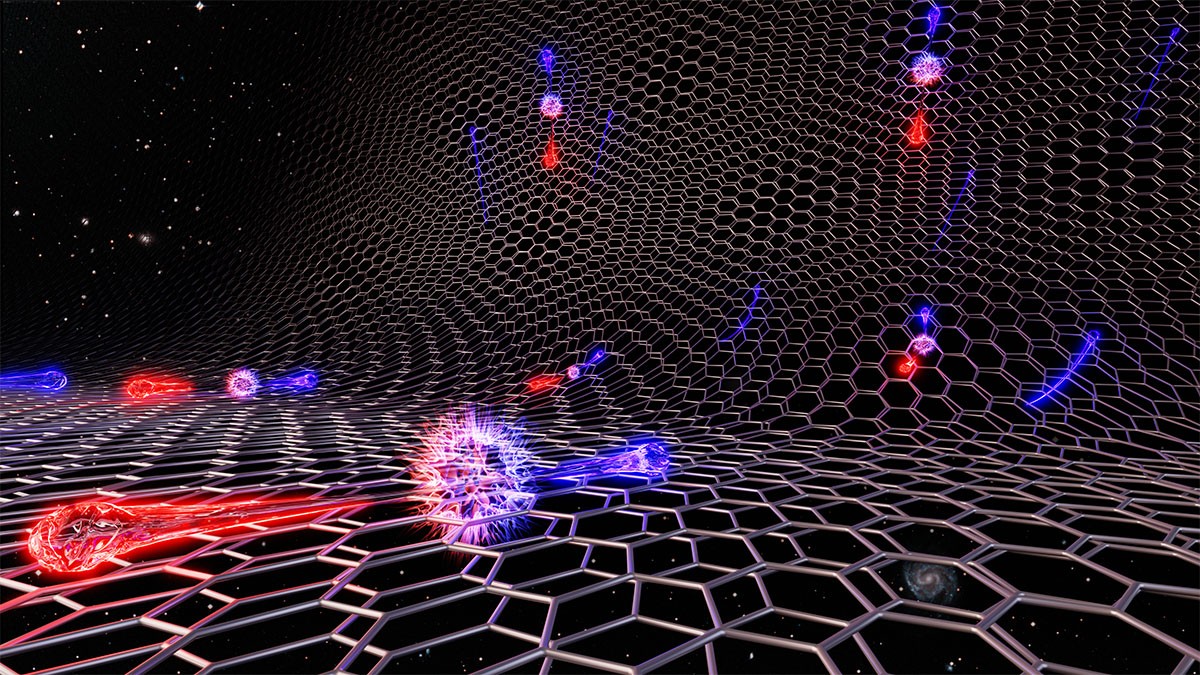
Share this:

  • Click to share on WhatsApp (Opens in new window) WhatsApp
  • More
  • Click to share on Pocket (Opens in new window) Pocket
  • Click to share on Mastodon (Opens in new window) Mastodon

THE BEADY EYE ASK’S: WITH OUR WORLD DISINTERGRATING, IS IT NOT TIME TO REPLACE THE UNITED NATIONS?

04 Sunday Feb 2024

Posted by bobdillon33@gmail.com in #whatif.com, 2024 the year of disconnection, United Nations

≈ 1 Comment

Tags

China, India., news, United Nations, USA

( Six minute read)

WORLD, COME TO MY HOME!: 1174-1176 UNITED NATIONS - The flag of the ...

The United Nations is the most powerful international organisation in the world. Founded after World War Two, the UN aims to maintain global peace and security though international cooperation and dialogue.

Although the UN is seen as a bed-rock of the post-War world order, it is regularly criticised for its failings.

There are some who say the world would be better without the UN. Bedevilled by a litany of challenges, including gross underfunding, bloated bureaucracy, disunity, and geopolitical rivalry among the permanent members of the Security Council.

Would it be?

Today, many countries still put their own geo-political objectives ahead of any UN requirements.

This is the main failing of the United Nations.  Western powers, for example, are overrepresented in the five permanent members. Entire regions lack a permanent seat but nevertheless are bound to Security Council resolutions. Today, it lacks strong support in popular culture.

—————–

The United Nations stands at a crossroads.

The need to reform the United Nations is critical.

Political leaders, experts, and civil society agree that the United Nations is lagging behind global change, failing to anticipate emerging risks, and not adequately resolving or mitigating global challenges.

There is no longer any doubt that three primary threats endanger the existence of humanity: Climate change, infectious disease, and nuclear weapons are the core global challenges but disruptive technological, societal, and ecological developments impose new challenges that require new partnerships beyond the current state-centric global architecture.

The age of disinformation and ever-increasing influence of social media has left truth and facts more coloured by predesignated concepts and ideas.

Ideally, the Security Council should be stripped of veto power when a matter relating to any these existential threats is on the agenda.

The greatest challenge confronting the organization—one that has repeatedly rendered it unable to act decisively on critical global issues—is intransigence among the permanent members of the Security Council.

At a time of profound global change and increasing competition over values, treating climate change as simply another environmental problem rather than a crosscutting factor affecting all aspects of human life should have a dedicated UN institution focusing on Climate change not as one problem among many, but as a unique crisis that affects all activities.

————————

UN reform has been on the agenda since the organization was created in 1945.

The Security Council as currently constituted in terms of membership, functions, and powers cannot effectively respond to the myriad crises engulfing the world.

As powerful countries move toward unilateralism, populism, and nationalism at the expense of multilateralism and collective action, a united and forward-looking Security Council capable of effectively driving the wider United Nations to achieve its goals is sine qua non.

——————-

What would actually happen if the United Nations collapsed, or was disbanded?

Realistically, there are two main ways that the United Nations could collapse. There are many ways that the UN might cease to exist but these can be divided into ‘internal’ and ‘external’ causes.

Internal:  Financial collapse, or a major internal scandal, or the UN deciding voluntarily to disband itself.

External: National governments collectively deciding to dispend the UN, some major, or many minor countries deciding to leave or countries withdrawing funding. Data governance at the global level lags well behind technological developments.

The collapse of the UN would also remove a key arena for global dialogue and could be followed by a potential re-alignment of the world order as there would no longer be a forum for dialogue between nations and its conceivable with a vacuum in international law many conflicts could reignite.

The first thing that would happen if the UN collapsed is that funding to the UN’s international programmes would stop.

It is likely that it would be replaced with another inter-governmental organisation.

The pre-curser to the UN was the League of Nations, disbanded in 1946.

Historians generally agree the League of Nations failed for five main reasons. These are:

  • It failed to encompass all countries, with major powers such as the United States not joining. Many countries also left the League of Nations or only joined for a short-time.
  • Countries put their own geo-political objectives ahead of the League of Nations requirement for collective security.
  • The League of Nations did not have its own army, and so relied on member states to use military force. Many were not willing to as their populations did not support another war.
  • Disarmament was a major aim of the League of Nations, meaning countries were encouraged to reduce military spending. This meant intervening militarily against countries that went against the League was made more difficult.
  • The League had no power to stop countries taking aggressive action. When countries such as Germany or Japan began attacking their neighbours, the League was powerless to stop them.

——————-

Let’s take each one and see if the modern United Nations could fail for the same reasons?

It currently supports the global order. All major nations, especially those included in the Security Council, have a vested interest in retaining the United Nations as it helps them maintain power.

Another reason why the United Nations is unlikely to collapse is that, although there are many legitimate criticisms of the UN, any organisation that were to replace it would unlikely be more successful.

This is because any global forum of nations requires a degree of flexibility and pragmatism in order to incorporate all countries. Although this means the UN’s power to affect change is limited, a more controlling inter-governmental organisation would see nations leaving when decisions went against them.

———————–

Today, everyone seems to have problems with multilateralism, which is eroding the authority of global institutions.

More than ever the world needs collective action.

Working out how to bring the United Nations closer to “we the people” and remaining relevant for future generations should drive the organization as it enters its next phase.

It’s the place where leaders come and give public speeches but that really nothing meaningful gets done.

The Security Council, which is responsible for maintaining international peace and security, has often been paralyzed by the veto power of its five permanent members – the United States, China, Russia, France, and the United Kingdom. This has made it difficult for the Security Council to take decisive action in conflicts such as the Syrian civil war, the Israeli-Palestinian conflict and more recently in the Russia-Ukraine conflict.

It is unable to stop war, it is unable to end famine, it is unable to stop conflicts, it is unable to manage migration, it does not push for global disbarment

Somewhere, the spirit of collectivist has to be regenerated.

The ineffectiveness of the UN are simply a reflection of those dysfunctional characteristics of the international system.

The most important prerequisite for an effective global institution may be a concert of powers.

—————

There is no credible alternative in sight so the UN must be retooled and updated to tackle today’s challenges

Can 193 nations with competing agendas undertake major reforms?  NO!

However we are inching closer to “a great fracture.” Conflicts, coups and chaos are surging. The climate crisis is growing. Divides are deepening between military and economic powers, the richer North and poorer South, East and West. A new Rubicon has been crossed in artificial intelligence.

Can it be reformed?

THIS CAN ONLY BE ACHIVED IF THE UN IS BROKEN UP INTO A MORE TARGETED ORGANISATION.

By creating an international antivirus consortium, protecting biodiversity, and strengthening warning protocols within UN agencies.

We cannot inch towards agreement while the world races towards a precipice.

It must and we all must unite behind a common purpose, or we all be speaking to an empty room.

All human comments appreciated. All like clicks and abuse chucked in the bin.

Contact: bobdillon33@gmail.com

Share this:

  • Click to share on WhatsApp (Opens in new window) WhatsApp
  • More
  • Click to share on Pocket (Opens in new window) Pocket
  • Click to share on Mastodon (Opens in new window) Mastodon

THE BEADY EYE ASK’S: ARE WE GOING TO ALLOW THE ISRAELIANS TO BULLDOZE THE GASA STRIP INTO THE MEDITERRANEAN?

01 Thursday Feb 2024

Posted by bobdillon33@gmail.com in #whatif.com, 2024 the year of disconnection, Israel and Palestine, Israeli-Palestinian conflict

≈ Comments Off on THE BEADY EYE ASK’S: ARE WE GOING TO ALLOW THE ISRAELIANS TO BULLDOZE THE GASA STRIP INTO THE MEDITERRANEAN?

Tags

hamas, Israel, news, palestine, politics

( Seven minute read)

Israel’s post 7/10 resort to massive force, dropping an unprecedented total of about 30,000 bombs by mid-December 2023 (equivalent to two Hiroshima-sized nuclear bombs), has so far failed to eradicate the military force established by Hamas amid the torrent of bloodshed, 25,000 Palestinian dead and the 62,000 wounded, and the mass displacement of 1.9 million Palestinian civilians in Gaza (85% of the population), easily exceeding the toll of the ethnic cleansing that accompanied Israel’s establishment in 1948.A woman and child sitting next to a ruined building in Rafah (January 2024)

Hamas’s brutal tactics in its 7 October assault have been washed out of Palestinian political consciousness by the subsequent indiscriminate and mass erasure of Palestinian civilian lives.

A TWO MONTH CEASFIRE WITH EXCHANGE OF ISRAELIANS HOSTAGES/ PALISTIAN PRISONERS WILL NOT BRING AN END TO THE WAR.

Its most likely effect will be to remythologise the notion of resistance and sow the seed for future iterations that may be inspired by Hamas but have no necessary connection to its history, ideology or organisational structure.

The real issue is how to incorporate Hamas and its associated “spirit of resistance” into a new Palestinian authority, rather than how to quash or excise it. Within or associated with such an authority, Hamas could be part of the solution; outside, it would remain both a spoiler and an opposite pole of attraction.

Netanyahu and other Israeli officials have made it clear that they will seek to impose a strict and indefinite Israeli-determined security regime over the Gaza Strip for the foreseeable future.

In other words, to reinstitute what amounts to a long-term occupation.

This, in turn, will not only keep the flame of Hamas alive and galvanise Hamas-inspired resistance but will ensure that Israel’s “right of self-defence” will only produce the very insecurity that Israel and its allies claim to be addressing. Gaza Strip

It took years for the ANC and IRA to be recognised as partners to a resolution.

Hamas rejects Israel’s right to exist and is committed to its destruction, so a two state resolution would create a Palestinian state ( what left of it ) that would exist alongside Israel.

Another words The world’s largest ‘open-air prison.

It takes one hour to drive from its southern point, Rafah, to Beit Hanoon in the north.

Sixteen years of an Israeli land, air and sea blockade has crippled its economy and tightly restricted the movement of its people in and out of the enclave. Gaza residents need special permission to cross into Israel and Egypt. This is usually for urgent medical treatment but is very difficult to obtain.

The enclave has one of the highest unemployment rates in the world at 45 percent. Access to education and medical treatment is also lacking after years of Israeli air strikes on schools and hospitals.

More than 60 percent of Gaza’s people are refugees from what is currently Israel.

More than 750,000 Palestinians were ethnically cleansed from their homes by Israeli militias in 1948 when Israel declared its independence.

YOU TELL ME IF YOU WERE IN THE GAZA WITH YOUR FAMILY WIPED OUT, WITH YOUR COUNTRY REDUCED TO DUST, WOULD YOU TAKE UP ARMES?

There will be no two state as it requires two states to agree one.

And that’s before dealing with the same difficult details  – borders, refugees, security, and the sharing of Jerusalem.

Israel is a very different country to the secular state that was created in 1948 – with far more religious citizens who believe God gave them the land, and who have massive political power. The Palestinians will need to bridge the deep divide between Hamas and Fatah. Because as much as the world might condemn Hamas for the atrocities of October 7 – and much that came before – it’s still there.

All the walls and barber wire (which Israel has now learned) does not and will not bring security.

Any future agreement must make it impossible for either side to inflict the horrors we are now witnessing.

Leaving behind all the religious conations there can only be a one state solution and that is a Federal/Confederation State with a written constitution that protects all its citizens both Jews and Arabs.

To make two states, you would need to create a new state of Palestine. And to do that, you would need to agree where its borders would be.

The steady and systematic expansion of settlements [is] moving Israel in the wrong direction.

The prospect of a two-state solution has become even more remote, with Mr Netanyahu naming settler activist Itamar Ben-Gvir — a convicted criminal, with a rap sheet that includes inciting racism and supporting a terrorist organisation — as minister for national security and another settler leader, Bezalel Smotrich, controlling planning in the west bank. (He caused an uproar in March when he quoted French-Israeli Zionist Jacques Kupfe: “There is no such thing as Palestinians, because there is no such thing as a Palestinian people.”)

A one-state solution would mean absorbing everyone in Israel and the Palestinian territories into a new nation with the Holy Sites of Al-Aqsa and the Temple Mount, as their capital city.

How it can remain a Jewish state if the majority of its population is Palestinian.

When this crisis is over, there has to be a vision of what comes next. Lasting peace must follow the bloodiest fighting between Israelis and Palestinians for decades.

A confederation with a written constitution is the only solution.

What it present is a flexible model:

As a means of facilitating a two-state/one state solution, providing a new framework for the negotiation

A  permanent solution between the two sovereign states of Israel and Palestine, and not as a substitute for it.

Under the confederation plan, Israelis living in settlements deeper in the West Bank would be able to choose whether to relocate to homes inside Israel or stay where they are as Israeli citizens who are permanent residents of Palestine, agreeing to abide by the new state’s laws. A comparable number of Palestinian citizens would be able to move to Israel on the same terms.

A setup between states rather than citizens; that is, the citizens belong to their respective state and are not direct members of the confederation.

This would involve both states in joint strategic defence through close coordination and would focus them on maintaining internal law and order.

The Old City of Jerusalem could host some of the joint authorities, paving the way toward dual sovereignty or other creative solutions over that sensitive area of less than 1 km2 or 0.39 mi2.

The first step would be to negotiate a permanent agreement and establish an independent Palestinian state, without the confederal umbrella. An implementation period of up to 30 months would follow.

Palestine and Israel would live side by side as sovereign States and only at the end of the implementation period, they would establish the HLC (Holy Land Confederation) if they want it.

The European Union, which does not call itself a confederation, is the most successful and consequential confederation ever.

The EU, which has changed Europe and fostered a continent of peace after centuries of endless wars, is a miracle in the eyes of many. It includes aspects of a federation (freedom of movement, currency, trade, and agriculture) and aspects of a confederation (no common language, separate education
systems, no joint army, and relatively weak central institutions), as well as aspects of sovereign states. In many ways, the EU is sui generis, but its structure is very close to that of a confederation and may serve as a model for the HLC.

We have to distinguish between aspiration and reality. The odds are very, very low. It’s essentially mission impossible as we will be left with two deeply traumatised societies. What is lacking on both sides is leadership and political will. Both sides need to wake up after this horrible war and find new leadership.

Rest assured if not Israel will go down in history not as a country that was found on compassion for the Jews but a

Compassion knows not whom it chooses to help in some way, shape or form, it just knows it’s the right heartfelt thought to have for another and to bestow some type of good upon another.

One thing sees another, but two things feel together, creating unity.

#Compassion is one of Judaism’s highest values. The existence of the entire world depends on this virtue.

Below link to one written by Israel, which would have to be amended to accommodate the few Palestinian left a live.

All human comments appreciated. All like clicks and abuse chucked in the bin

Contact: bobdillon33@gmail.com

https://r.search.yahoo.com/_ylt=Awr.glp2drpluGgJQFIM34lQ;_ylu=Y29sbwNpcjIEcG9zAzEEdnRpZAMEc2VjA3Ny/RV=2/RE=1706747638/RO=10/RU=https%3a%2f%2fstatic.timesofisrael.com%2fblogs%2fuploads%2f2023%2f09%2fConstitution-for-Israel.pdf/RK=2/RS=ON4b20C6mgVanCVi1qX5fwtE1TE-

Share this:

  • Click to share on WhatsApp (Opens in new window) WhatsApp
  • More
  • Click to share on Pocket (Opens in new window) Pocket
  • Click to share on Mastodon (Opens in new window) Mastodon

THE BEADY EYE SAY’S: WHAT ONCE WAS OUR GREATEST ASSET OUR BRAINS ARE BECOMING WORTLESS.

31 Wednesday Jan 2024

Posted by bobdillon33@gmail.com in #whatif.com, 2024 the year of disconnection, Algorithms., OUR BRAINS

≈ Comments Off on THE BEADY EYE SAY’S: WHAT ONCE WAS OUR GREATEST ASSET OUR BRAINS ARE BECOMING WORTLESS.

Tags

AI, Algorithms., Artificial Intelligence., Machine learning., tech, Technology, The Future of Mankind, Visions of the future.

( Four minute read)

The technology behind the atomic bomb only exists because of a cooperative hive mind: hundreds of scientists and engineers working together. The same unique intelligence and cooperation also underlies more positive advances, such as modern medicine and technology.

We owe our complex reasoning abilities to it, but we have similarities with everything else in nature; it would be astonishing if we didn’t.

We were once  “rational animals” pursuing knowledge for its own sake. Now more and more of us, thanks to the smart phone, are becoming Know it all Google it ‘brainless dead.

Human societies are built on collaborative activities. That means that the interactions of humans beings in their environmental contexts, situated in their historical locations, and with available technologies are always subject to the ecological and survival pressures that have existed since time immemorial.

In the world of self learning algorithms this is no longer true.

Take Mr Musk hopes that #Neuralink can be used to merge humans with computers, allowing them to interact with artificial intelligence simply by thinking, for instance.

It stands to reason, that It won’t be long in coming. Digitalised algorithmic citizenship, with a Neuralink’ Brain chips in the head owned by a Tec company. Driven by blockchain, without any reasoning, who will only cooperate if there is something in it for them.

Thank all the gods I wont be around to see it. AI intelligence demonstrated by machines, as opposed to the natural intelligence displayed by humans.

Consequently.

AI allows machines to increasingly approach human capacities for perception and reasoning.

This process is resulting in a hollowing-out of nation-state space through rescaling, undermining its heretofore privileged position as the only natural platform and geographical expression for the monopoly of sensory and political power so far.

Such frameworks cover demands for data privacy, ownership, sovereignty, donation, co-operation, self-determination, trust, access, and ethics as well as AI transparency, algorithmic automatization, and, ultimately, democratic accountability for digital citizenship, which inevitably may transform our current interpretation of the nation-state as ‘the clear and coherent mapping of a relatively culturally homogeneous group onto a territory with a singular and organized state apparatus of rule’ (Agnew Citation2017, 347) and its relationship with digital citizenship.

On the one hand, regarding the techno-political awareness of data, these dynamics involve addressing concerns about biometric technologies (e.g. vaccine passports), rolling out algorithmic identity tools for citizenship (e.g. the ongoing e-Residency policy framework) and engaging in counter-reaction to extractives data models (e.g. through digital rights claims).

The technology that defines us can also destroy worlds.We can fight and kill on an unparalleled scale (Credit: istock)

When we – Homo sapiens – first appeared about 200,000 years ago we weren’t alone. We shared the planet at least four other upright cousins; Neanderthals, Denisovans, the “hobbit” Homo floresiensis and a mysterious fourth group.

Humans aren’t the only species that kill each other. We’re not even the only species that fight wars. But our intelligence and social prowess mean we can do so on an unprecedented scale.

We have an immense capacity for good. At the same time we risk driving our closest relatives to extinction and destroying the only planet we have ever called home.

It’s impossible to get a good clear understanding of people’s thoughts about their future without talking directly with them.

Somehow, our language abilities need to be “switched on”,

As far as we know, we are the only creatures trying to understand where we came from. We also peer further back in time, and further into the future, than any other animal.

Digital Citizenship Education is now vital.

All human comments appreciated. All like clicks and abuse chucked in the bin.

Contact: bobdillon33@gmail.com
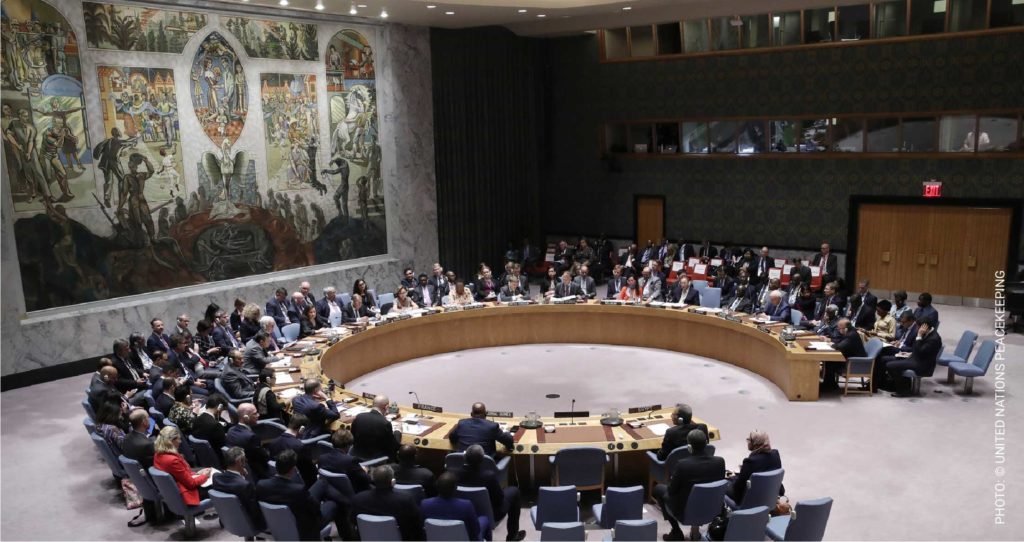
Share this:

  • Click to share on WhatsApp (Opens in new window) WhatsApp
  • More
  • Click to share on Pocket (Opens in new window) Pocket
  • Click to share on Mastodon (Opens in new window) Mastodon
← Older posts
Newer posts →

All comments and contributions much appreciated

  • THE BEADY EYE SAYS WARS USE TO BE MAN AGAINST MAN, NO LONGER. WAR IS NOW DRONE AGAINST DRONE. January 9, 2026
  • THE BEADY EYE SAYS. WE HAVE SURROUND THE EARTH WITH SATELLITES. HERE TO DAY GONE TO MORROW. January 9, 2026
  • THE BEADY EYE SAYS GOVERNANCE IS BECOMING MORE BY REALITY TV, ALGO January 9, 2026
  • THE BEADY EYE SAYS. DONALD TRUMP IS EXPOSING THE WEAKEST OF OUR WORLD ORGANISATIONS January 7, 2026
  • THE BEADY EYE SAYS. MADURO ADDUCTION SHOWS THAT INTERNATIONAL LAW IS A JOKE. January 4, 2026

Archives

  • January 2026
  • December 2025
  • November 2025
  • October 2025
  • September 2025
  • August 2025
  • July 2025
  • June 2025
  • May 2025
  • February 2025
  • January 2025
  • December 2024
  • November 2024
  • October 2024
  • September 2024
  • August 2024
  • July 2024
  • June 2024
  • May 2024
  • April 2024
  • March 2024
  • February 2024
  • January 2024
  • December 2023
  • October 2023
  • September 2023
  • August 2023
  • July 2023
  • June 2023
  • May 2023
  • April 2023
  • March 2023
  • February 2023
  • January 2023
  • December 2022
  • November 2022
  • October 2022
  • September 2022
  • August 2022
  • July 2022
  • June 2022
  • May 2022
  • April 2022
  • March 2022
  • February 2022
  • January 2022
  • December 2021
  • November 2021
  • October 2021
  • September 2021
  • August 2021
  • July 2021
  • June 2021
  • May 2021
  • April 2021
  • March 2021
  • February 2021
  • January 2021
  • December 2020
  • November 2020
  • October 2020
  • September 2020
  • August 2020
  • July 2020
  • June 2020
  • May 2020
  • April 2020
  • March 2020
  • February 2020
  • January 2020
  • December 2019
  • November 2019
  • October 2019
  • September 2019
  • August 2019
  • July 2019
  • June 2019
  • May 2019
  • April 2019
  • March 2019
  • February 2019
  • January 2019
  • December 2018
  • November 2018
  • October 2018
  • September 2018
  • August 2018
  • July 2018
  • June 2018
  • May 2018
  • April 2018
  • March 2018
  • February 2018
  • January 2018
  • December 2017
  • November 2017
  • October 2017
  • September 2017
  • August 2017
  • July 2017
  • June 2017
  • May 2017
  • April 2017
  • March 2017
  • February 2017
  • January 2017
  • December 2016
  • November 2016
  • October 2016
  • September 2016
  • August 2016
  • July 2016
  • June 2016
  • May 2016
  • April 2016
  • March 2016
  • February 2016
  • January 2016
  • December 2015
  • November 2015
  • October 2015
  • September 2015
  • August 2015
  • July 2015
  • June 2015
  • May 2015
  • April 2015
  • March 2015
  • February 2015
  • January 2015
  • December 2014
  • November 2014
  • October 2014
  • September 2014
  • August 2014
  • July 2014
  • June 2014
  • May 2014
  • April 2014
  • March 2014
  • February 2014
  • January 2014
  • December 2013
  • November 2013
  • October 2013

Talk to me.

Jason Lawrence's avatarJason Lawrence on THE BEADY EYE ASK’S: WIT…
benmadigan's avatarbenmadigan on THE BEADY EYE ASK’S: WHA…
bobdillon33@gmail.com's avatarbobdillon33@gmail.co… on THE BEADY EYE SAYS: WELCOME TO…
Ernest Harben's avatarOG on THE BEADY EYE SAYS: WELCOME TO…
benmadigan's avatarbenmadigan on THE BEADY EYE SAY’S. ONC…

7/7

Moulin de Labarde 46300
Gourdon Lot France
0565416842
Before 6pm.

My Blog; THE BEADY EYE.

My Blog; THE BEADY EYE.
bobdillon33@gmail.com

bobdillon33@gmail.com

Free Thinker.

View Full Profile →

Follow bobdillon33blog on WordPress.com

Blog Stats

  • 94,469 hits

Blogs I Follow

  • unnecessary news from earth
  • The Invictus Soul
  • WordPress.com News
  • WestDeltaGirl's Blog
  • The PPJ Gazette
Follow bobdillon33blog on WordPress.com

The Beady Eye.

The Beady Eye.
Follow bobdillon33blog on WordPress.com

Create a free website or blog at WordPress.com.

unnecessary news from earth

WITH MIGO

The Invictus Soul

The only thing worse than being 'blind' is having a Sight but no Vision

WordPress.com News

The latest news on WordPress.com and the WordPress community.

WestDeltaGirl's Blog

Sharing vegetarian and vegan recipes and food ideas

The PPJ Gazette

PPJ Gazette copyright ©

Privacy & Cookies: This site uses cookies. By continuing to use this website, you agree to their use.
To find out more, including how to control cookies, see here: Cookie Policy
  • Subscribe Subscribed
    • bobdillon33blog
    • Join 223 other subscribers
    • Already have a WordPress.com account? Log in now.
    • bobdillon33blog
    • Subscribe Subscribed
    • Sign up
    • Log in
    • Report this content
    • View site in Reader
    • Manage subscriptions
    • Collapse this bar