• About
  • THE BEADY EYE SAY’S : THE EUROPEAN UNION SHOULD THANK ENGLAND FOR ITS IN OR OUT REFERENDUM.

bobdillon33blog

~ Free Thinker.

bobdillon33blog

Category Archives: 2020: The year we need to change.

THE BEADY EYE’S ACTION PLAN. FOR A GREEN ECONOMY.

02 Saturday May 2020

Posted by bobdillon33@gmail.com in #whatif.com, 2020: The year we need to change., COVID-19, POST COVID-19., Survival., Sustaniability, Technology v Humanity, The common good., The essence of our humanity., The Future, The Obvious., The state of the World., The world to day., Unanswered Questions., VALUES, WHAT IS TRUTH, What Needs to change in the World, Where's the Global Outrage.

≈ Comments Off on THE BEADY EYE’S ACTION PLAN. FOR A GREEN ECONOMY.

Tags

benefits arising from the green economy., Capitalism and Greed, Capitalism vs. the Climate., Climate change, Coronavirus (COVID-19), Green Economics., Green Economy., Green Energy., The Future of Mankind, Visions of the future.


(Seven-minute read)

At the moment we are inundated with rhetoric that the world is going to change due to the coronavirus pandemic.

Now the big question yet to be answered is how in the midst of a coming a Global economic depression to restate countries’ economies.

But the truth remains that few politicians are prepared to take substantive leadership towards changes that could alienate powerful interest groups that benefit from the current paradigm.

It appears that we have a brain drain as existing legal frameworks and regulations do not encourage improved environmental and economic practices or innovations.

However, issues that created a sense of solidarity among civil society and academia in
earlier decades are now back on the table thanks to the Pandemic.

While the rationale for change is clear even with the evidence of climate change, and the possibilities of future pandemics there are a number of barriers or challenges to making this transition.

Key issues affecting the rate of transition to a green economy include entrenched interests supporting the status quo, lack of data and information, organizational obstacles, reaching competitive levels of risk and return for financing, and the need to scale up.

It’s about getting everyone – from governments through to the business community – to work together to do things differently, and this requires a common language.

Whether that is at the international level, the national level, or within the business community. All levels need to be striving towards the same goals, and the indicators provide a common way of talking about this – allowing a better-managed with system corporate social responsibility.

Green Economics principles should be developed to meet the needs and vision of each country and each sector. The goal is not to simply arrive at a list of principles but to engage in discussions with stakeholders about the priorities and approaches to moving toward a green economy.

Environmental well-being contributes to economic well-being when the environment is
able to properly carry out its functions. For longterm prosperity through equitable distribution of economic benefits and effective management of ecological resources; it must be economically viable and resilient, self-directed, self-reliant, and pro-poor. 

The need for a convergence – that all sectors need to work together to deliver these goals.

The first thing to say is that a green economy would not have to be any different than the regular economy.

Supply and demand. 

What role does public policy play in encouraging and facilitating the green economy?

1. The green economy is a means for achieving sustainable development.
2. The green economy should create decent work and green jobs.
3. The green economy is resource and energy-efficient.
4. The green economy respects planetary boundaries or ecological limits or
scarcity.
5. The green economy uses integrated decision making.
6. The green economy measures progress beyond GDP using appropriate
indicators/metrics.
7. The green economy is equitable, fair, and just – between and within countries
and between generations.
8. The green economy protects biodiversity and ecosystems.
9. The green economy delivers poverty reduction, well‐being, livelihoods, social
protection, and access to essential services.
10. The green economy improves governance and the rule of law. It is inclusive;
democratic; participatory; accountable; transparent; and stable.
11. The green economy internalizes externalities.

Thanks to COVID-19 we’re going to see a huge amount of capital flood into sustainability.  It is already happening if at a slow pace.

The government can spark a clean energy economy by setting the rules and letting the private sector scale up.

Of course, finance will not be the only factor in this transition, but rather the forthcoming Economic Depression.

What better way to stimulate growth by securing self-efficiency in green energy (Energy production results in the emission of 80 percent of global carbon dioxide.)   

What better way to promote Tourism that depends on the environmental quality of a destination – i.e. – clean air, water, and land. It depends on the natural environment for its wide array of ecosystems, for example, beaches and coastal areas, mountains, and forests. 

What better way to stop pollution that has an impact on global warming has a potential cost from flooding and hurricane damage, low agriculture yields, and population resettlement.

What better way to realize that GDP is increasing while emissions are going down.

What better way to leave a legacy for the next generation.

What better way to engage the whole population.

What better way to make wealthy countries finally realize that the greenest investments also look like the wisest. 

What better way for the European Union to live up to its name ( Union) by Investing in the sunshine of the south with energy grants to establish solar farms. The north could manufacture them creating millions of new jobs in their economies, in Italy, Spain, Greece.  

The benefits arising from the green economy are extended to all levels of population and all countries, as well as interconnected among the features of mutual influence and common development: the more countries and companies “go green”, the more the economy grows; the more the economy grows through “green plans”, the more research and development on the green economy will be conducted. The more green economy dominates markets, the sooner the world will be a clean place after more than two hundred years of increasing.

That there is a need for a new model of economic development but unfortunately, that is what it is Rhetoric.

All human comments appreciated. All like clicks and abuse chucked in the bin.

← Back

Thank you for your response. ✨


Share this:

  • Share on WhatsApp (Opens in new window) WhatsApp
  • More
  • Share on Pocket (Opens in new window) Pocket
  • Share on Mastodon (Opens in new window) Mastodon

THE BEADY EYE’S: HOW TO SURVIVE THE COMING ECONOMIC DEPRESSION.

30 Thursday Apr 2020

Posted by bobdillon33@gmail.com in #whatif.com, 2020: The year we need to change., Economic Depression., How to do it., POST COVID-19.

≈ Comments Off on THE BEADY EYE’S: HOW TO SURVIVE THE COMING ECONOMIC DEPRESSION.

Tags

Algorithms., Coronavirus (COVID-19), Economic Depression., Economic realities, How to do it., Post-Covid-19, The Future of Mankind


(Two-minute read)

Ok, This post is to encourage suggestions as to the best practices 

That last the Great Depression lasted for 10 years so you will have plenty of time to add your suggestions.

Since the start of the COVID-19 pandemic, countries have poured funds into saving their economies.

You don’t need a Bachelor’s in Economics, to know that where the demand goes out the window so does the supply. Just watch the Unsustanianle Advertising Industry desperately trying to create demand. It would not surprise me before long if they will be promoting Bio corona free recycled paper to wipe your troubles away.  

At the intersection of social science and mathematics is economics, the science of money.

COVID-19 is exposing the weakness of money and the lack of attention to what should have been valued in the first place to make social science with the result that the great lockdown is now on course to turn into the great slump. 

So here are 10 steps to personally take to prepare for a deflationary depression. 

  1. Don’t sign up for a tracking App unless it is 1000% transparent.
  2. Don’t trust the banking system. Don’t think bank runs can’t happen- they can. “Cash is king” as average joes like you and I will not be able to depend on credit to get the things we need.
  3. Gain some control over the necessities of your own existence if you can afford it.
  4. Be prepared to work with others as that will give you far greater scope for resilience and security. Form buying clubs. Growing Coops.Independent food security as much as possible.
  5. Be worth more to your employer than he is paying you.
  6. Look after your health!
  7.  Hold no debt (for most people this means renting)
  8. If possible Pay off your debt and do not take on a new debt no matter how low-interest rates may appear to be. 
  9. Instead of focusing on debt and credit, pay attention to your liquid assets.
  10. If times get tough, you’re gonna want like-minded people to work, trade, and barter with. Don’t rely too much on internet “prepper groups.” Instead, you’re going to turn to family members and friends you already know and trust. Invest in relationships with people who actually live near you and will be able to physically lend a helping hand when you need it.

(Deflation, for those of you who don’t know, is the phenomenon when prices for goods and services get lower and lower and lower during a given period of time.) Much worse than inflation because debts, in real terms, become far harder to pay off.

All contributions appreciated. All like clicks and abuse chucked in the bin.
← Back

Thank you for your response. ✨


Share this:

  • Share on WhatsApp (Opens in new window) WhatsApp
  • More
  • Share on Pocket (Opens in new window) Pocket
  • Share on Mastodon (Opens in new window) Mastodon

THE BEADY EYE SAYS: AT THE MOMENT THERE IS A LOT OF HYPE THAT AFTER THE CORONA VIRUS PANDEMIC IS OVER THE WORLD WILL HAVE CHANGED.

29 Wednesday Apr 2020

Posted by bobdillon33@gmail.com in #whatif.com, 2020: The year we need to change., CORONA VIRUS., COVID-19, Emergency powers., Fourth Industrial Revolution., GPS-Tracking., Human values., Inequality., Lock Down., Modern day life., Modern day Slavery, Pandemic, Post - truth politics., Post-Covid-19, Reality., Sustaniability, Technology v Humanity, The common good., The essence of our humanity., The Obvious., The pursuit of profit., The state of the World., The world to day., Unanswered Questions., VALUES, WHAT IS TRUTH, What Needs to change in the World, World Politics

≈ Comments Off on THE BEADY EYE SAYS: AT THE MOMENT THERE IS A LOT OF HYPE THAT AFTER THE CORONA VIRUS PANDEMIC IS OVER THE WORLD WILL HAVE CHANGED.

Tags

Algorithms., Artificial Intelligence., Capitalism vs. the Climate., Climate change, Community cohesion, CORONA VIRUS., Coronavirus (COVID-19), Distribution of wealth, Inequility, Post-Covid-19, Technology, The Future of Mankind, Visions of the future.


(Fifteen-minute read) 

Obviously, where will we be in six months, a year, 10 years from now is unknown but what Covid-19 is throwing into sharp relief is just how false our beliefs about markets are. 

We all know what is needed and one could compose a list as long as your arm but all are connected to where and what we live on the Earth.

In the face of Covid-19, this has never been more obvious.

“We’re all in this together and nobody has a clear answer to a way out.”

However, when all of this is over together in lockdown will become more than an appropriate word in more ways than we might like.  

As with sheep, it is easier to control a flock when they are enclosed. 

There is a chance that the herd scenario will be the most dangerous scenario, with profound implications for all. 

Big untransparent data is a minefield to the civil liberties we enjoy at the moment.

We won’t be clapping when the freedom of choice disappears. 

So as responses to the virus evolve, how might our economic futures develop?

The main fact exposed in our societies by COVID-19 is that so many people work pointless jobs because, they make lots of money we have lots of consultants, huge advertising industry and a massive financial sector. Meanwhile, we have a crisis in health and social care, where people are often forced out of useful jobs they enjoy because these jobs don’t pay them enough to live.

In a society where exchange value is the guiding principle of the economy, the basic goods of life are mainly available through markets. This means you have to buy them, and to buy them you need an income, which comes from a job.

In other words, people are compelled to work in pointless jobs.

This is partly why so many countries were so ill-prepared to respond to Covid-19.

There are a number of possible futures, all dependent on how governments and society respond to coronavirus and its economic aftermath.

So, will, we take the opportunity of prioritization of one type of value over others.

(This dynamic has played a large part in driving global responses to Covid-19.)

First, it is quite hard to make money from many of the most essential societal services.

The best-paid jobs only exist to facilitate exchanges: to make money. They serve a no wider purpose to society.

We need a very different kind of economics if we are to build socially just and ecologically sound futures.Civil liberties under attack during COVID-19

From an economic perspective, there are four possible futures:

Descent into barbarism, robust state capitalism, radical state socialism, or a transformation into a big society built on mutual aid run by unregulated AI. 

If we want to be more resilient to pandemics in the future (and to avoid the worst of climate change) we need a system capable of scaling back production in a way that doesn’t mean loss of livelihood or our civil liberties. 

From the economic point of view, this has to be is a Green sustainable Economy because the challenge of producing less is also central to tackling climate change.

(Coronavirus, like climate change, is partly a problem of our economic structure. Although both appear to be “environmental” or “natural” problems, they are socially driven.)

From an individual point of view, the solutions are not so clear.

Should we give up our liberties for the common good?

When faced with a complete lack of evidence about a tracking policy’s long term effects crisis situations afford the state the opportunity to stretch its power into areas of life that were before beyond its reach.

Politics is plagued by a do-something bias and this question is unanswerable because we cannot know how much the forcible suppression of civil society will cost and we won’t know the benefits.

The actions of governments if not reversed when the pandemic is over or under control to date if not reversed are of magnitude more dangerous than this virus.

Thinking critically we are now confronted nonetheless with the question of who gets to make such a decision on tracking, the government on a compulsory law backed bases or the individual on a voluntary base.  

It’s a social theory question, not a medical one: how does a comparatively tiny group of people at the top of government acquire the right to make this call for all other people. How could anyone or any group attain to such a power?

This leads us to some troubling questions.

For example, What kinds of communicable diseases function to void one’s right to free movement? How deadly does the disease have to be? How contagious? 

It is not worth giving up for a problem that has existed even before our time.

After giving up this right, what other rights will follow?

Where will be the balance? Do we become mindless government slaves?

Where is the line between where our right to choose is more important than the government’s right to impose their standards on us? Even if it’s for our own good?

Governments don’t give us our rights. Our rights are ours.

If we let freedom and liberty slip away a little at a time, then we are a people who don’t deserve to be free.

Just as the government has a duty to serve us, we as a people have a duty to defend our freedom and to understand and appreciate the rewards of being a free and open society. If we as a people fail in our duty to protect our freedom, then we no longer deserve to be a free people.

Once you give up even just a little, it is unlikely you will ever get them back. The individual is all that matters when it is you.

Philosopher Bertrand Russell wrote, “Neither a man nor a crowd nor a nation can be trusted to act humanely or to think sanely under the influence of great fear.”

These times of crisis are when we must be vigilant, guarding our rights and liberties, watchful of overreach, as transparency of who, what, and how we are governed will disappear into big data run by algorithms that learn from each other owned by god only knows.   

Will the world change as we are told?  Will the draconian laws revert?  

Will this happen?

More than likely not to all three.  

Why?

Because we are in a capitalist system that cannot or is unable to manage greed, inequality, and profit for profit sake.

Because businesses, of course, want to be able to meet demand when the economy picks back up again. But, if things start to look really bad, then they won’t. So, more people lose their jobs or fear to lose their jobs. So they buy less. And the whole cycle starts again, and we spiral into an economic depression.

Because we are now facing a serious recession if not a global depression.

Our modern generations have lost so much of the sensibility, practicality, frugality, and “know-how.”  Very few of us alive today have experienced an economic depression.

The fan is spinning and something very brown is beginning to hit the economies of the world at some point they will be unable to sustain themself.…so be preemptive.

Preparing for that eventuality now is really the only way to be ready when we will actually need to be much more self-reliant for our food.

A full-on economic collapse isn’t simply a disaster threat we should look out for, if you can’t appreciate what you have, you’ll never be content even if you exceed every goal you set for yourself.

Initially, chaos will reign but people will start banding together and not spending money. Debt will become a dirty word. You can’t eat money or your smartphone so start digging your garden. Get your village to open communal gardens.

Before you throw something away as it could be re-purposed.

The prescription for solving this is simple – the government spends, and it spends until people start consuming and working again. 

However, it is my belief that this type of intervention won’t work here because we don’t want the economy to recover (at least, not immediately). 

Businesses exist to make a profit. If they can’t produce, they can’t sell things. This means they won’t make profits, which means they are less able to employ you. 

What is needed is an “anti-wartime” economy and a massive scaling back of production.

A key task for us all is demanding that emerging social forms come from an ethic that values care, life, and democracy. The central political task in this time of crisis is living and (virtually) organizing around those values.

Yes, climate change is caused by certain gases absorbing heat. But that’s a very shallow explanation. To really understand climate change, we need to understand the social reasons that keep us emitting greenhouse gases.

The dominant idea of the current system we live in is that “exchange value” is the same thing as “use value” and currently, the primary aim of the global economy is to facilitate exchanges of money. 

However, Governments are now providing people with an income in order to stop them from going to work reducing people’s dependence on a wage to be able to live.

This is viewed both by the market and governments as a temporary necessity to keep their economic where-with-all to deliver a good quality of life, so it must be protected. 

The market will always return to normal after short periods of crisis.

We do not have the right “mindset” in order to adopt the protection of life as the guiding principle of our economy. The use of profits as the primary way of organizing an economy can only continue if it is used to remove inequality on all fronts.

If it delivers a good quality of life, for all so it must be protected.

Barbarism is the future if we continue to rely on exchange value as our guiding principle and yet refuse to extend support to those who get locked out of markets by illness or unemployment.

It describes a situation that we have not yet seen.

Citizens no longer rely on employers as intermediaries between them and the basic materials of life.

We must be careful to avoid authoritarianism and massive austerity after the pandemic has peaked that will only consolidate wealth into tracking apps.

We can expect the lure of tracking citizens to infect politicians. The ideals of democracy will be surrendered to the relative security of authoritarianism. 

Likewise with Covid-19. Yes, the direct cause is the virus. But managing its effects requires us to understand human behavior and its wider economic context.

It is hard to believe but there was a time when computers didn’t control every aspect of the world, just like it is hard to believe that the world survived before electricity.

Nowadays it is hard for most to believe that people lived without cellphones.

I believe that sooner or later we will be facing a Greater Depression. While I certainly ‘hope’ not, logic is telling me that it is inevitable.

I do believe when things change, people will change also because it will become necessary. 

Which of the overwhelming number of urgent global issues should I focus my attention on first? 

Maybe you can’t save the world, but you can save your backyard.

Imagine what would happen if we all did the same?

Rather than waiting for the elected leaders to listen to your concerns, the quickest and most effective way of making a difference is to do it yourself.

All human comments appreciated. All like clicks and abuse chucked in the bin. 

← Back

Thank you for your response. ✨


Share this:

  • Share on WhatsApp (Opens in new window) WhatsApp
  • More
  • Share on Pocket (Opens in new window) Pocket
  • Share on Mastodon (Opens in new window) Mastodon

THE BEADY EYE SAY’S. SURELY FOR THE WORLD, IT’S TIME WE ADDRESSED WHAT IS IMPORTANT TO ALL OF US.

27 Monday Apr 2020

Posted by bobdillon33@gmail.com in 2020: The year we need to change., Climate Change., CORONA VIRUS., COVID-19

≈ Comments Off on THE BEADY EYE SAY’S. SURELY FOR THE WORLD, IT’S TIME WE ADDRESSED WHAT IS IMPORTANT TO ALL OF US.

Tags

Capitalism vs. the Climate., Climate change, Coronavirus (COVID-19), Environment, Global warming, The Future of Mankind

(Three-minute read) We spend more on ice cream than ensuring that the technologies we develop don’t destroy us. Now that we are all living through a global pandemic we need a much wider frame of reference for what is right and what is wrong. It shows to some extent that we can overcome the sense of “other,” and acknowledge that events in one part of the world can affect us all. The jury is out on whether COVID-19 will prompt the world to choose the route of national isolation or global solidarity, but a growing understanding that we are inherently connected to people in vastly different geographies and circumstances can help build momentum for strong climate action. Everyday problems are everyday problems while hypothetical future ones can be left for tomorrow. If we continue to ignore the threat represented by advancing technologies such as Artificial intelligence, Bioengineering, Overdependence on the internet, Algorithms the problems that affect everyone are consequently owned by no one in particular. We are now with a Pandemic witnessing our civil freedoms becoming rules by big data. We have realized for a long time that we can destroy not only ourselves in a flash with nuclear war (we still have over 4000 nuclear warheads ) while we are only beginning to realize that this is not the only threatening thing to the survival of our species. Now might well be the time to think about what can be done to avoid a future cataclysm, a critical moment in our history, or leave ourselves as a civilization in the balance. If we make the right decisions perhaps we will see a future and not end up like the dodo or the dinosaurs. On the one hand, this is a big ask as we have a little moral grasp of how our actions may affect the thousands of generations that could -or alternatively, might not -come after us. Sooner or later all questions of existential risk comes down to a global understanding and agreement that climate change similarly poses a major threat to human lives and urgently requires a comprehensive response. Unfortunately, we still have to learn that it is common bonds that are greater than our differences and we will not able to have this understanding while our economic systems are driven by profit and our political systems remain almost entirely national or federal. The belief that COVID-19 can solve our separation and act as one is magical thinking in its purest form. However individual countries can not afford to turn their backs on the world like the USA, at last not for long. The slogan that we are all in this together will ultimately require a kind of unity if we are to avoid greater afflictions in the future. Just because our survival isn’t on the line with COVID-19 Climate change is shaping up to be a global calamity of unprecedented scale.  As we are seeing with this pandemic global problems do not always have global solutions BUT REST ASSURED CLIMATE CHANGE WILL AND IS ALREADY DEMANDING A GLOBAL SOLUTION.  As the world recovers from COVID-19, we must not let short-term fixes prevent us from addressing longer-term risks like climate change.
  • The response to the pandemic illustrates five actions we can take to address the global climate change crisis.
  • These include making people the priority, listening to global perspectives, and trusting experts.
What happens over the coming months could go one of two ways. There is a risk that as the immediate crisis wanes and its economic consequences become clearer, we cast aside longer-term aspirations in pursuit of short-term easy fixes, many of which would have adverse environmental consequences. These include rolling back environmental standards, stimulating the economy by subsidizing fossil-fuel-heavy industries, and focusing on making more things, rather than using them better. With scientists warning, we have 10 years left to avoid the worst consequences of climate change, if the pandemic teaches us to acknowledge our vulnerability it could offer an opportunity to fix the climate crisis before it’s too late. We need to harness the present wave of compassion and proactivity to protect vulnerable people in all contexts, including those most exposed to climate impacts. Much remains uncertain about what the world will look like when we emerge from the COVID-19 pandemic, but the fundamental societal changes we are witnessing may well offer us a final chance to avoid a climate catastrophe. When we come out of this Pandemic switching to green energy with a green economy is one of the single biggest things you can do to cut your carbon emissions and to regenerate our common values with a future worth living as there is no future in carrying on without planet. All human comments appreciated. All like clicks and abuse chucked in the bin.

← Back

Thank you for your response. ✨


Share this:

  • Share on WhatsApp (Opens in new window) WhatsApp
  • More
  • Share on Pocket (Opens in new window) Pocket
  • Share on Mastodon (Opens in new window) Mastodon

THE BEADY EYE ASKS. ARE WE LOOSING OUR WORKING MEMORY OR IS GOOGLE DESTROYING THEM.

23 Thursday Apr 2020

Posted by bobdillon33@gmail.com in #whatif.com, 2020: The year we need to change., Algorithms., Artificial Intelligence., Big Data., Climate Change., CORONA VIRUS., COVID-19, Digital age., DIGITAL DICTATORSHIP., Disasters., Disconnection., Environment, Google, Google it., Google Knowledge., HUMAN INTELLIGENCE, Human values., Humanity., International solidarity., Life., Lock Down., Modern day life., Our Common Values., Pandemic, Post-Covid-19, Reality., Survival., Sustaniability, Technology, Technology v Humanity, The common good., The essence of our humanity., The Future, The Internet., The Obvious., The state of the World., The world to day., Unanswered Questions., VALUES, WHAT IS TRUTH, What Needs to change in the World, Where's the Global Outrage.

≈ Comments Off on THE BEADY EYE ASKS. ARE WE LOOSING OUR WORKING MEMORY OR IS GOOGLE DESTROYING THEM.

Tags

Algorithms., Artificial Intelligence., Big Data, Capitalism vs. the Climate., CORONA VIRUS., Coronavirus (COVID-19), Extinction, Global warming, SMART PHONE WORLD, Technology, The Future of Mankind, Visions of the future.


(Twenty-minute read) 

Post COVID-19 this will become a question that we will all have to ask yourselves. 

Coronavirus came after a series of wake-up calls.

Perhaps the COVID-19 outbreak is the wake-up call the world needs to get people accustomed to the fact that because of climate change, we all now need to change our lifestyles to protect our lives. 

The COVID-19 outbreak should be a wake-up call that the economic and social costs of climate change will likely be so catastrophic – potentially many times worse than what we’re currently witnessing – that as a nation and the community of nations, we can’t afford not to take massive measures to combat and mitigate the dangers.

Confronting climate change will take a global effort far beyond any that’s been on the table so far, and far beyond the voluntary commitments in the Paris Climate accord.

We don’t yet know how long the COVID-19 outbreak will last, how many people will get sick or die, or the ultimate cost to global wealth and to people’s jobs and homes.

However, it seems obvious to say that, if we can transform the economy for a virus, we can also do so to prevent climate change.

Acres of column inches have already been written about how the Coronavirus is going to change our economies, politics, and societies forever. 

We can choose to prioritize something – in this case, human life – above the maximization of profit and even our individual freedom.

Unchecked, climate change will wreak far greater damage on our ability to live safe, profitable, happy, and free lives than COVID-19.

Despite the brief dip in emissions due to COVID-19, there is a risk that the pandemic – which is likely to dominate politics for months or even years to come – will overshadow environmental concerns. 

Mortimer Adler Said ” To regard anyone except yourself as responsible for your judgment is to be a slave, not a free man. It is this fact that the liberal arts acquire their name.”

For most of human history, the only other reliable sources of information were other people.

We are becoming symbiotic with our computer tools, growing into interconnected systems that remember less by knowing information than by knowing where the information can be found. If we know that a fact is only a Google away, then we’re not going to waste precious synaptic space on it. Better to let a server remember.

Or is it?

Feel like you’re losing grip of your memory. Google it.

Every time we recall a memory we also remake it, subtly tweaking the neuronal details. (This is why the more we remember something, the less accurate the memory becomes.) Although we like to think of our memories as being immutable impressions, somehow separate from the act of remembering them, they aren’t.

A memory is only as real as the last time you remembered it.

The brain has no interest immaculate recall – it’s only interested in the past to the extent it helps us make sense of the future.

By having memories that constantly change, we ensure that the memories stored inside our mental file cabinets are most relevant.

Although our memories always feel true – as a literal recording of the past – they’re mostly not, since they’re always being edited and bent by what we think now. And now. And now. 

And this is where the internet comes in. One of the virtues of transactive memory is that it acts like a fact-check, helping ensure we don’t all descend into selfish solipsism. ( Solipsism: The theory that the self is the only thing that can be known and verified)

By sharing and comparing our memories, we can ensure that we still have some facts in common, that we all haven’t disappeared down the private rabbit hole of our own reconsolidations.

I don’t think it’s a sign that technology is rotting our cortex – I think it shows that we’re wise enough to outsource a skill we’re not very good at.

Because while the web enables all sorts of other biases – it lets us filter news, for instance, to confirm what we already believe – the use of the web as a vessel of transactive memory is mostly virtuous. We save hard drive space for what matters, while at the same time improving the accuracy of recall.

But if a fact stored externally were the same as a memory of that fact stored in our mind, then the loss of internal memory wouldn’t much matter.

External storage and biological memory are not the same things.

When we form, or “consolidate,” a personal memory, we also form associations between that memory and other memories that are unique to ourselves and also indispensable to the development of deep, conceptual knowledge.

The associations, moreover, continue to change with time, as we learn more and experience more.

The essence of personal memory is not the discrete facts or experiences we store in our mind but “the cohesion” which ties all those facts and experiences together.

What is the self but the unique pattern of that cohesion?

Our over-reliance on google and the smartphone search engines is destroying our memories – ‘digital amnesia’. 

Google in its very nature is making us stupid, making us more likely to recall where the facts are rather than the facts themselves.

We hold the answers to just about all of life’s questions in our palms today. But that means our brains are feeling free to take some R & R.

If you have no working memory, you can have no longterm memory and you understand very little.

The growing reliance on the world wide web for fact-checking is rotting our memories.

We off-load memories to the cloud just as readily as we would to a family member, friend, or lover.

Almost all information today is readily available through a quick internet search. It may be that the internet is taking the place not just of other people as external sources of memory but also of our own cognitive faculties becoming an extension of our own intelligence, rather than a separate tool.

At this point, you might be asking why is any of this important.

Indeed, As the specter of creeping authoritarianism – as emergency disaster measures become normalized, or even permanent – it should be at the forefront of our minds. 

Because the consequences of COVID-19 will reorder society in a dramatic way, and this combined with climate change we are witnessing a tipping point as to how the world is going to work.

Unfortunately, we constructed a world that could not be more suited to a Pandemic – density everywhere- inward rural migration and now Data harvesting.

We can expect greater efforts to digitally capture and record our behavior in urban areas – and fiercer debates over the power such surveillance hands to corporations and states.

One consequence of coronavirus could be an entrenchment of exclusionary political narratives, calling for new borders to be placed around urban communities – overseen by leaders who have the legal and technological capacity, and the political will, to build them.

In other words an intensification of digital infrastructure in our cities to track the spread of COVID-19 using “big data” analysis to anticipate where transmission clusters will emerge next.

A police security robot drives on the high-speed railway station platform in Shenzhen, Guangdong province. The device, which patrols public places, warns people when they are not wearing masks, checks their body temperature and identity.

This much is certain:

Just as this disease has shattered lives, disrupted markets and exposed the competence (or lack thereof) of governments, it will lead to permanent shifts in political and economic power in ways that will become apparent only later.

It will be a time of contradictions.

Internationally, many issues that appeared pressing prior to the pandemic will likely recede in prominence once the world begins its recovery. All non-coronavirus issues will be pushed aside.

Not only because of a shared experience but also because of the mutual assistance that will be required at the same time, democracies must prevent the emergence of a big brother-style intrusion into the personal sphere by the security apparatus.

Such a thing can only occur in the absence of massive civilian oversight.

Many countries will set up committees of inquiry to find out why they and their healthcare systems were caught unprepared, humanity is destined to return to its old self after the adjustment period ends. And that, on balance, is a good thing.

Coronavirus will not end globalization, but it will change it by disrupting our lives and causing painful tragedy —it may introduce a new acceptance of unpredictability into our thinking.

This is certainly not the last time that we’re going to have these kinds of disease eruptions if we deny, delude, and delay on climate change.

We know what to do to halt climate change, we just have to do it.

Our current sense of risk — such as when it is safe to cross a road — is insufficient to deal with threats that are so dire they must be minimized; we need a complete rethink.

If we don’t we will have unregulated algorithms run the world.

How much of life can now be conducted digitally?

If we can accept canceled flights, closed schools, postponed sporting fixtures now, perhaps we can accept restraints in the future.

If we can rely on international co-operation now, perhaps we can summon the same spirit again.

At some point, a nudge will be required. If the shock of coronavirus disruption isn’t enough for us to recalibrate, what will be? 

Our Memories!

We have to recognize there will be other pandemics and be better prepared. We must also recognize that climate change is a deeper and bigger threat that doesn’t go away, and is just as urgent.

All human comments appreciated. All like clicks and abuse chucked in the bin.


← Back

Thank you for your response. ✨


get inscribed into our biological memory banks. 


Share this:

  • Share on WhatsApp (Opens in new window) WhatsApp
  • More
  • Share on Pocket (Opens in new window) Pocket
  • Share on Mastodon (Opens in new window) Mastodon

THE BEADY EYE ASK’S: SHOULD WE ALLOW GPS TRACKING FOR THE COMMON GOOD TO DEFEAT COVID-19

19 Sunday Apr 2020

Posted by bobdillon33@gmail.com in #whatif.com, 2020: The year we need to change., Algorithms., Big Data., CORONA VIRUS., COVID-19, Digital age., DIGITAL DICTATORSHIP., Emergency powers., Freedom, Google, GPS-Tracking., Human values., Lock Down., Modern day life., Our Common Values., Political Trust, Reality., Robot citizenship., Technology v Humanity, The common good., The essence of our humanity., The Obvious., The state of the World., The world to day., Unanswered Questions., VALUES, WHAT IS TRUTH, What Needs to change in the World, Where's the Global Outrage.

≈ Comments Off on THE BEADY EYE ASK’S: SHOULD WE ALLOW GPS TRACKING FOR THE COMMON GOOD TO DEFEAT COVID-19

Tags

Big Data, Coronavirus (COVID-19), posdt, Post-Covid-19, SMART PHONE WORLD, The Future of Mankind, Visions of the future.


(Ten-minute read)

Emergency powers have a tendency to kindle emergencies.

Granted most of these powers adopted by countries to stop the spread of the coronavirus are needed.

At the moment we are not concerned and willing to give up liberties that were won by the sacrifice of millions of lives before us for the common good.

We also know that in order that contact tracing could be more effective if it wasn’t voluntary. But it is vital, that our governments, that these powers (granted to governments during times of crisis) do not continue once COVID-19 is over.

The COVID-19 pandemic is barely four months old and there is no doubt that when it is over that “big data” will present new challenges as well as opportunities.

The threat of a disease as a “pretense” to justify authoritarian impulses to amass power and that technology can be used as a tool in that process could create a Big Data surveillance machine.

One present-day example comes from South Korea, which introduced an electronic system that sends out an automatic alert to people living nearby a known COVID-19 case.

Or Chinese authorities that are using software to sort citizens into color-coded categories — red, yellow, green — corresponding to their level of risk for having the virus.

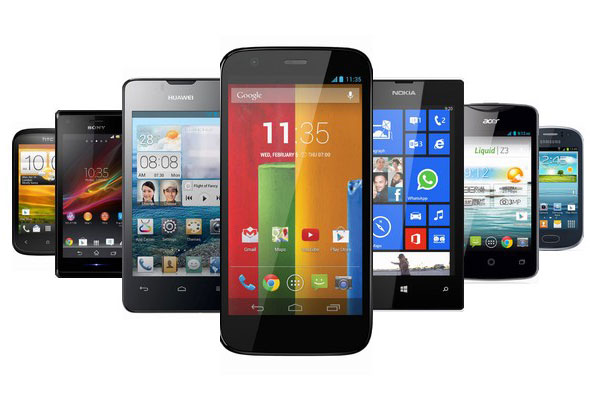
Or for instance what if Google introduces a smartphone App that monitors social distancing. It will know your whereabouts down to 2 meters -7/7.

Or Governments introduce GPS to track the movements of citizens without their consent to prohibit gatherings of other 250 people. But what if the governor used that measure to stop a rival’s political rally?

But more importantly, if consumers don’t trust a smartphone-based tracking system, they can simply leave their phones at home. That would render the technology useless.

Even if voluntary it might provide people with a false sense of security if they don’t get an alert. Those who have opted out of tracking might be walking around with COVID-19 and infecting others without ever being picked up with the system.

Just think about it.

The potential in using new technology for public health surveillance to get ahead of an infectious disease outbreak must be tempting, so-called contact tracing,

There is a real danger that we could end up creating a society of untouchables. (The former name for any member of a wide range of low-caste Hindu groups and any person outside the caste system.)

Moreover, unless public health officials are involved, there’s potential to “game” the system by falsely claiming a person has the virus when they haven’t tested positive for it. That could lead to other harms, like a business intentionally undermining a rival or a political party suppressing participation.

A terror attack and a pandemic are vastly different, but both present opportunities for governments and the private sector to take on new powers in the name of keeping citizens safe.

The September 11th terror attacks led to the Patriot Act, in the USA, which gave the federal government vast new investigative powers that it claimed were necessary for the fight against terrorism.

During the HIV crises in many cases, public health officials would notify an HIV patient’s past sexual partners that they may have been in contact with somebody who had the disease, but never identified or named them.

One of the big issues at the time was the idea of doctors reporting the names of HIV patients to the states. Some states refused to accept name-based reporting so for years because they feared that it would discourage people from getting tested.

Public health and privacy rights do not need to be in opposition.

Good public health must respect civil liberties, and anything that advances human rights and civil liberties would advance public health.

So we are going to be faced with the rights of Individual freedoms against collectivism. 

The behaviors that define individualism may also enhance the likelihood of pathogen transmission, and thus may be functionally maladaptive under conditions in which pathogens are highly prevalent.

By contrast, the behaviors that define collectivism may function in the service of anti-pathogen defense, and thus be especially adaptive under conditions of high pathogen prevalence.

The question is which one will we choose or will we have a choice when all this is over.

An open-air prison-like the Gaza Strip or Equality among all. 

All human comments appreciated. All like clicks and abuse chucked in the bin.
← Back

Thank you for your response. ✨


.


.


Share this:

  • Share on WhatsApp (Opens in new window) WhatsApp
  • More
  • Share on Pocket (Opens in new window) Pocket
  • Share on Mastodon (Opens in new window) Mastodon

THE BEADY EYE SAY’S. WE CANNOT AVOID IT. CHANGE IS THE LAW OF LIFE.

18 Saturday Apr 2020

Posted by bobdillon33@gmail.com in 2020: The year we need to change., CORONA VIRUS., COVID-19

≈ Comments Off on THE BEADY EYE SAY’S. WE CANNOT AVOID IT. CHANGE IS THE LAW OF LIFE.

Tags

A 0.05% WORLD AID COMMISSIONS, Coronavirus (COVID-19), Post-Covid-19, The Future of Mankind, Visions of the future., World aid commission


(Ten-minute red)

John F Kennedy said ” Those who look only to the past, or the present are certain to miss the future”

We are surrounded by change and it is the one thing that has the most dramatic impact on our lives.

There is no avoiding change it will find you, challenge you and force you to reconsider how to live your life.

Our lives now with the coronavirus are reactionary rather than an activator of change.

It has forced us to step out of our comfort zones and see the realities that need to change. There is no escaping the fact that change is a disruptor but it is the power of our choice that enables us to activate positive changes in our lives.

“Progress is impossible without change and those who cannot change their minds cannot change anything.” George Bernard Shaw.

We all know what we don’t want…

We have been talking about it for years and our consensus is that climate change is happening and the risks are real. There is overwhelming evidence that both current impacts with significant costs and extraordinary future risks to society and natural systems.

That the reality of climate change means that there are climate change impacts we can expect, but we also must consider what might happen, especially the small, but real, chance that we may face abrupt changes with massively disruptive impacts. Moreover, while the public is becoming aware that climate change is increasing the likelihood of certain local disasters, many people do not yet understand that there is a small, but real chance of abrupt, unpredictable and potentially irreversible changes with highly damaging impacts on people around the world.

97% of climate experts have concluded that human-caused climate change is happening.

The sooner we respond, the better off we will be.

We don’t need to debate if the climate is changing anymore. By making informed choices now, we can reduce risks for future generations and ourselves, and help communities adapt to climate change.

Climate change puts the well-being of people of all nations at risk.

The problem is that the world is now and for the foreseeable future will have its attention on the effects of COVID-19 for some time.

When the Pandemic is over, or under control what needs to change in the world.

Think about it for a minute.

There are so many changes that stick out like sore thumb it is impossible to believe that we have tolerated there existence.

So let’s fantasize.

There is such inequality, pain and suffering in the world we could start by ensuring that everyone on the planet should have access to electricity, fresh air, drinking water, green technologies, free education, and decent housing.

The world today is definitely not a paradise. Hunger, abuse, poverty, pollution, and violence are all too common.

Granted, the world never has been, and probably never will be perfect, but that means there’s lots of room for improvement!

If we are going to move forward we need to collaborate and push for policies that complement both sides of the political spectrum. We need to put yourself into another person’s headspace.

We don’t have to take on everything at once, in fact, it’s better if we don’t.

If there is one lesson we can and should learn from the present crises it is this:

When the experts tell us the sky is going to fall if we don’t take action we had better take action or the sky really may fall.

We may be able to prevent the emergence of some new pathogens, but for most, we can only prepare.

We can, however, prevent the looming climate disaster.

We can ensure that emerging Technologies serve us all and not just profit.

We can reform our world organizations.

We can reinvent Nato ( See previous posts)

We can fund the United Nations and the WHO.

We can establish World aid silos fully equipped to handle disasters.

We can with our buying power have a sustainable economy.

So the question is why have we not?

Because no one wants to pay for it.

In fact, no one country or the economy or individual has to.

It can be achieved by making a profit for profit sake pay.  By applying a 0.05% World aid commission on activities that are profit-seeking like Algorithms, High-Frequency Trading, Currency Transactions, Sovereign Wealth Fund accusations, Lottos, Gambling, etc. ( see previous posts)

We can become educated on the issues and what’s being done to address it. Especially now with social media, your message can go viral on the internet, spreading the word even faster. Bring your true, authentic self to every situation.

The crucial first step is getting the forces for change off the ground. Having a roadmap to success is crucial for establishing a sense of trust that the change is possible.

Maybe COVID-19 might save the world it has created a sense of urgency.

← Back

Thank you for your response. ✨


Share this:

  • Share on WhatsApp (Opens in new window) WhatsApp
  • More
  • Share on Pocket (Opens in new window) Pocket
  • Share on Mastodon (Opens in new window) Mastodon

THE BEADY EYE ASKS: IS IT NOT SOMEWHAT PATHETIC. THAT A MAN CALLED TOM AT ONE HUNDRED YEARS OF AGE HAS TO RAISE FUNDS FOR THE NHS.

16 Thursday Apr 2020

Posted by bobdillon33@gmail.com in 2020: The year we need to change., CORONA VIRUS., COVID-19, HUMAN INTELLIGENCE, Human values., Nato, Our Common Values., Reality., Survival., Technology v Humanity, The common good., The essence of our humanity., The Future, The Obvious., The state of the World., The world to day., What Needs to change in the World, World Leaders

≈ Comments Off on THE BEADY EYE ASKS: IS IT NOT SOMEWHAT PATHETIC. THAT A MAN CALLED TOM AT ONE HUNDRED YEARS OF AGE HAS TO RAISE FUNDS FOR THE NHS.

Tags

Climate change, Future Pandemics., International solidarity., Nato, NATO future., The Future of Mankind, Visions of the future.

  (Twelve-minute read)  As much as one has to admire the initiative and courage of Tom. The generosity of the public and the power of social media in raising millions for the NHS he high lights what is wrong with a Government, that put the economy before its people’s needs. One key question to ask ourselves about the current pandemic of COVID-19 is: Why are we so unprepared? After all, this is far from the first pandemic and three to four of them were in the last six decades. Anyone with even a modicum of historical knowledge is aware of the infamous Black Death. (Between 1346 and 1353.) Even though none of us were alive then in that pandemic, Eurasia suffered between 75 and 200 million deaths, at a time when the entire global population was less than 500 million. Just over 100 years ago, the so-called Spanish flu killed some 100 million people in the closing months of the First World War and into 1919. The pandemic killed about five times the number of people killed in that war. Why humans kept making the same mistakes over and over again over a period of many centuries. Essentially, it can be blamed on our arrogance — a psychological condition that affects most of us most of the time — drove people to believe that they had nothing to learn from the past.   Today, we are smarter. We have learned more. We are more aware of the traps that lead to disaster. But we really are not. We say that we learn the lessons of history, but we do not.  Did anyone really believe that no global pandemics were ever again going to wreak havoc on human life? We now spend hundreds of millions of dollars, if not billions, on detecting space objects that might crash into the Earth, potentially causing many deaths, and maybe even leading to extinction. In the last 10 years, we have started to take this prospect very seriously. And it is good that we do. But aside from small numbers of immunologists working in different countries on different vaccines, how much effort was put into deflecting a new pandemic? Or preparing governments or people for how to cope with one? Not much, overall. We now know that a vaccine was in the works years ago, but that work on it was halted because no money was available to fund the research. Will we learn from this? The major lesson is that we will not unless we take these lessons to heart. We will have more Troys, Vietnams, Afghanistan’s and COVID-19s, unless we really, truly, smarten up. It is only a matter of time before we face a deadlier and more contagious pathogen. We also face the specter of novel and mutated pathogens that could spread and kill faster than diseases we have seen before. With the advent of genome-editing technologies, bioterrorists could artificially engineer new plagues. We can start by learning four lessons from the gaps exposed by the Ebola and Zika pandemics and now this COVID 19.  The most effective way to stop pandemics is with vaccines. Therefore the world must come together to develop preemptively vaccines for diseases predicted to cause outbreaks in the near future. What’s needed are point-of-care diagnostics that, like pregnancy tests, can be used by frontline responders or patients themselves to detect infection right away, where they live. We need to help developing countries establish health systems that can provide routine care and, when needed, coordinate with international responders to contain new outbreaks. Local health systems could be established for half the price of battling future pandemics. They would be essential for knowing when an outbreak is taking root and establishing trust. International actors are essential but cannot parachute into countries and navigate local dynamics quickly enough to contain outbreaks. Investing in our ability to prevent and contain pandemics through revitalized national and international institutions should be our shared goal. We need stronger global coordination. The responsibility for controlling pandemics is fragmented, spread across too many players with no unifying authority.  So Mr. Tom you have inspired me to suggest this. If we are going to keep NATO that has reinvented itself and built a new headquarter at a cost of  €1billion let it be the global coordinator to fight future Pandemics.  What better enemy could it have. Pandemics are an existential threat on par with climate change and nuclear conflict. We are at a critical crossroads, where we must either take the steps needed to prepare for this threat or become even more vulnerable. It is only a matter of time before we are hit by a deadlier, more contagious pandemic. Will we be ready? WHO, which is taking a battering from prevailing political headwinds in the United States, should continue to anchor global action.  All human comments appreciated. All like clicks and abuse chucked in the bin

← Back

Thank you for your response. ✨


Share this:

  • Share on WhatsApp (Opens in new window) WhatsApp
  • More
  • Share on Pocket (Opens in new window) Pocket
  • Share on Mastodon (Opens in new window) Mastodon

THE BEADY EYE ASK’S . WHAT ARE WE GOING TO KISS GOODBYE BECAUSE OF COVID- 19.

15 Wednesday Apr 2020

Posted by bobdillon33@gmail.com in 2020: The year we need to change., CORONA VIRUS., COVID-19, Disconnection., Honesty., HUMAN INTELLIGENCE, Human values., Humanity., Inequality, Life., Modern day life., Natural World Disasters, Our Common Values., Post-Covid-19, Reality., Survival., Sustaniability, Technology v Humanity, The common good., The essence of our humanity., The Obvious., The state of the World., The world to day., Truth, Unanswered Questions., VALUES, WHAT IS TRUTH, What Needs to change in the World, Where's the Global Outrage., World Organisations., World Politics

≈ Comments Off on THE BEADY EYE ASK’S . WHAT ARE WE GOING TO KISS GOODBYE BECAUSE OF COVID- 19.

Tags

Capitalism and Greed, Capitalism vs. the Climate., Climate change, Coronavirus (COVID-19), Post-Covid-19, The Future of Mankind, United Nations, Visions of the future., World aid commission


(Twenty-minute read)

Apart from the tragic loss of loved ones what if this epidemic is a turning point, and after it, the world is never the same?

Will the world come out of this crisis better than it was before?Ball, Earth, Glass, Globe, World

It all depends on what we do and how we behave right now.

Even in the height of the darkest of times, people are already imagining what the future world would look like.

It is, in Metzl’s words, “a convergence of the worlds of science and biology and the world of geopolitics.” And as the coronavirus crisis continues to play out, its geopolitical implications are going to become much greater.”

The old world is dying and the new world struggles to be born.

Post-WWII planners envisioned a world that shared sovereignty and curbed nationalism. But we’re now in a period of dramatic re-nationalization of the world, with the populist, extremist, or authoritarian leaders in power from Brazil to the US to China, and many countries in between.

The one thing that sticks out like a sore thumb is that we don’t have effective structures in place to address global crises—and not just coronavirus. Think of climate change, protecting the oceans, preparing for a future of automation and AI; no country can independently take on or solve these massive challenges.

Crucially, we’re more connected to each other than we’ve ever been. It used to take thousands of years for knowledge to transfer; now it can fly across the world over the internet in minutes.

The tools we’re bringing to this fight are greater than anything our ancestors could have possibly imagined.

Unforuntitly this is bottom-up energy and connectivity, as we witness the abysmal failure of our top-down institutions.

We don’t know the way out or how long it’s going to last. In the meantime, a lot of unexpected things will happen.

There will be an economic slowdown or recession, and there will be issues with our healthcare systems—and these are just the predictable things.

We may see fragile states collapsing and even the EU disintegrating.

We’re going to come out of this into a different world.

We don’t know exactly what that world will look like, but we can imagine some of it. Take the trends that were already in motion and hit the fast-forward button. Virtualization of events, activities, and interactions. Automation of processes and services. Political and economic decentralization.

In hindsight, it’s easy to picture a far better response and outcome to the COVID-19 outbreak. What if, three months ago, there’d been a global surveillance system in place, and at the first signs of the outbreak, an international emergency team led by the World Health Organization had immediately gone to Wuhan?“

We need to be articulating our long-term vision now so that we can evaluate everything against that standard.

There’s not a total lack of a positive long-term vision now: the UN sustainable development goals, for example, call for gender equality, no poverty, no hunger, decent work, climate action, and justice (among other goals) around the world.

The problem is that we don’t have institutions meaningful enough or strong enough to affect the realization of these principles; there’s a mismatch between the global nature of the problems we’re facing and the structure of national politics.

We couldn’t have done this in the industrial age or even the nuclear age. There’s never been this kind of motivation combined with this capacity around the world.

This time will be different; to succeed, the new global plan will need to have a meaningful drive from the bottom up. We need to recognize a new locus of power. And it’s us. Nobody is going to solve this for us. This is our moment to really come together.

We have to turn the United Nations from being a gossip, veto voting, begging shop to an Institution fully funded. ( See the previous post on a World Aid commission of 0.05%. So it can establish around the world Aid Silo fully equipped.)

What better way to help the damaged world economies and to prepare for the next pandemic and climate change.

There is no need for further Climate change deliberations.

If we don’t want to be haunted by COVID-19 saying one thing and doing another is over


All human comments appreciated. All like clicks and abuse chucked in the bin.

← Back

Thank you for your response. ✨


Share this:

  • Share on WhatsApp (Opens in new window) WhatsApp
  • More
  • Share on Pocket (Opens in new window) Pocket
  • Share on Mastodon (Opens in new window) Mastodon

THE BEADY EYE ASK’S: NOW THAT YOU ARE IN LOCK DOWN WHAT DO YOU THINK MAKE LIFE WORTH LIVING?

12 Sunday Apr 2020

Posted by bobdillon33@gmail.com in 2020: The year we need to change., CORONA VIRUS., COVID-19, Digital age., Digital Friendship., Disconnection., Human values., Humanity., Life., Lock Down., Modern day life., Our Common Values., Post-Covid-19, Reality., Religion., Religious Beliefs., Technology v Humanity, The common good., The essence of our humanity., The Future, The Obvious., The state of the World., The world to day., Unanswered Questions., VALUES, WHAT IS TRUTH, What Needs to change in the World

≈ Comments Off on THE BEADY EYE ASK’S: NOW THAT YOU ARE IN LOCK DOWN WHAT DO YOU THINK MAKE LIFE WORTH LIVING?

Tags

Modern day life., The Meaning of Life., What Needs to change in the World, What the meaning of life means.


(Five-minute read)

I know it’s a heavy question, but now perhaps it is one of the most important questions we all have to answer in the future. 

It can be tough to notice all the amazing things that life has to offer.

Can we be satisfied with the successful pursuit of love, work, and play?

A fulfilling life can be elusive, as there aren’t any concrete factors that truly determine whether or not a person has truly found happiness. Satisfaction often yields happiness, but even the pursuit is enough to give life meaning.

For me, it is sharing that gives life meaning. 

Active listening by taking your friend’s feelings into account when making a decision and phasing out people who introduce stress or negative feelings out of your life.

The successes of your friends are important and worthy of celebrating.

Get to know them.

Find value in what you do. I.E. finding a job that aligns with your personal passions. It’s important to find a line of work that offers the amount of freedom you feel is necessary and appropriate. Accomplishing something of value.

Obsessing over past failures can’t change what happened. The opinions of others carry only as much weight as you allow them to.

Giving back. Find a cause you are passionate about and donate to it, volunteer your time, or offer your support in some way.

Remember that your strengths are a big part of what makes you great.

Forgiving can be among the hardest things to master, as often it’s the things that hurt the most that are most in need of forgiveness.

Remember, life is always worth living and there are people out there that can help.

It’s about the relationships we create, develop, support and maintain with people, colleagues, friends, and members of our family. Every person we meet adds invaluable experience to our life. Even the most complicated relationships we find ourselves in teaching us something worthwhile.

The answer rests in the ability to create, to dream and to strive to turn those dreams into reality. It’s all about big and small achievements when we prove ourselves being able to push the limits away. It’s about discovering the depths of your unlimited potential. 

By accepting what is going on and what happened, we release ourselves from oppressive judgments and wishes for things to pan out differently.

Enjoy all the little things, and with the time you will discover their profound meaning and that they weren’t little after all.

One thing that makes life more fulfilling and worth living are really connecting with the world around us. Nature. 

Religious faith may be reassuring, but science cannot objectively tell someone whether they should adhere to Christianity, Islam, Hinduism, or some other religion. It cannot even tell an individual what version of Christianity (Catholic, Baptist, Morman, etc.) or Islam (Shia or Sunni) they ought to adopt. Hence, religion and vague spiritual ideas—such as “everything happens for a reason”—can not provide an evidence-supported basis for living.

But most people, fortunately, can find lots of reasons to value their lives. 

Time does not stand still for anybody so perhaps Boris Johnston Priminster after his Coronavirus experience now realizes that sharing is what makes life go around and not get Brexit done.

One thing that makes life more fulfilling and worth living are really connecting with the world around us. If you consider your most precious memories they are probably with other people when you were doing something beyond your personal satisfaction.

Living a full, meaningful and thriving life comes down to being engaged in the world around us, not in virtual reality.

All human comments appreciated. All lie clicks and abuse chucked in the bin.
← Back

Thank you for your response. ✨


Share this:

  • Share on WhatsApp (Opens in new window) WhatsApp
  • More
  • Share on Pocket (Opens in new window) Pocket
  • Share on Mastodon (Opens in new window) Mastodon
← Older posts
Newer posts →

All comments and contributions much appreciated

  • THE BEADY EYE SAYS. ANY OTHER PERSON WOULD BE ARRESTED. February 1, 2026
  • THE BEADY EYE SAYS FROM THE RESURRECTION OF JESUS TO THE PRESENT DAY THE HISTORICAL RECORD OF OUR WORLD IS MORE THAN HORRIBLE. February 1, 2026
  • THE BEADY EYE SAYS: THE WORLD WE LIVE IN IS BECOMING MORE AND MORE UNKNOWN. January 31, 2026
  • THE BEADY ASK. IN THIS WORLD OF FRICTIONS IS THERE ANY DECENCY LEFT ? January 29, 2026
  • THE BEADY EYE ASKS ARE WE WITH ARTIFICIAL INTELLIGENCE LOOSING THE MEANING OF OUR LIVES? January 27, 2026

Archives

  • February 2026
  • January 2026
  • December 2025
  • November 2025
  • October 2025
  • September 2025
  • August 2025
  • July 2025
  • June 2025
  • May 2025
  • February 2025
  • January 2025
  • December 2024
  • November 2024
  • October 2024
  • September 2024
  • August 2024
  • July 2024
  • June 2024
  • May 2024
  • April 2024
  • March 2024
  • February 2024
  • January 2024
  • December 2023
  • October 2023
  • September 2023
  • August 2023
  • July 2023
  • June 2023
  • May 2023
  • April 2023
  • March 2023
  • February 2023
  • January 2023
  • December 2022
  • November 2022
  • October 2022
  • September 2022
  • August 2022
  • July 2022
  • June 2022
  • May 2022
  • April 2022
  • March 2022
  • February 2022
  • January 2022
  • December 2021
  • November 2021
  • October 2021
  • September 2021
  • August 2021
  • July 2021
  • June 2021
  • May 2021
  • April 2021
  • March 2021
  • February 2021
  • January 2021
  • December 2020
  • November 2020
  • October 2020
  • September 2020
  • August 2020
  • July 2020
  • June 2020
  • May 2020
  • April 2020
  • March 2020
  • February 2020
  • January 2020
  • December 2019
  • November 2019
  • October 2019
  • September 2019
  • August 2019
  • July 2019
  • June 2019
  • May 2019
  • April 2019
  • March 2019
  • February 2019
  • January 2019
  • December 2018
  • November 2018
  • October 2018
  • September 2018
  • August 2018
  • July 2018
  • June 2018
  • May 2018
  • April 2018
  • March 2018
  • February 2018
  • January 2018
  • December 2017
  • November 2017
  • October 2017
  • September 2017
  • August 2017
  • July 2017
  • June 2017
  • May 2017
  • April 2017
  • March 2017
  • February 2017
  • January 2017
  • December 2016
  • November 2016
  • October 2016
  • September 2016
  • August 2016
  • July 2016
  • June 2016
  • May 2016
  • April 2016
  • March 2016
  • February 2016
  • January 2016
  • December 2015
  • November 2015
  • October 2015
  • September 2015
  • August 2015
  • July 2015
  • June 2015
  • May 2015
  • April 2015
  • March 2015
  • February 2015
  • January 2015
  • December 2014
  • November 2014
  • October 2014
  • September 2014
  • August 2014
  • July 2014
  • June 2014
  • May 2014
  • April 2014
  • March 2014
  • February 2014
  • January 2014
  • December 2013
  • November 2013
  • October 2013

Talk to me.

Jason Lawrence's avatarJason Lawrence on THE BEADY EYE ASK’S: WIT…
benmadigan's avatarbenmadigan on THE BEADY EYE ASK’S: WHA…
bobdillon33@gmail.com's avatarbobdillon33@gmail.co… on THE BEADY EYE SAYS: WELCOME TO…
Ernest Harben's avatarOG on THE BEADY EYE SAYS: WELCOME TO…
benmadigan's avatarbenmadigan on THE BEADY EYE SAY’S. ONC…

7/7

Moulin de Labarde 46300
Gourdon Lot France
0565416842
Before 6pm.

My Blog; THE BEADY EYE.

My Blog; THE BEADY EYE.
bobdillon33@gmail.com

bobdillon33@gmail.com

Free Thinker.

View Full Profile →

Follow bobdillon33blog on WordPress.com

Blog Stats

  • 95,089 hits

Blogs I Follow

  • unnecessary news from earth
  • The Invictus Soul
  • WordPress.com News
  • WestDeltaGirl's Blog
  • The PPJ Gazette
Follow bobdillon33blog on WordPress.com

The Beady Eye.

The Beady Eye.
Follow bobdillon33blog on WordPress.com

Blog at WordPress.com.

unnecessary news from earth

WITH MIGO

The Invictus Soul

The only thing worse than being 'blind' is having a Sight but no Vision

WordPress.com News

The latest news on WordPress.com and the WordPress community.

WestDeltaGirl's Blog

Sharing vegetarian and vegan recipes and food ideas

The PPJ Gazette

PPJ Gazette copyright ©

Privacy & Cookies: This site uses cookies. By continuing to use this website, you agree to their use.
To find out more, including how to control cookies, see here: Cookie Policy
  • Subscribe Subscribed
    • bobdillon33blog
    • Join 222 other subscribers
    • Already have a WordPress.com account? Log in now.
    • bobdillon33blog
    • Subscribe Subscribed
    • Sign up
    • Log in
    • Report this content
    • View site in Reader
    • Manage subscriptions
    • Collapse this bar