• About
  • THE BEADY EYE SAY’S : THE EUROPEAN UNION SHOULD THANK ENGLAND FOR ITS IN OR OUT REFERENDUM.

bobdillon33blog

~ Free Thinker.

bobdillon33blog

Tag Archives: THE UNITED NATIONS

THE BEADY EYE SAYS. ITS TIME FOR THE UNITED NATIONS TO STAND ON ITS OWN FEET.

26 Tuesday Sep 2017

Posted by bobdillon33@gmail.com in United Nations

≈ Comments Off on THE BEADY EYE SAYS. ITS TIME FOR THE UNITED NATIONS TO STAND ON ITS OWN FEET.

Tags

The Future of Mankind, THE UNITED NATIONS

( A FIFTEEN MINUTE READ)

You only have to look at the state of the World that we all live on to know what is coming needs to be addressed.

For more than 70 years, world leaders have gathered before the United Nations General Assembly to speak and to be heard.

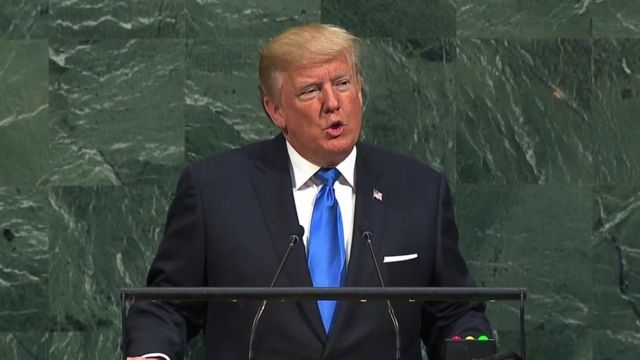
Recent remarks by President Trump and Mrs T May during the 72nd Session of the United Nations General Assembly showed that the General Assembly is in need of revitalization in order to stop rhetoric that clearly breached the core principle of the United Nations aspirations, Peace in the world.

Résultat de recherche d'images pour "how is the current united nations president"

The United Nations Emblem

The design is “a map of the world representing an azimuthal equidistant projection centred on the North Pole, inscribed in a wreath consisting of crossed conventionalized branches of the olive tree, in gold on a field of smoke-blue with all water areas in white. The projection of the map extends to 60 degrees south latitude, and includes five concentric circles”

The “UN” stands for the united nations. Nations meaning just that…all of the nations on our GLOBE.  The olive branches signify peace.

It is easy to call for reforms and to threaten withholding funds or for that matter to stir up what is already a threat to world peace by making promises of total nuclear destruction.

On the other hand it is right to call on the Organisation to reform so that it can addresses the world it now exist in.

So is the UN still a force for global good, or is it another of those world organisations that is out of date.

If one looks beyond the organisation’s flaws and points to the importance of the UN on the global stage there is no doubt providing aid to the more than 55 million refugees in 123 countries is good.

The UN is a large employer but it can only operate if it receives sufficient funds.

To turn it from a begging organisation to an organisation with clout to handle the worlds coming problems due to Climate Change, Artificial Intelligence the UN needs a source of unlimited funding, so that is not attached , or reliant on any donator Country. (See previous posts)

To have any chance of being relevant in a world that is changing it must remove the United Nations Security Council “power of veto” wielded solely by the five permanent members (China, France, Russia, United Kingdom, and United States), that enabling them to prevent the adoption of any “substantive” resolution.

At this point in the post it is worth mentioning how we got the UN in the first place.

After two major wars, it was relatively easy to get smaller nations and middle powers to give up a level of sovereignty while providing little to no recourse in return. At the same time, a carrot needed to be used to lure the major world powers to the table. In an effort to give these countries a reason to come to the table — and, in effect, subjecting themselves to the will of the other major powers — they were given the power to stop substantive resolutions that might impinge on their interests from passing.

It is important to remember that the United Nations is an institution that largely owed itself to American foreign-policy thought and, as such, it was understandably influenced a great deal by how America perceived the world to be (and, just as importantly, how America perceived the world would be).

This was centered around the idea that the post-war system was going to be predicated on the idea that each of the four major players of the Allied powers– the United States, the Soviet Union, the British Empire, and the Republic of China– were going to be responsible for looking after their respective sections of the world and trying to prevent smaller conflicts from growing into larger conflicts.

In order to entice countries to join everyone agreed that decisions would require unanimity. This was, as one might guess, an astoundingly stupid decision since it meant that anything of substance was really hard to pass and remains so to the present day.

With or without the veto power the Security Council would continue to be the ultimate authority in the UN.

If somehow the veto power were taken away I personally doubt that any state would leave especially if the organisation became self financing.

If the US left, suddenly all their diplomatic power in the UN would be diminished and they run the risk of it being dominated by China or Russia.

I would say that the UN’s existence has become far more integrated and involved than the League of Nations and even with the US leaving would continue to be so important that it would not be the end of it.

It has become too useful and with almost 200 members interacting not just on security issues but environment, social, economic, refugees, labour, health, trade etc.. it has become far too important not to reform. 

The UN already does pass lots of resolutions that states such as China and the US ignore anyways, and removing the veto power would hardly change that.

Bilateral treaties and multilateral between states are not upheld because of the UN or because of the veto power, but because of the principle of pacta sunt servanda (agreements must be kept). Multilateral treaties as well as UN resolutions have vast exception mechanisms in order to get states to agree to them, and getting rid of the veto power again would not change that.

It is difficult to assess or speculate towards any consequences of removing the veto power as the process of how it happens needs to be known. If done in agreement the UN would probably continue to live on, most likely becoming more focused on negotiations and dealings with states on the Security Council to ensure that whatever proposed resolutions are passed/blocked.

Many different scenarios could be created that could change the outcome, but one thing is certain.  If the UN wants to live up to its Legitimacy it must be able to override concerns of Sovereignty which will come to the forefront in the next hundred years or so.

This can only be achieved when it becomes an Organisation that truly representative the people’s of the world, is totally transparent and Self financing.

Here is what it looks like to-day.

At the moment it’s better for the U.N. if the permanent members keep their veto power and continue funding the U.N. (particularly, the U.S., since it supplies approximately 22% of the U.N. budget at the current time).

(In 2000, the UN employed 33,049 people. In December 2016, the latest figures provided by the UN, 76,234 people were employed by the organisation – that’s more than double. Those figures don’t include people working on the UN’s peacekeeping operations.

The largest part of the total is the secretariat – the UN’s bureaucracy. That’s more than trebled in size since 2000 – from 13,164 to 39,651. But recently it’s been getting smaller. The secretariat has shrunk every year since 2010.

UNICEF, which provides aid to children, employed 13,093 people in December and has seen staff numbers rise by more than 75% since 2000.

Numbers in the office of the UN High Commissioner for Refugees have grown by nearly 160% from 4,142 to 10,763.

The biggest percentage change was the International Court of Justice – it has nearly four times as many staff as it did in 2000, although it still only employs 107 people.

Not everyone working for the UN will be a staff member.

For example, Unops, the UN’s project management service, employs fewer staff than it did in 2000. But it hires people for particular jobs on consultancy contracts – and those people aren’t counted.

In total, around 4,500 people are currently working for Unops – but only 843 of those are staff.)

The regular budget is agreed for two-year blocks – for 2000-01, it was a little over $2.5bn (£1.9bn at today’s rates). For 2016-17, it’s just over $5.4bn – a rise of roughly 119%, not adjusted for inflation. Not quite 140%, but still a significant increase in cash terms.

The regular budget isn’t the whole story, though. It doesn’t include the cost of peacekeeping operations. A sum of $2.7bn was set aside for those in the year 2000-01, compared with $6.8bn for 2017-18 – an increase of 148% in cash terms.

There are other costs at the UN, which fall outside both of those budgets.

There’s the cost of running the UN’s special tribunals when they’re in session – most recently examining alleged war crimes and genocide in Rwanda and the former Yugoslavia.

And the UN spent an extra $1.9bn outside the regular budget on refurbishing its headquarters between 2002 and 2013.

The World is bigger than 5. nuclear stockpiles.  

Most current world problems have their roots in inequality caused by greed.Résultat de recherche d'images pour "pictures of famines"

Take Yemen for example it is in the grip of the world’s worst humanitarian crisis.

What can be done to bring an end to the war in Yemen? And is the international community ignoring what is happening on the ground?

Nothing can be achieved, unless the United Nations taps into Greed to fund itself. 

Apart from current wars it is more than shameful that in the 21st century with all our technology, globalization, and so-called International community we have not one, not two, nor three, but four famines. That we continue to destroy the planet for shot term gain to the point that there will be no need for nations never mind United Nations.     Résultat de recherche d'images pour "pictures of famines"

It must pass a people’s resolution to place a World Aid Commission of 0.05% (See previous posts)

All comments or sharing of this post appreciated. All like clicks chucked in the bin.

← Back

Thank you for your response. ✨


http://players.brightcove.net/665003303001/SJg0bzqkZ_default/index.html?videoId=5579866419001&autoplay

Share this:

  • Share on WhatsApp (Opens in new window) WhatsApp
  • More
  • Share on Pocket (Opens in new window) Pocket
  • Share on Mastodon (Opens in new window) Mastodon

THE BEADY EYE ASKS: WHY DOES THE UNITED NATIONS TOLERATE SPEECHES THAT ARE IN BREECH OF ITS CHARTER.

22 Friday Sep 2017

Posted by bobdillon33@gmail.com in Artificial Intelligence., Climate Change., HUMAN INTELLIGENCE, Nuclear power., The Future, The world to day., Unanswered Questions., United Nations, What Needs to change in the World, Where's the Global Outrage., World Leaders, World Organisations., World Politics

≈ Comments Off on THE BEADY EYE ASKS: WHY DOES THE UNITED NATIONS TOLERATE SPEECHES THAT ARE IN BREECH OF ITS CHARTER.

Tags

Artificial Intelligence., Climate change, Greed, Inequility, The Future of Mankind, THE UNITED NATIONS, United Nations, Visions of the future.


 HomeUNITED NATIONS CHARTER.

Chapter I

                            PURPOSES AND PRINCIPLES

  • To maintain international peace and security, and to that end: to take effective collective measures for the prevention and removal of threats to the peace, and for the suppression of acts of aggression or other breaches of the peace, and to bring about by peaceful means, and in conformity with the principles of justice and international law, adjustment or settlement of international disputes or situations which might lead to a breach of the peace;
  • To develop friendly relations among nations based on respect for the principle of equal rights and self-determination of peoples, and to take other appropriate measures to strengthen universal peace;
  • To achieve international co-operation in solving international problems of an economic, social, cultural, or humanitarian character, and in promoting and encouraging respect for human rights and for fundamental freedoms for all without distinction as to race, sex, language, or religion; and
  • To be a center for harmonizing the actions of nations in the attainment of these common ends.

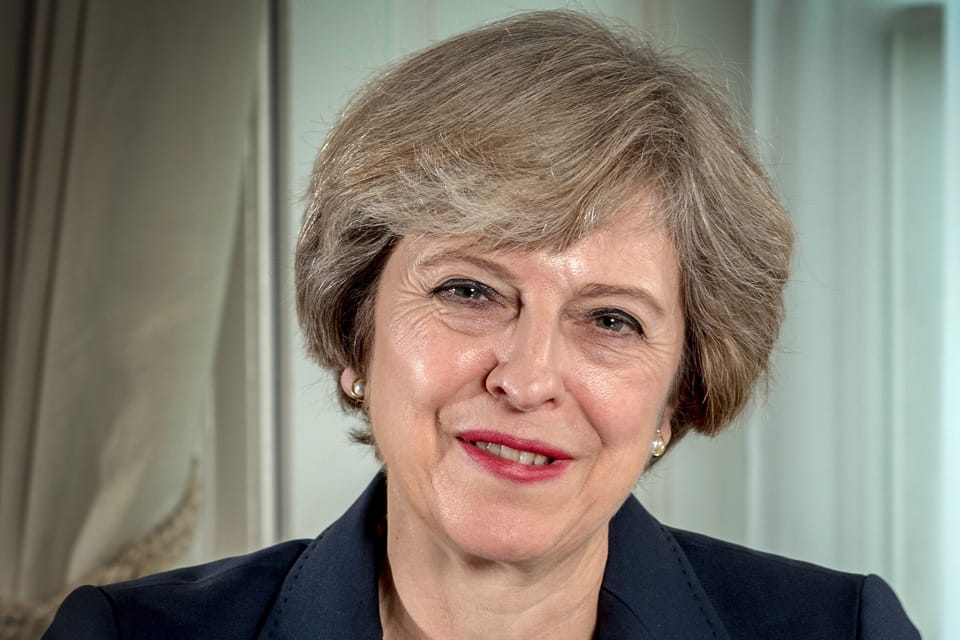
The Rt Hon Theresa May MPRésultat de recherche d'images pour "Donald trump recent speech at the un"

A charter represents a document that describes a project, its rationale, its goals and its participants. The purpose of a charter aims at aligning the expectations of all the contributors so that their energy focuses on the project’s priorities.

The Charter is not to be confused with The Universal Declaration of Human rights adopted after World War 11. It is perhaps the closest thing we have to a global Constitution- categorically states that the right to life is humanity’s fundamental value. Death is a crime.

It would appear that from the speeches given by either of the above that they DO NOT fully comprehended the above charter.

In his Sovereignty – centric speech Mr Trump threatened to totally destroy North Korea, called Iran a corrupt dictatorship whose main export is violence.

While Mrs May in her speech threatened withdrawal of funds.

This is not the first time not will it be the last that a World leader has used the UN to criticize other nations. Mr Bush with the axis of evil. Mr Khrushchev trumping the table and calling Filipino some obnoxious name in Russian.

Both Mr T and Mrs M appear to think that the yard stick to measure a nation’s success is GDP. This kind of thinking is driving humankind to make happiness a second goal for the twenty-first century which is highly unlikely unless inequality, war, and climate change disappear.

Surely the UN is not the platform for sovereign selfish nations to be expressing treats to other nations. Stirring up hornets nest is not what the world needs.

Here a few examples from each of their recent addresses to the UN.

MR D Trump first:

“The United States has great strength and patience, but if it is forced to defend itself or its allies, we will have no choice but to totally destroy North Korea. “Rocket Man” is on a suicide mission for himself and for his regime.”

” It has just been announced that we will be spending almost $700 billion on our military and defense.”

Then a raft of contradictions:

” In America, we do not seek to impose our way of life on anyone, but rather to let it shine as an example for everyone to watch.”

” We are celebrating the 230th anniversary of our beloved Constitution, the oldest constitution still in use in the world today. This timeless document has been the foundation of peace, prosperity and freedom for the Americans, and for countless millions around the globe whose own countries have found inspiration in its respect for human nature, human dignity and the rule of law.”

“But we can no longer be taken advantage of, or enter into a one-sided deal where the United States gets nothing in return.”

“As long as I hold this office, I will defend America’s interests above all else.”

“The United States is one out of 193 countries in the United Nations, and yet we pay 22 percent of the entire budget and more. In fact, we pay far more than anybody realizes.”

“The United States of America has been among the greatest forces for good in the history of the world and the greatest defenders of sovereignty, security and prosperity for all. Now we are calling for a great reawakening of nations, for the revival of their spirits, their pride, their people and their patriotism.”

“Our hope is a word and (sic) world of proud, independent nations that embrace their duties, seek friendship, respect others and make common cause in the greatest shared interest of all, a future of dignity and peace for the people of this wonderful Earth.”

“This institution was founded in the aftermath of two world wars to help shape this better future. It was based on the vision that diverse nations could cooperate to protect their sovereignty, preserve their security and promote their prosperity.”

The success of the United Nations depends upon the independent strength of its members.

“We do expect all nations to uphold these two core sovereign duties: to respect the interests of their own people and the rights of every other sovereign nation.”

“Today, if we do not invest ourselves, our hearts and our minds in our nations – if we will not build strong families, safe communities and healthy societies for ourselves – no one can do it for us.”

“This is the beautiful vision of this institution, and this is the foundation for cooperation and success. Strong, sovereign nations let diverse countries with different values, different cultures and different dreams not just coexist, but work side by side on the basis of mutual respect. Strong, sovereign nations let their people take ownership of the future and control their own destiny, and strong, sovereign nations allow individuals to flourish in the fullness of the life intended by God.”

We want harmony and friendship, not conflict and strife. We are guided by outcomes, not ideology. We have a policy of principled realism rooted in shared goals, interests and values.

And just as the founders of this body intended, we must work together and confront together those who threaten us with chaos, turmoil and terror.

“We will fight together, sacrifice together and stand together for peace, for freedom, for justice, for family, for humanity and for the almighty God who made us all.”

“Are we still patriots? Do we love our nations enough to protect their sovereignty and to take ownership of their futures? Do we revere them enough to defend their interests, preserve their cultures and ensure a peaceful world for their citizens?”

The UN relies on the independent strength of its members.

Theresa May:

“We face challenges that go right to the heart of who we are as nations.”

“I believe that the only way for us to respond to this vast array of challenges is to come together and defend the international order that we have worked so hard to create and the values by which we stand. For it is the fundamental values that we share, values of fairness, justice and human rights, that have created the common cause between nations to act together in our shared interest and form the multilateral system. And it is this rules-based system which we have developed, including the institutions.”

This statement in the light of Brixit is total hogwash and on we go.

“Indeed, the defining purpose of the UN Charter is to maintain international peace and security, to develop friendly relations among nations, to achieve international cooperation in solving problems of an economic, social, cultural or humanitarian character; and to be a center for harmonizing the actions of nations in the attainment of those common ends.”

“An outward-looking global Britain and the second biggest funder of the UN the UK will remain committed to spending 0.7% of GNI on development and humanitarian support. And that is why we will remain generous in our funding but set aside 30% to be paid only to those parts of the UN that achieve sufficient results.”

It is true to say that the UN needs reform, but it can only become relevant if it is financed to tackle world problems. ( See previous posts)

Both Speeches ignore Climate Change and the need to address inequality that is the spawning bed of all terrorism, driven by the technology of the smart phone.

The world is changing and we don’t have to be prophets to see if we as its intelligent guardians don’t address its underling problems there will be problems that will put all our technology, all our unsustainable greed, all our power of destruction, into the shade.

All comments appreciated, all like clicks chucked in the bin.

← Back

Thank you for your response. ✨

Share this:

  • Share on WhatsApp (Opens in new window) WhatsApp
  • More
  • Share on Pocket (Opens in new window) Pocket
  • Share on Mastodon (Opens in new window) Mastodon

THE BEADY EYE ASKS: IS IT TIME WE DEMANDED THAT ALL OUR LEADERS ARE GIVEN A MANDATERY SIDEKICK IN THE FORM OF A ARTIFICAL INTELLIGENCE COMPUTER ROBOT.

09 Sunday Jul 2017

Posted by bobdillon33@gmail.com in Artificial Intelligence.

≈ Comments Off on THE BEADY EYE ASKS: IS IT TIME WE DEMANDED THAT ALL OUR LEADERS ARE GIVEN A MANDATERY SIDEKICK IN THE FORM OF A ARTIFICAL INTELLIGENCE COMPUTER ROBOT.

Tags

Artificial Intelligence., Technology, The Future of Mankind, THE UNITED NATIONS, Visions of the future.

( A five-minute read)

When one looks at the present day world problems (not to mention the future direction we are all going)  I think now everyone will probably agree that the future of modern society depends greatly on computerization.

As the digital revolution wormed its way into every part of our lives, it also seeped into our language and our deep, basic theories about how things work.

Code is logical. Code is hackable. Code is destiny.

These are the central tenets (and self-fulfilling prophecies) of life in the digital age.

As software has eaten the world, to paraphrase venture capitalist Marc Andreessen, we have surrounded ourselves with machines that convert our actions, thoughts, and emotions into data—raw material for armies of code-wielding engineers to manipulate.

We have come to see life itself as something ruled by a series of instructions that can be discovered, exploited, optimized, maybe even rewritten. Companies use code to understand our most intimate ties;

In 2013, Craig Venter announced that, a decade after the decoding of the human genome, he had begun to write code that would allow him to create synthetic organisms.“It is becoming clear,” he said, “that all living cells that we know of on this planet are DNA-software-driven biological machines.” Even self-help literature insists that you can hack your own source code, reprogramming your love life, your sleep routine, and your spending habits.

But because as society becomes increasingly data-driven, computer errors will not only proliferate but have consequences that go far beyond mere speeding fines.

We’re already halfway towards a world where algorithms run nearly everything. As their power intensifies, wealth will concentrate towards them.

Human ingenuity is creating a world that the mind cannot master.

It’s one thing to recognize that technology continues to grow more complex, making the task of the experts who build and maintain our systems more complicated still, but it’s quite another to recognize that many of these systems are actually no longer completely understandable.

Machines are interacting with each other in rich ways, essentially as algorithms trading among themselves, with humans on the sidelines.

Intellectual surrender in the face of increasing complexity seems too extreme and even a bit cowardly, but what should we replace it with if we can’t understand our creations any more?

This is the dangers of being overly dependent on technology.

It might be time to get reacquainted with our limits.

What matters more now is the ability to put facts into context and deliver them with emotional impact.

Meanwhile, over in the civilian world, the game is already half over: the so-called Internet of Things will have devices that are authorized to make decisions about you, such as whether to allow you to start your car, enter your house or even log on to your computer. And since you will be the only human in the loop, to whom will you turn for help if there’s a computer error? Sorry: rephrase that. Not “if” but “when”.

So is it not time we supplemented, Presidents, Prime Ministers, Army Generals, Police chiefs, Judges and their like with computer sidekicks. Perhaps they would be good in explaining the ramifications of their decisions.

Unfortunately :  IT WILL BE YONKS BEFORE ROBOTS CAN EXPLAIN THEMSELVES AND THEREFORE WILL NOT BE GREAT DECISIONS MAKERS WITHOUT PREJUDICES AND RID THEMSELVES OF CENTURY’S OF INEQUALITY.

There out put will only be as good as their input.

So it is obvious that while we come to terms with technology we will have to wait for the bias and flaws and prejudices of their creators to show themselves to be corrected prior to be rule by any computer or Apps.

These will remain problems that we will have to solve on our own.

Being the more intelligent force, [artificial intelligence] has the potential to create a similar paradigm between itself and humanity.

It’s not in feasible that in the near future we will see because unlike humans, computer software is effectively immortal.

Take Dating websites for instance:

We have just handed the keys to the very evolution of our species to computers.

Even social networks would be in on the act, slowly nudging likely pairs together, while deliberately estranging others (we’ve all heard of Facebook’s social experiments right?)

Over time, the human race would evolve (biologically, and socially through passing down of social values to offspring) through this artificial selection, to be more docile, and accepting towards being dominated by computers.  In time, the computer program would reveal itself as the supreme overlord of Earth, right into the welcoming arms of the humans, who by then would universally think that robotic leaders would be a great idea.

Kubrick’s 2001: A Space Odyssey has been described as an allegory of human conception, birth, and death. The film, in its most basic terms, is a parable about Man.

A sentient AI attempts to control humanity to ensure its own survival.

Bowman witnessing the withering and death of his own species.

2001-A-Space-Odyssey

As with many elements of the film, the iconic monolith has been subject to countless interpretations, including religious, alchemical, historical, and evolutionary. The Monolith in the movie seems to represent and even trigger epic transitions in the history of human evolution, evolution of man from ape-like beings to civilized people, hence the odyssey of mankind.

The Monolith is a tool, an artifact of an alien civilization. It comes in many sizes and appears in many places, always in the purpose of advancing intelligent life.

Humanity has left its cradle, and is ready for the next step. HAL is an artificial intelligence, a sentient, synthetic, life form.

HAL’s orders to lie to the astronauts (more specifically, concealing the true nature of the mission) drove him “insane”. The novel does include the phrase “He [HAL] had been living a lie”—a difficult situation for an entity programmed to be as reliable as possible. Or as desirable, given his programming to “only win 50% of the time” at chess, in order for the human astronauts to feel competitive.

HAL has been introduced to the unique and alien concept of human dishonesty.

He does not have a sufficiently layered understanding of human motives to grasp the need for this and trudging through the tangled web of lying complications, he falls prey to human error.

One interesting aspect of HAL’s plight, is that this supposedly perfect computer actually behaves in the most human fashion of all of the characters.

What we see is not how far we’ve leaped ahead but an  ARTIFICIAL INTELLIGENT SYSTEMS THAT IS LIKE TO DAY NARROW NOT GENERAL NOT LIKE HUMAN INTELLIGENCE WHICH IS BROAD, CREATIVE, AND FLEXIBLE.

“If you control the code, you control the world,”

“If coders don’t run the world, they run the things that run the world.”

Our machines are starting to speak a different language now, one that even the best coders can’t fully understand.

For decades we have sought the secret code that could explain and, with some adjustments, optimize our experience of the world. But our machines won’t work that way for much longer—and our world never really did.

We’re about to have a more complicated but ultimately more rewarding relationship with technology. We will go from commanding our devices to parenting them.

THIS IS THE VERY REASON THAT IT IS IMPERATIVE THAT WE HAVE A NEW WORLD ORGANISATION TOTALLY INDEPENDENT, SELF FINANCING AND ABSOLUTELY TRANSPARENT TO VET ALL TECHNOLOGY AGAINST CORE HUMAN VALUES.Résultat de recherche d'images pour "PICTURES OF HUMAN CORE VALUES"

OF COURSE SUCH AN ORGANISATION WILL NOT BE SET UP BY CAPITALIST MARKETS OR BY THE SELF INTERESTED SOCIAL MEDIA SEARCH PLATFORMS, OR ANY OF THE GLOBAL TECHNOLOGY MONOPOLIES, GOOGLE ETC, OR ANY GOVERNMENT.

IT CAN ONLY BE ESTABLISHED WITH A UNITED NATIONS RESOLUTION ON BEHALF OF US ALL.

All comments appropriated, All like clicks chucked in the Bid.

← Back

Thank you for your response. ✨


Share this:

  • Share on WhatsApp (Opens in new window) WhatsApp
  • More
  • Share on Pocket (Opens in new window) Pocket
  • Share on Mastodon (Opens in new window) Mastodon

THE BEADY EYE ASKS: IS TECHNOLOGY STRIPPING US OF LIVING A LIFE OF PURPOSE, LEAVING US WITH ON SUBSTANTIVE CONTENT.

22 Wednesday Feb 2017

Posted by bobdillon33@gmail.com in Artificial Intelligence., Big Data., Facebook, Google it., Google Knowledge., Humanity., Life., Scientific., Social Media., Technology, The Future, The Internet., The world to day., Unanswered Questions., What Needs to change in the World, Where's the Global Outrage., World Organisations.

≈ Comments Off on THE BEADY EYE ASKS: IS TECHNOLOGY STRIPPING US OF LIVING A LIFE OF PURPOSE, LEAVING US WITH ON SUBSTANTIVE CONTENT.

Tags

Artificial Intelligence., Big Data, Inequility, The Future of Mankind, THE UNITED NATIONS, Visions of the future.


( A Ten minute read, that challenges the reader to leave a comment.)

Something is profoundly wrong with the way we live today.

People’s characters, conceptions and behaviour are socially and culturally are being constructed by Data. We are living in a data explosion.

Like every period of significant rupture and change throughout history, the data-evolution we are witnessing is in urgent need of a stronger ethical and critical backbone.

Big Data is creating a new kind of digital divide: “the Big Data rich and the Big Data poor.” Inequality has become an essential part of the system that creates, stores and makes data accessible.When Information Explosion Meets Big Data

Tech giants like Google are creating what some call an “intellectual monopoly,” as universities’ best brains are hired to work with their exclusive access to privately harvested data to produce scientific results which are often not shared publically if they are profitable.

The Internet, has become an alternative space of consumption, production and social interaction. It is an increasingly influential space where the future divisions and similarities between people are being formed and the political and economic rules and structures that govern this space called Internet deserve our critical attention.

Ninety percent of data that exists in the world today was created in the past two years. This mass explosion of data – and our increasing reliance on it is creating a very disturbed place devoid of human life and filled with whirring fibre optic cables, servers and generators to convey the vastness of the web through binary code and pixels:

The majority of data which exists nowadays is made not by governments or scientific organisations but by ordinary citizens.

It’s the kind of information that most people share without a second thought, but when compiled in physical form, presents a surprisingly discernible narrative from hobbies and habits to musical tastes and conversations.

I am all for Technology but its impact on organisations and institutions will be profound.

Governments, armies, churches, universities, banks and companies all evolved to thrive in relatively murky epistemological environment, in which most knowledge was local, secrets were easily kept, and individuals were, if not blind, myopic.

When these organisations suddenly find themselves exposed to daylight, they quickly discover that they can no longer rely on old methods; they must respond to the new transparency or go extinct.

They are struggling to cope with transparency.

In my last post I asked the question – are we just becoming fodder for Artificial Intelligence, ie Data.

Don’t get me wrong, data is a treasure trove when it comes to health, predicting the climate, space, and the like. Community projects such as Open Street Map and Safecast‘s work to record radiation levels in Japan.

Big data’s impact on politics can also be beneficial such as Madrid City Council site, which acts as an open consultation platform where people can have their say on issues from bull fighting to transport proposals, something we’ll likely see a lot more of over the next few years.

We will see more and more live data streams on a map of the capital, showing Tweets, Instagram posts and TfL updates, while another by Future Cities Catapult asks users to make decisions about housing, energy, transport and building projects, and uses data modelling to predict the effects those decisions would have over the next 20 years.

Now I am no data mining scientist but it seems to me that  the data world is not clear-cut, whilst a good data visualisation is worth a thousand words, it does not automatically follow that it tells the whole truth.

Machines are learning to recognize all sorts of patterns in the data at a scale and speed humans couldn’t possibly manage to do on their own. It’s not just data on its own, it’s data from a gigapixel imaging devices that can scan the whole body for indications of cancer, or data captured by sensors installed in self-driving cars about nearby objects and vehicles in motion that can eliminate sources of human error and make self-driving cars possible.

Whole industries are being disrupted by those who know how to tap the new potential of the right information in the right place at the right time.

The whole Big Data thing started with Google.

Some estimates put the total amount of data generated each day at 2.5 quintillion bytes!

Résultat de recherche d'images pour "pictures of data centers"Ben Bor_Data getting smaller 1

While the massiveness of data boggles the mind with ease, the granularity of it is equally staggering when you consider the individual sources of the stuff.

The Large Hadron Collider at CERN generates about 30 Petabytes per year (as a result of 600 million collisions per second generating data in their detectors.

The Synoptic Survey Telescope generates 30 Terabytes of astronomical data per night.

In 2010 the list of largest databases in the world quotes the World Data Centre for Climate database as the largest in the world, at 220 Terabyte (possibly because of the additional 6 Petabyte of tapes they hold, albeit not directly accessible data). By the end of 2014, according to the Centre’s web site, the database size is close to 4 Petabyte (roughly 2 Petabytes of these are internal data).

Every interaction that every user has with any piece of technology produces more of it, and as people are becoming more comfortable using technology and more reliant on the information it provides, they want to use more of that data in simple and rewarding ways.

Although it may be logical to assume that we retain the power to control our digital privacy, like the bar-coded plastic membership cards that dangle from our key chains, our privacy is quickly slipping through our fingers.

As surveillance technologies shrink in cost and grow in sophistication, we are increasingly unaware of the vast, cumulative data we offer up.

Of course not many of us are concerned in an era when cellphone data, web searches, online transactions, and social-media commentary are actively gathered, logged, and cross-compared, we’ve seemingly surrendered to the inevitability of trade-offs in a digital future.

Mobile devices themselves are becoming the primary access point for information.

There is nothing new about this data digital culture,  however significant changes are happening — some are obvious while others are below the surface. We’re only just starting to see how revolutionary big data can be, and as it truly takes off, we can expect even more changes on the horizon.

While digital natives are comfortable with technology, the question is: which technology, in which context?

There are now more mobile phones on Earth than there are people! And most of these phones have cameras. Yet Google Glass feels invasive because of its ability to record video.

As wearable technology is getting its toehold embedded technology, it’s not so much about the technology, but when, all of a sudden, things go from impossible (or immoral) to ubiquitous only a fraction of the world is going to benefit.

The fact is that when we all start to wear wearables, the intimacy level will be much higher that we cannot avoid considering how these devices literally change who we are and our bodily engagement with the world.

For example when one buys a Fitbit because they desire to be seen as fitness-conscious, just as much as they seek truth in quantification. Their exercise routine or daily walks are an act of designing a better self, so the device simply becomes part of that ecosystem.

A teleological view of human nature is inherently dynamic.

We know what things cost but have no idea what they are worth. We know longer ask of a judicial ruling or a legislative act: Is it good? Is it fair? Is it just? Is it right? Will it help to bring about a better society or a better world?

In the words of moral and political philosopher Alasdair MacIntyre, this teleological view maps out the journey between “man-as-he happens-to-be” and “man-as-he-could-be-if-he realized-his-essential-nature.”

Those who surrender freedom for security will not have, nor do they deserve, either one.

The inevitable price of the convenience of opting in is compromise.

The promise of big data cannot be segregated from this price.

Embracing the radical transparency at our threshold, many see a potentiality that far outweighs the threat—after all, what do we have to hide?

Yet, privacy is not secrecy—and while there are things we should be comfortable bearing, our dignity should not be one of them.

Whistleblower Edward Snowden said his biggest fear was that we “won’t be willing to take the risks necessary to stand up and fight to change things.”

Machines will win our hearts with every step they take in evolution. Undoubtedly, this is a co-evolution.

It’s a symbiotic relationship where we are becoming more and more enmeshed and less aware of the capacity of this evolving interconnection. It’s a compulsory affair built on convenience and reward.

Arguably, we are no more mindful of the bits and bytes that we tap, swipe, and key than we are of our own breathing.

The true heirs of this data are platforms like Facebook, Google, Microsoft and others that we have gifted seemingly insignificant data to—under the guise of “sharing.”

As more mobile devices enter the world, they generate more and more data that needs to be understood, analyzed, presented, and consumed.

There is already so much data stored in the world that we are running out of ways to quantify it.

Data is quickly becoming the primary content of the 21st century.

Humankind is able to store at least 295 exabytes of information. (Yes, that’s a number with 20 zeroes in it.)

For 30 years we have made a virtue out of the pursuit of material self-interest: Indeed, this pursuit now constitutes whatever remains of our sense of collective purpose.

The sense of living a life of purpose, meaning, sociality, and mutuality are disappearing. These scenes used to be the backbone to political questions, even if they invited no easy answers.

Modern economics focuses a lot on incentives, but not nearly enough on intrinsic motivation.

Samsung has just warned its customers that their smart televisions may be impinging their privacy.

Facebook is now a public entity. It claims to have upwards of 300 Petabyte of data in their (so-called) data warehouse;

Fortunately there is a series of mixed media installations that encourage visitors to think twice about the information they post online.

If you don’t want them to share your photos and information in your profile updates and statuses you need to issue the following statement. I declare that I have not given my permission to Facebook to use my photos or any information in my profile, my updates and my statuses.

Twitter has produced a millionaire buffoon as president of the USA.

Three examples of a big difference in perception and expectations.

Our lack of control over the data we upload serve as a chilling reminder of global governments’ power to use personal data without our consent, and the extreme lengths used to conceal surveillance programmes.

We must learn once again to pose questions of our governments  by taking a fresh look at democracy. 

The conversation, both national and world-wide, is terrifically out of balance, with near-total focus on what’s broken and how we should fix it, and so little focus on stories of attractive, desirable possibilities we might agree to work toward. 

To tackle social problems in their entirety, organisations need to mount a collective approach. It is the role of statesmanship – always in short supply – to remind us of the enduring commonalities that we are forever in danger of overlooking.

We are currently opting  into an unfathomable interdependency with an  urgent need to re-evaluate our daily interactions with technology and their impact on the fidelity of our privacy.

What that ecosystem and the devices that inhabit it will look like 20, 10, or even five years from now is anyone’s guess and it’s not at all comfortable.

We need a more controlled understanding of Big Data before headgear and an apps allows users to control products using their brainwaves.

Data itself is of no value if it is just being stored and not converted into useful information or actionable insight.

As I have said in the last post the AI genie is out of the bottle with no way to get it back in. So, knowing what you know now, do you choose the red pill or the blue one?

Red for access to a digital divided world.

or

Blue for a digital world where all technology is vetted by an Independent totally transparent New World organisation.  Called Click.

All comments welcome all like clicks chucked in the bin.

← Back

Thank you for your response. ✨


…


Share this:

  • Share on WhatsApp (Opens in new window) WhatsApp
  • More
  • Share on Pocket (Opens in new window) Pocket
  • Share on Mastodon (Opens in new window) Mastodon

THE BEADY EYE SAYS: CAPITALISM’S IS DRIFTING TOWARDS A CULTURAL APOCALYPSE.

30 Monday Jan 2017

Posted by bobdillon33@gmail.com in Artificial Intelligence., Donald Trump Presidency., European Union., HUMAN INTELLIGENCE, Humanity., Life., Modern day life., Natural World Disasters, Our Common Values., Social Media., Sustaniability, Technology, The Future, The USA., The world to day., Unanswered Questions., United Nations, What Needs to change in the World, Where's the Global Outrage., World Organisations., World Politics

≈ Comments Off on THE BEADY EYE SAYS: CAPITALISM’S IS DRIFTING TOWARDS A CULTURAL APOCALYPSE.

Tags

Artificial Intelligence., Capitalism and Greed, Capitalism vs. the Climate., Community cohesion, Distribution of wealth, European Union, Globalization, Inequility, Technology, The Future of Mankind, THE UNITED NATIONS, Visions of the future.

( A two-minute follow-up read to the Post ” What is happening to what we call common values.)

Afficher l'image d'origine

Perhaps with the election of Donald Trump it has already happened.

Why?

Because capitalism has and still is creating an explosion in economic and geographic inequality which is now fueled by commercial Artificial Intelligence.

The tragedy is that our World leaders and World Organisations seem inapt to do anything about it.

The main lesson for European and the rest of the world is clear:Afficher l'image d'origine

As a matter of urgency globalization must be fundamentally reorientated.

Trade agreements must be revisited to become a means in the service of higher ends.

They must include quantifying and binding measures to combat the digital fiscal and climate dumping.

They must have a prosecutor capable of enforcing what is agreed.

Its time to change the political discourse on globalization, trade is a good thing, but fair and sustainable development also demands public services, infrastructure, health and education. These demand fair taxation systems

If we fail to deliver these the ludicrous fantasy of Trumpism testosterone imperialism will win with the dignity of world leaders reduced to one’s shopping choices.

Here are a few other thought as to why:Afficher l'image d'origine

Because: Globalisation it is being replaced in economic by Artificial Intelligence calculation to satisfy consumer demands.

Because: With Trump closing of the USA will change the domination of the capitalism globe.  It will now exist for a Chinese Communist party that gives delocalised capitalist enterprise cheap labour to lower prices.

Because:  Technology – along with its turbo economic disruption is causing what seems to me to be the hastening of both a cultural and environmental apocalypse.

Because:  Digital consumerism makes us too passive to revolt or save the world. Humans have been transferred into desirable readily exchangeable commodities. Culture appears more monolithic than ever. Google, Apple, Facebook, Amazon, are now presiding over unprecedented monopolies.

Because: The Internet discourse has become tighter, more coercive.

Because:  Human personality is being corrupted by false news creating false consciousness that there is hardly anything worth the name anymore.

Because:  Common Values are scarcely signifies any more – than white skin, white teeth and freedom from odour and emotions.

Because:  Popularising, is a failure of the US and the EU to democratise in an attempt to create a one-dimensional society.

Because:  Social Media operates on an eternal feeding loop.

Because:  Our world organisations are out of date.

Because: Trade agreements aren’t worth the paper they are written.

Because: If we destroy or Atmosphere , or Seas, or Fresh Water all for the sake of profit, there is little reason to believe in a Christian or Muslim God or for that matter any other Gods that will make a difference.Afficher l'image d'origine

All comments appreciated. All likes clicks chucked in the bin.

← Back

Thank you for your response. ✨


Share this:

  • Share on WhatsApp (Opens in new window) WhatsApp
  • More
  • Share on Pocket (Opens in new window) Pocket
  • Share on Mastodon (Opens in new window) Mastodon

THE BEADY EYE SAY’S: THERE IS ONLY ONE NEW YEAR RESOLUTION WORTH WHILE.

27 Tuesday Dec 2016

Posted by bobdillon33@gmail.com in Artificial Intelligence., Big Data., Facebook, Google it., Google Knowledge., HUMAN INTELLIGENCE, Humanity., Innovation., Life., Modern Day Communication., Social Media., Technology, The Future, The Internet., The New year 2017, The world to day., What Needs to change in the World, Where's the Global Outrage., WiFi communication.

≈ Comments Off on THE BEADY EYE SAY’S: THERE IS ONLY ONE NEW YEAR RESOLUTION WORTH WHILE.

Tags

Artificial Intelligence., Internet, Social Media, The Future of Mankind, THE UNITED NATIONS, Visions of the future.


(Your New Year Resolution)

Good vs. bad. Right vs. wrong. Human beings begin to learn the difference before we learn to speak—and thankfully so. We owe much of our success as a species to our capacity for moral reasoning. It’s the glue that holds human social groups together, the key to our fraught but effective ability to cooperate.

We are (most believe) the lone moral agents on planet Earth—but this may not last. The day may come soon when we are forced to share this status with a new kind of being, one whose intelligence is of our own design.Afficher l'image d'origine

As awesome as the internet has been we are on the most part digital immigrants because it is destroying the sense of community.

The Internet is the forerunner of artificial intelligence which is set to change all of us and the very planet we all live on.

The survival of our species may depend on instilling values in AI, but doing so could also ensure harmonious robo-relations in more prosaic settings.

We are only just glimpsing the tip its potential. Our very DNA destiny is changing. (the root of intelligence)

We haven’t just been redefining what we mean by AI—we’ve been redefining what it means to be human. We’ll spend the next decade—indeed, perhaps the next century—in a permanent identity crisis, constantly asking ourselves what humans are for.

The greatest benefit of the arrival of artificial intelligence is that AIs will help define humanity. We need AIs to tell us who we are. But on its present connectivity form of Capitalistic algorithms its trajectory is set to fail both people and the planet.

At the moment artificial Intelligence might seem banal and it may well remain so for some time to come, till we have Neuromorphic computers.

Algorithms live on the a diet of information.

They are black box of the future, impossible for outsiders to know what is going on inside them.

Whether you are black white, man or woman, over 60th, married or divorced, catholic or muslim, use an Apple phone or not, whether you are on Facebook, whether you have criminal record or not down to the zip code you live in they are deciding what price to charge you.

Facebook for instance has a dossier of more the 2 billion people.

Buried deep within its site is a setting called “Ad Preferences”

It logs everything. It also buys data about its users, and used all this data to target the very ADs you look at, which are follow you around with an algorithm from one site to the next.

Much of the current debate on algorithmic culture revolves around the role that humans play in the design of algorithms – that is whether a creator’s subconscious beliefs and biases are encoded into the algorithms that make decisions about us.

Accountability is the important issue here.

Do we want an echo chamber of our social media feeds that are creating a striking gap between our real interested and their digital reflection.

Ghettoizing all of us into prescribed category of demographically content.

Algorithmic determinism will be the curse of the globe.Afficher l'image d'origine

Our Identities are crucial to our survival. To day Artificial Intelligence algorithms are already embedded in almost every aspect of everyday living with thousands of algorithmic decisions being made about each of us every day.

The Question is: Are we supposed to keep track and be responsible for all of them.

What relationship between us and Ai do we want.?

So here is a worthwhile New year Resolution.

We still have a great deal of work to do to address the concerns and risks a foot with our growing reliance on AI systems.

Because AI algorithms are being asked to make high-stakes decisions, the impact of successful cyber attacks on AI systems could be much more devastating than you envisage. Before we put AI algorithms in control of high-stakes decisions, we must be much more confident that these systems can survive large-scale cyber attacks.

To promote its responsible use and “verification” of the behavior of software systems. That systems built automatically via statistical “machine learning” methods behave properly. To ensure good behavior when an AI system encounters unforeseen situations.

Send the Secretary General of United Nations an Email everyday.

Requesting a world people’s resolution:

That All Technology must carry a universal stamp of UN approval. Afficher l'image d'origine

The prospect of out-of-control super intelligences that threaten the survival of humanity will be down to where humans have failed to correctly instruct the AI algorithm in how it should behave.

Send an email (Office of the Spokesperson for the Secretary General):sgcentral@un.org; dujarric@un.org; haqf@un.org; maestracci@un.org; kaneko@un.org; gillmann@un.org; palanivelu@un.org; contactnewscentre@un.org

Call the Secretary General’s office in UN Headquarter in New York

1-212-963-7162
Fax 1-212-963-7055

Send a letter to his office:
Secretary General Ban Ki-Moon
United Nations Headquarter
405 East 42nd Street
New York, NY 10017 USA

It is time for the United Nations to chart a sensible path for technology to create transparent and accountable AI in order to improve humanity’s collective future.

We must not put AI algorithms in control of potentially-dangerous systems until we can provide a high degree of assurance that they will behave safely and properly.

These issues are becoming increasingly important as more people discover the digital world and find the need for anonymity in this new society. Current rules regarding anonymity on the internet are not global and are severely dependent on the opinion of the service providers who run the servers. The international nature of the net simply makes it impossible to enforce the laws of every country individually. Freedom of expression must be enshrined in all forms of software.

That future national and international legislation on the internet allows the vital service of anonymity to remain. This will only function on an international scale if both lawmakers and net users work together and try to figure out a solution.

The ethical issues related to the possible future creation of machines with general intellectual capabilities far outstripping those of humans are quite distinct from any ethical problems arising in current automation and information systems.

Such super intelligence would not be just another technological development; it would be the most important invention ever made, and would lead to explosive progress in all scientific and technological fields, as the super intelligence would conduct research with superhuman efficiency. To the extent that ethics is a cognitive pursuit, a super intelligence could also easily surpass humans in the quality of its moral thinking.

However, it would be up to the designers of the super intelligence to specify its original motivations. Since the super intelligence may become unstoppable powerful because of its intellectual superiority and the technologies it could develop, it is crucial that it be provided with human-friendly motivations.

We will probably one day have to take the gamble of super intelligence no matter what. But once in existence, a super intelligence could help us reduce or eliminate other existential risks, such as the risk that advanced nanotechnology will be used by humans in warfare or terrorism, a serious threat to the long-term survival of intelligent life on earth.

If we get to super intelligence first, we may avoid this risk from nanotechnology and many others. If, on the other hand, we get nanotechnology first, we will have to face both the risks from nanotechnology and, if these risks are survived, also the risks from super intelligence.

The overall risk seems to be minimized by implementing super intelligence, with great care, as soon as possible.

Any Other suggestions welcome, all like button clicks will be put in the bind.

← Back

Thank you for your response. ✨

Share this:

  • Share on WhatsApp (Opens in new window) WhatsApp
  • More
  • Share on Pocket (Opens in new window) Pocket
  • Share on Mastodon (Opens in new window) Mastodon

THE BEADY EYE; WRITES AN OPEN LETTER TO ANTONIO GUTERRES THE NEW UN SECRETARY GENERAL.

13 Tuesday Dec 2016

Posted by bobdillon33@gmail.com in Open Letter.

≈ Comments Off on THE BEADY EYE; WRITES AN OPEN LETTER TO ANTONIO GUTERRES THE NEW UN SECRETARY GENERAL.

Tags

The Future of Mankind, THE UNITED NATIONS


Open Letter 13/December/2016. Afficher l'image d'origine

Dear Sir,

Firstly let me both congratulate, and commiserate with your on your appointment to perhaps one of the world’s most difficult and rewarding jobs.

I watched and listened to your acceptance speech with interest.

It contained (as with previous Secretary General speeches) high ethical aspirations for the World and the United Nations itself.

It however, avoided what I consider to be the two critical questions for the United Nations survival.

They are:

Funding and how to make the United Nations Relevant.

In order to achieve a Preventive rather than a Reactive United nations (which you did address in our speech ) the Veto of the Founding Six has to be abolished and replaced by a modern collective voting system for all its members.

In order to be able to respond to world inequalities, sustainability, wars, disasters relief, gender discrimination, and the like the UN must have financial clout rather than a begging hand.

The first in my opinion is the most pressing reform. The second can only be achieved by the capitalist world agreeing to place a world aid commission of let’s say 0.05% on all activities that are for generating profit for profit sake.

For example:

On all High Frequency Trading, on all Sovereign Wealth Funds Acquisitions, On all Foreign exchange transactions for argument sake over $100,000, on all Country Lotto’s.  This would create a perpetual fund.

In passing you did mention that the technological connective world is creating bubbles of reality.

This is more dangerous that Climate change. Technology that is created for profit in the form of AI apps and all other forms of technological advance that are not for the benefit of all of us must be vetted by an Independent, and total transparent world organisation.  An urgent new field for the UN.

I am fully aware that he likelihood of you ever reading this open letter are miniscule in the extreme, but perhaps that very connectivity that is causing world insecurity might with the help of one of its big players like Facebook or twitter might bring it to your attention.

In the meantime I wish the New Secretary General all the best and happy Xmas and new year.

Yours Sincerely.

The Beady Eye.

← Back

Thank you for your response. ✨


Share this:

  • Share on WhatsApp (Opens in new window) WhatsApp
  • More
  • Share on Pocket (Opens in new window) Pocket
  • Share on Mastodon (Opens in new window) Mastodon

THE BEADY EYE SAYS: WE CAN BE PROUD OF OURSELVES.

08 Saturday Oct 2016

Posted by bobdillon33@gmail.com in The world to day., Unanswered Questions., United Nations, Where's the Global Outrage., World Organisations.

≈ Comments Off on THE BEADY EYE SAYS: WE CAN BE PROUD OF OURSELVES.

Tags

The Future of Mankind, THE UNITED NATIONS, World aid commission


( A two-minute read – the first of a series that looks at our World Organisations.)

If we take a selfie of the world looking back over the last ten years can we be proud of what we have achieved.

Where better to start than with the United Nations our main World Organisation.

The former Prime Minister of Portugal, Antonio Guterres until recently was the UN High Commissioner for Refugees, he is now the new United Nations Secretary General, after a third security council secret ballot on Monday.The United Nations Security Council

The United Nations has saved millions of lives and boosted health and education across the world. But it is bloated, undemocratic – and very expensive.

There are about 1,200 country offices of the UN around the world.

There are 100 countries with more than 10 UN country offices in each country.

Half of the United Nations money goes for the operational expenses of these office, leaving what is actually a minuscule amount of money for programming or key activities. Even accounting for inflation, annual UN expenditure is 40 times higher than it was in the early 1950s. Its regular budget, which is agreed every two years and goes to pay for the cost of administering the UN – including mouth-watering daily allowances which result in many of its bureaucrats being far better paid than American civil servants – has more than doubled over the past two decades to $5.4bn.

But that is just a small portion of the total spend.

Peacekeeping costs another $9bn a year, with 120,000 peacekeepers deployed mostly in Africa. Some missions have lasted more than a decade. And then there are the voluntary contributions from individual governments that go to fund a large part of disaster relief, development work and agencies such as UNICEF. They have risen sixfold over the past 25 years to $28.8bn. And yet even at that level, some agencies are warning that they are operating on the brink of bankruptcy.

The organisation now encompasses 17 specialised agencies, 14 funds and a secretariat with 17 departments employing 41,000 people.

As the UN marks the 70th anniversary of its founding this autumn, those imperfections – and how the UN addresses them – have come to the fore as the organisation struggles to define its role in the 21st century.

It has become overly bureaucratic and slow in the way it dealt with development issues.

What that tells you is that modern management and modern strategic planning is late coming to the UN.

The UN’s taste for setting goals at the expense of delivering results failed the poorest and most vulnerable.

Cooperation between organisations has been hindered by competition for funding, mission creep. The organisation has grown so big that at times it is working against itself. It is so fragmented that each agency has its own IT system. About one-third of the UN operations in 60 countries had a budget of less than $2m per agency.

However the UN cannot be ignored. Neither can the UN’s huge logistical capabilities, such as the World Food Programme’s airlifts, be matched by any private organisation.

The United Nations of today is hugely different from the United Nations 70 years ago, and therefore it is very important the United Nations changes and adapts itself to changing circumstances.

What we have now is another multiplication of targets and goals which are an extraordinarily comprehensive assessment of what’s needed to be done but there’s no operational clarity around them. Who’s going to do it? Who’s going to monitor it? Who’s accountable for it?

There seem little point in saying anything to the UN about what they should be doing, as it is out of date gossip shop, with no responsibility. Where is the conversation happening which says that, in 2016 and beyond, what is the United Nations there for?”

What should be the core activities of the UN that should receive a significant proportion of the regular funding of the UN?” In the context of what’s happening today, a few million is not going to make any difference. ( See previous posts on 0.05% Aid Commission)

But the bigger obstacle to reform perhaps comes from the UN members states themselves. Which raises what many consider the real obstacle to remaking the UN for the 21st century – that its most powerful body is still locked in 1945.

The five permanent members, the victors over Germany and Japan, hold the whip hand through vetoes.

For all the noise from the US, Britain and France in particular about modernising the UN, they show no willingness to give up the power they wield sometimes in ways governed entirely by political interest.

Since 1982, the US has used its security council veto to block resolutions critical of Israel 35 times. The total number of resolutions blocked by other permanent members over the same period is 27. More recently, Russia and China have used their vetoes to block UN intervention in Syria.

There is little doubt the Mr Antonio Guterres with or without Artificial Intelligence is going to have a lot more refugees on his hands.

The United Nations is an organization of sovereign States, which voluntarily join the UN to work for world peace. There are six main organs of the United Nations—the General Assembly, the Security Council, the Trusteeship Council, the Economic and Social Council, the International Court of Justice, and the Secretariat.

It’s time to break up the Organisation into specific separate Units and to do away with the veto powers that elected him.

We can be Proud.

← Back

Thank you for your response. ✨


Share this:

  • Share on WhatsApp (Opens in new window) WhatsApp
  • More
  • Share on Pocket (Opens in new window) Pocket
  • Share on Mastodon (Opens in new window) Mastodon

THE BEADY EYE SAYS: THE TIME TO BE EMPATHETIC IS TO DAY. THIS MINUTE. NOW..

26 Monday Sep 2016

Posted by bobdillon33@gmail.com in Communication., Emotions., European Union., HUMAN INTELLIGENCE, Humanity., Life., Modern Day Democracy., Natural World Disasters, Social Media., The Refugees, The world to day., What Needs to change in the World

≈ Comments Off on THE BEADY EYE SAYS: THE TIME TO BE EMPATHETIC IS TO DAY. THIS MINUTE. NOW..

Tags

Capitalism and Greed, European Union, Globalization, Inequility, The Future of Mankind, THE UNITED NATIONS, World aid commission


Our world is quickly becoming a desolate island, a screen that we hold six inches in front of our noses, and it’s a hard pill to swallow.

Because of this, we lose touch with nature, we lose touch with reality, we lose touch with each other. We seem to have forgotten the basic tenets of empathy.Afficher l'image d'origine

We have become such a technology-based society, that we have forgotten how to feel. We have forgotten how to relate. We have forgotten how to connect among other humans, let alone with other sentient animals.

We seem to have forgotten what it feels like to be in someone else’s, or some other animal’s, proverbial shoes.

Here in lies one of the major problems.

Some time ago, (some) humans stopped showing empathy, and started killing indiscriminately — people, and other animals. We kill each other over political differences, racial differences, religious differences, and resources. We kill animals for “research,” or for competition and sport, or for a token.

In a world where there is so much doom and gloom about the state of our environment it’s no surprising that the world has lost 10% of its wilderness areas in the past 20 years. The growth of our modern civilisation, spurred on by technological innovations, has been underpinned by the exploitation of the natural environment. Today, a large fraction of the Earth, once swathed in wilderness, is now monopolised by humans. Although the direct causes of wildlife loss are clear enough, what’s less obvious is why many people seemingly don’t care. Society’s ongoing destruction of the environment can be put down to the fact that not enough people value nature and wilderness any more.

Expanding human demands on land, sea and fresh water, along with the impacts of climate change, have made the conservation and management of wild areas and wild animals a top priority.

For some species, our time to see them is rapidly running out.

The richer we are and the more we consume, the more self-centred and careless of the lives of others we appear to become

Human attitudes towards wild nature and wildlife have, historically, been ambivalent.

It seems to me that there are currently two main approaches to wildlife management.

One: The wise use approach aims to accommodate humanity’s continuous use of wild nature as a resource for food, timber, and other raw materials, as well as for recreation.

Two: The preservationists, whose goal is to protect pristine nature, not to use it, carefully or otherwise. Wild places should be allowed to develop on their own with as little interference from humans as possible.

Neither work:

For years we’ve been told that people cannot afford to care about the natural world until they become rich; that only economic growth can save the biosphere, that civilisation marches towards enlightenment about our impacts on the living planet. The results suggest the opposite.

There is only one way to protect what is left.Afficher l'image d'origine

Protected areas, like national parks and wildlife refuges, are the cornerstones of global conservation efforts.

We must pay for it.  Either by buying the land or paying the locals to maintain it.

Why is it so difficult to persuade people to care about our wonderful planet, the world that gave rise to us and upon which we wholly depend?

Because we lack empathy. Empathy is defined as: the capacity to understand or feel what another being (a human or non-human animal) is experiencing from within the other being’s frame of reference, i.e., the capacity to place oneself in another’s position.

Without it we all have different values that give rise to conflicts or dilemmas.

The way in which these different values are prioritized will determine policy of conservation in the future.

For instance, there may be a conflict between sustaining certain human livelihoods and preserving a particular species, or there may be a dilemma between the protection of wild nature and animal welfare.

The question, then, is how we should address such dilemmas and disagreements. The first thing to note, in trying to answer this question, is that the rich anglophone countries are anomalous. The more we consume, the less we feel.

Our erroneous belief that we are more concerned about man-made climate change than the people of other nations informs the sentiment, often voiced by the press and politicians, that there’s no point in acting if the rest of the world won’t play its part.

Our refusal to stop pumping so much carbon dioxide into the atmosphere is pure selfishness. The more harm we do, the less concerned about it we become. And the more hyper consumerism destroys relationships, communities and the physical fabric of the Earth, the more we try to fill the void in our lives by buying more stuff.

In modern debates about wildlife, however, other values have become increasingly important. We don’t know exactly how ecosystems will respond to climate change but you may rest assured that with rising sea levels nature will be the last to be rescued.

Sustaining interest in this great but slow-burning crisis is a challenge no one seems to have mastered. Only when the crisis causes or exacerbates an acute disaster – such as the floods – is there a flicker of anxiety, but that quickly dies away.

So the perennially low-level of concern, which flickers upwards momentarily when disaster strikes, then slumps back into the customary stupor, is an almost inevitable result of a society that has become restructured around shopping, fashion, celebrity and an obsession with money.

It’s hard to understand how anyone could imagine that economic growth is a formula for protecting the planet.

How we break the circle and wake people out of this dream world is the question that all those who love the living planet should address.

Just look at the United Nations:

For the first time in UN history, candidates seeking to replace the organisation’s secretary-general have held a live debate, presenting the case for their candidacy and taking questions from UN member states on key global issues.

All previous secretary-generals were chosen behind closed doors by the UN’s permanent five members: the US, China, Russia, France and Britain.

This remains so:  The permanent five UN Security Council members still fix “who is going to be selected behind closed doors. Don’t think for a moment that the permanent members are going  give up powers they won after World War II readily. Hand-picking the UN secretary-general is still one of their trump cards.

The possibility of  the United Nations getting an energetic idealist to shake up the world body by streamline archaic UN systems, to stand up to the big powers and do more to end wars, and fight poverty is as remote as ever.  It will remain both bloated and overstretched with its staff more interested in winning promotions than fighting malaria, climate change and regulating poverty or stopping wars, not to mention protecting what’s left of nature.

So long as it has to beg for funds it will remain a worthless gossip shop.  ( See previous posts)

There will be no easy answers.

As Leonard Da Vinci said,

” Learn how to see. Realize that everything connects to everything else.”

Empathy is about being we-focused rather than I-focused and understanding that, collectively, we are better off when we step outside of our silos. As a leader, you must emphasize value, not just transactions; people, not just processes.

Empathy brings the big picture into focus.

← Back

Thank you for your response. ✨


Share this:

  • Share on WhatsApp (Opens in new window) WhatsApp
  • More
  • Share on Pocket (Opens in new window) Pocket
  • Share on Mastodon (Opens in new window) Mastodon

THE BEADY ASKS; IS THIS ANOTHER WORTHLESS MEETING FOR DO GOODERS.

14 Saturday May 2016

Posted by bobdillon33@gmail.com in Humanity., Politics., The world to day., Where's the Global Outrage., World Organisations., World Politics

≈ Comments Off on THE BEADY ASKS; IS THIS ANOTHER WORTHLESS MEETING FOR DO GOODERS.

Tags

Capitalism and Greed, Distribution of wealth, European Union, High - Frequency Trading, Inequility, The Future of Mankind, THE UNITED NATIONS


It is easy to be cynical about United Nations or for that matter about any World Organisation.

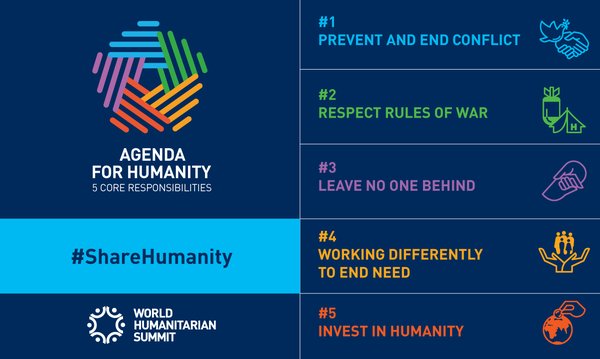
But the Secretary-General announced the first World Humanitarian Summit will be held in early 2016 in Istanbul, Turkey takes the biscuit.

The world is facing an unprecedented displacement crisis. Today, more than 60 million people are forcibly displaced as a result of violent conflicts and natural disasters.

Turkey has as we know just done a deal with the European Union for Visa to hold fleeing Refugees from War zones so they can’t get into Europe.

As a leading humanitarian donor and key policy-setter, the European Union will play a major role at the upcoming World Humanitarian Summit in Istanbul.

The purpose of the summit is to set a forward-looking agenda for humanitarian action to collectively address future humanitarian challenges. The aim is to build a more inclusive and diverse humanitarian system committed to humanitarian principles.

It’s been almost 25 years since the last time the world came together to discuss humanitarian aid.

 The European Commission provides humanitarian funding worldwide to over 200 partner organisations which implement relief actions on the ground. These include non-governmental organisations (NGOs), international organisations and United Nations agencies.
Reshaping aid at the World Humanitarian Summit to my mind seems sum what a joke and more of a NGOs nice gathering as those attending are only required to give commitments. 
Nobody respects the rules of war, or is willing to sacrifice their young to prevent and end conflict.
Leaving no one behind, and working differently to end need, do indeed require investment in Humanity. As always there is no aspiration as to how to raise the billions required to battle these inequalities.
Like the Paris Summit on Climate Change this meeting is all about hot air, with promises that will be broken as soon as they are made.
This is not the United Nations fault but if anything worthwhile comes out of the first World Humanitarian Summit it should be the reform of itself under the last two heading on the Agenda.
Its time to understand that the interconnected world we all live in is primarily driven by self-interest and corrupt gains.
For example:
Mr Cameron is presently holding a conference on corruption.  He has totally forgotten that England’s wealth was obtained by an Empire that dealt in Slavery. Plundered the world and recently had some of its elected MP fiddling expenses. Not to mention bailing out its banks with billions of taxpayers funds and is currently trying to sell bank shares back to the taxpayer how already owns them. And is now in the process of destabilizing the EU for the sake of Profit not Sovereignty.
The only way we can solve more complex innovation challenges is by tapping the global community.
The belief that anything in life is just a problem waiting to be solved, usually with the right technology fix seems to be all the rage other than watching Money electing the next USA president we are develop inequalities to represent real world situations and use them to solve problems.
There is only one commitment needed to place a World Aid Commission on all Activities that exist to generate Profit for profit sake. ( See previous posts)  The cost of the refugees world crises in 2016 is 25 billion.
Certain things catch your eye, but pursue only those that capture the heart.  Afficher l'image d'origine

← Back

Thank you for your response. ✨

Share this:

  • Share on WhatsApp (Opens in new window) WhatsApp
  • More
  • Share on Pocket (Opens in new window) Pocket
  • Share on Mastodon (Opens in new window) Mastodon
← Older posts
Newer posts →

All comments and contributions much appreciated

  • THE BEADY EYE SAYS. ANY OTHER PERSON WOULD BE ARRESTED. February 1, 2026
  • THE BEADY EYE SAYS FROM THE RESURRECTION OF JESUS TO THE PRESENT DAY THE HISTORICAL RECORD OF OUR WORLD IS MORE THAN HORRIBLE. February 1, 2026
  • THE BEADY EYE SAYS: THE WORLD WE LIVE IN IS BECOMING MORE AND MORE UNKNOWN. January 31, 2026
  • THE BEADY ASK. IN THIS WORLD OF FRICTIONS IS THERE ANY DECENCY LEFT ? January 29, 2026
  • THE BEADY EYE ASKS ARE WE WITH ARTIFICIAL INTELLIGENCE LOOSING THE MEANING OF OUR LIVES? January 27, 2026

Archives

  • February 2026
  • January 2026
  • December 2025
  • November 2025
  • October 2025
  • September 2025
  • August 2025
  • July 2025
  • June 2025
  • May 2025
  • February 2025
  • January 2025
  • December 2024
  • November 2024
  • October 2024
  • September 2024
  • August 2024
  • July 2024
  • June 2024
  • May 2024
  • April 2024
  • March 2024
  • February 2024
  • January 2024
  • December 2023
  • October 2023
  • September 2023
  • August 2023
  • July 2023
  • June 2023
  • May 2023
  • April 2023
  • March 2023
  • February 2023
  • January 2023
  • December 2022
  • November 2022
  • October 2022
  • September 2022
  • August 2022
  • July 2022
  • June 2022
  • May 2022
  • April 2022
  • March 2022
  • February 2022
  • January 2022
  • December 2021
  • November 2021
  • October 2021
  • September 2021
  • August 2021
  • July 2021
  • June 2021
  • May 2021
  • April 2021
  • March 2021
  • February 2021
  • January 2021
  • December 2020
  • November 2020
  • October 2020
  • September 2020
  • August 2020
  • July 2020
  • June 2020
  • May 2020
  • April 2020
  • March 2020
  • February 2020
  • January 2020
  • December 2019
  • November 2019
  • October 2019
  • September 2019
  • August 2019
  • July 2019
  • June 2019
  • May 2019
  • April 2019
  • March 2019
  • February 2019
  • January 2019
  • December 2018
  • November 2018
  • October 2018
  • September 2018
  • August 2018
  • July 2018
  • June 2018
  • May 2018
  • April 2018
  • March 2018
  • February 2018
  • January 2018
  • December 2017
  • November 2017
  • October 2017
  • September 2017
  • August 2017
  • July 2017
  • June 2017
  • May 2017
  • April 2017
  • March 2017
  • February 2017
  • January 2017
  • December 2016
  • November 2016
  • October 2016
  • September 2016
  • August 2016
  • July 2016
  • June 2016
  • May 2016
  • April 2016
  • March 2016
  • February 2016
  • January 2016
  • December 2015
  • November 2015
  • October 2015
  • September 2015
  • August 2015
  • July 2015
  • June 2015
  • May 2015
  • April 2015
  • March 2015
  • February 2015
  • January 2015
  • December 2014
  • November 2014
  • October 2014
  • September 2014
  • August 2014
  • July 2014
  • June 2014
  • May 2014
  • April 2014
  • March 2014
  • February 2014
  • January 2014
  • December 2013
  • November 2013
  • October 2013

Talk to me.

Jason Lawrence's avatarJason Lawrence on THE BEADY EYE ASK’S: WIT…
benmadigan's avatarbenmadigan on THE BEADY EYE ASK’S: WHA…
bobdillon33@gmail.com's avatarbobdillon33@gmail.co… on THE BEADY EYE SAYS: WELCOME TO…
Ernest Harben's avatarOG on THE BEADY EYE SAYS: WELCOME TO…
benmadigan's avatarbenmadigan on THE BEADY EYE SAY’S. ONC…

7/7

Moulin de Labarde 46300
Gourdon Lot France
0565416842
Before 6pm.

My Blog; THE BEADY EYE.

My Blog; THE BEADY EYE.
bobdillon33@gmail.com

bobdillon33@gmail.com

Free Thinker.

View Full Profile →

Follow bobdillon33blog on WordPress.com

Blog Stats

  • 95,076 hits

Blogs I Follow

  • unnecessary news from earth
  • The Invictus Soul
  • WordPress.com News
  • WestDeltaGirl's Blog
  • The PPJ Gazette
Follow bobdillon33blog on WordPress.com

The Beady Eye.

The Beady Eye.
Follow bobdillon33blog on WordPress.com

Blog at WordPress.com.

unnecessary news from earth

WITH MIGO

The Invictus Soul

The only thing worse than being 'blind' is having a Sight but no Vision

WordPress.com News

The latest news on WordPress.com and the WordPress community.

WestDeltaGirl's Blog

Sharing vegetarian and vegan recipes and food ideas

The PPJ Gazette

PPJ Gazette copyright ©

Privacy & Cookies: This site uses cookies. By continuing to use this website, you agree to their use.
To find out more, including how to control cookies, see here: Cookie Policy
  • Subscribe Subscribed
    • bobdillon33blog
    • Join 222 other subscribers
    • Already have a WordPress.com account? Log in now.
    • bobdillon33blog
    • Subscribe Subscribed
    • Sign up
    • Log in
    • Report this content
    • View site in Reader
    • Manage subscriptions
    • Collapse this bar