It is easy to be cynical about United Nations or for that matter about any World Organisation.
But the Secretary-General announced the first World Humanitarian Summit will be held in early 2016 in Istanbul, Turkey takes the biscuit.
The world is facing an unprecedented displacement crisis. Today, more than 60 million people are forcibly displaced as a result of violent conflicts and natural disasters.
Turkey has as we know just done a deal with the European Union for Visa to hold fleeing Refugees from War zones so they can’t get into Europe.
As a leading humanitarian donor and key policy-setter, the European Union will play a major role at the upcoming World Humanitarian Summit in Istanbul.
The purpose of the summit is to set a forward-looking agenda for humanitarian action to collectively address future humanitarian challenges. The aim is to build a more inclusive and diverse humanitarian system committed to humanitarian principles.
It’s been almost 25 years since the last time the world came together to discuss humanitarian aid.
The European Commission provides humanitarian funding worldwide to over 200 partner organisations which implement relief actions on the ground. These include non-governmental organisations (NGOs), international organisations and United Nations agencies.
Reshaping aid at the World Humanitarian Summit to my mind seems sum what a joke and more of a NGOs nice gathering as those attending are only required to give commitments.
Nobody respects the rules of war, or is willing to sacrifice their young to prevent and end conflict.
Leaving no one behind, and working differently to end need, do indeed require investment in Humanity. As always there is no aspiration as to how to raise the billions required to battle these inequalities.
Like the Paris Summit on Climate Change this meeting is all about hot air, with promises that will be broken as soon as they are made.
This is not the United Nations fault but if anything worthwhile comes out of the first World Humanitarian Summit it should be the reform of itself under the last two heading on the Agenda.
Its time to understand that the interconnected world we all live in is primarily driven by self-interest and corrupt gains.
For example:
Mr Cameron is presently holding a conference on corruption. He has totally forgotten that England’s wealth was obtained by an Empire that dealt in Slavery. Plundered the world and recently had some of its elected MP fiddling expenses. Not to mention bailing out its banks with billions of taxpayers funds and is currently trying to sell bank shares back to the taxpayer how already owns them. And is now in the process of destabilizing the EU for the sake of Profit not Sovereignty.
The only way we can solve more complex innovation challenges is by tapping the global community.
The belief that anything in life is just a problem waiting to be solved, usually with the right technology fix seems to be all the rage other than watching Money electing the next USA president we are develop inequalities to represent real world situations and use them to solve problems.
There is only one commitment needed to place a World Aid Commission on all Activities that exist to generate Profit for profit sake. ( See previous posts) The cost of the refugees world crises in 2016 is 25 billion.
Certain things catch your eye, but pursue only those that capture the heart.
Yesterday we told that 175 leaders signed an agreement to limit future global warming be least 2%
Ban Kimoon says this is a moment in history, which I agree but signing the Paris Agreement doesn’t mean emissions will go down.
Are we being hoodwinked or Shakespeare by worthless words on paper that don’t come into effect till the year 2020.
By then the great barrier reef in Australia will be a bleached dead sheet.
THE FIFTY FIVE COUNTRIES THAT ARE RESPONSIBLE FOR 55% OF THE WORLDS GREENHOUSE EMISSIONS WILL HAVE BY THEN PUMPED ENOUGH CO2 INTO THE ATMOSPHERE TO NULLIFY ANY REDUCTIONS.
NOT FORGETTING THE AMOUNT OF METAIN THAT THE OCEANS AND THE ARCTIC ARE GOING TO RELEASE.
HERE ARE A FEW HARD FACTS:
No country has shared a detailed, credible strategy to achieve what scientists think is necessary: Ending the era of fossil-fuel emissions and converting entirely to clean energy no later than the middle of this century.
Not one country has said where is the Money coming from. If we want change we have to pay for it and there is only one fair way of doing this. (SEE previous posts)
There are 195 countries in existence. This does not include Kosovo (disclaimer), or Palestine or Western Sahara or Taiwan or Greenland or many other partly recognized states .
UN Members: 193 UN Observer States: 2 Total: 195
Whether they make good on their pledges to slow dangerous greenhouse gas emissions will depend in large part on the actions in the years ahead by the world’s largest polluters.
The United States, pledged was thrown into question in February, when the Supreme Court unexpectedly put a hold on implementing a major environmental regulation aimed at curbing greenhouse gas emissions from coal-fired power plants. Now it remains in limbo until all legal challenges have been resolved, which is likely to take at least another year.
China, has pledged to have its emissions of carbon dioxide reach a plateau or decline “around 2030,”
The European Union’s, pledge to cut emissions by at least 40 percent by 2030. Member states still must reach consensus in important areas on climate policies.
Perhaps the most significant pledge by India has been to increase solar power generation to 100 gigawatts by 2022, up from about three gigawatts generated in India last year. “That’s an earthshaking commitment,”
Russia has yet to make any binding pledges to reduce greenhouse gas emissions.
Brazil, President Dilma Rousseff committed to an ambitious plan to reduce her country’s emissions 43 percent from 2005 levels by 2030.
Indonesia, one of the world’s largest greenhouse gas polluters due to mass deforestation, pledged under the Paris Agreement to cut its emissions 29 percent from a business-as-usual scenario by 2030, or by 41 percent if it receives substantial assistance from the developed world. But even with those pledged reductions, Indonesia’s emissions would still soar, nearly doubling from 2010 levels.
After a quarter-century of failed diplomatic efforts, big uncertainties hang over the climate deal even as the wording oil and gas companies continue to invest billions of dollars a year searching for new reserves of fossil fuels.
The announcement of 175 countries signing the Agreement hide’s the true position and gives the impression that the problem is being tackled.
It is already too late to eliminate the risks entirely.
We are looking at climate effects so severe that they might destabilize governments, produce waves of refugees, precipitate the sixth mass extinction of plants and animals in Earth’s history, and melt the polar ice caps, causing the seas to rise high enough to flood most of the world’s coastal cities.
So speaking up and exercising your rights as a citizen matters as much as anything else you can do.
The signing ceremony on Friday is only an intermediate step. After, countries will still have to present formal ratification documents, and the Paris Agreement will not take effect until 55 countries representing 55 percent of global greenhouse-gas emissions have done so.
All the World’s a stage– and some people are desperately unrehearsed.
( A one minute obligatory read if you are interested in the planet you live on) .
It is not amazing that the contemporary world is marked by a growing number of problems that are genuinely Global in scope.
Yet instead of addressing them we spend our time discussing ISIS, North Korea, Mr Putin, Worthless Trump, Air Brain Palin, The price of Oil, Stem cells, New Planets billion of light years away, the list is endless rubbish.
In the mean time we have the spread of Zika virus, a blizzard to beat all blizzards, thousands of Refugees, billions being spend of Presidential Campaigns while Inequality spreads like a cancer.
So forgive me for thinking we must be one of the most selfish, stupid, technology driven like button idiots that ever existed on this planet.
Based on the Best current science we are looking down the barrel of a gun with the bullet fired.
There could be no more extreme than current weather patterns, melting glaciers, sea level rising, megadroughts, desertification, deforestation, food supply disruption, famines, infectious disease, mass migration, social upheaval, economic distress, political instability.
All conflict multipliers that will turn Earth into an unlivable cauldron of I am alright Jack.
It seems that few realise how dire this situation has become or is becoming.
All down to human activity that continues to prune the evolutionary tree of life with gay adabondament.
And if that is not enough evidence that we are heading full speed to oblivion. The last Global Biodiversity Report presented some hard facts that the population of vertebrates that include mammals, birds, reptiles, sharks, rays, and amphibians – living within the tropics declined by 59% from 1970- 2006.
Just in case that has not sunk in what they are saying is that more than half of the vertebrate population between the Tropic of Capricorn and the Tropic of Cancer has disappeared in the last 36 years.
They also found that birds in Europe declined by 50% since 1980. Birds in North America declined by 40%.
Just one more hard fact that it is time to open our eyes. All plants species the foundation of the food chain upon which we depend – are currently ” threatened with extinction.
Yet humans around the world are either unaware of the situation or have their heads buried in the sand, when we should be taking immediate action.
Our consumerist economy that promotes the endless acquisition of products over the conservation of nature would need 1.5 Earths to meet the demands we currently make on Nature.
You might not still appreciate just how bad things are. By 2048 there will be virtually no more wild caught seafood. Our oceans are dying from Lake Erie to the Baltic Sea, the Gulf of Mexico the coastal water of Australia New Zealand, dead zones are growing. The Baltic is already Dead. 60% of all coral reef have being turned in to white ghost towns.
I have being lucky in my life to have traveled both by sea and land extensively.
Experiencing nature first hand let me tell you that there is a critical threshold that once crossed will result in a sudden and irreversible change. A tipping point that will arrive overnight. There is no technology that can restore it to its original state.
I might sound overblowing and alarmist but look around you. We have little real knowledge of how the ecosystem works but just because we can’t see the catastrophe doesn’t mean it not real.
After all 99.9% OF MATTER is empty space, yet no amount of squinting will reveal this fact to the naked eye.
What does matter is that our fears accurately track the totality of the evidence presented.
This is why solving the problem ought to be on the top of the list of all superpowers in the world.
The likelihood of this happening is the same as asking is the Pope a Catholic.
Even if it does happen, nobody, no Government, no World Organisation, no Country, no Economy, no joe soap has the will or money to rectify a world that is bent on self-destruction.
This is why we must create a World Aid Fund. ( see previous posts)
It is the only solution that is non Political, spreading the cost across all beliefs all colours evenly.
Go on press the like button if you are one of the Googlefied that think you are living on the Planet. If on the other hand you are truly alive get involved and leave your thoughts.
We have to see the world through issues and action.
It does not belong to me or you or any Generation, to any Religion, any Terrorist, any Government, any algorithms, any Holograms, any World Monopoly whether its called Google, Face Book or Twitter, or any Sovereign Wealth Fund ( see previous Posts)
It belongs to Wall Street.
Who was running Wall Street? Humans or machines?
If you thought “humans”, you were woefully out of date.“
Humans just found a new way of being greedy.”
But that not the subject of this post.
There’s a strange relationship between the city and the city dweller. We love it and still recognize that it’s a monster. All that emotion, all the combined suffering and indifference, glory and greatness, bypass the brain and go straight into the heart.
The city cuts straight to the core. Look into some people’s eyes, and their sadness, their pain, is almost palpable.
The city inspires us to see glory beneath the grime and wonder within the wasteland.
But the truth is, the world cannot be organized. To let the world in, you have to let in a world where nobody has the answers.
I think there’s a fundamentalism about technology. Technology itself isn’t going to save us. Technology is wonderful, but it’s a tool.
The world is complex and we all know what is wrong.
What is wrong comes in many forms, shapes, sizes, and it is effecting all of us.
There are a million things going on that are all signs that the people who are the most educated and capable of enlightened action are stunningly unengaged.
Its called Inequality. Created by us which is destroying the world we live in.
It is the root of most of the problems facing the world.
You might have read recently that Finland’s government is drawing up plans to give every one of its citizens a basic income of 800 euros (£576) a month and scrap benefits altogether, which according to Bloomberg, would cost the government 52.2 billion euros a year.
During the Banking Crisis I advocated that it would have been cheaper for Ireland to have given every voting citizen a Million. It could have been placed in a Government controlled account. Made available to the citizen over a period of 30 years to avoid inflation. Irish Citizens would have been required to cleared all his or hers debts, look after their own health, education, while scrapping all benefits.
It would have stimulated the economy in a controlled manner rather than bailing out worthless banks.
The National Audit Office in the UK said that the Uk spent £850 billion on the bank crises in 2009. That would equate to a £26,562 and fifty pence spend by every taxpayer in the UK.
THE EUROPEAN CENTRAL BANK will begin its €1.1 trillion quantitative easing programme today, the last big weapon in its armoury to get the euro zone going and fend off deflation. None of the newly invented cash will actually be headed to the pockets of EU citizens.
The reality of how money is created today differs from the description found in some economics textbooks:
Quantitative Easing for the People’ is one of the cornerstones of Jeremy Corbyn’s leadership platform in the UK.
The basic idea is simple: A hypothetical Corbyn government would instruct the Bank of England to create new electronic money (the modern equivalent of printing it) to fund public investment projects. The vehicle for doing this would be the ‘National Investment Bank’, which would be charged with funding public investment. The NIB would issue bonds that the BoE would be commanded to buy.
Compared this to the living wage an informal benchmark, set at £9.15 an hour in London and £7.85 an hour in the rest of the UK. It is not a legally enforceable minimum level of pay, like the national minimum wage. ( 48 hours a week on average = 439 euros.)
An ‘inner voice’ tells me that this idea is a step in the right direction to spread the wealth of a nation. Perhaps he should call it regional quantitative easing, but it wont address the bigger world problems.
Realistically we must think of some imaginative ways to create liquidity in the world economy other than secret Trade Deals.
Sometimes it takes just one human being to tip the scales and change the course of history.
In this series of posts we will look into its heart beat of Inequality.
My aim is to stimulate serious academic interest and to inform the developing world. My ambition is to stimulate serious academic interest and to inform public debate on the essential issues. We can’t just wait for the tipping point to be reached so we see clarity as we stare into the abyss.
In no particular order let,s start our Journey to a better world.
The year 2016 I hope will mark a turning point in human history: Helped by climate change because Capitalism will start to be forces to pay for raping the world.
So let’s start Not with Climate Change but WHERE WE LIVE.
IT MATTERS:
The scale of environmental impact of meta cities and mega cities on their hinterlands is significant and is likely to be a cause for concern in coming decades.
The emerging human settlements of the 21st century are Slums also known as shantytowns, squatter cities, and informal settlements.
These places can teach us about where, for better or worse, urban life appears to be headed. “Squatters are the world’s dominant builders,”
They are the Emblems of profound inequality.
When one appreciates this fact one is forced to ponder whether these slums were designed to supplant, integrate or ignore human rights concerns of the world’s poor.
Are they maintained solely as a source of cheap labor or just transitory phenomenon characteristic of fast growing economies — it is impossible to mitigate the expansion of slums in the developing world.
Even if urban poverty is preferable to rural poverty life in the slum constitute a form of poverty trap for a majority of their residents.
In 2005, there were 998 million slum dwellers in the world. If current trends continue, the slum population will reach 1.4 billion by 2020.
It will for the first time equal the world’s rural population.
Although it is difficult to predict on which day or month this radical transformation will occur, what is certain is that this milestone will herald the advent of a new urban millennium: a time when one out of every two people on the planet will be a “city-zen”
At the moment more than 53 per cent of the world’s urban population lives in cities of fewer than 500,000 inhabitants. One out every three city dwellers – nearly one billion people – lives in a slum. Slums are emerging as a dominant and distinct type of settlement in cities of the developing world.
By 2020, all but 4 of the world’s largest cities will be in developing regions, 12 of them in Asia alone. While still few in number, these metacities point to new forms of urban planning and management, leading to the growth of city regions and “metropolitanization”.
Inequality has a direct bearing on patterns of urbanization.
The rich in most countries live a world apart from the poor, with homes in protected urban enclaves and access to the latest technology, the best services and the most comfort. The rest, especially slum dwellers, live in the most deprived neighborhoods, struggling to gain access to adequate shelter and basic services, such as water and sanitation. Many slum dwellers also live under the constant threat of eviction.
Such stark differences and divisions can be found among regions and countries, but also within countries and cities. Especially in the developing world, urban zones of poverty and despair commonly skirt modern cosmopolitan zones of plenty.
If current trends are not reversed, cities will become more and more spatially divided, with high and middle-income residents living in the better-serviced parts of the city
Cities are, and will continue to be, sites of extreme inequality.
China’s recent gains in economic growth and industrialization have in many cases exacerbated environmental problems in its cities. Economic growth has increased consumer purchasing power, with the result that Chinese cities, such as Beijing – once the bicycle capital of the world – are now teeming with motor vehicles, a leading cause of air pollution. There are 1.3 million private cars in Beijing alone, an increase of 140 per cent since 1997.
Since the attacks on New York and Washington on 11 September 2001, cities of the developed world have become increasingly concerned about their vulnerability to acts of terrorism but this is not the reasons that cities are going to have to change.
Various dimensions of urban poverty is the main treat.
Inadequate and often unstable income, which impacts people’s ability to pay for non-food items, such as transport, housing and school fees. Poor quality, hazardous, overcrowded, and often insecure housing Inadequate provision of basic services (piped water, sanitation, drainage, roads, footpaths, etc.) which increases the health burden and often the work burden.
Inadequate, unstable or risky asset base (non-material and material) including lack of assets that can help low-income groups cope with fluctuating prices or incomes, such as lack of access to land or credit facilities. Inadequate public infrastructure, such as schools and hospitals.
Limited or no safety nets to ensure basic consumption can be maintained when incomes fall and which can be easily accessed when basic necessities are no longer affordable, such as public housing and free medical services.
Inadequate protection of rights through the operation of the law, including regulations and procedures regarding civil and political rights, occupational health and safety, pollution control, environmental health, protection from violence and forced evictions and, protection from discrimination and exploitation.
Voicelessness and powerlessness within non-responsive political systems and bureaucratic structures, leading to little or no possibility of receiving entitlements to goods and services; of organizing, making demands and getting a fair response; and of receiving support for developing initiatives. Also, no means of ensuring accountability from aid agencies, NGOs, public agencies and private utilities, and of being able to participate in the definition and implementation of urban poverty programmes.
In light of recent evidence, even if governments collectively manage to improve the lives of 100 million slum dwellers by 2020 – as per the Millennium Development Goals and targets – this achievement will be insignificant in relation to creating “cities without slums”, a stated objective of the Millennium Declaration.
Assuming that the leaders who developed the slum target were aiming to address a major development issue, policymakers should adjust the benchmark to reflect the reality of slums of today and tomorrow.
Viewed through a human rights prism, All fair-minded people, of course, would hope for improving the lives of slum dwellers. Unfortunately, looking closely as far as housing rights are concerned, any improvements far out-number their benefits.
These are a few things we can no longer afford to ignore.
Which practices and policies will steer us in the right direction?
How do we effect change within and beyond the halls of government?
Both formal and informal systems of property rights may be necessary to curb the rapid growth and informal systems of property rights may be necessary to curb the rapid growth of slum areas worldwide.
Slum dwellers should be given title deeds for their plots, in order to liberate the “dead capital” they are sitting on – to enable them to get loans from banks.
Overall, there has been very little theoretical and empirical economic research about how the public policy challenges posed by slums in low-income economies should be addressed.
It appears the United Nations Goals’ are flaws.
The question is how to address them.
Three shortcomings stand out as particularly.
The organisation is out of date, skint, and totally infiltrated by Capitalist values.
The United Nations have strong incentives to maintain the status quo. Unless radically brought up to date and reformed it has no alternative but to maintain the status quo.
Without changes to the United Nations or any other World Institutions the reversal of the lack of governance to represent the people of the world, it is unlikely that any attempts at any form of big push or coordinated investment will have the desired effects.
This is a hidden threats to sustainability.
All changes need financing.
Whether it be Climate Change or giving dignity of a respectful if not equitably life to all, there is little hope of addressing the world problems when so many look at so few. Inequality is incurable.
The only way to lessen its effects is to tap into Greed itself. (See previous Posts)
I believe in the power of ideas to change attitudes, lives and ultimately, the world.
You can’t settle for drops in the bucket. It won’t do to wrap up your garbage, it won’t do to send the contribution. Those are all fine, but it’s not going to make a huge change. It’s just not. It’s going to take all you’ve got too really understand that the stakes are very high.
If you don’t believe me the Sunday Time this week in letters and e mails reported that an organised party of about 60 from the Uk visited the European Parliament in Strasbourg. At the end of the tour each visitor was handed an envelope containing 200 Euros. Apparently each EU MEP is allowed 110 visitors a year, which equates to 22,000 Euros per MEP. With 73 UK MEP,s that in turn adds up to 1.6 million euros.
More than 11m homes lie empty across Europe – enough to house all of the continent’s homeless twice over – hundreds of thousands of half-built homes have been bulldozed in an attempt to shore up the prices of existing properties. There are 4.1 million homeless across Europe, according to the European Union.
Its no wonder that millions turn to daft fantasy – turning the Star Wars films into digitally enchanted Manichaean belief systems. There is a sleazy materialistic, shallowness about it all. We hear much more from them all in 2016.
Let’s address the elephant in the room first.
Profit for the sake of profit has to pay whether its climate change, inequality of opportunity or terrorism.
Education plays a uniquely critical role in addressing the challenges we face.
What we’ve really lost sight of is an education system that teaches how to ethically, effectively and intelligently engage with the world which we will address in the next post.
Each of us, it seems, believe that we are above average. People want to believe the present is different than the past. But while we humans passionately believe that our own current circumstances are somehow unique, not much has really changed since the inarguably brilliant Isaac Newton lost a fortune in the South Sea Trading Company bubble of 1720.
“What ails the truth is that it is mainly uncomfortable, and often dull. The human mind seeks something more amusing, and more caressing.” ~H. L. Mencken
Because history suggests that we are going down for the count.
I am sure that there is no need to remind you of the outcomes of previous Climate Change Conferences.
They all failed.
In the vain hope that any one of you might read this:
HERE IS THE REASON WHY and THE SOLUTION.
The debates that are likely to dominate the Paris talks will not be about emissions but about – Money.
If nations can meet and agree equitable goals on the climate, on economic development, on social and environmental issues, and do so in a spirit of cooperation, this alone will be a huge achievement.
That as you know this is hoping for a “miracle.”
We already know that the commitments made, and likely to be made by December, will not by themselves be enough to hold the world to no more than 2C of warming.
So far, countries have made formal emissions pledges. They cover more than 65 percent of current global emissions. The pledges vary. Some are absolute targets expressed as tons of carbon dioxide per year in 2030; others are targets measured against business as usual, or promises to reduce emissions for every dollar of economic activity.
The EU is to cut its emissions by 40%, compared with 1990 levels, by 2030. The US is to cut its emissions by 26% to 28%, compared with 2005 levels, by 2025. China is to agree that its emissions will peak by 2030.
Nations responsible for about two-thirds of global emissions have come up with their targets known in the UN jargon as Intended Nationally Determined Contributions or INDCs – but some countries, most notably India.
Are the current pledges enough to keep global warming below 2 degrees C?
Nobody can be certain.
Serious doubts remain as to whether these promised cuts will be nearly enough to avoid the most severe impacts of climate change.
There are too many scientific uncertainties about exactly how sensitive the atmosphere is to growing concentrations of greenhouse gases. We could get lucky, but equally there might be tipping points that could suddenly accelerate warming.
In the Unite Nations own words it is attaching a set of “sustainable development goals,” on to the Conference which will take over from the millennium development goals that were pegged to 2015.
These will include issues such as access to clean water and sanitation, access to energy, gender equality, education and health. ” Those SDGs will have a profound effect on whether the world can meet its climate change targets, and meet them in an equitable fashion that allows poor countries to lift their citizens out of poverty while not passing climate thresholds.”
While these United Nations aspirations are essential Climate Change has to tackled without interference.
Poor nations want all the money to come from rich country governments, but those governments are adamant that they will not provide such funding solely from the public purse. They want international development banks, such as the World Bank, to play a role, and they want most of the funding to come from the private sector.
There is strong disagreement over how this should be done.
At Copenhagen, where the finance part of the deal was only sorted out at the very last-minute, rich countries agreed to supply $30bn ($20bn) of “fast-start” financial assistance to the poor nations, and they said that by 2020, financial flows of at least $100bn a year would be provided.
These pledges are already backsliding.
This is a hugely contentious issue:
Why because any core agreement, will be contested over issues such as “loss and damage”, by which developing countries want assistance on coping with extreme weather events, likely to be made worse by climate change. An agreement on this is still possible.
African countries, and others with little or no responsibility for climate change, want a separate fund to compensate them for “loss and damage” resulting from climate disasters such as extreme heat, wild weather, floods, and droughts. This would be a 21st century equivalent of war reparations — for climate crimes rather than war crimes.
This will be one of the main obstacles to a Paris deal.
While you as a negotiator will be mired in the paragraphs, sub-headings and addenda of texts thick with square brackets denoting unresolved issues, heads of government have the power to sweep aside such details and order them to agree.
What can we expect before Paris?
Most delegates believe that funding issues are the most likely deal breakers in Paris.
That would be bad for the world.
So here is the solution:
Make Profit for Profit Sake Pay;
By placing a World Aid Commission of 0.05% on all High Frequency Trading, on all Foreign Exchange Transactions (over $20,000) on all Sovereign Wealth Funds Acquisitions, on all new drilling and mining Licences.
A commission rate ranging from 0.005 to 0.25 percent would generate between $15 and $300 billion per year, of which a substantial amount could be allocated to promote international peace and development and Climate Change.
This would create a perpetual Funded Fund to contributed to rectifying the very thing that caused the problems in the first place.Greed.
There will be one further week of negotiations, in October, before the Paris meeting agrees, so there is much work to be done on the software to make this possible.
“More than ever before in human history, we share a common destiny. We can master it only if we face it together. And that, is why we have the United Nations.” (Annan: 2001)
It is widely believed that international organizations should be responsible for the maintenance of international peace and stability, be this economic, social or political, and that they should act in the interest of the international community.
However if you look at them they are mostly out of date, with no real secure funding other than begging and most have been corrupted by lobbing. ( See previous postings)
These institutions, should have greater transparency, regulation and control within these organizations so that they reflect more than just the interest of the powerful States.
It appears that the behaviour of institutions can no longer be objectively analysed by quantifiable forces, as social interaction on the Web and Smart Phones gives different meanings to ideas, actors and objects.
If today we find ourselves in a self-help world, this is due to process, not structure.
As nations we don’t want to transmit the notion of a global governance to the world community.
The the neo-liberal institutionalist approach is misleading as it accounts for some of the weaknesses of institutions, but does not include enough critical analysis of its premises and actions, or lack thereof. Thereby, the role of institutions becomes a more ideological and normative one, where they infuse Member States’ policies with their liberal values and principles.
So let’s start with The United Nations.
It is important to determine what constitutes success and failure as we can approach the United Nations system in different ways, either as an international forum or as a ‘global policing force’ and regardless of what approach one may take, they both have their virtues and drawbacks.
The United Nations.
The creation of an international forum for multi-lateral negotiations came about with the Inter-Parliamentary Union (IPU) in 1889, which is still active today and has membership of 157 national parliaments. The IPU was the predecessor to the League of Nations, created in 1919 after the end of the First World War; this later became the United Nations after the failure of the League to prevent international conflicts.
The legacy of the IPU, the League of Nations, and other early international alliances was not the institutions’ effectiveness as an actor, but rather as a forum, for nations to voice their opinions and promote dialogue. This was the primary objective of the institution in 1945, which is why forcing it to develop into an impartial effective governing force seems quite naïve and unrealistic.
This was arguably their greatest achievement.
After the failure of the League, nation States still felt the need for an institution that would allow them to share their ideas and provide an opportunity to settle disputes peacefully. Thus, emerged the United Nations, which to this day remains the only institution with universal membership. It is the largest of all international organisations.
The neo-realist approach argues that international institutions are and always will be fundamentally ineffective, as they cannot prevent States from being self-interested and engaging in power politics.
Neo-realists assert the irrelevance of international institutions, as they believe it does not alter the self-interested anarchic system of States. Classical and neo-realists claim the international system is an anarchic, self-interested, power struggle between States, which is why there is a vast amount of distrust in global institutions such as the UN.
The idea that institutions play a non-role in international relations is a reductionist one as the argument that States will not respond to constraints and opportunities given by these institutions is greatly flawed.
This can be exemplified by the UN’s regulation on the use of military force.
One of the so-called failures of the UN is its inability to prevent conflicts, but in reality the majority of these conflicts arise as a result of deep-rooted ethnic, political, and ideological tensions which cannot even be resolved through bilateral diplomatic efforts, as exemplified in the Arab-Israeli conflict the Syrian Civil War, Ukrainian Conflict, the aftermath of 9/11.
So the primary purpose of the UN is not to intervene in internal affairs but rather to promote discussions and give States the tools to resolve disputes themselves.
An example of this is the Earth Summit, where members discussed actions to be taken regarding environmental sustainability and climate change and then world leaders would reconvene in ten-year follow-up meeting to monitor each other’s progress.
This is fine.
However,“in a world of multiple issues imperfectly linked, in which coalitions are formed trans-nationally and trans govern-mentally, the potential role of international institutions is greatly increased.”
It can be argued while the UN attempts to coordinate the actions of States and harmonize the world community, it becomes increasingly geared towards an ‘utopian’ model, even though it faces numerous challenges when rallying Member States to follow its general principles and vision.
It also can be argued that the United Nations has been vital in furthering decolonization, human rights, environmental protection and international law.
These and many others reflects unrealistic expectations of the UN as an actor.
Neo-liberal institutionalism stresses the importance of the UN’s work with regional organizations, as they become indispensable in the international diplomatic process predicting, “the international community will increasingly direct itself towards combined action of the universal Organization with regional bodies.” (Cassese: 2005: 338)
This can be observed in the recent links between the UN and regional organizations such as the Organisation of American States (OAS), the African Union (AU), the European Union (EU), the Arab League, and the Association of South East Asian Nations (ASEAN).
It take for granted the idea that economic and military power is the primary source of influence in world politics when in fact Climate Change with the rise in sea levels and the lack of fresh water will be the driving forces in the near future.
The Secretary General is the world’s prime example of responsibility without power, which is not always understood. The fact that he has no sovereign rights, duties or resources could signify that he becomes a reflection of the organization itself.
An example of this was in the Secretary-General’s Millennium Report where he ensured States that the Secretariat was fully accountable to them and the founding principles of the United Nations as “an Organization dedicated to the interests of its Member States and of their peoples” would be preserved. (Annan: 2000: 73)
For neo-realists, international institutions are and will always be ineffective, as they cannot alter the anarchic structure of the international system, neo-liberal institutionalists argue the opposite as they believe institutions greatly influence State conduct by both creating strong incentives for cooperation whilst at the same time implementing disincentives, as observed in the case of nuclear proliferation;
Constructivists take a very different approach by questioning the core assumptions of the other theories and drawing attention to the relationship between the structure and the agency, as well as the construction of state and institutional interests.
As an actor, there is so little we can do, and often the people accusing us are the same ones who prevent us from being able to act.” (Weiss: 2008: 8)
As the proportion of democratic states grows, the norms and rules that characterize relations between democracies are likely to alter the norms and rules in international relations.
For this reason, perhaps instead of focusing on the failures and reform within the UN, we should concentrate on the attributes and virtues that it has as an effective center for harmonizing discussions and developing common goals for States.
Rather than reducing the solution to problems of structural reform and widening participation efforts, we could look at promoting the UN as the prime setting for diplomacy and negotiation, as this has undeniably been its role since the beginning.
“We are facing the first breakthroughs in a process called ‘globalisation”
Social Media is demanding more and more from our leaders.
The end to Inequality, by dismantling of Greed within our Capitalist consumption Societies is high on the list.
It should be promoting the remote possibility of Russia and the USA tackling the Syria? ISIS situation together, which could lead to an Israelite/ Palestinian solution’s with the backing of Iran.
To be effective and relevant in this troubled world it needs to get rid of the Veto.
Pass a people’s resolution to place a World Aid commission of 0.05% on all High Frequency Trading, on all Sovereign Wealth Funds Acquisitions, and on all Foreign Exchange transaction over $20,000. ( See previous Posts)
Right I am no military general or foreign policy guru but Russia recent backing of Assad to tackle extremists and terrorists and the so-called Islamic State militants ( IS, formerly ISIS/ISIL) is a recipe for a war that is going to expand and last for some considerable time.However when you look on at the inability of the free world to resolve the Middle East problems now it is not an option to turn our backs on Mr Putin latest offer because there has being a cultural shift in the Middle East sparked by West and Smart phones.
There is no doubt that Mr Putin geo-political announcements at the United Nations emphasizes the problems of a joint international coalition to confront IS. ( The reporting of which by RT.Com keeps crashing on Flip Board Cover Stories. I wonder why? http://on.rt.com/6sg4 )
Perhaps his offer should be TAKEN SERIOUSLY.
”There is a belief that “creative destruction and chaos” in the Middle East are beneficial assets to reshaping the Middle East, creating the “New Middle East,” and furthering the Anglo-American road map in the Middle East and Central Asia:
There is no denying that now more than ever we are achieved this with a new road map by Mr Putin.
The United Nations as usual is a lame duck, (with 7.5 million children displaced and over 16 million people homes and livelihoods destroyed) all it can do is pass resolution’s that are vetoed.
WE NEED TO SCRAP THE UN TO BE REPLACED it with A NEW PROTECTION WORLD ORGANISATION THAT REPRESENTS THE WORLD – FULLY FINANCED. ( SEE PREVIOUS POSTS)
While the two world powers will now be at logger heads and the small players like France and the UK play Ludo with the situation. ISIS continues to extend the group’s self-styled caliphate, which now stretches from Turkey’s border with Syria to south of Fallujah in Iraq, an area roughly the size of Indiana.
For nearly 70 years, Lebanon was a proxy battleground for the conflict between Israel and Palestine.
As Paul Rodriguez said ” Sometimes I think war is God’s way of teaching us geography.”
If you ask yourself how did it all get into such a hell hole you can come up with reasons that cover every aspect of Power, Greed, Religion, History, Oil,etc.
The answer however to a great part is a lot more simple.
NO MATTER WHAT HAPPENS. Climate change and the issue of whether there will be enough water for a future global population double its present size is controversial and the answer to this question is of particular importance to the people’s and political leaders of the Middle East and North Africa.
It requires an inhuman level of political courage for a political leader of any country which for five thousand years has enjoyed water security to announce that water resources are no longer adequate.
To make the announcement would be political suicide.
SO BACK TO TODAY.
It has been nearly impossible for two U.S. presidents — Bush, a conservative evangelical; and Obama, a progressive liberal — to address the plight of Christians explicitly for fear of appearing to play into the crusader and ‘‘clash of civilizations’’ narratives the West is accused of embracing.
The above does not apply to Mr Putin, but there are limits to what the international community and Russia can do.’’
For instance the fate of Christians in the Middle East isn’t simply a matter of religion; it is also integral to what kinds of societies will flourish as the region’s map fractures.
No matter what solution’s presents itself there will be a requirement for a buffer between Sunni and Shia.
Across the region, that conflict is now secondary to the shifting tectonic plates of the Sunni-Shia divide, which threatens terrible bloodshed. Everyone has seen the ISIS forced conversions, crucifixions and beheadings that is displacing millions.
Even if ISIS is defeated, the fate of religious minorities in Syria and Iraq remains bleak because Iraq is devolving into three regions — Sunnis, Shia and Kurds — as it is obvious that there will be a need for a fourth region for minorities. Iraq is a forced marriage between Sunni, Shia, Kurds and Christians, and it has failed with the resulting wasted lives lost.
The term “New Middle East” was introduced to the world in June 2006 in Tel Aviv by U.S. Secretary of State Condoleezza Rice.
International borders are never completely just. But the degree of injustice they inflict upon those whom frontiers force together or separate makes an enormous difference — often the difference between freedom and oppression, tolerance and atrocity, the rule of law and terrorism, or even peace and war.
Our continuing failure to candidly depict the roots of the problems and conflicts in the contemporary Middle East has now being exposed by Mr Putin – POINTING A FINGER AT THE WEST FAILURE AND SECRETIVE TRADE DEALS.
His good news is complicated and indigestible as well as unsensational – throwing stones in a glass house is never a good idea.
The truth is that the Middle East has been conditioned by outside forces into a powder keg that is ready to explode with the right trigger, possibly the launching of Anglo-American and/or Israeli air raids against Iran and Syria. A wider war in the Middle East could result in redrawn borders that are strategically advantageous to Anglo-American interests and Israel.
We must think creatively about how to act on Mr Putin address to the United Nations.
What the media does not acknowledge or inform us about is the fact that almost all major conflicts afflicting the Middle East are the consequence of overlapping Anglo-American-Israeli agendas.
Many of the other problems affecting the contemporary Middle East are the result of the deliberate aggravation of pre-existing regional tensions.
Among the problems in the contemporary Middle East is the lack of genuine democracy which U.S. and British foreign policy has actually been deliberately obstructing.
The United States has deliberately blocked or displaced genuine democratic movements in the Middle East from Iran in 1953 (where a U.S./U.K. sponsored coup was staged against the democratic government of Prime Minister Mossadegh) to Saudi Arabia, Egypt, Turkey, the Arab Sheikdoms, and Jordan where the Anglo-American alliance supports military control, absolutists, and dictators in one form or another. The latest example of this is Palestine.
Attempts at intentionally creating animosity between the different ethno-cultural and religious groups of the Middle East have been systematic.
Even more ominous, many Middle Eastern governments, such as that of Saudi Arabia, are assisting Washington in fomenting divisions between Middle Eastern populations. The ultimate objective is to weaken the resistance movement against foreign occupation through a “divide and conquer strategy” which serves Anglo-American and Israeli interests in the broader region.
Where might one find a useful analysis of what is happening today in the market democracies of the West?
How about this: “The executive of the modern State is but a committee for managing the common affairs of the bourgeoisie.” Or this: “Modern bourgeois society…is like the sorcerer, who is no longer able to control the power of the nether world which he has called up by his spells.” Or this: “The productive forces no longer tend to further the development of the conditions of bourgeois property: on the contrary, they have become too powerful for these conditions…[and] they bring disorder into the whole of bourgeois society, endanger the existence of bourgeois property.”
Karl Marx and Friedrich Engels
The celebrated bearded communists had argued that capitalism would reduce all of society to only two classes: the prosperous bourgeoisie, who owned the capital, and the impoverished proletariat, who contributed their labor. Modern industrial production would inevitably depress the living standards of the proletariat, they believed, but also, in the end, increase their power. Having created a form of slavery, capitalism would be overthrown by its slaves. The proletarian masses would become the dictators.
This did not happen.
But now the West see itself as prisoners of the system that they helped to create.
I am no alarmist, and no one should worry that I have become a late convert to Marxism. Marx’s prescriptions were mostly wrong, and his spirit was intolerant and coercive. He did not understand markets or respect political institutions, and he thought liberty was a sham.
However, Sectarian division, ethnic tension and internal violence have been traditionally exploited by the United States and Britain in various parts of the globe including Africa, Latin America, the Balkans, and the Middle East. Iraq is just one of many examples of the Anglo-American strategy of “divide and conquer.” Other examples are Rwanda, Yugoslavia, the Caucasus, and Afghanistan.
Besides believing that there is “cultural stagnation” in the Middle East Western-style “Democracy” has been a requirement only for those Middle Eastern states which do not conform to Washington’s political demands.
Invariably, it constitutes a pretext for confrontation. Saudi Arabia, Egypt, and Jordan are examples of undemocratic states that the United States has no problems with because they are firmly alligned within the Anglo-American orbit or sphere.
Also we need to support Iran as a bulwark against Sunni extremism.
Additionally,
Turkey and Iran, the two most powerful states of the “Eurasian Balkans,” located on its southern tier, are “potentially vulnerable to internal ethnic conflicts [balkanization],” and that, “If either or both of them were to be destabilized, the internal problems of the region would become unmanageable.
In the end it all comes down who is willing to receive body bags.
Rest assured that the striking images of body bags depict the physical residue of war and time. Yet even more horrific than the physical scars of the war is the sense of sorrow and loss, floating in their expressions like ghosts.
Every person is an individual; they think differently, so wouldn’t it make sense that they all learn differently?
Consumerism tells us that in order to be happy we must consume as many products and services as possible.
Unfortunately the modern world does little to combat this. However more and more spheres of activity are being shaken out of their complacent ways.
Education is one of these spheres that needs to be redefined. We are fast approaching a new Singularity: when all the concepts that give meaning to our world – me, you, men, woman, love, hate-will become irrelevant.
So the big question for all of us is-what we want to become.
A question that dwarf the debates that currently preoccupy all of us.
After all if we don’t come to grips that we all live on the one planet and that all of to days debates between today’s religions, ideologies, nations, classes, will in all likelihood disappear along with all of us. If we don’t learn to educate for sustainability rather than consumption and Slavery to information and knowledge owned by Google a by-product of capitalism.
There is little point in going to Space, or anywhere else if we are represented by Artificial Intelligence.
It is not a lack of education, but a lack of creativity, and an inability to independently think for ourselves that is the problem with Modern day Education.
For nearly a century, societies have believed that higher education is necessary for success, but the opposite is true with the modern version of education.
For instance, most of the high-tech companies were created by high school dropouts, who dream’t of doing something that nobody else had done.
You won’t find such inventive and pioneering attitudes in those who have been through school, college, and then university. Students are trained to only strive for self-limiting ‘reachable goals’.
For a lot of people out there, it is time to realize that creative, independent, free thought is more important than anything they can learn at any university.
To teach men how to learn for themselves; and whatever instruction fails to do this is effort spent in vain.”
“I never let my schooling interfere with my education.” — Mark Twain
So let’s have a look with the Beady Eye. (This is a “think piece” intended to stimulate thought and discussion, rather than a scholarly manuscript.) We just didn’t have time to address every social issue that surrounds education.
The term education is derived from Latin word educere, educare, and educatum which means ‘to learn’, ‘to know’, and to ‘lead out’. Education is an act or process of imparting or acquiring general or particular knowledge or skills, developing the powers of reasoning and judgment, and generally of preparing oneself or others intellectually for mature life.
But rest assured that nobody cares about learning when they can’t even feed themselves.
In the primitive era indigenous education is said to be the significant resource for development, but in recent times it is said that modern education is the significant resource for material wealth.
There is no argument that both types of education play a significant role in development of our world and that both type are precious tools to life, to put one’s potentials to use.
But how do we explain the fact that those who had spent the most time in college are also the most unsuccessful.
It is due to what we think education is for in the first place.
Technology enthusiasts have long heralded the power of technology—from the printing press, to blackboards, to the laptop—to transform education.
So far it has done little to impact educational processes and outcomes.
A young girl is using her mobile phone to send an SMS message in Urdu to her teacher. The girl is part of a Mobilink-UNESCO program to increase literacy skills among girls in Pakistan. It is not. Why? Because the education is in English (which is deemed to be the only language to learn if you want to understand the Modern Capitals World) not her language.
She is being turned into one of the ultra-conformists that Google and modern schools seek to mass-produce. She will become one of the ones that couldn’t make it in the real world – her world.
No human beings are able to survive properly without education. Untrue.
The training of a human mind is not complete without education. Untrue.
Only because of education a man is able to receive information from the external humanity, to notify him with past and receive all essential information concerning the present. Untrue.
What is true is that indigenous educating in ones native tongue has created culture for millennium. In so doing ensuring their survival as a culture. Indigenous means originating in and characteristic of a particular region or country. It can also mean native, innate, inherent, or natural, produced, growing, or lliving, naturally in a country or climate; not exotic; not imported.
In the absence of writing, indigenous people depended on the power of their memories to facilitate the retention and transmission of all learned ideas to future generations.
Now its the power of Google, Facebook and the Smart Phone that is dumming us all down to a click for knowledge.
The debate is whether the power of mobile phone technology, will help hurdle several education barriers by finding new ways to support learning for rural girls or boys in insecure areas.
The point here is that we must protect verity, not to become copies of each other.
WHAT IS MODERN EDUCATION:
It is education that is synonymous with colonial, western or Christian education. Modern education can be understood as a by- product of the capitalist regime the terror of the ecosystem.
With the rapid expansion of information communication technologies around the globe, there is a high level of misdirected interest in harnessing modern technology to help advance the education status of some of the world’s poorest people at the cost of loosing their cultural values.
Indigenous education was for everyone in the community and existed for the purpose of strengthening the community while Modern education is for everyone in the society for the purpose of strengthening the society.
Indigenous education taught children their own indigenous culture based within their own society while Modern education brings in cultures from another societies.
The potential of technology to help improve education has significance beyond teaching children reading and math.
Quality education plays an important role in promoting economic development, improving health and nutrition and reducing maternal and infant mortality rates.
We look back on our past, and learn from our experiences.
There are many forms of Education.
Visual learning: Power point presentations, videos, and word documents.
Auditory learning has the most basic tool to learn- your voice. Through speaking and lectures.
Tactile learning involves physical hands-on activities, and therefore can take several forms.
Special attention, programs for students who need extra help to learn.
Education is in upheaval, with free online classes proliferating, tuition surging and public universities struggling. Perhaps worst of all, too many students leave school with high debt and no degrees. The endless chase for prestige and the resort-like marketing of college has nothing to do with Education.
Massive open online courses, or MOOCs, are just one of these upheavals.
Others include initiatives to grant credit for “competency” in skills rather than time spent in class; digital systems to help match students to the right colleges and guide them to the most efficient course of study to obtain a degree; and hybrid learning environments at schools.
When ‘cloud computing’, ‘m-learning’, or ‘total cost of ownership’ are introduced into the conversation no one knows where education is going.
Therefore, education has become a basic principle to measure the labor market on the basis of essential skills and the ability to appropriate them through suitable communication. The knowledge gained through education enables individuals’ potential to be optimally utilized owing to training of the human mind. Employment in the contemporary world is based on education, as employees must possess the required skills that correspond with the current technology to perform their tasks.
It is said that Information Communication Technology (ICT). (ICT refers to technologies that provide access to information through telecommunications). is generally used to describe most technology uses and can cover anything from radios, to mobile phones, to laptops combined with technology holds great promise in helping bring quality learning to some of the world’s poorest and hardest to reach communities.
It does nothing to teach common culture and values. Other than through this type of education that Technological advancement has been realized enabling communication and production of cost-effective products and services to the society at large.
Education is an important tool that is applied in the contemporary world to succeed, as it mitigates the challenges which are faced in life. Untrue.
Everyone is an expert in something. A modern-day form of segregation.
In many ways, higher education is like any industry that has produced its product a particular way for a long time and is suspicious of anything new.
Teaching skills require a shift away from designing curricula based on topics and subjects and toward creating experiences where learners can choose their own objectives.”You can’t make socialists out of individualists. Children who know how to think for themselves spoil the harmony of the collective society which is coming, where everyone is interdependent.”
— John Dewey, Father of Modern Education
Indeed, in some of the most remote regions of the globe, mobile phones and other forms of technology are being used in ways barely envisioned in the United States or Europe.
Will a technological future fix any of this? I hope so.
The lack of clear distinctions between service and education is blatantly visible in the world.
Experience alone cannot define its educational value without understanding its relationship to the individual learner.
Designating students for separate educational paths based on their academic performance as teens or younger is a worthless use of resources.
There is hope.
We’re already starting to see how tech-savvy people are using the web, software, and devices to connect those who have with those who don’t.
Can education help fix any of this? And not just in terms of stitching together technology, neuroscience, and learning design, but also in stitching together opportunity, safety, support, and care. We can only hope so.
We have much to do.
So far the educated Sapiens regime on EARTH has produced little that we can be proud off.
Despite the astonishing things that humans are capable of doing we remain unsure of our goals and we seem to be as disconnected as ever. No one seems to know where we’re going.
Self made Gods with only the laws of physics to keep us company. Wreaking havoc all around us, yet not finding happiness. It’s time we started to reeducate ourselves. So, do we need to revert to old school education in this new age techno world?
For starters you’d have to do away with the internet and the array of electronic gadgets that are so much a part of our children’s everyday lives.
The truth, as I see it, is that we are caught in an inexorable grind of change and human evolution. Towards what, God only knows, but it will obviously influence our children’s education, and their future. Finally, regardless of how out-of-control today’s schoolchildren appear, it may well be a matter of perception coloured by the nature of our own reality as adults.
I think some people teach solely because of that very belief.
Many in the first world imagine the amount of money spent on aid to developing countries is massive.
In fact, it amounts to only 0.3% of GNP of the industrialized nations.
Most wealthy nations spend far more on military than development. Northern countries exhibiting mercantilist, or monopoly capitalist principles, rather than free market capitalism, even though that is what is preached to the rest of the world.
Aid Amounts are dwarfed By Effects Of First World Subsidies, Third World Debt, Unequal Trade, Etc. Aid does not aid the recipient, it aids the donor.
There are numerous forms of aid, from humanitarian emergency assistance, to food aid, military assistance, etc. Development aid has long been recognized as crucial to help poor developing nations grow out of poverty. In 1970, the world’s rich countries agreed to give 0.7% of their GNI (Gross National Income) as official international development aid, annually.
This year it is estimated that $37 billion—roughly half of global aid—is “phantom aid”
Year after year almost all rich nations have constantly failed to reach their agreed obligations of the 0.7% target. Instead of 0.7%, the amount of aid has been around 0.2 to 0.4%, some $150 billion short each year.
Considering the typical aid amount at around 0.25 to 0.4% of GNI for over 40 years, the total shortfall is a substantial and staggering amount:just under $5 trillion aid shortfall at 2012 prices:
And you wonder why we have problems in the world.
Rich nations have rarely met their actual promised targets. Recent increases [in foreign aid] do not tell the whole truth about rich countries’ generosity, or the lack of it. Moreover, development assistance is often of dubious quality.
For example, the US is often the largest donor in dollar terms, but ranks amongst the lowest in terms of meeting the stated 0.7% target.
Most aid does not actually go to the poorest who would need it the most.
For example,
The US recently increased its military budget by some $100 billion dollars alone
Europe subsidizes its agriculture to the tune of some $35-40 billion per year, even while it demands other nations to liberalize their markets to foreign competition.
The US also introduced a $190 billion dollar subsidy to its farms through the US Farm Bill, also criticized as a protectionist measure.
While aid amounts to around $70 to 100 billion per year, the poor countries pay some $200 billion to the rich each year.
Some of the largest benefactors of European agricultural subsidies include the Queen of England and other royalties in Europe.
Furthermore, aid has often come with a price of its own for the developing nations:
Sub-Saharan Africa is a massive $272 billion worse off because of ” free” trade policies forced on them as a condition of receiving aid and debt relief.
Aid amounts are also dwarfed by rich country protectionism that denies market access for poor country products, while rich nations use aid as a lever to open poor country markets to their products.
Aid systems based on the interests of donors instead of the needs of recipients’ make development assistance inefficient.
In effect then, there is more aid to the rich than to the poor.
The US, Europe and Japan spend $350 billion each year on agricultural subsidies (seven times as much as global aid to poor countries)
These subsidies are crippling Africa’s chance to export its way out of poverty.
Rich countries might be going through some tough times but that doesn’t change the fact that they owe the rest of the world. Rich countries need to switch from traditional forms of aid-giving to supporting global goods in new ways.
The UK gave not £10, not £1, but 56p ($0.91) in overseas aid for every £100 ($163) we earned as a country. On average, since 1990, we have given even less, 35p ($0.57).
Being truly generous requires rich countries to undergo fairly profound changes in the way they have lived for the last few decades.
We are creating is hugely unequal societies that will in the long run bite our hands off.
To suggest that we should seek to help the poorest at home by withdrawing support from people abroad who are much poorer, while the rich make off with their millions, is surely morally indefensible in any philosophy. It will take a long time to carry out the radical reform needed to bring aid to something verging on sanity and fairness.
Rich countries need to be more generous not less and, they should be proud when they stand in solidarity with the worse off. For the OECD countries to meet their obligations for aid to the poorer countries is not an economic problem.
It is a political one.
Just look at the most recent EU plans to allow only 5,000 refugees for resettlement by asylum seekers in response to the Mediterranean refugee crisis.
Wow I can’t say but I am impressed.
If they offered 5,000 places to persons qualifying for protection. That would be one 30th of the number of immigrants who reached Europe in 2014. This year more than 36,000 of them have arrived in countries like Italy, Malta and Greece.
They need to make a commitment to resettle all the refugees who get over to Europe immediately as a basic humanitarian gesture, and then they need to get onto the problem of providing the resources and the funds to countries that have been decimated by Western foreign policy over the last 10-15 years. That would cost again a fraction of the amount of money that was spent on occupying Afghanistan, bombing Iraq; the amount of money that is pumped into Israel to ensure that they clamp down and repress the Palestinian people.
Western powers need to end their war policy in the Middle East, recognize the responsibility for the catastrophe in the region, and pump billions of pounds of emergency aid into the destroyed countries.
With the recent Earth Quakes in Nepal the eyes of the world will once again focus for a few weeks on the disaster and Aid. There will be the usual outpouring of support and offers of aid.
Every country’s foreign aid is a tool of foreign policy.
For example you would wonder why when Hurricane Katrina hit the richest country in the world.
Bangladesh offered $1 million and a disaster management team. The monetary aid was accepted, but the disaster management team was ultimately turned down on September 14, 2005.
“Pakistan offered doctors and paramedics, and $1 million to the American Red Cross, tents, sheets and pillows. The monetary aid was accepted, but the material aid was turned down on September 14, 2005.
“Honduras offered experts on flooding, sanitation and rescue personnel. This aid was turned down on October 6, 2005.
The government of Kuwait made the largest offer, with $100 million in cash and $400 million in oil. Because of the delay in accepting this aid, Kuwait eventually gave its monetary support to two private groups in order to support relief indirectly.
Not forgetting the most embarrassing diplomatic snafu during Hurricane Katrina involved the donation of nearly 400,000 Meals Ready to Eat (MREs) from the United Kingdom, which the U.S. government gladly accepted in September of 2005. That acceptance, however, had to be rescinded shortly thereafter when it was learned that the British MREs contained beef, which the U.S. still banned at that time due to the outbreak of mad-cow disease in the UK in the mid-1990s.
Furthermore, while $854 million was pledged, not all of this money reached the U.S.
My point here is- if the USA could not handle the assistance on offer so what hope had the Philippines and now Nepal.
It begs the question as to why in this age of technology there is no software package to coordinator and track the Aid on offer.
It appears that the sheer number of donations from foreign countries only help complicate matters.
Take the Philippines currently suffering from Typhoon Hagupit. The country was donated by the US more than $37 million worth of food and relief goods to those who were affected by the typhoon. Whether it was ever delivered no one knows.
Too little aid reaches countries that most desperately need it; All too often, aid is wasted on overpriced goods and services from donor countries.
Some aid money that is pledged often involves double accounting of sorts. Sometimes offers have even been reneged or just not delivered.
Aid tied with conditions cut the value of aid to recipient countries by some 25-40 percent, because it obliges them to purchase uncompetitive priced imports from the richer nations.
European and American farm subsidies “are crippling Africa’s chance to export its way out of poverty. It kicks away the ladder by which Africa could eventually climbed out of poverty. It purpose is to deprive others of the means of climbing up the ladder.
And to top it all we are now looking at the privatization of water and water services where the poor often can no longer access clear drinking water.
I suppose we have to grateful for the aid that does reach where it is needed whether it is privately donated or otherwise. As we all know when in need you get to know your friends.
I have written on this subject before but of course you are all to preoccupied to comment.
With the major powers refusing to give up their prerogatives and hogging most of the world’s resources, a new organisation of the global community must be invented soon.
The main challenge would be to define and defend mankind’s common resources.
The spread of conventional and nuclear weapons, and terrorism and genocide through such rudimentary means as the machete, are violence that goes beyond state borders.
We need to examine the reasons for this violence. Hunger, indecent development gaps, inequality in the face of natural disasters (particularly climatic ones), the major powers’ encouragement of arms sales and other trafficking, ideologies that breed racism and discrimination (neo-Nazi factions in European and Russian countries, “Ivoirité” in the Ivory Coast, discriminatory Zionism against Arabs in Israel, with implications for the failure of the peace process, radical Islam).
Human beings will always be confronted by their own violence.
Globalisation is leaving many more poor by the wayside, provoking new forms of violence and widespread terrorism. The UN has done nothing about the protection and equitable sharing of such vital resources as water, energy, knowledge and medication.
It’s a worthless gossip shop given that international law, which remains the framework for any reform, leaves sovereign states totally free in their commitments.
The complexity of a global society is totally ignored.
If we want to imagine another worldwide institutional system, we must examine the world we live in and ask ourselves what our goals should be.
Peacekeeping has become a belated, often useless, stopgap.
The UN manages inter-state relations, albeit feebly. The intense relations established directly between populations outside state control are developing into a power struggle to the detriment of the human rights they pretend to observe – ISIS. The peace dividend promised at the end of the cold war was an illusion.
Arms sales are soaring because the major powers chose to militarise their economies. While the UN is still dominated by the victors of the second world war. It has not lived up to its mandate and will not be now or in the future be able to do so.
Its composition bears no relation to the declared intention of equality between members. The status of the permanent members and their veto remains intact as unjustified positions of power. This permanence of power remains unchallenged even though it is ephemeral by nature and the legitimacy of the five second world war victors has been eroded years ago.
President George Bush’s unilateral decision to invade Iraq removed a dictatorship only to plunge that country into chaos and violence, further confirming the helplessness of the UN.
Not mention current wars between states, civil violence, poverty, infectious diseases, environmental degradation, terrorism, organised crime, nuclear, radiological, chemical and biological weapons.
There is no hope of the UN reforming itself any amendment must receive two-thirds of the vote in the General Assembly. To be enforced, it must then be ratified by two-thirds of the member states, including the five permanent members, and we all know what they will do.
Any proposal to democratise the council is a sham.
The history of democracy has been a constant struggle against the usurpation of power by the richest and strongest.
Where does this leave us?
The universal spread of extreme free-market values is calling for a universal political community, not to replace national communities but to complement them and cater for the complexity of a society that combines inter-state and inter-individual relations.
Technology is driving the world apart not together. Them and US.
The geopolitical shifts in Asia and in Asia’s relations with the rest of the world could lead to a redistribution of power and patterns of participation, with or without formal, structural reform.
The UN is already unable to adapt to global dynamics. Peacekeeping missions have developed exponentially, often leading to fiascos.
Is there is no one in power that can see that we need to look impartially at international trends that are challenge the world?
The need for democracy (by the elimination of all prerogatives that benefit only a few states), for law ( A world Court of Human Rights.The establishment of an international court of human rights, which would enforce the rights laid down in international treaties and hear individual appeals in special circumstances.) and justice (by the mandatory nature of international law).
These cannot be ignored for much longer. The world needs a new Organisation, not called Google.
Of course any New Organisation will need financing.
This can only be achieved by Independent funding. Any other form of funding is useless. Globalization and technology stop at no borders and capitalism continues to privatize the planet our collective destiny.
( See previous posts: A 0.05% aid commission on all High Frequency trading, on all Foreign Exchange transaction over $20,000, on all Sovereign Wealth Funds Acquisition. This will create a perpetual fund of billions)
I for one am fed up of seeing people dying while our world leaders have another conference.


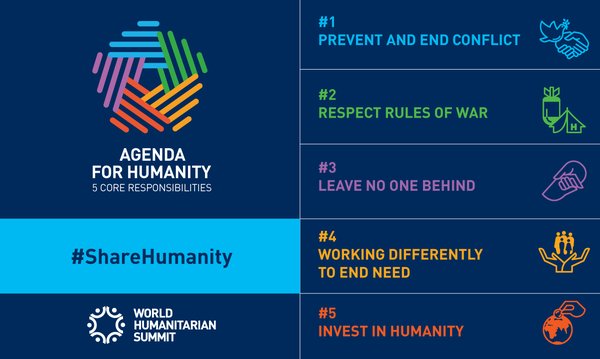





 However when you look on at the inability of the free world to resolve the Middle East problems now it is not an option to turn our backs on Mr Putin latest offer because there has being a cultural shift in the Middle East sparked by West and Smart phones.


 (This is a “think piece” intended to stimulate thought and discussion, rather than a scholarly manuscript.) We just didn’t have time to address every social issue that surrounds education.


