• About
  • THE BEADY EYE SAY’S : THE EUROPEAN UNION SHOULD THANK ENGLAND FOR ITS IN OR OUT REFERENDUM.

bobdillon33blog

~ Free Thinker.

bobdillon33blog

Tag Archives: The Future of Mankind

THE BEADY EYE SAYS: WHAT WE SEE TODAY IS ONLY THE ICEBERG OF ARTIFICIAL INTELLIGENCE

10 Thursday Nov 2016

Posted by bobdillon33@gmail.com in Artificial Intelligence., Big Data., Humanity., Innovation., Life., Technology, The Future, The world to day., Unanswered Questions., What Needs to change in the World, Where's the Global Outrage., WiFi communication.

≈ Comments Off on THE BEADY EYE SAYS: WHAT WE SEE TODAY IS ONLY THE ICEBERG OF ARTIFICIAL INTELLIGENCE

Tags

Artificial Intelligence., Big Data, Capitalism and Greed, Distribution of wealth, Inequility, Technology, The Future of Mankind


(An essential five-minute read)


Artificial intelligence is not just the frozen father of TRANSHUMANISM it will decide much of our future.Afficher l'image d'origine

Clearing away that mental block allows one to see a dazzling landscape of radical possibilities, ranging from unlimited bliss to the extinction of intelligent life.

The future will be filled with digital implants, mind controlled exoskeleton upgrades, age reversal pills, hyper-intelligence brain implants and bionic muscle upgrades.

All of these technologies will literally make us dependent on autonomous inventors of algorithms run by software.  So the sense one gets from this and other futurist predictions is that the future they predict is in the past.

Transhumanism is undeniably being actively pushed by mass media and promoted as something that is necessary and inevitable in the future. That way, when it will actually happen, nobody will be outraged by it, it will be considered as something normal.

But transhumanism will only be available to the richest and most powerful people and the world (the world elite) and will created an even wider gap between the “masses” and the “elite”.

Yes. Change happens, and to the victor belong the spoils.

Mr Trump. Represents the rising power of individuals against states, a growing middle class that will increasingly challenge governments, and ongoing shortages in water, food and energy and climate change.

However Artificial Intelligence in the form of unsupervised algorithms represents the hidden agenda of dying capitalism and where real power will end up. In the hands of a few.

If things continue in the current direction, the future we face will likely feature more starkly enforced social rules accompanied by fewer science achievements.

When machines start to make themselves smarter, without the need for people to make them, very strange things may happen.

As we consider the varieties of human experience of the future, and the kinds of modes through which we may eventually coexist with intelligences other than our own we are deeply irresponsible not to consider any regulations by Universal Laws Governing Scrutability of all technologies using programming algorithms.Afficher l'image d'origineIt could result in a two-tiered society comprising enhanced and nonenhanced persons, a dynamic that would likely require government oversight and regulation.

Soon, man intact with all his natural parts, may be available only in museums.

Advances in information technologies and AI are combining with advances in the biological sciences including genetics, reproductive technologies, neurosciences, synthetic biology.

With our devices becoming twice as powerful every eighteen months with more and more sophisticated algorithms we need to be vigilant even if the programs don’t, learn, understand or anticipate in the way we humans do.

We are entering an age of NEW SOCIAL AND CULTURAL FOUNDATIONS.

You don’t have to look far to see what is happening.

Just yesterday we witness the first autonomous bank robbery in the Uk.

Autonomous systems, whether drones or automated trading systems are infiltrating all our lives.

The democratization of Knowledge by Google and the Internet are turning into the colossal repository of human knowledge.

The human brain via genetic and bio-engineering with the nuclear family as a social unit is coming under fire from Facebook.

There are all sorts of speculation concerning AI.

The truth is that robots are not likely to become self-aware or decide that you are redundant.

As always the threat as ever is us.

Combined this with greed by Algorithmic bias to profit, (This time it will be with blind stupidity beyond anything we have seen before) we will end up relying on systems that are inscrutable because of no one programmed them.

The current regulations which are non existence are already outdated.

For example they don’t recognize that computers are already producing patentable inventions.

Computers are no longer a simple tool but autonomous inventors.

Should the technology be developed in the first place?

To what ends should it be deployed?

How the technology is to go forward, how should it proceed?

How and who do we monitor Technologies to ensure adherence to transparency?

Is the technology committed to equality, available to the less well off?

Is there a level of intervention, and accountability?

Who is responsible when a program goes awry?

We need to consider what limits we place on AI ?

What restrains and safeguards should be placed within these programs?

The list is endless.

If you think that this is all hogwash.

On August 12, 2013, something remarkable took place at the University of Washington. Professor Rajesh Rao sat down in his laboratory and put on an unusual-looking cap, covered with electrodes. This headpiece was connected to an electroencephalography machine – a computer with the ability to read signals from the brain.

Then, with the power of thought, Prof Rao was able to move the finger of his colleague, Andrea Stocco, sitting half a mile away on the other side of campus. Stocco himself had no choice: his body was simply responding to a command sent by Rao, transmitted over the internet.

This historic experiment represented the world’s first human brain-to-brain interface, and was replicated with a further six volunteers in November this year.

ARTIFICIAL INTELLIGENCE AND COMPUTER LEARNING IS PREDICTED TO HAVE A GLOBAL ECONOMIC IMPACT BETWEEN OF $5.2 AND $7 TRILLION BY 2025.

It is going to have impacts way beyond the purely technological and economic.

As Abraham Lincoln said ” You cannot escape the responsibility of tomorrow by evading it today”

Its time for a Independent, transparent, new world Institution, to set the Regulations and Laws governing all aspect of technology.

The out of date United nations is totally incapable of supervising the far reaching effects that Artificial Intelligence is having, or going to have and all of us.

← Back

Thank you for your response. ✨


Share this:

  • Share on WhatsApp (Opens in new window) WhatsApp
  • More
  • Share on Mastodon (Opens in new window) Mastodon

THE BEADY EYE ASKS: ARE YOU INTERESTED IN DOING SOMETHING POSITIVE TO COMBAT CLIMATE CHANGE.

07 Monday Nov 2016

Posted by bobdillon33@gmail.com in Climate Change.

≈ 1 Comment

Tags

Climate change, Earth, Environment, The Future of Mankind

Every day we are warmed and warned by Earth’s stormy heat source the sun.Afficher l'image d'origine

As you all know these days there is little point in proclaiming the rights of ordinary citizens to establish governments to protect human Life, Liberty and pursuit of Happiness – which are all by-products of the sun energy stream!

To save humanity from the scourge of war and to reaffirm rights, dignity and worth of humans we must all contribute to making the world realize that climate change will if not tackled head destroy this plant.

The Paris Climate agreement has somehow or other created a false illusions of control, which in the long run will be either distorted or compromised by our own human weaknesses.

Last year, more than 32 million people around the world had to leave their homes because of climate-related disasters.

If no mitigating actions are taken, significant disruptions in the Earth’s physical and ecological systems, social systems, security and human health are more than likely to occur.

Our attitudes will only result in awareness.

The Sun correctly describe our relationship to the creative force of every atom, life and world in the Solar System.

sun_cme.jpg (1024×1024)

With social media sites virtually becoming a cross-platform of exchanging ideas with many TV programs are now using Facebook and Twitter. Even the government has realised its potentiality and set up twitter and Facebook accounts, presenting in imitative like MyGov web portal which can help in citizen interaction.

Television has a very strong role to play when it comes to reach and address a large target group or audience. However it is sad to see often media is engaged in trivial matters that appeals to masses forgetting the real issues that haunts nation of the world.

When it comes to Climate Change Society is so distracted by technological, physical connections that our deeper, more fundamental spiritual connections to reality are mostly ignored – except when we are individually alone with Nature.

If we define the future as a time that looks different from the present, then most people aren’t expecting any future at all; they expect coming decades to bring more globalization, convergence, and sameness.

They may be right, but when it comes to Climate change it is already affecting the planet and society and will continue to do so for generations to come. The physical and chemical changes of human activities are being felt in natural ecosystems on land and at sea, on farms and ranches, and in cities and suburbs, but the changes are not happening uniformly.

Predicting the long-term consequences is complicated in part because choices we make as individuals and as a society will change those outcomes.

This is where you can make a positive difference:

By promoting Awareness.

To make informed choices about the climate, and prepare for the results of those choices.

You can do this by lobbing you TV station to include in their weather forecasting a section that addresses the problems related to climate change.

By asking your readers or friends to do the same. 

Send the below open notice to you TV Station:


 OPEN NOTICE TO ALL TELEVISION STATIONS.

 Dear Sir or Madam                                                                            6/Nov/2012

As a viewer:

I wish to bring to your attention the need for your, Weather Forecast slot to address to following:

Surely it’s time that your MAIN WEATHER FORECAST SHOULD BE INCORPORATING SOME INTERACTIVE MAPS showing Global Sea Level Rise or Ice melting;  Instead of posting Weather photographs from social media weather watchers.

You have a social responsibility to make your viewers aware that observations throughout the world are making it clear that climate change is occurring. 

To build understanding: Media acts as watchdog to protect public interest against malpractice and create public awareness.

With your help society as a whole will be able to face challenges more successfully. 

Human’s would no longer be human with the future of climate laid out before them.

I wish you well in this challenging, but necessary task:


← Back

Thank you for your response. ✨


Share this:

  • Share on WhatsApp (Opens in new window) WhatsApp
  • More
  • Share on Mastodon (Opens in new window) Mastodon

THE BEADY EYE ASKS: IN VIEW OF THE CURRENT US PRESIDENTIAL ELECTION AND BREXIT IS IT TIME WE LOOKED AT THE VALUE OF A VOTE.

04 Friday Nov 2016

Posted by bobdillon33@gmail.com in Artificial Intelligence., Big Data., Brexit., Elections/ Voting, HUMAN INTELLIGENCE, Politics., Unanswered Questions., What Needs to change in the World, World Politics

≈ Comments Off on THE BEADY EYE ASKS: IN VIEW OF THE CURRENT US PRESIDENTIAL ELECTION AND BREXIT IS IT TIME WE LOOKED AT THE VALUE OF A VOTE.

Tags

Elections, Online voting., The Future of Mankind, Universal Electronic Voice

As the world watches the finishing post arriving to the United States Presidential Election with the potential election of a bombastic, conspiratorial buffoon and a jailable female, both spending millions, you have to wonder is this the best that capitalist democracy can produce.

It begs the questions.

If elections are central to democracy, then how should a society organize the institutions that govern the processes by which government leaders are selected?

Should there be a parliament or a president and a legislature?

Should legislative seats be allocated in proportion to the popular vote, or should the winner in each district take all?

Should there be two, or three or a dozen political parties?

Should the parties be strong or weak, centralized or decentralized, ideologically unified or diverse?

What is the meaning of democracy?Afficher l'image d'origine

Does democratic choice as expressed through popular elections work?

Such Questions or debates are heated because the political stakes could not be higher: institutional arrangements influence the distribution of power; shape the ways that politicians pursue their goals; and constrain the ability of citizens to control their government.

Only through comparative analysis can the relative performance of different democratic arrangements be established.

We have all witness with Barack Obama term how presidential and legislative terms can be politically crippling.

When presidents do not enjoy majority party support in the legislature the potential exists for deadlock and paralysis. Chronic impasse invites regime instability and breakdown which we are currently witnessing with Donald Trump and Hillary Clinton. ( Two unworthy candidates that are buying votes. Two popularly elected, independent institutions that create problems for coalition building and executive legislative cooperation.)  Afficher l'image d'origine

Parliamentary democracy, is more apt to succeed, or so its advocates claim, because it escapes the problems associated with temporal rigidity and majoritarianism, and because the vote of confidence can resolve interbranch conflicts.

The problem with either system is the both entail assumptions about voters: about the information that they possess, the beliefs they hold, and the considerations they bring to bear on the electoral choices they make.

Such assumptions, it is important to point out, are rarely tested.

Coalition governments (common in parliamentary regimes) obscure accountability and reduce the ability of the electorate to assign blame.

For example, proportional representation produces more parties and less disproportionately in the conversion of votes to seats than do plurality and majority systems.

Accountability is also undermined in the presidential systems because voters give too much weight to the personal attributes of presidential candidates and too little weight to issues.

Laws determine how citizens cast votes, how votes are aggregated, and how aggregated votes are converted into positions of governmental authority.

Electoral laws have profound political effects.

We do not possess, the knowledge of the ways in which electoral laws ultimately affect voters and their representation in government.

What are the impact of these laws on individual citizens: on the ways they make choices and on the relationship they establish with their representatives.

They are questions that as yet have no firm answers.

The international economy is undergoing profound changes. With the lowering of barriers to international trade and the globalization of the world economy has come the birth of new economic sectors and the death of others. Some citizens, in some countries, in some economic sectors are thriving; others are failing.

So:  Has there been a shift in the expectations and demands that citizens place on government?

How have these economic changes affected the nature of political cleavages and party coalitions as manifested in opinion, vote choice, party allegiance, and alliances among social groups and economic sectors?

How do differing levels and duration of unemployment influence the relationship between economics and voting?

Does this relationship vary according to differences in economic structure?

Is there a relationship between the long-term strength of a nation’s economy and attitudes towards democracy?

We know little about how differences in political and economic systems impact on the nature of the relationship between economics and politics.

Population growth, industrialization, and the concentration of people into urban centers are placing steep demands on the world’s natural resources. Global environmental changes of profound proportions are taking place. Some scientists argue that these changes to the global environment threaten the very inhabitability of the earth. No nation will be able to escape coping with these environmental issues over the next decade.

Over the last three decades, however, electoral alignments have weakened, party strength has grown increasingly volatile, and party systems have become increasingly fragmented. As a consequence of these trends, social cleavages no longer explain vote choice the way they once did.

We need to measure vote choice in national elections as well as the nature and level of citizen participation in electoral politics.

We must keep in mind that understanding political participation requires an appreciation of the ways that political parties and other organizations mobilize citizens both directly and through social networks.

We need a better understanding of the nature of the relationship between citizens and political parties.

The way you cast your vote can depend on the type of election. Brexit for example. 

The problem with actually implementing a new system, though, is two-fold.

First, the current beneficiaries will do just about anything to preserve their positions, whilst others only see the drawbacks with the system every four years and then forget about them until the next election season rolls around.

But more importantly, any fixes now with Artificial Intelligence programs all have their own downsides.

Electoral systems matter. As a series of rules or procedures for determining who gets to hold office—when, for how long, and under what conditions—an electoral system has an important effect on how politics is practiced and how a country functions.

Parties are adept at changing strategy in response to the rules of the game. There is no perfect electoral system. Electoral systems are consciously designed to reduce the number of parties in a parliament or to provide a boost in seats for the largest party in an election.

It’s too easy to hide code in large software packages. The machines initially displayed an ‘x’ next to his or her name but then, after a few seconds, the ‘x’ disappeared or there is no voter verifiability.

Perhaps the PR electoral system is the best: It encourage the main parties to propose policies with broad public appeal rather than to target small groups of voters.

Voting should be a non-partisan issue.

In the eyes of the whites, we are bobbejaans (baboons).

But one thing is clear: We could do a lot better. Open your eyes.

Is there nothing we can do? or is surveillance capitalism in the form of AI the only way to go. Afficher l'image d'origine

Any Suggestions?

← Back

Thank you for your response. ✨


Share this:

  • Share on WhatsApp (Opens in new window) WhatsApp
  • More
  • Share on Mastodon (Opens in new window) Mastodon

THE BEADY EYE SAYS: TO PUT IT MILDLY, WITH OR WITHOUT ARTIFICAL INTELLIGENCE THE WORLD IS IN A MESS.

27 Thursday Oct 2016

Posted by bobdillon33@gmail.com in Artificial Intelligence., Big Data., Facebook, Google it., Google Knowledge., HUMAN INTELLIGENCE, Humanity., Innovation., Technology, The Future, The Internet., The world to day., Unanswered Questions., What Needs to change in the World, Where's the Global Outrage.

≈ 1 Comment

Tags

Artificial Intelligence., SMART PHONE WORLD, Technology, The Future of Mankind, Visions of the future.


(A ten minute read)

In my last post I said that future societies will be driven by a culture of individuality.

I should have said individuality manipulated by an underbelly of Algorithms exploitation by Artificial Intelligence.

Why?

Because there is enormous opportunity for manipulation in big data. 

Because the internet’s ‘cacophony of stimuli’ and ‘crazy quilt’ of information have given rise to ‘cursory reading, hurried and distracted thinking, and superficial learning’ – in contrast to the age of the book, when intelligent humans were encouraged to be contemplative and imaginative.

Up to now human beings have been organizing their own societies, their own governments and their own religions according to the way that seems right to them from past history.  Not any longer. With the smartphones distracting us from our surroundings we are at the beginning of the technological end of written history.

Thinking use to be the inner activity which is absolutely independent of any other, and is a firm point … from which … one can seek for the explanation of the rest of the world’s phenomena.  Thinking now is asking Google.

The world is becoming increasingly chaotic because the increases in our technologies have made the world highly interconnected.  At the same time, values and ideas which were considered universal, such as cooperation, mutual aid, international social justice and peace as an encompassing paradigm are becoming irrelevant.  In other words, our brains are being rewired by internet.

Nowadays humans are abandoned, left alone to decide what to do with themselves. Everybody must be integrated into the vast cultural homogeneity that is the Internet to the abandonment of Intuitive social sensitivity, which is also disappearing and becoming the fodder of Facebook – selfies and ego. We are raising a generation that is already being exposed to such collaboration.

It’s like a zombie plague:

Our connection with our new creations of Artificial intelligence is limited by our ability to co-evolve with silicon- based machines.

So are we on the brink of intelligence enhancement or will our biological evolution of our species essentially change for the worst?

The organic characteristics of a species is being lost to AI so that beneficial traits cannot be passed onto subsequent generations. What we are presently seeing everywhere in terms of social and individual decay may very well be consequence of an AI world.

Technology will not automatically lead us into a sustainable future and it is becoming impossible if not too late to influence dominant commercial technological trajectories that are run by AI monopolies and are of course for profit.

You would think that algorithms cannot be developed or become widespread and dominant without socio-political, economic, and cultural mechanisms to steer innovation in the “right” or most desirable direction.

You would be wrong.

Unfortunately current science and technology do not deal with morality and ethics.

Corporate unregulated algorithms Software for profit is eating the world.

We need a deeper appreciation for what is lost when a new technology becomes part of our lives as well as what is gained. It requires more value placed on ethics and social responsibility. The degree of depletion of natural resources, including air, water and agricultural soil (what a paradox: our materialistic age is destroying matter), the increasing social and economic instability and misery everyone can observe makes it absolutely urgent that we change something.

Think for ourselves.

In thinking we posses self-determination. There is no machine, not even an abstract one, that has this self-determining feature. Machines inexorably follow their programs or mechanisms – otherwise they would not do what we expect from them.

You be wrong to think that five centuries of European colonialism and global culture-trashing, and the remaking of the world in the economic interests of competing empires, cannot be undone by a single institution and a cluster of lofty ideals.

Just recently five of the largest tech companies got together to create a coalition called The Partnership on Artificial Intelligence to benefit people and society.

No one is asking the cost or hurt that could be done to the world. AI for profit will have no ability to improve social equality.

The power of the smallest of intelligence advancements has the power to yield enormous gains for humans, individual and collective if we ensure that we don’t trade- off our human values to AI algorithms that are already actors holding our future in software programs.

Robots, Drones, High Frequency Trading, Cybercrime, Job Losses, Privacy Infringement. Irritating Personalized Ads, Gaming, Smartphones.

Afficher l'image d'origine

I could be wrong.  There are still people here on God’s green earth who can conduct their social lives without being marketed to. But when you take a long view a global cyber imperialist is being created by AI where traditions are disappearing along with their social cohesive power.

The world’s mess is like a web, so intricate that each issue is intertwined with another. However, instead of unweaving it, the web becomes more complicated and interlaced by the day. So, how do we untangle ourselves from this giant mess?

Your guess is as good as mine.

It all calls for greater transparency of scientific and technological enterprises. Social helmsmanship of technological innovation in the direction of sustainability is a very challenging task.

It’s no wonder we’re all such a mess, is it?

Regardless of how artificial intelligence develops in the years ahead, almost all pundits agree that the world will forever change as a result of advances in AI. The tipping point is already past, digital threads are woven too deeply into human life.

We can’t go back, only forward.

At the moment there are a couple of decades to reset the mindset. It’s a race between technology and education.

We are not recognizing what a living being really is, what being human really means and what human development should mean. There’s something distasteful about the whole business:

I’ll give an example of this situation.

A global campaign by a bunch of Silicon Valley billionaires (The Partnership on Artificial Intelligence) to convert literally everybody into data consumers, to make sure no eyeballs anywhere go unexposed to their ads.

Take a look at the effects of Facebook.

But what about Facebook?

Is it really altering your mind? Absolutely. Significantly.

It is changing the physical structure of your brain’s neural network, which even changes how you feel about yourself and other people. And in ways that may surprise and enlighten you. What it is doing however much the company spins it as altruistic, is really an act of self–serving techno-colonialism.  Impoverishing people’s relationships, stripping out essential elements of human contact.

“Whereas the short-term impact of AI depends on who controls it, the long-term impact depends on whether it can be controlled at all.”

It is time for our out of date world organisation- the United Nations to take a decisive, role to create eye openers for some unpleasant surprises ahead if we are not careful and vigilant about technological innovations. The problem is that the United Nations is incapable of doing so, because  it’s a unity of entities defined by their hatred of one another and committed to the perpetuation of “the scourge of war.”

But the main problem is that the “mindset[s] of government and people have not adjusted to view the future, even though technology is exploding this decade into a world of the Internet of Things and the propulsion into blind artificial intelligence. It will be too late when we all come to realize the number of jobs that artificial intelligence systems are poised to take over.

The narratives we create for the future of Artificial intelligence and subsequent high intelligence will determine our decision-making, consciously and subconsciously..

If we carry our human brain power in a small portable device like Smartphones and IPads we will forget that humans – and plants and animals, for that matter – have not been designed and constructed by humans!

The degree of depletion of natural resources, including air, water and agricultural soil (what a paradox: our materialistic age is destroying matter), the increasing social and economic instability and misery everyone can observe makes it absolutely urgent that we change something.

It takes something more than intelligence to act intelligently. Artificial Intelligence is no match for natural stupidity. 

Man is a hybrid. From a lower order we have been genetically manipulated by advanced intelligences into what we are. Now that in itself is dynamite for god’s sake.

Think about it.

Supersmart AIs will perhaps soon colonize the solar system, and within a few million years the entire galaxy. The universe wants to make its next step towards more and more unfathomable complexity.

When HI plus AI eventually merge we will have the most significant advancement in our capabilities with or without intelligence in History. The unacknowledged legislators of the world.

So Algorithms, the underlying process of decision in Artificial Intelligence systems are imperfect, prone to the bias of profit, and unpredictable decisions that will impact the Future.

The thought of the elimination of human emotions and the fact that the machines can’t distinguish a right from a wrong implies they have and will never have any morals, a vital part of human existence.

It will lead more humans into making unnatural and morally wrong decisions, because of only relying on predictability accuracy of the machine.

The real test of Ai or Super Intelligence is to be a stupid as a human not as smart.   

Wisdom (which seems at the moment in the world to be in short supply) is the bucket of water needed if AI is to learn what we value and not the exclusion of intelligence to these algorithms. 

There is no argument: To make sense of the universe, we sure could use the services of super-smart machines as long as we’re super-sure they know their place that the machine is docile enough to tell us how to keep it under control. Such technology could end up outsmarting financial markets, scientists and political leaders, and developing weapons we cannot even understand.

Most current AI research is being done by big IT corporations including Google, Facebook and Apple, and research groups funded by them.

When genetic codes were cracked the question was asked, will corporate profits trump the public good? The same question applies for AI.

Afficher l'image d'origine

A couple of final thoughts.

There’s a line of speculation that human intelligence will be amplified by the artificial kind, using virtual reality technology, so that it stays ahead of the smartest AI. And intelligence of the human kind is the product of living bodies in a living world. Could the infinite richness of this biological experience be the X-factor that keeps it on top?

There is only one way to make algorithms (that are not contributing to the good of mankind but to profit, to contribute, is to regulate them.

By passing a law that all profit-making AI software must contain a collection chip to contribution a commission of 0.05% to a World Aid Fund.  (See previous post on World Aid Commission)

Just think what such a fund could achieve with a source of perpetual income. It would change the United Nations from a worthless begging gossip shop to an Organisation of value.

Anyone is welcome to challenge !

If you believe your life is mainly a matter of chance don’t bother commenting on this post.

← Back

Thank you for your response. ✨

Share this:

  • Share on WhatsApp (Opens in new window) WhatsApp
  • More
  • Share on Mastodon (Opens in new window) Mastodon

THE BEADY EYE ASKS: IS THE IDEOLOGICAL CORE OF OUR CIVILIZATION HOLLOWING OUT.

21 Friday Oct 2016

Posted by bobdillon33@gmail.com in Artificial Intelligence., Big Data., Communication., Facebook, Google Knowledge., HUMAN INTELLIGENCE, Humanity., Innovation., Life., Social Media., Sustaniability, Technology, The Future, The Internet., The world to day., Unanswered Questions., What Needs to change in the World

≈ Comments Off on THE BEADY EYE ASKS: IS THE IDEOLOGICAL CORE OF OUR CIVILIZATION HOLLOWING OUT.

Tags

Artificial Intelligence., Big Data, Globalization, Inequility, The Future of Mankind, Visions of the future.


The ideological core of our civilization is hollowing out due to technology.

We are living on the parentheses of a new era. Unfortunately most of us don’t know or don’t care, or perhaps its fortunate that it so.

However, I think – WE ARE AT A CHOICE POINT OF A PLANETARY SOCIETY THAT IS GOING TO BE BASED ON INDIVIDUAL CULTURE.

These are the times we were created for and we need to act at this juncture, for the sake of our children’s lives, we must confront hard data and scientific projections that are dire, harrowing to contemplate.

AS LEONARDO DE vINCI SAID ” Learn how to see. Realize that everything connects to everything else”

The Great Grief

Who wants to live in a world governed by algorithms, owned by Google, Facebook, Twitter, Microsoft or Apple.  A smart world run on dumbing down technology such as smart phones.

I don’t.

Our present Science will only be 5% OF SCIENCE IN 2024.

Human nature is shifting to racial empathy which is going to shake the foundations of everything.

History used to take hundreds of years to develop now it is our life time. The maps no longer fit the territory of interactive, the stage of radical history.

We are not quite at the beginning of the new age because we are still haunted by the spectrum of the past but the reset button of history has being hit.

The larger question is how we redirect the collective activity of our species on the planet — if this is even possible.

Collectively, our actions in the next decade may well determine the future of our world.

What does this future actually look like? How do we communicate? How does it function? How is it powered? What value system is it based on? What does it feel like to participate in? What are we eating?

When we consider the short timeframe in which humanity must reckon with the ecological crisis, not to mention the unintended consequences of AI that we have unleashed, we do not have time for chaos and incoherence — for a slow-motion breakdown, the rise of Right Wing despotism, or the political vacuum created by Brexit and the winner of forthcoming US Presidential election.

Pretty soon, people may reach a tipping point, a collective realisation that our social structures — our political and economic system — must be reinvented.  As that realisation dawns, an alternative must be ready with a plan of action, and working prototypes.

To ensure our continuity, we must distribute wealth and resources more equitably across the human community, as a whole.

The last few hundred years, since the Industrial Revolution, were a telescoped process.

During this time, humanity overcame local boundaries and became a globally interconnected species — in a sense, a super-organism. We continuously transform our physical environment to satisfy our needs and desires. Imperialism, colonialism, neoliberalism, capitalism, industrialisation, and even communism are all transitional systems. They meshed humanity together, crudely and brutally, connecting the entire species through networks of communication and infrastructure.

As difficult as it is to imagine, we must overcome the blind spots in our ideologies and belief systems. We must find the path that leads to a harmonic, peaceful unification of humanity.

This requires defining a new form of political economy that supports the restoration or regeneration of the Earth’s ecosystems, while allowing every human being to live decently.

It also means defining a new relationship to technology and innovation.

This relationship requires a New Institution in order to ensure that we address Artificial Intelligence. It must question the capacity of an aggregate of self-interested nation-states, as well as self-interested multi-national corporations, and a tiny coterie of the super-wealthy (the 85 individuals who control more capital than half of the world’s 7 billion people), to make the necessary course correction.

We may well be approach the threshold of ecological catastrophe that will force us to reinvent human society for collective benefit — for the benefit of humanity as a whole, as well as the other species that share this living world. This may seem farfetched , but all current indicators are telling us to do so.

Technology has a crucial role to play in this transition, but its power must be harnessed and mastered for ecological restoration and social evolution not for profit.

To build a regenerative society will require that we supersede the current global financial system, based on debt and compound interest, and use our social technologies to devise an economic system that supports healthy lifestyles and patterns of behavior.

How do we transform our social system to create a resilient or regenerative global society? What kinds of changes will be necessary? These questions must be asked, even as they shake the very foundation of our society…precisely, because they do.

For example, we must ask whether we want to reformed capitalism by enforcing it to become a “conscious capitalism.” By placing a World Aid Commission on all High Frequency Trading, on all Sovereign Wealth Funds Acquisitions, on all Foreign Exchange Transactions over ( 20, 000 $), on all Arms sales. ( See previous posts) Transitioning

Humanity has overlaid roads, train tracks, fiber optics, urban and suburban sprawl, across the surface of the planet. We have also constructed a global communication infrastructure, like a planetary nervous system, that allows humanity to communicate instantly, from anywhere across the globe.

If we can marshal our resources to confront the ecological mega-crisis, we can define a path beyond it that integrates cradle-to-cradle principles, biomimicry, and other principles that are symbiotic with nature, eventually producing abundance for all, while enhancing the health of the biosphere.

What sustainability seeks to sustain, above all, is some version of our current way of life, even though the evidence is totally overwhelming that it cannot continue.

Living processes, generally, don’t just endure or persevere. Life either flourishes and blooms, evolves and transforms, or it stagnates and dies. The rhetoric of sustainability tends to support the belief that our current form of post-industrial capitalism can be reformed — that it can persist, in something close to its present order.

If you take the time to look closer on today’s situation, through the veil of ignorance, it becomes apparent that most of our worldviews are still based on lies and that fear and lies are the prominent method of control today.

We are shortly going to witness the election of a new US president in a country where military expenditures dwarf the rest of the world but 1 in 5 U.S. children go hungry every night.

What do we see:  A rich blowhard running for president. Tech-bro execs hoping to splinter off into their own anything-goes fiefdoms.

Afficher l'image d'origine

Technology has been the leading engine of change for the past 100 years and will continue to do so.  The battle for the living room is currently in a full-out war between the leading tech companies – Microsoft, Apple, Google, Facebook, Netflix.

Facebook has surpassed the country of India, making it now the second largest country in the world.

This is creating a world where people think that they are engaged. A social and virtual world that is now just a marketing tool.

Sustainability.

In my view, the current language around climate change and its solutions is totally inadequate.

To motivate us to start the change we need to understand the root of today’s problems and see the ruling structures for what they are, and see how we all are a part of that structure.

Around the world, millions of children are trapped in an intergenerational cycle of disadvantage.

Is it time to abandon the concept altogether, or can we find an accurate way to measure sustainability? If so, how can we achieve it? And if not, how can we best prepare for the coming ecological decline?

The main difference of today’s way of manipulating the society is that the controlling powers choose to be hidden and are no longer showing their glory to the people. Instead they have made an illusion that the power is located in the hands of the democratically elected governments.

Afficher l'image d'origine

With so much labeled as sustainable, the term has become  essentially sustainababble, at best indicating a practice or product slightly less damaging than the conventional alternative.
Inequity

We are in dire need of a large dose of Empathy and honesty:

Empathy transcends all the properties of the esoteric power structures.

Empathy means to try to understand and listen to the feelings and needs of ourselves and others.

Sustainable development is development that meets the needs of the present without compromising the ability of future generations to meet their own needs.Regenerative

← Back

Thank you for your response. ✨

Share this:

  • Share on WhatsApp (Opens in new window) WhatsApp
  • More
  • Share on Mastodon (Opens in new window) Mastodon

THE BEADY EYE SAYS: WE CAN BE PROUD OF OURSELVES.

08 Saturday Oct 2016

Posted by bobdillon33@gmail.com in The world to day., Unanswered Questions., United Nations, Where's the Global Outrage., World Organisations.

≈ Comments Off on THE BEADY EYE SAYS: WE CAN BE PROUD OF OURSELVES.

Tags

The Future of Mankind, THE UNITED NATIONS, World aid commission


( A two-minute read – the first of a series that looks at our World Organisations.)

If we take a selfie of the world looking back over the last ten years can we be proud of what we have achieved.

Where better to start than with the United Nations our main World Organisation.

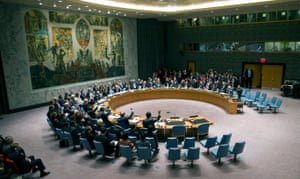
The former Prime Minister of Portugal, Antonio Guterres until recently was the UN High Commissioner for Refugees, he is now the new United Nations Secretary General, after a third security council secret ballot on Monday.The United Nations Security Council

The United Nations has saved millions of lives and boosted health and education across the world. But it is bloated, undemocratic – and very expensive.

There are about 1,200 country offices of the UN around the world.

There are 100 countries with more than 10 UN country offices in each country.

Half of the United Nations money goes for the operational expenses of these office, leaving what is actually a minuscule amount of money for programming or key activities. Even accounting for inflation, annual UN expenditure is 40 times higher than it was in the early 1950s. Its regular budget, which is agreed every two years and goes to pay for the cost of administering the UN – including mouth-watering daily allowances which result in many of its bureaucrats being far better paid than American civil servants – has more than doubled over the past two decades to $5.4bn.

But that is just a small portion of the total spend.

Peacekeeping costs another $9bn a year, with 120,000 peacekeepers deployed mostly in Africa. Some missions have lasted more than a decade. And then there are the voluntary contributions from individual governments that go to fund a large part of disaster relief, development work and agencies such as UNICEF. They have risen sixfold over the past 25 years to $28.8bn. And yet even at that level, some agencies are warning that they are operating on the brink of bankruptcy.

The organisation now encompasses 17 specialised agencies, 14 funds and a secretariat with 17 departments employing 41,000 people.

As the UN marks the 70th anniversary of its founding this autumn, those imperfections – and how the UN addresses them – have come to the fore as the organisation struggles to define its role in the 21st century.

It has become overly bureaucratic and slow in the way it dealt with development issues.

What that tells you is that modern management and modern strategic planning is late coming to the UN.

The UN’s taste for setting goals at the expense of delivering results failed the poorest and most vulnerable.

Cooperation between organisations has been hindered by competition for funding, mission creep. The organisation has grown so big that at times it is working against itself. It is so fragmented that each agency has its own IT system. About one-third of the UN operations in 60 countries had a budget of less than $2m per agency.

However the UN cannot be ignored. Neither can the UN’s huge logistical capabilities, such as the World Food Programme’s airlifts, be matched by any private organisation.

The United Nations of today is hugely different from the United Nations 70 years ago, and therefore it is very important the United Nations changes and adapts itself to changing circumstances.

What we have now is another multiplication of targets and goals which are an extraordinarily comprehensive assessment of what’s needed to be done but there’s no operational clarity around them. Who’s going to do it? Who’s going to monitor it? Who’s accountable for it?

There seem little point in saying anything to the UN about what they should be doing, as it is out of date gossip shop, with no responsibility. Where is the conversation happening which says that, in 2016 and beyond, what is the United Nations there for?”

What should be the core activities of the UN that should receive a significant proportion of the regular funding of the UN?” In the context of what’s happening today, a few million is not going to make any difference. ( See previous posts on 0.05% Aid Commission)

But the bigger obstacle to reform perhaps comes from the UN members states themselves. Which raises what many consider the real obstacle to remaking the UN for the 21st century – that its most powerful body is still locked in 1945.

The five permanent members, the victors over Germany and Japan, hold the whip hand through vetoes.

For all the noise from the US, Britain and France in particular about modernising the UN, they show no willingness to give up the power they wield sometimes in ways governed entirely by political interest.

Since 1982, the US has used its security council veto to block resolutions critical of Israel 35 times. The total number of resolutions blocked by other permanent members over the same period is 27. More recently, Russia and China have used their vetoes to block UN intervention in Syria.

There is little doubt the Mr Antonio Guterres with or without Artificial Intelligence is going to have a lot more refugees on his hands.

The United Nations is an organization of sovereign States, which voluntarily join the UN to work for world peace. There are six main organs of the United Nations—the General Assembly, the Security Council, the Trusteeship Council, the Economic and Social Council, the International Court of Justice, and the Secretariat.

It’s time to break up the Organisation into specific separate Units and to do away with the veto powers that elected him.

We can be Proud.

← Back

Thank you for your response. ✨


Share this:

  • Share on WhatsApp (Opens in new window) WhatsApp
  • More
  • Share on Mastodon (Opens in new window) Mastodon

THE BEADY EYE SAYS: ITS TIME WE ALL STARTED ASKING SERIOUS QUESTIONS WHEN IT COMES TO ARTIFICIAL INTELLIGENCE.

04 Tuesday Oct 2016

Posted by bobdillon33@gmail.com in Artificial Intelligence.

≈ Comments Off on THE BEADY EYE SAYS: ITS TIME WE ALL STARTED ASKING SERIOUS QUESTIONS WHEN IT COMES TO ARTIFICIAL INTELLIGENCE.

Tags

Artificial Intelligence., Google ambitions, Google/Amazon/Facebook/Twitter, SMART PHONE WORLD, The Future of Mankind

( A Fifteen minute read)

John McCarthy, inventor of the programming language LISP, coined the term “artificial intelligence” in 1955. The notion of intelligent automata, as friend or foe, dates back to ancient times.

You might think with the state of the world we live in that this is some what a naive subject.  If you are like me, when it comes to Algorithms I have little or no understanding other than they are beginning to reshape my living life.Afficher l'image d'origine

Ironically, in the age of the internet and unparalleled access to information, the most critical questions are out-of-bounds.

While the web has broken down the boundaries between different nations, so you can read a blog by anybody, anywhere in the world, on the other hand all our laws and governments remain in national boundaries. Outside of that we have very limited amount of effective governance, collaboration and co-operation and understanding.

Moreover, while we are clearly pretty good at producing knowledge, using this knowledge – that is separating the wheat from the chaff and integrating this together into something useful – is a big problem particularly in fields such as global sustainability.

One of the things we ought not to do is to press full steam ahead on building super intelligence without giving thought to the potential risks. Even if the odds of a super intelligence arising are very long, perhaps it’s irresponsible to take the chance.

As far as I am aware there are no current regulation or laws governing the use of AI. It is penetrating all nooks and nannies, de-privatizing us, turning us into points at job interviews, with algorithm replaced the loan officer.

They are fundamentally reshape the nature of work.

So what will happen when a computer becomes capable of independently devising ways to achieve goals, it would very likely be capable of introspection—and thus able to modify its software and make itself more intelligent. In short order, such a computer would be able to design its own hardware avoiding any laws, ethics, or any human morality.

A case in kind is in the area of autonomous weapon systems ie Drones.

While I am fully aware that the world faces many problems that could be solved by Artificial Intelligence we must before it’s too late give AI a set of values. And not just any values, but those that are in the best interest of humanity. This is the essential task of our age and since humans will never fully agree on anything, we’ll sometimes need it to decide for us—to make the best decisions for humanity as a whole.

How, then, do we program those values into our (potential) super intelligences? What sort of mathematics can define them? These are a few of the problems.

We’re basically telling a god how we’d like to be treated. How to proceed?

It’s tempting to dismiss the notion of highly intelligent machines as mere science fiction,” Hawking and others wrote in a recent article.” But this would be a mistake, and potentially our worst mistake ever.

There is no doubting in many ways, AI innovations could simply help scientists to do their jobs more efficiently – thereby cutting the crippling time lag between science and society. They would have the insight and patience (measured in picoseconds) to solve the outstanding problems of nanotechnology and spaceflight; they would improve the human condition and let us upload our consciousness into an immortal digital form.

Algorithms that ‘learn’ from past examples relieve engineers of the need to write out every command.

Indeed if humanity has to leave earth there will be a need for such machines.

For example, could machine learning algorithms delve deep into the previous five assessment reports of the Intergovernmental Panel on Climate Change and, based on research published since the last report, provide rudimentary conclusions of the sixth report?

Potential future uses of AI programs like AlphaGo could include improving smartphone assistants such as Apple’s Siri, medical diagnostics, and possibly even working with human scientists in research.

AI could have many benefits, such as helping to aid the eradication of war, disease and poverty.

But if we want unlimited intelligence, we had better figure out how to align computers with human needs before the intelligence of machines exceed that of humans—a moment that futurists call the singularity. It is vital that humans programme robots to understand the “full spectrum of human values”, because the stakes are very high. After all, if we develop an artificial intelligence that doesn’t share the best human values, it will mean we weren’t smart enough to control their own creations.

Technology is take on increasingly personal roles in people’s daily lives, and will learn human habits and predict people’s needs. Anyone with an iPhone is probably familiar with Apple’s digital assistant Siri.

For example, AI could make it easier for the company to deliver targeted advertising, which some users already find unpalatable. And AI-based image recognition software could make it harder for users to maintain anonymity online.

If we look at current state of affairs a 2013 study by Oxford University estimated that Artificial Intelligence could take over nearly half of all jobs in the United States in the near future.  Automation has become an increasingly common sight the number of robots in factories across the world rose by 225,000 last year, and will rise even further in the coming years – and it is not just in manufacturing.

AI is only getting better, as computational intelligence techniques keep on improving, becoming more accurate and faster due to giant leaps in processor speeds.

Perhaps we should first ask, does science need disrupting? Yes.

Access to reliable knowledge – the academic literature – is becoming a fundamental bottleneck for humanity. There are now over 50 million research papers and this is growing at a rate of over one million a year. Over 70,000 papers have been published on a single protein – the tumor suppressor p53.

How can any academic keep up? And how can anyone outside of academia make sense of it all – the public, policy makers, business people, doctors or teachers? Well, most academics struggle and the public can’t – most research is locked behind pay walls.

With techniques like deep learning (Deep learning,” that allow a computer to do things such as recognize patterns from massive amounts of data. For example, in June 2012, Google created a neural network of 16,000 computers that trained itself to recognize a cat by looking at millions of cat images. For a computer to recognize a picture of a cat, the machine has no volition, no sense of what cat-ness is or what else is happening in the picture, and none of the countless other insights that humans have.) laying the groundwork for computers that can automatically increase their understanding of the world around them.

However possessing human like intelligence remains a long way off and what is called the singularity,” when machine intelligence exceeds human intelligence is still in the realms of science fiction.

That said Stephen Hawking has warned that because people would be unable to compete with an advanced AI, it “could spell the end of the human race.”

AI misunderstand what computers are doing when we say they’re thinking or getting smart.

Considering that the singularity may be the best or worst thing to happen to humanity, not enough research is being devoted to understanding its impacts.

In some areas, AI is no more advanced than a toddler.

Yet, when asked, many AI researchers admit that the day when machines rival human intelligence will ultimately come. The question is, are people ready for it?

Regardless of how artificial intelligence develops in the years ahead, almost all pundits agree that the world will forever change as a result of advances in AI.

The AI genie has already been released from the bottle and there is no way to get it back in.

No one is suggesting that anything like super intelligence exists now. In fact, we still have nothing approaching a general-purpose artificial intelligence or even a clear path to how it could be achieved. Recent advances in AI, from automated assistants such as Apple’s Siri to Google’s driverless cars, also reveal the technology’s severe limitations.

The problem is that a true AI would give any one of these companies( Microsoft, Apple, Google, Facebook, you name them) an unbelievable advantage.

For example, Google has the Google app, available for Android phones or iPhones, which bills itself as providing “the information you want, when you need it.

Google now can show traffic information during your daily commute, or give you shopping list reminders while you’re at the store. You can ask the app questions, such as “should I wear a sweater tomorrow?” and it will give you the weather forecast. Given how much personal data from users Google stores in the form of emails, search histories and cloud storage, the company’s deep investments in artificial intelligence may seem disconcerting.

Advances in technology will push more and more companies to favour capital over labour, they will leave the majority behind.

That may be about to change. Here below are five ways AI looks set to disrupt science.

1. Science mining #1: Iris.AI

2. Science mining #2: Semantic Scholar

3. From miner to scientist

4. Science media: Science Surveyor

5. Open Access AI: Open.ai

The short-term impact of AI depends on who controls it, the long-term impact depends on whether it can be controlled at all.”

After all, AI systems aren’t consumers and consumers are the sine qua non of economic growth. Hairdressers are judged to be less likely to be out of a job in 20 years than economists.

Perhaps the problem is in the description ( Artificial Intelligence)  AI intelligence will not necessarily lead to sentience.

But what if intelligent machines are really just a new branch on the tree of evolution that has led us from the original Protists to where we are today?”

A species to be aided in its evolutionary process by another species called us.

The idea that computers will eventually develop the ability to speak and think with a conscious.

It’s a race between technology and education.

The mindset of the government and people have not adjusted to view the future, even though technology is exploding this decade into a world of the Internet of Things and the propulsion into artificial intelligence.

No one gains if the world’s Intelligence ends up in the hands of a few.

As artificial intelligence becomes a much more “dominant” force in future it will poses “commercial and ethical questions”

What, after all, is an android but a puppet with a computer program pulling its strings?

When I tell my phone I’m hungry and feel like eating Chinese it raises a really interesting question: Who is Siri working for? Is Siri working for me? Is it Siri’s job to find me the best Chinese meal or is Siri working for Apple and trying to get as much money as possible for Apple by auctioning the fact that they have a hungry consumer attached to it and desperate for food? The ethical debate is about who does AI work for.”

Every time you open a new social media site you can create completely new rules of the road and I think we’ll move beyond some of the things we have today.

One of the big challenges will be preserving those existing identities while creating a global culture.

We need a global culture to be able to talk about refugees and finance and tackle issues like global warming and science, and cure cancer. For these huge challenges we need to use the web to work as a whole planet, like one team.

What will make a massive difference is if we manage to design democratic, and scientific and collaborative systems which allow us to function as a planet.”

David Levy believes that, in the 2050 age, human and robots can be able to marriages with each other and it will be legal activity in many countries. But that’s was only a someone’s opinion, not a theory based or any legal law.

Why most AI are Female’s ? “.

What is hard is imagining how we humans will fit into a robot-filled future.

Finally, there is no end to the ways that humans can productively work with one another if they are no longer driven by the conflicts of scarcity.  Perhaps we will learn to love our robots.


An after thought. 6/Oct/ 2016.

There is extraordinary potential for AI in the future.

But it’s not the future that I wish to address rather the present.

AI is already making problematic judgements that are producing significant social, cultural, and economic impacts in people’s everyday lives. AI and decision -support systems are embedded in a wide array of social institutions from influencing who is released from jail to shaping the news we see.

The results or impact is hard to see. It is critical to find rigorous ways to make them visible and accountable. We need to know when automated decisions are materially affecting our lives, and if necessary , to contest them.

This won’t be achievable by the United Nations, or National Governments.

Any suggestions.

← Back

Thank you for your response. ✨


technological unemployment”.


.


Will there be enough good jobs to keep the global economy growing?


This is not the same as acting as a food stuff, where the existence of an earlier species acts as the food or fuel that allows those higher up the chain to exist and evolve.

selective breeding (unnatural selection), where human intervention is used to provide a characteristic,

the first option [is the] the evolution of some very clever tools, weapons, and body parts that become an integral part of the human species tree; or the second option … a new branch on the tree of evolution; or the third option an extension of the human branch.”


The greatest worry is the number of jobs that artificial intelligence systems are poised to take over.


Most of the best jobs that will emerge will require close collaboration between humans and computers.

As some professions become obsolete, more knowledge may not lead to higher pay either, because everyone will be bidding for the same work, which could drive wages down.


such as the promise of a guaranteed income to ensure people do not fall into the cracks. Others argue that a negative income tax would be better because it incentivises work.


Share this:

  • Share on WhatsApp (Opens in new window) WhatsApp
  • More
  • Share on Mastodon (Opens in new window) Mastodon

THE BEADY EYE SAYS: THE TIME TO BE EMPATHETIC IS TO DAY. THIS MINUTE. NOW..

26 Monday Sep 2016

Posted by bobdillon33@gmail.com in Communication., Emotions., European Union., HUMAN INTELLIGENCE, Humanity., Life., Modern Day Democracy., Natural World Disasters, Social Media., The Refugees, The world to day., What Needs to change in the World

≈ Comments Off on THE BEADY EYE SAYS: THE TIME TO BE EMPATHETIC IS TO DAY. THIS MINUTE. NOW..

Tags

Capitalism and Greed, European Union, Globalization, Inequility, The Future of Mankind, THE UNITED NATIONS, World aid commission


Our world is quickly becoming a desolate island, a screen that we hold six inches in front of our noses, and it’s a hard pill to swallow.

Because of this, we lose touch with nature, we lose touch with reality, we lose touch with each other. We seem to have forgotten the basic tenets of empathy.Afficher l'image d'origine

We have become such a technology-based society, that we have forgotten how to feel. We have forgotten how to relate. We have forgotten how to connect among other humans, let alone with other sentient animals.

We seem to have forgotten what it feels like to be in someone else’s, or some other animal’s, proverbial shoes.

Here in lies one of the major problems.

Some time ago, (some) humans stopped showing empathy, and started killing indiscriminately — people, and other animals. We kill each other over political differences, racial differences, religious differences, and resources. We kill animals for “research,” or for competition and sport, or for a token.

In a world where there is so much doom and gloom about the state of our environment it’s no surprising that the world has lost 10% of its wilderness areas in the past 20 years. The growth of our modern civilisation, spurred on by technological innovations, has been underpinned by the exploitation of the natural environment. Today, a large fraction of the Earth, once swathed in wilderness, is now monopolised by humans. Although the direct causes of wildlife loss are clear enough, what’s less obvious is why many people seemingly don’t care. Society’s ongoing destruction of the environment can be put down to the fact that not enough people value nature and wilderness any more.

Expanding human demands on land, sea and fresh water, along with the impacts of climate change, have made the conservation and management of wild areas and wild animals a top priority.

For some species, our time to see them is rapidly running out.

The richer we are and the more we consume, the more self-centred and careless of the lives of others we appear to become

Human attitudes towards wild nature and wildlife have, historically, been ambivalent.

It seems to me that there are currently two main approaches to wildlife management.

One: The wise use approach aims to accommodate humanity’s continuous use of wild nature as a resource for food, timber, and other raw materials, as well as for recreation.

Two: The preservationists, whose goal is to protect pristine nature, not to use it, carefully or otherwise. Wild places should be allowed to develop on their own with as little interference from humans as possible.

Neither work:

For years we’ve been told that people cannot afford to care about the natural world until they become rich; that only economic growth can save the biosphere, that civilisation marches towards enlightenment about our impacts on the living planet. The results suggest the opposite.

There is only one way to protect what is left.Afficher l'image d'origine

Protected areas, like national parks and wildlife refuges, are the cornerstones of global conservation efforts.

We must pay for it.  Either by buying the land or paying the locals to maintain it.

Why is it so difficult to persuade people to care about our wonderful planet, the world that gave rise to us and upon which we wholly depend?

Because we lack empathy. Empathy is defined as: the capacity to understand or feel what another being (a human or non-human animal) is experiencing from within the other being’s frame of reference, i.e., the capacity to place oneself in another’s position.

Without it we all have different values that give rise to conflicts or dilemmas.

The way in which these different values are prioritized will determine policy of conservation in the future.

For instance, there may be a conflict between sustaining certain human livelihoods and preserving a particular species, or there may be a dilemma between the protection of wild nature and animal welfare.

The question, then, is how we should address such dilemmas and disagreements. The first thing to note, in trying to answer this question, is that the rich anglophone countries are anomalous. The more we consume, the less we feel.

Our erroneous belief that we are more concerned about man-made climate change than the people of other nations informs the sentiment, often voiced by the press and politicians, that there’s no point in acting if the rest of the world won’t play its part.

Our refusal to stop pumping so much carbon dioxide into the atmosphere is pure selfishness. The more harm we do, the less concerned about it we become. And the more hyper consumerism destroys relationships, communities and the physical fabric of the Earth, the more we try to fill the void in our lives by buying more stuff.

In modern debates about wildlife, however, other values have become increasingly important. We don’t know exactly how ecosystems will respond to climate change but you may rest assured that with rising sea levels nature will be the last to be rescued.

Sustaining interest in this great but slow-burning crisis is a challenge no one seems to have mastered. Only when the crisis causes or exacerbates an acute disaster – such as the floods – is there a flicker of anxiety, but that quickly dies away.

So the perennially low-level of concern, which flickers upwards momentarily when disaster strikes, then slumps back into the customary stupor, is an almost inevitable result of a society that has become restructured around shopping, fashion, celebrity and an obsession with money.

It’s hard to understand how anyone could imagine that economic growth is a formula for protecting the planet.

How we break the circle and wake people out of this dream world is the question that all those who love the living planet should address.

Just look at the United Nations:

For the first time in UN history, candidates seeking to replace the organisation’s secretary-general have held a live debate, presenting the case for their candidacy and taking questions from UN member states on key global issues.

All previous secretary-generals were chosen behind closed doors by the UN’s permanent five members: the US, China, Russia, France and Britain.

This remains so:  The permanent five UN Security Council members still fix “who is going to be selected behind closed doors. Don’t think for a moment that the permanent members are going  give up powers they won after World War II readily. Hand-picking the UN secretary-general is still one of their trump cards.

The possibility of  the United Nations getting an energetic idealist to shake up the world body by streamline archaic UN systems, to stand up to the big powers and do more to end wars, and fight poverty is as remote as ever.  It will remain both bloated and overstretched with its staff more interested in winning promotions than fighting malaria, climate change and regulating poverty or stopping wars, not to mention protecting what’s left of nature.

So long as it has to beg for funds it will remain a worthless gossip shop.  ( See previous posts)

There will be no easy answers.

As Leonard Da Vinci said,

” Learn how to see. Realize that everything connects to everything else.”

Empathy is about being we-focused rather than I-focused and understanding that, collectively, we are better off when we step outside of our silos. As a leader, you must emphasize value, not just transactions; people, not just processes.

Empathy brings the big picture into focus.

← Back

Thank you for your response. ✨


Share this:

  • Share on WhatsApp (Opens in new window) WhatsApp
  • More
  • Share on Mastodon (Opens in new window) Mastodon

THE BEADY EYE ASKS: WHAT ARE THE PRESENT GREATEST THREAT TO THE WORLD.

17 Saturday Sep 2016

Posted by bobdillon33@gmail.com in Artificial Intelligence., Big Data., Climate Change., Humanity., Life., Technology, The Future, The world to day., Unanswered Questions., USA Presidential Election, What Needs to change in the World, Where's the Global Outrage., World Organisations.

≈ Comments Off on THE BEADY EYE ASKS: WHAT ARE THE PRESENT GREATEST THREAT TO THE WORLD.

Tags

The Future of Mankind, To days world threats., Top World Threats, Visions of the future.

( A Six minute Read)

If you were to be asked this question the answer might not be as obvious as you think.

You might say for example: Climate Change, Wars /ISIS, Inequality, Fresh Water, Nuclear Weapons, Donald Trump, Drugs, the list is endless.

All of these are reversible if we applied an ounce of collective world intelligence.

If you were honest with ourselves you would have no option but to point the finger at us as the greatest threat to the world.

It’s difficult to think of a problem in today’s world that it doesn’t either cause or compound by humanity. This is our greatest challenge: learning to live in a crowded and interconnected world that is creating unprecedented pressures on human society and on the physical environment.

Afficher l'image d'origine

Here are two of the greatest threats:

The Smartphone and AI. 

With more than 1 billion users worldwide and 2.5 million apps — and counting — available across Google and Apple’s digital marketplaces, smartphones are impacting day-to-day life in some surprising ways.

The smartphone’s role in shaping human interaction is far-reaching,whose functionality is constantly evolving and is now a pocket-size PC. The device seems to have limitless potential.  The majority of Internet traffic (60 percent) now comes from mobile devices.

Smartphones are affecting how the brain processes information. Google, fields more than 1 billion search queries per day — is changing how the brain catalogs knowledge. Smartphones have become a kind of “external memory source.”

We are becoming symbiotic with our computer tools, growing into interconnected systems that remember less by knowing information than by knowing where the information can be found.

Information is so rapid and up-to-the-minute. … Ten years ago, we’d all be crowding around a television to hear what’s happening, and now we have our phones.

There’s no longer an excuse for stupidity.

Future generations will have different priorities about what they choose to remember. Smartphones will become more than just a device in our pockets but something closer to a digital extension of ourselves.

The threat to the world is not that machines are taking over. It’s that they’re helping us to be more human, helping us to connect with each other regardless of geography.

60 percent of users don’t go more than an hour without checking their phone.

36 percent of smart phone users would rather give up their TV than their smart phone.

There are more than 125 million people in the Middle East region are online, and more than 53 million actively use social networks.

The widespread use of smartphones was a defining factor in the development of the spread of Arab Spring both in how protesters shared information with one another and how events were documented by legions of impromptu citizen journalists.

Now combine the Smartphone with the impotence of global governance combined with the lack of Inspirational leaders there is an ever growing pool of evidence that we are all becoming dependent on  AI-powered assistance intelligence (without a conscience or any long-term planning.)

Afficher l'image d'origine

As AI advances, it will embed itself even deeper into our social fabric, shaping everything from how we do business to how we receive medical care.

It will become so commonplace that we will dependent on it. The technology may pit us against our own human nature:

What happens to risk, or the humanistic notion of what is true, when everything is based on everyone else? When our digitized advisors aggregate, average, and assuage, are we even autonomous beings anymore?

Political positions, financial decisions, attitudes toward social justice—our biggest decisions are often fueled by poor logic and misinformation. In the best circumstances, artificial intelligence could save us from ourselves, by helping us understand each other, see the world more clearly, and collectively make better decisions.

However if we do not acknowledge and take on board people’s valid concerns with AI we risk seeing the potential benefits of these technologies lost under a mountain of fear and negativity.

We need our out of date United Nations to have a mature, informed and inclusive world meeting about the future of automation and the potential impact of new technologies in order to ensure that this new power is used responsibly in the economic and moral sense.

At the moment there is no proper regulation around the use of AI.

Of course the UN is incapable of holding such a meeting so perhaps it is time for a new Institution called World Click (for example) to bring the whole of technology under a world umbrella.

If we care about the world we live in, we should think long and hard about the interfaces, rules, and policies that will govern artificial intelligence and our new way of life.

It would be easy enough for the people who design AI systems, motivated by greed, self-interest, or politics, to train computers to manipulate our lives in subtle and insidious ways, essentially lying to us through the algorithms that guide our thinking.

The coming tidal wave of decision support threatens to give very few people a phenomenal amount of suggestive power over a great many people—the kind of power that is hard to trace and almost impossible to stop.

Every day, Capitalism and the free market is moving into a digital age which is run more and more by algorithms that will only make those that own them richer while the world is about get poorer and poorer due to Climate change.

What is the alternative? Is there an alternative?

Global governance failure is the most interconnected of the global risks—it has a direct connection with 75% of the all the risks covered in this blog.

Of course the next threat Climate Change has the potential to wipe most of us of the face of the earth.  

Changes in climate and weather patterns worldwide are converging with social trends, shifting populations, land use change, and increasingly impaired water infrastructure to dramatically make life worse for those across the globe.

Climate change poses several challenges to water management strategies including extreme events, dwindling water supply, and the increasingly incorrect assumption that the past will accurately predict future conditions.

Simply put Climate change “is the greatest collective challenge we face as a human family.  It like AI has the capacity to change the way all of us live.

In much the same way great powers have fought wars over land and oil, we could see battles for the control of freshwater supplies.

Next Inequality.

The growing disparity in the wealth inside countries and among countries is a challenge the world has faced for centuries.

At the end of the 9/11 era, politics is driving the global economy, while economics drives geopolitics. All of this is playing out against a volatile G-Zero backdrop of global leadership in short supply.

Chronic fiscal imbalances are going to emerge as one of  the greatest global risk over the next decade.

Moving On. Fresh Water/ Food.

The potential for food crises in poor countries due to Climate change will  cause governments collapse. Sustaining growth will be one of the century’s big challenge.

An estimated 4bn to 5bn people in the world suffer from strained access to clean water, with the Middle East in particular likely to be a hotspot for struggles around water supply. Agriculture already accounts for on average 70pc of total water consumption and, according to the World Bank, we would need to ramp up food production by 50pc by 2030 to meet the needs of the world’s population.

Not forgetting Energy.

Satisfying ever-growing energy demand in a sustainable way has become the world’s biggest challenge.”


On top of all that we live today under the threat of global terrorism….Cyber is probably the threat least known, most ignored…and eventually…could be the most catastrophic….

Then we have, the spread of nuclear weapons, and selling of arms.

A potential Donald Trump presidency could be more dangerous to the world’s economy than the rising tide of global terrorism. The greatest risk to global stability over the next 20 years may be the nature of America itself.

If you have got this far I am sure like me you are saying so what.  We fucked no matter what we do.

Not so.

We are on the threshold of a new revolution maybe without a leader but thanks to Technology we have the Smartphone that if called upon could be turned into World people’s power to demand change.

To stop Profit for Profit’s sake, To stop arms trading, To stop CO2 emissions, To stop Wars, to create if not a fair world at least a transparent justice first world before we contaminate the rest of the universe.

The fact is if a million smartphones were to campaign on a daily basis change could be achieved.   Of all the threats to human society they have the silent power to unite the little consensus that there is left amongst us all.

← Back

Thank you for your response. ✨


Share this:

  • Share on WhatsApp (Opens in new window) WhatsApp
  • More
  • Share on Mastodon (Opens in new window) Mastodon

THE BEADY ASKS: WHERE IS ALL OF THIS WIFI COMMUNICATION LEADING US.

20 Saturday Aug 2016

Posted by bobdillon33@gmail.com in Artificial Intelligence., Big Data., Google it., HUMAN INTELLIGENCE, Humanity., Innovation., Life., Modern Day Communication., Social Media., Technology, The Future, The Internet., The world to day., Unanswered Questions., WiFi communication.

≈ Comments Off on THE BEADY ASKS: WHERE IS ALL OF THIS WIFI COMMUNICATION LEADING US.

Tags

Capitalism and Greed, Globalization, SMART PHONE WORLD, The Future of Mankind, Visions of the future., Wifi Revolution, WiFi.


This post continues with the theme of Intelligence.  (Four minute read)

The Beady eye has in previous post addressed the chaotic world of social media under the headings of are we all being Googlefied, Twitterised, and becoming Selfied by Facebook.

THIS VERY MOMENT PROGRESSION is TOWARDS MONITORIATION by WiFi.

It’s hard to imagine what life would be like without the internet. Afficher l'image d'origine

Social media sites have taken over our lives with most people existing in a rapidly moving and complex world.

People are living in a world ‘saturated by media sounds and images.

It’s even harder to even imagine that 10 years ago there was no Facebook or Twitter!

With Facebook becoming more of a medium for self-promotion.

So here is my feeble attempt to cast an overview of what is happening to society as a result of what I call the continuing dissociation with real life.

The world as it is represented by society today has become a very big place with the internet changing the world and revolutionised the way we live.

Social media websites are some of the most popular haunts on the Internet and they are revolutionized the way people communicate and socialize on the Web.

On the other hand social media binds together communities that once were geographically isolated, greatly increasing the pace and intensity of collaboration. Suddenly the world could be accessed at the touch of a button. Gone were the days when we were waiting for information and doing hours of research at the local library.

People in the Western world would rather live without TV than without internet access.Afficher l'image d'origine

Now comes WiFi.  The potential for WiFi is endless. It seems we welcome new or improved technology with open arms just about every day.

We are well on the road to paperless administration and functioning. There is Wire Free WiFi Dog Fence. WiFi technology has just approved a brand new next-gen WiFi 802.22 technology that could allow your home network to span up to 60 miles! There are mi-light smart tech wi-fi bulb. There is Wave WiFi Technology. There is Wi-Fi technology module for moving cars which will enable people to access high-speed Internet while they are traveling.

There are plans to ‘connect’ whole cities. A whole city can be provided by WiFi by deploying internet routers at distant positions.

It surrounds society from the minute we wake up to the late hours we go to bed at night. Whatever the form of media, it is a reliable source of keeping up to date on all the latest technology, from iPod shuffle, to the iPhone, in the modern society today.

I do not believe that with WiFi, technology has any bounds. 

It has taken over our lives but it seems like that happiness is diminished and we are on the threshold of autonomous crowd monitoring via devices using sensor networks to track people. 

Our obsession with our smartphones has not only changed the way we spend time, but the way we feel and think.

 I HATE being out in public and seeing people on their phones. It seems that we can’t enjoy the world around us for an hour without retreating back into that safe little digital box.

The rise of social media is definitely correlated with the rise of narcissism in our society. Our self-esteem depends on how many likes we get, how many followers we get, if someone texts us back.

By now, we are all aware that social media has had a tremendous impact on our culture, in business, on the world-at-large.

Make no mistake: email, Facebook and Twitter-checking constitute a neural addiction. With social media there is a paper trail for everything.

However, aside from seeing your friends’ new baby on Facebook, or reading about Justin Bieber’s latest brush with the law on Twitter, what are some of the real impacts, both positive and negative, that social media has had on our society?

The real question is:

Is it Intelligent to create entire cultures of people who do not trust the government intelligence linkages to the carriers who don’t wish “their every move, message and meme to be indexed, analyzed and categorized by Big Brother and big business.

Has the truth disappeared in a culture that relentlessly promotes avarice and excess as the good life, consumerism is essentially expected.

Every politician worth his salt now needs to jump on the social media bandwagon. This is because social websites have played an important role in many elections around the world.

Majority of people in the world believe that they live in a modern society and have more technology resources available such as the internet, TV, Radio and newspapers to know the causes behind the events that happened in the past or happening in the present.

Television is becoming more than a passive watching device as content viewing spans other devices.

Households are spending more time online.

  • In order to deal with it, we need shortcuts.

We cannot be expected to recognize and analyze all the aspects in each person, event, and situation we encounter in even one day.

It leads me to think that we’re all kind of in this big, worldwide reality television game. We’re all competing to see who has the best life with the best boyfriend or girlfriend having the best meals on the best vacations with the best families and the best dogs. By the time you make it home there is nothing to talk about because you’ve spoken about everything all day through social media or you’ve looked through each other’s social media feeds.

Social networks offer the opportunity for people to reconnect with their old friends and acquaintances, make new friends, trade ideas, share content and pictures, and many other activities. (in a kind of weird, impersonal cyber way) 

Accessing patient’s notes instantly is a massive progression in patient care. In future, scans, x-ray results, blood pressure checks and cholesterol checks could be all scanned straight into a patient’s notes.

When you stop having offscreen interaction, you lose empathy.

You lose the ability to have genuine reactions to real problems and real things.

Digital technologies have not only created potent new social networks but also dramatically altered how culture works. Digital crowds now serve as very effective and prolific innovators of culture—a phenomenon I call BRAINWASHING .

One of the biggest changes that is taking place is that we all contributing to cultural branding.

If you look at crowd cultures grabbed the critiques and blew them up, pushing industrial food anxiety into the mainstream you begin to realize why in the Western World we have a rising problem with obesity.

News about every major problem linked to industrial food production—processed foods loaded with sugar, carcinogenic preservatives, rBGH in milk, bisphenol A leaching from plastics, GMOs, and so on—began to circulate at internet speed.

Parents worried endlessly about what they were feeding their kids.

Crowd culture converted an elite concern into a national social trauma that galvanized a broad public challenge, but on the other hand it is targeting novel ideologies flowing out of crowd cultures and converting them into profit.

In cultural branding, the brand promotes an innovative ideology that breaks with category conventions. Companies leapfrog the conventions of their categories to champion new ideologies that are meaningful to customers.

You have mind share branding, is one that companies have long relied on.  It treats a brand as a set of psychological associations (benefits, emotions, personality).

You have purpose branding, in it, a brand espouses values or ideals its customers share, to turn what was once serendipity into a rigorous discipline.

On top of all of this you have.

Entertainment “properties”—performers, athletes, sports teams, films, television programs, and video games—are also hugely popular on social media.

On top of that it is nearly impossible to escape the invasion of advertising and online petitions.  Social media allows companies to leapfrog traditional media and forge relationships directly with customers.

There is no limit on the possibilities of how much further joining forces the various forms of mass communication with technology will go.

In the end the more mass communication evolves the more the world and society changes with it.

While propaganda has been around for almost a thousand years, only recently (last 100 years) with the advent of technologies that allow us to spread information to a mass group has it evolved to a scientific process capable of influencing a whole nation of people. They have also served to rally people for a cause, and have inspired mass movements and political unrests in many countries.

The public have an insatiable curiosity to know everything. Except what is worth knowing.Afficher l'image d'origine

Remember, the technologies out there might seem like the greatest thing since sliced bread, but if they don’t help meet learning objectives, if the audience isn’t taken into account, if logistical considerations aren’t thought about and if the instructor isn’t comfortable with the technologies then they are much like the bard wrote, “full of sound and fury and signifying nothing”.

In conclusion, the biggest change is.  Separation. 

When we can’t see someone through OUR OWN EYES, it’s creates distrust : IT WILL BECOME HARDER to love them. 

← Back

Thank you for your response. ✨


industrial food ideology.


watching biased news channels, or participating in violent video games.

Most of what we hear about in the world today comes to us as it is broadcasted through the television news networking stations and the Radio broadcasts throughout the day….


In an era of email, text messages, Facebook and Twitter, we’re all required to do several things at once. But this constant multitasking is taking its toll.

Each time we check a Twitter feed or Facebook update, we encounter something novel and feel more connected socially


While mass media targets the individual in short-term intervals, the overall influence on them has been established as the consumer moves from one impressionable age category to another.


Be aware of the general perspective that others use to frame the problem or issue at hand, because accepting their frame on their terms gives them a powerful advantage.

Be sensitive to situational demands however trivial they may seem: group norms, group pressures, symbols of authority, slogans, and commitments.

Share this:

  • Share on WhatsApp (Opens in new window) WhatsApp
  • More
  • Share on Mastodon (Opens in new window) Mastodon
← Older posts
Newer posts →

All comments and contributions much appreciated

  • THE BEADY EYE SAYS. EVERY THING AND I MEAN EVERY THING THATS PRODUCED BY ARTIFICIAL INTELLIGENCE MUST BE IDENTIFIED. September 7, 2026
  • THE BEADY EYE ASKS. ARE YOU A MEAT PROXIE? August 28, 2026
  • THE BEADY EYE SAYS BEFORE ITS TOO LATE WE MUST BUILD A GLOBAL FRIENDLY FUTURE. August 21, 2026
  • THE BEADY EYE SAYS. August 20, 2026
  • THE BEADY EYE SAYS: YOUR BELIEFS DON’T COME FROM OBJECT REALITY—— THEY ARE STORIES YOUR MIND CONSTRUCTS, FEELS INTO, AND THEN DEFENDS AS TRUTH. August 15, 2026

Archives

  • September 2026
  • August 2026
  • July 2026
  • June 2026
  • May 2026
  • April 2026
  • March 2026
  • February 2026
  • January 2026
  • December 2025
  • November 2025
  • October 2025
  • September 2025
  • August 2025
  • July 2025
  • June 2025
  • May 2025
  • February 2025
  • January 2025
  • December 2024
  • November 2024
  • October 2024
  • September 2024
  • August 2024
  • July 2024
  • June 2024
  • May 2024
  • April 2024
  • March 2024
  • February 2024
  • January 2024
  • December 2023
  • October 2023
  • September 2023
  • August 2023
  • July 2023
  • June 2023
  • May 2023
  • April 2023
  • March 2023
  • February 2023
  • January 2023
  • December 2022
  • November 2022
  • October 2022
  • September 2022
  • August 2022
  • July 2022
  • June 2022
  • May 2022
  • April 2022
  • March 2022
  • February 2022
  • January 2022
  • December 2021
  • November 2021
  • October 2021
  • September 2021
  • August 2021
  • July 2021
  • June 2021
  • May 2021
  • April 2021
  • March 2021
  • February 2021
  • January 2021
  • December 2020
  • November 2020
  • October 2020
  • September 2020
  • August 2020
  • July 2020
  • June 2020
  • May 2020
  • April 2020
  • March 2020
  • February 2020
  • January 2020
  • December 2019
  • November 2019
  • October 2019
  • September 2019
  • August 2019
  • July 2019
  • June 2019
  • May 2019
  • April 2019
  • March 2019
  • February 2019
  • January 2019
  • December 2018
  • November 2018
  • October 2018
  • September 2018
  • August 2018
  • July 2018
  • June 2018
  • May 2018
  • April 2018
  • March 2018
  • February 2018
  • January 2018
  • December 2017
  • November 2017
  • October 2017
  • September 2017
  • August 2017
  • July 2017
  • June 2017
  • May 2017
  • April 2017
  • March 2017
  • February 2017
  • January 2017
  • December 2016
  • November 2016
  • October 2016
  • September 2016
  • August 2016
  • July 2016
  • June 2016
  • May 2016
  • April 2016
  • March 2016
  • February 2016
  • January 2016
  • December 2015
  • November 2015
  • October 2015
  • September 2015
  • August 2015
  • July 2015
  • June 2015
  • May 2015
  • April 2015
  • March 2015
  • February 2015
  • January 2015
  • December 2014
  • November 2014
  • October 2014
  • September 2014
  • August 2014
  • July 2014
  • June 2014
  • May 2014
  • April 2014
  • March 2014
  • February 2014
  • January 2014
  • December 2013
  • November 2013
  • October 2013

Talk to me.

benmadigan's avatarbenmadigan on THE BEADY EYE LOOKS AT THE EXP…
Jason Lawrence's avatarJason Lawrence on THE BEADY EYE ASK’S: WIT…
benmadigan's avatarbenmadigan on THE BEADY EYE ASK’S: WHA…
bobdillon33@gmail.com's avatarbobdillon33@gmail.co… on THE BEADY EYE SAYS: WELCOME TO…
Ernie's avatarOG on THE BEADY EYE SAYS: WELCOME TO…

7/7

Moulin de Labarde 46300
Gourdon Lot France
0565416842
Before 6pm.

My Blog; THE BEADY EYE.

My Blog; THE BEADY EYE.
bobdillon33@gmail.com

bobdillon33@gmail.com

Free Thinker.

View Full Profile →

Follow bobdillon33blog on WordPress.com

Blog Stats

  • 104,211 hits

Blogs I Follow

  • unnecessary news from earth
  • The Invictus Soul
  • WestDeltaGirl's Blog
  • The PPJ Gazette
Follow bobdillon33blog on WordPress.com

The Beady Eye.

The Beady Eye.
Follow bobdillon33blog on WordPress.com

Create a free website or blog at WordPress.com.

unnecessary news from earth

WITH MIGO

The Invictus Soul

The only thing worse than being 'blind' is having a Sight but no Vision

WestDeltaGirl's Blog

Sharing vegetarian and vegan recipes and food ideas

The PPJ Gazette

PPJ Gazette copyright ©

Privacy & Cookies: This site uses cookies. By continuing to use this website, you agree to their use.
To find out more, including how to control cookies, see here: Cookie Policy
  • Subscribe Subscribed
    • bobdillon33blog
    • Join 222 other subscribers
    • Already have a WordPress.com account? Log in now.
    • bobdillon33blog
    • Subscribe Subscribed
    • Sign up
    • Log in
    • Report this content
    • View site in Reader
    • Manage subscriptions
    • Collapse this bar