• About
  • THE BEADY EYE SAY’S : THE EUROPEAN UNION SHOULD THANK ENGLAND FOR ITS IN OR OUT REFERENDUM.

bobdillon33blog

~ Free Thinker.

bobdillon33blog

Tag Archives: Technology

THE BEADY EYE ASKS. WHY IS THE WORLD IN THE STATE IT IS?

24 Sunday Jul 2022

Posted by bobdillon33@gmail.com in 2022: The year we need to change., Biotechnology., Climate Change., Digital age., DIGITAL DICTATORSHIP., Environment, Fourth Industrial Revolution., Genetic engineering, Human Collective Stupidity., Imagination., Modern day life., Our Common Values., Reality., State of the world, Sustaniability, Technology v Humanity, The Future, The Obvious., The state of the World., THE WORLD YOU LIVE IN., THIS IS THE STATE OF THE WORLD.  , Unanswered Questions., Wars, What is shaping our world., WHAT IS TRUTH, What Needs to change in the World, World View.

≈ Comments Off on THE BEADY EYE ASKS. WHY IS THE WORLD IN THE STATE IT IS?

Tags

Climate change, Technology, The Future of Mankind, THIS IS THE STATE OF THE WORLD.  

( Twenty minute read) 

Following on from the posts under the heading of what shaped the world lets look at the state of the world as it is to day.

The world is becoming increasingly interconnected and interdependent, with ever more political, social, cultural, financial and commercial relations transgressing nation state borders but the convergence of issues facing the earth are now so interrelated that most of them cannot be fully understood out of context.

The recent pandemic served to prove our fragility and our interconnectedness.

When we start thinking about constructing a model of the world it’s better to say that while you are living in the world, it’s fairly difficult to judge it objectively or even understand all of its moving parts.

In addressing that issue I will note that many of today’s issues have legacies 100 years old and will not be addressed in this post.

If anything has brought us together over the last year and a half, it is our feeling of vulnerability about the present and uncertainty about the future.

Now urgent action, taken together, is needed to change course and reimagine our futures and this action must encompass an ethic of care, reciprocity, and solidarity.

But to translating and contextualizing these actions in a collective effort it requires a synopsis of the current state of the world.

It is only when the mess it is presented as a whole not news flashes that we have any concept of the state of the planet. 

The whole structure of today’s world, much of it inherited from an earlier era, is up for serious discussion.

Thinking of the present state of the world its remarkable what can be achieved when leaders are prepared to lead.

To achieve the maximum benefits from the extraordinary possibilities that artificial intelligence (AI) and Robots will usher in tomorrow. 

                            _______________________________

There are many factors behind what I call ‘the disillusioned society’ but greed and fear, two of the ancient enemies of human kind are the big drivers of Earth’s ecological and human systems which are now in severe crisis.

Climate change is a trend that affects all trends- economic trends, security trends. Everything will be impacted. And it becomes more dramatic with each passing year.

Our throwaway society, which in part drives markets and GDP, is continuing to damage the environment. 

A key decision to changing our thinking and attitudes to polluting activities and endless growth is to dump Gross Domestic Product (GDP) as the universal measure of progress. It is a totally inadequate measure of societal progress.Who is more powerful – states or corporations?

That said here is an overview of the current state of the world. 

Only 2.5% of the world’s water is fresh—the water on which the world’s terrestrial life depends. Around 70% of this fresh water is frozen in ice or permafrost. An estimated 4 billion people, nearly two-thirds of the world population, experience severe water scarcity during at least one month of the year.

Agriculture accounts for 70% of all freshwater withdrawals globally, a ratio that’s only going to increase – to an estimated 85% – as the population grows and agricultural production rises to meet it (by an estimated 50% before 2050).

About 43% of over 7,000 of the world’s languages are endangered. Just 23 languages are spoken by more than half of the world’s people, inhabiting upwards of 85% of the land surface of the globe.

In 2015, an estimated 2.1 billion people lacked access to safely managed drinking water services and 4.5 billion lacked access to safely managed sanitation services. Over 80% of all wastewater returns to the environment without being treated.

Population, pollution, greenhouse gases and deforestation are creating never before seen changes in Earth’s living systems—including a cultural and species extinction rate that is the highest in the planet’s history.

Higher concentrations of carbon dioxide, methane and other greenhouse gases, mainly as the result of human use of fossil fuels, have been determined to be the predominant cause of earth’s changing climate.

Sea levels are already rising by 2mm a year—faster than during the past 5,000 years.

Evidence is growing that the thermohaline circulation, driven by temperature and salinity, could be slowed or stopped by cold fresh water inputs to the Arctic and North Atlantic oceans.

Our oceans are full of plastics. Sea ice and glaciers are melting throughout the globe. More than 93% of the enhanced atmospheric heating since the 1970s has been absorbed by the ocean.  

Over 90% of plastics produced are derived from virgin fossil feedstocks—about 6% of global oil consumption. This is equivalent to the total oil consumption of the global aviation sector.

Over 70,000 new chemicals have been brought into commercial production and released to the environment in the last 100 years.

An estimated 75% of the Earth’s land surface has been degraded through human activities, negatively impacting the well-being of at least 3.2 billion people, pushing the planet towards a sixth mass species extinction, and costing more than 10% of the annual global gross product in loss of biodiversity and ecosystem services.

The failure to reduce world hunger is closely associated with the increase in conflict and violence in several parts of the world. In addition, gains made in ending hunger and malnutrition are being eroded by climate variability and exposure to more complex, frequent and intense climate extremes. Approximately one third of the food produced in the world for human consumption—nearly 1.3 billion tonnes—gets lost or wasted every year.

In 2020, nearly 144 million children under 5 suffer from stunting (under height), 47.0 million children under 5 were wasted (underweight) , and of those, 14.3 million were considered severely wasted.

Industrialized civilization is still dependent upon cheap and reliable fossil fuel energy. There is a limited amount of fossil fuel. It is not “renewable” and there is no known way to make more.

The current humanitarian crisis in Ukraine may be in the spotlight right now however there are currently 27 ongoing conflicts.

A quarter of the entire global population lives in conflict-affected areas. 84 million people were forcibly displaced because of conflict, violence, and human rights violations. This year, it is estimated that at least 274 million people will need humanitarian assistance.

The cost of war is almost unfathomable.

Just imagine what the world could do with that money if conflicts were to end worldwide. 

Conflict drives 80% of humanitarian needs and in 2016, the cost of conflict globally stood at an astonishing $14 trillion. That’s enough to end world hunger 42 times over.

Nearly 11 years after it started, the Syrian refugee crisis remains the largest displacement crisis worldwide (13.2 million, including 6.6 million refugees and more than 6 million internally displaced people). At least 2 million people are living in tented camps with limited access to basic services.

Lasting more than 60 years, the conflict in Myanmar (previously called Burma) remains the longest ongoing civil war in the world.

The recent takeover of Afghanistan by the Taliban after 20 years of US-led conflict more than half of the country’s estimated 40 million population face “extreme levels of hunger, and nearly 9 million of them are at risk of famine.

Wars are constantly in the news. 

While we tend to hear more about refugees there are actually twice as many internally displaced persons around the world. In 2013, for instance, there were 16.7 million refugees and 33.3 million internally displaced persons. it’s easy to dismiss them and forget that we’re talking about individual people whose lives have been completely disrupted.

The World Bank and the IMF can pursue their loans in perpetuity, regardless of the loans having been given to dictators or incompetent borrowers, and regardless of whether the money actually benefited the poor.

The current depletion of biological diversity and, in particular, the prospect of severe depletion, if not virtual elimination of tropical forests, wetlands, estuaries and coral reefs that have been the “engines of biodiversity” for hundreds of millions of years, may have profound effects on the evolutionary processes that have previously fostered re-diversification.

Before 1961, the entire Earth satellite population was just over 50 objects. Since 1957, about 9,600 satellites have been launched and about 5500 are still in space—and 2300 of these are still functioning. The total mass of all space objects in Earth’s is more than 8800 tonnes. Earth’s orbit is now cluttered and dangerous with: ~34,000 objects bigger than 10 cm; ~ 900,000 objects from 1cm to 10 cm; and 128,000,000 objects from greater than 1 mm — 1 cm.

By the time you finish reading this paragraph, four acres of rainforests in Brazil (i.e. about three football fields) will be replaced with farmland, largely to grow cattle and animal feed.

The commercial exploitation, militarization and weaponization of space around the earth is ongoing.

Space Tourism is just getting started but the impact of bioengineering is what is going to have profound impacts on society in the near future.

The development of bioengineering issues in tandem with overlapping

technological areas such as artificial intelligence are what is going to shape

the world for the next generations, if climate change does bot wipe us of the

globe.

(Biotechnological discoveries are increasingly facilitated by automated and roboticides, private ‘cloud labs)

These issues will shape the future of bioengineering and must shape modern discussions about its political, societal and economic impact.

Technology is in the infancy of creating a world state. 

                                   ————————————-

The Bioengineering Technologies to Look Out for in the Next Decade – The  Wire Science

Bioengineering is a discipline that applies engineering design and principles

to biological systems. Some examples of this fusion are artificial organs or

limbs, the genetic synthesis of new organisms, gene editing, the

computerized simulation of surgery, medical imaging technology and

tissue/organ regeneration.

Bioengineering brings with it both huge potential for good, and risks to

regulate. Like any other technology, bioengineering has damaging potential,

whether it be through misuse, weaponization or accidents. This risk can

create significant threats with large potential consequences to public health,

privacy or to environmental safety.

We need critical thinking to understand what they are, what their impact is and how they are related, with ethical and regulatory frameworks, climate change, inequalities, technological convergence and the misuse of technology, in order to drive informed policy decisions.

Below is by no means a comprehensive list. 

<5Years 5–10 Years >10 Years
Artificial photosynthesis and carbon capture for producing biofuels Regenerative medicine: 3D printing body parts and tissue engineering New makers disrupt pharmaceutical makers
Enhanced photosynthesis for agricultural productivity Microbiome-based therapies Platform technologies to address emerging disease pandemics
New approaches to synthetic gene drives Producing vaccines and human therapeutics in plants Challenges to Taxonomy-Based description and management of biological risk
Human genome editing Manufacturing illegal drugs using engineered organisms Shifting ownership models in biotechnology
Accelerating defense agency research in biological engineering Reassigning codons as genetic firewalls Securing the critical infrastructure needed to deliver the bioeconomic
  Rise of automated tools for biological design, test and optimisation  
Biology as information science: impacts on global governance
Intersection of information security and bio-automation
Effects of the Nagoya Protocol on biological engineering
Corporate espionage and bio crime

Additions.  

  • Using Bioengineering Instead of Animals
  • Using Bioengineering Instead of Plants
  • Using Bioengineering to Create Eco-friendly Materials
  • Using Bioengineering for Greenhouse Gas Sequestration and Removal DNA technology, makes insulin much more accessible to people with diabetes by producing human insulin using bacteria instead of animals.
  • Veggie burgers using bioengineered yeast.
  • Altered yeast to produce collagen, the animal protein that is the main component of leather. 
  • To produce anti-malarial compounds. (Every year, 200 million people are affected by malaria.)
  • Bioengineered yeast to make beer and palm oil.
  • Genetically engineered bacteria that reduce the need for nitrogen fertilizers.
  • Biodegradable product that eliminates both the unsustainable practices
  • Manufacturing biosynthetic indigo could reduce the use of petroleum and the release of toxic chemicals by a factor of five
  • Genetically engineer microbes to actually pull greenhouse gases – such as CO2 and methane – from the air. 
  • Use bacterial fermentation to turn that methane into a biodegradable polymer called poly hydroxy alkanoate (PHA).
  • To  provide nutritious and non-toxic feedstock for farmed fish that doesn’t require overfishing AND removes CO2 from the atmosphere. 

                          ———————————————-

What happens if a world state is reached?

It is natural at this point to ask whether a world state would be desirable— But quite clearly many areas of social life still remain outside state control.

First, all states are sovereign, which means that both domestically and internationally they recognise no jurisdiction superior to their own.

Secondly, all states are equal and should therefore be accorded equality of treatment before the law. 

A world state would not be a utopia in which there was nothing left to struggle over.

But once a world state has emerged those struggles will be domesticated by enforceable law, and so for purposes of state formation will be no longer important. Rather than a complete end of history, therefore, it might be better to say that a world state would be the end of just one kind of history. Even if one telos is over, another would be just beginning.

At the micro-level world state formation is driven by the struggle of individuals and groups for recognition of their subjectivity.

At the macro-level this struggle is channelled toward a world state by the logic of anarchy, which generates a tendency for military technology and war to become increasingly destructive.

The process moves through five stages, each responding to the instabilities of the one before — a system of states, a society of states, world society, collective security, and the world state. Human agency matters all along the way, but is increasingly constrained and enabled by the requirements of universal recognition.

The struggle for recognition is about the constitution of individual and
group identities and thus ultimately about ideas,

Hobbes (1968) justified the state on the grounds that only through
obedience to a common power could individuals escape a ‘nasty, brutish, and short’ life in the state of nature. A common power is necessary because of the physical equality and vulnerability of human beings — since even the weak can kill the strong, it is in everyone’s interest to accept the security provided by a state.

With the transfer of state sovereignty to the global level individual recognition will no longer be mediated by state boundaries, even though as recognized subjects themselves states would retain some individuality (particularism within universalism).

The question remains, however, whether a world state would be a stable
end-state, or be itself subject to instabilities that ultimately undo it.

Since even a world state would remain an at least partially open system, such
shocks could cause it to fall apart.

Equilibria are always vulnerable to exogenous shocks.

Going forward You have to be able to hold two ideas in your head at once: the world is getting better and it’s not good enough”. (Dr. Hans Rosling.)

But we must keep trying. The past is not coming back. The most difficult thing is the decision to act, the rest is merely tenacity.

All human comments appreciated. All like clicks and abuse chucked in the bin.

← Back

Thank you for your response. ✨


Share this:

  • Share on WhatsApp (Opens in new window) WhatsApp
  • More
  • Share on Pocket (Opens in new window) Pocket
  • Share on Mastodon (Opens in new window) Mastodon

THE BEADY EYE LOOKS AT HOW THE MICROCHIP IS SHAPING THE WORLD.

15 Friday Jul 2022

Posted by bobdillon33@gmail.com in 2020: The year we need to change., Artificial Intelligence., Dehumanization., Digital age., DIGITAL DICTATORSHIP., Fourth Industrial Revolution., Humanity., Nanotechnology, Reality., Speed of technology., State of the world, Technology v Humanity, The Microchip., The Obvious., The state of the World., The world to day., What is shaping our world., What Needs to change in the World, Where's the Global Outrage.

≈ Comments Off on THE BEADY EYE LOOKS AT HOW THE MICROCHIP IS SHAPING THE WORLD.

Tags

Artificial Intelligence., Microchips., Technology, The Future of Mankind, Visions of the future.


(Seven-minute read)

How Has The Microchip Changed The World?

The impacts of the microchip have been enormous.

They are either the savior of the world or the annihilator. 

It would not be an exaggeration to say the world would not be able to continue without the Chip that drives technology. 

They are around us everywhere.  Our phones, of course, our laptops, our iPads – all of those things we’re now surrounded by this technology.

More than likely.

THEY WILL END UP BEING IMPLANTED IN OUR BODIES IF WE ARE TO STAY OR EVER LEAVE THIS PLANET.

THEY ARE NOT ONLY SHAPING THE PLANET BUT OUR EXPLORATION OF THE UNIVERSE (WITH THE JAMES WEBB TELESCOPE RECENTLY SENDING THE DEEPEST PENETRATION PICTURE OF SPACE.) 

                      ————————   

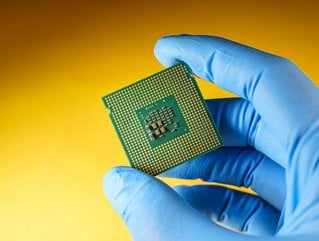
Despite being a piece of real estate no larger than a fingernail, the modern microchip is home to billions of transistors, miles of metallic interconnects, and layers of structures stacked on top of each other like skyscrapers.

Overall, a microchip is a structure that stands in abject defiance of the second law of thermodynamics: It creates a region of extreme order from a whole lot of chaos, and that does require a lot of energy.

One or more microchips run every one of the 40 billion connected devices currently in use—a figure that’s expected to jump to 350 billion by 2030.

Every time we make a Zoom call, between our personal devices, routers, data centers, satellites, and peripheral devices, at least a quintillion microchips were called to work.

Unfortunately, these chips consume an immense amount of resources and generate truckloads of waste.

The microchip is essentially made from sand—albeit sand that has been melted, purified, and refined until it is over 99.9999 percent pure silicon.

The arduous task of turning these disc-shaped, purple-colored wafers into microchips and memory devices falls on the fabs,(a fab or fabs is a term commonly used to describe a fabrication plant responsible for making semiconductor devices) which are high-tech facilities scattered across the world, with the majority in Southeast Asia.

A “fab” that processes 50,000 wafers—the silicon platform on which chips are built—per month consumes over 1 TWh of electricity a year.

That’s as much power as is required by a city of 100,000 residents.

Moreover, a rough estimate pegs the water consumption of a fab at over 19 million liters per day. That’s the amount of water consumed by a city of 60,000—for a whole year! In addition, these facilities utilize tons of chemicals, most of them expensive and toxic, and generate tons of waste, which include greenhouse gases like SF6, CF4, NF3, and C4F8.

There are over 1,000 semiconductor fabs operating globally today.

They make $450 billion worth of microchips a year and generate 50 million tons of carbon dioxide annually.

This complex semiconductor fabrication process is nestled at the heart of an elaborate web of international assembly lines. The company that makes the wafers and the fabs that create the microchips can be located in different parts of the globe. The assembly of the actual device likely takes place in a different company at a third location, and the end user could be anywhere in the world.

This means that the company whose name is on the final product might have very little control over the conditions and practices of the fabs.

Further, different parts of the semiconductor lifecycle are regulated by different environmental legislation, making not just the implementation of sustainability efforts, but also the tracking of their environmental footprints, complicated.

The elements of lithography, sand and silicon crystals, sit atop a silicon wafer

Given the size of the microchip, these numbers seem extraordinary.

However, this could very well be the price that we pay for the complexity of a chip, and the comfort it brings into our lives.

                       ———————————–

Advances in the technology sector have seen revolutionary gadgets surfacing because of this little mysterious device.

Microchip technology has modified existing patterns of human activities such in personal, social, political, and economic spheres.

Microchips are clearly being utilized for several other purposes.

In military applications, the microchips were used to build the Minuteman II missile in the 1960s. To add to that, a Z-40 semi-automatic pistol with a microchip embedded in its grip was released to avoid the use of the pistol by any unauthorized user.

In Industrial applications, scientists have employed the use of a microchip-based technology to detect the type and the progression of cancer in patients. Because of this technology, patients can now be informed of their prognosis within a few hours.

Chip improvements have led to increased computing power and incredible memory function.

Microchips have enabled applications like on-device artificial intelligence (AI) and virtual augmented reality to come to life.

Gains in data transfer such as 5G connectivity have been enhanced by the microchip technology.

Microchip technology has made huge advances in technology.

Objects and devices such as communication devices, vehicles, personal entertainment devices, GPS tracking devices, weapons, identification cards, micro-ovens, supercomputers, and many other applications use microchipMicrochips’ distinctive mode of collecting data and transmitting data to its exact destination has made information easier to handle.

The epic and revolutionary manufacturing techniques of microchips have created a storm of microchip-embedded devices that affect our daily lives, both positively and inevitably negatively  

Regardless of the industry, modern electronics use thousands, millions, or even billions of semiconductors on a single chip.

As a result, today as consumers demand more electronics, one of the most important components of any circuitry has become something of a scarcity. is that there is a massive shortage.

This has happened over the past year, largely due to a significant shortage of the most basic building block of technology:

Semiconductors.

                     ——————————

It is likely that microchip manufacturing will continue to be a major consumer of electricity, water, and chemicals.

So in shaping our world we could ensure that the energy is supplied by renewables, that the water is recycled, and the chemicals are processed without damage to the environment. In other words, we must be relentless in our efforts to make microchips more sustainable. And we should never forget that the comforts of modern life gifted by these wonder chips come at the expense of a vast amount of resources.

Microchips act as a key unit for programming the conversion of the car industry to electric cars, which is increasingly dependent on electronics, the lithography industry, the smartphone industry, and the internet to name just a few of the trillion applications over the past several decades.

The microchip industry filled by the need for big science is growing exponentially year on year. 

The problem is embedding them in objects is one thing, deciding in which devices to embed them and what systems to build around them is another matter altogether.

Laws governing their application are literally in human hands for now but not much longer.  

All human comments are appreciated. All like clicks and abuse chucked in the bin.

← Back

Thank you for your response. ✨


Share this:

  • Share on WhatsApp (Opens in new window) WhatsApp
  • More
  • Share on Pocket (Opens in new window) Pocket
  • Share on Mastodon (Opens in new window) Mastodon

THE BEADY EYE SAYS: MUCH WORSE THAN THE RUSSIAN/UKRIAN WAR IS ON THE WAY IF WE DON’T MAKE THE NEEDED CHANGES.

14 Monday Mar 2022

Posted by bobdillon33@gmail.com in #whatif.com, 2022: The year we need to change.

≈ Comments Off on THE BEADY EYE SAYS: MUCH WORSE THAN THE RUSSIAN/UKRIAN WAR IS ON THE WAY IF WE DON’T MAKE THE NEEDED CHANGES.

Tags

Technology, The Future of Mankind, Visions of the future.

(Nine-minute read) 

In the daily hubbub of current “crises” facing humanity, we forget about the many generations we hope are yet to come.

Why?

Here are my reasons.  

Because humans are bad at doing anything about problems that have not occurred yet.

We have extinction happening at alarmingly fast rates combined with short-term political ambitions packed with statistics and updates on the challenges we face.

With no universal legal constitution for the earth, as global citizens, we must come together on every Social media platform to demand change and put us and the earth before profit.  

Because we now live in a world of threats and disasters that could end history.

Human activity such as the development of weapons of mass destruction has been steadily shaping the future of our planet with a sense of powerlessness and fatalism about it. Right now the risk of somebody deliberately releasing something devastating is low but as technology gets more powerful in the future nastier pathogens become easier to design.

Because there is “youth disillusionment” around the world as capitalism has turned everything needed for life into a product. Certain global issues cannot be solved by on-the-ground, grassroots-style projects. 

Because In a world full of risk – geopolitical upheaval, cyber attacks, climate change, and natural disasters the only thing left to avoid wars is Sport which is now, unfortunately, being used for political interference. 

Because it is a mistake to think that nuclear war is impossible. In fact, it might not be improbable but it’s not the explosion that will be a disaster its the nuclear winter that would follow.

Because while people are enjoying the highest standards of living in human history, the interconnected global challenges we face are pushing institutions, communities, and individuals to their limits.

Because the knock-on effects of the coronavirus crisis, threaten to scale back years of progress on reducing global poverty and inequality and further damage social cohesion and global cooperation.

Because the democratic world is being hijacked by technology in the form of the internet with profit-seeking algorithms and social media pluralism.

We do not have a good grip on just how dangerous different forms of superintelligence would be, or what mitigation strategies would actually work. It is very hard to reason about future technology we do not yet have, or intelligence greater than ourselves. (Of the risks on this list, this is the one most likely to either be massive or just a mirage.)

Because of the, I’m alright Jack inequality. Global poverty has not been eradicated.

Billions are at risk of missing out on the digital leap forward, as growing disparities challenge the social fabric. Even more worrying is that in trying to explain things to artificial intelligence we run into profound practical and philosophical problems.

Should such a jump occur there would be a large difference in potential power between the smart system (or the people telling it what to do) and the rest of the world. This has clear potential for disaster if the goals are badly set.

Human values are diffuse, complex things that we are not good at expressing, and even if we could do that we might not understand all the implications of what we wish for. If consciousness or intelligence are lost, it might mean that value itself becomes absent from the universe.

Because we are living toward incredible times where the only constant will be changed. 

Because the Ukrainian war could be the last human war.

There are plenty of more low-hanging fruits on the destructive technology tree.

                            ————————-

Foreign policy of the United States


Even just reading the above list seems overwhelming; imagine being a head of state trying to implement it in your sprawling national bureaucracy.

Of course, the U.N. can’t compel any country to do any of these things. So the goals won’t matter unless individual national governments take them seriously.

Of course, there are some risks we cannot do anything at all about, such as gamma-ray bursts that result from the explosions of galaxies. But if we learn we can do something, the priorities change. For instance, with sanitation, vaccines, and antibiotics, pestilence went from an act of God to bad public health. 

The most unsettling possibility is that there is something out there that is very deadly, and we have no clue about it.

                                    ————————

It comes as no surprise with the outbreak of war in Ukraine that the environmental risks that once weighed heavily on the minds are now on the back burner. 

While the state of our planet is petrified by Putin’s threat to use Nuclear weapons the use of cyberattacks to target critical infrastructure and strategic industrial sectors raises fears that, in a worst-case scenario, attackers could trigger a breakdown in the systems that keep societies functioning.

Nanotechnology like biotechnology, increasing power also increases the potential for abuses that are hard to defend against.

Technology is no longer the major limiting factor. We are.

If we want to be around in a million years we need to correct that.

                                      —————-

In the meantime, we’re heading towards a world of perfect knowledge with blockchain commerce and digital transfers of value and assets disappearing into cyberspace. 

With a trillion sensors gathering data existing healthcare institutions will be crushed because Biometric sensing (wearables) and AI will make each of us the CEOs of our own health. 

The screen as we know it — on your phone, your computer, and your TV — will disappear and be replaced by eyewear.

So where are we?  Where do you even start?

Even though we live in the 21st Century, it’s unbelievable how much prejudice we all have. There’s racism, homophobia, nationalism. There are still classes in our society, even though not as clear as centuries ago. And people still judge other people based on… Well, absolutely everything, which, when you think about it, is… nothing!

To take any resolution to the problem off the page and into practice there has to be unlimited finance.

This can only be achieved by increasing everyone’s stake in the goals ( see the previous post on creating a World Aid Fund)  If we do not put in place a mechanism for social and environmental change, generation after generation will pay the price for our idleness.

Our insatiable appetite for industrial growth only fuels our dependency on ever-dwindling resources – without replenishment or reprise and to devastating effect.

Empowerment is what the world needs. We have the potential to save and improve the quality of millions of lives by providing the people of the world an opportunity to invest in a green bond, ( See previous Post on Green bonds)  

The more I think about it, the more I realize that the progress of society is defined much more from the decisions and the actions of the majority, than the breakthroughs of any one man.

We don’t all have to like each other, we don’t all have to understand each other, but we do have to respect each other. 

Respect is never earned by a Dictator. It is either enforced/bought as Dictatorship is a place where public opinion can’t even be expressed privately.   

All human comments are appreciated. All like click sad abuse chucked in the bin.

← Back

Thank you for your response. ✨


Share this:

  • Share on WhatsApp (Opens in new window) WhatsApp
  • More
  • Share on Pocket (Opens in new window) Pocket
  • Share on Mastodon (Opens in new window) Mastodon

THE BEADY EYE SAYS. WE ARE CREATING A DANGEROUS DIGITAL INVISABLE WORLD?

20 Thursday Jan 2022

Posted by bobdillon33@gmail.com in #whatif.com, 2022: The year we need to change., Algorithms., Artificial Intelligence., Civilization., Dehumanization., Digital age., DIGITAL DICTATORSHIP., Digital Friendship., Fourth Industrial Revolution., Human Collective Stupidity., Human values., Humanity., Modern day life., Modern day Slavery, Our Common Values., Post-Covid-19, Robot citizenship., Speed of technology., Technology, Technology v Humanity, The common good., The essence of our humanity., The Internet., THE NEW NORM., The Obvious., The pursuit of profit., The world to day., THE WORLD YOU LIVE IN., TRACKING TECHNOLOGY., Unanswered Questions., WHAT IS TRUTH, What Needs to change in the World, Where's the Global Outrage.

≈ Comments Off on THE BEADY EYE SAYS. WE ARE CREATING A DANGEROUS DIGITAL INVISABLE WORLD?

Tags

Capitalism vs. the Climate., Digital Citizen?, DIGITAL DICTATORSHIP., Digital Invisibility., Technology, The Future of Mankind, Visions of the future.


( Fifteen-minute read) 

We all know that there is an invisible world and that today it is undeniably digital.

This invisible world is becoming both powerful and dangerous leading to digitalizing without a system of oversight of the way we operate in the world, resulting in not just hidden powers but a decoupling between human rights and democracy.

On one hand, digital democracy, or eDemocracy, uses the internet, social media, and technology to improve our democratic systems of governance. 

On the other with our electronic overlords, ( Smartphones, Pads, Apple watches, TV, Web Services), this world of invisibility is been driven by non-accountable, non-transparent commerce, operating profit-seeking algorithms, with self-learning data collection codes, that no one comprehends.

As our day-to-day lives are increasingly immersed in technology, it is easy to lose perspective on things that matter. 

The capitalist world of profit and power is disappearing underground.

New technologies – from social media and GPS systems to artificial intelligence and digital twins – make the planet we inhabit unrecognizable from even 20 years ago and it’s only going to get faster, changing how we live.

The rise of the sharing economy, online marketplaces, and digital platforms are shattering old barriers and reducing the distances between industries, societies, and places, all of which are without adequate regulations are vanishing from scrutiny and accountability. 

                             ——————

While it’s true that today, leaders need to deal with unprecedented changes and an unpredictable and challenging future due to the Fourth Industrial Revolution, Climate change, and the covid pandemic they need to be more agile, to deal with sudden changes and challenges that any one of these will bring.  

Why?

Because the status quo as the inertia of past success can be crippling for the future.

The paradox of leadership lies in staying focused on the present, while also visualizing the future and creating a roadmap to reach it.

This is a major problem requiring Statmanship on a global scale.

                                —————–  

Why is all of this happening now?

What’s interesting about this question is, there’s no answer to that question.

What I think is so true about that is, with technology even nonconformists are conforming.

Why?

Because these days it’s difficult to not see how real the invisible world is affecting our lives and the systems that govern life.

Today, with the covid pandemic’s we see it is very rare that you find someone that’s not influenced by anyone else.

You don’t have to be a digital native to behave like one.

It’s the invisible world we want to connect with in order to maintain the magic in life.

Why?

Because a world without emotions will be a sterile world.

Yes, the invisible world is real.

It is the limited life of a limited mind.

Increasingly, this limited value is delivered through new cross-sector, outcome-based propositions, rather than traditional sector-specific products and services.

We have all experienced trying to get to speak to a human to solve a problem with a service – press one press two – listen to music – you inquiry- will be answered – press 3 if – till you give up.

If you can spell it you can’t enter it. A society that is dependent on technology can create inequality.

                                           ————-

To stop this invisible world people must take ownership of things as the digital world is not about technology, but people.

At a time when geopolitical tensions are on the rise are at their highest level this century.  And this turbulence is escalating.  Even nuclear non-proliferation can no longer be taken for granted.

At the same time, we see trade and technological conflicts that fracture world markets, undermine growth and widen inequalities.

And all the while, our planet is on fire.  The climate crisis rages on.

With Climate Change, we are risking a ‘great fracture’ between world powers, each with their own internet and AI strategy, as well as dominant currency, trade, and financial rules, and contradictory geopolitical and military views.

With dwindling natural resources, an unstable world climate, viruses on the rampart, not to mention the effects of pandemics on world trade, inequality, the world does not need politicians that do not think of the next election but statesmen of the next generation.      

 It is crucial to ensuring a united world.

Those yet to be connected remain cut off from the benefits of this new era and remain further behind. People need money to access the internet and buy the latest devices.

By 2050 there will be 9 billion people to feed, clothe, transport, employ and educate.

Maybe that’s not really bad when you think of what’s coming next. You couldn’t call it a fully digital world yet. It’s not even close.

However, there’s room to dream about building the world we want, instead of the one we’re turning into. 

As we pursue unlimited growth, our limitless consumption threatens to crowd out everything else on Earth. We are warming the climate, overspending our financial resources, requiring more fresh water than we have, increasing income inequality, diminishing other species, and triggering shockwaves whenever we can’t cope with a problem. Billions are committed to a growth-driven world economy.

Our world is full of screens. We keep them in our hands, purses, and pockets, next to our beds while we sleep, and surround ourselves with screens on our desks and countertops. Our TV sets are morphing into interactive screens as we put them online so they display everything for free.

What if that networked system brought everyone the world’s best services, resources, and knowledge-based on what we do, as a normal part of everyday life?

                                           ————————

The top-down approach is no longer sustainable in the Economic/ Power/ or Democracy Capital Accountability. Leadership needs to be vigilant and create a long-term sustainable value proposition for all stakeholders.

The same technologies are giving rise to new business models, with organizations using digital to create and monetize new forms of value. Disruptions in the digital world occur at a phenomenal rate.

They have the power to impact the way entire industries operate reshaping entire industries with profit-seeking algorithms.

Although giving up your data was once an afterthought when gaining access to the newest internet services such as Facebook there aren’t many great options available to limit what is seen and known about you online.

YOU BECOME A DIGITAL FORM OF YOURSELF IN THE VIRTUAL WORLD OF THE INTERNET.  

How do we define what a digital human is?

Worthless, a form of entertainment to have conversations with yourself without being able to show emotion and behavior as a real human. 

So, is the invisible world the real world?

Hard to say, but I think it’s what makes the visible world worth living in.

When someone dies, the essence of that being merely inhabited that form – the life within the form was always invisible.

Digital leaders will have the power to shape the future of our world.

When we want to believe, there is still time to interrupt the announced disappearances of so many plant and animal species which, if we are not careful, will lead to our own end.

This situation cannot go on. It is our common duty to avoid it.

While risks intersect and technologies develop quickly, too often our institutions for governing international security remain reactive and slow-moving.

ALL HUMAN COMMENTS ARE APPRECIATED. ALL LIKE CLICKS AND ABUSE CHUCKED IN THE BIN.

← Back

Thank you for your response. ✨

Share this:

  • Share on WhatsApp (Opens in new window) WhatsApp
  • More
  • Share on Pocket (Opens in new window) Pocket
  • Share on Mastodon (Opens in new window) Mastodon

THE BEADY EYE ASKS. IS SLAVERY DEAD? NOT BY A LONG SHOT, WE ENTERING A NEW WORLD OF SLAVERY.

20 Saturday Nov 2021

Posted by bobdillon33@gmail.com in 2021. The year for change., Algorithms., Artificial Intelligence., Covid - Passports., Dehumanization., Digital age., DIGITAL DICTATORSHIP., Human values., Humanity., Modern day Slavery, Modern Day Slavery., Our Common Values., Post-Covid-19, Reality., Robot citizenship., Technology v Humanity, The Future, THE NEW NORM., The Obvious., The state of the World., The world to day., THE WORLD YOU LIVE IN., TRACKING TECHNOLOGY., Unanswered Questions., Vaccines., What Needs to change in the World, Where's the Global Outrage.

≈ Comments Off on THE BEADY EYE ASKS. IS SLAVERY DEAD? NOT BY A LONG SHOT, WE ENTERING A NEW WORLD OF SLAVERY.

Tags

Algorithms trade., Algorithms., Artificial Intelligence., Modern day Slavery, Technology, The Future of Mankind, Visions of the future.


(Twenty-minute read) 

NOT BY A LONG SHOT.

When you hear the word slavery, it conjures images of shackles, mistreated people of color, forced to work.

This image was once a true, vivid picture;

However, the term slavery has broadened, and now slavery comes with many more definitions creating a new image for the vile term slavery.

THERE IS A NEW, MODERN, INVISIBLE SLAVERY THAT ENSLAVES PEOPLE AND THEY DON’T EVEN KNOW IT ! !! AND MOST OF US CHOSE THIS FORM OF SLAVERY. 

This new strain is much more virulent and deadly adding hundreds of thousands of new slaves to the mix every minute of the day  – Algorithms Slavery. A hidden world programming its self. 

Slaves are cheap these days.

There are an estimated as high as 45.8 million people in modern slavery around the world. More than in the 18th century at the height of the transatlantic slave trade. 

Simply knowing the statistic that 45.8 million individuals are enslaved in our world is not enough to put an end to the malpractice of modern-day slavery.

We all can and should play a part in the international advocacy for the freedom and rights of all, not only as fellow human beings but also as concerned community leaders and consumers in the global economy.

They’re the step-by-step instructions working quietly behind the scenes of everyday life; in internet search engines, satnavs, air traffic control, and food delivery services.

Companies and governments increasingly rely upon algorithms to make decisions that affect people’s lives and livelihoods – from loan approvals to recruiting, legal sentencing, and college admissions – from internet search results to product recommendations, dating matches, and what content goes up on our social media feeds. 

Slavery today includes:

10 million children.

24.9 million people in forced labor.

15.4 million people in forced marriage.

4.8 million people in forced sexual exploitation.

Human trafficking and slavery are the fastest-growing illegal activities in the world today. 

Keep the National Human Trafficking Resource Center’s 24/7 confidential hotline handy.

Saving this number in your contacts and using it whenever suspicious of having seen a victim of human trafficking is one of the easiest and most effective ways to aid law enforcement officials in uncovering exploitation, bringing traffickers to justice, and victims to freedom and restoration.

                                                ——————

Algorithms have been rising fast and saturating our modern world.

We should not take the path of least resistance by sitting in judgment on the past while ignoring the injustices of our day.

Most algorithms in the world today are created and managed by for-profit companies, and many businesses regard their algorithms as highly valuable forms of intellectual property that must remain in a “black box.”

Every time a site is opened we are confronted with an Agreement Templates a choice to Agree or not.  Many websites prompt you to agree to their terms of use before you can register on the website or even use it.

There are two different types of website agreements: browsewrap and clickwrap.

A browsewrap agreement is connected to the main page of the product by a hyperlink. The hyperlink leads to another webpage that will have the terms and conditions of the agreement detailed.

A clickwrap agreement is designed to ensure that the user has a chance to see the terms of use and they must also actively agree to the terms in order to agree. (This one is more legally binding.) 

But are not transparent as they do not reveal the source code, inputs, and outputs of the algorithm that is running the site. 

Without this transparency, the question is how can they be legally binding. 

Specifically, machine learning algorithms – and deep learning algorithms in particular – are usually built on just a few hundred lines of code. The algorithm’s logic is mostly learned from training data and is rarely reflected in its source code. Which is to say, some of today’s best-performing algorithms are often the most opaque.

This is the new form of slavery.  Now being promoted by track and trace, with the current Coivid pandemic digital certifications that no one knows how or who will control, the data that they are now producing and in the future. 

 It suggests that technical transparency – must become law.

Essentially such laws would mandate that users be able to demand the data behind the algorithmic decisions made for them, including in recommendation systems, credit, and insurance risk systems, advertising programs, and social networks.

In doing so, it tackles “intentional concealment” by corporations.

But it doesn’t address the technical challenges associated with transparency in modern algorithms. Here, a movement called explainable AI (xAI) might be helpful.

However, this approach merely shifts the burden of belief from the algorithm itself to the regulators.

In the world of data analytics, it’s frequently assumed that more data is better.

But I firmly believe that the resistance to getting vaccinated is founded on this dilemma of trust.

Risk management, data itself is often a source of liability. That’s beginning to hold true for artificial intelligence as well.

All human comments are appreciated. All like clicks and abuse chucked in the bin.

← Back

Thank you for your response. ✨


Share this:

  • Share on WhatsApp (Opens in new window) WhatsApp
  • More
  • Share on Pocket (Opens in new window) Pocket
  • Share on Mastodon (Opens in new window) Mastodon

THE BEADY EYE ASKS. WILL THE WORLD OF TECHNOLOGY GET RID OF INEQUALITY.

29 Friday Oct 2021

Posted by bobdillon33@gmail.com in 2021. The year for change., Afghan War., Algorithms., Artificial Intelligence., Capitalism, Climate Change Summit Scotland 2021, Climate Change., Environment, Green Energy., Human values., Humanity., Inequality., Our Common Values., Post-Covid-19, Technology v Humanity, Technology., The common good., The essence of our humanity., The Obvious., The pursuit of profit., The state of the World., The world to day., Trade Agreements., Unanswered Questions., We can leave a legacy worthwhile., Wealth., What Needs to change in the World, Where's the Global Outrage., WORLD POVERTY WHERE'S THE GLOBAL OUTRAGE

≈ Comments Off on THE BEADY EYE ASKS. WILL THE WORLD OF TECHNOLOGY GET RID OF INEQUALITY.

Tags

Capitalism vs. the Climate., Climate change, Distribution of wealth, Extinction, Inequility, Technology, The Future of Mankind

(Thirteen-minute read)

With or without technology there will always be inequalities in the world.

So why do we keep trying to solve poverty with technology?

Because this way of thinking is so ingrained that is adopted by organizations that fight poverty—which often refashion themselves to resemble technology startups.

Inequality has been growing so much that all governments and civil society speak about it with increasing worry, trying to understand its causes, but unable to find solutions, because of greed. 

It is our policy on technology that drives inequality.

There is no better example of this than in the way the world is handling the current Covid pandemic unable to share the know-how to make the vaccinations. 

Patents and copyrights are not guaranteed as individual rights, like the right to free speech or religion.

After all, why would a drug company pay large amounts of money to people to develop new drugs if the drugs can be copied and sold by competitors from the day they enter the market?

If it is not already obvious, patent and copyright monopolies are instruments of public policy, not acts of God.

This is why there is still not enough coronavirus vaccine to meet worldwide demand.

A year ago there was no commercial market for mRNA products.

Vaccine manufacturers long ago should have been sharing technology and expertise to boost production in the U.S. and Europe, and especially in developing countries. 

The same would be true of software developers, makers of medical equipment, computer manufacturers, smartphone companies, and any other product where the cost of research and development was a substantial portion of the price of the product.

The complete elimination of patents and copyrights is of course an extreme scenario, but it is a possible policy option.

If we did choose this policy option, we would have a much more equal distribution of income, in spite of having the same technology.

In short, the fact that there was a huge increase in inequality associated with the development of technology over the last four decades was the result of policy choices, not technology.

There should be serious public debate about both how strong we want to patent and copyright protection to be and also whether they are always the best way to promote innovation and creative work, as opposed to alternatives like direct public funding.

If we acknowledge the extreme case, where we literally have no patent or copyright protection, then we have to recognize that there is nothing inherent in our technology that would cause inequality.

Few things, in principle, can’t be delivered through technology.

It is entirely our rules on technology that can cause inequality to increase.How Technology Ends Inequality

So on one hand, technology can eradicate poverty — not by making poor people less poor, but by making it less valuable to be rich.

On the other as technology spreads, making its creators rich, but treating its users the same, we should expect more monopolies and more financial inequality.

Although it is your data you can’t pay for a better Facebook experience.

Companies are incentivized to offer a product if it makes more than it costs. And technology ends up not costing much once you’ve built it.

So, in the end, you charge people whatever they can pay and in poorer countries, people just pay and get paid less.

Times are changing from the days that growth in inequality was largely an organic process independent of government policy.  

“Owning” the robot/algorithm is not a technical relationship, it is a legal one, and therefore one that depends on our laws.

The reason some people might get very rich from owning robots or algorithms is that they own patents and copyrights that are needed for the making of the robots/ algorithms.  

                                         __________________

In the past, technological improvements would be beneficial to all:

Extreme economic inequality is corrosive to our societies.

Around 8% of the world’s population lives in extreme poverty — but do you know why?

Gender inequality, caste systems, marginalization based on race or tribal affiliations are all economic and social inequalities that mean the same thing:

You might think that poverty causes hunger (and you would be right!), but hunger is also a cause — and maintainer — of poverty. This is why now with climate change, negotiating international trade agreements behind closed doors with only bureaucrats and corporate lobbyists present has to end.

Economics should take into account ethics and the environment, and treat its claims less like invariable truths.

It goes without saying that any actions coming out of Cop 26 climate change conferences to reduce temperatures will be derailed by not just income inequality, (only the higher income household will be able to afford green energy technologies. Solar panels, electric cars, heating pumps, etc.) but by the total lack of shared responsibility to do anything about it.   

Of course, there are hundreds of other elements that contribute to the problems our world is now facing. 

World poverty isn’t a problem of limited resources, it is a problem of inequality and this inequality is upheld by the idea that aid creates dependence.

Climate change will drive up to 132 million more people into extreme poverty by 2030.

The pricing carbon emissions on average is at a mere $3 a tonne.

The price of inequality in all its forms is greed. There are vast fortunes to be made with Technology/ Algorithms for profit and nothing blurs ethical lines faster than greed. 

So far, any decoupling has either been largely relative – in the sense of merely achieving higher rates of economic growth than gains in emissions – or achieved by shifting dirty production from one national territory to another.

And that is why, for now, global emissions are still rising.

The idea of “Just Transition” without financing is pie in the sky. 

Take the aftermath of the Afghan 20-year war.

The country is now facing starvation. Why not bomb it with food.   

By coming together to tackle the plague of destitution around the world, we have the opportunity to advance the human condition and eliminate global poverty in a way no one has done before.

All human comments are appreciated. All like clicks and abuse chucked in the bin.

← Back

Thank you for your response. ✨


Share this:

  • Share on WhatsApp (Opens in new window) WhatsApp
  • More
  • Share on Pocket (Opens in new window) Pocket
  • Share on Mastodon (Opens in new window) Mastodon

THE BEADY EYE ASKS. IS DAN BROWN DISCRIPTION OF EVOLOUTION IN HIS BOOK ORIGIN TRUE.?

24 Sunday Oct 2021

Posted by bobdillon33@gmail.com in #whatif.com, 2021. The year for change., Artificial Intelligence., Dehumanization., Digital age., Evolution, Fourth Industrial Revolution., Genetic engineering, HUMAN INTELLIGENCE, Human values., Humanity., Imagination., Life., Natural selection., Purpose of life., Reality., Speed of technology., Survival., Sustaniability, Technologically Enabled Genetics., Technology v Humanity, Technology., The essence of our humanity., The world to day., Unanswered Questions., VALUES, We can leave a legacy worthwhile., WHAT IS TRUTH, What Needs to change in the World, Where's the Global Outrage.

≈ Comments Off on THE BEADY EYE ASKS. IS DAN BROWN DISCRIPTION OF EVOLOUTION IN HIS BOOK ORIGIN TRUE.?

Tags

Algorithms., Artificial Intelligence., Evolution, Extinction, Technological revolution, Technology, The Future of Mankind, Visions of the future.


(Twelve-minute read) 

 All organisms share a few fundamental desires: to survive, to grow.

It is only on the scale of statistics with millions of particles that a particle’s choice shapes up as a predictable radiation half-life. But even individual human wants and desires average out to weirdly predictable laws in aggregate.

If a little one-celled protozoan – a very small package – can have a choice, if a flea has urges, if a starfish has a bias towards certain things, if a mouse can want, then so can the growing, complexifying technological assemblage we have surrounded ourselves with.

Its complexity is approaching the complexity of a microscopic organism.

This tissue consists (so far) of billions of dwellings, millions of factories, billions of hectares of land modified by plant and animal breeding, trillion of motors, thousands of dammed rivers and artificial lakes, hundreds of millions of automobiles coursing along like cells, a quadrillion computer chips, millions of miles of wire, and it consumes 16 terawatts of power and None of these parts operate independently.

No mechanical system can function by itself.

Each bit of technology requires the viability and growth of all the rest of the technology to keep going and there is no communication without the nerves of electricity.

This whole grand system of interrelated and interdependent pieces forms a very primitive organism-like system. Call it the technium as in Dan Brown’s book.

The technium is the sphere of visible technology and intangible organizations that form what we think of as modern culture.

It is the current accumulation of all that humans have created. For the last 1,000 years, this technosphere has grown about 1.5% per year. It marks the difference between our lives now, versus 10,000 years ago.

Our society is as dependent on this technological system as nature itself.

Yet, like all systems, it has its own agenda. Like all organisms the technium also wants.

Of course, we humans want certain things from the technium, but at the same time, there is an inherent bias in the technium outside of our wants.

What this means is that when the future trajectory of a particular field of technology is in doubt, “all things being equal” you can guess several things about where it is headed:

The varieties of whatever will increase.

Technologies will start out general in their first version, and specialize over time. We can safely anticipate higher energy efficiency, more compact meaning, and everything getting smarter. All are headed to the ubiquity and free. Over time the fastest moving technology will become more social, more co-dependent, more ecological, more deeply entwined with other technologies. Many technologies require scaffolding tech to be born first. The trend is toward enabling technologies that become tools for inventing new technologies easiest, faster, cheaper.

This is what is suggested in the final chapters of Origin. 

                                              ————————

The origin of us, the modern humans (Homo sapiens), has been a topic of debate for a long time, with the place of origin of humans being great controversial, but where it is going will be more controversial. 

Dan Brown’s book (Origin) advocates that our species has reached or will reach its biological pinnacle in the no so distant future when it will be no longer capable of changing.

Maybe not.  As we are now all so mixed we block evolutionary change and are driving our evolution towards bio-engineer people. 

Evolution is the outcome of the interaction of mutation, genetic recombination, chromosomal abnormalities, reproductive isolation, and natural selection.

We become living computers. 

But it does not mean an improvement in our lot. 

At the end of the day, you’re going to view the events in your day the way you want to not the way they truly are.

THE QUESTION HE ASKS IS ARE we’re all going to be small SPECKS on the tablets of history.  


Human Evolution generally depends on natural selection, random genetic drift, mutation, population mating structure, and culture but the faster things die the faster they “mutate” or evolve.

Single-celled organisms evolved into more complex multicellular life, and then man gradually evolved from some unknown mammalian ancestor and reached the pinnacle of evolutionary fabric.

The ways we connect, grow, and develop as individuals are also undergoing rapid and profound changes with future generations raising their kids into a world of default connectedness (technological, emotional, cognitive), in which transparency and integrity become the easiest paths to a fulfilling life.

At the moment all arguments are based on the same tenets of Natural selection.

We don’t always have to do what technology wants, but I think we need to begin with what it wants so that we can work with these forces instead of against them.

High tech needs clean water, clean air, reliable energy just as much as humans want the same.

At the moment we are destroying the planet’s ecosystem.

However, I can imagine singular threads of the future rolling out positive — a massive, continuous, cheap, real-time connection between all humans, or total genetic control over crop plants, or synthetic solar fusion energy — but it is hard to see how all these threads weave into the other threads of climate change, population decrease, habitat loss, human attention overload, robot replacement, and accelerating AI.

Why?

Because we have no shared positive vision of tomorrow. Given what is happening today we are unable to imagine it.

Because power and money are transferring to algorithms like BitCoin and thousands of interconnected computers.

Because there is also a belief that life cannot be trusted.

In this stage, blame is placed on other individuals, society, government, nature, disease, etc., and other elements believed to be outside of one’s conscious control and influence. Control is often motivated by fear and survival. The enemy is perceived as a threat, and because of this, people believe they are morally justified to kill, eliminate or repress that enemy.

It is true as our digital trails become stronger and stronger, that Humanity is entering a Transformation Age, a new era of human civilization.

Recent breakthroughs in the field of quantum physics are revealing that consciousness is primary to our experience of reality, yet there remains no consensus as to the nature of consciousness itself nor to the nature of reality.

Yes, an inescapable dystopian future is entirely possible, but not inevitable because imagination has been unleashed upon the world in a literal sense. 

How the human brain without a chip will evolve over the next million years is anyone’s guess. 

Just in case we get it wrong here is the Human code.

A1 B2 C3 D4 E5 F6 G7 H8 I9 J10 K11 L12 M13 N O P Q R S T U V W X Y Z

All human comments are appreciated. All like clicks and abuse chucked in the bin.

← Back

Thank you for your response. ✨


Share this:

  • Share on WhatsApp (Opens in new window) WhatsApp
  • More
  • Share on Pocket (Opens in new window) Pocket
  • Share on Mastodon (Opens in new window) Mastodon

THE BEADY EYE ASKS. IS ARTIFICAL INTELLIGENCE INTELLIGENT OR JUST PROBLEM SOLVING?

17 Friday Sep 2021

Posted by bobdillon33@gmail.com in Algorithms., Artificial Intelligence., Climate Change Summit Scotland 2021, Climate Change., Digital age., Evolution, Human Collective Stupidity., HUMAN INTELLIGENCE, INTELLIGENCE., Life., Modern day life., Post-Covid-19, Reality., Sustaniability, Technology v Humanity, Technology., The essence of our humanity., The Obvious., The state of the World., The world to day., VALUES, We can leave a legacy worthwhile., What Needs to change in the World

≈ Comments Off on THE BEADY EYE ASKS. IS ARTIFICAL INTELLIGENCE INTELLIGENT OR JUST PROBLEM SOLVING?

Tags

Algorithms., Artificial Intelligence., Is intelligence overrated?, Technology, The Future of Mankind, Visions of the future.


(Twelve-minute read)

Let’s start with this question.

Is humanity getting smarter or dumber with AI?

The answer has to be both, as intelligence per se cannot guarantee that one uses it intelligently.

We can find undisputed evidence of this by looking not that far back in history.

It took humans 200,000 years to think about God, soul, nature, world, life, and themselves. Our ancestors wrote million tons of Literature on all these topics and we still haven’t figured out any of these.

There’s more food wastage in the world than ever before although a large number of people are dying in hunger, malnutrition, and gross food shortage.

Although we know we are depleting Earth’s limited resources at a break-neck speed, there’s more over-production than ever before and more over-consumption than ever before!

For the sake of energy and resource conservation, we request the poor to consume less who already consumes way less, while we shut our eyes to the rich who keep consuming exorbitantly.

We invented the first atomic bomb in 1938 and the world’s first nuclear explosion occurred on July 16, 1945.

The concept of capitalism has many debated roots, but fully-fledged capitalism is generally thought by scholars to have emerged in Northwestern Europe, especially in Great Britain and the Netherlands, in the 16th to 17th centuries. 

Ever since we have plundered our planet-destroying what we love. Heating what is useful to us. We oppose what is good for us. Then, we love what is bad for us. We adore what is damaging to us. We follow what is deceitful.

We believed we were invincible, most intelligent, and just the best.

Then Corona showed us how very weak, unprepared and vulnerable we are.

With all the information we have been able to gather to help fight the virus – there are still some who cannot follow the rules. This is the height of stupidity.

So we are intelligent but only to a certain degree.

There are conflicting ideas about how intelligence is measured.

                              ———————————–

Is intelligence overrated? 

Socrates held that ‘the unexamined life is not worth living.’

Intelligence is ‘the ability to think, reason, and understand instead of

doing things automatically or by instinct.

This is not beyond animals and even plants, they too can be said to be possessed of intelligence. 

The problem with artificial intelligence is that is it artificial and does not have to confine itself to methods that are biologically observable.

It leverages computers and machines to mimic the problem-solving and decision-making capabilities of the human mind. 

But when one considers that intelligence at its broadest, refers to the functioning of a number of related faculties and abilities that enable us to adapt and respond to environmental pressures.

So as we move toward an increasingly digital world Artificial intelligence cannot be considered in isolation.  

Take the West’s obsession with analytical intelligence. It has had and continues to have, dire political, social, and, above all, moral consequences.

Everything we love about civilization is a product of intelligence.

All this is to say that what constitutes intelligence can vary quite considerably according to our values and priorities.

After all, people deemed to be less rational—women, non-white people, the lower classes, the infirm, the ‘deviant’—were not just disenfranchised but dominated, colonized, enslaved, murdered, and sterilized, in all impunity.

History is full of technological over-hyping.

Will we control intelligent machines or will they control us? Will intelligent machines replace us, coexist with us, or merge with us? What will it mean to be human in the age of artificial intelligence? What would you like it to mean, and how can we make the future be that way? 

Why should we be asking these questions?

Because with AI there’s an enormous gap and there’s a paradox at work here.

We are living at a time when great advances have been made, and are continuing to be made, in many areas of science and technology. These advances are having a major impact on our lives, and this will probably continue to be the case for the foreseeable future.

This may, at first, seem to be a very positive prospect, but there are important reasons to be concerned with its benign effects.  

As a society, we have not learned how to deal properly with the risks, especially at the early stages, when knowledge is sparse.

In today’s world, the benefits of AI have been seized by a small, wealthy elite.

If anything, regulation is getting weaker. As our technological abilities grow ever more powerful, the danger of this approach is steadily increasing. What would a wiser policy look like?

The most difficult problems involve new technology that has very obvious, attractive, characteristics, while little, or nothing, is known about the effects of long-term use.

Genetically modified organisms (GMOs) in food products are one example.

Nanotechnology is another fascinating new area that is sprouting all kinds of new products. Its applications range from sunscreen lotions to more durable concrete, to improved ways to administer medication. But the same characteristics that make it so interesting and useful, also make it dangerous.

Cell phones addiction.  

Whether this will lead to an intelligence explosion; and whether this is something we should welcome or fear.

Saying that “real intelligence has consciousness just pushes the problem further down the road” 

The next problem is what is consciousness and can AI be consciousness.

To become so it would have to act independently.  

As long as we manage to keep the technology beneficial  

After all, today, we cannot go very far without having some considerable IT skills.

                                    —————

While the large corporations profiting from this technology are strongly motivated to defend their products, often funding research to develop arguments in their favor, there is no adequate countervailing force.

Take profit-seeking algorithms that are plundering the world unregulated.

Surely they should be careful study by an independent public agency to look for possible harmful effects, especially possible consequences of long-term use before releasing for general use.

                     ——————————————  

When you look at the world we have today you could not be blamed for thinking that we are all suffering from world dementia which is disturbing our multiple higher cortical functions including memory, thinking, orientation, comprehension, calculation, learning capacity, language, and judgment.

As a consequence of our greed and our disregard for the health of our planet, we are now faced with the problem of producing energy that is carbon-free. 

This is going to require a complete change in how we live our lives with our energy requirements produced from sustainable green sources. 

Yes, we are currently addressing the problem with Climate Change Conferences that to date are barking down the wrong road. 

Why?

Because all intelligence is telling us that there is no option but to generate energy from green renewable sources – sun – wind – water.   

Taken together, this suggests that the only viable option (working alongside intelligent technologies) is to take the H out of H20  (with green energy) and convert it into Hydron gas energy totally free of CO2 when used.  

When it comes to Genius AI is way behind humanity.

Genius is in contrast is more a matter of drive, vision, creativity, and luck or opportunity.pool of liquid hydrogen like that at the core of Jupiter

Intelligence is not in the cloud.

Whenever you use any service on the internet, you are connecting to one of many millions of servers located in one of many thousands of data centers around the world.

The energy requirements for these centers are estimates to vary from 200 terawatt-hours to 500 TWh and there are an estimated 18 million servers deployed in data centers globally.

If electricity continues to be a major source of data center energy and is generated from non-renewable sources, data center emissions could exceed the aviation industry which is currently responsible for 2% of annual human-generated CO2.

The data center industry is changing rapidly and how that will affect energy profiles is uncertain, but surely companies like Amazon, Google, Microsoft, Apple, and their like should be using green energy. 

Companies all over the world use cloud storage. 

Finally:

Finances are intertwined in every part of our lives, and technology is quickly following suit, finding a way into every aspect of modernity.

They’ve been on a collision course for decades, and the integration of technology into finance was, as we see it now, eventually inevitable.

You’re seeing this now with new algorithms being used to determine credit worthiness, or generating profit for profit’s sake.

For better or for worse, artificial intelligence (AI) is a natural progression for us, and something that has the potential to make life much less monotonous.

AI and finance go hand-in-hand. 

One thing is clear, blockchain will indeed eventually transform how the industry works. 

All human comments are appreciated. All like clicks and abuse chucked in the bin.

← Back

Thank you for your response. ✨


Share this:

  • Share on WhatsApp (Opens in new window) WhatsApp
  • More
  • Share on Pocket (Opens in new window) Pocket
  • Share on Mastodon (Opens in new window) Mastodon

THE BEADY EYE SAYS. THE FUTURE ISN’T SOMETHING THAT SHOWS UP FULLY FORMED.

02 Thursday Sep 2021

Posted by bobdillon33@gmail.com in 2021. The year for change., A Constitution for the Earth., Algorithms., Artificial Intelligence., Big Data., Dehumanization., DIGITAL DICTATORSHIP., Evolution, Fourth Industrial Revolution., Human Collective Stupidity., HUMAN INTELLIGENCE, Human values., Inequality, Modern day life., Modern day Slavery, Our Common Values., POST COVID-19., Purpose of life., Robot citizenship., Speed of technology., Survival., Technology v Humanity, The common good., The essence of our humanity., The Future, The Obvious., The state of the World., The world to day., THE WORLD YOU LIVE IN., TRACKING TECHNOLOGY., Unanswered Questions., VALUES, We can leave a legacy worthwhile., WHAT IS TRUTH, What Needs to change in the World, Where's the Global Outrage., World Leaders, World Organisations.

≈ Comments Off on THE BEADY EYE SAYS. THE FUTURE ISN’T SOMETHING THAT SHOWS UP FULLY FORMED.

Tags

Algorithms trade., Algorithms., Artificial Intelligence., Big Brother., Big Data, Colonization., Community cohesion, Digital Citizen?, Digital Colonization., Digital Divide., Globalization, Inequility, Technology, The Future of Mankind, Visions of the future.


( Seven-minute read) 

I don’t know if like me you are getting sick to death of hearing and reading the following phrases: 

WE NEED TO. WE VALUE YOUR PRIVACY, WHAT LESSON SHOULD WE LEARN. LET ME BE VERY CLEAR. 110 PERCENT.  ETC.

Unfortunately, we treat the future like a distant colonial outpost devoid of people where we can dump ecological degradation, technological risk, nuclear waste, and the public debt, and that we feel at liberty to plunder as we please. 

If you have a young child, she or he will likely talk to computers — naturally, as he or she does with you — for the rest of his or her life and the computer will not need to or learn lessons.  

We are standing on the precipice of life-altering technologies, but unable to break free from a continuous cycle of surprise and fear because we can’t come together to address collectively the existing problems not to mention what is awaiting us all down the road.

Global warming is the greatest existential challenge of our age, requiring massive societal changes to mitigate and adapt to it.

However, there is another threat that is being ignored to our peril.  

With politicians (the vast majority of whom do not have any background in science or technology) unable to look past the next election, making important policy decisions with little regard to how they will affect the planet and country 20, 50, or 100 years from now.

This is why Governments need to set up a Department for the Future, depoliticized technology and science. 

The citizens of tomorrow are granted no rights. There are no government departments or world organization bodies to represent their concerns or potential views on decisions today that will undoubtedly affect their lives.  

Representative – democracy systematically ignores the interest of future people. 

The world is presently experiencing a new form of colonization not by wars but by Digital Data, combined with climate change.   The Digital Divide: A Technological Generation Gap

This colonization is presently happing between China and the USA.


                                               —————–

The “Digital Divide,” is the gulf between those with access to both the necessary technology and the information accessible with it and those who do not.

The immediate concern is that those with the technology will acquire the necessary skills for the twenty-first century and those without will not, further widening the economic chasm between the lower-income strata and those who manage the data.

Technology has an obsoleting impact on those without the proper skills and, with the speed at which the technology changes, it is very difficult – near impossible for some – to keep current. 

This will become even more of a concern when the wealthier private and public school systems began to acquire personal computer networks and internet connections while schools in poorer neighborhoods will not.

Those who grow up with technology assimilate it into themselves;

“WE value your Privacy “

                                   —————————

There will constantly be new tools – the cloud, big data, location analysis, etc. – and ones of which we have not yet heard.

In A Data-Driven World, it will be too late unless we establish an organization

that can understand the context of all Future interactions. 

Those who do not embrace them may be ambushed by them and by a younger generation pushing them out the door.Shutterstock

When it comes to Robots. 

The Three Laws are:

  1. A robot may not injure a human being or, through inaction, allow a human being to come to harm.
  2. A robot must obey the orders given to it by human beings, except where such orders would conflict with the First Law.
  3. A robot must protect its own existence as long as such protection does not conflict with the First or Second Laws.

By Isaac Asimov in his 1942 short story “Runaround.” 

All human comments are appreciated. All like clicks and abuse chucked in the

bin.

← Back

Thank you for your response. ✨


Share this:

  • Share on WhatsApp (Opens in new window) WhatsApp
  • More
  • Share on Pocket (Opens in new window) Pocket
  • Share on Mastodon (Opens in new window) Mastodon

THE BEADY EYE SAYS. THE CLIMATE CRISES IS NO LONGER A LOOMING THREAT IT IS ARTFICAL INTELLIGENCE.

29 Saturday May 2021

Posted by bobdillon33@gmail.com in #whatif.com, 2021. The year for change., Algorithms., Artificial Intelligence., Capitalism, Climate Change Summit Scotland 2021, Dehumanization., Digital age., Enegery, Environment, Fourth Industrial Revolution., Green Energy., How to do it., HUMAN INTELLIGENCE, Human values., Humanity., Modern Day Communication., Modern day life., Post - truth politics., POST COVID-19., Purchasing Power., Reality., Renewable Energy., Sustaniability, Technology v Humanity, The common good., The essence of our humanity., The Future, The Obvious., The pursuit of profit., The state of the World., The world to day., THE WORLD YOU LIVE IN., THIS IS THE STATE OF THE WORLD.  , VALUES, We can leave a legacy worthwhile., What Needs to change in the World, Where's the Global Outrage.

≈ Comments Off on THE BEADY EYE SAYS. THE CLIMATE CRISES IS NO LONGER A LOOMING THREAT IT IS ARTFICAL INTELLIGENCE.

Tags

Algorithms., Artificial Intelligence., Big Data, Capitalism and Greed, Capitalism vs. the Climate., Climate change, Coronavirus (COVID-19), Distribution of wealth, Technology, The Future of Mankind, Visions of the future.


(Eight-minute read) 

We live in an age in which intersecting crises are being lifted to a global scale, with unseen levels of inequality, environmental degradation, and climate destabilization, as well as new surges in populism, conflict, economic uncertainty, and mounting public health threats.

All are crises that are slowly tipping the balance, questioning our business-as-usual economic model of the past decades, and requiring us to rethink our next steps.

In the next few months, we will once again witness a gathering of verbal diarrhea in Scotland all promising to go green.

There is no doubting in the last few decades that we humans have achieved advances away beyond what our ancestors would have believed possible. The irony is that to survive we have to become something very different from what we are. 

Many optimists believe that technology can transform society and solve climate change.

To a great extent, this is probably true no more so than in the field of medician. 

Take the discovery by Alexander Fleming in 1928 of Penicillin.

Before its discovery, we were dying thirty years early than we do today. 

His discovery was down to an accidental piece of bacteria landing on one of his Petri dishes which took another ten years to develop into a drug to save lives. 

Today with human intelligence and machine learning we can produce drugs in a matter of months.     

The way forward to reducing CO2 emissions is not a by-pass lane it is by using the technologies that already exist.  

It’s time to cut out the verbal and bull shit and make these technologies affordable to all. 

Yes, the world today is in a dire state and a new kind of social and ecological environment needs to be created with green energy the price of which is toppling daily.

Comparing global problems involves lots of uncertainty and difficult judgment calls, but every problem is solvable if we devote resources to building a just world and not guns.

THE WORLD RUNS ON ELECTRICITY.  

SO IF WE WANT A GREEN FUTURE NON-REPAYABLE GRANTS TO CONVERT FROM FOSSIL FUELS GENERATED ELECTRIC TO ENERGY BY NON-POLLUTING RENEWABLE MATERIALS – WIND – SUN- WATER-  GEOTHERMAL – HYDROGEN. 

SUCH A MOVE WOULD CREATE MILLIONS OF JOBS AND COULD BE FUNDED BY PLACING A WORLD AID COMMISSION OF 0.05% ON ALL ACTIVITIES THAT HAVE PROFIT FOR-PROFIT SAKE AT THEIR HEART. ( See previous posts) 

                                  _______________________ 


We are now presented with two very different futures. 

The last generation that can stop devastating climate change. We have the knowledge and the tools – we just need politicians to lead the way.

or

We fail to meet climate mitigation goals.

For certain, either outcome will not be easy or cheap and it is happing faster than we wish to acknowledge.  

The problem is the two outcomes are profoundly interlocked with lots of uncertainty.

HOWEVER, UNLIKE THE CURRENT PANDEMIC CLIMATE CHANGE WON’T JUST DISAPPEAR IT WILL REQUIRE A NEW MEANING OF LIFE.

To recognize that we are entering a new world with opportunities and perspectives is an enormous challenge not because of climate change but because of the current inequalities existing on the Planet.

The choice we are now confronted with is one we will have to make over and over again as we transition to a more resilient, zero-carbon, just, and healthier future.

The question is who is going to pay for the transition.  

New transformative technologies may promise a radically better future but also pose catastrophic risks.

THERE IS LITTLE POINT IN REDUCING GLOBAL TEMPERATURES IF BY THE TIME IT HAS STABILIZED HALF OF THE WORLDS POPULATION HAS BEEN DESTABILIZED OR DISPLACED.

A lack of global emphasis on foreign aid, conflict, and political factors have kept poverty as a driving factor of Inequality.

To adjust to the coming new kind of social and ecological environment, how do we frame either of the above outcomes constructively.

We will have to relearn the world to do so. 

We have to become more aware of the future of our planet and our future and the legacy of the human species to start a serious battle to make up for the damages.

At the moment it is difficult to know the changes in the ecosystems that surround us not to mention the social uncertainty to come.

The fundamental economic problem is related to the issue of scarcity.

Society is mostly dominated by people wishing to consume more goods and services that are available.

One in nine people in the world go hungry each day and suffer from nutritional deficiencies as a result.

Currently, 1 in 9 people lack access to clean water across the world.

The problem is not that we aren’t producing enough food, but rather that people lack access to food. Many people do not have enough money to purchase food and cannot grow their own.

To try to work out which global problems are most pressing and make progress on foundational questions about how best to address them is impossible unless we address the fundamental problem.

To recognize that scarcity will drive almost everything. 

To recognize a sense of shared humanity. 

To recognize that approximately 600 million children are not mastering basic mathematics and literacy while at school.

To recognize that is not just climate change that treating the world but artificial intelligence and the way we are using it.

Using only the interaction of its embedded sensors, computer programming, and algorithms in the human environment and ecosystem — is becoming a reality that cannot be ignored anymore.

Because building autonomous weapons systems are one thing but using them in algorithmic warfare with other nations and against other humans is another.

They will in no uncertain terms alter the very fundamentals of security and the future of humanity and peace.

As global temperatures continue to rise, technology improves and the world economy grows, it gets easier to cause destruction on an ever-larger scale with the weaponizing of artificial intelligence both military-wise and as a social tool. 

The Weaponization Of Artificial Intelligence

The development of autonomous weapons system (AWS) is progressing rapidly, and this increase in the weaponization of artificial intelligence seems to have become a highly destabilizing development. It brings complex security challenges for not only each nation’s decision-makers but also for the future of humanity.

There are always unforeseen consequences when new technology is introduced. Those unintended outcomes of artificial intelligence will likely challenge us all.

 AI algorithms must be built to align with the overarching goals of humans.

As more and more data is collected about every single minute of every person’s day, our privacy gets compromised.

Look at what is happing in China with its social credit system, it could devolve into social oppression.

Unless you choose to live remotely and never plan to interact with the modern world, your life will be significantly impacted by artificial intelligence.

The transformative impact of artificial intelligence on our society will have far-reaching economic, legal, political, and regulatory implications that we need to be discussing and preparing for.

Sure, it can transform our lives for the better.

In fact, people have gotten used to depending on AI for almost everything and can’t imagine not having these technological advancements as part of their life. Because many processes and applications are getting automated, people are getting addicted to these kinds of inventions which can be an issue for future generations to come.

Societies will face further challenges in directing and investing in technologies that benefit humanity instead of destroying it or intruding on basic human rights of privacy and freedom of access to information.

  • In the future, predictive analytics and artificial intelligence will play an even more fundamental role in content creation that will affect our wallets, health, safety, and lives.

The mistake we are making is to think that this situation is the only future. 

That it is impossible to regulate AI because of the rate of AI change entails. 

This is not true as it is possible to Audit all AI technology and algorithms to ensure that comply with human values and to make their programs totally transparent. 

Why is the above urgent?

Because combined with climate change we are faced with and a transactional wealth of a new currency of unknowable value called personal data inequality will ravage the planet we all live in and on.    

These are not some science fiction movie scenarios the current Pandemic is revealing a much more tragic and fragile world that requires more than trust. 

The United Nations (UN) currently lists 22 “Global Issues”. 

These correspond with the most important issues of our time and are known as the United Nations Sustainable Development Goals (UN SDGs).

Here is a few of them. 

FOOD SECURITY.

HEALTH ISSUES.

EDUCATION.

GENDER EQUALITY.

AFRICA.

ENVIRONMENTAL ISSUES/ POLLUTION. 

OCEAN CONSERVATION.

WATER SCARCITY.

GLOBAL ISSUES THAT REQUIRE POLICY SOLUTIONS.

This is not intended to be an exhaustive list. Rather, it serves as an overview of some of the major issues all global citizens should be aware of.

Artificial intelligence is not on the list. 

Because the biggest challenge facing the planet needs every solution possible including technology like artificial intelligence (AI). 

But AI is not a silver bullet it can only unlock new insights, pinpointing those responsible for it.

The current environmental issues pose so many problems to industry and society that not enough action has been taken to stop turning Climate change into a product. 

My goal in this blog is not to convince people climate change is real, or that AI is destroying society it’s to get people who do believe that climate change is real and that Algorithms for profit’s sake are plundering the world to do more to affect change.

What can be done by any of us against the might of Capitalism that will have any effect? 

There is only one weapon available to us all and that is our buying power.  

 If we use our collective buying power you will then see not just governments but global corporations change their tune from profit to sustainability.     

We decide whether we want to look at the world in one way or another, always making tradeoffs.

As Harvey Sacks observed.

” If only we introduced some fantastic new communication machine the world will be transformed” 

” But the best and brightest devices must be accommodated within existing practices and assumptions in a world that has whatever organization it already has”  

All are under threat because all are happening at what scientists estimate to be about 1,000 times the normal pace and are yet to be quantified.

All human comments are appreciated. All like clicks and abuse chucked in the bin.

← Back

Thank you for your response. ✨


Share this:

  • Share on WhatsApp (Opens in new window) WhatsApp
  • More
  • Share on Pocket (Opens in new window) Pocket
  • Share on Mastodon (Opens in new window) Mastodon
← Older posts
Newer posts →

All comments and contributions much appreciated

  • THE BEADY EYE SAYS. ANY OTHER PERSON WOULD BE ARRESTED. February 1, 2026
  • THE BEADY EYE SAYS FROM THE RESURRECTION OF JESUS TO THE PRESENT DAY THE HISTORICAL RECORD OF OUR WORLD IS MORE THAN HORRIBLE. February 1, 2026
  • THE BEADY EYE SAYS: THE WORLD WE LIVE IN IS BECOMING MORE AND MORE UNKNOWN. January 31, 2026
  • THE BEADY ASK. IN THIS WORLD OF FRICTIONS IS THERE ANY DECENCY LEFT ? January 29, 2026
  • THE BEADY EYE ASKS ARE WE WITH ARTIFICIAL INTELLIGENCE LOOSING THE MEANING OF OUR LIVES? January 27, 2026

Archives

  • February 2026
  • January 2026
  • December 2025
  • November 2025
  • October 2025
  • September 2025
  • August 2025
  • July 2025
  • June 2025
  • May 2025
  • February 2025
  • January 2025
  • December 2024
  • November 2024
  • October 2024
  • September 2024
  • August 2024
  • July 2024
  • June 2024
  • May 2024
  • April 2024
  • March 2024
  • February 2024
  • January 2024
  • December 2023
  • October 2023
  • September 2023
  • August 2023
  • July 2023
  • June 2023
  • May 2023
  • April 2023
  • March 2023
  • February 2023
  • January 2023
  • December 2022
  • November 2022
  • October 2022
  • September 2022
  • August 2022
  • July 2022
  • June 2022
  • May 2022
  • April 2022
  • March 2022
  • February 2022
  • January 2022
  • December 2021
  • November 2021
  • October 2021
  • September 2021
  • August 2021
  • July 2021
  • June 2021
  • May 2021
  • April 2021
  • March 2021
  • February 2021
  • January 2021
  • December 2020
  • November 2020
  • October 2020
  • September 2020
  • August 2020
  • July 2020
  • June 2020
  • May 2020
  • April 2020
  • March 2020
  • February 2020
  • January 2020
  • December 2019
  • November 2019
  • October 2019
  • September 2019
  • August 2019
  • July 2019
  • June 2019
  • May 2019
  • April 2019
  • March 2019
  • February 2019
  • January 2019
  • December 2018
  • November 2018
  • October 2018
  • September 2018
  • August 2018
  • July 2018
  • June 2018
  • May 2018
  • April 2018
  • March 2018
  • February 2018
  • January 2018
  • December 2017
  • November 2017
  • October 2017
  • September 2017
  • August 2017
  • July 2017
  • June 2017
  • May 2017
  • April 2017
  • March 2017
  • February 2017
  • January 2017
  • December 2016
  • November 2016
  • October 2016
  • September 2016
  • August 2016
  • July 2016
  • June 2016
  • May 2016
  • April 2016
  • March 2016
  • February 2016
  • January 2016
  • December 2015
  • November 2015
  • October 2015
  • September 2015
  • August 2015
  • July 2015
  • June 2015
  • May 2015
  • April 2015
  • March 2015
  • February 2015
  • January 2015
  • December 2014
  • November 2014
  • October 2014
  • September 2014
  • August 2014
  • July 2014
  • June 2014
  • May 2014
  • April 2014
  • March 2014
  • February 2014
  • January 2014
  • December 2013
  • November 2013
  • October 2013

Talk to me.

Jason Lawrence's avatarJason Lawrence on THE BEADY EYE ASK’S: WIT…
benmadigan's avatarbenmadigan on THE BEADY EYE ASK’S: WHA…
bobdillon33@gmail.com's avatarbobdillon33@gmail.co… on THE BEADY EYE SAYS: WELCOME TO…
Ernest Harben's avatarOG on THE BEADY EYE SAYS: WELCOME TO…
benmadigan's avatarbenmadigan on THE BEADY EYE SAY’S. ONC…

7/7

Moulin de Labarde 46300
Gourdon Lot France
0565416842
Before 6pm.

My Blog; THE BEADY EYE.

My Blog; THE BEADY EYE.
bobdillon33@gmail.com

bobdillon33@gmail.com

Free Thinker.

View Full Profile →

Follow bobdillon33blog on WordPress.com

Blog Stats

  • 95,092 hits

Blogs I Follow

  • unnecessary news from earth
  • The Invictus Soul
  • WordPress.com News
  • WestDeltaGirl's Blog
  • The PPJ Gazette
Follow bobdillon33blog on WordPress.com

The Beady Eye.

The Beady Eye.
Follow bobdillon33blog on WordPress.com

Create a free website or blog at WordPress.com.

unnecessary news from earth

WITH MIGO

The Invictus Soul

The only thing worse than being 'blind' is having a Sight but no Vision

WordPress.com News

The latest news on WordPress.com and the WordPress community.

WestDeltaGirl's Blog

Sharing vegetarian and vegan recipes and food ideas

The PPJ Gazette

PPJ Gazette copyright ©

Privacy & Cookies: This site uses cookies. By continuing to use this website, you agree to their use.
To find out more, including how to control cookies, see here: Cookie Policy
  • Subscribe Subscribed
    • bobdillon33blog
    • Join 222 other subscribers
    • Already have a WordPress.com account? Log in now.
    • bobdillon33blog
    • Subscribe Subscribed
    • Sign up
    • Log in
    • Report this content
    • View site in Reader
    • Manage subscriptions
    • Collapse this bar