( Fifteen minute read)
As global attention has turned to Israel’s military campaign in Gaza, many Israelis are on a parallel warpath to convince the world they are victims, not aggressors.
Indeed any country has the right to defend its self but not to extent that it creates a genocide.
The slogan Yachad Nenatzeach!, Together We Will Win!, is everywhere in Israel:
Once there is no more Muslim land in the land of Israel … after we make it the land of Israel, Gaza should be left as a monument, like Sodom.
Of all forms of human error, prophecy is the most avoidable.
Israelis’ sense of security has been undermined.
The fear among Israelis is that if Hamas can do it once they can do it again.
By moving methodically through the Strip, Israel slowly pushed over a million Gazans into Rafah along Gaza’s southern border. It is only now poised to take Hamas’s last remaining stronghold, with international opposition, even among Israel’s closest friends, reaching a verbal fever pitch, the UK/USA are breaching international law by continuing to arm Israel.
The UK government does not directly supply Israel with weapons, but does grant export licences for British companies to sell arms to the country.
————————-
When people fight a war that begins with a murderous genocidal attack by one side on the other, the side that was attacked is less inclined to be empathetic towards its enemies.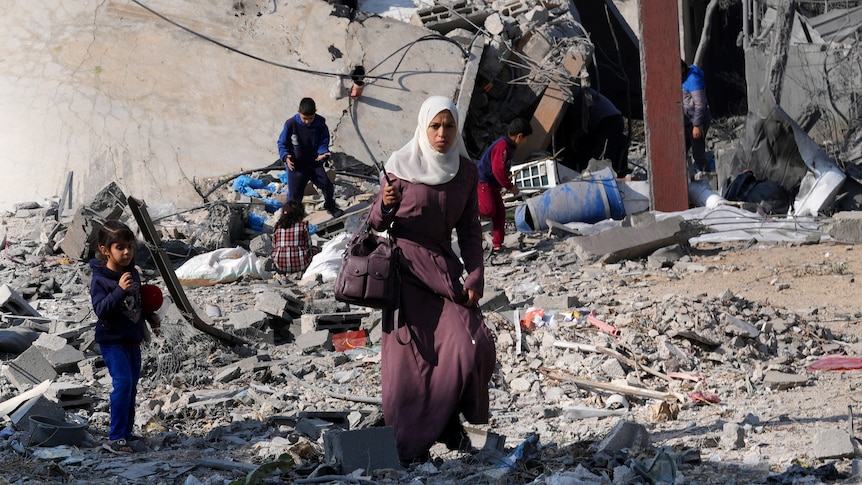
However the demolition of much of Gaza will make it difficult for Israel as a society to function.
“More of the same”
Continuation of a war in the Gaza Strip, albeit at a diminished intensity, dragging on for an extended period, turning into a protracted war of attrition, resembling the eighteen-year Israeli presence in the security strip in southern Lebanon or the Soviet engagement in Afghanistan aligns well with the alt-right’s so-called Decisive Plan.
While everyone’s attention would remain fixated on Gaza, where the primary efforts of the regular army would continue to be concentrated, local settlement guards or militias functioning as irregular or semiregular units, akin to paramilitaries, could turn the West Bank into hell on Earth.
———————
Is there a way back from the hardness of Israeli hearts in the face of hundreds of thousands of people who because of our war are fighting like animals for pieces of food, a safe place where their children can lay down their heads, medicine, clean water and dignity? The answer is probably yes, but its going to take generations.
On the current trajectory of Israel’s attacks from the air, sea and the ground, Gaza looks set to be an enclave with 2.3 million people essentially living in rubble.
The fear among Palestinians is that Israel wants a “second Nakba”. Palestinians use the word Nakba — Arabic for “catastrophe” — to refer to the estimated 750,000 Palestinians who were forced to leave — or fled in fear – upon the formation of Israel in 1948. Many Palestinians believe the reason Israel is bombing Gaza so heavily is to make it unliveable so that eventually the majority, if not all, of the citizens, facing starvation, will force their way into Egypt.
The 1948 expulsion remains an animating force in Palestinian identity, and it changed the demographics of Israel.
The Jerusalem Post — has carried a prominent opinion piece advocating the emptying of Gaza. That in itself is extraordinary — the most read English-language newspaper for Jewish communities around the world running the argument that the new home for Palestinians in Gaza should be Egypt.
Flattening the whole strip so it becomes an empty museum like Auschwitz.
Joel Roskin, an academic from Israel’s Bar Ilan University, said that the major portions of Gaza were now considerably incapacitated and cannot be simply fixed. “Rather, the damaged and destroyed structures must be completely torn down. The tunnelled – and consequently exploded and bulldozed — soil must undergo extensive environmental and engineering rehabilitation … the facts demonstrate that the northern Sinai Peninsula is an ideal location to develop a spacious resettlement for the people of Gaza. Its open areas, along with the existing infrastructure, can easily host large-scale development projects that, if led by the Chinese and supported by local labour, for example, can easily mature in just one to two years.” Bull shit!
Writing in Israeli newspaper Haaretz, Sfard questioned who Israelis would be after the war, asking “how many tons of coldness and indifference have settled inside us in order for us to turn high-rise buildings into dust, promenades and plazas into ruins and a million and a half people into displaced people who have nothing?
“And what will become of a society whose media outlets, which provide it with information about its deeds, have refrained for over 10 weeks from bringing even a single interview – a single one! – with a resident of Gaza to tell what’s happening to them; who censor the pictures of the dead children and the weeping mothers, the children that we killed and the mothers whose bereavement we caused? The Israeli TV channels are shaping our collective perceptions not only by means of what they show, but also, and perhaps mainly, by means of what they’re hiding from us.”
Israel’s Prime Minister Benjamin Netanyahu rejects any suggestion of ethnic cleansing, insisting that the primary aim of Israel’s military action is to “destroy Hamas”.
It’s debatable whether this can actually be done — Hamas is in part an ideology and idea, it’s also one of many groups whose aims are “resistance” to Israel’s occupation of the West Bank and, along with Egypt, its blockade of Gaza.
Hamas, in turn, makes no secret of its ultimate aim – its charter commits it to the eradication of the state of Israel.
The longer term issue for Israel is that an entire new generation of young Palestinians could be radicalised by seeing their homes and sometimes their families destroyed.
At this crossroads, neither Israel, Iran nor Hezbollah wants an all-out war that would have terrible consequence for all of them. But no side seems ready to stop the slide towards it.
That Israel must, instead, finally agree to a two-state solution under which Palestinians have their own state is a grave mistake.
WHO WOULD WANT TO LIVE IN A COUNTRY THAT WILL NEED MORE THAN WIRE FENCING OR A WALL TO MAKE IT SECURE IN THE FUTURE.
There will be a profound shift in Israel’s concept of security: many believe they must now protect themselves.
Several proposals have been put forward to end the conflict between Israel and Hamas with the U.S., Egypt and Qatar pushing to de-escalate in phases. But major sticking points about who should govern Gaza are blocking progress as Israel doesn’t want to govern and is against the top contender, the Palestinian Authority. So why is coming to a consensus for a ceasefire or peace deals so difficult?
There’s now only a one state solution.
———————
As the conflict with Hamas bleeds across borders, is wider violence inevitable?
Even if the Gaza war winds down, Israelis are shifting their gaze toward their northern border, preparing themselves for a potential new war — with Hezbollah in Lebanon. The Iranian-backed group is better armed than Hamas, with long-range missiles that could paralyze the country.
Historical precedents abound: paramilitary groups of this kind take orders from local commanders or charismatic political figures and are loyal only to them, not directly beholden to the central authority.
Israel’s war with Hamas has served to energise already existing tensions.
Without an end in sight, at present – the war is in danger of creating its own dynamic. And for now at least, the reality of the cross-border exchanges has a greater clarity than the rhetoric enfolding them.
———–
What sort of country will Israel be after this war? And will Gaza be liveable, or will its 2.3 million citizens be forced to move to the Sinai desert in Egypt?
No body really knows how this is going to end.
Even if the Israel pushes what remains of the Palestinians into the Sinai Desert and succeeds in dismantling Hamas as an organized military force in Gaza, it will survive as “a terror group and a guerrilla group.
Even if Israel changes it leader there is little room for wishful thinking here.
The likelihood of a left-wing government materializing due to internal protests appears scant. Far more probable is that Israelis will be drawn to a hawkish leader exemplifying strength and authority, typically a retired general with a distinguished military career, with a capacity to assume responsibility and navigate intra-Jewish divides.
Any withdrawal by Israel, including under a hostage deal, would create a vacuum that Hamas would do everything it can to fill as it emerges from its tunnels.
Those measures might assist in holding off Hamas in the coming months, but Israel still needs a long-term solution. That means actively replacing Hamas while it is still underground.
Discussing a plan for the future governance of Gaza brings with it political complications.
Who will replace Hamas?
Gaza will become an area in deep crisis.
——————-
It’s time for Israel’s allies to say: ‘Enough’
To stop selling arms.
When is a war crime not a war crime? Answer: when it’s done by an allied nation.
This will only happen when western governments, whose history of hypocrisy that fill many pages of history’s sad story of human exploitation, decide the political cost to them of ignoring the Palestinian deaths inflicted by their own weapons is higher than the cost of the current policy.
Key actors—Palestinian, Israeli, regional, and global—have staked out very different, often antagonistic positions on critical questions. UN interference is necessary, and it should take the shape of an interim, multinational peacekeeping force similar to the one that was tasked to facilitate the transition to an independent East Timor in 1999 or the NATO-led force deployed to Kosovo in the same year.
————–
The world we live in is changing at an astonishing pace. New technologies and ways of thinking are rapidly altering the way that human beings live, do business, communicate and interact with other. In just 40 years we have gone from rotary dial phones to 5G smart devices capable of accessing the collective knowledge of humanity. And the field of warfare is no exception.
Approaches to warfare that 30, 20 or even five years ago would have guaranteed success on the battlefield have now been made redundant. It can no longer be assumed that because a tactic worked in a previous conflict that it will work today. As the current Ukrain war with Russia shows modern day warfare does not require solders on the ground.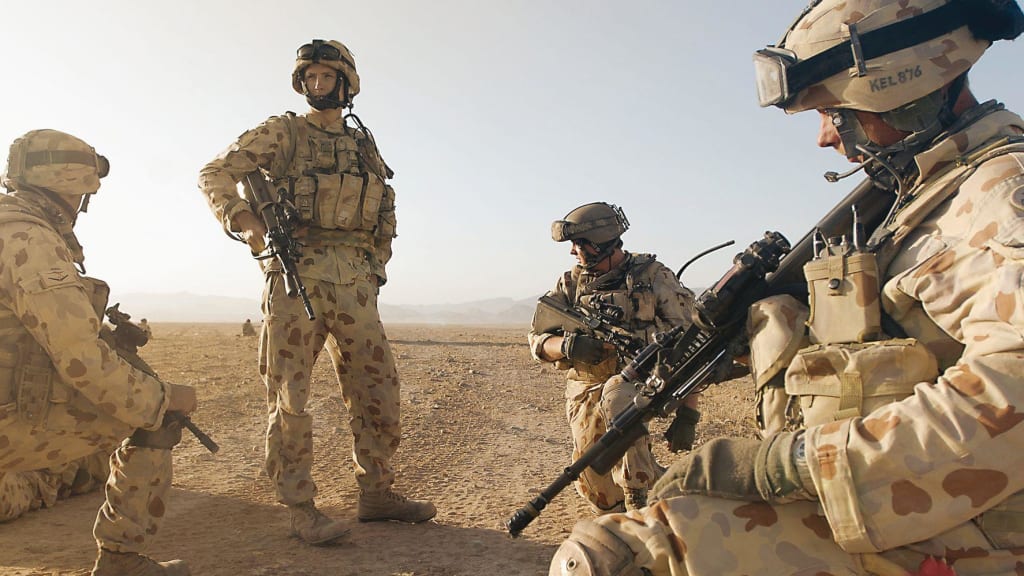
Today’s conflicts can also extend to the domains of cyber and space.
In the cyber domain, orchestrated hacking campaigns conducted on the behalf of nations can disable and shut down key pieces of civilian infrastructure and institutions, leaving nations in a state of panic and vulnerable to attack.
New technologies are also constantly rewriting the rule book for warfare – AI – Drones.
It seems likely that the coming years will see a major focus on soldier systems that ‘declutter’ the battlefield for soldiers by providing information on threats and targets as they are needed.
The decision on whether what that soldier sees is a friend or a foe comes entirely down to their own judgement and discretion. Making the decision can be extremely difficult in a confusing battlefield environment. To make life easier for soldiers, future weapons may have electronically flags popping up in the sight, telling them whether they’re aiming at a friend. Prior to firing, the weapon would send a small electromagnetic pulse at the target. If no response is received back from a friendly transceiver, the soldier will know they are not aiming at their own troops and will be able to confidently proceed.
So, while modern conflicts are being waged in the most complex environments in history, are there solutions to bring clarity to the minds of both soldiers in the field and leaders. NO.
We see something terrible and then it disappears.
What are the rules of war?
It’s a timely question in the wake of attacks on civilians, aid workers and hospitals in conflict zones around the world.
However enforcing out of date rules can be difficult.
For example, the five veto-holding permanent members of the Security Council — the U.S., China, Russia, the U.K. and France — must vote unanimously to pursue a resolution that might call for an investigation, refer a case to a court for trial, threaten sanctions or propose another motion. But often one or several of these countries has a vested interest in the conflict in question.
You would be more than naïve if you do not realise by now that Israel is not currently using AI. Indeed its has a program called Lavender choosing targets to bomb. An artificial intelligence tool developed for the war, marked 37,000 Palestinians as suspected Hamas operatives.
Mistakes were treated statistically. SUCH AS THE RECENT KILLING OF SIX INTERNATIONAL AID WORKERS.
We need to keep saying that these protections are valuable, they’re worthy, and they speak to our common humanity.
All human comments appreciated. All like clicks and abuse chucked in the bin.
Contact: bobdillon33@gmail.com


 bobdillon33blog
You must be logged in to post a comment.