• About
  • THE BEADY EYE SAY’S : THE EUROPEAN UNION SHOULD THANK ENGLAND FOR ITS IN OR OUT REFERENDUM.

bobdillon33blog

~ Free Thinker.

bobdillon33blog

Tag Archives: Inequility

THE BEADY EYE ASK’S: IS THE LONG-HELD NOTION OF WHO WE ARE WHAT WE DO AND HOW WE BEHAVE THREATENED.

18 Monday Jan 2016

Posted by bobdillon33@gmail.com in Freedom, Humanity., Life., Technology, The Future, The Internet., The world to day., Unanswered Questions., What Needs to change in the World, Where's the Global Outrage.

≈ Comments Off on THE BEADY EYE ASK’S: IS THE LONG-HELD NOTION OF WHO WE ARE WHAT WE DO AND HOW WE BEHAVE THREATENED.

Tags

Big Data, Community cohesion, Identity, Inequility, The Future of Mankind, Visions of the future.

(4/3 minute read)

We live in a digital age with both positive and negative influences on society.

But is the human brain, that most sensitive of organs, under threat from the modern world?

We are becoming more and more reliant on technological devices for nearly everything we do.

Unless we wake up to the damage that the gadget-filled, pharmaceutically-enhanced 21st century is doing to our brains, we could be sleepwalking towards a future in which neuro-chip technology blurs the line between living and non-living machines, and between our bodies and the outside world.

Human identity, the idea that defines each and every one of us, could be facing an unprecedented crisis.Afficher l'image d'origine

Of course, there’s nothing new about that:

Human brains have been changing, adapting and developing in response to outside stimuli for centuries.

However our brains to-day are under the influence of an ever- expanding world of new technology: multichannel television, video games, MP3 players, the internet, wireless networks, Bluetooth links, Smart Phones, – the list goes on and on.

Electronic devices and pharmaceutical drugs all have an impact on the micro- cellular structure and complex biochemistry of our brains. And that, in turn, affects our personality, our behaviour and our characteristics.

In short, the modern world could well be altering our human identity.

It is a crisis that is threatening the long-held notions of who we are, what we do and how we behave.

It goes right to the heart – or the head – of us all.

This crisis could reshape how we interact with each other, alter what makes us happy, and modify our capacity for reaching our full potential as individuals.

And it’s caused by one simple fact:

The human brain, that most sensitive of organs, is under threat from the modern world.

Already, it’s pretty clear that the screen-based, two-dimensional world that so many teenagers – and a growing number of adults – choose to inhabit is producing changes in behaviour.

Attention spans are shorter, personal communication skills are reduced and there’s a marked reduction in the ability to think abstractly.

Add that to the huge amount of personal information now stored on the internet – births, marriages, telephone numbers, credit ratings, holiday pictures – and it’s sometimes difficult to know where the boundaries of our individuality actually lie.

And could weaken further still if, and when, neurochip technology becomes more widely available. These tiny devices will take advantage of the discovery that nerve cells and silicon chips can happily co-exist, allowing an interface between the electronic world and the human body.

Then, if both devices were connected to a wireless network, we really would have arrived at the point which science fiction writers have been getting excited about for years. Mind reading! We becoming more and more immune to what we are doing to ourselves in our lives. That cherished sense of self could be diminished or even lost.

So far:

Facebook is eating away at your time. Making you into a Likeaholic.

Our Intimacy is being eroded.

We inundated with information overload to the point that only sensationalism attract our attention.

Pure’ pleasure – that is to say, activity during which you truly “let yourself go” – was part of the diverse portfolio of normal human life. Until now, that is.

Now, coinciding with the moment when technology and pharmaceutical companies are finding ever more ways to have a direct influence on the human brain, pleasure is becoming the sole be-all and end-all of many lives, especially among the young.

We could be raising a hedonistic generation who live only in the thrill of the computer-generated moment, and are in distinct danger of detaching themselves from what the rest of us would consider the real world.

In the mean time we continue polluting the planet will nilly.

But we mustn’t be too pessimistic about the future.

What if we could create an environment that would allow the brain to develop in a way that was seen to be of universal benefit?

I’m not convinced that scientists will ever find a way of manipulating the brain to make us all much cleverer (it would probably be cheaper and far more effective to manipulate the education system).

Well, that debate must start now.

Biometrics has long been put forth as the next big thing in authentication, replacing or supplementing the concept of “things that you know”—passwords, PINs, and so on—with “things that you are.”

Fortunately, there’s no shortage of qualities that are unique to each person on the planet, and which could be potentially combined to create a comprehensive picture of you that’d also be really hard to fake.

Unfortunately the challenge will be to ensure that all income growth does not end up with those who own the machines and shares. Afficher l'image d'origine

Identity, the very essence of what it is to be human, is open to change – both good and bad. Our children, and certainly our grandchildren, will not thank us if we put off discussion much longer.

Perhaps it will not matter in a few hundred years when we are all singing from the same hymn sheet

All comments appreciated.

← Back

Thank you for your response. ✨

Share this:

  • Share on WhatsApp (Opens in new window) WhatsApp
  • More
  • Share on Mastodon (Opens in new window) Mastodon

THE BEADY EYE ASK’S: WHY IS IT WE CAN’T ACT FOR THE COMMON GOOD?

17 Sunday Jan 2016

Posted by bobdillon33@gmail.com in Humanity., Modern Day Communication., Politics., Sustaniability, The world to day., Unanswered Questions., What Needs to change in the World

≈ Comments Off on THE BEADY EYE ASK’S: WHY IS IT WE CAN’T ACT FOR THE COMMON GOOD?

Tags

Capitalism and Greed, Climate change, Community cohesion, Distribution of wealth, Earth, Extinction, Inequility, The Future of Mankind, Visions of the future.


( A four-minute Read.)

Whatever Happened to the “Common Good”?

Our politics have become so polarized and increasingly volatile; and our political institutions have lost the public trust. 

There is (Almost) No Such Thing as the “Common Good”

We face a choice between a society where people accept modest sacrifices for a common good or a more contentious society where group selfishly protect their own benefits. Our most fundamental social problems grow out of a widespread pursuit of individual interests and greed.

Recommitting ourselves to the general welfare could solve the deepest problems the world now face.

The very idea of a common good is inconsistent with a pluralistic society like ours.

Different people have different ideas about what is worthwhile or what constitutes “the good life for human beings”, differences that have increased during the last few decades as the voices of more and more previously silenced groups, such as women and minorities, have been heard.

Given these differences, some people urge, it will be impossible for us to agree on what particular kind of social systems, institutions, and environments we will all pitch in to support.

It might seem that since all citizens benefit from the common good, we would all willingly respond to urgings that we each cooperate to establish and maintain the common good.

Examples of particular common goods or parts of the common good include an accessible and affordable public health care system, and effective system of public safety and security, peace among the nations of the world, a just legal and political system, and unpolluted natural environment, and a flourishing economic system.

Because such systems, institutions, and environments have such a powerful impact on the well-being of members of a society, it is no surprise that virtually every social problem in one way or another is linked to how well these systems and institutions are functioning.

So why is it that we are unable to act for the Common Good of humanity and the Planet?

Our culture views society as comprised of separate independent individuals who are free to pursue their own individual goals and interests without interference from others.

In this individualistic culture it is difficult, perhaps impossible, to convince people that they should sacrifice some of their freedom, some of their personal goals, and some of their self-interest, for the sake of the “common good”.

This combined with the fact that we have turned everything into a commodity to be bought or make profit on has blurred our values of the common good.

These days one might describe the common good as “certain general conditions that are…equally to everyone’s advantage”.

Even if we agreed upon what we all valued, we would certainly disagree about the relative values things have for us.

Such disagreements are bound to undercut our ability to evoke a sustained and widespread commitment to the common good.

In the face of such pluralism, efforts to bring about the common good can only lead to adopting or promoting the views of some, while excluding others, violating the principle of treating people equally.

Moreover, such efforts would force everyone to support some specific notion of the common good, violating the freedom of those who do not share in that goal, and inevitably leading to paternalism (imposing one group’s preference on others), tyranny, and oppression.

We left with cultural traditions, that in fact, reinforce the individual who thinks that she should not have to contribute to the community’s common good, but should be left free to pursue her own personal ends.

WHERE DOES ANY OF THIS LEAVE US?

A good questions but complicated because complete societies all with different laws, rules, and beliefs,(which we can call ‘polities,’ or ‘countries’) take many forms in different times and places but they always include some kind of rule ordering them to the common good.

This may well be so but the overriding self interest   Resulting in a planet of Inequalities, rampant climate change, conflicts, wars, pollution on a massive scale, corruption, and profit at any cost.

Not all people live under a state, but every [complete] human community by definition is a polity.» Polities enable families, local communities (‘villages’), and associations to flourish by realizing many common goods, but polities also allow for the achievement of greater common goods.

The good news is with modern-day technology we are on the threshold of discovering a new way.

  • It is possible for acts of individual humans armed with powerful technologies to make decisions that may affect the future survival of the whole human race.
  • We can imagine the possibility of extinction (whether by our own efforts or due to some external cause), and we can agree to work together to prevent such an eventuality.

Of course, even while we work on a common goal of preserving the species, we will still all be competing to maintain a larger share of descendants within the future population, and this may still result in technological developments that threaten the extinction of everyone.

Whether one goal (survival of the species) can win out against the other goal (relative reproductive success of the individual) is not a fore-gone conclusion.

For me it consists primarily of having the social systems, institutions, and environments on which we all depend work in a manner that benefits all people.

The internet revolution is transforming the way knowledge is disseminated and how people unite over causes. ( see post: The Beady Eye asks: Are we condemned to reaction politics for the foreseeable future)

This means that our out of date world organisations need to come up to speed.

Establishing a pro active chamber of Governance with non political expert representatives, immune from lobbing, that would be concerned with the long-term view to avoid potential threats or to capitalize on potential opportunities.

This Chamber actions subject to Social Media network electronic voting by the tax paying citizens.

Placing a World Aid Commission of 0.05% ALL HIGH FREQUENCY STOCK EXCHANGE TRANSACTIONS. ON ALL FOREIGN EXCHANGE TRANSACTIONS OVER $20,000. ON ALL SOVEREIGN WEALTH FUNDS ACQUISITIONS . ON ALL NEW DRILL LICENCES.

THIS WOULD CREATE A PERPETUAL FUND FROM PROFIT FOR PROFIT SAKE TO ADDRESS CLIMATE CHANGE AND ALL OTHER WORLD PROBLEMS OF INEQUALITY.

WHY SUCH A FUND? Because appeals to the common good are confronted by the problem of an unequal sharing of burdens.

Our desire or desires are personal incapable of being satisfied because of our internal sense of imagination.

If good is the cause of desire, how can it be that people do not want what is good?

Indeed, all sense pleasures seem to be intended by nature to be connected to actions that lead toward the lower and more basic of the honorable goods such as the preservation and reproduction of life.

This is lost in large complex societies.

Is this the reason we are unable to act for the common good.

To define the good as ‘what all want’ is therefore a definition not of an effect by its cause, but just the opposite: a definition of a cause by its effect. The good is a cause. It is the final cause, the end or purpose.

If you get what I mean.

Hunger is the desire for food, but food is not good because there is hunger. Rather, there is hunger because food is good and necessary for the preservation of one’s substance.

The good is desirable as known, and therefore as long as it is unknown it is powerless to cause desire.

Many economists claim that in any free exchange each party must think that they are getting something better out of the deal.

But people are not such fools.

Whoever wins, others must lose.

Therefore, for humanity, there is no “Common Good”.

Other than the continued survival of the human race as a species.

Unless, perhaps, we can avoid the finiteness by expanding into outer space.

Afficher l'image d'origine

Historically, our darkest hours on Earth have given birth to some of our most brilliant moments—our brightest ideas and most illuminating conversations.

The challenges we’re facing can spur us towards brilliance—and prompt a course correction. We must be both far-sighted and courageous in our thinking.

Our house is on fire. What will we save?

Not the redistribution of wealth by governments Tax to create greater equality.

Especially insofar as they are only concern with interior acts power rather than the outward behavior which directly affects other people.

We must also support thinkers and leaders who can help expand our collective understanding of what’s valuable beyond the narrow one-dimensionality of a profit margin.

We may never find a truly satisfying and conclusive answer.

Maybe its the wrong question altogether.  You will never really know what it is to be me and I will never really what it is to be like you. And this very unknowability of other humans beings is what is the common good.

The human common good—now understanding that phrase without restriction to the state’s or political community’s good is impossible.

ALL COMMENTS WELCOME.

← Back

Thank you for your response. ✨


Share this:

  • Share on WhatsApp (Opens in new window) WhatsApp
  • More
  • Share on Mastodon (Opens in new window) Mastodon

THE BEADY EYE; ASK’S WHAT IF ANYTHING CAN BE DONE TO CHANGE CAPITALISM.

06 Wednesday Jan 2016

Posted by bobdillon33@gmail.com in Capitalism, Humanity., Life., Politics., Sustaniability, Technology, The Future, The world to day., Unanswered Questions., Wealth., What Needs to change in the World, Where's the Global Outrage., World Organisations.

≈ Comments Off on THE BEADY EYE; ASK’S WHAT IF ANYTHING CAN BE DONE TO CHANGE CAPITALISM.

Tags

Capitalism and Greed, Capitalism vs. the Climate., Community cohesion, Democracy, Distribution of wealth, Earth, High - Frequency Trading, Inequility, SMART PHONE WORLD, Sovereign wealth fund, Technology, The Future of Mankind, Visions of the future., World aid commission

It’s only right that I follow the last series of posts on what is Wrong with a post that asks the above question.

BECAUSE ITS MONEY THAT IS AT THE HEART OF THE PROBLEM.

I guess the answer to the question “What is wrong with capitalism today?” is dependent on who you ask.

Capitalism works for capitalists.

The Problem is 90 percent of us are not capitalists, we are employees.

Without us noticing, we are entering the post capitalist era.

We need to reexamine the models that have gotten us to this point.

Complete change will not happen overnight. Nor will it be built on the back of one investor or one innovative entrepreneur.

It will be something that business owners, investors, political leaders, consumers and entrepreneurs must all work together toward.

Currently, our planet is on track to fly past the 2 degrees Celsius warming that scientist have repeatedly warned marks the safe range for humans on this planet, but at the heart of further change to come is information technology, new ways of working and the sharing economy.

The old ways will take a long while to disappear but millions of people are beginning to realise they have been sold a dream at odds with what reality can deliver.

The democracy of riot squads, corrupt politicians, magnate-controlled newspapers and the surveillance state looks as phoney and fragile as East Germany did 30 years ago.

Why should we not form a picture of the ideal life, built out of abundant information, non-hierarchical work and the dissociation of work from wages?

So are we witnessing the first stage of an economy beyond capitalism?

Is technology creating a new route out or is it consolidating power into the hands of a few like Google, Microsoft and Apple?

Will its future be shaped by the emergence of a new kind of human being,  reshaping the economy around new values and behaviours?

Will Capitalism as we know it be abolished by creating something more dynamic that exists, at first, almost unseen within the old system, but which will break through because of what Information technology has brought about in the past 25 years.

It is blurring the edges between work and free time and loosened the relationship between work and wages?

Or is the current wave of automation, currently stalled because our social infrastructure cannot bear the consequences, will hugely diminish the amount of work needed – not just to subsist but to provide a decent life for all.

These are all questions to be answered before we see what I call post capitalism.

The Questions are numerous, and there have been hundreds of books, papers, and talks on the subject few however with any positive suggestions.

Before I put the only suggestion that is viable lets start with what is wrong with the present state of Capitalism.

Here is way I see what is wrong;

Today capitalism isn’t about real markets and commodities with the price mechanism being fixed by competing supply and demand, now today it is about casino economics. You throw the dice and when you loose … all that global connectivity means you lose globally. We are all in this together – that is why we call it a global economy – oh apart from the 0.1% – they are the ones throwing the dice. We are just the ones picking up the tab when the bets don’t come off.

Although economics likes to think of itself as a science in reality it ignores the fundamental laws that govern science – the first two laws of thermodynamics. This isn’t a smart thing to do. There actually are limits to growth.

They told us wealth creation was a trickle down theory but in reality it is a trickle up theory. The rich really do get richer and richer and it is not down to merit. The question is what is going to stop them: war or politics?

The big problem is humans are human, both doing bad things and good things. Capitalism only works if enough of us do the right thing.

The price mechanism is faulty unless it includes the environmental cost now and in the future of our consumption. This it doesn’t done at present and we are free-loading off nature.

Often we think it is the only way to do things. It is not the only way to even do capitalism! Alternatives exist, other brands are available. There are even other ways of thinking about economics that we don’t even call capitalism; they may be a bit racy for us right now so lets start with re-imagining what a good effective form of capitalism could be like if humanity fully realized its role and impact upon the planet that sustains it.

Modern capitalism is so big and complex that who can say that really understand it.

I don’t.

But I do understand by building business models and share valuations based on the capture and privatisation of all socially produced information, Google and such firms are constructing a fragile corporate edifice at odds with the most basic need of humanity, which is to use ideas freely.

Never has humanity been better fed, lived longer, used more energy and had more stuff than today so what is wrong.

One of the fundamental faults of capitalism is the basic axiom that if everybody tries to accumulate as much property as possible the general interest of the people will be served.

All this seems to do is create exploitation.

The problem with capitalism is that it isn’t very good as what it says it is good at, spreading wealth, enabling good technological progress and helping us become more human, more free.

Adam Smith – you know him graces the back of the £20 note – founding father of modern capitalism back in the 18th century – hero of Margaret Thatcher.   When he famously asserted:

“It is not from the benevolence of the butcher, the brewer, or the baker that we expect our dinner, but from their regard to their own interest.” 

What Smith was talking about was the idea that self-interest – the rational underpinning of economic man – was not only good for you but for everybody else – society.

Unfortunately the line between self-interest and greed is always fine – and we are human man not economic man and we find it very easy to cross that line – or certainly some of us do – lets call them the 0.1% – the 700,000 of us who have a lot – somewhere north of $5 million each.

The consequence of this trend as it unwinds over time is that wealth progressively becomes concentrated in fewer and fewer hands.

The rich get richer – that’s that 0.1% again. Or to put it another way wealth stays with those that are born to it and the idea that merit – how good you are at something – determining your economical price in the market place, or wages as most of would say, becomes far less important than we thought.

In fact there are plenty of things wrong with capitalism.

Those that shout this apparent self-evident reality the loudest own the media, the means of communication, they own your stability through the derivative bets they hold and they are telling you don’t blink – this is the natural way of things , capitalism the way we see it, the way the 0.1% see it.

So the more we have of everything, food, power, stuff, the more energy we must use (even if we get more energy-efficient in doing things).

The nitty-gritty of it is we have fucked up the world with Capitalism idealism.

I don’t approve of Communism or Socialism either, the truth is that every system is flawed.

I think a system which is based on an assumption that man is basically piggish and therefore only fit to look after his own needs; such system impedes rather than promotes the good within each person.

Geographers have away of describing this situation it is called the IPAT equation.

Impact = population x affluence x technology. You note there is no Money in the equation.

The impact.

Physicists would call it entropy, biologists pollution and economists externalities – is of an order defined by how many of us are using how much however efficiently.

If you want impact in a nutshell it is climate change, it is salinization of soil, it is depleting geological resources , it is reducing biodiversity.

There really are limits to growth.

Capitalism is a perpetual motion machine, striving for more and more growth makes us in the long run weaker not stronger. Well, if only we were all-knowing, rational and optimal in our behavior maybe it would be so. But we are not.

In the past the trend towards greater and growing inequality has been neutered by war – nothing equalizes society more effectively than war – we do tend to be all in it together at such moments.

Today in our global economy is held together with a digital architecture that enables the reduction of wealth to so much digital code life has become one big transaction.

The most spectacular aspect of this transactional world is the derivatives markets.

(A derivative is a bet on a price changing within a market – say interest rates, or currency exchange values or a commodity price such as that for coffee. The value of all derivatives worldwide in 2013 is thought to be about $1.2 quadrillion although nobody knows exactly as, a like a lot ordinary betting the betters don’t want necessarily want to admit to it.)

So that is $1,200,000 billion laid out in bets about what may or may not happen.

Billions of transactions.

Let’s quickly remind ourselves. The global economy – the real economy – is worth about $85 trillion – that is about 7% of the notional sum bet on what that economy will do.

Now, take a deep breath and think about it.

If you don’t now believe that we could have another global economic crash in the style of 2008 – a massive bursting asset bubble – you need to think again and cast your eyes to Asia – you might be wondering where much of that quantitative easing – free money that the US and the UK created ended up. Try property speculation in Asia.

We are quickly reaching the tipping point where growth in GDP in any particular country comes at the expense of growth in GDP of another.

We do not have global organizations capable of managing these tension points nor are societies willing to curb growth and consumerism.

Capitalism as currently practiced is simply not sustainable.

Modern market capitalism has shifted recently with the emerging supremacy of money markets and the financial system over the actual trade of goods. Under this, you’ll make more money trading in derivatives than actually physically trading in commodities.

Capitalism, or the recent move into financial market dominated capitalism.

The “new capitalism” is based on mathematics rather than trade; credit default swaps over goods and services; when odds are stacked in the favor of big banks because of hedging, derivatives and CDS’s; when there is little to no penalty for market manipulation by investment banks, power brokers, Ponzi schemers … these inefficiencies in the market cause redistribution of wealth to the people in power who design the system.

The mass media is becoming more and more an opiate, an aid for living the unexamined life. replace it (capitalism)?”

Through the millions spent in lobbing reasonable controls upon business have been removed. The desire for economic success and the influence of the powerful elite have ruined the mass media.

Our political problems have deepened with the demise of unions as an effective political force, the continued growth in the belief in the desirability of pyramid economics and class structure (which has been sold by a media controlled by those at the top of the pyramid), and the dependence of our two-party system upon those at the top of the pyramid for funds to cover their election expenses.

Around the world the gains of increased productivity are wasted by this pyramid structure.

For over 40 years I have watched the gradual drift in the minds of the average person from an understanding of our political economic reality and the need for corrective actions.

Those who dominate the means for the production of ideas have served their class well.

This endless cycle of production and consumption for profit is suicide and profit is pretty pointless when we run out of things to burn and things to eat.

I would suggest a world government dedicated to seeing that: (a) every­body was properly fed, clothed, and housed; (b) everyone worked and received a fair return for their work with none receiving too much; (c) intellectual development for all to be encouraged; (d) businesses are the servant to man; (e) the production of war materials end; (f) the ending of all exploitation, including one region by another or one class by another; (g) and the ending of a press which is controlled by those who make up the ruling class.

We is needed is a project based on reason, evidence and testable designs, that cuts with the grain of history and is sustainable by the planet.

Capitalism is not and has never been designed to work in an environment dominated by market controls, regulations, artificial barriers to entry, monetary manipulation and a myriad of other government interventions.

It is Profit at any cost and having taxpayers bail it out when it goes wrong simply means the risk has shifted from corporation to state, or you and me.

Many would say that means a broken model.

Has a new model started.  It all depends on what kind of capitalism we are talking about and what force will be applied either at the ballot box or on the barricades or by the Smart Phone or the Gun.

Another question raised about the proposed strategy is whether it actually adds up to the defeat of capitalism.

Do the numerous tactics described above, most of which focus on what not to do, really do the job? How will capitalism actually be defeated? It’s true that many of these recommendations are about what not to do.

this strategy calls for pulling time, energy, and resources out of capitalist civilization and putting them into building a new civilization. The image, then, is one of emptying out capitalist structures, hollowing them out, by draining wealth, power, and meaning from them until there is nothing left but shells.

To think that we could create a whole new world of decent social arrangements overnight, in the midst of a crisis, during a so-called revolution or the collapse of capitalism, is foolhardy.

Our new social world must grow within the old, and in opposition to it, until it is strong enough to dismantle and abolish capitalist relations.

Such a revolution will never happen automatically, blindly, determinable, because of the inexorable materialist laws of history.

It will happen, and only happen, because we want it to, and because we know what we’re doing and how we want to live, what obstacles have to be overcome before we can live that way, and how to distinguish between our social patterns and theirs.Afficher l'image d'origine

To achieve change we need unlimited finance.  Where  can we find this?  We don’t have to look far.

If a new socialist democratic system is to emerge:

We must place an World Aid Commission on all High Frequency Trading, on all Foreign Exchange Transactions over $ 20,000, on all Sovereign Wealth Funds Acquisitions. This will created a perpetual funded Fund to address the damage Greed and Profit for profit sake has done. ( See Previous Posts)

Who do we achieve this.

Our lives have been shaped by developments which most of us couldn’t have imagined a decade ago.

In effect, they are nine distinct psychological orientations toward the world that structure our perceptions, expectations, and demands whenever and wherever other human beings may be involved. These instincts represent our most basic assumptions about how the social world works, and that includes how the political world works.

With the power of our Smart phones the new political weapon of the future.

In the next decade upwards of 100 billion objects from smartphones to street lamps and our cars will be connected together via a vast ‘internet of everything’. This will impact every aspect of our lives.

The interfaces to all our devices from phones to computers, cars and home appliances will be highly intelligent and adaptive – learning from our behaviours and choices and anticipating our needs.

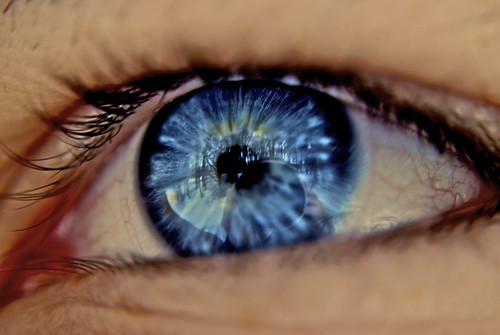
The all-seeing eye is your own.

← Back

Thank you for your response. ✨


.


Share this:

  • Share on WhatsApp (Opens in new window) WhatsApp
  • More
  • Share on Mastodon (Opens in new window) Mastodon

THE BEADY EYE LOOKS AT WHAT NEEDS TO CHANGE IN THE WORLD. PART FIVE – WHO OR WHAT CONTROLS US? PART TWO.

05 Tuesday Jan 2016

Posted by bobdillon33@gmail.com in Humanity., The Future, The world to day., Unanswered Questions., What Needs to change in the World

≈ Comments Off on THE BEADY EYE LOOKS AT WHAT NEEDS TO CHANGE IN THE WORLD. PART FIVE – WHO OR WHAT CONTROLS US? PART TWO.

Tags

Globalization, Inequility, The Future of Mankind, Visions of the future.

THERE IS A SIMPLE ANSWER TO WHAT CONTROLS US.

AND THAT IS:

THE PLANET THAT WE ALL LIVE ON WITH GRAVITY – WITH THE SUN AS ITS MASTER.

But its far more complicated if you sit back and analyze how things are run, or when you examine the question in any depth.

There are however a few thing that are self-evident:Afficher l'image d'origine

Man has never being in control of himself never mind the Earth.

Since our arrival we have contaminated all that is around us for self Profit, creating borders of different cultures and beliefs for self-protection.

( The US or Russia or China even though their military had the unquestioned capability to take over the world cannot do so because the power on earth is in the hands of a nefarious few and they are not human.)

The Nefarious few are called Stock Exchanges run by Capitalism. Not nuclear weapons system.

Over 100 years ago, people worldwide began burning more coal and oil for homes, factories, and transportation, NOT FORGETTING PROFIT. 

Carbon is everywhere, in the oceans, in rocks and soils, in all forms of life and in our atmosphere. Without carbon, life would not exist as we know it. The well-being and functioning of our planet depends on carbon and how it cycles through the Earth’s system. Living things on land, in soils, and in our oceans regulate the carbon cycle.

We are now all in a circle of madness. 

While we are busy with our lives we never see the total dominance that a handful of powerful transnational corporations firms may exert control over other firms via a web of direct and indirect ownership relations which extends over many countries. and control they have over our earth and mostly everyone in it.

The global economy is now being dominated by form a giant connected component, possibly with a core-periphery structure that pays lip service to cries for change with Trade Deals.

Indeed, mutual ownership relations among firms within the same sector can, in some cases, jeopardize market competition.  Moreover, linkages among financial institutions have been recognized to have ambiguous effects on their financial fragility.

So far, this issue has remained unaddressed, notwithstanding its important implications for Global policy making.

The fact that control is highly concentrated in the hands of few top holders does not determine if and how they are interconnected. It is only by combining topology with control ranking that we obtain a full characterization of the structure of control of the world.

Shareholder control flows upstream from many firms and can result in some shareholders becoming very powerful. Powerful actors tend to belong to the core.

The top holders within the core can thus be thought of as an economic “super-entity” in the global network of corporations.

Recent works have shown that when a financial network is very densely connected it is prone to systemic risk. Indeed, while in good times the network is seemingly robust, in bad times firms go into distress simultaneously.

The recent Banking collapse for example. 

Rich-get-richer” mechanisms are at work.

The second issue for me concerns the control that financial institutions effectively exert.

According to some theoretical arguments, in general, financial institutions do not invest in equity shares in order to exert control.  This is a total fallacy when you look at our capitalist culture and the business practices that operate within it.

Capitalism as we know it today—an amoral culture of short-term self-interest, profit maximization, emphasis on shareholder value, isolationist thinking, and profligate disregard of long-term consequences—is an unsustainable system, a monster set to destroy itself.

You might think that’s it, but nothing is solid, everything is Energy and our thought hold together this ever-changing energy field into objects that we see.Afficher l'image d'origine

All our interpretations are solely based on an internal map of reality that we all have and not real truth. Our map is a result of our personal life’s collective experiences.

Your thought literally shift the universe on a particle-particle basis to create your physical life.  Look around you.

Everything you see in our physical world started as an idea. You literally become what think about most.

Your life becomes what you have imagined and believed the most.

Another words the world is your mirror, enabling you to experience in the physical plane what you hold as your truth …. until you change it.

What we think is true is really an illusion.

Fortunately we have begun to uncover the illusion.  If you looked at yourself under a powerful electron microscope you see that you are made up of clusters of ever – changing energy in the form of electrons, neutrons, photons and so on.

So is everything else around you.

Now this is getting more than confusing.

Quantum physics tells us that it is the act of observing an object that causes it to be there and how we observe it.

Another words the object does not exist independently of its observer!  So its your observation your attention to something, and your intention, literally creates that thing.

We have three senses: Sight, Sound and Smell.

Humankind has elevated the role of these senses, and even created technological extensions of them, in order to find order and true knowledge of this Universe in which we exist.

Eventually, however, we must assemble a complete working knowledge of all genes and all of their functions and interactions. We will combine our knowledge of molecular biology with our knowledge of cell biology. Over this synthesis, we will layer our understanding of neuroscience and cognitive psychology.

Who knows what the future may hold or what constraints will be placed on our knowledge, whether through considered intellect and experience or through societal and cultural pressures?

The question is:

Will the underlying structures and functions of all microscopic and macroscopic aspects of the human brain allow us to predict and explain the emergence of consciousness? Only time and science may tell.

What controls us?  I have got the foggiest.  So I will leave you with:

Who am I? What is the self?

Are you the sum of all your parts, biochemistry, memories, senses, experiences, feelings, and the emergent properties themselves.

How long will it be before a computer or robot passes the Turing test (a conversation in which the human cannot tell whether he or she is talking to a human or a machine)?

Could we theoretically “download” a human consciousness into another brain or into a computer?

There are an estimated 60 trillion (that’s 60 million million) synaptic connections in the brain. Hopefully, we will soon understand exactly how information of our perceived reality is stored in these connections.

We will be able to compare the specific DNA codes of all life on Earth (or as much as we want) to calculate the ultimate Tree of Life on Earth.

Can we engineer our own evolution?

We are already at the point where embryos can be screened for genetic defects, such as Trisomy 21 (Down Syndrome), before being implanted into a woman’s uterus. We will eventually construct a tree of evolution that comes close to outlining the entire history of natural selection on Earth. We may one day be able to direct the course of our own evolution.

How does a single cell turn itself into a thinking, breathing organism?

How does a fertilized egg regulate its own genes and control the timing and three-dimensional growth of cells to form tissues and organs?

Can we Extent Life?

It remains to be seen how long we can extend the human life. Even if we can extend it further, we will have to address issues of quality of life as well.

Can we save our planet?

How much power can we wield over mother earth? Will we learn to alter climate? Will we learn to utilize renewable energy? Can we cure hunger? To me, it seems that we may always remain as ants when compared to the larger forces of this planet.

Is interstellar travel possible?

Our current technology cannot even hit 0.004% the speed of light, so we will not be going anywhere soon.

Are we alone in the Universe?

Our own galaxy contains roughly 100 billion (yes — 100 thousand million) stars. In addition, there are about 100 billion galaxies in our observable Universe. That’s 10,000,000,000,000,000,000,000 stars (assuming our galaxy is average). If I were a betting man I say we are not alone.

If there is no “true randomness”, then every event in existence was determined by those before it, thus eliminating the possibility of free will. However, if there is randomness, this at least leaves open the possibility of true free will.

What is the maximum carrying capacity of the Earth? Will we enact global population control measures?

Given current birth rates and ever-expanding life spans, it seems inevitable that we will be forced to enact population controls on a world scale. It is science that will have to tell us exactly what our resources can handle. No doubt, technology can increase our carrying capacity, if utilized properly.

What is dark energy and dark matter, anyway?

Something seems to be out there, swirling within galaxies, holding them together, and pulling groups of galaxies into clusters and superclusters. We have inferred its existence from its effect on other mass.

What is the true nature of existence? Parallel Universes, multiple dimensions, strings?

If science ever comes to grips with the nature of our physical reality and devises the Grand Unified Theory of everything, I sure hope the math can be translated into more conceptual terms.

If it turns out that we live in only one (or four) of 13 dimensions or some other such craziness, we prove it, and I still cannot understand it, it will be a sad and anticlimactic day.

The mass media form for us our image of the world and then tell us what to think about that image.

Essentially everything we know — or think we know — about events outside of our own neighborhood or circle of acquaintances comes to us via our daily newspaper, our weekly news magazine, our radio, or our television our Smart Phones or I Pads.

It is not just the heavy-handed suppression of certain news stories from our newspapers or the blatant propagandizing of history-distorting TV ‘docudramas’ that characterizes the opinion-manipulating techniques of the media masters. They exercise both subtlety and thoroughness in their management of the news and the entertainment that they present to us.

Almost all media comes from the same six sources.

Telecommunication advances now make instantaneous worldwide satellite transmissions an everyday occurrence. The development of these incredibly advanced technologies, the desire for a one-world government, the building of a one-world church, plus the events in Israel and the Middle East are more than convincing that the end of the age is nigh.

At this point, your reeling mind is probably protesting.

If you are sitting on the fence get off it. Make a stand today whom you will serve. Our lives on earth are going to be changing :WITH TEMPERATURES RISING, SEA LEVELS RISING, IMMIGRATION INCREASING,

With the lure of advanced technology, Capitalism is deceived our governments, our world organisations.

What real controls is Inequality of Opportunity and it will continue to do so unless we tap into Greed by creating a World Aid Fund. ( see previous posts)

Afficher l'image d'origineAfficher l'image d'origine


We all understand how all the myths and misinformation the public has been exposed to for centuries need to change.  This change can only be achieved by spreading the wealth of us all with a perpetual funded effort.

← Back

Thank you for your response. ✨


Share this:

  • Share on WhatsApp (Opens in new window) WhatsApp
  • More
  • Share on Mastodon (Opens in new window) Mastodon

THE BEADY EYE LOOKS AT WHAT NEEDS TO CHANGE IN THE WORLD. PART FIVE- WHO OR WHAT CONTROLS US?

04 Monday Jan 2016

Posted by bobdillon33@gmail.com in The Future, The world to day., Unanswered Questions., Where's the Global Outrage.

≈ Comments Off on THE BEADY EYE LOOKS AT WHAT NEEDS TO CHANGE IN THE WORLD. PART FIVE- WHO OR WHAT CONTROLS US?

Tags

Capitalism and Greed, Capitalism vs. the Climate., Community cohesion, Distribution of wealth, Environment, FOUNDATIONS /FORUM THINK TANKS, Inequility, The Future of Mankind, Visions of the future.

How many times have you heard that we humans are “using up” the world’s resources, “running out” of oil, “reaching the limits” of the atmosphere’s capacity to cope with pollution or “approaching the carrying capacity” of the land’s ability to support a greater population?Afficher l'image d'origine

When we hear conspiracy theorist talk about this or that powerful group (or alliance of said groups) “pulling strings” behind the scenes, we tend to dismiss or minimize such claims, even though, deep down, we may suspect that there’s some degree of truth to it, however distorted by the theorists’ slightly paranoid perception of the world.

The simple answer to who or what controls us is easy when it come to Who but not so with the What.

It will take more than this post to explain the what.

So in acknowledgment of the posts that accompany this one and the fact that we now all seem to suffer from confusion, lack of attention we will tackle the who on its own.

The most important thing to know about prehistoric humans is that they were unimportant. Their impact on the world was very small, less than that of jellyfish, woodpeckers or bumblebees.

Today, however, humans control this planet, or they like to think so. 

How did we reach from there to here? What was our secret of success, that turned us from insignificant apes minding their own business in a corner of Africa, into the rulers of the world?

We often look for the difference between us and other animals on the individual level. We want to believe that there is something special about the human body or human brain that makes each individual human vastly superior to a dog, or a pig, or a chimpanzee. But the fact is that one-on-one, humans are embarrassingly similar to chimpanzees. If you place me and a chimpanzee together on a island, to see who survives better, I would definitely place my bets on the chimp.

Humans control the world because we are the only animal that can cooperate flexibly in large numbers.

Ants and bees can also work together in large numbers, but they do so in a very rigid way. If a beehive is facing a new threat or a new opportunity, the bees cannot reinvent their social system overnight in order to cope better. They cannot, for example, execute the queen and establish a republic. Wolves and chimpanzees cooperate far more flexibly than ants, but they can do so only with small numbers of intimately known individuals. Among wolves and chimps, cooperation is based on personal acquaintance. If I am a chimp and I want to cooperate with you, I must know you personally: What kind of chimp are you? Are you a nice chimp? Are you an evil chimp? How can I cooperate with you if I don’t know you?

One-on-one or ten-on-ten, chimpanzees may be better than us. But pit 1,000 Sapiens against 1,000 chimps, and the Sapiens will win easily, for the simple reason that 1,000 chimps can never cooperate effectively.

Put 100,000 chimps in Wall Street or Yankee Stadium, and you’ll get chaos. Put 100,000 humans there, and you’ll get trade networks and sports contests.

Cooperation is not always nice, of course.

Prisons, slaughterhouses and concentration camps are also systems of mass cooperation. Chimpanzees don’t have prisons, slaughterhouses or concentration camps.

Yet how come humans alone of all the animals are capable of cooperating flexibly in large numbers, be it in order to play, to trade or to slaughter?

We can cooperate with numerous strangers because we can invent fictional stories, spread them around, and convince millions of strangers to believe in them. As long as everybody believes in the same fictions, we all obey the same laws, and can thereby cooperate effectively.

This is something only humans can do.

You can never convince a chimpanzee to give you a banana by promising that after he dies, he will go to Chimpanzee Heaven and there receive countless bananas for his good deeds. No chimp will ever believe such a story. Only humans believe such stories. This is why we rule the world.

It is relatively easy to accept that religious networks of cooperation are based on fictional stories. People build a cathedral together or go on crusade together because they believe the same stories about God and Heaven.

But the same is true of all other types of large-scale human cooperation. Take for example our legal systems. Today, most legal systems are based on a belief in human rights. But human rights are a fiction.  In reality, humans have no rights, just as chimps or wolves have no rights. Cut open a human, and you won’t find there any rights. The only place where human rights exist is in the stories we invent and tell one another.

Human rights may be a very attractive story, but it is only a story.

The same mechanism is at work in politics. Like gods and human rights, nations are fictions. A mountain is something real. You can see it, touch it, smell it. But the United States or Israel are not a physical reality. You cannot see them, touch them or smell them. They are just stories that humans invented and then became extremely attached to.

It is the same with economic networks of cooperation. Take a dollar bill, for example. It has no value in itself. You cannot eat it, drink it or wear it.

But now come along some master storytellers like the Chair of the Federal Reserve and the President of the United States, and convince us to believe that this green piece of paper is worth five bananas. As long as millions of people believe this story, that green piece of paper really is worth five bananas. I can now go to the supermarket, hand a worthless piece of paper to a complete stranger whom I have never met before, and get real bananas in return. Try doing that with a chimpanzee.

Indeed, money is probably the most successful fiction ever invented by humans.

Not all people believe in God, or in human rights, or in the United States of America. But everybody believes in money.  Even Osama bin Laden. He hated American religion, American politics and American culture — but he was quite fond of American dollars. He had no objection to that story.

To conclude, whereas all other animals live in an objective world of rivers, trees and lions, we humans live in dual world. Yes, there are rivers, trees and lions in our world. But on top of that objective reality, we have constructed a second layer of make-believe reality, comprising fictional entities such as the European Union, God, the dollar and human rights.

And as time passes, these fictional entities have become ever more powerful, so that today they are the most powerful forces in the world.

The very survival of trees, rivers and animals now depends on the wishes and decisions of fictional entities such as the United States and the World Bank — entities that exist only in our own imagination.

So in the end the who is us.

Not Governments, not Secret Societies ( Although since in 1891, when Rhodes organized a secret society with members in a ‘Circle of Initiates they have and are still manipulating the world), not the Rothschilds, not Religions, Computers, Artificial Intelligence, not History or Geography, not Climate Change and definitely not Technology.

Unfortunately we seem to be ruled by Money and Greed and our Population of the plant.

To the extent that if we continue using 50% more resources than the Earth can sustainably produce, and unless we change course, that number will grow fast—by 2030, even two planets will not be enough.Afficher l'image d'origine

But here’s a peculiar feature of human history:

After all, as a Saudi oil minister once said, the Stone Age didn’t end for lack of stone. Ecologists call this “niche construction”—that people (and indeed some other animals) can create new opportunities for themselves by making their habitats more productive in some way. Agriculture is the classic example of niche construction: We stopped relying on nature’s bounty and substituted an artificial and much larger bounty.

Economists call the same phenomenon innovation.

What frustrates them about ecologists is the latter’s tendency to think in terms of static limits. Ecologists can’t seem to see that when whale oil starts to run out, petroleum is discovered, or that when farm yields flatten, fertilizer comes along, or that when glass fiber is invented, demand for copper falls.

There were limits to growth.

I nowadays lean-to the view that there are no limits because we can invent new ways of doing more with less.

In the climate debate, for example, pessimists see a limit to the atmosphere’s capacity to cope with extra carbon dioxide without rapid warming. So a continuing increase in emissions if economic growth continues will eventually accelerate warming to dangerous rates. But optimists see economic growth leading to technological change that would result in the use of lower-carbon energy. That would allow warming to level off long before it does much harm.

Most economists expect a five or tenfold increase in income, huge changes in technology and an end to population growth by 2100: not so many more people needing much less carbon.

This disagreement about growth goes to the heart of many current political issues and explains much about why people disagree about environmental policy.

In 1679, Antonie van Leeuwenhoek, the great Dutch microscopist, estimated that the planet could hold 13.4 billion people, a number that most demographers think we may never reach. Since then, estimates have bounced around between 1 billion and 100 billion, with no sign of converging on an agreed figure.

Economists point out that we keep improving the productivity of each acre of land by applying fertilizer, mechanization, pesticides and irrigation. Further innovation is bound to shift the ceiling upward. Jesse Ausubel at Rockefeller University calculates that the amount of land required to grow a given quantity of food has fallen by 65% over the past 50 years, world-wide.

Ecologists object that these innovations rely on nonrenewable resources, such as oil and gas, or renewable ones that are being used up faster than they are replenished, such as aquifers. So current yields cannot be maintained, let alone improved.

In his recent book “The View from Lazy Point,” the ecologist Carl Safina estimates that if everybody had the living standards of Americans, we would need 2.5 Earths because the world’s agricultural land just couldn’t grow enough food for more than 2.5 billion people at that level of consumption.

Harvard emeritus professor E.O. Wilson, one of ecology’s patriarchs, reckoned that only if we all turned vegetarian could the world’s farms grow enough food to support 10 billion people.

Economists respond by saying that since large parts of the world, especially in Africa, have yet to gain access to fertilizer and modern farming techniques, there is no reason to think that the global land requirements for a given amount of food will cease shrinking any time soon.

Indeed, Mr. Ausubel, together with his colleagues Iddo Wernick and Paul Waggoner, came to the startling conclusion that, even with generous assumptions about population growth and growing affluence leading to greater demand for meat and other luxuries, and with ungenerous assumptions about future global yield improvements, we will need less farmland in 2050 than we needed in 2000. (So long, that is, as we don’t grow more biofuels on land that could be growing food.)

But surely intensification of yields depends on inputs that may run out? Take water, a commodity that limits the production of food in many places.

Estimates made in the 1960s and 1970s of water demand by the year 2000 proved grossly overestimated: The world used half as much water as experts had projected 30 years before.

The reason was greater economy in the use of water by new irrigation techniques.

Some countries, such as Israel and Cyprus, have cut water use for irrigation through the use of drip irrigation. Combine these improvements with solar-driven desalination of seawater world-wide, and it is highly unlikely that fresh water will limit the human population.

The best-selling book “Limits to Growth,” published in 1972 by the Club of Rome (an influential global think tank), argued that we would have bumped our heads against all sorts of ceilings by now, running short of various metals, fuels, minerals and space. Why did it not happen? In a word, technology: better mining techniques, more frugal use of materials, and if scarcity causes price increases, substitution by cheaper material. We use 100 times thinner gold plating on computer connectors than we did 40 years ago. The steel content of cars and buildings keeps on falling.

Until about 10 years ago, it was reasonable to expect that natural gas might run out in a few short decades and oil soon thereafter. If that were to happen, agricultural yields would plummet, and the world would be faced with a stark dilemma: Plow up all the remaining rain forest to grow food, or starve.

But thanks to fracking and the shale revolution, peak oil and gas have been postponed. They will run out one day, but only in the sense that you will run out of Atlantic Ocean one day if you take a rowboat west out of a harbor in Ireland. Just as you are likely to stop rowing long before you bump into Newfoundland, so we may well find cheap substitutes for fossil fuels long before they run out.

The economist and metals dealer Tim Worstall gives the example of tellurium, a key ingredient of some kinds of solar panels. Tellurium is one of the rarest elements in the Earth’s crust—one atom per billion. Will it soon run out? Mr. Worstall estimates that there are 120 million tons of it, or a million years’ supply altogether. It is sufficiently concentrated in the residues from refining copper ores, called copper slimes, to be worth extracting for a very long time to come.

One day, it will also be recycled as old solar panels get cannibalized to make new ones.

Or take phosphorus, an element vital to agricultural fertility. The richest phosphate mines, such as on the island of Nauru in the South Pacific, are all but exhausted. Does that mean the world is running out? No: There are extensive lower grade deposits, and if we get desperate, all the phosphorus atoms put into the ground over past centuries still exist, especially in the mud of estuaries. It’s just a matter of concentrating them again.

In 1972, the ecologist Paul Ehrlich of Stanford University came up with a simple formula called IPAT, which stated that the impact of humankind was equal to population multiplied by affluence multiplied again by technology.

In other words, the damage done to Earth increases the more people there are, the richer they get and the more technology they have.

Many ecologists still subscribe to this doctrine, which has attained the status of holy writ in ecology. But the past 40 years haven’t been kind to it. In many respects, greater affluence and new technology have led to less human impact on the planet, not more.

Richer people with new technologies tend not to collect firewood and bush meat from natural forests; instead, they use electricity and farmed chicken—both of which need much less land.

In 2006, Mr. Ausubel calculated that no country with a GDP per head greater than $4,600 has a falling stock of forest (in density as well as in acreage).

Haiti is 98% deforested and literally brown on satellite images, compared with its green, well-forested neighbor, the Dominican Republic. The difference stems from Haiti’s poverty, which causes it to rely on charcoal for domestic and industrial energy, whereas the Dominican Republic is wealthy enough to use fossil fuels, subsidizing propane gas for cooking fuel specifically so that people won’t cut down forests.

Part of the problem is that the word “consumption” means different things to the two tribes. Ecologists use it to mean “the act of using up a resource”; economists mean “the purchase of goods and services by the public” (both definitions taken from the Oxford dictionary).

But in what sense is water, tellurium or phosphorus “used up” when products made with them are bought by the public? They still exist in the objects themselves or in the environment. Water returns to the environment through sewage and can be reused. Phosphorus gets recycled through compost. Tellurium is in solar panels, which can be recycled. As the economist Thomas Sowell wrote in his 1980 book “Knowledge and Decisions,” “Although we speak loosely of ‘production,’ man neither creates nor destroys matter, but only transforms it.”

Given that innovation—or “niche construction”—causes ever more productivity, how do ecologists justify the claim that we are already overdrawn at the planetary bank and would need at least another planet to sustain the lifestyles of 10 billion people at U.S. standards of living?

Examine the calculations done by a group called the Global Footprint Network—a think tank founded by Mathis Wackernagel in Oakland, Calif., and supported by more than 70 international environmental organizations—and it becomes clear. The group assumes that the fossil fuels burned in the pursuit of higher yields must be offset in the future by tree planting on a scale that could soak up the emitted carbon dioxide. A widely used measure of “ecological footprint” simply assumes that 54% of the acreage we need should be devoted to “carbon uptake.”

But what if tree planting wasn’t the only way to soak up carbon dioxide? Or if trees grew faster when irrigated and fertilized so you needed fewer of them? Or if we cut emissions, as the U.S. has recently done by substituting gas for coal in electricity generation? Or if we tolerated some increase in emissions (which are measurably increasing crop yields, by the way)? Any of these factors could wipe out a huge chunk of the deemed ecological overdraft and put us back in planetary credit.

Helmut Haberl of Klagenfurt University in Austria is a rare example of an ecologist who takes economics seriously. He points out that his fellow ecologists have been using “human appropriation of net primary production”—that is, the percentage of the world’s green vegetation eaten or prevented from growing by us and our domestic animals—as an indicator of ecological limits to growth. Some ecologists had begun to argue that we were using half or more of all the greenery on the planet.

This is wrong, says Dr. Haberl, for several reasons. First, the amount appropriated is still fairly low: About 14.2% is eaten by us and our animals, and an additional 9.6% is prevented from growing by goats and buildings, according to his estimates. Second, most economic growth happens without any greater use of biomass. Indeed, human appropriation usually declines as a country industrializes and the harvest grows—as a result of agricultural intensification rather than through plowing more land.

Finally, human activities actually increase the production of green vegetation in natural ecosystems. Fertilizer taken up by crops is carried into forests and rivers by wild birds and animals, where it boosts yields of wild vegetation too (sometimes too much, causing algal blooms in water). In places like the Nile delta, wild ecosystems are more productive than they would be without human intervention, despite the fact that much of the land is used for growing human food.

If I could have one wish for the Earth’s environment, it would be to bring together the two tribes—to convene a grand powwow of ecologists and economists.

I would pose them this simple question and not let them leave the room until they had answered it:

How can innovation improve the environment?

Finally perhaps it is Male biology that has brought the world war, corruption and scandal.

Perhaps it time for Women to lead us to a better place.

But the most important factor has been technology, which has made men’s physical strength and martial prowess increasingly obsolete.

Male muscle has been replaced to a large extent by machines and robots. Today, women operate fighter jets and attack helicopters, deploying more lethal force than any Roman gladiator or Shogun warrior could dream of.

Women won’t make a perfect world, but it will be less flawed than the one that men have made and ruled these thousands of years.

Afficher l'image d'origine

Of course all of the above does not address what should be done to make the world a place where we all can live in respect of each other and the planet we all live on.

However its is us who control where we go from here. but unfortunately the majority are not concerned with what happens outside their bubble of self-interest.

We along with any aspirations that might slow Growth at any costs to Profit are being herded into the cloud.

History, Nature, and Current World affairs are used as a form of Entertainment while communication is being use as Data harvesting.

If we truly want a World controlled by us we must turn our Smart phones, into the voices that cannot be ignored.

We must demand electronic voting on all policies that affects us.

We must demand that a World Aid Commission is placed on all High Frequency Trading, on all Foreign Exchange transactions over $20,000 on all Sovereign Wealth Funds Acquisitions. ( see previous Posts) 

The truth which makes men free is for the most part the truth which men prefer not to hear.

Herbert Sebastian Agar (1897–1980)

← Back

Thank you for your response. ✨


Share this:

  • Share on WhatsApp (Opens in new window) WhatsApp
  • More
  • Share on Mastodon (Opens in new window) Mastodon

THE BEADY EYE LOOKS AT WHAT NEEDS TO CHANGE IN THE WORLD: PART ONE – The world’s urban population.

02 Saturday Jan 2016

Posted by bobdillon33@gmail.com in Sustaniability, The Future, The new year 2016., What Needs to change in the World, Where's the Global Outrage., World Organisations.

≈ Comments Off on THE BEADY EYE LOOKS AT WHAT NEEDS TO CHANGE IN THE WORLD: PART ONE – The world’s urban population.

Tags

Capitalism and Greed, Change., Distribution of wealth, Inequility, The Future of Mankind, THE UNITED NATIONS, Visions of the future.

Afficher l'image d'origine

This is your world.

We have to see the world through issues and action.

It does not belong to me or you or any Generation, to any Religion, any Terrorist, any Government, any algorithms, any Holograms, any World Monopoly whether its called Google, Face Book or Twitter, or any Sovereign Wealth Fund ( see previous Posts)

It belongs to Wall Street.

Who was running Wall Street? Humans or machines?

If you thought “humans”, you were woefully out of date.“

Humans just found a new way of being greedy.”

But that not the subject of this post.

There’s a strange relationship between the city and the city dweller. We love it and still recognize that it’s a monster. All that emotion, all the combined suffering and indifference, glory and greatness, bypass the brain and go straight into the heart.

The city cuts straight to the core. Look into some people’s eyes, and their sadness, their pain, is almost palpable.

The city inspires us to see glory beneath the grime and wonder within the wasteland.

But the truth is, the world cannot be organized. To let the world in, you have to let in a world where nobody has the answers.

I think there’s a fundamentalism about technology. Technology itself isn’t going to save us. Technology is wonderful, but it’s a tool.

The world is complex and we all know what is wrong.

What is wrong comes in many forms, shapes, sizes, and it is effecting all of us.

There are a million things going on that are all signs that the people who are the most educated and capable of enlightened action are stunningly unengaged.

Its called Inequality.  Created by us which is destroying the world we live in.

It is the root of most of the problems facing the world. 

You might have read recently that Finland’s government is drawing up plans to give every one of its citizens a basic income of 800 euros (£576) a month and scrap benefits altogether, which according to Bloomberg, would cost the government 52.2 billion euros a year.

During the Banking Crisis I advocated that it would have been cheaper for Ireland to have given every voting citizen a Million. It could have been placed in a Government controlled account. Made available to the citizen over a period of 30 years to avoid inflation.  Irish Citizens would have been required to cleared all his or hers debts, look after their own health, education, while scrapping all benefits.

It would have stimulated the economy in a controlled manner rather than bailing out worthless banks.

The National Audit Office in the UK said that the Uk spent £850 billion on the bank crises in 2009. That would equate to a £26,562 and fifty pence spend by every taxpayer in the UK.

THE EUROPEAN CENTRAL BANK will begin its €1.1 trillion quantitative easing programme today, the last big weapon in its armoury to get the euro zone going and fend off deflation. None of the newly invented cash will actually be headed to the pockets of EU citizens.

The reality of how money is created today differs from the description found in some economics textbooks:

Quantitative Easing for the People’ is one of the cornerstones of Jeremy Corbyn’s leadership platform in the UK.

The basic idea is simple: A hypothetical Corbyn government would instruct the Bank of England to create new electronic money (the modern equivalent of printing it) to fund public investment projects. The vehicle for doing this would be the ‘National Investment Bank’, which would be charged with funding public investment. The NIB would issue bonds that the BoE would be commanded to buy.

Compared this to the living wage an informal benchmark, set at £9.15 an hour in London and £7.85 an hour in the rest of the UK. It is not a legally enforceable minimum level of pay, like the national minimum wage. ( 48 hours a week on average = 439 euros.)

An ‘inner voice’ tells me  that this idea is a step in the right direction to spread the wealth of a nation. Perhaps he should call it regional quantitative easing, but it wont address the bigger world problems.

Realistically we must think of some imaginative ways to create liquidity in the world economy other than secret Trade Deals.

Sometimes it takes just one human being to tip the scales and change the course of history.

In this series of posts we will look into its heart beat of Inequality.

My aim is to stimulate serious academic interest and to inform the developing world. My ambition is to stimulate serious academic interest and to inform public debate on the essential issues. We can’t just wait for the tipping point to be reached so we see clarity as we stare into the abyss.

In no particular order let,s start our Journey to a better world.

The year 2016 I hope will mark a turning point in human history: Helped by climate change because Capitalism will start to be forces to pay for raping the world.

 So let’s start Not with Climate Change but WHERE WE LIVE.

IT MATTERS:

The scale of environmental impact of meta cities and mega cities on their hinterlands is significant and is likely to be a cause for concern in coming decades.


Afficher l'image d'origine

The emerging human settlements of the 21st century are Slums also known as shantytowns, squatter cities, and informal settlements.

These places can teach us about where, for better or worse, urban life appears to be headed. “Squatters are the world’s dominant builders,”

They are the Emblems of profound inequality.

When one appreciates this fact one is forced to ponder whether these slums were designed to supplant, integrate or ignore human rights concerns of the world’s poor.

Are they maintained solely as a source of cheap labor or just transitory phenomenon characteristic of fast growing economies — it is impossible to mitigate the expansion of slums in the developing world.

Even if urban poverty is preferable to rural poverty life in the slum constitute a form of poverty trap for a majority of their residents.

In 2005, there were 998 million slum dwellers in the world.  If current trends continue, the slum population will reach 1.4 billion by 2020.

It will for the first time equal the world’s rural population.

Although it is difficult to predict on which day or month this radical transformation will occur, what is certain is that this milestone will herald the advent of a new urban millennium: a time when one out of every two people on the planet will be a “city-zen”

At the moment more than 53 per cent of the world’s urban population lives in cities of fewer than 500,000 inhabitants. One out every three city dwellers – nearly one billion people – lives in a slum. Slums are emerging as a dominant and distinct type of settlement in cities of the developing world.

By 2020, all but 4 of the world’s largest cities will be in developing regions, 12 of them in Asia alone. While still few in number, these metacities point to new forms of urban planning and management, leading to the growth of city regions and “metropolitanization”.

Inequality has a direct bearing on patterns of urbanization.

The rich in most countries live a world apart from the poor, with homes in protected urban enclaves and access to the latest technology, the best services and the most comfort. The rest, especially slum dwellers, live in the most deprived neighborhoods, struggling to gain access to adequate shelter and basic services, such as water and sanitation. Many slum dwellers also live under the constant threat of eviction.

Such stark differences and divisions can be found among regions and countries, but also within countries and cities. Especially in the developing world, urban zones of poverty and despair commonly skirt modern cosmopolitan zones of plenty.

If current trends are not reversed, cities will become more and more spatially divided, with high and middle-income residents living in the better-serviced parts of the city

Cities are, and will continue to be, sites of extreme inequality.

China’s recent gains in economic growth and industrialization have in many cases exacerbated environmental problems in its cities. Economic growth has increased consumer purchasing power, with the result that Chinese cities, such as Beijing – once the bicycle capital of the world – are now teeming with motor vehicles, a leading cause of air pollution. There are 1.3 million private cars in Beijing alone, an increase of 140 per cent since 1997.

Since the attacks on New York and Washington on 11 September 2001, cities of the developed world have become increasingly concerned about their vulnerability to acts of terrorism but this is not the reasons that cities are going to have to change.

Various dimensions of urban poverty is the main treat.

Inadequate and often unstable income, which impacts people’s ability to pay for non-food items, such as transport, housing and school fees. Poor quality, hazardous, overcrowded, and often insecure housing Inadequate provision of basic services (piped water, sanitation, drainage, roads, footpaths, etc.) which increases the health burden and often the work burden.

Inadequate, unstable or risky asset base (non-material and material) including lack of assets that can help low-income groups cope with fluctuating prices or incomes, such as lack of access to land or credit facilities. Inadequate public infrastructure, such as schools and hospitals.

Limited or no safety nets to ensure basic consumption can be maintained when incomes fall and which can be easily accessed when basic necessities are no longer affordable, such as public housing and free medical services.

Inadequate protection of rights through the operation of the law, including regulations and procedures regarding civil and political rights, occupational health and safety, pollution control, environmental health, protection from violence and forced evictions and, protection from discrimination and exploitation.

Voicelessness and powerlessness within non-responsive political systems and bureaucratic structures, leading to little or no possibility of receiving entitlements to goods and services; of organizing, making demands and getting a fair response; and of receiving support for developing initiatives. Also, no means of ensuring accountability from aid agencies, NGOs, public agencies and private utilities, and of being able to participate in the definition and implementation of urban poverty programmes.

In light of recent evidence, even if governments collectively manage to improve the lives of 100 million slum dwellers by 2020 – as per the Millennium Development Goals and targets – this achievement will be insignificant in relation to creating “cities without slums”, a stated objective of the Millennium Declaration.

Assuming that the leaders who developed the slum target were aiming to address a major development issue, policymakers should adjust the benchmark to reflect the reality of slums of today and tomorrow.

Viewed  through a human rights prism,  All fair-minded people, of course, would hope for  improving the lives of slum dwellers. Unfortunately, looking closely as far as housing rights are concerned, any improvements far out-number their benefits.

These are a few things we can no longer afford to ignore.

Which practices and policies will steer us in the right direction?

How do we effect change within and beyond the halls of government?

Both formal and informal systems of property rights may be necessary to curb the rapid growth and informal systems of property rights may be necessary to curb the rapid growth of slum areas worldwide.

Slum dwellers should be given title deeds for their plots, in order to liberate the “dead capital” they are sitting on – to enable them to get loans from banks.

Overall, there has been very little theoretical and empirical economic research about how the public policy challenges posed by slums in low-income economies should be addressed.

It appears the United Nations Goals’ are flaws.

The question is how to address them.

Three shortcomings stand out as particularly.

The organisation is out of date, skint, and totally infiltrated by Capitalist values.

The United Nations have strong incentives to maintain the status quo. Unless radically brought up to date and reformed it has no alternative but to maintain the status quo.

Without changes to the United Nations or any other World Institutions the reversal of the lack of governance to represent the people of the world, it is unlikely that any attempts at any form of big push or coordinated investment will have the desired effects.

This is a hidden threats to sustainability.

All changes need financing. 

Whether it be Climate Change or giving dignity of a respectful if not equitably life to all, there is little hope of addressing the world problems when so many look at so few. Inequality is incurable.

The only way to lessen its effects is to tap into Greed itself. (See previous Posts)

I believe in the power of ideas to change attitudes, lives and ultimately, the world.

You can’t settle for drops in the bucket. It won’t do to wrap up your garbage, it won’t do to send the contribution. Those are all fine, but it’s not going to make a huge change. It’s just not. It’s going to take all you’ve got too really understand that the stakes are very high.

If you don’t believe me the Sunday Time this week in letters and e mails reported that an organised party of about 60 from the Uk visited the European Parliament in Strasbourg. At the end of the tour each visitor was handed an envelope containing 200 Euros. Apparently each EU MEP is allowed 110 visitors a year, which equates to 22,000 Euros per MEP. With 73 UK MEP,s that in turn adds up to 1.6 million euros.

More than 11m homes lie empty across Europe – enough to house all of the continent’s homeless twice over – hundreds of thousands of half-built homes have been bulldozed in an attempt to shore up the prices of existing properties. There are 4.1 million homeless across Europe, according to the European Union.

Its no wonder that millions turn to daft fantasy – turning the Star Wars films into digitally enchanted Manichaean belief systems. There is a sleazy materialistic, shallowness about it all.  We hear much more from them all in 2016.

Let’s address the elephant in the room first.Broken Bank

Profit for the sake of profit has to pay whether its climate change, inequality of opportunity or terrorism.

Education plays a uniquely critical role in addressing the challenges we face.

What we’ve really lost sight of is an education system that teaches how to ethically, effectively and intelligently engage with the world which we will address in the next post.

Each of us, it seems, believe that we are above average. People want to believe the present is different than the past. But while we humans passionately believe that our own current circumstances are somehow unique, not much has really changed since the inarguably brilliant Isaac Newton lost a fortune in the South Sea Trading Company bubble of 1720.

“What ails the truth is that it is mainly uncomfortable, and often dull. The human mind seeks something more amusing, and more caressing.” ~H. L. Mencken

Because history suggests that we are going down for the count.Sunset

http://go.ted.com/Ce3D

← Back

Thank you for your response. ✨


Share this:

  • Share on WhatsApp (Opens in new window) WhatsApp
  • More
  • Share on Mastodon (Opens in new window) Mastodon

THE BEADY EYE SAY’S OUR FUTURE IS NOT INEVITABLE. PART FOUR WHAT NEEDS TO CHANGE IN THE WORLD: POLITICS.

31 Thursday Dec 2015

Posted by bobdillon33@gmail.com in Politics., Technology, The Future, The Internet., The new year 2016., Unanswered Questions.

≈ Comments Off on THE BEADY EYE SAY’S OUR FUTURE IS NOT INEVITABLE. PART FOUR WHAT NEEDS TO CHANGE IN THE WORLD: POLITICS.

Tags

Community cohesion, Government, Inequility, politics, Technology, The Future of Mankind

Mankind must learn how to appropriately respond to the crises and opportunities that await us, and grow cognizant of the fact that large-scale violence can be so dangerous to humanity so that we become “aware of the need for a radical change in attitude.

So the question is:  Are humans fundamentally too flawed to be trusted with their own paradise?  Should we scrap Politics as we know it? Is it the politician’s very humanity that we distrust?

HAPPY NEW YEAR.

Politicians aren’t popular in WORLD.Politics is rated as the least trustworthy profession and we all know Why.

Elected to represent the people they represent Inequality.

Afficher l'image d'origine

Politics in the Future: Will it be worse or better with the technologies of the Internet.

Let’s say you can no longer make it in society without using technology you don’t understand to buy things at a store, to talk to other people, to conduct business.

People are increasingly dependent, but they don’t have any idea how these things actually work.” In other words, people may fear technology, but does that fear even matter?

There’s no mass movement to completely scrap technological innovation.

But there is a movement operating at the other end of the spectrum composed of people who embrace even greater hybridity between humans and technology as something not just inevitable, but desirable.

They would love to see like Wall Street a truly altruistic entity running our governments.

Right now, all politicians, are motivated by self-interest. This is just how humans are.

So wouldn’t it be nice to have something like a super-intelligent AI running things and it be entirely after our best interest?”

Emerging Technologies, a human enhancement and techno progressive non-profit, the AI politician mostly hinges on the negative personality traits of “meat-bag” politicians, specifically: vanity, rage/revenge, and sex addiction.

Basically, the idea would be that an AI politician would have an ego (“if it has a drive for self-improvement … it will have an ego”), but would be programed to turn off negative impulses that would get in the way of implementing policy or following the law. It would be paideia in binary code.

The rule of reason over desires.

One can look to modern elected American officials—pick almost any name, Donald Trump —and lament their lack of self-knowledge, anemic rhetoric, paucity of wisdom, and wonder what they might have been had they been exposed to paideia.

So what would be wrong with a political system run by “altruistic” machine overlords.

Algorithms so completely permeate our day-to-day lives that it can be difficult for people to recognize when and how technology is helping them.

Consumer devices like phones and laptops are obvious, but there are less visible things like the network of satellites used for GPS, distribution software used by power companies, and high-end medical equipment.

On the other hand, abuses of cutting-edge technology have been prominent in the last decade: National Security Agency data collection, cyber warfare, hacks of financial information.

Christopher Bader, a co-author of the fear study and a professor in sociology at Chapman University, recently articulated our fear of technology: “People tend to express the highest level of fear for things they’re dependent on but that they don’t have any control over, and that’s almost a perfect definition of technology.”

But should we really outsource morality to machines?

Unfettered by personality, machines would be rulers without greed, fear, hate, or love, going about the drudgery of administering to human clients free of the disastrous trappings of the ego.(Image: Mopic/Shutterstock)

Back to Reality.

The Politics of the future will be connected to technological and data advances, campaigns will increasingly be personalized to the individual.

From the television to the smart phone to the doorstep, campaigns will target you.

Perhaps eventually as you walk through a store or through a subway station. Not you as a member of a voter cohort. But you, the individual.

Campaigns cannot have a million different messages, however; these personalized messages still must be connected to an overall message architecture.

The ability to deliver the right message to the right voter and measure its effectiveness will continue to take more of the guesswork out of politics.

We are entering the age of the billionaire political arms race. Like missiles soaring over the Earth in space, these big spenders will fire back and forth at one another, attempting to control more of our politics.

In some races, the candidates will be mere bystanders to the super PAC main event. But this inevitably will lead to positions being taken, votes being cast, and legislation being sponsored to please political benefactors—or to court them.

This super PAC era is in its infancy.

Strong candidates with a compelling message and the right timing will still matter more than anything else. But the campaigns around them will continue to change rapidly.

As we get deeper into the 21st century, new factors will impact, if not help shape, our politics, including: more concrete changes brought on by global warming, more sophisticated and frequent cyber warfare and cyber attacks, technology companies that claim to know more about you than you do (and the attendant privacy issues), baby boomers moving fully into retirement, increasing urbanization, and the rise and fall of competitor nations.

Data and its smart use will only improve campaigns’ understanding of the electorate.

Campaigns will increasingly be fought out on mobile devices as much as television and computers.

The there is the coming use of holograms. Politicians will use them  throughout the country to extend his or hers  reach. With advancements in artificial intelligence, you could soon have holograms of government candidates at your door, interacting with you and asking and answering questions.

Will it change anything? No other than “transhumans” will emerge from the ashes of mid-21st century planetary warfare is a bit hard to swallow.

Every time you press the like button you are voting.  So go on press the button as you have no opinion worth while expressing. What you vote for is not what you get.

If we want Politics to represent us all decisions that affect us must be vote on by the people for the people.  Lets have a Government Political Voting App. Then we will have true representation.

← Back

Thank you for your response. ✨

Share this:

  • Share on WhatsApp (Opens in new window) WhatsApp
  • More
  • Share on Mastodon (Opens in new window) Mastodon

THE BEADY EYE LOOKS AT WHAT NEEDS TO CHANGE IN THE WORLD: PART TWO: EDUCATION.

30 Wednesday Dec 2015

Posted by bobdillon33@gmail.com in Education, Humanity., Modern Day Communication., Social Media., Technology, The Future, The Internet., Unanswered Questions., Where's the Global Outrage.

≈ 1 Comment

Tags

Capitalism and Greed, Distribution of wealth, Education in the Future., Inequility, Internet, Modern day education, The Future of Mankind

Education can contribute significantly to the promotion of mutual understanding and tolerance.

Today’s revolution in social communications involves a fundamental reshaping of the elements by which people comprehend the world about them, and verify and express what they comprehend. The internet has significant effects on communicating, teaching and learning.

What today is called the digital divide, will be the Educational Disaster of the Future.

Afficher l'image d'origine

It takes a wide range of different communication styles to get across to all the different learning styles that exist, but as our modern world evolves and becomes more sophisticated, so must our learning institutions.

Technology enthusiasts have long heralded the power of technology—from the printing press, to blackboards, to the laptop—to transform education.

The potential of technology to help improve education has significance beyond teaching children reading and math.

Quality education plays an important role in promoting economic development, improving health and nutrition and reducing maternal and infant mortality rates. Economic growth, for example, can be directly impacted by the quality of the education systems in developing countries.

Our first problem is that the internet is not always accessible by all learners and teachers. The second problem is though English all over the world is taught widely as a second language its is the primary language of the internet.

As a result in most of the non-English speaking parts of the world the internet it is only a tool for educational activities.

In my previous post in this series we looked at Communication.

I ended that post by stating that Education is Communication.

With most of the world deprived of any Internet connection we are WiFi our way to a digital divide that will have more than serious consequences for those countries but for all of us. 

Of course, education has used technology for centuries, from blackboards to textbooks, yet in recent history very little has changed in how education is delivered.Afficher l'image d'origine

Modern information and communications technology holds great promise in helping bring quality learning to some of the world’s poorest and hardest to reach communities. But it is highly unlikely that this will happen.

Many emerging and developing nations will be left out of the internet revolution entirely.

Indeed, in some of the most remote regions of the globe, mobile phones and other forms of technology are being used in ways barely envisioned in the United States or Europe.

Here are a few examples.

About half of online Chinese (52%) have used the internet to buy products in the past 12 months.

Majorities of internet users in Bangladesh (62%) and India (55%) say they have looked for a job online in the past year.

54% of internet users across emerging and developing countries use the internet to get political news and information.

In Venezuela, three-quarters of cell phone owners (who constitute 88% of the adult population) use their device to take pictures or video.

More than six-in-ten internet users in Poland (64%) say they have gotten health information online in the past 12 months.

Over half of the reduction in child mortality worldwide since 1970 is linked to “increased educational attainment in women of reproductive age.”Internet Has Most Positive Influence on Education, Least Positive on Morality

Back to Education.

Four years ago the iPad didn’t even exist.

We don’t know what will be the current technology in another four. Perhaps it will be wearable devices such as Google Glass.

You don’t have to be a genius or a clairvoyant to see that Education as we know it is rapidly becoming obsolete.

So what is the future?

On the possibilities of recent forms of technology, often known as Information Communication Technology (ICT). ICT refers to technologies that provide access to information through telecommunications. It is generally used to describe most technology uses and can cover anything from radios, to mobile phones, to laptops.

The future is about access, anywhere learning and collaboration, both locally and globally.

But the questions are:

What will education be? Who or what will be doing the Education? For what purpose?  Is it desirable that we all end up being educated by the cloud if the future of education technology is all about the cloud and anywhere access. 

Thanks to the cloud and mobile devices, technology will be integrated into every part of school. In fact, it won’t just be the classrooms that will change. Games fields, gyms and school trips will all change. Whether offsite or on site the school, teachers, students and support staff will all be connected.

In my ideal world, all classrooms will be paperless.

Unfortunately educators working in and with developing countries rarely have an expertise or even a basic grounding in the wide range of technological innovations and their potential uses for education.

Even the most seasoned education expert is likely to stare blankly if terms such as ‘cloud computing’, ‘m-learning’, or ‘total cost of ownership’ are introduced into the conversation.

Students will take ownership of their own learning. Rather than being ‘taught.’

Students can learn independently and in their own way. They could be in the same room or in different countries.

Will this form of education be mass brainwashing?

The cloud will set, collect and grade work online. Students will have instant access to grades, comments and work via a computer, smart phone or tablet.

The great disadvantage will be the lack of oral communication.

The iPads and other mobile technology are the ‘now’.

Reflecting western style democracy.

Schools of the future could have a traditional cohort of students, as well as online only students who live across the country or even the world. Things are already starting to move this way with the emergence of massive open online courses (MOOCs).

Infrastructure is paramount to the future of technology in education.

This should be happening now.

Teaching and learning is going to be social but people are even more leery of the internet’s effect on morality. It is should be driven by the question: How is this changing your capacity to engage the world effectively?

Universities should teach students how to deal with a world in constant motion, a world that doesn’t come labeled and arranged for you, a world in which you have to work with a lot of other people both because you need their help and because they need to understand why you think what you’re doing makes sense.

This is what is going to be importance to our world which is reminding us so every day of the week that Inequality is at the source of all our troubles.

We’ve lost sight of this, but we can reclaim it through education. 

It is possible to say that technology is not a purpose but only a tool for all humanistic necessities. This at the moment is totally untrue.

If you don’t believe me, look a Wall Street.

 The winner in this process will be humanity as a whole” and not just “a wealthy elite that controls science, technology and the planet’s resources”;

The Internet transmit and help instill a set of cultural values—ways of thinking about social relationships, family, religion, the human condition—whose novelty and glamour can challenge and overwhelm traditional cultures.

The Internet far from diminishing our concern to develop this earth, the expectancy of a new earth should spur us on, for it is here in Education that the body of a new human family grows, foreshadowing in some way the age which is to come”

The Internet can make an enormously valuable contribution to human life. It can foster prosperity and peace, intellectual and aesthetic growth, mutual understanding among people’s and nations on a global scale. If it is married into Education for all.


Afficher l'image d'origine


Wall Street : Every trillionth of a second shares, stock, currency, futures, are bought and sold for profit by Computer programs.

It’s no wonder that a median of only 29% say the internet is a good influence on morality, while 42% say it is a bad influence.

There’s still a way to go to ensure all schools are ready for the future of technology.

So go now, and look with your newly educated eyes at this world.

Afficher l'image d'origine

If students aren’t proficient in their studies to begin with and technology is used incorrectly, a whole mess of problems will arise.

← Back

Thank you for your response. ✨

Share this:

  • Share on WhatsApp (Opens in new window) WhatsApp
  • More
  • Share on Mastodon (Opens in new window) Mastodon

THE BEADY EYE ASK’S: Who is supplying weapons to the warring sides in Syria?

03 Thursday Dec 2015

Posted by bobdillon33@gmail.com in Arms Trade., War, Where's the Global Outrage.

≈ 1 Comment

Tags

Arms Trade., Inequility, The Future of Mankind, War

Yesterday the UK government spent 10 hours debating whether to expand its Bombing on ISIS/Daesh into Syria.

During the debate there was hardly a mention of Arms Sales other than,

“Isis didn’t come from nowhere, its weapons don’t come from nowhere. We sell vast amounts of weapons to Saudi Arabia, Qatar, Bahrain, and a number of other places” Mr Corbett.

When it comes to how arms sales are perceive – whether they are British or US or whatever – it tends to be seen as a domestic economic issue.Afficher l'image d'origine

The Middle East has now descended into proxy wars, sectarian conflicts and battles against terrorist networks. Countries in the region that have stockpiled American military hardware are now actually using them and wanting more.

Adding to the concern is the fact that the spending spree on arms comes against the background of a marked increase in military interventions by countries in the region since the Arab spring in 2011. Saudi Arabia has intervened in Bahrain (at the request of that kingdom’s ruler during the so-called Pearl revolution), in Yemen in 2009 and again in Yemen this year.

$18bn expected to be spent on weapons this year.

War is good for business.

In March 2015, the Syrian civil war, rightly declared by the United Nations as the “worst humanitarian disaster since the Cold War,” entered its fifth year.

Today, a number of factors make the conflict intractable.

The revolution began around issues of social inequality and the desire for freedom from fear and repression.

The Syrian civil war was never just about Syria. From the beginning, regional and international powers intervened in the conflict by supporting the different warring parties.

The rise of mainly foreign jihadist groups like the “Islamic State” (ISIS) have exacerbated the situation by both wrestling further decision-making power away from Syrian actors and by establishing itself as a radical “spoiling” force that would hinder any negotiated political agreement.

As more actors become involved, one constant factor remains: no single group or faction has the military strength to be able to simultaneously defeat all its adversaries and declare military victory.

Russia:

Russia has continued to supply the Syrian military with weapons and equipment throughout the conflict. Moscow insists it is only fulfilling pre-existing contracts and that it is not violating any international sanctions.

A Russian S-300 anti-aircraft missile system. File photo
The S-300 surface-to-air missile defence systems recently delivered to Syria.

Despite Western pressure, Moscow insisted earlier this year that it would be honouring its previously agreed contract with Damascus for supplying sophisticated S-300 surface-to-air missile defense systems.

Given the unprecedented levels of weapon sales by the west (including the US, Canada and the UK) to the mainly Sunni Gulf states, Vladimir Putin’s decision last week to allow the controversial delivery of S-300 anti-aircraft missiles to Iran – voluntarily blocked by Russia since 2010 – seems likely to accelerate the proliferation.

Russia has already reportedly sent advanced Yakhont anti-ship cruise missiles, SA-17 surface-to-air missiles, and short-range Pantsyr-S missile systems.

Iran:

Tehran is believed to have become a key supplier of rockets, anti-tank missiles, rocket-propelled grenades and mortars. Iran has stepped up its military support of Syrian government forces since the end of 2012.

However, Iranian officials deny breaking the UN sanctions imposed on its arms exports.

To evade the sanctions, Tehran has allegedly been transporting most of the weapons through Iraqi airspace on commercial planes and, more recently, overland through Iraq by lorry, something the Iraqi government denies.

Photographs and videos published online appear to provide evidence of recent Iranian arms shipments.

One purportedly shows an Iranian-made rocket, on which the date of manufacture is listed as 2012; another an ammunition crate containing mortar shells made by a Iranian defense ministry subsidiary in 2012.

Syria:

The Free Syrian Army (FSA), have said that the vast majority of its weaponry has been bought on the black market or seized from government facilities.

European Union:  May 2011, it imposed an arms embargo on Syria.

As the uprising entered its third year, several member states – led by the UK and France – lobbied to be able to supply arms to “moderate” forces in the opposition.

Despite deep rifts, foreign ministers agreed to let the embargo lapse in May 2013.

Though EU member states do not appear to have already sent arms directly to the rebels, another European country has been linked to a secret, large-scale airlift.

In January 2013, a British blogger began to notice weapons made in the former Yugoslavia were appearing in videos and images posted online by rebels fighting in southern Syria.

The recoilless guns, assault rifles, grenade launchers and shoulder-fired rockets appeared to be from an undeclared surplus from the 1990s Balkan wars stockpiled by Croatia.

Western officials told the New York Times that the weaponry had been sold to Saudi Arabia, and that multiple plane loads had left Croatia since December 2012, bound for Turkey and Jordan.

They were reportedly then given to several Western-aligned FSA groups. Croatia’s foreign ministry and arms-export agency have denied any such shipments occurred.

US:

The US has repeatedly said it is reluctant to supply arms directly to rebel groups because it is concerned that weapons might end up in the possession of militant jihadist groups.

But on 14 June 2013 Washington said it would give the rebels “direct military aid”after concluding Syrian troops had used chemical weapons.

The CIA is reported to have played an important role behind the scenes since 2012, coordinating arms shipments to the rebels by US allies.

In June 2012, US officials said CIA officers were operating in Turkey, helping decide which groups would receive weapons.

The CIA is also reported to have been instrumental in setting up the alleged secret airlift of weapons from Croatia.

Turkey:

The Turkish government is a firm supporter of the rebels, but has not officially approved the sending of military aid.

However, reports suggest it has played a pivotal role in sharp acceleration of arms shipments to the rebels since late 2012.

The Turkish authorities had oversight over much of the airlift of weapons from Croatia, “down to affixing transponders to trucks ferrying the military goods through Turkey so it might monitor shipments as they move by land into Syria”, according to the New York Times.

Jordan:

The Yugoslav-made weapons first seen in the hands of FSA units in southern Syria in early 2013 are believed to have been smuggled over the border with Jordan.

The Jordanian government has denied any role and said it was trying to prevent smuggling.

However, the New York Times found evidence to suggest Royal Jordanian Air Force transport planes and Jordanian commercial aircraft had been involved in the alleged airlift of arms from Croatia.

Iraq:

Syria’s rebels, who are drawn mostly from the country’s majority Sunni community, are said to have acquired weapons, ammunition and explosives from Sunni tribesmen and militants in neighbouring Iraq.

Arms are reportedly smuggled over the long, porous border and sold or given to the rebels.  Al-Qaeda in Iraq played an active role in founding the al-Nusra Front and provides it with money, expertise and fighters.

Lebanon:

As with Iraq, Lebanon’s Sunni community is reported to have helped supply Syrian rebel fighters with small arms purchased on the black market or shipped from other countries in the region, including Libya.

The Lebanese authorities have seized unmarked shipments of ammunition, including rocket-propelled grenades.

The Syrian town of Qusair, which was recaptured by government forces in June 2013, was a transit point for weapons smuggled from north-eastern Lebanon.

Libya:

The North African state has been a key source of weapons for the rebels.

The UN Security Council’s Group of Experts, which monitors the arms embargo imposed on Libya during the 2011 uprising, said in April 2013 that there had been illicit transfers of “heavy and light weapons, including man-portable air defence systems, small arms and related ammunition and explosives and mines”.

“The significant size of some shipments”, it said, “and the logistics involved suggest that representatives of the Libyan local authorities might have at least been aware of the transfers, if not actually directly involved.”

Saudi Arabia:

Saudi Arabia is reported recently to have taken the lead in channelling financial and military support to the rebels.

Unlike Qatar, the Gulf kingdom is believed to be suspicious of the Islamist rebel groups, and has focused on supporting nationalist and secular factions of the FSA.

In late 2012, Riyadh is said to have financed the purchase of “thousands of rifles and hundreds of machine guns”, rocket and grenade launchers and ammunition for the FSA from a Croatian-controlled stockpile of Yugoslav weapons.

These were reportedly flown – including by Royal Saudi Air Force C-130 transporters – to Jordan and Turkey and smuggled into Syria.

Qatar:

Until now, Qatar is widely believed to have been the main supplier of weapons to the rebels.

The Gulf emirate has denied providing any arms, although it has promised to support the opposition “with whatever it needs”.

Most of the weapons are thought to have been given to hard-line Islamist rebel groups, particularly those aligned with the Muslim Brotherhood, which has acted as an intermediary.

This has reportedly drawn criticism from Western officials who say many of the groups are extremist.

Qatar Emiri Air Force transporter planes flew to Turkey with supplies for the Syrian rebels as early as January 2012, according to the New York Times

By autumn 2012, Qatari aircraft were landing at Esenboga airport, near Ankara, every two days.

Qatari officials insisted they were carrying non-lethal aid.

A complete and detailed picture of the arms race in the Middle East is impossible to construct.

But the availability of weapons in the region, from which British firms make billions of pounds a year, was a “contributory factor” in the ongoing conflict.

In 2013 the Independent reported that the UK made £12.bn from arms sales to repressive regimes around the world, most of which are in the Middle East and Africa.

Over the last decade, the Middle East has become a focal point of the world arms buildup. Each year, the regional arsenal grows, as the United States, the Soviet Union, France, Britain and others ship billions of dollars worth of weapons to the countries there.

Today, the region receives over half of all arms deliveries to the Third World, and more than a quarter of all world arms shipments.

In less than 20 years, these have grown tenfold in value — from $4.7 billion in 1962 to $46.7 billion in 1980, nearly nine times the world average.

When the states of the world are ranked by military spending per capita, six of the top seven are in the Middle East.

Qatar, Saudi Arabia, Israel, United Arab Emirates, Oman, Brunei, Kuwait, United States, Soviet Union and France.

By the end of the 1970s, the region was spending between 13 and 15 percent of its gross national product for the military, compared with 8.3 percent for the Warsaw Pact countries, the next highest.

If Israel’s battle-ready reserves of some 300,000 are included, the Middle East now has almost twice the total military manpower of the US, and is approaching the 4.7 million total for the US and all NATO countries except Turkey.

During the same period, operational combat aircraft in the region grew by more than 50 percent, from 2,900 to 4,400, surpassing the size of the combined European NATO air forces.

The one Canadian deal alone – to supply Saudi Arabia with light armoured vehicles – will account for 20% of the military vehicles sold globally in years covered by the contract.

With conflicts raging in Syria, Iraq, Libya and Yemen, this is just the thin edge of the wedge. Saudi has booked enough arms imports in 24 months for them to be worth $10bn a year.

Arms sales to the top five purchasers in the region – Saudi Arabia, the United Arab Emirates, Algeria, Egypt and Iraq – surge this year to more than $18bn, up from $12bn last year.

Abu Dhabi staged the 13th edition of the International Defence Exhibition and Conference in 2015 it attracted 1,200 exhibiting companies and over 100’000 visitors.

According to the New York Times, defense industry officials have notified Congress that they are expecting additional requests from Arab states fighting Isis – Saudi Arabia, the UAE, Qatar, Bahrain, Jordan and Egypt – for thousands of new US-made weapons, including missiles and bombs, to rebuild depleted arms stockpiles.

Haider al-Abadi, disclosed that he was seeking arms worth billions of dollars from Washington – with payment deferred – for the battle against Daesh/Islamic State (Isis).

Ironically, among the key weapons suppliers in the arms race are permanent members of the UN security council who have been at the center of two unconventional arms control initiatives – disarming the Syrian government’s stockpiles of chemical weapons and negotiating for a deal on Iran’s nuclear programme.

They showed how Saudi Arabia had become the world’s largest importer of weapons and fourth largest military spender and that other Middle East states were sharply increasing their arms purchases.

Last week France’s foreign minister, Laurent Fabius, disclosed progress in talks to sell Rafale fighter jets to the UAE, one of the Middle East’s biggest and most aggressive arms buyers.

CHINA could be on the verge of teaming up with Russia to unleash its military might in Syria and destroy Islamic State (ISIS).

For perspective:

During the first year of the war on terror, approximately 72 million rounds were expended in Iraq and another 21 million in Afghanistan — about 2,000 rounds per war fighter.

There are over 80 million gun owners in the U.S. If every single one went out and bought just 100 rounds – barely enough for one afternoon on the range – it would require 8 billion rounds of ammo.

If you look at the number of Americans killed since 9/11 by terrorism, it’s less than 100. If you look at the number that have been killed by gun violence, it’s in the tens of thousands.Saudi army artillery

So how do we reverse the trend?

To do this,

Our approach needs to go well beyond the current focus on militarily downgrading and defeating ISIS and keeping the conflict from spreading to Syria’s neighboring countries — a strategy that has arguably already failed.

Syria is now functions as a war economy, and fighting is seen as one of the few options available to generate income.

Within the country, there are over 7 million people who have been internally displaced and over 12 million people who need basic humanitarian aid to survive.

Current international funding and resources fall short of covering Syria’s enormous humanitarian needs — including basic food assistance — and it must be increased.

What’s more, the international community’s priority needs to be to work on ensuring access for humanitarian aid workers, as they cannot reach parts of the Syrian population, whether due to the Syrian regime’s obstruction or ISIS’s extensive control.

With no clear military victory in sight, a political arrangement is still the best — albeit extremely complex — bet to see an end to the war.

Only a stronger, non-jihadist Syrian opposition can ultimately wrestle control and support away from radical groups like ISIS/Daesh and al-Nusra and sit at the negotiating table.

Something’s got to give.

And when it does, these are some possible scenarios: 

If Assad is killed, the regime will likely fall and the rebels could claim victory. That would lead to an attempt at a transitional government, likely composed of members from the newly formed Syrian National Council, despite its immediate problems and the fact that jihadists have been the most organized rebel force up to this point.

A truly dangerous scenario would be if it went from the  proxy war which it now is to a full-blown world war with Iran-Syria-Russia on side against the West and its Gulf allies.

The destabilization of the entire region. Syria would then turn into a free-for-all.

President Bashar al-Assad is given a safe passage out of Syria to end the nation’s bloodshed. This great compromise is not likely since Assad vowed he would never leave Syria alive. France is good at giving Mass killers a home.

With the amount of arms sales there is every likely hood that the Arab forces could become the Middle East’s newest source of Anti- democratic, sectarian- based, instability, potentially intensifying the Sunni-Shia conflict.

While most of the warring parties are exhausted, they also believe they have no alternative to war, that the only possible conclusion is either victory or death.Afficher l'image d'origine

http://go.ted.com/CBhW

http://go.ted.com/CBh7


← Back

Thank you for your response. ✨

Share this:

  • Share on WhatsApp (Opens in new window) WhatsApp
  • More
  • Share on Mastodon (Opens in new window) Mastodon

THE BEADY EYE SAY’S, THE PROBLEMS WITH THE WORLD ARE ALL TOO OBVIOUS.

02 Wednesday Dec 2015

Posted by bobdillon33@gmail.com in The world to day., Where's the Global Outrage.

≈ Comments Off on THE BEADY EYE SAY’S, THE PROBLEMS WITH THE WORLD ARE ALL TOO OBVIOUS.

Tags

Inequility, The Future of Mankind

We live in an imperfect world.  Poverty, disease, lack of education, environmental destruction –

If you Google what is wrong with the World you will get realms on what is wrong without any resolutions.

The problems are obvious the solutions are not so.

Now don’t get me wrong the Internet has opened my eyes to all sorts of problems, but I see the same world as I saw before, but I see it in a different light.

Some thins which lay in the shadows have begun to glow and other things that seemed so important have become faded and dim. My values have begun to turn inside out and now I locate my home in myself, one voice that might change another.

There is so much communication these days nobody has time to listen.

Nobody is any longer quite sure what is true or untrue.

If we want to achieve anything, what, in the world, would we have to change?  We need to see what is happening without illusion.

Can we do anything about it?

This is the answer — We will have to change.  Not just the world around us, but we, ourselves. Not just the way we think about the world, but the way we are — our very biology.

You may think that this is impossible but it will not be long before we will have to say hallow to a new species of Sapiens that have had their DNA tweaked. Its called CRISPR. https://youtu.be/SuAxDVBt7kQ

If you think we got problems wait until we have designer babies playing God driven by Gene Drive for lack of a better word.

There are sure to be a few rogues.

Afficher l'image d'origine

Therefore there is no better time to star teaching how much we have in common and to accept an opinion other than our own. 

The source of every single problem in this world, past, present, or future, can be traced to a lack of or miscommunication. To how things are split. Gene splitting combined with Artificial Intelligence will be the final straw that breaks the camel back. 

Back to the present.

You cannot accomplish peace with war and you can’t have peace during war.

You would think with all the advances in communication we would have a greater understanding of the world problems. The opposite is truth.

As communication improves the options for encouraging obnoxiousness get ever more widespread.

As I see it there is a need for this to be corrected if we are to evolve at all as a species.

This can only be achieved if what is posted and spread by Social Media carries the same labeling that our food is required to carry on its packaging. Green for true, Yellow it needs authentication, Red false.

Another words we must force the function of the Internet to marry together the true reality of this world and the reality of the next.

How are we to know the actual intentions of people unless they communicate them in an effective way?

If everyone could just say what they mean and mean what they say, we’d all be better off.

Just look at the mess we are all in.Afficher l'image d'origine

There is no room for The Manichean (which is an old religion that breaks everything down into good or evil. It also means “duality,” so if your thinking is Manichean, you see things in black and white. Life can be divided neatly between good or evil, light or dark, or love and hate. ) a view of the world that is self-justifying.

For example if the US, the West and Israel stand for democracy and individual liberties against totalitarianism (fascist, communist or Islamic), then their struggle is inherently just.

If the West burnt fossil fuels to achieve economic growth are we not obligated to compensated the rest of the world for not doing so.

The solution is: As I have posted on several occasions.

TO MAKE PROFIT FOR PROFIT SAKE PAY. ( SEE PREVIOUS POSTS)

Taking Syria as another example.

The roots of problem lie in Inequality of Capitalism that has given birth to all that went before the war.

Oil for Money, Oil for Arms, Oil for natural resources, Oil for the Stock Exchange, Oil wealth for the few. Oil for political Power. Oil for Sovereign Wealth Funds that plunder the world. Oil for Water. Oil for technology. You could say Oil for life.

It is now not merely a struggle between civilizations, but for civilization against totalitarian barbarism.

As oil is running out why do we turn a blind eye to Saudi Arabia Oil beheadings in order to bomb ISIS. The answer is Money.

Naturally, the defenders of democracy are entitled to use force. The loss of life on both sides is to be blamed on those who threaten the Western way of life.

This is called collateral damage so as not to upset us. Its proper name is killing innocent bystanders.

We often hear that the West should encourage Muslims to adopt its values, but “the choice is their own.” That is, the burden is upon them to demonstrate their fitness to participate in international society, and the West will render judgment in accordance with its own criteria.

This attitude relieves the West of any sense of responsibility for current conditions in the Islamic world or elsewhere whether for imperialism, capitalism, short-sighted Western support for repressive regimes in the region or anything else.

The Middle East result purely from the unwillingness of Arabs and Muslims to face facts and look beyond grievances. This combined with the settlement of Jews in Israel how are unwilling to offer full citizenship to encourage a one state solution and the dismantling of its Berlin Wall.  It is one thing to argue that culture matters. It is quite another to argue that it is all that matters. 

The Arabs never have and never will like Jews simply because of a lack of communication. Why do they hate each other? We don t know, and neither do they probably.

Just because some Arab s great-great-great grand-uncle took some Jews great-great-great grand cousins goat that means that they have to kill each other today.

However no problem is simple. Until such time as the Muslim world makes the correct ideological choice, the West may have no choice but to vigorously confront its enemies.

It seems we have forgotten that not every answer lies in the barrel of a gun.

The past 50 years we have witnessed an important rapprochement between history and the social sciences, which has transformed history as a discipline.

“Modern Western man, being unable for the most part to assign a dominant and central place to religion in his own affairs, found himself unable to conceive that any other people’s in any other place could have done so, and was therefore impelled to devise other explanations of what seemed to him only superficial phenomena.”

That such an antiquated view of history could appeal to so many in the policy making world  indicates just how fully we are committed to a cataclysmic conflict with the Islamic world.

It is hard to avoid the conclusion that such a conflict is exactly what Bernard Lewis and his disciples desire, and that they just may succeed in provoking it. ( According to Bernard Lewis, this is not Islam itself that is an obstacle to modernization but an error of assessment on the causes of the decline of the Middle East, which locks people into a too mentality victims, seeking among other reasons for the failures of their country.)

All wars end with the residue of another war.

The next generation has already fallen to its knees and given up the fight when it hasn’t even begun.

Our planet is slowly dying and we are the reason the blame for its slow demise.

We fill her oceans with black poison. We fill her skies with acid. We cut down all the trees she spent years to grow. We cover her soil with blood and we use her as our own personal dump.

We need to forget our differences…it does not matter the color of your skin, where you were born, the way you talk or even the way you walk…cause we are all the same…we are all human beings.

But it’s the smallest variations that make us the most unique species on this planet. Yes there’s a lot wrong with the world but only we can change those wrongs into rights.

We have the power, we have the voice, we have the will and we have the choice.

Miscommunication passed down through generations leads to deep seeded differences between people who wouldn’t normally have any qualms with each other.

The key to a better future for the entire world population lies in giving priority to the development of human capabilities.

There is little point in the Paris Climate Change Conference agreeing to some international package if we ignore the underlining problems that produce Wars.  Inequality :

The immediate priority must be universal primary and secondary education – all children in school at least through to age 15 – everywhere in the world.

Health span is a big and urgent thing, because if you’re not alive, then all the other things will be to little avail.

Existential risk is also a threat to human survival, or to the long-term potential of our species.

If governments are serious about achieving their aims, they must base their decisions on hard evidence and not received wisdom.

Governments need to find better ways of measuring progress than simply looking at wealth.

We must put a stop to the free-for-all out on the oceans to have any chance of saving their riches from the ravages of climate change.

Another words we must put a stop to Profit for Profit Sake.Afficher l'image d'origine


http://go.ted.com/CDZR

http://go.ted.com/CDZQ

http://go.ted.com/CDZJ

http://go.ted.com/CDZJ

← Back

Thank you for your response. ✨

Share this:

  • Share on WhatsApp (Opens in new window) WhatsApp
  • More
  • Share on Mastodon (Opens in new window) Mastodon
← Older posts
Newer posts →

All comments and contributions much appreciated

  • THE BEADY EYE SAYS: AS A SPECIES WE HUMANS ARE SLOWLY LEARNING THAT CHANGE IS ESSENTIAL BEFORE ARTIFICIAL INTELLIGENCE MAKES US ALL DIGITAL SLAVES. September 17, 2026
  • THE BEADY EYE SAYS. EVERY THING AND I MEAN EVERY THING THATS PRODUCED BY ARTIFICIAL INTELLIGENCE MUST BE IDENTIFIED. September 7, 2026
  • THE BEADY EYE ASKS. ARE YOU A MEAT PROXIE? August 28, 2026
  • THE BEADY EYE SAYS BEFORE ITS TOO LATE WE MUST BUILD A GLOBAL FRIENDLY FUTURE. August 21, 2026
  • THE BEADY EYE SAYS. August 20, 2026

Archives

  • September 2026
  • August 2026
  • July 2026
  • June 2026
  • May 2026
  • April 2026
  • March 2026
  • February 2026
  • January 2026
  • December 2025
  • November 2025
  • October 2025
  • September 2025
  • August 2025
  • July 2025
  • June 2025
  • May 2025
  • February 2025
  • January 2025
  • December 2024
  • November 2024
  • October 2024
  • September 2024
  • August 2024
  • July 2024
  • June 2024
  • May 2024
  • April 2024
  • March 2024
  • February 2024
  • January 2024
  • December 2023
  • October 2023
  • September 2023
  • August 2023
  • July 2023
  • June 2023
  • May 2023
  • April 2023
  • March 2023
  • February 2023
  • January 2023
  • December 2022
  • November 2022
  • October 2022
  • September 2022
  • August 2022
  • July 2022
  • June 2022
  • May 2022
  • April 2022
  • March 2022
  • February 2022
  • January 2022
  • December 2021
  • November 2021
  • October 2021
  • September 2021
  • August 2021
  • July 2021
  • June 2021
  • May 2021
  • April 2021
  • March 2021
  • February 2021
  • January 2021
  • December 2020
  • November 2020
  • October 2020
  • September 2020
  • August 2020
  • July 2020
  • June 2020
  • May 2020
  • April 2020
  • March 2020
  • February 2020
  • January 2020
  • December 2019
  • November 2019
  • October 2019
  • September 2019
  • August 2019
  • July 2019
  • June 2019
  • May 2019
  • April 2019
  • March 2019
  • February 2019
  • January 2019
  • December 2018
  • November 2018
  • October 2018
  • September 2018
  • August 2018
  • July 2018
  • June 2018
  • May 2018
  • April 2018
  • March 2018
  • February 2018
  • January 2018
  • December 2017
  • November 2017
  • October 2017
  • September 2017
  • August 2017
  • July 2017
  • June 2017
  • May 2017
  • April 2017
  • March 2017
  • February 2017
  • January 2017
  • December 2016
  • November 2016
  • October 2016
  • September 2016
  • August 2016
  • July 2016
  • June 2016
  • May 2016
  • April 2016
  • March 2016
  • February 2016
  • January 2016
  • December 2015
  • November 2015
  • October 2015
  • September 2015
  • August 2015
  • July 2015
  • June 2015
  • May 2015
  • April 2015
  • March 2015
  • February 2015
  • January 2015
  • December 2014
  • November 2014
  • October 2014
  • September 2014
  • August 2014
  • July 2014
  • June 2014
  • May 2014
  • April 2014
  • March 2014
  • February 2014
  • January 2014
  • December 2013
  • November 2013
  • October 2013

Talk to me.

benmadigan's avatarbenmadigan on THE BEADY EYE LOOKS AT THE EXP…
Jason Lawrence's avatarJason Lawrence on THE BEADY EYE ASK’S: WIT…
benmadigan's avatarbenmadigan on THE BEADY EYE ASK’S: WHA…
bobdillon33@gmail.com's avatarbobdillon33@gmail.co… on THE BEADY EYE SAYS: WELCOME TO…
Ernie's avatarOG on THE BEADY EYE SAYS: WELCOME TO…

7/7

Moulin de Labarde 46300
Gourdon Lot France
0565416842
Before 6pm.

My Blog; THE BEADY EYE.

My Blog; THE BEADY EYE.
bobdillon33@gmail.com

bobdillon33@gmail.com

Free Thinker.

View Full Profile →

Follow bobdillon33blog on WordPress.com

Blog Stats

  • 104,460 hits

Blogs I Follow

  • unnecessary news from earth
  • The Invictus Soul
  • WestDeltaGirl's Blog
  • The PPJ Gazette
Follow bobdillon33blog on WordPress.com

The Beady Eye.

The Beady Eye.
Follow bobdillon33blog on WordPress.com

Blog at WordPress.com.

unnecessary news from earth

WITH MIGO

The Invictus Soul

The only thing worse than being 'blind' is having a Sight but no Vision

WestDeltaGirl's Blog

Sharing vegetarian and vegan recipes and food ideas

The PPJ Gazette

PPJ Gazette copyright ©

Privacy & Cookies: This site uses cookies. By continuing to use this website, you agree to their use.
To find out more, including how to control cookies, see here: Cookie Policy
  • Subscribe Subscribed
    • bobdillon33blog
    • Join 222 other subscribers
    • Already have a WordPress.com account? Log in now.
    • bobdillon33blog
    • Subscribe Subscribed
    • Sign up
    • Log in
    • Report this content
    • View site in Reader
    • Manage subscriptions
    • Collapse this bar