We have been on earth 300,000 years or maybe even longer.
WHAT HAS BEEN ACHIEVED IN THAT TIME- OTHER THAN INVENTING NEW WAY OF KILLING EACH OTHER.
I suppose the answer is we still exist.
Anyway, there is now compelling evidence THAT WE ARE ON THE THRESHOLD OF OUR GREATEST ACHIEVEMENT TO DATE.
Humanity’s impact on the Earth’s atmosphere, oceans and wildlife are pushing the world into a new geological epoch.
Humans have introduced entirely novel changes, geologically speaking, such as the roughly 300m metric tonnes of plastic produced annually.
Wildlife, meanwhile, is being pushed into an ever smaller area of the Earth, with just 25% of ice-free land considered wild now compared to 50% three centuries ago.
As a result, rates of extinction of species are far above long-term averages.
We [the public] are well aware of the climate discussions that are going on.
But there is more than one aspect of the changes happening to the entire planet.
The Earth is now on course for a sixth mass extinction which would see 75% of species extinct in the next few centuries if current trends continue.
Increased the concentrations of CO2 in the atmosphere by about 120 parts per million since the industrial revolution because of fossil fuel-burning, leaving concentrations today at around 400ppm and rising
Nuclear weapon tests in the 1950s and 60s left traces of an isotope common in nature, 14C, and a naturally rare isotope, 293Pu, through the Earth’s mid-latitudes.
We have put so much plastic in our waterways and oceans that microplastic particles are now virtually ubiquitous, and plastics will likely leave identifiable fossil records for future generations to discover.
We have doubled the nitrogen and phosphorous in our soils in the past century with our fertiliser use. According to some research, we’ve had the largest impact on the nitrogen cycle in 2.5bn years.
We have left a permanent marker in sediment and glacial ice with airborne particulates such as black carbon from fossil fuel-burning.
We will reach the hard reality whereby the planet we call home cannot keep us.
Even if like in the past we are able to get ourselves of this quite uncomfortable position with the developing technology we are going to see our civilization strained.
We are already using Earths resources that cannot and will not be replenished.
Granted we have come a long way from our biggins but with the human population set to continue to grow exponentially, there is no sense whether your black, white, rich, poor, Trump or Putin, Muslim or Christian, in the EU or out not cooperating together to share what we all need.
IF WE CANNOT ADDRESS THE OBVIOUS WITHOUT TURNING THEM INTO COMMODITIES TO BE SOLD ON THE STOCK EXCHANGE FOR PROFIT WE CAN REST ASSURED WHEN YOU ARE DEPARTED AND GONE THAT YOU WILL BE THE LUCKY ONE.
All the rhetoric without funds without the distribution of wealth and technology will achieve nothing.
THERE IS ONLY ONE WAY TO ACHIEVE ANYTHING – TAP INTO GREED.
(See: Previous posts re A World Aid commission)
All human comments appreciated. All like clicks chucked in the bin.
≈ Comments Off on THE BEADY EYE SAY’S. #WHAT IF.COM THE EUROPEAN UNION ISSUED GREEN ENERGY TREASURY BONDS.
We are all realizing that climate change needs to be addressed.
Technology, governments, and world organisations will contribute but if we the citizens of the earth only pay lip attention like our politicians that are more concerned about the latest twitter we have a recipe for disaster.
Changing our habits one by one will take a lifetime.
So # What if.com has a suggestion that could be adopted by the Europen Union or for that matter any country.
We all know that energy is essential to us all and that we have the green technology to wean us off fossil fuels.
The problem is it the replacement.
Pounds of CO2 emitted per million British thermal units (Btu) of energy for various fuels:
Coal (anthracite)
228.6
Coal (bituminous)
205.7
Coal (lignite)
215.4
Coal (subbituminous)
214.3
Diesel fuel and heating oil
161.3
Gasoline (without ethanol)
157.2
Propane
139.0
Natural gas
117.0
THERE ARE THOUSANDS AND THOUSANDS OF SMALL TOWNS AND VILLAGE ALL OVER EUROPE.
#WHATIF.COM SUGGESTION.
WITH SOME CREATIVE INITIATIVES FROM OURSELVES, OUR GOVERNMENTS AND WITH HELP FROM THE EU THESE VILLAGES AND TOWNS COULD BECOME SELF-SUFFICIENT IN ENEGERY.
Nuclear energy, wind turbines, are not wanted for obvious reasons. Of all the long-term solution to reduce carbon emissions solar energy is the prefered option.
So until we crack fusion there is endless energy to be had from the sun.
There is no reason for half a dozen major energy companies that have come to dominate the market to offer repayable grants to every community to establish utility-scale energy co-ops to run small solar farms.
These co-ops can be funded in several ways.
By: The issuing of EU environmental green bonds.
By: A solar levy that could be progressively applied to bigger electricity bills.
BY: Customers who can either purchase a share of a solar garden and own that portion of the overall array or they can lease energy from the solar system and, in a sense, replace their monthly utility payments with monthly community solar payments that are typically at a lower price.
By: National grids paying for the excess energy generated with these payments guaranteed for 20 years.
WHEN ONE LOOKS AT SOLAR ENERGY WE SEE INDIVIDUAL HOUSES WITH SOLAR PANELS AND MORE THAN LIKELY ARE ASKING THE QUESTION WHY SHOULD WE BE PAYING FOR AFFLUENT RICH PEOPLE INDULGING IN GREEN CRAP?
OF COURSE, BIG ENERGY COMPANIES DONE WANT TO LOSE THEIR REVENUE BASE. However, increasing the amount of electricity storage has huge value to the National Grid because it helps balance variable supply and erratic demand.
Also, batteries will help the grid adjust to the big new challenge posed by the need to charge electric vehicles. ( Given these services, shouldn’t solar batteries be subsidised?)
Furthermore, it would make all of us and countries self-sufficient in green energy, weaning us off government support.
Solar farms at the utility scale would typically be at least 1 megawatt (MW), which is a power plant capable of supplying some 200 households. The needed kilowatt hours of energy can be established from the existing energy bills and work backwards to get a number of panels needed for the array.
A smaller solar farm only requires a few acres of land with a panel cleaned – and a powered robot.
Solar will get there and private money will eventually fill the gap, but it may not get there nearly as fast as needed without some creative thinking.
Just imagine what this would do not to just the reduction of carbon emissions, but to new employment opportunities, the cost of manufacturing, the sale of electric vehicles, the quality of the air we breathe to mention a few of the benefits.
There is not a village or town that would turn own such an opportunity.
≈ Comments Off on THE BEADY EYE SAY’S OUR CURRENT PATH IS LEADING TO DISASTER.
Here we are and here we will stay till death do us part on a path to self-imposed environmental and social collapse.
# What if.com
If we were to adopt an ecological civilisation instead of I am all right jack civilisation. One to serve not just the interest of the rich but the well being of everyone we would have a peaceful civil world.
We have the technology and the knowledge to move beyond the violence, fear, and daily struggle for survival if we make it a common goal.
To achieve such a world it requires leadership from every level of society.
We must remove nonessential consumption, remove the non-equitable distribution of wealth and power.
We must remove harmful technologies.
We must move to local self-reliance and reduce our belief that money is happiness.
We must use social media to lobby change.
Here is my first #what if.com
POSTING.
If we placed a 0.05% world aid commission on all high-frequency trading, on all foreign exchange transaction over $50,000, on all sovereign wealth fund acquisitions, on all gambling, on all algorithms profits. We would create a perpetual funded fund of billions to address not just inequality but climate change.
I have posted many articles concerning Algorithms that are plundering our lives and the world for profit.
Although governments and world organisations are only just waking up to the power of these algorithms giving the changes we are witnessing to society there are little, or no conscientious efforts as to how to introduce regulations to limit the damage they are doing.
With every click, power is shifting to the Google’s, the Microsofts, the Apple, the Amazon, the eBay’s, the Netflix’s, to machine learning recommendations, to Social Media rhetoric, to right-wing politics disguised as populism nationalism.
ALL CREATING A PLANET IN CRISES.
So In this post, I am hoping to create an online pressure group to lobby the relevant powers to effect change.
Life is not only trade, consumption and markets.
THE SUGGESTED NAME FOR THE GROUP IS # WHAT IF.COM
SO IF THERE IS ANYONE READING THIS THAT KNOWS HOW TO GO ABOUT SETTING UP SUCH A WEBSITE I AM ALL EARS.
WHY SET UP SUCH A GROUP.
BECAUSE:
Markets are not faceless forces.
All markets have some sort of morality.
Buyers and sellers need to consider the consequences which their actions and decisions may have on the environment and on society itself.
Today a simple one-dollar-one-vote principle dominates the world economy.
International organizations ought to impose sanctions upon countries which condone immoral practices, such as the use of child labour, environmental destruction, the selling of arms or the persecution of trade unionists.
The detrimental effects of international money markets and the crises caused by speculation can be alleviated by international legislation such as levying taxes on international currency exchange.
Free markets do not guarantee adequate conditions of life to all people. Therefore we need states and organisations that protect the weak and defends social justice.
The eradication of poverty presupposes equalization of income. This means, for example, that the strong and well to do must assume a proportionally greater burden of taxes than the weak and the poor.
We need services which citizens themselves initiate and generate, and the new potential, which they can contribute to the life of our congregations and local communities.
The ultimate responsibility for ensuring that local communities have the resources to guarantee basic security for all their members use to rests with the national governments.
Basic security must, in the future, also include healthcare and adequate, living standards, so that all people are reasonably covered regardless of their wealth and position in society.
All contributions and comments appreciated. All like clicks chucked in the bin.
≈ Comments Off on THE BEADY EYE SAY’S: NOW IS THE TIME TO CONSIDER THE IMPACT OF TECHNOLOGY NOT ON THE JUST BEST-CASE OUTCOME BUT THE WORST-CASE OUTCOME.
If you look at the news, it looks like the entire world will be run by artificial intelligence (AI) in just a decade or two.
Humans need increasingly smarter, machine-assisted ways to navigate the ever-growing mountain of scientific knowledge and to help researchers keep pace and come up with new and better theories and ideas.
However when it comes to A.I. (not to mention blockchain or genetic- engineering) most of us including A.I. itself still have no clue what the repercussions or benefits will be in the future.
In recent years more has been written about artificial intelligence in technology and business publications than ever before: the current wave of artificial intelligence innovations has caught the attention of virtually everyone, not in the least because of artificial intelligence fears.
Knowing the power of sudden shifts in human behaviour, essentially the main cause of what we call digital disruption and the digital transformations that occur as a consequence, people’s trust, values, beliefs and most of all actions are of extreme importance.
None of us is exempt from the impact.
There is one thing for certain we are all noticing how A.I. is changing our lives.With smartphones, I pad’s humans are far more willing than most people realize to form a relationship with AI software. It is going to impact every single industry and everything that we do.
On a bigger level, areas like sustainability, climate change, environmental issues — they are becoming more at the forefront of everybody’s minds as we move more into the 21st century and think about the huge challenges we need to tackle like population increases, urbanization, and energy, climate change, the sustainability of our ecosystems. A. I. will bring along new challenges.
If not managed now it is going to increasing inequality and possibly unemployment as routine.
AI feeds on raw data and we are the willing participants. Even today’s relatively simple programs can exert a significant influence on people—for good or ill.
Data mining companies are wading through the emotional sludge of social media for profit.
As exciting as all this technology might be many questions remains.
Will we all end up in a world of total surveillance. The AI’s Pandora Box.
How is A.I. going to change our laws, our ethics?
Will A.I. improving our lives or not?
Whatever happens, these changes are currently being decided in our absence.
AS SPECIES WE HAVE POSITIONED OURSELVES OUTSIDE THE ENVIRONMENT POLLUTING THE ATMOSPHERE, OUR SEAS, OUR AIR, OUR FRESH WATER, AND WE ARE NOW IN THE PROCESS OF DOING EXACTLY THE SAME WITH A.I.
LOSSING CONTROL OF OUR OWN EVOLUTION.
Unfortunately, the commercial forces driving technology development are not always benevolent. The giant companies at the forefront of AI—across social media, search, and e-commerce—drive the value of their shares by increasing traffic, consumption, and addiction to their technology.
Technology carries the philosophies of those that create it and the nature of capital markets may be pushing us toward AI hell-bent on influencing our behaviour toward these goals. Our tendency to become emotionally attached to chatbots will and could be exploited by companies seeking a profit.
We have seen how technology like social media can be powerful in changing human beliefs and behaviour. By focusing on building a bigger advertising business—entangling politics, trivia, and half-truths—you can bring about massive changes in society.
The big global player Google, Apple, Microsoft etc philosophy is based on profit.
They have systems specifically designed to form relationships with a human and will have much more power than governments, and our out of date world organisations.
AI will influence how we think, and how we treat others.
If you can get users addicted to spending 30 hours a week with a “perfect” AI companion that doesn’t resist abuse, rather than a real, complicated human, A.I. will win.
With face recognition, iris id, blanket video surveillance, GPS tagging, every move will be watched and ultimately our lives.
In a world of surveillance, if there are no impediments applied by technologists, customers, investors or regulators rest assured we can kiss our butts goodbye. So we must begin to build rules into our systems, to make sure user behaviour moved in a positive direction.
We need to deliberately and consciously build AI that will improve the human condition—not just pursue the immediate financial gain of gazillions of addicted users. We need to consciously build systems that work for the benefit of humans and society.
In the future, having these really intelligent ways of surfacing information are going to move from ‘nice-to-haves’ to essentials. We cannot have addiction, clicks, and consumption as their primary goal.
AI is growing up and will be shaping the nature of humanity.
AI needs a mother.
Ultimately, training an AI platform — it is very much like moulding a child.
If you treat it the right way and teach it the right things, train it to know what’s right and wrong, it will inherently grow up to become a productive member of society that cares about people and the future. Just like any one of us.
We must think about AI as a tool for the augmentation of human thought and creation and make every effort not to turn the reigns of creativity or ethics over to the machines.
Why?
Because we humans seem to want to maintain the illusion that the AI truly cares about us.
Finding a way to address these issues on behalf of humanity will soon be one of the defining challenges for the coming decades.
Why?
Because trust barriers are decreasing, and as a result, dependence on AI-powered algorithms and machines is increasing.
There are no algorithms that try and explain what the A.I. ‘Thought’.
Why? Because this would defeat the power of it.
When you live in a world where your computer is not just bound to a specific device but can be anywhere you want to put it, it means computers will have to react to humans much more intelligently than they do now.
As humans we value our being human. And one of the ‘holy grails’, as it has been cherished for ages, is our “intelligence”.
So, the question remains who defines these human values and how you prove alignment with such a human and personal/cultural given.
It might be that human values will forever remain somewhat mysterious. But to the extent that our values are revealed in our behaviour, you would hope to be able to prove that the machine will be able to “get” most of it.
We emphasize it as a way to distinguish ourselves from other beings. We fear superintelligence as we see it as a risk to what we believe sets us apart. We fear it because we don’t know what it will or might be and become.
At the same time, however, while we try to protect what many believe defines our being human for the future, we risk not understanding the benefits and challenges of what is today the fourth industrial revolution.
If we look at the bigger picture of AI for good, then it connects us with more purpose and meaning.
Whether it concerns the use of artificial intelligence, the use of personal data or anything else for that matter A.I. most serve us all equally. Because in today’s world, it’s not a man vs. machine, it’s a man with a machine vs. man without.
THERE IS NO POINT TO TECHNOLOGIES THAT ENRICH THE FEW.
From current A.I. debates, it’s clear that people are acting today, not in the future, debating about values and risks. Let these debates and the rich diversity of human values remain human.
Unfortunately, human values are fickle at the best of times, and usually only become a value after the event.
It appears that the only thing we have in common in the world is our brains, lose them to A.I. and if this happens we might as well go back to the Stone Age.
One final point:
It seems that the developed world politics is shifting to identity politics how comical this is when one considers that we are selling not just our ID to A.I. but the identity of future generations.
All human comments appreciated. All like clicks chucked in the bin.
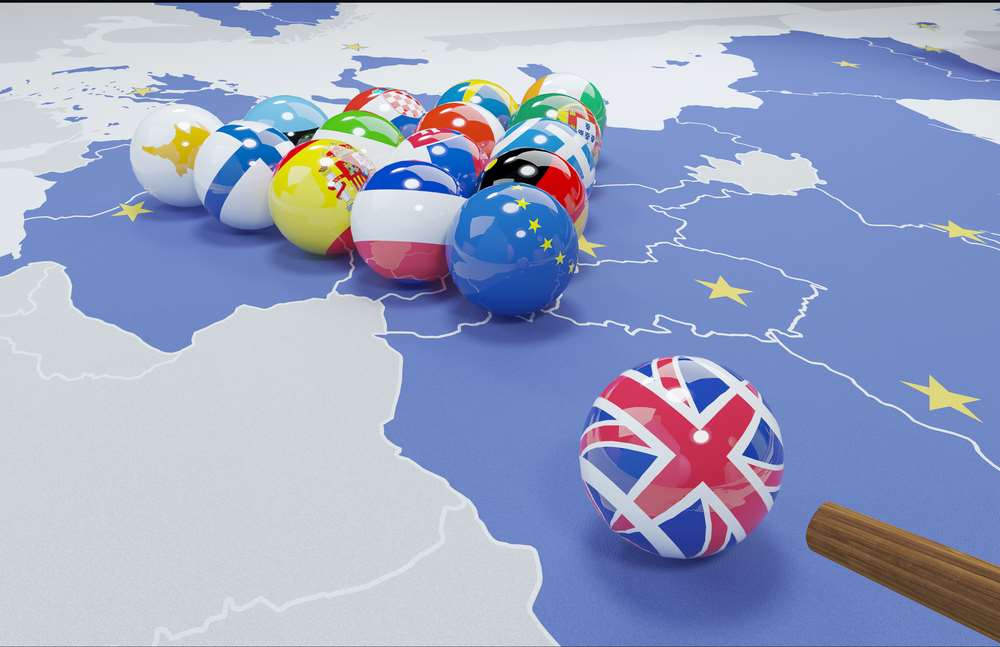
After Brexit, the EU will remain a global player, with 440 million citizens, and one of the biggest world economies.
How Brexit will impact the political weight of and the dynamics between smaller member states has generated far less attention than it should.
Brexit means losing capacity because a large and influential country is leaving. But Brexit also means that the EU gain the capacity to act.
It will be a different union from now on.
The starting point in trying to answer the question of how the EU should be reformed is the observation that the European Union has a very negative image today.
Let’s be frank:
As the UK has decided to leave the Single Market, it can no longer be as close economically to the rest of the EU. The UK wants to leave the common regulatory area, where people, goods, services and capital move freely across national borders. These are the economic foundations on which the EU was built. And the European Council – the 27 Heads of State or government – as well as the European Parliament have often recalled that these economic foundations cannot be weakened.
It is fair to say, however, that Brexit has prompted a great deal of political movement. The direction of this movement is yet unknown, but it has instilled a new sense of unity among the EU’s twenty-seven remaining members.
Contrary to what some had predicted, Brexit has not led to enthusiasm for more EU departures. On the contrary, member states have so far demonstrated they want to explore new ways to stay together.
However, the biggest danger to the EU is not Brexit but its citizens becoming more and more inward-looking.
There is certainly a lack of democracy in the decision-making at the European level.
But is the democratic deficit at the EU level worse than at the national level?
Legislation in the European Union is made by the Council of Ministers
and the European Parliament. The ministers are sent by their national governments, which hold power as a result of democratic elections in each country. Members of the European Parliament are elected directly.
The Council of Ministers, which is perhaps not what we want.
The main problem with the CoM is that the individual ministers are accountable to national parliaments, but the whole body isn’t accountable to anyone.
Unless the CoM is reformed in some significant ways the decision-making bodies in the European Union will not have the same
democratic legitimacy as national governments and parliaments.
This could be solved by making the CoM more independent, where the whole body would, for example, be elected by national parliaments at fixed times (say every 2 years or so).
Unless Europe becomes more than just a market that benefits not just its member states CORPORATIONS there is every likelihood that its days are numbered.
So instead of promoting economic and social welfare across Europe, the very thing that got the EU the Nobel prize for peace, the region should just not focus on trade relations but on engaging with its citizens at grass root level.
How can this be achieved?
By establishing legal immigration channels. Migration has completely upstaged all the good things that are being done all the time at the European level.
Why?
Because the EU has reduced the capacity of national governments to take on the role of protector, while nothing has been done to create such a mechanism at the EU level.
Because you cannot have a union with mass youth unemployment.
Because there is no direct way of its citizens to investing in the union as it develops other than harping back to the two world wars.
Because it is quite evident that Social media has the potential to connect far and wide but it also with its individual tailored algorithms is closing open-minded politics. Which means there is more information than ever about Europe, and it is sparking a debate which is unprecedented.
Because of a lack of interest.
Because over the past 5 to 7 years, there has been a very alarming and very dramatic loss of trust both in national governments and in the political institutions of the European Union.
Because there is practically no implementation of otherwise good initiatives from the top of EC or the governments at the lowest level of local communities. So, most citizens can’t really see any direct tangible interests for their benefit and are unsatisfied.
Because Politicians who are supposed to serve are focused mostly on infrastructure projects and big organizations on using these for their own benefit. The European officials spend far too much time on issues that everyday citizens are not, at least today, concerned about.
If we could get focus on say the five biggest issues affecting Europeans, one would expect to see reform in the number of people working with the institutions.
People in microlocal communities should be therefore more pro-active and self-organized to do the same not one by one but together in cooperation. However, rarely they are indeed doing it in this way.
I love Europe as a concept and the idea that we are part of a grouping where our everyday citizens can live, learn and love in any of 28 countries needs is a more positive participation of the citizens. Not an egocentric participation. More in the sense of “what can I do to improve citizenship and cooperation in Europe”. One where the everyday citizen is able to prioritize the big issues for Europe.
Securing the right outcome will be a tough balancing act:
It will take many guises: trends, signals, scenarios, visions, roadmaps and plans are all parts of the tool-box for looking to the future. In addition to these tools, using foresight requires an in-depth reflection on the policy implications and related scenarios.
In the end, it is the people that will make or break the EU so why not afford them an opportunity to contribute by issuing European green energy bonds that can be cashed in ten-twenty years. Just think what it would do to the whole of the European Union if it became self-sufficient in energy.
All human comments appreciated. All like clicks chucked in the bin.
≈ Comments Off on THE BEADY EYE SAY’S: If — and it’s a big if — the UK wants to keep the Good Friday Agreement, the only satisfactory option is full [EU] membership.
Despite the ambiguous constitutional status of referenda in the UK and the narrowness of the vote, the main political parties fall over each other to “respect the verdict of the people”
The people, however, had (as it is now apparent) little concept of what an out vote involved:
First, even if the country rapidly regrets its decision, there will be no going back to the deal the UK currently has. If Britain ever sought to rejoin the EU, it could not be on the terms of membership the country previously enjoyed. The UK’s budget rebate, exemption from Schengen and opt-outs from the euro and judicial cooperation will not be on the table again.
Second, returning to the EU on terms less palatable to UK voters will be hard to sell to them, rendering a future decision to rejoin politically implausible.
So the country now finds its self in a catch 22 scenario with the only feasible course of action is a lengthy transition period in which Britain could digest what it really means to be a member of the European Union and what it really means not to be a member.
One dimension of this scenario has received surprisingly little attention and that is at the end of this period England was to reapply.
First, the opt-out from the euro will no longer apply, with the best the UK can hope for is to emulate Sweden – legally “in derogation” of its obligation to accede, rather than having an opt-out as the UK and Denmark do – by making no effort to join.
In practice, this could be enough to enable the UK to retain the pound indefinitely, but if (and it is far from implausible) other countries accede to the euro following Brexit, leaving only one or two Member States outside, the position would be harder to sustain.
Let’s look at a transition period. What is it?
It is basically membership in all but name.
What problem is that for the EU27? Frankly speaking, none.
The alternative is to renounce the Good Friday Agreement, and then England can indeed leave the single market and customs union. Or England keeps the UK inside the European Union because democratically, that’s the only serious option.
That status comes with obligations. Applying and enforcing EU law, contributing to the EU budget, with no change in the freedom of circulation. Nothing changes, except that the Brits are not sitting at the table.
Now Brexit is done — the UK is it is no longer a member state — but it is still in the transition.
For Leavers, the conclusion is much simpler: however much they object to elements of the withdrawal deal or proposals for the future relationship, they will be worth swallowing for now because the bigger prize of leaving the EU will be all but irreversible.
The cannier pro-Brexit members of the Cabinet seem to have grasped this.
In a world of Donald Trump’s, Putin’s, “What is the point of Brexit?”
Colloidal damage Ireland, its economy not to mention the decoupling of Northern Ireland and perhaps Scotland.
The terms of membership the UK currently has are very unlikely to be on offer in future.
The EU you may wish to rejoin will be different from the one you are leaving.
Stop being angry. Stop behaving as though you are still campaigning. And stop complaining that stupid voters chose to believe the lies of the Brexiters and not your own, more sophisticated lies.
Let’s SEE 7 MILLION MARCHING. There is just about enough time left to add “future deal” to the list. There has never been a better time to challenge conventional wisdom than after such a disaster.
All human comments appreciated. All like clicks chucked in the bin.
Just imagine that a new British government — because it does not feel bound by whatever the previous government did — says: ‘OK, we believe the decision to leave that way was the wrong decision and we want to reconsider.’
All of us are surrounded by history, whether we study it or not.
History lives in our social traditions, our holidays and ceremonies, our education, our religious beliefs and practices, our political and legal systems, even in our popular culture (movies and music frequently draw on historical events and people).
However now in the ever-changing technological world more than ever the passage of time usually shifts the answer to any historical questions.
It seems that everyone writes history, but it’s the winners who interpret it years later and mould a new retelling of what happened. However, I have always found that history in its written form never imparts a true picture of events other than confirming dates and places.
It is an incomplete picture you’ll always be reading something with some sort of bias.
This is never truer with the ongoing Brexit negotiations concerning the Irish border.
History is written according to the necessities and possibilities of current politics. But that does not mean that it is forever obscured or that any narrative is completely lost to history. Not at all.
History is in the eye of the beholder. The painful truth is, each source simply needs to be evaluated on its own merits.
Discussing the past and theorising about its meaning have never been confined or restricted to classrooms, lecture theatres or archive rooms. History is open to all who take an interest in it, regardless of their experience or credentials.
Everyone is free to consider the past and form their own conclusions. But it also has one significant disadvantage: ‘popular history’ and ‘good history’ are rarely the same things. There is a considerable gulf between historical understanding in the public domain and the history written by historians.
This is never truer when it comes to the history of the British Empire.
A Top-down history of the wealthy and powerful: kings, aristocrats, politicians, business moguls, innovators and influential thinkers.
A profitable balance of trade, it was believed, would provide the wealth necessary to maintain and expand the empire.
A worldwide system of dependencies—colonies, protectorates, and other territories—that over a span of some three centuries was brought under the sovereignty of the crown of Great Britain and the administration of the British government.
In the early seventeenth century those colonies were expanded and the systematic colonization of Ulster in Ireland got underway. While Ireland won dominion status in 1921 after a brutal guerrilla war, achieved independence in 1949, although the northern province of Ulster remained (as it is today) a part of Great Britain.
In 1997 the last significant British colony, Hong Kong, was returned to Chinese sovereignty
Very few British people have a decent understanding of the British Empire, which leads to a significant contingent who pine for a return to those days. Given the number of atrocities committed by the British Empire, these people have to be either ignorant or evil, and it’s obviously the former. Typically they re-write their history for patriotic purposes or downplay its importance to try to forget past problems so when they are alerted to a predictable bad outcome from an action they become emotional and angry as they don’t have the knowledge to see the emerging patterns.
Little remains of British rule today across the globe, and it is mostly restricted to small island territories such as Bermuda and the Falkland Islands. However, a number of countries still have Queen Elizabeth as their head of state including New Zealand, Australia and Canada – a hangover of the Empire.
Apart from the second World War (which is shown on TV documentaries almost continuously), most of the present-day English know little of how England acquired its wealth.
It oversaw around 412 million inhabitants or around 23% of the world’s population at the time and its legacy can still be felt keenly today, for better or worse.
The empire was not acquired by sports like cricket, tennis, croaky, football, polo, billiards, bare-knuckle boxing, followed by pink gins, or Pims with strawberries, it was acquired by wars, robbery, piracy, drugs, slavery, tea, cotton, sugar, and mercantile trading companies such as the East India Company, a London based trade business.
When our attitude to the past becomes locked into one way of thinking we only deal with the thing that seems most true for now, having abandoned the idea of Truth.
After all, who could support the invention of concentration camps, leading the slave trade, mass starvation of the Indians and Irish, Celtic ethnocide, or institutionalised rape of Native Americans?
Knowing what you’ve done, as a nation, in the past couple of thousand years, why you’ve done it and what the result was is extremely valuable. WHEN IT COMES NOT TO JUST THE IRISH BORDER BUT TO ANY FUTURE DEALS it’s not how the empire shaded into an unquestioning belief that Britain could – and should – rule the world.
We should approach the past with an open mind about different groups and classes, and let the evidence convince us. We should strive to keep history and remembrance as separate as possible.
The issue nowadays is to some extent the need for good filters, pushing away information after centuries of seeking it.
The dream of the West has been that we will live together in knowledge, but with the advent of seemingly leaderless, non-hierarchical movements Artifical intelligence would probably steward the change better than government, which has fixed commitments.
Why?
Because we live in a world of continual change and situational thinking every understanding is open to change, a kind of a point of view that can be undermined by a non-expert with a persuasive argument.
It seems that does not matter if the discovery precedes its invention.
The end of hierarchy and a quest for ultimate understanding seems a long way off.
After hundreds of years of British occupation, it is certain that no Irish government will ever again as it did in 1800, surrender the rights of the Irish people as a separate nation. Like Hong Kong, Northern Ireland should be repatriated.
All human comments appreciated. All like clicks chucked in the bin.
Do you take pride in being a member of the most intelligent, crafty and resilient species dating back 300,000 or maybe even longer on the planet that crawled out of the water to destroy the earth?
Yes!
EVEN IF HUMANS CURBED DESTRUCTIVE ACTIONS WITHIN THE NEXT FIFTY YEARS, IT WOULD TAKE BETWEEN FIVE TO SEVEN MILLION YEARS FOR MAMMAL BIODIVERSITY TO RECOVER.
We have managed to erase a staggering 2.5 billion years of evolutionary development by driving more than 300 mammal species into extinction by the 16th century. Since then the pace of destruction has speeded up and it is projected that if we don’t do something about it we will lose another 1.8 billion years within the next five decades.
There are plenty of other things going on in the world that make me weep for humanity, Greedy, short-sighted parasitic consumers of the planet.
But when we actually look there is a lot of good in this world can we be proud of?
(Pride has perplexed philosophers and theologians for centuries, and it is an especially paradoxical emotion in most culture.)
THE LIST IS VAST FROM FIRE, THE WHEEL, NUCLEAR POWER TO WALKING ON THE MOON not to mention our Artistic and Scientific Achievements.
However, we are unable to shake off tribalism even though we have mapped the complete genome, of the human, which could have us on the cusp of creating genetic discrimination through eugenics.
CRISPR has the distinct ability to alter the course of human evolution—to improve society for the greater good or, in the wrong hands, to diminish the human experience.
On the other hand, disaster looms as humans exceed the earth’s natural carrying capacity. The conditions that sustain humanity are not natural and never have been. Since prehistory, human populations have used technologies and engineered ecosystems to sustain populations well beyond the capabilities of unaltered “natural” ecosystems.
Nature doesn’t need people. People need nature.
Nature will go on, no matter what. It will evolve.
The question is, will it be with us or without us?
Our current technological world is reducing awareness and diminishing our ability to find meaning in the life around us. We need to spend more time unplugged and find ways to let nature balance our lives. The natural world’s benefits to our condition and health will be irrelevant if we continue to destroy the nature around us. That destruction is assured without a human reconnection to nature.
In a world where technologies will soon think, act, and behave
like humans, what can humans learn from machines?
If we build personalized digital coaching solution, a «Habit Installing» Platform, that facilitates the generation of new habits who knows what will be possible with the technologies of the future?
However, we still have a long way to go to understand there are aspects of how our planet evolves that are totally out of our control.
Artificial Intelligence is more than reality. The so-called “Technological Singularity” ― the moment when machines will be equal to and then surpass human brainpower ― is getting closer.
In the meantime, we continue to destroy, hurt, and belittle people for reasons that are mind-boggling.
On the other hand, we also have people with amazing abilities and intelligence using their gifts to better our world rather than try to make a quick buck.
Perhaps Ai greatest achievement will be to get rid of religion.
If there was no religion, then yes, I would be proud.
The terrible crimes which humans have committed on each other, have been driven and are being driven by God is on our side.
Do we have a lot we still need to work on? Yes, definitely. But we can stop giving ourselves such a hard time because every day, we’re trying to become better than we were yesterday.
We are beginning to clear up all the waste we carelessly have thrown away and finds its way into the ocean.
Deforestation is decreasing on a global scale.
Sexual discrimination is been removed.
However, Social media sites such as Facebook, Instagram, and Twitter are saturated with posts of political opinions and are matched with comments that express not only disagreement but too often, words of hatred. Many who cannot understand others’ political beliefs rarely even respect them.
It doesn’t matter if you’re an American, a Canadian, or a Papua New Guinean. You don’t even have to be particularly fond of the ocean or have a soft spot for elephants to know that murdering a tiger for ts penis so men can have an imaginary bigger mental sexual drive is personified madness.
Cutting shark fins off to make soup is a matter of taste.
We must align our vision and strategy with our culture, thereby impacting people’s mindset and behaviours.
This is simply about all of us coming together to do what needs to be done.
Because if we don’t, nature will continue to evolve. Without us.
With our thoughts and words, with our ideas and values, with our beliefs and emotions, we with the help of social media must design, and implement a greenfield world that shapes the future of change management through digitalization.
We’re about to send people to another planet! We might not be so bad after all.
Nearly 1/2 of the world’s population — more than 3 billion people — live on less than $2.50 a day. More than 1.3 billion live in extreme poverty — less than $1.25 a day. 1 billion children worldwide are living in poverty. According to UNICEF, 22,000 children die each day due to poverty.
Half of the world’s prison population of about nine million is held in the US, China or Russia. Prison rates in the US are the world’s highest, at 724 people per 100,000. In Russia, the rate is 581. At 145 per 100,000, the imprisonment rate of England and Wales is at about the midpoint worldwide.
All human comments appreciated. All like clicks chucked in the bin.





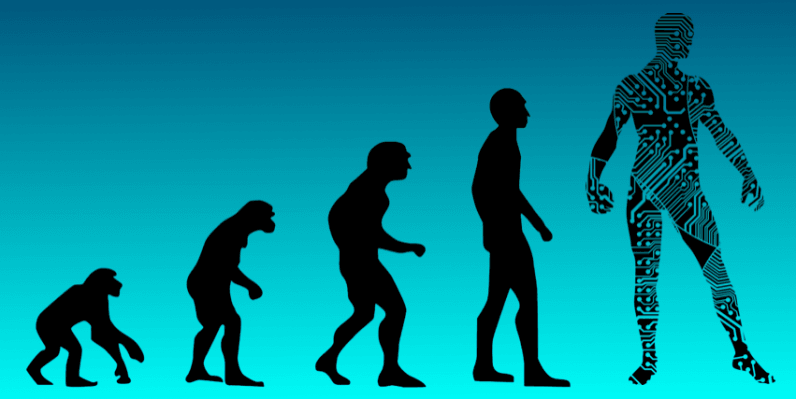 With smartphones, I pad’s humans are far more willing than most people realize to form a relationship with AI software. It is going to impact every single industry and everything that we do.



 bobdillon33blog