THE BEADY EYE LOOKS AT WHAT NEEDS TO CHANGE IN THE WORLD: PART THREE COMMUNICATION.

Tags

, , , , , , ,


You might think that with all the problems in the world that communication is of little importance.

You would be wrong.  Now more than ever we need to be able to communicate.

Unfortunately it’s under attack by the Internet, leading to wars, inequality, abuse of power. It is disconnecting the world rather than connecting it.

Why do I say this?

Because through the Internet we are loosing physical touch with not only ourselves but with the foundations of the human mind’s perception of harmony.

The Net is turning the world upside down.  Into them and us cultures.

These day it might be somewhat difficult to get your head around the history of communication.

From the first vision to the first grunt ( which were probably both misinterpreted then, as they are now) to its Ground Control to Major Tom.

Communication has come in all form of life.

Afficher l'image d'origine

Nonverbal sign language, eye contact, sound, silence.

YOU NAME IT AND ITS TRYING TO COMMUNICATE.

The problem these day is that it has become so complicated that we are not communicating but disconnecting. Without a physical presence its impossible to communicate other than send a message.

When I say Happy New year to you without any physical input I could be a computer that is wishing you happy new year with no understanding of happiness or time.

Afficher l'image d'origine


Let’s start with the digital world of Communication.Afficher l'image d'origine

Afficher l'image d'origineLike any other technology it undeniably makes parts of life so much easier and is here to stay.

We are bombarded by information, thanks in large part to the internet and its allied technologies.

But exposure to unlimited information is not the same thing as the ability to capture it as knowledge or synthesize it as understanding.

“We are living in a state of perpetual distraction,”

Everything is moving so fast that we’ve got to adapt to it, keep up with it!

It takes all of one’s energy & speed to simply remain in one place while running.

But what sort of life is that? How much depth does it really have?

Yet the digital world constantly makes us break life into discrete, interchangeable bits that hurtle us forward so rapidly & inexorably that we simply don’t have time to stop & think. And before we know it, we’re unwilling & even unable to think. Not in any way that allows true self-awareness in any real context.

We are fast arriving at the point of confusion of information and personal knowledge.

There’s no app that makes you tolerant — it happens person by person.

Different media encourage different ways of thinking, and helped tie together a number of broad ideas for me regarding the evolution of human cognition and the influence of the tools we use.

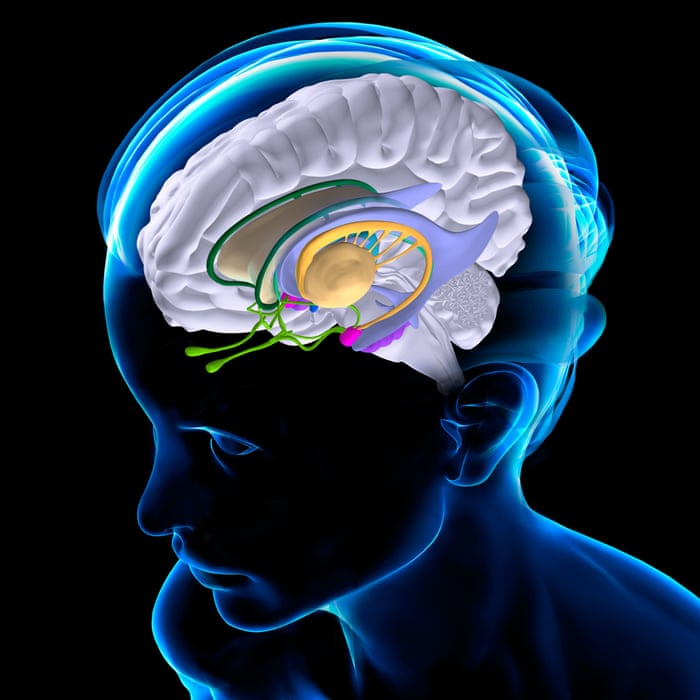
On one hand the Internet is short-changing our brain power. It is making us shallower creatures, diverting our attention and fragmenting of our thoughts.

On the other it has made the information universes of all of us much larger.

It has and still is altering the way we read, and the way we pay attention.

Our relationship with technology is just beginning, but we do not need to be the slaves of the predominant technology like the smart phone or be lead by the hypnotic Internet, where portals lead us on from one text, image, or video to another while we’re being bombarded by messages, alerts, and feeds.

Not only are we thinking differently with different media, the Internet is frying our brains?

Reconfiguring our brains, we are also forging a “new intellectual ethic”.

Greater access to knowledge is not the same as greater knowledge.

– An ever-increasing plethora of facts & data is not the same as wisdom.

– Breadth of knowledge is not the same as depth of knowledge.

– Multitasking is not the same as complexity.

What are the consequences of new habits of mind that abandon sustained immersion and concentration for darting about, snagging bits of information? What is gained and what is lost?

“Is Google Making Us Stupid?”

It can be reshaped, and the way that we think can be reshaped, for good or for ill.

Thus, if the brain is trained to respond to & take pleasure in the faster pace of the digital world, it is reshaped to favor that approach to experiencing the world as a whole. More, it comes to crave that experience, as the body increasingly craves more of anything it’s trained to respond to pleasurably & positively. The more you use a drug, the more you need to sustain even the basic rush.

It comes at a price. As the media theorist Marshall McLuhan pointed out in the 1960s, media are not just passive channels of information. They supply the stuff of thought, but they also shape the process of thought. And what the Net seems to be doing is chipping away at our capacity for concentration and contemplation.  Our mind now expects to take in information the way the Net distributes it: in a swiftly moving stream of particles.

Once you were a scuba diver in the sea of words. Now you zip along the surface like a guy on a Jet Ski.

The individual seeks out ‘virtual worlds’ that simplify interactions because the ‘real world’ is difficult to access, but when confronted with the ‘real world’ problems, that’s when the individual becomes turned off from dealing with their ‘real’ life, further perpetuating this vicious cycle towards isolation.”

Our future tools and tech may offer a new playing field, but we’re the same old players. Sure, we may wear robotic fighting exoskeletons — but we’re still going to war and falling in love and arguing with our moms.

When relationships become out of balance, would technology really fill the void or is it a vapid substitution?

While fully recognizes the usefulness of the Internet are we buying into the attractive fashionable modern viewpoint that just being exposed to a lot of information via technology will make us smart.

I am afraid not. There is a sleazy, materialist shallowness about it that most of us don’t enjoy called Porn.

Foraging in the Web’s info-thickets’reading and writing e-mails, scanning headlines and blog posts, watching videos and listening to podcasts, or just tripping from link to link to link. (Unlike footnotes, to which they’re sometimes likened, hyperlinks don’t merely point to related works; they propel you toward them.)

The Net is becoming a universal medium, the conduit for most of the information that flows through your eyes and ears and into your mind.

The advantages of having immediate access to such an incredibly rich store of information are many, and they’ve been widely described and duly applauded.

However it’s not communication.

Thinking, has taken on a “staccato” quality, reflecting the way we quickly scans short passages of text from many sources online.

“I can’t read War and Peace  anymore, I’ve lost the ability to do that. Even a blog post of more than three or four paragraphs is too much to absorb. I skim it.” The deep reading that used to come naturally has become a struggle.

As our reliance on ever brighter and faster Internet content increases, a new force is taking hold across the culture of the Web-connected world, leading to changes in reading habits and even in human brains.

The Internet trends of today foreshadow the surfing, the teaching, learning, and thinking of tomorrow.

The picture of our intellectual future, rendered thoroughly, convincingly, and often beautifully

I suppose  it all boils down to so long as we aren’t stupid enough to stop cultivating our individual minds regardless of technology changes, media itself will not make us stupid.

The wisest will still turn off the TV and other distractions when sustained concentration is called for, and they will understand the difference between various conditions and different kinds of media in general and will use each to its best advantage.

They though when the printed word was invented or the radio, or Television there would be adverse consequences.  However none of these things has had the dire consequences that culture critics predicted, we have adapted in turn in some way to each of them, more or less successfully.

Then again if all knowledge ends up store in the Cloud along with our modern-day History.  ( History illustrates our failures, and without history, we do not have the tools to create a successful future.) and we have deserts of Technology the art of communication will be lost to generations to come ruled by Holograms and Algorithms of the Internet.

But to think that we “learn” from history is somewhat of an illusion when you look around the world.  I feel that we only learn selective elements in history and probably pay more attention to history when it cost resources such as time, money or material. Think of the number of times genocide has happened in our recorded history and despots–even today–continue genocidal practices falsely believing that their regime is justified.

The neurological effects of the Internet are still to come.  This is why we should  incorporating the best of the latest technology in a way that improves education.

Education is Communication. Afficher l'image d'origine

Will we do anything? Are we capable of recognizing the dangers? We should be look at the world. We all living in our private clouds designed by The Smart Phone Communication.

If we want a more rewarding life we have to let the whole world know. (see previous posts)

I hope this post is not too long for you to leave a comment rather then pressing the like button.

← Back

Thank you for your response. ✨

THE BEADY EYE WISHES YOU A HAPPY CHRISTMAS AND NEW YEAR.

Tags

,


Afficher l'image d'origine

THIS IS WHERE YOU LIVE.

http://www.buzzfeed.com/brandensueper/209-seconds-that-will-make-you-question-your-entire-existenc?utm_term=.ijEdELpXo&sub=3551692_4522173


http://www.buzzfeed.com/brandensueper/209-seconds-that-will-make-you-question-your-entire-existenc?utm_term=.xqj0Gyj23&sub=3551692_4522163


http://www.buzzfeed.com/brandensueper/209-seconds-that-will-make-you-question-your-entire-existenc?utm_term=.bwmx2k91X&sub=3551692_4522181


http://www.buzzfeed.com/brandensueper/209-seconds-that-will-make-you-question-your-entire-existenc?utm_term=.leNlzXN1Y&sub=3551692_4523156

ITS WORTH SAVING. 

← Back

Thank you for your response. ✨

THE BEADY EYE INVITES YOU TO ADD YOUR 2016 PREDICTION

Tags

, ,


2016 is year of the Red Monkey.Afficher l'image d'origine

What does 2016 hold in store when we look at the new year.Afficher l'image d'origine

HERE ARE A  FEW OF MINE:  IN NO PARTICULAR ORDER.

  1. The United States and Russia have never seen eye to eye, especially with the conflict in Syria.
  2. The Arab Spring will intensified civil wars in over 10 countries, including in Tunisia, Egypt, Bahrain, Somalia, Libya and Syria.
  3. Mr Barack Obama will be THE LAST America’s non white president.
  4. The fate of Israel will remain unclear.
  5. The Paris Climate Change agreement will fall apart.
  6. Global warming will increase.
  7. The internet will have further restrictions.
  8. 2016’s economic growth rate won’t be much different than we’ve seen in recent years. The texture, however, will be different, with more gains in Europe and less in China and the commodity-dependent countries.
  9. The biggest risk for Europe in the year? “It’s the refugee crisis,” it’s the biggest challenge to the European Union yet.
  10. Sovereign wealth funds will continue to privatize the world.
  11. The world’s populations are aging, and demand for cancer treatments will only increase.
  12. Colorado, Washington and other legal-pot states will get more tourists than ever.
  13. The people’s of the world will become more disconnected.
  14. Television viewing will decrease due to Smart phones and I pads.
  15. There will be more Natural Disasters.
  16. Politics and how its delivered will have to change.
  17. Inequality will rise.
  18. Stocks will return just 3% in 2016.
  19. Google will start fee charging.
  20. World food prices will rise.
  21. Drinking water i.e. fresh water will cause new conflicts.
  22. Donald Trump will be assassinated.
  23. The Olympic Games will be boycotted by Russia.
  24. The first cloned human.
  25. The Catholic church will begin the process to allow its priest marry.
  26. Businesses will increasingly deploying artificial intelligence to improve their products and services.
  27. Worlds created entirely of clouds. “Unicorns” racing through new landscapes. Data moving faster than the speed of light.
  28. Private cloud computing.
  29. We’ll witness the emergence of a new class of real-time applications in e-commerce and financial technology services powered by super-speedy data analytics.
  30. Machine learning,” a field of computer science will be all the rage.
  31. As mobile devices are ruling the world, having surpassed laptop and desktop searches in terms of paid clicks and traffic generation, it has become imperative for businesses to develop mobile-friendly websites and make their business decisions attuned to this new wave of mobile savvy clientele.
  32. Mobile searches will exceeded desktop searches.
  33. The boundary line between “social media” and “web” will get blurred further in 2016.
  34. The truth will become impossible to find.
  35. The greed of capitalism that is the root of most if not all our World problems will come under further pressure to pay.
  36. The like button will get fewer hits.

PEDRO JADAUJI:  PORTUGAL

  1. Sporting CP will win the Portuguese league.
  2. People will realise that face to face is better than Facebook.
  3. Phone calls and mail letters will star to increase and sms (…) will start do decrease
  4.  Happiness indicators will start to replace GDP.

Nick Harrison: USA

  1. Hilary Clinton will win, learn Spanish, rub Putin nose the wrong way, and cause a recession.

Asbad :   Afghanistan

I predict that President Barack Obama will rethink his plan to have all operational U.S. combat forces out of Afghanistan by the end of 2016. The current reality is that, while the United States is fighting the al Qaeda-ist movement that grandiosely calls itself Islamic State using air strikes and aiding allies on the ground, more needs to be done to make sure its militants do not take over larger swaths of Iraq and Syria.


← Back

Thank you for your response. ✨


THE BEADY EYE ASK’S WHAT DOES CHRISTMAS MEAN. Have we lost the true Christmas spirit?

Tags

, , ,

Has commercialism hijacked the spiritual meaning of Christmas?

No Christian would justify much that goes on in the name of Christmas.

No one disputes that the holiday is grossly prostituted to unchristian purposes.Afficher l'image d'origine

Are we more interested in receiving than giving? 

I wonder how long it will be before Christmas as a holiday is cancelled.

Before it is Happy Xmas to my readers.

For the greater part of humanity, Christmas has no legitimate meaning at all.

Over the Christmas period there is more family conflict and more people attempt suicide than at any other time of the year.Afficher l'image d'origine

Perhaps to avoid offending other religions the midwinter break should take place over the New Year, 31 December and 1 and 2 January. This way no religious group is favoured, not even those who still follow the pagan traditions.

The meaning is still there for those who seek it.

For me it’s about CONSCIOUSNESS.

The word Christmas comes from the Old English term Cristes maesse, meaning “Christ’s mass.”  This is the name for the festival service of worship held on December 25th to commemorate the birth of Jesus. Christians have been celebrating Jesus’ birth on December 25 since at least the early fourth century.

Christmas is obnoxious to some because it represents the combination of two words, “Christ” and “mass.” The word means “the mass of Christ.”

But what does “mass” really mean in the compound word Christmas? Any authoritative dictionary will reveal that the English term mass evolved from the Anglo-Saxon word maesse, which derived in turn from the Latin missa, which is a form of the verb mittere, which means “to send.”

The use of the abbreviation Xmas takes Christ out of Christmas!” opponents allege. “Xmas is an irreverent modern substitute for Christmas. The abbreviation represents the substitution of X (which means the unknown quantity) for Christ.”

There is neither certain information on the date of his birth, nor even on the year.

One reason for this uncertainty is that the stories of his birth, recorded in the New Testament books of Matthew and Luke, were written several decades after the event. Those who wrote it gave no specific dates for the events they mentioned.

For several centuries the Christian Church itself paid little attention to the celebration of Jesus’ birth.

It ranked after Easter, Pentecost, and Epiphany in liturgical importance.

The major Christian festival was Easter; the day of Jesus’ purported resurrection. Only gradually, as the church developed a calendar to commemorate the major events of the life of Jesus did the celebration of his birth become significant.

Christmas is not a Muslim holiday, therefore, Muslim countries do not celebrate it.

Although the history of relations between Muslims and Christians has not always been good, it is important to remember that Muslims always stood for a society where the rights of all individuals are not only tolerated, but respected and protected.

In the Christian religion, Christmas is the celebration of the birth of Jesus Christ by the virgin Mary, which is observed on December 25 by Roman Catholics and Protestants.

Many in the Eastern Orthodox branch of Christianity observe the Christmas holiday, Epiphany.

So when was Jesus actually born?

Modern scholarship estimates the year of his birth from 7 to 4 BC.

Although the Gospel narratives offer no indication as to the date, they do seem to indicate it was not in the winter. Luke describes the shepherds “keeping watch over their flocks by night” and this was not done in the coldest winter months.

But as early as 273 AD, Western Christians had decided on December 25 to celebrate the birth of Jesus.

The December date for the holiday probably arose from a desire to provide an alternative to the Roman “birthday of the unconquered sun” and the Persian birthday of Mithras, both of which were celebrated on or around the winter solstice. A Christian writer explained in 320 AD:

The Eastern church celebrated Christ’s birth and baptism on January 6 until the middle of the 5th century, when the December date for Christmas was adopted there as well and Jesus’ baptism was celebrated on January 6.

An exception to the December date is the Armenian Church, which continues to commemorate both the birth and baptism of Christ on January 6.

In addition to the date, other aspects of Christmas owe their origins to pagan celebrations, such as the Yule log, the Christmas tree, gift-giving, and lights.

The modern Christmas tree tradition probably began in Germany in the 18th century, though some argue that Martin Luther began the tradition in the 16th century.

The popular image of Santa Claus was created by the German-American cartoonist Thomas Nast (1840-1902), who drew a new image of the character annually, beginning in 1863.  By the 1880s, Nast’s Santa had evolved into the form we now recognize. The image was standardized by advertisers in the 1920s.

Father Christmas, who predates Santa Claus, was first recorded in the 15th century and then associated with holiday merrymaking and drunkenness.

In Victorian Britain, his image was remade to match that of Santa. The French Père Noël evolved along similar lines, eventually adopting the Santa image.

In Italy, Babbo Natale acts as Santa Claus, while La Befana is the bringer of gifts and arrives on the eve of the Epiphany. It is said that La Befana set out to bring the baby Jesus gifts, but got lost along the way. Now, she brings gifts to all children. In some cultures, such as Germany, Santa Claus is accompanied by Knecht Ruprecht, or Black Peter.

Its difficult in such a troubled world to justify purposely over indulge without a tinge of shame.

So Christmas for me is sharing no matter how small some of my good fortune with those of us less fortunate. Christmas is becoming Consciousness of the world around you.

Our minds cannot begin to understand what was involved in God’s becoming man. For nearly 2,000 years, debate has been raging about who Jesus really is. Cults and skeptics have offered various explanations.

They’ll say He is one of many gods, a created being, a high angel, a good teacher, a prophet, and so on.

The common thread of all such theories is that they make Jesus less than God.

No matter what, CHRISTMAS IS ABOUT THE NEED TO BE CONSCIOUSNESS OF OUR EXISTENCE AND WHAT IS ABOUT. SHOULD BE PARAMOUNT.  Afficher l'image d'origine

WHERE DID WE COME FROM. HOW DID THE UNIVERSE COME INTO EXISTENCE.  WHO MADE ALL OF IT?

Some scientists say there was this big explosion that eventually formed a primordial swamp, and … Science cannot explain it.

WHEN YOU REALIZE THE SIZE OF EARTH IN THE VASTNESS OF THE UNIVERSE IT IS INCOMPREHENSIBLE.

Paul was writing to the Christians at Colossae.

The city was under the influence of what came to be known as gnosticism. Its adherents fancied themselves the only ones who had access to the truth, which they believed was so complex that common people couldn’t know it. Among other things, they taught philosophical dualism–the idea that matter is evil and spirit is good. They believed that because God is spirit, He is good, but He could never touch matter, which is evil.

Therefore they also concluded that God couldn’t be the creator of the physical universe, because if God made matter, He would be responsible for evil. And they taught that God could never become a man, because as a man He would have to dwell in a body made of evil matter.

Those pre-gnostics explained away the incarnation by saying that Jesus was a good angel whose body was only an illusion.

That teaching and others like it pervaded the early church; many of the New Testament epistles specifically refute pre-gnostic ideas.

No matter how flagrantly men may abuse this holiday, they cannot rob devout believers of its wonder and glory as expressed by the angel of old, “Fear not: for, behold, I bring you good tidings of great joy, which shall be to all people. For unto you is born this day in the city of David a Savior, which is Christ the Lord” (Luke 2:10, 11).

How little people seemed to value their lives as they were living them—how busy, terribly busy, everyone seemed to be, mortal in their fears, immortal in their desires and wasteful of their time.

So this Christmas be Consciousness:

Remember every time you hit the like button everything you do not like is being filtered.

← Back

Thank you for your response. ✨

THE BEADY EYE ASKS ARE YOU A MODERN DAY HERO?

Tags

TODAY’S MODERN HERO IS THE STEWARD OF HUMANITIES DESTINY

 –A WORLD THAT WORKS FOR EVERYONE!

Afficher l'image d'origine

 The Modern Hero knows that life has given each of us a core wound to be healed and a core purpose to be fulfilled.
For the new modern hero, it’s about  connecting versus conquering; integrating rather than dividing.
The days of  “divide and conquer.” no longer serves the evolutionary quest for something more.  Can you imagine the new marching orders, “We shall connect and integrate!“ 
The few, who I’m calling the modern heroes are paving the way for our next level of consciousness to emerge; born from love not fear, promoting inclusion versus exclusion, emphasizing cooperation over competition, celebrating individual uniqueness versus discrimination, voluntary transparency versus secrecy, all in the spirit of unity verses separation.   (See below)
If enough modern heroes of the world can collectively harness the power available to us with awake minds and feeling hearts we can make this important shift towards interdependence to happen.
 The once divided nations of the world will seek to connect rather than enter in to combat. Individuals will begin to shift from the old fear based either-or thinking and protecting and proving behaviors to new freedom based thinking of both-and” and the connecting and
expressing behaviors that naturally follow.Afficher l'image d'origine
 What do I mean by a modern hero? What’s this heroic journey all about and how does it apply to you? What makes the modern hero both the same and different from heroes of the past?

I offer you my passionate thoughts and insights and invite you to share your own, including examples of modern hero’s from your life and their heroic acts.

I’d like to make one thing clear from the start;

There are no natural-born heroes, neither by genetic lottery or privileged upbringing. Heroes are born out of courageous choices made naturally by women and men with awake minds, courageous hearts and caring souls.

The start of the modern heroes journey is never planned, always inconvenient, seldom easy, usually met with resistance, especially from the people they care about most and their sanity is questioned, even by themselves at times.

This is the first rite of passage that initiates the modern heroes journey.

This means leaving behind the comfort and safety of the conditioned self; all the assumptions, ideas and beliefs about self, others and the world that s/he has either inherited or concluded based on limited information.

Embarking on this journey of fierce Self-discovery offers no guarantees of happiness or material success, nor the esteem of others or loved ones.

The competing ideas of individualism verses collectivism has dominated world culture from the beginning. This clash in ideology and has gotten us to where we are today.

Yet it can not take us to where we can and must go, if we are to survive as a species and thrive as planet, a transformation towards interdependence must occur.

The modern hero realizes this and makes this transformation in consciousness their joyful burden.

I believe that it’s normal for someone should step up and help those in need.

It’s not that we want to change the world, we just wanted to help in our own way.” “A person is a hero when he’s doing something good for the betterment of his fellow citizens.”

There has being a significantly decrease in the levels of empathy over the last 30 years. Perhaps this is why acts of heroism, like defending someone who can’t protect themselves or sacrificing oneself for the survival of the group, are relatively rare in the media when compared to the frequency of reports on violent crime, murder, and other atrocities.

So if you had a superpower that you could use for good, what power would it be, and why?

A modern time hero must have courage, strength, persistence, selflessness, mercy to victims, mercilessness to enemies, and cleverness.

The markings of a true hero — are strictly human capacities.

They put others before themselves. They sprint into danger. They pay dearly for their courage, and they often go years–if ever–without the recognition they deserve.

The Oxford English dictionary defines a hero as “a person, typically a man, who is admired for his courage, outstanding achievements, or noble qualities.”

Different people have different heroes whom they look up to or try to emulate. However, whoever they may be, sport stars, film stars, politicians, social activists or businessman they all do possess certain qualities which set them apart from the commoners.

The first and the foremost quality of a hero is his courage.

A hero is laden with all the essential faculties, which are instrumental to accomplish what he seeks.

Sacrifice is a quality that stands unique from all the other virtues which makes a hero noble in his deeds.

A hero is unflinching in his or her determination and believes in his ability without the whiff of dubiety.

Being focused is also one of the most prominent qualities of a hero.

A true hero is always empathetic, benevolent and shows a great deal of compassion and tenderness to those ailing or in distress. They do not give up simply rather they are focused to withstand all the consequences that they may encounter in their path. It is a set of unshakable thoughts or beliefs, which cannot be altered by any chance. Whatever be the type of responsibility entailed on them, they take it up with utmost sincerity and take it to its logical conclusion.

They whole-heartedly dedicate themselves to the task, which is set, and work towards its completion. He or she has fierce loyalties in the sense that he or she is faithful to whatever tasks they take up.

Honesty forms the base of all his efforts.

They are determined to fight challenges with resolute courageousness.

Whatever a hero maybe—a warrior, a preacher—wisdom is always an attribute that all of them possess.

It’s considerably difficult to find a modern-day hero.  There are benign world leaders, peacemakers, soldiers, activists, or philanthropists.

Beowulf was a hero in the times of the Angles-Saxons.But heroism can happen in the most unexpected places, and it’s not limited to a life-long career of do-goodery; it’s what many neurologists have determined to be a human predisposition.

Anyone can become a hero given the opportunity, and yet not everyone does.  Albert Einstein referring to Gandhi once quoted “Generations to come will scarce believe that such a one as this ever in flesh and blood walked upon this earth.”NBC

My  incomplete List:

My first hero is my Daughter: Against all the odds she achieved a University Degree.

Next is Angelia Merkel Chancellor of Germany:  Against all the odds she opened Germany to welcoming war-torn countries refugees. Against the back ground history of Germany if anyone deserves the Nobel Prize she does. Résultat de recherche d'images pour "picture of german president"

Next all Astronauts:  Any human that sits on top of  3,821,722 lb off fuel, deserves to be a hero.

The Tank man: Temporarily stopped the progression of a column of tanks on the morning of June 5th 1989, armed only with two shopping bags that he carried in each hand.Afficher l'image d'origine

Rosa Parks: Is famous for one thing, and that is refusing to give up her seat to a white man on a bus.Afficher l'image d'origine

Jane Addams: A pioneer for women’s suffrage.Afficher l'image d'origine

Witold Pilecki: Was a member of the Polish resistance and when these unknown camps started appearing all over Poland during the 1940s, he made it his mission to discover what secrets the Nazi party were hiding. He deliberately got himself arrested by the Nazis so that he could infiltrate one of the camps, Auschwitz.pilecki

William Wilberforce: Was an English philanthropist and politician who actively fought against the abolishment of the slave trade.Afficher l'image d'origine

Oskar Schindler: Was a German industrialist who was part of the Nazi party and is credited for saving the lives of over one thousand Jewish people.Afficher l'image d'origine

Martin Luther King Jr: Is considered to be one of America’s greatest orators and he was eventually assassinated because of his work in advancing the civil rights campaign.Afficher l'image d'origine

John Fitzgerald Kennedy: President of the USA.Afficher l'image d'origine

Anne Frank:  force to go into hiding during the Holocaust, she and her family spent 25 months hiding in a maze of room above her father’s office in Amsterdam.Afficher l'image d'origine

Nelson Mandela, Stephen Hawking, Neil Armstrong, Micheal Castell’s.Afficher l'image d'origineAfficher l'image d'origineAfficher l'image d'origine

Afficher l'image d'origine


UnfortunaAfficher l'image d'originetely, the Afficher l'image d'origineinternet isn’t big enough to write down the names of every single person who has made a difference, because despite how you sometimes feel, there is still some good left in this world.

Afficher l'image d'origine

← Back

Thank you for your response. ✨

THE BEADY EYE SAY’S WE ALL BEING BRAINWASHED. THE WAY YOU THINK IS BEING CHANGED.

Tags

, , , ,


A little knowledge can be a dangerous thing.Afficher l'image d'origine

THE INTERNET IS CHANGING THE WAY WE THINK.

There’s been little consideration of how, exactly, it’s reprogramming us.

My mind isn’t going—so far as I can tell—but it’s changing. I’m not thinking the way I used to think. I can feel it most strongly when I’m reading.

For me, as for others, the Net media are not just passive channels of information. They supply the stuff of thought, but they also shape the process of thought. And what the Net seems to be doing is chipping away my capacity for concentration and contemplation. My mind now expects to take in information the way the Net distributes it: in a swiftly moving stream of particles.

Once I was a scuba diver in the sea of words. Now I zip along the surface like a guy on a Jet Ski.

When we read online, we tend to become “mere decoders of information.” Our ability to interpret text, to make the rich mental connections that form when we read deeply and without distraction, remains largely disengaged.

We’re assaulted with facts, pseudo facts, jibber-jabber, and rumour, all posing as information. Trying to figure out what you need to know and what you can ignore is exhausting.

Never has a communications system played so many roles in our lives—or exerted such broad influence over our thoughts—as the Internet does today.

It is replacing real wisdom with the conceit of wisdom.

It is filling us up with “content,” to the point that we are sacrifice something important not only in our selves but in our culture.

It is destroying deep thinking, and eroding quiet spaces.

It is replacing compassion with selfishness. It is partly to blame for the current world conflicts.

Our thinking, has taken on a “staccato” quality. A form of skimming activity,” hopping from one source to another and rarely returning to any source we have already visited.

Smartphones  have become Swiss army knife–like appliances that include a dictionary, calculator, web browser, email, Game Boy, appointment calendar, voice recorder, guitar tuner, weather forecaster, GPS, texter, tweeter, Facebook updater, and flashlight.

They are  becoming a universal medium, the conduit for most of the information that flows through our eyes and ears and into our minds.time from human events.

We are becoming ever more adept at scanning and skimming, but what we are losing is our capacity for concentration, contemplation, and reflection.

The Internet is a machine designed for the efficient and automated collection, transmission, and manipulation of information, and its legions of programmers are intent on finding the “one best method”—the perfect algorithm—to carry out every mental movement of what we’ve come to describe as “knowledge work.”

The idea that our minds should operate as high-speed data-processing machines is not only built into the workings of the Internet, it is the network’s reigning business model as well.

But there comes a design point when there are so many tools available that our environments lose their simplicity and the cost in added complexity outweighs the benefits of convenience.

In fact it is makes us demonstrably less efficient. Instead of reaping the big rewards that come from sustained, focused effort, we instead reap empty rewards from completing a thousand little sugar-coated tasks.

The faster we surf across the Web—the more links we click and pages we view—the more opportunities Google and other companies gain to collect information about us and to feed us advertisements.

Most of the proprietors of the commercial Internet have a financial stake in collecting the crumbs of data we leave behind as we flit from link to link—the more crumbs, the better.

The Internet, an immeasurably powerful computing system, is subsuming most of our other intellectual technologies. It’s becoming our map and our clock, our printing press and our typewriter, our calculator and our telephone, and our radio and TV, our conscience.

When the Net absorbs a medium, that medium is re-created in the Net’s imageDaniel J Levitan

Email, telephone calls, electronic discussion groups, websites, pushed intranet news, letters and memos, faxes, stick-ems, calendars, pagers, and, of course, physical conversations and meetings, are just a few of the communicative events that bombard today’s knowledge worker. Thanks to the ubiquity of text on the Internet, not to mention the popularity of text-messaging on cell phones, we may well be reading more today than we did in the 1970s or 1980s, when television was our medium of choice.

But it’s a different kind of reading, and behind it lies a different kind of thinking—perhaps even a new sense of the self.

Printed book served to focus our attention, promoting deep and creative thought. In stark contrast, the Internet encourages the rapid, distracted sampling of small bits of information from many sources.

Although we think we’re doing several things at once, multitasking, this is a powerful and diabolical illusion.

It injects the medium’s content with hyperlinks, blinking ads, and other digital gewgaws, and it surrounds the content with the content of all the other media it has absorbed. A new e-mail message, for instance, may announce its arrival as we’re glancing over the latest headlines at a newspaper’s site. The result is to scatter our attention and diffuse our

We can turn the ringer off our phones, we can close our doors, we can auto-filter our email, we can personalize search engines, ask people to honor privacy, and so forth. But blocking out sacred time segments or sealing ourselves off from outside contact and even filtering email is not a serious solution. 

The last thing these companies want is to encourage leisurely reading or slow, concentrated thought. It’s in their economic interest to drive us to distraction.

Google carries out thousands of experiments a day, according to the Harvard Business Review, and it uses the results to refine the algorithms that increasingly control how people find information and extract meaning from it.

The company has declared that its mission is “to organize the world’s information and make it universally accessible and useful.” It seeks to develop “the perfect search engine,” which it defines as something that “understands exactly what you mean and gives you back exactly what you want.”

The more pieces of information we can “access” and the faster we can extract their gist, the more productive we become as thinkers. Which is totally untrue.

Their desire is to turn their search engine into an artificial intelligence, a HAL-like machine that might be connected directly to our brains. “The ultimate search engine is something as smart as people—or smarter.”If you had all the world’s information directly attached to your brain, or an artificial brain that was smarter than your brain, you’d be better off.”

A load of cobblers. To solve problems that have never been solved before, and artificial intelligence is the hardest problem out there.

If our brains were supplemented, or even replaced, by an artificial intelligence it would be more than unsettling. We would drain of our “inner repertory of dense cultural inheritance,” turning  our thoughts and actions into scripted, as if they’re following the steps of an algorithm.

Weakening our capacity for the kind of deep reading that emerged when an earlier technology, the printing press, made long and complex works of prose commonplace.

Remapping the neural circuitry, reprogramming the memory.

The technologies we use to find, store, and share information can literally reroute our neural pathways.  Every information technology carries an intellectual ethic. We stopped listening to our senses and started obeying the clock.

What the sociologist Daniel Bell has called our “intellectual technologies”—the tools that extend our mental rather than our physical capacities—we inevitably begin to take on the qualities of those technologies.

The missing premise is quality: The ratio of high quality to low quality information is falling.

In Google’s world, the world we enter when we go online, there’s little place for the fuzziness of contemplation. Ambiguity is not an opening for insight but a bug to be fixed. The human brain is just an outdated computer that needs a faster processor and a bigger hard drive.

Last year, Page told a convention of scientists that Google is “really trying to build artificial intelligence and to do it on a large-scale.

Information is relentlessly pushed at us, and no matter how much we get we feel we need more, and of better quality and focus.

  • Pushed information is information arriving in our work space over which we have little short-term control – the memos, letters, newspapers, email, telephone calls, journals, calendars etc. that land in one of our in boxes. To deal with it we have to make decisions. Is this garbage? Might it be useful? When? Where should I put it? Must I make a new file or new category for this?
  • Pulled or retrievable information is information we can tap into when we want to find an answer to a question or acquire background knowledge on a topic. Most people harbor a lingering belief that even more relevant information lies outside, somewhere, and if found will save having to duplicate effort.

Our lives ought to get easier in information rich environments but the question is at what cost.

He who knows it not and can no longer wonder, no longer feel amazement is as good as dead.

← Back

Thank you for your response. ✨


Yet no search engine seems to return hits with sufficient precision to save us from having to browse dozens of useless pages in our effort to berry pick the best items. The result is that we spend more time searching

more people have mobile phones than have toilets. This has created an implicit expectation that you should be able to reach someone when it is convenient for you, regardless of whether it is convenient for them.

we need a new theoretical understanding of our activity space and our dynamic relation to our environments.Cognitive overload is a brute fact of modern life. It is not going to disappear. In almost every facet of our work life, and in more and more of our domestic life, the jobs we need to do and the activity spaces we have in which to perform those jobs are ecologies saturated with overload.

As technology increases the omnipresence of information, both of the pushed and pulled sort, the consequence for the workplace, so far, is that we are more overwhelmed. There is little reason to suppose this trend to change.

THE BEADY EYE TAKES A COLD LOOK AT WHAT WE ALL KNOW ABOUT THE SYRIAN WAR.

Tags

Syria has become the Middle East’s biggest humanitarian disaster in decades.

For most of the last 40 years, Syria’s leaders imposed stability on the country’s mix of religious and ethnic groups. Then civil war erupted, drawing in an array of outsiders.

Secular Syrians, homegrown Islamist radicals and foreign Sunni jihadists battle forces loyal to President Bashar al-Assad, Lebanon’s Shiite Hezbollah militia, and — at times — each other.

After more than four years of violence that has killed more than 250,000 people and led to the rise of Islamic State, the effects of the conflict are being felt ever further afield.

Russia and a U.S.-organized coalition are both fighting Islamic State inside Syria, with Russia supporting Assad and the U.S. on the side of the Syrian rebels.

There’s concern that Assad’s defeat could leave a vacuum that radical Islamic groups would rush to fill.

The war-weary U.S. is taking a cautious approach that minimizes harm to its forces.

There are worries that if foreign governments supply more-advanced weapons to the opposition, they might fall into the hands of the Islamic State or other al-Qaeda-inspired groups, which could turn them against the U.S. and its allies.

Russia, for its part, says its goal is to keep Syria secular, independent and, most important, intact.  Russia has used its UN Security Council veto repeatedly to protect the regime and maintains its only military base outside the former Soviet Union at Syria’s Mediterranean port of Tartus.

THIS WAR NOW IS A WAR of identity—those in which populations are mobilised by grievances that have ripened over decades or centuries.

THE QUESTION IS HOW ARE WE TO GET THE GUNS TO FALL SILENT EARLIER THAN LATER.

At the risk of stating the obvious.

We all know, that bombing is not the final solution.

We all know, that in the Western Powers, there is no stomach for an overt armed intervention. (Putting boots on the ground especially now that Russia is involved.)

We all know, that war is good for business.

We all know, that the war will spread.

We all know, that our current ideologies about war (random episodes of senseless violence- Paris) makes it hard to understand why we still have wars.

We all know, that Sects and tribes are rarely neatly divided, waiting for a line to be drawn between them. Separating them, if need be by force, will make some safer, but it will cause others great misery and may well spark new conflicts.

We all know, that  both sides in a civil war often feel they must carry on fighting if they are to escape slaughter. (As those fighting in Syria know, defeat often looks like death, rather than retreat.)

We all know, that only when the fighters have been disillusioned, can mediators get to work—and then only for a limited period.

We all know, that Power-sharing creates weak governments; nobody trusts anyone else enough to grant them real power. Poor administration hobbles business. Ethnic mafias become entrenched. Integration is postponed indefinitely. Lacking genuine political competition, with no possibility of decisive electoral victories, public administration in newly pacified nations is often a mess.

We all know, that Warlords who start conflicts are rarely prepared to admit that they cannot win, and their charisma can be central to the cause.

We all know, that not only does war have a special political and economic interest for many it can be addictive in nature even seeming fun and exciting.

We all know, that the best predictor of a civil war is having a war next door.

We all know, that military victories tend to provide more stable outcomes than negotiated settlements.

We all know, that the prospect of an ending can quite often intensify the fighting.

We all know, that Angola, Chad, Sri Lanka and other places long known for bloodletting are now at peace, though hardly democratic.

We all know, that killing innocent people seems to have a common theme in religion. It gets us accustomed and hypnotized into subservience once our brains enter the alpha state of conditioning.

We all know, that Civil wars unresolved for more than a decade seem to drag on for ever, with both sides resigned to perpetual fighting, too disgusted or exhausted to face their enemies across the negotiating table.

We all know, that one reason for backsliding is that peace often fails to bring the prosperity that might give it lasting value to all sides.

We all know, that from birth, virtually all of us have been brainwashed through various outlets that encourage materialism, ego, subservience, control and conformity.

We all know, that myths are created to drive war and how those myths differ so enormously from the reality.

We all know, that our children are not learning the true history of our origin while being forced to learn a propaganda filled view of what history looks like through biased.

We all know, that there can be no peace in the middle east till Israel takes down its Sectarian Wall and offers a one state Solution. There is little point in clinging to their original dreams long after all possibility of attaining them has faded.

We all know, that civil wars do end.

We all know, there are worries that if foreign governments supply more-advanced weapons to the opposition, they might fall into the hands of the Islamic State or other al-Qaeda-inspired groups, which could turn them against the U.S. and its allies.

We all know, that Russia, for its part, says its goal is to keep Syria secular, independent and, most important, intact. Russia has used its UN Security Council veto repeatedly to protect the regime and maintains its only military base outside the former Soviet Union at Syria’s Mediterranean port of Tartus.

We all know, that if the war continues untreated that there will be millions of more refugees.

We all know, that the world organisations

We all know, that there are casualties on both sides of the conflict.

We all don’t know the Human Toll.

The United Nations estimated in July that more than 100,000 people have been killed in the conflict in Syria. About 2 million Syrians have registered as refugees or are pending registration, with an average of almost 5,000 people fleeing into neighboring countries each day, the office of the UN High Commission on Refugees said Sept. 3. At the end of August, there were 110,000 refugees in Egypt, 168,000 in Iraq, 515,000 in Jordan, 716,000 in Lebanon and 460,000 in Turkey, it said. Inside Syria, a further 4.25 million people are displaced, according to data from the UN’s Office for the Coordination of Humanitarian Affairs.

We all don’t know, that Leadership changes are a factor in the termination of between 25% and 40% of civil wars.

We all don’t know, that the majority of victories come in the first year of a civil war.

We all don’t know, that the war has pitted the U.S. and its Sunni-Muslim Gulf allies, who want to see Assad removed from power, against Russia and Shiite-Muslim Iran.

We all don’t know, that there are about 10,000 jihadists — who include foreign fighters — fighting for factions linked to al-Qaeda. Another 30,000 to 35,000 are Islamists who share much of the outlook of the jihadists, but are focused purely on the Syrian war rather than a wider international struggle.

We all don’t know, that Fighters from the rebel group are financed and armed in part by some Gulf Arab countries, including Saudi Arabia and Qatar. They have struggled to hold territory. They have also battled Islamists, who see the Syrian conflict as a religious war.

We all don’t know, that the Syrian National Council: The council of opposition groups has its main offices in Istanbul and Cairo, and was formed in 2011. It falls under the umbrella of the Syrian National Coalition. The group seeks a civil and democratic state in Syria after the toppling of Assad. It has a president, a prime minister and about 114 members. It’s an umbrella group of opposition blocs whose main goal is toppling Assad’s government. The group has sought international recognition and the formation of a transitional government, according to its website. It has pledged to guarantee the “rights, interests and the participation of all components of Syria.

We all don’t know, that the Assad’s family has ruled the country for 40 years, and has been backed by the Alawite community and other minorities. Assad’s father left behind an authoritarian government that’s been led by the socialist Baath Party since 1963. Under Hafez al-Assad, Syria allied itself with Shiite Muslim-led Iran. Lebanon’s Shiite-Muslim Hezbollah has aligned with the Syrian government and fought with them to take the strategic city of al-Qusair in June.

We all don’t know that General Salim Idris:

He became the head of the rebel Free Syrian Army’s Supreme Military Command in December. The East Germany-trained electronics professor was a general in the Syrian army when he defected in July 2012. He has been vocal in trying to persuade the U.S. to intervene militarily against Assad after the use of chemicals weapons in August. Idris has tried to convince the U.S. that the FSA isn’t an Islamist or radical group as portrayed by the Assad government.

We all don’t know that George Sabra:

He was elected in April as the acting president of the coalition, and held the post until July. He’s still head of the Syrian National Council after being appointed in November 2012. During his role leading the opposition bloc he stirred controversy by refusing to rule out talks with Assad’s government. He speaks about Syria without any religious or sectarian bias and supports the formation of a secular government after the ouster of Assad.

We all don’t know Ahmad al-Jarba:

He became the opposition coalition’s new president in July. As a leader of the Shammar tribe, one of the largest in the region and from which the mother of King Abdullah of Saudi Arabia also hailed, Al-Jarba is viewed as someone the leadership in Riyadh can work with. Al-Jarba was born in 1969 in the north-eastern Syrian city of Qameshli.

We all don’t know Ghassan Hitto:

Hitto stepped down as opposition prime minister in July. He was given the responsibility of administering areas inside Syria held by the rebels. He pledged to enforce laws and provide logistical support for opposition forces. The communications executive was born in Damascus and has a bachelor’s degree from Indiana’s Purdue University and an MBA from Indiana Wesleyan University.

We all don’t know Ahmad Tomeh:

Syria’s opposition National Coalition elected Tomeh as prime minister this month and tasked him with forming a transitional government. The 48-year-old is thought to be have been a consensus candidate accepted by secular members in the coalition and moderate Islamist groups fighting to oust Assad. He replaced Ghassan Hitto, a Syrian American businessman. Tomeh is from the country’s oil producing east.

We all don’t know that Syria’s conflict began with peaceful anti-government protests in March 2011, part of a wave of popular opposition to authoritarian regimes across the Arab world. It evolved into a sectarian war after President Bashar al-Assad’s troops fired on demonstrators.

What about the sham Peace conference in Vienna misleads the world about the lack of any realistic solution to the war.is a sham conference that is not capable of delivering any peace negotiations, and that the Obama administration knew that perfectly well from the start. 

None of the Syrian parties to the war were invited. The obvious implication of that decision is that the external patrons of the Syrian parties – especially Russia, Iran and Saudi Arabia – are expected to move toward the outline of a settlement and then use their clout with the clients to force the acceptance of the deal.  The idea of leaping over the Syrian parties to the conflict by having an outside power negotiate a peace agreement on behalf of it clients is perfectly logical in the abstract.

Iran, on the other hand, is fighting a war in Syria that it regards a vital to its security. And Russia’s political and security interests in Syria may be less clear-cut, but it also has no incentive to agree to a settlement that would risk a victory for terrorism in Syria.

All the conference achieved it to mislead the rest of the world about the lack of any realistic solution to the war.

The way to end the war is to get Russia to ask Mr Assad to help with a transition into a new government.Afficher l'image d'origine

It must create a Mutually hurting stalemates. Governments often need less pressure, since they find stalemates painful in themselves. Without full control of their territory, legitimacy seeps away. This weakens them and encourages others who have grievances to make a stand, adding to the problems.

Separate measures are needed for the Rebels. They will require extra pressure, since they are less likely to find a stalemate intrinsically painful.

Fighting becomes their raison d’être; keeping the ability to fight on is all they need. “The guerrilla wins if he does not lose,”

The trickiest part is getting both sides into painful positions at the same time.  Knowing that the enemy is under the cosh can tempt embattled combatants to hold out.

The Assad regime obviously has no incentive to make peace the least bad option.

What is essential in peace negotiations is combatants’ acceptance, at least privately, that the hope of winning has died away.

They then can turn their attention to those that blindly believe anything they are told in the name of “faith”.

Civil wars tend to end as messily as they are fought. Negotiations often take place in parallel with combat.

There may well be some conflicts better fought to their conclusion than left unresolved. This is not one of them.  The violence needed for a military victory has already destroy the state institutions required to stabilise a country in the long-term. The announcement by David Cameron that the UK is now engaged in drone strikes and bombing against targets in Syria is just what the wars needs. Britain will be at the mercy of events which are being shaped by the numerous other players in the conflict, all of whom have their own highly contradictory agendas.

← Back

Thank you for your response. ✨

eyes.https://youtu.be/yMZnX4PnubI

THE BEADY EYE LOOKS AT YOUR DREAMS.

Tags

For 90 minutes to two hours or more each night, every single person on Earth dreams.DREAMING

The best creative ideas occur while we’re sleeping.

Dreams can be a rich source of inner wisdom.

Most dreams operated on the level of stories, myths and archetypes — making them a wonderful source of ideas and inspiration.

No longer dismissed by psychologists as random neuron firings or meaningless fantasies, dreams are now considered an ongoing thought process that just happens to occur while we are asleep.Afficher l'image d'origine

In 1816, the story of Frankenstein, often cited as the world’s first science fiction novel, was inspired by a vivid nightmare..

In 1845, Howe, invented the sewing machine based on a famous dream that helped him understand the mechanical penetration of the needle.

Niels Bohr, saw the nucleus of the atom, with electrons spinning around it, much as planets spin around their sun.

Einstein As it happens came to the extraordinary scientific achievement – discovering the principle of relativity – after having a vivid dream.

Ramanujan said that, throughout his life, he repeatedly dreamed of a Hindu goddess known as Namakkal. She presented him with complex mathematical formulas over and over, which he could then test and verify upon waking. Once such example was the infinite series for Pi:

In 1886, Stevenson, dreamed up three key sequences from the infamous fantasy thriller novel The Strange Case of Dr Jekyll and Mr Hyde.

Otto Loewi, a German-born pharmacologist upon awakening went directly to his lab to prove the Noble Prize-winning theory of chemical transmission of the nervous impulse.

August Kekulé, insightful dreamed of the structure of the Benzene molecule

Frederick Banting, had a dream telling him to surgically ligate (tie up) the pancreas of a diabetic dog in order to stop the flow of nourishment. He did – and discovered a disproportionate balance between sugar and insulin.

John Lennon, wrote a best-selling song — one of his most iconic solo works — based on a dream he had.

Surrealist painter Salvador Dali, has called many of his works “hand-painted dream photographs,” and one of his most famous renderings was inspired by an actual dream. “Persistence of Memory,

Paul McCartney, composed the melody for “Yesterday” — the most-covered song in music history — in a dream one night in 1964.

Edgar Allan Poe, suffered from nightmares throughout his life, and they were said to sometimes inspire his poems and short stories.

Stephen King, dreams formed the basis of the 2001 novel turned film Dream Catcher.

James Cameron, had a fever dream — there was an explosion, and coming out of it was a robot, cut in half,after he awoke, and once back in the United States, he hammered out a draft of what would become The Terminator.

Carl Jung, “The Red Book,” is a massive collection of years of Jung’s dreams, fantasies, surrealist dialogues and psychedelic drawings.Like Nolan, director

Richard Linklater, used his dreams as inspiration for some of his greatest films, including the animated film “Waking Life,”

On Aug. 28, 1963, the Rev. Martin Luther King Jr. delivered his “I Have a Dream” speech from the steps of the Lincoln Memorial.

But dreams don’t always tell a simple story, and the field of dream research becomes even more fascinating when people from different cultures and backgrounds report having similar dreams.

“Dreams are a universal language, creating often elaborate images out of emotional concepts.”

What are dreams for?

No one really knows the precise function of dreams.

We’ve evolved to dream about scary situations more than positive ones.

Dreaming sleep starts late, and can erupt into consciousness.

“During rapid-eye movement (REM) sleep, our muscles become paralyzed — a good thing, since that keeps our bodies from acting out jumping, running, punching, etc.

You may not always remember your dreams, but scientists say we all dream at some point during sleep.

You can try to control the content and stickiness of your dreams — if you believe the many new smart phone apps that are available.

App-influenced dreams are exactly like the movie “Inception” — not yet, anyway.

The fewer fluctuations in the earth’s magnetic field (geomagnetic activity), the more dream-inducing sleep hormone the body produces.

The more you play video games, the more control and awareness you’ll have in your dreams — like playing your “character” in your sleep,

The prefrontal cortex, which usually keeps these things in check, goes offline as you dream.

The fantasies you deny or otherwise make taboo are also likelier to play out in your sleep.

Unfortunately most of our dreams are about >

Being Chased:  The fear of actually being chased, but rather what we’re running from.

Water:  Our emotions or our unconscious minds.

Vehicles: What direction we feel our life is taking.

People: Dreaming of a lover.

2013-12-27-shutterstock_136470932_Dreams_Cloud_People_Romance.jpg

Paralysis: Lack control in our waking life.

2013-12-27-shutterstock_168376433_Dreams_Cloud_Paralysis.jpg

Death: The end of one thing, in order to make room for something new.

2013-12-27-shutterstock_95252467_Dreams_Cloud_Death.jpg

Falling: Letting go.

Nudity: Vulnerability.

2013-12-27-shutterstock_103830623_Dreams_Cloud_Naked.jpg

Food:  Energy.

2013-12-27-shutterstock_116466427_Dreams_Cloud_Food.jpg

Sex: Outlet for sexual expression. Sex happens in only 4 percent of women’s dreams and 12 percent of men’s. Erotic and perverse dreams are more common among stomach sleepers than among those who favor other positions, found a Hongkongese study (face down in the pillow, privates pressed, you can imagine how).

2013-12-27-shutterstock_147194561_Dreams_Cloud_Sex.jpg

House: The dreamer’s mind.

2013-12-27-shutterstock_108205049_Dreams_Cloud_House.jpg

Baby: Represents something new.

2013-12-27-shutterstock_144900970_Dreams_Cloud_Baby.jpg

Flying: Control we feel we have in our lives.

2013-12-27-shutterstock_162685259_Dreams_Cloud_Flying.jpg

Money: Wining the Lotto. All problems solved or just beginning.

Afficher l'image d'origine

Are you desperate to wake up and be able to recount all your bizarre dreams to some poor friend or unsuspecting colleague?

If you want to be that person start taking Vitamin B-6.

Your dreams will be more vividly and it will help you to recall the dreams the following morning, according to a study. But hold back on those bananas as too much of the vitamin can mean you won’t get to sleep at all.

Ninety percent of us have had a nightmare in the past year.

Nightmares can be good for your mental health.

On a subconscious level, dreaming about conflicts helps to resolve inner turmoil at the times when we need to most. This is how we work through our emotions.

Oh, and incidentally, women have more nightmares than men.

Nightmares may actually result in a shorter labor, found researchers at the University of Messina in Italy. Eighty minutes, on average — that’s how much faster women with nightmares gave birth, compared to those who had pleasant dreams. (They also have a lower rate of postpartum depression.)

A day’s events often come back to us in dreams that night — but just as often, they show up a week later. It’s the “dream-lag effect.”

During REM, the hippocampus takes five to seven days to transfer select memories to long-term storage in the neocortex, found a study led by Mark Blagrove, director of the Sleep Lab at Swansea University.

This means that if you spot your ex today, next week’s dream will put him in a softer, kinder light than tonight’s.

Happy Dreams, don’t let the flees bite.

http://go.ted.com/CByL

← Back

Thank you for your response. ✨


THE BEADY EYE ASK’S: Who is supplying weapons to the warring sides in Syria?

Tags

, , ,

Yesterday the UK government spent 10 hours debating whether to expand its Bombing on ISIS/Daesh into Syria.

During the debate there was hardly a mention of Arms Sales other than,

“Isis didn’t come from nowhere, its weapons don’t come from nowhere. We sell vast amounts of weapons to Saudi Arabia, Qatar, Bahrain, and a number of other places” Mr Corbett.

When it comes to how arms sales are perceive – whether they are British or US or whatever – it tends to be seen as a domestic economic issue.Afficher l'image d'origine

The Middle East has now descended into proxy wars, sectarian conflicts and battles against terrorist networks. Countries in the region that have stockpiled American military hardware are now actually using them and wanting more.

Adding to the concern is the fact that the spending spree on arms comes against the background of a marked increase in military interventions by countries in the region since the Arab spring in 2011. Saudi Arabia has intervened in Bahrain (at the request of that kingdom’s ruler during the so-called Pearl revolution), in Yemen in 2009 and again in Yemen this year.

$18bn expected to be spent on weapons this year.

War is good for business.

In March 2015, the Syrian civil war, rightly declared by the United Nations as the “worst humanitarian disaster since the Cold War,” entered its fifth year.

Today, a number of factors make the conflict intractable.

The revolution began around issues of social inequality and the desire for freedom from fear and repression.

The Syrian civil war was never just about Syria. From the beginning, regional and international powers intervened in the conflict by supporting the different warring parties.

The rise of mainly foreign jihadist groups like the “Islamic State” (ISIS) have exacerbated the situation by both wrestling further decision-making power away from Syrian actors and by establishing itself as a radical “spoiling” force that would hinder any negotiated political agreement.

As more actors become involved, one constant factor remains: no single group or faction has the military strength to be able to simultaneously defeat all its adversaries and declare military victory.

Russia:

Russia has continued to supply the Syrian military with weapons and equipment throughout the conflict. Moscow insists it is only fulfilling pre-existing contracts and that it is not violating any international sanctions.

A Russian S-300 anti-aircraft missile system. File photo
The S-300 surface-to-air missile defence systems recently delivered to Syria.

Despite Western pressure, Moscow insisted earlier this year that it would be honouring its previously agreed contract with Damascus for supplying sophisticated S-300 surface-to-air missile defense systems.

Given the unprecedented levels of weapon sales by the west (including the US, Canada and the UK) to the mainly Sunni Gulf states, Vladimir Putin’s decision last week to allow the controversial delivery of S-300 anti-aircraft missiles to Iran – voluntarily blocked by Russia since 2010 – seems likely to accelerate the proliferation.

Russia has already reportedly sent advanced Yakhont anti-ship cruise missiles, SA-17 surface-to-air missiles, and short-range Pantsyr-S missile systems.

Iran:

Tehran is believed to have become a key supplier of rockets, anti-tank missiles, rocket-propelled grenades and mortars. Iran has stepped up its military support of Syrian government forces since the end of 2012.

However, Iranian officials deny breaking the UN sanctions imposed on its arms exports.

To evade the sanctions, Tehran has allegedly been transporting most of the weapons through Iraqi airspace on commercial planes and, more recently, overland through Iraq by lorry, something the Iraqi government denies.

Photographs and videos published online appear to provide evidence of recent Iranian arms shipments.

One purportedly shows an Iranian-made rocket, on which the date of manufacture is listed as 2012; another an ammunition crate containing mortar shells made by a Iranian defense ministry subsidiary in 2012.

Syria:

The Free Syrian Army (FSA), have said that the vast majority of its weaponry has been bought on the black market or seized from government facilities.

European Union:  May 2011, it imposed an arms embargo on Syria.

As the uprising entered its third year, several member states – led by the UK and France – lobbied to be able to supply arms to “moderate” forces in the opposition.

Despite deep rifts, foreign ministers agreed to let the embargo lapse in May 2013.

Though EU member states do not appear to have already sent arms directly to the rebels, another European country has been linked to a secret, large-scale airlift.

In January 2013, a British blogger began to notice weapons made in the former Yugoslavia were appearing in videos and images posted online by rebels fighting in southern Syria.

The recoilless guns, assault rifles, grenade launchers and shoulder-fired rockets appeared to be from an undeclared surplus from the 1990s Balkan wars stockpiled by Croatia.

Western officials told the New York Times that the weaponry had been sold to Saudi Arabia, and that multiple plane loads had left Croatia since December 2012, bound for Turkey and Jordan.

They were reportedly then given to several Western-aligned FSA groups. Croatia’s foreign ministry and arms-export agency have denied any such shipments occurred.

US:

The US has repeatedly said it is reluctant to supply arms directly to rebel groups because it is concerned that weapons might end up in the possession of militant jihadist groups.

But on 14 June 2013 Washington said it would give the rebels “direct military aid”after concluding Syrian troops had used chemical weapons.

The CIA is reported to have played an important role behind the scenes since 2012, coordinating arms shipments to the rebels by US allies.

In June 2012, US officials said CIA officers were operating in Turkey, helping decide which groups would receive weapons.

The CIA is also reported to have been instrumental in setting up the alleged secret airlift of weapons from Croatia.

Turkey:

The Turkish government is a firm supporter of the rebels, but has not officially approved the sending of military aid.

However, reports suggest it has played a pivotal role in sharp acceleration of arms shipments to the rebels since late 2012.

The Turkish authorities had oversight over much of the airlift of weapons from Croatia, “down to affixing transponders to trucks ferrying the military goods through Turkey so it might monitor shipments as they move by land into Syria”, according to the New York Times.

Jordan:

The Yugoslav-made weapons first seen in the hands of FSA units in southern Syria in early 2013 are believed to have been smuggled over the border with Jordan.

The Jordanian government has denied any role and said it was trying to prevent smuggling.

However, the New York Times found evidence to suggest Royal Jordanian Air Force transport planes and Jordanian commercial aircraft had been involved in the alleged airlift of arms from Croatia.

Iraq:

Syria’s rebels, who are drawn mostly from the country’s majority Sunni community, are said to have acquired weapons, ammunition and explosives from Sunni tribesmen and militants in neighbouring Iraq.

Arms are reportedly smuggled over the long, porous border and sold or given to the rebels.  Al-Qaeda in Iraq played an active role in founding the al-Nusra Front and provides it with money, expertise and fighters.

Lebanon:

As with Iraq, Lebanon’s Sunni community is reported to have helped supply Syrian rebel fighters with small arms purchased on the black market or shipped from other countries in the region, including Libya.

The Lebanese authorities have seized unmarked shipments of ammunition, including rocket-propelled grenades.

The Syrian town of Qusair, which was recaptured by government forces in June 2013, was a transit point for weapons smuggled from north-eastern Lebanon.

Libya:

The North African state has been a key source of weapons for the rebels.

The UN Security Council’s Group of Experts, which monitors the arms embargo imposed on Libya during the 2011 uprising, said in April 2013 that there had been illicit transfers of “heavy and light weapons, including man-portable air defence systems, small arms and related ammunition and explosives and mines”.

“The significant size of some shipments”, it said, “and the logistics involved suggest that representatives of the Libyan local authorities might have at least been aware of the transfers, if not actually directly involved.”

Saudi Arabia:

Saudi Arabia is reported recently to have taken the lead in channelling financial and military support to the rebels.

Unlike Qatar, the Gulf kingdom is believed to be suspicious of the Islamist rebel groups, and has focused on supporting nationalist and secular factions of the FSA.

In late 2012, Riyadh is said to have financed the purchase of “thousands of rifles and hundreds of machine guns”, rocket and grenade launchers and ammunition for the FSA from a Croatian-controlled stockpile of Yugoslav weapons.

These were reportedly flown – including by Royal Saudi Air Force C-130 transporters – to Jordan and Turkey and smuggled into Syria.

Qatar:

Until now, Qatar is widely believed to have been the main supplier of weapons to the rebels.

The Gulf emirate has denied providing any arms, although it has promised to support the opposition “with whatever it needs”.

Most of the weapons are thought to have been given to hard-line Islamist rebel groups, particularly those aligned with the Muslim Brotherhood, which has acted as an intermediary.

This has reportedly drawn criticism from Western officials who say many of the groups are extremist.

Qatar Emiri Air Force transporter planes flew to Turkey with supplies for the Syrian rebels as early as January 2012, according to the New York Times

By autumn 2012, Qatari aircraft were landing at Esenboga airport, near Ankara, every two days.

Qatari officials insisted they were carrying non-lethal aid.

A complete and detailed picture of the arms race in the Middle East is impossible to construct.

But the availability of weapons in the region, from which British firms make billions of pounds a year, was a “contributory factor” in the ongoing conflict.

In 2013 the Independent reported that the UK made £12.bn from arms sales to repressive regimes around the world, most of which are in the Middle East and Africa.

Over the last decade, the Middle East has become a focal point of the world arms buildup. Each year, the regional arsenal grows, as the United States, the Soviet Union, France, Britain and others ship billions of dollars worth of weapons to the countries there.

Today, the region receives over half of all arms deliveries to the Third World, and more than a quarter of all world arms shipments.

In less than 20 years, these have grown tenfold in value — from $4.7 billion in 1962 to $46.7 billion in 1980, nearly nine times the world average.

When the states of the world are ranked by military spending per capita, six of the top seven are in the Middle East.

Qatar, Saudi Arabia, Israel, United Arab Emirates, Oman, Brunei, Kuwait, United States, Soviet Union and France.

By the end of the 1970s, the region was spending between 13 and 15 percent of its gross national product for the military, compared with 8.3 percent for the Warsaw Pact countries, the next highest.

If Israel’s battle-ready reserves of some 300,000 are included, the Middle East now has almost twice the total military manpower of the US, and is approaching the 4.7 million total for the US and all NATO countries except Turkey.

During the same period, operational combat aircraft in the region grew by more than 50 percent, from 2,900 to 4,400, surpassing the size of the combined European NATO air forces.

The one Canadian deal alone – to supply Saudi Arabia with light armoured vehicles – will account for 20% of the military vehicles sold globally in years covered by the contract.

With conflicts raging in Syria, Iraq, Libya and Yemen, this is just the thin edge of the wedge. Saudi has booked enough arms imports in 24 months for them to be worth $10bn a year.

Arms sales to the top five purchasers in the region – Saudi Arabia, the United Arab Emirates, Algeria, Egypt and Iraq – surge this year to more than $18bn, up from $12bn last year.

Abu Dhabi staged the 13th edition of the International Defence Exhibition and Conference in 2015 it attracted 1,200 exhibiting companies and over 100’000 visitors.

According to the New York Times, defense industry officials have notified Congress that they are expecting additional requests from Arab states fighting Isis – Saudi Arabia, the UAE, Qatar, Bahrain, Jordan and Egypt – for thousands of new US-made weapons, including missiles and bombs, to rebuild depleted arms stockpiles.

Haider al-Abadi, disclosed that he was seeking arms worth billions of dollars from Washington – with payment deferred – for the battle against Daesh/Islamic State (Isis).

Ironically, among the key weapons suppliers in the arms race are permanent members of the UN security council who have been at the center of two unconventional arms control initiatives – disarming the Syrian government’s stockpiles of chemical weapons and negotiating for a deal on Iran’s nuclear programme.

They showed how Saudi Arabia had become the world’s largest importer of weapons and fourth largest military spender and that other Middle East states were sharply increasing their arms purchases.

Last week France’s foreign minister, Laurent Fabius, disclosed progress in talks to sell Rafale fighter jets to the UAE, one of the Middle East’s biggest and most aggressive arms buyers.

CHINA could be on the verge of teaming up with Russia to unleash its military might in Syria and destroy Islamic State (ISIS).

For perspective:

During the first year of the war on terror, approximately 72 million rounds were expended in Iraq and another 21 million in Afghanistan — about 2,000 rounds per war fighter.

There are over 80 million gun owners in the U.S. If every single one went out and bought just 100 rounds – barely enough for one afternoon on the range – it would require 8 billion rounds of ammo.

If you look at the number of Americans killed since 9/11 by terrorism, it’s less than 100. If you look at the number that have been killed by gun violence, it’s in the tens of thousands.Saudi army artillery

So how do we reverse the trend?

To do this,

Our approach needs to go well beyond the current focus on militarily downgrading and defeating ISIS and keeping the conflict from spreading to Syria’s neighboring countries — a strategy that has arguably already failed.

Syria is now functions as a war economy, and fighting is seen as one of the few options available to generate income.

Within the country, there are over 7 million people who have been internally displaced and over 12 million people who need basic humanitarian aid to survive.

Current international funding and resources fall short of covering Syria’s enormous humanitarian needs — including basic food assistance — and it must be increased.

What’s more, the international community’s priority needs to be to work on ensuring access for humanitarian aid workers, as they cannot reach parts of the Syrian population, whether due to the Syrian regime’s obstruction or ISIS’s extensive control.

With no clear military victory in sight, a political arrangement is still the best — albeit extremely complex — bet to see an end to the war.

Only a stronger, non-jihadist Syrian opposition can ultimately wrestle control and support away from radical groups like ISIS/Daesh and al-Nusra and sit at the negotiating table.

Something’s got to give.

And when it does, these are some possible scenarios: 

If Assad is killed, the regime will likely fall and the rebels could claim victory. That would lead to an attempt at a transitional government, likely composed of members from the newly formed Syrian National Council, despite its immediate problems and the fact that jihadists have been the most organized rebel force up to this point.

A truly dangerous scenario would be if it went from the  proxy war which it now is to a full-blown world war with Iran-Syria-Russia on side against the West and its Gulf allies.

The destabilization of the entire region. Syria would then turn into a free-for-all.

President Bashar al-Assad is given a safe passage out of Syria to end the nation’s bloodshed. This great compromise is not likely since Assad vowed he would never leave Syria alive. France is good at giving Mass killers a home.

With the amount of arms sales there is every likely hood that the Arab forces could become the Middle East’s newest source of Anti- democratic, sectarian- based, instability, potentially intensifying the Sunni-Shia conflict.

While most of the warring parties are exhausted, they also believe they have no alternative to war, that the only possible conclusion is either victory or death.Afficher l'image d'origine

http://go.ted.com/CBhW

http://go.ted.com/CBh7


← Back

Thank you for your response. ✨

THE BEADY EYE SAY’S, THE PROBLEMS WITH THE WORLD ARE ALL TOO OBVIOUS.

Tags

,

We live in an imperfect world.  Poverty, disease, lack of education, environmental destruction –

If you Google what is wrong with the World you will get realms on what is wrong without any resolutions.

The problems are obvious the solutions are not so.

Now don’t get me wrong the Internet has opened my eyes to all sorts of problems, but I see the same world as I saw before, but I see it in a different light.

Some thins which lay in the shadows have begun to glow and other things that seemed so important have become faded and dim. My values have begun to turn inside out and now I locate my home in myself, one voice that might change another.

There is so much communication these days nobody has time to listen.

Nobody is any longer quite sure what is true or untrue.

If we want to achieve anything, what, in the world, would we have to change?  We need to see what is happening without illusion.

Can we do anything about it?

This is the answer — We will have to change.  Not just the world around us, but we, ourselves. Not just the way we think about the world, but the way we are — our very biology.

You may think that this is impossible but it will not be long before we will have to say hallow to a new species of Sapiens that have had their DNA tweaked. Its called CRISPR. https://youtu.be/SuAxDVBt7kQ

If you think we got problems wait until we have designer babies playing God driven by Gene Drive for lack of a better word.

There are sure to be a few rogues.

Afficher l'image d'origine

Therefore there is no better time to star teaching how much we have in common and to accept an opinion other than our own. 

The source of every single problem in this world, past, present, or future, can be traced to a lack of or miscommunication. To how things are split. Gene splitting combined with Artificial Intelligence will be the final straw that breaks the camel back. 

Back to the present.

You cannot accomplish peace with war and you can’t have peace during war.

You would think with all the advances in communication we would have a greater understanding of the world problems. The opposite is truth.

As communication improves the options for encouraging obnoxiousness get ever more widespread.

As I see it there is a need for this to be corrected if we are to evolve at all as a species.

This can only be achieved if what is posted and spread by Social Media carries the same labeling that our food is required to carry on its packaging. Green for true, Yellow it needs authentication, Red false.

Another words we must force the function of the Internet to marry together the true reality of this world and the reality of the next.

How are we to know the actual intentions of people unless they communicate them in an effective way?

If everyone could just say what they mean and mean what they say, we’d all be better off.

Just look at the mess we are all in.Afficher l'image d'origine

There is no room for The Manichean (which is an old religion that breaks everything down into good or evil. It also means “duality,” so if your thinking is Manichean, you see things in black and white. Life can be divided neatly between good or evil, light or dark, or love and hate. ) a view of the world that is self-justifying.

For example if the US, the West and Israel stand for democracy and individual liberties against totalitarianism (fascist, communist or Islamic), then their struggle is inherently just.

If the West burnt fossil fuels to achieve economic growth are we not obligated to compensated the rest of the world for not doing so.

The solution is: As I have posted on several occasions.

TO MAKE PROFIT FOR PROFIT SAKE PAY. ( SEE PREVIOUS POSTS)

Taking Syria as another example.

The roots of problem lie in Inequality of Capitalism that has given birth to all that went before the war.

Oil for Money, Oil for Arms, Oil for natural resources, Oil for the Stock Exchange, Oil wealth for the few. Oil for political Power. Oil for Sovereign Wealth Funds that plunder the world. Oil for Water. Oil for technology. You could say Oil for life.

It is now not merely a struggle between civilizations, but for civilization against totalitarian barbarism.

As oil is running out why do we turn a blind eye to Saudi Arabia Oil beheadings in order to bomb ISIS. The answer is Money.

Naturally, the defenders of democracy are entitled to use force. The loss of life on both sides is to be blamed on those who threaten the Western way of life.

This is called collateral damage so as not to upset us. Its proper name is killing innocent bystanders.

We often hear that the West should encourage Muslims to adopt its values, but “the choice is their own.” That is, the burden is upon them to demonstrate their fitness to participate in international society, and the West will render judgment in accordance with its own criteria.

This attitude relieves the West of any sense of responsibility for current conditions in the Islamic world or elsewhere whether for imperialism, capitalism, short-sighted Western support for repressive regimes in the region or anything else.

The Middle East result purely from the unwillingness of Arabs and Muslims to face facts and look beyond grievances. This combined with the settlement of Jews in Israel how are unwilling to offer full citizenship to encourage a one state solution and the dismantling of its Berlin Wall.  It is one thing to argue that culture matters. It is quite another to argue that it is all that matters. 

The Arabs never have and never will like Jews simply because of a lack of communication. Why do they hate each other? We don t know, and neither do they probably.

Just because some Arab s great-great-great grand-uncle took some Jews great-great-great grand cousins goat that means that they have to kill each other today.

However no problem is simple. Until such time as the Muslim world makes the correct ideological choice, the West may have no choice but to vigorously confront its enemies.

It seems we have forgotten that not every answer lies in the barrel of a gun.

The past 50 years we have witnessed an important rapprochement between history and the social sciences, which has transformed history as a discipline.

“Modern Western man, being unable for the most part to assign a dominant and central place to religion in his own affairs, found himself unable to conceive that any other people’s in any other place could have done so, and was therefore impelled to devise other explanations of what seemed to him only superficial phenomena.”

That such an antiquated view of history could appeal to so many in the policy making world  indicates just how fully we are committed to a cataclysmic conflict with the Islamic world.

It is hard to avoid the conclusion that such a conflict is exactly what Bernard Lewis and his disciples desire, and that they just may succeed in provoking it. ( According to Bernard Lewis, this is not Islam itself that is an obstacle to modernization but an error of assessment on the causes of the decline of the Middle East, which locks people into a too mentality victims, seeking among other reasons for the failures of their country.)

All wars end with the residue of another war.

The next generation has already fallen to its knees and given up the fight when it hasn’t even begun.

Our planet is slowly dying and we are the reason the blame for its slow demise.

We fill her oceans with black poison. We fill her skies with acid. We cut down all the trees she spent years to grow. We cover her soil with blood and we use her as our own personal dump.

We need to forget our differences…it does not matter the color of your skin, where you were born, the way you talk or even the way you walk…cause we are all the same…we are all human beings.

But it’s the smallest variations that make us the most unique species on this planet. Yes there’s a lot wrong with the world but only we can change those wrongs into rights.

We have the power, we have the voice, we have the will and we have the choice.

Miscommunication passed down through generations leads to deep seeded differences between people who wouldn’t normally have any qualms with each other.

The key to a better future for the entire world population lies in giving priority to the development of human capabilities.

There is little point in the Paris Climate Change Conference agreeing to some international package if we ignore the underlining problems that produce Wars.  Inequality :

The immediate priority must be universal primary and secondary education – all children in school at least through to age 15 – everywhere in the world.

Health span is a big and urgent thing, because if you’re not alive, then all the other things will be to little avail.

Existential risk is also a threat to human survival, or to the long-term potential of our species.

If governments are serious about achieving their aims, they must base their decisions on hard evidence and not received wisdom.

Governments need to find better ways of measuring progress than simply looking at wealth.

We must put a stop to the free-for-all out on the oceans to have any chance of saving their riches from the ravages of climate change.

Another words we must put a stop to Profit for Profit Sake.Afficher l'image d'origine


http://go.ted.com/CDZR

http://go.ted.com/CDZQ

http://go.ted.com/CDZJ

http://go.ted.com/CDZJ

← Back

Thank you for your response. ✨