THE BEADY EYE ASKS: WHY HAS ASPIRATION ALL BUT DISAPPEARED FROM POLITICS.

Tags

, , , ,

We all know that politics these days for the most part is subject to the Capital markets of the world.

You can see from the English Referendum ( On whether to leave or stay in the European Union) that the driving arguments on both sides are mostly to do with the Economy.

The economy is put before the people or the nation’s aspirations. Afficher l'image d'origine

The real question is, what level of wealth concentration is optimal for the economy or what is a human being to a business?

For many businesses a human being is perceived as ‘a consumer’ at the output end of the businesses and as ‘a worker’ at the input end of the businesses.

Therefore, it is in the best interest of the businesses to charge the humans as much as possible when they are consumers while paying them as little as possible when they are workers.

The end result of such duality is, the humans suffer, businesses make profit; wealth concentrates, the people lose completely their self-sufficiency.

This will get much worse for the humans in the near future with the Revolution of Technology and Artificial Intelligence. Afficher l'image d'origine

Let’s just imagine a near future world (say about 50 generations from now) where automation has advanced to levels that resemble human-like Artificial General Intelligence (AGI).

In such world, workers will no longer exist in any meaningful sense, because nearly all work will be done by a super intelligent automation. The businesses will perceive most human beings only as consumers. In such future, most humans will be jobless and, majority of us will have no means of production that can make us self-sufficient.

Consumers without money are useless to the businesses thus can be “discarded” (it means, literally wiped out of existence). How are we going to survive then?


Perhaps, some of us could survive by reverting to violent redistribution of wealth (like war for example). Such approach creates too much suffering. The correct answer is we survive together, as one species, by introducing Basic Income. It must be sufficient to ensure the existence of a wide base of consumers who, in turn, will ensure the prosperity of the businesses and the society.

As the lever of technology gets longer and longer and it takes less and less human work to get things done, the wage will be replaced by a National Dividend, a share of the robot paychecks to buy the things produced that robots don’t need.

In our current society, humans without jobs (or income) become consumers without money.

Adam Smith predicated his vision for a free market economy on the understanding that some constraints must be set in place to ensure all members of the society are self-sufficient and also, that they exchange only the surplus produce of their labour.

Do we need to wait for a future that has a human-like AGI before we consider Basic Income?

Can we introduce it today and achieve great prosperity now?

I believe the answers is, “Yes, we can have Basic income today” and we can have it in a way that is independent of political or technological circumstances i.e. a way applicable to any historical period.

Let’s see how it can be done.

Who decides what a ‘dignified’ living is?

Perhaps, a bunch of people, called a government, makes the decision while driven by their own ideas about what is ‘basic’ and ‘dignified’? Governments change, therefore, if the amount of Basic Income is determined by some political process (e.g. government’s budget justified by some ideology) then it is likely that Basic Income will turn into another tool to exert control over the people by applying control over the amount of BI.

Much more powerful approach is to implement Basic Income by using the free market as a base for estimating BI.

Let’s call it Market Driven Basic Income (MDBI).

The meaning of ‘Market Driven’ is that Basic Income will be an opposing market force to the leverage businesses (and other manmade constructs) obtain over the people due to their natural tendency to treat human beings with double standards (e.g. as ‘workers’ and as ‘consumers’).

MDBI can be defined as, the ‘most common’ outgoing spending amongst human individuals when seen as consumers and taxpayers. MDBI has to be derived from metrics that ‘capture’ only transactions from a person to a business, from a person to a government and from a person to any other ‘man-made societal construct’ (i.e. those metrics should reflect only the personal outgoing spending of the human beings, not metrics like gross output or GDI, or CPI, etc.). MDBI is a figure indicated, in part, by the free consumer markets showing what most individuals purchased the most and ,in part, by any other outgoing spending the individuals have (including taxes, fees, etc.).

Think about it, the more they (various political and economic man-made constructs in the human society) charge us (the human beings), for the goods and services they try to sell us or impose on us, the more they’ll have to pay us as Basic Income. The less they charge us the less they’ll have to pay us.

With MDBI in place they (the businesses, the government, etc.) may even ask payments from us for the air that we breathe, it will make no difference to any of us as long as most of us have to make such payments, because such payments will become ‘common’ therefore “highlighted” to influence the MDBI.

Of course this can not be achieved within a club of nations called the EU.

This why unlike England or the EU Finland marks the first commitment from a European country to implement a Basic Income experiment and will be the first experiment in a developed nation since the 1970s.

Switzerland is another country looking at adopting as part of the Swiss constitution, citizens, regardless of whether they work, would receive 30,000 Swiss Francs (about $34,000) a year.

The idea, which has a long history dating back to the 1920s (at least), is increasingly popular in policy circles and the broader population.

The German and Spanish parliaments explored it.

There is a lesson to be learned from the Brazilian soccer player Pelé, the best ever, earned $1.1 million in 1960 (adjusted for inflation). The Portuguese forward Cristiano Ronaldo made $17 million this past year. Pelé played for 350,000 television sets in Brazil. At the most recent World Cup, 700 million people watched Ronaldo.

Watch their crime levels go down and trading levels go up with more money in the hands of people ready to use it.

Just think of working for the Nations good.

We know there is a creeping colonisation of public life by corporations because we know a slow motion coup d’état is taking place by transnational organisations facilitated by our political leaders. The incontrovertible proof stares at us in the face every day with wave after wave of financial, economic, social and ecological crisis.

In the past few decades, economic growth lifted hundreds of millions out of poverty. But, at the same time, the distribution of income became increasingly skewed in favor of wealthy individuals.

What could be achieved to remove, inequality, poverty, racism, corruption, and not to mention Greed to named just a few of the aliments plaguing our Societies.

It would replace all other social welfare programs with a guaranteed basic income to make government aid more self-directed and efficient.

An unconditional basic income is what is needed to be on the ballot.

Beliefs about the reasons for poverty are critical for the willingness to redistribute income.

So, will Europe provide a guaranteed income to its citizens?

My personal view is that this is unlikely. Differences in beliefs about the reasons for income inequality, however, will continue to drive redistributive policies.

← Back

Thank you for your response. ✨


THE BEADY EYE ASKS; WHAT EFFECT WILL THE ENGLISH REFERENDUM HAVE ON THE EURO.

Tags

, ,

A quick read.

While there is plenty of discussion and fear mongering on the pros and cons there is little mention of the main driving force behind the European Union.Afficher l'image d'origine

The Euro.

The euro has proved to be exactly the job-destroying, recession-creating, undemocratic monster the doubters always warned it would be.

Unless the EU can construct a political governance system similar to that of a federal state it will be very difficult for the euro to survive never mind to overtake the dollar as the world’s dominant currency or, eventually, to maintain its status as the leading candidate to replace the dollar, although it could still be the dominant regional European currency.

Were the EU to approve a European Federal constitution, the euro would have a chance of replacing the dollar as the global currency in this century.

Meanwhile, the euro will continue to increase its global share of foreign currency reserves, financial and trade transactions and even exchange rate pegs and baskets in the coming years, but only as the second-best global currency.

Without the Euro there would be no European Union Market.

With the Euro the club members are locked to the strong economies whether they like it or not thus unable to reflect the state of their own economies making it unworkable in the long run.

In a few days the British will have their Referendum Stay or Leave.Afficher l'image d'origine

If they leave will they destroyed the euro on departure.

Indeed, there are possible upsides to the euro’s fall. When a currency declines, imports typically become more expensive and exports become cheaper, lowering the trade deficit and creating jobs. It should make European offerings — be they German automobiles, Italian leather, French wine or even Greek vacations — more affordable, eventually helping the recovery.

If they stay should they not be subject to the same rules that govern the current members.

Another words should the EU demand that Sterling make the transition from the pound to the euro.

I am no financial wizard.

The likelihood of this ever happening is highly unlikely. Especially now that the euro is donning the cloak of supercharged monetarism, which is almost total in the face of grinding austerity, a double-dip recession that has already lasted 18 months and a jobless rate of 12.2% and rising in the Euro Zone.

This is not the received wisdom on the left.

When the crash came in 2007 it was a spectacular one.

The financial markets imploded, the banks stopped lending and cheap credit dried up. The housing market collapsed, unemployment rose, tax receipts shrivelled and the government’s budget deficit went through the roof. Speculation that the UK might leave the euro, as it had left the European exchange rate mechanism in 1992, meant investors demanded a high premium for holding UK government debt.

So is it time to create Spanish Euros, Irish Euros, Germany Euros, and in the long term English Euros all with their own exchange rate set against the GDP of the combined Members and forget about Federalism returning all member states to as they were before the introduction of the Euro.

There is no deep attachment in Britain to Europe as a political identity. Far from it.

However the market turbulence that will be caused by Britain’s exit may prove terminal for the euro and the break up of the Union.

Recently the UK even after Quantitative Easing (Printing Cash) on a massive scale had to accept an IMF loan the biggest the IMF had ever organised. It came with severe conditions,  including deep cuts in welfare and pensions and wage reductions across the public sector.

Deprived of the safety valve of currency depreciation, Britain had no choice but to do what Spain, Greece, Ireland and Portugal were doing and drive down domestic costs to make the economy more competitive. Speculation that the UK might leave the euro, as it had left the European exchange rate mechanism in 1992, meant investors demanded a high premium for holding UK government debt. Benchmark bond yields rose, first to 5%, then to 6%. When they hit 7%, Blair had no choice but to ask for help from the troika – the International Monetary Fund, the ECB and the EU.

Unlike in Spain, Greece, Ireland and Portugal, however, the buildup to the general election of 2010 promised the forthcoming Referendum.

Without this promise I believe Britain would have and would now be leaving the EU altogether.

So far only three currencies – have been able to become leading or dominant international currencies in the world’s history. Those that have done so tend to become monopolistic due to the centripetal forces derived from the existence of economies of scale, economies of scope and network externalities in their use.

The euro’s share in the world’s financial markets would receive a major boost if the UK were to adopt it, given London’s position as one of the world’s two leading financial markets, both in euros and in US dollars.

Furthermore, the UK has the EU’s second-largest GDP after Germany. In any case, the Euro Area (EA) is slowly expanding with the possibility of new EU members and other potential candidates joining in the future. At present, this is not the case with the US dollar.

The EU and the EA are only unions of independent nations and not a federal state, it will be extremely difficult to overtake the US dollar and maintain a dominant international role while the governance of the EU and EA remains unchanged.

Although in every country the currency is used by its citizens because it has the full guarantee of the State that issues it, in the international markets this guarantee is not a sufficient condition to make it of preferred use.

So the question is should the Uk be required to join the Euro irrelevant  of its own conditions to do so if it vote to remain.

Stage one would be the transition from the pound to the euro.

The most important part of this process, to fix the right level for the pound to join at, joining the euro at the wrong rate would penalise British manufacturers, while those already in the single currency were concerned that too cheap a rate for sterling entry would hand an added competitive advantage to the UK’s strong financial services sector.

The key to the Euro success will be to develop a wider export base, which means going beyond the euro zone itself.Afficher l'image d'origine

← Back

Thank you for your response. ✨


THE BEADY EYE ASKS: WHAT IS THE FUTURE OF THE INTERNET.

Tags

, , , ,

( A Rather long read 20th to 30th minutes)

This is a sort of follow on from the Post – These days what it means to be Human.

Today, 43% of the world’s population are connected to the internet, mostly in developed countries. 

The ubiquitous presence of digital technologies and, along with it, ongoing connection of people, information, smart devices, sensors, objects etc, across intelligent networks, various types of clouds and processes is sometimes called The Internet of Everything.

By approaching it as a “thing” we risk losing ourselves in a Babylonian confusion.

That consumer fascination/applications aspect comes on top of all the real-life possibilities as they start getting implemented right now and the contextual and technological realities, making the Internet of Things one of those many pervasive technological umbrella terms, leading to genuine digital transformation opportunities in several areas, digital disruptions and, simply, business opportunities in the broadest sense.

There is no doubt that the internet is changing the way we live, work, produce and consume.

Smart meters:  To improve efficiency in energy, from a household perspective (savings, better monitoring etc.) and a utility company perspective (billing, better processes and of course also dealing with natural resources in a more efficient way as they are not endless).

Retail:  In an ongoing effort to digitize the consumer experience. Digital signage in retail outlets is in fact the big driver in 2015.

Whether our species evolves or collapses depends on what we do now with With such extensive reach, digital technologies cannot help but disrupt many of our existing models of business and government.

We become weaker when we keep giving away our power to technology–that is, to external objects. We then become dependent upon these objects, and soon get to the point where we can’t do anything for ourselves.

The number of people on the planet is set to rise to 9.7 billion in 2050 with 2 billion aged over 60.

We are entering the age of the Fourth Industrial Revolution, a technological transformation driven by a ubiquitous and mobile internet.

Within the next decade, it is expected that more than a trillion sensors will be connected to the internet.

By 2025, 10% of people are expected to be wearing clothes connected to the internet and the first implantable mobile phone is expected to be sold.

The question is :

If almost everything is connected, will it transform how we do business and go about our daily lives and will it help us manage resources more efficiently and sustainably or will it turn all of us into Google Dummies / Amazon Consumers and how will this affect our personal privacy, data security and our personal relationships?

It is changing our ability to cross the great divide of otherness and really speak to each other in unique and powerful ways.

The growth of the digital economy, the rise of the service sector and the spread of international production networks have all been game-changers for international trade.

If the internet is not made available to all earth’s inhabitants at an affordable cost the miraculous healing awaits this planet will never happen.

Just look at the growing unease over globalization, which is evident from the number of questions being asked about the power of corporations and the adequacy of the regulations governing employment, environmental issues and taxation. All distracting us from  long-term investment, which has serious implications for global growth.

We’re already seeing and feeling the impacts of climate change with weather events such as droughts and storms becoming more frequent and intense, and changing rainfall patterns.

Insurers estimate that since the 1980s weather-related economic loss events have tripled.

There is only one way of achieving change. We must accept our new responsibility to collectively tend the garden rather than fight over the turf.

One thing we can agree on is that the internet of Things still has a long way to go and that growth of connected devices or “intelligent things” will indeed grow exponentially over the coming years. 

There is a LOT that can still be connected.

There are numerous reasons for the growing attention for the Internet of Things.

While you will often will read about the decreasing costs of storage, processing and material or the third platform with the cloud, big data, smart (mobile) technologies/devices, etc. there certainly is also a societal/people dimension with a strong consumer element.

Experts predict the Internet will become ‘like electricity’ — less visible, yet more deeply embedded in people’s lives for good and ill.

The world is moving rapidly towards ubiquitous connectivity that will further change how and where people associate, gather and share information, and consume media.

The experts agree on the technology change that lies ahead, even as they disagree about its ramifications. Most believe there will be:

  • A global, immersive, invisible, ambient networked computing environment built through the continued proliferation of smart sensors, cameras, software, databases, and massive data centers in a world-spanning information fabric known as the Internet of Things.
  • “Augmented reality” enhancements to the real-world input that people perceive through the use of portable/wearable/implantable technologies.
  • Disruption of business models established in the 20th century (most notably impacting finance, entertainment, publishers of all sorts, and education).
  • Tagging, databasing, and intelligent analytical mapping of the physical and social realms.

Here is what I see.

It is revolutionizing most human interaction, especially affecting health, education, work, politics, economics, and entertainment.

On the downside:

Interpersonal ethics, surveillance, terror, and crime, may lead societies to question how best to establish security and trust while retaining civil liberties.

More and more, humans will be in a world in which decisions are being made by an active set of cooperating devices. The Internet (and computer-mediated communication in general) will become more pervasive but less explicit and visible.

It will, to some extent, blend into the background of all we do. It will be a world more integrated than ever before.

We will see more planetary friendships, rivalries, romances, work teams, study groups, and collaborations.

We will become far more knowledgeable about the consequences of our actions; we will edit our behavior more quickly and intelligently.

It will change how we think about people, how we establish trust, how we negotiate change, failure, and success.

We will grow accustomed to seeing the world through multiple data layers. This will change a lot of social practices, such as dating, job interviewing and professional networking, and gaming, as well as policing and espionage.

With mobile technologies and information-sharing apps becoming ubiquitous, we can expect some significant improvement in the awareness of otherwise illiterate and ill-informed rural populations to opportunities missed out by manipulative and corrupt governments. Like the Arab Spring, we can expect more and more uprisings to take place as people become more informed and able to communicate their concerns.

There will be increased awareness of the massive disparities in access to health care, clear water, education, food, and human rights.

The power of nation-states to control every human inside its geographic boundaries may start to diminish.

The problems that humanity now faces are problems that can’t be contained by political borders or economic systems. Traditional structures of government and governance are therefore ill-equipped to create the sensors, the flows, the ability to recognize patterns, the ability to identify root causes, the ability to act on the insights gained, the ability to do any or all of this at speed, while working collaboratively across borders and time zones and sociopolitical systems and cultures.

From climate change to disease control, from water conservation to nutrition, from the resolution of immune-system-weakness conditions to solving the growing obesity problem, the answer lies in what the Internet will be in decades to come.

By 2025, we will have a good idea of its foundations.

The Internet will generate several new related networks. Some will require verified identification to access, while others will promise increased privacy.

The biggest impact on the world will be universal access to all human knowledge.

Will the Internet make it possible for our entire civilization to collapse together, in one big awful heap? Possibly.

But the Internet has already made it possible for us to use one of our unique graces — the ability to share knowledge — for good, and to a degree never before possible.

We have to think seriously about the kinds of conflicts that will arise in response to the growing inequality enabled and amplified by means of networked transactions that benefit smaller and smaller segments of the global population.

Social media will facilitate and amplify the feelings of loss and abuse. They will also facilitate the sharing of examples and instructions about how to challenge, resist, and/or punish what will increasingly come to be seen as unjust.

Cyber-terrorism will become commonplace.

Privacy and confidentiality of any and all personal will become a thing of the past.

Online ‘diseases’ — mental, physical, social, addictions (psycho-cyber drugs) — will affect families and communities and spread willy-nilly across borders.

The digital divide will grow and worsen beyond the control of nations or global organizations such as the UN. This will increasingly polarize the planet between haves and have-nots. Global companies will exploit this polarization. Digital criminal networks will become realities of the new frontiers. Terrorism, both by organizations and individuals, will be daily realities. The world will become less and less safe, and only personal skills and insights will protect individuals.

There will be greater group-think, group-speak and mob mentality … More uninformed individuals will influence others to the detriment of standard of living and effective government.

Governments will become much more effective in using the Internet as an instrument of political and social control. That is, filters will be increasingly valuable and important, and effective and useful filters will be able to charge for their services. People will be more than happy to trade the free-wheeling aspect common to many Internet sites for more structured and regulated environments.

The information we want will increasingly find its way to us, as networks learn to accurately predict our interests and weaknesses. But that will also tempt us to stop seeking out knowledge, narrowing our horizons, even as we delve evermore deep.

The privacy premium may also be a factor: only the relatively well-off (and well-educated) will know how to preserve their privacy in 2025.

The most neglected aspect of the impact is in the geopolitics of the Internet. There are very few experts focused on this, and yet the rise of digital media promises significant disruption to relations between and among states. Some of the really important dimensions include the development of transnational political actors/movements, the rise of the virtual state, the impact of digital diplomacy efforts, the role of information in undermining state privilege (think Wikileaks), and … the development of cyber-conflict (in both symmetric and asymmetric forms).

It is going to systemically change our understandings of being human, being social, and being political.

It is not merely a tool of enforcing existing systems; it is a structural change in the systems that we are used to. And this means that we are truly going through a paradigm shift — which is celebratory for what it brings, but it also produces great precariousness because existing structures lose meaning and valence, and hence, a new world order needs to be produced in order to accommodate for these new modes of being and operation.

The greatest impact of the Internet is what we are already witnessing, but it is going to accelerate.

More people will lose their grounding in the realities of life and work, instead considering those aspects of the world amenable to expression as information as if they were the whole world.

The scale of the interactions possible over the Internet will tempt more and more people into more interactions than they are capable of sustaining, which on average will continue to lead each interaction to be more superficial.

Given there is strong evidence that people are much more willing to commit petty crimes against people and organizations when they have no face-to-face interaction, the increasing proportion of human interactions mediated by the Internet will continue the trend toward less respect and less integrity in our relations.

The Internet, automation, and robotics will disrupt the economy as we know it.

How will we provide for the humans who can no longer earn money through labor?

The opportunities are simply tremendous. Information, the ability to understand that information, and the ability to act on that information will be available ubiquitously … Or we could become a ‘brave new world’ where the government (or corporate power) knows everything about everyone everywhere and every move can be foreseen, and society is taken over by the elite with control of the technology…

The good news is that the technology that promises to turn our world on its head is also the technology with which we can build our new world.  It offers an unbridled ability to collaborate, share, and interact.

The best way to predict the future is to invent it.

It is a very good time to start inventing the future.

The most significant impact of the Internet is getting us to imagine different paths that the future may take. These paths help us to be better prepared for long-term contingencies; by identifying key indicators, and amplifying signals of change, they help us ensure that our decisions along the way are flexible enough to accommodate change…Afficher l'image d'origine

That billions more people are poised to come online in the emerging economies seems certain. Yet much remains uncertain: from who will have access, how, when, and at what price to the Internet’s role as an engine for innovation and the creation of commercial, social, and human value. As users, industry players, and policymakers, the interplay of decisions that we make today and in the near future will determine the evolution of the Internet and the shape it takes by 2025, in both intended and unintended ways.

Regardless of how the future unfolds, the Internet will evolve in ways we can only begin to imagine. By allowing ourselves to explore and rehearse divergent and plausible futures for the Internet, not only do we prepare for any future, we can also help shape it for the better.

← Back

Thank you for your response. ✨


THE BEADY EYE ASKS : THESE DAYS WHAT DOES IT MEAN TO BE HUMAN.

Tags

In writing this post I have decided to ignore as much as possible the obvious state that humanity now finds itself in.

It goes without saying that we are in a mess.

Who we are, is defined by who we are not, and the practices of exclusion that define identity have to be recognized – an issue we are already witnessed in the context of online communities like Facebook.

In the ‘cyber’ world, it is possible to have multiple identities and ‘selves’.Afficher l'image d'origine

While technologies have become a ‘part’ of humanity, it should be considered, I believe, how they are going to change the way we exist and, moreover, to what extent they are really necessary in human life.

 The 21st Century is, more than ever, a century ‘flooded’ by the invention and expansion of new technologies. These are varied: we use smart phones, computers and other devices that supposedly ‘enhance’ the way we communicate between ourselves and also socially interact.

Already machines can process spoken language, recognize human faces, detect or emotions, and target us with highly personalized media content. While technology has tremendous potential to empower humans, soon it will also be used to make them thoroughly obsolete in the the workplace, whether by replacing, displacing,or surveilling.

 So is it possible to design intelligent systems that safely design themselves.
However, our bodies are also undergoing fundamental changes.
It is now possible to artificially increase physical characteristics and other bodily features. Our own natural biological capabilities can be extended almost endlessly.

These changes certainly influence several human aspects, such as identity, personality and much more.

Technological advances have made ‘fluid’, but superficial the way we communicate and perceive ourselves. There is no boundary when it comes to what I actually am, and what I project myself to be.

It is not possible, anymore, to discern between who is actually sitting on the other side of the screen, and what is being said online, in a chat, for instance.

Our bodies have become transcendent in the sense that they are; in some cases

not even regarded as necessary anymore. Bodies are thus not natural, lively and active agents through which we encounter and perceive others and the world,

but have become ‘replaceable.’

Technology is proposing a complete ‘denial’ of our bodily existence. A ‘body’ not that is not useful at all anymore, is becoming a recyclable item rather than rotting or burnt to a cinder.

Imagine a future scenario in which extremely powerful computerized minds are simulated and shared across autonomous virtual or robotic bodies.  Given the malleable nature of such super-intelligence— they won’t be limited by the hardwiring of DNA information – one can reasonably assume that they will be free of the limitations of a single material body, or the experience of a single lifetime, allowing them to tinker with their own genetic code, integrate survival knowledge directly from the learning of others,and develop a radical new form of digital evolution that modifies itself through nearly instantaneous exponential cycles of imitation and learning, and passes on its adaptation to successive generations of “SELF”

Not only would the lineage of such beings be perpetually enhanced by automation, leading to radical new forms of social relationships and values, but the systems that realize or govern those values would likely become the instinctual mechanism of a synchronized and sentient ” technocultural mind.”

One could say that are approaching such an era, and such a ‘technological leap’ must, or at least should, be assessed critically. It seems crucial to understand to what end, and how, technology can or should be used.

It is important to create ethical boundaries when it comes to our use of new technology.

A minority of wealthy persons and influential companies will have power over biotechnology and others, thus restricting the access of the public to this information.

Our body is an important instrument through which we perceive and discover the world. This means that the body can also be plural, malleable and ‘fluid, however, it is important; in my view, that it does not lose its essence. Our bodily features are embedded in the social world, and they are part of culture, as well as nature.

We need to create restrictions to the access of new technologies, by engaging with ethical questionings that allow a better understanding of what it actually means to have these technologies changing the way we exist.

It could be said that the boundary between what it means to be human has been crossed and it seems not be possible anymore to argue that being human means having certain physical qualities, a consciousness, and so for this post it is quite a complex task to address what does humanity mean.

Because of not only the varied theoretical concepts involved but the understanding of our relations to new technologies; also, to how these technologies have entirely changed the idea of  ” what it is to be human” We’re not the same species we were 100,000 years ago. We’re not going to be the same species tomorrow. We will become more and more software-driven species. Change the software change the species. 

 The question of ‘what it means to be human’ is deeply rooted in our bodily experiences, feelings,sensations and perceptions. It is with them that we give meaning to our existence.  We are shaped by these bodily experiences, as culture and its technological advances shape us.

We should not, hence, give more importance to one in comparison to the other.

Digital information and technology are important to us, until a point. After this, our humanity as a ‘natural resource’ must take head and claim its right to exist as biological, finite and, above all, human beings.

This cannot be replaced by technology.

That said being human these days is closely related to machines and other ‘artificial’ traits.

I suppose that in this is the start of age of ‘cyber cultures’ and new technologies.

We are on the threshold of genetically engineered ‘humans’‘ Genetically engineered’ beings that bear very similar qualities to humans but will they be dependable on something ‘greater’ than themselves, namely, their maker: The‘genetic engineer.’

Humanity is intertwined within biology and culture but humans are now capable of distancing themselves from the world, and thus creating an awareness of their own place in it.

 This is, I believe, a crucial point that needs to be taken into consideration when discussing how new technologies influence our life and thus completely change the meaning of who we are. We should be able to reflect upon ourselves, the way we deal with new technologies, and, more than ever, we need to be aware of how these will change our ways of life.

A multifaceted discussion on these topics will surely help better elucidate this new form of existence and the consequences it might bring with it.


Each of us has our precious things, and as we care for them we locate the essence of our humanity.


In the end, it is because of our great capacity for caring that I remain optimistic we will confront the dangerous issues now before us.

Helmuth Plessner’s Philosophical Anthropology is largely based upon the idea that being human means existing in a society, it means not just to exist individually, but to be shaped by others, as well as by oneself.


Plessner vehemently opposes a dualistic model of humanity, such as those based upon the body/mind dualism. He strongly emphasizes that we exist in a culture, but our own biological traits also mould the way we live in the world.
For the moment we shape our sociality through history by acting as ‘organic’ beings.
 

Being human is having a will to changing one’s destiny and life.

However in transhumanist visions, materiality is seen as an inactive, passive, manipulate substance, and matter is interrupted as code, a program that can be changed according to individual wishes.

The fragility of our body is being lost nowadays, the idea that we, and thus our bodies, are finite is changing.  The body has lost its ‘expressivity’ and meaningfulness, it has become but a dull and unnecessary object. 

In the future  ‘cyber cultures’ might have bodies, but they act and ‘think’ like. 
However, they are, in regard to their lifespan, or, one could say, life, expandable.
The days of the body being buried or burnt to ash are fast coming to an end with Gene Editing.
Afficher l'image d'origine

Now that we know the blueprint of Life cross species transplantation is around the corner.

While the precise form these changes will take is unclear, recent history suggests that they are likely to be welcome at first and progressively advanced. It appears reasonable that human intelligence will become obsolete, economic wealth will reside primarily in the hands of super-intelligent machines, and our ability to survive will lie beyond our direct control. 

Genetic Editing could lead to the Gene Rich and genetic discrimination leading to greater Inequality.

Man is said to have evolved from monkeys and apes…. but we still have monkeys and apes.

Afficher l'image d'origine

← Back

Thank you for your response. ✨


.

THE BEADY EYE ASKS YOU TO CONTRIBUTE TO THE LIST OF WHAT IS BAD ABOUT FACEBOOK.

Tags

, ,


Yesterday day I was surprised by the interest in my post which asked:  Is Facebook destroying Relationships.

So while the subject is fresh in my head have you by any chance noticed yourself feeling less friendly toward Facebook lately?

If so, you’re not alone.Afficher l'image d'origine

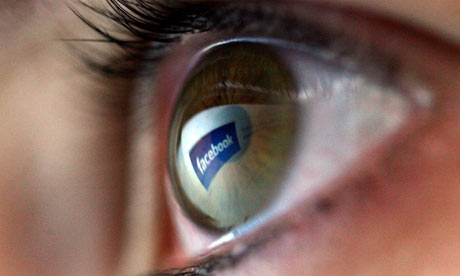
Facebook knows practically everything about me.

Its facial-recognition software is so good, it recognizes me in photos.

The more Facebook feels like a big stage, the less inviting it becomes.

You’ve probably noticed how the “friends” who show up in your News Feed most often aren’t the ones whose lives you’re most interested in but simply the ones who have a lot to say.

Now that Facebook is an enormous, everyday part of our existence on this rocky sphere, I think we have to ask if its growth is making us happy or encouraging us to do things that make us, ultimately, not happy.

So let’s see if Facebook takes any notice of what is wrong by compiling a list to see if ultimately, Facebook doesn’t care what kind of content gets shared or who’s sharing it, as long as it’s able to capture an ever-larger share of its users’ attention minutes.

There’s no question that Facebook is changed our lives.

It has ingrained itself into the daily lives of digital-age users in a way that is affecting all of us. When Facebook was founded in 2004, it began with a seemingly innocuous mission: to connect friends. Some seven years and 800 million users later, the social network has taken over most aspects of our personal and professional lives, and is fast becoming the dominant communication platform of the future.

As with any new (or newly discovered) technology, the impact of the end product is largely in the hands of the user. We are, after all, only human — with all the joy and sadness, decency and ugliness that that entails.

But here are some of the things I dont like.

I am sure that sooner or later, each Facebook user has occasion to ask the same questions.

Which is not to say it’s all “likes” and “shares” and happy kid pics, wedding announcements? Thing of the past. Birth announcement?

Just as ordinary users once got the unpleasant sense that Facebook was becoming a venue for professionally produced corporate content.

I don’t like their timeline.

I don’t like that Facebook is fundamentally positive, with no dislike button.

I don’t like that it is becoming a major contributors to career anxiety for the Young.
I don’t like that it steer you toward certain online behaviors.
I don’t like that it is filling our heads with the Hypnotoad from Futurama.
I don’t like that it is creating a form of social television. Pitching itself as a parallel Web, based on relationships and sharing rather than content (the value is in the connections).
I don’t like that it is building immense value off all sorts of emotional and psychological inadequacies?
I don’t like that it is creating an online culture of competition and comparison. In a sense it is a kind of socially powered online game that is actually making us miserable.
I don’t like it reminding me that I am getting old. Nostalgia is part of life. But, with Facebook, getting nostalgic represents detailed updates on your mundane day are mind-numbing.
It is cramming more and more features onto your page. It is becoming ever clearer to the content makers how little Facebook cares about what any of them do. That’s what all this boils down to.
I don’t like the fact that it is attempting to monopolize your eyeballs and associated personal data to what it thinks you like.
That’s what Facebook will become tomorrow ANAlOG CRYSTAL Ball based on unverifiable data.Afficher l'image d'origine
Facebook is what people make of it.
Remember it can be hacked and that in a hundred years from now it will be full of dead people. 
ALL CONTRIBUTIONS TO THE LIST WELCOME. IF WE MANAGE TO GET A WELL SUPPORTED LIST; WE WILL SENT IT TO FACEBOOK

← Back

Thank you for your response. ✨


THE BEADY EYE SAYS: FACEBOOK IS DESTROYING RELATIONSHIPS.

Tags

, , ,

( A three to four-minute read)

I suppose before I write this post I need to declare I am a Facebook user. One of every 13 people on Earth is a Facebook user.

Among 18-to-34-year-olds, nearly half check Facebook minutes after waking up, and 28 percent do so before getting out of bed.

The idea that a Web site could deliver a more friendly, interconnected world is bogus.

When the telephone arrived, people stopped knocking on their neighbors’ doors.

Social media bring this process to a much wider set of relationships. Social connections—has been dramatic over the past 25 years.

Facebook, of course, puts the pursuit of happiness front and center in our digital life.

Social media—from Facebook to Twitter—have made us more densely networked than ever. Yet for all this connectivity, new research suggests that we have never been lonelier (or more narcissistic)—and that this loneliness is making us mentally and physically ill.

A considerable part of Facebook’s appeal stems from its miraculous fusion of distance with intimacy, or the illusion of distance with the illusion of intimacy.

The real danger with Facebook is not that it allows us to isolate ourselves, but that by mixing our appetite for isolation with our vanity, it threatens to alter the very nature of solitude.

We are beginning to design ourselves to suit digital models of us.

We look to technology for ways to be in relationships and protect ourselves from them at the same time.

The ties we form through the Internet are not, in the end, the ties that bind. But they are the ties that preoccupy.

We don’t want to intrude on each other, so instead we constantly intrude on each other, but not in ‘real time.

Facebook imprisons us in the business of self-presenting, and this, is the site’s crucial and fatally unacceptable downside.

Facebook creates loneliness.

The depth of one’s social network outside Facebook is what determines the depth of one’s social network within Facebook, not the other way around. Using social media doesn’t create new social networks; it just transfers established networks from one platform to another.

For the most part, Facebook doesn’t destroy friendships—but it doesn’t create them, either.

Our Internet connections are growing broader but shallower.

I think Facebook is primarily a platform for lonely skulking.

WHY?

Because Internet communication allows only ersatz intimacy.

Surrogates can never make up completely for the absence of the real thing.” The “real thing” being actual people, in the flesh.

One-click communication — the lazy click of a like. Passive consumption and broadcasting — correlates to feelings of disconnectedness.

We are living in an isolation that would have been unimaginable to our ancestors, and yet we have never been more accessible.

Over the past three decades, technology has delivered to us a world in which we need not be out of contact for a fraction of a moment.

In a world consumed by ever more novel modes of socializing, we have less and less actual society.

We live in an accelerating contradiction: the more connected we become, the lonelier we are.

We were promised a global village; instead we inhabit the drab cul-de-sacs and endless freeways of a vast suburb of information.

The effects of Facebook on a broader population, over time.

On whatever scale you care to judge Facebook—as a company, as a culture, as a country—it is vast beyond imagination.

Facebook is interfering with our real friendships, distancing us from each other, making us lonelier; and that social networking might be spreading the very isolation it seemed designed to conquer. Facebook encourages more contact with people outside of our household, at the expense of our family relationships.

In the face of this social disintegration, we have essentially hired an army of replacement confidants. We have outsourced the work of everyday caring.

Facebook capacity to redefine our very concepts of identity and personal fulfillment is much more worrisome than the data-mining and privacy practices that have aroused anxieties about the company.

We are left thinking about who we are all the time, without ever really thinking about who we are.

Facebook denies us a pleasure whose profundity.

We are underestimating: the chance to forget about ourselves for a while, the chance to disconnect.

Sending out a friend request, then waiting and clicking and waiting and clicking—a moment of superconnected loneliness preserved in amber. We have all been in that scene: transfixed by the glare of a screen, hungering for response.

It’s the quality, not the quantity of social interaction that counts. Social capital—the strength and value of interpersonal networks.

Loneliness is not a matter of external conditions; it is a psychological state.

The question of the future is this:

Is Facebook part of the separating or part of the congregating.

Does the Internet make people lonely, or are lonely people more attracted to the Internet?

Facebook is merely a tool, and like any tool, its effectiveness will depend on its user. If you use Facebook to increase face-to-face contact,it increases social capital. Casting technology as some vague, impersonal spirit of history forcing our actions is a weak excuse.

We make decisions about how we use our machines, not the other way around.

So here is some advice:

The beauty of Facebook, the source of its power, is that it enables us to be social while sparing us the embarrassing reality of society— Is it taking liberties by reminding your so called friends that your Birthday is arriving, by posting your memories, by passing your data to other servers.

A connection is not the same thing as a bond, and that instant and total connection is no salvation, no ticket to a happier, better world or a more liberated version of humanity.

The relentlessness is what is so new, so potentially transformative. 

Facebook never takes a break.

Instead of  sending a private Facebook message is the semi-public conversation, the kind of back-and-forth in which you half ignore the other people who may be listening in you should be using it as a signpost to what is wrong with the World.

Click the like button and Face book will log it. Make a comment and Facebook might take note.

← Back

Thank you for your response. ✨


have the lovely smoothness of a seemingly social machine. Everything’s so simple: status updates, pictures, your wall.


Today, the one common feature in American secular culture is its celebration of the self that breaks away from the constrictions of the family and the state, and, in its greatest expressions, from all limits entirely.


THE BEADY EYE SAYS: IF WE NOT CAREFUL DONALD TRUMP PRESIDENCY IS JUST A MARKED X AWAY.

Tags

,


On January 20, 2017, if Trump is sworn in as the 45th president, he would suddenly gain control of the world’s most powerful military force.Afficher l'image d'origine

This is not just an American problem. Donald Trump is a threat to the entire planet.

It’s probably time to stop laughing. Trump is an authentic American and he represents the face of authentic America. It’s gone from funny to, wow, this is really scary. But nobody is losing too much sleep:

Such an event could not be happening at a better time. The world is still feeling the effects of the capitalist mainframe gone haywire. Trump has been ranked the sixth greatest threat to the global economy, putting him level with jihadi terrorism.

We, all of us, have underestimated Trump every step of the way.

The bottom line now regardless is that voters have a chance to elect Donald Trump in November. “That’s how Mussolini got in, that’s how Hitler got in.”

Money, Money, Money, it’s all about money.  He is apparently worth an estimated 8.7-10 billion dollars.

Sounds hard to believe doesn’t it?

A nation that elected its first black president just eight years ago will now rush to embrace a man who has offended Mexicans, Muslims and others. The possibility that Trump might actually win fills great swaths of the planet with dread – with the apparent and notable exception of Vladimir Putin’s Russia – with concerns over everything from trade to the nuclear trigger.

Donald Trump, the man who calls Mexicans rapists, promises to ban Muslims from entering the country, considers women little more than objects, refuses to reveal his tax returns, has never even heard of America’s nuclear deterrent, and calls for an end to the minimum wage, is doing so well that some already have him beating one of the best-known and more qualified politicians on Earth.

On top of his notorious pledge to ban Muslims, the candidate suggested that America would stop buying Saudi oil unless Riyadh provided troops to fight Isis he promised on Thursday to pull the United states out of the UN global climate accord. and to approve the Keystone XL oil pipeline from Canada. He received loud applause from the Oil Executives.

If it was not for the Constitution you would define America as a sick sick country and by historical definition the United States today is a tyranny where a swaggering billionaire is taking advantage of a “naive America”making an important contribution to anti-American sentiment around the world.

If another American president would invade Panama, would invade North Korea, would invade Vietnam, that would give China superpower status because America would weaken itself. During the election campaign, Trump has repeatedly bashed China.

If he does win he will be different surrounded by advisers telling him what to do.

First thing he should do is pull down the Statue of Liberty and erect a Selfie. Afficher l'image d'origineStatue of Liberty Inscription


And replace the Plaque with:     Gone to lunch.

It’s a huff choice. Afficher l'image d'origine


But you can rest assured you have seen nothing yet.

← Back

Thank you for your response. ✨


THE BEADY EYE SAYS: SHAKESPEARE QUESTION “TO BE OR NOT TO BE” HAS COME BACK TO HAUNT ENGLAND.

Tags


The main reason for Britain joining the EU was for the economic benefits, so obviously it shows that in the age of globalisation and increased competitiveness, Britain cannot act alone.

Perhaps IS BEST THAT we look at it from the EUROPEAN SIDE.

Why because there are two EUs in Britain.Afficher l'image d'origine

One is bashed in the Sun and the Daily Mail every day for ripping off Britain, sending over hordes of unwanted migrants, and forcing Brits to eat regulation square tomatoes.

The other is so deeply embedded in the UK’s legislation, business, trade, and foreign policy that most people do not notice it’s there.Afficher l'image d'origine

So what if any effect will there be on the EU if England votes to leave or stay.

The EU will lose some membership fees provide less for its members at a higher cost.

If Britain leaves it will be  easier for other countries to insist on their own special exceptions – for example, to the deficit and debt “requirements” established in the Maastricht Treaty – Brexit could pose serious problems for the EU’s future evolution.

Both Britain and the EU will It will a portion of their trading market which in turn, will weaken the Europe’s economic region.

The EU will save billions in EU subsidies to English farmers and lose some fishing rights.

The EU could counter one of England’s most controversial provisions to stay in ( Britain to withhold in-work benefits from EU migrants who have been there for less than four years) by increasing trading tariffs.

If it leaves or stays the EU will have to own up to its failures, damaging the political idea of the EU and disturbing the self-satisfied dust that has settled over Brussels.

Britain if it stays in does not want to be committed to further political integration into the European Union which potentially lead other countries to reassess their own membership.

If it leaves the EU could charge the English for European visas unless the UK accepts free movement of people. A British builder, or scholar, or artist, or businessman, does not need a special permit to live in Paris, Barcelona or Berlin.

Britain was one of the founders of the European Court of Human Rights in 1959. These rights were established by the European Convention on Human Rights, signed by Britain and much influenced by British jurists. An English withdrawal from the European Arrest Warrant could mean it takes longer to extradite suspects from other European countries.

Then there is Sterling; If it leaves it will become more volatile, trade flows may be diverted or delayed, and some investment in British trade-related industries would be put on hold.

And of course Sovereignty. It is not absolute, inside the union or outside it. Just look at Facebook transferring all your personal data to American Servers.

You if you have not noticed are living in world where Data is King.

One more thing worthy of note. Not Immigration, Not the NHS, Not the lack of housing, not the strain on Services, ENERGY.

IF THE VOTE IS FOR OUT: YOU CAN BE CERTAIN THAT THE EDF AND THE CHINESE SOVEREIGNTY FUNDS WILL ABANDON HINKLEY POINT AND ALL OTHER PROJECTS.

There would be no more complaints from Britain against member states if they feel their rights have been breached.

It could save funds by the cancellation of UK European Health Insurance Cards.

It Britain goes the EU will have to admit that its hard-and-fast ground rules in order for states to participate, — say, keeping below a maximum debt level in order to retain membership in the euro zone have being broken willy nilly. Its member states of today have pretty much broke every one of these rules.

Already, EU members – especially the euro zone countries – have been avoiding concrete action to resolve their interdependent economic, social, banking, debt, and currency crises.

If the vote is for out a future re-entry, if desirable, would be difficult to negotiate (perhaps especially given European leaders’ desire to deter other member states from following the UK’s example).

The choice comes down to : Do you want to be a hostage to the bloc’s failing fortunes? or wallowing in memories of faded pomp and circumstance.

The Question is: To be or not to be “European.”

You are right to say that the EU is not worth staying in without fundamental reform.

And reform cannot be achieved from without.

Will Britain leave the European Union?https://youtu.be/VDij4vbS5ng

← Back

Thank you for your response. ✨

THE BEADY EYE ASKS: DID MAN CREATE GOD?

Tags

, ,

The scientific attempt to explain religion has been around for over a century.

All seeing eye awesome wallpaper

They, however they are, say we are all made from the same star stuff.  Which is kind of hard to believe if you’re having your head cut off by ISIS.

I have always told my friends that I was created not born.

If you look back over history I am certainly not the first.

The principle of causation is fundamental to my claim.

So who or what created me?

If God was the beginning who began God?

I suppose that something which had no beginning has no need of a cause but on the other hand that something can begin without a cause is not only unreasonable, it is arguably inconceivable.

Consider, that if the greatest beginning of all—that of the universe—had no cause whatsoever! what would be the reason for it or us to exist.

So we left with the Big bang picture of the universe that started off very hot and cooled as it expanded is in agreement with all the observational evidence we have today.

Nevertheless it leaves a number of important questions unanswered …

Why is the universe so uniform on a large-scale?

Why does it look the same at all points of space and in all directions?

Did we create God to give it a cause or the other way around.

Scientists might never work out how life could arise by natural processes. Matter came into being without any cause; so they also have to believe that life itself popped into existence without an adequate cause.

This leave us to ponder whether the cause of the universe’s beginning must have been super-natural, i.e. non-material or spirit—a cause outside of space-matter-time. Such a cause would not be subject to the law of decay and so would not have a beginning. That is, the cause had to be eternal spirit. God created time itself.

Thus, He is not limited by anything in the universe, including the future, since God created time itself .“In the beginning, God created the heavens and the earth.” If we can believe this verse he did it in the dark as he created light after.

Today’s atheists, in a non-prophet organisation the origin of our universe is a vexing problem. The very state of the observable universe today presents serious problems for them, as it demands a Creator.

I have three questions for any atheists to answer:

“How did nature choose the specific laws which control the universe, as deduced from observation?”

“How did the universe start off with an initial state in such a high degree of homogeneity?” This is the initial condition required for the big bang to produce the currently observable universe.

“Why, after 13.8 billion years since the big bang, is not the universe in thermal equilibrium?” In fact, why is it so far from equilibrium?

They might point to Quantum Mechanics.

But Quantum mechanics never produces something out of nothing. Quantum fluctuation must presuppose that there was something to fluctuate.

The quantum vacuum is a type of something. It has properties. It has energy, it fluctuates, it can cause the expansion of the universe to accelerate, it obeys the (highly non-trivial) equations of quantum field theory.

Where, for starters, are the laws of quantum mechanics themselves supposed to have come from? So if you hang your theology on quantum cosmology for the creation of the universe, you would be sorely wrong as it is deficient and assumes time to exist, among other problems.

The electromagnetic arrow of time: information carried by light comes to us from the past and not the future. We remember the past and not the future.

Biology is defined by the presence of self-reproducing organisms. This reproduction process took millions of years to get us to where we are today so that nobody can really prove anything. We are said to have evolved from monkeys and apes … but we still have monkeys and apes. 

Modern man is a pretty new species, with modern humans being only 200,000 years old.  But religion is, at best, 6- to 10,000 years old (depends on where you get your source from)

So man lived for over 190,000 years and one day just got up and created a god.  Why?  What did man do for 190,000 years when there was no god? Where did the evolutionary change come from that made modern man such a genius?

Why would man, 6,000 years ago, decide that we need consistency in this life – that everybody needs to believe and think the same way? 

It’s not too long ago that we worshiped the Sun as a God.

STEPHEN HAWKING Says:

“Recent advances in cosmology suggest, the laws of gravity and quantum theory allow universes to appear spontaneously from nothing. Spontaneous creation is the reason there is something rather than nothing, why the universe exists, why we exist.”

This is an abandoned theory, an old idea by people who wanted to rationalize things with their primitive knowledge.

It means that something is created out of nothing, which is impossible according to the law of conservation of mass.

Here is some of the scientific stuff which to be honest is somewhat beyond my pea brain.

The principle that matter can neither be created nor be destroyed, now part of the first law of thermodynamics.

“The Three Laws of Thermodynamics.”

The principle that matter can neither be created nor be destroyed, now part of the first Law of Conservation of Energy, states that energy cannot be created or destroyed in an isolated system.

    • The first law, also known as Law of Conservation of Energy, states that energy cannot be created or destroyed in an isolated system.
    • The second law of thermodynamics states that the entropy (iinevitable and steady deterioration of a system or society, a measure of the amount of disorder in a system.) of any isolated system always increases.
    • The third law of thermodynamics states that the entropy of a system approaches a constant value as the temperature approaches absolute zero.

Outside of the concept of time, there is also no concept of something beginning or even ending; in fact, the word “eternal” has no meaning as it suggests a linear progression into infinity, which is also another concept that does not exist within our temporal framework.

Man fumbles in dark trying to explain something completely beyond their ken and then curses and rejects it because they cannot understand it, but it does not change what it is.  How is it that so many intelligent people fall into this trap?

If one says that God must have a beginning, then they trap Him within His own creation and He is clearly outside of it.

It’s not science, it’s a choice, a belief system that allows man to believe he only has to answer to himself.

All religions are creations of man designed within their time and societies.

For me God is unconditional LOVE.

I can reach for excellence but perfection is God business.

← Back

Thank you for your response. ✨


THE BEADY EYE’S UNPUBLISHED BOOK. CHAPTER TWENTY ONE.

(NOT TO BE CONTINUED)

Afficher l'image d'origine

Djibouti :

 Afficher l'image d'origine

What I Know:

 French.

 I book into the Hotel Relais.   Within the hour the power of the Dash has me driving out to the main gates of the docks to meet a customs official. Twenty minutes later armed with a seal, a sealing gun and stamped documents he hands me the keys to a forklift. “I will be back in a few hours, “he says pointing to a container, which happens to be on top of another container.Afficher l'image d'origineAfficher l'image d'origine

A heavy dollar shake handshake he leaves. In the middle of the night never having driven a forklift I was looking at prospects of lifting a container, not to mention loading it and wiring up Williwaw so she does not move during her forthcoming sea passage.

After a few ear-splitting practice run on a similar container that would have woken the dead I am backing away with ebbing confidence to deposit an enormous steel box with a resounding bang to arouse the whole of Djibouti’s French armed forces.

Not a living soul appears.

Opening the doors of the container I drive Williwaw to the entrance. She won’t fit in due to her roof rack. I deflate her tyres but she is still a fraction to high. The front of the rack where I stored my tool/spares/ jerry cans will have to be flattened. It takes a half an hour searching to locate the hacksaw. Four am the job is done, batteries unconnected, wired up, blocked, I close the doors on our faithful friend.

With dawn breaking there is no sign of my customs official I let myself out.   Walking back to town a pungent waft of cooking arouses my hunger. All a quiver I sit down to a large breakfast. Eight am I on a flight back to Addis the journey is over not quite.

On landing in Addis I am arrested. Apparently I have a single entry visa.

There is no interest as to why I have arrived from Djbouti or that I have a flight booked to the UK in a day’s time. I have no proof other than the export papers for Williwaw that I left Ethiopia. No passport stamp.

Six hours of haggling, explaining that I was due to leave in a day’s time. That I needed to pick up my belongings from Paulo address were all having no effect. Once more the might of the dollar has to come to the rescue > Flight 207 leaves on time with me on it.

At the start of this narrative I was asked why Africa. I suppose the answer is because it feels like the original Continent the Cradle of life.Afficher l'image d'origine

Would I do it again. Is the Pope a Catholic.

Donation News: To be honest I did not expect anything other than Zero. So I thank all those that took the time and interest to read the Journey as we are all on the same journey and we will all leave with zero. However I Fanny and Flo will leave with what money cannot buy an enriched life.

So lets us take some time out and consider:


The World gone wrong:


Looking back from the Moon human activities on earth do not show up.

By the Year 2030 there will be 50% more of us – 6 million a month.   Our headlong collision with Nature makes us number one enemy of the Earth.

The technology to wipe out civilization is getting cheaper while we turn back the evolutionary clock by pumping  8 billion tons of carbon into the atmosphere each year wipe out 50,000 species each year in collective denial.

Humanity will have to put aside the deep divisions it has maintained for thousands of years. Find a new spirit of human co-operation.  Stop spending trillions on arms and start spending it on the environmental crisis now facing our very existence.

There can be no trade-offs between economic development and the protection of the environment.

One-fifth of the world’s present day population live in the “rich world “consuming 86% of the world’s goods with over half the people on earth trying to live on 2$ a day and the absolute poor on a !$ making up !.! Billions.

Another word the Gross Domestic Product of the poorest 48 nations is less than the wealth of the world’s three riches people combined.

You don’t have to look far to see why we have terrorism. Poverty and Inequality spawns it.

Since Sept 11 2001 the USA has launched a war on terrorism making sure that poverty will remain on the bottom of the issue priority list.

 The bottom line.

Our Democracies seem unable to achieve any progress such as mitigating climate change, better managing ecosystems, creating a fair global trading system but we have the knowledge ,data, and technologies to do all of these things.

The question is not so much “How could we have learned so little in all these years? But “How could we have learned so much and done so little?

My advice is to stop supporting large world corporations that don’t show a corporate social responsibility, Use face book, twitter as tools to expose pressurize and praise till earth becomes a fair home for all its inhabitants human and otherwise.

HERE IS MY PLAN TO MAKE A DIFFERENCE.

A world aid tax:

All stock exchanges transactions worldwide, sovereign funds, lotteries, and the like should be brought into the United Nations and made sign a charter that would compel them to forsake a small percentage of their profits.

The funds generated by this tax would then be the cornerstone of a new World United Nations Investment Fund.

30% of the FUND TO BE FOR                                    GENUINE DISASTER AID.

These funds would change the United Nations Aid programme from being a helpless G2O begging organisation to an organisation with its own clout.

70% of the FUND TO BE FOR                                 WORLD INVESTMENT.

The Investment fund to be operated by independently appointed experts from the world business community. Each country represented in the United Nations to submit a candidate for election to its board:

All successful candidates being subject to re-election every five years:

THE FUND TO BE NAMED > THE UNITED NATIONS INVESTMENT FUND:

This fund would then to be placed on the world stock exchanges where it would benefit from the one virus that is consuming the world.

Greed:

By placing The Fund on the world stock exchange it would ensure the fund transparent. i.e. standing, on its own successes and failures.

All projects requiring funding to be submitted (other than genuine humanitarian aid) for approved by the board to establish their cost and viability.

The successful projects to be funded would then be placed in a yearly drawn on a ‘lotto’ base. This would cut out any interference from political corruption or pressure outside groups.  

The yearly Draw to be featured on an independent United Nations TV channel.

A dedicated United Nations Web site would monitor the projects > reporting on their progress and certify their completion while allowing all who are interested to follow the lucky projects progress.

I leave you with this thought –

The culture of growth for growths sake must be

brought to a halt before the gap between our distant past and the not so far

away future is unrepeatable. It is heart breaking what we are doing to our

world so open your eyes and look before it’s too late. THE Future belongs to

now.

BOB.

← Back

Thank you for your response. ✨