• About
  • THE BEADY EYE SAY’S : THE EUROPEAN UNION SHOULD THANK ENGLAND FOR ITS IN OR OUT REFERENDUM.

bobdillon33blog

~ Free Thinker.

bobdillon33blog

Category Archives: What needs to change in European Union.

THE BEADY EYE ASK’S: CAN THE EUROPEAN UNION SURVIVE WITHOUT MAKING SOME REFORMS .

05 Monday Mar 2018

Posted by bobdillon33@gmail.com in Brexit v EU - Negotiations., European Commission., European Union., Modern Day Democracy., Our Common Values., Populism., Post - truth politics., The Obvious., What needs to change in European Union.

≈ 1 Comment

Tags

Brexit v EU - Negotiations., European Union, What needs to change in European Union., What needs to change in the European union


( A two-minute read)

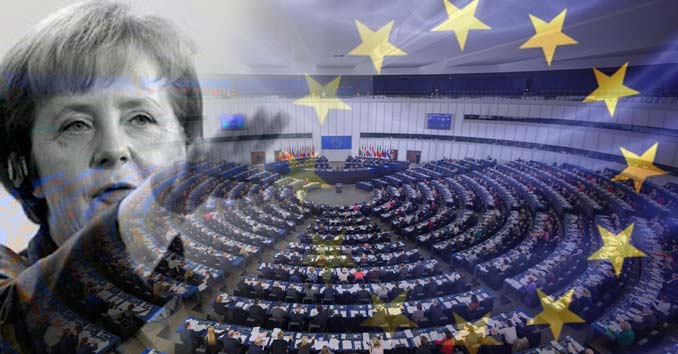
There’s no denying Brexit is going to be a serious smack in the face for the EU.Résultat de recherche d'images pour "pictures of the EU House of parliament"

The second EU straw is now the populist gale that will blow throughout next year.

Surely now is the time for some reforms.

Fundamental problems other than Brexit must be addressed.

But what to change? There’s little consensus yet.

Ever closer union, which has been an EU rallying cry for nearly 30 years, is almost “dead.”  Lofty speeches are falling on deaf ears.

It may be forced by politics or forced by new leadership but there is no doubt that the divisions between wealthy northern European nations and those in the South, where public finances are strained and youth unemployment remains a major problem has to be resolved.

The rise of nationalist parties — on left and right — threatens to reverse nearly 70 years of integration in Europe. The Greek bailout is in danger of collapsing. There are doubts about the future of the euro.

It is was unrealistic to expect radical change, when there are creditors and debtors in the EU. Because of this, it’s almost impossible for European Union to continue with a deepening integration on fiscal affairs.

Here are three reforms it should and can be undertaking imminently.

One > Stop the gravy train Strasburg to Brussels.

Two > Make the Commission an elected body.

Three > Establish legal entry points for refugees.

There are arguably two primary types of democracy: direct democracy, in which all
citizens directly participate in decision-making; and representative democracy, in which the power of the people is delegated to periodically elected representatives.

Where is the difficulty with the above reforms?

After all is not democracy said to be in the eye of the beholder.

Britain’s departure from the EU, which will be negotiated over just two years, will also distract attention from reforms. There will be pressure to wrap up Brexit talks quickly, but the EU is not known for moving fast.

Europe needs to change, and fast.

Either it prepares for the future, or it will become obsolete.

All human comments appreciated. All like clicks chucked in the bin.

← Back

Thank you for your response. ✨


Share this:

  • Share on WhatsApp (Opens in new window) WhatsApp
  • More
  • Share on Pocket (Opens in new window) Pocket
  • Share on Mastodon (Opens in new window) Mastodon

THE BEADY EYE SAY’S: WHAT EVER ABOUT EU SECURITY THERE CAN NEVER BE A EU ARMY.

19 Monday Feb 2018

Posted by bobdillon33@gmail.com in Brexit v EU - Negotiations., Brexit., European Union., Unanswered Questions., What needs to change in European Union.

≈ Comments Off on THE BEADY EYE SAY’S: WHAT EVER ABOUT EU SECURITY THERE CAN NEVER BE A EU ARMY.

Tags

Brexit v EU - Negotiations., EUROPEAN ARMY., EUROPEAN SECURITY:

( A seven-minute read)

It appears that Theresa May has little or no understanding of the mean of the word Union or for that matter Nato Motto, “animus in consulendo liber”

(A satisfactory translation of the phrase has not been found, although a French version“l’esprit libre dans la consultation” comes close. Renderings in English have ranged from the cryptic “in discussion a free mind” to the more complex “man’s mind ranges unrestrained in counsel.”)

It is complete hogwash to be saying England wants to leave the EU’s common foreign and security policy as early as next year but would show flexibility around the UK’s red lines to secure a new security treaty. Dropping out of the single market and refusing to adhere to judgments of the European court of justice (ECJ) means the country would no longer be able to participate in joint institutions such as Europol, EU police databases or EU military missions.

So would someone please explain to me what she means when she says ” participated in EU agencies while also having its “sovereign legal order.”

If you are no longer in Europol and you have ditched the EU’s common foreign and security policy how can you “respect the role of the European court of justice”

On the other hand it seems to me that all the talk about a European Army/Security and its joint headquarters is another attempt to set up a new bureaucratic structure in order that European officials can continue to exist in comfort, producing paperwork and public declarations, just as they do in the EU and the Council of Europe’s Parliamentary Assembly (PACE).

Many Europeans have argued that the members of the European Union can exert greater influence in the world if they act together rather than separately; and that following the decline of Europe’s major powers, individual states’ power can collectively create a more powerful and credible European voice on the world stage.

The EU rarely manages to speak with one voice in any meaningful way.

There may well be a massive chasm between Europe, England, and US in terms of military capability but the fight against militants needs not more troops, but extensive and professional law enforcement agencies, a wide network of agents and other anti-terrorist structures.

They cannot be an army with rockets, tanks, bombers, and fighters – you do not fight against terrorists with heavy military equipment.

Having a joint court to arbitrate between states is a pragmatic solution to security cooperation.Résultat de recherche d'images pour "PICTURES OF THE EU ARMY"Résultat de recherche d'images pour "PICTURES OF THE EU ARMY"

One way or the other, Europe cannot afford two parallel armies for several reasons. Firstly, even now, a number of states are in no hurry to allocate 2 percent of their GDP to NATO’s overall defense budget, which relies mainly on Washington paying 75 percent of the total. Also, there are not enough human resources for the new army.

Furthermore, in an army, which is based on a unity of command and unquestioning obedience to the commander or boss, there cannot be any independent structures in principle. Otherwise, it is not an army, but a bad collective farm of bewildered soldiers receiving orders in twenty different languages.

So would someone tell me on what principle an integrated European army should be created?

In 2000, the EU announced proposals for an army of 100,000 (60,000 of whom could be deployed at 60 days’ notice for up to a year at a time). Britain’s Conservative Party commented at the time that this would effectively destroy NATO. Either troops already committed to NATO will be counted twice, or, in the worst case scenario, troops will be withdrawn from existing NATO missions.

But if a European army is created all the same, how will Russia react?

The Russians will work with it as they do with NATO. Let us just hope that the relationship will start with a clean slate and become a friendly one.

Sovereignty, however, cannot be traded for influence.

The ability to project power, whether regionally or globally, depends on several factors, including leadership, credibility, military capability, popular support, and dependable allies. The EU lacks all of these qualities.

The EU has no standing army. Instead, under its common security and defense policy (CSDP), it relies on ad hoc forces contributed by EU countries for:

Joint disarmament operations
Humanitarian & rescue tasks
Military advice & assistance
Conflict prevention & peacekeeping
Crisis management, e.g. peacemaking & post-conflict stabilization.

Since the Maastricht Treaty of 1991, the European Union has sought to forge a Common Foreign and Security Policy (CFSP) precisely to take the lead in times of global crises. Since January 2007, the EU has been able to carry out rapid-response operations with 2 concurrent single-battle groups, each comprising 1500 soldiers.

The EU failed to comprehend the sheer complexity of the problems of an EU Army because of its own institutional and military limitations, and the very different historical perspectives and poli­cies of its 12 constituent members.

For example, Austria, Ireland, Finland, Sweden, and Malta have chosen to pursue neutrality. It is highly improbable that these countries which don’t even belong to NATO will enroll their citizens in a European military alliance.

Article 42 of the Lisbon Treaty clear STATES  that any further co-operation in the area of defense should be consistent with Nato commitments.

Even though terrorism is a serious issue, centralizing security and defense policies on the European level isn’t a useful way of fighting such a diffused and complex threat. If a Foreign policy is an attribute of statehood that must remain at the nation-state level if it is to be meaningful or effective.

Is it not pathetic to witness Mrs. May linking an economic deal to crime-fighting measures and to the sharing of intelligence.

It’s like a naughty school child sharing a secret for a smartie.

Without group security goals, building a common defense policy is neither realistic nor useful.

Résultat de recherche d'images pour "PICTURES OF THE EU ARMY"

All human comments appreciated. All like clicks chucked in the bin.

← Back

Thank you for your response. ✨


Share this:

  • Share on WhatsApp (Opens in new window) WhatsApp
  • More
  • Share on Pocket (Opens in new window) Pocket
  • Share on Mastodon (Opens in new window) Mastodon

THE BEADY EYE ASK’S: WHAT IS THE STANDING OF DEMOCRACY IN THE WORLD TO DAY AND IS IT SOCIAL MEDIA THAT IS ALIENATING US FROM THE VOTE.

05 Monday Feb 2018

Posted by bobdillon33@gmail.com in Algorithms., Democracy, Facebook, HUMAN INTELLIGENCE, Humanity., Modern Day Communication., Modern Day Democracy., Modern day life., Politics., Populism., Post - truth politics., Social Media, The common good., The world to day., Twitter, Unanswered Questions., What needs to change in European Union., What Needs to change in the World, Where's the Global Outrage.

≈ Comments Off on THE BEADY EYE ASK’S: WHAT IS THE STANDING OF DEMOCRACY IN THE WORLD TO DAY AND IS IT SOCIAL MEDIA THAT IS ALIENATING US FROM THE VOTE.

Tags

Algorithms Democracy., Algorithms., Democracy, Out of Date Democracy, Social Media, The internet and Democracy, Visions of the future.


( A Slow read of twenty minutes)

Democracy has many strengths, including the capacity for self-correction, but the question is can it survive social media.

The word ‘democracy’ has its origins in the Greek language. It combines two shorter words: ‘demos’ meaning whole citizen living within a particular city-state and ‘kratos’ meaning power or rule.

Democracy of sorts had existed for centuries but there is no absolute definition of democracy. The term is elastic and expands and contracts according to the time, place and circumstances of its use.

Meaningful democracy only arrived at a national level in 1906, when Finland became the first country to abolish race and gender requirements for both voting and for serving in government.

Even in established democracies, flaws in the system have become worryingly visible and disillusion with politics is rife. Yet just a few years ago democracy looked as though it would dominate the world. The combination of globalization and the digital revolution has made some of democracy’s most cherished institutions look outdated.

It is far short of the settled, comfortable state of maturity that many of its early adherents expected (or at least hoped) it would be able to claim after decades of effort.

Just a few years ago, Facebook and Twitter were hailed as tools for democracy activists, enabling movements like the Arab Spring to flourish.

Today, the tables have turned as fears grow over how social media may have been manipulated to disrupt the US election, and over how authoritarian governments are using the networks to clamp down on dissent.

They are fast becoming tools for social control.Résultat de recherche d'images pour "pictures of social media democracy"

So has democracy’s global advance come to a halt, and may even be in reverse.

The notion that winning an election entitles the majority to do whatever it pleases no longer holds water.

Since the dawn of the modern democratic era in the late 19th century, democracy has expressed itself through nation-states and national parliaments. People elect representatives who pull the levers of national power for a fixed period.  But this arrangement is now under assault from both above and below.

From above, globalization has changed national politics profoundly.

From below Modern technology is implementing a new modern version with national politicians surrendering more and more power to Social Media.

For example over trade and financial flows, to global markets and supranational bodies, and may thus find that they are unable to keep promises they have made to voters.

International organizations such as the International Monetary Fund, the World Trade Organisation, and the European Union might have extended their influence, but they no longer have the power to implement what they preach.

There is a compelling logic too much of this:

The fragility of the United Nations influence elsewhere has become increasingly apparent with the state of the world.

How can anyone Organisation or a single country deal with problems like climate change or tax evasion?

National politicians have also responded to globalization by limiting their discretion and handing power to unelected technocrats in some areas. The number of countries with independent central banks, for example, has increased from about 20 in 1980 to more than 160 today.

So is the power now in the hands of multi Clongormentts like Apple, Facebook, Twitter, Mircosoft etc.

Certainly, the perception that democracy in decline has become more widespread than at any time during the past quarter-century. Erosion of freedom over the past few years, adopting smarter methods for m of subversion

There are four main sorts of Democracy.

  • Direct democracy
  • Representative democracy
  • Constitutional democracy
  • Monitory democracy

A liberal democracy (that is, one that champions the development and well-being of the individual) is organised in such a way as to define and limit power so as to promote legitimate government within a framework of justice and freedom.

Social media is a double-edged sword it allows us to speak truth to power but on the other hand, it allows power to manipulate public opinion and polarize the electorate.

Citizens use it to speak truth to power, and authoritarian governments use it to spread misinformation.

Twitter users got more misinformation, polarizing and conspiratorial content than professionally produced news.”

They fake petition signatures. They skew poll results and recommendation engines.

Rather than a complete totalitarianism based on fear and the blocking of information, the newer methods include demonizing online media and mobilizing armies of supporters or paid employees who muddy the online waters with misinformation, information overload, doubt, confusion, harassment, and distraction.”

And yes, governments are increasing their efforts to censor the internet, but that’s because they recognize that the internet poses a threat to their control.

Every authoritarian regime has social media campaigns targeting their own populations.

If the liberal world order is indeed coming apart under pressure from
the authoritarians, the future of democracy will be deeply affected.

Social media firms are “largely immune from responsibility” in the legal sense, but that “in the court of public opinion it is a different matter, and future US/EU legislation seems likely if they don’t address these issues in a meaningful way.

So what is the answer?

Is social media basically good, or does it have a “negative impact on society”

There are no gatekeepers when you publish via your social profile, (outside of each platform’s terms of use) – you can write anything and anyone has the chance to view it.

Social Media has truly democratized media and given everyone a medium through which to be heard.

It has also opened the system up to those who would exploit it to push their own agendas. The platforms are now looking to police this, but it’ll likely always play a part.

To make democracy work, we must be participants, not simply observers.

One who does not vote has no right to complain.

Here are a few questions to mull over.

What can be done to fight citizens’ political alienation and distrust?

Are representative democracy and greater public participation the answer or do we need to think beyond current practices?

How can the cultural and historical factors involved and reflected in present developments help us look into the future?

What knowledge is needed to understand and inform decision-making in the future?

Which values are and which values must be at the base of decision-making?Résultat de recherche d'images pour "pictures of social media democracy"

If we are indeed heading for a Smartphone Algorithms Democracy: Who, or What will be in control. 

The algorithms behind social media platforms convert popularity into legitimacy, creating echo chambers, overwhelming the public square with multiple, conflicting assertions.

Today, social media acts as an accelerant, and an at-scale content platform and distribution channel, for both viral “dis”-information (the deliberate creation and sharing of information known to be false) and “mis”-information.

“Populist” leaders use these platforms, often aided by trolls, “hackers for hire” and bots, on open networks such as Twitter and YouTube.

Sometimes they are seeking to communicate directly with their electorate. In using such platforms, they subvert established protocol, shut down dissent, marginalize minority voices, project soft power across borders, normalize hateful views, showcase false momentum for their views, or create the impression of tacit approval of their appeals to extremism.

And they are not the only actors attempting to use these platforms to manipulate political opinion — such activity is now acknowledged by governments of democratic countries.

In addition, advanced methods for capturing personal data have led to sophisticated psychographic analysis, behavioral profiling, and micro-targeting of individuals to influence their actions via so-called “dark ads.” to self-censor or opt out of participating in public discourse.

Currently, there are few options for redress. At the same time, platforms are faced with complex legal and operational challenges with respect to determining how they will manage speech, a task made all the more difficult since norms vary widely by geographic and cultural context.

Every democracy needs its justice system, so we must “catch up with the modern world”, to cope with the social media.

In reality, old power structures still have power, they just have it in new spaces.

All human comments appreciated. All like clicks chucked in the Bin.

← Back

Thank you for your response. ✨


Share this:

  • Share on WhatsApp (Opens in new window) WhatsApp
  • More
  • Share on Pocket (Opens in new window) Pocket
  • Share on Mastodon (Opens in new window) Mastodon

THE BEADY EYE ASKS: SHOULD THE EU GRANT ENGLAND A TRANSITION PERIOD.

01 Friday Dec 2017

Posted by bobdillon33@gmail.com in Brexit v EU - Negotiations., Brexit., England., European Commission., European Union., The Irish/ Northern Ireland border., The Obvious., Unanswered Questions., What needs to change in European Union.

≈ Comments Off on THE BEADY EYE ASKS: SHOULD THE EU GRANT ENGLAND A TRANSITION PERIOD.

Tags

Brexit v EU - Negotiations., Brexit., Forthcoming Brexit Negotiations.

(A twelve-minute read)

MY VIEW IS THAT THERE SHOULD BE NO TRANSITS PERIOD.

The cake metaphors in the modern world have outlived their usefulness – if they are applied not only to spheres where they do apply (such as attempting to be an internal market member without the obligations of the four freedoms) it will destabilize what is left of good will in European Union.

A DEAL IS A DEAL:  WHEN ITS AGREED NOT BEFORE OR AFTER.   Britain's Secretary of State for Exiting the EU, David Davis, made a 'breakthrough' at the joint conference

YOU CAN’T HAVE ONE FOOT IN THE DOOR AND THE OTHER OUTSIDE.

England’s Brexit agenda is both contradictory and fantastical.

Enjoy unfettered access to the single market, WHILE implementing a deals that is one way or the other will be damaging to the EU.  Theresa May was praised by the EU leaders for helping create a 'new dynamic' from her speech in Florence

You don’t have to a genius to know that any shared history, shared challenges, or shared future is now pie in the sky.

The exact relationship the UK would have or will have with the EU during the transition is not clear.

The timescales for settling the future relationship are unknown  – and could make a significant difference to the final destination.

The UK guarantee that it would be time-limited, with a period of about two years – although this period could potentially change for different issues, is political hog wash.

Were negotiations to stall well beyond 2019, the politics of the final settlement would get mixed into the party politics of leadership transitions and the next General Election. Outcomes would then become much
more unpredictable, particularly given the very strong likelihood of a change of Conservative Prime Minister sometime between 2019 and 2021, which could push the current government into a harder position on Brexit.

Not to mention the Rock of Gib, Scotland and Ireland’s positions.

If the Article 50 period was extended, the UK would continue to be a member of the EU, when EU acquis on the Single Market applied even though the UK had left, and one suggestion is that this could be achieved through UK membership of the European Economic Area (EEA).

Another could be that the UK simply commits to continue to apply all EU rules and regulations.

Any TRANSIT period will have to be approved by the other EU leaders. Whether any such thing is negotiable is as much a question
for the EU 27 as for the UK.

All of the above scenario’s are a disaster in waiting to happen.

Why?

Because a transitional deal would also change the British politics of Brexit in ways that have not been fully anticipated.

For example:

A transition deal would end any realistic prospects of a ›referendum on the deal‹ in its predominant form, where it is a strategy of Remain advocates to seek a choice between a negotiated Brexit deal, and the status quo of remaining in the EU.

A transition phase is largely regarded as kicking the can down the road – and so not resolving the major choices about the long-term settlement.

The British do want a Brexit deal – but worry about the consequences of admitting this.

The UK government is proposing a ›special partnership‹ but this does not address some of the key choices which the UK and the EU will face over the next two years.

Continued insistence on talking about an ›implementation period‹,
on the grounds that all of the details of the future settlement will be included in the Article 50 agreement, and the language of Article 50 itself, which talks about the framework for the future relationship, perhaps
implying a political declaration as to the shared objectives of a future negotiation.

But beyond these, they become a barrier to the negotiation of what, if anything, can be negotiated, in an equitable way, between a full EEA-style relationship and a clean break on WTO terms.

If it is accepted that it is not possible to both have and eat cake, the question of whether and how it is possible to agree on how to slice a cake fairly could become more relevant.

In an ideal world, the British would prefer to have their cake and eat it on the markets / migration trade-off.

The orthodox view is that a transition simply delays all of the key decisions – but a transitional deal could shift the medium-term British politics of Brexit more than is appreciated.

The bespoke British ›Goldilocks Brexit‹ would be warmer than Canada, but cooler than Norway  – but whether such a possibility exist will depend on what the EU 27 want too. The British do not know what they want‹ is a common criticism among European politicians and officials.

If Europe wants to survive there can be no transition.  Everything must be settled in the current negotiations deal or no deal.

Stability begins at home.

Learning the lessons of the past decade, WE HAVE TO WAIT TO SEE HOW FAR THIS LOGIC GOES.

Broadly I think we have landed in the right place and I take some comfort from being flanked on both sides of the argument. In or Out.

Doing all of these things efficiently and effectively relies on a strong degree of trust and co-operation between England and the Eu.

But the EU must plan, in a proportionate way, for alternative outcomes.

Just imagine two-year of;  We did not agree to this or that.  Résultat de recherche d'images pour "pictures of a transit period"

The real difficulties will be over the shape of Brexit. The British need a transition – so can (probably) make the compromises needed to get it.

All human comments mush appreciated. All like clicks chucked in the bin.

← Back

Thank you for your response. ✨


Share this:

  • Share on WhatsApp (Opens in new window) WhatsApp
  • More
  • Share on Pocket (Opens in new window) Pocket
  • Share on Mastodon (Opens in new window) Mastodon

THE BEADY EYE ASKS: WITH SPAIN HEADING FOR TURMOIL AND THE UK FOR SUICIDE IS THE EU GOING TO END UP AN ECONOMIC DUMP.

04 Wednesday Oct 2017

Posted by bobdillon33@gmail.com in Brexit v EU - Negotiations., Capitalism, European Commission., European Union., Humanity., Modern Day Democracy., Our Common Values., Politics., Privatization, Sustaniability, The Obvious., Unanswered Questions., Wealth., What needs to change in European Union.

≈ Comments Off on THE BEADY EYE ASKS: WITH SPAIN HEADING FOR TURMOIL AND THE UK FOR SUICIDE IS THE EU GOING TO END UP AN ECONOMIC DUMP.

Tags

Capitalism and Greed, Distribution of wealth, European Union


( A five-minute read)

Brace yourself.

Things look bleak.

It‘s time to call a spade a spade:

We all know that the present crisis in European Union has freighting potential to undermine all our lives?Résultat de recherche d'images pour "pictures of spain"

The problem is that despite all the rhetoric Wall Street and World Stock Markets underpin the hard nose of business with the priesthood of economists.

Financial experts and commentators worshiping it worldwide as a God.

Leaving us incapable of grasping that at one point in human history the Laws of the market can only be a human construction which now seen as absolute – even when they clearly do not work.

The high priests of today oblivious to the anti-market nature of their behavior do not hesitate to intervene to fix it on a colossal scale in contravention of the market’s own precepts.

The idea that money-making is the primary Goal of the most admired people in Society, the Goal of our Nations economic philosophies, the G 20, the European Union, our education, combined with our central defining consumerism greed is back firing.

What we got is the results that we see today:

Quantitative Easing, Money Printing /Austerity/ /Germany bailouts /Guarantees/ Banks before people Interest fixing /Elections/ Unemployment/ Bonuses/Tax confusion/ Independent Referendums, all served up with large daily doses of verbal diarrhea by every expert that has written a book.

I have not written any book on the subject and I am no expert but I am beginning to wake up to the need for our Captains of Industry, our political leaders and business to realize that competitiveness is not all that it is dressed up to be.

It can severely impair a given country’s ability to choose its own social and economic destiny and our individuality.

No currency can set the boundaries of a nation.

So it is worth reminding ourselves how grandiose the dreams of the European Union founders were.

Our present world can be seen as full of conflict, pain, misery, wars, while across the world ecological, economic and political spaces are being enclosed through privateering, Algorithms, liberalization and globalization and the hidden purchasing power of Sovereign Funds – All breeding new insecurities anxieties and stresses.

In this world Europe was renamed the European Common Market with its inhabitants viewed chiefly in economic terms, as producers or consumers, not countries with vastly different histories, problems, and circumstances.

The notion that trade and wealth creation would create a Europe laisser-faire was not basis on its history but on a vague notion that togetherness would make us less likely to repeat World War One /Two.

Reducing our society to markets and us humans to consumers.

Those that are rich have status and those who are poor do not.

You only have to read a newspaper to see how the overpaid footballers, film and soap star, business people are held up to be admired. While we the people fooled by capitalism that has made work the center of our lives and are now in the process of destroying it as a satisfying meaningful activity through the world stock exchanges that are driven by algorithms that determine whether we should retire at 63, 65, and 68 remain voiceless.

As a Species we have basis needs for meaning of identity, for community, and security, for food water and freedom.

So it stands to reason to prevent our collectively insane political leaders terminating life in Europe never mind the earth that we need to do something.

We all know that banks can’t stop themselves. Bail them out by all means but only under strict regulations.

If we in Europe want to avoid a repeat of the wars that devastated the Continent in the past all that is required (a saving of trillions) is a united military European Army. This will provide Europe with reasonably secure environment, safe from the threat of major war with its countries being let find their own versions of modernity or not to modernize at all.

Europe does not need a free market to thrive.

How can we achieve this?

There is only one solution scrap the Euro and let each country set its own exchange rates according to its own GDP (without the tanks, planes, nuclear weapons) set against the value of human resources, social capital, and ecological assets.

The present melt down of the EU could not have come at a better time.

If we do not preserve the Capital of Europe its different cultures /languages/ history and the like there will be no Economics.

We all know that economic is not a science however each time history repeats its self the price goes up.

The Euro is fundamental flawed and please god will remain so to protect what is the very essence of living or being born in Europe.

It’s time we all realize that the Natural Capital of the world, water, clean air, oceans, forests have to be protected so we must pay the keepers of the natural capital if we as humans are to live at all.

So let’s start in Europe with some common European aspirations.

Self sufficiency in Power- creates a common European kilowatt price: Abolish road tolls: Proper periphery border controls: Freedom of movement of currencies within the market – abolish commission charges: European Youth employment programs: European health / pension Euro bonds backed by all countries – to mention a few.

God knows it not difficult to identify what is needed, just attached the words total transparency to any common Goal and it will be achieved without Greed.Résultat de recherche d'images pour "pictures of spain"

← Back

Thank you for your response. ✨

Share this:

  • Share on WhatsApp (Opens in new window) WhatsApp
  • More
  • Share on Pocket (Opens in new window) Pocket
  • Share on Mastodon (Opens in new window) Mastodon

THE BEADY EYE SAYS: THE EUROPEAN UNION (EU) AND ITS 27 MEMBERS FACE FUNDAMENTAL CHANGES OVER THE COMING 5-10 YEARS.

04 Friday Aug 2017

Posted by bobdillon33@gmail.com in Brexit v EU - Negotiations., Brexit., European Commission., European Union., Modern Day Democracy., Our Common Values., Post - truth politics., Unanswered Questions., What needs to change in European Union.

≈ Comments Off on THE BEADY EYE SAYS: THE EUROPEAN UNION (EU) AND ITS 27 MEMBERS FACE FUNDAMENTAL CHANGES OVER THE COMING 5-10 YEARS.

Tags

European Union

( A twenty-minute read)

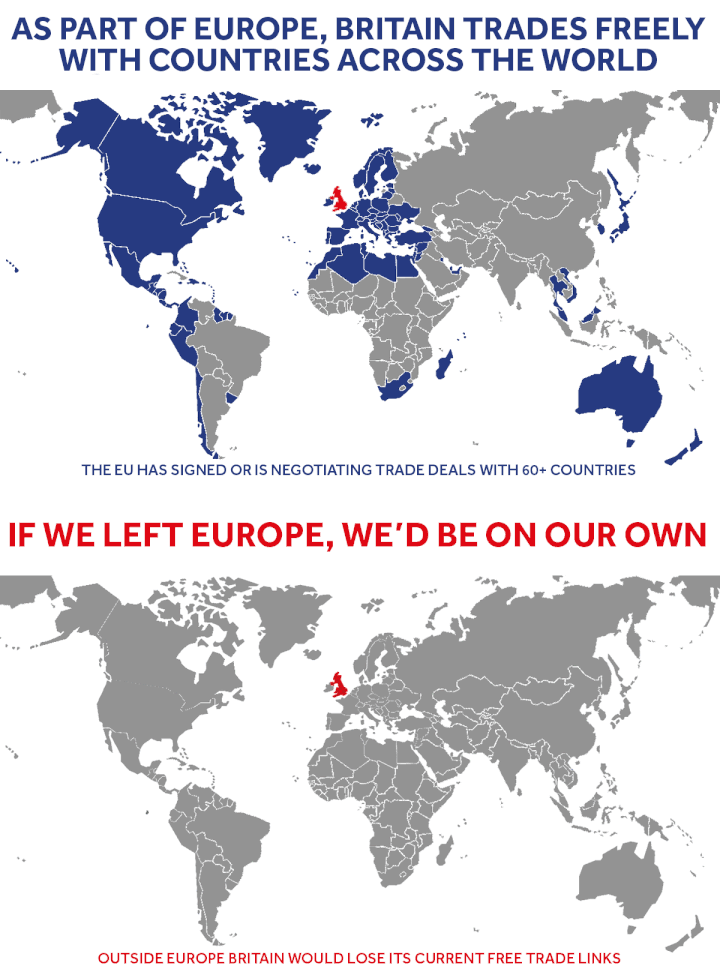
While Britain selfie sleep walks to its exit to become a free trade satellite off the shores of the European Continent a revision of the structure — institutionally and functionally — becomes inevitable for the EU.Résultat de recherche d'images pour "pictures of Britain as a free trade country"

My recent post highlighted that the EU project suffers from not having any real democratic legitimacy – without constitutional accountability, it is heading for trouble. ( see previous posts: THE BEADY EYE SAYS: IT IS TIME TO PUT PAY TO THE TRAVELING EU CIRCUS COSTING £9/10 BILLION TAX PAYERS MONEY.) However the Euro zone ends up it is the only place in the world trying to combine social welfare with a competitive economic structure.

The Europeans took a while to discover that killing each other and pursuing imperialistic and colonial policies are not in accordance with European values. Atrocities and crimes were committed, now it has a chance to create a remarkable political maturity of consensus, cooperation, and compromises.

Global governance sounds good, but out of reach for either the EU or Britain.

The digital age implies that a global opinion exists but the game now is about shaping perceptions of that opinion. Perhaps the EU is going to be forced by Social Media to go down the road to a form of Direct Democracy.

A new political system with another balance between centralized power and decision-making closer to the citizen spearheaded by Europe would be a revelation. 

Solidarity looks fine on paper and in declarations, but is much tougher to deal with in practice. Rebooting Europe’s economic model to combine welfare and competition and introduce a much higher awareness of resource scarcities will be no mean achievement. It strives hard to remain faithful to all that Europe stands for purified by the purgatory over centuries.

But is any of this realistic in light of England’s Departure.

The disturbing factor is the absence of confronting the issues among European politicians.

So what is in store and where is it going to go in the next ten or more years.

In reality there were two groups of Euro members: Strong countries mainly in Northern Europe and weak countries primarily in Southern Europe.

The fact that the EU’s politics will be devoted to tackle self-created problem sideling other pressing matters are an appalling thought. Confusion, non-transparency, peculiarity even queer ways obscured by meetings and personalities may rule the headlines.

Politically the consequences are much more severe and next to impossible to foresee.

As of 2015 the Euro zone morphs itself into a genuine Economic and Monetary Union with a common economic structure and a common economic policy underpinned by a fiscal union and a banking union. This was bound to happen and it can only be regretted that it had to be done as a response to a debt crisis making the process laborious and burdensome.

As of now 19 countries out of 28 EU member states have joined the Euro.

Europeans may not fully trust each other, but mutual trust is stronger and deeper than in any other political conglomerate around the world.

One its greatest challenges is that Europe is not multicultural, but the world is.

The Union is founded on the values of respect for human dignity, freedom, democracy, equality, the rule of law and respect for human rights, including the rights of persons belonging to minorities. These values are common to the Member States in a society in which pluralism, non-discrimination, tolerance, justice, solidarity and equality between women and men prevail.

This core element is now in question with the influx of migrants not sharing the same cultural identity, causing internal pressure which is why migration/refugees are an existential challenge.

This is why the solution can only be to allow migrants/refugees getting into Europe, to do so with two provisos:  That they do not be allowed to disrupt the existing societal structure and they are educated to adapt to European norms and values. A European citizen approaching the authorities feel that if the roles were reversed the decision would be the same.

In doing so Europe can solve its demographic problem number wise by remaining opening for immigration, to vetted people wanting and ready to enter Europe — actually more than ready as they are banging on the door — do not share cultural identity with the Europeans.

Britain should have accepted that for the EU-27, the idea of free movement is not just political posturing, but an essential part of the single market.  The EU is unlikely to agree on major changes to free movement rules in the next few years.

The core demand for new terms tabled by the incumbent conservative government is to roll back the situation to 1992 and get guarantees that EU social provisions (broadly speaking) do not apply to Britain. This festered till the in or out vote now giving rise to the question of what economic and societal model Britain wants and the answer is a different one from what is found on the continent.

Psychologically the British people may be uneasy companions of former enemies like Germany, France, Spain, and Italy. Links with the Commonwealth fade which probably is regretted by many Britons. The Anglo-American partnership that has for decades given Britain a privileged role is judged by some politicians and part of the public to be closer outside the EU than inside despite American statements to the contrary.

Because of the Franco-German axis which is firmly in control of the EU, Britain has never felt comfortable and probable never will.

However access to the market of the 27 member states weighs heavier for Britain than access to the British market for the rest of the EU.

The tricky part is that the treaty provisions cease to apply to the member in question when such agreement is reached or in case of failing to agree within two years from the decision to secede.

Everybody will try to rescue what can be rescued from this shipwreck, but obviously the 27 remaining member states will take the view that Britain has decided to leave so leave you do.

The main argument apparently falling on a lot of deaf ears in Britain is that inside or outside the EU, economic transactions require compliance with EU norms, standards, and various rules. Those rules are shaped by the member countries promoting own interests. Britain outside will not participate in this sometimes laborious process resulting in British interests not being fed into the legislative process.

The two-year clause strengthens the EU hand, as they better than Britain can live without free movement of goods, services, capital and labor.

The Euro zone countries will tend to share views and interests to a much larger degree keeping EU member states not inside the Euro with a different economic structure on the sidelines.

It is true that no EU citizen has a fundamental, unlimited right to move freely across the EU. To be lawfully resident in another member-state, EU citizens need to be working, studying, or able to prove that they are self-sufficient. Otherwise, they can be kicked out. It is also true that free movement of persons was introduced after the free movement of goods, capital and services.

It is difficult to estimate how strong the negative impact will be.

As seen in many cases it is the long-term effect that matters and continuous lower growth will in the long run add up to a substantial loss even if England reduces corporation and personal taxes.

While EU free movement rules have been a toxic political issue in Britain for years, many on the Continent consider them a core achievement of the EU.

So could there be a free trade agreement between the UK and the European Union that allows the UK to limit freedom of movement.

My answer is no. Out is Out.

The conclusion to draw is a sentiment among the majority of member states and in particular the original six ones that either you are member of the EU, committed to solidarity, coherence, common decision-making, and common policies or you are not.

Résultat de recherche d'images pour "pictures of Britain as a free trade country"

Britannia will “survive” without a post-Brexit free-trade deal with the EU.

The process of Brexit is likely to be a series of humiliating meetings in which the country is forced to accept a procession of ruinous trade deal terms – ruinous, at least, for the majority of the population.  In reality, the UK has never stood alone in the global free trade environment as we understand it today;

It may all end in disaster. But it does show consistency by the British. The EU can be replaced by countries full of fond memories of the empire. The UK has a long history of hypocritically claiming to want only trade in its international relations.

The British Empire stood by and watched one million Irish die of famine just 150 years ago while it continued to export pork and ham and lots of other produce to England. One million Irish! Has there been a word of regret about that genocide ever from the British State? Not one word.

“The British Empire was a great and glorious thing that did much good(such as ending slavery) ”

Such statements are totally untrue.

It was an evil kleptocracy and extortion racket. Imperialism is the geo-political equivalent of rape. There can be no defense for it. To call it “glorious” is nothing short of sick. It certainly wasn’t the empire which ended slavery. The empire not only fought tooth and nail to retain it, it actually managed to extort compensation for the vermin who had profited from it. It was the entire foundation of Britain’s wealth – or rather the wealth of Britain’s ruling class.

Far from benefiting from “free trade”, Britain got rich by imposing tariffs on imports and sending gunboats or troops to deal with anyone who presented problems.

If Britain is expecting to encounter fond sentiments from x colonial countries in free trade agreements it is about to be bitterly disappointed.

Britain did not make its fortune by trading freely.

The wealth of the UK was EXPLICITLY derived from its military domination of overseas territories, control of cheap inputs (such as cotton) and export markets that were enforced. So, the ludicrous idea of the Brexiteers that the UK can compete in the global economy does not stand up to scrutiny even historically.

In the contemporary world, it is nothing other than laughable. In the context of a highly open economy, dependent on imports of almost everything, the only effect of a devalued currency is inflationary pressure and an increased trade deficit. This policy approach almost qualifies as a definition of insanity.

We don’t need to wait to judge Brexit, because any clear-thinking and informed person can see outright what a disaster this is almost certain to be.Résultat de recherche d'images pour "pictures of Britain as a free trade country"

The ECHR is an international human rights treaty that is independent of the EU and predates it. If the UK denounces the ECHR as well as leaving the EU it is setting itself up as another North Korea. Every single country in Europe — including Russia and Turkey — is in the ECHR. Write your own laws!

We are living at a moment when an old economic settlement is in crisis, but a new settlement has yet to be formed.

Unless the US and Europe can find common ground the prospect of chaos and infighting is too high for comfort as no other country or group of countries are waiting in the wings with ideas and economic power to lead. Some decades down the road the US and Europe will still account for more than 1/3 of global Gross Domestic Product — maybe more.

The politics of the future will belong to those leaders both in Europe and Britain who are prepared to face up to our present problems and future challenges.

Britain’s future is a nostalgic past that never really existed.

Yes, this is the way forward for “Poverty UK” — back to the 1950s! Résultat de recherche d'images pour "pictures of Britain as a free trade country"

← Back

Thank you for your response. ✨


Share this:

  • Share on WhatsApp (Opens in new window) WhatsApp
  • More
  • Share on Pocket (Opens in new window) Pocket
  • Share on Mastodon (Opens in new window) Mastodon

THE BEADY EYE PUTS: A SPOTLIGHT ON WHAT NEEDS TO BE REFORMED IN THE EUROPEAN UNION.

04 Sunday Jun 2017

Posted by bobdillon33@gmail.com in Brexit v EU - Negotiations., Brexit., European Commission., European Union., France., The New year 2017, The Obvious., Unanswered Questions., What needs to change in European Union.

≈ Comments Off on THE BEADY EYE PUTS: A SPOTLIGHT ON WHAT NEEDS TO BE REFORMED IN THE EUROPEAN UNION.

Tags

European Union


( A eighth minute read)

We all know that the Union is in need of reform, but what exactly are we talking about.

Nobody would seriously argue that the EU doesn’t need to evolve, to do so it must fundamental reform.

It has not delivered the prosperity and growth it promised; the euro has turned out to be part of the problem rather than the solution; the EU’s share of world GDP is set to fall sharply. Moreover, no one is clear what the EU is for, or how ever closer union can be matched with expanding borders and huge disparities of income and culture. The European Union project has been rocked by a series of scandals

Here are a few reforms that are blatantly obvious and need  implementation to save millions of euros.  

The First Reform:

According to a report from the EU’s own internal Audit Service (IAS) an estimated £4.5 billion of the EU’s annual budget is wasted each year. The administrative budget of the IAS totals €18.77 m in 2016 and €19.22 m in 2017.

Although the Commission remains responsible for the implementation of the EU budget, the actual management and control of EU funds and programmes is delegated to Member State authorities, which select beneficiaries and distribute funds.

Cohesion policy accounts for 37 % of spending from the EU budget and is to be some 350 billion euro for each of the periods 2007-2013 and 2014-2020.

It is the Member States’ responsibility to detect, correct and prevent errors in the first instance.

Better regulation is a pressing problem.

Next:

It is time that the blatant absurdity and farce of the EU travelling circus, that requires the moving nearly four thousand trunks of documents between Luxembourg and Strasbourg ever month – stops.

It is perhaps the most outlandish of the European Union’s excesses; a £130 million travelling circus that once a month sees the European Parliament decamp from Belgium to France.

The problem is simple:

The French government, which has a power of veto, will not budge.

The French insist on maintaining Strasbourg’s role because of the substantial amount of money the travelling circus brings to the region. Its status is set in stone under a European treaty signed in 1992,  which can only be revoked should all member states agree it. 

In all, the EU admits that the monthly Strasbourg sitting, which lasts just four days, costs an additional £93 million a year.

A recent study by the European Parliament shows that €103 million (£85 million) could be saved each year if all European Parliament operations were transferred from Strasbourg to Brussels.

It is beyond comprehension that this state of affairs is tolerated.

If Emmanuel Macron France’s new youngest ever president, who says the country had chosen “hope” and promising to relaunch the flagging European Union doing away with this gross misuse of EU funds would show he is serious.

Next: 

MEP’s > “gravy train” salaries and perks.

MEP perks receive free haircuts and 52 gallons of petrol a month.

Maltese MPs get 240 litres of petrol a month.

Two Conservative UK  MEPs have each pocketed over £1 million in taxpayer salary and expenses payments in just five years.  Both men receive a salary of £76,292 a year, plus £2,670 in pension contributions.

Over five years, on top of this figure, Mr Ashworth claimed: £181,705 for subsistence; £164,627 in travel expenses; £222,560 in UK office allowances and £116,000 for his wife’s salary between 2010 and 2014, when the practice was banned.

Mr Karim claimed the same salary and pension contribution package as well as: £159,858 in subsistence allowance; £189,420 in travel expenses and £289,038 in UK office costs.

Both men also have offices provided in Brussels. Both men took home over £1 million over the five-year period, over £200,000 a year.

Nigel Farage claimed over £15,000 in expenses to pay for his bodyguards. The EU has been billed for their services, which include arranging food and drink. One bill for just five events came to almost £60,000, covered by expenses paid to Mr Farage’s Europe of Freedom and Direct Democracy group, which receives £2.5million a year in EU funding. 

French MEPs earn 740% more than average French citizen Lavish, expenses and allowances – entitlements that are worth over £415,000 a year each. 

As well as staff allowances, MEPs are able to earn up to £91,000 a year in “daily subsistence” and “general expenditure” expenses without having to provide any receipts or proof of expenditure. MEPs still vote on their own salaries and perks.

The EU pay divide

The “subsistence allowance” or “per diem” of £258 is paid in cash without any proof of expenditure, when MEPs sign an attendance register in Brussels or the Strasbourg seat of the parliament.

The annual cost of a MEP sitting in the EU assembly is £1.79 million each a year. The European Parliament, with 766 MEPs, cost £1.3 billion in 2012.

Here is the breakdown of an MEP salary:

[The standard monthly payment for all MEPs is 7,957 euros (£6,537). MEPs also get a flat-rate monthly allowance of 4,299 euros to cover office expenses, such as office rent, phone bills and computer equipment.

In addition, MEPs can claim for travel related to their official duties in Brussels and Strasbourg. In the past they could claim for an expensive flexible economy class flight even if they flew low-fare. But under the new rules they have to submit their ticket (which can be business class on air, or first class on rail) and will be reimbursed for what they paid.

A separate annual travel allowance – 4,243 euros maximum – covers official trips to other destinations. And they can claim for up to 24 return journeys in their home country.

MEPs also get a daily subsistence allowance – now 304 euros – for attendance at parliamentary sessions. It is intended to cover things like hotel bills and meals.

And they are entitled to reimbursement of two-thirds of their medical expenses.]

Then there are the 28 EU Commissioners, all of them on a basic salary of

€20 666 per month.

Jean-Claude Juncker, 61, President of the European Commission  Salary: £245,629 plus a residential allowance of £36,844 and a monthly expense allowance of £1,135. Pension of £52,500 for life from age 65.

The salaries and allowances of the MEPs of the 27 EU states now total £137 million.

The figure is almost ten times higher than the average EU wage of £18,617 a year.

But this does not include the cost of the £217,000 office allowance available to each MEP.

The receipt-free allowances system must stop. 

Next reform:  Is the Euro.Résultat de recherche d'images pour "pictures of Euro"

Only by changing the eurozone’s rules and institutions can the euro be made to work.

To achieve the more radical – but necessary – reforms for the Euro, a new treaty will be required.

A major priority for this new treaty would be to create a single fiscal authority for the euro area and to change the ECB’s mandate, so that it could become a full lender of last resort in extreme circumstances.

Euro area citizens need to be given a real choice between continued fragmentation (which leaves the euro exposed to structural weaknesses and recurrent crises), and greater integration (which pools more sovereignty at the same time as it strengthens the governance of EMU).

Abandoning the convergence criteria, which require deficits to be less than 3% of GDP.

Change the mandate of the European Central Bank, which focuses only on inflation, unlike the US Federal Reserve, which takes into account employment, growth, and stability as well.

Lastly, the high rates of unemployment in many euro-area countries are a source of concern. Reforms to harmonize employment protection legislation and integrate outsiders in the labour market should be implemented.

The EU employs more than 55,000 staff from its 28 member states. The majority work for the European Commission which employs about 33,000 officials, temporary staff, contract staff, and special advisers.

Last Reform:Image associée

It is no good just taking the standard nation-based model of representative democracy and applying it to the unique contours of European governance

‘Democracy’ explicitly recognises that the EU lacks a coherent, unified ‘people’, and should therefore encourage the participation of separate ‘peoples’ within the European structure.

If the EU is truly a democracy then the best way of closing the gap between citizens and institutions is to empower the demoi. Finding new ways for the national public to discuss, engage with and interact with the EU is the best way of enhancing their role. To do so, the European Parliament should be made more representative, but by increasing the role of citizens and national parliamentarians in the EU structures the EU can be made more open to bottom-up influence.

Multiple levels of engagement should be created so as to give citizens the maximum capability to engage with the EU’s structures. Such a structure would not be perfect. No democratic structure is. But it remains the best way of creating a more democratic European Union. Make European structures more open to national influence; and give citizens a more direct involvement in EU policymaking.

All comments appreciated. All like clicks chucked in the bin.

← Back

Thank you for your response. ✨

https://youtu.be/PZz3dXCG3Oo?list=PLO1bi4VeyTW7iLDXBKYxh_rG_ovxGkihz

Share this:

  • Share on WhatsApp (Opens in new window) WhatsApp
  • More
  • Share on Pocket (Opens in new window) Pocket
  • Share on Mastodon (Opens in new window) Mastodon

THE BEADY EYE SAYS: ROLL UP ROLL UP WE ARE ABOUT TO WITNESS THE BIGGEST MONEY FIGHT EVER SEEN. BREXIT IS EUROPE’S LAST CHANCE.

01 Thursday Jun 2017

Posted by bobdillon33@gmail.com in Brexit v EU - Negotiations., Brexit., Elections/ Voting, ENGLAND'S SNAP ELECTION, England., European Commission., European Union., Politics., Post - truth politics., Social Media., The Obvious., Unanswered Questions., What needs to change in European Union.

≈ Comments Off on THE BEADY EYE SAYS: ROLL UP ROLL UP WE ARE ABOUT TO WITNESS THE BIGGEST MONEY FIGHT EVER SEEN. BREXIT IS EUROPE’S LAST CHANCE.

Tags

Brexit v EU - Negotiations., Brexit., ENGLAND'S SNAP ELECTION, European Union, What needs to change in European Union.

( This is a good thirty minute read.)

The weigh in:

In the blue corner we have England wearing sterling.  In the green corner we have the EU wearing euro.

Regardless of whether you like the sport this fight will be contested across social media keeping the audience at a safe distance while making sure that the fighters don’t withdraw/run away from the fight before it is finished.

Round One:

Put simply, Article 50 gives the 27 continuing member states predominant power.

That comes partly from the fact that, according to Paragraph 4 of Article 50, the withdrawing state no longer counts as a member of the European Council for the purpose of the negotiations.  But mainly it comes from the guillotine imposed by the two-year deadline and the requirement for unanimity to extend that deadline.

Clause 4 says that after a country has decided to leave, the other EU members will decide the terms—and the country leaving cannot be in the ring in those discussions.

Britain depends on the EU for half of its exports, while Britain accounts for only one-sixth of Europe’s.  For Britain, this means any deal would be better than none at all. Keeping substantial access to the single market and having strict immigration controls are mutually exclusive for the EU: achieving both is highly unrealistic.

After a lot of shadow boxing T May with a reduced mandate and new shoes dances around the ring avoiding the total financial obligations, which are understood by the EU to be around €100 billion gross, according to an FT estimate.

But add on the negotiations fees etc and Britain is facing a £140 billion (7.5% of GDP) or the equivalent of £300 million a week over eight years.

May said repeatedly that Britain could walk away without a deal and be fine. Instead, a painless exit without a cliff-like effect on trade is only possible with a transitional arrangement. To obtain that, the UK will likely have to pay the €60 billion it owes from its past years of membership, as well as a membership fee for access to the single market.

The EU knows that  the UK is economically more dependent on the EU; 44% of its exports go there and 48% of its foreign investment comes from them.

This is not to mention the potential damage from a loss of passporting rights to the services sector, which makes up for around 79% of UK GDP.

Hence  the UK may try to act tough at the start of fight but eventually will have to compromise to avoid bigger economic fall-outs.

Round Two:

The EU Commission said citizens in the process of acquiring EU rights (such as permanent residency in another country in the bloc) should be allowed to finish doing so, and that the U.K. will be liable for certain financial payments, such as the salaries of British teachers at schools for the children of EU officials, until 2021.

Round Three:

The U.K. remains under the jurisdiction of the European Court of Justice while all pending cases are completed, and the U.K. would not immediately receive upon departure all the capital it has supplied to the European Investment Bank.

The U.K. is a 16 percent shareholder in the EIB and has €39.2 billion locked up in the institution, which often funds projects with a 20- to 30-year timeline. The U.K.’s liabilities should be “decreased in line with the amortization of the EIB portfolio outstanding at the time of United Kingdom withdrawal,” the Commission said.

Round Four:

Any cherry-picking punches are totally against the rules.  “Until it leaves the Union, the United Kingdom remains a full member of the EU, subject to all rights and obligations set out in the Treaties and under EU law.

Round Five:

United Kingdom will be kept separate from ongoing Union business, and shall not interfere with its progress.

The Council states that an agreement on a future relationship between the EU and the UK can only be concluded once the UK effectively leaves the EU and becomes a third country. When the United Kingdom officially leaves the European Union in March 2019, it will still be entangled in the EU’s financial and legal systems for years.

While the terms of divorce can be agreed with a majority vote, the terms of future EU-UK trade relations are very likely to need a unanimous vote.

The deal must be agreed by all 27 remaining countries in the EU. Individual countries can’t veto a treaty governing the UK’s withdrawal from the EU, but could veto a treaty establishing Britain’s new relationship with the EU. It would go ahead if it were approved by 20 of the 27 remaining EU countries, so long as they also represent 65% of the EU population.

Most of the EU’s free trade agreements require a unanimous vote of all EU governments and ratification by all member countries. That’s because they tend to be ‘mixed agreements’, meaning that they cover some ground that the EU doesn’t have power over. That said, it’s possible for the EU to negotiate a trade agreement that can’t be vetoed, depending on what’s in it.

That implies two major agreements: one on the logistics of divorce, and another on trade. (More treaties might be necessary on other issues, like security.)

Round Six:

Compulsory standing count.

Theresa May’s vision is blurred. Polarizing public opinion against the EU and immigration and away from domestic issues was an easy political win.

An independent and truly global United Kingdom without a new customs agreement. Agreements between the EU and third countries or international organisations, for example on trade, would also cease to apply to the withdrawing state, and it would thus need to negotiate alternative arrangements.

Round Seven:

The UK could change its mind about withdrawing from the EU even after triggering the formal process of leaving under Article 50.

Article 50 doesn’t say whether or not a country can change its mind, so it’s arguable either way. Some eminent lawyers think that it can, but there are also those – especially within the EU itself – who argue that once a country has triggered Article 50 it can’t then abort the process without permission.

It would be perfectly possible for the UK to revoke its decision to quit. That Article 50 is silent on the matter of revocation does not mean that a change of direction would be illegal under EU law.

The place this point might be argued, and ultimately resolved, is the EU court in Luxembourg. It’s possible that the UK courts will refer the question to EU judges as part of the ongoing litigation over the role of Parliament in triggering Article 50.

Round eight:

If there’s no turning back from an EU exit once Article 50 is triggered, there would be no point in voting on the terms of a new agreement verses continued membership.

The choice would instead be to take the deal on offer, or reject it and exit with no long-term deal at all.

Round ten:

In the end while us tax payers lose billions, the Lawyers win hands down.

Round eleven:

No deal:

Round twelve:

In their attempt to create a fairer and more equal country, Britons sought to sever ties from what they saw as a weakened partner. The reality is that Brexit will likely make Britain weaker and, ironically, is making the EU stronger.

The irony is that by running away from a European Union they thought was about to fall apart, Brexiteers have instead made it stronger.

Voters in France and the Netherlands are rejecting populism, and politicians in Brussels and Berlin have switched gears towards reforms and pro-EU spending measures.

Round thirteen:

The composition of the EU institutions changes as of the day the withdrawal takes effect, with members from the withdrawing state losing their seats in the various institutions and bodies, although transitional arrangements might be required for the period immediately after that date.

Review of the fight by social media: 

The debts accumulated by the governments of the U.S., Japan, Europe and dozens of other countries constitute a gigantic mortgage on the next two or three generations, as yet unborn.

The Euro corner>Résultat de recherche d'images pour "pictures of the euro"

As it marks its 60th birthday, the European Union is in poor shape. It needs more flexibility to rejuvenate itself.

However, citizens’ trust in the EU has decreased in line with that for national authorities. Around a third of citizens trust the EU today, when about half of Europeans did so ten years ago.

The latest economic and political developments in Europe are a wake-up call for our political leaders to take swifter action in order to strengthen the foundations of our Union.

The deteriorating geopolitical environment makes matters worse. Turmoil and war across the Middle East and in north Africa were one big cause of the surge in migrant inflows.

It is dying financially, with all the debt bankrupting governments, businesses and individuals. It is sinking economically, weighted down with stifling regulations and taxes. It is being strangled demographically, with birth rates far below replacement and the refugee crisis, which saw 1.2 million people coming to Europe in 2015 will only worsen with climate change and current conflicts.

Given the challenges facing the union, the one-size-fits-all model muddling through may no longer be the safest option. Brexit could yet be copied by another member, leading to the slow collapse of the union. A multi-speed Europe or multi-tier Europe could begin to undo the EU.

Few of the 27 EU member countries that will remain after Brexit favour much deeper political and economic integration.

These 27 are integrated into the EU in many different ways: all are in the single market, 26 in the banking union, 21 in Schengen, a different 21 in NATO and 19 in the euro, to list just few examples.

The European continent is home not just to the 28 EU members but 48 countries in all. Those outside the EU aspire to special relations with the club, and some belong to bits of it already.

To cap it all, America’s new president, Donald Trump, has shown himself hostile not just to multilateral free trade and Muslim immigrants but intermittently to the EU, praising Britain’s decision to leave and urging others to follow.

Turkey’s president, Recep Tayyip Erdogan, is turning his back on a club that seems to have rejected his membership aspirations, and is spurning its democratic values as well.

By 2018, around a third of the world’s population will be use social media networks. These trends will only accelerate and continue to change the way democracy works and the way the EU evolves.

A big reason for this is the politics in EU member countries which make it doubly important for Europe to gets to grips with a profound digitisation of society. The EU covers four million square kilometres in which there are 500 million citizens. It is the world’s largest single market with second most used currency. However Europe’s place in the world is shrinking, as other parts of the world grow.

In 1900, Europe accounted for around 25% of global population. By 2060, it will account for less than 5%.

Europe’s economic power is also expected to wane in relative terms, accounting for much less than 20% of the world’s GDP in 2030, down from around 22% today.

Too often, the discussion on Europe’s future has been boiled down to a binary choice between more or less Europe. New global powers are emerging as old ones face new realities and there is none older than England that has voted to leave.

There is also a mismatch between expectations and the EU’s capacity to meet them. The EU approach is misleading and simplistic, for too many> the EU fell short of their expectations as it struggled with its worst financial, economic and social crisis in post-war history. If it is to survive the EU must embrace greater differentiation not closer union or face potential disintegration.

That leaves the second type of response, which is to muddle through. After all, the euro and migration crises seem to be past their worst. Excessive austerity may have done great harm, but outside Greece it is largely over. The single market, perhaps the union’s greatest achievement, has survived the financial crisis and can surely weather Brexit. Domestic security co-operation on terrorism and crime is closer than ever. In foreign policy, EU countries have displayed commendable unity over sanctions on Russia, and have been vital in striking a nuclear deal with Iran.

At the moment more than 80% support the EU’s four founding freedoms.

These might have being the foundations to the EU but there is no getting away from the fact that money was in more ways than one crucial from the very start of the European project.

70% of euro area citizens support the common currency.

The euro zone is now a partial banking union, with a centralised bail-out fund and a European Central Bank (ECB) prepared to act as a lender of last resort.

As economies improve and this year’s tricky elections are negotiated, the union will somehow manage to keep going. If EU leaders want to negotiate revised membership (and all do say they want the UK to stay in), they could do so.

Sterling corner>Résultat de recherche d'images pour "pictures of the pound"

Britain’s richest and privately educated citizens account for 7% of the population yet makes up two-thirds of judges and around half of journalists and members of parliament, according to a government report. Meanwhile, the Child Poverty Action Group estimates that 3.9 million children live in poverty.

The UK ranks second in the developed world for inequality, after the US.

Brexit will not change that, nor will it make Britain more united:

The English patient was sick long before the divorce from Europe.

With an economy focused on finance and services, and highly dependent on foreign investment, the idea of creating a “truly global Britain” isolated from its closest trading partner is economic la-la land.

Brexit is a symptom of Britain’s deeply rooted economic imbalances: a growth model too concentrated on finance and services and dependent on foreign goods, human and financial capital; record-high social and wealth inequality; a lack of investment in infrastructure and education; and monetary and fiscal policies that have helped create a property bubble and excess household debt.

Brexit will not fix the shortfalls of the Anglo-American growth engine, which ran on credit and rising asset prices over the past few decades, disregarding rising inequality, a lack of inclusive access to education and declining social mobility.

General observations :

Article 50 makes life very difficult for any country wishing to withdraw from EU membership.  You might think this deliberate and take it as yet another symptom of perfidious Brussels.  But we should remember that the English Government and parliament signed up to it.

However the design of the euro suffered from two big defects that still haunt the single currency. The euro, in short, remains a troubled currency, with question-marks over both its membership and its direction. There is general agreement that it needs further integration, but disagreement about how to go about it.

The EU’s Institutions, built up over six decades, are not ideally suited to responding flexibly to challenges such as the single currency, migration or foreign and security policy. The European Parliament needs greater legitimacy to influence the European Commission is much more than a civil service; it is the guardian of the treaties, the originator of almost all legislation and the sole executor of the EU’s budget while suffering from having too many commissioners. (28, one per member country)

Terrorist attacks have struck at the heart of cities in the EU last year and will continue to do so while NATO continues to provide hard security for most EU countries.

Europe cannot be naïve and has to take care of its own security. There is no point any longer being a “soft power.

Finally:

The Horizon 2020, in Europe is the world’s biggest multinational research programme.

Maybe there are some things that could be done for the people of Europe that are not directly related to selling stuff?. Real efficiency comes from rethinking systems of bureaucracy from the ground up, not just using less paper.

The greatest task today is to consolidate the free world around Western values, not just interests,””digitizing” and “decarbonising” the economy.

Perhaps the idea of a Continental Partnership.  Might suit the UK.

Such a partnership could offer non-EU countries partial membership of the single market without full free movement of labour, and also create a system of decision-making that gave them an informal say (but no formal vote) in rule-making.

Perhaps this is the winning blow.

In all fights the promoters set the venue not the result.

England would do well to remember that it is not the EU who promoted this fight.

All comments appreciated. All like clicks chucked out of the ring.

Résultat de recherche d'images pour "pictures of boxing gloves"

← Back

Thank you for your response. ✨


Share this:

  • Share on WhatsApp (Opens in new window) WhatsApp
  • More
  • Share on Pocket (Opens in new window) Pocket
  • Share on Mastodon (Opens in new window) Mastodon

THE BEADY EYE ASKS: WHAT CAN BE EXPECTED IN THE NEGOTIATIONS BETWEEN ENGLAND AND THE EU.

01 Monday May 2017

Posted by bobdillon33@gmail.com in Articular 50., Brexit v EU - Negotiations., Brexit., England., European Union., Politics., Unanswered Questions., What needs to change in European Union.

≈ Comments Off on THE BEADY EYE ASKS: WHAT CAN BE EXPECTED IN THE NEGOTIATIONS BETWEEN ENGLAND AND THE EU.

Tags

Brexit v EU - Negotiations.

( A two-minute read)

YOU DON’T NEED BLINKERS TO REALIZE THE FOLLOWING.

After four decades of legal, economic and administrative convergence, the scope of this the forthcoming negotiations is truly vast: from labour mobility to customs checks, fishing rights to patents, scientific research to counter-terrorism.

The challenge is all the greater because Article 50 stipulates that (unless the other Member States agree by unanimity to extend the period) the UK will cease to be a member of the EU within 2 years – deal or no deal.

At its core, the EU has been a political project.

It is not just a group of states that cooperate, but a group of states which have created supranational institutions that have executive and judicial authority over EU member states and that can pass laws that are directly applicable throughout the EU.

So what can be expected?

The UK starts from a weaker position than the EU because it needs a deal more.

Certainly Britain cannot be rewarded and it will not be allowed to pick and choose at will policies that it wants to participate in or abstain from.Résultat de recherche d'images pour "pictures of the uk -eu negotiation "

It must decide what it is willing to concede in exchange for achieving its objectives.

On the other hand the EU will wish to avoid an acrimonious divorce that damages all parties.

Both sides must take a long-term view, beyond the possibly drawn-out negotiations that will begin in the coming months.. The EU and the UK economic links are now so interwoven that their prospects cannot be independent over any foreseeable horizon.

The big question might well boil down to, can or will the Uk pay, whatever the economical price. The British government has no legal obligation to pay for Brexit or outstanding payments into EU budget.

The EU’s €1tn, seven-year budget was negotiated in late 2013 by EU leaders including the British prime minister. It is due to expire at the end of 2020, although bills may be trickling in until 2023. This reflects that payments for EU-funded infrastructure projects, such as roads or airports, are not settled until two to three years after being promised.

It is more than likely that payment will be a principle of liability with the British government (with estimates ranging from €20bn to more than €70bn.)

A large payment would be a political problem for any UK government. however to have any negotiations they should be honoured in full.

If not in an increasingly volatile world the chill winds of solitude points to no deal.Résultat de recherche d'images pour "pictures of negotiation skills"

At the end of the two-year period  EU Treaties will cease to apply to the UK, even if no agreement has been reached. This will lead  to a short, sharp shock, rather than a lengthy period of economic dislocation and political acrimony.

So it stands to reason that if the UK government wants goodwill from EU countries and a deal on access to European markets, agreement on the budget will be important.

For some, the most controversial question is likely to be whether it is possible to have close economic integration comparable to the single market while partly limiting labour mobility.

This will turn into a political football : EU citizens in the UK and English citizens living and working in the EU.Résultat de recherche d'images pour "pictures of negotiation skills"

Reorganise Europe in two circles to accommodate the Uk will not work.

So what will be the result? It’s a tough one this.

Negotiation is crucial in all organisations and in virtually every aspect of life. In essence, negotiating is deciding what to agree on and persuading the other party to agree. The outcome does matter. Good negotiators focus on value while sellers often focus on price.

Everything go straight to the wall. May day, May Day.

All comments welcome. All like clicks chucked in the bin.

← Back

Thank you for your response. ✨


This will be an essential element of the negotiations on the orderly separation.”


Share this:

  • Share on WhatsApp (Opens in new window) WhatsApp
  • More
  • Share on Pocket (Opens in new window) Pocket
  • Share on Mastodon (Opens in new window) Mastodon

THE BEADY EYE SAYS: UNLESS EUROPE LOOKS AT ITS HOMELESS IT WILL NEVER BE UNITED.

19 Wednesday Apr 2017

Posted by bobdillon33@gmail.com in European Commission., European Union., homelessness., Humanity., Modern Day Democracy., Our Common Values., Politics., Poverty, Sleeping Rough., The Obvious., The world to day., What needs to change in European Union., WORLD POVERTY WHERE'S THE GLOBAL OUTRAGE

≈ Comments Off on THE BEADY EYE SAYS: UNLESS EUROPE LOOKS AT ITS HOMELESS IT WILL NEVER BE UNITED.

Tags

Eradicate poverty, homelessness., Poverty, Sleeping Rough.

( A THREE MINUTE READ)

In  Europe alone, there are 3 million people on the streets.

Résultat de recherche d'images pour "pictures of homeless people"

We all know that the  Eu has many problems and is need of reform. All EU countries face major challenges in relation to finding sufficient resources to tackle social problems and it cannot be expected that one country like Germany is going to sort out other country’s homeless.

However it appears to me that homelessness is increasing across a considerable number of EU Member States.

The growing number of people in Europe facing situations of housing vulnerability due to shifting dynamics in housing and labour markets, as well as the diminishing role of states in housing provision requires policies that target different types of homelessness (temporary, long-term) with customized interventions (prevention, supported housing) that are flexible and effective at engaging individuals “where they are.”

As EU member states grapple with immigration and other social changes wrought by EU integration, globalization, and the economic crisis

We are now caught in VICIOUS circular, with the whole area in needs of a fresh approach.

Prevention of homelessness is strongest in social democratic regimes, and the weakest in Mediterranean countries and some eastern European transition nations.

Which strategies in particular are best suited to responding to homelessness, either from a preventive or remedial vantage point is debatable however the provision of housing must ultimately be seen as the primary solution to homelessness, and that, while distinct from their housing needs, the additional health and social service needs of individuals need to be addressed as well.

Housing and services should NOT be linked.

A right to housing for all homeless persons will only be successful to the extent that such a right is legally enforceable.  

Another words in the hands of courts rather than in those of elected governments.

While the numbers of people experiencing homelessness may be relatively low compared to those experiencing other social problems within the EU, the unique distress of homelessness and the potential costs for individuals, families and wider society from homelessness must never be forgotten.

Quantifying homelessness isn’t straightforward and I don’t think it would be beneficial here to list the thousands that are sleeping rough in Europe, country by country.

It is sufficient to state that Homelessness is a violation of fundamental human rights. When you walk by a homeless person it personifies whether the European Union is working or not.

In total, the United Nations Commission on Human Rights estimates that the world has 100 million homeless people.

And we wonder why we have such an unstable political world.

By comparison in Australia and Canada, hundreds of thousands of people are homeless.

There are over 9.5 million homeless people in Columbia and 24.4 million in Nigeria.
Image associée

The argument can be made for approaching homelessness as a problem that affects a set of distinct sub-groups and consequently, for tailoring solutions according to each group’s respective needs. Homeless youth, Homeless women  Homeless migrants. Homeless mentally ill.

This places homelessness interventions squarely within the broader context of poverty.

But poverty is also the inability to use the resources offered.  Poverty should be understood as not merely a problem of access to resources but also as implying a lack of ability in taking advantage of resources.

If the EU does not want social exclusion within its ranks it must address homeless with a Rooflessness subsidy, like it help the farming communities through the Common Agricultural Policy.

Homelessness in Greece has significantly increased to 20,000 homeless people in recent years.

About 50% of the homeless population roams the streets of Athens.

Measuring the scope and extent of homelessness in Europe still remains a significant obstacle along with the whole set of processes that generate homelessness and what results in different histories of homelessness.

The POOR AND HOMELESS WILL CONTINUE TO GROW, BOTH WILL UNDERMINE THE ECONOMIC GROWTH AND UNITY OF THE EU. Résultat de recherche d'images pour "pictures of homeless people"

All comments welcome, all like clicks chucked in the bin.

← Back

Thank you for your response. ✨

Share this:

  • Share on WhatsApp (Opens in new window) WhatsApp
  • More
  • Share on Pocket (Opens in new window) Pocket
  • Share on Mastodon (Opens in new window) Mastodon
← Older posts
Newer posts →

All comments and contributions much appreciated

  • THE BEADY EYE SAYS. ANY OTHER PERSON WOULD BE ARRESTED. February 1, 2026
  • THE BEADY EYE SAYS FROM THE RESURRECTION OF JESUS TO THE PRESENT DAY THE HISTORICAL RECORD OF OUR WORLD IS MORE THAN HORRIBLE. February 1, 2026
  • THE BEADY EYE SAYS: THE WORLD WE LIVE IN IS BECOMING MORE AND MORE UNKNOWN. January 31, 2026
  • THE BEADY ASK. IN THIS WORLD OF FRICTIONS IS THERE ANY DECENCY LEFT ? January 29, 2026
  • THE BEADY EYE ASKS ARE WE WITH ARTIFICIAL INTELLIGENCE LOOSING THE MEANING OF OUR LIVES? January 27, 2026

Archives

  • February 2026
  • January 2026
  • December 2025
  • November 2025
  • October 2025
  • September 2025
  • August 2025
  • July 2025
  • June 2025
  • May 2025
  • February 2025
  • January 2025
  • December 2024
  • November 2024
  • October 2024
  • September 2024
  • August 2024
  • July 2024
  • June 2024
  • May 2024
  • April 2024
  • March 2024
  • February 2024
  • January 2024
  • December 2023
  • October 2023
  • September 2023
  • August 2023
  • July 2023
  • June 2023
  • May 2023
  • April 2023
  • March 2023
  • February 2023
  • January 2023
  • December 2022
  • November 2022
  • October 2022
  • September 2022
  • August 2022
  • July 2022
  • June 2022
  • May 2022
  • April 2022
  • March 2022
  • February 2022
  • January 2022
  • December 2021
  • November 2021
  • October 2021
  • September 2021
  • August 2021
  • July 2021
  • June 2021
  • May 2021
  • April 2021
  • March 2021
  • February 2021
  • January 2021
  • December 2020
  • November 2020
  • October 2020
  • September 2020
  • August 2020
  • July 2020
  • June 2020
  • May 2020
  • April 2020
  • March 2020
  • February 2020
  • January 2020
  • December 2019
  • November 2019
  • October 2019
  • September 2019
  • August 2019
  • July 2019
  • June 2019
  • May 2019
  • April 2019
  • March 2019
  • February 2019
  • January 2019
  • December 2018
  • November 2018
  • October 2018
  • September 2018
  • August 2018
  • July 2018
  • June 2018
  • May 2018
  • April 2018
  • March 2018
  • February 2018
  • January 2018
  • December 2017
  • November 2017
  • October 2017
  • September 2017
  • August 2017
  • July 2017
  • June 2017
  • May 2017
  • April 2017
  • March 2017
  • February 2017
  • January 2017
  • December 2016
  • November 2016
  • October 2016
  • September 2016
  • August 2016
  • July 2016
  • June 2016
  • May 2016
  • April 2016
  • March 2016
  • February 2016
  • January 2016
  • December 2015
  • November 2015
  • October 2015
  • September 2015
  • August 2015
  • July 2015
  • June 2015
  • May 2015
  • April 2015
  • March 2015
  • February 2015
  • January 2015
  • December 2014
  • November 2014
  • October 2014
  • September 2014
  • August 2014
  • July 2014
  • June 2014
  • May 2014
  • April 2014
  • March 2014
  • February 2014
  • January 2014
  • December 2013
  • November 2013
  • October 2013

Talk to me.

Jason Lawrence's avatarJason Lawrence on THE BEADY EYE ASK’S: WIT…
benmadigan's avatarbenmadigan on THE BEADY EYE ASK’S: WHA…
bobdillon33@gmail.com's avatarbobdillon33@gmail.co… on THE BEADY EYE SAYS: WELCOME TO…
Ernest Harben's avatarOG on THE BEADY EYE SAYS: WELCOME TO…
benmadigan's avatarbenmadigan on THE BEADY EYE SAY’S. ONC…

7/7

Moulin de Labarde 46300
Gourdon Lot France
0565416842
Before 6pm.

My Blog; THE BEADY EYE.

My Blog; THE BEADY EYE.
bobdillon33@gmail.com

bobdillon33@gmail.com

Free Thinker.

View Full Profile →

Follow bobdillon33blog on WordPress.com

Blog Stats

  • 95,082 hits

Blogs I Follow

  • unnecessary news from earth
  • The Invictus Soul
  • WordPress.com News
  • WestDeltaGirl's Blog
  • The PPJ Gazette
Follow bobdillon33blog on WordPress.com

The Beady Eye.

The Beady Eye.
Follow bobdillon33blog on WordPress.com

Create a free website or blog at WordPress.com.

unnecessary news from earth

WITH MIGO

The Invictus Soul

The only thing worse than being 'blind' is having a Sight but no Vision

WordPress.com News

The latest news on WordPress.com and the WordPress community.

WestDeltaGirl's Blog

Sharing vegetarian and vegan recipes and food ideas

The PPJ Gazette

PPJ Gazette copyright ©

Privacy & Cookies: This site uses cookies. By continuing to use this website, you agree to their use.
To find out more, including how to control cookies, see here: Cookie Policy
  • Subscribe Subscribed
    • bobdillon33blog
    • Join 222 other subscribers
    • Already have a WordPress.com account? Log in now.
    • bobdillon33blog
    • Subscribe Subscribed
    • Sign up
    • Log in
    • Report this content
    • View site in Reader
    • Manage subscriptions
    • Collapse this bar