• About
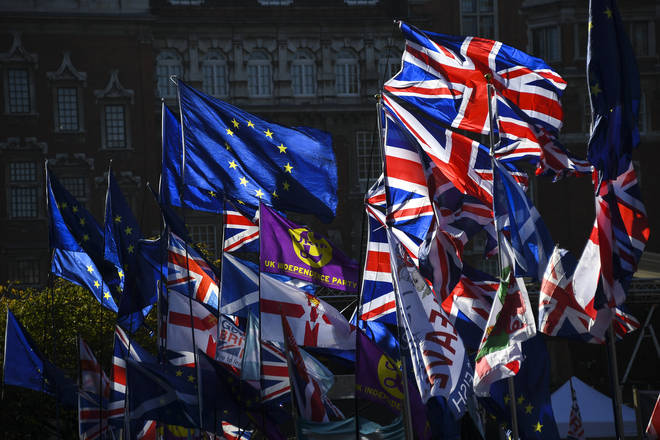
  • THE BEADY EYE SAY’S : THE EUROPEAN UNION SHOULD THANK ENGLAND FOR ITS IN OR OUT REFERENDUM.

bobdillon33blog

~ Free Thinker.

bobdillon33blog

Category Archives: Uncategorized

THE BEADY EYE ASKS: DID MAN CREATE GOD?

24 Tuesday May 2016

Posted by bobdillon33@gmail.com in Humanity., Life., The world to day., Unanswered Questions., Uncategorized

≈ Comments Off on THE BEADY EYE ASKS: DID MAN CREATE GOD?

Tags

Creation., God or no God., The Future of Mankind

The scientific attempt to explain religion has been around for over a century.

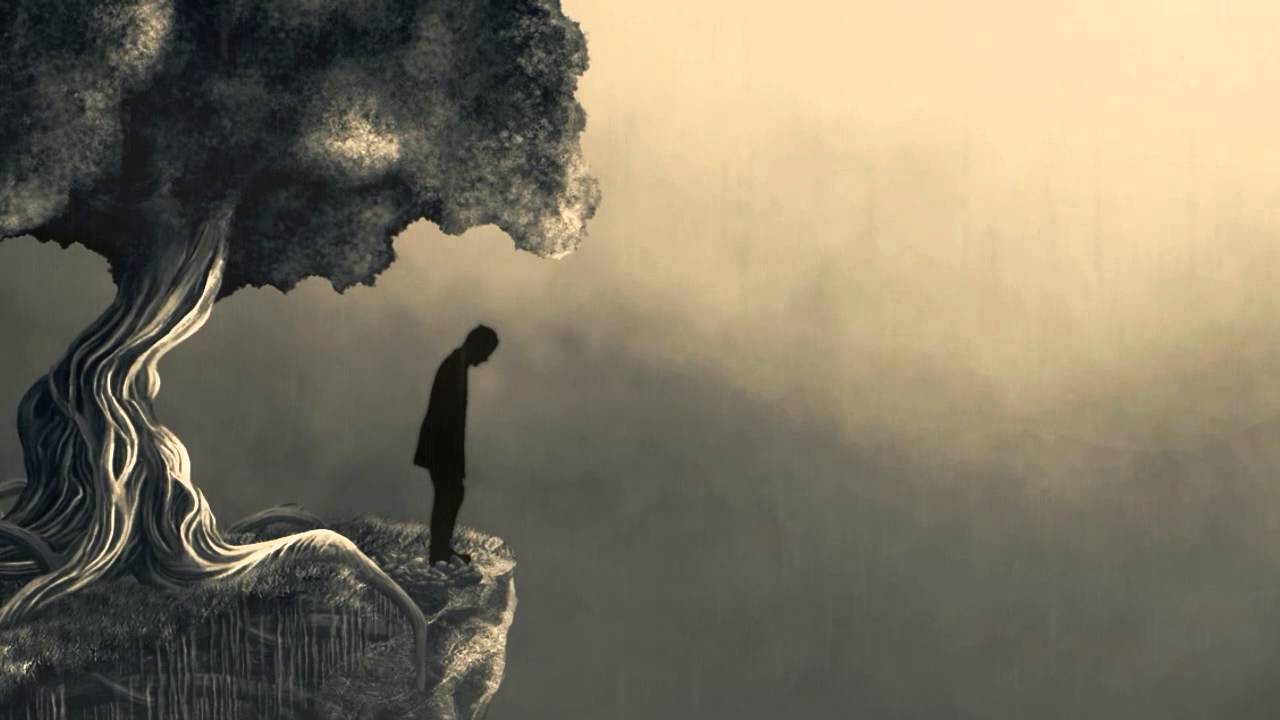
All seeing eye awesome wallpaper

They, however they are, say we are all made from the same star stuff.  Which is kind of hard to believe if you’re having your head cut off by ISIS.

I have always told my friends that I was created not born.

If you look back over history I am certainly not the first.

The principle of causation is fundamental to my claim.

So who or what created me?

If God was the beginning who began God?

I suppose that something which had no beginning has no need of a cause but on the other hand that something can begin without a cause is not only unreasonable, it is arguably inconceivable.

Consider, that if the greatest beginning of all—that of the universe—had no cause whatsoever! what would be the reason for it or us to exist.

So we left with the Big bang picture of the universe that started off very hot and cooled as it expanded is in agreement with all the observational evidence we have today.

Nevertheless it leaves a number of important questions unanswered …

Why is the universe so uniform on a large-scale?

Why does it look the same at all points of space and in all directions?

Did we create God to give it a cause or the other way around.

Scientists might never work out how life could arise by natural processes. Matter came into being without any cause; so they also have to believe that life itself popped into existence without an adequate cause.

This leave us to ponder whether the cause of the universe’s beginning must have been super-natural, i.e. non-material or spirit—a cause outside of space-matter-time. Such a cause would not be subject to the law of decay and so would not have a beginning. That is, the cause had to be eternal spirit. God created time itself.

Thus, He is not limited by anything in the universe, including the future, since God created time itself .“In the beginning, God created the heavens and the earth.” If we can believe this verse he did it in the dark as he created light after.

Today’s atheists, in a non-prophet organisation the origin of our universe is a vexing problem. The very state of the observable universe today presents serious problems for them, as it demands a Creator.

I have three questions for any atheists to answer:

“How did nature choose the specific laws which control the universe, as deduced from observation?”

“How did the universe start off with an initial state in such a high degree of homogeneity?” This is the initial condition required for the big bang to produce the currently observable universe.

“Why, after 13.8 billion years since the big bang, is not the universe in thermal equilibrium?” In fact, why is it so far from equilibrium?

They might point to Quantum Mechanics.

But Quantum mechanics never produces something out of nothing. Quantum fluctuation must presuppose that there was something to fluctuate.

The quantum vacuum is a type of something. It has properties. It has energy, it fluctuates, it can cause the expansion of the universe to accelerate, it obeys the (highly non-trivial) equations of quantum field theory.

Where, for starters, are the laws of quantum mechanics themselves supposed to have come from? So if you hang your theology on quantum cosmology for the creation of the universe, you would be sorely wrong as it is deficient and assumes time to exist, among other problems.

The electromagnetic arrow of time: information carried by light comes to us from the past and not the future. We remember the past and not the future.

Biology is defined by the presence of self-reproducing organisms. This reproduction process took millions of years to get us to where we are today so that nobody can really prove anything. We are said to have evolved from monkeys and apes … but we still have monkeys and apes. 

Modern man is a pretty new species, with modern humans being only 200,000 years old.  But religion is, at best, 6- to 10,000 years old (depends on where you get your source from)

So man lived for over 190,000 years and one day just got up and created a god.  Why?  What did man do for 190,000 years when there was no god? Where did the evolutionary change come from that made modern man such a genius?

Why would man, 6,000 years ago, decide that we need consistency in this life – that everybody needs to believe and think the same way? 

It’s not too long ago that we worshiped the Sun as a God.

STEPHEN HAWKING Says:

“Recent advances in cosmology suggest, the laws of gravity and quantum theory allow universes to appear spontaneously from nothing. Spontaneous creation is the reason there is something rather than nothing, why the universe exists, why we exist.”

This is an abandoned theory, an old idea by people who wanted to rationalize things with their primitive knowledge.

It means that something is created out of nothing, which is impossible according to the law of conservation of mass.

Here is some of the scientific stuff which to be honest is somewhat beyond my pea brain.

The principle that matter can neither be created nor be destroyed, now part of the first law of thermodynamics.

“The Three Laws of Thermodynamics.”

The principle that matter can neither be created nor be destroyed, now part of the first Law of Conservation of Energy, states that energy cannot be created or destroyed in an isolated system.

    • The first law, also known as Law of Conservation of Energy, states that energy cannot be created or destroyed in an isolated system.
    • The second law of thermodynamics states that the entropy (iinevitable and steady deterioration of a system or society, a measure of the amount of disorder in a system.) of any isolated system always increases.
    • The third law of thermodynamics states that the entropy of a system approaches a constant value as the temperature approaches absolute zero.

Outside of the concept of time, there is also no concept of something beginning or even ending; in fact, the word “eternal” has no meaning as it suggests a linear progression into infinity, which is also another concept that does not exist within our temporal framework.

Man fumbles in dark trying to explain something completely beyond their ken and then curses and rejects it because they cannot understand it, but it does not change what it is.  How is it that so many intelligent people fall into this trap?

If one says that God must have a beginning, then they trap Him within His own creation and He is clearly outside of it.

It’s not science, it’s a choice, a belief system that allows man to believe he only has to answer to himself.

All religions are creations of man designed within their time and societies.

For me God is unconditional LOVE.

I can reach for excellence but perfection is God business.

← Back

Thank you for your response. ✨


Share this:

  • Share on WhatsApp (Opens in new window) WhatsApp
  • More
  • Share on Mastodon (Opens in new window) Mastodon

THE BEADY EYE’S UNPUBLISHED BOOK. CHAPTER TWENTY ONE.

22 Sunday May 2016

Posted by bobdillon33@gmail.com in Uncategorized

≈ Comments Off on THE BEADY EYE’S UNPUBLISHED BOOK. CHAPTER TWENTY ONE.

(NOT TO BE CONTINUED)

Afficher l'image d'origine

Djibouti :

 Afficher l'image d'origine

What I Know:

 French.

 I book into the Hotel Relais.   Within the hour the power of the Dash has me driving out to the main gates of the docks to meet a customs official. Twenty minutes later armed with a seal, a sealing gun and stamped documents he hands me the keys to a forklift. “I will be back in a few hours, “he says pointing to a container, which happens to be on top of another container.Afficher l'image d'origineAfficher l'image d'origine

A heavy dollar shake handshake he leaves. In the middle of the night never having driven a forklift I was looking at prospects of lifting a container, not to mention loading it and wiring up Williwaw so she does not move during her forthcoming sea passage.

After a few ear-splitting practice run on a similar container that would have woken the dead I am backing away with ebbing confidence to deposit an enormous steel box with a resounding bang to arouse the whole of Djibouti’s French armed forces.

Not a living soul appears.

Opening the doors of the container I drive Williwaw to the entrance. She won’t fit in due to her roof rack. I deflate her tyres but she is still a fraction to high. The front of the rack where I stored my tool/spares/ jerry cans will have to be flattened. It takes a half an hour searching to locate the hacksaw. Four am the job is done, batteries unconnected, wired up, blocked, I close the doors on our faithful friend.

With dawn breaking there is no sign of my customs official I let myself out.   Walking back to town a pungent waft of cooking arouses my hunger. All a quiver I sit down to a large breakfast. Eight am I on a flight back to Addis the journey is over not quite.

On landing in Addis I am arrested. Apparently I have a single entry visa.

There is no interest as to why I have arrived from Djbouti or that I have a flight booked to the UK in a day’s time. I have no proof other than the export papers for Williwaw that I left Ethiopia. No passport stamp.

Six hours of haggling, explaining that I was due to leave in a day’s time. That I needed to pick up my belongings from Paulo address were all having no effect. Once more the might of the dollar has to come to the rescue > Flight 207 leaves on time with me on it.

At the start of this narrative I was asked why Africa. I suppose the answer is because it feels like the original Continent the Cradle of life.Afficher l'image d'origine

Would I do it again. Is the Pope a Catholic.

Donation News: To be honest I did not expect anything other than Zero. So I thank all those that took the time and interest to read the Journey as we are all on the same journey and we will all leave with zero. However I Fanny and Flo will leave with what money cannot buy an enriched life.

So lets us take some time out and consider:


The World gone wrong:


Looking back from the Moon human activities on earth do not show up.

By the Year 2030 there will be 50% more of us – 6 million a month.   Our headlong collision with Nature makes us number one enemy of the Earth.

The technology to wipe out civilization is getting cheaper while we turn back the evolutionary clock by pumping  8 billion tons of carbon into the atmosphere each year wipe out 50,000 species each year in collective denial.

Humanity will have to put aside the deep divisions it has maintained for thousands of years. Find a new spirit of human co-operation.  Stop spending trillions on arms and start spending it on the environmental crisis now facing our very existence.

There can be no trade-offs between economic development and the protection of the environment.

One-fifth of the world’s present day population live in the “rich world “consuming 86% of the world’s goods with over half the people on earth trying to live on 2$ a day and the absolute poor on a !$ making up !.! Billions.

Another word the Gross Domestic Product of the poorest 48 nations is less than the wealth of the world’s three riches people combined.

You don’t have to look far to see why we have terrorism. Poverty and Inequality spawns it.

Since Sept 11 2001 the USA has launched a war on terrorism making sure that poverty will remain on the bottom of the issue priority list.

 The bottom line.

Our Democracies seem unable to achieve any progress such as mitigating climate change, better managing ecosystems, creating a fair global trading system but we have the knowledge ,data, and technologies to do all of these things.

The question is not so much “How could we have learned so little in all these years? But “How could we have learned so much and done so little?

My advice is to stop supporting large world corporations that don’t show a corporate social responsibility, Use face book, twitter as tools to expose pressurize and praise till earth becomes a fair home for all its inhabitants human and otherwise.

HERE IS MY PLAN TO MAKE A DIFFERENCE.

A world aid tax:

All stock exchanges transactions worldwide, sovereign funds, lotteries, and the like should be brought into the United Nations and made sign a charter that would compel them to forsake a small percentage of their profits.

The funds generated by this tax would then be the cornerstone of a new World United Nations Investment Fund.

30% of the FUND TO BE FOR                                    GENUINE DISASTER AID.

These funds would change the United Nations Aid programme from being a helpless G2O begging organisation to an organisation with its own clout.

70% of the FUND TO BE FOR                                 WORLD INVESTMENT.

The Investment fund to be operated by independently appointed experts from the world business community. Each country represented in the United Nations to submit a candidate for election to its board:

All successful candidates being subject to re-election every five years:

THE FUND TO BE NAMED > THE UNITED NATIONS INVESTMENT FUND:

This fund would then to be placed on the world stock exchanges where it would benefit from the one virus that is consuming the world.

Greed:

By placing The Fund on the world stock exchange it would ensure the fund transparent. i.e. standing, on its own successes and failures.

All projects requiring funding to be submitted (other than genuine humanitarian aid) for approved by the board to establish their cost and viability.

The successful projects to be funded would then be placed in a yearly drawn on a ‘lotto’ base. This would cut out any interference from political corruption or pressure outside groups.  

The yearly Draw to be featured on an independent United Nations TV channel.

A dedicated United Nations Web site would monitor the projects > reporting on their progress and certify their completion while allowing all who are interested to follow the lucky projects progress.

I leave you with this thought –

The culture of growth for growths sake must be

brought to a halt before the gap between our distant past and the not so far

away future is unrepeatable. It is heart breaking what we are doing to our

world so open your eyes and look before it’s too late. THE Future belongs to

now.

BOB.

← Back

Thank you for your response. ✨


Share this:

  • Share on WhatsApp (Opens in new window) WhatsApp
  • More
  • Share on Mastodon (Opens in new window) Mastodon

THE BEADY EYE’S UNPUBLISHED BOOK: CHAPTER TWENTY: SECTION TEN.

21 Saturday May 2016

Posted by bobdillon33@gmail.com in Literature., Uncategorized

≈ Comments Off on THE BEADY EYE’S UNPUBLISHED BOOK: CHAPTER TWENTY: SECTION TEN.

Tags

Best Travel unpublished book., Top readable travel book, Travel book that will inspire you to travel., Travel.


(CONTINUATION)

His welcome is warm and genuine and over dinner, we caught up on all his news and learn that he is to receive a visit in the morning in the form of some Vatican priests. They wish to look over his stewardship of Vatican Aid package.   Their pending visit has him in a state of high stress. “How can you explain to these Druids the problems I have here? “ Take for instance the other week I attempted to introduce three tribal chiefs to the joys of eating shell-fish” “ You would not believe the reactions when I put a lobster on the table” > Two of them jumped out the window while the other unsheathed his knife and attacked the lobster as if it was a monster.

While Paulo rolls his fifth joint a change of bedding is secured and the girls retire for the night.

We are late rising. Paulo Papal visitors are getting an ear full as we slip out on foot to give Dirae Dawa the once over.

Established in 1902 to service the rail link from Djibouti to Addis Ababa it was once the second largest populated town of Ethiopia. If you take its name phonically we did not have to explore for long to confirm that Dirae Dawa is indeed a Dour Dump.

Apart from the old part of town with its market, it is void of any charm. It’s no wonder Paulo smokes to escape its hot sticky dust-rasping climate and the sense of desolation it etches into everyday living > A godforsaken corner of Ethiopia.

We take a horse-drawn taxi called a Gari back to the shade of Paulo small garden. We find him in good form. Overall the Papal envoy was pleased with his work even if they are completely baffled when it came to understanding the cultures he was dealing with. “Take the Afar people of the Danokil desert which you are going to cross in the next few days. “ They like lopping off the testicles of intruders they don’t like.” Say, Paul.

We arrive at a government-run Hotel. Paulo’s man turns up looking rather sheepish. I don’t understand a word but it is more than obvious that the Vatican visit is being discussed and that the cover-up operation is being put into action. I am commandeered to drive in the morning to a village named Arabi thirty-five kilometres from the Somalia border. That settled I spend the next hour talking about my coming crossing of theAfficher l'image d'origine Afficher l'image d'origine

Apart from getting my goolies cut off by one of the fiercest people in the world. The good news or as the Afar call it the Dagu is that I won’t have to worry about the bureaucracy of getting out of Ethiopia.   Paulo, as usual, is full of information such as don’t tangle with the Ugugumo   > whoever they are. Never mind the dry sand, dry gravel beds, rocky lava flows, burning salt flats, and temperatures of up to 120º F – along with the odd carcase of camels tanks or goat.

I get him to marks out the route on my map. Follow the railway line to Āysha, and on to Ali SabiŽ, from there you cut inland to Wê’a, and then you are home and dry all the way to Djibouti. A mere three hundred and sixty kilometres without any hitches you should drive it in a day. Returning to his house I can’t help but think of the hitches > Punctures, overheating, fuel, water, not to mention Murphy’s law.

While the girls rest I take a run downtown with Paulo to search out one of his helpers. The short car ride after the Papal visit with Paulo is a running commentary a crash course in Ethiopian problems. “You know that when an Ethiopian say’s he would like to play with you he does not mean he or she wants to have sex with you.” All they want is to talk.” “ The problem is that when it comes to aid the Ethiopians are staggering between a good for nothing Western present and a collapsing African past.” “ It’s all to do with the unbridgeable traditions of other cultures.”

Next morning with the wind packing enough sand to scour windshields we set off for Arabi.   In the first few kilometres, all signs of human habitation are left behind. Fanny observing that any cultures that had camped out here, had long disappeared. It soon became self-evident why Paulo had invited us. There was no way his clapped out car could have handled the territorial punishment being handed out.

We bump along with him rattling on about the IMF, the World Bank, and Anthropologists. “You know that almost every project that the World Bank is involved in here 24% of them are failures.” “Why you might ask because they know nothing about the weather and how it affects the bonds of friendship.”

“ The only Aid schemes that work are those run by the people themselves.”

“To be successful you must by-pass the local politicians, the government, tribalism you have to knit into how the people tick otherwise they have no interest in making the Aid sustainable.” “Small is beautiful and young a blessing as they are not yet tarnished by corruption or dim-witted by chat.”

We arrive midday into what I can only describe from a distance as a version of an Ethiopian or Somalia Eskimo village. The obvious difference being that this one is set in searing heat without a hint of white or for that matter any colour other than burnt brown. The igloos are built from cooking oil cans. Like giant CD they glisten in the sun with such intensity that I am sure one could see them from space. As to what Paulo is doing or wants here is anyone’s guess and we are made none the wiser as he disappears with a few shady looking characters.

Williwaw, as usual, is attracting in no time some considerable attention.   What is quite apparent is that this place has a poisonous sense. Once a refugee camp it is now a Timbuktu on the Somalia border. Small arms carried by glazed eye men too dark to be Ethiopians are everywhere. The place imparted a sense smouldering danger.

With an ill of ease nagging feeling of being watched for an opportunity rather than out of curiosity, we are left to our own devices. Keeping Williwaw insight we take a wander over to a few women selling chat. They are less than welcoming. We are not of the tribe, the clan, the extended family, or a Fat cat buying Chat for his loyal subjects.

We are relieved when we eventually depart with a silent Paulo. No matter how I pressed him on the return journey as to what exactly he was doing he gave no definite answer just a load of dribble about how he needed to use his contacts.

Next morning we return to Addis after a long arduous day of motoring.

With a fitful night of sleep under our belts, I am waving Adios to the girls and heading downtown to make my own arrangements. Their journey has come to an end as the vapour trail disintegrates in the blue sky on another day.

I am expecting a long day of regulations which no one knows and which are made up on the spot. The shipping of Williwaw from Djibouti to the UK, my flights back to Addis from Djibouti and onwards home to the UK.

After all, I have heard and read about the difficulties of exiting Ethiopian to my surprise I have Williwaw booked on a ship, my return flight to Addis and departure flight to England all done and dusted before lunch.

I have allowed myself a day’s drive back to Dira Dawa – forty-eight hours to cross what is written by the National Geographic as ‘hard to imagine a more brutal landscape than Africa’s Danakil Desert’ > A day to see Williwaw off return flight to Addis a day’s rest in Paulo house before my departure from Africa in six days time.

I spend the rest of the day trading in Williwaw tyres for a new set of Perrelli’s and giving her a pre Desert check over > Oil Change, radiator, brake/clutch fluids, battery, fan belts, shock absorbers, wheel nuts, tyre, pressure, exhaust, in other words – the works.

At the crack of dawn, I set off knowing the road the long drive back to Dira Dawa.   Wonderful until I reach the Arba Gugu foothills when the sky’s once again open making a mockery of my preparations for a crossing of a desert with an average 47ºC.   Now there is a high likelihood by the time I arrive the Danakil will have returned to the red sea where it came from 10,000 years ago.

For the next few hours, I slip-slide my way along a very muddy road, avoiding miserable looking goats, and the odd donkey mounted by an Ethiopian with white tunics glued to their backs.

It’s hard to imagine that this country suffers from rainfall failures that result in millions dying from famine.

On arrival, there is no sign of Paulo.

Luckily in the morning, it is back to blue skies. Full fuel tanks, sun, and a high sense of adventure I set out for Djibouti. The rough rocky strewn road out of Dira Dawa disappears before the last building is out of my wing mirrors. The ground still has some drying to do after yesterday’s rain.

Following the railway line, the first obstacle is not what I expected to see > A river. Its sparkling brown muddy snaking waters give me an eerie feeling up my spine. There is no obvious crossing point and no signpost pointing up or down to a crossing. The only good thing is that it does not look too deep or wide.Afficher l'image d'origine

To my right, the railway crosses are on a high bank the water passing underneath through two large concrete pipes. I drive up river and on seeing tracks commit the deadly sin of not walking the crossing before driving in. I am no more than a two-car length into the water when I take a nosedive up to the bonnet > Williwaw konks out to a resounding Fuck, Fuck, and Fuck.

Who is going to believe this?   We have driven across the Sahara, the Namib, up Skeleton Coast, over the Caprivi Strip, around the Kalahari and here I am stuck in water on the verge of the Danakil.   This is just too Irish to be true. Out I get up to my waist, wade ashore and sit on a rock.   One thing is for certain there will be no help arriving.   The last person I had passed was well over an hour ago.   Walk back to town, which would take most of the day, was also a non-runner. Considering my ETA in Djibouti if I was to make the ship, there was nothing for it but to haul her out > Easier said than done with the nearest excuse for a tree some distance from the bank.

My only option is to winch her out. The first problem is that my hijack is bolted to the front bumper that now happens to be submerged in brown water.

One hour later with much cursing and the odd ducking, I have managed to undo it. Next problem is in securing a wincing point.   With no handy tree, and no rocks in a suitable pulling position to jam the high jack behind I have to hammer in my own purchase points for the jack.

Thank god for my rear split pin towing point and more importantly that my chain reached the shore. Click by click, meter by meter, moving and securing the jack for every meter I slowly haul her out. Four hours later the bonnet is open my shorts are dry and now all I need is for the engine to start. A spry of anti-damp a turn of the ignition key, a cough or two and Eureka the lion roars. For once I want to kiss her.

Repacked I head further up the river losing sight of it for a half a kilometre. I eventually arrive at what looks like from the tracks the main crossing place.

This time I wade in up to my waist and explore the footing. All seem well.   Reaching the opposite bank for a split moment I have my second Ethiopian Everest experience.   An adrenalin shot associated with conquering Everest.   Right in front of me is more water I am on a small Island or I am looking at another river. Cresting the bank I shit myself It turns out that the shock is more severe than the crossing. This water is shallow and its existence of the long strip of land can only be put down to yesterday’s rain that has taken a new split divide.

Midday > having spent most of the morning swimming I have not yet reached the outer parameters of the Danakil nor have I bumped into any Ugugumo so I still have my balls.

It’s now one thirty and I am back on track following the railway line.   The next landmark according to Paulo is an outcrop of rocks on a raised foothill that has a sign on it saying if you have a drop of water to spare pour it on the plant.   From here on it is down into the saltpan and then flat-out for Djibouti. To my surprise, an outcrop appears and there is a sign appealing for a drop of h2o.

The view is stunning sweeping away as far as the eye can see, clothed in hues of silver mixed with shades of browns, reds and yellows a vast silent empty landscape dances in the heat.

Djibouti lies Lat 11º: 35´N. Long 43º: 08´E. It is at this point I leave the rail line and become a microdot follow my compass. With windows wide open I disappear into the vastness.

The going is a lot slower than I had expected as my morning dip has put me way behind schedule. Thirty-odd kilometres it looks like I am not going to arrive in Djibouti before midnight.   Slowly the piste gets flatter and my speed picks up. With the driving requiring 100% concentration, I am pretty exhausted and hungry but there is no time to stop.

With a deafening explosion two Mirage Fighters out of the setting sun pass overhead turning into a blip on a radar screen. I am no longer a microdot the prospects of a reception committee are now more than likely. My late arrival combined with the added likely hood of having to deal with unwanted braid make it touch and go that Williwaw will be on the ship for her departure in the morning.

With the ground turning to hard flat salt Williwaw afterburners are full on > An UFO being tracked by heat-seeking missiles on collision with Djibouti. The last sixty kilometres penetrated by my spots lights go whizzing by I arriving miraculously undetected.

(TO BE CONTINUED)

Donation News: Hopefully by the time I arrive in Djibouti some generous reader will have donated a few bob to the next trip.

Robert Dillon. Account no 62259189. Ulster Bank 33 College Green Dublin 2

Sorting Code 98-50-10.

Share this:

  • Share on WhatsApp (Opens in new window) WhatsApp
  • More
  • Share on Mastodon (Opens in new window) Mastodon

THE BEADY EYE ASKS: WHY WE SHOULD STILL BELIEVE IN CAPITALISM.

19 Thursday May 2016

Posted by bobdillon33@gmail.com in Uncategorized

≈ Comments Off on THE BEADY EYE ASKS: WHY WE SHOULD STILL BELIEVE IN CAPITALISM.

We live in a world of brutal Capitalism, where money largely runs our lives in political systems of capitalism exploitation whether it be Chinese Communism, American Democracy, Singapore Tolerationism , Brazilian Corruption, Venezuelan Socialism Russian Pictorialism, North Korean Isolationism, money rules the roost.

Today our culture celebrates money and wealth as the benchmarks of success.

“The dominant class at the world level . . . has become the enemy of all humanity.”    Afficher l'image d'origine

Capitalist society is indelibly marked by structural violence, as the vast inequalities in wealth and access to which it gives rise lead small minorities to be overwhelmingly privileged, while large groups of others are prevented from meeting their basic needs.

In a recent post I stated that if we define the future as a time that looks different from the present, then most people aren’t expecting any future at all.

Why?

Because radical change cannot be advanced within the capitalist framework we have at the moment.

Poverty is deepening and the gap between rich and poor is growing.

About one in four Americans already lives in real poverty.

Capitalism’s periodic crises always increase poverty.

Even a cursory examination of the depth of human suffering perpetuated historically and contemporarily by the hegemony of capital should lead disinterested observers to agree that the catastrophic scale of violence for which this system is responsible can be considered nothing less than genocidal, however shocking such a conclusion might prove to be.

What is today is beyond comprehension is the puzzling consent granted to this system by large swathes of the world’s relatively privileged people – specifically, those residing in the imperial core of Europe and the United States in light of the ever-worsening climatic and environmental crises.

A serious commitment to end poverty and its costly social effects requires us to face that capitalism has always reproduced widespread poverty as the other side of profits for a relative few.

Here are a few horrendous supporting facts:

Obesity taking the place of hunger as a problem in modern capitalistic countries.

216,000 farmers committed suicide between 1997 and 2009, largely out of desperation over crushing debts they accumulated following the introduction of genetically-modified seed crops, as demanded by the transnational Agreement on Trade-Related Intellectual Property Rights (TRIPS, 1994)

Merely consider the millions who succumb to AIDS on the African continent each year or the other millions who perish in the region annually due to lack of medical treatment for complications within pregnancy or conditions such as diarrhea and malaria, themselves catalyzed by pre-existing background malnutrition.

The capitalist pharmaceutical industry, which famously and “logically” invests an overwhelming percentage of its research and development funds in highly profitable schemes for lifestyle drugs directed at first-world consumers.

Societies subjected to the rule of capital since its historical emergence – and that particularly felt by the world’s presently impoverished social majorities – is, instead of being an aberration or distortion of market imperatives, central and inherent to the division of society along class lines and the enthronement of private property.

The ever-increasing annual death toll for which capital-induced climate destabilization is responsible will merely cause the overall number of 10 million annual preventable deaths to burgeon, leading ultimately perhaps to the deaths of “millions – or even billions,” in what may well develop into the extermination of humanity altogether.

Do we care? Not really.

Most people’s worldviews currently reflect the values of capital,” at least within more affluent northern societies, and that capitalism proceeds with its genocidal proclivities while enjoying “the apparent consent of a significant portion of the world’s population.”

We are well on the road whether through impending nuclear war, environmental collapse or a combination of these two to extermination.

We all missing the point.

Our economic problems go far beyond rich bankers, too big to fail financial institutions, hedge funds billionaires, off shore tax avoidance or any other particular outrage.

Market capitalism is broken. For the past decades, finance has turned away from its traditional role. Only a fraction of the money makes it into mainstream Business.

THE MAJORITY OF LENDING IS AGAINST EXISTING ASSETS. MAKING THE RICHER RICHER.

THERE IS NO SUCH THINK AS FREE MARKETS. THEY ARE STATE DRIVEN- DIRECT MARKETS.

We are in desperate need of a new and more inclusive style of Capitalism to enable long-term decisions.

As the Pope recently said; And I quote, ” idolatry of money and the dictatorship of an impersonal economy” in which ” man is reduced to one of his needs alone: consumption. ”

By engaging in mindless consumerism, thus perpetuating the vicious cycle.

The unintended consequences of consumption at all costs belief is now coming home to roost and manifesting itself in myriad ways.

For example;

Billions are now left insecure in their old age because tax code favours debt over equity.

Global debt levels hit $57 trillion distorting local economies.

Debt has become indispensable to maintaining any growth where 70% of output is consumer spending.

We seen Government pumping trillions in monetary stimulus into their economies in the form of Quantitative easing which enrich mainly the wealthiest 10% of their populations that own 80% OF ALL STOCK.

Big tech companies are underwriting corporate bonds.

This year US presidential Election has nothing to do with democracy. It is funded by hedge- fund barons.

Globalisation and technology advances are leading to job destruction.

Apple one of the most successful companies over the last fifty years has around $200 billion sitting in the bank yet it borrows billions because it cheaper to borrow than use their own cash and pay taxes. 

The system itself cannot be overthrown or dismantled we must use the existing structure of Capitalism against itself. 

There is no longer any prospect for the outright, peaceful replacement of capitalism even if it is showing signs of changing for the better. 

If prosperity is created by solving human problems, a key question for society is what kind of economic system will solve the most problems for the most people most quickly.  

There is also a growing awareness among businesses large and small that screwing over people and the environment is bad business in the long run.

As capitalism struggles with questions of social responsibility, corporations increasingly realize that they do not and cannot exist in isolation pursuing self interest.

We must take what is good in all systems and create a new Eco-socialism.

Instead of looking at GDP as an important metric, run a country as if it had a corporate balance sheet. This should include things like the value of everyone’s leisure time, the value of natural resources not yet used, and the overall health of the people

It is the world’s poor who so far have suffered the most from capitalism’s degradation of the climate, despite having contributed next to nothing to the perpetuation of this world-historical problem:

Inequality is something that isn’t addressed by capitalism.

So the question is:

In which system can we be more happy?

It is collective thinking and arrangements versus individualism.

I say neither. Capitalism is a dog-eat-dog system. What we have is crony capitalism,

The conventional economic theories we have relied upon for the past century have misled us about the workings of capitalism. Only by replacing our old theories with better and more modern ones will we build the deeper understanding necessary to improve our capitalist system.

We have the ability to turn away from products that we don’t like and go to businesses we support.

The possibility of the overthrow of capitalistic governments by armed force cannot be excluded. Yet, it is no longer inevitable, or even likely, that in the event of armed conflict all communist countries would be united against capitalistic countries. The likelihood of global nuclear devastation if war does break out, however, removes this eventuality from the realm of economic or political analysis.

It is not capitalism’s inability to produce national income that is responsible for these remnants of poverty.

It is rather sectoral, organizational, and distributional difficulties, which have not yet been overcome. Whether through impending nuclear war, environmental collapse or a combination of these two only time will tell.

(See previous post on one Solution to solve Inequality. A world Aid Commission)

All comments welcome. Like button clicks not welcome.

← Back

Thank you for your response. ✨


Share this:

  • Share on WhatsApp (Opens in new window) WhatsApp
  • More
  • Share on Mastodon (Opens in new window) Mastodon

THE BEADY EYE’S UNPUBLISHED BOOK: CHAPTER TWENTY: SECTION EIGHT.

16 Monday May 2016

Posted by bobdillon33@gmail.com in Literature., Uncategorized

≈ Comments Off on THE BEADY EYE’S UNPUBLISHED BOOK: CHAPTER TWENTY: SECTION EIGHT.

Tags

Best Travel unpublished book., Top readable travel book, Travel book that will inspire you to travel., Travel.


(CONTINUATION)

We retire to the hotel for a long overdue beer with our heads swimming from images of church paintings, beatified saints, living grey bearded white turban druids either squatting or floating in and out of hidden cold chiselled cracks of light with small crosses, staff, muttering words from consecrated books. After dinner the girls call it a day I venturing out for an evening stroll take in the second half of a football match played on a rock hard pitch. I get invited to the local pub up in the village by Ato wearing green.

Yes you’re right: It turns out to be a stone roundhouse up a very stone steep pathway. Opening the door the stone floor is covered in a fine fresh scenting grass. There is no light and no sign of any other drinking regulars. My new-found friend Ato (Mr) Giday orders two specimen bottles of Tej (That’s the mead stuff made from honey) In his early forties he speaks faultless English. With a sweep of his hand he introduces me to a raised ledge where to my surprise are seated six or seven others. Introductions over a few ishee( Ok) later the unfathomable cultural divide is once again a barrier to any mean full communication. Mr Giday comes to my rescue.

The questions start flying. Where am I from? Ireland. Never heard of it. The grass is swept aside > A map. Ishee Ishee. What to I think of Ethiopia? Where have I been? What religion? Do I like the food?

They find it inconceivable that we have driven from South Africa. By specimen bottle two my round the conversation has turned to politics, the price of things in Addis, woman > Home from home. Bottle three Mr Giday promises to take us around the churches again in the morning. The toilet turns out to be Shita Biete and I am sailing three sheets to the wind.

An old codger is pocking me in the side with his walking stick. He seems to be offering his stick to me, but I am not sure. Five pucks later Mr Giday informs me that the stick is a present to whack the dogs on the way back to the hotel. I don’t quite remember leaving or where Mr Giday said his good nights but man was I thankful for the walking stick. In pitch dark I staggered back to the hotel creating enough noise to arouse very pair of four-legged ivories in hearing distance.

Surprisingly I awake relatively unscathed. Mr Giday is awaiting us in the dinning room. He breakfasts with us out lying the day ahead. Florence is not impressed with another round of the churches she being bribed with motherly know how.

A long day of detail explanations delivered with grace and genuine pleasure brings Lalibela into true perspective than any text could have done. Mr Giday back in the hotel refused to take any monitory payment for his services. However I insist that he should. He is setting up a private guide company to meet the demands of the expected tourists when the airport opens.

Before taking his leave he inform us that if we wish in the morning at 6am we could visit and witness a druid ceremony in Biete Golgolta an experience we should not miss.

We are all somewhat tired so the thought of getting up a 5.30am to see some whaling druids does not appeal to me. Fanny enthusiasms however surprise us so Mr Giday promises to collect her in the morning. The Hotel also has a group of Amhara woman performing a traditional dance, which according to Mr Giday we should not miss.Afficher l'image d'origine

Later than Fanny would have liked we sit watching one of the most unusual dance form in Africa. A group of five women stand riveted to the floor with the stillness of startled deer’s.   With fixed smiles their shoulders start to shudder in imitation of some sort of exotic mating dance undertaking by our feather friends. Not another muscle moves other than their shoulders, their breasts and necks. The breasts quiver like set jelly while their necks and heads mimic the elastic of any old golf ball unravelling to the rhythm of a rather loud band.

The contrast from rock-hewn churches built by angels too an erotic totally strange dance form makes for an uneasy night sleep.

We awake to find Fanny in a spiritual trance. Her experience has crossed her into another world. The modern world has being left behind. She describes a sensation of being in seventh heaven > A pure and magical event that we lazy good for nothings had missed.   In the cold of the new day she had gone with Mr Giday and stood for an hour transfixed by large drums, tambourines, low chanting priests, frankincense, myrrh all swirling and rumbling around stone walls and pillars. She unlike us had lived the calling of Lalibela. Before leaving we visit the market where low and behold she spots Jesus himself sitting under a brolly.

Fanny still in a haze of beatification we slowly make our way out of Lalibela.

We see our welcoming beggar making his way down from his rocky house to the roads edge. He has heard the noise of Williwaw and knows with our new-found Lalibela haloes he will be showered with gifts. Afficher l'image d'origineAfficher l'image d'origine

Our route back to Addis passed through Dese the capital of the Wolo province. A sprawling forever town it nearly connects to the next town. We cross the Awash River and start to climb up to Debre Birhan where it’s down hill all the way to Addis. Our six weeks circuit in one of the most beautiful countries of Africa comes to and end outside Paul’ House. He has gone to Dire Dawa leaving a message to join him we are thankful for small mercies.

Next morning I call on the bank to collect my US dollar transfer. After a long wait I am informed that it has not arrived. Fax my Irish bank. They confirm the transfer has being sent > Back to the bank. No we don’t have it > Fax. Reply received with tracer number, and acknowledgement of receipt by recipient bank. Back to bank armed with fax. Line up again in queue. One hour later. “No it’s not arrived.” Blow a fuse. Customer behind me, “You think that’s bad I am the ambassador for Sweden, we are waiting on a few million for the last two months.”

Demand to see the manager > another search > Yes it’s arrived > Problem.

They are without the authorisation of the minister of Finance not able to pay me out in US$.   They must pay me the equivalent in Birr. Then I must change the Birr back into dollars. Commission, exchange rates massive loss.

Get into a taxi. Arrive at the Minister of Finance offices > Up to floor four > Open door. Walk in on the Minister. “Have you ever being to Ireland?” Yes.

“Well then you might be aware of what happens when a Paddy looses his temper.”

Explain the problem. Return to bank with letter of Authorisation. Queue. One hour later. Bank won’t accept letter. Ring Minister. State car arrives. Manager red-faced. Queue another hour and half. Teller counts out the dollar bills once, then again and once more for good measure. I recheck count in front of teller.

Hand her a hundred-dollar bill. Change to Birr please (Ethiopian currency). She holds the note up to the light and declares the hundred dollars bill a forgery. I throw a wobbler and all the bills over the counter. Manger Confusion > A recount with each bill scanned by fluorescent light. Having arrived at 8 am I walk out of bank 6.30pm parched.

Very conscious of the wad tucked into front of my jeans I stop at bar. On leaving the bar I start walking towards Williwaw.   Coming straight at me and sticking out like a sore thumb is a dude I had seen lurking in the bank. Out of the corned of my eye his accomplice is standing in a narrow lane way. At three paces with fist closed I run on to him.   Smack > my knuckles sting. Floored his buddy does a runner. I arrive back to the house with four teeth imprints, a headache, and mammoth dislike of banks.

All the next days’ attempts to secure a passage across Eritrea fail. The alternative of circumnavigating Eritrea by way of Sudan is not on the cards so for all inattentive daydreaming purposes our adventure is all but at an end.

The logistics of arranging homeward passage commence. Fanny and Flo will fly back to the UK in week’s time. After the week I will drive the Jeep to Djibouti ship her home as all attempts to sell her have failed, returning to Addis and fly home. Not difficult.

We decide to spend the last few days with a visit to Awash national park and the Filwoha Hot springs along with a stop over in the walled city of Harer one of Ethiopia’s most interesting cities.   We will then go on up and visit our mad Sicilian friend Paoulo in Dire Dawa my set off point to cross the Denakil desert to Djibouti.

Awash park lies in dry acacia savannah land around 200km east of Addis Ababa on the road to Nazert. The road out of Addis has become almost familiar to us, as it is the main exit to eastern Ethiopia.   We have already driven it a few times but the landscape still takes our breath away. Dark lava flows stain the sides of the surrounding small volcanic hills while the northern Rift Valley walls shimmer in the heat as do numerous small lakes of the Aris and Bale highlands before the whole lot is swallow up by the Arba Gugu Mountains.

We follow the French built railway line that connects Addis to Djibouti Ethiopian’s only rail line. God only knows how people travel on this sweat box of a train. It staggers and shutters alongside us from one village to the next at walking pace. Yerer an extinct volcano on our left is envious of the smoke pumping from it engine funnel. We stop in Debre Zeyit a railway level crossing town surrounded by lakes with one lake almost in its center. A herd of long horn cattle with a swarm of goats with a liberal helping of dogs are blockading the rail line so we stop for a drink.

As always it’s not long before Williwaw attracts some faranji hysteria so we decide to give a walk around the lakes a miss.

A half hour later we have passed through Nazret (the Ethiopian for Nazareth) where one exams every donkey/horse-drawn cart for a woman and man called Mr and Mrs Jesus.

Another half an hour we arrive in Awash a mangy forgettable small town that clings to a railway station where long-tongued thirsty train passengers quench their thirst. Our journey leaves the road and enters the Kudu valley in search of the Filwoha Hot Springs. An hour later we bump our way across a small river towards a small bunch of Palm trees that surround ice blue water pool.

There is neither a soul to be seen nor any hint to confirm that this is the Filwoha Hot springs but in the searing heat of the day the water looks refreshing and inviting. Afficher l'image d'origine

Without any ado I strip off and plunge in. I can only describe it as the same experience a lobster must get when it is chucked into a pot of boiling water.

My momentum brings me across the pool where I emerge gasping and glowing red with two testicles that pain like hell. Florence the daughter is in stitches, but suddenly goes quite at the sight of two emerging Ethiopians pointing at my man hood. They are also in fits of gleeful laughter at sight a glowing Irish fool who had being looking all day at volcanoes, lava, and who had now dived headlong without dipping his toe in to test the temperature.

There shrieks of hysterics of course attracted the ever-invisible humanoids within hearing distance.  The next commotion comes from Williwaw where my beloved is treating a bloke with bigger knife who has attempted to snatch her handbag. Waving one of our machete she is shouting “You bastard mine is bigger that your.” With my pills stinging we make a hasty retreat all the way back till we arrive on the main drag late in the afternoon.

The entrance to Awash Park is marked by a battered sign and a small hut with an unmanned barrier. It’s difficult to believe that behind the barrier lay a 870 km park supporting 50 large animal species and over 400 bird species.

Our park campsite is up a nine-kilometer long track from the barrier. We see nothing on the way up arriving eventually as what is described in the Bible as a large waterfall carved out by the Awash River.  Afficher l'image d'origine

The Awash River lamely dribbles over a small waterfall as we prepare Pitch No 118 under huge figs and acacia threes our last and final Pitch of our African journey.

Our chosen site although beautiful soon shows itself to be unbearable with visiting insects and those nuance of all nuances our friend and enemy Blue balls him self the Vervet monkey. There is no choice but to move. Pitch No 119 is back up to a rocky outcrop on raised ground giving us a view out over the river and some cool evening breezes.

While Fanny starts preparing the evening meal I get on with now a very tried and tested routine of setting up our roof top tent, beds, nets, and all the other things necessary to make our camp site comfortable. We have not seen a soul since entering the park.

However while walking around Williwaw I get the feeling that I am being watched. During our whole time in Ethiopia we had not associate it with real African Wild life.   Now here I was face to face with a young lioness that is more than peeved to see me.   In a crouched tense posture sent the hairs on my neck tingling.   With my legs wanting to scamper my mind is telling me not to make any sudden movements. Pointing at the rock I slid back around Williwaw and tell the girls to get on the roof. There is no protest as we all clamber up the ladder.

It takes some time and a large campfire for the girls to relax. Dinner is eaten with a douse of reinsurance that we are perfectly safe. The next visitor is just as much a surprise. A game warden asking for our park entrance fee and insisting that we could not camp where we are.

After two camp pitching’s with highly sensitive balls combined with nearly becoming lion fodder, we or I should say I, am in no mood to move in the dark.   Our refusal turns our park ranger into an aggressive threatening animal, but he eventually leaves us in peace after being told in no certain terms to piss off

The girls hit the sack on the understanding that I stand watch until I hear them snoring. With the sound of the waterfall I sit with my back to Williwaw sipping a beer and sweeping the rocks now and then with our powerful torch.

Out of the darkness to my left a set of green eyes followed by two more sets announces the return of our lioness with two of her girl friends. All three sauntering pass me without showing the slightness interest in my presence.

Their eyes and silent gait nonetheless sends quivers of nerves up my spine until they disappear in the direction of the river. I retire up the ladder with backwards glances over my shoulder. Sleep comes fitful with tingling pills and gaping jaws.

Next morning early we break camp not to avoid a re visit from our lions but to avoid our less than pleasant game ranger.   Arriving back at the park gate entrance we find the barriers down and locked. The rusty chain gives Williwaw bull bars little trouble. We turning right and it‘s not long before we are climbing up the Arba Gugu foothills to our turn off to Harer.

(To be Continued)

Donation News. Still pathetic.

Robert Dillon: Account no 62259189. Ulster Bank 33 College Green Dublin 2.

Sorting Code: 98-50-10.


Share this:

  • Share on WhatsApp (Opens in new window) WhatsApp
  • More
  • Share on Mastodon (Opens in new window) Mastodon

THE BEADY EYE’S UNPUBLISHED BOOK. CHAPTER TWENTY. SECTION ONE.

07 Saturday May 2016

Posted by bobdillon33@gmail.com in Literature., Uncategorized

≈ Comments Off on THE BEADY EYE’S UNPUBLISHED BOOK. CHAPTER TWENTY. SECTION ONE.

Tags

Best Travel unpublished book., Top readable travel book, Travel book that will inspire you to travel., Travel.


(Continuation)Afficher l'image d'origine

Arriving in Mexico Square my surrounds confirm that I am indeed in Addis Abba and not Mexico City. On the opposite side of the square, a little distance up a wide street with a name (Ras Abebe Aregay) that declares Ras Abebe is Gay is the Bank. A large modern building that proclaims a monitory wealth away beyond the country it stands in. A line of beggars leading to its entrance reinforces the image.

Depending on your point of view banks no matter where you come across them in the world are either a God Send or legalised gangsters. This one is to prove to be the Godfather of Godfathers. The safest way to take money travelling is traveller cheques but when one is on a voyage like this you need hard cash. The complications of having money sent are a hassle in most African countries. Ethiopian proves to be the worst. I enquire as to the possibilities of arranging a transfer to be collected in a few weeks or so. The difficulty is in getting the transfer paid out in the currency that it arrives in such as US dollars. I am assured that there will be no trouble and given all the bank’s details to forward to my bankers.

Next, I visit the post office to fax and post confirmation of my instructions for the transfer. This whole operation takes the best part of an hour and a half of great confusion.   Packed to the doors the Post office is not for the gullible. A magnet for causal pickpockets, rip-off artists, helpful first-rate no gooders I am glad that my loot is buttoned down in the breast pocket of my shirt. (TOP TIP: In high-risk pickpocket areas such as crowded bus stations, government establishments, minibus ranks and the like a good tactic is to stuff some think worthless in your trousers back pocket that look like a wallet from the outside. I have nothing against money belts except they are a dead give away if required to open in any public palace. Also standing looking like you are lost is to be avoided. Always look like and act like you know where you are going even if you don’t have a clue.) On leaving the Post office to shake off any hopeful I walk into the nearest bar for a beer.

Returning to my hotel I pass by the football stadium > Can’t resist having a look. Five Birr later I am sitting in the stands. The round ball has a way of crossing cultural barriers and I am soon supporting the greens. Perhaps an indication that the one gift the Empire gave to the world football brings both the best and the worst out in one’s persona. The greens are trashed, as were the Italians in their attempts to colonise Ethiopia at the battle of Adwa in northern Ethiopia in 1896. Apparently, the Italians with crap maps of the area attempted a night march for which they paid dearly being wiped out by an army of 100,000 after which the Italians recognized Ethiopia as an independent nation. In return for the Ethiopians recognizes Eritrea as an Italian Colony sowing the seed for the day’s present problems.

Landing back in Jinka the sun had not mover much since take off. But it is definitely not shining out of Fannie’s orifice. She has been bitten by a scorpion. Painful but not life threating. I can picture the drama. She was rushed off to the small clique refusing any needle unless she saw it being unwrapped in front of her. She received an injection of Emetine. (TOP TIP: There is no need to state the importance of bringing your own needles and to know how to use one.) Maybe the scorpion is the last defence for the people’s of the Omo region.Afficher l'image d'origine

Throughout our journey, we have become aware that millions live in villages to which no roads lead living on cassava yams and bananas. Theirs is a life of subsistence. The further one ventures of the beaten tracks unseen by most tourists as they stick to the main roads the poorer Africa becomes. It is evident and indeed sad that the scorpion will not be able to preserve this part of Africa. The AK47s, the runway, rings the bell of extinction of a way of life, uniqueness, an honour, customs and traditions that give a purpose to life.

Fannie’s red welt puts pay to visiting the lower Omo delta region. Trying my hand at cow hurling with the Hamars or competing in a spot of donga stick jostling with the Surma or a session of face painting with a new clay hair bun style compliments of the Karo will have to wait.

As it turned out the company that we were going to do the river delta with is having its own problems due to some diabetic twit that had to be airlifted out. Rumour has it that he had not made known his problem and he was caught short of insulin when the company missing one of its landing spots resulting in the trip being longer than usual. The company was being threatened with withdrawal of its tour licence. Also, it is impossible to get my hands on any decent maps of the area in Jinka. The thoughts of another rolling coaster few days lost on very rough roads against the attractions of Addis had no chance.

First, we have to escape Jinka, which is easier said than done with a spring that refused to be replaced even on the extremities of the high jack. Some creative thinking and extra muscle are required. Eventually, the Peace Corps on seeing my frantic hand language recognizes one of my hand displays as an attempt to demonstrate the ground to air signals for help. They offer their compound. It has a strong-beamed roof. (Top TIP: There is four basic ground to air hand signals. Require Assistance, Require Medical Assistance, NO or Negative, Yes or affirmative are a good thing to learn.)  

The idea is to jack Williwaw up.   Attach my towing band around the beam and with a few strong hands heave her up the last fraction to allow the spring slip into its housing. The downside is the possibility of losing a figure or two. Success depends on no slipping the spring in position before she hit the ground. Bang she hits the ground re-sprung with all fingers intact.Afficher l'image d'origineAfficher l'image d'origine

After seeing the terrain from the air I am surprised to find that our descent down to Arba Minch is far less daunting than I had expected. Arba Minch is on the first of a string Rift Valley Lake’s that run all the way to Addis. With the road conditions vastly improved we pass mule riders shrouded in wraparound veils herding goats up to their morning pastures. All the men we pass carry a stick across their neck over which their two arms are draped. This posture of walking is to be one of our lasting memories of Ethiopia.   Arriving well before the setting sun Lake Chamo is dressed in its early evening silver gown. Looking down on the lake we are reminded that we are still deeply in the heart of the foothills.Afficher l'image d'origineAfficher l'image d'origine

Arriving in the small town which is the capital of the Gamo-Gofa Providence it is not much to write home about but its setting is breathtaking. Position high in the fortifications of the Rift Valley walls it commands wonderful views of not just the lake but also the surrounding mountains.   In sympathy to Fanny’s throbbing finger, we stay the night at the Bekele Mola Hotel perched on the cliff overlooking the lake. In the morning we learn that Arba Minch is, in fact, two towns > Separated by four kilometres. Of course, there are no road signs so we had no way of knowing. Anyway, it turns out we had spent the night in Shecha which could have being Sikela if we had gone the extra mile.

Today progress is smooth and fast.   We skirt around Lake Abaya and then on to Lake Shala, Lake Abiyata, Lake Awash, Lake Langano, passing through Shashemene to Lake Ziway and Lake Mujo all of which must have been discovered by someone obviously not white as we have not heard of them before.

After Shashemene our surroundings changed from highlands to undulating hills with an ever-arable patch of land under some crop or other. We are now in the quilt country I had seen from the air. Arriving at Nazret Addis Ababa at 2400m is in our sights. An excellent road brings us into the city proper within the hour. We contact our Sicilian Paul from the Lido Hotel. Inviting us over to stay he seems rather surprised that we have made it.

Paul who is living not far from the centre of the city takes some finding. Eventually, with a large helping of perseverance, we arrive down a severely unnamed potted road. Heavy shrubbery and a large door hide his house from view. His welcome is just as exuberant as when we first crossed paths back in Dar es Salaam. We stayed two days during which an extensive tour of Ethiopia is plotted with an invitation to join him at Dire Dawa in two weeks time.

Having arrived from the south-western direction the plan is for us to do the north-east wherein the 1985 famine over a million died and then down the north-west leaving the south-eastern section untouched. According to our maestro, Paul the places to start is right here Addis the Marcato, Addis largest market and commercial hub. “This is where I buy my chat,” says Paul. What’s that? “The Jesuits had their opium in Macao.” “Ad Majorem Dei Glorima.” (Latin motto: To the greater glory of God.) “Ethiopia has Chat to the greater glory of hunger.”

“It’s not a European bird but a green leaf that takes the longing away.” The rest of the circular itinerary sound likes a journey of biblical magnitude in the midst of biblical names. Debre-Mark’ok, Bahir Dir, Lake Tana, Blue Nile, Gonder, Simien Mountains, Axsum, Queen of Sheba, The Ark of the Covenant, Adwa, Adigrat, Eritrea Border, Rock- hewn churches, Mek’elé, Lalibela, Desé, Awash National Park, Hārer.

Over lunch, the map is ignored we getting a compressed history lesson “

You know that Ethiopia was settled by Ethiopic the great-grandson of Noah. It was his son that establishes Axum and a dynasty of rulers that lasted nearly a hundred years.” “Queen Sheba was the last of these rulers.” “While she was on a visit to Jerusalem she got bonked by Solomon and converted to Judaism. “ Producing a man-child called Ibn-al-Malik (Son of the King)” “Ibn-al Malik is where Manelik comes from.”

The story has it that this teenager went looking for his dad Solomon who was over the moon when they met up back in Jerusalem offering him the keys to his roller. For his return journey, Solomon thought Ibn needed some company so he ordered that the tribes of Israel send a crowd to accompany him.”

“The whole mob one of which happened to be Azariah the son of the high priest of the temple of Jerusalem nicked the Ark of the Covenant for the journey back.” Solomon, as you can imagine, was pissed off when he found that the Ark was no longer in his safe.” “He gave chase, till all of them had a dream that it was all God doing.” So the ark ended up locked up in the Church of St. Mary Zion in Axum to this day.” “That why you should visit Axum.”Afficher l'image d'origine

“Sheba, self-effacing was so highly impressed she gave up her short brakes with five hundred camels to Jerusalem.” “The Solomonic Dynasty ended in 1974 when Haile Selasie the 237th emperor died.”   “If you don’t, believe me, it’s all in the famous Ge’ez bible called Kebre Negest.”   “However these days you can believe all that you read”. This remark brings the history lesson to a sudden end accompanied with a dismissal to the Marcato.

Driving in Addis Abba as with any major African city requires the following nine skills.

The ability to spot the lurking Rayban clad cop astride his latest aid donated BMW bike that can’t resist the chance to make a few bob on the quiet.

Roundabouts meant only for the bravest of the brave.

The crossing techniques of totally ignored traffic lights.

The avoidance of car proof Pedestrians.

The courage to park whenever, wherever.

The unadulterated use of the horn.

The realisation that indicators are just that.

The ability to breathe in pure fumes, and to avoid smoke windowed Mercedes with fluttering pendants that have total immunity when it comes to killing.

Last but not least, local knowledge of potholes and open drains that need flyovers. Not forgetting the dogs, goats, chickens, horses, donkeys and the odd babe dressed to the nines.

It’s a funny thing about Land Rovers especially ones dressed overall for off-road duties. They receive unwanted attention at frontiers; attract kids like honey, and cops, and army personnel like homing beacons. They receive flashing of headlights from other land rovers to say you’re one of us. They look the part no matter how matter how much Co² they add to the ozone hole. They are one of the few machines that have a magazine all of its own.

We arrive in one piece.   Leaving Williwaw unattended is a no, no. (Top TIP: If you are going to spend a few hours wandering in a large market one of the tricks is to park your vehicle in a highly visible spot. Buy something from the nearest stall and offer to pay extra if they will keep an eye on your vehicle. )    

Equal to Kumasi’s central market in Ghana this is one of the biggest markets in Africa.   It alone could fill the fourteen pages that our bible allocates to the whole country of Ethiopia.   A vast area filled with small shops, kiosks and stalls. It challenges one with strong pungent smells of urine, excreta, mix with rotten eatables, incense, spices, coffee, cooking, cheap perfume, body aromas, strange-sounding language, colour, light and darkness on every turn and in every alleyway. It is the pulse of Addis a con man warren, a pickpocket’s labyrinth, a tourist Aladdin cave, a bag – snatching paradise, a portrait photographer’s dream.

We spend hours wandering in and out of curios shops each one with the Ark of the Covenant for sale, custom-made gold, silver, jade, jewellery, crosses, staff, chalices, wonderful ornate umbrellas, jars, goblets, swords, daggers, rings, necklaces, artefacts from the treasure-house of the Queen, Kings, Emperors too many to name. All of this is just in the outer skin of the market.

On deeper penetration traders of cloth, leather, basket makers, weavers, ironsmiths, potters, carpenters, mingle with butchers, bakers, tailors, and craftsmen whose skills have been handed down from generation to generation work.

Everything operates in a swirling cauldron environment of motion, sound, colour, and chat-chewing, cud spit struggle to make a birr or two.

(Top TIP: The Marcato. Don’t miss it. Don’t be tempted by any of the guides. They are an unwanted nuisance and soon get bored if you don’t purchase anything. With common sense you will enjoy it all on your tod.)

We avoid the temptation to sink our teeth into one of the hundreds of Injera floating on the heads of the seller in large colourful baskets we finish our visit with a Buna espresso-style Ethiopia’s rich sweet addictive coffee.

Running Addis rush hour gauntlet we arrive back in time to meet Paul’s cook, gardener, and night watchman. He shows no interest whatever in whether we went or not to the Marcato. “In the morning we are going to a hot spa on the Awash river.” Say’s Paul before he takes early night refuge in his bedroom.

Crammed into his car we leave Addis at a rate of knots to match Paul’s feverish personality changes. We zoom out past the airport on the Nazret road. He is in better form. “This is the road you will take to visit me Dira Dawa.” Our target is Sodore a hot spring resort that attracts Addis middle-class weekenders for a dip in a large swimming pool. Fifty kilometres from Addis we pass through Debre Zeyit a sprawling unappetizing town that hugs the road surrounded by small creator volcanic lakes. We stop for a coffee and morning pastry. Bizarrely Paul throws a tantrum when the bill arrives> All of US1$.   It’s our first introduction to Ethiopia Faranji prices.

Although we had heard the word before we are unaware that it is common practice in Ethiopia to charge one price for the locals and another for tourists.

A couple of Ishee (OK, Ok) and the price dropped to 25 cents. Back in the car, Paul rattles on about the Faranji frenzy that can lead to stone throwing. “It’s a curse of tourism, in Ethiopia.” “Whites attract every beggar, herds of You, You yelling kids,” and of course Faranji rip off. “It’s the one place in the world where Fuck Off doesn’t work.” “So who do you get rid of a bunch of give me money kids.” I don’t know try Habbishat it will at least get you a few laughs.”

Without seeing one donkey, carpenter, or Mary we pass through Nazret. “We’re now entering Rastafarian land,” Says Paul. I have my suspicions that this is the main reason for our trip to Sodore. Paul is a fond lover of Ganga the wisdom holy weed. He rolls a splif before he has a shit in the morning.”

“Paul warms to his subject. “Rastafarians take their name for Ras Tafari Makonnen which was Emperor Haile Selassie I (Power of the Trinity) pre-coronation title, or – King of kings – Elect of God – Conquering Lion of the tribe of Judah to give him his full titles.” You know that they believe that the Bible was changed by Babylon. (Babylon being the white mans political machine.) ” “They have their own bible the black man’s bible call Holy Piby.   “They also consider one of the Ethiopian holy books the Kebra Negast to be a good read.”   “They believe that they are reincarnated from the lost tribe of Israel and that their redemption is to found on earth in Africa here in Ethiopia where they will re-establishment of apartheid this time the right way around.

I am thinking what next. In the space of week we gone from weird wooden pious statues standing in fields with phallic penis stuck to their foreheads to half-naked woman with lips you could put a pint on, to scorpion bits, to the Queen of Sheba, to the ark of the covenant, to a dead Emperors with a following of dreadlocks that believe they can drive their furry filled cars to heaven in Africa.

Judging from what pictures I have seen of little Haile I am sure before his death in 1975 he had no divine insights as to why he was adopted by Rastaman as their God. His death must have caused quite a crisis for many a Rastafarians. The weed of wisdom I am sure by now has explained his departure in many a puff over a Bob Marley number.

Paul rattles on. “They are vegetarians.” “The lion is their main symbol.” “Their dreadlocks mark their lion attitude.” “Weed smoking is justified in the bible.” We arrive.

A large swimming pool designed back in 50th looks far from clean. Not to worry about a badly potholed dirt track we drive past up along a small river for a few kilometres. From all the car yak I have great expectations that we are either going to be greeted by Moses or John the Baptist.   Instead, Paul brother and wife with two saplings greet us. Roy his brother is older and heavier with a modern Ethiopian wife who is small with striking jade eyes that don’t miss a trick.

For the next two hours, we part take of the water > Hot crystal clear sulphurous water to cool off in the many cascading pools with beers on the bank.

The journey back to Addis and our pending departure in the morning is in more in the lap of the gods than conscientious driving.

“Enjoy, enjoy one of the most mind-boggling countries in the world.” “If you have problems don’t call me,” Says Paul.Afficher l'image d'origine

We leave on our planned circuit of Ethiopia three thousands years of historical shaping history. The first port of call is Debra Markos. Climbing out of eucalyptus-clad hills we are trapped behind five trucks that hug the road centre. Everything in Ethiopia is moved by bleaching elderly trucks. The thought of pulling over to allow any passing is obviously an imbued ecstasy not yet learned. On the contrary, drivers take pride in using up as much as the road as possible. Clapped out trucks peppered the roadsides in living proof of failing brakes or wheels deciding to escape their laborious labour.

Three hours anon we reach the end of the winding road emerging onto high moorlands it becoming obvious that we are going to be well short of our intended target Debra Markos. Pas grave.

(TO BE CONTINUED)

DONATIONS NEWS:  It appears all readers so far are skint, but just in case there is one with some spare cash for a budding unpublished author.

Robert Dillon:  Account no 62259189. Ulster Bank 33 College Green Dublin 2.

Sorting code: 98-50-10.


Share this:

  • Share on WhatsApp (Opens in new window) WhatsApp
  • More
  • Share on Mastodon (Opens in new window) Mastodon

THE BEADY EYE’S UNPUBLISHED BOOK. CHAPTER NINETEEN.

04 Wednesday May 2016

Posted by bobdillon33@gmail.com in Uncategorized

≈ Comments Off on THE BEADY EYE’S UNPUBLISHED BOOK. CHAPTER NINETEEN.


Afficher l'image d'origine

KENYA.

 What we know:Afficher l'image d'origine

NAIROBI: MONBASA: MAASAI: KENYATTA: SAFARI: TEA: SERENGETI: MAASAI MARA: ERNEST HEMINGWAY: ROOSEVELT: LEAKEY: ELSA THE LIONESS OF JOY ADAMSON’S BORN FREE.  

By the time we pass a half readable battered sign in the middle of nowhere marking our crossing into Kenya Loliondo has long disappeared. Tracks to right, to the left and in every direction one wished to point meander up and over rolling hills, down river beds around termite hills and Kopjas. (Small hills)

It is like coming on watch in the middle of the Atlantic except here we are moving without any definite horizons in a green/brown, static, hot, soundless slap of land marked by acacia lighthouses. This is definitely who went where land in more than simple terms.Afficher l'image d'origine

We are in the Maasai Mara a mere 1503km² of it and when it is added to the Serengeti 14763km’s it’s no wonder we end up lost. Anatomically modern humans without the befit of a bird’s eye view must have wandered around them these parts for a hell of a long time before they set of on our ancestor’s global wanderings. That is exactly what we are doing getting nowhere fast. Lost. After several hours and getting ourselves into some tricky driving spots, we stop at the nearest hut to ask directions. A wave of a hand brings a long speared long-legged red-blanketed Maasai Youth. He will accompany you we are told. Every time you meet a Maasai close up you get the feeling that he or she is not from Africa but from some ancient Egyptian culture.

Our youth has classical features. Tall and hipless, with very high cheekbones his two almond eyes take us in with a large dose of arrogance. The lobes of his ears are pierced and stretched extremely.   He is a peer of the realm a member of a higher race that dislikes all ways of commerce or employment. He is a lion killer > A lover of blood milkshakes, uses cows as hard currency with a dim view of woman’s place on earth.   Fanny all goggle eyed with his masculine beauty tries smiling at him. The response is hidden in the deeps of his culture rejection of the twenty-century.

Florence climbs onto her back seat perch while our youth saddling the gearbox casing is squeezed into the middle. His spear is slipped down alongside the driver side window with the point resting just behind my neck. Flo God bless her, places a firm hand on the spear much to the displeasure of our Maasai.

Forty kilometres pass by without us seeing one of the 2,000,000,000 wildebeest, 200,000 zebra, 70,000 topi, 30,000 Grant ’s gazelle, 9000 eland, 8000 giraffe, 1500, lions, 800, elephants that roam them these parts. After another ten without a word our Maasai GPS dismounts with a firm grip on his spear that points up towards the next set of rolling hills. No payment for his services is accepted other than a few cigarettes for the return journey. We watch him loop the lobes of his ears around the top of his ears as he prepares to leave us. While we stick out like sore thumbs he walks of into the vastness of time till his shuddering figure lingers at the edge of colour and light where he is swallowed as if he never existed.

We continue haunted by his boyish openness his smile. We wonder if he realises that he represents the real Africa to millions of people becoming the classic tribe of Africa with the amount of attention that has being lavished on them.   Plastered all over travel brochures the Internet along while jumping up and down on our television screen he belongs to one of the most photographed tribes of Africa. Does he realise that in reality he is from a people selling their culture to the highest bidder. Hawking themselves as the typecast that westerners want them to be > Vibrant, dignified, noble, free from anxiety, self-regulating, savage, imposing, egotistical, detached.

The cigarettes are a certain indication that our world is already contaminated his world. One way or the other we are agreed as with most of Africa that too much and too little of the modern world has encroached on his world.

One hour later we arrive at a nameless Tim-buck-two village. It’s the first time we have come across the Maasai in numbers. If cattle represent the wealth of Maasai life there is no sign of it here. Two individuals of undetermined sex pass by. Both are wearing what looks like collars of dry leafs hung around their necks. They look like two old Guinness dray horses plodding down the street. Ignoring our cries of Narok, Narok they pass by.   Empty liquor bottles litter the road.   Life is this place is drab with escape coming through the local brew and imported vodka. Narok, Narok, fall on deaf ears till we stop a small store.   The Maasai give nothing away for free. Once the most powerful and feared tribe in Kenya they mercilessly pester us for money.Afficher l'image d'origine

A quick purchase of come alive with a coke attracts the normal herds of children. “Narok, Narok.” A CLATTER A FINGERS POINT IN EVERY DIRECTION. We drive out of the village non-the wiser. A half hour later we come upon a farming project run by some aid program. Narok! > At long last a positive reply. No problem you are on the right road. A horrible looking corrugated dirt track is pointed at. To be avoided at all costs. We drive alongside the track. Unknowing we nearly circumnavigate the Mau Escarpment to arrive in Narok late in the night totally worn-out.

We are all so shattered that there are no arguments over Pitch No 107. By the time we awake to head into town the sun is well into its blistering mode.   Narok presents its self as a bustling small town. Our first port of call is the police station to report our honest arrival in Kenya. Pointing to a map they are more than taken aback at our route of entry. “You mean to say some whites cross over from there to here.” You’re joking! However a letter to the Department of Immigration in Nairobi is given without too much hassle explaining our unusual arrival.

We lunch in a small restaurant sitting on its upstairs outside wooden balcony. The rest of the afternoon is spent watching the perplexity of Narok life. Trucks bleaching their last dying efforts. Matatuh Taxis (Peugeots) defy their axle strength swallowing mountains of large plastic bags, boxes along with the accompanying awaiting mob. All taking place in a perpetual film of dust that lingers like a shroud hovering over the ground out of which baffling shapes emerge and dematerialized right in front of one eyes. Some are bodies with no legs depending on whether there is a truck passing or just a large basket floating head high on its way to the market or out-of-town.

Visiting Maasai dressed in traditional robes of chequered red accompanied by their woman decked out in telephone wire necklaces add bright splashes of colour in the haze. Their manner of walking quite unlike the bulk of the inhabitants caught ones attention, stylish and fast.

One can see quite easily why many a western woman is attracted to sleep with a Maasai. Braided hair into tight plaits, a smearing of Ochre, spear, marginalised from the Kenyan mainstream, proud, warriors they must make many a thigh shiver in the bush.

Returning to our campsite we find an old haggard Maasai cleaning out the goats shed in order to settle down for the night. He is our watchman and we are his only protectorates for the night. He is long asleep and snoring before we retire and is still in the land of nod hunting that lion to become a man once again by the time we have slip our moorings for Nairobi. The place of cool water in the Maasai lingo is calling.

As we drive along past place names like Lake Nakuru, with it millions of flamingos, Lake Turkana, Mt Kenya, Mombassa, Torn tree café New Stanley Hotel, Out of Africa await us. Afficher l'image d'origineKenya is the land of safaris where it all begun the very word Safari comes from Kenya > Swahili for travel. We climb up out of one of the many steep rift valleys floors and before long begin to realise that a great deal of beautiful Kenya is hidden out of sight behind the dreaded sign of – Private keep out.

The soul of the country is lost/hidden by exploitation tourists style > Lost to its young. Replaced by fencing and gates and Take; Take on a big scale with very little given back by either black or white.

Arriving in Nairobi its bears witness almost immediately to the visible scars of the ‘I am all right Jack’ policy the now apparent guiding principles of modern-day Kenya’s rich whether they be black or white   Apart from its swanky five-star hotels, banks, and up-market restaurants the city looks shabby. The bougainvillea, jacaranda, hibiscus is doing there best to cover up the fast depreciation of once the most well-known African city.   No longer a city of national pride, neglect is apparent everywhere. Its wide centre city streets with western style sophistication lack a convincing heart.   Surrounded by unplanned settlements representing 60% of its living quarters for its three million inhabitants it is fast earning its new nickname Nairobbery reputation.

From the bible we choose a hotel in the centre on Mfangano St, which of course turns out to be one of Nairobi brothel of brothels. We stay. Why not? It’s cheap and the sheets are changed daily. Fanny takes advantage of the second floor massage parlour while Flo and I resist all offers other than a drink in the bar. There is no lock up for Williwaw so I move her to a nearby secure parking down the street for the night before we venture out in search of some grub. Over dinner we learn that Mombassa is to be avoided, as are the streets of Nairobi after dark on foot.

We are to spend the next few days in Nairobi before completing the final stage of our African journey. Williwaw needs attention, visas need securing, funds replenishing, and the shipping home of a large box of goodies to reduce or weight load by a ton. So our plan is to contact some friends of the Lennon’s of Zimbabwe in the hope they will invite us over to stay a few days. Returning to our hotel of ill repute the rooms of which are set out more like a penal complex than a three star hotel. Two long wings across a narrow gap three stores high face out on to each other. The gap is bridged by wrought iron walkways on each level with one concrete stairwell servicing both wings.

A phone call and some complicated directions confirm our departure in the morning. Like most large cities Nairobi is a bewilderment of traffic signs totally ignored by all except those that don’t know better. Cop dash traps and traffic lanes, lights and the like.   As always everybody knows exactly where you want to go, even if they don’t have the foggiest notion, so we eventually arrive in white mans suburbia somewhat drive bonkers by the merry go around. Our host is not the slightest surprised that we had trouble following his directions. Ten minutes later we drive through a set of gates man by a security guard to a large modern house set in 3 acres of manicured gardens.

Tony and Lesley have being living in Nairobi with their two sons who are eight and nine for the last twelve years. They are delighted to put us up. Over dinner it becomes blatantly obvious that they are starved of company. They suffer from the ex-colonial attitude to life.   Yes Sir three bags full so long as we don’t have to contribute to Nairobi or Kenya. Such an attitude has cut them off from all black contact.

Tony is an accountant with a self-indulgent wife named Lesley. All her whimpers are pandered to by a cook, a housemaid, a driver, and a gardener. She is highly critical of all characteristics black and we doubt if either of them have ever seen the bottom of their garden.  Beggars can’t be choosey. We stay a week.Crowded street market scene in the Majengo district of Nairobi, Kenya, Africa.

Nairobi as a city may be in need of recapturing some of its glory days but for us it is our last major port of call to plan our final few months in Africa and our exit by whatever route. So Williwaw on the other side of Nairobi recommended by Tony gets a well-deserved servicing costing 500 US$. I get a wooden crate built to lighten her load which is a ship to the UK at a costs 408 US$. Not bad considering its size and weight. (It did eventually arrived intact) I attend to some banking African style where nothing goes to plan and everything gets lost.   (Top TIP:   Moving funds from Europe to Africa Banks require every piece of documentation to be kept and confirmed.)

We visit Lady Sue Woods whose home is alongside Karen Blicks the author of Out of Africa. Unlike our hosts Tony and Lesley she is a lifetime giver to Kenyans. Now in her late seventies she is still full of enthusiasm in supporting self-help for Kenyans.   Before a long wonderful lunch with too many Bloody Mary’s we are shown us around her latest effort. Attached to her home is a necklace making operation run by a co-op of local woman.   A necklace is a compulsory buy.

On a Lesley day tour we visit Daisy Rothschild Giraffe Park or twiga Park in Swahili. A large manor house is set totally out-of-place in amongst Acacia trees. Afficher l'image d'origineFor the price of feeding bag one can mount a wooded platform and get a face wash or a tongue-lashing from one of the many Twiga’s that roam around the house grounds. This is followed by a cup of coffee in the manor lounge while watching a few warthogs mowing the lawn.   Then it’s on to well a known Carnivore restaurant where one can stuff oneself with slices of all known African meats > Kudu, Springbok, Ostrich, Pork, Beef, Warthog. I turning down the Elephant – “I don’t think I could handle a whole one on my own.”Afficher l'image d'origine

We make contact with my namesake Mahinda Dillon. A man of African qualities in that he gives without looking for reward.   He suggests that we take his pad in Nairobi National Park for a few days, which we accept. By the end of all this activity we know our way around Nairobi quite well. With a final check for any messages on the famous Thorn tree at Stanley’s hotel down town Nairobi confirms that are free to go.

Our Ethiopian visas are issued so the decision to visit and then to head on up to Egypt is made over a thank you dinner in a downtown swanky French restaurant unknown to our hosts that cost an arm and a leg. Next morning we leave and drive up to Nairobi National Park to rest in Mahinda’s pad for a few days.

After a short drive out of the south of Nairobi with a surprise visit to Wilson Airport we eventually find hidden down a track behind a large quarry the entrance to Kenya’s oldest and East Africa’s first National Park. It was Founded in a great part by the persistent championing of an Irish man named Captain Archie Ritchie who fanatically fought for sacrosanct wildlife sanctuaries that would be devoid of Government involvement. A view not generally shared at the time. It is rather weird to be entering a game park, which is separated, from a city by a few strands of wire. A park that is being slowly throttled by creeping development Nairobi the Park is at the forefront of the Human-wildlife conflicts. It is this very problem that will shape the very existence of the remaining mega fauna that still roam much of the earth.

Ali Baba Mzee Dillon watchman is plainly shaken by our arrival. He opens the gates to the house, which turns out to be in a state of construction along with a large wooden viewing platform. There is no running water or electricity.

So we pitch No 108 on the roof beside the house, which is situated on a hill behind large walls. It is good to be away from Nairobi where every third blowjob goes to save a rain forest. Nairobi thriving sex industry is turning it into the sexpot of Africa thanks to German sex tourists.

While Fanny set up camp Flo and I take a walk down to a dry riverbed. We had spotted a few Giraffe from the wooden platform. Without the slightest breeze to carry our scent it is a hot and dusty walk. We manage to get in amongst some large Acacia trees and work our way forward to within feet of a few undulating giraffes. They look at us over the top of the trees like young girls caught doing something naughty with their long curling eyelashes. There is a wonderful quietness and cleanness of being on foot in the bush compared to sitting in a vehicle surrounded by modern technology. However it not long before the heat of the day makes us break our cover and return back up hill like panting dogs.

Morning finds none of us in great form especially me having spent most of the night on the long drop. I feel woeful as we set off on our first jaunt around the park. Dillon had told us to visit a friend of his who also had a holiday home in the Park. His friend now an artist was apparently once Idi Amin’s Press Secretary’s. After many dead ends and I feeling seven time worse than when set off, we eventually locate the house.

Over an elongated lunch the Idi Admi stories do little to improve my general feeling of ill-health. One of our host stories however illustrates the deranged Fat Mans’ dark sense of humour.   “You remember when he requested that the Queen of England should come on bended knee to plead for the life of one of her subjects.” He was furious when the British government sent Callaghan instead of the queen herself coming to beg of her subject’s life. ” “To ensure that the British Government knelt before him he had a traditional African hut build inside one of his Palaces with its low entrance door facing the palace entrance.” “ We were instructed under pain of death to photo Callaghan on all fours entering the Hut.”

By the time we make it back I am also on all fours. There is nothing for it but a visit to quack in the morning.

It is confirmed that I have caught a mild dose of Dysentery. A course of antibiotic drugs is the only remedy. The tablets make me feel seven times worse, causing all that I look at to swim before my eyes. At sea no matter what is wrong with you, the eyes have only two landscapes. > The sea and the sky one on top and one beneath. On land you have the added bonus of a multitude of horizons to contend with. Luckily for me the wonders of Metronidazola work. We leave spotting one mange lion on the way out that also looks like it could do with a dart of something to sort it out. (Top TIP: Nairobi Park is worth visiting only if you are desperate to see it.)

Following the Rift valley we head for Nakuru Kenya’s fourth largest town halfway between Kisumu and Nairobi. Afficher l'image d'origineFounded in the late 1890s as a British Railway Camp it is typical of many a Kenya town. Why here? Like most of you for years we had watched on TV nature programmes imagines of greater and lesser flamingos (as if you were all suppose to know the difference between the two.)   Thousands of them, strutting back and forth on stilt legs hooked peaks filtering the alkaline lake waters oblivious to all around them. National Geographical bombarded us with incredible Photos of steaming waters dotted with pink under the title of “The world greatest ornithological sight.”   Pictures of Swooping fish eagles, charging baboons, with that one isolated flamingo either having its pink feathers plucked or staggering back half conscious to the unconcerned mob that pranced back and forth with their peaks held high in total contempt of his or hers survival. Well after our first attempt back at Lake Natron’s in Tanzania this is where it all happens south of the town, on Lake Nakuru.

We arrive with Williwaws new radiator bleeding. Jesus I think not another radiator. We limp into town to be saved by an Indian and his brother owners of an engineering works. They have the radiator out in a jiffy, welded and replaced within two hours. There work shop is fascinating full of old German tooling machines. Mohammed assures me that they can tool one piston or for that matter any piece that has long disappeared from the market. We also learn from Mohammed that last Flamingos had long flashed their feathers to communicate that it is time to abandon Lake Nakuru for Lake Bogoria. We stay the nigh in a local hotel which turned out to be just as well as the radiator needed some additional TLC in the morning before continuing north.

Without a speck of pink to be seen for miles Lake Nakuru comes into sight.Afficher l'image d'origine Nevertheless nestled below us in amongst its surrounding smooth hills it is breathtaking we decide to drop down on to its shore and camp the night. Shock of shock the entrance fee is shameful so we push on up pass lake Bogorla to lake Baringo a freshwater lake twenty kilometres further north. Here we pitch No 109 at Betty Robert’s campsite on the lakeshore.Afficher l'image d'origine

Lake Baringo unlike the others due to its fresh water attracts over 400 species of bird so our Bird Book gets a sever bashing over the next two days. The smaller the bird the brighter the colour, White-headed fish eagles, small kingfishers, weaver birds, lilac breasted rollers, marabou stork, ibis, goliath heron, bee eaters to name but a few.   (Top TIP: Twitchier freak this is the place for you. An early morning boat trip along the lakeshore will blow your feathers away.)

While planning our route over to Ethiopia our next store campers turn out to be the founder of Overland Africa. Betty the camp owner advised against crossing by way of Archers Post due to bandit land but Overland Africa tells us that the Samburu national reserve is not to be missed. Also it is possible at Marsabit to join a convoy to the Ethiopian border.

A night of munching Hippo beside the tent does not quite set us up for departure in the morning.Afficher l'image d'origineAfficher l'image d'origine

The trip over to Archers Post is dusty and hot with Williwaws radiator needing topping up ever hour. By the time we arrive a little luxury is required to lift the girl’s spirits. We head out of Archers post to the Samburu National Reserve. It is made up of three small game reserves Buffalo Springs, Shaba and Samburu. Combined they make the Best Park in Northern Kenya if not indeed in the whole of the Kenya. All are situated on the Ewaso River. By the way Ewaso is another name for Nairobi.   The three parks made up of scrub desert, thorn-bush, riverine forest, and swamp covers an area of 534km² with Archers post smack bang in the middle.Afficher l'image d'origine

Two miles south of Archers post we enter the Shaba reserve and drive into the car park of a superb resort-style Lodge situated on the river. This time it’s not the bird book that gets a bashing it’s the visa card turn. In no time a tall coffee –coloured Samburu, escorts us to our room overlooking the river.

Samuel Baker I am sure never had it this well when he passed through these parts in Victorian days.   But it is certain that the animals had as these wild life Reserves and Parks are fighting a rear guard action to save what is left of them.   Looking out the window of our room a large croc slides silently off a sandy bank as if expecting to be feed by the new arrivals.

I wonder if time sense of human beings is less well-developed that of most animals.   I can only presume that animals have no knowledge of the rotation of the earth on its axis or of its revolution around the sun. Like old Astronomers in the past the motion of the sun, moon and stars were looked at purely from a terrestrial point of view, which I presume is the same as animal’s point of view. They keep time with external events. So as why this croc considered it time to move is resolved with a further look that reveals it is being baited for some pre dinner amusement.

On our way to dinner an event board in the lobby announces a Samburu Surf Up dance in the lodges mock-up Samburu village at eight pm. A group of young Samburu men are to re- in – act the wooing dance with jumps that flout gravity.

The Samburu closely related to the Maasai are also a nomadic cattle-grazing people who split from the Maasai some centuries ago but still share a common Nilotic language which is 89% lexical similar.   To the non-trained eye it is difficult to tell their difference but the laid on show demonstrate they can jump just as high as any Maasai. The whole event turns out to be quite a performance I taking full advantage with the camera. Photo no – cd

By the time we have fully indulged ourselves over breakfast served on the terrace, showered and soaked in the large bath tub our first game drive is, Yes you got it right > when mad dogs and English men come out in the noon day sun. We drive down the Ewaso Ngior River, which forms the reserve’s north-western border. Not a thing shift in the rocky hills and dotted thorn bush so we return to the Lodges large swimming pool for the rest of the day.

Checking out in the morning we head south over to Buffalo Reserve. Camping under some peculiar tall Palms called Doum we are once more beside the Ewaso.   Pitch No 110 is in a beautiful spot. It rewards us however with one of the worst night sleep of our trip.   Shrieking baboons and dreams of last night soft mattress keeps us all awake till the early hours of the morning.

After the night’s wretchedness a highlight of the trip presents its self on our doorstep when we were least expecting it. Approaching out of the high grass and scrub are two cheetahs with two youngsters. Although there is a kind of edgy energy in their movements they seem to have no fear what so ever giving us just a casual stare that has a factor of a face off.   They view us like we are just another family of prowler in the bush. They are so close we could almost stroke them.

After the setting of the lodge with its artificial backdrop that isolate one from the surrounding bush, all sense of advantage and dominance disowned us. We are acutely aware that it is us who are outsider and will remain so.   Their very present re awakens’s our sense of adventure and exhilaration giving us a true potent whiff of Africa.

(Top TIP:   If truth were told seeing an animal in its natural environment is something of an eye-opener. All written, photographic or film encounters fall short of preparing oneself for such an encounter. When reading or for that matter watching an animal on TV from the security of you armchair one gets no sense of privilege. The real beauty/hardships of the surrounding environment are not real in as much that they lack the vibes to impart the very essence of such an encounter. So long may the parks survive to provide a refuge for the glory living creation that enhances our lives. When viewing an animal it is a good practice to apply some of those Buddhist concepts of seeing beyond the animal.)

The ultimate speed machines saunter bye us with their long fluid bodies moving in slow gear. The youngsters sport long silky grey mantles following the purr of their mother. It hard to believe that they originated over 4 million years ago, and now suffering from a small gene base as to make them all related to each other like twins. Their spines work like springs over small collarbones and vertical shoulders blades. Every piston moving with such ease and grace that here indeed is the cat truly built for speed. Their beautiful face features enhance by dark tear marks under elongated eyes explains why Egyptian Pharaoh Princesses fell in love with their beauty. Their large nostrils open and shut in relax mode. We don’t dare lift a figure this is one for the hard disc of the mind.

By the time the spell is broken it is still early morning. Breakfast is wonderful with the night’s woes long forgotten. Fanny decides to hang loose around our camp while Flo and I go for a look around explore. We cross the river disturbing a few sleeping crocs. They slip back into the river with a slice like movements of their tails submerging without a ripple to re appear down river. Over a period of time one builds up a curious lack of interest to croc.   You don’t see them as lunging out of the water to wrestle down some mournful looking wildebeest. They are usually stationery lumps that lay around all day spreading halitosis till some ancient cog brain clicks when up they go up on their fronts legs and march like robotic machines to the water turning into stilt killers.Afficher l'image d'origine

We park under a large Acacia. Nothing moves but we both sense that we are being watched. Right above Williwaw to our startled astonishment is a Leopard. Up to now we had only hear its night growls never sighting one. From motion in poetry to the stilt of the night in one foul sweep is mind-boggling > the prowler supreme>the baboon’s nightmare. The most powerful jaw muscles pound for pound are right above our heads. We get twenty precious minutes observation before our find comes to the attention some passing Lodge safari vehicles and the moment is destroyed by the unenviable camera clicking and videos purring.

Returning to camp we find Fanny in a high state of excitement. She has had a show all of her own. A croc had helped its self to a passing baboon while it was crossing the river on a fallen tree trunk. The magical day leads to magical dreams that have me on tent patrol duty several times during the night.

After such a day the next day of venturing up every track around every rocky out crop, kopjas (small hill) and dead-end is a total anti-climax. We spot just one old shaggy lion before the heat beats us back to the shade of our wonderful Palm trees.

Leaving our last game Park of the trip we head back to Archer’s Post for some more radiator repairs. Arriving we find that we will have to back track further to Isiolo to have the damn leaking radiator looked at. A frustrating day in a rough town eventually sees the job done after several hours of hanging around. (Top TIP: Bad leaks can be minimised by taking off the radiator filler cap. But you need plenty of water to top up. Bring some Radweld. The old egg in the radiator works only for small leaks.) During our wait two young backpackers approach us. We agree to give them a lift in the morning to Marsabit across the Kaisut Desert.Afficher l'image d'origine

(To be continued)

Donation News>  Still fresh air. Zero.  Be the first. Robert Dillon Account no 62259189. Ulster Bank 33 College Green Dublin 2 Sorting Code 98-50-10.


Share this:

  • Share on WhatsApp (Opens in new window) WhatsApp
  • More
  • Share on Mastodon (Opens in new window) Mastodon

THE BEADY EYE: GIVES THE YOUTH OF THE WORLD SOME ADVICE.

29 Friday Apr 2016

Posted by bobdillon33@gmail.com in Modern Day Communication., Modern Day Democracy., Modern day Hero., Social Media., The Future, The Internet., The Refugees, The world to day., Uncategorized

≈ Comments Off on THE BEADY EYE: GIVES THE YOUTH OF THE WORLD SOME ADVICE.

Tags

SMART PHONE WORLD, Social Media, Technology, The Future of Mankind, The Internet.

With all its sham, drudgery and broken dreams, it is still a beautiful world.Afficher l'image d'origine

It is your world so as far as possible without surrender be on good terms with all persons.

Speak your truth quietly and clearly and listen to others, even the dull and the ignorant, they too have their story.

Avoid loud and aggressive persons they are vexations to the spirit.

If you compare yourself to others, you may become vain or bitter: for there will always be greater and less persons than yourself.

Enjoy your achievements as well as your plans.

Keep interested in your own career how ever humble; it is a real possession in the changing fortunes of time.

Exercise caution in your business affairs; for the world is full of trickery. But let this not blind you to what virtue there is, many persons strive for high ideals; and everywhere life is full of heroism.

Be yourself.

Especially, do not freig affection.

Neither be cynical about love for in the face of all aridity and disenchantment it is perennial as the grass.

Take kindly the council of the years gracefully surrendering the things of youth.

Nurture strength of spit to nature you in sudden misfortune.

But do not distress yourself with imaginings.

Many fears are born of fatigue and loneliness.

Beyond a wholesome discipline, be gentle with yourself.

You are a child of the universe, no less than the trees and the stars; you have a right to be here.

And whether or not it is clear to you,on doubt the universe is unfolding as it should.

Therefore be at peace with god, whatever you conceive him to be, and whatever your labours or aspirations, in the noisy confusion of life keep peace with your soul.

Travel with knowledge. Life is a cup to be filled, not a measure to be drained.

No one else can make you feel inferior. Only you yourself do that.

Beauty fades,dumb is forever.

Never assume anything; assumption is the mother of mistakes. The only constant is change.

It’s what you learn after you know it all that counts.

If you were to ask me what is the greatest thing in the world?

I will answer it is people, it is people, it is people.

← Back

Thank you for your response. ✨


Share this:

  • Share on WhatsApp (Opens in new window) WhatsApp
  • More
  • Share on Mastodon (Opens in new window) Mastodon

THE BEADY EYE’S UNPUBLISHED BOOK. CHAPTER FOURTEEN. SECTION THREE.

28 Thursday Apr 2016

Posted by bobdillon33@gmail.com in Literature., Uncategorized

≈ Comments Off on THE BEADY EYE’S UNPUBLISHED BOOK. CHAPTER FOURTEEN. SECTION THREE.

Tags

Best Travel unpublished book., Top readable travel book, Travel book that will inspire you to travel., Travel.


CONTINUATION.

This section is rather a long pleasurable read.


Afficher l'image d'origine

We leave Thunder and Smoke for Binga 17° 34S. 27°E on lake Kiriba. Victoria Falls tourist trappings are not long in disappearing with the road switching back to a more classical African earth road. The long day’s drive is enjoyable and we are rewarded by some hot springs in Binga where we suffer our first Zimbabwe rip off.

Pitch No 91 across the road from the spring is 100Z$ for the night. The extortive price may be more to do with the fact that few tourists pass this way never mind drive up to Mana Pools north of the Kariba Dam. At that price we do not hang around in the morning.
None of our available literature prepares us for the drive that lies ahead of us. One of the most ghastly we were to encounter on the whole of our African Trip. Blistering sunshine, mile after mile of corrugations that rattled you ivories till you thought they would turn to a white powder: The corrugations road of all Corrugations roads.

At sixty kilometres per hour Williwaw‘s grit is tested to the limit.

There is a cut-off point to what one can take so our dust trail comes to an early stop with Pitch No 92 on the roof.   We awake to the singing voices of a group of men loading a lorry with bails of cotton. They get quite a surprise to see a jeep emerging from the bush. Village after small village pass bye. It’s another day of riding a pneumatic drill. Just when you think you have found the right speed the corrugations change width or height. All credit to the girls who grin and bear it hour after hour. Mind you I did give them one all mighty shock on taking a bend a speed I had to take some swift evasive action to steer clear of a grey mass in the form of an elephant > The highlight of the day. Unknown to us we are passing through Matusadona National Park. One of those areas designated a park on the map while on the ground it has no visible boundaries.

By the time we arrived at the turnoff to the Dam we have every intention of giving it a miss. Stopping for fuel I enquire if there is any camping to be had near at hand. The Hotel allows camping in their grounds so we pop over for a drink in the bar.

“Hy where are you from?” Ireland. Before I know it I have accepted an invitation to stay on Free State a houseboat belonging to Amp’s. Fanny is none too pleased. One minute we are camping and now we are following a complete stranger down to his houseboat on Lake Kariba. After 1250 km of driving over corrugations I am not in a sympathetic mood dismissing her arguments. Anything had to be better than having to set up the tent. Half-hour later we are installed on the bridge with large G&T.   Dinner is served. A few after dinner beers and we are all snoring our heads off in no time.

In the morning all I can remember of last night’s dinner conversation is “ Do you know that elephants when swimming across the Lake follow their ancestral trails on the bottom of the lake.”

Amp’s is a Tobacco farmed when he is not wielding his boat.   I spend the day helping him install a new gas water heater while he laments the plight of the white Zambezi farmers under MUGABE. He assures me that the rest of the world will turn a blind eye while the bastard grapples all their land off them. “The same thing will happen in South Africa.” “You wait and see.”

Considering that the whole way up from Binge we never once saw the waters of the lake were immersed for most of the time in choking dust and bounced around by land waves called corrugations.   A lunchtime drink in the yacht club is rather weird.

Here I learn of the lakes birth. Surrounded by untouched wilderness Kiriba was formed in 1958. This is one Lake Livingston did not discover. Covering over 5100km² it is one of the largest man-made lakes in the world. The dam costing around 577 million pounds built-in two stages with no Environmental Impact Study it is owned both by Zambia and Zimbabwe. At a height of 617m it holds water reservoirs of 180 billion metric tons.   Not forgetting because it is built on a tectonic plate since filling up it has caused numerous earthquakes.   Twenty of them in excess of Magnitude 5 on the Richter scale. Its effects are felt down stream as far as the Indian Ocean.Afficher l'image d'origine

During its construction the local Tonga people believed that the River God of the Zambezi could not be harnessed. With the death of up to one hundred construction workers their belief had a strong case.

However after two massive floods the dam was complete, displacing over 55,000 people, causing thousand of animals to drown it brought cheap electricity to the first of the resettled Tonganees twenty-five years later.   They the Tonga had no say in the building of the dam or where they were resettled.

On a more positive side it is now provided cheap energy, a tourist attraction in the town of Kiriba. Excellent fishing for Tiger fish, Giant Vundu, Cheese, Nkupi to named but a few of the less known.   The creation of the Matusadona National park for the animals saved by Operation Noah our road hogging elephant > an inexhaustible source of water for bird life.   Not forgetting a home for Amp’s Free State. That night we venture out on to the waters to watch the sun set.

Morning we depart for Mana Pools a UNESCO world heritage Park with an assurance from Amp’s that all white Zim welcomes are indeed a Céad Mile Fáilte.

Arriving at the Park’s entrance without a visiting permit we resort to the typical unified homage and the splee that we thought you could get a permit at the gate.   Eventually after a radio call we are waved through the lifted barrier. “On reaching the river please report to the main office.” Seventy-three kilometres of bush penetrating dirt track we eventually emerge on to the Zambezi riverbank without seeing one animal.Afficher l'image d'origine

Twenty minutes later we emerge from the main park offices armed with our permit, which allows us to, caught one fist a day. Allocated camping site no six > with number three written on the permit we Pitch No 93 on site number five. Williwaw deposits the last of her radiator water in the dust as if to say this far and no further.   Our campsite situated on top of a high ridge is in the midst of large trees of Mahogany and Apple Ring Acacia.   Our view out over the ridge looks out on long grass stretching down to the banks of a slow-moving Zambezi meandering around small islands in and out of large pools and channels.

On the opposite bank of the river steep embankments covered in dense jungle defend the boundaries of Zambia. Prior to the Kariba dam the whole area would have being such swampier with lush river terraces reaching inland for several miles.

We settle in to the sounds of Hippos, Elephants and Hyena not forgetting the ever presents Baboons and our favourite blue asses Vervet monkeys the tugs of the bush.Afficher l'image d'origine

Our first Manna Pool morning breaks early with a breathtaking view of water buffalo munching, Hippo wallowing, with an Elephant parked outside the gents.   We have at long last found a park where the animals came to you rather than driving around on rumours looking for them. (Top TIP: Invest in good Binoculars 8X3or 9X40.)

The 2190km² of the park has one of the topmost intensities of wildlife on the whole continent.   .

We visit the park ranges lodge to pick up a map of the park and hire two Canoes.   I arrange to use their workshop to have a look at Williwaw.   The rest of the day is spent soaking up our idyllic surroundings.   An early evening drive down to a small lake called the Long Pool involves risking giving Williwaw a dose of Bilharzias > Her radiator requiring topping up from every stagnant pool there and back.

Dawn brakes with a baboon barking announcing the arrival of a Ranger to tell us that our canoes are down on the riverbank.   Equipped with hats, bottles of drinking water, a picnic and a thick coating of sun tan cream we set forth.   On the way over to the riverbank Florence is very distrusting of a large Buffalo that is grazing in the long grass.   She has every reason to be so we give it a wide berth. It turns out that we are not the only ones going cannoning. Standing beside the canoes are a young German couple and two South Africans.Afficher l'image d'origine

Life jackets on we set off up river. Hippos at a distance look harmless however close up at water level you feel more than defenceless, especially if they yawn. Our first pod of hippos has a young fledging.   Definitely stay clear.   We take a long detour behind a small island down a narrow channel emerging into another pool.   Out of the undisturbed waters up pop a pair of ears and snorting nostrils and up goes the girl’s apprehension.   Hippos can stay submerged for anything up to twenty-five minutes. The thought of one surfacing under our canoe keep us all on the alert.   Twenty minutes late Fanny spots a HMS Hippo on a broadside collision course. “Look its tail is flapping a sure sign it’s getting twitchy.” The girls paddle with renewed vigour. We learn later that tail flapping is not a sign of aggression to be more precise that it is having a dump.   For the moment nothing would convince the girls that we were not under the beady eyes of the approaching head with intent of immediate attack. We shoot across the river to the opposite bank to be confronted by a sleeping Buffalo.   About turn out we go to one of the many small islands already occupied by the Germans.Afficher l'image d'origineAfficher l'image d'origine

While the Germans make a reconnaissance of our small island we lunch. Our island krauts are gifted with the on canning gift of seeing herds of buffalo, elephants, and wildebeest when no one else sees a thing.   You name it and they have seen it.   Mind you they are somewhat fortuitously that they did not spot the croc near the canoes when we departed as we are sure they would have freaked.

Who cares what ever makes them happy. For us we had reached the limits of up river paddling. We turn for home. Except for hippo dogging the soothing waters embrace us. The hypnotic silences of our surroundings slice open every now and then by the piercing cry of a Fish Eagle give us cherish moments to remember. Submersed in the setting sun we float back down the mighty Zambezi without much effort to home.Afficher l'image d'origine

Back at camp with binoculars we watch the early evening parade of thirsty mammals.   Darkness as always arrives unexpectedly.   Out of the night the first set of Hyena eyes reflecting in the moonlight appear and disappear like large glow flies. Followed by a few others they create like the Hippos did a state of land fretfulness in the girls. All the assurances in the world, that the critters are harmless have little effect. That they will stay their distance does not change my ladies they being both being adamant. “Move the tent on to the roof.” “In the morning it’s far too dark now to start messing about.” “Don’t worry I stand guard.” The day’s sun and exercise wins the argument.

Awaking to the sound of crunching metal last night bone-crunching visitors are busy destroying some South Africans campsite. The brainless bastards have gone on an early morning walk (Mana Pools is one of the few parks where it is possible to go on walking Safaris escorted by a professional licensed guide.) without storing away their Cool box, tin food and the like. Right in front of our eyes their campsite is being reduced to ruins. Not a morsel of food is left. The cold box is crushed to smithereens followed by every available tin can.   Even our widow’s memory catapult is a waste of time. Four direct hits have no effect in deterring the raids. The whole affair is spell bounding.

While the casualties pack up what left of their campsite and leave we breakfast.   I wander over to the workshop leaving the girls to their own devices for the day.   With the help of one of the parks workers I remove Williwaw radiator. It is in need of radical repair way beyond Radweld.   Norman Monks the assistant park warden drops in and suggests some putty that they use. He also informs me that in the morning one of his rangers is going to Karoi to get married.   If I have no joy with the putty I could hitch a ride in the back with the bride and a few of his mates. They are leaving a four in the morning.   Just outside the town there is a place that does radiators. The putty is a miserable fiasco. Drop it the new name I have given my assistant is more of a hindrance than a help. He has the happy fondness of dropping all he touches. In the end there is nothing for it but an early rise and a long day with my radiator.

Three thirty in the morning. No sign of the groom or bride to be. I return to my sleeping bag. Five thirty up rolls the wedding party > Better late than never. I climb into the front seat. We call on one of the workers houses behind the Park lodge. Out marches the best man and the bride dressed to the teeth. I am given the short shift to the back of the Toyota. Scrambling aboard with my radiator I am greeted by two black faces in black woolly hats. The morning is cold. I have not notices the cold till I see them. The doors slam and we off.

Ten minutes down the road we come to a sudden halt.   Before I realize what is happening my two accompanying back passengers are up on their feet banging the cab roof.   The horn is blowing at full blast.   Caught like a rabbit in the headlights and spots. Frozen to the ground in the middle of the track is an Elephant.   Taking fright it starts running. For the next two kilometres it trundled along like a locomotive at thirty to thirty-five km per hour. Finally veering off it crash’s into the bush to be swollen by the snapping foliage. With all the excitements over we once more settle down out of the bitter wind to arrive four hours later in Karoi.

There is no offer of a lift back but a loose arrangement to meet outside the bank at 6pm. The first job on hand is to get some cash.   Standing shivering with teeth rattling I await my turn in the bank to change a few hundred dollars. African bank visits have a habit of trying ones staying power. Emerging two hours later I wander over to the garage. “No we don’t handle radiators but leave it with us and we send it up to Chinhoyi to Brake and Clutch”. With no other option I am now looking at hanging about Karoi till 6 pm. I resort to one of my favourite pass times.   Armed with a beer I install myself at a roadside café for a few hours of people watching.Afficher l'image d'origine

The day drags through the heat. Around midday I am spotted by some Mana Pools acquaintances how invite me for a spot of lunch. Borrowing a jacket I return to my perch outside the bank.   Six pm passing with no sign of my newly married ranger or his friends. Darkness begins to slides across the sky. Just as I am thinking I am stuck for the night out of the gloom Mrs Neville my guardian angel appears at the curb. She has spotted my sitting amongst my plastic bags of provisions. I explain that I am not a new phenomenon in Karoi i.e. the first ruff sleeping white. My predicament is that a newly married ranger has gone on the piss, no way back, radiator god knows where, stranger in town.

Zimbabwe hospitality immodestly clicks in. My angel guardian opens the door of her car excepting no good reason other than I stay the night in her home a tobacco plantation just outside town. A phone call to the girl’s followed by dinner and a late into the night discussion covering all of the Neville’s Zim woes or trips to date and a large bed raps the day up in the land of nod.

I awake to hear Mrs Neville on the phone. “Is there no way you can fly down and bring a young Irish man back to Mana Pools” “No but a group of friends are going for the weekend.” “I can get them to call over.” Mrs Neville assures me over breakfast that I will be back with my love ones by lunchtime.

After a breast-crushing hug her husband John drives me down to the entrance gates of the house. Here we are met by a young man on a shortwave radio.

“Yes I have the beers.” “Yes I’ am at Neville’s place – Be with you in a few minutes.” I am squeeze in to the car. Arriving at a cross roads we meet up with the rest of the group. Each vehicle is stuffed with kids, tents, cool boxes, wives, and friends.   A quick round of handshakes we on our way.

Arriving at the start of the long trail into Mana Pools one of the Toyota develops a knocking in the engine. Nothing dampens the holiday sprite. It’s abandoned with all the gear chucked on top of one the other car trailer’s.

My driver explains that he and another hunter offered the Zimbabwean Government in the region of ten million Z$ for two hunting concessions a year ago. It was turned down in favour of two local blokes, black of course who were given the hunting rights for 60,000Z$. The Reserve on which the hunting would have being done could have done with the extra money but as my driver put it Zimbabweans are no longer looks on as cherished citizens if born white.

The days of white supremacy 1930 -1934 when a land act debarred Africans from ownership of the best farming land, and a labor law which banned them from entering skilled trades of professions are long gone.   They were now however returning on the other foot to haunt us. “Another ten to twelve years and all that we have worked for will be down the swann’y.”

Finding the girls in good fettle I recount all. My provisions go down a treat.

Sticking to our close at hand surroundings I suggest that we venture forth in the morning on foot. It gets a puny response from Fanny and Flo. Perhaps their response is due more to the sign in the Wardens office “Stay out of long grass, look behind you now and again, don’t put water between yourself and a Hippo – Tourists must pay twice the fee as black Zimbabweans.” Or on the other hand I suspect that they are enjoying the company of some new arrivals.

So early afternoon armed with a camera, drinking water, and a few nibbles I set off on my own.   With the setting sun on my back my first surprise is a large Monitor.Afficher l'image d'origine

Not a computer monitor better known to inhabit European canals and rivers. This one is a fucking enormous Lizard that gives me quite a start. As one is not inclined to look at the ground when walking I had not noticed it till I had almost put my foot on it. (Monitors are related to Mosasaurs that lived 97 to 65 million years ago. One of the largest living lizards they have a long forked tongue with powerful jaws that unhinged in order to swallow large prey.)

With my pulse returning to normal I take a mental note to watch by step. Cutting in land from the river the plan is to go two kilometres straight in take a right turn and walk the parallel distance that I had walked up the riverbank.   Then take another right and end up back at camp.

The way in through the long tall grass makes me feel more and more at risk. My mind sees prying eyes where there are none. I am dinner passing bye on wheels. Emerging soaked in sweat I arrive at a dry riverbed.   Whether I had gone in two or more kilometres was any one guess. It did not matter, as I could not shake the feeling of being watched. I take a breather on a fallen log.

Consulting my compass I am just about to set off on a reciprocal course to the one I had walked up the Riverbank when I spot an Elephant in the bush.   He appeared to be gliding effortless soundless in my direction. Perhaps he is the Elephant we chased down the track or one of his brothers. Elephants never forget. To be on the safe side I move higher up the log. He grows in statue with every unforced step. All indicators say that he has not noticed me or that he is purposely showing little interest so as to put me off my guarded.

On he comes stopping less than fifty meters away from me.   It’s not possible to tell what an Elephant is thinking so I slip off the log taking protecting behind it. This fellow shows all the signs of “You are on my log.” It is written all over his face.   The charge comes with no advance ears flapping.   There is a soiled thud that sends a tremor up my timbers. Abandoning all rationalize thinking I high tail it straight into the setting sun. You can see me for dust.   Any awaiting crouching lion in the long tall grass has only to open its jaws to take delivery of an early Irish morning breakfast. My short burst of Olympic one hundred meters speed Peters out well before the winning tape. Much to my relief there is no following trumping.   In the world of might biggest is always right. I arrive back at camp alive and exulted and exhausted.

Visiting the Wardens lodge in the morning I add a note to the warnings given to one who goes on foot safari. “If you have to run don’t run blind into the sun.” I make a radiophone call to Toyota, which confirms that my radiator has gone on walk about. They have no clue as to it whereabouts. “It’s on its way to Chinhoyi, no wait a minute its in Harare, it’s not here.” The line goes dead. Norman the head warden is not of much use. Like most academicians he is as dozy as hell when it comes to practical advice. There is nothing for it but to go on a radiator hunt to morrow.

Passing some of the canoe tour operator’s camps I enquire without success after the possibilities of bumming a lift into Karoi in the morning. Fanny comes up trumps later in the day. She succeeds in commandeered a long-legged red-haired good-looking chap into giving me a lift in the morning.

We leave early completing the eighty-kilometre dirt track that leads in and out of Mana Pools before sun up. Five hours later after a stop in Kario I arrive at Brakes and Clutches in Chinhoyi. Parting company with my driver an enraged Irish voice is mollify by a cup of tea with an offer of a bed for the night and a phone call by Alan to Harare. “We make a plan in the morning if the radiator is ready I run you up the road to collect it.”   Once more I am experiencing Zimbabwean hospitality regrettably Alan hungry for a sympatric ear to his countries woes, we talks late into the night.

True to his word in the morning we set off meeting another radiator & Clutch man just outside Harare. My revamped radiator, with a new core is transferred into Alan’s booth. By the time we get back it is far too late to continue on down to Mana Pools. I stay another night.

In the morning the bus turns up packet to the gunnels. I climb over one bag after another planking myself down beside a lady wrapped in three blankets, wearing two woolly hats with an ass that only allows one cheek to rest on the seat.

Belching the compulsory cough of exhaust we jolt forward followed by the grating gearbox change into second where it remains for the rest of the journey. Every cross roads renews the battle of getting stuff off and on. With two unscheduled pee stops and six hours of gasping for air I eventually arrive on top of the hill that descends down to Mana Pools. Thump the odd passenger with the radiator I haul and squeeze myself to the front of the bus just in time to indicate I wanted off.

I also make it to the barrier in the nick of time to bum a lift. One hour later I get a warm welcome. “What kept you?” “Nothing much.” Later that evening I have fitted the radiator much to my relief without Drop its help.   We are all set to leave. (Top TIP: To avoid Radiator nightmares fit a fine mesh screen and make sure you reinforce its stabilizing fittings.)

Handshakes all around we once more set off down the dusty trail. The long drive to Harare is done in a hypnotic state of mind.   After a week camping in Mana Pools it’s time to spoil the girls with a night of comfort. Long before arriving in the capital we are booking into a decent hotel. Driving into the city centre the trimmings of a modern city once again enforces my belief that time is being hijacked by the western illusion of speed.Afficher l'image d'origine

Harare is one of those surprise African cities. Modern with wide boulevards it has all the trimmings and facilities of a European city > Working traffic lights, pedestrian crossings, parking meters, uniformed cops, brass doorplates and all the rest that makes up a pulsating city. We are to get to know it well over the next week but first over lunch I learn that we have accepted an invited to stay with one of our next store Mana Pools Campers. We head out north of the city to visit the Lamin family.

They live in a place called the Headlands and according to the girls they own a Zoo, a Craft Centre, Butchers, a Restaurant, a Bar, Souvenirs Shop, a petrol station, you name and they got it. The whole shebang is called the Half Way House.

After many enquiry stops we eventually drive into what can only be described as an ostentatious estate. A neatly trimmer avenue peppered with peacocks and duck meanders its way through spectacular gardens to the main house. I am beginning to believe the girls. With beaming Zimbabwean hospitality we are met by Margie and Tim. “Park over there.” I park Williwaw along side a mount of tea chests.   “Welcome, welcome”.

“Oula four gin and tonic.” Armed with long cold G&T we are given the tour.

Florence is the first to see the two baby cub lions playing with a large Rockviler. She is in heaven when she hears that all three are house inhabitant.   That night over dinner served by one of the many black servants we learn that the Lamin family is bailing out of Zimbabwe in the next few months for the USA.

We are also promised that we will see at first hand the white anxieties and disillusion about the future of Zimbabwe. Tim our host is a Yorkshire man >   A Long John Silver type – driven by the rattle of silver. His newfound wife Margie although small in statue has a dynamometry nature. As always on these occasions the chat goes on well into the early hours.

We awake late but who cares it the good life for us for a few days. Breakfast introduces the house cook Peter who takes any thing up to two hours or two days to produce the morning meal. We are also introduces to the morning view out the kitchen window > A large black baboon pleasuring itself in its cage. “We rescued him for a Lab in Harare.” Florence is fascinated as she-wolf down her second bowel of Corn flakes. She can’t wait for her sex education to finish so she can make the acquaintance of the two six month lion cubs.

At high noon we set off for Harare in search of a visa to Mozambique. The plan is to take the Tete corridor once knows as the Gun Run to Malawi.   Surprisingly we have little difficulty in finding the Embassy and a transit visa is issued without much bother. On Tim’s advice I call on Mr Hardcover in the Standard Chartered Bank. My namesake Bob Dylan works wonders. Mr Hardcover arranges a priority bank service account and through it a transfer of US dollars from Ireland. “It will be paid out on arrival without any charges or commission.” For once my namesake pulls some weight in Africa. To celebrate our good fortune we lunch in the Bombay duck followed by few pleasant hours of window shopping the day is complete. Avoiding rush hour we slip out of the city making it back just in the nick of time. Williwaws main fuel tank has developed a leak. What next?

The Lamin Commercial Centre situation at the back of the Fuel station houses a Butcher shop with a working garage. Leaving Williwaw parked outside the Garage we walking over to the entrance. We emerge into a paved courtyard overlooked on all sides by two storeys buildings. “What did we tell you? “ A gift shop, a Restaurant, a Pub, a Vegetable Shop, and Bar.   We are introduced to the gathering crowed. With no escape each introduction brings a fresh drink so by the time I am invited to visit the local farmers Country Club I have no hesitation in accepting. Fanny and Flo give the Club a miss preferring an evening swim. I have little recollection of the Club other than meeting Tim father big Jim.

A large hangover hampers my appetite for breakfast and the early morning antics of a frustrated laboratory Baboons. I leave the girls to their own devices and take a ride up to the garage.   Williwaw fuel tank leak turns out to be a glass reinforced fibre job. (Top TIP: Carry a kit. Plus kits for all your cylinders, Wheels, Master Brake Cylinder, Master Clutch Cylinder, and Slave Cylinder.)   It takes me most of the day to remove the tank to effect repairs. It always the same knuckles one cut’s when doing repairs. So by the time I have once more cut the refitting radiator knuckle I am not in any mood to indulge Jim over a well-earned beer.

Jim enshrines all that is white wrong with the country. Arriving from Yorkshire in the fifties he is still a steadfast supporter of Ian Smith and his then regime. He comes across as a conceited bellowing buffoon. One can see straight away why there are aspirations on the black side to rid themselves of such repugnant racist white trash. Two hours are spent telling me about a silver keel and rudder that had fallen off a yacht somewhere in the Indian Ocean. “They are not lost I know exactly where they are on the bottom.” Apparently he had attempted to launder some hard-earned cash out of the country during the sanctions applied by the UN in 1968. “The sanctions were by the way ignored by most western countries.”

“How about a lift home Paddy?” “Sorry I don’t have the time take the short cut around the back of the plantation.”

One hour later I wander into the backyard of the house to hear his booming voice. “That’s your man.” A black worker is being arrested. According to Bwana, Boss, Master, Jim the worthless wanker is on the fiddle. “He steals 60,000z$ of my money pays the fine and then will have the neck to tomorrow when he realised to ask for his job back.” “In the mean time like all blacks he will develop the Craft syndrome of.”   “Can’t Remember A Fucking Thing.”   “It’s no wonder my son is leaving.”

“You are seeing a country under the cosh of the Zanu-pp party.” “Black Zimbabweans are hell-bent on self-destruction with thousands of whites leaving for greener pastures.”   “The economy is two-thirds of the size it was in 1999.” “You are seeing right in front of your eyes a brain bleed dry policy that can only result in a dust bowel.” Jim is far for the best example of devotee white Zimbabwean patriotism he vents however an irrefutable fact that the mass exits is both the symptom and cause of the countries woes.

The whole uproar is a time capsule of African anguish. It acts like a large magnet for all with in hearing distance. The ensuing arrest is heart-rending.   The poor sod is bundled with excessive violence into the waiting police car. The event leaves behind a strong undercurrent for revenge. I can’t help feeling that we as humans have lost sight of earth as a planet where every one and all living things should be given the dignity of life.   With mass exploitation of people and nature, unbridled consumerism, post-modern intellectual nihilism, and new world order one is bound to ask oneself is it possible to have a science for the earth and its people. There is no answer.

Everything is a Science these days.

With most scientists being products of the western culture they reinforce their western world values. Models are used to create reality, to make visual in applied science and technology; both are so linked together that nature takes a backseat. Natural balance has all but gone out the door for the sake of development, the economy, and progress. In Livingston day’s science was about Gods creations.   Modern day science and technology is about manipulation, intervention, prediction and control. Using nature for mans needs has always existed since time began but you would think these days that nature does not exist, only as a product in the endeavours to ignore and change it.

Africa colonialism like most of the rest of the world on decolonisation was left with governments trying and to this day still trying to promote western-style science as the road to economic freedom and political autonomy. Modern science holds nature laws to be space and time invariants, with most scientists considering that the results of their work stand above morality and politics. As far as they are concerned it is up to Society to do as they please with their discoveries i.e. not their responsibility but the responsibility of others.

On the one hand it is not possible to stand outside scientific knowledge. Only natural philosophy can stand above science it not having that human value. Science will have to someday come out of the Laboratory, which is state or industrial supported becoming more transparent.

With Africa turning into the dumping ground of the world’s conscience and the difference between the Islamic and western civilizations and value systems growing it is time for man to pay respect to the diversity of nature and to those who he live within this shrinking world.   It is not possible to measure progress in a world of might. My hope is that over the next millennium of time scientific people will have demands placed on them to cut the cords of industrial and state support.

Let the west have its technology and Asia its mysticism. Africa gift to the world will be in the realm of human relations.

Entering the house my thoughts are shattered by another racket.   Florence has fallen foul of the two cubs. Lounge room stalking has been in play, one unsheathe claw has giving her a deep scratch. Apparently one of the cubs sprang on her back from the sofa, while the other gave her a swipe for good measure. All is repaired with a band-aid with a promise to visit Rosie in the morning.

Rosie turns out to be another Mana pools acquaintance. A friend of Florence with an Irish mother living in the Southern suburbs of Harare.   We set off early arriving to yet another wonderful welcome with an invitation to stay for dinner. Unlike the Lamin this family has neither the means nor desire to escape from Zimbabwe. Unfortunately it is a school day for Rosie but a quick phone call and a spare school uniform save the day – off they go hand in hand.

Our day starts with a visit to a local sculptor. His works in soapstone are thank God beyond our pocket nevertheless soapstone turned into one of those moments that caused me to all but disown Fanny. Not far from the Sculptor gallery she comes across a street vender selling carvings and down market souvenirs. What does she spot? Yes a small statue in green soapstone. Nothing would convince her not to buy it. The whole situation turns into a battle of wills. It weighs a ton, no room in the Jeep have no effect. I have no intention of carrying it half across Africa. Still no effect. Twenty minutes later it is rapped up in a box. Two minutes more and I am standing in a queue in the post office across the road. “The limit in weight Madame for posting is 20 kilos.” The queue gets longer as Fanny unpacks the statue for the third time. On the removal of some string to a round of applause the forth weigh in it scrapes under the wire. We emerge for the post office 19k 999grams lighter. Fanny with, I told you so, I with a large desire for a Mosi, a Rhino, a Bohlinger’s or a Zambezi. (Beers Label)   All is forgiven by the time I get to the Bohlinger’s.

The very word Zimbabwe has it origins in stone. Directly translated from the African Shona language it means Stone house and it Bantu it translates to Sacred House or Ritual seat of a king. While the rest of Africa was using cow dung, reeds and straw to build, Zimbabwe was well on its way to becoming the masons of the continent. It has massive stone ruins in the southeast of the country. Built on 1800 acres in AD1250- 1450 they were first discovered in 1898. They were declared a world heritage site in 1986. Nineteen years later it now looks like the whole country under Mugabe is hell-bent on becoming a ruin. (Our bit of rock arrived back home safe and sound.)

After collecting our Visas for the Gun Run to Malawi we visit one the world’s finest silversmiths Michael Mavros.   His silver miniatures animals are mounted on Zimbabwean ebony and are cast in a painstaking technique called “lost wax” once used in Egypt in the times of the Pharaohs and well-known throughout the ancient civilisations. His uniqueness is in the fact that he carves the original model in ivory. We arrive at his studios set in wonderful rolling hill country. There is no way one can visit this studio without coming out with a purchase. Mavros talent is that he captures in silver every little detail of the living animal. His pieces are made with such immeasurable skill that the animal are portrayed as if caught in a split moment of their living lives. It takes us less than ten minutes to fall in love with a male warthog with two young. The credit card takes a beating. (Top TIP: If you ever get the chance to own one you have a true piece of art.)  

Dinner that night is dominated by the young ladies school day turns into an overnight stay with us arriving back at the Lamins late in the following afternoon. The crates are being packed with guess way?   Soap stone sculptures. It turn out that they hope to set up a shop in San Francisco. For us it time to push on in the morning.

(To be continued)

Donation News: I am beginning to understand why many authors live on fresh air.

Robert Dillon: Account no 62259189. Ulster Bank 33 College Green Dublin 2

Sorting Code: 98-50-10       


Share this:

  • Share on WhatsApp (Opens in new window) WhatsApp
  • More
  • Share on Mastodon (Opens in new window) Mastodon

THE BEADY EYE’S UNPUBLISHED BOOK: CHAPTER FOURTEEN.

24 Sunday Apr 2016

Posted by bobdillon33@gmail.com in Literature., Uncategorized

≈ Comments Off on THE BEADY EYE’S UNPUBLISHED BOOK: CHAPTER FOURTEEN.

Tags

Best Travel unpublished book., Top readable travel book, Travel book that will inspire you to travel., Travel.


Afficher l'image d'origineAfficher l'image d'origine

BOTSWANA.

What we know:

Once known as Bechuanaland, we know zilch about Botswana other than it has a wonderful sounding name.

With four fifths of it covered by the Kalahari it is no wonder that its currency is called “Pula” the Setswana word for rain.Afficher l'image d'origine
Crossing the frontier near Sehengos we follow the Okavango on its journey to the world’s largest inland delta > (16,835sq km of lagoons, channels and islands before disappearing into the sands of the Kalahari.) Our day is spent avoiding donkeys and potholes, which we were, warned about at the border, not the potholes rather the donkeys. . By the time we arrive at the Island Safari Lodge we are shattered.

On checking in I enquire from less than a friendly moron named Nigel as to where the river is. He seems to think that all campers are only one step above the donkey shit that fertilizes the Botswana roads. I get a grunted answer that it has not rain enough for the water to reach the Island in years. In our tired state Pitch no 84 takes some arguing as to decide under which tree to camp. After a restless night I wake to my fiftieth birthday. An excursion by mokoro better known as a dugout canoe is the ideal present.Afficher l'image d'origineAfficher l'image d'origine

First we got to find our departure spot. Passing through the notorious buffalo fence that killed thousand upon tens of thousands Wildebeest and other wildlife. Set up in 1954 in an attempt to separate Botswana’s massive domestic bovine herd from their wilder cousins to stop foot and mouth it is over three thousand km long and 1.5 meters high. It blocked ancient wild migration pathways to sources of water.   A few corridors in the fencing would have saved and spared many an animal an encrusting death from thirst.   Somewhat sore of arsed after two-hour of bumping up and down in the back of our driver’s jeep we arrive out a sandy tongue.

As usual the competition for our business is in your face. Mokoro owners jostle for position each promising an experience of a life time > a trip better and cheaper than the other. All is eventually sorted. Fanny and Flo board their dugout with I in another. Two Canadian fellow excursions follow us out the narrow channel that appears too narrow for the dugouts to penetrate.

Sitting inches from the water this is one of Africa classical experiences. You glide along silently parting the Papyrus that cast their gleaming gold flowering color on clear waters. The feeling of being part of nature is overwhelming. The vast silence is punctuated only by the drip from the long pole as it pushes us out into our first lagoon. The papyrus acts as an immense filtering plant filtering millions of tons of silt and sand. Regrettably because of the buffalo fencing from our entry point, one has to travel a very long way to see wild life. Apparently for days if you want not to see reeds, reeds and more reeds.

Time waits for no man; my Birthday is celebrated on a small island to the cry of a fish eagle and a few egrets the pop of a Champagne bottle and a slice of birthday cake compliments of Fanny. A rendering of happy birthday with a ting of Canadian lumberjack beat breaks the Okavango slow rejuvenation.

With all returning to its relaxed pace I leave the girls to stretch their backs and legs for an hour while I try my luck at catching a tiger fish. Returning empty-handed we glide back to the awaiting bumpy trip back to camp which tests what remains of our best-padded backsides.

(Top TIP:   A dugout canoe has no backrests, shade, or seats. Bring a golf umbrella, some thing soft to sit on. If you have Bad back syndrome? – Steer clear. Golf umbrellas don’t take up much room. They are invaluable in the blazing sun when watching animals, fishing, or in those downpours in the wet season. )

On the dusty road home we decide that the only way to get an overview of the region is by light aircraft. When we enquire as to the possibilities of arranging a flight grunt face at the camping site is as helpful as a crocodile. With my ass having developed a rash from the ride back he gets a bit of my mind.Afficher l'image d'origine

Next morning at Maun, a young New Zealand pilot welcomes us. From the take off it is obvious that he fancied himself as a bit of a macho kamikaze merchant. Florence turns a whiter shade of pale and sees her breakfast for a second time as we bank steeply after take off.   The hour flight is disappointing animal wise.   We traverse mile after mile of reflecting waters. However it is obvious from the air that the waters of the Okavango are retreating.   “It takes anything up to six months for the water to arrive here from the Angola,” says our pilot, > “The Okavango heartbeat.”

“ It used to be the size of Wales “ Over ten billion tons of water that starts as the Cubango river in the Angolan highlands changes into the Okavango on entering Botswana to be channeled into the panhandle by two ridges fifteen kilometers apart at Seronga.” “ Here under the searing power of the sun it evaporates in a labyrinth of channels, and what left vanishes into the sands of Kalahari or the Kgalagadi as it is known to the Bushmen.”   “ You know that the Kalahari sands cover almost all of Botswana so it’s no wonder that there is a large temptation to siphon off some of the liquid jewels of the Delta. “Look two elephants.”   We bank so steep we all nearly see them in Technicolor.

Back on terra firma armed with the banks manager name I visit the bank, which seems to have the same crowd still waiting for service that were in the Rundu Bank.   Spotting the lesser-spotted manager I give him a shout. There is nothing like inside knowledge. My swollen sense of justice in skipping the queue is obvious for all to see as I leave unable to hold eye contact.

Returning to camp we learn of a pool not far away full of hippo and large crocs. A late afternoon sortie to the deep pool full of stinking green water we encounter our first hippopotami, > Far from the best introduction to the river horse of Africa.

Fossils of hippo have being found in Yorkshire in England. The live wild animal is now found nowhere in the world except in Africa. Weighting up to 1000-4500kg they can stay under water for up to 25 minutes at a time. Close their slit nostrils when they are submerged they can swim up to thirty-five kilometers a day in search of food. Eat 159kg of grass at on evening sitting.

Living in groups that can vary from ten up to one hundred and fifty their tusk-like canine teeth in the lower jaw ( weighting up to 3kg) settle many and argument and terminate many a foolish tourist that get between them and water. Their 5cm thick skin suffers from sun burn the reason they spend the day with only their ears and nostrils above water. Their meat is edible and a soup is made from their hides as well as whips known as an sjamboke. One of the best spreaders of fertilizer they get their name via Latin from Greek, Hippos – Horse+ Potamas – River.   They are the Okavango guardians in as much as they keeping the watercourses open by following clearly distinct pathways.

We slip out of Island Safari camp before sun up after a god nights rest. Moremi Wildlife Reserve located in the northeastern part of the delta and described by Mark Nolting as one of the most diversified and beautiful is our next port of call. Situated north of Maun in the Haila Plateau the hundred odd kilometers on atrocious dirt road is only negotiable by four –wheel drive.Afficher l'image d'origine

We arrive at the south gate “Have you booked?” No! “We are full” A group of South Africans are also at the gate. “We have paid by bank draft but the bastard has no record of receiving the payment and is now looking for Pula.” “Who the hell is Pula?” Standing in shorts with legs up to her armpits says a blond bombshell while she flutters her eyelashes at all and sundry.

“What’s your name I enquire of the gate warden?” “Moses” “Well Moses you’re my man.” How about 3rd bridge campsite is that full also? “You should have booked in Maun.”   “They told me that you Moses were the man, so how about it?” Ten to fifteen minutes later with 4/500 Pula lighter we camp just inside the gate pitch No 85 on the roof.

Morning breaks cold enough for Fanny to request our major kit bag.   Luckily the sun saves the struggle to find her thermal long johns. They never see the light of day.Afficher l'image d'origine

3rd bridge camp site is forty km up the middle of the 3000 km² reserve of swamp, dryland, floodplains, riverbank forest. On a narrow sandy track under trees that are taking on their autumn colors the drive is stunning.   We emerge onto a small airfield, which we are to see once more and once more. Around and around we go lost. Track after track bring us back to the airstrip. Not one bridge did we find never mind the 3rd bridge > A light aircraft lands. Fanny takes a prisoner of one of the awaiting driver, who thunders off down at full throttle one of the many tracks I now know as well as he does.   Pointing out the window “Ah that’s where we went wrong.”Afficher l'image d'origine

Arriving at the wooden bridge the reception – a small group of campers fully understand our need to drive right into the creek. What bliss swimming in the crystal clear water before setting up camp Pitch No 86. The first visitor is a hornbill unfortunately without the bottle of Guinness.

Later that night we awake to our first deep throat lion roar the sound of nobility of absolute authority.   Vibrating in the silence of the night it sends shivers of excitement and fear down one’s backs. It creates a unique atmosphere of menace and expectation. “How near it is dad?” “Are we safe?”   “What if it comes into the camp?” With all the assurance that we are not on its dinner list I am sure that Florence and Fanny listened for a long period like I did before shuteye arrives.

I am up early, keen to get started. Unlike Etosha this is a hand on reserve. Over breakfast our South African south gate friends arrive. A quick look in our bird book confirms that the blond is not such a rare poser or endemic.

Nothing is Africa quite prepares one for your first lion kill.   All the wild life documentaries, photos, you name fall short of the real life event. They like here in these written words are incapable of capturing the smells, the raw senses of survival, the power, the pecking order, the flies, the heat, and the knowledge that you could be dessert.

Rounding a small lake we noticed some commotion in the bush. Lions!   Rolling up the windows we drive off the track closing to within three car lengths of the kill.   Nine furry ones are dining on a buffalo. They are aware of us but take little interest.   We watch for hours. Snarls, snaps, squabbles, yawns, blood stained whiskers, stink, skin and bone. A hundred shots later we leave them in peace determined to come back in the morning to claim the buffalo horns.  Afficher l'image d'origine

Arriving back at camp those yellow staring eyes remain with us late into the night.   A large campfire with fresh bush baked bread and some monkey theft finishes a day of days.

After a long good look around I open Williwaws door back at yesterdays kill site.   Not a scrap it left horns and all have disappeared. Returning for a spot of breakfast I spot the pride lounging on the other side of a pool.   With ballooned bellies they begrudgingly move when I drive up to them. I could have pushed the stuffed gathering into the pool with the bull bars for all they cared.

Back at camp two new arrivals have parked up > A bran new Unimog with a young German couple and an odd pair in a converted ford. The Unimog is decked out for serious business. Solar panels, winches, 700-liter fuel tanks, fridge, the works. The battered ford in contrast regurgitates a South African and an Aussie the odd couple both with a fondness for the grog.

Before we get trapped in conversation we mount up for our second wander of the day. Unlike Etosha one gets a real feeling of being out in the bush here. There are no speed limits, no times to be back inside walled campsite, no tourist shops, and no swimming pools or man-made water holes.   Moremi wildlife and scenery is much more relaxed without the constant fear of spotting something and attracting a herd of clicking tourist. Moremi offers wildlife on a more personal one to one base.   We have not ventured far when Florence spots a small group of antelope. They turn out to be Greater Kudu. Reddish brown to pale gray in color > white strips running down their sides and along their backs. Standing dead still they watch us with their spiraling horns. Elegant and graceful they go about their business slowly for ever watchful. Not a stone throw away content to allow the Kudu stand sentry a small herd of Impala the long and high jumpers of Africa are also grazing.

The rest of the afternoon spotting taxes our Ornithologist’s appreciate. Fish Eagles; parrots, egrets, kingfishers, herons, to mention just a few we could id. The day is rounded off with a few Hippopotamus with the ever-present crocodiles, and a fleeting glimpse of our first Cheetah to wet our appetites for to-morrow. What a privilege we have undergone. It is difficult to put into words that would justify our sense of living.

Back at camp darkness has not fallen more than a few minutes when over strolls our two Ford friends an Aussie named Rick with Bushy his South African friend.   Bushy helps himself to a beer without asking. He is one of these excellent merchants that the word covet describes him to a tee. Whatever he lays his eyes on is his. I could see that he was going to get up my nose sooner than later. Fanny and I take an instant dislike to him and I agree that he has all the attributes of a warthog.   Later that night around the Bush TV (the camp fire) he endears himself to one and all. We discover that during our absence two Norwegians fresh out of the fiords have joined the campsite. The Unimog couple is quiet and somewhat shy.

The campfire conversation is when, where, and what did one see.   The Norse men saying they saw a leopard up a tree not a mile away when they we driving over here.   A night drive is suggested so one Norwegian, one Aussie, one Paddy and one warthog set out in the ford. With us all looking up into the trees including the driver it not long before we come unstuck or I should say stuck in soft sand.   Warthog informing us that the ford is only two-wheel drive and proceeds to digs in even further.   So much so that we have to take the sand tracks down off the roof.   After a good deal of digging, grunting, and nervous looking around we are eventually back on the track.

On we go until we arrive at a bend to be confronted by the lion pride, which is on the move – yellow eyes dare us to go any further so we turn tail and return to the bush TV.   Over a few beers we learn that our young Germans have just started their dream trip a lifetime. They have driven down the side of lake Kariba at five miles an hour from Harare and at the moment have no real plans of where next. They are both disheartened, the causes of their problems being the choice of transport – the Unimog and the young man’s lack of off-road driving know-how.   Apparently he could not handle the ruts the Unimog acting like a trampoline. I promised to give him a driving lesson before we leave.

Our last day in Moremi confirms that beauty is eternal and wherever one finds it protection is needed.   We visit one of the Reserves Safari Lodges that caters for the richer tourist. Our visit over an expensive beer is accepted with less than a ‘You are welcome’ attitude.

We realize that our camp under stars you could pluck, surrounded by inexplicable stillness of the air, with a sense of being watched by some many eyes of passing animals or abandoned spirits, beats hands down the manicured lawns, waiters with silver trays, buffets, gin and tonics, safari rosters, the smell of anti mosquito aerosol.

We return to camp convinced that we are the spoiled ones.

That night while preparing for an early departure in the morning the young Germans approach us. They inquire where we were setting off too. Our plan is to go north into the Chobe National Park, which according to our map is just a short hop from Moremi north gate. They ask can they join us. “No problem” we’ll see you in the morning.   Somehow Warthog has got a sniff of our plans. The plot thickens. Over he saunters “I’ve been up that way before and I can tell you that from here to Chobe is a mother fucker of a track > Nothing but soft, soft sand.   Later on the bush TV it emerges that Warthog knows what he talking about.

Although Chobe is not more than sixty kilometers away there is no marked dirt road. The option of following the only map-marked road up to Livingston offers over three hundred hot kilometers of corrugations. By cutting cross-country and traversing Chobe we will save over a hundred kilometers. The plan is to enter the park through the Mababe Depression cut through the Savuti an arid region in the southern section of the park named after a dry river that has not flowed since 1981.   The fear of the unknown wins over the Germans. The prospect of some off-road driving combined with some excellent game viewing opportunities wins our agreement. Mark W. Nolting book (Africa’s Top Wildlife Countries) describes the Savuti area of Chobe as excellent for Elephants with large populations of Zebra, Eland, Kudu, Antelope Waterbuck, Impala, Wildebeest, and of course with that lot good lion country.

(Top TIP: BUY A COPY. It is packed with current up to date information, with no bullshit and has good attention to detail.)

Over breakfast the problems begin to surface. The easy part was last night, when we all agreed to team up.   Two bums with a clapped out Ford, two young German lovers with a Unimog decked out to the nines and one Irish man, wife and child with a seasoned Land Rover.   Fuel is the first problem. Where we are going there is no fuel to be had until we reach Kasane over two hundred kilometers away as the crow flies on the other side of Chobe. > The second largest of Botswana national parks covering over 11,000sq km. The nearest possibility is back in Maun. It is decided that the Unimog, which has a large spare tank, will go into Maun and fill up.   We still have over 150 liters but we have learned the hard way that any off-road driving especially in sand burns up more fuel than one assumes.   The last thing one wants it to have to lug a jerry can on foot through bush where there is every prospect you might run into hungry lion. Never mind the distances, the sun, and the impossibility of carrying a full jerry can which would all end in a spectacular failure.

Looking at the two Ford reprobates warthog has a face like a smacked bum as red as a beetroot when I insist that it’s money up front for the fuel. They have just discovered that Rickey’s credit card is missing > “Must have left it in the supermarket in Maud.” “He will have to go back with them and see if he can find it.”

A decision is taken to meet up at the North Gate later that evening. We leave in the late afternoon. Meandering along now with an inner knowledge of Moremi’s tracks we get one surprise an up to the bonnet fording of a large pothole.   Arriving at the North gate there is no sign of the others.   Pitch No 87 is on the roof looking out on a long narrow wooden bridge that crosses over a dried out river to a small village and North Gate.   Florence and I take a wander across the bridge while Fanny prepares dinner. We return with a few cold beers. There is still no sign of the others. Whether we see them tonight is now in doubt. Darkness is approaching fast.   An hour later the alarms of the local monkey population announces the fords arrival to be followed some thirty minutes later by the bouncing lights of the unimog.   The card has being recovered and everything is oxo for the morning.   Both Germans look a little worse for wear. Fanny serves dinner to all.

TO BE CONTINUED.

DONATION NEWS; The good news is that they might break Zilch any moment. The bad news is it look very unlikely to happen, but hope is eternal.

Robert Dillon. Account no 62259189. Ulster Bank, 33 College Green Dublin 2. Sorting code 98-50-10


Share this:

  • Share on WhatsApp (Opens in new window) WhatsApp
  • More
  • Share on Mastodon (Opens in new window) Mastodon
← Older posts
Newer posts →

All comments and contributions much appreciated

  • THE BEADY EYE ASKS HOW CAN THE WORLD DEAL WITH IRIAN NOW A TERRORIST COUNTRY. May 18, 2026
  • THE BEADY EYE SAYS WE AT RISK WITH AI OF DECOUPLING COGNITIVE THINKING FROM EDUCATION. May 15, 2026
  • THE BEADY EYE SAYS LIFE IS NOT A REHSAL. SO YOUR HAD BETTER GET ON WITH IT. May 14, 2026
  • THE BEADY EYE SAYS WE NEED TO SEE CLEARLY WHAT ARTIFICIAL INTELLIGENCE IS D0ING TO THE WORLD. May 13, 2026
  • THE BEADY EYE SAYS We’re rapidly approaching the point where no one would be able to shut down a rogue AI. May 11, 2026

Archives

  • May 2026
  • April 2026
  • March 2026
  • February 2026
  • January 2026
  • December 2025
  • November 2025
  • October 2025
  • September 2025
  • August 2025
  • July 2025
  • June 2025
  • May 2025
  • February 2025
  • January 2025
  • December 2024
  • November 2024
  • October 2024
  • September 2024
  • August 2024
  • July 2024
  • June 2024
  • May 2024
  • April 2024
  • March 2024
  • February 2024
  • January 2024
  • December 2023
  • October 2023
  • September 2023
  • August 2023
  • July 2023
  • June 2023
  • May 2023
  • April 2023
  • March 2023
  • February 2023
  • January 2023
  • December 2022
  • November 2022
  • October 2022
  • September 2022
  • August 2022
  • July 2022
  • June 2022
  • May 2022
  • April 2022
  • March 2022
  • February 2022
  • January 2022
  • December 2021
  • November 2021
  • October 2021
  • September 2021
  • August 2021
  • July 2021
  • June 2021
  • May 2021
  • April 2021
  • March 2021
  • February 2021
  • January 2021
  • December 2020
  • November 2020
  • October 2020
  • September 2020
  • August 2020
  • July 2020
  • June 2020
  • May 2020
  • April 2020
  • March 2020
  • February 2020
  • January 2020
  • December 2019
  • November 2019
  • October 2019
  • September 2019
  • August 2019
  • July 2019
  • June 2019
  • May 2019
  • April 2019
  • March 2019
  • February 2019
  • January 2019
  • December 2018
  • November 2018
  • October 2018
  • September 2018
  • August 2018
  • July 2018
  • June 2018
  • May 2018
  • April 2018
  • March 2018
  • February 2018
  • January 2018
  • December 2017
  • November 2017
  • October 2017
  • September 2017
  • August 2017
  • July 2017
  • June 2017
  • May 2017
  • April 2017
  • March 2017
  • February 2017
  • January 2017
  • December 2016
  • November 2016
  • October 2016
  • September 2016
  • August 2016
  • July 2016
  • June 2016
  • May 2016
  • April 2016
  • March 2016
  • February 2016
  • January 2016
  • December 2015
  • November 2015
  • October 2015
  • September 2015
  • August 2015
  • July 2015
  • June 2015
  • May 2015
  • April 2015
  • March 2015
  • February 2015
  • January 2015
  • December 2014
  • November 2014
  • October 2014
  • September 2014
  • August 2014
  • July 2014
  • June 2014
  • May 2014
  • April 2014
  • March 2014
  • February 2014
  • January 2014
  • December 2013
  • November 2013
  • October 2013

Talk to me.

Jason Lawrence's avatarJason Lawrence on THE BEADY EYE ASK’S: WIT…
benmadigan's avatarbenmadigan on THE BEADY EYE ASK’S: WHA…
bobdillon33@gmail.com's avatarbobdillon33@gmail.co… on THE BEADY EYE SAYS: WELCOME TO…
Ernest Harben's avatarOG on THE BEADY EYE SAYS: WELCOME TO…
benmadigan's avatarbenmadigan on THE BEADY EYE SAY’S. ONC…

7/7

Moulin de Labarde 46300
Gourdon Lot France
0565416842
Before 6pm.

My Blog; THE BEADY EYE.

My Blog; THE BEADY EYE.
bobdillon33@gmail.com

bobdillon33@gmail.com

Free Thinker.

View Full Profile →

Follow bobdillon33blog on WordPress.com

Blog Stats

  • 99,670 hits

Blogs I Follow

  • unnecessary news from earth
  • The Invictus Soul
  • WordPress.com News
  • WestDeltaGirl's Blog
  • The PPJ Gazette
Follow bobdillon33blog on WordPress.com

The Beady Eye.

The Beady Eye.
Follow bobdillon33blog on WordPress.com

Blog at WordPress.com.

unnecessary news from earth

WITH MIGO

The Invictus Soul

The only thing worse than being 'blind' is having a Sight but no Vision

WordPress.com News

The latest news on WordPress.com and the WordPress community.

WestDeltaGirl's Blog

Sharing vegetarian and vegan recipes and food ideas

The PPJ Gazette

PPJ Gazette copyright ©

Privacy & Cookies: This site uses cookies. By continuing to use this website, you agree to their use.
To find out more, including how to control cookies, see here: Cookie Policy
  • Subscribe Subscribed
    • bobdillon33blog
    • Join 222 other subscribers
    • Already have a WordPress.com account? Log in now.
    • bobdillon33blog
    • Subscribe Subscribed
    • Sign up
    • Log in
    • Report this content
    • View site in Reader
    • Manage subscriptions
    • Collapse this bar