• About
  • THE BEADY EYE SAY’S : THE EUROPEAN UNION SHOULD THANK ENGLAND FOR ITS IN OR OUT REFERENDUM.

bobdillon33blog

~ Free Thinker.

bobdillon33blog

Category Archives: Uncategorized

THE BEADY EYE’S UNPUBLISHED BOOK. CHAPTER THIRTEEN.

23 Saturday Apr 2016

Posted by bobdillon33@gmail.com in Literature., Uncategorized

≈ 2 Comments

Tags

Best Travel unpublished book., Top readable travel book, Travel book that will inspire you to travel., Travel.


(CONTINUATION)

THE CAPRIVI STRIP:

After a false start due to a cock-up on our camping bill we exit the north gate on our second attempt. Our map shows a long haul up to the strip so halfway to Tsumeb we gibe and take the rum line across the Huila Plateau. On the map it looks a good ploy saving buckets of kilometers. All goes well until we arrive at an unmarked T-junction. After some discussion we head off down the dirt track unknown to ourselves in the right direction. It not long before that famous and world-renowned invisible person named Doubting Thomas raises his voice. We put in a U-turn after taking some directions from two locals who like all Africans say Yes, Yes to any direction.

Arriving back at the T-Junction we decide that the GPS of our African friends is in their buts rather than their heads. We are saved by a passing lifeboat a Toyota, which Fanny flags down. It comes to a hesitant stop some five hundred meters up the track.   Four sturdy white faces march back to greet us. “Yes back down the road is good.” “You are going to the monument.” “The biggest Baobab tree in Africa.” Take a right at the first gate after that there are thirty odd gates to open and close.”

By gate ten all the saved kilometers are vanishing fast.   Fanny is driving and I am on gate duty.   By gate thirty it looks like it going to be a miserable pitch for the night out in the middle of nowhere. Gate forty we hit the main drag and there up the road is a motherfucker of a baobab tree. Monument it is with is very own plaque. Pitch No 82 is under an enormous branch as thick as the trunks of many a larger tree. The main trunk is all of 9 meters.   A hemispherical mass of foliage gives shade up to a diameter of 45meters.Afficher l'image d'origine

Baobabs trees are unlike other trees each is unique with its own individual style. We fuel our campfire with the husks of monkey bread as large as a small melon the fruit of the Baobab that has a white pulp inside with a very acidity chalky taste.

To our surprise morning breaks fresh and cold.   Without the hassle of opening another gate we arrive in Rundu by midday. Ten kilometers outside the town we camp on the roof overlooking the Cubango River.  Afficher l'image d'origine Across the water is Angola once more. Pitch No 83.   We’ve not quite yet reached the mouth of the Strip, which is another good day’s drive away. We are not in any rush Florence’s birthday is on hand. Our well-chosen campsite at the Kavango Lodge is compliments of our bible.   It has an excellent bar, hot showers, and a small restaurant. A birthday cake is arranged with an African evening trip down the Okanvango River followed by dinner in the lodge makes a birthday we hope she will remember.Afficher l'image d'origine

A visit to Rundu bank in the morning turns out to be an experience. Crammed full to the door the waiting clients watch one cashier counts a bundle of filthy notes oblivious to the mob. After one hour I leave with a soaked tee-shirt and a large thirst empty-handed. God knows how anyone gets any business done. We stay another day just enjoying the river activities.Afficher l'image d'origine

The Caprivi once a highly militarized zone patrolled by South African forces until 1968 has many game parks. There not an animal left in any of them. Bordered by Angola and Zambia in the north with Botswana to the south it does have two of Africa best know rivers flowing through its thirty-five wide and one hundred and eighty kilometers length > The Zambezi and the Okavango. It came into existence after a deal between Britain and Germany and is named after Georg Leo, Grat von Caprivi (1831- 1899) It’s now a limbo land owned by Namibia.   A poacher’s paradise with nothing left to shoot other than your own foot.

We move up river to Popa Falls our next pitch No 83. As to how they qualified to be called falls is anyone’s guess. A large weir would be more fitting.Afficher l'image d'origine Rather than pitch in the designated camping site we drive right down to the water edge. Fast water with no menacing eyes about but the girls feel safer on the roof. We have hardly set ourselves up for the night when down the small track leading to the river comes a red ford van.

Its two Etosha punters who had bored the long john’s off us each evening by showing us their video footage. Blue skies, the inside of the video camera bag when they had forgotten to turn the damn think off. Lions that went into focus elephant’s leg that panned out to the backside of a zebra. All topped off with a running commentary. “Not again I cry, hide, hide.” We are saved by the narrow rut of the track the van reverses back up the track without spotting us. The girls hit the sack early. Snuggle under their mossie nets; I take a wander down the track to see if our unwanted intruders have camped and to be put on alert of an early morning visit. No sign of them. Instead I find Daza and his merry band from the Brandberg. A broad open smile and firm handshake makes me welcome to the campfire. They have just come from doing the Etosha thing and are on their way up to the Okavango Delta.

Over more whiskies than I care to remember, I get to meet Daza group of Overlanders. Coming from far and wide they are a mixed group mostly in their late twenties. I don’t remember much about the campfire conversation except putting the following question to the group. What African sounds have you heard that you like the best so far? The roar of a lion, the bark of a baboon, and the trumpet of an elephant came the answers. “And You “For me it is the sound of a solid shit in a long drop. “How about you Daza?” He thinks for a minute and says with that wonderful smile of his > “My mother calling me in for dinner. I stagger back up the track oblivious to any sounds.

Daze team of two provide three meals a day erect the tents each night and according to him put up with every whim and whimper. He is the Tour leader, driver, and mechanic. The trip is thirty-nine days in all starting in Cape Town ending in Nairobi.   Popa falls is day eleven.

Breaking camp is slow and arduous. We decide to follow last night’s Daze advice to leave the strip and head south to Botswana and the Okavango Basin.   By the time we arrive at the Botswana border I am not much better suffering from slow eye disease. I struggle with the form filling. It’s a long flat bumpy drive to Maun. The girls, god love them struggling to put up with my ill temper as we drive through the strips main game reserve which I am more than critical about.

TO BE CONTINUED


Share this:

  • Share on WhatsApp (Opens in new window) WhatsApp
  • More
  • Share on Mastodon (Opens in new window) Mastodon

THE BEADY EYE. CLEARS UP SOME MISCONCEPTIONS BEFORE THE IN OR OUT UK REFERENDUM

21 Thursday Apr 2016

Posted by bobdillon33@gmail.com in Uncategorized

≈ Comments Off on THE BEADY EYE. CLEARS UP SOME MISCONCEPTIONS BEFORE THE IN OR OUT UK REFERENDUM


I am not going to address the Economic issues which for the most part will be driven by fear politics.  It’s enough to say full of political point-scoring, bogus headlines and mud-slinging.Afficher l'image d'origine

The main question (which was never rightly put to the Uk voters) is whether you want in or out of the EU.

The first misconception is that the EU stops England from being able to choose who makes critical decisions that affect all your lives.

There are different concepts of Sovereignty.

You have the pure concept. This is when a country is wholly sovereign but with little influence.

This could be called the Illusion of Sovereignty because most countries have signed some sort of international treaties. For example membership of Nato. This creates an obligation to go to war if another member is attacked.

It is wrong to say that EU laws are imposed by unelected EU bureaucrats.

In fact the EU commission proposes draft legislation to be adopted by the Council of Ministers which is in fact is the elected national governments and the elected European Parliament.

The problem is that as Voters we can’t get rid of the EU’s collective leadership.

Both the Council and the parliament are remote and unaccountable.

Euroskeptic parties across the continent have been gaining momentum as public trust in the EU has hit low levels following an economic crisis and refugee crisis, factors exit campaigners have been trying to capitalize on.

Staying in the EU may cause political trouble for the major parties; but if the UK leaves the EU, the economic trouble will be double.

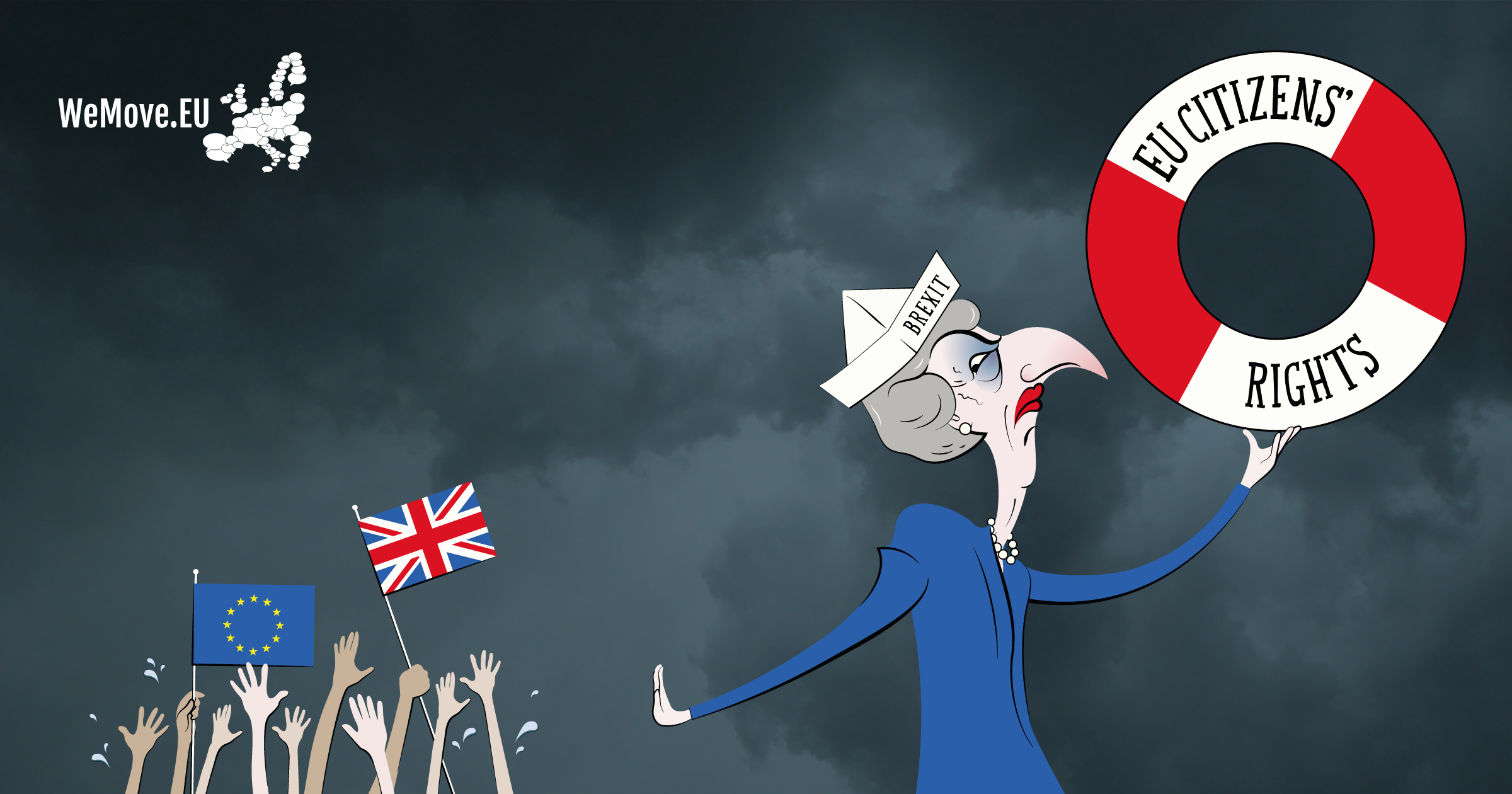
Not to mention if England votes out and are either overruled by votes in Scotland, Wales and Northern Ireland, the constitutional implications may extend beyond the specific question of whether or not the UK remains in the EU.

Today is the Queen’s 90th Birthday and no doubt you will be playing God Save the Queen. In a few weeks time lets hope you will not be playing God Save England.

Democracy works best when we all get involved.

← Back

Thank you for your response. ✨


Share this:

  • Share on WhatsApp (Opens in new window) WhatsApp
  • More
  • Share on Mastodon (Opens in new window) Mastodon

THE BEADY EYE’S UNPUBLISHED BOOK. CHAPTER TEN. SECTION FOUR.

18 Monday Apr 2016

Posted by bobdillon33@gmail.com in Uncategorized

≈ Comments Off on THE BEADY EYE’S UNPUBLISHED BOOK. CHAPTER TEN. SECTION FOUR.

(Continuation)

Accra port is 30km down the coast towards the Benin frontier in a separate town called Tema.   We arrive early morning at the fish market, which we walk through to the main fishing boat quay wall. Here a guard stops us. Some vigorous pointing at a large fishing vessel with a few smiles gets us past the gates.Afficher l'image d'origine

Most of the docked vessels have little or no deck room to carry a vehicle. Half way up the quayside I spot a potential victim.   It’s a stern trawler with its fishing Company office across the road painted in blue and white fittingly named the Six miles deep Limited Company. After a short wait we are shown into an office. An hour later we have established “Yes we do fish off the Skeleton coast ““You will have to talk to the Nana Prawn”

That evening Nana Barclay Bank has sent us an invitation to join him at his home. He is throwing a large garden party. It is to be the beginning of one of the worst headless chicken run about I have ever play a part in. On arrival we are allocated a table well removed from the all in sundry.   It is our first taste of ethnic group snobbery.   Across the swimming pool and the manicured lawn Mr Nana Barclay’s Bank is installed under a canopy on a large throne type chair greeting the arrival of his quests one by one. To our right under the eves of the main house a few Merc’s are parked. In the middle of the lawn Ghana’s number one band named the High Life are pumping out their latest hits.

Feeling every much on the fringes we watch the proceedings from our distance table. I notice that the Barclay fat cat Nana has a bottle of whiskey under his chair and that when there is a lull in the homage parade he slyly tops up his glass.

I chose my time before venturing over to introduce myself. A fat gold ringed hand firmly welcomes me with a broad smile. I request a glass of decent malt.

“Yes Nana Shrimp is here.” “I will arrange a meeting.”   One hour later I am called over again. Nana Shrimp has arrived. Smartly dressed with perfect polished English he listens to our travels so far and our problem re continuing. Revelling in the surrounding company he broadcast for all in hearing distance that the fleet will be returning in a few days, and he saw no problem in bring us down to Walvis Bay. “Ring me in a few days.” Our host retired, we taking our leave some hours later with renewed hope.

Five days later we have heard no word. A visit to Tema the port offices ensures us that the fleet is to arrive any day.   “Ring us.”

After handbag bashing one evening from Rosetta and two of her cronies for wearing a Rawlings tee-shirt Coco Beach resort is rapidly loosing it appeal. It is time to move.

On the grapevine we learn of a small camping site, which is only reachable by 4×4 or on foot. It is right out on the end of a sandy peninsular on the mouth of the Volta.   A grand council is called. All those interested in waiting for a lift to Walvis Bay are to move to Ada popular with the Ghanaians.

The next morning the Dutch family endears themselves to all by doing a runner. The rest of us set off in convoy one hundred kilometres as the crow’s flies to Ada.   The three Musketeers set the pace. It’s not long before Bob the electrician comes to a halt. His old girl is overheating and he has pulled a ligament in this shoulder from battling with the play in the steering wheel.

On we go at a more sober pace arriving late evening at Big Ada a smart Hotel set on the riverbank run by a German. The campsite is another hour down the river by canoe or drive along the seashore. We arrive at a small village at the start of the narrow peninsular. There is no sign of the three Musketeers we can only presume they are either lost or have decided to cross into Togo. Much to our relief there is also no sign of Dutch.

The first obstacle blocking our way onto the beach is a large marshy pound. Leading the way we all make the beach. The sand is depth. The beach lies at an acute angle to the sea with the sand forming a high ridge some meters above the high water mark. With no exit on to the beach there is no way of driving down the beach to reach the campsite other than driving along the soft sand ridge.   With all the gear a walk job is totally out of the question. There is nothing for it but the big deflation of the tyres.

(Top TIP:   Soft sand driving requires the highest gear possible to avoid wheel spin. Low range third, fourth. Watch the colour of the sand it can tell you a lot.   Practice double-declutching for smooth gear changes.)

We all make it to the end with very hot engines. A small piece of Paradise unwraps itself before us. Crystal clear blue water creeps over golden turd free sands in a small half-moon shaped lagoon that is tucked into the peninsular side of a wide Afficher l'image d'origineestuary.

Our campsite Pitch No 62 is o natural.   Under large Palm trees snuggle protected from the braking surf on the seaside by a high bank of sand we have the place to ourselves. After a long soothing swim we set up home.   Sleeping that night on the roof platform under our nets the stars with all our anxieties are washed away by the tender lapping of the incoming tide.Afficher l'image d'origine

Long before we awake to our first day daybreak is well up in this little spot of Ghana heaven. A fleet of ten to fifteen traditional brightly painted fishing boats each with its own mottos stencilled down the side are gathered at the river mouth.   On a given signal invisible from the shore they run the gauntlet of the sandbars and braking surf to the open sea. With the wonderful feeling of warm soft sand between our toes we spend the day exploring the lagoon.

The seaward side reveals turtle nests. A night visit will hopefully capture an arriving flipper friend in the act of coming ashore from its distant travels.   The lagoon side has a small island dividing the rivers entrance to the sea, which could also be worth a visit.

One day merges into another with my early morning attempts to hitch a lift on one of the fishing boats drawing a blank.

On a visit to Ada post office to find out if there is any progress in getting a lift to Walvis bay we learn that the Dutch rather than pay the local chief a few pittance for assistance spent the night in the marshy pool up to their axel and are now residing in a house at Ada. The phone call confirms that there is still no sign of Nana Shrimp making good on this word. “Yes the fleet is arriving, no the fleet is not arriving.” “Ring again in a day or so.”   It’s the Ghana run around big time.

That evening with the help of some local wacky tobacco Josh and I discover one of the great ecology mistakes of the world. It’s not turtles that are arriving up on the beach but Connochaetes taurinus better known as  Wildebeest’s. On the other hand it’s Turtles that are grazing on the open Savannah.

Day five I awake to the grinding sound of sand. It sounds like a whale has beached itself.   A young face looks up at the platform where I stand naked rubbing the sleep from my eyes. “Come, Come pointing at the beached boat.” My early morning silent signals have paid off twenty black curious faces are waiting my arrival with anticipation. I whip on a pair of trunks and luckily grab a hat.   The note say’s gone to sea.Afficher l'image d'origine

I clamber aboard: to broad smiles > a hush mummer of excited chat.   We rejoin the fleet at the mouth of the river. The outboard bursts into life and I am directed to sit down as we are commencing our seawards run. Except for a bowmen the whole crew has congregated aft.   There are no guard rails. With the whole crew standing up right the smooth water of the lagoon flashes by. Ignoring their anxious hand signals to sit I decide to stand like my fellow seamen. The bow meets the first breaker head on. Thank God for my sea legs. We plunge down the trough to rise sharply in a buck and bronco movement to meet the next growler. The spray brings me fully awake.

The propeller leave the water to bite again as the long narrow vessel turns hard a starboard to take cover behind one of the many sand banks. The throttle is now full open and all eyes remain firmly fixed on the bow as the helm goes over to hard a port. Two more spectacular Aussie lifeboat type surf clearances we turn once more to run along the sea ward side of the last sand barrier to the open sea and smooth waters. All eyes are now turning in my direction. Face splitting smiles all around tell me that I am judged worthy of my fellow seafarers. I have held my deck footing without going overboard. The rest of the fleet joined us on a vast blueness that reflects a cloudless sky.

We commence a large circle. Diving bird are the tell tail signal. The net is paid out over the stern. The circle completed the crew splits in two teams taking their places on the synthetic rope for the long hand over hand haul in.

Akin to two tug war teams one facing the bow and the other the stern we strain back and forth till the net mouth closes. Two youth dive overboard and swim to the mouth of the net where they slap the surface in an attempt to frighten any escapees back into the net. With the net closed both ends are then walked to amidships. The whole net is then heaved with pure physical strength on to the gunnels pouring its contents directly into the hold.

The entire operation taking well over two hours is played out to a background of roysting song.

Before it is time to turn homeward bound a second casting of the net does not produces as good a yield as our first.

The fleet arrives back at the mouth of the river.   A large wooden oar is slipped over the side just forward of the stern. It is indicated to me that this time in no uncertain terms that I should sit.   From the hand language is evident that many a boat has not made it back without capsizing. Each vessel picks its wave for the rolling coaster ride to the calm water of the lagoon. Our turn comes. A wave picks up the stern.   To get the boat up on a plane the throttle is opened wide. We surge forward. So does the catch in the hold due to the lack of bulkheads. The bow begins to dig in. The oar men arm mussel’s strain to braking point to keep her on an even keel. It’s all over in a flash. The boiling surf is left behind. We shoot out of the frothing surf into the river estuary.Afficher l'image d'origine

I am expecting to be left ashore where they had picked me up but there is no sign off that happening. We swept pass the island in the estuary I am hoping to visit. It is obvious that the priority is to get the catch of white bait to the market on time.

I am handed a banana leaf, which I unwrap to find smoked fish. We eat as the fleet makes it way up river. A half an hour later each boat is met by a group of woman standing waist deep with large enamel basins on their heads. The catch is unloaded basin by basin into squares marked out on the sandy rivers edge. One hundred squares of mounded white bait are then auctioned off square by square. Late that evening with a lifetime experience that will be hard to forget I am poled back down river to the campsite.

Several hours later into the evening a young man arrives and hands me my wages. The jester is flabbergasting. He has walked the fifteen miles down the river to deliver my share of the proceeds from the caught. I refuse the money to be rewarded next morning with an early call to go to sea again.

I return from this second trip exhausted with very sore hands. At the auction I learn that the proceeds of the catch is shared out in agreed percentages between the owner of the vessel, the owner of the engine, the owner of the net, the supplier of the fuel, the skipper and lastly the crew in order of rank. I once more turn down my share.

In the morning I am rewarded with the presentation of a freshwater barracuda. A round of very painful farewell handshakes and my new-found friends slide back into river to run the break water gauntlet once more.

I make another trip up river to ring Nana Shrimp.   The news is not great. The fleet is not going to sea for another ten days.   However there is a Russian Cargo ship due to arrive the captain of which is a friend of his. For a small greasing of the hand he is sure that he will take us on board. I have my doubts but as the saying goes ‘nothing ventured anything gained.’

Thanks to my fishermen friends I return down river with two pirogues for a visit to the estuary island. While I was up river a pit in the sand has been dug. Filled with rocks, coconuts shells, Palm tree branches and set alight to heat the stones. Our beautiful fish is dressed with garlic wrapped in tinfoil and buried in the pit. To night will be a feast on barracuda cooked O natural.Afficher l'image d'origine

There is nothing more Safaris like than setting of in a pirogue to cross an African River. The island is about four miles away from our camping site. Four miles of unadulterated turquoise, translucent blue water. To the silver drips of our paddles we set off. The silent smooth blue waters of the lagoon slip by in our own reflections and that of the hull and paddles.   The island approached in slow motion. A ball of blue the green itched into the surrounding blueness, its palm trees outline its shore in infertile motionless detail.   It seemed to grow taller as we approach. A small mango inlet is our landing point. A stone-carved face that makes our goose pimple tingle welcomes us.

Expecting a challenge by some dark face of a tribe yet to be discovered we start-up a small track.   Instead we come upon a deserted village in a small clearing. There is a heavy feeling of being watched by some guarding sprites or painted faces.   No humanoids appeared.

Following each other we pass around the southern end of the island returning to our dugout canoes. Our footprint on the virgin sand will mark our visit till the lapping tide washes all trace of our presence into invisible time.

The north of the island is impenetrable by land.   It is full of a solid thick dead kind of stillness with echoes of ancient ferocity. Even the birds seem utterly silent. Beneath the island canopy we slip by silently gaping at the vegetation struggle to reach the limitless blueness. Cloak of the forbidden enmeshed any thoughts of going ashore. Hidden eyes are everywhere.   It belongs to another world. The cooking fish calls us home.

Sitting around a dining table set in the blue water of the lagoon we are disappointed not to see the odd wildebeest arrive from its distance sea travels. No matter it is an odd feeling eating while one toe’s are being nibbled. Our full stomachs complement the overflowing injection of mother earth beauty.   We are all sorry to be leaving in the morning.

The whole group arrives back in Tema minus the Dutch and the three musketeers whom we assume are by now hacking their way south if not already hacked to death.   Our base is the Tema is a run down joint with an open-air squash court still in use and a cracked waterless swimming pool. It is the Social club that was built to entertain the harbour builders. Pitch No 63 in the car park does have one thing going for it a night watch man.

Another day of it “The ship arrives tomorrow.” “The Ship arrives to-morrow.” “To Morrow.” has our sultan turning grey and our petulance red. We start to look at the possibilities of shipping the vehicles and flying to South Africa.

Josh and I do the rounds of the shipping companies.   “Don’t touch that wanking shipping company. “You will never see you jeep again” “Yes we have a ship next month.” “Fuck me we did not come down in the last shower.” “Not every white man has a fat wallet.”

Day four: Nana shrimp informs us that “The Russian captain ship has arrived.” “It is docked in the container section of the port.” “You must go and negotiate a passage with the captain.”

The maximum bribe agreed Josh and I set out for the docks one more. We park at the container yard gates. A ten-buck dash gets us past the security guard. Emerging from a labyrinth of containers there she is moored to the dockside. The biggest rust bucket I have ever seen. A Davy Jones’s locker if I had ever seen one with all the potential of showing us the raptures of the deep long before she reaches Walvis bay or the scrap yard awaiting her arrival in South Africa.

Up the gangway we go to be met by one of her skeleton crew who shows us the way to the skipper cabin. A strong Russian face dressed in spanking white shorts and shirt extends a hand. He is totally out-of-place with his rusting surroundings. For the next hour over a few large Vodkas I explain our dilemma.   There is no visible acceptance of our proposition till I remove the envelope from my pocket. Running my thumb across the enclosed wad we hear music to our ears. “Ok, Ok we leave to-morrow, five hundred-dollar a vehicle to Walvis Bay.”

Early next morning we park the three vehicles outside the dock gates for customs clearance. I go aboard to inform Captain Rusty of our arrival to be informed that his shipping company in Russia has contacted him with instructions that he is under no circumstances to give us passage.

According to him Nana Shrimp had put a spanner in the works by talking with his company. Descending the gangway I hope that Nana Shrimp ends up in shrimp cocktail with king prawn the Banker. The anti climax is almost insufferable. It’s back to the drawing board.

Two more days of slogging around the shipping companies eventually produces a container big enough for all three vehicles at a price we can muster. The decision is taken that we will all fly to Joe Bourg spend a few days there and then train it down to Cape Town in time to pick our beloved land rovers. Easier said then done.

The first problem presents itself at the door of the container. Williwaw tent platform is too high to fit in. A big deflation of tyres does the trick. In she goes with a few centimetres to spare. All is made secure to the floor of the container with straps. With a large sigh of relief the doors are closed and sealed.

The next problem is Curt the racist terrier. To fly he has to have his rabies injection topped up.   Off we troop to the veterinary college where Curt has a large thermometer rammed up his ass by Ghana’s chief vet. It is decided that the best plan is to tranquillize the little bastard an hour before the flight just in case he sinks his ivories into half a dozen baggage handlers.

The following morning with Curt out of his head in a shoulder bag we all clear customs with no problems. Every thing runs smoothly till he is discovered by one of the cabin crew. Only in Africa would a doped terrier manage to hold up a Boeing 707 for a full hour. By the time it has being decided that the little blighter can travel in the baggage department African patience has worn somewhat thin aboard the plane.

A cardboard box is brought to the end of the stairs. Surrounded by armed security guards Curt is stuffed into the box. His whaling mother mum is lead back up the steps to a round of applauds from the passengers.   The engines come to life its good-bye Ghana.  Afficher l'image d'origine

( To be Continued)

Donations News.

Still to brake Zero.

R Dillon. Account No 62259189. Ulster Bank 33 College Green Dublin 2.

Sorting Code : 98-50-10


Share this:

  • Share on WhatsApp (Opens in new window) WhatsApp
  • More
  • Share on Mastodon (Opens in new window) Mastodon

THE BEADY EYES UNPUBLISHED BOOK. CHAPTER TEN.

16 Saturday Apr 2016

Posted by bobdillon33@gmail.com in Literature., Uncategorized

≈ Comments Off on THE BEADY EYES UNPUBLISHED BOOK. CHAPTER TEN.

Tags

Best Travel unpublished book., Top readable travel book, Travel book that will inspire you to travel., Travel.


Afficher l'image d'origine


GHANA.Afficher l'image d'origine

WHAT WE KNOW

GOLD. SLAVE TRADE. ASHANTI. CACAO. COUPS. FLIGHT LIEUTENANT JERRY RAWLINGS. BRITISH COLONY. ACCRA.

Still shaken by our narrow escape we spend our first two days in Ghana pitched in the backyard of the customs. Pitch no 53&54. I give Williwaw a once over while the girls replenish their strained nerves.

Our first day back on the road sees us stopping in a small village just outside Tamale the Northern Capital of Ghana founded by the British in the 1900s as an administration centre. Fanny searches out the elders of the village for permission to camp.

(Top TIP: It is good policy to request camping approval when pitching near a village. The stamp of approval gives an element of protection. The courteousness in doing so is more than just good manners.)

In no time we are directed to a suitable spot. Pitch no 55 is a rooftop pitch. Every move we make is watched by the locals with the same intensity as that of a movie audience that is gripped by the hero’s dying words. The whole show is topped off by Fanny’s 7pm cooking program.

By the time the last set of unblinking eyes have returned to the village the girls are sound asleep.   I sit sipping a whisky listing to the African night sounds that I have become used to so far > the chainsaw sound of the forever present of crickets > The clanging sound of kamikaze flying insects against our hanging light. One of which is bound to do an Acapulco dive into whatever you are drinking.

Enjoying my large ball of malt there is, however, another faint sound drifting on the warm evening air > A drum. Another soon joins it, and then another.   Soon there is the champagne of rhythm so magnetic my heartbeat is keeping time. The snoring from the rooftop is also in time reassuring me that I will not be missed. I finish my whiskey arm myself with a stick and venture towards the village.

(Top TIP: Unannounced, unaccompanied, night village visits are usually met by sets of snarling canine teeth.) 

My entrance to the village is dog ivory free. As a complete stranger, I receive spontaneous hospitality. To attempt to describe such open hospitality is impossible. It’s a welcoming that only a real traveller can appreciate. It restores one’s belief in human nature and it is one of the great rewards of real travel. Not like the welcome one gets on making landfall, which is to a great extent somewhat false, short termed and governed by opportunity. This welcome is governed more by traditions handed down from one generation to the next.

I am immediately given the seat of honour. Right beside the Rat-tat tatter (a piece of tin that is being walloped with a stick) and the bass drum which is held by a small boy whose job is to hold it in place. As the beat increases the square is dampened down with water. The gig is full swing. With no common language, my ears vibrate to the rattle of my teeth. I am treated as an equal.

Three and half-hours later I slip into my sleeping bag but sleep is impossible. My brain is telling me that I am lying on a tin roof that is being belted with a frying pan.

Thankfully in the morning, the night’s gig has reduced the ratings for the breakfast show. We awake to find just a few of the elders sitting, waiting patiently for the main actors to rise and shine. Fanny breaks wind while I break camp. Before leaving we reward our loyal fans with reading glasses and an Instamatic photo in exchange for two yams. A short dusting later we arrive in Tamale the Capital of the North.

Tamale is covered in the same red dust that is covering Williwaw so we merge well with the surrounding traffic and buildings. The whole place is a large junction town with nothing to offer but the choice of straight on, turn right or left to get out as quick as possible.

We have the misfortune to spot a Chinese restaurant. Over no 46 with fried rice, Florence’s expresses her craving to see a proper African animal such as an Elephant or a Lion. It draws our attention to Mole Game Reserve laying to our west.

Getting to the Park is a cakewalk according to the Bible. A fuel stop later we turn right into the red dust haze and the sun.   We are on our way to our first Safari.   Safari comes from the Masie word for a journey. Our car chin waging summons up all the mysteries of the Dark Continent.   David Attenborough, here we come. Fuelled by years of National Geographic, Tarzan, Africa of our childhoods beckoned. It’s the real thing at long last. Trackers examining fresh signs while in the distance vultures swirl in decreasing circulars marking death, a kill.

We stop at an Asian shop for supplies and exchange 200 ff on the black market for 65000 Cedi.   Trundling along in the dust once more my stomach rumbles to no 46. Williwaw brakes begin to whine, as does Florence “how much further from here.”

The ride is uncomfortable due more so to our tyre mix than the need to travel at a reasonable speed over the corrugations.   We are forced to stop. The fine red dust has penetrated the brake discs. Luck is with us. Doctor Landrover is just up the road. In no time the brakes are on his operating table. A methodical cleaning is administered. Much to Florence’s annoyance all is done in unrushed African time. Every item is scrutinized.Afficher l'image d'origine

By the time we arrive at the gates to Mole’s National Park which is sponsored by Kumasi Brewery limited it is not just my stomach that is protesting. The main game lodge is a large run-down building. The stagnated water in the swimming pool should have warned us that this 2000 sq kilometre Game Reserve on its last legs.

If the pool was not warning enough the immediate the demand for 500 Cedi by the new park manager is such an off-putting greeting it almost makes us turn tail.   He is rewarded by a red dusting dressing down from Fanny and me only to be saved from further abuse by a cold beer.Afficher l'image d'origine

It sure did not look like above. The whole complex sat on an escarpment overlooking a large waterhole that was about half a kilometre away.

The room accommodation on offer is far from appealing.   We opt for a rooftop pitch No 56 overlooking a large watering hole just outside the lodge fencing.   While Fanny and I set up camp a very excited Florence stands transfixed by a large grey shape approaching us. “It’s an Elephant! An Elephant. “Sure enough old Tusker is on his way down to us.   The girls take to the roof platform. There is no need to panic for this fellow has seen it all before. Whether he likes it or not he is our first large if far from wild African animal.   Out come the cameras. Click, click.Afficher l'image d'origine

It is to be much later in our travels that we are to learn that the best pictures of wild animals are captured by patient observation. Indeed the very words Game Park/ Reserve somehow or other smudges our feelings that we are in the presence of a wild animal. We are also to learn that viewing an animal down the lens of a camera is not the way to appreciate its glory. Thank God we are not packing a video recorder.

Photographed from every angle tuskers eventually ambled off with the view that he is not being paid enough to be the opening star of Mole Reserve. With the excitement over, we settle down to supper. There is one thing for sure tusker has wetted our anticipation. Our next visitor is blue balls a black-faced Vervet monkey. (Top TIP: Buy a widow catapult you will need it to keep these cheeky blighters at bay.) Common to almost all game reserves they have little or no fear of man. They will raid your tent, seal your wallet, and give you the two fingers.   They are one of the few animals to have developed different sounding alarm calls that not only identify the predator but signal what the action is to be taken. Each alarm sounded tells the troop whether to bail out of the trees due to an incoming martial eagle, or run for hell or leather up a tree on spotting an advancing leopard.

All of this knowledge we are of course ignorant of. For the moment all we knew is that we have not seen there like before. More importantly, we learn that if it is a peaceful night rest you are looking for don’t park under their chosen roost.

A harsh barking sound in the distant awakes us. From the warmth of our sleeping bags, it sounds like someone with a bad case of smokers a cough. Emerging from the tent I spot a small troop of Baboons on their way to the waterhole. A large male escorting the group is the source of our early morning awaking.

After a late breakfast, we venture out on our first sortie. Staying close to the main buildings we soon realize that only mad dogs and English men go out in the noonday sun. There is no sign of any movement. The silence is absolute, and it seems impossible to get enough air. We struggled back to camp for a siesta with a plan to take a guide in the morning and venture up-country in the park.

Being the only park visitors, and more importantly equipped with a Land Rover our request to go up to the parks northern camping site is received with great enthusiasm. All is arranged for an early start.

Next day all three Mole game rangers are awaiting us. After some explanations, we depart with one rifle armed ranger on the roof. It’s not long before it becomes quite apparent even to us novus safari faiers that we are being taken for a ride. The first give away is the condition of the dirt track. Tricky driving would be an understatement.Afficher l'image d'origine

The first stream crossing causes Williwaw and us more than the usual unease. In less than three kilometres into the trip, Williwaw is now pushing her way through tall elephant grass showering us with grass seeds. The chances of seeing any wildlife are as good as the possibilities of seeing a bottle of Star lager made by our park sponsors.

The main problem is that we are committed as there is no possibility of making a U-turn. On we go arriving at the Parks central camping site some hours later. It’s a total dump convincing us beyond a doubt that this Safari outing should be terminated > this far and no further Mr Ranger. Zack our main ranger has to admit that no Park Rangers have being up the track for months. In the morrow, it is back boys back down the track before the Moles undermine it any further.

Zack guides us through some large trees out onto a lava rock covered area surrounded by large trees with a small water hole pitch no 57. On the rock surface, there is no alternative but to camp on the roof.   Watched by our fascinated ranger the whole camp operation takes thirty minutes.

For those of you who are interested in our rooftop set up designed by me.

Most commercial rooftop units on the market offered limited space with very cramped accommodation. Williwaws full roof rack apart from the front storage rack where we keep our empty water or jerry cans had the retaining walls removed leaving the frame flush with the Jeeps roof. On to the frame I placed three large boards. They make up our tent floorboards. The first floorboard the motherboard is permanently fixed to the roof rack frame. The two remaining boards each of the same dimensions as the motherboard rest on top of the motherboard. All are held in position for travelling by two large bolts that drop through all three boards. Using the same principle as sliding drawers I then designed two drawers frame to fit the boards. They could be pulled out and closed minus the bottoms on either side of the roof rack.

First, the floor retaining bolts holding our tent floorboards are removed. Once remover the floor frames are pulled out on opposite side of Williwaw. From the waving pipe attached to the underside of the roof rack the adjustable frame legs. With the frames level set, we then slide the two floorboards sections into the frames. Bob’s your uncle a level area to erect our six-man tent. Next, we peg the tent secure in position by large wing nuts bolts dropped through pre-positioned holes in the floor.

Mount our ladder from under the roof rack. We hang our sleeping compartments, our mosquito nets, put our army beds and bedding into our sleeping quarters, plug-in our reading lights.

From a distance, we are sure to Zack that Williwaw looks like as some type of alien craft that has just landed on the hard rock. He stands gobsmacked till I beckon him to dinner.

An after-dinner visit a small waterhole has our Ranger convinced that we are in the presence of poachers.   Gods only knows what they are hunting as we had not seen a living thing all day long. Their comments add a sense of danger that we could do without.

A game of cards, a large ball of Irish whisky, and some reassuring words to the girls see us all in bed early. I bed Zack down, gun and all for added security against possible poachers in the tent porch. We all sleep soundly awaking bright and early to the now very familiar call of the ring-necked dove coo coco. Zack is already up. Florence puts it gracefully he is out looking for fresh poo.

Although we are camped on a hard rock surface there is a disquieting lushness about our site. Like most of us, we have a vision of African game reserves as being open places with never-ending stretches of grassy plains, sprinkled with flat-topped acacia trees. This is due to excessive exposure of Masi Mara television images in the spring when in fact there are many arid regions and not too many Forests.

By the time Zack returns we are ready to go. He once more reports that there are poachers about. What did I tell you say’s Florence he has found fresh poo so we all marched over to the waterhole to have a look. A hand full of black stuff and some very smart rounded type stuff, brown in colour, confirms our collective opinion that whatever had dumped it had done so months ago.

Just in case we hit the road with some urgency before the moles indeed undermining the track. Florence enquiries of Zack if it’s true that the wild Ghana moles make the holes in the track. “Yes and no, sometimes it’s the ants.” The journey back is long hot and arduous, impossible for any run of the mill vehicle.   The only highlight is a Warthog.   Arriving back without one a wildlife phototrophy to write home about we are covered in grass seed. The rest of the day is a right off.

That night I like a fool try a local Ghana dish, which looks like wallpaper plastering glue > A catastrophe. An early night is on the cards. The waterhole produces nothing of interest and we are just about to call it a day when Fanny comes running up to the ladder out of breath. Old tuskers looking exhausted, and pissed off is on the move behind the tent.

Next morning long before tuskers realises that we are also pisses off we cross the southern boundaries of the park after seventy or eighty miles of bone-shuddering corrugations that has us all at the end of our tethers.

From the park entrance at Larabanga we drive west through non descript villages with wonderful sounding names such as Kabanpe, Grupe, Nyanoa, Swala, Mankuma, Bogada, and the Dole. Eventually, we roar into Bole for a well-earned Guinness.   Williwaw has once more cracked her exhaust pipe.

Fanny reading the Bible comes to the rescue the Mission in Bole is a good place to stay the night.   Bole has all the gloomy charm of the other villages we have passed > A few shabby houses facing each other across a pothole, rutted, rippling, and dust-covered road.

(To be continued)

All donations much appreciated; R Dillon. Account no 62259189. Ulster Bank 33 College Green. Sorting Code: 98-50-10


Share this:

  • Share on WhatsApp (Opens in new window) WhatsApp
  • More
  • Share on Mastodon (Opens in new window) Mastodon

THE BEADY EYE’S UNPUBLISHED BOOK. CHAPTER SEVEN. SECTION THREE

13 Wednesday Apr 2016

Posted by bobdillon33@gmail.com in Uncategorized

≈ Comments Off on THE BEADY EYE’S UNPUBLISHED BOOK. CHAPTER SEVEN. SECTION THREE

Afficher l'image d'origine

We limb back to Lebe. Here we meet Hassan a Lebanese trader. Some strong coffee, 1000 FG plus a few hundred bucks exchanged on the black market I am the owner of a two new Pirelli tyre plus new tubes. It’s too late to go any further so the girls check into a Hassan recommended hotel. I take Williwaw off in search of a puncture repairman.

(Top Tip: This profession is usually found at crossroads, in the proximity of bus station lorry depots, taxi ranks, or under an electrical pole.)

Thirty minutes of hammering by a young puncture repairman with the universal African trimmings swap the tube and vanishing tools trick if you have not seen it before and my new tyres are on the wheel hubs. A few bottles of beer later my two-punctured tyres are also fixed.

(Top Tip: Bring your own patches and solvent. African patches are made from old tubes and their glue leaves a lot to be desired.)

That night I have no difficulty sleep although a soldier ant bite between my thumb and index finger is giving some grief.

After weeks of unrestricted space Lebe, the capital of the Fouta Djolon gives us the urban shudders. According to the Bible, our next port of call should be the Chutes de Kinkon. King Kong himself being all of forty-six metres tall its name conjures up a gigantic waterfall. We puncture free arrive in Pita just before lunch. A short distance further on we find a bumpy track down to the falls.   Pass an old dam an ancient codger at a gate stops us. A pass is required to visit the falls to be had back in Pita. Some African bargaining saves the trip back.

A short walk brings us out onto a slippery wet rock platform with a vertical plunge not to be taken. Great wads of ivory smooth water tumble over in silent sheets. The eye follows each sheet in its silent fall to the rocks below where the water rearranges its self for its long journey to the sea. The heat of midday makes the rising spray a welcome soothing sensation on the skin.   The temptation to strip although powerful is put pay too by Florence’s insistence that someone might arrive at any moment. She need not have feared as I had once brought Fanny to the top of the Eiffel Tower where she locked herself onto the wire mesh with vertigo. No encouragement would bring her to edge for a shower.

Dates on a nearby commemorative plaque of some previous distinguished visitors and the less known graffiti recorded dates the possibility of anyone turning up seemed as likely as King Kong himself turning up selling ice cream >, In the end, vanity rules the day.

We leave with the feeling of being there done that bought the tee-shirt. On the road again we head for Dalaba. In its French colonial days a tuberculosis recovery centres, and according to our bible, it has a remarkable Fula Chiefs assemble hall.

Our arrival is announced by a few wandering dogs into a wide street lined on both sides by housing which gives the impression that the place is almost deserted. Dalaba looks as interesting as an Ohio municipal parking block, but surprise, surprise it is sporting a new hotel. Run by a French bloke of some wealth and his refined Guinian wife with two little daughters. Within minutes Florence is in heaven playing.

Over dinner, our host and hostess are both charming and interesting. Along after dinner discussion late into the night covers the French occupation till Charles de Gaulle chucked his hat at it when the Marxist Dictator Sekou Tour’s told him “Guinea prefers poverty in freedom to riches in slavery.”

After which the country was closed to the west for thirty odd years while the bastard Sekou purge all those who were not of the Faranah clan.

Our hosts convince us to stay a day and explore the area. A little luxury won’t go astray for the girls, hot water, comfortable beds, and good food and whisky has us agreeing without much resistance.

Shedding kilos of dead skin under a hot shower we assemble for breakfast. Armed with a map from the local OITD tourist office we set off for the day. The Assembly Hall and Le Pont de Dieu are the destinations.

Built in the thirties, the assembly hall is now surrounded by cheap ugly chalets. The hall itself is rapidly re-assembling itself within its own walls. Standing on a wooden floored in the main assembly room the wooden walls still have some carvings of long-lost animals. It is not difficult to visualise the Fula chiefs clapping hands, stomping their feet with their bracelets tinkling to a Fulani tune that echoed off the surrounding rolling hills.

In less than a wink down the road, we are mounting the steps of large hotel to be greeted into its marble flagged foyer by its young French manageress.   After a month of mostly wild camping and grass huts, a hotel of this size is the last thing we had expected to see.   It comes as somewhat of a shock to find such a large building in the middle of nowhere. Guests are non-existent the views are spectacular, lunch is a disaster, and the Skol isn’t Skol although it is in a Guinness can. The whole place is surreal a hotel in waiting or some enormous tax fiddle.

We leave for Gods Bridge. It is obvious that is has been some time since any others ventured down to Gods Bridge as the tourist desk in the hotel manned by the manageress never heard of it.

I can feel the girls tense as Williwaw wheels collect enough pottery clay to make a new dinner service for the Hotel. We are descending a steep track deeply rutted by running water.

Committed, with no place to turn we slide on. The feeling of skidding sends goose pimples down my back.   My foot is a shuddering and quivering to touch the brakes. Give me rocks anytime. We come to a section of the track that has been wasted away, exposing some large rocks. The drop on our left brings back memories of my Portuguese toilet roll disappearing at speed on its merry way to the Duoro.

I walk the track fully aware that I will have to dive up it on the way back > Tilted to one side it looks very uninviting. Grip is what it is all about so I hug the high ground and as much exposed rock as possible. In a jack-knife posture, we slid across the gap.

(Top TIP: Driving mud. Don’t stop. If feasible keep to where those have gone before in the highest gear possible. Where the rut is too deep get the passengers to risk their life and limb by filling them in with sticks or stones. We found our rope car mats quite useful.)  

It is not long after this excitement that our track comes to a stop. Taking to shanks mare faces of protest says it all. “It’s your fault.” Fanny trudges along like an old woman oblivious to the diversity of her natural surroundings. The bridge is still some distance away according to our map. The forest gives way to very large bamboo until we emerge into a labyrinth of small streams. Gods Bridge turns out to be a natural stone single rounded arch spanning one of the streams.

The walk back to Williwaw is all but too much for Florence. Combined with the anxiety of watching her dad drive the tricky section once more, there is a great sigh of relief for her to see her hotel friends again.

Over dinner, we receive an invitation from Dr Almo B.A. Barry to stay with him at his village of birth Kola Hendek. “Here you will see Guinea in its struggle to exist in the present world.”  “My village is on our route to Kourussa. “It’s some three clicks along the railway line. Just past Mamou, hang a right and you’re sure to find me.” I accept. The likely hood of us finding the exact turn off is a thousand to one.

Pushing on the next morning our lush countryside passes quickly with the driving surface improves by the mile. Fruit of all kinds dribbles down our chins. Oranges, tangerines, grapefruit, mangoes, pineapples, serve to quench our thirst. While I am in danger of developing perilous dodgy heat rash on my bum from sticking to synthetic leather the girls have a big sheepskin from Lancashire called Sourbutt to keep their bums cool.

(Top TIP: Take or buy a sheepskin to sit on for coolness, comfort, warmth etc. When travelling with a child, it can be of great comfort and can sub up as a cover for night-time in desert or at altitude.)

Reaching Mamou we hit a tar road.   Immediately Williwaw has a mind of her own. She is pulling to the left and then the right. Something wrong with the steering I think. Stopping, nothing appears visible wrong but the very minute we start again she needs constant corrections.

In my nitwit naivety, we stop again while I check the wheel bolts.

(Top TIP: A good habit when driving off-road is to go around your wheel bolts once in a while with your wheel brace.   We also had security bolts fitted to each wheel to prevent theft.)

Still waltzing it eventually dawns on me that the problem is my new Pirellis. Each tyre has a completely different tyre patterns. How I wish once more that I had invested in a decent set of off-road tyres. There is nothing for it but to stop and change the tyres back to a unified set.

Unlike Europe, a man with a flat tyre in Africa is offered assistance as a matter of course. The AA or RAC of Africa no matter where you happen to be is a willing internet of hands that materialize as if by magic. On this occasion, we happen to be just down the road from the turnoff to Kola Hendek marked by an invisible signpost.   A tree what else.

With the old tyres back on Fanny in true English demeanour is apprehensive about inflicting ourselves on a total stranger. “Sure we just stop for a cuppa.”   Back onto a dirt road, the lie of the land is now much flatter. We pass plantation after plantation of peanuts, cassava, with a few shallow stream crossings thrown in for good measure. One hour later from the main road we pull up outside Dr Barry’s holiday home. His welcome is open and full of delight to see us.Afficher l'image d'origine

Almo, known as Chief Doc Barry is in his early forties. He introduces us to his German girlfriend a Frankfurt nurse. He is the driving force behind a school and a small medical dispensary built out of his own pocket. A dynamo of energy continually on the move he speaks German, French, English, and Pulaar. He himself has just arrived a day or so in front of us. He introduces us to three village elders who have arrived for supper. . I get a feeling of almost complete dissociation as they exchange news.   “They are nothing without their cattle, just families living off their fields as the grain ripens.”

Almo later explained (over a cup of Kinkilibar his favourite drink made from a leaf with lemon and sugar or honey. The leaf is boiled to remove a poison, and then re-boiled. It bets all our thirst quenching purchases of the day. We learn that he is here to perform an operation on a young man who wants to get married. Some years ago he operated on the same fellow, who had the worst top lip deformation he had ever seen, hanging down over his chin.

We also learn that he was one of the last men to escape the reign of terror in Guinea. That he moved to Germany following the end of the Second World War, where he became a very successful surgeon. At that time in Germany, he describes to me that he had to stand with his hands behind his back at many an operation. “Blacks were not allowed to touch anything in those days.”

We chat long into the night covering everything from deep-rooted traditions and superstitions to his ambitions for the future. “Everything is a struggle against the backwardness and fatalism of his people who have given up expecting anything from the government.”

We agree that is almost impossible to marry the legacy of traditionalism with the need to come to terms with the modern world. That aid is not the World Bank or the IMF granting large loans to third world countries. That the very words ‘Third World’ should be abolished and replaced with ‘Developing’ and that private hands-on investment is far the better option.

When you think that one in five people have no access to safe drinking water and that we have been trying to eradicate Malaria for god knows how long its time to move away from voluntary Aid to a source of continual aid funding.

Our master plan developed into the early hours of the morning is that:

All stock exchanges, lotteries, Sovereign Wealth Funds, High-frequency Trading, Currency trading over $20,000 and world sporting bodies and the like should be brought into the United Nations and made sign a charter that would compel them to forsake a small percentage of their profits, 0.005%

A world aid COMMISSION

The funds generated would then be the corner-stone of a new World United Nations Investment Fund. 

The funds would change the United Nations Aid programmes from a helpless G2O begging organisation to an organisation with its own clout.  

The Investment funds to be operated by independently appointed experts from the world business community.

 THE UNITED NATIONS INVESTMENT FUND:

This fund would then to be placed on the world stock exchanges where

It would benefit from the one virus that is consuming the world.

Greed:

By placing The Fund on the world stock exchanges it would ensure the fund transparent. Standing, on its own successes and failures.

Each country to submit a candidate for election to its board:

 All successful candidates being subject to re-election every five years:

All projects requiring funding to be submitted (other than genuine humanitarian aid) for approved by the board to establish their cost and viability.

The successful projects to be funded would then be placed in a yearly drawn on a ‘lotto’ base.   This would cut out any interference from political corruption or pressure outside groups.  

 The yearly Draw to be featured on An independent United Nations TV channel.

 A dedicated United Nations Web site would monitor the projects > reporting on their progress and certify their completion.

The culture of growth for growth’s sake must be brought to a halt.

You know say’s Almo, “that one of the problems with Aid is the Aid culture itself.

Something for nothing gives no sense of pride to anyone. The world has a duty to Africa. The whole of the world was young in Africa once. “

That Kinkilibar tea is addictive. 

Morning:   With Almo long gone to his surgery, dawn breaks.  We visit his school and dispensary, after which I decide to take a hike into the surrounding countryside.   The girls decide to spend the day with girlish things that they have been neglected for some time.Afficher l'image d'origine

Before I am out of the village I have an escort, a youth of twelve with two others – one a toddler. An increase in pace, the waving of hands in a go home signal, shoo, shoo’s has no effect. On we march in convoy until the first stream crossing. No luck they all manage to wade across. Long grass now encloses the track. Yellow butterflies jig a merry dance; gathering here and there in bunches to form yellow stepping-stones on the reddish-brown earth of the track.

The second stream crossing does the trick, too deep for the little ones.   The arrival of a young man on the opposite side of the stream soon has them scampering home followed by some harsh Pulaar.   My new companion out of politeness now falls in with my stride. To the great annoyance of each household’s dog, we walk through a village. The conversation is limited to a smattering of French.

One more stream crossing and we arrive at his village. Here I am invited to meet his wife. She is a young, so frail in statue that she scarcely casts a shadow. Their home is surrounded by the usual fence of thorny bush with a small flower garden which I find novel – flowers are not a high priority in African eyes. Inside the house is a bed alongside one wall, a radio, a large canari (earthenware water pot), the classic three stone fire, the odd piece of cheap furniture, some posters, and the inescapable suitcase. It’s like an oven indoors so I take my tea outside.

Sitting in the shade surrounded by lush fertile land the last thing I was expecting to see is a television image of Africa. Brittle little legs supporting a large swollen stomach shock me into silence. Showing all the signs of malnutrition their first-born waddles towards me. It takes me completely by surprise, and I am sure I am visibly off guard. The young man esquires if Dr Barry has arrived.   I encourage him to bring his child saying that I will tell Dr Barry to expect him in the morning. He promises to call. Our departing handshake stays with me as I return along the same track.

The news back at base is that word has reached the young man who is hoping to be married. Unfortunately, he is some distance away and might not make it to the operating table in time. I tell Almo of my meeting with malnutrition. “Did she have red hair,” I had not noticed. “It’s probably Kwashiorkor a type of malnutrition in children caused by the traditional diet of corn meal,” says Almo > Curable. “

Almo asks if I had seen the school and the dispensary. “Who old do you think the buildings are? Fifteen years. Wrong, they are only three years old. As I said last night the god damned Africans have no respect for anything they get free.

You will see on your journey that all over Africa there is a donor’s disease called ‘get it for free’ “no training, no value, no change, no motive, only greed.”

Tonight say’s Almo, “there is a village meeting of the elders here in the house. You will witness what I mean and what I am up against. The man I left in charge of the dispensary has been screwing the locals. He was under my instructions not to charge for the medicines but I am told he is lining his own pockets. I will have to fire him and if I fire him, I will be out of favour with some of the elders.

I suggest that perhaps if I was to do the firing it could save him the politics.

For my afternoon entertainment, he suggests that I should walk over to a rock face where there is a large colony of baboons. The girls once more decide to stay with the manicuring non-baboon style.


Share this:

  • Share on WhatsApp (Opens in new window) WhatsApp
  • More
  • Share on Mastodon (Opens in new window) Mastodon

THE BEADY EYE’S UNPUBLISHED BOOK .CHAPTER SIX. SECTION TWO

11 Monday Apr 2016

Posted by bobdillon33@gmail.com in Uncategorized

≈ Comments Off on THE BEADY EYE’S UNPUBLISHED BOOK .CHAPTER SIX. SECTION TWO


Next morning Williwaw is loaded to the gunnels with chairs, goal posts, a large awning, jerseys, drums and the odd plaster. With the village VIP’s hanging on for dear life, we set off for the salt flats.

Danny the village South African is appointed team medic and his Unimog as the VIP’s grandstand. By the time I arrive back over the dunes to collect the girls the first taxi bus full to breaking point with Wolof supporters is arriving.
The pitch is marked out I am sent off once more with a guide to show me the overland route to fetch our Goalkeeper living near Rufisque. Arriving back the sun is setting; the drums are warmed up. The ladies just in case the love of their lives is present are in their best Boubous. (Cotton dresses worn on social occasions often elaborately embroidered).

In centipede formation, at either end of the pitch, both teams twist and flex with odd erratic movements > Warming up African style.

The kicks off > whistle approaches. The drum tempo mounts. Our referee who runs without bending his knees checks and double-checks that no new players have slipped onto either side.

In a flurry of dust, the game begins. The high trill voices of the ladies positioned on opposite side of the pitch increases in volume > Wolof on the right touch-line Pular on the left. The whistle splits the baked salt in an explosion of pain for a downed player.   The ball has burst. Danny scurries back over the sand to collect the spare ball. Somehow or other it had been left behind. There is much argument as to how much time has to be added on.

The Unimog > blasting exhaust fumes appears at full belt.

A further limbering up period the game recommences.   Places on the grandstand are rescued.

The play like the drumming is now hot and furious. A goal of the Wolof brings a note of urgency into our ladies hollering > Halftime. A circle of plastic bags (the curse of Senegal) marks the assembly point of each team on the dry salt pan. The second half promises fireworks. The sun in a blaze of glory disappears.   Allah is praised.

Stork-legs blow’s his whistle. The red togs of the Wolof against the Pular mixed bag of different jerseys seem all-powerful. A long ball of dubious quality bounces for once in our favour. A courageous knee crunching tackle by our winger earns him a dusting down by the coach for not passing the ball.

New blood is required and frantic signalling from the touch-line eventually brings an acknowledgement from stiff-legs. A quick swap of the saturated stained shirt and our new man is on. A goalmouth scramble leaves a Wolof Rastafarian, grazing with the cows. Our ladies are on trampolines. We have scored.

Timed by the watches under the awning the fat cats indicate that there is only ten minutes to go.

A sharp whistle followed by a bout of wailing that any Banshee would be proud of see the ball disappearing at speed up over the dunes. A penalty has been awarded to the reds jersey Wolof. It is never to be taken as the owner of the spare ball has had enough and is legging it home. Watering fresh slices of coconut are distributed. The game has come to a sudden halt. That night in the dunes the committee awards the game to Gorom the Wolof village.

We decide rain or no rain that its time to move on in the next few days.

We make a visit back up the beach to Kayar. Arriving early morning the catch is being landed. Hammerhead shark, small blue shark, horse mackerel, sole, conger eel, and sprats – all sold fish by fish.

Walking down the beach long spears of coloured pirogues bowsprits pointed seawards. A group of ‘to be’ circumcised children are playing in the surf. All of a sudden pandemonium breaks out. Amongst the flies and hoards of children, a real shark in the form of a public servant is tossing wads of CFA into the air. The fish ladies are in a free for all, frantically stuffing their cleavages each as deep as the Grand Canyon with what they can grab.

Is this the mask of depravity, which has become the cosmos view of Africa by the West?

The powerful exploiting the less Herculean, which in turn then, exploit the weak. It reminds me that our mask of Democracy is also riddled with such scenes but cloaked in a more purified form of power corruption.

Florence like us is riveted to the sand watching. All of a sudden to save his suite from being smothered in fish scales he draws a small revolver and discharges a few rounds over his head. The new tribe of Africa BMW owner retreats up the beach to the safety of his chauffeur-driven car leave-taking in a blurred cloud of dust greatness.

Simplicity returns everywhere. I arrange a day’s swordfishing.

Ablaze with conviction not to give in to corruption I set off the next morning to collect our visas from the Mali Embassy.   After beach sand up to the axel attempt, I settle for the long haul to Dakar by road by way of Rufisque the home of the green open sewers.   Once in Rufisque during a downpour rather than risk my feet in the flowing mosquito breeding green water I had commandeered a scrawny horse trap taxi just to cross a street.Afficher l'image d'origineAfficher l'image d'origine

Arriving in Dakar I am stopped by the first cop that spots me, an indefatigable symbol of corruption. What follows is the usual show me you’re Insurance, your Carnet, your Licence, your Passport, which can be for a dollar or two all to be rubber-stamped in a glitter of his sunglasses. This morning even if it is only after a few pittance he’s barking up the wrong tree.

With a wary eye, I make it over to the Embassy to collect the visas without any further harassment. I decided to celebrate this achievement with a beer, a mistake. The same Robocop spots me again. This time according to him I am parked in a no-parking zone in the courtyard of a petrol station that has a pleasant open-air bar. Once again I argue the toss rather than capitulate.   It spoils my beer. What goes around comes back, what goes up must come down and all that stuff.

You won’t believe it. On the way out-of-town there he is again the very same cop standing on the roundabout out to Rufisque. This time rather than press my luck I raise my hand and beckon him to come to the window of Williwaw. Before he can utter a word I tell him “This time you are lucky because it’s the third time, venue, venue”.

In a flash of rash Irish brashness, I stick my head out the window and plant a Blarney kiss on his lips. He is so startled that he does a little Irish jig, breaks into a full flashing ivory smile. We have met.

( Our trip to Isle de Goree later in the week has no police interference. We are waved through all barriers on our way to Dakar. The word has spread there is an Irish puff in town.)

Two hours later dirty and grimy, I cross the finishing line of the Paris Dakar 4×4 race.   The finishing line as I have said is at the southern end of Lake Rose a small tourist trap with a Robinson Crusoe type bar with a fridge of cool beer. After the hard day of dust, fumes and hassle the beer hardly touches my taste buds. A swim proves to be less than refreshing in the salt lake; even the ironwood has a problem sinking. I am revived by the compulsory dowsing down in a small spring-fed freshwater pool that is just outside the bar. Rain or no rain it’s definitely time to move on.

Arriving back with the normal load of lakeside rooftop hitchhiker’s, I have a feeling that the cinematic sense of Africa and the posed geology of the place are about to be revealed. Over the next few days, we start to break camp in African time.

Aziz an artist of sixty odd years the owner of one of the many tourist’s stalls that pave the entrance to Robinson Crusoe’s bar arrives in the village the next afternoon. He has walked around the lake because he has heard that I read tarot cards.   He wants to know why his paintings are not selling. With the help of the accompanying tarot card interruption pamphlet and some artistic licence, I trace his life from his birth to his paint pot.

“You must paint what is in your mind and not what you think the bucks can buy,” I tell him.   Two days later he is back with a large smile. Some Yank has bought his latest canvas, which he had created from a dream he had on the way home on the night he left us.

A word of this success reaches Chief Josef.   There was no escape without reading his cards > A mistake. Now I’m knobbled. Luckily I have the cop-on to send him away under the pretence that he must clear his mind of all thoughts before he is in a position to put his question to the cards. I learn in the meantime that his question is ‘Will he be wealthy?’ My performance is a classic. He is spellbound, wealthy one minute poor the next. I struggled to bring the reading down to earth to a man who has anxieties and disillusion about the future and who has to count on his efforts and financial resources to improve the standard of living.   Eventually, he is satisfied and promises a return reading of my stars before we go.

At the request of Amadou who has befriended me I pay a visit to Benaba another small village over the dunes from us. Benaba is six kilometres away set in a grove of Eucalyptus trees the village overlooks Lac Rose. Amodou and his friend float effortlessly over the soft sand at the usual African pace. We arrive – I losing a few kilos in sweat.

The village is under attack from roundworm, explained by the local teacher who draws the problem in the sand. Three village elders greet us and invite us to sit ourselves down under the village tree for tea.   All I can think of is please god we are not in for the full treatment, which entails drinking the premier, tea, the deuxieme, the troisieme tea, each one increasing in sweetness all served in a small glass. Wrong we are.

Over the first glass which is poured from on high over and over again and again until a froth forms we received a thousand Cead Mile Failte all invoking the blessings of Allah to descend upon the head of all who are gathered under the tree.

Before the second glass, I am acknowledged. The gathering has now swollen with some thirty-odd children varying in ages from one and a half to still on the nipple to five years.

I the Toubabh (the white man) am watched with wonderment that would do justice to an Alien having landed from some distant planet. Each little round hard stomach is pushed forward for inspection. “No stool for a few days,” is the general diagnosis.

I consult, WHERE THERE IS NO DOCTOR.

(Top Tip: Don’t go without a copy > Written by David Werner ISEN 0-333-51652-4. it’s worth weight in Gold.)

The old Paupau milk with three spoons of honey and hot water and for the older arse holes > add the crushed seeds, three times a day.

Tea glass number three arrives.

In the sand, I draw the design for a long drop latrine. This leads to a heated debate about the size of the hole not in the ground but the seat. The height of the drop and who would have the right to sit on it in the first place are discussed in length.   Thank God glass three arrives and the discussion moves from crapping, to if you don’t put a roof on the W.C. the President of the U.S A. will be able to watch you while he is having a cup of coffee in the White House.

On the way back I can only admire the villagers in their efforts to improve their living conditions. I wonder if all the foreign aid given to countries only saps the initiative, creativity and enterprise of the very people it is trying to help by surrogating irrelevant gilts of imported advice.

Arriving back we have visitors in the form of Albert Mohammed Ly a Vietnam Saigon war baby how is practising acupuncture and a French frog named Cher who has converted to Islam.   The evening soon turns into for lack of a better word, ‘A Gnu’ evening. A WHIFF OF THE CRATOR (i.e. Whisky) with some helping wacky herb and they have turned into “WILL-de-beast or VILL–de–bayst.   Naturally funny animals to start with they look weird > Heavy shaggy heads and necks, a goat’s beard and horse’s tail.

When you have seen one Gnu you have seen them all. At 3 am, we shoo the donkeys, the squabbling children the chief and our many village friends, plus the two Gnu’s for a few hours sleep.

It’s, Hit the road Jack’ for us in the morning.

Six am I am outside battening down the tent on the roof of Williwaw. The platform design is my brainchild a roofing area big enough for a six-man tent to be pitched on top. The supporting platform poles are carried in a plastic section of drain pipe strapped to the roof rack. With the flooring in position, the poles can be lowered or heightened according to what is required for a stable foundation. The results are two verandas on either side of the jeep. One side a cooking area, and the other side a shade and sitting area.   The design allows great flexibility, safety, and privacy when needed. The only downside we found after some teething problems were ironed out, was that we often got the feeling that we were on a TV show.

When you have seen one Gnu you have seen them all. At 3 am, we shoo the donkeys, the squabbling children the chief and our many village friends, plus the two Gnu’s for a few hours sleep.

(Top TIP: A roof platform provided a creepy crawly free zone, a wonderful wildlife viewing spot, or an open-air sleeping deck under the stars. Its design is available on request from 21st Century Limited. Moulin de Labarde L’Abbaye Nouvelle 46300, Gourdon, Lot, France)

Wild pitch 38 is outside Kaffrine about two hundred kilometres east as the crow flies from Lake Rose. All that can be said about the day’s drive is that it won’t be long before the Sahara will be pay this treeless flat over grazed countryside a visit.

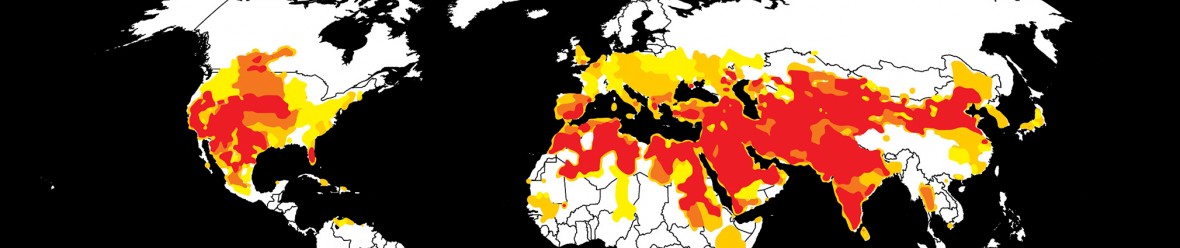
It is difficult to believe that the Sahara is growing at a rate of 250, 000 acres a year presently covering an area of 9.1 million sq km. It is actually a visible marvel on the move right in front of your eyes. The Place of the Winds (Nouakchott) was once many days walk from the Sahara now it’s in it. It won’t be long before Senegal is swallowed.
Afficher l'image d'origine

We start the next day with a fuel stop. In no time you are surrounded by the usual human beehive swarm of blameless do-gooders, windscreen washers, tyre explosive merchants, fuel mixers, wiper benders, and ariel snappers, fruit vendors and the to be expected angel faces kids. Although we all have experienced being the centre of interest for some time whenever we stop, Florence still finds it all too much and pulls her sunshade closed.
(Tip: Sunshade > the pull-down type, worth fitting on your windows.)

In the middle of the bedlam, my spare on the bonnet is discovered to be flat. “These roads are not for travelling without fixing it” – good advice.   As Samuel Johnson once said, “When travelling: a man must carry knowledge with him if he would bring home knowledge.”   So we opt for a bit to eat on the recommendation of our puncture repairman. “Chep–bu–Jen” (rice with fish the national dish) A disaster.

After the accustomed battle to ensure that my tyre tube is indeed my tyre tube, we set off once more in a downpour that may, in the long run, prove me wrong that Senegal will turn Berber.

Pitch 39 is off the beaten track hidden up a dirt trail of red rusty coloured soil. No matter how out well concealed you think you are, you will always be found by some humanoid. Four youths on horseback arrive from the nearest village just in time for dinner. One carries a large club in good old emerald isle shillelagh style. “ Na stad anseo.” (vernacular Gaelic)   Don’t stop here it seems to be saying. (Photo no – cd) We do for the night.

The sound of approaching horse hooves breaks the morning silence. Our horseback riders of the night are back to observe in minute detail our every move. In their anxiety to please their helping hands have to be curtailed from helping themselves.

Rejoining the main drag to Tambacounda, which is eighty kilometres from our first game park Niokolo-Koba we cross the road to refill our water Jerry cans. The well is all of three hundred metres deep. By the time I have hauled a rubber tyre bucket full to the top there is a large crowd – once more, friendly and willing hands complete the job.

Tambacounda is described in the African Bible Lonely Plant as our last chance to stock up, on the other hand, it also recommends that one should just pass through. A one-horse town it sure is, but we discover a swimming pool in the back of Hotel Asta Kebe.   Most of the day is spent in the water and an air-conditioned room has us staying the night.

The hotel like the Post in Saint Louis shows all the signs of having had better days. Hotel Asta Kebe is clean and serves a mean couscous in a high ceiling oval dining room. Like the Post-it is adorned with some of the noblest sights of the African bush. The taxidermist display has put the kibosh on Niokola Koba National Park. The moth-ridden heads bear evidence that the chances of seeing large animals in the park are remote.

A quick visit to the bank is interrupted by a set of long legs silhouetted against the bank glass door.   The only teller’s fingers instantly take on a motion that has nothing to do with counting the notes in front of him but could have every chance of giving him a dose of Aids. A quick shop and a chance meeting with a French family on their way to Benin with whom we exchange some routing and weather updates has us saying goodbye to the last outpost of civilisation. Williwaw knows better, we have not gone more than thirty klms when we hit a brand new two lane super highway – compliments of the French government.

It takes us three and a half hours to cross Niokola Koba National Park, which according to the bible should have taken up to four days. Other than a few baboons there is zilch to see what used to be in the park is hanging on the walls of Hotel Asta Kebe. Surrounded on either side by lush green foliage the highway is four hundred odd kilometres of worthless foreign aid which has created a going nowhere large dark scar in the red soil.

Had I not put the foot on the brake for a refuelling stop we would have whistled into the Gambia River never mind Guinea (Conakry)

The four pump attendants pointing all together at a plump Madame sitting in a car. She is the owner of the hotel. It’s too late to go searching for a suitable camping site. On the promise of returning to complete the frontier formalities in the morning, we are waved through to follow her down the remains of a rutted dirt road.

To our great surprise, we disembark at the most wonderful position for a hotel.    Perched on a high cliff it is overlooking the Gambia River in full dark brown flood.   The views through the surrounding trees, bush, jungle the birthrights of Africa conjure up our first out of Africa setting. That evening without a Tarzan cry or some roaring distance lion, or beating drums one could hear, taste, and smell a sense of Hollywood Africa.

Sitting on a balcony in the sunset for dinner of warthog the silent sound of the river and sight of our first dugout canoe ferrying leaning and crouched passengers across the river had us truly enraptured. We could almost hear one of those beautiful invocative echoing African Chants full of resonance in the distance.

As gems of feather colour visit our breakfast table down below us wet dresses with 32a pointy breasts, bicycles, dogs, baskets carrying older woman are delivered to our side of the river on the half hour.

The first ferry of the morning divulges the power of the swirling water below us. Using the full advantage of the back eddies a canoe claws its way upriver hugging the bank. Sitting proudly on the stern or the bow depending on which way the hacked out log is facing the steersman thrusts his pole into the water. Once out into the current he swaps the pole for a spear-headed shaped paddle.

The current gripes the narrow frail craft, and then with the odd correction steerage stroke arrives below us in less than a minute. The skill is reading the sweep of the river for any miss calculation from the set off point is punished by five to ten minutes of hard labour against the flow to make the landing.

One little red bird with a black cap is particularly adventurous hopping from one plate to another with gay abandonment. Our knowledge of birds or to be more precise or avifauna of the region is non-existence. I once more resolve to get a decent book on our feathered friends.

Breakfast over Florence and I descend to the riverbank and cross the river in time-honoured style, for twenty CFA no money in the world could have bought such an experience.

Some hours later at the recommendation of Madame, our second ferry crossing is with Williwaw. She informs us that down river a short distance away there is a car ferry. “One can get to a small village just on the Guinea border, where there is a wonderful market.”   “An hour and a half trip that’s all.” The crossing point is at Sareboldo, down a small track – easier said than done.

With no signposts, tall grass to the left and right, and ruts that would ground the Queen Mary we struggle to find the river never mind the ferry.

(Top TIP: Fit bottle screws with a thin wire cable between the front wings or bull bar to the base of the roof rack. They deflect branches and high grass from the windscreen.)

Without warning out of the long grass the ferry crossing appears. It is my first steep muddy descent other than the one in Portugal, which I had managed to avoid.

Creeping to the riverbank the riverside bank looks much more frightening to the girls who are standing below. Highly conscious of keeping my foot off the brakes I edge forward engaging differential lock. At the point of no return, I slip into second arriving aboard like a great Hippo emerging from a mud bath. Hand over hand we are pulled across the river on a wire cable. There are no words to describe the feeling that Africa gives to a river crossing.   I am sure it is one of the reasons that Africa becomes a bosom friend that draws one back to it over and over again.

Three hours later on an ever-increasingly difficult track, which we slid more than once, we are at the point of deciding to head back when the village comes into sight. A forced march uphill on methane rather than oxygen nearly sees Fanny’s demise. Last night’s warthog producing more than its fair share of thrust. The ever-present dogs announce our arrival.

A collection of round mud-walled huts with a thatched overhanging roof that almost touches the ground. Each house chimney is capped with an upside down earthenware pot, and a shaft of maize strapped to the door entrances from the last few years’ harvests.

“No market today,” a youth tells us in French. A drink of water and some roasted sweet corn are our lot.   Through a rain of grass seeds deposited on the bonnet by our wire deflectors, we float our way back to a hot shower, dinner of wildfowl, a whiskey and the fishing rod.

(Top TIP: Don’t go without one. A fishing rod.)

Standing on the bank I am joined by some small boys. Nothing will satisfy me but Moby Dick. With a piece of string and the old trusty worm, my admiring fishermen land one fish after the other. I with the latest lures, rod and spinner, manage to land a specimen that wouldn’t have any difficulty squeezing into a can of Mr West sardine. A dozen or more bits not on the hook but on the neck and I am back to the laughter of the girls (Photo no -cd)

Eighty thousand CFA lighter we set off to the police station for clearance to leave Senegal.Afficher l'image d'origine


( to be continued)


Share this:

  • Share on WhatsApp (Opens in new window) WhatsApp
  • More
  • Share on Mastodon (Opens in new window) Mastodon

THE BEADY EYE’S UNPUBLISHED BOOK. CHAPTER FIVE SECTION TWO.

09 Saturday Apr 2016

Posted by bobdillon33@gmail.com in Uncategorized

≈ Comments Off on THE BEADY EYE’S UNPUBLISHED BOOK. CHAPTER FIVE SECTION TWO.

( CONTINUATION)

It’s many a young man dream to drive from the top of Africa to the bottom or vice a versa. My advice is to stay at home if you don’t know how to drive a four-wheeled drive vehicle.

THE CROSSINGAfficher l'image d'origine

NOUÁDHIBOU      TO          NOUACKCHOTT
20.54 N                  18.09 N

17.00 W              15.58W

or

JACKALS WELL                                     TO                               PLACE OF THE WIND

We stop for fuel some fresh bread and water. It is hot.   Two hundred and sixty odd kilometres as the crow flies to Nouackhott.

Twenty-five kilometres out-of-town down the wonderful track we had driven in on we arrive once more at the town’s manned police barrier. Its necessity makes no sense whatever, other than to stop any Nouâdhibou residents from trying to escape into the Sahara to commit hari-kari. The chief of police has not stamped Fanny’s passport with the National Park pass.

Leaving the girls in the care of El Cid, I return to bribe half the town before I find the bastard house. A sweetener agreed, I get to drive him back into town to his office. There is a distinct feeling that this is not the first time he has forgotten to stamp a passport. The sun is setting by the time I Camel Trophy speed it back along the track.

Cleared through the barrier > the Spaniard sets off like Mad Max. Obviously, he has had while awaiting my return enough of infinitesimal tits.   He gets stuck well short of the fifty-kilometre railway sleeper – our marker to turn south.

In full view of the returning four-kilometre long iron ore train we dig and eat sand till the sun slides down the windward side of our first campsite. Pitch number twenty-eight.   Williwaw like me is restless. The sight of our Spanish partners with there curtains drawn for the night the Latin quotation ‘par nobile fratrum’ with all its ironic meaning seems more than apt.

The morning is clear – I mean no sandstorm. Our desert pavement of reddish black shale is littered with white fragments of broken shell. Under a sharp blue wash sky, the sandy desert floor stretches out before us as far as the eye can see. Looking out of the driver’s window into this great deal of nothing, I know in my heart and soul that the truck\bus now called ‘Cassé’ is going to live up to its new name.

Slipping Williwaw into first gear, I watch Florence in my wing mirror. She is sitting just behind me not quite awake yet.   There are no romantic sights of camel caravans silhouetted against the horizons only the promised heat of the day. Fanny’s veil of apprehension is justifiable as she watches the Spaniard pull away from our campsite.   Progress is slow.

We climb in a gestalt therapy tempo onto a plateau above the desert floor. Time itself is hanging still against the relentless encroachment of the moving sands below us. It is still early morning and the glistening heat of the day is just beginning to show its noonday promise to eat all shadows when the truck/bus goes lame.

“Par grave,” says El Cid, producing a hollow piece of piping and a wheel brace that has seen better days.

Luckily the wounded tyre is on the outside rear axle –   not requiring much leverage to get the thing off. But after twenty years of revolving it is a god-damn bitch to get back on. The difficulty is overcome by adding nut after nut, washer after washer until the wheel stops playing Waltzing Matilda.

A quick compass direction check taken far too near the truck\bus for my liking has us on the way again. The second puncture is not long in coming.   El Cid is now down to one spare tyre so I suggest that perhaps a re-inflation to combat the sharp shells might not be such a bad idea.

Like us, he is carrying two spare tyres. Unlike us, they are both under a Queen Anne bed.

(Top tip:   if you must house a spare wheel on the back door put it on its own support. not straight onto the door.)

On the ground in the oven heat of the day our little electrical pump gasps for air in its attempt to re-inflate one of our tyres.

 (Top TIP: if you must buy an electric pump, buy a decent one.)

Williwaw is fitted with three extra power cigar sockets, one external on the panel beside the rear door, one behind the driver seat into which the fridge is plugged and the last under the passenger’s seat for a hand-held spotlight if required.

(Top tip:   a dashboard fan is a waste of time.  Buy German cigar sockets plugs.   they are fused and much better quality.   OUTSIDE ADDITIONAL power points are an excellent idea.)

Late afternoon > Once more engulfed in a blowjob of dust and sand we draw near the end of a reddish sharp-shelled plateau > The choice facing us is a very steep descent onto the flatter terrain below or turns around and retrace our already covered tracks.   El Cid seems somewhat surprised at the sudden stop. I’m having strong feelings that he has not passed this way before.

The day is almost spent. There is no time to discuss if this is here or there. It is time to go down and hide behind one of the many horseshoe-shaped dunes for the night. They dot the landscape below us.   Cid ventures off to the left. To the girl’s horror, I point Williwaw head first over the edge. Without one touch of the brakes, she roars us down safely on the flat.

Upon the plateau edge, the blasting sand that whipped up over us cheated our half-closed eyes as to the distance to the nearest migrating dune. With our Wanker of a Spaniard’s desire to wallow in every soft lump of sand, we eventually arrive battle weary to the sanctuary of a newly shaping dune long after the last star has appeared. Pitch – twenty-nine

A tough day.

All praise must go to Fanny who has not only kept periwinkle tits, but also her little sister and Florence amused. She has fed and watered us in an environment that takes no notice of illogical borders set by man now or in the past.

With the night temperature plummeting I elected to sleep outside. Fanny and Flo accept an offer to sleep in the truck\bus. Within seconds, the sound of their snoring disturbs the desert silence. I am too knackered to care. Rolling out my sleeping bag I wonder if I will be found buried alive in the morning. Dust storms can be over thirty kilometres and are known to cover over three hundred square kilometres with a sprinkling of dust as far as London.

Morning >Hunkered down in my bag I watch our surrounding dunes continuously being shaped and reshaped by the wind. From our host dune a tail of sand streams from its running edge. Apart from us, there is no other visible sign of human occupation. Our entrance tyre marks are covered up by the night’s storm. We have arrived without a trace just like a yacht dropping anchor. From where we came no one knows.

In the tinted early morning light, our night camp has a stark beauty all of its own. We are tucked up close behind the slip side of the dune. Shaped like a quarter moon the dune runs from a few centimetres high to fifty or sixty meters in height.   Following the force of the wind from its high point, a small wake dune is in the process of being formed right in front of our eyes. (Wake dunes are formed in the lee of a larger dune).   By the time I have shaken myself free, the kids are running along the knife-edge of our overnight protector, sending avalanches of soft warm sand to the shadowed floor. We have all slept in too late.

It is not yet ten bells and the temperature is already up in the forties. No visible tracks to follow are a blessing in disguise. The flat rippled sand leading away from our campsite warns of yet another long day. Mauritania borders are big enough to hold four UK’S with room to spare. I check El Cids yesterday bearings with an old world war field compass. My compass bearings to Nouamghar place us a few degrees above our rum line.

The needle points in the direction of a set of longitudinal dunes which are quite visible in the far distance. “The park itself is highly inaccessible” according to one of our bibles “Never mind get over the frigging dunes,” says Fanny in a faint voice.   Nouamghar marks the southerly boundary of the Parc National du Banc D’ Arguin. There is no sign of last night’s wind but I can smell it regrouping.

(Top Tip: Summer Desert drive. Do it either very early morning or late evening when the sand is cool and at its LEAST SILKY. )

It is another day of sand ladders, more punctures, tyre pressures changes, sweating, engine cooling, tracks heading off in every direction, wind, temperature in the 50s, with sand in every orifice. All to achieve a day’s run of forty odd kilometres across a flat sandy desert depression.

The day has not given us much confidence to tackle longitudinal, latitudinal, or any ‘tudinal’ dunes.

Pulling in for the second night, it has yet again been another arduous day for Fanny. She has spent the day watching dig after dig unable to open the windows of Williwaw a fraction without getting a mouthful of fine grain sand or dust. The Sahara produces over three hundred million tonnes of dust a year. A mouthful or two won’t go missing or upset the ecosystem but at this very moment looking at Fanny’s drawn face I could do without the Spaniard who is holding us back from making decent headway.

The day’s exertions bear out for all to see that our man Cid lacks finesse when it comes to reading the driving sand surface.   His wreck, his appalling kids, his arrogance, if not curtailed could indeed present us with a life-threatening situation if we are not careful. However, there is one thing for sure, he is not a quitter. I find myself later that night making a mental note that if necessary I will leave him to fend for himself.

Our campsite number thirty of our voyage is once more behind a large dune. This one is jutting out from the depression wall and is the shape of a bent but not quite closed finger.   On our side, the slip side, smooth sand runs downwards and along the tilted hard floor to meet the rippled sands of the depression, the sands that tried to break our camelbacks all day.

Courted by the deserts spacious grandeur and an early moon, I forget the exertions of the day.   Fingered by starlight and a large glass of whisky I unfold my sleeping bag for yet another night in the open.   Nodding off, the picture of the two Paddy brickies who were on their way to a building project in Egypt when their plane was forced to land in the middle of the Sahara comes to mind. Looking out the window one turned to the other and say’s “Jesus Mick let’s get out of here before the fecking cement shows up.”

In the middle of the night, I wake to a gnawing of my head and the sound of scurrying feet. Both leave me with a longing for a pee but far from brave about having one. The desert, undisturbed by wind can be a profoundly quiet place yet full of eyes. Compared to the ocean it imparts a sense of permanency, where sounds can be heard in the purity of their musical notes. I lazily awake wondering whether it will be “Coo…ee” or “Ahoy there” that will be man’s first sound across the deserts and oceans of new planets.

The morning reveals a set of small footprints leading underneath Williwaw and a swizzle of unclear tracks emerging from the front bumper.   Florence and the Spanish brats follow the tracks up over the dune where they disappear without a trace; sucked up by a vacuum hover.   I tell them that my night visitor is a ghost desert fox that can hear us from the other side of the Sahara with his enormous ears. After three tough days, it is good to hear them laugh.

Over the depression wall, we are in for another day of tyre shredding on a mixture of sharp shale and broken shell.   In the cool of the morning, I suggest to CID that we should have a go at trying to break the seal of one of his punctured tyres before we leave camp. Apart from the brute force of whacking a tyre lever with a hammer, there are two other recognised methods of seal breaking.   Place the wheel flat on the ground and avoiding the hub, drive over it.   Alternatively, place the high jack just inside the rim of the punctured tyre, and jack your vehicle up – Neither worked.

In an attempt to drive the truck/bus over the wheel the bastards forgets to remove the jack – how Irish! I am left with one bent high jack.

Moving out onto the depression’s floor the bus\truck two wheel rear drive is now down to four tyres instead of six. I don’t have to tell Fanny that the day ahead has all the makings of yet another day in heaven. I can hear her saying without a spoken word, ‘Bloody great, it’s over forty-five degrees, not even ten- o -clock in the morning, all I want is out of here”

The day involves hours of digging and retrieving sand tracks. On one occasion, El Cid roars over the tank tracks ripping his exhaust off. On another occasion, he pierces his fuel tank.   On top of all this for good measure during a white-out, I pull his front bumper off before lunch.

The exertions of the day are driven by an uvula thirst increasing our water consumption up to alarming proportions.

Far from amused, (all of us are covered in dust and sand so that when we blink the moisture of our eyes congeals to form a paste that dries in the sun like concrete) we arrive at camp thirty-one exhausted.   Our chosen campsite adds to our desire for survival with the discovery by the kids of a load of bleached camel bones.

Today, day three is the day of connecting the red line.

Once again it starts badly with my Spanish friend asking for water. I am running short on temper, not water. I have asked him on numerous occasions not to dig in the truck/bus up to its axils before the sand tracks are in position. Once again for most the day, he roars away in the sand until we either come back or catch up to dig or tow him out. That evening camp thirty-two over a game of chess he gets the message. Cut out the el Matador antics or we will be exchanging blows or saying good riddance. In other words, ‘Adiós amigos see you in Nouakchott’

There is no need to worry about fisticuffs today, for unlike yesterday the shale windy surface does not peter out into silky sand but remains flat and hard. However, it not long before there is a large bang and down goes the back wheel of the truck/bus. The day is spent in the searing heat making a new head for the wheel brace. We unscrewing the wheel bolts, which were congealed to their thread worn, counterparts. Pounding with a hammer and tyre levers we remove the tyre. We manufacture a large patch which is stitched and glued to the tube and we steel weld the hub bolts back into place. Florence attends a schooling session. Pear tits and her sister either play with the tools or cause general havoc.   While I send a prayer of my own out over the landscape to keep my Irish temper at bay.   Fanny kept our energy levels up.

That night pitch thirty-two from my sleeping bag I watch the gleaming sash of the Milky Way and listen to the desert whisper secrets to the moon. I begin to understand and respect the Saudi Bedouin, the Tuareg and other nomadic cultures that follow a nomadic or semi-nomadic way of life > A way of life that has all but disappeared. It is difficult to appreciate that this part of the earth was once an ocean floor, a forest, and grassland where elephants and antelope roamed.   I recall reading some book on Africa where the writer or writers record in great detail distances, the road conditions, between one place and the next, which seems somewhat pointless in a place where time means nothing, making distance somewhat irrelevant.

Morning >   According to my compass we are still two degrees below the rum line to NOUACKCHOT. As we break camp in the cold air of a new day dawning there is no argument from Cid, with all the wasted energy he has burned up he is washed out.

Fanny refills our indoor plant spray bottle – a wonderful piece of equipment which when she had packed back in the UK, I gave her hell about.   There is nothing like the soft gentle touch of mist on an overheated burnt face, neck or cut.

(Top Tip: Don’t go without one.)

As if looking into a gipsy’s crystal ball the belching exhaust of the truck’s\bus cold engine has us hypnotised. We are on our new course back into and over the larger dunes we saw two days ago.   All goes well until we hit the sand at 9 am. Within minutes we are digging.   Fanny records the dig time and our length of progress between each dig. Over the next four hours, we manage to cover just over seventeen kilometres. Six digs varying in time from fifteen minutes to an hour each and all in the temperature of high forty’s or low fifties. Midsummer is certainly not the time to cross Western Sahara.

I am now experiencing what is called a survival mode of operation, a silent inner mind map.

(Top TIP: Survival situations rarely appear unexpectedly, but tend to evolve from bad preparations followed by bad luck. Set realistic itinerary and don’t skimp on preparations, or provisions.)

Over lunch, I can see the strain in Fanny’s eyes. She has been physically unable to help but nevertheless has contributed way beyond her wildest imagination to the triumphant struggle of this trip. She reads story after story to Florence, sprayed my sand sore eyes slipped dehydration sachets into our drinks. Receiving with great restrain a bite from thimble tits that nearly causes a ‘Big Country’ punch up. The bite being returned by me with a full unrestricted open-handed slap to her white trasero (backside) impressing Florence surprising the brat leaving El Cid is in two minds, Fanny shock and sore.   After this event, Cid manages four hours, or fifty odd kilometres without a stop which restores peace to our world.

Our fourth night in the encroaching wilderness is one of utterly exhausted sleep for all. Pitch No 32.

For once in the morning we are on way by five thirty am.   The driving is considerably easier if undertaking before the sun heats up the sand to egg timer silkiness.   Eighteen kilometres on sand without a stop from camp Fanny and I are beginning to think that this could be our lucky day when all of a sudden up ahead, El Cid shows all the signs of digging in again.

Two hours later he has another puncture. With no peel-off patches left we cut a patch from one of his shredded tubes. On the go again Fanny announces that to date I have dug El Cid out ninety odd times. She has had it them up to her, (we hit a bump). “They can fry.”

The large to be crossed dunes ahead might grant her wish.   We roar on without a hitch until during one of our tyre re-inflating and cooling engine’s stops (I have long given up on my small air compressor using the truck/bus one forgiving attribute blowing.) we spot a black flag on the sandy floor below us.   Looking through my 8×24 field 7°   (Top Tip: Excellent Bird Watching power) I see a car with two black turbans looking in our direction.

Stopping at a suitable precautionary distance, El Cid and I walk over to find two young Mauritanias.   With the assistance of sign language, we soon learn that they are awaiting the return of the car’s engine.   Apparently, two friends walked off with it some days ago. Bearing in mind our struggle of the last five days the thought of two fellows walking along in the middle of the desert carrying a car engine seems absurd in the extreme. We leave our two young Arabs with a handshake. They settle down for a long wait beside a large barrel of water their fingers pointed in the direction to Nouamghar.   ‘How far’ draws a blank. “Follow our friend’s footprints and you can’t go wrong.”

Pitch no 33.  Twinkle tits apologises for the bite. Our spirits are better. After yet another three early morning dig outs, we hit the seashore of Parc National du Banc D’ Arguin. In a flash, a chain of vibrant affirming ripples confirms the drawing power of water.   Disturbing the resident pelican we are all charging headlong for the water.

Down the shoreline awaits Nouamghar and civilisation.

Passing the jaw bones of a dead whale well on its way to fossilizing we enter a small settlement set in drifting sands. It contains a shop with a few bleak windowless buildings straight out of a Steinbeck novel. A coke sign creaks in the wind. Coke – something we’d all die for in our condition.

There is a strong feeling of being watched as we all enter the shop Inside the wooden walled building there is a fridge out of which we are handed six bottles of cold Coke. (Put Coca’Colá in it Arabic style here)

Standing half in and half out of the shop, swatting flies and gulping coke, we are a forlorn and lonely looking bunch.

Re-emerging from the shop a flapping djalaba tries to pull the wool over my eyes with a tax demand.   He became somewhat agitated when I pulled the driver’s door in his face. After what we had been through he was lucky I had not slammed the door on the fingers. He had another thing coming if he thought I was going to pay for it.

Camp number thirty-four is out of sight of the settlement but not out of range of its rubbish dump.   According to Cid, there is a choice to be made here – we can go down the sea-shore to Nouackhott in the time it takes for the tide to turn or cut inland to find the main off piste drag.

Looking at the soft sand there is no need for you to guess as to what option we took. Come hell or high water it’s down the beach in the morning. Whether we make it or not is of no concern, as elicit tits had just added to the dump aroma with a dump of her very own >   RIGHT on our very doorstep.

The beach run is about one hundred and fifty kilometres long, fully accessible only at low tide with no get out if things go wrong. The seawall is a solid run of Sahara dunes protected by a high ridge of sand. The sort of sandy ridge you get on the bank of a river when it crosses a beach to the sea. It cracks with the weight of your foot, falling as a mini-landslide with a solid slosh into the racing water.

Examining the high water mark, I figure that the tide will be turning at six am in the morning. Wrong it does not turn till ten am which is just as well as the Truck/bus gets stuck at its first attempt to get over the soft sand edge onto the beach.   We waste almost an hour of the tide trying to get him out.

Fifty kilometres flash by with our speed only slowing for a few outcrops of rock and the odd shipwreck circumnavigation.   Going hell for leather we are passed by two packed to the gunnels Peugeot taxis, their huddled passengers clinging on like limpets. If you fall out, you walk. They give us heart.

At the eighty-odd kilometre mark, we are waived down by a military blockade. Whether their jurisdiction extends beyond the low water mark is not up for debate. What is for debate is whether El Cid is going to turn around from where he has stopped down the beach? Waving Kalashnikovs inform us that if my friend does not come back, they (the military) are going to keep our passports.   It’s the last straw as far as Fanny is concerned.

Time ticks away. My explanation that the truck/bus has nothing to do with us other than we were forced to accompany it across the desert, is not having much effect.

I signal to the pointed gun barrels directed towards Cid and beckon him to back up. There is not enough room with the incoming tide for him to turn his vehicle.   He reverses back with a crunching noise that announces the pending death of the truck/bus. After a suitable dressing down all is explained > the tide, no brakes, did not see you, no Comprende and – we are finally allowed to continue.

It is now very much a race against the tide. El Cid runs out of fuel. I syphoned some from under my driver’s seat spare tank. One hour later we turn off the beach with the waves slapping against the driver’s doors. We roar up an outlet, cut into the sandy seawall and get stuck not for the first time in the whole crossing in the soft warm yellow sand of mother Sahara. Sand tracks, once more. With feeling, we dig to join the red line.

According to Michelin 953 & 954, there are from the North, three other Redline joining crossing choices they are,

Reggane ( Algerie)         to     Gao   (Mali)                             1317 km approx

Tamanghasset (Algeria)     to     Arlit (Niger)         598 km approx                         Aswan ( Egypt)            to     Berber (Sudan)    1214 km       with a dash of water

Our five hundred and twenty plus kilometres with over fifty dig outs, six tyres, one hundred and eighty litres of water and a race against the tide has cured us of any other red line joining routes.   What normally should take three to four days has taken us the bones of eight hellish days.

With black tar visible at the top of the sandy exit for a change is a hefty sigh of relief.   Not even the sight of itsy- bitsy tits opening the door of the truck-bus while Cid sprays sand to the four winds dampens our joy. I am no Gipsyologist, but I can tell you that crossing this part or for that matter, any part of the Sahara with Spanish nackers is a No No.

Somewhat Gipsyfied we head for the centre of Nouakchott better known as the Place of wind > A capital city besieged by dunes.

Cid tells us that he has some friends in town who are going to put himself and his brats up for a few days. Before he can escape I stick him with the cost dinner, a fill of fuel and a promise of collecting my straightened high jack plus a full bottle of gas in the morning. We exchange overdue Adios.

We scarper out-of-town, as far away from the slums as possible, to a hotel named Sabah positioned at the top of the outlet where we had roared up two hours ago.

At seven thousand unutterable (Ouguiya) a night, we did not give a tinkers about the odd cockroach in the shower. The girls deserved the best the wind place could offer.   Western hospitality is not one of Mauritania strong points. Morning breakfast consists of two moth-eaten croissants and a cup of coffee that could pass as cold camel pee.

Driving yet again into Nouakchott’s featureless city centre square we see why Mauritania has the biggest drop out of nasrani (Hassaniya Arabic for white Peace Corps Volunteers). The hostile city environment setting has a leg ironed on most of its residences. With many-sided line pious religious dudes its populated is still governed by a caste system of nobility. Slavery was only abolished officially some twenty odd years ago. Prior to the ethnic clashes of 1989, it is no wonder that most of its black Soninke peasants bugger off back to Senegal leaving its soul to disappear into the sand.

Tracking down of El Cid turns out to be a problem but eventually, we track down the truck/bus parked with a previous wreck he had driven down in the garden of his friend’s house. While I recover our gear, towing strap, gas bottle, bottle jack, spanners, torches and the like Fanny makes good use of the friend’s house washing machine. Leaving our calling card of two full lines of drying we head back into town for a spot of lunch.

Down one of the side streets, we find a small restaurant named “de Iraq.” Sitting outside, Florence is spell-bound by two bonking monkeys. Fanny and I buy two omelettes made from dubious chicken eggs that never crossed a road.

That evening in the shower a tiny film of sand in the basin reminds me that it is water or the lack of it that determines a true desert, an authentic desert people, and not the mask meaning carried in the name of Mauritania the Land of Sand. Bedouin Arabs came to Mauritania as predatory invaders with a strong aversion to settled life we came as tourists that now know shifting sands are the true invader.

Donations are still peaking at zero.  Have some feeling for an Unpublished Author that can spell.

R Dillon. Account no 62259189. Ulster Bank 33 College Green Dublin 2.

Sorting code: 98-50-10.  Thanks.


Share this:

  • Share on WhatsApp (Opens in new window) WhatsApp
  • More
  • Share on Mastodon (Opens in new window) Mastodon

THE BEADY EYE’S UNPUBLISHED BOOK. CHAPTER FIVE. MAURITANIA.

08 Friday Apr 2016

Posted by bobdillon33@gmail.com in Uncategorized

≈ Comments Off on THE BEADY EYE’S UNPUBLISHED BOOK. CHAPTER FIVE. MAURITANIA.

MAURITANIA.Afficher l'image d'origine

Named after its Berber inhabitants called Mauri.
(Mauras: Latin meaning Moor, and Aquitania: meaning land of Sand.)

Afficher l'image d'origine


What we know:

Dry. Sand. Slavery. IMF/ World Bank Clients. Iron Ore. Islam.   80 % Moors Black 18% Blacks.

Engaging low differential we fall off the red line into a heavily sanded track. The border turns out to be a chair and table with a chain hanging between two sticks.

Pulling over to wait our turn it is easy to see that what is sitting at the table is not one of the five university graduates or fifteen students MAURITANIA had when it got its Independence from France, back in 196O.

Seated at the small table is whatever you do don’t look up, don’t stare labelled army colonel. He is sporting a moustache that causes a secondary shadow to set over his narrow lips. Surrounded by a group of wander bouts, give me fag, I have the packet, pocket the light types he looks like something out of Mad max.

With my palms requiring a wipe on my shorts we approach. I have a mental picture of myself stripped standing in the searing sun.   Looking to his left and right there is not another table for thousands kilometres. It’s tempting. All of a sudden there is some ugly talk. Our Germany foot Tourist is being led off over the sand to spend the night in jail. No Visa.   My nerve end tingles. Is this the gate to Hell or Heaven, too late, only the visas will tell?   > Moving one closer. One of the wander bout soldiers is at the window asking Fanny to have a look at one of his friends. “He has a fever ”   The German say’s you are a doctor. She offers a few of our trusty multi vitamins.

(Top Tip:   Vitamins pills. > A must for Africa.   All over the continent it is — doctor, DOCTOR give me a pill. The safest is a multi vit.)

My tinker visa passes with flying colours. The pills are turned down. How far to Nouâdhibou gets a reply, “Nouâdhibou is not more than an hour down the line from this point.”

II hum did LLLai (Praise be to God)

“All you have to do” say’s the colonel “is follow the track beside the railway line.”

The well-defined colonel track soon turned into a million tracks obliterated by deep sand. For the next hour it ebb and flow from gravel, to shale, to ill-at-ease sand, to rocks > Wheel spinning stuff. Then last but not least a dose of smooth rolling sand coaster that are unavoidable. These are bottomless ruts of sand that can only be driven a neck breaking speed > Foot to the floor stuff to get to the opposite side without spending hours of digging, out with the sands tracks, more digging, and more sand tracks. The first victims are the two ancients French in their Toyota Hatchback. They being somewhat top-heavy have come a cropper in one of the sand traps. I and El Cid Eugene the Spanish Bus driver stop to lend a hand > A running repair with rope and wire. Using the same method I once use to splice a broken boom of a yacht we strap the French Masion back onto the chassis. Eventually we leave our two unfazed French friends to struggle into town at their own pace.

Next it’s a puncture for the lorry/bus. With a great deal of sheer force and ignorance we manage to remove the offending wheel, and heave it up onto the floor of the bus. After many more stops to cool our overheating engines, sort out hostile police checks, we arrive, beating the longest train in the world from Zouérat by a short head, in Nouâdhibou. The train by the way is carrying three to four kilometres of iron ore.

Nouâdhibou first impressions rival that of Dakhla for dump of the year. Domineered by an iron ore smelting works the port takes its name from the word for Hassaniya > Arabic >   for > The Jackals well.

Full of Korean/Spanish/ fishing rust buckets, most of which are lying to anchor at different hilts of sinking.

A fine film of iron ore dust covers the harbour, the town, and all adjacent mud brick buildings and inhabitants. It is a wart on a finger of the Sahara called Cape Blanc peninsula.

Whether you arrival here on four wheels or by camel your first impressions will remain justifiable long after you leave. On the way in and on the way out unless you are leaving by air or train, you pass over the town’s open dump   > A heap of rubbish in a state of constant spontaneous combustion that gets hold of your breath to the point of suffocation.

Nouâdhibou is featureless and flat. Its views, if any, to west are blocked by the railway embankment. The east offers flat sand with a strip of distant blue that could be either water or sky. The air strip which subs up as a road is a good thirty minute walk outside the town, with the railway station if there is one a good deal further.

Why are we here? > To get permission to travel on to Nouakchott the Mali capital where the red line starts again on our map. Sounds easy I hear you saying. We are to learn different

.A wonderful cup of coffee, some foreign exchange dealing on the black market for Ouguiya (Mauritania cash) and the ejection of an over persistent guide who has somehow or other managed to get himself sitting in Williwaw cab. We followed El Cid down over the town edge, on to the runway, heading for Baie de l’Étoil.   It offers the only secure camping site near Nouakchott. Skirting the runway we head off out over the flat sand which has the habit of being covered at high tide. Somewhere out on this vast hard sandy wasteland we are once more stopped by two traffic cops. By the look of them they have been standing out here all day waiting for us.

El Cid handles them in the head lights of the bus. We head further out from the shore to avoid any more speed traps. After what seems ages of twisting this way and that, dodging the incoming tide, we arrive at a set of high gates. These are opened by a man obviously knowing to our man El Cid.   We drive into a small walled empty compound capable of taking five tents. In the dark all is exceedingly depressing looking. A gale of wind blowing in short sudden puffs whips across the floor of the compound, rattling its surroundings corrugated sheeting walls.   By the time I have the tent pitched and secure for the twenty-seventh time, everyone is too knackered to care.

The compound has a shanty type shed built along the wall facing us. Inside this shed some tomato plants are defying the lack of water in an effort to produce more than shrivelled up skins. The wall to our right has a pedestrian door that opens up onto the blue strip we saw on the way into Nouakchott. > The seashore.

There is also a stable like open structure building made of mud bricks containing two rooms, which we presume are supposed to pass for accommodation in some forthcoming ‘out of door camping’ tourist brochure. Attached to these rooms is a kitchen with a tap, a loo, a shower. All of which have run out of water long before the Sahara did.

It is not a good night. The tent, to the background sound of slapping little waves is battered from every angle. Rocking and rolling its canvas quiver while the window zippers jingled to the strain on the guys and poles.   Every slapping sound is a waves coming closer – not to mention the sheets of tin roofing that spend the night awaking the dead. The humour barometer is at an all time low by the morning. Frantically search the plastic bags for loo paper the morning confirms last night’s feelings. We got to get out of here as soon as possible.

Welcome to MAURITANIA it can only get better.

Look say’s Fanny “it is over four times the size of Britain, and fourteen times bigger than where you Paddies come from.”   How she worked that out by her finger measurements method I don’t know, but this is not the time or place to ask.   “The whole God damn place only qualifies for eight pages out of the one thousand three hundred pages in our Lonely Planet bible.”

“There is no answer to this profound observation as she has studied all eight pages over and over for the duration of the night.

As the morning progress its get better. Not so. First it is the tea bags, then the time of the month.   There is every likely hood that we are to be the first couple to split up over plastic bags if we don’t watch it.

The Spaniard and I go hunting for a fish for lunch.

Moored about two hundred meters from the hall door of the compound in the deep blue is a bad attempt at a Huckleberry Finn box raft.   It is being pulled ashore by a rope and back out again to it mooring by two individuals that have the same look of fear as our shower or loo would do if they saw water close up.

After an hour or so they eventually pull themselves ashore with their catch. I leave it to the fish expertise of the Spaniard to do a deal > A fish as big as a salmon is unloaded from a sack that is just about to be put into the back of waiting taxi. It is gutted, and eaten by high noon.

Taking a short walk after lunch not far from where we are camped I discover an Air Afrique lodge building.   It is as desolate as it surroundings with boarded up windows looking out across to the opposite shore beaches where we will go in the near future.   Behind the beaches a solid illusion of dunes stretching south and north as far as the eye can see. They’re are endlessly denying their continuation.

Advanc’ed Dunes, Anti Dunes, Attached Dunes, Barchad Dunes, Head Dunes, IceBarchad Dunes, Lateral Dunes, Longitudinal Dunes, Phytogenic Dunes, Plinth Dunes, Seif Dunes, Tail Dunes, Transverse Dunes, Wake Dunes ……   to mention but a few……

With the heat of the day subsiding we all squash into Williwaw for a trip into town.

Bouncing along past the airport we charge up the sand that separates the town from the sand flats. Our first attempt comes to a halt less than two meters from the top. We roll back down for another assault. This time we hit a rock, and come to a sudden standstill in the soft sand. We all bail out and start digging.   Our trusty Spaniard laying to rest our sand shovel pontificate’s on the different methods of getting a jeep out of the sand. The shovel is never to be found again.

A round of excellent coffee in a surprising well run cafe, has Fanny back to the sparkling person I love. Florence in the meantime is having a ball with the younger of the Spanish girls, playing in the street some Moorish game that only children can comprehend. We all cross over the street to the market place. El Cid is to replace my spade. I search for six or seven meters of black cloth. After the other night I have sworn to learn the secret of wearing a Bedouin style head wrap around. “They don’t wear them just for the good of their health”

Before the hazards of our return trip to our compound we learn that the French ‘old dears’ have been seen in town. We meet up and have several drinks while they fill us in. They had just arrived yesterday. The house as we speak is being re welded to the chassis and they hope to be on the road again in a few days. I did not have the heart to tell them that they did not have a hope of crossing the dunes I had seen in the morning.

Once more, in near darkness we pass along the outer limits of the sand to avoid unwanted hostile police attention Early dinner, compliments of Eugene, a game of chess, with a few Johnny Walkers, the decision to accompany the Spanish Gypsy across the gap to the red line, to Senegal is made.

This is not a difficult decision. The only other option is that you must take a guide into the waste of dunes that makes up the Parc National du Banc d’Arguin, one of the world’s greatest bird breeding parks. The very thought of a guide after the earlier ejection of our cab sitting individual is nauseating in the extreme

Safe in my sleeping bag that night, listening to the music of the splashing lake waves, I have no idea of what we are letting ourselves in for – just as well.  I also can’t help thinking who would have thought that we would need a bird book for the Sahara.

What I had not take into account is the Spaniard’s undisciplined children. The first hint of what lay ahead should have been obvious The next inkling is the state of the Spaniards Truck/Bus. The third and the most serious one is that we are all of us still ignorant of the Sahara’s timeless nature. To be fair to the Spaniard the last hint of what was going to happen is hidden in both of us and how we will cope with each other.

To top it all there is still no sign of Madre (mother) who is expected to turn up in Nouâdhibo to keep the little boobs in hand. She is supposed to be flying in for the trip across to Senegal. The chances of a mother arriving seemed rather remote to me. On looking back I might have been better to have spent some time learning Ground to Air Signals.

Our first visit of the morning to the Police station in town makes it is plain for all to see that getting permission to cross is not going to be a piece of cake. If the chief of police is anything to go by there is every likelihood that we are all going to learn the value of time without speed for the next few days. A large bed inhabits his office.

Early each morning and for the next several days we witness the pleasure of greeting his lordship the cop. A Mauritanian greeting can take up to a month of Sundays to deliver. It usually starting with “Iyak la bas” (Hope you have no bad) another words, “How’s it going.” Then it is on to how’s your mother, how’s your father, how’s the tenth son of your first wife the seventh son of the next wife and so on down the list, till you are dismissed with a nod of his head.

This ritual is carried out by each and every one that enters his office. All stared at outside by a group of very disinterested donkeys in the searing heat, and a small crowd that is battles in the dust for position in an ever elongating waiting queue.

Passing sand colour police wearing uniforms that make them Chameleon-like against the walls of the station we enter the station. This is not a place to spend time explaining visa this or visa that.   Luckily I have read in the Bible that advises not to let go of your Passport on any account. Follow its advice I supply photo copies which I had done back in the UK.   (Top Tip:   Photo copies of YOUR PASSPORT information page is another must to have with you.)

With a show of just how efficient he could be we are returning to Williwaw in a matter of minutes rather than days with instructions to report up the other end of town to the customs, then the army and back to customs for a currency declaration.

Stepping out into the blazing sun I feel white privileged as we pass the starched white shirts and blue djalabs that will have to go home and unroll their head-gear to lighten their days load of sand to return and try again tomorrow.

At the other end of town the next hurdle commenced with all of us been ushered in to a small room I spot one tooth in the adjacent room.   It was he who had taken our details two days previous at the last barrier just outside the town. I had given him a hand in his fly infested shed to write our details in his jotter.

Four forms each, three for the car one for the loot are all copied letter by letter, amount by amount, into a large ledger by a woman who had not discovered the pleasures of smiling, as one tooth has done on seeing me again.   Using find the column first method she runs her index finger along the top of the page then down to meet her other finger that is tracing the line along to a free spot. She has not quite mastered the technique. Taking her eye off the ball to look at our forms she loses the column arriving at a filled in spot. A re run of the fingers is required only to write the wrong information in the wrong place. In the intense silence of this important work we listen to the silent creeping tide approaching with every torturous entry. The possibilities of dodging the police on the drive back to camp are becoming less and less with every wrong entry.

The next office is further down the corridor where the entered forms are now shuffled in front of us from one bundle to another.

One tooth offers Florence one of the many machine guns resting up against the wall. She turns it down. Then all of a sudden for no apparent reason a stamp, a scribble we are acceptable for a month but not yet cleared to join up the thin red line. This has to be granted by the chief of police.

We celebrate with six hundred ouguiya worthy of chicken surprise, and a visit to the Spanish consulate to see if we can pay a visit to the fuckers (Spanish sound for Seals: written Focas.) According to El Cid all the fuckers, and there are thousands of them, hang out on a beach the other side of the Peninsula which belongs to the Spanish. This side not too long ago once belonged to a French multinational company named Miferm which was once more powerful than the whole MAURITANIA government.

The consulate is not in, so we go and dig him out of his home. His is the only one living in a house behind walls with a border of grass running along its length. Not difficult to find in a place where there is not another blade of grass to be seen for hundreds of kilometres.

Sentencing a consulate to pull his plonker in a hell hole like this is beyond the call of any diplomatic duties. What the Spanish will do for a fish has no limitations.

We meet a balding man, with heavy glasses, a heavy stomach in his early fifties wearing African sandals and loose Senegal trousers to match. There is no invitation to have a cup of tea, or a cool drink. With my extensive command of Spanish I soon gather that the Fuckers are no longer in the Fucked Area. It has been mined by the Mauritanians. However we can drive out-of-town (he draws a small map: A – you are here, they are now there – map) to where better Fuckers can be had on the French side. The Spanish side is also mined. Adios.

Once more in the dark the shore police are given the slip and the night’s sleep thanks to Allah is without much disturbance.

Day three > The wind has died, fanning Fanny’s ado of early morning grouch. Before setting off her patience is tested by a bottle of suntan oil that has opened in one of our small day backpacks. Our police station is not opening today so we are free to cross over the Peninsula to La Gouera on the Atlantic side in search of Monks Fuckers according to El Cid. Not quite to Fanny’s liking but it is better than spending the day sitting around in the heat. A swim in some Atlantic rollers wins her over. Williwaw, however, puts up some stern resistance with yet another flat tyre.

(Top Tip: Don’t strap, or bolt the high jack on to the front bumper. The best position is in behind your roof rack ladder. An electrical winch is an expense we could not afford. If you learn how to use your hight jack, you can manage without one.

Eventually, all is set. The plan is to drop off my tyre in town along with one of El Cids tyres to have the punctures repaired. Then on out to the cape not to the very end, but to a place called Faux Cap Blanc, where according to the latest reports, all the fuckers are sunbathing.

This time after our normal five-mile beach run into town, we mount the sand embankment at a different angle without any trouble. Our search for the tyre people takes us over mountains of plastic bottles, and general household rubbish. We zigzag in and out and between mud baked houses all looking exactly like its neighbour. Watched by a carnivorous eating free range goat we eventually arrive at a generator with an air hose.

I am assured by El Cid that we will need all our tyres for the crossing. “There is many places where we must deflate and re-inflate” says he in his not so bad English. “I have a compressor on the Truck so it will be easy.” What a relief.

Promised the same tyre back, we head off in the direction of the Iron Ore Smelting plant. Iron ore once supplied over eighty percent of Mauritania exports.

Crossing the railway line we have not gone half kilometre when we are bogged down up to the axial in soft sand. El CID has conveniently left my replacement spade in the back of his truck. We dig with our hands arriving one hour later, fucked at the Fuckers reserve.

The little fuckers have fucked off.

Battering the outside of Williwaw a sand storm whistles up over the cliff edge. What better time to test my black wrap around.   Looking like a black pawn chess piece, I battle my way to the edge.   Through the seven meters of cotton stinging sands are stabbing my wrapped face. Large ocean growlers break on to the beach below. There’s not a fucker to be seen anywhere. I venture over the cliff edge to find that the sand storm is only the sand being blowing up over the edge from a set of large sand dunes running down to the sea-shore. The beach below is clear and sting free.   Beneath me a small lagoon is nestling in behind a sand barrier. It looks wonderful for a swim.

Returning to the girls I convince them that it is worth battling the sand to the edge. Little tits is first out of Williwaw in her bikini and glasses, and runs over the edge squealing, followed by Fanny and Florence, and the other small one all holding hands till they reach the edge. El Cid has disappeared into the sand storm wondering where all ‘you – know – what’ have gone.

Although our map shows us to be now down the coast well below the Canaries Islands, the water is freezing. Pip tits nipples are now hurt so much she start back up the sand dune clutching her boobs while her rear end turns to pumice stone. Everyone eventually follow her in the blazing sunshine to the warmth of Williwaw.

I wade out onto the bar, where I find a shelter better described as a hovel. Made from bits of fishing nets, fish boxes and shore debris. Looking up the cliff I spot its owner huddled in a sandy cave half way up. Our silent contact becomes embodied with the swirling wind, the sea, and tern cries, we meet or our sea natures meet without the need for a spoken word.

Arriving back we take a look further along the cliff top. We meet two Arab Fucker spotters they produce nothing. The girls are fed up and they tell El Cid he can get in or walk the whole way back. We return to town in a blizzard of flies that have taken shelter in Williwaw from the sandstorm. Approaching the outskirts they that is the flies mixed with a cloud of ore dust that swallows the whole place making the journey back to town like driving across a landscape that has suffered a nuclear holocaust.

The next day is not one to remembering.   The start is not too bad. We are to go into town in the Truck bus, to collect the pass for the Park and have two more bus tyres fixed. The Chief of Police is his efficient, self-taking pride is once more using up another page of our passports. (Top Tip: Get an extra-large passport, as each frontier official likes using a fresh page.) Eventually he charges three thousand six hundred whatever’s for each pass.   Then he demands another three thousand for insurance just in case we run into a tree or have an accident with an oncoming vehicle on the wrong side of the desert.

Next we go to pick up the truck\bus tyres. Five whole hours and one mud wall later that has collapsed with the strain of trying to break the seal on the tyres we leave not knowing that it is a spring tide.

With the girls asleep in the back, El Cid shows a side of him that I was going to become acquainted with on several more occasions over the next few days> blinkered Moorish arrogance, which could cause a life threatening scenario.

Frustrated by the day’s puncher repairs, he hits a sand mound at speed that sends all who are asleep to the roof of the Bus. A few minutes later we are all plunged head long into the sea. We arrive back well after midnight to dine on peanuts. We awake to the sound of incoming traffic, Germans with Merc jeeps for Senegal buyers.

To be continued.

Donations are to date overwhelming. Zero. Hopefully by the time I get to South Africa we might strike a vane of writers support. Just in case you missed an opportunity to donate here are the details. R Dillon. Account number 2259189. Ulster Bank 33 College Green Dublin 2. Sorting Code 98-50-10.


Share this:

  • Share on WhatsApp (Opens in new window) WhatsApp
  • More
  • Share on Mastodon (Opens in new window) Mastodon

THE BEADY EYE’S UNPUBLISHED BOOK. CHAPTER FOUR. WESTERN SAHARA.

08 Friday Apr 2016

Posted by bobdillon33@gmail.com in Uncategorized

≈ Comments Off on THE BEADY EYE’S UNPUBLISHED BOOK. CHAPTER FOUR. WESTERN SAHARA.

Western Sahara.Afficher l'image d'origine


  1. Polisario Front.

What we know:

Sand, Harmatten, Dunes, Camel, Tuareg, Mistral, Refugees.


Leaving Morocco’s haunting sounds hanging on a drying sea breeze we cross its disputed border into the Western Sahara.

In the shifting sands as to exactly where the frontier is anyone’s guess. This little bit of the Sahara is the size of Britain with a two thousand five hundred kilometres electrically monitored fortified wall (longer than the wall of China.) It has a capital city called El Aaiún not marked on our map. Indeed it does not make the grade for any large yellow letters on our map anywhere.

Perhaps it is one of those “here today gone tomorrow” part of the African Continent.   All the same it is difficult that night to ignore it, or, for that matter to get any feel of being fenced in.

We settle into our twenty-second pitch of the trip, a wild pitch. (Wild pitches are when we set up camp in a spot of our own choosing.) It has been a long hot day reflected by Florence’s choice of name for the night game of dominoes ‘Desert fire.’ The girls hit the sack. There is not a noise or sound to be heard.

With the simmering of another desert day over, I sip a Paddy whisky, disappointed that there is no feeling of nearness or farness but I have a strong feeling of time.   My time feelings, I suppose, are because the essence of reality is time itself.   I am looking for time to heal the wounds of the lost of our livelihood. My hope is that later or I should say deeper into Africa I will find time that is born out of death not subjugated to speed or the science of my western culture. One day = 86,400 seconds. The uninterrupted view to my left the real desert is a constant reminder of where we are and where we were going without an EPIRB. (Emergency Position Indicating Radio Beacon) I sleep fitfully.

Morning, Fanny has been up since six am. Florence and I sleep on to seven. The air is cool and my Essaouira surf leg strain seems a lot better. An oil change, new filters, cut knuckles, black fingernails. By 9 am I am looking like wildcat oil driller rather than a respectable Paddy on his way to South Africa by car with his beloved and child.

The day brings several more police control checks points before arriving in Tan Tan. Here we strike it rich with the cheapest fuel in the whole of Morocco at 2.95 dirham per litre. We fill to the brim.

Hugging the coastline we pass a few more forlorn shipwrecks that I am sure many an insurance company wondered just how they managed to hit the largest continent in the world. Cutting inshore we hit our first Sahara traffic pacification dune sign. It sends a bottle of cooking oil into the bilges, coating all of our tinned food in a fine smear of sand and sunflower oil.

“You didn’t read that one did you”?

A small mound of yellow sand that is smooth, solid and silky has sent Williwaw into a sideways skid. “The desert waves are certainly different from them there Atlantic rollers,” Is met by a silence of a non-sharable bananas being peeled.

Pitch number twenty-three. With a long days drive under our belts we are at long last in sight of some real size dunes. Not quite the dunes you find in coffee table magazines that advertise the latest 4X4, or deodorant.

That night I read that large grain sand moves in short hopping movements and smaller grains by air.

Seif Dunes  –  ridges run parallel to the wind and at right angles.

Barchan Dunes – that can go up to fifty meters high and ten kilometres long.

Crest Dunes  –   move from one location to another.

“It must have been a crest dune that nobbled us today.”   If it was it did not matter as I was now paying the price, another repack was under way.   I reminded the girls that there were ninety-five armed conflicts going on in the world and we did not need to add another over some god dam cans – I lost.

Before hitting the sack the two fish purchased in Tan Tan are consigned to the quicksand – the depths of the Sahara. A tin of baked beans is washed down with the last of our wonderful French brandy and a slice of birthday cake. Three a.m. Fanny is outside battling the wind in search of one of her noises. I refuse to leave my sleeping bag to go and look for something that goes bump in the night; Revenge for the repack.

After two months it is high time she learns to relax with the sounds of camping. To be able to identify rustling leaves as against leaves rustling, mice scurrying or rats gnawing, or Bob piddling. It’s far too late now for leaves but what will it be like when the paddy paws arrive, the bark of a hyena, the laugh of a Baboon, the buzz of a mosquito. Only god knows!

I assure her that no one has seen us leave the road and the nearest village is miles away and there are no marauding animals or Bushmen to worry about and   that the chances of being run over by a camel are as remote as winning the lotto.

Seven a.m. Our Fanny is not a happy bunny this morning. “Anyone, seen a camel?” I try. How was I to know that just around the corner from our campsite a camel train was in motion with eighty-five, no sixty-five of the buggers according to Florence coming our way. Fanny is not counting she is pointing. I take a photo of Williwaw framed between the legs of a fine specimen a Tuareg Dromedarie one hump model favoured in these parts. (Photo No   )

With 136-litre water fill capacity, nostril flaps, heat vents and an average steady speed of two miles an hour for fourteen to eighteen hours day it is great value for money.   Alas the Tuareg Dromedarie model is on the way out to be replaced by power assisted steering; air-conditioned, stereo, 26 litres to the hour, Toyotas, Nissans, Cherokee, and Jeep.   (Not a Land Rover to be seen)

We break camp in an atmosphere of – first up the hill gets the middle cross.   Fanny has taken the hump. Her humour threshold for the rest of the day mirrors the gravel covered plains, the bare rock surface, the depressions, mountains, sandy wastes of our landscape. Thank god we not are taking the long route to Timbuktu: A sense of distance at long last with time.

Back on to main drag.   We have not gone more than seventy clicks and its encore your profession? Your father’s names, your mother name, your wife’s name, don’t tempt me; have you any wine? Three more police stops we arrive in Laâyoune.   A small modern town, with a lavish road gate entrance. It consists of a big square, a football stadium, a Mosque, a Catholic Church, and Hotel Al Massira full of UN fat cats. Otherwise known as El Aaiún, Laâyoune the capital missing from our map.

Pulling up alongside a dozen UN four by four vehicles I reckon it might be safer to stay under UN protection tonight rather than camp. A cold beer, a swim, England v Spain in the European cup, a large bed in an air-conditioned room has no difficulty in winning some brownie points with Fanny.

I swear I must avoid repacks, and as a result inflicting the girls with my temper.

It has not been possible up to now to get them to allocate a stable living place for each and every item in the back of Williwaw. Fanny insists in putting things into unmarked plastic bags. It drives me to distraction when looking for something in the dark never mind in the searing heat. My fingers are crossed that it will improve with time. There is also still no awareness of the tent pegs, guy ropes, the danger of lighting the stove too near, in, or up wind of the tent. A little attention to detail is required if we are to avoid an accident.   If any stitches are required I will need sedation first if they are as a result of a needless accident.

Sitting in the hotel lounge, watching the match suddenly a singing River Lee voice from Cork is ordering pints, while a flat Molly Malone accent from Dublin is asking me the score.   Where else would you expect to meet a retiring Dublin Cop, and an Irish Naval captain from Cork harbour? In Laâyoune of course, living proof that the Sahara with all its daunting features is unable to form a barrier to cultural movement.

Before I could order another drink I am taken under the wing of the UN, and given the whole low down on the Western Sahara. “You know that at one time there were over three thousand of our people here and two thousand troops approx in this area and all because King …….   II flagrantly violated a UN resolution.”

“Thank Christ for that.”

From 1975 – 1988, Morocco tried to control this part of the Sahara.   Why?   A goal for England, no reply.

“Phosphate deposits”! – “Sorry what did you say”?   “Morocco already had the world’s largest deposits of phosphate” It’s a free kick.   “The UN proposed a cease-fire to be followed by a referendum”.   Missed – a corner.   “King II ran out of bread. (Money) The electrical bills got on top of him.   That fence keeps blowing fuses”.

“Algeria dumped the Polisario Front for similar reasons too expensive.” “How long are you staying?”   “Just passing through on our way to Cape Town” Yeah! “Not much rain around here.” The final whistle. “You should have been up in Spain a month or so ago, it rained nonstop.” “How long have you fellows been here?” No answer.

By dinner time I have a new rocket gasket fitted in the UN service station by a qualified mechanic.   Received two bottles of pure alcohol from the medics to dilute our mosquito deterrent neat Deeth and made radio contact with Dakla to confirm convoy times to the Mauritania border.

I have also learned from one of their American ‘comrades in (peace keeping) arms’, that the cost of desertification in lost production to the world is estimated to be $28 billion dollars a year.   While rehabilitating, cutting the spread of the deserts in half is estimated to be $4.5 billion a year, a ratio of loss to cost of 6: I. I am none the wiser. ” What more buddy I get x amount of US Dollars for searching for voters, while this Bangladeshi trooper sitting beside us is being paid in toilet paper for the same job.”

“How much is that Dad?” “Not enough to buy a packet of crisps Honey”.   Florence is suitably blasé.

We all breakfast together. After over a month of eerie tongue warbler morning call to prayer the sound of blunt church bells notes is totally out-of-place. Our American friend is more worried about getting enough turkeys flown in for thanks giving than going to church. To boost the congregation to nine we accompany my two country men to church. Standing in church beside them I wonder if in this contrasting world of ours it might not be a good idea if we, its people, shouldn’t start look for a new safety military net other than UN resolutions. Military power can be no longer be a well thought-out intimidation in a world where armies are confronted by enemies that operate without any loyalty to a country, have no base, communicate in a cyber world. Wars are out of date( If you don’t believe me take a peek at the Chronicle of Wars listed on the CD) as is the Western Sahara problem now over twenty years old and still going nowhere fast.

Outside the church I ask two dark blue UN peace keepers where they hail from. Ghana. “We will be passing through Ghana in a month or so.” “Before the rains start I hope” replies a large smile.   Not quite one of our considerations, at the moment. We are in the Sahara, for crying out loud with an average rain fall of less than three hundred and fifty millimetres per year.

Later in the morning we are waved good-bye by the owners of two brand new Audis. Tax perks up on blocks: Destination the Emerald Isle. Shake hands with the Chief of Police of Ghana son with a promise to give his dad a shout on our arrival in Ghana.

Our next pitch number twenty-four is in a small sandy wadi surrounded by some desert thorn-bush, more than a match for any Swiss penknife. “This place is obviously used by camels,” says Florence correctly identifying her first African spore. A small sandy brown coloured bird about the size of a hamster remains unidentified due to the lack of a bird book. Florence takes a photo for later investigation. Ad Dakhla is three hundred odd kilometres further down the coast.

We awake in morning coastal cloud cover that has turned the landscape to our left into a quivering, hovering, flat, shimmering, silent, non pastoral world : A world in which distance is challenging to judge. This is not a concern at the moment as we hug the coast cliff face which bears witness to a great deal of erosion. The Canaries islands are only a short swim on our left. (Not far off from quarter the distance to Ad Dakhla)   The cooked rock cliffs surface overhangs the coast in large slabs that look ready to crack off at any moment. Stopping for a drink we spot, far below us, a group of shanty huts crouching against the foot of the cliff face. The huts bask in peak cap shadows created by the overhanging rocks.   They also solve yesterday’s mystery as to where a truck that passes us was going with a new fishing boat. From our bird’s eye view the fleet is returning from the nights fishing. “Let’s go down and have a look”.

The smell of rotten fish hits us half way down the cliffs of Cap Bojador.   We park Williwaw on top of fish bones that litter a soft sandy strip of beach. The returning fleet is lining up to ride the surf into a small gully.   Not much notice is taken of us.   All hands are required to direct the incoming surging boats onto waiting logs so as to roll them with the minimal amount of effort up the steep beach above the high water mark in one fluid movement.

One by one like Titanic lifeboats out on the waves they await their turn to come ashore with their white hulled, fat beams, high freeboards and open benched interiors, their broad bows sliding backwards down the incoming waves.   Unlike Currach’s that dance an Irish jig on the surf these boats are built for strength. Like fat seagulls sitting just beyond the breaking wave they appear and disappear.   Their deep bows waves on their headlong surge to shore promises many a broken leg or arm if anyone is caught waiting or standing in the wrong spot. (All are long line fishing boats. Individually baited hooks paid out on a line)

A few small-sized tuna, horse mackerel and the odd small dog shark confirming that the fishing is as hard and unforgiving as the land above us. A tough place to earn one’s living either as a group or as a lone landlubber fisherman fishing from the lofty cliffs.

Returning to the cliff top every now and then we pass a stone shelter with a few plastic blue barrels of fresh water standing outside. They mark the landlubber high cliff fisherman’s spot. Whatever about the fishing village these shelters which have no signs of drying racks, cool rooms, pickling jars. They are a total mystery to us with regard to how their occupants actually make a living. Not even Moby Dick would stay fresh for more than a few minutes in the heat, never mind a sardine waiting for the next passing car.

Closing in on Dakhla, we descend down to sea level. Here sea water is trapped in large salt farms > forming large squares of different shades of white they looks like a giant chess board that have plummeted out of the blue sky and landed right in front of us. Dakhla is still thirty-nine kilometres out on the end of a peninsula.

The land locked side of the peninsula clings to still blue water that acts as a cosmic mirror for the sky. The impression is that there is no sky or blue water, both ostensible integrating into one and the same. The sand running out to meet up with the water’s edge is smooth and flat: Mile after mile of it. Totally and utterly unmarked and undisturbed it is begging to be walked upon.

Small islands give the illogical hint of hovering in the air just above the water’s surface. It is hard to resist turning the wheel and heading straight for the still blue glass.

Two more check points outside the town. A quick visit to the town’s only hotel. An expensive dump has us pitched for the twenty-fifth time back along the two kilometers of tar road leading into town, in a pink walled compound guarded by a very pale skinny white dog that befriends Fanny on the spot. Light rain in the night and the smell of rubber for a change, has Fanny on her toes for the night. Where or what the rubber smell is no-one will ever know as for the rain it is all the more frightening for being incalculable.

Driving back into town in the morning we pass Dakhla’s military. Red flags with a green star hang lifelessly all over the place.   Dakhal itself is a town at the end of a cul-de-sac. A complete dead-end. Lacking any heart its drab buildings are painted white with blue doors. The only reason we are here is to join the compulsory convoy to cross the Western Sahara.

All of the next day is taken up with ever-increasing circles of reporting to the police, reporting to the customs, reporting to the army: Buying a shovel, two blankets, a bag of imported spuds and replacement cooking oil. Departure is tomorrow morning, hopefully, with general assembly at seven am outside police station.

Dinner that night to Florence’s horror is a Senegalese woman with dangling breasts. She serves us from a large pot in one of the many shanty restaurants. The spices rings alarm bells. It would not do to be caught short in the middle of the convoy tomorrow. Avoiding the water over dinner we stop for a beer on the way back to our compound.   England is beaten on penalties by the Krauts – not a good omen for tomorrow. Three days later, a motley looking lot assemble in the early morning on the street outside of the police station, for the ‘Once a Week’ convoy.

The group consists of a rust bucket of a Peugeot with a large fridge strapped to its roof, driven by a hard looking French sleaze. A Toyota Hatchback with a mobile home unit welded onto its chassis, driven by a French couple in their late seventies accompanied by two dogs. A clapped out, Merc truck with half a bus hitched behind it, driven by Spanish gypsy type in the company of two young wild ones. (One is a girl younger than Florence with sprouting knockers the other unidentifiable.) The rest is an assortment of spanking new 4X4’s, sporting Rock of Gib number plates, driven by wealthy Arabs, all with large plastic twenty-five litres containers strapped to their roofs. Not forgetting three hitchhikers > One German with no visa >Two French students desperate for a lift after a week in Dakhla. We are packed to the doors so cannot help.

An antiquated Land Rover with twenty odd black table-cloth wrapped heads sitting in the back > A taxi, paying passengers. Plus > an odd assortment of clapped out lorries, which are also carry paying passengers.

“All non-nationals to report to the Army compound with four photos each in the morning.” > Where no doubt the usual Raybans of importance, will be waiting in the morning. .

Surrounded by wanted posters it is the usual form filling > Room to room > desk to desk> Passports. After a lot of finger rat a tat tatting one hour later we are back outside non-the wiser as to when the convoy is going to leave or from where.

Over to the customs to get the carnet (Williwaws Passport) stamped. “Is this your car, where is the registration number, open this box that box”.

Five hours later we are requested to line up outside the town just beyond the UN compound across from our pink walled camping compound.

There we wait in the heat until three thirty p.m.   Our escort arrives, papers are produced again with feeling > then > without any warning we off at one hundred and twenty kilometres per hour. It does not take long for the convoy to be strung out over thirty kilometres. Our armed escort has disappeared down the road and is out of sight within the first hour. We the following bunch immersed in a cloud of fine dust and diesel fumes are left to fend for ourselves.

Not to worry girl there is only one turn to be taken and that is right over the Tropic Cancer just outside El’ Argoub. There is also no need to fear getting lost as there are no sign posts.   The only real worry is being blown up by the odd landmine.

Positioned somewhere in the top six vehicles that are now spread from Dakhla to Nouâdhibou, at the mercy of any heat seeking Polisario missile. Convoy my arse says Fanny. “At least they have to stop at La Gouira, it’s the end of the red line on the map.”

El’ Argoub the right turn turns out to be one building, selling fags and tea. We receive an invitation to join the Spanish Gypsy Eugene inside his bus for some pasta. Over lunch the group bunches up once more. Our Spaniard is going down to Senegal to meet his girlfriend who is to join him at Nouâdhibou. The bus interior consists of large sleeping platforms at both ends with a table in the middle.

Without warning the show is on the road again.

What we thought would be a piece of cake formation driving is turning out to be an endurance test. The rising heat of the day brings a stillness of the mind that is intensely personal. Reinforced by the tortured look of our desert landscape, it makes all of us fractious. The straightness of the sand covered road is broken by the odd road traffic sign. Totally out-of-place they are a repugnant pollutant to our shapeless passage.

By the time darkness is falling we all have grown tired of playing with the sky jigsaw of the earth and the desert twilight and we have come to realising just how vital the road signs are. A warning of what is real sand and what is not.

The sun is now setting beyond the reach of man.   It merges with the sand to form a quicksilver of light that is blinding with an overall effect of causing the land to intertwine with the sky, in a 3D image. One minute you are on the beaten track the next you’re off. We passed a wrecked Land Rover. Some poor Italians travellers lost their lives to a land mine.   The stark remains remind us of the importance of staying on the track for a pee.

Nine p.m. and we are just about to pull over and spend the night as best we can when a flash light penetrates the darkness. Our papers are requested once more. There is no sign of our escort.   Another flashing light waves us off the road to the right where we find our Mauritanian friends in their brand new 4×4.

They have set up camp and have long gone to sleep. We learn that our Moroccan escort have disappeared over the ridge into a large army post. We also learn that just down the way is the Mauritania border and that Nouâdhibou is only sixty kilometres further.

Tired and in strong dry wind that bombards very orifices with sand I set up camp.

Pitch No 26. Eugene feeds us once again inside his bus. According to Eugene who has done the trip a few times in the morning, before we leave the hollow, all have to present themselves to the Mauritania border in a group. If one is missing of the list we all have to wait till he or she shows up. With the sand stinging our legs we struggle back to our tent to sleep.

By the time the last of the stragglers pulls in the morning we are in no rush to get up. Oblivious to the possibilities of land mines I wander over the crest of the sand hollow for a leisurely dump. Great minds think alike for I find a few hitched up expensive gold-embroidered Djellabah already hard at it. Squatting down I, wonder just how many gun barrels are pointing at us.

Returning, I find that even out here in the middle of nowhere with all the time in the world Airport fever has taken hold. By this I mean to be first in the queue at all costs > all around us frantic refuelling brakes out. The 4X4 chuck their empty fuel containers willy- nilly to be snatched up by the “less than rich” watching on hollow squatters.

Williwaw attracts some attention as to her possible of sale.   However, before I could get the thirty thousand asking price the time had come to see if my doctored visa will stand up to scrutiny under the polished blue sky.

All donations Appreciated.

R Dillon. Account no 62259189. Ulster Bank 33 College Green Dublin 2.

Sorting Code: 98-50-10.

To be continued.

(You will not be surprised to hear that the Donation bucket like the western Sahara remains full of sand.)


Share this:

  • Share on WhatsApp (Opens in new window) WhatsApp
  • More
  • Share on Mastodon (Opens in new window) Mastodon

THE BEADY EYE’S UNPUBLISHED BOOK. CHAPTER FOUR. SECTION THREE.

08 Friday Apr 2016

Posted by bobdillon33@gmail.com in Uncategorized

≈ 1 Comment

( Continuation)Afficher l'image d'origine

Stage One.

Firstly, the chair must to be adjusted height wise. Then its swivel ability tested, and its headrest position set all in order to show off the quality of the chair. Once seated, it’s run the hand throughout your hair to test for authenticity. This is a habit common to all hairdressers, developed over years of clipping. All accompanied by a mirror smile that any North American scalping Indian would be proud of. Before you can respond to the smile with a look of scepticism the drawer fumbling starts. One pair of scissors after another then appears from a drawer or a pocket snipping with increasing anticipation. All to no avail as the one on the basin in front of your mirror is always selected.

Strong fingers from years of snipping are now stuffing a not so clean seen better day’s towel down the back of your neck to the discomfort of your Adam’s apple.

Your hand by this time as if in a puppet show had popped out from under the cover that has got a quick flapping to remove any clingons. Your index finger is waving from side to side while your other hand strokes your chin to point out that a shave is all that is required not a scalping.   This move is met by a lifting of the shoulders.

The favourite scissors are pocketed, and the cutthroat opened with a flick that makes you wonder if a haircut is not such a bad idea after all.

Stage two.

The fact that only a shave is on the cards, puts you at the mercy of whether it is a good day’s business or a bad day’s business. Don’t fear, hold your nerve, what happens next tells you whether it is time to run or stay. After the face preparation and a detailed examination of chin bristle strength if you are still sitting by this stage I doubt if a free trip to Mecca can save you. Standing directly behind you with his face imagery held out of mirror visualization the elasticity of your face muscles are now tested for slackness. In an upward motion using both hands and anything up to six fingers, your face goes through an audition for Coco the clown. The smoothness or harshness of the finger pressure tells you whether it’s a skin graft or not.

Too Late,

Depending on the bristle intensity the first lathering is sometimes preceded by a smearing of Nivea Cream usually worked into the face while he looks out the door.   A blob of Palmolive shaving cream is then squeezed from its tube in equal length straight on each cheekbone. This is then worked into lather with a shaving brush last seen on the back pages of Life Magazine when Palmolive and Brylcream were all the rage. You are well advised to keep your trap shut during this stage and your mind off your Adam’s apple.

Now is the time to close your eyes and enjoy the ballet of the blade that glides in time to a set of skidding fingers. Travelling to a formation known only to the shaver in seven to five gliding sweeps with one or two times out for a quick wipe on the back of the non cutting hand the performance halts. Three further smaller blobs on any bristling that escaped the blade ballet and it’s all but over. Some alcohol: a quick wet and dry rub, and its out with that scissors again.   Before you have had time to get a wink/blink in there is a snip up each nostril. If you don’t want your ears to produce African bush in a few years time now is time to stand up.

Returning to the hotel I could feel the breath of a camel in Timbuktu on my face.

After thirty kilometres in the wrong direction, a goal on the radio by Gascoigne in the world cup, we arrive in the white town of Essaouira. Set behind its grey ramparts and blue window shutters   Essaouira a tourist trap full of wooden carved boxes welcome us.

No camping to be had, so we check into Hôtel du Tourisme: a large old building, with enormous bed rooms that vibrate to the throbbing of a central wobbling overhead fan. The hotel has a flat roof looking south down Essaouira beach. At sixty five dirham, it is cheap and cheerful, providing for an extra five dirham a night guard for Williwaw: We check in.

Taking a walk down the main drag we stop at a café for a beer. Low and behold who turns up but our American professor from Marrakesh? She is on honeymoon with her hardnosed daughter and Abdul who is still smitten by the prospects of a USA visa. The poor bastard tells us he has never seen the sea or ridden a bus. Boy is he going to like the US of A.

Over saunters Kev: who else. After dinner we leave Kev with mother America. If mother America is confused, wait until Kev gets a leg over and turns up in the USA in a few months time. True to form Kevin does not take long to announce that his travelling companion Jez is in bed with some new lover in Essaouira. We decide to retire between our musty sheets, glad to escape any further injections of the soap opera which I am sure we will get blow by blow in the morning.

A grey morning mist rolls up over the ramparts: a grey looking Kev surfaces.   Mrs Idaho got the best out of him after all.   We are spared any grizzly details by Florence’s insistence that he had promised her that he would bring her to the beach to build an Arabian sandcastle.

Kev is the remnants of the classical independent traveller from the early sixties. He could never be described as a modern day backpacker, no six inch laced up rubber soled walking shoes, no maps, no shorts, no sunglasses, no backpack. His G.P.S. is housed between his eyes and ears. No sun block, no high energy bars, no hat, no camera, no pen, no address book, no address, no inhibitions, no been there done that. He is a thinker, a taker, a giver, a talker, a lover, a wrecker, a smoker, a drinker, a song writer, a loner, a musicologist, a man, a boy, a friend for life on his terms.

Watching him in his faded blue wrap around and his new toe crunching Moroccan leather slippers cross over Othello’s park with Florence skipping beside him with   bucket and spade in hand I wonder if he is my umbilical cord to Europe; once cut the trap door to Africa will open.

Some hours later just before the sandcastle walls are surrounded by the ripples of the incoming tide, I join them. Kev has built a version of the Bastion of Essaouira in classical Portuguese architecture. He is fully recovered and is now Florence’s hero.

A Bay Watch charge into the surf leaves me limping badly so I pop back to the Hotel with a promise that we will meet up at the beach bar for a lunchtime G and T.   By the time I return Fanny and Florence are in siesta mode so they return to the hotel. I had forgotten that Kev had arranged for the local kif merchant to pay us a visit in the bar with a view to sampling some of the local wacky tobacco.

The bar is a rundown sea front shelter with a box freezer. According to Kev (who has played with the best of them) along this beach which is over ten km long Jimi Hendrix wrote Castles in the Sand.   Out one of the bars open air windows on a pitch under pressure of the encroaching sea a barefooted football match is in progress with ball control on display that any football coach would die for.

Kev’s Jim Hendrix shows up. I don’t get good vibes. Admiring Kev’s new babouches he picks one up to sing its praises: the genuine article and all that stuff. The quickness of the hand deceives the eye. Kev’s contact who has being scrutinizing the shoes with more than a passing interest introduces himself with a hand shake. Picking up the shoe I spot him palming a small packet into the toe. It’s a set up: A plant. Caught in the act he takes flight with a torrent of choice f…   words. Colliding with his incoming partner, he receives a kick that would have sent him into outer space if Kev had being wearing a set of Michelin X hiking shoes.

That night for the locals on top of the town centres turned off water fount, an unrehearsed version of the human clock written by Kevin is performed to mark our departure.

Fanny drives around cape Rhir to Agadir; a dump even in Moroccan terms.   We push on, past a recommended campsite to Tiznit where we check into Hôtel de Atlas. Here in small barbershop I get the best cutthroat shave to date from a twelve-year-old blind boy. An act of faith.

Williwaw greets me in the morning with yet another flat. The girls go shopping as I change the wheel and go in search of a puncture repair outfit. Puncture repairs, as in other parts of the world, is an art form in Africa involving beating with various iron bars and lump hammers the Bejeysus out of the tyre, and the hub.

Normally done by a bloke with bulging, shining, rippling shoulders and Swartzeneger arm muscles how somehow or other avoids belting his toes, or getting hit on the head by the odd rebound.   His assistant is usually a youth of slender build that has evolved hands and arms capable of taking surges of tingle shocks beyond the imagination of any pneumatic drill operator. The most popular technique is for the iron bar to be held in position by Mr Frail while Mr Atlas pounds around the rim of the hub to break the tyre seal. Once achieved usually in ten to minutes Master Frail is handed the tube to Mr Frail to locate the puncture at which point Mr Atlas settles down for a smoke.

At this point you become a divided man.

There is a need to keep a watchful eye on your tube, which is disappearing indoors and also on your tools which have a habit of going walk about. The temptation to swap the tube for a look alike or remove its valve for a made in Korea valve or create a second incision is very strong.

One way or the other you can rest assured that Mr Atlas will make shit out of the tube and he will tighten the wheel bolts to the point of re-threading. If you have by any chance rubbed him up the wrong way you will wait till the cows come home for the job to be done.

Checking out of Hôtel de Atlas, we make it as far as Sidi Ifni. This is where the green stops on the map.   Even Fanny realises from the yellowish colour (which covers from here to Egypt and down to Sénégal without a speck of blueto be seen other than the Med/Atlantic)) is where the rain evaporates before it hits the ground. She is reassured, however, by a red line on the map down the coast to La Gouira.

We stop in Sidi Ifni because it has a modern pharmaceutical institution called a Chemist.   Three small dark spots on the sole of Florence’s foot are causing some concern. They are quickly identified by a set of quicksilver Arab eyes as Irish verucas.

Next store to the chemist over a mint tea Fanny develops spots in front of her eyes.   Looking into the whirlpool of her sunglass, she is in a daze of bottomless after burn. Stirring the mountain of sugar in the bottom of her glass to ever-increasing high’s of sweetness she is entranced and entrapped by the sapphire quality of the Chemist penetrating eyes. By the time she rejoins us we have rejoined the red route at Guelmin, squashed a silent snake, and stopped for lunch.

Pitch: number twenty one is in a cornfield that has no difficulty in complying with our map colour of waterless yellow. It’s time to start our malaria tablets, to wear strong impregnable shoes, and to get into the habit of shaking out our sleeping bags in case there is a visiting scorpion other than Fanny. In the morning it will be the Western Sahara, but not before a going over by the Morocco police.

Who is your mother? What is your Father’s name? Where have you come from? The womb: Where are you going to? Mars. How many people are you? It is for your own security. Have you any whisky? A Taxi arrives, out get two Belgians; they have had all their money stolen in Laâyoune, and can’t wait to get home.

You’re; Irish, your wife English. I will take your photo is front of our welcoming camel sign, says our policeman who is embarrassed by our Belgian friends predicament. Click, “you are free to enter the Sahara,” he says. The photo has an unnerving effect leaving us with a “Terra Deserta never to be seen again” feeling. A feeling powerfully enforced by fact the neither of our Bibles mention this part of the world, and the red line has come to a sudden stop.

( To be continued in the Western Sahara which is just as dry as the donations.)

R Dillon. Account no 62259189. Ulster Bank 33 College Green Dublin 2.

Sorting Code: 98-50-10


Share this:

  • Share on WhatsApp (Opens in new window) WhatsApp
  • More
  • Share on Mastodon (Opens in new window) Mastodon
← Older posts
Newer posts →

All comments and contributions much appreciated

  • THE BEADY EYE ASKS HOW CAN THE WORLD DEAL WITH IRIAN NOW A TERRORIST COUNTRY. May 18, 2026
  • THE BEADY EYE SAYS WE AT RISK WITH AI OF DECOUPLING COGNITIVE THINKING FROM EDUCATION. May 15, 2026
  • THE BEADY EYE SAYS LIFE IS NOT A REHSAL. SO YOUR HAD BETTER GET ON WITH IT. May 14, 2026
  • THE BEADY EYE SAYS WE NEED TO SEE CLEARLY WHAT ARTIFICIAL INTELLIGENCE IS D0ING TO THE WORLD. May 13, 2026
  • THE BEADY EYE SAYS We’re rapidly approaching the point where no one would be able to shut down a rogue AI. May 11, 2026

Archives

  • May 2026
  • April 2026
  • March 2026
  • February 2026
  • January 2026
  • December 2025
  • November 2025
  • October 2025
  • September 2025
  • August 2025
  • July 2025
  • June 2025
  • May 2025
  • February 2025
  • January 2025
  • December 2024
  • November 2024
  • October 2024
  • September 2024
  • August 2024
  • July 2024
  • June 2024
  • May 2024
  • April 2024
  • March 2024
  • February 2024
  • January 2024
  • December 2023
  • October 2023
  • September 2023
  • August 2023
  • July 2023
  • June 2023
  • May 2023
  • April 2023
  • March 2023
  • February 2023
  • January 2023
  • December 2022
  • November 2022
  • October 2022
  • September 2022
  • August 2022
  • July 2022
  • June 2022
  • May 2022
  • April 2022
  • March 2022
  • February 2022
  • January 2022
  • December 2021
  • November 2021
  • October 2021
  • September 2021
  • August 2021
  • July 2021
  • June 2021
  • May 2021
  • April 2021
  • March 2021
  • February 2021
  • January 2021
  • December 2020
  • November 2020
  • October 2020
  • September 2020
  • August 2020
  • July 2020
  • June 2020
  • May 2020
  • April 2020
  • March 2020
  • February 2020
  • January 2020
  • December 2019
  • November 2019
  • October 2019
  • September 2019
  • August 2019
  • July 2019
  • June 2019
  • May 2019
  • April 2019
  • March 2019
  • February 2019
  • January 2019
  • December 2018
  • November 2018
  • October 2018
  • September 2018
  • August 2018
  • July 2018
  • June 2018
  • May 2018
  • April 2018
  • March 2018
  • February 2018
  • January 2018
  • December 2017
  • November 2017
  • October 2017
  • September 2017
  • August 2017
  • July 2017
  • June 2017
  • May 2017
  • April 2017
  • March 2017
  • February 2017
  • January 2017
  • December 2016
  • November 2016
  • October 2016
  • September 2016
  • August 2016
  • July 2016
  • June 2016
  • May 2016
  • April 2016
  • March 2016
  • February 2016
  • January 2016
  • December 2015
  • November 2015
  • October 2015
  • September 2015
  • August 2015
  • July 2015
  • June 2015
  • May 2015
  • April 2015
  • March 2015
  • February 2015
  • January 2015
  • December 2014
  • November 2014
  • October 2014
  • September 2014
  • August 2014
  • July 2014
  • June 2014
  • May 2014
  • April 2014
  • March 2014
  • February 2014
  • January 2014
  • December 2013
  • November 2013
  • October 2013

Talk to me.

Jason Lawrence's avatarJason Lawrence on THE BEADY EYE ASK’S: WIT…
benmadigan's avatarbenmadigan on THE BEADY EYE ASK’S: WHA…
bobdillon33@gmail.com's avatarbobdillon33@gmail.co… on THE BEADY EYE SAYS: WELCOME TO…
Ernest Harben's avatarOG on THE BEADY EYE SAYS: WELCOME TO…
benmadigan's avatarbenmadigan on THE BEADY EYE SAY’S. ONC…

7/7

Moulin de Labarde 46300
Gourdon Lot France
0565416842
Before 6pm.

My Blog; THE BEADY EYE.

My Blog; THE BEADY EYE.
bobdillon33@gmail.com

bobdillon33@gmail.com

Free Thinker.

View Full Profile →

Follow bobdillon33blog on WordPress.com

Blog Stats

  • 99,672 hits

Blogs I Follow

  • unnecessary news from earth
  • The Invictus Soul
  • WordPress.com News
  • WestDeltaGirl's Blog
  • The PPJ Gazette
Follow bobdillon33blog on WordPress.com

The Beady Eye.

The Beady Eye.
Follow bobdillon33blog on WordPress.com

Blog at WordPress.com.

unnecessary news from earth

WITH MIGO

The Invictus Soul

The only thing worse than being 'blind' is having a Sight but no Vision

WordPress.com News

The latest news on WordPress.com and the WordPress community.

WestDeltaGirl's Blog

Sharing vegetarian and vegan recipes and food ideas

The PPJ Gazette

PPJ Gazette copyright ©

Privacy & Cookies: This site uses cookies. By continuing to use this website, you agree to their use.
To find out more, including how to control cookies, see here: Cookie Policy
  • Subscribe Subscribed
    • bobdillon33blog
    • Join 222 other subscribers
    • Already have a WordPress.com account? Log in now.
    • bobdillon33blog
    • Subscribe Subscribed
    • Sign up
    • Log in
    • Report this content
    • View site in Reader
    • Manage subscriptions
    • Collapse this bar