• About
  • THE BEADY EYE SAY’S : THE EUROPEAN UNION SHOULD THANK ENGLAND FOR ITS IN OR OUT REFERENDUM.

bobdillon33blog

~ Free Thinker.

bobdillon33blog

Category Archives: The Internet.

THE BEADY EYE: THERE IS ONE THING WE TAKE FOR GRANTED: AND THAT IS TIME.

21 Thursday Dec 2017

Posted by bobdillon33@gmail.com in Algorithms., Artificial Intelligence., Big Data., Evolution., Google it., Google Knowledge., Humanity., Innovation., Life., Sustaniability, Technology, The cloud., The common good., The essence of our humanity., The Future, The Internet., The Obvious., The world to day., Unanswered Questions., Where's the Global Outrage.

≈ Comments Off on THE BEADY EYE: THERE IS ONE THING WE TAKE FOR GRANTED: AND THAT IS TIME.


( A ten minute Christmas Read)Résultat de recherche d'images pour "pictures of robot santy"

When I decided to post this blog about what one might envisage to see in the future it turned out that it is much more difficult than one thinks to imagine what the world will be like in twenty years time.

Time will tell, but what time is it. Do you know? I don’t know what moment in time is it right now. Was there a yesterday 13.7 billion years ago? We don’t know.

If there was something that caused the big bang there has to have being something before it. Was it time? If so has time always being around, going at the same speed, or its it.

Most of us feel that time moved very slowly when we were children and is gradually speeding up as we grow older. We use to become conscious of this speeding up around our late twenties, not anymore. 

The assumption behind time is that we continually experience our lives as a whole, and perceive each day, week, month or year becoming more insignificant in relation to the whole.

This is true as we enter what I call Quasior time.

These days the speed of time seems to be largely determined by how much information our minds absorb and process – the more information there is, the slower time goes. This is because in states of absorption our attention narrows to one small focus and we block out information from our surroundings.

So is time as simple as we think it is.

I suppose it doesn’t matter how quickly you chase after or run towards time or light, either; that speed you view it traveling at will always be the same.

Anyway, when it comes to technology our time now has a tendency to dream optimistic futures. At this point it is tempting to roll out the usual clichés – food pills, flying cars and bases on the moon – but the reality will probably be less exciting.

For instance we could be eating insects in 2037. Falling in love with an artificial intelligence (AI) operating robot that has Scarlett Johansson’s voice. To bond is human.

Our DNA could be taken at birth and all defects remedied, altered or catered for.

or

Quantum computers and other varieties of information handling will be totally integrated in all of our possessions as well as ourselves.

Far fetched it may well be.

The world in 2037 will probably be much like it is today, but smarter and more automatic. However humans are driven by the same basic needs as we were 150 years ago, food, sleep, sex, the feeling of being appreciated and loved.

Will this change in the next twenty or 150 years?    No.


So what can we reasonably expect?

In general the inventions for the last twenty years have been a human strive for freedom and communication which now appears to be flawed.

We are indeed becoming more independent and less constrained by the old social norms and this will have an impact on the relationships we form.

There will not be the three letters at the end of your signature that predicts your future. Replaced by robots; doctors outclassed by algorithms that can plug into vast medical databases; and travel agents wiped out by trip-planning, flight-booking web services.

Chatbots technology has and is drastically changed the world we live in and the shift has changed business, which means it will impact employees and society as a whole just the same..

Ten years ago, social networks like Facebook didn’t exist. Ten years before that, the Internet was still something that no one quite understood.

With technology continuing to evolve on a weekly basis seniority will no longer guarantee you a job and office politics will slowly be thrown out the window. No jobs for life.

We live in the information age; in the last five years there has been more data created since the beginning of mankind.

Many of the degrees students are acquiring these days will have little relevance to the next in 20 years. Technologically, the 20-year jump from 2017 to 2037 will be huge. Elements of our world will change beyond recognition, creating new professions we can’t yet envisage.

The web has made the concept of informal education to become a phenomenon that everyone needs to be aware of.

Telehealth platforms will make in-home patient monitoring the norm. Genome mapping will lead to personalize medicines and 3D-printing printed replacement organs will be for sale on E Bay/Amazon.

The cloud, tablets and interactive PDFs will become mainstream.

Combine all of this into quantum computer technology with AI and we are well on the way into uncharted territory of exponential power growth, of self-replicating AI.

A ‘economic, social and environmental apocalypse.’

Technology underpins everything we’ve looked at so far – food, health, relationships and work.

The best decision’ is based on the best available information, and the best information is not the opinions of vested interests.

If we don’t get leadership right, all the bright shiny objects in the future will dangle beyond our reach.

With technology advances, answers are quickly becoming a commodity.

In the future the world will be in your pocket yet still you will ask
‘Who am I?’

We will not be able to fool the mind in the way that no matter how real the experience will feel, you will always know that it haven’t happen for real.

On the other hand.

Today you can Google – just about anything – just imagine how efficient “search” will be in 20 years.

Internal systems will capture corporate learning like never before, allowing you to tap deep into the set of corporate experiences.

Of much greater value will be the ability to ask the right questions.

Homes and offices will collect and process data.

Advertising will know who you are, who you were, and who you will be.

Buildings will have artificial intelligence ‘personalities’ and will be able to ‘talk’ to people with video tiles, color-changing materials and even electronic fibers in mats and other soft furnishings.

We may even have the ability to transcend our human bodies and live entirely in the cloud, but that’s not to say we will want to do so on any large-scale.

The decentralization movement is already becoming the major human rights issue of this decade and will do more to free mankind than all but a handful of humanity can contemplate yet.

It’s not quite the time  for your brain-wave analyser to say ” Happy Christmas to your robot.” Résultat de recherche d'images pour "pictures of sophia the robot dress for christmas"

Twenty years from now there will be many changes in medicine, technology and in environment, hopefully a better state for the poor people in the world, challenges in the climate change, or maybe some combination of economic, social and environmental apocalypse will cause the collapse of existing infrastructure and telecommunications will be back to pencil and paper or something even more primitive.

Whatever happens next, it will be a great time to be alive.

If anything is impervious to technology its life.

Just how insane things have gotten we might be in for a large dose of entropies.

Happy CHRISTMAS ONE IN ALL.

All human comments appreciated, all like clicks chucked in the bin.

← Back

Thank you for your response. ✨


http://www.dailymail.co.uk/sciencetech/article-3282480/Back-Future-2045-30-years-ll-talking-buildings-self-driving-planes-return-using-pens-paper.html#v-4100556278001

Share this:

  • Share on WhatsApp (Opens in new window) WhatsApp
  • More
  • Share on Mastodon (Opens in new window) Mastodon

THE BEADY ASKS: FROM NAKED APE TO ROBOT – WILL IT BE WORTH IT?

08 Friday Dec 2017

Posted by bobdillon33@gmail.com in Artificial Intelligence., Evolution., Fourth Industrial Revolution., HUMAN INTELLIGENCE, Sustaniability, Technology., The essence of our humanity., The Future, The Internet., The world to day., Unanswered Questions., What Needs to change in the World, Where's the Global Outrage., World Leaders, World Organisations., World Politics

≈ Comments Off on THE BEADY ASKS: FROM NAKED APE TO ROBOT – WILL IT BE WORTH IT?

Tags

Artificial Intelligence., Evolution, Extinction, Technological revolution, The Future of Mankind, Visions of the future., Wifi Revolution

 ( A Fifteen minute read)

We are becoming less and less effective in the face of enormous but slow-moving crises such as the loss of biodiversity or climate change. Deforestation, Freshwater Species Extinctions, Climate Change and Destruction of Natural Resources, Large-scale Wars and Religious Conflicts.

“human cost” of the current system:

Not to  Mention Technology.

What we prioritize, the way we shape our lives, affects the evolutionary future of our species, so we would do well to start asking some simple question about the untended consequences of technology? 

Is it likely that in the near future humans are going to speciate? ( Humans one species and robots another. )

If you can’t explain Artificial intelligence/ Machine learning stored in the cloud and what it is doing to the public, there’s a good chance it doesn’t merit doing.

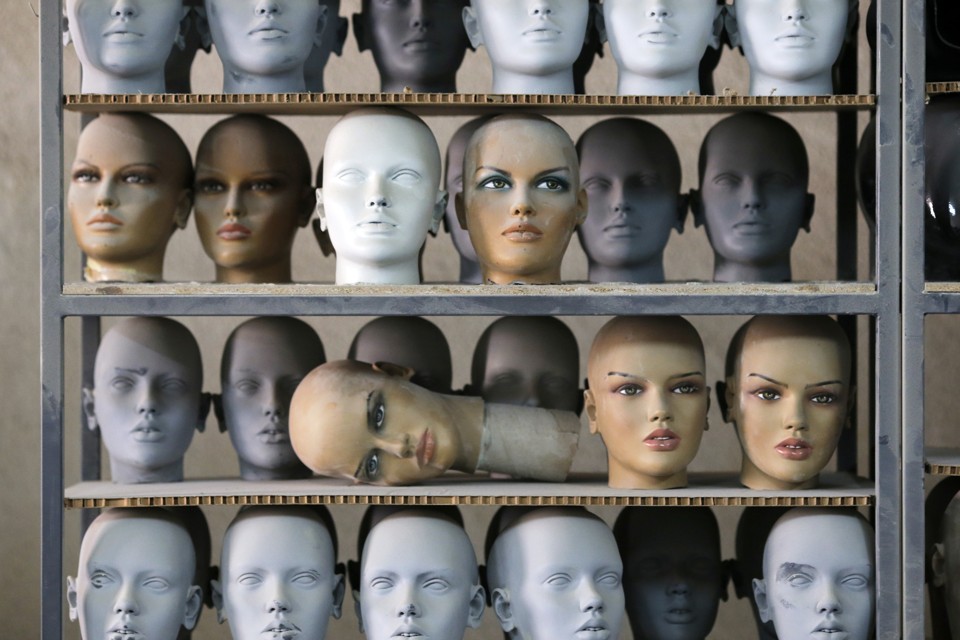
Mannequin heads sitting on a shelf in a factory The number of people on the planet is set to rise to 9.7 billion in 2050 with 2 billion aged over 60.

 That is only 30 odd year away.

We are entering the age of the Fourth Industrial Revolution, a technological transformation that is robbing us of the essence of our humanity.

Driven by a ubiquitous and mobile internet, we are perhaps witnessing the end of human evolution as we know it.

Up to now human evolution proceeded extremely slowly and within historical memory, man has exhibited aggressive territorial behavior. Even as we bask smugly in the comforts of our smart phones natural selection to-day still ensured that only the fittest survived.

However it may not be long before computers are hooked up to the human brain with genetic trade-offs till we can’t be improved any further,

Then evolution will really have come to a stop for us. We will be the only species to have put a halt to natural selection, of its own free will, as it were.

Stopping natural selection is not as important, or as depressing, as it might sound — because our evolutionary process will then be cultural.

One way or the other by the time we get there our current social, political and economic systems will have driven inequalities with profit seeking algorithms off the map, rather than reducing them.

The challenge is to manage this seismic change in a way that promotes the long-term health and stability of the planet.

The writing has been on the wall for some time.Homo floresiensis

So where do we stand:

Since 1992 CO2 emissions have jumper 62% and the global temperature is up 29%. Fresh water is down 26%. Ocean dead zones up 76% . Forestland down 300 million acres. People up 35%.

You would think that we the biggest dimwit on the planet looking at this evidence would conclude that there is something very wrong. If you dont know what it is, we have evolved beyond our needs, trampling other species in the process.

We are now at a turning point we can either push ahead on our path to destruction or we can reshape our place in nature and prosper or we can face a humongous environmental crisis.

You would think that with everything connected by the internet, it would transform how we do business and help us manage resources more efficiently and sustainable.

As you can see this is not the result.

On the contrary the way we’ve set up corporations, world organisations, where even a majority vote cannot demand that a corporation’s or world organisation policies reflect the public good or preserve the environment for future use.

That’s because profit is the one and only motive.

It’s up to government and it’s up to people to protect the public interest. Corporations and world organisations are simply not allowed to.

Within the next decade, it is expected that more than a trillion sensors will be connected to the internet. By 2025, 10% of people are expected to be wearing clothes connected to the internet and the first implantable mobile phone is expected to be sold.

However today, 43% of the world’s population are connected to the internet, mostly in developed countries.

In a world driven by short-term profit, the connectivity theory is and will remain so far off the mark it can only be believed by artificial intelligence.

Growing unease over globalization, which is evident from the number of questions being asked about the power of corporations and the adequacy of the regulations governing employment, environmental issues and taxation, is causing economic and social ills, ranging from low consumption to social and political unrest, and is damaging to any future.

There is no need for me to tell you that we are living in turbulent times.

It is clear that the old stories are dying and if we continue to poison ourselves and the planet by self-interest, fragmentation and profit for profit sake there will be no point to the age of technology other than becoming slaves.

However evolution is going on invisibly all the time. Species evolve in response to whatever environment they encounter. No despots have ever set out to select for increased or decreased longevity in the populations they control.

By 2050, the world must feed 9 billion people. Yet the demand for food will be 60% greater than it is today.

The scale of the employment challenge is vast. Rapid progress in machine learning has raised the prospect that algorithms will one day be able to do most or all of the mental tasks currently performed by humans. These advances could lead to extremely positive developments, presenting solutions to now-intractable global problems, but they also pose severe risks.

This might be the most important transition of the next century – either ushering in an unprecedented era of wealth and progress, or heralding disaster.

But it’s also an area that’s highly neglected: while billions are spent making AI more powerful. The problem of how one might design a highly intelligent machine to pursue realistic human goals safely is very poorly understood. It is estimated that there are fewer than 100 people in the world working on how to make AI safe.

If AI research continues to advance without enough work going into the research problem of controlling such machines, catastrophic accidents are much more likely to occur.

It’s generally agreed that, among the forces that led to the immense sophistication of the human brain, the most powerful was a kind of feedback loop between the growing complexity of our ancestors’ physical and social environment and the ability of our ancestors to adapt to it. But why, you may ask, has the enormous increase in complexity of our recent technological environment not had a measurable physical impact on our brains?

The rate at which we are changing our environment now has outstripped even the fastest biological evolution.

However the ineluctable laws of evolution will continue to operate, probably even more strongly, in the overcrowded, ecologically damaged world of the future. And if things get really bad, the evolutionary consequences could be extreme. Any survivors of a nuclear holocaust or an ecological catastrophe are likely to be a small and highly selected subset of today’s population.

If, for example, destruction were so widespread that people could not form viable social groups, the evolution of our descendants would inevitably be driven in the direction of brutishness.

If our technologies fail to protect us against these forces of nature our genetic heritage could fail us too, meaning human evolution will return with a vengeance.

Then again if everyone had exactly the same set of genes controlling the brain’s development, there would be no genetic differences among people on which natural selection could act–and evolution really would come to a stop!

War then would be the strong life; it is life in extremism; war taxes are the only ones men never hesitate to pay, as the budgets of all nations show us.

There is no doubting the force of [the] arguments above, call me back in 3 million years time, because I may well be wrong on that one.

All human comments appreciated. All like clicks chucked in the bin.

← Back

Thank you for your response. ✨


Share this:

  • Share on WhatsApp (Opens in new window) WhatsApp
  • More
  • Share on Mastodon (Opens in new window) Mastodon

THE BEADY EYE SAY’S: WE ARE NOW LOOKING AT A NEW REVOLUTION CALLED THE CLOUD.

21 Tuesday Nov 2017

Posted by bobdillon33@gmail.com in Artificial Intelligence., Capitalism, Google, Google it., Google Knowledge., HUMAN INTELLIGENCE, Humanity., Innovation., Our Common Values., Post - truth politics., Technology, The cloud., The Future, The Internet., The Obvious., The world to day., Unanswered Questions., Wealth., What Needs to change in the World, Where's the Global Outrage., WiFi communication.

≈ Comments Off on THE BEADY EYE SAY’S: WE ARE NOW LOOKING AT A NEW REVOLUTION CALLED THE CLOUD.

Tags

Artificial Intelligence., Capitalism and Greed, Globalization, The cloud., Visions of the future.

( A fifteen minute read.)

We all know that most if not all of our planets

PROBLEMS are caused by our actions, and can only be

resolved by us changing these actions.

The scientific innovations and new technologies thus

generated seem limitless, as they unfold everywhere

and on all kinds of fronts. It is the wild west where

rules are made up as we go and hope for the best.

There is no central body GOVERNING the use of the

cloud.

In a constantly evolving world transformed by cloud, social and mobile technologies, we’ve become accustomed to the idea of storing our personal data in the cloud, whether it’s via Dropbox, the iCloud or even Facebook.

as confusing as it may be we are never far from a new

era of revolt.

But this really only tells half the story. So far cloud computing has, for the most part, been used to speed up and reduce the costs of existing processes.

However we’re moving into what is becoming known as the mobile/cloud era. Cloud computing is set to impact not only on the way we do business, but how we live or lives.

Our thinking is being shaped by several key areas:

Applications we’re seeing at the moment really are the tip of the iceberg and, as the technology matures further, who knows how we may be using the cloud in even a year from now.

Smart cities are growing ever closer to becoming the norm as organisations begin to realize that the cloud can do so much more than simply speed up or reduce the cost.

Eight years from now we are likely to see low-power processors crunching many workloads in the cloud, housed in highly automated data centres and supporting massively federated, scalable software architecture.

So far we know that the following things are likely to happen:

There will be larger clouds. Some of these clouds will link to others. Many services that businesses consume will sit on top of clouds. Software will be much, much larger.

As with any technology, a lot of the true problems could come in implementation. Who will be the police? Who will be the judge? Who will be the jury for penalties?

We don’t have a clue what the procedures, policies and infrastructure really are.

It is said that changing the world is a noble, innate, haunting idea that, when flirting with it, ends up becoming as beautiful as it is dangerous.

Experts estimate cloud apps will account for a whopping 90 percent of worldwide mobile data traffic by 2019.

Cloud computing brings with it a whole new set of applications that will sit on multiple tiers of cloud infrastructure.

All the cloud promises is that you will have to turn over your security interests to a third-party in the clouds, and secondly that you are going to turn over your ability to do ANY real work to some third-party software provider in the cloud and become totally dependent on an internet connection to even work on the most simple of application based tasks.

Cloud data centers will “become much like a breathing and living organism with different states.

They will be differentiated by their infrastructure capabilities into a whole new set of classes.

So where are we.

How are we going to operate them efficiently?

Will they have standards and full technical disclosure?

The answer to both questions is that it is highly unlikely will we see either.

What we will see is a pitched battle fight for dominance with us reduced to an “inside-out” perspective. 

For instance, “The more the president [of the United States] scandalizes the world with Tweets, rather than embracing the future together with minimal barriers, we see the Western world retreating and starting to look inwards.

Technology has brought meaning to the lives of many technicians, but it is also destroying what it left of any world community spirit, with the smart phone embodying this state of affairs.

Technological advances in the fields of robotics, artificial intelligence or augmented reality are upset the global economy. The ability to acquire new knowledge will be worth more than the knowledge already learned, with people becoming brand-proof, it will become very difficult to exist the devil’s boots that don’t creak.

Behold the Cloud.

Every revolution up to now has had a common thread with the resulting conflicts largely boiling down to pervasive economic inequality.Résultat de recherche d'images pour "pictures of the cloud computer"

The Cloud revolution however is wireless dogma, not a guide for action, accepting connections and doling out information anywhere, anytime if you have the money to pay.  

The Internet revolution of tomorrow with the cloud as it’s center of power, will be the content revolution ,that does not bode well for the state of the world to-day and that could be inviting the collapse of society as we know it.

We are heading for a unilateral and silent war, which I think its going to be horrendous.

The difficulty will not come from governments that will be held hostage to a communication that it does not control but from profit seeking AI that feeds off the cloud.

A whopping 90% of businesses already use at least one cloud computing service.

The main players, Amazon, Google Drive, Apple Cloud, Microsoft, with revenue estimated to be in trillions by 2020,  know this.

It’s now totally the way of the future.

The cloud it is not just a metaphor for the internet it is more than a motor, it is a fuel that is constantly renewed, tirelessly feeding self learning algorithms.

The crisis of technological capitalism opens the prospect of new revolutionary waves everywhere.

Résultat de recherche d'images pour "pictures of revolution"

Many economists extol the fact that “It’s very good for the economy” but this is not true.  The world in which Beethoven grew up was in turmoil. It was a world of wars, revolutions and counter-revolutions – just like ours today.

This is not a war in the traditional sense of the term: it is and will be more and more a confrontation between belligerent technological armies; it is a war waged by the “civilized world”, firmly entrenched in its positions, against hundreds of millions of deprived civilians.

The divide between rich and poor started with the domesticate plant and animals, which lead to farming – based societies resulting in land ownership. It became easy to acquire wealth and to pass it down from generation to generation, till we arrived to-day with half of the world’s wealth owned by 1%.

We have never being able to decrease inequality peacefully and we never will be able to do so in the future with self learning profit seeking algorithms.

However we are now looking at a new revolution that will be governed by time in the cloud.

Why?

Because Revolutions are voluble, and the cloud is highly suited to exploiting  that volubility.

Because capitalism is and always will be set up for consumerism profit, to acquire wealth for the few not the many.

The frenetic pace of change has caused enormous social disruption as entire industries and employment have migrated to lower cost centers in Asia and other developing regions.

Throughout the course of human history, wealth, or the lack thereof, has driven social unrest.

Résultat de recherche d'images pour "pictures of revolution"

And so while the incredible benefits of globalisation have lifted many from poverty, profit seeking AI are going to create alienation and isolation in those areas that have lost out.

All new inventions and technologies have one thing in common: 

They derive their strength from digital and information technologies. All innovations are made possible and are enhanced by digital power. That power is in the Cloud.

Similarly, without computing power, no artificial intelligence and, without it, no sophisticated robots.

To live this transition means first to become aware of current and future changes, and to consider their impact at all levels of society as a whole.

However, the reasons to rise up are not lacking: economic precariousness, multiplication of political scandals, crisis of legitimacy of democratic institutions are all ringing warning bells.

Globalisation didn’t create multinational corporations but those that can take advantage of the changes have and will enriched themselves beyond imagination. While swathes of society will find themselves left behind, forced to compete for jobs at ever lower wages.

The free flow of money and the demolition of trade barriers fostered their growth and delivered them the political power to challenge the fundamental ideals of democracy.

The planet can deal with human demands on it at only 30 percent of what we take from-dump on it now (anyone who thinks that we can double our demands on the planet and people every 12-20 years in perpetuity or that technology will save us should be excluded from serious discussions, I think).

The world has limited resources and cannot go on consuming and squeezing people into every available space. That sense of powerlessness now threatens to overwhelm the positives of globalisation and free trade; such as cheaper consumer goods and higher global living standards.

Forcing nations into a tax rate race to the bottom.

And then there’s Donald Trump, who takes venality to an entirely new level. For all the good it has done, however, it has come at a significant cost, particularly in the developed world. Today, this translates into a crisis of political authority: we are not only frustrated by the incapacity of politicians to solve our problems, but we also question their legitimacy to act on our behalf since we discover, in certain situations, more capacities to act and find solutions than they do.

Tomorrow, this may result in an awareness that citizens can, in some cases, do without policies to make politics.

Résultat de recherche d'images pour "pictures of revolution"

There are two major threats to us all. Climate Change and The Cloud.

If we do not wake up and demand change we will all indeed be living with zero intelligence.

All human comments appreciated. All like clicks chucked in the bin.

← Back

Thank you for your response. ✨


Share this:

  • Share on WhatsApp (Opens in new window) WhatsApp
  • More
  • Share on Mastodon (Opens in new window) Mastodon

THE BEADY EYE LOOKS AT THE HIDDEN COST OF TECHNOLOGY.

25 Wednesday Oct 2017

Posted by bobdillon33@gmail.com in Algorithms., Artificial Intelligence., Capitalism, Facebook, Google, HUMAN INTELLIGENCE, Humanity., Our Common Values., Privatization, Sustaniability, Technology, The Future, The Internet., The Obvious., The world to day., Unanswered Questions., What Needs to change in the World, Where's the Global Outrage.

≈ Comments Off on THE BEADY EYE LOOKS AT THE HIDDEN COST OF TECHNOLOGY.

Tags

Artificial Intelligence., Big Data, Capitalism and Greed, Technology, The Future of Mankind, Visions of the future.

( Twenty minute read)

There is no denying that the benefits of technology are needed but what are the downsides costs.

As the demand for up-to-date technology increases, we need to reevaluate how we measure the hidden cost of the TECHNOLOGICAL REVOLUTION.

It will not be us picking up the tap, but the yet to be born that will have to pay, living in a world that is detached from what makes it all possible The Earth.

Technology is now deeply embedded within society, so not planning for the future of technology is by far one of the most costly mistakes we will ever make, in more ways than one.

At this point it is impossible to say with any authority what exactly the cost will be.

Some technologies are unfolding now; others will take a decade or more to develop, but you should know about all of them right now. In the not-too-distant future, we will be able to print human organs, but not the brain.

According to Stephen Hawking, “Humans are entering a stage of self-designed evolution.”Image associée

That may be so, but technology is more than just fusing the physical and digital worlds.

Marked by emerging technology breakthroughs in a number of fields, including robotics, artificial intelligence, nanotechnology, quantum computing, biotechnology, the Internet of Things, 3D printing, autonomous vehicles, face and voice recognition and algorithms learning from other algorithms.

With wireless connecting brain-reading technology directly to electrical stimulators on your body it has the potential with more items moving from physical to virtual to decouple us from reality. Wireless communications is already dominating our everyday lives

It is already impacting all disciplines, economies, and industries, our politics, improving medicine, influencing our culture.

Apart from the obvious technology is also in the process of changing democracy, moving capitalism underground, assisting conflicts, packaging natural resources, destabilizing society, disrupt the way governments deliver services to citizens, just to mention the tip of the ice berg.Résultat de recherche d'images pour "pictures of future earth"

.It will not be long before we will all have DNA maps from birth.

However with the arrival of Quantum computers the way we use technology will be reshape, along with the societies we live in.

As soon as two to five years from now, such systems or time on such systems are likely to be for sale.

There are probably plenty more uses for quantum computers that nobody has thought up yet.

However you may rest assured that the ordinary citizens (or even governments) won’t be able to own their own quantum computers for a long time, if ever, but I can imagine large companies renting time (measured in fractions of seconds) to whoever needs their services.

With this in mind the race has well started to create monopolies of knowledge Google, of Social Media Society – Facebook, consumerism E Bay, Amazon, Alibaba, of Finance – Pay Pal, of Communication – Apple, of Biotech Thermo Fisher Scientific, of cloud business – Microsoft -IBM, Oracle,  of computer microchips to data center-makers-Intel, to name just a few.

Here are a few of their Mission statements:

Facebook: “To give people the power to share and make the world more open and connected.”

Amazon: “To be Earth’s most customer-centric company, where customers can find and discover anything they might want to buy online, and endeavors to offer its customers the lowest possible prices.”

Pay Pal: “To build the Web’s most convenient, secure, cost-effective payment solution.”

Alibaba: “To make it easy to do business anywhere.”

Google: “To organize the world’s information and make it universally accessible and useful.”

Microsoft:  “To enable people and businesses throughout the world to realize their full potential.”

United Nations: “The maintenance of international peace and security.”

Medecins Sans Frontieres:   “To help people worldwide where the need is greatest, delivering emergency medical aid to people affected by conflict, epidemics, disasters or exclusion from health care.”

Non mention the health of the EARTH?

Disruptive technology is, by its very nature, unpredictable but we’ll see more intelligence built into communication. With always-on connectivity, social networking has the power to change cultures, as we saw with the Egyptian Revolution, which led to the Arab Spring.

The results of changing the world are often complicated and unpredictable.

With the technology of smart phones social influences will continue to move rapidly between cultures.

In the broadest sense, technology extends our abilities to change the world: to cut, shape, or put together materials; to move things from one place to another; to reach farther with our hands, voices, and senses. We use technology to try to change the world to suit us better. The changes may relate to survival needs such as food, shelter, or defense, or they may relate to human aspirations such as knowledge, art, or control.

As computational power rises exponentially, not linearly, so does the rate of change — and that means the next 10 years should pack in far more technological change than the last 10.

It is my prediction that all of it will end up in the cloud.

Why?

Because it is the dumb, novelty-seeking portion of our brains  (driving the limbic system that induces this feeling of pleasure, not the planning, scheduling, higher-level thought centers in the prefrontal cortex) that is driving technology to tap into our personal sensors.

Make no mistake: emails, Facebook and Twitter-checking constitute a neural addiction.

Already, the cloud is powerful enough to help us communicate through real-time language translation.

When is a profit not a profit? When it turns into a monopoly exploiting all around it.

Just like Capitalism technology it is unable to regulate itself and with the arrival of Quantum computers it will make everything and everybody beholden to technology, endangering  much of the openness that we now enjoy online.

So I one again ask the question:

Is it time to regulate Algorithms that have profit as their end targets and is it time that we demanded an open data website that would allow anyone to find information on a host of county government programs, from budget information to welfare data to crime statistics.

This would be linked to two powerful benefits.

First, it makes government more transparent and understandable at a time when trust in the public sector has plummeted.

Second, it has the potential to generate significant economic benefits impacting budget issues, public safety and education, transparency and economic value for tax payers money.

The bottom line is that government data can be extremely valuable for public consumption, but only if the policies behind the data are well thought out and the related costs are affordable. For instance, would a map of society reveal awkward disparities in how rich and poor neighborhoods receive public funding?

Many governments are running on old, outdated systems, making them vulnerable to cyber attacks.

I believe that such an open based  data website would benefit from the collective wisdom of the community, simplify how citizens and businesses interact with the state.

However IT WOULD HAVE THE unexpected startup costs if data is kept in a legacy computer system that requires reformatting; quality-related costs to keep open data fresh and up-to-date; legal costs to comply with open data legislation; liability costs in case something goes wrong, such as publication of nonpublic information; and public relations costs that can occur when a jurisdiction generates bad press from open data about poor performance metrics or workforce diversity problems.

That apart present technological advances and information overlays will change how we live in significant ways.

We will have a so-called “smart grid” where all of our appliances are linked directly to energy distribution systems, allowing for real-time pricing based on supply and demand. Such a universal method for identifying someone energy requirements becomes much harder when you no longer have a central authority to figure out how to link together the different systems.

It will not be like self-driving trucks with lidar system guidance run by algorithms or self-driving cars.

Who is responsible when the self drive truck or car kills someone. Try bringing a self thought Algorithm to court.

Try suing an Face-detecting systems for wrong identification or payment.

Then we have:  Gene-therapy.

Biology’s next mega-project will find out what we’re really made of.

Three technologies are coming together to make this new type of mapping possible.

The first is known as “cellular microfluidics.” Individual cells are separated, tagged with tiny beads, and manipulated in droplets of oil that are shunted like cars down the narrow, one-way streets of artificial capillaries etched into a tiny chip, so they can be corralled, cracked open, and studied one by one.

The second is the ability to identify the genes active in single cells by decoding them in superfast and efficient sequencing machines at a cost of just a few cents per cell. One scientist can now process 10,000 cells in a single day.

The third technology uses novel labeling and staining techniques that can locate each type of cell—on the basis of its gene activity—at a specific zip code in a human organ or tissue.

Then we have, the relentless push to add connectivity to home gadgets is creating dangerous side effects that figure to get even worse.

Then we have, Botnets are used to commit click fraud.

Google ads pay a site owner according to the number of people who click on them. The attacker instructs all the computers on his botnet to repeatedly visit the Web page and click on the ad. Dot, dot, dot, PROFIT! If the botnet makers figure out more effective ways to siphon revenue from big companies online, we could see the whole advertising model of the Internet crumble.

Then we have, hackers breaking into computers over the Internet and controlling them en masse from centralized systems. The problem is getting worse, thanks to a flood of cheap webcams, digital video recorders, and other gadgets in the “Internet of things.”

Then we have, reinforcement learning.  Reinforcement learning may soon inject greater intelligence into much more than games.Résultat de recherche d'images pour "pictures of future earth"

SO WHAT NOW?

What are the implications to human development and the diversity of life on earth? What opportunities are there to reduce risks and vulnerabilities, enhance resilience, and create transformations to prosperous and equitable futures?

Science can provide only some answers; it is not a panacea for all problems. We need to also make personal, economic, social, and political changes, whatever the cost will be.

Reinforcement-learning algorithm can learn from collated data and experiment in simulation to suggest, say, how and when to operate the cooling systems.

Algorithms don’t know the Meaning of Environment.

They have however so concept of the  “The term ‘environment’  it refers to all external conditions and factors that affect living organisms. Here external factors mean all the things around us such as air, water, light, animals, humans etc.

Algorithms are shadow boxers of yesterday all because technology trends can affect the bottom line of business. 

Although big data algorithms hold great promise, they should still be approached with caution and skepticism.

For instance Algorithms should not be relied upon to ration medical care until the technology has substantially matured.

If we ignore what is happening there will be more riots, and increasing divisions along economic, religious and ethnic lines with Robots completely replacing humans in the workforce.

IT IS TIME FOR THE OWNERS ALL PROFIT SEEKING ALGORITHMS TO BE REGISTERED WITH A COPY OF THE WORKING CODE.  NO PROFIT EARNING ALGORITHMS SHOULD BE GRANTED A PATIENT.

All human comments appreciated all like clicks chucked in the bin.

← Back

Thank you for your response. ✨


Share this:

  • Share on WhatsApp (Opens in new window) WhatsApp
  • More
  • Share on Mastodon (Opens in new window) Mastodon

THE BEADY EYE SAYS: ALGORITHMS AND SOCIAL MEDIA ARE PUTTING PAY TO SHARED VALUES.

14 Saturday Oct 2017

Posted by bobdillon33@gmail.com in Algorithms., Artificial Intelligence., HUMAN INTELLIGENCE, Humanity., Our Common Values., Social Media., Technology, The Future, The Internet., The Obvious., The world to day., Unanswered Questions., United Nations, What Needs to change in the World, Where's the Global Outrage., WiFi communication.

≈ Comments Off on THE BEADY EYE SAYS: ALGORITHMS AND SOCIAL MEDIA ARE PUTTING PAY TO SHARED VALUES.

Tags

Algorithms trade., Artificial Intelligence., Technology, The Future of Mankind


( A twenty-minute read, before we are all raped by Algorithms)

Strength from cultural diversity is being eroded by Algorithms.

At the moment while we’ll be striving to understand the impact of “information flows” — shared value is going out the window.

You could say that 99.4 percent of physical objects are still unconnected but algorithms but they are already transforming the world around us — in education, healthcare, manufacturing, commerce, transportation and other sectors.

In the coming years, the Internet of Everything Economy will be run by Algorithms that control smart grid, smart buildings, connected healthcare and patient monitoring, smart factories, connected private education, connected commercial (ground) vehicles, connected marketing and advertising, and connected gaming and entertainment, among others, will rule the world.

If we are honest, we have been living with the ambiguity created by SHARED VALUE for a long time.

The United nations being the prime example.

Its shared ideology values are ignored daily because they do not possess any legal or constitutional power. (They have however attained limited success in generating greater ideological consensus, whether it is the impact on the environment, on society, or in terms of how it governs itself) Now unfortunately it is trying to operate in a world that is in the middle of a technological revolution which is exposing its limits to the point of being relevance.

Technology trends (including cloud and mobile computing, Big Data, increased processing power, and many others) and business economics (such as Metcalfe’s law) are driving the IoE (The Internet of Everything economy.)

The Internet of Everything (IoE) brings together people, process, data, and things to make networked connections more relevant and valuable than ever before — turning information into actions that create new capabilities, richer experiences, and unprecedented economic opportunity for businesses, individuals, and countries.

On the other hand in my opinion it is and will be a mistake to greet every invention with applause and just let it go its way.

There are many aspect to the Technological Revolution that are desirable and needed, but at what sacrifice, and where to draw red lines is not being addressed. You could say its evolution and can not be changed or stopped.

However Artificial intelligence which is run by Algorithms is void of emotional intelligence.

The future will no doubt push for higher level automated capabilities by integrating human spoken and linguistic capabilities with other human skills such as vision, motor skills, and emotions.

This future will bring about a society of human and machine experts, that collaborate together for improved outcomes in complex processes such as decision-making.

These decisions which will be based on vast quantities of data rather than share values. They will be driven by our old friend capitalist profit, managed by platforms that are totally unregulated, unaccountable.

In a world where we are all supposed to be accountable, Artificial Intelligence must also be accountable not just to its algorithms. It must be totally transparent and regulated by an independent Organisation that ensure it enhances our shared values. As we explore all the possibilities these technologies present,  it will be critical to place us at the forefront.

The conversations around these technologies, I suppose in the future will reach an equilibrium and we will understand as a society how to use them responsibly or will it be too late. 

I think the more interesting thing that’s happening is we’re evolving into a kind of meta organism, which is the whole species on the planet connected through the Web, sharing information, sharing thoughts, sharing ideas.

We are not sharing empathy and sharing emotions, exploring and expanding the boundaries of what it means to be human, today and far into the future.

People will end up having no sense of control over their changing environments other than what their Virtual Personal Assistant lets them know.

The world we live in has and always will have problems because it is impossible of humans to act as one for the general good of all.

Rest assured that Algorithms will also suffer from the same flaw.

If left to their own devices they will destroy any sense of collaboration, reducing us to smart phone workers with no shared values or jobs for life.

We are more and more desensitized by social media platforms that are run by algorithms to ensure we remain so, we are all too busy checking our smart phones to take any notice. Most of us can not recognize our self.

HUMANIZING TECHNOLOGIES: Are smile that fits the lock of everybody’s heart.Image may contain: 2 people, people smiling

Robots are learning how to detect your personality and even your gender with just a handshake, so giving robots a personality is the only way our relationship with artificial intelligence will survive.

We have all experienced “dehumanizing” technology – software or hardware that seems to diminish our ability to communicate with others or to function effectively in the world.

Technology such as Algorithms for profit are creating new boundaries between people rather than erasing old ones, with Touchy-feely robots becoming the false face of the Algorithms, that run them. Capitalize on our unique strengths and weakness, new technologies are and will further integrate themselves seamlessly into our lives.

We are already accustomed to Amazon’s anticipatory shipping practices, where the company identifies items we may want to buy before we even begin our search. Artificial Intelligence is making technology more personal and purposeful than ever before.

I don’t know about you. Just because I bought something, viewed something, commented on something, or sent an email to someone, I don’t want Watson, Google, Facebook or any other platform invading my Privacy with annoying suggestions, as I have no shared values with any of their Algorithms.

If we don’t get a grip of what I call Algorithms for Profit connecting the unconnected: people, process, data, and things we are going to be looking at a very sad world.

Since the industrial revolution, concerns have been raised about the negative effect of development on human exploitation, inequality, the environment, and by extension, greater society.

Of all the concerns that development brings, environmental damage has a high-profile due to its long, and sometimes cruel, history from business self-interest, to a sense of responsibility, or a combination of both.

Now it is the time to make capitalism more responsive to social challenges, as corporations are directly facing the trade-offs between private costs and social benefits.

The pursuit of profit and increasing shareholder value are the only responsibilities of business.

The inclusion of non-financial issues into investment decision-making must be a priority.

Why?

Because in terms of corporate social responsibility, the long-term risk of damage to the economic system and long-term value creation, and therefore investment returns, is a palpable threat to asset owners.

National identity and nationhood are not principles that can be “mandated and managed from the top”. Instead, the nation is an “imagined reality” that transcends institutions such as government and civil society. Consequently, the citizen creates the nation.

It is the responsibility of the investor to protect an economy’s ability to create long-term value.

Given long-term horizons, diversification, and long duration liabilities, it is beneficial to work together to reduce Artificial Intelligence future risk. To verify if shared value strategies can be found in practice.

This is so that today’s efforts to create value do not impair the ability of future generations to do the same.

Driven by advances in mobile technology the United nations is total out of date.

The importance of the family as a “basic unit of society”, no longer fully address family related issues.

In today’s investment world, there is no Algorithm that is going pre-empt social change and direct it in “suitable” directions.

Artificial Intelligence is making technology more personal and purposeful than ever before. We are trying to leverage data science with natural interfaces to provide solutions tailored to human behavior, attitudes and comprehension, also known as cognitive systems.

So the Question is:

Are these profit Algorithms degrading our humanity.

Today, the most successful technology goes beyond the technical specs and is all about the user experience. The best use of technology is the one people barely notice.

Our emotions influence every aspect of our lives, from our health and well-being, to the way we learn, the decisions we make and how we communicate with one another.

Try telling that to a Digital banking Algorithm.  The only point of contact between banks and their customers.

Now we can have a whole new social class system.

Since people can be judged by their emotions, and since a persons emotional state has legal consequences in a court of law, and since corporations would love nothing more than to know how we feel so that they can control our behavior by controlling what information we receive when we are connected, and since we are always connected. ….
Well that couldn’t possibly be a problem, or could it?

We are handing over our privacy and our lively mental freedom, step by step, to the lifeless and emotionless domain of machines. We are becoming more and more dependent upon mechanistic mimicking of human qualities, and call it Machine Intelligence.

“The biggest privacy-invasive is no the way with face recognition applications”.

Why? Because the majority of how people experience each other is through screens.

this will bring a new leveraged on degrees of freedom for smart life.

Just because you want to believe it is true doesn’t mean it is true.

The goal should be making people to become aware of the trends and processes they are being involved by their own deeds and making them to ask important questions

In short:

Predictions are hard, but TRYING to fore see and not being blind to what is already happening is immensely important.

I wouldn’t want “devices” to sense anything. Anything.

Constantly arguing with your device about how you really feel.

What a sick world that is going to be.

Ask google why do people die before their time.

You get many answers: How can we know these things?….We can’t, unless we ask and who do we ask in order to get the correct answer.. not a Algorithm.  The basic recipes for Capitalist slavery.

How much messiness should we accept? What balance of the new and familiar is the most fulfilling? These may seem like uniquely human quandaries, but they are not. Computers, like us, confront limited space and time with no shared values.Résultat de recherche d'images pour "pictures of computer algorithms"

All human comments ( Not that I will know if they are generated by Algo) appreciated. All like clicks chucked in the bin.

← Back

Thank you for your response. ✨


Share this:

  • Share on WhatsApp (Opens in new window) WhatsApp
  • More
  • Share on Mastodon (Opens in new window) Mastodon

THE BEADY EYE SAYS. THE INDIVIDUAL IS BECOMING A TINY CHIP INSIDE A GIANT SYSTEM THAT NOBODY REALLY UNDERSTANDS.

22 Tuesday Aug 2017

Posted by bobdillon33@gmail.com in Artificial Intelligence., Big Data., Evolution, Humanity., Innovation., Life., Post - truth politics., Social Media, Technology, The Future, The Internet., The Obvious., The world to day., Unanswered Questions., Where's the Global Outrage.

≈ Comments Off on THE BEADY EYE SAYS. THE INDIVIDUAL IS BECOMING A TINY CHIP INSIDE A GIANT SYSTEM THAT NOBODY REALLY UNDERSTANDS.

Tags

Algorithms trade., Artificial Intelligence., Social Media, The Future of Mankind


(Two minute read)

Science is converging on an all-encompassing dogma, which says that organism are algorithms a, and life is data processing. Intelligence is decoupling from consciousness. Non-conscious but highly intelligent algorithms may soon know us better than we know ourselves.Image associée

Every day we absorb countless data bits.

This relentless flow of data gives rise to new inventions, disruptions that nobody plans, controls or fully comprehends.

For instance no one knows where global politics is heading, or how the global economy functions or what the climate is doing.

For all intensive purpose we don’t give a fuck providing we don’t pick up a virus, and even then our wireless brains want to remain in the flow of data.

Algorithms are constantly watching us, monitoring our thoughts,and feelings to such an extent that the meaning of life is disappearing into the invisible hand of Dataisim called Google, Face Book. Twitter and their disciples.

Experiences are valueless if not shared with an Algorithm on a smart phone.

No wonder we are all busy converting our experiences into data.

Your Dog or Cat or Fridge, might soon have a Facebook or Twitter account.

By equating the human experience with data patterns it is undermining the main source of authority, meaning of life, and this shift will not be just a philosophical revolution, it will be a practical revolution.

After a few hundred years of data flow your feelings which were once your best algorithms will have being replaced by a filtered personal platform or platforms all attached to the Cloud for an annual fee.Image associée

Its good-by democracy, elections. Have you had your DNA sequenced, are you wearing a biometric device that is connected to your smart phone.

The personal cloud god algorithm will tell you who to marry, what career to follow, what to put in your fridge.

All of this begs the question are we humans developing a seed algorithm that when it combines with machine learning will develop its own path, going where no human has gone before or can follow.

We have no idea whether it will develop consciousness and subjective experience.

Before we are reduced to non- conscious algorithms would it not be prudent to establish a New World organisation that vets all technology against our core values as humans. ( See previous posts)

What prevents us from collaborating in a global effort to solve climate change, or any other problem is probable the same reason why we are being exploited by Social media. Humans are deeply divided by nationalism and sectarian beliefs.. However with knowledge comes responsibility. So this failure is a global moral failure, as well as a failure of political will.

The world is changing faster than ever before with us relinquishing authority to crowd wisdom/data in the form of social media that is being mining by capitalist organisations which is governed by algorithms.Résultat de recherche d'images pour "pictures of humanity"

While inequality on all fronts grows and our world organisations become irrelevant we are flowed with irrelevant information.

The answer is bleakly simple: We cannot get these issues on our political radar screens without a huge prolong popular uprising.  It looks like humanity will soon be a ripple within the cosmic data flow. Résultat de recherche d'images pour "pictures of humanity"

All comments appreciated, all like clicks chucked in the bin.

← Back

Thank you for your response. ✨


Share this:

  • Share on WhatsApp (Opens in new window) WhatsApp
  • More
  • Share on Mastodon (Opens in new window) Mastodon

THE BEADY EYE SAYS: GOVERNMENTS ARE BECOMING MERE ADMINISTRATIONS.

03 Monday Jul 2017

Posted by bobdillon33@gmail.com in Artificial Intelligence., Democracy, HUMAN INTELLIGENCE, Humanity., Modern Day Communication., Modern Day Democracy., Modern day life., Our Common Values., Politics., Post - truth politics., Social Media, Technology, The Internet., The world to day., Unanswered Questions., What Needs to change in the World, World Leaders, World Organisations., World Politics

≈ Comments Off on THE BEADY EYE SAYS: GOVERNMENTS ARE BECOMING MERE ADMINISTRATIONS.

Tags

Artificial Intelligence., Big Data, Capitalism and Greed, Inequility, SMART PHONE WORLD, The Future of Mankind, Visions of the future.


( A Five-minute read)

Did we ever vote about the shape of Cyberspace?

To day the Internet is a free and lawless zone that is eroding state sovereignty, ignores borders, abolishing privacy and perhaps posing one of the biggest treats to security on many a front.

A decade ago it hardly registered on the radar.Résultat de recherche d'images pour "pictures of megalomaniac politics"

MIXING GOD LIKE TECHNOLOGY WITH MEGALOMANIAC POLITICS IS A RECIPE FOR DISASTER.

By the time bureaucracy makes up its mind about cyber space regulations, the internet has morphed ten times.

We are now overwhelmed with data. Never before have governments being so well-informed as to what going on but they are unable to implement any change without Social Media, the internet and AI.

As we seem void of ANY STATESMAN Artificial Intelligence in the form of unregulated Algorithms are not only plundering the world of economics ( High Frequency trading) eroding Democracy, which is failing to provide a meaningful visions of the future.

DUE TO ITS DIVORCE FROM CAPITALISM.

Leaving all the important decisions in the hand of the free market give our politicians the perfect excuse for inaction and ignorance, which are reinterpreted as profound wisdom.

So let me ask you.

Do we want a small coterie of billionaires ruining the world for profit.

Fortunately even if we did they would not be able to do so as the system is far too complex. There is no getting away from that the free market only does what is good for the market rather than what is good for mankind or the world. 

The hands of the market are now blind and invisible due to Algorithms and left to their own devices with machine learning will – FAIL TO DO ANYTHING ABOUT THE DANGERS OF ARTIFICIAL INTELLIGENCE OR CLIMATE CHANGE.

With more than 1 billion users worldwide and 2.5 million apps — and counting it has become an instinctual gesture to turn to our smartphones when we are exposed to an unknown environment.

Thanks to the internet and our feature-packed smartphones, we can not only consume and interact with incoming news, we can also be the first ones to communicate things to the rest of the world if we happen to be at the right place, at the right time.  And we’re doing this over devices that just two decades ago would’ve looked at home in sci- flicks.

There is no argument that Artificial Intelligence is penetrating our daily live so new structures will be built.

The Question is who will build and control these structures?Image associée

A world run be Google, Facebook, Twitter and their like will be a world without imagination, compassion, and moral ethics of any kind other than profit.

If we think in term of decades, then Global Warming, Growing Inequality and Artificial Intelligence linked together will dwarf and overwhelm all other problems or theological developments.

Combined they will overshadow any political gains or profits. Surpassing all tin pot dictators of the world.

We must not allow global data collection to rest in the hands of world monopolies..

Goodbye, cash. Hallow iPhone’s Wallet apps. Just imagine what this is going to do to what is left of society. Consumer growth will be the only evidence of life.

The rise of apps and social media is changing the way many of the world’s two billion Christians and 1.6 billion Muslims worship – and even what it means to be religious.

Facebook said that in its most recent quarter, roughly 84 percent of its $6.82 billion in ad revenue came from mobile ads.

Smartphones - Global Connectivity

To claim back power we must turn our shiny mirrors our Smartphones into shields, passports and carriers of personal sovereignty and equality. Smart phone are the new guardians of Democracy and we better start using them wisely.

Not all changes brought by the mobile revolution have been positive.

In fact, for certain groups of people from around the world, the explosion of mobile has brought misery and exploitation.

Events in one country now have almost instant implications for the rest of the world. We see footage shot with smartphones in mass-media almost every day now.

It’s now a question of who gets heard, not what is heard.

In my opinion, we are living through a transition period triggered by a dramatic change in mobile networks in the last decade. This transition periods will be painful. But sooner or later things will stabilize and everyday liberties enjoyed by leading Western countries will spread out throughout the world.  Surely, the mobile networks are speeding up this process.

From one perspective, the dependence on mobile technology is pathetic, but on the other hand it surely makes it easier for people to explore foreign cultures.

It is highly likely that someday, as more people interact and connect with foreign cultures, borders between countries will start to dissolve and the world will become a united planet. Smartphones and mobile networks will be at the heart of this evolution.

The biggest social networks (Facebook, Twitter, LinkedIn) and media sharing sites (Instagram, YouTube, Snapchat), along with maybe a handful of others like Pinterest and Google Plus are all a catch-all platforms whose functionality is constantly evolving.

As more networks add rich features like live streaming and augmented reality, the lines between their feature sets continue to blur and change faster than most people have time to read up on the changes.

Look beyond those social media juggernauts and you’ll see that people are using many different types of social media to connect online for all kinds of reasons.

There are anonymous social networks a step back toward the wild-west early days of the internet.

It is the social media sites that are the carbuncle on society’s backside, not smart phones.

We are becoming symbiotic with our computer tools, growing into interconnected systems that remember less by knowing information than by knowing where the information can be found. The always-on lifestyle suggest future generations will have different priorities about what they choose to remember.Résultat de recherche d'images pour "pictures of megalomaniac politics"

Smartphones — and the connection they represent to a global social network — is becoming more than just a device in our pockets but something closer to a digital extension of ourselves.

Apps spawned industries that couldn’t exist without smartphones but smartphones spawned the Arab Spring in the Middle East in early 2011.

The smart phone quickly demonstrated itself as a powerful tool for driving social revolution.

Smartphones helped protesters to quickly share information with observers outside the region, which in turn helped drive political pressure during the revolution.

The potential benefit of taking things to the general public, again made possible by mobile networks and smartphones for all initiative purposes is in its early stage of development.

With joint collaborative efforts their status as an indispensable item in the 21st century

If anyone has a suggestion as how we can get the world of Smartphones to collectively come together as a unite to create a new dynamic network of compassion I am all ears.  Smartphones and social media will the last chance for a compassionate world.

It begins with you.

How the social media further impact our life in our society and where do social media and the Internet technology take us in the next few decades is really an interesting question, or perhaps a mystery or a challenge for human themselves.

But one thing should stand is we ought not to be controlled by technology, we control them! If we are not already to late.

Résultat de recherche d'images pour "ppers on how smartphone are change the world"

Our Mobile Planet.

← Back

Thank you for your response. ✨


Share this:

  • Share on WhatsApp (Opens in new window) WhatsApp
  • More
  • Share on Mastodon (Opens in new window) Mastodon

THE BEADY EYE SAYS: COMPUTER ALGORITHMS THAT ARE FILTERING CONTENT ARE STARTING TO ISOLATE US FROM ONE ANOTHER. 

30 Sunday Apr 2017

Posted by bobdillon33@gmail.com in Artificial Intelligence., Big Data., Facebook, Google Knowledge., Humanity., Privatization, Social Media., Technology, The Future, The Internet., The Obvious., The world to day., Twitter, Unanswered Questions., What Needs to change in the World, Where's the Global Outrage.

≈ Comments Off on THE BEADY EYE SAYS: COMPUTER ALGORITHMS THAT ARE FILTERING CONTENT ARE STARTING TO ISOLATE US FROM ONE ANOTHER. 

Tags

Artificial Intelligence., Big Data, ongoing Privatization of the world, Privatization, Privatization of the World., SMART PHONE WORLD, Technology, The Future of Mankind


( A five-minute read)

We all know or at least we should all be aware that our world is becoming less and less transparent thanks to what we call Artificial Intelligence.

Résultat de recherche d'images pour "pictures of cloud computing"

The challenge there is:

The false promise of the Internet was that it can connect people from different backgrounds, with different beliefs and across disparate locations.

The trend toward personalization by AI is impeding the fulfillment of that promise?

What is becoming more and more apparent is that while most personalization on the web is algorithmically driven, aren’t we implicitly, informing the algorithms based on the choices we’ve previously made interacting with content?

Couldn’t you then, in theory, manipulate the filter so you see what you want to see or are there too many factors beyond our control?

Consider:

Even if you’re completely logged out of Google, on a new computer, the company can track 57 signals about you — from what kind of laptop you’re using to what your IP address is to what the font size in your browser is. Already, that gives a lot of important clues about age, income and demographics.

It’s ironic — the promise of personalization is that it gives us our own personal view of the world.

But the challenge is that a lot of the time, it’s actually pushing us toward a stereotyped, simplified version of ourselves: “This person is male, so we’ll show him more gadget and car news.”

So let me ask you.

Many of the major social, discovery and media sites on the Internet now implement some type of personalization. Do you feel these sites have a responsibility to educate consumers about how their information is being filtered? Do you think users should be able to opt out of personalization?

I would say Yes, on both counts.

In an increasingly complex and vast media landscape it is crucial that me maintain our private lives.

Why?

Because: Algorithms of all shapes and sizes are monitoring, analyzing, making
decisions, dictating our credit scores etc.  They are shaping our lives and economies, our future, so shouldn’t we know what code and mathematical equations, or deep learning go into making them work.
However Transparency alone won’t help.
Algorithms are complicated so exposing the code behind them won’t make them more understandable. Knowing how an algorithm is coded is useless without knowing the data that has being fed into it in the first place.

There is only one solution and that is the:

The Creation of a New World Organisation that is totally transparent, and self financing:  To vet all Technology. To ensure that they comply with the core world gold standard of human values.
(See previous Posts)
Let me ask you two further questions.
Can some level of personalization be useful?
What are we missing that we need to see?
Some amount of algorithmic personalization is necessary — there’s just too much stuff to sort through for humans to do it all. However you don’t know who Google thinks you are or on what basis it’s editing your results, and therefore you don’t know what you’re missing.

A lot of the personalization that exists today just serves up information junk food, but a growing portion is being curated by robots — computer algorithms that are filtering content and deciding what we get to see.

It may be delicious, but it doesn’t feed the soul.

Now it’s possible to live in a bubble where that stuff doesn’t ever show up — you’d never know it’s happening.

Take the Facebook “Like” button — the main way that information gets spread on Facebook. “Like” isn’t a neutral word — it’s easy to Like “I just finished a marathon,” and hard to Like “cell phones may cause cancer.”

So some kinds of information get through, and others don’t, and when that’s happening in the Facebook News Feed, where an increasing number of folks get their news, it’s a real problem.

Most people aren’t aware that their Google search results, Yahoo News links, or Facebook feed is being tailored in this way.

Filters can provide relevance and combat information overload, but with so much riding on automated decisions to ensure algorithms deal with humans fairly is now more relevant than ever.

I recently read that in five-year your smartphone could be reading your mind.

Brain- computer interface.

Personalization couldn’t exist without the massive dossiers of personal data being collected by big companies online these days. And it’s a problem because consumers don’t have much control over that.

The current laws around personal data just don’t contemplate a world in which a click on one website changes what you see on an entirely different one.

Almost all popular websites, from search engines to social networks to media outlets, are now utilizing filters in some way to personalize content for visitors.

When websites show us only what we like, we get cut off from the diverse points of view that can enrich our understanding of the world.

We get Donald Trumps.

Privacy is about controlling what the world is allowed to know about you. This is about controlling what you’re able to see of the world — what your filters let through and what they don’t.

Its time to wake up.

We can lose sight of our common problems, but they don’t lose sight of us.

It’s only a matter of time before our Fidelity/ Loyalty cards are linked up to our personal data held by banks, e-commerce sites and social media. If not already.

We will then be looking at citizen character score, which will bring credit scores to a whole new level, turning them more into to life scores, by tracking anything and everything we do. The scary bit is what is tracked and by who.  

I hear you saying that this will never be accepted.

It is already on the cards for people living in China and Singapore. Humans and robot algorithms, living in peaceful harmony. Where you go, what you buy, who you know, how many points are on your driving licence, how your friends rate you.

The scores will serve not just to indicate an individual’s credit risk, but could be used in a vast array of applications and organisations such as Governments, Benefits, Hospital Operations, Visa, Education, down to all fields that makes Society including prison sentences, landlords, employers, and even romantic partners to gauge an individual’s character.

Résultat de recherche d'images pour "pictures of cloud computing"

All stored in the Cloud. Which comes in many different models forms.

Ubiquitous access to the network: Self-service and on-demand access to computing capabilities. This service will most often be performed by the service provider automatically without the need for human interaction.

Cloud Computers is not the easiest of terms to define, or explain what it all actually means. Owned by Google, Twitter, Gmail and Facebook the Cloud is elusive as grabbing a cloud itself.

Perhaps we can blame it all on Leonhard Euler one of the most prolific mathematicians in history, and also a prolific inventor of canonical notation.

( An Euler path is a path that uses every edge of a graph exactly once.)

One way or the other to use a Trumpetism:  It’s ain’t going to be great unless we build algorithms that have a sense of civic purpose embedded in them, giving us both entertainment and the information we really need, not profit.

All comments appreciated. All like clicks chucked in the bin.

O sorry about the line spacing in this post just cannot figure out how to correct it.

← Back

Thank you for your response. ✨


Share this:

  • Share on WhatsApp (Opens in new window) WhatsApp
  • More
  • Share on Mastodon (Opens in new window) Mastodon

THE BEADY EYE SAYS: DEMOCRATIC EMPOWERMENT NO LONG REST WITH POLITICAL PARTIES.

26 Wednesday Apr 2017

Posted by bobdillon33@gmail.com in Artificial Intelligence., Big Data., Elections/ Voting, Google, HUMAN INTELLIGENCE, Humanity., Modern Day Democracy., Modern day life., Our Common Values., Politics., Populism., Technology, The Future, The Internet., The Obvious., The world to day., Twitter, Unanswered Questions., What Needs to change in the World, Where's the Global Outrage., World Leaders, World Politics

≈ Comments Off on THE BEADY EYE SAYS: DEMOCRATIC EMPOWERMENT NO LONG REST WITH POLITICAL PARTIES.

Tags

Artificial Intelligence., Big Data, NEW DEMOCRATIC EMPOWERMENT, politics, Politics of the Future, SMART PHONE WORLD, Technology, The Future of Mankind, Visions of the future.


(A Ten minute read)

You might be asking yourself like many why it is that we are inflicted by the like of Donald Trump, Madame La Pen, Brexit, ect.

Any fool on the street can tell you that technology is changing at a whiplash-inducing pace. What’s much more difficult to predict is which technologies specifically are about to hit big.

To me it is obvious: Artificial Intelligent.Résultat de recherche d'images pour "PICTURES OF DEMOCRACY EYE"

Platforms that serve manipulative interests of political elites, in which leaders do most of the conversing and democratic discussion is reduced to campaigning for elections and the casting of votes.

The result of elections and referendums are becoming more individualistic than they are democratic with Democracy becoming, trivial, incoherent, or manipulative across all sorts of domestic debates, military interventions, consumer advertisements, and television specials.

Democracy use to stirred up by:

The public relations agencies, the direct-mail companies, and opinion-polling firms work in concert with the infrastructure of think tanks, tax-exempt foundations, and other centers.  With the press and television industry as the principle gatekeepers of political debate. Other channels of political information are almost nonexistent.

Today, tremendous changes in advanced computing technologies are giving rise TO A NEW DEMOCRATIC EMPOWERMENT, THAT HAS NOTHING TO DO WITH VOTING.Résultat de recherche d'images pour "PICTURES OF DEMOCRACY"The smart phone rules as to which party is the best in more way than one.

On-line computer services and networks, which are oriented toward spontaneous communication among citizens is limiting their exposure only to the affairs that match their interests.  Populist appeal.

The application of Artificial Intelligence (AI) technology will and is expanding this type of public involvement with information-driven politics, the politics of knowledge, not necessarily the politics of winning elections.

But does the public really want a daily digest of political information?

IN WHICH IT HAS LITTLE OR NO SAY.

We are witnessing an ominous trend toward political dysfunction as the number who vote in national elections continues to slide below fifty percent.

One possible reason for this trend is that many people believe that political representatives have little to offer in terms of solving the immediate daily concerns of employment, health care, education, housing, transportation, drugs, crime, social decay, injustice, and so on.

Maybe, if the right tools were available, people would have a better chance to communicate with representatives, know and protect their own rights, engage in deliberation, test hypotheses, discover knowledge, discuss theory, and better understand world events

At the moment AI is all about analyzing the content of candidate appeals and making informed guesses about candidates.

Obviously, merit exists in the public becoming more politically astute and “awakening from the dormant state.” Success may depend partially on whether participation can be achieved in such a way as to impinge minimally upon the matters of private life.

The old politics often depicted as canned debates and public spectacle is becoming unacceptable to an intelligent populace.

New politics demands semantic understanding and identifying the chains of reasoning. These goals require building new tools and networks for the next generation of machine politics.

We are in the middle of a technological upheaval that will transform the way society is organized. We must make the right decisions now.

Every minute we produce hundreds of thousands of Google searches and Facebook posts. These contain information that reveals how we think and feel. Soon, the things around us, possibly even our clothing, also will be connected with the Internet. It is estimated that in 10 years’ time there will be 150 billion networked measuring sensors, 20 times more than people on Earth. Then, the amount of data will double every 12 hours.

Many companies are already trying to turn this Big Data into Big Money.

Soon we will not only have smart phones, but also smart homes, smart factories and smart cities.

Should we also expect these developments to result in smart nations and a smarter planet?  ALL EVIDENCE POINTS TO THE OPPOSITE.

Today 70% of all financial transactions are performed by algorithms.

This all has radical economic consequences: In the coming 10 to 20 years around half of today’s jobs will be threatened by algorithms. 40% of today’s top 500 companies will have vanished in a decade.

Society is at a crossroads, which promises great opportunities, but also considerable risks. HERE I A NOT TALKING ABOUT CLIMATE CHANGE BUT OUR INABILITY TO EXPRESS OURSELVES AT THE BALLOT BOX.

If we take the wrong decisions it could threaten our greatest historical achievements.

Super-intelligence is a serious danger for humanity.

Search engines and recommendation platforms are beginning to offer us personalised suggestions for products and services.

But it won’t stop there.

Some software platforms are moving towards “persuasive computing.

These platforms will be able to steer us through entire courses of action, be it for the execution of complex work processes or to generate free content for Internet platforms, from which corporations earn billions.

The trend goes from programming computers to programming people.

These technologies are also becoming increasingly popular in the world of politics.

Under the label of “nudging,” and on massive scale, governments are trying to steer citizens towards healthier or more environmentally friendly behaviour by means of a “nudge”—a modern form of paternalism.

Singapore is seen as a perfect example of a data-controlled society.

It won’t be long before Every chinese citizen will receive a so-called ”Citizen Score”, which will determine under what conditions they may get loans, jobs, or travel visa to other countries.

This will be a sort of digital scepter that allows one to govern the masses efficiently, without having to involve citizens in democratic processes.

Would this overcome vested interests and optimize the course of the world?

If so, then citizens could be governed by a data-empowered “wise king”, who would be able to produce desired economic and social outcomes almost as if with a digital magic wand.

God forbid.

Lets hope we remain influenced by issues as much as by perceived. Résultat de recherche d'images pour "PICTURES OF DEMOCRACY EYE"

Democracy is not for Hire or Sale. In order for us to retain control of our lives, these networks should be controlled. I am talking about Google, Twitter, and Facebook.

All technology and associated algorithms should be given a World Health Certificate in as much that they are serving the common good and human values.( See previous Posts)

Creation of computer applications to enhance democratic discussion is now a pressing problem.

Echo’s ability to represent “aggregate behavior” might be useful.

All Common Sense comments appreciated. All like comments chucked in the Bin.

WE CAN NO LONGER OR AFFORD TO LEAVE COMMON SENSE LYING IN A DORMANT STATE.

Starry-eyed cyber optimism [which suggests] a new form of technological determinism according to which the Internet would be the hammer to nail all global problems, IS BULL SHIT.  SAY NO TO:Résultat de recherche d'images pour "PICTURES OF DEMOCRACY"

← Back

Thank you for your response. ✨


Share this:

  • Share on WhatsApp (Opens in new window) WhatsApp
  • More
  • Share on Mastodon (Opens in new window) Mastodon

THE BEADY EYE SAYS: GOOGLE IS MAKING OUR KNOWLEDGE VALUELESS.

13 Monday Mar 2017

Posted by bobdillon33@gmail.com in Artificial Intelligence., Google, Google it., Google Knowledge., HUMAN INTELLIGENCE, Humanity., Modern day life., Our Common Values., Technology, The Internet., The world to day., Twitter, Unanswered Questions., What Needs to change in the World, Where's the Global Outrage.

≈ Comments Off on THE BEADY EYE SAYS: GOOGLE IS MAKING OUR KNOWLEDGE VALUELESS.

Tags

Artificial Intelligence., Google, Google ambitions, Google knowledge., Google/Amazon/Facebook/Twitter

( A five-minute read if you don’t want to be Googled)

Artificial intelligence is changing the world we live in but are we all going to end up scratching our behinds wishing we were dead. Turned into “‘pancake people’—spread wide and thin as we connect with that vast network of information accessed by the mere touch of a button.

Our thoughts and actions scripted as if they’re following the steps of an algorithm.

Image associée

As we come to rely on computers to mediate our understanding of the world, it is our own intelligence that flattens into artificial intelligence.

The perfect coordination and optimization of our day- to – day lives controlled by Google Monopoly inc.

Google is draining of our “inner repertory of dense cultural inheritance,”

Résultat de recherche d'images pour "pictures of people using google"

Why because we will be in a state of constant Google observation with the entire world connected to the world they wish to present.

At the moment Google control over 65% of all searches, ( WHICH NO ONE KNOWS HOW IT WORKS)

Google is not required by Law to serve everyone nor for that matter is Amazon, Apple, Facebook, Snapchat, or Twitter.

Nearly every iPhone operates on its Android operating system.

WE ARE ESSENTIALLY SENTENCED TO A GOOGLE DIGITAL DEATH.

They supply the stuff of thought, but they also shape the process of thought.

For me, as for others, the Net is becoming a universal medium, the conduit for most of the information that flows through my eyes and ears and into my mind.

The Internet, an immeasurably powerful computing system, is subsuming most of our other intellectual technologies. It’s becoming our map and our clock, our printing press and our typewriter, our calculator and our telephone, and our radio and TV.

The result is to scatter our attention and diffuse our concentration.

Yet, for all that’s been written about the Net, there’s been little consideration of how, exactly, it’s reprogramming us. The Net’s intellectual ethic remains obscure.

Google’s headquarters, in Mountain View, California—the Googleplex—is the Internet’s high church, and the religion practiced inside its walls is Taylorism.

Taylor created a set of precise instructions—an “algorithm,” we might say today—for how each worker should work.

Taylor’s system is still very much with us; it remains the ethic of industrial manufacturing. And now, thanks to the growing power that computer engineers and software coders wield over our intellectual lives, Taylor’s ethic is beginning to govern the realm of the mind as well.

Google, is “a company that’s founded around the science of measurement,” and it is striving to “systematize everything” it does.

Drawing on the terabytes of behavioral data it collects through its search engine and other sites, it carries out thousands of experiments a day, according to the Harvard Business Review, and it uses the results to refine the algorithms that increasingly control how people find information and extract meaning from it.

What Taylor did for the work of the hand, Google is doing for the work of the mind.

The company has declared that its mission is “to organize the world’s information and make it universally accessible and useful.”

It seeks to develop “the perfect search engine,” which it defines as something that “understands exactly what you mean and gives you back exactly what you want.”

In Google’s view, information is a kind of commodity, a utilitarian resource that can be mined and processed with industrial efficiency. The more pieces of information we can “access” and the faster we can extract their gist, the more productive we become as thinkers.

Still, their easy assumption that we’d all “be better off” if our brains were supplemented, or even replaced, by an artificial intelligence is unsettling.

It suggests a belief that intelligence is the output of a mechanical process, a series of discrete steps that can be isolated, measured, and optimized. In Google’s world, the world we enter when we go online, there’s little place for the fuzziness of contemplation. Ambiguity is not an opening for insight but a bug to be fixed. The human brain is just an outdated computer that needs a faster processor and a bigger hard drive.

And because we would be able to “receive a quantity of information without proper instruction,” we would “be thought very knowledgeable when we are for the most part quite ignorant.” We would be “filled with the conceit of wisdom instead of real wisdom.” This is not good, as the world is in need of wisdom more than ever.

I come from a tradition of Western culture, in which the ideal (my ideal) was the complex, dense and “cathedral-like” structure of the highly educated and articulate personality—a man or woman who carried inside themselves a personally constructed and unique version of the entire heritage of the West. [But now] I see within us all (myself included) the replacement of complex inner density with a new kind of self—evolving under the pressure of information overload and the technology of the “instantly available.”

If we lose  quiet spaces, or fill them up with “content,” we will sacrifice something important not only in ourselves but in our culture. In a recent essay, the playwright Richard Foreman eloquently described what’s at stake:

As Richard Foreman so beautifully describes it, we’ve been pounded into instantly-available pancakes, becoming the unpredictable but statistically critical synapses in the whole Gödel-to-Google net. Does the resulting mind (as Richardson would have it) belong to us? Or does it belong to something else?

Will this produce a new kind of enlightenment or “super-consciousness”? Sometimes I am seduced by those proclaiming so—and sometimes I shrink back in horror at a world that seems to have lost the thick and multi-textured density of deeply evolved personality.

Reading, is not an instinctive skill for human beings. It’s not etched into our genes the way speech is.

The media or other technologies we use in learning and practicing the craft of reading play an important part in shaping the neural circuits inside our brains.

Circuits woven by our use of the Net will be different from those woven by our reading of books and other printed works.

The tools that extend our mental rather than our physical capacities—we inevitably begin to take on the qualities of those technologies.

Never has a communications system played so many roles in our lives—or exerted such broad influence over our thoughts—as the Internet does today.

Where does it end?Résultat de recherche d'images pour "pictures of people using google"

Mr Page of google said in a speech a few years back. “For us, working on search is a way to work on artificial intelligence.”

The faster we surf across the Web—the more links we click and pages we view—the more opportunities Google and other companies gain to collect information about us and to feed us advertisements.

The last thing these companies want is to encourage leisurely reading or slow, concentrated thought.  It’s in their economic interest to drive us to distraction.

There’s a tendency to glorify technological progress, there’s a countertendency to expect the worst of every new tool or machine.

Google as a substitute for the knowledge they used to carry inside their heads, they would, in the words of one of the dialogue’s characters, “cease to exercise their memory and become forgetful.”

I know that Google will argue the toss and indeed other than they becoming a monopolizing influence I would have great praise.

All comments appreciated. All like clicks chucked in the Bin.

← Back

Thank you for your response. ✨

Share this:

  • Share on WhatsApp (Opens in new window) WhatsApp
  • More
  • Share on Mastodon (Opens in new window) Mastodon
← Older posts
Newer posts →

All comments and contributions much appreciated

  • THE BEADY EYE SAYS., NONE OF US UNDERSTAND WHAT IS COMING WITH ARTIFICIAL INTELLIGENCE. February 19, 2026
  • THE BEADY EYE ASKS WHAT HAPPENS WHEN PEOPLE NO LONGER MAKE DECISIONS. February 18, 2026
  • THE BEADY EYE: ASK WHY IS IT IMPOSSIBLE FOR HUMANS TO GET ALONG WITH EACH OTHER? February 17, 2026
  • THE BEADY EYE SAYS. AT 130 THOUSAND OF TAX PAYERS MONEY ITS TIME TO RETIRE THE ROYAL FAMILY. THE EPSTEIN FILES CAST A SPOT LIGHT ON THEIR WORTH. February 17, 2026
  • THE BEADY EYE SAYS. WITH THE EPSTEIN FILES IT IS BECOMING CLEAR THAT THE TRAFFICKING OF YOUNG WOMEN IS LESS REPULSIVE WHEN THE WEALTHY ARE INVOLVED. February 12, 2026

Archives

  • February 2026
  • January 2026
  • December 2025
  • November 2025
  • October 2025
  • September 2025
  • August 2025
  • July 2025
  • June 2025
  • May 2025
  • February 2025
  • January 2025
  • December 2024
  • November 2024
  • October 2024
  • September 2024
  • August 2024
  • July 2024
  • June 2024
  • May 2024
  • April 2024
  • March 2024
  • February 2024
  • January 2024
  • December 2023
  • October 2023
  • September 2023
  • August 2023
  • July 2023
  • June 2023
  • May 2023
  • April 2023
  • March 2023
  • February 2023
  • January 2023
  • December 2022
  • November 2022
  • October 2022
  • September 2022
  • August 2022
  • July 2022
  • June 2022
  • May 2022
  • April 2022
  • March 2022
  • February 2022
  • January 2022
  • December 2021
  • November 2021
  • October 2021
  • September 2021
  • August 2021
  • July 2021
  • June 2021
  • May 2021
  • April 2021
  • March 2021
  • February 2021
  • January 2021
  • December 2020
  • November 2020
  • October 2020
  • September 2020
  • August 2020
  • July 2020
  • June 2020
  • May 2020
  • April 2020
  • March 2020
  • February 2020
  • January 2020
  • December 2019
  • November 2019
  • October 2019
  • September 2019
  • August 2019
  • July 2019
  • June 2019
  • May 2019
  • April 2019
  • March 2019
  • February 2019
  • January 2019
  • December 2018
  • November 2018
  • October 2018
  • September 2018
  • August 2018
  • July 2018
  • June 2018
  • May 2018
  • April 2018
  • March 2018
  • February 2018
  • January 2018
  • December 2017
  • November 2017
  • October 2017
  • September 2017
  • August 2017
  • July 2017
  • June 2017
  • May 2017
  • April 2017
  • March 2017
  • February 2017
  • January 2017
  • December 2016
  • November 2016
  • October 2016
  • September 2016
  • August 2016
  • July 2016
  • June 2016
  • May 2016
  • April 2016
  • March 2016
  • February 2016
  • January 2016
  • December 2015
  • November 2015
  • October 2015
  • September 2015
  • August 2015
  • July 2015
  • June 2015
  • May 2015
  • April 2015
  • March 2015
  • February 2015
  • January 2015
  • December 2014
  • November 2014
  • October 2014
  • September 2014
  • August 2014
  • July 2014
  • June 2014
  • May 2014
  • April 2014
  • March 2014
  • February 2014
  • January 2014
  • December 2013
  • November 2013
  • October 2013

Talk to me.

Jason Lawrence's avatarJason Lawrence on THE BEADY EYE ASK’S: WIT…
benmadigan's avatarbenmadigan on THE BEADY EYE ASK’S: WHA…
bobdillon33@gmail.com's avatarbobdillon33@gmail.co… on THE BEADY EYE SAYS: WELCOME TO…
Ernest Harben's avatarOG on THE BEADY EYE SAYS: WELCOME TO…
benmadigan's avatarbenmadigan on THE BEADY EYE SAY’S. ONC…

7/7

Moulin de Labarde 46300
Gourdon Lot France
0565416842
Before 6pm.

My Blog; THE BEADY EYE.

My Blog; THE BEADY EYE.
bobdillon33@gmail.com

bobdillon33@gmail.com

Free Thinker.

View Full Profile →

Follow bobdillon33blog on WordPress.com

Blog Stats

  • 97,410 hits

Blogs I Follow

  • unnecessary news from earth
  • The Invictus Soul
  • WordPress.com News
  • WestDeltaGirl's Blog
  • The PPJ Gazette
Follow bobdillon33blog on WordPress.com

The Beady Eye.

The Beady Eye.
Follow bobdillon33blog on WordPress.com

Blog at WordPress.com.

unnecessary news from earth

WITH MIGO

The Invictus Soul

The only thing worse than being 'blind' is having a Sight but no Vision

WordPress.com News

The latest news on WordPress.com and the WordPress community.

WestDeltaGirl's Blog

Sharing vegetarian and vegan recipes and food ideas

The PPJ Gazette

PPJ Gazette copyright ©

Privacy & Cookies: This site uses cookies. By continuing to use this website, you agree to their use.
To find out more, including how to control cookies, see here: Cookie Policy
  • Subscribe Subscribed
    • bobdillon33blog
    • Join 222 other subscribers
    • Already have a WordPress.com account? Log in now.
    • bobdillon33blog
    • Subscribe Subscribed
    • Sign up
    • Log in
    • Report this content
    • View site in Reader
    • Manage subscriptions
    • Collapse this bar