We are just beginning to realize that our societies are founded on a very limited definition of power.
Google it and you will see where the real power is.
Data:
As software devours the world (we are all producing trillions of it) – to be exploited by Algorithms, that are aligning us all in one direction of living, without awareness or the ability to truly see the world around us.
There is no argument that Artificial Intelligence is the way forward but what is the point if we are not citizens anymore.
We’re consumers AND WILL REMAIN SO FOR THE FORESEEABLE FUTURE.
AI for profit is infiltrating every aspect of our lives and is going to expand the world inequality beyond wars.
If we want to change the direction of AI to serves us all we have to change the way corporations view us and the world.
And we all know that this is impossible.
There is no point in hoping that our governments are going to introduce regulations that are going to stick, as AI has passed the threshold of any transparency.
The warnings surrounding the AI revolutions are plenty.
The voiced by Elon Musk: ( Do you Trust this Computer) The not so late Prof Stephen Hawking warns us, Westworld: shows us.
Unfortunately, there is no money to be made ensuring that AI servers us rather than the owners of the algorithms. So we end up working on symptoms all the time, ignoring the causes till its too late.
This too late scenario is not an option with AI for profit that’s is now developing its own rules as to who gets what at what price, with little or no obligations for any of this technology to contribute to the core values of life.
AI might stabilize our environment, allow us to share more equally in the opportunities of life without damaging the planet, but this is pie in the sky.
The need for a balance needed for this technology which brings such benefits in terms of health, communication, education, safety, business, is now paramount.
In this, I am all right Jack world such an achievement would be surely something miraculous.
The reality is while we are all distracted, bombarded with false news no one has a crystal ball to see the future, but we do have the cultural history to know what happens when power is abused.
What will artificial intelligence do to us?
AI deals with ends: It establishes its own objects. In essence, AI represents thoughtless.
AI makes its own decisions about who and where to target.
We are in danger of losing the essence of human cognition. U Tube is full of disinformation rhetoric, social media full of weird views.
With social media playing such a big part in our lives, could we be sacrificing our mental health and well-being as well as our time? In some ways, the AI explosion represents the latest challenge for transparency.
What does the evidence actually suggest?
Conclusive findings are limited.
People use social media to vent about everything from customer service to politics, but the downside to this is that our feeds often resemble an endless stream of stress.
It won’t be long before marketers will be buying data science products that autonomously construct audience segments and our world organizations such as Governments will not be able to cope.
At the moment most of AI is narrow, meaning it is specifically programmed to accomplish one task or two, however it is well on the way to developing what is called general AI that will assist us with practically everything we do.
It must be remembered that machines will not learn the same way as humans do. They will think in an abstract way whether they are managing multiple goals simultaneously or not.
An example is Face recognition.
Before all of this happens:
Surely we as the creators of AI should be passing laws that require all AI programs to be vetted against human values. That a copy of the original program should be held in a virtual cloud strongroom available to one and all. (See previous Posts)
Until we have a viable path forward.
There are now billions of people walking around with supercomputers in their pockets, and they are all connected to each other by the internet. Unless we use this power to replace Capitalism with a form of Direct democracy that really recognize that we are interconnected, that our well being is inextricable from that of our ecosystems, profit-seeking Algorithms and there like will continue to rape our Planet.
In Jason Silva latest video (below) he conveniently ignores in his presentation the power of the planet to move not just continents but all of us.
When he advocates that AI, Biology, and Nanotechnology will combine to make nature with technology one and the same to become the motherboard of technology he ignores nature.
Nature is the physical world collectively, plants, animals, landscapes, oceans, air, and all other features and forces that are not created by man.
It won’t be the coming together of AI,Biology, Nanotechnology, nor big data, or patterns, that is going to tax the human imagination, rather the rewards of climate change that is well on the way to changing the planet we all live on.
All human comments and suggestions appreciated. All like clicks chucked in the bin.
Modern day technology with its Artificial Intelligence does not point in any single direction. However, the gap between words and deeds is growing.
In times such as ours where there is a slow disengagement of truth, we need to be reminded that our central calling, our main task on the planet, is survival, which with the ever-growing use of AI gives rise to a host of new ethical problems and dilemmas.
With most of us chocking on non-truths, new technologies, and AI, the earth and our living conditions on the planet are worsening faster than ever.
Both AI and technology are begging for attention in order to be harnessed to our common values rather than profit for profit sake.
This is a debate that is only just beginning.
Since time memorial man does not seem to be able to ” help ” his selfishness, the desire to stand out.
They say that we are stuck with our character, we can’t evolve beyond it or without it.
So let’s not ask what is wrong with modern-day society, but ask where it is leading us?
It seems to me that we are living in a period where the overproduction of truth and non-truth cannot be consumed.
We are tranquilized with trivial.
We can’t control our own actions and there is no control over the actions of others.
So are we going to end up living with an inner sense of chaos that robot will not have?
At the moment we are split in two we have the awareness of our splendid uniqueness, but yet we end up feeding worms.
However, if the fear of death is removed by Technology we will lose the ability of our self- preservation.
( Anxiety is something we all share, now more than ever – normality is a neurosis.)
Then it will become impossible for us to have the ability to organize our own perceptions and our relationships to the world.
If we remove the idea of death, we remove what it means to live.
So is technology and AI going to create a greater social- historical truth, by omitting religious and spiritual ideas for our lives?
To do so it must replace what in our conscious life is called fear.
Our present-day fears are fashioned out of the ways in which we perceive the world. So we continue to design societies of symbolic action systems with structures of statuses ( Likes, Hits, Followers, Tweets, Posts, ) and roles, customs, and rules for behavior designed to service vehicles for earthly heroism. It doesn’t seem to matter whether the cultural hero-system if frankly, magical, religious, primitive or secular, scientific, technological driven or not.
The question is how conscious are we of what we are doing to earn our feeling of heroism?
Is there a need to create a larger theoretical structure to society?
Or is it too late as there is no harmony that unites different positions so that the sterile and ignorant polemics can be abated.
The crises of modern society are precise that the youth no longer feel heroic in the plan for action that their culture has set up.
We have been unable to this day to give an overall sense of heroism to any present-day capitalist industrial society mainly because of inequality.
As profit for profit sake dons the cloak of AI it is disguising the way society sets up its hero system with virtual reality and false promises.
Indeed it will not be far into the future when Robots will invent reasons for anxiety even where there is none to allow humans to exist.
The fear of death is a biological and evolutionary problem. It is an expression of the instinct of self-preservation, which functions as a constant drive to maintain life and to master the dangers that threaten life.
If AI removes the fear of death what will our mental functions be- will it be just living in the moment.
All historical religious address themselves to how to bear the end of life.
If we remove death, our biology and evolution must transfer into Trans-humans.
Will we really be able to call such hypothetical trans-humans “human” at all?
We must be more realistic about our situation in nature.
(Just look at Donal Trump who has more trouble with his lies than others.)
If we don’t do so we are we all going to end up as children living in others dependence – or on Artificial Intelligence.
All human comments appreciated. All like clicks chucked in the bin.
If we ever wanted more evidence that we are now on the cusp of an event that is going to have a disastrous effect on society we only have to look at what is happening in the world at the moment.
Every advance in technology is moving us further and further from our attachment to nature.
Years of Capitalism for profit has produced – Pollution/Waste/ Excessive production/ Wars/ Climate change and technology in the form of AI. All asking the question is Capitalism obsolete?
It is not working for the vast majority of humanity.
Now faced with the arrival of Artificial intelligence, which if not regulated will control market forces, with the super-rich oligopoly of data billionaires reaping the wealth of automation and profit-seeking algorithms to the detriment of us all.
The more AI advances into a general purpose technology that permeates every aspect of life the less sense it makes to allow it to remain in the private hands rather than of the many.
Indeed there is already a case for nationalizing AI.
Its very pervasiveness is invading not just democracy but our private and social lives. Causing wars and exploitation of not just us but our economies – High-Frequency Trading, Sovereign Wealth funds, Currency trading, Trade Agreements, down to what toilet paper you wipe your arse with.
Its inability to spread the wealth, to tackle inequality and poverty not to mention its exploitation of privacy and democracy have recently seen -FaceBook.
No company should be allowed to possess an exclusive cutting edge technology or core AI platform. Indeed with Deep learning, we are now beginning to see programmers feeding computers with learning algorithms that expose them to terabytes of data resulting in software writing software.
THERE IS NO DISPUTING THAT THE WORLD IS GOING TO NEED THE POWER OF AI TO RESOLVE FORTHCOMING PROBLEMS.
But it must serve society as a whole instead of the private capitalist operating in their own self- centered interests.
It must be brought under social control by Regulation with the creation of a virtual world strongroom, where a copy of all original AI algorithms, software programs are required by law to be lodged to be held and vetted re there compliance with our core values.
As I said in a previous post;
We need to create a class of ‘algorithmic auditors’ — trusted representatives of the public who can peer into the code to see what kinds of implicit political and ethical judgments are buried there and report their findings back to us.
This is a good idea, though it poses practical problems about how companies
can retain the commercial edge provided by their computerized secret sauce if
they have to open up their algorithms to quasi-official scrutiny.
It is very unlikely that this will happen. We are however in danger of
App exploitation not only for profit but when there is no immediate cash peril –
culture, education, and crime.
We are well on the road to becoming slaves to the algorithms with computers
taking more than some tough choices out of our hands if we let them.
God forbid that some form of AI manages to become self-aware.
Such automated augury might be considered relatively harmless if its use is
confined to figuring out what products we might like to buy. But it is not going
to stop there.
Amazon Echo machine-learning services are both a powerful revenue generator that is going to remove us from any commitment to society or nature that sustains us all.
A low-cost, ubiquitous computer with all its brains in the cloud that you could interact with over voice—you speak to it, it speaks to you.
As companies build their vital machine-learning tools inside AWS, the likelihood that they will move to competing for cloud operations becomes ridiculously remote.
All technology programmers whether they are Algorithms for profit or otherwise should under Law be required to submit a verified copy of the program to be held in a virtual world strongroom, accessible to all ensuring transparency and accountability.
All human comments appreciated. All like clicks chucked in the bin.
Right now one of the reasons our economies have to grow is because of debt.
The global economic system runs on money that is itself debt.
GDP (gross domestic product) has outlived its usefulness as a metric of economic size and is it stoking social and environmental crisis by encouraging growth at any cost.
The kind of statistics we’ve used in the past just isn’t working anymore.
With the planet warming and some resources already exploited to near-exhaustion, including many fisheries, with technology removing trade agreements, (as companies and customers increasingly transact their lives in the cloud not to mention blockchains) we need something that accounts for such factors.
GDP can no longer measure the distribution of wealth within a country.
Even where there is growth, disenchantment with how it is shared out can be seen vividly in Brexit-bound Britain. Notably, So, while its total value can go up, gains are all too often skewed to top earners. Those lower down the ladder can fall further behind in relative terms.
It does not encompass the black market, omitting a huge source of activity and income in many developing countries, including in Africa and Latin America.
We’ve got to find another mechanism to include much bigger parts of the population, and use different metrics to measure the success of a country.
So, what are the alternatives to GDP?
The WEF this week proposed a broader measure of growth called.
The Inclusive Development Index (IDI) is an annual assessment of 103 countries’ economic performance that measures how countries perform on eleven dimensions of economic progress in addition to GDP. It has 3 pillars; growth and development; inclusion and; intergenerational equity – sustainable stewardship of natural and financial resources.
However for this to truly work countries would need to be liberated from the pressures to exploit their citizens in the hunt for income to repay debts and we would need to remove the creation of debt- based money.
Another word we would have to cancel the debt of sovereign nations and move the creation of money away from the state.
Of course in a capitalist world, this is unrealistic.
China alone owns– $1.168 trillion as of January 2018 of U.S. debt.
However, the European Union which is in need of reform could do a lot to liberate its members from the tyranny of growth.
Some creative long-term thinking is needed.
It could actively downgrade consumption, by banning advertising on mobile phones, I pads and Public place, all of which use manipulation of emotions.
It could write off a reasonable chunk of the Greek debt by spread it among its members in return for solar power.
It could turn the euro into real money by insisting that all banks in the European Union hold at least 50% reserves against money lent. 90% of the money circulating in our economies is created out of thin air. Banks lend it into existence.
It could create a basic minimum income by taxing all profit-seeking Algorithms.
It could tax plastic and sugar.
It could stop the farcical traveling circus which sees the European Parliament move between Brussels and Strasbourg every month.
It could set an example for the rest of the world.
Unfortunately, we are all to busy with I am alright Jack isolation syndrome – its grow or collapse.
All human comments appreciated. All like clicks chucked in the bin.
I am sure you will agree with me when I state the obvious that the world has more than enough problems on its plate.
While we are all distracted there is not a day that goes by without some new App appearing.
( What lies behind our current rush to automate everything we can imagine?
Perhaps it is an idea that has leaked out into the general culture from cognitive
science and psychology over the past half-century — that our brains are
imperfect computers. If so, surely replacing them with actual computers can
have nothing but benefits. Yet even in fields where the algorithm’s job is a
relatively pure exercise in number- crunching, things can go alarmingly wrong.)
I HAVE JUST WATCHED ON TV THE FIRST PERSON WHO COULD BE DESCRIBE AS ALGORITHM SLAVE AND IT MADE ME WONDER.
One day, the makers of an algorithm-driven psychotherapy app could be sued by the survivors of someone to whom it gave the worst possible advice.
When we seek to hand over our decision-making to automatic routines in areas that have concrete social and political consequences, the results might be troubling indeed.
However, we are where we are with most of us unable to conduct our lives without our smartphones, the internet, and algorithms.
Is there still a place for human judgment?
Our age elevates the precision-tooled power of the algorithm over flawed human judgment.
From web search to marketing and stock-trading, and even education and policing, medical care, credit rating, the power of computers that crunch data according to complex sets of if-then rules is promised to make our lives better in every way.
Automated retailers tell you which book you want to read next; dating websites compute your perfect life-partner; self-driving cars will reduce accidents; crime will be predicted and prevented algorithmically.
If only we minimize the input of messy human minds, we can all have better decisions made for us. So runs the hard sell of our current algorithm fetish which is eroding our free will.
Automatic analysis of our smartphone geolocation, internet-browsing and
social-media data-trails grows ever more sophisticated, and so we can thin-
slice demographic categories ever more precisely.
From such information, it is possible to infer personal details (such as sexual
orientation or use of illegal drugs) that have not been explicitly supplied, and
sometimes to identify unique individuals. Even when such information is simply
used to target adverts more accurately, the consequences can be
uncomfortable.
So let me ask you.
How do algorithms decide exactly what should count as ‘hate speech’ or obscenity?
No one knows, because the company, quite understandably, isn’t going to give away its secrets. Rather than pursuing mere lexicographical analysis, such a system of automated pre-censorship is, making moral judgments.
We need to create a class of ‘algorithmic auditors’ — trusted representatives of
the public who can peer into the code to see what kinds of implicit political and
ethical judgments are buried there and report their findings back to us. This is a
good idea, though it poses practical problems about how companies can retain
the commercial edge provided by their computerized secret sauce if they have
to open up their algorithms to quasi-official scrutiny.
It is very unlikely that this will happen. We are however in danger of
App exploitation not only for profit but when there is no immediate cash peril –
culture, education, and crime.
We are well on the road to becoming slaves to the algorithms with computers
taking more than some tough choices out of our hands if we let them.
Such automated augury might be considered relatively harmless if its use is
confined to figuring out what products we might like to buy.
But it is not going to stop there.
There is so much out there that even the most popular human ‘curators’ cannot possibly keep on top of all of it.
If we erect algorithms as our ultimate judges and arbiters, we face the threat of difficulties not only in law-enforcement but also in culture.
Would it then be acceptable to deny people their freedom on such an algorithmic basis?
If you are feeling gloomy about the automation of higher education, the death of newspapers, and global warming, you might want to talk to someone — and there’s an algorithm for that, too. A new wave of smartphone apps with eccentric titular orthography (iStress, myinstantCOACH, MoodKit, BreakkUp) promise a psychotherapist in your pocket. Thus far they are not very intelligent and require the user to do most of the work — through this second drawback could be said of many human counselors too. Such apps hark back to one of the legendary milestones of ‘artificial intelligence’, the 1960s computer program called ELIZA.
Indeed, a backlash to algorithmic fetishism is already underway — at least in those areas where a dysfunctional algorithm’s effect is not some gradual and hard-to-measure social or cultural deterioration but an immediate difference to the bottom line of powerful financial organizations.
Are we all so brain dead that we are passively becoming technological slaves.
I now that there is little point in closing the gate when the cow has departed, but we got to start somewhere and soon if the next generation is to function as intelligent free people. It cannot be stopped.
At the moment there are a lot of dummy robots existence but if they acquire intentional desires what then. What happens when they can adjust those desires.
It’s too late. Scientist Fiction will be a lie that tells the truth.
At the moment they are no set of values for AI. Just write a little program and wait and see what happens.
HISTORY IS LITTERED WITH THE ANSWER, AND IT’S NOT GOOD.
It is time for the United Nations to establish A CLOUD STRONGROOM, WHERE ALL AI PROGRAMMES ARE REQUIRED TO DEPOSIT A COPY OF THE ORIGINAL PROGRAM OR ALGORITHM WHICH IS AVAILABLE TO ONE AND ALL.
ON DOING SO THE UN ISSUES AGAINST ITS FOUNDING CHARTER.
# A WORLD VALIDATION APPROVED LICENSE.
All human comments appreciate. All like clicks chucked in the bin.
Today’s atomizing forces are brand new and far less tangible: ubiquitous Internet access, constant email and social-media updates, all distracting us from our surroundings, loved ones and other people around us.
Are we indeed socially hobbled by our little screens?
If matters have gotten worse, how would we know?
We’re disengaged.’ Compared to what?
If the new technologies are to fulfill their promise, it is necessary to direct attention towards the costs and concerns that come with the globalization of technology.
Although information technology and increased knowledge can empower everyone on an individual level, the limitations of the existing structures within the job market, socioeconomics, and governmental sovereignty are hard to cast away; an underlying irony has yet to be eliminated.
We are only just beginning to replacing vague theories with some hard data and the overarching effects so far point to the disruptive nature of technology.
So here are a few facts explaining how digital-age technologies have already transformed our world, for better and for worse.
Wealth boosted by technology has not been equally distributed.
By 2020, it is estimated that the 1 percent will own 54 percent of global wealth.
Thanks to technology, we can vent our frustration in increasingly visible ways.
Jobs will be computerized in the next 10-20 years.
With the rise of websites like WebMD, LegalZoom, and E*Trade, even white-collar professionals like lawyers, doctors, and financial middlemen are under threat from technology. Are any jobs safe? For the time being, positions that require empathy—say, nurses over doctors—are better positioned to withstand the technological blow.
Furthermore, governmental programs do not provide the assistance needed to help workers transition to the technological age, further wedging the gap between rural and urban. This disparity is also magnified within the stratification of international systems: The digital divide that exists among developed and developing countries is obvious and the high cost of bringing broadband and technology to third-world countries is an issue that needs to be solved.
Health will be run by algorithms attached to the cloud.
To put this in perspective, a full human genome sequence cost $100 million in 2002. Today, it can be done for $1,000; by 2020 it may cost less than a cup of coffee.
Technology can be a double-edged sword, but at least when it comes to our health (if not necessarily our medical professionals), it has largely been a force for good but just imagine what is going to happen to Health Insurance when your health is monitored by the Cloud.
Education.
Today, there are more than 80,000 education apps available for download through Apple’s App Store; 72 percent of those are aimed at toddlers and preschoolers. But while parents and app developers have obviously embraced the tech education revolution, the link between technology and educational performance is murky at best.
Technology can help save the planet…
The World Bank estimates that climate change may push more than 100 million people into extreme poverty by 2030.
Of course, technology has played a role in our current predicament. The shale revolution—which at its core is a technological revolution—has given a new lease on life to the oil and gas era. That may be good for falling oil prices, but it’s horrible for our environment.
But what makes the difference is that the global economy grew by 3 percent in 2014 while world emissions remained flat.
People are not willing to fundamentally change their lives for problems far off in the future, even ones as potentially catastrophic as climate change. To avoid the worst effects of climate change, alternative energies need to become as cheap and reliable as their carbon-emitting counterparts, and quickly.
Cheaper alternative energy is the best hope the world has left.
Global Security:
Technology has also created a whole new set of global security concerns.
The thoroughly modern phenomenon of cybercrime and economic espionage is estimated to cost the world more than $445 billion every year. That’s roughly 1 percent of global income. And while it hasn’t happened yet, the fear that cyber attacks can spill over and trigger real-world conflicts remains an ongoing concern.
Technology has also changed the face of modern warfare. A decade ago, the Pentagon had a stockpile of fewer than 50 drones; today it has an arsenal of about 7,000. The Pentagon estimates that China will build nearly 42,000 drones by 2023. Others will follow suit. Yet another possible complication.
But the most worrisome development?
Technology has given terrorist groups like ISIS an unparalleled platform to spread their messages of hate. The knowledge needed to build bombs in the comfort of your own home is now just a few short clicks away. Technology is capable of empowering every single individual in the world, even the worst of us.
Finance and the world economy.
It is quite obvious that money in the form of cash is going to disappear.
World stock market is now run by high-frequency trading algorithms. Personal credit lines are governed by algorithms. World trade is reverting to protectionism. Inequality is widening.
Communication:
We are all talking on our cell phones. Public spaces aren’t communal anymore. No one interacts in public spaces.
On the other hand, access to the wealth of information and opinion available on the internet is exposing people of all ages to views, lifestyles, and knowledge they might never have encountered otherwise, potentially generating greater compassion and understanding both within local communities and for people on the other side of the world.
In the next few years, virtual reality could offer a further means of breaking down geographic and social barriers.
Project Syria, for instance, uses virtual-reality goggles to place people inside the meticulously researched world of a Syrian citizen caught in the Syrian conflict, cutting through the ‘empathy fatigue’ often brought about by constant access to global news.
THEN THERE IS:
CRIME:
WHAT LAWS SHOULD APPLY TO AI.
SHOULD THEIR CREATORS BE HELD RESPONSIBLE FOR ITS ACTIONS?
An AI programme could be an innocent agent with either the software programmer or the user being held to be the perpetrator-vi another.
Does the programmer know that if the machine is used in a certain way that a certain outcome is inevitable?
Who or what should be punished if for an offense of which an AI system is directly liable.
Is Ai a service or a product. The legal implications will be profound.
PRIVACY:
Nothing is private any longer. Whether you like it or not everything is data.
Should AI platforms Pay us for the Data?
FALSE NEWS:
There is no longer a source of Facts. Campaigns to manipulate public opinion through false or misleading social media postings have become standard political practice across much of the world.
Exploiting every social media platform — Facebook, Twitter, Instagram and beyond — and relying on human users and computerized “bots” that can dramatically amplify the power of disinformation campaigns by automating the process of preparing and delivering posts. Bots interact with human users and also with other bots. They generate so much content — and they share each other’s content — that it’s hard to disaggregate the networks.
The impact goes beyond electoral politics to hot-button issues such as climate change and the safety of vaccines.
So should we put aside these value judgments and focus on how technology will simply make the world different going forward. 65 percent of children entering primary school today will end up working in jobs that don’t even exist yet. Our time is better spent figuring out how to live in this new world rather than lamenting the old one.
Unfortunately, by the time we get around to waking up to Algorithms, we will be owned by one.
History also advises that the measures taken must be developed through close consultation between governments, private sector experts, and stakeholders and citizens. Experience with previous technologies suggests that prudent policies can help us effectively manage the risks associated with new technologies without harm to their benefits. But can we say that this is honestly true with Algorithms that are learning from each other or driven by profit, filtering platforms in order to supply personalized information?
The result is having corrosive effects across the whole political arena worldwide.
Whether you are techno-utopians or techno-skeptics technology is changing our lives and the world we all live in and on IN MORE WAYS THAN WE YET OR WILL EVER BE CAPABLE OF COMPREHENDiING.
This is why I advocate a strong room for technology. Where all software is stored and available to all. (See the previous post)
If we are not careful the very thing that we all cherish Freedom will become the sole prerogative of the Algorithms world OF APPLE, MICROSOFT, FACEBOOK, TWITTER, AND THEIR LIKE.
All human comments appreciated. All like clicks chucked in the bin.
Do you ever stop to ask yourself why you should trust the information or decisions that algorithms produce?
AI smartphones will soon be standard, using machine learning from the cloud and sooner than later smartphones will have personalized algorithms that will run even when offline.
These algorithms will be own by the companies that both sell and manufacture the phone and will, therefore, carry inbuilt biases depending on which platforms they are attached to.
Imagine a cheap little device that can compute as much data as all the brains in the world. It will have a deep and irreversible affect on everyone and there is no way of predicting what exactly will happen as the developers of such a device will have no idea what it is doing.
How far do we want to go- Robots that obey no matter what with us blind human as their allies.
Today the world faces a number of hugely complex challenges, from global warming to conflicts to nuclear weapons to rampant inequality. But one the real seismic change is how we are going to respond to each other when we all trusting algorithms to make decisions on our behalf.
Now is it the time to put in place world standards and regulations that govern the use of all biological data.
THERE IS NO DOUBT THAT THE WORLD IS GOING TO NEEDS AS MUCH COMPUTER POWER POSSIBLE TO TACKLE ITS PENDING PROBLEMS.
HOWEVER, IT SHOULD BE A HUMAN RIGHT TO INSPECT THE SOURCE CODES OF ANY TECHNOLOGY THAT HAS BIOLOGICAL DATA IN ITS TARGETED SOFTWARE ALGORITHMS.
IT IS OBVIOUS THAT THE COST OF POWER/ENERGY WILL DRIVE THE USE OF TECHNOLOGY AND ITS SYSTEMS IN THE WORKPLACE AND COMMERCIAL WORLD MARKETS NOT TO MENTION SURVEILLANCE EITHER BY GOVERNMENTS OR OTHER ORGANISATIONS.
NOW IS THE TIME TO START DEMANDING STANDARDS.
All human comments appreciated. All like clicks chucked in the bin.
I have posted on this subject before with little reaction.
There is often an implicit connection between discourses of the future and notions of technology, so that if we see a television programme with a title such as Click or Tomorrow’s World we expect that the topic will be technology.
The single most astonishing point about technologies is that they can move from being emblematic of an almost unreachable future to becoming so taken for granted that it feels like a personal slight when they do not work.
In this way technology in and of itself becomes a symbol of being modern is one of the reasons it becomes expressive of, rather than distinct from, cultural values.
Perhaps this is the reason that the relationship between social media and the conceptualisation of the future is still blurred and will remain so.
New technology does not just change the manner in which people go about their everyday lives: It also facilitates our imagination of the future.
All the above speak to a new, imagined future that strives towards idealism. However within the vast field of technology the consequences of AI there are a few devices and algorithms that will battle it out over the next twenty odd years for supremacy.
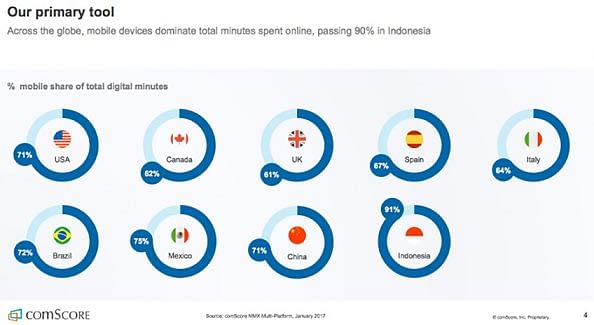
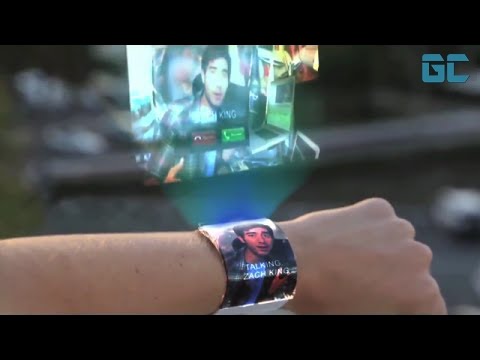
Will it be Smartphones, or Smart Wearable or Cryptocurrency that will augment reality.
All need software in the form of algorithms to run.
AI algorithms will make the physical and digital world interchangeable.
Practically every non- iPhone smartphone relies on an Android operating system?
One way or the other we are entering an age where life stops giving us things and starts taking them away.
Not surprising.
So it’s not Social media technology platforms like Facebook or Twitter and the others ( that talks a lot about connectivity but not accountability) that will change the world but the power of ever where at once.
That requires total knowledge on all aspects of life.
Google or should I say the Google Cloud is trying to achieve this.
Which is possibly both the best and the worst thing that could happen.
So let’s look at a few of the top combats in the world of technology in no particular order.
( Obviously it would take page after page to give a comprehensive insight so I am only going to give a few lines to each.)
Microsoft Corporation:(LinkedIn -Skype – Mojang – Yammer- Hotmail)
It operates through the following segments:
Productivity and Business Processes, Intelligent Cloud, and More Personal Computing.
Market Cap As of May 2017
$507.5 Billion
Microsoft could be worth $1 trillion by 2020 — if not sooner. It is moving further and further into a digital landscape for everything from movies, music, books, games and software.
Twitter: Owned mostly by Venture Capitalist:
An online breaking news and social networking service. Using Twitter bots, (live streaming video.) With 450 million monthly active users it is ranked the eleventh most visited website. It has mobile apps for iPhone, iPad, Android, Windows 10, Windows Phone,BlackBerry, and Nokia S40.
Capable of influencing public opinion about culture, products and political agendas by automatically generating mass amounts of tweets through imitating human communication. World leaders and their diplomats have taken note of Twitter’s rapid expansion and have been increasingly utilizing Twitter diplomacy. Television programs use it to amplify their programs.
It could become the emergency communication system for track epidemics or sensor for automatic response to natural disasters.
Amazon:
The largest Internet retailer in the world. The company is now worth more than $560 billion. Electronic commerce and cloud computing company.
Amazon announced that it would acquire Whole Foods, a high-end supermarket chain with over 400 stores, for $13.4 billion.
eBay Inc: (PayPal)
There are now literally millions of items bought and sold every day on eBay, all over the world. For every $100 spent online worldwide, it is estimated that $14 is spent on eBay. What’s more, eBay doesn’t care who you are, where you live, or what you look like:
The race is on to control mobile payments and the upside remains enormous:
Apple:(Shazam – Emagic- Siri – Beats Electronics – Next Inc.- Novauris-PrimeSense -The Bottom Line – Invest in Yourself.)
Quarterly revenue of $52.6 billion 2017.
Today, Apple leads the world in innovation with iPhone, iPad, Mac, Apple Watch and Apple TV. Apple’s four software platforms — iOS, macOS, watchOS and tvOS.
Facebook:(Whats App and Instagram Oculus VR.)
A publicly traded company worth more than $500 billion.
More than two billion monthly users. It is developing a new social platform in virtual reality called Facebook Spaces, which it believes will form the foundation for the future of communication.
Tencent and Alibaba: aren’t far from the half-trillion dollar mark either.
These are the main contenders as we know them to-day
—————————————————————————————
So the Question is:
Which one if any of the above will be the top dog by 2025.
Will it be : ( All knowledge, All Gossip, All purchases, All Apps/ Software)
At this point you will have noticed that I have left out the company mentioned in Title of this posting.
While in the future devices may be more ubiquitous in all corners
of the globe, inequality will therefore remain in terms of the services
available in certain locations and the lack of attention paid to the needs
and desires of certain populations.
Companies like Amazon and Google will be fighting to lock you into one voice ecosystem. You may have to declare your allegiance for Alexa, Siri, Cortana or Google Assistant.
One could say that:
Amazon represents de-socialising of commerce. Face book represents self ego. Twitter represents myths and gossip. Apple represents profit. E bay represents selling and buying of stuff, Google represents doming down.
All are represented on Social Media which is being used in ways that shape politics, business, world culture, education, careers, innovation, and more.
Social media applications such as Facebook, Twitter and YouTube have increasingly been adopted by politicians, political activists and social movements as a means to engage, organize and communicate with citizens.
So is the power and the winner going to be Social Media which is owned by the Internet.
I think Not.
In short, one consequence of this prediction is that the very idea of ‘social media’ might gradually disappear; instead we simply have an increasingly diverse set of media and increasingly sophisticated exploitation of the possibilities these media have created, including other trends such as obtaining information, sharing information or making communication more visual.
Social media is slowly killing real activism and replacing it with ‘slacktivism, and we all know where that might lead us. Awareness is not translating into real change. Support is limited to pressing the ‘Like’ button or sharing content which absolve them from responsibility to act.
The role of social media as symbolic of the future may already be in decline.
“The election of Donald J. Trump is perhaps the starkest illustration yet that across the planet, social networks are helping to fundamentally rewire human society.”
The one I left out, with 65% of all online searches – is Google.
Google has expanded far beyond its original claim to fame as a search engine.
Google and their competitor platforms are programming the world for profit. The reach of this technology giant is so vast it is hard to imagine an area of modern life it has not touched.
Alphabet owns Google, as well as many other companies. However, Google itself owns companies.
Google has reorganized itself into multiple companies, separating its core Internet business from several of its most ambitious projects while continuing to run all of these operations under a new umbrella company called Alphabet.
Google owns more than 200 companies, including those involved in robotics, mapping, video broadcasting, telecommunications and advertising.
Simply put, the company has been visionary in recognizing the income potential for information products.
Their profit seeking algorithms ensuring that every recommendation, from whether you should buy this or that, stay here or there, fly or drive, connect to this or that, live or die, will earn them a few cents.
By 2025 all will be connected to the Cloud. With one winner.
The Google Monopoly.
Once a Google client always a Google client.
How do you stop using Google?
Already impossible.
Move and your G Mail becomes blocked mail.
Say anything on you website that smacks about google, you site gets flooded with google ads.
It is becoming more and more difficult for anyone to extricate themselves from the clutches of any of its platforms as deactivating means little or nothing.
Social media apps ensure you are still engaged and if they don’t work your friends and family smartphones are searching for you nonstop supplying little hits of dopamine. ( Someone likes you photo or you are mentioned in their contact. It’s a social validation feedback loop..exploiting a vulnerability in humans psychology.)
Will Social Media destroy or rain back Google dominance?
The whole Social media thing is turning into an addictive cancer effecting our brains and tearing our emotions and attentiveness a sunder which in turn is encouraging self-segregation and exacerbating social divides.
Every facet of our life is touched or being integrated by the social media today.
In this sense social media has become an instrument of democratic renewal.
On the other hand it is evident that this uncensored and unmonitored medium of communication is exposing us all to a gradual breakdown of social cohesion and the destruction of our traditional value systems.
Though the advantages of social media are emphasized quite often, as opposed to its negative aspects which are very rarely discussed.
I feel that this will change in the coming years.
All said, social media is here to stay. The power of social media is exponential. Numbers tell the story.
Just as difficult as forecasting the future is knowing the present.
After all not everything moves over time to become more functional
or efficient.
It is obviously going to be hard to predict the future for something as
dynamic as social media. How can we know what social media has already become for oil workers in Alaska, tribal people in Amazonia and the nouveau riche of Moscow?
Unless we take responsibility to ensure that our understanding of social media and its impacts are constantly evaluated with what’s happening in the world. Once we appreciate that knowing social media is not an exercise in delineating the properties of a set of platforms, but rather of acknowledging what the world has already turned these into, by way of content, the immensity of the problem is revealed.
So it will be important to continue monitoring and exploring the extent to which collective action is individualised through social media use.
= Can the use of social media for campaigning help to bring about genuine and lasting empowerment; or does it serve largely to re-inforce pre-existing relationships?
= Is social media a means of building dialogue and consensus in diverse communities or does its use encourage increased fragmentation or, alternatively, a homogeneity of interests?
= Can meaningful impact measures be developed that can be used by small, under-resourced organisations at local level (or indeed within larger voluntary organisations)?
Social media is seen in much of the literature as a means of promoting dialogue beyond the mainstream media. Voluntary and community groups have been criticized, however, for using social media as little more than a means of broadcasting.
Why might this be the case – and does it matter?
Social media expands our capacity but, it does not change our
essential humanity.
It is used to repair the rupture sustained by separated transnational families or for overcoming previously frustrated desires to share photographs more easily.
It allows couples living in different countries who ‘sort of’ live together online;
Soon, however, things move on to new realms.
Should a clear relationship be expected between the (apparently empowering) use of social media in mobilizing large national and global movements, and its use at the micro-political neighborhood level.
An increasing number of social media platforms can be aligned with the diversity of the social groups to which we might want to relate.
Social media however has little impact on the overall outcomes in terms of empowerment, equalities or social justice.
However powerful and important the advent of social media has become, it would be hard to place it ahead of the impact and significance of smartphones, within which social media platforms may often be seen as just another kind of app.
It is smartphones that facilitate social media’s importance as a mix of polymedia, making clear the range of media possibilities as they lie side by side within one easily accessible device.
It is the Smartphone that drives social media input and out put.
Will that will be the One Winner, changing our sense of collective memory, creating a new form or combination of internal and external faculties for retaining information.
As Smartphones become smarter, they may well accelerate the dissolving of social media into this wider array of communicative possibilities.
The increasing ubiquity of the smart phone is the catalyst for more general usage of social media. Recognizing that this may not necessarily impact on any other aspect of inequality should not prevent us from recognizing that there is in one aspect an increasing and significant equality:
The more individuals live within culturally imposed constraints on communication, the more a new technology may mean that what was previously forbidden now becomes possible.
This fluid mix of communicative forms suits the way users flow between activities such as talking, gaming, texting, masturbating, learning and purchasing. The social connection is more important than how well a platform meets their needs.
Comparative anthropology creates particular varieties of knowledge of both breadth and depth. What makes these essential within the context of our complex modern world, however, is that these are forms of understanding based on empathy.
Merely having a smart phone provides a significant change with respect to the capacities of its owner.
——
What happens to our online materials at death.
Finally: Capitalism can never be ethical.
There are no laws requiring Google to be fair.
If we don’t open our eyes soon technology ( whether it’s Google, Twitter, Facebook, Amazon Inc or some equivalent service) is going to F—k us all from some Cloud or other that is just over the horizon.
Just look at the annual release of new smartphones.
Of course there are other things in the long tall grass waiting to caught us by the short and hairy and most have being around for yonks. War, Natural Disasters, Greed, Inequality and the like.
My advice is to beware of the man with a smartphone. Because knowledge is not knowledge until someone else knows that one knows.
Google it.
All human comments much appreciated. All like clicks chucked in the bin.
” Anyone who thinks that you can have infinite growth on a finite planet is either a madman or an economist” I would add technology in the form of profit seeking Algorithms.
Infinite growth might have seemed possible when Captain Cook was around, unfortunately it no longer holds.
However we are all still lead to believe that GDP marks human progress.
Our world is rapidly changing. Markedly defined by the Internet.
We are now standing on the threshold of divorce between Money and State with natural systems under enormous pressure which I am sure I don’t have to high light here.
With the planet groaning, ever trade deal is a new frontier of accumulation a form of World GDP exploitation that was and still is promoted by the help of the World Bank, and the IMF.
We are now at a stage where GDP growth is beginning to create more poverty, and inequality than it eliminates.
Unfortunately the resources of the world have been exploited both for debt and profit rather than sustainability, and as long as GDP growth remains the main objective of Globalization we will see more and more countries going into irreversible debt, and war over freshwater, air, and energy.
These profound changes are emboldened by the evident failures on both levels of political control: Technological Regulations/ Laws and the growing power of monopoly platforms like Facebook, Twitter, Google, Microsoft, the Cloud etc.
Don’t worry say’s technology we can decouple sustainability and material throughput.
A beguiling vision of a future lightweight economy.
Facebook and the Cloud are gathering an unprecedented amount of power and allowing their business practices to be a disruptive force for democracy.
All pointers signaling the widespread decay of the economic and political frameworks in which our institutions operate.
With profit seeking algorithms rich countries are in fact increasing consumption, still producing stuff and by 2030 it will be in the 100 billion tons.
There is also a growing belief as we convert to renewable energies and begin to use negative – emissions technologies that we can change the damage to the climate.
However if we continue to ignore that energy use is only part of the problem.
It is what we are doing with it is the problem.
Polluting our sea, chopping down our forests, producing cement, creating land fills with waste, eroding our land, all contributing more and more greenhouse gases. Switching to clean energy will do nothing to slow this down.
The problem is much deeper than we are willing to admit.
We need a new consciousness for a different world.
Our crucial first step would be to get rid of GDP as a measure of economic growth/progress and well-being.
We need to have an open discussion about what we really value.
We are all aware of the individual problems, but the main problem remains the same – Inequality due to the distribution and exploitation of the world’s wealth.
Any rich country that has food banks, people sleeping on the street, is for me a failed state.
I have written many a post with a solution that to date has fallen on deaf ears.
it is my conviction that at this point and time its impossible to correct the imbalances of Capitalism. We can only ensure that Capitalism pays for the damage by introducing a World Aid Commission.
0.05%
On all High Frequency trading, on all Sovereign Wealth Fund Accusations,on all Foreign exchange transactions over $50,000, on all Social Media platforms postings, on all Bitcoin’s, and other digital currency transactions.
This fund would be a perpetual source of money.
It could replace the begging Organisations.Re Establish the United Nations an effective world organisation that could address and react to world needs, where ever, when ever.
It could be managed under the UN umbrella, provided it was totally independent/ transparent of any lobbing and political veto interference.
Its funds could be granted with no repayments requirements.
It would change the world for the better, by spreading its wealth where it is needed most.
Of course the problem remains as to how we get our Capitalist Master to implement such a course of action.
Perhaps Bitcoin’s ability to promote the divorce between Money and State, might be a place to start.
All suggestions appreciated.
All human comments appreciated. All Like clicks chucked in the bin.
We live in a world that is being connected and disconnected at the same time.
Two related facts.
But don’t worry we now have Algorithms that both filter and recommend.
All our final decisions are made in a state of mind that is not going to last.
The reality is that there’s no way of knowing where our generation is going in terms of technology and our reliance on it.
The year 2018 will be the year in which human interaction decreases the more technology increases. While social media fosters an environment of connectedness and belonging in the digital world, it also forces a disconnect between people in the real world.
With false news and social media, words are on their last legs, with print for the high jump, we will have more arse holes 2018 twittering shaping the world.
Where two or three words gather together there is a great danger that thought might be present. However we once again don’t have to worry because we have the option to log off and unplug anytime we want, so it’s up to us to decide if we want to engage with the actual world or the virtual one.
Technology may well be is a societal advancement that has enabled our generation to do things previous generations never would have thought possible.
However:
The biggest problem we have is accepting each other’s differences.
“Technology makes us forget what we know about life.”
82 per cent of smart phone users said they rarely (if ever) powered off their phones last year, while less than 43 per cent of 13- to 18-year-olds saw any value in ever going unplugged.
Why?
This is the Eternal Question to which there is no answer, and yet the only one that has to be asked.
Take a look around you.
Every day we becoming more and more desensitized. Save this Save that while saving the planet is being left to technology.
Rapid progress in machine learning has raised the prospect that algorithms will one day be able to do most or all of the mental tasks currently performed by humans.
But the real problem is how one might design a highly intelligent machine to pursue realistic human goals safely.
This is very poorly understood.
Even if advanced machine intelligence does not get ‘out of control’, it is likely to be very socially disruptive and it is more likely it could be used as a destabilizing weapon of war.
It seems that most of us are in a mental wasteland inhabited by those upon whom the portcullis ( A sudden blotting out of all normal thought) has fallen.
How did we get to a place where the content on our phones is more interesting than the world around us?
In today’s society, scrolling through Facebook, Twitter, or Instagram has taken precedence over the real events scrolling through our daily lives.
Being “connected” to machinery 24/7 is affecting our ability to connect with our lives and the people around us.
Mechanical devices bait us into a make-believe life, as we are slowly being pulled away from a sense of who we are and what really matters.
Modern life is making us lonelier.
It’s not the technology that’s the problem; it’s us for abusing it.
We’ve become more and more antisocial by relying on technology too heavily.
Maybe if we look up and away from the flashing images and colors on our most recent Safari search, we will actually enjoy the company of those around us. So instead of counting the number of likes, count the memories in your life, because at the end of the day, that’s all that matters.
For the foreseeable future, it won’t be possible to take people out of the decision-making process, but the year 2018 will with the power of Profit Seeking Algorithms push us further down the road of hypnotic trance.
Technology is a valuable tool when used correctly. However, the law has to catch up with privacy and safety issues, not mention profit seeking algorithms.
We’ve all heard about the power of algorithms—but Algorithms to Live is in my book to be avoided at all costs, if we are to value what is vital to us all.
They are creating a world of such inequality that the scariest thing is the immense possibilities of these unregulated Algorithms will turn us and all that is necessary for a sustainable life into commodities to be exploited.
What can be done:
Education, Education is the only solution.
By this I mean education not for the market place but for the foundation of knowledge. Not just a narrow streamlined pipeline of mundane thoughts which doesn’t let you think outside the box and do things on your own.
Psychology, Anthropology, Sociology, Ecology, to name a few.
Dramatic changes are inevitable, we need to accept the fact on ground level that our education models are broken and paralyzed.
Perhaps we might well need computer algorithms to select the best candidate?
There’s no magic formula, freedom and dignity will not be found on social media, nor computed by algorithms.
There are too many parts of today’s conversations that can not be translated through technology.
Tearing apart the nation states and the world with ALGORITHMS is a
Disaster waiting to happen. No Robot with a brain full of algorithms is
going to have the the ability of an artist to have human empathy and an
appreciation of history; while also having the savvy self-awareness to
understand that their work merely takes its place in a greater culture
at large. Such art brings comfort in our modern secular world: where
spirituality seems to live in a foreign universe of yesteryear.
You’re more than a number.
how the mythical and quotidian usually overlap to
the point where the two become indistinguishable.
So join a club and organizations to make real friends.
Happy New year.
All human comments appreciated. All like clicks chucked in the bin.








 bobdillon33blog