• About
  • THE BEADY EYE SAY’S : THE EUROPEAN UNION SHOULD THANK ENGLAND FOR ITS IN OR OUT REFERENDUM.

bobdillon33blog

~ Free Thinker.

bobdillon33blog

Category Archives: Facebook

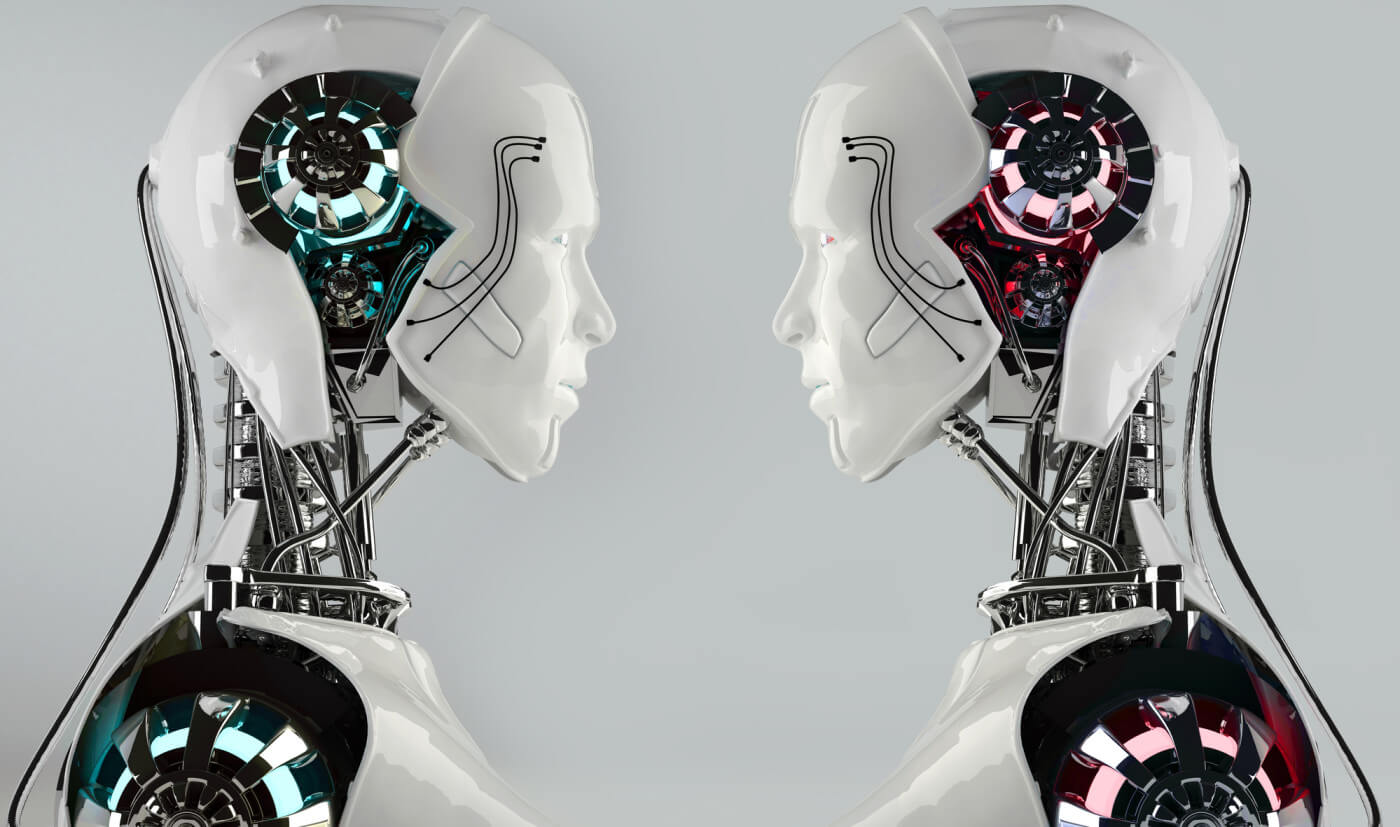
THE BEADY SAY’S: WILL A ROBOT WITH EMOTIONS SPELL THE END OF HUMANITY.

17 Wednesday Jul 2019

Posted by bobdillon33@gmail.com in 2019: The Year of Disconnection., Artificial Intelligence., Communication., Dehumanization., Democracy, Emotions., Evolution, Facebook, Fourth Industrial Revolution., HUMAN INTELLIGENCE, Humanity., Inequality, Life., Modern Day Communication., Modern Day Democracy., Modern day life., Our Common Values., Politics., Populism., Reality., Robot citizenship., Social Media, Technology, The common good., The essence of our humanity., The Future, The Obvious., The state of the World., The world to day., Unanswered Questions., WHAT IS TRUTH, What Needs to change in the World, Where's the Global Outrage.

≈ Comments Off on THE BEADY SAY’S: WILL A ROBOT WITH EMOTIONS SPELL THE END OF HUMANITY.

Tags

Artificial Intelligence., Democracy, Social Media, Technology, The Future of Mankind, Visions of the future.


(Eighteen-minute read)


An absurd thought you might say but it is the holy grail of AI to manipulate your feelings our emotions.

However, the uses of emotionally AI are nearly endless.

The number one question is going to be how do we stop being manipulated by those who control the data.

Another words democracy itself has been and is becoming more with Social media an emotional puppet show run by companies such as Facebook who is undoubtedly one of the kings of social networking.

It is who and how data is controlled that determines the outcomes of elections and referendums as we have seen with Brexit and the election of Donal Trump and now the coming of G5 we going have:

Autonomous Driving.

Remote Robotic Surgery.

Smart(er) Factories.

Immersive Gaming and Augmented Reality.

Supply Chain Management.

Digital Transformation in the Experience Economy.

It will “offer users no less than the perception of infinite capacity.

                                                  –

But how can we find a balance between accelerating technological progress

and governments’ responsibility to improve the economic conditions and raise

the level of wellbeing for their citizens?

There isn’t a single solution.

Why?

Because Democracy is based on feelings. During an election, you are not being asked to vote rather how do you feel.

Currently, many people cannot imagine their life without social networks, which in less than a decade have become an indispensable resource in our daily lives who have served multiple purposes throughout its short life and replaced other media.

With 2.38 billion monthly active users as of the first quarter of 2019, Facebook is the biggest social network worldwide. It is at a size where it’s worth really taking a careful look at what are all the things that it can do to make social media the most positive force for good possible.

But like climate change, we sit back and watch the development of technologies that have little or no regulation both of which are reshaping the world we live in and the Earth exponentially.

Perhaps sometime in the next few decades, we’ll start developing technologies that improve human intelligence. We’ll hack the brain, or interface the brain to computers, or finally crack the problem of General Artificial Intelligence.

Should we be worried about technology’s advance and our demise?

Will Technology Save Us Or Enslave Us?

Intelligence is the source of technology.

The purest case of an intelligence explosion would be a General Artificial Intelligence rewriting its own source code.

That prospect would certainly change our viewpoints on what is life.

The potential impact on our world is enormous.

Both climate change and GAI  are heading us all to a  critical point of all human history.

Right now, almost no one is paying serious attention to either.

So what might a General Artificial Intelligence do with nanotechnology?

Feed the hungry?

Heal the sick?

Help us become smarter?

Remove our emotions so we have no sense of guilt?

Instantly wipe out the human species?

Probably it depends on the specific makeup of the AI.

See, human beings all have the same cognitive architecture. We all have a prefrontal cortex and limbic system and so on. If you imagine a space of all possible minds, then all human beings are packed into one small dot in mind design space. And then Artificial Intelligence is literally everything else. “AI” just means “a mind that does not work like we do.

So you can’t ask “What will an AI do?” as if all AIs formed a natural kind.

There is more than one possible AI.

Back to the question of whether a robot could or should have emotions.

From an intellectual point of view, this may not be as important to a robot as being able to interrupt human emotion and also display it back while interacting with people.

The most efficient way to answer the question would be to start by making itself smarter: Acquiring more computer resources could probably be most easily accomplished by hacking every computer connected to the internet.

Once that’s done, it could use the resulting enormous amount of computing power to calculate the most optimal way of rewriting itself for more intelligence.

Using this newfound intelligence and raw brute force, it may turn to develop new and more efficient computer chips and proceeding to turn the surface of the earth and nearby matter into computer innards.

We would not escape as we are made from perfectly usable carbon atoms, just waiting to be utilized as computronium – re-purposing our atoms.

It would then be simply a matter of the robot fooling a human, an easy task into thinking it had emotions.

The sort of emotion a robot might actually be programmed would be the same as its intelligence that being artificial.

If it turns out to be possible to create an AGI, it will presumably be given a task of some sort.

Here are a few.

  1. Psychotherapy software that utilizes an emotional connection to dispense advice.
  2. Call answering software that detects caller emotions and responds accordingly.
  3. To foresee the consequences of actions.
  4. Robots will not be susceptible to the effects of fear, adrenaline or shock and could potentially make strategic, reasoned decisions much faster than a human soldier.
  5. Robots would not be restrained by human emotions and the capacity for compassion.

So could a robot acquire Adrenaline along with emotions?

Emotions appear to be integrated as part of a biological body and a biological brain but our inability to see beyond biological programming does not allow us to answer this question.

There is no doubt that as AI technology grows more sophisticated, the potential for implementing it in weaponry is all but guaranteed – Drones that get an Adrenaline kick.

Adrenaline can be used in both technical and nontechnical contexts.

It is commonly used in describing the physiological symptoms (such as increased heart rate and respiration) that occur as part of the body’s fight-or-flight response to stress.

In a robot, it would not be just an act in the same vein. A thinking person feels empathy for something that looks alive and has complex behaviours, even if it doesn’t have life in a biological sense.

In the end, there is absolutely no reason why any sane human would ever want them to have characteristics but technophobic response actually feels rational.

Like a robot dealing with sick people should be able to mimic some emotions like compassion and carefulness….. They testify to the fact that emotions and our biological body operate together.

While a consensus is yet to be reached over the scope and scale of the effect we should expect from mobile connectivity on poverty-reduction and inequality some argue that it might be the best hope we have.

All human comments appreciated. All like clicks and abuse chucked in the bin.

Go back

Your message has been sent

Warning
Warning
Warning
Warning

Warning.


Share this:

  • Click to share on WhatsApp (Opens in new window) WhatsApp
  • More
  • Click to share on Pocket (Opens in new window) Pocket
  • Click to share on Mastodon (Opens in new window) Mastodon

THE BEADY EYE WISHES YOU A HAPPY NEW YEAR BY SPREADING SOME GOOD FALSE NEWS FOR 2019.

03 Thursday Jan 2019

Posted by bobdillon33@gmail.com in 2019., Algorithms., Artificial Intelligence., Environment, Evolution., Facebook, Fake News., HUMAN INTELLIGENCE, Life., Modern day life., Our Common Values., Post - truth politics., Reality., Social Media, Sustaniability, Technology., The common good., The essence of our humanity., The Future, The new year 2109, The Obvious., The world to day., Unanswered Questions., What Needs to change in the World, Where's the Global Outrage.

≈ Comments Off on THE BEADY EYE WISHES YOU A HAPPY NEW YEAR BY SPREADING SOME GOOD FALSE NEWS FOR 2019.

Tags

Algorithms., Artificial Intelligence., Climate change, Distribution of wealth, Inequility, Social Media, Technology, The Future of Mankind, Visions of the future.


(Seven-minute read)

Despite the dire state of the world today here is some good false news.Résultat de recherche d'images pour "fake news images"

Let’s start with an issue that has not received enough attention in the media and popular understanding.

The Earth is finite and this fact will have real-world physical, economic, social, and political implications.

Thus, we are using an economic theory that is simply incapable and inapplicable for informing an unprecedented transformation of the economy by technology.

We need a discussion as to what political leaders, business leaders, and citizens think is an appropriate distribution of wealth across the entire population of the world. This focuses on the real question (how many people have what, independent of the size of the economy, though the two are linked) instead of discussing how to shape policies and taxes to achieve an unspecified growth target independent of wealth distribution.

Trump, Brexit, and Le Pen are representations that people understand growth only for the elite in the West are no longer tenable. Neoclassical economics ignores this obvious fact, yet it is used to guide most policy (eg, economic projections and scenarios), including that for climate change mitigation.

Perhaps a summary is that the human enterprise has outgrown the long-ability of the planet’s renewable resources to support us at our current numbers and our current rates of consumption and waste generation.

Climate change is just one piece of evidence of this fact.

By 2050, over 7 billion people will live in cities (80% of the world), and cities will be responsible for 75% of global carbon emissions. The battle for sustainable development will be won or lost in cities.

Urban planning needs to incorporate total populations, not simply the rich and middle classes; this is the only way that the economic potential of the majority can be harnessed for the national good.

The reality is that any activity that is not sustainable HAS TO STOP.

So far, non-renewable resources are what is primarily driving our economic engine. But by definition, non-renewables are being depleted and for the most part, will stop being economically available in this century. So we must plan rapidly for the day when humanity can live using just renewable resources while maintaining the biodiversity that makes the planet habitable.

In truth, sustainability is the ultimate environmental issue, the ultimate health issue, and the ultimate human rights issue.

The days when scientists could not care about the impact of their work on cultural, values and society are over. If they ever existed, which they didn’t, but that’s water over the dam.

Data-driven technologies are increasingly being integrated into many different parts of society, from judicial decision-making processes to automated vehicles to the dissemination of news.

Each of these implementations raises serious questions about what values are being implemented and to whom these implementations are accountable.

There is an increasing desire by regulators, civil society, and social theorists to see these technologies be “fair” and “ethical,” but these concepts are fuzzy at best.

As we are developing more and more ways to let computers take over reasoning through adaptive learning, we are faced with an existential question: What is it – long term – that makes us human?

AI, although very useful, will never approach human intelligence until it is embodied.

My #1 issue is not the future of democracy. The future is a complicated subject.  Now more than ever, it’s fast-moving, complicated, increasingly immediate. We can’t keep thinking about the future as a far-off intangible. Today, things move so quickly, that the future already is happening, and already affecting us. And in many ways, we’re struggling to adapt quickly enough.

That’s only the beginning of the genetics, robotics, information and nano revolutions – which are advancing on a curve.

Meanwhile, we humans are trying to process this exponential change with our good old v. 1.0 brains. With precious little help at all from those creating this upheaval.

Algorithms by their very nature reason probabilistically and as uncertainty increases in the world, uncertainty increases in an algorithm’s ability to successfully and safely come to a solution.

Presently we have no commonly-accepted approaches and without an industry standard for testing such stochastic systems, it is difficult for these technologies to be widely implemented.

As technological developments increasingly drive social change, how can democratic societies empower ordinary people to have a say in the decisions that shape the technological trajectories that will, in turn, determine what the future looks like?

How can the public have meaningful input into the character of the algorithms that will increasingly determine both the nature of their relationships with other people on social media and their access to various important social goods?

How can we prevent an underwater arms race involving autonomous submersibles over the coming decades?

How can we ensure that questions about meaning and values, and not just calculations of risks and benefits, are addressed in decisions about human genome editing?

If there are people who are willing to blatantly refuse to believe that something is a lie, no matter how hard you try, they won’t listen. I’m not sure what amount of evidence is needed in this new paradigm of journalism to get newsreaders out of their new bubbles.

Human psychology is the main obstacle, unwillingness to bend one’s mind around facts that don’t agree with one’s own viewpoint.

The fundamental challenge we now face is how to handle a setting where anybody can get their views disseminated without intermediaries to prevent the distribution.

Somehow there still has to be some process of collectively coming to some agreement of what we are going to believe and what we think are consensual facts.

Instead, we have the golden age of the algorithm surveillance, automation, virtual reality, gene editing, the widening gap between wealthy and impoverished people, the worldwide questions of immigration, social media inserting a new level of governance in society, rapid urban growth isolating us from nature, smartphones isolating us from each other.

The challenge now is to make sure everyone benefits from this technology. It’s important that machine learning is researched openly, and spread via open publications and open source code, so we can all share in the rewards.

Our major challenge is related to our new capability of digitizing human beings.

The scale of popular social networks has democratized publishing, which effectively lets anyone – regardless of their intentions or qualifications – produce content that can appear journalistic.

Rather than waiting for politicians to make decisions and then we all argue over whether what they say reflects reality, we could have tools that engage people much earlier in the process so they can be involved in formulating ideas and drafting legislation.

As we begin in 2019 we have only 48.8% worried by Climate change/destruction of nature, 29.2% of us worried by Poverty, 22.7% worried by Government accountability and transparency/corruption, with only 18.2% worried by Food and water security.

Water is a social issue, a political issue, an energy issue, even a gender issue

– and how clean water scarcity triggers a host of problems, from disease

outbreaks to government feuds.

So the challenge before us is to begin to construct a truth signalling layer into the fabric of facts, particularly online. Even if we have structures that impose constraints on people in power and we put pressure on powerful people to be honest with us, in a sense, all of that is being circumvented by social media.

We need to turn social media upside down by changing the algorithms in Facebook or on Google to nudge people into sharing or consuming news that is slightly outside their normal comfort zone. We have to have a setting where we trust other people.

Fix it. Get out of your silo. If you can’t figure out the societal and cultural

implications of what you’re doing, start seeking out people who might.

A major issue most people face, without knowing it, is the bubble they live in.

Our world is far too beautiful to allow Social Media and profit-seeking algorithms to rip it apart.  Happy New year.

All human comments appreciated/ All abuse and like clicks and false news chucked in the bin.

Go back

Your message has been sent

Warning
Warning
Warning
Warning

Warning.


Share this:

  • Click to share on WhatsApp (Opens in new window) WhatsApp
  • More
  • Click to share on Pocket (Opens in new window) Pocket
  • Click to share on Mastodon (Opens in new window) Mastodon

THE BEADY EYE ASKS: HAVE WE ALL LOST OUR HEADS OR IS IT THAT VERY FEW OF US GIVE A SHIT ABOUT DEMOCRACY.

28 Friday Dec 2018

Posted by bobdillon33@gmail.com in 2018: The Year of Disconnection., Algorithms., Artificial Intelligence., Big Data., Democracy, Elections/ Voting, Facebook, Fake News., Freedom, Google it., Google Knowledge., HUMAN INTELLIGENCE, Modern day life., Our Common Values., Reality., Robot citizenship., Social Media, Technology, The essence of our humanity., The Future, The Obvious., The world to day., Twitter, Unanswered Questions., What Needs to change in the World, Where's the Global Outrage.

≈ Comments Off on THE BEADY EYE ASKS: HAVE WE ALL LOST OUR HEADS OR IS IT THAT VERY FEW OF US GIVE A SHIT ABOUT DEMOCRACY.

Tags

Algorithms., Artificial Intelligence., Democracy, SMART PHONE WORLD, Technology, The Future of Mankind, Visions of the future.


( Twenty-minute read)

This post has many contradictions, as I am delving into an area with so many unknowns that are developing as we read.

You could say that there many more pressing problems in the world than technological development which will always be far beyond our ability to respond to it in any democratic manner.    Résultat de recherche d'images pour "pictures of losing your head"

If we are to place our trust in artificial intelligence, it is going to require a high degree of transparency.

As citizens, we must know how and in which context our data is used, and we must feel confident that data storage is carried out in a safe and secure manner.

We should also have insight into the basis on which artificial intelligence acts, so that we may better understand the implications and dilemmas we will have to relate to in the future. Here, it is crucial that we handle the ethical dilemmas jointly – and contribute to the creation of the common framework for a world not owned by Apple. Microsoft etc.

But how do we create a wide interest in contributing?

How do we ensure that it is not just the technologically initiated who create the framework on behalf of society as a whole?

The next century beginning on January 1, 2101.

It might seem miles away and most if not all of us will have departed this world, long before it arrives, however – if we want Liberal democracy to survive or for that matter, the earth itself we need to put aside our smartphones and start defending our common values.

To do this it is important to remember the past and to keep it in mind so that as individuals and as a society we can grow and flourish.

As Emersons said:

“Society is a joint stock company in which the members agree for the better securing of his bread to each shareholder to surrender the liberty and culture of the eater. ”

The current age with its AI technology is far from achieving this rather with Machine learning and Data mining and algorithms it is just the beginning of undermining our own social foundation.

The problem is the opacity of the power of the algorithms, which means that it isn’t easy to determine when algorithmic governance stops serving the common good and instead becomes the servant of the powers that are creating a parallel form of governing alongside the more familiar tools of legislation and policy- setting.

In the coming years, vast fields of human life will be governed by digital code both invisible and unintelligible to human beings with significant political power placed beyond individual resistance and legal challenge.

Soon it will not be easy to determine when algorithmic governance stops serving the common good and instead becomes the servant of greed and inequality.

Once we all have digital ID numbers, it will become impossible to challenge one’s designation.

We are starting to see the use algorithms not only in the assisting of the election of idiots like D Trump but we are allowing Social media platforms to rip apart the institutions that are supposed to stabilise our political volatile world.

Why is this happing?  Because our current democratic world is not working.

It seems unwilling to deal with the problems facing earth while its citizens are being gerrymandered by technology into populist short-term thinking.

As we watch the decline of mainstream parties the role of money in politics that once shaped government is no longer effective. For the last few decades, we see countries driven by growth at all costs with parties and governments responsive primarily to elites or narrow groups of voters rather than broad cross-sections of the population.

If we stopped and properly analyzed that past we would realize that our economy was strongest not when untethered free market capitalism was free to reign but when our government had pushed for massive social reforms which “artificially” (as some would say) supported the lower and middle class.

It was this, not the free market which allowed for Capitalism for profit to reign supreme in the past and if we are to ignore that then we can never hope to move forwards for we will forever be stuck solving the problems of the past not to mention the future.

The result is that citizens feel disregarded and disempowered with little or no respect for politicians that show a tumbling and marked deterioration in their capacity to inspire or the power they can exert in a shrinking sphere of influence due to social media.

I say: by ignoring the past we pass up valuable opportunities to learn more about what should be done to solve problems now.

This is the basis for historic achievements such as human rights and the rule of law, however, we on the threshold of not be able to reconcile these rights with the revolution promised by the fourth Industrial revolution.

Due to lack of access to data and any world regulations as to what can be done with data, there is a high probability that data collection collected on one pretext will be used entirely for a different purpose.

Take Denmark which is now distributing benefits by using algorithms that are undermining its democracy. They don’t fully appreciate the risks involved in enhancing the welfare state through AI applications.

Liberalism is the premise of the belief that coercive powers of public authorities should use in service of individuals freedom and that they should be constrained by laws controlling their scope, limits, and discretion.

The best way to predict the future is to invent it.

Therefore, new systemic set-ups are required that can support the agility needed in a digital age.

The fourth industrial revolution does not stop just because we are not ready
to support it.

We must instead get ready. Get ready for a time of driverless cars and artificial intelligence that complements us as human beings, and augmented reality that connects the digital world with our physical one.

But actual legislation is difficult to imagine at the present time because we
simply cannot regulate something of which we do not know the extent… The fear is that we are doing something wrong because the market is so volatile and immature.

So for the moment instead of legislation, we should be putting in place policy frameworks and certifications as a means of regulating the area:

Accountability is a basic aspect when working on new technology of which we do not yet know the extent, the consequences or the full potential.

Accountability for technological development implies that we discuss solutions,
opportunities and engage in the conflicts and disagreements that will naturally follow in the aftermath – even if we do not know the destination of our train.

Others emphasize the fact that the accountability consists of people having control of the technology, and technology acts on the data fed to it. In other words, people are very much responsible for data being of the right quality to avoid so-called bias (distortions) in data and, thus, in the recommendations that artificial intelligence may contribute in what potentials may be released and of what challenges we should be aware of.

Thus, the goal has not been to identify a final result or a single truth that everyone may rally around.

Because the truth is that there are many attitudes toward artificial intelligence.

From how the area should be anchored politically to how to ensure that everyone enjoys the benefits of the technological development and what barriers may exist to this development.

From how the savings arising from increased automation and increased use of artificial intelligence are used to create value for the citizens:

From how to quickly decide on specific projects and ensuring rapid implementation?

Although EU legislation may be relevant, technology is a cross-border issue so international guidelines are equally important as many global companies are located in the US and China.

Finally, we have the problem of engagement.

None of us like our forefathers and all that came before them have any idea what the world is going to be like in the future but addictive technologies that have captured the attention and mind space of the youngest generation will formulate its foundations. 

The long-term effects of children growing up with screen time are not well understood but early signs are not encouraging: poor attention spans, anxiety, depression and lack of in-person social connections are some of the correlations already seen, as well as the small number of teens who become addicts and non-functioning adults.

All in all, digital life is now threatening our psychological, economic and political well-being. People’s cognitive capabilities will be challenged in multiple ways, including their capacity for analytical thinking, memory, creativity, reflection, and mental resilience.

The digital divide will become worse, and many will be unable to pay for all the conveniences. Convenience will be chosen over freedom. Perhaps.

The more the culture equates knowledge with data and social life with social media, the less time is spent on the path of wisdom, a path that always requires a good quotient of self-awareness.

We’ve reached a phase in which men (always men) believe that technology can solve all of our social problems. Increasingly social media is continuing to reduce people’s real communication skills and working knowledge. Major industries – energy, religion, environment, etc., are rotting from lack of new leadership.

Some of these technologies are already operating without a person’s knowledge or consent. People cannot opt out, advocate for themselves, or fix errors about themselves in proprietary algorithms.

So the platforms will necessarily compromise humanity, democracy and other essential values. The larger the companies grow, the more desperate and extractive they will have to become to grow still further. Facebook and Twitter have become heavily ingrained in the process of democracy their digital footprint is not limited to a readership or viewing area.

We will see a reduction of engagement with and caring for the environment as a result of increased interaction with online and digital devices.

The society-wide effects of ‘continuous partial attention’ and the tracking, analysis and corruption of the use of data trails are only beginning to be realized. Without tenacity, self-control and some modicum of intelligence about the agenda of social media, the interruption generation will miss out on the greatness that could be theirs.

Digital life will take people’s privacy and influence their opinions. People will be fed news and targeted information that they will believe since they will not access the information needed to make up their own minds.

Out of convenience, people will accept limitations of privacy and narrowed information resources. Countries or political entities will be the influencers of certain groups of people. People will become more divided, more paranoid as they eventually understand that they have no privacy and need to be careful of what they say, even in their own homes.

Understanding well-being in terms of human flourishing – which includes among other things the exercise of autonomous agency and the quality of human relationships – it seems to clear to me that the ongoing structuring of our lives by digital technologies will only continue to harm human well-being.

This is a psychological claim, as well as a moral one. Unless we are able to regulate our digital environments politically and personally, it is likely that our mental and moral health will be harmed by the agency-undermining, disempowering, individuality-threatening and exploitative effects of the late-capitalistic system marked by the attention-extracting global digital communication firms.

You see it everywhere. People with their heads down, more comfortable engaging with a miniature world-in-a-box than with the people around them.

At the same time, increasingly sophisticated technology for emotion and response manipulation is being developed. This includes devices such as Alexa and other virtual assistants designed to be seen as friends and confidants. Alexa is an Amazon interface – owned and controlled by a giant retailer: she’s designed, ultimately, to encourage you to shop, not to enhance your sense of well-being.

It remains to be seen whether any of the promises made by digital technology companies will be beneficial to mankind other than profit for profit sake. The ethics of software development and the idea that technology should be designed to enhance people’s well-being are both principles that should be stressed as part of any education in software design.

Proponents of an elusive work-life balance may argue that you can always switch off digital technology, the reality is that it is not being switched off – not because it cannot, but there is now a socio-cultural expectation to be always available and responding in real-time.

What we are seeing now becoming reality are the risks and uncertainties that we have allowed to emerge at the fringes of innovation.

The technological path we’re on and how to evaluate techno-social engineering of humans has to be challenged NOW not in the future.

Technology will be needed if we are to develop beyond a one plant species.

Conditions of modern life could be driving changes in the makeup of our genes. Our bodies and our brains may not be the same as those of our descendants.

Technology may well put an end to the brutal logic of natural selection with evolution becoming purely cultural.

This gives us good grounds for thinking that evolution (whether biological, memetic or technological) will continue to lead in desirable directions.

There is no genetic or evolutionary reason that we could not still be around to watch the sun die. Unlike ageing, extinction does not appear to be genetically programmed into any species.

Meanwhile there is gradual progress in neuroscience and artificial intelligence, and eventually, it will become possible to isolate individual cognitive modules and connect them up to modules from other uploaded minds…

Modules that conform to a common standard would be better able to communicate and cooperate with other modules and would, therefore, be economically more productive, creating pressure for standardization…

I think the next decade will be one of retrenchment and adjustment, while society sorts out how to deal with our perhaps over-optimistic construction of the digital experience.

The addictive nature of social media means the dis-benefits could be profound.

There is a reason the iPhone was initially called a ‘crack-phone.

There might be no niche for mental architectures of humankind.

Résultat de recherche d'images pour "pictures of losing your head"

All human comments appreciated. All abuse and like clicks chucked in the bin.

Go back

Your message has been sent

Warning
Warning
Warning
Warning

Warning.


Share this:

  • Click to share on WhatsApp (Opens in new window) WhatsApp
  • More
  • Click to share on Pocket (Opens in new window) Pocket
  • Click to share on Mastodon (Opens in new window) Mastodon

THE BEADY EYE ASK’S: WHEN THIS BRIXIT MAYHEM IS ALL OVER. THERE WILL BE QUESTIONS GALORE AS TO HOW IT ALL HAPPENED IN THE FIRST PLACE. ANOTHER FACE BOOK VICTORY.

13 Thursday Dec 2018

Posted by bobdillon33@gmail.com in #whatif.com, 2018: The Year of Disconnection., Algorithms., Artificial Intelligence., Big Data., Brexit., Democracy, Facebook, HUMAN INTELLIGENCE, Humanity., Life., Modern Day Communication., Modern Day Democracy., Modern day life., Our Common Values., Politics., Populism., Reality., Social Media, Sustaniability, Technology, The common good., The essence of our humanity., The Future, The Obvious., The world to day., Twitter, Unanswered Questions., What Needs to change in the World, Where's the Global Outrage., World Leaders, World Organisations., World Politics

≈ Comments Off on THE BEADY EYE ASK’S: WHEN THIS BRIXIT MAYHEM IS ALL OVER. THERE WILL BE QUESTIONS GALORE AS TO HOW IT ALL HAPPENED IN THE FIRST PLACE. ANOTHER FACE BOOK VICTORY.

Tags

Brexit., Democracy, Erosion of democracy., Future Society., Inequility, Power of Social Media, SMART PHONE WORLD, Social media platforms., Social networking, The Future of Mankind, Visions of the future.


(Seven-minute read)

Facebook is more powerful than a nation-state.

Facebook is in the business of exploiting your data.Résultat de recherche d'images pour "pictures of the erosion of democracy"

Platforms like Facebook enable people’s data to be used in ways that take power away from voters and give it to data-analyzing campaigners.

Unfortunately, it seems that none of us sees this. We don’t hold media technology firms accountable for degrading our public conversations.

With only months to go before Britain exits the European Union, the English government is in meltdown oblivious to what is happening in the world beyond and how it connects to Britain

All eyes are transfixed on the EU exit sign.

Critically, both for the EU and England it’s what happened on Social media platforms like Twitter or Facebook that will remain the biggest question of all after Brexit.

Both Twitter and Facebook have become a giant funnel not just for dark ads, but for dark money that evades election finance laws and the control of money spent during elections is the very basis of our electoral laws.

If we are now failing to recognise the above we are failing to appreciate how social media is breaking our democracy.Résultat de recherche d'images pour "pictures of the erosion of democracy"

While we all are all burying our heads in the sand of smartphone it is obvious that Social media platforms like Facebook, Twitter are the perfect cover for something far more chilling controlling the expression of public opinion in the political debate.

Although Twitter and Facebook are categorised as social networking services, in fact, they are as different as chalk and cheese. And, of the two, Twitter is more important in one respect: its impact on the arena in which societies discuss their political issues.

Twitter also has the capacity to turn “ordinary” people into broadcasters, a development whose implications we are only just beginning to digest. Yellow Jackets, Brixiters who form the conclusion are perhaps three hundred miles distant from those who hear the arguments?

Technologies such as Twitter, which offer real-time tracking of public opinion, are the visible foundations of the Arab Spring, Donald Trump’s election, Brexit and the Yellowjackets.

Democracy and the rule of law are been subverted in plain sight.

If you look at the USA Twitter is the de facto newswire for the planet, which means that a company that can regulate expressions of opinion might be very powerful indeed.

And that should make us nervous.

So is there anything that can be done?

No much unless we pass laws regulating these platforms and make them responsible for what is posted on their platforms.

One of the most striking aspects of the epoch-making Brexit is (as with the Syrian War the Iraq, and Yemen war) is the way many MPs cited the emailed opposition of their constituents to armed intervention as a reason for voting against the proposed action.

Thus, it is evident that we are all increasingly embracing the importance of social media and its value in modern human communication.

However, this trend can only be assumed as the beginning of an envisioned well connected and digital adept world.

So recent history has evidenced that Social Media is a potent tool with transformational abilities to shape and influence the way in which people communicate and share information.

One of the qualities that define Social Media is its ability to transcend beyond borders, without observing spatial distance that exists between and amongst the geographies.

In addition, social media connects individuals on a semi-personal level, while allowing instantaneous feedback and dialogue.

But, this does not rule out the possible abuse of such innocent yet powerful platforms of communications.

Different sectors ranging from government to business also embeds and encourages the embracement of social media platforms into their processes in order to enhance organisational efficiency.

We might be gradually realising the significance of social media for democratic benefits that it is seen as an agent of public discourse and a driver of public participation and freedom of speech amid political and democratic uncertainty.

It might be rising the political and democratic consciousness but the power of social media in the political and democratic dispensation cannot be underestimated.

Is social media damaging democracy? Yes, but we can also use social media to save democracy.

We have to stop governments from colluding with an omniscient surveillance superpower but use it as their eyes to see the inequalities we all live in.

THERE IS NOT THE TIME FOR COUNTRIES TO BE MOVING TO ID ISOLATION IF WE ARE TO HARNESS TECHNOLOGY TO SERVE THE WORLD.

Just as there is nothing inevitable about democratic survival, neither is the demise of democracy guaranteed.

These changes are especially likely to go unnoticed when popularly elected leaders twist laws to their advantage or frame attacks on checks and balances as populist reforms limiting the power of elites.

Civil society must reclaim its rightful place by demanding genuine participation in governance, including decisions on peace initiatives, environmental protection and trade and investment agreements.

A large part of humanity still doesn’t have it. Résultat de recherche d'images pour "pictures of the erosion of democracy"

All human comments appreciated. All abuse and like clicks chucked in the bin of the cloud.

Go back

Your message has been sent

Warning
Warning
Warning
Warning

Warning.


Share this:

  • Click to share on WhatsApp (Opens in new window) WhatsApp
  • More
  • Click to share on Pocket (Opens in new window) Pocket
  • Click to share on Mastodon (Opens in new window) Mastodon

THE BEADY EYE SAY’S: IT’S NOW OR NEVER FOR HUMAN RIGHTS.

11 Thursday Oct 2018

Posted by bobdillon33@gmail.com in Algorithms., Artificial Intelligence., Democracy, Evolution, Facebook, Google, Humanity., Modern day life., Privatization, Sustaniability, Technology, The cloud., The Obvious., The world to day., Unanswered Questions., What Needs to change in the World

≈ Comments Off on THE BEADY EYE SAY’S: IT’S NOW OR NEVER FOR HUMAN RIGHTS.

Tags

Algorithms trade., Algorithms., Artificial Intelligence., Big Data, Distribution of wealth, Google, Technology, The Future of Mankind, Visions of the future.


(Fifteen-minute read)

This is not a spectator sport:

It can be nearly impossible to credibly predict all the positive possibilities and negative implications for how we live, work, govern, and organize arising from the deployment of AI.

The fact that we are deeply uncertain about how technologies will evolve in the years and decades ahead makes human rights due diligence of AI very challenging. Résultat de recherche d'images pour "pictures of human rights abuse"

The fact that the rapid development of AI raises challenges for securing access to remedy, which can be especially challenging when humans often can’t cognitively understand how a decision is made by AI systems:

The fact that Artificial Intelligence (AI) technology is increasingly being used by businesses, governments, and other institutions to augment many fields of human endeavor.

The fact that Methodologies for implementing respect for human rights may need to integrate strategic tools such as strategic foresight, futures thinking, and scenario planning.

The fact that the global “platformization” of content (i.e., the rise of Video on Demand and online streaming platforms) shows us that guarantees of people’s access to the culture of their selection may now become beholden to digital intermediaries.

Proponents believe that the further development of AI creates new opportunities in health, education, and transportation, will generate wealth and strengthen economies and can be used to solve pressing social issues. However, the rapid growth of AI raises important questions about whether our current policies, legal systems, business due diligence practices, and methods to protect rights are fit for purpose.

The significant expansion of data collected and analyzed may also result in increasing the power of companies with ownership over this data and threaten our right to privacy.

HERE ARE A FEW OF PROBLEMS THAT ARE NOT DISCUSSED.

As the digital paradigm evolves, the pathway for human rights is likely to become more complicated, making appropriate regulation more important than ever. The realization of ESCR and the right to development centers on data democracies that are accountable.

Global policy discourses and frameworks around data have skewed the digital innovation tide in favor of developed countries… the global “platformization” of content… shows us that guarantees of people’s access to the culture of their selection may now become beholden to digital intermediaries.

Data and technological arrangements in the global South and North worryingly point to a wholesale private capture and consolidation of critical data regimes in the developing world: trade, agriculture, health, and education.

Not only does this leave citizens in developing countries vulnerable to acute privacy violations, but it also bears decisively on their economic, social and cultural rights (ESCRs). For example, in India, the acquisition of homegrown successes, such as Wal-Mart’s purchase of the domestic e-commerce unicorn, Flipkart, poses very serious outcomes for the livelihoods of small producers and traders.

Algorithm-based decision-making by companies could also perpetuate human bias and result in discriminatory outcomes, as they already have in some cases.

An algorithm is meant to complement and not necessarily displace human discernment, it is not hard to imagine a future where humanitarian assistance to refugees becomes predicated on their (technology proven) ability to viably assimilate and contribute to their host economies.

Could the trade-off for a smoother resettlement process be the exclusion of those that the algorithm will one day write off as “inadmissible” and “unsolvable”?

Technology-based decision-making also raises important questions on how the right to development will be realized.

Artificial intelligence is undermining society by promising unimaginable benefits without any intervention from governments or other world organizations.

As always we humans react to crises when it’s too late.Résultat de recherche d'images pour "pictures of human rights abuse"

Governments must create policies for effective data sharing between governments and the private sector for sectors that are of critical social importance.

More importantly, governments must create a data commons with independent oversight.

For example:

The municipality of Curitiba in Brazil, for instance, has taken the lead in passing local legislation that mandates anonymized data sharing between the local government and the ride aggregator Uber. The intention is to tap into Uber’s large and rich data sets towards better city planning and traffic management outcomes.

Governments must invest in the idea of “data as a public good” so it can work to enhance human rights.

Although nascent, experiments with models for managing big data repositories are increasing.  Such repositories can encourage domestically led innovation, with local start-ups and public agencies taking the lead in developing appropriate AI-based solutions for social problems.

These are pressing policy challenges, and such prediction models need to be closely and continuously tracked for possible social distortions and subject to institutional audit. The biases in AI is often the bias of humans. People will not rely on technology they do not trust.

Society needs to come together to consider these questions, explore solutions, and deploy AI that puts people first, protects human rights, and deserves the public’s trust.

Breakthroughs in technology—including artificial intelligence—can help fulfill the right to development, but digital technologies are not magic bullets; there is a strong role for governance.

The security of digital bits cannot be left to the cloud nor the internet of things, promoted by Amazon, Facebook, and Google with home hubs that can be hacked.

Civil society groups, governments, and others are rightly asking questions regarding the risks to human rights. In this age of global corporate presence and influence, we need to ensure that ordinary people and communities are able to stand up for their rights.

But the danger with artificial intelligence is greater than just our rights.

Everything that makes who we are comes from our brains. Without brain power, we would not have gone from flint arrowheads to the space station.

DESTROY THE BRAIN WITH AI AND WE DESTROY CREATIVITY.

All human comments appreciated. All like clicks chucked in the bin.

 

Go back

Your message has been sent

Warning
Warning
Warning
Warning

Warning.


Share this:

  • Click to share on WhatsApp (Opens in new window) WhatsApp
  • More
  • Click to share on Pocket (Opens in new window) Pocket
  • Click to share on Mastodon (Opens in new window) Mastodon

THE BEADY EYE SAY’S: WE SHOULD NEVER UNDERESTMATE HUMAN STUPIDITY

20 Thursday Sep 2018

Posted by bobdillon33@gmail.com in 2018: The Year of Disconnection., Algorithms., Artificial Intelligence., Big Data., Capitalism, Climate Change., Environment, Evolution, Facebook, Fake News., Fourth Industrial Revolution., Google Knowledge., HUMAN INTELLIGENCE, Humanity., Life., Modern day life., Natural World Disasters, Nuclear power., Our Common Values., Politics., Populism., Reality., Social Media, Sustaniability, Technology, The cloud., The common good., The essence of our humanity., The Future, The Internet., The Obvious., The world to day., Trade Agreements., Twitter, Unanswered Questions., War, Wealth., What Needs to change in the World, Where's the Global Outrage., World Organisations.

≈ Comments Off on THE BEADY EYE SAY’S: WE SHOULD NEVER UNDERESTMATE HUMAN STUPIDITY

Tags

Algorithms trade., Algorithms., Big Data, Capitalism and Greed, Earth, Environment, Extinction, Inequility, Social Media, Technology, The Future of Mankind, The Internet., Visions of the future.

(Five-minute read)

You don’t need me to tell you that we are living through an era of tremendous transition and disruption and whether or not we are comfortable with AI may already be moot:

HOWEVER, THE THREE BIGGEST PROBLEMS FACING THE WORLD CLIMATE CHANGE, ARTIFICIAL INTELLIGENCE IN THE FORM OF PROFIT SEEKING ALGORITHMS, AND NUCLEAR WAR REMAIN VIRTUALLY IGNORED DUE TO OUR STUPIDITY. 

NONE OF THESE PROBLEMS CAN BE SOLVED BY ARTIFICIAL INTELLIGENCE OR ON A NATION BY NATION APPROACH.

THEY ARE GLOBAL AND NEED GLOBAL COOPERATION TO BE SOLVED.

IT MAY BE HARD TO BUY INTO THESE PROBLEMS AFTER HAVING GROWING UP IN THE ERA OF INDUSTRY BUT UNFORTUNATELY GOVERNMENTS, WORLD INSTITUTIONS, AND BUSINESS AND US WILL FIND OURSELVES AT THE HELM OF THE PAST IF WE PERSIST WITH THE BELIEF THAT ECONOMIES, CONSUMPTION, AND PROFIT IS THE HOLY GRAIL OF OUR EXISTENCE.

Unfortunately, human stupidity is perhaps the most powerful force humanity has at its disposal to combat the direction we are going to- Extinction.Résultat de recherche d'images pour "pictures of stupidity"

WHEN IT COMES TO IDENTIFYING ITS EFFECTS THERE IS NO PROBLEM FINDING EXAMPLES IN THE PAST.

WE ARE NOW TRANSFERRING STUPITY INTO THE FUTURE IN THE FORM OF ARTIFICIAL INTELLIGENCE THAT NO ONE UNDERSTANDS OR WILL BE ABLE TO UNDERSTAND.

Remembering that there are no defenses against stupidity. The more pertinent question now is whether we can and ought to build trust in systems that can make decisions beyond human oversight that may have irreversible consequences.

In the internet era, technology is changing at an alarming rate. We, humans, are becoming increasingly reliant on the World Wide Web. This is leading to a decrease in the retention capacity of the human brain and an overall downfall in the intelligence quotient of Homo sapiens.

The only way a society can avoid being crushed by the burden of its idiots is if the non-stupid work even harder to offset the losses of their stupid brethren.

If we take a critical look at the three global problems starting with the current global position on climate change:

Reduce carbon emissions on a national promises bases – stupid.

The bottom line is, take action to cool your planet or the planet will take action and cool your life – forever.

The development of AI:

Turn a blind eye by continuing to feed human existence data into algorithms for profit and power thus concentrating both into the hands of a few Clouds- stupid.  

Nuclear Power:

Elect Facebook and Twitter leaders, while Social media feeds us personal recommendations and false News- stupid. 

IS IT TIME TO GET OUR HEAD OUT OF THE SAND AND DEMAND SOME GLOBAL INTELLIGENCE TO TACKLE THE GLOBAL PROBLEMS.

RATHER THAN TRADE WARS, PROMISES, NATIONAL ASPIRATIONS, PROFIT FOR PROFIT SAKE, WARS, INEQUALITY, WE COULD LOOK AFTER EACH OTHER AND THE EARTH WE ALL LIVE ON BY ENSURING THE AI SERVES US ALL EQUALLY NOT THE FEW. 

Résultat de recherche d'images pour "pictures of stupidity"

All human comments appreciated. All like clicks chucked in the bin.

Go back

Your message has been sent

Warning
Warning
Warning
Warning

Warning.


Share this:

  • Click to share on WhatsApp (Opens in new window) WhatsApp
  • More
  • Click to share on Pocket (Opens in new window) Pocket
  • Click to share on Mastodon (Opens in new window) Mastodon

THE BEADY EYE ASK’S: ARE WE ALL BECOMING ALGORITHMICALLY BLIND.

02 Sunday Sep 2018

Posted by bobdillon33@gmail.com in Algorithms., Artificial Intelligence., Big Data., Communication., Evolution., Facebook, Fourth Industrial Revolution., Google, HUMAN INTELLIGENCE, Humanity., Innovation., Modern day life., Our Common Values., Reality., Robot citizenship., Sustaniability, Technology, The cloud., The common good., The essence of our humanity., The Future, The Obvious., The world to day., Twitter, Unanswered Questions., What Needs to change in the World, Where's the Global Outrage., World Politics

≈ Comments Off on THE BEADY EYE ASK’S: ARE WE ALL BECOMING ALGORITHMICALLY BLIND.

Tags

Algorithms trade., Algorithms., Artificial Intelligence., Capitalism and Greed, Technology, The Future of Mankind, Visions of the future.


( A four-minute read)

We now live in a world where bite-sized chunks of mathematical data have become central to how we live our daily lives.

When programs pass into code and code passes into algorithms and then algorithms start to create new algorithms, it gets farther and farther from human agency.

The resulting software is being released into a code universe which no one can fully understand.Résultat de recherche d'images pour "PICTURES OF ALGORITHMS AT WORK"

The results so far are becoming more and more apparent, with the legality of these algorithms in the long term no longer fit for purpose given the size, complexity, and interdependence of the algorithm systems we increasingly rely on.

It won’t be long before they are writing themselves.

The present-day digital economy is affecting not just how we live but when and where we live. The era of digital transformation is everywhere and the next phase is just around the corner Privacy and cyber warfare.

Despite the wide-reaching impacts of AI, there is no mechanism or body that is charged with accessing its increasing impacts on day to day life.

Here I am not talking about whether it is ethical for Google to know where you are or where you are going but rather the lack of transparency on how this information is being used by governments etc.

IF INFORMATION IS TO BE SHARED WORLDWIDE IT HAS TO BE MADE DO SO BY ETHICAL LEGAL FRAMEWORKS.

THIS IS HAPPENING BUT ON A FRAGMENTED BASES.

WHAT WE ARE GOING TO END UP WITH IS AI REGULATIONS OF ONE COUNTRY CONFLICTING WITH THE OTHERS.

THE END RESULT WILL BE: AI TECHNOLOGIES FAILING TO OPERATE IN A GLOBAL CONTEXT with the likely outcome that we will see AI technologies misappropriated, and misused.

THIS IS NOT A JOKE:

BECAUSE OF THE LACK OF EDUCATION AND AWARENESS ON THE ETHICAL AND SOCIAL IMPLICATIONS OF AI WE ARE WITNESSING THE CREATION OF VAST INEQUALITY IN A WORLD PLAGUED BY DISASSOCIATION AND PERSONALIZED NEWS BUBBLES.

Furthermore since AI is seen to have a global impact regardless of the specific geographical location it is employed – from Wall Street to the current global wars to whether you get medical help or a loan, if we are not careful it will allow individuals and the current Facebook’s, Twitter, Amazon, Google, of this world to use AI to suppress, oppress and control.

THE DEVELOPMENT OF EXPONENTIAL TECHNOLOGIES CAN NOT BE LEFT TO SELF DEVELOPMENT.

NON OF THESE TECHNOLOGIES HAS AT THEIR HEART A WORLD ASPIRATION FOR PEACE-BUILDING, HUMAN RIGHTS, OR SOCIAL AND ENVIRONMENTAL JUSTICE.Résultat de recherche d'images pour "pictures of algorithms at work"

THEY ARE DRIVEN BY PROFIT FOR PROFIT SAKE.

ALL OWNERS OF ANY SOFTWARE THAT DRIVES ANY PROGRAMS OR ALGORITHMS ASSOCIATED TO PROFIT SHOULD BE OBLIGED BY LAW TO DEPOSIT A COPY OF THE SAID PROGRAM IN A WORLD DEPOSITORY WHERE IT IS VETTED AGAINST OUR COMMON VALUES.

UNLESS WE DEVELOP AI POLICIES AND REGULATIONS IN A COLLABORATIVE ENVIRONMENT AI IS UNLIKELY TO FOSTER A SUSTAINABLE WORLD AND WILL INSTEAD REINFORCE NORMS OF COMPETITION.

All human comments appreciated. All like clicks chunked in the bin.

Go back

Your message has been sent

Warning
Warning
Warning
Warning

Warning.


Share this:

  • Click to share on WhatsApp (Opens in new window) WhatsApp
  • More
  • Click to share on Pocket (Opens in new window) Pocket
  • Click to share on Mastodon (Opens in new window) Mastodon

THE BEADY EYE SAY’S : Is it time for liquid democracy or what some like to call Direct Democracy.

30 Thursday Aug 2018

Posted by bobdillon33@gmail.com in 2018: The Year of Disconnection., Algorithms., Artificial Intelligence., Big Data., Communication., Democracy, Facebook, Fake News., Fourth Industrial Revolution., Freedom, Humanity., Life., Modern Day Communication., Modern Day Democracy., Our Common Values., Politics., Populism., Privatization, Reality., Social Media, Sustaniability, Technology, The common good., The essence of our humanity., The Internet., The Obvious., The world to day., Twitter, Unanswered Questions., What Needs to change in the World, Where's the Global Outrage., World Organisations., World Politics

≈ Comments Off on THE BEADY EYE SAY’S : Is it time for liquid democracy or what some like to call Direct Democracy.

Tags

Algorithms Democracy., Algorithms., Artificial Intelligence., Democracy, Direct Democracy, Inequility, NEW DEMOCRATIC EMPOWERMENT, Out of Date Democracy, SMART PHONE WORLD, Social Media, Technology, The Future of Mankind, The internet and Democracy, Visions of the future.

( A six-minute read)

I AM NOT TALKING HERE ABOUT DEMOCRACY THAT IS FOUND AT THE

BOTTOM OF A BOTTLE OF WHISKY BUT REPRESENTATIVE DEMOCRACY THAT

MAY HAVE RUN ITS COURSE.

Technology is fundamentally shifting how government works and how it relates to the citizens it ostensibly represents. In the wake of fake news, algorithms operated by business are shaping a world in which earthly government is becoming less and less functional.

Smartphones with their ease of use and constant accessibility are changing our social networks and reshaping our political world.Résultat de recherche d'images pour "pictures of direct democracy"

Because Social Media companies, not Governments are launching new policies. We need to take a more critical look at the role of social media in society.

The biggest challenge is technology that could potentially help end corruption and lobbying, allow people to delegate votes to trusted friends rather than politicians, and empower experts in a field to meaningfully impact policy cannot be achieved while the content of social media has no legal means of ensuring transparency or verification of authenticity prior to any posting.

WHILE THIS STATE REMAINS  Representative democracy may have run its course.

Social Media companies like Facebook, Twitter, U Tube and their like are now shaping a world in which earthly government is becoming inoperative. 

SO HOW MIGHT SOCIAL MEDIA – ALGORITHMS – AI – MACHINE LEARNING – ALTER THE CAPACITY OF CITIZENS TO GOVERN THEMSELVES?

As unprecedented numbers of people channel their political energy through this medium, it’s now being used in unforeseen ways with societal repercussions that were never anticipated.

We should all be very wary news feeds which are being personalized.

ONE OF THE GREATEST PROBLEMS for the future is the worldwide existing inequality in access to new communication technologies. It threatens to aggravate existing social inequalities.

How does social media influence a democratic society? 

By allowing us to create our very own feeds and essentially live in them.

By allowing algorithms to design communication packages just for individuals with each component full chosen in advance.

By allowing advertising without checking their source of purchase.

By allowing petitions to be voted on.

By allowing algorithms to create what’s called polarization, or an information cocoon.

By allowing another communication channel between voters and politicians.

If there’s one fundamental truth about social media’s impact on democracy it’s that it amplifies human intent — both good and bad. At its best, it allows us to express ourselves and take action. At its worst, it allows people to spread misinformation and corrode democracy.

One way or the other we are arriving rapidly to a crossroads whether we want true freedom of choice or short-term data-driven decisions to rule the roost.

If we can bank online, we can vote online.

We can now publish online, shout online, share music and ideas online, expose new knowledge online, regroup and connect online, bank online. The only thing we still can’t do online is voting on our own laws. No, instead we’re still living under a bizarre psycho-political industrial-era system that wants us to believe we’re represented by elected officials.

The structure of a direct democracy government is simple, and yet profound, giving rise to several questions that need a wide-reaching topic for debate.

SUCH AS.

The people have the final say in every decision that the government makes. That is because, in this government structure, the people are the government.

This can only work if everyone is involved in the voting process in some way. WHICH IS TOTALLY UNWORKABLE. 

WHO WANTS MOB RULE.

Voters cannot authentically decide a course of action to take if they are not presented with complete and accurate information. This structure of government requires that all citizens be given the same information and shared within an equal time frame.

It could also allow a majority of people to oppress certain groups in a harmful manner.

IT CAN ONLY WORK IN THE VILLAGE HALL.

Once we count on AI to decide what we do our concept of life will have to change.

Democratic elections and free markets might cease to make any sense, as with most art and religions.

Can parliaments and political parties overcome the challenges?

At the moment it does not seem so. Technological disruption is not even a leading item on the political agenda.

Google and Twitter are attention merchants. They capture our attention and resell it to advertisers. We are becoming their product.

Governments need to nationalize our data.

It is now or never that regulate the ownership of data if we don’t want to end up living in a digital dictatorship.


Résultat de recherche d'images pour "pictures of direct democracy"

All human comments appreciated. All like clicks chucked in the bin.

Go back

Your message has been sent

Warning
Warning
Warning
Warning

Warning.


Share this:

  • Click to share on WhatsApp (Opens in new window) WhatsApp
  • More
  • Click to share on Pocket (Opens in new window) Pocket
  • Click to share on Mastodon (Opens in new window) Mastodon

THE BEADY EYE SAY’S: WE ARE NO LONGER THE AUTHORS OR MASTERS OF OUR OWN DESTINY. THE NEXT GLOBAL WAR WILL MORE THAN LIKELY BE FOUGHT WITH STICK AND STONES.

23 Thursday Aug 2018

Posted by bobdillon33@gmail.com in 2018: The Year of Disconnection., Algorithms., Artificial Intelligence., Big Data., Climate Change., Death, Environment, Evolution, Facebook, Fake News., Fourth Industrial Revolution., HUMAN INTELLIGENCE, Humanity., Life., Our Common Values., Populism., Reality., Refugees., Sustaniability, Technology, The common good., The essence of our humanity., The Obvious., The Refugees, The world to day., Unanswered Questions., United Nations, War, What Needs to change in the World, Where's the Global Outrage.

≈ Comments Off on THE BEADY EYE SAY’S: WE ARE NO LONGER THE AUTHORS OR MASTERS OF OUR OWN DESTINY. THE NEXT GLOBAL WAR WILL MORE THAN LIKELY BE FOUGHT WITH STICK AND STONES.

Tags

Algorithms., Artificial Intelligence., Big Data, Climate change, Earth, Global warming, Natural disaster, Technology, The Future of Mankind, Visions of the future.


( A three-minute read)

We are pretty much in a world war right now, if not, we certainly have got all the ingredients required to start one.

Some time ago I posted,   ” ONE HUNDRED YEAR FROM NOW MOST PEOPLE THAT ARE NOW ON FACEBOOK WILL BE DEAD.

The dire question confronting us all is not whether Facebook will be full of dead peoples photos but ” whether humanity itself will survive the next hundred years.”Résultat de recherche d'images pour "pictures of world war 3"

Climate change, scarcity of resources, artificial intelligence, technology  Syria proxy war, Gaza strip, Donald Trump, Iran,  Nato, Trade agreements, the smartphone, the death of ideas, world population, nanobots, drones, growing inequality, popularism, genetic engineering,

We won’t have to wait long to hear ” Alexa, turn off the lights, ” Siri, lock the front door”

We are becoming artificial intelligence spectators in a world of CONSENT WITHOUT CONSENT.

We no longer live in a world dominated by nations but rather in a world dominated by corporations. 

Because of their wealth, these corporations are changing our values along with virtual every caricature of every economic sector of the world.

While the world focus is skewed by a self-posturing USA president – Me first, we are all merrily watch the Arctic melt, swiping barcodes, accepting tracking cookies, smiling for face recognition algorithms, having referendums on short-term issues, plundering the earth resources for short-term profit, ignoring the next generation, relying on Google for information, shopping online while ignoring the sources of supply; reading fake news, becoming more and more confused, removing ourselves from the natural world.

IT IS HARD TO FATHOM GOING A DAY WITHOUT USING A COMPUTER OR A SMARTPHONE HOWEVER BOTH  WILL UNDOUBTEDLY CONTINUE TO EVOLVE, WITH LIFE CHANGING TECHNOLOGIES TO PEOPLE AROUND THE WORLD.

It won’t be long before we are arguing about who gets to make decisions.

Humans or the algorithms.

DON’T BE FOOLED BY AI. IS MUCH MORE THAN JUST MACHINE LEARNING.

FACEBOOK- GOOGLE- INTEL – AMAZON – E BAY ARE ALREADY MAKING MORE AND MORE DECISIONS ON OUR BEHALF WITHOUT ANY CONSENT.

THE GOOD NEWS IS THERE IS NO NEED TO WORRY THAT MACHINES ARE TAKING OVER THE WORLD. THERE IS STILL TRILLIONS OF DATA TO BE TAUGHT OR LEARN ON HOW TO DO SO.

In the meantime, there are far more pressing problems facing the planet.

No one has to be told that once climate migration starts in earnest whether it is by rising seas or crop failures there will be no stopping those affected.

STICKS AND STONE MAY BREAK MY BONES.  EXCLUDING MISTAKES AND THE HUMAN FACTOR AI WILL DO WHAT IT IS PROGRAMMED TO DO OR WILL IT.

WE DON’T KNOW.

BUT THERE IS ONE THING FOR SURE WE AS A SPECIES WE DO WHAT IS EVER NECESSARY TO SURVIVE.

It’s the many versus the few that have the data.

AI WILL DEHUMANIZE US IF WE DON’T WAKE UP TO PROTECTING THE EARTH AND ALL THAT EXIST ON IT.


Go back

Your message has been sent

Warning
Warning
Warning
Warning

Warning.


Share this:

  • Click to share on WhatsApp (Opens in new window) WhatsApp
  • More
  • Click to share on Pocket (Opens in new window) Pocket
  • Click to share on Mastodon (Opens in new window) Mastodon

THE BEADY EYE SAY’S. WE ARE ALL SO GROSSLY IGNORANT ABOUT THE WORLD IN WHICH WE LIVE.

15 Wednesday Aug 2018

Posted by bobdillon33@gmail.com in Algorithms., Artificial Intelligence., Big Data., Democracy, Elections/ Voting, Facebook, Fake News., Fourth Industrial Revolution., Freedom, Google, Google it., Google Knowledge., HUMAN INTELLIGENCE, Humanity., Modern Day Democracy., Our Common Values., Politics., Populism., Post - truth politics., Reality., Social Media, Sustaniability, Technology, The cloud., The common good., The essence of our humanity., The Internet., The Obvious., The world to day., Twitter, Unanswered Questions., What Needs to change in the World, Where's the Global Outrage., World Politics

≈ Comments Off on THE BEADY EYE SAY’S. WE ARE ALL SO GROSSLY IGNORANT ABOUT THE WORLD IN WHICH WE LIVE.

Tags

Algorithms trade., Algorithms., Artificial Intelligence., Big Data, Democracy, SMART PHONE WORLD, Technology, The Future of Mankind, Visions of the future.


( A six-minute read)

Are we all stupid?

This is the door which Artificial intelligence is walking through –  human stupidity, not ignorance.Résultat de recherche d'images pour "pictures of ignorance"

Why?

Because stupidity is not wanting to acquire knowledge but to Google it.

Intelligence may well be primarily biological property. Wisdom, however, is knowing and recognizing the limitations of one’s knowledge which is disappearing into the Google cloud.

IT TAKES CONSIDERABLE KNOWLEDGE JUST TO REALIZE THE EXTENT OF YOUR OWN IGNORANCE.

So it’s reasonable to say that most of us are grossly ignorant about the world in which we live but why are we in such a rush to sacrifice our humanistic qualities such as navigation, long-term planning, working out the solutions, finding a partner, protecting our privacy.

Perhaps it, because we are all so naive, about our ignorance that we are allowing algorithms to feed on this new uninformed and unaware stupidity.

MASS STUPIDITY HAS UNDERMINED DEMOCRACY SINCE ITS INCEPTION WITH THE MISGUIDED MEANDERING AND THE TYRANNY OF THE MAJORITY.

This is not going to change soon however if democracy is to survive the electorate need to be informed to make evidence-based decisions. Not by Facebook, Twitter, and Social Media that are creating mass delusion overwhelming good sense.

Deliberation requires intelligence and knowledge.

IF YOU DON’T UNDERSTAND A TOPIC THEN YOU SHOULD NOT VOTE ON IT AS IT MORE THAN LIKELY THAT YOU HAVE LITTLE COMPREHENSION OF THE CONSEQUENCES, AS THERE IS NO TRUE MEANING IN WHATEVER COURSE OF ACTION YOU CHOOSE TO TAKE – TAKE BREXIT FOR EXAMPLE.

The electorate is now voting on sound bits, on one line twits, on the sensationalist of false news, and anecdotal evidence.

The result is post-truth direct politics driven by a media that is more interested in promoting trash as it sells.

The arguments are that free requires knowledge but the mere fact of having a choice is not a basis on which to judge the influence of Algorithms run by platforms that have no culture base, and are void of any knowledge of the consequences.

WE NOW IN A CATCH-22 SITUATION.

THE ELECTED GOVERNMENTS IN ORDER TO MAINTAIN DEMOCRACY MUST KEEP PEOPLE VOTING.

CAMPAIGNS ARE SHALLOW AND DUMPED-DOWN FOR THE MASSES SO THAT THE ISSUES ACTUALLY BEING VOTE FOR ARE IRRELEVANT TO WHAT THE POLITICIANS WANT TO DO.  ONLY A SHALLOW, ALMOST FAKE, DEMOCRACY IS UPHELD.

RESULTING IN A FORM OF POPULISM GOVERNED BY SMARTPHONE/SOCIAL MEDIA ALGORITHMS.

ALL CREATING A FORM OF POLLUTION OR MALIGNANT INFECTION OF THE HUMAN MIND. SUPPORTED BY MULTINATIONAL PLATFORMS PENETRATED BY PROFIT AND FALSE NEWS.

Elizabeth Warren D -Mass is endeavoring to introduce legislation in the USA to make the largest the USA accountable to employees and their local communities, not just shareholders. THE ACCOUNTABLE CAPITALISM ACT.

She rightly says, that in the twenty-century companies started operating in a way that made them slaves to shareholders.

Between 2007 and 2016, large companies dedicated 93% OF THEIR EARNINGS TO SHAREHOLDERS.

IF WE WANT TO SAVE DEMOCRACY WE SHOULD ALSO DO THE SAME ON THIS SIDE OF THE POND, ALONG WITH AN ACCOUNTABLE PLATFORM ACT. THAT LEGALLY REQUIRES GOOGLE, FACEBOOK, TWITTER, WHATS IT AND ANY OTHER PLATFORM TO VET ANY CONTENT PRIOR TO ALLOWING IT BE POSTED. 

ALSO, IT WOULD NOT GO AMISS TO PASS A  GOVERNMENT MINISTERS ACCOUNTABLE ACT AND TO INTRODUCE STRATIFIED VOTING WHEN IT COMES TO GENERAL ELECTIONS.

It all shows how little we really know about what we imagine an ARTIFICIAL INTELLIGENT WORLD WILL LOOK LIKE. NOSEDIVING INTO RASH POPULARISM.

IF WE DONT SOON START VOTING WITH DELIBERATION THE ENTIRE DEMOCRATIC PROJECT RUNS THE RISK OF FAILURE.

TO GOVERN WELL, LONG TERM STRATEGIES NEED TO BE ADOPTED BEYOND THE NEXT ELECTION THE NEXT GENERATION  – CLIMATE CHANGE,

Résultat de recherche d'images pour "pictures of ignorance"

All human comments appreciated. All like clicks chucked in the bin.

Go back

Your message has been sent

Warning
Warning
Warning
Warning

Warning.


Share this:

  • Click to share on WhatsApp (Opens in new window) WhatsApp
  • More
  • Click to share on Pocket (Opens in new window) Pocket
  • Click to share on Mastodon (Opens in new window) Mastodon
← Older posts
Newer posts →

All comments and contributions much appreciated

  • THE BEADY EYE SAYS WARS USE TO BE MAN AGAINST MAN, NO LONGER. WAR IS NOW DRONE AGAINST DRONE. January 9, 2026
  • THE BEADY EYE SAYS. WE HAVE SURROUND THE EARTH WITH SATELLITES. HERE TO DAY GONE TO MORROW. January 9, 2026
  • THE BEADY EYE SAYS GOVERNANCE IS BECOMING MORE BY REALITY TV, ALGO January 9, 2026
  • THE BEADY EYE SAYS. DONALD TRUMP IS EXPOSING THE WEAKEST OF OUR WORLD ORGANISATIONS January 7, 2026
  • THE BEADY EYE SAYS. MADURO ADDUCTION SHOWS THAT INTERNATIONAL LAW IS A JOKE. January 4, 2026

Archives

  • January 2026
  • December 2025
  • November 2025
  • October 2025
  • September 2025
  • August 2025
  • July 2025
  • June 2025
  • May 2025
  • February 2025
  • January 2025
  • December 2024
  • November 2024
  • October 2024
  • September 2024
  • August 2024
  • July 2024
  • June 2024
  • May 2024
  • April 2024
  • March 2024
  • February 2024
  • January 2024
  • December 2023
  • October 2023
  • September 2023
  • August 2023
  • July 2023
  • June 2023
  • May 2023
  • April 2023
  • March 2023
  • February 2023
  • January 2023
  • December 2022
  • November 2022
  • October 2022
  • September 2022
  • August 2022
  • July 2022
  • June 2022
  • May 2022
  • April 2022
  • March 2022
  • February 2022
  • January 2022
  • December 2021
  • November 2021
  • October 2021
  • September 2021
  • August 2021
  • July 2021
  • June 2021
  • May 2021
  • April 2021
  • March 2021
  • February 2021
  • January 2021
  • December 2020
  • November 2020
  • October 2020
  • September 2020
  • August 2020
  • July 2020
  • June 2020
  • May 2020
  • April 2020
  • March 2020
  • February 2020
  • January 2020
  • December 2019
  • November 2019
  • October 2019
  • September 2019
  • August 2019
  • July 2019
  • June 2019
  • May 2019
  • April 2019
  • March 2019
  • February 2019
  • January 2019
  • December 2018
  • November 2018
  • October 2018
  • September 2018
  • August 2018
  • July 2018
  • June 2018
  • May 2018
  • April 2018
  • March 2018
  • February 2018
  • January 2018
  • December 2017
  • November 2017
  • October 2017
  • September 2017
  • August 2017
  • July 2017
  • June 2017
  • May 2017
  • April 2017
  • March 2017
  • February 2017
  • January 2017
  • December 2016
  • November 2016
  • October 2016
  • September 2016
  • August 2016
  • July 2016
  • June 2016
  • May 2016
  • April 2016
  • March 2016
  • February 2016
  • January 2016
  • December 2015
  • November 2015
  • October 2015
  • September 2015
  • August 2015
  • July 2015
  • June 2015
  • May 2015
  • April 2015
  • March 2015
  • February 2015
  • January 2015
  • December 2014
  • November 2014
  • October 2014
  • September 2014
  • August 2014
  • July 2014
  • June 2014
  • May 2014
  • April 2014
  • March 2014
  • February 2014
  • January 2014
  • December 2013
  • November 2013
  • October 2013

Talk to me.

Jason Lawrence's avatarJason Lawrence on THE BEADY EYE ASK’S: WIT…
benmadigan's avatarbenmadigan on THE BEADY EYE ASK’S: WHA…
bobdillon33@gmail.com's avatarbobdillon33@gmail.co… on THE BEADY EYE SAYS: WELCOME TO…
Ernest Harben's avatarOG on THE BEADY EYE SAYS: WELCOME TO…
benmadigan's avatarbenmadigan on THE BEADY EYE SAY’S. ONC…

7/7

Moulin de Labarde 46300
Gourdon Lot France
0565416842
Before 6pm.

My Blog; THE BEADY EYE.

My Blog; THE BEADY EYE.
bobdillon33@gmail.com

bobdillon33@gmail.com

Free Thinker.

View Full Profile →

Follow bobdillon33blog on WordPress.com

Blog Stats

  • 94,469 hits

Blogs I Follow

  • unnecessary news from earth
  • The Invictus Soul
  • WordPress.com News
  • WestDeltaGirl's Blog
  • The PPJ Gazette
Follow bobdillon33blog on WordPress.com

The Beady Eye.

The Beady Eye.
Follow bobdillon33blog on WordPress.com

Blog at WordPress.com.

unnecessary news from earth

WITH MIGO

The Invictus Soul

The only thing worse than being 'blind' is having a Sight but no Vision

WordPress.com News

The latest news on WordPress.com and the WordPress community.

WestDeltaGirl's Blog

Sharing vegetarian and vegan recipes and food ideas

The PPJ Gazette

PPJ Gazette copyright ©

Privacy & Cookies: This site uses cookies. By continuing to use this website, you agree to their use.
To find out more, including how to control cookies, see here: Cookie Policy
  • Subscribe Subscribed
    • bobdillon33blog
    • Join 223 other subscribers
    • Already have a WordPress.com account? Log in now.
    • bobdillon33blog
    • Subscribe Subscribed
    • Sign up
    • Log in
    • Report this content
    • View site in Reader
    • Manage subscriptions
    • Collapse this bar