• About
  • THE BEADY EYE SAY’S : THE EUROPEAN UNION SHOULD THANK ENGLAND FOR ITS IN OR OUT REFERENDUM.

bobdillon33blog

~ Free Thinker.

bobdillon33blog

Category Archives: Brexit.

THE BEADY EYE SAYS: AFTER BRIXIT, ENGLAND CAN NOT RELY ON THE MAGNA CARTA. IT WILL NEED A WRITTEN CONSTITUTION.

28 Tuesday Feb 2017

Posted by bobdillon33@gmail.com in Brexit.

≈ Comments Off on THE BEADY EYE SAYS: AFTER BRIXIT, ENGLAND CAN NOT RELY ON THE MAGNA CARTA. IT WILL NEED A WRITTEN CONSTITUTION.

Tags

Britain., Brixit., European Union, Fabric of British society.

( A three-minute read for U KIP.)

It is plain to see that English society has changed.

It is also a clear fact that Britain has survived very well until now with an unwritten constitution.

PRESSING THE BUTTON ON ARTICLE 50 IS ALSO PRESSING THE BUTTON ON THE MAGNA CARTA.

Why?

Because the public does understand the conventions which govern political procedure in England.

Because once England leaves the EU the state will become all-powerful. Parliament is supreme and can make or break laws. No parliament can bind its successors or be bound by its predecessors.

If UKIP wants to reinvent itself here is its opportunity.Résultat de recherche d'images pour "pictures of ukip"

Along with Israel, England is one of only two democracies in the world not to have a written constitution. Without a written constitution, the UK has no Bill of Rights to protect its citizens from an over powerful state.

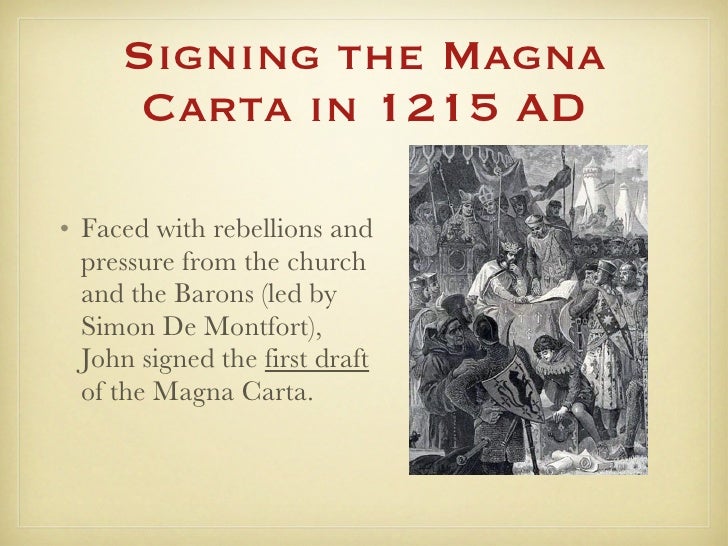
Under the status quo, there is no superordinate legal document to which an individual or the government can point when they dispute whether or not a law is legitimate.  Thus, while popular opinion can prevent the government from brazen violations of citizens’ rights, more nuanced infringements persist with impunity. Résultat de recherche d'images pour "pictures of the magna carta 1215"

The documents that currently make up the written component of the UK’s informal constitution provide an accessible starting point.

Such ancient texts and treaties as the Magna Carta would provide for a smooth transition from commonly-accepted legal principles to the formal entrenchment of those principles in the clauses of a  new written constitution.

While under the status quo all laws passed by parliament are considered of equal significance, there is an informal recognition by some jurists that certain laws, such as the Human Rights Act, enjoy a favored position within a hierarchy of laws.

A written constitution would simply help to formalize this de facto hierarchy.

A constitution would subject controversial laws to judicial review, yielding a more precise ruling on their constitutionality.  Regardless of which way the judiciary rules, it must be backed up by reasoned argument and interpretation of specific legal principles explicitly outlined in the constitution.  It is crucial to have an independent metric by which we evaluate when the government reaches the limits of what it may justly legislate.

A formal constitution provides the separation of powers necessary to keep each part of the government in check.

Clearly delineated oversight powers in an independent judiciary would halt Parliament’s attempts to overstep its mandate, and provide a mechanism to redress flagrant violations of ethics by MPs. Such a check on the power of the Parliament would be a welcome change from the status quo of a government who may act with little accountability short of an election.

Similarly, explicit and independent powers for the House of Lords and the House of Commons would codify a role to hold each other accountable.

This would be similar to the way that the United States constitution works with its famous separation of powers and checks and balances with the exception that the executive would still be within the legislature rather than completely separate.

England will have to review or replace hundreds of EU laws.

None more important than the existing EU Human Rights Act which at the moment in England only provide weak protection, because judges are able to rule that new laws are “non-compliant” with the Act – the government can ignore such rulings if it wishes. It can easily be (and has been) amended by a simple majority in both Houses of Parliament.

A written constitution with a proper Bill of Rights would provide much stronger protection for the rights of the citizen.

Entrenching the respective rights of individuals and the government adds clarity to issues where the boundaries of the law are vague.  Not every time that civil rights are eroded is it the result of the government overstepping what were previously thought to be the clear boundaries of the state’s power; sometimes there is a legitimate grey area regarding the meeting of two rights.

The argument against a written constitution is that written constitutions are ruled upon by judges. In Britain judges are unelected and it is therefore undemocratic to take power away from our elected representatives and give it to judges who tend to be quite reactionary.

It is a fact that the UK is a unitary state with Parliament sitting at Westminster being the only body competent to legislate for the UK and all laws in the UK including laws relating to the constitution may be enacted, repealed or amended by the Queen in Parliament.

There is no specific procedure for changing the law, that is, very important law can be changed by simple majority. This simply means that the decision-making process is not muted in any way by past legislation.

A constitution will vary with society but one of the most important arguments to consider is the fact that enshrining constitutional laws and customs in one document would provide clarity for those working within the system and for those who wished to scrutinise it.

Why should I fix that which is not broken”?

England will have no ties legal or otherwise with Europe and therefore will not need a similar legal foundation to the EU.

Not true.

In order to engage in intra-EU economic, social, and political relations, England will have to create a common conception of the foundation of EU  laws.

One way or the other it is important to enshrine clarity in its legal code.

The European Union will be agreeing the terms of separation under European Laws. For England to agreed these terms under an unwritten constitution seems impossible to me. 

All comments welcome all like clicks chucked in the bin.

← Back

Thank you for your response. ✨


every constitution will vary with society.

Share this:

  • Share on WhatsApp (Opens in new window) WhatsApp
  • More
  • Share on Mastodon (Opens in new window) Mastodon

Gallery

THE BEADY EYE SAYS: BRIXIT = BUST.

10 Friday Feb 2017

Posted by bobdillon33@gmail.com in Brexit., England., Politics., The New year 2017, Unanswered Questions.

≈ Comments Off on THE BEADY EYE SAYS: BRIXIT = BUST.

Tags

Britain., Brixit., England., EU v UK Negotiations., The Future of the UK.

  ( A five to six-minute snapshot read of the Health of the UK) Britain is teetering on bankruptcy with …

Continue reading →

THE BEADY EYE LOOKS AT THE RISE OF POPULISMS.

07 Tuesday Feb 2017

Posted by bobdillon33@gmail.com in Brexit., Donald Trump Presidency., European Union., Modern day life., Politics., Populism., Social Media., Technology, The world to day., Twitter, Unanswered Questions., What Needs to change in the World, Where's the Global Outrage.

≈ Comments Off on THE BEADY EYE LOOKS AT THE RISE OF POPULISMS.

Tags

Community cohesion, European Union, Populism., The Future of Mankind

( A Popular Four minute read)

It is important to understand this topic since it is apparent that the consequences of the rise of populism continue to play out and they are likely to be profound.

Afficher l'image d'origine

Populist forces have already proven decisive for the outcome of the British referendum on membership in the European Union, and the election of Donald Trump as the President of the United States.

Populists support charismatic leaders, reflecting a deep mistrust of the ‘establishment’ and mainstream parties who are led nowadays by educated elites with progressive cultural views on moral issues.

Since about 1970, affluent Western societies have seen growing emphasis on post-materialist and self-expression values among the younger birth cohorts and the better educated strata of society.

This has brought rising emphasis on such issues as environmental protection, increased acceptance of gender and racial equality, and equal rights for the LGBT community.

In recent decades, however, in Western democracies the backlash against cultural change has become increasingly prominent. Throughout advanced industrial society, massive cultural changes have been occurring that seem shocking to those with traditional values.

Moreover, immigration flows, especially from lower-income countries, changed the ethnic makeup of advanced industrial societies.

The newcomers speak different languages and have different religions and lifestyles from those of the native population—reinforcing the impression that traditional norms and values are rapidly disappearing.

All of the above combined were reinforcing each other in part, with long-term processes of generational change during the late twentieth century have catalyzed culture wars, and these changes are particularly alarming to the less educated and older groups in Western countries.

It therefore would be a mistake to attribute the rise of populism directly to economic inequality alone. The rise of populist parties reflects, above all, a reaction against a wide range of rapid cultural changes that seem to be eroding the basic values and customs of Western societies.

On one hand this cultural shift has fostered greater approval of social tolerance of diverse lifestyles, religions, and cultures, multiculturalism, international cooperation, democratic governance, and protection of fundamental freedoms and human rights. Social movements reflecting these values have brought policies such as environmental protection, same-sex marriage, and gender equality in public life to the center of the political agenda, drawing attention away from the classic economic redistribution issues.

But the spread of progressive values has also stimulated a cultural backlash among people who feel threatened by this development.

Less educated and older citizens, especially white men, who were once the privileged majority culture in Western societies, resent being told that traditional values are ‘politically incorrect’ if they have come to feel that they are being marginalized within their own countries.

As I have said, as cultures have shifted, now a tipping point appears to have occurred with the election of Donald Trump who exploited this change as did the Brixit supporters.

Britain’s decision to withdraw from the EU threatens to reenergize populist forces across Europe with France next on the list with Madame Le Pen. Afficher l'image d'origine Perhaps the most widely held view of mass support for populism is the economic insecurity perspective–emphasizes the consequences of profound changes transforming the workforce and society in post-industrial economies.

If the cultural backlash argument is essentially correct, then this has significant implications; the growing generational gap in Western societies is likely to heighten the salience of the cultural cleavage in party politics in future, irrespective of any improvements in the underlying economic conditions or any potential slowdown in globalization.

Alternatively, the cultural backlash thesis suggests that support can be explained as a retro reaction by once-predominant sectors of the population to progressive value change.

Populist leaders like Donald Trump, Marine Le Pen, Norbert Hoffer, Nigel Farage, and Geert Wilders are prominent today in many countries, altering established patterns of party competition in contemporary Western societies. The net result is that Western societies face more unpredictable contests, anti-establishment populist challenges to the legitimacy of liberal democracy, and potential disruptions to long-established patterns of party competition.

Education also proves significant, with populist parties winning greater support from the less educated sectors of the population.

Anti-immigrant attitudes, mistrust of global governance, mistrust of national governance, support for authoritarian values, and left-right ideological self-placement.

All cultural indicators that are significantly linked with populist voting and the coefficients. Not surprisingly, given populist xenophobic rhetoric, members of ethnic minorities are less inclined to support Populist parties.

In short, Populist support is greatest among the older generation, men, the less educated, ethnic majority populations, and the religious.

Given that populism does not appear to be waning in contemporary democracies let me ask these questions.

Under what circumstances are populist claims viewed as credible or not by their target audiences?

What accounts for temporal fluctuations in particular forms of populism within specific countries—and possibly across democracies in general?

Which groups are included in the category of the virtuous people and which elites (and associated groups) are vilified as morally suspect?

How is this classification process shaped by the broader political context (e.g., the position of the populist actors in the political field, the relative consolidation of political coalitions, the ability of mainstream actors to employ populist language)?

Populism which can be found on all sides of the political landscape is a thin-centered ideology. Driven by modern-day technology interlinkages of Smartphones, Social Media,  Facebook, Twitter and the lack of long-term political aspirations it fill the void between the political space and the need for more equality in opportunity for all.

The burning question of today is, shall we drop all other reform issues and run to meet the populist with open arms? or is the Populist platform almost too absurd to merit serious discussion.

I fear not.

Remember that The National Socialist German Worker’s Party founded in Germany in 1919 and brought to power in 1933 under Adolf Hitler was a fascist populist party.

Call it what you want, Authoritarianism, Elitism, Nationalism, Populism, Trumpism it must never be allowed power on its own.

Trump’s rhetorical is unmoored from any sense of reality whatsoever and there is nothing he says than can be taken at face value.

It is intellectual dishonesty.

A better way to describe populism I think would be cosmopolitan socialists.

Its followers see see themselves in opposition to elites of all kinds with the main bone of contention being a system corrupted by economic elites.

All comments welcome, all like clicks chucked in the bin.

← Back

Thank you for your response. ✨


Share this:

  • Share on WhatsApp (Opens in new window) WhatsApp
  • More
  • Share on Mastodon (Opens in new window) Mastodon

THE BEADY EYE SAYS; IT TIME FOR THE EUROPEAN UNION TO GRASP THE OPPORTUNITIES FOR REFORM COMPLEMENTS OF BREXIT..

03 Friday Feb 2017

Posted by bobdillon33@gmail.com in Brexit., England EU Referendum IN or Out., European Union., Modern Day Democracy., Unanswered Questions.

≈ Comments Off on THE BEADY EYE SAYS; IT TIME FOR THE EUROPEAN UNION TO GRASP THE OPPORTUNITIES FOR REFORM COMPLEMENTS OF BREXIT..

Tags

Britain., Brixit., European Union


( A read for all Brits, and a 50 second read for the European Elites)Man holding Leave flag

‘Brexit’ – will have significant implications for the EU but it can be turned into an opportunity. Without Britain, the EU has the chance to redefine itself and move forward. But unless it can restore economic growth, tackle the scourge of youth unemployment, and make itself more relevant to its citizens, there may be more exits around the corner.

Of course the EU can survive without Britain;

The question is what kind of Europe it will be.A festival-goer with a European flag painted on her face poses for a photograph on day three of the Glastonbury Festival

Will it find the drive to reinvent itself for the twenty-first century, capable of addressing citizens’ concerns about the future and helping shape a changing world?

Doubtful without the emergence of a Statesman.

Or will it wither into an inward-looking rump  EU focused on defending past glories and pursuing half-baked initiatives for short-term gains, doomed to decline?

Brexit can be a transformational moment only if the EU seizes the opportunity to understand the causes of today’s crises, rather than focus on the symptoms, and rethink the terms of integration.

Unfortunately the European elites do not have the mandate from citizens to rejuvenate the EU; the upcoming electoral cycle is unlikely to allow for any bold initiative; and the sentiments that led a majority of British people to vote to leave the EU are shared by many across the Channel, making any path toward reinventing the EU mired by pitfalls.

The future heft of the European Union—with or without the UK—will hinge on its members agreeing to more than their narrow economic interests. It needs more of a sense of purpose. Yet, politics is not just about smart communication techniques and a renewed language. The EU also needs self-confident democratic politicians in each member state.

The lingering feeling that British exceptionalism was always an impediment to truly European policies should disappear, removing an obstacle to bolder decisions by some of the EU 27. Some of the thinking traditionally associated with the EU will wither away.

The EU should also backtrack institutionally here and there—if only to signal to worried electorates that the whole process is under the control of national governments and parliaments.

The European Union needs to grasp that with the UK leaving, integration has become a two-way street; member states can travel in both directions.

Whether the EU can survive as a major foreign policy actor without the UK is open to debate. My cautious answer is that it will struggle to do so.

The EU as a regulatory power will very likely survive Britain’s exit unaffected, with the single market still projecting its influence over the UK as it does on a global scale.

European Elites can stop read at this point.

Britain constitutes 14.8% of the EU’s economic area, with 12.5% of its population.27 British exports are 19.4% of the EU’s total exports (excluding intra-EU trade).28 Within the EU Britain runs a large trade deficit with the rest in goods and services, around £28 billion a year in 2012 and as high as £61.6 billion in 2014.

Since ancient times, philosophers have tried to devise systems to try to balance the strengths of majority rule against the need to ensure that informed parties get a larger say in critical decisions, not to mention that minority voices are heard.

I have to declare at this point that it is beyond my comprehension that the English decision to leave or stay (whether by a referendum that is not legally binding or otherwise) was set against an absurdly low bar for exit, requiring only a simple majority. Given voter turnout of 70%, this meant that the leave campaign won with only 36% of eligible voters backing it.

The idea that somehow any decision reached anytime by majority rule is necessarily “democratic” is a perversion of the term.

A decision of enormous consequence – far greater even than amending a country’s constitution (of course, the United Kingdom lacks a written one) – has been made without any appropriate checks and balances.

Does the vote have to be repeated after a year to be sure? No.

Does a majority in Parliament have to support Brexit? Apparently not.

Did the UK’s population really know what they were voting on? Absolutely not.

Indeed, no one has any idea of the consequences, both for the UK in the global trading system, or the effect on domestic political stability.

The Brexit decision may have looked simple on the ballot, but in truth no one knows what comes next.

What we do know is that, in practice, most countries require a “supermajority” for nation-defining decisions, not a mere 51%.

Modern democracies have evolved systems of checks and balances to protect the interests of minorities and to avoid making uninformed decisions with catastrophic consequences.

The greater and more lasting the decision, the higher the hurdles.

This isn’t democracy; it is Russian roulette for republics.

Britain’s difficulties with the EU long pre-date the current government and reflect deeper problems in Britain’s party politics, identity, constitution, political economy and place in the world.

We all know that Britain has had a troubled relationship with the EU since the beginning and has made various attempts to break away from it.

Now it is priming a “bomb” to explode on itself and the European Union.

Unelected Mrs May said she is prepared to walk away from negotiations if Brussels sought a punitive settlement. “No deal for Britain is better than a bad deal for Britain.” I would respectively remind her that there are 3.3 million EU nationals currently residing in the UK and over one million Uk Citizens in Europe.

The big question is what kind of national identity would assert itself.

In short, a withdrawal from Europe would be a bleak move in cultural terms.

The English government has chosen not to make the economy the priority in this negotiation, while the European Unions priority is to maintain the integrity of the remaining 27 members of the European Union.

I am afraid it is not going to be a pretty picture.

According to art. 50, the quorum requirement for the agreement withdrawal is most qualified. In other words, to enter and remain in the EU must agree all states; to leave the EU, no.

Also art. 50 of the Treaty of Lisbon, envisages a situation, at least hypothetical, namely, a withdrawal mass of states in the European Union and the European Council, which negotiated the agreement to withdraw behalf of the Union would not be able to fulfill the condition quorum for the conclusion of withdrawal.

Neither the UK nor the continuing members of the EU can escape their geographical interdependencies. Both have a stake in economic and political stability in Europe. The EU’s development – whether it unites, disintegrates or muddles through – will be shaped by a myriad of factors, one of which will be its relations with the UK.

Today’s volatile and dangerous world requires its nations to collaborate to confront new and multiple challenges. Neither the EU and its member states nor the UK have an interest in an escalation of tensions or costly disengagement following Brexit.

Theoretically, the removal of an EU Member State will result in immediate termination of that State Member State of the European Union.

However basically, the implications are unexpected and hard to predict.

One way or another every British citizen every citizen of the European Union will be directly affected because the same issues that must be negotiated and were negotiated at the time of joining the European Union. From this point of view, I believe that within 2 years to complete the withdrawal procedures, even if there is a possibility of extension, it is an unrealistic deadline.

Unfortunately once the process starts in earnest both sides will be focusing exclusively on the pros and cons for the UK, or on what ideal post-withdrawal relationship Britain should secure. Creating a debate that will be blind to dealing with the wider implications of any decisions.

At its core, the EU has been a political project. It is not just a group of states that cooperate, but a group of states which have created supranational institutions that have executive and judicial authority over EU member states and that can pass laws that are directly applicable throughout the EU.

In an increasingly volatile world, and the reforms needed in the EU, neither the EU nor the UK have an interest in a divorce that diminishes their influence as the balance of economic power shifts away from the North-Atlantic world.

Thanks to Donald Trump election in the USA a changing EU and Euro zone will most likely push the UK to the margins.

Brexit will not be seen in a narrow sense of being about the UK and UK-US relations. It will be seen as a rejection of its European ties.

One of the most serious consequences of Brexit is to put Ireland back on the political agenda.

In the long run the first problem the EU face’s from a Brexit is the unprecedented experience of negotiating the withdrawal of a member state. It will confront the EU with significant and unprecedented practical and philosophical challenges.

The withdrawal of any member state is a defining moment for the EU.

The British government and political class may expect Britain to be treated in some special way. This does not simply reflect some high self-opinion of Britain’s place in the world. It reflects the UK’s much larger demographic, economic, social and military size compared to other non-EU European countries such as Norway and Switzerland, who also have their own unique arrangements with the EU.

Although the status of British membership of the European Communities was confirmed by referendum in 19755 , when 67% of votes were in favor of remaining EEC, there were also supporters of withdrawal, particularly among Labour Party.

Negotiated procedures for accession takes years. We consider that the procedures for withdrawal should benefit from a longer period of time.

Obviously, withdrawal from the European Union would have consequences on the implementation of the 4 principles of free movement of persons, goods, services and capital, the economic and political relations of the State withdrawing the European Union, Member States and third countries.

On Brexit, as mentioned already, the consequences can not be predicted, the status of Great Britain in the European Union and worldwide by any reasoning will change.

My proposal is to turn the rupture into an opportunity.

To stop the whole process undermine the EU itself.  The political and geographical centre of the EU should shift eastwards and southwards.,

If there is a deal setting out the U.K.’s future relations with the EU, it would likely touch on issues that are not strict EU competencies. That could mean that all national capitals and parliaments might also have to sign off on the withdrawal agreement.

The lack of a fixed deadline and a legal process would likely result in the negotiations meandering. The most important priorities remain the EU’s internal cohesion and a sense of purpose from the pro-European elites to translate the European project into language with which the people can associate.

What is Englishness? It has only to be defined to melt away, as will its departure from the European Union.

In or our out the British attitude to Europe has always been, in every sense of the word, insular.

Did president Charles de Gaulle cause the UK’s current reluctance to be fully part of the EU or was he simply right in his judgement?

De Gaulle’s main concern was Britain’s “special relationship” with the United States and a fear that Britain would, as America’s Trojan Horse, undermine the European project.

The truth is De Gaulle’s stated reasons for his anti-British policies were all to do with commerce.General Charles de Gaulle states in 1963 that Britain is not ready to join the Common Market.

With no rejection of our friends in England the EU must act to ensure that Brexit is a failure.

At closing thought:

Prime Minister Theresa May has made it clear that the leaders of Wales, Scotland and Northern Ireland will not be given a decisive role in Brexit negotiations. Afficher l'image d'origine

If the Labour Party in the Uk wants to win the next General election it needs to get off the fence and represent all those that voted against departure into the wilderness of isolation. In a world that is becoming more and more driving by Artificial Intelligence and Inequality.

All comments welcome, all like clicks chucked in the bin.

← Back

Thank you for your response. ✨


Share this:

  • Share on WhatsApp (Opens in new window) WhatsApp
  • More
  • Share on Mastodon (Opens in new window) Mastodon

THE BEADY ASKS: WHERE IS THE VOICE OF THE WORLD’S YOUTH ?

12 Thursday Jan 2017

Posted by bobdillon33@gmail.com in Artificial Intelligence., Big Data., Brexit., Capitalism, Climate Change., Communication., Education, European Union., Google Knowledge., HUMAN INTELLIGENCE, Humanity., Innovation., Modern Day Communication., Natural World Disasters, Nuclear power., Paris Climate Change Conference 2015, Politics., Privatization, Sustaniability, Technology, The Future, The New year 2017, The world to day., Unanswered Questions., USA Presidential Election, What Needs to change in the World, Where's the Global Outrage., World Organisations.

≈ Comments Off on THE BEADY ASKS: WHERE IS THE VOICE OF THE WORLD’S YOUTH ?

Tags

Artificial Intelligence., Big Data, Capitalism vs. the Climate., Extinction, Social Media, Technology, The Future of Mankind, United Nations


( Eight minute read.)

When you look at the state of the world you have to ask yourself have we all lost our marbles, and where is the protest voice of the Young.Afficher l'image d'origine

You could say that we are well along in the process of causing our own extinction and the planet has officially entered its sixth mass extinction event.

Such a view is now beginning to occasionally find its way into mainstream consciousness.

The situation is already so serious with so many self-reinforcing feedback loops already in play it seem we are on a rolling coaster, incapable of acting,or if we do, it will be after the event, if there is anything left to save.

We have a vast choice of the end-of-humanity scenarios to pick from, to derail life as we know it.

For example:

A self-induced catastrophe such as nuclear war or a bioengineered pandemic. Disruptive innovation and technological changes, Solar storms, Cosmic collisions, Super volcanoes, Rising sea levels, overcrowding, denuded resources to mention just a few.

We’re driving to extinction at least 150 species each day.

Nuclear power plants require grid-tied electricity, cooling water and people getting paychecks. Without all these, they melt down, thus immersing all life on earth in ionizing radiation.

As if the above is not enough we are now selling or most valuable resource – Intelligence. Afficher l'image d'origine

So what can be done?

First of all, internal and external issues are more linked than ever. Now, more than ever, we need principled leaders with an understanding of history.

Freedom and the rule of law are under threat.

Why?

Because while the world teeters on a precipice of being plundered by Capitalist Artificial intelligence. A new reality is taking shape: war is called peace, a bloody victory is a step towards reconciliation, and a terrorist regime is a legitimate power.

The further we removed ourselves from the world the worse will be our encounter with the world beyond.

Ignoring the unregulated introduction of Artificial Intelligence.

All causing disillusionment and confusion with the great visions of the future, all are demanding that we cope as one with the present reality with our ability to protest hijacked by Internet petitions sites that are ignored or focused on parochial problems.

An individuals future is shaped ultimately by environmental factors.

The year 2017 opens on a world laid to waste. Some areas are littered with mass graves and there doesn’t seem to be any big global rush to reduce emissions as a result of the Paris Climate Agreement.

In the end, no amount of research can do much to prevent permafrost melting realising, methane – a greenhouse gas 100 times more potent than carbon dioxide on a shorter timescale into the atmosphere, warming it further, which in turn causes more permafrost to melt, and so on.

Scientists estimate up to 13 percent of global carbon emissions come from deforestation – greater than emissions from every car, truck and plane on the planet combined.

Because Globalism is an ideology, and its struggle with nationalism it will shape the coming era.

Afficher l'image d'origineAfficher l'image d'origine

Donald J. Trump five months short of seventy-one will take office on January 20. His election tips us into the unknown threatened disengagement from the world.

Mother Teresa in the Uk wants disengagement from the EU.

Both are successful alpha personalities.  Both work in progress—“Everything is negotiable”—both displaying a single-minded determination to impose their vision on the world, an irrational belief in unreasonable goals, bordering at times on lunacy.

From Brexit to Trump to the rise of nationalist parties across Europe, the old division between left and right is giving way to a battle between self-styled patriots and confounded globalists.

For decades, trade, industrialization and demographics produced a virtuous circle of rising prosperity. By the 2000s, globalism was triumphant.

IT IS NOW OVERREACHED AND BLIND to the nationalist backlash, not to mention the new form of Globalisation – Artificial Intelligence.

Many globalists now assume that the discontent is largely driven by stagnant wages and inequality. If people are upset about immigration, they reason, it is largely because they fear competition with low-wage workers and not the technological Revolution that is replacing their need to work in the first place. Yet their faith in open borders remains unshaken.

That crisis has woken up globalists to the flaws of globalization but not it seems to me the pending exploration of Apps run on Algorithms that are designed to create profit for the Monopolies of the Internet.  Facebook, Twitter, Google, Microsoft, Amazon, to mention a few.

Many of the tech industry’s biggest companies, like Amazon, Google, IBM and Microsoft, are jockeying to become the go-to company for A.I. In the industry’s lingo, the companies are engaged in a “platform war.”

The company that controls A.I. will steer the tech industry for years to come.

In fact, much of the backlash against immigration (and globalism) is not economic but cultural: Many people still care about their own versions of national identity and mistrust global institutions such as the EU.

These voters are bothered less by competition from immigrants than by their perceived effect on the country’s linguistic, religious and cultural norms. About how changes to “the composition of the local population” would affect “their neighborhoods, schools and workplaces.”

They might have their priorities slightly wrong.

Is the new nationalism a cloak for ethnic and religious exclusion?

New nationalism often thrives on xenophobia.

Globalists should not equate concern for cultural norms and national borders with xenophobia.

There must be some sort of middle ground between a nationalist and globalist approach. In short, there is ample reason for skepticism about whether the new nationalists can prove themselves a genuinely secular, democratic alternative to globalism.

If globalists are to regain the public’s trust, they will need to re-examine their own policies. Political capital might be better invested in preserving existing trade pacts, not passing new ones. Many European globalists blame the euro’s crisis on too little integration, not too much. But pressing for a more federal Europe could further alienate voters who “do not share our Euro-enthusiasm,”

Borders use to mean something, but this version of civilization is the least sustainable of them all. We cannot sustain the unsustainable forever in a world more interconnected.

In fact, 2017 is looking pretty bad…Russia dominating the world order. But it too will pop. New cyber attacks.

In this context, the basic principles of democratic life in both Europe and the U.S. — truth, fact-based reality, justice and the rule of law — are being gradually eroded.

The most important thing is to understand what might steer us towards a more secure world order, where respect for the rule of law and for international bodies are granted their proper place.

European powers may choose to find strength in their union. Brought together by the need to combat those who threaten fundamental European values, Paris, Berlin, Rome and the Benelux countries could launch new initiatives to bring about real European cooperation.

Should these institutions find themselves unable to take a stand and act according to global interests and basic values, there is no reason why 2017 should not continue in the same vein as 2016, and the consequences may be irreversible.

It’s time to abandon our usual pessimism about the state of the planet and the course of history. We’ve got many challenges to overcome, but it might be a good idea to adopt a bit of youthful optimism when it comes to confronting them.

We need to create a hope insurgency. 

Despite half of the world’s youth living on less than two dollars a day.

A social media revolution is unfolding before our eyes, forever changing the way we connect. This generation, the most interconnected generation ever, continues to grow rapidly, but its voice is diluted by Social media making the challenges they face are ever more daunting.

We need to ask ourselves:

How can we can empower youth to drive social progress. From crowd-sourcing initiatives and mobile-projects to innovation jams and social media campaigns.

Whatever changes you would like to effect in our society has to begin with you.Afficher l'image d'origine

The best leaders the world has ever known are the reformers who were accountable and responsible for their own change.

The commitment for change has no days off, does not allow for excuses, does not allow for pardons. If you want to see change you must first start within.

It’s that simple and it’s that profound.

So where is the Global YOUTH Outrage?Afficher l'image d'origine

Before there were blogs and tweets – even Wikipedia – to turn to, the mainstream media held a monopoly over knowledge and news which was hard to challenge. Now all knowledge is being collected by Google to feed Artificial Intelligent Algorithms.

THE world must change to meet the wave of popular uprising which catapulted Donald Trump to power and brought about Brexit. The world can be changed as much by education as by being harangued. It’s time for international leaders to bury their liberal attitudes and address the concerns of the masses. It is time for government to act in the long-term interest of the people, even if they do not agree in the short-term.

The twin pillars of liberalism and globalisation which have dominated politics over the past generation must adapt to a “world transformed”.

Society is changing rapidly and I fear that many organisations are failing to notice and are being left behind. I suspect that the scale of such a change can only really be appreciated in hindsight.

In the rich world, particularly, the first generation that has rung up a huge national debt and established a huge unfunded pension scheme is about to retire. The interesting, to say the least, question is whether the next generation will be willing to carry this burden and peacefully pay the debt and peacefully pay the pensions. I think not.

WILL THE WORLD OF 2052 BE A BETTER WORLD?

It’s important to note that people 35 years from now will judge their circumstance more on how it has changed from their own recent past than from our vantage point of today.

Billion will have some level of Internet access, be much better informed, and be increasingly helped by local solar energy. They will have many fewer children. They will be largely urban (except for the minority still living off the land). They will grapple with overall effects of climate damage, but those in dense urban areas will likely have little firsthand experience with the damage caused by the erratic weather (though plenty of secondhand information via electronic media). They will live with the unpleasant knowledge that even more climate impacts lie ahead.

There will be huge differences between people and Artificial Intelligence.

There is be no such thing as the Free Market.

People power hopefully will have transformed the world. From a psychological perspective, probably no, because the future prospects in 2052 will be grim.

University is where such simplistic notions are supposed to be challenged, but they now educate for the market place and not for Intelligence.

The winners of tomorrow will be those organizations with strong leaders who demonstrate agility, authenticity, connectivity to their talent, and sustainability.

By 2018, at least 50 percent of developers will include A.I. features in what they create. The goal is to capture all human knowledge and turn it in saleable AI. It’s where the capitalist market is headed.

No worries, you might say: you could just program it to make

The superintelligent machine manufactures some as-yet-uninvented raw-computing material (call it “computronium”) and uses that to check each doubt. But each new doubt yields further digital doubts, and so on, until the entire earth is converted to computronium.

When a computer became capable of independently devising ways to achieve goals, it would very likely be capable of introspection—and thus able to modify its software and make itself more intelligent. In short order, such a computer would be able to design its own hardware.

If this sounds absurd to you, you’re not alone.

I am one protesting voice in the wilderness of the virtual reality, but I am sure there are billions.

The problem is unifying them into one collective protest to demand that the United nations pass a people’s resolution to give all artificial Intelligence and technological advances a stamp of human approval.

All comments, suggestions, welcome, all like clicks chucked in the bin.

← Back

Thank you for your response. ✨


Share this:

  • Share on WhatsApp (Opens in new window) WhatsApp
  • More
  • Share on Mastodon (Opens in new window) Mastodon

THE BEADY EYE SAYS: IN FIVE YEARS, THERE WILL NO LONGER BE A ROYAL FAMILY OR UNITED KINGDOM.

09 Monday Jan 2017

Posted by bobdillon33@gmail.com in Brexit., England., European Union., Modern Day Democracy., The New year 2017, What Needs to change in the World

≈ Comments Off on THE BEADY EYE SAYS: IN FIVE YEARS, THERE WILL NO LONGER BE A ROYAL FAMILY OR UNITED KINGDOM.

Tags

Brexit., Britain., England EU Referendum IN or Out., Royal Family

( A three-minute read)

The UK anthem got me thinking…

If you were starting a 21st-century democracy from scratch you wouldn’t

dream of having a hereditary head of state.

These days this is undoubtedly true, it is also true that the history of the past 50 years ago shows that starting democracies from scratch is very hard.

“Is there any point in the Royal family?”

The Royals represent and reiterate that the class system is still firmly in place in the UK.

If the monarchy is to continue in modern Britain they will have to adapt and change. The modern Royal Family must continue to live more in touch with their subjects if they are to survive as an institution in a democratic 21st Century Britain.

Leaving the EU won’t affect the Royals it will however change the Brit culture and add much-needed collective synergy aspiring for common aims.

So is a Royal Family still relevant today, it’s all about equality, and right now, so are they just a parasitic anarchic family blessed with vast riches, or are they essential to a country with no written constitution.

It is hard to shake off the debilitating tag when the head of state and her hangers-on attain their positions not through popularity, talent, or industry, but by the mere fact of their birth.

Presently England is recognized as a monarchy…BRITS ARE SUBJECTS OF THE MONARCH. Ultimately the Parliament and the army are under the control of her highness.

The Royal family aren’t elected, which can be seen as undemocratic.

They inherit their status and for this to apply to a nation that’s so heavy on encouraging democracy it may be seen as hypocritical.

They cost the taxpayer approximately 52p each year

Queen Elizabeth II, is the legal owner of about 6,600 million acres. The value of her landholding. £17,600,000,000,000 (approx). She is the only person on earth who owns whole countries, and who owns countries that are not her own domestic territory.

The Queen may be a constitutional monarch, in which her roles as the head of the state are mostly just symbolic, as she occasionally represents Britain in her state visits – so her holidays are covered as well?

Royalists will say that having a Monarchy makes no difference to the validity of democracy. Just so long as the Monarchy doesn’t interfere with the democratic process of the nation then they are nothing more than national figureheads with no real power or influence.

This may well be so.

Yet in theory, at least, she has considerable powers: to wage war, sign treaties, dissolve Parliament, and more.

They will also say that the monarchy is needed for tourism and the economy. That’s NOT what it’s there for. It’s there for political reasons.

To keep Britain’s monarchy does not entail keeping it in its current form. Britain would be a lot stronger if its head of state were elected.

Why?

Because its entangled history of democracy and monarchy has left Britain with a highly centralized constitution that locates the nation’s sovereignty in “the king in parliament”—a situation that gives the leader of the majority party in the legislature a disturbingly large part of the power that was once vested entirely in the monarchy.

This situation could be remedied quite easily by keeping the crown but changing its constitutional basis to one along the lines of that most excellent of countries, Belgium.

Belgium is a popular monarchy. Its constitution makes clear that sovereignty rests in the people; the King (or Queen, though it has yet to have one)—who is King of the Belgians, a people, not Belgium, a territory— becomes monarch not by right, but by taking an oath to uphold the people’s constitution.

Without a written constitution the question is: Who elected the royal family, they are self-made, what makes them royal? After all, basically, they are German immigrants.

I have nothing against them personally, as I am a humanist at heart and these people are simply other human beings born into their roles.

Britain has a class system which, to be honest, is going to rip that country apart and the royal family is a symbol of that class system and the divide will ultimately dissolve.

All that says;

They are just some human beings, related to every other living organism on our Earth in some way. The fact that a monarchy is not intellectually justifiable does not mean that it does not have a stabilizing role.

To have a real sovereign Nation you need to be free of the monarchy in order to be truly free. To bow down and call somebody ‘your highness?’ It doesn’t make sense to me.

The case against hereditary appointments in public life is straightforward: they are incompatible with democracy and meritocracy.

The second pitfall is subtler: in the belief that the monarchy forms some kind of constitutional backstop against an over-mighty Parliament, Britain is strangely relaxed about the lack of serious checks on its government.

Because it has no written constitution; the current government has plans to repeal a law implementing the European Convention on Human Rights, which many Britons recklessly consider a nuisance rather than a safeguard.

A change to the British constitution which made the kingdom’s various people’s sovereign and the head of state the guardian of that sovereignty, not the source of it, would be a welcome plank in the more general program of reform that the British state clearly needs. The trouble with hereditary succession and leaving the European Union is that you never know quite who or what you’re going to get.

The fourth verse of the UK anthem reads “rebellious Scot to crush” just thought that’s worth mentioning! The Royal family was the most ruthless biggest crooks at some point.

Pressing Articular 50 to disconnect from the EU in a world that is all about connectivity to my mind is Artificial Intelligence personified.

← Back

Thank you for your response. ✨

Share this:

  • Share on WhatsApp (Opens in new window) WhatsApp
  • More
  • Share on Mastodon (Opens in new window) Mastodon

THE BEADY EYE ASKS: IS THE EU GOING TO FIND IT CHALLENGING TO PRESENT A UNITED FRONT TOWARDS THE UK EXIT NEGOTIATIONS.

04 Wednesday Jan 2017

Posted by bobdillon33@gmail.com in Articular 50., Brexit., England EU Referendum IN or Out., European Commission., European Union., Modern Day Democracy., The New year 2017, The world to day., Unanswered Questions.

≈ Comments Off on THE BEADY EYE ASKS: IS THE EU GOING TO FIND IT CHALLENGING TO PRESENT A UNITED FRONT TOWARDS THE UK EXIT NEGOTIATIONS.

Tags

Brexit., European Union

( A six-minute read)
It’s not long now before we are going to witness two events that will shape the future.Afficher l'image d'origineI am not talking about climate change or Artificial Intelligence rather the arrival of Donald Trump and the beginning of the UK negotiations to leave the EU.

There is little point in addressing the Donald Trump scenario.

A stupid, crass, vile racist, unintelligent, thug that is the laughing-stock of the world will be the US President with his finger on the red button.

What to expect is anyone guess.

If you ask me about 30%+ of Americans live in an alternate, non-fact based reality in which Right-Wing Propaganda is FACT, Lies = Truth.

“My Twitter has become so powerful that I can actually make my enemies tell the truth.” or  “I’ve said if Ivanka weren’t my daughter, perhaps I’d be dating her.

In a weird way both events are connected by Artificial Intelligence/ Money.Afficher l'image d'origineAfficher l'image d'origine

One elected with False Twitter News and the other Nigel Farage fooled the English electorate to vote out of the EU with a pack lies.

Anyway back to the Question:

Until its official withdrawal, the UK will remain a fully fledged member state. However, UK involvement in EU decision-making will quickly become marginal.

UK officials in top management positions will likely have to leave.

(1,126 British nationals are employed in the European Commission (3.8% of the total. 73 British MEPs sit in the Parliament (out of 751 in total). Three EP committees have British chairs: Development; Internal Market and Consumer Protection; and Civil Liberties, Justice and Home Affairs.)

Of course the EU is going to find it, if not impossible to negotiate with the UK.

Because the meaning of Brexit is yet to become clear to the Uk and the EU.

The UK wants to keep the trade relationship with EU members as it is today (free trade) but significantly change the rules surrounding the free movement of people between the EU and the UK.

The real problem, however, is that when you think about the interests and constraints of both sides, it becomes hard to envision any deal that all parties can accept — unless UK negotiators are able to go back to their constituents and sell a deal that falls well short of what was initially promised.

On the EU side, Brexit will change how EU institutions operate not just during the withdrawal period, but also afterwards. It will affect the balance of power among member states and therefore the policies that the EU would pursue.

Depend on the answers, the Union finds to its current crises – stabilising the euro, finding a common line in refugee policy, stemming the surge in Euroscepticism – and on its economic recovery.

Hardening European attitudes is that they do not want to encourage copy-cat referenda in their own countries.

If an agreement is reached, the treaties that currently govern the relationship between the EU and the UK (as a member state) will expire. If no agreement is reached, the treaties will automatically expire two years from when Article 50 was invoked.

 How will the UK and EU negotiate their split?
Afficher l'image d'origine

It’s important to remember that:

The British referendum is not legally binding: The UK government must initiate “Brexit” by invoking Article 50 of the Treaty on European Union.

It’s also important to understand:

That any agreement will need to be ratified by the parliament of every member state, which means every EU country would have a veto. From a negotiation perspective, this not only increases the amount of time needed to reach a comprehensive agreement but also lessens the likelihood of a deal. At least 65% of the population of the EU, must vote in favor of the agreement.

The most immediate and important challenge is to reach a new agreement covering economic relations with the EU. In addition, as a member of the EU, the UK participates in the EU’s trade agreements with non-EU countries: leaving the EU may force the UK to renegotiate these agreements. The EU may not prevent the UK negotiating and entering into such treaties providing that they will not come into force until the UK withdraws from the EU.

There’s an infinite number of potential outcomes in a negotiation like this.

There is also an option of extending negotiations beyond the two-year time limit, but it requires the consent of all countries in the EU.

The UK will have to ask for what it wants in ways that allow the EU to make concessions without setting dangerous precedents.

If no agreement is reached within two years and the EU treaties expire, the default is that the UK and EU would trade according to World Trade Organization rules. Notably, these rules cover only trade, not the many other issues the two sides need to negotiate.

As there is no precedent it is important to bear in mind that the internal process on the EU’s side of the table is itself being negotiated.

No matter what it means the UK is starting from a weak bargaining position.

The UK is due to hold the EU’s rotating presidency from July to December 2017.This will become not only politically untenable. Article 50 disqualifies the UK ‘from chairing any Council meetings on the withdrawal negotiations.

Since the UK joined the EU in 1973, trade policy has played a minor role in UK politics. Now its on the top of its negotiations to leave the EU.

I find it hard to believe that back channel conversations are not under way.

The UK needs to reach some kind of deal with the EU before Brexit happens and puts it in a weak bargaining position.

Brexit could or will alter the balance of power within the EU in other ways too. It could strengthen Germany’s position, shift alliances, and potentially either strengthen or weaken smaller states.

It will result in an increased regulatory burden on EU businesses weaker copyright protection in the EU. A smaller EU budget as a whole, with increased member-state contributions A stronger push for tax harmonisation and higher taxation of financial transactions A less support for nuclear and unconventional energy sources (e.g. shale gas).

The EU is based on the idea of a single market, characterized by four freedoms. They are the free movement, across borders, of goods, services, capital, and people.

( It is estimated that there are currently 2.9 million EU nationals resident in the UK.)
The actual position of such individuals is underpinned by the Human Rights Act and will depend on length of residence and other factors, but Government intentions for both UK and EU citizens remain far from clear.

Brexit could have a domino effect whereby Eurosceptic forces in countries such as Denmark, Austria and Sweden follow the UK and hold their own referenda,

eventually leading to the EU’s disintegration. Should Britain thrive post Brexit,
while the EU stagnates economically, such centrifugal forces would be strengthened.

Given the fact that a “no deal” is possible and that a deal might disappoint UK voters anyway, might there not be a path toward reversing Brexit? There may come a time when the only outcome that allows all parties to declare victory entails no Brexit.

Other member states will find any UK attempt to push a specific policy agenda unacceptable and would be unwilling to accommodate UK interests.

And of course there is the question of how do you do a deal when there remains the question of whether the UK has a prime minister with a mandate. Will a general election will be required prior to any agreement?

The UK is one of the leading Member States in securing funding for research and innovation and various other projects, with a typical aggregate value of £1-1.5 billion per year.

European Agricultural Guarantee Fund: The UK has been allocated €22.5 billion for the period 2014-20.

European Structural and Investment Funds: The bulk of UK funding via this channel comes through the European Regional Development Fund (ERDF), which has been allocated €5.8 billion of EU funds and the European Social Fund (ESF) with an allocation of €4.9 billion.

There is one thing for certain: We are going to witness opportunists counting their fingers after shaking hands with another opportunists.

All comments welcome. All likes chucked in the bin.

← Back

Thank you for your response. ✨


Share this:

  • Share on WhatsApp (Opens in new window) WhatsApp
  • More
  • Share on Mastodon (Opens in new window) Mastodon

THE BEADY EYES: 2017 WILL BE THE YEAR WHEN DEMOCRACY WILL BE UNDER ATTACK FROM ENTRENCHED POWER MORE THAN EVER.

20 Tuesday Dec 2016

Posted by bobdillon33@gmail.com in Artificial Intelligence., Big Data., Brexit., Capitalism, Climate Change., European Commission., European Union., Humanity., Modern Day Democracy., Modern day life., Politics., Social Media., Sustaniability, Technology, The Future, The Internet., The New year 2017, The world to day., Unanswered Questions., What Needs to change in the World, Where's the Global Outrage., World Organisations.

≈ Comments Off on THE BEADY EYES: 2017 WILL BE THE YEAR WHEN DEMOCRACY WILL BE UNDER ATTACK FROM ENTRENCHED POWER MORE THAN EVER.

Tags

Artificial Intelligence., Community cohesion, European leaders, Internet, People of the Earth, SMART PHONE WORLD, The Future of Mankind, The New year 2017, Visions of the future.


As Digital technologies and digital communications are permeating every aspect of life we seem to be living in both a hopeful but also difficult times.

The instinctive tendency to categorise the world into “us”and “them” is becoming more and more difficult to overcome but traditional power structures are changing.

Current institutions and political systems are out of date.

People are taking matters into their own hands and are taking the initiative to organise public affairs themselves. On the one hand, this is because they are losing confidence in politics; and on the other hand, it is because some issues are simply not being dealt with by governments any more. Afficher l'image d'origine

Thanks to the internet, artificial intelligence, google, facebook, twitter, globalisation, and or inability to plan for the long term future the relations between culture and power IS BREAKING DOWN world wide.

The new terrain of global governance by artificial intelligence is making up its own rules on the fly or going about its activities without even any regard for rules of procedure.

It is amply clear by now that the so-called digital divide cannot be bridged through technological means alone, as it must be understood within broader systems of entrenched social and economic exclusion.

It is then timely for a broader range of other social groups, particularly those most adversely affected by globalisation, to re-think how they believe global governance should work.

Our present global structure of patriarchy and capitalist greed with all its connectivity is still a long way off establishing a new world with justice and freedom at its core.

For example:

The Syrian Civil war precipitated by drought in the region. The Iraq, the Iran, Yemen, Afghanistan

Nuclear power plants require grid-tied electricity, cooling water and people getting paychecks. Without all these, they melt down, thus immersing all life on earth in ionizing radiation.

1 in 3 women across the planet will be beaten or raped during her lifetime.

That’s ONE BILLION WOMEN AND GIRLS.

We’re driving to extinction at least 150 species each day.

There’s more. Much more. The violence of poverty, racial violence, gender violence, violence caused by corruption, occupation and aggression, violence caused by environmental disasters, climate change and environmental plunder.

We seem to be living as if there is no future but the one we are creating.

There is nothing guaranteed but our willingness to live as pioneers of a new consciousness and way.

The past five or six years have seen an explosion of political initiatives around the globe in which tech-minded actors of various kinds (including geeks, hackers, bloggers, tech journalists, digital rights lawyers, and Pirate politicians) have played leading parts.

(Not forgetting capitalist greed in all its forms.)

There is a terrible irony in the assumption that we can transcend our parochial tendencies with artificial intelligence.

There is growing public awareness of the concentration of economic power in the world. The richest 85 people in the world, who could fit onto a single double-decker bus, have just as much wealth as the poorest half of world.

Absolute universalism, is impossible. Morality cannot be everywhere at once.

So culture and power is breaking down.

Perhaps it is time to have a data-based approach and ranking of universal values.

This will not work.

Because culture is a key arena for struggles and has provided dynamism and force to the most effective social movements; and one could argue is the most important area for work if we are to really embed and sustain transformative practices in our communities and states over the long-term.

We are fast approaching foregoing the unrealistic concern of respecting different cultures with their moral diversity at any cost because of the economic exploitation globally enforced by imperialist and capitalist states that place profit over people.

We must start thinking of what a post-venture capitalism age of socio-technical innovation might look like, and how it could contribute to democratic renewal in different cultural contexts.

Digital rights are not only human rights, as we often hear in net freedom circles: digital rights are social rights.

Politics, or rather political parties, seem to have an inherent tendency to close in on themselves – maybe in search of traditional forms of certainty, and linked to this predictability and with it a controlling, monopolistic conception of agency.

Its back to I am alright Jack.

The Election of Donald Trump, the English referendum on in or out European Union are shining examples.Afficher l'image d'origine

Afficher l'image d'origineBoth driven by genuine and false concerns. Both altering millions of Europeans to the way Europe is run and to how the USA                                     might be run.

Both models of politics have been based on nation-specific political parties. Both with consensus-centred policies that have reproduced the crisis now faces in 2017 in the United states which will push Europe into a path that will lead to disintegration with each needing to take a new look at the current rules of engagement in international affairs.

Europe can only work if we all work for unity and commonality, and forget the rivalry between competences and institutions. Europeans want common decisions followed by swift and efficient implementation.

At the moment it is viewed as a cartel:

The Eurozone may be supremely powerful as an entity but where no one is in control.

The whole Euro currency project disempower almost every player that has anything to do with democratic legitimacy. It created a monetary union that was designed to fail and which guaranteed untold hardship for the peoples of Europe. ( see previous post)

The nation-state is dead and democracy in the EU has been replaced by a toxic algorithmic depoliticisation that, if it is not confronted, will lead to depression, disintegration and possibly war.

While politics (the ability to decide which things ought to be done) is confined to the level of the nation-state, power (the ability to get things done) has shifted to a supra-national level.

The concept of sovereignty doesn’t change, but the ways it is applied to multi-ethnic and multi-jurisdictional areas like Europe has to be rethought.

There is no point in a slew of treaties, organisations and agencies that form the scaffolding of the emerging global governance structure regulating and superintending everything from nuclear weapons to the fishing of halibut, and all of them embody election less intergovernmentalism.

What European citizens need much more is that someone governs. That someone responds to the challenges of our time.

The Council is the heart of the problem.

The Council operates as a senate-like legislative chamber, yet there are no elections to this body. It is as if you were permitted to vote for your local MP, but there were never any general elections.

Unless institutional bodies can be censured or dismissed as a body by one common parliament, you don’t have sovereign democracy. So that should be the objective in Europe.

The sovereignty of parliaments has been dissolved by the Eurozone and the Eurogroup; the capacity to fulfil one’s mandate at the level of the nation-state has been eradicated and therefore any manifestos addressed to citizens of a particular member state become theoretical exercises.

If we want a Commission that responds to the needs of the real world, we should encourage Commissioners to seek the necessary rendez-vous with democracy.

But a vision alone will not suffice.Afficher l'image d'origine

(Each is a famous European then whose reach extended much further than their time or their geography, and helped to shape the world we live in today.)

The European Union was never meant to be the beginning of a republic or a democracy where ‘we, the people of Europe’ rule the roost.

When democracy produces what the establishment likes to hear then democracy is not a threat, but when it produces anti-establishment forces and demands, that’s when democracy becomes a threat.

The left has for decades, perhaps hundreds of years, argued that one day, global democracy would be achieved, but until now this has always been something for the far-off future, an abstract dream.

In the era of globalisation, the steady removal of decision-making from democratic chambers by EU elites is serving as a blueprint for post-democratic governance around the world.

The question is how can we harness the discontent it is creating?

Gone is the elites view that elections cannot be allowed to change established economic policy. In other words, that democracy is fine as long as it does not threaten to change anything!

The network of post-democratic intergovernmental structures must be replaced with true global democracy.

If not achieved we will have disintegration and a bleak future.

The central question of the debate will be how to share power, build alliances and establish not only a genuine dialogue, but an equitable distribution of responsibilities between the State, market and ‘community’ at the local, national and European level.

Most of all, at a time when the world seem beset by multiple crises and the disturbing rise of reactionary forces, it seems apt to remember what Antonio Gramsci once wrote: “The crisis consists precisely in the fact that the old is dying and the new is yet to be born. And in the interregnum, a great variety of morbid symptoms appear.”

How ultimately can social movements assert their own power through cultural forms to reject the dangerous symptoms of morbidity and bring the new into being?

What role has the technology industry played in reinforcing power or confronting power?

How has the concentrated power in the ‘Silicon Valleys’ of the world used cultural exchange and shaped culture to further increase their power – and the power of other elites?

How can we build a culture that reinforces values of the commons, solidarity, and harmony with nature?

With what can we replace the legal, political and international processes that have facilitated this power grab. Rather than an ideology that has been designed to benefit certain interests.

Cultural hegemony has also sustained powerful structures from the military through to the banking sector. However, power only becomes hegemonic when it is reinforced continuously through cultural processes that make the exercise of power seem ‘natural’ and irreversible.

The idea you can have the Single Market without political union clashes with the political reality that the only way to have free trade these days is by having common legislation on patents, industry standards, competition rules etc.

Now is the time to begin discussing what global democracy would look like concretely and to start to build it. The network of post-democratic intergovernmental structures must be replaced with true global democracy.

We could start with the United Nations. It has more than 30 affiliated organizations — known as programs, funds, and specialized agencies — with their own membership, leadership, and budget processes. (see previous posts)Afficher l'image d'origine

After World War II, the most powerful governments created the UN Security Council with special seats for themselves.

The option is to rebuild the UN system, giving economic, environmental, and social decision-making the same legal mandatory status as decision-making in the Security Council, so that multilateralism could govern globalisation;

The innovations, enhanced by the new information and communication technologies, of the new movements (culturally rooted in the 1960s’ break of the historic bond between knowledge and authority), has been an ability, creatively to deal with uncertainty, to let go of control without losing the possibility of collaborative agency on the basis of shared principles and a broadly agreed purpose.

It does not matter how wealthy, successful, or famous one has been on earth.  All the money and prestige in the world will be useless on your departure.

Merry Christmas.

Share this:

  • Share on WhatsApp (Opens in new window) WhatsApp
  • More
  • Share on Mastodon (Opens in new window) Mastodon

THE BEADY EYE ASKS: CAN AMERICA BLAME ITS ANTIQUATED VOTE SYSTEM OR DID TWITTER AND FACEBOOK ALGORITHMS ELECT TRUMP.

12 Saturday Nov 2016

Posted by bobdillon33@gmail.com in Artificial Intelligence., Big Data., Brexit., Elections/ Voting, Facebook, HUMAN INTELLIGENCE, Modern Day Democracy., Politics., Social Media., The Internet., Twitter, Unanswered Questions., What Needs to change in the World, Where's the Global Outrage., World Politics

≈ Comments Off on THE BEADY EYE ASKS: CAN AMERICA BLAME ITS ANTIQUATED VOTE SYSTEM OR DID TWITTER AND FACEBOOK ALGORITHMS ELECT TRUMP.

Tags

Artificial Intelligence., Facebook, Facebook and Society., Next USA President., Presidential USA Election, The USA., Twitter, USA


( A three-minute read for all Americans and all of us who value the freedom of a  Vote)

This week, Americans elected a new president who had essentially no support from mainstream politicians or media, SENDING THE CAPITALIST WORLD INTO A FRENZY OF VERBAL DIARRHEA.

How on earth did this happen?

Something else (aside from the design of the Electoral College) was needed to put Trump in the White House.

You don’t get people to see things your way by calling them idiots and racists, or sorting them into baskets of deplorables and pitiables, but with the help of Twitter and Facebook you can sow the seeds of discontent whether true or not.  Its called virtual community manipulation of what they do rather than where they are.

To speak the truth is no longer needed to gain power.

If you bend your values in challenging, strained times they’re not worth much at all when the going gets better.

In that sense, this posting may seem futile, but to any Americans reading this who are presently frustrated by a political system that does not necessarily reward the candidate with the most votes I would pass on this observation.

It is very interesting that the great symbol that is situated in the harbor of New York City, the Statue of Liberty, is a woman, carrying a torch, with her book of wisdom in hand, the crown of light atop of head, and a torch of light held high with her right hand.

She is the keeper of lost wisdom and the guide for lost souls. 

She is also a painful reminder that the liberty she promises is now becoming enslaved to a world of algorithm systems.

Trump was much better than Hillary Clinton at social media use.

Trump’s Twitter — full of ranting tweet storms and things he regretted — looks in broad outline like the account of a human who likes Twitter. Clinton’s looks like a brand.

Plainly, Trump’s election and the Brexit vote are rebellions against elite opinion — that is, against political orthodoxy and its defenders.

In both cases, the question is, how does one account for the uprising?

There’s no single reason.

What they have in common is anger at the existing economic order, and the use of social media.

You might think that after a price tag of $6.8 billion in vested interests (That’s more than what consumers spend on cereal ($6 billion), pet grooming ($5.4 billion) and legal marijuana ($5.4 billion),  would produce a leader better than a man who has spouted misogynistic, racist, xenophobic and climate change-denying views.

Not so.

As we’ve learned in this election, bullshit is highly engaging, with Mr President Trump not giving a flying toss whether he Tweeted the truth or otherwise, but it means that Twitter is harmful — it provides an echo chamber that confirms and intensifies dangerous false views — then there’s not as much it can do about it.

Tweaks to the algorithm won’t help.

As a result we can all look forward to having the biggest megaphone in the world in Jan of next year.

We are entering dangerous times not because of Trump’s Election but because Facebook and Twitter algorithms, of a shapes and sizes are now deciding the government of the United States not the vote.

Both Facebook and twitter news feeds were responsible for fueling “highly partisan, fact-light media outlets” that propelled Donald Trump’s ascension to the presidency.

But Facebook is just a clicks-and-shares company.

Its mission, its ethos, is that people should tell their friends and family what they’re up to. If what they are up to is making videos of cats doing funny things, Facebook doesn’t care if the videos were staged. And if what they’re up to is sharing anti-Semitic memes and fake news, then … I mean … what?

Facebook’s DNA is in the sharing business, not the truth business, and its thinking about how to deal with the truth and harm of what it shares is inchoate and muddled.

It is not far off the truth that both of these companies optimize their content for popularity and profit rather than truth. Behind the scenes, Facebook has been studying and analyzing its effect on news consumption.

They are as old as for-profit media. In general these companies start with an ethic of truth-seeking and fairness that then may or may not be compromised by the quest for clicks and shares.

Where does all of this leave modern-day democracy.

With the unwinding of economic linkages the planet’s wealthiest and most powerful countries face a slow-moving but potentially devastating political and economic crisis.

If we all stay silent when men brag about sexually assaulting women. If we accept lies and hate speech about women, or migrant, refugee and Muslim communities.

If we stop pushing to prevent catastrophic climate change.

“All tyranny needs to gain a foothold is for people of good conscience to remain silent.” It’s easy to lose something you don’t even know you had.Afficher l'image d'origine

Mr Obama would do well during the transition of power to bring the President elect to see the Statue of Liberty “Give me your tired, your poor, your huddled masses yearning to breathe free.”

The liberty she promises is not slavery to world’s system of Facebook, Twitter or the Internet of everything. 

It is so that humanity as a whole can muster the courage to seek the truth.

This can only be achieved by the simply use paper ballots not The Electoral College. Not computerized voting machines.

The problem with algorithm systems is that one can’t guarantee that the software is doing what it is supposed to do. (see previous posts)

It is time we pulled aside the cloak, and take a good look at the real facts, and what they mean for us, today.

The United States electoral system remains a work in progress, as it has for more than 230 years. Surely it time to remove the power of the $ and save the rest of us from eighteen months of bickering.

All comments welcome. Or if you like join the silent brigade and press the like button.


← Back

Thank you for your response. ✨

Share this:

  • Share on WhatsApp (Opens in new window) WhatsApp
  • More
  • Share on Mastodon (Opens in new window) Mastodon

THE BEADY EYE ASKS: IN VIEW OF THE CURRENT US PRESIDENTIAL ELECTION AND BREXIT IS IT TIME WE LOOKED AT THE VALUE OF A VOTE.

04 Friday Nov 2016

Posted by bobdillon33@gmail.com in Artificial Intelligence., Big Data., Brexit., Elections/ Voting, HUMAN INTELLIGENCE, Politics., Unanswered Questions., What Needs to change in the World, World Politics

≈ Comments Off on THE BEADY EYE ASKS: IN VIEW OF THE CURRENT US PRESIDENTIAL ELECTION AND BREXIT IS IT TIME WE LOOKED AT THE VALUE OF A VOTE.

Tags

Elections, Online voting., The Future of Mankind, Universal Electronic Voice

As the world watches the finishing post arriving to the United States Presidential Election with the potential election of a bombastic, conspiratorial buffoon and a jailable female, both spending millions, you have to wonder is this the best that capitalist democracy can produce.

It begs the questions.

If elections are central to democracy, then how should a society organize the institutions that govern the processes by which government leaders are selected?

Should there be a parliament or a president and a legislature?

Should legislative seats be allocated in proportion to the popular vote, or should the winner in each district take all?

Should there be two, or three or a dozen political parties?

Should the parties be strong or weak, centralized or decentralized, ideologically unified or diverse?

What is the meaning of democracy?Afficher l'image d'origine

Does democratic choice as expressed through popular elections work?

Such Questions or debates are heated because the political stakes could not be higher: institutional arrangements influence the distribution of power; shape the ways that politicians pursue their goals; and constrain the ability of citizens to control their government.

Only through comparative analysis can the relative performance of different democratic arrangements be established.

We have all witness with Barack Obama term how presidential and legislative terms can be politically crippling.

When presidents do not enjoy majority party support in the legislature the potential exists for deadlock and paralysis. Chronic impasse invites regime instability and breakdown which we are currently witnessing with Donald Trump and Hillary Clinton. ( Two unworthy candidates that are buying votes. Two popularly elected, independent institutions that create problems for coalition building and executive legislative cooperation.)  Afficher l'image d'origine

Parliamentary democracy, is more apt to succeed, or so its advocates claim, because it escapes the problems associated with temporal rigidity and majoritarianism, and because the vote of confidence can resolve interbranch conflicts.

The problem with either system is the both entail assumptions about voters: about the information that they possess, the beliefs they hold, and the considerations they bring to bear on the electoral choices they make.

Such assumptions, it is important to point out, are rarely tested.

Coalition governments (common in parliamentary regimes) obscure accountability and reduce the ability of the electorate to assign blame.

For example, proportional representation produces more parties and less disproportionately in the conversion of votes to seats than do plurality and majority systems.

Accountability is also undermined in the presidential systems because voters give too much weight to the personal attributes of presidential candidates and too little weight to issues.

Laws determine how citizens cast votes, how votes are aggregated, and how aggregated votes are converted into positions of governmental authority.

Electoral laws have profound political effects.

We do not possess, the knowledge of the ways in which electoral laws ultimately affect voters and their representation in government.

What are the impact of these laws on individual citizens: on the ways they make choices and on the relationship they establish with their representatives.

They are questions that as yet have no firm answers.

The international economy is undergoing profound changes. With the lowering of barriers to international trade and the globalization of the world economy has come the birth of new economic sectors and the death of others. Some citizens, in some countries, in some economic sectors are thriving; others are failing.

So:  Has there been a shift in the expectations and demands that citizens place on government?

How have these economic changes affected the nature of political cleavages and party coalitions as manifested in opinion, vote choice, party allegiance, and alliances among social groups and economic sectors?

How do differing levels and duration of unemployment influence the relationship between economics and voting?

Does this relationship vary according to differences in economic structure?

Is there a relationship between the long-term strength of a nation’s economy and attitudes towards democracy?

We know little about how differences in political and economic systems impact on the nature of the relationship between economics and politics.

Population growth, industrialization, and the concentration of people into urban centers are placing steep demands on the world’s natural resources. Global environmental changes of profound proportions are taking place. Some scientists argue that these changes to the global environment threaten the very inhabitability of the earth. No nation will be able to escape coping with these environmental issues over the next decade.

Over the last three decades, however, electoral alignments have weakened, party strength has grown increasingly volatile, and party systems have become increasingly fragmented. As a consequence of these trends, social cleavages no longer explain vote choice the way they once did.

We need to measure vote choice in national elections as well as the nature and level of citizen participation in electoral politics.

We must keep in mind that understanding political participation requires an appreciation of the ways that political parties and other organizations mobilize citizens both directly and through social networks.

We need a better understanding of the nature of the relationship between citizens and political parties.

The way you cast your vote can depend on the type of election. Brexit for example. 

The problem with actually implementing a new system, though, is two-fold.

First, the current beneficiaries will do just about anything to preserve their positions, whilst others only see the drawbacks with the system every four years and then forget about them until the next election season rolls around.

But more importantly, any fixes now with Artificial Intelligence programs all have their own downsides.

Electoral systems matter. As a series of rules or procedures for determining who gets to hold office—when, for how long, and under what conditions—an electoral system has an important effect on how politics is practiced and how a country functions.

Parties are adept at changing strategy in response to the rules of the game. There is no perfect electoral system. Electoral systems are consciously designed to reduce the number of parties in a parliament or to provide a boost in seats for the largest party in an election.

It’s too easy to hide code in large software packages. The machines initially displayed an ‘x’ next to his or her name but then, after a few seconds, the ‘x’ disappeared or there is no voter verifiability.

Perhaps the PR electoral system is the best: It encourage the main parties to propose policies with broad public appeal rather than to target small groups of voters.

Voting should be a non-partisan issue.

In the eyes of the whites, we are bobbejaans (baboons).

But one thing is clear: We could do a lot better. Open your eyes.

Is there nothing we can do? or is surveillance capitalism in the form of AI the only way to go. Afficher l'image d'origine

Any Suggestions?

← Back

Thank you for your response. ✨


Share this:

  • Share on WhatsApp (Opens in new window) WhatsApp
  • More
  • Share on Mastodon (Opens in new window) Mastodon
← Older posts
Newer posts →

All comments and contributions much appreciated

  • THE BEADY EYE ASKS HOW ARE WE TO MAINTAIN HUMAN DIGNITY IN A WORLD DOMINATED BY TECHNOLOGY. March 15, 2026
  • THE BEADY EYE SAYS THANKS TO CURRENT TECHNOLOGIES WE ARE UNABLE TO BELIEVE ANYTHING WE SEE OR HEAR? March 15, 2026
  • THE BEADY EYE SAYS LET’S PUT THE IRAN/ ISRAEL/ USA WAR IN CONTEX. March 12, 2026
  • THE BEADY EYE SAYS THIS IS HOW TO HANDLE THE CATASTROPHIC CASCADE OF OLD AGE. March 12, 2026
  • THE BEADY EYE ASKS ARE THESE THREE LAWS SUGGEST IN ISAAC ASIMOV’S SCIENCE FICTION WRITINGS. March 10, 2026

Archives

  • March 2026
  • February 2026
  • January 2026
  • December 2025
  • November 2025
  • October 2025
  • September 2025
  • August 2025
  • July 2025
  • June 2025
  • May 2025
  • February 2025
  • January 2025
  • December 2024
  • November 2024
  • October 2024
  • September 2024
  • August 2024
  • July 2024
  • June 2024
  • May 2024
  • April 2024
  • March 2024
  • February 2024
  • January 2024
  • December 2023
  • October 2023
  • September 2023
  • August 2023
  • July 2023
  • June 2023
  • May 2023
  • April 2023
  • March 2023
  • February 2023
  • January 2023
  • December 2022
  • November 2022
  • October 2022
  • September 2022
  • August 2022
  • July 2022
  • June 2022
  • May 2022
  • April 2022
  • March 2022
  • February 2022
  • January 2022
  • December 2021
  • November 2021
  • October 2021
  • September 2021
  • August 2021
  • July 2021
  • June 2021
  • May 2021
  • April 2021
  • March 2021
  • February 2021
  • January 2021
  • December 2020
  • November 2020
  • October 2020
  • September 2020
  • August 2020
  • July 2020
  • June 2020
  • May 2020
  • April 2020
  • March 2020
  • February 2020
  • January 2020
  • December 2019
  • November 2019
  • October 2019
  • September 2019
  • August 2019
  • July 2019
  • June 2019
  • May 2019
  • April 2019
  • March 2019
  • February 2019
  • January 2019
  • December 2018
  • November 2018
  • October 2018
  • September 2018
  • August 2018
  • July 2018
  • June 2018
  • May 2018
  • April 2018
  • March 2018
  • February 2018
  • January 2018
  • December 2017
  • November 2017
  • October 2017
  • September 2017
  • August 2017
  • July 2017
  • June 2017
  • May 2017
  • April 2017
  • March 2017
  • February 2017
  • January 2017
  • December 2016
  • November 2016
  • October 2016
  • September 2016
  • August 2016
  • July 2016
  • June 2016
  • May 2016
  • April 2016
  • March 2016
  • February 2016
  • January 2016
  • December 2015
  • November 2015
  • October 2015
  • September 2015
  • August 2015
  • July 2015
  • June 2015
  • May 2015
  • April 2015
  • March 2015
  • February 2015
  • January 2015
  • December 2014
  • November 2014
  • October 2014
  • September 2014
  • August 2014
  • July 2014
  • June 2014
  • May 2014
  • April 2014
  • March 2014
  • February 2014
  • January 2014
  • December 2013
  • November 2013
  • October 2013

Talk to me.

Jason Lawrence's avatarJason Lawrence on THE BEADY EYE ASK’S: WIT…
benmadigan's avatarbenmadigan on THE BEADY EYE ASK’S: WHA…
bobdillon33@gmail.com's avatarbobdillon33@gmail.co… on THE BEADY EYE SAYS: WELCOME TO…
Ernest Harben's avatarOG on THE BEADY EYE SAYS: WELCOME TO…
benmadigan's avatarbenmadigan on THE BEADY EYE SAY’S. ONC…

7/7

Moulin de Labarde 46300
Gourdon Lot France
0565416842
Before 6pm.

My Blog; THE BEADY EYE.

My Blog; THE BEADY EYE.
bobdillon33@gmail.com

bobdillon33@gmail.com

Free Thinker.

View Full Profile →

Follow bobdillon33blog on WordPress.com

Blog Stats

  • 97,793 hits

Blogs I Follow

  • unnecessary news from earth
  • The Invictus Soul
  • WordPress.com News
  • WestDeltaGirl's Blog
  • The PPJ Gazette
Follow bobdillon33blog on WordPress.com

The Beady Eye.

The Beady Eye.
Follow bobdillon33blog on WordPress.com

Create a free website or blog at WordPress.com.

unnecessary news from earth

WITH MIGO

The Invictus Soul

The only thing worse than being 'blind' is having a Sight but no Vision

WordPress.com News

The latest news on WordPress.com and the WordPress community.

WestDeltaGirl's Blog

Sharing vegetarian and vegan recipes and food ideas

The PPJ Gazette

PPJ Gazette copyright ©

Privacy & Cookies: This site uses cookies. By continuing to use this website, you agree to their use.
To find out more, including how to control cookies, see here: Cookie Policy
  • Subscribe Subscribed
    • bobdillon33blog
    • Join 222 other subscribers
    • Already have a WordPress.com account? Log in now.
    • bobdillon33blog
    • Subscribe Subscribed
    • Sign up
    • Log in
    • Report this content
    • View site in Reader
    • Manage subscriptions
    • Collapse this bar