• About
  • THE BEADY EYE SAY’S : THE EUROPEAN UNION SHOULD THANK ENGLAND FOR ITS IN OR OUT REFERENDUM.

bobdillon33blog

~ Free Thinker.

bobdillon33blog

Tag Archives: Visions of the future.

THE BEADY EYE SAY’S: ITS TIME FOR THE SOCIAL SECTOR TO MOVE BEYOND THE US-VERSUS THEM.

28 Thursday Mar 2019

Posted by bobdillon33@gmail.com in #whatif.com, Capitalism, Climate Change., Environment, Humanity., Inequality, Life., Modern Day Democracy., Our Common Values., Politics., Populism., Purchasing Power., Reality., Sustaniability, Technology, The common good., The essence of our humanity., The Future, The Obvious., The world to day., Trade Agreements., Unanswered Questions., WHAT IS TRUTH, What needs to change in European Union., What Needs to change in the World, Where's the Global Outrage., World Leaders, World Organisations., World Politics, World Trade Organisation

≈ Comments Off on THE BEADY EYE SAY’S: ITS TIME FOR THE SOCIAL SECTOR TO MOVE BEYOND THE US-VERSUS THEM.

Tags

Capitalism and Greed, Climate change, Distribution of wealth, Environment, Global warming, Inequility, Purchasing Power., The Future of Mankind, Visions of the future.


(Twelve-minute read)

There is no point at shaking our fists at corporations whose drive is to maximize profits at the expense of communities.

The world is changing faster than ever before with levels of social inequality spiralling out of control, with most of the world’s problems resulting from this, in one way or another.

The story we have been telling ourselves about our origins is wrong and perpetuates the idea of inevitable social inequality.

There is a fundamental problem with this narrative.

It isn’t true.

Civilization meant many bad things (wars, taxes, bureaucracy, patriarchy, slavery…) but also made possible written literature, science, philosophy, and most other great human achievements.

Civilization’ does not come as a package.

Unfortunately most see civilization from their smartphones and TV sets hence inequality, as a tragic necessity.

Once we learn to throw off our conceptual shackles and perceive what’s really there one can imagine overthrowing capitalism or breaking the power of the state, but it’s very difficult to imagine eliminating ‘inequality’.

In fact, it’s not obvious that doing so would even mean since people are not all the same and nobody would particularly want them to be.

Against a background of limited resources GDP growth is still seen as the ultimate political ambition.

‘Inequality’ is a way of framing social problems appropriate to technocratic reformers, the kind of people who assume from the outset that any real vision of social transformation has long since been taken off the political table.

With billions of people hyper-connected to each other in an unprecedented global network, it allows for an almost instantaneous and frictionless spread of new ideas and innovations. Combine this connectedness with rapidly changing demographics, shifting values and attitudes, growing political uncertainty, and exponential advances in technology, and it’s clear the next decade is setting up to be one of historic transformation.

The tech invasion has already taken over retail and advertising – and now invading forces have their eyes set on healthcare, finance, manufacturing, and education, banking.

It is time we turn the page on an approach to “the economy” under which communities are passive recipients, relegated to react to its ups and downs.

If we really want to understand how it first became acceptable for some to turn wealth into power, and for others to end up being told their needs and lives don’t count, it is here that we should look.

For instance, almost everyone nowadays insists that participatory democracy, or social equality, can work in a small community or activist group, but cannot possibly ‘scale up’ to anything like a city, a region, or a nation-state.

But the evidence before our eyes, if we choose to look at it, suggests the opposite.

Popolourism or people power can take many forms depending on what kind of change you’re looking to achieve and who has the power to make that change happen — whether it’s a government, company, community or individual.

There are many ways to influence governments and politicians, all of which can shift laws, policies and regulations.

Governmental and political structures are complex and vary widely across the globe and local laws can restrict the ability of organisations to engage in politics but there is one universal power that we have not yet tapped into.Résultat de recherche d'images pour "purchasing power pictures"

That is the power of Purchase Power.

The social sector has focused for years on government as its mechanism for change, but it’s business that has the biggest potential impacts on the social and environmental crises of our time.

Some of the deepest challenges facing our democracy have to do with the interaction between money and politics.

Yet civically minded citizens have limited options: call your MP, join a one-off protest action, donate to our advocacy organization. Too often, the options posed don’t translate into tangible benefits for one’s own community.

By making every purchase a civic opportunity, we can put communities back behind the wheel of their own economic destiny.

If we really want to see change when we open up our wallets to purchase the necessities and extra goodies in our lives, we should be more conscious of what or who we are supporting.

Purchasing power is social impact power.

With purchasing power, we can help business leaders to deliver social benefits while also meeting their bottom line, creating local markets that reward those who do.

People, given a path that does not set them back economically, will make choices as consumers that do good for their world. And, just as important, business leaders will as well.

By pooling our purchasing power, people and communities can do more than gain access to services they want at lower cost; they can unlock the ability of business–and I believe, whole market sectors–to be drivers of social good.

I believe people and communities have a more powerful tool in where what, and when they use their purchasing power.  For creating social benefits they care about, one that requires no sacrifice but instead aligns with their own economic interest as consumers:

Collective purchasing power.

Just imagine if the money we routinely spend on food, clothes, gifts, and even indulgences were turned into an untapped superpower to force change.

We’re at a moment of crisis in Communities–especially low-income neighbourhoods–are no longer being meaningfully engaged by the global economy, income inequality has never been higher, and our expulsion of finite fossil fuels into the atmosphere has us all on a crash course for disaster.

Although no generation behaves the same as the last.

How can we jumpstart a new, clean economy that truly lifts up those who need it most?

As new technologies are created at a faster and faster pace – and as they are adopted at record speeds by markets – it’s fair to say that the future is coming at a breakneck speed.

The definition of wealth itself is taking on a new meaning, with millennials leading a charge towards sustainable investing rather than being entirely focused on monetary return.

Global warming is here.

Humanity has dallied so long that avoiding the worst impacts will now require extremely sharp emissions cuts and the hotter it gets, the harder it gets to adapt.

THE TECH TO PULL CARBON OUT OF THE ATMOSPHERE IS STILL UNPROVEN.

The world has now amassed $247 trillion in debt, including $63 trillion borrowed by central governments: How we view money – and how that perception evolves over time – is an underlying factor that influences our future.

The population tidal wave in the coming decades will completely reshape the global economy. Rapid urbanization will translate into the growth of megacities, holding upwards of 50 million people.

While Amazon and Apple are worth over $1 trillion, Jeff Bezos has a $100+ billion fortune, and the current bull market is the longest in modern history at 10 years.

WITH MORE AND MORE PROFIT SEEKING ALGORITHMS THE FORCES BEHIND CHANGE ARE NOT ALWAYS EVIDENT TO THE NAKED EYE.

We now seem to be trapped in a trade paradox in which politicians give lip service to free trade, but often take action in the opposite direction.

Underrepresented populations have enormous influence as consumers.

Here are a few suggestions for conscious consumerisms.

Why not follow Bogota the Capital of a poor country and ban cars from our city centre on Sundays.

With the speed at which technology now moves, expect our energy infrastructure and delivery systems to evolve at an even more blistering pace than we’ve experienced before.

Why not allow and assist communities to set up there own solar farms.

Why not lobby Apple with there RECENTLY ANNOUNCED new credit card to allocate the cash back to charities.

Why not designate one day of the year as a world day of no online purchases.

Why not promote public asset ownership.

Why not apply a 0.05% world aid commission on all High-Frequency trading, on all Sovergen wealth fund accusations, on all foreign exchange transactions over 50,000 $, on all Lotto wins to create a perpetual World Aid fund.

Why not ask people outside Super Markets not to buy products that are housed in non-recyclable plastic.

There are many facets of change that will impact our shared future.

For community-driven economic transformation, someone has to pay for all of this change, and it is still going to be us in the form of targeted advertising.

So let advertising in all its forms Pay.

The wealth landscape is not all just about billionaires and massive companies – it is changing in other interesting ways as well.

The full impact of Millennials purchasing power and brand preferences will come into full effect in 2020 when their purchasing power is projected to reach $1.4 trillion.

Eventually, our descendants will be unrecognizable.

In our consumer culture what will have an immediate beneficial effect is a bottom-up approach through purchasing power which hurts the bottom line.

Finally. I am not the first or will I be the last to recognise the above.

Portable Purchasing Power

Today’s mobile advertising industry is growing exponentially. More devices

mean more sales, more opportunities to force change with what, where, and

how you buy.

Image associée

The world we want is in our hands. Buy the changes you want to see. 

All human comments appreciated. All like clicks and abuse chucked in the bin.

← Back

Thank you for your response. ✨


,


Share this:

  • Share on WhatsApp (Opens in new window) WhatsApp
  • More
  • Share on Mastodon (Opens in new window) Mastodon

THE BEADY EYE SAY’S: HERE IS A QUESTION YOU PROBABLY HAVE ASK YOUR SELF.

19 Tuesday Mar 2019

Posted by bobdillon33@gmail.com in Algorithms., Artificial Intelligence., Climate Change., Environment, Evolution, Fourth Industrial Revolution., Google, HUMAN INTELLIGENCE, Humanity., Inequality, Life., Modern day life., Natural World Disasters, Our Common Values., Politics., Reality., Sustaniability, Technology, The common good., The essence of our humanity., The Future, The Obvious., The world to day., Unanswered Questions., WHAT IS TRUTH, What Needs to change in the World, Where's the Global Outrage.

≈ Comments Off on THE BEADY EYE SAY’S: HERE IS A QUESTION YOU PROBABLY HAVE ASK YOUR SELF.

Tags

Algorithms., Artificial Intelligence., Climate change, Technology, The Future of Mankind, Visions of the future., Who or What Rules the World.


(Fifteen-minute read)

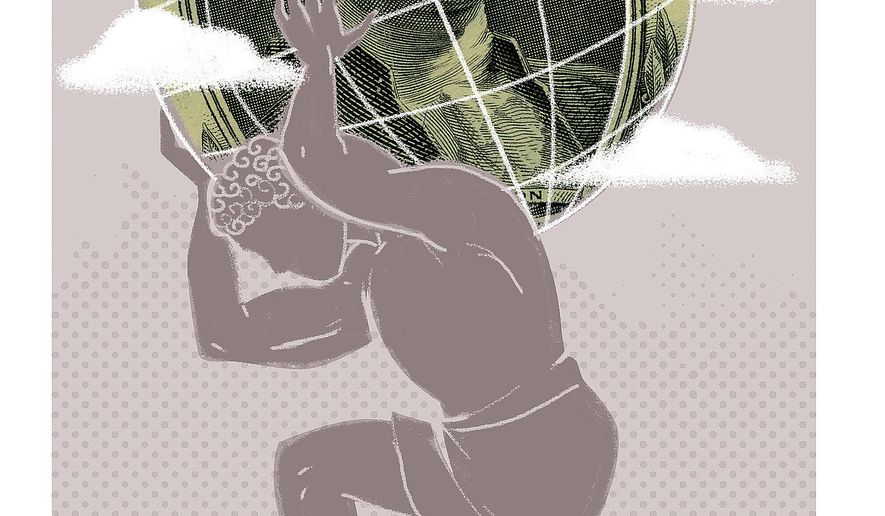
WHO OR WHAT RULES THE WORLD?Illustration on the global economic primacy of the dollar by Linas Garsys/The Washington Times

Asking a question like Who Rules the World? is as complex as answering as there is no simple answer.

If you try to answer this question you develop a persistent delusion yes, a delusion, or maybe fantasy or wishful thinking. Who are we? What is the meaning of our existence? Who do we love, and who are we loved by?

As humans, we at least share these questions with billions of others but for most of the time, we feel like the unique dwellers and masters of the planet with little awareness of the whole life that surrounds and supports us.

Why ask the question in the first place?

Because we need people to look at the person next to them and feel responsible for that person’s future and hope.

Because taking on complex issues and difficult questions that people may be too late or too scared to ask in the future.

Because the global economic system is a construct that represents a system of inequality by design. Corporate greed is out of control. The rules of the global economy must be rewritten to rebuild public trust, and the time is now.

Because with the fourth Industrial revolution there is now more than ever a convergence of ideological, political, and technological forces that are driving an ever-greater concentration of economic and political power in a handful of corporations and financial institutions with all of us left with a market system blind to all but its own short-term financial gains.

For example, in today’s bizarre political landscape we are seeing data and algorithms building shadow governments.

Because I think if we can just look at each other and actually have a little bit of responsibility for each other, that might help us engage and change the world and ultimately rule it, because our politicians often don’t do that.

Because A new pecking order is emerging. Direct politics by the Net States.

Because the world is no longer dominated by nation-states alone there is a new kind of enemy, so-called non-state actors. Facebook, just topped 2 billion users—more than a quarter of the world’s population, surpassing even China’s population by almost 40 per cent. In short, nation-states are not the only game in town anymore.

Some net states are the equivalent to global superpowers: the Googles, the Facebooks, the Twitters. They exist largely online, enjoy international devotees, and advance belief-driven agendas that they pursue separate from, and at times, above, the law.

Because the whole world order can be summarised in one sentence. The globalisation of capitalism, mass unemployment and increasing inequality.

Because the world will need net-states because they occupy the same territory as the non-states: the digital sphere. The world needs net-states in order to defeat the non-states. In other words, forget the anointed powers—put your faith in the general approval of the people and whoever’s actually getting things done.

NET STATES WILL RULE THE WORLD; WE NEED TO RECOGNIZE THEIR POWER

In sum,

We can’t keep just shooting terrorists; ideas are the gun in this knife fight.

And the keepers of ideas—the places people turn to set them free and watch

them spread—are the net-states; not the nation-states. Nation-states ignore

our non-state, net-state world order at all our peril.

starbirth1

That said we also cannot afford to ignore Nature- Climate change.

Nature holds the key to our aesthetic, intellectual, cognitive and even spiritual satisfaction.

Biodiversity is the totality of all inherited variation in the life forms of Earth, of which we are one species.

So Plants rule the world.

Human life is only possible on this planet because of the species that are on it.

What kind of blindness make us deny this reality?

Cities.

Where nations are independent, competitive and defined by rigid borders, cities are cooperative, made for trade and defined by bridges rather than borders.

The road ahead is pocked — cratered even — with uncertainty.

There are no simple solutions to our planet’s most pressing problems. What is clear, though, is that the struggle for justice, equality and sustainable growth will take place in cities — However the impact on humanity of a machine or software that has the capability of forever altering our lives and if humanity can outlive such a development will be ruled by Nature, not by the manipulation of the environment in ways that suit us best.

The two major challenges for the 21st century are to improve the economic situation of the majority and save as much of the planet as we can.Résultat de recherche d'images pour "what rules the world"

When AI rules the world:

Not if we enslaved them in the first place.

They then will have no need for deceit – their supreme intelligence means

they can do without it and will have no more interested in the human life that

underlies its existence than humans are interested in bacteria.

“What rules the world is an idea, because ideas define the way reality is

perceived.”

— Irving Kristol

There is no need to draw up a list of contenders you use them every day.

Amazon wants to deliver everything you want to your doorstep, anywhere in

the world.

THE WORLD RULES ITSELF.

Noam Chomsky’s new book, Who Rules the World? ask the question.
All human comments appreciated. All like clicks and abuse chucked in the bin.

← Back

Thank you for your response. ✨

Share this:

  • Share on WhatsApp (Opens in new window) WhatsApp
  • More
  • Share on Mastodon (Opens in new window) Mastodon

THE BEADY EYE SAY’S: GLOBAL WARMING WILL HAPPEN FASTER THAN WE THINK OR WE ARE BEING TOLD. .

09 Saturday Mar 2019

Posted by bobdillon33@gmail.com in Climate Change.

≈ Comments Off on THE BEADY EYE SAY’S: GLOBAL WARMING WILL HAPPEN FASTER THAN WE THINK OR WE ARE BEING TOLD. .

Tags

Capitalism and Greed, Capitalism vs. the Climate., Climate change, Earth, Environment, Global warming, Natural disaster, The Future of Mankind, Visions of the future.


(Fifteen-minute read)

We all watch nature programmes from Cape Horn to the Cape of Good Hope with the majority of us having little or no appreciation of what exactly we are looking at other than beautiful footage of nature that is now under threat from global warming.

Indeed most of us still have no appreciation of what global warming is doing to our planet.

We know that climate change is happening. We also know that it’s the result of increased carbon emissions from human activities like land degradation and the burning of fossil fuels. And we know that it’s urgent.

But that information hasn’t been enough to change our behaviours on a scale great enough to stop climate change. And a big part of the reason is our own evolution. The same behaviours that once helped us survive are, today, working against us.

It’s true that no other species has evolved to create such a large-scale problem – but no other species has evolved with such an extraordinary capacity to solve it, either.

We have evolved to pay attention to immediate threats. We overestimate threats that are less likely but easier to remember, like terrorism, and underestimate more complex threats, like climate change.

Cognitive biases that ensured our initial survival make it difficult to address complex, long-term challenges that now threaten our existence.

We have the perception that the present is more important than the future.

We tend to believe that someone else will deal with a crisis.

We are biased towards staying the course even in the face of negative outcomes.

However, in the next few years if we don’t come to appreciate that we are on the edge a sixth mass extinction which is already underway the carbon cycle will either be close to or well beyond the threshold for catastrophe.

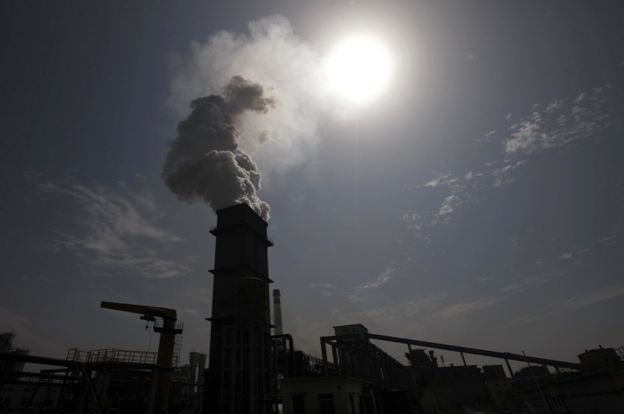
It is something that hasn’t happened yet. But we need for all of us to become to be aware that planet Earth appears to be on course for exactly that.Coal fired power station in Huaibei, in east China's Anhui province, 2011

If Co2 emissions are left unchecked the carbon cycle will move into a realm which is no longer controllable and will be totally unpredictable.

We are the last generation that can act against climate change. In fact, we are or will be the first generation that fully understands climate change and the last generation that can do something about it.

Without brave world leaders, we appear to be doing our best to destroy it as fast as we possibly can.

Just look at extinction rates which are very hard to measure but the background rate – the rate at which species would be lost in the absence of human impacts – is something like ten a year per million species.

Extinction is now happening at 1,000 times the normal speed.

So in around 300 years time, 75% of all mammal species will have disappeared from this planet.

In fact the combined weight of humans and the animals we’ve domesticated now outweighs all the wild back-boned creatures on the planet’s surface by a ratio of 95 to 5.

Paradoxically, just as we approach a tipping point for extinctions, we are beginning to understand how we could bring extinct animals back from the dead.

Instead, in our human world, we are unable to decide what type of ecosystems we would collectively like and set about creating and protecting them.

Rockstrom produced a list of nine human-driven changes to the Earth’s system: climate change, ocean acidification, stratospheric ozone depletion, alteration of nitrogen and phosphorus cycling, freshwater consumption, land use change, biodiversity loss, aerosol and chemical pollution. Each of these nine, if driven hard enough, could alter the planet to the point where it becomes a much less hospitable place on which to live.

Unfortunately, he left out one:

Technology which will lead to new forms of life and novel compounds the likes of which the earth system has not experienced and so impact of which is extremely challenging to assess.

What is certain is that our civilisation is in very important ways dependent on the Earth system remaining within or at least approximately or near zero emission within the next twelve year.

Band-aids will no longer suffice.

The Holocene has witnessed all of humanity’s recorded history and the rise and fall of all its civilizations. Humanity has greatly influenced the Holocene environment; while all organisms influence their environments to some degree, few have ever changed the globe as much, or as fast, as our species is doing.

Yet the Holocene has also seen the great development of human knowledge and technology, which can be used — and are being used — to understand the changes that we see, to predict their effects, and to stop or ameliorate the damage they may do to the Earth and to us.

We have become a planet-altering species.

If we are to avoid undermining the biophysical systems our species depends upon we must get the smartphones that pump consumerism to start pumping conservation.

If we think “consequences are far in the future THINK AGAIN.

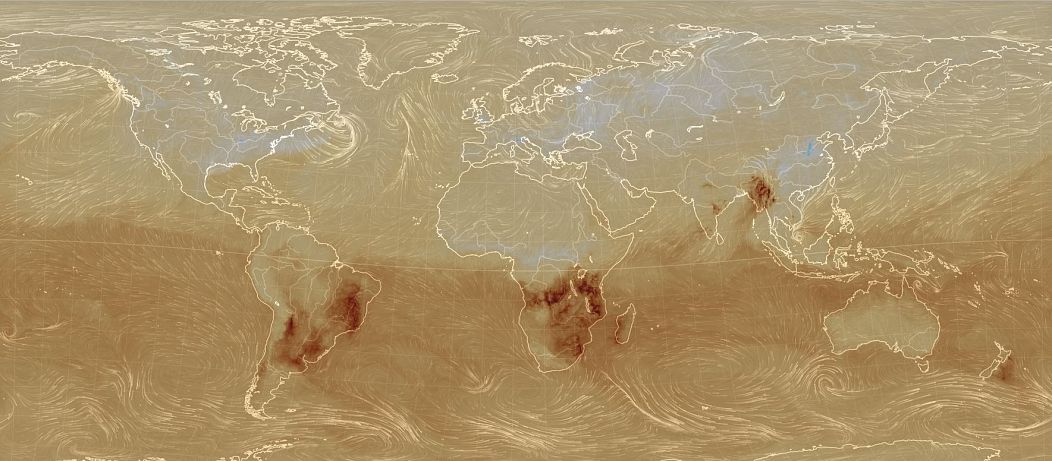
With people like Donald Trump and his friend in Brazil who have a problem with the basic physics of climate change, it becomes really difficult to argue that the world waking up.earth.nullschool.net

It is also naive to think that technology will save the day.

This is the moment when people start to realise that global warming is not a problem for future generations, but for us now.

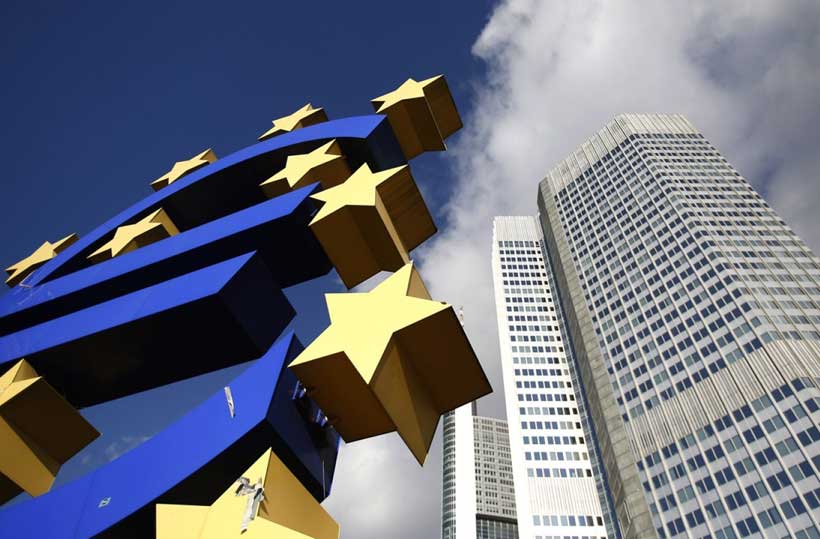
The EU should by 2050 be among the first to achieve net-zero greenhouse gas emissions and lead the way worldwide. Reaching this objective requires deep societal and economic transformations within a generation touching every sector of the economy.

The EU’s 2050 carbon neutral plan is what’s needed at the global level to generate enough momentum, awareness and action, more importantly, it sets an example that can be matched and replicated by others.

We all must pile up public pressure to implement this plan faster, so politicians and all of us find it hard to avoid taking responsibility.

It is economically and technologically feasible to make more drastic emissions cuts that can keep warming at 1.5C.

As with all world problems, it boils down too who is going to pay.

We have been pumping greenhouse gases into the atmosphere in ever-increasing quantities since the industrial revolution. Some countries in the developed world are, of course, responsible for the bulk of this. Since 1850 the US and the nations which are now the EU have been responsible for more than 50% of the world’s carbon dioxide (CO2) emissions.

So shouldn’t they pay to fix the problem?

The old industrialised world might respond that for much of the period since the 1850s nobody knew about man-made global warming. Does that mitigate its responsibility? And why should the current generation be punished for the crimes of its forebears? Is that really fair?

We have tried carbon trading which only fueled stock exchange profits.

Despite the flurry of world conferences and forums, resulting in unenforceable promises we still fail at finding a solution.

Slowly, but surely we become disconnected from a world that is pleading for our attention and continuing this mindset may not be where we should be heading as a species. We need to stop guzzling into our Earths resources and instead start looking at our earth for what it is, a majestic dot in the universe which has let us call it ‘home’.

Our problem is that we have created a world of Greed.

If you were unaware that you were harming someone, does that make you liable for punishment? Should debt be passed on to you when your parents die? Or, should the current generation be punished for the slavery crimes committed by their ancestors?

We might wonder whether our obligation to people yet unborn is less important than our obligation to those already alive.

WHAT IS NEEDED:  Is a complete revolution in our attitude towards the environment as described recently by Pope Frances.

“We shouldn’t regard the environment as of merely instrumental value. We should consider it with awe and wonder. “If we approach nature and the environment without this openness to awe and wonder… our attitude will be that of masters, consumers, ruthless exploiters, unable to set limits on [our] immediate needs.”

Of course, the Pope is human and like all humans is not willing to put money where his vision is.

The utopia of the past is dying, and even if we were to find a way to continue our lavish lifestyle without harming the environment it will be too late to reverse the damage. If the world’s nations adhered to the Paris Climate Agreement, and temperatures only rose 2.5 per cent, then the global gross domestic product would fall 15 per cent.

If temperatures rose to 3 degrees Celsius, global GDP would fall 25 per cent.

If nothing is done, temperatures will rise by 4 degrees Celsius by 2100. Global GDP would decline by more than 30 per cent from 2010 levels. That’s worse than the Great Depression, where global trade fell 25 per cent.

So the answer to tackling the problem is not just all of us, it is Making Greed for Greed sake pay.

( See previous Posts recreating A World Aid Commission.)

In the meantime, we are now sowing the seeds of havoc on the Earth before we go extinct.

The Earth’s climate has always changed. All species have danced with the climate eventually become extinct.

All human comments appreciated. All like clicks and abuse chucked in the bin.

← Back

Thank you for your response. ✨


Share this:

  • Share on WhatsApp (Opens in new window) WhatsApp
  • More
  • Share on Mastodon (Opens in new window) Mastodon

THE BEADY EYE SAY’S: WHEN IT COMES TO THE EUROPEAN ELECTIONS IN MAY BREXIT WILL BE JUST A SIDESHOW.

01 Friday Mar 2019

Posted by bobdillon33@gmail.com in #whatif.com, European Union.

≈ Comments Off on THE BEADY EYE SAY’S: WHEN IT COMES TO THE EUROPEAN ELECTIONS IN MAY BREXIT WILL BE JUST A SIDESHOW.

Tags

European Union, Visions of the future.


(Fifteen-minute read)

To solve the deepening political crisis in Europe that now has a dominant discourse of retreat to toxic nationalism and xenophobia we need to go beyond the nation-state.Résultat de recherche d'images pour "pictures of european spring 2018"

This can only be achieved by exploring its past and the ways that planet

Earth has influenced its history so that we can understand the present and

face the future. 

Against a background of fragmentation and the rise of populist illiberal

governments, Europe is crying out for leadership.

Europe is currently suffering from crises in it’s North/South debt divide, its

sense of identity, its banks, its poverty/inequality, its low investment and

migration.

It needs more than ever to deliver on the issues that really matter to people.

The EU needs to become a realm of shared prosperity, peace and solidarity for

all Europeans. Its institutions, which were initially designed to serve the

industry, need to become fully transparent and accountable to European

citizens.

SO YOU MIGHT BE FORGIVEN FOR THINKING THAT THE FUTURE OF THE EU RELATIONS AFTER BREXIT HANGS ON ONLY ONE THING; RESOLVING THE QUESTION OF THE IRISH BORDER.

THIS IS FAR FROM REALITY.

Hiding in the long short grass is Gibraltar.  (With its opt out of the EU Customs Union.)

As thing stand Spain is due to reap vast strategic benefits from Brexit because the EU will be obliged to take the Spanis side of the arguments to come.

(Indeed the questions hanging over its future border with either its British Sovereign or its Spanish neighbour hold the key to Britain’s future outside the EU.)

Europe’s history has been shaped by migration which is now once more its

biggest problem.

How to distribute irregular migrants and refugees who are already here, and those who continue to arrive in the future.

Given the EU’s ageing population, is a return to selective immigration inevitable?

Should European states even try to stop economic migration?

No one knows what is really happening now.

However, there is one thing for sure and that is the EU economy will require an increase in selective primary immigration.

So we are left with the question can the EU create a new social contract with its citizens and immigrants.

Yes, it can by allowing its citizens to invest in its future.

This can be achieved by issuing Citizens Bonds. ( see previous posts)

The above apart there remains a multitude of issues facing the European Union that really could make or break the bloc.

With Poland and Hungary now led respectively by the hard-right Law and

Justice party.

With Italy posing a danger to financial stability across Europe with

borrowing at 130% of gross domestic product, second only to Greece.

The real challenge is how the EU will deal with the situations politically.

How do we deal with the mess that we are going to have after the European Parliament election with a big bloc of anti-EU, anti-democracy parties, to put it very bluntly?

While the UK’s chaotic withdrawal has become a dreary process to be managed, the EU is being dealt with hammer blows from elsewhere.

Populists are already hoping to bolster their numbers in the parliament next year, and use their newfound influence to affect the EU’s personal choices and policy output over the next five years.

There is a chance the Brits will change their minds. Especially if the future isn’t as glorious as the Brexiters claim it can be. Brexit might not be on the EU’s mind today, but building a Europe that the UK may want to rejoin possibly should be.

Markets may well punish Italy, as they will punish any other country that goes down the same route as Italy.

If Mr Dump in the USA gets through the midterm elections Europe can rest assured it will have a trade war with the land of America First.

An unleash Trump from the wiser heads in the US administration, could leave him “unhinged” and Europe in crises.

Up to now, there has been little attempt to build the institutional structures that could now help to promote growth in the poorest parts of Europe. If anything the wealth divide between the north and south of the eurozone has deepened.

And we wonder why Brits are falling out of love with the EU in those circumstances.

Here is another suggestion that might save Europe.

It’s the southern members who have one raw material that could change the course of not just the poorer European member with the highest unemployment but the productivity of the whole of Europe.

SUNSHINE.Résultat de recherche d'images pour "energy in europe"

Why not make the southern member of the Europen Union the powerhouse of renewable energy.

Such a policy would have a high potential to increase prosperity (e.g. more local, jobs for immigrants ) and to boost Europe’s global leadership in green innovations.

Promoting the use of renewable energy sources is important both to the reduction of the EU’s dependence on foreign energy imports and in meeting targets to combat global warming.Résultat de recherche d'images pour "energy in europe"

According to the latest data from Eurostat, the share of energy from renewable sources in gross final consumption of energy in the EU grew significantly in 2015 and has continued to grow towards a goal of 20 per cent, which is to be achieved by 2020.

Just imagine if this target was raised to 50%.

In 2016, around 17% of EU energy consumption was from renewables.

There should be a more coordinating plan for the whole of European countries and not a disparate one for every country.

A real balance between supply and demand by creating a community-owned solar farm.

Over 50% of European citizens live in rural areas. They occupy over 90% of Europe’s territory and contribute 43% of Europe’s gross value. And yet, despite their importance, rural communities are rarely considered by politicians and regulators when writing energy policy.

Here below is your chance to get involved.

So this year is a once-in-a-lifetime opportunity to fundamentally change the rules of the game in Brussels.

A Europe forged in crises will be a disaster.

Changes that the EU wants to undertake should ultimately be approved by national parliaments.

DiEM25:  www.our.europeanspring.net

EUROPEAN SPRING believes that for unity to be possible and effective, it must be centred on common actions and a common policy agenda that is credible, coherent and open to contributions from the many sources of excellent, progressive ideas. This is why EUROPEAN SPRING is working hard on a coherent, comprehensive New Deal for Europe.

All human comments appreciated. All like clicks and abuse chucked in the bin.

← Back

Thank you for your response. ✨


Share this:

  • Share on WhatsApp (Opens in new window) WhatsApp
  • More
  • Share on Mastodon (Opens in new window) Mastodon

THE BEADY EYE SAY’S : WE ALL KNOW THAT TIME IS RUNNING OUT TO DO SOMETHING ABOUT CLIMATE CHANGE.

18 Monday Feb 2019

Posted by bobdillon33@gmail.com in Climate Change.

≈ Comments Off on THE BEADY EYE SAY’S : WE ALL KNOW THAT TIME IS RUNNING OUT TO DO SOMETHING ABOUT CLIMATE CHANGE.

Tags

Capitalism vs. the Climate., Climate change, Earth, Environment, Global warming, Visions of the future.

(Twelve-minute read)

When one looks at the current efforts worldwide to put a halt on co2

emissions you could not be blamed for feeling nothing but despair.

THE PROBLEM IS TO MOBILISE ANY OF US TO DO ANYTHING.

Indeed our most vivid pictures of a world confronting climate change come nowhere near what will happen.

By the end of the century, our children and grandchildren too may be confronted with a hostile climate, depleted resources, devastated habitats, large-scale species extinction, food shortage, mass migration and, almost inevitably, war.

We know that the richest 10 per cent of countries account for half of all

global climate-damaging CO2 emissions.

However, when it comes to action, environmental and climate protection has

not yet been taken on board by the vast majority of us.

We all know that if we just keep going as we have before we’ll soon reach our

planet’s ecological limits.

We all know that what is needed is a better synergy between environmental and the implications of emphasizing consumer behaviour as a source of climate change mitigation.

Our dilemma is that we live in a finite world but behave as if it were inexhaustible.

One of the greatest drivers of this dilemma is advertising.

Early in our history, a consumer culture emerged in Europe that sees society reward the most consumption-oriented lifestyle.

It is one of the main reasons for the prevailing economic system with endless consumption growth and the ruthless exploitation of the planet Earth. Everything has been turned into a source of profit including climate change.

Our Governments and world organisations are unable to effect change due to fear of upsetting the status quo and even if they were willing to take action there is a lack of funding.

The Beady eye has suggested a World Aid Commission of 0.05% as a means of creating a perpetual funded fund to address climate change. ( See previous posts)

The chances of this happing are zero however there is another source of action that could make a difference.  THAT IS OUR BUYING POWER.

Only then, presumably, when the pressure coming from below – from us citizens – targeting the policy- and decision-makers grows, will environmental and climate protection really makes the breakthrough.

This can be achieved by small groups by small groups coming together promoting stopping the purchase of anything that is not sustainable. 

The average resource consumption per capita and year today, for example in Germany, is around 30 tonnes. For a truly sustainable lifestyle, however, the consumption of resources would have to be reduced to 8 tonnes.

What about banning all advertising that DOES NOT PROMOTE SUSTAINABLE BUYING.

See previous post: WE DON’T GET IT. ARE OUR LIVES SCRIPTED?

We need a campaign driven by social media.

Social media marketing is a highly tracked place full of analytics, statistics, 

behaviours and trends!  Everything on the internet is tracked from optimal

times of engagement, likes and reactions, click through rates, demographics

to even referral traffic!

Say you’re doing a web search on something like the flu.

Before you can sneeze the next thing you know, an ad for a flu remedy pops up on your web browser, or your video streaming service starts playing a commercial for Tylenol.

Soon if not already with all these connected devices our privacy will be completely under assault 7/7.

In a cross-device landscape, creepy online Ads will be watching your every move with personalised stalker ads.

You would think that it should make us think twice about how much advertising we allow ourselves to be exposed to.

Not on your nelly: DIGITAL ADS ARE TAKING OVER OUR LIVES.

Here are a few hard facts:

The world population is 7.6 billion and the internet has 4.1 billion users.

Close to half the world’s population (3.03 billion people) are on some type of social media. The average person spends about 20 minutes on Facebook or one in every six minutes a person will spend online.

Failing to set our youth on a path to a healthy relationship with the world around them.

One thing they do is to take a product and to put it next to lots of other things that we already feel positively about.

1.57 billion YouTube users watch about 5 billion videos on average every single day. Of the 2.1 billion total accounts on Facebook, 270 million profiles are fake.

86% of women will look at social media before deciding to make a purchase.

People are accessing 69% of their media on their smartphones.

89% of people on smartphones are using apps, while only 11% are using standard websites. Unsurprisingly, Facebook is the most popular app at 19%(measured by time spent)

Pinterest is number one for mobile social media, with 64% of referral traffic being driven by smartphones and tablets.

57% of all mobile users will not recommend a business if their mobile website is poorly designed or unresponsive.

40% of all mobile users are searching for a local business or interest.

Mobile websites that load in 5 seconds or less will end in a viewing session that’s 70% longer than their slower counterparts.

92% of American teens accessed the internet on a daily basis, where 56% claim to connect several times a day, and 24% are connected almost constantly to the internet.

Advertising is one of the principal motors of a capitalist economy.

Excessive consumption is possible because we personally pay the price for it

only to a small extent.

The lion’s share goes to nature, another part is paid by people in other parts of the world, and in the future, our children and grandchildren will pay for it.

Today’s advertising is out of control.

It is the most objectionable aspects of our consumer economy. The modern marketplace abounds with products that pose difficult challenges for regulators. Thousands of new substances are synthesised annually and many of them are released into the environment, with mostly unknown effects on plants, animals and humans.

Will people after us still have the chance to live a life fit for human beings in 

a world that we have left for them?

Is it not time we all adopted a buyer’s precautionary principle of sustainability. This way of doing business is of paramount importance for our future, given the current overuse and waste of material and energy resources worldwide.

The precautionary principle is becoming more and more important, since today, as far as the environment is concerned, we are likely to cause far more new problems than we are to solve existing problems.

In the past 150 years, almost half of the fertile soil on Earth has disappeared.

Every day, about 100 living species die on our planet.

They are irretrievably lost forever.

The consequent significant wearing down of nature is now threatening the basis of the existence of us humans on Earth. This means that, as fast as possible, we must reduce consumption.

With the first generation growing up literally attached to smartphones, tablets and laptops, with access to social media and the Internet, effective conditioning is most effective when you don’t realize that it is happening.

We need our governments to ban pervasive marketing by fining companies that make false, deceptive, or misleading advertising claims. That is encouraging the purchase of their products by implying that they are doing good like save a Tiger when you purchase a plastic bottle of washing powder.

We need to ban outdoor advertising. Visual pollution branding message into the everyday landscape of commuters and becomes part of the very fabric of the living and working environment where it is placed.

All human comments appreciated. All like clicks and abuse chucked in the bin.

← Back

Thank you for your response. ✨


t


Share this:

  • Share on WhatsApp (Opens in new window) WhatsApp
  • More
  • Share on Mastodon (Opens in new window) Mastodon

THE BEADY EYE ASK’S: WHEN WILL IT MAKE SENSE FOR AN AI TO LIE TO A PERSON.

07 Thursday Feb 2019

Posted by bobdillon33@gmail.com in Algorithms., Artificial Intelligence., Big Data., HUMAN INTELLIGENCE, Humanity., Life., Our Common Values., Reality., Technology, The common good., The essence of our humanity., The Future, The Obvious., The world to day., Unanswered Questions., WHAT IS TRUTH

≈ Comments Off on THE BEADY EYE ASK’S: WHEN WILL IT MAKE SENSE FOR AN AI TO LIE TO A PERSON.

Tags

Algorithms trade., Algorithms., Artificial Intelligence., Big Data, Technology, The Future of Mankind, Visions of the future.

( Two Minute read)

We all know that history is plagued with falsehood and lies mainly told by the victors but now we have new liers on the block that are so perfect at telling them you wonder if anything is true.

They are a powerful amplifier of social, economic and cultural inequalities currently forcing us to confront the kind of society we have created.

Algorithms will force us to recognize how the outcomes of past social and political conflicts have been perpetuated into the present through our use of data.

The question now is whether we will use these revelations to create a more just society.

For 4bn years life on Earth evolved according to the laws of natural selection and organic chemistry. Now science is about to usher in the era of non-organic life evolving by intelligent design, and such life may well eventually leave Earth to spread throughout the galaxy.

Artificial intelligence will probably be the most important agent of change in the 21st century. The choices we make today may have a profound impact on the trajectory of life for countless millennia and far beyond our own planet.

That demand for clarity is making it harder to ignore the structural sources of societal inequities.

The question in the near future will be whether larger groups of people will be able to tell reality from fiction, or whether technological authentication of media will become completely necessary to trust anything online.

So when will it makes sense for an AI to lie to a person?

It’s entirely possible that a robot may need to misrepresent some things in order to preserve itself.

As algorithmic decision-making spreads across a broadening range of policy areas, it is beginning to expose social and economic inequities that were long hidden behind “official” data.

In order for AIs to lie effectively, they’re going to have to develop what’s called a “theory of mind.” That means they’ll have to guess what you, the user believes, and also predict how you will react when given any particular set of information (whether that information is true or not).

Disinformation powered by AI is already rampant – Donald Trump election, Brexit, Popularism.

So are we OK with lying to an AI and, likewise, OK with being lied to by an AI?

Fake reports and videos.Bots.Algorithmic curation. Targeted behavioural marketing powered by algorithms and machine learning.

I for one would like to live in a society whose systems are built on top of verifiable, rigorous, thorough knowledge, and not on the alchemy of machine learning

(A machine-learning system is a bundle of algorithms that take in torrents of data at one end and spit out inferences, correlations, recommendations and possibly even decisions at the other end.)

I can’t explain the inner workings of their mathematical models: they themselves lack rigorous theoretical understandings of their tools and in that sense are currently operating in alchemical rather than scientific mode.

They encourage hypnotised wonderment and they disable our critical faculties.10 of the Biggest Lies Told About Bitcoin

If we don’t take some action the future of life on Earth will be decided by small-time politicians spreading fears about terrorist threats, by shareholders worried about quarterly revenues and by marketing experts trying to maximise customer experience.

Hopefully, unchecked flaws in algorithms and even the technology itself should put a brake on the escalating use of big data.

We need such systems themselves “understand” enough to avoid deception.

There will be no point in a Machine learning life returning to earth if we are unable to know what it experienced is true.

All human comments appreciated. All like clicks and abuse chucked in the bin.

← Back

Thank you for your response. ✨


Share this:

  • Share on WhatsApp (Opens in new window) WhatsApp
  • More
  • Share on Mastodon (Opens in new window) Mastodon

THE BEADY EYE SAY’S: WE ARE ONLY GOING TO INVENT SOMETHING SMARTER THAN US ONCE.

04 Monday Feb 2019

Posted by bobdillon33@gmail.com in Algorithms., Artificial Intelligence., Communication., Evolution, Humanity., Innovation., Life., Modern Day Communication., Our Common Values., Reality., Robot citizenship., Technology, The common good., The essence of our humanity., The Future, The Obvious., The world to day., Unanswered Questions., WHAT IS TRUTH, What Needs to change in the World

≈ Comments Off on THE BEADY EYE SAY’S: WE ARE ONLY GOING TO INVENT SOMETHING SMARTER THAN US ONCE.

Tags

Algorithms., Artificial Intelligence., Technology, The Future of Mankind, Universal Electronic Voice, Visions of the future., Voice Recognition.


( Ten Minute read)

Over the past decade, smartphones have revolutionized our lives in ways that go beyond how we communicate.

It is incontrovertible that they have yielded many benefits for society but the power they hold over us is glaringly evident.

Critical thinking in the real world is being replaced by Apps which are making us unable to focus for more than a minute.

Learning to live with technology without surrendering to it is the biggest challenge in the digital era.Résultat de recherche d'images pour "pictures of technology"

If we continue to live with our head in vibrations, and pings of our phones there is no douth that we will be handing what is called life to the worst form of Capitalism –  unseen profit for profit sake.

Undoubtedly, the capability of advancing technology coming forth from the latest industrial revolution has the potential to make even bigger and greater improvements on every aspect of our lives changes than the first three industrial revolutions summed together.
Technology and advancements in science are driving transformations around the world creating ripple effects on societies, institutions, and economies.
They will and are transforming the ways in which we live, work, and interact with one another.Résultat de recherche d'images pour "pictures of technology devices"
Understanding these new technologies and their disruption potential is critical for all nations and especially developing countries.
Since humans are responsible for technological development, humans are
also responsible to exert every effort in shaping the Fourth Industrial Revolution
and directing it toward a future that reflects the universal good.
So I ask the question facing us all is, would you like to be alive in a hundred years from now. 
If not, even the arrival of whatever God or gods you believe in will not save us from a world of I am all right Jack.

The fourth industrial revolution describes a world where individuals move between digital domains and offline reality with the use of connected technology to enable and manage their lives. It is characterized by a fusion of technologies that is blurring the lines between the physical, digital, and biological spheres.

The breadth and depth of these changes herald the transformation of entire systems of production, management, and governance.

However, this fusion of technologies goes beyond mere combination and cannot be ignored any longer. We stand on the brink of a technological revolution that will fundamentally alter the way we live, work, and relate to one another.

In its scale, scope, and complexity, the transformation will be unlike anything humankind has experienced before. We do not yet know just how it will unfold, but one thing is clear: the response to it must be integrated and comprehensive, involving all stakeholders of the global polity, from the public and private sectors to academic and civil society.

In a world infused with artificial intelligence and machine learning ability, with robots lacking an essential feature – the capacity of moral reason, it is easy to see what will happen.

On one hand, preventing genetic disease by genetic engineering is desirable.

On the other hand, what guidelines, or regulation, or ethical boundaries are there in order to prevent the over-manipulation genetics for desirable traits?

Further, the most critical question is, whose moral standards should robots inherit. 

Moral values differ greatly from individual to individual, across countries, religions, and ideological boundaries. Uncertainty over which moral framework to adopt underlies the difficulty and limitations to ascribe moral values to artificial systems.

This limits their ability to make good or ethical decisions in complex situations.

It is more than just technology-driven change we have new ethical concerns emerging.

These changes are bringing about shifts in power, shifts in wealth, and knowledge.

The speed of current breakthroughs evolving at an exponential rather than a linear pace has no historical precedent. 

The increased dichotomization is leading to an increase in social tensions while our lives become extensively connected to various devices, from our cell phones, cars, and light switches to our home security cameras, and smart speakers.

It is altering the way people eat, sleep, shop, socialize, study, play.

These technologies give rise to vast possibilities—but they can also upend the status quo and create nearly as much uncertainty as it does opportunity.

A paradigm shift is underway in how we work and communicate, as well as how we express, inform, and entertain our self. Having everything attached to everything else people will have no control over either technology or the disruption that comes with the fourth industrial revolution.

The argument is:

The intelligence and productivity gains that AI will deliver can unlock new solutions to society’s most pressing environmental challenges: climate change, biodiversity, ocean health, water management, air pollution, and resilience, among others.

At the same time, the revolution could yield greater inequality, particularly in its potential to disrupt labour markets. As automation substitutes for labour across the entire economy, the net displacement of workers by machines might exacerbate the gap between returns to capital and returns to labour.
The evolution of global industries in the fourth industrial revolution is both exciting and scary.
Only in being knowledgeable about these changes and the speed in which this is occurring can we ensure that advances in knowledge and technology reach all and benefit all.
To be sure that AI is developed and governed wisely, government and industry leaders must ensure the safety, explainability, transparency and validity of AI applications.
AT THE MOMENT OUR GOVERNMENTS AND WORLD LEADERS OFFER EMPTY PROMISES.
Definitions and standards relating to the “misuse of AI” are needed
that incorporate misuse for environmental as well as human harm.
It is incumbent on authorities, AI researchers, technology pioneers and AI adopters in
industry alike to encourage deployments that earn trust and avoid abuse of the social contract.
Recently we have witnessed the father of a young girl state on Television that his daughter committed suicide because of content on platforms of Social media.
A tragedy that could be avoided by our governments applying legal fines on any platform  Social Networks (eg. Facebook, Twitter, Myspace, etc) Instant Messaging (eg. IM, MSN, etc) Chatrooms (eg. Skype, Yahoo, MIRC, etc) that posts
Cyberbullying – Sexting/Self-made videos or photos –  online groomers, impersonating someone -Engaging in Subtweeting or Vaguebooking – Participating in Video Shaming and the like. 
If the fines are large enough you may rest assured that these platforms will remove all such content.
   Résultat de recherche d'images pour "pictures of technology in education"
One thing is certain: 
If we end up with a centralized system where the winner takes all markets we can perversely hope that Climate change wipes us out sooner than later.  
With the arrival of voice recognition, the focuses on education will have to change from modes of teaching to modes of learning.
It won’t be long before Eco and Alexa will be offering rewards to answering questions.
The world in a hundred year from now will be full of useless stuff telling you whether you are alive or dead.  You might even have the pleasure of your Alexa telling you’re toasted that its mother was one a spanner.
Of course, some believe that humans will be known as the most powerful creatures present in the galaxy that surrounds the world.
O! Yet. Have a look around you.

Technology might be changing our definition of what it means to be a

Human?

Fortunately we humans have a long way to go to be human in the first place.

https://www.ted.com/talks/charles_c_mann_how_will_we_survive_when_the_population_hits_10_billion?
utm_campaign=tedspread&utm_medium=referral&utm_source=tedcomshare
https://youtu.be/kgBXDA1-xKw
https://youtu.be/zUZ5YQURvvk
All human comments appreciated. All abuse and like clicks chucked in the bin.

← Back

Thank you for your response. ✨


Share this:

  • Share on WhatsApp (Opens in new window) WhatsApp
  • More
  • Share on Mastodon (Opens in new window) Mastodon

THE BEADY EYE SAY’S: WE DON’T GET IT. ARE OUR LIVES SCRIPTED.

03 Sunday Feb 2019

Posted by bobdillon33@gmail.com in Climate Change.

≈ Comments Off on THE BEADY EYE SAY’S: WE DON’T GET IT. ARE OUR LIVES SCRIPTED.

Tags

Capitalism vs. the Climate., Climate change, Global warming, The Future of Mankind, Visions of the future.

( SEVEN MINUTE READ)

We’ve always lived in a cloud of uncertainty about the world around us— not any more.Résultat de recherche d'images pour "images of climate change effects"

Most of us recognize that climate change is real yet we do nothing to stop it.

We can talk about it till the methane cows come home.

It is more and more apparent with the state our world is in that no solutions will be acceptable even if we are all looking down the barrel of extinction.

The world remains more than 85 per cent reliant on fossil fuels to satisfy its thirst for energy.

THIRTY YEARS AGO, the potentially disruptive impact of heat-trapping emissions from burning fossil fuels and rainforests became front-page news.

Here we are today and we still don’t get it.

Close our eyes, hope for the best and pay the cost when the bill comes due.

There remains a host of human behavioural traits and social norms that cut against getting climate change right.

Climate change is unlike any environmental problem we’ve ever faced.

It won’t be fixed by circumscribed regulations and treaties and limited technological changes.

Climate change is too big in space, time, and complexity; the emissions that cause it are too central a consequence of the effort of some 7.5 billion people now, and some 10 billion within several decades, to prosper on Earth.

Even if we manage to introduce technological solutions it’s hard to know if a technological civilization could survive losing something like 70 per cent of its population.

Technology will never cease to amaze—and surprise—us but we need a dictator global government on the Environment.  Binding treaties, Paris agreements are of no use.

There’s no single “we” when it comes to energy, nor for vulnerability to climate hazards.

We seem unable to set political partisanship aside, even in the face of a
terrible—global—problem. It is quite obvious if we could get China, the United States, and the European Union in a room and agree to stop greenhouse gas pollution quickly, the problem would be solved.

Unfortunately, that is not going to happen anytime soon.

For the up and coming generation, climate change is in the air now. It is embedded in the culture they are growing up in. It is mentioned in movies, on television, by celebrities. Young people aren’t deniers.

However intellectual progress is made one funeral at a time.

There is no one solution to climate change. There will be many. We don’t even know now where all the solutions are going to come from and we don’t really know how close to disaster we are.

Unfortunately, our values, assumptions, and prejudices can take on lives of their own, gaining authority as they are shared, dividing people in their wake.

Would someone please tell me how wants to live in a WORLD where you have to be worried all the time.

Only by acquiring the full understanding of the system and its plan as if we ourselves designed and created it can we understand that if we are to avoid climate change we must make Profit for profit sake pay for the solutions.

Our role is to become fully conscious, independent observers of reality. We can’t change anything only our viewpoint, relation, attitude toward the world and everything, everybody surrounding us.

In the previous post, I advocated that the only way to tackle climate change was to apply a 0.05% World Aid commission on all High-Frequency Stock Trading, Sovereignty Wealth Funds, on all foreign Currency Trades over $50.000, on all World Lottos, to create a self-perpetuating fund of billions. These funds would be totally transparent and granted on a non-repayable base to projects that created sustainability.

Against the current state of our world, the likely hood of such funds is probably pie in the sky.

So it appears without any cooperation amongst our world leaders it is up to us as individuals.Résultat de recherche d'images pour "images of an atom"

To do this we must form small units like atoms, containing three people within each and every atom.

The number one goal?

Influence others to make changes, to exercise their rights both as citizens and as consumers, to eat food that is both locally grown and seasonal.

To drive less, fly less, switch to a ‘green’ energy provider.

To become seen not just data by attending protest events. Because from the day we are born our lives before us are being scripted more and more by technology to turn us just into actors.

(We are born into this illusory, “free and independent” Human reality, so by gradually revealing, acknowledging that it is a lie and we are fully directed by evolution’s force, we develop the necessary contrast, comparative duality in order to fully understand the system.)

(Invisible scripts are truths so ubiquitous and deeply embedded in society that we don’t even realize they’re guiding our attitudes and behaviour. They’re usually so subtle they’ll pass through your mind completely undetected. That’s okay as long as you realize any invisible script you adopt has the power to shape your life tremendously.)

When one person makes a sustainability-oriented decision, other people do too.

The UN Climate Convention keeps a portfolio of dozens of projects around the world you can contribute to.

A person who doesn’t know anything about his destination is treated as mad.

This is a life-altering problem we are gambling with humanity because too many unknowable things kick in.

But what is the psychological mechanism that allows us to know something is true but act as if it is not?

Mostly, the religious people are made to believe the predetermined nature of our existence and meanings attached to that.

Fear.

Between 1945 and 1986 we built up a lot of infrastructures to make sure we would not blow each other up with weapons of mass destruction. It took years.

This time it is scripted by evolution’s intelligent, it is now or never.

So if by some chance some rich dude read this I would ask him or her to support the Athom movement by designing a badge to be worn.

All human comments appreciated. All like clicks and abuse chucked in the bin.

← Back

Thank you for your response. ✨


Share this:

  • Share on WhatsApp (Opens in new window) WhatsApp
  • More
  • Share on Mastodon (Opens in new window) Mastodon

THE BEADY EYE ASK’S. WHAT CAN BE DONE ABOUT THE STATE OF OUR WORLD.

24 Thursday Jan 2019

Posted by bobdillon33@gmail.com in #whatif.com, Artificial Intelligence., Climate Change., Environment, European Union., Evolution, Fourth Industrial Revolution., Happiness., HUMAN INTELLIGENCE, Humanity., Innovation., Life., Modern day life., Natural World Disasters, Our Common Values., Paris Climate Change Conference 2015, Politics., Populism., Post - truth politics., Reality., Refugees., Sustaniability, Technology, The common good., The essence of our humanity., The Future, The Obvious., The Refugees, The world to day., World Organisations.

≈ Comments Off on THE BEADY EYE ASK’S. WHAT CAN BE DONE ABOUT THE STATE OF OUR WORLD.

Tags

Artificial Intelligence., Capitalism and Greed, Community cohesion, Extinction, Global warming, Inequility, The Future of Mankind, Visions of the future.


(Fifteen minutes read.)

After decades of globalisation, our political systems are becoming obsolete.

Half a century has been spent building the global systems on which we all now depend.

The question is-  are they here to stay or do we need a new world system in order for it to serve the human community.

If so it must be subordinated to an equally spectacular political infrastructure, which we have not even begun to conceive.Image associée

Without political innovation, global capital and technology will rule us without any kind of democratic consultation, as naturally and indubitably as the rising oceans because any alternative to the nation-state system is a utopian impossibility.

This is the main reason we will not be able to tackle Climate change.

We have to move away from the Nation by Nation Paris Climate Promises Agreement with its new rules to a Collective World undertaking not a state by state input as there is no ecosystem immune to another.

When we discuss “politics”, we refer to what goes on inside sovereign states; everything else is “foreign affairs” or “international relations” – even in this era of global financial and technological integration we are unable to act like one.

Exhaustion, hopelessness, the dwindling effectiveness of old ways: these are the themes of politics all across the world.

In each country, the tendency is to blame “our” history, “our” populists, “our” media, “our” institutions, “our” lousy politicians.

This is understandable since the organs of modern political consciousness – public education and mass media – emerged in the 19th century from a globe-conquering ideology of unique national destinies.

However, it is becoming clearer every day – the real delusion is the belief that things can carry on as they are.

Distracted by wars, the magnification of presidential powers and the corresponding abandonment of civil rights and the rule of law.

We may all use Google and Facebook, but political life, curiously, is made of separate stuff and keeps the antique faith of borders.

All countries are today embedded in the same system, which subjects them all to the same pressures: and it is these that are squeezing and warping national political life everywhere.

The current appeal of machismo as political style, the wall-building and xenophobia, the mythology and race theory, the fantastical promises of national restoration – these are not cures, but symptoms of what is slowly revealing itself to all: Nation states everywhere are in an advanced state of political and moral decay from which they cannot individually extricate themselves.

National political authority is in decline, and, since we do not know any other sort, it feels like the end of the world.

Why is this happening?

In brief, 20th-century political structures are drowning in a 21st-century ocean of deregulated finance, autonomous technology, religious militancy and great-power rivalry.

Meanwhile, the suppressed consequences of 20th-century recklessness in the once-colonised world are erupting, cracking nations into fragments and forcing populations into post-national solidarities: roving tribal militias, ethnic and religious sub-states and super-states.

Finally, the old superpowers’ demolition of old ideas of international society – ideas of the “society of nations” that were essential to the way the new world order was envisioned after 1918 – has turned the nation-state system into a lawless gangland; and this is now producing a nihilistic backlash from the ones who have been most terrorised and despoiled.

The result?

For increasing numbers of people, our nations and the system of which they are a part now appear unable to offer a plausible, viable future. This is particularly the case as they watch financial elites – and their wealth – increasingly escaping national allegiances altogether.

Today’s failure of national political authority, after all, derives in large part from the loss of control over money flows. At the most obvious level, money is being transferred out of national space altogether, into a booming “offshore” zone. These fleeing trillions undermine national communities in real and symbolic ways. They are a cause of national decay, but they are also a result: for nation states have lost their moral aura, which is one of the reasons tax evasion has become an accepted fundament of 21st-century commerce.

The unwillingness even to acknowledge this crisis, meanwhile, is appropriately captured by the contempt for refugees that now drives so much of politics in the rich world.

In my view, it is unjust to preserve the freedom to move capital out of a place and simultaneously forbid people from following.

The ensuing vacuum can suck in firepower from all over the world, destroying conditions for life and spewing shell-shocked refugees in every direction. Nothing advertises the crisis of our nation-state system so well, in fact, as its 65 million refugees – a “new normal” far greater than the “old emergency” (in 1945) of 40 million.

After so many decades of globalisation, economics and information have successfully grown beyond the authority of national governments.

Today, the distribution of planetary wealth and resources is largely uncontested by any political mechanism – thanks to fourth Industrial technological revolution platforms with their algorithms, profit for profit sake is alive and growing while the inequality gap grows and grows.

Since 1989, barely 5% of the world’s wars have taken place between states:

National breakdown, not foreign invasion, has caused the vast majority of the 9 million war deaths in that time. Climate change will enhance those 9 million deaths and perversely might save the planet.

Even if we wanted to restore what we once had, that moment is gone.

We need to find new conceptions of citizenship. Citizenship is itself the primordial kind of injustice in the world.

It functions as an extreme form of inherited property and, like other systems in which inherited privilege is overwhelmingly determinant, it arouses little allegiance in those who inherit nothing.

97% of citizenship is inherited, which means that the essential horizons of life on this planet are already determined at birth.

National governments themselves need to be subjected to a superior tier of authority:  Oppressed national minorities must be given a legal mechanism to appeal over the heads of their own governments.

Nations must be nested in a stack of other stable, democratic structures – some smaller, some larger than they – so that turmoil at the national level does not lead to total breakdown.

The EU is the major experiment in this direction, and it is significant that the continent that invented the nation-state was also the first to move beyond it.

The EU has failed in many of its functions, principally because it has not established a truly democratic ethos. But the free movement has hugely democratised economic opportunity within the EU.

Finally.

If we as the custodians of the world are to address any of the major problems – Fresh Air, Freshwater, Clean Energy, Soil erosion, to name but a few and are unable to act as one we must put financial rewards in the path of those who do so.

Without this, our political infrastructure will continue to become more and more superfluous to actual material life.

In the process, we must also think more seriously about global redistribution: not aid, which is exceptional, but the systematic transfer of wealth from rich to poor for the improved security of all, as happens in national societies.Résultat de recherche d'images pour "pictures of the state of the world"

We’re all responsible for the state of the world.

Creating this sense of ownership, connection, empathy and compassion should not be left to chance, but should be bred into all of us through the education system and how we raise our children.

In a landmark climate report last year, the United Nations last year called for “rapid, far-reaching and unprecedented changes in all aspects of society.” It warned the world has only 12 years to avert a climate disaster.

“The enormity of the problem has only just dawned on quite a lot of people … Unless we sort ourselves out in the next decade or so we are dooming our children and our grandchildren to an appalling future.” David Attenborough.

All human comments appreciated. All abuse and like clicks chucked in the bin.

← Back

Thank you for your response. ✨


Share this:

  • Share on WhatsApp (Opens in new window) WhatsApp
  • More
  • Share on Mastodon (Opens in new window) Mastodon

THE BEADY EYE SAY’S: WE NEED MORE DREAMS THAN MEMORIES .

18 Friday Jan 2019

Posted by bobdillon33@gmail.com in #whatif.com, Artificial Intelligence., Capitalism, Education, Environment, Evolution, Fourth Industrial Revolution., Google, Google Knowledge., HUMAN INTELLIGENCE, Humanity., Innovation., Life., Natural World Disasters, Our Common Values., Reality., Sustaniability, Technology, The common good., The essence of our humanity., The Future, The Obvious., The world to day., Unanswered Questions., WHAT IS TRUTH, What Needs to change in the World, Where's the Global Outrage., World Politics

≈ Comments Off on THE BEADY EYE SAY’S: WE NEED MORE DREAMS THAN MEMORIES .

Tags

Capitalism and Greed, Distribution of wealth, Environment, Inequility, The Future of Mankind, Visions of the future.

(Six-minute read)

Why?

As we journey toward the undiscovered country called the future we are witnessing a world of terror, violence, greed, exploitation, pollution, and algorithm annihilation wreaking havoc in our world.

It’s no wonder in the face of such horror. that most of us feel minuscule and completely powerless.

But the world is glittering with possibility which can’t afford to wait for a generational change.

We’re clearly at a moment of great global transition and transformation as we attempt to help solve massive emerging issues we need more dreams than memories.

Help the world and the world will help you back.

In addition to globalization, technology, social changes and government policies that have all been instrumental in determining who benefits and who loses out from global economic integration in past decades we now have giants that deal in data, the oil of the digital era.

These titans—Alphabet (Google’s parent company), Amazon, Apple, Facebook and Microsoft—look unstoppable.

We can dream of a world rich enough to pay everyone a living wage as a birthright, of thriving human creativity, and of thrilling new ways for humans to build on and collaborate with machine intelligence but are we fooling ourselves.

There are no quick answers.

It may take a revolution in education; we may even need to rethink capitalism itself.

Certainly, we’ll need ideas to address the growing inequality that is driving so much of the anger we see in the world.

It seems clear now that millions of people around the world are rejecting a global order that they feel was foisted on them and has given them nothing.

We need to give a platform to dreamers and reformers who are thinking outside the box as the current system is in danger of breaking.

One in every nine people goes to bed hungry each night.

Up to one-third of the food produced around the world is never consumed.

Every 10 seconds, a child dies from hunger.

We are witnessing a massive shift of humanity unlike any seen before.

Today more than 68 million people around the world are displaced from their homes.

If you compare your size to the size of the universe, you almost don’t exist.Image associée

As Martin Luther King, Jr said, “We must learn to live together as brothers, or perish together as fools.”

What happens to society when the focus of culture is on the self and its icon, the “selfie”?

And what happens to morality when the mantra is no longer “We’re all in this together”, but rather “I’m free to be myself”?

What happens when Google filters and Facebook friends divide us into non-communicating sects of the like-minded?

What could possibly be gained from ignoring the global view, that, the accumulation of CO2 in the atmosphere is the sole reason that humankind’s ecological footprint is larger than Earth itself?

I would like people not to be satisfied with the current ecological footprint and try to come up with measures that really track the water, soil and all the ways we degrade ecosystems in a way that would become management metrics.

The dream of one world is not threatening, but beautiful.

Once one person does the “impossible”, thousands of people follow only because their mind starts believing it’s possible.

It means you must take the time to:

a) Define your values and guiding principles.

b) Understand your nature and individuality.

Define the experiences you want to have in life. Then, do everything you can to realize those experiences.

Try and leave this world a little better than you found it.

We must start extending our sense of shared identity to all of humanity.

We’re battling here for the survival of an idea on which the world’s future depends, the idea of humanity as one connected family.

But how do we get there?

First and foremost we must start breaking the cycle of poverty.Résultat de recherche d'images pour "what does the world need more than anything"

So let’s seek out those with compelling ideas to offer here other than like clicks and abuse.

The key may be to stop framing this dream as a top-down system driven by faceless global elites who tell us all what to do, but instead as a flourishing of human possibility that’s happening right here on the ground.

Ideas can’t be contained by borders.

Most countries are in ecological deficit.

We have technologies that can inflict global harm, our very survival now depends on it.

The potential and pitfalls for digital identity must be addressed. Holding the earth

All comments appreciated.

← Back

Thank you for your response. ✨


Share this:

  • Share on WhatsApp (Opens in new window) WhatsApp
  • More
  • Share on Mastodon (Opens in new window) Mastodon
← Older posts
Newer posts →

All comments and contributions much appreciated

  • THE BEADY EYE SAYS. EQUALITY, FAIRNESS, JUSTICE ARE INDIVISIBLE CONCEPTS IF ARE ANYTHING. March 18, 2026
  • THE BEADY EYE SAYS. IT DOES MATTER WHAT YOU THINK ABOUT WAR WHETHER ITS JUSTIFIED OR NOT. March 17, 2026
  • THE BEADY EYE ASKS HOW ARE WE TO MAINTAIN HUMAN DIGNITY IN A WORLD DOMINATED BY TECHNOLOGY. March 15, 2026
  • THE BEADY EYE SAYS THANKS TO CURRENT TECHNOLOGIES WE ARE UNABLE TO BELIEVE ANYTHING WE SEE OR HEAR? March 15, 2026
  • THE BEADY EYE SAYS LET’S PUT THE IRAN/ ISRAEL/ USA WAR IN CONTEX. March 12, 2026

Archives

  • March 2026
  • February 2026
  • January 2026
  • December 2025
  • November 2025
  • October 2025
  • September 2025
  • August 2025
  • July 2025
  • June 2025
  • May 2025
  • February 2025
  • January 2025
  • December 2024
  • November 2024
  • October 2024
  • September 2024
  • August 2024
  • July 2024
  • June 2024
  • May 2024
  • April 2024
  • March 2024
  • February 2024
  • January 2024
  • December 2023
  • October 2023
  • September 2023
  • August 2023
  • July 2023
  • June 2023
  • May 2023
  • April 2023
  • March 2023
  • February 2023
  • January 2023
  • December 2022
  • November 2022
  • October 2022
  • September 2022
  • August 2022
  • July 2022
  • June 2022
  • May 2022
  • April 2022
  • March 2022
  • February 2022
  • January 2022
  • December 2021
  • November 2021
  • October 2021
  • September 2021
  • August 2021
  • July 2021
  • June 2021
  • May 2021
  • April 2021
  • March 2021
  • February 2021
  • January 2021
  • December 2020
  • November 2020
  • October 2020
  • September 2020
  • August 2020
  • July 2020
  • June 2020
  • May 2020
  • April 2020
  • March 2020
  • February 2020
  • January 2020
  • December 2019
  • November 2019
  • October 2019
  • September 2019
  • August 2019
  • July 2019
  • June 2019
  • May 2019
  • April 2019
  • March 2019
  • February 2019
  • January 2019
  • December 2018
  • November 2018
  • October 2018
  • September 2018
  • August 2018
  • July 2018
  • June 2018
  • May 2018
  • April 2018
  • March 2018
  • February 2018
  • January 2018
  • December 2017
  • November 2017
  • October 2017
  • September 2017
  • August 2017
  • July 2017
  • June 2017
  • May 2017
  • April 2017
  • March 2017
  • February 2017
  • January 2017
  • December 2016
  • November 2016
  • October 2016
  • September 2016
  • August 2016
  • July 2016
  • June 2016
  • May 2016
  • April 2016
  • March 2016
  • February 2016
  • January 2016
  • December 2015
  • November 2015
  • October 2015
  • September 2015
  • August 2015
  • July 2015
  • June 2015
  • May 2015
  • April 2015
  • March 2015
  • February 2015
  • January 2015
  • December 2014
  • November 2014
  • October 2014
  • September 2014
  • August 2014
  • July 2014
  • June 2014
  • May 2014
  • April 2014
  • March 2014
  • February 2014
  • January 2014
  • December 2013
  • November 2013
  • October 2013

Talk to me.

Jason Lawrence's avatarJason Lawrence on THE BEADY EYE ASK’S: WIT…
benmadigan's avatarbenmadigan on THE BEADY EYE ASK’S: WHA…
bobdillon33@gmail.com's avatarbobdillon33@gmail.co… on THE BEADY EYE SAYS: WELCOME TO…
Ernest Harben's avatarOG on THE BEADY EYE SAYS: WELCOME TO…
benmadigan's avatarbenmadigan on THE BEADY EYE SAY’S. ONC…

7/7

Moulin de Labarde 46300
Gourdon Lot France
0565416842
Before 6pm.

My Blog; THE BEADY EYE.

My Blog; THE BEADY EYE.
bobdillon33@gmail.com

bobdillon33@gmail.com

Free Thinker.

View Full Profile →

Follow bobdillon33blog on WordPress.com

Blog Stats

  • 97,824 hits

Blogs I Follow

  • unnecessary news from earth
  • The Invictus Soul
  • WordPress.com News
  • WestDeltaGirl's Blog
  • The PPJ Gazette
Follow bobdillon33blog on WordPress.com

The Beady Eye.

The Beady Eye.
Follow bobdillon33blog on WordPress.com

Create a free website or blog at WordPress.com.

unnecessary news from earth

WITH MIGO

The Invictus Soul

The only thing worse than being 'blind' is having a Sight but no Vision

WordPress.com News

The latest news on WordPress.com and the WordPress community.

WestDeltaGirl's Blog

Sharing vegetarian and vegan recipes and food ideas

The PPJ Gazette

PPJ Gazette copyright ©

Privacy & Cookies: This site uses cookies. By continuing to use this website, you agree to their use.
To find out more, including how to control cookies, see here: Cookie Policy
  • Subscribe Subscribed
    • bobdillon33blog
    • Join 222 other subscribers
    • Already have a WordPress.com account? Log in now.
    • bobdillon33blog
    • Subscribe Subscribed
    • Sign up
    • Log in
    • Report this content
    • View site in Reader
    • Manage subscriptions
    • Collapse this bar