• About
  • THE BEADY EYE SAY’S : THE EUROPEAN UNION SHOULD THANK ENGLAND FOR ITS IN OR OUT REFERENDUM.

bobdillon33blog

~ Free Thinker.

bobdillon33blog

Tag Archives: politics

THE BEADY EYE ASK’S ARE OUR LIVES GOVERENED BY FEAR? THE FLIP SIDE OF HOPE.

21 Sunday Apr 2024

Posted by bobdillon33@gmail.com in 2024 the year of disconnection, FEAR, Israel and Palestine, Israeli-Palestinian conflict, The Ukraine., Uncategorized

≈ Comments Off on THE BEADY EYE ASK’S ARE OUR LIVES GOVERENED BY FEAR? THE FLIP SIDE OF HOPE.

Tags

anxiety, Artificial Intelligence., Climate change, FEAR, love, politics, The Future of Mankind

( Twenty minute read)

How much of our lives is governed by fear?

Fear is an ancient and conserved response that served humans well enough before the advent of civilisation, but it has become distorted in modern societies where primordial fears can readily transform into phobias.

Fear is part instinct, part learned, part taught. Some fears are instinctive: Pain, for example, causes fear because of its implications for survival. Other fears are learned and also partly imagined.  Imagined threats cause paralysis. Real threats, on the other hand, cause frenzy.

For instance social media is now fanning, the flames of fear and disseminating misinformation quickly and widely with fake news.

It’s hard to fully understand the way fear shapes our world without addressing its relationship to anger.

And anger is important for those who profit from fear because anger generates action.

People are more vulnerable when they’re in an angered state. When we’re angry, we don’t pay attention to the details of complex messages, the more one person expresses anger, the more others express anger, and then it becomes a kind of spiral where the anger is ratcheted up and up.

Many bemoan online when social media platforms seemingly descend into ranting and abuse but a great deal of the anger we find when perusing our devices isn’t organic, it’s engineered – for profit.

Provoking anger is rapidly becoming the standard for many online operations.

Why?

Because fidelity of the source is taken by social media sites and search engines as key factors for their Automated Decision Making (ADM) systems to classify content.

In their defence, social media platforms are between a rock and a hard place because of their need to balance free speech against repression of damaging or hateful material.

It works because in our algorithmically driven culture the popularity of any given content is no longer driven by the number of eyeballs that see it, but by the level of engagement it generates.

—————–

Fear sharpens the mind, which is why fear is used in campaigns, whether it’s public health, whether it’s to change people’s attitude to things like climate change.

Fear can steel resolve to do something.

After the second World War and the horrors that the world experienced, democratic countries became defensive.  In other words, they saw fear as an important tool for making sure that these kinds of perversions never happened again, but in the process of doing that, fear actually became too important as a component. It started to eclipse the very values that it was supposed to be protecting-  “enculturated” in fear – NATO.

But that’s not the whole story.

We can now register a fear with new characteristics in the fear taxonomy, and we could call it global fear.

.For example during COVID too much fear created apathy leading to disinterest and distrust.

What’s needed is a better public understanding of the role these emotions play in our lives, and a clearer appreciation that when emotions are manipulated, even good intentions can have disastrous consequences.

——————–

Fear and anger are dominating our world right now, but are we being manipulated for profit?

Fear and anger abound – in our politics, in our social discourse, and in our expectations for the future.

When fear is pervasive in a system — and it’s pervasive in all of our systems — what that means is that we lose dynamism, we lose innovation. Fears put a stranglehold on our life force. Fear paralyzes us. Fear diminishes us. And the more we conquer our fears, the more meaningful our life becomes.

Fear and anger have been monetised, the result of deliberate manipulation by commercial and political interests.

The antidote for our current malaise isn’t simply to suppress our emotional extremes. In fact, both fear and anger can help positive social change by fostering a thirst for justice and even revolution.

The difficulty for people today is empathising or imaginatively trying to situate themselves in the future … It’s very, very difficult.

The growing fear-based discourse around climate change, for example, and the use of fear-laden expressions and words often backfires on those who deploy them. When someone like [UN Secretary-General] António Guterres uses the term ‘global boiling’ the problem is a lot of people in their daily lives are not experiencing a climate crisis, they don’t experience excessive heat, they don’t have wildfires on their doorstep. They just switch off.

While we tend to equate fear-based leadership with totalitarianism or populism, there are many instances in democratic countries where politics is coloured by the use of fear as a blunt tool of coercion.

More people realise that we’re living in a vicious cycle, where manufactured fear fuels anger and anger in turn blinds us to the recognition that our fear is misplaced. Take the discourse around “illegal” immigration.


As George Orwell’s warnings 1984 to the world which are now coming true as we move into an age of totalitarian Ai dictatorial -an age in which freedom of thought will be a deadly sin and later on a meaningless abstraction. The autonomous individual is going to be stamped out of existence.

Totalitarianism relies on mass support so we need more people to realize what is at stake and start seeing all around us by taking the smart phone out of our ears.

With AI moving into the Physical world, algorithms are running more and more of life as we know it.

Combined they are evolving towards the same system, a form of oligarchical collectivism with manufactured fear.  The strategy of fear is one of their most valuable tactics.

Don’t let it happen. Face recognition becoming a thought or face crime.

————————-

You see the state of the world.

It is not important who is at war or with who, it’s the removal of freedoms and constant surveillance which is now conducted through the smartphones we carry around in our pockets, with every sound you make, every movement scrutinised.

The permanent lie becomes the only safe form of existence. Everything fades into mist. The past is erased, the erasure is forgotten and the lie comes truth.

No one can stand aside, dont let it happen it depends on you

It’s understandable that we may worry about world events but fear is hardwired in your brain, and for good reason.

—————–

War is peace freedom is slavery.

Israel is as we watch becoming a Totalitarian State.

How does one witness the cruelty of indiscriminate bombing? We cannot physically or mentally feel another’s pain, but we can empathize with it. We tend to still think of war as great power competition or as the Second World War.

The USA vetoed Palestine becoming a full member of the United nations then approved more than $61bn worth of military assistance to help Ukraine in its desperate defence against Russia, as well as billions for other allies including Israel and Taiwan.

The $95bn in total funding includes roughly $61bn for Ukraine (with much of the funding going towards replenishing American munitions); $26bn for Israel; $8bn for US allies in the Indo-Pacific region, including Taiwan; and $9bn in humanitarian assistance for civilians in war zones, such as Haiti, Sudan and Gaza, though the package also includes a ban on direct US funding for the United Nations Relief and Works Agency for Palestine Refugees (Unrwa), an agency providing key assistance to Gaza, until March 2025. The US has so far sent Ukraine roughly $111bn in weapons, equipment, humanitarian assistance and other aid since the start of the war more than two years ago.

The Israel bill includes about $4.4bn to replenish depleted US supplies given to Israel; $4bn for missile defence, including the much-vaunted Iron Dome, and $1.2bn for the Iron Beam; and $3.5bn to help Israel buy weapons. There are also provisions to make it easier to supply Israel with US munitions held in other countries.

What is what.

If you can have all the information that’s out there, crunch it into some kind of algorithm, that you can then target discriminately, proportionately.

The idea that machines are going to replace humans in wars  is fundamentally untrue.

We are seeing this to a certain extent right now, in Palestinian/Israel war with Ai deciding who and how to kill.  Both wars are is very much a battle of machines and soldiers, a high technology-driven conflict.

Where you can attack, use some surgically precise weapons, take care of the problem, eliminate your opponent and then extract yourself from a situation, has actually turned into a quagmire with new super weapons, whether it be cyber information warfare or artificial intelligence everyone wants to be ahead of the curve, right?

However, this approach also overshadows political considerations, including the causes of conflicts, obscures the costs of conflict, and creates illusions of quick and easy victories—all of which has led to two decades of war in the twenty-first century.

One of the problems here is this idea that you can simply solve problems by targeting them with cruise missiles, is simply not the case.

The belief that technology can help prevent war by creating a deterrent, is an illusion.

Wars will never be able to solve the difficult and complex political and cultural problems on the ground. Weapons can help produce ceasefires, but they cannot themselves create long-lasting, established peace.

Essentially, the idea that science can produce technologically advanced weapons so horrible that no one will ever want to fight is farcical. If we are ever going to get rid of war military culture it must be understood that it  does not exist in isolation.

Through the use of technology WE GOING TO CREATE WARS.

The rush to apply cutting edge technologies like artificial intelligence to military systems is well under way. A new breed of techno-evangelists, many of whom stand to make billions if we go down the high tech path they are so aggressively promoting.

The application of science to unpick the supposedly immutable principles of warfare, making conflicts shorter and more humane, or eliminating the need for large-scale campaigns, found a home in the United States by the middle of the nineteenth century.

Such views reached their zenith with the advent of nuclear weapons and the logic of deterrence.

Importantly,  technology-based approach emerges as a counter to the deterrence-based approach. Although nuclear weapons had made war unlikely, given the risks of mass casualties and devastation.

There is a need for much greater restraint in making assumptions as to what ends can be achieved militarily. Replacing people with machines on the battlefield, will not result in ‘clean’ conflicts.

Where there may be feelings of anger and betrayal, or even a sense of exhaustion, not uncovering the truth may lead to conspiracy or a turn to an engineering-infused idealism—that smarter systems will produce better results next time.

High-tech wars transfers the risk from soldiers to civilians.

It envisions the military drawing on US advanced technologies, such as AI, cyber resources, unmanned systems and machine learning to offset or create an overmatch of adversarial capabilities. Reducing the time that it takes from identifying a target to destroying it (known as the “kill chain”) and diminishing or eliminating human input could be a recipe for unprecedented disaster.

The Ukraine war is been used as a proof of concept for their systems, and a marketing tool to boot – after all, what’s more attractive than buying “battle proven” technology?

Revelations that Israel has used AI not to spare civilians but to step up the rate and scope of its devastation of Gaza is just the latest example of why we need to think twice before acquiescing in the rush towards a world dominated by automated warfare.

Between 2019 and 2022, U.S. military and intelligence agencies awarded major tech firms contracts with ceilings worth at least $53 billion combined. Resulting in large military contracts to big tech firms like Microsoft, Amazon and Google.

The idea that America alone has the ability (and the duty) to protect the world’s democratic societies; and a steadfast belief that the best way to preserve U.S. dominance is through a largely unregulated free market that prioritizes corporate needs is a farce. It is on the verge of losing an epic struggle for global geopolitical and economic supremacy—unless it can outpace China in the ‘AI arms race.

U.S. government for Israel’s war on Gaza, which the International Court of Justice has suggested can plausibly be considered a case of genocide.

Russia’s or Israeli nuclear status means that NATO countries are unlikely to become involved in direct fighting given the risk of escalation.

The time to act is now, because nobody has any idea if we have cyborg fighting wars.

There is another response in play when there is a perceived threat to survival. Physical harm, threats to property used for protection, threats to self value that erode a desire to survive come from the Caveman part of our brain that dictate the innate need to run, hide, fight. As to what is coming next is anyone’s guess.

My guess is that it will be self-help.

Physical aggression and violence dictate fear. the use of run, hide, fight.

All human comments appreciated. All like clicks and abuse chucked in the bin.

Contact: bobdillon33@gmail.com

Share this:

  • Click to share on WhatsApp (Opens in new window) WhatsApp
  • More
  • Click to share on Pocket (Opens in new window) Pocket
  • Click to share on Mastodon (Opens in new window) Mastodon

THE BEADY EYE SAY’S. ISRAEL WILL NEVER BE A SECURE NATION.

18 Thursday Apr 2024

Posted by bobdillon33@gmail.com in Uncategorized

≈ Comments Off on THE BEADY EYE SAY’S. ISRAEL WILL NEVER BE A SECURE NATION.

Tags

Israel, news, palestine, politics, west-bank

( Two minute read)

Indeed, Israel’s deliberate, industrial-scale murder of the Palestinian people under the pretext of “self-defence” won’t enhance its security or secure its future.

Rather, it will produce greater insecurity and instability, further isolate Israel and undermine its chances for long-term survival in a predominantly hostile region.

Without shedding its colonial regime and embracing normal statehood by excepting the rights of all its people in a one state solution ( not two state) its demise is not in the so distant future.

Israel’s colonial nature presently supported by the USA, dominates its behaviour at each and every turn wasting countless opportunities to end its occupation and live in peace with its neighbours.

It has multiplied the number of illegal Jewish settlements and settlers on stolen Palestinian lands and networked them through special bypass roads and other planning projects, creating a dual system, a superior, dominating one for the Jews and an inferior one for the Palestinians.

In the absence of peace and in the shadow of colonisation, the country has slid further towards fascism, enshrining Jewish supremacy into its laws and extending it to all of historic Palestine.

As they tightened their siege of the Gaza Strip, the world’s largest open-air prison, and dropped all pretence of ever allowing it to unite with its Palestinian hinterland in a sovereign Palestinian state. Prime Minister Benjamin Netanyahu, it is undermining its own institutions, and any chances of peace based or coexistence between two peoples.

To have any chance of living in peace it must address the root causes of the conflict with the Palestinians, namely their dispossession, occupation and siege.

Even with USA/ UK backing it has no chance of surviving among all the indigenous people of the region, who have coalesced more than ever before.

Israel can no longer use its fanciful theological claims to justify its violent racist practices. God does not sanction the slaughter of innocent children.

Israel has no good options after the war ends. If it continued on the same destructive path the demise of Israel “as we know it” is around the corner regardless of how much Palestinian, Arab and Israeli blood it sheds.

—————-

The reflexive identification with Israel, by both US media professionals and politicians, always obscures the fuller picture of what’s happening between Israel and the Palestinians.

We have to understand: Israelis aren’t going anyplace, and Palestinians aren’t going anyplace.

Discussions of a two-state solution is now cobblers.

A decent number of Israelis and Palestinians have come to conclude that it’s not a solution, that the nature of Israeli behaviour, especially in the West Bank, makes a Palestinian state unviable.

How exactly, or who would drawn the borders, never mind decide how or who rules.

(A substantial line of thought [in Israel] is that it’s more important that Israel be Jewish than democratic.)

There are alternatives to a two-state solution — including a one-state solution, a confederation.

One of the biggest challenges for Israelis is balancing the need for a Jewish state and a democratic state. This could and can be achieved with a written constitution approved by international law. 

“If you have a one-state solution that gives citizenship to all of the natural-born residents of Mandatory Palestine — which includes Gaza and the West Bank — you don’t have a Jewish majority,”

It’s hard to imagine this kinds of possibilities in this moment, but the need for change is clear.

Iranian leaders have been among the sharpest critics of Israel’s military operation in the Gaza Strip. Tehran has made no secret of its praise for those who attack Israelis, including the Hamas-led attack that Israel says killed 1,200 people on Oct. 7.

Iran blames Israel for the April 1 airstrike on Iran’s consulate in Damascus that killed seven members of Iran’s Revolutionary Guard Corps, including two IRGC generals. Israel has neither confirmed nor denied being behind the attack.

If Israel was responsible, it would be the latest in a long line of attacks against Iranian targets.

A shadow war between Iran and Israel has grown over the years and with the recent Iran drone and missiles attack you may rest assured that if Israel targets Iranians nuclear sites the USA will be over the moon.

That will trigger not just a major regional war but threaten the very existence of us all.

All human comments appreciated. All like clicks and abuse chucked in the bin.

Contact: bobdillon33@gmail.com

Share this:

  • Click to share on WhatsApp (Opens in new window) WhatsApp
  • More
  • Click to share on Pocket (Opens in new window) Pocket
  • Click to share on Mastodon (Opens in new window) Mastodon

THE BEADY EYE ASK’S. WHAT DO YOU KNOW WHEN IT COMES TO IRIAN?

15 Monday Apr 2024

Posted by bobdillon33@gmail.com in Uncategorized

≈ Comments Off on THE BEADY EYE ASK’S. WHAT DO YOU KNOW WHEN IT COMES TO IRIAN?

Tags

History., Iran, Iranian Israel, Israel, middle-east, politics

( Ten minute read)

Iran has scarcely been out of the headlines in recent months. But how far back does the history of Iran stretch?

Like me I am sure we know little or nothing of it history.National Flag of Iran | Iran Flag History, Meaning and Pictures

Long before Iran came to be known in the mid-twentieth century as one of the countries of the Middle East, for nearly two and a half millennia it was known to the Western world as Persia.

So here is a starting point for an exploration of the history of modern Iran.

The Islamic Republic has been in a state of influx almost from its start. It has managed to survive in this state of perpetual crisis — and sometimes even benefited from it — because confrontation, or anticipation of confrontation with a nemesis, that is with the United States, played into its hand. It gives the regime the pretention of legitimacy as the core to national resistance against Western hegemony and regime change. The sense of emergency hence contributed to its survival. Moreover, the ruling clergy and its associated groups, such as the Revolutionary Guards, although a small minority devoid of the true support of a majority of Iranians, survived in power probably because of a strong sense of group solidarity.

The 1979 Iranian Revolution represented the first time in the modern history of the Muslim world that a movement dominated by the clergy took control of a state. Historically, this is a very unusual event, not just in the Islamic world, but anywhere. Religion and state were seen as two pillars of stability in Iranian society.

Shi’ism as a belief system, supported and reinforced by the region’s geopolitical complexity, preserved Iran’s socio-cultural identity.

Through the preservation of the language, Iran managed to preserve a collective memory of its past, which is also rather unusual.

Basically, the memory of Islamic conquest became the foundation myth for the sense of Islamic identity that emerged in Egypt, Syria and eventually Iraq. Iran was different. It preserved its memories of pre-Islamic times and grew quite proud of them.

Iran’s oil industry was basically a colonial industry created and developed by the British. A massive amount of the revenue went to the British government while a much smaller percentage went to the Iranian government. But even that share of the revenue was crucial for a nearly bankrupt Iranian state in the post-WWI era. It provided the necessary funds for greater centralization; for enforcing modern reforms; for strengthening the armed forces; and for the creation of an autocratic regime under the Pahlavis that no longer sought the traditional support of the religious establishment.

The Allied occupation of Iran in September 1941 was a rude shock to most Iranians.

Facing the soldiers of the Red Army, the British Indian Army, and soon after American military personnel seemed almost a surreal reversal of two decades of Pahlavi assurances of Iran’s reclaimed sovereignty and the might of the Iran’s Imperial Armed Forces.

The occupation triggered one of the most eventful episodes in Iran’s modern history and revealed persistent themes in the country’s recent past: the struggle for democracy. The gradual return to autocratic practices after 1953 put an undue end to Iran’s perilous experiment with participatory politics. Instead, an era of stability, albeit politically repressive, began to set in, and with the exception of a brief interlude in the early 1960s, it remained essentially unchanged until the Islamic Revolution in 1979.

The exile of Ayatollah Khomeini and the shah’s success, at least for a while, in silencing the forces of opposition generated a sense of royal self-confidence with an almost prophetic mission. The decade of 1963 to 1973 represented, with all its shortcomings, the best of the shah’s years: an age of economic development, success in foreign policy, and relative popularity at home.

Iran in the 1960s and 1970s witnessed an era of cultural florescence, a period remarkable for artistic creativity, the rise of new talents, and greater international exposure but also greater state sponsorship. Expressions of artistic and intellectual dissent, often transmitted through a language of symbols, emerged in cinema, poetry, and popular music.

The tumultuous events that led to the revolution of 1979 and the establishment of the Islamic Republic of Iran were a classic example of modern popular revolution.  Out of a broad alliance of Islamic tendencies there emerged a militant clerical leadership, led by Ayatollah Khomeini. Over the course of the following decade, Khomeini played a decisive part in defining the Islamic Republic.

Between August 1978 and February 1979, a period of less than seven months, Iran witnessed a revolution that brought down the Pahlavi regime and abolished the institution of monarchy, wiped out the privileges of the Pahlavi elite, and significantly weakened its secularized middle classes. In its stead Ayatollah Khomeini and his associates created the Islamic Republic, which aimed to establish the “Guardianship of the Jurist” (welayat-e faqih) as the only legitimate model of governance.

That Ayatollah Khomeini and his cohorts put their mark on the Islamic Revolution was more than an accident of history. At least since 1961, and with a greater resolve since 1970, clerical Shi‘ism explored ideological Islam and contemplated juridical authority as an alternative to secular power.

In less than a year after victory of the revolution in February 1979, the new regime managed to consolidate its base, build new institutions, and eliminate its contenders for power.

It conducted a referendum on the change of regime to an Islamic republic, ratified a new constitution, elected a parliament, elected a president to office, and established revolutionary courts, the Revolutionary Guards Corps, the Guardian Council, and the Assembly of Experts. All the while the newly established republic was engaged in major domestic and international crises that threatened its very existence.

A crisis of great magnitude was in progress, one that shook Iran’s relations with the outside world and initiated an adversarial encounter with the United States that shaped their relationship for decades to come.

—————–

1979 November – Islamic militants take 52 Americans hostage inside the US embassy in Tehran. They demand the extradition of the Shah, in the US at the time for medical treatment, to face trial in Iran.

The hostage crisis of November 1979 started an international tremor that for the following fourteen months would enrage the United States, preoccupy world media, appal public opinion worldwide, and irreparably damage the image of the Islamic Republic.

1980 22 September – Start of Iran-Iraq war, which lasts for eight years.

1981 January – The American hostages are released, ending 444 days in captivity.

1989 November – The US releases 567 million dollars of frozen Iranian assets.

The magnitude of this paradigmatic shift, and the way a conservative Shi‘i establishment transformed into a radical force of dissent, becomes all the more striking when we set the Islamic Revolution in the broader political and cultural contexts of the past five centuries.

2002 January – US President George Bush describes Iraq, Iran and North Korea as an “axis of evil”, warning of the proliferation of long-range missiles being developed in these countries.

2002 September – Russian technicians begin construction of Iran’s first nuclear reactor at Bushehr despite strong objections from US.

2003 December – 40,000 people are killed in an earthquake in south-east Iran. The city of Bam is devastated

.2007 October – US announces sweeping new sanctions against Iran, the toughest since it first imposed sanctions almost 30 years ago.

2009 September – Iran admits that it is building a uranium enrichment plant near Qom, but insists it is for peaceful purposes.

The country test-fires a series of medium- and longer-range missiles that put Israel and US bases in the Gulf within potential striking range.

2015 July – After years of negotiations, world powers reach deal with Iran on limiting Iranian nuclear activity in return for lifting of international economic sanctions. The deal gives UN nuclear inspectors extensive but not automatic access to Iranian sites.

2018 May-June – President Trump announces the US withdrawal from the 2015 international deal on Iran’s nuclear programme. Iran in turn warns that it will begin increasing its uranium enrichment capacity if the deal collapses as a result of the US move.

2020 January – Quds Force commander Qasem Soleimani, responsible for Iran’s military support for the Syrian government, killed in a US air strike at Baghdad Airport, prompting Iranian threats of retaliation.

2024 April  Iran fires hundreds of drones and missiles at Israel in retaliation of Israel attack on its Embassy in Syria.

If the current regime caves under another popular upheaval, the outcome may not be promising at all.

The recent Middle East popular movements of political reform, such as the Arab Spring, have by and large failed. Likewise, any attempt toward a regime change through military option or covert operation almost definitely helps strengthen the regime’s popular base. On the other hand, if it is left to its own devices, will Iran become another China? Whether it moves away from a hostile ideological position to a more pragmatic regime with capitalist economy and friendlier posture toward the outside world is a matter of speculation. The recent U.S. departure from the Five Plus One nuclear deal with Iran, and the impending re-imposition of sanctions, does not offer a bright prelude for success of the latter option.

You only have to look at Israeli and the Iranian recent UN Security Council presentations after Iran’s direct attack to see that the Middle East is now a tinder box that no amount of Verbal is going to solve.

Iran’s ambassador repeated Tehran’s claim that it was responding in “self-defence” after the April 1 explosion at its Damascus consulate in Syria, for which Iran blamed Israel.

Israel will exact a price from Iran in response to Saturday’s attack when the time is right.

All human comments appreciated. All like clicks and abuse chucked in the bin.

Contact: bobdillon33@gmail.com

Share this:

  • Click to share on WhatsApp (Opens in new window) WhatsApp
  • More
  • Click to share on Pocket (Opens in new window) Pocket
  • Click to share on Mastodon (Opens in new window) Mastodon

THE BEADY ASK’S. Have you ever asked yourself: What do I need in life to survive?

15 Monday Apr 2024

Posted by bobdillon33@gmail.com in #whatif.com, 2024 the year of disconnection

≈ Comments Off on THE BEADY ASK’S. Have you ever asked yourself: What do I need in life to survive?

Tags

Capitalism, Capitalism and Greed, communism, economics, politics, socialism, Survival.

( Fifteen minute read)

Looking at contemporary politics, it’s easy to feel a sense of despair.

All across the world, we see a resurgence of wars, racist demagogues, now rendered respectable by the embrace of the “mainstream” political right and much of the commentariat.

Your beliefs, ideas, and values make up your ideological framework. This framework is developed over a lifetime of socialization.

Dominant ideologies are powerful forces in society. They are how dominant groups preserve their power. They do this by promoting ideas to advance their interests and maintain social order. Such ideologies shape dominant discourses that legitimize the current organization of society. These ideas are embedded in the practices of social institutions. The majority of people accept these conditions even though it is not in their interest to do so. This is referred to as hegemony, or rule by consent.

Ideology touches every aspect of life and shows up in our words, actions, and practices…. Because ideology structures our thoughts and interpretations of reality, it typically operates often beneath our conscious awareness … it shapes what seems “natural,” and it makes what we think and do “right.”

Ideologies are ways of organizing large swaths of life and experience under a set of shared but unexamined assumptions. This quality makes an ideology particularly hard to see, at least while it’s exerting its hold on your culture.

You may have noticed that many of us support ideologies that do not best serve our interests. Why is that?  A reigning ideology is a little like the weather: all pervasive and virtually inescapable.

The simple answer is that powerful groups have ways to encourage us to believe ideologies that protect their interests. This process of getting people to accept the interests and values of ruling groups without force is called hegemony. Hegemony can also be defined as rule by consent.

Dominant ideologies, however, are not more influential because they contain better ideas. Instead, they represent the extent to which powerful groups in any society are able to shape our ideas, values, and beliefs. Dominant ideologies are often linked together. Through hegemony, ruling groups try to ensure that we will accept their views and ideologies without question.

The transformative ideologies are the most difficult to pinpoint.

However, some people resist submitting to the desires of the ruling group.

To address social problems, we must be able to recognize dominant and counter ideologies. We must be aware of how they impact the economic, social, political, and environmental ideas and values in our society.

We need to foster international cooperation and solidarity to address environmental challenges collectively, transcending borders and divisions to stop coming wars.

—————–

Physiological needs are the requirements of all biological creatures.

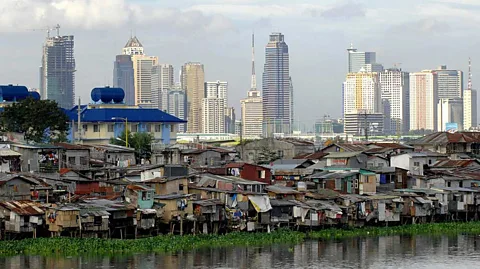
Unfortunately our system of Capitalism has turned all of these needs into products, resulting in government’s using what should be considered essentials into revenue generating sources, by applying service charges or taxies. Capitalism has fuelled the industrial, technological and green revolutions, reshaped the natural world and transformed the role of the state in relation to society.

In recent years, capitalism’s shortcomings have become ever-more apparent. Prioritising short-term profits for individuals has sometimes meant that the long-term well-being of society and the environment has lost out – especially as the world has faced the Covid-19 pandemic and Climate change.

It has lost its ability to be fair.

57% of people worldwide say that “capitalism as it exists today does more harm than good in the world”.

The reality is that in daily life, most of us are pursuing all of these basic human needs simultaneously to varying degrees.

Without air, water, and food, sleep homeostasis and sex all biological organisms perish.

So instead of focusing on which need you’re attempting to meet, government’s have allowed and are still condoning  life to be exploited for profit resulting in – Inequality, Climate change and Coming wars. 

————– 

In order to live you need fresh air. That’s pretty self-explanatory.

In order to live you need fresh water.  That’s pretty self-explanatory. (You can only survive without water for 3 days.)

In order to live you need food. That’s pretty self-explanatory. (Most of us, we need food, daily else we feel less than fulfilled.)

In order to live you need to build a good shelter. That’s pretty self-explanatory.

In order to live you need a living environment where security and safety are met. That’s pretty self-explanatory. (There is a primal innate fear of others and the need to seek security that is hardwired into the human brain. You don’t have to look around very long to notice how much of human behaviour is driven by the desire to feel secure.)

These unmet basic human needs fuel our unconscious behaviour.

We all share the same needs.

————-

Healthy identity is based on the fulfilment of these needs … These needs are felt and remembered cellularly throughout our lives, though we may not always be intellectually aware of them.

They were originally experienced in a survival context of dependency. We may still feel, as adults, that our very survival is based on finding someone to fulfil our basic needs.

In adulthood the needs can be fulfilled only flexibly or partially, since we are interdependent and our needs are no longer connected to survival.

Research suggests that over 95% of our behaviour is unconscious.

In today’s society, we also seek greater levels of financial security which goes hand in hand with the need for job security. (Tools like insurance have also been created in an attempt to offer more stable financial security in case of an unforeseen event.)

If you don’t have enough money to pay for rent (or your mortgage and taxes), clothes (for protection, not fashion), and transportation (to get food and make money), your safety needs aren’t being met.

The result is that individuals necessarily act selfishly when basic human needs drive them.

—————

In some parts of the world, many individuals can’t meet their physiological needs.

It’s estimated that over a billion people don’t have sufficient food to eat, basic nutrition, or clean water to drink. Shelter from the elements, clothes to cover our bodies, and some semblance of the familiar.

Belonging is also a psychological need.

(Belonging is a feeling of connection with and approval from others. It starts with our immediate family, then bridges out to friends, religious groups, and other social groups (like sports teams or clubs). This need to belong later extends into professional relationships and a significant other. This unmet need to belong drives us to identify with social groups, religious institutions, and other special-interest groups in adulthood. It also fuels a lot of people’s impulse to invest time in social media.)

Our image-driven culture pushes us to be more concerned with what other people think than with how we feel about ourselves. We seek approval from others instead of self-acceptance.

————

Physiological needs can also remain unmet even in individuals who aren’t in an environment of lack.

How do you know if you have unmet basic human needs?

To accomplish this, we must first cultivate self-awareness and self-leadership, become honest with ourselves, and learn to abide in our centre. These practices allow us to reflect on our lives and better understand ourselves. Self-actualization appears to be rare in our societies today and has become much more complex and even distorted at times.

For example, financial security is one domain that is constantly emphasized in today’s society and it seems that many spend their entire lives engaged in its pursuit, finding out, often too late, that they will never truly achieve any semblance of it.

If you don’t agree, take a closer look at the lives of some of the wealthiest people on the planet or those who are rich and famous. Their lives are filled with tragedy. Wealth doesn’t solve the problems we think.

Understanding the fundamental impermanence of things can be very freeing since it reflects a very real and dominant factor in life, one that we often struggle to accept.  If you don’t agree, just ask impermanence’s primary representative, death. It will knock on everyone’s door one day or another, most often unannounced.  

—————-

What would you do if you only had one month to live? One week. one day?

Don’t ask yourself what the world needs.  Ask yourself what makes you come alive, and then go and do that. Consider the overall direction of your life.

Because what the world needs are people who have come alive to the rip off capitalism.

Why because it is failed and is still failing, even on its own terms. While experience varied between countries, generally this involved the ‘commanding heights’ of the economy being in public ownership – the national utilities of water, gas and electricity, along with the crucial productive infrastructure of transport and telecommunications, with the remainder of the economy being regulated to various degrees.

Government spending was used to maintain full employment, along with the implementation of industrial policies, regional policies, and active labour market policies. These interventionist measures generally went beyond just maintaining economic growth and full employment, to welfare state delivery.

Any governments pursuing these sorts of progressive agendas would be likely to wish to co-operate and collaborate internationally – on tackling the climate crisis, the industrial-scale global tax avoidance and evasion, and the root causes of international financial crises which lie in the deregulation of speculative finance and the financial sector generally.

—————

To get any sense of where to go, we need a much more thorough understanding of the forces that underlie this symbiosis of economic power and political power and the distortions of public discourse that it induces.Jay Directo/Getty Images If the gap grows between rich and poor, then instability can follow (Credit: Jay Directo/Getty Images)

“The voters don’t choose the politicians, the politicians choose the voters”

Ultimately, it is worth remembering that citizens in a capitalist, liberal democracy are not powerless.

We live in an oligarchy, not in a democracy, A thing cannot be changed if the plan is for something that the situation is not. Oligarchy cannot be stopped by treating it as though it were a democracy.

As a society we continue to make slow progress in ameliorating this historical deficit.

Of critical importance also is the role of the individual in promoting his or her own equality. No amount of government intervention will confer equality if individuals fail to take advantage of the opportunities before them.

The system must be fixed for problems to be addressed.

So I say first things first, let’s ensure that we build a system where there is equal opportunity for all so that individuals can succeed or fail on their own merit. Will such a system guarantee full equality?

I have my doubts but I’m convinced it will promote greater equality in our imperfect society.

Young politicians enter the great building of power with sincere hearts, but leave with the stench of the corrupt swamp having their noble intentions suffocated and extinguished.

Every nation needs to wake up from their own illusions of their own importance in the world and start looking after its people.

———–

To make sure that the government gets the message that the people all of the people should be represented not just the few.

Get money out of politics ENTIRELY and then maybe there’s hope.

Now with the technology that exist,  I think a ‘perpetual referendum’ democratic socialism, may be a solution:

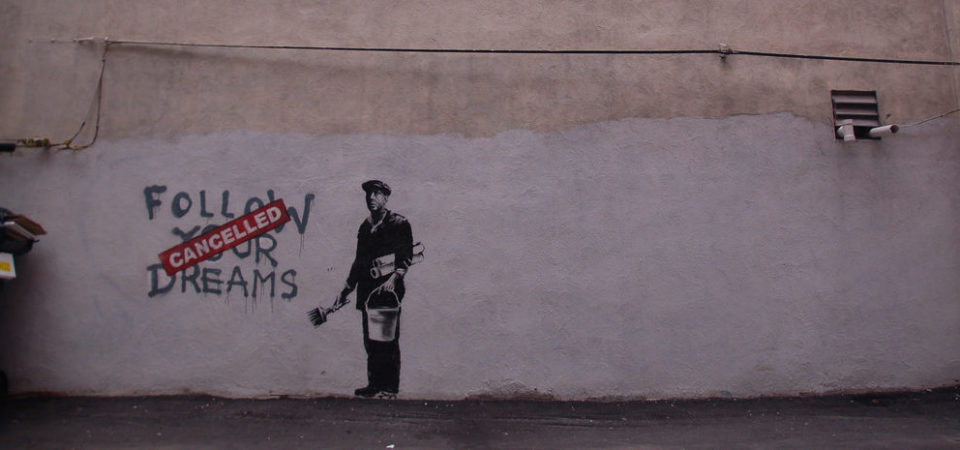
We need to assert the importance of turning the social surplus toward ending hunger and illiteracy and toward addressing fundamental problems of social and economic life — such as the catastrophe of the climate and of endemic joblessness.Banksy in Boston: Portrait from the F̶O̶L̶L̶O̶W̶ ̶Y̶O̶U̶R̶ ̶D̶R̶E̶A̶M̶S̶ CANCELLED piece by Chris Devers | Flickr | CC BY-NC-ND 2.0

No point running a government if you don’t have an organized mass force to drive the social policy from the hall of government to the home of the poorest worker.

Government’s won’t put such perpetual referendum in place but we the people with technology can. 

Your vote (on one thing or many things, doesn’t matter) is kept online at all times and can be polled by the computer at any time. And not only can be but must be. And you can change your vote (or votes) at any time.

The people must take back what people with money have stolen from them over the decades, i.e. our right for true democratic representation where elected politicians carry out the will of the people not the will of the wealthy few who have corrupted it.

The abolition of intellectual property and the renationalisation of monopoly infrastructure could reverse the tendency towards private monopoly that could contributed greatly to stopping the rising inequality of the early 21st century. The massive financial sector of the early 21st century, is a huge source of inequality.

We might be blind to what capitalism could look like in another two centuries. However, that does not mean we should not ask how it might evolve into something better in the nearer term.

The future of capitalism and our planet depend on it.

Until politicians work for every person these are the choices. 

Capitalism thrives on the mantra of individualism and free enterprise. In this economic system, private entities, such as individuals or businesses, own the means of production. But, it’s essential to note that capitalism is not just about profit. It’s also about personal freedom, economic resilience, and societal prosperity. It champions the belief that everyone has the right to economic freedom. This belief is driven by the potential for profit.

Communism is a quintessential manifestation of egalitarian ideals. It seeks to pull down the socio-economic partitions between the affluent and the impoverished. Its driving force is the establishment of equality and fairness. The societal benefits are not skewed in favour of a privileged few. Instead, they are spread across all its members. Yet, the intricate dynamics of human nature and socio-political realities often pose significant challenges to implementing communism. It’s a philosophy that seeks to remould society’s foundation. It presents a different perspective on the socio-economic structures that govern our world. Its cardinal principle is collective ownership and equality. 

Socialism amalgamates elements from both capitalism and communism. It is unlike the laissez-faire economics of capitalism. However, it is not as radical as communism in its distribution mechanism. It encourages fair wealth distribution. But, it does not eschew private property. socialism emerges with a balanced approach. Yet, it does not do so at the cost of personal freedoms, as in capitalism. The means of production are often state or worker-controlled. There is a conscious effort to check capitalist-style monopolies and wealth concentration.

Most nations operate in mixed economies. They cherry-pick elements from different ideologies.

They create a model that best serves their unique needs. The impact of these ideologies on today’s world is profound and multifaceted. It colours the lenses through which we view societal structures, economic models, and the state’s role in our lives.

As we go about our daily activities, we are engaged in a web of relationships that connect us to the larger world. We rely on ideas and values to form opinions, make assumptions, and arrive at conclusions. However, many of us aren’t aware of where these notions come from or how they influence our thinking. Most of us assume that our points of view are accurate and truthful. We think that they are just common sense. This may lead us to dismiss, discredit, or misinterpret perspectives that differ from our own.

This means that we rarely evaluate our perspectives in relation to alternative points of view.

A future where our planet’s people can succeed emphasizes sustainability, collective action, and innovation. What if we demanded that profit be removed from the policy of government’s. 

Many types of government expenditure constitute investment: purchases of transport and energy infrastructure, school and hospital buildings, IT systems, defence systems, and intangible assets. Government investment often includes purchases needed to implement long-term policies, such as investment in green energy infrastructure to support action on climate change. 

Another words invest public funds, allowing a fair profit, keep sufficient funds for maintains, and then nationalize, so everyone benefits.

All human comments appreciated. All like clicks and abuse chucked in the bin.

Contact: bobdillon33@gmail.com
https://youtu.be/PJy8vTu66tE?si=NtoSKDmZ2u3f0_HJ

Share this:

  • Click to share on WhatsApp (Opens in new window) WhatsApp
  • More
  • Click to share on Pocket (Opens in new window) Pocket
  • Click to share on Mastodon (Opens in new window) Mastodon

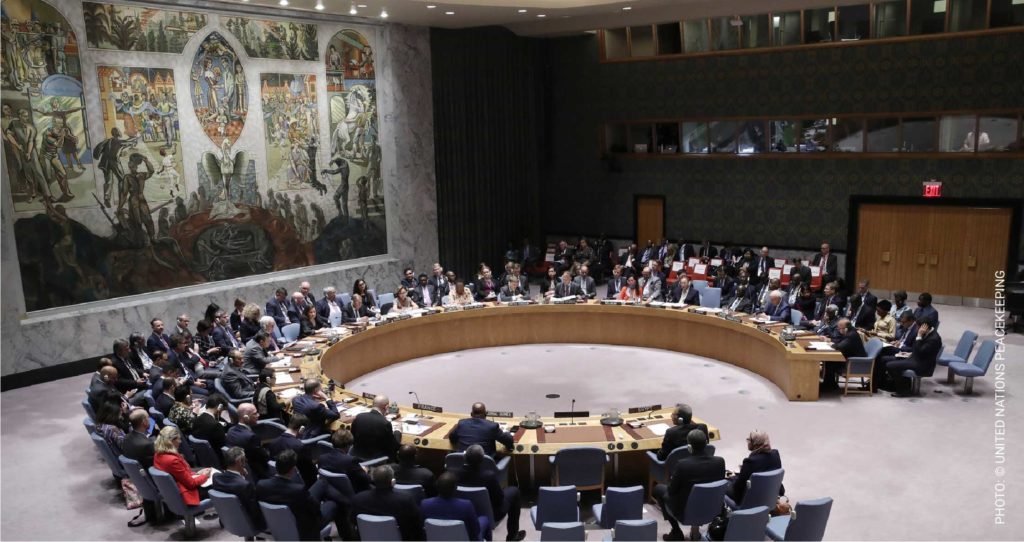
THE BEADY EYE ASKS : IS THE UNITED NATIONS ANYLONGER RELEVANT?

01 Monday Apr 2024

Posted by bobdillon33@gmail.com in #whatif.com, 2024 the year of disconnection, A Constitution for the Earth.

≈ Comments Off on THE BEADY EYE ASKS : IS THE UNITED NATIONS ANYLONGER RELEVANT?

Tags

hamas, Israel, palestine, politics, United Nations

( Five minute read)

IT’S APRIL FOOLS DAY.

In a world full of geopolitical tensions unprecedented in decades are we fooling ourselves with the United Nations.

The United Nations stands at a crossroads. It is bedeviled by a litany of challenges, including gross underfunding, bloated bureaucracy, disunity, and geopolitical rivalry among the permanent members of the Security Council.  The stakes could not be higher.Is the United Nations (UN) Relevant in the 21st Century?

People are looking to their leaders to get out of the current global “mess”, the worsening climate emergency, escalating conflicts, technological disruptions, cost-of-living crisisis.

The question is.  Is the United Nations capable of dealing with these conflicts, especially when one of its priorities is to balance its neutrality in the face of differences between member states.

The UN is an old organisation established after World War II to promote peace, now a broken institution that sometimes works when it comes to distribution food aid.

Even though the agency has been marginalised from playing a significant political role, it has still been able to play an important role in providing humanitarian aid, for eradicating poverty, promoting education, and improving health and gender equality around the world.

One of the most significant criticisms has been the ineffectiveness of the UN Security Council in resolving conflicts.

For example, the United Nations Security Council’s all-powerful group, the P-5 (the five permanent members – also veto powers – of the council), excludes huge demographics of the world population such as Africa, Latin America and the Middle East. Members from these regions therefore rightfully feel relegated to be second-class members of the organization’s top brass.

The Security Council, which is responsible for maintaining international peace and security, has often been paralyzed by the veto power of its five permanent members – the United States, China, Russia, France, and the United Kingdom. This has made it difficult for the Security Council to take decisive action in conflicts such as the Syrian civil war, the Israeli-Palestinian conflict and more recently in the Russia-Ukraine conflict.

I think where we see a lot of people losing faith is when they see these moments of hypocrisy

The powerful role Russia still plays as a permanent member of the UN Security Council, even as it threatens international peace and security

The US, which, while it is able to use its powerful veto power to block resolutions on Palestine because of its bilateral relations, turns around and tries to pass resolutions on territorial integrity in the case of Ukraine.

The UN is going to use a lot of rhetoric, but on an effective level it is not going to be able to carry out any kind of instrument to stop this as no one wants to deployed peacekeeping forces in various conflict-ridden regions of the world.

Against a backdrop of harmonisation among countries seems to be the UN’s priority, but experts think reform is more urgent.

One of the key challenges facing the UN is the increasing complexity of conflicts and the rise of new security threats such as terrorism and cyber warfare.

To address these challenges, the UN must strengthen its conflict prevention and resolution capabilities, investing in early warning systems, mediation, diplomacy, and working more closely with regional organizations.

It must also address the root causes of conflicts, including poverty, inequality, and human rights abuses.

It must promote multilateralism and global cooperation to address global challenges such as climate change, pandemics, and terrorism.

Why?  Because if you don’t have an actor that is able to impose all the legislation, then you have a problem.

It’s obvious that organisations, international organisations, also have to change and their priorities might not change.

Although the UN has faced criticisms for its limitations, it remains an essential institution for addressing the world’s most pressing issues.

One of the reasons why the UN remains relevant is its ability to mobilize resources and coordinate efforts towards global challenges. Its ability to set and promote international standards and norms.

Upholding human rights. The UN’s human rights bodies and mechanisms provide an essential avenue for monitoring and investigating these violations, and for promoting accountability and justice.

It must be Transparent and and accountable by promoting open and inclusive decision-making processes.

It must reform its organizations for equal participation and influence by all global regions and interests.

It must embrace technology and innovation to increase its effectiveness and efficiency.

The challenges facing the world today – such as climate change, pandemics, and terrorism – require coordinated and collective action at the global level, and the UN is uniquely positioned to play a central role in this effort.

The reforms must aim to make the UN nimbler, less bureaucratic, more transparent and accountable, and more decentralized and effective.

They must be about placing sustainable development “at the heart” of the UN because development is the UN’s “best tool for preventing conflict and building a future of peace.

None of these reforms can be achived while the veto power of its five permanent members remain.

The ICJ is the UN’s judicial organ, composed of 15 judges elected to nine-year terms by the General Assembly and Security Council. The ICJ does not have the authority to weigh in on any international legal dispute it wishes; instead, the Court’s ability to hear a case is derived from the consent of the Member States concerned.

Member States are bound to comply with ICJ decisions in any case to which they are a party is now a joke.

The UN system is comprised of more than 30 affiliated organizations, all with conflict of interest.

Perhaps its time to move these agencies out of the UN into independent organiations, subject to an new AI world sustainable legal consitution.

Discussing reforms without making provisions for adequate resources will lead nowhere; ( See previous post on Funding to bring the United Nations closer to “we the people.”)

A permanent coordinating platform should be set up to integrate the UN response across agencies, funds, and related organizations. Data is now a major economic asset, but its use and consequences go well beyond commercial issues to matters such as the quality of society and political systems.

The distribution of power has also shifted considerably. Global institutions need to reflect these changes or lose legitimacy in the eyes of the emerging players, whether governments or their people.

Yet data governance at the global level lags well behind technological developments

.In today’s complex world, identifying problems, designing policies, and delivering change is no longer within the power of states standing alone. It requires participation of diverse actors, including nonprofits, grassroots movements, corporations, and local authorities.

Getting inclusivity right and shifting to a more equitable governance model will be critical to weathering power politics and delivering for all.

All human comments appriciated. All like clicks and abuse chucked in the bin

Contact: bobdillon33@gmail.com

Share this:

  • Click to share on WhatsApp (Opens in new window) WhatsApp
  • More
  • Click to share on Pocket (Opens in new window) Pocket
  • Click to share on Mastodon (Opens in new window) Mastodon

THE BEADY EYE ASK’S: IF YOU HAD A CHOICE WHAT SORT OF WORLD WOULD YOU LIVE IN?

13 Tuesday Feb 2024

Posted by bobdillon33@gmail.com in 2024 the year of disconnection, Artificial Intelligence., Civilization., Collective stupidity., CULTURES COLLIDE, Disaster Capitalism., Earth, Earth from Space., Environment, Human Collective Stupidity., HUMAN INTELLIGENCE, Human values., Humanity., Our Common Values., Reality., Space Exploration., Sustaniability, Technology v Humanity, The Future, The Obvious., The world to day., THE WORLD YOU LIVE IN., THIS IS THE STATE OF THE WORLD.  , War, Wars, What is shaping our world., WHAT IS TRUTH, What Needs to change in the World, Where's the Global Outrage.

≈ Comments Off on THE BEADY EYE ASK’S: IF YOU HAD A CHOICE WHAT SORT OF WORLD WOULD YOU LIVE IN?

Tags

blog, History., politics, Science, Technology, The Future of Mankind, Visions of the future.

( Five minute read)

On July the 20th this year it will be fifty five years since one of us stood on another planet. Since then only 24 people have seen the whole of Earth. Achived with less computer power that is now in our phone’s.

In those fiftyfive years we have had fifty-five active conflicts. Eight of these 55 conflicts were classified as wars.

This is the world we got.

21st Century
  • Vietnam War (1962 – 1973
  • Persian Gulf War (1991)
  • War in Afghanistan (2001)
  • Operation Pillar of Defence (2012)
  • War in Iraq (2011)
  • 2014 Gaza War (2014)
  • Russian Annexation of Crimea (2014)
  • War in Donbas (2014-present)
  • Yemeni Civil War (2015-present)
  • Turkish coup d’état attempt (2016)
  • 2021 Israel-Palestine crisis (2021)
  • Russian Invasion of Ukraine (2022)

We are truly living in a very unique time in the history of our civilization, facing several simultaneous challenges and converging crises:

Because the world is a cauldron where dozens of cultures, religions and ideologies mix with each other, which always leads to a conflict. We are all born of frailty and error.

A deteriorating environment, a very unequal distribution of dwindling resources, widespread poverty, wars, climate change, oppression of many peoples, and dissatisfaction with life even in those countries with a surplus of material wealth.

What can we do about it?

The answer to such question is certainly not simple, and you will not find it in any textbook.

All these problems and converging crises are systemic.

For the most part these crises we humans have brought upon ourselves over the course of many centuries by our attitudes towards each other and towards Nature, and by the concepts we have developed regarding who we are and the very purpose of our being here — in other words, our worldview.

The 20th century revolution of technologies that permits long distance travel and instant communication across the world has brought all cultures closer together, making us more aware than ever of the many diverse spiritual-cultural traditions that have flourished for millennia as intricate, elaborate meta-solutions to the challenges and opportunities of living in a particular place.

Now we are challenged to integrate the wealth of knowledge and capability that this remarkable period has brought us into a new narrative of interbeing — a synthesis of ancient wisdom of our interconnectedness and interdependence with modern science and technology.

We now have a choice to make!

Either we move into a new phase in the evoloution of consciouness and a new ear of life on planet Earth, or we will witness the unraveling of the web of life and the immature end of our species and much of the community of life along with us. 

The time to make this choice is now!

It starts with a fundamental shift in our dominant worldview. It is time to grow up!

A world with less gravity and more humanity.

Where people get what they deserve rather than deserve what they get.
Where there is a God for everyone and no one God is better than other.
Where an empty stomach is an alien concept.
Where mind is held high and heart is held higher.

Where people are immaterialistic.
Where people think logically, question and reason everything without blindly following anything or be superstitious.

Where people respect each other and not judge others for their actions.
Where one should treat others as one would like others to treat oneself.

History shows us that none of the above is possible without AI augmentation of human intelligence to enshrin values of beauty, agency, and individuality. by benevolent, incorruptible agencies that are beyond human intelligence.

The era of Artificial Intelligence is here. AI has already started.

AI is not a living being that has been primed by billions of years of evolution to participate in the battle for the survival of the fittest, as animals are, and as we are. It is math – code – computers, built by people, owned by people, used by people, controlled by people.

Its true that AI doesn’t have goals of its own, but its influnce on our lives is endangering the very meaning of life and  instead of us embracing a worldview based on facts, it will cause us to lose our ability to focus on the things that threaten us most.

Understanding what “we” want is among the biggest challenges facing AI.

It is very difficult to encode human values in a programming language, but the problem is made more difficult by the fact that we as humanity do not agree on common values, and even parts we do agree on change with time. The question then becomes how do we aligne AI with Human values.

Whose human values?

Ah, that’s where things get tricky.

A major change is coming, over unknown timescales but across every segment of society, and the people playing a part in that transition have a huge responsibility and opportunity to shape it for the best.

So here are some of the questions we should be asking.

What does it mean to you to have artificial intelligence aligned with your own life goals and aspirations?

How can it be aligned with you and everyone else in the world at the same time?

How do we ensure that one person’s version of an ideal AI doesn’t make your life more difficult?

How do we go about agreeing on human values, and how can we ensure that AI understands these values?

If you have a personal AI assistant, how should it be programmed to behave?

If we have AI more involved in things like medicine or policing or education, what should that look like?

What else should we, as a society, be asking?

Globally, humankind must think about the kind of future we want to have.

The recently articulated United Nations Sustainable Development Goals (SDGs) offer a good starting point, but these goals are merely the preconditions necessary for survival and flourishing, so they are not
enough. A further step is needed to determine our common goals as a civilization, and more
philosophically, the purpose of human existence, and how AI will fit into it.

Generative AI is not hype.

Instead, it acts at a scale so large that it will transform how we interact with technology itself.  It will far outpace what we’ve seen so far today.

AI has been used to help sequence RNA for vaccines and model human speech, technologies that rely on model- and algorithm-based machine learning and increasingly focus on perception, reasoning and generalization.

If we reach a point where AI is able to understand our languages, AI systems would be able to read and understand everything ever written. In the mean time rest assured that we will continue to fight wars against each other, as we have done since day until the end of time, or at least Earth’s time which is in about 5.4 billion years.

All human comments appriciated. All like clicks and abuse chucked in the bin.

Contact: bobdillon33@gmail.com

Share this:

  • Click to share on WhatsApp (Opens in new window) WhatsApp
  • More
  • Click to share on Pocket (Opens in new window) Pocket
  • Click to share on Mastodon (Opens in new window) Mastodon

THE BEADY EYE SAY’S: WE NOW ENTERING INTO A MORAL DARKNESS IN THE ISRAEL /PALESTINE WAR.

10 Saturday Feb 2024

Posted by bobdillon33@gmail.com in Uncategorized

≈ Comments Off on THE BEADY EYE SAY’S: WE NOW ENTERING INTO A MORAL DARKNESS IN THE ISRAEL /PALESTINE WAR.

Tags

gaza, Israel, news, palestine, politics

(Two minute read)

Israeli Prime Minister Benjamin Netanyahu has ordered the Israeli army and other officials to submit to the cabinet a plan to evacuate Rafah, Gaza’s southernmost governorate.

International humanitarian law prohibits the forced displacement of civilians except when temporarily required for their security or imperative military reasons.

Forcing the over one million displaced Palestinians in Rafah to again evacuate without a safe place to go would be unlawful and would have catastrophic consequences.

I say that its time that all states that are party to the Genocide Convention now have a legal obligation BEFORE IT TOO LATE.  To take material steps to put an end to Israel’s genocidal acts in the besieged Strip.

If they dont do so we are very likely entering another long and painful era where armed struggle and violent domination become increasingly and mutually dependent on each other for survival. Yet neither can win.

After Hamas’s deadly attacks in Israel and Israel’s hellish bombardment of Gaza is the world going to sit back and watch what remains of Gaza and its people wiped from the face of the earth, endorsing further murderous violence against civilians.

Who gets to count as human?

The real aim of Israel’s lobbying efforts to undermine UNRWA is the liquidation of the Palestinian identity and the right of return of the Palestinian people that the UN agency has come to embody. If the Western states, and especially the United States, continue to bow down to Israel’s genocidal demands they will only add further weight to the accusations that they are complicit in its genocide in Gaza.

What is at stake today is not only the future of millions of Palestinians and the very viability of the Israeli state, but the stability of an entire region, and the future of the rules-based world order.

The Palestinians will remain. They cannot be eliminated. Israel too will continue to exist. The future is full of unnecessary and horrific bloodshed all around.

Terrorist organisations like ISIL and al-Qaeda could not have asked for a better environment to regroup and mount new attacks on the West, as the global majority now views the West solidly as an enabler of the ongoing genocide of an occupied and oppressed Indigenous people.

The international community must first ensure the safety of the Palestinian people.

Given the current gridlock and the total devastation of Gaza, the first step towards ending occupation should be to bring the Palestinian people – who have now been identified by ICJ as a unique “group” – under international protection.

The inclusion of Hamas in any peace process is crucial as no sustainable settlement can be achieved without acknowledging the concerns and expectations of the group that has led Palestinian armed struggle against occupation for many years.

This means the killing must stop, captives on both sides should be released, the siege should end, adequate aid and basic services should reach all Palestinians in Gaza immediately.

The international community must make it clear to Israel that it cannot infringe on the territorial integrity of Gaza by occupying any part of the territory, establishing a so-called “buffer zone” within it or dividing it into smaller settlements.

The international community must unanimously call for an immediate and unconditional cessation of all illegal construction and land-grabbing activities in the West Bank and demand accountability for the violence and aggression perpetrated by Israeli settlers against the Palestinians. World’s nations must insist on Israel decommissioning all the settlers outposts in the West Bank, and obviating any such intentions in the Gaza Strip.

To ensure that the Palestinian people can live freely and with dignity under the governance of their own elected representatives, the international community should officially recognise a Palestinian state based on 1967 borders with East Jerusalem as its capital and commit to ensuring the swift implementation of the UN’s 17 Sustainable Development Goals in post conflict Palestine.

Desperate western attachment to morally bankrupt double standards bears a large portion of the blame.

All human comments appreciated. All like clicks and abuse chucked in the bin.

Contact: bobdillon33@gmail.com
Share this:

  • Click to share on WhatsApp (Opens in new window) WhatsApp
  • More
  • Click to share on Pocket (Opens in new window) Pocket
  • Click to share on Mastodon (Opens in new window) Mastodon

THE BEADY EYE ASK’S: ARE WE GOING TO ALLOW THE ISRAELIANS TO BULLDOZE THE GASA STRIP INTO THE MEDITERRANEAN?

01 Thursday Feb 2024

Posted by bobdillon33@gmail.com in #whatif.com, 2024 the year of disconnection, Israel and Palestine, Israeli-Palestinian conflict

≈ Comments Off on THE BEADY EYE ASK’S: ARE WE GOING TO ALLOW THE ISRAELIANS TO BULLDOZE THE GASA STRIP INTO THE MEDITERRANEAN?

Tags

hamas, Israel, news, palestine, politics

( Seven minute read)

Israel’s post 7/10 resort to massive force, dropping an unprecedented total of about 30,000 bombs by mid-December 2023 (equivalent to two Hiroshima-sized nuclear bombs), has so far failed to eradicate the military force established by Hamas amid the torrent of bloodshed, 25,000 Palestinian dead and the 62,000 wounded, and the mass displacement of 1.9 million Palestinian civilians in Gaza (85% of the population), easily exceeding the toll of the ethnic cleansing that accompanied Israel’s establishment in 1948.A woman and child sitting next to a ruined building in Rafah (January 2024)

Hamas’s brutal tactics in its 7 October assault have been washed out of Palestinian political consciousness by the subsequent indiscriminate and mass erasure of Palestinian civilian lives.

A TWO MONTH CEASFIRE WITH EXCHANGE OF ISRAELIANS HOSTAGES/ PALISTIAN PRISONERS WILL NOT BRING AN END TO THE WAR.

Its most likely effect will be to remythologise the notion of resistance and sow the seed for future iterations that may be inspired by Hamas but have no necessary connection to its history, ideology or organisational structure.

The real issue is how to incorporate Hamas and its associated “spirit of resistance” into a new Palestinian authority, rather than how to quash or excise it. Within or associated with such an authority, Hamas could be part of the solution; outside, it would remain both a spoiler and an opposite pole of attraction.

Netanyahu and other Israeli officials have made it clear that they will seek to impose a strict and indefinite Israeli-determined security regime over the Gaza Strip for the foreseeable future.

In other words, to reinstitute what amounts to a long-term occupation.

This, in turn, will not only keep the flame of Hamas alive and galvanise Hamas-inspired resistance but will ensure that Israel’s “right of self-defence” will only produce the very insecurity that Israel and its allies claim to be addressing. Gaza Strip

It took years for the ANC and IRA to be recognised as partners to a resolution.

Hamas rejects Israel’s right to exist and is committed to its destruction, so a two state resolution would create a Palestinian state ( what left of it ) that would exist alongside Israel.

Another words The world’s largest ‘open-air prison.

It takes one hour to drive from its southern point, Rafah, to Beit Hanoon in the north.

Sixteen years of an Israeli land, air and sea blockade has crippled its economy and tightly restricted the movement of its people in and out of the enclave. Gaza residents need special permission to cross into Israel and Egypt. This is usually for urgent medical treatment but is very difficult to obtain.

The enclave has one of the highest unemployment rates in the world at 45 percent. Access to education and medical treatment is also lacking after years of Israeli air strikes on schools and hospitals.

More than 60 percent of Gaza’s people are refugees from what is currently Israel.

More than 750,000 Palestinians were ethnically cleansed from their homes by Israeli militias in 1948 when Israel declared its independence.

YOU TELL ME IF YOU WERE IN THE GAZA WITH YOUR FAMILY WIPED OUT, WITH YOUR COUNTRY REDUCED TO DUST, WOULD YOU TAKE UP ARMES?

There will be no two state as it requires two states to agree one.

And that’s before dealing with the same difficult details  – borders, refugees, security, and the sharing of Jerusalem.

Israel is a very different country to the secular state that was created in 1948 – with far more religious citizens who believe God gave them the land, and who have massive political power. The Palestinians will need to bridge the deep divide between Hamas and Fatah. Because as much as the world might condemn Hamas for the atrocities of October 7 – and much that came before – it’s still there.

All the walls and barber wire (which Israel has now learned) does not and will not bring security.

Any future agreement must make it impossible for either side to inflict the horrors we are now witnessing.

Leaving behind all the religious conations there can only be a one state solution and that is a Federal/Confederation State with a written constitution that protects all its citizens both Jews and Arabs.

To make two states, you would need to create a new state of Palestine. And to do that, you would need to agree where its borders would be.

The steady and systematic expansion of settlements [is] moving Israel in the wrong direction.

The prospect of a two-state solution has become even more remote, with Mr Netanyahu naming settler activist Itamar Ben-Gvir — a convicted criminal, with a rap sheet that includes inciting racism and supporting a terrorist organisation — as minister for national security and another settler leader, Bezalel Smotrich, controlling planning in the west bank. (He caused an uproar in March when he quoted French-Israeli Zionist Jacques Kupfe: “There is no such thing as Palestinians, because there is no such thing as a Palestinian people.”)

A one-state solution would mean absorbing everyone in Israel and the Palestinian territories into a new nation with the Holy Sites of Al-Aqsa and the Temple Mount, as their capital city.

How it can remain a Jewish state if the majority of its population is Palestinian.

When this crisis is over, there has to be a vision of what comes next. Lasting peace must follow the bloodiest fighting between Israelis and Palestinians for decades.

A confederation with a written constitution is the only solution.

What it present is a flexible model:

As a means of facilitating a two-state/one state solution, providing a new framework for the negotiation

A  permanent solution between the two sovereign states of Israel and Palestine, and not as a substitute for it.

Under the confederation plan, Israelis living in settlements deeper in the West Bank would be able to choose whether to relocate to homes inside Israel or stay where they are as Israeli citizens who are permanent residents of Palestine, agreeing to abide by the new state’s laws. A comparable number of Palestinian citizens would be able to move to Israel on the same terms.

A setup between states rather than citizens; that is, the citizens belong to their respective state and are not direct members of the confederation.

This would involve both states in joint strategic defence through close coordination and would focus them on maintaining internal law and order.

The Old City of Jerusalem could host some of the joint authorities, paving the way toward dual sovereignty or other creative solutions over that sensitive area of less than 1 km2 or 0.39 mi2.

The first step would be to negotiate a permanent agreement and establish an independent Palestinian state, without the confederal umbrella. An implementation period of up to 30 months would follow.

Palestine and Israel would live side by side as sovereign States and only at the end of the implementation period, they would establish the HLC (Holy Land Confederation) if they want it.

The European Union, which does not call itself a confederation, is the most successful and consequential confederation ever.

The EU, which has changed Europe and fostered a continent of peace after centuries of endless wars, is a miracle in the eyes of many. It includes aspects of a federation (freedom of movement, currency, trade, and agriculture) and aspects of a confederation (no common language, separate education
systems, no joint army, and relatively weak central institutions), as well as aspects of sovereign states. In many ways, the EU is sui generis, but its structure is very close to that of a confederation and may serve as a model for the HLC.

We have to distinguish between aspiration and reality. The odds are very, very low. It’s essentially mission impossible as we will be left with two deeply traumatised societies. What is lacking on both sides is leadership and political will. Both sides need to wake up after this horrible war and find new leadership.

Rest assured if not Israel will go down in history not as a country that was found on compassion for the Jews but a

Compassion knows not whom it chooses to help in some way, shape or form, it just knows it’s the right heartfelt thought to have for another and to bestow some type of good upon another.

One thing sees another, but two things feel together, creating unity.

#Compassion is one of Judaism’s highest values. The existence of the entire world depends on this virtue.

Below link to one written by Israel, which would have to be amended to accommodate the few Palestinian left a live.

All human comments appreciated. All like clicks and abuse chucked in the bin

Contact: bobdillon33@gmail.com
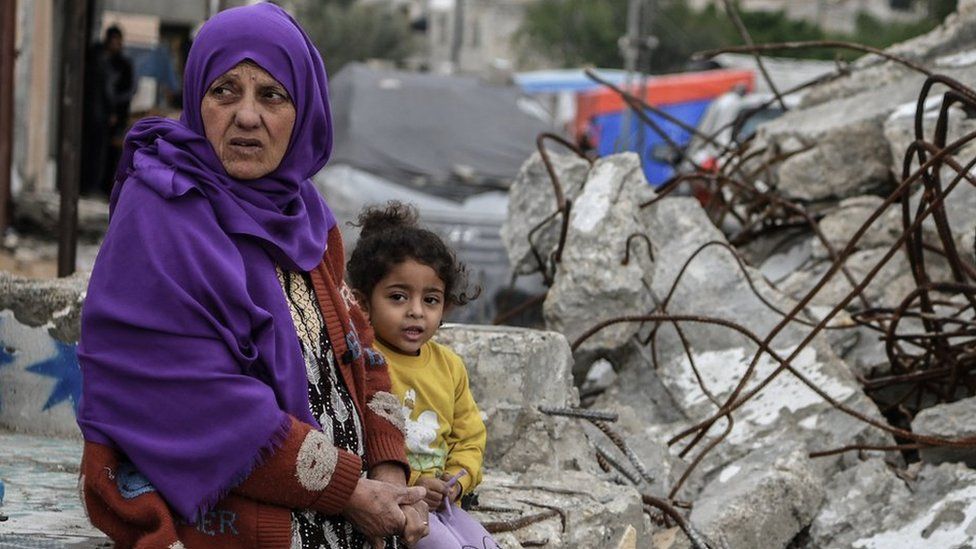
https://r.search.yahoo.com/_ylt=Awr.glp2drpluGgJQFIM34lQ;_ylu=Y29sbwNpcjIEcG9zAzEEdnRpZAMEc2VjA3Ny/RV=2/RE=1706747638/RO=10/RU=https%3a%2f%2fstatic.timesofisrael.com%2fblogs%2fuploads%2f2023%2f09%2fConstitution-for-Israel.pdf/RK=2/RS=ON4b20C6mgVanCVi1qX5fwtE1TE-

Share this:

  • Click to share on WhatsApp (Opens in new window) WhatsApp
  • More
  • Click to share on Pocket (Opens in new window) Pocket
  • Click to share on Mastodon (Opens in new window) Mastodon

THE BEADY ASK’S: ARE WE SCREWED?

28 Sunday Jan 2024

Posted by bobdillon33@gmail.com in #whatif.com, 2024 the year of disconnection, Algorithms., Arms Trade., Artificial Intelligence., Carbon Emissions., Civilization., Climate Change., Collective stupidity., Cry for help., Dehumanization., Digital age., DIGITAL DICTATORSHIP., Disaster Capitalism., Donald Trump., Earth, Extermination., Human Collective Stupidity., Human Exploration., HUMAN INTELLIGENCE, Human values., Humanity., Inequality, INTELLIGENCE., Our Common Values., PAIN AND SUFFERING IN LIFE, Palestinian- Israel., Politics., Populism., Purpose of life., Reality., Robot citizenship., Russia’s invasion of Ukraine, State of the world, Survival., Technology v Humanity, Technology., The common good., The essence of our humanity., The Future, THE ISRAELI- PALESTINIAN PROBLEM., THE NEW NORM., The Obvious., The state of the World., The world to day., THE WORLD YOU LIVE IN., THIS IS THE STATE OF THE WORLD.  , Ukraine/ Russia., Ukraine/Russian war., Unanswered Questions., War., Wars, We can leave a legacy worthwhile., What is shaping our world., WHAT IS TRUTH, What Needs to change in the World, Where's the Global Outrage., World Politics, WORLD POVERTY WHERE'S THE GLOBAL OUTRAGE, World View.

≈ Comments Off on THE BEADY ASK’S: ARE WE SCREWED?

Tags

AI, Algorithms., Artificial Intelligence., Capitalism and Greed, Capitalism vs. the Climate., Climate change, Inequility, politics, Technology, The Future of Mankind, Visions of the future.

( Three minute read)

Man is said to have evolved from monkeys and apes …but we still have monkeys and apes.

We live in a world of verball diarrhoea, another words every Joe saop has an opinion.

However the world today is being expressed as a single unified, interconnected and interdependent global system, and since we wish to remain as our individualistic egoistic selves while the world becomes more and more connected, we experience such tightening connection as suffering.

Characterized by intricate interconnections, rapid advancements in technology, globalization, diverse geopolitical challenges, and a multitude of social, economic, and environmental issues.

Since everyone understands the world from his/her own perspective which may be different from others due to religions beliefs we cannot understand what wholeness is.

Our world is beautiful but screwed.

71% water, average 93,000,000 miles away from a white star, around which it completes an elliptical orbit every 365.25 days with a dominant species are Homo Sapiens, which can live anywhere. It has one large satellite measuring 2,159 miles in diameter which is some 239,000 miles distant and is tidally locked.

—————–

With it’s current greedy drive for more – more this, more that, more me, me, me. causing greater and greater stress to the planet, earth is experiencing its hottest year on record and massive floods, fires and other climate-related disasters have taken root.

And lack of action on climate change threatens billions of lives and livelihoods.

Most of us know this but we don’t know when something amazing or horrible will happen next and it could be the greatest or worst thing for this world.

Like the opening of a massive technological gap between the global rich and the poor.

As our World becomes more disaster prone due to the extreme changes to our Climate, these vestibules of self-interest will be dumped for hardline practical leaders who will do whatever is necessary for the survival of mankind.

In the mean time all we do is fight over utterly meaningless bullshit.

———————————–

We carry affordable supercomputers in our pockets, and that is even more powerful than it sounds.

  • It has created multiple civilizations, none of which has been able to achieve a satisfactory minimum level of quality of life; the poorest people still live in inhumane conditions; the very few richest people own more than the all of the rest put together.
  • Most markets are moving online, moving from the physical world into the digital app world, until they’ll be purged there too by oligarchies; which will be the next medium?
  • Right wing politics and populism continue to gain ground through advocating individual freedom to prosper, while left wing politics is failing to establish and administer a necessary minimum of social equality and governmental regulation, which continues to propagate financial deregulation aka greed is good which in turn prevents a normal fluctuation of economy turning it into steep growth and catastrophic chain reaction crashes.
  • The extreme conservatism of certain societies founded on medieval concepts and flawed morals coupled with perpetual poverty and social stagnation certainly help maintaining inequality in the world.
  • Alternatively, we may destroy ourselves in the midst of our seemingly endless growth, and nature will resume its course over the centuries and millenia to come.
  • How can anyone with an active mind, who is aware of all this, neatly summarize his or her POV “of the world today” with A SINGLE WORD???????
  • Pretty nonsensical, if you take a couple of minutes to think about it.

The chances of wholeness happening now are roughly zero.

Why?

Because politicians who were starved of intelligent thinking and ARE BEING ELECTED INTO OFFICE BY DIGITLIZED CITIZENS RUN BY PROFIT SEEKING ALGORITHMS.

Recent advances in artificial intelligence raise a variety of questions about how to control a technology that could improve or threaten civilization in countless ways.

The Doomsday Clock that has been ticking for 77 years.  The clock isn’t designed to definitively measure existential threats, but rather to spark conversations about difficult scientific topics such as climate change. Trends continue to point ominously towards global catastrophe.

Due to ongoing concerns about the war in Ukraine, the Israel-Gaza conflict, the potential of a nuclear arms race, and the climate crisis, its almost impossible to get people’s attention about existential threats and the required action.

We can reduce them but doing so is not easy, nor has it ever been. It requires serious work and global engagement at all levels of society.

The war in Ukraine poses an ever-present risk of nuclear escalation. And the October 7 attack in Israel and war in Gaza provides further illustration of the horrors of modern war, even without nuclear escalation.

A more realistic endpoint to both wars would be a military ceasefire, in which increasingly exhausted combatants see frontline positions harden around a line of control. That will become clearer by the summer or autumn, and will at some point prompt a question for its western backers: how long should the west continue supplying military aid at current levels to Ukraine/Israel

This requires a collective even harder stance.

A political earthquake. That’s the metaphor that stuck.

——————–

What if science itself is in some way culpable for all this?

We don’t know the real answer yet, and we probably will never know, but this is the moment to anticipate what such a finding might ultimately mean. It could obliterate the faith of millions.

This may be the great scientific meta-experiment of the 21st century. That the common people of the world have been forced into a real-life lab experiment, at tremendous cost — there is a moral earthquake on the way.

All of these disasters brought to you by the total, self-assured unanimity of the highly educated people who are supposed to know what they’re doing, plus the total complacency of the highly educated people who are supposed to be supervising them.

A perfect storm, as institutions crumpled and collapsed. with new fault lines targeting up the most powerful country on the planet.

Don’t disengage as digital technology is disrupting international politics in myriad ways.

To start, it is bringing new dimensions to the authoritarian playbook, enabling governments to more easily manipulate information consumed by citizens, to monitor dissent and track political opponents, and to censor communications.

Democracies, meanwhile, are struggling to strike the right balance between rewarding economic innovation and reaping the financial benefits of Big Tech, while protecting user privacy, guarding against surveillance misuses, and countering disinformation and hate speech.

Can democracies strike an appropriate balance between safeguarding their societies from dangerously polarizing online rhetoric while maintaining commitments to protecting free expression?

Can civic activists, independent journalists, and human rights advocates continue to find innovative ways to push back against government repression using new tools, tactics, and technologies?

The answers to these questions are not foretold—all of them represent major areas of contestation.

But one thing is clear. There is an expanding set of countries relying on facial recognition technology, big data analytics, predictive policing techniques, and safe city systems to enhance their security capabilities. There is now a close relationship between authoritarian regimes, constraints on political freedoms, and corresponding government reliance on digital repression techniques.

What technological methods are Gulf states using to enact their political agendas?

What can civil society make of the growth of internet shutdowns and social media blockages around the world?

Government disdain for international human rights principles “is pushing resistance to the breaking point.”

Disinformation has become the tool of choice for many illiberal regimes. From extreme political movements, particularly far-right groups, which harness social media to propagate falsehoods, spread conspiracy theories, and foment polarization and identity politics.

Flooding  social media channels with competing or distracting information that overwhelms legitimate information sources, and deliberately post offensive content on­line to provoke or disrupt conversations

.A bigger question is how much governments should hold platforms responsible for facilitating the spread of bad information .

It is insufficient to blame Facebook or Twitter’s poor leadership for the much more complicated proliferation of politically motivated falsehoods.

These varying global perspectives shed light on emerging areas of contestation and highlight the complexities, urgency, and dangers involved in the advance of digital technologies and their effects on politics globally.

One has only to look at technology usage in the current wars in order to relise that Alogrithms are ruling not just how lives or dies on the battle fields but the direction we all going in our everyday lives.

All human comments appriciated. All like clicks and abuse chucked in the bin.

Contatc: bobdillon33@gmail,com

Share this:

  • Click to share on WhatsApp (Opens in new window) WhatsApp
  • More
  • Click to share on Pocket (Opens in new window) Pocket
  • Click to share on Mastodon (Opens in new window) Mastodon

THE BEAD EYE SAY’S. ONE STATE TWO STATE SOLOUTIONS TO THE CURRENT WAR BETWEEN ISRAIL AND PALISTIAN ARE PIE IN THE SKY.

24 Wednesday Jan 2024

Posted by bobdillon33@gmail.com in #whatif.com, Israel and Palestine, Israeli-Palestinian conflict

≈ Comments Off on THE BEAD EYE SAY’S. ONE STATE TWO STATE SOLOUTIONS TO THE CURRENT WAR BETWEEN ISRAIL AND PALISTIAN ARE PIE IN THE SKY.

Tags

Israel, news, palestine, palestinians, politics

( Three minute read)

An Israeli flag flies on the roof of a house in the East Jerusalem, predominantly Arab, neighborhood of Silwan on September 6, 2020.

These are the two broad ways the Israeli-Palestinian conflict might end.

The “one-state solution” would merge Israel, the West Bank, and the Gaza Strip into one big country.

(Each version of the one-state solution is unacceptable to one side or the other, and it is difficult to see how one could be implemented in the foreseeable future without significant violence.)

Virtually the entire world, including most Israelis, rejects this option.

The “two-state solution” would create an independent Israel and Palestine, and is the mainstream approach to resolving the conflict.

(It comes in two versions. One, favored by some leftists and Palestinians, would create a single democratic country. Arab Muslims would outnumber Jews, thus ending Israel as a Jewish state. The other version, favored by many on the Israeli right, would involve Israel annexing the West Bank and either forcing out Palestinians or denying them the right to vote.)

BUT THERE IS ANOTHER SOLOUTION WHICH HAS NOT BEING PROMOTED TO SOLVE THE PROBLEMS.

Around 25 federated nations exist today, including many of the largest democracies and 40 percent of humanity

I belive that most will accept the loss of a sovereign state in return for equal rights under Israeli rule, after all, the current arrangement on the ground is essentially a federation already – just one that is neither equitable nor logical.

To date, no Israeli political party has come out in support of the Federation plan, possibly because both right-wing hawks and left-wing, see a basic problem when Jews don’t receive the superiority that they [feel they] deserve.

would be flooded with returning Palestinians; an issue that could be mitigated by negotiations with neighboring Arab states to arrange citizenship for refugees in their host countries,  the European Union would be unlikely to oppose a unilateral status change by Israel if it were to result in “greater equity,” The US too would be unlikely to oppose such a move as it is increasingly removing itself from involvement in the conflict,

The balancing act of centralizing power sufficiently for the country to function, while observing the political identity of states’ (i.e. cantons) worked well for the US and could do so between

A  secular federation with a written constitution could provide Israelis and Palestinians the security and peace they’ve been lacking to this day, where other solutions have failed.

The risks are less daunting than continuing to live with the status quo.

Who could or would draw up the constitution so it was non – bias.

The International Court of Justice (ICJ)  the principal judicial organ of the United Nations (UN).

It was established in June 1945 by the Charter of the United Nations and began work in April 1946. The seat of the Court is at the Peace Palace in The Hague (Netherlands).

The below looks at it in a more detail. 

Federal/Confederal Solutions to the Israeli-Palestinian-Jordanian Conflict: Concepts and Feasibility

Daniel J. Elazar

All human comments appriciated. All like clicks and abuse chucked in the bin

Contact: bobdill

Share this:

  • Click to share on WhatsApp (Opens in new window) WhatsApp
  • More
  • Click to share on Pocket (Opens in new window) Pocket
  • Click to share on Mastodon (Opens in new window) Mastodon
← Older posts
Newer posts →

All comments and contributions much appreciated

  • THE BEADY EYE SAYS WARS USE TO BE MAN AGAINST MAN, NO LONGER. WAR IS NOW DRONE AGAINST DRONE. January 9, 2026
  • THE BEADY EYE SAYS. WE HAVE SURROUND THE EARTH WITH SATELLITES. HERE TO DAY GONE TO MORROW. January 9, 2026
  • THE BEADY EYE SAYS GOVERNANCE IS BECOMING MORE BY REALITY TV, ALGO January 9, 2026
  • THE BEADY EYE SAYS. DONALD TRUMP IS EXPOSING THE WEAKEST OF OUR WORLD ORGANISATIONS January 7, 2026
  • THE BEADY EYE SAYS. MADURO ADDUCTION SHOWS THAT INTERNATIONAL LAW IS A JOKE. January 4, 2026

Archives

  • January 2026
  • December 2025
  • November 2025
  • October 2025
  • September 2025
  • August 2025
  • July 2025
  • June 2025
  • May 2025
  • February 2025
  • January 2025
  • December 2024
  • November 2024
  • October 2024
  • September 2024
  • August 2024
  • July 2024
  • June 2024
  • May 2024
  • April 2024
  • March 2024
  • February 2024
  • January 2024
  • December 2023
  • October 2023
  • September 2023
  • August 2023
  • July 2023
  • June 2023
  • May 2023
  • April 2023
  • March 2023
  • February 2023
  • January 2023
  • December 2022
  • November 2022
  • October 2022
  • September 2022
  • August 2022
  • July 2022
  • June 2022
  • May 2022
  • April 2022
  • March 2022
  • February 2022
  • January 2022
  • December 2021
  • November 2021
  • October 2021
  • September 2021
  • August 2021
  • July 2021
  • June 2021
  • May 2021
  • April 2021
  • March 2021
  • February 2021
  • January 2021
  • December 2020
  • November 2020
  • October 2020
  • September 2020
  • August 2020
  • July 2020
  • June 2020
  • May 2020
  • April 2020
  • March 2020
  • February 2020
  • January 2020
  • December 2019
  • November 2019
  • October 2019
  • September 2019
  • August 2019
  • July 2019
  • June 2019
  • May 2019
  • April 2019
  • March 2019
  • February 2019
  • January 2019
  • December 2018
  • November 2018
  • October 2018
  • September 2018
  • August 2018
  • July 2018
  • June 2018
  • May 2018
  • April 2018
  • March 2018
  • February 2018
  • January 2018
  • December 2017
  • November 2017
  • October 2017
  • September 2017
  • August 2017
  • July 2017
  • June 2017
  • May 2017
  • April 2017
  • March 2017
  • February 2017
  • January 2017
  • December 2016
  • November 2016
  • October 2016
  • September 2016
  • August 2016
  • July 2016
  • June 2016
  • May 2016
  • April 2016
  • March 2016
  • February 2016
  • January 2016
  • December 2015
  • November 2015
  • October 2015
  • September 2015
  • August 2015
  • July 2015
  • June 2015
  • May 2015
  • April 2015
  • March 2015
  • February 2015
  • January 2015
  • December 2014
  • November 2014
  • October 2014
  • September 2014
  • August 2014
  • July 2014
  • June 2014
  • May 2014
  • April 2014
  • March 2014
  • February 2014
  • January 2014
  • December 2013
  • November 2013
  • October 2013

Talk to me.

Jason Lawrence's avatarJason Lawrence on THE BEADY EYE ASK’S: WIT…
benmadigan's avatarbenmadigan on THE BEADY EYE ASK’S: WHA…
bobdillon33@gmail.com's avatarbobdillon33@gmail.co… on THE BEADY EYE SAYS: WELCOME TO…
Ernest Harben's avatarOG on THE BEADY EYE SAYS: WELCOME TO…
benmadigan's avatarbenmadigan on THE BEADY EYE SAY’S. ONC…

7/7

Moulin de Labarde 46300
Gourdon Lot France
0565416842
Before 6pm.

My Blog; THE BEADY EYE.

My Blog; THE BEADY EYE.
bobdillon33@gmail.com

bobdillon33@gmail.com

Free Thinker.

View Full Profile →

Follow bobdillon33blog on WordPress.com

Blog Stats

  • 94,483 hits

Blogs I Follow

  • unnecessary news from earth
  • The Invictus Soul
  • WordPress.com News
  • WestDeltaGirl's Blog
  • The PPJ Gazette
Follow bobdillon33blog on WordPress.com

The Beady Eye.

The Beady Eye.
Follow bobdillon33blog on WordPress.com

Blog at WordPress.com.

unnecessary news from earth

WITH MIGO

The Invictus Soul

The only thing worse than being 'blind' is having a Sight but no Vision

WordPress.com News

The latest news on WordPress.com and the WordPress community.

WestDeltaGirl's Blog

Sharing vegetarian and vegan recipes and food ideas

The PPJ Gazette

PPJ Gazette copyright ©

Privacy & Cookies: This site uses cookies. By continuing to use this website, you agree to their use.
To find out more, including how to control cookies, see here: Cookie Policy
  • Subscribe Subscribed
    • bobdillon33blog
    • Join 223 other subscribers
    • Already have a WordPress.com account? Log in now.
    • bobdillon33blog
    • Subscribe Subscribed
    • Sign up
    • Log in
    • Report this content
    • View site in Reader
    • Manage subscriptions
    • Collapse this bar