• About
  • THE BEADY EYE SAY’S : THE EUROPEAN UNION SHOULD THANK ENGLAND FOR ITS IN OR OUT REFERENDUM.

bobdillon33blog

~ Free Thinker.

bobdillon33blog

Tag Archives: Big Data

THE BEADY EYE ASKS: IS THE IDEOLOGICAL CORE OF OUR CIVILIZATION HOLLOWING OUT.

21 Friday Oct 2016

Posted by bobdillon33@gmail.com in Artificial Intelligence., Big Data., Communication., Facebook, Google Knowledge., HUMAN INTELLIGENCE, Humanity., Innovation., Life., Social Media., Sustaniability, Technology, The Future, The Internet., The world to day., Unanswered Questions., What Needs to change in the World

≈ Comments Off on THE BEADY EYE ASKS: IS THE IDEOLOGICAL CORE OF OUR CIVILIZATION HOLLOWING OUT.

Tags

Artificial Intelligence., Big Data, Globalization, Inequility, The Future of Mankind, Visions of the future.


The ideological core of our civilization is hollowing out due to technology.

We are living on the parentheses of a new era. Unfortunately most of us don’t know or don’t care, or perhaps its fortunate that it so.

However, I think – WE ARE AT A CHOICE POINT OF A PLANETARY SOCIETY THAT IS GOING TO BE BASED ON INDIVIDUAL CULTURE.

These are the times we were created for and we need to act at this juncture, for the sake of our children’s lives, we must confront hard data and scientific projections that are dire, harrowing to contemplate.

AS LEONARDO DE vINCI SAID ” Learn how to see. Realize that everything connects to everything else”

The Great Grief

Who wants to live in a world governed by algorithms, owned by Google, Facebook, Twitter, Microsoft or Apple.  A smart world run on dumbing down technology such as smart phones.

I don’t.

Our present Science will only be 5% OF SCIENCE IN 2024.

Human nature is shifting to racial empathy which is going to shake the foundations of everything.

History used to take hundreds of years to develop now it is our life time. The maps no longer fit the territory of interactive, the stage of radical history.

We are not quite at the beginning of the new age because we are still haunted by the spectrum of the past but the reset button of history has being hit.

The larger question is how we redirect the collective activity of our species on the planet — if this is even possible.

Collectively, our actions in the next decade may well determine the future of our world.

What does this future actually look like? How do we communicate? How does it function? How is it powered? What value system is it based on? What does it feel like to participate in? What are we eating?

When we consider the short timeframe in which humanity must reckon with the ecological crisis, not to mention the unintended consequences of AI that we have unleashed, we do not have time for chaos and incoherence — for a slow-motion breakdown, the rise of Right Wing despotism, or the political vacuum created by Brexit and the winner of forthcoming US Presidential election.

Pretty soon, people may reach a tipping point, a collective realisation that our social structures — our political and economic system — must be reinvented.  As that realisation dawns, an alternative must be ready with a plan of action, and working prototypes.

To ensure our continuity, we must distribute wealth and resources more equitably across the human community, as a whole.

The last few hundred years, since the Industrial Revolution, were a telescoped process.

During this time, humanity overcame local boundaries and became a globally interconnected species — in a sense, a super-organism. We continuously transform our physical environment to satisfy our needs and desires. Imperialism, colonialism, neoliberalism, capitalism, industrialisation, and even communism are all transitional systems. They meshed humanity together, crudely and brutally, connecting the entire species through networks of communication and infrastructure.

As difficult as it is to imagine, we must overcome the blind spots in our ideologies and belief systems. We must find the path that leads to a harmonic, peaceful unification of humanity.

This requires defining a new form of political economy that supports the restoration or regeneration of the Earth’s ecosystems, while allowing every human being to live decently.

It also means defining a new relationship to technology and innovation.

This relationship requires a New Institution in order to ensure that we address Artificial Intelligence. It must question the capacity of an aggregate of self-interested nation-states, as well as self-interested multi-national corporations, and a tiny coterie of the super-wealthy (the 85 individuals who control more capital than half of the world’s 7 billion people), to make the necessary course correction.

We may well be approach the threshold of ecological catastrophe that will force us to reinvent human society for collective benefit — for the benefit of humanity as a whole, as well as the other species that share this living world. This may seem farfetched , but all current indicators are telling us to do so.

Technology has a crucial role to play in this transition, but its power must be harnessed and mastered for ecological restoration and social evolution not for profit.

To build a regenerative society will require that we supersede the current global financial system, based on debt and compound interest, and use our social technologies to devise an economic system that supports healthy lifestyles and patterns of behavior.

How do we transform our social system to create a resilient or regenerative global society? What kinds of changes will be necessary? These questions must be asked, even as they shake the very foundation of our society…precisely, because they do.

For example, we must ask whether we want to reformed capitalism by enforcing it to become a “conscious capitalism.” By placing a World Aid Commission on all High Frequency Trading, on all Sovereign Wealth Funds Acquisitions, on all Foreign Exchange Transactions over ( 20, 000 $), on all Arms sales. ( See previous posts) Transitioning

Humanity has overlaid roads, train tracks, fiber optics, urban and suburban sprawl, across the surface of the planet. We have also constructed a global communication infrastructure, like a planetary nervous system, that allows humanity to communicate instantly, from anywhere across the globe.

If we can marshal our resources to confront the ecological mega-crisis, we can define a path beyond it that integrates cradle-to-cradle principles, biomimicry, and other principles that are symbiotic with nature, eventually producing abundance for all, while enhancing the health of the biosphere.

What sustainability seeks to sustain, above all, is some version of our current way of life, even though the evidence is totally overwhelming that it cannot continue.

Living processes, generally, don’t just endure or persevere. Life either flourishes and blooms, evolves and transforms, or it stagnates and dies. The rhetoric of sustainability tends to support the belief that our current form of post-industrial capitalism can be reformed — that it can persist, in something close to its present order.

If you take the time to look closer on today’s situation, through the veil of ignorance, it becomes apparent that most of our worldviews are still based on lies and that fear and lies are the prominent method of control today.

We are shortly going to witness the election of a new US president in a country where military expenditures dwarf the rest of the world but 1 in 5 U.S. children go hungry every night.

What do we see:  A rich blowhard running for president. Tech-bro execs hoping to splinter off into their own anything-goes fiefdoms.

Afficher l'image d'origine

Technology has been the leading engine of change for the past 100 years and will continue to do so.  The battle for the living room is currently in a full-out war between the leading tech companies – Microsoft, Apple, Google, Facebook, Netflix.

Facebook has surpassed the country of India, making it now the second largest country in the world.

This is creating a world where people think that they are engaged. A social and virtual world that is now just a marketing tool.

Sustainability.

In my view, the current language around climate change and its solutions is totally inadequate.

To motivate us to start the change we need to understand the root of today’s problems and see the ruling structures for what they are, and see how we all are a part of that structure.

Around the world, millions of children are trapped in an intergenerational cycle of disadvantage.

Is it time to abandon the concept altogether, or can we find an accurate way to measure sustainability? If so, how can we achieve it? And if not, how can we best prepare for the coming ecological decline?

The main difference of today’s way of manipulating the society is that the controlling powers choose to be hidden and are no longer showing their glory to the people. Instead they have made an illusion that the power is located in the hands of the democratically elected governments.

Afficher l'image d'origine

With so much labeled as sustainable, the term has become  essentially sustainababble, at best indicating a practice or product slightly less damaging than the conventional alternative.
Inequity

We are in dire need of a large dose of Empathy and honesty:

Empathy transcends all the properties of the esoteric power structures.

Empathy means to try to understand and listen to the feelings and needs of ourselves and others.

Sustainable development is development that meets the needs of the present without compromising the ability of future generations to meet their own needs.Regenerative

← Back

Thank you for your response. ✨

Share this:

  • Share on WhatsApp (Opens in new window) WhatsApp
  • More
  • Share on Mastodon (Opens in new window) Mastodon

THE BEADY EYE ASK’S: IS THE LONG-HELD NOTION OF WHO WE ARE WHAT WE DO AND HOW WE BEHAVE THREATENED.

18 Monday Jan 2016

Posted by bobdillon33@gmail.com in Freedom, Humanity., Life., Technology, The Future, The Internet., The world to day., Unanswered Questions., What Needs to change in the World, Where's the Global Outrage.

≈ Comments Off on THE BEADY EYE ASK’S: IS THE LONG-HELD NOTION OF WHO WE ARE WHAT WE DO AND HOW WE BEHAVE THREATENED.

Tags

Big Data, Community cohesion, Identity, Inequility, The Future of Mankind, Visions of the future.

(4/3 minute read)

We live in a digital age with both positive and negative influences on society.

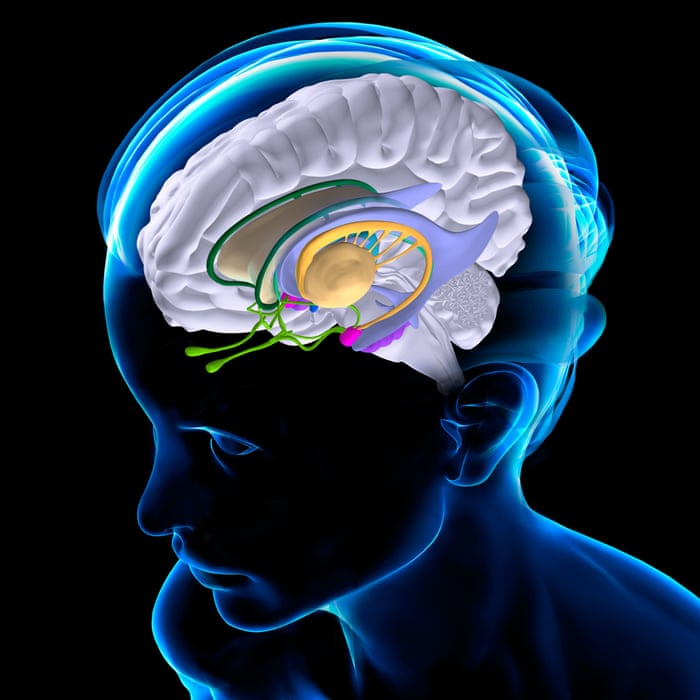
But is the human brain, that most sensitive of organs, under threat from the modern world?

We are becoming more and more reliant on technological devices for nearly everything we do.

Unless we wake up to the damage that the gadget-filled, pharmaceutically-enhanced 21st century is doing to our brains, we could be sleepwalking towards a future in which neuro-chip technology blurs the line between living and non-living machines, and between our bodies and the outside world.

Human identity, the idea that defines each and every one of us, could be facing an unprecedented crisis.Afficher l'image d'origine

Of course, there’s nothing new about that:

Human brains have been changing, adapting and developing in response to outside stimuli for centuries.

However our brains to-day are under the influence of an ever- expanding world of new technology: multichannel television, video games, MP3 players, the internet, wireless networks, Bluetooth links, Smart Phones, – the list goes on and on.

Electronic devices and pharmaceutical drugs all have an impact on the micro- cellular structure and complex biochemistry of our brains. And that, in turn, affects our personality, our behaviour and our characteristics.

In short, the modern world could well be altering our human identity.

It is a crisis that is threatening the long-held notions of who we are, what we do and how we behave.

It goes right to the heart – or the head – of us all.

This crisis could reshape how we interact with each other, alter what makes us happy, and modify our capacity for reaching our full potential as individuals.

And it’s caused by one simple fact:

The human brain, that most sensitive of organs, is under threat from the modern world.

Already, it’s pretty clear that the screen-based, two-dimensional world that so many teenagers – and a growing number of adults – choose to inhabit is producing changes in behaviour.

Attention spans are shorter, personal communication skills are reduced and there’s a marked reduction in the ability to think abstractly.

Add that to the huge amount of personal information now stored on the internet – births, marriages, telephone numbers, credit ratings, holiday pictures – and it’s sometimes difficult to know where the boundaries of our individuality actually lie.

And could weaken further still if, and when, neurochip technology becomes more widely available. These tiny devices will take advantage of the discovery that nerve cells and silicon chips can happily co-exist, allowing an interface between the electronic world and the human body.

Then, if both devices were connected to a wireless network, we really would have arrived at the point which science fiction writers have been getting excited about for years. Mind reading! We becoming more and more immune to what we are doing to ourselves in our lives. That cherished sense of self could be diminished or even lost.

So far:

Facebook is eating away at your time. Making you into a Likeaholic.

Our Intimacy is being eroded.

We inundated with information overload to the point that only sensationalism attract our attention.

Pure’ pleasure – that is to say, activity during which you truly “let yourself go” – was part of the diverse portfolio of normal human life. Until now, that is.

Now, coinciding with the moment when technology and pharmaceutical companies are finding ever more ways to have a direct influence on the human brain, pleasure is becoming the sole be-all and end-all of many lives, especially among the young.

We could be raising a hedonistic generation who live only in the thrill of the computer-generated moment, and are in distinct danger of detaching themselves from what the rest of us would consider the real world.

In the mean time we continue polluting the planet will nilly.

But we mustn’t be too pessimistic about the future.

What if we could create an environment that would allow the brain to develop in a way that was seen to be of universal benefit?

I’m not convinced that scientists will ever find a way of manipulating the brain to make us all much cleverer (it would probably be cheaper and far more effective to manipulate the education system).

Well, that debate must start now.

Biometrics has long been put forth as the next big thing in authentication, replacing or supplementing the concept of “things that you know”—passwords, PINs, and so on—with “things that you are.”

Fortunately, there’s no shortage of qualities that are unique to each person on the planet, and which could be potentially combined to create a comprehensive picture of you that’d also be really hard to fake.

Unfortunately the challenge will be to ensure that all income growth does not end up with those who own the machines and shares. Afficher l'image d'origine

Identity, the very essence of what it is to be human, is open to change – both good and bad. Our children, and certainly our grandchildren, will not thank us if we put off discussion much longer.

Perhaps it will not matter in a few hundred years when we are all singing from the same hymn sheet

All comments appreciated.

← Back

Thank you for your response. ✨

Share this:

  • Share on WhatsApp (Opens in new window) WhatsApp
  • More
  • Share on Mastodon (Opens in new window) Mastodon

THE BEADY EYE SAY’S WE ALL BEING BRAINWASHED. THE WAY YOU THINK IS BEING CHANGED.

11 Friday Dec 2015

Posted by bobdillon33@gmail.com in Google it., Google Knowledge., Humanity., Life., Social Media., Technology, The Internet., The world to day., Unanswered Questions., Uncategorized

≈ Comments Off on THE BEADY EYE SAY’S WE ALL BEING BRAINWASHED. THE WAY YOU THINK IS BEING CHANGED.

Tags

Big Data, Brainwashing., Internet, SMART PHONE WORLD, The Future of Mankind


A little knowledge can be a dangerous thing.Afficher l'image d'origine

THE INTERNET IS CHANGING THE WAY WE THINK.

There’s been little consideration of how, exactly, it’s reprogramming us.

My mind isn’t going—so far as I can tell—but it’s changing. I’m not thinking the way I used to think. I can feel it most strongly when I’m reading.

For me, as for others, the Net media are not just passive channels of information. They supply the stuff of thought, but they also shape the process of thought. And what the Net seems to be doing is chipping away my capacity for concentration and contemplation. My mind now expects to take in information the way the Net distributes it: in a swiftly moving stream of particles.

Once I was a scuba diver in the sea of words. Now I zip along the surface like a guy on a Jet Ski.

When we read online, we tend to become “mere decoders of information.” Our ability to interpret text, to make the rich mental connections that form when we read deeply and without distraction, remains largely disengaged.

We’re assaulted with facts, pseudo facts, jibber-jabber, and rumour, all posing as information. Trying to figure out what you need to know and what you can ignore is exhausting.

Never has a communications system played so many roles in our lives—or exerted such broad influence over our thoughts—as the Internet does today.

It is replacing real wisdom with the conceit of wisdom.

It is filling us up with “content,” to the point that we are sacrifice something important not only in our selves but in our culture.

It is destroying deep thinking, and eroding quiet spaces.

It is replacing compassion with selfishness. It is partly to blame for the current world conflicts.

Our thinking, has taken on a “staccato” quality. A form of skimming activity,” hopping from one source to another and rarely returning to any source we have already visited.

Smartphones  have become Swiss army knife–like appliances that include a dictionary, calculator, web browser, email, Game Boy, appointment calendar, voice recorder, guitar tuner, weather forecaster, GPS, texter, tweeter, Facebook updater, and flashlight.

They are  becoming a universal medium, the conduit for most of the information that flows through our eyes and ears and into our minds.time from human events.

We are becoming ever more adept at scanning and skimming, but what we are losing is our capacity for concentration, contemplation, and reflection.

The Internet is a machine designed for the efficient and automated collection, transmission, and manipulation of information, and its legions of programmers are intent on finding the “one best method”—the perfect algorithm—to carry out every mental movement of what we’ve come to describe as “knowledge work.”

The idea that our minds should operate as high-speed data-processing machines is not only built into the workings of the Internet, it is the network’s reigning business model as well.

But there comes a design point when there are so many tools available that our environments lose their simplicity and the cost in added complexity outweighs the benefits of convenience.

In fact it is makes us demonstrably less efficient. Instead of reaping the big rewards that come from sustained, focused effort, we instead reap empty rewards from completing a thousand little sugar-coated tasks.

The faster we surf across the Web—the more links we click and pages we view—the more opportunities Google and other companies gain to collect information about us and to feed us advertisements.

Most of the proprietors of the commercial Internet have a financial stake in collecting the crumbs of data we leave behind as we flit from link to link—the more crumbs, the better.

The Internet, an immeasurably powerful computing system, is subsuming most of our other intellectual technologies. It’s becoming our map and our clock, our printing press and our typewriter, our calculator and our telephone, and our radio and TV, our conscience.

When the Net absorbs a medium, that medium is re-created in the Net’s imageDaniel J Levitan

Email, telephone calls, electronic discussion groups, websites, pushed intranet news, letters and memos, faxes, stick-ems, calendars, pagers, and, of course, physical conversations and meetings, are just a few of the communicative events that bombard today’s knowledge worker. Thanks to the ubiquity of text on the Internet, not to mention the popularity of text-messaging on cell phones, we may well be reading more today than we did in the 1970s or 1980s, when television was our medium of choice.

But it’s a different kind of reading, and behind it lies a different kind of thinking—perhaps even a new sense of the self.

Printed book served to focus our attention, promoting deep and creative thought. In stark contrast, the Internet encourages the rapid, distracted sampling of small bits of information from many sources.

Although we think we’re doing several things at once, multitasking, this is a powerful and diabolical illusion.

It injects the medium’s content with hyperlinks, blinking ads, and other digital gewgaws, and it surrounds the content with the content of all the other media it has absorbed. A new e-mail message, for instance, may announce its arrival as we’re glancing over the latest headlines at a newspaper’s site. The result is to scatter our attention and diffuse our

We can turn the ringer off our phones, we can close our doors, we can auto-filter our email, we can personalize search engines, ask people to honor privacy, and so forth. But blocking out sacred time segments or sealing ourselves off from outside contact and even filtering email is not a serious solution. 

The last thing these companies want is to encourage leisurely reading or slow, concentrated thought. It’s in their economic interest to drive us to distraction.

Google carries out thousands of experiments a day, according to the Harvard Business Review, and it uses the results to refine the algorithms that increasingly control how people find information and extract meaning from it.

The company has declared that its mission is “to organize the world’s information and make it universally accessible and useful.” It seeks to develop “the perfect search engine,” which it defines as something that “understands exactly what you mean and gives you back exactly what you want.”

The more pieces of information we can “access” and the faster we can extract their gist, the more productive we become as thinkers. Which is totally untrue.

Their desire is to turn their search engine into an artificial intelligence, a HAL-like machine that might be connected directly to our brains. “The ultimate search engine is something as smart as people—or smarter.”If you had all the world’s information directly attached to your brain, or an artificial brain that was smarter than your brain, you’d be better off.”

A load of cobblers. To solve problems that have never been solved before, and artificial intelligence is the hardest problem out there.

If our brains were supplemented, or even replaced, by an artificial intelligence it would be more than unsettling. We would drain of our “inner repertory of dense cultural inheritance,” turning  our thoughts and actions into scripted, as if they’re following the steps of an algorithm.

Weakening our capacity for the kind of deep reading that emerged when an earlier technology, the printing press, made long and complex works of prose commonplace.

Remapping the neural circuitry, reprogramming the memory.

The technologies we use to find, store, and share information can literally reroute our neural pathways.  Every information technology carries an intellectual ethic. We stopped listening to our senses and started obeying the clock.

What the sociologist Daniel Bell has called our “intellectual technologies”—the tools that extend our mental rather than our physical capacities—we inevitably begin to take on the qualities of those technologies.

The missing premise is quality: The ratio of high quality to low quality information is falling.

In Google’s world, the world we enter when we go online, there’s little place for the fuzziness of contemplation. Ambiguity is not an opening for insight but a bug to be fixed. The human brain is just an outdated computer that needs a faster processor and a bigger hard drive.

Last year, Page told a convention of scientists that Google is “really trying to build artificial intelligence and to do it on a large-scale.

Information is relentlessly pushed at us, and no matter how much we get we feel we need more, and of better quality and focus.

  • Pushed information is information arriving in our work space over which we have little short-term control – the memos, letters, newspapers, email, telephone calls, journals, calendars etc. that land in one of our in boxes. To deal with it we have to make decisions. Is this garbage? Might it be useful? When? Where should I put it? Must I make a new file or new category for this?
  • Pulled or retrievable information is information we can tap into when we want to find an answer to a question or acquire background knowledge on a topic. Most people harbor a lingering belief that even more relevant information lies outside, somewhere, and if found will save having to duplicate effort.

Our lives ought to get easier in information rich environments but the question is at what cost.

He who knows it not and can no longer wonder, no longer feel amazement is as good as dead.

← Back

Thank you for your response. ✨


Yet no search engine seems to return hits with sufficient precision to save us from having to browse dozens of useless pages in our effort to berry pick the best items. The result is that we spend more time searching

more people have mobile phones than have toilets. This has created an implicit expectation that you should be able to reach someone when it is convenient for you, regardless of whether it is convenient for them.

we need a new theoretical understanding of our activity space and our dynamic relation to our environments.Cognitive overload is a brute fact of modern life. It is not going to disappear. In almost every facet of our work life, and in more and more of our domestic life, the jobs we need to do and the activity spaces we have in which to perform those jobs are ecologies saturated with overload.

As technology increases the omnipresence of information, both of the pushed and pulled sort, the consequence for the workplace, so far, is that we are more overwhelmed. There is little reason to suppose this trend to change.

Share this:

  • Share on WhatsApp (Opens in new window) WhatsApp
  • More
  • Share on Mastodon (Opens in new window) Mastodon

The Beady Eye looks at the Internet. A “real” value or a ‘huge” liability?

07 Friday Aug 2015

Posted by bobdillon33@gmail.com in Big Data., Humanity., Politics., Technology, The Future, The Internet.

≈ Comments Off on The Beady Eye looks at the Internet. A “real” value or a ‘huge” liability?

Tags

Big Data, Democracy, Freedom of Speech, The future effect of the Internet, The internet and Democracy, The Internet.

The Internet’s impact on culture, business, and politics is vast, for sure.

It is becoming a bigger part of our lives everyday, making life more convenient but also taking away the human element of living in the moment and making relationships more superficial.

But where actually is it take us?

To answer that question is difficult, because the Internet is not simply a set of interconnecting links and protocols connecting packet switched networks, but it is also a construct of imagination, an inkblot test into which everybody projects their desires, fears and fantasies. Some see enlightenment and education. Others see pornography and gambling. Some see sharing and collaboration; others see e-commerce and profit.

The purpose of this post however is not to highlight all that the Internet has achieved or all that it will achieve.

 It is to ask the question is it good for a Democratic World.?

We know that it is exposing Capitalism for what it is and Communism for what it wants, along with the comity of Nations. It is making us ask what a well-functioning democratic order requires.

It is creating a world people’s voice that could be manipulated in the extreme.

You might think with all the other problems the world faces this it is of little importance. You would be wrong as it is shaping the Future.

As a result of the Internet and other technological developments, many people are increasingly engaged in a process of “personalization” that limits their exposure to topics and points of view of their own choosing.

The growing power of consumers to “filter” what they see and the servers to dish up what they want you to see is from the standpoint of democracy, a mixed blessing.

But in a heterogeneous society, such a system requires something other than free, or publicly unrestricted, individual choices. Without shared experiences, a heterogeneous society will have a more difficult time addressing social problems and understanding one another.

People should be exposed to materials that they would not have chosen in advance.

As a matter of technological feasibility, our communications market is moving rapidly toward this apparently utopian picture which is a far cry from reality.

It is happening on the Internet where private corporate interests rule, money calls the shots, and we the people are seen as mere subjects to be controlled.

We are moving into “Corporatism which is the halfway point on the road to full-blown fascism.

Consider this: It is estimated that the 2016 presidential election in the USA could cost as much a $5 billion, more than double what was spent getting Obama re-elected in 2012.

We are allowing ourselves to become fearful, controlled, pacified zombies, Screen watchers.

The internet is introducing a system of perfect individual control reducing the importance of the “public sphere” and of common spaces in general.  It is increasing people’s ability to wall themselves off from topics and opinions that they would prefer to avoid.

I am sure that if new technologies diminish the number of common spaces, and reduce, for many, the number of unanticipated, unchosen exposures, something important will have been lost.

Because the Internet has changed the quantity and range of information available to citizens, it directly influences how societies evaluate government performance—in all parts of the globe.

It is Changing Democratic Attitudes throughout the World.

It is altered the informational relationship between governments and their citizens.

In how information is packaged, how that information can be physically transmitted and the networks that determine who can send and receive those transmissions. This has meant the largest decentralization in communication capacity and increase in expressive capacity that we have ever seen in human history—particularly in nations where access to political information tended to be very limited, often due to strict government censorship of traditional media.

Thus, the expansion of the Internet has significant ramifications on the amount and type of information that individuals use to evaluate their governments.

The global nature of the Internet opens a larger window for individuals to better view how governments function in other countries, particularly the advanced democracies that are most visible on the Internet. This provides users with a more realistic and globally consistent scale by which to make comparative evaluations about how well their own government functions.

As a result, the Internet is playing a central role in shaping the political evaluations and resultant satisfaction that citizens have toward their governments.

This is significant because the impetus to act politically—from day-to-day civic activities to the more extreme cases of protest and revolution—begins in the minds of men and women.

An understanding of this mix will permit us to obtain a better sense of what makes for a well-functioning system of free expression and to address the serious dangers that are hidden within the Internet.

For example the creation of perfect and splendid isolation, or a process of getting over disagreements, or the undermining our values to the detriment of the all of us.

The reasons why the Internet is supposed to strengthen democracy include the following.

1.The Internet lowers the entry barriers to political participation.

2. It strengthens political dialogue.

3. It creates community.

4. It cannot be controlled by government.

5. It increases voting participation.

6. It permits closer communication with officials.

7. It spreads democracy world-wide.

In contrast, the Internet, far from helping democracy, is a threat to it precisely because the Internet is powerful and revolutionary, it also affects, and even destroys, all traditional institutions–including–democracy.

To deny this potential is to invite a backlash when the ignored problems eventually emerge.

So why will there be problems?

Because more than half of communications traffic is data rather than voice.

Because it has been liberated from the terror of the PC as its gateway into the world of Smart Phones.

Our smartphones have become Swiss army knife–like appliances that include a dictionary, calculator, web browser, email, Game Boy, appointment calendar, voice recorder, guitar tuner, weather forecaster, GPS, texter, tweeter, Facebook updater, and flashlight.

Because a politically disenfranchised digital underclass is emerging.

Because with the commercialization of the Internet things previously unreachable are now available through our personal computers.

Because cars will be chatting with highways. Suitcases will complain to airlines. Front doors will check in with police departments. Pacemakers will talk to hospitals. Television sets will connect to video servers. Keeping this aggregated information in the cloud allows researchers and developers to examine the data and identify “digital bio markers” to inform prevention, diagnoses and treatment in a constellation of brain and mental disorders that are now mostly defined by subjective symptoms.

Because it is making Politics More Expensive and Raise Entry Barriers.

Because it is making reasoned and informed political dialog more difficult.

Because it disconnects as much as it connects.

With the increase of smartphones in recent years many have all griped about the narcissism of people who spend all their time on social networks, text messaging at a dinner table or taking photos of the food they eat.

Because it is facilitating the International Manipulation of Domestic Politics.

Because it will essentially making the world a global village with vast deserts of highly visible inequalities which would not be possible without the internet.

And this is why ubiquitous, scalable technology such as the Internet must be part of the solution if we are to avoid an information-choked societies.

Because it is creating a mental fog or scrambled thinking in a kind of weird, impersonal cyber way.

Constant multitasking is taking its toll.

Although we think we’re doing several things at once, multitasking, this is a powerful and diabolical illusion. Ironically, multitasking makes us demonstrably less efficient. The flow of information can be overwhelming and lead to “paralysis by analysis.” Chronic multi-tasking can make us less productive, not more. Increased choices and uncertainty can lead to increased stress and anxiety.

Because it is causing  fragmentation, increasing cost, and declining value of “hard” information. Our brains are busier than ever before. We’re assaulted with facts, pseudo facts, jibber-jabber, and rumour, all posing as information.

Make no mistake: email-, Facebook- and Twitter-checking constitute a neural addiction.


It’s naïve to cling to the image of the early Internet – – nonprofit, cooperative, and free.

You might say that the CONTROVERSY ITSELF is superficial; as the obvious reality is the internet and technology are not only here to stay, but constantly evolving and permeating more of our lives.

The real conversation should be how we can best use the Internet in smarter ways that help us to monitor and enhance the brain, and how can we actively prepare to manage information overload.

“Big Data” applications are becoming available and capable of helping personalize brain health tools at the individual level, based on both past data and information gathered over time. This, in turn, is already changing research and preventive health practices. Tablet-based screenings can be instrumental in diagnoses of Alzheimer’s and MCI.

Mobile devices are already entering the sports world, with cognitive tests for concussions. Institutions like AAA have begun large-scale web-based assessments and cognitive training that works on driver’s cognitive skills in order to become safer (and less expensive to insure) drivers.

Now, every new technology presents a fair set of challenges. It is important to note that these are quasi-universal features of modern life, not the type of conditions of disorders that our medical system is set up to address.

There is talk about how social networks and new devices like the Google Glass visor have diluted privacy, smart phone apps “turning us into sociopaths” and the danger of turning over our daily routines to new technology like Apple’s Siri digital assistant.

The trick will be in properly preparing and guiding people to adapt to the mental demands of a modern society. Fortunately it is us, not the Internet, who have a plastic and resilient brain.

My conclusion is that information does not necessarily weaken Democracy or the state but electronic voting will not strengthen democracy as it will be manipulated by Big data.

So is the internet good for the brain?

If the analytical and collaborative power of the internet is used properly to monitor and enhance brain functionality in a cost-effective, scalable manner the answer can be a resounding “yes”

At the moment it is having a negative impact on our societies having a  polarizing effect on democracies. Although it has the capacity to bring people together, too often the associations formed online comprise self-selecting groups with little diversity of opinion.

Free speech on the Internet is not enough to ensure a healthy democracy. The conception of free speech emerging in today’s communications market emphasizes “an architecture of control…by which each of us can select a [customized] free-speech package.”

Google News feed filters out the information we receive. It is a product of what information we demand.

We should create twenty-first-century equivalents of the kinds of public spaces and institutions where diverse people will congregate.

If we are to avoid western democracy being hobbled by disengagement, falling turnout, and disconnection with citizens we must counter the growing power of consumers to “filter” what they “see” will create information ghettos and isolated citizens.

The Internet changes expectations. The Avaaz 41 million-strong online internet community is a prime example.

It lowers the economic and information cost of group formation and the internet lends itself to this type of direct connection, and hence is likely to create demands for more direct forms of democracy. But the way the Internet empowers people – by giving them huge choice over the information they receive – can make them less likely to engage in a free debate of ideas.

Why?

Because there will be neither leaders nor agendas to make Governments sit down with their detractors.

Citizens can use new media to avoid, rather than embrace, new ideas or common experiences.

The Internet, as a highly democratic and participatory medium, can perform democratic wonders. But the bien pensant e-Democracy consensus is wrong and dangerous if it thinks this will happen automatically.  All of these facets are critical if we are to thrive at a human.

Let us hope the consensus can be remade.

So let’s hear your voice.

← Back

Thank you for your response. ✨


Share this:

  • Share on WhatsApp (Opens in new window) WhatsApp
  • More
  • Share on Mastodon (Opens in new window) Mastodon

The Beady Eye looks at the benefits and non benefits of Social Media.

20 Monday Jul 2015

Posted by bobdillon33@gmail.com in Social Media., Technology, The Future

≈ 1 Comment

Tags

Big Data, Earths future., Earths Nightmare, Future Society., Globalization, Power of Social Media, Social Media, Social networking, Social world, The Internet of Things, The Internet.

I would like to think you’re here not necessarily because your agree or disagree with what I write, but that you think it is worth hearing and want to learn, interact and debate with me. If you like pressing the like button this is not the place to find the like button.  Lets hear your views.Eyes Robot Cyborg wallpaper background

Social Media a vast and complex subject far to large to cover all aspects.

In this post I am going to try to address some of the more obscure effects it is having on all of us or could have in not the so distant future.

How much do we understand this new dictatorship we’re in?

IF YOU ASKED ME I WOULD SAY: WE DON’T HAVE A CLUE.

Technology has revolutionized the way people go about their daily activities..

Google received over 2 million search queries per minute. The Number of people who use Twitter 302 million monthly active users 28/04/2015. Apple in the last three months turned over 60 billion a 40% profit of 11billion.

Facebook its monthly active users cleared 1.35 billion — roughly equal the population of China, and 9 percent larger than that of India. By these numbers, nearly 20 percent of the world’s population logs into Facebook once a month. And if we just look at the worlds Internet users, roughly half of them — every other person with Internet on the planet — use the site actively. 936 million daily 22/04/2015.

Half of all Internet-users live in “Facebookistan”

In the time it takes you to read this sentence more than 684,478 pieces of content will be shared on Facebook, 100,000 people will tweet, hundreds of thousands more will “like” an Instagram photo…and that’s if you read very quickly.

Access to technology has become an integral part of education, socialisation and industry related requirements, and accordingly Internet usage is evolving and growing rapidly. It is changing the way we shop to the way we drop. It does not care about time or distance. Everyone can be online every time and communicate with everyone everywhere.

The internet is home to millions of sites, representing both commerce and the people who share their thoughts and experiences with anyone who visits. The internet users worldwide now represents 3.17 billion, or in other words half of the current world population.  

The question is whether the effortless, ever-changing world of online social life is in fact one that ultimately undermines the ability to explore narrative, and place people, ideas and events in wider contexts.

There is no argument that it is effecting the way we all live but if we don‟t act to enhance inter generational communication, we risk generating a culture structured by a digital/communication divide between young people, their parents and older members of the community.

Cyber citizenship, if it is to retain relevance and deliver benefits to the community, therefore, is a concept that would more usefully be applied to the community as a whole, rather than as a set of policies that target young people as requiring protecting – or protection from – in a digital landscape.

Our understanding of cyber citizenship must be more holistic, to fully encompass and resonate across all of the settings in which we live our lives – be that home, school, work, our local communities or our communities of interest.

So what effect is Social Media actually having on the world communicates and our life styles.

For example:

The internet is the place to interact with new people and a way to expose yourself to strangers. The partial anonymity available online can be used as a mask for sexual offenders and psychos;

Social media is being used as a tool by movie studios well ahead of a film’s release to help shape the marketing campaign.

Billions of Amateur videos, posted on social media websites.

Americans across the country took to social media to celebrate the Supreme Court’s decision making same-sex marriage a right.

Its replacing communication by letter or phone.

Twitter and Facebook are only two of the online connections people use today to stay in contact with friends and family.

The entire purpose of setting up social media networks around the world is to allow and promote the world to communicate and connect with one another. However, the trend that seems to be following this widespread connection and communication is the exact opposite.

It all appears to boil down to you having no way of really knowing what is the truth and what is the lie. 

Someone’s life and personality neatly tucked away in the cyber-universe.

Do the dangers of online networking far outweigh the benefits?

Who knows.

One of the great dangers as far as I am concerned is the establishment of an economic order that would apply to all, everywhere.

No social animal is ever guided by the interest of the entire species to which it belongs.

Social Media allows cooperation with complete strangers who are imagined to be your friends. This could lead to the entire human race becoming a single unit governed by a single set of laws. These days we think of the planet as a single unit but for most of its history it was in fact an entire galaxy of isolated human worlds.

The ever tightening social media links will in the long run destroy individuality.  We are now living in an age of technology where the information contained on these sites is now being used against us.

So the benefits of SNS use are dependent on good internet and media literacy: having the skills to critically understand, analyse and create media content while avoiding addiction.

Young people are consuming, producing, sharing and remixing media.

This has led to the claim that today‟s young people are produsers‟ they actively produce and consume media. The importance of SNS in young people‟s everyday lives is indisputable: 90% of 12 to 17 year olds, and 97% of 16 to 17 year olds, use SNS

Social media has begun to create an unsociable disconnected generation of young adults… they lack awareness of the public nature of the internet. This include the management of personal information and privacy, the risk of predation and cyber bullying.  Can it be minimised?

It is compromising the development and maintenance of supportive friendships and involvement in institutions traditionally understood as the embodiment of “communities‟, namely school, sports clubs, families etc.

Social networking sites have become an important additional arena for politics. It increasingly important for the expression of identity.

What can be done if anything.

Education MUST increased internet and media literacy – ensuring all young people develop the skills to critically understand, analyse and create media content.

With the lack of parental supervision between the ages of fourteen to seventeen, which makes one of largest demographics using social networking sites, these teens ARE subjected to mature elements..

Teenagers are finding their identity in the world, they are the “my space generation” (Livingstone, 2008) the internet has allowed them to connect with people from all over the world but do they choose to do that…

It is presenting mankind with the biggest opportunity to change the course of history.  It is exposing the Inequalities and making the world aware of our common vulnerabilities.

Then there is growing power of Petitions not to mention the job market or trial by Social Media and the greed of the business world which is beginning to be recognized for what it is by targeting Advertising.

As I said don’t press the like button be an individual and leave a comment.

← Back

Thank you for your response. ✨


Share this:

  • Share on WhatsApp (Opens in new window) WhatsApp
  • More
  • Share on Mastodon (Opens in new window) Mastodon

The Beady Eye looks at Big Data.

30 Tuesday Jun 2015

Posted by bobdillon33@gmail.com in Big Data., Politics., Privatization, Technology, The Future

≈ Comments Off on The Beady Eye looks at Big Data.

Tags

Artificial Intelligence., Big Brother., Big Data, Distribution of wealth, Drones., Globalization, Inequility, Technological revolution

Is our world along with humanity disappearing into the Cloud.?

We as individuals are turning into “walking data generators”  ” App Material”

The Beady eye is only going to look a the most contentious realms of Big Data. Technologies that drive the explosion of growth of digital information such as the information collected.

Big Data is disseminated from trillions of devices such as smartphones and embedded sensors.

Huge quantities of digital trace data are collected through digitized devices (captured, for example, via social networks, online shopping, blogs, Apps, ATM withdrawals and the like) and through in-built sensors. The latter technologies include those that are equipped with GPS systems (e.g., smartphones and other surveillance and monitoring devices) and thus have the ability to identify a user’s location.

Ever since the dawn of life with language man has been collecting information. Not until written letters or symbols arrived was this information stored for future generations.

It is now being collected to replace us all with AI.

Knowledge was and still is the power that split the world into cultures- the rich in information and the poor with illiteracy – Slave or Master.

To day data is money and it is re splintering the world into the have and have not’s.

A next-generation retailer will be able to track the behavior of individual customers from Internet click streams, update their preferences, and model their likely behavior in real-time. Traditional advertising is shifting rapidly into the realm of personalized and highly targeted online and mobile ads—the realm of data driven marketing. Big Data and Advertising Case Study

Across all industries, including government, healthcare, media, energy, among others, data is becoming central to business operations. Every business is a digital company; and, every customer or employee is a content producer.

Today’s organizations use a plethora of information systems to support their business processes.

Advances in technologies and the increasing amount of information are transforming how business is conducted in many industries, including government.

Every business sector now collects data of one form or another, and the future marketplace will have even more computing power at their fingertips to mine customer behavior. Someone from every major industry is looking at the impact of being able to glean data from multiple data sources, structured and unstructured, from Healthcare to agriculture and more.

Businesses are using the power of insights provided by big data to instantaneously establish who did what, when and where.

The world’s volume of data doubles every 18 month.

In all forms it will grow 650 percent over the next five years.

Despite feeling overwhelmed, there’s an insatiable desire for more data.

The information overload is real and causing problems.

There is little or no regulations governing every time you click on a website, post on social media, use a mobile app and comment via email or to call centers, your data is collected for future use.

In my opinion, the world needs proper regulations about how and what kind of data should be collected.

My bigger concerns are related to unsanctioned organizations using my data and inferences about my interests, passions, affiliations and associations for borderline uses about my political, religious, sexual, etc. preferences. Just because a company can collect all kinds of personal information on consumers, it doesn’t mean they should use it willy nilly.

The more is better” philosophy.  There in lies the trouble.

Tracking customer preferences and purchases can reveal all kinds of private information, like illnesses, financial problems, even pregnancy.

For example a father recently discovered that his daughter was expecting a baby only because of Target’s TGT – 0.5% customer advertising technology. It analyzing his daughter shopping patterns so the store started to send her coupons for baby products which alerted the father.

Data gathering is not going away.

This should have us concerned, not just about targeted marketing but about what can be inferred about all of us every time we “like” something on FACEBOOK or post a snarky tweet on TWITTER.

From what I can tell, what Big Data does best is spy on individuals and collect useless data that helps people develop false and inaccurate assumptions.

Big Data may have wonderful potential, but we’re still going to have to get better at data exchange and integration before it’s going to have its biggest impact. We’ve spent decades digitizing everything, we should be able to analyze it. The problem is, that’s really hard – and it always has been.

THE BIG QUESTION REMAINS: Who does it belong to, and who should have access to it?
Human Face of Big Data

Big Data will let us watch flu outbreaks bloom and direct scarce vaccines to the most critical area’s. Schools are collecting more data than ever on how children are doing. Companies and nonprofits, meanwhile, are racing to put that data to use in the classroom.

Today, we’re at the convergence of these innovations—biotechnology, the ability to remote monitor and sensor, and now Big Data—which puts an augmented reality at our disposal.

However there is an undercurrent of concern about who owns big data and who has the right to access it.

Big Data technologies are at the heart of the intelligent economy and the solutions that enable it.

Big Data technologies are analyzing massive data sets, in science and research as well as mine data to prevent bad actors from committing acts of terror and/or to prevent waste, fraud, and abuse.

Government data generation and digital archiving rates are on the rise due to the rapid growth of mobile devices and applications, smart sensors and devices, cloud computing solutions, and citizen-facing portals.

As digital information expands and becomes more complex, information management, processing, storage, security, and disposition become more complex.

Information is a strategic asset, and government needs to protect, leverage, and analyze both structured and unstructured information to better serve and meet mission requirements.

New technology brings new challenges, and they should be properly educated to use it wisely and critically. It is used to study employee performance and retention.

The younger generations are not always aware of the challenges and dangers that come with big data.

Privacy here is a key issue to consider.

I sometimes get frightened to see what younger generations publish on their social media, without being aware how they expose themselves to the outside world. Just think about recommender systems.

When you want to buy a product or service from an online retailer, you are often frustrated because of the many choices and configurations possible. Thanks to an intelligent, analytical recommender system, purchases (and their customer feedback) are continuously monitored to better tailor future recommendations to customers.

Credit card fraud detection system.

In fact, thanks to credit risk analytics, our savings money is now efficiently safeguarded since every bank is obliged (via the Basel III capital accord) to analytically estimate credit losses and make sure it has enough provisions or equity buffers for worst-case scenarios.

Big Data is being used to detect social security fraud, to detect tax evasion fraud, to employ and fire people.

New data stores have emerged increasing the distribution of data and the complexity of securing and protecting that data along with it. It is now harder to protect sensitive data as it may move around between different transactional and analytical data stores as companies create new analytical workloads.

While there is more to do to wrestle big data to the ground. Defense (DOD) is investing approximately $60 million annually for new projects that will harness and utilize massive data in new ways and bring together sensing, perception, and decision support to make truly autonomous systems that can learn from experience, maneuver and make decisions on their own, and understand the limits of their knowledge.

Governments are facing more and more challenges in managing the life cycle of Big Data as government’s traditional silo approach hinders sharing knowledge and working across organizational boundaries.

While emails, instant messages, data files, document files, and scanned images are all driving the growth of Big Data, managing and storing this information — and its growth — are not trivial tasks. It has raised red flags about privacy, which remain unresolved.

The only way to make data totally safe is to not ever use it or keep it. Big Data Discriminates.

Our currents Laws cannot adequately handle the issues raised by Big data.

Just look at the legal complications created by systems using data and algorithms to include and exclude people from various programs.

What we have are porous laws on how this new technology changes previous understandings of civil liberties, not to mention data analysis, machine learning and the work scientists have been doing on non-discriminatory data mining models.

Individuals should be granted meaningful opportunities to challenge adverse decisions based on scores miscategorizing them.

Where data goes in and a decision comes out it’s unclear, or certainly opaque, just how that decision was arrived at. There is no way to trace why a decision was made.

With programmers doing real-life damage without even knowing it. The question is:  How do we update our understanding of due process for the 21st century?

These black box issues such as credit-scoring systems should be legal required to make their Systems Transparent.

If you take Google’s search algorithms for instance no one knows how it chooses the direction of its search. Perhaps it directs your search only to its profit.  It’s not  just about the quality of the user experience.HUNGARY–DPA Requesting a Flyby

Drones are becoming more widespread globally, the non military use of drones will add a further deluge of big data:

Cameras, heat and motion sensors, GPS, Bluetooth, Wi-Fi signals, facial recognition and bio metric scanners allow for the growing use of drones in the industrial, agricultural, transportation and retail areas.

The use of drones—theoretically—should only be possible upon individual permit irrespective of the drone’s starting point and final destination.

However enforcement may be difficult.

The only way is a world license that creates an official record of the individuals operating/using drones for a commercial purpose.

In practice, the widespread use of drones for private purposes may result in unreasonable administration in connection with the above, drone users and operators may also be reluctant to provide so detailed information on their activities for confidentiality reasons.

If the drone records flight details for aviation safety considerations, personal data captured but not relevant for this purpose should be anonymised and stored separately or should be made unidentifiable, unrecognizable and inaccessible by the controller immediately after the drone finished flying.

Data should be stored on the drones only temporarily.

For example, during the security surveillance of a property, the drone may record pedestrians’ faces, movements, body-temperature etc., and the devices should be configured in a way which prevents them from this kind of processing. Drones should solely be able to signal the location and fact of an allegedly unauthorized attempt at entry onto the premises.

In practice, this principle should be assessed on a case-by-case basis, as the actual use of the drone may require more extended data processing than envisaged at the beginning. The drone may locate a trespasser who needs to be identified (to ensure to security surveillance purpose), and, in such a case, privacy-by-default settings should not prevent the enforcement of the drone operator’s legitimate interests.

For example, a recording of an agricultural land cannot be used for the surveillance of agricultural workers.

Given the amount of data governments store on citizens and the sensitivity of some of that data, it makes sense for state budgets to carve out funds for someone to shepherd how that data is collected, treated and stored.

Should there be a meaningful data life cycle amidst the sea of data.

In fact , big data may ultimately be a key factor in how nations, not just companies , compete and prosper . Algorithmic decision-making:

In a nutshell, the problem with ‘datification’ is that somebody else may … use the data thus produced – often with purposes different from those originally intended.

Make no mistake about it:

Our future, the future of humanity and the planet hangs in the balance.

Do we have what it takes to disrupt what is…in order to create what can be?

Big data as a high concept will never fully define itself it’s just a big scam. Surveillance programs. High Frequency Stock Trading. Electronic Currency Trading. Dooming us all down to rely on Google.

I hope it die’s a miserable death.

← Back

Thank you for your response. ✨

Share this:

  • Share on WhatsApp (Opens in new window) WhatsApp
  • More
  • Share on Mastodon (Opens in new window) Mastodon

Constantly Connected Impacts Our Lives. After humans , the Smartphone

12 Thursday Mar 2015

Posted by bobdillon33@gmail.com in Technology, Uncategorized

≈ Comments Off on Constantly Connected Impacts Our Lives. After humans , the Smartphone

Tags

Big Data, Internet, Smart Phone., Society, Technology

Right, this is the last post on the subject of what is shaping our technology driven Society.

We are living in a world that relies on data communications.

It is hard to think of any tool, any instrument, any object in history with which so many developed so close a relationship so quickly as we have with our phones.

The Mobil Phone/Cell phone/I phone what ever you wish to call it has evolved into the Smart Phone. > voice and text services, cameras, alarm clock, and radio, access to the internet> all of which will be on your wrist shortly > Apple Smart Watch.

1 in 4 people check it every 30 minutes, 1 in 5 every 10 minutes.

There are almost as many mobile subscriptions (6.8 billion) as there are people in the world (7.1 billion)

I start this post by saying there is no argument when it comes to positive benefits to Society, that the mobile phone has contributed more to the individual than the Internet or Big Data has done to date.

On the other hand I believe it has also contributed to : The mess we have on our hands, to spreading the inequalities of the world, to fueling terrorist Organisations, to spreading non-thrusts, to making today, now it’s tomorrow, and to leading us to expect more from Technology and Less from Each Other.   

The Mobil Phone has become an indispensable feature of technology that is rapidly changing the face of communication not only in the most remote areas of the world but also the family structures of the world.

Returning to an Individual and an overall view:

Mobile phones are helping under served populations access the critical skills and empowering information they need to make informed decisions for themselves and their families, and move toward economic self-sufficiency.

They have done more than all the Aid given to Africa and beyond. In fact they are being used to facilitate and promote economic development and growth.

They reduce search costs and increase information availability, which makes markets function more efficiently.

In terms of the diffusion of ideas and knowledge, mobile phones make available information about market prices and employment.

The people who are growing your food, making your clothes, and assembling your electronic devices are often poor, low-wage workers around the world who don’t have Internet access. The way we are able to connect with them is through mobile,” it provides workers with a voice — individually and collectively — by having an anonymous tool to provide feedback.

But we’re also learning that organizations — large, for-profit corporations and small, nonprofit social enterprises alike — are using mobile technology to operate better and smarter. Organizations are using mobile phones to gather real-time data that help them make informed business decisions and that yield social impacts.

But what effect are they having on Society as a whole.

Smart phones have brought a whole new meaning to the term multitasking.

Smart phones are changing the way that people interact with each other, allowing the users to be in a conversation without showing their personal expressions. As a result, we are beginning to lose the face-to-face contact that was such an important part of our lives in the past. The need to belong.

They provide farmers with information on market prices and weather reports, and they link micro and small entrepreneurs to markets and potential buyers. And, they provide mothers with important information to keep themselves and their children healthy.

Just look at

Taro Works, a mobile enabled tool with a cloud-based back-end. In non-tech lingo, this means field-based workers can gather and submit data through a mobile phone, providing real-time intelligence to their home offices. One organization using Taro Works is Honey Care Africa, a social enterprise that promotes sustainable beekeeping and economic development by providing micro finance, training, and other services to bee farmers.

Vision Spring is another social enterprise that uses Taro Works for better business and social impact. Vision Spring fights poverty by selling affordable eyeglasses to the poor, enabling them to work and learn. Why reading glasses? Studies of the economic impact of reading glasses in India showed a 35% increase in individual productivity and 20 percent increase in individual monthly income.

We knew there is great potential for mobile phones. But how to approach the issue of development using mobile technologies, remains contentious. In conjunction with Big Data, the Internet, their impact on economic development and growth are numerous.

There is no doubting their ability of time-saving capabilities/conveyance or getting assistance in an emergency. Therefore, smart phone is an important device which people cannot leave home without it.  A social necessity that we teens and adults, cannot be without, an addiction.

It would make uninteresting reading to list all the possibility of Mobil usages.

There are a few to high light how they are changing our world and could be used to change it further.

Before the appearance of the smart phone; it was impossible to shop online during lunch time without a PC or laptop. However, with the support of smart phones, shopping online in these days is as easy as making a phone call.

Services to transfer money can also help counter human trafficking, crime.

Services/Apps have changed the way healthcare is delivered globally, with the potential to provide individuals with an unprecedented amount of access to health resources.

Mobile phones eliminates the need for clients to spend time traveling to the physical banks, enabling greater access to capital, which facilitates investment and productivity.

Services to conduct Surveys, to Petition government. To impose Western ideals and culture upon other nations, resulting in a “practical elitism, but smart phones also emit radiation which some believe may be harmful to human health.

The growth of the cell phone industry itself, adding more jobs and creating more demand for products and services is another way in which mobile phones have contributed to economic growth.

Recent studies show that radiation from mobile phones are interfering with navigation system of bees and causing them to lose their way back to their hive.  As a result of this their colonies are collapsing.

Cell phones have led to social evils such as ‘sexting’, harassment and bullying of teens, in addition to creating less unity with families and friends.

Social interaction does not lead to greater concern for others, and in fact may have the opposite effect of reducing concern for others, leading to decreased pro social behavior. Eroding people’s ability to write sentences that communicate real meaning and inhibit the art of dialogue resulting in a negative impact on people’s interpersonal skills. The next generation (or so) is not going to ever be able to connect with another person, confront someone, or talk to someone face to face.

Trans formative tool for Science, Research, Surveys.

And how much about our lives and work and relationships is left to be completely transformed as a result? is anyone’s guess.

Conclusion: 

For me all three ( Internet, Big Data, Smart Phones) are all connected to each other.

You will see from previous posts that I advocate that the power of Mobil phones as a lobbing force is untapped.  It could be used to force the United nations to pass a people’s resolution to place a 0.05% aid commission on all electronic trading on the world stock exchanges. ( See previous posts.)

We hear more and more communication, but less and less to communicate.

Half human, half machine almost god, this new link in the evolution will continue its exploration beyond the enclosure of time and space. Fortunately there are, not that our smartphones are intelligent.

R. Laing  already wrote in 1967: “The machines have become more and more able to communicate with each other as humans.

If we want a world that is more equal, access to information should be universal – it should not be limited to the privileged groups in a society, but available to all of us including the impoverished.

So what will be their future applications.  Feel free to add to my list.

Brain training.

iPod Finger, Smart Phone Finger, insurance will become big business.

Increase literacy.


Suddenly my smartphone vibrates mystique.

“The digital revolution is over, the digital won!  Because the more you consume, the more it abounds. The more stores, the more it circulates. The more you distribute, the more it flows.

← Back

Thank you for your response. ✨


Cell phones can also be used to deliver important information about health and to


Share this:

  • Share on WhatsApp (Opens in new window) WhatsApp
  • More
  • Share on Mastodon (Opens in new window) Mastodon

Where has the Present gone?

06 Friday Mar 2015

Posted by bobdillon33@gmail.com in Technology

≈ Comments Off on Where has the Present gone?

Tags

Big Data, Human society, Internet, The Internet of Things, Visions of the future.

We are the first humans to live in the future.

In my last post ” You are not a Gadget. Yet ” I attempted to outline how society is being reinvented by the internet, our connected devices – the internet of things.

You might not agree that they are having an effect. If not, you need to wake up.

As in all moments of major technological change, people, companies, and institutions feel the depth of the change, but they are often overwhelmed by it, out of sheer ignorance of its effects.

The Internet, as all technologies, does not produce effects by itself it is the storage of Data that will shape the future. 

Big Data is used almost anywhere these days; A vast subject- from news articles to professional magazines, from tweets to YouTube videos and blog discussions, impacting across virtually all academic disciplines.

Every minute of your existence is being stored and this vast storage is the most relevant subject of our times. DATA NOW STREAM from our daily life:

Today, machines seem to get better every day at digesting vast gulps of information from phones and credit cards and televisions and computers; from the infrastructure of cities; from sensor-equipped buildings, trains, buses, planes, bridges, and factories, you name it —

And they remain as emotionally inert as ever.       But for how long.

It is estimated that if all the data used in the world today were written to CD-ROMs and the CD-ROMs piled up in a single stack, the stack would stretch all the way from the Earth to the Moon and a quarter of the way back again.

The data flow so fast that the total accumulation of the past two years—a zettabyte—dwarfs the prior record of human civilization.

A report by the International Data Corporation in 2010 estimated that by the year 2020 there will be 35 Zettabytes (ZB) of digital data created per year.

All of what we do today leaves a digital trail:

Every bit of that information is being stored—but by whom? for what?

The US alone is home to 898 exabytes (1 EB = 1 billion gigabytes)—nearly a third of the global total.

Kilobyte     1,000 bytes

Megabyte  1,000,000 bytes

Gigabyte  1,000,000,000 bytes

Terabyte  1,000,000,000,000 bytes

Petabyte   1,000,000,000,000,000 bytes

Exabyte    1,000,000,000,000,000,000 bytes

Zettabyte   1,000,000,000,000,000,000,000 bytes

Yottabyte    1,000,000,000,000,000,000,000,000 bytes

Just in case you have no concept of a byte.  A byte is a sequence of 8 bits (enough to represent one alphanumeric character) processed as a single unit of information. A single letter or character would use one byte of memory (8 bits), two characters would use two bytes (16 bits).

So you would want to be certified to think that Society as we know it is not a changing. 

The question is:  What is all of this information going to produce.

There is already an algorithm to detect when women were pregnant by tracking purchases of items such as unscented lotions—and offered special discounts and coupons to those valuable patrons. To plunder the Stock Exchange/Foreign Exchange. (See previous Posts)

Credit-card companies have found unusual associations in the course of mining data to evaluate the risk of default: people who buy anti-scuff pads for their furniture, for example, are highly likely to make their payments.

They are trained computers to identify deep patterns in vocal pitch, rhythm, and intensity; their software can scan a conversation between a woman and a child and determine if the woman is a mother, whether she is looking the child in the eye, whether she is angry or frustrated or joyful.

Other machines can measure sentiment by assessing the arrangement of our words, or by reading our gestures. Still others can do so from facial expressions.

Before you think about anything it has already being done. Good bye to the Present.

Big data is not just about helping an organization be more successful – to market more effectively or improve business operations. It reaches to far more socially significant issues as well. It is transforming science, engineering, medicine, healthcare, finance, business, and ultimately society itself.

The first full human genome sequence took five to 15 years to complete, and cost $1 billion to $3 billion. Now a genome sequence takes a little more than 24 hours and costs about $1,000.

NASA receives over 4 TB of new Earth Science data each day.

It Uses THE SHADOW Internet THAT’S 100 TIMES FASTER THAN GOOGLE FIBER.

Like me you problem never hear of it and will never get to use it.

Google's data centre in Douglas Country, Georgia: The amount of data held by the internet giant means there may soon need to be a new number created to measure the quantity

So what am I exactly trying to say here.

I suppose the best starting point is the Human Brain.

Your brain is home to around 100 billion neurons, all of which are perpetually establishing and breaking connections, known as synapses, with other neurons.

There are trillions of these connections throughout your brain helping orchestrate everything from movement, to learning, to establishing and recalling memories. Just to give you some perspective on the storage capacity of your brain: It has a storage capacity of some estimates come in as low as 1 terabyte, or approximately 1,000 gigabytes.

You can easily buy a 1 gigabyte USB drive for under £15. A gigabyte is 1000 megabytes, so that means you’ve got three brains right there.

For comparison, if your brain worked like a digital video recorder in a television, 2.5 petabytes would be enough to hold three million hours of TV shows. You would have to leave the TV running continuously for more than 300 years to use up all that storage.

Now consider this:

A sweet little external hard drive can give you an entire terabyte of memory for about £70. That’s 1000 gigabytes, and roughly 3333 human brains. So for £70 bucks, you could store 3333 people’s brains in your backpack.  Nice!

If you want to back up your brain and upload it to a cylon body, IBM’s “neurosynaptic” chips are the closest thing to a synthetic brain yet.

Also, consider this:

A typical 3-minute song takes up about 5 megabytes of space. So that means your brain, can hold about 60 songs.

A computer chip that emulates the human brain - and might one day replace it

Now don’t get me wrong I acknowledge that every major scientific revolution has been driven by one thing, and that is data.

Data is pouring in from every conceivable direction: from operational and transactional systems, from scanning and facilities management systems, from inbound and outbound customer contact points, from mobile media and the Web.

Organizations are inundated with data – terabytes and petabytes of it. According to IDC, “In 2011, the amount of information created and replicated will surpass 1.8 zettabytes (1.8 trillion gigabytes), growing by a factor of nine in just five years.

That’s nearly as many bits of information in the digital universe as stars in the physical universe.

I have nothing against the collection of Data nor with sharing the data, which ultimately could improve the lives of the millions of people who are generating it—and the societies in which they are living – to provide a beneficial impact on society as a whole.

The potential for doing good is perhaps nowhere greater than in public health and medicine, fields in which, “People are literally dying every day” simply because data are not being shared.

There are over 200 satellites in orbit continuously collecting data about the atmosphere and the land, ocean and ice surfaces of planet Earth which might save us from Climate Change.

Some of this data is held in transactional data stores – the byproduct of fast-growing online activity. Machine-to-machine interactions, such as metering, call detail records, environmental sensing and RFID systems, generate their own tidal waves of data.  All these forms of data are expanding, and that is coupled with fast-growing streams of unstructured and semi structured data from social media.“

The challenges facing big data today and going forward including, but not limited to: data capture and storage; search, sharing, and analytics; big data technologies; data visualization; architectures for massively parallel processing; data mining tools and techniques; machine learning algorithms for big data; cloud computing platforms; distributed file systems and databases; and scalable storage systems.

In bio medicine the Human Genome Project is determining the sequences of the three billion chemical base pairs that make up human DNA.

Big Data is further expected to add more than €250 billion a year to the European public sector administration. Thus, the whole European Union could benefit from the cumulative financial and social impact of Big Data.

One clear example of Big Data is the Square Kilometer Array (SKA) (www.skatelescope.org) planned to be constructed in South Africa and Australia. When the SKA is completed in 2024 it will produce in excess of one exabyte of raw data per day (1 exabyte = 1018 bytes), which is more than the entire daily internet traffic at present.

Another example of Big Data is the Large Hadron Collider, at the European Organisation for Nuclear Research (CERN), which has 150 million sensors and is creating 22 petabytes of data in 2012 (1 Petabyte = 1015 bytes).

Smart cities, data gathered by sensors integrated with transport data, financial transactions, location of users, social network interaction will provide an entirely new dimension to thinking about how cities function.

These three examples are only scratching the surface.

Google almost certainly has more data storage capacity than any other organization on Earth. Their biggest data centers cost half a billion to a billion dollars, so they can’t have more than 20 or so of those. These are the storage centers we know about.

  1. Berkeley County, South Carolina
  2. Council Bluffs, Iowa
  3. Atlanta, Georgia
  4. Mayes County, Oklahoma
  5. Lenoir, North Carolina
  6. The Dalles, Oregon
  7. Hong Kong
  8. Singapore
  9. Taiwan
  10. Hamina, Finland
  11. St Ghislain, Belgium
  12. Dublin, Ireland
  13. Quilicura, Chilie
  14. Eemshaven, Netherlands
  15. Groningen, Netherlands
  16. Budapest, Hungary
  17. Wrocław, Poland
  18. Reston, Virginia
  19. Additional sites near Atlanta, Georgia

In 2010, they were operating around a million servers, with close to 10 exabytes of active storage attached to running clusters. Google has a hard drive die every few minutes.

Let’s assume Google has a storage capacity of 15 exabytes, or 15,000,000,000,000,000,000 bytes.

  • Amazon (They’re huge, but probably not as big as Google.)
  • Facebook (They’re on the right scale and growing fast, but still playing catch-up.)
  • Microsoft (They have a million servers, although no one seems sure why.)

However, it’s nothing compared to the ridiculous claims by some news reports about the NSA datacenter in Utah. This facility could hold “between an exabyte and a yottabyte” of data.Microsoft data center

Apple tends to make between three and five times as much revenue as Google does. Whether it is Apple or Google at the top of the heap, you cannot deny that they are both building platforms and business models that will shape the next decade in the tech industry.

Computing is definitely moving to the cloud, and Microsoft, Google, and Amazon are all in it to win it by manipulate us all.

Because the shifts in both the amount and potential of today’s data are so epic, businesses require more than simple, incremental advances in the way they manage information.

Public Sector Information (PSI) is the single largest source of information in Europe. Its estimated market value is €32 billion.

The value of Big Data to the UK economy alone, being £216 billion and 58,000
jobs in the next 5 years.

Data traffic is expected to grow to 10.8 Exabyte per month by 2016.

Could we have foreseen the mortgage meltdown, the financial institution crisis and the recession, if only we had gotten our arms around more data and done more to correlate it?

Could we trim millions of dollars in fraud from government programs and financial markets?

But big data wants more.

Not satisfied with seeing everything about everybody it wants to store your spoken words which for thousands and thousands of year were private and should remain private.

For us to allow or turn a blind eye to this kind of monitoring and storage would be the first steps to towards slavery.  

Such a move by Governments under the cloud of spotting terrorists plots is a form of terrorism on free speech.  All Smart Phone should be be encrypt to ensure the freedom of mankind.

So I will leave you with this.

Modern science demands the use and understanding of numerical methods.

Data is like an object approaching a fixed point. It is travelling at a constant speed, such that, after one second, the distance is halved: after 1.5 seconds, the distance is halved again; after 1.75 seconds, it is halved again and so on. So data will never actually reach the fixed point, because with each fraction of a second it only halves the distance remaining.  Both the Data and the distance can theoretically be split infinitely.

Big Data technologies to analyse and properly compare disperse and huge data sets would provide huge benefits in terms of discoveries in experimental sciences.

And you think you live in the Present- think again.

Exabytes, zettabytes and yottabytes definitely are on the horizon.

But tell me where is hindsight located? Only then we will be able to cut through the myths surrounding the key technology of our time.

No single person can make sense of what a billion other people are saying. The best way to Safeguard personal data is not to give it in the first place.

← Back

Thank you for your response. ✨

Share this:

  • Share on WhatsApp (Opens in new window) WhatsApp
  • More
  • Share on Mastodon (Opens in new window) Mastodon

100 years from now Facebook is going to be full of dead people.

20 Saturday Sep 2014

Posted by bobdillon33@gmail.com in Uncategorized

≈ Comments Off on 100 years from now Facebook is going to be full of dead people.

Tags

Big Data, Democracy, Facebook, Free speech, Google, Human interaction, Social Media, Social networking, Twitter

Lets ask the question?

Is Social Media going to turn out as the Ultimate Betrayal.

In a hundred years time there are going to be hundred of thousands on Facebook without any emotions, hundred of thousands of extinct Twitters, hundred of thousands of people linked to the dead, hundred of thousands Google searches never to be repeated, and billions and billions of e-mail that will never contribute to world history.

That’s BIG DATA: ( See previous blog)

Now it’s not possible here to cover all aspects of Social Media so I am going to concentrate on the most popular FACEBOOK.

The first and most important thing to make clear is that FACEBOOK is a Company, a public company for that matter and it has to find ways to become more profitable with each passing quarter.

What concerns me is the increased silence of what it will mean for a public who has no clue of what’s being done with their data.

I want to see users of Social Media have the ability to meaningfully influence what’s being done with their data.

I hate the fact that Facebook thinks it’s better than me at deciding which of my friends’ posts I should see or to suggest he or she wants to be a friend.

That Facebook algorithmically determines which of your friends’ posts you see.

That their everyday algorithms are meant to manipulate your emotions.

What factors go into this? We don’t know,  but it is obvious that they have some algorithm that show the content that people click on the most.

Anyone who clicks on a “like” button is considered to have “liked” all future content from that source. Anyone who “likes” a comment on a shared link is considered to “like” wherever that link points to.  

This is a form corrupt personalization.  They can be taught what to want.

Facebook is making these choices every day without oversight, transparency, or informed consent.

I hate that I have no meaningful mechanism of control on the site.

I also hate the fact that it is generating billions in profit without contributing ( other than taxes) to the relief of world poverty, to the environment problems, and any other Social problem you wish to name.

Yes of course it gives a platform to talk on these subjects only because Facebook wants to keep people on Facebook. It’s in Facebook’s better interest to leave people feeling happier.

The problem is that Facebook is a black box.

Here are a few of the questions to be answered when it comes to Social Media.

A ) Should we be worried that software tracks us through social media?

B) Should postings on social media be considered free speech?

C) How does social media facilitate mass demonstrations (Arab Spring, Occupy Wall street)?

D) Have social networks caused teens to become anti-social in the real world?

E) Should schools ban teachers from interacting with their students on social networks?

F) Does social media encourage democracy?

The term “social networking” does not exclusively belong to digital technology on the Web. On the contrary, social networks had been studied from the beginning of 20th century with the aim to comprehend how the members of a certain community interact and which mechanism can determine the interaction itself.

Social Media is a tool of direct marketing where the customers and consumers have the opportunity to participate in the process of exchange.

 It’s a blurring of work and private life 

Social Media is only just emerging, meaning that codification of acceptable and unacceptable practices has not yet taken place. The ability to collect and analyze information from the past as well as in real-time, as it is generated has far reaching consequences. 

Though it commonly is understood that conversations are generally public and open to viewing by almost anyone. It can have a profound effect on the thoughts, attitudes and beliefs of individuals who have no idea that they are under observation in the first place. 

This is what drives media entities to produce listicals, flashy headlines, and car crash news stories. To manipulate people’s emotions through the headlines they produce and the content they cover, regardless of the psychological toll on individuals or the society they represent.

You might say bull shit.

That technology companies can secretly influence our emotions?

Apparently so.“Emotional states can be transferred to others via emotional contagion, leading people to experience the same emotions without their awareness.”  The question is when does data science become human subjects research? 

”A social network proprietor can engineer emotions for the multitudes to a slight degree”

The Arab Spring as it was called. The recent Vote on Independence in Scotland, President Obama election,  ISIS one beheading. There’s no stable metaphor that people hold for what the news feed is. Emotions are being manipulated all the time, without informed consent, without debriefing. 

Information is being presented and it’s being manipulated [through social media interfaces] by definition.

The reality is, when it comes to studying human interaction or behavior (for profit or scientific glory), it is no more (or less) complicated whether we’re interviewing someone in their living room, watching them in a lab, testing them at the screen, or examining the content they post online.

So the answer the questions posed above:

 A)  YES.

B)   NO.

C)  BY manipulation of Emotions.

D)  YES&NO

E)  YES

F)   NO


What do you think? And O! just in case you think this was typed by one of our departed I want to be your friend.

If you e mail me your cannot be sure. The only way is living human contact.

Remember Like me at some point you will be the next person on earth to die.

Then Who or What will own your data? and what’s Social about that.?

← Back

Thank you for your response. ✨


,   

Share this:

  • Share on WhatsApp (Opens in new window) WhatsApp
  • More
  • Share on Mastodon (Opens in new window) Mastodon

HERE IS ONE OF THE GREATEST QUESTIONS OF OUR TIME.

23 Saturday Aug 2014

Posted by bobdillon33@gmail.com in Uncategorized

≈ Comments Off on HERE IS ONE OF THE GREATEST QUESTIONS OF OUR TIME.

Tags

Big Data, Business and Economy, Community cohesion, Distribution of wealth, FOUNDATIONS /FORUM THINK TANKS, Globalization, Government


Some time ago I posted:

Big Data is leading us to Cultural De-Acceleration.

We are becoming increasingly “digitized.”

When you ask somebody from the industry, “What is Big Data?” they will usually reply that this describes the challenge that companies that collect and analyse the high volumes of Internet data face. This “big data” technically refers to the specialized tools required to store and analyse.

However, this response says very little about the significance of today’s digital revolution.

When the Sloan Digital Sky Survey started in 2000, its telescope collected more data in its first week than has been amasses in the entire history of astronomy.

Wall-Mart in the USA handles more than 1 million customers transactions every hour, feeding its databases with 2.5 petabytes- the equivalent of 167 times the books in the America’s Library of Congress.

Facebook has over 40 million photos and God only knows what Google is up to.

The point is that the world now contains an unimaginably vast amount of digital information which is growing bigger and more rapidly.

In recent years Oracle, IBM, Microsoft, and there like have spent $15 billion buying up software companies specializing in data management and analytics.

Data has become the new raw material of big business.

The trail of clicks is valuable and can be sold and you would indeed be an idiot to think that it is having no effect on your life.

The way that information is managed touches all areas of life.

What is true now is that more of our lives and activities are being stored digitally.

Like any technology, knowledge can be used for social good or to make things worse for people. Digital monopolies will wield considerable power.

There is likely to be a power imbalance if this kind of new capability of “knowing” is not well-handled by society.

There is no reason to think that the changes we are witnessing today will be any less disruptive than the Industrial Revolution.

We’re going to end up reinventing what it means to have a human society.

Who you actually are is now determined by where you spend time and which things you buy.

Big data is increasingly about real behavior and by analyzing this sort of data, scientists can tell an enormous amount about you. They can tell whether you are the sort of person who will pay back loans. They can tell you if you’re likely to get diabetes.

I am not a Edward Snowden.

If we handled Big data correctly it will bring massive benefits to us all – to our cities, to our environment, to our health, to almost everything.

Yet we also need a system that is flexible and adaptable enough to allow for bright ideas and social, business, and research entrepreneurship to build a better future, i.e. without getting tangled up in unthinkingly risk-averse bureaucracy and red tape. Without the rich getting richer and the poor living in a desert of ignorance.

We want to ensure that there is a high trust system for data sharing, not one that mitigates many of the risks.

We need to think of solutions that are sound and strong, but not brittle.

What kinds of principles and solutions are they?

There are many problems to be resolved. 

Who owns, controls, or has decision rights about data? Is it the collector of the data? Certainly they may have a financial interest.

The person who the data is about?

They certainly have an interest.

In order to reap the benefits of the data revolution, it is clear that existing databases will be re-used and new databases will be created.

But then, who owns the resulting data? The re-user?

Will they be owned by the entity disclosing or collecting the data, or will they be open by default?

What about collective ownership of data, such as IWI data?

How are intellectual property rights arrived at from the data managed?

Who has decision rights over data? The collector? Provider (if different)? The person or entity that the data is about? If there is a data commons, who makes decisions.

Who is the data custodian and what are their obligations?

Who will look after the (newly created) databases?

For instance, who is responsible for the processing and storage of the data?

Where and how will data be stored, and for how long?

Who will provide safeguards for data quality and data accuracy?

Who is accountable when data gets stolen?

Who will have the authority to decide on those data access rights?

What happens to data if the custodian gets liquidated or sold off (to another
business overseas)?

Can the liquidator on-sell the data to pay off creditors?

How do we protect the digital rights?.

We are living in a pluralistic society with differences in cultural backgrounds and value perspectives,which are spread all over the world and exposed to different cultures. These cultural differences influence our privacy perceptions and the types of data we are willing to share.

How could we maintain our cultural diversity and be an inclusive society in which the digital rights of ever one are protected?

What will be the social contract for a data-driven future?

The value of data no longer resides solely in its primary purpose. Value also resides in the re-use of data.

What do you give consent to when we cannot even imagine what possible future value that data may have?

Most data re-uses haven’t been imagined when the data is first shared, which raises the question of how individuals can give informed consent to an unknown.

Do individuals need to opt-in to an open-ended, multi-purpose arrangement?
Or are there perhaps other possible arrangements for informed consent we might be able to create?

Do children have digital rights to consent before a certain age?

What about you, and your family’s, rights when you die? Do we need digital wills?

Do we need the ability as individuals to opt out in the digital age, similar to how we can decide to opt out of target marketing campaigns of telemarketers?

Do we have a right to revoke our consent with the use of our personal data? How could this be arranged?

Will the digital footprints and breadcrumbs you have left earlier in your digital life, such as the public posting of sensitive pictures, haunt you for the rest of your life or even beyond?

How do we ensure the best outcome in a global environment where digital data crosses borders?

The Internet has, with a few notable exceptions, no borders and the digital world is truly global.

There are major questions, even on a domestic scale about the provenance and ownership of data, but these are amplified when global sharing is considered.

There are times when governments do not want your consent.

This is obvious in cases like policing and protecting children from child abuse.

There is no need to protect the privacy of some individuals.

But there are more challenging cases.

What if we could use personal health data to do research, to save lives?

What about when governments and insurance companies want to use shared data to manage their own interests?

Perhaps there is a life-threatening medical condition that a small number of people have. We want to profile them and compare them to others without the condition. But nobody wanted to opt in to share their data, though the risk to their privacy is small.

When do your interests in privacy outweigh other people’s interests or the collective interest? To track pandemic outbreaks. Who would give emergency consent to open all personal data to help stop the spread of this deadly disease?

Big data is big business for the criminal fraternity too who are adapting well to our digital future. Identity theft is increasingly common.

Like most things in this world the management of Big Data it is beyond control.

Along with Science and technology Big Data is out running our Morality.

There are a host of challenges and tensions for any society that wants
to play in this space; the sorts of challenges that we need to consider when people come asking to have and link up your data.

Challenges to safety from theft, bullying, or persecution; challenges to your autonomy and choice; challenges to freedom from interference from well-meaning (or otherwise) businesses and governments.

What can we do about it?                   You tell Me.


Share this:

  • Share on WhatsApp (Opens in new window) WhatsApp
  • More
  • Share on Mastodon (Opens in new window) Mastodon
Newer posts →

All comments and contributions much appreciated

  • THE BEADY EYE SAYS., NONE OF US UNDERSTAND WHAT IS COMING WITH ARTIFICIAL INTELLIGENCE. February 19, 2026
  • THE BEADY EYE ASKS WHAT HAPPENS WHEN PEOPLE NO LONGER MAKE DECISIONS. February 18, 2026
  • THE BEADY EYE: ASK WHY IS IT IMPOSSIBLE FOR HUMANS TO GET ALONG WITH EACH OTHER? February 17, 2026
  • THE BEADY EYE SAYS. AT 130 THOUSAND OF TAX PAYERS MONEY ITS TIME TO RETIRE THE ROYAL FAMILY. THE EPSTEIN FILES CAST A SPOT LIGHT ON THEIR WORTH. February 17, 2026
  • THE BEADY EYE SAYS. WITH THE EPSTEIN FILES IT IS BECOMING CLEAR THAT THE TRAFFICKING OF YOUNG WOMEN IS LESS REPULSIVE WHEN THE WEALTHY ARE INVOLVED. February 12, 2026

Archives

  • February 2026
  • January 2026
  • December 2025
  • November 2025
  • October 2025
  • September 2025
  • August 2025
  • July 2025
  • June 2025
  • May 2025
  • February 2025
  • January 2025
  • December 2024
  • November 2024
  • October 2024
  • September 2024
  • August 2024
  • July 2024
  • June 2024
  • May 2024
  • April 2024
  • March 2024
  • February 2024
  • January 2024
  • December 2023
  • October 2023
  • September 2023
  • August 2023
  • July 2023
  • June 2023
  • May 2023
  • April 2023
  • March 2023
  • February 2023
  • January 2023
  • December 2022
  • November 2022
  • October 2022
  • September 2022
  • August 2022
  • July 2022
  • June 2022
  • May 2022
  • April 2022
  • March 2022
  • February 2022
  • January 2022
  • December 2021
  • November 2021
  • October 2021
  • September 2021
  • August 2021
  • July 2021
  • June 2021
  • May 2021
  • April 2021
  • March 2021
  • February 2021
  • January 2021
  • December 2020
  • November 2020
  • October 2020
  • September 2020
  • August 2020
  • July 2020
  • June 2020
  • May 2020
  • April 2020
  • March 2020
  • February 2020
  • January 2020
  • December 2019
  • November 2019
  • October 2019
  • September 2019
  • August 2019
  • July 2019
  • June 2019
  • May 2019
  • April 2019
  • March 2019
  • February 2019
  • January 2019
  • December 2018
  • November 2018
  • October 2018
  • September 2018
  • August 2018
  • July 2018
  • June 2018
  • May 2018
  • April 2018
  • March 2018
  • February 2018
  • January 2018
  • December 2017
  • November 2017
  • October 2017
  • September 2017
  • August 2017
  • July 2017
  • June 2017
  • May 2017
  • April 2017
  • March 2017
  • February 2017
  • January 2017
  • December 2016
  • November 2016
  • October 2016
  • September 2016
  • August 2016
  • July 2016
  • June 2016
  • May 2016
  • April 2016
  • March 2016
  • February 2016
  • January 2016
  • December 2015
  • November 2015
  • October 2015
  • September 2015
  • August 2015
  • July 2015
  • June 2015
  • May 2015
  • April 2015
  • March 2015
  • February 2015
  • January 2015
  • December 2014
  • November 2014
  • October 2014
  • September 2014
  • August 2014
  • July 2014
  • June 2014
  • May 2014
  • April 2014
  • March 2014
  • February 2014
  • January 2014
  • December 2013
  • November 2013
  • October 2013

Talk to me.

Jason Lawrence's avatarJason Lawrence on THE BEADY EYE ASK’S: WIT…
benmadigan's avatarbenmadigan on THE BEADY EYE ASK’S: WHA…
bobdillon33@gmail.com's avatarbobdillon33@gmail.co… on THE BEADY EYE SAYS: WELCOME TO…
Ernest Harben's avatarOG on THE BEADY EYE SAYS: WELCOME TO…
benmadigan's avatarbenmadigan on THE BEADY EYE SAY’S. ONC…

7/7

Moulin de Labarde 46300
Gourdon Lot France
0565416842
Before 6pm.

My Blog; THE BEADY EYE.

My Blog; THE BEADY EYE.
bobdillon33@gmail.com

bobdillon33@gmail.com

Free Thinker.

View Full Profile →

Follow bobdillon33blog on WordPress.com

Blog Stats

  • 97,418 hits

Blogs I Follow

  • unnecessary news from earth
  • The Invictus Soul
  • WordPress.com News
  • WestDeltaGirl's Blog
  • The PPJ Gazette
Follow bobdillon33blog on WordPress.com

The Beady Eye.

The Beady Eye.
Follow bobdillon33blog on WordPress.com

Create a free website or blog at WordPress.com.

unnecessary news from earth

WITH MIGO

The Invictus Soul

The only thing worse than being 'blind' is having a Sight but no Vision

WordPress.com News

The latest news on WordPress.com and the WordPress community.

WestDeltaGirl's Blog

Sharing vegetarian and vegan recipes and food ideas

The PPJ Gazette

PPJ Gazette copyright ©

Privacy & Cookies: This site uses cookies. By continuing to use this website, you agree to their use.
To find out more, including how to control cookies, see here: Cookie Policy
  • Subscribe Subscribed
    • bobdillon33blog
    • Join 222 other subscribers
    • Already have a WordPress.com account? Log in now.
    • bobdillon33blog
    • Subscribe Subscribed
    • Sign up
    • Log in
    • Report this content
    • View site in Reader
    • Manage subscriptions
    • Collapse this bar