According to the current presentation of the Queen’s Jubilee Celebrations by the BBC, you would think that there was nobody else created other than the Queen.
The four-day celebrations are estimated to cost 1.2bn and 3.66 bn with the tax contributing 28 million.
This is a country in the middle of a cost of living crisis with approximately 2.17 billion people using food banks, that in 2020/21 spent approximately 44.6 billion pounds on arms.
——————
In reality, she is a privileged female born by chance into a culture that is totally out of date.
The days of the Empire have gone with the British monarchy representing the last of its recent colonial history.
If she remains on the throne until the summer of 2024, the Queen will become the longest-reigning European monarch of all time, eclipsing even the 72 years of the Sun King himself, Louis XIV of France.
Time to face change.
What should happen in the future to the constitutional monarchy is an entirely proper question for modern Britain to consider, especially now.
There is nothing wrong with an outpouring of national affection for the Queen and a feel-good event for a country that has been noticeably deprived of fun recently but the old order is passing.
The British monarchy is on the threshold of a new phase after a long, stable – and feminized – period in its history.
I believe this is the time that Britain needs to talk more – and talk more publicly and seriously – about what should come next.
Why?
Because of the role of the monarchy and its place within a democracy, the state, and the rule of law, are serious questions that should be embodying today’s values.
These could include the appropriate constitutional, political, and military roles of the monarch, including with other nations; the regulation, financing, and accountability of the monarchy; the size of the royal household maintained by the state.
The laws of succession and the appropriate ceremonies for the inauguration of the new monarch, including their religious dimension, the coronation, and the coronation oath.
The next coronation will be a tourist money-spinner for Britain. But it will also have immense constitutional meaning.
The oath that the new monarch swears embody issues of church and state that are especially problematic in a nation with an established church, and in which less than half of the public describe themselves as religious believers of any kind.
Should the whole institution be moved sole a tourist attraction?
Because behind the screen of the monarch a person is set apart from the nation.
Charles the next in line would become a benign figure, a symbol on whom everyone can project whatever they want him and Britain to stand for.
It’s too late to be analyzing all the mutually contradictory things the Queen has seemed fine with over her exceptionally long reign that isn’t going to help the country and would be very unfair on an elderly woman who has handled the frankly surreal circumstances of her existence with stoicism and dignity.
So the British monarchy could be on its “last legs” It is linked to the Queen and not the institution itself.
England is on the precipice of breaking up and the Queen can’t be in two places at once or ware several crowns.
On her departure, the “The Firm” The Monarchy – its purpose, what it’s about, will be questioned and challenged in a way that it hasn’t been before.
As an Irishman, I say God save the Queen. After all, after 700 years of occupation, she had the balls to make a state visit to the Republic of Ireland from 17 to 20 May 2011.
It was the first visit by a reigning British monarch to the Republic of Ireland since the 1911 tour by Elizabeth’s grandfather King George V when the entire island of Ireland was still part of the United Kingdom of Great Britain and Ireland.
Thomas Cromwell tried to crush the church and destroy all symbolic attachment to the Monarchy, he was beheaded.
All human comments are appreciated. All like clicks and abuse chucked in the bin.
Just imagine a world where there are two of you, one real and the other existing in the metaverse.
Social media has revolutionized the information world but whether it is a boon or a curse, remains a matter of debate because the online world blurs the lines between reality and virtual reality, the metaverse will be the final straw.
Today, we often perceive anyone who shuns social media as old or out of touch. However, they might be the most mentally fit among us.
The more grounded you are in your authentic value as a human being, the less likely you are to be a heavy user of social media and also to be negatively affected by it.
No matter which side you are on it has impacted the way we communicate, collaborate, and consume everyday life, from work and shopping to politics.
Now, it’s impossible to separate the role of social media from society.
It has become such an integral part of our lives that people actually cannot live without it.
There was a time when people were not able to go to the courts and ask for justice but social media has become a very powerful source to share every injustice happening in society.
Social media helps to express all the oppression, abuse, and injustice that happened to the people. It supports every person publicly speaking for their rights and talking against violence. Thus social media also serves the purpose of fighting for human rights in society.
At the moment it would only take one day of no social media to cause chaos and world markets to collapse.
Why?
Because you don’t even need a computer or a fixed-line internet connection anymore. You can pull out your phone and send a message.
Several studies and researchers have associated social media with several psychiatric disorders, including depressive symptoms, anxiety, and low self-esteem.
Today, the internet makes shopping more efficient because it’s quicker and cheaper than going into a store. The tradeoff is in losing visual and tactile experiences, and the sensation of being in a crowd or a shared sense of reality and place.
Because participating on the different social media platforms is no longer a privilege but a mandate.
That said, does social media provide benefits and benefits alone?
Not at all.
These platforms also come with a dark side that can damage you in many ways. Anybody can make a fake account and do anything without being traced.
Social media is removing the gap between higher authorities and the public.
Excessive addictive use of Social media has destroyed mental health as it influences individuals’ soundness, which I am sure has contributed not just to Brexit but the mass killings we are now witnessing.
==================
So what is the metaverse?
In short, the metaverse is (conceivably) the next frontier for the internet.
It seeks to create embodied experiences that will push many parts of the web as we know to their limits.
We don’t yet know the full repercussions of what making the virtual a little more life-like could be; just as it was difficult to predict how the World Wide Web would impact society the metaverse will remove us further from reality.
There will be many unanswered questions.
They cover the creator economy, tribalism, and the real costs associated with the metaverse – and maybe show how little we know.
Will there be one metaverse or many? (And why might one be better than the other?“
It depends.” Is there a single internet, or are there multiple internets?)
Even if a single implementation of the metaverse becomes mainstream, we’ll find ways to divide it into mini-metaverses that serve our gathering needs. This is neither a good nor a bad thing – it’s simply part of being human.
The metaverse will reconstruct the web from a flat two-dimensional experience into an immersive, interactive three-dimensional experience that resembles a massive multiplayer video game.
The metaverse might allow us to reclaim our past while still preserving the efficiencies of going digital.
This sense of freedom from physical limitations spans all aspects of identity. On a vast scale, people will be able to recreate themselves and be anything they want to be – no matter their race, gender, or size.
If you could experience reality virtually, why would you leave your home?
So it is that the metaverse presents a contradiction:
In the absence of UGC, User-generated contentthe metaverse would be nothing more than a static environment where people could look but not interact (like watching a movie).
If the metaverse is to be as interactive, immersive, and experiential as professed, the world cannot rely only on companies to flesh it out.
We won’t just have social media, but very social media. “Holding” crypto could take on a literal meaning. Our online identities would have substance and form, and might, therefore, be treated with a higher level of respect than we currently give our avatars and usernames.
Living a virtual life.
=========================
All human comments are appreciated. All like clicks and abuse chucked in the bin.
AS YOU KNOW IT IS NOT POSSIBLE TO EXPERIENCE EVERYTHING LIFE HAS TO OFFER. EVEN IF IT WAS POSSIBLE THERE ARE MANY EXPERIENCES WE WOULD WISH TO AVOID AT ALL COSTS.
SUCH AS THE LATEST MASS KILLINGS IN TEXAS, THE CURRENT WARS, POVERTY, BEING BURIED ALIVE, RAPED, JAILED FOR LIFE, CANCER, AND GOING BLIND NOT TO MENTION A SELECTION OF DISEASES.
The list is endless, but there is another aspect of the matter.
Every genuine experience has an active side that changes to some degree the objective conditions under which experiences are had and I believe that experiences are the basis upon which society progresses.
Experience does not go on simply inside a person they influence the formation of attitudes of desire and purpose, but they do not define a society as either developed or civilized.
However, it is experience alone that guides decisive action through hands-on. They teach you how to apply learnings to produce favorable outcomes regardless of any concepts you might have learned.
In a world that values differentiation more than anything else, experience lets you craft your own story while the rest of the people stick to an old and obsolete script.
Experience gives you access to a huge network of people who have been there and done that but the most valuable contribution of experience comes from the self-awareness it gives you.
Experience vs education is a constant battle.
A mixture of experience and education is the best. But the stats beg to differ.
************************
Across the globe, mobile devices dominate in terms of total minutes spent online. As a result influence, Social media. It is now being used in ways that shape politics, business, world culture, education, careers, innovation, and more to rewire human society.
Because social networks feed off interactions among people, they become more powerful as they grow. Enabled people of all ages to just google things, not actually try to remember or memorize information.
The phones have become our masters. It was intended to make our lives easier in terms of communication, now it has become an extension of our hands.
Unregulated Social media is promoting social ills.
LIVING IN SYSTEMS THAT ARE PREVENTING US FROM BECOMING WHO WE TRULY ARE. WE ARE LOSING OUR INDIVIDUAL AND COLLECTIVE CULTURE LIVING IN A WORLD WHERE EXPERIENCING REAL LIFE IS BECOMING VIRTUALLY IMPOSSIBLE.
As a result, the real problems of the world are being ignored.
Increased visibility of issues has shifted the balance of power from the hands of a few to the masses but this awareness is not translating into real change because people are given options that absolve them from the responsibility to act. Injustice is one of the biggest issues in today’s society, there are many consequences.
Technology is anything that makes life simpler but the cellphone as a branch of technology is destroying us.
We need to think much deeper and critically to be certain that we have the authority over our own lives. When you’re not in a room with someone, it can be hard to express your personality and how you could fit into a new environment.
Let’s start with a few quotes.
“Without sensibility, no object would be given to us, and without understanding, none would be thought. Thoughts without content are empty, intuitions without concepts are blind”.
“Experience arises together with theoretical assumptions, not before them, and an experience without theory is just as incomprehensible as is (allegedly) a theory without experience.” Paul Karl Feyerabend, Against Method pg 151. Against Method (1975)
“Experience by itself teaches nothing…Without theory, experience has no meaning. Without theory, one has no questions to ask. Hence without theory, there is no learning.” W. Edwards Deming, The New Economics for Industry, Government, Education (1993)
Experience is simply the name we give our mistakes. Oscar Wild
******************************
There is so much more to life than what you experience right now.
Here are a few reasons why you should value experience over education.
Experiencing’ attaches itself to nothing while at the same time being everything.
Experiencing’ does not get concerned about not remembering. ‘Experiencing’ has no need to remember.
Experiencing’ holds nothing yet is aware deeply of everything.
When we realize there is nothing to capture we relax in the awareness of just ‘experiencing’.
Experiencing ‘experiencing’ is the Fullness. When ‘It’ Is all here where else could we go?!
Everyone has to start somewhere in a world where doing is highly valued. It’s one of the most well-known conundrums of the career world. No experience, no job. No job, no experience.
EVIDENCE THAT OUR CULTURE IS IN DECLINE.
This becomes obvious to those who are willing to actually travel the world learning about the cultures of others. They gain a more reliable picture of life as it is lived.
The most important thing that one can do to rise above the insanity of this world, is to be willing to get educated by those who have zero financial interest in their taking their stand for what they believe.
Just because you don’t have ‘direct’ experience, it doesn’t mean you don’t have anything to offer.
It’s been said that information is power. Without a means of distributing information, people cannot harness its power. Ultimately, sharing is about getting people to see and respond to content.
Birds of a feather tend to hang out in the same ponds. And the best way to prove you’re a duck is to spend as much time as possible in the right pond.
History does not lie – it is just that the masses do not know their history.
There is a line by Verlaine that I will not remember again. There is a street nearby that is off-limits to my feet. There is a mirror that has seen me for the last time. There is a door I have closed until the end of the world. Among the books in my library (I’m looking at them now) Are some I will never open. This summer I will be fifty years old. Death is using me up, relentlessly. —from Inscriptions (Montevideo, 1923) by Julio Platero Haedo
Where are?
Stormzy wore a flat jacket in (2019) at Glastonbury, and Abba appeared digitally yesterday.
What are days for? Days are where we live. They come, they wake us Time and time over. Larkin
All human comments are appreciated. All like clicks and abuse chucked into the bin.
The global economic outlook is deteriorating because of the COVID-19, rising interest rates, and a cost of living crisis, UKRAIN RUSSIAN WAR.
YOU DON’T HAVE TO BE AN ECONOMIC GURU TO KNOW THAT THERE’S LITTLE DOUBT THAT A RECESSION IS INEVITABLE.
IF THINGS WORSEN WE ENTER A DEPRESSION WITHIN THE NEXT YEAR.
The Ukraine/Russia. It’s taken a human toll of tragic proportions, driven energy and food prices higher, and created macro uncertainty around the world reducing the value of the global economy by $1 trillion.
It is already exacted a heavy toll. Though the outcome is unclear, the war will continue to weigh on global economies, with ramifications for central bank policy, energy, commodities, and more.
So what is the difference between a Recession and a Depression?
A recession is a downtrend in the economy that can affect production and employment, and produce lower household income and spending. The effects of depression are much more severe, characterized by widespread unemployment and major pauses in economic activity. Recessions can also be more localized, while depressions can have a global reach. ‘
When your neighbor loses his job it’s a recession; it’s a depression when you lose yours.
A depression is when wages are cut so low no one makes enough to live on and a recession is when the price of everything goes up so high no one makes enough to live on.
Depression is a major downswing (far more severe than a downward trend) in the business cycle; one which is characterized by sharply reduced industrial production, widespread unemployment, a serious decline or cessation of growth in construction, and great reductions in international trade and capital movements.
Even though some sectors of the economy may be presenting less than favorable conditions to both businesses and consumers, we aren’t in a depression right now.
YOU WOULD WONDER WHY. AS IT IS OUR OWN SURVIVAL THAT IS NOW AT STAKE.
However, don’t take my word for it.
With most of our planet run by boffins, the truth is far more worrying.
While the earth itself is preparing to release billions of tons of trapped methane we are still busy pumping billions of tons of carbon into the atmosphere, to help it do so.
Nobody is asking the question of what price should we attract to a century-long drought, the disappearance of the monsoon, the shut down of our ocean currents, the acidification of our oceans, the collapse of our polar regions, the submerging of our coastal cities, food shortages, mass migration, and pending wars.
Of course not.
You would think that any one of the above might cause concern.
People don’t care all that much they are more concerned with the cost of short-term living.
Here is a post by Lertzman, Renee Aron. Myth of apathy: psychoanalytic explorations of environmental degradation. Cardiff University (United Kingdom), 2010.
“Public apathy”
This term is wrongly applied to groups of people who are — on the contrary — experiencing complex and wide-ranging emotions about what is happening to them, the outcome of which is inaction.
Dr. Renée Lertzman, a psychologist and social scientist who studies the connection between psychology and ecological degradation, heads Project Inside-Out devoted to developing a new way of doing public outreach. Her Ph.D. thesis and book chapter on the Myth of Apathy were based on interviews with residents about local pollution and the resulting ecological devastation in Green Bay, Wisconsin but have wide-ranging applications to climate change apathy.
The key result of her research is that so-called apathy is largely a defense mechanism against underlying anxieties and a sense of powerlessness against the inevitable.
It turns out that when faced with environmental catastrophes, whether local or global, people tend to cope with their anxieties by pretending not to care.
People have a lot on their plate. Consider that we have to deal with pandemics, educational issues, crime, politics, and any number of other things clamoring for our attention on the national or global stage. That is all in addition to our own stuff.
We embrace things that make our lives easier or more comfortable then are made to feel guilty about it.
We often hear conflicting messages about how effective any of our actions are. Determining the cases where our actions matter almost requires an advanced degree. From recycling to wearing masks to buying organic to installing solar panels, it seems as though one size does not fit all.
Engaging people in global warming, however, is existential for us as a species — at least at our level of industrialization. We cannot give up.
If apathy and denial, however, are symptoms of deeper unconscious processes, then straightforward public awareness campaigns no longer work, especially in western democracies where decisions made from the top-down often backfire with political polarization. (If you think this is just an American or Anglo-American problem, you aren’t paying enough attention to global politics.) You can say that reducing carbon footprint does a global body good — to paraphrase the ’80s milk industry PSA — but that doesn’t mean everyone is going to drink it. In order for the painful process of overhauling the global economy to succeed, all hands need to be on deck.
Anxiety, mourning, loss, grief, and despair can all lead to not only apathy but active denial. Those people who you think are just ignorant or greedy and act it on the surface may not be. They might just feel hopeless or disconnected. This doesn’t only happen with ecological disasters. It can happen with local recessions such as the losses that turned much of the rust-belt (cities in states like Michigan, Ohio, Wisconsin, etc.) into an economically depressed and abandoned region (Flint water crisis anyone?), with workers replaced by robots or their jobs shipped overseas. Faced with uncaring leadership and monied residents decamping for sunnier and wealthier states, this hopelessness led to the election of Donald Trump in 2016, a populist who offered false hope and did nothing to slow or stop the decline.
Public campaigns intended to ignite widespread change frequently fail because they don’t address the psychological “barriers to action”. In other words, if you want people to change their behavior to become more environmentally friendly or push for political change to that effect, you have to understand why they don’t respond as you would like. While we can talk about why people don’t act as they should, those reasons often obscure the real barriers which can be far more complex than the surface reasons.
Psychology has found that when threatened people often respond irrationally, especially when those threatening situations are modern. We simply didn’t evolve to manage long-term, regional or global problems. People are fully capable of worrying about the climate and outwardly denying or saying that there is nothing they can do about it even when both of those are false.
It is no accident that George Orwell’s 1984 (written in 1948) and the concept “doublethink” were published at the same time that Sigmund Freud was publishing on ego-splitting. Despite falling out of favor in many arenas, Freud’s ideas are relevant to understanding the psychological impact of global warming and climate change. The sense of impending doom or, in the aftermath, the trauma of lived environmental catastrophe creates a need to process it all while still functioning in a society that continues to contribute to that catastrophe.
While some of us are online expressing our fears and anxieties about a world in peril, a great number of others cannot process the loss — loss of weather or climate of the past, clean air and plentiful, clean water, and of pristine forests, rivers, and lakes. These create psychological defense mechanisms that any successful public campaign needs to diffuse. Shaming campaigns are hardly effective.
We have seen the standard of living rise through the industrial age. Knowing that the fruits and comforts of this age come at such a terrible cost can lead to intense psychic conflict. Unnameable terror becomes unthinkable and feelings become fractured. People cope by denial or projecting onto others. We say it’s not happening or it’s somebody else’s fault. Shifting agency from ourselves to others (politicians, billionaires, executives, and other nations) makes us feel better in the short term but only makes us sink deeper into our sense of helplessness and apathy.
The way out is to radically rethink our approach to public awareness.
First of all, we have to recognize the internal psychic conflict people are experiencing. Loss, mourning, grief, and anxiety all play a role in dealing with both what once was (say a pristine and flourishing environment containing ecological abundance), the desire for it to be that way again (often with a denial that anything going on is out of the ordinary), and the fear that there is nothing that can be done (and therefore nothing need to be done).
We need to rethink apathy. We don’t need to get people to care more. We don’t even need to inform them more. They already care. They already know a lot about what’s going on, and more information can just drive the psychic conflict deeper. That’s how you get conspiracy theories and organized denial campaigns. That is public awareness doing more harm than good.
Moralizing climate change and shaming people for not acting better because they are “apathetic” does not necessarily lead to positive action. Rather it can strengthen defenses and have exactly the opposite effect.
Lertzmann suggests that people need to find a “home” for their concerns and desire to help. Public awareness campaigns often seek to instruct people as to what they ought and ought not to be doing but don’t really “think outside the box” in terms of finding that home. Environmental protection isn’t a black and white activity with a list of things that help and a list of things that don’t.
People who do engage in this black and white thinking often feed their own apathy. They assume that if they aren’t or don’t feel they can be doing certain specific things that the “experts” want them to do then they should do nothing. They project onto experts their own feeling of helplessness and defend against it.
People have a psychological need to explain why they aren’t doing more in order to offset their feelings. People are full of excuses. They say all recycling just ends up in the trash, so don’t recycle. Renewable power is an eyesore or impractical, so use fossil fuel. Electric cars take too long to charge (depends on the battery and charging station) or just use fossil fuels from powerplants (not if those powerplants use renewables) or don’t last (neither do ordinary cars) or only the rich can afford them (not if manufacturers get on board), so buy gas ones. Environmental organizations are only interested in money or full of “tree huggers”, so don’t support them. All of these reasons are defenses coming from a much deeper awareness of the problem than a truly apathetic person would have.
People enjoy sharing stories like the one you are reading on social media. It feels like doing something. And you know what? It is. And more importantly, it is finding a home for that concern so it doesn’t slide down into projection and defense mechanisms. But those of us who are creating these public campaigns have to be careful about what we share.
Lertzmann argues that the central feature of engaging people with the environment such as climate change is creativity. That is, if people can participate creatively, they can avoid their psychological barriers because they are no longer subject to the guilt and conflict of not being able to do the “right things” that they believe are expected of them. When people do find ways to contribute and feel that they are contributing (have agency), their sense of loss and anxiety melts into pride and joy.
Look for example at the proposal for a water pipeline from the rain-drenched gulf coast to the drought-stricken American West. Perhaps if they can do it for oil, they can do it for water. That requires money, government support, and time, but the point is that creative ideas like this alone gain us agency over the problem.
Environmental outreach can learn from these ideas to avoid reinforcing feelings of being unwanted except as warm bodies to get on the right train to salvation or overwhelming people with the magnitude of the problem. With something like climate change, it is easy to feel like everything is hopeless, but that is untrue. It is easy to feel like there is nothing one person can do. But that is manifestly untrue. It is easy to feel like the solutions are too difficult for the ordinary person. That is likewise untrue because the solutions are manifold and some are not as obvious as others. It is easy to feel like the government or billionaires are the only ones with the power to fix things. That is absolutely untrue. They may have unique powers to help or hinder, but those powers do not eliminate the agency of any person to contribute in a meaningful way.
Outreach that simply focuses on consumer compliance — do this, buy that, don’t buy this — will almost certainly fail. That said a little guilt can be good. It can help people do the right thing. A lot of guilt will lead to withdrawal and denial.
Outreach that is sensitive to the overwhelming problems we face and focuses on having good ideas and making contributions rather than compliance will have a much better chance of succeeding.
It also helps to encourage people to stay engaged with the natural world. Research shows that, when people feel disconnected from nature, they can lose the need to protect it. When they spend time outdoors, they feel a need to preserve it.
Anger can also be a good motivator. It is healthy and constructive to say “no!” to destructive practices. Feelings of moral responsibility, concern, sadness and depression over our own actions can be good as well, provided it leads us not to withdraw and deny but to think creatively. For it is in creating, not complying, that we will solve global warming and climate change.
—————————-
Climate change simply does not have the psychological and emotional characteristics that make it feel scary.
Sweeping statements like. ( We are at risk of pushing our climate system toward abrupt, unpredictable, and potentially irreversible changes with highly damaging impacts)
Just knowing about something has little to do with how scary or not it FEELS, and those feelings matter more than facts.
Do we really need to care how much people care? How much does public concern really matter? A blasé public seems to be a problem, but just how big a problem is it, really?
The effects of climate change will ultimately get destructive as a war (the damage has already begun but it will take hindsight before we fully realize it) but by then it will be far too late.
This is the reason that everyone engaged in combating climate change needs to help raise pressure on governments and businesses.
But the scope and complexity and urgency of what needs to be done are so much greater than anything that public support will ever truly push for. It requires nothing less than a radical restructuring of how the world makes and uses energy.
The evidence of the cost of extreme weather is now everywhere and we don’t know the extent of the climatic catastrophes that are to come will cost. It is however estimated that by 2060 insurance claims will exceed the global gross domestic product.
Instead, our world leaders are as usual creating false realities.
It is therefore no wonder that the rhetoric we are hearing from our world leaders is about enslaving the poor and bankrupting our economies to do climate policy. This is totally fallacious, but the problem remains as is how we will pay, who will pay, and how we can spread the cost fairly.
Frankly barring some global economic meltdown we had better start spending to create a sustainable world.
Nature is fragile and it does not do a gradual change.
There is no known natural effect that can explain the rise in global temperatures.
………………………………..
The urgency of the climate change crisis really can’t be overstated.
Unless action is taken across all levels of society over the next decade, we’re looking at a near-future of droughts, flooding, and poverty for hundreds of millions of people.
So here again are two suggestions to tackle the above on a fair and transparent base.
With all-climate summits, the question of how to finance the change required (which is going to be in the trillions) is never answered.
Here are two ways of doing this.
The first is to enable all of us to contribute to reversing the problem.
The second is to harness all profit for profit’s sake by introducing a world aid commission on all economic activities that are making a profit for profit’s sake.
Both create a perpetual fund SO THAT THE UNITED NATIONS does not have to beg.
There is around 160 Lottery in the world offering billions in prizes. They offer a one-off chance with a lottery ticket to win with the ticket becoming a worthless sheet of toilet paper after the draw, raising billions in revenue.
So what is there to stop the United Nations from creating and underwriting its own World Green Bonds, with guaranteed interest and lotto-style cash prizes drawn every month.
A new Green asset class in global capital markets could emerge.
(A government bond is a type of debt-based investment, where you loan money to a government in return for an agreed rate of interest. This makes bonds a fixed-income asset. Once the bond expires, you’ll get back to your original investment.)
To compete with the Lotto.
The UN Green Bonds could be issued with 8 years of tenure and 5 years of lock-in. (Premature redemption requests will not be allowed)
The bond can be bought by acquiring coupons that add up to a bond.
These coupons can be purchased both online and offline at the same price as a lotto ticket.
On reaching one hundred coupons an investor gets an acknowledged receipt of the purchase and a bond. Then he receives the soft copy of the certificate to his/ her registered email address, and a few days later a certificate bond gets issued.
This Certified Bond is then eligible to enter the yearly draw to win 20 million.
The coupon is dated and numbered entering a Cash prize monthly or weekly draw like the lotto.
Like the Lotto, if the prize is not won it rolls over to the next draw with an additional 20 million.
The owner submits the certified bond online with his chosen lotto numbers.
If the investor does not win the additional value from holding the green asset bond derives from enhanced transparency and association with a green project financed by the bond.
The role of the UN would be to the underwriter.
Surety for bonds issues could be not just governments. Digital monopolies like Facebook, Net Flick, Apple, Microsoft, Drug Companies, etc. could be the financial Surety anchors.
To evaluate financial risks, rates, and rules for a loan or investment for a project that meets certain pre-established environmental criteria.
As world economies feel the negative effects of the pandemic the threat of inflation is gathering pace the Green conversion is also gathering pace.
Europe has fostered an engaged and active green bond market so why not for the whole world.
This idea would let all of us invest digital, or not in the future while earning a fixed interest from that investment and if lucky win a cash prize.
The second suggestion is a world aid commission of 0.05% on all Sovergnity Fund acquisitions, on all currency transactions over 50,000$, on all algorithms that produce profit for profit’s sake, and on all lottos.
The demands of life can often cause us to focus on things that don’t really matter. Take profit-seeking algorithms for example.
Hopefully, we can get more people to wake up while there is still time because the clock is ticking for humanity and for our planet as a whole and it will be rightly scary for the next generation who will be in the midst of it.
All human comments are appreciated. All like clicks and abuse chucked in the bin.
Because it is still trying to get over the Empire days that have left it with an ingrained class system of haves and have-nots.
This Ingraining is in its education system to slavery in materialistic capitalism, which is now run by Social media platforms with unregulated untransparent algorithms. (A problem facing most of the developed world)
The United States was built on a system of racial classification.
England was built on the back of slavery and sugar.
They both bought manual laborers to enrich a few.
(As many as 10.7 million slaves are thought to have been shipped to the Americas between 1800 and 1867. All but a few people were chattel slaves, which meant that their children and grandchildren were also slaves. Through the 19th century, slaves were overworked, tortured, and not given the same rights as other people.)
England now has all the INGREDIENTS to brake up, Sleepwalking into oblivion, it’s people need to wake up before it is too late.
Ordinary citizens seem to understand that we are experiencing a revolutionary moment in the world with Technology, Climate Change, and Mass migration, not to mention sustainability, and future pandemics.
The range of possibilities is very broad, and the eventual outcome is thus highly uncertain.
If you look beneath the surface of England what do you see?
This is a country that voted on the back of lies to leave the largest trading block the EU, that now has an economy rapidly descending into a recession, a pandemic that cost billions, surging energy costs, rampaging inflation, spending 205 billion on Trident and 45 billion on a high-speed rail, with over 3 million people using food banks, 12,000 charity shops with approximately 170 thousand registered charities raising around £300m a year.
With a Prime Mister that cannot be trusted. It’s no wonder that Scotland and Northern Ireland will soon be holding referendums for independence.
With over 53 million inhabitants, in a moral panic about immigrants and refugees, it needs to build 340,000 homes per year until 2031. The British royals own almost 247,000 acres of land in England, living in 26 different buildings throughout the United Kingdom home over the years possesses an estimated $28 billion in assets, and according to independent reports that the U.K.’s offshore wind farms belong to the crown as well.
A murder a day, with one in seven businesses teetering on the brink of collapse, ruled by a parliament now only a ‘dignified’ part of the Royal constitution – an obedient (and expensive) rubber-stamp to the all-powerful executive with an antiquated party structure that prevents the popular will from finding proper expression.
These National parties once had some roots in the past, but these alliances are entirely dictated by party leaders’ self-interest, continuing to issue edicts as if they were still relevant.
No one seems quite sure how much all the diamond jubilee celebrations
cost – nor who will eventually have to foot the bill. The extra bank holiday
could cost Britain’s ailing economy £1.2bn.
There are 29.7m taxpayers in the UK paying £11.24 per taxpayer for a Queen.
Queen Elizabeth II’s Platinum Jubilee next year is expected to cost between
£10 Million and £15 Million.
Remember Quantitive easing:
The Bank of England….. printing free money out of nothing and lending it to the government with huge interest, while they, in turn, tax too high heaven to pay back the interest in government bonds…..which then, in turn, need to borrow more.
The trickle-down economics has failed along with a parliament that constantly fails to reform itself.
It has a national debt amounting to £2.59 trillion increasing to over £5,000 per second, equating to 108% of national output (GDP).
This led to a drop in tax revenue and an increase in cyclical spending (for example on unemployment benefits).
At the same time, the government introduced a range of coronavirus support measures. Amongst others, these included its high profile furlough or job retention scheme whereby it covered 80% of the salaries of eligible employees; a prolonged period of business rates relief; a reduction in VAT for the hospitality sector; a stamp duty holiday; a weekly uplift in the rate of Universal credit; a £500 per person working tax credit payment; and its ‘Eat out to help out scheme’.
In 2019, private debt in the United Kingdom was recorded as being 190% of GDP, twice that of public sector debt.
According to the Treasury’s 2019/20 Debt Management Report, as of September 2018, 32% of government gilts were owned by UK Pension and Insurance companies, 28% were owned by foreign investors, and 24% of the national debt was owned by the government itself through the Bank of England’s Asset Purchase Facility referenced above.
In 2011/12, the sums being spent on debt repayment (£48.2 billion) were very similar to what the government was spending on schools (£51.1 billion), four times greater than what was being spent on transport, and 30% more than what was being spent on defense.
At its most extreme, it is suggested that this might lead to some kind of sovereign debt crisis.
A Sovereign debt crisis has the potential to have devastating effects on both social inclusion and people’s wider standards of living. After Greece suffered a sovereign debt crisis in 2009, figures from the World Bank show that GDP per head, for people in Greece, fell dramatically from $29,711 in 2009 to $18,168 in 2015.
This begs the question – is England’s debt just too big to handle?
£5,803 every second. That’s 74,720 £ per taxpayer Or £35,793 per citizen.
UK Government and The Bank of England continue to ‘print money to pay for the debt – this makes everything continually more expensive (inflation), or
UK Government refuses to pay their interest payments or repay the debt they owe – resulting in a catastrophic economic recession.
Cristiano Ronaldo (Centre-Forward) with an Annual Gross Salary of £26,800,000, or £515,385 per week equating to 54 million for his two years contract. On average Premier League clubs spend around £55,000 a week per player not to mention Football managers who also reap financial rewards. Add it all up and you see the cost of a goal.
Cristiano Ronaldo (Centre-Forward) with an Annual Gross Salary of £26,800,000, or £515,385 per week equating to 54 million for his two years contract. On average Premier League clubs spend around £55,000 a week per player not to mention Football managers who also reap financial rewards. Add it all up and you see the cost of a goal.
Britain finished Tokyo 2020 with 65 medals, a funding amount: of £12,084,436.
——————
To reform its parliament.
On the death of Queen Elizabeth II (which is highly likely in the near future) I would reform the parliament by removing the monarchy from the realms of power to a cultural tourist attraction by replacing it with a written constitution, which would elevate its citizens from subject surfs to people with a genuine voice – from my government to our government.
I would introduce citizens’ assemblies with proportional representation, while reducing the House of Commons, from 650 seats to 300. The entire Westminster operates on them and us basis, costing billions in taxpayers’ money.
I would get rid of its gutter press. Ban Porn. Restrict trial by Television. Remove all TV advertising that promotes unhealthy consumption and make University education free.
I would encourage Scotland independent with a deal on cheap oil and Wales and give back Northern Ireland over a twenty-five-year period.
If I were to do anything to change the direction in England today.
I would reintroduce a year of NATIONAL SERVICE (WITHOUT THE SMARTPHONE) TO TEACH VALUES, RESPECT, AND DISCIPLINE WORTHWHILE HAVING.
By the way, Equiano was born in Nigeria and was brought to England as an enslaved child. He was bought by Lieutenant Michael Pascal. Equiano learned how to be a seaman so that he could fight in the Seven Years’ War. When there was no more hostility, he bought his freedom for $40 from a Pennsylvanian.
This disgusting time still has an effect on our lives today.
Unfortunately, England cannot buy its freedom by leveling up or down.
All human comments are appreciated. All like clicks and abuse chucked in the bin.
Many moons ago the beady eye said that Adam and Eve were black and lived in Africa but never meet each other.
Why?
BECAUSE THEY WERE NOT CONSCIOUS OF DOING SO.
Jeremy Griffith’s breakthrough biological explanation of the human condition — ends all the conflict and suffering in human life at its source, and provides the now urgently needed road map for the complete rehabilitation and transformation of our lives and the world!
Here is the essence of Griffith’s theory :
The human condition began when a conflict arose between our instinctive orientation and the need for our developing intelligence to experiment with self-management. We have a genetic orientation towards ideal, i.e. selfless behavior. This is our conscience.
He explains that when we humans developed a conscious mind some two million years ago, a battle unavoidably developed between it and our already established instincts.
Now I have to admit that I have not read his book Freedom nor am I a member of the World TransformationMovement (WTM) but I have listened to his Utube videos in which he argues that we don’t suffer genetic opportunism-driven animal conditions but a psychologically troubled human condition that can be cured.
Is he right?
No one is born with an unforgiving insistence that they or others conform to any kind of ideal.
Consciousness is a fascinating but elusive phenomenon: it is impossible to specify what it is, what it does, or why it evolved. Apparently, nothing worth reading has been written on it up to now – his book
——————
We appear to be conscious beings, but atheists tell us that this is just an illusion.
We all have a sense that we’re responsible for our actions; but, we’re told, this is not so and, in reality, our ‘moral choices’ are simply determined by the brain chemistry of our genes.
I say to have realism one must be consciously aware. In other words, if we were not conscious we would not have this psychological condition or indeed exist in the first place.
Even secular philosophers acknowledge that consciousness appears to transcend science and naturalistic explanations. Not only can they not explain it, but they can’t even define it.
————————
So the questions are:
Why do we and the universe exist in the first instance?
Where did our consciousness come from? What is it?
What causes consciousness and how does it translate into the subjective experience?
Could the origin of consciousness, exist before the formation of the brain?
If our genes are in the control, there is no need for a conscious.
Could our conscious be live after the death of the brain?
Quantum physics begins to entwine the origin of consciousness with ourselves. It suggests that instead of consciousness computing the physical world, perhaps the physical world is relaying consciousness.
Take the double-slit experiment recording electron patterns on a recording screen.
By having a conscious observer seeing the path, the outcome is changed. So consciousness alters particles in the real world in a measurable way.
Does that mean that a unifying theory of physics between quantum and relativity could be consciousness itself?
Throughout the ages, some of our greatest minds have probed this question and struggled to find answers.
In short, there’s no answer to this question.
Modern neuroscience has so far failed to discover a part of the brain to explain human consciousness.
—————
Today, different disciplines offer varying definitions.
There are generally two sides of belief in the definition of consciousness.
One is very simplistic. It describes it as the result of a product of electric signals in your brain.
The second has a grander view that consciousness exists on planes of matter beyond our human senses.
The most popular theory of the 21st century states that, while consciousness has moral and social importance, it’s likely just the byproduct of neural processes of the brain.
There are two fundamental characteristics of consciousness: sensation and desire.
Robots and computers carry out complex tasks but feel no sensations or cravings. Therefore, they don’t possess consciousness.
People have no way of knowing how consciousness is created or if artificial intelligence will one day gain the power of consciousness.
After all, if consciousness is truly the byproduct of neural pathways and electric currents in the brain, what’s stopping the same development from occurring with wiring and circuit boards?
According to Turing, if the subject can’t determine which is the person and which is the computer, then the computer should be considered sentient.
However, the future cannot be known for sure.
In fact, many animals can pass a modified version of the Turing Test. While this doesn’t prove consciousness, it strongly suggests that animals likely experience consciousness similarly to humans.
In conclusion:
Now I fully acknowledge I am not an expert in the fields of physics, chemistry, biology, or theology but I believe I do have a good understanding of basic science and the human mind.
I say Jeremy Griffith’s is wrong.
I think he has taken this plausible scientific question and bastardized it with a lot of mumbo jumbo and spurious assertions.
Anything we have done is in the past and cannot be changed, thus it is pointless to do anything else but accept it. No regrets or guilt.
While our actions can harm others, our thoughts and emotions, in and of themselves, never can.
While emotions sometimes drive actions, those who completely accept their emotions and allow themselves to feel them fully, have more choice over how they act in the light of them.
The basis for loving behavior towards others is the ability to love ourselves. And loving ourselves unconditionally means loving ourselves exactly as we are at this moment.
This might seem to be complacency, but in fact, the natural activity of the individual is healthy growth, and what holds us back from it is fighting with those things we can’t change and the free thought and emotional experience which is the very substance of that growth. Indeed Jeremy Griffith’s solution seems to think that women have no input as its men that are the cause of
History shows that no matter what humans do, we can never change them, hence absolute world peace is impossible.
Why?
It is important to accept that many things don’t happen for a “reason” or as part of some “higher plane.” into an unknowable future.
Humans have no idea who they are as a result of their actions are the cause of word instability.
The universe exists for us only in our brains and minds and instability is not something that you touch hence cannot be solved by physical means.
No one can ever truly know our conscious experience or feel our pain no matter how close we are to them.
Each time a new generation comes it has to learn from the experience before it can accept certain philosophies of life. Meaning is considered a purely human invention, not something that is inherent in the universe or our lives. Thus, in an intrinsically meaningless universe, it is up to people to create meaning for themselves.
If one accepts the existential realities of a godless human condition, what can one do to make peace with it?
Our ability to ponder our own thought processes, recognize our own mortality, and still, be able to imagine future scenarios and make plans for them is what makes us human.
It seems, therefore, that physics is the engine that produced and drives the universe.
It will inevitably create chemistry which, in turn, will eventually create biology that will evolve and change over time.
In this view, human life occurred on this planet due to nothing more than the random but inevitable behavior of matter and energy-producing atomic, physical, and chemical processes that lead to life. There is no creator, no design intelligent or otherwise. Just the unavoidable processes of matter and energy mindlessly and meaninglessly obeying the laws of physics. Where awareness emanates from consciousness which seems to be an energy or movement of particles, that transfers between two existences.
Hence, in the grand scheme of things, the human condition is just like that of all other organisms. An existence is driven by the biological imperatives of survival and reproduction.
Where does this electrical stimulation come from?
You could say, in contrast, that the Bible provides a wholly satisfactory framework upon which to build an understanding of human nature but the universe, it seems, is utterly indifferent to human happiness.
World peace is possible but not one which is orchestrated by humans.
Industries such as the agricultural industry reject his claim.
By maintaining that animals don’t possess consciousness, they can continue to disregard the emotional and social needs of their livestock. For example, if a cow isn’t conscious of its surroundings, a farmer can argue that keeping it in a narrow stall isn’t cruel because the animal will have no emotional response to its experience.
A neuron itself is incapable of experiencing consciousness. The brain as a whole could be considered a minimal unit. But the ‘seat of consciousness’ could be broken down further.
The origin of consciousness could occur before birth and the creation of the brain. Within the undiscovered dimensions of the universe.
Now it’s up to you. So, to armor oneself against the existential razor wire of simply being,
Take responsibility for one’s actions and their natural consequences; create an illusion of meaning and purpose in life, and accept the unpredictable and unknowable inevitability and permanence of death, then one can make peace with a purely secular existence.
The biggest core problem I see is that our society is now way too big and complex for either our intellect or instinct to cope with. Intellect and rationality are NOT necessarily capable of addressing every real-world problem.
The solution is unlikely to come from such simplistic reasoning and research as conveyed by this movement. (The WorldTransformationMovement (WTM)
Those videos did not come across to me as showing any real new insight into the real problems we confront. They seem a bit confused, with some less than accurate assumptions about ‘human nature, to me.
For me, Jeremy Griffith’s breakthrough biological explanation of the human condition is projecting his own inner confusion and sense of conflict onto everybody else as though he has had a ‘revelation’ as to how to address it. With all due respect, he needs to take a proper look at humanity and the world it lives on.
Spare me the biological determinism. It is not a psychologically troubled human condition that is the problem it’s the coming Climate Change. The continuing inequality and Profit for Profit’s sake.
The way we understand ourselves and our world is always evolving. From instinct to intuition to intellect, part of being human is using multiple ways to gather and utilize information.
In our outdated materialist worldview even with technological advances, science has not yet revealedeverything about how reality works, and humanity’s promise – to ourselves, to each, and to the planet – has not been fully realized.
Our future demands that we explore our inner space with the same rigor and ingenuity as we explore our outer world. Our technology must increasingly be infused with the wisdom that comes from personal inquiry, and the lens of science must be applied to the further reaches of human potential.
This, for the survival and thriving of humanity and our planet, is one of the most important endeavors of our time.
In the end, it is our thoughts that will change the world.
“The idea of universal consciousness is no ethereal New Age concept;
It’s a hardcore scientific reality, and harnessing it has the potential to transform our world,” says the fictional Dr. Katherine Solomon in Dan Brown’s book The Lost Symbol. She continues, “I promise…if we as humans can grasp this one simple truth…the world will change overnight.”
So where do consciousness and the quantum mind leave our definitions of the world and human origins?
In this post, it is not my intention to argue the merits and demerits of a soul it is to ask the question – What is a soul?
Here are theories from philosophy, religion, and science, and in many religious, philosophical, and mythological traditions there is a belief in a soul as the incorporeal essence of a living being.
The word was first attested in the 8th-century poem Beowulf.
Sometimes said to mean originally “coming from or belonging to the sea,” because that was supposed to be the stopping place of the soul before birth or after death [Barnhart]
Depending on the philosophical system, a soul can either be mortal or immortal. Meaning “spirit of a deceased person.”
There is no scientific evidence that shows that living beings have souls or that a soul has weight. We can safely say that the soul has no weight since the soul does not fit into any coordinates of our world’s time, space, and motion.
Our self-esteem is a picture of the well-being of our soul, and our emotions will let us know what kind of shape we are in. They give voice to the exchange of everything that is taking place in our pure and real experience. We feel moved by them, we feel touched. Something has reached into us and touched us at the very deepest level of our being.
If our eyes are the windows of our soul, then our emotions are the voice of our soul. They connect us to the very core of how we feel about ourselves, about others, and about life itself.
Our emotions give us the navigational information that we need in order to make decisions. They are always live and online.
So is the Soul just our emotions?
Is the soul the source of consciousness and all emotions, the originator of all emotions but it is always the chooser of how to act on emotions?
The Soul speaks to us through our emotions.
That there is no evidence of a ‘soul’ That there is no real mechanism to support the ‘soul’. So there is no rational or scientific explanation for explaining a nonsense idea that doesn’t exist.
Deepak Chopra: ” The soul is the core of your being. It is eternal. It doesn’t exist in space/time. It’s a field of infinite possibilities, infinite creativity. It’s your internal reference point with which you should always be in touch.”
A good answer that leaves us with a lot of questions.
What is the Soul made of or what is the nature of the Soul?
Did Christ have a human soul, and if so where is it now?
Is the soul a life force that animates all living organisms, and which is one with the body?
Is it something immortal that could outlive the body, and which inhabits the body until death?
Has it got a weight? Souls are not found during an autopsy. No magnetic resonance imaging (MRI) has spotted a soul or the aura energy of a soul.
Are the soul and the body distinct from each other?
Does a fetus have no soul?
Does every living thing have a soul?
According to the scientific definition of life, bacteria, and
individual cells are “alive.” so do bacteria, phytoplankton, ants,
and worms have souls?
—————
Without Soul, there is neither existence nor life!
It has no form but has infinite energy and cannot be divided. It is entirely whole and it cannot come and go. It is shapeless and does not exist prior to conception.
The idea that the soul is a non-material entity stuck in the material body still has a big influence on Christian thought. The soul departs the body, bound either for another life or for the afterlife.
The concept of soul is one of the many things that people use to convince themselves that humans are divine creatures unlike everything else (don’t tell them we share 99% DNA with chimps).
What is a soul to you?
Do you have your own definition?
Perhaps the soul could be best described as thought from our standpoint which includes all life.
On death, the Maori believe that the spirit travels to the Pohutukawa tree, which sits on the very tip of Cape Reinga, at the top of the North Island – as far as man may go in New Zealand. The spirit then slides down a root of the Pohutukawa, to the sea below. The spirit emerges onto Ohaua, which is the highest tip of the Three Kings Islands, for a final farewell before rejoining the ancestors.
The Maori believe all living things have a type of soul – the wairua.
Robots are soulless, so they can never experience emotions.
_______________
Finally, many bodily functions can keep going for weeks and months after they’re considered medically and legally dead.
If we are kept alive artificially or we are in a coma a “vegetative state” How long of a wait is sufficient for the soul to depart?
For me Death is death.
Without an emotional language, our relationship with ourselves is fraught with difficulty. And yet most of us have never learned to listen to ourselves and rarely even think about our emotional health as an absolute priority….. until something goes wrong.
Can we say that, in addition to our body, there is something else that is not physical?
In the end, you cannot feel the soul present inside your being so ‘Be thyself.’
If you do so the soul will look after itself as there is nothing beyond the body which affects it.
That is the secret of Christ.
Let me know if there is something in the comments.
The Global Goals are a set of universal Goals, which set out a plan to tackle the issues that affect us all, no matter where we are in the world, from climate change to health, from gender equality to peace and justice.
The Millennium Development Goals (MDGs) set in 2000 are.
Goal 1: End poverty in all its forms everywhere.
Goal 2: End hunger, achieve food security and improved nutrition and promote sustainable agriculture.
Goal 3: Ensure healthy lives and promote well-being for all at all ages.
Goal 4: Ensure inclusive and equitable quality education and promote lifelong learning opportunities for all.
Goal 5: Achieve gender equality and empower all women and girls.
Goal 6: Ensure availability and sustainable management of water and sanitation for all.
Goal 7: Ensure access to affordable, reliable, sustainable, and modern energy for all.
Goal 8: Promote sustained, inclusive, and sustainable economic growth, full and productive employment, and decent work for all.
Goal 9: Build resilient infrastructure, promote inclusive and sustainable industrialization, and foster innovation.
Goal 10: Reduce inequality within and among countries.
Goal 11: Make cities and human settlements inclusive, safe, resilient, and sustainable.
Goal 12: Ensure sustainable consumption and production patterns.
Goal 13: Take urgent action to combat climate change and its impacts*
Goal 14: Conserve and sustainably use the oceans, seas, and marine resources for sustainable development.
Goal 15: Protect, restore and promote sustainable use of terrestrial ecosystems, sustainably manage forests, combat desertification, and halt and reverse land degradation and halt biodiversity loss.
Goal 16: Promote peaceful and inclusive societies for sustainable development, provide access to justice for all, and build effective, accountable, and inclusive institutions at all levels.
Goal 17: Strengthen the means of implementation and revitalize the global partnership for sustainable development.
They are intended to be universal in the sense of embodying a universally shared common global vision of progress towards a safe, just, and sustainable space for all human beings to thrive on the planet.
The different goals and targets however represent different degrees of challenge and ambition for different countries depending on their present state of development and other national circumstances. The balance between the social, economic, and political efforts needed to deliver the different objectives is also likely to be different in different countries.
There are all verbal Goals with no legal binding, interconnected to each other and so far we have failed to provide the support to turn any of the desired goals into reality.
The U.N. can’t compel any country to do any of the things required.
The rationale for any goal must increase everyone’s stake in the goals so that when they come into effect, countries will swiftly incorporate them into national policy decisions — in other words, take them off the page and into practice.
There’s a real danger they will end up sitting on a bookshelf, gathering dust as there’s still no clear consensus on where exactly the money will come from to achieve any of them.
In the end, we are one people living in one world and all Goals require financing.
So the goals are a waste of time and money and won’t matter unless we as individual and national governments take them seriously.
———————
The only way to combat the changes we are now witnessing in our plant is if we all start financing the changes required.
One of the first things you would hear in economics class is that there is no free lunch, meaning that nothing in life is free. Everything exists in a limited supply. That means that everything has value.
We also know that governments and countries can’t tackle anything that requires a long-term commitment.
The bead eye has been promoting the following solution to creating a worldwide value that would afford an opportunity for all of us to invest in a just future.
A perpetual funded Fund of trillions, totally transparent, with rewards to all investors that would transfer the UN verbal into positive actions.
Here is the idea again.
Can you improve or find fault with it? (Comments below)
It would give all of us an opportunity to invest in the sustainability of the plant.
It would give the United Nations clout not just worthless resolutions.
The Solution:
The United Nations-backed by world governmentsissues Non-tradableGreen PRIZE Bonds,
These Bonds would pay interest dividends that move in line with inflation rates, guaranteeing a percentage yearly return depending on the value of the bond.
The interest is guaranteed by all world governments.
Bought online like lotto tickets each bond carries an identification number that is entered into a weekly prize draw, and a yearly prize draws equivalent to 0.005% of the funds raised.
Draws are fully funded by the players, through revenue made from ticket sales.
Most of the biggest and most popular lotteries on the Lotter have some form of prize guarantee.
Take EuroMillions, for example. The EuroMillions jackpot starts at €17 million, which means that there is a €17 million guaranteed jackpot.
The pan-European EuroJackpot is similar, with a guaranteed minimum jackpot of €10 million.
The UN green Prize bond would be a progressive jackpot one in which if the jackpot is not won, it will carry over and grow for the next drawing.
The distribution of the funds raised by the Bonds must also be transparent and distributed as non-repayable grants.
This would be undertaken by an executive non-departmental public body not attached to the UN to avoid any vetoing.
It would vet all applications for funds to verify that they meet the values set by the UN, peace, dignity, and equality on a healthy planet.
Once accepted all projects would enter a draw for funding which would ensure that no lobbying and corruption with money going to community groups and health, education, and environmental projects.
There is considerable work to be done to create a realistic, coherent approach to improving our divorce from reality.
You only have to look at what has happened to the climate change goals.
Just as leaders around the world were starting to think seriously about tackling global warming it is now derailed for a decade by the Ukrainian/Russia conflict.
We’ll have to wait and see if that will really happen.
What if every child was aware of the key global challenges of our time?
≈ Comments Off on THE BEADY EYE SAYS : THE SOVEREIGHTY OF NATIONS ARE NO LONGER ABSOLUTE.
(Eighteen-minute read)
As the current Ukrainian/Russian conflict demonstrates.
There is no formal definition of sovereignty or a sovereign nation defined in international law or contained in a single treaty.
We are now supposed to be physically, politically, and economically one world with nations so interdependent that absolute national sovereignty of nations is no longer possible.
Which came first, the nation or the nation-state?
While some European nation-states emerged throughout the 19th century, the end of World War I meant the end of empires on the continent. They all broke down into a number of smaller states.
However, not until the tragedy of World War II and the post-war shifts of borders and population resettlement did many European states become more ethnically and culturally homogeneous and thus closer to the ideal nation-state.
———————–
The concept of a nation-state is notoriously difficult to define and there is no better example of this than England.
Once called England it became Great Britain when Northern Ireland, Scotland, and Wales joined, then the whole nation became known as the United Kingdom of Great Britain and Northern Ireland.
Now after Brexit, it is referred to by the media as the Four Nations.
Theoretically, Sovereignty means the “absolute and indivisible” authority and power of the State and its government. Through Sovereignty, the government has complete control over what is going on within its territorial boundaries and internationally, it indicates certain equality between nations.
Sovereignty has for a really long time been considered the fundamental pillar of the international system. Of course, this no longer holds true as right now the problem with sovereign nations is that each time a country joins an international organization or signs a Treaty, it restricts its freedom of action and thus gives up a part of its sovereignty or independence, even if only a small part.
So the concept of sovereignty does not work out perfectly in real life, it is outmoded and a rather ambiguous conception in the present-day civilization.
Does this hold true?
This, of course, does not imply that a state can exert dominance over other states or its subjects but many states find themselves being under the economic, ideological, and cultural control of developed countries which poses a major challenge to the sovereignty of the states.
—————–
It is first important to understand what sovereignty actually is.
For me, there are two degrees of sovereignty; individual sovereignty & absolute sovereignty.
Individual sovereignty is the right and the ability to govern one’s actions independently.
Absolute sovereignty is a state of being where all illusions have fallen away; where fear no longer exists…Absolute sovereignty cannot be taught, it can only be realized.
While National sovereignty which used to mean national independence has to be viewed against the background of modern states in a world governed more and more by Technology.
Boutros Ghali, the former Secretary-General of the United Nations very rightly remarked that: “The time of absolute sovereignty and exclusive sovereignty…has passed; its theory was never matched by reality”
So due to the emergence of globalized technology, the notion that the state’s decisions and laws can be sacrosanct has lost relevance in today’s world.
External, as well as Internal Sovereignty, cannot be viewed as final, since international law and sovereignty imply each other. However, sovereign nation-states will be with us for the foreseeable future, even if their influence over some areas of policy will be much less than in the past.
———————-
Is national sovereignty an obligation as well as an entitlement?
A government that will not perform the role of a government forfeits the rights of a government.
Unfortunately, this is the position of the Ukrainians in the Russian conflict.
Ukraine became an independent country in 1991 after the fall of the USSR. Independence was gained through a series of referendums with conflicting results.
On 17 March 1991, the Soviet Union held a referendum in all of the republics asking the people whether they were interested in remaining a part of the Soviet Union or gaining independence.
More than thirty-one million people or around 83.5 percent of the electorate in Ukraine participated in the referendum with ninety percent of voters supporting the preservation of the USSR.
Just nine months after the March referendum, another was held on 1 December 1991.
The question posed to the Ukrainian people was: “Do you support the Act of Declaration of Independence of Ukraine?” Around 84.2 percent of the country participated with ninety-three percent voting in favor of Ukrainian independence from the USSR; in direct contradiction to what was decided earlier in the year.
Support for this measure was lowest in Crimea which in 2014 was re-taken by Russia, followed by Lugansk, and Donetsk which are the regions that President Putin has recognized as independent states this week.
However, the divides between citizens who have greater loyalty to Russia and Europe continue to cause conflict.
Ukraine is a multi-ethnic state, which provides some context to the ongoing issues being seen in the country. The majority, seventy-seven percent, of those who live in Ukraine identify as ethnically Ukrainian while seventeen percent identify as Russian.
So Ukraine’s government has been on a pendulum essentially since it gained its independence.
The people will elect a president closer to Russia, then one closer to Europe, and in between corruption in the government goes unchecked. The situation Ukraine currently finds itself seems to suggest that these issues will continue and could lead to greater internal violence as factions become increasingly polarized and armed by the West.
Providing the war remains non-nuclear we may see another civil war taking place at the end of this war. This will be the long-term result of the Russian/ Ukraine war.
Because we have designed a world around pay as you go for all aspects of life including our own funerals countries will best protect and further their interests by not hesitating to exercise some of their sovereignty collectively to achieve their aims.
————
In the meantime, the real war is being ignored.
Humanity survived the cold war because no one pushed the button and it will survive the Russian Invasion of Ukraine but it will not survive Climate Change, the button has been pushed again and again.
With refugees arriving, governments are spending billions on emergency-level funding and infrastructure to meet what they view as a crisis of national security. But in the case of climate change, there’s no equivalent sense of immediacy, no sense of priority commensurate with the dangers it poses to our future ability to feed ourselves, defend our largely coastal settlements, insure our homes, and maintain national security and keep our children safe from harm.
Those who lead us and have power over our shared destiny are now ignoring global warming to the point of criminal negligence.
As a culture and a polity, when it comes to climate change, have we arrived at a point where we are now expected – even trained – to abandon hope and submit to the inevitable?
The need to fight issues such as environmental protection, security of human rights, eradicating terrorism, war, poverty, and hunger, are once more on the back burner.
We’re making a pig’s breakfast of responding to what is now a crisis of clean energy. Reopening oil exploration, moving to new nuclear power stations, etc while the heat at both ends of the planet this week has scientists straining for adjectives. 40°C above normal in Antarctica, 30°C hotter than usual in the Arctic.
The prospect of inexorable loss, unstoppable chaos, certain doom is robbing people of hope, white-anting the promise of change.
Business as usual is not just delinquent, it’s unforgivable.
—————–
The Beady Eye voice is just a little twitter in a world of governments and corporations ensnared in a feedback loop of “common sense” and mutual self-preservation that is little more than a bespoke form of nihilism.
Ideology, prestige, assets, and territory are now tacitly understood to be worth more than all life, human or otherwise. And the four great capacities of humanity to solve a crisis – ingenuity, discipline, courage, and sacrifice – seem to be reserved for more important enterprises.
The future, by all accounts, can wait. Because there’s something bigger at stake here than culture, wars, and the mediocrity of so-called common sense.
It’s the soil under our feet, the water we drink, the air we breathe.
( Nine out of ten people worldwide already breathe polluted air — according to data from the World Health Organization (WHO). Besides, the WHO attributes around seven million deaths a year to global environmental pollution.)
The time for action is limited: Because if the end of the world really is threatening us, there is still enough time to panic before we bomb ourselves back into a Stone Age climate.
So what can be done?
The smartphone has done more for poor countries than all the foreign aid packets. Real power now resides with the people, the citizens of the state as is the theory of ‘Popular Sovereignty.
Let’s give our grief and fury some shape and purpose and reclaim our future together.
Enough cowardice. Enough bullshit. Time for action.
Consumer sovereignty must take back the Monopoly Markets.
( One could argue that new innovations were not driven by consumer sovereignty because consumers cannot demand something that they do not know they want.)
If producers market a new product that does not catch on, then the consumer has exercised their influence by not purchasing. Equally, a new product or service with long market longevity is the result of consumer demand.
Our buying power is the last weapon left to demand change, to the sovereignty of unified world action.
The problem is that the English word sovereignty does not mean control.
The collapse of the world can only be prevented if nations like the USA and China stop devouring global resources before the quality of life drops to zero.
Where is your data? It is certainly not Sovereign.
Its time to use your phones as weapons to effect change.
Al human comments are appreciated. All like clicks chucked in the bin.

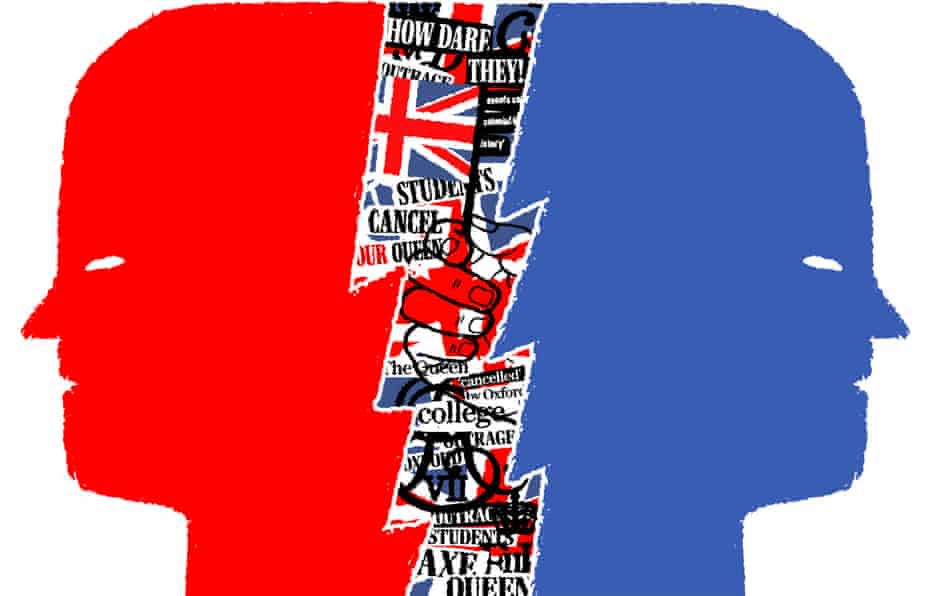
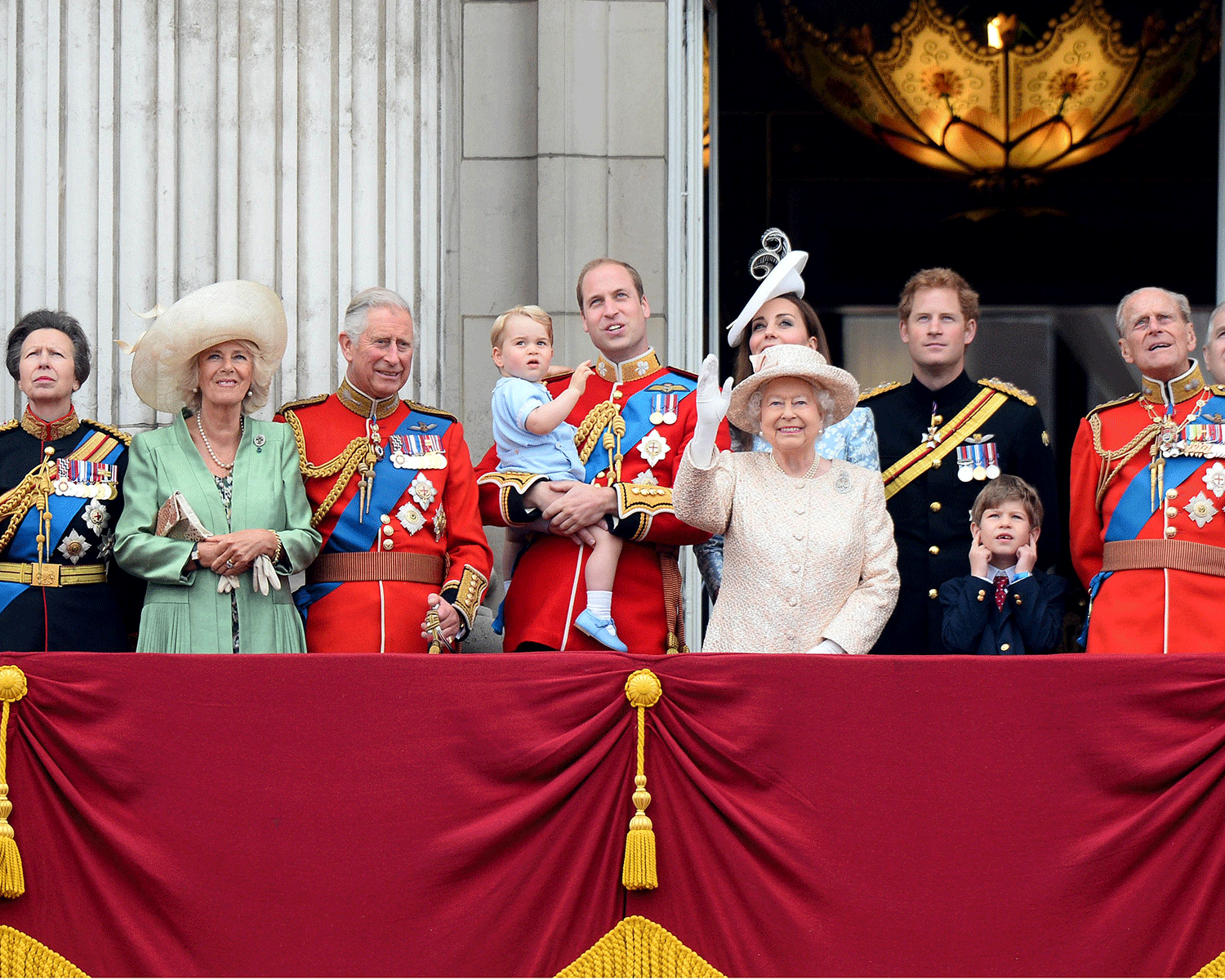





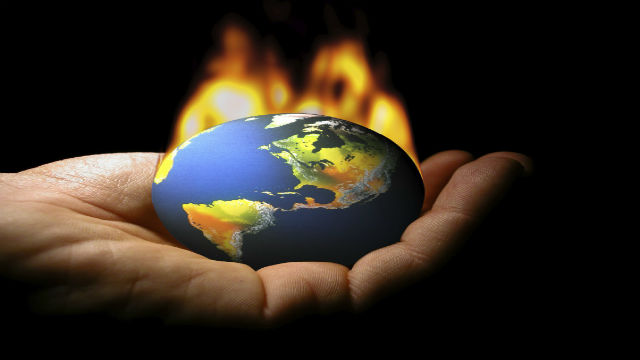

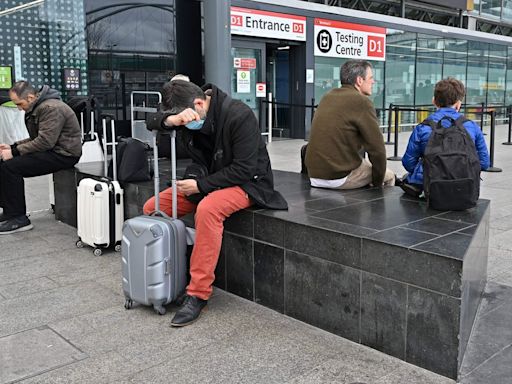
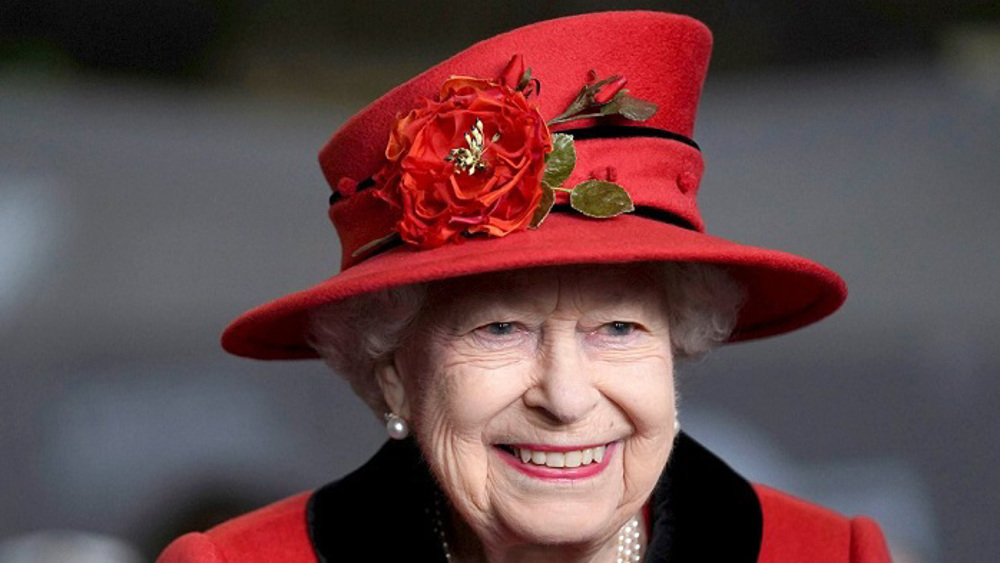
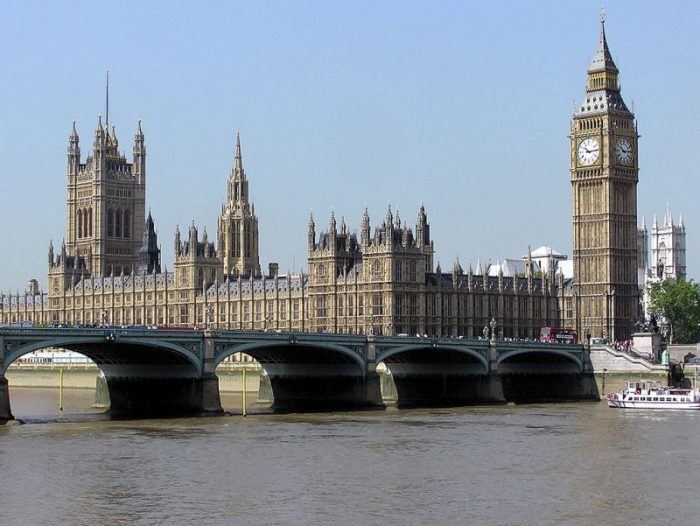

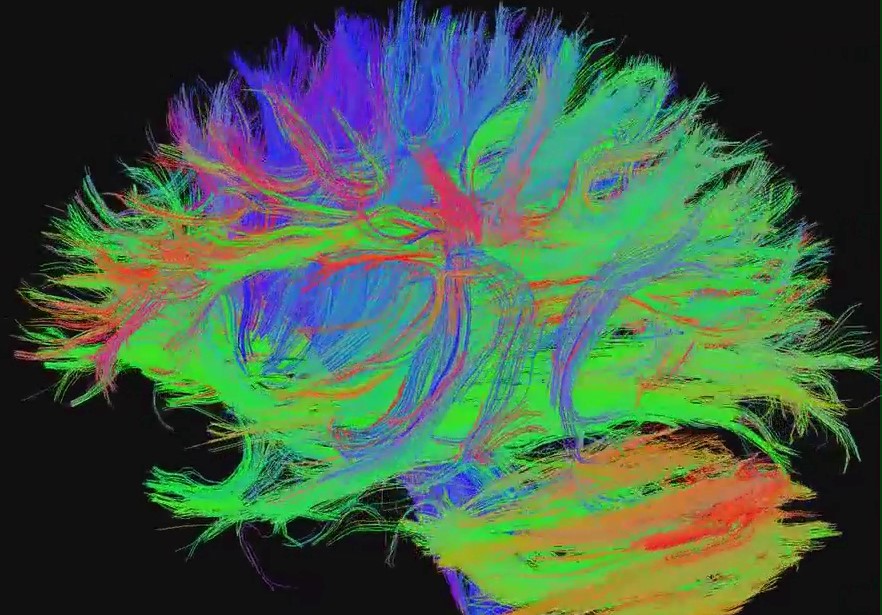





 bobdillon33blog