Indeed, Israel’s deliberate, industrial-scale murder of the Palestinian people under the pretext of “self-defence” won’t enhance its security or secure its future.
Rather, it will produce greater insecurity and instability, further isolate Israel and undermine its chances for long-term survival in a predominantly hostile region.
Without shedding its colonial regime and embracing normal statehood by excepting the rights of all its people in a one state solution ( not two state) its demise is not in the so distant future.
Israel’s colonial nature presently supported by the USA, dominates its behaviour at each and every turn wasting countless opportunities to end its occupation and live in peace with its neighbours.
It has multiplied the number of illegal Jewish settlements and settlers on stolen Palestinian lands and networked them through special bypass roads and other planning projects, creating a dual system, a superior, dominating one for the Jews and an inferior one for the Palestinians.
In the absence of peace and in the shadow of colonisation, the country has slid further towards fascism, enshrining Jewish supremacy into its laws and extending it to all of historic Palestine.
As they tightened their siege of the Gaza Strip, the world’s largest open-air prison, and dropped all pretence of ever allowing it to unite with its Palestinian hinterland in a sovereign Palestinian state. Prime Minister Benjamin Netanyahu, it is undermining its own institutions, and any chances of peace based or coexistence between two peoples.
To have any chance of living in peace it must address the root causes of the conflict with the Palestinians, namely their dispossession, occupation and siege.
Even with USA/ UK backing it has no chance of surviving among all the indigenous people of the region, who have coalesced more than ever before.
Israel can no longer use its fanciful theological claims to justify its violent racist practices. God does not sanction the slaughter of innocent children.
Israel has no good options after the war ends. If it continued on the same destructive path the demise of Israel “as we know it” is around the corner regardless of how much Palestinian, Arab and Israeli blood it sheds.
—————-
The reflexive identification with Israel, by both US media professionals and politicians, always obscures the fuller picture of what’s happening between Israel and the Palestinians.
We have to understand: Israelis aren’t going anyplace, and Palestinians aren’t going anyplace.
Discussions of a two-state solution is now cobblers.
A decent number of Israelis and Palestinians have come to conclude that it’s not a solution, that the nature of Israeli behaviour, especially in the West Bank, makes a Palestinian state unviable.
How exactly, or who would drawn the borders, never mind decide how or who rules.
(A substantial line of thought [in Israel] is that it’s more important that Israel be Jewish than democratic.)
There are alternatives to a two-state solution — including a one-state solution, a confederation.
One of the biggest challenges for Israelis is balancing the need for a Jewish state and a democratic state. This could and can be achieved with a written constitution approved by international law.
“If you have a one-state solution that gives citizenship to all of the natural-born residents of Mandatory Palestine — which includes Gaza and the West Bank — you don’t have a Jewish majority,”
It’s hard to imagine this kinds of possibilities in this moment, but the need for change is clear.
Iranian leaders have been among the sharpest critics of Israel’s military operation in the Gaza Strip. Tehran has made no secret of its praise for those who attack Israelis, including the Hamas-led attack that Israel says killed 1,200 people on Oct. 7.
Iran blames Israel for the April 1 airstrike on Iran’s consulate in Damascus that killed seven members of Iran’s Revolutionary Guard Corps, including two IRGC generals. Israel has neither confirmed nor denied being behind the attack.
If Israel was responsible, it would be the latest in a long line of attacks against Iranian targets.
A shadow war between Iran and Israel has grown over the years and with the recent Iran drone and missiles attack you may rest assured that if Israel targets Iranians nuclear sites the USA will be over the moon.
That will trigger not just a major regional war but threaten the very existence of us all.
All human comments appreciated. All like clicks and abuse chucked in the bin.
Iran has scarcely been out of the headlines in recent months. But how far back does the history of Iran stretch?
Like me I am sure we know little or nothing of it history.
Long before Iran came to be known in the mid-twentieth century as one of the countries of the Middle East, for nearly two and a half millennia it was known to the Western world as Persia.
So here is a starting point for an exploration of the history of modern Iran.
The Islamic Republic has been in a state of influx almost from its start. It has managed to survive in this state of perpetual crisis — and sometimes even benefited from it — because confrontation, or anticipation of confrontation with a nemesis, that is with the United States, played into its hand. It gives the regime the pretention of legitimacy as the core to national resistance against Western hegemony and regime change. The sense of emergency hence contributed to its survival. Moreover, the ruling clergy and its associated groups, such as the Revolutionary Guards, although a small minority devoid of the true support of a majority of Iranians, survived in power probably because of a strong sense of group solidarity.
The 1979 Iranian Revolution represented the first time in the modern history of the Muslim world that a movement dominated by the clergy took control of a state. Historically, this is a very unusual event, not just in the Islamic world, but anywhere. Religion and state were seen as two pillars of stability in Iranian society.
Shi’ism as a belief system, supported and reinforced by the region’s geopolitical complexity, preserved Iran’s socio-cultural identity.
Through the preservation of the language, Iran managed to preserve a collective memory of its past, which is also rather unusual.
Basically, the memory of Islamic conquest became the foundation myth for the sense of Islamic identity that emerged in Egypt, Syria and eventually Iraq. Iran was different. It preserved its memories of pre-Islamic times and grew quite proud of them.
Iran’s oil industry was basically a colonial industry created and developed by the British. A massive amount of the revenue went to the British government while a much smaller percentage went to the Iranian government. But even that share of the revenue was crucial for a nearly bankrupt Iranian state in the post-WWI era. It provided the necessary funds for greater centralization; for enforcing modern reforms; for strengthening the armed forces; and for the creation of an autocratic regime under the Pahlavis that no longer sought the traditional support of the religious establishment.
The Allied occupation of Iran in September 1941 was a rude shock to most Iranians.
Facing the soldiers of the Red Army, the British Indian Army, and soon after American military personnel seemed almost a surreal reversal of two decades of Pahlavi assurances of Iran’s reclaimed sovereignty and the might of the Iran’s Imperial Armed Forces.
The occupation triggered one of the most eventful episodes in Iran’s modern history and revealed persistent themes in the country’s recent past: the struggle for democracy. The gradual return to autocratic practices after 1953 put an undue end to Iran’s perilous experiment with participatory politics. Instead, an era of stability, albeit politically repressive, began to set in, and with the exception of a brief interlude in the early 1960s, it remained essentially unchanged until the Islamic Revolution in 1979.
The exile of Ayatollah Khomeini and the shah’s success, at least for a while, in silencing the forces of opposition generated a sense of royal self-confidence with an almost prophetic mission. The decade of 1963 to 1973 represented, with all its shortcomings, the best of the shah’s years: an age of economic development, success in foreign policy, and relative popularity at home.
Iran in the 1960s and 1970s witnessed an era of cultural florescence, a period remarkable for artistic creativity, the rise of new talents, and greater international exposure but also greater state sponsorship. Expressions of artistic and intellectual dissent, often transmitted through a language of symbols, emerged in cinema, poetry, and popular music.
The tumultuous events that led to the revolution of 1979 and the establishment of the Islamic Republic of Iran were a classic example of modern popular revolution. Out of a broad alliance of Islamic tendencies there emerged a militant clerical leadership, led by Ayatollah Khomeini. Over the course of the following decade, Khomeini played a decisive part in defining the Islamic Republic.
Between August 1978 and February 1979, a period of less than seven months, Iran witnessed a revolution that brought down the Pahlavi regime and abolished the institution of monarchy, wiped out the privileges of the Pahlavi elite, and significantly weakened its secularized middle classes. In its stead Ayatollah Khomeini and his associates created the Islamic Republic, which aimed to establish the “Guardianship of the Jurist” (welayat-e faqih) as the only legitimate model of governance.
That Ayatollah Khomeini and his cohorts put their mark on the Islamic Revolution was more than an accident of history. At least since 1961, and with a greater resolve since 1970, clerical Shi‘ism explored ideological Islam and contemplated juridical authority as an alternative to secular power.
In less than a year after victory of the revolution in February 1979, the new regime managed to consolidate its base, build new institutions, and eliminate its contenders for power.
It conducted a referendum on the change of regime to an Islamic republic, ratified a new constitution, elected a parliament, elected a president to office, and established revolutionary courts, the Revolutionary Guards Corps, the Guardian Council, and the Assembly of Experts. All the while the newly established republic was engaged in major domestic and international crises that threatened its very existence.
A crisis of great magnitude was in progress, one that shook Iran’s relations with the outside world and initiated an adversarial encounter with the United States that shaped their relationship for decades to come.
—————–
1979 November – Islamic militants take 52 Americans hostage inside the US embassy in Tehran. They demand the extradition of the Shah, in the US at the time for medical treatment, to face trial in Iran.
The hostage crisis of November 1979 started an international tremor that for the following fourteen months would enrage the United States, preoccupy world media, appal public opinion worldwide, and irreparably damage the image of the Islamic Republic.
1980 22 September – Start of Iran-Iraq war, which lasts for eight years.
1981 January – The American hostages are released, ending 444 days in captivity.
1989 November – The US releases 567 million dollars of frozen Iranian assets.
The magnitude of this paradigmatic shift, and the way a conservative Shi‘i establishment transformed into a radical force of dissent, becomes all the more striking when we set the Islamic Revolution in the broader political and cultural contexts of the past five centuries.
2002 January – US President George Bush describes Iraq, Iran and North Korea as an “axis of evil”, warning of the proliferation of long-range missiles being developed in these countries.
2002 September – Russian technicians begin construction of Iran’s first nuclear reactor at Bushehr despite strong objections from US.
2003 December – 40,000 people are killed in an earthquake in south-east Iran. The city of Bam is devastated
.2007 October – US announces sweeping new sanctions against Iran, the toughest since it first imposed sanctions almost 30 years ago.
2009 September – Iran admits that it is building a uranium enrichment plant near Qom, but insists it is for peaceful purposes.
The country test-fires a series of medium- and longer-range missiles that put Israel and US bases in the Gulf within potential striking range.
2015 July – After years of negotiations, world powers reach deal with Iran on limiting Iranian nuclear activity in return for lifting of international economic sanctions. The deal gives UN nuclear inspectors extensive but not automatic access to Iranian sites.
2018 May-June – President Trump announces the US withdrawal from the 2015 international deal on Iran’s nuclear programme. Iran in turn warns that it will begin increasing its uranium enrichment capacity if the deal collapses as a result of the US move.
2020 January – Quds Force commander Qasem Soleimani, responsible for Iran’s military support for the Syrian government, killed in a US air strike at Baghdad Airport, prompting Iranian threats of retaliation.
2024 April Iran fires hundreds of drones and missiles at Israel in retaliation of Israel attack on its Embassy in Syria.
If the current regime caves under another popular upheaval, the outcome may not be promising at all.
The recent Middle East popular movements of political reform, such as the Arab Spring, have by and large failed. Likewise, any attempt toward a regime change through military option or covert operation almost definitely helps strengthen the regime’s popular base. On the other hand, if it is left to its own devices, will Iran become another China? Whether it moves away from a hostile ideological position to a more pragmatic regime with capitalist economy and friendlier posture toward the outside world is a matter of speculation. The recent U.S. departure from the Five Plus One nuclear deal with Iran, and the impending re-imposition of sanctions, does not offer a bright prelude for success of the latter option.
You only have to look at Israeli and the Iranian recent UN Security Council presentations after Iran’s direct attack to see that the Middle East is now a tinder box that no amount of Verbal is going to solve.
Iran’s ambassador repeated Tehran’s claim that it was responding in “self-defence” after the April 1 explosion at its Damascus consulate in Syria, for which Iran blamed Israel.
Israel will exact a price from Iran in response to Saturday’s attack when the time is right.
All human comments appreciated. All like clicks and abuse chucked in the bin.
Looking at contemporary politics, it’s easy to feel a sense of despair.
All across the world, we see a resurgence of wars, racist demagogues, now rendered respectable by the embrace of the “mainstream” political right and much of the commentariat.
Your beliefs, ideas, and values make up your ideological framework. This framework is developed over a lifetime of socialization.
Dominant ideologies are powerful forces in society. They are how dominant groups preserve their power. They do this by promoting ideas to advance their interests and maintain social order. Such ideologies shape dominant discourses that legitimize the current organization of society. These ideas are embedded in the practices of social institutions. The majority of people accept these conditions even though it is not in their interest to do so. This is referred to as hegemony, or rule by consent.
Ideology touches every aspect of life and shows up in our words, actions, and practices…. Because ideology structures our thoughts and interpretations of reality, it typically operates often beneath our conscious awareness … it shapes what seems “natural,” and it makes what we think and do “right.”
Ideologies are ways of organizing large swaths of life and experience under a set of shared but unexamined assumptions. This quality makes an ideology particularly hard to see, at least while it’s exerting its hold on your culture.
You may have noticed that many of us support ideologies that do not best serve our interests. Why is that? A reigning ideology is a little like the weather: all pervasive and virtually inescapable.
The simple answer is that powerful groups have ways to encourage us to believe ideologies that protect their interests. This process of getting people to accept the interests and values of ruling groups without force is called hegemony. Hegemony can also be defined as rule by consent.
Dominant ideologies, however, are not more influential because they contain better ideas. Instead, they represent the extent to which powerful groups in any society are able to shape our ideas, values, and beliefs. Dominant ideologies are often linked together. Through hegemony, ruling groups try to ensure that we will accept their views and ideologies without question.
The transformative ideologies are the most difficult to pinpoint.
However, some people resist submitting to the desires of the ruling group.
To address social problems, we must be able to recognize dominant and counter ideologies. We must be aware of how they impact the economic, social, political, and environmental ideas and values in our society.
We need to foster international cooperation and solidarity to address environmental challenges collectively, transcending borders and divisions to stop coming wars.
—————–
Physiological needs are the requirements of all biological creatures.
Unfortunately our system of Capitalism has turned all of these needs into products, resulting in government’s using what should be considered essentials into revenue generating sources, by applying service charges or taxies. Capitalism has fuelled the industrial, technological and green revolutions, reshaped the natural world and transformed the role of the state in relation to society.
In recent years, capitalism’s shortcomings have become ever-more apparent. Prioritising short-term profits for individuals has sometimes meant that the long-term well-being of society and the environment has lost out – especially as the world has faced the Covid-19 pandemic and Climate change.
It has lost its ability to be fair.
57% of people worldwide say that “capitalism as it exists today does more harm than good in the world”.
The reality is that in daily life, most of us are pursuing all of these basic human needs simultaneously to varying degrees.
Without air, water, and food, sleep homeostasis and sex all biological organisms perish.
So instead of focusing on which need you’re attempting to meet, government’s have allowed and are still condoning life to be exploited for profit resulting in – Inequality, Climate change and Coming wars.
————–
In order to live you need fresh air. That’s pretty self-explanatory.
In order to live you need fresh water. That’s pretty self-explanatory. (You can only survive without water for 3 days.)
In order to live you need food. That’s pretty self-explanatory. (Most of us, we need food, daily else we feel less than fulfilled.)
In order to live you need to build a good shelter. That’s pretty self-explanatory.
In order to live you need a living environment where security and safety are met. That’s pretty self-explanatory. (There is a primal innate fear of others and the need to seek security that is hardwired into the human brain. You don’t have to look around very long to notice how much of human behaviour is driven by the desire to feel secure.)
These unmet basic human needs fuel our unconscious behaviour.
We all share the same needs.
————-
Healthy identity is based on the fulfilment of these needs … These needs are felt and remembered cellularly throughout our lives, though we may not always be intellectually aware of them.
They were originally experienced in a survival context of dependency. We may still feel, as adults, that our very survival is based on finding someone to fulfil our basic needs.
In adulthood the needs can be fulfilled only flexibly or partially, since we are interdependent and our needs are no longer connected to survival.
Research suggests that over 95% of our behaviour is unconscious.
In today’s society, we also seek greater levels of financial security which goes hand in hand with the need for job security. (Tools like insurance have also been created in an attempt to offer more stable financial security in case of an unforeseen event.)
If you don’t have enough money to pay for rent (or your mortgage and taxes), clothes (for protection, not fashion), and transportation (to get food and make money), your safety needs aren’t being met.
The result is that individuals necessarily act selfishly when basic human needs drive them.
—————
In some parts of the world, many individuals can’t meet their physiological needs.
It’s estimated that over a billion people don’t have sufficient food to eat, basic nutrition, or clean water to drink. Shelter from the elements, clothes to cover our bodies, and some semblance of the familiar.
Belonging is also a psychological need.
(Belonging is a feeling of connection with and approval from others. It starts with our immediate family, then bridges out to friends, religious groups, and other social groups (like sports teams or clubs). This need to belong later extends into professional relationships and a significant other. This unmet need to belong drives us to identify with social groups, religious institutions, and other special-interest groups in adulthood. It also fuels a lot of people’s impulse to invest time in social media.)
Our image-driven culture pushes us to be more concerned with what other people think than with how we feel about ourselves. We seek approval from others instead of self-acceptance.
————
Physiological needs can also remain unmet even in individuals who aren’t in an environment of lack.
How do you know if you have unmet basic human needs?
To accomplish this, we must first cultivate self-awareness and self-leadership, become honest with ourselves, and learn to abide in our centre. These practices allow us to reflect on our lives and better understand ourselves. Self-actualization appears to be rare in our societies today and has become much more complex and even distorted at times.
For example, financial security is one domain that is constantly emphasized in today’s society and it seems that many spend their entire lives engaged in its pursuit, finding out, often too late, that they will never truly achieve any semblance of it.
If you don’t agree, take a closer look at the lives of some of the wealthiest people on the planet or those who are rich and famous. Their lives are filled with tragedy. Wealth doesn’t solve the problems we think.
Understanding the fundamental impermanence of things can be very freeing since it reflects a very real and dominant factor in life, one that we often struggle to accept. If you don’t agree, just ask impermanence’s primary representative, death. It will knock on everyone’s door one day or another, most often unannounced.
—————-
What would you do if you only had one month to live? One week. one day?
Don’t ask yourself what the world needs. Ask yourself what makes you come alive, and then go and do that. Consider the overalldirection of your life.
Because what the world needs are people who have come alive to the rip off capitalism.
Why because it is failed and is still failing, even on its own terms. While experience varied between countries, generally this involved the ‘commanding heights’ of the economy being in public ownership – the national utilities of water, gas and electricity, along with the crucial productive infrastructure of transport and telecommunications, with the remainder of the economy being regulated to various degrees.
Government spending was used to maintain full employment, along with the implementation of industrial policies, regional policies, and active labour market policies. These interventionist measures generally went beyond just maintaining economic growth and full employment, to welfare state delivery.
Any governments pursuing these sorts of progressive agendas would be likely to wish to co-operate and collaborate internationally – on tackling the climate crisis, the industrial-scale global tax avoidance and evasion, and the root causes of international financial crises which lie in the deregulation of speculative finance and the financial sector generally.
—————
To get any sense of where to go, we need a much more thorough understanding of the forces that underlie this symbiosis of economic power and political power and the distortions of public discourse that it induces.
“The voters don’t choose the politicians, the politicians choose the voters”
Ultimately, it is worth remembering that citizens in a capitalist, liberal democracy are not powerless.
We live in an oligarchy, not in a democracy, A thing cannot be changed if the plan is for something that the situation is not. Oligarchy cannot be stopped by treating it as though it were a democracy.
As a society we continue to make slow progress in ameliorating this historical deficit.
Of critical importance also is the role of the individual in promoting his or her own equality. No amount of government intervention will confer equality if individuals fail to take advantage of the opportunities before them.
The system must be fixed for problems to be addressed.
So I say first things first, let’s ensure that we build a system where there is equal opportunity for all so that individuals can succeed or fail on their own merit. Will such a system guarantee full equality?
I have my doubts but I’m convinced it will promote greater equality in our imperfect society.
Young politicians enter the great building of power with sincere hearts, but leave with the stench of the corrupt swamp having their noble intentions suffocated and extinguished.
Every nation needs to wake up from their own illusions of their own importance in the world and start looking after its people.
———–
To make sure that the government gets the message that the people all of the people should be represented not just the few.
Get money out of politics ENTIRELY and then maybe there’s hope.
Now with the technology that exist, I think a ‘perpetual referendum’ democratic socialism, may be a solution:
We need to assert the importance of turning the social surplus toward ending hunger and illiteracy and toward addressing fundamental problems of social and economic life — such as the catastrophe of the climate and of endemic joblessness.
No point running a government if you don’t have an organized mass force to drive the social policy from the hall of government to the home of the poorest worker.
Government’s won’t put suchperpetual referendum in place but we the people with technology can.
Your vote (on one thing or many things, doesn’t matter) is kept online at all times and can be polled by the computer at any time. And not only can be but must be. And you can change your vote (or votes) at any time.
The people must take back what people with money have stolen from them over the decades, i.e. our right for true democratic representation where elected politicians carry out the will of the people not the will of the wealthy few who have corrupted it.
The abolition of intellectual property and the renationalisation of monopoly infrastructure could reverse the tendency towards private monopoly that could contributed greatly to stopping the rising inequality of the early 21st century. The massive financial sector of the early 21st century, is a huge source of inequality.
We might be blind to what capitalism could look like in another two centuries. However, that does not mean we should not ask how it might evolve into something better in the nearer term.
The future of capitalism and our planet depend on it.
Until politicians work for every person these are the choices.
Capitalism thrives on the mantra of individualism and free enterprise. In this economic system, private entities, such as individuals or businesses, own the means of production. But, it’s essential to note that capitalism is not just about profit. It’s also about personal freedom, economic resilience, and societal prosperity. It champions the belief that everyone has the right to economic freedom. This belief is driven by the potential for profit.
Communism is a quintessential manifestation of egalitarian ideals. It seeks to pull down the socio-economic partitions between the affluent and the impoverished. Its driving force is the establishment of equality and fairness. The societal benefits are not skewed in favour of a privileged few. Instead, they are spread across all its members. Yet, the intricate dynamics of human nature and socio-political realities often pose significant challenges to implementing communism. It’s a philosophy that seeks to remould society’s foundation. It presents a different perspective on the socio-economic structures that govern our world. Its cardinal principle is collective ownership and equality.
Socialism amalgamates elements from both capitalism and communism. It is unlike the laissez-faire economics of capitalism. However, it is not as radical as communism in its distribution mechanism. It encourages fair wealth distribution. But, it does not eschew private property. socialism emerges with a balanced approach. Yet, it does not do so at the cost of personal freedoms, as in capitalism. The means of production are often state or worker-controlled. There is a conscious effort to check capitalist-style monopolies and wealth concentration.
Most nations operate in mixed economies. They cherry-pick elements from different ideologies.
They create a model that best serves their unique needs. The impact of these ideologies on today’s world is profound and multifaceted. It colours the lenses through which we view societal structures, economic models, and the state’s role in our lives.
As we go about our daily activities, we are engaged in a web of relationships that connect us to the larger world. We rely on ideas and values to form opinions, make assumptions, and arrive at conclusions. However, many of us aren’t aware of where these notions come from or how they influence our thinking. Most of us assume that our points of view are accurate and truthful. We think that they are just common sense. This may lead us to dismiss, discredit, or misinterpret perspectives that differ from our own.
This means that we rarely evaluate our perspectives in relation to alternative points of view.
A future where our planet’s people can succeed emphasizes sustainability, collective action, and innovation. What if we demanded that profit be removed from the policy of government’s.
Many types of government expenditure constitute investment: purchases of transport and energy infrastructure, school and hospital buildings, IT systems, defence systems, and intangible assets. Government investment often includes purchases needed to implement long-term policies, such as investment in green energy infrastructure to support action on climate change.
Another words invest public funds, allowing a fair profit, keep sufficient funds for maintains, and then nationalize, so everyone benefits.
All human comments appreciated. All like clicks and abuse chucked in the bin.
“No man ever steps in the same river twice, for it’s not the same river and he’s not the same man.’
Heraclitus.
At first glance, this quote may seem perplexing, but it carries profound meaning and significance. Essentially, Heraclitus is asserting that both the river and the person are in a perpetual state of change, making it impossible for any encounter to be exactly repeated.
This idea challenges our perception of constancy and emphasizes the dynamic nature of life. The straightforward interpretation of this quote suggests that every moment is unique and cannot be replicated.
It serves as a reminder to appreciate the present moment, as it will never be replicated exactly the same way again. It teaches us to embrace change, appreciate the uniqueness of each moment, and acknowledge the continuous evolution of ourselves and the world.
So does time exist or not.
It’s is imperative in our understanding of the universe and our place in it, is weird. It is an illusion. The experience of time is actively created by our minds. The way we experience time in our minds is never going to match up with the latest discoveries in physics.
Nothing exists in any permanent or fixed sense. Life is a dance between our lived experience of which time is a fulcrum and the reality of existence that we are essentially empty of anything solid or permanent.
Since time immemorial (with no start or finish) There is no time like now.
Your time is up.
Just what that means no one knows.
————–
Writing this post would in itself be a waste of my time if the cosmos was that simple.
I believe we have only just scratched the surface of the universal laws of physics; the universe is anything but simple, or is it so simple that our brains cannot grape hole of it’s existence.
There may in fact be something to this crazy notion that the nature of the universe could be turned on its head should the fundamental quantity of time be transformed into another dimension of space.
If you travelled at near light speed for ten earth years and returned to earth very soon for you ,you would need older people and relate to them in a present. Would it follow that time does not exist?
Consider the following scenario:
I get in a spaceship, and travel really close to the speed of light for a while, and then come back.
A lot of time has passed on the Earth, but since I was traveling so fast, I only experienced a few years passing.
So, my friends on Earth are dead, whereas I’m only a few years older.
But what I’m having trouble wrapping my head around, is why is it them that’s dead, and not me?
After all, given what I understand about relativity, it’s just as fair to say that my spaceship stayed still, and it was actually the Earth that travelled really fast and then came back to my ship.
In that scenario though, the Earth being the fast-moving ship, and my ship being the stationary body, wouldn’t it be that I am dead, and everyone on the Earth is just a few years older?
But the earth and the space travellers aren’t symmetric — an easy way to see this is that one of them spent a lot of energy (the rocket fuel, say) to make this situation happen, and one of them didn’t.
To add on to this, lets say the man on Earth got on his own second spaceship and eventually caught up close to the first spaceship and is approaching the same speed as the first spaceship. Relative to the second spaceship, would the increased energy of the first spaceship gradually lower down to it’s energy at rest up until they become the exact speed?
If you trawled through Space time where would you end up? In a web of invisibility, an eternity of mush.
How can this be ?.
The simple answer is that because you are the traveller and therefore have to slow down, stop, accelerate in the opposite direction and come back again.
So this would mean that energy increases as speed increases.
Since time immemorial has no start or speed, it does not exist, either as space time or any other time you wish to define.
Because it appears that the theory of relativity and Quantum can not live together. The two theories are fundamentally incompatible with each other.
This has resulted in two leading “quantized” theories of general relativity— string theory and loop quantum gravity—and now a new theory called the “postquantum theory of classical gravity, that attempt to bridge the gap between these two worlds.
This theory challenges the idea that Einstein’s general theory of relativity needs to be “quantized” at all, and posits that the discrepancy between quantum mechanics and general relatively can instead be explained by unpredictable “wobbles” in spacetime.
Jonathan Oppenheim posits that spacetime isn’t quantum at all, but classical. The only differences, he claims, is that that spacetime “wobbles” randomly, rather than being uniform.“
So it’s important to understand how this contradiction is resolved.
The exact nature of the conflict is controversial, scientists generally agree these theories need to be replaced with a new, more general theory.
Although quantum mechanics and general relatively help explain the universe—at both small and cosmic scales. If spacetime doesn’t have a quantum nature, then there must be random fluctuations in the curvature of spacetime which have a particular signature that can be verified experimentally.
So we know we need a new physical theory to explain the universe, and that this theory might not feature time. Suppose such a theory turns out to be correct.
FOR ME THERE IS NO SUCH THING A SPACE TIME THAT CURVES SPACE TIME, IT DOES NOT EXIST WITHIN THE CONTEXT OF GRAVITY – GRAVATIOLAL PULL IS A FORCE.
The different gravitational pulls would force a quantum interaction that behaved as classical relativism would—the particle in less gravity would move with less constraint than the one in stronger gravity.
Does time exist? No its man made.
Our entire lives are built around time.
Managing in a world without time seems positively disastrous.
We plan for the future, in light of what we know about the past.
We hold people morally accountable for their past actions, with an eye to reprimanding them later on.
We believe ourselves to be agents (entities that can take action) in part because we can plan to act in a way that will bring about changes in the future. But what’s the point of acting to bring about a change in the future when, in a very real sense, there is no future to act for? What’s the point of punishing someone for a past action, when there is no past and so, apparently, no such action?
We have no idea how time might be “made out of” something more fundamental than motion – distance
or duration for example ( which all need time unlike existence)
Our naïve perception of its flow doesn’t correspond to physical reality. Physics without time’.
The malleability of space and time mean that two events occurring far apart might even happen in one order when viewed by one observer, and in the opposite order when viewed by another.
Time does not exist at any level in nature there is only “now.”
Existence is at anytime, here to day, gone to morrow.
Time and space themselves really only manifest out of their interactions and the web of causality between them. We cannot know the positions and speeds of all the particles in the Universe. If we could, there would be no entropy, and no unravelling of time.
The discovery that time does not exist would bring, not the entire world to a grinding halt but entire universe.
Like all prisoners doing time the whole world would suck.
——————
Knowledge will always be limited by the limit of the knowledge at any particular time no matter how they may take that knowledge and project theories about our world, the universe and existence itself.
Because all knowledge would exist in that moment is time therefore gravity.
If time does exist then it is in that place in-between those moments of change – causation gravity.
After all time is change and change happens with each moment of time.
Don’t worry: even if time doesn’t exist, our lives will go on as usual.
If we are questioning the reality of time than are we also not questioning the reality of astrophysics and with it the age of the universe along with the age of our solar systems and planet and all that goes with that right up to evolution and with it no doubt homo-sapiens and our existence on this planet and in this universe.
If you were to zoom in to space-time, you would see that time doesn’t advance into the future continuously but in quick little tick-tick-ticks of a discrete clock.
If we accept the premise that “time” is simply a metric we use to measure changes in mass and energy relative to space, it’s hardly a revelation. Stuff keeps moving around and thermodynamics keeps working as it ought.
Whether neurophysiology has a quantum level function from which consciousness emerges,
Time to make a cup of tea.
I feel there’s a slippery slope going on here.
If it’s possible to determine the age of the universe to 13.8 billion years there’s obviously a ‘before’ and ‘after’. This implies ‘time’ Mass and momentum require the concept of spacetime as they are aligned to those dimensions. There is no such thing as perfect stillness so there has to be time.
Energy is the source of gravity, not mass.
Time (and space) emerge, as does mass and momentum as light and vacuum energy had an inner/outer product event which either destroys matter to create light (and vacuum energy) or it removes light (and vacuum energy) to make matter and antimatter pairs.
And this if all matter must be made equally with antimatter (in parallel universes) something “imaginary” must be keeping them apart. Without time (and space) there is no duality, no separation of real and imaginary, no existence at all.
Big bang and black hole singularities are just curvatures we can’t see beyond, they are not the beginning or end of anything, Technically we are in a black hole. Time is only relevant to the person measuring it.
How can we detect something which by definition is not temporally connected to us and only interacts with our universe through gravity or curvature of light and vacuum energy.
Perhaps is rotation is what gives us the “flow of time” turbulence caused by the rotation and resistance.
So for matter and spacetime we can see, there is no before the big bang, but for the energy that made it (which is timeless) it definitely was.
————————–
The Amondawa tribe in the Amazon, for example, has no word for “time”
Much of Aboriginal philosophy resonates. Much of it doesn’t.
Same with Siddhartha Guatama’s philosophy.
This is precisely why time is such a difficult concept to pin down. As a result, memories are directed only toward the past. Time has no direction.
In the world of atoms, the laws of quantum mechanics are detached from time: they work either forwards or backwards, clockwise or counter-clockwise; they have no preferred direction.
In as much as humans cannot transcend time. We are travelling in time at 300 million meters per second. Light travels at 3 x 10⁸ m/s but we’re not light, apparently. The speed of light joins space and time
So unless we can come up with a good account of how time emerges, it is not clear we can simply assume time exists.
——————-
The separation of present, past and future are not clumsy constructs.
What is more to the point is what is “exist”?
To appreciate all time at once is another matter. Any associated reality would be one that transcends time. The ‘all time at once’ is the apparent oxymoron to be unravelled.
Just like atoms, we can’t see time, but only look at them.
If time might not exist, we would still have causality, the notion that one thing causes another thing to come after it.
It is doubtful that we can ever perceive a time-less cosmos.
The differing gravitational force on the moon, and potentially other factors, change how time unfolds relative to how it is perceived on Earth. The same clock that we have on Earth would move at a different rate on the moon and the moon is only 238,855 miles (384,400 km) away.
Finally: Its time to rap this post up. Time is simplicity. Its either dark matter or gravity. Time will tell.
After all, the fact is that the existence of time cannot be falsified, or its non-existence proven.
Once we understand the quantum universe better we may be able to dispense with the concept of time as an archaic and misleading concept. Virtual time will will have no boundaries dissolving as we past in time.
Exploring the possibility is what science is all about.
In all probability we will continue to use our clocks to measure out time just as we continue to use the terms sunrise and sunset even though we know that is not what in fact happens. It will all make sense in time, as our memories are set in authentic time.
Ironically an ancient Chinese philosophy encompassed the notion of the universe including both all of space and all of time.
All human comments appreciated. All like clicks and abuse chucked in the bin.
In the beginning, there was an infinitely dense, tiny ball of matter. Then, it all went bang, giving rise to the atoms, molecules, stars and galaxies we see today. Even earlier, this thinking goes, at some point our entire universe — all the stars, all the galaxies, all the everything — was the size of a peach and had a temperature of over a quadrillion degrees. For decades this explanation, the amazingly fantastical story, holds up of the creation of the Universe and to all current observations.
The problem is that the physics that we use to understand the early universe (a wonderfully complicated mishmash of general relativity and high-energy particle physics) can take us only so far before breaking down.
Taken at face value,
This tells us that at one point, the universe was crammed into an infinitely tiny, infinitely dense point. This is obviously absurd, and what it really tells us is that we need new physics to solve this problem — our current toolkit just isn’t good enough. We need some new physics, something that is capable of handling gravity and the other forces, combined, at ultrahigh energies.
What we know as the Big Bang was sparked by something else happening before it — the Big Bang was not a beginning, but one part of a larger process. In other words, the complicated (and, admittedly, poorly understood) physics of this critical epoch may indeed allow for a radically revised view of our time and place in the cosmos.
—————–
I am neither a Scientist or a Quantum professor so what follows is what I have learned while researching this post. It is for some Einstein out there to answer the questions.
It is quite obvious that the Universe has not existed forever. It was born. Out of time. An entity cannot appear out of nothing and time has no entity while space and light do, even if they are expanding or traveling. A God as an entity is an other matter.
A universe popping into existence out of nothing is so bonkers. A detonation occurs in one place and shrapnel flies into the void.
In the Big Bang, there was no centre and no pre-existing void, so it didn’t happen at any ‘location’. Space itself popped into existence and began expanding everywhere at once, before time was invented.
But what is time? Does it exist? is the past present and the future all one and the same.?
——————-
Time is familiar to everyone, yet it’s hard to define and understand.
Science, philosophy, religion, and the arts have different definitions of time, but the system of measuring it is relatively consistent. It is not something we can see, touch, or taste, but we can measure its passage. But if a system is unchanging, it is not timeless.
The question of why time is irreversible is one of the biggest unresolved questions in science.
As far as the universe is concerned, time had a beginning. The starting point was 13.799 billion years ago when the Big Bang occurred.
If the universe is considered to be an isolated system, its entropy (degree of disorder) can never decrease. In other words, the universe cannot return to exactly the same state in which it was at an earlier point.
Time cannot move backward.
The “grandfather paradox” is a classic example. According to the paradox, if you travel back in time and kill your grandfather before your mother or father was born, you could prevent your own birth.
Many physicists believe time travel to the past is impossible, but there are solutions to a temporal paradox, such as traveling between parallel universes or branch points.
Will time end?
The answer to this question is unknown. Time does not actually exist. “Time is just an illusion.” Is this really true? Is time just a figment of our imagination?
It makes no appearance in physical science except…” What does that mean?
Indeed, this question borders the realm of metaphysics and ontology (the philosophy of existence) as much as it does on the strictly empirical questions about time that physics is well-equipped to address.
Time is all over the place in physics.
Is it a ‘quantum’ thing?
Quantum things are fundamentally unpredictable, appearing randomly, all over the inflationary vacuum, parts of it ‘decayed’ into ordinary, everyday vacuum. Think of tiny bubbles forming in a vast ocean.
In each bubble, the inflationary vacuum disappeared, but its enormous energy had to go somewhere.
It went into creating matter and heating it. It went into creating a Big Bang. Our Big Bang Universe is merely one such bubble among a possible infinity of other Big Bang universes in the ever-expanding inflationary vacuum!
————–
The twin pillars of modern physics are Einstein’s General Relativity and Quantum theory.
The laws of quantum theory permit this to pop into existence out of nothing.
The former reigns supreme in the large-scale Universe, while the latter orchestrates the small-scale world of atoms and their constituents. They have resisted a merger, which is a problem because, in the Big Bang, the Universe was small.
It is essential to unite Einstein’s theory with quantum theory.
And there’s another phenomenon called quantum superposition. This principle of quantum mechanics suggests that particles can exist in two separate locations at once. This really hinges on what is meant by “to be in two positions”.
According to standard QM, when a particle is observed to be in a particular place, it is there and nowhere else. Before the observation, however, the particle’s position may not be definite, i.e., it’s not at a particular place at all.
———————
There isn’t any wave particle duality because an electron isn’t a particle and it isn’t a wave. Instead it’s an excitation in a quantum field. The electron field can interact in ways that look like a particle and it can interact in ways that look like a wave, but that doesn’t mean it is a particle or is a wave.
The fundamental basis of QM is assuming that energy comes in discrete quantities rather than a continuum. There’s no obvious, intuitive reason for this, necessarily… but the results that come out of QM are spectacular- in that they are extremely well supported by experiments.
“Why is energy discrete rather than continuous?”
Physics is a parallel world of tricky mathematical models, fine tuned in order to reproduce the behaviour of reality, but it is not the reality itself. It may sound obvious, but for many people it isn’t so.
Nobody really knows what an electron is completely.
What an electron is and what an electron can behave are different concepts to be clarified.
It’s my opinion! By the way particle is point, but wave is a function to describe all the possible locations of the particle. Electron particle cannot appear at two different points but you can find it through your interaction experiment setup.
Particles can be in two (or more) places at the same time.
This is not yet a proof that quantum mechanics hold for large objects.
For example, there is not yet a quantum mechanical theory of gravity.
In 2005, the Hubble Space Telescope revealed more than 10,000 galaxies and led astronomers to estimate there must be 200 billion galaxies in the observable universe, and 50 billion trillion stars.
Where did it all come from?
The religious explanation is that a supernatural causal agent call God brought all matter, energy, space and time into existence? God who was speaking spoke from outside of time.
If the universe has a beginning, that means there’s got to be some kind of beginner; It’s a beginner beyond space and time, and that looks too much like the God of the Bible.
In the beginning God created the heavens and the earth” accurately describe what science has discovered?
Why is that proof that God created everything, first of all that God exists and that then he actually created all of this?
The Big Bang model is the idea that the universe is traceable back to a beginning.
Not just a beginning of matter and energy, but a beginning of matter, energy, space and time. And how the universe continuously expands from that beginning, and expands at the just right rate to make life possible and even advanced life possible at this moment in the universe.
This flash called the Big Bang is generated by the sudden annihilation of all anti-matter in the universe.
A delicate balance of a billion and one particles to every billion anti-particles guarantees the existence of matter in the later universe. And it also guarantees the possibility of life.
From the creation event, protons, neutrons, anti-protons, anti-neutrons decompose into even more fundamental particles called quarks.
But the universe is too hot and too dense even for quarks to exist and too compressed for light to be possible.
After the creation event the universe was too hot for atoms to exist. Electrons could not orbit around nuclei. Because the universe was nothing but charged particles, an amorphous glow is all that appears. The universe would be so hot that protons and neutrons can’t stick together. All atomic nuclei fall apart.
——————-
The universe therefore must have a beginning and, hence, a beginner beyond space and time; there must be an actual beginning of time; That means no matter what you speculate about the universe, as long as it expands on average you are stuck with this beginner beyond matter, energy, space and time.
—————
We’ve got two easy proofs that any lay person can appreciate that the universe indeed must have this singular beginning of matter, energy, space and time.
So what are we to make of all the observations that the entire universe appears to have been meticulously designed for humans?
And astronomer George Greenstein in his book, The Symbiotic Universe, expressed these thoughts:
“As we survey all the evidence, the thought insistently arises that some supernatural agency must be involved. Is it possible that suddenly, without intending to, we have stumbled upon scientific proof of the existence of a Supreme Being? Was it God who stepped in and so providentially crafted the cosmos for our benefit?”
Stephen Hawking concedes, “It would be very difficult to explain why the universe should have begun in just this way except as the act of a God who intended to create beings like us.”
The probability of all these known parameters randomly coming together would be one chance in 10215, a probably so incredibly tiny that statistically speaking, it’s impossible. And this probability is becoming even more remote with every new scientific discovery.
Such a high degree of design demonstrates that this entity of a god must be a personal being with an amazing creativity, wisdom, power, care and love to a degree far beyond human capabilities. He has fine tuned the Milky Way galaxy, the solar system, and planet earth so that spiritual life can be fused with physical life in this one small place for one brief span on our time line.
Millions of galaxy clusters fill the universe, each containing thousands of galaxies, adding up to ten billion trillion stars. That’s ten with 21 zeros after it.
We needed all of those stars for some reasons, alright?
This enormity is essential to life’s existence. If the number of stars in the observable universe were any greater or any fewer, life would be impossible. If there were fewer stars in the observable cosmos, nuclear fusion would be so inefficient that the only elements to form would be hydrogen and helium. With more stars in the universe, all the elements would be heavier than iron. No carbon, no nitrogen, no oxygen.
Only in a cosmos with a finely-tuned mass of stars can the life-essential elements be produced.
So it turns out, the vast reaches of the cosmos are not a big waste of space, energy, matter and time.
If energy cannot be created or destroyed, where does it come from?
Many scientists believe that the total energy of the universe is zero. Hence, no energy needed to be “created” when the universe came into existence.
As Stephen Hawking explained, when you pull two objects apart, you need to expend energy to overcome the gravity that pulls them together. As it takes positive energy to separate them, gravity must be negative energy. If that theory is correct, then there was never any need to create energy or matter – they cancel each other out. That implies that the big bang could have started as a simple statistical fluctuation.
Additionally, many galaxies appear to lack sufficient mass to be held together by gravity and should have been torn apart long ago.
So, what is causing these unknown phenomena? Dark matter, which makes up 85% of total matter in the universe, is a hypothetical type of matter that responsible for the way galaxies are organized.
Our universe is therefore the result of a quantum fluctuation. Particles routinely pop into and out of existence.
Take the sun as an example.
Its nuclear fusion reactions turn matter (think of it as concentrated energy) into visible sunlight and other forms of energy. The sunlight hits a green leaf on Earth and the solar energy is now transferred into a chemical energy store as oxygen is separated from carbon dioxide and water, leaving carbohydrate in the leaf.
We eat the leaf and breathe in the oxygen.
The respiration reaction in our muscle cells allows the energy to be used to move our arm as we hammer in a nail. The arm, nail, hammer and the air absorb the sound, get hot and radiate infrared heat to outer space.
So the energy concentrated in the original hydrogen atoms in the sun is now scattered into the universe. Low-grade and almost useless, but still the same amount we started with.
Finally my conclusion’s.
For some thing to come into existence from nothing is impossible even a black hole has to start with some thing and disappear into some thing. What that is Space time In physics, spacetime is any mathematical model that fuses the three dimensions of space and the one dimension of time into a single four-dimensional continuum. From Wikipedia.
According to the best of current physical theories, space-time explains the unusual relativistic effects that arise from traveling near the speed of light as well as the motion of massive objects in the universe.
So its some thing that travel’s faster than the speed of light depended on its state of motion – warped spacetime!
Light was known to be an electromagnetic phenomenon, but it did not obey the same laws of mechanics as matter.
Henceforth space by itself, and time by itself, are doomed to fade away into mere shadows, and only a kind of union of the two will preserve an independent reality.
Weight arises due to the warping of time, rather than space. What this means in practice is that gravity on earth is “equivalent” to acceleration mostly in the sense that clocks on the surface run more slowly than clocks in outer space.
If one goes beyond classical physics and into modern quantum field theory, then questions of absolute versus relational spacetime are rendered anachronistic by the fact that even “empty space” is populated by matter in the form of virtual particles, zero-point fields and more.
You can’t get something for nothing. In the quantum realm, something really can emerge from nothing.
As long as you have empty space — the ultimate in physical nothingness — simply manipulating it in the right way will inevitably cause something to emerge. Take a meson and try to rip the quark away from the antiquark, and a new set of particle-antiparticle pairs will get pulled out of the empty space between them an electromagnetic fields where many properties of all physical systems are conserved: where things cannot be created or destroyed. In theory, a strong enough electromagnetic field can rip particles and antiparticles out of the vacuum itself, even without any initial particles or antiparticles at all.
In early 2022, strong enough electric fields were created in a simple laboratory setup leveraging the unique properties of graphene, enabling the spontaneous creation of particle-antiparticle pairs from nothing at all. The prediction that this should be possible is 70 years old: dating back to one of the founders of quantum field theory.
In the Universe we inhabit, it’s truly impossible to create “nothing” in any sort of satisfactory way. Everything that exists, down at a fundamental level, can be decomposed into individual entities — quanta — that cannot be broken down further. If you take all of them away, however, the “empty space” that remains isn’t quite empty in many physical senses the quantum fields remain. Just as we cannot take the laws of physics away from the Universe, we cannot take the quantum fields that permeate the Universe away from it. No matter how far away we move any sources of matter, there are two long-range forces whose effects will still remain: electromagnetism and gravitation. Even if you create a perfect vacuum, devoid of all particles and antiparticles of all types, where the electric and magnetic fields are zero, there’s clearly something that’s present in this region of what a physicist might call, from a physical perspective, “maximum nothingness.”
Space cannot be “entirely emptied” As to where is came from. Clearly, we exist, as do the stars and galaxies we see, so something must have created more matter than antimatter, making the Universe we know possible. It seems like an impossibility. On one hand, there is no known way, given the particles and their interactions in the Universe, to make more matter than antimatter. On the other hand, everything we see is definitely made of matter and not antimatter.
Doesn’t it matter. The fact that we exist and are made of matter is indisputable; the question of why our Universe contains something (matter) instead of nothing (from an equal mix of matter and antimatter) is one that must have an answer.
When it does, one of the greatest mysteries in all of existence will finally have a solution.
Therefore as Max Beerbolm said: ” Besides Dr Einstein there are only two men who can claim to have grasped the Theory of Relativity I cannot claim to be either of these. The attempt to conceive Infinity has always been quite arduous enough for me. But to imagine the absence of it ; to feel perhaps we and all the stars beyond or ken are somehow cosily ( thought awfully) closed in by curtain curves beyond which is nothing; and to convince myself, by the way, that this exterior is not ( in virtue of being nothing) something and there fore …. but I lose the thread.”
All human comments appreciated. All like clicks and abuse chucked in the bin.
≈ Comments Off on THE BEADY EYE ASK’S : WHEN THIS WAR BETWEEN ISRAEL AND PALISTIAN ENDS WHAT SORT OF COUNTRY WILL ISRAEL BE? NEVER MIND WHAT’S LEFT OF PALISTIAN.
As global attention has turned to Israel’s military campaign in Gaza, many Israelis are on a parallel warpath to convince the world they are victims, not aggressors.
Indeed any country has the right to defend its self but not to extent that it creates a genocide.
The slogan Yachad Nenatzeach!, Together We Will Win!, is everywhere in Israel:
Once there is no more Muslim land in the land of Israel … after we make it the land of Israel, Gaza should be left as a monument, like Sodom.
Of all forms of human error, prophecy is the most avoidable.
Israelis’ sense of security has been undermined.
The fear among Israelis is that if Hamas can do it once they can do it again.
By moving methodically through the Strip, Israel slowly pushed over a million Gazans into Rafah along Gaza’s southern border. It is only now poised to take Hamas’s last remaining stronghold, with international opposition, even among Israel’s closest friends, reaching a verbal fever pitch, the UK/USA are breaching international law by continuing to arm Israel.
The UK government does not directly supply Israel with weapons, but does grant export licences for British companies to sell arms to the country.
————————-
When people fight a war that begins with a murderous genocidal attack by one side on the other, the side that was attacked is less inclined to be empathetic towards its enemies.
However the demolition of much of Gaza will make it difficult for Israel as a society to function.
“More of the same”
Continuation of a war in the Gaza Strip, albeit at a diminished intensity, dragging on for an extended period, turning into a protracted war of attrition, resembling the eighteen-year Israeli presence in the security strip in southern Lebanon or the Soviet engagement in Afghanistan aligns well with the alt-right’s so-called Decisive Plan.
While everyone’s attention would remain fixated on Gaza, where the primary efforts of the regular army would continue to be concentrated, local settlement guards or militias functioning as irregular or semiregular units, akin to paramilitaries, could turn the West Bank into hell on Earth.
———————
Is there a way back from the hardness of Israeli hearts in the face of hundreds of thousands of people who because of our war are fighting like animals for pieces of food, a safe place where their children can lay down their heads, medicine, clean water and dignity? The answer is probably yes, but its going to take generations.
On the current trajectory of Israel’s attacks from the air, sea and the ground, Gaza looks set to be an enclave with 2.3 million people essentially living in rubble.
The fear among Palestinians is that Israel wants a “second Nakba”. Palestinians use the word Nakba — Arabic for “catastrophe” — to refer to the estimated 750,000 Palestinians who were forced to leave — or fled in fear – upon the formation of Israel in 1948. Many Palestinians believe the reason Israel is bombing Gaza so heavily is to make it unliveable so that eventually the majority, if not all, of the citizens, facing starvation, will force their way into Egypt.
The 1948 expulsion remains an animating force in Palestinian identity, and it changed the demographics of Israel.
The Jerusalem Post — has carried a prominent opinion piece advocating the emptying of Gaza. That in itself is extraordinary — the most read English-language newspaper for Jewish communities around the world running the argument that the new home for Palestinians in Gaza should be Egypt.
Flattening the whole strip so it becomes an empty museum like Auschwitz.
Joel Roskin, an academic from Israel’s Bar Ilan University, said that the major portions of Gaza were now considerably incapacitated and cannot be simply fixed. “Rather, the damaged and destroyed structures must be completely torn down. The tunnelled – and consequently exploded and bulldozed — soil must undergo extensive environmental and engineering rehabilitation … the facts demonstrate that the northern Sinai Peninsula is an ideal location to develop a spacious resettlement for the people of Gaza. Its open areas, along with the existing infrastructure, can easily host large-scale development projects that, if led by the Chinese and supported by local labour, for example, can easily mature in just one to two years.” Bull shit!
Writing in Israeli newspaper Haaretz, Sfard questioned who Israelis would be after the war, asking “how many tons of coldness and indifference have settled inside us in order for us to turn high-rise buildings into dust, promenades and plazas into ruins and a million and a half people into displaced people who have nothing?
“And what will become of a society whose media outlets, which provide it with information about its deeds, have refrained for over 10 weeks from bringing even a single interview – a single one! – with a resident of Gaza to tell what’s happening to them; who censor the pictures of the dead children and the weeping mothers, the children that we killed and the mothers whose bereavement we caused? The Israeli TV channels are shaping our collective perceptions not only by means of what they show, but also, and perhaps mainly, by means of what they’re hiding from us.”
Israel’s Prime Minister Benjamin Netanyahu rejects any suggestion of ethnic cleansing, insisting that the primary aim of Israel’s military action is to “destroy Hamas”.
It’s debatable whether this can actually be done — Hamas is in part an ideology and idea, it’s also one of many groups whose aims are “resistance” to Israel’s occupation of the West Bank and, along with Egypt, its blockade of Gaza.
Hamas, in turn, makes no secret of its ultimate aim – its charter commits it to the eradication of the state of Israel.
The longer term issue for Israel is that an entire new generation of young Palestinians could be radicalised by seeing their homes and sometimes their families destroyed.
At this crossroads, neither Israel, Iran nor Hezbollah wants an all-out war that would have terrible consequence for all of them. But no side seems ready to stop the slide towards it.
That Israel must, instead, finally agree to a two-state solution under which Palestinians have their own state is a grave mistake.
WHO WOULD WANT TO LIVE IN A COUNTRY THAT WILL NEED MORE THAN WIRE FENCING OR A WALL TO MAKE IT SECURE IN THE FUTURE.
There will be a profound shift in Israel’s concept of security: many believe they must now protect themselves.
Several proposals have been put forward to end the conflict between Israel and Hamas with the U.S., Egypt and Qatar pushing to de-escalate in phases. But major sticking points about who should govern Gaza are blocking progress as Israel doesn’t want to govern and is against the top contender, the Palestinian Authority. So why is coming to a consensus for a ceasefire or peace deals so difficult?
There’s now only a one state solution.
———————
As the conflict with Hamas bleeds across borders, is wider violence inevitable?
Even if the Gaza war winds down, Israelis are shifting their gaze toward their northern border, preparing themselves for a potential new war — with Hezbollah in Lebanon. The Iranian-backed group is better armed than Hamas, with long-range missiles that could paralyze the country.
Historical precedents abound: paramilitary groups of this kind take orders from local commanders or charismatic political figures and are loyal only to them, not directly beholden to the central authority.
Israel’s war with Hamas has served to energise already existing tensions.
Without an end in sight, at present – the war is in danger of creating its own dynamic. And for now at least, the reality of the cross-border exchanges has a greater clarity than the rhetoric enfolding them.
———–
What sort of country will Israel be after this war? And will Gaza be liveable, or will its 2.3 million citizens be forced to move to the Sinai desert in Egypt?
No body really knows how this is going to end.
Even if the Israel pushes what remains of the Palestinians into the Sinai Desert and succeeds in dismantling Hamas as an organized military force in Gaza, it will survive as “a terror group and a guerrilla group.
Even if Israel changes it leader there is little room for wishful thinking here.
The likelihood of a left-wing government materializing due to internal protests appears scant. Far more probable is that Israelis will be drawn to a hawkish leader exemplifying strength and authority, typically a retired general with a distinguished military career, with a capacity to assume responsibility and navigate intra-Jewish divides.
Any withdrawal by Israel, including under a hostage deal, would create a vacuum that Hamas would do everything it can to fill as it emerges from its tunnels.
Those measures might assist in holding off Hamas in the coming months, but Israel still needs a long-term solution. That means actively replacing Hamas while it is still underground.
Discussing a plan for the future governance of Gaza brings with it political complications.
Who will replace Hamas?
Gaza will become an area in deep crisis.
——————-
It’s time for Israel’s allies to say: ‘Enough’
To stop selling arms.
When is a war crime not a war crime? Answer: when it’s done by an allied nation.
This will only happen when western governments, whose history of hypocrisy that fill many pages of history’s sad story of human exploitation, decide the political cost to them of ignoring the Palestinian deaths inflicted by their own weapons is higher than the cost of the current policy.
Key actors—Palestinian, Israeli, regional, and global—have staked out very different, often antagonistic positions on critical questions. UN interference is necessary, and it should take the shape of an interim, multinational peacekeeping force similar to the one that was tasked to facilitate the transition to an independent East Timor in 1999 or the NATO-led force deployed to Kosovo in the same year.
————–
The world we live in is changing at an astonishing pace. New technologies and ways of thinking are rapidly altering the way that human beings live, do business, communicate and interact with other. In just 40 years we have gone from rotary dial phones to 5G smart devices capable of accessing the collective knowledge of humanity. And the field of warfare is no exception.
Approaches to warfare that 30, 20 or even five years ago would have guaranteed success on the battlefield have now been made redundant. It can no longer be assumed that because a tactic worked in a previous conflict that it will work today. As the current Ukrain war with Russia shows modern day warfare does not require solders on the ground.
Today’s conflicts can also extend to the domains of cyber and space.
In the cyber domain, orchestrated hacking campaigns conducted on the behalf of nations can disable and shut down key pieces of civilian infrastructure and institutions, leaving nations in a state of panic and vulnerable to attack.
New technologies are also constantly rewriting the rule book for warfare – AI – Drones.
It seems likely that the coming years will see a major focus on soldier systems that ‘declutter’ the battlefield for soldiers by providing information on threats and targets as they are needed.
The decision on whether what that soldier sees is a friend or a foe comes entirely down to their own judgement and discretion. Making the decision can be extremely difficult in a confusing battlefield environment. To make life easier for soldiers, future weapons may have electronically flags popping up in the sight, telling them whether they’re aiming at a friend. Prior to firing, the weapon would send a small electromagnetic pulse at the target. If no response is received back from a friendly transceiver, the soldier will know they are not aiming at their own troops and will be able to confidently proceed.
So, while modern conflicts are being waged in the most complex environments in history, are there solutions to bring clarity to the minds of both soldiers in the field and leaders. NO.
We see something terrible and then it disappears.
What are the rules of war?
It’s a timely question in the wake of attacks on civilians, aid workers and hospitals in conflict zones around the world.
However enforcing out of date rules can be difficult.
For example, the five veto-holding permanent members of the Security Council — the U.S., China, Russia, the U.K. and France — must vote unanimously to pursue a resolution that might call for an investigation, refer a case to a court for trial, threaten sanctions or propose another motion. But often one or several of these countries has a vested interest in the conflict in question.
You would be more than naïve if you do not realise by now that Israel is not currently using AI. Indeed its has a program called Lavender choosing targets to bomb. An artificial intelligence tool developed for the war, marked 37,000 Palestinians as suspected Hamas operatives.
Mistakes were treated statistically. SUCH AS THE RECENT KILLING OF SIX INTERNATIONAL AID WORKERS.
We need to keep saying that these protections are valuable, they’re worthy, and they speak to our common humanity.
All human comments appreciated. All like clicks and abuse chucked in the bin.
The fear of death is often linked to the unknown, but death is one of the most fundamental facts of life.
A common view is that after death, the soul ascends to heaven. However, very few say they can explain what happens in heaven. How heaven can be real if different religions view the afterlife differently.
Since people have promulgated religions, the guidance they offer may be imperfect and inconsistent within each religion or in comparison with other religions, even if God originally inspired it.
Why do we have to die?
Theologians and religious believers have long had a ready-made answer: death is simply a transition from this stage to the next in a cosmic proscenium.
In the religious worldview death needs no explanation other than “God wills it” as part of a deific design that will be disclosed once we get to the other side, usually involving a cosmic comeuppance for one’s actions and a settling of all moral scores.
Without consciousness of self life is pointless as it has no inherent meaning, you don’t exist and the world you live is a hallucination, an uncontrolled perception of that conscious.
What is certain is that we all have a finite life and we are all the time call our selves as bodily -self, as peroectival -self, as volitional -self, as narrative – self, as social-self, that’s reality.
It also is reasonable to assume that there are many things we cannot perceive, of which we are unaware.
Thus, rather than a position of certainty about the lack of existence after death, it may be more humble to hold an agnostic position: It is unknowable what happens after death so a humble position is to accept that what happens after death is unknowable.
An eternal life is pointless. Without death there would be no life. We die so others may live.
We are biological machines that see the world not just visually, but with predictions of our brains.
———————–
We’re learning more new things about death everyday.
Much has been said and theorized about the great divide between life and the Great Beyond. While everyone and every culture has their own philosophies and unique ideas on the subject, we’re beginning to learn a lot of new scientific facts about the deceased corporeal form.
At this every moment, within our bodies and all around us, trillions of microscopic combatants are waging a war that shapes our health and life on Earth.
Time of death is considered when a person has gone into cardiac arrest, which is the cessation of the electrical impulse that drives the heartbeat. As a result, the heart locks up.
This moment when the heart stops is considered by medical professionals to be the clearest indication that someone has died.
But what happens inside our mind during this process?
Do we entered a hyper-alert state just before death?
Does death immediately overtake our subjective experience or does it slowly creep in?
Could people who were technically dead be cognizant of what’s happening around them?
After death, you’re aware that you’ve died!
Even after our breathing and heartbeat stop, we remain conscious for about two to 20 seconds. That’s how long the cerebral cortex is thought to last without oxygen. This is the thinking and decision-making part of the brain. It’s also responsible for deciphering the information gathered from our senses.
It can take hours for our thinking organ to fully shut down.
To understand whether consciousness becomes annihilated or whether it continues after you’ve died for some period of time — and how that relates to what’s happening inside the brain in real time is impossible to know.
To break the definition of dead down, an individual must be completely brain-dead so that their breathing and blood circulation stops. This specification is important because there are cases when an individual’s lungs and heart are still beating. The cells of the rest of the body can also remain alive because they still have a supply of oxygen. However when the heart stops pumping blood and the lungs stop breathing, cells won’t receive oxygen or nutrients and will begin to die in a matter of minutes.
There are 4 stages that the body moves through after death:
After death, the body undergoes a series of changes that occur in a timely and orderly manner. These stages are also affected by the extrinsic and intrinsic factors of the corpse. Since there is no fixed duration for these stages, it is impossible to determine the exact time of death unless there is a witness or some other verifiable source of this information.
All these stages of death are often overlapping in their occurrence. They may start separately, but most of them continue to occur simultaneously Hence, you never rely solely on one or 2 factors but rather take as many as possible into consideration and then draw conclusions from there!
Depending on the circumstances of death in space, the body could be frozen, dried out, slowly rotting, or decomposing normally.
Pallor Mortis, paleness in the face, Algor Mortis, the corpse eventually starts to match the outside temperature. Rigor Mortis, all the muscles will become relaxed and limp, but the whole body will stiffen after a few hours. On average, rigor mortis lasts for 24 to 48 hours. and Livor Mortis your blood succumbs to gravity. Lividity starts with the skin where the blood has settled, developing a bright red colour. After a few hours, the colour changes from red to bluish-purple. This can take 6 to 8 hours with a bluish colouring of the skin.
Cells are biology’s basic units of life — microscopic capsules with everything needed for life and replication contained within a fat-based membrane and, sometimes, a tough outer wall.
All life on the planet — except viruses — consists of cells.
Vastly outnumbering the viruses that do us harm, phage’s power ecosystems, drive evolutionary innovation, and harbour a remarkable capacity to heal life-threatening infections when conventional antibiotics fail. Yet most of us have never heard of them, thinking of viruses only as enemies to be feared.
Microbe rules our world.
Researchers estimate there may be as many as ten million trillion trillion phage’s on Earth — that’s 10 with 30 zeros after it.Can science defeat death?
Humanity’s obsession with the afterlife and the quest for immortality.
Life is just too long if it lasts an eternity.
It is estimate that before our generation roughly 100 billion people lived and died, and not one of them has returned to confirm the existence of an afterlife, at least not to the high evidentiary standards of science.
The goal of cryonics, in a phrase, is “freeze—wait—reanimate.” The soul in this scenario is the self as stored in memory, so the cryopreservation of memory preserves the self indefinitely until the day when medical technologies come online to reanimate it. Currently this is done through the vitrification of the brain, which involves turning the cryopreserved brain into a glass-like substance.
The goals of extropy are uplifting if not utopian: longer lives, more intelligence, greater wisdom, improved physical and mental health, and the elimination of political, economic, and cultural limits to personal development and social progress. Once these are achieved “immortality is next” they proclaim.
Transhumanists intend to transform the human condition first through lifestyle choices involving diet and exercise, then through body enhancements (e.g., breast or cochlear implants) and body parts replacements (e.g., artificial knees, hips, and hearts), then genetic engineering, all with the goal of taking control of evolution and transforming the species into something stronger, faster, sexier, healthier, and with vastly superior cognitive abilities.
We will reach a point when medical technologies will add one additional year every year to your life expectancy. There go I but for the grace of God. As the rate of progress of medical technology accelerates the years will pile up for decades, centuries, and beyond, possible to forever. At some point it will be prudent to upload your mind—your self, your soul—into a computer to avoid the problems that a biological substrate like a brain entails.
When that happens humans will achieve immortality.
Do we enter heaven, become an animal, or reset in a simulation with our souls teleporting instantly.
In the meantime, whether or not there’s a hereafter, we live here and now, so we must make the most of our time by making every day, every encounter, every relationship count, for that is where the true meaning of life is found.
The meaning of life is that everyone must choose the answer to that question for themselves. Life is far more absurd than we can grasp. But we have to grasp that absurdity by the horns and deal with it.
Purposes are created by people.
Yes you can have deep meaning without having to deny rationalism or science!
“Are your thoughts and memories really your own?”. After all, if life loses meaning, there’s still life.
You live and die in a universe which has been evolving for billion and billions of years, expanding/ inflating at the speed of light ( 300,000 km per second with a light year equalling 946,000,000,000 km creating more and more space)
Andromeda the nearest galaxy in this universe of ours is two and a half light years from us. We see it as as man had only just started using stone tools. Every think in the universe is moving away from us without changing it position. When space expands it stretches space making more space.
Space has no centre, no walls that mark’s its end, so you can roam around the universe without meeting an edge.
Even if you could travel considerably faster than light you would come back to where you started.
Beyond the Cosmic Horizon is undecidable or known by any means we have.
Beyond this horizon how much space is there?
It is calculated that is size of the dimeter of the observable universe is 23 trillion light years away. Our observable universe is home to two trillion galaxies with the unobservable universe housing 30 quint trillion of them.
Life must be playing out on an other world.
As to how far heave is God only knows, as beyond the cosmic horizon no one knows where the space of an expanding universe’s goes. Perhaps God is dark energy.
Ultimately like us the universe will die so for what purpose would a god create such a universe Long live imagination, perhaps it is God.
If I can control how and what I perceive, then I am the god of my own world.
All human comments appreciated. All like clicks and abuse chucked in the bin
In a world full of geopolitical tensions unprecedented in decades are we fooling ourselves with the United Nations.
The United Nations stands at a crossroads. It is bedeviled by a litany of challenges, including gross underfunding, bloated bureaucracy, disunity, and geopolitical rivalry among the permanent members of the Security Council. The stakes could not be higher.
People are looking to their leaders to get out of the current global “mess”, the worsening climate emergency, escalating conflicts, technological disruptions, cost-of-living crisisis.
The question is. Is the United Nations capable of dealing with these conflicts, especially when one of its priorities is to balance its neutrality in the face of differences between member states.
The UN is an old organisation established after World War II to promote peace, now a broken institution that sometimes works when it comes to distribution food aid.
Even though the agency has been marginalised from playing a significant political role, it has still been able to play an important role in providing humanitarian aid, for eradicating poverty, promoting education, and improving health and gender equality around the world.
One of the most significant criticisms has been the ineffectiveness of the UN Security Council in resolving conflicts.
For example, the United Nations Security Council’s all-powerful group, the P-5 (the five permanent members – also veto powers – of the council), excludes huge demographics of the world population such as Africa, Latin America and the Middle East. Members from these regions therefore rightfully feel relegated to be second-class members of the organization’s top brass.
The Security Council, which is responsible for maintaining international peace and security, has often been paralyzed by the veto power of its five permanent members – the United States, China, Russia, France, and the United Kingdom. This has made it difficult for the Security Council to take decisive action in conflicts such as the Syrian civil war, the Israeli-Palestinian conflict and more recently in the Russia-Ukraine conflict.
I think where we see a lot of people losing faith is when they see these moments of hypocrisy
The powerful role Russia still plays as a permanent member of the UN Security Council, even as it threatens international peace and security
The US, which, while it is able to use its powerful veto power to block resolutions on Palestine because of its bilateral relations, turns around and tries to pass resolutions on territorial integrity in the case of Ukraine.
The UN is going to use a lot of rhetoric, but on an effective level it is not going to be able to carry out any kind of instrument to stop this as no one wants to deployed peacekeeping forces in various conflict-ridden regions of the world.
Against a backdrop of harmonisation among countries seems to be the UN’s priority, but experts think reform is more urgent.
One of the key challenges facing the UN is the increasing complexity of conflicts and the rise of new security threats such as terrorism and cyber warfare.
To address these challenges, the UN must strengthen its conflict prevention and resolution capabilities, investing in early warning systems, mediation, diplomacy, and working more closely with regional organizations.
It must also address the root causes of conflicts, including poverty, inequality, and human rights abuses.
It must promote multilateralism and global cooperation to address global challenges such as climate change, pandemics, and terrorism.
Why? Because if you don’t have an actor that is able to impose all the legislation, then you have a problem.
It’s obvious that organisations, international organisations, also have to change and their priorities might not change.
Although the UN has faced criticisms for its limitations, it remains an essential institution for addressing the world’s most pressing issues.
One of the reasons why the UN remains relevant is its ability to mobilize resources and coordinate efforts towards global challenges. Its ability to set and promote international standards and norms.
Upholding human rights. The UN’s human rights bodies and mechanisms provide an essential avenue for monitoring and investigating these violations, and for promoting accountability and justice.
It must be Transparent and and accountable by promoting open and inclusive decision-making processes.
It must reform its organizations for equal participation and influence by all global regions and interests.
It must embrace technology and innovation to increase its effectiveness and efficiency.
The challenges facing the world today – such as climate change, pandemics, and terrorism – require coordinated and collective action at the global level, and the UN is uniquely positioned to play a central role in this effort.
The reforms must aim to make the UN nimbler, less bureaucratic, more transparent and accountable, and more decentralized and effective.
They must be about placing sustainable development “at the heart” of the UN because development is the UN’s “best tool for preventing conflict and building a future of peace.
None of these reforms can be achived while the veto power of its five permanent members remain.
The ICJ is the UN’s judicial organ, composed of 15 judges elected to nine-year terms by the General Assembly and Security Council. The ICJ does not have the authority to weigh in on any international legal dispute it wishes; instead, the Court’s ability to hear a case is derived from the consent of the Member States concerned.
Member States are bound to comply with ICJ decisions in any case to which they are a party is now a joke.
The UN system is comprised of more than 30 affiliated organizations, all with conflict of interest.
Perhaps its time to move these agencies out of the UN into independent organiations, subject to an new AI world sustainable legal consitution.
Discussing reforms without making provisions for adequate resources will lead nowhere; ( See previous post on Funding to bring the United Nations closer to “we the people.”)
A permanent coordinating platform should be set up to integrate the UN response across agencies, funds, and related organizations. Data is now a major economic asset, but its use and consequences go well beyond commercial issues to matters such as the quality of society and political systems.
The distribution of power has also shifted considerably. Global institutions need to reflect these changes or lose legitimacy in the eyes of the emerging players, whether governments or their people.
Yet data governance at the global level lags well behind technological developments
.In today’s complex world, identifying problems, designing policies, and delivering change is no longer within the power of states standing alone. It requires participation of diverse actors, including nonprofits, grassroots movements, corporations, and local authorities.
Getting inclusivity right and shifting to a more equitable governance model will be critical to weathering power politics and delivering for all.
All human comments appriciated. All like clicks and abuse chucked in the bin
≈ Comments Off on THE BEADY EYE SAY’S: WHEN WE REFLECT UPON OUR ORIGINS IT IS DIFFICULT TO AVOID THE MOST ESSENTIAL QUESTION OF THEM ALL – WHAT MAKES US HUMANS DIFFERENT FROM OTHER ANIMALS?
Our brain have difficulties in accepting that we actually are animals and thus highly dependent on nature where nothing exists alone.
—————
Science has organized human evolution into six levels.
We share the first five with other creatures, while the sixth level makes us unique – language.
Our use of language and given rise to the sciences and philosophical thoughts that now are transforming the entire biosphere, while abusing it to such a degree that we are currently on the verge of destroying it completely.
It is difficult to understanding that extinctions are not features of this civilization, but virtually all past civilizations have faced this fate. We might be more advanced technologically now, but this gives little comfort as we are not immune to the threats that undid our ancestors.
MAYBE THIS IS THE MAIN REASON THAT WE ARE UNABLE TO ADDRESS THE CLIMATE CRISIS, WHICH IS NOW AN INDUSTRY RATHER THAN A THREATH TO OUR VERY EXISTENCE,to the biodiversity, to food security, access to fresh water, the lack of which will result in wars.
Unfortunately we are still animals living in a world that is changing the atmosphere’s chemistry, which is becoming a reality, not tomorrow, but right now and that’s with the number of people we already have.
Indeed the very technology we now rely on bring new unprecedented challenges.
From the emergence of Homo sapiens, it took roughly 300,000 years before one billion of us populated the Earth, with people evolving into their current form some 200,000 years ago.
(Huts, 2 million years ago. Boats, 900,000 years ago. Cooking, 500,000 years ago. Javelins, 400,000 years ago, Glue, 200,000 years ago. Clothing possibly 170,000 years ago.)
“Behavioural modernity,” evolved 50,000-65,000 years ago. It took 15,000 to 10,000 years to start growing stable foods.
The planet most likely will surpass eight billion people sometime around mid-November. (The world population is to exceed 10 billion this century.)
Climate change – the world population – technologies inequality – you name it, will determine how many of us will be living on Earth as we approach 2100.
There can be no mistaking the import of this, as it belies the dangers of the next several decades which will see migration on a massive scale, due wars because of runaway climate change.
Unprecedented droughts or city-destroying floods would prompt mass migrations, destabilizing the rich world or giving rise to far-right nationalism. Or a global famine could send food prices surging, triggering old-fashioned resource wars.
Survival and success do not depend on brutal force. There is an empirical connection between violence and climate change that’s persists across 12,000 years of human history.
The long chain of evolutionary development has taught us with technology and political trends conflict will continue and even intensify.
“Whether we like it or not changes will be happening, and the situation will notimprove by itself.
The future well-being and actual life on earth depends on us all and our ability to express compassion and work together as the eusocial creatures we de facto are.
“No one is doing this in the right way at the moment,”
World hunger, ecological and environmental disaster, global warming, massive shifts in weather systems, the re-emergence of diseases long thought controlled, with political turmoil, in a world where a barrel of water is more expensive than a barrel of oil.
Empathy, compassion and cooperation are now so saturated by Tec that we are becoming a species totally unscrew and desentized to reality, others, and their needs, becoming algorithms predictions.
Efforts so far to incorporate climate change into future population projections have been inadequate.
————-
Where is it leading us?
To answer that, we have to think about how we got here in the first place – Greed
Currently it is estimated for that 50 million people are living on less than the $3.65 a day, with half of the global population lives on less than US$6.85.
You could add another few billons who are not poor enough to feature.
The world is divided into the very rich, and the very poor. And since everybody knows there aren’t a whole lot of very rich people, they assume the majority of the world’s population is living in extreme poverty. But that’s completely wrong; the overwhelming majority of people live somewhere in the middle.
Our problem is inequality, attached to Greed, which is now plundering the world in the form of profit seeking algorithms that are generating profits for the few, using the latest technology Algorithmic trading designed to capitalize on market inefficiencies, trades can be completed at speeds and frequencies impossible for mere mortals.
Algorithm’s are creating a new social contract between a sovereign and citizens, in which the people collectively who were sovereign are becoming digitalised citizens.
Power now resides with those best able to organize knowledge.
The knowledge revolutionshouldbring a shift to direct democracy, but those who benefit from the current structure are fighting this transition. This is the source of much angst around the world, including the current wave of popular protests.
Neither, physical military strength, nor access to capital are now sufficient for economic success.
If we are to have any chance, we have to change to direct democracy which is easier to achieve than big, sprawling governments.
I’m not sure we can, but I know it will happen because capitalism or any other systems will no longer generate sufficient income to sustain social welfair states.
———————
The problem is how do we reconcile that with democracy in countries composed of millions of citizens?
Talk of artificial intelligence destroying humanity plays into the tech companies’ agenda, and hinders effective regulation of the societal harms AI is causing right now.
Barely a week seems to go by without a tech industry insider trumpeting the existential risks of artificial intelligence (AI). Fearmongering narratives about existential risks are not constructive.
Serious discussion about actual risks, and action to contain them, are.
The sooner humanity establishes its rules of engagement with AI, the sooner we can learn to live in harmony with the technology.
Algos require an uninterrupted power supply and reliable internet access. Even a brief failure in these conditions can prove cataclysmic.
———————–
What is needed are direct opportunities for all to invest in the future.
One of our fundamental challenges in the years ahead will be to mobilize the substantial sums needed for investment in everything from green infrastructure to the cutting-edge technologies that we will need to achieve net zero emissions by 2050 and slow the course of climate change.
At the moment we have Green bonds/Climate change bonds are issued exclusively to finance projects that positively impact the environment. Today, more than 50 countries have issued green bonds. However, the appeal of this market and the fact that there is no binding regulatory framework for green bonds may lead to suspicions of ‘greenwashing’ (false green claims).
There’s nothing new or specifically European about green bonds.
They’ve been around since the beginning of the 21st century. Although they weren’t yet called green bonds, the first of them are thought to have been issued in 2001 by the City of San Francisco to finance a solar power project.
Any organization – such as governments, corporations, and financial institutions – can issue a green bond.
The green bond market is a portion of the larger debt market. Historically, over US$2 trillion of green bonds have been issued globally to date, with the potential to grow to US$5 trillion by 2025.
Industry bodies and investor action groups such as Climate Action 100+, as well as large
market investors such as sovereign wealth funds and pension funds, are in a strong position to drive development of this market. However there is no universally accepted legal and commercial definition of a green bond.
Green bonds are proven to be an effective means to secure the resources required to meet the national climate change goals, so why not issue green bonds that any joe soap could invest in.
Lotteries exist in 46.67% of countries worldwide. In many countries, with the adoption of digitalization the Lottery is a lifestyle and a massive contribution to their revenues. The Lottery industry continues to grow worldwide, with an expected increase of 4.1% CAGR by 2031. The spread of online lotteries associated with the increase in smartphone and internet usage is one of many factors that can drive growth in the global market. The Lottery market is projected to grow to $405.20 billion by 2028.
US POWERBALL 59 tickets were sold every second of the year.
MEGA MILLIONS 2,817 tickets every minute or about 47 tickets every second—of the whole year!
EUROMILLIONS 342 EuroMillions tickets were sold every single second of 2019—or 20,566 tickets a minute!
UK LOTTO 122 lottery tickets for every one of the 31,536,000 seconds in 2019
They allows us all the chance to change our lives.
A staggering amount of money that goes into lotteries on a daily basis. In fact, just about every second of every day.
By making 1% OF ANY LOTTO TICKETS purchase eligible to acquire a climate Bond (with a gurantee interest return in twenty years from now..) RATHER THAN BIN THE TICKET ON LOOSING ONE COLLECTS THEM IN ORDER TO FUND SUSTAINABLE DEVELOPMENT.
It would be everyone’s collective interest to identify with the physical manifestations of climate change.
Climate change is a defining issue of our time.
All human comments appriciated. All like clicks and abuse chucked in the bin.
≈ Comments Off on THE BEADY EYE SAYS: WHILE BECOMING THE MOST DANGERIOUS THREATH TO ALL OUR LIVES, TECHNOLOGY HAS AND STILL IS CHANGING HOW WE INTERACT AMONG OURSELVES.
Advancements in technology is now completely re-shaped the everyday routine of the Modern Human.
Developing a chokehold on our lives, to the point of corverting us all into product to be harvested on a 24/24 bases by profit seeking algorithms.
Our brains have become wired to process social information, and we usually feel better when we are connected. Social media taps into this tendency.
When you develop a population-scale technology that delivers social signals to the tune of trillions per day in real-time, the rise of social media isn’t unexpected.
It’s like tossing a lit match into a pool of gasoline.
The once-prevalent, gauzy utopian vision of online community is disappearing,
Why?
BECAUSE ITS NOT GETTING ANY EASYER AT BEING A PERSON, IN THIS TECHNOLOGICALLY FUCKED UP SUPPOSELY CONNECTED WORLD.
Along with the benefits of eaiser connectivity and increased information, social media has also become a vehicle for disinformation and political attacks from beyond sovereign borders.
With little or now privacy left, we are now left to endure, rather than enjoye a life on social media, gorging on the most lurid speculation which one feels kind of stuck and unconsciously obliged to check it way more than you want to
I dont know about you butI am sick of seeing people so drawn to their phones at social events and in general I wonder are we are all just becoming AI predictions as what we are and how we live our lives.
Companies like Google, X, and Meta collect vast amounts of user data, in part to better understand and improve their platforms but largely to be able to sell targeted advertising.
Collection of sensitive information around users’ race, ethnicity, sexuality, or other identifiers are now not just putting people at risk, they are also desentizing us at large to the state of the world.
Even for users who want to opt out of ravenous data collection, privacy policies remain complicated and vague, and many users don’t have the time or knowledge of legalese to parse through them.
At best, users can figure out what data won’t be collected, but either way, the onus is really on the users to sift through policies, trying to make sense of what’s really happening with their data.
There’s a very strong corollary between the data that’s collected about us and current state of the world -wars – growing inequality – demishing democracy – lack of long term actions, such as on Climate Change that has now turned into an industry not a threat to our very existence.
————–
The emergence of smartphones in 2007 generated macro data, which uses artificial intelligence transforming our daily routines.
There are no laws that require platforms to show how they use or sell the data collected.
So far, attempts to curtail the collection of users’ data has been piecemeal, largely driven by state-level laws and individual enforcement actions. Regulation continues to be extraordinarily behind.
The companies are not going to change on their own.
However it barely scratches the surface of what they have enabled, with few arenas of human endeavour left untouched by the smartphone.
Against the backdrop of the constant rise in time spent by young people on social media, a staggering 74% of them are checking their social media accounts more than they would like to. Instagram, TikTok and other social media have become daily fixtures in their lives with 59% of young people now spending more than two hours of their average day on social media.
The five most popular platforms are Instagram, YouTube, TikTok, Snapchat and Facebook.
Whilst YouTube and TikTok dominate as sources of entertainment, Instagram, Snapchat and BeReal are the platforms most widely posted on by young people.
Addictive platform design take on young people’s mental health and their feeling of powerlessness in the face of global companies’ constant nudging to participate in a vicious cycle of personal data sharing and content consumption.
The “addictive” lure of the constant stream of updates and personalized recommendations, often feeling “overstimulated” and “distracted”, but algorithms pick up on mental health issues and expose users to ever more related content, bombarding us with bad news as it stimulated more viewings, till we are all officially desensitized.
Something bad happens across the country? We hear about it. Something bad happens across the world? We hear about it. Something good news happens, for all intitive purpose it is ignored.
—————————
The natural question at this point, it would seem, would be to ask where we should draw the line.
Why tragedies stop seeming so tragic – and why this needs to stop.
The sheer amount of violence present in the world only seems to be increasing with Netflicks quietly capitalizing on another form of content. More than other entertainment outlets, Netflix’s hit shows spotlight gruesome violence. More than other entertainment outlets, a number of Netflix’s hit shows spotlight gruesome violence, often committed against women.
Escalating violence on-screen can make us more tolerant of it in real life.
Gone are the days of bang bang ypur dead Graphic, realistic violent content is considered the ‘norm’ post-watershed.
This is not necessarily because people are becoming more violent in their nature, but is rather due to increased methods of communication brought on by technological improvements like playing violent video games.
Is it possible that individuals who consume violent media not only become more aggressive, but also make their friends and family more aggressive, even if those do not consume violent media themselves? The consumer is actively influencing her/his friend to make her/him more alike.
We don’t process large numbers as well as we do smaller numbers.
How sad should we be over the news of those dead in Gaza? Utterly distraught, significantly, not much?
—————
Mobile phones are now extraordinarily multi-functional, but mass access to knowledge in the age of communications threatens basic concepts such as individual identity and autonomy.
To maintain our empathy for others, it is important to first extend it to ourselves and to those within our immediate circle.
The Smart phone is destroying this empathy, one of the most ubiquitous technology devices of all time, with the ability to take the device everywhere comes the idea that no one is ever far from the things that matter most to them.
With the death of proximity, the smartphone has become your home, but home is no longer a refuge.
We don’t know about how our smartphones are affecting us.
Are they alienating people from each other, or helping them to connect with others?
Do they affect children differently than adults?
And how do we step away from our phones if our whole lives are on them?
Smartphones are basic necessities but it is only by looking at the vastly different uses and contexts that we can fully understand the consequences of smartphones for people’s lives around the world.
Combining artificial intelligence with the extraordinary data-gathering capabilities of smartphones, is creating other opportunities. Millions of people across many parts of the world that are conflict-bound or subject to some of the worst effects of the climate crisis have left their homeland behind completely in search of a new life are using their smartphone to navigate their circumstances and situations.
(According to the UN, there were 110 million forcibly displaced people in the world.)
If you ask people how much they care about all people on earth dying, it’s not seven-and-half billion times more concern, than if you told them one person would die.
————————
If we assume that transcendentally brilliant artificial minds won’t be along to save or destroy us, and live according to that outlook, then what is the worst that could happen – we build a better world for nothing?
We need a cultural change in values, to enable more deliberate decision-making.
If we don’t the future of society, as defined by the scientific and technological revolutions needs a custom ethical and philosophical direction, as the world is rapidly moving to each person doing what’s best for themselves.
Or to put it more bluntly.
Someday in the future, someone will arrive at another turning point where the fate of the species is theirs to decide.
If our extinction proceeds slowly enough to allow a moment of horrified realisation, the doers of the deed will likely be quite taken aback… if the Earth is destroyed, it will probably be by mistake.
Society used to be able to make a long-term plan and that’s not something that happens now.
We go to quick fixes.
———————-
Clearly, technology by itself is neither good nor bad.
It is only the way and extent to which we use it that matters. It is indisputable that thanks to technology, we get a chance to live a life our predecessors could not even dream about. However reality does not take place in Smartphones.
There is no economy or individual that is unaffected by climate change. By 2050, this problem could force 216 million people to relocate within their own nations.
When all areas of human activity get rapidly digitized, it’s easy to become desensitized to the importance of innovations and advancements for the overall progress of society.
Those in the tech industry know that the opportunities on this horizon are endless.
——————
What are today’s challenges for artificial intelligence?
Building technology for the sake of technology won’t cut it in a globalized society.
There’s a juxtaposition between the need for a more connected world and hesitation from people toward technology that tech innovators need to account for and solve.
The development of new advancements must be rooted in a holistic mindset balancing desire for more conveniences with feasible solutions to meet the needs of future generations.
To accomplish this, education will play a critical role in bridging perceptions and fostering authentic trust between technology and humans.
Indeed it is my belief that all teenagers are now in need to be educated in classroom in the use of mobiles.
Do you believe technology should be more focused on the problems of society or individual needs?
Is technology being used sufficiently to tackle society’s major issues?
—————
The human species will change with genetic editing, artificial intelligence challenges the concept of “I” and “individual;” and robotics will bring new “companion robots,” which we need to define and adopt socially.
In the last 10 years, genetics has made it possible to analyse old DNA and, as a result, revealed the history of the planet’s first inhabitants. We are now a single human species but we finally know that descend from other species. We now have unprecedented tools to inform and transform society and to protect the environment.
How should we harness this potential in the future?
How does this perspective change our understanding of the current human diversity?
Excessive use of gadgets, lack of offline communication, and social media abuse were proven to cause negative effects on mental health.
It is indispensable to give machines “common-sense knowledge” in order to move toward the ambitious goal of building “truly intelligent” general AI.
This is the time to make the necessary decisions to outline this path.
When robots take the final leap from our imagination to our homes and workplaces, they will become our companions; they will add new possibilities and countless variables to our patterns of behaviour: they will change how and where we build, how we move or the materials we use to create things.
——————–
How, exactly, could AI destroy us?
We humans have already wiped out a significant fraction of all the species on Earth.
That is what you should expect to happen as a less intelligent species – which is what we are likely to become, given the rate of progress of artificial intelligence. For example, in many cases, we have wiped out species just because we wanted resources.
The worst-case scenario is that we fail to disrupt the status quo, in which very powerful companies develop and deploy AI in invisible and obscure ways.
As AI becomes increasingly capable, and speculative fears about far-future existential risks gather mainstream attention, we need to work urgently to understand, prevent and remedy present-day harms.
These harms are playing out every day, with powerful algorithmic technology being used to mediate our relationships between one another and between ourselves and our institutions.
—————————–
How would AI get physical agency?
In the very early stages, by using humans as its hands.
You feel as though you are encountering absolute reality, whatever the hell that is, enlightenment is nothing more than a “pure consciousness event which is just a stepping-stone, at best, to true enlightenment, which does not make you permanently happy, let alone ecstatic. It is a state that incorporates all human emotions and qualities: love and hate, desire and fear, wisdom and ignorance.
Enlightenment does not give you answers to scientific riddles such as the origin of the universe, or of conscious life, just as electrons can be described as waves and particles, so ultimate reality might be timeless and aimless—and also have some directionality and purpose.
The ability to hold opposites, emotional opposites, at the same time is really what we’re after.
However the mind remains in many respects unchanged, you discover a void at the heart of reality.
Not until you realize you’re the same jerk you were all along.
The biggest power trip you can imagine” and an “aphrodisiac.” you think you’re God.
The object vanishes and only consciousness remains, it becomes its own subject and object.
It becomes aware of itself, seeing life as an illusion that makes accepting death easier.
What you are, and what the world is.
I must be missing something. What can we do about it?”
I want to bring us back to a more practical reality, which is that technology is what we make it, and we are abdicating our responsibility to steer technology toward good and away from bad.
That is the path I try to illuminate in this post an issue of social responsibility.
All human comments appreciated. All like clicks and abuse chunked in the bin.


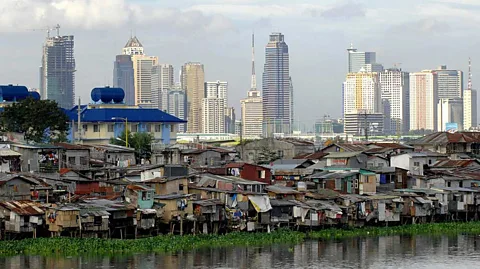
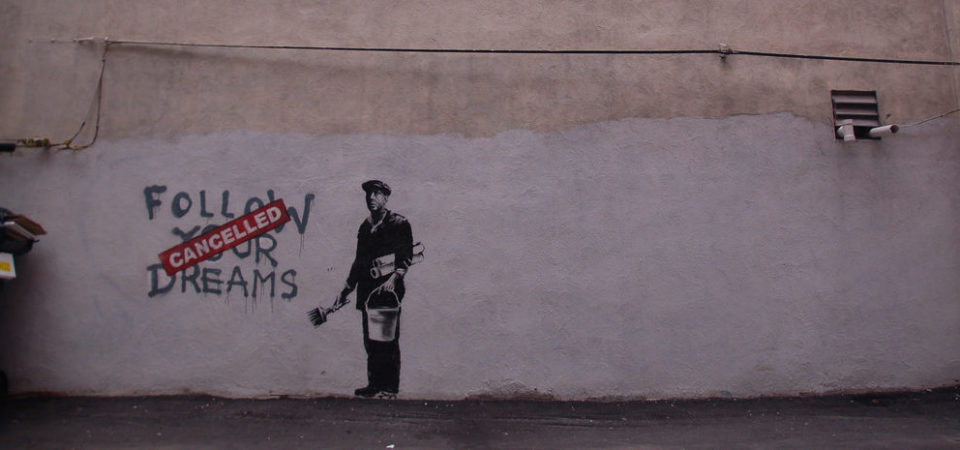
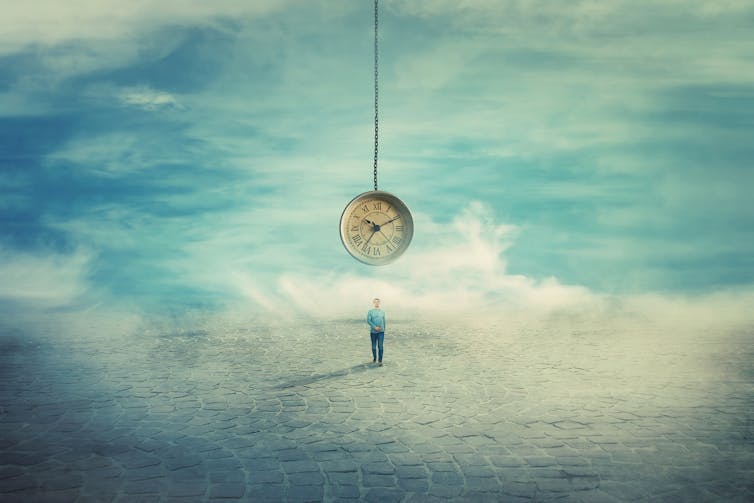

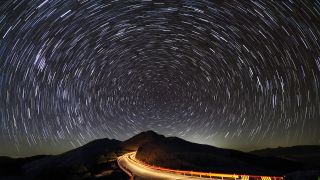
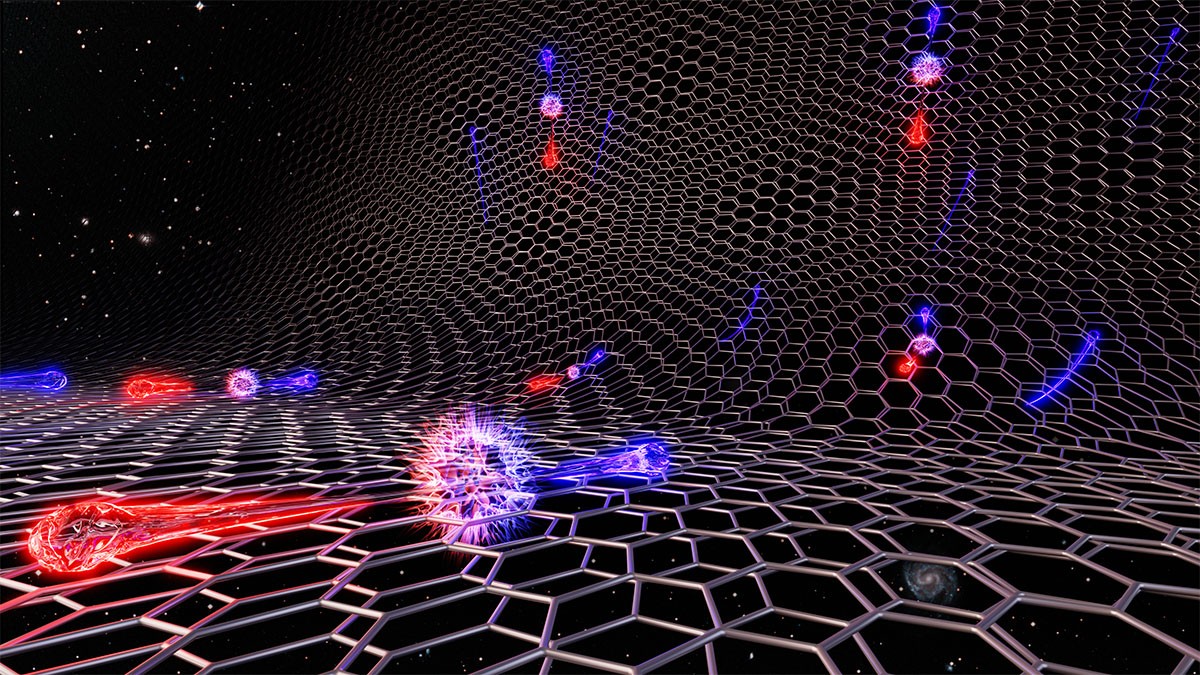
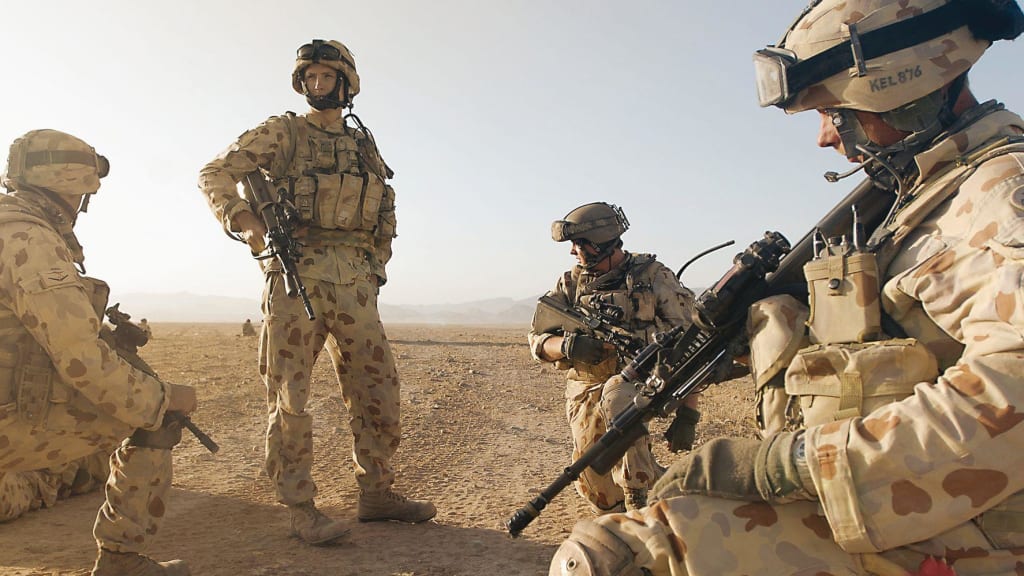


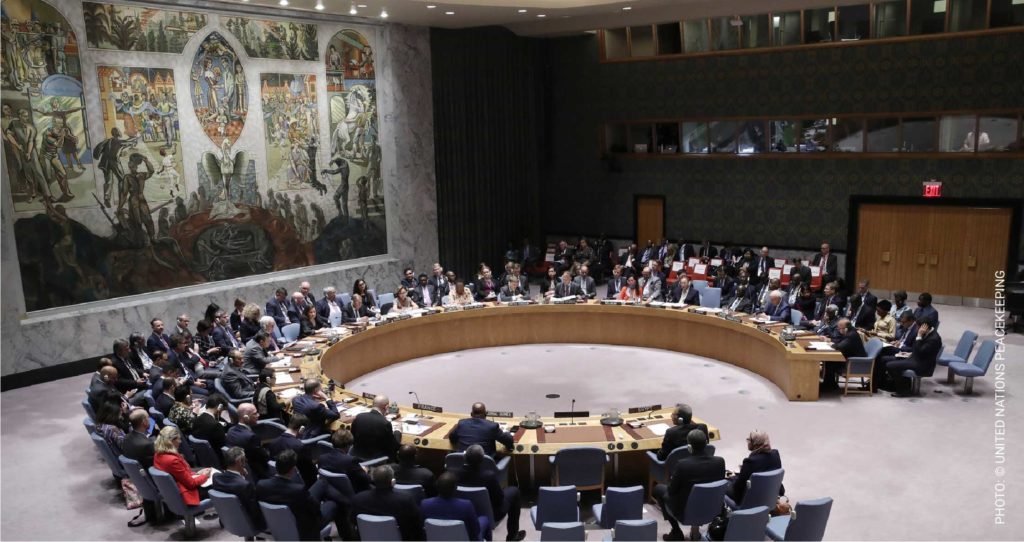
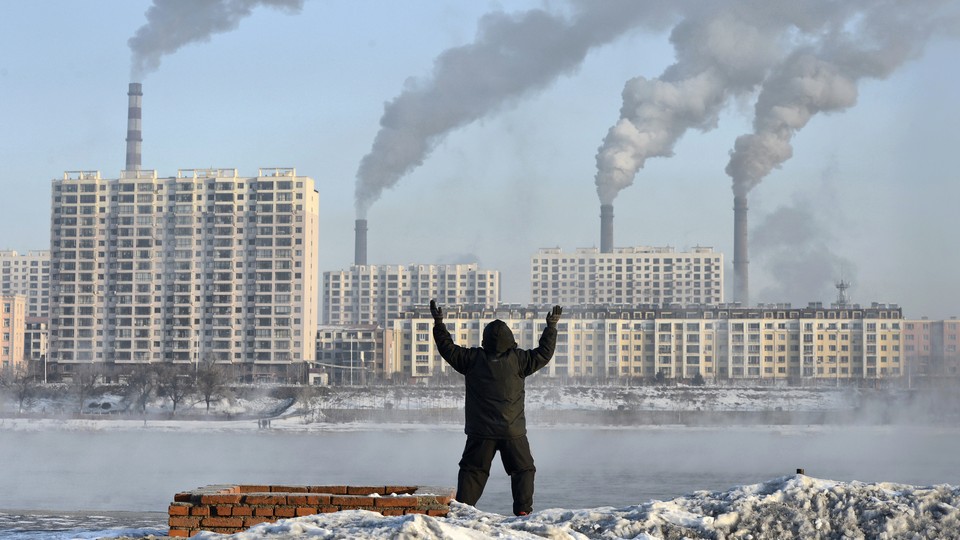



 bobdillon33blog
Perhaps is rotation is what gives us the “flow of time” turbulence caused by the rotation and resistance.