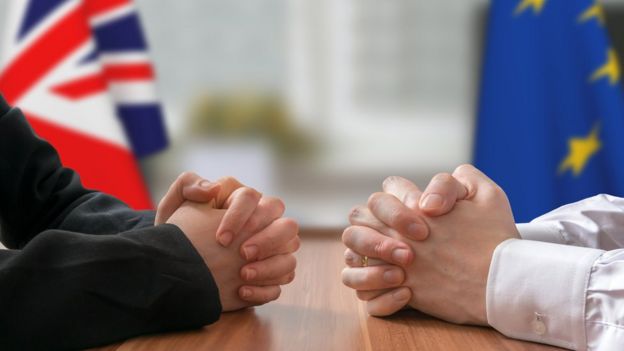
THE BEADY EYE SAY’S. EUREKA! ARE WE ALL FOOLS TO THINK THAT A PLATFORM IS HELD RESPONSIBLE FOR ITS USERS.

Tags

, , , , , , , , , ,


( A six-minute read)

Facebook is simply a platform and will never be held responsible for its users.

We can’t blame tech makers for making their products so good we want to use them. We are in control. But are we?

Facebook like all other platforms has been distorted by the fortunes they have been able to earn through advertising.

Why?

Because the techniques these companies use are not always generic: they are algorithmically tailored to each person.

There can be no ethics when it comes to technological manipulation that can be sold to the highest bidder.

The problem is that there is nothing the companies can do to address the harm unless they abandon their current advertising models. Thay have little incentive to deviate from the mantra that their companies are making the world a better place.

But how can Google and Facebook or ANY PLATFORM for that matter be forced to abandon the business models that have transformed them into the most profitable companies on the planet?

Notification technology enables hundred unsolicited interruptions into millions of lives, accelerating the arms race for people’s attention. Facebook’s headquarters in Menlo Park, California. The company’s famous ‘likes’ feature has been described by its creator as ‘bright dings of pseudo-pleasure’.

When you consider that the total size of all global data hit 20 zettabytes in 2017.

This probably means nothing so picture this: If every 64 – gigabyte I Phone were a brick, we could build 80 Great walls of China with the I Phones needed to store all the above data.

It’s growing every second and completely out of any control.

All of our minds are being hijacked.

Our choices are not as free as we think they are. The technologies we use have turned into compulsions, if not full-fledged addictions.

Billions of people have little choice over whether they use these now ubiquitous technologies, and are largely unaware of the invisible ways in which a small number of people in Silicon Valley are shaping their lives.

We now have an internet-shaped around the demands of an advertising economy with technology platforms contributing toward so-called “continuous partial attention.

Manipulating people into habitual use of their products or platforms with rewards or short-term social affirmations, while harvested valuable data about the preferences of users that could be sold to advertisers.

So what if anything can be done.

It is very common, for humans to develop things with the best of intentions and for them to have unintended, negative consequences.

We’ve truly reached a new level of technological time wasting, with the young generation unable to communicate.

If we the adult world cannot wean ourselves free a good starting point would be if we are to exercise our freedom by banning,  iPhones, iPads, laptops and mobile phones from places of education.

They will become a real problem if you don’t, as they are ridiculous thing to be addicted to. It just something to use when you’re procrastinating or is it a procrastination-trap, a slate of tools destined to get you addicted.

We have to learn to deal more effectively with our emotions if we want to procrastinate less.

Such as varying the rewards people receive to create a craving, or exploiting negative emotions that can act as triggers. It makes them look like they have a life.

Social media and other addictive technologies have and are creating an attention economy, which is severely limiting people’s ability to focus, and is possibly lowering IQ.

One reason I think it is particularly important for us to talk about this now is that we may be the last generation that can remember life before the Internet.

Drawing a straight line between addiction to social media and political earthquakes like Brexit and the rise of Donald Trump, digital forces have completely upended the political system and, left unchecked, could even render democracy as we know it obsolete.

The mere presence of smartphones damages cognitive capacity – even when the device is turned off. Everyone is distracted, all of the time.

Feelings of boredom, loneliness, frustration, confusion, and indecisiveness often instigate a slight pain or irritation and prompt an almost instantaneous and often mindless action to quell the negative sensation by looking at your I Phone, I Pad

If the people who built these technologies are taking such radical steps to wean themselves free, can the rest of us reasonably be expected to

”Chrome extension, called DF YouTube, “which scrubs out a lot of those external triggers” an app called Pocket Points that “rewards you for staying off your phone when you need to focus”

Get a life and use one.

All human comments appreciated. All like clicks chucked in the bin.

← Back

Thank you for your response. ✨

https://embed.ted.com/talks/tristan_harris_the_manipulative_tricks_tech_companies_use_to_capture_your_attention

THE BEADY EYE ASK’S: HAS ENGLAND LOST THE PLOT.

( A three-minute read)

If one were to takes a look at England from the outside you would see that two world wars and the end of empire diminished its role in the 20th century.

Now the 2016 referendum vote to leave the European Union is raising significant questions about the country’s global role. It is redefining its place in the world with Brexit but is it now in danger of dying of inanition.

The world is on the brink of the Fourth Industrial Revolution “A tech revolution that started with the internet but has now spread to everything from materials science to medicine to robotics.

The world is also at the beginnings of a green revolution, that started with carbon reduction and is now changing the way people run businesses and live their lives.

We all know that England has a rich literary heritage encompassing the works of English writers such as William Shakespeare and Charles Dickens. That the empire riches lead to the Industrial Revolution- to inventions- to inequality -to wealth- to world influence and power in fact – to all its present day’s problems.

Unfortunate it squandered its Industrial Revolution manufacturing to service industries.  Devotion to business and profit is now hocking its entire economy to save a broken system at the cost of social equality and a possible loss of international influence.

More recently, the UK has suffered a deep economic slump and high public debt as a result of the 2008 financial crisis, which revealed its over-reliance on easy credit, domestic consumption, and rising house prices.

Résultat de recherche d'images pour "pictures of social isolation"

The current English government is making life a whole lot less secure for many people. “Foreigners mate.” Take our jobs, undercut our wages is the great social media lie that is driving England into Isolation.

If it ever needed an example of the consequences of an isolation policy the recent abhorrent Salisbury assassination ( which are now resulting in tit for tat diplomatic expulsions) shows that with Mr. Putin been re-elected for a further six-year acting alone will not be enough.

It may well turn out that the substance used was manufactured in Russia and England is right to point the finger at Russia for its development but there is too large a gray area as to who used it.

Russia must have known that it would be linked to the assassination but I am unable to see the logic in the use a nerve agent. If Russian wanted the X soviet spy dead without a traceable trail back to the country it could have bumped Mr. Sergei and without his daughter Yulia with a bullet.

There is no benefit for Putin to be deliberately courting UK hostility.

On the other hand, the Russian use of murder as part of statecraft is well known.

There is nothing new about a high-profile or outspoken person being assassinated.

It is one of the oldest tools in the book to get rid of someone who is either too powerful, too dangerous or too inconvenient.

One way or the other the UK acting alone will not be enough in the long-term as there will be many that will not want or who will be unwilling to risk their links with Moscow in support of what they now see as a UK/Russia row.

Even though it is the core duty of the British government to deal effectively with a nerve gas attack on our streets, which has seriously incapacitated three people and endangered many more we are all going to need Moscow’s help to tackle the major international problems of terrorism.

Eventually in the long term, when the dust settles we will have to look for potential areas of cooperation with Russia which could begin to rebuild the shattered relationship with the West. Terrorism and perhaps the governing of cyberspace are good places to start.

When you become isolated you start kicked out every bit of imagination embracing inanition with false assumption that feeds back into further arguments distracting attention from failures of the British financial system.

Since no one would be expected to invest in an economy where future prospects and current creditworthiness are declared to be so shaky, leading who knows where?

Tomorrow’s consumption can only be funded by tomorrow’s production.

Stimulus…its what kind of stimulus and how to apply it intelligently that should be the focus of the governments’ economic policies in the UK, not isolation.Résultat de recherche d'images pour "pictures of isolationism"

All human comments appreciated. All like clicks chucked in the bin.

← Back

Thank you for your response. ✨


THE BEADY EYE SAY’S; THERE IS ONLY ONE WAY TO REGULATE ARTIFICIAL INTELLIGENCE AND ITS SOFTWARE ALGORITHM’S

Tags

, , , , , ,

( A three-minute read)

I AM SURE THERE IS NO NEED HERE FOR ME TO REMIND YOU THAT TECHNOLOGY IS NOT ONLY CHANGING THE WAY WE CONDUCT OUR LIVES BUT THE WAY WE WILL EXIST IN THE FUTURE. 

There is a wonderful aspiration by the writer Isaac Asimov introduced in 1942:

A robot may not injure a human being or, through inaction, allow a human being to come to harm; a robot must obey the orders given it by human beings, except when such orders would conflict with the previous law; and a robot must protect its own existence as long as such protection does not conflict with the previous two laws.

I call the above an aspiration because as we all know that this will never happen.

We now have AI learning from AI, engage in cyberbullying, stock manipulation or terrorist threats. We also have AI surveillance, both private and public collecting data with or without permission.

A.I. systems don’t just produce fake tweets; they also produce fake news videos.

What, exactly, constitutes harm when it comes to A.I.?  No one knows.

AI systems, are already no longer limited to a single set of tasks.

On the other hand, we need AI to tackle world future problems, such as climate change, threats from space, immigration, and sustainability itself.

There is no argument that regulation of what I call essential AI should be avoided.

However, my A.I. for profit or exploitation did it should not excuse illegal behavior.

A.I. system must clearly disclose that it is not human. As we have seen in the case of bots — computer programs that can engage in increasingly sophisticated dialogue with real people — society needs assurances that A.I. systems are clearly labeled as such.

We must ensure that people know when a bot is impersonating someone.

We must ensure that A.I. system cannot retain or disclose confidential information without explicit approval from the source of that information. Because of their exceptional ability to automatically elicit, record and analyze information, A.I. systems are in a prime position to acquire confidential information.

We must ensure that an A.I. system must be subject to the full gamut of laws that apply to its human operator. This rule would cover private, corporate and government systems.

Unfortunately none of the above is possible.

This is why I favor ( In the interest of caution)  that we establish A World Technological Strong Room, just like the World seed bank where all software programmes are held and available to everyone.

Of course, it would be totally naive to think that all AI should be subject to scrutiny.

It’s not military nor intelligence AI that I am talking about, it is AI that is created for exploitation for profit.

Rather than regulating what AI systems can and can’t do that make it more expensive to develop AIs the strong room would hold the founding programme.

Because Artificial intelligence systems are now learning from each other and have the potential to change how humans do just about everything. We must ensure all AI has an impregnable “off switch.”

How can this achieve? and by whom.

This is where I am open to suggestions.

It could be A United Nations Cloud Strongroom, run by a world people algorithm that copies all existing software and Algorithms.

Companies making and selling AI software will need to be held responsible for potential harm caused by “unreasonable practices” Any sufficiently transformative technology is going to require new laws and New legislation that isn’t imminent.

All human comments appreciated

← Back

Thank you for your response. ✨

. All like clicks chucked in the bin.


THE BEADY EYE ASK’S : IN THIS AGE OF TECHNOLOGY ARE WE REALLY TALKING TO ONE ANOTHER?

Tags

, , ,


( A twenty-minute read)

Today’s atomizing forces are brand new and far less tangible: ubiquitous Internet access, constant email and social-media updates, all distracting us from our surroundings, loved ones and other people around us.

Are we indeed socially hobbled by our little screens?

If matters have gotten worse, how would we know?

We’re disengaged.’ Compared to what?

If the new technologies are to fulfill their promise, it is necessary to direct attention towards the costs and concerns that come with the globalization of technology.

Although information technology and increased knowledge can empower everyone on an individual level, the limitations of the existing structures within the job market, socioeconomics, and governmental sovereignty are hard to cast away; an underlying irony has yet to be eliminated.

We are only just beginning to replacing vague theories with some hard data and the overarching effects so far point to the disruptive nature of technology.

So here are a few facts explaining how digital-age technologies have already transformed our world, for better and for worse.

Wealth boosted by technology has not been equally distributed.

By 2020, it is estimated that the 1 percent will own 54 percent of global wealth.

Thanks to technology, we can vent our frustration in increasingly visible ways.

Jobs will be computerized in the next 10-20 years.

With the rise of websites like WebMD, LegalZoom, and E*Trade, even white-collar professionals like lawyers, doctors, and financial middlemen are under threat from technology. Are any jobs safe? For the time being, positions that require empathy—say, nurses over doctors—are better positioned to withstand the technological blow.

Furthermore, governmental programs do not provide the assistance needed to help workers transition to the technological age, further wedging the gap between rural and urban. This disparity is also magnified within the stratification of international systems: The digital divide that exists among developed and developing countries is obvious and the high cost of bringing broadband and technology to third-world countries is an issue that needs to be solved.

Health will be run by algorithms attached to the cloud.

To put this in perspective, a full human genome sequence cost $100 million in 2002. Today, it can be done for $1,000; by 2020 it may cost less than a cup of coffee.

Technology can be a double-edged sword, but at least when it comes to our health (if not necessarily our medical professionals), it has largely been a force for good but just imagine what is going to happen to Health Insurance when your health is monitored by the Cloud.

Education.

Today, there are more than 80,000 education apps available for download through Apple’s App Store; 72 percent of those are aimed at toddlers and preschoolers. But while parents and app developers have obviously embraced the tech education revolution, the link between technology and educational performance is murky at best.

Technology can help save the planet…

The World Bank estimates that climate change may push more than 100 million people into extreme poverty by 2030.

Of course, technology has played a role in our current predicament. The shale revolution—which at its core is a technological revolution—has given a new lease on life to the oil and gas era. That may be good for falling oil prices, but it’s horrible for our environment.

But what makes the difference is that the global economy grew by 3 percent in 2014 while world emissions remained flat.

People are not willing to fundamentally change their lives for problems far off in the future, even ones as potentially catastrophic as climate change. To avoid the worst effects of climate change, alternative energies need to become as cheap and reliable as their carbon-emitting counterparts, and quickly.

Cheaper alternative energy is the best hope the world has left.

Global Security:

Technology has also created a whole new set of global security concerns.

The thoroughly modern phenomenon of cybercrime and economic espionage is estimated to cost the world more than $445 billion every year. That’s roughly 1 percent of global income. And while it hasn’t happened yet, the fear that cyber attacks can spill over and trigger real-world conflicts remains an ongoing concern.

Technology has also changed the face of modern warfare. A decade ago, the Pentagon had a stockpile of fewer than 50 drones; today it has an arsenal of about 7,000. The Pentagon estimates that China will build nearly 42,000 drones by 2023. Others will follow suit. Yet another possible complication.

But the most worrisome development?

Technology has given terrorist groups like ISIS an unparalleled platform to spread their messages of hate. The knowledge needed to build bombs in the comfort of your own home is now just a few short clicks away. Technology is capable of empowering every single individual in the world, even the worst of us.

Finance and the world economy.

It is quite obvious that money in the form of cash is going to disappear.

World stock market is now run by high-frequency trading algorithms. Personal credit lines are governed by algorithms. World trade is reverting to protectionism. Inequality is widening.

Communication:

We are all talking on our cell phones. Public spaces aren’t communal anymore. No one interacts in public spaces.

On the other hand, access to the wealth of information and opinion available on the internet is exposing people of all ages to views, lifestyles, and knowledge they might never have encountered otherwise, potentially generating greater compassion and understanding both within local communities and for people on the other side of the world.

In the next few years, virtual reality could offer a further means of breaking down geographic and social barriers.

Project Syria, for instance, uses virtual-reality goggles to place people inside the meticulously researched world of a Syrian citizen caught in the Syrian conflict, cutting through the ‘empathy fatigue’ often brought about by constant access to global news.

THEN THERE IS:

CRIME:

WHAT LAWS SHOULD APPLY TO AI.

SHOULD THEIR CREATORS BE HELD RESPONSIBLE FOR ITS ACTIONS?

An AI programme could be an innocent agent with either the software programmer or the user being held to be the perpetrator-vi another.

Does the programmer know that if the machine is used in a certain way that a certain outcome is inevitable?

Who or what should be punished if for an offense of which an AI system is directly liable.

Is Ai a service or a product. The legal implications will be profound.

PRIVACY: 

Nothing is private any longer. Whether you like it or not everything is data.

Should AI platforms Pay us for the Data?

FALSE NEWS:

There is no longer a source of Facts. Campaigns to manipulate public opinion through false or misleading social media postings have become standard political practice across much of the world.

Exploiting every social media platform — Facebook, Twitter, Instagram and beyond — and relying on human users and computerized “bots” that can dramatically amplify the power of disinformation campaigns by automating the process of preparing and delivering posts. Bots interact with human users and also with other bots. They generate so much content — and they share each other’s content — that it’s hard to disaggregate the networks.

The impact goes beyond electoral politics to hot-button issues such as climate change and the safety of vaccines.

So should we put aside these value judgments and focus on how technology will simply make the world different going forward. 65 percent of children entering primary school today will end up working in jobs that don’t even exist yet. Our time is better spent figuring out how to live in this new world rather than lamenting the old one.

Unfortunately, by the time we get around to waking up to Algorithms, we will be owned by one.

History also advises that the measures taken must be developed through close consultation between governments, private sector experts, and stakeholders and citizens. Experience with previous technologies suggests that prudent policies can help us effectively manage the risks associated with new technologies without harm to their benefits. But can we say that this is honestly true with Algorithms that are learning from each other or driven by profit, filtering platforms in order to supply personalized information?

The result is having corrosive effects across the whole political arena worldwide.

Whether you are techno-utopians or techno-skeptics technology is changing our lives and the world we all live in and on IN MORE WAYS THAN WE YET OR WILL EVER BE CAPABLE OF COMPREHENDiING.

This is why I advocate a strong room for technology. Where all software is stored and available to all. (See the previous post)

If we are not careful the very thing that we all cherish Freedom will become the sole prerogative of the Algorithms world OF APPLE, MICROSOFT, FACEBOOK, TWITTER, AND THEIR LIKE.Résultat de recherche d'images pour "pictures of technology"

All human comments appreciated. All like clicks chucked in the bin.

← Back

Thank you for your response. ✨


revolutionary.

What was still missing from the research, he decided, was historical perspective.


THE BEADY EYE SAY’S. WORLD MAINSTREAM POLITICS IS TURNING A BLIND EYE TO WHAT TECHNOLOGY IS DOING TO THE WORLD.

Tags

, , , , , , , ,


( A six-minute read)

Algorithms are shifting authority.

Surely its time for all of us to stop acting as though we are all independent of Life.

To see the future first you have to be able to imagine it.

People might be beginning to understand but the clock is running out faster and faster which is being signaled by nature year after year while banks are commercializing its very existence.

Including us, none of the worlds in the universe are immune to natural limits.

If we and our politicians are still dragging our feet in another ten, twenty, thirty years we will have degrees of climate change that we will simply not be able to manage.  The whole world will be in trouble.Résultat de recherche d'images pour "pictures of political movements"

As all the bad things re climate change are coming true assisted by the inertia of AI which is getting build into the system this time  we will not be able to rely on coal to generate energy,

The chances of Technology (In the form of Algorithms) tackling inequality or driving sustainability are dismal in the extreme.  (See previous postings)

The coming global problems that are going to be created by technology are obvious to see, lack of meaningful employment with the resulting immigration causing civil unrest and a return to Nationalism.

Just look at the results of Paris Climate Agreements being adhered too.

A complete allusion due to the rise of Nationalism.

Why?

Because of nationalism, we are now beginning to address the world problems on all the wrong levels.

We need to be looking forward not backward.  Make America great, or Brexit Britain the two current prime examples.

We are now all living with technology and no government can control it.

Now more than ever the global capitalistic economy with national politics does not work.

Basic human needs are changing and even if we manage to establish a Basic Wage for all it will not solve who lives or dies.

Human stupidity or violence should never be underestimated. There is no post-truth fake news it has been with us for thousands of years.

No one has the time to analyze all the information that AI is producing other than another machine to make a judgment.

( I often feel that we should all be changing Facebook, Twitter, Google and the like for the information we are supplying them with.)

We have out of date Organisations that are incapable of making anything stick.

So I hear you saying what can be done.

First and for most, we must apply a World  Aid Commission on all Profit-seeking Algorithms, on all high-frequency trading, on all sovereign wealth funds acquisitions, on all foreign exchange transaction over $50,00, on all world Lotto prize money etc. (See previous postings)

Then we must create a technology storm room where all programmes relating to technology in all its forms are held with access to all in sundry.

Of course, this is pie in the sky as it will never happen.

Since the dawn of history, the human has not been able to share for the common good of all, but there is one thing that might focus our minds sooner than extinction and that is the price of oil as it runs out.

New media such as Social Media seems to be driving a return to a more pluralistic communication System and Social movement activists may be seen as consumers of these new media, and for this very reason find attention for their demands.

But this, in fact, is open to différent types of interprétation.

So where are we?

As F.M. Powicke said: ” Political and social history are in my view aspects of the same process. Social Life loses half its interest, and political movements lose most of their meaning if they are considered separately”

Social media with its networks and its rules petitions and false news that go beyond democratic representation and is achieving exactly what Powicke rightly identified.

Social left politics is in disarray, Right-wing politics on the rise, Liberal politics in the pockets of Economic growth and the technologic revolution.

It is, therefore, time for in-depth research on the interactions between movement organizations and the society of social media that goes beyond the analysis of media bias.

In course of constructing the political landscape of these movements, if there is going to be any chance.  We must not allow the world to be governed by the altar of profit, whether its Apple, Microsoft or some other monopoly platform.

All human comments appreciated. All like clicks chucked in the bin.

← Back

Thank you for your response. ✨


THE BEADY EYE ASK’S: HAS ENGLAND DONE A TRADE DEAL WITH SAUDI.

Tags

, , ,

( A seven-minute read)

Of course not.

Britain cannot conclude trade deals or agreements with countries while it is still a member of the European Union.

However, it’s important to note exactly what this means.

Does it mean leapfrogging?

Britain cannot conclude such agreements while still a member, not that Britain cannot negotiate them while still in the bloc.Résultat de recherche d'images pour "Pictures of trade agreements"

This is a distinction that all too many are not making and it’s an important one:

WHATEVER ABOUT THE HIPOCRICY of trading with a country that abuses human rights, and is killing Yemenites with English weapons (UK sales of arms and military kit to Saudi Arabia hit £1.1bn in 2017.) the question for the EU is:

Is England breaching its EU treaty or not.

A Chines £9bn agreement  ( Not all details have been made public.)

A Saudi £65bn agreement trade and investment target for the year 2030.

Both disguised as mutual trade and investment opportunities ambitions, visions, whatever you like to call them over the coming years.

Britain will remain within custom union rules during any Brexit transition. This means that no new trade deals can come into force until at least 2021.

Over the years, the EU has forged a constructive political dialogue with members of the Cooperation Council for the Arab States of the Gulf (GCC). These countries are Saudi Arabia, Bahrain, Kuwait, Oman, Qatar and the UAE.

The Cooperation Agreement, which was concluded in 1988, forms the basis for the relationship that aims at:

  • strengthening the stability in the strategically important region;
  • facilitating the political and economic relations;
  • broadening economic and technical cooperation;
  • further broadening cooperation on energy, industry, trade and services, agriculture, fisheries, investment, science, technology, and environment.
  • The EU and GCC have been engaged in negotiating a Free Trade Agreement (FTA) since 1990.

In the meantime here are some of the benefits England enjoys from EU trade deals ( There are 800 odd trading)Résultat de recherche d'images pour "Pictures of trade agreements"

As a member of the EU, Uk business has easier access to 1/3 of the world’s markets by value.

The EU gives UK business preferential market access to over 50 countries outside of the EU.

The EU gives the UK access to more markets than Switzerland, Canada or Australia – who have 38, 15 and 15 trade deals respectively.

The EU gets the UK a better deal – eliminating tariffs with South Korea
almost 4 times quicker than Australia’s deal.

EU trade deals are comprehensive in scope – all deals signed in the last year include services.

The EU-South Korea deal boosted UK trade with South Korea by 57%.

The EU-Canada trade deal will add £1.3bn to the economy.

If the EU completes all deals currently under negotiation, 88% of the UK’s trade would be covered.

The EU-US deal (TTIP) could add £10bn to the UK economy by attracting more investment, cutting red tape and increasing consumer choice. The deal would also set the bar for regulatory standards around the world with corporations having legal powers to sue nations. Let’s hope it will never happen.

Britain is now trumping free trade.

” Free trade under WTO rules will play an important role in global poverty reduction post-Brexit.”

But this argument is based on nostalgia for a system where free and fair trade represented a cornerstone of Britain’s foreign policy. It is nostalgic because such a system, which had its origins in colonies and treaty ports, was neither free nor based on fair rules. It’s a fallacy that provides – at best – some comfort against the uncertainty of Brexit. At worst, it evokes memories among many countries, including China, of an era when trade was used to exacerbate exploitation rather than alleviate poverty.

The arguments that rules-based free trade reduces poverty do not stand up to scrutiny. Not only are they divorced from the history of the colonial trade system, they are also inconsistent with the way in which China lifted some 700m citizens out of absolute poverty.

Plus, the assertion that a “protectionist” EU has constrained the UK’s ability to form free trade agreements with its “natural” trade partners in the Commonwealth has been shown to be inconsistent. The EU incorporated many of these countries into its system trade preferences after the UK joined its precursor, the EEC.

The colonial trade system was neither built on free trade nor liberal economic policy. Instead, it functioned on the basis of strict currency controls, centralized planning and unbalanced economic power, which favored the colonial power.

Perhaps the biggest irony is that the UK’s best prospects for a favorable trade agreement with China, a strong currency, and rules-based trade are to be found by remaining within the EU. The EU has long been reluctant to grant China market economy status until it can demonstrate that Chinese product prices reflect their market value. More recently, it has sought to develop a more cohesive approach to Chinese investment in EU countries.

In holding China to rules-based trade, the EU is, therefore, following the very approach that those in favor of Brexit appear to be advocating. And, as one of China’s biggest export markets, has far more clout to shape these rules.

There remains this question should countries make trade deals with countries that use them to sell arms.

England has already sold £4.6bn of arms to Saudi since the war started in Yemen in 2015. It now in the process of selling an additional 48 Typhoon at an expected to cost on average about $180 million each. So much for Free trade under WTO rules.

All human comments appreciated. All like clicks chucked in the bin.

← Back

Thank you for your response. ✨

THE BEADY EYE SAY’S: IT IS TIME TO CREATE A WORLD TECHNOLOGICAL STRONG ROOM.

Tags

, , , ,


( A two-minute read)

Of course, some argue that we have better things to worry about. Climate Change, Wars, Sustainability etc, but Superhuman, might finally create a joke so funny that everyone on Earth dies laughing. Artificial Intelligence is becoming is becoming incredibly sophisticated and scientists aren't sure how

The fact is that there are a lot of unquestioned assumptions when it comes to AI, learning in ways far beyond that of humans.

We can’t really predict what might happen next because superintelligent A.I. may not just think faster than humans, but in ways that are completely different. It may have motivations — feelings, even — that we cannot fathom. It could rapidly solve the problems of aging, of human conflict, of space travel. We might see a dawning utopia.

There is one thing for sure it has been set in motion and now we are waiting for the results.

In the meantime, there is something unpleasant about A.I. and that is Humanity is already losing control of artificial intelligence which could have catastrophic consequences for civilization.

For example “Deep learning”, is a powerful tool for solving problems. It helps us tag our friends on Facebook, provides assistance on our smartphones using Siri, Cortana or Google.

Deep learning has helped computers get better at recognizing objects than a person.

The military is pouring millions into the technology so it can be used to steer ships, control drones and destroy targets.

And there’s hope it will be able to diagnose deadly diseases, make traders billionaires by reading the stock market and totally transform the world we live in.

Indeed whether you call it Deep learning, it could be the last invention that humanity will ever need to make.

If they can’t figure out how the algorithms (the formulas which keep computers performing the tasks we ask them to do) work, they won’t be able to predict when they fail.

The Question is are we going to rely on a Google AI ethics board or we agree on a World Technological Strong Room where all AI programs are stored and available to everyone.

It’s now or never.

All human comments appriciated. All like clicks chucked in the bin.

← Back

Thank you for your response. ✨


THE BEADY EYE ASK’S: CAN THE EUROPEAN UNION SURVIVE WITHOUT MAKING SOME REFORMS .

Tags

, , ,


( A two-minute read)

There’s no denying Brexit is going to be a serious smack in the face for the EU.Résultat de recherche d'images pour "pictures of the EU House of parliament"

The second EU straw is now the populist gale that will blow throughout next year.

Surely now is the time for some reforms.

Fundamental problems other than Brexit must be addressed.

But what to change? There’s little consensus yet.

Ever closer union, which has been an EU rallying cry for nearly 30 years, is almost “dead.”  Lofty speeches are falling on deaf ears.

It may be forced by politics or forced by new leadership but there is no doubt that the divisions between wealthy northern European nations and those in the South, where public finances are strained and youth unemployment remains a major problem has to be resolved.

The rise of nationalist parties — on left and right — threatens to reverse nearly 70 years of integration in Europe. The Greek bailout is in danger of collapsing. There are doubts about the future of the euro.

It is was unrealistic to expect radical change, when there are creditors and debtors in the EU. Because of this, it’s almost impossible for European Union to continue with a deepening integration on fiscal affairs.

Here are three reforms it should and can be undertaking imminently.

One > Stop the gravy train Strasburg to Brussels.

Two > Make the Commission an elected body.

Three > Establish legal entry points for refugees.

There are arguably two primary types of democracy: direct democracy, in which all
citizens directly participate in decision-making; and representative democracy, in which the power of the people is delegated to periodically elected representatives.

Where is the difficulty with the above reforms?

After all is not democracy said to be in the eye of the beholder.

Britain’s departure from the EU, which will be negotiated over just two years, will also distract attention from reforms. There will be pressure to wrap up Brexit talks quickly, but the EU is not known for moving fast.

Europe needs to change, and fast.

Either it prepares for the future, or it will become obsolete.

All human comments appreciated. All like clicks chucked in the bin.

← Back

Thank you for your response. ✨


THE BEADY EYE SAY’S: BEWARE BREXIT DOES NOT MEAN BREXIT AFTER ALL.


(A two-minute read)

Prime Minister said her position is ‘based on practicality.’Brexit negotiations

These are empty reassurances not only for the fish stocks in the Irish sea but for the Good Friday agreement and any other agreement transition period or not with or without a border protecting Unionism.

We all need to face up to a few hard facts.

Brexit will be a loss for all of us.

England will be poorer in more ways than one and it will be so entirely of its own choice.

Next:   There will be no hard border in Ireland.

This is only true if Ireland somehow manages unites. Why? Because it is totally impossible while one side is in the customs union and the single market and the other isn’t.

Every Tom Dick and Harry will have their own regulations.  Yuppie England will see more snow than Columba exports.

Direct rule in Northern Ireland or a hard border after Brexit could lead to “serious trouble.”  When there was a hard border, there was very little commerce, very little travel, very little interaction between the people of Northern Ireland and the people of the Republic.

“That led to stereotyping, to the demonization of others, to attitudes that were based upon acts from the distant past.”

Next:  Ms May needs to secure a trade deal to do this England has to remain in a customs union.

The UK and the EU have not started discussing their “future partnership” yet.

Next: Any transition period is going to be costly and riddled with but what we are saying is.

Citizens’ rights – in particular, EU nationals who move to the UK during the transition period. Do they get treated the same as if they had arrived while the UK was in the EU? The EU says yes, the UK no.

The UK also wants to be able to strike trade deals with other countries – which it cannot do as an EU member – although these cannot come into force until the transition ends.

Next: Vague aspirations.

There are two sides in England both have different ideas about what it should look like.

It is England, that wants to leave the European Union, not the European Union wanting to leave England.

She had the temerity to talk of what will be remembered of Brexit “a generation from now”.

Here’s a prediction:

A generation from now, the current young generation, who utterly loathe Brexit, will remember the monumental pain in the arse that was taking the UK back into the EU under worse terms, sometime around 2031 at the very latest.

“Brexit means Brexit”  “Let’s get on with it!”  “The world is not watching.”

The Lawyers are laughing all the way to the Bank.

All human comments appreciated. All like clicks chucked in the bin.

← Back

Thank you for your response. ✨


costly transformation,


THE BEADY EYE SAY’S: WE EDUCATING THEM ALL WRONG.


( A three-minute read)

In the not so distant future, it will not be the aims of education to be the transmission of knowledge but the fostering of inquiry.Résultat de recherche d'images pour "future of education pictures"

All human societies, past and present, have had a vested interest in education; children are born illiterate and innumerate, and ignorant of the norms and cultural achievements of the community or society into which they have been thrust.

We all know that education serves as a social-sorting mechanism but this is coming to an end with technology. The great social importance of education is underscored by the fact that when a society is shaken by a crisis, this often is taken as a sign of educational breakdown; education and educators become scapegoats.

There seems little point in education the children of the today with yesterdays knowledge if they are void of creativity. The passive language of seeing, which has shaped our discourse down to the present will no longer apply.

The question of what knowledge will be, and what skills will be needed ought to be—part of the domain of philosophy of the curriculum of the future.

What are the basic aims and ideals of the educational enterprise?

What ought educators try to accomplish?

I suppose the best education will equip individuals with the skills and substantive knowledge that allows them to define and to pursue their own goals, and also allows them to participate in the life of their community as full-fledged, autonomous citizens.

The world is going to need critical thinkers, not the present day state-provided brainwashing students.

Plato’s starting point is that the organization of society depends ultimately upon knowledge of the end of existence. Only those who have rightly trained minds will be able to recognize the end.

Granted each individual is an organism situated in a biological and social environment in which problems were constantly emerging, forcing the individual to reflect, act, and learn but this is also changing and perhaps Plato’s theory “the spectator theory of knowledge” is going to come true.

In schools, those under instruction are too customarily looked upon as acquiring knowledge as theoretical spectators, minds which appropriate knowledge by a direct energy of intellect. The very word pupil has almost come to mean one who is engaged not in having fruitful experiences but in absorbing knowledge directly.

Something which is called mind or consciousness is severed from the physical organs of activity.

However, in the future, as robots and automation sweep the global workforce each student although an individual will blaze his or her unique trail of growth on the internet.

This is already happening with many University offering online courses.

A teacher will have the task of guiding and facilitating this growth, without imposing a fixed end upon the process.

Dewey sometimes uses the term “curriculum” to mean “the funded wisdom of the human race”, the point is that over the course of human history an enormous stock of knowledge and skills has accumulated and the teacher has the task of helping the student to make contact with this repertoire—but helping by facilitating rather than by imposing.

As technology removes the need for knowledge students coming out of University with degrees in Law, Medicine etc will not be needed.

Virtual learning, digitization, and augmented reality will make obsolete our old definitions of a classroom in 2020.

Before each of us is imprisoned in a world of our own making we should move creativity to the top of the education premise.Résultat de recherche d'images pour "future of education pictures"

All human comments appreciated. All like clicks chucked in the bin.

← Back

Thank you for your response. ✨