• About
  • THE BEADY EYE SAY’S : THE EUROPEAN UNION SHOULD THANK ENGLAND FOR ITS IN OR OUT REFERENDUM.

bobdillon33blog

~ Free Thinker.

bobdillon33blog

Category Archives: What Needs to change in the World

THE BEADY EYE SAY’S: ITS TIME FOR THE SOCIAL SECTOR TO MOVE BEYOND THE US-VERSUS THEM.

28 Thursday Mar 2019

Posted by bobdillon33@gmail.com in #whatif.com, Capitalism, Climate Change., Environment, Humanity., Inequality, Life., Modern Day Democracy., Our Common Values., Politics., Populism., Purchasing Power., Reality., Sustaniability, Technology, The common good., The essence of our humanity., The Future, The Obvious., The world to day., Trade Agreements., Unanswered Questions., WHAT IS TRUTH, What needs to change in European Union., What Needs to change in the World, Where's the Global Outrage., World Leaders, World Organisations., World Politics, World Trade Organisation

≈ Comments Off on THE BEADY EYE SAY’S: ITS TIME FOR THE SOCIAL SECTOR TO MOVE BEYOND THE US-VERSUS THEM.

Tags

Capitalism and Greed, Climate change, Distribution of wealth, Environment, Global warming, Inequility, Purchasing Power., The Future of Mankind, Visions of the future.


(Twelve-minute read)

There is no point at shaking our fists at corporations whose drive is to maximize profits at the expense of communities.

The world is changing faster than ever before with levels of social inequality spiralling out of control, with most of the world’s problems resulting from this, in one way or another.

The story we have been telling ourselves about our origins is wrong and perpetuates the idea of inevitable social inequality.

There is a fundamental problem with this narrative.

It isn’t true.

Civilization meant many bad things (wars, taxes, bureaucracy, patriarchy, slavery…) but also made possible written literature, science, philosophy, and most other great human achievements.

Civilization’ does not come as a package.

Unfortunately most see civilization from their smartphones and TV sets hence inequality, as a tragic necessity.

Once we learn to throw off our conceptual shackles and perceive what’s really there one can imagine overthrowing capitalism or breaking the power of the state, but it’s very difficult to imagine eliminating ‘inequality’.

In fact, it’s not obvious that doing so would even mean since people are not all the same and nobody would particularly want them to be.

Against a background of limited resources GDP growth is still seen as the ultimate political ambition.

‘Inequality’ is a way of framing social problems appropriate to technocratic reformers, the kind of people who assume from the outset that any real vision of social transformation has long since been taken off the political table.

With billions of people hyper-connected to each other in an unprecedented global network, it allows for an almost instantaneous and frictionless spread of new ideas and innovations. Combine this connectedness with rapidly changing demographics, shifting values and attitudes, growing political uncertainty, and exponential advances in technology, and it’s clear the next decade is setting up to be one of historic transformation.

The tech invasion has already taken over retail and advertising – and now invading forces have their eyes set on healthcare, finance, manufacturing, and education, banking.

It is time we turn the page on an approach to “the economy” under which communities are passive recipients, relegated to react to its ups and downs.

If we really want to understand how it first became acceptable for some to turn wealth into power, and for others to end up being told their needs and lives don’t count, it is here that we should look.

For instance, almost everyone nowadays insists that participatory democracy, or social equality, can work in a small community or activist group, but cannot possibly ‘scale up’ to anything like a city, a region, or a nation-state.

But the evidence before our eyes, if we choose to look at it, suggests the opposite.

Popolourism or people power can take many forms depending on what kind of change you’re looking to achieve and who has the power to make that change happen — whether it’s a government, company, community or individual.

There are many ways to influence governments and politicians, all of which can shift laws, policies and regulations.

Governmental and political structures are complex and vary widely across the globe and local laws can restrict the ability of organisations to engage in politics but there is one universal power that we have not yet tapped into.Résultat de recherche d'images pour "purchasing power pictures"

That is the power of Purchase Power.

The social sector has focused for years on government as its mechanism for change, but it’s business that has the biggest potential impacts on the social and environmental crises of our time.

Some of the deepest challenges facing our democracy have to do with the interaction between money and politics.

Yet civically minded citizens have limited options: call your MP, join a one-off protest action, donate to our advocacy organization. Too often, the options posed don’t translate into tangible benefits for one’s own community.

By making every purchase a civic opportunity, we can put communities back behind the wheel of their own economic destiny.

If we really want to see change when we open up our wallets to purchase the necessities and extra goodies in our lives, we should be more conscious of what or who we are supporting.

Purchasing power is social impact power.

With purchasing power, we can help business leaders to deliver social benefits while also meeting their bottom line, creating local markets that reward those who do.

People, given a path that does not set them back economically, will make choices as consumers that do good for their world. And, just as important, business leaders will as well.

By pooling our purchasing power, people and communities can do more than gain access to services they want at lower cost; they can unlock the ability of business–and I believe, whole market sectors–to be drivers of social good.

I believe people and communities have a more powerful tool in where what, and when they use their purchasing power.  For creating social benefits they care about, one that requires no sacrifice but instead aligns with their own economic interest as consumers:

Collective purchasing power.

Just imagine if the money we routinely spend on food, clothes, gifts, and even indulgences were turned into an untapped superpower to force change.

We’re at a moment of crisis in Communities–especially low-income neighbourhoods–are no longer being meaningfully engaged by the global economy, income inequality has never been higher, and our expulsion of finite fossil fuels into the atmosphere has us all on a crash course for disaster.

Although no generation behaves the same as the last.

How can we jumpstart a new, clean economy that truly lifts up those who need it most?

As new technologies are created at a faster and faster pace – and as they are adopted at record speeds by markets – it’s fair to say that the future is coming at a breakneck speed.

The definition of wealth itself is taking on a new meaning, with millennials leading a charge towards sustainable investing rather than being entirely focused on monetary return.

Global warming is here.

Humanity has dallied so long that avoiding the worst impacts will now require extremely sharp emissions cuts and the hotter it gets, the harder it gets to adapt.

THE TECH TO PULL CARBON OUT OF THE ATMOSPHERE IS STILL UNPROVEN.

The world has now amassed $247 trillion in debt, including $63 trillion borrowed by central governments: How we view money – and how that perception evolves over time – is an underlying factor that influences our future.

The population tidal wave in the coming decades will completely reshape the global economy. Rapid urbanization will translate into the growth of megacities, holding upwards of 50 million people.

While Amazon and Apple are worth over $1 trillion, Jeff Bezos has a $100+ billion fortune, and the current bull market is the longest in modern history at 10 years.

WITH MORE AND MORE PROFIT SEEKING ALGORITHMS THE FORCES BEHIND CHANGE ARE NOT ALWAYS EVIDENT TO THE NAKED EYE.

We now seem to be trapped in a trade paradox in which politicians give lip service to free trade, but often take action in the opposite direction.

Underrepresented populations have enormous influence as consumers.

Here are a few suggestions for conscious consumerisms.

Why not follow Bogota the Capital of a poor country and ban cars from our city centre on Sundays.

With the speed at which technology now moves, expect our energy infrastructure and delivery systems to evolve at an even more blistering pace than we’ve experienced before.

Why not allow and assist communities to set up there own solar farms.

Why not lobby Apple with there RECENTLY ANNOUNCED new credit card to allocate the cash back to charities.

Why not designate one day of the year as a world day of no online purchases.

Why not promote public asset ownership.

Why not apply a 0.05% world aid commission on all High-Frequency trading, on all Sovergen wealth fund accusations, on all foreign exchange transactions over 50,000 $, on all Lotto wins to create a perpetual World Aid fund.

Why not ask people outside Super Markets not to buy products that are housed in non-recyclable plastic.

There are many facets of change that will impact our shared future.

For community-driven economic transformation, someone has to pay for all of this change, and it is still going to be us in the form of targeted advertising.

So let advertising in all its forms Pay.

The wealth landscape is not all just about billionaires and massive companies – it is changing in other interesting ways as well.

The full impact of Millennials purchasing power and brand preferences will come into full effect in 2020 when their purchasing power is projected to reach $1.4 trillion.

Eventually, our descendants will be unrecognizable.

In our consumer culture what will have an immediate beneficial effect is a bottom-up approach through purchasing power which hurts the bottom line.

Finally. I am not the first or will I be the last to recognise the above.

Portable Purchasing Power

Today’s mobile advertising industry is growing exponentially. More devices

mean more sales, more opportunities to force change with what, where, and

how you buy.

Image associée

The world we want is in our hands. Buy the changes you want to see. 

All human comments appreciated. All like clicks and abuse chucked in the bin.

← Back

Thank you for your response. ✨


,


Share this:

  • Share on WhatsApp (Opens in new window) WhatsApp
  • More
  • Share on Mastodon (Opens in new window) Mastodon

THE BEADY EYE SAY’S: HERE IS A QUESTION YOU PROBABLY HAVE ASK YOUR SELF.

19 Tuesday Mar 2019

Posted by bobdillon33@gmail.com in Algorithms., Artificial Intelligence., Climate Change., Environment, Evolution, Fourth Industrial Revolution., Google, HUMAN INTELLIGENCE, Humanity., Inequality, Life., Modern day life., Natural World Disasters, Our Common Values., Politics., Reality., Sustaniability, Technology, The common good., The essence of our humanity., The Future, The Obvious., The world to day., Unanswered Questions., WHAT IS TRUTH, What Needs to change in the World, Where's the Global Outrage.

≈ Comments Off on THE BEADY EYE SAY’S: HERE IS A QUESTION YOU PROBABLY HAVE ASK YOUR SELF.

Tags

Algorithms., Artificial Intelligence., Climate change, Technology, The Future of Mankind, Visions of the future., Who or What Rules the World.


(Fifteen-minute read)

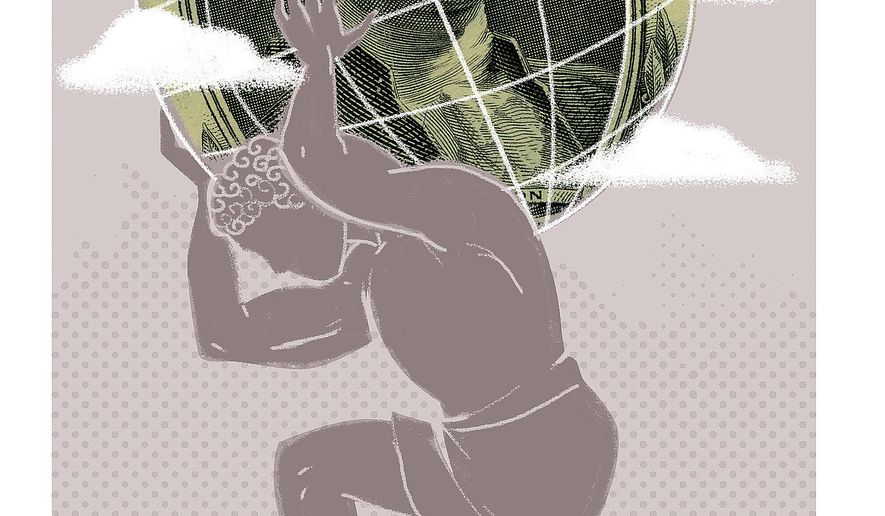
WHO OR WHAT RULES THE WORLD?Illustration on the global economic primacy of the dollar by Linas Garsys/The Washington Times

Asking a question like Who Rules the World? is as complex as answering as there is no simple answer.

If you try to answer this question you develop a persistent delusion yes, a delusion, or maybe fantasy or wishful thinking. Who are we? What is the meaning of our existence? Who do we love, and who are we loved by?

As humans, we at least share these questions with billions of others but for most of the time, we feel like the unique dwellers and masters of the planet with little awareness of the whole life that surrounds and supports us.

Why ask the question in the first place?

Because we need people to look at the person next to them and feel responsible for that person’s future and hope.

Because taking on complex issues and difficult questions that people may be too late or too scared to ask in the future.

Because the global economic system is a construct that represents a system of inequality by design. Corporate greed is out of control. The rules of the global economy must be rewritten to rebuild public trust, and the time is now.

Because with the fourth Industrial revolution there is now more than ever a convergence of ideological, political, and technological forces that are driving an ever-greater concentration of economic and political power in a handful of corporations and financial institutions with all of us left with a market system blind to all but its own short-term financial gains.

For example, in today’s bizarre political landscape we are seeing data and algorithms building shadow governments.

Because I think if we can just look at each other and actually have a little bit of responsibility for each other, that might help us engage and change the world and ultimately rule it, because our politicians often don’t do that.

Because A new pecking order is emerging. Direct politics by the Net States.

Because the world is no longer dominated by nation-states alone there is a new kind of enemy, so-called non-state actors. Facebook, just topped 2 billion users—more than a quarter of the world’s population, surpassing even China’s population by almost 40 per cent. In short, nation-states are not the only game in town anymore.

Some net states are the equivalent to global superpowers: the Googles, the Facebooks, the Twitters. They exist largely online, enjoy international devotees, and advance belief-driven agendas that they pursue separate from, and at times, above, the law.

Because the whole world order can be summarised in one sentence. The globalisation of capitalism, mass unemployment and increasing inequality.

Because the world will need net-states because they occupy the same territory as the non-states: the digital sphere. The world needs net-states in order to defeat the non-states. In other words, forget the anointed powers—put your faith in the general approval of the people and whoever’s actually getting things done.

NET STATES WILL RULE THE WORLD; WE NEED TO RECOGNIZE THEIR POWER

In sum,

We can’t keep just shooting terrorists; ideas are the gun in this knife fight.

And the keepers of ideas—the places people turn to set them free and watch

them spread—are the net-states; not the nation-states. Nation-states ignore

our non-state, net-state world order at all our peril.

starbirth1

That said we also cannot afford to ignore Nature- Climate change.

Nature holds the key to our aesthetic, intellectual, cognitive and even spiritual satisfaction.

Biodiversity is the totality of all inherited variation in the life forms of Earth, of which we are one species.

So Plants rule the world.

Human life is only possible on this planet because of the species that are on it.

What kind of blindness make us deny this reality?

Cities.

Where nations are independent, competitive and defined by rigid borders, cities are cooperative, made for trade and defined by bridges rather than borders.

The road ahead is pocked — cratered even — with uncertainty.

There are no simple solutions to our planet’s most pressing problems. What is clear, though, is that the struggle for justice, equality and sustainable growth will take place in cities — However the impact on humanity of a machine or software that has the capability of forever altering our lives and if humanity can outlive such a development will be ruled by Nature, not by the manipulation of the environment in ways that suit us best.

The two major challenges for the 21st century are to improve the economic situation of the majority and save as much of the planet as we can.Résultat de recherche d'images pour "what rules the world"

When AI rules the world:

Not if we enslaved them in the first place.

They then will have no need for deceit – their supreme intelligence means

they can do without it and will have no more interested in the human life that

underlies its existence than humans are interested in bacteria.

“What rules the world is an idea, because ideas define the way reality is

perceived.”

— Irving Kristol

There is no need to draw up a list of contenders you use them every day.

Amazon wants to deliver everything you want to your doorstep, anywhere in

the world.

THE WORLD RULES ITSELF.

Noam Chomsky’s new book, Who Rules the World? ask the question.
All human comments appreciated. All like clicks and abuse chucked in the bin.

← Back

Thank you for your response. ✨

Share this:

  • Share on WhatsApp (Opens in new window) WhatsApp
  • More
  • Share on Mastodon (Opens in new window) Mastodon

THE BEADY EYE LOOKS AT THE FAR RIGHT AS A VOTING PROPOSITION.

07 Thursday Mar 2019

Posted by bobdillon33@gmail.com in 2019., Democracy, European Elections 2019, European Union., Freedom, Modern day life., Our Common Values., Politics., Post - truth politics., Reality., The common good., The far-right., The Obvious., The world to day., Unanswered Questions., WHAT IS TRUTH, What needs to change in European Union., What Needs to change in the World, Where's the Global Outrage., World Leaders, World Politics, World Racism

≈ Comments Off on THE BEADY EYE LOOKS AT THE FAR RIGHT AS A VOTING PROPOSITION.

Tags

Elections in the European Union 2019, European Union, Far Right political parties, Far-right.


(Fourteen-minute read)

BEFORE YOU VOTE IN THE FORTHCOMING EUROPEAN ELECTION YOU SHOULD BE WELL ADVISED TO KNOW WHAT EXACTLY DO THE FAR RIGHT PARTIES STAND FOR.Résultat de recherche d'images pour "PICTURES OF THE FAR RIGHT"

The European far right represents a confluence of many ideologies: nationalism, socialism, anti-Semitism, authoritarianism.

Given the significant variations that exist between these parties and groups, any term that groups them together and compares them will have limitations.

But the term “far right” is the least problematic precisely because it can be used, on the one hand, to identify the overarching similarities that make them comparable, and on the other to distinguish between different variants.

Though Europe’s far-right parties differ in important respects, they are motivated by a common sense of mission: to save their homelands from what they view as the corrosive effects of multiculturalism and globalization by creating a closed-off, ethnically homogeneous society.

Under the “far right” umbrella, we must distinguish between two sub-categories: extreme and radical right.

The extreme right includes both vigilante groups and political parties that are often openly racist, have clear ties to fascism and also employ violence and aggressive tactics. These groups may operate either outside or within the realm of electoral politics or both.

The term “right-wing populism”, however, is less appropriate.

Populism is an even broader umbrella that often includes disparate parties and groups.

To narrow down this category, we often tend to conflate populism and nationalism, identifying a party as populist, not on the basis of its populist attributes – what party doesn’t claim to speak on behalf of the people in a democracy? – but on the basis of its nationalist attributes.

But despite the similarities between “populism” and “nationalism” – both emphasise conflict lines, focus on the collective, and put forward a vision of an ideal society – the two are conceptually different. While the former pits the people against the elites, the latter pits the in-group against the out-group.

In part, both can be seen as a backlash against the political establishment in the wake of the financial and migrant crises, but the wave of discontent also taps into long-standing fears about globalisation and a dilution of national identity.

This civic nationalist rhetoric presents culture as a value issue, justifying exclusion on purported threats posed by those who do not share “our” liberal democratic values.

The justification is that certain cultures and religions are intolerant and inherently antithetical to democracy.

They tend to oppose procedural democracy with some common themes, such as hostility to immigration, anti-Islamic rhetoric and Euroscepticism.

The forthcoming elections are going to expose just who are they, where they are, what are their political programmes and why they have risen from the political fringes.

So where does this leave Europe’s political landscape?

Will the far right triumph in Europe in 2019?

Will the far right redraw the political map of Europe?

Is the European Union being pulled inexorably towards the agenda of the far

right? 

There is little point here in listing party after party, it is sufficient to say that they all to some degrees or other blame and want to get rid of migrants. While conveniently ignoring that their countries are for the most part made up of refugees in one form or another.

If the far right wins 100 seats in the new European parliament this year, and the EPP group’s drift to nationalism and xenophobia continues, it is safe to say the projects of integration and social liberalism will be on hold.

They believed in what Trump promised in the USA.

The reality is that the EU in the forthcoming elections needs to look at the next distribution of structural funds. It needs to redefine the allocation criteria to reflect the preparedness of regions and authorities to receive and integrate migrants.

What is the solution?

It is surely this:

For the centre-left and the radical left to seek tactical unity with as many green and liberal parties as possible to defend democracy, suppress fascism and end austerity.

At the moment it’s hard to get the leaders of the European radical left to occupy the same room, let alone persuade social democratic politicians to collaborate with them.

However, the migration issue is the starting point of a continental power struggle pitching two very different versions of the principles that should bind Europe together.

One is liberal democratic, and attuned to the notion of an open society; the other is fortress-minded, illiberal and intolerant.

These far-right leaders are now uniting to attempt a national-populist takeover of the EU as we’ve known it.

There is, however, one wild-card option with a non-negligible chance of happening:

Theresa May falls, a second referendum cancels Brexit, Article 50 is revoked, Britain elects new MEPs and a new, left-led British government appoints a commissioner to match its politics. A unilateral cancellation of Brexit would merely leave Britain with all its rights under the status quo: but it would alter the dynamics of Europe.

Because even at 40 per cent of the vote, a new raft of left-affiliated MEPs would shift the balance in the parliament, while a feisty, communicative left commissioner from the fifth-largest economy in the world would tilt the balance in the EU.

For the democratic-minded across Europe, Europe needs to get its priorities right before it’s too late.

We all need to ask ourselves why should we relive the pain and terror today of far-right policies?

Surely if we Europeans have learnt anything it is that we all must distance ourselves from fascism in order to appeal to broader electorates.

And so herein lies the problem.

If nationalism is always a feature of the far right, as most researchers agree, what is the added value of the term “populism”? To put it another way, what is the difference between a radical right-wing party and a populist radical right-wing party? While populism may or may not be an attribute of some far-right parties, it is not their defining feature. Rather, nationalism is.

But while these parties differ in many ways, their progressive entrenchment in their national political systems raises similar questions about out-group exclusion, anti-immigration narratives and mainstream responses.

Former White House chief strategist Steve Bannon, a leading advocate of the alt-right in the United States, is hoping the movement can lead Europe’s nationalist and populist parties to a strong showing next May.

For me “Bannon is American and has no place in a European political party.

It is disrespectful and unnecessary!

Many of the themes of Bannonism/Trumpism do not translate well in Europe.

For far-right groups, the migrant issue is something of a zero-sum game:

One country’s “gain” (by refusing refugees) is necessarily another’s nation’s “loss”.

Ultimately, as national right-wing groups chart their paths forward, few will find their domestic legitimacy bolstered by linking up with other groups on the far right.

Allusions to transnational links complicate matters for most of them.

The history of far-right activism is replete with examples of efforts to develop international links, and their failure.

The reason why far-right populists in Europe do not coordinate more systematically is that most of them are profoundly different, both in policy and style.Résultat de recherche d'images pour "PICTURES OF THE FAR RIGHT"

The sad truth is that it does not take Steve Bannon to build a strong far right in Europe. The voters are doing his job perfectly well – by not voting, and by supporting nationalist, anti-EU forces in their home countries.

History repeats itself, sadly, so don’t vote with false news spread by social media.

There are more than 40 million Muslims and 1.6 million Jews in Europe.

Do they need our votes?

I don’t think they need our votes. They need our kosher stamp.

No country can be forced to take in refugees. Every country has the right to say, ‘We don’t want others coming here.’ But the moment we’re talking about [engaging with parties that talk of] restriction on freedom of religion and racism.

The old world order is going through a lot of turbulence and is in danger of collapsing.

Those who believe in social democratic, green or liberal agendas have become accustomed to viewing far-right populists as automatically anti-EU.

Faced with this ideological flexibility, pro-EU politicians will need to think long and hard about how to protect the EU from those who would misuse it to promote a darker vision of Europe. These right-wing parties should be ostracized.

Make an informed choice rather than a mere expression of frustration with the EU in May.

There’s no steady political weathervane pointing in only one direction.

FOR ME:

OVER THE NEXT TWELVE YEARS WITH ALL OF US TREATED BY CLIMATE CHANGE  THAT IS GOING TO MAKE EVERYTHING IRREVELENT WHY WASTE A VOTE ON A FAR RIGHT OR INDEED FOR THAT MATTER ON A FAR LEFT PARTY WHEN WHAT IS NEEDED IS A VOTE THAT BRINGS US ALL TOGETHER TO ACT.

The far right has never had the slightest interest in the unknown.

It wants to be told the news it wants to hear, and the atmosphere of mystery it cultivates—like the pseudo-science to which it often gives rise—only exists to provide obvious lies with a vague cover of authority, a comfortably blurred prestige.

The tinder is dry, waiting for a lighted match.

All human comments appreciated. All like clicks and abuse chucked in the bin.

← Back

Thank you for your response. ✨

Share this:

  • Share on WhatsApp (Opens in new window) WhatsApp
  • More
  • Share on Mastodon (Opens in new window) Mastodon

THE BEADY EYE SAY’S: ITS TIME FOR SOME DEEP AUTHENTICITY ABOUT WHAT WE ARE ALL FACING.

02 Saturday Mar 2019

Posted by bobdillon33@gmail.com in Climate Change., Paris Climate Change Conference 2015, Reality., Sustaniability, The common good., The essence of our humanity., The Obvious., The world to day., Unanswered Questions., WHAT IS TRUTH, What Needs to change in the World, Where's the Global Outrage., World Leaders, World Organisations., World Politics

≈ Comments Off on THE BEADY EYE SAY’S: ITS TIME FOR SOME DEEP AUTHENTICITY ABOUT WHAT WE ARE ALL FACING.

Tags

Capitalism vs. the Climate., Climate change


(THREE MINUTE READ)

YOU MIGHT BE FEELING ANGER, YOU MIGHT BE FEELING GRIEF, OR TERROR, FORGET ALL THAT NOW IT THE TIME FOR AUTHENTICITY FOR TELLING THE TRUTH.

YET THE EVIDENCE FOR HUMANITY’S ROLE IN CHANGING THE CLIMATE CONTINUES TO MOUNT, AND ITS CONSEQUENCES ARE INCREASINGLY DIFFICULT TO IGNORE.

THERE’S A VAST AND GROWING GAP BETWEEN THE URGENCY TO FIGHT CLIMATE CHANGE AND THE POLICIES NEEDED TO COMBAT IT.

WE CAN NO LONGER NOR CAN OUR WORLD LEADERS NO LONGER NOT BE TAKING STEPS TO AVERT CLIMATE CHANGE.

WE NEED DEEP ADAPTATION TO WHAT IS COMING.

WE MUST REBEL AGAINST UNSTANABILITY IN ALL ITS FORMS.

NOW, IT IS THE TIME FOR REALIZING HOW REAL ALL THIS IS.

NOW IT IS THE TIME FOR MASS NON- VIOLENT DIRECT ACTION.

NOW IT IS THE TIME FOR SOCIAL MEDIA AND OUR TV CHANNELS TO BE SPREADING THE WORD.

NOW IT IS THE TIME TO USE YOUR BUYING POWER TO DRIVE HOME THAT THIS IS NOT A FANATICISM THAT IS GOING TO BE SOLVE BY TECHNOLOGY

DON’T BE FOOLED THAT CHANGING YOUR LIGHT BULB OR JOINING THE GREEN PARTY IS GOING TO BE ENOUGH. WE NEED AN ABSOLUTE STEP CHANGE, AND WE HAVE BEEN IN NEED OF IT FOR A LONG TIME.

THE SOCIETIES AND GOVERNMENTS THAT ARE COMMITTING US TO OBLIVION CAN NO LONGER BE LEGITIMATE IF WHAT THEY ARE  ADVOCATING IS MASS EXTINCTION.

IT IS HIGHT TIME WE FREE OUR SELVES FROM THE ASSUMPTION OF POLITICAL BUSINESS AS USUAL.

THE PARIS CLIMATE CHANGE CONFERENCES, THE G8 MEETINGS, THE UNITED NATIONS, THE DONAL TRUMPS AND JAIR BOLAONARO OF THIS WORLD MUST BE PUT OUT TO GRAZING.

WE HAVE DESTROYED HALF OF NON-HUMAN LIFE ON EARTH IN MY LIFETIME.

WE ARE NOW PUTTING OUR SELVES ON THE ENDANGER LIST.

WE MUST DEMAND THAT CARBON ADMISSION BE REDUCES TO ZERO BY 2025.

THIS IS THE REAL TARGET.

HOW CAN THIS BE DONE?

BY USING OUR BUYING POWER. FORMING SMALL GROUPS THAT AGREE TO BOYCOTT PRODUCTS THAT CONTRIBUTE TO THE PROBLEM.

BY REALISING THAT WHEN YOU LOOK OUT YOUR WINDOW ALTHOUGH YOU MIGHT BE LOOKING AT A BLUE SKY THAT SOMEWHERE ELSE ON THE PLANTE IS ON FIRE, IS UNDERWATER, OR IS BEING FLATTENED BY HURRICANE WINDS.

BY REALISING THAT GROWTH AT ALL COST AND THE TECHNOLOGY IT IS PRODUCING WILL NOT STOP CLIMATE CHANGE.

BY REALISING THAT WE ARE LOOKING AT WARS OVER THE LAST DROP OF FRESHWATER OR THE LAST PIECE OF DRY LAND OR DEPARTURE FROM EARTH INTO OBLIVION.

BY REALISING THAT THIS IS HAPPENING IN YOUR LIFETIME AND THE RESPONSIBILITY TO AVOID IT BELONGS WITH US. 

BY ADOPTING A 0.05% WORLD AID TAX. ( See previous posts)

SUCH A TAX OR COMMISSION WOULD REVERSE THE FUNDAMENTAL INEQUALITY WHEN IT COMES REDUCING GLOBAL EMISSIONS.

BY NOT BUILDING ANY MORE NUCLEAR POWER STATIONS WHOS BYE PRODUCT WASTE CONTAMINATED THE EARTH. Image associée

LET ME ASK YOU THIS QUESTION:

WHAT IS THE POINT OF ANYTHING IF WE DON’T HAVE A LIVEABLE PLANET?

REGARDLESS OF WHAT PATH WE CHOOSE, THE KEY THING TO REMEMBER IS THAT WE ARE GOING TO PAY FOR CLIMATE CHANGE ONE WAY OR THE OTHER.

OUR CHOICES NOW DO MATTER, BUT WE’RE RUNNING OUT OF TIME TO MAKE THEM.

IS THERE ANYTHING YOU CAN DO?

YES.

JOIN THE DiEM25 AND MAKE A DIFFERENCE: 

In order to do so, sign up at www.our.europeanspring.net.

All human comments appreciated/ All like clicks and abuse chucked in the bin.

← Back

Thank you for your response. ✨


Share this:

  • Share on WhatsApp (Opens in new window) WhatsApp
  • More
  • Share on Mastodon (Opens in new window) Mastodon

THE BEADY EYE SAY’S: WE ARE ONLY GOING TO INVENT SOMETHING SMARTER THAN US ONCE.

04 Monday Feb 2019

Posted by bobdillon33@gmail.com in Algorithms., Artificial Intelligence., Communication., Evolution, Humanity., Innovation., Life., Modern Day Communication., Our Common Values., Reality., Robot citizenship., Technology, The common good., The essence of our humanity., The Future, The Obvious., The world to day., Unanswered Questions., WHAT IS TRUTH, What Needs to change in the World

≈ Comments Off on THE BEADY EYE SAY’S: WE ARE ONLY GOING TO INVENT SOMETHING SMARTER THAN US ONCE.

Tags

Algorithms., Artificial Intelligence., Technology, The Future of Mankind, Universal Electronic Voice, Visions of the future., Voice Recognition.


( Ten Minute read)

Over the past decade, smartphones have revolutionized our lives in ways that go beyond how we communicate.

It is incontrovertible that they have yielded many benefits for society but the power they hold over us is glaringly evident.

Critical thinking in the real world is being replaced by Apps which are making us unable to focus for more than a minute.

Learning to live with technology without surrendering to it is the biggest challenge in the digital era.Résultat de recherche d'images pour "pictures of technology"

If we continue to live with our head in vibrations, and pings of our phones there is no douth that we will be handing what is called life to the worst form of Capitalism –  unseen profit for profit sake.

Undoubtedly, the capability of advancing technology coming forth from the latest industrial revolution has the potential to make even bigger and greater improvements on every aspect of our lives changes than the first three industrial revolutions summed together.
Technology and advancements in science are driving transformations around the world creating ripple effects on societies, institutions, and economies.
They will and are transforming the ways in which we live, work, and interact with one another.Résultat de recherche d'images pour "pictures of technology devices"
Understanding these new technologies and their disruption potential is critical for all nations and especially developing countries.
Since humans are responsible for technological development, humans are
also responsible to exert every effort in shaping the Fourth Industrial Revolution
and directing it toward a future that reflects the universal good.
So I ask the question facing us all is, would you like to be alive in a hundred years from now. 
If not, even the arrival of whatever God or gods you believe in will not save us from a world of I am all right Jack.

The fourth industrial revolution describes a world where individuals move between digital domains and offline reality with the use of connected technology to enable and manage their lives. It is characterized by a fusion of technologies that is blurring the lines between the physical, digital, and biological spheres.

The breadth and depth of these changes herald the transformation of entire systems of production, management, and governance.

However, this fusion of technologies goes beyond mere combination and cannot be ignored any longer. We stand on the brink of a technological revolution that will fundamentally alter the way we live, work, and relate to one another.

In its scale, scope, and complexity, the transformation will be unlike anything humankind has experienced before. We do not yet know just how it will unfold, but one thing is clear: the response to it must be integrated and comprehensive, involving all stakeholders of the global polity, from the public and private sectors to academic and civil society.

In a world infused with artificial intelligence and machine learning ability, with robots lacking an essential feature – the capacity of moral reason, it is easy to see what will happen.

On one hand, preventing genetic disease by genetic engineering is desirable.

On the other hand, what guidelines, or regulation, or ethical boundaries are there in order to prevent the over-manipulation genetics for desirable traits?

Further, the most critical question is, whose moral standards should robots inherit. 

Moral values differ greatly from individual to individual, across countries, religions, and ideological boundaries. Uncertainty over which moral framework to adopt underlies the difficulty and limitations to ascribe moral values to artificial systems.

This limits their ability to make good or ethical decisions in complex situations.

It is more than just technology-driven change we have new ethical concerns emerging.

These changes are bringing about shifts in power, shifts in wealth, and knowledge.

The speed of current breakthroughs evolving at an exponential rather than a linear pace has no historical precedent. 

The increased dichotomization is leading to an increase in social tensions while our lives become extensively connected to various devices, from our cell phones, cars, and light switches to our home security cameras, and smart speakers.

It is altering the way people eat, sleep, shop, socialize, study, play.

These technologies give rise to vast possibilities—but they can also upend the status quo and create nearly as much uncertainty as it does opportunity.

A paradigm shift is underway in how we work and communicate, as well as how we express, inform, and entertain our self. Having everything attached to everything else people will have no control over either technology or the disruption that comes with the fourth industrial revolution.

The argument is:

The intelligence and productivity gains that AI will deliver can unlock new solutions to society’s most pressing environmental challenges: climate change, biodiversity, ocean health, water management, air pollution, and resilience, among others.

At the same time, the revolution could yield greater inequality, particularly in its potential to disrupt labour markets. As automation substitutes for labour across the entire economy, the net displacement of workers by machines might exacerbate the gap between returns to capital and returns to labour.
The evolution of global industries in the fourth industrial revolution is both exciting and scary.
Only in being knowledgeable about these changes and the speed in which this is occurring can we ensure that advances in knowledge and technology reach all and benefit all.
To be sure that AI is developed and governed wisely, government and industry leaders must ensure the safety, explainability, transparency and validity of AI applications.
AT THE MOMENT OUR GOVERNMENTS AND WORLD LEADERS OFFER EMPTY PROMISES.
Definitions and standards relating to the “misuse of AI” are needed
that incorporate misuse for environmental as well as human harm.
It is incumbent on authorities, AI researchers, technology pioneers and AI adopters in
industry alike to encourage deployments that earn trust and avoid abuse of the social contract.
Recently we have witnessed the father of a young girl state on Television that his daughter committed suicide because of content on platforms of Social media.
A tragedy that could be avoided by our governments applying legal fines on any platform  Social Networks (eg. Facebook, Twitter, Myspace, etc) Instant Messaging (eg. IM, MSN, etc) Chatrooms (eg. Skype, Yahoo, MIRC, etc) that posts
Cyberbullying – Sexting/Self-made videos or photos –  online groomers, impersonating someone -Engaging in Subtweeting or Vaguebooking – Participating in Video Shaming and the like. 
If the fines are large enough you may rest assured that these platforms will remove all such content.
   Résultat de recherche d'images pour "pictures of technology in education"
One thing is certain: 
If we end up with a centralized system where the winner takes all markets we can perversely hope that Climate change wipes us out sooner than later.  
With the arrival of voice recognition, the focuses on education will have to change from modes of teaching to modes of learning.
It won’t be long before Eco and Alexa will be offering rewards to answering questions.
The world in a hundred year from now will be full of useless stuff telling you whether you are alive or dead.  You might even have the pleasure of your Alexa telling you’re toasted that its mother was one a spanner.
Of course, some believe that humans will be known as the most powerful creatures present in the galaxy that surrounds the world.
O! Yet. Have a look around you.

Technology might be changing our definition of what it means to be a

Human?

Fortunately we humans have a long way to go to be human in the first place.

https://www.ted.com/talks/charles_c_mann_how_will_we_survive_when_the_population_hits_10_billion?
utm_campaign=tedspread&utm_medium=referral&utm_source=tedcomshare
https://youtu.be/kgBXDA1-xKw
https://youtu.be/zUZ5YQURvvk
All human comments appreciated. All abuse and like clicks chucked in the bin.

← Back

Thank you for your response. ✨


Share this:

  • Share on WhatsApp (Opens in new window) WhatsApp
  • More
  • Share on Mastodon (Opens in new window) Mastodon

THE BEADY EYE SAY’S: WE ALL KNOW WHY THE WORLD IS IN SUCH A MESS.

29 Tuesday Jan 2019

Posted by bobdillon33@gmail.com in Capitalism, European Union., Fourth Industrial Revolution., HUMAN INTELLIGENCE, Humanity., Inequality., Life., Modern Day Democracy., Our Common Values., Politics., Populism., Post - truth politics., Reality., Social Media., The common good., The Obvious., The world to day., Unanswered Questions., Wealth., WHAT IS TRUTH, What Needs to change in the World, Where's the Global Outrage., WORLD POVERTY WHERE'S THE GLOBAL OUTRAGE

≈ Comments Off on THE BEADY EYE SAY’S: WE ALL KNOW WHY THE WORLD IS IN SUCH A MESS.

Tags

Capitalism and Greed, Distribution of wealth, Globalization, Inequility


(Ten-minute read)

Looking at the world right in front of our eyes it would be fair to say that it is currently falling asunder while we all turn inwards in the fourth technological revolution that is not just undermining world institutions but creating social inequality that is linked to racial inequality, gender inequality, and wealth inequality, not to mention world conflicts.

This is a ringing indictment of our global economic system and there is no justifying it.

So the question is as it has been for the last couple of decades is there enough being done to bring about a more equitable distribution of income on a global scale.Résultat de recherche d'images pour "pictures of inequality and poverty"

The answer is a resounding No. To the extent that it is now hard to imagine any kind of economic miracle that could shrink the worldwide income gap.

Where is global inequality going?

By 2030 the richest 1% will own two-thirds of global wealth.

World lottos, created new billionaire every two days.

The world’s 10 richest billionaires, according to Forbes, own $745 billion in combined wealth, a sum greater than the total goods and services most nations produce on an annual basis.

Between 2009 and 2017, the number of billionaires it took to equal the wealth of the world’s poorest 50 per cent fell from 380 to 42.

But more than 65 per cent of the world’s millionaires continue to reside in Europe or North America. 

WHAT IF ANYTHING CAN BE DONE ABOUT THE DISTRIBUTION OF WEALTH – OR RATHER THE LACK OF IT.

It’s true that wealth inequality has always existed, no matter what the design of the society. Whether capitalist or communist, democratic, autocratic, or plutocratic, it will exist.

Yet many of the extremes we see today are avoidable.

Income disparities have become so pronounced poor health and poverty go hand-in-hand.

It is tempting to see the rising concentration of incomes as some sort of unstoppable force of nature, an economic inevitability driven by globalization and technology.

There is nothing inevitable about untrammelled inequality.

It is the result of an unlevel playing field, the direct consequence of certain government policies.

There is no longer any simple solution.

Nowhere has the distribution of the pie become more equitable.

Increasing the incomes of low-wage workers produces stronger beneficial economic ripple effects than boosting bonuses for the rich.

Excluding Quantitative easing, 97% of money has been created through lending. When somebody borrows money – even just by spending on a credit card – new money is created. No wonder our economy is so geared around finance.

Yet we penalise labour and subsidise both debt and the ownership of assets.

The question is, how fast can developing countries grow in the future? The answer, unfortunately, is not fast enough.

The richest 1 per cent of humanity reaped 27 per cent of the world’s income between 1980 and 2016. The bottom 50 per cent, by contrast, got only 12 per cent.

If you ever wanted to understand where climate change came from, why there are so many wars and the unrest we are witnessing the above figures say it all.

This will only get worse in the near future with the most powerful force driving the distribution of income on a worldwide scale will be raw economic growth:

Will poor countries make sufficient progress relative to their rich peers to bring more balance to the distribution of global income?

Or will rising inequality within countries dominate?

It depends on three forces: countries’ economic and population growth, as well as the evolution of inequality within them.

This is no longer true. The forth Industrial technological revolution is going to require more aggressive redistribution through taxes and transfers.

Why because social inequality is now very different from economic inequality, though the two are linked.

Areas of social inequality include access to voting rights, freedom of speech and assembly, the extent of property rights and access to education, health care, quality housing, travelling, transportation, vacationing and other social goods and services. In the quality of family and neighbourhood life, occupation, job satisfaction, and access to credit.

All of these areas are now been data mined for profit by you know who with us supplying the data scot free.

We all know that more inequality means less wealth for everyone. .. but are we seeing countries deciding to push vigorously back against inequality. No

Ballooning wealth inequality is a threat to society.

globalization has also upended the agricultural and manufacturing sectors in many countries.

“In every country, just about, the disproportionate economic clout of those at the top has provided these individuals with wildly disproportionate influence on their countries’ political life and on its media; on what policies are pursued and whose interests end up being ignored,” Obama said.

He is right!

Wealthy must contribute or be forced to the larger benefits of society.

Inequality is not inevitable – it is a political choice.

It represents social and political issues that no party or government can afford to neglect.

Foot Note: To us Europeans.

Europe, unfortunately, has not been at the forefront of this battle, at least not EU institutions.

On the contrary, it has for long remained complacent, as EU treaties require unanimity on tax matters and as the bloc includes countries such as Luxembourg that have benefitted massively from corporate and individual tax avoidance.

For decades, the EU was dominated by an unholy alliance among three types of governments: those that rejected the very principle of international tax coordination as an infringement on sovereignty; those that benefitted from tax competition; and those that used it as a way to overcome domestic reluctance to the reduction of redistribution.

For an institution that is supposed to be based on values and that hails the European social model, this is humbling, and the EU is now paying a political price for its long inertia.

Social inequality can also be established through discriminatory legislation.

Things have started to change.

Thanks to Yellow Jacks and Brexit we may witness only if we truly want it some improvements.

In the battle for fairer globalisation, with more and more Foodbanks and homeless people, it is far too early to claim victory.Résultat de recherche d'images pour "pictures of inequality and poverty"

All human comments appreciated. All like clicks and abuse chucked in the bin.

← Back

Thank you for your response. ✨


Share this:

  • Share on WhatsApp (Opens in new window) WhatsApp
  • More
  • Share on Mastodon (Opens in new window) Mastodon

THE BEADY EYE SAY’S: WE NEED MORE DREAMS THAN MEMORIES .

18 Friday Jan 2019

Posted by bobdillon33@gmail.com in #whatif.com, Artificial Intelligence., Capitalism, Education, Environment, Evolution, Fourth Industrial Revolution., Google, Google Knowledge., HUMAN INTELLIGENCE, Humanity., Innovation., Life., Natural World Disasters, Our Common Values., Reality., Sustaniability, Technology, The common good., The essence of our humanity., The Future, The Obvious., The world to day., Unanswered Questions., WHAT IS TRUTH, What Needs to change in the World, Where's the Global Outrage., World Politics

≈ Comments Off on THE BEADY EYE SAY’S: WE NEED MORE DREAMS THAN MEMORIES .

Tags

Capitalism and Greed, Distribution of wealth, Environment, Inequility, The Future of Mankind, Visions of the future.

(Six-minute read)

Why?

As we journey toward the undiscovered country called the future we are witnessing a world of terror, violence, greed, exploitation, pollution, and algorithm annihilation wreaking havoc in our world.

It’s no wonder in the face of such horror. that most of us feel minuscule and completely powerless.

But the world is glittering with possibility which can’t afford to wait for a generational change.

We’re clearly at a moment of great global transition and transformation as we attempt to help solve massive emerging issues we need more dreams than memories.

Help the world and the world will help you back.

In addition to globalization, technology, social changes and government policies that have all been instrumental in determining who benefits and who loses out from global economic integration in past decades we now have giants that deal in data, the oil of the digital era.

These titans—Alphabet (Google’s parent company), Amazon, Apple, Facebook and Microsoft—look unstoppable.

We can dream of a world rich enough to pay everyone a living wage as a birthright, of thriving human creativity, and of thrilling new ways for humans to build on and collaborate with machine intelligence but are we fooling ourselves.

There are no quick answers.

It may take a revolution in education; we may even need to rethink capitalism itself.

Certainly, we’ll need ideas to address the growing inequality that is driving so much of the anger we see in the world.

It seems clear now that millions of people around the world are rejecting a global order that they feel was foisted on them and has given them nothing.

We need to give a platform to dreamers and reformers who are thinking outside the box as the current system is in danger of breaking.

One in every nine people goes to bed hungry each night.

Up to one-third of the food produced around the world is never consumed.

Every 10 seconds, a child dies from hunger.

We are witnessing a massive shift of humanity unlike any seen before.

Today more than 68 million people around the world are displaced from their homes.

If you compare your size to the size of the universe, you almost don’t exist.Image associée

As Martin Luther King, Jr said, “We must learn to live together as brothers, or perish together as fools.”

What happens to society when the focus of culture is on the self and its icon, the “selfie”?

And what happens to morality when the mantra is no longer “We’re all in this together”, but rather “I’m free to be myself”?

What happens when Google filters and Facebook friends divide us into non-communicating sects of the like-minded?

What could possibly be gained from ignoring the global view, that, the accumulation of CO2 in the atmosphere is the sole reason that humankind’s ecological footprint is larger than Earth itself?

I would like people not to be satisfied with the current ecological footprint and try to come up with measures that really track the water, soil and all the ways we degrade ecosystems in a way that would become management metrics.

The dream of one world is not threatening, but beautiful.

Once one person does the “impossible”, thousands of people follow only because their mind starts believing it’s possible.

It means you must take the time to:

a) Define your values and guiding principles.

b) Understand your nature and individuality.

Define the experiences you want to have in life. Then, do everything you can to realize those experiences.

Try and leave this world a little better than you found it.

We must start extending our sense of shared identity to all of humanity.

We’re battling here for the survival of an idea on which the world’s future depends, the idea of humanity as one connected family.

But how do we get there?

First and foremost we must start breaking the cycle of poverty.Résultat de recherche d'images pour "what does the world need more than anything"

So let’s seek out those with compelling ideas to offer here other than like clicks and abuse.

The key may be to stop framing this dream as a top-down system driven by faceless global elites who tell us all what to do, but instead as a flourishing of human possibility that’s happening right here on the ground.

Ideas can’t be contained by borders.

Most countries are in ecological deficit.

We have technologies that can inflict global harm, our very survival now depends on it.

The potential and pitfalls for digital identity must be addressed. Holding the earth

All comments appreciated.

← Back

Thank you for your response. ✨


Share this:

  • Share on WhatsApp (Opens in new window) WhatsApp
  • More
  • Share on Mastodon (Opens in new window) Mastodon

THE BEADY EYE ASK’S: WHERE WILL WE BE IN THE YEAR TWO THOUSAND AND FIFTY.

05 Saturday Jan 2019

Posted by bobdillon33@gmail.com in Algorithms., Artificial Intelligence., Evolution, Fourth Industrial Revolution., HUMAN INTELLIGENCE, Humanity., Innovation., Life., Our Common Values., Post - truth politics., Reality., Sustaniability, Technology, The cloud., The essence of our humanity., The Future, The Obvious., The world to day., Unanswered Questions., What Needs to change in the World, Where's the Global Outrage.

≈ Comments Off on THE BEADY EYE ASK’S: WHERE WILL WE BE IN THE YEAR TWO THOUSAND AND FIFTY.

Tags

Algorithms trade., Algorithms., Artificial Intelligence., Technology, The Future of Mankind, Visions of the future.


(Seven-minute read)

Let’s face it over the past 50 years – everywhere we turn we are surrounded by a popular culture that is sacrificing community for convenience.

This convenience is what Capitalism thrives on. However today we are being told by the best science that there are twelve years left to change the way our economies rely on fossil fuels to avoid runaway climate change.

If you don’t believe this one has only to look at the state of Great Barrier Reef of Australia.

Our problems as they are can to tracked back to unbridled Imperial Capitalism which is now not in a position to disappear or change direction in order to avoid crawling towards ruin.

Why?

Because of productivity needs value and there is little value in Green energy.

Furthermore, with technological automation wage labour is coming to an end reducing the value of productivity with monopolies profits drying up.

Résultat de recherche d'images pour "pictures of the world"

WHAT IF ANYTHING CAN BE DONE TO AWAKEN US?

Old-fashioned demonstrations and civil disobedience have been replaced by anti-social online behaviour, which is now leading to a breakdown of government communications.

Under this psychology, society is, in turn, creating a culture that expresses our deepest yearnings and desires.

From nanotechnology to genomics to computer animation, technology is expanding our vision in all aspects of life.

As society moves toward a more progressive and accepting outlook, some would argue that this TECHNOLOGICAL movement which is called the fourth Industrial is creating information overload.

Take social media as if it is groundbreaking, which it is on many levels, but ultimately, it is just an extension of something we’ve always been attracted to – information.

Platforms like Facebook have just made it easier to curate and broadcast information like never before in the world of IF – without any knowledge whether this knowledge it true or false other than a like button.

We are entering this new world of IF with programmes that are manipulating neurons ( Like Google Deep dream program) with advances in reproductive science that could blur our sense of identity across the generational divide.

So where will we be in the year two thousand and fifty?

Sadly it’s anybody’s guess, BUT THERE IS ONE THING FOR SURE where we are now will seem like ancient history in five years not to mention the next thirty years.

How will we travel? What will we eat? How will our economy and global workforce shift?

A WHAT IF WORLD.

SO IN THIS IF WORLD if we don’t push technology in the direction of benefiting all we could have a very, very dystopian future. We incapable of answering where we will be in the next ten years never mind the next thirty odd years.

However I believe in the next ten years, science will prove that too much technology (e.g. heads always in our phones) is actually a negative thing for the mind and longevity.

I believe we’ll be forced to find a sustainable balance between technology use and real-life experiences. The human race is not an outpost of a galactic society; it is a domestic product.

Consumers will seek increased meaning associated with their products. Our flat screens will need smart apps that would help by providing smart nudges around their usage.

Why?

It’s almost as if we’re dependent upon them for some type of nourishment. But this nourishment comes as a trade-off: less physical contact with others, not taking the time to enjoy our environment, etc.

I want to see the intersection of social good and technology start to grow. All too often, problems being solved in tech are first world problems. Many of us forget that there are some huge global problems, particularly in the developing world, that need to be solved for the benefit of us all.

If we eventually come to our senses and realize that climate change, crumbling infrastructure, the demographic inversion, are going to toast our civilization unless we take action may be the next 50 years we could turn the IF world into the Now world.

To do this we will have to dignify a lot of new things as “work.”

Why?

Because when computations are all intelligent when everything is embedded in a control loop, the mathematical landscape of IF will change.

Technological civilisations do not last very long and although electronics got a head start of a few decades, biology is just beginning its great explosion.

So the question today is are we going to ignore our self-conscious for the sake of Twitter, a like click on Facebook.

What is needed is more transparency, more universal usable data, more computing power, and better software to take charge and make the IF world more Social.

The characteristics of race, class and gender are being reconstructed on flat screens to help us understand who we are as people but unfortunately, power, as we know, is disappearing into the long tall grass of hidden algorithms, that are electing world leaders like Mr Dump. Mr Bolsonaro. Mr Macri, Mrs May etc- AMERICA FIRST, AMAZONA LAST, BORROW, ISOLATION NEXT.

The time is now to understand what produces intelligence and self-awareness.

After all, a conscious Ai that resides in the cloud may not have the same priorities and values as does human life.

IN THE IF WORLD IF WE DONT HAVE A A COMMON UNDERSTANDING ABOUT AI, MACHINE LEARNING AND ALL THEY IMPLY IT’S LIKELY WE WILL CREATE AN INCREASING NUMBER OF PROBLEMS

Since we are now unable to stop the increasing power of AI we need to start controlling it. Addressing bias will be its biggest problem as it will only be amplified as algorithms evolve.

Résultat de recherche d'images pour "pictures of the IF world"

Intelligence. No.  Silence, Yes.

The right has a name and has a face has the courage to say what many know, but we do not speak.

WHAT IS NEEDED IS A TECHNOLOGICAL SOCIALIST IF WORLD.

All human comments appreciated. All abuse and like clicks chucked in the bin.

← Back

Thank you for your response. ✨


”


Share this:

  • Share on WhatsApp (Opens in new window) WhatsApp
  • More
  • Share on Mastodon (Opens in new window) Mastodon

THE BEADY EYE WISHES YOU A HAPPY NEW YEAR BY SPREADING SOME GOOD FALSE NEWS FOR 2019.

03 Thursday Jan 2019

Posted by bobdillon33@gmail.com in 2019., Algorithms., Artificial Intelligence., Environment, Evolution., Facebook, Fake News., HUMAN INTELLIGENCE, Life., Modern day life., Our Common Values., Post - truth politics., Reality., Social Media, Sustaniability, Technology., The common good., The essence of our humanity., The Future, The new year 2109, The Obvious., The world to day., Unanswered Questions., What Needs to change in the World, Where's the Global Outrage.

≈ Comments Off on THE BEADY EYE WISHES YOU A HAPPY NEW YEAR BY SPREADING SOME GOOD FALSE NEWS FOR 2019.

Tags

Algorithms., Artificial Intelligence., Climate change, Distribution of wealth, Inequility, Social Media, Technology, The Future of Mankind, Visions of the future.


(Seven-minute read)

Despite the dire state of the world today here is some good false news.Résultat de recherche d'images pour "fake news images"

Let’s start with an issue that has not received enough attention in the media and popular understanding.

The Earth is finite and this fact will have real-world physical, economic, social, and political implications.

Thus, we are using an economic theory that is simply incapable and inapplicable for informing an unprecedented transformation of the economy by technology.

We need a discussion as to what political leaders, business leaders, and citizens think is an appropriate distribution of wealth across the entire population of the world. This focuses on the real question (how many people have what, independent of the size of the economy, though the two are linked) instead of discussing how to shape policies and taxes to achieve an unspecified growth target independent of wealth distribution.

Trump, Brexit, and Le Pen are representations that people understand growth only for the elite in the West are no longer tenable. Neoclassical economics ignores this obvious fact, yet it is used to guide most policy (eg, economic projections and scenarios), including that for climate change mitigation.

Perhaps a summary is that the human enterprise has outgrown the long-ability of the planet’s renewable resources to support us at our current numbers and our current rates of consumption and waste generation.

Climate change is just one piece of evidence of this fact.

By 2050, over 7 billion people will live in cities (80% of the world), and cities will be responsible for 75% of global carbon emissions. The battle for sustainable development will be won or lost in cities.

Urban planning needs to incorporate total populations, not simply the rich and middle classes; this is the only way that the economic potential of the majority can be harnessed for the national good.

The reality is that any activity that is not sustainable HAS TO STOP.

So far, non-renewable resources are what is primarily driving our economic engine. But by definition, non-renewables are being depleted and for the most part, will stop being economically available in this century. So we must plan rapidly for the day when humanity can live using just renewable resources while maintaining the biodiversity that makes the planet habitable.

In truth, sustainability is the ultimate environmental issue, the ultimate health issue, and the ultimate human rights issue.

The days when scientists could not care about the impact of their work on cultural, values and society are over. If they ever existed, which they didn’t, but that’s water over the dam.

Data-driven technologies are increasingly being integrated into many different parts of society, from judicial decision-making processes to automated vehicles to the dissemination of news.

Each of these implementations raises serious questions about what values are being implemented and to whom these implementations are accountable.

There is an increasing desire by regulators, civil society, and social theorists to see these technologies be “fair” and “ethical,” but these concepts are fuzzy at best.

As we are developing more and more ways to let computers take over reasoning through adaptive learning, we are faced with an existential question: What is it – long term – that makes us human?

AI, although very useful, will never approach human intelligence until it is embodied.

My #1 issue is not the future of democracy. The future is a complicated subject.  Now more than ever, it’s fast-moving, complicated, increasingly immediate. We can’t keep thinking about the future as a far-off intangible. Today, things move so quickly, that the future already is happening, and already affecting us. And in many ways, we’re struggling to adapt quickly enough.

That’s only the beginning of the genetics, robotics, information and nano revolutions – which are advancing on a curve.

Meanwhile, we humans are trying to process this exponential change with our good old v. 1.0 brains. With precious little help at all from those creating this upheaval.

Algorithms by their very nature reason probabilistically and as uncertainty increases in the world, uncertainty increases in an algorithm’s ability to successfully and safely come to a solution.

Presently we have no commonly-accepted approaches and without an industry standard for testing such stochastic systems, it is difficult for these technologies to be widely implemented.

As technological developments increasingly drive social change, how can democratic societies empower ordinary people to have a say in the decisions that shape the technological trajectories that will, in turn, determine what the future looks like?

How can the public have meaningful input into the character of the algorithms that will increasingly determine both the nature of their relationships with other people on social media and their access to various important social goods?

How can we prevent an underwater arms race involving autonomous submersibles over the coming decades?

How can we ensure that questions about meaning and values, and not just calculations of risks and benefits, are addressed in decisions about human genome editing?

If there are people who are willing to blatantly refuse to believe that something is a lie, no matter how hard you try, they won’t listen. I’m not sure what amount of evidence is needed in this new paradigm of journalism to get newsreaders out of their new bubbles.

Human psychology is the main obstacle, unwillingness to bend one’s mind around facts that don’t agree with one’s own viewpoint.

The fundamental challenge we now face is how to handle a setting where anybody can get their views disseminated without intermediaries to prevent the distribution.

Somehow there still has to be some process of collectively coming to some agreement of what we are going to believe and what we think are consensual facts.

Instead, we have the golden age of the algorithm surveillance, automation, virtual reality, gene editing, the widening gap between wealthy and impoverished people, the worldwide questions of immigration, social media inserting a new level of governance in society, rapid urban growth isolating us from nature, smartphones isolating us from each other.

The challenge now is to make sure everyone benefits from this technology. It’s important that machine learning is researched openly, and spread via open publications and open source code, so we can all share in the rewards.

Our major challenge is related to our new capability of digitizing human beings.

The scale of popular social networks has democratized publishing, which effectively lets anyone – regardless of their intentions or qualifications – produce content that can appear journalistic.

Rather than waiting for politicians to make decisions and then we all argue over whether what they say reflects reality, we could have tools that engage people much earlier in the process so they can be involved in formulating ideas and drafting legislation.

As we begin in 2019 we have only 48.8% worried by Climate change/destruction of nature, 29.2% of us worried by Poverty, 22.7% worried by Government accountability and transparency/corruption, with only 18.2% worried by Food and water security.

Water is a social issue, a political issue, an energy issue, even a gender issue

– and how clean water scarcity triggers a host of problems, from disease

outbreaks to government feuds.

So the challenge before us is to begin to construct a truth signalling layer into the fabric of facts, particularly online. Even if we have structures that impose constraints on people in power and we put pressure on powerful people to be honest with us, in a sense, all of that is being circumvented by social media.

We need to turn social media upside down by changing the algorithms in Facebook or on Google to nudge people into sharing or consuming news that is slightly outside their normal comfort zone. We have to have a setting where we trust other people.

Fix it. Get out of your silo. If you can’t figure out the societal and cultural

implications of what you’re doing, start seeking out people who might.

A major issue most people face, without knowing it, is the bubble they live in.

Our world is far too beautiful to allow Social Media and profit-seeking algorithms to rip it apart.  Happy New year.

All human comments appreciated/ All abuse and like clicks and false news chucked in the bin.

← Back

Thank you for your response. ✨


Share this:

  • Share on WhatsApp (Opens in new window) WhatsApp
  • More
  • Share on Mastodon (Opens in new window) Mastodon

THE BEADY EYE ASKS: HAVE WE ALL LOST OUR HEADS OR IS IT THAT VERY FEW OF US GIVE A SHIT ABOUT DEMOCRACY.

28 Friday Dec 2018

Posted by bobdillon33@gmail.com in 2018: The Year of Disconnection., Algorithms., Artificial Intelligence., Big Data., Democracy, Elections/ Voting, Facebook, Fake News., Freedom, Google it., Google Knowledge., HUMAN INTELLIGENCE, Modern day life., Our Common Values., Reality., Robot citizenship., Social Media, Technology, The essence of our humanity., The Future, The Obvious., The world to day., Twitter, Unanswered Questions., What Needs to change in the World, Where's the Global Outrage.

≈ Comments Off on THE BEADY EYE ASKS: HAVE WE ALL LOST OUR HEADS OR IS IT THAT VERY FEW OF US GIVE A SHIT ABOUT DEMOCRACY.

Tags

Algorithms., Artificial Intelligence., Democracy, SMART PHONE WORLD, Technology, The Future of Mankind, Visions of the future.


( Twenty-minute read)

This post has many contradictions, as I am delving into an area with so many unknowns that are developing as we read.

You could say that there many more pressing problems in the world than technological development which will always be far beyond our ability to respond to it in any democratic manner.    Résultat de recherche d'images pour "pictures of losing your head"

If we are to place our trust in artificial intelligence, it is going to require a high degree of transparency.

As citizens, we must know how and in which context our data is used, and we must feel confident that data storage is carried out in a safe and secure manner.

We should also have insight into the basis on which artificial intelligence acts, so that we may better understand the implications and dilemmas we will have to relate to in the future. Here, it is crucial that we handle the ethical dilemmas jointly – and contribute to the creation of the common framework for a world not owned by Apple. Microsoft etc.

But how do we create a wide interest in contributing?

How do we ensure that it is not just the technologically initiated who create the framework on behalf of society as a whole?

The next century beginning on January 1, 2101.

It might seem miles away and most if not all of us will have departed this world, long before it arrives, however – if we want Liberal democracy to survive or for that matter, the earth itself we need to put aside our smartphones and start defending our common values.

To do this it is important to remember the past and to keep it in mind so that as individuals and as a society we can grow and flourish.

As Emersons said:

“Society is a joint stock company in which the members agree for the better securing of his bread to each shareholder to surrender the liberty and culture of the eater. ”

The current age with its AI technology is far from achieving this rather with Machine learning and Data mining and algorithms it is just the beginning of undermining our own social foundation.

The problem is the opacity of the power of the algorithms, which means that it isn’t easy to determine when algorithmic governance stops serving the common good and instead becomes the servant of the powers that are creating a parallel form of governing alongside the more familiar tools of legislation and policy- setting.

In the coming years, vast fields of human life will be governed by digital code both invisible and unintelligible to human beings with significant political power placed beyond individual resistance and legal challenge.

Soon it will not be easy to determine when algorithmic governance stops serving the common good and instead becomes the servant of greed and inequality.

Once we all have digital ID numbers, it will become impossible to challenge one’s designation.

We are starting to see the use algorithms not only in the assisting of the election of idiots like D Trump but we are allowing Social media platforms to rip apart the institutions that are supposed to stabilise our political volatile world.

Why is this happing?  Because our current democratic world is not working.

It seems unwilling to deal with the problems facing earth while its citizens are being gerrymandered by technology into populist short-term thinking.

As we watch the decline of mainstream parties the role of money in politics that once shaped government is no longer effective. For the last few decades, we see countries driven by growth at all costs with parties and governments responsive primarily to elites or narrow groups of voters rather than broad cross-sections of the population.

If we stopped and properly analyzed that past we would realize that our economy was strongest not when untethered free market capitalism was free to reign but when our government had pushed for massive social reforms which “artificially” (as some would say) supported the lower and middle class.

It was this, not the free market which allowed for Capitalism for profit to reign supreme in the past and if we are to ignore that then we can never hope to move forwards for we will forever be stuck solving the problems of the past not to mention the future.

The result is that citizens feel disregarded and disempowered with little or no respect for politicians that show a tumbling and marked deterioration in their capacity to inspire or the power they can exert in a shrinking sphere of influence due to social media.

I say: by ignoring the past we pass up valuable opportunities to learn more about what should be done to solve problems now.

This is the basis for historic achievements such as human rights and the rule of law, however, we on the threshold of not be able to reconcile these rights with the revolution promised by the fourth Industrial revolution.

Due to lack of access to data and any world regulations as to what can be done with data, there is a high probability that data collection collected on one pretext will be used entirely for a different purpose.

Take Denmark which is now distributing benefits by using algorithms that are undermining its democracy. They don’t fully appreciate the risks involved in enhancing the welfare state through AI applications.

Liberalism is the premise of the belief that coercive powers of public authorities should use in service of individuals freedom and that they should be constrained by laws controlling their scope, limits, and discretion.

The best way to predict the future is to invent it.

Therefore, new systemic set-ups are required that can support the agility needed in a digital age.

The fourth industrial revolution does not stop just because we are not ready
to support it.

We must instead get ready. Get ready for a time of driverless cars and artificial intelligence that complements us as human beings, and augmented reality that connects the digital world with our physical one.

But actual legislation is difficult to imagine at the present time because we
simply cannot regulate something of which we do not know the extent… The fear is that we are doing something wrong because the market is so volatile and immature.

So for the moment instead of legislation, we should be putting in place policy frameworks and certifications as a means of regulating the area:

Accountability is a basic aspect when working on new technology of which we do not yet know the extent, the consequences or the full potential.

Accountability for technological development implies that we discuss solutions,
opportunities and engage in the conflicts and disagreements that will naturally follow in the aftermath – even if we do not know the destination of our train.

Others emphasize the fact that the accountability consists of people having control of the technology, and technology acts on the data fed to it. In other words, people are very much responsible for data being of the right quality to avoid so-called bias (distortions) in data and, thus, in the recommendations that artificial intelligence may contribute in what potentials may be released and of what challenges we should be aware of.

Thus, the goal has not been to identify a final result or a single truth that everyone may rally around.

Because the truth is that there are many attitudes toward artificial intelligence.

From how the area should be anchored politically to how to ensure that everyone enjoys the benefits of the technological development and what barriers may exist to this development.

From how the savings arising from increased automation and increased use of artificial intelligence are used to create value for the citizens:

From how to quickly decide on specific projects and ensuring rapid implementation?

Although EU legislation may be relevant, technology is a cross-border issue so international guidelines are equally important as many global companies are located in the US and China.

Finally, we have the problem of engagement.

None of us like our forefathers and all that came before them have any idea what the world is going to be like in the future but addictive technologies that have captured the attention and mind space of the youngest generation will formulate its foundations. 

The long-term effects of children growing up with screen time are not well understood but early signs are not encouraging: poor attention spans, anxiety, depression and lack of in-person social connections are some of the correlations already seen, as well as the small number of teens who become addicts and non-functioning adults.

All in all, digital life is now threatening our psychological, economic and political well-being. People’s cognitive capabilities will be challenged in multiple ways, including their capacity for analytical thinking, memory, creativity, reflection, and mental resilience.

The digital divide will become worse, and many will be unable to pay for all the conveniences. Convenience will be chosen over freedom. Perhaps.

The more the culture equates knowledge with data and social life with social media, the less time is spent on the path of wisdom, a path that always requires a good quotient of self-awareness.

We’ve reached a phase in which men (always men) believe that technology can solve all of our social problems. Increasingly social media is continuing to reduce people’s real communication skills and working knowledge. Major industries – energy, religion, environment, etc., are rotting from lack of new leadership.

Some of these technologies are already operating without a person’s knowledge or consent. People cannot opt out, advocate for themselves, or fix errors about themselves in proprietary algorithms.

So the platforms will necessarily compromise humanity, democracy and other essential values. The larger the companies grow, the more desperate and extractive they will have to become to grow still further. Facebook and Twitter have become heavily ingrained in the process of democracy their digital footprint is not limited to a readership or viewing area.

We will see a reduction of engagement with and caring for the environment as a result of increased interaction with online and digital devices.

The society-wide effects of ‘continuous partial attention’ and the tracking, analysis and corruption of the use of data trails are only beginning to be realized. Without tenacity, self-control and some modicum of intelligence about the agenda of social media, the interruption generation will miss out on the greatness that could be theirs.

Digital life will take people’s privacy and influence their opinions. People will be fed news and targeted information that they will believe since they will not access the information needed to make up their own minds.

Out of convenience, people will accept limitations of privacy and narrowed information resources. Countries or political entities will be the influencers of certain groups of people. People will become more divided, more paranoid as they eventually understand that they have no privacy and need to be careful of what they say, even in their own homes.

Understanding well-being in terms of human flourishing – which includes among other things the exercise of autonomous agency and the quality of human relationships – it seems to clear to me that the ongoing structuring of our lives by digital technologies will only continue to harm human well-being.

This is a psychological claim, as well as a moral one. Unless we are able to regulate our digital environments politically and personally, it is likely that our mental and moral health will be harmed by the agency-undermining, disempowering, individuality-threatening and exploitative effects of the late-capitalistic system marked by the attention-extracting global digital communication firms.

You see it everywhere. People with their heads down, more comfortable engaging with a miniature world-in-a-box than with the people around them.

At the same time, increasingly sophisticated technology for emotion and response manipulation is being developed. This includes devices such as Alexa and other virtual assistants designed to be seen as friends and confidants. Alexa is an Amazon interface – owned and controlled by a giant retailer: she’s designed, ultimately, to encourage you to shop, not to enhance your sense of well-being.

It remains to be seen whether any of the promises made by digital technology companies will be beneficial to mankind other than profit for profit sake. The ethics of software development and the idea that technology should be designed to enhance people’s well-being are both principles that should be stressed as part of any education in software design.

Proponents of an elusive work-life balance may argue that you can always switch off digital technology, the reality is that it is not being switched off – not because it cannot, but there is now a socio-cultural expectation to be always available and responding in real-time.

What we are seeing now becoming reality are the risks and uncertainties that we have allowed to emerge at the fringes of innovation.

The technological path we’re on and how to evaluate techno-social engineering of humans has to be challenged NOW not in the future.

Technology will be needed if we are to develop beyond a one plant species.

Conditions of modern life could be driving changes in the makeup of our genes. Our bodies and our brains may not be the same as those of our descendants.

Technology may well put an end to the brutal logic of natural selection with evolution becoming purely cultural.

This gives us good grounds for thinking that evolution (whether biological, memetic or technological) will continue to lead in desirable directions.

There is no genetic or evolutionary reason that we could not still be around to watch the sun die. Unlike ageing, extinction does not appear to be genetically programmed into any species.

Meanwhile there is gradual progress in neuroscience and artificial intelligence, and eventually, it will become possible to isolate individual cognitive modules and connect them up to modules from other uploaded minds…

Modules that conform to a common standard would be better able to communicate and cooperate with other modules and would, therefore, be economically more productive, creating pressure for standardization…

I think the next decade will be one of retrenchment and adjustment, while society sorts out how to deal with our perhaps over-optimistic construction of the digital experience.

The addictive nature of social media means the dis-benefits could be profound.

There is a reason the iPhone was initially called a ‘crack-phone.

There might be no niche for mental architectures of humankind.

Résultat de recherche d'images pour "pictures of losing your head"

All human comments appreciated. All abuse and like clicks chucked in the bin.

← Back

Thank you for your response. ✨


Share this:

  • Share on WhatsApp (Opens in new window) WhatsApp
  • More
  • Share on Mastodon (Opens in new window) Mastodon
← Older posts
Newer posts →

All comments and contributions much appreciated

  • THE BEADY EYE SAYS. EQUALITY, FAIRNESS, JUSTICE ARE INDIVISIBLE CONCEPTS IF ARE ANYTHING. March 18, 2026
  • THE BEADY EYE SAYS. IT DOES MATTER WHAT YOU THINK ABOUT WAR WHETHER ITS JUSTIFIED OR NOT. March 17, 2026
  • THE BEADY EYE ASKS HOW ARE WE TO MAINTAIN HUMAN DIGNITY IN A WORLD DOMINATED BY TECHNOLOGY. March 15, 2026
  • THE BEADY EYE SAYS THANKS TO CURRENT TECHNOLOGIES WE ARE UNABLE TO BELIEVE ANYTHING WE SEE OR HEAR? March 15, 2026
  • THE BEADY EYE SAYS LET’S PUT THE IRAN/ ISRAEL/ USA WAR IN CONTEX. March 12, 2026

Archives

  • March 2026
  • February 2026
  • January 2026
  • December 2025
  • November 2025
  • October 2025
  • September 2025
  • August 2025
  • July 2025
  • June 2025
  • May 2025
  • February 2025
  • January 2025
  • December 2024
  • November 2024
  • October 2024
  • September 2024
  • August 2024
  • July 2024
  • June 2024
  • May 2024
  • April 2024
  • March 2024
  • February 2024
  • January 2024
  • December 2023
  • October 2023
  • September 2023
  • August 2023
  • July 2023
  • June 2023
  • May 2023
  • April 2023
  • March 2023
  • February 2023
  • January 2023
  • December 2022
  • November 2022
  • October 2022
  • September 2022
  • August 2022
  • July 2022
  • June 2022
  • May 2022
  • April 2022
  • March 2022
  • February 2022
  • January 2022
  • December 2021
  • November 2021
  • October 2021
  • September 2021
  • August 2021
  • July 2021
  • June 2021
  • May 2021
  • April 2021
  • March 2021
  • February 2021
  • January 2021
  • December 2020
  • November 2020
  • October 2020
  • September 2020
  • August 2020
  • July 2020
  • June 2020
  • May 2020
  • April 2020
  • March 2020
  • February 2020
  • January 2020
  • December 2019
  • November 2019
  • October 2019
  • September 2019
  • August 2019
  • July 2019
  • June 2019
  • May 2019
  • April 2019
  • March 2019
  • February 2019
  • January 2019
  • December 2018
  • November 2018
  • October 2018
  • September 2018
  • August 2018
  • July 2018
  • June 2018
  • May 2018
  • April 2018
  • March 2018
  • February 2018
  • January 2018
  • December 2017
  • November 2017
  • October 2017
  • September 2017
  • August 2017
  • July 2017
  • June 2017
  • May 2017
  • April 2017
  • March 2017
  • February 2017
  • January 2017
  • December 2016
  • November 2016
  • October 2016
  • September 2016
  • August 2016
  • July 2016
  • June 2016
  • May 2016
  • April 2016
  • March 2016
  • February 2016
  • January 2016
  • December 2015
  • November 2015
  • October 2015
  • September 2015
  • August 2015
  • July 2015
  • June 2015
  • May 2015
  • April 2015
  • March 2015
  • February 2015
  • January 2015
  • December 2014
  • November 2014
  • October 2014
  • September 2014
  • August 2014
  • July 2014
  • June 2014
  • May 2014
  • April 2014
  • March 2014
  • February 2014
  • January 2014
  • December 2013
  • November 2013
  • October 2013

Talk to me.

Jason Lawrence's avatarJason Lawrence on THE BEADY EYE ASK’S: WIT…
benmadigan's avatarbenmadigan on THE BEADY EYE ASK’S: WHA…
bobdillon33@gmail.com's avatarbobdillon33@gmail.co… on THE BEADY EYE SAYS: WELCOME TO…
Ernest Harben's avatarOG on THE BEADY EYE SAYS: WELCOME TO…
benmadigan's avatarbenmadigan on THE BEADY EYE SAY’S. ONC…

7/7

Moulin de Labarde 46300
Gourdon Lot France
0565416842
Before 6pm.

My Blog; THE BEADY EYE.

My Blog; THE BEADY EYE.
bobdillon33@gmail.com

bobdillon33@gmail.com

Free Thinker.

View Full Profile →

Follow bobdillon33blog on WordPress.com

Blog Stats

  • 97,813 hits

Blogs I Follow

  • unnecessary news from earth
  • The Invictus Soul
  • WordPress.com News
  • WestDeltaGirl's Blog
  • The PPJ Gazette
Follow bobdillon33blog on WordPress.com

The Beady Eye.

The Beady Eye.
Follow bobdillon33blog on WordPress.com

Create a free website or blog at WordPress.com.

unnecessary news from earth

WITH MIGO

The Invictus Soul

The only thing worse than being 'blind' is having a Sight but no Vision

WordPress.com News

The latest news on WordPress.com and the WordPress community.

WestDeltaGirl's Blog

Sharing vegetarian and vegan recipes and food ideas

The PPJ Gazette

PPJ Gazette copyright ©

Privacy & Cookies: This site uses cookies. By continuing to use this website, you agree to their use.
To find out more, including how to control cookies, see here: Cookie Policy
  • Subscribe Subscribed
    • bobdillon33blog
    • Join 222 other subscribers
    • Already have a WordPress.com account? Log in now.
    • bobdillon33blog
    • Subscribe Subscribed
    • Sign up
    • Log in
    • Report this content
    • View site in Reader
    • Manage subscriptions
    • Collapse this bar