Our neurology is primed to establish rapport with other humans, not artificial intelligence driving algorithms or machine learning that are disconnecting us all from what really matters on the planet.
The establishment of rapport depends on eye contact, breading and recognition of subtle changes in voice timbre.
IT’S TIME THAT WE DEMAND THAT ALL SOCIAL MEDIA COMPANIES ARE SUBJECT TO REGULATION AND LAWS.
THEY TRULY DON’T UNDERSTAND THE TECHNOLOGIES THEY ARE USING AND THE RAMIFICATIONS THAT ARE LESS AND LESS PREDICTABLE.
They ( by which I mean Facebook, Twitter, and all other platforms) are now using technologies to clean up their acts that are biased and driven by profit. Since they are monopolies they will only encourage regulation that cements their power.
WORST OF ALL;
Since these platforms, appear so interactive and democratic, we are seeing a degradation of our social processes as a form of personal empowerment. They are encouraging regardless of content, immune reactions, discouraging cooperation, consensus, or empathy.
MESSAGES ON THESE PLATFORMS MAY COST PENNIES OR NOTHING AST ALL, AND THEY ARE SOLD AND PLACED BY BOTS WITH NO REGARD TO THEIR CONTENT.
Social media manipulates us individually one private screen at a time.
It is no wonder :
WHEN SOCIAL MEDIA IS PROGRAMMED TO ATOMIZE US AND THE MESSAGING IS ENGINEERED TO PROVOKE OUR MOST COMPETITIVE, REPTILIAN SENSIBILITIES.
You ask:
Why Brexit? Why is there a rise in violent crime? Why DONALD DUMPS? Why mass immigration,? Why terrorism? Why inequality is on the rise? Why there is no effective battle against climate change?
FOR THAT MATTER WHY IS THE WORLD IN SUCH A MESS.
BECAUSE WE ARE ALL NOT CONNECTED TO REALITY.
IF WE WANT A WORLD WORTH LIVING IN OR ON RATHER THAN IN THE SOUP OF COMMUNICATIVE HUMAN AND MACHINE LOOPS CALLED BOTS AND ALGORITHMS WE MUST BE ABLE TO INTELLIGENTLY DIFFERENTIATE BETWEEN HIGH AND LOW INFORMATION.
Data sound bits may enhance a particular agenda like build a wall but they do not compete for dominance by appealing to our intellect, our compassion, or anything to do with humanity.
BYPASSING OUR HIGHER FACULTIES, OUR REASONING, AND OUR COLLECTIVE AUTHORITY IS UNETHICAL AND WILL BE IN THE LONG RUN, INEFFECTIVE.
Our DNA is not a static blueprint that acts differently in different situations, it does however to some extent depend on what protein soup in which we are swimming around in. IS IT THE IDEOLOGICAL SOUP OF ALGORITHMS, WITHOUT BRING OUR HUMANITY ALONG WITH US.
NOW IS THE TIME TO SEPARATE THIS SYNTHETIC IDEOLOGICAL LANDSCAPE FROM HUMAN TO HUMAN CONTACT SO WE ALLOW ENOUGH TIME FOR NON-CONNECTED, SOCIAL EXPERIENCES.
TO RE-ESTABLISH ORGANIC HUMAN RELATIONSHIPS AND A LOCAL SOCIAL FABRICS.
A good start would be to banning all smartphones at sporting events, schools.
All human comments appreciated. All like clicks chucked in the bin
Perception is at the heart of this question and of course, there are hundreds of inventions that could and should be mentioned if we had the time and space.
We began the 20th century with the infancy of airplanes, automobiles, and radio. We end the 20th century with spaceships, computers, smartphones, AI and the wireless Internet all being technologies we now take for granted.
However, the world is steeped in poverty with precious little in the way of humanitarian advancement.
HERE IN NO PARTICULAR ORDER IS MY LIST AND WHY.
The credit card:
Part of the fabric of modern day life. Credit no longer the prerogative of the elite. The ultimate symbol of the triumphant Anglo-American consumer culture. The modern manifestation of money. Allowed modern Banks to transcend national boundaries. Guarantees payment of debts.
Microchip: Fiber Optics: Microprocessor: Windows
Created the Credit Card. The Internet and the World Wide Web.
Artificial Fertilizers:
Enabled the further expansion of agriculture and pollution.
Internal combustion engine:
The why is obvious:
The pneumatic tire:
Did more for the engine.
The condom/ Birth pill.
The why is obvious.
Nuclear Power:
Nuclear power has long provoked ardent policy fights, historically centered on the perceived safety or danger of splitting atoms to keep consumers’ refrigerators running.
Today, it’s not local or environmental opposition but economics that’s crippling nuclear power.
It may be very difficult to meet international carbon-cutting goals without the widespread addition of nuclear plants.
This still leaves the problem of waste, and a choice between nuclear waste—deadly but the concentrated poison that lasts thousands of years—and fossil-fuel waste—invisible, diffuse carbon pollution that in sufficient amounts will transform the Earth for thousands of years.
While nuclear waste is nasty stuff, so are the conventional pollutants of fossil-fuel burning. Nuclear power avoids air emissions of over one million tons of sulfur dioxide and 650,000 tons of nitrogen oxides each year, as well as significant particulate emissions.
Since CO2 emissions persist for many years in the atmosphere emissions cuts made today are worth more than the same cuts made down the road.
The best invention may be Toyota’s Hybrid.
AK-47 Kalashnikov: M16:
The twenty century can be characterized by mass warfare and mass killing- two world wars, Stalin’s purges, the Holocaust, Hiroshima, Cambodia’s killings fields, Rwanda the list goes on.
No firearm of any kind has killed more people.
It is the weapon of choice for terrorists, rebels with 75 million in circulation around the world accounting for 20% of the entire global stock of firearms. Every year, small arms kill between 20,000 and 100,000 people in the world’s conflicts. AK-47s Kalashnikov accounts for a high proportion – and quite possibly the majority – of this human toll. In the 68 years since the first prototype was made, the AK-47 has probably dealt death to millions.
This is the decade of AI (run by the Algorithm) I PAD, Youtube, Twitter, Facebook. Social Media. 3d Printing.
Will there use glorify peace? Not on the evidence so far.
Feel free to add yours and why.
All human comments appreciated. All like clicks chucked in the bin.
Facebook is simply a platform and will never be held responsible for its users.
We can’t blame tech makers for making their products so good we want to use them. We are in control. But are we?
Facebook like all other platforms has been distorted by the fortunes they have been able to earn through advertising.
Why?
Because the techniques these companies use are not always generic: they are algorithmically tailored to each person.
There can be no ethics when it comes to technological manipulation that can be sold to the highest bidder.
The problem is that there is nothing the companies can do to address the harm unless they abandon their current advertising models. Thay have little incentive to deviate from the mantra that their companies are making the world a better place.
But how can Google and Facebook or ANY PLATFORM for that matter be forced to abandon the business models that have transformed them into the most profitable companies on the planet?
Notification technology enables hundred unsolicited interruptions into millions of lives, accelerating the arms race for people’s attention.
When you consider that the total size of all global data hit 20 zettabytes in 2017.
This probably means nothing so picture this: If every 64 – gigabyte I Phone were a brick, we could build 80 Great walls of China with the I Phones needed to store all the above data.
It’s growing every second and completely out of any control.
All of our minds are being hijacked.
Our choices are not as free as we think they are. The technologies we use have turned into compulsions, if not full-fledged addictions.
Billions of people have little choice over whether they use these now ubiquitous technologies, and are largely unaware of the invisible ways in which a small number of people in Silicon Valley are shaping their lives.
We now have an internet-shaped around the demands of an advertising economy with technology platforms contributing toward so-called “continuous partial attention.
Manipulating people into habitual use of their products or platforms with rewards or short-term social affirmations, while harvested valuable data about the preferences of users that could be sold to advertisers.
So what if anything can be done.
It is very common, for humans to develop things with the best of intentions and for them to have unintended, negative consequences.
We’ve truly reached a new level of technological time wasting, with the young generation unable to communicate.
If we the adult world cannot wean ourselves free a good starting point would be if we are to exercise our freedom by banning, iPhones, iPads, laptops and mobile phones from places of education.
They will become a real problem if you don’t, as they are ridiculous thing to be addicted to. It just something to use when you’re procrastinating or is it a procrastination-trap, a slate of tools destined to get you addicted.
We have to learn to deal more effectively with our emotions if we want to procrastinate less.
Such as varying the rewards people receive to create a craving, or exploiting negative emotions that can act as triggers. It makes them look like they have a life.
Social media and other addictive technologies have and are creating an attention economy, which is severely limiting people’s ability to focus, and is possibly lowering IQ.
One reason I think it is particularly important for us to talk about this now is that we may be the last generation that can remember life before the Internet.
Drawing a straight line between addiction to social media and political earthquakes like Brexit and the rise of Donald Trump, digital forces have completely upended the political system and, left unchecked, could even render democracy as we know it obsolete.
The mere presence of smartphones damages cognitive capacity – even when the device is turned off. Everyone is distracted, all of the time.
Feelings of boredom, loneliness, frustration, confusion, and indecisiveness often instigate a slight pain or irritation and prompt an almost instantaneous and often mindless action to quell the negative sensation by looking at your I Phone, I Pad
If the people who built these technologies are taking such radical steps to wean themselves free, can the rest of us reasonably be expected to
”Chrome extension, called DF YouTube, “which scrubs out a lot of those external triggers” an app called Pocket Points that “rewards you for staying off your phone when you need to focus”
Get a life and use one.
All human comments appreciated. All like clicks chucked in the bin.
≈ Comments Off on THE BEADY EYE ASK’S: WHAT IS THE STANDING OF DEMOCRACY IN THE WORLD TO DAY AND IS IT SOCIAL MEDIA THAT IS ALIENATING US FROM THE VOTE.
Democracy has many strengths, including the capacity for self-correction, but the question is can it survive social media.
The word ‘democracy’ has its origins in the Greek language. It combines two shorter words: ‘demos’ meaning whole citizen living within a particular city-state and ‘kratos’ meaning power or rule.
Democracy of sorts had existed for centuries but there is no absolute definition of democracy. The term is elastic and expands and contracts according to the time, place and circumstances of its use.
Meaningful democracy only arrived at a national level in 1906, when Finland became the first country to abolish race and gender requirements for both voting and for serving in government.
Even in established democracies, flaws in the system have become worryingly visible and disillusion with politics is rife. Yet just a few years ago democracy looked as though it would dominate the world. The combination of globalization and the digital revolution has made some of democracy’s most cherished institutions look outdated.
It is far short of the settled, comfortable state of maturity that many of its early adherents expected (or at least hoped) it would be able to claim after decades of effort.
Just a few years ago, Facebook and Twitter were hailed as tools for democracy activists, enabling movements like the Arab Spring to flourish.
Today, the tables have turned as fears grow over how social media may have been manipulated to disrupt the US election, and over how authoritarian governments are using the networks to clamp down on dissent.
They are fast becoming tools for social control.
So has democracy’s global advance come to a halt, and may even be in reverse.
The notion that winning an election entitles the majority to do whatever it pleases no longer holds water.
Since the dawn of the modern democratic era in the late 19th century, democracy has expressed itself through nation-states and national parliaments. People elect representatives who pull the levers of national power for a fixed period. But this arrangement is now under assault from both above and below.
From above, globalization has changed national politics profoundly.
From below Modern technology is implementing a new modern version with national politicians surrendering more and more power to Social Media.
For example over trade and financial flows, to global markets and supranational bodies, and may thus find that they are unable to keep promises they have made to voters.
International organizations such as the International Monetary Fund, the World Trade Organisation, and the European Union might have extended their influence, but they no longer have the power to implement what they preach.
There is a compelling logic too much of this:
The fragility of the United Nations influence elsewhere has become increasingly apparent with the state of the world.
How can anyone Organisation or a single country deal with problems like climate change or tax evasion?
National politicians have also responded to globalization by limiting their discretion and handing power to unelected technocrats in some areas. The number of countries with independent central banks, for example, has increased from about 20 in 1980 to more than 160 today.
So is the power now in the hands of multi Clongormentts like Apple, Facebook, Twitter, Mircosoft etc.
Certainly, the perception that democracy in decline has become more widespread than at any time during the past quarter-century. Erosion of freedom over the past few years, adopting smarter methods for m of subversion
There are four main sorts of Democracy.
Direct democracy
Representative democracy
Constitutional democracy
Monitory democracy
A liberal democracy (that is, one that champions the development and well-being of the individual) is organised in such a way as to define and limit power so as to promote legitimate government within a framework of justice and freedom.
Social media is a double-edged sword it allows us to speak truth to power but on the other hand, it allows power to manipulate public opinion and polarize the electorate.
Citizens use it to speak truth to power, and authoritarian governments use it to spread misinformation.
Twitter users got more misinformation, polarizing and conspiratorial content than professionally produced news.”
They fake petition signatures. They skew poll results and recommendation engines.
Rather than a complete totalitarianism based on fear and the blocking of information, the newer methods include demonizing online media and mobilizing armies of supporters or paid employees who muddy the online waters with misinformation, information overload, doubt, confusion, harassment, and distraction.”
And yes, governments are increasing their efforts to censor the internet, but that’s because they recognize that the internet poses a threat to their control.
Every authoritarian regime has social media campaigns targeting their own populations.
If the liberal world order is indeed coming apart under pressure from
the authoritarians, the future of democracy will be deeply affected.
Social media firms are “largely immune from responsibility” in the legal sense, but that “in the court of public opinion it is a different matter, and future US/EU legislation seems likely if they don’t address these issues in a meaningful way.
So what is the answer?
Is social media basically good, or does it have a “negative impact on society”
There are no gatekeepers when you publish via your social profile, (outside of each platform’s terms of use) – you can write anything and anyone has the chance to view it.
Social Media has truly democratized media and given everyone a medium through which to be heard.
It has also opened the system up to those who would exploit it to push their own agendas. The platforms are now looking to police this, but it’ll likely always play a part.
To make democracy work, we must be participants, not simply observers.
One who does not vote has no right to complain.
Here are a few questions to mull over.
What can be done to fight citizens’ political alienation and distrust?
Are representative democracy and greater public participation the answer or do we need to think beyond current practices?
How can the cultural and historical factors involved and reflected in present developments help us look into the future?
What knowledge is needed to understand and inform decision-making in the future?
Which values are and which values must be at the base of decision-making?
If we are indeed heading for a Smartphone Algorithms Democracy:Who, or What will be in control.
The algorithms behind social media platforms convert popularity into legitimacy, creating echo chambers, overwhelming the public square with multiple, conflicting assertions.
Today, social media acts as an accelerant, and an at-scale content platform and distribution channel, for both viral “dis”-information (the deliberate creation and sharing of information known to be false) and “mis”-information.
“Populist” leaders use these platforms, often aided by trolls, “hackers for hire” and bots, on open networks such as Twitter and YouTube.
Sometimes they are seeking to communicate directly with their electorate. In using such platforms, they subvert established protocol, shut down dissent, marginalize minority voices, project soft power across borders, normalize hateful views, showcase false momentum for their views, or create the impression of tacit approval of their appeals to extremism.
And they are not the only actors attempting to use these platforms to manipulate political opinion — such activity is now acknowledged by governments of democratic countries.
In addition, advanced methods for capturing personal data have led to sophisticated psychographic analysis, behavioral profiling, and micro-targeting of individuals to influence their actions via so-called “dark ads.” to self-censor or opt out of participating in public discourse.
Currently, there are few options for redress. At the same time, platforms are faced with complex legal and operational challenges with respect to determining how they will manage speech, a task made all the more difficult since norms vary widely by geographic and cultural context.
Every democracy needs its justice system, so we must “catch up with the modern world”, to cope with the social media.
In reality, old power structures still have power, they just have it in new spaces.
All human comments appreciated. All like clicks chucked in the Bin.
The internet has loosened our collective grasp on the truth.
It is a fact of the internet that ( with a new social media user, every 15 seconds,) every click, every view and every sign-up is recorded somewhere.
So what exactly is Social Media:
Is it a term relating to gatherings of people that prefer to exist in groups?
Or
Is it the dustbin of idle world gossip.
Not on your Nelly> With billions of people glued to Facebook, Whats App, We Chat, Instagram, Twitter, Weibo and other popular services, social media has become an increasingly powerful cultural and political force, to the point that its effects are now beginning to alter the course of global events.
This is what it is to-day:
Social networks earned an estimated $8.3 billion from advertising in 2015.
A 2011 study by AOL/Nielsen showed that 27 million pieces of content were shared every day, and today 3.2 billion images are shared each day.
On WordPress alone, 91.8 million blog posts are published every month.
It’s estimated that video will account for 74% of all online traffic in 2017.
Google processes 100 billion searches a month.
91.47% of all internet searches are carried out by Google.
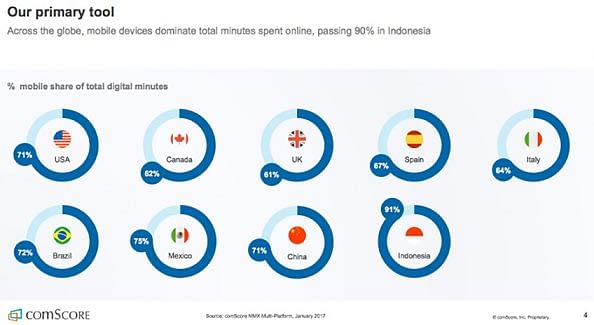
60% of Google’s searches come from mobile devices.
To carry out all these searches, Google’s data centre uses 0.01% of worldwide electricity, although it hopes to cut its energy use by 15% using AI.
By 2014, Google had indexed over 130,000,000,000,000 (130 trillion) web pages.
Facebook statistics
Facebook adds 500,000 new users every day; 6 new profiles every second.
79% of all online US adults use Facebook.
76% of Facebook users check it every day.
The average (mean) number of friends is 155.
Half of internet users who do not use Facebook themselves live with someone who does.
Of those, 24% say that they look at posts or photos on that person’s account.
There are an estimated 270 million fake Facebook profiles.
The most popular page is Facebook’s main page with 204.7m likes. The most liked non-Facebook owned page is Christiano Ronaldo’s with 122.6m.
There are 60 million active business pages on Facebook.
Facebook has 5 million active advertisers on the platform.
Facebook accounts for 53.1% of social logins made by consumers to sign into the apps and websites of publishers and brands.
Twitter statistics
500 million people visit Twitter each month without logging in.
There is a total of 1.3 billion accounts, but only 328 million are active,
Of those, 44% made an account and left before ever sending a Tweet.
The average Twitter user has 707 followers.
But 391 million accounts have no followers at all.
There are 500 million Tweets sent each day. That’s 6,000 Tweets every second.
Twitter’s top 5 markets (countries) account for 50% of all Tweets.
It took 3 years, 2 months and 1 day to go from the first Tweet to the billionth.
65.8% of US companies with 100+ employees use Twitter for marketing.
77% of Twitter users feel more positive about a brand when their Tweet has been replied to.
You tube statistics
300 hours of video are uploaded to You tube every minute.
People now watch 1 billion hours of YouTube videos every day.
More than half of YouTube views come from mobile devices.
The average mobile viewing session lasts more than 40 minutes.
The user submitted video with the most views is the video for Luis Fonsi’s song ‘Despacito’ with 4.36 billion views.
YouTube sees around 1,148bn mobile video views per day.
In 2014, the most searched term was music. The second was Minecraft.
9% of U.S small businesses use Youtube.
You can navigate YouTube in a total of 76 different languages (covering 95% of the Internet population).
Instagram statistics
There are 800 million Monthly Active Users on Instagram.
Over 95 million photos are uploaded each day.
There are 4.2 billion Instagram Likes per day.
More than 40 billion photos have been shared so far.
90 percent of Instagram users are younger than 35.
When Instagram introduced videos, more than 5 million were shared in 24 hours.
Pizza is the most popular Instagrammed food, behind sushi and steak.
24% of US teens cite Instagram as their favourite social network.
Pinterest statistics
Pinterest has 200 million active users each month.
31% of all online US citizens use the platform.
67% of Pinterest users are under 40-years-old.
The best time to Pin is Saturday from 8pm-11pm.
In 2014, male audience grew 41% and their average time spent on Pinterest tripled to more than 75 minutes per visitor.
LinkedIn statistics
LinkedIn has 500 million members.
106 million of those access the site on a monthly basis.
More than 1 million members have published content on LinkedIn.
The average CEO has 930 LinkedIn connections.
Over 3 million companies have created LinkedIn accounts.
But only 17% of US small businesses use LinkedIn.
Snapchat Statistics
Snapchat has 178m active daily users.
60% of them are under 25.
In 2016, $90m was spent on Snapchat ads.
47% of US teens think it’s better than Facebook, while 24% think it’s better than Instagram.
That’s your fill of social media statistics for now, with just a tiny fraction of the weird and wonderful stats and facts available out there.
It’s easy to get dragged into the drama and other negative aspects of social media.
Social media is built for polarisation and extremes.
The basic engagement mechanisms of popular social media sites like Facebook drive people to think and communicate in ever more extreme ways.
Social media is a collective term for all the websites and online services that are erasing national borders and distances.
Social networks are helping to fundamentally rewire human society.
They are used to spread information about dramatic events or to warn others about risky routes. When refugees reach a new country, they can also use social media to contact their fellow countrymen who are already there and find out about things like permits, authorities they can turn to or what things cost.
They have subsumed and gutted mainstream media.
They have undone traditional political advantages like fund-raising and access to advertising.
They are destabilizing and replacing old-line institutions and established ways of doing things, including political parties, transnational organizations and longstanding, unspoken social prohibitions against blatant expressions of racism and xenophobia.
They are helping to create surprisingly influential social organizations among once-marginalized groups. For Example : Brexiters in Britain to ISIS in the Middle East to the hacker collectives of Eastern Europe and Russia.
Each network in its own way is now wielding previously unthinkable power, resulting in unpredictable, sometimes destabilizing geopolitical spasms.
Through this new technology, people are now empowered to express their grievances and to follow people they see as echoing their grievances.
THE QUESTION IS:
IS SOCIAL MEDIA NOW THE JUDGE AND JURY AND THOSE THAT RUN ITS ALGORITHMS ARE NOW THE REAL WORLD POWER BROKERS.
If it wasn’t for social media, I don’t see TRUMP AS PRESIDENT OF THE US.
This has to be the scariest ACHIEVEMENT about Facebook/ Twitter.
Not that Facebook may be full of lies (a problem that could potentially be fixed), but that its scope gives it real power to change history in bold, unpredictable ways.
But that’s where we are.
It’s time to start recognizing that social networks actually are becoming the world-shattering forces that their boosters long promised they would be — and to be unnerved, rather than exhilarated, by the huge social changes they could uncork.
This should come as no surprise.
Facebook and Twitter have become the new TV, where businesses can’t control their messaging as they once were able to do with TV ads.
In a way, we are now living through a kind of bizarro version of the utopia that some in tech once envisioned would be unleashed by social media.
Online campaigns directed at GOVERNMENTS OR FOR THAT MATTER AGAINST BRANDS can be a lot more effective than writing. Pay-to-play strategy by letting posts run and gain organic traction before boosting them.
Efforts to fight this dismaying trend are obviously worth pursuing, but is it time to give our due to the new political activism – Social Media. The king of communication.
As it becomes increasingly commercialised there is a risk that people – particularly young people – will see social media content as being politically and commercially independent.
What it means to get caught in a Twitter storm. Facts tell, but stories sell.
In actual fact, the very opposite is true.
When you sign up for Facebook, you also accept a business model that can use information about what you do and how you feel, for example in marketing.
One terrifying example is how the terrorist group ISIS uses social media to recruit new supporters. Potential ISIS fighters can be invited to join private Facebook groups where they are put into contact with individuals who are active in Syria.
However if used in a responsible manner it s also a new tool for democracy.
More people can express their views and form opinions. There are also examples of individuals who have quickly succeeded in raising large sums of money for those in need.
The Impotence of Social Media is in its nucleus accumbens.
People tend to follow the behavior of the group.” If other people have liked a post, new viewers will be more likely to like it too. And that popularity can feed on itself, changing their behavior to try to get social approval, respond to headlines without any in-debt knowledge of what the headline refers to.
A single ‘like’ can make a social-media post more popular.
Many social media sites share more of the higher-ranked — or more popular — posts. As a result, “people are more likely to see what others have positively rated,” what’s in those photos is socially acceptable.
Skip pictures with few likes.
Likes can have a subtle but significant effect on how teens interact with friends online.
The important take-home message here, is that Social media shapes how we perceive the world around us.
When people express themselves through social media, they communicate collectively.
Members of social media communities direct raw emotions into particular interests. These audiences show their interest and approval by liking, sharing and commenting. And those mechanisms drive future social media behavior all driven by algorithms that drive participation and attention-getting in social media, the addictive “gamification” aspects such as likes and shares, invariably favoured the odd and unusual.
What are the results?
How polarised and divided nations are becoming.
The smartphones and web applications were increasing people’s
passions while also driving them to polarising extremes.
Political figures around the world are more polarised.
Language is more crude.
Sharing is becoming competitive, pushing participants to one-up each other.
Where Facebook or Twitter (viewed on mobile devices) has become for many people the sole source of news. Article will have a MUCH higher chance of converting to a sale!
You’ve engaged them, you’ve educated them, you’ve entertained them with social networks. (Communities of people (or animals) that are interrelated owing to the way they relate to each other.)
In humans, this can involve sharing details of their life and interests on Twitter or Facebook, or perhaps belonging to the same sports team, religious group or school.
I rest my case.
The functions of social media have transformed into something we have never anticipated.
Social media has transformed into political tools, increased global awareness, and offered a quicker way to spread information.
People have the power to abuse social platforms like Facebook and Twitter to promote radical ideas. So what.
Once you gag people’s right to speak freely, you place a mental shackle on the subconscious mind.
If you want to influence others to act upon what you have to say, treat social media communications with the same degree of importance as those that are face-to-face.
Social media to a great extent is a reflection of life. Without education for the sake acquiring knowledge the mind looks for it else where.
All human comments appreciated. All like clicks chucked in the bin.
I have posted on this subject before with little reaction.
There is often an implicit connection between discourses of the future and notions of technology, so that if we see a television programme with a title such as Click or Tomorrow’s World we expect that the topic will be technology.
The single most astonishing point about technologies is that they can move from being emblematic of an almost unreachable future to becoming so taken for granted that it feels like a personal slight when they do not work.
In this way technology in and of itself becomes a symbol of being modern is one of the reasons it becomes expressive of, rather than distinct from, cultural values.
Perhaps this is the reason that the relationship between social media and the conceptualisation of the future is still blurred and will remain so.
New technology does not just change the manner in which people go about their everyday lives: It also facilitates our imagination of the future.
All the above speak to a new, imagined future that strives towards idealism. However within the vast field of technology the consequences of AI there are a few devices and algorithms that will battle it out over the next twenty odd years for supremacy.
Will it be Smartphones, or Smart Wearable or Cryptocurrency that will augment reality.
All need software in the form of algorithms to run.
AI algorithms will make the physical and digital world interchangeable.
Practically every non- iPhone smartphone relies on an Android operating system?
One way or the other we are entering an age where life stops giving us things and starts taking them away.
Not surprising.
So it’s not Social media technology platforms like Facebook or Twitter and the others ( that talks a lot about connectivity but not accountability) that will change the world but the power of ever where at once.
That requires total knowledge on all aspects of life.
Google or should I say the Google Cloud is trying to achieve this.
Which is possibly both the best and the worst thing that could happen.
So let’s look at a few of the top combats in the world of technology in no particular order.
( Obviously it would take page after page to give a comprehensive insight so I am only going to give a few lines to each.)
Microsoft Corporation:(LinkedIn -Skype – Mojang – Yammer- Hotmail)
It operates through the following segments:
Productivity and Business Processes, Intelligent Cloud, and More Personal Computing.
Market Cap As of May 2017
$507.5 Billion
Microsoft could be worth $1 trillion by 2020 — if not sooner. It is moving further and further into a digital landscape for everything from movies, music, books, games and software.
Twitter: Owned mostly by Venture Capitalist:
An online breaking news and social networking service. Using Twitter bots, (live streaming video.) With 450 million monthly active users it is ranked the eleventh most visited website. It has mobile apps for iPhone, iPad, Android, Windows 10, Windows Phone,BlackBerry, and Nokia S40.
Capable of influencing public opinion about culture, products and political agendas by automatically generating mass amounts of tweets through imitating human communication. World leaders and their diplomats have taken note of Twitter’s rapid expansion and have been increasingly utilizing Twitter diplomacy. Television programs use it to amplify their programs.
It could become the emergency communication system for track epidemics or sensor for automatic response to natural disasters.
Amazon:
The largest Internet retailer in the world. The company is now worth more than $560 billion. Electronic commerce and cloud computing company.
Amazon announced that it would acquire Whole Foods, a high-end supermarket chain with over 400 stores, for $13.4 billion.
eBay Inc: (PayPal)
There are now literally millions of items bought and sold every day on eBay, all over the world. For every $100 spent online worldwide, it is estimated that $14 is spent on eBay. What’s more, eBay doesn’t care who you are, where you live, or what you look like:
The race is on to control mobile payments and the upside remains enormous:
Apple:(Shazam – Emagic- Siri – Beats Electronics – Next Inc.- Novauris-PrimeSense -The Bottom Line – Invest in Yourself.)
Quarterly revenue of $52.6 billion 2017.
Today, Apple leads the world in innovation with iPhone, iPad, Mac, Apple Watch and Apple TV. Apple’s four software platforms — iOS, macOS, watchOS and tvOS.
Facebook:(Whats App and Instagram Oculus VR.)
A publicly traded company worth more than $500 billion.
More than two billion monthly users. It is developing a new social platform in virtual reality called Facebook Spaces, which it believes will form the foundation for the future of communication.
Tencent and Alibaba: aren’t far from the half-trillion dollar mark either.
These are the main contenders as we know them to-day
—————————————————————————————
So the Question is:
Which one if any of the above will be the top dog by 2025.
Will it be : ( All knowledge, All Gossip, All purchases, All Apps/ Software)
At this point you will have noticed that I have left out the company mentioned in Title of this posting.
While in the future devices may be more ubiquitous in all corners
of the globe, inequality will therefore remain in terms of the services
available in certain locations and the lack of attention paid to the needs
and desires of certain populations.
Companies like Amazon and Google will be fighting to lock you into one voice ecosystem. You may have to declare your allegiance for Alexa, Siri, Cortana or Google Assistant.
One could say that:
Amazon represents de-socialising of commerce. Face book represents self ego. Twitter represents myths and gossip. Apple represents profit. E bay represents selling and buying of stuff, Google represents doming down.
All are represented on Social Media which is being used in ways that shape politics, business, world culture, education, careers, innovation, and more.
Social media applications such as Facebook, Twitter and YouTube have increasingly been adopted by politicians, political activists and social movements as a means to engage, organize and communicate with citizens.
So is the power and the winner going to be Social Media which is owned by the Internet.
I think Not.
In short, one consequence of this prediction is that the very idea of ‘social media’ might gradually disappear; instead we simply have an increasingly diverse set of media and increasingly sophisticated exploitation of the possibilities these media have created, including other trends such as obtaining information, sharing information or making communication more visual.
Social media is slowly killing real activism and replacing it with ‘slacktivism, and we all know where that might lead us. Awareness is not translating into real change. Support is limited to pressing the ‘Like’ button or sharing content which absolve them from responsibility to act.
The role of social media as symbolic of the future may already be in decline.
“The election of Donald J. Trump is perhaps the starkest illustration yet that across the planet, social networks are helping to fundamentally rewire human society.”
The one I left out, with 65% of all online searches – is Google.
Google has expanded far beyond its original claim to fame as a search engine.
Google and their competitor platforms are programming the world for profit. The reach of this technology giant is so vast it is hard to imagine an area of modern life it has not touched.
Alphabet owns Google, as well as many other companies. However, Google itself owns companies.
Google has reorganized itself into multiple companies, separating its core Internet business from several of its most ambitious projects while continuing to run all of these operations under a new umbrella company called Alphabet.
Google owns more than 200 companies, including those involved in robotics, mapping, video broadcasting, telecommunications and advertising.
Simply put, the company has been visionary in recognizing the income potential for information products.
Their profit seeking algorithms ensuring that every recommendation, from whether you should buy this or that, stay here or there, fly or drive, connect to this or that, live or die, will earn them a few cents.
By 2025 all will be connected to the Cloud. With one winner.
The Google Monopoly.
Once a Google client always a Google client.
How do you stop using Google?
Already impossible.
Move and your G Mail becomes blocked mail.
Say anything on you website that smacks about google, you site gets flooded with google ads.
It is becoming more and more difficult for anyone to extricate themselves from the clutches of any of its platforms as deactivating means little or nothing.
Social media apps ensure you are still engaged and if they don’t work your friends and family smartphones are searching for you nonstop supplying little hits of dopamine. ( Someone likes you photo or you are mentioned in their contact. It’s a social validation feedback loop..exploiting a vulnerability in humans psychology.)
Will Social Media destroy or rain back Google dominance?
The whole Social media thing is turning into an addictive cancer effecting our brains and tearing our emotions and attentiveness a sunder which in turn is encouraging self-segregation and exacerbating social divides.
Every facet of our life is touched or being integrated by the social media today.
In this sense social media has become an instrument of democratic renewal.
On the other hand it is evident that this uncensored and unmonitored medium of communication is exposing us all to a gradual breakdown of social cohesion and the destruction of our traditional value systems.
Though the advantages of social media are emphasized quite often, as opposed to its negative aspects which are very rarely discussed.
I feel that this will change in the coming years.
All said, social media is here to stay. The power of social media is exponential. Numbers tell the story.
Just as difficult as forecasting the future is knowing the present.
After all not everything moves over time to become more functional
or efficient.
It is obviously going to be hard to predict the future for something as
dynamic as social media. How can we know what social media has already become for oil workers in Alaska, tribal people in Amazonia and the nouveau riche of Moscow?
Unless we take responsibility to ensure that our understanding of social media and its impacts are constantly evaluated with what’s happening in the world. Once we appreciate that knowing social media is not an exercise in delineating the properties of a set of platforms, but rather of acknowledging what the world has already turned these into, by way of content, the immensity of the problem is revealed.
So it will be important to continue monitoring and exploring the extent to which collective action is individualised through social media use.
= Can the use of social media for campaigning help to bring about genuine and lasting empowerment; or does it serve largely to re-inforce pre-existing relationships?
= Is social media a means of building dialogue and consensus in diverse communities or does its use encourage increased fragmentation or, alternatively, a homogeneity of interests?
= Can meaningful impact measures be developed that can be used by small, under-resourced organisations at local level (or indeed within larger voluntary organisations)?
Social media is seen in much of the literature as a means of promoting dialogue beyond the mainstream media. Voluntary and community groups have been criticized, however, for using social media as little more than a means of broadcasting.
Why might this be the case – and does it matter?
Social media expands our capacity but, it does not change our
essential humanity.
It is used to repair the rupture sustained by separated transnational families or for overcoming previously frustrated desires to share photographs more easily.
It allows couples living in different countries who ‘sort of’ live together online;
Soon, however, things move on to new realms.
Should a clear relationship be expected between the (apparently empowering) use of social media in mobilizing large national and global movements, and its use at the micro-political neighborhood level.
An increasing number of social media platforms can be aligned with the diversity of the social groups to which we might want to relate.
Social media however has little impact on the overall outcomes in terms of empowerment, equalities or social justice.
However powerful and important the advent of social media has become, it would be hard to place it ahead of the impact and significance of smartphones, within which social media platforms may often be seen as just another kind of app.
It is smartphones that facilitate social media’s importance as a mix of polymedia, making clear the range of media possibilities as they lie side by side within one easily accessible device.
It is the Smartphone that drives social media input and out put.
Will that will be the One Winner, changing our sense of collective memory, creating a new form or combination of internal and external faculties for retaining information.
As Smartphones become smarter, they may well accelerate the dissolving of social media into this wider array of communicative possibilities.
The increasing ubiquity of the smart phone is the catalyst for more general usage of social media. Recognizing that this may not necessarily impact on any other aspect of inequality should not prevent us from recognizing that there is in one aspect an increasing and significant equality:
The more individuals live within culturally imposed constraints on communication, the more a new technology may mean that what was previously forbidden now becomes possible.
This fluid mix of communicative forms suits the way users flow between activities such as talking, gaming, texting, masturbating, learning and purchasing. The social connection is more important than how well a platform meets their needs.
Comparative anthropology creates particular varieties of knowledge of both breadth and depth. What makes these essential within the context of our complex modern world, however, is that these are forms of understanding based on empathy.
Merely having a smart phone provides a significant change with respect to the capacities of its owner.
——
What happens to our online materials at death.
Finally: Capitalism can never be ethical.
There are no laws requiring Google to be fair.
If we don’t open our eyes soon technology ( whether it’s Google, Twitter, Facebook, Amazon Inc or some equivalent service) is going to F—k us all from some Cloud or other that is just over the horizon.
Just look at the annual release of new smartphones.
Of course there are other things in the long tall grass waiting to caught us by the short and hairy and most have being around for yonks. War, Natural Disasters, Greed, Inequality and the like.
My advice is to beware of the man with a smartphone. Because knowledge is not knowledge until someone else knows that one knows.
Google it.
All human comments much appreciated. All like clicks chucked in the bin.
We live in a world that is being connected and disconnected at the same time.
Two related facts.
But don’t worry we now have Algorithms that both filter and recommend.
All our final decisions are made in a state of mind that is not going to last.
The reality is that there’s no way of knowing where our generation is going in terms of technology and our reliance on it.
The year 2018 will be the year in which human interaction decreases the more technology increases. While social media fosters an environment of connectedness and belonging in the digital world, it also forces a disconnect between people in the real world.
With false news and social media, words are on their last legs, with print for the high jump, we will have more arse holes 2018 twittering shaping the world.
Where two or three words gather together there is a great danger that thought might be present. However we once again don’t have to worry because we have the option to log off and unplug anytime we want, so it’s up to us to decide if we want to engage with the actual world or the virtual one.
Technology may well be is a societal advancement that has enabled our generation to do things previous generations never would have thought possible.
However:
The biggest problem we have is accepting each other’s differences.
“Technology makes us forget what we know about life.”
82 per cent of smart phone users said they rarely (if ever) powered off their phones last year, while less than 43 per cent of 13- to 18-year-olds saw any value in ever going unplugged.
Why?
This is the Eternal Question to which there is no answer, and yet the only one that has to be asked.
Take a look around you.
Every day we becoming more and more desensitized. Save this Save that while saving the planet is being left to technology.
Rapid progress in machine learning has raised the prospect that algorithms will one day be able to do most or all of the mental tasks currently performed by humans.
But the real problem is how one might design a highly intelligent machine to pursue realistic human goals safely.
This is very poorly understood.
Even if advanced machine intelligence does not get ‘out of control’, it is likely to be very socially disruptive and it is more likely it could be used as a destabilizing weapon of war.
It seems that most of us are in a mental wasteland inhabited by those upon whom the portcullis ( A sudden blotting out of all normal thought) has fallen.
How did we get to a place where the content on our phones is more interesting than the world around us?
In today’s society, scrolling through Facebook, Twitter, or Instagram has taken precedence over the real events scrolling through our daily lives.
Being “connected” to machinery 24/7 is affecting our ability to connect with our lives and the people around us.
Mechanical devices bait us into a make-believe life, as we are slowly being pulled away from a sense of who we are and what really matters.
Modern life is making us lonelier.
It’s not the technology that’s the problem; it’s us for abusing it.
We’ve become more and more antisocial by relying on technology too heavily.
Maybe if we look up and away from the flashing images and colors on our most recent Safari search, we will actually enjoy the company of those around us. So instead of counting the number of likes, count the memories in your life, because at the end of the day, that’s all that matters.
For the foreseeable future, it won’t be possible to take people out of the decision-making process, but the year 2018 will with the power of Profit Seeking Algorithms push us further down the road of hypnotic trance.
Technology is a valuable tool when used correctly. However, the law has to catch up with privacy and safety issues, not mention profit seeking algorithms.
We’ve all heard about the power of algorithms—but Algorithms to Live is in my book to be avoided at all costs, if we are to value what is vital to us all.
They are creating a world of such inequality that the scariest thing is the immense possibilities of these unregulated Algorithms will turn us and all that is necessary for a sustainable life into commodities to be exploited.
What can be done:
Education, Education is the only solution.
By this I mean education not for the market place but for the foundation of knowledge. Not just a narrow streamlined pipeline of mundane thoughts which doesn’t let you think outside the box and do things on your own.
Psychology, Anthropology, Sociology, Ecology, to name a few.
Dramatic changes are inevitable, we need to accept the fact on ground level that our education models are broken and paralyzed.
Perhaps we might well need computer algorithms to select the best candidate?
There’s no magic formula, freedom and dignity will not be found on social media, nor computed by algorithms.
There are too many parts of today’s conversations that can not be translated through technology.
Tearing apart the nation states and the world with ALGORITHMS is a
Disaster waiting to happen. No Robot with a brain full of algorithms is
going to have the the ability of an artist to have human empathy and an
appreciation of history; while also having the savvy self-awareness to
understand that their work merely takes its place in a greater culture
at large. Such art brings comfort in our modern secular world: where
spirituality seems to live in a foreign universe of yesteryear.
You’re more than a number.
how the mythical and quotidian usually overlap to
the point where the two become indistinguishable.
So join a club and organizations to make real friends.
Happy New year.
All human comments appreciated. All like clicks chucked in the bin.
We all know or at least we should all be aware that our world is becoming less and less transparent thanks to what we call Artificial Intelligence.
The challenge there is:
The false promise of the Internet was that it can connect people from different backgrounds, with different beliefs and across disparate locations.
The trend toward personalization by AI is impeding the fulfillment of that promise?
What is becoming more and more apparent is that while most personalization on the web is algorithmically driven, aren’t we implicitly, informing the algorithms based on the choices we’ve previously made interacting with content?
Couldn’t you then, in theory, manipulate the filter so you see what you want to see or are there too many factors beyond our control?
Consider:
Even if you’re completely logged out of Google, on a new computer, the company can track 57 signals about you — from what kind of laptop you’re using to what your IP address is to what the font size in your browser is. Already, that gives a lot of important clues about age, income and demographics.
It’s ironic — the promise of personalization is that it gives us our own personal view of the world.
But the challenge is that a lot of the time, it’s actually pushing us toward a stereotyped, simplified version of ourselves: “This person is male, so we’ll show him more gadget and car news.”
So let me ask you.
Many of the major social, discovery and media sites on the Internet now implement some type of personalization. Do you feel these sites have a responsibility to educate consumers about how their information is being filtered? Do you think users should be able to opt out of personalization?
I would say Yes, on both counts.
In an increasingly complex and vast media landscape it is crucial that me maintain our private lives.
Why?
Because: Algorithms of all shapes and sizes are monitoring, analyzing, making
decisions, dictating our credit scores etc. They are shaping our lives and economies, our future, so shouldn’t we know what code and mathematical equations, or deep learning go into making them work.
However Transparency alone won’t help.
Algorithms are complicated so exposing the code behind them won’t make them more understandable. Knowing how an algorithm is coded is useless without knowing the data that has being fed into it in the first place.
There is only one solution and that is the:
The Creation of a New World Organisation that is totally transparent, and self financing: To vet all Technology. To ensure that they comply with the core world gold standard of human values.
(See previous Posts)
Let me ask you two further questions.
Can some level of personalization be useful?
What are we missing that we need to see?
Some amount of algorithmic personalization is necessary — there’s just too much stuff to sort through for humans to do it all. However you don’t know who Google thinks you are or on what basis it’s editing your results, and therefore you don’t know what you’re missing.
A lot of the personalization that exists today just serves up information junk food, but a growing portion is being curated by robots — computer algorithms that are filtering content and deciding what we get to see.
It may be delicious, but it doesn’t feed the soul.
Now it’s possible to live in a bubble where that stuff doesn’t ever show up — you’d never know it’s happening.
Take the Facebook “Like” button — the main way that information gets spread on Facebook. “Like” isn’t a neutral word — it’s easy to Like “I just finished a marathon,” and hard to Like “cell phones may cause cancer.”
So some kinds of information get through, and others don’t, and when that’s happening in the Facebook News Feed, where an increasing number of folks get their news, it’s a real problem.
Most people aren’t aware that their Google search results, Yahoo News links, or Facebook feed is being tailored in this way.
Filters can provide relevance and combat information overload, but with so much riding on automated decisions to ensure algorithms deal with humans fairly is now more relevant than ever.
I recently read that in five-year your smartphone could be reading your mind.
Brain- computer interface.
Personalization couldn’t exist without the massive dossiers of personal data being collected by big companies online these days. And it’s a problem because consumers don’t have much control over that.
The current laws around personal data just don’t contemplate a world in which a click on one website changes what you see on an entirely different one.
Almost all popular websites, from search engines to social networks to media outlets, are now utilizing filters in some way to personalize content for visitors.
When websites show us only what we like, we get cut off from the diverse points of view that can enrich our understanding of the world.
We get Donald Trumps.
Privacy is about controlling what the world is allowed to know about you. This is about controlling what you’re able to see of the world — what your filters let through and what they don’t.
Its time to wake up.
We can lose sight of our common problems, but they don’t lose sight of us.
It’s only a matter of time before our Fidelity/ Loyalty cards are linked up to our personal data held by banks, e-commerce sites and social media. If not already.
We will then be looking at citizen character score, which will bring credit scores to a whole new level, turning them more into to life scores, by tracking anything and everything we do. The scary bit is what is tracked and by who.
I hear you saying that this will never be accepted.
It is already on the cards for people living in China and Singapore. Humans and robot algorithms, living in peaceful harmony. Where you go, what you buy, who you know, how many points are on your driving licence, how your friends rate you.
The scores will serve not just to indicate an individual’s credit risk, but could be used in a vast array of applications and organisations such as Governments, Benefits, Hospital Operations, Visa, Education, down to all fields that makes Society including prison sentences, landlords, employers, and even romantic partners to gauge an individual’s character.
All stored in the Cloud. Which comes in many different models forms.
Ubiquitous access to the network: Self-service and on-demand access to computing capabilities. This service will most often be performed by the service provider automatically without the need for human interaction.
Cloud Computers is not the easiest of terms to define, or explain what it all actually means. Owned by Google, Twitter, Gmail and Facebook the Cloud is elusive as grabbing a cloud itself.
Perhaps we can blame it all on Leonhard Euler one of the most prolific mathematicians in history, and also a prolific inventor of canonical notation.
( An Euler path is a path that uses every edge of a graph exactly once.)
One way or the other to use a Trumpetism: It’s ain’t going to be great unless we build algorithms that have a sense of civic purpose embedded in them, giving us both entertainment and the information we really need, not profit.
All comments appreciated. All like clicks chucked in the bin.
O sorry about the line spacing in this post just cannot figure out how to correct it.
You might be asking yourself like many why it is that we are inflicted by the like of Donald Trump, Madame La Pen, Brexit, ect.
Any fool on the street can tell you that technology is changing at a whiplash-inducing pace. What’s much more difficult to predict is which technologies specifically are about to hit big.
To me it is obvious: Artificial Intelligent.
Platforms that serve manipulative interests of political elites, in which leaders do most of the conversing and democratic discussion is reduced to campaigning for elections and the casting of votes.
The result of elections and referendums are becoming more individualistic than they are democratic with Democracy becoming, trivial, incoherent, or manipulative across all sorts of domestic debates, military interventions, consumer advertisements, and television specials.
Democracy use to stirred up by:
The public relations agencies, the direct-mail companies, and opinion-polling firms work in concert with the infrastructure of think tanks, tax-exempt foundations, and other centers. With the press and television industry as the principle gatekeepers of political debate. Other channels of political information are almost nonexistent.
Today, tremendous changes in advanced computing technologies are giving rise TO A NEW DEMOCRATIC EMPOWERMENT, THAT HAS NOTHING TO DO WITH VOTING.The smart phone rules as to which party is the best in more way than one.
On-line computer services and networks, which are oriented toward spontaneous communication among citizens is limiting their exposure only to the affairs that match their interests. Populist appeal.
The application of Artificial Intelligence (AI) technology will and is expanding this type of public involvement with information-driven politics, the politics of knowledge, not necessarily the politics of winning elections.
But does the public really want a daily digest of political information?
IN WHICH IT HAS LITTLE OR NO SAY.
We are witnessing an ominous trend toward political dysfunction as the number who vote in national elections continues to slide below fifty percent.
One possible reason for this trend is that many people believe that political representatives have little to offer in terms of solving the immediate daily concerns of employment, health care, education, housing, transportation, drugs, crime, social decay, injustice, and so on.
Maybe, if the right tools were available, people would have a better chance to communicate with representatives, know and protect their own rights, engage in deliberation, test hypotheses, discover knowledge, discuss theory, and better understand world events
At the moment AI is all about analyzing the content of candidate appeals and making informed guesses about candidates.
Obviously, merit exists in the public becoming more politically astute and “awakening from the dormant state.” Success may depend partially on whether participation can be achieved in such a way as to impinge minimally upon the matters of private life.
The old politics often depicted as canned debates and public spectacle is becoming unacceptable to an intelligent populace.
New politics demands semantic understanding and identifying the chains of reasoning. These goals require building new tools and networks for the next generation of machine politics.
We are in the middle of a technological upheaval that will transform the way society is organized. We must make the right decisions now.
Every minute we produce hundreds of thousands of Google searches and Facebook posts. These contain information that reveals how we think and feel. Soon, the things around us, possibly even our clothing, also will be connected with the Internet. It is estimated that in 10 years’ time there will be 150 billion networked measuring sensors, 20 times more than people on Earth. Then, the amount of data will double every 12 hours.
Many companies are already trying to turn this Big Data into Big Money.
Soon we will not only have smart phones, but also smart homes, smart factories and smart cities.
Should we also expect these developments to result in smart nations and a smarter planet? ALL EVIDENCE POINTS TO THE OPPOSITE.
Today 70% of all financial transactions are performed by algorithms.
This all has radical economic consequences: In the coming 10 to 20 years around half of today’s jobs will be threatened by algorithms. 40% of today’s top 500 companies will have vanished in a decade.
Society is at a crossroads, which promises great opportunities, but also considerable risks. HERE I A NOT TALKING ABOUT CLIMATE CHANGE BUT OUR INABILITY TO EXPRESS OURSELVES AT THE BALLOT BOX.
If we take the wrong decisions it could threaten our greatest historical achievements.
Super-intelligence is a serious danger for humanity.
Search engines and recommendation platforms are beginning to offer us personalised suggestions for products and services.
But it won’t stop there.
Some software platforms are moving towards “persuasive computing.
These platforms will be able to steer us through entire courses of action, be it for the execution of complex work processes or to generate free content for Internet platforms, from which corporations earn billions.
The trend goes from programming computers to programming people.
These technologies are also becoming increasingly popular in the world of politics.
Under the label of “nudging,” and on massive scale, governments are trying to steer citizens towards healthier or more environmentally friendly behaviour by means of a “nudge”—a modern form of paternalism.
Singapore is seen as a perfect example of a data-controlled society.
It won’t be long before Every chinese citizen will receive a so-called ”Citizen Score”, which will determine under what conditions they may get loans, jobs, or travel visa to other countries.
This will be a sort of digital scepter that allows one to govern the masses efficiently, without having to involve citizens in democratic processes.
Would this overcome vested interests and optimize the course of the world?
If so, then citizens could be governed by a data-empowered “wise king”, who would be able to produce desired economic and social outcomes almost as if with a digital magic wand.
God forbid.
Lets hope we remain influenced by issues as much as by perceived.
Democracy is not for Hire or Sale. In order for us to retain control of our lives, these networks should be controlled. I am talking about Google, Twitter, and Facebook.
All technology and associated algorithms should be given a World Health Certificate in as much that they are serving the common good and human values.( See previous Posts)
Creation of computer applications to enhance democratic discussion is now a pressing problem.
Echo’s ability to represent “aggregate behavior” might be useful.
All Common Sense comments appreciated. All like comments chucked in the Bin.
WE CAN NO LONGER OR AFFORD TO LEAVE COMMON SENSE LYING IN A DORMANT STATE.
Starry-eyed cyber optimism [which suggests] a new form of technological determinism according to which the Internet would be the hammer to nail all global problems, IS BULL SHIT. SAY NO TO:
( A five-minute read if you don’t want to be Googled)
Artificial intelligence is changing the world we live in but are we all going to end up scratching our behinds wishing we were dead. Turned into “‘pancake people’—spread wide and thin as we connect with that vast network of information accessed by the mere touch of a button.
Our thoughts and actions scripted as if they’re following the steps of an algorithm.
As we come to rely on computers to mediate our understanding of the world, it is our own intelligence that flattens into artificial intelligence.
The perfect coordination and optimization of our day- to – day lives controlled by Google Monopoly inc.
Google is draining of our “inner repertory of dense cultural inheritance,”
Why because we will be in a state of constant Google observation with the entire world connected to the world they wish to present.
At the moment Google control over 65% of all searches, ( WHICH NO ONE KNOWS HOW IT WORKS)
Google is not required by Law to serve everyone nor for that matter is Amazon, Apple, Facebook, Snapchat, or Twitter.
Nearly every iPhone operates on its Android operating system.
WE ARE ESSENTIALLY SENTENCED TO A GOOGLE DIGITAL DEATH.
They supply the stuff of thought, but they also shape the process of thought.
For me, as for others, the Net is becoming a universal medium, the conduit for most of the information that flows through my eyes and ears and into my mind.
The Internet, an immeasurably powerful computing system, is subsuming most of our other intellectual technologies. It’s becoming our map and our clock, our printing press and our typewriter, our calculator and our telephone, and our radio and TV.
The result is to scatter our attention and diffuse our concentration.
Yet, for all that’s been written about the Net, there’s been little consideration of how, exactly, it’s reprogramming us. The Net’s intellectual ethic remains obscure.
Google’s headquarters, in Mountain View, California—the Googleplex—is the Internet’s high church, and the religion practiced inside its walls is Taylorism.
Taylor created a set of precise instructions—an “algorithm,” we might say today—for how each worker should work.
Taylor’s system is still very much with us; it remains the ethic of industrial manufacturing. And now, thanks to the growing power that computer engineers and software coders wield over our intellectual lives, Taylor’s ethic is beginning to govern the realm of the mind as well.
Google, is “a company that’s founded around the science of measurement,” and it is striving to “systematize everything” it does.
Drawing on the terabytes of behavioral data it collects through its search engine and other sites, it carries out thousands of experiments a day, according to the Harvard Business Review, and it uses the results to refine the algorithms that increasingly control how people find information and extract meaning from it.
What Taylor did for the work of the hand, Google is doing for the work of the mind.
The company has declared that its mission is “to organize the world’s information and make it universally accessible and useful.”
It seeks to develop “the perfect search engine,” which it defines as something that “understands exactly what you mean and gives you back exactly what you want.”
In Google’s view, information is a kind of commodity, a utilitarian resource that can be mined and processed with industrial efficiency. The more pieces of information we can “access” and the faster we can extract their gist, the more productive we become as thinkers.
Still, their easy assumption that we’d all “be better off” if our brains were supplemented, or even replaced, by an artificial intelligence is unsettling.
It suggests a belief that intelligence is the output of a mechanical process, a series of discrete steps that can be isolated, measured, and optimized. In Google’s world, the world we enter when we go online, there’s little place for the fuzziness of contemplation. Ambiguity is not an opening for insight but a bug to be fixed. The human brain is just an outdated computer that needs a faster processor and a bigger hard drive.
And because we would be able to “receive a quantity of information without proper instruction,” we would “be thought very knowledgeable when we are for the most part quite ignorant.” We would be “filled with the conceit of wisdom instead of real wisdom.” This is not good, as the world is in need of wisdom more than ever.
I come from a tradition of Western culture, in which the ideal (my ideal) was the complex, dense and “cathedral-like” structure of the highly educated and articulate personality—a man or woman who carried inside themselves a personally constructed and unique version of the entire heritage of the West. [But now] I see within us all (myself included) the replacement of complex inner density with a new kind of self—evolving under the pressure of information overload and the technology of the “instantly available.”
If we lose quiet spaces, or fill them up with “content,” we will sacrifice something important not only in ourselves but in our culture. In a recent essay, the playwright Richard Foreman eloquently described what’s at stake:
As Richard Foreman so beautifully describes it, we’ve been pounded into instantly-available pancakes, becoming the unpredictable but statistically critical synapses in the whole Gödel-to-Google net. Does the resulting mind (as Richardson would have it) belong to us? Or does it belong to something else?
Will this produce a new kind of enlightenment or “super-consciousness”? Sometimes I am seduced by those proclaiming so—and sometimes I shrink back in horror at a world that seems to have lost the thick and multi-textured density of deeply evolved personality.
Reading, is not an instinctive skill for human beings. It’s not etched into our genes the way speech is.
The media or other technologies we use in learning and practicing the craft of reading play an important part in shaping the neural circuits inside our brains.
Circuits woven by our use of the Net will be different from those woven by our reading of books and other printed works.
The tools that extend our mental rather than our physical capacities—we inevitably begin to take on the qualities of those technologies.
Never has a communications system played so many roles in our lives—or exerted such broad influence over our thoughts—as the Internet does today.
Where does it end?
Mr Page of google said in a speech a few years back. “For us, working on search is a way to work on artificial intelligence.”
The faster we surf across the Web—the more links we click and pages we view—the more opportunities Google and other companies gain to collect information about us and to feed us advertisements.
The last thing these companies want is to encourage leisurely reading or slow, concentrated thought. It’s in their economic interest to drive us to distraction.
There’s a tendency to glorify technological progress, there’s a countertendency to expect the worst of every new tool or machine.
Google as a substitute for the knowledge they used to carry inside their heads, they would, in the words of one of the dialogue’s characters, “cease to exercise their memory and become forgetful.”
I know that Google will argue the toss and indeed other than they becoming a monopolizing influence I would have great praise.
All comments appreciated. All like clicks chucked in the Bin.






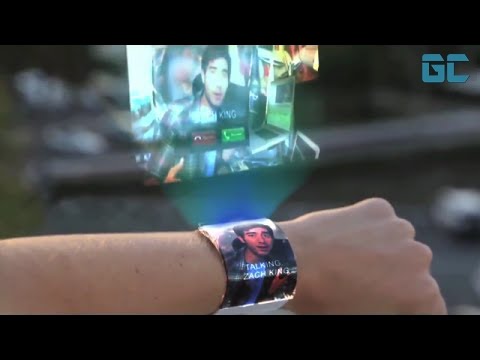


 The smart phone rules as to which party is the best in more way than one.


 bobdillon33blog
You must be logged in to post a comment.