• About
  • THE BEADY EYE SAY’S : THE EUROPEAN UNION SHOULD THANK ENGLAND FOR ITS IN OR OUT REFERENDUM.

bobdillon33blog

~ Free Thinker.

bobdillon33blog

Category Archives: The world to day.

THE BEADY EYE SAYS: Human Intelligence Needs Artificial Intelligence.

14 Friday Oct 2016

Posted by bobdillon33@gmail.com in Artificial Intelligence., Humanity., Technology, The Future, The world to day., Unanswered Questions., WiFi communication.

≈ Comments Off on THE BEADY EYE SAYS: Human Intelligence Needs Artificial Intelligence.

Tags

Artificial Intelligence., Visions of the future.

( A seven minute read, dedicated to my friend Bill)

As we rapidly move towards a human centric intelligent Society – a network of data, artificial intelligence that is mimicking the human brain on more and more levels, with the thinking being done for us by machine learning.

Intelligence is becoming more and more redundant, altering the structures of our societies.

Like ourselves deep learning Algorithms start out clueless, moving to a higher level, learning from mistakes.

As technology expands in its capabilities and applications we’ll be confronted with massive social change.

It will have sweeping implications for all our cultures far beyond a smart phone or a little cylinder that can order more cereal or play music on demand.

Luckily you don’t need much intelligence to know that AI is being developed because it can make big money, but there are going to be many unintended consequences to AI.

There will come a day when Governments will be consulting AI on the impact of certain policy decisions if it is not already happening.

The surprising thing about all this intelligence is, to this day how we exactly define intelligence is still debatable.

It is difficult to argue that there is an objective sense in which one definition could be considered to be the correct one.

I have always held that Intelligence is found in the bottom of a bottle of Whiskey.

Nasa could save themselves yonks of dollars if they realised this.  Searching for Intelligent Life in the Universe ( when we don’t know what it is) seems somewhat pointless.

There is a wide range of conceptions of intelligence.

With the arrival of the Smartphone it now seems that we are all suffering from Trump dum-dum fever. This has led some to believe that intelligence may be approximately described by pressing the like button, but cannot be fully defined.

Afficher l'image d'origine

The use of Autonomous Machines, further challenges our thinking as it raises questions as to the relationship between humans and machines. These questions may become increasingly prominent as technology advances and AI becomes an integral part of our surroundings.

The development of self-learning and independent computers raises challenging questions as to the future of the human race and the control, or lack of it, humans would exert over machines.

The detachment between the algorithm and its operators also reveals
a potential failure to deter as algorithms are not susceptible to traditional
deterrents, such as jail, monetary fines, and shaming. In a digitalised universe in which the law’s moral fabric is inapplicable, any game theories are constantly modelled until a rational and predictable outcome has been identified.

Sophisticated computers are now central to the competitiveness of present and future markets. With the accelerating development of AI, they are set to change the competitive landscape and the nature of competition restraints.

Computer algorithms are transformed the way we trade and will continue
to do so in an increasing pace. The creation of fast-moving digitalised markets
yields many benefits, yet it also changes the dynamics of competition and
may limit it. Given the transparent nature of these markets, algorithms may change the market dynamics and facilitate tacit collusion, higher prices, and greater wealth inequality.

In such a reality, firms may have a distinct incentive to shift pricing decisions from humans to algorithms.

Humans will more likely wash themselves of any moral concerns, in denying any relationship and responsibilities between them and the computer.

If we don’t have AI we will all end up as a bunch of Apple /Google buffoons.

Isn’t it about time we defined Intelligence.Afficher l'image d'origine

Here are a few current definitions.

Robert Sternberg. Sternberg’s (1985) theory of intelligence contains three subtheories, one about context, one about experience, and one about the cognitive components of information processing.

Howard Gardner.

Proposes a theory of multiple intelligences in which he claims there are seven relatively independent intelligences. Those intelligences are logical-mathematical, linguistic, musical, spatial, bodily-kinesthetic, interpersonal, and intrapersonal.

John Horn.

Along with his advisor, Raymond B. Cattell, has developed a theory of intelligence that specifies two broad factors, fluid abilities and crystallized abilities, along with numerous specific factors that support the general ones.

Fluid intelligence represents one’s ability to reason and solve problems in novel or unfamiliar situations. Crystallized intelligence, on the other hand, indicates the extent to which an individual has attained the knowledge of a culture.

The ability to use memory, knowledge, experience, understanding, reasoning, imagination and judgement in order to solve problems and adapt to new situations.

The capacity to acquire and apply knowledge.

Individuals differ from one another in their ability to understand complex ideas, to adapt effectively to the environment, to learn from experience, to engage in various forms of reasoning, to overcome obstacles by taking thought.

The ability to learn, understand and make judgments or have opinions that are based on reason.

Intelligence is a very general mental capability that, among other things, involves the ability to reason, plan, solve problems, think abstractly, comprehend complex ideas, learn quickly and learn from experience.

The ability to learn facts and skills and apply them, especially when this ability is highly developed.

The ability to adapt effectively to the environment, either by making a change in oneself or by changing the environment or finding a new one . . . intelligence is not a single mental process, but rather a combination of many mental processes directed toward effective adaptation to the environment.

The general mental ability involved in calculating, reasoning, perceiving relationships and analogies, learning quickly, storing and retrieving information, using language fluently, classifying, generalizing, and adjusting to new situations.

The Capacity for learning, reasoning, understanding, and similar forms of mental activity; aptitude in grasping truths, relationships, facts, meanings, etc.

The ability to learn or understand or to deal with new or trying situations : . . . the skilled use of reason (2) : the ability to apply knowledge to manipulate one’s environment or to think abstractly as measured by objective criteria (as tests)

Intelligence is not a single, unitary ability, but rather a composite of several functions. The term denotes that combination of abilities required for survival and advancement within a particular culture.

In its lowest terms intelligence is present where the individual animal, or human being, is aware, however dimly, of the relevance of his behaviour to an objective.

Sensory capacity, capacity for perceptual recognition, quickness, range or flexibility or association, facility and imagination, span of attention, quickness or alertness in response.

So is there such a thing as universal intelligence.

If you look at the present state of our world, our home, it would be hard to agree that there is any Intelligence that is Universal other than madness. We now have a world that is running out of control largely ( but not solely) because of information technology and what AI is making possible.

But the ability to accurately assess the intelligence of other persons finds its place in everyday social interaction which is being replaced  and will have important evolutionary consequences.

I dont think so.

I believe that individuals’ intellectual performance varies depending on the situation in which they find themselves. Because of the vast array of different talents that people have there are different levels of intelligence and each individual has a different measure of intelligence.

‘Fluid intelligence is the capacity to logically solve problems independent of acquired knowledge.

Figurative intelligence describes the ability to handle objects such as images, patterns and shapes.

Are they independent of each other.

So if  there is no such thing as one intelligence what is the nature of intelligence.

What is needed for better understanding of the nature of intelligence is to give more attention to diverse approaches to intelligence. This is needed because, “in a field where so many issues are unresolved and so many questions unanswered, the confident tone that has characterized most of the debate on these topics is clearly out-of-place.

The brain as a major physical determinant of intelligence, without it we have artificial intelligence. The processing speed posing as the root for intelligence.

There are seven different areas of the brain.

Is the correlation between reaction time and IQ. The speed of information transmission.

Can the complexities of the human mind and its processes be reduced to a single factor, defined as intelligence?

Is there a single factor that determines intelligence, or are there multiple intelligences?

They are linguistic, musical, spatial, bodily, interpersonal, intrapersonal and logico-mathematical. Not forgetting other facets of intelligent behavior such as athleticism, musical talent, and social awareness.

Artificial intelligence is the intelligence exhibited by machines or software. It is the science of automating intelligent behaviours currently achievable by humans.

The ability of a system to act appropriately in an uncertain environment, where appropriate action is that which increases the probability of success, and success is the achievement of behavioral subgoals that support the system’s ultimate goal.”

Any system . . . that generates adaptive behaviour to meet goals in a range of environments can be said to be intelligent.

Intelligent systems are expected to work, and work well, in many different environments. Their property of intelligence allows them to maximize the probability of success even if full knowledge of the situation is not available. Functioning of intelligent systems cannot be considered separately from the environment and the concrete situation including the goal but they do remove intelligent apart from biological reasons for intelligence.

Those abilities analytic or practical that the individual uses in order to survive and succeed in society. Threat Intelligence Takes Many Forms

One may find it hard to imagine life without the power of computers.Image result for pictures of intelligenceLet’s hope as we move towards this human centric intelligent society – a network of data, when everything is intelligence – nothing is intelligence, that the final machine is docile enough to tell us how to keep it under control. 

At least some aspects of our intellectual abilities depend heavily on our experiential histories.

“The only thing that exists is the present.
It has no beginning and no end.
The future is…
Now!”

Gone are the days that Intelligence measures an agent’s ability to achieve goals in a wide range of environments.

All intelligent comments welcome.

← Back

Thank you for your response. ✨

Share this:

  • Share on WhatsApp (Opens in new window) WhatsApp
  • More
  • Share on Mastodon (Opens in new window) Mastodon

THE BEADY EYE: CAN WE BE PROUD -SERIES OF POSTS – NO 2. THE EUROPEAN UNION.

12 Wednesday Oct 2016

Posted by bobdillon33@gmail.com in European Commission., European Union., HUMAN INTELLIGENCE, Politics., The Refugees, The world to day., Unanswered Questions., What Needs to change in the World, Where's the Global Outrage.

≈ Comments Off on THE BEADY EYE: CAN WE BE PROUD -SERIES OF POSTS – NO 2. THE EUROPEAN UNION.

Tags

European Union, Inequility

( Sorry:  If you want to know what is wrong with the EU this is a good fifteen minute read.)

In the coming century, we face huge challenges, as a people, as a continent and as a global community.

How to deal with climate change. How to address the overweening power of global corporations and ensure they pay fair taxes. How to tackle cyber-crime and terrorism. How to ensure we trade fairly and protect jobs and pay in an era of globalisation. How to address the causes of the huge refugee movements across the world, and how we adapt to a world where people everywhere move more frequently to live, work and retire.Afficher l'image d'origine

Collective international action through the European Union is clearly going to be vital to meeting these challenges.

The EU comes in for a lot of criticism – often this criticism is entirely justified, often it serves as a convenient cover for domestic failings and incompetence.

No matter.  The alliance made between France and Germany which gave birth to the European Coal and Steel Community, a forerunner of the EU is the biggest peacemaking institution ever created in human history.

The ECSC was first conceived by Robert Schuman, the French foreign minister in 1950 “to make war not only unthinkable but materially impossible”.

And it has worked despite the long years of the Troubles in Northern Ireland, the Basque insurgency, say, in Spain, or the continued partition of Cyprus, no two EU member states have ever gone to war against one another.

It’s a peace that may too often be taken for granted.16202337168_e49b249194_o 870x370

Unfortunately the EU remains incapable of expressing a shared vision of a common future, which is exactly what is needed at a time when Europe seems on the brink of falling apart, when Europeans are taking to the streets to express their wrath towards other partners in the union and when mainstream politicians in the UK are looking for a way out of the club.

—-

The single market is probably the EU’s single biggest achievement.

Europe’s history has been shaped by migration. Millions emigrated from Europe, first to the colonies and later to the Americas and the Antipodes.

Europe to-day should have revised its internal arrangements for dealing with migration flows. But frightened of the political backlash which any reform in immigration procedures entailed, EU government stuck to the old rules, which decree that each European state is responsible for dealing with refugees landed on its soil.

The result was a disgraceful “pass the parcel” game, in which each European country would turn a blind eye to illegal immigrants, provided they moved on to another European country. This has sparked a crisis with countries struggled to cope with the influx, and has created division in the EU over how best to deal with resettling people.

The European Commission and most EU governments are now under huge public pressure to ease the migrant crisis which has to be said is somewhat ironic as the EU accounts for half of all global aid.

Last year, it donated €53.1bn (£42.8bn). Aid constitutes about 9% of the EU budget.

Brussels sets standards of human rights, democracy and the rule of law to which countries must adhere if they want to be part of the European Union. In practical terms these guidelines have had a particular impact on the countries of southern, central and eastern Europe, which joined after they emerged from dictatorships with often underdeveloped civil societies.

More than a million migrants and refugees crossed into Europe in 2015 compared with just 280,000 the year before. (more than 1,011,700 migrants arrived by sea in 2015, and almost 34,900 by land. More than 3,770 migrants were reported to have died trying to cross the Mediterranean in 2015.  More than 1,250 unnamed men, women and children have been buried in unmarked graves in 70 sites in Turkey, Greece and Italy since 2014.

As a result the Schengen agreement to abandon border posts so as to make it  possible to travel freely and easily is now under attack.

Germany received the highest number of new asylum applications in 2015, with more than 476,000.

Faced with a huge influx of people, Hungary was the first to try to block their route with a razor-wire fence. The 175km (110-mile) barrier was widely condemned when it went up along the Serbia border, but other countries such as Slovenia and Bulgaria have erected similar obstacles. Although Germany has had the most asylum applications in 2015, Hungary had the highest in proportion to its population, despite having closed its border with Croatia in an attempt to stop the flow in October. Nearly 1,800 refugees per 100,000 of Hungary’s local population claimed asylum in 2015. It had 177,130 applications by the end of December.

Sweden followed close behind with 1,667 per 100,000.

The figure for Germany was 587 and for the UK it was 60 applications for every 100,000 residents. The EU average was 260.

In September, EU ministers voted by a majority to relocate 160,000 refugees EU-wide, but for now the plan will only apply to those who are in Italy and Greece. Another 54,000 were to be moved from Hungary, but the Hungarian government rejected this plan and will instead receive more migrants from Italy and Greece as part of the relocation scheme.

The UK has opted out of any plans for a quota system but, according to Home Office figures, 1,000 Syrian refugees were resettled under the Vulnerable Persons Relocation scheme in 2015.

Prime Minister David Cameron has said the UK will accept up to 20,000 refugees from Syria over the next five years which is now never going to happen.

Austria has placed a cap on the number of people allowed into its borders. And several Balkan countries, including Macedonia, have also decided only to allow Syrian and Iraqi migrants across their frontiers.

Norway is erecting a controversial steel fence along its border post with Russia following a surge in migrant arrivals last year.

As a result, thousands of migrants have been stranded in makeshift camps in cash-strapped Greece, which has asked the European Commission for nearly €500m in humanitarian aid.

The US has taken just 12,000.

In the same year, more than a million migrants applied for asylum – although applying for asylum can be a lengthy procedure so many of those given refugee status may have applied in previous years.

Clearly, Europe cannot go on accepting more and more migrants.

For not only is the pressure straining existing resources, but the inflow of asylum-seekers is also imperilling all other European achievements. The so-called Schengen agreements under which all controls at the internal borders between most European countries have been abolished is now threatened: barbed wires and border police are re appearing everywhere.

A total of 3.8 million people immigrated to one of the EU-28 Member States during 2014, while at least 2.8 million emigrants were reported to have left an EU Member State.

No Syrian refugees have been resettled by China, Russia or any Gulf states.

By comparison, Jordan, which has a GDP just 1.2% the size of the UK’s, hosts nearly 655,000 Syrian refugees.

With more than 2.7 million refugees in total, Jordan is sheltering more than any other nation. Turkey has taken in more than 2.5 million people; Pakistan 1.6 million; Lebanon more than 1.5 million.

Meanwhile between 2,000 and 5,000 migrants are camped at the French port of Calais in the hope of crossing over to the UK.

There have been two major elements to the effort by the European Union against illegal immigration.

The first is the European Union’s deal with Turkey.

In February the bloc approved €3bn ($3.3bn; £2.2bn) in funding for the country to help it cope with record numbers of Syrian migrants it is already hosting. In return for billions of euros, a promise of visa-free travel and a new legitimate scheme for resettling people who have fled Syria, Turkey agreed to clamp down on the people smugglers as well as accepting migrants caught and deported from Greece.

If the European Commission makes the recommendation that Turks be granted visa-free travel in Europe’s Schengen area as whispers from well-placed EU sources suggest, then it will do so holding its nose and its breath.

The freedom of speech, the right to a fair trial and revising terrorism legislation to better protect minority rights – these are just some of the criteria demanded by the EU of countries before it lifts visa requirements – even for short-term travel.

It’s hard to see how Turkey could be described as meeting those conditions. Ankara increasingly cracks down on its critics in a manner more autocratic than democratic.

In fact, Turkey has not fulfilled quite a number of the criteria required by the EU.

But these are desperate times.

There are currently over 10 million illegal immigrants living in the United States.

Most people think about the asylum issue in domestic terms.

The current surge in migration to the European Union (EU) is rapidly becoming the largest and most complex facing Europe since the Second World War.

Syria in 2011 has killed 250,000 people as well as created an estimated four million refugees. Initially, most of these refugees fled to Syria’s immediate neighbouring states: Turkey took in about half of the total, Lebanon admitted 1.2 million, and Jordan accepted a further million.

The EU urgently needs to put in place a coherent, long-term and comprehensive strategy that maximises the benefits of migration and minimises its human and economic costs, included as part of a wider international effort to manage global migration.

But the stress everywhere has been on reducing the flow, while trying to distinguish genuine asylum-seekers from purely “economic” migrants.

It is obviously beyond the immediate power of the EU to eradicate the root causes of all migration and it is also obvious that the EU has absolutely no solution to this latest migration crisis. We are at an impasse.

Practically every European country thinks about either deporting migrants, making the asylum laws more difficult, or simply shutting the borders:

Every country in Europe is willing, at most, to be the transit point for migrants; none is willing to be the point of settlement.

Thus everybody tries to pass the hot potato of migrants to its neighbor.

Perhaps it might seem odd to an impartial observer that rich Europe of more than 1/2 billion people is unable to cope with one hundred thousand migrants and refugees while much poorer Turkey has accepted 1.7 million refugees from Syria and Pakistan and Iran have accepted several hundred thousand from respectively Afghanistan and Iraq.

In 2015, EU countries offered asylum to 292,540 refugees.

In 2001 the UK had only 169,370 officially recognized refugees living within its borders compared to Germany’s 988,500, Iran’s 1.9 million or Pakistan’s 2.2 million?

But should European states even try to stop economic migration?

No one knows what is really happening now; one reputable estimate puts the number of illegal migrants smuggled into the EU each year as 400,000.,

Permanent factors that are unlikely to abate any time soon. These factors are political chaos in the Middle East and, more importantly, the extraordinarily huge income gaps between Europe and Africa. With globalization, the knowledge of these gaps as well as the practical means to bridge them by migrating to a rich country are more known and affordable than ever.

These trends look even more unmanageable for Europe when one takes a longer-term view and realizes that sub-Saharan African population which is currently only slightly greater than that of all of Europe is expected to be almost six times greater by 2100. Thus, economic migration will, if anything, increase.

Europe’s immigration problem is one which genuinely has no obvious solutions, an emergency which is only containable with partial answers, but there has to be some sort of amnesty, especially for the children of illegal immigrants.

The 2012 Nobel peace prize was awarded to the EU.


As Europeans, we owe it to ourselves and to the world to help them.

One thing is clear:

The response so far does not meet the standards that Europe must set for itself. We must therefore pursue a European asylum, refugee and migration policy that is founded on the principle of solidarity and our shared values of humanity.

We must guarantee a common European code of asylum, so that asylum status is valid throughout the EU and the conditions for receiving it are stable across member states.

Can we be proud. I think not.

I suppose it depends on how one views his fellow human beings.

Immigration is reflecting the complexity of contemporary national and global relations. These include issues of nationalism, sovereignty, racism, demography, human rights, arms sales, war, refugee health, economic policy and moral responsibility.

What do the media have to say about the fact that the UK has recently sold arms to all five countries of origin topping the UK list of asylum applicants in 2001? This, despite the fact that, in each case, violent military conflict remains the dominant root cause of refugee flight.

We must therefore reform the Dublin Convention immediately, and find a way of creating binding and objective refugee quotas which take into account the ability of all member states to bear them.

We must provide immediate assistance to the EU countries that are currently under particular strain.

We cannot stand idly by and watch people risk their lives trying to get to us. The Mediterranean Sea cannot be a mass grave for desperate refugees. Europe’s humanitarian legacy, indeed our European view of humanity, are hanging in the balance. 

Survival has thus become the primary impetus for unauthorized immigration flows. When persons cannot find employment in their country of origin to support themselves and their families, they have a right to find work elsewhere in order to survive. Sovereign nations should provide ways to accommodate this right.

The world – including Europe – will simply go on without you, and it will leave you behind. Like it or loathe it, it’s globalisation. We can’t go back to 1960.

Europe’s preference for debt over shares, must change.

Worldwide, there is an estimated 191 million immigrants;  The world’s wealthiest nations of shirking responsibility towards refugees. Ten countries which account for just 2.5% of the global GDP are sheltering more than half the world’s 21 million refugees.


Given the current economic ailment that Europe is suffering from, EU governments urgently need to recalibrate the economy for entrepreneurs and most of these will be the new Immigrants. It’s just a part of globalism that cannot be resisted.

Not a penny in welfare for immigrants. It really is not that simple.

What is needed in any proposals is to control our borders and that requires tamper-proof identification, and some level of physical border control.

UK’s current process means that the prison-like asylum centers house people who may be waiting up to seven years before their case can be heard.

The European Union is going into unchartered territory.

Championing the rights of poor migrants is difficult as the economic climate is still gloomy, many Europeans are unemployed and wary of foreign workers, and EU countries are divided over how to share the refugee burden.

Let’s hope that the growing inequality is not defining issue of our time. Such inequality is bound to get worse. Not only are the rich seemingly getting richer and the poor poorer, but middle-income earners appear to be gradually disappearing.

Every genuine refugee that has the door slammed in his or hers face is tomorrow’s enemy.

In 2016 so far, around 29,000 have arrived in Italy and they continue to do so at the rate of roughly 1,500 a week – that’s about one-fifth to one-sixth of the traffic that was going via Greece before the EU-Turkey deal came into effect.

What the last few months have shown us is that many governments (notably in central and eastern Europe) are far more interested in preventing illegal migration than they are in living up to refugee quotas. Some have also made clear that they are prepared to use their armed forces to protect their borders if they have to.

Whatever happens EU members, will have to re-evaluate what the Union really means and what should be done to rescue it from its current crisis of illegitimacy, as well as the institutional and political mess so evident today.

The communist government claimed in 1961 that it had to build a wall around the portion of Berlin it controlled to keep the population safe from the evil capitalist wreckers and saboteurs. It didn’t take long for the world to realize that the real threat to the East German leaders was that the people trapped in East Berlin would try to get out.

If the European Union does not reform it will not be just the UK handing in its membership card.

Britain joined what was then the European Economic Community in 1973 as the sick man of Europe it remains so to day sacrificing its young who voted with an overwhelming majority to remain in the European Union.

For years the EU has been struggling to harmonise asylum policy. That is difficult with 28 member states, each with their own police force and judiciary.

It’s a big problem but it’s a very solvable problem.

Eliminate incentives for those who would come here to live off the rest of us, and make it easier and more rational for those who wish to come here legally to contribute to our economy. No walls, no government databases, no biometric national ID cards.

Not the putting up of new procedural and administrative walls risks transforming the immense advantage of being a European into a bureaucratic nightmare, not only for the UK but also for the rest of the EU.

Greece has tottered on the verge of financial bankruptcy throughout this decade why don’t we write off its debt by giving the Olympics Games a permanent home in Greece.

Its time that the EU stops kicking the can down the road and operating like a sort of osmosis.

Of course this leaves the question, where will the funds to achieve change come from. How will pay? 

The answer is personified Capitalist Greed caused the problem in the first place.

If we just share the the responsibility out, say 60 to 90 countries we could be in a very different situation which in this world of I’am alright Jack is impossible leaves only one viable solution.

By placing an World Aid Commission of 0.05% on all High Frequency Trading, on all Foreign Exchange Transactions over $20,000, on all Sovereign Wealth Funds Acquisitions we would create a perpetual fund.  ( see previous posts)

← Back

Thank you for your response. ✨

Perhaps some of the funds could also be found by placing an EU Aid commission on

Defence spending by Europe’s Nato states is set to rise for the first time in nearly a decade, figures show, as fears over Russian aggression and the migrant crisis in the Mediterranean stoke anxiety over security across the continent.

Last year, Nato’s European allies spent $253bn on defence compared with a US spend of $618bn. According to Nato European countries should be spending an additional $100bn annually on their militaries. The current spend is equivalent to around 1.43 per cent of gross domestic product.

On the largest lottery activity in the EU comprised of draw based games with brand names like Lotto, EuroMillions and Joker. This category of game, offered in all 27 EU member states, had sales of €50.9bn.

In Europe, some 22% of people aged between 15 and 24 are not in employment, education or training.

On the Common Agricultural Policy was set up in the 1950s to make Europe more self sufficient. The system ensure farmers in Europe can continue to produce food even when the market conditions are not right, therefore maintaining land and jobs. At €55 billion the CAP accounts for 42 percent of the EU budget, making it the largest agricultural aid programme in the world.  The system is expensive to the whole EU bloc, causing tension among voters.

And there is one other thing.

THE farcical travelling circus which sees the European Parliament move between Brussels and Strasbourg every month which has already seen more than an estimated £2 BILLION pounds poured down the drain.The EU parliament in Strasbourg

Before I leave the subject credit where credit is due.

The EU liberalised the telecommunications markets.

EU via legislation to improve the quality of rivers, seas and beaches, and reduce acid rain and sulphur emissions.

Of course the EU needs some reforms to make it more efficient and more accountable.

We must move away from the European Council acting by consensus – which means that everybody has a veto right bringing constant blockage and no interest in common solutions – and behind closed doors, or the EU will sooner or later slip into irrelevance.

All comments welcome.


.


Share this:

  • Share on WhatsApp (Opens in new window) WhatsApp
  • More
  • Share on Mastodon (Opens in new window) Mastodon

THE BEADY EYE SAYS: WE CAN BE PROUD OF OURSELVES.

08 Saturday Oct 2016

Posted by bobdillon33@gmail.com in The world to day., Unanswered Questions., United Nations, Where's the Global Outrage., World Organisations.

≈ Comments Off on THE BEADY EYE SAYS: WE CAN BE PROUD OF OURSELVES.

Tags

The Future of Mankind, THE UNITED NATIONS, World aid commission


( A two-minute read – the first of a series that looks at our World Organisations.)

If we take a selfie of the world looking back over the last ten years can we be proud of what we have achieved.

Where better to start than with the United Nations our main World Organisation.

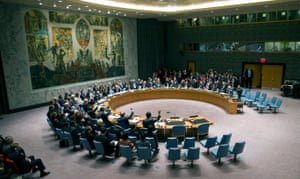
The former Prime Minister of Portugal, Antonio Guterres until recently was the UN High Commissioner for Refugees, he is now the new United Nations Secretary General, after a third security council secret ballot on Monday.The United Nations Security Council

The United Nations has saved millions of lives and boosted health and education across the world. But it is bloated, undemocratic – and very expensive.

There are about 1,200 country offices of the UN around the world.

There are 100 countries with more than 10 UN country offices in each country.

Half of the United Nations money goes for the operational expenses of these office, leaving what is actually a minuscule amount of money for programming or key activities. Even accounting for inflation, annual UN expenditure is 40 times higher than it was in the early 1950s. Its regular budget, which is agreed every two years and goes to pay for the cost of administering the UN – including mouth-watering daily allowances which result in many of its bureaucrats being far better paid than American civil servants – has more than doubled over the past two decades to $5.4bn.

But that is just a small portion of the total spend.

Peacekeeping costs another $9bn a year, with 120,000 peacekeepers deployed mostly in Africa. Some missions have lasted more than a decade. And then there are the voluntary contributions from individual governments that go to fund a large part of disaster relief, development work and agencies such as UNICEF. They have risen sixfold over the past 25 years to $28.8bn. And yet even at that level, some agencies are warning that they are operating on the brink of bankruptcy.

The organisation now encompasses 17 specialised agencies, 14 funds and a secretariat with 17 departments employing 41,000 people.

As the UN marks the 70th anniversary of its founding this autumn, those imperfections – and how the UN addresses them – have come to the fore as the organisation struggles to define its role in the 21st century.

It has become overly bureaucratic and slow in the way it dealt with development issues.

What that tells you is that modern management and modern strategic planning is late coming to the UN.

The UN’s taste for setting goals at the expense of delivering results failed the poorest and most vulnerable.

Cooperation between organisations has been hindered by competition for funding, mission creep. The organisation has grown so big that at times it is working against itself. It is so fragmented that each agency has its own IT system. About one-third of the UN operations in 60 countries had a budget of less than $2m per agency.

However the UN cannot be ignored. Neither can the UN’s huge logistical capabilities, such as the World Food Programme’s airlifts, be matched by any private organisation.

The United Nations of today is hugely different from the United Nations 70 years ago, and therefore it is very important the United Nations changes and adapts itself to changing circumstances.

What we have now is another multiplication of targets and goals which are an extraordinarily comprehensive assessment of what’s needed to be done but there’s no operational clarity around them. Who’s going to do it? Who’s going to monitor it? Who’s accountable for it?

There seem little point in saying anything to the UN about what they should be doing, as it is out of date gossip shop, with no responsibility. Where is the conversation happening which says that, in 2016 and beyond, what is the United Nations there for?”

What should be the core activities of the UN that should receive a significant proportion of the regular funding of the UN?” In the context of what’s happening today, a few million is not going to make any difference. ( See previous posts on 0.05% Aid Commission)

But the bigger obstacle to reform perhaps comes from the UN members states themselves. Which raises what many consider the real obstacle to remaking the UN for the 21st century – that its most powerful body is still locked in 1945.

The five permanent members, the victors over Germany and Japan, hold the whip hand through vetoes.

For all the noise from the US, Britain and France in particular about modernising the UN, they show no willingness to give up the power they wield sometimes in ways governed entirely by political interest.

Since 1982, the US has used its security council veto to block resolutions critical of Israel 35 times. The total number of resolutions blocked by other permanent members over the same period is 27. More recently, Russia and China have used their vetoes to block UN intervention in Syria.

There is little doubt the Mr Antonio Guterres with or without Artificial Intelligence is going to have a lot more refugees on his hands.

The United Nations is an organization of sovereign States, which voluntarily join the UN to work for world peace. There are six main organs of the United Nations—the General Assembly, the Security Council, the Trusteeship Council, the Economic and Social Council, the International Court of Justice, and the Secretariat.

It’s time to break up the Organisation into specific separate Units and to do away with the veto powers that elected him.

We can be Proud.

← Back

Thank you for your response. ✨


Share this:

  • Share on WhatsApp (Opens in new window) WhatsApp
  • More
  • Share on Mastodon (Opens in new window) Mastodon

THE BEADY EYE SAYS: THE TIME TO BE EMPATHETIC IS TO DAY. THIS MINUTE. NOW..

26 Monday Sep 2016

Posted by bobdillon33@gmail.com in Communication., Emotions., European Union., HUMAN INTELLIGENCE, Humanity., Life., Modern Day Democracy., Natural World Disasters, Social Media., The Refugees, The world to day., What Needs to change in the World

≈ Comments Off on THE BEADY EYE SAYS: THE TIME TO BE EMPATHETIC IS TO DAY. THIS MINUTE. NOW..

Tags

Capitalism and Greed, European Union, Globalization, Inequility, The Future of Mankind, THE UNITED NATIONS, World aid commission


Our world is quickly becoming a desolate island, a screen that we hold six inches in front of our noses, and it’s a hard pill to swallow.

Because of this, we lose touch with nature, we lose touch with reality, we lose touch with each other. We seem to have forgotten the basic tenets of empathy.Afficher l'image d'origine

We have become such a technology-based society, that we have forgotten how to feel. We have forgotten how to relate. We have forgotten how to connect among other humans, let alone with other sentient animals.

We seem to have forgotten what it feels like to be in someone else’s, or some other animal’s, proverbial shoes.

Here in lies one of the major problems.

Some time ago, (some) humans stopped showing empathy, and started killing indiscriminately — people, and other animals. We kill each other over political differences, racial differences, religious differences, and resources. We kill animals for “research,” or for competition and sport, or for a token.

In a world where there is so much doom and gloom about the state of our environment it’s no surprising that the world has lost 10% of its wilderness areas in the past 20 years. The growth of our modern civilisation, spurred on by technological innovations, has been underpinned by the exploitation of the natural environment. Today, a large fraction of the Earth, once swathed in wilderness, is now monopolised by humans. Although the direct causes of wildlife loss are clear enough, what’s less obvious is why many people seemingly don’t care. Society’s ongoing destruction of the environment can be put down to the fact that not enough people value nature and wilderness any more.

Expanding human demands on land, sea and fresh water, along with the impacts of climate change, have made the conservation and management of wild areas and wild animals a top priority.

For some species, our time to see them is rapidly running out.

The richer we are and the more we consume, the more self-centred and careless of the lives of others we appear to become

Human attitudes towards wild nature and wildlife have, historically, been ambivalent.

It seems to me that there are currently two main approaches to wildlife management.

One: The wise use approach aims to accommodate humanity’s continuous use of wild nature as a resource for food, timber, and other raw materials, as well as for recreation.

Two: The preservationists, whose goal is to protect pristine nature, not to use it, carefully or otherwise. Wild places should be allowed to develop on their own with as little interference from humans as possible.

Neither work:

For years we’ve been told that people cannot afford to care about the natural world until they become rich; that only economic growth can save the biosphere, that civilisation marches towards enlightenment about our impacts on the living planet. The results suggest the opposite.

There is only one way to protect what is left.Afficher l'image d'origine

Protected areas, like national parks and wildlife refuges, are the cornerstones of global conservation efforts.

We must pay for it.  Either by buying the land or paying the locals to maintain it.

Why is it so difficult to persuade people to care about our wonderful planet, the world that gave rise to us and upon which we wholly depend?

Because we lack empathy. Empathy is defined as: the capacity to understand or feel what another being (a human or non-human animal) is experiencing from within the other being’s frame of reference, i.e., the capacity to place oneself in another’s position.

Without it we all have different values that give rise to conflicts or dilemmas.

The way in which these different values are prioritized will determine policy of conservation in the future.

For instance, there may be a conflict between sustaining certain human livelihoods and preserving a particular species, or there may be a dilemma between the protection of wild nature and animal welfare.

The question, then, is how we should address such dilemmas and disagreements. The first thing to note, in trying to answer this question, is that the rich anglophone countries are anomalous. The more we consume, the less we feel.

Our erroneous belief that we are more concerned about man-made climate change than the people of other nations informs the sentiment, often voiced by the press and politicians, that there’s no point in acting if the rest of the world won’t play its part.

Our refusal to stop pumping so much carbon dioxide into the atmosphere is pure selfishness. The more harm we do, the less concerned about it we become. And the more hyper consumerism destroys relationships, communities and the physical fabric of the Earth, the more we try to fill the void in our lives by buying more stuff.

In modern debates about wildlife, however, other values have become increasingly important. We don’t know exactly how ecosystems will respond to climate change but you may rest assured that with rising sea levels nature will be the last to be rescued.

Sustaining interest in this great but slow-burning crisis is a challenge no one seems to have mastered. Only when the crisis causes or exacerbates an acute disaster – such as the floods – is there a flicker of anxiety, but that quickly dies away.

So the perennially low-level of concern, which flickers upwards momentarily when disaster strikes, then slumps back into the customary stupor, is an almost inevitable result of a society that has become restructured around shopping, fashion, celebrity and an obsession with money.

It’s hard to understand how anyone could imagine that economic growth is a formula for protecting the planet.

How we break the circle and wake people out of this dream world is the question that all those who love the living planet should address.

Just look at the United Nations:

For the first time in UN history, candidates seeking to replace the organisation’s secretary-general have held a live debate, presenting the case for their candidacy and taking questions from UN member states on key global issues.

All previous secretary-generals were chosen behind closed doors by the UN’s permanent five members: the US, China, Russia, France and Britain.

This remains so:  The permanent five UN Security Council members still fix “who is going to be selected behind closed doors. Don’t think for a moment that the permanent members are going  give up powers they won after World War II readily. Hand-picking the UN secretary-general is still one of their trump cards.

The possibility of  the United Nations getting an energetic idealist to shake up the world body by streamline archaic UN systems, to stand up to the big powers and do more to end wars, and fight poverty is as remote as ever.  It will remain both bloated and overstretched with its staff more interested in winning promotions than fighting malaria, climate change and regulating poverty or stopping wars, not to mention protecting what’s left of nature.

So long as it has to beg for funds it will remain a worthless gossip shop.  ( See previous posts)

There will be no easy answers.

As Leonard Da Vinci said,

” Learn how to see. Realize that everything connects to everything else.”

Empathy is about being we-focused rather than I-focused and understanding that, collectively, we are better off when we step outside of our silos. As a leader, you must emphasize value, not just transactions; people, not just processes.

Empathy brings the big picture into focus.

← Back

Thank you for your response. ✨


Share this:

  • Share on WhatsApp (Opens in new window) WhatsApp
  • More
  • Share on Mastodon (Opens in new window) Mastodon

THE BEADY EYE ASKS: WHAT ARE THE PRESENT GREATEST THREAT TO THE WORLD.

17 Saturday Sep 2016

Posted by bobdillon33@gmail.com in Artificial Intelligence., Big Data., Climate Change., Humanity., Life., Technology, The Future, The world to day., Unanswered Questions., USA Presidential Election, What Needs to change in the World, Where's the Global Outrage., World Organisations.

≈ Comments Off on THE BEADY EYE ASKS: WHAT ARE THE PRESENT GREATEST THREAT TO THE WORLD.

Tags

The Future of Mankind, To days world threats., Top World Threats, Visions of the future.

( A Six minute Read)

If you were to be asked this question the answer might not be as obvious as you think.

You might say for example: Climate Change, Wars /ISIS, Inequality, Fresh Water, Nuclear Weapons, Donald Trump, Drugs, the list is endless.

All of these are reversible if we applied an ounce of collective world intelligence.

If you were honest with ourselves you would have no option but to point the finger at us as the greatest threat to the world.

It’s difficult to think of a problem in today’s world that it doesn’t either cause or compound by humanity. This is our greatest challenge: learning to live in a crowded and interconnected world that is creating unprecedented pressures on human society and on the physical environment.

Afficher l'image d'origine

Here are two of the greatest threats:

The Smartphone and AI. 

With more than 1 billion users worldwide and 2.5 million apps — and counting — available across Google and Apple’s digital marketplaces, smartphones are impacting day-to-day life in some surprising ways.

The smartphone’s role in shaping human interaction is far-reaching,whose functionality is constantly evolving and is now a pocket-size PC. The device seems to have limitless potential.  The majority of Internet traffic (60 percent) now comes from mobile devices.
Smartphones are affecting how the brain processes information. Google, fields more than 1 billion search queries per day — is changing how the brain catalogs knowledge. Smartphones have become a kind of “external memory source.”

We are becoming symbiotic with our computer tools, growing into interconnected systems that remember less by knowing information than by knowing where the information can be found.

Information is so rapid and up-to-the-minute. … Ten years ago, we’d all be crowding around a television to hear what’s happening, and now we have our phones.

There’s no longer an excuse for stupidity.

Future generations will have different priorities about what they choose to remember. Smartphones will become more than just a device in our pockets but something closer to a digital extension of ourselves.

The threat to the world is not that machines are taking over. It’s that they’re helping us to be more human, helping us to connect with each other regardless of geography.

60 percent of users don’t go more than an hour without checking their phone.

36 percent of smart phone users would rather give up their TV than their smart phone.

There are more than 125 million people in the Middle East region are online, and more than 53 million actively use social networks.

The widespread use of smartphones was a defining factor in the development of the spread of Arab Spring both in how protesters shared information with one another and how events were documented by legions of impromptu citizen journalists.

Now combine the Smartphone with the impotence of global governance combined with the lack of Inspirational leaders there is an ever growing pool of evidence that we are all becoming dependent on  AI-powered assistance intelligence (without a conscience or any long-term planning.)

Afficher l'image d'origine

As AI advances, it will embed itself even deeper into our social fabric, shaping everything from how we do business to how we receive medical care.

It will become so commonplace that we will dependent on it. The technology may pit us against our own human nature:

What happens to risk, or the humanistic notion of what is true, when everything is based on everyone else? When our digitized advisors aggregate, average, and assuage, are we even autonomous beings anymore?

Political positions, financial decisions, attitudes toward social justice—our biggest decisions are often fueled by poor logic and misinformation. In the best circumstances, artificial intelligence could save us from ourselves, by helping us understand each other, see the world more clearly, and collectively make better decisions.

However if we do not acknowledge and take on board people’s valid concerns with AI we risk seeing the potential benefits of these technologies lost under a mountain of fear and negativity.

We need our out of date United Nations to have a mature, informed and inclusive world meeting about the future of automation and the potential impact of new technologies in order to ensure that this new power is used responsibly in the economic and moral sense.

At the moment there is no proper regulation around the use of AI.

Of course the UN is incapable of holding such a meeting so perhaps it is time for a new Institution called World Click (for example) to bring the whole of technology under a world umbrella.

If we care about the world we live in, we should think long and hard about the interfaces, rules, and policies that will govern artificial intelligence and our new way of life.

It would be easy enough for the people who design AI systems, motivated by greed, self-interest, or politics, to train computers to manipulate our lives in subtle and insidious ways, essentially lying to us through the algorithms that guide our thinking.

The coming tidal wave of decision support threatens to give very few people a phenomenal amount of suggestive power over a great many people—the kind of power that is hard to trace and almost impossible to stop.

Every day, Capitalism and the free market is moving into a digital age which is run more and more by algorithms that will only make those that own them richer while the world is about get poorer and poorer due to Climate change.

What is the alternative? Is there an alternative?

Global governance failure is the most interconnected of the global risks—it has a direct connection with 75% of the all the risks covered in this blog.

Of course the next threat Climate Change has the potential to wipe most of us of the face of the earth.  

Changes in climate and weather patterns worldwide are converging with social trends, shifting populations, land use change, and increasingly impaired water infrastructure to dramatically make life worse for those across the globe.

Climate change poses several challenges to water management strategies including extreme events, dwindling water supply, and the increasingly incorrect assumption that the past will accurately predict future conditions.

Simply put Climate change “is the greatest collective challenge we face as a human family.  It like AI has the capacity to change the way all of us live.

In much the same way great powers have fought wars over land and oil, we could see battles for the control of freshwater supplies.

Next Inequality.

The growing disparity in the wealth inside countries and among countries is a challenge the world has faced for centuries.

At the end of the 9/11 era, politics is driving the global economy, while economics drives geopolitics. All of this is playing out against a volatile G-Zero backdrop of global leadership in short supply.

Chronic fiscal imbalances are going to emerge as one of  the greatest global risk over the next decade.

Moving On. Fresh Water/ Food.

The potential for food crises in poor countries due to Climate change will  cause governments collapse. Sustaining growth will be one of the century’s big challenge.

An estimated 4bn to 5bn people in the world suffer from strained access to clean water, with the Middle East in particular likely to be a hotspot for struggles around water supply. Agriculture already accounts for on average 70pc of total water consumption and, according to the World Bank, we would need to ramp up food production by 50pc by 2030 to meet the needs of the world’s population.

Not forgetting Energy.

Satisfying ever-growing energy demand in a sustainable way has become the world’s biggest challenge.”


On top of all that we live today under the threat of global terrorism….Cyber is probably the threat least known, most ignored…and eventually…could be the most catastrophic….

Then we have, the spread of nuclear weapons, and selling of arms.

A potential Donald Trump presidency could be more dangerous to the world’s economy than the rising tide of global terrorism. The greatest risk to global stability over the next 20 years may be the nature of America itself.

If you have got this far I am sure like me you are saying so what.  We fucked no matter what we do.

Not so.

We are on the threshold of a new revolution maybe without a leader but thanks to Technology we have the Smartphone that if called upon could be turned into World people’s power to demand change.

To stop Profit for Profit’s sake, To stop arms trading, To stop CO2 emissions, To stop Wars, to create if not a fair world at least a transparent justice first world before we contaminate the rest of the universe.

The fact is if a million smartphones were to campaign on a daily basis change could be achieved.   Of all the threats to human society they have the silent power to unite the little consensus that there is left amongst us all.

← Back

Thank you for your response. ✨


Share this:

  • Share on WhatsApp (Opens in new window) WhatsApp
  • More
  • Share on Mastodon (Opens in new window) Mastodon

THE BEADY EYE LOOKS AT WHAT IS BEHIND THE EUROPEAN COMMISSION ORDERED TO IRELAND TO CLAW BACK: Up to €13bn in tax from Apple?

01 Thursday Sep 2016

Posted by bobdillon33@gmail.com in Apple. Inc, European Commission., European Union., HUMAN INTELLIGENCE, The world to day., Unanswered Questions., Wealth.

≈ Comments Off on THE BEADY EYE LOOKS AT WHAT IS BEHIND THE EUROPEAN COMMISSION ORDERED TO IRELAND TO CLAW BACK: Up to €13bn in tax from Apple?

Tags

Apple. Inc, Business and Economy, Capitalism and Greed, Distribution of wealth, European Union, Global economic rules, Inequility, SMART PHONE WORLD, World aid commission

( A four minute read)

Be Aware of Invisibility;Afficher l'image d'origine

One bad Apple leads to another.

This decision by the European Commission has implications far beyond Europe Union it opens the hornet’s nest of Capitalism.

The European Commission has launched an effort to rewrite Apple’s history in Europe, ignore Ireland’s tax laws and up-end the international tax system in the process. Every company in Ireland and across Europe is suddenly at risk of being subjected to taxes under laws that never existed.

The Unelected European Commission has ruled that two tax rulings issued by the Irish tax administration on the tax treatment of Apple’s corporate profits represent illegal state aid under EU law.

Brussels has no power over corporation tax rates, which member states have always been able to set themselves. The commissioner is trying to make sure the single market function is maintained and member states do not win business at the cost of others’ tax base.
In practice such rulings destroy fair market competition and undermine the tax sovereignty of democratic states.

So why should Ireland take any notice.

Other than it is a huge sum – more than the €12.9bn annual government spending on the Irish health service and nearly one-third of Ireland’s total government tax revenue in 2015, which was €45.6bn.

It is also the equivalent of €2,830 for every one of Ireland’s 4.6 million population.

It is a potential windfall – but one that the Government does not want.

Under EU rules it would mean that – as it is a once-off payment – it would have to be used to pay down debt, rather than used to fund extra Government spending.

There is little point in the EU enforcing Ireland to issue Apple with a tax bill in order to recoup EU financial Aid.

So are we looking at Cowboy Capitalism.

We all know that the world economy needs to be fundamentally reformed and if let alone it will not right it’s self.

In light of the technological revolution which is going to make most of us unemployable, structural changes are needed to the soul less of systems, one in which the fortune of one individual is most often possible at the expense of another.

The real question is:

How can the tendency of modern-day capitalism ( which is producing high levels of inequality and unsustainable uses of limited resources) be rethought.

Simply put Capitalism ultimate goal is profit. I got mine so fuck you! approach to life.

Trickle down economics is a joke. Capitalism has produced a society which no longer focuses on cooperation but on individual gain at any cost. We live in a society that now prides profit over prudence, compulsively over compassion, technology over tactility. And not too far away Trump over truth.

Global economic rules allow jobs to be offshore and capital to be reallocated in ways that do not benefit the vast majority of people.

Division and fear are sown by our world media . Compliance and desperation are reaped. And as always , there’s a profit.

Soon we will have a generation that does not know anything that does not come out of a smart phone, the God that will make or break presidents, popes, prime ministers, European Union’s, etc.

The most awesome goddamn propaganda force in the whole godless world. Owned by Apple.Afficher l'image d'origine

We all know that it cannot remain the same and the core responsibility of democratic nations is to provide the ground rules. But should these rules be about how should technology best be deployed to serve human needs.

European feudalism failed a long time ago and now it seems that the European Union is also on the verge of failure.

Free enterprise and the market have led to private capitalism’s accumulation.

Capitalism’s problems are so deep that they are almost intractable, and benefits of private enterprise and markets against those of public enterprises and government planning have become blurred.

Giving that the European Union now has the apparatus to play a central role in the economy of its member has this decision reinforced an excessive concentration of power in politics and culture moving the EU to a state form of Capitalism which England recently voted to leave.

Once England it is outside the EU, Britain would have even more leeway than Ireland or other European Countries to offer special deals to multinationals in the hope they would invest in the UK.

That said, such moves could leave Britain looking more and more like a tax haven, and could hamper the willingness of other countries to trade openly with the UK.

With the way the Technological Revolution is going I would say FUNDAMENTAL REFORM IS NEEDED.

The thought that technology is innately progressive and all-powerful so it can solve capitalism’s problems for us by leaving firms and wealthy investors alone to do as they wish will ultimately leads all of us to greater insecurity.

The sheer trickery of Apple’s tax arrangements renders their claims to corporate social responsibility risible, and the economic harm caused by these arrangements is also enormous.

The evidence points in one direction Capitalism is the wrong economic system for the material world that is emerging.

It’s time to redesign.

There is only one way of resetting the elite-driven international capitalism.

All profit for profit sake should be caped with a world aid commission of 0.05%. ( See previous posts)

← Back

Thank you for your response. ✨

Share this:

  • Share on WhatsApp (Opens in new window) WhatsApp
  • More
  • Share on Mastodon (Opens in new window) Mastodon

THE BEADY SAYS: HUMANITY IS TURNING INTO AN ALGORITHM.

24 Wednesday Aug 2016

Posted by bobdillon33@gmail.com in Artificial Intelligence., Big Data., Facebook, Google it., HUMAN INTELLIGENCE, Humanity., Technology, The Future, The Internet., The world to day., Unanswered Questions., What Needs to change in the World, WiFi communication.

≈ Comments Off on THE BEADY SAYS: HUMANITY IS TURNING INTO AN ALGORITHM.

Tags

Communication Technology, Death v Technology, TECHNOLOGICAL ADVANCEMENT, Technological revolution, Technology age, Technology versus Humanity


( One Minute read)

We are just an accident of creation an algorithm of evolution and technology is only created by our minds, with our imaginations.Afficher l'image d'origine

The Internet allows for our humanity in modern-day times to interconnect and promote globalization and information sharing.

Without imaginations, no technology would have been created and with the decoupling of intelligence and consciousness our time is coming to an end.

Soon we have an algorithm that will figure out.

“Why was God a Man?” “Why we have such a heartless world”. 

We  are just at the start of this process and there is nothing we can do to stop it.  Data- driven technologies are going to rule the roost. From your birth to your demise.

Smart phones and Social Media are eroding the very concept of individuality which is the start of disintegrating from within.

We will live for longer, but as Dataists, run by an unchallenged high priestly caste with all the knowledge,  Facebook, Google, Apple, Microsoft.

Technology, a word with Greek origins, is defined as, “the practical application of knowledge especially in a particular area”. 
Technology to-day is a word used to collectively describe or portray the advancements abilities,creations, undertakings, views, and knowledge of a singular group of persons: we as human-kind.

We are being reduced to the mentality of Chickens.

Technology… is a queer thing.
“It brings you great gifts with one hand, and it stabs you in the back with the other.”
C.P. Snow

“Humanity is acquiring all the right technology for all the wrong reasons.” 

R. Buckminster Fuller

 However, the decision to use it proficiently in proper perspective is one’s
’own decision and choice. 
If technological advancements are put in the best uses, it further inspires the development in related and non-related areas but at the sametime its negative use can create havoc in the humanity or the world.
Technology has, and will, change the moral fabric of humanity; it is up to the present generation to heed this warning and not allow such societal travesties of immense proportions ever to occur.
Again Technological Advancements will continue to advance rapidly as we move into the next millennium. What is important is to ensure that these advances benefit humanity as a whole.
And what exactly is the “Singularity” supposed to be?
It’s a future mythological moment when machine (artificial) intelligence becomes more “intelligent” than human intelligence.

← Back

Thank you for your response. ✨

 
……
 

Share this:

  • Share on WhatsApp (Opens in new window) WhatsApp
  • More
  • Share on Mastodon (Opens in new window) Mastodon

THE BEADY EYE SAYS:The true worth of an Olympic gold medal is the worth of the neck it hangs around but there are many necks that will never see one.

23 Tuesday Aug 2016

Posted by bobdillon33@gmail.com in OLYMPICS GAMES., SPORT., The world to day., What Needs to change in the World

≈ Comments Off on THE BEADY EYE SAYS:The true worth of an Olympic gold medal is the worth of the neck it hangs around but there are many necks that will never see one.

Tags

OLYMPICS GAMES.


An open letter to all sports men and woman.  (Three minute read)

Now is the time to lobby The IOC to establish a permanent home for the Olympic Games. 

Don’t get me wrong I love sport and my congratulations goes to every competitor that competed in the Rio Olympics medal winner or not.Afficher l'image d'origine

When you realise the cost of the Games and the problems we all face in the world there is a stronger case now than ever before to have a permanent venue for the Games. ( See previous post)Olympics 2016 Gold Medal Cost: How Much Is The Gold Medal Worth?

A Summer Olympic Games now costs an average of $5.2bn (at 2015 levels), while the average Winter Olympics costs $3.1bn.

Long after the crowds vanish, it turns out that some host cities and countries ended up taking large net losses on their investments.

No Games since 1960 has come in under budget.

In fact, nearly half have cost overruns of more than 100%. Montreal 1976 had a cost overrun of 720%, Barcelona 1992 of 266% .

The most expensive is London 2012 at $15bn – nearly $10bn above average. London also sits far above second-placed Barcelona 1992 at $9.7bn.

For Rio, the preliminary cost is $4.6bn, with an overrun of 51% in real terms.

A Cost effective level playing field is required in more ways than one.

Never mind the cheats on drugs.

The individual or teams from less wealthy countries have an uphill struggle long before they even contemplate competing.

Take England’s recent success for example.

Second on the medal table.

The nation’s greatest Olympics haul in living memory is built on the ruthless efficiency of Team GB’s “medal machine” coaching team – and National Lottery Millions.

£274million of Lotto cash into our athletes’ programmes in the last four years.. Every aspect of training and preparation for Rio has been fine-tuned, with 900 support staff travelling to Brazil with our 366 athletes.

UK Sport, which determines how public funds raised via the national lottery and tax are allocated to elite-level sport, has pledged almost £350m to Olympic and Paralympic sports between 2013 and 2017, up 11% on the run-up to London 2012

Considering that this is a country where more than a quarter of the population is officially defined as inactive because they do less than 30 minutes of activity a week, including walking.

A country that recently could not support their fellow Europeans because it was costing a few million.. A country that for all intensive purposes has closed its borders to refugees.  A country that is slashing its support to the vulnerable citizens.

(Severe cuts to local authority budgets are also squeezing resources at the grassroots level. Councils across England have been forced to make cuts since 2010, when grant funding for local authorities was cut by a fifth, more than twice the level of cuts to the rest of the UK public sector.)

On average, each medal at the Rio Olympics has cost £5.5m.

27 Gold. 23 Silver. 17 Bronze.

Michael Phelps’ entire 23 gold medal haul would net him about $13,000.Mo Farah wins the gold medal in the men's 5,000 metre final 

In the U.S., gold medal winners get $25,000 ($15,000 for silver and $10,000 for bronze) from the U.S. Olympic Committee. (Italy pays $182,000 for gold medal winners, whereas Russia pays $135,000)

At a scrap-level value, the award is only worth about $501, since the medal is not entirely made out of gold.

The Olympics are about competition and heroics and national pride.

But they are also about big business and The “Olympic legacy” which might include improvements in infrastructure and increased trade, foreign investment, or tourism after the Games; and intangible benefits such as the “feel-good effect” or civic pride.

The IOC could better serve their constituents by diverting competition away from lavish provision of facilities towards goals that would raise participation in sports….

It is perfectly reasonable for the IOC or the FIFA to extract a surplus from the sale of TV and sponsorship rights to fund the global development of sport. However, the unjustified claim that these events produce substantial economic benefits can (a) mislead people into believing that their taxes are being productively spent on social regeneration rather than just funding mass entertainment, and (b) lead some private individuals to invest their own wealth in the expectation that an event will generate returns when it is unlikely to do so.

A gold medal is so much more than just a hunk of metal, so in that way, they’re irreplaceable.Britain's players celebrate their victory at the end of the women's Gold medal hockey Netherlands vs Britain match of the Rio 2016 Olympics Games at the Olympic Hockey Centre in Rio de Janeiro on August 19, 2016.

We can ask all the philosophical questions, which are valid.

What is the point of the Olympics?

The Olympics can be uplifting, entertaining, and distracting.  But what, exactly, is the point of watching a group of people get together to compete over running quickly or lifting big weights?

Answer:

We humans create it and we give meaning to it.

They are a way of bringing people together to get over their differences, focus on their commonality, and break down the boundaries not just between themselves, but also between gods and humans, past and present. It’s very hard to watch the Olympic Games and not be inspired by what humans are capable of and their ability to overcome their political differences.

Play or sport is the closest thing most human beings come to contemplation, to the highest of human activities.

Watching sports takes us out of ourselves.

Olympism seeks to create a way of life based on the joy of effort, the educational value of good example, social responsibility and respect for universal fundamental ethical principles.

The goal of Olympism is to place sport at the service of the harmonious development of man, with a view to promoting a peaceful society concerned with the preservation of human dignity.

The structure of sport, where everyone begins at the same starting line and abides by the same rules, means that competitors from every country become equal.


“Aim for excellence” means always doing and giving one’s best.

“In theory,” says Reid, ”everything the Games does is supposed to reflect that philosophy.”

Today, the world of sport is regularly confronted with issues of violence, corruption, discrimination, excessive nationalism, cheating, doping, etc. While these issues are still in a minority, they can be very damaging for athletes, sports institutions and the image of sport in general. By promoting a philosophy of life based on the values of excellence, respect and friendship.

Olympism seeks to correct these abuses and shows that sport can help to build a better world.  “Any form of discrimination with regard to a country or a person on grounds of race, religion, politics, gender or otherwise is incompatible with belonging to the Olympic Movement”.

“I remain convinced that sport is one of the most forceful elements of peace, and I am confident in its future action.” Pierre de Coubertin

The five rings on a white background make up the Olympic symbol. It was presented at the 17th IOC Session at the Sorbonne in 1914, and was flown for the first time at the 1920 Games in Antwerp. While the interlinked rings symbolise the five continents, the six colours (including the white background) were chosen because they are found in all the flags of the world, so that every country can find at least one of its national colours.

Contrary to popular belief, the colours of the rings do not refer to particular continents but signify their union through sport and the gathering of athletes from all over the world at the Olympic Games.

I believe that Sport in its purest form offers possibilities of dialogue, camaraderie and exchanges of ideas, in a spirit of mutual respect and fair play, which everyone can apply on a daily basis well beyond sports arenas, thus contributing to building a better world!

It is not the place for the Wiggins of this world to be able  to compete under the flag of a limited company Wiggins Rights Ltd.

← Back

Thank you for your response. ✨


Share this:

  • Share on WhatsApp (Opens in new window) WhatsApp
  • More
  • Share on Mastodon (Opens in new window) Mastodon

THE BEADY ASKS: WHERE IS ALL OF THIS WIFI COMMUNICATION LEADING US.

20 Saturday Aug 2016

Posted by bobdillon33@gmail.com in Artificial Intelligence., Big Data., Google it., HUMAN INTELLIGENCE, Humanity., Innovation., Life., Modern Day Communication., Social Media., Technology, The Future, The Internet., The world to day., Unanswered Questions., WiFi communication.

≈ Comments Off on THE BEADY ASKS: WHERE IS ALL OF THIS WIFI COMMUNICATION LEADING US.

Tags

Capitalism and Greed, Globalization, SMART PHONE WORLD, The Future of Mankind, Visions of the future., Wifi Revolution, WiFi.


This post continues with the theme of Intelligence.  (Four minute read)

The Beady eye has in previous post addressed the chaotic world of social media under the headings of are we all being Googlefied, Twitterised, and becoming Selfied by Facebook.

THIS VERY MOMENT PROGRESSION is TOWARDS MONITORIATION by WiFi.

It’s hard to imagine what life would be like without the internet. Afficher l'image d'origine

Social media sites have taken over our lives with most people existing in a rapidly moving and complex world.

People are living in a world ‘saturated by media sounds and images.

It’s even harder to even imagine that 10 years ago there was no Facebook or Twitter!

With Facebook becoming more of a medium for self-promotion.

So here is my feeble attempt to cast an overview of what is happening to society as a result of what I call the continuing dissociation with real life.

The world as it is represented by society today has become a very big place with the internet changing the world and revolutionised the way we live.

Social media websites are some of the most popular haunts on the Internet and they are revolutionized the way people communicate and socialize on the Web.

On the other hand social media binds together communities that once were geographically isolated, greatly increasing the pace and intensity of collaboration. Suddenly the world could be accessed at the touch of a button. Gone were the days when we were waiting for information and doing hours of research at the local library.

People in the Western world would rather live without TV than without internet access.Afficher l'image d'origine

Now comes WiFi.  The potential for WiFi is endless. It seems we welcome new or improved technology with open arms just about every day.

We are well on the road to paperless administration and functioning. There is Wire Free WiFi Dog Fence. WiFi technology has just approved a brand new next-gen WiFi 802.22 technology that could allow your home network to span up to 60 miles! There are mi-light smart tech wi-fi bulb. There is Wave WiFi Technology. There is Wi-Fi technology module for moving cars which will enable people to access high-speed Internet while they are traveling.

There are plans to ‘connect’ whole cities. A whole city can be provided by WiFi by deploying internet routers at distant positions.

It surrounds society from the minute we wake up to the late hours we go to bed at night. Whatever the form of media, it is a reliable source of keeping up to date on all the latest technology, from iPod shuffle, to the iPhone, in the modern society today.

I do not believe that with WiFi, technology has any bounds. 

It has taken over our lives but it seems like that happiness is diminished and we are on the threshold of autonomous crowd monitoring via devices using sensor networks to track people. 

Our obsession with our smartphones has not only changed the way we spend time, but the way we feel and think.

 I HATE being out in public and seeing people on their phones. It seems that we can’t enjoy the world around us for an hour without retreating back into that safe little digital box.

The rise of social media is definitely correlated with the rise of narcissism in our society. Our self-esteem depends on how many likes we get, how many followers we get, if someone texts us back.

By now, we are all aware that social media has had a tremendous impact on our culture, in business, on the world-at-large.

Make no mistake: email, Facebook and Twitter-checking constitute a neural addiction. With social media there is a paper trail for everything.

However, aside from seeing your friends’ new baby on Facebook, or reading about Justin Bieber’s latest brush with the law on Twitter, what are some of the real impacts, both positive and negative, that social media has had on our society?

The real question is:

Is it Intelligent to create entire cultures of people who do not trust the government intelligence linkages to the carriers who don’t wish “their every move, message and meme to be indexed, analyzed and categorized by Big Brother and big business.

Has the truth disappeared in a culture that relentlessly promotes avarice and excess as the good life, consumerism is essentially expected.

Every politician worth his salt now needs to jump on the social media bandwagon. This is because social websites have played an important role in many elections around the world.

Majority of people in the world believe that they live in a modern society and have more technology resources available such as the internet, TV, Radio and newspapers to know the causes behind the events that happened in the past or happening in the present.

Television is becoming more than a passive watching device as content viewing spans other devices.

Households are spending more time online.

  • In order to deal with it, we need shortcuts.

We cannot be expected to recognize and analyze all the aspects in each person, event, and situation we encounter in even one day.

It leads me to think that we’re all kind of in this big, worldwide reality television game. We’re all competing to see who has the best life with the best boyfriend or girlfriend having the best meals on the best vacations with the best families and the best dogs. By the time you make it home there is nothing to talk about because you’ve spoken about everything all day through social media or you’ve looked through each other’s social media feeds.

Social networks offer the opportunity for people to reconnect with their old friends and acquaintances, make new friends, trade ideas, share content and pictures, and many other activities. (in a kind of weird, impersonal cyber way) 

Accessing patient’s notes instantly is a massive progression in patient care. In future, scans, x-ray results, blood pressure checks and cholesterol checks could be all scanned straight into a patient’s notes.

When you stop having offscreen interaction, you lose empathy.

You lose the ability to have genuine reactions to real problems and real things.

Digital technologies have not only created potent new social networks but also dramatically altered how culture works. Digital crowds now serve as very effective and prolific innovators of culture—a phenomenon I call BRAINWASHING .

One of the biggest changes that is taking place is that we all contributing to cultural branding.

If you look at crowd cultures grabbed the critiques and blew them up, pushing industrial food anxiety into the mainstream you begin to realize why in the Western World we have a rising problem with obesity.

News about every major problem linked to industrial food production—processed foods loaded with sugar, carcinogenic preservatives, rBGH in milk, bisphenol A leaching from plastics, GMOs, and so on—began to circulate at internet speed.

Parents worried endlessly about what they were feeding their kids.

Crowd culture converted an elite concern into a national social trauma that galvanized a broad public challenge, but on the other hand it is targeting novel ideologies flowing out of crowd cultures and converting them into profit.

In cultural branding, the brand promotes an innovative ideology that breaks with category conventions. Companies leapfrog the conventions of their categories to champion new ideologies that are meaningful to customers.

You have mind share branding, is one that companies have long relied on.  It treats a brand as a set of psychological associations (benefits, emotions, personality).

You have purpose branding, in it, a brand espouses values or ideals its customers share, to turn what was once serendipity into a rigorous discipline.

On top of all of this you have.

Entertainment “properties”—performers, athletes, sports teams, films, television programs, and video games—are also hugely popular on social media.

On top of that it is nearly impossible to escape the invasion of advertising and online petitions.  Social media allows companies to leapfrog traditional media and forge relationships directly with customers.

There is no limit on the possibilities of how much further joining forces the various forms of mass communication with technology will go.

In the end the more mass communication evolves the more the world and society changes with it.

While propaganda has been around for almost a thousand years, only recently (last 100 years) with the advent of technologies that allow us to spread information to a mass group has it evolved to a scientific process capable of influencing a whole nation of people. They have also served to rally people for a cause, and have inspired mass movements and political unrests in many countries.

The public have an insatiable curiosity to know everything. Except what is worth knowing.Afficher l'image d'origine

Remember, the technologies out there might seem like the greatest thing since sliced bread, but if they don’t help meet learning objectives, if the audience isn’t taken into account, if logistical considerations aren’t thought about and if the instructor isn’t comfortable with the technologies then they are much like the bard wrote, “full of sound and fury and signifying nothing”.

In conclusion, the biggest change is.  Separation. 

When we can’t see someone through OUR OWN EYES, it’s creates distrust : IT WILL BECOME HARDER to love them. 

← Back

Thank you for your response. ✨


industrial food ideology.


watching biased news channels, or participating in violent video games.

Most of what we hear about in the world today comes to us as it is broadcasted through the television news networking stations and the Radio broadcasts throughout the day….


In an era of email, text messages, Facebook and Twitter, we’re all required to do several things at once. But this constant multitasking is taking its toll.

Each time we check a Twitter feed or Facebook update, we encounter something novel and feel more connected socially


While mass media targets the individual in short-term intervals, the overall influence on them has been established as the consumer moves from one impressionable age category to another.


Be aware of the general perspective that others use to frame the problem or issue at hand, because accepting their frame on their terms gives them a powerful advantage.

Be sensitive to situational demands however trivial they may seem: group norms, group pressures, symbols of authority, slogans, and commitments.

Share this:

  • Share on WhatsApp (Opens in new window) WhatsApp
  • More
  • Share on Mastodon (Opens in new window) Mastodon

THE BEADY EYE ASKS:WHAT IS IT ABOUT US THAT MAKES US WHOLLY INCAPABLE OF RESPONDING? TO CLIMATE CHANGE- IS IT GREED OR ARE WE JUST PLAIN STUPID.

13 Saturday Aug 2016

Posted by bobdillon33@gmail.com in Climate Change., HUMAN INTELLIGENCE, Humanity., Paris Climate Change Conference 2015, Sustaniability, The Future, The world to day., Unanswered Questions., What Needs to change in the World, Where's the Global Outrage.

≈ Comments Off on THE BEADY EYE ASKS:WHAT IS IT ABOUT US THAT MAKES US WHOLLY INCAPABLE OF RESPONDING? TO CLIMATE CHANGE- IS IT GREED OR ARE WE JUST PLAIN STUPID.

Tags

Capitalism vs. the Climate., Climate change, Climate change and Intelligence, Climate Change Solution's., Environment, The Future of Mankind, United Nations


It’s a beautiful hot day, 34 celsius.

The Olympics are in full swing with its opening message long forgotten by those how win a medal.

The world since the first farmer grew two carrots has had its winners, losers, wars, famines, rich, and poor, you name it the World has weathered all.Afficher l'image d'origine

You could be a faitheist  and say  “What happens happens”  but as Lone Man ( Isna la wica) ( late 19th century Teton Sioux said ” I have seen that in any great undertaking it is not enough for a man to depend simply upon himself.”Afficher l'image d'origine

I have written on Climate Change before the Paris Agreement and after.

Since then every day of the week there is some new evidence that the climate is changing.

The global meltdown has begun.

Long predicted and long denied, the effects of climate change are arriving faster than even the gloomiest prophets expected.

The earth is dying, yet those who spread this message are treated as dangerous and mad.

This week we learnt that the Arctic ecosystem is collapsing.

Three weeks ago, marine biologists reported that almost all the world’s coral reefs could be dead by the end of the coming century.

One month ago, the Red Cross reported that natural disasters uprooted more people in 1998 than all the wars and conflicts on earth combined.

The demographer Dr Norman Myers calculates that 25m people have already been displaced by environmental change, and this will rise to 200m within 50 years.

The London School of Hygiene and Tropical Medicine reports that nine of the 10 most dangerous diseases carried by insects and other vectors are likely to spread as a result of global warming.

You would think that with our combined World Intelligent we would be by now well beyond the point of discussing the implementation of the Paris Agreement.

Not on your Nelly.

And yet, far from addressing this coming catastrophe, we curse or mock anyone who draws attention to it.

What is it about this pattern of living that demands that those who challenge it must be treated as if they were dangerous or mad?

Is it just plain stupidity or that we have found the key to undying happiness, the transactable elixir of life?

What is it about this crisis, what is it about us, that makes us wholly incapable of responding?

Is it the drive to make more money than you could possibly need, to buy more goods than you could possibly enjoy, is a species of mental illness. Success in this system brings not happiness, but, at best, an alleviation of the pain required to sustain it. Even its beneficiaries are also its victims.

Climate change is perhaps the gravest calamity our species has ever encountered. Its impact dwarfs that of any war, any plague, any famine we have confronted so far. It makes genocide and ethnic cleansing look like sideshows at the circus of human suffering.

To date we have not reached the necessary number of countries to represent 55% of global emissions to sign up to the agreement to implement the Paris Agreement. (Which I advocate will have little effect as the agreement has no means of enforcing anything agreed.)

Negotiations and meetings have been marred by special interest groups trying to prevent effective action to combat climate change. In addition, there has been a lack of political will to take effective steps and measures.

Many large corporations, have opposed climate change treaties seemingly afraid of profit impacts if they have to make substantial changes to how they do business.

All countries are affected by, and contribute to, the buildup of greenhouse gases, and should be willing to join in the effort to stop it. However, it is far from easy to agree what to do, and how to do it….

Because : Poor countries face the brunt of the problems caused by global warming, and point out that most of the current global warming are the results of the rich countries’ pollution.

Current consumption patterns also see far more greenhouse emissions per person in the rich countries than the poorer ones.

As evidence of climate change mounts the impacts will be worse for more vulnerable people around the world, and could destabilize the world economy.

However, some are ( Donald Trump) still trying to undermine climate change action through deception.

The EU is in crisis, and the USA will be soon.

Brazil’s “interim” government, led by Michel Temer, signed an emergency loan to the State of Rio de Janeiro to help finance infrastructure for the 2016 Olympics. The bailout was conditional to selling off the State’s public water supply and sanitation company, the Companhia Estadual de Águas e Esgotos (Cedae).

What will it take to persuade us to stop using the world as our punchbag?

Many are agreed that climate change may be one of the greatest threats facing the planet.

All the words, pledges, agreements mean nothing without the political will, and financial backing.

There is only one way to make any difference worthwhile happening world-wide and that is to tap into World Greed.

Profit for Profit sake.Afficher l'image d'origine

By placing a World Aid commission of 0.05% on all High Frequency Financial Transactions, on all Sovereign Wealth Funds Acquisitions, on all Foreign Exchange transactions over $20,000, on all Lottery wins over $100000, on all gambling.

This would create a perpetual Fund of trillions to tackle Climate Change.

Will it happen.

Not without all of us demanding it of the United Nations.

The Earth is the mother of all people and all people should have equal rights upon it.

← Back

Thank you for your response. ✨


Share this:

  • Share on WhatsApp (Opens in new window) WhatsApp
  • More
  • Share on Mastodon (Opens in new window) Mastodon
← Older posts
Newer posts →

All comments and contributions much appreciated

  • THE BEADY EYE ASKS HOW CAN THE WORLD DEAL WITH IRIAN NOW A TERRORIST COUNTRY. May 18, 2026
  • THE BEADY EYE SAYS WE AT RISK WITH AI OF DECOUPLING COGNITIVE THINKING FROM EDUCATION. May 15, 2026
  • THE BEADY EYE SAYS LIFE IS NOT A REHSAL. SO YOUR HAD BETTER GET ON WITH IT. May 14, 2026
  • THE BEADY EYE SAYS WE NEED TO SEE CLEARLY WHAT ARTIFICIAL INTELLIGENCE IS D0ING TO THE WORLD. May 13, 2026
  • THE BEADY EYE SAYS We’re rapidly approaching the point where no one would be able to shut down a rogue AI. May 11, 2026

Archives

  • May 2026
  • April 2026
  • March 2026
  • February 2026
  • January 2026
  • December 2025
  • November 2025
  • October 2025
  • September 2025
  • August 2025
  • July 2025
  • June 2025
  • May 2025
  • February 2025
  • January 2025
  • December 2024
  • November 2024
  • October 2024
  • September 2024
  • August 2024
  • July 2024
  • June 2024
  • May 2024
  • April 2024
  • March 2024
  • February 2024
  • January 2024
  • December 2023
  • October 2023
  • September 2023
  • August 2023
  • July 2023
  • June 2023
  • May 2023
  • April 2023
  • March 2023
  • February 2023
  • January 2023
  • December 2022
  • November 2022
  • October 2022
  • September 2022
  • August 2022
  • July 2022
  • June 2022
  • May 2022
  • April 2022
  • March 2022
  • February 2022
  • January 2022
  • December 2021
  • November 2021
  • October 2021
  • September 2021
  • August 2021
  • July 2021
  • June 2021
  • May 2021
  • April 2021
  • March 2021
  • February 2021
  • January 2021
  • December 2020
  • November 2020
  • October 2020
  • September 2020
  • August 2020
  • July 2020
  • June 2020
  • May 2020
  • April 2020
  • March 2020
  • February 2020
  • January 2020
  • December 2019
  • November 2019
  • October 2019
  • September 2019
  • August 2019
  • July 2019
  • June 2019
  • May 2019
  • April 2019
  • March 2019
  • February 2019
  • January 2019
  • December 2018
  • November 2018
  • October 2018
  • September 2018
  • August 2018
  • July 2018
  • June 2018
  • May 2018
  • April 2018
  • March 2018
  • February 2018
  • January 2018
  • December 2017
  • November 2017
  • October 2017
  • September 2017
  • August 2017
  • July 2017
  • June 2017
  • May 2017
  • April 2017
  • March 2017
  • February 2017
  • January 2017
  • December 2016
  • November 2016
  • October 2016
  • September 2016
  • August 2016
  • July 2016
  • June 2016
  • May 2016
  • April 2016
  • March 2016
  • February 2016
  • January 2016
  • December 2015
  • November 2015
  • October 2015
  • September 2015
  • August 2015
  • July 2015
  • June 2015
  • May 2015
  • April 2015
  • March 2015
  • February 2015
  • January 2015
  • December 2014
  • November 2014
  • October 2014
  • September 2014
  • August 2014
  • July 2014
  • June 2014
  • May 2014
  • April 2014
  • March 2014
  • February 2014
  • January 2014
  • December 2013
  • November 2013
  • October 2013

Talk to me.

Jason Lawrence's avatarJason Lawrence on THE BEADY EYE ASK’S: WIT…
benmadigan's avatarbenmadigan on THE BEADY EYE ASK’S: WHA…
bobdillon33@gmail.com's avatarbobdillon33@gmail.co… on THE BEADY EYE SAYS: WELCOME TO…
Ernest Harben's avatarOG on THE BEADY EYE SAYS: WELCOME TO…
benmadigan's avatarbenmadigan on THE BEADY EYE SAY’S. ONC…

7/7

Moulin de Labarde 46300
Gourdon Lot France
0565416842
Before 6pm.

My Blog; THE BEADY EYE.

My Blog; THE BEADY EYE.
bobdillon33@gmail.com

bobdillon33@gmail.com

Free Thinker.

View Full Profile →

Follow bobdillon33blog on WordPress.com

Blog Stats

  • 99,666 hits

Blogs I Follow

  • unnecessary news from earth
  • The Invictus Soul
  • WordPress.com News
  • WestDeltaGirl's Blog
  • The PPJ Gazette
Follow bobdillon33blog on WordPress.com

The Beady Eye.

The Beady Eye.
Follow bobdillon33blog on WordPress.com

Blog at WordPress.com.

unnecessary news from earth

WITH MIGO

The Invictus Soul

The only thing worse than being 'blind' is having a Sight but no Vision

WordPress.com News

The latest news on WordPress.com and the WordPress community.

WestDeltaGirl's Blog

Sharing vegetarian and vegan recipes and food ideas

The PPJ Gazette

PPJ Gazette copyright ©

Privacy & Cookies: This site uses cookies. By continuing to use this website, you agree to their use.
To find out more, including how to control cookies, see here: Cookie Policy
  • Subscribe Subscribed
    • bobdillon33blog
    • Join 222 other subscribers
    • Already have a WordPress.com account? Log in now.
    • bobdillon33blog
    • Subscribe Subscribed
    • Sign up
    • Log in
    • Report this content
    • View site in Reader
    • Manage subscriptions
    • Collapse this bar