• About
  • THE BEADY EYE SAY’S : THE EUROPEAN UNION SHOULD THANK ENGLAND FOR ITS IN OR OUT REFERENDUM.

bobdillon33blog

~ Free Thinker.

bobdillon33blog

Category Archives: Technology’s

THE BEADY EYE SAY’S: WHEN WE REFLECT UPON OUR ORIGINS IT IS DIFFICULT TO AVOID THE MOST ESSENTIAL QUESTION OF THEM ALL – WHAT MAKES US HUMANS DIFFERENT FROM OTHER ANIMALS?

01 Monday Apr 2024

Posted by bobdillon33@gmail.com in 2024 the year of disconnection, A solution to Climate change., Algorithms., Artificial Intelligence., CAPITALISM IS INCOMPATIBLE IN THE FIGHT AGAINST CLIMATE CHANGE., Climate Change., Collective stupidity., Dehumanization., Digital age., Disaster Capitalism., Evolution, Fourth Industrial Revolution., How to do it., HUMAN ABILITIES., Human Collective Stupidity., HUMAN INTELLIGENCE, Human values., Humanity., Imagination., Inequality., INTELLIGENCE., Language, Migrants/Refugees., Modern day life., Monetization of nature, Natural selection., OUR BRAINS, Our Common Values., Purpose of life., Reality., Robot citizenship., Society, State of the world, Survival., Sustaniability, Technology v Humanity, Technology's, The common good., The essence of our humanity., The Internet., The new year 2024, The Obvious., The pursuit of profit., The state of the World., The world to day., THE WORLD YOU LIVE IN., THIS IS THE STATE OF THE WORLD.  , Unanswered Questions., Uncategorized, VALUES, War, We can leave a legacy worthwhile., What is shaping our world., WHAT IS TRUTH, What Needs to change in the World, Where's the Global Outrage.

≈ Comments Off on THE BEADY EYE SAY’S: WHEN WE REFLECT UPON OUR ORIGINS IT IS DIFFICULT TO AVOID THE MOST ESSENTIAL QUESTION OF THEM ALL – WHAT MAKES US HUMANS DIFFERENT FROM OTHER ANIMALS?

Tags

Artificial Intelligence., Capitalism and Greed, Capitalism vs. the Climate., Climate change, Environment, Inequility, Sustainability, Technology, The Future of Mankind, Visions of the future.

( Twelve minute read)

Our brain have difficulties in accepting that we actually are animals and thus highly dependent on nature where nothing exists alone.

—————

Science has organized human evolution into six levels.

We share the first five with other creatures, while the sixth level makes us unique –  language.

Our use of language and given rise to the sciences and philosophical thoughts that now are transforming the entire biosphere, while abusing it to such a degree that we are currently on the verge of destroying it completely.

It is difficult to understanding that extinctions are not features of this civilization, but virtually all past civilizations have faced this fate. We might be more advanced technologically now, but this gives little comfort as we are not immune to the threats that undid our ancestors.

MAYBE THIS IS THE MAIN REASON THAT WE ARE UNABLE TO ADDRESS THE CLIMATE CRISIS, WHICH IS NOW AN INDUSTRY RATHER THAN A THREATH TO OUR VERY EXISTENCE, to the biodiversity, to food security, access to fresh water, the lack of which will result in wars.

Unfortunately we are still animals living in a world that is changing the atmosphere’s chemistry, which is becoming a reality, not tomorrow, but right now and that’s with the number of people we already have.

Indeed the very technology we now rely on bring new unprecedented challenges.


From the emergence of Homo sapiens, it took roughly 300,000 years before one billion of us populated the Earth, with people evolving into their current form some 200,000 years ago.

(Huts, 2 million years ago. Boats, 900,000 years ago. Cooking, 500,000 years ago. Javelins, 400,000 years ago, Glue, 200,000 years ago. Clothing possibly 170,000 years ago.)

“Behavioural modernity,” evolved 50,000-65,000 years ago.  It took 15,000 to 10,000 years to start growing stable foods.

The planet most likely will surpass eight billion people sometime around mid-November. (The world population is to exceed 10 billion this century.)

Climate change – the world population – technologies inequality – you name it, will determine how many of us will be living on Earth as we approach 2100.

There can be no mistaking the import of this, as it belies the dangers of the next several decades which will see migration on a massive scale, due wars because of runaway climate change.A photograph of a person facing away from the camera, standing with their arms raised, in front of factories with smokestacks emitting smoke

Unprecedented droughts or city-destroying floods would prompt mass migrations, destabilizing the rich world or giving rise to far-right nationalism. Or a global famine could send food prices surging, triggering old-fashioned resource wars.

Survival and success do not depend on brutal force. There is an empirical connection between violence and climate change that’s persists across 12,000 years of human history.

The long chain of evolutionary development has taught us with technology and political trends conflict will continue and even intensify.

“Whether we like it or not changes will be happening, and the situation will not improve by itself.

The future well-being and actual life on earth depends on us all and our ability to express compassion and work together as the eusocial creatures we de facto are.

“No one is doing this in the right way at the moment,”

World hunger, ecological and environmental disaster, global warming, massive shifts in weather systems, the re-emergence of diseases long thought controlled, with political turmoil, in a world where a barrel of water is more expensive than a barrel of oil.

Empathy, compassion and cooperation are now so saturated by Tec that we are becoming a species totally unscrew and desentized to reality, others, and their needs, becoming algorithms predictions.  

Efforts so far to incorporate climate change into future population projections have been inadequate.

————-

Where is it leading us?

To answer that, we have to think about how we got here in the first place – Greed

Currently it is estimated for that 50 million people are living on less than the $3.65 a day, with half of the global population lives on less than US$6.85.

You could add another few billons who are not poor enough to feature.

The world is divided into the very rich, and the very poor. And since everybody knows there aren’t a whole lot of very rich people, they assume the majority of the world’s population is living in extreme poverty. But that’s completely wrong; the overwhelming majority of people live somewhere in the middle.

Our problem is inequality, attached to Greed, which is now plundering the world in the form of profit seeking algorithms that are generating profits for the few, using the latest technology Algorithmic trading designed to capitalize on market inefficiencies, trades can be completed at speeds and frequencies impossible for mere mortals. 
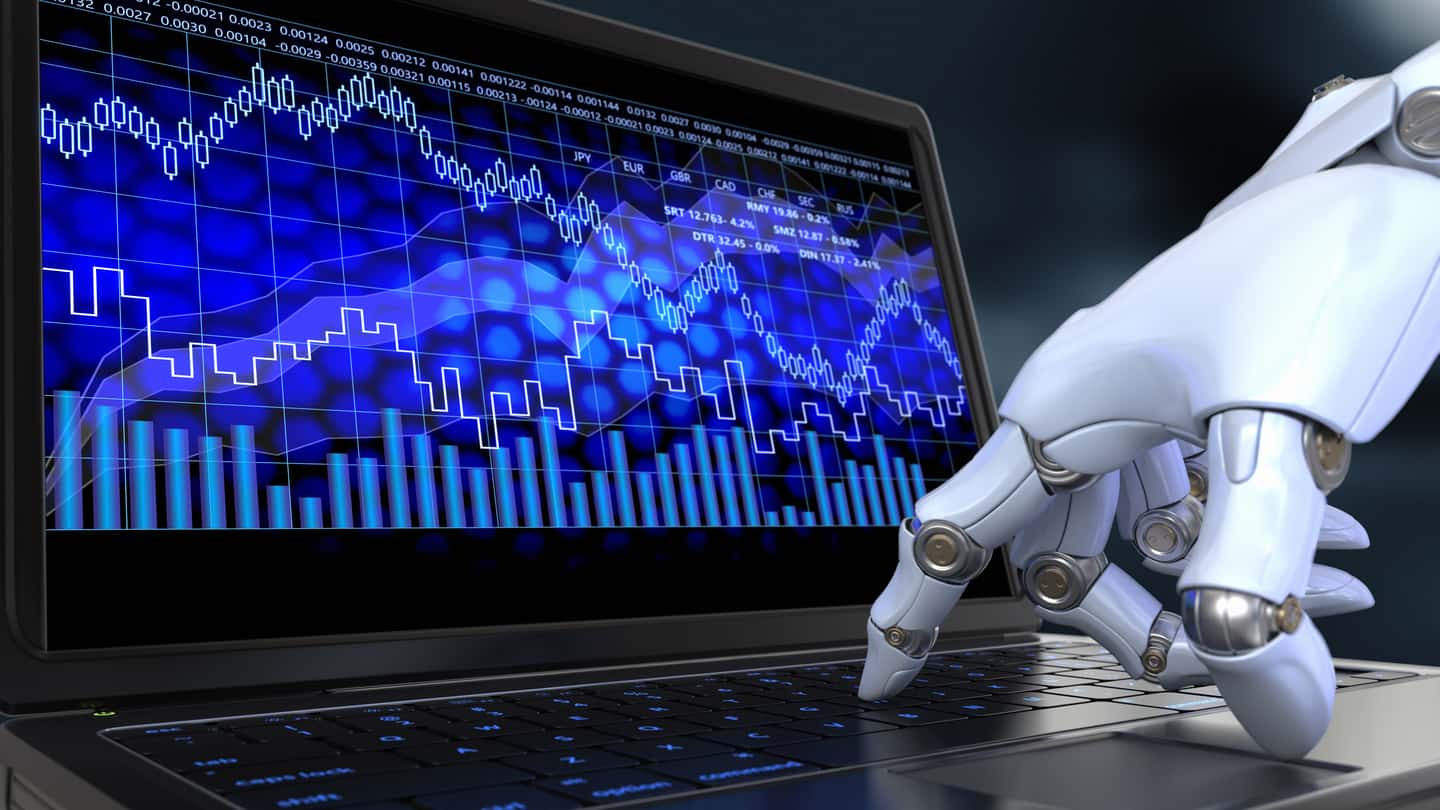
Algorithm’s are creating a new social contract between a sovereign and citizens, in which the people collectively who were sovereign are becoming digitalised citizens.

Power now resides with those best able to organize knowledge.

The knowledge revolution should bring a shift to direct democracy, but those who benefit from the current structure are fighting this transition. This is the source of much angst around the world, including the current wave of popular protests.

Neither, physical military strength, nor access to capital are now sufficient for economic success.

If we are to have any chance, we have to change to direct democracy which is easier to achieve than big, sprawling governments.

I’m not sure we can, but I know it will happen because capitalism or any other systems will no longer generate sufficient income to sustain social welfair states.

———————

The problem is how do we reconcile that with democracy in countries composed of millions of citizens?

Talk of artificial intelligence destroying humanity plays into the tech companies’ agenda, and hinders effective regulation of the societal harms AI is causing right now.

Barely a week seems to go by without a tech industry insider trumpeting the existential risks of artificial intelligence (AI). Fearmongering narratives about existential risks are not constructive.

Serious discussion about actual risks, and action to contain them, are.

The sooner humanity establishes its rules of engagement with AI, the sooner we can learn to live in harmony with the technology.

Algos require an uninterrupted power supply and reliable internet access. Even a brief failure in these conditions can prove cataclysmic.

———————–

Memorandum for Green Bond Issuers: Certain Aspects and Considerations -  Herman, Henry & Dominic LLP

What is needed are direct opportunities for all to invest in the future.

One of our fundamental challenges in the years ahead will be to mobilize the substantial sums needed for investment in everything from green infrastructure to the cutting-edge technologies that we will need to achieve net zero emissions by 2050 and slow the course of climate change.

At the moment we have Green bonds/Climate change bonds are issued exclusively to finance projects that positively impact the environment. Today, more than 50 countries have issued green bonds. However, the appeal of this market and the fact that there is no binding regulatory framework for green bonds may lead to suspicions of ‘greenwashing’ (false green claims).

There’s nothing new or specifically European about green bonds.

They’ve been around since the beginning of the 21st century. Although they weren’t yet called green bonds, the first of them are thought to have been issued in 2001 by the City of San Francisco to finance a solar power project.

Any organization – such as governments, corporations, and financial institutions – can issue a green bond.

The green bond market is a portion of the larger debt market. Historically, over US$2 trillion of green bonds have been issued globally to date, with the potential to grow to US$5 trillion by 2025.

Industry bodies and investor action groups such as Climate Action 100+, as well as large
market investors such as sovereign wealth funds and pension funds, are in a strong position to drive development of this market. However there is no universally accepted legal and commercial definition of a green bond.

Green bonds are proven to be an effective means to secure the resources required to meet the national climate change goals, so why not issue green bonds that any joe soap could invest in.

Lotteries exist in 46.67% of countries worldwide. In many countries, with the adoption of digitalization the Lottery is a lifestyle and a massive contribution to their revenues. The Lottery industry continues to grow worldwide, with an expected increase of 4.1% CAGR by 2031. The spread of online lotteries associated with the increase in smartphone and internet usage is one of many factors that can drive growth in the global market. The Lottery market is projected to grow to $405.20 billion by 2028.

US POWERBALL 59 tickets were sold every second of the year.

MEGA MILLIONS 2,817 tickets every minute or about 47 tickets every second—of the whole year!

EUROMILLIONS 342 EuroMillions tickets were sold every single second of 2019—or 20,566 tickets a minute!

UK LOTTO 122 lottery tickets for every one of the 31,536,000 seconds in 2019

They allows us all the chance to change our lives.

A staggering amount of money that goes into lotteries on a daily basis. In fact, just about every second of every day.

By making 1% OF ANY LOTTO TICKETS purchase eligible to acquire a climate Bond (with a gurantee interest return in twenty years from now..) RATHER THAN BIN THE TICKET ON LOOSING ONE COLLECTS THEM IN ORDER TO FUND SUSTAINABLE DEVELOPMENT.

 It would be everyone’s collective interest to identify with the physical manifestations of climate change.

Climate change is a defining issue of our time.

All human comments appriciated. All like clicks and abuse chucked in the bin.

Contact: bobdillon33@gmail.com

.

Share this:

  • Share on WhatsApp (Opens in new window) WhatsApp
  • More
  • Share on Pocket (Opens in new window) Pocket
  • Share on Mastodon (Opens in new window) Mastodon

THE BEADY EYE SAYS: WHILE BECOMING THE MOST DANGERIOUS THREATH TO ALL OUR LIVES, TECHNOLOGY HAS AND STILL IS CHANGING HOW WE INTERACT AMONG OURSELVES.

27 Wednesday Mar 2024

Posted by bobdillon33@gmail.com in Technology's, The world to day., Transition period or Implication period.

≈ Comments Off on THE BEADY EYE SAYS: WHILE BECOMING THE MOST DANGERIOUS THREATH TO ALL OUR LIVES, TECHNOLOGY HAS AND STILL IS CHANGING HOW WE INTERACT AMONG OURSELVES.

Tags

AI, Algorithms., Artificial Intelligence., Capitalism and Greed, Capitalism vs. the Climate., Society, tech, Technology, The Future of Mankind, Visions of the future.

( Four minute read)

Humans are highly social creatures.

Advancements in technology is now completely re-shaped the everyday routine of the Modern Human.

Developing a chokehold on our lives, to the point of corverting us all into product to be harvested on a 24/24 bases by profit seeking algorithms.

Our brains have become wired to process social information, and we usually feel better when we are connected.  Social media taps into this tendency.

When you develop a population-scale technology that delivers social signals to the tune of trillions per day in real-time, the rise of social media isn’t unexpected.

It’s like tossing a lit match into a pool of gasoline.

The once-prevalent, gauzy utopian vision of online community is disappearing,

Why?

BECAUSE ITS NOT GETTING ANY EASYER AT BEING A PERSON, IN THIS TECHNOLOGICALLY FUCKED UP SUPPOSELY CONNECTED WORLD.

Along with the benefits of eaiser connectivity and increased information, social media has also become a vehicle for disinformation and political attacks from beyond sovereign borders.person on a smartphone

With little or now privacy left, we are now left to endure, rather than enjoye a life on social media, gorging on the most lurid speculation which one feels kind of stuck and unconsciously obliged to check it way more than you want to

I dont know about you but I am sick of seeing people so drawn to their phones at social events and in general I wonder are we are all just becoming AI predictions as what we are and how we live our lives. 

Companies like Google, X, and Meta collect vast amounts of user data, in part to better understand and improve their platforms but largely to be able to sell targeted advertising.

Collection of sensitive information around users’ race, ethnicity, sexuality, or other identifiers are now not just putting people at risk, they are also desentizing us at large to the state of the world.

Even for users who want to opt out of ravenous data collection, privacy policies remain complicated and vague, and many users don’t have the time or knowledge of legalese to parse through them.

At best, users can figure out what data won’t be collected, but either way, the onus is really on the users to sift through policies, trying to make sense of what’s really happening with their data.

There’s a very strong corollary between the data that’s collected about us and current state of the world -wars – growing inequality  – demishing democracy – lack of long term actions, such as on Climate Change that has now turned into an industry not a threat to our very existence.

————–

The emergence of smartphones in 2007 generated macro data, which uses artificial intelligence  transforming our daily routines.

There are no laws that require platforms to show how they use or sell the data collected.

So far, attempts to curtail the collection of users’ data has been piecemeal, largely driven by state-level laws and individual enforcement actions. Regulation continues to be extraordinarily behind.

The companies are not going to change on their own.

However it barely scratches the surface of what they have enabled, with few arenas of human endeavour left untouched by the smartphone.

Against the backdrop of the constant rise in time spent by young people on social media, a staggering 74% of them are checking their social media accounts more than they would like to. Instagram, TikTok and other social media have become daily fixtures in their lives with 59% of young people now spending more than two hours of their average day on social media.

The five most popular platforms are Instagram, YouTube, TikTok, Snapchat and Facebook.

Whilst YouTube and TikTok dominate as sources of entertainment, Instagram, Snapchat and BeReal are the platforms most widely posted on by young people.

Addictive platform design take on young people’s mental health and their feeling of powerlessness in the face of global companies’ constant nudging to participate in a vicious cycle of personal data sharing and content consumption.

The “addictive” lure of the constant stream of updates and personalized recommendations, often feeling “overstimulated” and “distracted”, but algorithms pick up on mental health issues and expose users to ever more related content, bombarding us with bad news as it stimulated more viewings, till we are all officially desensitized.

Something bad happens across the country? We hear about it. Something bad happens across the world? We hear about it. Something good news happens, for all intitive purpose it is ignored.  

—————————

The natural question at this point, it would seem, would be to ask where we should draw the line.

Why tragedies stop seeming so tragic – and why this needs to stop.

The sheer amount of violence present in the world only seems to be increasing with Netflicks quietly capitalizing on another form of content. More than other entertainment outlets, Netflix’s hit shows spotlight gruesome violence. More than other entertainment outlets, a number of Netflix’s hit shows spotlight gruesome violence, often committed against women.

Escalating violence on-screen can make us more tolerant of it in real life.

Gone are the days of bang bang ypur dead Graphic, realistic violent content is considered the ‘norm’ post-watershed.

This is not necessarily because people are becoming more violent in their nature, but is rather due to increased methods of communication brought on by technological improvements like playing violent video games.

Is it possible that individuals who consume violent media not only become more aggressive, but also make their friends and family more aggressive, even  if those do not consume violent media themselves? The consumer is actively influencing her/his friend to make her/him more alike.

We don’t process large numbers as well as we do smaller numbers.

How sad should we be over the news of those dead in Gaza? Utterly distraught, significantly, not much?

—————

Mobile phones are now extraordinarily multi-functional, but mass access to knowledge in the age of communications threatens basic concepts such as individual identity and autonomy.

To maintain our empathy for others, it is important to first extend it to ourselves and to those within our immediate circle.  

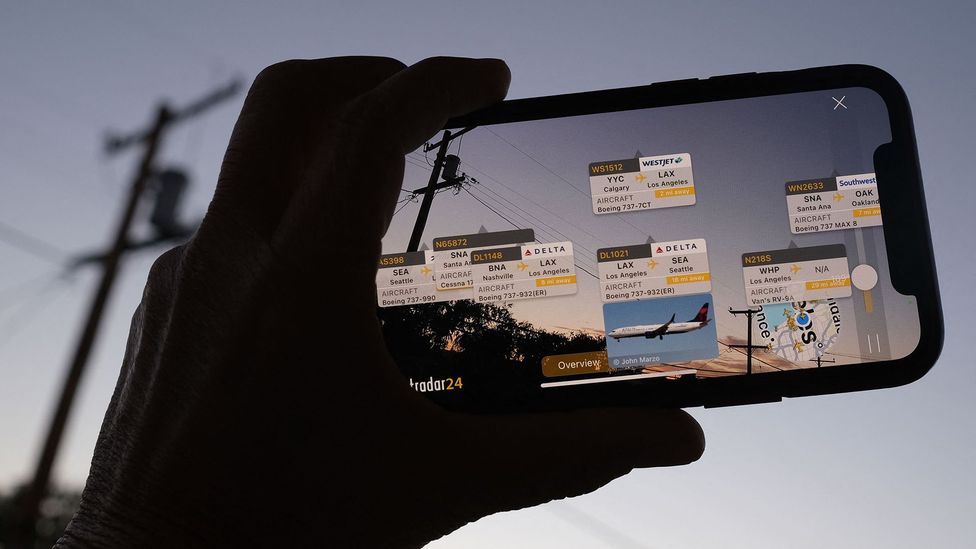
Smartphones have enabled the digital and real worlds to be blended through augmented reality, allowing users to track aircraft overhead, for example (Credit: Getty Images)

The Smart phone is destroying this empathy, one of the most ubiquitous technology devices of all time, with the ability to take the device everywhere comes the idea that no one is ever far from the things that matter most to them.

With the death of proximity, the smartphone has become your home, but home is no longer a refuge.

We don’t know about how our smartphones are affecting us.

Are they alienating people from each other, or helping them to connect with others?

Do they affect children differently than adults?

And how do we step away from our phones if our whole lives are on them?

Smartphones are basic necessities but it is only by looking at the vastly different uses and contexts that we can fully understand the consequences of smartphones for people’s lives around the world.

Combining artificial intelligence with the extraordinary data-gathering capabilities of smartphones, is creating other opportunities. Millions of people across many parts of the world that are conflict-bound or subject to some of the worst effects of the climate crisis have left their homeland behind completely in search of a new life are using their smartphone to navigate their circumstances and situations.

(According to the UN, there were 110 million forcibly displaced people in the world.)

If you ask people how much they care about all people on earth dying, it’s not seven-and-half billion times more concern, than if you told them one person would die.

————————

If we assume that transcendentally brilliant artificial minds won’t be along to save or destroy us, and live according to that outlook, then what is the worst that could happen – we build a better world for nothing?

We need a cultural change in values, to enable more deliberate decision-making.

If we don’t the future of society, as defined by the scientific and technological revolutions needs a custom ethical and philosophical direction, as the world is rapidly moving to each person doing what’s best for themselves.

Or to put it more bluntly.

Someday in the future, someone will arrive at another turning point where the fate of the species is theirs to decide.

If our extinction proceeds slowly enough to allow a moment of horrified realisation, the doers of the deed will likely be quite taken aback… if the Earth is destroyed, it will probably be by mistake.

Society used to be able to make a long-term plan and that’s not something that happens now.

We go to quick fixes.

———————-

Clearly, technology by itself is neither good nor bad.

It is only the way and extent to which we use it that matters. It is indisputable that thanks to technology, we get a chance to live a life our predecessors could not even dream about. However reality does not take place in Smartphones.

There is no economy or individual that is unaffected by climate change. By 2050, this problem could force 216 million people to relocate within their own nations.

When all areas of human activity get rapidly digitized, it’s easy to become desensitized to the importance of innovations and advancements for the overall progress of society.

Those in the tech industry know that the opportunities on this horizon are endless.

——————

What are today’s challenges for artificial intelligence?

Building technology for the sake of technology won’t cut it in a globalized society.

There’s a juxtaposition between the need for a more connected world and hesitation from people toward technology that tech innovators need to account for and solve.

The development of new advancements must be rooted in a holistic mindset balancing desire for more conveniences with feasible solutions to meet the needs of future generations.

To accomplish this, education will play a critical role in bridging perceptions and fostering authentic trust between technology and humans.

Indeed it is my belief that all teenagers are now in need to be educated in classroom in the use of mobiles.

Do you believe technology should be more focused on the problems of society or individual needs?

Is technology being used sufficiently to tackle society’s major issues?

—————

The human species will change with genetic editing, artificial intelligence challenges the concept of “I” and “individual;” and robotics will bring new “companion robots,” which we need to define and adopt socially.

In the last 10 years, genetics has made it possible to analyse old DNA and, as a result, revealed the history of the planet’s first inhabitants. We are now a single human species but we finally know that descend from other species. We now have unprecedented tools to inform and transform society and to protect the environment.

How should we harness this potential in the future?

How does this perspective change our understanding of the current human diversity?

Excessive use of gadgets, lack of offline communication, and social media abuse were proven to cause negative effects on mental health.

It is indispensable to give machines “common-sense knowledge” in order to move toward the ambitious goal of building “truly intelligent” general AI.

This is the time to make the necessary decisions to outline this path.

When robots take the final leap from our imagination to our homes and workplaces, they will become our companions; they will add new possibilities and countless variables to our patterns of behaviour:  they will change how and where we build, how we move or the materials we use to create things.

——————–

How, exactly, could AI destroy us?

We humans have already wiped out a significant fraction of all the species on Earth.

That is what you should expect to happen as a less intelligent species – which is what we are likely to become, given the rate of progress of artificial intelligence. For example, in many cases, we have wiped out species just because we wanted resources.

The worst-case scenario is that we fail to disrupt the status quo, in which very powerful companies develop and deploy AI in invisible and obscure ways.

As AI becomes increasingly capable, and speculative fears about far-future existential risks gather mainstream attention, we need to work urgently to understand, prevent and remedy present-day harms.

These harms are playing out every day, with powerful algorithmic technology being used to mediate our relationships between one another and between ourselves and our institutions.

—————————–

How would AI get physical agency?

In the very early stages, by using humans as its hands.

You feel as though you are encountering absolute reality, whatever the hell that is, enlightenment is nothing more than a “pure consciousness event which is just a stepping-stone, at best, to true enlightenment, which does not make you permanently happy, let alone ecstatic. It is a state that incorporates all human emotions and qualities: love and hate, desire and fear, wisdom and ignorance.

Enlightenment does not give you answers to scientific riddles such as the origin of the universe, or of conscious life,  just as electrons can be described as waves and particles, so ultimate reality might be timeless and aimless—and also have some directionality and purpose.

The ability to hold opposites, emotional opposites, at the same time is really what we’re after.

However the mind remains in many respects unchanged, you discover a void at the heart of reality.

Not until  you realize you’re the same jerk you were all along.

The biggest power trip you can imagine” and an “aphrodisiac.” you think you’re God.

The object vanishes and only consciousness remains, it becomes its own subject and object.

It becomes aware of itself, seeing life as an illusion that makes accepting death easier.

What you are, and what the world is.

I must be missing something. What can we do about it?”

I want to bring us back to a more practical reality, which is that technology is what we make it, and we are abdicating our responsibility to steer technology toward good and away from bad.

That is the path I try to illuminate in this post an issue of social responsibility.

All human comments appreciated. All like clicks and abuse chunked in the bin.

Contact: bobdillon33@gmail.com

Share this:

  • Share on WhatsApp (Opens in new window) WhatsApp
  • More
  • Share on Pocket (Opens in new window) Pocket
  • Share on Mastodon (Opens in new window) Mastodon

THE BEADY EYE SAY’S: #DOWNLOAD THE APP AND KISS YOUR ASS GOODBYE.

19 Friday Jan 2024

Posted by bobdillon33@gmail.com in 2024 the year of disconnection, Algorithms., Artificial Intelligence., IS DATA DESTORYING THE WORLD?, Our Common Values., Purpose of life., Reality., Robot citizenship., Speed of technology., State of the world, Technology, Technology v Humanity, Technology's, Technology., Telling the truth., The common good., The essence of our humanity., The Future, The metaverse., The new year 2024, The Obvious., The state of the World., The world to day., THE WORLD YOU LIVE IN., THIS IS THE STATE OF THE WORLD.  , TRACKING TECHNOLOGY., VALUES, We can leave a legacy worthwhile., What is shaping our world., WHAT IS TRUTH, What Needs to change in the World, Where's the Global Outrage.

≈ Comments Off on THE BEADY EYE SAY’S: #DOWNLOAD THE APP AND KISS YOUR ASS GOODBYE.

Tags

AI, Algorithms., Artificial Intelligence., data-science, Machine learning., Technology, The Future of Mankind, Visions of the future.

( Six minute read)

How many times have you heard someone say “There’s an app for that.”

Every time you pick up your smartphone, you’re summoning algorithms.

They have become a core part of modern society.

They’re used in all kinds of processes, on and offline, from helping value your home to teaching your robot vacuum to steer clear of your dog’s poop. They’ve increasingly been entrusted with life-altering decisions, such as helping decide who to arrest, who to elect amd who should be released from jail, and who’s is approved for a home loan.

Recent years have seen a spate of innovations in algorithmic processing, from the arrival of powerful language models like GPT-3, to the proliferation of facial recognition technology in commercial and consumer apps. At their heart, they work out what you’re interested in and then give you more of it – using as many data points as they can get their hands on, and they aren’t just on our phones:

At this point, they are responsible for making decisions about pretty much every aspect of our lives.

The consequences can be disastrous and will be, because with AI they are creating themselves. It’s not that the worker gets replaced by just a robot or a machine, but to somebody else who knows how to use AI.

While we can interrogate our own decisions, those made by machines have become increasingly enigmatic.

They can amplify harmful biases that lead to discriminatory decisions or unfair outcomes that reinforce inequalities. They can be used to mislead consumers and distort competition. Further, the opaque and complex nature by which they collect and process large volumes of personal data can put people’s privacy rights in jeopardy.

Currently there are little or no rules/Laws for how companies can or can’t use algorithms in general, or those that harness AI in particular.

Adaptive algorithms have been linked to terrorist attacks and beneficial social movements.

So it’s not to far fetched to say:  That personalised AI is driving people toward self-reinforcing echo chambers of extremism, or to advocate that it is possible that someone could ask AI to create a virus, or an alternative to money.

Where is this all going to end up?

A conscious robot faking emotions – like Sorrow – Joy – Sadness – Pain- and the rest, that wants to bond with you.

———————————

It all depends on what you think consciousness is.

Yes a robot could be a thousand time more intelligent than a human, with the question becoming in essence, does any kind of subjective experiences become a consciousness experience. If so the subjective feeling of consciousness is an illusion created by brain processes, that a machine replicates and such a process would be conscious in the way that we are.

At the moment machines with minds are mainstays of science fiction.

Indeed, the concept of a machine with a subjective experience of the world and a first-person view of itself goes against the grain of mainstream AI research. It collides with questions about the nature of consciousness and self—things we still don’t entirely understand.

Even imagining such a machine’s existence raises serious ethical questions that we may never be able to answer. What rights would such a being have, and how might we safeguard them?

It is a machine that thinks and believes it has consciousness how we would know if one were conscious.

Perhaps you can understand, in principle, how the machine is processing information and there are who  are confirmable with that. However an important feature of a learning machine is that its teacher will often be very largely ignorant of quite what is going on inside and has no way of knowing if conscious exists.

And yet, while conscious machines may still be mythical, their very possibility shapes how we think about the machines we are building today.

Can machines think?

——————-

They’re used for everything from recognizing your voice face listening to your heart, arranging your life.

All kinds of things can be algorithms, and they’re not confined to computers with the impact of potential new legislation to limit the influence of algorithms on our lives remaining unclear.

There’s often little more than a basic explanation from tech companies on how their algorithmic systems work and what they’re used for. Take Meta, the company formerly known as Facebook, has come under scrutiny for tweaking its algorithms in a way that helped incentivize more negative content on the world’s largest social network.

Laws for algorithmic transparency are necessary before specific usages and applications of AI can be regulated.  When it comes to addressing these risks, regulators have a variety of options available, such as producing instructive guidance, undertaking enforcement activity and, where necessary, issuing financial penalties for unlawful conduct and mandating new practices.

We need to force large Internet companies such as Google, Meta, TikTok and others to “give users the option to engage with a platform without being manipulated by algorithms driven by user-specific data in order to shape and manipulate users’ experiences — and give consumers the choice to flip it on or off.

It will inevitably affect others such as Spotify and Netflix that depend deeply on algorithmically-driven curation.

We live in an unfair world, so any model you make is going to be unfair in one way or another.

For example, there have been concerns about whether the data going into facial-recognition technology can make the algorithm racist, not to mention what makes military drones to kill.

—————

Going forward there are a number of potential areas we could focus on, and, of these, transparency and fairness have been shown to be particularly significant.

Artificial Intelligence as a Driving Force for the Economy and Society and Wars.

In some cases this lack of transparency may make it more difficult for people to exercise their rights – including those under the GDPR. It may also mean algorithmic systems face insufficient scrutiny in some areas (for example from the public, the media and researchers).The 10 Most Important AI Trends For 2024 Everyone Must Be Ready For Now

While legislators scratch their heads over-regulating it,the speed at which artificial intelligence (AI) evolves and integrates into our lives is only going to increase in 2024. Legislators have never been great at keeping pace with technology, but the obviously game-changing nature of AI is starting to make them sit up and take note.

The next generation of generative AI tools will go far beyond the chatbots and image generators becoming more powerful.  We will start to see them embedded into creative platforms and productivity tools, such as generative design tools and voice synthesizers.

Being able to tell the difference between the real and the computer-generated will become an increasingly valuable tool in the critical skills toolbox!

AI ethicists will be increasingly in demand as businesses seem to demonstrate that they are adhering to ethical standards and deploying appropriate safeguards.

95 percent of customer service leaders expect their customers will be served by AI bots at some point in the next three years. Doctors will use it to assist them in writing up patient notes or medical images. Coders will use it to speed up writing software and to test and debug their output.

40% of employment globally is exposed to AI, which rises to 60% in advanced economies.

An example is Adobe’s integration of generative AI into its Firefly design tools, trained entirely on proprietary data, to alleviate fears that copyright and ownership could be a problem in the future.

Quantum computing – capable of massively speeding up certain calculation-heavy compute workloads – is increasingly being found to have applications in AI.

AI can solve really hard, aspirational problems, that people maybe are not capable of solving” such as health, agriculture and climate change,

We need to bridge the gap between AI’s potential and its practical application and whether technology would affect what it means to be human.

They are already creating a two tier world, of the have and have not, driving inequality to a deep human value of authenticity and presence.

Will new technologies lead us, or are they already leading us and our children to confuse virtual communities and human connection for the real thing?

Generative AI presents a future where creativity and technology are more closely linked than ever before. If they do, then we may lose something precious about what it means to be human.

How can we ensure equal access to the technology?

If we look to A.I. as a happiness provider, we will only create a greater imbalance than we already have.

If AI Algorithms run the world there will be no time off.

Humans are now hackable animals, so AI might save us from ourselves.

AI will become the only thing that understands these embedded systems is scary.

General AI may completely up-end even the contemplation of reason. Not only will “resistance be futile”, it could become inconceivable for a dumbfounded majority.

One thing is certain, in about a hundred years we will have an idea of what makes us different and more intelligent than computers, but dont worry, AI has the potential to change education and the way we learn.

All human comments appreciated. All like clicks and abuse chucked in the bin.

Contact; bobdillon33@gmail.com

Share this:

  • Share on WhatsApp (Opens in new window) WhatsApp
  • More
  • Share on Pocket (Opens in new window) Pocket
  • Share on Mastodon (Opens in new window) Mastodon
Newer posts →

All comments and contributions much appreciated

  • THE BEADY EYE SAYS. ANY OTHER PERSON WOULD BE ARRESTED. February 1, 2026
  • THE BEADY EYE SAYS FROM THE RESURRECTION OF JESUS TO THE PRESENT DAY THE HISTORICAL RECORD OF OUR WORLD IS MORE THAN HORRIBLE. February 1, 2026
  • THE BEADY EYE SAYS: THE WORLD WE LIVE IN IS BECOMING MORE AND MORE UNKNOWN. January 31, 2026
  • THE BEADY ASK. IN THIS WORLD OF FRICTIONS IS THERE ANY DECENCY LEFT ? January 29, 2026
  • THE BEADY EYE ASKS ARE WE WITH ARTIFICIAL INTELLIGENCE LOOSING THE MEANING OF OUR LIVES? January 27, 2026

Archives

  • February 2026
  • January 2026
  • December 2025
  • November 2025
  • October 2025
  • September 2025
  • August 2025
  • July 2025
  • June 2025
  • May 2025
  • February 2025
  • January 2025
  • December 2024
  • November 2024
  • October 2024
  • September 2024
  • August 2024
  • July 2024
  • June 2024
  • May 2024
  • April 2024
  • March 2024
  • February 2024
  • January 2024
  • December 2023
  • October 2023
  • September 2023
  • August 2023
  • July 2023
  • June 2023
  • May 2023
  • April 2023
  • March 2023
  • February 2023
  • January 2023
  • December 2022
  • November 2022
  • October 2022
  • September 2022
  • August 2022
  • July 2022
  • June 2022
  • May 2022
  • April 2022
  • March 2022
  • February 2022
  • January 2022
  • December 2021
  • November 2021
  • October 2021
  • September 2021
  • August 2021
  • July 2021
  • June 2021
  • May 2021
  • April 2021
  • March 2021
  • February 2021
  • January 2021
  • December 2020
  • November 2020
  • October 2020
  • September 2020
  • August 2020
  • July 2020
  • June 2020
  • May 2020
  • April 2020
  • March 2020
  • February 2020
  • January 2020
  • December 2019
  • November 2019
  • October 2019
  • September 2019
  • August 2019
  • July 2019
  • June 2019
  • May 2019
  • April 2019
  • March 2019
  • February 2019
  • January 2019
  • December 2018
  • November 2018
  • October 2018
  • September 2018
  • August 2018
  • July 2018
  • June 2018
  • May 2018
  • April 2018
  • March 2018
  • February 2018
  • January 2018
  • December 2017
  • November 2017
  • October 2017
  • September 2017
  • August 2017
  • July 2017
  • June 2017
  • May 2017
  • April 2017
  • March 2017
  • February 2017
  • January 2017
  • December 2016
  • November 2016
  • October 2016
  • September 2016
  • August 2016
  • July 2016
  • June 2016
  • May 2016
  • April 2016
  • March 2016
  • February 2016
  • January 2016
  • December 2015
  • November 2015
  • October 2015
  • September 2015
  • August 2015
  • July 2015
  • June 2015
  • May 2015
  • April 2015
  • March 2015
  • February 2015
  • January 2015
  • December 2014
  • November 2014
  • October 2014
  • September 2014
  • August 2014
  • July 2014
  • June 2014
  • May 2014
  • April 2014
  • March 2014
  • February 2014
  • January 2014
  • December 2013
  • November 2013
  • October 2013

Talk to me.

Jason Lawrence's avatarJason Lawrence on THE BEADY EYE ASK’S: WIT…
benmadigan's avatarbenmadigan on THE BEADY EYE ASK’S: WHA…
bobdillon33@gmail.com's avatarbobdillon33@gmail.co… on THE BEADY EYE SAYS: WELCOME TO…
Ernest Harben's avatarOG on THE BEADY EYE SAYS: WELCOME TO…
benmadigan's avatarbenmadigan on THE BEADY EYE SAY’S. ONC…

7/7

Moulin de Labarde 46300
Gourdon Lot France
0565416842
Before 6pm.

My Blog; THE BEADY EYE.

My Blog; THE BEADY EYE.
bobdillon33@gmail.com

bobdillon33@gmail.com

Free Thinker.

View Full Profile →

Follow bobdillon33blog on WordPress.com

Blog Stats

  • 95,076 hits

Blogs I Follow

  • unnecessary news from earth
  • The Invictus Soul
  • WordPress.com News
  • WestDeltaGirl's Blog
  • The PPJ Gazette
Follow bobdillon33blog on WordPress.com

The Beady Eye.

The Beady Eye.
Follow bobdillon33blog on WordPress.com

Blog at WordPress.com.

unnecessary news from earth

WITH MIGO

The Invictus Soul

The only thing worse than being 'blind' is having a Sight but no Vision

WordPress.com News

The latest news on WordPress.com and the WordPress community.

WestDeltaGirl's Blog

Sharing vegetarian and vegan recipes and food ideas

The PPJ Gazette

PPJ Gazette copyright ©

Privacy & Cookies: This site uses cookies. By continuing to use this website, you agree to their use.
To find out more, including how to control cookies, see here: Cookie Policy
  • Subscribe Subscribed
    • bobdillon33blog
    • Join 222 other subscribers
    • Already have a WordPress.com account? Log in now.
    • bobdillon33blog
    • Subscribe Subscribed
    • Sign up
    • Log in
    • Report this content
    • View site in Reader
    • Manage subscriptions
    • Collapse this bar