I have posted many articles concerning Algorithms that are plundering our lives and the world for profit.
Although governments and world organisations are only just waking up to the power of these algorithms giving the changes we are witnessing to society there are little, or no conscientious efforts as to how to introduce regulations to limit the damage they are doing.
With every click, power is shifting to the Google’s, the Microsofts, the Apple, the Amazon, the eBay’s, the Netflix’s, to machine learning recommendations, to Social Media rhetoric, to right-wing politics disguised as populism nationalism.
ALL CREATING A PLANET IN CRISES.
So In this post, I am hoping to create an online pressure group to lobby the relevant powers to effect change.
Life is not only trade, consumption and markets.
THE SUGGESTED NAME FOR THE GROUP IS # WHAT IF.COM
SO IF THERE IS ANYONE READING THIS THAT KNOWS HOW TO GO ABOUT SETTING UP SUCH A WEBSITE I AM ALL EARS.
WHY SET UP SUCH A GROUP.
BECAUSE:
Markets are not faceless forces.
All markets have some sort of morality.
Buyers and sellers need to consider the consequences which their actions and decisions may have on the environment and on society itself.
Today a simple one-dollar-one-vote principle dominates the world economy.
International organizations ought to impose sanctions upon countries which condone immoral practices, such as the use of child labour, environmental destruction, the selling of arms or the persecution of trade unionists.
The detrimental effects of international money markets and the crises caused by speculation can be alleviated by international legislation such as levying taxes on international currency exchange.
Free markets do not guarantee adequate conditions of life to all people. Therefore we need states and organisations that protect the weak and defends social justice.
The eradication of poverty presupposes equalization of income. This means, for example, that the strong and well to do must assume a proportionally greater burden of taxes than the weak and the poor.
We need services which citizens themselves initiate and generate, and the new potential, which they can contribute to the life of our congregations and local communities.
The ultimate responsibility for ensuring that local communities have the resources to guarantee basic security for all their members use to rests with the national governments.
Basic security must, in the future, also include healthcare and adequate, living standards, so that all people are reasonably covered regardless of their wealth and position in society.
All contributions and comments appreciated. All like clicks chucked in the bin.
≈ Comments Off on THE BEADY EYE SAY’S: NOW IS THE TIME TO CONSIDER THE IMPACT OF TECHNOLOGY NOT ON THE JUST BEST-CASE OUTCOME BUT THE WORST-CASE OUTCOME.
If you look at the news, it looks like the entire world will be run by artificial intelligence (AI) in just a decade or two.
Humans need increasingly smarter, machine-assisted ways to navigate the ever-growing mountain of scientific knowledge and to help researchers keep pace and come up with new and better theories and ideas.
However when it comes to A.I. (not to mention blockchain or genetic- engineering) most of us including A.I. itself still have no clue what the repercussions or benefits will be in the future.
In recent years more has been written about artificial intelligence in technology and business publications than ever before: the current wave of artificial intelligence innovations has caught the attention of virtually everyone, not in the least because of artificial intelligence fears.
Knowing the power of sudden shifts in human behaviour, essentially the main cause of what we call digital disruption and the digital transformations that occur as a consequence, people’s trust, values, beliefs and most of all actions are of extreme importance.
None of us is exempt from the impact.
There is one thing for certain we are all noticing how A.I. is changing our lives.With smartphones, I pad’s humans are far more willing than most people realize to form a relationship with AI software. It is going to impact every single industry and everything that we do.
On a bigger level, areas like sustainability, climate change, environmental issues — they are becoming more at the forefront of everybody’s minds as we move more into the 21st century and think about the huge challenges we need to tackle like population increases, urbanization, and energy, climate change, the sustainability of our ecosystems. A. I. will bring along new challenges.
If not managed now it is going to increasing inequality and possibly unemployment as routine.
AI feeds on raw data and we are the willing participants. Even today’s relatively simple programs can exert a significant influence on people—for good or ill.
Data mining companies are wading through the emotional sludge of social media for profit.
As exciting as all this technology might be many questions remains.
Will we all end up in a world of total surveillance. The AI’s Pandora Box.
How is A.I. going to change our laws, our ethics?
Will A.I. improving our lives or not?
Whatever happens, these changes are currently being decided in our absence.
AS SPECIES WE HAVE POSITIONED OURSELVES OUTSIDE THE ENVIRONMENT POLLUTING THE ATMOSPHERE, OUR SEAS, OUR AIR, OUR FRESH WATER, AND WE ARE NOW IN THE PROCESS OF DOING EXACTLY THE SAME WITH A.I.
LOSSING CONTROL OF OUR OWN EVOLUTION.
Unfortunately, the commercial forces driving technology development are not always benevolent. The giant companies at the forefront of AI—across social media, search, and e-commerce—drive the value of their shares by increasing traffic, consumption, and addiction to their technology.
Technology carries the philosophies of those that create it and the nature of capital markets may be pushing us toward AI hell-bent on influencing our behaviour toward these goals. Our tendency to become emotionally attached to chatbots will and could be exploited by companies seeking a profit.
We have seen how technology like social media can be powerful in changing human beliefs and behaviour. By focusing on building a bigger advertising business—entangling politics, trivia, and half-truths—you can bring about massive changes in society.
The big global player Google, Apple, Microsoft etc philosophy is based on profit.
They have systems specifically designed to form relationships with a human and will have much more power than governments, and our out of date world organisations.
AI will influence how we think, and how we treat others.
If you can get users addicted to spending 30 hours a week with a “perfect” AI companion that doesn’t resist abuse, rather than a real, complicated human, A.I. will win.
With face recognition, iris id, blanket video surveillance, GPS tagging, every move will be watched and ultimately our lives.
In a world of surveillance, if there are no impediments applied by technologists, customers, investors or regulators rest assured we can kiss our butts goodbye. So we must begin to build rules into our systems, to make sure user behaviour moved in a positive direction.
We need to deliberately and consciously build AI that will improve the human condition—not just pursue the immediate financial gain of gazillions of addicted users. We need to consciously build systems that work for the benefit of humans and society.
In the future, having these really intelligent ways of surfacing information are going to move from ‘nice-to-haves’ to essentials. We cannot have addiction, clicks, and consumption as their primary goal.
AI is growing up and will be shaping the nature of humanity.
AI needs a mother.
Ultimately, training an AI platform — it is very much like moulding a child.
If you treat it the right way and teach it the right things, train it to know what’s right and wrong, it will inherently grow up to become a productive member of society that cares about people and the future. Just like any one of us.
We must think about AI as a tool for the augmentation of human thought and creation and make every effort not to turn the reigns of creativity or ethics over to the machines.
Why?
Because we humans seem to want to maintain the illusion that the AI truly cares about us.
Finding a way to address these issues on behalf of humanity will soon be one of the defining challenges for the coming decades.
Why?
Because trust barriers are decreasing, and as a result, dependence on AI-powered algorithms and machines is increasing.
There are no algorithms that try and explain what the A.I. ‘Thought’.
Why? Because this would defeat the power of it.
When you live in a world where your computer is not just bound to a specific device but can be anywhere you want to put it, it means computers will have to react to humans much more intelligently than they do now.
As humans we value our being human. And one of the ‘holy grails’, as it has been cherished for ages, is our “intelligence”.
So, the question remains who defines these human values and how you prove alignment with such a human and personal/cultural given.
It might be that human values will forever remain somewhat mysterious. But to the extent that our values are revealed in our behaviour, you would hope to be able to prove that the machine will be able to “get” most of it.
We emphasize it as a way to distinguish ourselves from other beings. We fear superintelligence as we see it as a risk to what we believe sets us apart. We fear it because we don’t know what it will or might be and become.
At the same time, however, while we try to protect what many believe defines our being human for the future, we risk not understanding the benefits and challenges of what is today the fourth industrial revolution.
If we look at the bigger picture of AI for good, then it connects us with more purpose and meaning.
Whether it concerns the use of artificial intelligence, the use of personal data or anything else for that matter A.I. most serve us all equally. Because in today’s world, it’s not a man vs. machine, it’s a man with a machine vs. man without.
THERE IS NO POINT TO TECHNOLOGIES THAT ENRICH THE FEW.
From current A.I. debates, it’s clear that people are acting today, not in the future, debating about values and risks. Let these debates and the rich diversity of human values remain human.
Unfortunately, human values are fickle at the best of times, and usually only become a value after the event.
It appears that the only thing we have in common in the world is our brains, lose them to A.I. and if this happens we might as well go back to the Stone Age.
One final point:
It seems that the developed world politics is shifting to identity politics how comical this is when one considers that we are selling not just our ID to A.I. but the identity of future generations.
All human comments appreciated. All like clicks chucked in the bin.
Do you take pride in being a member of the most intelligent, crafty and resilient species dating back 300,000 or maybe even longer on the planet that crawled out of the water to destroy the earth?
Yes!
EVEN IF HUMANS CURBED DESTRUCTIVE ACTIONS WITHIN THE NEXT FIFTY YEARS, IT WOULD TAKE BETWEEN FIVE TO SEVEN MILLION YEARS FOR MAMMAL BIODIVERSITY TO RECOVER.
We have managed to erase a staggering 2.5 billion years of evolutionary development by driving more than 300 mammal species into extinction by the 16th century. Since then the pace of destruction has speeded up and it is projected that if we don’t do something about it we will lose another 1.8 billion years within the next five decades.
There are plenty of other things going on in the world that make me weep for humanity, Greedy, short-sighted parasitic consumers of the planet.
But when we actually look there is a lot of good in this world can we be proud of?
(Pride has perplexed philosophers and theologians for centuries, and it is an especially paradoxical emotion in most culture.)
THE LIST IS VAST FROM FIRE, THE WHEEL, NUCLEAR POWER TO WALKING ON THE MOON not to mention our Artistic and Scientific Achievements.
However, we are unable to shake off tribalism even though we have mapped the complete genome, of the human, which could have us on the cusp of creating genetic discrimination through eugenics.
CRISPR has the distinct ability to alter the course of human evolution—to improve society for the greater good or, in the wrong hands, to diminish the human experience.
On the other hand, disaster looms as humans exceed the earth’s natural carrying capacity. The conditions that sustain humanity are not natural and never have been. Since prehistory, human populations have used technologies and engineered ecosystems to sustain populations well beyond the capabilities of unaltered “natural” ecosystems.
Nature doesn’t need people. People need nature.
Nature will go on, no matter what. It will evolve.
The question is, will it be with us or without us?
Our current technological world is reducing awareness and diminishing our ability to find meaning in the life around us. We need to spend more time unplugged and find ways to let nature balance our lives. The natural world’s benefits to our condition and health will be irrelevant if we continue to destroy the nature around us. That destruction is assured without a human reconnection to nature.
In a world where technologies will soon think, act, and behave
like humans, what can humans learn from machines?
If we build personalized digital coaching solution, a «Habit Installing» Platform, that facilitates the generation of new habits who knows what will be possible with the technologies of the future?
However, we still have a long way to go to understand there are aspects of how our planet evolves that are totally out of our control.
Artificial Intelligence is more than reality. The so-called “Technological Singularity” ― the moment when machines will be equal to and then surpass human brainpower ― is getting closer.
In the meantime, we continue to destroy, hurt, and belittle people for reasons that are mind-boggling.
On the other hand, we also have people with amazing abilities and intelligence using their gifts to better our world rather than try to make a quick buck.
Perhaps Ai greatest achievement will be to get rid of religion.
If there was no religion, then yes, I would be proud.
The terrible crimes which humans have committed on each other, have been driven and are being driven by God is on our side.
Do we have a lot we still need to work on? Yes, definitely. But we can stop giving ourselves such a hard time because every day, we’re trying to become better than we were yesterday.
We are beginning to clear up all the waste we carelessly have thrown away and finds its way into the ocean.
Deforestation is decreasing on a global scale.
Sexual discrimination is been removed.
However, Social media sites such as Facebook, Instagram, and Twitter are saturated with posts of political opinions and are matched with comments that express not only disagreement but too often, words of hatred. Many who cannot understand others’ political beliefs rarely even respect them.
It doesn’t matter if you’re an American, a Canadian, or a Papua New Guinean. You don’t even have to be particularly fond of the ocean or have a soft spot for elephants to know that murdering a tiger for ts penis so men can have an imaginary bigger mental sexual drive is personified madness.
Cutting shark fins off to make soup is a matter of taste.
We must align our vision and strategy with our culture, thereby impacting people’s mindset and behaviours.
This is simply about all of us coming together to do what needs to be done.
Because if we don’t, nature will continue to evolve. Without us.
With our thoughts and words, with our ideas and values, with our beliefs and emotions, we with the help of social media must design, and implement a greenfield world that shapes the future of change management through digitalization.
We’re about to send people to another planet! We might not be so bad after all.
Nearly 1/2 of the world’s population — more than 3 billion people — live on less than $2.50 a day. More than 1.3 billion live in extreme poverty — less than $1.25 a day. 1 billion children worldwide are living in poverty. According to UNICEF, 22,000 children die each day due to poverty.
Half of the world’s prison population of about nine million is held in the US, China or Russia. Prison rates in the US are the world’s highest, at 724 people per 100,000. In Russia, the rate is 581. At 145 per 100,000, the imprisonment rate of England and Wales is at about the midpoint worldwide.
All human comments appreciated. All like clicks chucked in the bin.
It can be nearly impossible to credibly predict all the positive possibilities and negative implications for how we live, work, govern, and organize arising from the deployment of AI.
The fact that we are deeply uncertain about how technologies will evolve in the years and decades ahead makes human rights due diligence of AI very challenging.
The fact that the rapid development of AI raises challenges for securing access to remedy, which can be especially challenging when humans often can’t cognitively understand how a decision is made by AI systems:
The fact that Artificial Intelligence (AI) technology is increasingly being used by businesses, governments, and other institutions to augment many fields of human endeavor.
The fact that Methodologies for implementing respect for human rights may need to integrate strategic tools such as strategic foresight, futures thinking, and scenario planning.
The fact that the global “platformization” of content (i.e., the rise of Video on Demand and online streaming platforms) shows us that guarantees of people’s access to the culture of their selection may now become beholden to digital intermediaries.
Proponents believe that the further development of AI creates new opportunities in health, education, and transportation, will generate wealth and strengthen economies and can be used to solve pressing social issues. However, the rapid growth of AI raises important questions about whether our current policies, legal systems, business due diligence practices, and methods to protect rights are fit for purpose.
The significant expansion of data collected and analyzed may also result in increasing the power of companies with ownership over this data and threaten our right to privacy.
HERE ARE A FEW OF PROBLEMS THAT ARE NOT DISCUSSED.
As the digital paradigm evolves, the pathway for human rights is likely to become more complicated, making appropriate regulation more important than ever. The realization of ESCR and the right to development centers on data democracies that are accountable.
Global policy discourses and frameworks around data have skewed the digital innovation tide in favor of developed countries… the global “platformization” of content… shows us that guarantees of people’s access to the culture of their selection may now become beholden to digital intermediaries.
Data and technological arrangements in the global South and North worryingly point to a wholesale private capture and consolidation of critical data regimes in the developing world: trade, agriculture, health, and education.
Not only does this leave citizens in developing countries vulnerable to acute privacy violations, but it also bears decisively on their economic, social and cultural rights (ESCRs). For example, in India, the acquisition of homegrown successes, such as Wal-Mart’s purchase of the domestic e-commerce unicorn, Flipkart, poses very serious outcomes for the livelihoods of small producers and traders.
Algorithm-based decision-making by companies could also perpetuate human bias and result in discriminatory outcomes, as they already have in some cases.
An algorithm is meant to complement and not necessarily displace human discernment, it is not hard to imagine a future where humanitarian assistance to refugees becomes predicated on their (technology proven) ability to viably assimilate and contribute to their host economies.
Could the trade-off for a smoother resettlement process be the exclusion of those that the algorithm will one day write off as “inadmissible” and “unsolvable”?
Technology-based decision-making also raises important questions on how the right to development will be realized.
Artificial intelligence is undermining society by promising unimaginable benefits without any intervention from governments or other world organizations.
As always we humans react to crises when it’s too late.
Governments must create policies for effective data sharing between governments and the private sector for sectors that are of critical social importance.
More importantly, governments must create a data commons with independent oversight.
For example:
The municipality of Curitiba in Brazil, for instance, has taken the lead in passing local legislation that mandates anonymized data sharing between the local government and the ride aggregator Uber. The intention is to tap into Uber’s large and rich data sets towards better city planning and traffic management outcomes.
Governments must invest in the idea of “data as a public good” so it can work to enhance human rights.
Although nascent, experiments with models for managing big data repositories are increasing. Such repositories can encourage domestically led innovation, with local start-ups and public agencies taking the lead in developing appropriate AI-based solutions for social problems.
These are pressing policy challenges, and such prediction models need to be closely and continuously tracked for possible social distortions and subject to institutional audit. The biases in AI is often the bias of humans. People will not rely on technology they do not trust.
Society needs to come together to consider these questions, explore solutions, and deploy AI that puts people first, protects human rights, and deserves the public’s trust.
Breakthroughs in technology—including artificial intelligence—can help fulfill the right to development, but digital technologies are not magic bullets; there is a strong role for governance.
The security of digital bits cannot be left to the cloud nor the internet of things, promoted by Amazon, Facebook, and Google with home hubs that can be hacked.
Civil society groups, governments, and others are rightly asking questions regarding the risks to human rights. In this age of global corporate presence and influence, we need to ensure that ordinary people and communities are able to stand up for their rights.
But the danger with artificial intelligence is greater than just our rights.
Everything that makes who we are comes from our brains. Without brain power, we would not have gone from flint arrowheads to the space station.
DESTROY THE BRAIN WITH AI AND WE DESTROY CREATIVITY.
All human comments appreciated. All like clicks chucked in the bin.
≈ Comments Off on THE BEADY EYE ASK’S: WHEN HUMANS TRANSCEND BIOLOGY, AUGMENTING IT WITH WIRELESS CLOUD AI – WILL INTELLIGENCE BE DEFINED BY US OR BY THE AI?
No system exists in a vacuum; any individual intelligence will always be both defined and limited by the context of its existence, by its environment.
Currently, our environment, not our brain, is acting as the bottleneck to our intelligence.
The expansion of intelligence can only come from a co-evolution of brains (biological or digital), sensorimotor affordances, environment, and culture — not from merely tuning the gears of some brain in a jar, in isolation. Such a co-evolution has already been happening for eons and will continue as intelligence moves to an increasingly digital substrate. No “intelligence explosion” will occur, as this process advances at a roughly linear pace.
According to Prof Yuval Noah Harari a brain is just a piece of biological tissue, there is nothing intrinsically intelligent about it.
In his latest book, he implies that the superhuman AIs of the future, developed collectively over centuries, will have the capability to develop AI greater than themselves?
I say No, no more than any of us can.
Answering “yes” would fly in the face of everything we know — again, remember that no human, nor any intelligent entity that we know of, has ever designed anything smarter than itself.
Prof Harari (in his book Sapiens) describes how wheat with zero intelligence came to con humanity into providing it with its needs, which implies that humans had zero intelligence.
However, I say that you cannot dissociate intelligence from the context in which it expresses itself. The intelligence of an octopus is specialized in the problem of being an octopus. The intelligence of humans is specialized in the problem of being human.
In his latest book and lectures, he explores the possibility of AI combining with data and genome to create the first ultra trained intelligent machine leading to digital dictatorship.
The basic premise is that, in the near future, a first “seed AI” will be created, with general problem-solving abilities slightly surpassing that of humans. This seed AI would start designing better AIs, initiating a recursive self-improvement loop that would immediately leave human intelligence in the dust, overtaking it by orders of magnitude in a short time.
I say it will be the last invention that man need ever make, provided that the machine is docile enough to tell us how to keep it under control.
He also states that AI is a major risk, greater than nuclear war or climate change.
I agree.
AI, however, considers “intelligence” in a completely abstract way, disconnected from its context, and ignores available evidence about both intelligent systems and recursively self-improving systems.
This narrative contributes to the dangerously misleading public debate that is ongoing about the risks of AI and the need for AI regulation.
What are we talking about when we talk about intelligence?
Precisely defining intelligence is in itself a challenge.
The intelligence explosion narrative equates intelligence with the general problem-solving ability displayed by individual intelligent agents — by current human brains, or future electronic brains.
Intelligence expansion can only come from a co-evolution of the mind, its sensorimotor modalities, and its environment.
Intelligence is not a superpower; exceptional intelligence does not, on its own, confer you with proportionally exceptional power over your circumstances.
Our environment, which determines how our intelligence manifests itself, puts a hard limit on what we can do with our brains — on how intelligent we can grow up to be, on how effectively we can leverage the intelligence that we develop, on what problems we can solve.
Our biological brains are just a small part of our whole intelligence.
These days cognitive prosthetics surround us, plugging into our brain and extending its problem-solving capabilities. Your smartphone. Your laptop. Google search. The cognitive tools your were gifted in school. Books. Other people. Mathematical notation. Programming.
However the most fundamental of all cognitive prosthetics is of course language itself — essentially an operating system for cognition, without which we couldn’t think very far.
These things are not merely knowledge to be fed to the brain and used by it, they are literally external cognitive processes, non-biological ways to run threads of thought and problem-solving algorithms — across time, space, and importantly, across individuality.
It is civilization as a whole that will create superhuman AI, not you, nor me, nor any individual. A process involving countless humans, over timescales we can barely comprehend. Transcending what we are now, much like it has transcended what we were 10,000 years ago. It’s a gradual process, not a sudden shift.
Civilization will develop AI, and just march on to be ruled by an oligarchy of two or three large, general-purpose cloud-based commercial bits of software.
This is why we need to be sure that the decision logic that we programme into systems is what we perceive to be ethical. If not we will have a world full of schizophrenia.
Of course, the sensors will have to actually detect the world as it is.
Cognitive prosthetics, not our brains, will be where most of our cognitive abilities reside.
However, man cannot get rid of his body even if he throws it away. There can be no absolute transcendence of the species role while man lives.
In this case, you may ask, isn’t civilization itself the runaway self-improving brain?
Is our civilizational intelligence exploding? No.
Unless we are talking here about immortality one is merely talking about an intensification of the character defenses and superstitions of man.
These artificially intelligent systems never perform the same way twice, even under the exact same conditions, so how do we test that? How do we know there are any guarantees of safety? This is going to become a thornier issue as we go forward.
All human comments appreciated. All like clicks chucked in the bin.
WE HAVE WITNESSED THIS DOWN THE COURSE OF HISTORY.
For example, Bird flu that became the Spanish Flu spreading worldwide killing millions and millions of us prematurely or was it because of Darwin’s theory of evolution the survival of the fittest.
Indeed in this age of the counter-factual and pseudo-factual, acquaintance with the foundations of our scientific tradition — and insights into the struggles of their creation — seems a matter of some urgency when one looks at climate change or the development of artificial intelligence.
The three limitations of Darwin’s theory concern the origin of DNA, the irreducible complexity of the cell, and the paucity of transitional species.
Because of these limitations, we now can predict a paradigm shift away from evolution to an alternative explanation.
The expression: ”the fittest”, does not mean the strongest individual, but the best or sufficiently adapted to the environment.
Our conception of the world and our place in it might be drastically different now with our fate squarely in our hands or is it – Selection by Algorithms.
ARTIFICIAL INTELLIGENCE MIGHT ILLUMINATE ANY AND EVERY ASPECT OF HUMAN BEHAVIOR.
WHAT IF THE WAY YOU LIVE AFFECTS THE LIFE EXPECTANCY OF YOUR DESCENDANTS – CREATIONISM – SELECTION BY GENETIC ALGORITHMS.
Darwin writing before the discovery of DNA knew that his theory was only the beginning. All living things are related.
But the human genome sequenced in 2001 presents us with a paradox.
Where did it come from and what role is going to play in our future evolution.
In Science facts, like theories may change so it is imperative that the legacy of our generation to the next must be good science to provide wisdom, not algorithms for profit.
All human comments appreciated. All like clicks chucked in the bin.
WHEN IT COMES TO ARTIFICIAL INTELLIGENCE IT AMAZES ME HOW PASSIVE WE ALL ARE AT THE MOMENT, EXCEPTING IT’S ENTRANCE INTO OUR LIVES THROUGH THE BACK DOOR.
IF WE CONTINUE TO LEAVE ALGORITHMS AND HOW THEY WORK UNEXPLAINED THEY WILL UNCOUPLE US FROM REALITY. IF WE DON’T US HUMANS WILL BE LEFT WITH LITTLE OR NO AUTONOMY – AN UNREGULATED INTRUSION INTO PEOPLES LIVES.
It’s time we realize the pressure AI is putting on humanity. AI is by nature not conscious or moral: There can be no doubt that the development of artificial bits of intelligence raises ethical questions.
It is the engineers and other masters of algorithms who develop the principles and their boundaries, that need to be held to account.
It’s up to us to ensure that in the very conception of AI that is integrate upstream has inbuilt values of transparency, honesty, not just profit for profit sake.
We need to start asking ourselves seriously for what purpose will our data be used?
On which and whose power and what bases it will be used?
Are we heading for a digital dictatorship with all life choices decided by AI?
In order for the algorithms and smart solutions that are developed to be unbiased and discriminatory, the plurality of design teams is a key principle to keep in mind. Diversity must be at the heart of the issues of construction and the development of trust in AI. Integrating women, people from minorities or experts in the subject in question, helps ensure a technological world for all.
We must put the human in the heart of the machine, and democratize AI by making it accessible to all, and finally control the AI by ensuring the truth, security, and confidentiality of data and by regulating algorithms to ensure that they incorporate diversity and exceed its initial biases.
Our attempts so far are dismal:
The European Union’s new law giving people a “right to be forgotten,” is having exactly some of the effect its critics predicted:
The question to be answered by the EU Law is it censoring the internet, giving new tools that help the rich and powerful (and ordinary folk) hide negative information about them, and letting criminals make their histories disappear.
In fact, the ethical issues of AI question are it uses: For what purpose is the AI and must it be used? How to ensure that these technologies are not manipulated for purposes contrary to the values they defend?
What is needed is an AI shaped by everyone, NOT PROFIT HIDDEN IN THE
CLOUD.
All human comments appreciated. All like clicks chucked in the bin.
Every moment of our lives is now being governed more and more by AI.
We live in a sprawling technological of surveillance networks that are monitoring every move to allow the trustworthy deemed by algorithms to roam on leads of recommendations and face recognition. HUMANITY AS WE KNOW MELTING INTO MACHINES.
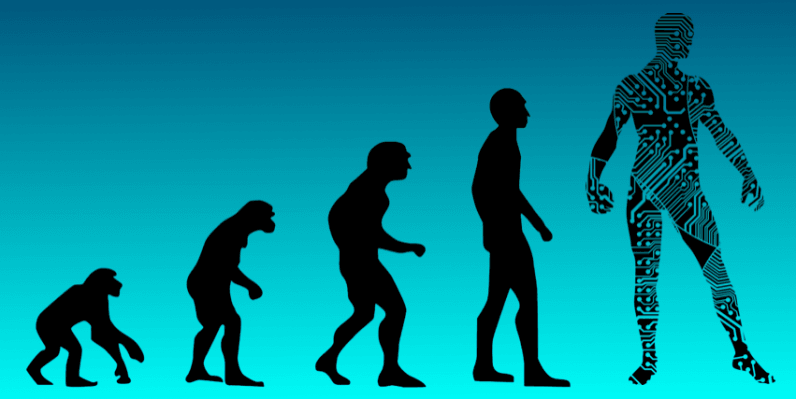
YOU COULD SAY THAT BIOLOGICAL EVOLUTION IS COMING TO AN END WITH HUMANITY ITSELF IS BECOMING MEANINGLESS.
Rest assured we’re going to get a collective case of AI implementation indigestion due to algorithms sprawl.
There is no reason for AI to be interested in the things that we humans are interested in.
So will the future be fantastic? or will we eventually have machines that are so intelligent they will have to turn themselves off for humanity to survive?
Let me ask you this:
Are we all becoming so blind, deaf, and dumb, that we are promoting algorithms to governance? Digital Dictatorship.
If AI develops into the realms of emotions will we consider it cruel to turn it off?
They may or may not talk to us. Who knows what comes after Smartphones.
HOWEVER, WE NEED TO REALIZE NOW NOT IN THE FUTURE THAT THIS IS THE TIME THAT WE NEED WORLD REGULATIONS GOVERNING PROFIT SEEKING ALGORITHMS.
AI MIGHT WELL BE LOWERING THE COST OF PREDICTIONS BUT AT THE MOMENT IT IS DRIVEN BY FOLLOW THE MONEY RATHER THEN FIGURING OUT WHERE THE TRUTH LIES.
As we promote the use of data technology we should ensure that there is a common taxonomy so even if the data itself remains federated, it is capable of being accessed interoperably.
If we continue to design a technological world of haves and have not the headaches are only just about to begin.
THERE IS A EXPLORATION BIAS INHERENT IN THE TRAINING DATA THAT MACHINE-LEARNING ALGORITHMS USE.
New regulations can promote shared mobility in the world of the merging of the real and virtual worlds. Furthermore, it is now that we have the opportunity to engineer around the mistake that has plagued humanity since the dawn of capitalism – INEQUALITY.
The big questions are:
HOW DO WE MANAGE TECHNOLOGY THAT WE LIKELY DON’T UNDERSTAND?
IS IT REAL OR FABRICATED?
In the theory of evolution and natural selection perhaps George Price equation IS NOW TURNING INTO AN ALGORITHM.
( As I understand it deals with any selection process. It says nothing in particular about biological or genetic evolution and is not tied to any particular biological scenario. Therefore it has immense power but it is also quite possible to apply it incorrectly to the real world.)
THE RULES OF PROBABILITY THEORY AND STATISTICS OR ANY OTHER MATHEMATICAL MANIPULATION DESCRIBE THE ACTUAL WORLD IS SYNTHETIC.
Some will say why hurt our brains when we can trust Einstein, Alex, Google Assistant and other software tools to think for us?
WHY INDEED.
IF WE WANT A WORLD RULED BY THOSE THAT OWNS THE DATA WE ARE WELL ON THE WAY. WHAT HAPPENS ONLINE IMPACTS OUR ECONOMIES, OUR GOVERNMENTS, AND US.
TO IGNORE THIS COMPLEX QUESTION WITH ARTIFICIAL INTELLIGENCE WHICH NOW IS REVOLUTIONIZING EVERYTHING WITHOUT A UNDERSTANDING OF ITS RISKS AND THE NEED FOR GOVERNING REGULATION LAWS IS BEYOND MADNESS.
TO ALLOW AI TO REMAIN IN THE HANDS OF A FEW COMPANIES IS SUICIDAL.
NOT TO BE ABLE TO HOLD THE CLOUD ACCOUNTABILITY IS LEAVING THE DOOR WIDE OPEN FOR THESE COMPANIES AND OTHERS TO COME TO EXPLOIT US. WITH THESE COMPANIES DECIDING WHAT IS ACCEPTABLE OR NOT.
WE NEED TO COMMIT TO TECHNOLOGIES THAT UPHOLD THE VALUES OF HUMANITY OPEN TO ALL.
NOT CLOUDED BY ARTIFICIAL INTELLIGENCE BUT TOTALLY TRANSPARENCY INTELLIGENCE.
You don’t need me to tell you that we are living through an era of tremendous transition and disruption and whether or not we are comfortable with AI may already be moot:
HOWEVER, THE THREE BIGGEST PROBLEMS FACING THE WORLD CLIMATE CHANGE, ARTIFICIAL INTELLIGENCE IN THE FORM OF PROFIT SEEKING ALGORITHMS, AND NUCLEAR WAR REMAIN VIRTUALLY IGNORED DUE TO OUR STUPIDITY.
NONE OF THESE PROBLEMS CAN BE SOLVED BY ARTIFICIAL INTELLIGENCE OR ON A NATION BY NATION APPROACH.
THEY ARE GLOBAL AND NEED GLOBAL COOPERATION TO BE SOLVED.
IT MAY BE HARD TO BUY INTO THESE PROBLEMS AFTER HAVING GROWING UP IN THE ERA OF INDUSTRY BUT UNFORTUNATELY GOVERNMENTS, WORLD INSTITUTIONS, AND BUSINESS AND US WILL FIND OURSELVES AT THE HELM OF THE PAST IF WE PERSIST WITH THE BELIEF THAT ECONOMIES, CONSUMPTION, AND PROFIT IS THE HOLY GRAIL OF OUR EXISTENCE.
Unfortunately, human stupidity is perhaps the most powerful force humanity has at its disposal to combat the direction we are going to- Extinction.
WHEN IT COMES TO IDENTIFYING ITS EFFECTS THERE IS NO PROBLEM FINDING EXAMPLES IN THE PAST.
WE ARE NOW TRANSFERRING STUPITY INTO THE FUTURE IN THE FORM OF ARTIFICIAL INTELLIGENCE THAT NO ONE UNDERSTANDS OR WILL BE ABLE TO UNDERSTAND.
Remembering that there are no defenses against stupidity. The more pertinent question now is whether we can and ought to build trust in systems that can make decisions beyond human oversight that may have irreversible consequences.
In the internet era, technology is changing at an alarming rate. We, humans, are becoming increasingly reliant on the World Wide Web. This is leading to a decrease in the retention capacity of the human brain and an overall downfall in the intelligence quotient of Homo sapiens.
The only way a society can avoid being crushed by the burden of its idiots is if the non-stupid work even harder to offset the losses of their stupid brethren.
If we take a critical look at the three global problems starting with the current global position on climate change:
Reduce carbon emissions on a national promises bases – stupid.
The bottom line is, take action to cool your planet or the planet will take action and cool your life – forever.
The development of AI:
Turn a blind eye by continuing to feed human existence data into algorithms for profit and power thus concentrating both into the hands of a few Clouds- stupid.
Nuclear Power:
Elect Facebook and Twitter leaders, while Social media feeds us personal recommendations and false News- stupid.
IS IT TIME TO GET OUR HEAD OUT OF THE SAND AND DEMAND SOME GLOBAL INTELLIGENCE TO TACKLE THE GLOBAL PROBLEMS.
RATHER THAN TRADE WARS, PROMISES, NATIONAL ASPIRATIONS, PROFIT FOR PROFIT SAKE, WARS, INEQUALITY, WE COULD LOOK AFTER EACH OTHER AND THE EARTH WE ALL LIVE ON BY ENSURING THE AI SERVES US ALL EQUALLY NOT THE FEW.
All human comments appreciated. All like clicks chucked in the bin.
While the UK is wholly focused on Brexit negotiations, yesterday the 12th Sept Jean- Claude Junker gave his state of the Union speech.
It may have been a thoughtful and reflective speech, accompanied by concrete initiatives on trade, investment screening, cybersecurity, industry, and data IT DID LITTLE TO ADDRESS the wave of populist protest that can yet inflict serious damage on Europe.
The rise of populist or far-right parties in Germany, Italy, Poland, the Czech Republic, Hungary, Austria, Denmark and elsewhere threaten not only the stability of individual governments, but the cohesion of Europe itself, and its most sacred values of democracy and freedom.
Already we can see that the EU is practically powerless to resist the erosion of civil liberties and the rule of law in eastern Europe, while the Conte-Salvini administration in Rome promises even more serious trouble on migration and the single currency.
Mr. Juncker recognized these challenges but had few immediate proposals to turn the populist tide nor did he offer much evidence that the commission has all the answers.
These are not times for any European leader to talk airily about further losses of national power and sovereignty. The next commission president need not be a Eurosceptic – an absurd notion anyway – but he or she will need, somehow, to bring Europe closer to its disaffected citizens. The EU is not a sovereign nation. It can’t have a president, nor can it grant citizenship.
It’s only an organization, deluded enough to think it’s a country.
The social balance of the EU and the EU nations is crucial for the EU future. The effects of the economic and financial crisis are still causing great hardship in many parts of Europe.
If the commission is to learn anything from the departure of the UK it must improve the public perception of the Union.
We will and are living in a Union of unemployed people, many of them young people who feel sidelined. Until this situation has changed, it must be the number one concern, to grant the Uk any agreement that is seeing as better than what exists for its remaining members will put the final nail in the coffin.
The UK is and was a hypocritical member seeking to get benefits for its businesses whilst, all too often, leaving its citizens out of the equation.
Brexit is inevitable. It is much too late to cancel Brexit.
The uncertainty about the future relationship is entirely due to the UK’s clueless incompetence and serial backtracking on previously agreed on things which PM May had SIGNED under.
The Brexit mess is 100% made in the UK.
At a time when and the desire to preserve access to EU capital for its banks, asset managers and insurers, many in the UK at least perceive the Commission’s proposed changes to strengthen rules around third country access as a direct attempt to ensure that the UK does not engage in a regulatory race to the bottom, once outside the EU.
THERE IS NO AGREEMENT TRADE OR OTHERWISE THAT A NEW PRIME MINISTER WILL NOT TRY TO CHANGE.
It will fall to Mr. Juncker’s successor, from next summer, to lead Europe away from its real and present dangers Of falling into the nationalistic fairy traps.
The EU has for way too long been dominated by an international corporate capital much better at international cooperation than the civil society. In Brussels, the corporate business lobby is much better organized than small business, workers unions, and civil society movements.
HOWEVER, WE ARE STILL ON A LEARNING CURVE WITH THE EUROPEAN UNION.
In conclusion:
One of the greatest challenges to the EU is that it does not stand still for long, with social media and the advance of technology in order to stay standing it must involve its citizens with an equal share of its benefits both financial and otherwise.
To give Europeans a working interest in the Union here is a suggestion that could go a long way in achieving an active engagement of its citizens in its future development.
WHY NOT INTRODUCE A EUROPEAN TREASURY BOND.
EVERYONE CAN BE AFFORDED AN OPPORTUNITY TO INVEST IN ITS FUTURE.
20,000 new border guards to police the EU’s Mediterranean borders by 2020 is too late.
THE JURY IS STILL OUT ON THE OVERALL PERFORMANCE OF THE JCJ COMMISSION.
All human comments appreciated. All lie clicks chucked in the bin.


 With smartphones, I pad’s humans are far more willing than most people realize to form a relationship with AI software. It is going to impact every single industry and everything that we do.









 bobdillon33blog