• About
  • THE BEADY EYE SAY’S : THE EUROPEAN UNION SHOULD THANK ENGLAND FOR ITS IN OR OUT REFERENDUM.

bobdillon33blog

~ Free Thinker.

bobdillon33blog

Category Archives: HUMAN INTELLIGENCE

THE BEADY EYE SAYS: DON’T BRING YOUR IPAD TO BED.

07 Wednesday Dec 2016

Posted by bobdillon33@gmail.com in Artificial Intelligence., Big Data., Google Knowledge., HUMAN INTELLIGENCE, Humanity., Life., Modern Day Communication., Modern day life., Social Media., Technology, The Future, The world to day., Unanswered Questions., What Needs to change in the World

≈ Comments Off on THE BEADY EYE SAYS: DON’T BRING YOUR IPAD TO BED.

Tags

Artificial Intelligence., Big Data, Creative Thinking., Google, Internet, SMART PHONE WORLD


(This is a short follow-up read)  Re the post:

The Beady Eye Asks: Where does it end? Google.)Afficher l'image d'origine

More and more people are taking their tablets to bed with them to surf the web, check Facebook or email before switching off the light.

Few of us need to live our lives accessible to others at all times of the day.

Text alerts, Facebook notifications, Twitter mentions, and emails are often nothing more than distractions that keep us from the world right in front of us.

They clutter our mind with nonessential information. Technology ought to serve us, not the other way around.

However technology is altered human physiology. It makes us think differently, feel differently, even dream differently. It affects our memory, attention spans and sleep cycles.

We are now hard-wired to assume our phones are ringing, even when they’re not.

In a Google-happy world, when virtually any scrap of information is instantly at our fingertips, we don’t bother retaining facts.

Some cognition experts have praised the effects of tech on the brain, lauding its ability to organize our lives and free our minds for deeper thinking. Others fear tech has crippled our attention spans and made us uncreative and impatient when it comes to anything analog.

If there are areas of our life where technology is doing more harm than good it’s bed but the idea of a technology-free bedroom is a counter-cultural thought.

However the benefits of a technology-free bedroom should not be overlooked and dismissed so quickly. The most important, intimate conversations take place in your bedroom. Couples who keep a TV OR IPADS in the bedroom have sex half as often as those who don’t.  Besides, most of our excuses can be overcome with some creative thinking.  People who spend time on social media tend to experience higher levels of envy, loneliness, frustration, and anger.Afficher l'image d'origine

Social media interaction holds some benefit. But if we can intentionally remove these unhealthy emotions from our bedroom, it allows space for our minds to separate from the day’s activities.

Keeping your bedroom as a notification-free zone results in a more peaceful, engaged, calming environment.

Checking Facebook/Twitter before putting your feet on the floor is not living.

If you don’t want to feel like a zombie during the day, the findings are clear:

Read an actual, printed book if you must stimulate your mind before bed.

So if you’re having trouble sleeping, consider actually putting all those pesky electronics away and give your brain a chance to fully shut itself down when you’re looking for some shuteye.

To understand what critical and creative thinking is, an individual first must understand what thinking is.

Thinking is any mental activity that helps formulate or solve a problem, make a decision, or fulfill a desire to understand. It is searching for answers, a reaching for meaning that includes numerous mental activities throughout the process.
or
Thinking. The capacity to reflect, reason, and draw conclusions based on our experiences, knowledge, and insights. It’s what makes us human and has enabled us to communicate, create, build, advance, and become civilized.
or
Thinking encompasses so many aspects of who our children are and what they do, from observing, learning, remembering, questioning, and judging to innovating, arguing, deciding, and acting.
Thinking is critical to a person everyday life. 
People often fear the worse and manage their life’s around news or information they hear; therefore, it is very important to use critical thinking when analyzing issues, solving problems, and making everyday decisions. 
Today’s technology is target and customize ads with unparalleled precision. In fact, advertising is getting more personal, more engaging, more interesting and more thought-provoking than ever. It will result in your children having their brains wired in ways that may make them less, not more, prepared to thrive in this crazy new world of technology.
On the other hand:
Given the ease with which information can be found these days, it only stands to reason that knowing where to look is becoming more important for children than actually knowing something. Not having to retain information in our brain may allow it to engage in more “higher-order” processing such as contemplation, critical thinking, and problem solving.
This may be so;
Truth is so about something, the reality of the matter, as distinguished from what people wish were so, believe to be so, or assert to be so.
Visual intelligence has been rising globally for 50 years. More than 85 percent of video games contain violence.
The history of human thought would make it seem that there is difficulty in thinking of an idea even when all the facts are on the table. Making the cross-connection requires a certain daring.

There is no hard and fast rules concerning the source of creativity.

Morning people have more insights in the evening. Night owls have their breakthroughs in the morning.

Your Best Creative Time Is Not When You Think.

Dreams aren’t supposed to make any sense.

They’re just what happens when you put your head down for the night and your brain decides to bullshit you for eight hours about getting chased by Bigfoot while your teeth fall out.

With that said, dreams have been responsible for some major creative and scientific discoveries in the course of human history. A surprising number of society’s innovations have come from dreams, proving that sometimes there is the method to your brain’s madness.

For example …

The tune for “Yesterday” came to Paul McCartney in a dream..

Larry Page and Sergey Brin got the idea for “downloading the entire web onto computers”.dreamed it one night when he was 23 years-old.

Mary Wollstonecraft Godwin Frankenstein was inspired by a dream.

Otto Loewi (1873-1961) won the Nobel Prize for medicine in 1936 for his work on the chemical transmission of nerve impulses came to him in a dream.

Edison took short trips into the subconscious mind. There, he accessed ideas. Or perhaps, he bypassed the conscious mind and all its barriers to creativity

Elias Howe invented the sewing machine in 1845 dreamt it.

Srinivasa Ramanujan (1887-1920) was one of India’s greatest mathematical geniuses. He made substantial contributions to the analytical theory of numbers and worked on elliptical functions, continued fractions, and infinite series.  According to Ramanujan, inspiration and insight for his work many times came to him in his dreams..

The history of science is full of stories of scientists claiming a “flash of inspiration” which motivated them. One of the best known is from the chemist August Kekulé (1829-1896), who proposed that structure of molecules followed particular rules. Kekulé recounted that the structure of benzene came to him in a dream, in which rows of atoms wound like serpents before him; one of the serpents seized its own tail: “the form whirled mockingly before my eyes. I came awake like a flash of lightning.

Hannibal, who many described as a military genius, based his battle plans against the Romans on his dreams.

The Periodic Table:
Nineteenth-century Chemist Dimitri Mendeleyev fell asleep while chamber music was being played in the next room. He understood in a dream that the basic chemical elements are all related to each other in a manner similar to the themes and phrases in music.

A young Albert Einstein conceived the theory of relativity in a dream.

Modern Robotics:
Dennis Hong, genius innovator at University of Virginia uses the interface of sleep and waking to access ideas.

Jack Nicklaus’ Golf Swing came to him in a dream.

Insulin, came to Frederik Banting,in a dream.

As technology has played a bigger role in our lives, our skills in critical thinking and analysis have declined to such an extent that the world is now in dire need of readers intellects – imagination, induction, reflection and critical thinking.

Social media may well promote a culture of sharing, but there is little point in sharing trivia. So share this post. Your brain will thank you. 

Just in case you get the impression that I am totally against Technology. I believe technology can actually increase your intelligence.

The best way to make technology work for you instead of against you is to be smart about it—utilize it in order to allow you the time and mental energy to engage in higher-level cognitive activities, not as a crutch because you don’t feel like activating your neurons.Afficher l'image d'origine

But don’t ask your device how to make that happen—figure that one out for yourself.

← Back

Thank you for your response. ✨

Share this:

  • Share on WhatsApp (Opens in new window) WhatsApp
  • More
  • Share on Mastodon (Opens in new window) Mastodon

THE BEADY EYE ASKS: WHERE DOES IT END? – GOOGLE.

04 Sunday Dec 2016

Posted by bobdillon33@gmail.com in Artificial Intelligence., Big Data., Communication., Facebook, Google it., Google Knowledge., HUMAN INTELLIGENCE, Modern Day Communication., Modern day life., Social Media., Technology, The Future, The Internet., The world to day., Unanswered Questions., What Needs to change in the World, WiFi communication.

≈ Comments Off on THE BEADY EYE ASKS: WHERE DOES IT END? – GOOGLE.

Tags

Artificial Intelligence., Big Data, Google, SMART PHONE WORLD, The Future of Mankind, The Internet.


( A seven minute read)

Our worldviews are formed by who is shouting louder and more persistently into our ears.

While our Technologic vision is to create more intuitive and human-like interactions between man and machines Google, Facebook, Twitter, the Internet of Everything.  The last thing these companies want is to encourage leisurely reading or slow, concentrated thought. It’s in their economic interest to drive us to distraction.Afficher l'image d'origineAmbiguity is not an opening for insight but a bug to be fixed. The human brain is just an outdated computer that needs a faster processor and a bigger hard drive.

There’s has been little consideration of how, exactly, the Internet and these Companies are reprogramming us.

Having said that, I think internet and new media actually can be effective to fight such brainwashing.

However most of the Internet and Social Media is now presenting just superficial information we won’t even remember tomorrow. It is the illusion of knowledge by information.

Just as we coming to rely on computers to mediate our understanding of the world, it is our own intelligence that is being flattened into artificial intelligence.

True reality might be forever beyond our reach, but surely our senses give us at least an inkling of what it’s really like. Quantum mechanics is telling us that we have to question the very notions of ‘physical things’ sitting in ‘space.

If you have got this far, you might be wondering where am I going with this post.

Just as there’s a tendency to glorify technological progress, there’s a counter tendency to expect the worst of every new tool or machine.

The idea that our minds should operate as high-speed data-processing machines is not only built into the workings of the Internet, it is the network’s reigning business model as well.

The faster we surf across the Web—the more links we click and pages we view—the more opportunities Google and other companies gain to collect information about us and to feed us advertisements.

Last year, Page told a convention of scientists that Google is “really trying to build artificial intelligence and to do it on a large-scale.

Certainly if you had all the world’s information directly attached to your brain, or an artificial brain that was smarter than your brain, you’d be better off.

Still, their easy assumption that we’d all “be better off” if our brains were supplemented, or even replaced, by an artificial intelligence is unsettling.

Is it real knowledge? or a HAL-like machine that might be connected directly to our brains. “The ultimate search engine is something as smart as people—or smarter,”

Thanks to the growing power that computer engineers and software coders wield over our intellectual lives,“algorithm,” are beginning to govern the realm of the mind.

The Internet is a machine designed for the efficient and automated collection, transmission, and manipulation of information, and its legions of programmers are intent on finding the “one best method”—the perfect algorithm—to carry out every mental movement of what we’ve come to describe as “knowledge work.”

Google, is “a company that’s founded around the science of measurement,” and it is striving to “systematize everything”

It carries out thousands of experiments a day, according to the Harvard Business Review, and it uses the results to refine the algorithms that increasingly control how people find information and extract meaning from it.

The company has declared that its mission is “to organize the world’s information and make it universally accessible and useful.” It seeks to develop “the perfect search engine,” which it defines as something that “understands exactly what you mean and gives you back exactly what you want.”

In Google’s view, information is a kind of commodity, a utilitarian resource that can be mined and processed with industrial efficiency. The more pieces of information we can “access” and the faster we can extract their gist, the more productive we become as thinkers.

It would bring about a restructuring not only of industry but of society, creating a utopia of perfect efficiency. “In the past the man has been first,” he declared; “in the future the system must be first.”

An “algorithm world.”

Never has a communications system played so many roles in our lives—or exerted such broad influence over our thoughts—as the Internet does today.

Thanks to our brain’s plasticity, the adaptation occurs also at a biological level.

In the midst of a sea change in the way we read and think, the Internet promises to have particularly far-reaching effects on cognition.

The Internet, an immeasurably powerful computing system, is subsuming most of our other intellectual technologies. It’s becoming our map and our clock, our printing press and our typewriter, our calculator and our telephone, and our radio and TV.

A new e-mail message, for instance, may announce its arrival as we’re glancing over the latest headlines at a newspaper’s site. The result is to scatter our attention and diffuse our concentration.

The Net’s influence doesn’t end at the edges of a computer screen, either.

As people’s minds become attuned to the crazy quilt of Internet media, traditional media have to adapt to the audience’s new expectations. Television programs add text crawls and pop-up ads, and magazines and newspapers shorten their articles, introduce capsule summaries, and crowd their pages with easy-to-browse info-snippets. “Shortcuts” give harried readers a quick “taste” of the day’s news, sparing them the “less efficient” method of actually turning the pages and reading the articles.

Intellectual technologies —the tools that extend our mental rather than our physical capacities—we inevitably begin to take on the qualities of those technologies.

They are disassociated time from human events and helped create the belief in an independent world of mathematically measurable sequences.

The conception of the world that emerged from the widespread use of timekeeping instruments “remains an impoverished version of the older one, for it rests on a rejection of those direct experiences that formed the basis for, and indeed constituted, the old reality.

Skimming activity, hopping from one source to another and rarely returning to any source they’d already visited.

We are becoming “power browsers”

Thanks to the ubiquity of text on the Internet, not to mention the popularity of text-messaging on cell phones, we may well be reading more today than we did in the 1970s or 1980s, when television was our medium of choice.

But it’s a different kind of reading, and behind it lies a different kind of thinking—perhaps even a new sense of the self, weakening our capacity for the kind of deep reading that emerged when an earlier technology, the printing press, made long and complex works of prose commonplace.

We are becoming “mere decoders of information.”

Our ability to interpret text, to make the rich mental connections that form when we read deeply and without distraction, remains largely disengaged.

Reading, explains Wolf, is not an instinctive skill for human beings.

It’s not etched into our genes the way speech is. We have to teach our minds how to translate the symbolic characters we see into the language we understand. And the media or other technologies we use in learning and practicing the craft of reading play an important part in shaping the neural circuits inside our brains.

The circuits woven by our use of the Net will be different from those woven by our reading of books and other printed works.

The human brain is almost infinitely malleable.

People used to think that our mental meshwork, the dense connections formed among the 100 billion or so neurons inside our skulls, was largely fixed by the time we reached adulthood. But brain researchers have discovered that that’s not the case. Nerve cells routinely break old connections and form new ones. “The brain,” according to Olds, “has the ability to reprogram itself on the fly, altering the way it functions.”

Over the past few years I’ve had an uncomfortable sense that someone, or something, has been tinkering with my brain, remapping the neural circuitry, reprogramming the memory.

I think I know what’s going on.

For more than a decade now, I’ve been spending a lot of time online, searching and surfing and sometimes adding to the great databases of the Internet. For me, as for others, the Net is becoming a universal medium, the conduit for most of the information that flows through my eyes and ears and into my mind. The advantages of having immediate access to such an incredibly rich store of information are many, and they’ve been widely described and duly applauded.

In the 1960s, media are not just passive channels of information. They supply the stuff of thought, but they also shape the process of thought. And what the Net seems to be doing is chipping away my capacity for concentration and contemplation. My mind now expects to take in information the way the Net distributes it: in a swiftly moving stream of particles.

Once I was a scuba diver in the sea of words. Now I zip along the surface like a guy on a Jet Ski.

I have to fight to stay focused on long pieces of writing. Even a blog post of more than three or four paragraphs is too much to absorb.

Having a computer for a brain has its perks, but it has its drawbacks as well. Language is a tough concept for robots, as words can convey the abstract as well as the concrete and robots have trouble knowing the difference (and grasping the abstract).

That makes human-machine interaction less than intuitive for humans and confusing to ‘bots. Thoughts and actions feel scripted, as if they’re following the steps of an algorithm.

As we are drained of our “inner repertory of dense cultural inheritance,” Foreman concluded, we risk turning into “‘pancake people’—spread wide and thin as we connect with that vast network of information accessed by the mere touch of a button.”

Every day of the week new APPS replace thinking, Jobs. Humanoid robots are now able to speak in different languages with voice recognition thanks to the cloud. Robots can also ask one another about where they just came from, and which directions it is from where they currently are.

If one finds itself in an unfamiliar place, it will make up a word to describe it from randomly generated syllables. It communicates that word to other robots it meets there, establishing the name of the locale within the community. From this, a spatial and verbal framework is established to name places on the map. Creating a shared language between them.

If we lose those quiet spaces, or fill them up with “content,” we will sacrifice something important not only in ourselves but in our culture.

I find myself centered between understanding the necessity for change into the world of technology and mourning the loss of social interpretation and deep thinking.

Don’t stopped reading books altogether.Evolution. Abstract science backrounds with female portrait Stock Photo - 14446448

← Back

Thank you for your response. ✨


Share this:

  • Share on WhatsApp (Opens in new window) WhatsApp
  • More
  • Share on Mastodon (Opens in new window) Mastodon

THE BEADY EYE TOLD YOU SO. THE PARIS CLIMATE AGREEMENT IS A JOKE.

03 Saturday Dec 2016

Posted by bobdillon33@gmail.com in Artificial Intelligence., Climate Change., Environment, HUMAN INTELLIGENCE, Sustaniability, The Future, The world to day., What Needs to change in the World, Where's the Global Outrage., World Organisations.

≈ Comments Off on THE BEADY EYE TOLD YOU SO. THE PARIS CLIMATE AGREEMENT IS A JOKE.

Tags

Artificial Intelligence., Capitalism and Greed, Climate change, Extinction, Global warming, The Future of Mankind

( A twenty-second truth read)


Long before the Paris Agreement I posted an open letter to the delegates, which fell on clogged ears and blind eyes.

The 2 degrees limit agreed is unenforceable, joining the ranks of 500 similarly powerless global and regional environmental agreements.

So despite aspiring pledges we are now well on the way bequeathing an fucked up planet to our grandchildren not to mention robots.

As it speeds up the world will be torched not just by the sun but by migration and water wars.

The full impact of climate change is totally underestimated. We are going to see unimaginable refugee problems never mind sea level rising. Afficher l'image d'origine

You don’t need Artificial Intelligence to realize that humanity as a whole is incapable of  acting for the common good, or that little can be achieved without someone paying for it.

These two realizations are the main reasons that there is only one solution.

What caused the problem in the first place and what continues to deny the problem must pay.

But how to implement a paying system that is fair to all.

We place a World Aid Commission on all activities that create profit for profit’s sake.

An 0.05% Commission on all High frequency transactions, on all Foreign Exchange transactions over lets say $50,000, on all Sovereign Wealth Acquisitions, on all World Lotto Draws.

This will produce a perpetual Fund of trillions to tackle climate change. It will allow poorer countries to catch up with richer.

The Fund to be managed Independently of governments with total transparency.

Global climate is projected to continue to change over this century and beyond.

The magnitude of climate change beyond the next few decades depends primarily on the amount of heat-trapping gases emitted globally, and how sensitive the Earth’s climate is to those emissions.

Will it happen.  The future won’t happen on its own.

Our task  today is to create it, to preserve it for the future.

Afficher l'image d'origine

← Back

Thank you for your response. ✨


Share this:

  • Share on WhatsApp (Opens in new window) WhatsApp
  • More
  • Share on Mastodon (Opens in new window) Mastodon

THE BEADY EYE SAYS. THE SOURCES OF POLITICAL POWER IS CHANGING. SOCIAL MEDIA IS RUNNING POLITICS.

24 Thursday Nov 2016

Posted by bobdillon33@gmail.com in Artificial Intelligence., Big Data., Communication., Elections/ Voting, Facebook, HUMAN INTELLIGENCE, Modern Day Democracy., Politics., Social Media., Technology, The world to day., Twitter, Unanswered Questions., What Needs to change in the World, Where's the Global Outrage.

≈ Comments Off on THE BEADY EYE SAYS. THE SOURCES OF POLITICAL POWER IS CHANGING. SOCIAL MEDIA IS RUNNING POLITICS.

Tags

Artificial Intelligence., Fair Political System., Political power., Politics of the Future, Power of Social Media, Social networking, Technology


( A ten minute read)

Some posts back I wrote a piece asking if there was any Intelligence between Donald Trump’s ears and a subsequent post on what a vote is worth. ( see previous posts)

We live in turbulent times and the structure of the source of power is changing.

Gathering political information via social media brings an increased risk of digesting information from questionable sources.

Why?

Because Facebook now dominates the news being read by young people and its domination is not just national – it is global.

It may well be time to think about what societies need to do to counter this growing, global news monopoly. Facebook may not be in the business of news production but its impact on news is already profound and not always positive.

Because it is provided by organisations or politicians that are paying Facebook for their attention. Gone are the days of the blind following the blind it’s now the misinformed following the distracted reading their news on their Facebook/Twitter feeds.

Ever since the so-called Facebook Obama election of 2008, our political discourse is shrinking to fit our smartphone screens, where we find cover political campaigns more like a horse race, rather than focusing on the issues.

Donald Trump, he’s the first candidate optimized for the Google News algorithm.

Donald Trump got the equivalent of about $55 million in free advertising space from the eight major media outlets.

Trump a vast web audience—four million followers on Twitter alone.

The best way to dominate the online discussion is not to inform but to provoke which is the changing dynamics of political races. You’re only as relevant as your last tweet. What’s important now is not so much image as a personality that bursts into focus at regular intervals without ever demanding steady concentration.

The more visceral the message, the more quickly it circulates and the longer it holds the darting public eye.

Elections are pivotal in shaping that world – for better or worse.

Up to recently elections were the voice of the people expressed by voting.

Hopefully this will remain so, however fears of a robot apocalypse mask the actual problems that we face by increasingly letting our lives be run by algorithms.

AIs will have and are having a knock-on effects that we have not prepared for.

When a computer spits out an answer we are typically unable to see how it got there.

There are algorithms all around us they may seem neutral and objective and unbiased but in a world of pervasive connectivity AI is the key to harnessing the power of electrical data prior to voting. It allows for millions of election related options that are posted online to be classified automatically and analysed to understand the pulse of an election.

Algorithms are now being used to make life-changing decisions such as when a prisoner should be given parole, or who gets elected. So it is time to forget everything you know about democracy.

Microsoft is building an A.I. empire and will appoint its leaders.

Twitter did exactly that : Producing a man who bankrupted his companies not once, not twice, but six times.

( The Trump Taj Mahal, 1991, Trump Castle, 1992,Trump Plaza and Casino, 1992, Plaza Hotel, 1992, Trump Hotels and Casinos Resorts, 2004, Trump Entertainment Resorts, 2009,) and Trump America in 2020, which currently has a National Debt bordering on 20 trillion. 

Since his election to be the next President of the US the media headlines are littered with the rhetoric of powerful people in the form of CRINGING WORLD POLITICAL LEADERS CHANGING THEIR SPOTS IN ORDER TO LICK UP TO A MAN THAT HAS MANY CHARACTERISTICS OF A FASCIST.Afficher l'image d'origine

Mr Trump’s views are some of the most extreme in American politics.

[He has:

  • advocated deporting nearly 11 million undocumented workers.
  • called for a border wall to be built between the US and Mexico.
  • said he would force Mexico to pay for the wall by threatening to ban Mexicans in the US from sending remittances home.
  • Mr Trump changed his position on abortion at least five times, alarming many social conservatives. This flexibility has convinced many social conservatives that Mr Trump cannot be trusted to appoint a Supreme Court justice who would oppose abortion rights.
  • Mr Trump has aggressively criticised international trade agreements.
  • He has repeatedly said the US should rethink its commitments to Nato, saying other member countries do not pay their fair share of the organisation’s budget. He has also floated an idea that South Korea and Japan could arm themselves with nuclear weapons – eliminating the need for US protection.]Afficher l'image d'origine

In the last few years the Internet has borne witness to and facilitated a great deal of social and societal change.

While undoubtedly carrying the potential to do great good, the Internet has been plagued with numerous impediments NONE WORSE THAN ITS ASSISTANCE IN THE ELECTION OF DONALD TRUMP.

I am aware that the Internet cannot be blamed in isolation.

The inequalities of the Capitalist system is a major contributor, but the dumbing down by the smart phone Apps are also influencing the reasons why we cast a vote.

If you not convinced the only thing that might be more perplexing than the psychology of Donald Trump is the psychology of his supporters. It isn’t just that they are misinformed; it’s that they are completely unaware that they are misinformed.

We now find ourselves looking a man and his team of advisors that has an ultimate goal to pursue national greatness in disrespect of the cost which will take the form of a state that will be anti-democratic and totalitarian. The state needed to fulfill this goal is a state that breeds ( As did all major fascist regimes that have ever existed) political parties that spend more time arguing than implementing policies.

At the same time, there is a paradoxical here with a resurgence of interest in universalism within the international legal context and the discourse of human rights, which at this point lack a firm philosophical foundation.

With a world facing problems that requires a vast resurgence of interest in universalism.

Power use to be what goes on in the head, and what goes on is a recognition of a reason – or better and more often: various reasons – to act differently than one would have without that reason…Power rests on perceived and recognized justifications – some good, some bad, some in between.  A threat can be seen as a justification, as can a good argument.

We are turning a blind eye to the day when we will have websites that are themselves artificially intelligent .

This type of power is not accountable and nobody can make it accountable. All AI decision-making is by definition, unknowable and will remain so till 2018 when a new European union comes into force giving citizens –  right to an explanation.

This however will not be of much use as AI processes data in ways we can’t. Ask its creator how it achieves a certain result and you get a shrug.

These  AIs brain responses are automatic, and not influenced by logic or reason.

What does it mean to act, and to act well?

We now have software writing software and soon we have unsupervised learning.

Even with all the technological advances we have seen over the last few years there still remains a large disconnect between technology and the general public.

How do we determine which actions are those which are moral, and which fall outside this sphere? And how do we negotiate the priority of all of these questions?

In fact, digital technology, particularly the internet, offers potential complications into human beings’ discussion and understanding of free will; even as the internet appears to open up options and capacities for individuals to exercise increased autonomy, it also has the potential to change the very ways in which human beings think, thereby impeding human capacities for meaningful self-reflection, a necessary if not sufficient criterion for rational autonomy.

The Internet, we’ve often been told, is a force for “democratization.

It’s worth asking, though, what kind of democracy is being promoted.

People skimmed headlines and posts, seeking information that reinforced their biases and rejecting contrary perspectives. The Internet inspired “participation,” but the participants ended up in “cloistered cocoons of cognitive consonance.”

The social networks operated by companies like Facebook, Twitter and Google don’t just regulate the messages we receive. They regulate our responses. They shape, through the design of their apps and their information-filtering regimes, the forms of our discourse.

All social networks impose these kinds of formal constraints, both on what we see and on how we respond. The restrictions have little to do with the public interest. They reflect the commercial interests of the companies operating the networks as well as the protocols of software programming.

With the instantaneous transmission of information, the internet has revolutionized the way we do business, obtain knowledge, vote, and communicate with others. Instead of a one-way relationship in which the human agent has total control as the sole actor and the tool is merely the object acted upon – a mere means to an end which the human agent has in mind, it would be more accurate today in the face of digital technology, specifically the internet, to recognize that tools also act on their users. When we create things to use for our own purposes, these tools can and do indeed act back on us, in some cases changing the very ways we think.

It is especially poignant to make this observation in the face of the development of the internet because of information technology’s potential to dramatically augment or infringe on human autonomy.

While the internet may indeed open up choices and opportunities to people that were never there before, it also has the potential to degrade individuals’ deep reading capacities, which is a dangerous threat to these individuals’ claims to free will since deep reading is necessary for meaningful introspection which is necessary to claims on rational autonomy.

On the other hand as we continue to enter the digital age, the neutrality of the internet becomes a resource that we must fight to protect, or we risk our further advancement.

Maintaining net neutrality is not simply a matter of protecting existing standards and preventing the extension of authoritative powers, but instead is a matter of establishing a new fundamental human right in the digital age. We can only hope that in unity we can break the barriers which stand between us, and in so doing, provide a living and evolving blueprint for our mutual future.

The Internet is changing the way we think about power and its interaction with economic and international relations.

A blind acceptance of a narrative provided by the Algorithmic world is not acceptable.

Therefore before the names of just and unjust can have place, there must be some coercive power to compel men equally to the performance of their covenants, by the terror of some punishment greater than the benefit they expect by the breach of their covenant, and to make good that propriety which by mutual contract men acquire in recompense of the universal right they abandon.

As a matter of urgency must establish a world governing body to overlook all technology. ( see previous posts)

When it comes to Algorithms the stakes for society are too high because AI may have arbitrarily negative consequences. Algorithms are a source of power and how they manifests themselves in the world cannot be let to the wimp of Capitalism.

If we are to read beyond the archaic dichotomous representation of international conflict, daring to create your own mind on the matter, doing so involves more than simply good intentions and determination.

It requires obtaining a new type of dignity as “selfs.”

Moreover, a willingness to engage in a dialogue concerning Being will allow for a creative and broad interpretation of man’s relationship to his world, and the responsibilities and interconnectedness that characterize it when it is not defined simply as an atomistic “standing reserve.”

This shallow consideration of the context plagues the headlines and propagates a facile belief in domineering great powers as the ‘be all and end all’ saviors of world conflict. The two leading competitors for the prize of… (peace?) in Syria leads one down a dangerous path that bolsters a bellicose Waltzian ‘balance of power’ attitude and neglects the voice of the people. This can be seen in the unacceptable bloodstains of millions around the world to this day.

The implications of Internet Freedom and its assistance or impediment has a knock on effect for International Relations as a whole.

The internet has become such an indispensable part of our everyday life that it is incredibly difficult to imagine life before it. Luckily the general public can align with interest groups via the web, thus making such groups much larger and more powerful than ever before. Unfortunately Ethicists are still confronted by the traditional questions that have plagued them since the ancients. They have been cut adrift from the context out of which they developed, searching for a foundation which is not forthcoming.

The disproportionate impact of the internet on the presidency and special interest groups only furthers the gap of influence between the public and the president.

As we move forward into an era of increasingly powerful digital technologies we have to ask the question WHY IT IS that the electrical system of one of the most powerful country can only produce two candidates that endeavored to buy with billions of $ the position of USA President.

WHEN YOU OBSERVE what are the power dynamics and systems of knowledge in our modern world, and what are their relationships to concepts of morality in general? All men having right to all things: power only exists when such an acceptance exists. Therefore where there is no commonwealth, there nothing is unjust.Two Jewish men lean against a barrier with the New York skyline behind them

The power to decide how things shall be done, the power to shape frameworks within which states relate to each other, relate to people, or relate to corporate enterprises, control over security, production, finance, and knowledge.

What is authenticity? In that respect, like all forms of honesty—intellectual and other— a principle of authenticity stems above all from a powerful sense of universal respect and love.


Charismatic’ domination derives from a population that perceives their leader to be virtuous and deserving of their dedication.

Furthermore, because people perceive their leader’s charisma as being the basis for the validity of the state’s legitimacy, one may infer that they also view their leader as a virtuous person who they understand has an inner calling to lead.

That the supporters and friends of a charismatic leader orient their interests to be in line with his/hers because they genuinely believe in the allure of their leader’s personal qualities.

Hence, because a charismatic leader is someone who many people favor, and due to them believing in his/her devotion to the state, it follows that the validity of a state’s authority under a charismatic leader is dependent on their charisma.

Efforts to engage the public are meant to sidestep the special interest groups that have dominated governmental discourse over the past several decades. The dominant theme according to the “We The People” rollout is to open a dialogue directly between the people and the administration, one that will meaningfully impact policy and legislation. Yet, the website has not led to any significant legislation at present and so far it has failed to promote meaningful interaction between the people and the presidency.Afficher l'image d'origine


Parliament is problematic because This weakens the state and, ultimately, the nation

This writing has merely touched the surface of the issues at hand.


http://www.bbc.com/news/world-us-canada-37999969

http://www.bbc.com/news/world-us-canada-37999969


.


Share this:

  • Share on WhatsApp (Opens in new window) WhatsApp
  • More
  • Share on Mastodon (Opens in new window) Mastodon

THE BEADY EYE ASKS: WHAT NEXT? – CYBER WARFARE.

17 Thursday Nov 2016

Posted by bobdillon33@gmail.com in Artificial Intelligence., Big Data., Facebook, Google it., Google Knowledge., HUMAN INTELLIGENCE, Humanity., Innovation., Life., Technology, The Future, The Internet., The world to day., Twitter, Unanswered Questions., What Needs to change in the World, Where's the Global Outrage.

≈ 2 Comments

Tags

Artificial Intelligence., Big Data, SMART PHONE WORLD, The Future of Mankind, Visions of the future.


( Twenty minute read)

You could not be blamed if ask this question some years ago for thinking that the world is in such a mess that what coming next is beyond description, with climate change, the state of the economy, current wars, and the indifference and lack of world leadership to tackle the obvious inequalities.

You might think that one of the above is going to explode in such a manner that it is going to be the main contributed to the future.

This might to right, but there is a hidden force that is going to plunder the world called  Artificial Intelligence, AI for short.

I am no scientist, clairvoyant, prophet, tech guru or loony and to be honest I am not worried by what is next.

I won’t be around by the time any of what next happens.

The future of humanity as an inescapable topic.

But be that as it may, the thesis that liberal democracy (or any other political structure) is the final form of government is consistent with the thesis that the general condition for intelligent Earth-originating life will not remain a human condition for the indefinite future.

Powerful new mind-control technologies could be deployed globally to change people’s motivation, or that an intensive global surveillance system would be put in place and used to manipulate the direction of human development along a predetermined path, one would have to wonder whether these interventions, or their knock-on effects on society, culture, and politics, would not themselves alter the human condition in sufficiently fundamental ways that the resulting condition would qualify as posthuman.

It’s easy for my generation, and the coming up generation to cast off the problems that AI is going to create in the world.

WHERE HUMANS WILL BECOME THE BOTTLENECK TO PRODUCTIVITY AND INNOVATION.Afficher l'image d'origine

It is hardly reasonable to think of the future of humanity as a topic: it is too big and too diverse to be addressed as a whole in a single essay, monograph, post, or even 100-volume book series.

A sensible forecast of what next in technological innovations in the next 400 years is beyond our imaginations.

All I want to achieve here is to improve the accuracy of our beliefs about the future.

It is relatively rare for humanity’s future to be taken seriously as a subject matter on which it is important to try to have factually correct beliefs.

Thirty years from now, the public will be even dumber tethered to their phones, have even less social skills.

Depending on whom you ask, this moment in technological development is either a crisis for science or a revolution to hold researchers and journals more accountable for flimsy conclusions.

I would love to be able to describe what is currently happening in the revolution at this moment. However, I can’t do that because things are constantly and quickly changing. This continual change is why it is premature to write anything other than a “future history.”

Our moral obligation is to generate possibilities, to discover the infinite ways, however complex and high-dimension, to play the infinite game. While our knowledge is insufficient to narrow down the space of possibilities to one broadly outlined future for humanity, we do know of many relevant arguments and considerations which in combination impose significant constraints on what a plausible view of the future could look like.

Preparation for the future obviously does not require accurate prediction; rather, it requires a foundation of knowledge upon which to base action, a capacity to learn from experience, close attention to what is going on in the present, and healthy and resilient institutions that can effectively respond or adapt to change in a timely manner.  

UNFORTUNATELY WE HAVE NO SUCH INSTITUTION, AND BY THE TIME WE HAVE IT WILL BE TOO LATE.

It will take all possible species of intelligence in order for the universe to understand itself.

The Allen Institute for Artificial Intelligence, a not-for-profit created by Microsoft unveiled a search engine it calls Semantic Scholar. It uses machine learning and other AI in an effort to significantly improve the way the academic world searches through the increasingly enormous corpus of published research.

Initially, the new search engine will focus on neuroscience and computer science research, covering over 10 million papers, but the organization plans on expanding into other subjects.

We need realistic pictures of what the future might bring in order to make sound decisions.  Increasingly, we need realistic pictures not only of our personal or local near-term futures, but also of remoter global futures.  Because of our expanded technological powers, some human activities now have significant global impacts.

However there might be traps that we are walking towards that we could only avoid falling into by means of foresight.  There are also opportunities that we could reach much sooner if we could see them farther in advance.  And in a strict sense, prediction is always necessary for meaningful decision-making.

Unless the human species lasts literally forever, it will some time cease to exist.

In that case, the long-term future of humanity is easy to describe: extinction.

(An estimated 99.9% of all species that ever existed on Earth are already extinct.) This is surely the case with regard to many aspects of the future of humanity.

There are two different ways in which the human species could become extinct:

The first is obvious blow itself to smithereens, or simply dying out, without any meaningful replacement or continuation. Environmental threats however seem to have displaced nuclear holocaust as the chief specter haunting the public imagination. Current-day pessimists about the future often focus on the environmental problems facing the growing world population, worrying that our wasteful and polluting ways are unsustainable and potentially ruinous to human civilization.

You might suppose that new kinds of threat (e.g. nuclear holocaust or catastrophic changes in the global environment) or the trend towards globalization and increased interdependence of different parts of the world create a vulnerability to human civilization as a whole.

The other not so obvious, by evolving or developing or transforming into one or more new species or life forms, sufficiently different from what came before so as no longer to count as Homo sapiens.

For example, whether and when Earth-originating life will go extinct, whether it will colonize the galaxy, whether human biology will be fundamentally transformed to make us posthuman, whether machine intelligence will surpass biological intelligence, whether population size will explode, and whether quality of life will radically improve or deteriorate: these are all important fundamental questions about the future of humanity.

There is no question that science and society will continue to co-evolve and that the technologies that will pose these risks will also help us to mitigate some risks.

In decades to come, we will control computers with our minds, not a mouse.

Technological change is in large part responsible for many of the secular trends in such basic parameters of the human condition as the size of the world population, life expectancy, education levels, material standards of living, and the nature of work, communication, health care, war, and the effects of human activities on the natural environment.

One does not have to embrace any strong form of technological determinism to recognize that technological capability – through its complex interactions with individuals, institutions, cultures, and environment – is a key determinant of the ground rules within which the games of human civilization get played out.

Other aspects of society and our individual lives are also influenced by technology in many direct and indirect ways, including governance, entertainment, human relationships, and our views on morality, mind, matter, and our own human nature.

Among the most important potential developments are ones that would enable us to alter our biology directly through technological means. Such interventions could affect us more profoundly than modification of beliefs, habits, culture, and education.  If we learn to control the biochemical processes of human senescence, healthy lifespan could be radically prolonged.

The nature of this evolution is the daunting scientific questions of our time.

The first thing to notice is that the longer the time scale we are considering, the less likely it is that technological civilization will remain within the zone we termed “the human condition” throughout.

Virtual reality environments will constitute an expanding fraction of our experience.

New tools of observation and measurement, and the new technologies of knowing, will alter the character of science, even while it retains the old methods. The capability of recording, surveillance, biometrics, and data mining technologies will grow, making it increasingly feasible to keep track of where people go, whom they meet, what they do, and what goes on inside their bodies.Afficher l'image d'origine

Nanotechnology will have wide-ranging consequences for manufacturing, medicine, and computing.

Machine intelligence, is another potential revolutionary technology.

Deep realtime simulations and hypothesis search will drive data collection.

Pattern-seeking software will be everywhere.

There will be more change in the next 50 years of science than in the last 400 years.

Technology is, in its essence, new ways of thinking.

Scientists will share”zillions” of ideas in the form of data flows sets, videos, 3-d models, software programs, graphs, blog posts, status updates, and comments on all these rich media and these content formats will connect with each other via the hyperlink.

As New informational organizations are layered upon the old. Zillionics will require a new scientific perspective in terms of permissible errors, numbers of unknowns, probable causes, repeatability, and significant signals.

The data volume is growing to such levels of “zillionics” that we can expect science to compile vast combinatorial libraries, to run combinatorial sweeps through possibility space (as Stephen Wolfram has done with cellular automata), and to run multiple competing hypotheses in a matrix.

Because of the unpredictability of the details of the new science and technology that will evolve, the details of social evolution are also unpredictable.

The Internet already is made of one quintillion transistors, a trillion links, a million emails per second, 20 exabytes of memory.

It offers us the first major opportunity to improve collective long-term memory, and to create a collective short-term working memory, a conversational commons for the rapid collaborative development of ideas.

Technological innovation is the main driver of long-term economic growth.

In a world of instant distribution, what happens to peer review?

Are we all going to end up silent, unable to express opinions, other than pressing the like button.

Will this be a world where junk gets published, and no-one will be able to tell whether a particular piece of content is good or bad?

AI is approaching the level of the human brain and is doubling every year, while the brain is not. It is all becoming effectively one machine. And we are the machine.

Here is what our American cousins think when asked about their concerns about the governance of science and technology relating to: the purposes of science; trust; inclusion; speed and direction of innovation; and equity.

When asked for their general views on technology’s long-term impact on life in the future, technological optimists outnumber pessimists by two-to-one.

(81%) OF AMERICANS believe that within the next 50 years people needing an organ transplant will have new organs custom-made for them in a lab.

Whether computers will soon match humans when it comes to creating music, novels, paintings, or other important works of art: 51% OF AMERICANS think that this will happen in the next 50 years.

Two in five Americans (39%) think that teleportation will be possible within the next 50 years. That humans of the future will be able to control the weather: just 19%  thinks that this will probably happen.

53% of Americans think it would be a bad thing if “most people wear implants or other devices that constantly show them information about the world around them,” just over one-third (37%) think this would be a change for the better.

65% think it would be a change for the worse if robots become the primary caregivers to the elderly and people in poor health.

60% of men and (61% of 18-29 year olds) think it would be a bad thing if commercial and personal drones become much more prevalent in future years.

26% would, 72% would not, interested in getting a brain implant to improve their memory or mental capacity.

20% would eat meat that was grown in a lab.

66% feel that it will be a change for the worse if designer babies became possible.

By 2045, super tall buildings will have artificial intelligence ‘personalities’ and will be able to ‘talk’ to people. Homes and offices will collect and process data from various sensors to flag up when repairs are needed or when the heating needs to be turned on.Futurologist Dr Pearson believes that by 2045, supertall buildings (illustrated) will have artificial intelligence 'personalities' and will be able to 'talk' to people. Homes and offices will collect and process data from various sensors to flag up when repairs are needed or when the heating needs to be turned on

Biology,  is the domain with the most scientists, the most new results, the most economic value, the most ethical importance.

Computers will keep leading to new ways of science. We want to understand how minds work and we want to understand how to apply what we know in the real world: It is likely that some subtle and difficult-to-replicate phenomena might be existence proofs that tell us something about the first.

AT THE END OF THE DAY, HUMANS FOR THE MOMENT ARE IN THE DRIVE SEAT

ITS UP TO US TO DECIDE WHAT’S NEXT.

IF WE REMAIN SILENT ALGORITHMS WILL RULE OUR LIVES. Afficher l'image d'origine

THIS BLOG IS A WAKE UP CALL.. REMEMBER NEITHER PEOPLE NOR SOFTWARE WILL BE MUCH USE WITHOUT THE OTHER.

AS TIME GOES BY WE’LL SEE THESE AI SYSTEMS HAVING A IMPACT ON BROADER PROBLEMS IN SOCIETY. SUPPORTING HUMANS IN THE BIG DECISIONS THEY HAVE TO MAKE. WE ARE ALREADY SEEING NEW AI ALGORITHMS TAUGHT BY HUMANS LEARN BEYOND THEIR TRAINING.

RIGHT NOW SOME OF THOSE SYSTEMS RIGHTLY SO SEEM OMINOUS.

WHEN AN ALGORITHM OR WHAT EVER MAKES A DECISION, WE DON’T KNOW WHY IT MADE THAT DECISION. IT’S VERY UNLIKELY THAT THEY WILL BE NO ACCOUNTABLE OR TRANSPARENT OR THAT WE WILL BE ABLE TO QUERY THE SYSTEM.

Responsibilities for errors will be hard to pin down.

In economics, it’s been understood for hundreds of years that wealth is created when IT ACHIEVES RELIANCE.  GOOGLE.

The way of science depends on cheap non-invasive sensor running continuously for years generating immense streams of data. While ordinary life continues for the subjects, massive amounts of constant data about their lifestyles are drawn and archived. There is no such thing as an objective algorithm.

The vital signs and lifestyle metrics of a hundred thousand people might be recorded in dozens of different ways for 20-years, and then later analysis could find certain variables.

The growth of the Internet of Things ensures that every aspect of our lives, on personal and industrial scales, is trackable and optimizable. This technological evolution represents a huge opportunity for business.

We live in an age of algorithms. Algorithms are the new soldiers of Capitalism.

They are just managing business the way we always have. We are not moving in any new direction.

In effect, smart machines are now collecting information about practically every facet of human activity, on a continual, pervasive and uncontrollable basis, with no option to turn off the activity. Afficher l'image d'origine

At the core of science’s self-modification is technology it may well create new levels of meaning, but the tools for managing paradox are still undeveloped let’s hope they REMAINS SO.

A new form of decision-making “for us, about us, or with us”

The good news is that there is unconditional convergence for all in the future. The bad news is that this will not be easy to accomplish as advanced technological economies will employed themselves as usual on the way to becoming rich.Afficher l'image d'origine

If you dont want a future ruled by Twitter, Face Book, Microsoft, Apple, and there like leave a comment.

← Back

Thank you for your response. ✨


Continue reading →

Share this:

  • Share on WhatsApp (Opens in new window) WhatsApp
  • More
  • Share on Mastodon (Opens in new window) Mastodon

THE BEADY EYE ASKS: WHAT IS MODERN DAY LIFE?

14 Monday Nov 2016

Posted by bobdillon33@gmail.com in Artificial Intelligence., Facebook, HUMAN INTELLIGENCE, Humanity., Innovation., Life., Modern Day Communication., Modern Day Democracy., Modern day life., Social Media., Technology, The Future, The Internet., The world to day., Unanswered Questions., What Needs to change in the World, Where's the Global Outrage.

≈ Comments Off on THE BEADY EYE ASKS: WHAT IS MODERN DAY LIFE?

Tags

Artificial Intelligence., Modern day life., The Future of Mankind

( The very fact that I have to indicate how long it will take to read this post in order to enhance its chances of being read, is in itself an indictment of our lifestyle)

(4/6 minutes)

We are temporal beings – born into a world that existed before us with its religion and culture, its history already written, and to make sense of this world we engage in various pastimes to get by.

YOU COULD NOT BE BLAMED FOR THINKING WHAT THE HELL IS HAPPENING TO THE WORLD YOU LIVE IN. YOU COULD PUT THE BLAME ON THE GREED OF CAPITALISM.

BUT NOT FOR MUCH LONGER.

The “economic problem” that had defined our species from the beginning is now in decline.

IT’S TIME TO UNDERSTAND THAT THE CAPITALISM as we know it will eventually need to be superseded with a post-scarcity system that is built around the new economic reality.

But what will that reality be?

Modern life is, for most of us, a kind of serfdom to mortgage, job and the constant assault to consume. Although we have more time and money than ever before, most of us have little sense of control over our own lives. It is all connected to the apathy that means fewer and fewer people vote. Politicians don’t listen to us anyway. Big business has all the power; religious extremism all the fear.Afficher l'image d'origine

Certainly we can say that the pace of modern life, increased and supported by our technology in general and our personal electronics in particular, has resulted in a short attention span and an addiction to the influx of information.

A mind so conditioned has little opportunity to think critically, and even less chance to experience life deeply by being in the present moment. A complex life with complicated activities, relationships and commitments implies a reflexive busy-ness that supplants true thinking and feeling with knee-jerk reactions.

Modern Life today has become a series of spectacles to be viewed, not actions to be lived. We live in a world of many alarms, none of which sound our true concerns.

The difference between technology and slavery is that slaves are fully aware that they are not free.

The very shaping of history now outpaces the ability of men to orient themselves in accordance with cherished values.

We spend more time gazing at luminous screens, and clicking like buttons than voicing our concerns. Consequently, the void in quality leadership is filled ( as we have recently witness by the Election of Trump) by a charismatic or toxic leader can have disastrous results.

The science of robotics has exploded with revolutionary developments in the past few years and many more previously unimaginable breakthroughs are now on the immediate horizon.

Humanity may be on the verge of experiencing something comparable in effect to the Cambrian Explosion making it possible for machines “to replicate the performance of many of the perceptual parts of the brain,” including, fittingly enough, vision itself.The Death Of Privacy

We are in the midst of a communication revolution on a par with the invention of writing or the printing press which is no doubt bring about a period of considerable turmoil and angst and the effects on economic output and human workers are certain to be profound.

The transformation of employment wrought by robots and digital communication is not restricted to manufacturing. One-half of existing jobs will be eliminated in the coming one or two decades, and there is no sector that will be immune to automation.

Just in case you think you will not be effected white-collar jobs are also on the digital chopping block.

No one in their right mind foresees any new employment sectors opening up that are or will be sufficient to swallow the displaced workers or the hundreds of millions of people entering the workforce across the planet. Not even close.

Even the prospect of ever-lower wages cannot compete with the gigantic promise of the new technologies.

These developments are going to pose direct and mortal challenges to both capitalism and democracy.

The revolutionary advances in technology are hardly a panacea; they only seem to promote ever-greater talk about the need to slash living standards and cut back on social services.

This is a supreme irony – at the exact moment far less human labour is necessary to produce more than enough to satisfy human wants and needs, the system that fostered that abundance is incapable of adapting to it.

The Internet has transformed our economies, our culture and politics, and our very way of life. The tragedy is while the declining system of Capitalism is evolving more into a decaying feudal order than providing the basis for an affluent society with social mobility we are accepting the transformation with the majority of us confused or distracted into silence.

We live in a ready-made world with ready-made values. The days of every action we take is a choice, decided upon by us and no one else are evaporating right in front of our eyes.

Many of us are manipulated into pursuing desires that are not ours. We are being willed towards fruitless endeavours by Artificial Intelligence and therefore excluded ourselves from creating a meaningful future for ourselves.

Once a pound a time these choices used to bring meaning (or not) to our life – and were the cornerstone of existentialism.

Rather than offloading the responsibility onto society or religion, each individual is solely responsible for making their life meaningful and living it authentically.

The question is are we really exercising choice or are our choices now being manipulated by malevolent Algorithms.

Existentialist philosophers teach us that we alone are responsible for creating a meaningful life in an absurd and unfair world, but is this Philosophy no longer true.

The meaning of our being must be tied up with time and our time is the revolution of technology which we accept blindly without any scrutiny or laws.

Mass culture creates a loss of individual significance, instead of engaging in authentic thought by forming our own opinions, most of us passively adopt the opinions constructed by the news.

The Truth is we have no other purpose than the one we set ourselves; no other destiny than the one we forge. Yet many of us remain in denial of our responsibilities, (No doubt this thought may seem harsh to someone who has not made a success out of his life.) but on the other hand I hope that it helps to understand that reality alone counts, and that dreams, expectations and hopes only serve to define a man as a broken dream, aborted hopes and futile expectations; in other words, they define him negatively, not positively.

As with capitalism, political democracy has hardly been experiencing a golden age of informed citizen participation and public service-minded leadership in recent years. The economic reality of extreme inequality and personal greed translates into increased corruption and cynicism in the political sphere, and that undermines effective self-government.

The United States is an extreme example, with money-drenched campaigns and abysmally low voter turnouts – especially among the poor, the young, and the dispossessed.

As the crisis deepens, however, people will return to the political realm, and it is an open question as to whether the system can respond with democratic and humane solutions. Those who greatly benefit from the status quo will likely battle against progressive change as if their lives depended on it. It could just as easily degenerate into propaganda, militarism, and tyranny. Everything rides on the outcome.

All fascist movements invariably played upon racism and chauvinism of one form or another, depending on the nation, to gee up support.  It ranks among the ugliest and most shameful developments in history, and we see it re-emerging as the crisis deepens, even in nations where the scourge of fascism made that notion unthinkable for generations.

A strong commitment to reinvigorating democratic institutions, ending militarism, and guaranteeing all people a secure standard of living as the bulwark against fascism and the only way for humanity to proceed.

To end poverty would be a good place to begin. It was once commonly believed and still is by many, that great leaders were born, not made, by Twitter, Facebook or the internet.

What we consider the freedom of modern-day life is under attack from everyAfficher l'image d'origine technology that is alienate you from some part of your life.

That is its job.Afficher l'image d'origine

Your job is to notice. First notice the difference. And then, every                                        time, choose.

Artificial intelligence are for the moment relatively benign.

The advent of big data and artificial intelligence is creating billions in value for business.  What matters most, however, at least right now, is that we begin building a pathway for human and robot relationships.

It is time we created an independent, totally transparent World Institute to vet all technology that encroaches on our freedoms and values.

Man is not a purely physical system; our thinking, feeling and willing activities do not originate in our physical parts. So it will be impossible to introduce real human mentality into machines, and studying and developing machines will never reveal our real essence; on the contrary, they deviate our attention from it.

← Back

Thank you for your response. ✨


”


trading freedom for security. Why?


we live an inauthentic life.


human beings have no particular purpose. It is only through our actions that we later start defining what our purpose in life is going to be. “Man is nothing other than his own project,”

humans deceive themselves into thinking that they are predestined to be what they are, shifting the responsibility of their actions onto others or onto a moral code. Reality exists only in action,


The problem is that the oppressed often don’t know they are oppressed; they view the world as one that cannot change, as “a natural situation”.“

Life is occupied in both perpetuating itself and surpassing itself; if all it does is maintain itself, then living is only not dying.” “

stationary state” society, where economic growth was unnecessary, commercialism would be reduced, human nature would evolve, and all people could develop their talents and faculties as only the wealthy few could do in the impoverished past.


Share this:

  • Share on WhatsApp (Opens in new window) WhatsApp
  • More
  • Share on Mastodon (Opens in new window) Mastodon

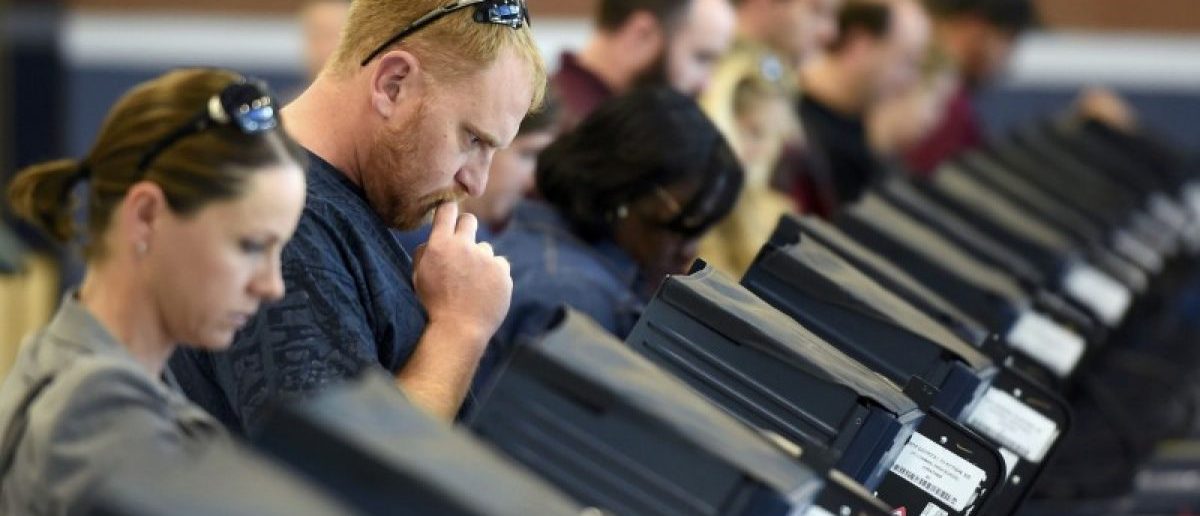
THE BEADY EYE ASKS: CAN AMERICA BLAME ITS ANTIQUATED VOTE SYSTEM OR DID TWITTER AND FACEBOOK ALGORITHMS ELECT TRUMP.

12 Saturday Nov 2016

Posted by bobdillon33@gmail.com in Artificial Intelligence., Big Data., Brexit., Elections/ Voting, Facebook, HUMAN INTELLIGENCE, Modern Day Democracy., Politics., Social Media., The Internet., Twitter, Unanswered Questions., What Needs to change in the World, Where's the Global Outrage., World Politics

≈ Comments Off on THE BEADY EYE ASKS: CAN AMERICA BLAME ITS ANTIQUATED VOTE SYSTEM OR DID TWITTER AND FACEBOOK ALGORITHMS ELECT TRUMP.

Tags

Artificial Intelligence., Facebook, Facebook and Society., Next USA President., Presidential USA Election, The USA., Twitter, USA


( A three-minute read for all Americans and all of us who value the freedom of a  Vote)

This week, Americans elected a new president who had essentially no support from mainstream politicians or media, SENDING THE CAPITALIST WORLD INTO A FRENZY OF VERBAL DIARRHEA.

How on earth did this happen?

Something else (aside from the design of the Electoral College) was needed to put Trump in the White House.

You don’t get people to see things your way by calling them idiots and racists, or sorting them into baskets of deplorables and pitiables, but with the help of Twitter and Facebook you can sow the seeds of discontent whether true or not.  Its called virtual community manipulation of what they do rather than where they are.

To speak the truth is no longer needed to gain power.

If you bend your values in challenging, strained times they’re not worth much at all when the going gets better.

In that sense, this posting may seem futile, but to any Americans reading this who are presently frustrated by a political system that does not necessarily reward the candidate with the most votes I would pass on this observation.

It is very interesting that the great symbol that is situated in the harbor of New York City, the Statue of Liberty, is a woman, carrying a torch, with her book of wisdom in hand, the crown of light atop of head, and a torch of light held high with her right hand.

She is the keeper of lost wisdom and the guide for lost souls. 

She is also a painful reminder that the liberty she promises is now becoming enslaved to a world of algorithm systems.

Trump was much better than Hillary Clinton at social media use.

Trump’s Twitter — full of ranting tweet storms and things he regretted — looks in broad outline like the account of a human who likes Twitter. Clinton’s looks like a brand.

Plainly, Trump’s election and the Brexit vote are rebellions against elite opinion — that is, against political orthodoxy and its defenders.

In both cases, the question is, how does one account for the uprising?

There’s no single reason.

What they have in common is anger at the existing economic order, and the use of social media.

You might think that after a price tag of $6.8 billion in vested interests (That’s more than what consumers spend on cereal ($6 billion), pet grooming ($5.4 billion) and legal marijuana ($5.4 billion),  would produce a leader better than a man who has spouted misogynistic, racist, xenophobic and climate change-denying views.

Not so.

As we’ve learned in this election, bullshit is highly engaging, with Mr President Trump not giving a flying toss whether he Tweeted the truth or otherwise, but it means that Twitter is harmful — it provides an echo chamber that confirms and intensifies dangerous false views — then there’s not as much it can do about it.

Tweaks to the algorithm won’t help.

As a result we can all look forward to having the biggest megaphone in the world in Jan of next year.

We are entering dangerous times not because of Trump’s Election but because Facebook and Twitter algorithms, of a shapes and sizes are now deciding the government of the United States not the vote.

Both Facebook and twitter news feeds were responsible for fueling “highly partisan, fact-light media outlets” that propelled Donald Trump’s ascension to the presidency.

But Facebook is just a clicks-and-shares company.

Its mission, its ethos, is that people should tell their friends and family what they’re up to. If what they are up to is making videos of cats doing funny things, Facebook doesn’t care if the videos were staged. And if what they’re up to is sharing anti-Semitic memes and fake news, then … I mean … what?

Facebook’s DNA is in the sharing business, not the truth business, and its thinking about how to deal with the truth and harm of what it shares is inchoate and muddled.

It is not far off the truth that both of these companies optimize their content for popularity and profit rather than truth. Behind the scenes, Facebook has been studying and analyzing its effect on news consumption.

They are as old as for-profit media. In general these companies start with an ethic of truth-seeking and fairness that then may or may not be compromised by the quest for clicks and shares.

Where does all of this leave modern-day democracy.

With the unwinding of economic linkages the planet’s wealthiest and most powerful countries face a slow-moving but potentially devastating political and economic crisis.

If we all stay silent when men brag about sexually assaulting women. If we accept lies and hate speech about women, or migrant, refugee and Muslim communities.

If we stop pushing to prevent catastrophic climate change.

“All tyranny needs to gain a foothold is for people of good conscience to remain silent.” It’s easy to lose something you don’t even know you had.Afficher l'image d'origine

Mr Obama would do well during the transition of power to bring the President elect to see the Statue of Liberty “Give me your tired, your poor, your huddled masses yearning to breathe free.”

The liberty she promises is not slavery to world’s system of Facebook, Twitter or the Internet of everything. 

It is so that humanity as a whole can muster the courage to seek the truth.

This can only be achieved by the simply use paper ballots not The Electoral College. Not computerized voting machines.

The problem with algorithm systems is that one can’t guarantee that the software is doing what it is supposed to do. (see previous posts)

It is time we pulled aside the cloak, and take a good look at the real facts, and what they mean for us, today.

The United States electoral system remains a work in progress, as it has for more than 230 years. Surely it time to remove the power of the $ and save the rest of us from eighteen months of bickering.

All comments welcome. Or if you like join the silent brigade and press the like button.


← Back

Thank you for your response. ✨

Share this:

  • Share on WhatsApp (Opens in new window) WhatsApp
  • More
  • Share on Mastodon (Opens in new window) Mastodon

THE BEADY EYE ASKS: IN VIEW OF THE CURRENT US PRESIDENTIAL ELECTION AND BREXIT IS IT TIME WE LOOKED AT THE VALUE OF A VOTE.

04 Friday Nov 2016

Posted by bobdillon33@gmail.com in Artificial Intelligence., Big Data., Brexit., Elections/ Voting, HUMAN INTELLIGENCE, Politics., Unanswered Questions., What Needs to change in the World, World Politics

≈ Comments Off on THE BEADY EYE ASKS: IN VIEW OF THE CURRENT US PRESIDENTIAL ELECTION AND BREXIT IS IT TIME WE LOOKED AT THE VALUE OF A VOTE.

Tags

Elections, Online voting., The Future of Mankind, Universal Electronic Voice

As the world watches the finishing post arriving to the United States Presidential Election with the potential election of a bombastic, conspiratorial buffoon and a jailable female, both spending millions, you have to wonder is this the best that capitalist democracy can produce.

It begs the questions.

If elections are central to democracy, then how should a society organize the institutions that govern the processes by which government leaders are selected?

Should there be a parliament or a president and a legislature?

Should legislative seats be allocated in proportion to the popular vote, or should the winner in each district take all?

Should there be two, or three or a dozen political parties?

Should the parties be strong or weak, centralized or decentralized, ideologically unified or diverse?

What is the meaning of democracy?Afficher l'image d'origine

Does democratic choice as expressed through popular elections work?

Such Questions or debates are heated because the political stakes could not be higher: institutional arrangements influence the distribution of power; shape the ways that politicians pursue their goals; and constrain the ability of citizens to control their government.

Only through comparative analysis can the relative performance of different democratic arrangements be established.

We have all witness with Barack Obama term how presidential and legislative terms can be politically crippling.

When presidents do not enjoy majority party support in the legislature the potential exists for deadlock and paralysis. Chronic impasse invites regime instability and breakdown which we are currently witnessing with Donald Trump and Hillary Clinton. ( Two unworthy candidates that are buying votes. Two popularly elected, independent institutions that create problems for coalition building and executive legislative cooperation.)  Afficher l'image d'origine

Parliamentary democracy, is more apt to succeed, or so its advocates claim, because it escapes the problems associated with temporal rigidity and majoritarianism, and because the vote of confidence can resolve interbranch conflicts.

The problem with either system is the both entail assumptions about voters: about the information that they possess, the beliefs they hold, and the considerations they bring to bear on the electoral choices they make.

Such assumptions, it is important to point out, are rarely tested.

Coalition governments (common in parliamentary regimes) obscure accountability and reduce the ability of the electorate to assign blame.

For example, proportional representation produces more parties and less disproportionately in the conversion of votes to seats than do plurality and majority systems.

Accountability is also undermined in the presidential systems because voters give too much weight to the personal attributes of presidential candidates and too little weight to issues.

Laws determine how citizens cast votes, how votes are aggregated, and how aggregated votes are converted into positions of governmental authority.

Electoral laws have profound political effects.

We do not possess, the knowledge of the ways in which electoral laws ultimately affect voters and their representation in government.

What are the impact of these laws on individual citizens: on the ways they make choices and on the relationship they establish with their representatives.

They are questions that as yet have no firm answers.

The international economy is undergoing profound changes. With the lowering of barriers to international trade and the globalization of the world economy has come the birth of new economic sectors and the death of others. Some citizens, in some countries, in some economic sectors are thriving; others are failing.

So:  Has there been a shift in the expectations and demands that citizens place on government?

How have these economic changes affected the nature of political cleavages and party coalitions as manifested in opinion, vote choice, party allegiance, and alliances among social groups and economic sectors?

How do differing levels and duration of unemployment influence the relationship between economics and voting?

Does this relationship vary according to differences in economic structure?

Is there a relationship between the long-term strength of a nation’s economy and attitudes towards democracy?

We know little about how differences in political and economic systems impact on the nature of the relationship between economics and politics.

Population growth, industrialization, and the concentration of people into urban centers are placing steep demands on the world’s natural resources. Global environmental changes of profound proportions are taking place. Some scientists argue that these changes to the global environment threaten the very inhabitability of the earth. No nation will be able to escape coping with these environmental issues over the next decade.

Over the last three decades, however, electoral alignments have weakened, party strength has grown increasingly volatile, and party systems have become increasingly fragmented. As a consequence of these trends, social cleavages no longer explain vote choice the way they once did.

We need to measure vote choice in national elections as well as the nature and level of citizen participation in electoral politics.

We must keep in mind that understanding political participation requires an appreciation of the ways that political parties and other organizations mobilize citizens both directly and through social networks.

We need a better understanding of the nature of the relationship between citizens and political parties.

The way you cast your vote can depend on the type of election. Brexit for example. 

The problem with actually implementing a new system, though, is two-fold.

First, the current beneficiaries will do just about anything to preserve their positions, whilst others only see the drawbacks with the system every four years and then forget about them until the next election season rolls around.

But more importantly, any fixes now with Artificial Intelligence programs all have their own downsides.

Electoral systems matter. As a series of rules or procedures for determining who gets to hold office—when, for how long, and under what conditions—an electoral system has an important effect on how politics is practiced and how a country functions.

Parties are adept at changing strategy in response to the rules of the game. There is no perfect electoral system. Electoral systems are consciously designed to reduce the number of parties in a parliament or to provide a boost in seats for the largest party in an election.

It’s too easy to hide code in large software packages. The machines initially displayed an ‘x’ next to his or her name but then, after a few seconds, the ‘x’ disappeared or there is no voter verifiability.

Perhaps the PR electoral system is the best: It encourage the main parties to propose policies with broad public appeal rather than to target small groups of voters.

Voting should be a non-partisan issue.

In the eyes of the whites, we are bobbejaans (baboons).

But one thing is clear: We could do a lot better. Open your eyes.

Is there nothing we can do? or is surveillance capitalism in the form of AI the only way to go. Afficher l'image d'origine

Any Suggestions?

← Back

Thank you for your response. ✨


Share this:

  • Share on WhatsApp (Opens in new window) WhatsApp
  • More
  • Share on Mastodon (Opens in new window) Mastodon

THE BEADY EYE SAYS: SINCE SHE ARRIVED AT NUMBER 10 MRS MAY HAS COST ENGLAND BILLIONS.

29 Saturday Oct 2016

Posted by bobdillon33@gmail.com in Brexit., European Union., HUMAN INTELLIGENCE, Politics., Unanswered Questions.

≈ Comments Off on THE BEADY EYE SAYS: SINCE SHE ARRIVED AT NUMBER 10 MRS MAY HAS COST ENGLAND BILLIONS.

Tags

Brexit., England., Theresa May Artifical Intelligence.

(A three-minute read)

She has so far defined herself more in words than deeds.Afficher l'image d'origine

She has – at least in words, we will see about the reality – junked the austerity agenda.

Mrs May has had just over 100 unelected days in Number 10, during which she has done a deft job of obscuring her vulnerabilities by projecting herself as a fresh yet solid leader serenely stepping in to take charge.

Lunch with Theresa May?  That will be £3,150.  Value for money.

Let’s look at it using the background of  Britain’s record national debt, which just surpassed £1.8 trillion, (The truth however is much worse, factoring in all liabilities including state and public sector pensions, the real national debt is closer to £4.8 trillion,) some £78,000 for every person in the UK.

If you lay £5 notes on top of each other they would make a pile 253,568 km, or 157,560 miles high!

Interest per Year  £41,230,597,671

Interest per Second£1,307

Debt as % of GDP 83.49%

The budget deficit already stands at approximately 4% of GDP and, at that level; any fiscal expansion could cause a fall in international confidence.

Hinkley Point:

In 2013 the English Government guaranteeing the EDF it would be paid £92.50 per megawatt-hour for the electricity generated by Hinkley Point over a 35-year contract due to run between 2025 and 2060. This is more than double the current annualised rate for wholesale electricity prices. It means that Hinkley Point should generate between £100bn and £160bn of revenue in cash terms for EDF and CGN over 35 years. The £92.50 figure is based on 2012 prices but it rises each year in line with inflation.

EDF is funding two-thirds of the project, which will create more than 25,000 jobs, with China investing the remaining £6bn for 7% of Britain’s electricity needs.

The government will also take a special or “golden share” in all future new nuclear projects. This will ensure that significant stakes cannot be sold without the government’s knowledge or consent.

The plan to build the two EPR units for £18bn (€21bn, $24bn) at Hinkley Point was hit with an unexpected delay in July as the new UK government decided to hold another review only hours after EDF – the project’s state-owned French developer – had given it the go-ahead.

EDF executives told the British government that it would have to take a stake of up to £6bn in the Hinkley Point nuclear power station to avoid a “disaster” if the Chinese decide to withdraw from the project who warning that if the plug was pulled on Hinkley Point it would damage the relationship between England and China.

If the state-backed company manages to build the power station and get it running by the target date of 2025, EDF and its Chinese partner stand to generate a profit of tens of billions of pounds on the £18bn project when it start operations in 10 years time.

The UK government says it will have control over foreign investment in “critical infrastructure”. So far £2.5bn  has being spent on site preparatory work.

Her first ( G20 summit) changed any doubts she had.

Bonkers.

Replacing Trident:  

Will cost at least £205bn.

£205 billion of public money is a huge amount. Pouring it into a nuclear weapons system that experts say could be rendered obsolete by new technology is hardly a wise choice. Far better to spend it on industrial regeneration, building homes, tackling climate change or meeting our defence needs in usable ways.

The cost of disposing the existing Trident fleet would be at least £13bn in today’s prices.

 Two new aircraft carriers.

HMS Queen Elizabeth was launched in July — are the most expensive items of military kit in the British armoury, at a cost of £3.1bn each, considerably more than originally budgeted for.

Their usefulness will also depend on a host of other additional spending commitments, such as the number of new F35 jets that will be flown off them or the number of other Royal Navy ships that can be deployed to protect them.

So far eight of the F-35B Lightning jets EACH plane costs £100 million have being ordered and if sterling weakens price will go up.

The overall order is for 48 of the jump jet F-35Bs by 2023 and will eventually go on to buy a fleet of 138.

The US-built F35s have spiralled in cost and have been beset by serious technical problems in development.

Bonkers.

Next:

HS2:

The zombie train that refuses to die, a project born of political vanity not rooted in commercial reality or value for tax payers money.

The UK currently has just 113 km of high-speed rail line.

It will mark the start of the most extravagant infrastructure project in Britain’s history: High Speed 2, a railway line running 335 miles from London to Birmingham, Manchester, Sheffield and Leeds. The line is budgeted at £55bn, although late last year its cost was widely reported to be closer to £70bn.

The whole concept of HS2 came out of intense political lobbying from the construction industry who want to build it. Those same firms have since been hired to produce the designs and budgets, and this has made sure HS2 has been gold-plated right from the start. HS2 is just one big gravy train for advocates with massive vested interests.

If it is built, HS2 would be the most expensive railway in the history of the world, surely sucking up the entire rail infrastructure budget for decades to come, and squeezing out more deserving, cheaper and cost-effective projects.

The UK’s cost per km is the highest among any of the major high-speed rail countries – with HS1 costing £51.3m per km and HS2 estimated to cost £78.5m per km.

High Speed Two (HS2) Limited is the company responsible for developing and promoting the UK’s new high-speed rail network. It is funded by grant-in-aid from the government.

HS2 ‘abysmal value for money’ at 10 times the cost of high-speed rail in Europe.

HS2 is the most expensive high-speed project in existence, according to new analysis undertaken by The Telegraph.

The current £42.6bn budget makes it more than ten times the cost per kilometre of some global counterparts.

Bonkers. 

Next:

Third runway Heathrow:

£17.6bn

This is how much the airports commission said the new runway would cost, but Heathrow has been asked to reduce it. It is apparently working on revised plans. Gatwick estimates its new runway would cost £7.4bn, while the Airports Commission says it would cost £9.3bn.

A second runway at Gatwick will cost £9.3billion, much lower than the two proposals to expand Heathrow, which cost £13.5billion and £18.6billion respectively.

The Prime Minister’s local council, Windsor and Maidenhead, said it will spend a lot of money to challenge the Heathrow decision. That brings the total for the four councils in the area – Hillingdon, Richmond and Wandsworth – to a whopping £200,000.

It is estimated that ‘between 105 2025 and 2050, airlines would pay £40billion less in aeronautical charges than they would under the Heathrow options,’

£5.7 billion would have to be spent on works such as tunnelling the M25 motorway under the runway and widening the M4.

MPs will take a vote on the airport decision in a year or so.

Last but not least: 

The Sunderland plant has been a point of pride for May’s Conservative Party since then-Prime Minister Margaret Thatcher lured Nissan to open it in 1986, beginning a recovery in British car making that had nearly collapsed in the 1970s.

Britain’s big carmakers are nearly all foreign-owned and ship more than half of their exports to the other 27 countries in the European Union, making the industry’s future one of the big question marks hanging over Britain’s plan to quit the bloc.

Japanese carmaker Nissan (7201.T) will build two new models in Britain despite the vote to quit the EU, giving Prime Minister Theresa May her most important corporate endorsement since the Brexit referendum in June.

Obviously Nisan was offered reassurances that conditions would remain competitive, but was not given explicit promises to compensate for any tariffs that might be imposed once the country leaves the bloc.

Such a step could potentially open the floodgates to ultimatums from other companies.

No country can develop by itself behind closed doors.

Politicians and civil servants find it hard to reverse poor decisions, even when their initial rationale has slipped into distant memory.Afficher l'image d'origineShe has ruled out an early election. But, where is the public outrage.

Brexit:

It Seems to me that England’s difficulty is the European Union opportunity.

All comments welcome.

← Back

Thank you for your response. ✨


Share this:

  • Share on WhatsApp (Opens in new window) WhatsApp
  • More
  • Share on Mastodon (Opens in new window) Mastodon

THE BEADY EYE SAYS: TO PUT IT MILDLY, WITH OR WITHOUT ARTIFICAL INTELLIGENCE THE WORLD IS IN A MESS.

27 Thursday Oct 2016

Posted by bobdillon33@gmail.com in Artificial Intelligence., Big Data., Facebook, Google it., Google Knowledge., HUMAN INTELLIGENCE, Humanity., Innovation., Technology, The Future, The Internet., The world to day., Unanswered Questions., What Needs to change in the World, Where's the Global Outrage.

≈ 1 Comment

Tags

Artificial Intelligence., SMART PHONE WORLD, Technology, The Future of Mankind, Visions of the future.


(A ten minute read)

In my last post I said that future societies will be driven by a culture of individuality.

I should have said individuality manipulated by an underbelly of Algorithms exploitation by Artificial Intelligence.

Why?

Because there is enormous opportunity for manipulation in big data. 

Because the internet’s ‘cacophony of stimuli’ and ‘crazy quilt’ of information have given rise to ‘cursory reading, hurried and distracted thinking, and superficial learning’ – in contrast to the age of the book, when intelligent humans were encouraged to be contemplative and imaginative.

Up to now human beings have been organizing their own societies, their own governments and their own religions according to the way that seems right to them from past history.  Not any longer. With the smartphones distracting us from our surroundings we are at the beginning of the technological end of written history.

Thinking use to be the inner activity which is absolutely independent of any other, and is a firm point … from which … one can seek for the explanation of the rest of the world’s phenomena.  Thinking now is asking Google.

The world is becoming increasingly chaotic because the increases in our technologies have made the world highly interconnected.  At the same time, values and ideas which were considered universal, such as cooperation, mutual aid, international social justice and peace as an encompassing paradigm are becoming irrelevant.  In other words, our brains are being rewired by internet.

Nowadays humans are abandoned, left alone to decide what to do with themselves. Everybody must be integrated into the vast cultural homogeneity that is the Internet to the abandonment of Intuitive social sensitivity, which is also disappearing and becoming the fodder of Facebook – selfies and ego. We are raising a generation that is already being exposed to such collaboration.

It’s like a zombie plague:

Our connection with our new creations of Artificial intelligence is limited by our ability to co-evolve with silicon- based machines.

So are we on the brink of intelligence enhancement or will our biological evolution of our species essentially change for the worst?

The organic characteristics of a species is being lost to AI so that beneficial traits cannot be passed onto subsequent generations. What we are presently seeing everywhere in terms of social and individual decay may very well be consequence of an AI world.

Technology will not automatically lead us into a sustainable future and it is becoming impossible if not too late to influence dominant commercial technological trajectories that are run by AI monopolies and are of course for profit.

You would think that algorithms cannot be developed or become widespread and dominant without socio-political, economic, and cultural mechanisms to steer innovation in the “right” or most desirable direction.

You would be wrong.

Unfortunately current science and technology do not deal with morality and ethics.

Corporate unregulated algorithms Software for profit is eating the world.

We need a deeper appreciation for what is lost when a new technology becomes part of our lives as well as what is gained. It requires more value placed on ethics and social responsibility. The degree of depletion of natural resources, including air, water and agricultural soil (what a paradox: our materialistic age is destroying matter), the increasing social and economic instability and misery everyone can observe makes it absolutely urgent that we change something.

Think for ourselves.

In thinking we posses self-determination. There is no machine, not even an abstract one, that has this self-determining feature. Machines inexorably follow their programs or mechanisms – otherwise they would not do what we expect from them.

You be wrong to think that five centuries of European colonialism and global culture-trashing, and the remaking of the world in the economic interests of competing empires, cannot be undone by a single institution and a cluster of lofty ideals.

Just recently five of the largest tech companies got together to create a coalition called The Partnership on Artificial Intelligence to benefit people and society.

No one is asking the cost or hurt that could be done to the world. AI for profit will have no ability to improve social equality.

The power of the smallest of intelligence advancements has the power to yield enormous gains for humans, individual and collective if we ensure that we don’t trade- off our human values to AI algorithms that are already actors holding our future in software programs.

Robots, Drones, High Frequency Trading, Cybercrime, Job Losses, Privacy Infringement. Irritating Personalized Ads, Gaming, Smartphones.

Afficher l'image d'origine

I could be wrong.  There are still people here on God’s green earth who can conduct their social lives without being marketed to. But when you take a long view a global cyber imperialist is being created by AI where traditions are disappearing along with their social cohesive power.

The world’s mess is like a web, so intricate that each issue is intertwined with another. However, instead of unweaving it, the web becomes more complicated and interlaced by the day. So, how do we untangle ourselves from this giant mess?

Your guess is as good as mine.

It all calls for greater transparency of scientific and technological enterprises. Social helmsmanship of technological innovation in the direction of sustainability is a very challenging task.

It’s no wonder we’re all such a mess, is it?

Regardless of how artificial intelligence develops in the years ahead, almost all pundits agree that the world will forever change as a result of advances in AI. The tipping point is already past, digital threads are woven too deeply into human life.

We can’t go back, only forward.

At the moment there are a couple of decades to reset the mindset. It’s a race between technology and education.

We are not recognizing what a living being really is, what being human really means and what human development should mean. There’s something distasteful about the whole business:

I’ll give an example of this situation.

A global campaign by a bunch of Silicon Valley billionaires (The Partnership on Artificial Intelligence) to convert literally everybody into data consumers, to make sure no eyeballs anywhere go unexposed to their ads.

Take a look at the effects of Facebook.

But what about Facebook?

Is it really altering your mind? Absolutely. Significantly.

It is changing the physical structure of your brain’s neural network, which even changes how you feel about yourself and other people. And in ways that may surprise and enlighten you. What it is doing however much the company spins it as altruistic, is really an act of self–serving techno-colonialism.  Impoverishing people’s relationships, stripping out essential elements of human contact.

“Whereas the short-term impact of AI depends on who controls it, the long-term impact depends on whether it can be controlled at all.”

It is time for our out of date world organisation- the United Nations to take a decisive, role to create eye openers for some unpleasant surprises ahead if we are not careful and vigilant about technological innovations. The problem is that the United Nations is incapable of doing so, because  it’s a unity of entities defined by their hatred of one another and committed to the perpetuation of “the scourge of war.”

But the main problem is that the “mindset[s] of government and people have not adjusted to view the future, even though technology is exploding this decade into a world of the Internet of Things and the propulsion into blind artificial intelligence. It will be too late when we all come to realize the number of jobs that artificial intelligence systems are poised to take over.

The narratives we create for the future of Artificial intelligence and subsequent high intelligence will determine our decision-making, consciously and subconsciously..

If we carry our human brain power in a small portable device like Smartphones and IPads we will forget that humans – and plants and animals, for that matter – have not been designed and constructed by humans!

The degree of depletion of natural resources, including air, water and agricultural soil (what a paradox: our materialistic age is destroying matter), the increasing social and economic instability and misery everyone can observe makes it absolutely urgent that we change something.

It takes something more than intelligence to act intelligently. Artificial Intelligence is no match for natural stupidity. 

Man is a hybrid. From a lower order we have been genetically manipulated by advanced intelligences into what we are. Now that in itself is dynamite for god’s sake.

Think about it.

Supersmart AIs will perhaps soon colonize the solar system, and within a few million years the entire galaxy. The universe wants to make its next step towards more and more unfathomable complexity.

When HI plus AI eventually merge we will have the most significant advancement in our capabilities with or without intelligence in History. The unacknowledged legislators of the world.

So Algorithms, the underlying process of decision in Artificial Intelligence systems are imperfect, prone to the bias of profit, and unpredictable decisions that will impact the Future.

The thought of the elimination of human emotions and the fact that the machines can’t distinguish a right from a wrong implies they have and will never have any morals, a vital part of human existence.

It will lead more humans into making unnatural and morally wrong decisions, because of only relying on predictability accuracy of the machine.

The real test of Ai or Super Intelligence is to be a stupid as a human not as smart.   

Wisdom (which seems at the moment in the world to be in short supply) is the bucket of water needed if AI is to learn what we value and not the exclusion of intelligence to these algorithms. 

There is no argument: To make sense of the universe, we sure could use the services of super-smart machines as long as we’re super-sure they know their place that the machine is docile enough to tell us how to keep it under control. Such technology could end up outsmarting financial markets, scientists and political leaders, and developing weapons we cannot even understand.

Most current AI research is being done by big IT corporations including Google, Facebook and Apple, and research groups funded by them.

When genetic codes were cracked the question was asked, will corporate profits trump the public good? The same question applies for AI.

Afficher l'image d'origine

A couple of final thoughts.

There’s a line of speculation that human intelligence will be amplified by the artificial kind, using virtual reality technology, so that it stays ahead of the smartest AI. And intelligence of the human kind is the product of living bodies in a living world. Could the infinite richness of this biological experience be the X-factor that keeps it on top?

There is only one way to make algorithms (that are not contributing to the good of mankind but to profit, to contribute, is to regulate them.

By passing a law that all profit-making AI software must contain a collection chip to contribution a commission of 0.05% to a World Aid Fund.  (See previous post on World Aid Commission)

Just think what such a fund could achieve with a source of perpetual income. It would change the United Nations from a worthless begging gossip shop to an Organisation of value.

Anyone is welcome to challenge !

If you believe your life is mainly a matter of chance don’t bother commenting on this post.

← Back

Thank you for your response. ✨

Share this:

  • Share on WhatsApp (Opens in new window) WhatsApp
  • More
  • Share on Mastodon (Opens in new window) Mastodon
← Older posts
Newer posts →

All comments and contributions much appreciated

  • THE BEADY EYE SAYS. THE WAY WE RECEIVE INFORMATION IS CHANGING THE WAY WE THINK. June 7, 2026
  • THE BEADY EYE SAYS THERE IS AN UNAVOIDABLE COLLISION BETWEEN MAN AND TECHNOLOGY ON THE HORIZON. June 7, 2026
  • THE BEADY EYE ASK HOW DOSE YOU BRAIN STORE MEMORIES. June 6, 2026
  • THE BRADY EYE SAYS: ENGLISH IDENTITY CANNOT BE ACQUIRED. June 6, 2026
  • THE BREADY EYE SAYS. WHEN IT COMES TO WHETHER THERE IS A GOD OR NOT. THE QUESTION REMAINS OPEN. June 5, 2026

Archives

  • June 2026
  • May 2026
  • April 2026
  • March 2026
  • February 2026
  • January 2026
  • December 2025
  • November 2025
  • October 2025
  • September 2025
  • August 2025
  • July 2025
  • June 2025
  • May 2025
  • February 2025
  • January 2025
  • December 2024
  • November 2024
  • October 2024
  • September 2024
  • August 2024
  • July 2024
  • June 2024
  • May 2024
  • April 2024
  • March 2024
  • February 2024
  • January 2024
  • December 2023
  • October 2023
  • September 2023
  • August 2023
  • July 2023
  • June 2023
  • May 2023
  • April 2023
  • March 2023
  • February 2023
  • January 2023
  • December 2022
  • November 2022
  • October 2022
  • September 2022
  • August 2022
  • July 2022
  • June 2022
  • May 2022
  • April 2022
  • March 2022
  • February 2022
  • January 2022
  • December 2021
  • November 2021
  • October 2021
  • September 2021
  • August 2021
  • July 2021
  • June 2021
  • May 2021
  • April 2021
  • March 2021
  • February 2021
  • January 2021
  • December 2020
  • November 2020
  • October 2020
  • September 2020
  • August 2020
  • July 2020
  • June 2020
  • May 2020
  • April 2020
  • March 2020
  • February 2020
  • January 2020
  • December 2019
  • November 2019
  • October 2019
  • September 2019
  • August 2019
  • July 2019
  • June 2019
  • May 2019
  • April 2019
  • March 2019
  • February 2019
  • January 2019
  • December 2018
  • November 2018
  • October 2018
  • September 2018
  • August 2018
  • July 2018
  • June 2018
  • May 2018
  • April 2018
  • March 2018
  • February 2018
  • January 2018
  • December 2017
  • November 2017
  • October 2017
  • September 2017
  • August 2017
  • July 2017
  • June 2017
  • May 2017
  • April 2017
  • March 2017
  • February 2017
  • January 2017
  • December 2016
  • November 2016
  • October 2016
  • September 2016
  • August 2016
  • July 2016
  • June 2016
  • May 2016
  • April 2016
  • March 2016
  • February 2016
  • January 2016
  • December 2015
  • November 2015
  • October 2015
  • September 2015
  • August 2015
  • July 2015
  • June 2015
  • May 2015
  • April 2015
  • March 2015
  • February 2015
  • January 2015
  • December 2014
  • November 2014
  • October 2014
  • September 2014
  • August 2014
  • July 2014
  • June 2014
  • May 2014
  • April 2014
  • March 2014
  • February 2014
  • January 2014
  • December 2013
  • November 2013
  • October 2013

Talk to me.

Jason Lawrence's avatarJason Lawrence on THE BEADY EYE ASK’S: WIT…
benmadigan's avatarbenmadigan on THE BEADY EYE ASK’S: WHA…
bobdillon33@gmail.com's avatarbobdillon33@gmail.co… on THE BEADY EYE SAYS: WELCOME TO…
Ernest Harben's avatarOG on THE BEADY EYE SAYS: WELCOME TO…
benmadigan's avatarbenmadigan on THE BEADY EYE SAY’S. ONC…

7/7

Moulin de Labarde 46300
Gourdon Lot France
0565416842
Before 6pm.

My Blog; THE BEADY EYE.

My Blog; THE BEADY EYE.
bobdillon33@gmail.com

bobdillon33@gmail.com

Free Thinker.

View Full Profile →

Follow bobdillon33blog on WordPress.com

Blog Stats

  • 100,218 hits

Blogs I Follow

  • unnecessary news from earth
  • The Invictus Soul
  • WordPress.com News
  • WestDeltaGirl's Blog
  • The PPJ Gazette
Follow bobdillon33blog on WordPress.com

The Beady Eye.

The Beady Eye.
Follow bobdillon33blog on WordPress.com

Create a free website or blog at WordPress.com.

unnecessary news from earth

WITH MIGO

The Invictus Soul

The only thing worse than being 'blind' is having a Sight but no Vision

WordPress.com News

The latest news on WordPress.com and the WordPress community.

WestDeltaGirl's Blog

Sharing vegetarian and vegan recipes and food ideas

The PPJ Gazette

PPJ Gazette copyright ©

Privacy & Cookies: This site uses cookies. By continuing to use this website, you agree to their use.
To find out more, including how to control cookies, see here: Cookie Policy
  • Subscribe Subscribed
    • bobdillon33blog
    • Join 222 other subscribers
    • Already have a WordPress.com account? Log in now.
    • bobdillon33blog
    • Subscribe Subscribed
    • Sign up
    • Log in
    • Report this content
    • View site in Reader
    • Manage subscriptions
    • Collapse this bar