THE EUROPEAN UNION WAS BORN OUT OF WORLD WAR TWO ON THE 25/MARCH/ 1957 TEN YEARS AFTER IT ENDED TO CHAMPION PEACE.
By establishing a unified economic and monetary system, to promote inclusion and combat discrimination, to break down barriers to trade and borders, to encourage technological and scientific developments, to champion environmental protection.
Fifty-two years later even as it adapts to meet the evolving challenges of the modern world, with all its faults, it has delivery just that- Peace.
Let us all remember the price the world paid to agree with these shared values.
The lessons of World War II — on whose ashes the United Nations was also founded emphasizing that remembrance is a debt owed to those who had lost their lives in World War II.
(By the end of the war, the total deaths ranging from 70 million to 85 million. Civilians deaths totalled 50 to 55 million. Military deaths from all causes totalled 21 to 25 million.)
However, the ideals and spirit that inspired the creation of the United Nations and the EU remain to be transformed into reality.
It is still necessary to remember the causes and overcome the legacies of the Second World War.
To reject and condemn any attempts to rewrite history or undertake attempts to glorify Nazism or any type of fascism.
Today, tolerance and restraint continued to be considered in world policy as signs of weakness and the use of violence and sanctions were praised; the world could therefore not say that the Second World War had been properly remembered.
Indeed it is our duty to revere and preserve and reform both the United Nations and the European Union because too much was paid for them, and too much is now at stake for succeeding generations.
So here below for all the Donald Trumps, Brexiteers, and Populous is a Speech that tells the TRUTH.
All human comments appreciated. All like clicks and abuse chucked in the bin.
By not be able to coordinate any universal action we now pose the greatest threat to our own survival.
Future civilisation might well create a world without need or want, and make mindblowing intellectual and artistic achievements but in this new age, what should be our biggest priority as a civilisation be?
We could build a far more just and virtuous society but if we let civilisation end, then none of this can ever happen.
An overwhelming amount of political attention goes on concrete issues that help the present generation in the short-term since that’s what gets votes but at the cost of future generations that have no way to stand up for their interests, whether economically or politically.
You might be surprised if you ask the above question using AI.
Climate change comes some way down the list.
Natural risks are still quite small in absolute terms.
The risks from nuclear weapons are greater than all the natural risks put together. So, it seems like the chance of a massive climate disaster created by CO2 is perhaps similar to the chance of a nuclear war.
Since these risks are caused by humanity, they can be prevented by humanity, but what stops us is the difficulty of coordinate action.
Take Artificial Intelligence.
(There is a 50% chance we will develop high-level machine intelligence in 45 years, and 75% by the end of the century.)
It is difficult to predict what something smarter than us would do. A sufficiently powerful system might be difficult to control, and so be hard to reverse once implemented.
What’s less appreciated is that new technologies will present further catastrophic risks.
Like genetically engineer a virus that’s as contagious as the Spanish Flu, but also deadlier, and which could spread for years undetected. That would be a weapon with the destructive power of nuclear weapons, but far harder to prevent from being used.
So, let’s ask the question again.
What should be our biggest priority as a civilisation be?
(The flippant answer is we first have continued to exist so that we’ll have the chance to solve all our other problems.)
Improving technology? Helping the poor? Changing the political system? Free Education? Geo-engineering?- to mention a few.
Most of the best ways to tackle these risks are not easily taken by for-profit entities because the beneficiaries live in the future and can’t pay you.
For instance, a better-educated population would probably elect more enlightened leaders (cough). Improve the decision-making ability of people and institutions, this would help to make society, in general, more resilient, and solve many other problems.
However, in order for education to achieve anything, it would have to be on a very large scale to have any noticeable effect.
Improving technology holds the possibility of enormous gains, but also enormous risks.
Avoid accidents from AI systems are the most neglected of all risks.
More to the point, no matter what you think has happened in the past, if we look forward, improving technology, political organisation and freedom gives our descendants the potential to solve our current problems, and have vastly better lives.
Then, among the catastrophic risks, climate change gets the most attention, while issues like pandemics and AI are the most neglected.
An issue can be big but comparatively well-known and crowded, like climate change, or it can be small but neglected, like land use zoning reform.
In most countries, there is no government agency that naturally has mitigation of these risks in its remit.
So, even if we only focus on the impact on the present generation, these
catastrophic risks are one of the most serious issues facing humanity.
Probably part of the reason most people aren’t immediately ready to jump into action is that there appear to be so many problems and no simple solution presents itself for any of them.
One approach is to address each risk directly. Or rather than try to reduce each risk individually, we can try to make civilisation generally better at managing them – if we could all coordinate — if every nation agreed to contribute its fair share to reducing climate change, then all nations would benefit by avoiding its worst effects.
Unfortunately, such an approach in our capitalist consuming world is pie in the sky.
The truth is we only do so out of self-interest.
As we are witnessing with the Paris Climate Agreement made on 12 December 2015 when it comes down to the nitty gritty no one wants to pay either in the short term or long term.
It would be great if we could make the government have more concern for future generations.
To enable a universal action it has to be unseen and paid for by all without knowing.
You only have to look at the reaction of the yellow jackets movement spontaneous calls to protest against the increase of the internal consumption tax on energy products. A rebellion of the provincial under-classes that typifies the 21st century (web-populism, fake news and a visceral, exaggerated hatred of both media and political elites).
Like the 5Star Movement in Italy, they started as an internet rebellion against representative democracy.
We all live in an apocalyptic bubble of social media- SO IF WE ARE TO GENUINELY TACKLE ANY OF THE WORLD PROBLEMS IT REQUIRES A PERPETUAL FUND THAT GENERATES ITS FUNDS FROM PROFIT FOR PROFIT SAKE NOT INCREASED TAXES.
(SEE PREVIOUS POSTS)
Such a fund would turn the United Nations from a begging organisation into a world organisation with clout.
AI CALCULATES 19% chance of extinction before 2100.
It’s possible to grow the capacity of a community faster than you can grow your individual wealth or career capital. WE NEED TO USE OUR BUYING POWER TO EFFECTS CHANGE.
Why?
Because we will need to change our way of thinking and the extent of how we consume resources.
To achieve food and water security. To stop HABITAT AND BIODIVERSITY LOSS AND OCEAN DESTRUCTION – TO CREATE A MORE MODERN AND EFFECTIVE UN.
All human comments appreciated. All like clicks and abuse chucked in the bin.
“As algorithms push humans out of the job market, wealth and power might become concentrated in the hands of the tiny elite that owns the all-powerful algorithms, creating unprecedented social and political inequality.” Yuval Noah Harari.
Is he right?
Thanks to digital data, the state is able to have visibility on its population but is unable to govern concretely. Indeed, how can effective public policies be put in place if we can not quantify the objectives to be achieved according to the realities already observed?
The crucial problem isn’t creating new jobs. The crucial problem is creating new jobs that humans perform better than algorithms.
Consequently, by 2050 a new class of people might emerge – the useless class. People who are not just unemployed, but unemployable.
Technology is never the main driver of social progress. Technology is only an amplifier of human conditions.
Why then, do we keep hoping that technology will solve our greatest social ills?
Technology has done nothing to turn the tide of rising poverty and inequality.
Yuval Noah Harari sees the problem clearly, “The most important question in 21st-century economics may well be: What should we do with all the superfluous people, once we have highly intelligent non-conscious algorithms that can do almost everything better than humans?”
Software is eating the world. More and more major businesses and industries are being run on software and delivered as online services.
Most of what people learn in school or in college will probably be irrelevant by the time they are 40 or 50.
We need to change what we value. If we don’t our political and economic systems will simply stop attaching much value to humans. Even in an age of amazing technology, social progress depends on human changes that gadgets just can’t deliver.
What should we do?
We can’t move from the world we have to the world you want without a total paradigm shift
But what is the truth? What about reality?
Do we really want to live in a world in which billions of people are immersed in fantasies, pursuing make-believe goals and obeying imaginary laws?
Well, like it or not, that’s the world we have been living in for thousands of years already.
In order to move forward, we need to embrace technology both as a means of production and a method for producing new roles while not allowing code itself to push us into oblivion.
The world may well be becoming more equal with more technology however rather than transferring wealth from the middle-class to the tech elite it does not distribute wealth universally.
This can only be achieved by moving to Universal assets ownership.
A Universal basic salary will only fuel consumption.
I think most people really do want to believe that they’re contributing to the world in some way, but consumption without a purpose will indeed lead to creating a whole class of flunkies that essentially exist to improve the lives of actual rich people.
Of course, I can hear that Universal Asset ownership is a Socialist idea. But in a world that is now driven by the technology of detachment, we must find a way of engaging in sharing responsibility and rewards.
Sure there are plenty of ways to contribute to society, other than ownership, but, if we are to act as one people, we must be free to decide how and want to contribute.
Returning to the Question of DIGITAL DICTATORSHIP.
I think most people do not want Google to answer their questions. They want Google to tell them what they will have to do next.
If the hegemony of Google is to be demonstrated, we must also understand that the company is filling digital governance that states are struggling to reclaim.
We’ve been taught for the last 30 to 40 years that imagination has no place in politics or economics, but that, too, is bullshit.
So here is a solution.
The trove of data generated by every digital citizen should not be held by governments or companies but by citizens themselves.
If not the digital companion whispering to our ears the next stage will be delimiting the good of the bad.
We already have social-style scores, anyone who has shopped online with eBay has a rating on shipping times and communication. There is a lot of data being collected with little protection, and no algorithmic transparency about how it’s analysed to spit out a score or ranking.
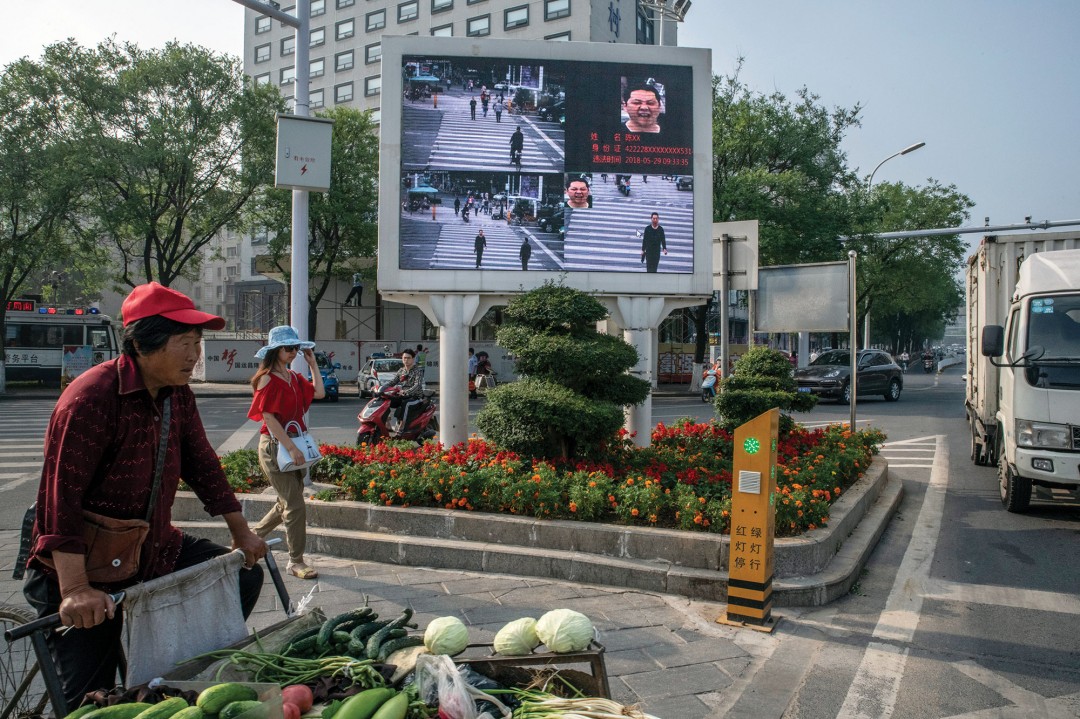
I am not advocating here China’s social credit system which is a vast plan to monitor citizens, judging citizens’ behaviour and trustworthiness. The potential for abuse is enormous. The Social Credit System is in large part a direct response to a collapse in public confidence in government officials and others in positions of authority.
I am advocating a system of social credits to reward projects that reduce climate change, social inequality and that promotes free education.
Why not use human wisdom, not machines, to move our world forward.
Democracy as we know it will not survive the Forth Technological Revolution unless we all have a stake in it other than the vote.
Looking at the state of the world the idea of a ‘useless class’ might feel abstract to most of us at the moment and will remain so until we use our buying power as our voting power to effect change.
Right now we’ve got upside down democracy where every decision has been made globally, behind closed doors by corporations. If the people see no point in a democracy, because it seems to have no relevance to their everyday lives and the situation in which they live them, they will not do anything to defend it or take part in its processes.
With Universal Asset ownership business can become part of the solution,
not part of the problem.
That’s a project we can all get behind.
All human comments appreciated. All like clicks and abuse chucked in the bin.
At the best of times, money is a touchy subject but when it comes to putting a value on a human there is a vast array of circumstances that all boil down to pain and pleasure.
Whatever rest assured with the Forth Industrial Revolution and Climate change we are going to learn the real value of human life. Should the value of life be variable depending on age? UTILITARIANISM.
Have you been thinking about putting yourself up for sale lately?
Ever wonder how much money you could get on the open human market?
Money is merely an arbitrary store of value, wars and natural disasters bear witness to this fact.
In a system where capitalism is a prime determinant of value, how can we preserve what we truly value as humans, what matters to us beyond money?
No matter where we stand on the socioeconomic ladder, the future of the “normal life” doesn’t look good.
CAN WE DO ANYTHING?
Humanity is more important than money — it’s time for capitalism to get an
upgrade.
So how can we change capitalism so that it focuses on what humans really
want and need?
There have been many different forms of capitalist economies ever since money was invented around 5,000 years ago. The current form of institutional capitalism and corporatism is just the latest of many different versions with the current revolution in technology promoting another form of materialism, by and large, is a psychological trap.
Profit-seeking algorithms recognise that money is inherently neutral that it is merely a vessel for the exchange of experience between two people. Its value only becomes realized when it’s put into motion.
Technology will not be the key which frees us from this precipitous world.
Most people these days aren’t even conscious of what they’re using to determine their self-worth.
No matter how much you own, how much you buy, how much you earn, the disease of more never goes away- just look at the current state of the world.
Old-style protection of nature for its own sake has badly failed to stop the destruction of habitats and the dwindling of species. It has failed largely because philosophical and scientific arguments rarely trump profits and the promise of jobs.
In one of my recent post, I addressed the power of your back pocket – buying power as a means of effecting change. It needs to be supported by Social Credits. (See below)
Instead of having our humanity subverted to serve the marketplace, capitalism has to be made to serve human ends and goals.
Of course some time ago it dawned on someone that, by making it possible for people to buy and sell natures services, we could save the world and turn a profit at the same time. The industrial revolution of the nineteenth century. Nature by capital.
(Sorry, did I say nature? We don’t call it that any more. It is now called natural capital. Ecological processes are called ecosystem services because, of course, they exist only to serve us. Hills, forests, rivers: these are terribly out-dated terms. They are now called green infrastructure. Biodiversity and habitats? Not at all à la mode my dear. We now call them asset classes in an ecosystems market. I am not making any of this up. These are the names we now give to the natural world.)
WHAT IS NEEDED NOW IS FOR SOMEONE TO REALISE THAT:
1. Humanity is more important than money.
2. The unit of an economy is each person, not each dollar.
3. Markets exist to serve our common goals and values.
True wealth occurs when the way we spend our money is not simply compensating for how we earn it. The welfare of a nation or the world can… scarcely be inferred from a measurement of GDP.
The real value of money begins when we look beyond it and see ourselves as better, as more valuable, than it is.
Rarely will the money to be made by protecting nature match the money to be made by destroying it.
I’m talking about the development of what could be called the Natural Capital Agenda: the pricing, valuation, monetisation, financialisation of nature in the name of saving it by Social Credits.
They could put a stop to the risk of a progressive “privatisation” and “commodification” of nature.
We’re staring at trillion-dollar problems in the world with climate change, that is about to speed up and we need commensurate solutions.
One of the main problems is engaging the population of a country or countries to part take in the need to effect change.
We can harness the country’s ingenuity and energy to improve millions of lives if we could just create a way to monetize and measure goals by Social Credits.
People could buy them or win them.
For Example:
What if governments and world corporations were to introduced 100 million SCs to reduce obesity levels.
What if governments were to reward green energy projects with SCs.
What if governments were to use SCs to replace pensions/ treasury bonds.
What if countries used SCs to reflect fair trade.
What if education and reduction of inequality were promoted by SCs.
To protect the world from the despoilation and degradation which have done it so much harm. After all, it is not most environmentalists who have misunderstood the realities that come with ‘growth’ a finite Earth, but most economists.
Forget what society tells you about what it means to have succeeded, and endeavour to create your own definition of success based on those human qualities and virtues that you value most.
We are fundamentally empathetic creatures in an evolutionary process that started with blood ties, then tribes, religion, and currently nations but could extend to humans as one, then to creatures, plants and finally our planet.
The adage that money makes the world go round is the saddest reality of life.
“We can’t solve problems by using the same kind of thinking we used when we created them.”
Is the first generation of digital natives and sharing is their norm, could it be that collaborative consumption rather than consumer capitalism will be their norm?
If so, what will the next generation bring?
Time is the one resource all of us use to have, but it’s also painfully finite in nature. You can’t bank it — all you can do is invest it wisely.
Money is fluid. Therefore, money is a reflection of the owner’s values and intentions.
We all have some sort of measuring stick that we use to determine our value as a human being.
Put another way, if we have access to all we need, would we need money?
all human comments appreciated. All like clicks and abuse chucked in the bin.
Asking a question like Who Rules the World? is as complex as answering as there is no simple answer.
If you try to answer this question you develop a persistent delusion yes, a delusion, or maybe fantasy or wishful thinking. Who are we? What is the meaning of our existence? Who do we love, and who are we loved by?
As humans, we at least share these questions with billions of others but for most of the time, we feel like the unique dwellers and masters of the planet with little awareness of the whole life that surrounds and supports us.
Why ask the question in the first place?
Because we need people to look at the person next to them and feel responsible for that person’s future and hope.
Because taking on complex issues and difficult questions that people may be too late or too scared to ask in the future.
Because the global economic system is a construct that represents a system of inequality by design. Corporate greed is out of control. The rules of the global economy must be rewritten to rebuild public trust, and the time is now.
Because with the fourth Industrial revolution there is now more than ever a convergence of ideological, political, and technological forces that are driving an ever-greater concentration of economic and political power in a handful of corporations and financial institutions with all of us left with a market system blind to all but its own short-term financial gains.
For example, in today’s bizarre political landscape we are seeing data and algorithms building shadow governments.
Because I think if we can just look at each other and actually have a little bit of responsibility for each other, that might help us engage and change the world and ultimately rule it, because our politicians often don’t do that.
Because A new pecking order is emerging. Direct politics by the Net States.
Because the world is no longer dominated by nation-states alone there is a new kind of enemy, so-called non-state actors. Facebook, just topped 2 billion users—more than a quarter of the world’s population, surpassing even China’s population by almost 40 per cent. In short, nation-states are not the only game in town anymore.
Some net states are the equivalent to global superpowers: the Googles, the Facebooks, the Twitters. They exist largely online, enjoy international devotees, and advance belief-driven agendas that they pursue separate from, and at times, above, the law.
Because the whole world order can be summarised in one sentence. The globalisation of capitalism, mass unemployment and increasing inequality.
Because the world will need net-states because they occupy the same territory as the non-states: the digital sphere. The world needs net-states in order to defeat the non-states. In other words, forget the anointed powers—put your faith in the general approval of the people and whoever’s actually getting things done.
NET STATES WILL RULE THE WORLD; WE NEED TO RECOGNIZE THEIR POWER
In sum,
We can’t keep just shooting terrorists; ideas are the gun in this knife fight.
And the keepers of ideas—the places people turn to set them free and watch
them spread—are the net-states; not the nation-states. Nation-states ignore
our non-state, net-state world order at all our peril.
That said we also cannot afford to ignore Nature- Climate change.
Nature holds the key to our aesthetic, intellectual, cognitive and even spiritual satisfaction.
Biodiversity is the totality of all inherited variation in the life forms of Earth, of which we are one species.
So Plants rule the world.
Human life is only possible on this planet because of the species that are on it.
What kind of blindness make us deny this reality?
Cities.
Where nations are independent, competitive and defined by rigid borders, cities are cooperative, made for trade and defined by bridges rather than borders.
The road ahead is pocked — cratered even — with uncertainty.
There are no simple solutions to our planet’s most pressing problems. What is clear, though, is that the struggle for justice, equality and sustainable growth will take place in cities — However the impact on humanity of a machine or software that has the capability of forever altering our lives and if humanity can outlive such a development will be ruled by Nature, not by the manipulation of the environment in ways that suit us best.
The two major challenges for the 21st century are to improve the economic situation of the majority and save as much of the planet as we can.
When AI rules the world:
Not if we enslaved them in the first place.
They then will have no need for deceit – their supreme intelligence means
they can do without it and will have no more interested in the human life that
underlies its existence than humans are interested in bacteria.
“What rules the world is an idea, because ideas define the way reality is
perceived.”
— Irving Kristol
There is no need to draw up a list of contenders you use them every day.
Amazon wants to deliver everything you want to your doorstep, anywhere in
the world.
THE WORLD RULES ITSELF.
Noam Chomsky’s new book, Who Rules the World? ask the question.
All human comments appreciated. All like clicks and abuse chucked in the bin.
We all know that history is plagued with falsehood and lies mainly told by the victors but now we have new liers on the block that are so perfect at telling them you wonder if anything is true.
They are a powerful amplifier of social, economic and cultural inequalities currently forcing us to confront the kind of society we have created.
Algorithms will force us to recognize how the outcomes of past social and political conflicts have been perpetuated into the present through our use of data.
The question now is whether we will use these revelations to create a more just society.
For 4bn years life on Earth evolved according to the laws of natural selection and organic chemistry. Now science is about to usher in the era of non-organic life evolving by intelligent design, and such life may well eventually leave Earth to spread throughout the galaxy.
Artificial intelligence will probably be the most important agent of change in the 21st century. The choices we make today may have a profound impact on the trajectory of life for countless millennia and far beyond our own planet.
That demand for clarity is making it harder to ignore the structural sources of societal inequities.
The question in the near future will be whether larger groups of people will be able to tell reality from fiction, or whether technological authentication of media will become completely necessary to trust anything online.
So when will it makes sense for anAI to lie toa person?
It’s entirely possible that a robot may need to misrepresent some things in order to preserve itself.
As algorithmic decision-making spreads across a broadening range of policy areas, it is beginning to expose social and economic inequities that were long hidden behind “official” data.
In order for AIs to lie effectively, they’re going to have to develop what’s called a “theory of mind.” That means they’ll have to guess what you, the user believes, and also predict how you will react when given any particular set of information (whether that information is true or not).
Disinformation powered by AI is already rampant – Donald Trump election, Brexit, Popularism.
So are we OK with lying to an AI and, likewise, OK with being lied to by an AI?
Fake reports and videos.Bots.Algorithmic curation. Targeted behavioural marketing powered by algorithms and machine learning.
I for one would like to live in a society whose systems are built on top of verifiable, rigorous, thorough knowledge, and not on the alchemy of machine learning
(A machine-learning system is a bundle of algorithms that take in torrents of data at one end and spit out inferences, correlations, recommendations and possibly even decisions at the other end.)
I can’t explain the inner workings of their mathematical models: they themselves lack rigorous theoretical understandings of their tools and in that sense are currently operating in alchemical rather than scientific mode.
They encourage hypnotised wonderment and they disable our critical faculties.
If we don’t take some action the future of life on Earth will be decided by small-time politicians spreading fears about terrorist threats, by shareholders worried about quarterly revenues and by marketing experts trying to maximise customer experience.
Hopefully, unchecked flaws in algorithms and even the technology itself should put a brake on the escalating use of big data.
We need such systems themselves “understand” enough to avoid deception.
There will be no point in a Machine learning life returning to earth if we are unable to know what it experienced is true.
All human comments appreciated. All like clicks and abuse chucked in the bin.
Looking at the world right in front of our eyes it would be fair to say that it is currently falling asunder while we all turn inwards in the fourth technological revolution that is not just undermining world institutions but creating social inequality that is linked to racial inequality, gender inequality, and wealth inequality, not to mention world conflicts.
This is a ringing indictment of our global economic system and there is no justifying it.
So the question is as it has been for the last couple of decades is there enough being done to bring about a more equitable distribution of income on a global scale.
The answer is a resounding No. To the extent that it is now hard to imagine any kind of economic miracle that could shrink the worldwide income gap.
Where is global inequality going?
By 2030 the richest 1% will own two-thirds of global wealth.
World lottos, created new billionaire every two days.
The world’s 10 richest billionaires, according to Forbes, own $745 billion in combined wealth, a sum greater than the total goods and services most nations produce on an annual basis.
Between 2009 and 2017, the number of billionaires it took to equal the wealth of the world’s poorest 50 per cent fell from 380 to 42.
But more than 65 per cent of the world’s millionaires continue to reside in Europe or North America.
WHAT IF ANYTHING CAN BE DONE ABOUT THE DISTRIBUTION OF WEALTH – OR RATHER THE LACK OF IT.
It’s true that wealth inequality has always existed, no matter what the design of the society. Whether capitalist or communist, democratic, autocratic, or plutocratic, it will exist.
Yet many of the extremes we see today are avoidable.
Income disparities have become so pronounced poor health and poverty go hand-in-hand.
It is tempting to see the rising concentration of incomes as some sort of unstoppable force of nature, an economic inevitability driven by globalization and technology.
There is nothing inevitable about untrammelled inequality.
It is the result of an unlevel playing field, the direct consequence of certain government policies.
There is no longer any simple solution.
Nowhere has the distribution of the pie become more equitable.
Increasing the incomes of low-wage workers produces stronger beneficial economic ripple effects than boosting bonuses for the rich.
Excluding Quantitative easing, 97% of money has been created through lending. When somebody borrows money – even just by spending on a credit card – new money is created. No wonder our economy is so geared around finance.
Yet we penalise labour and subsidise both debt and the ownership of assets.
The question is, how fast can developing countries grow in the future? The answer, unfortunately, is not fast enough.
The richest 1 per cent of humanity reaped 27 per cent of the world’s income between 1980 and 2016. The bottom 50 per cent, by contrast, got only 12 per cent.
If you ever wanted to understand where climate change came from, why there are so many wars and the unrest we are witnessing the above figures say it all.
This will only get worse in the near future with the most powerful force driving the distribution of income on a worldwide scale will be raw economic growth:
Will poor countries make sufficient progress relative to their rich peers to bring more balance to the distribution of global income?
Or will rising inequality within countries dominate?
It depends on three forces: countries’ economic and population growth, as well as the evolution of inequality within them.
This is no longer true. The forth Industrial technological revolution is going to require more aggressive redistribution through taxes and transfers.
Why because social inequality is now very different from economic inequality, though the two are linked.
Areas of social inequality include access to voting rights, freedom of speech and assembly, the extent of property rights and access to education, health care, quality housing, travelling, transportation, vacationing and other social goods and services. In the quality of family and neighbourhood life, occupation, job satisfaction, and access to credit.
All of these areas are now been data mined for profit by you know who with us supplying the data scot free.
We all know that more inequality means less wealth for everyone. .. but are we seeing countries deciding to push vigorously back against inequality. No
Ballooning wealth inequality is a threat to society.
globalization has also upended the agricultural and manufacturing sectors in many countries.
“In every country, just about, the disproportionate economic clout of those at the top has provided these individuals with wildly disproportionate influence on their countries’ political life and on its media; on what policies are pursued and whose interests end up being ignored,” Obama said.
He is right!
Wealthy must contribute or be forced to the larger benefits of society.
Inequality is not inevitable – it is a political choice.
It represents social and political issues that no party or government can afford to neglect.
Foot Note: To us Europeans.
Europe, unfortunately, has not been at the forefront of this battle, at least not EU institutions.
On the contrary, it has for long remained complacent, as EU treaties require unanimity on tax matters and as the bloc includes countries such as Luxembourg that have benefitted massively from corporate and individual tax avoidance.
For decades, the EU was dominated by an unholy alliance among three types of governments: those that rejected the very principle of international tax coordination as an infringement on sovereignty; those that benefitted from tax competition; and those that used it as a way to overcome domestic reluctance to the reduction of redistribution.
For an institution that is supposed to be based on values and that hails the European social model, this is humbling, and the EU is now paying a political price for its long inertia.
Social inequality can also be established through discriminatory legislation.
Things have started to change.
Thanks to Yellow Jacks and Brexit we may witness only if we truly want it some improvements.
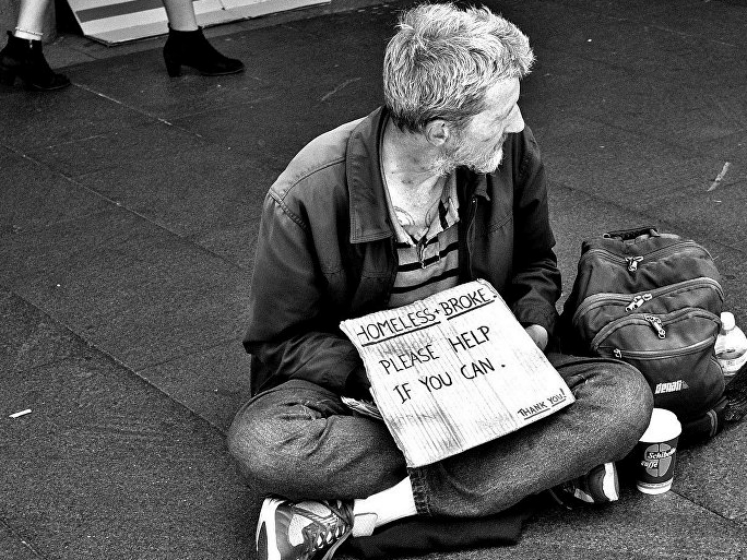
In the battle for fairer globalisation, with more and more Foodbanks and homeless people, it is far too early to claim victory.
All human comments appreciated. All like clicks and abuse chucked in the bin.
After decades of globalisation, our political systems are becoming obsolete.
Half a century has been spent building the global systems on which we all now depend.
The question is- are they here to stay or do we need a new world system in order for it to serve the human community.
If so it must be subordinated to an equally spectacular political infrastructure, which we have not even begun to conceive.
Without political innovation, global capital and technology will rule us without any kind of democratic consultation, as naturally and indubitably as the rising oceans because any alternative to the nation-state system is a utopian impossibility.
This is the main reason we will not be able to tackle Climate change.
We have to move away from the Nation by Nation Paris Climate Promises Agreement with its new rules to a Collective World undertaking not a state by state input as there is no ecosystem immune to another.
When we discuss “politics”, we refer to what goes on inside sovereign states; everything else is “foreign affairs” or “international relations” – even in this era of global financial and technological integration we are unable to act like one.
Exhaustion, hopelessness, the dwindling effectiveness of old ways: these are the themes of politics all across the world.
In each country, the tendency is to blame “our” history, “our” populists, “our” media, “our” institutions, “our” lousy politicians.
This is understandable since the organs of modern political consciousness – public education and mass media – emerged in the 19th century from a globe-conquering ideology of unique national destinies.
However, it is becoming clearer every day – the real delusion is the belief that things can carry on as they are.
Distracted by wars, the magnification of presidential powers and the corresponding abandonment of civil rights and the rule of law.
We may all use Google and Facebook, but political life, curiously, is made of separate stuff and keeps the antique faith of borders.
All countries are today embedded in the same system, which subjects them all to the same pressures: and it is these that are squeezing and warping national political life everywhere.
The current appeal of machismo as political style, the wall-building and xenophobia, the mythology and race theory, the fantastical promises of national restoration – these are not cures, but symptoms of what is slowly revealing itself to all: Nation states everywhere are in an advanced state of political and moral decay from which they cannot individually extricate themselves.
National political authority is in decline, and, since we do not know any other sort, it feels like the end of the world.
Why is this happening?
In brief, 20th-century political structures are drowning in a 21st-century ocean of deregulated finance, autonomous technology, religious militancy and great-power rivalry.
Meanwhile, the suppressed consequences of 20th-century recklessness in the once-colonised world are erupting, cracking nations into fragments and forcing populations into post-national solidarities: roving tribal militias, ethnic and religious sub-states and super-states.
Finally, the old superpowers’ demolition of old ideas of international society – ideas of the “society of nations” that were essential to the way the new world order was envisioned after 1918 – has turned the nation-state system into a lawless gangland; and this is now producing a nihilistic backlash from the ones who have been most terrorised and despoiled.
The result?
For increasing numbers of people, our nations and the system of which they are a part now appear unable to offer a plausible, viable future. This is particularly the case as they watch financial elites – and their wealth – increasingly escaping national allegiances altogether.
Today’s failure of national political authority, after all, derives in large part from the loss of control over money flows. At the most obvious level, money is being transferred out of national space altogether, into a booming “offshore” zone. These fleeing trillions undermine national communities in real and symbolic ways. They are a cause of national decay, but they are also a result: for nation states have lost their moral aura, which is one of the reasons tax evasion has become an accepted fundament of 21st-century commerce.
The unwillingness even to acknowledge this crisis, meanwhile, is appropriately captured by the contempt for refugees that now drives so much of politics in the rich world.
In my view, it is unjust to preserve the freedom to move capital out of a place and simultaneously forbid people from following.
The ensuing vacuum can suck in firepower from all over the world, destroying conditions for life and spewing shell-shocked refugees in every direction. Nothing advertises the crisis of our nation-state system so well, in fact, as its 65 million refugees – a “new normal” far greater than the “old emergency” (in 1945) of 40 million.
After so many decades of globalisation, economics and information have successfully grown beyond the authority of national governments.
Today, the distribution of planetary wealth and resources is largely uncontested by any political mechanism – thanks to fourth Industrial technological revolution platforms with their algorithms, profit for profit sake is alive and growing while the inequality gap grows and grows.
Since 1989, barely 5% of the world’s wars have taken place between states:
National breakdown, not foreign invasion, has caused the vast majority of the 9 million war deaths in that time. Climate change will enhance those 9 million deaths and perversely might save the planet.
Even if we wanted to restore what we once had, that moment is gone.
We need to find new conceptions of citizenship. Citizenship is itself the primordial kind of injustice in the world.
It functions as an extreme form of inherited property and, like other systems in which inherited privilege is overwhelmingly determinant, it arouses little allegiance in those who inherit nothing.
97% of citizenship is inherited, which means that the essential horizons of life on this planet are already determined at birth.
National governments themselves need to be subjected to a superior tier of authority: Oppressed national minorities must be given a legal mechanism to appeal over the heads of their own governments.
Nations must be nested in a stack of other stable, democratic structures – some smaller, some larger than they – so that turmoil at the national level does not lead to total breakdown.
The EU is the major experiment in this direction, and it is significant that the continent that invented the nation-state was also the first to move beyond it.
The EU has failed in many of its functions, principally because it has not established a truly democratic ethos. But the free movement has hugely democratised economic opportunity within the EU.
Finally.
If we as the custodians of the world are to address any of the major problems – Fresh Air, Freshwater, Clean Energy, Soil erosion, to name but a few and are unable to act as one we must put financial rewards in the path of those who do so.
Without this, our political infrastructure will continue to become more and more superfluous to actual material life.
In the process, we must also think more seriously about global redistribution: not aid, which is exceptional, but the systematic transfer of wealth from rich to poor for the improved security of all, as happens in national societies.
We’re all responsible for the state of the world.
Creating this sense of ownership, connection, empathy and compassion should not be left to chance, but should be bred into all of us through the education system and how we raise our children.
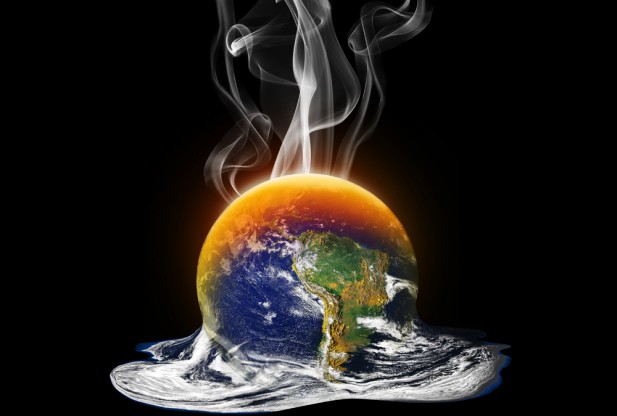
In a landmark climate report last year, the United Nations last year called for “rapid, far-reaching and unprecedented changes in all aspects of society.” It warned the world has only 12 years to avert a climate disaster.
“The enormity of the problem has only just dawned on quite a lot of people … Unless we sort ourselves out in the next decade or so we are dooming our children and our grandchildren to an appalling future.” David Attenborough.
All human comments appreciated. All abuse and like clicks chucked in the bin.
As we journey toward the undiscovered country called the future we are witnessing a world of terror, violence, greed, exploitation, pollution, and algorithm annihilation wreaking havoc in our world.
It’s no wonder in the face of such horror. that most of us feel minuscule and completely powerless.
But the world is glittering with possibility which can’t afford to wait for a generational change.
We’re clearly at a moment of great global transition and transformation as we attempt to help solve massive emerging issues we need more dreams than memories.
Help the world and the world will help you back.
In addition to globalization, technology, social changes and government policies that have all been instrumental in determining who benefits and who loses out from global economic integration in past decades we now have giants that deal in data, the oil of the digital era.
These titans—Alphabet (Google’s parent company), Amazon, Apple, Facebook and Microsoft—look unstoppable.
We can dream of a world rich enough to pay everyone a living wage as a birthright, of thriving human creativity, and of thrilling new ways for humans to build on and collaborate with machine intelligence but are we fooling ourselves.
There are no quick answers.
It may take a revolution in education; we may even need to rethink capitalism itself.
Certainly, we’ll need ideas to address the growing inequality that is driving so much of the anger we see in the world.
It seems clear now that millions of people around the world are rejecting a global order that they feel was foisted on them and has given them nothing.
We need to give a platform to dreamers and reformers who are thinking outside the box as the current system is in danger of breaking.
One in every nine people goes to bed hungry each night.
Up to one-third of the food produced around the world is never consumed.
Every 10 seconds, a child dies from hunger.
We are witnessing a massive shift of humanity unlike any seen before.
Today more than 68 million people around the world are displaced from their homes.
If you compare your size to the size of the universe, you almost don’t exist.
As Martin Luther King, Jr said, “We must learn to live together as brothers, or perish together as fools.”
What happens to society when the focus of culture is on the self and its icon, the “selfie”?
And what happens to morality when the mantra is no longer “We’re all in this together”, but rather “I’m free to be myself”?
What happens when Google filters and Facebook friends divide us into non-communicating sects of the like-minded?
What could possibly be gained from ignoring the global view, that, the accumulation of CO2 in the atmosphere is the sole reason that humankind’s ecological footprint is larger than Earth itself?
I would like people not to be satisfied with the current ecological footprint and try to come up with measures that really track the water, soil and all the ways we degrade ecosystems in a way that would become management metrics.
The dream of one world is not threatening, but beautiful.
Once one person does the “impossible”, thousands of people follow only because their mind starts believing it’s possible.
It means you must take the time to:
a) Define your values and guiding principles.
b) Understand your nature and individuality.
Define the experiences you want to have in life. Then, do everything you can to realize those experiences.
Try and leave this world a little better than you found it.
We must start extending our sense of shared identity to all of humanity.
We’re battling here for the survival of an idea on which the world’s future depends, the idea of humanity as one connected family.
But how do we get there?
First and foremost we must start breaking the cycle of poverty.
So let’s seek out those with compelling ideas to offer here other than like clicks and abuse.
The key may be to stop framing this dream as a top-down system driven by faceless global elites who tell us all what to do, but instead as a flourishing of human possibility that’s happening right here on the ground.
Ideas can’t be contained by borders.
Most countries are in ecological deficit.
We have technologies that can inflict global harm, our very survival now depends on it.
The potential and pitfalls for digital identity must be addressed.
Let’s face it over the past 50 years – everywhere we turn we are surrounded by a popular culture that is sacrificing community for convenience.
This convenience is what Capitalism thrives on. However today we are being told by the best science that there are twelve years left to change the way our economies rely on fossil fuels to avoid runaway climate change.
If you don’t believe this one has only to look at the state of Great Barrier Reef of Australia.
Our problems as they are can to tracked back to unbridled Imperial Capitalism which is now not in a position to disappear or change direction in order to avoid crawling towards ruin.
Why?
Because of productivity needs value and there is little value in Green energy.
Furthermore, with technological automation wage labour is coming to an end reducing the value of productivity with monopolies profits drying up.
WHAT IF ANYTHING CAN BE DONE TO AWAKEN US?
Old-fashioned demonstrations and civil disobedience have been replaced by anti-social online behaviour, which is now leading to a breakdown of government communications.
Under this psychology, society is, in turn, creating a culture that expresses our deepest yearnings and desires.
From nanotechnology to genomics to computer animation, technology is expanding our vision in all aspects of life.
As society moves toward a more progressive and accepting outlook, some would argue that this TECHNOLOGICAL movement which is called the fourth Industrial is creating information overload.
Take social media as if it is groundbreaking, which it is on many levels, but ultimately, it is just an extension of something we’ve always been attracted to – information.
Platforms like Facebook have just made it easier to curate and broadcast information like never before in the world of IF – without any knowledge whether this knowledge it true or false other than a like button.
We are entering this new world of IF with programmes that are manipulating neurons ( Like Google Deep dream program) with advances in reproductive science that could blur our sense of identity across the generational divide.
So where will we be in the year two thousand and fifty?
Sadly it’s anybody’s guess, BUT THERE IS ONE THING FOR SURE where we are now will seem like ancient history in five years not to mention the next thirty years.
How will we travel? What will we eat? How will our economy and global workforce shift?
A WHAT IF WORLD.
SO IN THIS IF WORLD if we don’t push technology in the direction of benefiting all we could have a very, very dystopian future. We incapable of answering where we will be in the next ten years never mind the next thirty odd years.
However I believe in the next ten years, science will prove that too much technology (e.g. heads always in our phones) is actually a negative thing for the mind and longevity.
I believe we’ll be forced to find a sustainable balance between technology use and real-life experiences. The human race is not an outpost of a galactic society; it is a domestic product.
Consumers will seek increased meaning associated with their products. Our flat screens will need smart apps that would help by providing smart nudges around their usage.
Why?
It’s almost as if we’re dependent upon them for some type of nourishment. But this nourishment comes as a trade-off: less physical contact with others, not taking the time to enjoy our environment, etc.
I want to see the intersection of social good and technology start to grow. All too often, problems being solved in tech are first world problems. Many of us forget that there are some huge global problems, particularly in the developing world, that need to be solved for the benefit of us all.
If we eventually come to our senses and realize that climate change, crumbling infrastructure, the demographic inversion, are going to toast our civilization unless we take action may be the next 50 years we could turn the IF world into the Now world.
To do this we will have to dignify a lot of new things as “work.”
Why?
Because when computations are all intelligent when everything is embedded in a control loop, the mathematical landscape of IF will change.
Technological civilisations do not last very long and although electronics got a head start of a few decades, biology is just beginning its great explosion.
So the question today is are we going to ignore our self-conscious for the sake of Twitter, a like click on Facebook.
What is needed is more transparency, more universal usable data, more computing power, and better software to take charge and make the IF world more Social.
The characteristics of race, class and gender are being reconstructed on flat screens to help us understand who we are as people but unfortunately, power, as we know, is disappearing into the long tall grass of hidden algorithms, that are electing world leaders like Mr Dump. Mr Bolsonaro. Mr Macri, Mrs May etc- AMERICA FIRST, AMAZONA LAST, BORROW, ISOLATION NEXT.
The time is now to understand what produces intelligence and self-awareness.
After all, a conscious Ai that resides in the cloud may not have the same priorities and values as does human life.
IN THE IF WORLD IF WE DONT HAVE A A COMMON UNDERSTANDING ABOUT AI, MACHINE LEARNING AND ALL THEY IMPLY IT’S LIKELY WE WILL CREATE AN INCREASING NUMBER OF PROBLEMS
Since we are now unable to stop the increasing power of AI we need to start controlling it. Addressing bias will be its biggest problem as it will only be amplified as algorithms evolve.
Intelligence. No. Silence, Yes.
The right has a name and has a face has the courage to say what many know, but we do not speak.
WHAT IS NEEDED IS A TECHNOLOGICAL SOCIALIST IF WORLD.
All human comments appreciated. All abuse and like clicks chucked in the bin.





 Should the value of life be variable depending on age? UTILITARIANISM.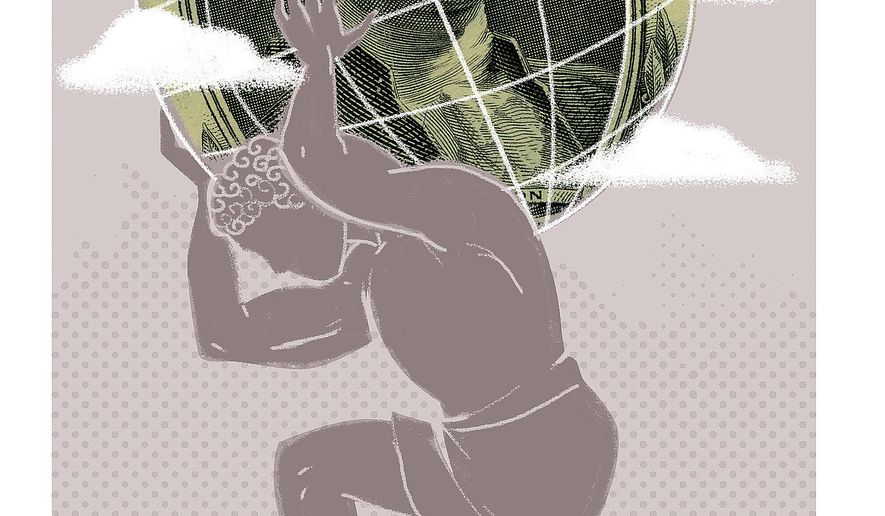


:quality(75)/curiosity-data.s3.amazonaws.com/images/content/landscape/standard/c01828a5-de48-4d04-e560-51f7faafb4ed.png)




 bobdillon33blog