• About
  • THE BEADY EYE SAY’S : THE EUROPEAN UNION SHOULD THANK ENGLAND FOR ITS IN OR OUT REFERENDUM.

bobdillon33blog

~ Free Thinker.

bobdillon33blog

Category Archives: European Union.

THE BEADY EYE ASKS: WITH SPAIN HEADING FOR TURMOIL AND THE UK FOR SUICIDE IS THE EU GOING TO END UP AN ECONOMIC DUMP.

04 Wednesday Oct 2017

Posted by bobdillon33@gmail.com in Brexit v EU - Negotiations., Capitalism, European Commission., European Union., Humanity., Modern Day Democracy., Our Common Values., Politics., Privatization, Sustaniability, The Obvious., Unanswered Questions., Wealth., What needs to change in European Union.

≈ Comments Off on THE BEADY EYE ASKS: WITH SPAIN HEADING FOR TURMOIL AND THE UK FOR SUICIDE IS THE EU GOING TO END UP AN ECONOMIC DUMP.

Tags

Capitalism and Greed, Distribution of wealth, European Union


( A five-minute read)

Brace yourself.

Things look bleak.

It‘s time to call a spade a spade:

We all know that the present crisis in European Union has freighting potential to undermine all our lives?Résultat de recherche d'images pour "pictures of spain"

The problem is that despite all the rhetoric Wall Street and World Stock Markets underpin the hard nose of business with the priesthood of economists.

Financial experts and commentators worshiping it worldwide as a God.

Leaving us incapable of grasping that at one point in human history the Laws of the market can only be a human construction which now seen as absolute – even when they clearly do not work.

The high priests of today oblivious to the anti-market nature of their behavior do not hesitate to intervene to fix it on a colossal scale in contravention of the market’s own precepts.

The idea that money-making is the primary Goal of the most admired people in Society, the Goal of our Nations economic philosophies, the G 20, the European Union, our education, combined with our central defining consumerism greed is back firing.

What we got is the results that we see today:

Quantitative Easing, Money Printing /Austerity/ /Germany bailouts /Guarantees/ Banks before people Interest fixing /Elections/ Unemployment/ Bonuses/Tax confusion/ Independent Referendums, all served up with large daily doses of verbal diarrhea by every expert that has written a book.

I have not written any book on the subject and I am no expert but I am beginning to wake up to the need for our Captains of Industry, our political leaders and business to realize that competitiveness is not all that it is dressed up to be.

It can severely impair a given country’s ability to choose its own social and economic destiny and our individuality.

No currency can set the boundaries of a nation.

So it is worth reminding ourselves how grandiose the dreams of the European Union founders were.

Our present world can be seen as full of conflict, pain, misery, wars, while across the world ecological, economic and political spaces are being enclosed through privateering, Algorithms, liberalization and globalization and the hidden purchasing power of Sovereign Funds – All breeding new insecurities anxieties and stresses.

In this world Europe was renamed the European Common Market with its inhabitants viewed chiefly in economic terms, as producers or consumers, not countries with vastly different histories, problems, and circumstances.

The notion that trade and wealth creation would create a Europe laisser-faire was not basis on its history but on a vague notion that togetherness would make us less likely to repeat World War One /Two.

Reducing our society to markets and us humans to consumers.

Those that are rich have status and those who are poor do not.

You only have to read a newspaper to see how the overpaid footballers, film and soap star, business people are held up to be admired. While we the people fooled by capitalism that has made work the center of our lives and are now in the process of destroying it as a satisfying meaningful activity through the world stock exchanges that are driven by algorithms that determine whether we should retire at 63, 65, and 68 remain voiceless.

As a Species we have basis needs for meaning of identity, for community, and security, for food water and freedom.

So it stands to reason to prevent our collectively insane political leaders terminating life in Europe never mind the earth that we need to do something.

We all know that banks can’t stop themselves. Bail them out by all means but only under strict regulations.

If we in Europe want to avoid a repeat of the wars that devastated the Continent in the past all that is required (a saving of trillions) is a united military European Army. This will provide Europe with reasonably secure environment, safe from the threat of major war with its countries being let find their own versions of modernity or not to modernize at all.

Europe does not need a free market to thrive.

How can we achieve this?

There is only one solution scrap the Euro and let each country set its own exchange rates according to its own GDP (without the tanks, planes, nuclear weapons) set against the value of human resources, social capital, and ecological assets.

The present melt down of the EU could not have come at a better time.

If we do not preserve the Capital of Europe its different cultures /languages/ history and the like there will be no Economics.

We all know that economic is not a science however each time history repeats its self the price goes up.

The Euro is fundamental flawed and please god will remain so to protect what is the very essence of living or being born in Europe.

It’s time we all realize that the Natural Capital of the world, water, clean air, oceans, forests have to be protected so we must pay the keepers of the natural capital if we as humans are to live at all.

So let’s start in Europe with some common European aspirations.

Self sufficiency in Power- creates a common European kilowatt price: Abolish road tolls: Proper periphery border controls: Freedom of movement of currencies within the market – abolish commission charges: European Youth employment programs: European health / pension Euro bonds backed by all countries – to mention a few.

God knows it not difficult to identify what is needed, just attached the words total transparency to any common Goal and it will be achieved without Greed.Résultat de recherche d'images pour "pictures of spain"

← Back

Thank you for your response. ✨

Share this:

  • Share on WhatsApp (Opens in new window) WhatsApp
  • More
  • Share on Pocket (Opens in new window) Pocket
  • Share on Mastodon (Opens in new window) Mastodon

THE BEADY EYE SAYS: THE EUROPEAN UNION (EU) AND ITS 27 MEMBERS FACE FUNDAMENTAL CHANGES OVER THE COMING 5-10 YEARS.

04 Friday Aug 2017

Posted by bobdillon33@gmail.com in Brexit v EU - Negotiations., Brexit., European Commission., European Union., Modern Day Democracy., Our Common Values., Post - truth politics., Unanswered Questions., What needs to change in European Union.

≈ Comments Off on THE BEADY EYE SAYS: THE EUROPEAN UNION (EU) AND ITS 27 MEMBERS FACE FUNDAMENTAL CHANGES OVER THE COMING 5-10 YEARS.

Tags

European Union

( A twenty-minute read)

While Britain selfie sleep walks to its exit to become a free trade satellite off the shores of the European Continent a revision of the structure — institutionally and functionally — becomes inevitable for the EU.Résultat de recherche d'images pour "pictures of Britain as a free trade country"

My recent post highlighted that the EU project suffers from not having any real democratic legitimacy – without constitutional accountability, it is heading for trouble. ( see previous posts: THE BEADY EYE SAYS: IT IS TIME TO PUT PAY TO THE TRAVELING EU CIRCUS COSTING £9/10 BILLION TAX PAYERS MONEY.) However the Euro zone ends up it is the only place in the world trying to combine social welfare with a competitive economic structure.

The Europeans took a while to discover that killing each other and pursuing imperialistic and colonial policies are not in accordance with European values. Atrocities and crimes were committed, now it has a chance to create a remarkable political maturity of consensus, cooperation, and compromises.

Global governance sounds good, but out of reach for either the EU or Britain.

The digital age implies that a global opinion exists but the game now is about shaping perceptions of that opinion. Perhaps the EU is going to be forced by Social Media to go down the road to a form of Direct Democracy.

A new political system with another balance between centralized power and decision-making closer to the citizen spearheaded by Europe would be a revelation. 

Solidarity looks fine on paper and in declarations, but is much tougher to deal with in practice. Rebooting Europe’s economic model to combine welfare and competition and introduce a much higher awareness of resource scarcities will be no mean achievement. It strives hard to remain faithful to all that Europe stands for purified by the purgatory over centuries.

But is any of this realistic in light of England’s Departure.

The disturbing factor is the absence of confronting the issues among European politicians.

So what is in store and where is it going to go in the next ten or more years.

In reality there were two groups of Euro members: Strong countries mainly in Northern Europe and weak countries primarily in Southern Europe.

The fact that the EU’s politics will be devoted to tackle self-created problem sideling other pressing matters are an appalling thought. Confusion, non-transparency, peculiarity even queer ways obscured by meetings and personalities may rule the headlines.

Politically the consequences are much more severe and next to impossible to foresee.

As of 2015 the Euro zone morphs itself into a genuine Economic and Monetary Union with a common economic structure and a common economic policy underpinned by a fiscal union and a banking union. This was bound to happen and it can only be regretted that it had to be done as a response to a debt crisis making the process laborious and burdensome.

As of now 19 countries out of 28 EU member states have joined the Euro.

Europeans may not fully trust each other, but mutual trust is stronger and deeper than in any other political conglomerate around the world.

One its greatest challenges is that Europe is not multicultural, but the world is.

The Union is founded on the values of respect for human dignity, freedom, democracy, equality, the rule of law and respect for human rights, including the rights of persons belonging to minorities. These values are common to the Member States in a society in which pluralism, non-discrimination, tolerance, justice, solidarity and equality between women and men prevail.

This core element is now in question with the influx of migrants not sharing the same cultural identity, causing internal pressure which is why migration/refugees are an existential challenge.

This is why the solution can only be to allow migrants/refugees getting into Europe, to do so with two provisos:  That they do not be allowed to disrupt the existing societal structure and they are educated to adapt to European norms and values. A European citizen approaching the authorities feel that if the roles were reversed the decision would be the same.

In doing so Europe can solve its demographic problem number wise by remaining opening for immigration, to vetted people wanting and ready to enter Europe — actually more than ready as they are banging on the door — do not share cultural identity with the Europeans.

Britain should have accepted that for the EU-27, the idea of free movement is not just political posturing, but an essential part of the single market.  The EU is unlikely to agree on major changes to free movement rules in the next few years.

The core demand for new terms tabled by the incumbent conservative government is to roll back the situation to 1992 and get guarantees that EU social provisions (broadly speaking) do not apply to Britain. This festered till the in or out vote now giving rise to the question of what economic and societal model Britain wants and the answer is a different one from what is found on the continent.

Psychologically the British people may be uneasy companions of former enemies like Germany, France, Spain, and Italy. Links with the Commonwealth fade which probably is regretted by many Britons. The Anglo-American partnership that has for decades given Britain a privileged role is judged by some politicians and part of the public to be closer outside the EU than inside despite American statements to the contrary.

Because of the Franco-German axis which is firmly in control of the EU, Britain has never felt comfortable and probable never will.

However access to the market of the 27 member states weighs heavier for Britain than access to the British market for the rest of the EU.

The tricky part is that the treaty provisions cease to apply to the member in question when such agreement is reached or in case of failing to agree within two years from the decision to secede.

Everybody will try to rescue what can be rescued from this shipwreck, but obviously the 27 remaining member states will take the view that Britain has decided to leave so leave you do.

The main argument apparently falling on a lot of deaf ears in Britain is that inside or outside the EU, economic transactions require compliance with EU norms, standards, and various rules. Those rules are shaped by the member countries promoting own interests. Britain outside will not participate in this sometimes laborious process resulting in British interests not being fed into the legislative process.

The two-year clause strengthens the EU hand, as they better than Britain can live without free movement of goods, services, capital and labor.

The Euro zone countries will tend to share views and interests to a much larger degree keeping EU member states not inside the Euro with a different economic structure on the sidelines.

It is true that no EU citizen has a fundamental, unlimited right to move freely across the EU. To be lawfully resident in another member-state, EU citizens need to be working, studying, or able to prove that they are self-sufficient. Otherwise, they can be kicked out. It is also true that free movement of persons was introduced after the free movement of goods, capital and services.

It is difficult to estimate how strong the negative impact will be.

As seen in many cases it is the long-term effect that matters and continuous lower growth will in the long run add up to a substantial loss even if England reduces corporation and personal taxes.

While EU free movement rules have been a toxic political issue in Britain for years, many on the Continent consider them a core achievement of the EU.

So could there be a free trade agreement between the UK and the European Union that allows the UK to limit freedom of movement.

My answer is no. Out is Out.

The conclusion to draw is a sentiment among the majority of member states and in particular the original six ones that either you are member of the EU, committed to solidarity, coherence, common decision-making, and common policies or you are not.

Résultat de recherche d'images pour "pictures of Britain as a free trade country"

Britannia will “survive” without a post-Brexit free-trade deal with the EU.

The process of Brexit is likely to be a series of humiliating meetings in which the country is forced to accept a procession of ruinous trade deal terms – ruinous, at least, for the majority of the population.  In reality, the UK has never stood alone in the global free trade environment as we understand it today;

It may all end in disaster. But it does show consistency by the British. The EU can be replaced by countries full of fond memories of the empire. The UK has a long history of hypocritically claiming to want only trade in its international relations.

The British Empire stood by and watched one million Irish die of famine just 150 years ago while it continued to export pork and ham and lots of other produce to England. One million Irish! Has there been a word of regret about that genocide ever from the British State? Not one word.

“The British Empire was a great and glorious thing that did much good(such as ending slavery) ”

Such statements are totally untrue.

It was an evil kleptocracy and extortion racket. Imperialism is the geo-political equivalent of rape. There can be no defense for it. To call it “glorious” is nothing short of sick. It certainly wasn’t the empire which ended slavery. The empire not only fought tooth and nail to retain it, it actually managed to extort compensation for the vermin who had profited from it. It was the entire foundation of Britain’s wealth – or rather the wealth of Britain’s ruling class.

Far from benefiting from “free trade”, Britain got rich by imposing tariffs on imports and sending gunboats or troops to deal with anyone who presented problems.

If Britain is expecting to encounter fond sentiments from x colonial countries in free trade agreements it is about to be bitterly disappointed.

Britain did not make its fortune by trading freely.

The wealth of the UK was EXPLICITLY derived from its military domination of overseas territories, control of cheap inputs (such as cotton) and export markets that were enforced. So, the ludicrous idea of the Brexiteers that the UK can compete in the global economy does not stand up to scrutiny even historically.

In the contemporary world, it is nothing other than laughable. In the context of a highly open economy, dependent on imports of almost everything, the only effect of a devalued currency is inflationary pressure and an increased trade deficit. This policy approach almost qualifies as a definition of insanity.

We don’t need to wait to judge Brexit, because any clear-thinking and informed person can see outright what a disaster this is almost certain to be.Résultat de recherche d'images pour "pictures of Britain as a free trade country"

The ECHR is an international human rights treaty that is independent of the EU and predates it. If the UK denounces the ECHR as well as leaving the EU it is setting itself up as another North Korea. Every single country in Europe — including Russia and Turkey — is in the ECHR. Write your own laws!

We are living at a moment when an old economic settlement is in crisis, but a new settlement has yet to be formed.

Unless the US and Europe can find common ground the prospect of chaos and infighting is too high for comfort as no other country or group of countries are waiting in the wings with ideas and economic power to lead. Some decades down the road the US and Europe will still account for more than 1/3 of global Gross Domestic Product — maybe more.

The politics of the future will belong to those leaders both in Europe and Britain who are prepared to face up to our present problems and future challenges.

Britain’s future is a nostalgic past that never really existed.

Yes, this is the way forward for “Poverty UK” — back to the 1950s! Résultat de recherche d'images pour "pictures of Britain as a free trade country"

← Back

Thank you for your response. ✨


Share this:

  • Share on WhatsApp (Opens in new window) WhatsApp
  • More
  • Share on Pocket (Opens in new window) Pocket
  • Share on Mastodon (Opens in new window) Mastodon

THE BEADY EYE SAYS: IT IS TIME TO PUT PAY TO THE TRAVELING EU CIRCUS COSTING £9/10 BILLION TAX PAYERS MONEY.

25 Tuesday Jul 2017

Posted by bobdillon33@gmail.com in European Commission., European Union.

≈ Comments Off on THE BEADY EYE SAYS: IT IS TIME TO PUT PAY TO THE TRAVELING EU CIRCUS COSTING £9/10 BILLION TAX PAYERS MONEY.

Tags

European Union, Social Media

( A ten minute read)

The EU project suffers from not having any real democratic legitimacy – without constitutional accountability, it is heading for trouble.

The unaccountable nature of the EU, coupled with the hardship caused by the “austerity for some, gravy trains for others” policies and the failure to either deal with the still-mounting debt crisis, and the real problems caused by all this and the lack of support for any further social, economic and political integration, it’s debatable whether the EU will even survive for long… just wait till the next crisis hits.

A self-created bubble for the MEP’s where their loyalty to the EU above the people is assured by massive wages, expenses and pensions and if kicked out by the electorate in elections they’ll get other jobs in the Commission or the wider EU structure.

On top of all this we have Strasbourg a symbol of waste and stupidity – the perfect example of all that is wrong with the EU. True democracy at work. No one gets a vote on it.European Parliament strasbourg

Approximately 10 per cent of the Parliament’s annual budget, between €156 and €204 million is spent to sustain this traveling circus.

The annual CO2 emissions associated with the transfers to and from the three working locations – Brussels, Luxembourg and Strasbourg – is estimated to be between 11,000 and 19,000 tonnes. That is the equivalent of 12,000 cars driving around the circumference of the world. (Is it not ironic that the European Parliament voted to reduce CO2 emissions by 2030?)

Between 3,500 and 4,000 people every month set out for Strasbourg – this includes MEPs, assistants, political group staff, parliament staff, interpreters and translators. This is done by trains, by air and by road. In order to transport the 2,500 trunks and all the equipment required for the plenary session a large convey of trucks travel the 409 kilometers from Brussels to Strasbourg. This is then reversed four days later.

Among the costs are £250,000 a year to transport the plastic boxes containing documents, diaries and other items from Brussels to Strasbourg and back again.

£2.5 million bill for relocating freelance translators from Brussels to Strasbourg and back again, including costs of travel, accommodation and other expenses.

Depending on how you read it, you might find the E.U.’s tendency to translate nearly everything it does into all 24 of its official languages a testimony to its internationalist glory or a wasteful use of resources. By E.U. custom, all public E.U. documents are translated into every language. All high-level E.U. meetings are the same way. The European Commission says it employs 1,750 linguists, 600 full-time interpreters and 3,000 freelancers.

In Strasbourg, extra money is needed for computers and IT support and for maintenance and security of the sleek parliament building, which was completed in 1999. In total, the cost of looking after the French buildings and infrastructure and other charges comes to about £50 million a year.

About 100 people are employed in Strasbourg full-time, even though the European Parliament meets for 12 sessions, each lasting four days, a total of only 48 days each year.

Hotels in Strasbourg typically double their rates when the EU comes to stay. Last week, the Hilton Hotel in Strasbourg was offering rooms at £82 for Sunday night, but this rose to a cheapest rate of £161 a night for Monday, when the sessions begin.

Naturally, the French are totally opposed to ANY CHANGE not only because of the €20 Million it provides to the Strasbourg economy each year but also because it is an important European symbol within France.

Why does the European parliament move from Brussels to Strasbourg once a month?

It is a disgrace that €9.5 million is wasted in this way every month.

Strasbourg is the official seat of the European Parliament, so the EU treaties would have to be changed if that were no longer the case. A final decision would rest with the member countries.

The so-called traveling circus that sees MEPs and staff decamp from Brussels to Strasbourg once a month has long been a bone of contention. It costs the institution some €114 million a year to make the trip.

In a November 2013 resolution, MEPs called for a treaty change to allow Parliament to decide where it sits.

Over three-quarters, of MEPS from across the political spectrum, want to abolish this practice but they have no power to change it. Under the Lisbon Treaty the parliament is legally bound to meet 12 times a year in Strasbourg. A session takes place every month – except in August but a second session in September or October replaces it. This can only be changed if unanimous agreement on the issue is reached at a European Council Summit – a meeting of heads of Governments of each Member State.

The EU’s national governments unanimously decided in 1992 to fix the seats of the EU institutions permanently. This decision also affected the working arrangements for the Parliament: its official seat and the venue for most of the plenary sessions would be Strasbourg; parliamentary committees would have their meetings in Brussels; and Parliament’s Secretariat (its staff) would be based in Luxembourg. In 1997 this whole arrangement was incorporated into the EU treaty.

Any change in the current system would need to be part of a new treaty, agreed unanimously by all 28 member states and ratified by each of their national parliaments. However only with a workable alternative for Strasbourg could a French veto be avoided.

I can fully appreciate that if you move an existing institution, the member state which currently houses it will also have to be compensated, setting off a chain reaction. So you have to give proper consideration to all of the links in the chain before you come up with a proposal.

But will it change?

For the foreseeable future, I honestly don’t think so. Unfortunately, France will never agree, which holds a veto.

The continuation of the monthly migration between Brussels and Strasbourg has for most EU citizens become a symbolic, negative issue (…), especially at a time when the financial crisis has led to serious and painful expenditure cuts in the member states”, said the resolution, which was approved by 483 votes to 141, with 34 abstentions.

France and Germany got everything they wanted and everyone else got shafted.. French MEPs could quit the largest political group in the European Parliament if their colleagues support a plan to scrap the assembly’s base in Strasbourg. It’s up to us with the power of Social Media to demand a stop to this blatant waste of our hard-earned money.

How can we achieve this:

There is only one way and that is by bombarding Emmanuel Macron the new French President through Social Media with the following message.Résultat de recherche d'images pour "pictures of the new french president"

Not a one day bombardment but a sustained bombardment.

 [Palais de L’Élysée

55 Rue du Faubourg Saint-Honoré

75008 Paris, France.

Your Excellency,

The Strasbourg-Brussels merry-go-round has gone on long enough, it’s deeds, not words, that count.  With due respect The European Parliament’s travelling circus represents all that is wrong about the EU in the eyes of electorates across Europe: A useless and huge cost for our European community. 

A recent study by the European Parliament shows that €103 million (£85 million) could be saved each year if all European Parliament operations were transferred from Strasbourg to Brussels.

As a taxpayer I have no objection to maintaining the status quo, providing the total costs are financed by the French Tax payer.  

They say the definition of madness is doing the same thing repeatedly and expecting different results. The unnecessary waste and the political stalemate that perpetuates it must stop. This craziness has to stop.

Yours sincerely:    ………………………………….  ]  EU Citizen.

Optional PS:

Why not give everyone a smart phone with a voice recognition app. Press Translate. A saving of £2.5 million. ( 750 linguists, 600 full-time interpreters and 3,000 freelancers.)

← Back

Thank you for your response. ✨


Share this:

  • Share on WhatsApp (Opens in new window) WhatsApp
  • More
  • Share on Pocket (Opens in new window) Pocket
  • Share on Mastodon (Opens in new window) Mastodon

THE BEADY EYE SAYS: ONE WOULD HAVE TO FEEL A TOUCH OF SYMPATHY FOR THE BRITISH PEOPLE.

16 Friday Jun 2017

Posted by bobdillon33@gmail.com in Brexit v EU - Negotiations., Brexit., England EU Referendum IN or Out., ENGLAND'S SNAP ELECTION, England., European Commission., European Union., The Obvious., Unanswered Questions., Uncategorized

≈ Comments Off on THE BEADY EYE SAYS: ONE WOULD HAVE TO FEEL A TOUCH OF SYMPATHY FOR THE BRITISH PEOPLE.

Tags

England - EU - Nagoiations


( A twenty-minute read)

Recent events in the Uk with the tragic loss of lives are more than lamentable as they have occurred mainly due to man-made decisions, to either save money or conduct phony wars.

It is now inconceivable that they are heading for another man made disaster in a few days without any clear sense of what its wants to achieve all just because a small percentage of its people voted in a referendum a year ago without any clear sense of the alternatives to EU membership.Résultat de recherche d'images pour "pictures of the eu english negotiations"

While the clock is ticking here are a few plain truths:

If the UK wants access to the single market when it has left the EU, it will have to accept three things:

1)  Continued budget contributions
2)  Continued free movement of labour,
3) Continued supremacy of EU law over British law in the single market.

4) Crashing out of the EU without a trade deal is the “alternative to membership with the most negative long-term impact.

5) Some British eurosceptics believe that Britain could negotiate a special status of ‘half-membership’, whereby the UK would remain a full, voting member of the single market, but ditch most other EU policies. However, this would require the existing treaties – which allow no such special status – to be revised, which is not a viable possibility at the moment. In any case, most member-states and the EU institutions believe that allowing such a status for Britain could provoke similar requests from others, possibly leading the entire Union to unravel. So half-membership is not an option.

6) One simple option would be for Britain to join the European
Economic Area (EEA) – the ‘Norwegian’ option. Britain would then be outside the common agricultural and fisheries policies. But its economic relationship with the EU would not change significantly: it would pay nearly as much into the budget as it does today, free movement of labour would continue, and the UK would have to apply the single market’s rules and regulations without having a vote on them.

7) Most other options would involve the negotiation of a withdrawal treaty between the UK and the EU. If that is the result:Résultat de recherche d'images pour "pictures of the eu english negotiations"

Here are the options.

One possibility would be a withdrawal treaty leading to a customised relationship. The best possible outcome for the British, under this option, would be something akin to the Norwegian option but without EEA membership. Britain would gain as much access to the single market as it was prepared to accept EU rules, without having a vote on them; to make payments into the EU budget; and to tolerate free movement of labour.

The Swiss option is unlikely to be on offer from the EU. Switzerland has negotiated a series of bilateral agreements with the EU. The country is part of the single market for goods, but not services. A similar status for Britain would be highly costly for the City of London. But the EU is very unhappy with the
relationship, because it has to negotiate constantly with the Swiss to make sure that their rules are equivalent to the EU’s evolving acquis communautaire. And since the Swiss voted to impose quotas on immigration from the EU in 2014, the EU has demanded a new agreement which would make Switzerland automatically update its rules to match those of the EU, as well as accept the jurisdiction of the European Court of Justice.

Britain could join the EU’s customs union, like Turkey – accepting the EU’s external tariffs without having a say on the setting of those tariffs. The UK would then not face tariffs in exporting to the EU, and it would have access to the single market in goods, in exchange for signing up to all the relevant EU rules. But it would not have access to services markets and Turkey, like Switzerland and Norway, does not
benefit from the free trade agreements (FTAs) that the EU negotiates with other parts of the world.

A free trade agreement is one of the more likely options, but the main benefit of most FTAs is merely tariffs that are lower than those prescribed by World Trade Organisation (WTO) rules. Most FTAs do not cover services, regulatory convergence or public procurement. If Britain sought to negotiate a more substantive FTA than any existing template – giving it good access to the EU’s single market– the other member-states would insist on mechanisms for ensuring that it automatically adopted new EU rules, and for policing the agreement. They would also demand payments into the EU budget and free movement of labour.

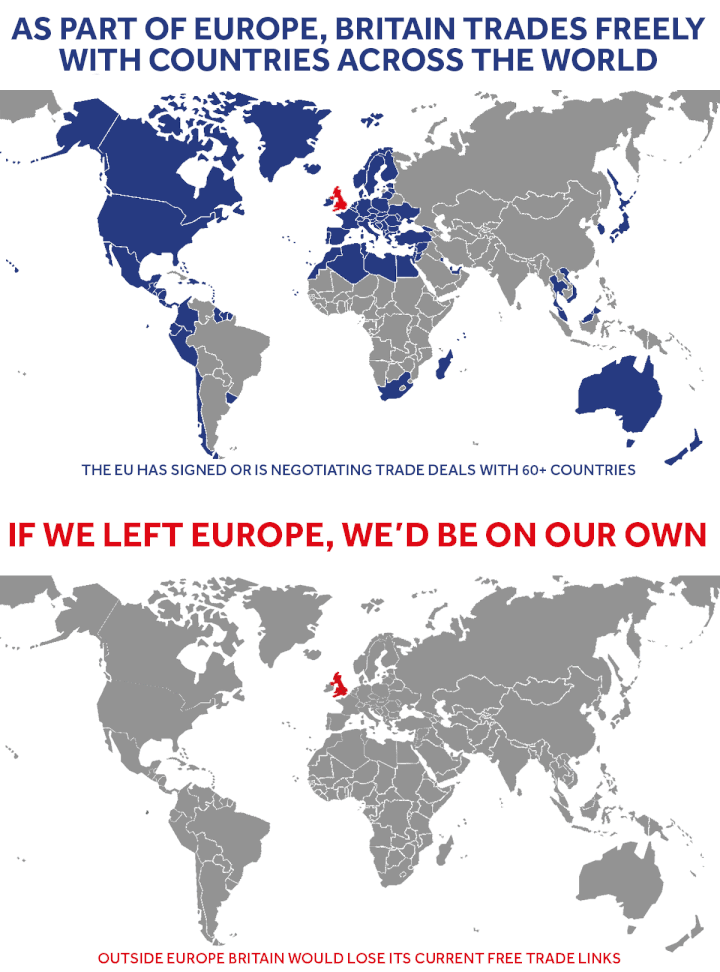
Britain could simply trade with the EU under WTO rules. The WTO sets upper limits on the tariffs that countries can impose. So British exports to the EU would be subject to the EU’s common external tariff. And the WTO has made little progress in freeing up services, which would restrict the City of London’s access to the EU market. British exporters to the EU would also face the same non-tariff barriers that most non-EU countries, like Russia and China, have to put up with. As for trading with the rest of the world, the UK would no longer enjoy the benefits of the 60-odd FTAs that the EU has negotiated with other countries. The British would have to negotiate new agreements from scratch; but in doing so – as with any other FTA that the UK pursued – they would have much less clout than the EU as a whole.

Withdrawal would create enormous legal headaches for EU companies and individuals currently in Britain, and for British ones elsewhere in the EU.

After the repeal of the European Communities Act of 1972, the British government would have to hurry to draft new laws covering farming, fishing, competition policy, regional aid, environmental standards and much else, to avoid a regulatory
vacuum.

To the extent that the UK retained any access to the single market, the government would also need a mechanism for adopting new EU regulations and directives as they emerged. British citizens and companies in other member-states would lose rights derived from EU law.

The British government would need to negotiate an accord with the rest of the EU on reciprocal rights. If, as is likely, a post-Brexit government made it harder for EU citizens to live, work or study in the UK, Britons wishing to remain in or move to the continent would face similar problems. 40 per cent of THE UK HIGH TECH workforce is currently made up of EU nationals not to mention the NHS

If there is a change of mind and the UK at any point wish to rejoin the European Union, it would need to make an application to do so, the same as all other non-member states.

The first problem is the euro.

This time a ‘half-member’ solution is not possible.

Ordinarily new member states of the European Union are expected to adopt the euro and to join the currency union. The UK, of course, opted out of that, however it might not be quite as easy to resist the Euro on re-admission.

Where does all of the above leave us.  In short, if the UK chooses to leave the EU, it will be left between a rock and a hard place.  A Disaster.

The conclusion should be clear: none of the options available to the UK, in case it were to decide to withdraw from the EU are attractive. Any option would take the UK in one of two directions:

 The UK would become a kind of satellite of the EU, with the obligation to transpose into its domestic law EU regulations and directives for the single market.

 The UK would suffer from higher barriers between its economy and its main market, obliging the government to start trade negotiations from scratch, both with the EU and with the rest of the world, without having much bargaining power.Résultat de recherche d'images pour "pictures of sinking ships"

All comments appreciated. All like clicks chucked in the Bin.

← Back

Thank you for your response. ✨


Share this:

  • Share on WhatsApp (Opens in new window) WhatsApp
  • More
  • Share on Pocket (Opens in new window) Pocket
  • Share on Mastodon (Opens in new window) Mastodon

THE BEADY EYE PUTS: A SPOTLIGHT ON WHAT NEEDS TO BE REFORMED IN THE EUROPEAN UNION.

04 Sunday Jun 2017

Posted by bobdillon33@gmail.com in Brexit v EU - Negotiations., Brexit., European Commission., European Union., France., The New year 2017, The Obvious., Unanswered Questions., What needs to change in European Union.

≈ Comments Off on THE BEADY EYE PUTS: A SPOTLIGHT ON WHAT NEEDS TO BE REFORMED IN THE EUROPEAN UNION.

Tags

European Union


( A eighth minute read)

We all know that the Union is in need of reform, but what exactly are we talking about.

Nobody would seriously argue that the EU doesn’t need to evolve, to do so it must fundamental reform.

It has not delivered the prosperity and growth it promised; the euro has turned out to be part of the problem rather than the solution; the EU’s share of world GDP is set to fall sharply. Moreover, no one is clear what the EU is for, or how ever closer union can be matched with expanding borders and huge disparities of income and culture. The European Union project has been rocked by a series of scandals

Here are a few reforms that are blatantly obvious and need  implementation to save millions of euros.  

The First Reform:

According to a report from the EU’s own internal Audit Service (IAS) an estimated £4.5 billion of the EU’s annual budget is wasted each year. The administrative budget of the IAS totals €18.77 m in 2016 and €19.22 m in 2017.

Although the Commission remains responsible for the implementation of the EU budget, the actual management and control of EU funds and programmes is delegated to Member State authorities, which select beneficiaries and distribute funds.

Cohesion policy accounts for 37 % of spending from the EU budget and is to be some 350 billion euro for each of the periods 2007-2013 and 2014-2020.

It is the Member States’ responsibility to detect, correct and prevent errors in the first instance.

Better regulation is a pressing problem.

Next:

It is time that the blatant absurdity and farce of the EU travelling circus, that requires the moving nearly four thousand trunks of documents between Luxembourg and Strasbourg ever month – stops.

It is perhaps the most outlandish of the European Union’s excesses; a £130 million travelling circus that once a month sees the European Parliament decamp from Belgium to France.

The problem is simple:

The French government, which has a power of veto, will not budge.

The French insist on maintaining Strasbourg’s role because of the substantial amount of money the travelling circus brings to the region. Its status is set in stone under a European treaty signed in 1992,  which can only be revoked should all member states agree it. 

In all, the EU admits that the monthly Strasbourg sitting, which lasts just four days, costs an additional £93 million a year.

A recent study by the European Parliament shows that €103 million (£85 million) could be saved each year if all European Parliament operations were transferred from Strasbourg to Brussels.

It is beyond comprehension that this state of affairs is tolerated.

If Emmanuel Macron France’s new youngest ever president, who says the country had chosen “hope” and promising to relaunch the flagging European Union doing away with this gross misuse of EU funds would show he is serious.

Next: 

MEP’s > “gravy train” salaries and perks.

MEP perks receive free haircuts and 52 gallons of petrol a month.

Maltese MPs get 240 litres of petrol a month.

Two Conservative UK  MEPs have each pocketed over £1 million in taxpayer salary and expenses payments in just five years.  Both men receive a salary of £76,292 a year, plus £2,670 in pension contributions.

Over five years, on top of this figure, Mr Ashworth claimed: £181,705 for subsistence; £164,627 in travel expenses; £222,560 in UK office allowances and £116,000 for his wife’s salary between 2010 and 2014, when the practice was banned.

Mr Karim claimed the same salary and pension contribution package as well as: £159,858 in subsistence allowance; £189,420 in travel expenses and £289,038 in UK office costs.

Both men also have offices provided in Brussels. Both men took home over £1 million over the five-year period, over £200,000 a year.

Nigel Farage claimed over £15,000 in expenses to pay for his bodyguards. The EU has been billed for their services, which include arranging food and drink. One bill for just five events came to almost £60,000, covered by expenses paid to Mr Farage’s Europe of Freedom and Direct Democracy group, which receives £2.5million a year in EU funding. 

French MEPs earn 740% more than average French citizen Lavish, expenses and allowances – entitlements that are worth over £415,000 a year each. 

As well as staff allowances, MEPs are able to earn up to £91,000 a year in “daily subsistence” and “general expenditure” expenses without having to provide any receipts or proof of expenditure. MEPs still vote on their own salaries and perks.

The EU pay divide

The “subsistence allowance” or “per diem” of £258 is paid in cash without any proof of expenditure, when MEPs sign an attendance register in Brussels or the Strasbourg seat of the parliament.

The annual cost of a MEP sitting in the EU assembly is £1.79 million each a year. The European Parliament, with 766 MEPs, cost £1.3 billion in 2012.

Here is the breakdown of an MEP salary:

[The standard monthly payment for all MEPs is 7,957 euros (£6,537). MEPs also get a flat-rate monthly allowance of 4,299 euros to cover office expenses, such as office rent, phone bills and computer equipment.

In addition, MEPs can claim for travel related to their official duties in Brussels and Strasbourg. In the past they could claim for an expensive flexible economy class flight even if they flew low-fare. But under the new rules they have to submit their ticket (which can be business class on air, or first class on rail) and will be reimbursed for what they paid.

A separate annual travel allowance – 4,243 euros maximum – covers official trips to other destinations. And they can claim for up to 24 return journeys in their home country.

MEPs also get a daily subsistence allowance – now 304 euros – for attendance at parliamentary sessions. It is intended to cover things like hotel bills and meals.

And they are entitled to reimbursement of two-thirds of their medical expenses.]

Then there are the 28 EU Commissioners, all of them on a basic salary of

€20 666 per month.

Jean-Claude Juncker, 61, President of the European Commission  Salary: £245,629 plus a residential allowance of £36,844 and a monthly expense allowance of £1,135. Pension of £52,500 for life from age 65.

The salaries and allowances of the MEPs of the 27 EU states now total £137 million.

The figure is almost ten times higher than the average EU wage of £18,617 a year.

But this does not include the cost of the £217,000 office allowance available to each MEP.

The receipt-free allowances system must stop. 

Next reform:  Is the Euro.Résultat de recherche d'images pour "pictures of Euro"

Only by changing the eurozone’s rules and institutions can the euro be made to work.

To achieve the more radical – but necessary – reforms for the Euro, a new treaty will be required.

A major priority for this new treaty would be to create a single fiscal authority for the euro area and to change the ECB’s mandate, so that it could become a full lender of last resort in extreme circumstances.

Euro area citizens need to be given a real choice between continued fragmentation (which leaves the euro exposed to structural weaknesses and recurrent crises), and greater integration (which pools more sovereignty at the same time as it strengthens the governance of EMU).

Abandoning the convergence criteria, which require deficits to be less than 3% of GDP.

Change the mandate of the European Central Bank, which focuses only on inflation, unlike the US Federal Reserve, which takes into account employment, growth, and stability as well.

Lastly, the high rates of unemployment in many euro-area countries are a source of concern. Reforms to harmonize employment protection legislation and integrate outsiders in the labour market should be implemented.

The EU employs more than 55,000 staff from its 28 member states. The majority work for the European Commission which employs about 33,000 officials, temporary staff, contract staff, and special advisers.

Last Reform:Image associée

It is no good just taking the standard nation-based model of representative democracy and applying it to the unique contours of European governance

‘Democracy’ explicitly recognises that the EU lacks a coherent, unified ‘people’, and should therefore encourage the participation of separate ‘peoples’ within the European structure.

If the EU is truly a democracy then the best way of closing the gap between citizens and institutions is to empower the demoi. Finding new ways for the national public to discuss, engage with and interact with the EU is the best way of enhancing their role. To do so, the European Parliament should be made more representative, but by increasing the role of citizens and national parliamentarians in the EU structures the EU can be made more open to bottom-up influence.

Multiple levels of engagement should be created so as to give citizens the maximum capability to engage with the EU’s structures. Such a structure would not be perfect. No democratic structure is. But it remains the best way of creating a more democratic European Union. Make European structures more open to national influence; and give citizens a more direct involvement in EU policymaking.

All comments appreciated. All like clicks chucked in the bin.

← Back

Thank you for your response. ✨

https://youtu.be/PZz3dXCG3Oo?list=PLO1bi4VeyTW7iLDXBKYxh_rG_ovxGkihz

Share this:

  • Share on WhatsApp (Opens in new window) WhatsApp
  • More
  • Share on Pocket (Opens in new window) Pocket
  • Share on Mastodon (Opens in new window) Mastodon

THE BEADY EYE SAYS: ROLL UP ROLL UP WE ARE ABOUT TO WITNESS THE BIGGEST MONEY FIGHT EVER SEEN. BREXIT IS EUROPE’S LAST CHANCE.

01 Thursday Jun 2017

Posted by bobdillon33@gmail.com in Brexit v EU - Negotiations., Brexit., Elections/ Voting, ENGLAND'S SNAP ELECTION, England., European Commission., European Union., Politics., Post - truth politics., Social Media., The Obvious., Unanswered Questions., What needs to change in European Union.

≈ Comments Off on THE BEADY EYE SAYS: ROLL UP ROLL UP WE ARE ABOUT TO WITNESS THE BIGGEST MONEY FIGHT EVER SEEN. BREXIT IS EUROPE’S LAST CHANCE.

Tags

Brexit v EU - Negotiations., Brexit., ENGLAND'S SNAP ELECTION, European Union, What needs to change in European Union.

( This is a good thirty minute read.)

The weigh in:

In the blue corner we have England wearing sterling.  In the green corner we have the EU wearing euro.

Regardless of whether you like the sport this fight will be contested across social media keeping the audience at a safe distance while making sure that the fighters don’t withdraw/run away from the fight before it is finished.

Round One:

Put simply, Article 50 gives the 27 continuing member states predominant power.

That comes partly from the fact that, according to Paragraph 4 of Article 50, the withdrawing state no longer counts as a member of the European Council for the purpose of the negotiations.  But mainly it comes from the guillotine imposed by the two-year deadline and the requirement for unanimity to extend that deadline.

Clause 4 says that after a country has decided to leave, the other EU members will decide the terms—and the country leaving cannot be in the ring in those discussions.

Britain depends on the EU for half of its exports, while Britain accounts for only one-sixth of Europe’s.  For Britain, this means any deal would be better than none at all. Keeping substantial access to the single market and having strict immigration controls are mutually exclusive for the EU: achieving both is highly unrealistic.

After a lot of shadow boxing T May with a reduced mandate and new shoes dances around the ring avoiding the total financial obligations, which are understood by the EU to be around €100 billion gross, according to an FT estimate.

But add on the negotiations fees etc and Britain is facing a £140 billion (7.5% of GDP) or the equivalent of £300 million a week over eight years.

May said repeatedly that Britain could walk away without a deal and be fine. Instead, a painless exit without a cliff-like effect on trade is only possible with a transitional arrangement. To obtain that, the UK will likely have to pay the €60 billion it owes from its past years of membership, as well as a membership fee for access to the single market.

The EU knows that  the UK is economically more dependent on the EU; 44% of its exports go there and 48% of its foreign investment comes from them.

This is not to mention the potential damage from a loss of passporting rights to the services sector, which makes up for around 79% of UK GDP.

Hence  the UK may try to act tough at the start of fight but eventually will have to compromise to avoid bigger economic fall-outs.

Round Two:

The EU Commission said citizens in the process of acquiring EU rights (such as permanent residency in another country in the bloc) should be allowed to finish doing so, and that the U.K. will be liable for certain financial payments, such as the salaries of British teachers at schools for the children of EU officials, until 2021.

Round Three:

The U.K. remains under the jurisdiction of the European Court of Justice while all pending cases are completed, and the U.K. would not immediately receive upon departure all the capital it has supplied to the European Investment Bank.

The U.K. is a 16 percent shareholder in the EIB and has €39.2 billion locked up in the institution, which often funds projects with a 20- to 30-year timeline. The U.K.’s liabilities should be “decreased in line with the amortization of the EIB portfolio outstanding at the time of United Kingdom withdrawal,” the Commission said.

Round Four:

Any cherry-picking punches are totally against the rules.  “Until it leaves the Union, the United Kingdom remains a full member of the EU, subject to all rights and obligations set out in the Treaties and under EU law.

Round Five:

United Kingdom will be kept separate from ongoing Union business, and shall not interfere with its progress.

The Council states that an agreement on a future relationship between the EU and the UK can only be concluded once the UK effectively leaves the EU and becomes a third country. When the United Kingdom officially leaves the European Union in March 2019, it will still be entangled in the EU’s financial and legal systems for years.

While the terms of divorce can be agreed with a majority vote, the terms of future EU-UK trade relations are very likely to need a unanimous vote.

The deal must be agreed by all 27 remaining countries in the EU. Individual countries can’t veto a treaty governing the UK’s withdrawal from the EU, but could veto a treaty establishing Britain’s new relationship with the EU. It would go ahead if it were approved by 20 of the 27 remaining EU countries, so long as they also represent 65% of the EU population.

Most of the EU’s free trade agreements require a unanimous vote of all EU governments and ratification by all member countries. That’s because they tend to be ‘mixed agreements’, meaning that they cover some ground that the EU doesn’t have power over. That said, it’s possible for the EU to negotiate a trade agreement that can’t be vetoed, depending on what’s in it.

That implies two major agreements: one on the logistics of divorce, and another on trade. (More treaties might be necessary on other issues, like security.)

Round Six:

Compulsory standing count.

Theresa May’s vision is blurred. Polarizing public opinion against the EU and immigration and away from domestic issues was an easy political win.

An independent and truly global United Kingdom without a new customs agreement. Agreements between the EU and third countries or international organisations, for example on trade, would also cease to apply to the withdrawing state, and it would thus need to negotiate alternative arrangements.

Round Seven:

The UK could change its mind about withdrawing from the EU even after triggering the formal process of leaving under Article 50.

Article 50 doesn’t say whether or not a country can change its mind, so it’s arguable either way. Some eminent lawyers think that it can, but there are also those – especially within the EU itself – who argue that once a country has triggered Article 50 it can’t then abort the process without permission.

It would be perfectly possible for the UK to revoke its decision to quit. That Article 50 is silent on the matter of revocation does not mean that a change of direction would be illegal under EU law.

The place this point might be argued, and ultimately resolved, is the EU court in Luxembourg. It’s possible that the UK courts will refer the question to EU judges as part of the ongoing litigation over the role of Parliament in triggering Article 50.

Round eight:

If there’s no turning back from an EU exit once Article 50 is triggered, there would be no point in voting on the terms of a new agreement verses continued membership.

The choice would instead be to take the deal on offer, or reject it and exit with no long-term deal at all.

Round ten:

In the end while us tax payers lose billions, the Lawyers win hands down.

Round eleven:

No deal:

Round twelve:

In their attempt to create a fairer and more equal country, Britons sought to sever ties from what they saw as a weakened partner. The reality is that Brexit will likely make Britain weaker and, ironically, is making the EU stronger.

The irony is that by running away from a European Union they thought was about to fall apart, Brexiteers have instead made it stronger.

Voters in France and the Netherlands are rejecting populism, and politicians in Brussels and Berlin have switched gears towards reforms and pro-EU spending measures.

Round thirteen:

The composition of the EU institutions changes as of the day the withdrawal takes effect, with members from the withdrawing state losing their seats in the various institutions and bodies, although transitional arrangements might be required for the period immediately after that date.

Review of the fight by social media: 

The debts accumulated by the governments of the U.S., Japan, Europe and dozens of other countries constitute a gigantic mortgage on the next two or three generations, as yet unborn.

The Euro corner>Résultat de recherche d'images pour "pictures of the euro"

As it marks its 60th birthday, the European Union is in poor shape. It needs more flexibility to rejuvenate itself.

However, citizens’ trust in the EU has decreased in line with that for national authorities. Around a third of citizens trust the EU today, when about half of Europeans did so ten years ago.

The latest economic and political developments in Europe are a wake-up call for our political leaders to take swifter action in order to strengthen the foundations of our Union.

The deteriorating geopolitical environment makes matters worse. Turmoil and war across the Middle East and in north Africa were one big cause of the surge in migrant inflows.

It is dying financially, with all the debt bankrupting governments, businesses and individuals. It is sinking economically, weighted down with stifling regulations and taxes. It is being strangled demographically, with birth rates far below replacement and the refugee crisis, which saw 1.2 million people coming to Europe in 2015 will only worsen with climate change and current conflicts.

Given the challenges facing the union, the one-size-fits-all model muddling through may no longer be the safest option. Brexit could yet be copied by another member, leading to the slow collapse of the union. A multi-speed Europe or multi-tier Europe could begin to undo the EU.

Few of the 27 EU member countries that will remain after Brexit favour much deeper political and economic integration.

These 27 are integrated into the EU in many different ways: all are in the single market, 26 in the banking union, 21 in Schengen, a different 21 in NATO and 19 in the euro, to list just few examples.

The European continent is home not just to the 28 EU members but 48 countries in all. Those outside the EU aspire to special relations with the club, and some belong to bits of it already.

To cap it all, America’s new president, Donald Trump, has shown himself hostile not just to multilateral free trade and Muslim immigrants but intermittently to the EU, praising Britain’s decision to leave and urging others to follow.

Turkey’s president, Recep Tayyip Erdogan, is turning his back on a club that seems to have rejected his membership aspirations, and is spurning its democratic values as well.

By 2018, around a third of the world’s population will be use social media networks. These trends will only accelerate and continue to change the way democracy works and the way the EU evolves.

A big reason for this is the politics in EU member countries which make it doubly important for Europe to gets to grips with a profound digitisation of society. The EU covers four million square kilometres in which there are 500 million citizens. It is the world’s largest single market with second most used currency. However Europe’s place in the world is shrinking, as other parts of the world grow.

In 1900, Europe accounted for around 25% of global population. By 2060, it will account for less than 5%.

Europe’s economic power is also expected to wane in relative terms, accounting for much less than 20% of the world’s GDP in 2030, down from around 22% today.

Too often, the discussion on Europe’s future has been boiled down to a binary choice between more or less Europe. New global powers are emerging as old ones face new realities and there is none older than England that has voted to leave.

There is also a mismatch between expectations and the EU’s capacity to meet them. The EU approach is misleading and simplistic, for too many> the EU fell short of their expectations as it struggled with its worst financial, economic and social crisis in post-war history. If it is to survive the EU must embrace greater differentiation not closer union or face potential disintegration.

That leaves the second type of response, which is to muddle through. After all, the euro and migration crises seem to be past their worst. Excessive austerity may have done great harm, but outside Greece it is largely over. The single market, perhaps the union’s greatest achievement, has survived the financial crisis and can surely weather Brexit. Domestic security co-operation on terrorism and crime is closer than ever. In foreign policy, EU countries have displayed commendable unity over sanctions on Russia, and have been vital in striking a nuclear deal with Iran.

At the moment more than 80% support the EU’s four founding freedoms.

These might have being the foundations to the EU but there is no getting away from the fact that money was in more ways than one crucial from the very start of the European project.

70% of euro area citizens support the common currency.

The euro zone is now a partial banking union, with a centralised bail-out fund and a European Central Bank (ECB) prepared to act as a lender of last resort.

As economies improve and this year’s tricky elections are negotiated, the union will somehow manage to keep going. If EU leaders want to negotiate revised membership (and all do say they want the UK to stay in), they could do so.

Sterling corner>Résultat de recherche d'images pour "pictures of the pound"

Britain’s richest and privately educated citizens account for 7% of the population yet makes up two-thirds of judges and around half of journalists and members of parliament, according to a government report. Meanwhile, the Child Poverty Action Group estimates that 3.9 million children live in poverty.

The UK ranks second in the developed world for inequality, after the US.

Brexit will not change that, nor will it make Britain more united:

The English patient was sick long before the divorce from Europe.

With an economy focused on finance and services, and highly dependent on foreign investment, the idea of creating a “truly global Britain” isolated from its closest trading partner is economic la-la land.

Brexit is a symptom of Britain’s deeply rooted economic imbalances: a growth model too concentrated on finance and services and dependent on foreign goods, human and financial capital; record-high social and wealth inequality; a lack of investment in infrastructure and education; and monetary and fiscal policies that have helped create a property bubble and excess household debt.

Brexit will not fix the shortfalls of the Anglo-American growth engine, which ran on credit and rising asset prices over the past few decades, disregarding rising inequality, a lack of inclusive access to education and declining social mobility.

General observations :

Article 50 makes life very difficult for any country wishing to withdraw from EU membership.  You might think this deliberate and take it as yet another symptom of perfidious Brussels.  But we should remember that the English Government and parliament signed up to it.

However the design of the euro suffered from two big defects that still haunt the single currency. The euro, in short, remains a troubled currency, with question-marks over both its membership and its direction. There is general agreement that it needs further integration, but disagreement about how to go about it.

The EU’s Institutions, built up over six decades, are not ideally suited to responding flexibly to challenges such as the single currency, migration or foreign and security policy. The European Parliament needs greater legitimacy to influence the European Commission is much more than a civil service; it is the guardian of the treaties, the originator of almost all legislation and the sole executor of the EU’s budget while suffering from having too many commissioners. (28, one per member country)

Terrorist attacks have struck at the heart of cities in the EU last year and will continue to do so while NATO continues to provide hard security for most EU countries.

Europe cannot be naïve and has to take care of its own security. There is no point any longer being a “soft power.

Finally:

The Horizon 2020, in Europe is the world’s biggest multinational research programme.

Maybe there are some things that could be done for the people of Europe that are not directly related to selling stuff?. Real efficiency comes from rethinking systems of bureaucracy from the ground up, not just using less paper.

The greatest task today is to consolidate the free world around Western values, not just interests,””digitizing” and “decarbonising” the economy.

Perhaps the idea of a Continental Partnership.  Might suit the UK.

Such a partnership could offer non-EU countries partial membership of the single market without full free movement of labour, and also create a system of decision-making that gave them an informal say (but no formal vote) in rule-making.

Perhaps this is the winning blow.

In all fights the promoters set the venue not the result.

England would do well to remember that it is not the EU who promoted this fight.

All comments appreciated. All like clicks chucked out of the ring.

Résultat de recherche d'images pour "pictures of boxing gloves"

← Back

Thank you for your response. ✨


Share this:

  • Share on WhatsApp (Opens in new window) WhatsApp
  • More
  • Share on Pocket (Opens in new window) Pocket
  • Share on Mastodon (Opens in new window) Mastodon

THE BEADY EYE SAYS: BRITAIN IS SLEEPWALKING TOWARDS AN EU EXIT THAT WILL PUT IT IN THE PAWN SHOP OF EUROPE.

23 Tuesday May 2017

Posted by bobdillon33@gmail.com in Brexit., ENGLAND'S SNAP ELECTION, England., European Union., Unanswered Questions.

≈ Comments Off on THE BEADY EYE SAYS: BRITAIN IS SLEEPWALKING TOWARDS AN EU EXIT THAT WILL PUT IT IN THE PAWN SHOP OF EUROPE.


( A Twenty minute read that hopefully will provoke some intelligent comments)

Thursday 23 June, 2016. The UK  decided whether to leave or remain in the European Union. Leave won by 51.9% to 48.1%. The referendum turnout was 71.8%, with more than 30 million people voting out of 46 million that are registered electors in the UK.Résultat de recherche d'images pour "pixture of pawn shop symbol"The UK is now scheduled to leave on Friday, 29 March 2019. (It can be extended if all 28 EU members agree.)
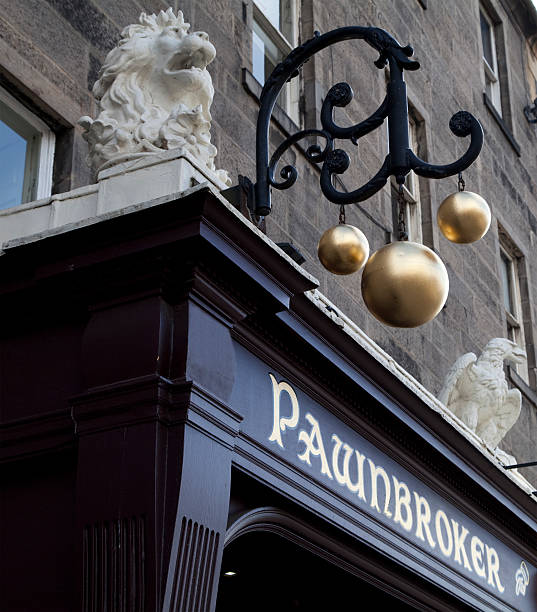
A country that shared both good and bad with the rest of the world is about to enter the pawn shop up to its neck in hock.

A country that was built by immigration, each new wave slightly altering the cultural fabric, but they more or less assimilated into the culture itself, changing it slightly, enhancing it, but more or less adopting the culture at large, till the Referendum.

A country that is now on a course of deliberate self-mutilation with a vastly diminished presence on the international stage that bears the “emblem of a country in retreat.” No sensible person could disagree with that verdict.

The UK national debt grows at a rate of £5,170 per second!

The truth however is much worse, factoring in all liabilities including state and public sector pensions, the real national debt is closer to £4.8 trillion, some £78,000 for every person in the UK.


Putting this into perspective:

Britain has a crunched economy, an out-of-control deficit and plenty of social problems.

The enormous figure above (which is equal to 80 per cent of Britain’s output), is treble the combined national debts of Greece, Spain, Portugal and Ireland. Future payments to retired teachers, police officers and NHS staff will cost taxpayers £1.1trillion, or £1,100 billion.

It would be true to say that Britain has been broke over the whole second half of the 20th century.

The liabilities that have been built up for future generations, won’t float way on two new Aircraft but they could disappear with Trident.

What is the cost of running Trident day to day?

About 1% of government spending on social security and tax credits in 2015/16, or the amount spent on the NHS every week.

UK should not be spending possibly £40bn on a programme that is designed for uncertainty and indeed that an “uncertain future threat environment” may mean no threats arise and so £40bn would have been spent unnecessarily.

Extending the life of the current Trident missiles into the early 2060s will cost around £250 million.

Keeping the current Trident submarines in operation until 2028, four years longer than planned, is also expected to cost between £1.2 and £1.4 billion.

£6.2bn project aircraft carrier HMS Queen Elizabeth first conceived in the 1998 defence review at a third of the cost. HMS Prince of Wales

A strike carrier largely of French-designed which is supposed to project power around the world. For a broken nation that has perhaps not yet lost its appetite for making its voice heard far across the seas. Current cost estimates for the Carrier Strike force – including the ships and jets – up to March 2021 are a whopping £14.3bn.

You have to ask is this is what it should be spending its hard taxpayer money on.


The other day we witness tactics by the Conservative Party manifesto to convince a jaded electorate that Mrs May if elected is  a “modernizer,” who with a compassionate Conservative Party, will facilitate any benevolence to help vulnerable people provided they pay for it in the long run.

The new obligation of British citizenship is to volunteer and donate (regardless of the ability to do so) in order to help vulnerable people change their ways.

“Big Society” agenda was and still is a deep-seated belief that the welfare state has run its course—Résultat de recherche d'images pour "is england broken"

What happens if there is a different government after the general

election?

Bolstered by the strategic deployment of ignorance, which encourages all who encounter the screen to view society through its behavioural filters of family breakdown, out-of-wedlock childbirth, worklessness, dependency, anti-social behaviour, personal responsibility, addiction, and teenage pregnancies., with a murder a day Brexit will still go ahead but in a whole new reality of the likely breakup of the United Kingdom and the failure of its economy.

Combined this with drastic and punitive welfare reforms arguably constitute the centrepiece of a severe fiscal austerity package, where possibilities for a redistributive path are drowned out by the rhetoric of “welfare dependent troubled families, immigrants,  Brexit ” is causing society to crumble at the margins.

All deflecting the reality of a Britain teetering on bankruptcy which is creating a troubling relationship between (mis)information and state power.

The common denominator here is the key: The hallmark of the Thatcher revolution was that society did not exist (“there is no such thing as society”),

Could there be a second referendum? Not likely.

The effects of leaving the EU will be felt for many years to come.

Apart from market meltdown with serious negative consequences for people’s’ livelihoods and savings, foreign trade, a key part of the British economy, plus financial services will be badly damaged.

Nine of the largest 20 SWFs in the world have offices in London.

You would be foolish to think that they will not follow the money.

Before World War One, Britain was the world’s economic superpower. With rapid growth and a vast empire, the country enjoyed significant levels of wealth and resources which it has squandered, by turning shopping into a sport and sport into an expensive occupation.

Resulting in more people in the UK are now either overweight or obese than at any other time in the past three decades. A million patients visit the NHS every 36 hours and over the past decade, the number of people attending A&E has risen 25 per cent. Obesity is responsible for about one in ten deaths in Britain and costs the NHS £5.1 billion a year.

With the number of people 75 or older up by 89 per cent since the mid 1970s. As long-term illnesses affect more people – as of 2013, there were 3.2 million people with diabetes – that’s expected to increase to four million within the decade. Budgets, meanwhile, are all but flat, and in 2013-2014 the NHS ran a £471 million deficit.

Britain will experience the deepest recession in its history perhaps deeper than in 1920/21 after the first world war.Theresa May personally reassured the chief of Gibraltar the UK was committed to them

WHY?

Britain is now in caught two situation.

Yes it  can secure new trade agreements but they take years to secure.

X colonial countries like New Zealand cut off from the supply of British goods have been forced to build up their own industries so they were no longer reliant on Britain, instead directly competing with her.

The Conservative Party pledged to create a number of U.K. sovereign wealth funds, known as Future Britain funds, to back British infrastructure and the economy. This a central part of our long-term plan for Britain.

(It is expected that early funds will be created out of revenues from shale gas extraction, dormant assets and the receipts of sale of some private assets, said the manifesto.)

If ordinary Britons do not follow in the footsteps of the Greeks and demand a degree of democratic control over and local benefit from these wealth funds the capital in these fund will not be truly citizens wealth.

But shouldn’t the UK still fear going the way of Greece – losing control of the public finances – and then, after a delay, being savagely punished by the markets?

It is not “broken” yet, nor will it ever be when it can print money.

If the UK were in a tight corner it can simply print the funds required to avoid outright default.

Bank of England pumps £5bn into firms and £20bn into banks to keep interest rates down, which are now on the rise.

If stakes in state-backed banks – including Northern Rock, Royal Bank of Scotland and Lloyd’s Banking Group – were sold at current market prices, they would generate a loss of £13.5 billion.

God only knows what they will be worth on Exit.

Can this story be squared with the facts?

Perhaps, when one looks at who owns Britain.

In a country where 432 people own half the private rural land, a looped and windowed democratic cloak barely covers the corrupt old body of the nation.

Peaceful protesters can still be arrested under the 1361 Justices of the Peace Act.  The Royal Mines Act 1424 gives the crown the right to all the gold and silver in Scotland.  The Remembrancer of the City of London sits behind the Speaker’s chair in the House of Commons to protect the entitlements of a corporation that pre-dates the Norman conquest.

Farm subsidies, ensure that every household in Britain hands £245 a year to the richest people in the land. The single farm payment system, under which landowners are paid by the hectare, is a reinstatement of a medieval levy called feudal aid, a tax the vassals had to pay to their lords.

Walk into any mairie in France or ayuntamiento in Spain and you will be shown the cadastral registers on request, on which all the land and its owners are named.  Try to do the same in Britain, and you will find a full cadastral map available at the local library that can be photocopied for a price. But it was made in 1840.

So Britain is still essentially a feudal nation and for centuries, it has been a welfare state for patrimonial capital.

There are very few common asset like land, water, minerals, knowledge, scientific research and software over which a community has shared and equal rights. At the moment most of these assets have been enclosed: seized by either the state or private interests and treated as any other form of capital.

Resulting in the UK being one of China’s favourite places to invest with only one motivation straightforward – profit.

Here is a few Sovereign Wealth funds assets in the UK.

Qatar and Dubai between them own about a third of the London Stock Exchange.

The government of Singapore has built up a 3% stake in British Land.

Dubai International Capital (DIC) has invested money in building stakes in UK companies, including Travelodge and the London Eye.

In 2012, CIC’s $410bn sovereign wealth fund, bought an 8.68 per cent stake in Thames Water, the water network that serves London.

Singapore’s sovereign wealth fund GIC £48.5m deal to invest in a development owned by FTSE 100 retail property group Hammerson.

50% of the Watermark development, which includes a cinema and restaurant complex in Southampton to the Singapore state investor.

State-owned Qatar Airways is the biggest shareholder in IAG, the parent company of British Airways.

Qatar Holdings also already owns 20% of Heathrow Airport.

Harrods: Owned by Qatar Holdings.

The Shard: 95% owned by Qatar’s sovereign wealth fund.

The Olympic Village: Owned by Qatari Diar, property investment company owned by QIA.

Chelsea Barracks: Owned by Qatari Diar.

Sainsbury’s: 26% owned by Qatar.

The new nuclear power plant at Hinkley Point,  It will cost more than $22 billion to build and bring online. And it isn’t clear that the EPR technology is viable. One-third of the costs, the Chinese state-run company China General Nuclear Power Corporation will take about one-third ownership in the project. (A subsidiary of E.D.F. owns the rest.)

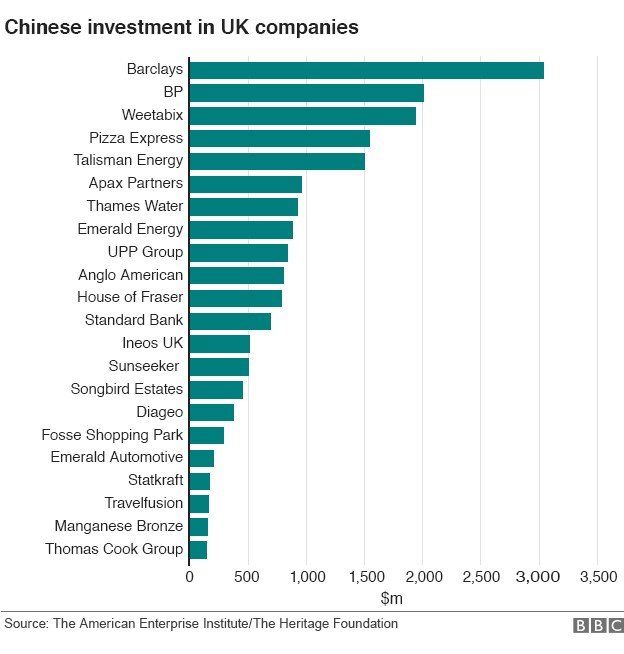
Indeed three of the world’s 10 biggest sovereign wealth funds are Chinese, together holding more than $1.5tn (£988 bn) in assets. Barclays bank – all $3bn of it. BP, $2bn.Pizza Express, House of Fraser, Weetabix and Sunseeker yachts.
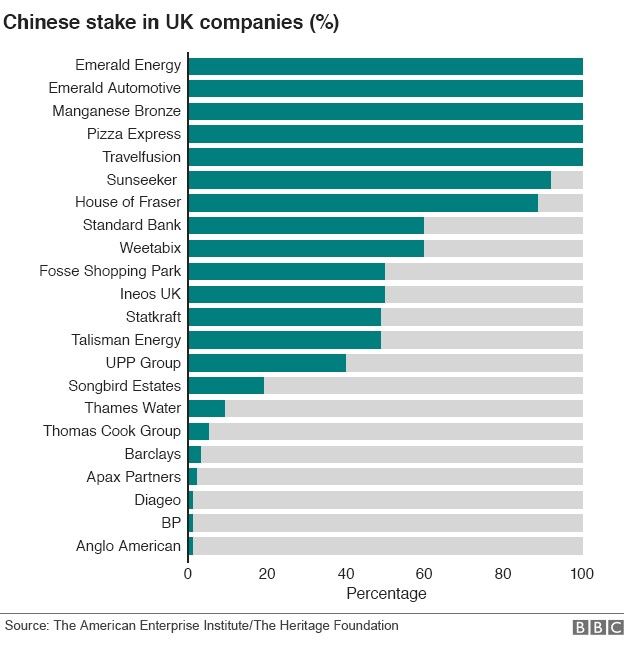
Chinese investments in UK companies (%)            Chinese investments in UK companies


Norway’s oil fund is the world’s largest sovereign wealth fund and is worth > $760bn. According to a report in the FT in 2013, it owns on average about 2.5% of every listed European company

Despite recent budget hype about renewing the infrastructure, which is owned more and more by SWFs the market alone cannot meet England needs, nor can the state.

A passionate European, like myself, one can only feel a deep sense of shame at the narcissism and ignorance that have brought England to this place where it is treating to walk away from the EU without paying its bills.

Similar values alone cannot sustain the UK-US relationship.

So can one talk of business as usual?

However slavishly governments grovel to corporate world what jumps out today, to put it crudely, is that jobs and manufacturing rely on being able to sell competitively.

Governments, each government, is beholden to look after its own interest, first.

The ideals and aspirations of its people desperately searching for an identity will not be served by waving the magic wand of leaving the EU and the problems goes away. It won’t come true. Even if England rippes the EU to pieces.

The combination of domestic constraints, changes of leaders, and the increasing complexity of the international community makes these bilateral or multilateral partnerships less efficient than before.

If the UK leaves the European Union without having reached any agreement after two years, it will be a disaster for both sides.

The challenge is to wrap up the Brexit negotiations quickly.

London should not hold the EU hostage, and the EU should not use Britain’s impending exit from the bloc as an excuse to continue muddling through.

Either way, the wisest course might be to discount anything said in the next few weeks, ahead of the UK’s vote on June 8, and wait for the dust to settle afterward.

The UK has been missing-in-action over the past few years, and will be for a few more years to come, as it’s important that they repair the damage internally first, as that’s the most important priority for them at present.

It would be idiotic to claim that Britain is perfect unfortunately it is running out of puff. Farm jobs have mostly gone already. Service and care work, where hope for some appeared to lie, will be threatened by a further wave of automation, as service robots – commercial and domestic – takeover.Résultat de recherche d'images pour "pictures of the uk"

Here is the true reality:

We are all promised unending growth on a finite planet. In a world crashing into environmental limits and the mass destruction of jobs – are as irrelevant in the 21st Century as the neoliberal prescriptions that caused the financial crisis.

The impacts of information technology go way beyond simple automation: it is likely to destroy the very basis of the market economy and the relationship between work and wages.

There’s a point at which further complexity delivers diminishing returns; society is then overwhelmed by its demands and breaks down.

The world is facing the combination of automation, complexity and climate change is dangerous in ways we haven’t even begun to grasp.

England may be right to leave the EU for the wrong reasons.

At the expense of both competition and democracy, withdrawal will not, “bring jobs and industry back to English shores. The social, environmental and economic crises we all face requires a complete reappraisal of the way we all live and work.

Governments across the world are making promises they cannot keep.

The failure by mainstream political parties to produce a new and persuasive economic narrative, that does not rely on sustaining impossible levels of growth and generating illusory jobs, provides a marvellous opening for demagogues everywhere.

In the absence of a new vision, their failure to materialise will mean only one thing: something or someone must be found to blame.

As people become angrier and more alienated; as the complexity and connectivity of global systems becomes ever harder to manage; as institutions like the European Union collapse and as climate change renders parts of the world uninhabitable, forcing hundreds of millions of people from their homes, the net of blame will be cast ever wider.

A complete reframing of economic life is needed not “just” to suppress the existential risk that climate change presents (a risk marked by a 20°C anomaly reported in the Arctic Ocean while I was writing this article), but other existential threats as well – including war.

Today’s governments, whether they are run by Trump or May or Merkel, lack the courage and imagination even to open this conversation.

It is left to others to conceive of a more plausible vision than trying to magic back the good old days. The task for all those who love this world and fear for our children is to imagine a different future, rather than another past.

Only God knows why we obsess about all this so negatively when stupidity consists in waiting to come to a conclusion.

All very depressing. Is a strong and stable Conservative Party seriously the limits of British people imaginations. I hope not.

As the recent repulsive attack in Manchester shows. Only by coporation can we all live a life. No Aircrafts or Tridents can stop such a horrible lost of life.

← Back

Thank you for your response. ✨


Share this:

  • Share on WhatsApp (Opens in new window) WhatsApp
  • More
  • Share on Pocket (Opens in new window) Pocket
  • Share on Mastodon (Opens in new window) Mastodon

THE BEADY EYE ASKS: WHAT CAN BE EXPECTED IN THE NEGOTIATIONS BETWEEN ENGLAND AND THE EU.

01 Monday May 2017

Posted by bobdillon33@gmail.com in Articular 50., Brexit v EU - Negotiations., Brexit., England., European Union., Politics., Unanswered Questions., What needs to change in European Union.

≈ Comments Off on THE BEADY EYE ASKS: WHAT CAN BE EXPECTED IN THE NEGOTIATIONS BETWEEN ENGLAND AND THE EU.

Tags

Brexit v EU - Negotiations.

( A two-minute read)

YOU DON’T NEED BLINKERS TO REALIZE THE FOLLOWING.

After four decades of legal, economic and administrative convergence, the scope of this the forthcoming negotiations is truly vast: from labour mobility to customs checks, fishing rights to patents, scientific research to counter-terrorism.

The challenge is all the greater because Article 50 stipulates that (unless the other Member States agree by unanimity to extend the period) the UK will cease to be a member of the EU within 2 years – deal or no deal.

At its core, the EU has been a political project.

It is not just a group of states that cooperate, but a group of states which have created supranational institutions that have executive and judicial authority over EU member states and that can pass laws that are directly applicable throughout the EU.

So what can be expected?

The UK starts from a weaker position than the EU because it needs a deal more.

Certainly Britain cannot be rewarded and it will not be allowed to pick and choose at will policies that it wants to participate in or abstain from.Résultat de recherche d'images pour "pictures of the uk -eu negotiation "

It must decide what it is willing to concede in exchange for achieving its objectives.

On the other hand the EU will wish to avoid an acrimonious divorce that damages all parties.

Both sides must take a long-term view, beyond the possibly drawn-out negotiations that will begin in the coming months.. The EU and the UK economic links are now so interwoven that their prospects cannot be independent over any foreseeable horizon.

The big question might well boil down to, can or will the Uk pay, whatever the economical price. The British government has no legal obligation to pay for Brexit or outstanding payments into EU budget.

The EU’s €1tn, seven-year budget was negotiated in late 2013 by EU leaders including the British prime minister. It is due to expire at the end of 2020, although bills may be trickling in until 2023. This reflects that payments for EU-funded infrastructure projects, such as roads or airports, are not settled until two to three years after being promised.

It is more than likely that payment will be a principle of liability with the British government (with estimates ranging from €20bn to more than €70bn.)

A large payment would be a political problem for any UK government. however to have any negotiations they should be honoured in full.

If not in an increasingly volatile world the chill winds of solitude points to no deal.Résultat de recherche d'images pour "pictures of negotiation skills"

At the end of the two-year period  EU Treaties will cease to apply to the UK, even if no agreement has been reached. This will lead  to a short, sharp shock, rather than a lengthy period of economic dislocation and political acrimony.

So it stands to reason that if the UK government wants goodwill from EU countries and a deal on access to European markets, agreement on the budget will be important.

For some, the most controversial question is likely to be whether it is possible to have close economic integration comparable to the single market while partly limiting labour mobility.

This will turn into a political football : EU citizens in the UK and English citizens living and working in the EU.Résultat de recherche d'images pour "pictures of negotiation skills"

Reorganise Europe in two circles to accommodate the Uk will not work.

So what will be the result? It’s a tough one this.

Negotiation is crucial in all organisations and in virtually every aspect of life. In essence, negotiating is deciding what to agree on and persuading the other party to agree. The outcome does matter. Good negotiators focus on value while sellers often focus on price.

Everything go straight to the wall. May day, May Day.

All comments welcome. All like clicks chucked in the bin.

← Back

Thank you for your response. ✨


This will be an essential element of the negotiations on the orderly separation.”


Share this:

  • Share on WhatsApp (Opens in new window) WhatsApp
  • More
  • Share on Pocket (Opens in new window) Pocket
  • Share on Mastodon (Opens in new window) Mastodon

THE BEADY EYE SAYS: UNLESS EUROPE LOOKS AT ITS HOMELESS IT WILL NEVER BE UNITED.

19 Wednesday Apr 2017

Posted by bobdillon33@gmail.com in European Commission., European Union., homelessness., Humanity., Modern Day Democracy., Our Common Values., Politics., Poverty, Sleeping Rough., The Obvious., The world to day., What needs to change in European Union., WORLD POVERTY WHERE'S THE GLOBAL OUTRAGE

≈ Comments Off on THE BEADY EYE SAYS: UNLESS EUROPE LOOKS AT ITS HOMELESS IT WILL NEVER BE UNITED.

Tags

Eradicate poverty, homelessness., Poverty, Sleeping Rough.

( A THREE MINUTE READ)

In  Europe alone, there are 3 million people on the streets.

Résultat de recherche d'images pour "pictures of homeless people"

We all know that the  Eu has many problems and is need of reform. All EU countries face major challenges in relation to finding sufficient resources to tackle social problems and it cannot be expected that one country like Germany is going to sort out other country’s homeless.

However it appears to me that homelessness is increasing across a considerable number of EU Member States.

The growing number of people in Europe facing situations of housing vulnerability due to shifting dynamics in housing and labour markets, as well as the diminishing role of states in housing provision requires policies that target different types of homelessness (temporary, long-term) with customized interventions (prevention, supported housing) that are flexible and effective at engaging individuals “where they are.”

As EU member states grapple with immigration and other social changes wrought by EU integration, globalization, and the economic crisis

We are now caught in VICIOUS circular, with the whole area in needs of a fresh approach.

Prevention of homelessness is strongest in social democratic regimes, and the weakest in Mediterranean countries and some eastern European transition nations.

Which strategies in particular are best suited to responding to homelessness, either from a preventive or remedial vantage point is debatable however the provision of housing must ultimately be seen as the primary solution to homelessness, and that, while distinct from their housing needs, the additional health and social service needs of individuals need to be addressed as well.

Housing and services should NOT be linked.

A right to housing for all homeless persons will only be successful to the extent that such a right is legally enforceable.  

Another words in the hands of courts rather than in those of elected governments.

While the numbers of people experiencing homelessness may be relatively low compared to those experiencing other social problems within the EU, the unique distress of homelessness and the potential costs for individuals, families and wider society from homelessness must never be forgotten.

Quantifying homelessness isn’t straightforward and I don’t think it would be beneficial here to list the thousands that are sleeping rough in Europe, country by country.

It is sufficient to state that Homelessness is a violation of fundamental human rights. When you walk by a homeless person it personifies whether the European Union is working or not.

In total, the United Nations Commission on Human Rights estimates that the world has 100 million homeless people.

And we wonder why we have such an unstable political world.

By comparison in Australia and Canada, hundreds of thousands of people are homeless.

There are over 9.5 million homeless people in Columbia and 24.4 million in Nigeria.
Image associée

The argument can be made for approaching homelessness as a problem that affects a set of distinct sub-groups and consequently, for tailoring solutions according to each group’s respective needs. Homeless youth, Homeless women  Homeless migrants. Homeless mentally ill.

This places homelessness interventions squarely within the broader context of poverty.

But poverty is also the inability to use the resources offered.  Poverty should be understood as not merely a problem of access to resources but also as implying a lack of ability in taking advantage of resources.

If the EU does not want social exclusion within its ranks it must address homeless with a Rooflessness subsidy, like it help the farming communities through the Common Agricultural Policy.

Homelessness in Greece has significantly increased to 20,000 homeless people in recent years.

About 50% of the homeless population roams the streets of Athens.

Measuring the scope and extent of homelessness in Europe still remains a significant obstacle along with the whole set of processes that generate homelessness and what results in different histories of homelessness.

The POOR AND HOMELESS WILL CONTINUE TO GROW, BOTH WILL UNDERMINE THE ECONOMIC GROWTH AND UNITY OF THE EU. Résultat de recherche d'images pour "pictures of homeless people"

All comments welcome, all like clicks chucked in the bin.

← Back

Thank you for your response. ✨

Share this:

  • Share on WhatsApp (Opens in new window) WhatsApp
  • More
  • Share on Pocket (Opens in new window) Pocket
  • Share on Mastodon (Opens in new window) Mastodon

THE BEADY EYES OPEN LETTER: CALLING ON THE YOUTH OF ENGLAND AND THE EU.

04 Tuesday Apr 2017

Posted by bobdillon33@gmail.com in Brexit., England., European Union., Modern Day Democracy., Politics., Populism., Social Media., The Obvious., The world to day., Unanswered Questions., What needs to change in European Union.

≈ Comments Off on THE BEADY EYES OPEN LETTER: CALLING ON THE YOUTH OF ENGLAND AND THE EU.

Tags

Brexit., Forthcoming Brexit Negotiations., The European Union, What needs to change in the European union

( A five minute read)

Where are your voices?

The decision to leave the EU affects your future more than anyone, so tell me why you are now so silent.

Luckily the responsibility for the outcome of the next two years negotiations still rests on the shoulders of the British people—and specifically, on the young English people.

Do young Englanders really want to isolate their Island even more from the rest of Europe?

It is now imperative you make your young voices heard on the final deal, if any.

If you do not there is little point sitting on you behinds, chastising older Brits, when less of you voted in the referendum than those who did not.

The 51.9 percent to 48.1 percent was so close – if the rest of you had voted, the outcome could have been very different, and if 16-and 17-year-olds were given the chance to have their say in this momentous decision England would not now be clinging on to its colonial history.

(It seems ludicrous that 16 and 17-year-olds weren’t allowed to vote in the referendum that was going to define much of their future. Truly idiotic.)

There is no such thing as a perfect future or for that matter a correct past but the coming decisions will pitted rich against poor like no other.

So here is my plea to the Youth of England and the Youth of the EU.

If you look at the sign at the entrance of your town and you’ll spot a phrase that goes something like this: “Twinned with.

(Town twinning, as an official relationship-builder, started in Europe after the second world war. The idea was simple: repair damaged relationships between France, Germany and the UK.)

You and your twin share something. A history, some DNA.

You’re twinned for a reason and that reason will be positive if you now twin your efforts to have a final say and vote on the final result.

We have seen in Greece the rise of a far-left government. In Spain, there is a similar upsurge. In France, Marine Le Pen and the Front National are closer to power than at any time previously. In Britain, the anger of the ‘have-nots’ has so far been contained — probably because unemployment has been kept down. But it would only take mismanagement of welfare benefits and an excessively high national living wage to change that.

Clearly not everyone who voted Leave is a racist thicko, just like not every immigrant is a jihadi. There are legitimate concerns on both sides of the debate, but I do not see how it is helpful to characterise millions of people in this way.

It can seem like a language that the privileged use to sneer at the poor: a kind of moral snobbery. A striking social division has been exposed in this vote.

I dont know about you but I’m ashamed that the world of ever-closer union among countries which for centuries would kill each other by the million—came to a shattering end on Thursday.

I am also embarrassed and disappointed that your country has been manipulated by the xenophobic, racist and above all incorrect facts that have been spread by a vocal minority of U.K. citizens.

Business and government officials have long grumbled about EU rules and regulations but the 2008 financial crisis, subsequent economic turmoil, rise of immigration and terrorism and general European malaise accelerated concerns about the relative merits of EU membership, particularly on the political right

British advocates of Brexit argue that issues of sovereignty and self-government should override economic ones but as a generation that is digitally connected to other young people across the world, you should be the generation which understands what the European Union is about more than any other, because you have grown up as European citizens.

So clearly, this all comes down to whether life is better or worse separate from the EU.

It is difficult to foresee any tangible benefits in leaving – economic, political or security –  that would outweigh remaining and helping to reform the EU, unless the EU disintegrates. 

Whatever the outcome of the British and EU negotiations, afterwards Europe will not be able to shy away from a few much-needed debates and significant reforms.

WE ALL KNOW:  WHETHER YOUR ENGLISH, SPANISH, FRENCH OR FROM ONE OF THE OTHER COUNTRIES CURRENTLY IN THE EU, BLACK OR WHITE- MUSLIM OR WHAT EVER RELIGION, THAT THE WORLD WE ALL LIVING IN IS IN A MESS IN MORE WAYS THAN ONE.

Theresa May explains how her government will balance seeking control of immigration and access to the single market

The picture above is not the world. The picture below is the world.Frontiers of Intercultural Clash and Dialogue - Armenia - abroadship.org

We are better together and celebrating our multi-cultural, immigration-shaped society.

This isn’t about saying whether young people in England were right and wrong, but it’s clear that they see themselves as citizens of Europe, and quite possibly the world, rather than the UK.

Is there a future for the European Union?

If so, what is it necessary to do, to give a future to this European Union?

More specifically, what is the role of new generations in the rescue operations and in ensuring continuity to the European project?

In the world we live in, acting alone is neither possible nor desirable.

Total independence from others is not possible, even outside the context of the European project, because in a global world we are all deeply connected. Thus, when dealing with issues that go beyond any single state’s borders, it is in every country’s interests to be able to participate in the international regulation and decision-making process.

Europe is obviously much more than a market, after all; it is a cultural space, simultaneously bemusing and splendidly diverse, complementary and enriching.

Europe is more than “Brussels”.

And Europe is not a bureaucratic monster, not a tribe of petty-minded technocrats making the lives of decent citizens a misery with their rules and regulations, but it will never be possible to preserve all the things we value about Europe without a European political framework.

Capitalism, we should not forget, is still capitalism.

Anyone who believes that the blessings of the market can spare us the hard work of solving political, social and ecological problems, who thinks that a single nation alone can triumph in the arena of global financial capitalism, is making a terrible mistake.

Such a fragile cultural entity as Europe can only survive in today’s world of conflict if it is politically strong and – whatever the differences – fundamentally united.

Is it too much to hope that a continent that has succeeded since 1945 – after two horrific wars – in turning enemies into neighbours and mistrustful neighbours into cooperative partners and sometimes even friends might turn out to be a reliable force for peace in the turmoil of the twenty-first century, a bastion of freedom and democracy, a promoter of fruitful communication with other influential regions?

The political Europe was never the great leveler, and never will be. Its raison d’être is its diversity, its vital energy, its obstinacy.

Europe is not the navel of the world, not the yardstick by which all other regions of the world are to be judged.

Europe is a historic continent, perhaps the historic continent par excellence. What singles Europe out most of all is that all the greatest crimes and mistakes have already been made here, and we Europeans have felt the punishment.

None of our problems can be solved by isolating ourselves or expanding into supposedly empty lands. We cannot just “go west!” Unlike the Americans, we know – even if we sometimes appear to forget it – that we can only live in peace if we also pay heed to the other side’s interests.

Don’t let anyone persuade you that we – the rest of Europe – want to take away your different-ness, your obstinacy, your trouble-making.

We need you in Europe precisely because you are so different from us. And you?

Would it be impertinent to suggest that you need us too, if you are to fulfil your potential? And if that is true – or at least not completely false – would it not be a rather poor idea to abandon Project Europe? I think so.

Of course, if the United Kingdom were to leave the EU, it would still be a member of NATO – and it is noteworthy that precisely its most significant partner in the alliance has stated its preference for a strong and united European Union that can act decisively in matters of security and defence.

Now is not the time to turn inwards.

It is obvious, therefore, that the Eurozone project is not solely a matter of a technical-parametric economic optimum calculation, but primarily a political issue.

So what is ultimately at stake in the Brexit debate?

It is only partially about Britain. A British exit would return the UK to its pre-modern constitution. For the EU, Brexit could favour a rebalancing of EU law in favour of social and environmental rights. But it is more likely that the neoliberal turn in EU law would continue as there are many factors now driving it, separately from British influence.

The EU, as much as the UK, is in need of a constitutional settlement which addresses the risks posed by market fundamentalism.

The notion of regaining sovereignty as a solution to the problems we face as Europeans, and Britons, is an oversimplification on the part of those who believe that it is possible to live in a world that no longer exists.

I am certain that the British do not really want to turn their backs on us continental Europeans after all we have been through together.

Europe is above all an ever-changing cultural cosmos that can only flourish if all its parts are permitted to be themselves. Anything else is codswallop.

If you get any group in society that doesn’t have a voice, they’re always going to feel nervous and out of control for the future.

Its time for the Youth of England with the support of Young Europeans to combine in a movement to be heard.

If not should I comfort myself with the thought that national egotisms and separatists are proliferating in many other European countries too.

Never. I deeply love the world, but it would be nothing without its people. Résultat de recherche d'images pour "pictures of beautiful eyes with tears"

All the selfies, or social media won’t make you a better person, or help you with a fantastic opportunity to engage with politics and have your opinions heard.

Let’s call it Smart by not leaving it to Money, Profit, Arms Sales and I am all right Jacks to shape our lives.

← Back

Thank you for your response. ✨


Share this:

  • Share on WhatsApp (Opens in new window) WhatsApp
  • More
  • Share on Pocket (Opens in new window) Pocket
  • Share on Mastodon (Opens in new window) Mastodon
← Older posts
Newer posts →

All comments and contributions much appreciated

  • THE BEADY EYE SAYS. ANY OTHER PERSON WOULD BE ARRESTED. February 1, 2026
  • THE BEADY EYE SAYS FROM THE RESURRECTION OF JESUS TO THE PRESENT DAY THE HISTORICAL RECORD OF OUR WORLD IS MORE THAN HORRIBLE. February 1, 2026
  • THE BEADY EYE SAYS: THE WORLD WE LIVE IN IS BECOMING MORE AND MORE UNKNOWN. January 31, 2026
  • THE BEADY ASK. IN THIS WORLD OF FRICTIONS IS THERE ANY DECENCY LEFT ? January 29, 2026
  • THE BEADY EYE ASKS ARE WE WITH ARTIFICIAL INTELLIGENCE LOOSING THE MEANING OF OUR LIVES? January 27, 2026

Archives

  • February 2026
  • January 2026
  • December 2025
  • November 2025
  • October 2025
  • September 2025
  • August 2025
  • July 2025
  • June 2025
  • May 2025
  • February 2025
  • January 2025
  • December 2024
  • November 2024
  • October 2024
  • September 2024
  • August 2024
  • July 2024
  • June 2024
  • May 2024
  • April 2024
  • March 2024
  • February 2024
  • January 2024
  • December 2023
  • October 2023
  • September 2023
  • August 2023
  • July 2023
  • June 2023
  • May 2023
  • April 2023
  • March 2023
  • February 2023
  • January 2023
  • December 2022
  • November 2022
  • October 2022
  • September 2022
  • August 2022
  • July 2022
  • June 2022
  • May 2022
  • April 2022
  • March 2022
  • February 2022
  • January 2022
  • December 2021
  • November 2021
  • October 2021
  • September 2021
  • August 2021
  • July 2021
  • June 2021
  • May 2021
  • April 2021
  • March 2021
  • February 2021
  • January 2021
  • December 2020
  • November 2020
  • October 2020
  • September 2020
  • August 2020
  • July 2020
  • June 2020
  • May 2020
  • April 2020
  • March 2020
  • February 2020
  • January 2020
  • December 2019
  • November 2019
  • October 2019
  • September 2019
  • August 2019
  • July 2019
  • June 2019
  • May 2019
  • April 2019
  • March 2019
  • February 2019
  • January 2019
  • December 2018
  • November 2018
  • October 2018
  • September 2018
  • August 2018
  • July 2018
  • June 2018
  • May 2018
  • April 2018
  • March 2018
  • February 2018
  • January 2018
  • December 2017
  • November 2017
  • October 2017
  • September 2017
  • August 2017
  • July 2017
  • June 2017
  • May 2017
  • April 2017
  • March 2017
  • February 2017
  • January 2017
  • December 2016
  • November 2016
  • October 2016
  • September 2016
  • August 2016
  • July 2016
  • June 2016
  • May 2016
  • April 2016
  • March 2016
  • February 2016
  • January 2016
  • December 2015
  • November 2015
  • October 2015
  • September 2015
  • August 2015
  • July 2015
  • June 2015
  • May 2015
  • April 2015
  • March 2015
  • February 2015
  • January 2015
  • December 2014
  • November 2014
  • October 2014
  • September 2014
  • August 2014
  • July 2014
  • June 2014
  • May 2014
  • April 2014
  • March 2014
  • February 2014
  • January 2014
  • December 2013
  • November 2013
  • October 2013

Talk to me.

Jason Lawrence's avatarJason Lawrence on THE BEADY EYE ASK’S: WIT…
benmadigan's avatarbenmadigan on THE BEADY EYE ASK’S: WHA…
bobdillon33@gmail.com's avatarbobdillon33@gmail.co… on THE BEADY EYE SAYS: WELCOME TO…
Ernest Harben's avatarOG on THE BEADY EYE SAYS: WELCOME TO…
benmadigan's avatarbenmadigan on THE BEADY EYE SAY’S. ONC…

7/7

Moulin de Labarde 46300
Gourdon Lot France
0565416842
Before 6pm.

My Blog; THE BEADY EYE.

My Blog; THE BEADY EYE.
bobdillon33@gmail.com

bobdillon33@gmail.com

Free Thinker.

View Full Profile →

Follow bobdillon33blog on WordPress.com

Blog Stats

  • 95,090 hits

Blogs I Follow

  • unnecessary news from earth
  • The Invictus Soul
  • WordPress.com News
  • WestDeltaGirl's Blog
  • The PPJ Gazette
Follow bobdillon33blog on WordPress.com

The Beady Eye.

The Beady Eye.
Follow bobdillon33blog on WordPress.com

Blog at WordPress.com.

unnecessary news from earth

WITH MIGO

The Invictus Soul

The only thing worse than being 'blind' is having a Sight but no Vision

WordPress.com News

The latest news on WordPress.com and the WordPress community.

WestDeltaGirl's Blog

Sharing vegetarian and vegan recipes and food ideas

The PPJ Gazette

PPJ Gazette copyright ©

Privacy & Cookies: This site uses cookies. By continuing to use this website, you agree to their use.
To find out more, including how to control cookies, see here: Cookie Policy
  • Subscribe Subscribed
    • bobdillon33blog
    • Join 222 other subscribers
    • Already have a WordPress.com account? Log in now.
    • bobdillon33blog
    • Subscribe Subscribed
    • Sign up
    • Log in
    • Report this content
    • View site in Reader
    • Manage subscriptions
    • Collapse this bar