We now have a car in space at a cost of $90 million. That’s $639.80 per pound thanks to Elon Musk’s Falcon Heavy SpaceX rocket. The next most powerful rocket, the Delta IV Heavy, runs about $350 million per launch.
It boasts 27 engines, more than any other working rocket has ever used, which together create a combined 5 million pounds of thrust at liftoff. Falcon Heavy is capable of taking 68 tonnes of equipment into an orbit close to the Earth.
With a world in turmoil, the new age space race is upon us.
Next, we need traffic lights.
Space debris is rapidly becoming one of the biggest problems we face – there are more than 150m objects that need tracking to ensure as few collisions with working spacecraft as possible.
The amount of kerosene in three Falcon 9 rockets is roughly 440 tonnes and RP-1 has a 34% carbon content, which is a lot of carbon dioxide when burnt.
However this amount of carbon is a drop in the ocean compared to global industrial emissions as a whole, but if the SpaceX’s plan for a rocket launch every two weeks comes to fruition, this amount of carbon (approximately 4,000 tonnes per year) will rapidly become a bigger problem.
Now for a bit of history:
For the 1967 Apollo mission to the moon, Saturn V rocket’s first stage carried 203,400 gallons of kerosene fuel and 318,000 gallons of liquid oxygen, totaling over 500,000 gallons of fuel for getting out of the atmosphere alone. The second stage carried another 260,000 gallons of liquid hydrogen and 80,000 gallons of liquid oxygen. The third stage carries 66,700 gallons of liquid hydrogen and 19,359 gallons of liquid oxygen.
All told the rocket that achieved one small step for a man and one giant leap for mankind held just under 950,000 gallons of fuel.
Falcon 9’s first stage uses 39,000 gallons of liquid oxygen and almost 25,000 gallons of kerosene, while the second stage uses 7,300 gallons of liquid oxygen and 4,600 gallons of kerosene. Combined, it makes lean mean 75,900 gallons of fuel.
On the other hand.
The Saturn V’s first stage lasted 180 seconds So. The first stage consumed 1,400,000 pounds of RP-1 and 3,178,000 pounds of LOX.
That’s 4,578,000 pounds of the expanded chemical in total.
The mass of most rockets is more than 95% fuel.
Let me congratulate Mr. Musk and remind him of his own words ” Only a carbon tax—not innovation, conservation, or renewable energy—will accelerate the transition from carbon-producing fossil fuels to sustainable energy.”
My point is:
Perhaps it might have been better putting his energy and all that energy into something with a bit more imagination.
All human comments appreciated. All like clicks chucked in the bin.
≈ Comments Off on THE BEADY EYE SEE TROUBLE FOR IRELAND ON THE HORIZON
( A three-minute read)
IT IS APPARENT TO ANYONE THAT DOES NOT HAVE SAWDUST BETWEEN THEIR EARS THAT OUT OF THE CUSTOM UNION MEANS A HARD BORDER BETWEEN IRELAND AND NORTHERN IRELAND.
“Let’s make a deal first, and we can figure out the details later.” Is bull shit.
British negotiators refusal to tackle and solve the question of the border during these talks is tragic.
Failing to address issues surrounding the border question can have ugly and unforeseen long-term consequences.
Had the British government taken direct responsibility for drawing the border in 1921 and sought to respect the wishes of local communities regarding which state they wanted to join, it is quite possible that the Troubles would never have broken out.
Instead of taking the Good Friday Agreement and the opportunity to remove the root cause of the Northern Irish conflict they paid the DUP billions to support a minority government.
In order for the UK to enact its post-Brexit immigration policies and leave the single market, it must be able to control its borders.
This said it is impossible to overstate the horror with which such a wall between the north and south would be greeted.
The arbitrary line of partition London imposed on the Free State in 1920 helped to spark the Troubles and is still a lingering grievance.
The Good Friday Agreement was seen as answering the question of whether the island of Ireland could be reunited once and for all, establishing as it did that Northern Ireland would only rejoin the South if a majority of citizens voted in a referendum or plebiscite for the option. With nationalists being demographically subordinate in Stormont, the simple mathematics meant it would never happen.
But here’s a sentence I never thought I’d utter: for the first time in my lifetime, a united Ireland is now credible – and perhaps inevitable.
Whether you believe that England is going to somehow negotiate a deal better than the remaining countries already have it is turning a blind eye to politics in Northern Ireland.
This was epitomized in the Brexit campaign, during which Northern Ireland was scarcely mentioned despite being the only part of the UK which shares a land border with another EU country. The Leave campaign also appeared to have no knowledge of or interest in what would happen to the border between North and South of Ireland.
Northern Ireland receives millions in funding from the EU for cross-community peace projects between Catholic and Protestant communities, but the loss of this money, or where replacement funding might come from, doesn’t appear to have been calculated into the Leave campaign’s financial deliberations over the cost of Brexit.
Northern Ireland voted to remain, but, like Scotland, is now finding it will be dragged out of it anyway thanks to Welsh and English voters.
Almost a year on from the EU referendum, we’re no wiser as to the future of the Northern Irish border.
May has continuously obfuscated as to how, where or why a border will be erected between Northern Ireland and the Republic. Despite the British Government’s insistence on batting away the question, it must be urgently addressed.
In order for the UK to enact post-Brexit immigration policies and leave the single market, it must be able to control its borders; a physical fence or wall is the only realistic option.
In effect, a border will fence off Northern Ireland, making its own tiny country, with one million residents penned in together with no option of traveling, working or visiting the other three-quarters of the island as easily as they are accustomed.
With Sinn Fein just one seat short of being the largest party at Stormont, reunification is by no means imminent.
The next election is likely to see them returned as the largest party, barring major events to stop their momentum.
A united Ireland is no longer hypothetical or absurd, but a credible option that must be considered seriously by both the Irish and British governments.
For the first time in my lifetime, the Irish question is no longer a question of if, but of when. Unfortunately, the DUP would never agree such a deal and they have the power to bring down the minority UK government.
There is more at stake than just the border in the north.
All human comments appreciated. All like clicks chunked in the bin.
≈ Comments Off on THE BEADY EYE ASK’S: WHAT IS THE STANDING OF DEMOCRACY IN THE WORLD TO DAY AND IS IT SOCIAL MEDIA THAT IS ALIENATING US FROM THE VOTE.
Democracy has many strengths, including the capacity for self-correction, but the question is can it survive social media.
The word ‘democracy’ has its origins in the Greek language. It combines two shorter words: ‘demos’ meaning whole citizen living within a particular city-state and ‘kratos’ meaning power or rule.
Democracy of sorts had existed for centuries but there is no absolute definition of democracy. The term is elastic and expands and contracts according to the time, place and circumstances of its use.
Meaningful democracy only arrived at a national level in 1906, when Finland became the first country to abolish race and gender requirements for both voting and for serving in government.
Even in established democracies, flaws in the system have become worryingly visible and disillusion with politics is rife. Yet just a few years ago democracy looked as though it would dominate the world. The combination of globalization and the digital revolution has made some of democracy’s most cherished institutions look outdated.
It is far short of the settled, comfortable state of maturity that many of its early adherents expected (or at least hoped) it would be able to claim after decades of effort.
Just a few years ago, Facebook and Twitter were hailed as tools for democracy activists, enabling movements like the Arab Spring to flourish.
Today, the tables have turned as fears grow over how social media may have been manipulated to disrupt the US election, and over how authoritarian governments are using the networks to clamp down on dissent.
They are fast becoming tools for social control.
So has democracy’s global advance come to a halt, and may even be in reverse.
The notion that winning an election entitles the majority to do whatever it pleases no longer holds water.
Since the dawn of the modern democratic era in the late 19th century, democracy has expressed itself through nation-states and national parliaments. People elect representatives who pull the levers of national power for a fixed period. But this arrangement is now under assault from both above and below.
From above, globalization has changed national politics profoundly.
From below Modern technology is implementing a new modern version with national politicians surrendering more and more power to Social Media.
For example over trade and financial flows, to global markets and supranational bodies, and may thus find that they are unable to keep promises they have made to voters.
International organizations such as the International Monetary Fund, the World Trade Organisation, and the European Union might have extended their influence, but they no longer have the power to implement what they preach.
There is a compelling logic too much of this:
The fragility of the United Nations influence elsewhere has become increasingly apparent with the state of the world.
How can anyone Organisation or a single country deal with problems like climate change or tax evasion?
National politicians have also responded to globalization by limiting their discretion and handing power to unelected technocrats in some areas. The number of countries with independent central banks, for example, has increased from about 20 in 1980 to more than 160 today.
So is the power now in the hands of multi Clongormentts like Apple, Facebook, Twitter, Mircosoft etc.
Certainly, the perception that democracy in decline has become more widespread than at any time during the past quarter-century. Erosion of freedom over the past few years, adopting smarter methods for m of subversion
There are four main sorts of Democracy.
Direct democracy
Representative democracy
Constitutional democracy
Monitory democracy
A liberal democracy (that is, one that champions the development and well-being of the individual) is organised in such a way as to define and limit power so as to promote legitimate government within a framework of justice and freedom.
Social media is a double-edged sword it allows us to speak truth to power but on the other hand, it allows power to manipulate public opinion and polarize the electorate.
Citizens use it to speak truth to power, and authoritarian governments use it to spread misinformation.
Twitter users got more misinformation, polarizing and conspiratorial content than professionally produced news.”
They fake petition signatures. They skew poll results and recommendation engines.
Rather than a complete totalitarianism based on fear and the blocking of information, the newer methods include demonizing online media and mobilizing armies of supporters or paid employees who muddy the online waters with misinformation, information overload, doubt, confusion, harassment, and distraction.”
And yes, governments are increasing their efforts to censor the internet, but that’s because they recognize that the internet poses a threat to their control.
Every authoritarian regime has social media campaigns targeting their own populations.
If the liberal world order is indeed coming apart under pressure from
the authoritarians, the future of democracy will be deeply affected.
Social media firms are “largely immune from responsibility” in the legal sense, but that “in the court of public opinion it is a different matter, and future US/EU legislation seems likely if they don’t address these issues in a meaningful way.
So what is the answer?
Is social media basically good, or does it have a “negative impact on society”
There are no gatekeepers when you publish via your social profile, (outside of each platform’s terms of use) – you can write anything and anyone has the chance to view it.
Social Media has truly democratized media and given everyone a medium through which to be heard.
It has also opened the system up to those who would exploit it to push their own agendas. The platforms are now looking to police this, but it’ll likely always play a part.
To make democracy work, we must be participants, not simply observers.
One who does not vote has no right to complain.
Here are a few questions to mull over.
What can be done to fight citizens’ political alienation and distrust?
Are representative democracy and greater public participation the answer or do we need to think beyond current practices?
How can the cultural and historical factors involved and reflected in present developments help us look into the future?
What knowledge is needed to understand and inform decision-making in the future?
Which values are and which values must be at the base of decision-making?
If we are indeed heading for a Smartphone Algorithms Democracy:Who, or What will be in control.
The algorithms behind social media platforms convert popularity into legitimacy, creating echo chambers, overwhelming the public square with multiple, conflicting assertions.
Today, social media acts as an accelerant, and an at-scale content platform and distribution channel, for both viral “dis”-information (the deliberate creation and sharing of information known to be false) and “mis”-information.
“Populist” leaders use these platforms, often aided by trolls, “hackers for hire” and bots, on open networks such as Twitter and YouTube.
Sometimes they are seeking to communicate directly with their electorate. In using such platforms, they subvert established protocol, shut down dissent, marginalize minority voices, project soft power across borders, normalize hateful views, showcase false momentum for their views, or create the impression of tacit approval of their appeals to extremism.
And they are not the only actors attempting to use these platforms to manipulate political opinion — such activity is now acknowledged by governments of democratic countries.
In addition, advanced methods for capturing personal data have led to sophisticated psychographic analysis, behavioral profiling, and micro-targeting of individuals to influence their actions via so-called “dark ads.” to self-censor or opt out of participating in public discourse.
Currently, there are few options for redress. At the same time, platforms are faced with complex legal and operational challenges with respect to determining how they will manage speech, a task made all the more difficult since norms vary widely by geographic and cultural context.
Every democracy needs its justice system, so we must “catch up with the modern world”, to cope with the social media.
In reality, old power structures still have power, they just have it in new spaces.
All human comments appreciated. All like clicks chucked in the Bin.
≈ Comments Off on THE BEADY SAY’S: HERE IS WHY BRITAIN SHOULD NOT BE GRANTED A TRANSITION PERIOD BUT A TWO YEAR MORATORIUM RE ENACTING THE FINAL AGREEMENT.
( A FIVE MINUTE READ OF HARD FACTS.)
A transit period is going to lead to a massive EU and British taxpayers loss.
Instead what is needed is a moratorium on the implementation of the final deal, not a flexible transit deal, which will see circumstances changing on both sides.
The issue the UK needs to decide is how to deal with the over 750 international agreements, including trade deals the EU already has. During the transition or indeed a moratorium, the UK will be bound by them, meaning it will have to collect tariffs and make sure EU standards are upheld at its borders.
However, the third partners will have a say in how much the UK can benefit from those existing deals.
It is blatantly obvious that these 750 trade deals are EU international agreements that benefit the members of the EU.
London will have to decide whether to ask the EU to help in rolling over these existing agreements. This should not stop the UK from being able to negotiate their own trade deals during the transition or moratorium period, but these agreements cannot come into force unless the EU-27 agrees or the moratorium expires.
WHY?
Because it will be politically very sensitive both in England and the EU, making any kind of compromise especially difficult.
Because as the realities hit home England will (as it is its right) endeavour to reinterpret what it has agreed, as will the EU.
Because while trade talks could begin alongside the formal exit negotiations, EU law means that they cannot be concluded until the UK officially exited the EU.
The UK would then revert to being a “third country”.
This would imply the UK would face a period in which it is outside the EU but does not have a new trade deal with the single market. In this case, it would have to rely on World Trade Organization (WTO) rules until the final deal is concluded.
So England does have the right to set the groundwork for a free trade agreement between it and other nations.
It is reasonable to expect that countries with a vested interest in maintaining trade links with the UK may wish to begin informal negotiations.
Under EU law, the bloc cannot negotiate a separate trade deal with one of its own members, as rules have to apply to all member states equally. Similarly, individual member states cannot make trade deals with individual member states, with third countries on their own.
This suggests that, because the UK will remain a full member of the EU throughout the negotiating period set out in Article 50, it could only formally sign trade deals with other countries once it has left.
The UK could insist it has a different legal status now that it notified the EU of its intention to leave. However, there is no legal precedent for such a situation, as Article 50 has never been triggered before.
Since the UK is going to be in a different situation, it could be argued the normal rules can’t really apply and the UK should be able to have informal trade negotiations that could be enforced from the day it leaves, but this is largely hypothetical at the moment.
As for whether the UK could open informal trade talks with non-EU countries like India or China, the UK could make the same legal argument about the change in its status. But we have no way of knowing whether the UK could successfully argue this position regarding trade with EU or non-EU countries.
I say “First, you exit and then you negotiate the new relationship, whatever that is”
What a future trade deal with the EU might look like, and how long it will take to conclude, will be a matter for Parliament and the next prime minister.
Reality Check:
So when the BBC news stated recently that Theresa May has done a trade deal with China is this false News or is Britain in breach of the Lisbon Treaty, and if so should negotiations be suspended.
Today we learn that THE CHINESE prime minister has hailed a new high point in UK-China relations after Theresa May signed a cooperation agreement on trade and investments.
Dress it up how you like this is a blatant breach of EU Laws.
≈ Comments Off on THE BEADY EYE ASK’S: IS OUR HISTORY AN ADEQUATE GUIDE TO OUR PRESENT-DAY CIRCUMSTANCES.
( A Ten-minute read)
We all know that the world’s problems are complex, but what in the first place is it exactly that makes a problem complex when the solution is known.
You could say there are many reasons, and you would be right.
The problem is ignored, misunderstood, tampered with, to complex to understand etc,
So is it that our history is now so complicated that it cannot teach us anything.
Indeed understanding complexity an inconvenient oxymoron.
The word itself is generally used to characterize something with many parts where these parts interact with each other. It is difficult to understand the whole without understanding the motion/behaviour of every single one of the components.
I suppose in the end the complex thing about complexity is it is constantly in competition with other complex systems.
Complexity breed complexity.
We see and witness this every day with Capitalism versus the core values of life, none more so than with Climate Change and Poverty that are interconnected to all the woes of our world.
The climate is probably the most complicated system in the world and maybe only a fraction of the many problems that we face in the world, but no matter how you look at it, the climate has plague human civilisation and is entrenched throughout human history.
The problem is that all of us take it for granted and have little understanding of its effects other than it governs all of us for better or worse.
Ignore it at your peril.
So will Social media change the course of history? Will it make the world a better place? Can it force all of us to realise that if we want a world we must as a unity world address what is becoming more and more evident day by day that if we continue to ignore the scientific warnings we are heading for a world that will not be livable on for and species, man or mouse?
It has the power to do so, but only if it expresses the majority in a unified outcry.
Two hundred or so years ago we had Slavery. These days you would say that it is all but eradicated.
Today we are causing inescapable devastating changes to the ecology of the earth.
Let’s awaken our conscience. With every passing year, the environment is getting degraded.
In the foreseeable future.
Scientists have estimated that over two-thirds of flora and fauna that once inhabited the Earth are now extinct.
However, we all know the problems that climate change will bring and once started will be unstoppable for all intuitive purposes other than building defences and moving.
There will be little or no point in saving National Parks with Elephants, Tiger, Silverback Apes unless we save the termite, the ant, the butterfly, the trees, the plants unless we save the environment as a whole.
Everything is interconnected – especially the environment which is connected to all forms of HUMAN LIFE, RICH OR POOR, INTELLIGENT OR IGNORANT, VIRTUAL OR REAL.
Unfortunately for the planet ( On which all life exists, ) we are the only species with the ability to effect change. All others are only interested in their own existence.
Our present dilemma is the lack of Collectivism driven by the Smartphone and Algorithms. Both technologies are concealed from us the truth, creating a sea of irrelevance, with a captured Culture of short-term Pleasure.
We are becoming oppressed by data. A society drugging ourselves.
In 20/25 years we are going to see a major change due to climate change which will be swift and big. There will be no room for I am all right Jack politics of the Donald Trumps of this world.
Something is rotten in the state of technology where there is little social conscience. Fake news and disinformation are just a few of the symptoms. But the problem is far more fundamental. These powerful algorithmic engines that run platforms are black boxes of profit.
The great lie is that social media shows us the world. Brings us closer together. Little wonder that lies spread, and inflates, to pickle our minds and our own prejudices.
Facebook, Google, Twitter, strap us into a single-seated algorithms theatre without any windows or doors. It is an infinite blend of your personal likes and dislikes scraped off the internet.
How will we be able to measure the impact of the above?
Google is more powerful than most states on the planet presenting a threat to liberal democracy in as far as the preservation of the rights of the individual’s data is the property of private corporations or the state.
No one should now douth that these platforms impact and shape public discourse, and shape society at large, distracting attention away from of core values TOWARDS social INSTABILITY.
Facebook and Google, Apple, U Tube, and their like are powerful monopolies almost void of any regulation.
Algorithmic accountability should not mean that a critical mass of human suffering is needed to reverse the damage they are inflicting on us and the generations to come.
It will be too late to measure their impact, except when we feel its harms.
With climate change, there will no gradually decay.
The Paris Climate Change Agreement is not an inspirational rallying cry or a recipe for bold action. It serves better as the motto for the tortoise than the hare.
It appears at this moment in history as in the past centuries that we humans do have not the ability to turn long-term thinking into action without creating a war.
There will be no solution till we give Eco Systems a Monetary and Rights value.
Shallow Paris Climate agreement promises are already worthless.
Why?
Because without removing or at least making the one thing that is driving Climate change and poverty – Greed to pay there will be no marked improvement in any future or present world problems.
We can all wail like I am doing here till the cows come home.
Without independent financial clout to effect change, we are pissing against the wind. ( See previous posts)
The solution to climate change and poverty is not just money.
Free energy would go a long way to saving the environment.
A basic wage, generated from greed/ profit for profit sake, would reduce the inequalities of the world and have a profound effect on the climate.
Both are a simple solution to a complex world problem.
It is Crystal Clear that if we do not do something to protect the Enviorment we all Fucked.
All human comments appreciated. All like clicks chucked in the bin.
≈ Comments Off on THE BEADY EYE ASKS. SHOULD THE EU GRANT A TRANSITION PERIOD TO THE UK
( A one-minute read)
UK government wants the EU to give it a transition period even if talks on the future relationship break down.
Britain and the EU will have to overcome some key sticking points regarding transition before they can move onto the question of the future relationship.
The question is can you have one foot in the door and the other outside.
All logic tells one that this is not possible.
What is possible is that any final agreement carries a watertight moratorium granting a suitable implementation period of let’s say two or three years.
Such a moratorium would allow the dust to settle while ensuring that the final agreement is not watered down.
It would save taxpayer on both sides unnecessary further costs due to changing circumstances on both sides.
All human comments appreciated. All like clicks chucked in the bin
≈ Comments Off on THE BEADY EYE ASK’S: WITH SO MANY WARS IN THE WORLD WHY IS ENGLAND TURNING ITS BACK ON THE ASPIRATION OF A UNITED PEACEFUL EUROPE. DO YOU KNOW HOW MANY CURRENT WARS WE HAVE IN THE WORLD.
As you read this, there are more than 40 conflicts unfolding in countries around the world. You could not be blamed for thinking that most of the world is in conflict.
They all seem to overflow into one great swam of human misery that occupy our News on a daily basis.
These days wars are more to do with identity based in historical, geographical, political, social, cultural and economic realities.
The EU endeavors to appease these differences, however the European Community needs to stop worry about protecting yesterday’s accomplishments rather than facing tomorrow’s challenges.
THIS IS HIGHLIGHTED BY ENGLAND PENDING DEPARTURE LEADING TO THE QUESTION:
DOES A DEFINABLE, IF NASCENT EUROPEAN IDENTITY EXIST OR IS IT LIKE ALL OTHERS.
It should come as no great surprise that most EU citizens regard themselves as belonging within a number of culturally defined groups and do not normally feel that these overlapping identities are incompatible.
As we are now witnessing with England’s departure and the divide between northern Europe and the Southern Europe.
The critical moments that lead to war are those when one or more identities take precedence over the others. So the objective of the EU must be to reach a stage at which regional, national, European and other identities are regarded as compatible rather than competitive.
This stage has not yet been reached and it may be argued that reaching this plateau is the major challenge which the Union faces in the next century.
It is extremely difficult to construct a European cultural project which embraces both the differences in European cultures and their common roots but in a world now driven more and more by technology that must be the objective, not isolation.
Europe is by far the most peaceful region in the world. Yet the continent is not immune to war – Britain, France, Belgium and others are heavily involved in external conflict in the Middle East, and face a growing threat to peace from international terrorism.
It is not inevitable that the logic of unity and interdependence will prevail and there is a consequent danger of a return to a dangerously fragmented Europe with potentially devastating consequences.
So given all the dire warnings from either side about the security of Europe if Britain leaves the EU, does the IEP foresee a change in the region’s fortunes in the event of Brexit?
In the short-term it’s unlikely to have an effect.
The longer-term ramifications, more for Britain than for [the rest of] Europe, would probably depend on what the economic outcome of a British exit would be. If there’s a further deterioration in the economy in England we may well witness an increase in violence.
This is a country that is full of places of worship that are thronged with glorification of war, saturated with historical blood, building two new aircraft carriers, while its people are on trolleys in hospitals.
Leaving the EU for all the wrong reasons, expecting to retain all the advantages of being in the EU but none of the responsibilities and costs.
A self-inflicted position.
At the moment they have the best trade deal possible – the best one imaginable – which is a customs union and access to the European Single Market and the European Economic Area.
We are now further away from world peace than at any time in the past 10 years – and it’s creating a global ‘peace inequality’ gap.
There are now just 10 countries which can be considered truly at peace – in other words, not engaged in any conflicts either internally or externally, completely free from conflict.
The lack of a solution to the refugee crisis and an increase in deaths from major terrorist incidents have all contributed to the world being less peaceful in 2016.
Many of the conflicts don’t get the media or policy attention of the wars in Iraq, Syria, Afghanistan or Ukraine, and they may not have the same geopolitical or economic importance.
All wars need arms so who is supplying the arms:
Fueling the deadly conflicts for profit.
War kills. And war sells.
Where do nations from every corner of the planet look when they want to increase their arsenals?
Ten countries are responsible for the vast majority of all major arms exports, accounting for 90 percent of global sales with the United States, the world’s largest arms dealers.
The world’s top six major arms exporters are the United States, Britain, Russia, Germany, France and China. Together, they account for 74 percent of the total volume of exports.
Sales are in the region of $31.bn
If you don’t believe me here below is a link to interactive map.
The map is part of a series of articles from IRIN around the concept of forgotten wars.is an interactive map of the current conflicts in the world.
It examines the root causes, human cost and potential for peace of conflicts in Myanmar, Casamance, South Kordofan, southern Thailand, and Mindanao in the Philippines.
The map marks each conflict with a red dot.
It is sized to represent how long the battle has been going on, with the
larger dots representing those that have lasted the longest.
To see more about each conflict, click on the dot.
This brings up a fact box explaining the nature of the conflict, when it began and how many deaths have resulted from it.
Syria has been embroiled in civil war, that is also the biggest and most complex proxy war the world has witnessed.
Mexico’s drug war, fueled by 54 ruthless cartels lust for territory, cash, power and violence has slaughtered as many as 85,000 people since 2006.
Mali, AL-Qaeda took root in the country’s north. Around 4,000 people have been killed in Mali since 2012.
Afghanistan, Taliban and IS.
Iraq, the 2003 US-led Iraq war killed up to a million Iraqis, gave birth to Islamic State.
The conflicts in Afghanistan and Iraq have been going for well over a decade, then it spilled into Syria in 2011, and afterwards into Libya and Yemen.
Yemen, AL-Qaeda and IS have fighters in Yemen, over 7,600 people have been killed in the past two years.
Pakistan, since the 9/11 outrage in 2001, war has been raging between the Taliban, IS.
Lebanon, Nearly a quarter of Lebanon’s population is made up of Syrian refugees and sectarian division has risen as IS battles with the Shia militant group Hezbollah.
Libya, 35,000 people have been killed since the Arab Spring uprising.
Democratic Republic Of Congo, more than 70 groups are fighting despite the presence of 20,000 UN troops.
Somalia, Al-Shabaab had 9,000 fighters in Somalia. IS has a foothold in Somalia and is trying to recruit Al-Shabaab fighters.
India,a fragile ceasefire since 2003 with Kashmir, but still exchange fire across the contested border.
South Sudan, over 50,000 people have been killed and more than 1.6 million displaced since war broke out in 2013. It has raged for more than 60 years.
Egypt, at war against Islamist militants in the Sinai.
Central African Republic, 6,000 people have been killed in the Central African Republic, with 25 per cent of the 4.6 million population displaced.
Ukraine, Russia annexed Crimea in 2014.
Nigeria, 50,000 people have died in the war between regime forces and Islamic State-affiliates Boko Haram.
Israel -Palestine, has forced tens of thousands of Arabs from homes in land grabs.
Turkey, fighting the Kurdish Workers Party the PKK, is hostile to the Kurdish Democratic Unity Party’s armed wing, the YPG, but has good relations with the Kurdish Peshmerga of Northern Iraq. The Turkish and Syrian Kurds are fighting IS and others in Syria but are against the Turkish government.
Potential Wars:
North Korea, technically, it has never stopped being at war with the South since 1953.
East China sea, South China Sea.
Will any end soon. Not likely.
This autocracy must stop.
The shelf-life of weapons is often longer than the governments and situations they were sold to.
Britain – is now the world’s second largest arms exporter after America – around 120,000 people are employed in weapons dealing.
Two-thirds of UK weapons have been sold to Middle Eastern countries.
If Europe is to escape the cauldron of fragmentation and national strife our shared bonds of European identity must be more broadly defined, given concrete expression and have the flexibility necessary to create an outward-looking and self-confident union of people’s.
The logic of global socio-economic interdependence that spells integration and the logic of ethnicity and nationality that demands separation both apply.
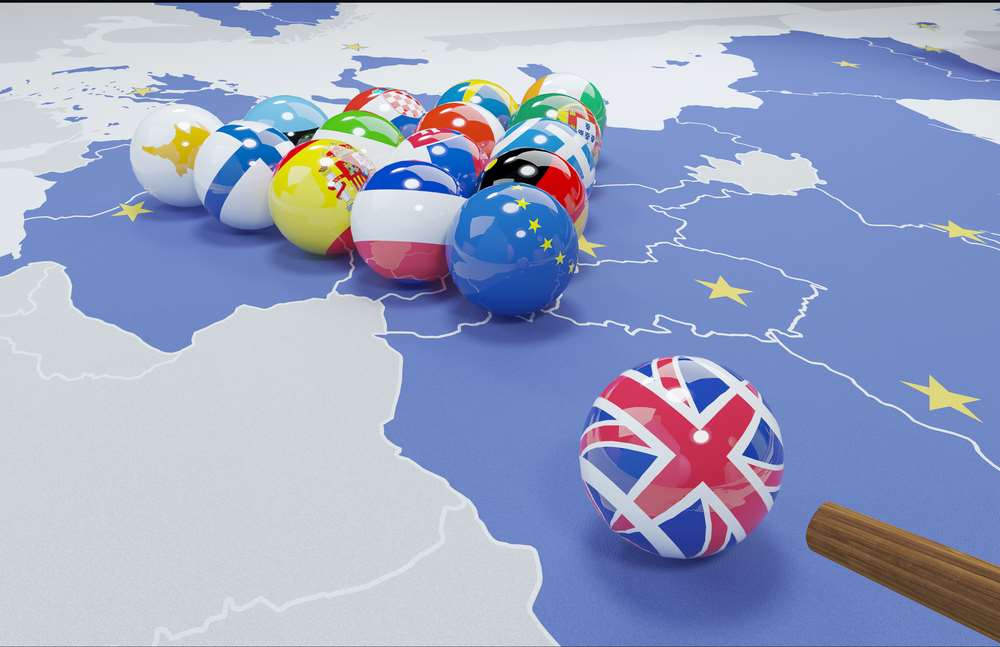
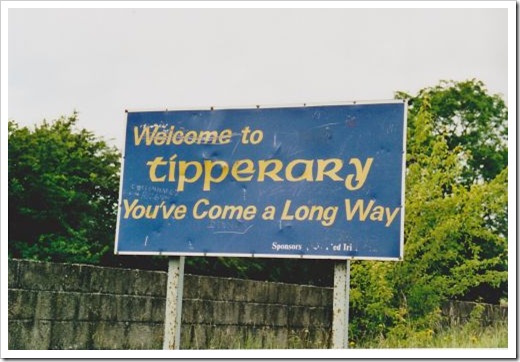
If England leaves the EU without a satisfactory solution to the Irish Border it could reignite one of the longest conflicts in the world going back 700 years.
To make the Irish less Irish backfired once and it will again.
With the coming Climate Change, doubts about the science are being replaced by doubts about the motives of scientists and their political supporters.
Once this kind of cynicism takes hold, is there any hope for the truth?
Climate change deniers argue they are only trying to discover the truth.
We should all be sceptical about that.
No Technology, No Artificial Intelligence, No inequality adjustment, No Frontiers, No Nuclear weapons, No alliances, not anything is going to stop migration.
Where will the next War be?
It will be between the countries relying on the Nile for power and water.
The toll of decades-long conflicts – from Colombia to the Ogaden, from Kashmir to Western Sahara – will be just as devastating for the people who do not live there.
All of the above presupposes that the development of Europe’s cultural identity is a worthy and attainable goal.
Europe, when you think about it, is a pretty small place. Jump on a plane in London and you can be all the way across the continent, in big old Russia, within just a few hours.
Europe stresses the importance of a continuing dialogue between the present and the past.
All human comments appreciated. All like clicks chucked in the bin.
As I understand it your stated aim for the continuing Brexit negotiations is to secure the exact same economic benefits that England now enjoy’s in the EU.
I regret to inform you that you and your Government is labouring under the misapprehension that it will be able to secure a free trade agreement (FTA) outside of the single market that not only covers goods (like the FTA Canada has with the EU) but most services too.
It almost unheard of to have a FTA – one that sits outside of the single market. Because it would have to be approved by 42 regional and national Parliaments in the EU and domestic political objections in other states would stand in the way.
The FTA Canada has with the EU took seven years to negotiate.
You can only have this if you remain in the single market.
Perhaps it is time for you and Government to refresh your thinking on what is the Single Market.
( The single market provides for tariff-free trade between EU countries and a common framework of rules including employment rights, competition policy, consumer and environment protections. EU countries come together through the customs union and apply the same tariffs to goods from outside the union. Non-EU countries participate in both bodies and doing so is the best way of retaining the benefits of EU membership while being outside the EU.)
You will not be able to enjoy these economic benefits outside of the single market and the customs union. Yet you and your ministers keep insisting otherwise.
The reality is if the EU give England any special arrangements, other third countries with whom they have agreements will demand the same too.
For example, just in case you were not paying attention.
Norway has already warned that giving into UK demands for a special trade deal allowing different UK sectors to participate in the single market without being part of it would force Norway to rip up its own agreement with the EU. Not to Mention Ireland.
It is sad as the reality of Brexit becomes clear, to see such a great country unable to change its mind.
You and your ministers keep talking about the desire for a “deep and special partnership” and a “bespoke” UK deal.
Unfortunately time is running out to set out what you believe that bespoke agreement would look like because your Cabinet cannot agree on it.
It is time to do the right thing.
To request in the forthcoming negotiations a stay of execution for a period of six, seven years that will allow your government in the House of Commons an opportunity to debate among yourselves what kind of arrangements is wanted between the European Union and the United Kingdom.
I believe you made a profound mistake in pressing the Article 50 button without working out so many of these details, now there is simply not sufficient time to agree a properly bespoke deal.
While I fully appreciate you inherited the situation if you want to stay in power you should be in the long run open to the electorate to take a different view on whether you and the Government should press on with this process.
A moratorium might salvage the wreckage that is coming out of the Article 50 process and allow you to enjoy the Bayeux Tapestry and weave a country that works for everybody.
( A twelve-minute read that could be the answer to Poverty)
You don’t have to be Einstein to recognize that inequality in all its forms is what wrong with our world. It haunts every minute of our lives no matter who you are, however ‘Ending world poverty is an unrealistic goal’
It is policy not aid which matters most in today’s world.
Why?
Because the politics of inequality in the future will be as important as the economics of the Future.
Relative poverty is unpreventable without tackling inequalities.
The aspirations of delivering a world where the quality of education, healthcare and national infrastructure available to every person is sufficient to bestow on them meaningful hope and ambition is hopefully the aim of “development”. I emphasize the word hopeful.
In a world in which a billion people live on $1.26 a day, with climate immigration increasing and technology Algorithms blundering the world’s wealth.
We’re going to have to realize sooner than later that if we are to avoid or end violent conflicts ( That these days has inequality as their triggers) there is only one course to follow and that is to spread the wealth of the world fairly.
Poverty is a perception – it is a status which is bestowed on people who have relatively little – even in societies of plenty. Just look at the prevailing political view on aid to middle-income countries that contain hundreds of millions of desperately poor people.
We all know that the chances of ending poverty altogether are zero.
It would potentially cost some of the world’s biggest businesses billions and would need to be agreed by a group of world leaders who, if they all went out to dinner, would be sat around the table with their calculators out arguing about how to split the bill.
In a world driven by Greed, Advertising, and now more and more by filtered Social Media, we are becoming increasingly desensitized to the blight of others.
For those working in organisations that are dependent on official development assistance, it is hard to talk about ending their dependency, but the 21st century demands the challenge is not ducked.
Too much negativity and accusation of not making any progress with aid money. Comments like Shit Holes, which imply that aid is no longer necessary are undermining our Aid agencies, which are becoming an increasingly endangered species.
So if we accept that we won’t be satisfied if we overcome absolute poverty, where do we go next?
The closer we get to ending extreme poverty, the harder it is going to be to do it.
Imagine how different the world would be if the focus of aid spending was not “ending $1.25 dollar a day poverty” but “creating a fairer and more equitable world”.
Relative poverty will always exist and it should always be at the forefront of efforts to improve our world because it demands more than the bare minimum solution, or Asshole Trumps.
Decisions taken on tax regimes, remittance flows and trade concessions are now not the fastest route to assist poor countries in their development. Inequality is at the root of the reasons why.
So in this world of inequalities is there any way of assisting development in a meaningful way.
Gadgets like tablets, smartphones and not-so-smart phones are multiplying five times faster than we are, with our population growing at a rate of about two people per second, or 1.2% annually.
The world is home to 7.2 billion gadgets, and they’re multiplying five times faster than we are.
The Mobile phone has done more for Africa than all Aid. No other technology has impacted us like the mobile phone.
The number of mobile phone users in the world is expected to pass the five billion mark by 2019. In 2016, an estimated 62.9 percent of the population worldwide already owned a mobile phone.
The mobile phone penetration is forecasted to continue to grow, rounding up to 67 percent by 2019.
By 2019, China is expected to reach almost 1.5 billion mobile connections and India almost 1.1 billion.
The number of smart phone users worldwide is expected to grow by one billion in a time span of five years.
It’s not that every person in the world has a mobile device, far from it; more than half of the population don’t have a mobile phone.
There are around 250 million machine-to-machine connections.
That may only be a fraction of the total number of mobile connections, but it was enough to knock us people off our perch in the man vs machine superiority stakes.
Just imaging what would happen if we were to equip everyone in the world (of voting age) with a mobile phone that could receive a basic income on a monthly basis.
Each phone with its unique pin.
With a phone that supplies a basic income we would witnessing a transformation in the way people relate to their governments.
A game-changer.
Not just a safer way to store money, but to reduce the need for Aid, to cut out corruption, to empower the poor, to eradicate inequality, to encourage closing the digital divide with the rest of the world. To give a sense of a future, information, opportunity and choice. To lift young people are currently trapped in poverty, often exacerbated by the need to contribute to their family incomes.
Explosive growth in mobile broadband use across continents would improve transparency and give a voice to citizens.
They would have a major economic, social and political impact.
So instead of the World Bank, the IMF, the Warren Buffets, the Bill Gates, the Mark Zckerbergs, the UN, Oxfam, the WTO, technology has the potential to lift people out of poverty.
There is no reason that a mobile money basic income could not be achieved with the application of a world aid commission of 0.05%. ( See previous posts)
Applying such a commission: (On all profit seeking Algorithms, on all High Frequency Trading, on all Foreign Exchange Transactions over $50,000, on all Sovereign Wealth Funds acquisitions, to mention just a few of the existing Capitalist instruments that are solely designed for Profit.) would create a perpetual Fund of trillions.
Traditional banking is out of reach for many people in rural areas of developing countries, but mobile is bringing people into the financial system in droves. Financial inclusion, starting with a humble savings account, enables people to start businesses, invest in education and weather bad times.
Mobile still has hurdles to jump before it can reach all the lives of people most in need of the technology: Namely, reliable, affordable energy and comprehensive network coverage. However you can rest assured if aid was directed to placing a communication satellite in orbit to service Africa or Latin America cell, phone use could help developing the countries within these Continents to plan electrical infrastructure.
There are in the world already a enough used mobile phones to supply most of Africa ( Pop. 1,273,903, 985)
Unfortunately there seems to be a major barrier to people turning in their old phones to be recycled.
To give a couple of examples, a recent survey found that 63% of Canadians have an unused phone at home. And in the UK alone, people are holding on to an estimated 76.8 million unused phones.
( A twenty-minute read if you want a world worth living in)
Most of us were taught that poverty started with the Industrial Revolution.
For the most part this is true but it did not happen in the isolation of the British Empire.
This story is powerful in its simplicity but if we rewind to about 1500 people living in South America, India, and Asia were much better off than Europeans. In fact Europe was just emerging from the dark ages.
China and India controlled most if not nearly all the world economy.
The Question is how did this change and why?
I put it down to Christopher Columbus and shoddy geographical calculations.
On his second outing in the Caribbean he was looking for gold and as a result the Spanish invasion killed must of the islands inhabitants. Then came a bloke named Cortes who ripped off the Aztec of Mexico,followed by Pizarro yet another Spanish conquistador with an unquenchable thirst for gold.
A total of over 185,000 kilograms of gold and 100 million kilograms of silver were pilfer from Latin America and pumped into Spain and then used to pay for Spanish war and debts.
(A 100 million kilograms of silver invested back then @ 5% would amount to $165 trillion to-day. More than double the world’s total GDP to-day)
This wealth allowed Europe to grow its economic wealth beyond the China or India.
The result was Europeans outsourced its labour into wars and colonization reducing the population of the rest of the world by slavery, epidemic diseases and massacres while enjoying the rich life.
( Free Slavery labour benefited the USA Colonies by over 222.5 million hours) Britain pay compensation of over £20m to slave owners equivalent to £300 million to-day which tell us nothing of the total value they produced.
The Silver was turned into cotton and sugar and spices. Cotton being the key raw material for the European Industrial Revolution.
The Surviving slaves got nothing.
Indeed without the slave colonies of the New world there would have being no market for the Industrial goods.
You could say that the above is rather a simplistic explanation but development in Africa and Latin America was effectively stolen by Europe.
So where are we to-day.
Almost half the world — over 3 billion people — live on less than $2.50 a day.
The GDP (Gross Domestic Product) of the 41 Heavily Indebted Poor Countries (567 million people) is less than the wealth of the world’s 7 richest people combined.
Nearly a billion people entered the 21st century unable to read a book or sign their names.
Less than one per cent of what the world spent every year on weapons was needed to put every child into school by the year 2000 and yet it didn’t happen.
1 billion children live in poverty (1 in 2 children in the world). 640 million live without adequate shelter, 400 million have no access to safe water, 270 million have no access to health services. 10.6 million died in 2003 before they reached the age of 5 (or roughly 29,000 children per day).
Poverty is the state for the majority of the world’s people and nations. Why is this?
Behind the increasing interconnectedness promised by globalization and technology are global decisions, policies, and practices.
Formulated by the rich and powerful.
These can be leaders of rich countries or other global actors such as multinational corporations, institutions, and influential people.
As a result, in the global context, a few get wealthy while the majority struggle.
The poorest are also typically marginalized from society and have little representation or voice in public and political debates, making it even harder to escape poverty.
The amount the world spends on military, financial bailouts and other areas that benefit the wealthy, compared to the amount spent to address the daily crisis of poverty and related problems are often staggering.
To attract investment, poor countries enter a spiraling race to the bottom to see who can provide lower standards, reduced wages and cheaper resources.
This has increased poverty and inequality for most people. It also forms a backbone to what we today call globalization. As a result, it maintains the historic unequal rules of trade.
Now we are looking at a new form of Poverty currently being created by a few monopolies. I call it Algorithm Poverty.
Around the world, in rich or poor nations, poverty has always been present. In most nations today, inequality—the gap between the rich and the poor—is quite high and often widening.
The causes are numerous, including a lack of individual responsibility, bad government policy, exploitation by people and businesses with power and influence, or some combination of these and other factors.
Inequality will affect social cohesion and lead to problems such as increasing crime and violence. Almost half the world—over three billion people—live on less than $2.50 a day and at least 80% of humanity lives on less than $10 a day:
And we wonder why the world is in a state of chaos.
Around 21,000 children die every day around the world. World hunger is a terrible symptom of world poverty.
Food aid (when not for emergency relief) can actually be very destructive on the economy of the recipient nation.
Free, subsidized, or cheap food, below market prices undercuts local farmers, who cannot compete and are driven out of jobs and into poverty, further slanting the market share of the larger producers such as those from the US and Europe.
Poverty leads to hunger. There are many inter-related issues causing hunger. They include land rights and ownership, diversion of land use to non-productive use, increasing emphasis on export-oriented agriculture, inefficient agricultural practices, war, famine, drought, over-fishing, poor crop yields, etc.
Solving world hunger in the conventional sense (of providing/growing more food etc) will not tackle poverty that leads to hunger in the first place.
Further, there is a risk of continuing the poverty and dependency without realizing it, because the act of attempting to provide more food etc can appear so altruistic in motive.
To solve world hunger in the long run, poverty alleviation is required.
For the first time in our history Technology offers us a chance to distribute the world’s wealth fairly.
Without Trade agreements, Aid, Repayment, Corruption, Power Brokering by NGOs, United Nations Begging, Bureaucratic interference, or any other hidden agendas.
It could be both implemented and funded by the very Algorithms that are going to spread poverty. ( See previous Posts)
It requires the large capitalist monopoly platforms to supply a free basic mobile phone to every person register as citizen of a country world-wide.
On registration the people would be allocated a pin number.
This pin would allow them to access a monthly Basic non repayable no strings attached Income payment.
There is no other way of ensuring that our world can fight poverty and climate change.
Most of the causes of hunger are found in global politics.
People are hungry not because the population is growing so fast that food is becoming scarce, but because people cannot afford it.
The number of people overweight or obese is now rivaling the number of people suffering from hunger around the world.
Its time to get off our fat asses and share our wealth not push it around to create more wealth.
If you want a world worth something in the future now is the time to start creating it. Solve World Poverty once and
For all.
It can be done with the press of a button.
All human comments appreciated. All like clicks chucked in the bin.