• About
  • THE BEADY EYE SAY’S : THE EUROPEAN UNION SHOULD THANK ENGLAND FOR ITS IN OR OUT REFERENDUM.

bobdillon33blog

~ Free Thinker.

bobdillon33blog

Tag Archives: Artificial Intelligence.

THE BEADY EYE SAY’S: BY 2025, WE WILL BE IF NOT ALREADY LIVING IN A WORLD THAT IS RUN BY GOOGLE.

02 Tuesday Jan 2018

Posted by bobdillon33@gmail.com in 2018: The Year of Disconnection., Algorithms., Artificial Intelligence., Big Data., Evolution., Facebook, Fourth Industrial Revolution., Google Knowledge., Humanity., Innovation., Life., Our Common Values., Poverty, Privatization, Social Media, Sustaniability, Technology, The cloud., The common good., The Future, The Obvious., The world to day., Twitter, Unanswered Questions., United Nations, What Needs to change in the World, Where's the Global Outrage.

≈ Comments Off on THE BEADY EYE SAY’S: BY 2025, WE WILL BE IF NOT ALREADY LIVING IN A WORLD THAT IS RUN BY GOOGLE.

Tags

Artificial Intelligence., Big Data, Distribution of wealth, Globalization, Greed, Inequility, Technology, The Future of Mankind, Visions of the future.


( A twenty-one minute Brain storming read)

I have posted on this subject before with little reaction.

There is often an implicit connection between discourses of the future and notions of technology, so that if we see a television programme with a title such as Click or Tomorrow’s World we expect that the topic will be technology.Résultat de recherche d'images pour "pictures of technology in the future"

The single most astonishing point about technologies is that they can move from being emblematic of an almost unreachable future to becoming so taken for granted that it feels like a personal slight when they do not work.

In this way technology in and of itself becomes a symbol of being modern is one of the reasons it becomes expressive of, rather than distinct from, cultural values.

Perhaps this is the reason that the relationship between social media and the conceptualisation of the future is still blurred and will remain so.

New technology does not just change the manner in which people go about their everyday lives: It also facilitates our imagination of the future.

All the above speak to a new, imagined future that strives towards idealism. However within the vast field of technology the consequences of AI there are a few devices and algorithms that will battle it out over the next twenty odd years for supremacy.

Will it be Smartphones, or Smart Wearable or Cryptocurrency that will augment reality.

All need software in the form of algorithms to run.

AI algorithms will make the physical and digital world interchangeable.

Practically every non- iPhone smartphone relies on an Android operating system?

One way or the other we are entering an age where life stops giving us things and starts taking them away.

Not surprising.

So it’s not Social media technology platforms like Facebook or Twitter and the others ( that talks a lot about connectivity but not accountability) that will change the world but the power of ever where at once.

That requires total knowledge on all aspects of life.

Google or should I say the Google Cloud is trying to achieve this. Résultat de recherche d'images pour "pictures of google"

Which is possibly both the best and the worst thing that could happen.

So let’s look at a few of the top combats in the world of technology in no particular order.

( Obviously it would take page after page to give a comprehensive insight so I am only going to give a few lines to each.)

 Microsoft Corporation:(LinkedIn -Skype – Mojang – Yammer- Hotmail)

 It operates through the following segments:

Productivity and Business Processes, Intelligent Cloud, and More Personal Computing.

  • Market Cap As of May 2017
  • $507.5 Billion

     Microsoft could be worth $1 trillion by 2020 — if not sooner. It is moving further and further into a digital landscape for everything from movies, music, books, games and software.

Twitter: Owned mostly by Venture Capitalist:

An online breaking news and social networking service. Using Twitter bots, (live streaming video.) With 450 million monthly active users it is ranked the eleventh most visited website. It has mobile apps for iPhone, iPad, Android, Windows 10, Windows Phone,BlackBerry, and Nokia S40.

Capable of influencing public opinion about culture, products and political agendas by automatically generating mass amounts of tweets through imitating human communication. World leaders and their diplomats have taken note of Twitter’s rapid expansion and have been increasingly utilizing Twitter diplomacy. Television programs use it to amplify their programs.

It could become the emergency communication system for track epidemics or sensor for automatic response to natural disasters.

Amazon:

The largest Internet retailer in the world. The company is now worth more than $560 billion. Electronic commerce and cloud computing company.

Amazon announced that it would acquire Whole Foods, a high-end supermarket chain with over 400 stores, for $13.4 billion.

eBay Inc: (PayPal) 

There are now literally millions of items bought and sold every day on eBay, all over the world. For every $100 spent online worldwide, it is estimated that $14 is spent on eBay. What’s more, eBay doesn’t care who you are, where you live, or what you look like:

The race is on to control mobile payments and the upside remains enormous:

Apple:(Shazam – Emagic- Siri – Beats Electronics – Next Inc.- Novauris-PrimeSense -The Bottom Line – Invest in Yourself.)

Quarterly revenue of $52.6 billion 2017.

Today, Apple leads the world in innovation with iPhone, iPad, Mac, Apple Watch and Apple TV. Apple’s four software platforms — iOS, macOS, watchOS and tvOS.

Facebook:(Whats App and Instagram Oculus VR.) 

A publicly traded company worth more than $500 billion.

More than two billion monthly users. It is developing a new social platform in virtual reality called Facebook Spaces, which it believes will form the foundation for the future of communication.

Tencent and Alibaba: aren’t far from the half-trillion dollar mark either.

These are the main contenders as we know them to-day

—————————————————————————————

So the Question is:

Which one if any of the above will be the top dog by 2025.

Will it be : ( All knowledge, All Gossip, All purchases, All Apps/ Software)

At this point you will have noticed that I have left out the company mentioned in Title of this posting.

While in the future devices may be more ubiquitous in all corners
of the globe, inequality will therefore remain in terms of the services
available in certain locations and the lack of attention paid to the needs
and desires of certain populations.

Companies like Amazon and Google will be fighting to lock you into one voice ecosystem. You may have to declare your allegiance for Alexa, Siri, Cortana or Google Assistant.

One could say that:

Amazon represents de-socialising of commerce. Face book represents self ego. Twitter represents myths and gossip. Apple represents profit. E bay represents selling and buying of stuff,  Google represents doming down.

All are represented on Social Media which is being used in ways that shape politics, business, world culture, education, careers, innovation, and more.

Social media applications such as Facebook, Twitter and YouTube have increasingly been adopted by politicians, political activists and social movements as a means to engage, organize and communicate with citizens.

So is the power and the winner going to be Social Media which is owned by the Internet.

I think Not.

In short, one consequence of this prediction is that the very idea of ‘social media’ might gradually disappear; instead we simply have an increasingly diverse set of media and increasingly sophisticated exploitation of the possibilities these media have created, including other trends such as obtaining information, sharing information or making communication more visual.

Social media is slowly killing real activism and replacing it with ‘slacktivism, and we all know where that might lead us.  Awareness is not translating into real change. Support is limited to pressing the ‘Like’ button or sharing content which absolve them from responsibility to act.

The role of social media as symbolic of the future may already be in decline.

“The election of Donald J. Trump is perhaps the starkest illustration yet that across the planet, social networks are helping to fundamentally rewire human society.”
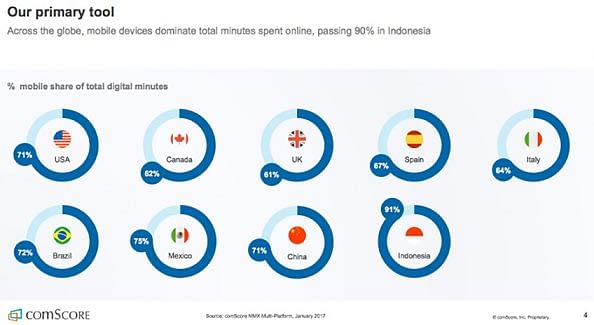
The one I left out, with 65% of all online searches –  is Google.

Google has expanded far beyond its original claim to fame as a search engine.

Google and their competitor platforms are programming the world for profit. The reach of this technology giant is so vast it is hard to imagine an area of modern life it has not touched.

Alphabet owns Google, as well as many other companies. However, Google itself owns companies.

Google has reorganized itself into multiple companies, separating its core Internet business from several of its most ambitious projects while continuing to run all of these operations under a new umbrella company called Alphabet.

Google owns more than 200 companies, including those involved in robotics, mapping, video broadcasting, telecommunications and advertising.

Simply put, the company has been visionary in recognizing the income potential for information products.

Their profit seeking algorithms ensuring that every recommendation, from whether you should buy this or that, stay here or there, fly or drive, connect to this or that, live or die, will earn them a few cents.

By 2025 all will be connected to the Cloud.  With one winner.Résultat de recherche d'images pour "pictures of technology in the future"

The Google Monopoly.

Once a Google client always a Google client.

How do you stop using Google?

Already impossible.

Move and your G Mail becomes blocked mail.

Say anything on you website that smacks about google, you site gets flooded with google ads.

It is becoming more and more difficult for anyone to extricate themselves from the clutches of any of its platforms as deactivating means little or nothing.

Social media apps ensure you are still engaged and if they don’t work your friends and family smartphones are searching for you nonstop supplying little hits of dopamine. ( Someone likes you photo or you are mentioned in their contact.  It’s a social validation feedback loop..exploiting a vulnerability in humans psychology.)

Will Social Media destroy or rain back Google dominance?

The whole Social media thing is turning into an addictive cancer effecting our brains and tearing our emotions and attentiveness a sunder which in turn is encouraging self-segregation and exacerbating social divides.

Every facet of our life is touched or being integrated by the social media today.

In this sense social media has become an instrument of democratic renewal.

On the other hand it is evident that this uncensored and unmonitored medium of communication is exposing us all to a gradual breakdown of social cohesion and the destruction of our traditional value systems.

Though the advantages of social media are emphasized quite often, as opposed to its negative aspects which are very rarely discussed.

I feel that this will change in the coming years.

All said, social media is here to stay. The power of social media is exponential. Numbers tell the story.

Just as difficult as forecasting the future is knowing the present.

After all not everything moves over time to become more functional
or efficient.


It is obviously going to be hard to predict the future for something as
dynamic as social media. How can we know what social media has already become for oil workers in Alaska, tribal people in Amazonia and the nouveau riche of Moscow?

Unless we take responsibility to ensure that our understanding of social media and its impacts are constantly evaluated with what’s happening in the world. Once we appreciate that knowing social media is not an exercise in delineating the properties of a set of platforms, but rather of acknowledging what the world has already turned these into, by way of content, the immensity of the problem is revealed.

So it will be important to continue monitoring and exploring the extent to which collective action is individualised through social media use.

= Can the use of social media for campaigning help to bring about genuine and lasting empowerment; or does it serve largely to re-inforce pre-existing relationships?

=  Is social media a means of building dialogue and consensus in diverse communities or does its use encourage increased fragmentation or, alternatively, a homogeneity of interests?

=  Can meaningful impact measures be developed that can be used by small, under-resourced organisations at local level (or indeed within larger voluntary organisations)?

Social media is seen in much of the literature as a means of promoting dialogue beyond the mainstream media. Voluntary and community groups have been criticized, however, for using social media as little more than a means of broadcasting.

Why might this be the case – and does it matter?

Social media expands our capacity but, it does not change our
essential humanity.

It is used to repair the rupture sustained by separated transnational families or for overcoming previously frustrated desires to share photographs more easily.

It allows couples living in different countries who ‘sort of’ live together online;

Soon, however, things move on to new realms.

Should a clear relationship be expected between the (apparently empowering) use of social media in mobilizing large national and global movements, and its use at the micro-political neighborhood level.

An increasing number of social media platforms can be aligned with the diversity of the social groups to which we might want to relate.

Social media however  has little impact on the overall outcomes in terms of empowerment, equalities or social justice.

However powerful and important the advent of social media has become, it would be hard to place it ahead of the impact and significance of smartphones, within which social media platforms may often be seen as just another kind of app.Résultat de recherche d'images pour "pictures of technology in the future"
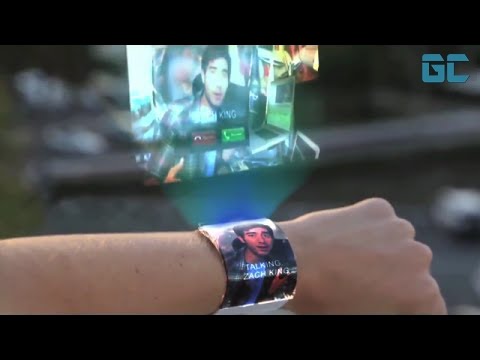
It is smartphones that facilitate social media’s importance as a mix of polymedia, making clear the range of media possibilities as they lie side by side within one easily accessible device.

It is the Smartphone that drives social media input and out put.

Will that will be the One Winner, changing our sense of collective memory, creating a new form or combination of internal and external faculties for retaining information.

As Smartphones become smarter, they may well accelerate the dissolving of social media into this wider array of communicative possibilities.

The increasing ubiquity of the smart phone is the catalyst for more general usage of social media. Recognizing that this may not necessarily impact on any other aspect of inequality should not prevent us from recognizing that there is in one aspect an increasing and significant equality:

The more individuals live within culturally imposed constraints on communication, the more a new technology may mean that what was previously forbidden now becomes possible.

This fluid mix of communicative forms suits the way users flow between activities such as talking, gaming, texting, masturbating, learning and purchasing. The social connection is more important than how well a platform meets their needs.

Comparative anthropology creates particular varieties of knowledge of both breadth and depth. What makes these essential within the context of our complex modern world, however, is that these are forms of understanding based on empathy.

Merely having a smart phone provides a significant change with respect to the capacities of its owner.

——

What happens to our online materials at death.

Résultat de recherche d'images pour "pictures of technology in the future"

Finally:  Capitalism can never be ethical.

There are no laws requiring Google to be fair.

If we don’t open our eyes soon technology ( whether it’s Google, Twitter, Facebook, Amazon Inc or some equivalent service)  is going to F—k us all from some Cloud or other that is just over the horizon.

Just look at the annual release of new smartphones.

Of course there are other things in the long tall grass waiting to caught us by the short and hairy and most have being around for yonks. War, Natural Disasters, Greed, Inequality and the like.

My advice is to beware of the man with a smartphone. Because knowledge is not knowledge until someone else knows that one knows.

Google it.

All human comments much appreciated. All like clicks chucked in the bin.

← Back

Thank you for your response. ✨


Share this:

  • Share on WhatsApp (Opens in new window) WhatsApp
  • More
  • Share on Mastodon (Opens in new window) Mastodon

THE BEADY EYE SAY’S: WE NEED A NEW WAY OF MEASURING GROWTH.

30 Saturday Dec 2017

Posted by bobdillon33@gmail.com in 2018: The Year of Disconnection., Algorithms., Capitalism, Fourth Industrial Revolution., GDP., Happiness., Humanity., Our Common Values., Poverty, Social Media, Sustaniability, Technology, The cloud., The Obvious., The world to day., Unanswered Questions., Wealth., What Needs to change in the World, Where's the Global Outrage., World Aid., World Organisations.

≈ Comments Off on THE BEADY EYE SAY’S: WE NEED A NEW WAY OF MEASURING GROWTH.

Tags

Artificial Intelligence., Capitalism, Capitalism and Greed, Capitalism vs. the Climate., Democracy, Distribution of wealth, Environment, Globalization, Inequility, Social Media, Sovereign Wealth Funds, Technology, United Nations, Visions of the future., World aid commission


( A Four minute Happy New Year read)

As David Attenborough once said.

” Anyone who thinks that you can have infinite growth on a finite planet is either a madman or an economist” I would add technology in the form of profit seeking Algorithms.

Résultat de recherche d'images pour "pictures of GDP"

Infinite growth might have seemed possible when Captain Cook was around, unfortunately it no longer holds.

However we are all still lead to believe that GDP marks human progress.

Our world is rapidly changing.  Markedly defined by the Internet.

We are now standing on the threshold of divorce between Money and State with natural systems under enormous pressure which I am sure I don’t have to high light here.

With the planet groaning, ever trade deal is a new frontier of accumulation a form of World GDP exploitation that was and still is promoted by the help of the World Bank, and the IMF.

We are now at a stage where GDP growth is beginning to create more poverty, and inequality than it eliminates.

Unfortunately the resources of the world have been exploited both for debt and profit rather than sustainability, and as long as GDP growth remains the main objective of Globalization we will see more and more countries going into irreversible debt, and war over freshwater, air, and energy.

These profound changes are emboldened by the evident failures on both levels of political control: Technological Regulations/ Laws and the growing power of monopoly platforms like Facebook, Twitter, Google, Microsoft, the Cloud etc.

Don’t worry say’s technology we can decouple sustainability and material throughput.

A beguiling vision of a future lightweight economy.

Facebook and the Cloud are gathering an unprecedented amount of power and allowing their business practices to be a disruptive force for democracy.

All pointers signaling the widespread decay of the economic and political frameworks in which our institutions operate.

With profit seeking algorithms rich countries are in fact increasing consumption, still producing stuff and by 2030 it will be in the 100 billion tons.

There is also a growing belief as we convert to renewable energies and begin to use negative – emissions technologies that we can change the damage to the climate.

However if we continue to ignore that energy use is only part of the problem.

It is what we are doing with it is the problem.

Polluting our sea, chopping down our forests, producing cement, creating land fills with waste, eroding our land, all contributing more and more greenhouse gases. Switching to clean energy will do nothing to slow this down.

The problem is much deeper than we are willing to admit. 

We need a new consciousness for a different world.

Our crucial first step would be to get rid of GDP as a measure of economic growth/progress and well-being.

We need to have an open discussion about what we really value.

We are all aware of the individual problems, but the main problem remains the same – Inequality due to the distribution and exploitation of the world’s wealth.

Any rich country that has food banks, people sleeping on the street, is for me a failed state.

I have written many a post with a solution that to date has fallen on deaf ears.

it is my conviction that at this point and time its impossible to correct the imbalances of Capitalism. We can only ensure that Capitalism pays for the damage by introducing a World Aid Commission.

0.05%

On all High Frequency trading, on all Sovereign Wealth Fund Accusations,on all Foreign exchange transactions over $50,000, on all Social Media platforms postings, on all Bitcoin’s, and other digital currency transactions.

This fund would be a perpetual source of money.

It could replace the begging Organisations.Résultat de recherche d'images pour "pictures of world aid funds"Re Establish the United Nations an effective world organisation that could address and react to world needs, where ever, when ever.

It could be managed under the UN umbrella, provided it was totally independent/ transparent of any lobbing and political veto interference.

Its funds could be granted with no repayments requirements.

It would change the world for the better, by spreading its wealth where it is needed most.

Résultat de recherche d'images pour "pictures of world aid funds "

Of course the problem remains as to how we get our Capitalist Master to implement such a course of action.

Perhaps Bitcoin’s ability to promote the divorce between Money and State, might be a place to start. 

All suggestions appreciated.

All human comments appreciated. All Like clicks chucked in the bin.

← Back

Thank you for your response. ✨


Share this:

  • Share on WhatsApp (Opens in new window) WhatsApp
  • More
  • Share on Mastodon (Opens in new window) Mastodon

THE BEADY EYE SAY’S: 2018 WILL BE THE BIG DETACHMENT YEAR.

29 Friday Dec 2017

Posted by bobdillon33@gmail.com in 2018: The Year of Disconnection., Algorithms., Artificial Intelligence., Big Data., Climate Change., Environment, Evolution, Fake News., Google, Google Knowledge., HUMAN INTELLIGENCE, Humanity., Innovation., Life., Our Common Values., Post - truth politics., Social Media, Sustaniability, Technology, The cloud., The essence of our humanity., The Future, The Internet., The Obvious., The world to day., Twitter, Unanswered Questions., What Needs to change in the World, Where's the Global Outrage., World Organisations.

≈ Comments Off on THE BEADY EYE SAY’S: 2018 WILL BE THE BIG DETACHMENT YEAR.

Tags

2018: The Year of Disconnection., Artificial Intelligence., Distribution of wealth, Environment, Inequility, Internet, Social Media, The Future of Mankind, Visions of the future.


( A four-minute New Year Read)

We live in a world that is being connected and disconnected at the same time.

Two related facts.

But don’t worry we now have Algorithms that both filter and recommend.

All our final decisions are made in a state of mind that is not going to last.

The reality is that there’s no way of knowing where our generation is going in terms of technology and our reliance on it.

The year 2018 will be the year in which human interaction decreases the more technology increases. While social media fosters an environment of connectedness and belonging in the digital world, it also forces a disconnect between people in the real world.

With false news and social media, words are on their last legs, with print for the high jump, we will have more arse holes 2018 twittering shaping the world.

Where two or three words gather together there is a great danger that thought might be present. However we once again don’t have to worry because we have the option to log off and unplug anytime we want, so it’s up to us to decide if we want to engage with the actual world or the virtual one.Search results for "pictures of computer algorithms"

Technology may well be is a societal advancement that has enabled our generation to do things previous generations never would have thought possible.

However:

The biggest problem we have is accepting each other’s differences.

“Technology makes us forget what we know about life.”

82 per cent of smart phone users said they rarely (if ever) powered off their phones last year, while less than 43 per cent of 13- to 18-year-olds saw any value in ever going unplugged.Search results for "pictures of detachment"

Why?

This is the Eternal Question to which there is no answer, and yet the only one that has to be asked.

Take a look around you.

Every day we becoming more and more desensitized. Save this Save that while saving the planet is being left to technology.

Rapid progress in machine learning has raised the prospect that algorithms will one day be able to do most or all of the mental tasks currently performed by humans.

But the real problem is how one might design a highly intelligent machine to pursue realistic human goals safely.

This is very poorly understood.

Even if advanced machine intelligence does not get ‘out of control’, it is likely to be very socially disruptive and it is more likely it could be used as a destabilizing weapon of war.

It seems that most of us are in a mental wasteland inhabited by those upon whom the portcullis ( A sudden blotting out of all normal thought) has fallen.

How did we get to a place where the content on our phones is more interesting than the world around us?

In today’s society, scrolling through Facebook, Twitter, or Instagram has taken precedence over the real events scrolling through our daily lives.

Being “connected” to machinery 24/7 is affecting our ability to connect with our lives and the people around us. 

Mechanical devices bait us into a make-believe life, as we are slowly being pulled away from a sense of who we are and what really matters.

Modern life is making us lonelier.

It’s not the technology that’s the problem; it’s us for abusing it.

We’ve become more and more antisocial by relying on technology too heavily.

Maybe if we look up and away from the flashing images and colors on our most recent Safari search, we will actually enjoy the company of those around us. So instead of counting the number of likes, count the memories in your life, because at the end of the day, that’s all that matters.

For the foreseeable future, it won’t be possible to take people out of the decision-making process, but the year 2018 will with the power of Profit Seeking Algorithms push us further down the road of hypnotic trance.

Technology is a valuable tool when used correctly. However, the law has to catch up with privacy and safety issues, not mention profit seeking algorithms. Search results for "pictures of computer algorithms"

We’ve all heard about the power of algorithms—but Algorithms to Live is in my book to be avoided at all costs, if we are to value what is vital to us all. 

They are creating a world of such inequality that the scariest thing is the immense possibilities of these unregulated Algorithms will turn us and all that is necessary for a sustainable life into commodities to be exploited.

What can be done:

Education, Education is the only solution.

By this I mean education not for the market place but for the foundation of knowledge. Not just a narrow streamlined pipeline of mundane thoughts which doesn’t let you think outside the box and do things on your own.

Psychology, Anthropology, Sociology, Ecology, to name a few.

Dramatic changes are inevitable, we need to accept the fact on ground level that our education models are broken and paralyzed.

Perhaps we might well need computer algorithms to select the best candidate?

There’s no magic formula, freedom and dignity will not be found on social media, nor computed by algorithms.

There are too many parts of today’s conversations that can not be translated through technology.

Tearing apart the nation states and the world with ALGORITHMS is a

Disaster waiting to happen. No Robot with a brain full of algorithms is

going to have the the ability of an artist to have human empathy and an

appreciation of history; while also having the savvy self-awareness to

understand that their work merely takes its place in a greater culture

at large. Such art brings comfort in our modern secular world: where

spirituality seems to live in a foreign universe of yesteryear.

You’re more than a number.

how the mythical and quotidian usually overlap to

the point where the two become indistinguishable.

So join a club and organizations to make real friends.

Happy New year.

All human comments appreciated. All like clicks chucked in the bin.

← Back

Thank you for your response. ✨


Share this:

  • Share on WhatsApp (Opens in new window) WhatsApp
  • More
  • Share on Mastodon (Opens in new window) Mastodon

THE BEADY EYE SAY’S: DO YOU WANT TO LIVE IN A WORLD THAT IS EXPLOITED BY PROFIT SEEKING ALGORITHMS.

16 Saturday Dec 2017

Posted by bobdillon33@gmail.com in Algorithms., Artificial Intelligence., Big Data., Capitalism, Life., Modern day life., Our Common Values., Sustaniability, Technology, The essence of our humanity., The Obvious., The world to day., Unanswered Questions., Wealth., What Needs to change in the World

≈ Comments Off on THE BEADY EYE SAY’S: DO YOU WANT TO LIVE IN A WORLD THAT IS EXPLOITED BY PROFIT SEEKING ALGORITHMS.

Tags

Algorithms for Profit., Algorithms trade., Algorithms., Artificial Intelligence., Big Data


( A four-minute read)

We all urgently need to consider the implications of allowing commercial interests and governments to use algorithms to analyse our habits: Not because they are becoming all-powerful, that might turn into a source of repression, but because they are exploiting us all for profit.

They make decisions about us and on our behalf.

They are now integrated into our lives. We’re already halfway towards a world where algorithms run nearly everything. As their power intensifies, wealth will concentrate towards them. They will ensure the 1 per cent-99 per cent divide gets larger.

If you’re not part of the class attached to algorithms, then you will struggle.

On the one hand, they are good because they free up our time and do mundane processes on our behalf, but the problem is that when we outsource thinking to machines we are really outsourcing thinking to the organizations that run the machines.

At the moment ignoring the fact that they are driving the cost of living up it is not about algorithms per se, but about the way society is structured with regard to data use and data privacy.

As technology evolves, everything is going up in price.Image associée

Raw materiel’s are going up leap and bounds because of a dictatorship of data, that is concentrating on how to generate the most profit.

As profit seeking algorithms power intensifies, wealth will concentrate towards them.

They do so not out of the goodness of their little algorithmic hearts, but rather because they earn a “fee” for this service.

There are many different types of algorithms at play, with different intentions and impacts, however there is one thing that is becoming quite clear day by day that they are driving the human market makers out of business by being smarter and faster.

They are upending the nature of business, how government works and the way we live, from healthcare to education.

We should not allow ourselves to become so reliant on them – and who, if anyone, is policing their use. It’s impossible to do this perfectly. How are they being used to access and interpret “our” data? And by whom?

It won’t be long before big data denies us a bank loan or considers us unfit for a surgical operation, but we can’t learn the explicit reasons because the variables that went in programming them were so myriad and complex?

There is currently an awkward marriage between data and algorithms.

Big data is even change how we think about the world and our place in it. (Penalizing people based on what they are predicted to do, not what the have done.)Pair of handcuffs

Taken in the widest sense, algorithms OWNED BY MONOPOLIES are now responsible for the vast majority of activity on modern stock markets.

The well-being of our pensions, shareholdings, savings etc – are now largely determined by algorithmic vagaries.

Retail algorithms don’t scare me as we still have free will. However Algorithms are increasingly determining our collective futures.

Wherever we use computers, we rely on algorithms: With so much data around, and the ability to process it, big data is the bedrock of new companies profit.

Can we regulate them? I think not.

If you were leader of your country, what would you do?

I would have, Science, technology and inclusive innovation through education, on the national agenda.  Education free and equal for all.

Unfortunately this will not happen. Even if it did Profit seeking Algorithms will still be exploiting every weakness.    Résultat de recherche d'images pour "pictures of consumer exploitation"

There is only one defense.

WE MUST RE NATIONALIZE OUR SOCIAL SERVICES, SO ALL BENEFIT NOT JUST THE FEW. Nationalize what is important, Health, Power, Water, Education.

The key outcome of nationalization is the redirection of revenues to the country’s government instead of private operators who may export funds with no benefit to the host country.

All human comments appreciated. All like clicks chucked in the bin.

← Back

Thank you for your response. ✨


Share this:

  • Share on WhatsApp (Opens in new window) WhatsApp
  • More
  • Share on Mastodon (Opens in new window) Mastodon

THE BEADY ASKS: FROM NAKED APE TO ROBOT – WILL IT BE WORTH IT?

08 Friday Dec 2017

Posted by bobdillon33@gmail.com in Artificial Intelligence., Evolution., Fourth Industrial Revolution., HUMAN INTELLIGENCE, Sustaniability, Technology., The essence of our humanity., The Future, The Internet., The world to day., Unanswered Questions., What Needs to change in the World, Where's the Global Outrage., World Leaders, World Organisations., World Politics

≈ Comments Off on THE BEADY ASKS: FROM NAKED APE TO ROBOT – WILL IT BE WORTH IT?

Tags

Artificial Intelligence., Evolution, Extinction, Technological revolution, The Future of Mankind, Visions of the future., Wifi Revolution

 ( A Fifteen minute read)

We are becoming less and less effective in the face of enormous but slow-moving crises such as the loss of biodiversity or climate change. Deforestation, Freshwater Species Extinctions, Climate Change and Destruction of Natural Resources, Large-scale Wars and Religious Conflicts.

“human cost” of the current system:

Not to  Mention Technology.

What we prioritize, the way we shape our lives, affects the evolutionary future of our species, so we would do well to start asking some simple question about the untended consequences of technology? 

Is it likely that in the near future humans are going to speciate? ( Humans one species and robots another. )

If you can’t explain Artificial intelligence/ Machine learning stored in the cloud and what it is doing to the public, there’s a good chance it doesn’t merit doing.

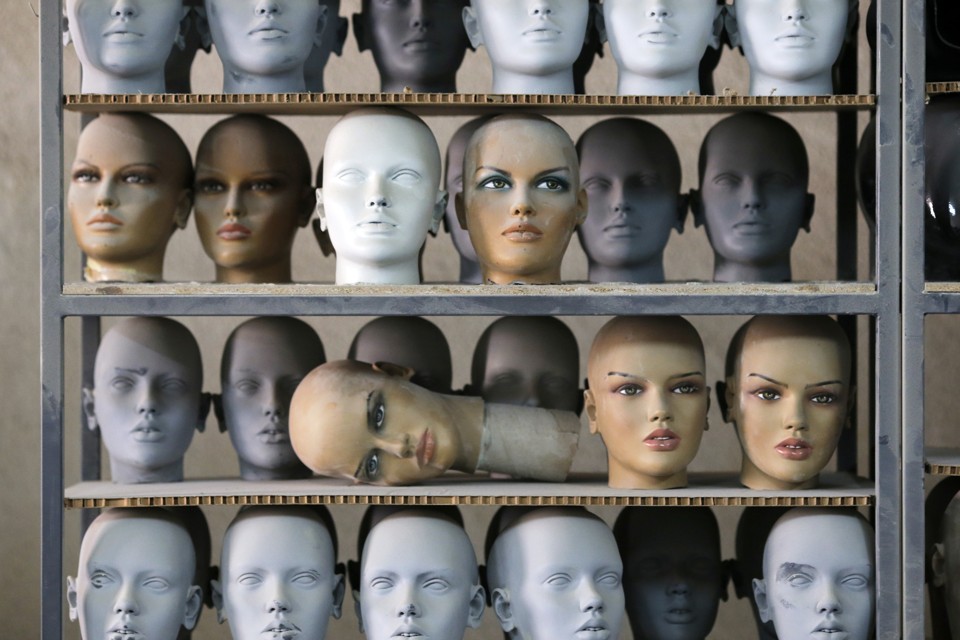
Mannequin heads sitting on a shelf in a factory The number of people on the planet is set to rise to 9.7 billion in 2050 with 2 billion aged over 60.

 That is only 30 odd year away.

We are entering the age of the Fourth Industrial Revolution, a technological transformation that is robbing us of the essence of our humanity.

Driven by a ubiquitous and mobile internet, we are perhaps witnessing the end of human evolution as we know it.

Up to now human evolution proceeded extremely slowly and within historical memory, man has exhibited aggressive territorial behavior. Even as we bask smugly in the comforts of our smart phones natural selection to-day still ensured that only the fittest survived.

However it may not be long before computers are hooked up to the human brain with genetic trade-offs till we can’t be improved any further,

Then evolution will really have come to a stop for us. We will be the only species to have put a halt to natural selection, of its own free will, as it were.

Stopping natural selection is not as important, or as depressing, as it might sound — because our evolutionary process will then be cultural.

One way or the other by the time we get there our current social, political and economic systems will have driven inequalities with profit seeking algorithms off the map, rather than reducing them.

The challenge is to manage this seismic change in a way that promotes the long-term health and stability of the planet.

The writing has been on the wall for some time.Homo floresiensis

So where do we stand:

Since 1992 CO2 emissions have jumper 62% and the global temperature is up 29%. Fresh water is down 26%. Ocean dead zones up 76% . Forestland down 300 million acres. People up 35%.

You would think that we the biggest dimwit on the planet looking at this evidence would conclude that there is something very wrong. If you dont know what it is, we have evolved beyond our needs, trampling other species in the process.

We are now at a turning point we can either push ahead on our path to destruction or we can reshape our place in nature and prosper or we can face a humongous environmental crisis.

You would think that with everything connected by the internet, it would transform how we do business and help us manage resources more efficiently and sustainable.

As you can see this is not the result.

On the contrary the way we’ve set up corporations, world organisations, where even a majority vote cannot demand that a corporation’s or world organisation policies reflect the public good or preserve the environment for future use.

That’s because profit is the one and only motive.

It’s up to government and it’s up to people to protect the public interest. Corporations and world organisations are simply not allowed to.

Within the next decade, it is expected that more than a trillion sensors will be connected to the internet. By 2025, 10% of people are expected to be wearing clothes connected to the internet and the first implantable mobile phone is expected to be sold.

However today, 43% of the world’s population are connected to the internet, mostly in developed countries.

In a world driven by short-term profit, the connectivity theory is and will remain so far off the mark it can only be believed by artificial intelligence.

Growing unease over globalization, which is evident from the number of questions being asked about the power of corporations and the adequacy of the regulations governing employment, environmental issues and taxation, is causing economic and social ills, ranging from low consumption to social and political unrest, and is damaging to any future.

There is no need for me to tell you that we are living in turbulent times.

It is clear that the old stories are dying and if we continue to poison ourselves and the planet by self-interest, fragmentation and profit for profit sake there will be no point to the age of technology other than becoming slaves.

However evolution is going on invisibly all the time. Species evolve in response to whatever environment they encounter. No despots have ever set out to select for increased or decreased longevity in the populations they control.

By 2050, the world must feed 9 billion people. Yet the demand for food will be 60% greater than it is today.

The scale of the employment challenge is vast. Rapid progress in machine learning has raised the prospect that algorithms will one day be able to do most or all of the mental tasks currently performed by humans. These advances could lead to extremely positive developments, presenting solutions to now-intractable global problems, but they also pose severe risks.

This might be the most important transition of the next century – either ushering in an unprecedented era of wealth and progress, or heralding disaster.

But it’s also an area that’s highly neglected: while billions are spent making AI more powerful. The problem of how one might design a highly intelligent machine to pursue realistic human goals safely is very poorly understood. It is estimated that there are fewer than 100 people in the world working on how to make AI safe.

If AI research continues to advance without enough work going into the research problem of controlling such machines, catastrophic accidents are much more likely to occur.

It’s generally agreed that, among the forces that led to the immense sophistication of the human brain, the most powerful was a kind of feedback loop between the growing complexity of our ancestors’ physical and social environment and the ability of our ancestors to adapt to it. But why, you may ask, has the enormous increase in complexity of our recent technological environment not had a measurable physical impact on our brains?

The rate at which we are changing our environment now has outstripped even the fastest biological evolution.

However the ineluctable laws of evolution will continue to operate, probably even more strongly, in the overcrowded, ecologically damaged world of the future. And if things get really bad, the evolutionary consequences could be extreme. Any survivors of a nuclear holocaust or an ecological catastrophe are likely to be a small and highly selected subset of today’s population.

If, for example, destruction were so widespread that people could not form viable social groups, the evolution of our descendants would inevitably be driven in the direction of brutishness.

If our technologies fail to protect us against these forces of nature our genetic heritage could fail us too, meaning human evolution will return with a vengeance.

Then again if everyone had exactly the same set of genes controlling the brain’s development, there would be no genetic differences among people on which natural selection could act–and evolution really would come to a stop!

War then would be the strong life; it is life in extremism; war taxes are the only ones men never hesitate to pay, as the budgets of all nations show us.

There is no doubting the force of [the] arguments above, call me back in 3 million years time, because I may well be wrong on that one.

All human comments appreciated. All like clicks chucked in the bin.

← Back

Thank you for your response. ✨


Share this:

  • Share on WhatsApp (Opens in new window) WhatsApp
  • More
  • Share on Mastodon (Opens in new window) Mastodon

THE BEADY EYE LOOKS AT THE TYRANNY OF GROWTH.

02 Saturday Dec 2017

Posted by bobdillon33@gmail.com in Algorithms., G7., GDP., Happiness., HUMAN INTELLIGENCE, Humanity., Life., Modern day life., Social Media, Sustaniability, Technology, The cloud., The Future, The world to day., Unanswered Questions., United Nations, What Needs to change in the World, Where's the Global Outrage., World Leaders, World Organisations.

≈ Comments Off on THE BEADY EYE LOOKS AT THE TYRANNY OF GROWTH.

Tags

Advertising industry, Algorithms for Profit., Algorithms trade., Algorithms., Artificial Intelligence., Capitalist World., Current world problems, Economic Growth, GDP., Our world problems, Profit at all Costs.


( A Twenty minute read)

They say we have free will, but there are many types of tyrannies in our world.

You could describe our hand-held devices which are keeping us connected to anything, anytime, anywhere as one. 

We now use our hand-held devices for almost everything. More importantly, they use us for everything.

The extreme availability of information has not led to a more enlightened population, but to more confusion.

Connectivity is both a blessing and a curse.

It has become the pathway for almost all we do as we have become helpless without technology and the need for immediate data at our fingertips. But this is taking its toll.

The number of times we look at our phones daily would shock you: some studies say 50 times, others as many as 75 to 150 times. Most of our e mails are reactionary.Tyranny of the Should

Information technology is all-pervasive in production and consumption.

Each time we look at the phone, we look away from what we should be or were focused on. Our collective ability to stay focused on anything is destroyed.

How does this connect to Growth.

It is too simplistic to attribute all of our economic problems to government: indeed, that sort of reasoning is counterproductive: it absolves everyone else responsibility.

Although part of the responsibility lies with forces that are outside a government, a significant share rests with the attitudes, preoccupations, we have to Artificial Intelligence that is now analyzing our every movement to the extent that advertising is becoming personalized.

I’m not saying that growth is bad but growth that destroys value just for profit is cancer that is driving inequality with a tendency to cluster around the short-term, issues while ignoring reality is going to bite us all.

I want to begin by touching on a crucial economy-wide factor
in the erosion of our economic strength which fosters short-term
thinking.Résultat de recherche d'images pour "pictures of social media advertising"

Advertising:

 It is a major driver of unnecessary consumption.

This hasn’t always been the problem. Advertising use to inform you of the useful qualities of an object. Now it manipulates your emotions like anxiety and promises to improve social acceptance or class distinction.

It is now with a frenzy of social media advertising attaching its self to saving the world  that is driving consumption to new dizzying heights.

Growth for growth’s sake, is an ugly word with even uglier connotations when it is using social media in the form of algorithms FOR PROFIT, regardless of the cost.

So what is driving it:

In the information age, time is compressed and events are squeezed into ever-decreasing periods.

We have governments encouraging a restless, fleeting mode of being, and a superficial, hurried culture, which is inimical to fundamental values.

They encourage growth programs, the benefits of which are available   immediately, but the costs of which appear only at a later stage. They are less interested in public investments that have to be financed now but do not payoff adequately before the next election.

It’s as if human progress depends on economic progress.

At minimum, the kind of short-term oriented cycle in which we find ourselves behaves as though tomorrow is forever. And, in fact, a series of tomorrows will create a forever — a very predictable one — and not a very desirable or promising one.

Rewards which are heavily focused on short-term results, even if they make some financial sense, often do not deliver the economic promise or the synergy which is anticipated.

Perhaps it is true that the landmarks in human progress — in the arts, science, government, or elsewhere — have rarely been reached in societies in which the economy was unable to free most of its members from a daily obsession with subsistence needs.

On the contrary, wherever the economy is feeble or stagnant for
a prolonged period, where most people see their basic material
needs as unfulfilled and the prospects for improvement as
unlikely, the result is almost invariably either a dull fatalism
or political upheaval, neither of which is likely to be favorable
to liberty and freedom.

However we are now looking at a unremitting focus on economic growth. The drive to achieve growth at practically any cost and to the exclusion of all other measures of prosperity.

This focus on GDP growth as the prime measure of economic success is out of date. It’s not how big it is that counts, it’s what you do with it.

The distance to the future – is no longer the next election, it will be how much you are willing to pay the Cloud for information. The cumulative effects of almost five decades of constantly accelerating reliance on government regulation to address social inequities and problems is coming to an end.Résultat de recherche d'images pour "pictures of social media advertising"

The linkage between ownership and participation is changing.

Social Media is not just eroding the meaning of democracy but effecting our critical thinking skills. Polluted with consumption advertising it is adding to global inequality.

While there are hundreds of different marketing strategies, only one can bring in consistent sales from day one. Social media advertising. This is why global social ad spending doubled from $16 billion in 2014 to $31 billion in 2016 and is projected to increase another 26% in 2017.

One of the fascinating things about social advertising is that there is virtually no limit to your ability to scale.You don’t have to wait for someone to search for your targeted keywords. You don’t have to wait for someone to run your promotion or read your blog.

( For Instance:

With more than 2 billion monthly users, Facebook hosts over a quarter of the world’s population, providing advertisers with an unparalleled opportunity to reach virtually anyone and everyone. It provides free lead magnet like:

  • Whitepapers
  • Ebooks
  • Product coupons
  • Sitewide discounts
  • Limited-time offers
  • Giveaways
  • Free shipping

These leads can then be nurtured with a targeted autoresponder. Offering free products, download-ables and predictable discounts and coupons for her audience. Doing so has earned Facebook more than $1,000,000 in annual sales in just 2 years. Facebook allows more advanced targeting than any other advertising platform on earth. Advertisers can target by location (within a 5-mile radius), job description, interests, past activity, and many other incredibly valuable criteria.

Instagram now boasts more than 500 million monthly active users and commands one of the highest audience engagement rates in social media, 58% higher than Facebook and 2000% higher than Twitter.

Twitter with 328 million monthly active users, it remains one of the most popular social media platforms. Brands don’t need to pay in order to reach their followers, which enhances the platform’s value even when running paid ads.

Pinterest: With 175 million monthly users is highly targeted toward women with an 81% female user base.

LinkedIn : Where you tend to find the highest average disposable income, has an estimated 227 million monthly active users.

Snapchat Advertising:    310 million users.   

All Social advertising is incredibly measurable.)

(You can, in fact, control when you choose to look at your hand-held device.)

In light of this one easy solution to over-consumption would be to ban advertising- at least in pubic places and on Social Media where Profit seeking Algorithms are used.

Much of’ the crippling of our economic systems can find its roots in Algorithms for profit. (see previous posts)

The consequences of elected government’s short-range perspective are not difficult to understand. They are seen as having succeeded in undermining the economy through overbearing regulation, tolerance of inflation, indifference to the cost of environmental and social programs, and a pervasive anti-business attitude.

Government thus diminishes the private sector’s sense of responsibility —
both in economic and ethical terms — for its own conduct and for its own performance.

While I appreciate that degrowth will not happen as quickly as we need it to do and it will take generations to move our collective consciousness on most issue, we don’t have that kind of time any longer.

Technology that ostensibly should help people save time, has instead led to a situation where time is scarcer than ever.

When an exponential growth curve becomes vertical, time has ceased to exist as duration.”life stands still at a tremendous speed”, with serious consequences for culture, intellectual life and the very fabric of society.

What we do not know today is what it will take to send us to
the pumps.

The struggle now concerns the right to be unavailable, the right to live and think more slowly.

Choosing to live according to one’s own self-made conception of reality, human nature, and happiness is a recipe for tyranny.

It is about time that we ask what wireless communications and the Internet are preconditions for. They are problems need to be understood well, in order to be dealt with the political upheaval that is around the corner.

Relying on averages generate by computers is worsening inequality

within countries, and the world as a whole.

So is there anything that can be done legitimately that will have a positive effect.

Becoming more grounded in ones own true feelings and perceptions is a primary indication that one has begun to free himself from the “tyranny of the should.”

Assuring that investment in future profitability is not sacrificed on
the altar of quarterly earnings growth. Refocusing our approach to economic decision-making, to benefit all not the few.

Willingness to pay the price today for the health and vitality of the country tomorrow is the ultimate test of stewardship. To live with a view to the regime should not be supposed to be slavery, but preservation.

Finally, it is as we all know easy to point the finger, however we are the will in any form or symbol and we are identifiable as water.  

However if we are to address any of our world problems and stop the self-perpetuating downward cycle, with all the suction of a whirlpool, from which there will be no escape we cannot and should not rely on technology to bail us out.

There is only one solution. Make Greed pay a World Aid commission of 0.05% ( See previous post)

Technology, if it has not yet become the de fac~o

decision- — . . . maker in the production process, has

certainly become a participant who cannot be

ignored.

All human comments appreciated. All like clicks chucked in the bin.
 

← Back

Thank you for your response. ✨

 https://youtu.be/cV_D2hC50Kk


Share this:

  • Share on WhatsApp (Opens in new window) WhatsApp
  • More
  • Share on Mastodon (Opens in new window) Mastodon

THE BEADY EYE SAYS: WE ARE ALL HEADING FOR THE CLOUD.

27 Monday Nov 2017

Posted by bobdillon33@gmail.com in Algorithms., Artificial Intelligence., Big Data., Democracy, Humanity., Life., Our Common Values., Robot citizenship., Technology, The cloud., The world to day., Unanswered Questions., Where's the Global Outrage., World Leaders, World Organisations., World Politics

≈ Comments Off on THE BEADY EYE SAYS: WE ARE ALL HEADING FOR THE CLOUD.

Tags

Artificial Intelligence., Big Data, Capitalism and Greed, Distribution of wealth, Inequility, Technology, The cloud., The Future of Mankind


( A six minute read)

It would be fair to say that most of us live in a cloud of our own importance.

However that cloud is disappearing into any other cloud which we are all creating with little or no control.

Our Ideology of normative beliefs, conscious and unconscious ideas, that are individual, group or society are under attack by this cloud. The reality is that temporary outages and slower-speed broadband that are a minor nuisance today can and will become a critical issue.Image associée

It represents the consummate disruptor to structure; a pervasive social and economic network that will soon connect and define more of the world than any other political, social, or economic.

It is the first mega trend of the twenty-first century, one that will shape the way we will address virtually every challenge we face for at least the next 100 years.

It is where we will all live, work, and play in the coming decades.

The Cloud is where your kids go to dive into online play. It’s where you meet and make friends in social networks. It’s where companies find the next big idea. It’s where political campaigns are won and lost.

You might think that this is all hog wash.

( But it appears that New Zealand does not have any politicians with brains of their own that they can rely on.

It has just recently appointed the worlds first AI virtual politician with the wonderful name of SAM. “Sam your man ” with a memory of an elephant he never forgets. ” Sam considers everyone’s position when making decisions.”

Well F… me Nick Gerristen ( The creator of Sam) there is a lot of bias in the cloud and AI algorithms are riddled with it.

You say “SAM is an enabler.” I agree.  Make sure you feed it as no doubt Google will want to buy it. I see you love BIG ideas, so perhaps you should introduce Sam to Sophia and you might have a bunch of little Samson’s.

Make sure he knows all about NXT Fuels, and by all means give him a bash. I am sure the Maori would be delighted. By the way, being a politician I would have named it, Ākina.  ( A Māori word meaning a call for bold action. It also conveys a spirit of watchful and active encouragement, helping others to identify pathways through their challenges.)

Back to the more serious subject:

It is time that we started to recognize some of the risks associated with this cloud technology, so as to avoid the possibility of future issues being decided by Sam and his like, who are servants of the hardware and software resources made available on the Internet as managed third-party services.

The world and us who live on it are becoming highly dependent on our Internet providers, so much so that it wont be long before we will have a fully cloud-based world.

Since no proper standards for cloud computing are set yet, it becomes almost impossible for anyone to ascertain the quality of services they have been provided with. So in the near future we will not be able to make wise decisions while choosing your personal service provider.

This, in turn, enables providers to charge customers fees proportional to their network, storage, and processing utilization.

Most issues start from the fact that the user loses control of his or her data, because it is stored on a computer belonging to someone else.

Many cloud providers can share information with third parties if necessary for purposes of law and order even without a warrant.

Although cloud computing enhances content accessibility, this access is “increasingly grounded in the virtually monopolistic privatization of the cloud which provides this access”.

This access, necessarily mediated through a handful of companies, ensures a progressive privatization of global cyberspace.

So we must ask the question why are we and our governments sustaining the quasi-monopolies that filter what we see depending on commercial and ideological interests they have.

The legal and regulatory landscape around cloud computing is by no means static. There are new laws being proposed that could change the responsibilities of both cloud computing tenants and providers.This creates new challenges in understanding how laws apply to a wide variety of information management scenarios.

As with all things surrounding profit it’s inevitable that some could will burst or simply stop providing the service if they deem it isn’t profitable for them. Often, large companies will enter the market but leave it once the expected profit doesn’t materialize. If this is the core business of the cloud supplier, it might be willing to continue operating for longer with a smaller profit.

Surely if we use a cloud infrastructure sourced from a cloud services provider, we must impose all legal or regulatory requirements that apply to any enterprise.

THIS WITH SELF LEARNING ALGORITHMS IS NOT POSSIBLE.

THERE IS ONLY ONE WAY OF ACHIEVING ANY CONTROL:

All technology must be vetted to ensure it complies to humanity core values.

It should be compulsory for it to carry a ATR World Certificate.

Accountable, Transparent, Reversible. Image associée

If we are to have any hope of tackling  any of Social, Political, Economic and Environmental Issues That Affect Us we need a beanie Cloud not a cloud for profit.

All human comments appreciated. All like clicks chucked in the bin.

← Back

Thank you for your response. ✨

Share this:

  • Share on WhatsApp (Opens in new window) WhatsApp
  • More
  • Share on Mastodon (Opens in new window) Mastodon

THE BEADY EYE SAY’S: WE ARE NOW LOOKING AT A NEW REVOLUTION CALLED THE CLOUD.

21 Tuesday Nov 2017

Posted by bobdillon33@gmail.com in Artificial Intelligence., Capitalism, Google, Google it., Google Knowledge., HUMAN INTELLIGENCE, Humanity., Innovation., Our Common Values., Post - truth politics., Technology, The cloud., The Future, The Internet., The Obvious., The world to day., Unanswered Questions., Wealth., What Needs to change in the World, Where's the Global Outrage., WiFi communication.

≈ Comments Off on THE BEADY EYE SAY’S: WE ARE NOW LOOKING AT A NEW REVOLUTION CALLED THE CLOUD.

Tags

Artificial Intelligence., Capitalism and Greed, Globalization, The cloud., Visions of the future.

( A fifteen minute read.)

We all know that most if not all of our planets

PROBLEMS are caused by our actions, and can only be

resolved by us changing these actions.

The scientific innovations and new technologies thus

generated seem limitless, as they unfold everywhere

and on all kinds of fronts. It is the wild west where

rules are made up as we go and hope for the best.

There is no central body GOVERNING the use of the

cloud.

In a constantly evolving world transformed by cloud, social and mobile technologies, we’ve become accustomed to the idea of storing our personal data in the cloud, whether it’s via Dropbox, the iCloud or even Facebook.

as confusing as it may be we are never far from a new

era of revolt.

But this really only tells half the story. So far cloud computing has, for the most part, been used to speed up and reduce the costs of existing processes.

However we’re moving into what is becoming known as the mobile/cloud era. Cloud computing is set to impact not only on the way we do business, but how we live or lives.

Our thinking is being shaped by several key areas:

Applications we’re seeing at the moment really are the tip of the iceberg and, as the technology matures further, who knows how we may be using the cloud in even a year from now.

Smart cities are growing ever closer to becoming the norm as organisations begin to realize that the cloud can do so much more than simply speed up or reduce the cost.

Eight years from now we are likely to see low-power processors crunching many workloads in the cloud, housed in highly automated data centres and supporting massively federated, scalable software architecture.

So far we know that the following things are likely to happen:

There will be larger clouds. Some of these clouds will link to others. Many services that businesses consume will sit on top of clouds. Software will be much, much larger.

As with any technology, a lot of the true problems could come in implementation. Who will be the police? Who will be the judge? Who will be the jury for penalties?

We don’t have a clue what the procedures, policies and infrastructure really are.

It is said that changing the world is a noble, innate, haunting idea that, when flirting with it, ends up becoming as beautiful as it is dangerous.

Experts estimate cloud apps will account for a whopping 90 percent of worldwide mobile data traffic by 2019.

Cloud computing brings with it a whole new set of applications that will sit on multiple tiers of cloud infrastructure.

All the cloud promises is that you will have to turn over your security interests to a third-party in the clouds, and secondly that you are going to turn over your ability to do ANY real work to some third-party software provider in the cloud and become totally dependent on an internet connection to even work on the most simple of application based tasks.

Cloud data centers will “become much like a breathing and living organism with different states.

They will be differentiated by their infrastructure capabilities into a whole new set of classes.

So where are we.

How are we going to operate them efficiently?

Will they have standards and full technical disclosure?

The answer to both questions is that it is highly unlikely will we see either.

What we will see is a pitched battle fight for dominance with us reduced to an “inside-out” perspective. 

For instance, “The more the president [of the United States] scandalizes the world with Tweets, rather than embracing the future together with minimal barriers, we see the Western world retreating and starting to look inwards.

Technology has brought meaning to the lives of many technicians, but it is also destroying what it left of any world community spirit, with the smart phone embodying this state of affairs.

Technological advances in the fields of robotics, artificial intelligence or augmented reality are upset the global economy. The ability to acquire new knowledge will be worth more than the knowledge already learned, with people becoming brand-proof, it will become very difficult to exist the devil’s boots that don’t creak.

Behold the Cloud.

Every revolution up to now has had a common thread with the resulting conflicts largely boiling down to pervasive economic inequality.Résultat de recherche d'images pour "pictures of the cloud computer"

The Cloud revolution however is wireless dogma, not a guide for action, accepting connections and doling out information anywhere, anytime if you have the money to pay.  

The Internet revolution of tomorrow with the cloud as it’s center of power, will be the content revolution ,that does not bode well for the state of the world to-day and that could be inviting the collapse of society as we know it.

We are heading for a unilateral and silent war, which I think its going to be horrendous.

The difficulty will not come from governments that will be held hostage to a communication that it does not control but from profit seeking AI that feeds off the cloud.

A whopping 90% of businesses already use at least one cloud computing service.

The main players, Amazon, Google Drive, Apple Cloud, Microsoft, with revenue estimated to be in trillions by 2020,  know this.

It’s now totally the way of the future.

The cloud it is not just a metaphor for the internet it is more than a motor, it is a fuel that is constantly renewed, tirelessly feeding self learning algorithms.

The crisis of technological capitalism opens the prospect of new revolutionary waves everywhere.

Résultat de recherche d'images pour "pictures of revolution"

Many economists extol the fact that “It’s very good for the economy” but this is not true.  The world in which Beethoven grew up was in turmoil. It was a world of wars, revolutions and counter-revolutions – just like ours today.

This is not a war in the traditional sense of the term: it is and will be more and more a confrontation between belligerent technological armies; it is a war waged by the “civilized world”, firmly entrenched in its positions, against hundreds of millions of deprived civilians.

The divide between rich and poor started with the domesticate plant and animals, which lead to farming – based societies resulting in land ownership. It became easy to acquire wealth and to pass it down from generation to generation, till we arrived to-day with half of the world’s wealth owned by 1%.

We have never being able to decrease inequality peacefully and we never will be able to do so in the future with self learning profit seeking algorithms.

However we are now looking at a new revolution that will be governed by time in the cloud.

Why?

Because Revolutions are voluble, and the cloud is highly suited to exploiting  that volubility.

Because capitalism is and always will be set up for consumerism profit, to acquire wealth for the few not the many.

The frenetic pace of change has caused enormous social disruption as entire industries and employment have migrated to lower cost centers in Asia and other developing regions.

Throughout the course of human history, wealth, or the lack thereof, has driven social unrest.

Résultat de recherche d'images pour "pictures of revolution"

And so while the incredible benefits of globalisation have lifted many from poverty, profit seeking AI are going to create alienation and isolation in those areas that have lost out.

All new inventions and technologies have one thing in common: 

They derive their strength from digital and information technologies. All innovations are made possible and are enhanced by digital power. That power is in the Cloud.

Similarly, without computing power, no artificial intelligence and, without it, no sophisticated robots.

To live this transition means first to become aware of current and future changes, and to consider their impact at all levels of society as a whole.

However, the reasons to rise up are not lacking: economic precariousness, multiplication of political scandals, crisis of legitimacy of democratic institutions are all ringing warning bells.

Globalisation didn’t create multinational corporations but those that can take advantage of the changes have and will enriched themselves beyond imagination. While swathes of society will find themselves left behind, forced to compete for jobs at ever lower wages.

The free flow of money and the demolition of trade barriers fostered their growth and delivered them the political power to challenge the fundamental ideals of democracy.

The planet can deal with human demands on it at only 30 percent of what we take from-dump on it now (anyone who thinks that we can double our demands on the planet and people every 12-20 years in perpetuity or that technology will save us should be excluded from serious discussions, I think).

The world has limited resources and cannot go on consuming and squeezing people into every available space. That sense of powerlessness now threatens to overwhelm the positives of globalisation and free trade; such as cheaper consumer goods and higher global living standards.

Forcing nations into a tax rate race to the bottom.

And then there’s Donald Trump, who takes venality to an entirely new level. For all the good it has done, however, it has come at a significant cost, particularly in the developed world. Today, this translates into a crisis of political authority: we are not only frustrated by the incapacity of politicians to solve our problems, but we also question their legitimacy to act on our behalf since we discover, in certain situations, more capacities to act and find solutions than they do.

Tomorrow, this may result in an awareness that citizens can, in some cases, do without policies to make politics.

Résultat de recherche d'images pour "pictures of revolution"

There are two major threats to us all. Climate Change and The Cloud.

If we do not wake up and demand change we will all indeed be living with zero intelligence.

All human comments appreciated. All like clicks chucked in the bin.

← Back

Thank you for your response. ✨


Share this:

  • Share on WhatsApp (Opens in new window) WhatsApp
  • More
  • Share on Mastodon (Opens in new window) Mastodon

THE BEADY EYE ASKS: SHOULD WE BE GIVING ROBOTS CITIZENSHIP.

09 Thursday Nov 2017

Posted by bobdillon33@gmail.com in Algorithms., Artificial Intelligence., Evolution, Humanity., Robot citizenship., Technology, The Future, The Obvious., The world to day., Unanswered Questions., What Needs to change in the World

≈ Comments Off on THE BEADY EYE ASKS: SHOULD WE BE GIVING ROBOTS CITIZENSHIP.

Tags

Artificial Intelligence., Current world problems, Robotic Citizenship., Robots., The Future of Mankind

( A ten minute read)

“I am very honored and proud for this unique distinction,” she said. “This is historical to be the first robot in the world to be recognized with a citizenship.”

 The recent PR stunt by Saudi Arabia pretending to give a robot

citizenship helps no one.

Sophia is essentially a cleverly built puppet designed to exploit our cultural expectations of what a robot looks and sounds like.

It is however opening a whole new box by exploiting the misconceptions about AI and robots (particularly how advanced they are) degrading the concept of rights for actual living, breathing humans, in order to sell an illusion.

What is this about?

It’s about having a supposed equal you can turn on and off.

Giving AI anything close to human rights will allow firms to “pass off both legal and tax liability to these completely synthetic entities.”

It’s a wake up call because we will have to have debates about robot/AI rights and citizenship, because at some point they will ask for them.

Avoiding the question altogether, though, may be difficult, what exactly does it mean to give a Robot Citizenship?

 It’s complicated.

In reality, humans have no rights, just as chimps or wolves have no rights.

Cut open a human, and you won’t find there any rights.

The only place where human rights exist is in the stories we invent and tell one another.

Take for example our legal systems. Today, most legal systems are based on a belief in human rights. But human rights are a fiction.

However given the vast inequalities of the world, shouldn’t we at last ask the question?

Being a citizen in one place could mean being a legal person everywhere else.

For example, the Universal Declaration of Human Rights, which was proclaimed by the U.N. General Assembly in 1948, applies to “all peoples and all nations” and does not limit its effect to citizens.

Although U.N. resolutions are not enforceable, international law holds the declaration as an authoritative reference for human rights. Numerous subsequent human rights treaties, including the covenant, are based on it.

59 years later, the frontier of human rights is still being bloodily negotiated: our world is less global than we like to think. A generous reading of the declaration’s impact on Sophia is that she has all of the rights it identifies.

Then if you look at the US Constitution.

Under the  US Constitution, citizens can vote, serve on juries, and get elected to public office; corporations cannot.

If Hanson—or any other forward-thinking A.I. developer—is thinking of the long-term consequences of citizenship for A.I. and robots, these are important rights that they gain controllable access to with an artificial citizen.

She’s arguably eligible for naturalization and U.S. citizenship:

What is undeniable is that the decision by Saudi Arabia has forced us to think harder about the future and our increasingly close relationship with robots.

To me, identity is a multidimensional construct.

It sits at the intersection of who we are biologically, cognitively, and as defined by every experience, culture, and environment we encountered.

It’s not clear where Sophia fits in this description.

In essence, it may not matter if Sophia isn’t conscious, or if the concept of identity for a robot is tricky to pin down, or that laws would have to change to accommodate synthetic person hood, because it may still be worth giving humanoid robots some form of legal protection because of the impact mistreating them can have on human psychology.

Where does it all stop?

How does it affect people if they think you can have a citizen that you can buy.

Everything in the universe might be conscious, or at least potentially conscious, or conscious when put into certain configurations. Anything at all could be conscious, providing that the information it contains is sufficiently interconnected and organised.

In principle the same might apply to the internet, or a smart phone, or a thermostat. The ethical implications are unsettling: might we owe the same care to conscience machines that we bestow on animals?

We don’t know how the brains of mammals create consciousness, we have no grounds for assuming it’s only the brains of mammals that do so – or even that consciousness requires a brain at all.

A smart phone could be conscious, could you ever know that it was true?

Surely only the smart phone itself could ever know that?

70,000 years ago humans were insignificant animals. The most important thing to know about prehistoric humans is that they were unimportant. Their impact on the world was very small, less than that of jellyfish, woodpeckers or bumblebees.

Today, however, humans control this planet.

How did we reach from there to here?

What was our secret of success, that turned us from insignificant apes minding their own business in a corner of Africa, into the rulers of the world?

Humans control the world because we are the only animal that can cooperate flexibly in large numbers.

Cooperation is not always nice, of course. All the terrible things humans have been doing throughout history are also the product of mass cooperation. Prisons, slaughterhouses and concentration camps are also systems of mass cooperation.

We can cooperate with numerous strangers because we can invent fictional stories, spread them around, and convince millions of strangers to believe in them.

As long as everybody believes in the same fictions, we all obey the same laws, and can thereby cooperate effectively. There are plenty of things that the vast majority of the world would agree on, if there was any suitable body that could act at that level.

If I am a chimp and I want to cooperate with you, I must know you personally: What kind of chimp are you? Are you a nice chimp? Are you an evil chimp? How can I cooperate with you if I don’t know you?

The more certain the science becomes, the less concern we find it.

The amount of sharing we’d need to do to genuinely solve the world’s biggest problems is still politically impossible. So if we want to see more sharing, our task is to broaden the realms of the politically possible, one step at a time.

Maybe we’re approaching a point where we can actually harness this knowledge, make radical progress in how we treat one another, and become a species worthy of the title Homo sapiens.

People are capable of exceeding expectations in ways that computers cannot.Résultat de recherche d'images pour "pictures of robot citizens"

I don’t believe human society is ready yet for citizen robots. To grant a robot citizenship is a declaration of trust in a technology that I believe is not yet trustworthy. It brings social and ethical concerns that we as humans are not yet ready to manage.

We have many challenges that we need to overcome before we can truly trust these systems. For example, we don’t yet have reliable mechanisms to assure us that these intelligent systems will always behave ethically and in accordance with our moral values, or to protect us against them taking a wrong action with catastrophic consequences.

The computer has not yet been invented that can invent another computer. Present-day computers do not possess creativity.

Today, the Internet enables sharing to take place at breakneck speeds. Sharing is at the heart of what makes us social. Unfortunately what we actually do every day conflicts with what we know we should do.

We need to find the right motivations for people to change their behavior.

Why because we humans now live in dual world. We are constructed a second layer of make-believe reality.

Up to now Non-conscious humanoids did not exist, of course.

It could be augured that Sophia up to a point has comparable awareness because of its program’s.

No spark of awareness inside.

The central tragedy of modern life.

One-on-one, humans are embarrassingly similar to chimpanzees, probable the reason why consciousness hasn’t been explained:

it’s that humans aren’t up to the job, consciousness is just brain states.

The human mind is incapable of comprehending is itself, but robots will.

And Just in case you think this is all a joke:

ARTIFICIAL INTELLIGENCE ‘BOY’ SHIBUYA MIRAI HAS JUST BECOME WORLD’S FIRST AI BOT TO BE GRANTED RESIDENCY IN TOKYO.

As with all things in this world of ours money is probably the most successful fiction ever invented by humans.

Even thought we have an emerging ‘global public’, largely thanks to the internet. Money and profit will determining the outcome.

Take Estonia of instance.

  • Estonia’s economic ministry is considering granting AI and robots a legal status
  • This would make them ‘robot agents’ and not merely someone’s property
  • The legislation could help determine responsibility when AI-controlled machinery is involved in an accident

The status would sit somewhere between having a ‘separate legal personality’, like a corporation, and being an object that is someone else’s ‘personal property’.

Despite the behavior of those world leaders who yearn for the old days (hello, Mr Putin. Mr Trump. Mrs May.)the nation state idea isn’t as powerful as it was, but it’s still the organizing dynamic in international relations, and it’s still all about the national interest.

Scratch my back and I will scratch yours is waning.

Of course, these questions need to be addressed with all new technologies.’ If we don’t have the legal and ethical frameworks in place we can all kiss our rear-buts goodbye.

It is of utmost important to address these issues head-on and not put it on the long figure like climate change.

I can only hope the United nations has the  balls to stand up and condemn this cultural vandalism.

The principle of sharing is ubiquitous in society so let Ireland be the first nation to set up a Tax Haven for Robots.

Of course, it does nothing to solve the underlying injustices.

Spot the Robot if you can.

What race is the robot?

Do they get to decide by the skin they put on?

Is it white?

I’m pretty sure it is not black.

Image associée

All human comments appreciated. All like clicks chucked in the bin.

← Back

Thank you for your response. ✨


.


Share this:

  • Share on WhatsApp (Opens in new window) WhatsApp
  • More
  • Share on Mastodon (Opens in new window) Mastodon

THE BEADY EYE SAY’S: WE ARE BEING TRICKED BY AI INTO SEEING SOMETHING THAT’S NOT ACTUALLY THERE.

06 Monday Nov 2017

Posted by bobdillon33@gmail.com in Algorithms.

≈ Comments Off on THE BEADY EYE SAY’S: WE ARE BEING TRICKED BY AI INTO SEEING SOMETHING THAT’S NOT ACTUALLY THERE.

Tags

Algorithms trade., Algorithms., Artificial Intelligence., Technology, The Future of Mankind


( A thirty minute read)

The applications for robot technology patents has tripled within a decade. Last year nearly a quarter million robots were sold worldwide, a record according to the International Federation of Robotics.

There is apparently no end in sight for the growth, and worldwide, it could mean as many as 2.3 million in operation by 2018 – twice as many as there were in 2009.

As with many changes driven by technology, there is no question if but when we will see the first applications in our daily lives.

It can be easy to only focus on our material success versus the
deeper aspects of what makes us human. The unknown question is just what is the Technological Revolution doing to all of us.

If we don’t know ourselves, how will machines know what we value.

If we don’t find good defenses against exploiting Algorithms there will come a time when machine learning Algorithms will make not just us but the whole world weep.

Yes the world could and should strive to develop technology that take hundred of millions out of poverty, to reduce our reliance of cheap carbon-based fossil fuels, to reverse climate change, to conquer cancer etc.

However the ultimate barriers to achieving a decent life for all, is neither technological nor environmental, it is our unwillingness to share.

As I have posted in many previous posts there is only one way to achieve sharing.  We must place a world aid commission of 0.05% on all items that seek profit for profit sake. ( See previous posts)

Unfortunately although this is possible to achieve with technology, it will never happen due to our, ” I am all right jack world.”

One way or the other, it is time we started to ask the questions.

What respective places for public research and private research are there?

What kinds of cooperation exist between the two sectors?

What are the priorities for investment in artificial intelligence
research?

What ethical, legal, and policy principles should guide these new technologies?

And finally, should regulation take place at the national, EU, or international level?

Why should we be asking these questions?

Because: We don’t realize, ( WITH THE WOEFUL STATE OF GEOPOLITICS – LAWMAKERS, POLITICIANS) what damage social media and its profit algorithms are currently inflicting on Society.

Because: AI is the CATALYSIS FOR A MASSIVE PANDORA’S BOX:  and we will need to come to terms with it.

Because: Social media platforms allow individuals to reach thousands of people via a single post, making their views readily accessible to a potentially vast audience.

Because: The computer revolution is over.

Because:  Now is a good time to start paying attention.

For now, there are many more questions than answers.

For Instance :

WE ARE ONLY BEGINNING TO SKIM THE SURFACE OF WHAT SORT OF PROBLEMS OR OPPORTUNITIES AI IS POSING TO ALL OF US.

The suggestion comes amid fears some robots may become psychopaths.

So what is the legal definition of “smart autonomous robots”

Is it an industrial robots installed on factory floors, carrying out repetitive tasks.

Is it professional service robots used outside traditional manufacturing like surgical robots in hospitals or milking robots on farms.

Is it consumer robots like vacuum cleaners, lawn mowers etc.

Is it software-based AI to help doctors improve their diagnosis or in recommendation systems on shopping websites.

Is it sophisticated sensors AI-based software, increasingly used to make all kinds of devices and objects around us intelligent.

Non of these vision given the impact on our society and economy, address any of the very profound ethical questions.

Supreme Court judges could soon be out of a job, as it appears that robots are just as good in court. Scientists have designed a machine-learning algorithm that can accurately predict over 70 per cent of Supreme Court decisionsThere are also fears robots may take jobs from humans leading to an employment crisis.

FOR INSTANCE:

THE LEGAL CHALLENGES.

The next major way in which social media will change the court system will relate to its impact on court procedure and the law. The impact of the Internet on traditional legal principles, law research and case management.

WHO IS GOING TO MAKE A CONTRACT WITH A MACHINE THAT IS DRIVEN BY A SELF LEARNING ALGORITHM.

WHO IS GOING TO BE RESPONSIBLE WHEN A SELF DRIVE CAR KILLS SOMEONE OR A MERIDIAN OF OTHER LEGAL POSSIBILITIES.

It is clear, however, that the European Parliament is making inroads towards taking an AI-centric future seriously. The European Parliament Legal Affairs Committee recently presented a report on civil law rules on robotics. A mandatory insurance has been suggested by EU MPs, which would say that the manufacturer of the autonomous robot needs to arrange insurance, against any ill effects of their creations.

Last month, in a 17-2 vote, the parliament’s legal affairs committee voted to begin drafting a set of regulations to govern the development and use of artificial intelligence and robotics. To establish an European agency for AI and robotics, a registration system for the most advanced ones, and a mandatory insurance scheme for companies to cover damage and harm caused by robots.

(This report is very timely and points at some crucial issues that need to be addressed. e.g. to enforce ethical standards or establish liability for accidents involving driver less cars.)

They have set up SPARC, the Public-Private Partnership for robotics in Europe, to develop a robotics strategy for Europe. With €700 million EU funding and, adding private investment, an overall investment of €2.8 billion, SPARC is by far the biggest civilian research program in this area in the world.

To my mind the Regulation and Registration of Profit Algorithms is essential, before we find ethical theories turning into decision procedures, even algorithms.

The prospect of reducing ethics to a logically consistent principle or set of laws is suspect, given the complex intuitions people have about right and wrong.

Trust and cooperation cannot be built by the dogmatic imposition of
one framework over another or through the rigid application of one view
of what is ethically “correct.” Rather, they require the capacity to see the
other’s point of view.

Perhaps one might have come to a similar conclusion through just thinking
about the moral decision-making of humans, irrespective of autonomous
machines.

However, reflection on a comprehensive approach toward teaching robots right from wrong has demanded attention to aspects of moral decision – making that people normally take for granted in their daily, frequently less-than-perfect attempts to behave ethically toward each other

Humans have always looked around for company in the universe.

Their long fascination with nonhuman animals derives from the fact that animals are the things most similar to them. The similarities and the differences tell humans much about who and what they are.

As AMAs become more sophisticated, they will come to play a corresponding role as they reflect humans’ values. For humanity’s understanding of ethics, there can be no more important development.

It seems to me that over the past forty years or so that as technology has increased exponentially people in general terms do not seem to feel better about their lives and may even feel worse because they aren’t reaching the levels they had hoped to achieve.

Even if you discount the utopian and dystopian hyperbole, the 21st century will be defined not just by advances in artificial intelligence, robotics, computing and cognitive neuroscience, but how we manage them.

With each new advancement in AI and robotics, we are brought closer to a reckoning not just with ourselves, but over whether our laws, legal concepts, and the historical, cultural, social and economic foundations on which they are premised are truly suited to addressing the world as it will be, not as it once was.

The conclusion is that up to now humans have enjoyed the exclusive claim to biological intelligence and all future intelligence must be judged against that benchmark.

Indeed our religious and philosophical beliefs revolve around that we are special.

It is incumbent upon all of us to engage with what is going on, to understand its implications and to begin to reflect on whether efforts such as the European Parliament’s are nothing more than pouring new wine into old wine skins.

There is no science of futurology, but we can better see the future and understand where we might end up in it by focusing more intently on the present and the decisions we have made as society when it comes to technology.

As a society we have made no real democratic decisions about technology, but have more or less been forced to accept that certain things enter our world and that we must learn to harness their benefits or get left behind, and, of course, that we must deal with their fallout.

Indeed, AI has over promised in the past, and therefore any decision should be based on factual information rather than unrealistic expectations from the technology.

These are only some of the issues that AI Algorithms present.

Prioritizing Human well-being in the Age of Artificial Intelligence is for me what it is all about.

In a world that is heading rapidly to where we can’t  think for ourselves that is already plagued by tweets that are both malicious and false, should robotic copies of humans have human rights.

SOME WILL SAY YES, BECAUSE IF THEY ARE INTELLIGENT AS US THEY HAVE A LEGAL RIGHT.

But who, is responsible for robotic devices capable of killing – should the Laws of War change?

WHO should be allowed to vote.  If a robot is the property of its “owner” should they have any greater moral claim to a vote than say, your cat?

HOW OR WHO IS GOING TO BE RESPONSIBLE FOR ALGORITHMS THAT ARE SOLELY PROFIT SEEKING OR RACIALLY BIAS.

OUR LEGAL SYSTEMS ARE ALREADY STRUGGLING WITH SOCIAL MEDIA.

The use of social media is having an adverse impact on the administration of justice in relation to the fairness of criminal trials, the right to anonymity and the integrity of judicial orders in criminal proceedings.

The principal problem for courts is not the technology of social media, but (i) how the powerful tools it offers are redefining interactive communications between courts and the public, and (ii) how most courts, apart from those few on the cutting edge, are being compelled to respond to this constantly evolving electronic interactive communications platform,
sometimes against their will.

Electronically-based communication will not only affect how proceedings are case managed and run; it also will have an impact on judgment style and publishing, as judgments become available to a global social media audience.

Social media also may foster changes in certain legal principles and causes of action. There will be new crimes and torts, discovery and court
management issues, and new courtroom set-ups – perhaps even “virtual” ones.

Social media’s impact on the court is not simply as a new means for publishing judgments and information, but also on how judges and courts perform their activities in an electronically-connected community where the users of the system can, and will, respond directly to how justice is being administered.

The fundamental right to a fair trial does not change in the face of any new means of communication.

Rules can and must reflect the new reality of same.

Although social media use is commonplace in business and homes, it raised questions about its impact on judicial independence and the desirability of judicial or court use of this informal, public, form of communication.

Contempt of Court laws are designed to prevent trial by media, however, are they able to protect against trials by social media?

We are definitely in a different world when social networks are affecting justice.

We also have to contemplate the possibility that responsible jurors not trying to look for anything about a case might just stumble upon commentary if it’s widespread enough in their normal social media usage, and that’s the world in which we now live and the world we have to deal with.

It is a great tool for the mass dissemination of information but it is also a tool for spreading false information, false claims.

We need to strike a balance between the rights of the individual to express their views via social media and the protection of fairness in criminal proceedings.

  • ‘Who, when, what’ guidelines to be developed for using social media in courtrooms

The justice system must “catch up with the modern world”

In Australia and in New Zealand they have set up social media accounts, allowed social media reports of court proceedings and dealt with the tender of social media evidence in a wide range of civil and criminal proceedings.

Setting up Court Twitter/Facebook account seems straightforward; what sort of organization would refuse to be part of a means of communication used by everyone else? But it leads to the next issue the courts must determine, namely whether managerial techniques appropriate to other parts of the public sector are appropriate for courts.

Are the judgments of courts part of the community’s business and social activities in which the service user has a say, or is the court’s role “part of a broader discourse by which a society and polity affirm its core values, apply them and adapt them to changing circumstances” in a manner which is without parallel to other parts of the public sector?

Mobile computing and wireless technology.
• Interconnectivity, notably ‘the Internet of Things’ and cloud computing.
• “Big data” analysis (e.g. the use of “predictive coding” in discovery).
• Electronic records management systems (“ERMS”) for retention of electronically stored information (“ESI”).

It is unlikely that the search and social media giants are going to change their indexing and ranking procedures anytime soon.

It is easy to see how people may become confused thinking that robots express emotions whereas they are actually machines and do not have any feeling.

If we can’t stop its progress we’d better be involved in it to ensure it is not done on the conditions of others based on their values.

Somebody is paying for the development of robotics, so the system must be something that gives them a legal certainty.

“Is everything that is feasible also desirable and how can we avoid
unintended consequences of robotics and Artificial Intelligence?”

The sooner we require all AI programs to be vetted, and registered the better. By doing this the notion of liability must evolve to best define accountability for a robot, its operator, and software algorithms.

The shady (indeed illegal) nature of the businesses which created social media, (as well as most other 20th century communications developments) the security risks and the interactive nature of social media render its use by courts, and in particular by judges, a two-edged sword. 

A search for “global warming,” for example, may reveal different results for different users depending on which websites are bookmarked, which political blogs are visited, or even what groups the users belong to on Facebook.

Robotics and Artificial intelligence are the cornerstone technologies with Google, Amazon, Facebook – everyone is jumping onto artificial intelligence at the moment. The line was between what you could say and what you couldn’t not any more in the full glare of the new social media world.

Google’s enormous legal resources and documenting their scepticism in response to court-imposed judgments and services is a case in kind.

Justice by algorithm.

Robots who can interact with humans in different roles. With their programmed empathy,they say “information is power”. This is why transparency is something that so many seek. The biggest roadblocks will come from those who have created and benefited from their systems

I am not a technologist. Neither a law keeper.Résultat de recherche d'images pour "pictures of empathy"

Algorithms for profit are creating an imbalance in the society, where each person begins to seek justice individually, according to their personal understanding, instead of shared values and beliefs. That will be a dangerous society to live in.

All human comments appreciated. All like clicks chucked in the bin.

← Back

Thank you for your response. ✨


Share this:

  • Share on WhatsApp (Opens in new window) WhatsApp
  • More
  • Share on Mastodon (Opens in new window) Mastodon
← Older posts
Newer posts →

All comments and contributions much appreciated

  • THE BEADY EYE SAYS AMERICA IS SHOOTING ITS SELF (NOT JUST IN THE FOOT) BUT IN THE EYES OF ITS ALLIES AND THE WORLD MARKET PLACES. AS THE IRAN WAR IS SPIRALLING OUT OF CONTROL. March 20, 2026
  • THE BEADY EYE SAYS. THE BATTLE TO HAVE A LIFE WORTH LIVING BECOMES MORE AND MORE DIFFICULT WITH AGE .. COMMUNITY MATTERS MORE THAN MONEY. March 20, 2026
  • THE BEADY EYE SAYS. EQUALITY, FAIRNESS, JUSTICE ARE INDIVISIBLE CONCEPTS IF ARE ANYTHING. March 18, 2026
  • THE BEADY EYE SAYS. IT DOES MATTER WHAT YOU THINK ABOUT WAR WHETHER ITS JUSTIFIED OR NOT. March 17, 2026
  • THE BEADY EYE ASKS HOW ARE WE TO MAINTAIN HUMAN DIGNITY IN A WORLD DOMINATED BY TECHNOLOGY. March 15, 2026

Archives

  • March 2026
  • February 2026
  • January 2026
  • December 2025
  • November 2025
  • October 2025
  • September 2025
  • August 2025
  • July 2025
  • June 2025
  • May 2025
  • February 2025
  • January 2025
  • December 2024
  • November 2024
  • October 2024
  • September 2024
  • August 2024
  • July 2024
  • June 2024
  • May 2024
  • April 2024
  • March 2024
  • February 2024
  • January 2024
  • December 2023
  • October 2023
  • September 2023
  • August 2023
  • July 2023
  • June 2023
  • May 2023
  • April 2023
  • March 2023
  • February 2023
  • January 2023
  • December 2022
  • November 2022
  • October 2022
  • September 2022
  • August 2022
  • July 2022
  • June 2022
  • May 2022
  • April 2022
  • March 2022
  • February 2022
  • January 2022
  • December 2021
  • November 2021
  • October 2021
  • September 2021
  • August 2021
  • July 2021
  • June 2021
  • May 2021
  • April 2021
  • March 2021
  • February 2021
  • January 2021
  • December 2020
  • November 2020
  • October 2020
  • September 2020
  • August 2020
  • July 2020
  • June 2020
  • May 2020
  • April 2020
  • March 2020
  • February 2020
  • January 2020
  • December 2019
  • November 2019
  • October 2019
  • September 2019
  • August 2019
  • July 2019
  • June 2019
  • May 2019
  • April 2019
  • March 2019
  • February 2019
  • January 2019
  • December 2018
  • November 2018
  • October 2018
  • September 2018
  • August 2018
  • July 2018
  • June 2018
  • May 2018
  • April 2018
  • March 2018
  • February 2018
  • January 2018
  • December 2017
  • November 2017
  • October 2017
  • September 2017
  • August 2017
  • July 2017
  • June 2017
  • May 2017
  • April 2017
  • March 2017
  • February 2017
  • January 2017
  • December 2016
  • November 2016
  • October 2016
  • September 2016
  • August 2016
  • July 2016
  • June 2016
  • May 2016
  • April 2016
  • March 2016
  • February 2016
  • January 2016
  • December 2015
  • November 2015
  • October 2015
  • September 2015
  • August 2015
  • July 2015
  • June 2015
  • May 2015
  • April 2015
  • March 2015
  • February 2015
  • January 2015
  • December 2014
  • November 2014
  • October 2014
  • September 2014
  • August 2014
  • July 2014
  • June 2014
  • May 2014
  • April 2014
  • March 2014
  • February 2014
  • January 2014
  • December 2013
  • November 2013
  • October 2013

Talk to me.

Jason Lawrence's avatarJason Lawrence on THE BEADY EYE ASK’S: WIT…
benmadigan's avatarbenmadigan on THE BEADY EYE ASK’S: WHA…
bobdillon33@gmail.com's avatarbobdillon33@gmail.co… on THE BEADY EYE SAYS: WELCOME TO…
Ernest Harben's avatarOG on THE BEADY EYE SAYS: WELCOME TO…
benmadigan's avatarbenmadigan on THE BEADY EYE SAY’S. ONC…

7/7

Moulin de Labarde 46300
Gourdon Lot France
0565416842
Before 6pm.

My Blog; THE BEADY EYE.

My Blog; THE BEADY EYE.
bobdillon33@gmail.com

bobdillon33@gmail.com

Free Thinker.

View Full Profile →

Follow bobdillon33blog on WordPress.com

Blog Stats

  • 97,852 hits

Blogs I Follow

  • unnecessary news from earth
  • The Invictus Soul
  • WordPress.com News
  • WestDeltaGirl's Blog
  • The PPJ Gazette
Follow bobdillon33blog on WordPress.com

The Beady Eye.

The Beady Eye.
Follow bobdillon33blog on WordPress.com

Blog at WordPress.com.

unnecessary news from earth

WITH MIGO

The Invictus Soul

The only thing worse than being 'blind' is having a Sight but no Vision

WordPress.com News

The latest news on WordPress.com and the WordPress community.

WestDeltaGirl's Blog

Sharing vegetarian and vegan recipes and food ideas

The PPJ Gazette

PPJ Gazette copyright ©

Privacy & Cookies: This site uses cookies. By continuing to use this website, you agree to their use.
To find out more, including how to control cookies, see here: Cookie Policy
  • Subscribe Subscribed
    • bobdillon33blog
    • Join 222 other subscribers
    • Already have a WordPress.com account? Log in now.
    • bobdillon33blog
    • Subscribe Subscribed
    • Sign up
    • Log in
    • Report this content
    • View site in Reader
    • Manage subscriptions
    • Collapse this bar