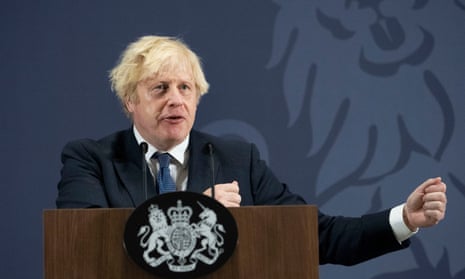
THE BEADY EYE LOOKS AT THE PENDING COLLAPSE OF ENGLAND

Tags

, , , , ,

(Fifteen-minute read )

I have just watched the debate for the leadership of the Conservative party and sadly next prime minister of England.

None of the candidates were asked to address the following essential overriding question England’s future.  

Now that England has left the EU –  England? – What is it?

Today this is the hard question because Great Britain has lost an Empire and has not yet found a role outside the EU. 

One of the many driving forces behind Brexit, it seems to me, was English/British exceptionalism, encapsulated in the winning slogan “Take back control”.

We are different, we are unique, and we are exceptional.

Unfortunately, it’s now too late to realize that it is a medium-sized relatively unimportant country that has destroyed its manufacturing base in a Faustian pact with financial interests to become the money laundering “world beater” and the conduit of choice for tax evasion.

It’s young, are now on the slippery slope to a new medieval world recreation of taxation to support its crumbling economy and public services. 

This time, there might be no way out.

Instead of catapulting it into a better age, modernity in the form of Tech will now be used to keep it in this state – imprison it in a world made by the mega-rich – by manipulating it to keep things exactly as they are.

An awakening is needed.

But I profess to be blind and deaf as to how the masses can be awakened, other than that the message is conveyed to it by the means of a very short, sharp, and deeply profound shock, which will be devastating for many and, no doubt, capitalized on by those who seek to divide it. 

In the documentary ‘Social Dilemma’, it is pointed out that most of the recent investment in the world has gone into improving the processing power of algorithms and computing – it has outstripped investment and development in the fight against cancer, and science and technology elsewhere – all designed to predict even better how we will respond and then have us hanging in front of our devices, slobbering like Pavlov’s dogs for the next ‘impulse’.

That is what has been happening in the world  – more people are being manipulated – not informed.

On leaving the EU England lost all sense of the common good and now the definition of the ‘common good’  sits outside the reference framework on how one might view the structures for the provision of the ‘common good.

The problem has always been having a democracy, or wealth concentrated in the hands of a few.

You can’t have both so we hear the slogan leveling up. 

This cannot be achieved while witnessing politicians like Boris and the X Health Minister Matt Hancock who defend brazen neoliberal exploitation of publicly funded, public health provision for private profit as if it was simply illustrative of a fair free market.

At the top of English society, it is an amoral world where money is the only common factor –  up to recently it does not matter if you are Russian or a criminal – it is the size of your wad that matters – money rules.

There is no free market here.

The simple fact of the matter is that politicians have failed to reign these forces in and weakened resistance for example by undermining unions and worker rights.

What we are seeing now is that last grab of what is left.

The collapse of the UK will come because without having a role as an exploiter – whether by old-fashioned land grab or by financial capture of other country’s economies by the City of London and its tax havens – those ruling from London have no idea what role England has.

The politicians who can imagine an England that has its own role in the world, as a separate nation-state, not dependent on the support of the other countries that have sustained it for centuries, are what are required to guide it now.

And I can’t see them, as yet.

The worrying bit for me is that there seems no longer to be any concern that these things happen so bare-facedly these days.

This seems to have happened in plain sight, but too many of our eyes are looking down at our devices being distracted by Apps and god knows what else (gambling, porn, Facebook, etc.,).

And the internet is there to be used as those with money see fit to maintain the status quo.

                           —————————————-

I have to live in hope, but now it is much more complex than England which has adapted to less.

A post-colonial, post-financialised, non-exploitative vision of England as a separate country that can survive on its own rather than by extracting value from others is what is required if it is to make it through the long existential crisis that it is now facing. 

That hope includes a belief that England can find a future in which exploitation plays no part. That hope has limited foundations. But when the alternative is offered by the far right it is something I have to believe possible.

Survival always requires a will to do so. I don’t think the UK, as a union of four nations, has that will anymore.

It’s why I see independence for Scotland soon, Irish reunification thereafter, and then Wales also thinking there might be a better alternative to rule from London.

Labour sat out Brexit, but can’t sit out this crisis.

It’s going to be too painful to do that. They must have plans they can promote to deal with the immediate issues.

Whatever was normal will have gone by the time this crisis is over. Whatever replaces it is not yet known. It could be fascism. And it could be something so much better. But the better route requires a willingness to imagine it. I only see that willingness in Scotland right now.

No doubt with the pending departure of Boris sanity is starting to prevail in the government in regard to the future of the UK economy not to mention the Union in relation to the effects of Brexit and Covid-19!

This is now a country that agreed to make a series of payments to the EU, as part of the deal when it left in January 2020, often called the divorce bill.

It’s now a country that cannot feed its people, provide medical care, freely educate its future generation, build affordable homes, and create a green generate economy. A country whose history shaped much of the world for both the good and the bad now needs a written constitution to guide it into the future.   

From January 2021, there was about £25bn left to pay by 2057.  

Trust in politicians has now sunk so low in Britain that it could very well have to adapt to even less than that.

To me, isolation it’s just such a bizarre hill to die on.

When successful, politics goes largely unnoticed, when it messes up, a furor ensues.

So I ask where are the voices of young England.

All human comments are appreciated. All like clicks and abuse chucked in the bin.

← Back

Thank you for your response. ✨


THE BEADY EYE LOOKS AT HOW THE MICROCHIP IS SHAPING THE WORLD.

Tags

, , , ,


(Seven-minute read)

How Has The Microchip Changed The World?

The impacts of the microchip have been enormous.

They are either the savior of the world or the annihilator. 

It would not be an exaggeration to say the world would not be able to continue without the Chip that drives technology. 

They are around us everywhere.  Our phones, of course, our laptops, our iPads – all of those things we’re now surrounded by this technology.

More than likely.

THEY WILL END UP BEING IMPLANTED IN OUR BODIES IF WE ARE TO STAY OR EVER LEAVE THIS PLANET.

THEY ARE NOT ONLY SHAPING THE PLANET BUT OUR EXPLORATION OF THE UNIVERSE (WITH THE JAMES WEBB TELESCOPE RECENTLY SENDING THE DEEPEST PENETRATION PICTURE OF SPACE.) 

                      ————————   

Despite being a piece of real estate no larger than a fingernail, the modern microchip is home to billions of transistors, miles of metallic interconnects, and layers of structures stacked on top of each other like skyscrapers.

Overall, a microchip is a structure that stands in abject defiance of the second law of thermodynamics: It creates a region of extreme order from a whole lot of chaos, and that does require a lot of energy.

One or more microchips run every one of the 40 billion connected devices currently in use—a figure that’s expected to jump to 350 billion by 2030.

Every time we make a Zoom call, between our personal devices, routers, data centers, satellites, and peripheral devices, at least a quintillion microchips were called to work.

Unfortunately, these chips consume an immense amount of resources and generate truckloads of waste.

The microchip is essentially made from sand—albeit sand that has been melted, purified, and refined until it is over 99.9999 percent pure silicon.

The arduous task of turning these disc-shaped, purple-colored wafers into microchips and memory devices falls on the fabs,(a fab or fabs is a term commonly used to describe a fabrication plant responsible for making semiconductor devices) which are high-tech facilities scattered across the world, with the majority in Southeast Asia.

A “fab” that processes 50,000 wafers—the silicon platform on which chips are built—per month consumes over 1 TWh of electricity a year.

That’s as much power as is required by a city of 100,000 residents.

Moreover, a rough estimate pegs the water consumption of a fab at over 19 million liters per day. That’s the amount of water consumed by a city of 60,000—for a whole year! In addition, these facilities utilize tons of chemicals, most of them expensive and toxic, and generate tons of waste, which include greenhouse gases like SF6, CF4, NF3, and C4F8.

There are over 1,000 semiconductor fabs operating globally today.

They make $450 billion worth of microchips a year and generate 50 million tons of carbon dioxide annually.

This complex semiconductor fabrication process is nestled at the heart of an elaborate web of international assembly lines. The company that makes the wafers and the fabs that create the microchips can be located in different parts of the globe. The assembly of the actual device likely takes place in a different company at a third location, and the end user could be anywhere in the world.

This means that the company whose name is on the final product might have very little control over the conditions and practices of the fabs.

Further, different parts of the semiconductor lifecycle are regulated by different environmental legislation, making not just the implementation of sustainability efforts, but also the tracking of their environmental footprints, complicated.

The elements of lithography, sand and silicon crystals, sit atop a silicon wafer

Given the size of the microchip, these numbers seem extraordinary.

However, this could very well be the price that we pay for the complexity of a chip, and the comfort it brings into our lives.

                       ———————————–

Advances in the technology sector have seen revolutionary gadgets surfacing because of this little mysterious device.

Microchip technology has modified existing patterns of human activities such in personal, social, political, and economic spheres.

Microchips are clearly being utilized for several other purposes.

In military applications, the microchips were used to build the Minuteman II missile in the 1960s. To add to that, a Z-40 semi-automatic pistol with a microchip embedded in its grip was released to avoid the use of the pistol by any unauthorized user.

In Industrial applications, scientists have employed the use of a microchip-based technology to detect the type and the progression of cancer in patients. Because of this technology, patients can now be informed of their prognosis within a few hours.

Chip improvements have led to increased computing power and incredible memory function.

Microchips have enabled applications like on-device artificial intelligence (AI) and virtual augmented reality to come to life.

Gains in data transfer such as 5G connectivity have been enhanced by the microchip technology.

Microchip technology has made huge advances in technology.

Objects and devices such as communication devices, vehicles, personal entertainment devices, GPS tracking devices, weapons, identification cards, micro-ovens, supercomputers, and many other applications use microchipMicrochips’ distinctive mode of collecting data and transmitting data to its exact destination has made information easier to handle.

The epic and revolutionary manufacturing techniques of microchips have created a storm of microchip-embedded devices that affect our daily lives, both positively and inevitably negatively  

Regardless of the industry, modern electronics use thousands, millions, or even billions of semiconductors on a single chip.

As a result, today as consumers demand more electronics, one of the most important components of any circuitry has become something of a scarcity. is that there is a massive shortage.

This has happened over the past year, largely due to a significant shortage of the most basic building block of technology:

Semiconductors.

                     ——————————

It is likely that microchip manufacturing will continue to be a major consumer of electricity, water, and chemicals.

So in shaping our world we could ensure that the energy is supplied by renewables, that the water is recycled, and the chemicals are processed without damage to the environment. In other words, we must be relentless in our efforts to make microchips more sustainable. And we should never forget that the comforts of modern life gifted by these wonder chips come at the expense of a vast amount of resources.

Microchips act as a key unit for programming the conversion of the car industry to electric cars, which is increasingly dependent on electronics, the lithography industry, the smartphone industry, and the internet to name just a few of the trillion applications over the past several decades.

The microchip industry filled by the need for big science is growing exponentially year on year. 

The problem is embedding them in objects is one thing, deciding in which devices to embed them and what systems to build around them is another matter altogether.

Laws governing their application are literally in human hands for now but not much longer.  

All human comments are appreciated. All like clicks and abuse chucked in the bin.

← Back

Thank you for your response. ✨


THE BEADY EYE ASKS. IF YOU WERE ASKED TO NAME WHAT HAS SHAPED THE WORLD YOU LIVE ON WHAT WOULD YOU SAY?

Tags

, ,


THE BEADY EYE ASKS. WHAT NEXT FOR ENGLAND?

Tags

,


( Ten-minute read )

Johnson has resigned as party leader, but he is still prime minister until his successor is elected.

In reality, there is no set minimum or maximum term for a Prime Minister The PM is not directly appointed by the population, only his political party is elected. 

The Conservative Party has the majority in the house of Commons and therefore without a general election, the next Prime Minister to take over will be appointed with a secret vote.

The PM is not directly appointed by the population, only his political party is elected. It is up to the party members to select their leader.

Under Britain’s political rules, the next election must be called by December 2024.

Officially, it’s ‘at Her Majesty’s pleasure’.

So what is next? 

A spectre is haunting Britain and Brexit – the spectre of English nationalism.

England is the only part of the union whose people have not been consulted or offered a referendum on how they wish to be governed in the past 20 years.

At its heart, leveling up is about tackling the long-standing inequalities across the UK but has, so far, failed to provide the answers to England’s democratic deficit.

The question of England, its national political and policy identity, and its future governance, simply has not been on the Conservative radar.

If I could see tomorrow today in the context of the changing nature of UK governance, . . . I would slow down and notice . . . what was taken for granted is now breaking apart with England remaining an anomaly.

While the centers of power in the rest of the UK have shifted away from Westminster over the last two decades, for England these changes have been limited. The battle for the first phase of Brexit may soon be over, the political battle for England has barely begun.

England is the ‘gaping hole in the devolution settlement’, and now constitutes ‘the only nation subject to permanent direct rule from Westminster.

English values and interests are the only ones to have had effective reality in UK politics.

This failure of political imagination about England is one characteristic of the wider British power elite, whether aligned ideologically to the political left, right or center.

On the Right, none of the eleven Conservative Party leadership candidates has made a single speech setting out a vision for the future of England, let alone an English nationalist perspective on England’s governance and political economy.

The current candidates for PM are all so far exhibited short-term thinking – Tax cuts, etc while the potential constitutional consequences of Brexit are becoming more evident day by day. Brexit marks not the end but the beginning of a new politics in which the right is transmuting into the party of English nationalists.

Why? 

Because English Conservatives would support Scottish independence and 75 percent of the collapse of the Northern Ireland peace process as the price of Brexit.

Far from stoking the alleged strident English nationalism of their party membership, the proposals of the myriad contenders for the Conservative Party’s leadership have simply served to illustrate the degree to which the Conservative Party has remained stranded on the common ground of strident Thatcherite British nationalism and its ambition to bring about a transformational.

Thatcher’s policies ripped apart any possibility for economic stability for the poor and made or caused the divide between rich and poor to grow ever wider. These days, the “s” word, “socialism,” is thrown around like it is a deadly germ.

On the political Left, not one member of the opposition parties has ever attempted to make the case for self-government for England.

The Labour Party, in particular, has gone to great lengths to linguistically cleanse its manifestos and policy documents of anything which might give England a political, institutional, policy, or democratic identity separate or separable from that of Britain, Britishness, or the British state.

Back to the question.

Something must be done to address the lack of democracy across England.

Too often any transfer of decision making-powers has come as an afterthought – and where reforms have taken place these have been driven from the center and done little to genuinely empower local government or the communities in which people live.

It is not for the center at Westminster to decide how local communities should see themselves and how they should be governed but to set out how those communities can choose their own governance, and how citizens can themselves reinvigorate local democracy.

With so many local councilors feeling powerless to serve their constituents’ needs, we must find a better balance between those two levels of government that truly serves the interests of communities across England.

The very nature and existence of local government should not be based on Westminster’s changing whims but should have some form of constitutional protection. 

This requires a written constitution removing the Royal family into the realms of a tourist attraction. 

                          _______________________ 

One of the most basic ways to shift the devolution paradigm is by creating a genuinely empowered local government.

You need to root your local government organization in a place that your community identifies with, rather than some arbitrary travel to the work area.

Far from being merely the ‘delivery arm of central government’, local government plays a significant role in people’s daily lives and is one of the first places in which people can become involved in making decisions about their communities.

Communities need to accept the building block of local government fundamentally to be reconnected to the people.

Citizen involvement should be an essential value underpinning devolution in England – solutions cannot be imposed top-down, but rather should be built up from the local level, and enjoy people’s support and legitimacy.

It is quite obvious that you can not level up from top-down.  

It is too soon to say exactly where England will end up. 

Here are a few suggestions.

Education should be free.

Long-term plan to turn the economy green.

Tax reform is one of the main levers the government can pull to increase the UK’s economic growth prospects however overhauling the tax system is not a straightforward task.

The real challenge is to make the tax system as it actually exists and come up with practical ways to improve it.

That is not to say that a lower overall tax burden would not have economic benefits of its own.

  • The UK has a very narrow base for its VAT which leads to distortions and complexity. It is a critical source of revenue, in a consumer society that is converting its purchasing power more and more online. Perhaps the introduction of an online sale tax would be more appropriate than vat.  VAT requires strict documentation for every transaction while a sale tax does not. It a calculated as a percentage of the purchasing price of the product as a direct Tax. 

Last get rid of Carehomes and build on national trust lands retirement villages. 

Get rid of benefits and replace them with Universal basic income.

  • The current benefits system is partly means-tested and complicated Universal basic income could replace some or all benefits. This would cut down on bureaucracy.

The benefit type of income is not a handout, but an entitlement. which have been appropriated by privileged elites and corporations to generate private wealth.

Unconditional payments are an acknowledgment that everyone has the right to share in a wealthy economy.

An orgy of backstabbing and squeezing those things that lead to Boris’s demise is now on the cards. 

All human comments are appreciated. All like clicks and abuse chucked in the bin.

← Back

Thank you for your response. ✨


THE BEADY EYE ASKS. WHAT DO YOU THINK MAKES YOU TICK.

Tags

,

(FIVE-MINUTE READ > FOLLOWING THE LAST POST – WHAT MAKES YOU HUMAN)

Let’s examine what it is that makes you tick.

As we all differ this is a very subjective question. 

There is, of course, no single answer to the question of what makes life worth living, or what makes you tick. Science cannot objectively tell someone whether they should adhere to Christianity, Islam, Hinduism, or some other religion. It cannot even tell an individual what version of Christianity (Catholic, Baptist, Morman, etc.) or Islam (Shia or Sunni) they ought to adopt.

Hence, religion and vague spiritual ideas—such as “everything happens for a reason”—cannot provide an evidence-supported basis for living.

In 2020 the world ground to a halt when the pandemic hit.

To a great extent took the money and your job out of the equation and asked the questions what are you doing with yourself? What are you doing with your time? Who are you? Where do you really want to go? What gives your life a profound meaning?

The answer rests in the ability to create, dream, and strive to turn those dreams into reality. By overcoming challenges, our life becomes an even more interesting place to live. 

                             ————————

Remember: All the things and experiences that make you truly grateful to be alive are what make your life worth living as it passes in the blink of an eye.

 Johann Wolfgang von Goethe writes, “Life is the childhood of your immortality.”  Everything and everyone are connected; boundaries and distance are words of the old language.

If you can’t change the circumstances, change your perspective, travel, and discover the world.

Our phones and computers were never more intelligent, our social lives never more instant, and our hospitals never more sophisticated than they are today. Smartphones have become our life companions.

Yet our problems have collectively never been more significant!

Are we, the human race, really heading in the right direction, or are we puppets still to our former ways, dancing the same old dance on a brand new stage?

Our words, our mannerisms, our personalities, our quirks, our humor, our stories, our ambitions, our accomplishments, our hopes and dreams, our ability to rise to the challenge, and our very humanity are now monitored and used by companies like Apple, Microsoft, Face book, Twitter, Instagram, etc.   

These companies would have us believe that we need their products to express ourselves and, ironically, our individuality.

We spend and consume and waste to remind ourselves of our importance, our purchasing power, and our ability to get what we want.

But isn’t lasting happiness what we truly want, and isn’t that what we really aren’t getting from our existing ways?

We have forgotten that self-expression existed long before this consumer craze and long before these companies convinced us that showing others who we are should cost money, and in some cases a fortune.

Realizing that you are not your belongings and that does not make your life worth living here are a few tips.

Compete not with others but only with yourself.

Acknowledge and honor the profound interconnectedness of all things and all beings by giving not receiving. 

Every day we should hear at least one little song, read one good poem, see one exquisite picture, and, if possible, speak a few sensible words.

The old ways of eating and living and thinking and doing have failed us, the past is dead, and the future is not yet born. 

To have a future we must look to the long term. 

We can always find ways to create more meaning in our lives.

All human comments are appreciated. All like clicks and abuse chucked in the bin.

← Back

Thank you for your response. ✨

THE BEADY EYE ASKS. HAVE YOU EVER ASKED YOURSELF JUST WHAT IS IT THAT MAKES YOU HUMAN?

Tags

, , , , ,


( Five-minute read)

This question tends to arise in the face of a moral dilemma or existential crisis but in this world of technology, social media, and advanced scientific discoveries, it’s important to keep asking this crucial question.

Are humans really biologically and socially different from the rest of the created world?

The physical similarities between humans and other mammals are quite plain. We are made of the same flesh and blood; we go through the same basic life stages but how is the value of a human determined?

                           —————————–

One of the key characteristics that make us human appears to be that we can think about alternative futures and make deliberate choices accordingly.

But we are living in an age that makes defining what makes humans human tricky, not because we are both unique and paradoxical but because technological advancements are changing our very existence.

While we are the most advanced species intellectually, technologically, and emotionally—extending human lifespans, creating artificial intelligence, traveling to outer space, showing great acts of heroism, altruism and compassion—we also have the capacity to engage in primitive, violent, cruel, and self-destructive behavior.

It is particularly challenging to name all of the distinctly human traits or reach an absolute definition of “what makes us human” for a species as complex as ours.

So we remain even in this age of modernity and intellectual freedom, no closer to any concrete answers.

It is our intellect that transcends us from simply existing.

What Makes Us Human?

Apart from the obvious intellectual capabilities that distinguish us as a species, humans have several unique physicals, social, biological, and emotional traits which are also changing. 

Not too long ago as a species we humans used storytelling for communicating and transmitting our ideas. Now we use smartphones and internet platforms without much consideration for what effect they are having on our minds. 

(The mind consists of the intangible realm of thoughts, feelings, beliefs, and consciousness.)

We assume that others have minds somewhat like ours—filled with beliefs and desires—but we can only infer those mental states. We cannot see, feel, or touch them. We largely rely on language to inform each other about what is on our minds.

Our memories are stored in the Cloud adding to the data collected by machine learning algorithms that shape them into products. 

(Memory allows human beings to make sense of their existence and to prepare for the future, increasing their chances of survival, not only individually but also as a species.)

“As far as we know, humans have the unique power of forethought to think consciously: The ability to imagine the future in many possible iterations and then to actually create the future we imagine. 

This awareness gives meaning to humanity and the awareness of our mortality. We are human because of our reason.

We are determined and capable of knowledge, and the ability to act on it, without depending on anyone else, even religion or some divine intervention but we are not self-sufficient. We need others.

because of this, we interact with the world based on our perception of it.

Regardless of one’s religious beliefs and thoughts about what happens after death, the truth is that, unlike other species who live blissfully unaware of their impending demise, most humans are conscious of the fact that someday they will die.

The story of what made us human is probably not going to focus on changes in our protein building blocks but rather on how evolution assembled these blocks in new ways by changing when and where in the body different genes turn on and off.

Species evolve to fit the particular environment that they are occupying at a given time, not to “advance” to a different evolutionary stage.

So us of us who are alive today with this realization yet to come are the guinea pigs of the future. In the meantime, we can only be human in society not driven by machine learning harvesting data but by the planet, we live on. 

It will be a big moment in what truly makes us human when we do so.

All human comments are appreciated. All like clicks and abuse chucked in the bin.

← Back

Thank you for your response. ✨


THE BEADY EYE ASKS. SHOULD SCOTLAND GO INDEPENDENT?

Tags


(Five-minute read)

You might say that with all that is going on in the world that this question should be put on the back burner.

However, the history of humans is littered with the lives of the youth’s struggle for self-determination so the process of taking a view on this has to be impeccable if not surreally decorous.

The days of Royalty, Knights, and Lords, being ruled as a subject by the Magna Carta, and lying politicians, have long gone thanks to the Smartphone.

Data is now the king. 

With baying popularism, and the coming mass migration, ( due to climate change )  a written constitution is inevitable, so why not write your own. 

                                       —————–

Nothing is inevitable, but any view of the future of the UK must comprehend the possibility of independence for Scotland within the next decade.

Scotland would be a foreign country;

Even as a friendly one, its cooperation would have to be sought to maintain the integrity of the defense of the British Isles.

Some sort of trade border would have to be negotiated, made more fraught by the possibility of an independent Scotland re-joining the EU- another protocol.

An agreement would need to be reached as to Scotland’s share of the United Kingdom’s existing national debt burden.

The government of an independent Scotland would have a critical decision to make on its currency, but in any circumstance, it would have to set up a central bank.

Systems of governance and cultural interdependency would have to be teased apart, on everything from the national debt and Revenue and Customs databases to the BBC and artifacts held in national museums.

It is very hard to say what independence would look like, other than to say that Scotland would no longer send politicians to sit in the UK parliament in Westminster and that the UK parliament would have no say on how Scotland was governed.

How the two countries would separate themselves would be an enormous question for decision-makers on both sides of the border.

Who or what would be the Head of State of an independent Scotland?

There is no doubt that the UK’s international reputation would take a hit. A country that had turned its back on its near abroad and then fallen apart would not walk tall in international counsel. 

For Northern Ireland, the UK shorn of Scotland would hardly make continued adherence to the union more attractive.

The secession of Scotland would probably accelerate the already evident trend of increasing support for the reunification of Ireland.

It would leave England, with a truculent Wales in tow, turning England into a rump state off the northwest European continent, surrounded by the EU. What sort of country would that be? 

Leaving the family of the UK would mean a load of tough decisions for Scotland with either higher taxes or lower spending. The issues would range from what people would have to do to travel between the two countries – would you need a passport, for example – but also how to divide up resources like the UK’s military or power plants.

The most difficult practical issue will be European Union membership.

Will Scotland somehow stay on in the Union, or be expected to negotiate as a brand new member?

What will Scotland have to pay to – and get from – the EU Budget?

Can Scotland join without committing to joining the eurozone?

Will (say) Spain stand against Scotland joining the Union for fear of encouraging its own separatist tendencies?

In practice, (and after lots of bad-tempered meetings), an independent Scotland will end up joining the EU and NATO, and other European/international organizations.

All of this is the price of self-determination.

At present, over 60% of Scottish exports go to England, Wales, and Northern Ireland.

Scottish Independence would lead to the removal of nuclear weapons from Scotland and probably also the G7 and the G20 and a permanent place on the United Nations Security Council.

An independent Scotland may find it difficult to deny the same rights to those in the Orkneys and the Shetland Islands should they wish for it.

Unionism has no new songs.

Brexit has been and will remain to loosen the social contract binding the Britains union. It is reveling the Union as the English, by the English, for the English. 

The Scottish question now occupies the place held by the Irish Question which still after seven hundred years of occupation has to be resolved. 

All human comments are appreciated. All like clicks and abuse chucked in the bin.

← Back

Thank you for your response. ✨

THE BEADY EYE ASKS. WHERE DO YOU THINK THE WORLD IS GOING

Tags

, , , , ,


Twenty-minute read.

Does our perception of the world reflect reality?

We hardly see the world as it is.

Technology is often touted as the savior that will rescue us from our misbegotten ways, redeem us, and put us on the track to utopia. Then there are the dystopian views, where the future is dominated by technology that either rule over us or saps us so completely of our humanity that we might as well be a bunch of gadgets ourselves.

There are countless challenges today both environmental and not.

Mostly, we see the world through a set of layers. These layers are made up of our emotions, past experiences, and beliefs, and whichever perception is held by most, is popularly deemed as the reality.

Among contemporary scientists and philosophers, the most popular solution to the mind-body problem is probably materialism.

According to neuroscience, the contents of your head are comprised of 86

billion neurons, each one linked to 10,000 others, yielding trillions of

connections.

Materialists aspire to explain feelings and experiences in terms of the chemistry of the brain. It is broadly agreed that nobody has the slightest clue as yet how to do it, but many are confident that we one day will.

For human beings to survive, they need to produce and reproduce the material requirements of life.

But, the real reality is different and it’s above any perception.

THERE ARE NO UNIQUE VOICES ANYMORE. 

Here we are once again with another verbal diarrhea conference at the Summit of America’s with the president of the USA delivering a version of his domestic economic pitch promising leaders from Latin America that the United States is committed to helping the region combat crime, corruption, and its economic struggles.

“We will introduce a new approach to managing migration and sharing responsibility across the hemisphere.”  A load of verbal bollix but it raises the question are we now heading into globalization vs regionalization?

If so why?

Because of the pandemic and the ongoing wars, today’s great powers have little choice but to spend their way to political stability, which is unsustainable, and or try to control knowledge that is unattainable due to technology. 

Because the internet is currently eliminating the middleman the Politicians who are in a representative democracy hence the shift to direct democracy – Popularism – with power now resides with those best able to organize knowledge.


                                          ———————-

While the Earth, the planet, will continue to go its way regardless of what happens on the surface we are unable to act collectively and never will be able to do so.

We live toward incredible times where the only constant changes and the rate of change are increasing so fast that there seems to be no meaning to life.

Not until we eradicate poverty, establish free education, set aside ideological differences, change our primary focus to the long-term care of nature and people, remove profit for profit sake Algothrims, and create a World Aid Fund that we all can invest in. (See previous posts)

Not until when we are able to separate our own perception from reality we can take the necessary measures to be happy.

Not until we all realize that we are with Climate Change currently headed to a sixth mass extinction event and that this possibility alone needs to bond our collective conscious into acting like one.  

Unfortunately, I believe, that if we aren’t now past the point of recovery, if we don’t act soon, civilization and human habitation here will be untenable.

                                      ————————

There’s no going back we are now stuck in a sad chamber of denial as those who are in power hopelessly try to ward off the apocalypse by promoting unsustainable economic growth. Our TV screens are inundated with appeals for help, while the cost of everything from health care, housing education, energy, etc is rising more than one can earn.

We must unplug our brains from smartphones and start working together in large numbers, as part of a coordinated effort to achieve change. 

Like Evolution Migration goes both ways – out and in. 

Rests assured if we continue to ignore the climate the earth will force us to go only one way, with the world passing through a nuclear war if we continue to ignore the warning signs.

If this happens humans will finally have little to no reason to fight.

What’s the point? 

                                           ————————
China faces further economic slowdown, according to future predictions.

As the Fourth Industrial Revolution forces us to think about where today’s innovations are taking us, when it comes to what our world will look like, in the medium-term – how we will organize our cities, where we will get our power from, what we will eat, what it will mean to be a refugee – it gets even trickier. 

I predict the internet will go spectacularly supernova and fifty years from now catastrophically collapse.

With the world’s superpowers thrown into chaos as they come to grip with new powers, financial slowdowns, and emerging economies it will be the start of Apple’s path to world domination. 

National leaders will find themselves under increasing pressure from their people, putting a strain on inter-country relationships.

The main political tendency will be away from multinational solutions to a greater nationalism driven by divergent and diverging economic, social and cultural forces with technology and political alining against Mega Power. With countries looking at solving their own problems before looking outward the Climate will continue to heat up.

Nations will increasingly adopt protectionist policies as well as look at ways of further securing borders, something which has already begun to take place as Europe grapples with the biggest refugee crisis since World War II.

Rising military costs, declining oil prices, and internal issues will all weaken Russia further with its inability to control the federation creating a vacuum. It is unlikely that the Russian Federation will survive in its current form.

While it remains a major economic, political and military power, the United States will “be less engaged than in the past”, with the powerhouse learning some vital lessons from history.

China will continue to be a major economic force but will not be the dynamic engine of global growth it once was,

The EU will remain hostage to the economic wellbeing and competitive environment in which it operates.

Nation-states created by the west will collapse. 

                                          ———————–

We all want to know the future unfortunately in a supposedly thriving economy we are now facing inflation as the real cost of living.

Trickle-down economics does not work. 

Social media is not simply a more sophisticated platform. Google, Facebook, Twitter, Youtube, Instagram, and Snapchat WhatsApp have turned into a gallery of Frankenstein’s monsters.

They are a new kind of assault on who we are, not just what we think.

“Like” button for Facebook

To have great predictions, these corporations have had to amass vast quantities of data on each of us – what is sometimes called “surveillance capitalism”, trading in human futures, herding us into our echo chambers of self-reinforcing information.

In doing so we lose more and more sense of the real world and of each other. With it, our ability to empathize and compromise is eroded.

We live in different information universes, chosen for us by algorithms whose only criterion is how to maximize our attention to advertisers’ products to generate greater profits for the internet giants.

Apps allowing us to hail a taxi or navigate our way to a destination are undoubtedly useful tools. But being able to find out what our leaders are really doing – whether they are committing crimes against others or against us – is an even more useful tool. In fact, it is vital if we want to stop the kind of self-destructive behaviors.

Advertisers have been playing with our brains in sophisticated ways for at least a century. And social atomization – individualism, selfishness, and consumerism – have been a feature of western life for at least as long. These aren’t new phenomena. It’s just that these long-term, negative aspects of western society are growing exponentially, at a seemingly unstoppable rate.

We live in a world in which a tree is worth more, financially, dead than alive.

For so long as our economy works in that way, and corporations go unregulated, they’re going to continue to destroy trees, kill whales, mine the earth, and to continue to pull oil out of the ground, even though we know it is destroying the planet and we know it is going to leave a worse world for future generations.

We are more profitable to a corporation if we’re spending time staring at a screen, staring at an ad, than if we’re spending our time living our life in a rich way.

Is the human race capable of pro-actively defining, harnessing, and expressing a collective consciousness, without the need for tragic experiences?

Much of the problem is around our inability to define collective consciousness. Who are we? Who do we want to be in the future? 

I think it is time to act.

Our paths have never been so clear. More than ever, science can tell us what different socioeconomic-emissions paths will mean in terms of future temperature.

Which will humanity choose?

The world is getting smaller every day. There is only one world, and it’s made of consciousness. Matter is what consciousness does. 

NO MANDATES. A long-standing issue is that the accords generally have no clear mechanisms for mandating that countries carry out their promises. World pressure and ethical considerations have to drive most of the agreements.

So, lots of promises, but no guarantee that countries will honor them.

“Once we have ruled out the impossible, what remains, no matter how improbable, must be the truth.”

Is the nature of global collective consciousness, yet another thing, such as climate change, that the population of this planet is going to happily sleepwalk towards, as it shrugs its collective shoulders and says, “Well, you know, sniff, what can you do?”

Drones hold potential for many environmental benefits but nature’s technologies and designs are more often than not far superior to our own. 

 Computers in our pockets offer huge conservation potential. 


All human comments are appreciated. All like clicks chucked in the bin.

← Back

Thank you for your response. ✨


THE BEADY EYES PROPOSAL TO END THE RUSSIAN INVASION OF THE UKRAIN AND THE WAR.

Tags


(Two-minute read) 

That means a settlement to end the war which is now becoming another proxy American war.

Preventative wars do more than just violate international humanitarian law; when powerful countries claim the right to invade other countries and topple their governments based on imagined scenarios that they declare unacceptably, they make the world an even more dangerous place.

Social media has enabled much sound and fury, proving about as productive as a dog’s attempt to chase its tail, albeit much less amusing.

It is ultimately up to the belligerents, Russia and Ukraine, to negotiate an end to the war with a political settlement.

Ukraine has paid a terrible price, while NATO has paid none at all.

This war might have started with Ukrain aspiration to join Nato but Ukraine was part of the Russian empire for centuries and was also part of the USSR.

It became independent in 1991 when the Soviet Union dissolved after the Cold War.

There has been tension between Ukraine’s old ties to Russia and new allegiances with Western nations ever since. More than 14,000 people have died in the fighting in the region, known as the Donbas, and at least two million people have been forced to flee their homes.

Russia did recognize the independence of two eastern provinces in Ukraine and followed up by sending Russian troops across the Ukrainian border.

Even if Russia does win in Ukraine, it would inherit “40 million mostly hostile Ukrainians.

In reality, Putin’s vision of a single people bound together by a common heritage and religion ignores a lot. because the story of Ukraine is not one of uninterrupted Russian brotherhood, but an extended tug-of-war over religion, language, and political control.

There was an effort to set up a separate pro-Russian Donetsk–Krivoy Rog Soviet Republic, which presaged the struggle a century later in the eastern portions of Ukraine.
 
Putin’s error comes in his insistence on transforming a complex, entangled history between the two countries into a simplistic morality tale that serves his own interests.
 
                             ————————-
 
Russia is likely to de-escalate only if it can find a face-saving way to end its invasion.
 
The question, therefore, is how to achieve this on both sides.
 
Here is a viable solution. 
 
The Donbas, region becomes a natural non-nato federal providence with open borders. 
 
Ukraine is assimilated into the EU with a special trade deal for the federal providence. 
 
This might satisfy Putin’sanimosity toward democracy while getting the EU to look at the larger context with a deeper view of the role of NATO, and to think about the European security order we might hope for in the future.
 
We need a new structure for Pan-European security, not old ones!
 
All human comments are appreciated. All like clicks and abuse chucked in the bin.

← Back

Thank you for your response. ✨


THE BEADY EYE ASKS. WHO DO YOU THINK WAS THE GREATEST EXPLORE OF THEM ALL?

Tags


( Have a look}


To know a world it has to be explored and this list contains many explorers down the centuries for the title.

From Robinson Crusoe to Armstrong. Marco Polo to Drake. Columbus to Vasco da Gama. Captian Cook to Mungo Parks. Magellan to Livingston, too many you probably never heard of and some that you will no doubt add. 

In no critical classification or historical order here are some to consider.

ZHENG HE.  His real name was Ma He (1387 – 1433)

One of the greatest admirals and diplomats in world history is considered one of the first conquerors of the oceans. Setting out six centuries ago on the first of seven landmark voyages, he reached south-east Asia, India, the Persian Gulf, the Red Sea, and as far as the east coast of Africa. Some say he may even have made it to America.

Was he the first to discover America? Read


MARCO POLO.

Discovered the Far East.

CRISTOBAL COLON – CHRISTOPHER COLUMBUS.

Christopher Columbus commandeered the three ships Nina, Santa Maria, and Pinta during his voyage which started off from Palos, Spain on August 3, 1492.

Did Christopher Columbus Discover America 

Did Christopher Columbus discover America before other Europeans?

Modern research has suggested that wasn’t even the case. It’s clear that plenty of people got there thousands of years before Columbus.

Who discovered America can’t be fully answered without also asking what it means to find a place that is already inhabited by millions of people.

Perhaps most famously, a group of Icelandic Norse explorers led by Leif Erikson likely beat Columbus to the punch by around 500 years. Perhaps a band of Irish monks who made it to America in the sixth century. There is no evidence that Columbus ever set foot on mainland North America.

As for Columbus, he was plagued with ship trouble during his final trip back to Spain and was marooned in Jamaica for a year. The place he actually landed was the island of the Bahamas. Columbus returned to Spain after this voyage. 

Chinese Admiral Zheng was the first to discover America or maybe it was a Buddhist monk from China named Hai-Shen is said to have reached North America.

Hai-Shen reached a fabled land of Fu-Sang upon traveling to the east.

If we set the question of the discovery of America aside for some time, it can be said that Columbus took the world into a new age of colonialism. His discovery encouraged many people to take voyages to the Americas.

Carbot John and his son Sabastian. 1497

Five years after Columbus they rediscovered Newfoundland. In May 1497 John Cabot and his crew, under the commission of England’s King Henry VII, left Bristol with a ship called Matthew. He is said to have reached North America on 24th June 1497 and returned to Bristol on 6th August 1497.

Captain Verrazano John.1524.

Sailed from Maderia to what is now known as the state of North Carolina in the USA encountering Indians of the south-eastern coast.

JACQUES CARTIER. 1534.

Sailed up the St LAWRENCE.

JOHN DAVIS.  1585.

Discovered the Davis straits. Sailed around the southern extremity of Greenland.

VASCO DA GAMA.Vasco Da Gama / We Came To Look For Christians And Spices First ...

On his first voyage to India (1497–99), he traveled around the Cape of Good Hope with four ships, visiting trading cities in Mozambique and Kenya en route to India. His voyages to India opened the sea route from western Europe to the East. 


FERNAO MAGELHAENS.

Ferdinand Magellan, Portuguese Fernão de Magalhães, Spanish Fernando de Magallanes or Hernando de Magallanes, (born 1480, Sabrosa or Porto?, Portugal—died April 27, 1521, Mactan, Philippines), In 1519 he left Sevilla with five ships and about 270 men. He sailed around South America, quelling a mutiny on the way and discovering the Strait of Magellan. With three ships left, Magellan crossed the “Sea of the South,” later called the Pacific Ocean because of their calm crossing. He was killed by inhabitants of Mactan Island in the Philippines.

FRANCIS DRAKE.


Voyage to bottom of the sea for Sir Francis Drake's remains - CNN

Sailed the Pelican.  Drake is best known for his circumnavigation of the world in a single expedition, from 1577 to 1580.


CAPTAIN JAMES COOK. James Cook Biography - Life of British Explorer

Had to be an incredible man that set out on Endeavour to discover whether there was a continent lying nearer the south pole than Africa or South America. He sailed around the world three times discovering New Zealand, Eastern Australia, most of North-Eastern Asia, and Northwestern North America. He sailed within 19 degrees of the South Pole.   

WILLIAM DAMPIER.

Was an English explorer, pirate, privateer, navigator, and naturalist who became the first Englishman to explore parts of what is today Australia, and the first person to circumnavigate the world three times. 

WALTER RALEIGH.

An English statesman, soldier, writer, and explorer, led an expedition in search of El Dorado. Undertook a circumnavigation of the globe during the War of Jenkins’ Ear.

MUNGO PARK.

Scottish explorer of West Africa. After an exploration of the upper Niger River around 1796, 

BRUCE JAMES.

Set off in search of the source of the Nile. He traveled from Cairo to the Red Sea by way of the desert, then struck south eventually reaching Gondar Ethiopia. He then headed westward across the terrible landscapes of Sudan with mountains and deserts. It would be two years before he reached Cairo.  

JOHN HANNING SPEKE.

Made three exploratory expeditions to Africa. He is most associated with the search for the source of the Nile and was the first European to reach Lake Victoria, 

BAKER SAMUEL.

He is mostly remembered as the first European to visit Lake Albert, as an explorer of the Nile and interior of central Africa, and for his exploits as a big game hunter in Asia, Africa, Europe, and North America.

BURTON RICHARD.

Burton’s best-known achievements include a well-documented journey to Mecca in disguise and a journey with John Hanning Speke as the first Europeans to visit the Great Lakes of Africa in search of the source of the Nile.

LIVINGSTON DAVID.

Livingstone was constantly on the move into the African interior: He was the first European to reach Lake Mweru (November 8, 1867) and Lake Bangweulu (July 18, 1868). Assisted by Arab traders, Livingstone reached Lake Tanganyika in February 1869. Despite illness, he went on and arrived on March 29, 1871, at his ultimate northwesterly point, Nyangwe, on the Lualaba leading into the Congo River. This was farther west than any European had penetrated. responsible for the first European sighting of Lake Ngami (August 1, 1849).  He named the Victoria Falls.

Livingstone may well have influenced Western attitudes toward Africa more than any other individual before him. His discoveries—geographic, technical, medical, and social—provided a complex body of knowledge that is still being explored.

STANLEY HENRY.

Besides his discovery of Livingstone, he is mainly known for his search for the sources of the Nile and Congo rivers.

ERNEST HENRY SHACKLETON.

Born in County Kildare, Ireland. After the race to the South Pole ended in December 1911, with Roald Amundsen’s conquest, Shackleton turned his attention to the crossing of Antarctica from sea to sea, via the pole. He died of a heart attack while his ship was moored in South Georgia.

LEIF ERICSSON.

Decided to find the New World. Ericsson is said to have reached what is today’s L’Anse aux Meadows in Newfoundland, Canada with his crew of 35.

SAMUEL WHITE BAKER.


Baker is best known for his discovery of Lake Albert in Central Africa, along with his exploration of the Nile 

YURI GARARIN. 

First to orbit the earth 

NEIL ALDEN ARMSTRONG, BUWW ALDRINEIL, MICHAEL COLLINS.

Neil Armstrong facts: Neil Armstrong's photographed with his mission for NASA 

It was a feat for the ages. They sat on top of a rocket as tall as a 36-story building with engines burning 735,000 gallons of liquid propellant to create two million pounds of thrust accelerating the Shuttle from 4,828 kilometers (3,000 mph) to over 27,358 kilometers (15,000 mph) before taking it on a trajectory into orbit in mere minutes.

Watched by around 530 million people they Traveled 240,000 miles from the Earth to the moon in 76 hours. Neil and Buzz were the first humans to step foot on the moon and the first Peaceful Exploration for Humanity because there were no resident inhabitants. 

Jeanne Baret. Jeanne Baret

Back in the late 18th century, French explorer Jeanne Baret became the first woman ever to circumnavigate the Earth. Unfortunately, she had to do it in the guise of a man. 

                                         ———————–

For me, it’s a toss-up between Cook and the Space boys.

Cook was the first white many a tribe laid eyes on. With the arrival of his ship Resolution with his men, he knew that his men were riddled with gonorrhea and syphilis, killing a lot of them by bringing Venereal Disease (VD) and Tuberculosis which ended up devastating populations.

It turned out that Cook was not a god, killed by Hawaiian Islanders, who were not cannibals. They believed that the power of a man was in his bones, so they cooked part of Cook’s body to enable the bones to be easily removed.

The Space boys are the last human form of exploration.

From here on exploration of distant stars and worlds will be electrical! bio-engineered robots. 

All opinions are appreciated. All like clicks chucked in the bin.

← Back

Thank you for your response. ✨